AB 2614: Outdoor experiences: community access program: grant program.
- Session Year: 2017-2018
- House: Assembly
- Latest Version Date: 2018-08-31
Existing law establishes in state government the Natural Resources Agency, consisting of various departments, including the Department of Parks and Recreation, the California Coastal Commission, and the State Coastal Conservancy.
Existing law, the State Urban Parks and Healthy Communities Act, requires the Director of Parks and Recreation to develop a competitive grant program to assist state parks, specified state conservancies, urbanized and heavily urbanized local agencies, and community-based organizations within those jurisdictions to provide outdoor educational opportunities to children.
This bill would require the Natural Resources Agency to develop and implement a community access program focused on engagement programs, technical assistance, or facilities that maximize safe and equitable physical admittance, especially for low-income and disadvantaged communities, to natural or cultural resources, community education programs, or recreational amenities. The bill would authorize the agency to develop a grant program for innovative transportation projects that provide disadvantaged and low-income youth with access to outdoor experiences, as specified.
Existing law establishes in state government the Natural Resources Agency, consisting of various departments, including the Department of Parks and Recreation, the California Coastal Commission, and the State Coastal Conservancy.
Existing law, the State Urban Parks and Healthy Communities Act, requires the Director of Parks and Recreation to develop a competitive grant program to assist state parks, specified state conservancies, urbanized and heavily urbanized local agencies, and community-based organizations within those jurisdictions to provide outdoor educational opportunities to children.
This bill would require the Natural Resources Agency to survey school districts, as provided, to identify school districts that offer bus transportation services from a school of the school district to a nonprofit organization that provides services to pupils of that school district. The bill would require the agency, based on the survey, to compile a list of schools within a school district that offer those bus transportation services, as specified. The bill would require the agency, upon request, to provide the list to a nonprofit organization or state agency that provides outdoor experiences to disadvantaged youth. develop and implement a community access program focused on engagement programs, technical assistance, or facilities that maximize safe and equitable physical admittance, especially for low-income and disadvantaged communities, to natural or cultural resources, community education programs, or recreational amenities. The bill would require authorize the agency to develop a grant program for innovative transportation projects that provide disadvantaged and low-income youth with access to outdoor experiences, as specified. The bill would require the agency, before developing guidelines for the grant program, to consult with the Department of Parks and Recreation, the California Coastal Commission, and the State Coastal Conservancy.
This bill would make a finding that providing children with access to outdoor experiences increases school performance, builds civic behavior, and improves the overall well-being of Californias citizens and communities.Existing law establishes in state government the Natural Resources Agency, consisting of various departments, including the Department of Parks and Recreation, the California Coastal Commission, and the State Coastal Conservancy.
Existing law, the State Urban Parks and Healthy Communities Act, requires the Director of the Department of Parks and Recreation to develop a competitive grant program to assist state parks, specified state conservancies, urbanized and heavily urbanized local agencies, and community-based organizations within those jurisdictions to provide outdoor educational opportunities to children.
This bill would require the Natural Resources Agency to survey school districts districts, as provided, to identify school districts that offer bus transportation services from a school of the school district to a nonprofit organization that provides services to pupils of that school district. The bill would require the agency, based on the survey, to compile a list of schools within a school district that offer those bus transportation services, as specified. The bill would require the agency, upon request, to provide the list to a nonprofit organization or state agency that provides outdoor experiences to disadvantaged youth. The bill would require the agency to develop a grant program for innovative transportation projects that provide disadvantaged youth with access to outdoor experiences, as specified. The bill would require the agency, before developing guidelines for the grant program, to consult with the Department of Parks and Recreation, the California Coastal Commission, and the State Coastal Conservancy.
This bill would make a finding that providing children with access to outdoor experiences increases school performance, builds civic behavior, and improves the overall well-being of Californias citizens and communities.
Existing law establishes in state government the Natural Resources Agency, consisting of various departments, including the Department of Parks and Recreation, California Coastal Commission, and the State Coastal Conservancy.
Existing law, the State Urban Parks and Healthy Communities Act, requires the Director of the Department of Parks and Recreation to develop a competitive grant program to assist state parks, specified state conservancies, urbanized and heavily urbanized local agencies, and community-based organizations within those jurisdictions to provide outdoor educational opportunities to children.
This bill would require the Natural Resources Agency to survey school districts to identify school districts that offer bus transportation services from a school of the school district to a nonprofit organization that provides services to pupils of that school district. The bill would require the agency, based on the survey, to compile a list of schools within a school district that offer those bus transportation services, as specified. The bill would require the agency, upon request, to provide the list to a nonprofit organization or state agency that provides outdoor experiences to disadvantaged youth. The bill would require the agency to develop a grant program for innovative transportation projects that provide disadvantaged youth with access to outdoor experiences, as specified. The bill would require the agency, before developing guidelines for the grant program, to consult with the Department of Parks and Recreation, the California Coastal Commission, and the State Coastal Conservancy.
This bill would make a finding that providing children with access to outdoor experiences increases school performance, builds civic behavior, and improves the overall well-being of Californias citizens and communities.
The Legislature finds and declares all of the following:
(a)Providing children and underserved communities with access to outdoor experiences increases school performance, builds civic behavior, and improves the overall well-being of Californias residents and communities.
(b)Experiences in natural lands are important to the continuing stewardship of our natural resources.
(c)The mission of the Natural Resources Agency is to restore, protect, and manage the states natural, historical, and cultural resources for current and future generations using creative approaches and solutions based on science, collaboration, and respect for all of the communities and interests involved.
5660.1.For purposes of this chapter, the following terms have the following meanings:
(a)Agency means the Natural Resources Agency.
(b)Disadvantaged communities means communities identified pursuant to Section 39711 of the Health and Safety Code.
(c)Low-income communities has the same meaning as the term is defined in Section 39713 of the Health and Safety Code.
5661.(a)The agency shall develop and implement a community access program focused on engagement programs, technical assistance, or facilities that maximize safe and equitable physical admittance, especially for low-income and disadvantaged communities, to natural or cultural resources, community education programs, or recreational amenities. Community access provided under the program may include any, or any combination, including all, of the following components:
(1)Transportation.
(2)Physical activity programming.
(3)Resource interpretation services.
(4)Multilingual translation services.
(5)Natural science.
(6)Workforce development and career pathways.
(7)Education.
(8)Communication related to water, parks, climate, coastal protection, and other outdoor pursuits.
(b)In advancing approaches to improve access under the program, the agency shall work with all entities that comprise the agency under Section 12805 of the Government Code to ensure that community access is prioritized within relevant programs that make public lands accessible to the public.
5662.(a)The agency may, in consultation with the entities that comprise the agency under Section 12805 of the Government Code, develop a grant program within a state department for innovative transportation projects that provide disadvantaged and low-income youth with access to outdoor experiences.
(b)Priority for funding under the grant program shall be provided to a nonprofit organization, local agency, or state agency to cover the cost of transportation services from schools, organizations, local agencies, institutions, and other locations in furtherance of providing new and expanded outdoor experiences for disadvantaged and low-income youth.
(a)The Legislature finds and declares all of the following:
(b)(a)Providing children and underserved communities with access to outdoor experiences increases school performance, builds civic behavior, and improves the overall well-being of Californias residents and communities.
(c)(b)Experiences in natural lands are important to the continuing stewardship of our natural resources.
(d)(c)The mission of the Natural Resources Agency is to restore, protect, and manage the states natural, historical, and cultural resources for current and future generations using creative approaches and solutions based on science, collaboration, and respect for all of the communities and interests involved.
5660.1.For purposes of this chapter, the following terms have the following meanings:
(a)Agency means the Natural Resources Agency.
(b)Disadvantaged communities means communities identified pursuant to Section 39711 of the Health and Safety Code.
(c)Low-income communities has the same meaning as the term is defined in Section 39713 of the Health and Safety Code.
5661.(a)The agency shall develop and implement a community access program focused on engagement programs, technical assistance, or facilities that maximize safe and equitable physical admittance, especially for low-income and disadvantaged communities, to natural or cultural resources, community education programs, or recreational amenities. Community access provided under the program may include any, or any combination, including all, of the following components:
(1)Transportation.
(2)Physical activity programming.
(3)Resource interpretation services.
(4)Multilingual translation services.
(5)Natural science.
(6)Workforce development and career pathways.
(7)Education.
(8)Communication related to water, parks, climate, coastal protection, and other outdoor pursuits.
(b)In advancing approaches to improve access under the program, the agency shall work with all entities that comprise the agency under Section 12805 of the Government Code, Code to ensure that community access is prioritized within relevant programs that make public lands accessible to the public.
5662.(a)The agency may, in consultation with the entities that comprise the agency under Section 12805 of the Government Code, develop a grant program within a state department for innovative transportation projects that provide disadvantaged and low-income youth with access to outdoor experiences.
(b)Priority for funding under the grant program shall be provided to a nonprofit organization organization, local agency, or state agency to cover the cost of transportation services from schools, organizations, local agencies, institutions, and other locations in furtherance of providing new and expanded outdoor experiences for disadvantaged and low-income youth.
(a)The Legislature finds and declares all of the following:
(b)Providing children and underserved communities with access to outdoor experiences increases school performance, builds civic behavior, and improves the overall well-being of Californias residents and communities.
(c)Experiences in natural lands are important to the continuing stewardship of our natural resources.
(d)The mission of the Natural Resources Agency is to restore, protect, and manage the states natural, historical, and cultural resources for current and future generations using creative approaches and solutions based on science, collaboration, and respect for all of the communities and interests involved.
5660.1.For purposes of this chapter, the following terms have the following meanings:
(a)Agency means the Natural Resources Agency.
(b)Disadvantaged communities means communities identified pursuant to Section 39711 of the Health and Safety Code.
(c)Low-income communities has the same meaning as the term is defined in Section 39713 of the Health and Safety Code.
5661.(a)The agency shall develop and implement a community access program focused on engagement programs, technical assistance, or facilities that maximize safe and equitable physical admittance, especially for low-income and disadvantaged communities, to natural or cultural resources, community education programs, or recreational amenities. Community access provided under the program may include any, or any combination, including all, of the following components:
(1)Transportation.
(2)Physical activity programming.
(3)Resource interpretation services.
(4)Multilingual translation services.
(5)Natural science.
(6)Workforce development and career pathways.
(7)Education.
(8)Communication related to water, parks, climate, coastal protection, and other outdoor pursuits.
(b)In advancing approaches to improve access under the program, the agency shall work with all entities that comprise the agency under Section 12805 of the Government Code, to ensure that community access is prioritized within relevant programs that make public lands accessible to the public.
5662.(a)The agency may, in consultation with the entities that comprise the agency under Section 12805 of the Government Code, develop a grant program within a state department for innovative transportation projects that provide disadvantaged and low-income youth with access to outdoor experiences.
(b)Priority for funding under the grant program shall be provided to a nonprofit organization or state agency to cover the cost of transportation services from schools, organizations, institutions, and other locations in furtherance of providing new and expanded outdoor experiences for disadvantaged and low-income youth.
SECTION 1.Chapter 3.4 (commencing with Section 5660) is added to Division 5 of the Public Resources Code, to read:3.4.Enhancing Disadvantaged Youth Access to Outdoor Experiences 5660.The Legislature finds and declares that providing children with access to outdoor experiences increases school performance, builds civic behavior, and improves the overall well-being of Californias residents and communities. These experiences are also important to the continuing stewardship of our natural resources.5660.1.For purposes of this chapter, agency means the Natural Resources Agency.5661.(a)(1)The agency shall survey school districts to identify school districts that offer bus transportation services from a school of the school district to a nonprofit organization that provides services to pupils of that school district. (2)In conducting the survey required pursuant to paragraph (1), the agency may collaborate with the State Department of Education, including, but not limited to, the State Department of Educations California Regional Environmental Education Community Network program, to assist in the compiling of the needed information.(b)The agency, based on the information obtained pursuant to subdivision (a), shall compile a list of schools within a school district that offer bus transportation services described in subdivision (a). The list shall include, but not be limited to, the school districts name, the name and location of the school within the school district that is providing the bus transportation service, contact information of the school, and a description of the nonprofit organizations general cost for bus transportation from that school, including whether the transportation service is provided at the actual or a reduced cost. The agency, upon request, shall provide the list to a nonprofit organization or state agency that, through a program, provides outdoor experiences to disadvantaged youth. 5662.(a)The agency shall develop a grant program for innovative transportation projects that provide disadvantaged youth with access to outdoor experiences. The program shall include, but is not limited to, both of the following:(1)Grants that provide funding to a nonprofit organization or a state agency to cover the cost of transportation services from a school on the list created pursuant to subdivision (b) of Section 5661 in furtherance of providing new and expanded outdoor experiences to disadvantaged youth. (2)Grants to provide a rebate to a nonprofit organization or state agency to assist the nonprofit organization or state agency in purchasing a low-emission bus that is primarily used to provide transportation services from a school on the list created pursuant to subdivision (b) of Section 5661 in connection with programs that provide new and expanded outdoor experiences to disadvantaged youth.(b)On or before July 1, 2019, the agency shall develop guidelines for the grant program described in subdivision (a). Before developing the guidelines, the agency shall consult with the department, the California Coastal Commission, and the State Coastal Conservancy.The Legislature finds and declares that providing children with access to outdoor experiences increases school performance, builds civic behavior, and improves the overall well-being of Californias residents and communities. These experiences are also important to the continuing stewardship of our natural resources.
5660.1.For purposes of this chapter, agency means the Natural Resources Agency.
5661.(a)(1)The Natural Resources Agency agency shall survey school districts to identify school districts that offer bus transportation services from a school of the school district to a nonprofit organization that provides services to pupils of that school district.
(2)In conducting the survey required pursuant to paragraph (1), the agency may collaborate with the State Department of Education, including, but not limited to, the State Department of Educations California Regional Environmental Education Community Network program, to assist in the compiling of the needed information.
(b)The Natural Resources Agency, agency, based on the information obtained pursuant to subdivision (a), shall compile a list of schools within a school district that offer bus transportation services described in subdivision (a). The list shall include, but not be limited to, the school districts name, the name and location of the school within the school district that is providing the bus transportation service, contact information of the school, and a description of the nonprofit organizations general cost for bus transportation from that school, including whether the transportation service is provided at the actual or a reduced cost. The Natural Resources Agency, agency, upon request, shall provide the list to a nonprofit organization or state agency that, through a program, provide provides outdoor experiences to disadvantaged youth.
5662.(a)The Natural Resources Agency agency shall develop a grant program for innovative transportation projects that provide disadvantaged youth with access to outdoor experiences. The program shall include, but is not limited to, both of the following:
(1)Grants that provide funding to a nonprofit organization or a state agency to cover the cost of transportation services from a school on the list created pursuant to subdivision (b) of Section 5661 in furtherance of providing new and expanded outdoor experiences to disadvantaged youth.
(2)Grants to provide a rebate to a nonprofit organization or state agency to assist the nonprofit organization or state agency in purchasing a low-emission bus that is primarily used to provide transportation services from a school on the list created pursuant to subdivision (b) of Section 5661 in connection with programs that provide new and expanded outdoor experiences to disadvantaged youth.
(b)On or before July 1, 2019, the Natural Resources Agency agency shall develop guidelines for the grant program described in subdivision (a). Before developing the guidelines, the Natural Resources Agency agency shall consult with the Department of Parks and Recreation, department, the California Coastal Commission, and the State Coastal Conservancy.
CORRECTIONS: HeadingLine 2. REVISIONS: HeadingLine 2.The Legislature finds and declares that providing children with access to outdoor experiences increases school performance, builds civic behavior, and improves the overall well-being of Californias residents and communities. These experiences are also important to the continuing stewardship of our natural resources.
5661.(a)The Natural Resources Agency shall survey school districts to identify school districts that offer bus transportation services from a school of the school district to a nonprofit organization that provides services to pupils of that school district.
(b)The Natural Resources Agency, based on the information obtained pursuant to subdivision (a), shall compile a list of schools within a school district that offer bus transportation services described in subdivision (a). The list shall include, but not be limited to, the school districts name, the name and location of the school within the school district that is providing the bus transportation service, contact information of the school, and a description of the nonprofit organizations general cost for bus transportation from that school, including whether the transportation service is provided at the actual or a reduced cost. The Natural Resources Agency, upon request, shall provide the list to a nonprofit organization or state agency that, through a program, provide outdoor experiences to disadvantaged youth.
5662.(a)The Natural Resources Agency shall develop a grant program for innovative transportation projects that provide disadvantaged youth with access to outdoor experiences. The program shall include, but is not limited to, both of the following:
(1)Grants that provide funding to a nonprofit organization or a state agency to cover the cost of transportation services from a school on the list created pursuant to subdivision (b) of Section 5661 in furtherance of providing new and expanded outdoor experiences to disadvantaged youth.
(2)Grants to provide a rebate to a nonprofit organization or state agency to assist the nonprofit organization or state agency in purchasing a low-emission bus that is primarily used to provide transportation services from a school on the list created pursuant to subdivision (b) of Section 5661 in connection with programs that provide new and expanded outdoor experiences to disadvantaged youth.
(b)On or before July 1, 2019, the Natural Resources Agency shall develop guidelines for the grant program described in subdivision (a). Before developing the guidelines, the Natural Resources Agency shall consult with the Department of Parks and Recreation, California Coastal Commission, and the State Coastal Conservancy.
REVISIONS: HeadingLine 2.|
Date
|
Status
|
|---|---|
| Sep 18, 2018 | Vetoed by Governor. |
| Sep 7, 2018 | Enrolled and presented to the Governor at 2:30 p.m. |
| Aug 29, 2018 | Senate amendments concurred in. To Engrossing and Enrolling. |
| Aug 27, 2018 | In Assembly. Concurrence in Senate amendments pending. May be considered on or after August 29 pursuant to Assembly Rule 77. |
| Aug 27, 2018 | Read third time. Passed. Ordered to the Assembly. |
| Aug 20, 2018 | Read second time. Ordered to third reading. |
| Aug 17, 2018 | From committee: Amend, and do pass as amended. (Ayes 7. Noes 0.) (August 16). |
| Aug 6, 2018 | In committee: Referred to APPR. suspense file. |
| Jul 3, 2018 | Read second time and amended. Re-referred to Com. on APPR. |
| Jul 2, 2018 | From committee: Amend, and do pass as amended and re-refer to Com. on APPR. (Ayes 7. Noes 1.) (June 26). |
| Jun 13, 2018 | Referred to Com. on N.R. & W. |
| Jun 4, 2018 | In Senate. Read first time. To Com. on RLS. for assignment. |
| May 31, 2018 | Read third time. Passed. Ordered to the Senate. (Ayes 64. Noes 13. Page 5594.) |
| May 31, 2018 | Read third time. Passed. Ordered to the Senate. |
| May 25, 2018 | Coauthors revised. |
| May 17, 2018 | Measure version as amended on April 18 corrected. |
| Apr 25, 2018 | In committee: Set, first hearing. Referred to APPR. suspense file. |
| Apr 19, 2018 | Re-referred to Com. on APPR. |
| Apr 18, 2018 | From committee chair, with author's amendments: Amend, and re-refer to Com. on APPR. Read second time and amended. |
| Apr 10, 2018 | Coauthors revised. |
| Mar 8, 2018 | Referred to Com. on W.,P., & W. |
| Feb 16, 2018 | From printer. May be heard in committee March 18. |
| Feb 15, 2018 | Read first time. To print. |
|
Date
|
Description
|
Location
|
Votes
|
|
|---|---|---|---|---|
| Aug 29, 2018 | AB 2614 CARRILLO Concurrence in Senate Amendments | Assembly Floor |
Passed |
|
| Aug 27, 2018 | Assembly 3rd Reading AB2614 Carrillo et al. By Hertzberg | Senate Floor |
Passed |
|
| Aug 16, 2018 | Do pass as amended | Senate Standing Committee on Appropriations |
Passed |
|
| Aug 6, 2018 | Placed on suspense file | Senate Standing Committee on Appropriations |
Passed |
|
| Jun 26, 2018 | Do pass as amended, but first amend, and re-refer to the Committee on [Appropriations] | Senate Standing Committee on Natural Resources and Water |
Passed |
|
| May 31, 2018 | AB 2614 CARRILLO Assembly Third Reading | Assembly Floor |
Passed |
|
| May 25, 2018 | Do pass. | Assembly Standing Committee on Appropriations |
Passed |
|
| Apr 10, 2018 | Do pass and be re-referred to the Committee on [Appropriations] | Assembly Standing Committee on Water, Parks, and Wildlife |
Passed |
This list shows positions taken on this bill by organizations on the date displayed, which is linked to the original source.
Positions by individuals are not included.
GOVERNOR'S VETO
GV Bill Id:AB 2614
Author:(Carrillo)
As Enrolled Ver:September 7, 2018
2/3 vote
ASSEMBLY: | 64-13 | (May 31, 2018) | SENATE: | 34-4 | (August 27, 2018) |
ASSEMBLY: | 72-1 | (August 29, 2018) |
Original Committee Reference: W.P., & W.
SUMMARY: This bill would require the Natural Resources Agency (CNRA) to develop and implement a community access program and would authorize the agency to develop a grant program. Specifically, this bill:
- Makes various findings and declarations relative to the benefit of providing outdoor experiences for children and underserved youth.
- Requires the CNRA to implement a community access program focused on engagement programs, technical assistance, or facilities that maximize safe and equitable physical admittance, especially for low-income and disadvantaged communities, to natural or cultural resources, community education, or recreational amenities which may include transportation, physical activity programming, natural sciences, workforce development and education, among others.
- Defines, for purposes of this chapter, disadvantaged communities pursuant to Section 39711 of the Health and Safety Code, and low-income communities pursuant to Section 39713 of the Health and Safety Code.
- Allows the CNRA to consult with departments, commissions, boards, and conservancies to develop the transportation-based grant program.
- Prioritizes grant funding to nonprofit organizations, local agencies, or a state agency to cover the cost of transportation services from schools and other locations in furtherance of providing new and expanded outdoor experiences to disadvantaged youth.
The Senate amendments remove duplication with AB 2534 (Limon) of the current legislative session which also has a grants program for transportation services. The amendments codify the community access provisions at the CNRA that are eligible for funding pursuant to Proposition 68, and, additionally, make the community access provisions permanent within the CNRA. The amendments add local agencies to the list of grant funding priorities. Other amendments are technical and clarifying in nature.
EXISTING LAW:
- Establishes the Natural Resources Agency (CNRA), consisting of various departments, including the Department of Parks and Recreation (DPR), California Coastal Commission, and the various state conservancies.
- Establishes the DPR which is responsible for administering the state park system. The DPR has also been directed under prior bond acts to administer grant programs for local and regional parks and related programs. Authorizes the DPR to provide spaces within the state park system for schools to use for environmental education.
- Establishes guidelines for the DPR to use in granting funds for programs that provide outdoor environmental education experiences to low-income students on public properties.
- Creates the State Urban Parks and Healthy Communities Act, and requires the Director of the DPR to develop a competitive grant program to assist state parks, certain state conservancies, urbanized and heavily-urbanized local agencies, and community-based organizations within those jurisdictions to provide outdoor educational opportunities to children.
- Establishes a statewide environmental education program, to be administered by the Office of Education and Environment within the Department of Resources, Recycling and Recovery (CalRecycle), in cooperation with other agencies. The program, among other things, calls for development of a unified education strategy on the environment for elementary and secondary schools, including environmental education principles.
- Requires the Office of Education and Environment to develop a model environmental education curriculum, to submit the curriculum to the Instructional Quality Commission for review, to make the curriculum available electronically, and to coordinate with other state agencies to facilitate its use.
- Establishes the Environmental Education Account (account) in the State Treasury and authorizes CalRecycle to expend funds in the account.
- Establishes the California Regional Environmental Education Community (CREEC) Network as a program of the California Department of Education (CDE), to support environmental literacy by providing teachers with access to high quality education resources, and regional coordinators to provide professional development.
FISCAL EFFECT: After significant amendments in the Senate, according to the Senate Appropriations Committee:
- Unknown annual cost pressures, likely in the ten million dollar range (General Fund, bond, or other special fund), to fund the grant programs.
- Onetime CNRA costs of approximately $150,000 to support one position (General Fund).
COMMENTS: This bill focuses on providing bus transportation services to nonprofit organizations in order to remove the barrier of transportation in providing youth access to the outdoors.
Background and Purpose: This bill would require the Natural Resources Agency to track the availability of outdoor experiences for disadvantaged youth in a school district and create a grant program to encourage access to these experiences with the goal of improving the overall health and well-being of these youth.
Outdoor and Environmental Education in California. AB 1330 (Simitian), Chapter 633, Statutes of 2003, established the Outdoor Environmental Education Program, administered by the CDE, to support outdoor environmental programs serving primarily at-risk youth. The program involved participation in outdoor environmental activities, including service learning and community outreach components. The program was in effect for one year, sunset on January 1, 2005, and was repealed on January 1, 2006.
AB 1330 called for an independent study of the benefits of the program. The study was performed by the American Institutes for Research and focused on 255 sixth grade students from four elementary schools who attended three outdoor education programs in Tulare, Los Angeles, and San Diego Counties in 2004. The study found that, among other things, the science test scores of children who participated in these programs rose by 27%. The children also exhibited measurable improvements in conflict resolution and problem solving, self-esteem, and learning motivation. Children who attended the outdoor science programs showed statistically significant positive gains in all eight constructs on which they were rated. Also of note, 56% of the participants reported that the outdoor school experience represented the first time they had spent time in a natural setting. The study did note that due to the small sample size, "findings cannot be generalized to all students attending outdoor education programs in California, particularly because of the range of programs that exist. However, this research indicates a large number of positive outcomes for at-risk children who attend resident outdoor science schools certified by the California Department of Education."
SB 359 (Murray), Chapter 877, Statutes of 2001, required the Director of the DPR to develop a competitive grant program to assist state parks, certain state conservancies, urbanized and heavily-urbanized local agencies, and community-based organizations within those jurisdictions to provide outdoor educational opportunities to children. The DPR currently oversees the Office of Community Involvement (OCI) whose mission is to promote the means and facilitate the methods by which the DPR services, facilities, and parks become meaningful and relevant to all Californians. In addition to other programs, the OCI provides Outdoor Youth Connection designed for youth ages 13 through 17, who are affiliated with community-based organizations. The program enables youth to experience outdoor activities, camping, teambuilding, and leadership.
Barriers to Youth Participation—Transportation. This bill seeks to use existing infrastructure (school buses) and new, clean-technology buses, to provide transportation to outdoor education activities. To date, school districts who participate in these programs have had to balance the need for transportation against all other education activities. In many cases, funding is simply not sufficient to provide for transportation funding. According to the California State Parks Foundation, "For many families, particularly those of modest economic means, lack of reliable transportation and lack of knowledge about programs and services that are available at parks and open spaces are overwhelming barriers."
General research shows that the cost to rent a private bus ranges from $500 to over $1,000 per trip depending on the type of vehicle rented and timing of the trip. School bus rentals can cost considerably less than this, and are located on-site for many of the children traveling on a field trip. This bill seeks to identify the availability of buses for outdoor education purposes, and provide funding to support and enable outdoor access programs. This is intended to compliment previous actions of nonprofits, schools, and the DPR, with a continued emphasis on environmental education for children.
According to a report commissioned by the Great Valley Center in partnership with the Stewardship Council, which specifically details the transportation challenges in connecting youth to the outdoors, the principal challenges to transportation are cost, administration, and availability. As detailed in this report, and as supported by numerous other organizations and non-profits dedicated to connecting youth to the outdoors, "the greatest barrier to getting young people outdoors turns out, in our experience, to be just getting them there."
Prior and Related Legislation
- AB 2534 (Limon), of the current legislative session, would establish the Outdoor Equity Grants program to increase the ability of underserved and at-risk populations to access outdoor environmental education experiences.
- AB 2150 (Rendon), of 2014, proposed to create a new division of community initiatives and park access within the DPR, and called for the development of a strategic action plan for improving park access and relevancy for underserved populations. It also included an emphasis on development of partnerships to address park and recreational needs of underserved youth and young adults, and to connect youth with nature and the outdoors. AB 2150 was vetoed by the Governor.
- SB 204 (Pavley), Chapter 573, Statutes of 2015, authorizes the DPR to accept donations from public or private sources to fund programs to benefit youth, and to enter into cooperative agreements with public or nonprofit organizations to provide service and learning opportunities for youth.
- AB 988 (Stone and Atkins), of 2015, which would have expanded and provided outdoor environmental education and recreation grants, died in Senate Appropriations.
This bill requires the California Natural Resources Agency to implement a program to increase participation in outdoor recreational activities, especially for people living in disadvantaged communities.
Under current law, several departments within the California Natural Resources Agency administer programs that expand outdoor recreation. Moreover, the 2018 Budget Act sets aside $277 million for grants to local government and nonprofits to accomplish the same goal.
I agree that these outdoor programs are very important, but these are best targeted and most beneficial when done at the local level. Finally, it would be prudent to see how the recreational grant program unfolds before adding the new state role required by this bill.
Analysis Prepared by: Catherine Freeman / W., P., & W. / (916) 319-2096 FN: 0005277
CONCURRENCE IN SENATE AMENDMENTS
CSA1 Bill Id:AB 2614
Author:(Carrillo)
As Amended Ver:August 17, 2018
Majority vote
ASSEMBLY: | 64-13 | (May 31, 2018) | SENATE: | 34-4 | (August 27, 2018) |
Original Committee Reference: W., P., & W.
SUMMARY: This bill would require the Natural Resources Agency (CNRA) to develop and implement a community access program and would authorize the agency to develop a grant program. Specifically, this bill:
- Makes various findings and declarations relative to the benefit of providing outdoor experiences for children and underserved youth.
- Requires the CNRA to implement a community access program focused on engagement programs, technical assistance, or facilities that maximize safe and equitable physical admittance, especially for low-income and disadvantaged communities, to natural or cultural resources, community education, or recreational amenities which may include transportation, physical activity programming, natural sciences, workforce development and education, among others.
- Defines, for purposes of this chapter, disadvantaged communities pursuant to Health and Safety Code Section 39711, and low-income communities pursuant to Health and Safety Code Section 39713.
- Allows the CNRA to consult with departments, commissions, boards, and conservancies to develop the transportation-based grant program.
- Prioritizes grant funding to nonprofit organizations, local agencies, or a state agency to cover the cost of transportation services from schools and other locations in furtherance of providing new and expanded outdoor experiences to disadvantaged youth.
The Senate amendments remove duplication with AB 2534 (Limon) of the current legislative session, which also has a grants program for transportation services. The amendments codify the community access provisions at the CNRA that are eligible for funding pursuant to Proposition 68, and, additionally, make the community access provisions permanent within the CNRA. The amendments add local agencies to the list of grant funding priorities. Other amendments are technical and clarifying in nature.
EXISTING LAW:
- Establishes the Natural Resources Agency (CNRA), consisting of various departments, including the Department of Parks and Recreation (DPR), California Coastal Commission, and the various state conservancies.
- Establishes the DPR which is responsible for administering the state park system. The DPR has also been directed under prior bond acts to administer grant programs for local and regional parks and related programs. Authorizes the DPR to provide spaces within the state park system for schools to use for environmental education.
- Establishes guidelines for the DPR to use in granting funds for programs that provide outdoor environmental education experiences to low-income students on public properties.
- Creates the State Urban Parks and Healthy Communities Act, and requires the Director of the DPR to develop a competitive grant program to assist state parks, certain state conservancies, urbanized and heavily-urbanized local agencies, and community-based organizations within those jurisdictions to provide outdoor educational opportunities to children.
- Establishes a statewide environmental education program, to be administered by the Office of Education and Environment within the Department of Resources, Recycling and Recovery (CalRecycle), in cooperation with other agencies. The program, among other things, calls for development of a unified education strategy on the environment for elementary and secondary schools, including environmental education principles.
- Requires the Office of Education and Environment to develop a model environmental education curriculum, to submit the curriculum to the Instructional Quality Commission for review, to make the curriculum available electronically, and to coordinate with other state agencies to facilitate its use.
- Establishes the Environmental Education Account (account) in the State Treasury and authorizes CalRecycle to expend funds in the account.
- Establishes the California Regional Environmental Education Community (CREEC) Network as a program of the California Department of Education (CDE), to support environmental literacy by providing teachers with access to high quality education resources, and regional coordinators to provide professional development.
FISCAL EFFECT: After significant amendments in the Senate, according to the Senate Appropriations Committee:
- Unknown annual cost pressures, likely in the ten million dollar range (General Fund, bond, or other special fund), to fund the grant programs.
- Onetime CNRA costs of approximately $150,000 to support one position (General Fund).
COMMENTS: This bill focuses on providing bus transportation services to nonprofit organizations in order to remove the barrier of transportation in providing youth access to the outdoors.
Background and Purpose: This bill would require the Natural Resources Agency to track the availability of outdoor experiences for disadvantaged youth in a school district and create a grant program to encourage access to these experiences with the goal of improving the overall health and well-being of these youth.
Outdoor and Environmental Education in California. AB 1330 (Simitian), Chapter 633, Statutes of 2003, established the Outdoor Environmental Education Program, administered by the CDE, to support outdoor environmental programs serving primarily at-risk youth. The program involved participation in outdoor environmental activities, including service learning and community outreach components. The program was in effect for one year, sunset on January 1, 2005, and was repealed on January 1, 2006.
AB 1330 called for an independent study of the benefits of the program. The study was performed by the American Institutes for Research and focused on 255 sixth grade students from four elementary schools who attended three outdoor education programs in Tulare, Los Angeles, and San Diego Counties in 2004. The study found that, among other things, the science test scores of children who participated in these programs rose by 27%. The children also exhibited measurable improvements in conflict resolution and problem solving, self-esteem, and learning motivation. Children who attended the outdoor science programs showed statistically significant positive gains in all eight constructs on which they were rated. Also of note, 56% of the participants reported that the outdoor school experience represented the first time they had spent time in a natural setting. The study did note that due to the small sample size, "findings cannot be generalized to all students attending outdoor education programs in California, particularly because of the range of programs that exist. However, this research indicates a large number of positive outcomes for at-risk children who attend resident outdoor science schools certified by the California Department of Education."
SB 359 (Murray), Chapter 877, Statutes of 2001, required the Director of the DPR to develop a competitive grant program to assist state parks, certain state conservancies, urbanized and heavily-urbanized local agencies, and community-based organizations within those jurisdictions to provide outdoor educational opportunities to children. The DPR currently oversees the Office of Community Involvement (OCI) whose mission is to promote the means and facilitate the methods by which the DPR services, facilities, and parks become meaningful and relevant to all Californians. In addition to other programs, the OCI provides Outdoor Youth Connection designed for youth ages 13 through 17, who are affiliated with community-based organizations. The program enables youth to experience outdoor activities, camping, teambuilding, and leadership.
Barriers to Youth Participation – Transportation. This bill seeks to use existing infrastructure (school buses) and new, clean-technology buses, to provide transportation to outdoor education activities. To date, school districts who participate in these programs have had to balance the need for transportation against all other education activities. In many cases, funding is simply not sufficient to provide for transportation funding. According to the California State Parks Foundation, "For many families, particularly those of modest economic means, lack of reliable transportation and lack of knowledge about programs and services that are available at parks and open spaces are overwhelming barriers."
General research shows that the cost to rent a private bus ranges from $500 to over $1,000 per trip depending on the type of vehicle rented and timing of the trip. School bus rentals can cost considerably less than this, and are located on-site for many of the children traveling on a field trip. This bill seeks to identify the availability of buses for outdoor education purposes, and provide funding to support and enable outdoor access programs. This is intended to compliment previous actions of nonprofits, schools, and the DPR, with a continued emphasis on environmental education for children.
According to a report commissioned by the Great Valley Center in partnership with the Stewardship Council, which specifically details the transportation challenges in connecting youth to the outdoors, the principal challenges to transportation are cost, administration, and availability. As detailed in this report, and as supported by numerous other organizations and non-profits dedicated to connecting youth to the outdoors, "the greatest barrier to getting young people outdoors turns out, in our experience, to be just getting them there."
Prior and Related Legislation
- AB 2534 (Limon) of the current legislative session, would establish the Outdoor Equity Grants program to increase the ability of underserved and at-risk populations to access outdoor environmental education experiences.
- AB 2150 (Rendon) of 2014, proposed to create a new division of community initiatives and park access within the DPR, and called for the development of a strategic action plan for improving park access and relevancy for underserved populations. It also included an emphasis on development of partnerships to address park and recreational needs of underserved youth and young adults, and to connect youth with nature and the outdoors. AB 2150 was vetoed by the Governor.
- SB 204 (Pavley), Chapter 573, Statutes of 2015, authorizes the DPR to accept donations from public or private sources to fund programs to benefit youth, and to enter into cooperative agreements with public or nonprofit organizations to provide service and learning opportunities for youth.
- AB 988 (Mark Stone) of 2015, which would have expanded and provided outdoor environmental education and recreation grants, died in Senate Appropriations.
Analysis Prepared by: Catherine Freeman / W., P., & W. / (916) 319-2096 FN: 0004391
Office of Senate Floor Analyses (916) 651-1520 Fax: (916) 327-4478 | AB |
THIRD READING
Bill No: AB 2614
:
SENATE NATURAL RES. & WATER COMMITTEE: 7-1, 6/26/18
AYES: Hertzberg, Allen, Hueso, Jackson, McGuire, Monning, Stern
NOES: Stone
NO VOTE RECORDED: Vidak
SENATE APPROPRIATIONS COMMITTEE: 7-0, 8/16/18
AYES: Portantino, Bates, Beall, Bradford, Hill, Nielsen, Wiener
ASSEMBLY FLOOR: 64-13, 5/31/18 - See last page for vote
SUBJECT: Outdoor experiences: community access program: grant program
DIGEST:
This bill requires the Natural Resources Agency (CNRA) to develop and implement a community access program and authorizes CNRA to develop a grant program.
ANALYSIS: Existing law creates CNRA with multiple departments, boards, and commissions, including the Department of Parks and Recreation (DPR) which, among other things, includes a program for outdoor education and which also operates a local assistance grants program that in recent years, and especially pursuant to Prop 68, focuses on expanding services to disadvantaged communities.
This bill:
- Requires CNRA to survey school districts to identify those that offer bus transportation services to nonprofit organizations.
- Authorizes CNRA to collaborate with the Department of Education.
- Requires CNRA to compile and a list of schools that offer bus transportation services as specified.
- Requires CNRA to develop a grants program that provides innovative transportation projects that provide disadvantaged youth with access to outdoor experiences. The program shall include, but is not limited to:
- Grants to nonprofits or state agencies to cover the costs of transportation services from a school on the list.
- Grants to provide rebates to nonprofits or state agencies to assist with the purchase of low-emission buses that is primarily used to provide transportation services from a school on the list.
- Requires CNRA to develop guidelines for the grant program in consultation with DPR and the California Coastal Commission and the State Coastal Conservancy.
FISCAL EFFECT: Appropriation: Fiscal Com.: Local:
According to the Senate Appropriations Committee, unknown annual cost pressures, likely in the $10 million range (GF, bond, or other special fund), to fund the grant programs. Onetime CNRA costs of approximately $150,000 to support one position (General Fund).
American Academy of Pediatrics, California
Bear Yuba Land Trust
Big Sur Land Trust
California Association of Local Conservation Corps
California Outdoor Recreation Partners
California Park & Recreation Society
California State Parks Foundation
California Tahoe Alliance
Community Nature Connection
County of Santa Clara
East Bay Regional Park District
East Sierra Land Trust
Environment California
Friends of the Los Angeles River
Latino Outdoors
Los Angeles River State Park Partners
Mammoth Lakes Recreation
Mojave Desert Land Trust
Mountains Recreation & Conservation Authority
National Interscholastic Cycling Association
Off-Road Vehicle Legislative Coalition
Outdoor Afro
Outdoor Industry Association
Placer Land Trust
Santa Clara Valley Open Space Authority
Save the Redwoods League
Sierra Business Council
Sierra Foothill Conservancy
Sierra Nevada Alliance
Sonoma County Agricultural Preservation and Open Space District
The Trust for Public Land
The Wildlands Conservancy
Truckee Donner Land Trust
Wild Places
One individual
OPPOSITION: (Verified 8/17/18)
None received
ARGUMENTS IN SUPPORT: According to the author, this bill will help connect relevant non-profit organizations and state agencies with the transportation services that will enable them to give these youth positive encounters with nature, and all its associated benefits. This bill also creates a grant program that would provide additional monetary support to foster more access to the outdoors and uplift the many young people who are denied these advantageous experiences.
ASSEMBLY FLOOR: 64-13, 5/31/18
AYES: Acosta, Aguiar-Curry, Arambula, Baker, Berman, Bloom, Bonta, Brough, Burke, Caballero, Calderon, Carrillo, Cervantes, Chau, Chávez, Chiu, Chu, Cooley, Cooper, Cunningham, Daly, Eggman, Flora, Frazier, Friedman, Gallagher, Cristina Garcia, Eduardo Garcia, Gipson, Gloria, Gonzalez Fletcher, Gray, Grayson, Holden, Irwin, Jones-Sawyer, Kalra, Kamlager-Dove, Lackey, Levine, Limón, Low, Maienschein, McCarty, Medina, Mullin, Muratsuchi, Nazarian, O'Donnell, Quirk, Quirk-Silva, Reyes, Rodriguez, Rubio, Salas, Santiago, Steinorth, Mark Stone, Thurmond, Ting, Waldron, Weber, Wood, Rendon
NOES: Travis Allen, Bigelow, Chen, Dahle, Fong, Harper, Kiley, Mathis, Mayes, Melendez, Obernolte, Patterson, Voepel
NO VOTE RECORDED: Choi
8/21/18 13:44:32
**** END ****
SENATE COMMITTEE ON APPROPRIATIONS
Senator Anthony Portantino, Chair
2017 - 2018 Regular Session
AB 2614 (Carrillo) - Outdoor experiences: community access program: grant program
Version: July 3, 2018 | Policy Vote: N.R. & W. 7 - 1 |
Urgency: No | Mandate: No |
Hearing Date: August 16, 2018 | Consultant: Ashley Ames |
Bill Summary:
This bill would require the Natural Resources Agency (CNRA) to develop and implement a community access program and would authorize the agency to develop a grant program.
*********** ANALYSIS ADDENDUM – SUSPENSE FILE ***********
The following information is revised to reflect amendments
adopted by the committee on August 16, 2018
Fiscal Impact:
- Unknown annual cost pressures, likely in the ten million dollar range (GF, bond, or other special fund), to fund the grant programs.
- Onetime CNRA costs of approximately $150,000 to support one position (General Fund).
Author Amendments:
Clarify that local agencies and organizations can make use of these community access programs.
-- END --
SENATE COMMITTEE ON APPROPRIATIONS
Senator Anthony Portantino, Chair
2017 - 2018 Regular Session
AB 2614 (Carrillo) - Outdoor experiences: community access program: grant program
Version: July 3, 2018 | Policy Vote: N.R. & W. 7 - 1 |
Urgency: No | Mandate: No |
Hearing Date: August 6, 2018 | Consultant: Ashley Ames |
This bill meets the criteria for referral to the Suspense File.
Bill Summary:
This bill would require the Natural Resources Agency (CNRA) to develop and implement a community access program and would authorize the agency to develop a grant program.
Fiscal Impact:
- Unknown annual cost pressures, likely in the ten million dollar range (GF, bond, or other special fund), to fund the grant programs.
- Onetime CNRA costs of approximately $150,000 to support one position (General Fund).
Background: Existing law, the State Urban Parks and Healthy Communities Act, requires the Director of Parks and Recreation to develop a competitive grant program to assist state parks, specified state conservancies, urbanized and heavily urbanized local agencies, and community-based organizations within those jurisdictions to provide outdoor educational opportunities to children.
Proposed Law:
This bill would require CNRA to develop and implement a community access program focused on engagement programs, technical assistance, or facilities that maximize safe and equitable physical admittance, especially for low-income and disadvantaged communities, to natural or cultural resources, community education programs, or recreational amenities. The bill would require authorize the agency to develop a grant program for innovative transportation projects that provide disadvantaged and low-income youth with access to outdoor experiences, as specified.
Staff Comments: CNRA estimates it would need at least one position to carry out the proposed work. This bill would task the CNRA to serve as an advisor to all departments within its organization to ensure that community access is prioritized within relevant programs that make public lands accessible to the public. This bill would also allow the CNRA to develop a grant program. Both the oversight responsibilities and the grant program development work would have ongoing staffing costs, particularly for the oversight work on programs that are implemented on varying timelines over multiple years. The bill does not specify a funding amount or fund source for the authorized grant program. Should a program be developed, there would be administering costs to support the grant award process and grant management activities.
-- END --
SENATE COMMITTEE ON NATURAL RESOURCES AND WATER
Senator Robert Hertzberg, Chair
2017 - 2018 Regular
Bill No: AB Hearing Date: June 26, 2018
Author: | Carrillo | ||
Version: | April 18, 2018 Amended | ||
Urgency: | No | Fiscal: | Yes |
Consultant: | William Craven | ||
Subject: Outdoor experiences: disadvantaged youth
BACKGROUND AND EXISTING LAW
- Creates the California Natural Resources Agency (CNRA) with multiple departments, boards, and commissions, including the Department of Parks and Recreation (DPR) which, among other things, includes a program for outdoor education and which also operates a local assistance grants program that in recent years, and especially pursuant to Prop 68, focuses on expanding services to disadvantaged communities.
PROPOSED LAW
This bill:
- Requires CNRA to survey school districts to identify those that offer bus transportation services to nonprofit organizations.
- Authorizes CNRA to collaborate with the Department of Education.
- Requires CNRA to compile and a list of schools that offer bus transportation services as specified.
- Requires CNRA to develop a grants program that provides innovative transportation projects that provide disadvantaged youth with access to outdoor experiences. The program shall include, but is not limited to:
- Grants to nonprofits or state agencies to cover the costs of transportation services from a school on the list.
- Grants to provide rebates to nonprofits or state agencies to assist with the purchase of low-emission buses that is primarily used to provide transportation services from a school on the list.
- Requires CNRA to develop guidelines for the grant program in consultation with DPR and the California Coastal Commission and the State Coastal Conservancy.
ARGUMENTS IN SUPPORT
According to the author, this bill will help connect relevant non-profit organizations and state agencies with the transportation services that will enable them to give these youth positive encounters with nature, and all its associated benefits. The bill would also create a grant program that would provide additional monetary support to foster more access to the outdoors and uplift the many young people who are denied these advantageous experiences.
ARGUMENTS IN OPPOSITION
None received.
COMMENTS
- The Committee is aware that this bill, which focuses on transportation, has a certain overlap with AB 2534 (Limon) which also has a grants program for transportation services. To avoid that duplication, staff recommends instead amendments that codify at the Resources Agency the community access provisions that are eligible for funding pursuant to Prop 68 and, additionally, make the community access provisions permanent within the agency. Amendments to that affect are below in Amendment 1.
SUGGESTED AMENDMENTS
AMENDMENT 1
Delete the contents of the bill and add:
SECTION 1.
Chapter 3.4 (commencing with Section 5660) is added to Division 5 of the Public Resources Code, to read:
CHAPTER 3.4. Enhancing Community Access to the Outdoors
5660.
- The Legislature finds and declares the following:
- Providing children and underserved communities with access to outdoor experiences increases school performance, builds civic behavior, and improves the overall well-being of California’s residents and communities.
- Experiences in natural lands are also important to the continuing stewardship of our natural resources.
- The mission of California Resources Agency is to restore, protect and manage the state’s natural, historical and cultural resources for current and future generations using creative approaches and solutions based on science, collaboration and respect for all the communities and interests involved.
5660.1.
For purposes of this chapter, “agency” means the Natural Resources Agency.
5661.
The Resources Agency shall implement a community access program focused on engagement programs, technical assistance, or facilities that maximize safe and equitable physical admittance, especially for low-income and disadvantaged communities, to natural or cultural resources, community education, or recreational amenities which may include the following components:
- Transportation.
- Physical activity programming.
- Resource interpretation.
- Multilingual translation.
- Natural science.
- Workforce development and career pathways.
- Education.
- Communication related to water, parks, climate, coastal protection, and other outdoor pursuits.
- In advancing approaches in the program to improve access, the Resources Agency shall work with all entities as defined in Government Code Section 12805 to ensure that community access is prioritized within relevant programs where public lands are made accessible to the public.
- For purposes of this chapter, disadvantaged communities shall be defined pursuant to Section 39711 of the Health and Safety Code, and low-income communities shall be defined pursuant to Section 39713 of the Health and Safety Code.
5662
- The agency may, in consultation with departments, commissions, boards, and conservancies pursuant to Government Code Section 12805, develop a grant program within a department for innovative transportation projects that provide disadvantaged and low-income youth with access to outdoor experiences.
- The grant program shall prioritize funding to a nonprofit organization or a state agency to cover the cost of transportation services from schools and other locations in furtherance of providing new and expanded outdoor experiences to disadvantaged youth.
SUPPORT – Version April 18, 2018
American Academy of Pediatrics, California
Bear Yuba Land Trust
Big Sir Land Trust
California Association of Local Conservation Corps
California Outdoor Recreation Partners
California Park & Recreation Society
California State Parks Foundation
California Tahoe Alliance
Community Nature Connection
County of Santa Clara
East Bay Regional Park District
East Sierra Land Trust
Environment California
Friends of the Los Angeles River
Latino Outdoors
Los Angeles River State Park Partners
Mammoth Lakes Recreation
Mojave Desert Land Trust
Mountains Recreation & Conservation Authority
National Interscholastic Cycling Association
Outdoor Afro
Outdoor Industry Association
Placer Land Trust
Santa Clara Valley Open Space Authority
Save the Redwoods League
Sierra Business Council
Sierra Foothill Conservancy
Sierra Nevada Alliance
Sonoma County Agricultural Preservation and Open Space District
The Trust for Public Land
The Wildlands Conservancy
Truckee Donner Land Trust
Wild Places
1 Individual
OPPOSITION
None received.
-- END --
ASSEMBLY THIRD READING
ATR Bill Id:AB 2614
Author:(Carrillo)
As Amended Ver:April 18, 2018
Majority vote
Committee | Votes | Ayes | Noes |
Water | 12-1 | Eduardo Garcia, Gallagher, Bigelow, Carrillo, Chu, Friedman, Gloria, Kalra, Levine, Rubio, Salas, Wood | Harper |
Appropriations | 13-3 | Gonzalez Fletcher, Bloom, Bonta, Calderon, Carrillo, Chau, Eggman, Friedman, Gallagher, Eduardo Garcia, Nazarian, Quirk, Reyes | Bigelow, Fong, Obernolte |
SUMMARY: Would require the California Natural Resources Agency (CNRA) to make various changes relative to improving youth access to the outdoors. Specifically, this bill:
- Requires the CNRA to survey school districts to determine which offer bus transportation services to nonprofit organizations.
- Requires the CNRA to compile a list of schools within a school district that offer these bus services, including relevant information such as actual and reduced costs, and is required to provide that information to nonprofits that provide outdoor experiences to disadvantaged youth, upon request.
- Requires the CNRA to develop a youth access program to do the following:
- Provide grant funding to nonprofit organizations or state agencies to cover the cost of transportation services; and
- Provide a rebate to assist nonprofit organizations to purchase low-emission buses that would be used to provide transportation from schools to specified outdoor experiences.
- Makes various findings providing that children with access to outdoor experiences increases school performance, builds civic behavior, and improves the overall well-being of communities.
- Requires the NRA to consult with the Department of Parks and Recreation (DPR), the Coastal Commission, and the Coastal Conservancy and develop guidelines for the grant program by July 1, 2019.
EXISTING LAW:
- Establishes the Natural Resources Agency (CNRA), consisting of various departments, including the DPR, California Coastal Commission, and the various state conservancies.
- Establishes the DPR which is responsible for administering the state park system. The DPR has also been directed under prior bond acts to administer grant programs for local and regional parks and related programs. Authorizes the DPR to provide spaces within the state park system for schools to use for environmental education.
- Establishes guidelines for the DPR to use in granting funds for programs that provide outdoor environmental education experiences to low-income students on public properties.
- Creates the State Urban Parks and Healthy Communities Act, and requires the Director of the DPR develop a competitive grant program to assist state parks, certain state conservancies, urbanized and heavily-urbanized local agencies, and community-based organizations within those jurisdictions to provide outdoor educational opportunities to children.
- Establishes a statewide environmental education program, to be administered by the Office of Education and Environment within the Department of Resources, Recycling and Recovery (CalRecycle), in cooperation with other agencies. The program, among other things, calls for development of a unified education strategy on the environment for elementary and secondary schools, including environmental education principles.
- Requires the Office of Education and Environment to develop a model environmental education curriculum, to submit the curriculum to the Instructional Quality Commission for review, to make the curriculum available electronically, and to coordinate with other state agencies to facilitate its use.
- Establishes the Environmental Education Account (account) in the State Treasury and authorizes CalRecycle to expend funds in the account.
- Establishes the California Regional Environmental Education Community (CREEC) Network as a program of the California Department of Education (CDE), to support environmental literacy by providing teachers with access to high quality education resources, and regional coordinators to provide professional development.
FISCAL EFFECT: According to the Assembly Appropriations Committee:
- Unknown annual cost pressures, likely in the ten million dollar range (General Fund (GF), bond, or other special fund), to fund the grant programs.
- One-time NRA costs of approximately $100,000 to $200,000 to develop the regulations for the grant programs (GF, bond, or other special fund).
- One-time NRA costs of likely less than $100,000 (GF or special fund) to survey school districts and compile the specified list.
COMMENTS: This bill focuses on providing bus transportation services to nonprofit organizations in order to remove the barrier of transportation in providing youth access to the outdoors.
Background and Purpose: This bill would require the Natural Resources Agency to track the availability of outdoor experiences for disadvantaged youth in a school district and create a grant program to encourage access to these experiences with the goal of improving the overall health and well-being of these youth.
Outdoor and Environmental Education in California. AB 1330 (Simitian), Chapter 633, Statutes of 2003, established the Outdoor Environmental Education Program, administered by the CDE, to support outdoor environmental programs serving primarily at-risk youth. The program involved participation in outdoor environmental activities, including service learning and community outreach components. The program was in effect for one year, sunset on January 1, 2005, and was repealed on January 1, 2006.
AB 1330 called for an independent study of the benefits of the program. The study was performed by the American Institutes for Research and focused on 255 sixth grade students from four elementary schools who attended three outdoor education programs in Tulare, Los Angeles, and San Diego Counties in 2004. The study found that, among other things, the science test scores of children who participated in these programs rose by 27%. The children also exhibited measurable improvements in conflict resolution and problem solving, self-esteem, and learning motivation. Children who attended the outdoor science programs showed statistically significant positive gains in all eight constructs on which they were rated. Also of note, 56% of the participants reported that the outdoor school experience represented the first time they had spent time in a natural setting. The study did note that due to the small sample size, "findings cannot be generalized to all students attending outdoor education programs in California, particularly because of the range of programs that exist. However, this research indicates a large number of positive outcomes for at-risk children who attend resident outdoor science schools certified by the California Department of Education."
SB 359 (Murray), Chapter 877, Statutes of 2001, required the Director of the DPR to develop a competitive grant program to assist state parks, certain state conservancies, urbanized and heavily-urbanized local agencies, and community-based organizations within those jurisdictions to provide outdoor educational opportunities to children. The DPR currently oversees the Office of Community Involvement (OCI) whose mission is to promote the means and facilitate the methods by which the DPR services, facilities, and parks become meaningful and relevant to all Californians. In addition to other programs, the OCI provides Outdoor Youth Connection designed for youth ages 13 through 17, who are affiliated with community-based organizations. The program enables youth to experience outdoor activities, camping, teambuilding, and leadership.
Barriers to Youth Participation—Transportation. This bill seeks to use existing infrastructure (school buses) and new, clean-technology buses, to provide transportation to outdoor education activities. To date, school districts who participate in these programs have had to balance the need for transportation against all other education activities. In many cases, funding is simply not sufficient to provide for transportation funding. According to the California State Parks Foundation, "For many families, particularly those of modest economic means, lack of reliable transportation and lack of knowledge about programs and services that are available at parks and open spaces are overwhelming barriers."
General research shows that the cost to rent a private bus ranges from $500 to over $1,000 per trip depending on the type of vehicle rented and timing of the trip. School bus rentals can cost considerably less than this, and are located on-site for many of the children traveling on a field trip. This bill seeks to identify the availability of buses for outdoor education purposes, and provide funding to support and enable outdoor access programs. This is intended to compliment previous actions of nonprofits, schools, and the DPR, with a continued emphasis on environmental education for children.
According to a report commissioned by the Great Valley Center in partnership with the Stewardship Council, which specifically details the transportation challenges in connecting youth to the outdoors, the principal challenges to transportation are cost, administration, and availability. As detailed in this report, and as supported by numerous other organizations and non-profits dedicated to connecting youth to the outdoors, "the greatest barrier to getting young people outdoors turns out, in our experience, to be just getting them there."
Prior and Related Legislation
- AB 2534 (Limon), of the current legislative session, would establish the Outdoor Equity Grants program to increase the ability of underserved and at-risk populations to access outdoor environmental education experiences.
- AB 2150 (Rendon), of 2014, proposed to create a new division of community initiatives and park access within the DPR, and called for the development of a strategic action plan for improving park access and relevancy for underserved populations. It also included an emphasis on development of partnerships to address park and recreational needs of underserved youth and young adults, and to connect youth with nature and the outdoors. AB 2150 was vetoed by the Governor.
- SB 204 (Pavley), Chapter 573, Statutes of 2015, authorizes the DPR to accept donations from public or private sources to fund programs to benefit youth, and to enter into cooperative agreements with public or nonprofit organizations to provide service and learning opportunities for youth.
- AB 988 (Stone and Atkins), of 2015, which would have expanded and provided outdoor environmental education and recreation grants, died in Senate Appropriations.
Analysis Prepared by: Catherine Freeman / W., P., & W. / (916) 319-2096 FN: 0003088
Date of Hearing: April 25, 2018
ASSEMBLY COMMITTEE ON APPROPRIATIONS
Lorena Gonzalez Fletcher, Chair
ABPCA Bill Id:AB 2614
Author:(Carrillo) – As Amended Ver:April 18, 2018
Policy Committee: | Water, Parks and Wildlife | Vote: | 12 - 1 |
|
| ||
|
|
Urgency: No State Mandated Local Program: No Reimbursable: No
SUMMARY:
This bill requires the Natural Resources Agency (NRA) to survey school districts to identify which offer bus transportation services to nonprofit organizations providing services to students of the school district. Specifically, this bill:
- Authorizes the NRA to collaborate with the State Department of Education (SDE), including but not limited to the California Regional Environmental Education Community Network program, to assist in compiling the bus service information.
- Requires the NRA to compile a list of schools within a school district that offer these bus services, including relevant information such as actual and reduced costs, and is required to provide the information to nonprofits that provide outdoor experiences to disadvantaged youth, upon request.
Additionally, this bill requires the NRAto develop a grant program for innovative transportation projects that provide disadvantaged youth with access to outdoor experiences. Grants shall include, but not be limited to the following purposes:
- Funding to nonprofit organizations or state agencies to cover the cost of transportation services; and
- Rebates to assist nonprofit organizations or state agencies to purchase low-emission buses used primarily to provide outdoor experiences for disadvantaged youth.
This bill requires the NRA to consult with DPR, the Coastal Commission, and the Coastal Conservancy and develop guidelines for the grant program by July 1, 2019.
FISCAL EFFECT:
- Unknown annual cost pressures, likely in the ten million dollar range (GF, bond, or other special fund), to fund the grant programs.
- One-time NRA costs of approximately $100,000 to $200,000 to develop the regulations for the grant programs (GF, bond, or other special fund).
- One-time NRA costs of likely less than $100,000 (GF or special fund) to survey school districts and compile the specified list.
COMMENTS:
Rationale. According to a report commissioned by the Great Valley Center in partnership with the Stewardship Council, which specifically details the transportation challenges in connecting youth to the outdoors, the principal challenges to transportation are cost, administration, and availability. As detailed in this report, and as supported by numerous other organizations and non-profits dedicated to connecting youth to the outdoors, “the greatest barrier to getting young people outdoors turns out, in our experience, to be just getting them there.”
This bill seeks to use existing school buses and new, clean-technology buses, to provide transportation to outdoor education activities. To date, school districts who participate in these programs have had to balance the need for transportation against all other education activities. In many cases, funding is simply not sufficient to provide for transportation.
According to the California State Parks Foundation, “For many families, particularly those of modest economic means, lack of reliable transportation and lack of knowledge about programs and services that are available at parks and open spaces are overwhelming barriers.”
General research shows that the cost to rent a private bus ranges from $500 to over $1,000 per trip depending on the type of vehicle rented and timing of the trip. School bus rentals can cost considerably less than thisand are located on-site for many of the children traveling on field trips.
This bill requires NRA to identify the availability of buses for outdoor education purposes and provide funding to support and enable outdoor access programs. Further, this bill is intended to compliment previous actions of nonprofits, schools, and DPR, with a continued emphasis on environmental education for children.
Analysis Prepared by: Jennifer Galehouse / APPR. / (916) 319-2081
Date of Hearing: April 10, 2018
ASSEMBLY COMMITTEE ON WATER, PARKS, AND WILDLIFE
Eduardo Garcia, Chair
ABPCA Bill Id:AB 2614 (
Author:Carrillo) – As Introduced Ver:February 15, 2018
SUBJECT: Outdoor experiences: disadvantaged youth
SUMMARY: Would require the California Natural Resources Agency (CNRA) to make various changes relative to improving youth access to the outdoors. Specifically, this bill:
- Requires the CNRA to survey school districts to determine which offer bus transportation services to nonprofit organizations.
- Requires the CNRA to compile a list of schools within a school district that offer these bus services, including relevant information such as actual and reduced costs, and is required to provide that information to nonprofits that provide outdoor experiences to disadvantaged youth, upon request.
- Requires the CNRA to develop a youth access program to do the following:
- Provide grant funding to nonprofit organizations or state agencies to cover the cost of transportation services; and
- Provide a rebate to assist nonprofit organizations to purchase low-emission buses that would be used to provide transportation from schools to specified outdoor experiences.
- Makes various findings providing that children with access to outdoor experiences increases school performance, builds civic behavior, and improves the overall well-being of communities.
EXISTING LAW:
- Establishes the Natural Resources Agency (CNRA), consisting of various departments, including the Department of Parks and Recreation (DPR), California Coastal Commission, and the various state conservancies.
- Establishes the DPR which is responsible for administering the state park system. The DPR has also been directed under prior bond acts to administer grant programs for local and regional parks and related programs. Authorizes the DPR to provide spaces within the state park system for schools to use for environmental education.
- Establishes guidelines for the DPR to use in granting funds for programs that provide outdoor environmental education experiences to low-income students on public properties.
- Creates the State Urban Parks and Healthy Communities Act, and requires the Director of the DPR develop a competitive grant program to assist state parks, certain state conservancies, urbanized and heavily-urbanized local agencies, and community-based organizations within those jurisdictions to provide outdoor educational opportunities to children.
- Establishes a statewide environmental education program, to be administered by the Office of Education and Environment within the Department of Resources, Recycling and Recovery (CalRecycle), in cooperation with other agencies. The program, among other things, calls for development of a unified education strategy on the environment for elementary and secondary schools, including environmental education principles.
- Requires the Office of Education and Environment to develop a model environmental education curriculum, to submit the curriculum to the Instructional Quality Commission for review, to make the curriculum available electronically, and to coordinate with other state agencies to facilitate its use.
- Establishes the Environmental Education Account (account) in the State Treasury and authorizes CalRecycle to expend funds in the account.
- Establishes the California Regional Environmental Education Community (CREEC) Network as a program of the California Department of Education (CDE), to support environmental literacy by providing teachers with access to high quality education resources, and regional coordinators to provide professional development.
FISCAL EFFECT: Unknown.
COMMENTS: This bill focuses on providing bus transportation services to nonprofit organizations in order to remove the barrier of transportation in providing youth access to the outdoors.
Author’s Statement:
Currently, many school districts have fleets of school buses that go unused on the weekend. In some cases, these buses can be contracted to non-profit organizations that use them to provide transportation services to a number of groups. However, many non-profit organizations and state agencies are unaware of the availability of school bus transport to help support the various services they provide. Numerous worthy non-profit organizations, as well as state agencies, lack the funding and means necessary to serve a broader range of people, particularly where transportation is concerned. This is glaringly obvious with outdoor experiences for underprivileged youth.
This bill would help connect relevant non-profit organizations and state agencies with the transportation services that would enable them to give these youth positive encounters with nature, and all its associated benefits. The bill would also create a grant program that would provide additional monetary support to foster more access to the outdoors and uplift the many young people who are denied these advantageous experiences. Additionally, to encourage the preservation of the environment and promote health and sustainability, the grant program will provide rebates to organizations that offer these transportation services using low-emission buses.
Background and Purpose: This bill would require the Natural Resources Agency to track the availability of outdoor experiences for disadvantaged youth in a school district and create a grant program to encourage access to these experiences with the goal of improving the overall health and well-being of these youth.
Outdoor and Environmental Education in California. AB 1330 (Simitian), Chapter 633, Statutes of 2003, established the Outdoor Environmental Education Program, administered by the CDE, to support outdoor environmental programs serving primarily at-risk youth. The program involved participation in outdoor environmental activities, including service learning and community outreach components. The program was in effect for one year, sunset on January 1, 2005, and was repealed on January 1, 2006.
AB 1330 called for an independent study of the benefits of the program. The study was performed by the American Institutes for Research and focused on 255 sixth grade students from four elementary schools who attended three outdoor education programs in Tulare, Los Angeles, and San Diego Counties in 2004. The study found that, among other things, the science test scores of children who participated in these programs rose by 27%. The children also exhibited measurable improvements in conflict resolution and problem solving, self-esteem, and learning motivation. Children who attended the outdoor science programs showed statistically significant positive gains in all eight constructs on which they were rated. Also of note, 56% of the participants reported that the outdoor school experience represented the first time they had spent time in a natural setting. The study did note that due to the small sample size, "findings cannot be generalized to all students attending outdoor education programs in California, particularly because of the range of programs that exist. However, this research indicates a large number of positive outcomes for at-risk children who attend resident outdoor science schools certified by the California Department of Education."
SB 359 (Murray), Chapter 877, Statutes of 2001, required the Director of the DPR to develop a competitive grant program to assist state parks, certain state conservancies, urbanized and heavily-urbanized local agencies, and community-based organizations within those jurisdictions to provide outdoor educational opportunities to children. The DPR currently oversees the Office of Community Involvement (OCI) whose mission is to promote the means and facilitate the methods by which the DPR services, facilities, and parks become meaningful and relevant to all Californians. In addition to other programs, the OCI provides Outdoor Youth Connection designed for youth ages 13 through 17, who are affiliated with community-based organizations. The program enables youth to experience outdoor activities, camping, teambuilding, and leadership.
Barriers to Youth Participation—Transportation. This bill seeks to use existing infrastructure (school buses) and new, clean-technology buses, to provide transportation to outdoor education activities. To date, school districts who participate in these programs have had to balance the need for transportation against all other education activities. In many cases, funding is simply not sufficient to provide for transportation funding. According to the California State Parks Foundation, “For many families, particularly those of modest economic means, lack of reliable transportation and lack of knowledge about programs and services that are available at parks and open spaces are overwhelming barriers.”
General research shows that the cost to rent a private bus ranges from $500 to over $1,000 per trip depending on the type of vehicle rented and timing of the trip. School bus rentals can cost considerably less than this, and are located on-site for many of the children traveling on a field trip. This bill seeks to identify the availability of buses for outdoor education purposes, and provide funding to support and enable outdoor access programs. This is intended to compliment previous actions of nonprofits, schools, and the DPR, with a continued emphasis on environmental education for children.
According to a report commissioned by the Great Valley Center in partnership with the Stewardship Council, which specifically details the transportation challenges in connecting youth to the outdoors, the principal challenges to transportation are cost, administration, and availability. As detailed in this report, and as supported by numerous other organizations and non-profits dedicated to connecting youth to the outdoors, “the greatest barrier to getting young people outdoors turns out, in our experience, to be just getting them there.”
Prior and Related Legislation
- AB 2534 (Limon), of this session, would establish the Outdoor Equity Grants program to increase the ability of underserved and at-risk populations to access outdoor environmental education experiences.
- AB 2150 (Rendon), of 2014, proposed to create a new division of community initiatives and park access within the DPR, and called for the development of a strategic action plan for improving park access and relevancy for underserved populations. It also included an emphasis on development of partnerships to address park and recreational needs of underserved youth and young adults, and to connect youth with nature and the outdoors. AB 2150 was vetoed by the Governor.
- SB 204 (Pavley), Chapter 573, Statutes of 2015, authorizes the DPR to accept donations from public or private sources to fund programs to benefit youth, and to enter into cooperative agreements with public or nonprofit organizations to provide service and learning opportunities for youth.
- AB 988 (Stone and Atkins), of 2015, which would have expanded and provided outdoor environmental education and recreation grants, died in Senate Appropriations.
Arguments in Support: According to supporters of the bill, many underprivileged youth have little to no access to outdoor experiences. This is especially pervasive in urban areas among communities of color where children have limited means to travel to and from outdoor areas. While these youth often live near parks and beaches, they cannot reach them. Access to the outdoors has numerous benefits for young people and provides them with physical activity, and promotes health and mental wellness. Students with access to outdoor experiences generally perform better in school and exhibit higher levels of academic engagement. This bill would help connect outdoor and nonprofit organizations with transportation services that would enable them to give these youth positive encounters with nature.
Arguments in Opposition: None at this time.
REGISTERED SUPPORT / OPPOSITION:
Support
California Outdoor Recreation Partners
California Park & Recreation Society
California State Parks Foundation
Environment California
Latino Outdoors
Mammoth Lakes Recreation
Mountains Recreation & Conservation Authority
Movement Science Sport & Leisure Studies, Westfield State University
National Interscholastic Cycling Association
Outdoor Afro
Outdoor Industry Association
Santa Clara Valley Open Space Authority
Save the Redwoods League
Trust for Public Land, The
Wild Places
Wildlands Conservancy, The
Opposition
None on file
Analysis Prepared by: Catherine Freeman / W., P., & W. / (916) 319-2096
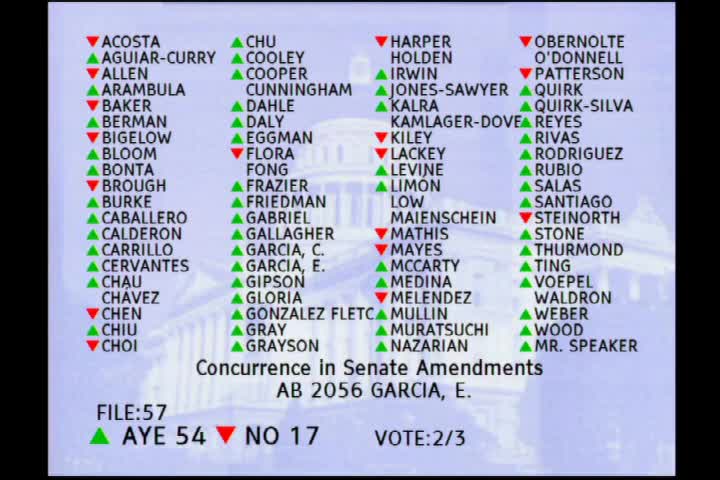
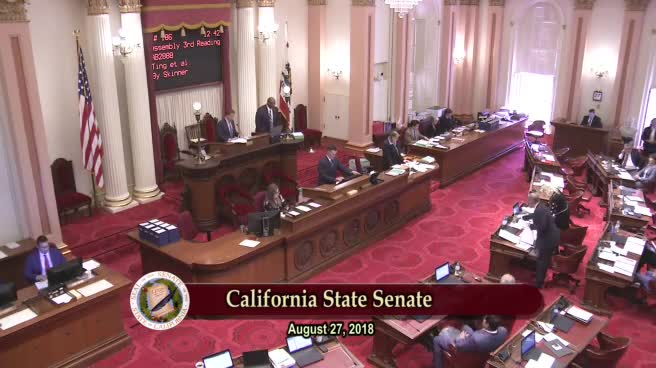
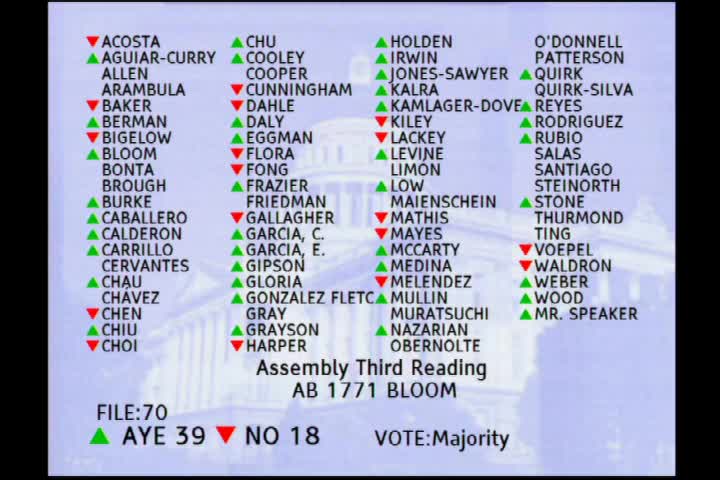
Bill Author