AB 2640: Fully protected species: Lost River sucker and shortnose sucker limited take authorization: California condor limited take authorization.
- Session Year: 2017-2018
- House: Assembly
- Latest Version Date: 2018-09-20
(1)The California Endangered Species Act (CESA) prohibits the taking of an endangered or threatened species, except as specified. Under CESA, the Department of Fish and Wildlife may authorize, by permit, the take of listed species if the take is incidental to an otherwise lawful activity and the impacts are minimized and fully mitigated.
Existing law prohibits the taking or possession of a fully protected fish, except as provided, and designates the Lost River sucker and the shortnose sucker as fully protected fish.
This bill would permit the department to authorize, under CESA, the take or possession of the Lost River sucker and shortnose sucker resulting from impacts attributable to or otherwise related to the decommissioning and removal of the Iron Gate Dam, the Copco 1 Dam, the Copco 2 Dam, or the J.C. Boyle Dam, each located on the Klamath River, consistent with the Klamath Hydroelectric Settlement Agreement, if specified conditions are met.
(2)The federal Endangered Species Act of 1973 (ESA) directs federal agencies, in consultation with the United States Secretary of the Interior or the United States Secretary of Commerce, as appropriate, to carry out conservation programs for endangered or threatened species listed under ESA. ESA generally prohibits activities affecting these threatened and endangered species unless authorized by a permit from the United States Fish and Wildlife Service or the National Marine Fisheries Service, as appropriate. ESA provides for enhancement of survival permits to allow actions necessary for the establishment and maintenance of experimental populations designated pursuant to ESA.
Existing law provides that a person who obtains a federal enhancement of survival permit that authorizes the taking of an endangered or threatened species that is also listed as an endangered, threatened, or candidate species under CESA, in order to establish or maintain an experimental population of the species pursuant to ESA, requires no further authorization or approval under CESA for that person to take that species as identified in, and in accordance with, the enhancement of survival permit, if specified requirements are met. Existing law also authorizes the incidental take of an endangered, threatened, or candidate species that is designated as an experimental population under ESA, without the need for further authorization or approval under CESA, if specified requirements are met.
Existing law prohibits the taking or possession of a fully protected bird, except as provided, and designates the California condor as a fully protected bird. Existing law authorizes the department to carry out a California condor preservation project that has objectives including habitat protection, field research, a captive breeding program, and a condor release program. Existing law requires the department, jointly with a specified federal-state condor recovery team established pursuant to ESA, to develop a plan to respond to these objectives.
This bill would provide that if the take of California condors under the Northern California Condor Restoration Program, as defined, is exempt from further authorization or approval under CESA based on acquisition of a federal enhancement of survival permit or based on a federal experimental population designation, and the Director of Fish and Wildlife finds the permit or designation, as applicable, to be consistent with the objectives and plans of the California condor preservation project, the take or possession of California condors under the Northern California Condor Restoration Program shall also be exempt from the above-described prohibitions against the taking or possession of any fully protected bird.
(1)The California Endangered Species Act (CESA) prohibits the taking of an endangered or threatened species, except as specified. Under CESA, the Department of Fish and Wildlife may authorize, by permit, the take of listed species if the take is incidental to an otherwise lawful activity and the impacts are minimized and fully mitigated.
Existing law prohibits the taking or possession of a fully protected fish, except as provided, and designates the Lost River sucker and the shortnose sucker as fully protected fish. The California Endangered Species Act prohibits the taking of an endangered or threatened species, except as specified. Under that act, the Department of Fish and Wildlife is permitted to authorize, by permit, the take of listed species if the take is incidental to an otherwise lawful activity and the impacts are minimized and fully mitigated.
This bill would permit the department to authorize, under the California Endangered Species Act, CESA, the take or possession of the Lost River sucker and shortnose sucker resulting from impacts attributable to or otherwise related to the decommissioning and removal of the Iron Gate Dam, the Copco 1 Dam, the Copco 2 Dam, or the J.C. Boyle Dam, each located on the Klamath River, consistent with the Klamath Hydroelectric Settlement Agreement, if specified conditions are met.
(2)The federal Endangered Species Act of 1973 (ESA) directs federal agencies, in consultation with the United States Secretary of the Interior or the United States Secretary of Commerce, as appropriate, to carry out conservation programs for endangered or threatened species listed under ESA. ESA generally prohibits activities affecting these threatened and endangered species unless authorized by a permit from the United States Fish and Wildlife Service or the National Marine Fisheries Service, as appropriate. ESA provides for enhancement of survival permits to allow actions necessary for the establishment and maintenance of experimental populations designated pursuant to ESA.
Existing law provides that a person who obtains a federal enhancement of survival permit that authorizes the taking of an endangered or threatened species that is also listed as an endangered, threatened, or candidate species under CESA, in order to establish or maintain an experimental population of the species pursuant to ESA, requires no further authorization or approval under CESA for that person to take that species as identified in, and in accordance with, the enhancement of survival permit, if specified requirements are met. Existing law also authorizes the incidental take of an endangered, threatened, or candidate species that is designated as an experimental population under ESA, without the need for further authorization or approval under CESA, if specified requirements are met.
Existing law prohibits the taking or possession of a fully protected bird, except as provided, and designates the California condor as a fully protected bird. Existing law authorizes the department to carry out a California condor preservation project that has objectives including habitat protection, field research, a captive breeding program, and a condor release program. Existing law requires the department, jointly with a specified federal-state condor recovery team established pursuant to ESA, to develop a plan to respond to these objectives.
This bill would provide that if the take of California condors under the Northern California Condor Restoration Program, as defined, is exempt from further authorization or approval under CESA based on acquisition of a federal enhancement of survival permit or based on a federal experimental population designation, and the Director of Fish and Wildlife finds the permit or designation, as applicable, to be consistent with the objectives and plans of the California condor preservation project, the take or possession of California condors under the Northern California Condor Restoration Program shall also be exempt from the above-described prohibitions against the taking or possession of any fully protected bird.
Existing law prohibits the taking or possession of a fully protected fish, except as provided, and designates the Lost River sucker and the shortnose sucker as fully protected fish. The California Endangered Species Act prohibits the taking of an endangered or threatened species, except as specified. Under that act, the Department of Fish and Wildlife is permitted to authorize, by permit, the take of listed species if the take is incidental to an otherwise lawful activity and the impacts are minimized and fully mitigated.
This bill would permit the department to authorize, under the California Endangered Species Act, the take or possession of the Lost River sucker and shortnose sucker resulting from impacts attributable to or otherwise related to the decommissioning and removal of the Iron Gate Dam, the Copco 1 Dam, the Copco 2 Dam, or the J.C. Boyle Dam, each located on the Klamath River, consistent with the Klamath Hydroelectric Settlement Agreement, if specified conditions are met.
Existing law prohibits the taking or possession of a fully protected fish, except as provided, and designates the Lost River sucker and the shortnose sucker as fully protected fish. The California Endangered Species Act prohibits the taking of an endangered or threatened species, except as specified. Under that act, the Department of Fish and Wildlife is permitted to authorize, by permit, the take of listed species if the take is incidental to an otherwise lawful activity and the impacts are minimized and fully mitigated.
This bill would permit the department to authorize, under the California Endangered Species Act, the take or possession of the Lost River sucker and shortnose sucker resulting from impacts attributable to or otherwise related to the decommissioning and removal of the Iron Gate Dam, Copco 1 Dam, Copco 2 Dam, or J.C. Boyle Dam, consistent with the Klamath Hydroelectric Settlement Agreement, if specified conditions are met.
Existing law prohibits the taking or possession of a fully protected fish, except as provided, and designates the Lost River sucker and the shortnose sucker as fully protected fish. The California Endangered Species Act prohibits the taking of an endangered or threatened species, except as specified. Under that act, the Department of Fish and Wildlife is permitted to authorize, by permit, the take of listed species if the take is incidental to an otherwise lawful activity and the impacts are minimized and fully mitigated.
This bill would permit the department to authorize, under the California Endangered Species Act, the take or possession of the Lost River sucker and shortnose sucker resulting from impacts attributable to or otherwise related to the decommissioning of the Iron Gate Dam, Copco 1 Dam, Copco 2 Dam, or J.C. Boyle Dam, consistent with the Klamath Hydroelectric Settlement Agreement, if specified conditions are met.
(a)The department may authorize, under this chapter, the take or possession of the Lost River sucker (Deltistes luxatus and Catostomus luxatus) and shortnose sucker (Chasmistes brevirostris) resulting from impacts attributable to or otherwise related to the decommissioning and removal of the Iron Gate Dam, the Copco 1 Dam, the Copco 2 Dam, or the J.C. Boyle Dam, each located on the Klamath River, consistent with the Klamath Hydroelectric Settlement Agreement, if all of the following conditions are met:
(1)The department finds the authorized take will not jeopardize the continued existence of the Lost River sucker or shortnose sucker.
(2)The impacts of the authorized take are minimized.
(3)The take authorization requires department approval of a sampling, salvage, and relocation plan to be implemented and that describes the measures necessary to minimize the take of adult Lost River sucker and shortnose sucker associated with the departments authorization. The plan shall provide for a sampling effort, the results of which will provide information used to make decisions and to implement the plan while utilizing the principles of adaptive management.
(b)This section shall not be construed to exempt the project described in subdivision (a) from any other law.
SEC. 2.Section 3858 is added to the Fish and Game Code, to read:3858.(a)For purposes of this section, the term Northern California Condor Restoration Program means the California condor restoration program in northern California associated with the California Condor Recovery Plan published by the United States Fish and Wildlife Service in April 1996, or a subsequent revision of that plan.
(b)Notwithstanding Section 3511, if the take of California condors under the Northern California Condor Restoration Program is exempt from further authorization or approval under Chapter 1.5 (commencing with Section 2050) of Division 3 pursuant to Section 2080.5 or 2080.6, and the director finds the enhancement of survival permit described in subdivision (a) of Section 2080.5 or federal regulations described in paragraph (1) of subdivision (b) of Section 2080.6, as applicable, to be consistent with the objectives and plans developed pursuant to this chapter, the take or possession of California condors under the Northern California Condor Restoration Program shall also be exempt from the prohibitions in Section 3511.
SEC. 3.Section 5515 of the Fish and Game Code is amended to read:5515.(a)(1)Except as provided in this section or Section 2081.4, 2081.6, 2081.7, 2081.10, 2081.11, 2089.7, or 2835, a fully protected fish shall not be taken or possessed at any time. No provision of this code or any other law shall be construed to authorize the issuance of a permit or license to take a fully protected fish, and no permit or license previously issued shall have force or effect for that purpose. However, the department may authorize the taking of a fully protected fish for necessary scientific research, including efforts to recover fully protected, threatened, or endangered species. Before authorizing the take of a fully protected fish, the department shall make an effort to notify all affected and interested parties to solicit information and comments on the proposed authorization. The notification shall be published in the California Regulatory Notice Register and be made available to each person who has notified the department, in writing, of his or her interest in fully protected species and who has provided an email address, if available, or postal address to the department. Affected and interested parties shall have 30 days after notification is published in the California Regulatory Notice Register to provide relevant information and comments on the proposed authorization.
(2)As used in this subdivision, scientific research does not include an action taken as part of specified mitigation for a project, as defined in Section 21065 of the Public Resources Code.
(3)A legally imported fully protected fish may be possessed under a permit issued by the department.
(b)The following are fully protected fish:
(1)Colorado River squawfish (Ptychocheilus lucius).
(2)Thicktail chub (Gila crassicauda).
(3)Mohave chub (Gila mohavensis).
(4)Lost River sucker (Deltistes luxatus and Catostomus luxatus).
(5)Modoc sucker (Catostomus microps).
(6)Shortnose sucker (Chasmistes brevirostris).
(7)Humpback sucker (Xyrauchen texanus).
(8)Owens pupfish (Cyprinodon radiosus).
(9)Unarmored threespine stickleback (Gasterosteus aculeatus williamsoni).
(10)Rough sculpin (Cottus asperrimus).
(a)The department may authorize, under this chapter, the take or possession of the Lost River sucker (Deltistes luxatus and Catostomus luxatus) and shortnose sucker (Chasmistes brevirostris) resulting from impacts attributable to or otherwise related to the decommissioning and removal of the Iron Gate Dam, the Copco 1 Dam, the Copco 2 Dam, or the J.C. Boyle Dam, each located on the Klamath River, consistent with the Klamath Hydroelectric Settlement Agreement, if all of the following conditions are met:
(1)The department finds the authorized take will not jeopardize the continued existence of the Lost River sucker or shortnose sucker.
(2)The impacts of the authorized take are minimized.
(3)The take authorization requires department approval of a sampling, salvage, and relocation plan to be implemented and that describes the measures necessary to minimize the take of adult Lost River sucker and shortnose sucker associated with the departments authorization. The plan shall provide for a sampling effort, the results of which will provide information used to make decisions and to implement the plan while utilizing the principles of adaptive management.
(b)This section shall not be construed to exempt the project described in subdivision (a) from any other law.
SEC. 2.Section 3858 is added to the Fish and Game Code, to read:3858.(a)For purposes of this section, the term Northern California Condor Restoration Program means the California condor restoration program in northern California associated with the California Condor Recovery Plan published by the United States Fish and Wildlife Service in April 1996, or a subsequent revision of that plan.
(b)Notwithstanding Section 3511, if the take of California condors under the Northern California Condor Restoration Program is exempt from further authorization or approval under Chapter 1.5 (commencing with Section 2050) of Division 3 pursuant to Section 2080.5 or 2080.6, and the director finds the enhancement of survival permit described in subdivision (a) of Section 2080.5 or federal regulations described in paragraph (1) of subdivision (b) of Section 2080.6, as applicable, to be consistent with the objectives and plans developed pursuant to this chapter, the take or possession of California condors under the Northern California Condor Restoration Program shall also be exempt from the prohibitions in Section 3511.
SEC. 2.SEC. 3.Section 5515 of the Fish and Game Code is amended to read:5515.(a)(1)Except as provided in this section or Section 2081.4, 2081.6, 2081.7, 2081.10, 2081.11, 2089.7, or 2835, a fully protected fish shall not be taken or possessed at any time. No provision of this code or any other law shall be construed to authorize the issuance of a permit or license to take a fully protected fish, and no permit or license previously issued shall have force or effect for that purpose. However, the department may authorize the taking of a fully protected fish for necessary scientific research, including efforts to recover fully protected, threatened, or endangered species. Before authorizing the take of a fully protected fish, the department shall make an effort to notify all affected and interested parties to solicit information and comments on the proposed authorization. The notification shall be published in the California Regulatory Notice Register and be made available to each person who has notified the department, in writing, of his or her interest in fully protected species and who has provided an email address, if available, or postal address to the department. Affected and interested parties shall have 30 days after notification is published in the California Regulatory Notice Register to provide relevant information and comments on the proposed authorization.
(2)As used in this subdivision, scientific research does not include an action taken as part of specified mitigation for a project, as defined in Section 21065 of the Public Resources Code.
(3)A legally imported fully protected fish may be possessed under a permit issued by the department.
(b)The following are fully protected fish:
(1)Colorado River squawfish (Ptychocheilus lucius).
(2)Thicktail chub (Gila crassicauda).
(3)Mohave chub (Gila mohavensis).
(4)Lost River sucker (Deltistes luxatus and Catostomus luxatus).
(5)Modoc sucker (Catostomus microps).
(6)Shortnose sucker (Chasmistes brevirostris).
(7)Humpback sucker (Xyrauchen texanus).
(8)Owens pupfish (Cyprinodon radiosus).
(9)Unarmored threespine stickleback (Gasterosteus aculeatus williamsoni).
(10)Rough sculpin (Cottus asperrimus).
(a)The department may authorize, under this chapter, the take or possession of the Lost River sucker (Deltistes luxatus) luxatus and Catostomus luxatus) and shortnose sucker (Chasmistes brevirostris) resulting from impacts attributable to or otherwise related to the decommissioning and removal of the Iron Gate Dam, the Copco 1 Dam, the Copco 2 Dam, or the J.C. Boyle Dam, each located on the Klamath River, consistent with the Klamath Hydroelectric Settlement Agreement, if all of the following conditions are met:
(1)The department determines finds the authorized take will not jeopardize the continued existence of the Lost River sucker or shortnose sucker.
(2)The impacts of the authorized take are minimized.
(3)The take authorization provides for the development and implementation of an adaptive management plan, approved by the department, for monitoring the effectiveness of, and adjusting as necessary, the measures to minimize the impacts of the authorized take.(3)The take authorization requires department approval of a sampling, salvage, and relocation plan to be implemented and that describes the measures necessary to minimize the take of adult Lost River sucker and shortnose sucker associated with the departments authorization. The plan shall provide for a sampling effort, the results of which will provide information used to make decisions and to implement the plan while utilizing the priniciples of adaptive management.
(b)This section shall not be construed to exempt the project described in subdivision (a) from any other law.
SEC. 2.Section 5515 of the Fish and Game Code is amended to read:5515.(a)(1)Except as provided in this section or Section 2081.4, 2081.6, 2081.7, 2081.10, 2081.11, 2089.7, or 2835, a fully protected fish shall not be taken or possessed at any time. No provision of this code or any other law shall be construed to authorize the issuance of a permit or license to take a fully protected fish, and no permit or license previously issued shall have force or effect for that purpose. However, the department may authorize the taking of a fully protected fish for necessary scientific research, including efforts to recover fully protected, threatened, or endangered species. Before authorizing the take of a fully protected fish, the department shall make an effort to notify all affected and interested parties to solicit information and comments on the proposed authorization. The notification shall be published in the California Regulatory Notice Register and be made available to each person who has notified the department, in writing, of his or her interest in fully protected species and who has provided an email address, if available, or postal address to the department. Affected and interested parties shall have 30 days after notification is published in the California Regulatory Notice Register to provide relevant information and comments on the proposed authorization.
(2)As used in this subdivision, scientific research does not include an action taken as part of specified mitigation for a project, as defined in Section 21065 of the Public Resources Code.
(3)A legally imported fully protected fish may be possessed under a permit issued by the department.
(b)The following are fully protected fish:
(1)Colorado River squawfish (Ptychocheilus lucius).
(2)Thicktail chub (Gila crassicauda).
(3)Mohave chub (Gila mohavensis).
(4)Lost River sucker (Catostomus luxatus). (Deltistes luxatus and Catostomus luxatus).
(5)Modoc sucker (Catostomus microps).
(6)Shortnose sucker (Chasmistes brevirostris).
(7)Humpback sucker (Xyrauchen texanus).
(8)Owens pupfish (Cyprinodon radiosus).
(9)Unarmored threespine stickleback (Gasterosteus aculeatus williamsoni).
(10)Rough sculpin (Cottus asperrimus).
(a)The department may authorize, under this chapter, the take or possession of the Lost River sucker (Deltistes luxatus) and shortnose sucker (Chasmistes brevirostris) resulting from impacts attributable to or otherwise related to the decommissioning and removal of the Iron Gate Dam, Copco 1 Dam, Copco 2 Dam, or J.C. Boyle Dam, consistent with the Klamath Hydroelectric Settlement Agreement, if all of the following conditions are met:
(1)The department determines the authorized take will not jeopardize the continued existence of the Lost River sucker or shortnose sucker.
(2)The impacts of the authorized take are minimized.
(3)The take authorization provides for the development and implementation of an adaptive management plan, approved by the department, for monitoring the effectiveness of, and adjusting as necessary, the measures to minimize the impacts of the authorized take.
(b)This section shall not be construed to exempt the project described in subdivision (a) from any other law.
SEC. 2.Section 5515 of the Fish and Game Code is amended to read:5515.(a)(1)Except as provided in this section or Section 2081.4, 2081.6, 2081.7, 2081.10, 2081.11, 2089.7, or 2835, a fully protected fish shall not be taken or possessed at any time. No provision of this code or any other law shall be construed to authorize the issuance of a permit or license to take a fully protected fish, and no permit or license previously issued shall have force or effect for that purpose. However, the department may authorize the taking of a fully protected fish for necessary scientific research, including efforts to recover fully protected, threatened, or endangered species. Before authorizing the take of a fully protected fish, the department shall make an effort to notify all affected and interested parties to solicit information and comments on the proposed authorization. The notification shall be published in the California Regulatory Notice Register and be made available to each person who has notified the department, in writing, of his or her interest in fully protected species and who has provided an email address, if available, or postal address to the department. Affected and interested parties shall have 30 days after notification is published in the California Regulatory Notice Register to provide relevant information and comments on the proposed authorization.
(2)As used in this subdivision, scientific research does not include an action taken as part of specified mitigation for a project, as defined in Section 21065 of the Public Resources Code.
(3)A legally imported fully protected fish may be possessed under a permit issued by the department.
(b)The following are fully protected fish:
(1)Colorado River squawfish (Ptychocheilus lucius).
(2)Thicktail chub (Gila crassicauda).
(3)Mohave chub (Gila mohavensis).
(4)Lost River sucker (Catostomus luxatus).
(5)Modoc sucker (Catostomus microps).
(6)Shortnose sucker (Chasmistes brevirostris).
(7)Humpback sucker (Xyrauchen texanus).
(8)Owens pupfish (Cyprinoden (Cyprinodon radiosus).
(9)Unarmored threespine stickleback (Gasterosteus aculeatus williamsoni).
(10)Rough sculpin (Cottus asperrimus).
(a)The department may authorize, under this chapter, the take or possession of the Lost River sucker (Deltistes luxatus) and shortnose sucker (Chasmistes brevirostris) resulting from impacts attributable to or otherwise related to the decommissioning of the Iron Gate Dam, Copco 1 Dam, Copco 2 Dam, or J.C. Boyle Dam, consistent with the Klamath Hydroelectric Settlement Agreement, if all of the following conditions are met:
(1)The department determines the authorized take will not jeopardize the continued existence of the Lost River sucker or shortnose sucker.
(2)The impacts of the authorized take are minimized.
(3)The take authorization provides for the development and implementation of an adaptive management plan, approved by the department, for monitoring the effectiveness of, and adjusting as necessary, the measures to minimize the impacts of the authorized take.
(b)This section shall not be construed to exempt the project described in subdivision (a) from any other law.
SEC. 2.Section 5515 of the Fish and Game Code is amended to read:5515.(a)(1)Except as provided in this section or Section 2081.4, 2081.6, 2081.7, 2081.10, 2081.11, 2089.7, or 2835, a fully protected fish shall not be taken or possessed at any time. No provision of this code or any other law shall be construed to authorize the issuance of a permit or license to take a fully protected fish, and no permit or license previously issued shall have force or effect for that purpose. However, the department may authorize the taking of a fully protected fish for necessary scientific research, including efforts to recover fully protected, threatened, or endangered species. Before authorizing the take of a fully protected fish, the department shall make an effort to notify all affected and interested parties to solicit information and comments on the proposed authorization. The notification shall be published in the California Regulatory Notice Register and be made available to each person who has notified the department, in writing, of his or her interest in fully protected species and who has provided an email address, if available, or postal address to the department. Affected and interested parties shall have 30 days after notification is published in the California Regulatory Notice Register to provide relevant information and comments on the proposed authorization.
(2)As used in this subdivision, scientific research does not include an action taken as part of specified mitigation for a project, as defined in Section 21065 of the Public Resources Code.
(3)A legally imported fully protected fish may be possessed under a permit issued by the department.
(b)The following are fully protected fish:
(1)Colorado River squawfish (Ptychocheilus lucius).
(2)Thicktail chub (Gila crassicauda).
(3)Mohave chub (Gila mohavensis).
(4)Lost River sucker (Catostomus luxatus).
(5)Modoc sucker (Catostomus microps).
(6)Shortnose sucker (Chasmistes brevirostris).
(7)Humpback sucker (Xyrauchen texanus).
(8)Owens pupfish (Cyprinoden radiosus).
(9)Unarmored threespine stickleback (Gasterosteus aculeatus williamsoni).
(10)Rough sculpin (Cottus asperrimus).
|
Date
|
Status
|
|---|---|
| Sep 20, 2018 | Chaptered by Secretary of State - Chapter 586, Statutes of 2018. |
| Sep 20, 2018 | Approved by the Governor. |
| Sep 10, 2018 | Enrolled and presented to the Governor at 3:30 p.m. |
| Aug 30, 2018 | Senate amendments concurred in. To Engrossing and Enrolling. |
| Aug 29, 2018 | In Assembly. Concurrence in Senate amendments pending. |
| Aug 29, 2018 | Read third time. Passed. Ordered to the Assembly. |
| Aug 24, 2018 | Read second time. Ordered to third reading. |
| Aug 23, 2018 | Read third time and amended. Ordered to second reading. |
| Jul 3, 2018 | Read second time. Ordered to third reading. |
| Jul 2, 2018 | From committee: Be ordered to second reading pursuant to Senate Rule 28.8. |
| Jun 20, 2018 | Read second time and amended. Re-referred to Com. on APPR. |
| Jun 19, 2018 | From committee: Amend, and do pass as amended and re-refer to Com. on APPR. (Ayes 7. Noes 1.) (June 12). |
| May 24, 2018 | Referred to Com. on N.R. & W. |
| May 15, 2018 | In Senate. Read first time. To Com. on RLS. for assignment. |
| May 14, 2018 | Read third time. Passed. Ordered to the Senate. |
| May 10, 2018 | Read second time. Ordered to third reading. |
| May 9, 2018 | From committee: Do pass. (Ayes 11. Noes 5.) (May 9). |
| Apr 24, 2018 | From committee: Do pass and re-refer to Com. on APPR. (Ayes 11. Noes 2.) (April 24). Re-referred to Com. on APPR. |
| Apr 18, 2018 | Re-referred to Com. on W.,P., & W. |
| Apr 17, 2018 | From committee chair, with author's amendments: Amend, and re-refer to Com. on W.,P., & W. Read second time and amended. |
| Mar 8, 2018 | Referred to Com. on W.,P., & W. |
| Feb 16, 2018 | From printer. May be heard in committee March 18. |
| Feb 15, 2018 | Read first time. To print. |
|
Date
|
Description
|
Location
|
Votes
|
|
|---|---|---|---|---|
| Aug 30, 2018 | AB 2640 WOOD Concurrence in Senate Amendments | Assembly Floor |
Passed |
|
| Aug 29, 2018 | Assembly 3rd Reading AB2640 Wood By McGuire | Senate Floor |
Passed |
|
| Jun 12, 2018 | Do pass as amended, but first amend, and re-refer to the Committee on [Appropriations] | Senate Standing Committee on Natural Resources and Water |
Passed |
|
| May 14, 2018 | AB 2640 WOOD Assembly Third Reading | Assembly Floor |
Passed |
|
| May 9, 2018 | Do pass. | Assembly Standing Committee on Appropriations |
Passed |
|
| Apr 24, 2018 | Do pass and be re-referred to the Committee on [Appropriations] | Assembly Standing Committee on Water, Parks, and Wildlife |
Passed |
This list shows positions taken on this bill by organizations on the date displayed, which is linked to the original source.
Positions by individuals are not included.
CONCURRENCE IN SENATE AMENDMENTS
CSA1 Bill Id:AB 2640
Author:(Wood)
As Amended Ver:August 23, 2018
Majority vote
ASSEMBLY: | 56-20 | (May 14, 2018) | SENATE: | 27-11 | (August 29, 2018) |
Original Committee Reference: W., P., & W.
SUMMARY: Exempts the take or possession of California condors under the Northern California Condor Restoration Program, as described, from prohibitions against the taking or possession of any fully protected bird and permits the Department of Fish and Wildlife (DFW) to authorize the take or possession of the Lost River and shortnose sucker fish, fully protected fish species, resulting from the decommissioning and removal of four dams on the Klamath River, subject to certain conditions.
The Senate amendments add provisions relating to the Northern California Condor Restoration Program and make several other changes:
- Exempt the take or possession of California condors under the Northern California Condor Restoration Program from prohibitions against the taking or possession of any fully protected bird.
- Provide that the take of California condors under the Northern California Condor Restoration Program, as defined, is exempt from further authorization or approval under the California Endangered Species Act (CESA) if the Director of the DFW finds the federal enhancement of survival permit or federal experimental population designation, as applicable, to be consistent with the objectives and plans of the California condor preservation project.
- Revise one of the conditions for the take authorization of Lost River and shortnose sucker fish to require the implementation of a sampling, salvage, and relocation plan, and require the plan to describe the measures necessary to minimize the take of adult sucker fish.
- Make several technical and clarifying changes.
EXISTING LAW:
- Defines take as hunting, pursuing, catching, capturing, or killing, or attempt to hunt, pursue, catch, capture, or kill. (Fish and Game Code Section(FGC) 86)
- Prohibits the take of species listed as endangered or threatened under CESA, except as specified. (FGC 2080)
- Allows the DFW to authorize, by permit, the take of listed species if the take is incidental to an otherwise lawful activity and the impacts are minimized and fully mitigated. (FGC 2081)
- Prohibits the taking or possession of a fully protected bird, except as provided, and designates the California condor as a fully protected bird. (FGC 3511)
- Authorizes the DFW to carry out a California condor preservation project that has objectives including habitat protection, field research, a captive breeding program, and a condor release program. (FGC 3850)
- Provides, under the federal Endangered Species Act of 1973 (ESA), for enhancement of survival permits to allow actions necessary for the establishment and maintenance of experimental populations designated pursuant to the ESA. (16 United States Code Section 1539 (a)(1)(A))
- Requires no further authorization or approval under CESA for take of species identified in the ESA and in accordance with an enhancement of survival permit, if specified requirements are met, in order to establish or maintain an experimental population of the species pursuant to the ESA. (FGC 2080.5)
- Authorizes the incidental take of an endangered, threatened, or candidate species that is designated as an experimental population under the ESA, without the need for further authorization or approval under CESA, if specified requirements are met. (FGC 2080.6)
- Prohibits the taking or possession of a fully protected fish, except as provided, and designates the Lost River sucker and the shortnose sucker as fully protected fish. (FGC 5515)
- Requires the DFW, prior to authorizing the take of any fully protected species, to make an effort to notify all affected and interested parties to solicit information and comments on the proposed authorization. (FGC 5050(a))
FISCAL EFFECT: Due to amendments, the fiscal effect of this bill is unknown. According to the Assembly Appropriations Committee, there is no direct fiscal impact associated with the provisions of this bill relating to sucker fish.
COMMENTS:
Fully Protected Species. Unlike species listed as threatened or endangered under CESA, the fully protected species law does not allow for incidental or accidental take nor does it provide for mitigation. Fully protected species may not be taken or possessed at any time, and no licenses or permits may be issued for their take except for scientific research or the relocation of bird species for the protection of livestock. The Legislature has previously authorized exceptions to allow take of fully protected species for specific projects. The bills implementing these exceptions typically include provisions requiring compliance with CESA conditions for mitigation, minimization, avoidance of jeopardy, and monitoring, and requirements that projects include measures to meet a conservation standard.
California Condor. A group of governmental and non-governmental organizations, including the DFW, the National Park Service, the U.S. Fish and Wildlife Service (USFWS), and the Yurok Tribe, have signed an agreement to work toward establishing a release site for California condors in northern California in and around the Yurok Ancestral Territory. This interagency project would continue efforts to restore condors in California and would further the goal of returning the condor to its historical geographic range.
The USFWS is currently engaged in the decision-making and public review process necessary for reintroduction of the condor as a non-essential, experimental population under the federal ESA. This bill would allow an exemption under the California fully protected species law which would enable the DFW to permit the project once it is approved at the federal level.
Lost River and Shortnose Sucker Fish. Four dams – Iron Gate Dam, Copco 1 Dam, Copco 2 Dam, and J.C. Boyle Dam on the Klamath River – are operated by PacifiCorp for hydroelectric power generation. Removal of the four dams is scheduled to begin in 2020, following a process administered by the Federal Energy Regulatory Commission. This bill allows for a limited take authorization for Lost River suckers and shortnose suckers, which is required for the dam removal to proceed. Removal of the dams will result in the restoration of fish species to 400 miles of river for spawning.
Analysis Prepared by: Keith Cialino / W., P., & W. / (916) 319-2096 FN: 0004885
Office of Senate Floor Analyses (916) 651-1520 Fax: (916) 327-4478 | AB |
THIRD READING
Bill No: AB 2640
:
SENATE NATURAL RES. & WATER COMMITTEE: 7-1, 6/12/18
AYES: Hertzberg, Allen, Hueso, Jackson, McGuire, Monning, Stern
NOES: Stone
NO VOTE RECORDED: Vidak
SENATE APPROPRIATIONS COMMITTEE: Senate Rule 28.8
ASSEMBLY FLOOR: 56-20, 5/14/18 - See last page for vote
DIGEST:
This bill permits the California Department of Fish and Wildlife (department) to authorize the take or possession of Lost River sucker fish and shortnose sucker fish, both fully protected species, resulting from the decommissioning and removal of four dams on the Klamath River, subject to certain conditions, and also authorizes the take or possession of the fully protected California condor under the conservation program, the Northern California Condor Restoration Program, subject to certain conditions and findings by the director of the department.
Senate Floor Amendments of 8/23/18 add the California condor provisions.
Existing federal law:
- Establishes the federal Endangered Species Act of 1973 (ESA).
- The ESA directs federal agencies, in consultation with the U.S. Secretary of the Interior or the U.S. Secretary of Commerce, as appropriate, to carry out conservation programs for endangered or threatened species listed under the ESA.
- The ESA generally prohibits activities affecting these threatened and endangered species unless authorized by a permit from the U.S. Fish and Wildlife Service or the National Marine Fisheries Service, as applicable.
- The ESA provides for the enhancement of survival permits to allow actions necessary for the establishment and maintenance of experimental populations designated pursuant to the ESA.
Existing state law:
- Establishes the California Department of Fish and Wildlife (department) to, among other things, manage the state’s diverse fish, wildlife, and plant resources.
- Prohibits the take of species listed as endangered or threatened under the California Endangered Species Act (CESA)(Fish and Game Code §§2050 et seq.), as specified.
- Prohibits the take or possession of a fully protected fish, except as provided. The Lost River sucker fish and shortnose sucker fish are designated as fully protected fish.
- Prohibits the take or possession of a fully protected bird, except as provided. The California condor is designated as a fully protected bird.
- Allows the department to authorize, by permit, the take of listed species if the take is incidental to an otherwise lawful activity and the impacts are minimized and fully mitigated.
- Requires the department, prior to authorizing the take of any fully protected species, to make an effort to notify all affected and interested parties to solicit information and comments on the proposed authorization.
- Provides that a person who obtains a federal enhancement of survival permit that authorizes the taking of an endangered or threatened species that is also listed as an endangered, threatened, or candidate species under CESA, in order to establish or maintain an experimental populations of the species pursuant to ESA, requires no further authorization or approval under CESA for that person to take that species as identified in, and in accordance with, the enhancement of survival permit, if specified requirements are met.
- Authorizes the incidental take of an endangered, threatened, or candidate species that is designated as an experimental population under ESA, without the need for further authorization or approval under CESA, if specified requirements are met.
- Authorizes the department to carry out a California condor preservation project that has objectives including habitat protection, field research, a captive breeding program, and a condor release program.
- The department is required to develop a plan to respond to these objectives jointly with a specified federal/state condor recovery team established pursuant to the ESA.
This bill permits the department to authorize the take or possession of Lost River sucker fish and shortnose sucker fish, both fully protected species, resulting from the decommissioning and removal of four dams on the Klamath River, subject to certain conditions and also to authorize the take or possession of the fully protected California condor under the conservation program, the Northern California Condor Restoration Program, subject to certain conditions and findings by the director of the department. Specifically, this bill:
- Permits the department to authorize, under CESA, the take or possession of the Lost River sucker fish and shortnose sucker fish resulting from impacts attributable to, or otherwise related to, the decommissioning and removal of the Iron Gate, Copco 1, Copco 2 or J.C. Boyle Dams, consistent with the Klamath Hydroelectric Settlement Agreement (KHSA) if all of the following conditions are met:
- The department determines the authorized take will not jeopardize the continued existence of the Lost River or shortnose sucker fish.
- The impacts of the authorized take are minimized, and
- The take authorization requires departmental approval of a sampling, salvage, and relocation plan, as specified.
- Provides that this authorization for take shall not be construed to exempt the project from any other law, as specified.
- Provides that if the take of California condors under the Northern California Condor Restoration Program is exempt from further authorization or approval under CESA based on acquisition of a federal enhancement of survival permit or based on a federal experimental population designation, and the director of the department finds the permit or designation, as applicable, to be consistent with the objectives and plans of the California condor preservation project, the take or possession of California condors under the Northern California Condor Restoration Program shall also be exempt from the prohibitions against the taking or possession of any fully protected bird.
- The Northern California Condor Restoration Program is the California condor restoration program in northern California associated with the California Condor Recovery Plan published by the U.S. Fish and Wildlife Service in April 1996 or a subsequent revision of that plan.
- Makes additional conforming and technical changes to statute.
Background
PacifiCorp operates four dams on the Klamath River for hydroelectric power generation. These dams are the Iron Gate Dam, Copco 1 Dam, Copco 2 Dam, and J.C. Boyle Dam. Existing laws require that the dams be modified to provide passage for salmon, steelhead and other fish species. Estimates of the modification costs exceed that for dam removal. PacifiCorp and more than 40 other stakeholders executed the KHSA in February 2010. Efforts were made to obtain Congressional approval for the KHSA and two additional related Klamath River agreements but they failed. In 2016, the U.S. Departments of Interior and Commerce, PacifiCorp, Oregon, California and additional stakeholders signed the Klamath Basin Restoration Agreement (KBRA) and an amended KHSA in order to authorize the removal of the four dams. The dams on the Klamath River and their potential removal have been very controversial and subject to litigation. According to Cal Trout, agreements between the states of Oregon and California are leading to the removal of four dams absent congressional action. Funding for California’s contribution is available through Proposition 1 approved by the voters in 2014. Site preparation and related activities for removal of the dams is currently scheduled to start in 2020, although actual decommissioning and removal will not start until 2021 at the earliest. Necessary federal and state regulatory processes that may affect the schedule (e.g. environmental impact statement, among other things) remain underway.
A limited take authorization for the Lost River and shortnose sucker fish is required to facilitate the execution of these agreements and the removal of the four dams. The two species are thought to have originated in Upper Klamath Lake in Oregon and populations have moved downstream over time to the reservoirs behind these dams. These populations are not thought to represent viable, self-supporting populations; do not interact with the Upper Klamath Lake populations; and are not part of the species’ recovery units.
Comments
Preparing for and addressing habitat loss from dam removal. The removal of these four dams will result in the loss of habitat for the non-viable populations of Lost River sucker and shortnose sucker fish behind them. This habitat is not designated critical habitat for either species. The Klamath River Renewal Corporation – the entity that will manage dam removal, land restoration following removal and implementation of required mitigation measures – has a salvage and relocation plan, subject to department and federal approval, for these fish. The plan includes further effort to understand the genetics and other relevant science.
Limited and conditional California condor take authorization. The take of the California condor is only authorized incidental to the existing federal/state preservation program and if the department’s director makes certain findings.
Related/Prior Legislation
SB 495 (Vidak, 2018) authorizes the department to permit under CESA the possession of blunt-nosed leopard lizards resulting from impacts attributable to certain activities undertaken by the Allensworth Community Services District, as specified. This bill is enrolled and pending before the Governor.
AB 1845 (Dahle, Chapter 293, Statutes of 2016) authorized the department to permit take of rough sculpin, a fully protected fish, resulting from the replacement of Spring Creek Bridge in Shasta County, subject to specified conditions.
FISCAL EFFECT: Appropriation: Fiscal Com.: Local:
American Rivers
Association of California Water Agencies
California Department of Fish and Wildlife
California Trout
Karuk Tribe
Northern California Council of the Federation of Fly Fishers
Pacific Coast Federation of Fishermen’s Associations
Salmon River Restoration Council
Sustainable Northwest
Trout Unlimited
Yurok Tribe
OPPOSITION: (Verified 8/24/18)
Siskiyou County Board of Supervisors
ARGUMENTS IN SUPPORT: According to the author, “[f]or decades tribes, environmental groups, and the fishing community have worked with stakeholders to reopen the over 400 miles of fish spawning habitat upstream of the Klamath dams to native fish species. The dams were constructed as hydroelectric facilities between 1906 and 1964. Today these aging dams produce relatively little electricity and PacificCorp, the company that owns the dams, estimates it will cost several hundred million dollars to bring the dams into compliance with current law. In 2016, California, Oregon, the federal government and PacificCorp came to an agreement that set plans in motion to remove the four dams that currently stand on the Klamath River. This bill is required to facilitate the execution of that agreement.”
California Trout writing in support further notes “[w]hile the take of an endangered species is regrettable, the long-term restoration benefits outweigh the immediate and potential costs associated with their removal.”
ARGUMENTS IN OPPOSITION: In an opposition letter, the Siskiyou County Board of Supervisors state “[a]t the same time that the [Klamath] Tribe is seeking an injunction which would shut down farming and ranching in the Klamath Project to save fully protected suckers, AB 2640 is positioned to grant a legislative waiver of these protections, for a project that would permanently eliminate reservoir habitat above the dams currently occupied by both sucker species, and would result in the extirpation of the species in that portion of their range.”
ASSEMBLY FLOOR: 56-20, 5/14/18
AYES: Acosta, Aguiar-Curry, Arambula, Baker, Berman, Bloom, Bonta, Burke, Caballero, Calderon, Carrillo, Cervantes, Chau, Chávez, Chiu, Chu, Cooley, Cooper, Daly, Eggman, Frazier, Friedman, Eduardo Garcia, Gipson, Gloria, Gonzalez Fletcher, Gray, Grayson, Holden, Irwin, Jones-Sawyer, Kalra, Kamlager-Dove, Levine, Limón, Low, Maienschein, McCarty, Medina, Mullin, Muratsuchi, Nazarian, O'Donnell, Quirk, Quirk-Silva, Reyes, Rodriguez, Rubio, Salas, Santiago, Mark Stone, Thurmond, Ting, Weber, Wood, Rendon
NOES: Travis Allen, Bigelow, Brough, Chen, Choi, Cunningham, Dahle, Flora, Fong, Gallagher, Harper, Kiley, Lackey, Mayes, Melendez, Obernolte, Patterson, Steinorth, Voepel, Waldron
NO VOTE RECORDED: Cristina Garcia, Mathis
8/24/18 14:57:16
**** END ****
Office of Senate Floor Analyses (916) 651-1520 Fax: (916) 327-4478 | AB |
THIRD READING
Bill No: AB 2640
:
SENATE NATURAL RES. & WATER COMMITTEE: 7-1, 6/12/18
AYES: Hertzberg, Allen, Hueso, Jackson, McGuire, Monning, Stern
NOES: Stone
NO VOTE RECORDED: Vidak
SENATE APPROPRIATIONS COMMITTEE: Senate Rule 28.8
ASSEMBLY FLOOR: 56-20, 5/14/18 - See last page for vote
DIGEST:
This bill permits the California Department of Fish and Wildlife to authorize the take or possession of Lost River sucker fish and shortnose sucker fish, both fully protected species, resulting from the decommissioning and removal of four dams on the Klamath River, subject to certain conditions.
Existing law:
- Establishes the California Department of Fish and Wildlife (department) to, among other things, manage the state’s diverse fish, wildlife, and plant resources.
- Prohibits the take of species listed as endangered or threatened under the California Endangered Species Act (CESA)(Fish and Game Code §§2050 et seq.), as specified.
- Prohibits the take or possession of a fully protected fish is prohibited, except as provided. The Lost River sucker fish and shortnose sucker fish are designated as fully protected fish.
- Allows the department to authorize, by permit, the take of listed species if the take is incidental to an otherwise lawful activity and the impacts are minimized and fully mitigated.
- Requires the department, prior to authorizing the take of any fully protected species, to make an effort to notify all affected and interested parties to solicit information and comments on the proposed authorization.
This bill permits the department to authorize the take or possession of Lost River sucker fish and shortnose sucker fish, both fully protected species, resulting from the decommissioning and removal of four dams on the Klamath River, subject to certain conditions. Specifically, this bill:
- Permits the department to authorize, under CESA, the take or possession of the Lost River sucker fish and shortnose sucker fish resulting from impacts attributable to, or otherwise related to, the decommissioning and removal of the Iron Gate, Copco 1, Copco 2 or J.C. Boyle Dams, consistent with the Klamath Hydroelectric Settlement Agreement (KHSA) if all of the following conditions are met:
- The department determines the authorized take will not jeopardize the continued existence of the Lost River or shortnose sucker fish.
- The impacts of the authorized take are minimized, and
- The take authorization requires departmental approval of a sampling, salvage, and relocation plan, as specified.
- Provides that this authorization for take shall not be construed to exempt the project from any other law, as specified.
- Makes additional conforming and technical changes to statute.
Background
PacifiCorp operates four dams on the Klamath River for hydroelectric power generation. These dams are the Iron Gate Dam, Copco 1 Dam, Copco 2 Dam, and J.C. Boyle Dam. Existing laws require that the dams be modified to provide passage for salmon, steelhead and other fish species. Estimates of the modification costs exceed that for dam removal. PacifiCorp and more than 40 other stakeholders executed the KHSA in February 2010. Efforts were made to obtain Congressional approval for the KHSA and two additional related Klamath River agreements but they failed. In 2016, the U.S. Departments of Interior and Commerce, PacifiCorp, Oregon, California and additional stakeholders signed the Klamath Basin Restoration Agreement (KBRA) and an amended KHSA in order to authorize the removal of the four dams. The dams on the Klamath River and their potential removal have been very controversial and subject to litigation. According to Cal Trout, agreements between the states of Oregon and California are leading to the removal of four dams absent congressional action. Funding for California’s contribution is available through Proposition 1 approved by the voters in 2014. Site preparation and related activities for removal of the dams is currently scheduled to start in 2020, although actual decommissioning and removal will not start until 2021 at the earliest. Necessary federal and state regulatory processes that may affect the schedule (e.g. environmental impact statement, among other things) remain underway.
A limited take authorization for the Lost River and shortnose sucker fish is required to facilitate the execution of these agreements and the removal of the four dams. The two species are thought to have originated in Upper Klamath Lake in Oregon and populations have moved downstream over time to the reservoirs behind these dams. These populations are not thought to represent viable, self-supporting populations; do not interact with the Upper Klamath Lake populations; and are not part of the species’ recovery units.
Comments
Preparing for and addressing habitat loss. The removal of these four dams will result in the loss of habitat for the non-viable populations of Lost River sucker and shortnose sucker fish behind them. This habitat is not designated critical habitat for either species. The Klamath River Renewal Corporation – the entity that will manage dam removal, land restoration following removal and implementation of required mitigation measures – has a salvage and relocation plan, subject to department and federal approval, for these fish. The plan includes further effort to understand the genetics and other relevant science.
Related/Prior Legislation
SB 495 (Vidak, 2018) authorizes the department to permit under CESA the possession of blunt-nosed leopard lizards resulting from impacts attributable to certain activities undertaken by the Allensworth Community Services District, as specified. This bill is pending on the Assembly floor.
AB 1845 (Dahle, Chapter 293, Statutes of 2016) authorized the department to permit take of rough sculpin, a fully protected fish, resulting from the replacement of Spring Creek Bridge in Shasta County, subject to specified conditions.
FISCAL EFFECT: Appropriation: Fiscal Com.: Local:
American Rivers
Association of California Water Agencies
California Department of Fish and Wildlife
California Trout
Karuk Tribe
Northern California Council of the Federation of Fly Fishers
Pacific Coast Federation of Fishermen’s Associations
Salmon River Restoration Council
Sustainable Northwest
Trout Unlimited
Yurok Tribe
Siskiyou County Board of Supervisors
ARGUMENTS IN SUPPORT: According to the author, “[f]or decades tribes, environmental groups, and the fishing community have worked with stakeholders to reopen the over 400 miles of fish spawning habitat upstream of the Klamath dams to native fish species. The dams were constructed as hydroelectric facilities between 1906 and 1964. Today these aging dams produce relatively little electricity and PacificCorp, the company that owns the dams, estimates it will cost several hundred million dollars to bring the dams into compliance with current law. In 2016, California, Oregon, the federal government and PacificCorp came to an agreement that set plans in motion to remove the four dams that currently stand on the Klamath River. This bill is required to facilitate the execution of that agreement.”
California Trout writing in support further notes “[w]hile the take of an endangered species is regrettable, the long-term restoration benefits outweigh the immediate and potential costs associated with their removal.”
ARGUMENTS IN OPPOSITION: In an opposition letter, the Siskiyou County Board of Supervisors state “[a]t the same time that the [Klamath] Tribe is seeking an injunction which would shut down farming and ranching in the Klamath Project to save fully protected suckers, AB 2640 is positioned to grant a legislative waiver of these protections, for a project that would permanently eliminate reservoir habitat above the dams currently occupied by both sucker species, and would result in the extirpation of the species in that portion of their range.”
ASSEMBLY FLOOR: 56-20, 5/14/18
AYES: Acosta, Aguiar-Curry, Arambula, Baker, Berman, Bloom, Bonta, Burke, Caballero, Calderon, Carrillo, Cervantes, Chau, Chávez, Chiu, Chu, Cooley, Cooper, Daly, Eggman, Frazier, Friedman, Eduardo Garcia, Gipson, Gloria, Gonzalez Fletcher, Gray, Grayson, Holden, Irwin, Jones-Sawyer, Kalra, Kamlager-Dove, Levine, Limón, Low, Maienschein, McCarty, Medina, Mullin, Muratsuchi, Nazarian, O'Donnell, Quirk, Quirk-Silva, Reyes, Rodriguez, Rubio, Salas, Santiago, Mark Stone, Thurmond, Ting, Weber, Wood, Rendon
NOES: Travis Allen, Bigelow, Brough, Chen, Choi, Cunningham, Dahle, Flora, Fong, Gallagher, Harper, Kiley, Lackey, Mayes, Melendez, Obernolte, Patterson, Steinorth, Voepel, Waldron
NO VOTE RECORDED: Cristina Garcia, Mathis
7/3/18 16:02:23
**** END ****
SENATE COMMITTEE ON NATURAL RESOURCES AND WATER
Senator Robert Hertzberg, Chair
2017 - 2018 Regular
Bill No: AB 2640 Hearing Date: June 12, 2018
Author: | |||
Version: | > | ||
Urgency: | Fiscal: | ||
Consultant: | |||
Subject: Protected species: Lost River sucker and shortnose sucker limited take authorization
BACKGROUND AND EXISTING LAW
Existing law:
- Establishes the Department of Fish and Wildlife (department) to, among other things, manage the state’s diverse fish, wildlife, and plant resources.
- Prohibits the take of species listed as endangered or threatened under the California Endangered Species Act (CESA)(Fish and Game Code sections 2050 et seq.), as specified.
- Prohibits the take or possession of a fully protected fish is prohibited, except as provided.
- The Lost River sucker and shortnose sucker are designated as fully protected fish.
- Allows the department to authorize, by permit, the take of listed species if the take is incidental to an otherwise lawful activity and the impacts are minimized and fully mitigated.
- Requires the department, prior to authorizing the take of any fully protected species, to make an effort to notify all affected and interested parties to solicit information and comments on the proposed authorization.
PacifiCorp operates four dams on the Klamath River for hydroelectric power generation. These dams are the Iron Gate Dam, Copco 1 Dam, Copco 2 Dam, and J.C. Boyle Dam. Existing laws require that the dams be modified to provide passage for salmon, steelhead and other fish species. Estimates of the modification costs exceed that for dam removal. PacifiCorp and more than 40 other stakeholders executed the Klamath Hydroelectric Settlement Agreement (KHSA) in February 2010. Efforts were made to obtain Congressional approval for the KHSA and two additional related Klamath River agreements but they failed. In 2016, the U.S. Departments of Interior and Commerce, PacifiCorp, Oregon, California and additional stakeholders signed the Klamath Basin Restoration Agreement (KBRA) and an amended KHSA in order to authorize the removal of the four dams. The dams on the Klamath River and their potential removal have been very controversial and subject to litigation. According to Cal Trout, agreements between the states of Oregon and California are leading to the removal of four dams absent congressional action. Funding for California’s contribution is available through Proposition 1 approved by the voters in 2014. Site preparation and related activities for removal of the dams is currently scheduled to start in 2020, although actual decommissioning and removal will not start until 2021 at the earliest. Necessary federal and state regulatory processes that may affect the schedule (e.g. environmental impact statement, among other things) remain underway.
A limited take authorization for the Lost River and shortnose suckers is required to facilitate the execution of these agreements and the removal of the four dams. The two species are thought to have originated in Upper Klamath Lake in Oregon and populations have moved downstream over time to the reservoirs behind these dams. These populations are not thought to represent viable, self-supporting populations; do not interact with the Upper Klamath Lake populations; and are not part of the species’ recovery units.
PROPOSED LAW
This bill would permit the department to authorize the take or possession of Lost River and shortnose sucker fish, fully protected species, resulting from the decommissioning and removal of four dams on the Klamath River, subject to certain conditions. Specifically, this bill would:
- Permit the department to authorize, under CESA, the take or possession of the Los River and shortnose sucker fish resulting from impacts attributable to, or otherwise related to, the decommissioning and removal of the Iron Gate, Copco 1, Copco 2 or J.C. Boyle Dams, consistent with the KHSA if all of the following conditions are met:
- The department determines the authorized take will not jeopardize the continued existence of the Lost River or shortnose sucker fish.
- The impacts of the authorized take are minimized, and
- The take authorization provides for the development and implementation of a department-approved adaptive management plan for monitoring the effectiveness of, and adjusting as necessary the measures to minimize the impacts of the authorized take.
- Provide that this authorization for take shall not be construed to exempt the project from any other law, as specified.
- Make additional conforming and technical changes to statute.
ARGUMENTS IN SUPPORT
According to the author, “[f]or decades tribes, environmental groups, and the fishing community have worked with stakeholders to reopen the over 400 miles of fish spawning habitat upstream of the Klamath dams to native fish species. The dams were constructed as hydroelectric facilities between 1906 and 1964. Today these aging dams produce relatively little electricity and PacificCorp, the company that owns the dams, estimates it will cost several hundred million dollars to bring the dams into compliance with current law. In 2016, California, Oregon, the federal government and PacificCorp came to an agreement that set plans in motion to remove the four dams that currently stand on the Klamath River. This bill is required to facilitate the execution of that agreement.”
California Trout writing in support further notes “[w]hile the take of an endangered species is regrettable, the long-term restoration benefits outweigh the immediate and potential costs associated with their removal.”
ARGUMENTS IN OPPOSITION
In a late opposition letter, the Siskiyou County Board of Supervisors state “[a]t the same time that the [Klamath] Tribe is seeking an injunction which would shut down farming and ranching in the Klamath Project to save fully protected suckers, AB 2640 is positioned to grant a legislative waiver of these protections, for a project that would permanent eliminate reservoir habitat above the dams currently occupied by both sucker species, and would result in the extirpation of the species in that portion of their range.”
COMMENTS
Preparing for and addressing habitat loss. The removal of these four dams will result in the loss of habitat for the non-viable populations of Lost River sucker and shortnose sucker fish behind them. This habitat is not designated critical habitat for either species. The Klamath River Renewal Corporation – the entity that will manage dam removal, land restoration following removal and implementation of required mitigation measures – has a salvage and relocation plan, subject to department and federal approval, for these fish. The plan includes further effort to understand the genetics and other relevant science. The Committee may wish to explicitly require these agreed-upon efforts. [Amendment 1]
Monitoring and adaptive management. Implicit in adaptive management of a system is appropriate monitoring. The Committee may wish to make this explicit with a technical amendment to the adaptive management provision. [Amendment 2]
This project is in two states. The J.C. Boyle Dam is in Oregon. The department cannot authorize take or possession resulting from or related to its decommissioning and removal. It is possible that there may be instances where sucker fish need to be relocated from Oregon and brought to a California relocation site.
The Lost River sucker and shortnose sucker fish. In addition to their state status as fully protected species, both fish species have been listed as endangered under CESA since 1974 and as endangered under the federal Endangered Species Act since 1988. Although over-harvesting and pollution may have played a role in the decline of these species, it is believed that the construction of dams, the draining or dredging of lakes, and other alterations of natural stream flow have reduced the reproductive success of Lost River and shortnose suckers by as much as 95 percent through the loss of suitable spawning habitat.
The Lost River sucker fish’s range is in the Klamath River Basin from south-central Oregon to north-central California. It is native to Upper Klamath Lake and its tributaries, the Los River system, Tule Lake, Lower Klamath Lake, and Sheepy Lake. The Lost River sucker fish can live up to 43 years and grow up to 39 inches in length.
The shortnose sucker fish’s historic range is the upper Klamath River Basin of Oregon and California, and the fish is now found in only a few locations in the Upper Klamath River Basin, including Upper Klamath Lake, Tule Lake and Clear Lake and their drainages. The shortnose sucker fish can grow up to 20 inches in length and has a lifespan of 33 years.
Different names? The scientific name of the Lost River sucker fish in proposed Fish and Game Code (FGC) §2081.11 is given as Deltistes luxatus. In existing fully protected species provisions (FGC §5515(b)(4)) the scientific name given is Catostomus luxatus. The latter name is an older one, and its first term refers to the family name of the species, not the genus as is current practice. To the understanding of Committee staff, the two scientific names are synonymous. The species may also be referred to as Chasmistes luxatus
Recent related legislation
SB 495 (Vidak, 2018) would authorize the department to permit under CESA the possession of blunt-nosed leopard lizards resulting from impacts attributable to certain activities undertaken by the Allensworth Community Services District, as specified. (This bill is pending before the Assembly Water, Parks, and Wildlife Committee.)
AB 1845 (Dahle, Chapter 293, Statutes of 2016) authorizes the department to permit take of rough sculpin, a fully protected fish, resulting from the replacement of Spring Creek Bridge in Shasta County, subject to specified conditions.
AB 2001 (Mathis, Chapter 515, Statutes of 2016) authorizes the take of Owens pupfish, a fully protected fish species, for scientific research or for efforts to recover the species in the Owens River watershed, subject to a safe harbor agreement, as specified.
AB 2488 (Dababneh, Chapter 387, Statutes of 2016) authorizes the department to permit take of the unarmored threespine stickleback, a fully protected fish species, attributable to maintenance and repair of the Metropolitan Water District of Southern California's Foothill Feeder water supply facility, as specified.
AB 353 (Lackey, Chapter 620, Statutes of 2015) authorizes the department to permit take of the unarmored threespine stickleback resulting from a habitat restoration project on Bouquet Creek, as specified.
SUGGESTED AMENDMENTS
AMENDMENT 1
Revise proposed FGC §2081.11 to include the KRRC plan for the Lost River sucker and shortnose sucker fish populations behind the dams.
AMENDMENT 2
Revise proposed FGC §2081.11(a)(3) to read:
“(3) The take authorization provides for the development and implementation of a monitoring and an adaptive management plan, approved by the department, for monitoring the effectiveness of, and adjusting as necessary, the measures to minimize the impacts of the authorized take.”
SUPPORT
American Rivers
Association of California Water Agencies
California Department of Fish and Wildlife
California Trout
Karuk Tribe
Northern California Council of the Federation of Fly Fishers
Pacific Coast Federation of Fishermans’ Associations
Salmon River Restoration Council
Sustainable Northwest
Trout Unlimited
Yurok Tribe
OPPOSITION
Siskiyou County Board of Supervisors
-- END --
ASSEMBLY THIRD READING
ATR Bill Id:AB 2640
Author:(Wood)
As Amended Ver:April 17, 2018
Majority vote
Committee | Votes | Ayes | Noes |
Water | 11-2 | Eduardo Garcia, Carrillo, Choi, Chu, Friedman, Gloria, Kalra, Levine, Rubio, Salas, Wood | Bigelow, Harper |
Appropriations | 11-5 | Gonzalez Fletcher, Bloom, Bonta, Calderon, Carrillo, Chau, Friedman, Eduardo Garcia, Nazarian, Quirk, Reyes | Bigelow, Brough, Fong, Gallagher, Flora |
SUBJECT: Protected species: Lost River sucker and shortnose sucker limited take authorization.
SUMMARY: Permits the Department of Fish and Wildlife (DFW) to authorize the take or possession of the Lost River sucker and shortnose sucker, fully protected fish species, resulting from the decommissioning and removal of four dams on the Klamath River, if specified conditions are met. Specifically, this bill:
- Permits the DFW to authorize, under the California Endangered Species Act (CESA), the take or possession of the Lost River sucker (Deltistes luxatus) and shortnose sucker (Chasmistes brevirostris) resulting from impacts attributable to, or otherwise related to, the decommissioning and removal of the Iron Gate Dam, Copco 1 Dam, Copco 2 Dam, or J.C. Boyle Dam, consistent with the Klamath Hydroelectric Settlement Agreement (KHSA), if all of the following conditions are met:
- The DFW determines the authorized take will not jeopardize the continued existence of the Lost River sucker or shortnose sucker;
- The impacts of the authorized take are minimized; and
- The take authorization provides for the development and implementation of an adaptive management plan, approved by the DFW, for monitoring the effectiveness of, and adjusting as necessary, the measures to minimize the impacts of the authorized take.
- Provides that this authorization for take of Lost River sucker and shortnose sucker shall not be construed to exempt the project from any other law.
EXISTING LAW:
- Prohibits the take of species listed as endangered or threatened under CESA.
- Prohibits the taking or possession of a fully protected fish, except as provided.
- Designates the Lost River sucker and the shortnose sucker as fully protected fish.
- Permits the DFW to authorize, by permit, the take of listed species if the take is incidental to an otherwise lawful activity and the impacts are minimized and fully mitigated.
- Requires the DFW, prior to authorizing the take of any fully protected species, to make an effort to notify all affected and interested parties to solicit information and comments on the proposed authorization.
FISCAL EFFECT: According to the Assembly Appropriations Committee, there are no state costs associated with this bill.
COMMENTS:
Background and Purpose: Four dams – Iron Gate Dam, Copco 1 Dam, Copco 2 Dam, and J.C. Boyle Dam – on the Klamath River are operated by PacifiCorp for hydroelectric power generation. Modern environmental laws require that the dams be retrofitted to provide fish passage for salmon, steelhead and other fish. The cost of these retrofits was estimated to be more than removing the dams. The Oregon and California public utility commissions found that decommissioning and removing the dams was a cost effective alternative for PacifiCorp's customers. Removal of the four dams is scheduled to begin in 2020, following a process administered by the Federal Energy Regulatory Commission. Removal of the dams will result in the restoration of fish species to 400 miles of river for spawning.
In 2016, Klamath Basin stakeholders, including the United States (U.S.) Department of the Interior, U.S. Department of Commerce, PacificCorp, and the states of Oregon and California, signed the Klamath Basin Restoration Agreement (KBRA) and an amended KHSA in order to authorize the dam removals. A limited take authorization for Lost River suckers and shortnose suckers is required to facilitate the execution of that agreement.
Unlike species listed as threatened or endangered under CESA, the fully protected species law does not allow for incidental or accidental take nor does it provide for mitigation. Fully protected species may not be taken or possessed at any time, and no licenses or permits may be issued for their take except for scientific research or the relocation of bird species for the protection of livestock. The Legislature has considered similar requests for exceptions to allow take of fully protected species for specific projects. The bills implementing these exceptions include provisions requiring compliance with CESA conditions for mitigation, minimization, avoidance of jeopardy, and monitoring, and requirements that projects include measures to meet a conservation standard.
Related Legislation:
AB 1845 (Dahle), Chapter 293, Statutes of 2016, authorized the DFW to permit take of rough sculpin, a fully protected fish, resulting from the replacement of Spring Creek Bridge in Shasta County, if specified conditions are met.
AB 2001 (Mathis), Chapter 515, Statutes of 2016, authorized the take of Owens pupfish, a fully protected fish species, for scientific research or for efforts to recover the species in the Owens River watershed if the take is authorized under a safe harbor agreement.
AB 2488 (Dababneh), Chapter 387, Statutes of 2016, authorized the DFW to permit take of the unarmored threespine stickleback, a fully protected fish species, attributable to maintenance and repair of the Metropolitan Water District of Southern California's Foothill Feeder water supply facility, if specified conditions are met.
AB 353 (Lackey), Chapter 620, Statutes of 2015, authorized the DFW to permit take of the unarmored threespine stickleback resulting from a habitat restoration project on Bouquet Creek, if specified conditions are met.
Analysis Prepared by: Keith Cialino / W., P., & W. / (916) 319-2096 FN: 0002873
Date of Hearing: May 9, 2018
ASSEMBLY COMMITTEE ON APPROPRIATIONS
Lorena Gonzalez Fletcher, Chair
ABPCA Bill Id:AB 2640
Author:(Wood) – As Amended Ver:April 17, 2018
Policy Committee: | Water, Parks and Wildlife | Vote: | 11 - 2 |
|
| ||
|
|
Urgency: No State Mandated Local Program: No Reimbursable: No
SUMMARY:
This bill allows the Department of Fish and Wildlife (DFW) to authorize, under the California Endangered Species Act (CESA), the take or possession of the Lost River sucker and shortnose sucker resulting from the decommissioning and removal of four dams on the Klamath River, consistent with the Klamath Hydroelectric Settlement Agreement (KHSA), if all of the following conditions are met:
- DFW determines the authorized take will not jeopardize the continued existence of the Lost River sucker or shortnose sucker.
- The impacts of the authorized take are minimized.
- The take authorization provides for the development and implementation of an adaptive management plan, as specified, for the impacts of the authorized take.
Additionally, this bill the specifies the take of Lost River sucker and shortnose sucker shall not be construed to exempt the project from any other law.
FISCAL EFFECT:
No direct fiscal impact.
COMMENTS:
- Purpose. According to the author:
For decades, tribes, environmental groups, and the fishing community have worked with stakeholders to reopen the over 400 miles of fish spawning habitat upstream of the Klamath dams to native fish species. The dams were constructed as hydroelectric facilities between 1906 and 1964. Today these aging dams produce relatively little electricity and PacificCorp, the company that owns the dams, estimates it will cost several hundred million dollars to bring the dams into compliance with current law. In 2016, California, Oregon, the Federal Government and PacificCorp came to an agreement that set plans in motion to remove the four dams that currently stand on the Klamath River. This bill is required to facilitate the execution of that agreement.
- Background. Four dams--Iron Gate Dam, Copco 1 Dam, Copco 2 Dam, and J.C. Boyle Dam-- on the Klamath River are operated by PacifiCorp for hydroelectric power generation. Modern environmental laws require the dams be retrofitted to provide fish passage for salmon, steelhead and other fish. The cost of these retrofits was estimated to be more than removing the dams. The Oregon and California public utility commissions found that decommissioning and removing the dams was a prudent alternative for PacifiCorp’s customers.
In February 2010, PacifiCorp and more than 40 other signatories executed the KHSA. Members of the California and Oregon Congressional delegations introduced legislation to advance the KHSA and two related Klamath agreements, but Congress never authorized the agreements. In 2016, Klamath Basin stakeholders, including the U.S. Department of the Interior, U.S. Department of Commerce, PacificCorp, and the states of Oregon and California, signed the Klamath Basin Restoration Agreement (KBRA) and an amended KHSA in order to authorize the dam removals. A limited take authorization for Lost River suckers and shortnose suckers is required to facilitate the execution of that agreement. Removal of the four dams is scheduled to begin in 2020, following a process administered by the Federal Energy Regulatory Commission (FERC). Removal of the dams will result in the restoration of fish species to 400 miles of river for spawning.
In addition to their status as fully protected species, the Lost River sucker and shortnose sucker have been listed under CESA as endangered since 1974. Both species were federally listed as endangered in 1988.
- Fully Protected Species. Legislative and regulatory efforts to protect fish and wildlife began long before the enactment of CESA in 1970. Initial efforts date back to 1909, including laws to protect nongame birds (1909) and sea otters (1913).
In 1957, efforts to identify and provide additional protection for rare animals or animals facing possible extinction resulted in lists identifying fish, mammals, amphibians, birds and reptiles. Statutes were enacted to prohibit any take of the identified species.
Unlike species listed as threatened or endangered under CESA, the fully protected species law does not allow for incidental or accidental take nor does it provide for mitigation. Fully Protected species may not be taken or possessed at any time, and no licenses or permits may be issued for their take except for scientific research or the relocation of bird species for the protection of livestock.
Although most fully protected species have also been listed as threatened or endangered species under the more recent, science-based endangered species laws, lawful take and mitigation provisions do not apply.
In order to allow essential projects to move forward, as well as provide for species protection and recovery, the Legislature may wish to consider adopting a comprehensive, science-based approach for fully protected species within the provisions of CESA.
Analysis Prepared by: Jennifer Galehouse / APPR. / (916) 319-2081
Date of Hearing: April 24, 2018
ASSEMBLY COMMITTEE ON WATER, PARKS, AND WILDLIFE
Eduardo Garcia, Chair
ABPCA Bill Id:AB 2640 (
Author:Wood) – As Amended Ver:April 17, 2018
SUBJECT: Protected species: Lost River sucker and shortnose sucker limited take authorization
SUMMARY: Permits the Department of Fish and Wildlife (DFW) to authorize the take or possession of the Lost River sucker and shortnose sucker, fully protected fish species, resulting from the decommissioning and removal of four dams on the Klamath River, if specified conditions are met. Specifically, this bill:
- Permits the DFW to authorize, under the California Endangered Species Act (CESA), the take or possession of the Lost River sucker (Deltistes luxatus) and shortnose sucker (Chasmistes brevirostris) resulting from impacts attributable to, or otherwise related to, the decommissioning and removal of the Iron Gate Dam, Copco 1 Dam, Copco 2 Dam, or J.C. Boyle Dam, consistent with the Klamath Hydroelectric Settlement Agreement (KHSA), if all of the following conditions are met:
- The DFW determines the authorized take will not jeopardize the continued existence of the Lost River sucker or shortnose sucker;
- The impacts of the authorized take are minimized; and
- The take authorization provides for the development and implementation of an adaptive management plan, approved by the DFW, for monitoring the effectiveness of, and adjusting as necessary, the measures to minimize the impacts of the authorized take.
- Provides that this authorization for take of Lost River sucker and shortnose sucker shall not be construed to exempt the project from any other law.
EXISTING LAW:
- Prohibits the take of species listed as endangered or threatened under CESA.
- Prohibits the taking or possession of a fully protected fish, except as provided.
- Designates the Lost River sucker and the shortnose sucker as fully protected fish.
- Permits the DFW to authorize, by permit, the take of listed species if the take is incidental to an otherwise lawful activity and the impacts are minimized and fully mitigated.
- Requires the DFW, prior to authorizing the take of any fully protected species, to make an effort to notify all affected and interested parties to solicit information and comments on the proposed authorization.
FISCAL EFFECT: Unknown
COMMENTS: This bill permits the DFW to authorize, under CESA, the take or possession of the Lost River sucker and shortnose sucker resulting from specific impacts attributable to or otherwise related to the decommissioning and removal of the Iron Gate Dam, Copco 1 Dam, Copco 2 Dam, or J.C. Boyle Dam.
Author’s Statement:
For decades, tribes, environmental groups, and the fishing community have worked with stakeholders to reopen the over 400 miles of fish spawning habitat upstream of the Klamath dams to native fish species. The dams were constructed as hydroelectric facilities between 1906 and 1964. Today these aging dams produce relatively little electricity and PacificCorp, the company that owns the dams, estimates it will cost several hundred million dollars to bring the dams into compliance with current law. In 2016, California, Oregon, the Federal Government and PacificCorp came to an agreement that set plans in motion to remove the four dams that currently stand on the Klamath River. This bill is required to facilitate the execution of that agreement.
Background: Klamath Hydroelectric Settlement Agreement (KHSA). Four dams - Iron Gate Dam, Copco 1 Dam, Copco 2 Dam, and J.C. Boyle Dam - on the Klamath River are operated by PacifiCorp for hydroelectric power generation. Modern environmental laws require that the dams be retrofitted to provide fish passage for salmon, steelhead and other fish. The cost of these retrofits was estimated to be more than removing the dams. The Oregon and California public utility commissions found that decommissioning and removing the dams was a prudent alternative for PacifiCorp’s customers.
In February 2010, PacifiCorp and more than 40 other signatories executed the KHSA. Members of the California and Oregon Congressional delegations introduced legislation to advance the KHSA and two related Klamath agreements, but Congress never authorized the agreements. In 2016, Klamath Basin stakeholders, including the U.S. Department of the Interior, U.S. Department of Commerce, PacificCorp, and the states of Oregon and California, signed the Klamath Basin Restoration Agreement (KBRA) and an amended KHSA in order to authorize the dam removals. A limited take authorization for Lost River suckers and shortnose suckers is required to facilitate the execution of that agreement. Removal of the four dams is scheduled to begin in 2020, following a process administered by the Federal Energy Regulatory Commission (FERC). Removal of the dams will result in the restoration of fish species to 400 miles of river for spawning.
Lost River Sucker and Shortnose Sucker. In addition to their status as fully protected species, the Lost River sucker and shortnose sucker have been listed under CESA as endangered since 1974. Both species were federally listed as endangered in 1988. The Lost River sucker is found only in the Klamath Basin of south-central Oregon and north-central California. It is native to Upper Klamath Lake, its tributaries, including the Williamson, Sprague, and Wood rivers, the Lost River system, Tule Lake, Lower Klamath Lake, and Sheepy Lake. The Lost River sucker is a long-lived sucker living up to 43 years and is also one of the largest suckers growing up to 1 meter (39 inches) in length.
The shortnose sucker was once widespread and abundant in the upper Klamath Basin of Oregon and California, but now occupies only a fraction of its former range and is restricted to a few areas in the Upper Klamath Basin, such as the Upper Klamath Lake, Tule Lake, and Clear Lake drainages. The shortnose sucker can live up to 33 years and is usually less than 50 centimeters (20 inches) in length.
Although over-harvesting and pollution may have played a role in the decline of these species, it is believed that the construction of dams, the draining or dredging of lakes, and other alterations of natural stream flow have reduced the reproductive success of Lost River and shortnose suckers by as much as 95 percent through the loss of suitable spawning habitat.
Fully Protected Species. Fully protected classification was California’s initial effort in the 1960's to identify and provide additional protection to those animals that were rare or faced possible extinction. Most fully protected species have also been listed as threatened or endangered species under more recent CESA regulations. Fully protected species may not be taken or possessed at any time and no licenses or permits may be issued for their take except for collecting these species for necessary scientific research, and when specific exemptions have been made in law.
What is Take? Take is defined in the Fish and Game Code as hunting, pursuing, catching, capturing, or killing, or attempt to hunt, pursue, catch, capture, or kill. This is different than the definition under the Federal Endangered Species Act, where take is defined as harassing, harming, pursuing, hunting, shooting, wounding, killing, trapping, capturing, or collecting, or to attempt to engage in any such conduct. California does not have a state equivalent for harassing or harming.
The J.C. Boyle Dam is in Oregon. While the DFW cannot authorize take or possession resulting from or related to its decommissioning and removal, there may be instances where suckers need to be relocated from Oregon and brought to a California sucker relocation site. The language of this bill would allow for DFW to authorize the capture and possession of Oregon suckers for transit to a California relocation site. The adaptive management plan should also consider any take occurring in Oregon that may have downstream impacts in California.
Incidental Take Permits (ITPs). The DFW is allowed to authorize take of species listed as endangered, threatened, candidate, or a rare plant, if that take is incidental to otherwise lawful activities and if certain conditions are met. These authorizations are commonly referred to as ITPs. ITPs allow an exception to the take prohibition in CESA if a permittee implements certain conditions of approval specified by the DFW that meet the standards for issuance. ITPs contain measures roughly proportional to the impact of take that a permittee must implement in order to be exempt from the take prohibition. These measures include:
- The applicant must ensure adequate funding to implement measures;
- Take must be minimized and fully mitigated; and
- Take must not jeopardize the continued existence of the species.
Definitions:
- Adaptive management plan: management that improves the management of biological resources over time by using new information gathered through monitoring, evaluation, and other credible sources as they become available, and adjusts management strategies and practices to assist in meeting conservation and management goals. Under adaptive management, program actions are viewed as tools for learning to inform future actions. (Fish and Game Code, Section 13.5)
- Take: means hunt, pursue, catch, capture, or kill, or attempt to hunt, pursue, catch, capture, or kill (Fish and Game Code, Section 86)
Prior and Related Legislation: The Legislature has considered similar requests for exceptions to allow take of fully protected species for specific projects. The bills implementing these exceptions included provisions requiring compliance with CESA conditions for mitigation, minimization, avoidance of jeopardy, and monitoring, and requirements that projects include measures to meet a conservation standard.
AB 1845 (Dahle), Chapter 293, Statutes of 2016, authorized the DFW to permit take of rough sculpin, a fully protected fish, resulting from the replacement of Spring Creek Bridge in Shasta County if specified conditions are met, including requirements of CESA that all impacts are minimized and fully mitigated, adequate funding is provided for monitoring, and the DFW determines that the take will not jeopardize continued existence of the species. The project was also required to incorporate measures necessary to meet a conservation standard and to develop and implement monitoring and adaptive management until the DFW determines that any impacts from replacement of the bridge have been fully mitigated.
AB 2001 (Mathis), Chapter 515, Statutes of 2016, authorized the take of Owens pupfish, a fully protected fish species, for scientific research or for efforts to recover the species in the Owens River watershed if the take is authorized under a safe harbor agreement.
AB 2488 (Dababneh), Chapter 387, Statutes of 2016, authorized the DFW to permit take of the unarmored threespine stickleback, a fully protected fish species, attributable to maintenance and repair of the Metropolitan Water District (MWD) of Southern California's Foothill Feeder water supply facility, if specific conditions are met, including mitigation and conservation measures, development of an adaptive management plan, that the authorization provide for measures to satisfy a conservation standard, that MWD consult with the DFW on feasible measures to avoid and minimize take, and that the permit include conditions to cover biological and scientific considerations, including handling and relocation of stranded fish, dewatering, and streamflows.
AB 353 (Lackey), Chapter 620, Statutes of 2015, authorized the DFW to permit take of the unarmored threespine stickleback resulting from a habitat restoration project on Bouquet Creek if specified conditions are met, including that measures necessary to satisfy the conservation standard applicable to a Natural Communities Conservation Plan (NCCP) are incorporated into the projects, that a biologist will be on duty whenever an activity is conducted that may affect the unarmored threespine stickleback, and that a monitoring program and an adaptive management process that satisfy the conservation standard applicable to a NCCP.
AB 1973 (Olsen), Chapter 121, Statutes of 2012, authorized the DFW to permit incidental take of the limestone salamander, a fully protected amphibian species, resulting from impacts attributable to a highway restoration project in Mariposa County known as the Ferguson Slide Permanent Restoration Project, provided specified conditions are met, including but not limited to, avoidance and mitigation measures to protect the salamander through enforceable commitments, CESA provisions that any take be minimized and fully mitigated, compliance with regulations developed by the DFW to implement any recovery strategy for species, and no permit may be issued if it would jeopardize the continued existence of the species. The bill imports a more rigorous conservation standard from the NCCP act and requires the DFW to ensure that the California Department of Transportation contributes to steps that will contribute to the recovery of the salamander.
SB 618 (Wolk), Chapter 596, Statutes of 2011, allowed the DWF to issue a permit for incidental take of a fully protected species as part of a NCCP if the species is a covered species whose conservation and management is provided for under the NCCP.
Arguments in Support: Those in support argue that AB 2640 is a critical step in moving the KHSA forward in order to restore river access for salmon and steelhead species. While it is possible that the dam removals will not affect the sucker species, supporters think that this bill establishes a cautious and sensible approach to the possibility.
Arguments in Opposition: None on file
REGISTERED SUPPORT / OPPOSITION:
Support
American Rivers
California Trout
Karuk Tribe
Northern California Council of the Federation of Fly Fishers
Pacific Coast Federation of Fishermen's Associations
Salmon River Restoration Council
Trout Unlimited
Yurok Tribe
Opposition
None on file
Analysis Prepared by: Keith Cialino / W., P., & W. / (916) 319-2096
Discussed in Hearing
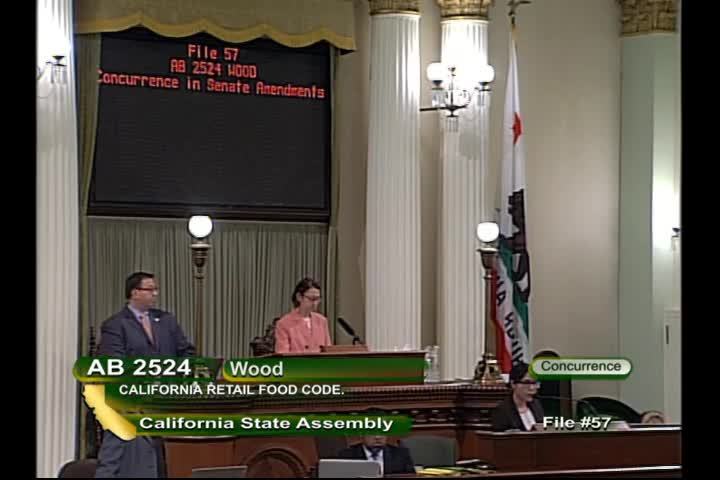 43SEC
Assembly Floor
 2MIN
Senate Floor
 6MIN
Senate Standing Committee on Natural Resources and Water
 1MIN
Assembly Floor
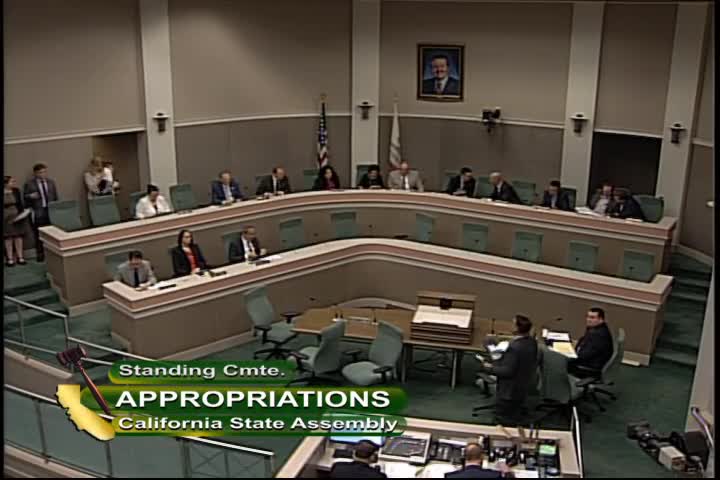 2MIN
Assembly Standing Committee on Appropriations
 3MIN
Assembly Standing Committee on Water, Parks, and Wildlife
Bill Author

Bill Co-Author(s):