AB 2644: Dolores Huerta Day.
- Session Year: 2017-2018
- House: Assembly
- Latest Version Date: 2018-07-18
Existing law requires the Governor to proclaim certain days each year for specified reasons. Existing law also designates particular days each year as having special significance and encourages all public schools and educational institutions to observe those days and to conduct suitable commemorative exercises on those days.
This bill would require the Governor to annually proclaim April 10 as Dolores Huerta Day, would designate and set apart that date each year as having special significance, and would encourage all public schools and educational institutions to observe that date by conducting exercises remembering the life of Dolores Huerta and recognizing her accomplishments and the contributions she made to the state.
Existing law, requires the Secretary of State to adopt regulations requiring each county to design and implement programs intended to identify electors who are not registered voters, and to register those persons to vote. Existing law further requires the Secretary of State, if her or she finds that a county has not designed and implemented a program meeting prescribed minimum requirements, to design a program for the county and report the violation to the Attorney General.This bill would make technical, nonsubstantive changes to these provisions.Existing law, requires the Secretary of State to adopt regulations requiring each county to design and implement programs intended to identify electors who are not registered voters, and to register those persons to vote. Existing law further requires the Secretary of State, if her or she finds that a county has not designed and implemented a program meeting prescribed minimum requirements, to design a program for the county and report the violation to the Attorney General.
This bill would make technical, nonsubstantive changes to these provisions.
The Legislature finds and declares all of the following:
(a)Activist and labor leader Dolores Huerta has worked her entire life to improve social and economic conditions for farmworkers, is a leader in the fight against discrimination, and is a defender of civil rights, equal rights, and dignity for all.
(b)Dolores Huerta was born Dolores Clara Fernandez on April 10, 1930, in Dawson, New Mexico.
(c)Dolores Huertas father, Juan Fernandez, a farmworker and miner by trade, was a union activist who ran for political office and won a seat in the New Mexico State Legislature in 1938. Dolores Huertas mother, Alicia Fernandez, had an independent and entrepreneurial spirit and was active in numerous civic organizations and the church. She used her 70-room hotel to provide housing to low-wage workers.
(d)Dolores Huerta spent most of her childhood and early adult life in Stockton, California, with her two brothers and their mother, following her parents divorce.
(e)While Dolores Huerta was a student at Stockton High School, she was active in numerous school clubs and the Girl Scouts. Upon graduating she earned a provisional teaching credential. She taught until she could no longer bear to see her students come to school with empty stomachs and bare feet, and thus began her lifelong journey of working to correct economic injustice.
(f)Dolores Huerta found her calling as an organizer while serving in the leadership of the Stockton chapter of the Community Service Organization (CSO), and founded the Agricultural Workers Association. She set up voter registration drives and pressed local governments for barrio improvements.
(g)During this time, Dolores Huerta met Cesar Chavez, a fellow CSO official, who had become its director.
(h)In 1962, both Dolores Huerta and Cesar Chavez lobbied to have the CSO expand its efforts to help farmworkers, but the organization was only focused on urban issues.
(i)As a result, Cesar Chavez and Dolores Huerta resigned from the CSO, and cofounded the National Farm Workers Association. Dolores Huertas organizing skills were essential to the growth of the association.
(j)The two made a great team. Cesar Chavez was the dynamic leader and speaker, while Dolores Huerta was the skilled organizer and tough negotiator.
(k)Dolores Huerta overcame the many challenges she faced as a woman. She remained the most talented negotiator securing services for farmworkers in California in 1963 in the form of Aid to Families with Dependent Children and disability insurance, an unparalleled feat of the times.
(l)The Agricultural Workers Organizing Committee was an integral part of the farmworkers original organizing, and was formed by Filipino workers. The Agricultural Workers Organizing Committee was led by Larry Itliong, Philip Vera Cruz, Pete Velasco, and Andy Imutan, all of whom were instrumental to the farm labor movement.
(m)In 1965, the Agricultural Workers Organizing Committee and the National Farm Workers Association combined to become the United Farm Workers Organizing Committee, later known as the United Farm Workers (UFW). That year, the union took on the Coachella Valley grape growers.
(n)Dolores Huerta was also instrumental in the enactment of the Agricultural Labor Relations Act of 1975. This was the first law of its kind in the United States, granting farmworkers in California the right to collectively organize and bargain for better wages and working conditions.
(o)While the farmworkers lacked financial capital, they were able to wield significant economic power through hugely successful boycotts and at the ballot box with grassroots campaigning. As the principal legislative advocate, Dolores Huerta became one of the UFWs most visible spokespersons. Robert F. Kennedy acknowledged her help in winning the 1968 California Democratic Presidential primary, moments before he was shot in Los Angeles.
(p)Dolores Huerta advocated for the entire familys participation in the movement because of the involvement of men, women, and children together in the fields picking, thinning, and hoeing. Thus, the practice of nonviolence was not only a philosophy but a very necessary approach in providing for the safety of all. Nonetheless, her life and the safety of those around her were in jeopardy on countless occasions.
(q)During the 1980s, Dolores Huerta served as vice president of the UFW and cofounded the UFWs radio station. She continued to speak for a variety of causes, advocating for a comprehensive immigration policy and better health conditions for farmworkers.
(r)The most widely-known phrase Si se puede was a phrase first used by Dolores Huerta in the farmworker movement.
(s)In 1988, at age 58, she nearly lost her life when she was beaten by San Francisco police at a rally protesting the policies of then-presidential candidate George H. W. Bush. She suffered four broken ribs and a ruptured spleen.
(t)Public outrage resulted in the San Francisco Police Department changing its policies regarding crowd control and police discipline.
(u)Following a lengthy recovery, Dolores Huerta took a leave of absence from the union to focus on womens rights, traveling the country for two years on behalf of the Feminist Majority, encouraging Latinas to run for office. The campaign resulted in a significant increase in the number of women representatives at the local, state, and federal levels.
(v)At age 83, Dolores Huerta continues to work tirelessly, developing leaders and advocating for the working poor, women, and children. As founder and president of the Dolores Huerta Foundation, she travels across the country advocating in campaigns and legislation that support equality and defend civil rights. She continues to be a voice for social justice and public policy.
(w)Dolores Huerta continues to lecture and speak out on a variety of social issues involving immigration, income inequality, and the rights of women and Latinos.
(x)Dolores Huerta teaches the concept of personal power that needs to be coupled with responsibility and cooperation to create the changes needed to improve the lives of the working poor.
(y)Dolores Huerta has been honored for her work as a fierce advocate for farmworkers, immigrants, the working poor, and women.
(z)There are four elementary schools in California named after Dolores Huerta, the most recent being the Dolores Huerta International Academy in Fontana, California.
(aa)Dolores Huerta was inducted into the California Hall of Fame in March of 2013. She has received numerous awards, among them: the Eleanor Roosevelt Human Rights Award from President Bill Clinton in l998, Ms. Magazines One of the Three Most Important Women of l997, Ladies Home Journals 100 Most Important Women of the 20th Century, the Puffin Foundations Award for Creative Citizenship: Labor Leader Award 1984, the Kern County Woman of The Year Award from the California State Legislature, the Ohtli Award from the Mexican Government, the James Smithson Award of the Smithsonian Institution, and nine honorary doctorates from universities throughout the United States.
(ab)Dolores Huerta received the Ellis Island Medal of Freedom Award and was inducted into the National Womens Hall of Fame in 1993. That year proved bittersweet for her as she also experienced the passing of her beloved friend Cesar Chavez.
(ac)In 2012, President Barack Obama bestowed Dolores Huerta with her most prestigious award, the Presidential Medal of Freedom, the highest civilian award in the United States. Upon receiving this award she said, The freedom of association means that people can come together in organization to fight for solutions to the problems they confront in their communities. The great social justice changes in our country have happened when people came together, organized, and took direct action. It is this right that sustains and nurtures our democracy today. The civil rights movement, the labor movement, the womens movement, and the equality movement for our LGBT brothers and sisters are all manifestations of these rights. I thank President Obama for raising the importance of organizing to the highest level of merit and honor.
(ad)The accomplishments and contributions of Dolores Huerta should be properly memorialized within the history and culture of the United States. Dolores Huerta deserves proper recognition for her numerous sacrifices in the name of justice and the amelioration of severely inadequate working conditions.
SEC. 2.Section 37222.20 is added to the Education Code, to read:37222.20.(a)April 10 of each year is designated and set apart as Dolores Huerta Day, a day having special significance pursuant to Section 37222.
(b)On Dolores Huerta Day, all public schools and educational institutions are encouraged to conduct exercises remembering the life of Dolores Huerta, recognizing her accomplishments, and familiarizing pupils with the contributions she made to this state.
SEC. 3.Section 6729 is added to the Government Code, to read:6729.The Governor annually shall proclaim April 10 as Dolores Huerta Day.
SECTION 1.Section 2105 of the Elections Code is amended to read:2105.(a)It is the intent of the Legislature that voter registration be maintained at the highest possible level.(b)The Secretary of State shall adopt regulations requiring each county to design and implement programs intended to identify qualified electors who are not registered voters, and to register those persons to vote. The Secretary of State shall adopt regulations prescribing minimum requirements for those programs.(c)If the Secretary of State finds that a county has not designed and implemented a program meeting the prescribed minimum requirements, the Secretary of State shall design a program for the county and report the violation to the Attorney General. REVISIONS: HeadingLine 1.(a)It is the intent of the Legislature that voter registration be maintained at the highest possible level. The
(b)The Secretary of State shall adopt regulations requiring each county to design and implement programs intended to identify qualified electors who are not registered voters, and to register those persons to vote. The Secretary of State shall adopt regulations prescribing minimum requirements for those programs. If
(c)If the Secretary of State finds that a county has not designed and implemented a program meeting the prescribed minimum requirements, the Secretary of State shall design a program for the county and report the violation to the Attorney General.
|
Date
|
Status
|
|---|---|
| Jul 18, 2018 | Chaptered by Secretary of State - Chapter 130, Statutes of 2018. |
| Jul 18, 2018 | Approved by the Governor. |
| Jul 10, 2018 | Enrolled and presented to the Governor at 3 p.m. |
| Jul 5, 2018 | In Assembly. Ordered to Engrossing and Enrolling. |
| Jul 5, 2018 | Read third time. Passed. Ordered to the Assembly. |
| Jul 2, 2018 | Read second time. Ordered to Consent Calendar. |
| Jun 28, 2018 | From committee: Do pass. To Consent Calendar. (Ayes 7. Noes 0.) (June 27). |
| Jun 12, 2018 | From committee: Do pass and re-refer to Com. on ED. (Ayes 10. Noes 0.) (June 12). Re-referred to Com. on ED. |
| May 3, 2018 | Referred to Coms. on G.O. and ED. |
| Apr 23, 2018 | In Senate. Read first time. To Com. on RLS. for assignment. |
| Apr 23, 2018 | Read third time. Passed. Ordered to the Senate. |
| Apr 18, 2018 | Read second time. Ordered to Consent Calendar. |
| Apr 17, 2018 | Coauthors revised. |
| Mar 21, 2018 | Re-referred to Com. on ED. |
| Mar 20, 2018 | From committee chair, with author's amendments: Amend, and re-refer to Com. on ED. Read second time and amended. |
| Mar 19, 2018 | Referred to Com. on ED. |
| Feb 16, 2018 | From printer. May be heard in committee March 18. |
| Feb 15, 2018 | Read first time. To print. |
|
Date
|
Description
|
Location
|
Votes
|
|
|---|---|---|---|---|
| Jul 5, 2018 | Consent Calendar AB2644 Reyes et al. | Senate Floor |
Passed |
|
| Jun 27, 2018 | Do pass and be ordered to the Consent Calendar | Senate Standing Committee on Education |
Passed |
|
| Jun 12, 2018 | Do pass, but first be re-referred to the Committee on [Education] | Senate Standing Committee on Governmental Organization |
Passed |
|
| Apr 23, 2018 | AB 2644 REYES Consent Calendar Second Day Regular Session | Assembly Floor |
Passed |
|
| Apr 11, 2018 | Do pass. To Consent Calendar. | Assembly Standing Committee on Education |
Passed |
This list shows positions taken on this bill by organizations on the date displayed, which is linked to the original source.
Positions by individuals are not included.
Office of Senate Floor Analyses (916) 651-1520 Fax: (916) 327-4478 | AB 2644 |
CONSENT
Bill No: AB 2644
Amended: 3/20/18 in Assembly
SENATE GOVERNMENTAL ORG. COMMITTEE: 10-0, 6/12/18
AYES: Dodd, Wilk, Cannella, Gaines, Galgiani, Glazer, Hill, Hueso, Portantino, Vidak
NO VOTE RECORDED: Bradford, Lara
SENATE EDUCATION COMMITTEE: 7-0, 6/27/18
AYES: Allen, Wilk, Galgiani, Leyva, McGuire, Pan, Vidak
ASSEMBLY FLOOR: 75-0, 4/23/18 (Consent) - See last page for vote
DIGEST:
This bill requires the Governor to annually proclaim April 10 as Dolores Huerta Day, sets apart that date as a date having special significance, and encourages all public schools and educational institutions to conduct exercises remembering the life of Dolores Huerta.
Existing law:
- Designates particular days each year as having special significance and encourages all public schools and educational institutions to observe those days and conduct suitable commemorative exercises on those days.
- Requires the Governor to proclaim various days in honor of a person, status, or event.
This bill:
- Designates April 10 as Dolores Huerta Day, and sets apart that date each year as having special significance.
- Encourages all public schools and educational institutions to observe that date by conducting exercises remembering the life of Dolores Huerta and recognizing her accomplishments and the contributions she made to the state.
- Requires the Governor to annually proclaim April 10 as Dolores Huerta Day.
- Makes legislative findings and declarations pertaining to the accomplishments and contributions of Dolores Huerta in the name of justice.
Background
Purpose of the bill. According to the author, “Dolores Huerta continues to lecture and speak out on a variety of social issues involving immigration, income inequality, and the rights of women and Latinos. She teaches the concept of personal power that needs to be coupled with responsibility and cooperation to create the changes needed to improve the lives of the working poor.”
Background on Dolores Huerta. Dolores Huerta is widely respected as an activist and labor leader who along with Cesar Chavez, co-founded the National Farm Workers Association (NFWA), the predecessor of the United Farm Workers’ Union (UFW). Huerta served as UFW vice president until 1999. Huerta helped organize the 1965 Delano strike of 5,000 grape workers and was the lead negotiator in the workers’ contract that followed.
Throughout her life, Huerta organized workers, negotiated contracts, advocated for safer working conditions including the elimination of harmful pesticides. She also fought for unemployment and healthcare benefits for agricultural workers. The recipient of many honors, Huerta received the Eleanor Roosevelt Human Rights Award in 1998 and the Presidential Medal of Freedom in 2012. As of 2015, she was a board member of the Feminist Majority Foundation, the Secretary-Treasurer Emeritus of the United Farm Workers of America, and the President of the Dolores Huerta Foundation.
Dolores Huerta’s contributions recognized in new History-Social Science framework. The state’s History-Social Science Curriculum Framework, adopted by the State Board of Education in 2016, includes content about the contributions of Dolores Huerta in several grades. In second grade, Dolores Huerta is named as a hero whose biography students may study. In the 4th grade California history, and in the 11th grade course, U.S. History and Geography, students may study “how Cesar Chavez, Dolores Huerta, and the United Farm Workers’ movement used nonviolent tactics, educated the general public about the working conditions in agriculture, and worked to improve the lives of farmworkers.”
Additionally, existing law proclaims the first week of April as Labor History Week and encourages school districts to commemorate the week with appropriate educational exercises that make pupils aware of the role the labor movement has played in shaping California and the United States.
Related/Prior Legislation
AB 2969 (Low, 2018) requires the Governor to annually proclaim the month of June as LGBT Pride Month. (Pending on the Senate Floor)
HR 92 (Reyes, 2018) designates April 10 of each year as Dolores Huerta day, and recognizes the accomplishments and contributions of Dolores Huerta in the name of justice. (Pending referral at the Assembly Desk)
SB 892 (Pan, 2018) requires the Governor to annually proclaim a specified date as Lunar New Year, designates and sets that date apart each year as a day having special significance, and encourages all public schools and educational institutions to conduct exercises recognizing the traditions and cultural significance of the Lunar New Year. (Pending on the Assembly Floor)
SB 1490 (Stern, 2018) changes the name of the Columbus Day holiday in California to Indigenous Peoples’ Day. (Never heard in the Senate Governmental Organization Committee)
AB 2269 (Swanson, Chapter 584, Statutes of 2012) deemed the month of May to be Labor History Month, and encouraged school districts to commemorate the month with appropriate educational exercises, as specified.
SB 1373 (Torres, Chapter 1011, Statutes of 1994) required the Governor to annually proclaim March 31 as Cesar Chavez Day, and included March 31, known as Cesar Chavez Day, in the list of state holidays.
FISCAL EFFECT: Appropriation: Fiscal Com.: Local:
None received
None received
ASSEMBLY FLOOR: 75-0, 4/23/18
AYES: Acosta, Aguiar-Curry, Travis Allen, Arambula, Baker, Berman, Bigelow, Bloom, Bonta, Brough, Burke, Caballero, Calderon, Carrillo, Cervantes, Chau, Chávez, Chen, Chiu, Choi, Chu, Cooley, Cooper, Cunningham, Dahle, Daly, Eggman, Flora, Fong, Frazier, Friedman, Gallagher, Gipson, Gloria, Gonzalez Fletcher, Gray, Grayson, Harper, Holden, Irwin, Jones-Sawyer, Kalra, Kamlager-Dove, Kiley, Lackey, Levine, Limón, Low, Maienschein, Mathis, Mayes, McCarty, Medina, Melendez, Mullin, Muratsuchi, Nazarian, Obernolte, O'Donnell, Patterson, Quirk-Silva, Reyes, Rodriguez, Rubio, Salas, Santiago, Steinorth, Mark Stone, Thurmond, Ting, Voepel, Waldron, Weber, Wood, Rendon
NO VOTE RECORDED: Cristina Garcia, Eduardo Garcia, Quirk
Prepared by: Brian Duke / G.O. / (916) 651-1530
7/3/18 16:19:51
**** END ****
SENATE COMMITTEE ON EDUCATION
Senator Benjamin Allen, Chair
2017 - 2018 Regular
Bill No: Hearing Date: June 27, 2018
Author: | Reyes | ||
Version: |
| ||
Urgency: | Fiscal: | ||
Consultant: | |||
Subject: .
SUMMARY
This bill designates April 10 as Dolores Huerta Day and encourages public schools to recognize it as a day of special significance.
BACKGROUND
Existing law:
- Designates a number of days as days of special significance to the public schools and educational institutions and encourages them to observe that day, including Ronald Reagan Day (February 6), John Muir Day (April 21), and Harvey Milk Day (May 22). (EC § 37222.16, EC § 37222.11, and EC § 37222.13)
- Requires public schools to close on a number of holidays, including January 1, Dr. Martin Luther King, Jr. Day, Lincoln Day, Washington Day, Memorial Day, July 4, Labor Day, Veterans Day, Thanksgiving, December 25, all days appointed by the Governor or the President of the United States for a public fast, holiday, and any other day designated as a holiday by the governing board of the school district. Existing law requires that for some specified holidays for which schools are required to close (Dr. Martin Luther King Day, Lincoln Day, and Washington Day), schools conduct exercises in commemoration. (EC § 37220)
- Authorizes public schools to close on two other days if the governing board, pursuant to a collective bargaining agreement, agrees to close schools for that purpose. These days are César Chávez (March 31) and Native American Day (fourth Friday in September). (EC § 37220.5 and EC § 37220.7)
ANALYSIS
This bill:
- Designates April 10 as Dolores Huerta Day, and sets apart that date each year as having special significance.
- Encourages all public schools and educational institutions to observe that date by conducting exercises remembering the life of Dolores Huerta and recognizing her accomplishments and the contributions she made to the state.
- Requires the Governor to annually proclaim April 10 as Dolores Huerta Day.
- Makes legislative findings and declarations pertaining to the accomplishments of Dolores Huerta and her contributions to the labor movement and as a defender of civil rights, equal rights, and dignity for all.
STAFF COMMENTS
- Need for the bill. According to the author, “Existing law proclaims the first week of April as Labor History Week and encourages school districts to commemorate the week with appropriate educational exercises that make pupils aware of the role the labor movement has played in shaping California and the United States. It is only appropriate that we give Dolores Huerta proper recognition for her numerous sacrifices in the name of justice and the labor movement.”
- Background on Dolores Huerta. Dolores Huerta is widely respected as an activist and labor leader who along with Cesar Chavez, co-founded the National Farm Workers Association (NFWA), the predecessor of the United Farm Workers’ Union (UFW). Huerta served as UFW vice president until 1999. Huerta helped organize the 1965 Delano strike of 5,000 grape workers and was the lead negotiator in the workers’ contract that followed.
Throughout her life, Huerta organized workers, negotiated contracts, advocated for safer working conditions including the elimination of harmful pesticides. She also fought for unemployment and healthcare benefits for agricultural workers. The recipient of many honors, Huerta received the Eleanor Roosevelt Human Rights Award in 1998 and the Presidential Medal of Freedom in 2012. As of 2015, she was a board member of the Feminist Majority Foundation, the Secretary-Treasurer Emeritus of the United Farm Workers of America, and the President of the Dolores Huerta Foundation.
- Dolores Huerta’s contributions recognized in state’s new History-Social Science framework. The state’s History-Social Science Curriculum Framework, adopted by the State Board of Education in 2016, includes content about the contributions of Dolores Huerta in several grades. In second grade, Dolores Huerta is named as a hero whose biography students may study. In the 4th grade California history, and in the 11th grade course, U.S. History and Geography, students may study “how Cesar Chavez, Dolores Huerta, and the United Farm Workers’ movement used nonviolent tactics, educated the general public about the working conditions in agriculture, and worked to improve the lives of farmworkers.”
- Days honoring individuals. Currently, there are six days named after an individual designated as having special significance, nine days that require the Governor to annually recognize a certain individual, and four state holidays named for an individual.
- Related legislation. HR 92 (Reyes, 2018) designates April 10 of each year as Dolores Huerta day, and recognizes the accomplishments and contributions of Dolores Huerta. (Pending referral at the Assembly Desk)
AB 7 (Bonta, Chapter 29, Statutes of 2015) required the Governor to annually proclaim October 25 as Larry Itliong Day, designated that date each year as having special significance, and encouraged all public schools and educational institutions to conduct exercises remembering the life of Larry Itliong and the contributions he made to the state.
AB 2269 (Swanson, Chapter 584, Statutes of 2012) deemed the month of May to be Labor History Month, and encouraged school districts to commemorate the month with appropriate educational exercises, as specified.
SB 1373 (Torres, Chapter 1011, Statutes of 1994) required the Governor to annually proclaim March 31 as Cesar Chavez Day, and included March 31, known as Cesar Chavez Day, in the list of state holidays.
SUPPORT
None received
OPPOSITION
None received
-- END --
SENATE COMMITTEE ON GOVERNMENTAL ORGANIZATION
Senator Bill Dodd
Chair
2017 - 2018 Regular
Bill No: 2644 Hearing Date: 6/12/2018
Author: | , et al. | ||
Version: | 3/20/2018 Amended | ||
Urgency: | No | Fiscal: | No |
Consultant: | Brian Duke | ||
SUBJECT: Dolores Huerta Day
DIGEST: This bill requires the Governor to annually proclaim April 10 as Dolores Huerta Day, sets apart that date as a date having special significance, and encourages all public schools and educational institutions to conduct exercises remembering the life of Dolores Huerta.
ANALYSIS:
Existing law:
- Designates particular days each year as having special significance and encourages all public schools and educational institutions to observe those days and conduct suitable commemorative exercises on those days. These days include:
- The second Wednesday in May as “Day of the Teacher.”
- April 21 as “John Muir Day.”
- April 6 as “California Poppy Day.”
- May 22 as “Harvey Milk Day.”
- March 30 as “Welcome Home Vietnam Veterans Day.”
- January 30 as “Fred Korematsu Day of Civil Liberties and the Constitution.”
- February 6 as “Ronald Reagan Day.”
- January 23 as “Ed Roberts Day.”
- October 25 as “Larry Itliong Day.”
- Requires the Governor to proclaim various days in honor of a person, status, or event. These days include:
- September 28th as “Cabrillo Day.”
- January 15th as “Dr. Martin Luther King, Jr., Day.”
- March 7th as “Arbor Day.”
- February 19th as “A Day of Remembrance: Japanese American Evacuation.”
- Fourth Friday in September as “Native American Day.”
- First Sunday in October as “Stepparents Day.”
- April 21st as “John Muir Day.”
- March 30th as “Welcome Home Vietnam Veterans Day.”
- December 7th as “Pearl Harbor Day.”
- March 31st as “Cesar Chavez Day.”
- Month of February as “Black History Month.”
- Third Saturday in June as “Juneteenth National Freedom Day: A Day of Observance.”
- April 24th as “California Day of Remembrance of the Armenian Genocide.”
- May 22nd as “Harvey Milk Day.”
- January 30th as “Fred Korematsu Day of Civil Liberties and the Constitution.”
- February 6th as “Ronald Reagan Day.”
- January 23rd as “Ed Roberts Day.”
- October 25th as “Larry Itliong Day.”
- First Friday in May as “Space Day.”
- The day of the astronomical Northward equinox, which usually occurs on March 20th or the following day as “Nowrūz Day.”
This bill:
- Designates April 10 as Dolores Huerta Day, and sets apart that date each year as having special significance.
- Encourages all public schools and educational institutions to observe that date by conducting exercises remembering the life of Dolores Huerta and recognizing her accomplishments and the contributions she made to the state.
- Requires the Governor to annually proclaim April 10 as Dolores Huerta Day.
- Makes legislative findings and declarations pertaining to the accomplishments and contributions of Dolores Huerta in the name of justice.
Background
Purpose of the bill. According to the author, “Dolores Huerta continues to lecture and speak out on a variety of social issues involving immigration, income inequality, and the rights of women and Latinos. She teaches the concept of personal power that needs to be coupled with responsibility and cooperation to create the changes needed to improve the lives of the working poor.”
Further, the author states that “Dolores Huerta has been honored for her work as a fierce advocate for farmworkers, immigrants, the working poor, and women. She is bendita entre los hombres, blessed among men. Dolores has broken glass ceilings, has pushed the frontiers of women’s leadership and has paved the path for other women and girls to follow in her footsteps and become future leaders.”
Background on Dolores Huerta. Dolores Huerta is widely respected as an activist and labor leader who along with Cesar Chavez, co-founded the National Farm Workers Association (NFWA), the predecessor of the United Farm Workers’ Union (UFW). Huerta served as UFW vice president until 1999. Huerta helped organize the 1965 Delano strike of 5,000 grape workers and was the lead negotiator in the workers’ contract that followed.
Throughout her life, Huerta organized workers, negotiated contracts, advocated for safer working conditions including the elimination of harmful pesticides. She also fought for unemployment and healthcare benefits for agricultural workers. The recipient of many honors, Huerta received the Eleanor Roosevelt Human Rights Award in 1998 and the Presidential Medal of Freedom in 2012. As of 2015, she was a board member of the Feminist Majority Foundation, the Secretary-Treasurer Emeritus of the United Farm Workers of America, and the President of the Dolores Huerta Foundation.
Dolores Huerta’s contributions recognized in new History-Social Science framework. The state’s History-Social Science Curriculum Framework, adopted by the State Board of Education in 2016, includes content about the contributions of Dolores Huerta in several grades. In second grade, Dolores Huerta is named as a hero whose biography students may study. In the 4th grade California history, and in the 11th grade course, U.S. History and Geography, students may study “how Cesar Chavez, Dolores Huerta, and the United Farm Workers’ movement used nonviolent tactics, educated the general public about the working conditions in agriculture, and worked to improve the lives of farmworkers.”
Additionally, existing law proclaims the first week of April as Labor History Week and encourages school districts to commemorate the week with appropriate educational exercises that make pupils aware of the role the labor movement has played in shaping California and the United States.
Staff comments. Currently there are six days named after an individual designated as having special significance, nine days that require the Governor to annually recognize a certain individual, and four state holidays named for an individual. In each case, the individual honored with such a designation had been deceased by the time of the designation. If this bill were to become law, it would set a new precedent.
Because it is believed that this is the first bill attempting to name a day after a living person, this committee does not have a standing policy to address this particular issue. However, regarding the naming of highways and other transportation infrastructure, the Senate Transportation Committee has a long-standing policy which includes that the person being honored must be deceased.
Prior/Related Legislation
AB 2969 (Low, 2018) requires the Governor to annually proclaim the month of June as LGBT Pride Month. (Pending in the Senate Governmental Organization Committee)
HR 92 (Reyes, 2018) designates April 10 of each year as Dolores Huerta day, and recognizes the accomplishments and contributions of Dolores Huerta in the name of justice. (Pending referral at the Assembly Desk)
SB 892 (Pan, 2018) requires the Governor to annually proclaim a specified date as Lunar New Year, designates and sets that date apart each year as a day having special significance, and encourages all public schools and educational institutions to conduct exercises recognizing the traditions and cultural significance of the Lunar New Year. (Pending in the Assembly Governmental Organization Committee.)
SB 1490 (Stern, 2018) changes the name of the Columbus Day holiday in California to Indigenous Peoples’ Day. (Never heard in the Senate Governmental Organization Committee)
AB 88 (Nazarian, Chapter 30, Statutes of 2017) required the Governor to annually proclaim the day of the astronomical Northward equinox, which usually occurs on March 20 or the following day, as Nowrūz Day.
SB 1138 (Hueso, Chapter 196, Statutes of 2016) among other things, required the Governor to proclaim the first Friday in May of each year as Space Day.
AB 7 (Bonta, Chapter 29, Statutes of 2015) required the Governor to annually proclaim October 25 as Larry Itliong Day, designated that date each year as having special significance, and encouraged all public schools and educational institutions to conduct exercises remembering the life of Larry Itliong and the contributions he made to the state.
AB 2269 (Swanson, Chapter 584, Statutes of 2012) deemed the month of May to be Labor History Month, and encouraged school districts to commemorate the month with appropriate educational exercises, as specified.
SB 1373 (Torres, Chapter 1011, Statutes of 1994) required the Governor to annually proclaim March 31 as Cesar Chavez Day, and included March 31, known as Cesar Chavez Day, in the list of state holidays.
FISCAL EFFECT: Appropriation: Fiscal Com.: Local:
SUPPORT:
None received
OPPOSITION:
None received
DUAL REFERRAL: Education Committee
Date of Hearing: April 11, 2018
ASSEMBLY COMMITTEE ON EDUCATION
Patrick O'Donnell, Chair
ABPCA Bill Id:AB 2644 (
Author:Reyes) – As Amended Ver:March 20, 2018
SUBJECT: Dolores Huerta Day
SUMMARY: Designates April 10 of each year as Dolores Huerta Day, encourages all public schools and educational institutions to conduct exercises remembering the life, accomplishments, and contributions of Dolores Huerta, and requires the Governor to annually proclaim April 10 as Dolores Huerta Day. Specifically, this bill:
- Designates April 10 of each year as Dolores Huerta Day, a day having special significance, and requires the Governor to annually proclaim April 10 as Dolores Huerta Day.
- Encourages all public schools and educational institutions to conduct exercises remembering the life of Dolores Huerta, recognizing her accomplishments, and familiarizing pupils with the contributions she made to this state.
- Makes findings and declarations regarding the life of Dolores Huerta:
- Activist and labor leader Dolores Huerta has worked her entire life to improve social and economic conditions for farmworkers, is a leader in the fight against discrimination, and is a defender of civil rights, equal rights, and dignity for all.
- Dolores Huerta was born Dolores Clara Fernández on April 10, 1930, in Dawson, New Mexico.
- Dolores Huerta’s father, Juan Fernández, a farmworker and miner by trade, was a union activist who ran for political office and won a seat in the New Mexico State Legislature in 1938. Dolores Huerta’s mother, Alicia Fernández, had an independent and entrepreneurial spirit and was active in numerous civic organizations and the church. She used her 70-room hotel to provide housing to low-wage workers.
- Dolores Huerta spent most of her childhood and early adult life in Stockton, California, with her two brothers and their mother, following her parents’ divorce.
- While Dolores Huerta was a student at Stockton High School, she was active in numerous school clubs and the Girl Scouts. Upon graduating she earned a provisional teaching credential. She taught until she could no longer bear to see her students come to school with empty stomachs and bare feet, and thus began her lifelong journey of working to correct economic injustice.
- Dolores Huerta found her calling as an organizer while serving in the leadership of the Stockton chapter of the Community Service Organization (CSO), and founded the Agricultural Workers Association. She set up voter registration drives and pressed local governments for barrio improvements.
- During this time, Dolores Huerta met César Chávez, a fellow CSO official, who had become its director.
- In 1962, both Dolores Huerta and César Chávez lobbied to have the CSO expand its efforts to help farmworkers, but the organization was only focused on urban issues.
- As a result, César Chavez and Dolores Huerta resigned from the CSO, and cofounded the National Farm Workers Association. Dolores Huerta’s organizing skills were essential to the growth of the association.
- The two made a great team. César Chávez was the dynamic leader and speaker, while Dolores Huerta was the skilled organizer and tough negotiator.
- Dolores Huerta overcame the many challenges she faced as a woman. She remained the most talented negotiator, securing services for farmworkers in California in 1963 in the form of Aid to Families with Dependent Children and disability insurance, an unparalleled feat of the times.
- The Agricultural Workers Organizing Committee was an integral part of the farmworkers original organizing, and was formed by Filipino workers. The Agricultural Workers Organizing Committee was led by Larry Itliong, Philip Vera Cruz, Pete Velasco, and Andy Imutan, all of whom were instrumental to the farm labor movement.
- In 1965, the Agricultural Workers Organizing Committee and the National Farm Workers Association combined to become the United Farm Workers Organizing Committee, later known as the United Farm Workers (UFW). That year, the union took on the Coachella Valley grape growers.
- Dolores Huerta was also instrumental in the enactment of the Agricultural Labor Relations Act of 1975. This was the first law of its kind in the United States, granting farmworkers in California the right to collectively organize and bargain for better wages and working conditions.
- While the farmworkers lacked financial capital, they were able to wield significant economic power through hugely successful boycotts and at the ballot box with grassroots campaigning. As the principal legislative advocate, Dolores Huerta became one of the UFW’s most visible spokespersons. Robert F. Kennedy acknowledged her help in winning the 1968 California Democratic Presidential primary, moments before he was shot in Los Angeles.
- Dolores Huerta advocated for the entire family’s participation in the movement because of the involvement of men, women, and children together in the fields picking, thinning, and hoeing. Thus, the practice of nonviolence was not only a philosophy but a very necessary approach in providing for the safety of all. Nonetheless, her life and the safety of those around her were in jeopardy on countless occasions.
- During the 1980s, Dolores Huerta served as vice president of the UFW and cofounded the UFW’s radio station. She continued to speak for a variety of causes, advocating for a comprehensive immigration policy and better health conditions for farmworkers.
- The most widely-known phrase “Sí se puede” was a phrase first used by Dolores Huerta in the farmworker movement.
- In 1988, at age 58, she nearly lost her life when she was beaten by San Francisco police at a rally protesting the policies of then-presidential candidate George H. W. Bush. She suffered four broken ribs and a ruptured spleen.
- Public outrage resulted in the San Francisco Police Department changing its policies regarding crowd control and police discipline.
- Following a lengthy recovery, Dolores Huerta took a leave of absence from the union to focus on women’s rights, traveling the country for two years on behalf of the Feminist Majority, encouraging Latinas to run for office. The campaign resulted in a significant increase in the number of women representatives at the local, state, and federal levels.
- At age 83, Dolores Huerta continues to work tirelessly, developing leaders and advocating for the working poor, women, and children. As founder and president of the Dolores Huerta Foundation, she travels across the country advocating in campaigns and legislation that support equality and defend civil rights. She continues to be a voice for social justice and public policy.
- Dolores Huerta continues to lecture and speak out on a variety of social issues involving immigration, income inequality, and the rights of women and Latinos.
- Dolores Huerta teaches the concept of personal power that needs to be coupled with responsibility and cooperation to create the changes needed to improve the lives of the working poor.
- Dolores Huerta has been honored for her work as a fierce advocate for farmworkers, immigrants, the working poor, and women.
- There are four elementary schools in California named after Dolores Huerta, the most recent being the Dolores Huerta International Academy in Fontana, California.
- Dolores Huerta was inducted into the California Hall of Fame in March of 2013. She has received numerous awards, including: the Eleanor Roosevelt Human Rights Award from President Bill Clinton in l998, Ms. Magazine’s One of the Three Most Important Women of l997, Ladies’ Home Journal’s 100 Most Important Women of the 20th Century, the Puffin Foundation’s Award for Creative Citizenship: Labor Leader Award 1984, the Kern County Woman of The Year Award from the California State Legislature, the Ohtli Award from the Mexican Government, the James Smithson Award of the Smithsonian Institution, and nine honorary doctorates from universities throughout the U.S.
- Dolores Huerta received the Ellis Island Medal of Freedom Award and was inducted into the National Women’s Hall of Fame in 1993. That year proved bittersweet for her as she also experienced the passing of her beloved friend César Chávez.
- In 2012, President Barack Obama bestowed Dolores Huerta with her most prestigious award, the Presidential Medal of Freedom, the highest civilian award in the United States. Upon receiving this award she said, “The freedom of association means that people can come together in organization to fight for solutions to the problems they confront in their communities. The great social justice changes in our country have happened when people came together, organized, and took direct action. It is this right that sustains and nurtures our democracy today. The civil rights movement, the labor movement, the women’s movement, and the equality movement for our LGBT brothers and sisters are all manifestations of these rights. I thank President Obama for raising the importance of organizing to the highest level of merit and honor.”
- The accomplishments and contributions of Dolores Huerta should be properly memorialized within the history and culture of the United States. Dolores Huerta deserves proper recognition for her numerous sacrifices in the name of justice and the amelioration of severely inadequate working conditions.
EXISTING LAW:
- Designates a number of days as days of special significance to the public schools and educational institutions, and encourages them to observe that day and to conduct suitable commemorative exercises. Those recognizing individuals are John Muir Day (April 21), Harvey Milk Day (May 22), Fred Korematsu Day (January 30), Ronald Reagan Day (February 6), and Ed Roberts Day (January 23) and Larry Itliong (October 25).
- Requires public schools to close on a number of holidays, including January 1, Dr. Martin Luther King, Jr. Day, Lincoln Day, Washington Day, Memorial Day, July 4, Labor Day, Veterans Day, Thanksgiving Day, December 25, all days appointed by the Governor or the President of the United States for a public fast, thanksgiving or holiday, and any other day designated as a holiday by the governing board of the school district.
- Requires, for some specified holidays for which schools are required to close (Dr. Martin Luther King Day, Lincoln Day, Washington Day), that schools conduct exercises in commemoration.
- Authorizes public schools to close on two other days if the governing board, pursuant to a collective bargaining agreement, agrees to close schools for that purpose. These days are César Chávez (March 31) and Native American Day (fourth Friday in September).
- Requires public schools to remain open on specified days (unless otherwise closed to mark a holiday by decision of the governing board), and to celebrate the significance of those days with appropriate commemorative exercises. These days are the anniversary of the adoption of the U.S. Constitution, the birthdays of Luther Burbank (March 7) and Susan B. Anthony (February 15), and the death of Crispus Attucks (March 5).
FISCAL EFFECT: This bill has been keyed non-fiscal by the Office of Legislative Counsel.
COMMENTS:
Need for the bill. The author states, “In 1955 Huerta began her career as an activist when she co-founded the Stockton chapter of the Community Service Organization (CSO). Through a CSO associate, Huerta met activist César Chávez, with whom she shared an interest in organizing farm workers. In 1962, Huerta and Chávez founded the National Farm Workers Association (NFWA), the predecessor of the United Farm Workers’ Union (UFW), which formed three year later. Huerta served as UFW vice president until 1999. Despite ethnic and gender bias, Huerta helped organize the 1965 Delano strike of 5,000 grape workers and was the lead negotiator in the workers’ contract that followed.
Throughout her lifetime, Huerta organized workers, negotiated contracts, advocated for safer working conditions including the elimination of harmful pesticides. She also fought for unemployment and healthcare benefits for agricultural workers. Huerta was the driving force behind the nationwide table grape boycotts in the late 1960s. The recipient of many honors, Huerta received the Eleanor Roosevelt Human Rights Award in 1998 and the Presidential Medal of Freedom in 2012. As of 2015, she was a board member of the Feminist Majority Foundation, the Secretary-Treasurer Emeritus of the United Farm Workers of America, and the President of the Dolores Huerta Foundation.
Existing law proclaims the first week of April as Labor History Week and encourages school districts to commemorate the week with appropriate educational exercises that make pupils aware of the role the labor movement has played in shaping California and the United States. It is only appropriate that we give Dolores Huerta proper recognition for her numerous sacrifices in the name of justice and the labor movement.”
Dolores Huerta’s contributions recognized in state’s new History-Social Science framework. The state’s History-Social Science Curriculum Framework, adopted by the State Board of Education in 2016, includes content about the contributions of Dolores Huerta in several grades. In second grade, Dolores Huerta is named as a hero whose biography students may study. In the 4th grade California history, and in the 11th grade course, U.S. History and Geography, students may study “how Cesar Chavez, Dolores Huerta, and the United Farm Workers’ movement used nonviolent tactics, educated the general public about the working conditions in agriculture, and worked to improve the lives of farmworkers.”
REGISTERED SUPPORT / OPPOSITION:
Support
None on file
Opposition
None on file
Analysis Prepared by: Tanya Lieberman / ED. / (916) 319-2087
Discussed in Hearing
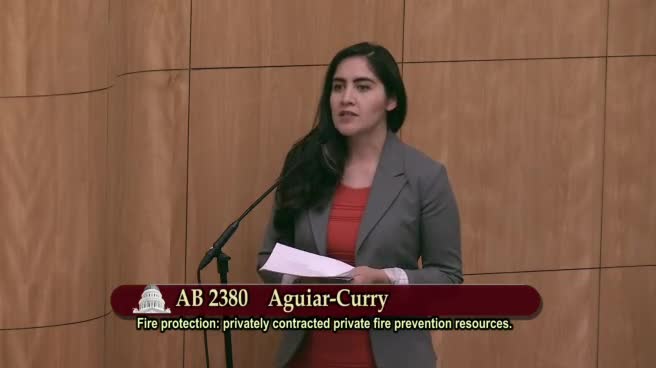 5MIN
Senate Standing Committee on Governmental Organization
Bill Author