AB 2660: Hazardous waste: surplus household consumer products.
- Session Year: 2017-2018
- House: Assembly
- Latest Version Date: 2018-05-21
Existing law requires the Department of Resources Recycling and Recovery, in consultation with the Department of Toxic Substances Control, to develop and implement a public information program to provide uniform and consistent information on the proper disposal of hazardous substances found in and around homes. Existing law provides for regulation of the disposition of hazardous waste by the Department of Toxic Substances Control. Existing law requires the Department of Toxic Substances Control to convene a Retail Waste Working Group, as prescribed, to consider and make findings and recommendations relating to requirements for the management of surplus household consumer products, waste reduction opportunities for those products, and waste management requirements, as specified. A violation of the hazardous waste control laws is a crime.
This bill would impose certain requirement requirements on a retailer or manufacturer supplier that transfers or ships from a location in the state a surplus household consumer product, as defined by the bill, to a reverse distributor, as defined. The bill would authorize a reverse distributor to receive a surplus household consumer product to evaluate the a surplus household consumer product for reuse, donation, transfer for credit, and other specified purposes. The bill would authorize a reverse distributor to transfer the product for recycling or disposal only after first evaluating the product for all of the other specified purposes. The bill would provide that a surplus household consumer product transferred or shipped to a reverse distributor is not a waste and that the retailer or manufacturer transferring or shipping the surplus household consumer product to the reverse distributor is not required to make a waste determination for that surplus household consumer product. while it is being processed at, stored at, or shipped to a reverse distributor for evaluation, shipped from a reverse distributor, or while it is being shipped, or stored prior to shipment, by a retailer or supplier. The bill would provide that a surplus household consumer product is not a waste until a reverse distributor, or other person in possession of the surplus household consumer product, makes the decision to recycle or dispose of the surplus household consumer product. commencing at the time that it is discarded by the reverse distributor or supplier that last possessed it. The bill would authorize a retailer or distributor that does not transfer or ship a surplus household consumer product to a reverse distributor for evaluation to instead manage that product in accordance with the requirements governing the applicable waste category for that product. By creating a new crime, this bill would impose a state-mandated local program.
The bill would require the Department of Toxic Substances Control to reconvene the Retail Waste Working Group at a date determined by the Department of Toxic Substances Control for the purpose of evaluating whether the provisions of this bill have resulted in specified outcomes. The bill would require the Department of Toxic Substances Control to provide a report to the Legislature after the Retail Waste Working Group has completed its evaluation.
The California Constitution requires the state to reimburse local agencies and school districts for certain costs mandated by the state. Statutory provisions establish procedures for making that reimbursement.
This bill would provide that no reimbursement is required by this act for a specified reason.
Existing law requires the Department of Resources Recycling and Recovery, in consultation with the Department of Toxic Substances Control, to develop and implement a public information program to provide uniform and consistent information on the proper disposal of hazardous substances found in and around homes. Existing law provides for regulation of the disposition of hazardous waste by the Department of Toxic Substances Control. Existing law requires the Department of Toxic Substances Control to convene a Retail Waste Working Group, as prescribed, to consider and make findings and recommendations relating to requirements for the management of surplus household consumer products, waste reduction opportunities for those products, and waste management requirements, as specified. A violation of the hazardous waste control laws is a crime.
This bill would impose certain requirement on a person who retailer or manufacturer that transfers or ships from a location in the state a surplus household consumer product, as defined by the bill, to a reverse distributor, as defined. The bill would authorize a reverse distributor to receive a surplus household consumer product to evaluate the product for reuse, donation, transfer for credit, and other specified purposes. The bill would authorize a reverse distributor to transfer the product for recycling or disposal only after first evaluating the product for all of the other specified purposes. The bill would provide that a surplus household consumer product transferred or shipped to a reverse distributor is not a waste and that the person retailer or manufacturer transferring or shipping the surplus household consumer product to the reverse distributor is not required to make a waste determination for that surplus household consumer product. The bill would provide that a surplus household consumer product is not a waste until a reverse distributor, or other person in possession of the surplus household consumer product, makes the decision to recycle or dispose of the surplus household consumer product. By creating a new crime, this bill would impose a state-mandated local program.
The California Constitution requires the state to reimburse local agencies and school districts for certain costs mandated by the state. Statutory provisions establish procedures for making that reimbursement.
This bill would provide that no reimbursement is required by this act for a specified reason.
Existing law requires the Department of Resources Recycling and Recovery, in consultation with the Department of Toxic Substances Control, to develop and implement a public information program to provide uniform and consistent information on the proper disposal of hazardous substances found in and around homes. Existing law provides for regulation of the disposition of hazardous waste by the Department of Toxic Substances Control. Existing law requires the Department of Toxic Substances Control to convene a Retail Waste Working Group, as prescribed, to consider and make findings and recommendations relating to requirements for the management of surplus household consumer products, waste reduction opportunities for those products, and waste management requirements, as specified. A violation of the hazardous waste control laws is a crime.
This bill would impose certain requirement on a person who transfers or ships a surplus household consumer product, as defined by the bill, to a reverse distributor, as defined. The bill would authorize a reverse distributor to receive a surplus household consumer product to evaluate the product for reuse, donation, transfer for credit, and other specified purposes. The bill would authorize a reverse distributor to transfer the product for recycling or disposal only after first evaluating the product for all of the other specified purposes. The bill would provide that a surplus household consumer product transferred or shipped to a reverse distributor is not a waste and that the person transferring or shipping the surplus household consumer product to the reverse distributor is not required to make a waste determination for that surplus household consumer product. The bill would provide that a surplus household consumer product is not a waste until a reverse distributor, or other person in possession of the surplus household consumer product, makes the decision to recycle or dispose of the surplus household consumer product. By creating a new crime, this bill would impose a state-mandated local program.
The California Constitution requires the state to reimburse local agencies and school districts for certain costs mandated by the state. Statutory provisions establish procedures for making that reimbursement.
This bill would provide that no reimbursement is required by this act for a specified reason.
The Legislature finds and declares that this article is intended to augment the that, in order to minimize the generation of consumer product waste and to maximize the number of surplus household consumer products that are managed in accordance with state law, this article provides standards and processes for the management of those products. This article augments established processes for the management of surplus household consumer products that can be safely used, donated, or sold, or transferred to a supplier, that are subject to recall, or for which a retailer may obtain bona fide financial credit or other financial reconciliation, and to maximize the number of surplus household consumer products in the state that are managed in accordance with state law. reconciliation from a supplier.
25231.25230.5.For purposes of this article, the following definitions shall apply:
(a)Household consumer product means a consumer product packaged for use by a household consumer.
(b)Retailer means a person or entity that sells household consumer products, or an agent of the person or entity.
(a)(c)Reverse distributor means a location, or part of a location, where location at which surplus household consumer products are received and evaluated for purposes of any of the following: following purposes:
(1)Selling or arranging for the sale of the products. products, including repairs of electronic products incident to those sales.
(2)Donating or arranging for the donation of the products. products, including repairs of electronic products incident to those donations.
(3)Determining a manufacturers, vendors, or suppliers bona fide financial credit or facilitating other repurchase or financial reconciliation for the products.
(4)Transferring the products to a manufacturer, distributor, vendor, or supplier, or the respective agent of each. supplier or to a suppliers reverse distributor.
(5)Undertaking recalls pursuant to a directive of a manufacturer, supplier, retailer, wholesaler, or government agency, after the product has been shipped to market or sold to a consumer, because the product is considered, or is alleged to be, defective, mislabeled, contaminated, unsafe, or unlawful.
(6)Conducting other activities consistent with the purposes of this article that are authorized by the department.
(7)Transferring the products for recycling or disposal, after first evaluating the products for all any of the purposes described in paragraphs (1) to (6), inclusive.
(d)Supplier means a person or entity that supplies or distributes household consumer products to retailers, or an agent of the person or entity.
(b)(e)Surplus household consumer product means a household consumer product packaged for personal, family, or household use that is considered surplus to the retailer or supplier in possession of the household consumer product, and that meets all of the following conditions:
(1)The household consumer product meets any of the following conditions:
(A)Has reasonable potential for use.
(B)Whether or not expired, is subject to a contractual agreement providing for the return of the product to the manufacturer, manufacturers agent, vendor, or supplier for a bona fide financial credit credit, repurchase, or other financial reconciliation, and or has reasonable potential to qualify for a bona fide financial credit credit, repurchase, or other financial reconciliation.
(C)Whether or not expired, has been recalled pursuant to a directive of a manufacturer, supplier, retailer, wholesaler, or government agency, after the product has been shipped to market or sold to a consumer, because the product is considered, or is alleged to be, defective, mislabeled, contaminated, unsafe, or unlawful.
(2)The household consumer product is not leaking, is packaged and shipped in accordance with applicable state and federal law, and is either (A) packaged in its original packaging or a package in packaging of similar strength and integrity. integrity, or (B) capable of being safely sold without packaging.
(3)The product is not a drug, as defined in the federal Food, Drug, and Cosmetic Act (21 U.S.C. Sec. 321(g)(1)), that is offered for sale with a prescription.
(4)The household consumer product, if discarded, would be subject to regulation under federal or state law as hazardous waste, or under state law as medical waste.
25232.A surplus household consumer product is not a waste, as defined in Section 25124, until a reverse distributor, or other person in possession of the surplus household consumer product, makes the decision to recycle or dispose of the surplus household consumer product.25233.(a)A retailer or manufacturer who transfers or ships a surplus household consumer product from a location in the state to a reverse distributor shall do all of the following:(1)Package, transfer, and ship the surplus household consumer product in accordance with all applicable state and federal regulations relating to the packaging, transfer, and shipment of consumer products, including applicable reverse logistics requirements.(2)Maintain, for a period of three years following the date of the shipment, records of each shipment of surplus household consumer products to a reverse distributor that demonstrate that each shipment was received. The documentation may include bills of lading, electronic accounting records, logs, invoices, or other shipping documentation.(3)Make the records maintained under this section available for inspection by any enforcement agency with jurisdiction within a reasonable period of time upon request.(4)If the reverse distributor is located outside of California in a state that does not apply Californias definition of hazardous waste, as specified in Section 25117, require the reverse distributor, as a condition of receipt of the retailers or manufacturers surplus household consumer products, to provide, on or before April 1, 2020, and on or before April 1 of each year thereafter, to the retailer or manufacturer the percentage of surplus household consumer products received from all retailer or manufacturer locations in California as to which, in the preceding calendar year, the reverse distributor did each of the following:(A)Donated.(B)Sold for salvage or reuse.(C)Shipped to a vendor or a vendors agent.(D)Disposed of as solid waste, other than disposal as part of a recall.(E)Disposed of as medical waste, other than disposal as part of a recall.(F)Disposed of as hazardous waste, other than disposal as part of a recall.(5)If paragraph (4) applies, prepare, on or before May 1, 2020, for the 2019 calendar year, and on or before May 1 of each year thereafter for the preceding calendar year, a document summarizing the responses received pursuant to paragraph (4) and indicating the number of items of surplus household consumer products that the retailer or manufacturer shipped in the preceding calendar year to each reverse distributor located in a state that does not apply Californias definition of hazardous waste, pursuant to Section 25117.(6)Maintain the documents required pursuant to paragraph (5) for three years.(b)A surplus household consumer product transferred or shipped to a reverse distributor pursuant to subdivision (a) is not a waste, as defined in Section 25124, and the retailer or manufacturer transferring or shipping the surplus household consumer product to the reverse distributor shall not be required to make a waste determination for that surplus household consumer product.25231.(a)A surplus household consumer product is not a waste, as defined in Section 25124, while it is being processed at, stored at, or shipped to a reverse distributor for the purposes set forth in paragraphs (1) to (6), inclusive, of subdivision (c) of Section 25230.5, while it is being shipped from a reverse distributor pursuant to paragraph (7) of subdivision (c) of Section 25230.5, or while it is being shipped, or stored prior to shipment, by a retailer or supplier.
(b)A surplus household consumer product shall be considered a waste pursuant to this chapter or Part 14 (commencing with Section 117600) of Division 104, as applicable, commencing at the time that it is discarded by the reverse distributor or supplier that last possessed it.
25231.5.(a)A retailer or supplier may manage a surplus household consumer product by transferring or shipping that surplus household consumer product to a reverse distributor for a purpose specified in paragraphs (1) to (7), inclusive, of subdivision (c) of Section 25230.5.
(b)(1)A retailer or supplier that manages a surplus household consumer product pursuant to subdivision (a), and consistent with this article, shall be considered in compliance with this chapter if the surplus household consumer product, once discarded, would be regulated under federal or state law as hazardous waste.
(2)A retailer or supplier that manages a surplus household consumer product pursuant to subdivision (a), and consistent with this article, shall be considered in compliance with Part 14 (commencing with Section 117600) of Division 104 if the surplus household consumer product, once discarded, would be regulated under state law as medical waste.
(c)A retailer or supplier that manages a surplus household consumer product pursuant to subdivision (a), and consistent with this article, shall do both of the following:
(1)Establish and maintain a program for maintaining records of surplus household consumer products that it ships from a location it owns or operates to a reverse distributor. The records may include bills of lading, electronic accounting records, logs, invoices, or other shipping or financial documentation, and may be maintained in a central or regional database or at a location of the retailer or supplier. The records kept pursuant to the program shall be maintained for a period of three years following the date of the shipment. Records maintained pursuant to this paragraph may include additional data regarding the surplus household consumer products shipped to or from the location.
(2)Make the records maintained pursuant to paragraph (1) available for inspection by any enforcement agency with jurisdiction within a reasonable period of time following a request to inspect.
25234.25232.If a person required to provide retailer or supplier that maintains records under this article asserts that the a record or a portion thereof contains corporate proprietary confidential business information or other information exempt from disclosure under the California Public Records Act (Chapter 3.5 (commencing with Section 6250) of Division 7 of Title 1 of the Government Code) or other applicable law, the provisions of Section 25257 shall apply with respect to those records that record as if Section 25257 were in this article.
25232.5.(a)The department shall reconvene the Retail Waste Working Group established pursuant to Section 25218.14 at a date determined by the department for the purpose of evaluating the following:
(1)Whether the number of surplus household consumer products that are being managed for the legitimate business purposes set forth in paragraphs (1) to (6), inclusive, of subdivision (c) of Section 25230.5 has increased as a result of this article.
(2)Whether waste generation has decreased as a result of this article.
(3)Whether this article adequately safeguards the environment and public health, including, but not limited to, with respect to the impact of this article on the management of nonprescription drugs.
(b)The department shall gather and analyze data and information that is publicly available, maintained pursuant to subdivision (c) of Section 25231.5, or voluntarily provided by the Retail Waste Working Groups members or the public. The department shall provide a report to the Legislature, in compliance with Section 9795 of the Government Code, after the Retail Waste Working Group has completed its evaluation pursuant to subdivision (a).
25233.A retailer or supplier that does not manage a surplus household consumer product by transferring or shipping that surplus household consumer product to a reverse distributor for a purpose specified in paragraphs (1) to (7), inclusive, of subdivision (c) of Section 25230.5, may instead manage that product in accordance with the requirements governing the applicable waste category for that product. Managing a surplus household consumer product pursuant to this section shall not render any facility of a retailer or supplier subject to permitting requirements pursuant to Section 25200 or Chapter 7 (commencing with Section 118130) of Part 14 of Division 104.
25235.25233.5.Nothing in this article is intended to expand the definition of waste as set forth in Section 25124. A failure to comply with this article shall be subject to an enforcement action pursuant to Article 8 (commencing with Section 25180), but shall not render any facility a treatment, storage, or disposal facility subject to permitting under Section 25200.
SEC. 2.No reimbursement is required by this act pursuant to Section 6 of Article XIIIB of the California Constitution because the only costs that may be incurred by a local agency or school district will be incurred because this act creates a new crime or infraction, eliminates a crime or infraction, or changes the penalty for a crime or infraction, within the meaning of Section 17556 of the Government Code, or changes the definition of a crime within the meaning of Section 6 of Article XIIIB of the California Constitution.
The Legislature finds and declares that this article is intended to augment the established processes for the management of surplus household consumer products that can be safely used, donated, or sold, that are subject to recall, or for which a retailer may obtain bona fide financial credit or other financial reconciliation. reconciliation, and to maximize the number of surplus household consumer products in the state that are managed in accordance with state law.
25231.For purposes of this article, the following definitions shall apply:
(a)Reverse distributor means a location, or part of a location, where surplus household consumer products are received and evaluated for purposes of any of the following:
(1)Selling or arranging for the sale of the products.
(2)Donating or arranging for the donation of the products.
(3)Determining a manufacturers, vendors, or suppliers bona fide financial credit or facilitating other financial reconciliation for the products.
(4)Transferring the products to a manufacturer, distributor, vendor, or supplier, or the respective agent of each.
(5)Undertaking recalls pursuant to a directive of a manufacturer, retailer, wholesaler, or government agency, after the product has been shipped to market or sold to a consumer, because the product is considered, or is alleged to be, defective, mislabeled, contaminated, unsafe, or unlawful.
(6)Conducting other activities consistent with the purposes of this article that are authorized by the department.
(7)Transferring the products for recycling or disposal, after first evaluating the products for all of the purposes described in paragraphs (1) to (6), inclusive.
(b)Surplus household consumer product means a consumer product packaged for personal, family, or household use that meets all of the following conditions:
(1)The consumer product meets any of the following conditions:
(A)Has reasonable potential for use.
(B)Whether or not expired, is subject to a contractual agreement providing for the return of the product to the manufacturer, manufacturers agent, vendor, or supplier for a bona fide financial credit or other financial reconciliation, and has reasonable potential to qualify for a bona fide financial credit or other financial reconciliation.
(C)Whether or not expired, has been recalled pursuant to a directive of a manufacturer, retailer, wholesaler, or government agency, after the product has been shipped to market or sold to a consumer, because the product is considered, or is alleged to be, defective, mislabeled, contaminated, unsafe, or unlawful.
(2)The product is packaged in its original packaging or a package of similar strength and integrity.
(3)The product is not a drug, as defined in the federal Food, Drug, and Cosmetic Act (21 U.S.C. Sec. 321(g)(1)), that is offered for sale with a prescription.
25232.A surplus household consumer product is not a waste, as defined in Section 25124, until a reverse distributor, or other person in possession of the surplus household consumer product, makes the decision to recycle or dispose of the surplus household consumer product.
25233.(a)A person located in California retailer or manufacturer who transfers or ships a surplus household consumer product from a location in the state to a reverse distributor shall do all of the following:
(1)Package, transfer, and ship the surplus household consumer product in accordance with all applicable state and federal regulations relating to the packaging, transfer, and shipment of consumer products, including applicable reverse logistics requirements.
(2)Maintain, for a period of three years following the date of the shipment, records of each shipment of surplus household consumer products to a reverse distributor that demonstrate that each shipment was received. The documentation may include bills of lading, electronic accounting records, logs, invoices, or other shipping documentation.
(3)Make the records maintained under paragraph (2) this section available for inspection by any enforcement agency with jurisdiction within a reasonable period of time upon request.
(4)If the reverse distributor is located outside of California in a state that does not apply Californias definition of hazardous waste, as specified in Section 25117, require the reverse distributor, as a condition of receipt of the retailers or manufacturers surplus household consumer products, to provide, on or before April 1, 2020, and on or before April 1 of each year thereafter, to the retailer or manufacturer the percentage of surplus household consumer products received from all retailer or manufacturer locations in California as to which, in the preceding calendar year, the reverse distributor did each of the following:
(A)Donated.
(B)Sold for salvage or reuse.
(C)Shipped to a vendor or a vendors agent.
(D)Disposed of as solid waste, other than disposal as part of a recall.
(E)Disposed of as medical waste, other than disposal as part of a recall.
(F)Disposed of as hazardous waste, other than disposal as part of a recall.
(5)If paragraph (4) applies, prepare, on or before May 1, 2020, for the 2019 calendar year, and on or before May 1 of each year thereafter for the preceding calendar year, a document summarizing the responses received pursuant to paragraph (4) and indicating the number of items of surplus household consumer products that the retailer or manufacturer shipped in the preceding calendar year to each reverse distributor located in a state that does not apply Californias definition of hazardous waste, pursuant to Section 25117.
(6)Maintain the documents required pursuant to paragraph (5) for three years.
(b)A surplus household consumer product transferred or shipped to a reverse distributor pursuant to subdivision (a) is not a waste, as defined in Section 25124, and the person retailer or manufacturer transferring or shipping the surplus household consumer product to the reverse distributor shall not be required to make a waste determination for that surplus household consumer product.
25234.If a person required to provide records under this article asserts that the record or a portion thereof contains corporate proprietary information or other information exempt from disclosure under the California Public Records Act (Chapter 3.5 (commencing with Section 6250) of Division 7 of Title 1 of the Government Code) or other applicable law, the provisions of Section 25257 shall apply with respect to those records as if Section 25257 were in this article.
25235.Nothing in this article is intended to expand the definition of waste as set forth in Section 25124. A failure to comply with this article shall be subject to an enforcement action pursuant to Article 8 (commencing with Section 25180), but shall not render any facility a treatment, storage, or disposal facility subject to permitting under Section 25200.
SEC. 2.No reimbursement is required by this act pursuant to Section 6 of Article XIIIB of the California Constitution because the only costs that may be incurred by a local agency or school district will be incurred because this act creates a new crime or infraction, eliminates a crime or infraction, or changes the penalty for a crime or infraction, within the meaning of Section 17556 of the Government Code, or changes the definition of a crime within the meaning of Section 6 of Article XIIIB of the California Constitution.
The Legislature finds and declares that this article is intended to augment the established processes for the management of surplus household consumer products that can be safely used, donated, or sold, that are subject to recall, or for which a retailer may obtain bona fide financial credit or other financial reconciliation.
25231.For purposes of this article, the following definitions shall apply:
(a)Reverse distributor means a location, or part of a location, where surplus household consumer products are received and evaluated for purposes of any of the following:
(1)Selling or arranging for the sale of the products.
(2)Donating or arranging for the donation of the products.
(3)Determining a manufacturers, vendors, or suppliers bona fide financial credit or facilitating other financial reconciliation for the products.
(4)Transferring the products to a manufacturer, distributor, vendor, or supplier, or the respective agent of each.
(5)Undertaking recalls pursuant to a directive of a manufacturer, retailer, wholesaler, or government agency, after the product has been shipped to market or sold to a consumer, because the product is considered, or is alleged to be, defective, mislabeled, contaminated, unsafe, or unlawful.
(6)Conducting other activities consistent with the purposes of this article that are authorized by the department.
(7)Transferring the products for recycling or disposal, after first evaluating the products for all of purposes described in paragraphs (1) to (6), inclusive.
(b)Surplus household consumer product means a consumer product packaged for personal, family, or household use that meets all of the following conditions:
(1)The consumer product meets any of the following conditions:
(A)Has reasonable potential for use.
(B)Whether or not expired, is subject to a contractual agreement providing for the return of the product to the manufacturer, manufacturers agent, vendor, or supplier for a bona fide financial credit or other financial reconciliation, and has reasonable potential to qualify for a bona fide financial credit or other financial reconciliation.
(C)Whether or not expired, has been recalled pursuant to a directive of a manufacturer, retailer, wholesaler, or government agency, after the product has been shipped to market or sold to a consumer, because the product is considered, or is alleged to be, defective, mislabeled, contaminated, unsafe, or unlawful.
(2)The product is packaged in its original packaging or a package of similar strength and integrity.
(3)The product is not a drug, as defined in the federal Food, Drug, and Cosmetic Act (21 U.S.C. Sec. 321(g)(1)), that is offered for sale with a prescription.
25232.A surplus household consumer product is not a waste, as defined in Section 25124, until a reverse distributor, or other person in possession of the surplus household consumer product, makes the decision to recycle or dispose of the surplus household consumer product.
25233.(a)A person located in California who transfers or ships a surplus household consumer product to a reverse distributor shall do all of the following:
(1)Package, transfer, and ship the surplus household consumer product in accordance with all applicable state and federal regulations relating to the packaging, transfer, and shipment of consumer products, including applicable reverse logistics requirements.
(2)Maintain, for a period of three years following the date of the shipment, records of each shipment of surplus household consumer products to a reverse distributor that demonstrate that each shipment was received. The documentation may include bills of lading, electronic accounting records, logs, invoices, or other shipping documentation.
(3)Make the records maintained under paragraph (2) available for inspection by any enforcement agency with jurisdiction within a reasonable period of time upon request.
(b)A surplus household consumer product transferred or shipped to a reverse distributor pursuant to subdivision (a) is not a waste, as defined in Section 25124, and the person transferring or shipping the surplus household consumer product to the reverse distributor shall not be required to make a waste determination for that surplus household consumer product.
25234.If a person required to provide records under this article asserts that the record or a portion thereof contains corporate proprietary information or other information exempt from disclosure under the California Public Records Act (Chapter 3.5 (commencing with Section 6250) of Division 7 of Title 1 of the Government Code) or other applicable law, the provisions of Section 25257 shall apply with respect to those records as if Section 25257 were in this article.
25235.Nothing in this article is intended to expand the definition of waste as set forth in Section 25124. A failure to comply with this article shall be subject to an enforcement action pursuant to Article 8 (commencing with Section 25180), but shall not render any facility a treatment, storage, or disposal facility subject to permitting under Section 25200.
SEC. 2.No reimbursement is required by this act pursuant to Section 6 of Article XIIIB of the California Constitution because the only costs that may be incurred by a local agency or school district will be incurred because this act creates a new crime or infraction, eliminates a crime or infraction, or changes the penalty for a crime or infraction, within the meaning of Section 17556 of the Government Code, or changes the definition of a crime within the meaning of Section 6 of Article XIIIB of the California Constitution.
|
Date
|
Status
|
|---|---|
| Jun 20, 2018 | In committee: Set, second hearing. Hearing canceled at the request of author. |
| Jun 18, 2018 | In committee: Set, second hearing. Hearing canceled at the request of author. |
| May 24, 2018 | In committee: Set, first hearing. Hearing canceled at the request of author. |
| May 21, 2018 | From committee chair, with author's amendments: Amend, and re-refer to committee. Read second time, amended, and re-referred to Com. on EQ. |
| May 3, 2018 | Referred to Com. on EQ. |
| Apr 19, 2018 | In Senate. Read first time. To Com. on RLS. for assignment. |
| Apr 19, 2018 | Read third time. Passed. Ordered to the Senate. (Ayes 71. Noes 0.) |
| Apr 12, 2018 | Read second time. Ordered to Consent Calendar. |
| Apr 11, 2018 | From committee: Do pass. To Consent Calendar. (Ayes 15. Noes 0.) (April 11). |
| Mar 20, 2018 | From committee: Do pass and re-refer to Com. on APPR. (Ayes 6. Noes 0.) (March 20). Re-referred to Com. on APPR. |
| Mar 14, 2018 | Re-referred to Com. on E.S. & T.M. |
| Mar 13, 2018 | From committee chair, with author's amendments: Amend, and re-refer to Com. on E.S. & T.M. Read second time and amended. |
| Mar 8, 2018 | Referred to Com. on E.S. & T.M. |
| Feb 16, 2018 | From printer. May be heard in committee March 18. |
| Feb 15, 2018 | Read first time. To print. |
|
Date
|
Description
|
Location
|
Votes
|
|
|---|---|---|---|---|
| Apr 19, 2018 | AB 2660 QUIRK Consent Calendar Second Day Regular Session | Assembly Floor |
Passed |
|
| Apr 11, 2018 | Do pass. To Consent Calendar. | Assembly Standing Committee on Appropriations |
Passed |
|
| Mar 20, 2018 | Do pass and be re-referred to the Committee on [Appropriations] | Assembly Standing Committee on Environmental Safety and Toxic Materials |
Passed |
This list shows positions taken on this bill by organizations on the date displayed, which is linked to the original source.
Positions by individuals are not included.
Date of Hearing: April 11, 2018
ASSEMBLY COMMITTEE ON APPROPRIATIONS
Lorena Gonzalez Fletcher, Chair
ABPCA Bill Id:AB 2660
Author:(Quirk) – As Amended Ver:March 13, 2018
Policy Committee: | Environmental Safety and Toxic Materials | Vote: | 6 - 0 |
Urgency: No State Mandated Local Program: Yes Reimbursable: No
SUMMARY:
This bill allows a retailer to ship a surplus household consumer product to a reverse distributor without making a waste determination. Specifically, this bill:
1) Defines a "reverse distributor" as a location where surplus household consumer products are received and evaluated for: a) selling the products; b) donating the products; c) determining a manufacturer's, vendor's, or supplier's bona fide financial credit for the product; d) transferring the product to a manufacturer, distributor, or vendor; e) undertaking recalls for the product; and, f) transferring the product for recycling or disposal.
2) Defines a "surplus household consumer product" as a consumer product packaged for personal, family, or household use that meets all of the following conditions: a) has reasonable potential for reuse; b) is subject to a contractual agreement providing for the return of the product to the manufacturer, vendor or supplier; c) has been recalled, as specified; d) is packaged in its original packaging or a package of similar strength and integrity; and, f) is not a prescription drug, as defined.
3) Provides that a surplus household consumer product is not a waste, until a reverse distributor receives the product and makes a decision to either recycle or dispose of the product.
FISCAL EFFECT:
- Unknown potential revenue loss to the Department of Toxic Substance Control (DTSC) resulting from the reduction in certain waste no longer being identified and disposed of as hazardous waste by retailers.
This number is difficult to quantify. Hazardous waste fees range from $5.57 per ton to $285.56 per ton depending on the nature of the hazardous waste. Fees are paid on the first 5,000 tons per month disposed of or submitted for disposal at each onsite or offsite facility by each generator.
According to the Working Group report, a survey of all of the items processed by one reverse distributor in California over a three month period showed that 3.5% of the 1.58 million products processed by the facility during that time period were ultimately managed as hazardous waste. Of the total products handled, 0.26% was disposed of as hazardous waste. The estimated weight of all of the products disposed of was approximately 17,000 pounds. Using this example, even if the hazardous waste disposal was charged at the highest rate, this would be a very small number. Further, products that are resold or reused would ultimately be disposed of eventually, pursuant to existing law and regulatory fees.
- Absorbable implementation costs for DTSC and Calrecycle.
COMMENTS:
- Background. In 2015, the California Retailers Association sponsored SB 423 Bates, Chapter 771, Statutes of 2016, to exempt the shipment of surplus household consumer products to reverse distributors from regulation under the Hazardous Waste Control Law (HWCL) and Medical Waste Management Act (MWMA), if certain conditions were met.
Prior to final amendment, SB 423 also would have allowed over-the-counter pharmaceuticals to be characterized and managed under solid and hazardous waste requirements (as applicable), rather than as a medical waste under the MWMA. According to DTSC, a number of important aspects of the bill could not be resolved. The bill was amended to require DTSC to convene a Retail Waste Working Group (Working Group) to facilitate discussions with a variety of stakeholders regarding these issues and make findings and recommendations for statutory, regulatory, or interpretative clarifications regarding management of surplus household consumer products.
- Purpose. Unlike manufacturers who know what materials are contained in specific products, retailers often do not know what is in the products they sell. In response, retailers have established conservative waste policies, opting to manage various surplus consumer products as hazardous or medical waste. These same products oftentimes could be donated, salvaged or returned to the vendor for recall or financial credit, were it not for their treatment by retailers as waste. This bill removes the responsibility to determine whether a product is waste from the retailer and instead allows the reverse distributor to receive the surplus consumer product and evaluate it. If the reverse distributor determines it is waste, this bill requires the reverse distributor to recycle or dispose of it as required by law.
- The Regulators. DTSC regulates the generation, management, and disposal of hazardous waste in the California, a responsibility it shares with the state’s 81 Certified Unified Program Agencies (CUPAs). In addition, the California Department of Public Health (CDPH) administers the MWMA, which regulates the management, handling, and disposal of medical waste, including pharmaceutical waste. The California Attorney General and county district attorneys have authority to enforce the HWCL and the MWMA.
CalRecycle administers the Integrated Waste Management Act (IWMA), including mandates on the diversion of solid waste for local jurisdictions, state agencies, and businesses; solid waste facility permitting and approvals; and some aspects of household hazardous waste collection programs.
- Work in Progress. This bill builds upon the Working Group’s efforts to tackle a complex problem. The author continues to work with stakeholders to ensure regulators have the information they need to ensure compliance with the bill and to clarify the main purpose of this bill is to promote reuse and resale, rather than another avenue for shipping wastes.
Analysis Prepared by: Jennifer Galehouse / APPR. / (916) 319-2081
Date of Hearing: March 20, 2018
ASSEMBLY COMMITTEE ON ENVIRONMENTAL SAFETY AND TOXIC MATERIALS
Bill Quirk, Chair
ABPCA Bill Id:AB 2660 (
Author:Quirk) – As Amended Ver:March 13, 2018
SUBJECT: Hazardous waste: surplus household consumer products
SUMMARY: Allows a retailer, without having to make a waste determination, to ship a surplus household consumer product, as defined, to a reverse distributor, who will then either re-sell or donate the product, and then be responsible for making a waste determination for that surplus consumer product if it becomes a waste. Specifically, this bill:
1) Defines a "reverse distributor" as a location or part of a location, where surplus household consumer products are received and evaluated for the following purposes: selling the products; donating the products; determining a manufacturer's, vendor's, or supplier's bona fide financial credit for the product; transferring the product to a manufacturer, distributor, or vender; undertaking recalls for the product; and, transferring the product for recycling or disposal.
2) Defines a "surplus household consumer product" as a consumer product packaged for personal, family, or household use that meets all of the following conditions: has reasonable potential for re-use; is subject to a contractual agreement providing for the return of the product to the manufacturer, vendor or supplier; has been recalled pursuant to a directive of a manufacturer, retailer, wholesaler, or government agency; is packaged in its original packaging or a package of similar strength and integrity; and, is not a drug as defined under the federal Food, Drug, and Cosmetic Act (FD&C Act), that is offered for sale with a prescription.
3) Provides that a surplus household consumer product is not a waste, until a reverse distributor receives the product and makes a decision to either recycle or dispose of the product.
4) Requires a retailer or manufacturer who transfers or ships a surplus household consumer product, from a location within California, to a reverse distributor to do all of the following: package, transfer, and ship the surplus household consumer product in accordance with all applicable California and federal regulations relating to packaging and shipping consumer products; maintain for five year the date of the shipment, records of each shipment, and demonstrate that the product was received; require an out-of-state reverse distributor, as a condition of receiving the consumer products, to provide the retailer annually the percentage of surplus consumer products that were donated, salvaged, or disposed of as solid, medical, or hazardous waste; and, make all of the records maintained under the bill available for inspection by any enforcement agency with jurisdiction upon request.
EXISTING LAW:
- Defines "drug" under the FD&C Act as any article recognized in the official United States Pharmacopoeia, official Homoeopathic Pharmacopoeia of the United States, or official National Formulary, or any supplement to any of them. (21 United States Code (USC) Sec. 231 (g)(1))
2) Creates the Hazardous Waste Control Law (HWCL), which authorizes the Department of Toxic Substances Control (DTSC) to regulate the management of hazardous wastes in California. (Health and Safety Code (HSC) § 25100 et. seq.)
3) Defines "waste" as any solid, liquid, semisolid, or contained gaseous discarded material. (Health & Safety Code (HSC) § 25124)
4) Authorizes DTSC to conduct inspections, conduct sampling activities, inspect and copy documents, and take photographs at sites or establishments where hazardous wastes are stored, handled, processed, treated, or disposed. (HSC § 25185)
5) Establishes the Medical Waste Management Act (MWMA) to govern medical waste management at any facility where waste is generated, at transfer stations, and at treatment facilities. (HSC § 117600, et seq.)
6) Defines pharmaceutical waste as a prescription or over-the-counter human or veterinary drug, including, but not limited to, a drug as defined in Section 109925 of the FD&C Act. (HSC § 117747 (a))
FISCAL EFFECT: Unknown.
COMMENTS:
Need for the bill: According to the author, "Some surplus household consumer products may be regulated as hazardous or medical waste upon discard. Due to the uncertainty within the retail industry as to when they are considered discarded, some retailers and manufacturers have decided to avoid the risk of an enforcement action by establishing conservative waste management policies – opting to manage various surplus consumer products as hazardous waste or medical waste regardless of whether they could be donated, salvaged, returned to the vendor, or recycled. The result is that many products that could otherwise be donated or salvaged are not.
AB 2660 allows a reverse distributor to receive a surplus consumer product and evaluate it for donation, salvage, credit, return to the vendor, and then if it determines that it’s a waste, recycle or dispose of the consumer product appropriately."
California Hazardous Waste Control Law (HWCL): The HWCL is the state's program that implements and enforces federal hazardous waste law in California and directs DTSC to oversee and implement the state's HWCL. Any person who stores, treats, or disposes of hazardous waste must obtain a permit from DTSC. The HWCL covers the entire management of hazardous waste, from the point the hazardous waste is generated, to management, transportation, and ultimately disposal into a state or federal authorized facility. DTSC's hazardous waste regulatory program is supported by fees on those that generate and manage hazardous waste in California.
Medical Waste Management Act (MWMA): The MWMA was created to comprise a single, integrated, and complementary approach to the storage, treatment, transportation, and disposal of medical waste. Medical waste is defined as waste materials generated at health care facilities, such as hospitals, clinics, physician's offices, dental practices, blood banks, and veterinary hospitals/clinics, as well as medical research facilities and laboratories. Medical waste includes pharmaceutical waste, including prescription or over-the-counter human or veterinary drugs. Under the MWMA, pharmaceutical waste has to be incinerated at a permitted medical waste treatment facility; treated at temperatures in excess of 1300 degrees Fahrenheit; or, steam sterilized at a permitted medical waste treatment facility. The MWMA is administered by the California Department of Public Health (CDPH).
Consumer products, through the supply chain: There are more than 400,000 retail locations in California. They handle a very large number of diverse consumer products, from household pesticides, to batteries, to toothpaste, or even candy. Some of which remain unsold for a variety of reasons, such as lack of consumer demand, change of seasons, changes in packaging, availability of new products, customer/member returns, or recalls. Surplus products may be donated, sold at a discount through secondary markets (salvaged), returned to the vendor, or discarded (through recycling or disposal). This process is sometimes managed by "reverse distributors" who also may assist in arranging for California retailers to obtain financial credit from manufacturers for unsold products. When discarded, surplus products that exhibit hazardous waste characteristics or are identified as medical wastes are subject to regulations that govern how hazardous and medical wastes are generated, transported, treated, stored, and disposed.
Challenges for the retail sector in managing their wastes: Regulation of hazardous waste generated by the retail sector under the HWCL and regulation of medical wastes under the state’s MWMA present unique challenges to the retail sector, which handles a large number and ever-changing mix of products. Some products, such as ibuprofen, fungicides, sunscreen, and toothpaste are considered medical waste when they become a waste. Other products, such as garden chemicals, batteries, and certain fluorescent light bulbs are hazardous waste and are required to be managed as hazardous waste. These challenges stem from the fact that the retail sector is unlike most other industries regulated by these statutes. Some retailers report that they sell over 25 million to 55 million different products which, if not sold and become surplus, could be identified as hazardous or medical waste. In the retail sector, the surplus household consumer products that may become wastes change all the time, as many products are "seasonal", and manufacturers continually introduce new products. The constant change increases the challenges retailers face in making waste determination decisions.
Under the HWCL and the MWMA, the generator of a waste is responsible for determining how a waste is classified (i.e., as solid, hazardous, or medical waste) and manage it accordingly. These waste management responsibilities attach at the point the product becomes a waste and is considered to be generated – known as the "point of generation." Once a product is determined to be a hazardous waste, proper management requires the generator to manifest, transport (under United States Department of Transportation regulations) by a certified hauler, and arrange for disposition at a permitted treatment, storage, and disposal facility, or other authorized facility for proper management. Because some surplus household consumer products may be regulated as hazardous or medical waste, and there is uncertainty as to when they become subject to regulation, some retailers have decided to avoid the risk of an enforcement action by establishing conservative waste management policies – opting to manage surplus consumer products as hazardous waste regardless of whether they could be donated, salvaged, or recycled. The result is that many products that could otherwise be donated or salvaged are not. This also impacts manufacturers’ and retailers’ efforts to conduct safety recalls for defective products, or to assign and receive financial credit for unsold products.
Consequences of not managing waste according to the HWCL: Since 2007, state and local prosecutors and many large retailers have settled enforcement actions for alleged mismanagement of hazardous waste. Recognizing the complexity associated with retail hazardous waste issues, the uniqueness of the retail sector, and important opportunities to minimize waste generation in California, many of these settlements include provisions requiring retailers to work with the United States Environmental Protection Agency (US EPA), the United States Food and Drug Administration (FDA), and DTSC to promote regulatory reform. Pursuant to these settlements, retailers and other stakeholders have participated in US EPA data collection regarding retail hazardous waste practices, generator requirements, and proposed rulemaking activities related to pharmaceutical wastes, which are ongoing.
When a product is a medical waste in California: The FD&C Act defines "drug" as an article recognized in the official United States Pharmacopoeia, official Homoeopathic Pharmacopoeia of the United States, or official National Formulary, or any supplement to any of them; and articles intended for use in the diagnosis, cure, mitigation, treatment, or prevention of disease. (FD&C Act § 201(g)(1)) In California, a "pharmaceutical" is a prescription or over-the-counter human or veterinary "drug", including, but not limited to, a drug as defined under federal law.
Simply put, federal law defines what a drug is and dictates drug labeling requirements, and the state's MWMA dictates how pharmaceuticals, which is anything considered a drug under federal law, should be managed at the time of disposal. Under the MWMA, pharmaceutical waste has to be incinerated at a permitted medical waste treatment facility.
Retail Waste Working Group: SB 423 (Bates, Chapter 771, Statutes of 2016) required DTSC to convene a Retail Waste Workgroup (Workgroup) tasked with identifying regulatory and policy directives that need clarification for managing consumer products. The Workgroup was comprised of representatives of large retailers, small retailers, district attorneys, certified unified program agencies, non-government organizations, local governments, other relevant state agencies as determined by DTSC (such as CDPH and the California Department of Resources Recycling and Recovery), manufacturers, reverse distributors, and other interested stakeholders.
The Workgroup was required to adopt consensus recommendations for waste reduction opportunities and completed its work in the summer of 2017. DTSC facilitated and hosted the Workgroup meetings and provided public access to information and meetings on their Web site. The Workgroup discussed numerous topics related to the management of surplus household consumer products. Over an eight-month period (October 2016 through May 2017), the Workgroup identified seven topics in an effort to define the scope of problems faced by the retail industry in applying the hazardous waste management standards in California and to identify possible solutions. The primary topics discussed were: salvage and donation of surplus products; management of products that are recalled; assignment of credit/financial reconciliation for surplus products by product manufacturers; and, appropriate requirements to regulate surplus pharmaceuticals and products with drug facts.
There was general agreement among the Workgroup members that these issues pose challenges to the retail industry, in some instances leading to unintended consequences. However, some stakeholders continued to assert that current statutes and regulatory guidance are adequate and appropriate to govern hazardous and medical wastes generated by the retail industry. Some members of the Workgroup that represented government agencies, although offering information and their perspectives to the discussion, could not take a position on any particular proposal, especially one requiring statutory change. Among those Workgroup members who agreed that some action was warranted, there was a range of views as to the best approach to address the issues, and consensus on definitive policy proposals was not achieved.
AB 2660 seeks to build on the Workgroup's efforts by setting up a process whereby a retailer can ship an unsold surplus consumer product to a reverse distributor, ideally to be resold or donated, without the retailer having to manage the product as a hazardous or medical waste. Ultimately, any product that is shipped via the bill's provisions and becomes a waste must be managed appropriately as a solid waste, medical waste or hazardous waste, as determined by the reverse distributor. However, as the bill is drafted, the reverse distributor will be required to manage the waste under the state law in which the reverse distributor is physically located. AB 2660 is tackling a very complex problem, one that has vexed stakeholders for many years. The bill is making significant progress; however, the opportunity for refinement remains. The author may wish to consider the following issues when working with stakeholders: ensure regulators in California have access to the relevant information they need to ensure compliance with the provisions of the bill; refine language in the bill to be clear that the intent is to allow for products to be shipped to a reverse distributor and that this is not a process to be used solely for shipping wastes; and, clarify that the surplus consumer products are those that are re-sellable and not broken.
Related legislation:
1) AB 514 (Salas). Exempts specified personal care products from the Medical Waste Management Act (MWMA). This bill is pending action in the Senate Environmental Quality Committee.
2) SB 423 (Bates, Chapter 771, Statutes of 2016). Required DTSC to convene a Retail Waste Working Group to identify regulatory and policy directives that need clarification for managing consumer products, and adopt consensus recommendations for waste reduction opportunities.
REGISTERED SUPPORT / OPPOSITION:
Support
American Cleaning Institute
California Chamber of Commerce
California Grocers Association
California Manufacturers & Technology Association
California Retailers Association
Grocery Manufacturers Association
Household & Commercial Products Association
Personal Care Products Counsel
Opposition
None on file.
Analysis Prepared by: Josh Tooker / E.S. & T.M. /
Discussed in Hearing
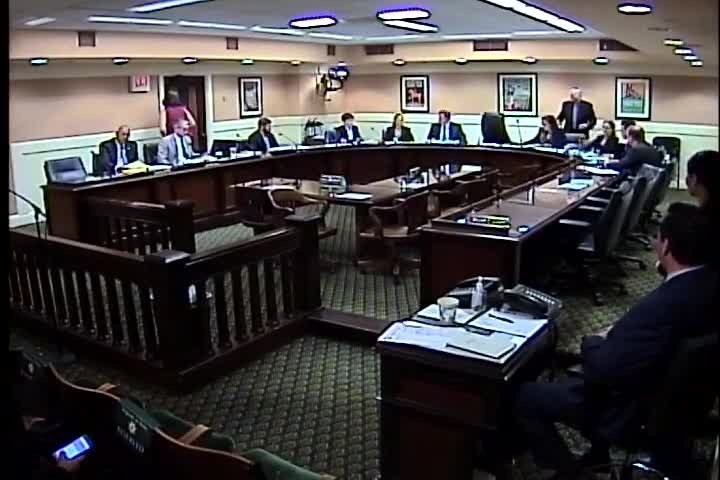 11MIN
Assembly Standing Committee on Environmental Safety and Toxic Materials
Bill Author

Bill Co-Author(s):