AB 2696: Public Employees’ Retirement System: limited term appointments.
- Session Year: 2017-2018
- House: Assembly
- Latest Version Date: 2018-09-26
The Public Employees Retirement Law (PERL) establishes the Public Employees Retirement System (PERS), which provides a defined benefit to members of the system, based on final compensation, credited service, and age at retirement, subject to certain variations. PERL authorizes a public agency and a school employer to contract to make their employees members of PERS. PERL establishes the compensation earnable by members of the system, defined as the members payrate and special compensation, including out-of-class pay. Existing law requires fees and other amounts received by the Board of Administration of PERS pursuant to PERL to be credited to the Public Employees Retirement Fund, a continuously appropriated fund.
PERL prohibits an out-of-class appointment by a contracting agency employer or a school employer from exceeding 960 hours in each fiscal year. PERL requires an employer who violates this provision to pay penalties to the system based on, among other factors, an amount of money equal to 3 times the employee and employer contributions that would otherwise be paid to the system for the difference between the compensation paid for an out-of-class appointment and the compensation paid and reported to the system for the members permanent position, for the entire period or periods the member serves in an out-of-class appointment.
This bill would instead require that the amount of money for this penalty equal 3 times the employee and employer contributions that otherwise would have been paid and reported to the system for the difference between the compensation paid for the out-of-class appointment and the compensation that would have been paid and reported to the system, but for the vacancy, for the position in accordance with a publicly available pay schedule applicable to the vacant position, for the entire period or periods the member serves in an out-of-class appointment. By increasing the amount of moneys deposited in a continuously appropriated fund, this bill would make an appropriation.
The Public Employees Medical and Hospital Care Act, which is administered by the Board of Administration of the Public Employees Retirement System, governs the funding and provision of postemployment health care benefits for eligible retired public employees and their beneficiaries. Existing law requires the board to approve an employee association health benefit plan previously approved by the board in the 198788 contract year or prior, if the plan continues to meet the minimum standards prescribed by the board. Existing law authorizes the California Correctional Peace Officer Association Health Benefits Trust to offer different health benefit plan designs with varying premiums in different areas of the state.This bill would require the board to approve an employee association health benefit plan offered by the California Association of Highway Patrolmen Health Benefits Trust, the Peace Officers Research Association of California Health Benefits Trust, or the California Correctional Peace Officer Association Health Benefits Trust if the plan meets minimum standards prescribed by the board. The bill would authorize the trustees of these organizations to offer one or more health benefit plans approved by the board on a regional basis with a regional premium subject to specified limitations.The Public Employees Medical and Hospital Care Act, which is administered by the Board of Administration of the Public Employees Retirement System, governs the funding and provision of postemployment health care benefits for eligible retired public employees and their beneficiaries. Existing law requires the board to approve an employee association health benefit plan previously approved by the board in the 198788 contract year or prior, if the plan continues to meet the minimum standards prescribed by the board. Existing law authorizes the California Correctional Peace Officer Association Health Benefits Trust to offer different health benefit plan designs with varying premiums in different areas of the state.
This bill would require the board to approve an employee association health benefit plan offered by the California Association of Highway Patrolmen Health Benefits Trust, the Peace Officers Research Association of California Health Benefits Trust, or the California Correctional Peace Officer Association Health Benefits Trust if the plan meets minimum standards prescribed by the board. The bill would authorize the trustees of these organizations to offer one or more health benefit plans approved by the board on a regional basis with a regional premium subject to specified limitations.
(a)An out-of-class appointment by a contracting agency employer or a school employer shall not exceed a total of 960 hours in each fiscal year.
(b)A contracting agency employer or school employer shall track the hours worked by an employee serving in an out-of-class appointment and report that service to the system no later than 30 days following the end of each fiscal year.
(c)The compensation for an appointment described in subdivision (a) shall be pursuant to a collective bargaining agreement or a publicly available pay schedule.
(d)(1)An employer who violates this section shall pay penalties to the system according to the following:
(A)An amount of money equal to three times the employee and employer contributions that would otherwise be paid to the system for the difference between the compensation paid for an appointment described in subdivision (a) and the compensation that would have been paid and reported to the system, but for the vacancy, for the position in accordance with a publicly available pay schedule applicable to the vacant position, for the entire period or periods the member serves in an out-of-class appointment.
(B)Reimbursement for administrative expenses incurred in responding to this situation.
(2)Penalties paid to the system pursuant to this subdivision are not normal contributions or additional contributions that would stand to the credit of a members individual account.
(e)The member shall bear no liability, obligations, or expense as a result of the unlawful actions of the employer with respect to this section.
(f)For purposes of this section, out-of-class appointment means an appointment of an employee to an upgraded position or higher classification by the employer or governing board or body in a vacant position for a limited duration.
(g)For purposes of this section, vacant position refers to a position that is vacant during recruitment for a permanent appointment. Vacant position does not refer to a position that is temporarily available due to another employees leave of absence.
(a)An out-of-class appointment by a contracting agency employer or a school employer shall not exceed a total of 960 hours in each fiscal year.
(b)A contracting agency employer or school employer shall track the hours worked by an employee serving in an out-of-class appointment and report that service to the system no later than 30 days following the end of each fiscal year.
(c)The compensation for an appointment described in subdivision (a) shall be pursuant to a collective bargaining agreement or a publicly available pay schedule.
(d)(1)An employer who violates this section shall pay penalties to the system according to the following:
(A)An amount of money equal to three times the employee and employer contributions that would otherwise be paid to the system for the difference between the compensation paid for an appointment described in subdivision (a) and the compensation that would have been paid and reported to the system for the members permanent position, system, but for the vacancy, for the position in accordance with a publicly available pay schedule applicable to the vacant position, for the entire period or periods the member serves in an out-of-class appointment.
(B)Reimbursement for administrative expenses incurred in responding to this situation.
(2)Penalties paid to the system pursuant to this subdivision are not normal contributions or additional contributions that would stand to the credit of a members individual account.
(e)The member shall bear no liability, obligations, or expense as a result of the unlawful actions of the employer with respect to this section.
(f)For purposes of this section, out-of-class appointment means an appointment of an employee to an upgraded position or higher classification by the employer or governing board or body in a vacant position for a limited duration.
(g)For purposes of this section, vacant position refers to a position that is vacant during recruitment for a permanent appointment. Vacant position does not refer to a position that is temporarily available due to another employees leave of absence.
SECTION 1.Section 22850 of the Government Code is amended to read:22850.(a)The board may, without compliance with any provision of law relating to competitive bidding, enter into contracts with carriers offering health benefit plans or with entities offering services relating to the administration of health benefit plans.(b)The board may contract with carriers for health benefit plans or approve health benefit plans offered by employee organizations, provided that the carriers have operated successfully in the hospital and medical care fields prior to the contracting for or approval thereof. The plans may include hospital benefits, surgical benefits, inpatient medical benefits, outpatient benefits, obstetrical benefits, and benefits offered by a bona fide church, sect, denomination, or organization whose principles include healing entirely by prayer or spiritual means.(c)Notwithstanding any other provision of this part, the board may contract with health benefit plans offering unique or specialized health services.(d)The board may administer self-funded or minimum premium health benefit plans.(e)The board may contract for or implement employee cost containment and cost reduction incentive programs that involve the employee, the annuitant, and family members as active participants, along with the carrier and the provider, in a joint effort toward containing and reducing the cost of providing medical and hospital health care services to public employees. In developing these plans, the board, in cooperation with the Department of Human Resources, may request proposals from carriers and certified public employee representatives.(f)Notwithstanding any other provision of this part, the board may do any of the following:(1)Contract for, or approve, health benefit plans that charge a contracting agency and its employees and annuitants rates based on regional variations in the costs of health care services.(2)Contract for, or approve, health benefit plans exclusively for the employees and annuitants of contracting agencies. State employees and annuitants may not enroll in these plans. The board may provide health benefit plans exclusively for employees and annuitants of contracting agencies in addition to or in lieu of other health benefit plans offered under this part pursuant to Section 22922.(3)Implement and administer risk adjustment procedures consistent with Section 22864 that require health benefit plans to adjust premiums and authorize the system to redistribute premiums based on rules and regulations established by the board for this purpose.(g)The board shall approve any employee association health benefit plan offered by the California Association of Highway Patrolmen Health Benefits Trust, the Peace Officers Research Association of California Health Benefits Trust, or the California Correctional Peace Officer Association Health Benefits Trust, provided that the plan meets the minimum standards prescribed by the board. The trustees of an employee association health benefit plan are responsible for providing health benefit plan administration and services to its enrollees. Notwithstanding any other provision of this part, the trustees of an employee association health benefit plan authorized under this subdivision may offer one or more health benefit plans that have been approved by the board on a regional basis with a regional premium. The trustees of these employee association health benefit plans shall not use geographic regions that are different from the geographic regions established by the board for contracting agency regional premiums, as authorized under paragraph (1) of subdivision (f), except that the trustees may use a north and south geographic region of the state different from the regions established by the board.(h)Irrespective of any other provision of law, the sponsors of a health benefit plan approved under this section may reinsure the operation of the plan with an admitted insurer authorized to write disability insurance, if the premium includes the entire prepayment fee.(a)The board may, without compliance with any provision of law relating to competitive bidding, enter into contracts with carriers offering health benefit plans or with entities offering services relating to the administration of health benefit plans.
(b)The board may contract with carriers for health benefit plans or approve health benefit plans offered by employee organizations, provided that the carriers have operated successfully in the hospital and medical care fields prior to the contracting for or approval thereof. The plans may include hospital benefits, surgical benefits, inpatient medical benefits, outpatient benefits, obstetrical benefits, and benefits offered by a bona fide church, sect, denomination, or organization whose principles include healing entirely by prayer or spiritual means.
(c)Notwithstanding any other provision of this part, the board may contract with health benefit plans offering unique or specialized health services.
(d)The board may administer self-funded or minimum premium health benefit plans.
(e)The board may contract for or implement employee cost containment and cost reduction incentive programs that involve the employee, the annuitant, and family members as active participants, along with the carrier and the provider, in a joint effort toward containing and reducing the cost of providing medical and hospital health care services to public employees. In developing these plans, the board, in cooperation with the Department of Human Resources, may request proposals from carriers and certified public employee representatives.
(f)Notwithstanding any other provision of this part, the board may do any of the following:
(1)Contract for, or approve, health benefit plans that charge a contracting agency and its employees and annuitants rates based on regional variations in the costs of health care services.
(2)Contract for, or approve, health benefit plans exclusively for the employees and annuitants of contracting agencies. State employees and annuitants may not enroll in these plans. The board may provide health benefit plans exclusively for employees and annuitants of contracting agencies in addition to or in lieu of other health benefit plans offered under this part pursuant to Section 22922.
(3)Implement and administer risk adjustment procedures consistent with Section 22864 that require health benefit plans to adjust premiums and authorize the system to redistribute premiums based on rules and regulations established by the board for this purpose.
(g)The board shall approve any employee association health benefit plan that was approved by the board in the 198788 contract year or prior, provided the plan continues to meet offered by the California Association of Highway Patrolmen Health Benefits Trust, the Peace Officers Research Association of California Health Benefits Trust, or the California Correctional Peace Officer Association Health Benefits Trust, provided that the plan meets the minimum standards prescribed by the board. The trustees of an employee association health benefit plan are responsible for providing health benefit plan administration and services to its enrollees. Notwithstanding any other provision of this part, the California Correctional Peace Officer Association Health Benefits Trust may offer different health benefit plan designs with varying premiums in different areas of the state. trustees of an employee association health benefit plan authorized under this subdivision may offer one or more health benefit plans that have been approved by the board on a regional basis with a regional premium. The trustees of these employee association health benefit plans shall not use geographic regions that are different from the geographic regions established by the board for contracting agency regional premiums, as authorized under paragraph (1) of subdivision (f), except that the trustees may use a north and south geographic region of the state different from the regions established by the board.
(h)Irrespective of any other provision of law, the sponsors of a health benefit plan approved under this section may reinsure the operation of the plan with an admitted insurer authorized to write disability insurance, if the premium includes the entire prepayment fee.
|
Date
|
Status
|
|---|---|
| Sep 26, 2018 | Chaptered by Secretary of State - Chapter 767, Statutes of 2018. |
| Sep 26, 2018 | Approved by the Governor. |
| Sep 11, 2018 | Enrolled and presented to the Governor at 4:30 p.m. |
| Aug 30, 2018 | Senate amendments concurred in. To Engrossing and Enrolling. |
| Aug 29, 2018 | From committee: That the Senate amendments be concurred in. (Ayes 5. Noes 0.) (August 29). |
| Aug 23, 2018 | Re-referred to Com. on P.E., R., & S.S. pursuant to Assembly Rule 77.2. |
| Aug 22, 2018 | In Assembly. Concurrence in Senate amendments pending. May be considered on or after August 24 pursuant to Assembly Rule 77. |
| Aug 21, 2018 | Read third time. Passed. Ordered to the Assembly. |
| Aug 7, 2018 | Read second time. Ordered to third reading. |
| Aug 6, 2018 | From committee: Be ordered to second reading pursuant to Senate Rule 28.8. |
| Jun 26, 2018 | From committee: Do pass and re-refer to Com. on APPR. (Ayes 3. Noes 2.) (June 25). Re-referred to Com. on APPR. |
| Jun 14, 2018 | From committee chair, with author's amendments: Amend, and re-refer to committee. Read second time, amended, and re-referred to Com. on P.E. & R. |
| May 3, 2018 | Referred to Com. on P.E. & R. |
| Apr 23, 2018 | In Senate. Read first time. To Com. on RLS. for assignment. |
| Apr 23, 2018 | Read third time. Passed. Ordered to the Senate. |
| Apr 19, 2018 | Read second time. Ordered to third reading. |
| Apr 18, 2018 | From committee: Do pass. (Ayes 15. Noes 0.) (April 18). |
| Apr 4, 2018 | From committee: Do pass and re-refer to Com. on APPR. (Ayes 5. Noes 0.) (April 4). Re-referred to Com. on APPR. |
| Mar 8, 2018 | Referred to Com. on P.E., R., & S.S. |
| Feb 16, 2018 | From printer. May be heard in committee March 18. |
| Feb 15, 2018 | Read first time. To print. |
|
Date
|
Description
|
Location
|
Votes
|
|
|---|---|---|---|---|
| Aug 30, 2018 | AB 2696 RODRIGUEZ Concurrence in Senate Amendments | Assembly Floor |
Passed |
|
| Aug 29, 2018 | With recommendation: That Senate amendments be concurred in. | Assembly Standing Committee on Public Employees, Retirement, and Social Security |
Passed |
|
| Aug 21, 2018 | Assembly 3rd Reading AB2696 Rodriguez By Pan | Senate Floor |
Passed |
|
| Jun 25, 2018 | Do pass, but first be re-referred to the Committee on [Appropriations] | Senate Standing Committee on Public Employment and Retirement |
Passed |
|
| Apr 23, 2018 | AB 2696 RODRIGUEZ Assembly Third Reading | Assembly Floor |
Passed |
|
| Apr 18, 2018 | Do pass. | Assembly Standing Committee on Appropriations |
Passed |
|
| Apr 4, 2018 | Do pass and be re-referred to the Committee on [Appropriations] | Assembly Standing Committee on Public Employees, Retirement, and Social Security |
Passed |
This list shows positions taken on this bill by organizations on the date displayed, which is linked to the original source.
Positions by individuals are not included.
CONCURRENCE IN SENATE AMENDMENTS
CSA2 Bill Id:AB 2696
Author:(Rodriguez)
As Amended Ver:June 14, 2018
Majority vote
ASSEMBLY: | 71-0 | (April 23, 2018) | SENATE: | 28-10 | (August 21, 2018) |
COMMITTEE VOTE: | 5-0 | (August 29, 2018) | RECOMMENDATION: | concur |
(P.E.,R., & S.S.)
Original Committee Reference: P.E.,R., & S.S.
SUMMARY: Clarifies the calculation of employer penalties to be paid to the California Public Employees' Retirement System (CalPERS) for violating the 960-hour per fiscal year limit on out-of-class appointments. Specifically, this bill:
Provides that the penalty to be paid is three times the difference between the compensation paid for the out-of-class appointment and the compensation that would have been paid and reported to the CalPERS had the position not been vacant, and in accordance with a publicly available pay schedule for the position, for the entire period or periods in which the member serves in an out-of-class appointment.
EXISTING LAW:
- States that an out-of-class appointment by a contracting agency employer or a school employer shall not exceed a total of 960 hours in each fiscal year.
- Mandates that a contracting agency employer or school employer shall track the hours worked by an employee serving in an out-of-class appointment and report that service to the system no later than thirty days following the end of the fiscal year.
- Specifies that the compensation for an out-of-class appointment, as specified, shall be pursuant to a collective bargaining agreement or a publicly available pay schedule.
- Requires an employer who violates the 960-hour limitation on out-of-class appointments to pay penalties to CalPERS, according to the following:
- An amount of money equal to three times the employee and employer contributions that would otherwise be paid to the system for the difference between the compensation paid for an out-of-class appointment and the compensation paid and reported to CalPERS for the member's permanent position, for the entire period or periods the member serves in an out-of-class position.
- Reimbursement for administrative expenses incurred in responding to the situation.
- Specifies that penalties paid to CalPERS are not normal retirement contributions or additional contributions that would be credited to the member's individual account.
- Provides that the member shall bear no liability, obligations or expense as a result of the unlawful actions of the employer regarding the 960-hour limitation.
- Defines "out-of-class appointment" to mean an appointment of an existing employee to an upgraded position or higher classification by the employer or governing board or body in a vacant position, for a limited duration.
- Defines "vacant position" to mean a position that is vacant during recruitment for a permanent appointment, and specifies that a "vacant position" does not refer to a position that is temporarily available due to another employee's leave of absence.
FISCAL EFFECT: This bill was passed by the Senate Appropriations Committee pursuant to Senate Rule 28.8.
COMMENTS: According to the author, "[t]he rationale of existing law is to create certainty for employers who are required to diligently work to permanently fill the vacancy, and for employees who would know that they would not be required to perform additional work in perpetuity, while not being appropriately compensated for that work.
'As a measure of enforcement, existing law includes penalties to be borne by the employer and payable to CalPERS for failure to comply with the limits.
'An employer circular recently released by CalPERS provides information to employers relating to these provisions in existing law; however, the calculation of penalties may be subject to varying interpretations and is, therefore, unclear.
'The penalties that could be calculated under existing law present a drafting error which is not aligned with the original intent of the law, and insufficient to discourage abuse of out-of-class appointments. This bill clarifies the original intent and calculation of penalties towards discouraging such abuse."
- Calculation of Penalties
Below are examples as to how the penalties could be calculated for violating existing law compared to the calculation provided for in this bill.
- Under Existing Law:
Example: A firefighter receives a two percent increase in out-of-class pay for serving as a fire captain. The firefighter's base salary of $5,000 per month becomes $5,100 per month. If the employer exceeds the 960-hour limitation within a fiscal year, the penalty to be paid is three times the employer and employee contributions on the difference of $100 (i.e., three times $100, totaling $300), for each period of noncompliance. The penalty for violating existing law in this example would be de minimus and insufficient to discourage abuse.
- Under This Bill:
Example: A firefighter receives a 2% increase in out-of-class pay for serving as a fire captain. The firefighter's base salary of $5,000 per month becomes $5,100 per month. The base salary of a fire captain is $8,500 per month, which is noticed on a publicly available pay schedule. Under this bill, if the employer exceeds the 960-hour limitation within the fiscal year, the penalty to be paid is three times the difference between the firefighter's pay for the appointment (i.e., $5,100 per month) and the base salary of the fire captain as noticed on a publicly available pay schedule (i.e., $8,500 per month). Thus, the penalty would be three times $3,400 totaling, $10,200 for each period of noncompliance. The penalty for violating law in this example could be sufficient towards discouraging abuse.
- Out-of-Class Appointments: Employers
AB 1487 (Rodriguez), Chapter 229, Statutes of 2017, established that local public and school employers may temporarily appoint an employee to a vacant position of a higher classification for 960 hours per fiscal year, or roughly six months, while seeking a permanent replacement for the position.
To ensure employer compliance with the 960-hour limitation, CalPERS will mail up to two notification letters to employers:
- A letter in the month of June informing employers of the mandatory requirement to report the number of hours an out-of-class employee has worked in a vacant upgraded position, due by July 30.
- A letter in the month of September informing employers that CalPERS has not received their out-of-class appointment employer certification form.
- Out-of-Class Appointments: Employees
Usually, the employee receives additional compensation for working above their current compensation, although that pay is generally not equivalent to the pay they would have received had they been officially promoted, nor does it count towards their pensionable compensation since it is not part of the employee's regular rate of pay.
Analysis Prepared by: Michael Bolden / P.E.,R., & S.S. / (916) 319-3957 FN: 0005124
Date of Hearing: August 29, 2018
ASSEMBLY COMMITTEE ON PUBLIC EMPLOYEES, RETIREMENT, AND SOCIAL SECURITY
Freddie Rodriguez, Chair
ABPCA Bill Id:AB 2696 (
Author:Rodriguez) – As Amended Ver:June 14, 2018
SUBJECT: Public Employees’ Retirement System: limited term appointments
SUMMARY: Clarifies the intent and calculation of employer penalties for violating the 960-hour limit per fiscal year on out-of-class appointments. Specifically, this bill:
Specifies that the penalty paid by an employer for violating the 960-hour limit per fiscal year on out-of-class appointments shall pay to the California Public Employees’ Retirement System (CalPERS) three times the difference between the compensation paid for the out-of-class appointment and the compensation that would have been paid and reported to the CalPERS had the position not been vacant, in accordance with a publicly available pay schedule for the position, for the entire period or periods in which the member serves in an out-of-class appointment.
EXISTING LAW:
- States that an out-of-class appointment by a contracting agency employer or a school employer shall not exceed a total of 960 hours in each fiscal year.
- Mandates that a contracting agency employer or school employer shall track the hours worked by an employee serving in an out-of-class appointment and report that service to the system no later than thirty days following the end of the fiscal year.
- Specifies that the compensation for an out-of-class appointment, as specified, shall be pursuant to a collective bargaining agreement or a publicly available pay schedule.
- Requires an employer who violates the 960-hour limitation on out-of-class appointments to pay penalties to CalPERS, according to the following:
- An amount of money equal to three times the employee and employer contributions that would otherwise be paid to the system for the difference between the compensation paid for an out-of-class appointment and the compensation paid and reported to CalPERS for the member’s permanent position, for the entire period or periods the member serves in an out-of-class position.
- Reimbursement for administrative expenses incurred in responding to the situation.
- Specifies that penalties paid to CalPERS are not normal retirement contributions or additional contributions that would be credited to the member’s individual account.
- Provides that the member shall bear no liability, obligations or expense as a result of the unlawful actions of the employer regarding the 960-hour limitation.
- Defines “out-of-class appointment” to mean an appointment of an existing employee to an upgraded position or higher classification by the employer or governing board or body in a vacant position, for a limited duration.
- Defines “vacant position” to mean a position that is vacant during recruitment for a permanent appointment, and specifies that a “vacant position” does not refer to a position that is temporarily available due to another employee’s leave of absence.
FISCAL EFFECT: This bill was passed by the Senate Appropriations Committee pursuant to Senate Rule 28.8.
COMMENTS: According to the author, “[t]he rationale of existing law is to create certainty for employers who are required to diligently work to permanently fill the vacancy, and for employees who would know that they would not be required to perform additional work in perpetuity, while not being appropriately compensated for that work.
‘As a measure of enforcement, existing law includes penalties to be borne by the employer and payable to CalPERS for failure to comply with the limits.
‘An employer circular recently released by CalPERS provides information to employers relating to these provisions in existing law; however, the calculation of penalties may be subject to varying interpretations and is, therefore, unclear.
‘The penalties that could be calculated under existing law present a drafting error which is not aligned with the original intent of the law, and insufficient to discourage abuse of out-of-class appointments. This bill clarifies the original intent and calculation of penalties towards discouraging such abuse.”
1) Calculation of Penalties
Below are examples as to how the penalties could be calculated for violating existing law compared to the calculation provided for AB 2696.
a) Under Existing Law:
Example: A firefighter receives a two percent increase in out-of-class pay for serving as a fire captain. The firefighter’s base salary of $5,000 per month becomes $5,100 per month. If the employer exceeds the 960-hour limitation within a fiscal year, the penalty to be paid is three times the employer and employee contributions on the difference of $100 (i.e., three times $100, totaling $300), for each period of noncompliance. The penalty for violating existing law in this example would be de minimus and insufficient to discourage abuse.
b) Under Assembly Bill 2696:
Example: A firefighter receives a two percent increase in out-of-class pay for serving as a fire captain. The firefighter’s base salary of $5,000 per month becomes $5,100 per month. The base salary of a fire captain is $8,500 per month, which is noticed on a publicly available pay schedule. Under this bill, if the employer exceeds the 960-hour limitation within the fiscal year, the penalty to be paid is three times the difference between the firefighter’s pay for the appointment (i.e., $5,100 per month) and the base salary of the fire captain as noticed on a publicly available pay schedule (i.e., $8,500 per month). Thus, the penalty would be three times $3,400 totaling, $10,200 for each period of noncompliance. The penalty for violating law in this example could be sufficient towards discouraging abuse.
2) Out-of-Class Appointments: Employers
Effective January 1, 2018, AB 1487 (Rodriguez, Chapter 229, Statutes of 2017) established that local public and school employers may temporarily appoint an employee to a vacant position of a higher classification for 960 hours per fiscal year, or roughly six months, while seeking a permanent replacement for the position.
To ensure employer compliance with the 960-hour limitation, CalPERS will mail up to two notification letters to employers:
a) A letter in the month of June informing employers of the mandatory requirement to report the number of hours an out-of-class employee has worked in a vacant upgraded position, due by July 30.
b) A letter in the month of September informing employers that CalPERS has not received their out-of-class appointment employer certification form.
3) Out-of-Class Appointments: Employees
Usually, the employee receives additional compensation for working above their current compensation, although that pay is generally not equivalent to the pay they would have received had they been officially promoted, nor does it count towards their pensionable compensation since it is not part of the employee’s regular rate of pay.
4) Prior/Related Legislation
Chapter 229, Statutes of 2017 (Assembly Bill 1487, Rodriguez), established a 960-hour limit per fiscal year on out-of-class appointments in which local public agency and school employers temporarily place current employees in vacant positions of a higher classification, or temporarily upgrade their position.
REGISTERED SUPPORT / OPPOSITION:
Support
California Professional Firefighters (Sponsor)
Opposition
None on file.
Analysis Prepared by: Michael Bolden / P.E.,R., & S.S. / (916) 319-3957
CONCURRENCE IN SENATE AMENDMENTS
CSA1 Bill Id:AB 2696
Author:(Rodriguez)
As Amended Ver:June 14, 2018
Majority vote
ASSEMBLY: | 71-0 | (April 23, 2018) | SENATE: | 28-10 | (August 21, 2018) |
Original Committee Reference: P.E.,R., & S.S.
SUMMARY: Clarifies the intent and calculation of employer penalties in existing law for violating the 960 hour limit per fiscal year on out-of-class appointments.
The Senate amendments specify that the penalty paid by an employer to the California Public Employees' Retirement System (CalPERS) for violating the 960 hour limit per fiscal year on out-of-class appointments is three times the difference between the compensation paid for the out-of-class appointment and the compensation that would have been paid and reported to CalPERS had the position not been vacant, in accordance with a publicly available pay schedule for the position.
EXISTING LAW:
- Provides that an out-of-class appointment by a contracting agency employer or a school employer must not exceed a total of 960 hours in each fiscal year.
- Requires an employer who violates the 960 hour limitation on out-of-class appointments to pay penalties to CalPERS according to the following:
- An amount of money equal to three times the employee and employer contributions that would otherwise be paid to the system for the difference between the compensation paid for an out-of-class appointment and the compensation paid and reported to CalPERS for the member's permanent position, for the entire period or periods the member serves in an out-of-class position.
- Reimbursement for administrative expenses incurred in responding to the situation.
- Requires a CalPERS contracting agency employer or school employer to track the hours worked by an employee serving in an out-of-class appointment and report that service to CalPERS no later than 30 days following the end of the fiscal year.
- Specifies that the compensation for an out-of-class appointment must be pursuant to a collective bargaining agreement or a publicly available pay schedule.
- Specifies that penalties paid to CalPERS are not normal retirement contributions or additional contributions that would be credited to the member's individual account.
- Provides that the member must not bear liability, obligations, or expense as a result of the unlawful actions of the employer regarding the 960-hour limitation.
- Defines the following terms:
a) "Out-of-class appointment" to mean an appointment of an existing employee to an upgraded position or higher classification by the employer or governing board or body in a vacant position, for a limited duration.
b) "Vacant position" to refer to a position that is vacant during recruitment for a permanent appointment, and specifies that a vacant position does not refer to a position that is temporarily available due to another employee's leave of absence.
FISCAL EFFECT: This bill was passed by the Senate Appropriations Committee pursuant to Senate Rule 28.8.
COMMENTS: According to the author, "[t]he rationale of existing law is to create certainty for employers who are required to diligently work to permanently fill the vacancy, and for employees who would know that they would not be required to perform additional work in perpetuity, while not being appropriately compensated for that work.
'As a measure of enforcement, existing law includes penalties to be borne by the employer and payable to CalPERS for failure to comply with the limits.
'An employer circular recently released by CalPERS provides information to employers relating to these provisions in existing law; however, the calculation of penalties may be subject to varying interpretations and is therefore unclear. This bill clarifies the intent and calculation of penalties in existing law."
Analysis Prepared by: Michael Bolden / P.E.,R., & S.S. / (916) 319-3957 FN: 0003782
Office of Senate Floor Analyses (916) 651-1520 Fax: (916) 327-4478 | AB |
THIRD READING
Bill No: AB 2696
:
SENATE PUBLIC EMP. & RET. COMMITTEE: 3-2, 6/25/18
AYES: Pan, Leyva, Portantino
NOES: Morrell, Moorlach
SENATE APPROPRIATIONS COMMITTEE: Senate Rule 28.8
ASSEMBLY FLOOR: 71-0, 4/23/18 - See last page for vote
SOURCE: California Professional Firefighters
DIGEST:
This bill clarifies the intent and calculation of employer penalties for violating the 960 hour limit per fiscal year on out-of-class appointments.
ANALYSIS:
Existing law:
- States that an out-of-class appointment by a contracting agency employer or a school employer shall not exceed a total of 960 hours in each fiscal year.
- Mandates that a contracting agency employer or school employer shall track the hours worked by an employee serving in an out-of-class appointment and report that service to the California Public Employees’ Retirement System (CalPERS) no later than thirty days following the end of the fiscal year.
- Specifies that the compensation for an out-of-class appointment, as specified, shall be pursuant to a collective bargaining agreement or a publicly available pay schedule.
- Requires an employer who violates the 960 hour limitation on out-of-class appointments to pay penalties to CalPERS according to the following:
- An amount of money equal to three times the employee and employer contributions that would otherwise be paid to the system for the difference between the compensation paid for an out-of-class appointment and the compensation paid and reported to CalPERS for the member’s permanent position, for the entire period or periods the member serves in an out-of-class position.
- Reimbursement for administrative expenses incurred in responding to the situation.
- Specifies that penalties paid to CalPERS are not normal retirement contributions or additional contributions that would be credited to the member’s individual account.
- Provides that the member shall bear no liability, obligations, or expense as a result of the unlawful actions of the employer regarding the 960 hour limitation.
- Defines “out of class appointment” to mean an appointment of an existing employee to an upgraded position or higher classification by the employer or governing board or body in a vacant position, for a limited duration.
- Defines “vacant position” to refer to a position that is vacant during recruitment for a permanent appointment, and specifies that a “vacant position” does not refer to a position that is temporarily available due to another employee’s leave of absence.
This bill specifies that the penalty paid by an employer for violating the 960 hour limit per fiscal year on out-of-class appointments shall pay to CalPERS three times the difference between the compensation paid for the out-of-class appointment and the compensation that would have been paid and reported to CalPERS had the position not been vacant, in accordance with a publicly available pay schedule for the position, for the entire period or periods in which the member serves in an out-of-class appointment.
Background
According to the author’s office,
“The rationale of existing law is to create certainty for employers who are required to diligently work to permanently fill the vacancy, and for employees who would know that they would not be required to perform additional work in perpetuity, while not being appropriately compensated for that work.
As a measure of enforcement, existing law includes penalties to be borne by the employer and payable to CalPERS for failure to comply with the limits.
An employer circular recently released by CalPERS provides information to employers relating to these provisions in existing law, however, the calculation of penalties may be subject to varying interpretations and is therefore unclear.”
Out-of-Class Appointments: Employers
Effective January 1, 2018, AB 1487 (Rodriguez, Chapter 229, Statutes of 2017) established that local public and school employers may temporarily appoint an employee to a vacant position of a higher classification for 960 hours per fiscal year, or roughly six months, while seeking a permanent replacement for the position.
To ensure employer compliance with the 960 hour limitation, CalPERS will mail up to two notification letters to employers:
- A letter in the month of June informing employers of the mandatory requirement to report the number of hours an out-of-class employee has worked in a vacant upgraded position, due by July 30th.
- A letter in the month of September informing employers that CalPERS has not received their out-of-class appointment employer certification form.
Out-of-Class Appointments: Employees
Usually the employee receives additional compensation for working above their current compensation, although that pay is generally not equivalent to the pay they would have received had they been officially promoted, nor does it count towards their pensionable compensation since it is not part of the employee’s regular rate of pay.
Related/Prior Legislation
AB 1487 (Rodriguez, Chapter 229, Statutes of 2017) established a 960 hour limit per fiscal year on out-of-class appointments in which local public agency and school employers temporarily place current employees in vacant positions of a higher classification, or temporarily upgrade their position.
FISCAL EFFECT: Appropriation: Fiscal Com.: Local:
California Professional Firefighters (source)
None received
ARGUMENTS IN SUPPORT: The California Professional Firefighters writes, “The penalty structure of [existing law] was originally intended to deter employers from exceeding the bill’s limits, but it has since been misinterpreted in a way as to make these penalties de minimis. As a result, the penalties have not been a deterrent, thereby rendering the spirit moot. AB 2696 is needed to clarity the original intent of the law.”
ASSEMBLY FLOOR: 71-0, 4/23/18
AYES: Acosta, Aguiar-Curry, Travis Allen, Arambula, Baker, Berman, Bigelow, Bloom, Bonta, Brough, Burke, Caballero, Calderon, Carrillo, Cervantes, Chau, Chávez, Chiu, Choi, Chu, Cooley, Cunningham, Dahle, Daly, Eggman, Flora, Fong, Frazier, Friedman, Gallagher, Gipson, Gloria, Gonzalez Fletcher, Gray, Grayson, Harper, Holden, Irwin, Jones-Sawyer, Kalra, Kamlager-Dove, Lackey, Levine, Limón, Low, Maienschein, Mathis, Mayes, McCarty, Medina, Melendez, Mullin, Muratsuchi, Nazarian, Obernolte, O'Donnell, Patterson, Quirk-Silva, Reyes, Rodriguez, Salas, Santiago, Steinorth, Mark Stone, Thurmond, Ting, Voepel, Waldron, Weber, Wood, Rendon
NO VOTE RECORDED: Chen, Cooper, Cristina Garcia, Eduardo Garcia, Kiley, Quirk, Rubio
8/8/18 10:01:08
**** END ****
SENATE COMMITTEE ON
PUBLIC EMPLOYMENT AND RETIREMENT
Dr. Richard Pan, Chair
2017 - 2018 Regular
Bill No: AB 2696 Hearing Date: 6/25/18
Author: | Rodriguez | ||
Version: | 6/14/18 As amended | ||
Urgency: | No | Fiscal: | Yes |
Consultant: | Korinne Sugasawara | ||
Subject: Public Employees’ Retirement System: limited term appointments.
SOURCE: California Professional Firefighters
ASSEMBLY VOTES:
Assembly Floor: | 71 - 0 |
Assembly Appropriations Committee: | 15 - 0 |
Assembly Public Employees, Retirement, and Social Security Committee: | 5 - 0 |
DIGEST: This bill clarifies the intent and calculation of employer penalties for violating the 960 hour limit per fiscal year on out-of-class appointments.
ANALYSIS:
Existing law:
- States that an out-of-class appointment by a contracting agency employer or a school employer shall not exceed a total of 960 hours in each fiscal year.
- Mandates that a contracting agency employer or school employer shall track the hours worked by an employee serving in an out-of-class appointment and report that service to the system no later than thirty days following the end of the fiscal year.
- Specifies that the compensation for an out-of-class appointment, as specified, shall be pursuant to a collective bargaining agreement or a publicly available pay schedule.
- Requires an employer who violates the 960 hour limitation on out-of-class appointments to pay penalties to California Public Employees’ Retirement System (CalPERS) according to the following:
- An amount of money equal to three times the employee and employer contributions that would otherwise be paid to the system for the difference between the compensation paid for an out-of-class appointment and the compensation paid and reported to CalPERS for the member’s permanent position, for the entire period or periods the member serves in an out-of-class position.
- Reimbursement for administrative expenses incurred in responding to the situation.
- Specifies that penalties paid to CalPERS are not normal retirement contributions or additional contributions that would be credited to the member’s individual account.
- Provides that the member shall bear no liability, obligations, or expense as a result of the unlawful actions of the employer regarding the 960 hour limitation.
- Defines “out of class appointment” to mean an appointment of an existing employee to an upgraded position or higher classification by the employer or governing board or body in a vacant position, for a limited duration.
- Defines “vacant position” to refer to a position that is vacant during recruitment for a permanent appointment, and specifies that a “vacant position” does not refer to a position that is temporarily available due to another employee’s leave of absence.
This bill:
Specifies that the penalty paid by an employer for violating the 960 hour limit per fiscal year on out-of-class appointments shall pay to CalPERS three times the difference between the compensation paid for the out-of-class appointment and the compensation that would have been paid and reported to CalPERS had the position not been vacant, in accordance with a publicly available pay schedule for the position, for the entire period or periods in which the member serves in an out-of-class appointment.
Background
According to the author’s office,
“The rationale of existing law is to create certainty for employers who are required to diligently work to permanently fill the vacancy, and for employees who would know that they would not be required to perform additional work in perpetuity, while not being appropriately compensated for that work.
As a measure of enforcement, existing law includes penalties to be borne by the employer and payable to CalPERS for failure to comply with the limits.
An employer circular recently released by CalPERS provides information to employers relating to these provisions in existing law, however, the calculation of penalties may be subject to varying interpretations and is therefore unclear.”
Out-of-Class Appointments: Employers
Effective January 1, 2018, AB 1487 (Rodriguez, Chapter 229, Statutes of 2017) established that local public and school employers may temporarily appoint an employee to a vacant position of a higher classification for 960 hours per fiscal year, or roughly six months, while seeking a permanent replacement for the position.
To ensure employer compliance with the 960 hour limitation, CalPERS will mail up to two notification letters to employers:
- A letter in the month of June informing employers of the mandatory requirement to report the number of hours an out-of-class employee has worked in a vacant upgraded position, due by July 30th.
- A letter in the month of September informing employers that CalPERS has not received their out-of-class appointment employer certification form.
Out-of-Class Appointments: Employees
Usually the employee receives additional compensation for working above their current compensation, although that pay is generally not equivalent to the pay they would have received had they been officially promoted, nor does it count towards their pensionable compensation since it is not part of the employee’s regular rate of pay.
Related/Prior Legislation
AB 1487 (Rodriguez, Chapter 229, Statutes of 2017), established a 960 hour limit per fiscal year on out-of-class appointments in which local public agency and school employers temporarily place current employees in vacant positions of a higher classification, or temporarily upgrade their position.
FISCAL EFFECT: Appropriation: No Fiscal Com.: Yes Local: No
Unknown.
SUPPORT:
California Professional Firefighters (source)
OPPOSITION:
None received.
ARGUMENTS IN SUPPORT:
The California Professional Firefighters writes, “The penalty structure of [existing law] was originally intended to deter employers from exceeding the bill’s limits, but it has since been misinterpreted in a way as to make these penalties de minimis. As a result, the penalties have not been a deterrent, thereby rendering the spirit moot. AB 2696 is needed to clarity the original intent of the law.”
ASSEMBLY THIRD READING
ATR Bill Id:AB 2696
Author:(Rodriguez)
As Introduced Ver:February 15, 2018
Majority vote
Committee | Votes | Ayes | Noes |
Public Employees | 5-0 | Rodriguez, Cervantes, Cooley, Cooper, O'Donnell | |
Appropriations | 15-0 | Gonzalez Fletcher, Bigelow, Bloom, Bonta, Brough, Calderon, Carrillo, Chau, McCarty, Fong, Friedman, Gallagher, Nazarian, Obernolte, Reyes |
SUMMARY: Authorizes the respective trusts of the California Association of Highway Patrolmen (CAHP), the Peace Officers Research Association of California (PORAC) and the California Correctional Peace Officer Association (CCPOA) to implement regional ratings (i.e., regional premium pricing) for their respective association basic health plans, which are offered through the Public Employees' Medical and Hospital Care Act (PEMHCA). Specifically, this bill:
- Requires the California Public Employees Retirement System (CalPERS) to approve any employee association health benefit plan offered by CAHP, PORAC and CCPOA provided that their plans meet the minimum standards prescribed by the CalPERS board.
- Authorizes CAHP, PORAC or CCPOA to offer one or more health benefit plans approved by CalPERS on a regional basis with a regional premium. The plans must not use geographic regions that are different from those established by CalPERS for contracting agency regional premiums, but may use a North and South geographic region of the state different from those established by CalPERS.
EXISTING LAW:
- Establishes PEMHCA which charges the CalPERS with responsibility to administer health benefits for state employees and annuitants.
- Authorizes CalPERS to contract for, or approve, health benefit plans exclusively for the employees and annuitants of contracting agencies and to enter into contracts with health insurances carriers offering health benefit plans or with entities offering services relating to the administration of health benefit plans. State employees and annuitants may not enroll in these plans.
- Provides that CalPERS may contract with carriers for health benefit plans or approve health benefit plans offered by employee organizations, and allows CalPERS to contract for, or approve, health benefit plans that charge a contracting agency and its employees and annuitants rates based on regional variations in the costs of health care services.
- Requires CalPERS to approve any employee association health benefit plan that was approved by the board in the 1987–88 contract year or prior, provided the plan continues to meet the minimum standards prescribed by the board. The trustees of an employee association health benefit plan are responsible for providing health benefit plan administration and services to its enrollees.
- Permits the CCPOA to offer different health benefit plan designs with varying premiums in different areas of the state.
FISCAL EFFECT: According to the Assembly Appropriations Committee, this bill would result in negligible state costs. Any costs to expand association plans for members would be borne by the respective benefit trust and contracting entity offering the association plan, if it chooses to offer such a plan.
COMMENTS: According to the author, "Assembly Bill 2696 will simply add the respective trusts of CAHP, PORAC and CCPOA to the code section allowing them to offer regional rates to their members should they choose to do so in the future.
"The CAHP, PORAC and CCPOA each offer health benefits to their respective members through a Health Benefits Trust administered by CalPERS. However, under current law, CCPOA is the only trust that may offer different health benefit plan designs with varying premiums in different areas of the state to its members under the PEMHCA.
"This bill permits each association to offer different health benefit plan designs with varying premiums in consideration of regional cost variations throughout the state for their respective members."
Analysis Prepared by: Michael Bolden / P.E.,R., & S.S. / (916) 319-3957 FN: 0002711
Date of Hearing: April 18, 2018
ASSEMBLY COMMITTEE ON APPROPRIATIONS
Lorena Gonzalez Fletcher, Chair
ABPCA Bill Id:AB 2696
Author:(Rodriguez) – As Introduced Ver:February 15, 2018
Policy Committee: | Public Employees, Retirement, and Social Security | Vote: | 5 - 0 |
|
| ||
|
|
Urgency: No State Mandated Local Program: No Reimbursable: No
SUMMARY:
This bill authorizes the trusts of the California Association of Highway Patrolmen (CAHP), the Peace Officers Research Association of California (PORAC), and the California Correctional Peace Officer Association (CCPOA) to implement regional premium pricing, as specified, for their respective association basic health plans.
FISCAL EFFECT:
Negligible state costs. Any costs to expand association plans for members would be borne by the respective benefit trust and contracting entity offering the association plan, if it chooses to offer such a plan.
COMMENTS:
- Background. Three state employee associations – the CAHP, CCPOA, and PORAC – offer their members association-designed health benefit plans managed by each organization’s trustees. These plans are authorized by the Public Employees’ Medical and Hospital Care Act (PEMHCA), which also requires the California Public Employees Retirement System (CalPERS) to annually review the rates and benefits of these plans. These plans are generally only available to dues-paying members of that organization and their families. Unlike other CalPERS-tied health plans, the employee associations negotiate directly with the carrier regarding health plan benefit designs and rates.
- Regional rates. While the health plans offered to members of these three employee associations are meant to be better tailored to members’ needs, existing law allows limited flexibility in their design. For example, while CalPERS incorporates regional rates in establishing rates for CalPERS-designed plans offered to contracting agencies, this option is not available to PORAC or CCPOA. Therefore, despite significant regional cost differences for provider services, PORAC and CCPOA may offer only a plan structure that utilizes a statewide rate. One result is that members in lower-cost areas likely are paying a higher premium for an association plan than they would on non-association plans.
- Purpose. According to supporters, AB 2696 will allow additional options for participants to consider when choosing a health plan that best suits their needs. CCPOA states that these options may have lower out-of-pocket costs and lower employer costs.
- Veto. SB 599 (Portantino), of the 2017-18 Legislative Session, was similar to this bill. SB 599 was vetoed by the governor, whose veto messages stated:
“Existing association health benefit plans are currently afforded very little oversight by the California Public Employees' Retirement System. By allowing these employee associations to offer additional health plans to their members, CalPERS would be left with major unanticipated costs should any of the plans fail.”
Analysis Prepared by: Luke Reidenbach / APPR. / (916) 319-2081
Date of Hearing: April 4, 2018
ASSEMBLY COMMITTEE ON PUBLIC EMPLOYEES, RETIREMENT, AND SOCIAL SECURITY
Freddie Rodriguez, Chair
ABPCA Bill Id:AB 2696 (
Author:Rodriguez) – As Introduced Ver:February 15, 2018
SUBJECT: Public Employees’ Medical and Hospital Care Act: benefit plans
SUMMARY: Authorizes the respective trusts of the California Association of Highway Patrolmen (CAHP), the Peace Officers Research Association of California (PORAC), and the California Correctional Peace Officer Association (CCPOA) to implement regional ratings (i.e., regional premium pricing), as specified, for their respective association basic health plans, which are offered through the Public Employees’ Medical and Hospital Care Act (PEMHCA). Specifically, this bill:
1) Requires the California Public Employees Retirement System (CalPERS) to approve any employee association health benefit plan offered by CAHP, PORAC, and CCPOA provided that their plans meet the minimum standards prescribed by the CalPERS board.
2) Authorizes CAHP, PORAC, or CCPOA to offer one or more health benefit plans approved by CalPERS on a regional basis with a regional premium. The plans must not use geographic regions that are different from those established by CalPERS for contracting agency regional premiums, but may use a North and South geographic region of the state different from those established by CalPERS.
EXISTING LAW:
- Establishes PEMHCA which charges the California Public Employees' Retirement System (CalPERS) with responsibility to administer health benefits for state employees and annuitants.
- Authorizes CalPERS to contract for, or approve, health benefit plans exclusively for the employees and annuitants of contracting agencies. State employees and annuitants may not enroll in these plans.
- Authorizes CalPERS to enter into contracts with health insurances carriers offering health benefit plans or with entities offering services relating to the administration of health benefit plans.
- Provides that CalPERS may contract with carriers for health benefit plans or approve health benefit plans offered by employee organizations, as specified.
- Allows CalPERS to contract for, or approve, health benefit plans that charge a contracting agency and its employees and annuitants rates based on regional variations in the costs of health care services.
- Requires CalPERS to approve any employee association health benefit plan that was approved by the board in the 1987–88 contract year or prior, provided the plan continues to meet the minimum standards prescribed by the board. The trustees of an employee association health benefit plan are responsible for providing health benefit plan administration and services to its enrollees.
- Permits the CCPOA to offer different health benefit plan designs with varying premiums in different areas of the state.
FISCAL EFFECT: Unknown. This bill has been flagged as fiscal by Legislative Counsel.
COMMENTS: According to the author, “Assembly Bill 2696 will simply add the respective trusts of CAHP, PORAC, and CCPOA to the code section allowing them to offer regional rates to their members should they choose to do so in the future.
‘CAHP, PORAC, and CCPOA each offer health benefits to their respective members through a Health Benefits Trust administered by CalPERS. However, under current law, CCPOA is the only trust that may offer different health benefit plan designs with varying premiums in different areas of the state to its members under the PEMHCA.
‘This bill permits each association to offer different health benefit plan designs with varying premiums in consideration of regional cost variations throughout the state for their respective members.”
1) Comments by Supporters
The CCPOA states that, “[t]his bill has the potential to allow Trust participants with additional options to consider when choosing a plan that best suits their needs. These added options may have the added benefit of lowering out-of-pocket costs and lowering an employer’s monthly contribution to the participating.
‘As a case point, CalPERS currently offers their participants several plan designs that overlap regions providing their participants numerous choices in medical plans. CalPERS offers these choices so that participants not only have the ability to choose their provider network, they can also choose to have a Health Maintenance Organization, Preferred Provider Organization, or Exclusive Provider Organization [plan] depending on the needs of the participant. Assembly Bill 2696 provides changes to PEMHCA that potentially will provide like opportunities to the Trusts’ participants.”
2) Comments by Committee Staff
CalPERS provides health benefit coverage to local contracting agency employees through contracted Health Maintenance Organizations and self-funded plans. Additionally, three employee associations – CAHP, PORAC, and CCPOA - offer association designed health benefit plans through PEMHCA exclusively to their respective members.
As required by PEMHCA, CalPERS annually reviews the rate and benefits proposals for the three association plans.
CalPERS incorporates regional rates in establishing rates for the CalPERS designed plans offered to contracting agencies. Under existing statutory construction, some of the association plans can only offer a plan structure that utilizes a statewide rate when determining what costs they can charge to the member. Since there are regional costs differences in the state for provider services, association plans in lower cost regions may be not be competitive with other plans that use regional costs.
A possible consequence of permitting the association plans to use regional rates may be that members in higher cost regions could see their premiums rise to reflect those higher costs. However, this impact should be relatively minor since under the current plan design members in lower cost regions likely already opt for less expensive, nonassociation plans that use regional rating and thus, probably are not in the association pool of covered lives used by carriers when determining the premium structure.
2) Related/Prior Legislation
Senate Bill 599 (Portantino, 2017) would have provided the same authorization to the associations as in the current measure. This bill was vetoed by the Governor who stated in part that, “[e]xisting association health benefit plans are currently afforded very little oversight by the California Public Employees' Retirement System. By allowing these employee associations to offer additional health plans to their members, CalPERS would be left with major unanticipated costs should any of the plans fail.”
REGISTERED SUPPORT / OPPOSITION:
Support
California Correctional Peace Officer Association Benefit Trust Fund
Opposition
None on file.
Analysis Prepared by: Michael Bolden / P.E.,R., & S.S. / (916) 319-3957
Discussed in Hearing
 45SEC
Assembly Floor
 5MIN
Assembly Standing Committee on Public Employees, Retirement, and Social Security
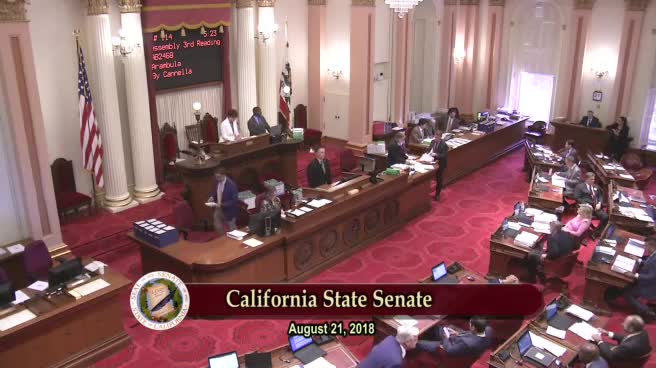 2MIN
Senate Floor
 1MIN
Assembly Floor
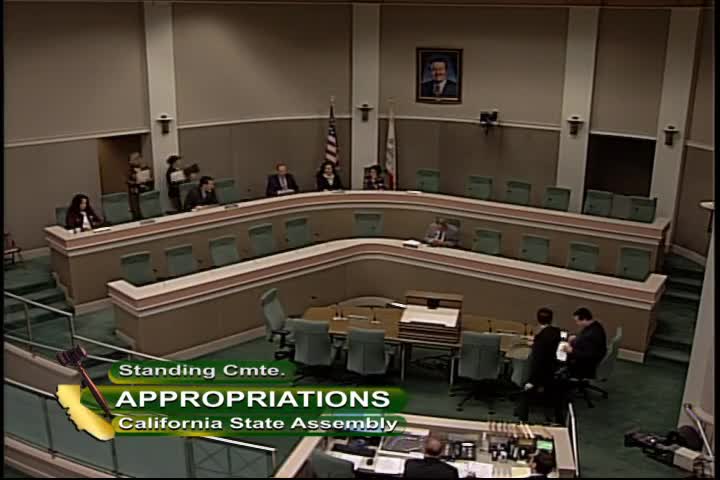 1MIN
Assembly Standing Committee on Appropriations
 1MIN
Assembly Standing Committee on Public Employees, Retirement, and Social Security
Bill Author

Bill Co-Author(s):