AB 2697: Nesting Bird Habitat Incentive Program: idled agricultural lands.
- Session Year: 2017-2018
- House: Assembly
- Latest Version Date: 2018-09-20
Existing law establishes the Wildlife Conservation Board within the Department of Fish and Wildlife and requires the board to investigate, study, and determine what areas within the state are most essential and suitable for wildlife production and preservation, and will provide suitable recreation. Existing law also requires the board to ascertain and determine what lands within the state are suitable for game propagation, game refuges, bird refuges, waterfowl refuges, game farms, fish hatcheries, game management areas, and what streams and lakes are suitable for, or can be made suitable for, fishing and hunting. Existing law also authorizes the board to administer various habitat conservation programs.
This bill would require the department to establish the Nesting Bird Habitat Incentive Program, which may include direct payments or other incentives, to encourage landowners to voluntarily cultivate or retain upland cover crops or other upland vegetation on idled lands to provide waterfowl, upland game bird, and other wildlife habitat cover for purposes, including, but not limited to, encouraging the use of idle agricultural lands for wildlife habitat. The bill would authorize the department to develop guidelines and criteria for the program as it deems appropriate. The bill would authorize the department to consult with the Wildlife Conservation Board, the United States Fish and Wildlife Service, the Natural Resources Conservation Service, and nonprofit waterfowl and upland game bird organizations before implementing those provisions, to determine the optimal ways of increasing and enhancing wildlife habitat on idled lands.
The bill would provide that its provisions shall be implemented only if the Water Supply and Water Quality Act of 2018 is approved by the voters at the November 6, 2018, general election or a sufficient amount of federal grants or other funds are secured, as determined by the department, for the purposes of the bill.
Existing law establishes the Wildlife Conservation Board within the Department of Fish and Wildlife and requires the board to investigate, study, and determine what areas within the state are most essential and suitable for wildlife production and preservation, and will provide suitable recreation. Existing law also requires the board to ascertain and determine what lands within the state are suitable for game propagation, game refuges, bird refuges, waterfowl refuges, game farms, fish hatcheries, game management areas, and what streams and lakes are suitable for, or can be made suitable for, fishing and hunting. Existing law also authorizes the board to administer various habitat conservation programs.
This bill would require the board department to establish the Nesting Bird Habitat Incentive Program, which may include direct payments or other incentives, to encourage landowners to voluntarily cultivate or retain upland cover crops or other upland vegetation on idled lands to provide waterfowl, upland game bird, and other wildlife habitat cover for purposes, including, but not limited to, encouraging the use of idle agricultural lands for wildlife habitat. The bill would authorize the board department to develop guidelines and criteria for the program as it deems appropriate. The bill would authorize the board department to consult with the Department of Fish and Wildlife, Wildlife Conservation Board, the United States Fish and Wildlife Service, the Natural Resources Conservation Service, and nonprofit waterfowl and upland gamebird game bird organizations before implementing those provisions, to determine the optimal ways of increasing and enhancing wildlife habitat on idled lands.
The bill would provide that its provisions shall be implemented only if the Water Supply and Water Quality Act of 2018 is approved by the voters at the November 6, 2018, general election or a sufficient amount of federal grants or other funds are secured, as determined by the board, department, for the purposes of the bill.
Existing law establishes the Wildlife Conservation Board within the Department of Fish and Wildlife and requires the board to investigate, study, and determine what areas within the state are most essential and suitable for wildlife production and preservation, and will provide suitable recreation. Existing law also requires the board to ascertain and determine what lands within the state are suitable for game propagation, game refuges, bird refuges, waterfowl refuges, game farms, fish hatcheries, game management areas, and what streams and lakes are suitable for, or can be made suitable for, fishing and hunting. Existing law also authorizes the board to administer various habitat conservation programs.
This bill would require the board to establish a program, the Nesting Bird Habitat Incentive Program, which may include direct payments or other incentives, to encourage landowners to voluntarily cultivate or retain upland cover crops or other upland vegetation on idled lands to provide waterfowl, upland game bird, and other wildlife habitat cover for purposes, including, but not limited to, encouraging the use of idle agricultural lands for wildlife habitat. The bill would also authorize the department to provide incentives pursuant to the program for the creation or enhancement of waterfowl brood habitat, and authorize the board to develop guidelines and criteria for the program as it deems appropriate. The bill would require authorize the board to consult with the Department of Fish and Wildlife, the United States Fish and Wildlife Service, the Natural Resources Conservation Service, and nonprofit waterfowl and upland gamebird organizations before implementing those provisions, to determine the optimal ways of increasing and enhancing wildlife habitat on idled lands.
The bill would provide that its provisions shall be implemented only if the Water Supply and Water Quality Act of 2018 is approved by the voters at the November 6, 2018, general election or a sufficient amount of federal grants or other funds are secured, as determined by the board, for the purposes of the bill.
Existing law establishes the Wildlife Conservation Board within the Department of Fish and Wildlife and requires the board to investigate, study, and determine what areas within the state are most essential and suitable for wildlife production and preservation, and will provide suitable recreation. Existing law also requires the board to ascertain and determine what lands within the state are suitable for game propagation, game refuges, bird refuges, waterfowl refuges, game farms, fish hatcheries, game management areas, and what streams and lakes are suitable for, or can be made suitable for, fishing and hunting. Existing law also authorizes the board to administer various habitat conservation programs.
This bill would require the board to establish a program, which may include direct payments or other incentives, to encourage landowners to voluntarily cultivate or retain cover crops or other upland vegetation on idled lands to provide waterfowl, upland game bird, and other wildlife habitat cover for purposes, including, but not limited to, encouraging the use of idle agricultural lands for wildlife habitat. The bill would also authorize the department to provide incentives pursuant to the program for the creation or enhancement of waterfowl brood habitat, and to develop guidelines and criteria for the program as it deems appropriate. The bill would require the board to consult with the Department of Fish and Wildlife, the United States Fish and Wildlife Service, the Natural Resources Conservation Service, and nonprofit waterfowl and upland gamebird organizations before implementing those provisions, to determine the optimal ways of increasing and enhancing wildlife habitat on idled lands.
The bill would provide that its provisions shall be implemented only if the Water Supply and Water Quality Act of 2018 is approved by the voters at the November 6, 2018, general election or a sufficient amount of federal grants or other funds are secured, as determined by the board, for the purposes of the bill.
Existing law establishes the Wildlife Conservation Board within the Department of Fish and Wildlife and requires the board to investigate, study, and determine what areas within the state are most essential and suitable for wildlife production and preservation, and will provide suitable recreation. Existing law also requires the board to ascertain and determine what lands within the state are suitable for game propagation, game refuges, bird refuges, waterfowl refuges, game farms, fish hatcheries, game management areas, and what streams and lakes are suitable for, or can be made suitable for, fishing and hunting. Existing law also authorizes the board to administer various habitat conservation programs.
This bill would require the board to establish a program, which may include direct payments or other incentives, to encourage landowners to voluntarily cultivate or retain cover crops or other upland vegetation on idled lands to provide waterfowl, upland game bird, and other wildlife habitat cover for purposes, including, but not limited to, encouraging the use of idle agricultural lands for wildlife habitat. The bill would also authorize the department to provide incentives pursuant to the program for the creation or enhancement of waterfowl brood habitat, and to develop guidelines and criteria for the program as it deems appropriate. The bill would require the board and the Department of Water Resources to consult with the Department of Fish and Wildlife, the United States Fish and Wildlife Service Service, the Natural Resources Conservation Service, the State Water Resources Control Board, and nonprofit waterfowl and upland gamebird organizations before implementing those provisions, to determine the optimal ways of increasing and enhancing wildlife habitat on idled and to ensure that any applicable water transfer requirements are met. lands.
(2)Existing law requires the Department of Water Resources to regulate water resources in the state, including water transfers. Existing law requires landowners to be encouraged, when agricultural lands are being idled in order to provide water for transfer and an amount of water is determined to be made available by that idling, to cultivate or retain nonirrigated cover crops or natural vegetation to provide waterfowl, upland game bird, and other wildlife habitat.This bill would authorize the department to require any nonirrigated cover crops or upland vegetation that are actively transpiring water beyond that associated with normal annual precipitation to be abated and would require that efforts should be made to remove, either through discing or chemical treatment, only that portion of the subject area that requires abatement in order to maintain waterfowl and upland gamebird nesting cover. The bill would allow nonirrigated cover crops or upland vegetation to remain on the subject area for as long as the department deems allowable. The bill would require that notification be given to permitted entities to conduct egg salvage activities prior to any abatement of nonirrigated cover crops or upland vegetation. The bill would provide that participating landowners are not subject to additional regulations for subsequent manipulation or removal of nonirrigated cover crops or upland vegetation during normal agricultural activities.The bill would require the department to incorporate these requirements into its water transfer guide. The bill would provide that it does not alter any requirement for approval of a water transfer by the State Water Resources Control Board, change the burden of proof in any proceeding before the board for approval of a water transfer, or relieve the department of the obligation to comply with any condition of approval imposed by the board.(1)Existing law establishes the Wildlife Conservation Board within the Department of Fish and Wildlife and requires the board to investigate, study, and determine what areas within the state are most essential and suitable for wildlife production and preservation, and will provide suitable recreation. Existing law also requires the board to ascertain and determine what lands within the state are suitable for game propagation, game refuges, bird refuges, waterfowl refuges, game farms, fish hatcheries, game management areas, and what streams and lakes are suitable for, or can be made suitable for, fishing and hunting. Existing law also authorizes the board to administer various habitat conservation programs.
This bill would require the board to establish a program, which may include direct payments or other incentives, to encourage landowners to voluntarily cultivate or retain cover crops or natural other upland vegetation on idled lands to provide waterfowl, upland game bird, and other wildlife habitat cover for purposes, including, but not limited to, encouraging the use of idle agricultural lands for wildlife habitat. The bill would also authorize the department to provide incentives pursuant to the program for the creation or enhancement of waterfowl brood habitat, and to develop guidelines and criteria for the program as it deems appropriate. The bill would require the board and the Department of Water Resources to consult with the Department of Fish and Wildlife and Wildlife, the United States Fish and Wildlife Service the Natural Resources Conservation Service, the State Water Resources Control Board, and nonprofit waterfowl and upland gamebird organizations before implementing those provisions, to determine the optimal ways of increasing and enhancing wildlife habitat on idled lands. and to ensure that any applicable water transfer requirements are met.
(2)Existing law requires the Department of Water Resources to regulate water resources in the state, including water transfers. Existing law requires landowners to be encouraged, when agricultural lands are being idled in order to provide water for transfer and an amount of water is determined to be made available by that idling, to cultivate or retain nonirrigated cover crops or natural vegetation to provide waterfowl, upland game bird, and other wildlife habitat.
This bill would require the department to allow nonirrigated cover crops or natural vegetation to remain on idled agricultural lands, without penalty to the landowner, unless it determines, based on scientific or other credible evidence, that an injury to another legal user of water would occur as a result of allowing those crops or vegetation to remain on those lands. The bill would provide that, if the department makes such a determination that an injury would occur, the department may require the landowner to remove or kill the nonirrigated cover crops or natural vegetation from those lands.This bill would authorize the department to require any nonirrigated cover crops or upland vegetation that are actively transpiring water beyond that associated with normal annual precipitation to be abated and would require that efforts should be made to remove, either through discing or chemical treatment, only that portion of the subject area that requires abatement in order to maintain waterfowl and upland gamebird nesting cover. The bill would allow nonirrigated cover crops or upland vegetation to remain on the subject area for as long as the department deems allowable. The bill would require that notification be given to permitted entities to conduct egg salvage activities prior to any abatement of nonirrigated cover crops or upland vegetation. The bill would provide that participating landowners are not subject to additional regulations for subsequent manipulation or removal of nonirrigated cover crops or upland vegetation during normal agricultural activities.
The bill would require the department to incorporate these requirements into its water transfer guide. The bill would provide that it does not alter any requirement for approval of a water transfer by the State Water Resources Control Board, change the burden of proof in any proceeding before the board for approval of a water transfer, or relieve the department of the obligation to comply with any condition of approval imposed by the board.
(1)Existing law establishes the Wildlife Conservation Board within the Department of Fish and Wildlife and requires the board to investigate, study, and determine what areas within the state are most essential and suitable for wildlife production and preservation, and will provide suitable recreation. Existing law also requires the board to ascertain and determine what lands within the state are suitable for game propagation, game refuges, bird refuges, waterfowl refuges, game farms, fish hatcheries, game management areas, and what streams and lakes are suitable for, or can be made suitable for, fishing and hunting. Existing law also authorizes the board to administer various habitat conservation programs.
This bill would require the board to establish a program, which may include direct payments or other incentives, to encourage landowners to voluntarily cultivate or retain cover crops or natural vegetation on idled lands to provide waterfowl, upland game bird, and other wildlife habitat cover for purposes, including, but not limited to, encouraging the use of idle agricultural lands for wildlife habitat. The bill would also authorize the department to provide incentives pursuant to the program for the creation or enhancement of waterfowl brood habitat, and to develop guidelines and criteria for the program as it deems appropriate. The bill would require the board and the Department of Water Resources to consult with the Department of Fish and Wildlife and the United States Fish and Wildlife Service before implementing those provisions, to determine the optimal ways of increasing and enhancing wildlife habitat on idled lands.
(2)Existing law requires the Department of Water Resources to regulate water resources in the state, including water transfers. Existing law requires landowners to be encouraged, when agricultural lands are being idled in order to provide water for transfer and an amount of water is determined to be made available by that idling, to cultivate or retain nonirrigated cover crops or natural vegetation to provide waterfowl, upland game bird, and other wildlife habitat.
This bill would require the department to allow nonirrigated cover crops or natural vegetation to remain on idled agricultural lands, without penalty to the landowner, unless it determines, based on scientific or other credible evidence, that an injury to another legal user of water would occur as a result of allowing those crops or vegetation to remain on those lands. The bill would provide that, if the department makes such a determination that an injury would occur, the department may require the landowner to remove or kill the nonirrigated cover crops or natural vegetation from those lands.
(a)The department shall establish the Nesting Bird Habitat Incentive Program, which may include direct payments or other incentives, to encourage landowners to voluntarily cultivate or retain upland cover crops or other upland vegetation on idled lands to provide waterfowl, upland game bird, and other wildlife habitat cover, including, but not limited to, for the purposes described in Section 1018 of the Water Code.
(b)The department may develop guidelines and criteria for the program established under subdivision (a) as it deems appropriate, but shall ensure that it is flexible enough to meet landowner needs. The program shall do all of the following:
(1)Prohibit a landowner who participates in the program and has committed to leaving the established upland cover crops or other upland vegetation in place after April 1 from engaging in practices such as discing, spraying of herbicides, mowing, chipping, or rolling any vegetation on those idled lands until after July 1, or as late as possible each year, to address waterfowl nesting, upland game bird habitat, and other wildlife needs.
(2)Give priority to contracts with landowners that do both of the following:
(A)Include lands adjacent to, or in proximity to, waterfowl brood habitat, including, but not limited to, areas flooded during the spring or summer for the cultivation of rice.
(B)Establish upland nesting cover over multiple years.
(3)Be consistent with waterfowl habitat breeding goals and objectives of the Central Valley Joint Venture Implementation Plan as it may be amended.
(4)Allow for one year or multiyear contracts with landowners.
(5)Allow for the rotation of fallowed fields to different areas of a landowners property on an annual basis.
(6)Prohibit, in connection with the approval of a transfer, a landowner who participates in the program from diverting or using any water under any basis of right to irrigate land idled in order to provide water for transfer, unless the transfer is approved by the State Water Resources Control Board pursuant to Part 2 (commencing with Section 1200) of Division 2 of the Water Code, or by the Department of Water Resources pursuant to Article 4 (commencing with Section 1810) of Chapter 11 of Part 2 of Division 2 of the Water Code, and the irrigation of the idled land is expressly authorized under that approval.
(7)Allow for activities undertaken or requested by mosquito control agencies to address mosquito production.
(c)The program may be supported with state or federal grants, state bond moneys, and private grants and donations. Funds may also be used as a state match for related federal conservation programs that provide waterfowl and upland game bird breeding habitat benefits.
(d)The department may utilize the assistance of the California Waterfowl Habitat Program in implementing the Nesting Bird Habitat Incentive Program, including, but not limited to, establishing program priorities, contract requirements, and monitoring and compliance activities. Nonprofit conservation organizations may also assist in the implementation and delivery of the program to the extent that the department deems appropriate.
(e)The program may also include agricultural lands not subject to water transfers or lands fallowed for any other legal purpose.
(f)The department may consult with the Wildlife Conservation Board, the United States Fish and Wildlife Service, the Natural Resources Conservation Service, and nonprofit waterfowl and upland game bird organizations before implementing this section to determine the optimal ways to increase and enhance waterfowl and upland game bird breeding habitat on idled lands.
(g)Landowners who take voluntary action to cultivate or retain irrigated or nonirrigated cover crops, natural vegetation, or other wildlife habitat on lands fallowed pursuant to the goals of the Sustainable Groundwater Management Act (Part 2.74 (commencing with Section 10720) of Division 6 of the Water Code) shall also be eligible to participate in the program described in subdivision (a).
(h)The program is established for waterfowl and other game bird breeding purposes and shall not be used to provide waterfowl wintering habitat, including managed wetland habitat, as defined in paragraph (1) of subdivision (a) of Section 1506.
(i)This section shall be implemented only if either of the following occur:
(1)The Water Supply and Water Quality Act of 2018 (Division 38 (commencing with Section 86000) of the Water Code) is approved by the voters at the November 6, 2018, statewide general election.
(2)A sufficient amount of federal grants or other funds are secured, as determined by the department, for the purposes of this section.
SECTION 1.Section 1349.5 is added to the Fish and Game Code, to read:1349.5.(a)The board shall establish the Nesting Bird Habitat Incentive Program, which may include direct payments or other incentives, to encourage landowners to voluntarily cultivate or retain upland cover crops or other upland vegetation on idled lands to provide waterfowl, upland game bird, and other wildlife habitat cover, including, but not limited to, for the purposes described in Section 1018 of the Water Code.(b)The board may develop guidelines and criteria for the program established under subdivision (a) as it deems appropriate but shall ensure that it is flexible enough to meet landowner needs. The program shall do all of the following:(1)Prohibit a landowner who participates in the program and has committed to leaving the established upland cover crops or other upland vegetation in place after April 1 from engaging in practices such as discing, spraying of herbicides, mowing, chipping, or rolling any vegetation on those idled lands until after July 1, or as late as possible each year, to address waterfowl nesting, upland gamebird habitat, and other wildlife needs.(2)Give priority to contracts with landowners that do both of the following:(A)Include lands adjacent to, or in proximity to, waterfowl brood habitat, including, but not limited to, areas flooded during the spring or summer for the cultivation of rice.(B)Establish upland nesting cover over multiple years.(3)Be consistent with waterfowl habitat breeding goals and objectives of the Central Valley Joint Venture Implementation Plan as it may be amended.(4)Allow for one year or multiyear contracts with landowners.(5)Allow for the rotation of fallowed fields to different areas of a landowners property on an annual basis.(6)Prohibit, in connection with the approval of a transfer, a landowner who participates in the program from diverting or using any water under any basis of right to irrigate land idled in order to provide water for transfer, unless the transfer is approved by the State Water Resources Control Board pursuant to Part 2 (commencing with Section 1200) of Division 2 of the Water Code, or by the Department of Water Resources pursuant to Article 4 (commencing with Section 1810) of Chapter 11 of Part 2 of Division 2 of the Water Code, and the irrigation of the idled land is expressly authorized under that approval.(7)Allow for activities undertaken or requested by mosquito control agencies to address mosquito production.(c)The program may be supported with state or federal grants, state bond moneys, and private grants and donations. Funds may also be used as a state match for related federal conservation programs that provide waterfowl and upland gamebird breeding habitat benefits.(d)The board may utilize the assistance of the California Waterfowl Habitat Program in implementing the Nesting Bird Habitat Incentive Program, including, but not limited to, establishing program priorities, contract requirements, and monitoring and compliance activities. Nonprofit conservation organizations may also assist in the implementation and delivery of the program to the extent that the board or the department deems appropriate.(e)The program may also include agricultural lands not subject to water transfers or lands fallowed for any other legal purpose.(f)The board may consult with the department, the United States Fish and Wildlife Service, the Natural Resources Conservation Service, and nonprofit waterfowl and upland gamebird organizations before implementing this section to determine the optimal ways to increase and enhance waterfowl and upland gamebird breeding habitat on idled lands. (g)Landowners who take voluntary action to cultivate or retain irrigated or nonirrigated cover crops, natural vegetation, or other wildlife habitat on lands fallowed pursuant to the goals of the Sustainable Groundwater Management Act (Part 2.74 (commencing with Section 10720) of Division 6 of the Water Code) shall also be eligible to participate in the program described in subdivision (a).(h)The program is established for waterfowl and other gamebird breeding purposes and shall not be used to provide waterfowl wintering habitat, including managed wetland habitat as defined in paragraph (1) of subdivision (a) of Section 1506.(i)This section shall be implemented only if either of the following occur:(1)The Water Supply and Water Quality Act of 2018 (Division 38 (commencing with Section 86000) of the Water Code) is approved by the voters at the November 6, 2018, statewide general election.(2)A sufficient amount of federal grants or other funds are secured, as determined by the board, for the purposes of this section.(a)The board shall establish a program, the Nesting Bird Habitat Incentive Program, which may include direct payments or other incentives, to encourage landowners to voluntarily cultivate or retain upland cover crops or other upland vegetation on idled lands to provide waterfowl, upland game bird, and other wildlife habitat cover, including, but not limited to, for the purposes described in Section 1018 of the Water Code. The board may also provide incentives pursuant to the program for the creation or enhancement of waterfowl brood habitat.
(b)The board may develop guidelines and criteria for the program established under subdivision (a) as it deems appropriate but shall ensure that it is flexible enough to meet landowner needs. The program shall do all of the following:
(1)Prohibit a landowner who participates in the program and has committed to leaving the established upland cover crops or other upland vegetation in place after April 1 from engaging in practices such as discing, spraying of herbicides, mowing, chipping, or rolling any vegetation on those idled lands until after July 1, or as late as possible each year, to address waterfowl nesting, upland gamebird habitat, and other wildlife needs.
(2)Utilize licensed professionals such as biologists or other wildlife experts to monitor nesting bird activity and salvage eggs before permitting the removal of any upland cover crops or other upland vegetation on any lands covered under the incentive program.(2)Give priority to contracts with landowners that do both of the following:
(A)Include lands adjacent to, or in proximity to, waterfowl brood habitat, including, but not limited to, areas flooded during the spring or summer for the cultivation of rice.
(B)Establish upland nesting cover over multiple years.
(3)Be consistent with waterfowl habitat breeding goals and objectives of the Central Valley Joint Venture Implementation Plan as it may be amended.
(4)Allow for one year or multiyear contacts contracts with landowners.
(5)Allow for the rotation of fallowed fields to different areas of a landowners property on an annual basis.
(6)Prohibit, in connection with the approval of a transfer, a landowner who participates in the program from diverting or using any water under any basis of right to irrigate land idled in order to provide water for transfer, unless the transfer is approved by the State Water Resources Control Board pursuant to Part 2 (commencing with Section 1200) of Division 2 of the Water Code, or by the Department of Water Resources pursuant to Article 4 (commencing with Section 1810) of Chapter 11 of Part 2 of Division 2 of the Water Code, and the irrigation of the idled land is expressly authorized under that approval.
(7)Allow for activities undertaken or requested by mosquito control agencies to address mosquito production.
(c)The program shall may be supported with state or federal grants, state bond moneys, and private grants and donations. Funds shall be deposited in the California Waterfowl Habitat Preservation Account established pursuant to Section 3467. Funds may also be used as a state match for related federal conservation programs that provide waterfowl and upland gamebird breeding habitat benefits.
(d)The board may utilize the assistance of the department California Waterfowl Habitat Program in implementing the program, Nesting Bird Habitat Incentive Program, including, but not limited to, establishing program priorities, contract requirements, and monitoring and compliance activities. Nonprofit conservation organizations may also assist in implementing the implementation and delivery of the program to the extent that the board or the department deems appropriate.
(e)The program may also include agricultural lands not subject to water transfers or lands fallowed for any other legal purpose.
(f)The board shall may consult with the department, the United States Fish and Wildlife Service, the Natural Resources Conservation Service, and nonprofit waterfowl and upland gamebird organizations before implementing this section to determine the optimal ways to increase and enhance waterfowl and upland gamebird breeding habitat on idled lands.
(g)Landowners who take voluntary action to cultivate or retain irrigated or nonirrigated cover crops, natural vegetation, or other wildlife habitat on lands fallowed pursuant to the goals of the Sustainable Groundwater Management Act (Part 2.74 (commencing with Section 10720) of Division 6 of the Water Code) shall also be eligible to participate in the program described in subdivision (a).
(h)The program is established for waterfowl and other gamebird breeding purposes and shall not be used to provide waterfowl wintering habitat, including managed wetland habitat as defined in paragraph (1) of subdivision (a) of Section 1506.
(i)This section shall be implemented only if either of the following occur:
(1)The Water Supply and Water Quality Act of 2018 (Division 38 (commencing with Section 86000) of the Water Code) is approved by the voters at the November 6, 2018, statewide general election.
(2)A sufficient amount of federal grants or other funds are secured, as determined by the board, for the purposes of this section.
(a)The board shall establish a program, which may include direct payments or other incentives, to encourage landowners to voluntarily cultivate or retain cover crops or other upland vegetation on idled lands to provide waterfowl, upland game bird, and other wildlife habitat cover, including, but not limited to, for the purposes described in Section 1018 of the Water Code. The board may also provide incentives pursuant to the program for the creation or enhancement of waterfowl brood habitat.
(b)The board may develop guidelines and criteria for the program established under subdivision (a) as it deems appropriate but shall ensure that it is flexible enough to meet landowner needs. The program shall do all of the following:
(1)Prohibit a landowner who participates in the program and has committed to leaving the established upland cover crops or other upland vegetation in place after April 1 from engaging in practices such as discing, spraying of herbicides, mowing, chipping, or rolling any vegetation on those idled lands until after July 1, or as late as possible each year, to address waterfowl nesting, upland gamebird habitat, and other wildlife needs.
(2)Utilize licensed professionals such as biologists or other wildlife experts to monitor nesting bird activity and salvage eggs before permitting the removal of any upland cover crops or other upland vegetation on any lands covered under the incentive program.
(3)Be consistent with waterfowl habitat breeding goals and objectives of the Central Valley Joint Venture Implementation Plan as it may be amended.
(4)Allow for one year or multiyear contacts with landowners.
(5)Allow for the rotation of fallowed fields to different areas of a landowners property on an annual basis.
(6)Prohibit, in connection with the approval of a transfer, a landowner who participates in the program from diverting or using any water under any basis of right to irrigate land idled in order to provide water for transfer, unless the transfer is approved by the State Water Resources Control Board pursuant to Part 2 (commencing with Section 1200) of Division 2 of the Water Code, or by the Department of Water Resources pursuant to Article 4 (commencing with Section 1810) of Chapter 11 of Part 2 of Division 2 of the Water Code, and the irrigation of the idled land is expressly authorized under that approval.
(7)Allow for activities undertaken or requested by mosquito control agencies to address mosquito production.
(c)The program shall be supported with state or federal grants, state bond moneys, and private grants and donations. Funds shall be deposited in the California Waterfowl Habitat Preservation Account established pursuant to Section 3467. Funds may also be used as a state match for related federal conservation programs that provide waterfowl and upland gamebird breeding habitat benefits.
(d)The board may utilize the assistance of the department in implementing the program, including, but not limited to, monitoring and compliance activities. Nonprofit conservation organizations may also assist in implementing the program to the extent that the board or the department deems appropriate.
(e)The program may also include agricultural lands not subject to water transfers or lands fallowed for any other legal purpose.
(f)The board shall consult with the department, the United States Fish and Wildlife Service, the Natural Resources Conservation Service, and nonprofit waterfowl and upland gamebird organizations before implementing this section to determine the optimal ways to increase and enhance waterfowl and upland gamebird breeding habitat on idled lands.
(g)Landowners who take voluntary action to cultivate or retain irrigated or nonirrigated cover crops, natural vegetation, or other wildlife habitat on lands fallowed pursuant to the goals of the Sustainable Groundwater Management Act (Part 2.74 (commencing with Section 10720) of Division 6 of the Water Code) shall also be eligible to participate in the program described in subdivision (a).
(h)The program is established for waterfowl and other gamebird breeding purposes and shall not be used to provide waterfowl wintering habitat, including managed wetland habitat as defined in paragraph (1) of subdivision (a) of Section 1506.
(i)This section shall be implemented only if either of the following occur:
(1)The Water Supply and Water Quality Act of 2018 (Division 38 (commencing with Section 86000) of the Water Code) is approved by the voters at the November 6, 2018, statewide general election.
(2)A sufficient amount of federal grants or other funds are secured, as determined by the board, for the purposes of this section.
(a)The board shall establish a program, which may include direct payments or other incentives, to encourage landowners to voluntarily cultivate or retain cover crops or other upland vegetation on idled lands to provide waterfowl, upland game bird, and other wildlife habitat cover, including, but not limited to, for the purposes described in subdivision (a) of Section 1018 of the Water Code. The board may also provide incentives pursuant to the program for the creation or enhancement of waterfowl brood habitat.
(b)The board may develop guidelines and criteria for the program established under subdivision (a) as it deems appropriate but shall ensure that it is flexible enough to meet landowner needs. The program shall do all of the following:
(1)Prohibit a landowner who participates in the program and has committed to leaving the established upland cover crops or other upland vegetation in place after April 1 from engaging in practices such as discing, spraying of herbicides, mowing, chipping, or rolling any vegetation on those idled lands until after July 1, or as late as possible each year, to address waterfowl nesting, upland gamebird habitat, and other wildlife needs.
(2)Utilize licensed professionals such as biologists or other wildlife experts to monitor nesting bird activity and salvage eggs before permitting the removal of any upland cover crops or other upland vegetation on any lands covered under the incentive program.
(3)Be consistent with waterfowl habitat breeding goals and objectives of the Central Valley Joint Venture Implementation Plan as it may be amended.
(4)Allow for one year or multiyear contacts with landowners.
(5)Allow for the rotation of fallowed fields to different areas of a landowners property on an annual basis.
(6)Prohibit, in connection with the approval of a transfer, a landowner who participates in the program from diverting or using any water under any basis of right to irrigate land idled in order to provide water for transfer, unless the transfer is expressly allowed approved by the State Water Resources Control Board pursuant to Part 2 (commencing with Section 1200) of Division 2 of the Water Code, or by the Department of Water Resources pursuant to Article 4 (commencing with Section 1810) of Chapter 11 of Part 2 of Division 2 of the Water Code. Code, and the irrigation of the idled land is expressly authorized under that approval.
(7)Allow for activities undertaken or requested by mosquito control agencies to address mosquito production, if necessary. production.
(c)The program shall be supported with state or federal grants, state bond moneys, and private grants and donations. Funds shall be deposited in the California Waterfowl Habitat Preservation Account established pursuant to Section 3467. Funds may also be used as a state match for related federal conservation programs that provide waterfowl and upland gamebird breeding habitat benefits.
(d)The board may utilize the assistance of the department in implementing the program, including, but not limited to, monitoring and compliance activities. Nonprofit conservation organizations may also assist in implementing the program to the extent that the board or the department deems appropriate.
(e)The program may also include agricultural lands not subject to water transfers or lands fallowed for any other legal purpose.
(f)The board and the Department of Water Resources shall consult with the department, the United States Fish and Wildlife service, Service, the Natural Resources Conservation Service, the State Water Resources Control Board, and nonprofit waterfowl and upland gamebird organizations before implementing this section and Section 1018 of the Water Code to determine the optimal ways to increase and enhance waterfowl and upland gamebird breeding habitat on idled lands and ensure that any applicable water transfer requirements are met. lands.
(g)Landowners who take voluntary action to cultivate or retain irrigated or nonirrigated cover crops, natural vegetation, or other wildlife habitat on lands fallowed pursuant to the goals of the Sustainable Groundwater Management Act (Part 2.74 (commencing with Section 10720) of Division 6 of the Water Code) shall also be eligible to participate in the program described in subdivision (a).
(h)The program is established for waterfowl and other gamebird breeding purposes and shall not be used to provide waterfowl wintering habitat, including managed wetland habitat as defined in paragraph (1) of subdivision (a) of Section 1506.
SEC. 2.Section 1018 of the Water Code is amended to read:1018.(a)When agricultural lands are being idled in order to provide water for transfer pursuant to this division, and an amount of water is determined to be made available by that idling, landowners shall be encouraged to cultivate or retain nonirrigated cover crops or natural vegetation to provide waterfowl, upland game bird, and other wildlife habitat, provided that all other water transfer requirements are met.(b)The department may require the abatement of any nonirrigated cover crops or vegetation that are actively transpiring water beyond that associated with normal annual precipitation. Efforts shall be made to remove, either through discing or chemical treatment, only that portion of the subject area that requires abatement to maintain waterfowl and upland gamebird nesting cover. Nonirrigated cover crops or vegetation may remain on the subject area for as long as the department deems allowable. Notification shall be given to permitted entities to conduct egg salvage activities prior to any abatement of nonirrigated cover crops or vegetation. Participating landowners shall not be subject to additional regulations for subsequent manipulation or removal of nonirrigated cover crops or vegetation during normal agricultural activities.(c)The department shall incorporate the requirements in subdivision (b) into the water transfer guide described in Section 482.(d)This section does not alter any requirement of this division for approval of a transfer of the board, change the burden of proof in any proceeding before the board for approval of a transfer, or relieve the department of the obligation to comply with any condition of approval imposed by the board.(a)The board shall establish a program, which may include direct payments or other incentives, to encourage landowners to voluntarily cultivate or retain cover crops or natural other upland vegetation on idled lands to provide waterfowl, upland game bird, and other wildlife habitat cover, including, but not limited to, for the purposes described in subdivision (a) of Section 1018 of the Water Code. The board may also provide incentives pursuant to the program for the creation or enhancement of waterfowl brood habitat.
(b)The board may develop guidelines and criteria for the program established under subdivision (a) as it deems appropriate but shall ensure that it is flexible enough to meet landowner needs. The program shall do all of the following:
(1)Prohibit a landowner who participates in the program and has committed to leaving the established cover crops or natural other upland vegetation in place after April 1 from engaging in practices such as discing, spraying of herbicides, mowing, chipping, or rolling any vegetation on those idled lands until after July 1, or as late as possible each year, to address waterfowl nesting, upland gamebird habitat, and other wildlife needs.
(2)Utilize licensed professionals such as biologists or other wildlife experts to monitor nesting bird activity and salvage eggs before permitting the removal of any cover crops or natural other upland vegetation on any lands covered under the incentive program.
(3)Be consistent with waterfowl habitat breeding goals and objectives of the Central Valley Joint Venture Implementation Plan as it may be amended.
(4)Allow for one year or multiyear contacts with landowners.
(5)Allow for the rotation of fallowed fields to different areas of a landowners property on an annual basis.
(6)Prohibit, in connection with the approval of a transfer, a landowner who participates in the program from diverting or using any water under any basis of right to irrigate land idled in order to provide water for transfer, unless the transfer is expressly allowed by the State Water Resources Control Board pursuant to Part 2 (commencing with Section 1200) of Division 2 of the Water Code, or by the Department of Water Resources pursuant to Article 4 (commencing with Section 1810) of Chapter 11 of Part 2 of Division 2 of the Water Code.
(7)Allow for activities undertaken or requested by mosquito control agencies to address mosquito production, if necessary.
(c)The program shall be supported with state or federal grants, state bond moneys, and private grants and donations. Funds shall be deposited in the California Waterfowl Habitat Preservation Account established pursuant to Section 3467. Funds may also be used as a state match for related federal conservation programs that provide waterfowl and upland gamebird breeding habitat benefits.
(d)The board may utilize the assistance of the department in implementing the program, including, but not limited to, monitoring and compliance activities. Nonprofit conservation organizations may also assist in implementing the program to the extent that the board or the department deems appropriate.
(e)The program may also include agricultural lands not subject to water transfers or lands fallowed for any other legal purpose.
(f)The board and the Department of Water Resources shall consult with the department or department, the United States Fish and Wildlife Service service, the Natural Resources Conservation Service, the State Water Resources Control Board, and nonprofit waterfowl and upland gamebird organizations before implementing this section and Section 1018 of the Water Code to determine the optimal ways to increase and enhance waterfowl and upland gamebird breeding habitat on idled lands. lands and ensure that any applicable water transfer requirements are met.
(g)Landowners who take voluntary action to cultivate or retain irrigated or nonirrigated cover crops, natural vegetation, or other wildlife habitat on lands fallowed pursuant to the goals of the Sustainable Groundwater Management Act (Part 2.74 (commencing with Section 10720) of Division 6 of the Water Code) shall also be eligible to participate in the program described in subdivision (a).
(h)The program is established for waterfowl and other gamebird breeding purposes and shall not be used to provide waterfowl wintering habitat, including managed wetland habitat as defined in paragraph (1) of subdivision (a) of Section 1506.
SEC. 2.Section 1018 of the Water Code is amended to read:1018.(a)When agricultural lands are being idled in order to provide water for transfer pursuant to this division, and an amount of water is determined to be made available by that idling, landowners shall be encouraged to cultivate or retain nonirrigated cover crops or natural vegetation to provide waterfowl, upland game bird, and other wildlife habitat, provided that all other water transfer requirements are met.
(b)(1)The department shall allow nonirrigated cover crops or natural vegetation to remain on idled agricultural lands, without penalty to the landowner, unless it determines, based on scientific or other credible evidence, that an injury to another legal user of water would occur as a result of allowing those crops or vegetation to remain on those lands.(2)If the department determines that an injury to another legal user of water would occur under paragraph (1), the department may require the landowner to remove or kill the nonirrigated cover crops or natural vegetation that would cause that injury. Any other vegetation that would not cause an injury to another legal user of water pursuant to a determination under paragraph (1) may remain on those lands.(b)The department may require the abatement of any nonirrigated cover crops or vegetation that are actively transpiring water beyond that associated with normal annual precipitation. Efforts shall be made to remove, either through discing or chemical treatment, only that portion of the subject area that requires abatement to maintain waterfowl and upland gamebird nesting cover. Nonirrigated cover crops or vegetation may remain on the subject area for as long as the department deems allowable. Notification shall be given to permitted entities to conduct egg salvage activities prior to any abatement of nonirrigated cover crops or vegetation. Participating landowners shall not be subject to additional regulations for subsequent manipulation or removal of nonirrigated cover crops or vegetation during normal agricultural activities.
(c)The department shall incorporate the requirements in subdivision (b) into the water transfer guide described in Section 482.
(d)This section does not alter any requirement of this division for approval of a transfer of the board, change the burden of proof in any proceeding before the board for approval of a transfer, or relieve the department of the obligation to comply with any condition of approval imposed by the board.
(a)The board shall establish a program, which may include direct payments or other incentives, to encourage landowners to voluntarily cultivate or retain cover crops or natural vegetation on idled lands to provide waterfowl, upland game bird, and other wildlife habitat cover, including, but not limited to, for the purposes described in subdivision (a) of Section 1018 of the Water Code. The board may also provide incentives pursuant to the program for the creation or enhancement of waterfowl brood habitat.
(b)The board may develop guidelines and criteria for the program established under subdivision (a) as it deems appropriate but shall ensure that it is flexible enough to meet landowner needs. The program shall do all of the following:
(1)Prohibit a landowner who participates in the program and has committed to leaving the established cover crops or natural vegetation in place after April 1 from engaging in practices such as discing, spraying of herbicides, mowing, chipping, or rolling any vegetation on those idled lands until after July 1, or as late as possible each year, to address waterfowl nesting, upland gamebird habitat, and other wildlife needs.
(2)Utilize licensed professionals such as biologists or other wildlife experts to monitor nesting bird activity and salvage eggs before permitting the removal of any cover crops or natural vegetation on any lands covered under the incentive program.
(3)Be consistent with waterfowl habitat breeding goals and objectives of the Central Valley Joint Venture Implementation Plan as it may be amended.
(4)Allow for one year or multiyear contacts with landowners.
(5)Allow for the rotation of fallowed fields to different areas of a landowners property on an annual basis.
(c)The program shall be supported with state or federal grants, state bond moneys, and private grants and donations. Funds shall be deposited in the California Waterfowl Habitat Preservation Account established pursuant to Section 3467. Funds may also be used as a state match for related federal conservation programs that provide waterfowl and upland gamebird breeding habitat benefits.
(d)The board may utilize the assistance of the department in implementing the program, including, but not limited to, monitoring and compliance activities. Nonprofit conservation organizations may also assist in implementing the program to the extent that the board or the department deems appropriate.
(e)The program may also include agricultural lands not subject to water transfers or lands fallowed for any other legal purpose.
(f)The board and the Department of Water Resources shall consult with the department or the United States Fish and Wildlife Service before implementing this section and Section 1018 of the Water Code to determine the optimal ways to increase and enhance waterfowl and upland gamebird breeding habitat on idled lands.
(g)Landowners who take voluntary action to cultivate or retain irrigated or nonirrigated cover crops, natural vegetation, or other wildlife habitat on lands fallowed pursuant to the goals of the Sustainable Groundwater Management Act (Part 2.74 (commencing with Section 10720) of Division 6 of the Water Code) shall also be eligible to participate in the program described in subdivision (a).
SEC. 2.Section 1018 of the Water Code is amended to read:1018.(a)When agricultural lands are being idled in order to provide water for transfer pursuant to this division, and an amount of water is determined to be made available by that idling, landowners shall be encouraged to cultivate or retain nonirrigated cover crops or natural vegetation to provide waterfowl, upland game bird, and other wildlife habitat, provided that all other water transfer requirements are met.
(b)(1)The department shall allow nonirrigated cover crops or natural vegetation to remain on idled agricultural lands, without penalty to the landowner, unless it determines, based on scientific or other credible evidence, that an injury to another legal user of water would occur as a result of allowing those crops or vegetation to remain on those lands.
(2)If the department determines that an injury to another legal user of water would occur under paragraph (1), the department may require the landowner to remove or kill the nonirrigated cover crops or natural vegetation that would cause that injury. Any other vegetation that would not cause an injury to another legal user of water pursuant to a determination under paragraph (1) may remain on those lands.
|
Date
|
Status
|
|---|---|
| Sep 20, 2018 | Chaptered by Secretary of State - Chapter 588, Statutes of 2018. |
| Sep 20, 2018 | Approved by the Governor. |
| Sep 7, 2018 | Enrolled and presented to the Governor at 2:30 p.m. |
| Aug 29, 2018 | Senate amendments concurred in. To Engrossing and Enrolling. |
| Aug 27, 2018 | In Assembly. Concurrence in Senate amendments pending. May be considered on or after August 29 pursuant to Assembly Rule 77. |
| Aug 27, 2018 | Read third time. Passed. Ordered to the Assembly. |
| Aug 22, 2018 | Read second time. Ordered to third reading. |
| Aug 21, 2018 | Read third time and amended. Ordered to second reading. |
| Aug 17, 2018 | From committee: Do pass. (Ayes 7. Noes 0.) (August 16). |
| Aug 13, 2018 | In committee: Referred to APPR. suspense file. |
| Aug 6, 2018 | In committee: Hearing postponed by committee. |
| Aug 6, 2018 | From committee chair, with author's amendments: Amend, and re-refer to committee. Read second time, amended, and re-referred to Com. on APPR. |
| Jun 26, 2018 | From committee: Do pass and re-refer to Com. on APPR. (Ayes 9. Noes 0.) (June 26). Re-referred to Com. on APPR. |
| Jun 18, 2018 | From committee chair, with author's amendments: Amend, and re-refer to committee. Read second time, amended, and re-referred to Com. on N.R. & W. |
| Jun 13, 2018 | Referred to Com. on N.R. & W. |
| Jun 4, 2018 | In Senate. Read first time. To Com. on RLS. for assignment. |
| May 31, 2018 | Read third time. Passed. Ordered to the Senate. |
| May 29, 2018 | Read second time. Ordered to third reading. |
| May 25, 2018 | From committee: Amend, and do pass as amended. (Ayes 16. Noes 0.) (May 25). |
| May 16, 2018 | In committee: Set, first hearing. Referred to APPR. suspense file. |
| Apr 24, 2018 | From committee: Do pass and re-refer to Com. on APPR. (Ayes 14. Noes 1.) (April 24). Re-referred to Com. on APPR. |
| Apr 18, 2018 | Re-referred to Com. on W.,P., & W. |
| Apr 17, 2018 | From committee chair, with author's amendments: Amend, and re-refer to Com. on W.,P., & W. Read second time and amended. |
| Mar 8, 2018 | Referred to Com. on W.,P., & W. |
| Feb 16, 2018 | From printer. May be heard in committee March 18. |
| Feb 15, 2018 | Read first time. To print. |
|
Date
|
Description
|
Location
|
Votes
|
|
|---|---|---|---|---|
| Aug 29, 2018 | AB 2697 GALLAGHER Concurrence in Senate Amendments | Assembly Floor |
Passed |
|
| Aug 27, 2018 | Assembly 3rd Reading AB2697 Gallagher By Galgiani | Senate Floor |
Passed |
|
| Aug 16, 2018 | Do pass | Senate Standing Committee on Appropriations |
Passed |
|
| Aug 13, 2018 | Placed on suspense file | Senate Standing Committee on Appropriations |
Passed |
|
| Jun 26, 2018 | Do pass, but first be re-referred to the Committee on [Appropriations] | Senate Standing Committee on Natural Resources and Water |
Passed |
|
| May 31, 2018 | AB 2697 GALLAGHER Assembly Third Reading | Assembly Floor |
Passed |
|
| May 25, 2018 | Do pass as amended. | Assembly Standing Committee on Appropriations |
Passed |
|
| Apr 24, 2018 | Do pass and be re-referred to the Committee on [Appropriations] | Assembly Standing Committee on Water, Parks, and Wildlife |
Passed |
This list shows positions taken on this bill by organizations on the date displayed, which is linked to the original source.
Positions by individuals are not included.
CONCURRENCE IN SENATE AMENDMENTS
CSA1 Bill Id:AB 2697
Author:(Gallagher)
As Amended Ver:August 21, 2018
Majority vote
ASSEMBLY: | 77-0 | (May 31, 2018) | SENATE: | 39-0 | (August 27, 2018) |
Original Committee Reference: W., P., & W.
SUMMARY: Requires the Department of Fish and Wildlife (DFW) to establish the Nesting Bird Habitat Incentive Program (program) to encourage landowners to provide wildlife habitat. Specifically, this bill:
- Allows the DFW to develop guidelines for the program. Specifies that the program may include direct payments, or other incentives. Requires the program to do all of the following:
- Prohibit the landowner, as specified, from engaging in practices such as discing, spraying herbicides, mowing, chipping, or rolling any vegetation.
- Give priority to contracts with landowners that do both of the following:
- Include lands adjacent to, or in proximity to, waterfowl brood habitat, including, but not limited to, areas flooded during the spring or summer for the cultivation of rice.
- Establish upland nesting cover over multiple years.
- Be consistent with the breeding goals of the Central Valley Joint Venture Implementation Plan.
- Allow for one year or multiyear contracts with landowners.
- Allow for the rotation of fallowed fields to different areas of a landowner’s property on an annual basis.
- Prohibit irrigation of idled land under any basis of right except as expressly allowed by the State Water Resources Control Board (SWRCB) or the DWR.
- Allow for activities, as specified, by mosquito control agencies.
- Specifies that the provisions of the bill shall only take effect if either the Water Supply and Water Quality Act of 2018 (Division 38 (commencing with Section 86000) of the Water Code) is approved by the voters at the November 6, 2018, statewide general election or a sufficient amount of federal grants or other funds are secured
- Specifies how the program may be funded. Specifies that the DFW may consult with other state, federal, and nonprofit entities to determine the optimal ways to increase and enhance habitat on idled lands. Specifies that the program is established for waterfowl and game bird breeding habitat and not for waterfowl wintering habitat.
The Senate amendments
- Specify that the provisions of the bill shall only take effect if either the Water Supply and Water Quality Act of 2018 (Division 38 (commencing with Section 86000) of the Water Code) is approved by the voters at the November 6, 2018, statewide general election or a sufficient amount of federal grants or other funds are secured
- Remove the Wildlife Conservation Board as the entity that must establish the program and replace it with the DFW. Specifies that the Wildlife Conservation Board is an entity that the DFW may consult with.
- Remove a requirement that the program utilize professionals to monitor nesting and salvage eggs prior to permitting the removal of vegetation.
- Specify the conditions for program priority.
- Make other technical changes.
EXISTING LAW:
- Establishes the Wildlife Conservation Board (WCB) within the Department of Fish and Wildlife (DFW) and requires the WCB to investigate, study, and determine what areas within the state are most essential and suitable for wildlife production and preservation.
- Authorizes the WCB to administer various habitat conservation programs.
- Requires the WCB to ascertain and determine what lands within the state are suitable for game propagation, including bird refuges and waterfowl refuges, among other things.
FISCAL EFFECT: According to the Assembly Appropriations Committee:
- Unknown, likely significant annual cost pressures, likely in the hundreds of thousands of dollars, to fund the incentive program (General Fund [GF] or special fund). The WCB administrative costs would likely be between 3% and 5% or the total amount available for incentives.
- Increased first-year DFW costs of $257,000 GF (1 position plus equipment) and ongoing annual costs of $209,000 GF within the California Waterfowl Habitat Program.
COMMENTS: Waterfowl and upland game birds have come to rely considerably on vegetated agricultural lands for nesting and rearing habitat. Nesting and rearing occurs in the spring and summer months. If idled land cannot have vegetation during the spring/summer period the land will not be suitable for waterfowl and upland game bird nesting and rearing.
The bill seeks to expand the number of lands with nonirrigated vegetation by creating a voluntary incentive program to be administered by the WCB. Similar programs operated by nonprofits have been shown to be successful at improving habitat for waterfowl. The two factors that increase or decrease landowner participation have been the financial incentive available to the landowner, and the amount of time the land is locked into the program.
Analysis Prepared by: Ryan Ojakian / W., P., & W. / (916) 319-2096 FN: 0004594
Office of Senate Floor Analyses (916) 651-1520 Fax: (916) 327-4478 | AB |
THIRD READING
Bill No: AB 2697
:
SENATE NATURAL RES. & WATER COMMITTEE: 9-0, 6/26/18
AYES: Hertzberg, Stone, Allen, Hueso, Jackson, McGuire, Monning, Stern, Vidak
SENATE APPROPRIATIONS COMMITTEE: 7-0, 8/16/18
AYES: Portantino, Bates, Beall, Bradford, Hill, Nielsen, Wiener
ASSEMBLY FLOOR: 77-0, 5/31/18 - See last page for vote
SUBJECT: Nesting Bird Habitat Incentive Program: idled agricultural lands
DIGEST:
This bill requires the Department of Fish and Wildlife (DFW) to establish a voluntary program to help improve habitat and nesting cover for waterfowl and wildlife.
Senate Floor Amendments of 8/21/18 move the new program from the Wildlife Conservation Board to the Department of Fish and Wildlife.
Existing law:
- Establishes the Wildlife Conservation Board (WCB) within the Department of Fish and Wildlife (DFW).
- Requires the WCB to investigate, study, and determine what areas within the state are most essential and suitable for wildlife production and preservation, and will provide suitable recreation.
- Requires the WCB to ascertain and determine what lands within the state are suitable for game propagation, game refuges, bird refuges, waterfowl refuges, game farms, fish hatcheries, game management areas, and what streams and lakes are suitable for, or can be made suitable for, fishing and hunting.
- Authorizes the WCB to administer various habitat conservation programs.
- Establishes the California Waterfowl Habitat Program (CWHP), a multi-faceted wetland incentive program designed to improve habitat for waterfowl on private lands. The CWHP provides economic incentives to private landowners who agree to manage their properties in accordance with a wetland management plan developed cooperatively by DFW biologists and the participating landowner.
This bill:
- Requires the DFW to establish a voluntary program to help improve habitat and nesting cover for waterfowl and wildlife.
- The program may include direct payments or other incentives.
- The purposes of the program include encouraging the use of idle agricultural lands for wildlife habitat and to provide water for transfers through the idling of agricultural lands.
- Authorize landowners who take voluntary action to retain cover crops, natural vegetation, or other wildlife habitat on lands fallowed pursuant to the goals of the Sustainable Groundwater Management Act (SGMA) to also participate in the program.
- Requires the program to do all of the following:
- Prohibit the landowner who has committed to leaving the established vegetation in place after April 1 from engaging in practices such as discing, spraying herbicides, mowing, chipping, or rolling any vegetation until after July 1, or as late as possible each year.
- Utilize professionals to monitor nesting and salvage eggs prior to permitting the removal of vegetation.
- Be consistent with the breeding goals of the Central Valley Joint Venture Implementation Plan.
- Allow for the rotation of fallowed fields to different areas of a landowner’s property on an annual basis.
- Prohibit irrigation of idled land under any basis of right except as expressly allowed by the State Water Resources Control Board (SWRCB) or the Department of Water Resources.
- Allow for activities undertaken or requested by mosquito control agencies to address mosquito production.
- Authorizes the program to be supported with state or federal grants, state bond moneys, and private grants and donations.
- Funds would be deposited in the California Waterfowl Habitat Preservation Account.
- Funds could also be used as a state match for related federal conservation programs that provide waterfowl and upland gamebird breeding habitat benefits.
- Authorizes the DFW to consult with the WCB, the United States Fish and Wildlife Service, the Natural Resources Conservation Service, and nonprofit waterfowl and upland gamebird organizations before implementing those provisions, to determine the optimal ways of increasing and enhancing wildlife habitat on idled lands.
- Specifies that these provisions could be implemented only if either of the following occur:
- The Water Supply and Water Quality Act of 2018 (Division 38 (commencing with Section 86000) of the Water Code) is approved by the voters at the November 6, 2018, statewide general election.
- A sufficient amount of federal grants or other funds are secured, as determined by the board, for the purposes of this bill.
Cover crops and natural vegetation do provide environmental benefits. Cover crops have multiple benefits. The results of the 2013 Rice Cover Crop Rotation Pilot Project, which was part of DFW’s Ecosystem Restoration Program, found that annual cover crops located adjacent to rice cultivation produced on average a 39% nest success (which is well above the 15% that is typically targeted by waterfowl biologists). Cover crops can also significantly reduce field nutrient runoff and help with carbon sequestration.
Should the state pay farmers to do something many of them do anyway? This bill provides incentives for farmers to plant cover crops on fallowed lands to support nesting birds. Fallowing lands with cover crops is a fairly common farming practice. The fundamental policy question is “Why should the state pay farmers to do something many of them are doing already?”
Related/Prior Legislation
AB 2348 (Aguiar-Curry, 2018) adds provisions to the CWHP to allow the director to also enter into contracts for productive agricultural rice lands that are winter-flooded and that are determined by the director to be important for the conservation of waterfowl.
FISCAL EFFECT: Appropriation: Fiscal Com.: Local:
According to the Senate Appropriations Committee:
- Administrative costs, likely between three percent and five percent of the total amount available for incentives, for the WCB.
- Approximately $250,000 in 2018-19 and 2019-20 for the California Waterfowl Habitat Program within the Department of Water Resources.
Audubon California
California Bowman Hunters Association and State Archery Association
California Deer Association
California Houndsmen for Conservation
California Rice Commission
California Waterfowl Association
Cal-Ore Wetlands and Waterfowl Council
Conaway Preservation Group
Defenders of Wildlife
Delta Waterfowl
Ducks Unlimited
Environmental Defense Fund
Grasslands Water District
Lower Sherman Island Duck Hunters Association
National Wild Turkey Federation
Northern California Water Association
Pheasants Forever, Inc./Quail Forever
Rural County Representatives of California
Suisun Resource Conservation District
The Black Brant Group
The Nature Conservancy
Wild Sheep Foundation, California Chapter
OPPOSITION: (Verified 8/22/18)
None received
ARGUMENTS IN SUPPORT: According to the author, “AB 2697 would establish an incentive program to encourage landowners to maintain cover crops or natural vegetation on idled agricultural lands to provide habitat and nesting cover for waterfowl and other wildlife. Vegetative cover provides valuable nesting habitat for waterfowl and other gamebirds and makes working lands more wildlife-friendly. A voluntary incentive program that is flexible for California landowners would increase the amount of habitat available for these important purposes. Habitat incentive programs have a proven track record in both California and other states of providing significant benefits for wildlife.”
ASSEMBLY FLOOR: 77-0, 5/31/18
AYES: Acosta, Aguiar-Curry, Travis Allen, Arambula, Baker, Berman, Bigelow, Bloom, Bonta, Brough, Burke, Caballero, Calderon, Carrillo, Cervantes, Chau, Chávez, Chen, Chiu, Choi, Chu, Cooley, Cooper, Cunningham, Dahle, Daly, Flora, Fong, Frazier, Friedman, Gallagher, Cristina Garcia, Eduardo Garcia, Gipson, Gloria, Gonzalez Fletcher, Gray, Grayson, Harper, Holden, Irwin, Jones-Sawyer, Kalra, Kamlager-Dove, Kiley, Lackey, Levine, Limón, Low, Maienschein, Mathis, Mayes, McCarty, Medina, Melendez, Mullin, Muratsuchi, Nazarian, Obernolte, O'Donnell, Patterson, Quirk, Quirk-Silva, Reyes, Rodriguez, Rubio, Salas, Santiago, Steinorth, Mark Stone, Thurmond, Ting, Voepel, Waldron, Weber, Wood, Rendon
NO VOTE RECORDED: Eggman
8/22/18 14:31:37
**** END ****
Office of Senate Floor Analyses (916) 651-1520 Fax: (916) 327-4478 | AB |
THIRD READING
Bill No: AB 2697
:
SENATE NATURAL RES. & WATER COMMITTEE: 9-0, 6/26/18
AYES: Hertzberg, Stone, Allen, Hueso, Jackson, McGuire, Monning, Stern, Vidak
SENATE APPROPRIATIONS COMMITTEE: 7-0, 8/16/18
AYES: Portantino, Bates, Beall, Bradford, Hill, Nielsen, Wiener
ASSEMBLY FLOOR: 77-0, 5/31/18 - See last page for vote
DIGEST:
This bill requires the Wildlife Conservation Board (WCB) to establish a voluntary program to help improve habitat and nesting cover for waterfowl and wildlife.
Existing law:
- Establishes the WCB within the Department of Fish and Wildlife (DFW).
- Requires the WCB to investigate, study, and determine what areas within the state are most essential and suitable for wildlife production and preservation, and will provide suitable recreation.
- Requires the WCB to ascertain and determine what lands within the state are suitable for game propagation, game refuges, bird refuges, waterfowl refuges, game farms, fish hatcheries, game management areas, and what streams and lakes are suitable for, or can be made suitable for, fishing and hunting.
- Authorizes the WCB to administer various habitat conservation programs.
- Establishes the California Waterfowl Habitat Program (CWHP), a multi-faceted wetland incentive program designed to improve habitat for waterfowl on private lands. The CWHP provides economic incentives to private landowners who agree to manage their properties in accordance with a wetland management plan developed cooperatively by DFW biologists and the participating landowner.
This bill:
- Requires the WCB to establish a voluntary program to help improve habitat and nesting cover for waterfowl and wildlife.
- The program may include direct payments or other incentives.
- The purposes of the program include encouraging the use of idle agricultural lands for wildlife habitat and to provide water for transfers through the idling of agricultural lands.
- Authorize landowners who take voluntary action to retain cover crops, natural vegetation, or other wildlife habitat on lands fallowed pursuant to the goals of the Sustainable Groundwater Management Act (SGMA) to also participate in the program.
- Requires the program to do all of the following:
- Prohibit the landowner who has committed to leaving the established vegetation in place after April 1 from engaging in practices such as discing, spraying herbicides, mowing, chipping, or rolling any vegetation until after July 1, or as late as possible each year.
- Utilize professionals to monitor nesting and salvage eggs prior to permitting the removal of vegetation.
- Be consistent with the breeding goals of the Central Valley Joint Venture Implementation Plan.
- Allow for the rotation of fallowed fields to different areas of a landowner’s property on an annual basis.
- Prohibit irrigation of idled land under any basis of right except as expressly allowed by the State Water Resources Control Board (SWRCB) or the Department of Water Resources.
- Allow for activities undertaken or requested by mosquito control agencies to address mosquito production.
- Authorizes the program to be supported with state or federal grants, state bond moneys, and private grants and donations.
- Funds would be deposited in the California Waterfowl Habitat Preservation Account.
- Funds could also be used as a state match for related federal conservation programs that provide waterfowl and upland gamebird breeding habitat benefits.
- Requires the WCB to consult with DFW, the United States Fish and Wildlife Service, the Natural Resources Conservation Service, and nonprofit waterfowl and upland gamebird organizations before implementing those provisions, to determine the optimal ways of increasing and enhancing wildlife habitat on idled lands.
- Specifies that these provisions could be implemented only if either of the following occur:
- The Water Supply and Water Quality Act of 2018 (Division 38 (commencing with Section 86000) of the Water Code) is approved by the voters at the November 6, 2018, statewide general election.
- A sufficient amount of federal grants or other funds are secured, as determined by the board, for the purposes of this section.
Cover Crops And Natural Vegetation Do Provide Environmental Benefits. Cover crops have multiple benefits. The results of the 2013 Rice Cover Crop Rotation Pilot Project, which was part of DFW’s Ecosystem Restoration Program, found that annual cover crops located adjacent to rice cultivation produced on average a 39% nest success (which is well above the 15% that is typically targeted by waterfowl biologists). Cover crops can also significantly reduce field nutrient runoff and help with carbon sequestration.
Should The State Pay Farmers To Do Something Many Of Them Do Anyway? This bill would provide incentives for farmers to plant cover crops on fallowed lands to support nesting birds. Fallowing lands with cover crops is a fairly common farming practice. The fundamental policy question is “Why should the state pay farmers to do something many of them are doing already?”
Related/Prior Legislation
AB 2348 (Aguiar-Curry, 2018) adds provisions to the CWHP to allow the director to also enter into contracts for productive agricultural rice lands that are winter-flooded and that are determined by the director to be important for the conservation of waterfowl.
FISCAL EFFECT: Appropriation: Fiscal Com.: Local:
According to the Senate Appropriations Committee:
- Administrative costs, likely between three percent and five percent of the total amount available for incentives, for the WCB.
- Approximately $250,000 in 2018-19 and 2019-20 for the California Waterfowl Habitat Program within the Department of Water Resources.
Audubon California
California Bowman Hunters Association and State Archery Association
California Deer Association
California Houndsmen for Conservation
California Rice Commission
California Waterfowl Association
Cal-Ore Wetlands and Waterfowl Council
Conaway Preservation Group
Defenders of Wildlife
Delta Waterfowl
Ducks Unlimited
Environmental Defense Fund
Grasslands Water District
Lower Sherman Island Duck Hunters Association
National Wild Turkey Federation
Northern California Water Association
Pheasants Forever, Inc./Quail Forever
Rural County Representatives of California
Suisun Resource Conservation District
The Black Brant Group
The Nature Conservancy
Wild Sheep Foundation, California Chapter
OPPOSITION: (Verified 8/17/18)
None received
ARGUMENTS IN SUPPORT: According to the author, “AB 2697 would establish an incentive program to encourage landowners to maintain cover crops or natural vegetation on idled agricultural lands to provide habitat and nesting cover for waterfowl and other wildlife. Vegetative cover provides valuable nesting habitat for waterfowl and other gamebirds and makes working lands more wildlife-friendly. A voluntary incentive program that is flexible for California landowners would increase the amount of habitat available for these important purposes. Habitat incentive programs have a proven track record in both California and other states of providing significant benefits for wildlife.”
ASSEMBLY FLOOR: 77-0, 5/31/18
AYES: Acosta, Aguiar-Curry, Travis Allen, Arambula, Baker, Berman, Bigelow, Bloom, Bonta, Brough, Burke, Caballero, Calderon, Carrillo, Cervantes, Chau, Chávez, Chen, Chiu, Choi, Chu, Cooley, Cooper, Cunningham, Dahle, Daly, Flora, Fong, Frazier, Friedman, Gallagher, Cristina Garcia, Eduardo Garcia, Gipson, Gloria, Gonzalez Fletcher, Gray, Grayson, Harper, Holden, Irwin, Jones-Sawyer, Kalra, Kamlager-Dove, Kiley, Lackey, Levine, Limón, Low, Maienschein, Mathis, Mayes, McCarty, Medina, Melendez, Mullin, Muratsuchi, Nazarian, Obernolte, O'Donnell, Patterson, Quirk, Quirk-Silva, Reyes, Rodriguez, Rubio, Salas, Santiago, Steinorth, Mark Stone, Thurmond, Ting, Voepel, Waldron, Weber, Wood, Rendon
NO VOTE RECORDED: Eggman
8/18/18 13:41:55
**** END ****
SENATE COMMITTEE ON APPROPRIATIONS
Senator Anthony Portantino, Chair
2017 - 2018 Regular Session
AB 2697 (Gallagher) - Wildlife, bird, and waterfowl habitat: idled agricultural lands
Version: August 6, 2018 | Policy Vote: N.R. & W. 9 - 0 |
Urgency: No | Mandate: No |
Hearing Date: August 13, 2018 | Consultant: Ashley Ames |
This bill meets the criteria for referral to the Suspense File.
Bill Summary:
This bill would require the Wildlife Conservation Board (WCB) to establish a voluntary program to help improve habitat and nesting cover for waterfowl and wildlife.
Fiscal Impact:
- Administrative costs, likely between 3 percent and 5 percent of the total amount available for incentives, for the WCB.
- Approximately $250,000 in 2018-19 and 2019-20 for the California Waterfowl Habitat Program within the Department of Water Resources.
Background:
This bill would establish the California Waterfowl Habitat Program, a wetland incentive program designed to improve habitat for waterfowl on private lands. The CWHP provides economic incentives to private landowners who agree to manage their properties in accordance with a wetland management plan developed cooperatively by Department of Fish and Wildlife (DFW) biologists and the participating landowner.
Proposed Law:
This bill would:
- Require the WCB to establish a voluntary program to help improve habitat and nesting cover for waterfowl and wildlife.
- The program may include direct payments or other incentives.
- The purposes of the program include encouraging the use of idle agricultural lands for wildlife habitat and to provide water for transfers through the idling of agricultural lands.
- Authorize landowners who take voluntary action to retain cover crops, natural vegetation, or other wildlife habitat on lands fallowed pursuant to the goals of the Sustainable Groundwater Management Act (SGMA) to also participate in the program.
- Require the program to do all of the following:
- Prohibit the landowner who has committed to leaving the established vegetation in place after April 1 from engaging in practices such as discing, spraying herbicides, mowing, chipping, or rolling any vegetation until after July 1, or as late as possible each year.
- Utilize professionals to monitor nesting and salvage eggs prior to permitting the removal of vegetation.
- Be consistent with the breeding goals of the Central Valley Joint Venture Implementation Plan.
- Allow for the rotation of fallowed fields to different areas of a landowner’s property on an annual basis.
- Prohibit irrigation of idled land under any basis of right except as expressly allowed by the State Water Resources Control Board (SWRCB) or the Department of Water Resources.
- Allow for activities undertaken or requested by mosquito control agencies to address mosquito production.
- Authorize the program to be supported with state or federal grants, state bond moneys, and private grants and donations.
- Funds would be deposited in the California Waterfowl Habitat Preservation Account.
- Funds could also be used as a state match for related federal conservation programs that provide waterfowl and upland gamebird breeding habitat benefits.
- Require the WCB to consult with DFW, the United States Fish and Wildlife Service, the Natural Resources Conservation Service, and nonprofit waterfowl and upland gamebird organizations before implementing those provisions, to determine the optimal ways of increasing and enhancing wildlife habitat on idled lands.
- Specify that these provisions could be implemented only if either of the following occur:
- The Water Supply and Water Quality Act of 2018 (Division 38 (commencing with Section 86000) of the Water Code) is approved by the voters at the November 6, 2018, statewide general election.
- A sufficient amount of federal grants or other funds are secured, as determined by the board, for the purposes of this section.
Staff Comments:
It is unclear how many agreements would result from the program proposed in the bill, but, according to the department, the demand could be significant, particularly if the Water Supply and Water Quality Act of 2018 passes. The department does not currently have the capacity to address this modification to the program, and anticipates the need for at least one Environmental Scientist to write contracts, conduct site visits, and coordinate the program.
-- END --
SENATE COMMITTEE ON NATURAL RESOURCES AND WATER
Senator Robert Hertzberg, Chair
2017 - 2018 Regular
Bill No: AB 2697 Hearing Date: June 26, 2018
Author: | |||
Version: |
| ||
Urgency: | Fiscal: | ||
Consultant: | |||
Subject: Wildlife, bird, and waterfowl habitat: idled agricultural lands
BACKGROUND AND EXISTING LAW
Existing law:
- Establishes the Wildlife Conservation Board (WCB) within the Department of Fish and Wildlife (DFW).
- Requires the WCB to investigate, study, and determine what areas within the state are most essential and suitable for wildlife production and preservation, and will provide suitable recreation.
- Requires the WCB to ascertain and determine what lands within the state are suitable for game propagation, game refuges, bird refuges, waterfowl refuges, game farms, fish hatcheries, game management areas, and what streams and lakes are suitable for, or can be made suitable for, fishing and hunting.
- Authorizes the WCB to administer various habitat conservation programs.
- Establishes the California Waterfowl Habitat Program (CWHP), a multi-faceted wetland incentive program designed to improve habitat for waterfowl on private lands. The CWHP provides economic incentives to private landowners who agree to manage their properties in accordance with a wetland management plan developed cooperatively by Department of Fish and Wildlife (DFW) biologists and the participating landowner.
PROPOSED LAW
This bill would:
- Require the WCB to establish a voluntary program to help improve habitat and nesting cover for waterfowl and wildlife.
- The program may include direct payments or other incentives.
- The purposes of the program include encouraging the use of idle agricultural lands for wildlife habitat and to provide water for transfers through the idling of agricultural lands.
- Authorize landowners who take voluntary action to retain cover crops, natural vegetation, or other wildlife habitat on lands fallowed pursuant to the goals of the Sustainable Groundwater Management Act (SGMA) to also participate in the program.
- Require the program to do all of the following:
- Prohibit the landowner who has committed to leaving the established vegetation in place after April 1 from engaging in practices such as discing, spraying herbicides, mowing, chipping, or rolling any vegetation until after July 1, or as late as possible each year.
- Utilize professionals to monitor nesting and salvage eggs prior to permitting the removal of vegetation.
- Be consistent with the breeding goals of the Central Valley Joint Venture Implementation Plan.
- Allow for the rotation of fallowed fields to different areas of a landowner’s property on an annual basis.
- Prohibit irrigation of idled land under any basis of right except as expressly allowed by the State Water Resources Control Board (SWRCB) or the Department of Water Resources.
- Allow for activities undertaken or requested by mosquito control agencies to address mosquito production.
- Authorize the program to be supported with state or federal grants, state bond moneys, and private grants and donations.
- Funds would be deposited in the California Waterfowl Habitat Preservation Account.
- Funds could also be used as a state match for related federal conservation programs that provide waterfowl and upland gamebird breeding habitat benefits.
- Require the WCB to consult with DFW, the United States Fish and Wildlife Service, the Natural Resources Conservation Service, and nonprofit waterfowl and upland gamebird organizations before implementing those provisions, to determine the optimal ways of increasing and enhancing wildlife habitat on idled lands.
- Specify that these provisions could be implemented only if either of the following occur:
- The Water Supply and Water Quality Act of 2018 (Division 38 (commencing with Section 86000) of the Water Code) is approved by the voters at the November 6, 2018, statewide general election.
- A sufficient amount of federal grants or other funds are secured, as determined by the board, for the purposes of this section.
ARGUMENTS IN SUPPORT
According to the author, “AB 2697 would establish an incentive program to encourage landowners to maintain cover crops or natural vegetation on idled agricultural lands to provide habitat and nesting cover for waterfowl and other wildlife. Vegetative cover provides valuable nesting habitat for waterfowl and other gamebirds and makes working lands more wildlife-friendly. A voluntary incentive program that is flexible for California landowners would increase the amount of habitat available for these important purposes. Habitat incentive programs have a proven track record in both California and other states of providing significant benefits for wildlife.”
ARGUMENTS IN OPPOSITION: None received
COMMENTS
Cover Crops And Natural Vegetation Do Provide Environmental Benefits. Cover crops have multiple benefits. The results of the 2013 Rice Cover Crop Rotation Pilot Project, which was part of DFW’s Ecosystem Restoration Program, found that annual cover crops located adjacent to rice cultivation produced on average a 39% nest success (which is well above the 15% that is typically targeted by waterfowl biologists). Cover crops can also significantly reduce field nutrient runoff and help with carbon sequestration.
Comingling Of Funds. This bill would place the funds for this program in the CWHP accounts. The supporters of this bill objected to a similar proposal in AB 2348 (Aguiar-Curry) to place working agricultural rice fields fund in the CWHP account. It is not clear why it is OK for this bill to place its funds in the CWHP, while it is not OK for the AB 2348 proposal. Should the committee pass this bill, the Senate Appropriations Committee may decide to explore this issue further.
Should The State Pay Farmers To Do Something Many Of Them Do Anyway? This bill would provide incentives for farmers to plant cover crops on fallowed lands to support nesting birds. Fallowing lands with cover crops is a fairly common farming practice. The fundamental policy question is “Why should the state pay farmers to do something many of them are doing already?”
Related Bills.
AB 2348 (Aguiar-Curry) – would add provisions to the CWHP to allow the director to also enter into contracts for productive agricultural rice lands that are winter-flooded and that are determined by the director to be important for the conservation of waterfowl.
SUGGESTED AMENDMENTS: None
SUPPORT
Audubon California
California Bowman Hunters Association and State Archery Association
California Deer Association
California Houndsmen for Conservation
California Rice Commission
California Waterfowl Association
Cal-Ore Wetlands and Waterfowl Council
Conaway Preservation Group
Defenders of Wildlife
Delta Waterfowl
Ducks Unlimited
Environmental Defense Fund
Grasslands Water District
Lower Sherman Island Duck Hunters Association
National Wild Turkey Federation
Northern California Water Association
Pheasants Forever, Inc./Quail Forever
Rural County Representatives of California
Suisun Resource Conservation District
The Black Brant Group
The Nature Conservancy
Wild Sheep Foundation, California Chapter
OPPOSITION
None Received
ASSEMBLY THIRD READING
ATR Bill Id:AB 2697
Author:(Gallagher)
As Amended Ver:May 25, 2018
Majority vote
Committee | Votes | Ayes | Noes |
Water | 14-1 | Eduardo Garcia, Gallagher, Bigelow, Carrillo, Choi, Chu, Friedman, Gloria, Harper, Kalra, Levine, Mathis, Rubio, Wood | Salas |
Appropriations | 16-0 | Gonzalez Fletcher, Bigelow, Bloom, Bonta, Calderon, Carrillo, Chau, Eggman, Fong, Friedman, Gallagher, Eduardo Garcia, Nazarian, Obernolte, Quirk, Reyes |
|
SUMMARY: Requires the Wildlife Conservation Board (WCB) to establish a voluntary incentive program to encourage landowners to provide wildlife habitat. Specifically, this bill:
- Allows the WCB to develop guidelines for the program. Specifies that the program may include direct payments, or other incentives. Requires the program to do all of the following:
- Prohibit the landowner, as specified, from engaging in practices such as discing, spraying herbicides, mowing, chipping, or rolling any vegetation.
- Utilize professionals to monitor nesting and salvage eggs prior to permitting the removal of vegetation.
- Be consistent with the breeding goals of the Central Valley Joint Venture Implementation Plan. Specify certain allowed landowner practices.
- Prohibit irrigation of idled land under any basis of right except as expressly allowed by the State Water Resources Control Board (SWRCB) or the DWR.
- Allow for activities, as specified, by mosquito control agencies.
- Specifies how the program shall be funded. Specifies that the WCB shall in consultation with other state, federal, and nonprofit entities determine the optimal ways to increase and enhance habitat on idled lands. Specifies that the program is established for waterfowl and game bird breeding habitat and not for waterfowl wintering habitat.
EXISTING LAW:
- Establishes the WCB within the Department of Fish and Wildlife (DFW) and requires the WCB to investigate, study, and determine what areas within the state are most essential and suitable for wildlife production and preservation.
- Authorizes the WCB to administer various habitat conservation programs.
- Requires the WCB to ascertain and determine what lands within the state are suitable for game propagation, including bird refuges and waterfowl refuges, among other things.
FISCAL EFFECT: According to the Assembly Appropriations Committee:
- Unknown, likely significant annual cost pressures, likely in the hundreds of thousands of dollars, to fund the incentive program (General Fund [GF] or special fund). The WCB administrative costs would likely be between 3% and 5% or the total amount available for incentives.
- Increased first-year DFW costs of $257,000 GF (1 position plus equipment) and ongoing annual costs of $209,000 GF within the California Waterfowl Habitat Program.
COMMENTS: Waterfowl and upland game birds have come to rely considerably on vegetated agricultural lands for nesting and rearing habitat. Nesting and rearing occurs in the spring and summer months. If idled land cannot have vegetation during the spring/summer period the land will not be suitable for waterfowl and upland game bird nesting and rearing.
The bill seeks to expand the number of lands with nonirrigated vegetation by creating a voluntary incentive program to be administered by the WCB. Similar programs operated by nonprofits have been shown to be successful at improving habitat for waterfowl. The two factors that increase or decrease landowner participation have been the financial incentive available to the landowner, and the amount of time the land is locked into the program.
Analysis Prepared by: Ryan Ojakian / W., P., & W. / (916) 319-2096 FN: 0003299
Date of Hearing: May 16, 2018
ASSEMBLY COMMITTEE ON APPROPRIATIONS
Lorena Gonzalez Fletcher, Chair
ABPCA Bill Id:AB 2697
Author:(Gallagher) – As Amended Ver:April 17, 2018
Policy Committee: | Water, Parks and Wildlife | Vote: | 14 - 1 |
|
| ||
|
|
Urgency: No State Mandated Local Program: No Reimbursable: No
SUMMARY:
This bill requires the Wildlife Conservation Board (WCB) to establish an incentive program to encourage landowners to provide wildlife habitat. Additionally, this bill amends existing law related to wildlife habitat on land that is idled as a result of a water transfer to specify actions that the Department of Water Resources (DWR) may and shall take to enhance habitat opportunities. Specifically, this bill:
- Allows WCB to develop guidelines for the program. Specifies that the program may include direct payments, or other incentives and requires the program to do all of the following:
- Prohibit the landowner, as specified, from discing, spraying herbicides, mowing, chipping, or rolling any vegetation.
- Utilize professionals to monitor nesting and salvage eggs prior to permitting the removal of vegetation.
- Be consistent with the breeding goals of the Central Valley Joint Venture Implementation Plan. Specify certain allowed landowner practices.
- Prohibit irrigation of idled land under any basis of right except as expressly allowed by the State Water Resources Control Board (State Water Board) or the DWR.
- Requires the program to be supported with state or federal grants, state bond moneys, and private grants and donations. Authorizes funds to be used as a state match for specified federal conservation programs.
- Requires DWR to incorporate requirements, as specified, into the water transfer guide.
- Specifies State Water Board authority to approve water transfers is not altered.
FISCAL EFFECT:
- Unknown, likely significant annual cost pressures, likely in the hundreds of thousands of dollars, to fund the incentive program (GF or special fund). WCB administrative costs would likely be between 3% and 5% or the total amount available for incentives.
- Increased first-year DFW costs of $257,000 GF (1 PY plus equipment) and ongoing annual costs of $209,000 GF within the California Waterfowl Habitat Program.
According to DWF, the existing program is already oversubscribed, using an alternate funding source that could be directed toward other critical needs. Supporting an additional cover crop program would draw resources away from current high priority wetland conservation and enhancement programs.
Current incentive rates are $20 per acre in the Sacramento and San Joaquin valleys, and $30 per acre in the Tulare basin. However, DFW is investigating new rate structures to incentivize various wetland and associated habitat types, because certain habitat types are needed more than others, and some are more expensive to maintain than others. Under this potential new rate structure, DFW estimates a cost of between $10 and $100 per acre for incentive payments (depending on type of management activities required for each habitat type). DFW estimates 80 agreements per year, under this bill. Using these funds on agricultural lands will reduce dollars available for contracts on restored wetlands.
- Ongoing annual DWR administrative costs of approximately $1.6 million to $2.5 million (GF).
This bill requires DWR to consult with WCB and others government entities on water transfer documents. Additionally, this bill requires DWR to play a more active role in private idled land management.
COMMENTS:
- Purpose. According to the author:
This bill would establish an incentive program to encourage landowners to maintain cover crops or natural vegetation on idled agricultural lands to provide habitat and nesting cover for waterfowl and other wildlife. The bill also streamlines the process for retaining cover crops when land is idled for the purpose of a water transfer.
- Water Transfers. Water transfers involve a change in the place of water use, from the water’s historic point of diversion, to a new location. Water transfers can last a year (temporary), more than a year but not permanent (long-term), or be permanent. Water transfers are strictly voluntary, and must not create harm to other legal water users, the environment, or the local economy from which the water is being transferred. Transfers can only occur with “new water” the surface water system will realize. Creating new surface water by idling land means that the land cannot be irrigated. Historically, this meant that no vegetation was allowed on fallowed land as that vegetation would consume water that was intended to be transferred.
- Wildlife Habitat. Waterfowl and upland game birds have come to rely considerably on vegetated agricultural lands for nesting and rearing habitat. Nesting and rearing occurs in the spring and summer months. If idled land cannot have vegetation during spring/summer period the land will not be suitable for waterfowl and upland game bird nesting and rearing.
In an effort to repurpose idle land into wildlife habitat, SB 749 (Wolk), Chapter 387, Statutes of 2013, among other things, required land owners idling land to produce water for transfer be encouraged to cultivate or retain non-irrigated cover crops or natural vegetation to provide for waterfowl, upland game bird, and other wildlife habitat. The legislation also required DWR to include information in its public document on water transfers about vegetation on idled land.
Analysis Prepared by: Jennifer Galehouse / APPR. / (916) 319-2081
Date of Hearing: April 24, 2018
ASSEMBLY COMMITTEE ON WATER, PARKS, AND WILDLIFE
Eduardo Garcia, Chair
ABPCA Bill Id:AB 2697 (
Author:Gallagher) – As Amended Ver:April 17, 2018
SUBJECT: Wildlife, bird, and waterfowl habitat: idled agricultural lands
SUMMARY: Requires the Wildlife Conservation Board (WCB) to establish an incentive program to encourage landowners to provide wildlife habitat. Additionally, amends existing law related to wildlife habitat on land that is idled as a result of a water transfer to specify actions that the Department of Water Resources (DWR) may and shall take to enhance habitat opportunities. Specifically, this bill:
- Allows the WCB to develop guidelines for the program. Specifies that the program may include direct payments, or other incentives. Requires the program to do all of the following:
- Prohibit the landowner, as specified, from discing, spraying herbicides, mowing, chipping, or rolling any vegetation.
- Utilize professionals to monitor nesting and salvage eggs prior to permitting the removal of vegetation.
- Be consistent with the breeding goals of the Central Valley Joint Venture Implementation Plan. Specify certain allowed landowner practices.
- Prohibit irrigation of idled land under any basis of right except as expressly allowed by the State Water Resources Control Board (SWRCB) or the DWR.
- Specifies how the program shall be funded. Specifies that the WCB shall in consultation with other state, federal, and nonprofit entities determine the optimal ways to increase and enhance habitat on idled lands. Specifies that the program is established for waterfowl and game bird breeding habitat and not for waterfowl wintering habitat.
- Requires the DWR to incorporate requirements, as specified, into the water transfer guide.
- Specifies that the SWRCB authority to approve water transfers is not altered.
EXISTING LAW:
- Establishes the DWR to manage and protect California’s water resources.
- Establishes a policy to facilitate the voluntary transfer of water, and permits all water rights holders to pursue a water transfer.
- Provides that water can be transferred where there is no injury to any legal user of water, no unreasonable effect on instream beneficial uses, and no unreasonable effect on the overall economy or the environment of the county from which the water is being transferred.
- Defines “water conservation” to mean the use of less water to accomplish the same purpose or purposes of use allowed under an existing appropriative right. Deems land fallowing or crop rotation to be the non-use of water that otherwise would be used in normal agricultural production and to be water conservation.
- Requires agricultural landowners who idle land to provide water for transfer, be encouraged to cultivate or retain non-irrigated cover crops or natural vegetation to provide wildlife habitat, provided all water transfer requirements are met.
- Requires the DWR to include information and resources regarding vegetation on idled land in its water transfer guide.
FISCAL EFFECT: Unknown.
COMMENTS: This bill requires the WCB to establish an incentive program to encourage landowners to provide wildlife habitat. Additionally, amends existing law related to wildlife habitat on land that is idled as a result of a water transfer to specify actions the DWR may and shall take to enhance habitat opportunities.
Author’s statement:
Vegetative cover provides valuable nesting habitat for waterfowl and other gamebirds and makes working lands more wildlife-friendly. A voluntary incentive program that is flexible for California landowners would increase the amount of habitat available for these important purposes. Habitat incentive programs have a proven track record in both California and other states of providing significant benefits for wildlife.
This bill would establish an incentive program to encourage landowners to maintain cover crops or natural vegetation on idled agricultural lands to provide habitat and nesting cover for waterfowl and other wildlife. The bill also streamlines the process for retaining cover crops when land is idled for the purpose of a water transfer.
Background: Water Transfers and Wildlife Habitat. Water transfers involve a change in the place of water use, from the water’s historic point of diversion, to a new location. Water transfers can last a year (temporary), more than a year but not permanent (long-term), or be permanent. Water transfers are strictly voluntary, and must not create harm to other legal water users, the environment, or the local economy from which the water is being transferred. Water transfers can be an effective water management tool, particularly for meeting needs during drought periods. Transfers can only occur with “new water” the surface water system will realize. Creating new surface water by idling land means that the land cannot be irrigated. Historically, this has meant that no vegetation has been allowed on fallowed land as that vegetation would consume water that was intended to be transferred.
Waterfowl and upland game birds have come to rely considerably on vegetated agricultural lands for nesting and rearing habitat, as much of their original habitat has been lost to development. Nesting and rearing occurs in the spring and summer months, typically peaking around May 1st and completing by July 15th at the latest. If idled land cannot have vegetation during the spring/summer period of time, the land will not be suitable for waterfowl and upland game bird nesting and rearing.
In an effort to repurpose idle land into wildlife habitat, SB 749 (Wolk), Chapter 387, Statutes of 2013, among other things, required land owners idling land to produce water for transfer be encouraged to cultivate or retain non-irrigated cover crops or natural vegetation to provide for waterfowl, upland game bird, and other wildlife habitat. The legislation also required that the DWR include information about vegetation on idled land in its public document on water transfers.
DWR’s Water Transfer Vegetation Policy. The DWR’s policy states that only vegetation supported by precipitation may be present on idled fields. Site visits will determine if vegetation is being supported by precipitation or by water coming from other sources. Typically, vegetation will die and dry up by May 1st. However, in cool and wet years vegetation may not die and dry up until July 1st. If it is deemed through site visits that vegetation is being supported by water other than precipitation then the water consumption of the vegetation (evapotranspiration) will be accounted for and reduce the amount of transferable water.
The policy does not specify the scientific parameters upon which a determination of the water supply supporting vegetation is being made. It is not clear what the site visit entails or how a cool wet year is being defined.
In practice, these policies mean that those engaging in idling land for water transfers will remove all vegetation prior to May 1st. For all practical purposes this means the policy in SB 749 has not resulted in a change in practice.
This bill would specify that the DWR has the authority to require vegetation to be removed, but that efforts should be made to remove only those plants that are using water that would be part of the water transfer and should remain as long as possible. It requires these principles be included in the DWR’s policy.
Expanding Lands with Wildlife Habitat. In addition to refining how idled lands associated with water transfers will be required to manage nonirrigated vegetation, the bill seeks to expand the number of lands with nonirrigated vegetation by creating a voluntary incentive program to be administered by the WCB. Similar programs operated by nonprofits have been shown to be successful at improving habitat for waterfowl. The two factors that increase or decrease landowner participation have been the financial incentive available to the landowner, and the amount of time the land is locked into the program. Typically, programs for habitat have offered in the range of $150-$200 per acre and water transfer incentives have been closer to $700-$800 per acre.
Prior and Related Legislation:
AB 472 (Frazier), 2017, was substantially similar to this bill when it was heard by Assembly Water Parks and Wildlife. It was amended to address a different subject.
SB 749 (Wolk), Chapter 387, Statutes of 2013, among other things, encouraged land owners idling land for a water transfer to cultivate wildlife habitat.
Supporting Arguments: This bill would help fulfill an important need of providing additional nesting cover and upland habitat for waterfowl, other game birds, and songbirds on private lands, consistent with the Central Valley Joint Venture Implementation Plan. The bill would particularly benefit breeding birds in the rice growing areas of the Sacramento Valley that periodically participate in water transfers and offer beneficial brood water for ducks in the spring and summer. This bill would help ensure that any requirement by DWR to remove or manipulate cover is accomplished in a way that reduces impacts to waterfowl and other wildlife. Additionally the bill would create an incentive-based program for landowners. Voluntary, incentive based wildlife cover program have helped to significantly increase waterfowl populations.
REGISTERED SUPPORT / OPPOSITION:
Support
Audubon California
Black Brant Group, the
California Bowman Hunters Association and State Archery Association
California Deer Association
California Houndsmen for Conservation
California Rice Commission
California Rifle and Pistol Association
California Waterfowl Association (Sponsor)
Cal-Ore Wetlands and Waterfowl Council
Conaway Preservation Group
Defenders of Wildlife
Delta Waterfowl
Ducks Unlimited
Environmental Defense Fund
Grassland Water District
Lower Sherman Island Duck Hunters Association
National Wild Turkey Federation
Nature Conservancy, The
Northern California Water Association
Pheasants Forever, Inc.
Quail Forever
Suisun Resource Conservation District
Wild Sheep Foundation, California Chapter
Opposition
None on file
Analysis Prepared by: Ryan Ojakian / W., P., & W. / (916) 319-2096
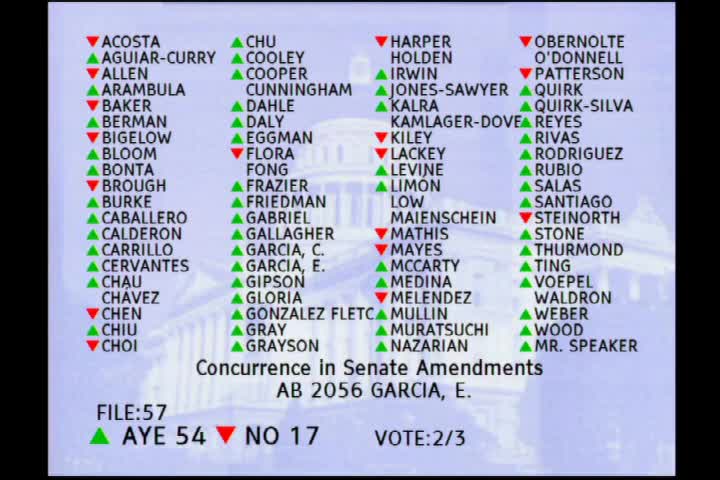
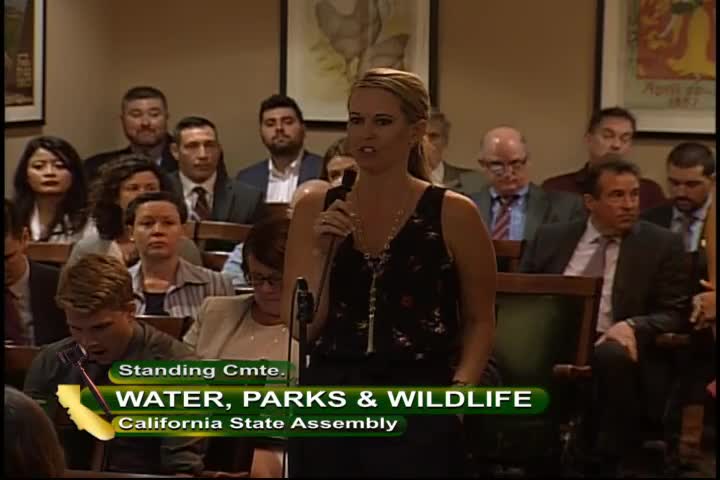
Bill Author

Bill Co-Author(s):