AB 2698: California state preschool programs: general child care and development programs: mental health consultation services: adjustment factors.
- Session Year: 2017-2018
- House: Assembly
- Latest Version Date: 2018-09-30
Existing law, the Child Care and Development Services Act, establishes a system of child care and development services for children up to 13 years of age, and requires the Superintendent of Public Instruction to implement a plan establishing assigned reimbursement rates, per unit of average daily enrollment, to be paid by the state to provider agencies for the provision of those services. Existing law also provides for an adjustment factor to be applied to units of average daily enrollment if a provider agency serves children who meet specified criteria.
This bill would require the application of an adjustment factor of 1.05 for children who are served in a California state preschool program, infants and toddlers who are 0 to 36 months of age and are served in general child care and development programs, or children who are 0 to 5 years of age and are served in a family child care home education network setting funded by a general child care and development program, where early childhood mental health consultation services, as defined, are provided, pursuant to specified requirements.
Existing law prohibits reporting a child who meets the criteria for more than one adjustment factor under more than one adjustment factor category.
This bill, notwithstanding that prohibition, would require, for a child who meets the criteria for one of specified adjustment factors and for the adjustment factor added by this bill, that the reported child days of enrollment for that child be multiplied by the sum of the specified applicable adjustment factor and 0.05.
This bill would incorporate additional changes to Section 8265.5 of the Education Code proposed by both SB 874 and AB 1840, to be operative only if this bill and one or both of SB 874 and AB 1840 are enacted and this bill is enacted last.
Existing law, the Child Care and Development Services Act, establishes a system of child care and development services for children up to 13 years of age, and requires the Superintendent of Public Instruction to implement a plan establishing assigned reimbursement rates, per unit of average daily enrollment, to be paid by the state to provider agencies for the provision of those services. Existing law also provides for an adjustment factor to be applied to units of average daily enrollment if a provider agency serves children who meet specified criteria.
This bill would require the application of an adjustment factor of 1.05 for children who are served in a California state preschool program, infants and toddlers who are 0 to 36 months of age and are served in general child care and development programs, or children who are 0 to 5 years of age and are served in a family child care home education network setting funded by a general child care and development program, where early childhood mental health consultation services services, as defined, are provided, pursuant to specified requirements.
Existing law prohibits reporting a child who meets the criteria for more than one adjustment factor under more than one adjustment factor category.
This bill, notwithstanding that prohibition, would require, for a child who meets the criteria for one of specified adjustment factors and for the adjustment factor added by this bill, that the reported child days of enrollment for that child be multiplied by the sum of the specified applicable adjustment factor and 0.05.
Existing law, the Child Care and Development Services Act, establishes a system of child care and development services for children up to 13 years of age, and requires the Superintendent of Public Instruction to implement a plan establishing assigned reimbursement rates, per unit of average daily enrollment, to be paid by the state to provider agencies for the provision of those services. Existing law also provides for an adjustment factor to be applied to units of average daily enrollment if a provider agency serves children who meet specified criteria.
This bill would require the application of an adjustment factor of 1.05 for children who are served in a California state preschool program, and for infants and toddlers who are 0 to 36 months of age and are served in general child care and development programs, or children who are 0 to 5 years of age and are served in a family child care home education network setting funded by a general child care and development program, where early childhood mental health consultation services are provided, pursuant to specified requirements.
Existing law prohibits reporting a child who meets the criteria for more than one adjustment factor under more than one adjustment factor category.
This bill, notwithstanding that prohibition, would require, for a child who meets the criteria for one of specified adjustment factors and for the adjustment factor added by this bill, that the reported child days of enrollment for that child be multiplied by the sum of the specified applicable adjustment factor and 0.05.
Existing law, the Child Care and Development Services Act, establishes a system of child care and development services for children up to 13 years of age, and requires the Superintendent of Public Instruction to implement a plan establishing assigned reimbursement rates, per unit of average daily enrollment, to be paid by the state to provider agencies for the provision of those services. Existing law also provides for an adjustment factor to be applied to units of average daily enrollment if a provider agency serves children who meet specified criteria.
This bill would require the application of an adjustment factor of 1.05 for children who are served in a California state preschool program, and for infants and toddlers who are 0 to 36 months of age and are served in general child care and development programs, where early childhood mental health consultation services are provided, pursuant to specified requirements.
Existing law prohibits reporting a child who meets the criteria for more than one adjustment factor under more than one adjustment factor category.
This bill, notwithstanding that prohibition, would require, for a child who meets the criteria for one of specified adjustment factors and for the adjustment factor added by this bill, that the reported child days of enrollment for that child be multiplied by the sum of the specified applicable adjustment factor and 0.05.
The Child Care and Development Services Act requires the Superintendent of Public Instruction to administer all California state preschool programs that shall include part-day age and developmentally appropriate programs designed to facilitate the transition to kindergarten for 3- and 4-year-old children in educational development, health services, social services, nutritional services, parent education and parent participation, evaluation, and staff development. This bill would state that the Legislature finds and declares that research shows that early childhood mental health consultation models can play an important role in addressing challenging behaviors and can yield positive social and emotional outcomes for children, including reducing preschool expulsions.The Child Care and Development Services Act requires the Superintendent of Public Instruction to administer all California state preschool programs that shall include part-day age and developmentally appropriate programs designed to facilitate the transition to kindergarten for 3- and 4-year-old children in educational development, health services, social services, nutritional services, parent education and parent participation, evaluation, and staff development.
This bill would state that the Legislature finds and declares that research shows that early childhood mental health consultation models can play an important role in addressing challenging behaviors and can yield positive social and emotional outcomes for children, including reducing preschool expulsions.
(a)The Legislature finds and declares both of the following:
(1)Early childhood mental health consultation models provide important supports for effective classroom management and positive learning environments, including supportive teacher practices and strategies for supporting all children, including those with challenging behaviors and other social, emotional, and mental health concerns.
(2)Research shows that early childhood mental health consultation models can play an important role in addressing challenging behaviors and can yield positive social and emotional outcomes for children, including reducing preschool expulsions.
(b)It is the intent of the Legislature in enacting this act to encourage mental health consultation services in California state preschools and general child care and development programs as a means of providing adequate supports to teachers, children, and caregivers, including support in addressing challenging behaviors and other social, emotional, and mental health concerns.
SEC. 2.Section 8265.2 is added to the Education Code, to read:8265.2.(a)(1)For purposes of this section, early childhood mental health consultation service means a service benefiting a child who is served in a California state preschool program, an infant or toddler who is 0 to 36 months of age and is served in a general child care and development program pursuant to this chapter, or a child who is 0 to 5 years of age and is served in a family child care home education network setting funded by a general child care and development program pursuant to this chapter.
(2)For purposes of this section, early childhood mental health consultation service includes, but is not limited to, all of the following:
(A)Support to respond effectively to all children, with a focus on young children with disabilities, challenging behaviors, and other special needs.
(B)Assistance through individual site consultations, provision of resources, formulation of training plans, referrals, and other methods that address the unique needs of programs and providers.
(C)Aid to providers in developing the skills and tools needed to be successful as they support the development and early learning of all children, including observing environments, facilitating the development of action plans, and supporting site implementation of those plans.
(D)The development of strategies for addressing prevalent child mental health concerns, including internalizing problems, such as appearing withdrawn, and externalizing problems, such as exhibiting challenging behaviors.
(E)If a child exhibits persistent and serious challenging behaviors, support with the pursuit and documentation of reasonable steps to maintain the childs safe participation in the program, as described in Section 8239.1.
(b)The cost to a provider agency of providing an early childhood mental health consultation service shall be reimbursable pursuant to Section 8265.5 if all of the following apply:
(1)The early childhood mental health consultation service is provided on a schedule of sufficient and consistent frequency to ensure that a mental health consultant is available to partner with staff and families in a timely and effective manner, as determined by the department.
(2)The early childhood mental health consultation service is supervised and provided by a licensed marriage and family therapist, a licensed clinical social worker, a licensed professional clinical counselor, a licensed psychologist, a licensed child and adolescent psychiatrist, or others as determined by the department. The supervisor shall have at least three years of experience working with children 0 to 5 years of age, shall be adequately insured, shall have held his or her respective license for a minimum of two years, and shall be in full compliance with all continuing education requirements applicable to his or her profession.
(3)The early childhood mental health consultation service uses a relationship-based model emphasizing strengthening relationships among early childhood education providers, parents, children, and representatives of community systems and resources, and integrates reflective practice into the onsite consultation model.
SEC. 3.Section 8265.5 of the Education Code is amended to read:8265.5.(a)In order to reflect the additional expense of serving children who meet any of the criteria outlined in paragraphs (1) to (7), inclusive, of subdivision (b) the provider agencys reported child days of enrollment for these children shall be multiplied by the adjustment factors listed below.
(b)The adjustment factors shall apply to a full-day state preschool program and those programs for which assigned reimbursement rates are at or below the standard reimbursement rate. In addition, the adjustment factors shall apply to those programs for which assigned reimbursement rates are above the standard reimbursement rate, but the reimbursement rate, as adjusted, shall not exceed the adjusted standard reimbursement rate. The adjustment factors shall apply to those full-day state preschool programs for which assigned reimbursement rates are above the full-day state preschool reimbursement rate, but the reimbursement rate, as adjusted, shall not exceed the adjusted full-day state preschool reimbursement rate.
(1)For infants who are 0 to 18 months of age and are served in a child day care center or a family child care home, the adjustment factor shall be 2.44.
(2)For toddlers who are 18 to 36 months of age and are served in a child day care center or a family child care home, the adjustment factor shall be 1.8.
(3)For children with exceptional needs who are 0 to 21 years of age, the adjustment factor shall be 1.54.
(4)For severely disabled children who are 0 to 21 years of age, the adjustment factor shall be 1.93.
(5)For children at risk of neglect, abuse, or exploitation who are 0 to 14 years of age, the adjustment factor shall be 1.1.
(6)For limited-English-speaking and non-English-speaking children who are two years of age through kindergarten age, the adjustment factor shall be 1.1.
(7)For children who are served in a California state preschool program, infants and toddlers who are 0 to 36 months of age and are served in general child care and development programs, or children who are 0 to 5 years of age and are served in a family child care home education network setting funded by a general child care and development program, where early childhood mental health consultation services are provided, pursuant to Section 8265.2, the adjustment factor shall be 1.05.
(c)Use of the adjustment factors shall not increase the provider agencys total annual allocation.
(d)(1)Days of enrollment for children who meet more than one of the criteria outlined in paragraphs (1) to (6), inclusive, of subdivision (b) shall not be reported under more than one of the categories specified in those paragraphs.
(2)Notwithstanding paragraph (1), for children for whom an adjustment factor is applied pursuant to any of paragraphs (1) to (6), inclusive, of subdivision (b), and who are additionally eligible for the adjustment factor established in paragraph (7) of subdivision (b), reported child days of enrollment shall be multiplied by the sum of the applicable adjustment factor under paragraphs (1) to (6), inclusive, of subdivision (b) and 0.05.
(e)The difference between the reimbursement resulting from the use of the adjustment factors outlined in paragraphs (1) to (7), inclusive, of subdivision (b) and the reimbursement that would otherwise be received by a provider in the absence of the adjustment factors shall be used for special and appropriate services for each child for whom an adjustment factor is claimed.
SEC. 3.5.Section 8265.5 of the Education Code is amended to read:8265.5.(a)In order to reflect the additional expense of serving children who meet any of the criteria outlined in subdivision (c), the provider agencys reported child days of enrollment for these children shall be multiplied by the adjustment factors listed below.
(b)The adjustment factors shall apply to a full-day state preschool program and those programs for which assigned reimbursement rates are at or below the standard reimbursement rate. In addition, the adjustment factors shall apply to those programs for which assigned reimbursement rates are above the standard reimbursement rate, but the reimbursement rate, as adjusted, shall not exceed the adjusted standard reimbursement rate. The adjustment factors shall apply to those full-day state preschool programs for which assigned reimbursement rates are above the full-day state preschool reimbursement rate, but the reimbursement rate, as adjusted, shall not exceed the adjusted full-day state preschool reimbursement rate.
(c)Notwithstanding any other law, commencing January 1, 2019, the adjustment factors shall be as follows:
(1)For infants who are 0 to 18 months of age and are served in a child day care center or a family child care home, the adjustment factor shall be 2.44.
(2)For toddlers who are 18 to 36 months of age and are served in a child day care center or a family child care home, the adjustment factor shall be 1.8.
(3)For children with exceptional needs who are 0 to 21 years of age, the adjustment factor shall be 1.54.
(4)For severely disabled children who are 0 to 21 years of age, the adjustment factor shall be 1.93.
(5)For children at risk of neglect, abuse, or exploitation who are 0 to 14 years of age, the adjustment factor shall be 1.1.
(6)For limited-English-speaking and non-English-speaking children who are two years of age through kindergarten age, the adjustment factor shall be 1.1.
(7)For children who are served in a California state preschool program, infants and toddlers who are 0 to 36 months of age and are served in general child care and development programs, or children who are 0 to 5 years of age and are served in a family child care home education network setting funded by a general child care and development program, where early childhood mental health consultation services are provided, pursuant to Section 8265.2, the adjustment factor shall be 1.05.
(d)Use of the adjustment factors shall not increase the provider agencys total annual allocation.
(e)(1)Days of enrollment for children who meet more than one of the criteria outlined in paragraphs (1) to (6), inclusive, of subdivision (c) shall not be reported under more than one of the categories specified in those paragraphs.
(2)Notwithstanding paragraph (1), for children for whom an adjustment factor is applied pursuant to any of paragraphs (1) to (6), inclusive, of subdivision (c), and who are additionally eligible for the adjustment factor established in paragraph (7) of subdivision (c), reported child days of enrollment shall be multiplied by the sum of the applicable adjustment factor under paragraphs (1) to (6), inclusive, of subdivision (c) and 0.05.
(f)The difference between the reimbursement resulting from the use of the adjustment factors outlined in subdivision (c) and the reimbursement that would otherwise be received by a provider in the absence of the adjustment factors shall be used for special and appropriate services for each child for whom an adjustment factor is claimed.
SEC. 4.Section 3.5 of this bill incorporates amendments to Section 8265.5 of the Education Code proposed by this bill, Senate Bill 874, and Assembly Bill 1840. That section of this bill shall only become operative if (1) this bill and one or both of Senate Bill 874 and Assembly Bill 1840 are enacted and become effective on or before January 1, 2019, (2) this bill and one or both of Senate Bill 874 and Assembly Bill 1840, as enacted, amends Section 8265.5 of the Education Code, and (3) this bill is enacted last of these bills amending Section 8265.5 of the Education Code, in which case Section 8265.5 of the Education Code, as amended by either Senate Bill 874 or Assembly Bill 1840, whichever is operative, shall remain operative only until the operative date of this bill, at which time Section 3.5 of this bill shall become operative, and Section 3 of this bill shall not become operative.
(a)The Legislature finds and declares both of the following:
(1)Early childhood mental health consultation models provide important supports for effective classroom management and positive learning environments, including supportive teacher practices and strategies for supporting all children, including those with challenging behaviors and other social, emotional, and mental health concerns.
(2)Research shows that early childhood mental health consultation models can play an important role in addressing challenging behaviors and can yield positive social and emotional outcomes for children, including reducing preschool expulsions.
(b)It is the intent of the Legislature in enacting this act to encourage mental health consultation services in California state preschools and general child care and development programs as a means of providing adequate supports to teachers, children, and caregivers, including support in addressing challenging behaviors and other social, emotional, and mental health concerns.
SEC. 2.Section 8265.2 is added to the Education Code, to read:8265.2.(a)(1)For purposes of this section, early childhood mental health consultation service means a service benefiting a child who is served in a California state preschool program, an infant or toddler who is 0 to 36 months of age and is served in a general child care and development program pursuant to this chapter, or a child who is 0 to 5 years of age and is served in a family child care home education network setting funded by a general child care and development program pursuant to this chapter.
(2)For purposes of this section, early childhood mental health consultation service includes, but is not limited to, all of the following:
(A)Support to respond effectively to all children, with a focus on young children with disabilities, challenging behaviors, and other special needs.
(B)Assistance through individual site consultations, provision of resources, formulation of training plans, referrals, and other methods that address the unique needs of programs and providers.
(C)Aid to providers in developing the skills and tools needed to be successful as they support the development and early learning of all children, including observing environments, facilitating the development of action plans, and supporting site implementation of those plans.
(D)The development of strategies for addressing prevalent child mental health concerns, including internalizing problems, such as appearing withdrawn, and externalizing problems, such as exhibiting challenging behaviors.
(E)If a child exhibits persistent and serious challenging behaviors, support with the pursuit and documentation of reasonable steps to maintain the childs safe participation in the program, as described in Section 8239.1.
(b)The cost to a provider agency of providing an early childhood mental health consultation service shall be reimbursable pursuant to Section 8265.5 if all of the following apply:
(1)The early childhood mental health consultation service is provided on a schedule of sufficient and consistent frequency to ensure that a mental health consultant is available to partner with staff and families in a timely and effective manner, as determined by the department.
(2)The early childhood mental health consultation service is supervised and provided by a licensed marriage and family therapist, a licensed clinical social worker, a licensed professional clinical counselor, a licensed psychologist, a licensed child and adolescent psychiatrist, or others as determined by the department. The supervisor shall have at least three years of experience working with children 0 to 5 years of age, shall be adequately insured, shall have held his or her respective license for a minimum of two years, and shall be in full compliance with all continuing education requirements applicable to his or her profession.
(3)The early childhood mental health consultation service uses a relationship-based model emphasizing strengthening relationships among early childhood education providers, parents, children, and representatives of community systems and resources, and integrates reflective practice into the onsite consultation model.
SEC. 3.Section 8265.5 of the Education Code is amended to read:8265.5.(a)In order to reflect the additional expense of serving children who meet any of the criteria outlined in paragraphs (1) to (8), inclusive, of subdivision (b) the provider agencys reported child days of enrollment for these children shall be multiplied by the adjustment factors listed below.(b)The adjustment factors shall apply to a full-day state preschool program and those programs for which assigned reimbursement rates are at or below the standard reimbursement rate. In addition, the adjustment factors shall apply to those programs for which assigned reimbursement rates are above the standard reimbursement rate, but the reimbursement rate, as adjusted, shall not exceed the adjusted standard reimbursement rate. The adjustment factors shall apply to those full-day state preschool programs for which assigned reimbursement rates are above the full-day state preschool reimbursement rate, but the reimbursement rate, as adjusted, shall not exceed the adjusted full-day state preschool reimbursement rate.(1)For infants who are 0 to 18 months of age and are served in a child day care center, the adjustment factor shall be 1.7.(2)For toddlers who are 18 to 36 months of age and are served in a child day care center, the adjustment factor shall be 1.4.(3)For infants and toddlers who are 0 to 36 months of age and are served in a family child care home, the adjustment factor shall be 1.4.(4)For children with exceptional needs who are 0 to 21 years of age, the adjustment factor shall be 1.2.(5)For severely disabled children who are 0 to 21 years of age, the adjustment factor shall be 1.5.(6)For children at risk of neglect, abuse, or exploitation who are 0 to 14 years of age, the adjustment factor shall be 1.1.(7)For limited-English-speaking and non-English-speaking children who are 2 years of age through kindergarten age, the adjustment factor shall be 1.1.(8)For children who are served in a California state preschool program, infants and toddlers who are 0 to 36 months of age and are served in general child care and development programs, or children who are 0 to 5 years of age and are served in a family child care home education network setting funded by a general child care and development program, where early childhood mental health consultation services are provided, pursuant to Section 8265.2, the adjustment factor shall be 1.05.(c)Use of the adjustment factors shall not increase the provider agencys total annual allocation.(d)(1)Days of enrollment for children who meet more than one of the criteria outlined in paragraphs (1) to (7), inclusive, of subdivision (b) shall not be reported under more than one of the categories specified in those paragraphs.(2)Notwithstanding paragraph (1), for children for whom an adjustment factor is applied pursuant to any of paragraphs (1) to (7), inclusive, of subdivision (b), and who are additionally eligible for the adjustment factor established in paragraph (8) of subdivision (b), reported child days of enrollment shall be multiplied by the sum of the applicable adjustment factor under paragraphs (1) to (7), inclusive, of subdivision (b) and 0.05.(e)The difference between the reimbursement resulting from the use of the adjustment factors outlined in paragraphs (1) to (8), inclusive, of subdivision (b) and the reimbursement that would otherwise be received by a provider in the absence of the adjustment factors shall be used for special and appropriate services for each child for whom an adjustment factor is claimed.SEC. 3.Section 8265.5 of the Education Code is amended to read:8265.5.(a)In order to reflect the additional expense of serving children who meet any of the criteria outlined in paragraphs (1) to (6), (7), inclusive, of subdivision (b) the provider agencys reported child days of enrollment for these children shall be multiplied by the adjustment factors listed below.
(b)The adjustment factors shall apply to a full-day state preschool program and those programs for which assigned reimbursement rates are at or below the standard reimbursement rate. In addition, the adjustment factors shall apply to those programs for which assigned reimbursement rates are above the standard reimbursement rate, but the reimbursement rate, as adjusted, shall not exceed the adjusted standard reimbursement rate. The adjustment factors shall apply to those full-day state preschool programs for which assigned reimbursement rates are above the full-day state preschool reimbursement rate, but the reimbursement rate, as adjusted, shall not exceed the adjusted full-day state preschool reimbursement rate.
(1)For infants who are 0 to 18 months of age and are served in a child day care center or a family child care home, the adjustment factor shall be 2.44.
(2)For toddlers who are 18 to 36 months of age and are served in a child day care center or a family child care home, the adjustment factor shall be 1.8.
(3)For children with exceptional needs who are 0 to 21 years of age, the adjustment factor shall be 1.54.
(4)For severely disabled children who are 0 to 21 years of age, the adjustment factor shall be 1.93.
(5)For a child children at risk of neglect, abuse, or exploitation who are 0 to 14 years of age, the adjustment factor shall be 1.1.
(6)For limited-English-speaking and non-English-speaking children who are 2 two years of age through kindergarten age, the adjustment factor shall be 1.1.
(7)For children who are served in a California state preschool program, infants and toddlers who are 0 to 36 months of age and are served in general child care and development programs, or children who are 0 to 5 years of age and are served in a family child care home education network setting funded by a general child care and development program, where early childhood mental health consultation services are provided, pursuant to Section 8265.2, the adjustment factor shall be 1.05.
(c)Use of the adjustment factors shall not increase the provider agencys total annual allocation.
(d)(1)Days of enrollment for children having who meet more than one of the criteria outlined in paragraphs (1) to (6), inclusive, of subdivision (b) shall not be reported under more than one of the above categories. categories specified in those paragraphs.
(2)Notwithstanding paragraph (1), for children for whom an adjustment factor is applied pursuant to any of paragraphs (1) to (6), inclusive, of subdivision (b), and who are additionally eligible for the adjustment factor established in paragraph (7) of subdivision (b), reported child days of enrollment shall be multiplied by the sum of the applicable adjustment factor under paragraphs (1) to (6), inclusive, of subdivision (b) and 0.05.
(e)The difference between the reimbursement resulting from the use of the adjustment factors outlined in paragraphs (1) to (6), (7), inclusive, of subdivision (b) and the reimbursement that would otherwise be received by a provider in the absence of the adjustment factors shall be used for special and appropriate services for each child for whom an adjustment factor is claimed.
SEC. 3.5.Section 8265.5 of the Education Code is amended to read:8265.5.(a)In order to reflect the additional expense of serving children who meet any of the criteria outlined in paragraphs (1) to (6), inclusive, of subdivision (b) (c), the provider agencys reported child days of enrollment for these children shall be multiplied by the adjustment factors listed below.
(b)The adjustment factors shall apply to a full-day state preschool program and those programs for which assigned reimbursement rates are at or below the standard reimbursement rate. In addition, the adjustment factors shall apply to those programs for which assigned reimbursement rates are above the standard reimbursement rate, but the reimbursement rate, as adjusted, shall not exceed the adjusted standard reimbursement rate. The adjustment factors shall apply to those full-day state preschool programs for which assigned reimbursement rates are above the full-day state preschool reimbursement rate, but the reimbursement rate, as adjusted, shall not exceed the adjusted full-day state preschool reimbursement rate.
(c)Notwithstanding any other law, commencing January 1, 2019, the adjustment factors shall be as follows:
(1)For infants who are 0 to 18 months of age and are served in a child day care center or a family child care home, the adjustment factor shall be 2.44.
(2)For toddlers who are 18 to 36 months of age and are served in a child day care center or a family child care home, the adjustment factor shall be 1.8.
(3)For children with exceptional needs who are 0 to 21 years of age, the adjustment factor shall be 1.54.
(4)For severely disabled children who are 0 to 21 years of age, the adjustment factor shall be 1.93.
(5)For a child children at risk of neglect, abuse, or exploitation who are 0 to 14 years of age, the adjustment factor shall be 1.1.
(6)For limited-English-speaking and non-English-speaking children who are 2 two years of age through kindergarten age, the adjustment factor shall be 1.1.
(7)For children who are served in a California state preschool program, infants and toddlers who are 0 to 36 months of age and are served in general child care and development programs, or children who are 0 to 5 years of age and are served in a family child care home education network setting funded by a general child care and development program, where early childhood mental health consultation services are provided, pursuant to Section 8265.2, the adjustment factor shall be 1.05.
(c)(d)Use of the adjustment factors shall not increase the provider agencys total annual allocation.
(d)(e)(1)Days of enrollment for children having who meet more than one of the criteria outlined in paragraphs (1) to (6), inclusive, of subdivision (b) (c) shall not be reported under more than one of the above categories. categories specified in those paragraphs.
(2)Notwithstanding paragraph (1), for children for whom an adjustment factor is applied pursuant to any of paragraphs (1) to (6), inclusive, of subdivision (c), and who are additionally eligible for the adjustment factor established in paragraph (7) of subdivision (c), reported child days of enrollment shall be multiplied by the sum of the applicable adjustment factor under paragraphs (1) to (6), inclusive, of subdivision (c) and 0.05.
(e)(f)The difference between the reimbursement resulting from the use of the adjustment factors outlined in paragraphs (1) to (6), inclusive, of subdivision (b) (c) and the reimbursement that would otherwise be received by a provider in the absence of the adjustment factors shall be used for special and appropriate services for each child for whom an adjustment factor is claimed.
SEC. 4.Section 3.5 of this bill incorporates amendments to Section 8265.5 of the Education Code proposed by this bill, Senate Bill 874, and Assembly Bill 1840. That section of this bill shall only become operative if (1) this bill and one or both of Senate Bill 874 and Assembly Bill 1840 are enacted and become effective on or before January 1, 2019, (2) this bill and one or both of Senate Bill 874 and Assembly Bill 1840, as enacted, amends Section 8265.5 of the Education Code, and (3) this bill is enacted last of these bills amending Section 8265.5 of the Education Code, in which case Section 8265.5 of the Education Code, as amended by either Senate Bill 874 or Assembly Bill 1840, whichever is operative, shall remain operative only until the operative date of this bill, at which time Section 3.5 of this bill shall become operative, and Section 3 of this bill shall not become operative.
(a)The Legislature finds and declares both of the following:
(1)Early childhood mental health consultation models provide important supports for effective classroom management and positive learning environments, including supportive teacher practices and strategies for supporting children all children, including those with challenging behaviors and other social, emotional, and mental health concerns.
(2)Research shows that early childhood mental health consultation models can play an important role in addressing challenging behaviors and can yield positive social and emotional outcomes for children, including reducing preschool expulsions.
(b)It is the intent of the Legislature in enacting this act to encourage mental health consultation services in California state preschools and general child care and development programs as a means of providing adequate supports to teachers, children, and caregivers caregivers, including support in addressing challenging behaviors and other social, emotional, and mental health concerns.
SEC. 2.Section 8265.2 is added to the Education Code, to read:8265.2.(a)(1)For purposes of this section, early childhood mental health consultation service means a service benefitting benefiting a child who is served in a California state preschool program, an infant or toddler who is 0 to 36 months of age and is served in a general child care and development program pursuant to this chapter, or a child who is 0 to 5 years of age and is served in a family child care home education network setting funded by a general child care and development program pursuant to this chapter.
(2)For purposes of this section, early childhood mental health consultation service includes, but is not limited to, all of the following:
(A)Support to respond effectively to all children, with a focus on young children with disabilities, challenging behaviors, and other special needs.
(B)Assistance through individual site consultations, provision of resources, formulation of training plans, referrals, and other methods that address the unique needs of programs and providers.
(C)Aid to providers in developing the skills and tools needed to be successful as they support the development and early learning of all children, including observing environments, facilitating the development of action plans, and supporting site implementation of those plans.
(D)The development of strategies for addressing prevalent child mental health concerns, including internalizing problems, such as appearing withdrawn, and externalizing problems, such as exhibiting challenging behaviors.
(E)If a child exhibits persistent and serious challenging behaviors, support with the pursuit and documentation of reasonable steps to maintain the childs safe participation in the program, as described in Section 8239.1.
(b)The cost to a provider agency of providing an early childhood mental health consultation service shall be reimbursable pursuant to Section 8265.5 if all of the following apply:
(1)The early childhood mental health consultation service is provided on a schedule of sufficient and consistent frequency to ensure that a mental health consultant is available to partner with staff and families in a timely and effective manner. manner, as determined by the department.
(2)The early childhood mental health consultation service is supervised and provided by a licensed marriage and family therapist, a licensed clinical social worker, or a doctor of psychology. a licensed professional clinical counselor, a licensed psychologist, a licensed child and adolescent psychiatrist, or others as determined by the department. The supervisor shall have at least three years of experience working with children 0 to 5 years of age, shall be adequately insured, shall have held his or her respective license for a minimum of two years, and shall be in full compliance with all continuing education requirements applicable to his or her profession.
(3)The early childhood mental health consultation service uses a relationship-based model emphasizing strengthening relationships among early childhood education providers, parents, children, and representatives of community systems and resources, and integrates reflective practice into the onsite consultation model.
SEC. 3.Section 8265.5 of the Education Code is amended to read:8265.5.(a)In order to reflect the additional expense of serving children who meet any of the criteria outlined in paragraphs (1) to (8), inclusive, of subdivision (b) the provider agencys reported child days of enrollment for these children shall be multiplied by the adjustment factors listed below.
(b)The adjustment factors shall apply to a full-day state preschool program and those programs for which assigned reimbursement rates are at or below the standard reimbursement rate. In addition, the adjustment factors shall apply to those programs for which assigned reimbursement rates are above the standard reimbursement rate, but the reimbursement rate, as adjusted, shall not exceed the adjusted standard reimbursement rate. The adjustment factors shall apply to those full-day state preschool programs for which assigned reimbursement rates are above the full-day state preschool reimbursement rate, but the reimbursement rate, as adjusted, shall not exceed the adjusted full-day state preschool reimbursement rate.
(1)For infants who are 0 to 18 months of age and are served in a child day care center, the adjustment factor shall be 1.7.
(2)For toddlers who are 18 to 36 months of age and are served in a child day care center, the adjustment factor shall be 1.4.
(3)For infants and toddlers who are 0 to 36 months of age and are served in a family child care home, the adjustment factor shall be 1.4.
(4)For children with exceptional needs who are 0 to 21 years of age, the adjustment factor shall be 1.2.
(5)For severely disabled children who are 0 to 21 years of age, the adjustment factor shall be 1.5.
(6)For children at risk of neglect, abuse, or exploitation who are 0 to 14 years of age, the adjustment factor shall be 1.1.
(7)For limited-English-speaking and non-English-speaking children who are 2 years of age through kindergarten age, the adjustment factor shall be 1.1.
(8)For children who are served in a California state preschool program, infants and toddlers who are 0 to 36 months of age and are served in general child care and development programs, or children who are 0 to 5 years of age and are served in a family child care home education network setting funded by a general child care and development program, where early childhood mental health consultation services are provided, pursuant to Section 8265.2, the adjustment factor shall be 1.05.
(c)Use of the adjustment factors shall not increase the provider agencys total annual allocation.
(d)(1)Days of enrollment for children who meet more than one of the criteria outlined in paragraphs (1) to (7), inclusive, of subdivision (b) shall not be reported under more than one of the categories specified in those paragraphs.
(2)Notwithstanding paragraph (1), for children for whom an adjustment factor is applied pursuant to any of paragraphs (1) to (7), inclusive, of subdivision (b), and who are additionally eligible for the adjustment factor established in paragraph (8) of subdivision (b), reported child days of enrollment shall be multiplied by the sum of the applicable adjustment factor under paragraphs (1) to (7), inclusive, of subdivision (b) and 0.05.
(e)The difference between the reimbursement resulting from the use of the adjustment factors outlined in paragraphs (1) to (8), inclusive, of subdivision (b) and the reimbursement that would otherwise be received by a provider in the absence of the adjustment factors shall be used for special and appropriate services for each child for whom an adjustment factor is claimed.
(a)The Legislature finds and declares both of the following:
(1)Early childhood mental health consultation models provide important supports for effective classroom management and positive learning environments, including supportive teacher practices and strategies for supporting children with challenging behaviors and other social, emotional, and mental health concerns.
(2)Research shows that early childhood mental health consultation models can play an important role in addressing challenging behaviors and can yield positive social and emotional outcomes for children, including reducing preschool expulsions.
(b)It is the intent of the Legislature in enacting this act to encourage mental health consultation services in California state preschools and general child care and development programs as a means of providing adequate supports to teachers, children, and caregivers in addressing challenging behaviors and other social, emotional, and mental health concerns.
SEC. 2.Section 8265.2 is added to the Education Code, to read:8265.2.(a)(1)For purposes of this section, early childhood mental health consultation service means a service benefitting a child who is served in a California state preschool program or program, an infant or toddler who is 0 to 36 months of age and is served in a general child care and development program pursuant to this chapter, or a child who is 0 to 5 years of age and is served in a family child care home education network setting funded by a general child care and development program pursuant to this chapter.
(2)For purposes of this section, early childhood mental health consultation service includes, but is not limited to, all of the following:
(A)Support to respond effectively to all children, with a focus on young children with disabilities, challenging behaviors, and other special needs.
(B)Assistance through individual site consultations, provision of resources, formulation of training plans, referrals, and other methods that address the unique needs of programs and providers.
(C)Aid to providers in developing the skills and tools needed to be successful as they support the development and early learning of all children, including observing environments, facilitating the development of action plans, and supporting site implementation of those plans.
(D)The development of strategies for addressing prevalent child mental health concerns, including internalizing problems, such as appearing withdrawn, and externalizing problems, such as exhibiting challenging behaviors.
(E)If a child exhibits persistent and serious challenging behaviors, support with the pursuit and documentation of reasonable steps to maintain the childs safe participation in the program, as described in Section 8239.1.
(b)The cost to a provider agency of providing an early childhood mental health consultation service shall be reimbursable pursuant to Section 8265.5 if all of the following apply:
(1)The early childhood mental health consultation service is provided on a schedule of sufficient and consistent frequency to ensure that a mental health consultant is available to partner with staff and families in a timely and effective manner.
(2)The early childhood mental health consultation service is supervised by a licensed marriage and family therapist, a licensed clinical social worker, or a doctor of psychology. The supervisor shall be adequately insured, shall have held his or her respective license for a minimum of two years, and shall be in full compliance with all continuing education requirements applicable to his or her profession.
(3)The early childhood mental health consultation service uses a relationship-based model emphasizing strengthening relationships among early childhood education providers, parents, children, and representatives of community systems and resources, and integrates reflective practice into the onsite consultation model.
SEC. 3.Section 8265.5 of the Education Code is amended to read:8265.5.(a)In order to reflect the additional expense of serving children who meet any of the criteria outlined in paragraphs (1) to (8), inclusive, of subdivision (b) the provider agencys reported child days of enrollment for these children shall be multiplied by the adjustment factors listed below.
(b)The adjustment factors shall apply to a full-day state preschool program and those programs for which assigned reimbursement rates are at or below the standard reimbursement rate. In addition, the adjustment factors shall apply to those programs for which assigned reimbursement rates are above the standard reimbursement rate, but the reimbursement rate, as adjusted, shall not exceed the adjusted standard reimbursement rate. The adjustment factors shall apply to those full-day state preschool programs for which assigned reimbursement rates are above the full-day state preschool reimbursement rate, but the reimbursement rate, as adjusted, shall not exceed the adjusted full-day state preschool reimbursement rate.
(1)For infants who are 0 to 18 months of age and are served in a child day care center, the adjustment factor shall be 1.7.
(2)For toddlers who are 18 to 36 months of age and are served in a child day care center, the adjustment factor shall be 1.4.
(3)For infants and toddlers who are 0 to 36 months of age and are served in a family child care home, the adjustment factor shall be 1.4.
(4)For children with exceptional needs who are 0 to 21 years of age, the adjustment factor shall be 1.2.
(5)For severely disabled children who are 0 to 21 years of age, the adjustment factor shall be 1.5.
(6)For children at risk of neglect, abuse, or exploitation who are 0 to 14 years of age, the adjustment factor shall be 1.1.
(7)For limited-English-speaking and non-English-speaking children who are 2 years of age through kindergarten age, the adjustment factor shall be 1.1.
(8)For children who are served in a California state preschool program and program, infants and toddlers who are 0 to 36 months of age and are served in general child care and development programs programs, or children who are 0 to 5 years of age and are served in a family child care home education network setting funded by a general child care and development program, where early childhood mental health consultation services are provided, pursuant to Section 8265.2, the adjustment factor shall be 1.05.
(c)Use of the adjustment factors shall not increase the provider agencys total annual allocation.
(d)(1)Days of enrollment for children who meet more than one of the criteria outlined in paragraphs (1) to (7), inclusive, of subdivision (b) shall not be reported under more than one of the categories specified in those paragraphs.
(2)Notwithstanding paragraph (1), for children for whom an adjustment factor is applied pursuant to any of paragraphs (1) to (7), inclusive, of subdivision (b), and who are additionally eligible for the adjustment factor established in paragraph (8) of subdivision (b), reported child days of enrollment shall be multiplied by the sum of the applicable adjustment factor under paragraphs (1) to (7), inclusive, of subdivision (b) and 0.05.
(e)The difference between the reimbursement resulting from the use of the adjustment factors outlined in paragraphs (1) to (8), inclusive, of subdivision (b) and the reimbursement that would otherwise be received by a provider in the absence of the adjustment factors shall be used for special and appropriate services for each child for whom an adjustment factor is claimed.
(a)The Legislature finds and declares both of the following:
(1)Early childhood mental health consultation models provide important supports for effective classroom management and positive learning environments, including supportive teacher practices and strategies for supporting children with challenging behaviors and other social, emotional, and mental health concerns.
(2)Research shows that early childhood mental health consultation models can play an important role in addressing challenging behaviors and can yield positive social and emotional outcomes for children, including reducing preschool expulsions.
(b)It is the intent of the Legislature in enacting this act to encourage mental health consultation services in California state preschools and general child care and development programs as a means of providing adequate supports to teachers, children, and caregivers in addressing challenging behaviors and other social, emotional, and mental health concerns.
SEC. 2.Section 8265.2 is added to the Education Code, to read:8265.2.(a)(1)For purposes of this section, early childhood mental health consultation service means a service benefitting a child who is served in a California state preschool program or an infant or toddler who is 0 to 36 months of age and is served in a general child care and development program pursuant to this chapter.
(2)For purposes of this section, early childhood mental health consultation service includes, but is not limited to, all of the following:
(A)Support to respond effectively to all children, with a focus on young children with disabilities, challenging behaviors, and other special needs.
(B)Assistance through individual site consultations, provision of resources, formulation of training plans, referrals, and other methods that address the unique needs of programs and providers.
(C)Aid to providers in developing the skills and tools needed to be successful as they support the development and early learning of all children, including observing environments, facilitating the development of action plans, and supporting site implementation of those plans.
(D)The development of strategies for addressing prevalent child mental health concerns, including internalizing problems, such as appearing withdrawn, and externalizing problems, such as exhibiting challenging behaviors.
(E)If a child exhibits persistent and serious challenging behaviors, support with the pursuit and documentation of reasonable steps to maintain the childs safe participation in the program, as described in Section 8239.1.
(b)The cost to a provider agency of providing an early childhood mental health consultation service shall be reimbursable pursuant to Section 8265.5 if all of the following apply:
(1)The early childhood mental health consultation service is provided on a schedule of sufficient and consistent frequency to ensure that a mental health consultant is available to partner with staff and families in a timely and effective manner.
(2)The early childhood mental health consultation service is supervised by a licensed marriage and family therapist, a licensed clinical social worker, or a doctor of psychology. The supervisor shall be adequately insured, shall have held his or her respective license for a minimum of two years, and shall be in full compliance with all continuing education requirements applicable to his or her profession.
(3)The early childhood mental health consultation service uses a relationship-based model emphasizing strengthening relationships among early childhood education providers, parents, children, and representatives of community systems and resources, and integrates reflective practice into the onsite consultation model.
SEC. 3.Section 8265.5 of the Education Code is amended to read:8265.5.(a)In order to reflect the additional expense of serving children who meet any of the criteria outlined in paragraphs (1) to (7), (8), inclusive, of subdivision (b) the provider agencys reported child days of enrollment for these children shall be multiplied by the adjustment factors listed below.
(b)The adjustment factors shall apply to a full-day state preschool program and those programs for which assigned reimbursement rates are at or below the standard reimbursement rate. In addition, the adjustment factors shall apply to those programs for which assigned reimbursement rates are above the standard reimbursement rate, but the reimbursement rate, as adjusted, shall not exceed the adjusted standard reimbursement rate. The adjustment factors shall apply to those full-day state preschool programs for which assigned reimbursement rates are above the full-day state preschool reimbursement rate, but the reimbursement rate, as adjusted, shall not exceed the adjusted full-day state preschool reimbursement rate.
(1)For infants who are 0 to 18 months of age and are served in a child day care center, the adjustment factor shall be 1.7.
(2)For toddlers who are 18 to 36 months of age and are served in a child day care center, the adjustment factor shall be 1.4.
(3)For infants and toddlers who are 0 to 36 months of age and are served in a family child care home, the adjustment factor shall be 1.4.
(4)For children with exceptional needs who are 0 to 21 years of age, the adjustment factor shall be 1.2.
(5)For severely disabled children who are 0 to 21 years of age, the adjustment factor shall be 1.5.
(6)For a child children at risk of neglect, abuse, or exploitation who are 0 to 14 years of age, the adjustment factor shall be 1.1.
(7)For limited-English-speaking and non-English-speaking children who are 2 years of age through kindergarten age, the adjustment factor shall be 1.1.
(8)For children who are served in a California state preschool program and infants and toddlers who are 0 to 36 months of age and are served in general child care and development programs where early childhood mental health consultation services are provided, pursuant to Section 8265.2, the adjustment factor shall be 1.05.
(c)Use of the adjustment factors shall not increase the provider agencys total annual allocation.
(d)(1)Days of enrollment for children having who meet more than one of the criteria outlined in paragraphs (1) to (7), inclusive, of subdivision (b) shall not be reported under more than one of the above categories. categories specified in those paragraphs.
(2)Notwithstanding paragraph (1), for children for whom an adjustment factor is applied pursuant to any of paragraphs (1) to (7), inclusive, of subdivision (b), and who are additionally eligible for the adjustment factor established in paragraph (8) of subdivision (b), reported child days of enrollment shall be multiplied by the sum of the applicable adjustment factor under paragraphs (1) to (7), inclusive, of subdivision (b) and 0.05.
(e)The difference between the reimbursement resulting from the use of the adjustment factors outlined in paragraphs (1) to (7), (8), inclusive, of subdivision (b) and the reimbursement that would otherwise be received by a provider in the absence of the adjustment factors shall be used for special and appropriate services for each child for whom an adjustment factor is claimed.
SECTION 1.Section 8239.2 is added to the Education Code, to read:8239.2.The Legislature finds and declares that research shows that early childhood mental health consultation models can play an important role in addressing challenging behaviors and can yield positive social and emotional outcomes for children, including reducing preschool expulsions.The Legislature finds and declares that research shows that early childhood mental health consultation models can play an important role in addressing challenging behaviors and can yield positive social and emotional outcomes for children, including reducing preschool expulsions.
|
Date
|
Status
|
|---|---|
| Sep 30, 2018 | Chaptered by Secretary of State - Chapter 946, Statutes of 2018. |
| Sep 30, 2018 | Approved by the Governor. |
| Sep 11, 2018 | Enrolled and presented to the Governor at 4:30 p.m. |
| Aug 30, 2018 | Senate amendments concurred in. To Engrossing and Enrolling. |
| Aug 29, 2018 | In Assembly. Concurrence in Senate amendments pending. |
| Aug 29, 2018 | Read third time. Passed. Ordered to the Assembly. |
| Aug 27, 2018 | Read second time. Ordered to third reading. |
| Aug 24, 2018 | Read third time and amended. Ordered to second reading. |
| Aug 17, 2018 | From committee: Do pass. (Ayes 7. Noes 0.) (August 16). |
| Aug 6, 2018 | In committee: Referred to APPR. suspense file. |
| Jun 27, 2018 | From committee: Do pass and re-refer to Com. on APPR. (Ayes 6. Noes 0.) (June 26). Re-referred to Com. on APPR. |
| Jun 18, 2018 | From committee chair, with author's amendments: Amend, and re-refer to committee. Read second time, amended, and re-referred to Com. on HUMAN S. |
| Jun 13, 2018 | From committee: Do pass and re-refer to Com. on HUMAN S. (Ayes 7. Noes 0.) (June 13). Re-referred to Com. on HUMAN S. |
| Jun 7, 2018 | Referred to Coms. on ED. and HUMAN S. |
| May 30, 2018 | In Senate. Read first time. To Com. on RLS. for assignment. |
| May 29, 2018 | Read third time. Passed. Ordered to the Senate. |
| May 24, 2018 | Read second time. Ordered to third reading. |
| May 23, 2018 | From committee: Do pass. (Ayes 16. Noes 0.) (May 23). |
| May 2, 2018 | Re-referred to Com. on APPR. |
| May 1, 2018 | Read second time and amended. |
| Apr 30, 2018 | From committee: Amend, and do pass as amended and re-refer to Com. on APPR. (Ayes 7. Noes 0.) (April 25). |
| Apr 11, 2018 | From committee: Do pass and re-refer to Com. on ED. (Ayes 7. Noes 0.) (April 10). Re-referred to Com. on ED. |
| Apr 2, 2018 | Re-referred to Com. on HUM. S. |
| Mar 22, 2018 | Referred to Coms. on HUM. S. and ED. |
| Feb 16, 2018 | From printer. May be heard in committee March 18. |
| Feb 15, 2018 | Read first time. To print. |
|
Date
|
Description
|
Location
|
Votes
|
|
|---|---|---|---|---|
| Aug 30, 2018 | AB 2698 RUBIO Concurrence in Senate Amendments | Assembly Floor |
Passed |
|
| Aug 29, 2018 | Assembly 3rd Reading AB2698 Rubio et al. By Leyva | Senate Floor |
Passed |
|
| Aug 16, 2018 | Do pass | Senate Standing Committee on Appropriations |
Passed |
|
| Aug 6, 2018 | Placed on suspense file | Senate Standing Committee on Appropriations |
Passed |
|
| Jun 26, 2018 | Do pass, but first be re-referred to the Committee on [Appropriations] | Senate Standing Committee on Human Services |
Passed |
|
| Jun 13, 2018 | Do pass, but first be re-referred to the Committee on [Human Services] | Senate Standing Committee on Education |
Passed |
|
| May 29, 2018 | AB 2698 RUBIO Assembly Third Reading | Assembly Floor |
Passed |
|
| May 23, 2018 | Do pass. | Assembly Standing Committee on Appropriations |
Passed |
|
| Apr 25, 2018 | Do pass as amended and be re-referred to the Committee on [Appropriations] | Assembly Standing Committee on Education |
Passed |
|
| Apr 10, 2018 | Do pass and be re-referred to the Committee on [Education] | Assembly Standing Committee on Human Services |
Passed |
This list shows positions taken on this bill by organizations on the date displayed, which is linked to the original source.
Positions by individuals are not included.
CONCURRENCE IN SENATE AMENDMENTS
CSA1 Bill Id:AB 2698
Author:(Rubio)
As Amended Ver:August 24, 2018
Majority vote
ASSEMBLY: | 78-0 | (May 29, 2018) | SENATE: | 39-0 | (August 29, 2018) |
Original Committee Reference: HUM. S.
SUMMARY: Defines early childhood mental health consultation service, declares Legislative intent encouraging the provision of such services in California State Preschool Programs (CSPPs), general child care and development programs, and family child care home education networks (FCCHENs) funded by a general child care and development program, and requires, under certain circumstances, the application of a reimbursement rate adjustment factor for children served in programs where these services are provided.
Specifically, this bill:
- Makes Legislative findings and declarations related to the importance of early childhood mental health consultation models for children, teachers, and learning environments, and positive outcomes that can result, including reducing preschool expulsions, as specified.
- Declares Legislative intent to encourage mental health consultation services in CSPPs and general child care and development programs in order to provide adequate supports to teachers, children, and caregivers in addressing challenging behaviors and other concerns, as specified.
- Defines, for purposes of the provisions of this bill, "early childhood mental health consultation service" to mean a service that benefits a child who is served in a CSPP, a child between the ages of zero and 36 months who is served in a general child care and development program, or a child who is zero to five years of age and served in a FCCHEN funded by a general child care and development program, and further, states that early childhood mental health consultation services include, but are not limited to, all of the following, as specified:
- Support to respond effectively to children, and in particular, to young children who have disabilities, challenging behaviors, and other special needs;
- Assistance through various methods that address the unique needs of programs and providers;
- Aid to providers in developing skills and tools necessary for the support of children's development and early learning;
- Development of strategies to address child mental health concerns; and
- Support, where warranted, with pursuing and documenting reasonable steps to maintain a child's safe participation in the program.
- Requires the cost to a provider of supplying an early childhood mental health consultation service to be reimbursable pursuant to the section of Education Code governing adjustment factors if that service does all of the following, as specified:
- Is provided frequently and consistently enough to ensure that a mental health consultant is available to partner promptly and effectively, as determined by the California Department of Education (CDE), with staff and families;
- Is supervised and provided by an insured licensed marriage and family therapist, licensed clinical social worker, a licensed professional clinical counselor, a licensed psychologist, a licensed child and adolescent psychiatrist, or others as determined by CDE, who have at least three years of experience working with children between the ages of 0 and 5, have been licensed for at least two years, and have complied with all applicable continuing education requirements; and
- Uses a relationship-based model and integrates reflective practice into the onsite consultation model.
- Requires an adjustment factor of 1.05 for child days of enrollment for children served in programs where early childhood mental health consultation services are provided, as specified.
- Allows for the addition of the early childhood mental health consultation services adjustment factor to another available adjustment factor when children are eligible for both, as specified.
- Makes changes to avoid chaptering conflicts with SB 874 (Budget and Fiscal Review Committee) and AB 1840 (Budget Committee), both of the current legislative session.
- Makes technical changes.
The Senate amendments:
- Clarify that the determination, for purposes of cost reimbursement, of the timeliness and effectiveness of an early childhood mental health consultation service shall be made by CDE.
- Make the following changes, for purposes of cost reimbursement, regarding required supervision of early childhood mental health consultation services:
- Clarify that qualified professionals must provide the service in addition to supervising it;
- Delete from the list of professionals qualified to supervise and provide services a doctor of psychology, and add to that list: a licensed professional clinical counselor, a licensed psychologist, a licensed child and adolescent psychiatrist, or others as determined by CDE; and
- Add language requiring the supervisor to have at least three years of experience working with children between the ages of 0 and 5.
- Make changes to avoid chaptering conflicts with SB 874 (Budget and Fiscal Review Committee) and AB 1840 (Budget Committee).
- Make technical changes.
EXISTING LAW:
- Establishes the Child Care and Development Services Act to provide child care and development services as part of a coordinated, comprehensive, and cost-effective system serving children from birth to 13 years old and their parents including a full range of supervision, health, and support services through full- and part-time programs. (Education Code Section (EDC) 8200 et seq.)
- Defines "child care and development services" to mean services designed to meet a wide variety of children's and families' needs while parents and guardians are working, in training, seeking employment, incapacitated, or in need of respite. (EDC 8208 (j))
- States the intent of the Legislature that all families have access to child care and development services, through resource and referral where appropriate, and regardless of demographic background or special needs, and that families are provided the opportunity to attain financial stability through employment, while maximizing growth and development of their children, and enhancing their parenting skills through participation in child care and development programs. (EDC 8202)
- Requires the Superintendent of Public Instruction to administer general child care and development programs to include, among other things as specified, age- and developmentally-appropriate activities, supervision, parenting education and involvement, and nutrition. Further allows such programs to be designed to meet child-related needs identified by parents or guardians, as specified. (EDC 8240 and 8241)
- Requires families to meet certain criteria in order to be eligible for federal and state subsidized child development services, including that a family must be either a current aid recipient, income eligible, homeless, or one whose children are recipients of protective services or have been identified as being abused, or neglected, as specified. (EDC 8263)
- Defines "California State Preschool Program" (CSPP) to mean part-day and full-day educational programs for low-income or otherwise disadvantaged three- and four-year olds, and includes the CSPP under the definition of "child care and development programs" which offer a full range of services for children from zero to 13 years of age, as specified. (EDC 8208 (i) and (ad))
- Requires the Superintendent of Public Instruction to administer all CSPPs, which include, but are not limited to, part-day age- and developmentally appropriate programs designed to facilitate the transition to kindergarten for three- and four-year-old children in educational development, health services, social services, nutritional services, parent education and parent participation, evaluation, and staff development. (EDC 8235(a))
- Authorizes a part-day CSPP to provide services to children in families with incomes up to 15% above the income eligibility threshold, as specified, provided all other eligible three- and four-year-olds have been enrolled. Further specifies that no more than 10% of the children enrolled under a provider's entire contract can be children in families above the income eligibility threshold. (EDC 8235(c))
- Authorizes a part-day CSPP to, after all otherwise eligible children have been enrolled, provide services to three- and four-year old children whose families earn incomes above the eligibility threshold if the children have been identified as "children with exceptional needs" pursuant to current law, as specified. (EDC 8235 (d))
- Requires the Superintendent of Public Instruction to implement a plan that establishes reasonable standards and assigned reimbursement rates for child care and development services, to vary by length of program year and hours of service, and establishes amounts for, and provides for an annual cost-of-living adjustment to, the standard reimbursement rate. (EDC 8265)
- Establishes adjustment factors to reimbursement rates for child care and development services, applied by multiplying the applicable adjustment factor by the provider agency's reported child days of enrollment for the child(ren) to whom the adjustment factor applies, in order to reflect the additional expense of serving children of specific ages and with certain needs including, as specified: infants served in child day care centers; toddlers served in child day care centers; infants and toddlers served in family child care homes; children between the ages of 0 and 21 with exceptional needs; children between the ages of zero and 21 with severe disabilities; children between the ages of zero and 14 at risk of neglect, abuse, or exploitation; and limited-English-speaking and non-English-speaking children between two years of age and kindergarten age. Further, prohibits the days of enrollment for children who meet more than one adjustment-factor criteria from being adjusted more than once, and requires the increase in reimbursement amounts resulting from application of the adjustment factor(s) to be used to serve each child for whom an adjustment factor is claimed. (EDC 8265.5)
FISCAL EFFECT: According to the Senate Appropriations Committee on August 6, 2018, this bill may result in the following costs:
- CDE estimates that the bill's increase to the reimbursement rate provided to contractors for children receiving mental health consultation services would be approximately $4.6 million (General Fund). This estimate assumes that the percentage of children receiving services aged zero through five would be about 7.6%. Because the rate increase would be funded within a provider's existing contract amount, the number of children served may be reduced creating cost pressure for the state to maintain enrollment in these programs; and
- CDE also estimates one-time General Fund costs of approximately $48,000 for various administrative activities as a result of this measure.
COMMENTS:
Early childhood mental health consultation: Early childhood mental health consultation is increasingly seen as an effective approach to help young children and their families through decreasing challenging behavior and increasing social and emotional health. The United States Department of Health and Human Services' Substance Abuse and Mental Health Services Administration (SAMHSA), in a 2005 report on early childhood mental health consultation, stated that:
Mental health consultation in early childhood settings is a problem-solving and capacity-building intervention implemented within a collaborative relationship between a professional consultant with mental health expertise and one or more individuals, primarily child care center staff, with other areas of expertise. Early childhood mental health consultation aims to build the capacity (improve the ability) of staff, families, programs, and systems to prevent, identify, treat, and reduce the impact of mental health problems among children from birth to age six and their families. The goal of early childhood mental health consultation is neither to 'rescue' child care staff (by shifting their responsibility for dealing with difficult situations to a consultant) nor to transform them into mental health professionals. Rather, the goals are to assist staff in understanding the mental health perspective, and incorporating it into their work, and to use their own roles, skills, and experience to: foster positive learning and development of each child through careful observation; implement strategies that enhance learning experiences; promote social, emotional, and behavioral development of each child; build relationships and communicate with parents; and seek further consultation, when necessary.
Approaches focused on providing behavioral health interventions and supports to young children in child care and development programs, including early childhood mental health consultation services, have been shown to not only reduce rates of challenging behaviors in children, but also to reduce and prevent suspension and expulsion in early learning and school settings.
A growing body of information on early childhood mental health consultation policies, practices, and toolkits is being made available for providers of child care and development services. For example, a Center of Excellence for Infant and Early Childhood Mental Health Consultation, led by SAMHSA, was launched in 2015 to provide access to information and supports aimed at building sustainable early childhood mental health systems across the country. In 2008, the Office of Head Start funded a Center for Early Childhood Mental Health Consultation to convene a group of academic researchers to develop strategies to be employed by Head Start programs in order to build a strong mental health foundation for children, families, and staff.
Head Start and Early Head Start programs are required to contain a mental health consultation component; section 1302.45 of Head Start Performance Standards, related to child mental health and social and emotional well-being, establish required responsibilities of mental health consultants, and state that a program must "secure mental health consultation services on a schedule of sufficient and consistent frequency to ensure a mental health consultant is available to partner with staff and families in a timely and effective manner." Additionally, a number of states and localities have begun their own early childhood mental health consultation programs and projects.
Need for this bill: Last year's passage of AB 752 (Rubio), Chapter 708, Statutes of 2017, prohibited a CSPP contracting agency from expelling or unenrolling a child due to behavior unless certain steps are taken, including that the contracting agency has pursued reasonable steps to maintain the child's safe participation in the program. This bill would provide a complement to this recent change in law by providing CSPPs (as well as general child care programs serving children under the age of three and FCCHENs serving children under the age of six) access to early childhood mental health consultation services.
According to the author, this bill:
…will benefit children in the California State Preschool Program, and infants and toddlers in general child care and development programs, by increasing access to critical early childhood mental health consultation services. The bill authorizes providers to utilize existing subsidized child care funds to provide these valuable services, which research shows can improve outcomes for children and help prevent expulsions. Recent data shows expulsion occurs frequently in preschool programs across the United States. Nationally, three and four year olds enrolled in Pre-K are expelled 3.2 times more frequently than K-12 students, while California's Pre-K expulsion rates are even higher than the national average. Furthermore, Pre-K expulsion disproportionately affects children of color. Recent studies show that African American children are twice as likely to be expelled as any other group. Additionally, Latino and white children face expulsion rates of over twice the national average for K-12. In this manner, children are 'pushed out' of Pre-K at a time when their need for support is crucial. Children expelled from Pre-K are ten times more likely to be expelled from K-12.
Early childhood mental health consultation models provide important supports for effective classroom management and positive learning environments, including supportive teacher practices and strategies for supporting children with challenging behaviors and other social, emotional, and mental health concerns. Research shows these models can play an important role in addressing challenging behaviors and can yield positive social and emotional outcomes for children, including reducing preschool expulsions.
Analysis Prepared by: Daphne Hunt / HUM. S. / (916) 319-2089 FN: 0005093
Office of Senate Floor Analyses (916) 651-1520 Fax: (916) 327-4478 | AB |
THIRD READING
Bill No: AB 2698
Amended: 8/24/18 in Senate
SENATE EDUCATION COMMITTEE: 7-0, 6/13/18
AYES: Allen, Wilk, Galgiani, Leyva, McGuire, Pan, Vidak
SENATE HUMAN SERVICES COMMITTEE: 6-0, 6/26/18
AYES: Wiener, Glazer, Leyva, McGuire, Nguyen, Portantino
NO VOTE RECORDED: Berryhill
SENATE APPROPRIATIONS COMMITTEE: 7-0, 8/16/18
AYES: Portantino, Bates, Beall, Bradford, Hill, Nielsen, Wiener
ASSEMBLY FLOOR: 78-0, 5/29/18 - See last page for vote
DIGEST:
This bill encourages the provision of early childhood mental health consultation services in subsidized early care and education programs and provides that the costs of providing these services are reimbursable. This bill also increases the reimbursement rates to providers by adding an adjustment factor.
Senate Floor Amendments of 8/24/18 add double-jointing language to avoid resolve chaptering issues with AB 1840 (Committee on Budget) and SB 874 (Committee on Budget and Fiscal Review).
Existing law:
- Establishes the Child Care and Development Services Act to provide child care and development services as part of a coordinated, comprehensive, and cost-effective system serving children from birth to 13 years old and their parents including a full range of supervision, health, and support services through full- and part-time programs. (Education Code § 8200 et seq.)
- Defines “child care and development services” to mean services designed to meet a wide variety of children’s and families’ needs while parents and guardians are working, in training, seeking employment, incapacitated, or in need of respite. (EC § 8208 (j))
- Requires the Superintendent of Public Instruction (SPI) to administer general child care and development programs to include, among other things as specified, age- and developmentally-appropriate activities, supervision, parenting education and involvement, and nutrition. Further allows such programs to be designed to meet child-related needs identified by parents or guardians, as specified. (EC § 8240 and 8241)
- Defines “California State Preschool Program” to mean part-day and full-day educational programs for low-income or otherwise disadvantaged three- and four-year olds, and includes the California State Preschool Program (CSPP) under the definition of “child care and development programs” which offer a full range of services for children from 0 to 13 years of age, as specified. (EC § 8208 (i) and (ad))
- Requires the SPI to administer all CSPPs, which include, but are not limited to, part-day age- and developmentally appropriate programs designed to facilitate the transition to kindergarten for three- and four-year-old children in educational development, health services, social services, nutritional services, parent education and parent participation, evaluation, and staff development. (EC § 8235(a))
- Authorizes a part-day CSPP to, after all otherwise eligible children have been enrolled, provide services to three- and four-year old children whose families earn incomes above the eligibility threshold if the children have been identified as “children with exceptional needs” pursuant to current law, as specified. (EC § 8235 (d))
- Requires the SPI to implement a plan that establishes reasonable standards and assigned reimbursement rates for child care and development services, to vary by length of program year and hours of service, and establishes amounts for, and provides for an annual cost-of-living adjustment to, the standard reimbursement rate (SRR). (EC § 8265)
- Establishes adjustment factors to reimbursement rates for child care and development services, applied by multiplying the applicable adjustment factor by the provider agency’s reported child days of enrollment for the child(ren) to whom the adjustment factor applies, in order to reflect the additional expense of serving children of specific ages and with certain needs, as specified. Further, prohibits the days of enrollment for children who meet more than one adjustment-factor criteria from being adjusted more than once, and requires the increase in reimbursement amounts resulting from application of the adjustment factor(s) to be used to serve each child for whom an adjustment factor is claimed. (EC § 8265.5)
- Establishes the School-based Early Mental Health Intervention (EMHI) and Prevention Services for Children Act of 1991, and authorizes the Director of the Department of Health Care Services (DHCS), in consultation with the SPI, to provide matching grants to local education agencies (LEAs) to pay the state share of the costs of providing school-based early mental health intervention and prevention services to eligible students, subject to the availability of funding each year. Defines “eligible pupil” for this purpose as a student who attends a publicly funded elementary school and who is in kindergarten or grades 1 to 3, inclusive. (Welfare and Institutions Code 4380 et seq).
- Establishes the Primary Intervention Program (PIP) a school-based program designed for the early detection and prevention of emotional, behavioral, and learning problems in primary grade children and children in publicly funded preschools with services provided by child aides or unpaid volunteers under the supervision of mental health professionals (WIC 4343 et seq).
This bill:
- States legislative findings and declarations relative to the benefit of early childhood mental health consultation models.
- States that it is the intent of the Legislature, in enacting the provisions of this bill, to encourage mental health consultation services in California state preschools and general child care and development programs as a means of providing adequate supports to teachers, children, and caregivers, including support in addressing challenging behaviors and other social, emotional, and mental health concerns.
- Defines, for purposes of the provisions of this bill, "early childhood mental health consultation service" to mean a service benefiting a child who is served in a CSPP, an infant or toddler who is zero to 36 months of age and is served in a general child care and development program pursuant to this chapter, or a child who is zero to five years of age and is served in a family child care home education network setting, as provided.
- Defines, for the purposes of the provisions of this bill, “early childhood mental health consultation service” includes, but is not limited to, all of the following:
- Support to respond effectively to all children, with a focus on young children with disabilities, challenging behaviors, and other special needs;
- Assistance through individual site consultations, provision of resources, formulation of training plans, referrals, and other methods that address the unique needs of programs and providers;
- Aid to providers in developing the skills and tools needed to be successful as they support the development and early learning of all children, including observing environments, facilitating the development of action plans, and supporting site implementation of those plans;
- The development of strategies for addressing prevalent child mental health concerns, including internalizing problems, such as appearing withdrawn, and externalizing problems, such as exhibiting challenging behaviors; and
- If a child exhibits persistent and serious challenging behaviors, support with the pursuit and documentation of reasonable steps to maintain the child’s safe participation in the program, as provided.
- Requires the cost to a provider of supplying an early childhood mental health consultation service to be reimbursable, pursuant to reimbursement adjustment factors as provided, if that service does all of the following, as specified:
- Is provided on a schedule of sufficient and consistent frequency to ensure that a mental health consultant is available to partner with staff and families in a timely and effective manner, as determined by the California Department of Education (CDE);
- Is supervised by an insured licensed marriage and family therapist, licensed clinical social worker, a licensed professional clinical counselor, a licensed psychologist, a licensed child and adolescent psychiatrist, or others as determined by the department. Further requires the supervisor shall have at least three years of experience working with children zero to five years of age and shall be in full compliance with all continuing education requirements applicable to his or her profession; and
- Uses a relationship-based model emphasizing strengthening relationships among early childhood education providers, parents, children, and representatives of community systems and resources, and integrates reflective practice into the onsite consultation model.
- Requires an adjustment factor of 1.05 for child days of enrollment for children served in programs where early childhood mental health consultation services are provided, as specified.
- Allows for the addition of the early childhood mental health consultation services adjustment factor to another available adjustment factor when children are eligible for both, as specified.
- Makes technical changes.
- Adds double-jointing language to avoid resolve chaptering issues with AB 1840 (Committee on Budget) and SB 874 (Committee on Budget and Fiscal Review).
Comments
- State-subsidized child care. Families may be eligible for state-subsidized child care through participation in CalWORKs, or based on income and if they can show need for child care services. Income eligibility for families that are not current recipients of CalWORKs (general child care) is established, initially, at 70 percent of state median income. Families remain income eligible until their adjusted monthly income exceeds 85 percent of the most recent state median income, adjusted for family size. The state’s child care and development services are delivered to eligible families through two categories of providers, providers with a direct service contract with the CDE and voucher-based licensed and licensed-exempt . This mixed delivery system allows families to choose from center-based care, family child care homes and in-home care.
- California State Preschool Program. CSPP provides both part-day (at least three hours per day) and full-day (at least 6.5 hours per day) services to eligible three- and four-year-olds. CSPP can be offered in various settings, including child care centers, family child care network homes, school districts, or county offices of education. Approximately two-thirds of children in CSPP are served by LEAs, and the remaining one-third are served by community-based organizations. CSPP programs must have a 1:8 adult-to-child ratio, and a 1:24 teacher-to-child ratio teachers must have a Child Development Teacher Permit, which includes 24 units in early childhood education and/or child development and 16 general education units.
This bill seeks to provide children served in the CSPP, infants and toddlers in general child care programs, and children (ages 0 to 5) served in family child care home networks with in-direct mental health services by directly offering consultation services to providers for supporting children with challenging behaviors and other social, emotional, and mental health concerns.
- Provider Reimbursement Rates. California has established two methodologies for determining the reimbursement rates for child care and development services. Voucher-based providers are reimbursed using a Regional Market Rate (RMR) survey, with rates varying regionally. Rate ceilings are established for each county according to estimates of the 75th percentile of rates for the various types of child care settings. Direct contract providers are reimbursed using the SRR set by the state. These programs receive the same reimbursement rate, no matter where in the state the program is located but are eligible for adjustments based on the needs of the children served. The SRR is $45.44 per child per day of enrollment.
- Adjustment factor. Current law authorizes an adjustment increase in the SRR, recognizing that there are higher costs to serve certain populations, including the following:
Infants (0 – 18 months): 1.7
Toddlers (18 – 36 months): 1.4
Infants and Toddlers in Family child care home: 1.4
Children with exceptional needs (0 to 21 years): 1.2
Severely disabled children (0 – 21 years): 1.5
Child at risk of neglect, abuse, or exploitation (0 – 14): 1.1
Limited-English-speaking (2 – kindergarten age) 1.1
This bill establishes a new adjustment factor for children who are served by the specified programs where early childhood mental health consultation services are provided. Additionally, this bill requires, for a child who meets both the criteria for one of the existing adjustment factors and the proposed mental health adjustment factor, that the reported child days of enrollment for that child be multiplied by the sum of the existing applicable adjustment factor and .05.
- Early childhood mental health consultation. Early childhood mental health consultation is increasingly seen as an effective approach to help young children and their families through decreasing challenging behavior and increasing social and emotional health. Approaches focused on providing behavioral health interventions and supports to young children in child care and development programs, including early childhood mental health consultation services, have been shown to not only reduce rates of challenging behaviors in children, but also to reduce and prevent suspension and expulsion in early learning and school settings.
FISCAL EFFECT: Appropriation: No Fiscal Com.: Yes Local: No
According to the Senate Appropriations Committee:
- The CDE estimates that this bill’s increase to the reimbursement rate provided to contractors for children receiving mental health consultation services would be approximately $4.6 million (General Fund). This estimate assumes that the percentage of children receiving services aged 0 through 5 would be about 7.6 percent. Because the rate increase would be funded within a provider’s existing contract amount, the number of children served may be reduced creating cost pressure for the state to maintain enrollment in these programs.
- The CDE also estimates one-time General Fund costs of approximately $48,000 for various administrative activities as a result of this bill.
California Council of Community Behavioral Health Agencies
Children’s Defense Fund
Council for a Strong America and its affiliated organizations: Fight Crime Invest in Kids/Mission: Readiness/ Ready Nation
Early Childhood Mental Health Consultation Services
Early Edge California
First 5 California
First 5 LA
Kidango
Los Angeles County Office of Education
The California Academy of Child and Adolescent Psychiatry
The National Association of Social Workers
Think Together
OPPOSITION: (Verified 8/17/18)
None received
ASSEMBLY FLOOR: 78-0, 5/29/18
AYES: Acosta, Aguiar-Curry, Travis Allen, Arambula, Baker, Berman, Bigelow, Bloom, Bonta, Brough, Burke, Caballero, Calderon, Carrillo, Cervantes, Chau, Chávez, Chen, Chiu, Choi, Chu, Cooley, Cooper, Cunningham, Dahle, Daly, Eggman, Flora, Fong, Frazier, Friedman, Gallagher, Cristina Garcia, Eduardo Garcia, Gipson, Gloria, Gonzalez Fletcher, Gray, Grayson, Harper, Holden, Irwin, Jones-Sawyer, Kalra, Kamlager-Dove, Kiley, Lackey, Levine, Limón, Low, Maienschein, Mathis, Mayes, McCarty, Medina, Melendez, Mullin, Muratsuchi, Nazarian, Obernolte, O'Donnell, Patterson, Quirk, Quirk-Silva, Reyes, Rodriguez, Rubio, Salas, Santiago, Steinorth, Mark Stone, Thurmond, Ting, Voepel, Waldron, Weber, Wood, Rendon
Prepared by: Olgalilia Ramirez / ED. /
8/27/18 19:35:01
**** END ****
Office of Senate Floor Analyses (916) 651-1520 Fax: (916) 327-4478 | AB |
THIRD READING
Bill No: AB 2698
:
SENATE EDUCATION COMMITTEE: 7-0, 6/13/18
AYES: Allen, Wilk, Galgiani, Leyva, McGuire, Pan, Vidak
SENATE HUMAN SERVICES COMMITTEE: 6-0, 6/26/18
AYES: Wiener, Glazer, Leyva, McGuire, Nguyen, Portantino
NO VOTE RECORDED: Berryhill
SENATE APPROPRIATIONS COMMITTEE: 7-0, 8/16/18
AYES: Portantino, Bates, Beall, Bradford, Hill, Nielsen, Wiener
ASSEMBLY FLOOR: 78-0, 5/29/18 - See last page for vote
DIGEST:
This bill encourages the provision of early childhood mental health consultation services in subsidized early care and education programs and provides that the costs of providing these services are reimbursable. This bill also increases the reimbursement rates to providers by adding an adjustment factor.
Existing law:
- Establishes the Child Care and Development Services Act to provide child care and development services as part of a coordinated, comprehensive, and cost-effective system serving children from birth to 13 years old and their parents including a full range of supervision, health, and support services through full- and part-time programs. (Education Code § 8200 et seq.)
- Defines “child care and development services” to mean services designed to meet a wide variety of children’s and families’ needs while parents and guardians are working, in training, seeking employment, incapacitated, or in need of respite. (EC § 8208 (j))
- Requires the Superintendent of Public Instruction (SPI) to administer general child care and development programs to include, among other things as specified, age- and developmentally-appropriate activities, supervision, parenting education and involvement, and nutrition. Further allows such programs to be designed to meet child-related needs identified by parents or guardians, as specified. (EC § 8240 and 8241)
- Defines “California State Preschool Program” to mean part-day and full-day educational programs for low-income or otherwise disadvantaged three- and four-year olds, and includes the California State Preschool Program (CSPP) under the definition of “child care and development programs” which offer a full range of services for children from 0 to 13 years of age, as specified. (EC § 8208 (i) and (ad))
- Requires the SPI to administer all CSPPs, which include, but are not limited to, part-day age- and developmentally appropriate programs designed to facilitate the transition to kindergarten for three- and four-year-old children in educational development, health services, social services, nutritional services, parent education and parent participation, evaluation, and staff development. (EC § 8235(a))
- Authorizes a part-day CSPP to, after all otherwise eligible children have been enrolled, provide services to three- and four-year old children whose families earn incomes above the eligibility threshold if the children have been identified as “children with exceptional needs” pursuant to current law, as specified. (EC § 8235 (d))
- Requires the SPI to implement a plan that establishes reasonable standards and assigned reimbursement rates for child care and development services, to vary by length of program year and hours of service, and establishes amounts for, and provides for an annual cost-of-living adjustment to, the standard reimbursement rate. (EC § 8265)
- Establishes adjustment factors to reimbursement rates for child care and development services, applied by multiplying the applicable adjustment factor by the provider agency’s reported child days of enrollment for the child(ren) to whom the adjustment factor applies, in order to reflect the additional expense of serving children of specific ages and with certain needs, as specified. Further, prohibits the days of enrollment for children who meet more than one adjustment-factor criteria from being adjusted more than once, and requires the increase in reimbursement amounts resulting from application of the adjustment factor(s) to be used to serve each child for whom an adjustment factor is claimed. (EC § 8265.5)
- Establishes the School-based Early Mental Health Intervention (EMHI) and Prevention Services for Children Act of 1991, and authorizes the Director of the Department of Health Care Services (DHCS), in consultation with the SPI, to provide matching grants to local education agencies (LEAs) to pay the state share of the costs of providing school-based early mental health intervention and prevention services to eligible students, subject to the availability of funding each year. Defines “eligible pupil” for this purpose as a student who attends a publicly funded elementary school and who is in kindergarten or grades 1 to 3, inclusive. (Welfare and Institutions Code 4380 et seq).
- Establishes the Primary Intervention Program (PIP) a school-based program designed for the early detection and prevention of emotional, behavioral, and learning problems in primary grade children and children in publicly funded preschools with services provided by child aides or unpaid volunteers under the supervision of mental health professionals (WIC 4343 et seq).
This bill:
- States legislative findings and declarations relative to the benefit of early childhood mental health consultation models.
- States that it is the intent of the Legislature, in enacting the provisions of this bill, to encourage mental health consultation services in California state preschools and general child care and development programs as a means of providing adequate supports to teachers, children, and caregivers, including support in addressing challenging behaviors and other social, emotional, and mental health concerns.
- Defines, for purposes of the provisions of this bill, "early childhood mental health consultation service" to mean a service benefiting a child who is served in a CSPP, an infant or toddler who is zero to 36 months of age and is served in a general child care and development program pursuant to this chapter, or a child who is zero to five years of age and is served in a family child care home education network setting, as provided.
- Defines, for the purposes of the provisions of this bill, “early childhood mental health consultation service” includes, but is not limited to, all of the following:
- Support to respond effectively to all children, with a focus on young children with disabilities, challenging behaviors, and other special needs;
- Assistance through individual site consultations, provision of resources, formulation of training plans, referrals, and other methods that address the unique needs of programs and providers;
- Aid to providers in developing the skills and tools needed to be successful as they support the development and early learning of all children, including observing environments, facilitating the development of action plans, and supporting site implementation of those plans;
- The development of strategies for addressing prevalent child mental health concerns, including internalizing problems, such as appearing withdrawn, and externalizing problems, such as exhibiting challenging behaviors; and
- If a child exhibits persistent and serious challenging behaviors, support with the pursuit and documentation of reasonable steps to maintain the child’s safe participation in the program, as provided.
- Requires the cost to a provider of supplying an early childhood mental health consultation service to be reimbursable, pursuant to reimbursement adjustment factors as provided, if that service does all of the following, as specified:
- Is provided on a schedule of sufficient and consistent frequency to ensure that a mental health consultant is available to partner with staff and families in a timely and effective manner, as determined by the California Department of Education (CDE);
- Is supervised by an insured licensed marriage and family therapist, licensed clinical social worker, a licensed professional clinical counselor, a licensed psychologist, a licensed child and adolescent psychiatrist, or others as determined by the department. Further requires the supervisor shall have at least three years of experience working with children zero to five years of age and shall be in full compliance with all continuing education requirements applicable to his or her profession; and
- Uses a relationship-based model emphasizing strengthening relationships among early childhood education providers, parents, children, and representatives of community systems and resources, and integrates reflective practice into the onsite consultation model.
- Requires an adjustment factor of 1.05 for child days of enrollment for children served in programs where early childhood mental health consultation services are provided, as specified.
- Allows for the addition of the early childhood mental health consultation services adjustment factor to another available adjustment factor when children are eligible for both, as specified.
- Makes technical changes.
Comments
- State-subsidized child care. Families may be eligible for state-subsidized child care through participation in CalWORKs, or based on income and if they can show need for child care services. Income eligibility for families that are not current recipients of CalWORKs (general child care) is established, initially, at 70 percent of state median income. Families remain income eligible until their adjusted monthly income exceeds 85 percent of the most recent state median income, adjusted for family size. The state’s child care and development services are delivered to eligible families through two categories of providers, providers with a direct service contract with the CDE and voucher-based licensed and licensed-exempt . This mixed delivery system allows families to choose from center-based care, family child care homes and in-home care.
- California State Preschool Program. State Preschool provides both part-day (at least 3 hours per day) and full-day (at least 6.5 hours per day) services to eligible three- and four-year-olds. State Preschool can be offered in various settings, including child care centers, family child care network homes, school districts, or county offices of education. Approximately two-thirds of children in State Preschool are served by LEAs, and the remaining one-third are served by community-based organizations. State Preschool programs must have a 1:8 adult-to-child ratio, and a 1:24 teacher-to-child ratio teachers must have a Child Development Teacher Permit, which includes 24 units in early childhood education and/or child development and 16 general education units.
This bill seeks to provide children served in the California State Preschool Program, infants and toddlers in general child care programs, and children (ages 0 to 5) served in family child care home networks with in-direct mental health services by directly offering consultation services to providers for supporting children with challenging behaviors and other social, emotional, and mental health concerns.
- Provider Reimbursement Rates. California has established two methodologies for determining the reimbursement rates for child care and development services. Voucher-based providers are reimbursed using a Regional Market Rate (RMR) survey, with rates varying regionally. Rate ceilings are established for each county according to estimates of the 75th percentile of rates for the various types of child care settings. Direct contract providers are reimbursed using the Standard Reimbursement Rate (SRR) set by the state. These programs receive the same reimbursement rate, no matter where in the state the program is located but are eligible for adjustments based on the needs of the children served. The SRR is $45.44 per child per day of enrollment.
- Adjustment factor. Current law authorizes an adjustment increase in the Standard Reimbursement Rate, recognizing that there are higher costs to serve certain populations, including the following:
Infants (0 – 18 months): 1.7
Toddlers (18 – 36 months): 1.4
Infants and Toddlers in Family child care home: 1.4
Children with exceptional needs (0 to 21 years): 1.2
Severely disabled children (0 – 21 years): 1.5
Child at risk of neglect, abuse, or exploitation (0 – 14): 1.1
Limited-English-speaking (2 – kindergarten age) 1.1
This bill establishes a new adjustment factor for children who are served by the specified programs where early childhood mental health consultation services are provided. Additionally, this bill requires, for a child who meets both the criteria for one of the existing adjustment factors and the proposed mental health adjustment factor, that the reported child days of enrollment for that child be multiplied by the sum of the existing applicable adjustment factor and .05.
- Early childhood mental health consultation. Early childhood mental health consultation is increasingly seen as an effective approach to help young children and their families through decreasing challenging behavior and increasing social and emotional health. Approaches focused on providing behavioral health interventions and supports to young children in child care and development programs, including early childhood mental health consultation services, have been shown to not only reduce rates of challenging behaviors in children, but also to reduce and prevent suspension and expulsion in early learning and school settings.
FISCAL EFFECT: Appropriation: No Fiscal Com.: Yes Local: No
According to the Senate Appropriations Committee:
- The CDE estimates that this bill’s increase to the reimbursement rate provided to contractors for children receiving mental health consultation services would be approximately $4.6 million (General Fund). This estimate assumes that the percentage of children receiving services aged 0 through 5 would be about 7.6 percent. Because the rate increase would be funded within a provider’s existing contract amount, the number of children served may be reduced creating cost pressure for the state to maintain enrollment in these programs.
- The CDE also estimates one-time General Fund costs of approximately $48,000 for various administrative activities as a result of this bill.
California Council of Community Behavioral Health Agencies
Children’s Defense Fund
Council for a Strong America and its affiliated organizations: Fight Crime Invest in Kids/Mission: Readiness/ Ready Nation
Early Childhood Mental Health Consultation Services
Early Edge California
First 5 California
First 5 LA
Kidango
Los Angeles County Office of Education
The California Academy of Child and Adolescent Psychiatry
The National Association of Social Workers
Think Together
OPPOSITION: (Verified 8/17/18)
None received
ASSEMBLY FLOOR: 78-0, 5/29/18
AYES: Acosta, Aguiar-Curry, Travis Allen, Arambula, Baker, Berman, Bigelow, Bloom, Bonta, Brough, Burke, Caballero, Calderon, Carrillo, Cervantes, Chau, Chávez, Chen, Chiu, Choi, Chu, Cooley, Cooper, Cunningham, Dahle, Daly, Eggman, Flora, Fong, Frazier, Friedman, Gallagher, Cristina Garcia, Eduardo Garcia, Gipson, Gloria, Gonzalez Fletcher, Gray, Grayson, Harper, Holden, Irwin, Jones-Sawyer, Kalra, Kamlager-Dove, Kiley, Lackey, Levine, Limón, Low, Maienschein, Mathis, Mayes, McCarty, Medina, Melendez, Mullin, Muratsuchi, Nazarian, Obernolte, O'Donnell, Patterson, Quirk, Quirk-Silva, Reyes, Rodriguez, Rubio, Salas, Santiago, Steinorth, Mark Stone, Thurmond, Ting, Voepel, Waldron, Weber, Wood, Rendon
Prepared by: Olgalilia Ramirez / ED. /
8/18/18 13:41:55
**** END ****
SENATE COMMITTEE ON
Senator Anthony Portantino, Chair
2017 - 2018 Regular Session
AB 2698 (Rubio) - California state preschool programs: general child care and development programs: mental health consultation services: adjustment factors
Version: | Policy Vote: |
Urgency: | Mandate: |
Hearing Date: | Consultant: |
This bill meets the criteria for referral to the Suspense File.
Bill Summary:
This bill encourages the provision of early childhood mental health consultation services in subsidized early care and education programs and provides that the costs of providing these services are reimbursable. This bill also increases the reimbursement rates to providers by adding an adjustment factor.
Fiscal Impact:
- The California Department of Education (CDE) estimates that the bill’s increase to the reimbursement rate provided to contractors for children receiving mental health consultation services would be approximately $4.6 million (General Fund). This estimate assumes that the percentage of children receiving services aged 0 through 5 would be about 7.6 percent. Because the rate increase would be funded within a provider’s existing contract amount, the number of children served may be reduced creating cost pressure for the state to maintain enrollment in these programs.
- The CDE also estimates one-time General Fund costs of approximately $48,000 for various administrative activities as a result of this measure.
Background:
Existing law establishes the Child Care and Development Services Act to provide child care and development services as part of a coordinated, comprehensive, and cost-effective system serving children from birth to 13 years old and their parents including a full range of supervision, health, and support services through full- and part-time programs. Existing law defines “child care and development services” to mean services designed to meet a wide variety of children’s and families’ needs while parents and guardians are working, in training, seeking employment, incapacitated, or in need of respite.
Existing law states the intent of the Legislature that all families have access to child care and development services, through resource and referral where appropriate, and regardless of demographic background or special needs, and that families are provided the opportunity to attain financial stability through employment, while maximizing growth and development of their children, and enhancing their parenting skills through participation in child care and development programs.
Existing law requires the Superintendent of Public Instruction to administer general child care and development programs to include, among other things as specified, age- and developmentally-appropriate activities, supervision, parenting education and involvement, and nutrition. Further allows such programs to be designed to meet child-related needs identified by parents or guardians, as specified.
Existing law requires the Superintendent of Public Instruction (SPI) to implement a plan that establishes reasonable standards and assigned reimbursement rates for child care and development services, to vary by length of program year and hours of service, and establishes amounts for, and provides for an annual cost-of-living adjustment to, the standard reimbursement rate.
Existing law establishes adjustment factors to reimbursement rates for child care and development services, applied by multiplying the applicable adjustment factor by the provider agency’s reported child days of enrollment for the children to whom the adjustment factor applies, in order to reflect the additional expense of serving children of specific ages and with certain needs including, as specified: infants served in child day care centers; toddlers served in child day care centers; infants and toddlers served in family child care homes; children between the ages of 0 and 21 with exceptional needs; children between the ages of 0 and 21 with severe disabilities; children between the ages of 0 and 14 at risk of neglect, abuse, or exploitation; and limited-English-speaking and non-English-speaking children between 2 years of age and kindergarten age. Further, prohibits the days of enrollment for children who meet more than one adjustment-factor criteria from being adjusted more than once, and requires the increase in reimbursement amounts resulting from application of the adjustment factor(s) to be used to serve each child for whom an adjustment factor is claimed.
Existing law defines “California State Preschool Program” to mean part-day and full-day educational programs for low-income or otherwise disadvantaged three- and four-year olds, and includes the California State Preschool Program (CSPP) under the definition of “child care and development programs” which offer a full range of services for children from 0 to 13 years of age, as specified. The SPI is required to administer all CSPPs, which include, but are not limited to, part-day age- and developmentally appropriate programs designed to facilitate the transition to kindergarten for three- and four-year-old children in educational development, health services, social services, nutritional services, parent education and parent participation, evaluation, and staff development.
Existing law authorizes a part-day CSPP to provide services to children in families with incomes up to 15 percent above the income eligibility threshold, as specified, provided all other eligible three- and four-year-olds have been enrolled. It further specifies that no more than 10 percent of the children enrolled under a provider’s entire contract can be children in families above the income eligibility threshold. Existing law also authorizes a part-day CSPP to, after all otherwise eligible children have been enrolled, provide services to three- and four-year old children whose families earn incomes above the eligibility threshold if the children have been identified as “children with exceptional needs” pursuant to current law, as specified.
Proposed Law:
This bill states that it is the Legislature’s intent to, in enacting the provisions of the bill, encourage mental health consultation services in California state preschools and general child care and development programs as a means of providing adequate support to teachers, children, and caregivers, including support in addressing challenging behaviors and other social, emotional, and mental health concerns.
This bill defines, “early childhood mental health consultation service” to mean a service benefiting a child who is served in a California State preschool program, an infant or toddler who is 0 to 36 months of age and is served in a general child care and development program in accordance with the State Child Care and Development Services Act described. This bill provides that “early childhood mental health consultation service” includes, but is not limited to all of the following:
- Support to respond effectively to all children, with a focus on young children with disabilities, challenging behaviors, and special needs.
- Assistance through individual sit consultations, provision of resources, formulation of training plans, referrals, and other methods that address the unique needs of programs and providers.
- Aid to providers in developing the skills and tools needed to be successful as they support the development and early learning of all children, including observing environments, facilitating the development of action plans, and supporting site implementation of those plans.
- The development of strategies for addressing prevalent child mental health concerns, including internalizing problems, such as appearing withdrawn, and externalizing problems, such as exhibiting challenging behaviors.
- If a child exhibits persistent and serious challenging behaviors, support with the pursuit and documentation of reasonable steps to maintain the child’s safe participation in the program, as described.
This bill provides that the cost to a provider agency for providing an early childhood mental health consultation service is reimbursable if all of the following apply:
- The early childhood mental health consultation service is provided on a schedule of sufficient and consistent frequency to ensure that a mental health consultant is available to partner with staff and families in a timely and effective manner, as determined by the department.
- The early childhood mental health consultation service is supervised and provided by a licensed marriage and family therapist, a licensed clinical social worker, a licensed professional clinical counselor, a licensed psychologist, a licensed child and adolescent psychiatrist, or others as determined by the department. This bill requires that the supervisor have at least three years of experience working with children 0 to 5, be adequately insured, and have held his or her respective license for a minimum of two years, and be in full compliance with all continuing education requirements applicable to his or her profession.
- The early childhood mental health consultation service uses a relationship-based model emphasizing strengthening relationships among early childhood education providers, parents, children and representatives of community systems and resources, and integrates reflective practice into the onsite consultation model.
This bill specifies that the child days of enrollment be multiplied by an adjustment factor of 1.05 for children who are served in a California State preschool program, infants and toddlers who are served in general child care and development programs, or children who are served in a family child care home education network setting funded by a general child care and development program, where early childhood mental health consultation services are provided. The bill also specifies that children for whom one or more adjustment factors applies, the child days of enrollment is multiplied by the sum of the applicable adjustment factors plus .05.
Related Legislation:
AB 2292 (Aguiar-Curry) establishes a program to recruit, train and support new family child care providers; adjusts the reimbursement rate for infant and toddler care; and increases access to inclusive early care and education environments by providing grants for one-time infrastructure costs. This bill is also scheduled to be heard by this Committee on August 6, 2018.
-- END --
SENATE COMMITTEE ON HUMAN SERVICES
Senator Wiener, Chair
2017 - 2018 Regular
Bill No: AB 2698
Author: | Rubio | ||
Version: | June 18, 2018 | Hearing Date: | June 26, 2018 |
Urgency: | No | Fiscal: | Yes |
Consultant: | Marisa Shea | ||
Subject: California state preschool programs: general child care and development programs: mental health consultation services: adjustment factors.
SUMMARY
This bill defines early childhood mental health consultation service and expresses the intent of the Legislature to encourage the provision of these services in subsidized early child care and education programs. As well as specifies that costs of providing early childhood mental health consultation services are reimbursable under certain conditions, and creates an adjustment factor for the provision of such services.
ABSTRACT
Existing law:
- Establishes the Child Care and Development Services Act to provide child care and development services as part of a coordinated, comprehensive, and cost-effective system serving children from birth to 13 years old and their parents including a full range of supervision, health, and support services through full- and part-time programs. (EDC 8200 et seq.)
- States the intent of the Legislature that all families have access to child care and development services, through resource and referral where appropriate, and regardless of demographic background or special needs, and that families are provided the opportunity to attain financial stability through employment, while maximizing growth and development of their children, and enhancing their parenting skills through participation in child care and development programs. (EDC 8202)
- Defines "child care and development services" to mean services designed to meet a wide variety of children's and families' needs while parents and guardians are working, in training, seeking employment, incapacitated, or in need of respite. (EDC 8208(j))
- Requires the Superintendent of Public Instruction to administer general child care and development programs to include, among other things as specified, age- and developmentally-appropriate activities, supervision, parenting education and involvement, and nutrition. Further allows such programs to be designed to meet child-related needs identified by parents or guardians, as specified. (EDC 8240, 8241)
- Requires families to meet certain criteria in order to be eligible for federal and state subsidized child development services, including that a family must be either a current aid recipient, income eligible, homeless, or one whose children are recipients of protective services or have been identified as being abused, or neglected, as specified. (EDC 8263)
- Defines "California State Preschool Program" (CSPP) to mean part-day and full-day educational programs for low-income or otherwise disadvantaged three- and four-year olds, and includes the CSPP under the definition of "child care and development programs" which offer a full range of services for children from zero to 13 years of age, as specified. (EDC 8208(i) and 8208(ad))
- Requires the Superintendent of Public Instruction to administer all CSPPs, which include, but are not limited to, part-day age- and developmentally appropriate programs designed to facilitate the transition to kindergarten for three- and four-year-old children in educational development, health services, social services, nutritional services, parent education and parent participation, evaluation, and staff development. (EDC 8235(a))
- Authorizes a part-day CSPP to provide services to children in families with incomes up to 15 percent above the income eligibility threshold, as specified, provided all other eligible three- and four-year-olds have been enrolled. Further specifies that no more than 10 percent of the children enrolled under a provider's entire contract can be children in families above the income eligibility threshold. (EDC 8235(c))
- Authorizes a part-day CSPP to, after all otherwise eligible children have been enrolled, provide services to three- and four-year old children whose families earn incomes above the eligibility threshold if the children have been identified as "children with exceptional needs" pursuant to current law, as specified. (EDC 8235(d))
- Requires the Superintendent of Public Instruction to implement a plan that establishes reasonable standards and assigned reimbursement rates for child care and development services, to vary by length of program year and hours of service, and establishes amounts for, and provides for an annual cost-of-living adjustment to, the standard reimbursement rate (SRR). (EDC 8265)
- Establishes adjustment factors to reimbursement rates for child care and development services, applied by multiplying the applicable adjustment factor by the provider agency's reported child days of enrollment for the child(ren) to whom the adjustment factor applies, in order to reflect the additional expense of serving children of specific ages and with certain needs including, as specified. (EDC 8265.5)
This bill:
- States Legislative findings and declarations relative to the benefit of early childhood mental health consultation models.
- States that it is the intent of the Legislature, in enacting the provisions of this bill, to encourage mental health consultation services in California state preschools and general child care and development programs as a means of providing adequate supports to teachers, children, and caregivers, including support in addressing challenging behaviors and other social, emotional, and mental health concerns.
- Defines, for purposes of the provisions of this bill, "early childhood mental health consultation service" to mean a service benefitting a child who is served in a CSPP, an infant or toddler who is zero to 36 months of age and is served in a general child care and development program pursuant to this chapter, or a child who is zero to five years of age and is served in a family child care home education network setting, as provided.
- Defines, for the purposes of the provisions of this bill, “early childhood mental health consultation service” includes, but is not limited to, all of the following:
- Support to respond effectively to all children, with a focus on young children with disabilities, challenging behaviors, and other special needs;
- Assistance through individual site consultations, provision of resources, formulation of training plans, referrals, and other methods that address the unique needs of programs and providers;
- Aid to providers in developing the skills and tools needed to be successful as they support the development and early learning of all children, including observing environments, facilitating the development of action plans, and supporting site implementation of those plans;
- The development of strategies for addressing prevalent child mental health concerns, including internalizing problems, such as appearing withdrawn, and externalizing problems, such as exhibiting challenging behaviors; and
- If a child exhibits persistent and serious challenging behaviors, support with the pursuit and documentation of reasonable steps to maintain the child’s safe participation in the program, as provided.
- Requires the cost to a provider of supplying an early childhood mental health consultation service to be reimbursable, pursuant to reimbursement adjustment factors as provided, if that service does all of the following, as specified:
- Is provided on a schedule of sufficient and consistent frequency to ensure that a mental health consultant is available to partner with staff and families in a timely and effective manner, as determined by the California Department of Education (CDE);
- Is supervised by an insured licensed marriage and family therapist, licensed clinical social worker, a licensed professional clinical counselor, a licensed psychologist, a licensed child and adolescent psychiatrist, or others as determined by the department. Further requires the supervisor shall have at least three years of experience working with children zero to five years of age and shall be in full compliance with all continuing education requirements applicable to his or her profession; and
- Uses a relationship-based model emphasizing strengthening relationships among early childhood education providers, parents, children, and representatives of community systems and resources, and integrates reflective practice into the onsite consultation model.
- Requires an adjustment factor of 1.05 for child days of enrollment for children served in programs where early childhood mental health consultation services are provided, as specified.
- Allows for the addition of the early childhood mental health consultation services adjustment factor to another available adjustment factor when children are eligible for both, as specified.
- Makes technical changes.
FISCAL IMPACT
According to the Assembly Committee on Appropriations on May 23, 2018, the CDE estimates that this bill may result in one-time General Fund costs of approximately $48,000 for various administrative activities.
BACKGROUND AND DISCUSSION
Purpose of the bill:
According to the author, “early childhood mental health consultation models provide important supports for effective classroom management and positive learning environments, including supportive teacher practices and strategies for supporting children with challenging behaviors and other social, emotional, and mental health concerns. Research shows these models can play an important role in addressing challenging behaviors and can yield positive social and emotional outcomes for children, including reducing preschool expulsions, which is why AB 2698 encourages the provision of these services in subsidized early care and education programs.”
Subsidized Child Care and Development
California’s subsidized childcare system is designed to support low income parents and guardians who are working, in training, seeking employment, incapacitated, or in need of respite. Subsidized child care is available through a number of programs, the three main programs are: California Work Opportunity and Responsibility to Kids (CalWORKs), alternative payment programs, and general child care. Depending on the program, child care may be obtained through licensed child care centers, licensed family child care homes, and licensed-exempt providers.
Care is available for children through age 12, or up to age 22 for youth with exceptional needs. The majority of children in care are age three and four, with that age group making up 59 percent of the total number of children in subsidized child care. Twenty-nine percent of children in care are five years of age or older, while 12 percent are ages two or younger.[1] These numbers do not include children who are enrolled in federally funded Head Start or other federal programs.
For children served by child care programs, this bill only applies to infants and toddlers who are zero to 36 months of age and are served in general child care and development programs, or children who are zero to five years of age and are served in a family child care home education network setting funded by a general child care and development program, as well as children served by CSPPs.
California State Preschool Program (CSPPs)
In addition to subsidized child care, California offers CSPPs for eligible three and four year olds. CSPP is available on either a part-day or full-day basis, and provides a variety of services including developmentally appropriate curriculum, parent education, meals and snacks, and referral to social and health services for families. CSPP can be offered in a number of different settings including child care centers, family child care network homes, school districts, or county offices of education. CSPP teachers are required to have a Child Development Teacher Permit, including 24 units in early childhood education and/or child development and 16 general education units.
The eligibility standards for CSPP parallel those for other programs within the subsidized child care system in California. However, some differences do exist. CSPP currently prioritizes four year olds for enrollment, and then serves three year olds if slots remain after all eligible four year olds are enrolled. Additionally, while other subsidized child care programs require parents to be working (or meeting related criteria) in order for their children to be eligible, this is not required for CSPP. CSPP also may allow up to 10 percent of children served to be from families whose incomes exceed the eligibility cut-off by up to 15 percent. Furthermore, language adopted in the 2017 school finance education omnibus trailer bill (AB 99 (Assembly Committee on Budget, Chapter 15, Statutes of 2017) authorizes CSPP providers to enroll children with exceptional needs who do not meet income qualifications if space is available after all qualifying low-income children are served. In FY 2017-18, there are approximately 165,000 CSPP slots, 101,000 part-day and 65,000 full-day.
Head Start and Early Head Start
Head Start and Early Head Start are federal grant programs that promote school readiness of qualified children from birth to age five who are from families with incomes below the poverty guidelines. Children from homeless families and families receiving public assistance such as CalWORKs or Social Security Income are also eligible. Foster children are eligible regardless of their foster family’s income.
Head Start programs support children’s growth and development through a variety of services, which include early learning, health, and family well-being. Head Start and Early Head Start programs offer a variety of service models, depending on the needs of the local community. Many Head Start and Early Head Start programs are based in centers and schools. Other programs are located in child care centers and family child care homes. Some programs offer home-based services in which dedicated staff conduct weekly visits to children in their own homes and work with the parent as the child's primary teacher.
More than 88,000 three to five year-olds were served by Head Start in California during the 2015-2016 school year.
Provider Reimbursement
California has established two methodologies for determining the reimbursement rates for child care and development services. Voucher-based providers are reimbursed using a Regional Market Rate (RMR) survey, with rates varying regionally. Rate ceilings are established for each county according to estimates of the 75th percentile of rates for the various types of child care settings. Direct contract providers are reimbursed using the SRR, which is set by the state. These providers receive the same reimbursement rate, no matter where in the state they are located, but are eligible for adjustments based on the needs of the children served. The SRR is $45.55 per child per date of enrollment.
Current law authorizes an adjustment increase in the SRR, recognizing that there are higher costs to serve certain populations, including the following:
Population Served | Adjustment Factor |
Infants (0 – 18 months) | 1.7 |
Toddlers (18 – 36 months) | 1.4 |
Infants and Toddlers in Family child care home | 1.4 |
Children with exceptional needs (0 to 21 years) | 1.2 |
Severely disabled children (0 – 21 years) | 1.5 |
Child at risk of neglect, abuse, or exploitation (0 – 14) | 1.1 |
Limited-English-speaking (2 – kindergarten age) | 1.1 |
This bill establishes a new adjustment factor for children who are served by the specified programs where early childhood mental health consultation services are provided. These consultation services will be provided on a classroom basis, rather than an individual student basis. Additionally, the bill requires, for children who meet both the criteria for one of the existing adjustment factors and the proposed mental health adjustment factor, that the reported child days of enrollment for that child be multiplied by the sum of the existing applicable adjustment factor and 1.05.
Early Childhood Mental Health Consultation
Early childhood mental health consultation is increasingly seen as an effective approach to help young children and their families through decreasing challenging behavior and increasing social and emotional health. Approaches focused on providing behavioral health interventions and supports to young children in child care and development programs, including early childhood mental health consultation services, have been shown to not only reduce rates of challenging behaviors in children, but also to reduce and prevent suspension and expulsion in early learning and school settings.
A growing body of information on early childhood mental health consultation policies, practices, and toolkits is being made available for providers of child care and development services. For example, the Center of Excellence for Infant and Early Childhood Mental Health Consultation, led by the Substance Abuse and Mental Health Services Administration, was launched in 2015 to provide access to information and supports aimed at building sustainable early childhood mental health systems across the country. In 2008, the Office of Head Start funded a Center for Early Childhood Mental Health Consultation to convene a group of academic researchers to develop strategies to be employed by Head Start programs in order to build a strong mental health foundation for children, families, and staff.
Head Start and Early Head Start programs are required to contain a mental health consultation component per section 1302.45 of Head Start Performance Standards, related to child mental health and social and emotional well-being. This standard establishes required responsibilities of mental health consultants, and state that a program must "secure mental health consultation services on a schedule of sufficient and consistent frequency to ensure a mental health consultant is available to partner with staff and families in a timely and effective manner." Additionally, a number of states and localities have begun their own early childhood mental health consultation programs and projects.
Related legislation:
AB 2292 (Aguiar-Curry, 2018) establishes a program to recruit, train and support new family child care providers; adjusts the reimbursement rate for infant and toddler care; and increases access to inclusive early care and education environments by providing grants for one-time infrastructure costs. AB 2292 is also set to be heard in this Committee on June 26, 2018.
AB 2626 (Mullin, 2018) makes a number of changes regarding subsidized child care and CSPPs, including, among other things: raising the income eligibility threshold for families initially applying for subsidized child care services; removing certain age restrictions for CSPP; providing staff training for providers of contracted center-based care; and increasing flexibility in funding adjustments for contractors. AB 262 is also set to be heard in this Committee on June 26, 2018.
AB 1808 (Committee on Budget, 2018) is the K-12 Education Omnibus Trailer Bill for FY 2018-19 budget and makes various statutory changes to implement the budget, including increasing the adjustment factors for certain populations of child care providers. This bill is awaiting the Governor’s signature.
AB 99 (Assembly Committee on Budget, Chapter 15, Statutes of 2017) among a number of other things, authorized CSPP providers to enroll children with exceptional needs who do not meet income qualifications if space is available after all qualifying low-income children are served.
AB 752 (Rubio, Chapter 708, Statutes of 2017) prohibited a CSPP contracting agency from expelling or unenrolling a child due to behavior unless certain steps are taken.
AB 104 (Assembly Committee on Budget, Chapter 13, Statutes of 2015) among a number of other things, required that reimbursement rate adjustment factors must apply to a full-day CSPP when reimbursement rates are above the full-day CSPP rate.
AB 2759 (Jones, Chapter 308, Statutes of 2008) established the CSPP, consolidating the state preschool program, and the portion of the general child care and development program that served three- and four-year-olds into one preschool program.
COMMENTS
Last year's passage of AB 752 (Rubio, Chapter 708, Statutes of 2017) prohibited a CSPP contracting agency from expelling or unenrolling a child due to behavior unless certain steps are taken, including that the contracting agency has pursued reasonable steps to maintain the child's safe participation in the program. This bill would provide a complement to this recent change in law by providing CSPPs, as well as general child care programs serving children under the age of three and family child care home education networks serving children under the age of six, access to early childhood mental health consultation services.
PRIOR VOTES
Assembly Floor: | 78 - 0 |
Assembly Appropriations Committee: | 16 - 0 |
Assembly Human Services Committee: | 7 - 0 |
POSITIONS
Support:
Kidango (Sponsor)
Council for a Strong America and its affiliated organizations: Fight Crime Invest in Kids/Mission: Readiness/ Ready Nation
The National Association of Social Workers
First 5 LA
First 5 California
The California Academy of Child and Adolescent Psychiatry
California Council of Community Behavioral Health Agencies
Early Edge California
Oppose:
None received
-- END --
“Analysis of Child Care and Preschool Proposals,” Legislative Analyst’s Office, March 16, 2017. ↑
SENATE COMMITTEE ON EDUCATION
Senator Benjamin Allen, Chair
2017 - 2018 Regular
Bill No: Hearing Date: June 13, 2018
Author: | Rubio | ||
Version: |
| ||
Urgency: | Fiscal: | ||
Consultant: | |||
Subject:
NOTE: This bill has been referred to the Committees on Education and Human Services. A "do pass" motion should include referral to the Committee on Human Services.
SUMMARY
This bill defines early childhood mental health consultation service and expresses the intent of the Legislature to encourage the provision of these services in subsidized early care and education programs, specifies that the costs of providing early childhood mental health consultation services are reimbursable under certain conditions, and adds an adjustment factor.
BACKGROUND
Existing law:
- Establishes the Child Care and Development Services Act to provide child care and development services as part of a coordinated, comprehensive, and cost-effective system serving children from birth to 13 years old and their parents including a full range of supervision, health, and support services through full- and part-time programs. (Education Code § 8200 et seq.)
- Defines “child care and development services” to mean services designed to meet a wide variety of children’s and families’ needs while parents and guardians are working, in training, seeking employment, incapacitated, or in need of respite. (EC § 8208 (j))
- Requires the Superintendent of Public Instruction to administer general child care and development programs to include, among other things as specified, age- and developmentally-appropriate activities, supervision, parenting education and involvement, and nutrition. Further allows such programs to be designed to meet child-related needs identified by parents or guardians, as specified. (EC § 8240 and 8241)
- Defines “California State Preschool Program” to mean part-day and full-day educational programs for low-income or otherwise disadvantaged three- and four-year olds, and includes the California State Preschool Program (CSPP) under the definition of “child care and development programs” which offer a full range of services for children from 0 to 13 years of age, as specified. (EC § 8208 (i) and (ad))
- Requires the Superintendent of Public Instruction (SPI) to administer all CSPPs, which include, but are not limited to, part-day age- and developmentally appropriate programs designed to facilitate the transition to kindergarten for three- and four-year-old children in educational development, health services, social services, nutritional services, parent education and parent participation, evaluation, and staff development. (EC § 8235(a))
- Authorizes a part-day CSPP to provide services to children in families with incomes up to 15 percent above the income eligibility threshold, as specified, provided all other eligible three- and four-year-olds have been enrolled. Further specifies that no more than 10 percent of the children enrolled under a provider’s entire contract can be children in families above the income eligibility threshold. (EC § 8235(c))
- Authorizes a part-day CSPP to, after all otherwise eligible children have been enrolled, provide services to three- and four-year old children whose families earn incomes above the eligibility threshold if the children have been identified as “children with exceptional needs” pursuant to current law, as specified. (EC § 8235 (d))
- Requires the SPI to implement a plan that establishes reasonable standards and assigned reimbursement rates for child care and development services, to vary by length of program year and hours of service, and establishes amounts for, and provides for an annual cost-of-living adjustment to, the standard reimbursement rate. (EC § 8265)
- Establishes adjustment factors to reimbursement rates for child care and development services, applied by multiplying the applicable adjustment factor by the provider agency’s reported child days of enrollment for the child(ren) to whom the adjustment factor applies, in order to reflect the additional expense of serving children of specific ages and with certain needs including, as specified: infants served in child day care centers; toddlers served in child day care centers; infants and toddlers served in family child care homes; children between the ages of 0 and 21 with exceptional needs; children between the ages of 0 and 21 with severe disabilities; children between the ages of 0 and 14 at risk of neglect, abuse, or exploitation; and limited-English-speaking and non-English-speaking children between 2 years of age and kindergarten age. Further, prohibits the days of enrollment for children who meet more than one adjustment-factor criteria from being adjusted more than once, and requires the increase in reimbursement amounts resulting from application of the adjustment factor(s) to be used to serve each child for whom an adjustment factor is claimed. (EC § 8265.5)
- Establishes the School-based Early Mental Health Intervention (EMHI) and Prevention Services for Children Act of 1991, and authorizes the Director of the Department of Health Care Services (DHCS), in consultation with the Superintendent of Public Instruction (SPI), to provide matching grants to local education agencies (LEAs) to pay the state share of the costs of providing school-based early mental health intervention and prevention services to eligible students, subject to the availability of funding each year. Defines “eligible pupil” for this purpose as a student who attends a publicly funded elementary school and who is in kindergarten or grades 1 to 3, inclusive. Existing law also defines “local educational agency” as a school district, county office of education, or a state special school (Welfare & Institutions Code (Welfare and Institutions Code 4380 et seq).
- Establishes the Primary Intervention Program (PIP) a school-based program designed for the early detection and prevention of emotional, behavioral, and learning problems in primary grade children and children in publicly funded preschools with services provided by child aides or unpaid volunteers under the supervision of mental health professionals (WIC 4343 et seq).
ANALYSIS
This bill:
- States findings and declarations relative to the benefit of early childhood mental health consultation models.
- States that it is the Legislature’s intent to, in enacting the provisions of the bill, encourage mental health consultation services in California state preschools and general child care and development programs as a means of providing adequate support to teachers, children, and caregivers, in addressing challenging behaviors and other social, emotional, and mental health concerns.
- Defines, “early childhood mental health consultation service” to mean a service benefitting a child who is served in a California State preschool program, an infant or toddler who is 0 to 36 months of age and is served in a general child care and development program in accordance with the State Child Care and Development Services Act described.
- Provides that “early childhood mental health consultation service” includes, but is not limited to all of the following:
- Support to respond effectively to all children, with a focus on young
children with disabilities, challenging behaviors, and special needs.
- Assistance through individual sit consultations, provision of resources,
formulation of training plans, referrals, and other methods that address the unique needs of programs and providers.
- Aid to providers in developing the skills and tools needed to be successful
as they support the development and early learning of all children, including observing environments, facilitating the development of action plans, and supporting site implementation of those plans.
- The development of strategies for addressing prevalent child mental
health concerns, including internalizing problems, such as appearing withdrawn, and externalizing problems, such as exhibiting challenging behaviors.
- If a child exhibits persistent and serious challenging behaviors, support
with the pursuit and documentation of reasonable steps to maintain the child’s safe participation in the program, as described.
- Provides that the cost to a provider agency for providing an early childhood mental health consultation service is reimbursable if all of the following apply:
- The early childhood mental health consultation service is provided on a
schedule of sufficient and consistent frequency to ensure that a mental health consultant is available to partner with staff and families in a timely and effective manner.
- The early childhood mental health consultation service is supervised by a
licensed marriage and family therapist, a licensed clinical social worker, or a doctor of psychology. This bill requires that the supervisor be adequately insured, and have held his or her respective license for a minimum of two years, and be in full compliance with all continuing education requirements applicable to his or her profession.
- The early childhood mental health consultation service uses a
relationship-based model emphasizing strengthening relationships among early childhood education providers, parents, children and representatives of community systems and resources, and integrates reflective practice into the onsite consultation model.
- Specifies that the child days of enrollment be multiplied by an adjustment factor of 1.05 for children who are served in a California State preschool program, infants and toddlers who are served in general child care and development programs, or children who are served in a family child care home education network setting funded by a general child care and development program, where early childhood mental health consultation services are provided.
- Specifies that children for whom one or more adjustment factors applies, in addition than that specified in (6) above, the child days of enrollment is multiplied by the sum of the applicable adjustment factors plus .05.
- Makes technical changes.
STAFF COMMENTS
- Need for the bill. According to the author, “this bill will benefit children in the California State Preschool Program, and infants and toddlers in general child care and development programs, by increasing access to critical early childhood mental health consultation services. The bill authorizes providers to utilize existing subsidized child care funds to provide these valuable services, which research shows can improve outcomes for children and help prevent expulsions. Recent data shows expulsion occurs frequently in preschool program across the United States. Nationally, three and four year olds enrolled in Pre-K are expelled 3.2 times more frequently than K-12 students, while California’s Pre-K expulsion rates are even higher than the national average. Furthermore, Pre-K expulsion disproportionately affects children of color. Recent studies show that African American children are twice as likely to be expelled as any other group. Additionally, Latino and white children face expulsion rates of over twice the national average for k-12. In this manner, children are “pushed out” of Pre-K at a time when their need for support is crucial. Children expelled from Pre-k are ten times more likely to be expelled from K-12.
Early child mental health consultation models provide important supports for effective classroom management and positive learning environments, including supportive teacher practices and strategies for supporting children with challenging behaviors and other social emotional and mental health concerns. Research shows these models can play an important role in addressing challenging behaviors and can yield positive social land emotional outcomes for children, including reducing preschool expulsions.”
- State-subsidized child care. Families may be eligible for state-subsidized child care through participation in CalWORKs, or based on income and if they can show need for child care services. Income eligibility for families that are not current recipients of CalWORKs (general child care) is established, initially, at 70 percent of state median income. Families remain income eligible until their adjusted monthly income exceeds 85 percent of the most recent state median income, adjusted for family size. The state’s child care and development services are delivered to eligible families through two categories of providers, providers with a direct service contract with the California Department of Education and voucher-based licensed and licensed-exempt . This mixed delivery system allows families to choose from center-based care, family child care homes and in-home care.
- California State Preschool Program. State Preschool provides both part-day (at least 3 hours per day) and full-day (at least 6.5 hours per day) services to eligible three- and four-year-olds. State Preschool can be offered in various settings, including child care centers, family child care network homes, school districts, or county offices of education. Approximately two-thirds of children in State Preschool are served by local education agencies, and the remaining one-third are served by community-based organizations. State Preschool programs must have a 1:8 adult-to-child ratio, and a 1:24 teacher-to-child ratio teachers must have a Child Development Teacher Permit, which includes 24 units in early childhood education and/or child development and 16 general education units.
This bill seeks to provide children served in the California State Preschool Program, infants and toddlers in general child care programs, and children (ages 0 to 5) served in family child care home networks with in-direct mental health services by directly offering consultation services to providers for supporting children with challenging behaviors and other social, emotional, and mental health concerns.
- Provider Reimbursement Rates. California has established two methodologies for determining the reimbursement rates for child care and development services. Voucher-based providers are reimbursed using a Regional Market Rate (RMR) survey, with rates varying regionally. Rate ceilings are established for each county according to estimates of the 75th percentile of rates for the various types of child care settings. Direct contract providers are reimbursed using the Standard Reimbursement Rate (SRR) set by the state. These programs receive the same reimbursement rate, no matter where in the state the program is located but are eligible for adjustments based on the needs of the children served. The SRR is $45.44 per child per day of enrollment.
- Adjustment factor. Current law authorizes an adjustment increase in the Standard Reimbursement Rate, recognizing that there are higher costs to serve certain populations, including the following:
Infants (0 – 18 months): 1.7
Toddlers (18 – 36 months): 1.4
Infants and Toddlers in Family child care home: 1.4
Children with exceptional needs (0 to 21 years): 1.2
Severely disabled children (0 – 21 years): 1.5
Child at risk of neglect, abuse, or exploitation (0 – 14): 1.1
Limited-English-speaking (2 – kindergarten age) 1.1
This bill establishes a new adjustment factor for children who are served by the specified programs where early childhood mental health consultation services are provided. Additionally, the bill requires, for a child who meets both the criteria for one of the existing adjustment factors and the proposed mental health adjustment factor, that the reported child days of enrollment for that child be multiplied by the sum of the existing applicable adjustment factor and .05.
- Clarifying determination for frequency of service. This bill provides that the cost to a provider agency for providing an early childhood mental health consultation service is reimbursable via the adjustment factor provisions if, among other things, the early childhood mental health consultation service is provided on a schedule of sufficient and consistent frequency. It’s unclear which entity is responsible for determining what constitutes “sufficient and consistent,” for reimbursement purposes. The author may wish to consider clarifying that it is the Department of Education’s responsibility to do so.
- Related Legislation. AB 2292 (Aguiar-Curry, 2018) establishes a program to recruit, train and support new family child care providers; adjusts the reimbursement rate for infant and toddler care; and increases access to inclusive early care and education environments by providing grants for one-time infrastructure costs. AB 2292 is also set to be heard in this committee on June 13th.
SUPPORT
First 5 California
Think Together
Children’s Defense Fund
Kidango
Los Angeles County Office of Education
Early Childhood Mental Health Consultation Services
OPPOSITION
None received
-- END --
ASSEMBLY THIRD READING
ATR Bill Id:AB 2698
Author:(Rubio)
As Amended Ver:May 1, 2018
Majority vote
Committee | Votes | Ayes | Noes |
Human Services | 7-0 | Rubio, Choi, Arambula, Maienschein, Reyes, Mark Stone, Thurmond | |
Education | 7-0 | O'Donnell, Kiley, Kalra, McCarty, Steinorth, Thurmond, Weber | |
Appropriations | 16-0 | Gonzalez Fletcher, Bigelow, Bloom, Mathis, Calderon, Carrillo, Chau, Eggman, Fong, Friedman, Gallagher, Eduardo Garcia, Nazarian, Obernolte, Quirk, Reyes |
SUMMARY: Defines early childhood mental health consultation service, declares Legislative intent encouraging the provision of such services in California State Preschool Programs (CSPPs), general child care and development programs, and family child care home education networks (FCCHENs) funded by a general child care and development program, and requires, under certain circumstances, the application of a reimbursement rate adjustment factor for children served in programs where these services are provided.
Specifically, this bill:
- Makes Legislative findings and declarations related to the importance of early childhood mental health consultation models for children, teachers, and learning environments, and positive outcomes that can result, including reducing preschool expulsions, as specified.
- Declares Legislative intent to encourage mental health consultation services in CSPPs and general child care and development programs in order to provide adequate supports to teachers, children, and caregivers in addressing challenging behaviors and other concerns, as specified.
- Defines, for purposes of the provisions of this bill, "early childhood mental health consultation service" to mean a service that benefits a child who is served in a CSPP, a child between the ages of 0 and 36 months who is served in a general child care and development program, or a child who is 0 to 5 years of age and served in a FCCHEN funded by a general child care and development program, and further, states that early childhood mental health consultation services include, but are not limited to, all of the following, as specified:
- Support to respond effectively to children, and in particular, to young children who have disabilities, challenging behaviors, and other special needs;
- Assistance through various methods that address the unique needs of programs and providers;
- Aid to providers in developing skills and tools necessary for the support of children's development and early learning;
- Development of strategies to address child mental health concerns; and
- Support, where warranted, with pursuing and documenting reasonable steps to maintain a child's safe participation in the program.
- Requires the cost to a provider of supplying an early childhood mental health consultation service to be reimbursable pursuant to the section of Education Code governing adjustment factors if that service does all of the following, as specified:
- Is provided frequently and consistently enough to ensure that a mental health consultant is available to partner promptly and effectively with staff and families;
- Is supervised by an insured licensed marriage and family therapist, licensed clinical social worker, or doctor of psychology who has been licensed for at least two years and has complied with all applicable continuing education requirements; and
- Uses a relationship-based model and integrates reflective practice into the onsite consultation model.
- Requires an adjustment factor of 1.05 for child days of enrollment for children served in programs where early childhood mental health consultation services are provided, as specified.
- Allows for the addition of the early childhood mental health consultation services adjustment factor to another available adjustment factor when children are eligible for both, as specified.
- Makes technical changes.
EXISTING LAW:
- Establishes the Child Care and Development Services Act to provide child care and development services as part of a coordinated, comprehensive, and cost-effective system serving children from birth to 13 years old and their parents including a full range of supervision, health, and support services through full- and part-time programs. (Education Code Section (EDC) 8200 et seq.)
- Defines "child care and development services" to mean services designed to meet a wide variety of children's and families' needs while parents and guardians are working, in training, seeking employment, incapacitated, or in need of respite. (EDC 8208 (j))
- States the intent of the Legislature that all families have access to child care and development services, through resource and referral where appropriate, and regardless of demographic background or special needs, and that families are provided the opportunity to attain financial stability through employment, while maximizing growth and development of their children, and enhancing their parenting skills through participation in child care and development programs. (EDC 8202)
- Requires the Superintendent of Public Instruction to administer general child care and development programs to include, among other things as specified, age- and developmentally-appropriate activities, supervision, parenting education and involvement, and nutrition. Further allows such programs to be designed to meet child-related needs identified by parents or guardians, as specified. (EDC 8240 and 8241)
- Requires families to meet certain criteria in order to be eligible for federal and state subsidized child development services, including that a family must be either a current aid recipient, income eligible, homeless, or one whose children are recipients of protective services or have been identified as being abused, or neglected, as specified. (EDC 8263)
- Defines "California State Preschool Program" (CSPP) to mean part-day and full-day educational programs for low-income or otherwise disadvantaged three- and four-year olds, and includes the CSPP under the definition of "child care and development programs" which offer a full range of services for children from 0 to 13 years of age, as specified. (EDC 8208 (i) and (ad))
- Requires the Superintendent of Public Instruction to administer all CSPPs, which include, but are not limited to, part-day age- and developmentally appropriate programs designed to facilitate the transition to kindergarten for three- and four-year-old children in educational development, health services, social services, nutritional services, parent education and parent participation, evaluation, and staff development. (EDC 8235(a))
- Authorizes a part-day CSPP to provide services to children in families with incomes up to 15% above the income eligibility threshold, as specified, provided all other eligible three- and four-year-olds have been enrolled. Further specifies that no more than 10% of the children enrolled under a provider's entire contract can be children in families above the income eligibility threshold. (EDC 8235(c))
- Authorizes a part-day CSPP to, after all otherwise eligible children have been enrolled, provide services to three- and four-year old children whose families earn incomes above the eligibility threshold if the children have been identified as "children with exceptional needs" pursuant to current law, as specified. (EDC 8235 (d))
- Requires the Superintendent of Public Instruction to implement a plan that establishes reasonable standards and assigned reimbursement rates for child care and development services, to vary by length of program year and hours of service, and establishes amounts for, and provides for an annual cost-of-living adjustment to, the standard reimbursement rate. (EDC 8265)
- Establishes adjustment factors to reimbursement rates for child care and development services, applied by multiplying the applicable adjustment factor by the provider agency's reported child days of enrollment for the child(ren) to whom the adjustment factor applies, in order to reflect the additional expense of serving children of specific ages and with certain needs including, as specified: infants served in child day care centers; toddlers served in child day care centers; infants and toddlers served in family child care homes; children between the ages of 0 and 21 with exceptional needs; children between the ages of zero and 21 with severe disabilities; children between the ages of zero and 14 at risk of neglect, abuse, or exploitation; and limited-English-speaking and non-English-speaking children between two years of age and kindergarten age. Further, prohibits the days of enrollment for children who meet more than one adjustment-factor criteria from being adjusted more than once, and requires the increase in reimbursement amounts resulting from application of the adjustment factor(s) to be used to serve each child for whom an adjustment factor is claimed. (EDC 8265.5)
FISCAL EFFECT: According to the Assembly Appropriations Committee on May 23, 2018, the Department of Education (CDE) estimates that this bill may result in one-time General Fund costs of approximately $48,000 for various administrative activities.
COMMENTS:
Early childhood mental health consultation: Early childhood mental health consultation is increasingly seen as an effective approach to help young children and their families through decreasing challenging behavior and increasing social and emotional health. The United States Department of Health and Human Services' Substance Abuse and Mental Health Services Administration (SAMHSA), in a 2005 report on early childhood mental health consultation, stated that:
"Mental health consultation in early childhood settings is a problem-solving and capacity-building intervention implemented within a collaborative relationship between a professional consultant with mental health expertise and one or more individuals, primarily child care center staff, with other areas of expertise. Early childhood mental health consultation aims to build the capacity (improve the ability) of staff, families, programs, and systems to prevent, identify, treat, and reduce the impact of mental health problems among children from birth to age six and their families. The goal of early childhood mental health consultation is neither to 'rescue' child care staff (by shifting their responsibility for dealing with difficult situations to a consultant) nor to transform them into mental health professionals. Rather, the goals are to assist staff in understanding the mental health perspective, and incorporating it into their work, and to use their own roles, skills, and experience to: foster positive learning and development of each child through careful observation; implement strategies that enhance learning experiences; promote social, emotional, and behavioral development of each child; build relationships and communicate with parents; and seek further consultation, when necessary."
Approaches focused on providing behavioral health interventions and supports to young children in child care and development programs, including early childhood mental health consultation services, have been shown to not only reduce rates of challenging behaviors in children, but also to reduce and prevent suspension and expulsion in early learning and school settings.
A growing body of information on early childhood mental health consultation policies, practices, and toolkits is being made available for providers of child care and development services. For example, a Center of Excellence for Infant and Early Childhood Mental Health Consultation, led by SAMHSA, was launched in 2015 to provide access to information and supports aimed at building sustainable early childhood mental health systems across the country. In 2008, the Office of Head Start funded a Center for Early Childhood Mental Health Consultation to convene a group of academic researchers to develop strategies to be employed by Head Start programs in order to build a strong mental health foundation for children, families, and staff.
Head Start and Early Head Start programs are required to contain a mental health consultation component; section 1302.45 of Head Start Performance Standards, related to child mental health and social and emotional well-being, establish required responsibilities of mental health consultants, and state that a program must "secure mental health consultation services on a schedule of sufficient and consistent frequency to ensure a mental health consultant is available to partner with staff and families in a timely and effective manner." Additionally, a number of states and localities have begun their own early childhood mental health consultation programs and projects.
Need for this bill: Last year's passage of AB 752 (Rubio), Chapter 708, Statutes of 2017, prohibited a CSPP contracting agency from expelling or unenrolling a child due to behavior unless certain steps are taken, including that the contracting agency has pursued reasonable steps to maintain the child's safe participation in the program. This bill would provide a complement to this recent change in law by providing CSPPs (as well as general child care programs serving children under the age of three and FCCHENs serving children under the age of six) access to early childhood mental health consultation services.
According to the author, this bill:
"will benefit children in the California State Preschool Program, and infants and toddlers in general child care and development programs, by increasing access to critical early childhood mental health consultation services. The bill authorizes providers to utilize existing subsidized child care funds to provide these valuable services, which research shows can improve outcomes for children and help prevent expulsions. Recent data shows expulsion occurs frequently in preschool programs across the United States. Nationally, three and four year olds enrolled in Pre-K are expelled 3.2 times more frequently than K-12 students, while California's Pre-K expulsion rates are even higher than the national average. Furthermore, Pre-K expulsion disproportionately affects children of color. Recent studies show that African American children are twice as likely to be expelled as any other group. Additionally, Latino and white children face expulsion rates of over twice the national average for K-12. In this manner, children are 'pushed out' of Pre-K at a time when their need for support is crucial. Children expelled from Pre-K are ten times more likely to be expelled from K-12.
Early childhood mental health consultation models provide important supports for effective classroom management and positive learning environments, including supportive teacher practices and strategies for supporting children with challenging behaviors and other social, emotional, and mental health concerns. Research shows these models can play an important role in addressing challenging behaviors and can yield positive social and emotional outcomes for children, including reducing preschool expulsions."
Analysis Prepared by: Daphne Hunt / HUM. S. / (916) 319-2089 FN: 0003006
Date of Hearing: May 23, 2018
ASSEMBLY COMMITTEE ON APPROPRIATIONS
Lorena Gonzalez Fletcher, Chair
ABPCA Bill Id:AB 2698
Author:(Rubio) – As Amended Ver:May 1, 2018
Policy Committee: | Human Services | Vote: | 7 - 0 |
Education | 7 - 0 | ||
|
|
Urgency: No State Mandated Local Program: No Reimbursable: No
SUMMARY:
This bill encourages California state preschools and general child care and development programs to provide mental health consultation services. The bill also allows these providers to utilize existing funding by identifying such services as allowable expenses. Finally, the bill increases reimbursement rates to providers by adding an adjustment factor to the reported child days of enrollment of 0.05.
FISCAL EFFECT:
The California Department of Education (CDE) estimates one-time General Fund costs of approximately $48,000 for various administrative activities as a result of this measure.
COMMENTS:
- Purpose. AB 752 (Rubio), Chapter 708, Statutes of 2017, prohibited a California State Preschool Program (CSPP) contracting agency from expelling or unenrolling a child due to behavior unless certain steps are taken, including that the contracting agency has pursued reasonable steps to maintain the child’s safe participation in the program. This bill would provide a complement to this recent change in law by providing CSPPs (as well as general child care programs serving children under the age of 3) access to early childhood mental health consultation services.
- Background. Research suggests that approximately nine-to-14 percent of children ages birth to five years, experience emotional or behavioral disorders. Factors such as persistent poverty, recurrent abuse or chronic neglect, exposure to domestic violence, parental mental health issues or substance abuse, as well as poor child care conditions increase the risk of serious mental health problems among young children. Approaches focused on providing behavioral health interventions and supports to young children in child care and development programs, including early childhood mental health consultation services, have been shown to not only reduce rates of challenging behaviors in children, but also to reduce and prevent suspension and expulsion in early learning and school settings.
Child care and development programs and CSPPs that contract directly with CDE, as opposed to voucher-based care, are reimbursed according to a uniform statewide rate system based on the standard reimbursement rate (SRR). The fiscal year (FY) 2017-18 SRR for General Child Care is $45.44 per child day of enrollment or $11,360 per year based on 250 days of operation. However, in recognition of the higher costs associated with providing care to certain populations, state law provides for “adjustment factors” to the SRR. This bill allows providers who utilize early childhood mental health consultation services to apply an adjustment factor of 0.05 to the SSR.
CSPP provides both part-day and full-day services to eligible three- and four-year-olds. CSPP is offered in various settings, including child care centers, family child care network homes, school districts, and county offices of education. In the 2017-18 fiscal year, approximately 165,000 three-and four-year-old children attend CSPP. Of these, 61% attend part-day programs and 39% attend full-day programs.
- Related Legislation. AB 2292 (Aguiar-Curry), of this legislative session, increases the reimbursement rate adjustment factor for infants and toddlers and consolidates the adjustment factor for child care centers and family child care homes into one single factor. This bill is also before this committee today.
Analysis Prepared by: Jennifer Swenson / APPR. / (916) 319-2081
Date of Hearing: April 25, 2018
ASSEMBLY COMMITTEE ON EDUCATION
Patrick O'Donnell, Chair
ABPCA Bill Id:AB 2698 (
Author:Rubio) – As Amended Ver:March 22, 2018
[Note: This bill was doubled referred to the Assembly Human Services Committee and was heard by that Committee as it relates to issues under its jurisdiction.]
SUBJECT: California state preschool programs: general child care and development programs: mental health consultation services: adjustment factors
SUMMARY: Defines early childhood mental health consultation service and expresses the intent of the Legislature to encourage the provision of these services in subsidized early care and education programs, specifies that the costs of providing early childhood mental health consultation services are reimbursable under certain conditions, and adds an adjustment factor. Specifically, this bill:
- Expresses findings and declarations regarding the following:
- Early childhood mental health consultation models provide important supports for effective classroom management and positive learning environments, including supportive teacher practices and strategies for supporting children with challenging behaviors and other social, emotional, and mental health concerns.
- Research shows that early childhood mental health consultation models can play an important role in addressing challenging behaviors and can yield positive social and emotional outcomes for children, including reducing preschool expulsions.
- Expresses the intent of the Legislature to encourage mental health consultation services in California state preschools and general child care and development programs as a means of providing adequate supports to teachers, children, and caregivers in addressing challenging behaviors and other social, emotional, and mental health concerns.
- Defines “early childhood mental health consultation service” as a service benefitting a child who is served in a California State preschool program (CSPP) or an infant or toddler who is 0 to 36 months of age and is served in a general child care and development program, and which includes, but is not limited to all of the following:
- Support to respond effectively to all children, with a focus on young children with disabilities, challenging behaviors, and other special needs.
- Assistance through individual site consultations, provision of resources, formulation of training plans, referrals, and other methods that address the unique needs of programs and providers.
- Aid to providers in developing the skills and tools needed to be successful as they support the development and early learning of all children, including observing environments, facilitating the development of action plans, and supporting site implementation of those plans.
- The development of strategies for addressing prevalent child mental health concerns, including internalizing problems, such as appearing withdrawn, and externalizing problems, such as exhibiting challenging behaviors.
- If a child exhibits persistent and serious challenging behaviors, support with the pursuit and documentation of reasonable steps to maintain the child’s safe participation in the program.
- Specifies that the cost to a provider agency of providing an early childhood mental health consultation service is reimbursable if all of the following apply:
- The early childhood mental health consultation service is provided on a schedule of sufficient and consistent frequency to ensure that a mental health consultant is available to partner with staff and families in a timely and effective manner.
- The early childhood mental health consultation service is supervised by a licensed marriage and family therapist, a licensed clinical social worker, or a doctor of psychology. The supervisor shall be adequately insured, shall have held his or her respective license for a minimum of two years, and shall be in full compliance with all continuing education requirements applicable to his or her profession.
- The early childhood mental health consultation service uses a relationship-based model emphasizing strengthening relationships among early childhood education providers, parents, children, and representatives of community systems and resources, and integrates reflective practice into the onsite consultation model.
- Specifies that the child days of enrollment be multiplied by an adjustment factor of 1.05 for children in a CSPP or infants and toddlers in a general child care and development program where early childhood mental health consultation services are provided.
- Specifies that children for whom one or more adjustment factors applies, in addition than that specified in (5) above, the child days of enrollment is multiplied by the sum of the applicable adjustment factors plus .05.
EXISTING LAW:
- Establishes the Child Care and Development Services Act to provide child care and development services as part of a coordinated, comprehensive, and cost-effective system serving children from birth to 13 years old and their parents including a full range of supervision, health, and support services through full- and part-time programs. (EDC 8200 et seq.)
- Defines “child care and development services” to mean services designed to meet a wide variety of children’s and families’ needs while parents and guardians are working, in training, seeking employment, incapacitated, or in need of respite. (EDC 8208 (j))
- Requires the Superintendent of Public Instruction to administer general child care and development programs to include, among other things as specified, age- and developmentally-appropriate activities, supervision, parenting education and involvement, and nutrition. Further allows such programs to be designed to meet child-related needs identified by parents or guardians, as specified. (EDC 8240 and 8241)
- Defines “California State Preschool Program” (CSPP) to mean part-day and full-day educational programs for low-income or otherwise disadvantaged three- and four-year olds, and includes the CSPP under the definition of “child care and development programs” which offer a full range of services for children from 0 to 13 years of age, as specified. (EDC 8208 (i) and (ad))
- Requires the Superintendent of Public Instruction to administer all CSPPs, which include, but are not limited to, part-day age- and developmentally appropriate programs designed to facilitate the transition to kindergarten for three- and four-year-old children in educational development, health services, social services, nutritional services, parent education and parent participation, evaluation, and staff development. (EDC 8235(a))
- Authorizes a part-day CSPP to provide services to children in families with incomes up to 15% above the income eligibility threshold, as specified, provided all other eligible three- and four-year-olds have been enrolled. Further specifies that no more than 10% of the children enrolled under a provider’s entire contract can be children in families above the income eligibility threshold. (EDC 8235(c))
- Authorizes a part-day CSPP to, after all otherwise eligible children have been enrolled, provide services to three- and four-year old children whose families earn incomes above the eligibility threshold if the children have been identified as “children with exceptional needs” pursuant to current law, as specified. (EDC 8235 (d))
- Requires the Superintendent of Public Instruction to implement a plan that establishes reasonable standards and assigned reimbursement rates for child care and development services, to vary by length of program year and hours of service, and establishes amounts for, and provides for an annual cost-of-living adjustment to, the standard reimbursement rate. (EDC 8265)
- Establishes adjustment factors to reimbursement rates for child care and development services, applied by multiplying the applicable adjustment factor by the provider agency’s reported child days of enrollment for the child(ren) to whom the adjustment factor applies, in order to reflect the additional expense of serving children of specific ages and with certain needs including, as specified: infants served in child day care centers; toddlers served in child day care centers; infants and toddlers served in family child care homes; children between the ages of 0 and 21 with exceptional needs; children between the ages of 0 and 21 with severe disabilities; children between the ages of 0 and 14 at risk of neglect, abuse, or exploitation; and limited-English-speaking and non-English-speaking children between 2 years of age and kindergarten age. Further, prohibits the days of enrollment for children who meet more than one adjustment-factor criteria from being adjusted more than once, and requires the increase in reimbursement amounts resulting from application of the adjustment factor(s) to be used to serve each child for whom an adjustment factor is claimed. (EDC 8265.5)
- Establishes the School-based Early Mental Health Intervention (EMHI) and Prevention Services for Children Act of 1991, and authorizes the Director of the Department of Health Care Services (DHCS), in consultation with the Superintendent of Public Instruction (SPI), to provide matching grants to local education agencies (LEAs) to pay the state share of the costs of providing school-based early mental health intervention and prevention services to eligible students, subject to the availability of funding each year. Defines “eligible pupil” for this purpose as a student who attends a publicly funded elementary school and who is in kindergarten or grades 1 to 3, inclusive. Existing law also defines “local educational agency” as a school district, county office of education, or a state special school (Welfare & Institutions Code (WIC) 4380 et seq).
- Establishes the Primary Intervention Program (PIP) a school-based program designed for the early detection and prevention of emotional, behavioral, and learning problems in primary grade children and children in publicly funded preschools with services provided by child aides or unpaid volunteers under the supervision of mental health professionals (WIC 4343 et seq).
FISCAL EFFECT: Unknown
COMMENTS: This bill would encourage CSPP providers to provide mental health consultation services and allow those providers to utilize existing funding to by identifying such services as allowable expenses and increasing reimbursement rates to providers by adding an adjustment factor to the reported child days of enrollment of 0.05.
Need for the bill. According to the author:
“AB 2698 will benefit children in the California State Preschool Program, and infants and toddlers in general child care and development programs, by increasing access to critical early childhood mental health consultation services. The bill authorizes providers to utilize existing subsidized child care funds to provide these valuable services, which research shows can improve outcomes for children and help prevent expulsions.
Recent data shows expulsion occurs frequently in preschool programs across the United States. Nationally, three and four year olds enrolled in Pre-K are expelled 3.2 times more frequently than K-12 students, while California’s Pre-K expulsion rates are even higher than the national average.
Furthermore, Pre-K expulsion disproportionately affects children of color. Recent studies show that African American children are twice as likely to be expelled as any other group. Additionally, Latino and white children face expulsion rates of over twice the national average for K-12. In this manner, children are ‘pushed out’ of Pre-K at a time when their need for support is crucial. Children expelled from Pre-K are ten times more likely to be expelled from K-12.
Early childhood mental health consultation models provide important supports for effective classroom management and positive learning environments, including supportive teacher practices and strategies for supporting children with challenging behaviors and other social, emotional, and mental health concerns. Research shows these models can play an important role in addressing challenging behaviors and can yield positive social and emotional outcomes for children, including reducing preschool expulsions.”
California State Preschool Program (CSPP) provides both part-day (at least 3 hours per day) and full-day (at least 6.5 hours per day) services to eligible three- and four-year-olds, including: developmentally appropriate curriculum, parent education, meals and snacks, and referral to social and health services for families. CSPP can be offered in various settings, including child care centers, family child care network homes, school districts, or county offices of education. Approximately two-thirds of children in State Preschool are served by local education agencies, and the remaining one-third is served by community-based organizations. In the 2017-18 fiscal year, approximately 165,000 three and four-year old children attend CSPP. Of these, 61 percent attend part-day programs and 39 percent attend full-day programs.
Significant mental health problems occur in young children. Children can exhibit characteristics of anxiety disorders, attention-deficit/hyperactivity disorder, depression, post-traumatic stress disorder, and neurodevelopmental disabilities, such as autism, at an early age. Research suggests that approximately nine to fourteen percent of children from birth to five years old experience emotional or behavioral disorders.
Factors such as persistent poverty, recurrent abuse or chronic neglect, exposure to domestic violence, parental mental health issues or substance abuse, as well as poor child care conditions increase the risk of serious mental health problems among young children.
Left untreated, early mental health disorders can impact every aspect of a child’s development, including physical, cognitive, communication, sensory, emotional, social, and motor skills. These negative impacts can affect a child’s ability to succeed in school and in life and increase the risk of poor educational outcomes, ill health, and juvenile delinquency later in life.
Early intervention is critical in addressing early mental health concerns. Research finds that early prevention and treatment of mental health disorders is considered to be more beneficial and cost-effective than attempting to treat emotional difficulties and their effects on learning and health after they become more serious. During the infant and toddler years, there are opportunities to treat mental health problems before they manifest into more severe problems later in life. It is critical to treat young children’s mental health issues within the context of their families, homes, and communities. The emotional well-being of young children is directly connected to the functioning of their families and caregivers.
Defining “Infant and Early Childhood Mental Health Consultation”. According to the organization, Zero to Three, “Infant and Early Mental Health Consultation is a multi-level preventative intervention to improve children’s social, emotional, and behavioral health and development. A mental health professional partners with an early childhood professional or program staff to infuse activities and interactions that promote health social and emotional development, prevent the development of problem behaviors, and intervene to reduce the occurrence of challenging behaviors. Sometimes consultation is focused on a specific child, helping the adults support the child’s development more effectively. Other times, consultation is focused on systemic issues such as improving the classroom environment to provide predictable schedules, creating smooth transitions between activities, and offering spaces and support for children and staff to calm down in times of stress.”
Federal Head Start Mental Health Performance Standards include Mental Health and Social and Emotional Well-Being Components. Head Start and Early Head Start programs require providers to adhere to a number of program standards, including those addressing early childhood mental health. In order to support a program-wide culture that promotes children's mental health, social and emotional well-being, and overall health, program providers are required to:
- Provide supports for effective classroom management and learning environments, supportive teacher practices, and strategies for supporting children with challenging behaviors and other social, emotional and mental health concerns.
- Secure mental health consultation services on a schedule of sufficient and consistent frequency to ensure a mental health consultant is available to partner with staff and families in a timely and effective manner.
- Obtain parental consent for mental health consultation services at enrollment.
- Build community partnerships to facilitate access to additional mental health resources and services as needed.
Committee staff recommends that the bill be amended to include preschool age children enrolled in family child care home settings, who would otherwise be excluded from receiving such services under the current language of the bill.
Similar and prior legislation. AB 2292 (Aguiar-Curry) of this Session establishes a program to recruit, train and support new family child care providers; adjusts the reimbursement rate for infant and toddler care; and increases access to inclusive early care and education environments by providing grants for one-time infrastructure costs. This bill is pending before this committee.
AB 2626 (Mullin) of this Session makes a number of statewide changes to subsidized child care and development programs, including raising the income eligibility threshold for families; changing the age restrictions for CSPP; providing opportunities for staff training; and increasing flexibility in the use of contracted funds. This bill is pending before this committee.
AB 47 (McCarty) of the 2015-16 Session would have established the Preschool for All Act of 2015 and required, on or before June 30, 2018, all eligible children who are not enrolled in transitional kindergarten to have access to the California State Preschool Program (CSPP) the year before they enter kindergarten, if their parents wish to enroll them and contingent upon the appropriation of sufficient funding in the annual Budget Act for this purpose. This bill was vetoed by the Governor.
AB 752 (Rubio) Chapter 708, Statutes of 2017 prohibits a California State Preschool Program contracting agency from expelling or unenrolling a child due to behavior unless certain steps are taken.
AB 1644 (Bonta) of the 2015-16 Session recasts and renames the Early Mental Health Initiative as the HEAL Trauma in Schools Act, expands the program to serve preschool and transitional Kindergarten students, and establishes an initiative to encourage and support local decisions to provide funding for services offered in that program. This bill was held in Senate Appropriations.
AB 1133 (Achadjian) of the 2015-16 Session establishes a 4-year pilot program, the School-Based Early Mental Health Intervention and Prevention Services Support Program, to provide outreach, free regional training, and technical assistance for local educational agencies in providing mental health services at schoolsites to eligible students state preschool programs, students who attend transitional kindergarten through third grade, and students who attend charter schools. This bill was held in Assembly Appropriations.
REGISTERED SUPPORT / OPPOSITION:
Support
Kidango (Sponsor)
Children’s Defense Fund-California
Council for a Strong America
Early Edge California
Fight Crime: Invest in Kids
First 5 California
Mission Readiness
Ready Nation
Think Together
California Council of Community Behavioral Health Agencies
Opposition
None on file
Analysis Prepared by: Debbie Look / ED. / (916) 319-2087
Date of Hearing: April 10, 2018
ASSEMBLY COMMITTEE ON HUMAN SERVICES
Blanca Rubio, Chair
ABPCA Bill Id:AB 2698 (
Author:Rubio) – As Amended Ver:March 22, 2018
SUBJECT: California state preschool programs: general child care and development programs: mental health consultation services: adjustment factors
SUMMARY: Defines early childhood mental health consultation service, declares Legislative intent encouraging the provision of such services in California State Preschool Programs (CSPPs) and general child care and development programs, and requires, under certain circumstances, the application of a reimbursement rate adjustment factor for children served in programs where these services are provided.
Specifically, this bill:
- Makes Legislative findings and declarations related to the importance of early childhood mental health consultation models for children, teachers, and learning environments, and positive outcomes that can result, including reducing preschool expulsions, as specified.
- Declares Legislative intent to encourage mental health consultation services in CSPPs and general child care and development programs in order to provide adequate supports to teachers, children, and caregivers in addressing challenging behaviors and other concerns, as specified.
- Defines, for purposes of the provisions of this bill, “early childhood mental health consultation service” to mean a service that benefits a child who is served in a CSPP or a child between the ages of 0 and 36 months who is served in a general child care and development program and further, states that early childhood mental health consultation services include, but are not limited to, all of the following, as specified:
- Support to respond effectively to children, and in particular, to young children who have disabilities, challenging behaviors, and other special needs;
- Assistance through various methods that address the unique needs of programs and providers;
- Aid to providers in developing skills and tools necessary for the support of children’s development and early learning;
- Development of strategies to address child mental health concerns; and
- Support, where warranted, with pursuing and documenting reasonable steps to maintain a child’s safe participation in the program.
- Requires the cost to a provider of supplying an early childhood mental health consultation service to be reimbursable pursuant to the section of Education Code governing adjustment factors if that service does all of the following, as specified:
- Is provided frequently and consistently enough to ensure that a mental health consultant is available to partner promptly and effectively with staff and families;
- Is supervised by an insured licensed marriage and family therapist, licensed clinical social worker, or doctor of psychology who has been licensed for at least two years and has complied with all applicable continuing education requirements; and
- Uses a relationship-based model and integrates reflective practice into the onsite consultation model.
- Requires an adjustment factor of 1.05 for child days of enrollment for children served in programs where early childhood mental health consultation services are provided, as specified.
- Allows for the addition of the early childhood mental health consultation services adjustment factor to another available adjustment factor when children are eligible for both, as specified.
- Makes technical changes.
EXISTING LAW:
- Establishes the Child Care and Development Services Act to provide child care and development services as part of a coordinated, comprehensive, and cost-effective system serving children from birth to 13 years old and their parents including a full range of supervision, health, and support services through full- and part-time programs. (EDC 8200 et seq.)
- Defines “child care and development services” to mean services designed to meet a wide variety of children’s and families’ needs while parents and guardians are working, in training, seeking employment, incapacitated, or in need of respite. (EDC 8208 (j))
- States the intent of the Legislature that all families have access to child care and development services, through resource and referral where appropriate, and regardless of demographic background or special needs, and that families are provided the opportunity to attain financial stability through employment, while maximizing growth and development of their children, and enhancing their parenting skills through participation in child care and development programs. (EDC 8202)
- Requires the Superintendent of Public Instruction to administer general child care and development programs to include, among other things as specified, age- and developmentally-appropriate activities, supervision, parenting education and involvement, and nutrition. Further allows such programs to be designed to meet child-related needs identified by parents or guardians, as specified. (EDC 8240 and 8241)
- Requires families to meet certain criteria in order to be eligible for federal and state subsidized child development services, including that a family must be either a current aid recipient, income eligible, homeless, or one whose children are recipients of protective services or have been identified as being abused, or neglected, as specified. (EDC 8263)
- Defines “California State Preschool Program” (CSPP) to mean part-day and full-day educational programs for low-income or otherwise disadvantaged three- and four-year olds, and includes the CSPP under the definition of “child care and development programs” which offer a full range of services for children from 0 to 13 years of age, as specified. (EDC 8208 (i) and (ad))
- Requires the Superintendent of Public Instruction to administer all CSPPs, which include, but are not limited to, part-day age- and developmentally appropriate programs designed to facilitate the transition to kindergarten for three- and four-year-old children in educational development, health services, social services, nutritional services, parent education and parent participation, evaluation, and staff development. (EDC 8235(a))
- Authorizes a part-day CSPP to provide services to children in families with incomes up to 15% above the income eligibility threshold, as specified, provided all other eligible three- and four-year-olds have been enrolled. Further specifies that no more than 10% of the children enrolled under a provider’s entire contract can be children in families above the income eligibility threshold. (EDC 8235(c))
- Authorizes a part-day CSPP to, after all otherwise eligible children have been enrolled, provide services to three- and four-year old children whose families earn incomes above the eligibility threshold if the children have been identified as “children with exceptional needs” pursuant to current law, as specified. (EDC 8235 (d))
- Requires the Superintendent of Public Instruction to implement a plan that establishes reasonable standards and assigned reimbursement rates for child care and development services, to vary by length of program year and hours of service, and establishes amounts for, and provides for an annual cost-of-living adjustment to, the standard reimbursement rate. (EDC 8265)
- Establishes adjustment factors to reimbursement rates for child care and development services, applied by multiplying the applicable adjustment factor by the provider agency’s reported child days of enrollment for the child(ren) to whom the adjustment factor applies, in order to reflect the additional expense of serving children of specific ages and with certain needs including, as specified: infants served in child day care centers; toddlers served in child day care centers; infants and toddlers served in family child care homes; children between the ages of 0 and 21 with exceptional needs; children between the ages of 0 and 21 with severe disabilities; children between the ages of 0 and 14 at risk of neglect, abuse, or exploitation; and limited-English-speaking and non-English-speaking children between 2 years of age and kindergarten age. Further, prohibits the days of enrollment for children who meet more than one adjustment-factor criteria from being adjusted more than once, and requires the increase in reimbursement amounts resulting from application of the adjustment factor(s) to be used to serve each child for whom an adjustment factor is claimed. (EDC 8265.5)
FISCAL EFFECT: Unknown.
COMMENTS:
Subsidized child care and development: Many low- to middle-income working families spend a significant portion of their income on child care. The statewide average cost of child care in a family child care home for an infant in 2014 was $8,462 ($705 per month); for child care centers, this annual cost was even higher at $13,327 ($1,111 per month). And, it would follow, the amount paid for child care is even more in higher-cost areas of the state: in San Francisco, for example, the 2014 cost of family child care for an infant was $12,118 ($1,010 per month) and for center care, it was $17,534 ($1,461 per month).
California’s subsidized child care system is designed to assist families with parents or guardians who are working, in training, seeking employment, experiencing homelessness, incapacitated, or in need of respite. Families are typically eligible for subsidized child care if they meet specified requirements and income qualifications, including: parents have a need related to work, training, or education; children are under 13 years old (or under 22 years old if they have exceptional needs), and parents earn incomes less than 70% of the most recent state median income (SMI) when first applying – up to $52,076 per year for a family of 3 – and less than 85% of the most recent SMI – up to $63,235 per year for a family of 3 – when renewing eligibility.
Depending on the program, subsidized child care can be obtained through three main types of providers: licensed child care centers, licensed family child care homes, and license-exempt providers (for example, family members, neighbors, or friends). This child care is available through a number of programs; the three main subsidized child care programs are:
- California Work Opportunity and Responsibility to Kids (CalWORKs), for parents who receive or have received CalWORKs. CalWORKs child care is paid for using vouchers and can be provided in either centers, family child care homes, or license-exempt settings;
- Alternative Payment Programs (APPs), a voucher-based system of care, which allows families to choose their own child care in either centers, family child care homes, or license-exempt settings; and
- General Child Care, which is provided through contracted centers and family child care home networks that are administered through private or public agencies and offer child care and education/development services.
Additionally, California offers state preschool programs (CSPPs) to eligible three-and four-year-olds. Funding for state preschool, Prekindergarten and Family Literacy, and General Child Care serving eligible three- and four-year-olds was consolidated into the CSPP (State Preschool) a decade ago with the adoption of AB 2759 (Jones), Chapter 308, Statutes of 2008. CSPP is available on either a part-day or full-day basis, and provides services to eligible three- and four-year-olds that include developmentally appropriate curriculum, parent education, meals and snacks, and referral to social and health services for families. CSPP can be offered in a number of different settings, including child care centers, family child care network homes, school districts, or county offices of education. CSPP teachers are required to have a Child Development Teacher Permit, including 24 units in early childhood education and/or child development and 16 general education units.
The eligibility standards for CSPP parallel those for other programs within the subsidized child care system in California. However, some differences do exist between CSPP and other subsidized child care. CSPP currently prioritizes four-year-olds for enrollment, and then serves three-year-olds if slots remain after enrolling all eligible four-year-olds. Also, while other subsidized child care programs require parents to be working (or meeting related criteria) in order for their children to be eligible, this is not required for CSPP. CSPP also may allow up to 10% of children served to be from families whose incomes exceed the eligibility cut-off by up to 15%. Additionally, language adopted in the 2017 school finance education omnibus trailer bill (AB 99 (Assembly Committee on Budget), Chapter 15, Statutes of 2017) authorizes CSPP providers to enroll children with exceptional needs who do not meet income qualifications if space is available after all qualifying low-income children are served.
In Fiscal Year 2017-18, there are approximately 187,000 subsidized child care slots offered across the various programs, as well as over 165,000 CSPP (101,000 part-day and 65,000 full-day) and 83,000 Transitional Kindergarten slots. The following table shows the number of infants and toddlers served in General Child Care in recent years:
Infants and Toddlers served under Title 5 General Child Care in California
April 2015 | April 2016 | April 2017 | |
| 2,442 | 2,538 | 2,584 |
Toddler (18 months to 36 months) | 7,876 | 8,305 | 8,609 |
TOTAL | 10,318 | 10,843 | 11,193 |
Reimbursement rates and adjustment factors: Rates are paid to providers of subsidized child care according to two different sets of schedules. Voucher-based care provides vouchers to families to access child care through their choice of a licensed day care center, a licensed family child care home, or license-exempt child care (typically, care provided by a family, friend, or neighbor who has passed a background check). Providers are reimbursed based on a biannual regional market rate (RMR) survey of the cost of child care in various geographical regions across the state; rate ceilings are then determined by applying a certain percentile to the RMR for each county. In 2018, the ceiling for licensed providers is the higher of the 75th percentile of the 2016 RMR survey or the RMR ceiling for a county as of December 31, 2017; beginning on January 1, 2019, the RMR ceiling will be established at the 75th percentile of the 2016 RMR survey for a county. (The RMR ceilings for license-exempt providers are set at the 70th percentile of a county’s established RMR ceiling for family child care homes.)
Child care and development programs and CSPPs that contract directly with CDE, as opposed to voucher-based care, are reimbursed according to a uniform statewide rate system based on the standard reimbursement rate (SRR). The fiscal year (FY) 2017-18 SRR for General Child Care is $45.44 per child day of enrollment or $11,360 per year based on 250 days of operation. However, in recognition of the higher costs associated with providing care to certain populations, state law (Education Code Section 8265.5) provides for “adjustment factors” to be multiplied by child days of enrollment to arrive at an adjusted SRR. The table on the following page shows the seven allowable adjustment factors and adjusted SRRs.
FY 2017-18 Adjustment Factors and Adjusted SRRs
Population | Adjustment Factor | Adjusted SRR per child day of enrollment |
Infants in child care centers (birth to 18 months) | 1.7 | $77.25 |
Toddlers in child care centers (18 months to 36 months) | 1.4 | $63.62 |
Infants and toddlers in family child care homes | 1.4 | $63.62 |
Children between the ages of 0 and 21 with exceptional needs | 1.2 | $54.53 |
Children between the ages of 0 and 21 with severe disabilities | 1.5 | $68.16 |
Children between the ages of 0 and 14 at risk of neglect, abuse, or exploitation | 1.1 | $49.98 |
Limited-English- and non-English-speaking children between 2 years old and kindergarten age | 1.1 | $49.98 |
Early childhood mental health consultation: Early childhood mental health consultation is increasingly seen as an effective approach to help young children and their families through decreasing challenging behavior and increasing social and emotional health. The U.S. Department of Health and Human Services’ Substance Abuse and Mental Health Services Administration (SAMHSA), in a 2005 report on early childhood mental health consultation, stated that:
“Mental health consultation in early childhood settings is a problem-solving and capacity-building intervention implemented within a collaborative relationship between a professional consultant with mental health expertise and one or more individuals, primarily child care center staff, with other areas of expertise. Early childhood mental health consultation aims to build the capacity (improve the ability) of staff, families, programs, and systems to prevent, identify, treat, and reduce the impact of mental health problems among children from birth to age 6 and their families. The goal of early childhood mental health consultation is neither to ‘rescue’ child care staff (by shifting their responsibility for dealing with difficult situations to a consultant) nor to transform them into mental health professionals. Rather, the goals are to assist staff in understanding the mental health perspective, and incorporating it into their work, and to use their own roles, skills, and experience to: foster positive learning and development of each child through careful observation; implement strategies that enhance learning experiences; promote social, emotional, and behavioral development of each child; build relationships and communicate with parents; and seek further consultation, when necessary.”
Approaches focused on providing behavioral health interventions and supports to young children in child care and development programs, including early childhood mental health consultation services, have been shown to not only reduce rates of challenging behaviors in children, but also to reduce and prevent suspension and expulsion in early learning and school settings.
A growing body of information on early childhood mental health consultation policies, practices, and toolkits is being made available for providers of child care and development services. For example, a Center of Excellence for Infant and Early Childhood Mental Health Consultation, led by SAMHSA, was launched in 2015 to provide access to information and supports aimed at building sustainable early childhood mental health systems across the country. In 2008, the Office of Head Start funded a Center for Early Childhood Mental Health Consultation to convene a group of academic researchers to develop strategies to be employed by Head Start programs in order to build a strong mental health foundation for children, families, and staff.
Head Start and Early Head Start programs are required to contain a mental health consultation component; section 1302.45 of Head Start Performance Standards, related to child mental health and social and emotional well-being, establish required responsibilities of mental health consultants, and state that a program must “secure mental health consultation services on a schedule of sufficient and consistent frequency to ensure a mental health consultant is available to partner with staff and families in a timely and effective manner.” Additionally, a number of states and localities have begun their own early childhood mental health consultation programs and projects.
Need for this bill: Last year’s passage of AB 752 (Rubio), Chapter 708, Statutes of 2017, prohibited a CSPP contracting agency from expelling or unenrolling a child due to behavior unless certain steps are taken, including that the contracting agency has pursued reasonable steps to maintain the child’s safe participation in the program. This bill would provide a complement to this recent change in law by providing CSPPs (as well as general child care programs serving children under the age of 3) access to early childhood mental health consultation services.
According to the author, this bill:
“will benefit children in the California State Preschool Program, and infants and toddlers in general child care and development programs, by increasing access to critical early childhood mental health consultation services. The bill authorizes providers to utilize existing subsidized child care funds to provide these valuable services, which research shows can improve outcomes for children and help prevent expulsions.Recent data shows expulsion occurs frequently in preschool programs across the United States. Nationally, three and four year olds enrolled in Pre-K are expelled 3.2 times more frequently than K-12 students, while California’s Pre-K expulsion rates are even higher than the national average. Furthermore, Pre-K expulsion disproportionately affects children of color. Recent studies show that African American children are twice as likely to be expelled as any other group. Additionally, Latino and white children face expulsion rates of over twice the national average for K-12. In this manner, children are ‘pushed out’ of Pre-K at a time when their need for support is crucial. Children expelled from Pre-K are ten times more likely to be expelled from K-12.
Early childhood mental health consultation models provide important supports for effective classroom management and positive learning environments, including supportive teacher practices and strategies for supporting children with challenging behaviors and other social, emotional, and mental health concerns. Research shows these models can play an important role in addressing challenging behaviors and can yield positive social and emotional outcomes for children, including reducing preschool expulsions.”
RELATED AND PRIOR LEGISLATION:
AB 2292 (Aguiar-Curry), 2018, would, among other things, increase the reimbursement rate adjustment factor for infants and toddlers, and consolidate the adjustment factor for child care centers and family child care homes into one single factor. It is scheduled to be heard in the Assembly Human Services Committee on April 10.
AB 99 (Assembly Committee on Budget), Chapter 15, Statutes of 2017, among a number of other things, authorized CSPP providers to enroll children with exceptional needs who do not meet income qualifications if space is available after all qualifying low-income children are served.
AB 752 (Rubio), Chapter 708, Statutes of 2017, prohibited a CSPP contracting agency from expelling or unenrolling a child due to behavior unless certain steps are taken.
AB 104 (Assembly Committee on Budget), Chapter 13, Statutes of 2015, among a number of other things, required that reimbursement rate adjustment factors must apply to a full-day CSPP when reimbursement rates are above the full-day CSPP rate.
AB 2759 (Jones), Chapter 308, Statutes of 2008, established the CSPP, consolidating the state preschool program, and the portion of the general child care and development program that served three- and four-year-olds into one preschool program.
DOUBLE REFERRAL. This bill has been double-referred. Should this bill pass out of this committee, it will be referred to the Assembly Education Committee.
REGISTERED SUPPORT / OPPOSITION:
Support
Kidango, sponsor
Fight Crime: Invest in Kids
Mission: Readiness
Ready Nation
Opposition
None on file.
Analysis Prepared by: Daphne Hunt / HUM. S. / (916) 319-2089
Discussed in Hearing
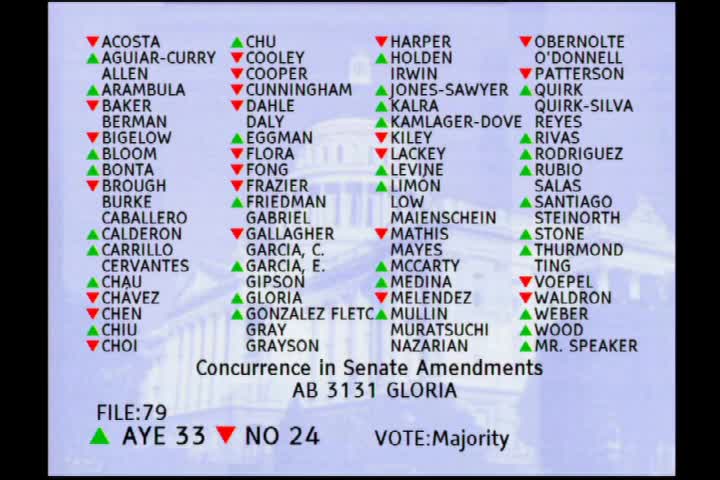 1MIN
Assembly Floor
 2MIN
Senate Floor
 1H
Senate Standing Committee on Appropriations
 6MIN
Senate Standing Committee on Education
 1MIN
Assembly Floor
 1MIN
Assembly Standing Committee on Appropriations
 5MIN
Assembly Standing Committee on Education
 16MIN
Assembly Standing Committee on Human Services
Bill Author