AB 2700: Income taxes: credits: job development.
- Session Year: 2017-2018
- House: Assembly
- Latest Version Date: 2018-05-16
The Personal Income Tax Law and the Corporation Tax Law allow various credits against the taxes imposed by those laws. Existing law requires any bill authorizing a new tax credit to contain, among other things, specific goals, purposes, and objectives that the tax credit will achieve, detailed performance indicators, and data collection requirements.
This bill would, under both laws for taxable years beginning on or after January 1, 2018, 2019, and before January 1, 2028, 2029, allow credits against tax in amounts equal to 30% or 15% of the qualified expenditures related to education and training programs for high demand high-demand jobs and the Doing What Matters program, respectively. The bill would specify data collection requirements for the credit.
This bill would take effect immediately as a tax levy.
The Personal Income Tax Law and the Corporation Tax Law allow various credits against the taxes imposed by those laws.
This bill would, under both laws for taxable years beginning on or after January 1, 2019, allow a credit against tax in an amount equal to ____% of the costs paid or incurred by a qualified taxpayer for employee development during the taxable year. 2018, and before January 1, 2028, allow credits against tax in amounts equal to 30% or 15% of the qualified expenditures related to education and training programs for high demand jobs and the Doing What Matters program, respectively.
This bill would take effect immediately as a tax levy.
The Personal Income Tax Law and the Corporation Tax Law allow various credits against the taxes imposed by those laws.
This bill would, under both laws for taxable years beginning on or after January 1, 2019, allow a credit against tax in an amount equal to ____% of the costs paid or incurred by a qualified taxpayer for employee development during the taxable year.
This bill would take effect immediately as a tax levy.
On or before July 1, 2019, existing law requires the Legislative Analysts Office to provide the public and specified legislative committees with a report evaluating the economic effects and administration of the qualified motion picture credit under the Sales and Use Tax Law, the Personal Income Tax Law, and the Corporation Tax Law, as specified.This bill would instead require that report to be provided on or before January 1, 2020.On or before July 1, 2019, existing law requires the Legislative Analysts Office to provide the public and specified legislative committees with a report evaluating the economic effects and administration of the qualified motion picture credit under the Sales and Use Tax Law, the Personal Income Tax Law, and the Corporation Tax Law, as specified.
This bill would instead require that report to be provided on or before January 1, 2020.
(a)For each taxable year beginning on or after January 1, 2018, 2019, and before January 1, 2028, 2029, there shall be allowed to a qualified taxpayer a credit against the net tax, as defined in Section 17039, in an amount equal to 30 percent of the costs paid or incurred by the qualified taxpayer during the taxable year for qualified expenditures.
(b)For purposes of this section:
(1)Qualified expenditures means the costs paid or incurred by a qualified taxpayer to create and administer an education and training program designed to prepare students for high demand high-demand jobs including, but not limited to, costs related to the development of curriculum, recruitment, training, and retention of instructors, and the creation of an application for the program on the qualified taxpayers Internet Web site.
(2)Qualified taxpayer means a person or entity engaged in a trade or business within the state that partners with a California Community College or the California State University to create and administer an education and training program designed to prepare students for high demand high-demand jobs.
(c)A credit under this section shall be allowed only on a timely filed original return of the taxpayer.
(d)The credit allowed by this section is in lieu of any deduction which the qualified taxpayer may otherwise claim pursuant to this part with respect to the same item of expense.
(d)(e)(1)The Franchise Tax Board may prescribe rules, guidelines, or procedures necessary or appropriate to carry out the purposes of this section.
(2)Chapter 3.5 (commencing with Section 11340) of Part 1 of Division 3 of Title 2 of the Government Code does not apply to any standard, criterion, procedure, determination, rule, notice, or guideline established or issued by the Franchise Tax Board pursuant to this section.
(e)(f)This section shall remain in effect only until December 1, 2028, 2029, and as of that date is repealed.
SEC. 2.Section 17053.76 is added to the Revenue and Taxation Code, to read:17053.76.(a)For each taxable year beginning on or after January 1, 2018, 2019, and before January 1, 2028, 2029, there shall be allowed to a qualified taxpayer a credit against the net tax, as defined in Section 17039, in an amount equal to 15 percent of the costs paid or incurred by the qualified taxpayer during the taxable year for qualified expenditures.
(b)For purposes of this section:
(1)Qualified expenditures means the costs paid or incurred by a qualified taxpayer that are related to program activities for the Doing What Matters program, including, but not limited to, costs related to partnering with the California Community Colleges to shape and develop curriculum.
(2)Qualified taxpayer means a person or entity engaged in a trade or business within the state that is a Doing What Matters business partner within the California Community Colleges Economic and Workforce Development Division.
(c)A credit under this section shall be allowed only on a timely filed original return of the taxpayer.
(d)The credit allowed by this section is in lieu of any deduction which the qualified taxpayer may otherwise claim pursuant to this part with respect to the same item of expense.
(d)(e)(1)The Franchise Tax Board may prescribe rules, guidelines, or procedures necessary or appropriate to carry out the purposes of this section.
(2)Chapter 3.5 (commencing with Section 11340) of Part 1 of Division 3 of Title 2 of the Government Code does not apply to any standard, criterion, procedure, determination, rule, notice, or guideline established or issued by the Franchise Tax Board pursuant to this section.
(e)(f)This section shall remain in effect only until December 1, 2028, 2029, and as of that date is repealed.
SEC. 3.Section 23675 is added to the Revenue and Taxation Code, to read:23675.(a)For each taxable year beginning on or after January 1, 2018, 2019, and before January 1, 2028, 2029, there shall be allowed to a qualified taxpayer a credit against the tax, as defined in Section 23036, in an amount equal to 30 percent of the costs paid or incurred by the qualified taxpayer during the taxable year for qualified expenditures.
(b)For purposes of this section:
(1)Qualified expenditures means the costs paid or incurred by a qualified taxpayer to create and administer an education and training program designed to prepare students for high demand high-demand jobs including, but not limited to, costs related to the development of curriculum, recruitment, training, and retention of instructors, and the creation of an application for the program on the qualified taxpayers Internet Web site.
(2)Qualified taxpayer means a person or entity engaged in a trade or business within the state that partners with a California Community College or the California State University to create and administer an education and training program designed to prepare students for high demand high-demand jobs.
(c)A credit under this section shall be allowed only on a timely filed original return of the taxpayer.
(d)The credit allowed by this section is in lieu of any deduction which the qualified taxpayer may otherwise claim pursuant to this part with respect to the same item of expense.
(d)(e)(1)The Franchise Tax Board may prescribe rules, guidelines, or procedures necessary or appropriate to carry out the purposes of this section.
(2)Chapter 3.5 (commencing with Section 11340) of Part 1 of Division 3 of Title 2 of the Government Code does not apply to any standard, criterion, procedure, determination, rule, notice, or guideline established or issued by the Franchise Tax Board pursuant to this section.
(e)(f)This section shall remain in effect only until December 1, 2028, 2029, and as of that date is repealed.
SEC. 4.Section 23676 is added to the Revenue and Taxation Code, to read:23676.(a)For each taxable year beginning on or after January 1, 2018, 2019, and before January 1, 2028, 2029, there shall be allowed to a qualified taxpayer a credit against the tax, as defined in Section 23036, in an amount equal to 15 percent of the costs paid or incurred by the qualified taxpayer during the taxable year for qualified expenditures.
(b)For purposes of this section:
(1)Qualified expenditures means the costs paid or incurred by a qualified taxpayer that are related to program activities for the Doing What Matters program, including, but not limited to, costs related to partnering with the California Community Colleges to shape and develop curriculum.
(2)Qualified taxpayer means a person or entity engaged in a trade or business within the state that is a Doing What Matters business partner within the California Community Colleges Economic and Workforce Development Division.
(c)A credit under this section shall be allowed only on a timely filed original return of the taxpayer.
(d)The credit allowed by this section is in lieu of any deduction which the qualified taxpayer may otherwise claim pursuant to this part with respect to the same item of expense.
(d)(e)(1)The Franchise Tax Board may prescribe rules, guidelines, or procedures necessary or appropriate to carry out the purposes of this section.
(2)Chapter 3.5 (commencing with Section 11340) of Part 1 of Division 3 of Title 2 of the Government Code does not apply to any standard, criterion, procedure, determination, rule, notice, or guideline established or issued by the Franchise Tax Board pursuant to this section.
(e)(f)This section shall remain in effect only until December 1, 2028, 2029, and as of that date is repealed.
SEC. 5.For purposes of complying with Section 41 of the Revenue and Taxation Code, with respect to Sections 17053.75, 17053.76, 23675, and 23676 of the Revenue and Taxation Code, as added by this act, the following data shall be collected:
(a)The number of training programs created as a result of this act.
(b)The number of students enrolled in the training programs created as a result of this act
(c)The number of students enrolled in the training programs created as a result of this act that obtain employment related to their field of study.
SEC. 5.It is the intent of the Legislature to comply with Section 41 of the Revenue and Taxation Code.SEC. 6.This act provides for a tax levy within the meaning of Article IV of the California Constitution and shall go into immediate effect.
(a)For each taxable year beginning on or after January 1, 2018, and before January 1, 2028, there shall be allowed to a qualified taxpayer a credit against the net tax, as defined in Section 17039, in an amount equal to 30 percent of the costs paid or incurred by the qualified taxpayer during the taxable year for qualified expenditures.
(b)For purposes of this section:
(1)Qualified expenditures means the costs paid or incurred by a qualified taxpayer to create and administer an education and training program designed to prepare students for high demand jobs including, but not limited to, costs related to the development of curriculum, recruitment, training, and retention of instructors, and the creation of an application for the program on the qualified taxpayers Internet Web site.
(2)Qualified taxpayer means a person or entity engaged in a trade or business within the state that partners with a California Community College or the California State University to create and administer an education and training program designed to prepare students for high demand jobs.
(c)A credit under this section shall be allowed only on a timely filed original return of the taxpayer.
(d)(1)The Franchise Tax Board may prescribe rules, guidelines, or procedures necessary or appropriate to carry out the purposes of this section.
(2)Chapter 3.5 (commencing with Section 11340) of Part 1 of Division 3 of Title 2 of the Government Code does not apply to any standard, criterion, procedure, determination, rule, notice, or guideline established or issued by the Franchise Tax Board pursuant to this section.
(e)This section shall remain in effect only until December 1, 2028, and as of that date is repealed.
SEC. 2.Section 17053.76 is added to the Revenue and Taxation Code, to read:17053.76.(a)For each taxable year beginning on or after January 1, 2018, and before January 1, 2028, there shall be allowed to a qualified taxpayer a credit against the net tax, as defined in Section 17039, in an amount equal to 15 percent of the costs paid or incurred by the qualified taxpayer during the taxable year for qualified expenditures.
(b)For purposes of this section:
(1)Qualified expenditures means the costs paid or incurred by a qualified taxpayer that are related to program activities for the Doing What Matters program, including, but not limited to, costs related to partnering with the California Community Colleges to shape and develop curriculum.
(2)Qualified taxpayer means a person or entity engaged in a trade or business within the state that is a Doing What Matters business partner within the California Community Colleges Economic and Workforce Development Division.
(c)A credit under this section shall be allowed only on a timely filed original return of the taxpayer.
(d)(1)The Franchise Tax Board may prescribe rules, guidelines, or procedures necessary or appropriate to carry out the purposes of this section.
(2)Chapter 3.5 (commencing with Section 11340) of Part 1 of Division 3 of Title 2 of the Government Code does not apply to any standard, criterion, procedure, determination, rule, notice, or guideline established or issued by the Franchise Tax Board pursuant to this section.
(e)This section shall remain in effect only until December 1, 2028, and as of that date is repealed.
SEC. 3.Section 23675 is added to the Revenue and Taxation Code, to read:23675.(a)For each taxable year beginning on or after January 1, 2018, and before January 1, 2028, there shall be allowed to a qualified taxpayer a credit against the tax, as defined in Section 23036, in an amount equal to 30 percent of the costs paid or incurred by the qualified taxpayer during the taxable year for qualified expenditures.
(b)For purposes of this section:
(1)Qualified expenditures means the costs paid or incurred by a qualified taxpayer to create and administer an education and training program designed to prepare students for high demand jobs including, but not limited to, costs related to the development of curriculum, recruitment, training, and retention of instructors, and the creation of an application for the program on the qualified taxpayers Internet Web site.
(2)Qualified taxpayer means a person or entity engaged in a trade or business within the state that partners with a California Community College or the California State University to create and administer an education and training program designed to prepare students for high demand jobs.
(c)A credit under this section shall be allowed only on a timely filed original return of the taxpayer.
(d)(1)The Franchise Tax Board may prescribe rules, guidelines, or procedures necessary or appropriate to carry out the purposes of this section.
(2)Chapter 3.5 (commencing with Section 11340) of Part 1 of Division 3 of Title 2 of the Government Code does not apply to any standard, criterion, procedure, determination, rule, notice, or guideline established or issued by the Franchise Tax Board pursuant to this section.
(e)This section shall remain in effect only until December 1, 2028, and as of that date is repealed.
SEC. 4.Section 23676 is added to the Revenue and Taxation Code, to read:23676.(a)For each taxable year beginning on or after January 1, 2018, and before January 1, 2028, there shall be allowed to a qualified taxpayer a credit against the tax, as defined in Section 23036, in an amount equal to 15 percent of the costs paid or incurred by the qualified taxpayer during the taxable year for qualified expenditures.
(b)For purposes of this section:
(1)Qualified expenditures means the costs paid or incurred by a qualified taxpayer that are related to program activities for the Doing What Matters program, including, but not limited to, costs related to partnering with the California Community Colleges to shape and develop curriculum.
(2)Qualified taxpayer means a person or entity engaged in a trade or business within the state that is a Doing What Matters business partner within the California Community Colleges Economic and Workforce Development Division.
(c)A credit under this section shall be allowed only on a timely filed original return of the taxpayer.
(d)(1)The Franchise Tax Board may prescribe rules, guidelines, or procedures necessary or appropriate to carry out the purposes of this section.
(2)Chapter 3.5 (commencing with Section 11340) of Part 1 of Division 3 of Title 2 of the Government Code does not apply to any standard, criterion, procedure, determination, rule, notice, or guideline established or issued by the Franchise Tax Board pursuant to this section.
(e)This section shall remain in effect only until December 1, 2028, and as of that date is repealed.
SEC. 5.It is the intent of the Legislature to comply with Section 41 of the Revenue and Taxation Code.
SEC. 6.This act provides for a tax levy within the meaning of Article IV of the California Constitution and shall go into immediate effect.
SECTION 1.Section 17053.75 is added to the Revenue and Taxation Code, to read:17053.75.(a)For each taxable year beginning on or after January 1, 2019, there shall be allowed to a qualified taxpayer a credit against the net tax, as defined in Section 17039, in an amount equal to ____ percent of the costs paid or incurred by the qualified taxpayer during the taxable year for employee development.(b)For purposes of this section, qualified taxpayer means a person or entity engaged in a trade or business within the state.(c)In the case in which the credit allowed by this section exceeds the net tax, the excess may be carried over to reduce the net tax in the following year, and the succeeding six years if necessary, until the credit is exhausted.(d)Section 41 shall not apply to the credit allowed by this section.SEC. 2.Section 23675 is added to the Revenue and Taxation Code, to read:23675.(a)For each taxable year beginning on or after January 1, 2019, there shall be allowed to a qualified taxpayer a credit against the tax, as defined in Section 23036, in an amount equal to ____ percent of the costs paid or incurred by the qualified taxpayer during the taxable year for employee development.(b)For purposes of this section, qualified taxpayer means a corporation engaged in a trade or business within the state.(c)In the case in which the credit allowed by this section exceeds the tax, the excess may be carried over to reduce the tax in the following year, and the succeeding six years if necessary, until the credit is exhausted.(d)Section 41 shall not apply to the credit allowed by this section.SEC. 3.This act provides for a tax levy within the meaning of Article IV of the California Constitution and shall go into immediate effect.(a)For each taxable year beginning on or after January 1, 2019, there shall be allowed to a qualified taxpayer a credit against the net tax, as defined in Section 17039, in an amount equal to ____ percent of the costs paid or incurred by the qualified taxpayer during the taxable year for employee development.
(b)For purposes of this section, qualified taxpayer means a person or entity engaged in a trade or business within the state.
(c)In the case in which the credit allowed by this section exceeds the net tax, the excess may be carried over to reduce the net tax in the following year, and the succeeding six years if necessary, until the credit is exhausted.
(d)Section 41 shall not apply to the credit allowed by this section.
SEC. 2.Section 23675 is added to the Revenue and Taxation Code, to read:23675.(a)For each taxable year beginning on or after January 1, 2019, there shall be allowed to a qualified taxpayer a credit against the tax, as defined in Section 23036, in an amount equal to ____ percent of the costs paid or incurred by the qualified taxpayer during the taxable year for employee development.
(b)For purposes of this section, qualified taxpayer means a corporation engaged in a trade or business within the state.
(c)In the case in which the credit allowed by this section exceeds the tax, the excess may be carried over to reduce the tax in the following year, and the succeeding six years if necessary, until the credit is exhausted.
(d)Section 41 shall not apply to the credit allowed by this section.
SEC. 3.This act provides for a tax levy within the meaning of Article IV of the California Constitution and shall go into immediate effect.
SECTION 1.Section 38.9 of the Revenue and Taxation Code is amended to read:38.9.(a)On or before January 1, 2020, the Legislative Analysts Office shall provide to the Assembly Committee on Revenue and Taxation, the Senate Committee on Governance and Finance, and the public a report evaluating the economic effects and administration of the tax credits allowed pursuant to Sections 6902.5, as amended by Chapter 413 of the Statutes of 2014, 17053.95, and 23695. In researching the report, the Legislative Analysts Office may do all of the following:(1)Request and receive all information provided to the California Film Commission pursuant to subdivision (g) of Sections 17053.95 and 23695.(2)Request and receive all information provided to the Franchise Tax Board relating to the sale or assignment of credits pursuant to subdivision (c) of Sections 17053.95 and 23695.(3)Request and receive all information provided to the board pursuant to subdivisions (c) and (g) of Section 6902.5, as amended by Chapter 413 of the Statutes of 2014.(b)The California Film Commission, the board, the Franchise Tax Board, the Employment Development Department, and all other relevant state agencies shall provide additional information, as specified by the Legislative Analysts Office, as needed to research the report required by this section.(c)(1)The information received by the Legislative Analysts Office pursuant to this section shall be considered confidential taxpayer information subject to Sections 7056, 7056.5, and 19542 of this code and Section 1094 of the Unemployment Insurance Code, and shall be subject to the appropriate confidentiality requirements of the participating state agency.(2)The Legislative Analysts Office may publish statistics in conjunction with the report required by this section that are derived from information provided to the Legislative Analysts Office pursuant to this section, if the published statistics are classified to prevent the identification of particular taxpayers, reports, and tax returns and the publication of the percentage of dividends paid by a corporation that is deductible by the recipient under Part 11 (commencing with Section 23001) of Division 2.(a)On or before July 1, 2019, January 1, 2020, the Legislative Analysts Office shall provide to the Assembly Committee on Revenue and Taxation, the Senate Committee on Governance and Finance, and the public a report evaluating the economic effects and administration of the tax credits allowed pursuant to Sections 6902.5, as amended by the act adding this section, Chapter 413 of the Statutes of 2014, 17053.95, and 23695. In researching the reports, report, the Legislative Analysts Office may do all of the following:
(1)Request and receive all information provided to the California Film Commission pursuant to subdivision (g) of Sections 17053.95 and 23695.
(2)Request and receive all information provided to the Franchise Tax Board relating to the sale or assignment of credits pursuant to subdivision (c) of Sections 17053.95 and 23695.
(3)Request and receive all information provided to the board pursuant to subdivisions (c) and (g) of Section 6902.5, as amended by the act adding this section. Chapter 413 of the Statutes of 2014.
(b)The California Film Commission, the board, the Franchise Tax Board, the Employment Development Department, and all other relevant state agencies shall provide additional information, as specified by the Legislative Analysts Office, as needed to research the reports report required by this section.
(c)(1)The information received by the Legislative Analysts Office pursuant to this section shall be considered confidential taxpayer information subject to Sections 7056, 7056.5, and 19542 of this code and Section 1094 of the Unemployment Insurance Code, and shall be subject to the appropriate confidentiality requirements of the participating state agency.
(2)The Legislative Analysts Office may publish statistics in conjunction with the reports report required by this section that are derived from information provided to the Legislative Analysts Office pursuant to this section, if the published statistics are classified to prevent the identification of particular taxpayers, reports, and tax returns and the publication of the percentage of dividends paid by a corporation that is deductible by the recipient under Part 11 (commencing with Section 23001) of Division 2.
|
Date
|
Status
|
|---|---|
| May 25, 2018 | In committee: Held under submission. |
| May 25, 2018 | Joint Rule 62(a), file notice suspended. |
| May 23, 2018 | In committee: Set, first hearing. Referred to APPR. suspense file. |
| May 17, 2018 | Re-referred to Com. on APPR. |
| May 16, 2018 | Read second time and amended. |
| May 15, 2018 | From committee: Amend, and do pass as amended and re-refer to Com. on APPR. (Ayes 8. Noes 1.) (May 14). |
| May 8, 2018 | Re-referred to Com. on REV. & TAX. |
| May 7, 2018 | From committee chair, with author's amendments: Amend, and re-refer to Com. on REV. & TAX. Read second time and amended. |
| Apr 5, 2018 | From committee: Be re-referred to Com. on REV. & TAX. Re-referred. (Ayes 8. Noes 0.) (April 5). Re-referred to Com. on REV. & TAX. |
| Apr 2, 2018 | Re-referred to Com. on RLS. pursuant to Assembly Rule 96. |
| Mar 22, 2018 | Re-referred to Com. on A.,E.,S.,T., & I.M. |
| Mar 21, 2018 | From committee chair, with author's amendments: Amend, and re-refer to Com. on A.,E.,S.,T., & I.M. Read second time and amended. |
| Mar 8, 2018 | Referred to Coms. on A.,E.,S.,T., & I.M. and REV. & TAX. |
| Feb 16, 2018 | From printer. May be heard in committee March 18. |
| Feb 15, 2018 | Read first time. To print. |
|
Date
|
Description
|
Location
|
Votes
|
|
|---|---|---|---|---|
| May 14, 2018 | Do pass as amended and be re-referred to the Committee on [Appropriations] | Assembly Standing Committee on Revenue and Taxation |
Passed |
|
| Apr 5, 2018 | Be re-referred to the Committee on [Revenue and Taxation] | Assembly Standing Committee on Rules |
Passed |
This list shows positions taken on this bill by organizations on the date displayed, which is linked to the original source.
Positions by individuals are not included.
Date of Hearing: May 23, 2018
ASSEMBLY COMMITTEE ON APPROPRIATIONS
Lorena Gonzalez Fletcher, Chair
ABPCA Bill Id:AB 2700
Author:(Burke) – As Amended Ver:May 16, 2018
Policy Committee: | Revenue and Taxation | Vote: | 8-1 |
|
|
Urgency: No State Mandated Local Program: No Reimbursable: No
SUMMARY:
This bill allows, under the Personal Income Tax (PIT) Law and the Corporation Tax (CT) Law, a 30% or a 15% credit for costs paid or incurred by a taxpayer for specified expenditures related to education and training. Specifically, this bill:
- Allows, for tax years 2019 through 2028, a 30% tax credit for a person or entity engaged in a trade or businesses that partners with a California Community College or the California State University to create and administer an education and training program designed to prepare students for high-demand jobs. The credit is for expenses to create and administer such an education and training program.
- Allows, for tax years 2019 through 2028, a 15% tax credit for a business that is a “Doing What Matters” business partner within the California Community Colleges Economic and Workforce Development Division. The credit is for expenses related to program activities for the program, such as costs related to helping develop curriculum.
FISCAL EFFECT:
Unknown revenue loss. It is unknown how many employers would participate in the proposed program or what capacities California Community Colleges or the California State University have to work with employers on education and training programs.
COMMENTS:
- Purpose. According to the author, AB 2700 will help employers train the next generation of employees through a tax credit that encourage employers to partner with educational institutions to develop training programs.
The first tax credit encourages taxpayers who partner with a community college or a state university to create an education and training program designed to prepare students for high-demand jobs. The credit would cover expenditures related to the development of a curriculum, training, retention of instructors and recruitment, providing employers with the flexibility needed to create training programs that meet the needs of the market.
The second credit encourages taxpayers to participate in the "Doing What Matters" program within the California Community Colleges Economic and Workforce Development Division. "Doing What Matters" establishes a four-pronged framework that facilitates collaboration between employers, organized labor, local communities, and their community colleges. The four-pronged approach focuses on regional market needs, retooling or suspending school programs that are not meeting market needs, measuring student success, and investing in innovation.
- Fiscal implications of tax expenditures. Existing law allows for various tax expenditures such as credits, deductions, exclusions, and exemptions for particular taxpayer groups. These features of the tax code can result in significant state costs through foregone tax revenue and, in many cases, policymakers have little control over the revenue loss that occurs in any given year. As a result, many tax expenditure bills now include provisions designed to give the Legislature more control over costs. Examples of such provisions include placing a sunset date or making a bill’s provisions contingent upon a separate budget appropriation. AB 2700 contains a sunset.
Analysis Prepared by: Luke Reidenbach / APPR. / (916) 319-2081
Date of Hearing: May 14, 2018
ASSEMBLY COMMITTEE ON REVENUE AND TAXATION
Autumn R. Burke, Chairwoman
ABPCA Bill Id:AB 2700 (
Author:Burke) – As Amended Ver:May 7, 2018
Majority vote. Tax levy. Fiscal committee.
SUBJECT: Income taxes: credits: job development
SUMMARY: Allows, under the Personal Income Tax (PIT) Law and Corporation Tax (CT) Law, a 30% credit or a 15% credit for costs paid or incurred by a "qualified taxpayer" during the taxable year for "qualified expenditures." Specifically, this bill:
- Allows a credit, beginning on or after January 1, 2018, and before January 1, 2028, in an amount equal to 30% of costs paid or incurred by the "qualified taxpayer" during the taxable year for "qualified expenditures."
- Allows a credit, beginning on or after January 1, 2018, and before January 1, 2028, in an amount equal to 15% of costs paid or incurred by the "qualified taxpayer" during the taxable year for "qualified expenditures."
- Defines a "qualified taxpayer," for the 30% credit, as a person or entity engaged in a trade or business within the state that partners with a California Community College or the California State University to create and administer an education and training program designed to prepare students for high demand jobs.
- Defines a "qualified taxpayer," for the 15% credit, as a person or entity engaged in a trade or business within the state that is a "Doing What Matters" business partner within the California Community Colleges Economic and Workforce Development Division.
- Defines "qualified expenditures," for the 30% credit, as the costs paid or incurred by a qualified taxpayer to create and administer an education and training program designed to prepare students for high demand jobs, such as costs related to the development of a curriculum, recruitment, training, and retention of instructors, and the creation of an application for the program on the qualified taxpayer's Internet Web site.
- Defines "qualified expenditures," for the 15% credit, as the costs paid or incurred by a qualified taxpayer that are related to program activities for the "Doing What Matters" program, such as costs related to partnering with the California Community Colleges to shape and develop curriculum.
- Requires both credits to be claimed on a timely filed original return.
- Allows the Franchise Tax Board (FTB) to prescribe rules, guidelines, or procedures necessary or appropriate to carry out the purpose of these credits.
- Repeals the credits on December 1, 2028.
- Provides that it is the intent of the Legislature to comply with Revenue and Taxation Code Section 41.
- Takes effect immediately as a tax levy.
EXISTING LAW:
- Allows taxpayers engaged in a trade or business to deduct all expenses that are considered ordinary and necessary in conducting that trade or business.
- Allows various tax credits under the PIT Law and the CT Law generally designed to encourage socially beneficial behavior or to provide relief to taxpayers who incur specified expenses.
- Applies performance measurement standards to any new tax credit under either the PIT Law or the CT Law if enacted by a bill introduced on or after January 1, 2015. Specifically, existing law requires all of the following:
- Specific goals, purposes, and objectives that the tax credit will achieve;
- Detailed performance indicators for the Legislature to use when measuring whether the tax credit meets the goals, purposes, and objectives stated in the bill; and,
- Data collection requirements to enable the Legislature to determine whether the tax credit is meeting, failing to meet, or exceeding those specific goals, purposes, and objectives, including a requirement to specify both of the following:
- The baseline data, to be collected and remitted in each year the credit is effective, for the Legislature to measure the change in performance indicators; and,
- The taxpayers, state agencies, or other entities required to collect and remit data.
FISCAL EFFECT: Unknown
COMMENTS:
- The author has provided the following statement in support of this bill:
California's workforce needs to be able to meet the demands of tomorrow, which is why I am introducing AB 2700 to help employers train the next generation of employees. The goal is to encourage employers to partner with educational institutions to develop training programs that focus on today's needs. It's a win for both parties; graduates receive tangible skills that make them more marketable and employers get the benefit of having a greater pool of skilled applicants. The workforce gap is a problem faced by a large number of employers and requires government partnership to solve.
- Committee Staff Comments:
- What does this bill do? This bill encourages workforce training and development by providing two tax credits. The first tax credit encourages taxpayers who partner with a Community College or a State University to create an education and training program designed to prepare students for high-demand jobs. The credit would cover expenditures related to the development of a curriculum, training, retention of instructors and recruitment, providing employers with the flexibility needed to create training programs that meet the needs of the market. The second credit encourages taxpayers to participate in the "Doing What Matters" program within the California Community Colleges Economic and Workforce Development Division. "Doing What Matters" establishes a four-pronged framework that facilitates collaboration between employers, organized labor, local communities, and their community colleges. The four-pronged approach focuses on regional market needs, retooling or suspending school programs that are not meeting market needs, measuring student success, and investing in innovation.
The first credit is geared toward employers who have the capacity and the knowledge to design a training program that best meets their needs, benefiting those employers that tend to have greater resources and can afford to develop a program from the ground up. The second credit is designed to encourage employers to participate in the "Doing What Matters" program, which is currently set up specifically to encourage greater collaboration among Community Colleges and employers, beneficial to employers that have a need, understand the market, but lack the knowledge and resources necessary to develop a new curriculum.
- Jobs gap: According to the Public Policy Institute of California, by 2025, California is likely to face a shortage of workers[1] that may be as high as 1.5 million for those jobs that require some college education and as high as one million for jobs requiring a college education. Failure to meet job training needs will have an impact on California's national and international competitiveness and could limit or alter the state's economic growth. More importantly, a workforce that cannot meet or attain sufficient training for in-demand jobs will be unable to take advantage of economic opportunities. This is especially important for Latinos entering the workforce, a group with traditionally lower rates of college enrollment[2]. As a general rule, higher levels of education translate into greater job opportunities. Workers with higher levels of education also tend to be unemployed at lower rates and tend to make more than individuals with less formal education. The report also highlights the need for both students and educational institutions, primarily Community Colleges, to understand workforce needs and labor market returns; it is not enough to invest in Community Colleges or California State Universities. The report specifically highlights the need for employers to collaborate with students and educational institutions to design programs that meet labor market needs. This bill encourages the kind of collaboration needed between schools and employers so that students can be trained to be employed in jobs that provide higher wages and opportunities for growth.
- Reward or incentive? Normally, tax credits are designed to encourage taxpayers to take actions they may not otherwise undertake. This principle of sound tax policy is arguably undermined by providing a tax credit for actions that have already taken place (e.g., expenditures beginning on or after January 1, 2018). By allowing a retroactive application of this credit, this bill would reward some taxpayer behavior that has already occurred. To ensure that this credit serves as an incentive for future taxpayer behavior (and not a reward for past actions), the author has offered to amend this bill to apply to taxable years beginning on or after January 1, 2019. Additionally, the author will move all dates forward by one year, including the sunset date and repeal date.
- Double dipping – allowing a credit and deduction: Existing law provides a deduction for business expenses that are ordinary and necessary in conducting that trade or business. Generally, efficient tax policy disallows multiple tax benefits for the same item of expense. This bill allows a credit under the PIT Law or the CT Law for the expense of developing a training program for high demand jobs. Depending on the circumstances, it may be possible for a taxpayer to obtain a tax deduction for employee training and a tax credit under the provisions of this bill. The author has proposed an amendment to disallow both this credit and a business deduction for the same item of expense.
- Section 41compliance: As noted above, tax credits enacted on or after January 1, 2015, require performance measurement standards to assess the credit's performance in achieving its stated goal. This bill states legislative intent to comply with the requirements of Section 41. The author has proposed amendments that would require an entity to keep track of the total number of training programs created with this tax credit, along with the number of enrollees, and the number of students that obtain employment related to their training.
REGISTERED SUPPORT / OPPOSITION:
Support
None on file
Opposition
None on file
Analysis Prepared by: Carlos Anguiano / REV. & TAX. / (916) 319-2098
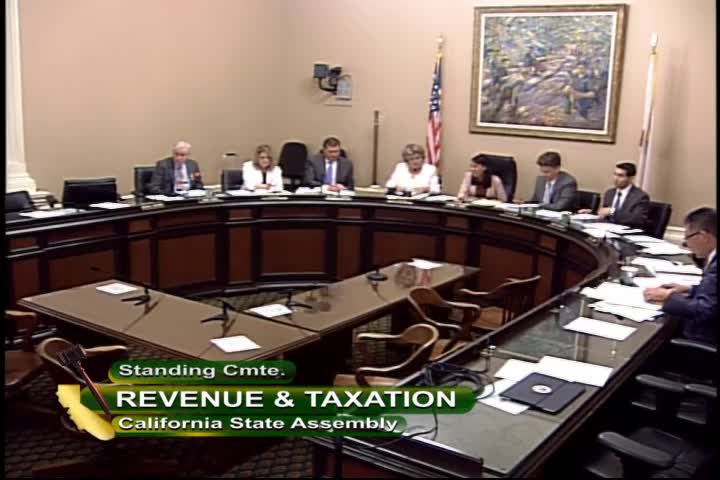
Discussed in Hearing
 4MIN
Assembly Standing Committee on Revenue and Taxation


Bill Co-Author(s):