AB 1671: Confidential communications: disclosure.
- Session Year: 2015-2016
- House: Assembly
- Latest Version Date: 2016-09-30
(1)Existing law makes it a crime, subject to specified exemptions, for a person to intentionally eavesdrop upon or record a confidential communication by means of an electronic amplifying or recording device without the consent of all parties to the confidential communication. Existing law defines a confidential communication as any communication carried on in circumstances that reasonably indicate that any party to the communication desires it to be confined to the parties thereto. Existing law exempts from the prohibition the recording of a confidential communication made for the purpose of obtaining evidence reasonably believed to relate to the commission by another party to the communication of certain crimes, including any felony involving violence against the person making the recording.
This bill additionally would make it a crime for a person who unlawfully eavesdrops upon or records a confidential communication as described above with a health care provider, as defined, to intentionally disclose or distribute the contents of the confidential communication without the consent of all parties to the confidential communication unless specified conditions are met. The bill would make this prohibition subject to the same exemptions as are applicable to the prohibition on eavesdropping upon or recording a confidential communication as described above. The bill would also specify the conduct that constitutes aiding and abetting the commission of those offenses, as specified. The bill would specify, with respect to the exemption for recording communications believed to relate to the commission of a crime by a party to the communication, that a felony involving violence includes human trafficking, as defined. By creating a new crime, this bill would impose a state-mandated local program.
(2)Existing law authorizes any person who has been injured by a violation of the prohibition on eavesdropping upon or recording confidential communications, and related offenses, to bring an action against the person who committed the violation to enjoin and restrain the violation, as well as to bring an action for monetary damages, as specified.
This bill would provide that the monetary damages be imposed per violation of the above-described provisions.
(3)Existing law makes the above-specified crime of eavesdropping punishable by a fine not to exceed $2,500 or imprisonment in a county jail not exceeding one year, or in the state prison for 16 months or 2 or 3 years. If the person has previously been convicted of eavesdropping, or has previously been convicted of specified invasion of privacy crimes, existing law requires the person to be punished by a fine not exceeding $10,000, by imprisonment in a county jail not exceeding one year, or in the state prison for 16 months or 2 or 3 years.
This bill would require the above-specified fines to be imposed on a per-violation basis and would impose the same penalties prescribed for the unlawful eavesdropping upon or recording of a confidential communication to the disclosure crimes created by the bill. The bill also would make various technical, nonsubstantive changes to existing law.
The California Constitution requires the state to reimburse local agencies and school districts for certain costs mandated by the state. Statutory provisions establish procedures for making that reimbursement.
This bill would provide that no reimbursement is required by this act for a specified reason.
(1)Existing law makes it a crime, subject to specified exemptions, for a person to intentionally eavesdrop upon or record a confidential communication by means of an electronic amplifying or recording device without the consent of all parties to the confidential communication. Existing law defines a confidential communication as any communication carried on in circumstances that reasonably indicate that any party to the communication desires it to be confined to the parties thereto. Existing law exempts from the prohibition the recording of a confidential communication made for the purpose of obtaining evidence reasonably believed to relate to the commission by another party to the communication of certain crimes, including any felony involving violence against the person making the recording.
This bill additionally would make it a crime for a person who unlawfully eavesdrops upon or records a confidential communication as described above with a health care provider, as defined, to intentionally disclose or distribute the contents of the confidential communication without the consent of all parties to the confidential communication unless specified conditions are met. The bill would not apply if the confidential communication is disclosed solely to law enforcement for investigative purposes. The bill would make this prohibition subject to the same exemptions as are applicable to the prohibition on eavesdropping upon or recording a confidential communication as described above. The bill would also specify the conduct that constitutes aiding and abetting the commission of those offenses, as specified. The bill would specify, with respect to the exemption for recording communications believed to relate to the commission of a crime by a party to the communication, that a felony involving violence includes human trafficking, as defined. By creating a new crime, this bill would impose a state-mandated local program.
(2)Existing law authorizes any person who has been injured by a violation of the prohibition on eavesdropping upon or recording confidential communications, and related offenses, to bring an action against the person who committed the violation to enjoin and restrain the violation, as well as to bring an action for monetary damages, as specified.
This bill would provide that the monetary damages be imposed per violation of the above-described provisions.
(2)
(3)Existing law makes the above-specified crime of eavesdropping punishable by a fine not to exceed $2,500 or imprisonment in a county jail not exceeding one year, or in the state prison for 16 months or 2 or 3 years. If the person has previously been convicted of eavesdropping, or has previously been convicted of specified invasion of privacy crimes, existing law requires the person to be punished by a fine not exceeding $10,000, by imprisonment in a county jail not exceeding one year, or in the state prison for 16 months or 2 or 3 years.
This bill would require the above-specified fines to be imposed on a per-violation basis and would impose the same penalties prescribed for the unlawful eavesdropping upon or recording of a confidential communication to the disclosure crimes created by the bill. The bill also would make various technical, nonsubstantive changes to existing law.
The California Constitution requires the state to reimburse local agencies and school districts for certain costs mandated by the state. Statutory provisions establish procedures for making that reimbursement.
This bill would provide that no reimbursement is required by this act for a specified reason.
(1)Existing law makes it a crime, subject to specified exemptions, for a person to intentionally eavesdrop upon or record a confidential communication by means of an electronic amplifying or recording device without the consent of all parties to the confidential communication. Existing law defines a confidential communication as any communication carried on in circumstances that reasonably indicate that any party to the communication desires it to be confined to the parties thereto. Existing law exempts from the prohibition the recording of a confidential communication made for the purpose of obtaining evidence reasonably believed to relate to the commission by another party to the communication of certain crimes, including any felony involving violence against the person making the recording.
This bill additionally would make it a crime for a person who unlawfully eavesdrops upon or records a confidential communication as described above with a health care provider, as defined, to intentionally disclose or distribute the contents of the confidential communication without the consent of all parties to the confidential communication unless specified conditions are met. The bill would not apply if the confidential communication is disclosed solely to law enforcement for investigative purposes. The bill would make this prohibition subject to the same exemptions as are applicable to the prohibition on eavesdropping upon or recording a confidential communication as described above. The bill would also make it a crime for any person to aid and abet any person in the commission of those offenses. The bill would specify, with respect to the exemption for recording communications believed to relate to the commission of a crime by a party to the communication, that a felony involving violence includes human trafficking, as defined. By creating new crimes, a new crime, this bill would impose a state-mandated local program.
(2)Existing law makes the above-specified crime of eavesdropping punishable by a fine not to exceed $2,500 or imprisonment in a county jail not exceeding one year, or in the state prison for 16 months or 2 or 3 years. If the person has previously been convicted of eavesdropping, or has previously been convicted of specified invasion of privacy crimes, existing law requires the person to be punished by a fine not exceeding $10,000, by imprisonment in a county jail not exceeding one year, or in the state prison for 16 months or 2 or 3 years.
This bill would require the above-specified fines to be imposed on a per-violation basis and would impose the same penalties prescribed for the unlawful eavesdropping upon or recording of a confidential communication to the disclosure crimes created by the bill. The bill also would make various technical, nonsubstantive changes to existing law.
The California Constitution requires the state to reimburse local agencies and school districts for certain costs mandated by the state. Statutory provisions establish procedures for making that reimbursement.
This bill would provide that no reimbursement is required by this act for a specified reason.
(1)Existing law makes it a crime, subject to specified exemptions, for a person to intentionally eavesdrop upon or record a confidential communication by means of an electronic amplifying or recording device without the consent of all parties to the confidential communication. Existing law defines a confidential communication as any communication carried on in circumstances that reasonably indicate that any party to the communication desires it to be confined to the parties thereto. Existing law exempts from the prohibition the recording of a confidential communication made for the purpose of obtaining evidence reasonably believed to relate to the commission by another party to the communication of certain crimes, including any felony involving violence against the person making the recording.
This bill additionally would make it a crime for a person who unlawfully eavesdrops upon or records a confidential communication as described above with a health care provider, as defined, to intentionally disclose or distribute the contents of the confidential communication without the consent of all parties to the confidential communication unless specified conditions are met. The bill would make this prohibition subject to the same exemptions as are applicable to the prohibition on eavesdropping upon or recording a confidential communication as described above. The bill would also make it a crime for any person to aid or and abet any person in the commission of those offenses. The bill would specify, with respect to the exemption for recording communications believed to relate to the commission of a crime by a party to the communication, that a felony involving violence includes human trafficking, as defined. By creating new crimes, this bill would impose a state-mandated local program.
(2)Existing law makes the above-specified crime of eavesdropping punishable by a fine not to exceed $2,500 or imprisonment in a county jail not exceeding one year, or in the state prison for 16 months or 2 or 3 years. If the person has previously been convicted of eavesdropping, or has previously been convicted of specified invasion of privacy crimes, existing law requires the person to be punished by a fine not exceeding $10,000, by imprisonment in a county jail not exceeding one year, or in the state prison for 16 months or 2 or 3 years.
This bill would require the above-specified fines to be imposed on a per-violation basis and would impose the same penalties prescribed for the unlawful eavesdropping upon or recording of a confidential communication to the disclosure crimes created by the bill. The bill also would make various technical, nonsubstantive changes to existing law.
The California Constitution requires the state to reimburse local agencies and school districts for certain costs mandated by the state. Statutory provisions establish procedures for making that reimbursement.
This bill would provide that no reimbursement is required by this act for a specified reason.
(1)Existing law makes it a crime crime, subject to specified exemptions, for a person to intentionally eavesdrop upon or record a confidential communication by means of an electronic amplifying or recording device without the consent of all parties to the confidential communication. Existing law defines a confidential communication as any communication carried on in circumstances that reasonably indicate that any party to the communication desires it to be confined to the parties thereto. Existing law exempts from the prohibition the recording of a confidential communication made for the purpose of obtaining evidence reasonably believed to relate to the commission by another party to the communication of certain crimes, including any felony involving violence against the person making the recording.
This bill additionally would make it a crime for a person who unlawfully eavesdrops upon or records a confidential communication as described above with a health care provider, as defined, to intentionally disclose, or attempt to disclose, or to intentionally distribute, or attempt to distribute, disclose or distribute the contents of a the confidential communication without the consent of all parties to the confidential communication unless specified conditions are met. The bill would make this prohibition subject to the same exemptions as are applicable to the prohibition on eavesdropping upon or recording a confidential communication as described above. The bill would also make it a crime for any person to employ or direct any person to commit those acts. aid or abet any person in the commission of those offenses. The bill would specify, with respect to the exemption for recording communications believed to relate to the commission of a crime by a party to the communication, that a felony involving violence includes human trafficking, as defined. By creating new crimes, this bill would impose a state-mandated local program.
(2)Existing law makes the above-specified crime of eavesdropping punishable by a fine not to exceed $2,500 or imprisonment in a county jail not exceeding one year, or in the state prison for 16 months or 2 or 3 years. If the person has previously been convicted of eavesdropping, or has previously been convicted of specified invasion of privacy crimes, existing law requires the person to be punished by a fine not exceeding $10,000, by imprisonment in a county jail not exceeding one year, or in the state prison for 16 months or 2 or 3 years.
This bill would require the above-specified fines to be imposed on a per-violation basis and would impose the same penalties prescribed for the unlawful eavesdropping upon or recording of a confidential communication to the disclosure crimes created by the bill. The bill also would make various technical, nonsubstantive changes to existing law.
The California Constitution requires the state to reimburse local agencies and school districts for certain costs mandated by the state. Statutory provisions establish procedures for making that reimbursement.
This bill would provide that no reimbursement is required by this act for a specified reason.
(1)Existing law makes it a crime for a person to intentionally eavesdrop upon or record a confidential communication by means of an electronic amplifying or recording device without the consent of all parties to the confidential communication. Existing law defines a confidential communication as any communication carried on in circumstances that reasonably indicate that any party to the communication desires it to be confined to the parties thereto.
This bill additionally would make it a crime for a person who unlawfully eavesdrops upon or records a confidential communication as described above to intentionally disclose, or attempt to disclose, or to intentionally distribute, or attempt to distribute, the contents of a confidential communication without the consent of all parties to the confidential communication unless specified conditions are met. The bill would also make it a crime for any person to aid, abet, employ, or conspire with the employ or direct any person who unlawfully eavesdrops upon or records a confidential communication to unlawfully do, permit, or cause the disclosure or distribution of the confidential communication. to commit those acts. By creating new crimes, this bill would impose a state-mandated local program.
(2)Existing law makes the above-specified crime of eavesdropping punishable by a fine not to exceed $2,500 or imprisonment in a county jail not exceeding one year, or in the state prison for 16 months or 2 or 3 years. If the person has previously been convicted of eavesdropping, or has previously been convicted of specified invasion of privacy crimes, existing law requires the person to be punished by a fine not exceeding $10,000, by imprisonment in a county jail not exceeding one year, or in the state prison for 16 months or 2 or 3 years.
This bill would require the above-specified fines to be imposed on a per-violation basis and would impose the same penalties prescribed for the unlawful eavesdropping upon or recording of a confidential communication to the disclosure crimes created by the bill. The bill also would make various technical, nonsubstantive changes to existing law.
The California Constitution requires the state to reimburse local agencies and school districts for certain costs mandated by the state. Statutory provisions establish procedures for making that reimbursement.
This bill would provide that no reimbursement is required by this act for a specified reason.
(1)Existing law makes it a crime for a person to intentionally eavesdrop upon or record a confidential communication by means of an electronic amplifying or recording device without the consent of all parties to the confidential communication. Existing law defines a confidential communication as any communication carried on in circumstances that reasonably indicate that any party to the communication desires it to be confined to the parties thereto.
This bill additionally would make it a crime for a person who unlawfully eavesdrops upon or records a confidential communication as described above to intentionally use, or attempt to use, or to intentionally disclose, or attempt to disclose, or to intentionally distribute, or attempt to distribute, the contents of a confidential communication without the consent of all parties to the confidential communication unless specified conditions are met. The bill would also make it a crime for any person to aid, abet, employ, or conspire with any the person who unlawfully eavesdrops upon or records a confidential communication to unlawfully do, permit, or cause the recordation, use, or disclosure or distribution of a the confidential communication. By creating new crimes, this bill would impose a state-mandated local program.
(2)Existing law makes the above-specified crime of eavesdropping punishable by a fine not to exceed $2,500 or imprisonment in a county jail not exceeding one year, or in the state prison for 16 months or 2 or 3 years. If the person has previously been convicted of eavesdropping, or has previously been convicted of specified invasion of privacy crimes, existing law requires the person to be punished by a fine not exceeding $10,000, by imprisonment in a county jail not exceeding one year, or in the state prison for 16 months or 2 or 3 years.
This bill would require the-above specified the above-specified fines to be imposed on a per-violation basis. basis and would impose the same penalties prescribed for the unlawful eavesdropping upon or recording of a confidential communication to the disclosure crimes created by the bill. The bill also would make various technical, nonsubstantive changes to existing law.
The California Constitution requires the state to reimburse local agencies and school districts for certain costs mandated by the state. Statutory provisions establish procedures for making that reimbursement.
This bill would provide that no reimbursement is required by this act for a specified reason.
(1)Existing law makes it a crime for a person to intentionally eavesdrop upon or record a confidential communication by means of an electronic amplifying or recording device without the consent of all parties to the confidential communication. Existing law defines a confidential communication as any communication carried on in circumstances that reasonably indicate that any party to the communication desires it to be confined to the parties thereto.
This bill would make it a crime to intentionally use, or attempt to use, or to intentionally disclose, or attempt to disclose, the contents of a confidential communication without the consent of all parties to the confidential communication unless specified conditions are met. The bill would also make it a crime to aid, employ, or conspire with any person to unlawfully do, permit, or cause the recordation, use, or disclosure of a confidential communication. By creating new crimes, this bill would impose a state-mandated local program.
(2)Existing law makes the above-specified crime of eavesdropping punishable by a fine not to exceed $2,500 or imprisonment in a county jail not exceeding one year, or in the state prison for 16 months or 2 or 3 years. If the person has previously been convicted of eavesdropping, or has previously been convicted of specified invasion of privacy crimes, existing law requires the person to be punished by a fine not exceeding $10,000, by imprisonment in a county jail not exceeding one year, or in the state prison for 16 months or 2 or 3 years.
This bill would require the-above specified fines to be imposed on a per-violation basis.
The California Constitution requires the state to reimburse local agencies and school districts for certain costs mandated by the state. Statutory provisions establish procedures for making that reimbursement.
This bill would provide that no reimbursement is required by this act for a specified reason.
Existing law, with specified exemptions, makes it a crime to intentionally record a confidential communication without the consent of all parties to the communication.
This bill would declare the intent of the Legislature to enact legislation to prohibit any person from intentionally video recording a confidential communication, or disclosing or distributing that communication, without obtaining the consent of all parties to the communication.
(a)A person who, intentionally and without the consent of all parties to a confidential communication, uses an electronic amplifying or recording device to eavesdrop upon or record the confidential communication, whether the communication is carried on among the parties in the presence of one another or by means of a telegraph, telephone, or other device, except a radio, shall be punished by a fine not exceeding two thousand five hundred dollars ($2,500) per violation, or imprisonment in a county jail not exceeding one year, or in the state prison, or by both that fine and imprisonment. If the person has previously been convicted of a violation of this section or Section 631, 632.5, 632.6, 632.7, or 636, the person shall be punished by a fine not exceeding ten thousand dollars ($10,000) per violation, by imprisonment in a county jail not exceeding one year, or in the state prison, or by both that fine and imprisonment.
(b)For the purposes of this section, person means an individual, business association, partnership, corporation, limited liability company, or other legal entity, and an individual acting or purporting to act for or on behalf of any government or subdivision thereof, whether federal, state, or local, but excludes an individual known by all parties to a confidential communication to be overhearing or recording the communication.
(c)For the purposes of this section, confidential communication means any communication carried on in circumstances as may reasonably indicate that any party to the communication desires it to be confined to the parties thereto, but excludes a communication made in a public gathering or in any legislative, judicial, executive, or administrative proceeding open to the public, or in any other circumstance in which the parties to the communication may reasonably expect that the communication may be overheard or recorded.
(d)Except as proof in an action or prosecution for violation of this section, evidence obtained as a result of eavesdropping upon or recording a confidential communication in violation of this section is not admissible in any judicial, administrative, legislative, or other proceeding.
(e)This section does not apply (1) to any public utility engaged in the business of providing communications services and facilities, or to the officers, employees, or agents thereof, if the acts otherwise prohibited by this section are for the purpose of construction, maintenance, conduct, or operation of the services and facilities of the public utility, (2) to the use of any instrument, equipment, facility, or service furnished and used pursuant to the tariffs of a public utility, or (3) to any telephonic communication system used for communication exclusively within a state, county, city and county, or city correctional facility.
(f)This section does not apply to the use of hearing aids and similar devices, by persons afflicted with impaired hearing, for the purpose of overcoming the impairment to permit the hearing of sounds ordinarily audible to the human ear.
SEC. 2.Section 632.01 is added to the Penal Code, to read:632.01.(a)(1)A person who violates subdivision (a) of Section 632 shall be punished pursuant to subdivision (b) if the person intentionally discloses or distributes, in any manner, in any forum, including, but not limited to, Internet Web sites and social media, or for any purpose, the contents of a confidential communication with a health care provider that is obtained by that person in violation of subdivision (a) of Section 632. For purposes of this subdivision, social media means an electronic service or account, or electronic content, including, but not limited to, videos or still photographs, blogs, video blogs, podcasts, instant and text messages, email, online services or accounts, or Internet Web site profiles or locations.
(2)Notwithstanding any other provision of law, to aid and abet a violation of paragraph (1), for the purposes of Section 31, the person shall either violate, or aid and abet in a violation of, both Section 632 and paragraph (1).
(b)A violation of subdivision (a) shall be punished by a fine not exceeding two thousand five hundred dollars ($2,500) per violation, or imprisonment in a county jail not exceeding one year, or in the state prison, or by both that fine and imprisonment. If the person has previously been convicted of a violation of this section, the person shall be punished by a fine not exceeding ten thousand dollars ($10,000) per violation, by imprisonment in a county jail not exceeding one year, or in the state prison, or by both that fine and imprisonment.
(c)For purposes of this section, health care provider means any of the following:
(1)A person licensed or certified pursuant to Division 2 (commencing with Section 500) of the Business and Professions Code.
(2)A person licensed pursuant to the Osteopathic Initiative Act or the Chiropractic Initiative Act.
(3)A person certified pursuant to Division 2.5 (commencing with Section 1797) of the Health and Safety Code.
(4)A clinic, health dispensary, or health facility licensed or exempt from licensure pursuant to Division 2 (commencing with Section 1200) of the Health and Safety Code.
(5)An employee, volunteer, or contracted agent of any group practice prepayment health care service plan regulated pursuant to the Knox-Keene Health Care Service Plan Act of 1975 (Chapter 2.2 (commencing with Section 1340) of Division 2 of the Health and Safety Code).
(6)An employee, volunteer, independent contractor, or professional student of a clinic, health dispensary, or health care facility or health care provider described in this subdivision.
(7)A professional organization that represents any of the other health care providers described in this subdivision.
(d)(1)Subdivision (a) does not apply to the disclosure or distribution of a confidential communication pursuant to any of the following:
(A)Any party as described in Section 633 acting within the scope of his or her authority overhearing or recording a confidential communication that he or she may lawfully overhear or record pursuant to that section.
(B)Any party as described in Section 633.02 overhearing or recording a confidential communication related to sexual assault or other sexual offense that he or she may lawfully overhear or record pursuant to that section, or using or operating a body-worn camera as authorized pursuant to that section.
(C)A city attorney as described in Section 633.05 overhearing or recording any communication that he or she may lawfully overhear or record pursuant to that section.
(D)An airport law enforcement officer recording a communication received on an incoming telephone line pursuant to Section 633.1.
(E)A party to a confidential communication recording the communication for the purpose of obtaining evidence reasonably believed to relate to the commission by another party to the communication of a crime as specified in Section 633.5.
(F)A victim of domestic violence recording a prohibited communication made to him or her by the perpetrator pursuant to Section 633.6.
(G)A peace officer using electronic amplifying or recording devices to eavesdrop on and record the otherwise confidential oral communications of individuals within a location when responding to an emergency situation that involves the taking of a hostage or the barricading of a location pursuant to Section 633.8.
(2)This section does not affect the admissibility of any evidence that would otherwise be admissible pursuant to the authority of any section specified in paragraph (1).
SEC. 3.Section 633.5 of the Penal Code is amended to read:633.5.Nothing in Section 631, 632, 632.5, 632.6, or 632.7 prohibits one party to a confidential communication from recording the communication for the purpose of obtaining evidence reasonably believed to relate to the commission by another party to the communication of the crime of extortion, kidnapping, bribery, any felony involving violence against the person, including, but not limited to, human trafficking, as defined in Section 231.6, or a violation of Section 653m. Sections 631, 632, 632.5, 632.6, and 632.7 do not render any evidence so obtained inadmissible in a prosecution for extortion, kidnapping, bribery, any felony involving violence against the person, including, but not limited to, human trafficking, as defined in Section 231.6, a violation of Section 653m, or any crime in connection therewith.
SEC. 4.Section 637.2 of the Penal Code is amended to read:637.2.(a)Any person who has been injured by a violation of this chapter may bring an action against the person who committed the violation for the greater of the following amounts:
(1)Five thousand dollars ($5,000) per violation.
(2)Three times the amount of actual damages, if any, sustained by the plaintiff.
(b)Any person may, in accordance with Chapter 3 (commencing with Section 525) of Title 7 of Part 2 of the Code of Civil Procedure, bring an action to enjoin and restrain any violation of this chapter, and may in the same action seek damages as provided by subdivision (a).
(c)It is not a necessary prerequisite to an action pursuant to this section that the plaintiff has suffered, or be threatened with, actual damages.
(d)This section shall not be construed to affect Title 4 (commencing with Section 3425.1) of Part 1 of Division 4 of the Civil Code.
SEC. 5.No reimbursement is required by this act pursuant to Section 6 of Article XIIIB of the California Constitution because the only costs that may be incurred by a local agency or school district will be incurred because this act creates a new crime or infraction, eliminates a crime or infraction, or changes the penalty for a crime or infraction, within the meaning of Section 17556 of the Government Code, or changes the definition of a crime within the meaning of Section 6 of Article XIIIB of the California Constitution.
(a)A person who, intentionally and without the consent of all parties to a confidential communication, uses an electronic amplifying or recording device to eavesdrop upon or record the confidential communication, whether the communication is carried on among the parties in the presence of one another or by means of a telegraph, telephone, or other device, except a radio, shall be punished by a fine not exceeding two thousand five hundred dollars ($2,500) per violation, or imprisonment in a county jail not exceeding one year, or in the state prison, or by both that fine and imprisonment. If the person has previously been convicted of a violation of this section or Section 631, 632.5, 632.6, 632.7, or 636, the person shall be punished by a fine not exceeding ten thousand dollars ($10,000) per violation, by imprisonment in a county jail not exceeding one year, or in the state prison, or by both that fine and imprisonment.
(b)For the purposes of this section, person means an individual, business association, partnership, corporation, limited liability company, or other legal entity, and an individual acting or purporting to act for or on behalf of any government or subdivision thereof, whether federal, state, or local, but excludes an individual known by all parties to a confidential communication to be overhearing or recording the communication.
(c)For the purposes of this section, confidential communication means any communication carried on in circumstances as may reasonably indicate that any party to the communication desires it to be confined to the parties thereto, but excludes a communication made in a public gathering or in any legislative, judicial, executive, or administrative proceeding open to the public, or in any other circumstance in which the parties to the communication may reasonably expect that the communication may be overheard or recorded.
(d)Except as proof in an action or prosecution for violation of this section, evidence obtained as a result of eavesdropping upon or recording a confidential communication in violation of this section is not admissible in any judicial, administrative, legislative, or other proceeding.
(e)This section does not apply (1) to any public utility engaged in the business of providing communications services and facilities, or to the officers, employees, or agents thereof, if the acts otherwise prohibited by this section are for the purpose of construction, maintenance, conduct, or operation of the services and facilities of the public utility, (2) to the use of any instrument, equipment, facility, or service furnished and used pursuant to the tariffs of a public utility, or (3) to any telephonic communication system used for communication exclusively within a state, county, city and county, or city correctional facility.
(f)This section does not apply to the use of hearing aids and similar devices, by persons afflicted with impaired hearing, for the purpose of overcoming the impairment to permit the hearing of sounds ordinarily audible to the human ear.
SEC. 2.Section 632.01 is added to the Penal Code, to read:632.01.(a)(1)A person who violates subdivision (a) of Section 632 shall be punished pursuant to subdivision (b) if the person intentionally discloses or distributes, in any manner, in any forum, including, but not limited to, Internet Web sites and social media, or for any purpose, the contents of a confidential communication with a health care provider that is obtained by that person in violation of subdivision (a) of Section 632. For purposes of this subdivision, social media means an electronic service or account, or electronic content, including, but not limited to, videos or still photographs, blogs, video blogs, podcasts, instant and text messages, email, online services or accounts, or Internet Web site profiles or locations.
(2)Notwithstanding any other provision of law, to aid and abet a violation of paragraph (1), for the purposes of Section 31, the person shall either violate, or aid and abet in a violation of, both Section 632 and paragraph (1).
(2)This section does not apply if the confidential communication is provided solely to law enforcement for investigative purposes.
(b)A violation of subdivision (a) shall be punished by a fine not exceeding two thousand five hundred dollars ($2,500) per violation, or imprisonment in a county jail not exceeding one year, or in the state prison, or by both that fine and imprisonment. If the person has previously been convicted of a violation of this section, the person shall be punished by a fine not exceeding ten thousand dollars ($10,000) per violation, by imprisonment in a county jail not exceeding one year, or in the state prison, or by both that fine and imprisonment.
(c)For purposes of this section, health care provider means any of the following:
(1)A person licensed or certified pursuant to Division 2 (commencing with Section 500) of the Business and Professions Code.
(2)A person licensed pursuant to the Osteopathic Initiative Act or the Chiropractic Initiative Act.
(3)A person certified pursuant to Division 2.5 (commencing with Section 1797) of the Health and Safety Code.
(4)A clinic, health dispensary, or health facility licensed or exempt from licensure pursuant to Division 2 (commencing with Section 1200) of the Health and Safety Code.
(5)An employee, volunteer, or contracted agent of any group practice prepayment health care service plan regulated pursuant to the Knox-Keene Health Care Service Plan Act of 1975 (Chapter 2.2 (commencing with Section 1340) of Division 2 of the Health and Safety Code).
(6)An employee, volunteer, independent contractor, or professional student of a clinic, health dispensary, or health care facility or health care provider described in this subdivision.
(7)A professional organization that represents any of the other health care providers described in this subdivision.
(d)(1)Subdivision (a) does not apply to the disclosure or distribution of a confidential communication pursuant to any of the following:
(A)Any party as described in Section 633 acting within the scope of his or her authority overhearing or recording a confidential communication that he or she may lawfully overhear or record pursuant to that section.
(B)Any party as described in Section 633.02 overhearing or recording a confidential communication related to sexual assault or other sexual offense that he or she may lawfully overhear or record pursuant to that section, or using or operating a body-worn camera as authorized pursuant to that section.
(C)A city attorney as described in Section 633.05 overhearing or recording any communication that he or she may lawfully overhear or record pursuant to that section.
(D)An airport law enforcement officer recording a communication received on an incoming telephone line pursuant to Section 633.1.
(E)A party to a confidential communication recording the communication for the purpose of obtaining evidence reasonably believed to relate to the commission by another party to the communication of a crime as specified in Section 633.5.
(F)A victim of domestic violence recording a prohibited communication made to him or her by the perpetrator pursuant to Section 633.6.
(G)A peace officer using electronic amplifying or recording devices to eavesdrop on and record the otherwise confidential oral communications of individuals within a location when responding to an emergency situation that involves the taking of a hostage or the barricading of a location pursuant to Section 633.8.
(2)This section does not affect the admissibility of any evidence that would otherwise be admissible pursuant to the authority of any section specified in paragraph (1).
SEC. 3.Section 633.5 of the Penal Code is amended to read:633.5.Nothing in Section 631, 632, 632.5, 632.6, or 632.7 prohibits one party to a confidential communication from recording the communication for the purpose of obtaining evidence reasonably believed to relate to the commission by another party to the communication of the crime of extortion, kidnapping, bribery, any felony involving violence against the person, including, but not limited to, human trafficking, as defined in Section 231.6, or a violation of Section 653m. Sections 631, 632, 632.5, 632.6, and 632.7 do not render any evidence so obtained inadmissible in a prosecution for extortion, kidnapping, bribery, any felony involving violence against the person, including, but not limited to, human trafficking, as defined in Section 231.6, a violation of Section 653m, or any crime in connection therewith.
SEC. 4.Section 637.2 of the Penal Code is amended to read:637.2.(a)Any person who has been injured by a violation of this chapter may bring an action against the person who committed the violation for the greater of the following amounts:
(1)Five thousand dollars ($5,000). ($5,000) per violation.
(2)Three times the amount of actual damages, if any, sustained by the plaintiff.
(b)Any person may, in accordance with Chapter 3 (commencing with Section 525) of Title 7 of Part 2 of the Code of Civil Procedure, bring an action to enjoin and restrain any violation of this chapter, and may in the same action seek damages as provided by subdivision (a).
(c)It is not a necessary prerequisite to an action pursuant to this section that the plaintiff has suffered, or be threatened with, actual damages.
(d)This section shall not be construed to affect Title 4 (commencing with Section 3425.1) of Part 1 of Division 4 of the Civil Code.
SEC. 4.SEC. 5.No reimbursement is required by this act pursuant to Section 6 of Article XIIIB of the California Constitution because the only costs that may be incurred by a local agency or school district will be incurred because this act creates a new crime or infraction, eliminates a crime or infraction, or changes the penalty for a crime or infraction, within the meaning of Section 17556 of the Government Code, or changes the definition of a crime within the meaning of Section 6 of Article XIIIB of the California Constitution.
(a)A person who, intentionally and without the consent of all parties to a confidential communication, uses an electronic amplifying or recording device to eavesdrop upon or record the confidential communication, whether the communication is carried on among the parties in the presence of one another or by means of a telegraph, telephone, or other device, except a radio, shall be punished by a fine not exceeding two thousand five hundred dollars ($2,500) per violation, or imprisonment in a county jail not exceeding one year, or in the state prison, or by both that fine and imprisonment. If the person has previously been convicted of a violation of this section or Section 631, 632.5, 632.6, 632.7, or 636, the person shall be punished by a fine not exceeding ten thousand dollars ($10,000) per violation, by imprisonment in a county jail not exceeding one year, or in the state prison, or by both that fine and imprisonment.
(b)For the purposes of this section, person means an individual, business association, partnership, corporation, limited liability company, or other legal entity, and an individual acting or purporting to act for or on behalf of any government or subdivision thereof, whether federal, state, or local, but excludes an individual known by all parties to a confidential communication to be overhearing or recording the communication.
(c)For the purposes of this section, confidential communication means any communication carried on in circumstances as may reasonably indicate that any party to the communication desires it to be confined to the parties thereto, but excludes a communication made in a public gathering or in any legislative, judicial, executive, or administrative proceeding open to the public, or in any other circumstance in which the parties to the communication may reasonably expect that the communication may be overheard or recorded.
(d)Except as proof in an action or prosecution for violation of this section, evidence obtained as a result of eavesdropping upon or recording a confidential communication in violation of this section is not admissible in any judicial, administrative, legislative, or other proceeding.
(e)This section does not apply (1) to any public utility engaged in the business of providing communications services and facilities, or to the officers, employees, or agents thereof, if the acts otherwise prohibited by this section are for the purpose of construction, maintenance, conduct, or operation of the services and facilities of the public utility, (2) to the use of any instrument, equipment, facility, or service furnished and used pursuant to the tariffs of a public utility, or (3) to any telephonic communication system used for communication exclusively within a state, county, city and county, or city correctional facility.
(f)This section does not apply to the use of hearing aids and similar devices, by persons afflicted with impaired hearing, for the purpose of overcoming the impairment to permit the hearing of sounds ordinarily audible to the human ear.
SEC. 2.Section 632.01 is added to the Penal Code, to read:632.01.(a)(1)A person who violates subdivision (a) of Section 632 shall be punished pursuant to subdivision (c) (b) if the person intentionally discloses or distributes, in any manner, in any forum, including, but not limited to, Internet Web sites and social media, or for any purpose, the contents of a confidential communication with a health care provider that is obtained by that person in violation of subdivision (a) of Section 632. For purposes of this subdivision, social media means an electronic service or account, or electronic content, including, but not limited to, videos or still photographs, blogs, video blogs, podcasts, instant and text messages, email, online services or accounts, or Internet Web site profiles or locations.
(2)This section does not apply if the confidential communication is provided solely to law enforcement for investigative purposes.
(b)(1)A person who aids and abets the commission of an offense described in subdivision (a) of this section when another party to the confidential communication is a health care provider shall be punished pursuant to subdivision (c).
(2)For purposes of this section a person aids and abets the commission of an offense when he or she, with knowledge of the unlawful purpose of the perpetrator and with the intent or purpose of committing, facilitating, or encouraging the commission of the offense, by act or advice, aids, promotes, encourages, or instigates the commission of the offense.
(c)
(b)A violation of subdivision (a) or (b) shall be punished by a fine not exceeding two thousand five hundred dollars ($2,500) per violation, or imprisonment in a county jail not exceeding one year, or in the state prison, or by both that fine and imprisonment. If the person has previously been convicted of a violation of this section, the person shall be punished by a fine not exceeding ten thousand dollars ($10,000) per violation, by imprisonment in a county jail not exceeding one year, or in the state prison, or by both that fine and imprisonment.
(d)
(c)For purposes of this section, health care provider means any of the following:
(1)A person licensed or certified pursuant to Division 2 (commencing with Section 500) of the Business and Professions Code.
(2)A person licensed pursuant to the Osteopathic Initiative Act or the Chiropractic Initiative Act.
(3)A person certified pursuant to Division 2.5 (commencing with Section 1797) of the Health and Safety Code.
(4)A clinic, health dispensary, or health facility licensed or exempt from licensure pursuant to Division 2 (commencing with Section 1200) of the Health and Safety Code.
(5)An employee, volunteer, or contracted agent of any group practice prepayment health care service plan regulated pursuant to the Knox-Keene Health Care Service Plan Act of 1975 (Chapter 2.2 (commencing with Section 1340) of Division 2 of the Health and Safety Code).
(6)An employee, volunteer, independent contractor, or professional student of a clinic, health dispensary, or health care facility or health care provider described in this subdivision.
(7)A professional organization that represents any of the other health care providers described in this subdivision.
(e)
(d)(1)Subdivisions (a) and (b) do Subdivision (a) does not apply to the disclosure or distribution of a confidential communication pursuant to any of the following:
(A)Any party as described in Section 633 acting within the scope of his or her authority overhearing or recording a confidential communication that he or she may lawfully overhear or record pursuant to that section.
(B)Any party as described in Section 633.02 overhearing or recording a confidential communication related to sexual assault or other sexual offense that he or she may lawfully overhear or record pursuant to that section, or using or operating a body-worn camera as authorized pursuant to that section.
(C)A city attorney as described in Section 633.05 overhearing or recording any communication that he or she may lawfully overhear or record pursuant to that section.
(D)An airport law enforcement officer recording a communication received on an incoming telephone line pursuant to Section 633.1.
(E)A party to a confidential communication recording the communication for the purpose of obtaining evidence reasonably believed to relate to the commission by another party to the communication of a crime as specified in Section 633.5.
(F)A victim of domestic violence recording a prohibited communication made to him or her by the perpetrator pursuant to Section 633.6.
(G)A peace officer using electronic amplifying or recording devices to eavesdrop on and record the otherwise confidential oral communications of individuals within a location when responding to an emergency situation that involves the taking of a hostage or the barricading of a location pursuant to Section 633.8.
(2)This section does not affect the admissibility of any evidence that would otherwise be admissible pursuant to the authority of any section specified in paragraph (1).
SEC. 3.Section 633.5 of the Penal Code is amended to read:633.5.Nothing in Section 631, 632, 632.5, 632.6, or 632.7 prohibits one party to a confidential communication from recording the communication for the purpose of obtaining evidence reasonably believed to relate to the commission by another party to the communication of the crime of extortion, kidnapping, bribery, any felony involving violence against the person, including, but not limited to, human trafficking, as defined in Section 231.6, or a violation of Section 653m. Sections 631, 632, 632.5, 632.6, and 632.7 do not render any evidence so obtained inadmissible in a prosecution for extortion, kidnapping, bribery, any felony involving violence against the person, including, but not limited to, human trafficking, as defined in Section 231.6, a violation of Section 653m, or any crime in connection therewith.
SEC. 4.No reimbursement is required by this act pursuant to Section 6 of Article XIIIB of the California Constitution because the only costs that may be incurred by a local agency or school district will be incurred because this act creates a new crime or infraction, eliminates a crime or infraction, or changes the penalty for a crime or infraction, within the meaning of Section 17556 of the Government Code, or changes the definition of a crime within the meaning of Section 6 of Article XIIIB of the California Constitution.
(a)A person who, intentionally and without the consent of all parties to a confidential communication, uses an electronic amplifying or recording device to eavesdrop upon or record the confidential communication, whether the communication is carried on among the parties in the presence of one another or by means of a telegraph, telephone, or other device, except a radio, shall be punished by a fine not exceeding two thousand five hundred dollars ($2,500) per violation, or imprisonment in a county jail not exceeding one year, or in the state prison, or by both that fine and imprisonment. If the person has previously been convicted of a violation of this section or Section 631, 632.5, 632.6, 632.7, or 636, the person shall be punished by a fine not exceeding ten thousand dollars ($10,000) per violation, by imprisonment in a county jail not exceeding one year, or in the state prison, or by both that fine and imprisonment.
(b)For the purposes of this section, person means an individual, business association, partnership, corporation, limited liability company, or other legal entity, and an individual acting or purporting to act for or on behalf of any government or subdivision thereof, whether federal, state, or local, but excludes an individual known by all parties to a confidential communication to be overhearing or recording the communication.
(c)For the purposes of this section, confidential communication means any communication carried on in circumstances as may reasonably indicate that any party to the communication desires it to be confined to the parties thereto, but excludes a communication made in a public gathering or in any legislative, judicial, executive, or administrative proceeding open to the public, or in any other circumstance in which the parties to the communication may reasonably expect that the communication may be overheard or recorded.
(d)Except as proof in an action or prosecution for violation of this section, evidence obtained as a result of eavesdropping upon or recording a confidential communication in violation of this section is not admissible in any judicial, administrative, legislative, or other proceeding.
(e)This section does not apply (1) to any public utility engaged in the business of providing communications services and facilities, or to the officers, employees, or agents thereof, if the acts otherwise prohibited by this section are for the purpose of construction, maintenance, conduct, or operation of the services and facilities of the public utility, (2) to the use of any instrument, equipment, facility, or service furnished and used pursuant to the tariffs of a public utility, or (3) to any telephonic communication system used for communication exclusively within a state, county, city and county, or city correctional facility.
(f)This section does not apply to the use of hearing aids and similar devices, by persons afflicted with impaired hearing, for the purpose of overcoming the impairment to permit the hearing of sounds ordinarily audible to the human ear.
SEC. 2.Section 632.01 is added to the Penal Code, to read:632.01.(a)A person who violates subdivision (a) of Section 632 shall be punished pursuant to subdivision (c) if the person intentionally discloses or distributes, in any manner, in any forum, including, but not limited to, Internet Web sites and social media, or for any purpose, the contents of a confidential communication with a health care provider that is obtained by that person in violation of subdivision (a) of Section 632. For purposes of this subdivision, social media means an electronic service or account, or electronic content, including, but not limited to, videos or still photographs, blogs, video blogs, podcasts, instant and text messages, email, online services or accounts, or Internet Web site profiles or locations.
(b)(1)A person who aids or and abets the commission of an offense described in subdivision (a) of this section when another party to the confidential communication is a health care provider shall be punished pursuant to subdivision (c).
(2)For purposes of this section a person aids or and abets the commission of an offense when he or she, with knowledge of the unlawful purpose of the perpetrator and with the intent or purpose of committing, facilitating, or encouraging the commission of the offense, by act or advice, aids, promotes, encourages, or instigates the commission of the offense.
(c)A violation of subdivision (a) or (b) shall be punished by a fine not exceeding two thousand five hundred dollars ($2,500) per violation, or imprisonment in a county jail not exceeding one year, or in the state prison, or by both that fine and imprisonment. If the person has previously been convicted of a violation of this section, the person shall be punished by a fine not exceeding ten thousand dollars ($10,000) per violation, by imprisonment in a county jail not exceeding one year, or in the state prison, or by both that fine and imprisonment.
(d)For purposes of this section, health care provider means any of the following:
(1)A person licensed or certified pursuant to Division 2 (commencing with Section 500) of the Business and Professions Code.
(2)A person licensed pursuant to the Osteopathic Initiative Act or the Chiropractic Initiative Act.
(3)A person certified pursuant to Division 2.5 (commencing with Section 1797) of the Health and Safety Code.
(4)A clinic, health dispensary, or health facility licensed or exempt from licensure pursuant to Division 2 (commencing with Section 1200) of the Health and Safety Code.
(5)An employee, volunteer, or contracted agent of any group practice prepayment health care service plan regulated pursuant to the Knox-Keene Health Care Service Plan Act of 1975 (Chapter 2.2 (commencing with Section 1340) of Division 2 of the Health and Safety Code).
(6)An employee, volunteer, independent contractor, or professional student of a clinic, health dispensary, or health care facility or health care provider described in this subdivision.
(7)A professional organization that represents any of the other health care providers described in this subdivision.
(e)(1)Subdivisions (a) and (b) do not apply to the disclosure or distribution of a confidential communication pursuant to any of the following:
(A)Any party as described in Section 633 acting within the scope of his or her authority overhearing or recording a confidential communication that he or she may lawfully overhear or record pursuant to that section.
(B)Any party as described in Section 633.02 overhearing or recording a confidential communication related to sexual assault or other sexual offense that he or she may lawfully overhear or record pursuant to that section, or using or operating a body-worn camera as authorized pursuant to that section.
(C)A city attorney as described in Section 633.05 overhearing or recording any communication that he or she may lawfully overhear or record pursuant to that section.
(D)An airport law enforcement officer recording a communication received on an incoming telephone line pursuant to Section 633.1.
(E)A party to a confidential communication recording the communication for the purpose of obtaining evidence reasonably believed to relate to the commission by another party to the communication of a crime as specified in Section 633.5.
(F)A victim of domestic violence recording a prohibited communication made to him or her by the perpetrator pursuant to Section 633.6.
(G)A peace officer using electronic amplifying or recording devices to eavesdrop on and record the otherwise confidential oral communications of individuals within a location when responding to an emergency situation that involves the taking of a hostage or the barricading of a location pursuant to Section 633.8.
(2)This section does not affect the admissibility of any evidence that would otherwise be admissible pursuant to the authority of any section specified in paragraph (1).
SEC. 3.Section 633.5 of the Penal Code is amended to read:633.5.Nothing in Section 631, 632, 632.5, 632.6, or 632.7 prohibits one party to a confidential communication from recording the communication for the purpose of obtaining evidence reasonably believed to relate to the commission by another party to the communication of the crime of extortion, kidnapping, bribery, any felony involving violence against the person, including, but not limited to, human trafficking, as defined in Section 231.6, or a violation of Section 653m. Sections 631, 632, 632.5, 632.6, and 632.7 do not render any evidence so obtained inadmissible in a prosecution for extortion, kidnapping, bribery, any felony involving violence against the person, including, but not limited to, human trafficking, as defined in Section 231.6, a violation of Section 653m, or any crime in connection therewith.
SEC. 4.No reimbursement is required by this act pursuant to Section 6 of Article XIIIB of the California Constitution because the only costs that may be incurred by a local agency or school district will be incurred because this act creates a new crime or infraction, eliminates a crime or infraction, or changes the penalty for a crime or infraction, within the meaning of Section 17556 of the Government Code, or changes the definition of a crime within the meaning of Section 6 of Article XIIIB of the California Constitution.
(a)A person who, intentionally and without the consent of all parties to a confidential communication, uses an electronic amplifying or recording device to eavesdrop upon or record the confidential communication, whether the communication is carried on among the parties in the presence of one another or by means of a telegraph, telephone, or other device, except a radio, shall be punished by a fine not exceeding two thousand five hundred dollars ($2,500) per violation, or imprisonment in a county jail not exceeding one year, or in the state prison, or by both that fine and imprisonment. If the person has previously been convicted of a violation of this section or Section 631, 632.5, 632.6, 632.7, or 636, the person shall be punished by a fine not exceeding ten thousand dollars ($10,000) per violation, by imprisonment in a county jail not exceeding one year, or in the state prison, or by both that fine and imprisonment.
(b)For the purposes of this section, person means an individual, business association, partnership, corporation, limited liability company, or other legal entity, and an individual acting or purporting to act for or on behalf of any government or subdivision thereof, whether federal, state, or local, but excludes an individual known by all parties to a confidential communication to be overhearing or recording the communication.
(c)For the purposes of this section, confidential communication means any communication carried on in circumstances as may reasonably indicate that any party to the communication desires it to be confined to the parties thereto, but excludes a communication made in a public gathering or in any legislative, judicial, executive, or administrative proceeding open to the public, or in any other circumstance in which the parties to the communication may reasonably expect that the communication may be overheard or recorded.
(d)Except as proof in an action or prosecution for violation of this section, evidence obtained as a result of eavesdropping upon or recording a confidential communication in violation of this section is not admissible in any judicial, administrative, legislative, or other proceeding.
(e)This section does not apply (1) to any public utility engaged in the business of providing communications services and facilities, or to the officers, employees, or agents thereof, if the acts otherwise prohibited by this section are for the purpose of construction, maintenance, conduct, or operation of the services and facilities of the public utility, (2) to the use of any instrument, equipment, facility, or service furnished and used pursuant to the tariffs of a public utility, or (3) to any telephonic communication system used for communication exclusively within a state, county, city and county, or city correctional facility.
(f)This section does not apply to the use of hearing aids and similar devices, by persons afflicted with impaired hearing, for the purpose of overcoming the impairment to permit the hearing of sounds ordinarily audible to the human ear.
SEC. 2.Section 632.01 is added to the Penal Code, to read:632.01.(a)A person who violates subdivision (a) of Section 632 shall be punished pursuant to subdivision (c) if the person intentionally discloses or attempts to disclose, or distributes or attempts to distribute, distributes, in any manner, in any forum, including, but not limited to, Internet Web sites and social media, or for any purpose, the contents of the a confidential communication with a health care provider that is obtained by that person in violation of subdivision (a) of Section 632. For purposes of this subdivision, social media means an electronic service or account, or electronic content, including, but not limited to, videos or still photographs, blogs, video blogs, podcasts, instant and text messages, email, online services or accounts, or Internet Web site profiles or locations.
(b)(1)A person who employs or directs any person or persons to unlawfully commit any act aids or abets the commission of an offense described in subdivision (a) of this section or subdivision (a) of Section 632 when another party to the confidential communication is a health care provider shall be punished pursuant to subdivision (c).(2)For purposes of this section a person aids or abets the commission of an offense when he or she, with knowledge of the unlawful purpose of the perpetrator and with the intent or purpose of committing, facilitating, or encouraging the commission of the offense, by act or advice, aids, promotes, encourages, or instigates the commission of the offense.
(c)A violation of subdivision (a) or (b) shall be punished by a fine not exceeding two thousand five hundred dollars ($2,500) per violation, or imprisonment in a county jail not exceeding one year, or in the state prison, or by both that fine and imprisonment. If the person has previously been convicted of a violation of this section, the person shall be punished by a fine not exceeding ten thousand dollars ($10,000) per violation, by imprisonment in a county jail not exceeding one year, or in the state prison, or by both that fine and imprisonment.
(d)For purposes of this section, health care provider means any of the following:
(1)A person licensed or certified pursuant to Division 2 (commencing with Section 500) of the Business and Professions Code.
(2)A person licensed pursuant to the Osteopathic Initiative Act or the Chiropractic Initiative Act.
(3)A person certified pursuant to Division 2.5 (commencing with Section 1797) of the Health and Safety Code.
(4)A clinic, health dispensary, or health facility licensed or exempt from licensure pursuant to Division 2 (commencing with Section 1200) of the Health and Safety Code.
(5)An employee, volunteer, or contracted agent of any group practice prepayment health care service plan regulated pursuant to the Knox-Keene Health Care Service Plan Act of 1975 (Chapter 2.2 (commencing with Section 1340) of Division 2 of the Health and Safety Code).
(6)An employee, volunteer, independent contractor, or professional student of a clinic, health dispensary, or health care facility or health care provider described in this subdivision.
(7)A professional organization that represents any of the other health care providers described in this subdivision.
(e)(1)Subdivisions (a) and (b) do not apply to the disclosure or distribution of a confidential communication pursuant to any of the following:
(A)Any party as described in Section 633 acting within the scope of his or her authority overhearing or recording a confidential communication that he or she may lawfully overhear or record pursuant to that section.
(B)Any party as described in Section 633.02 overhearing or recording a confidential communication related to sexual assault or other sexual offense that he or she may lawfully overhear or record pursuant to that section, or using or operating a body-worn camera as authorized pursuant to that section.
(C)A city attorney as described in Section 633.05 overhearing or recording any communication that he or she may lawfully overhear or record pursuant to that section.
(D)An airport law enforcement officer recording a communication received on an incoming telephone line pursuant to Section 633.1.
(E)A party to a confidential communication recording the communication for the purpose of obtaining evidence reasonably believed to relate to the commission by another party to the communication of a crime as specified in Section 633.5.
(F)A victim of domestic violence recording a prohibited communication made to him or her by the perpetrator pursuant to Section 633.6.
(G)A peace officer using electronic amplifying or recording devices to eavesdrop on and record the otherwise confidential oral communications of individuals within a location when responding to an emergency situation that involves the taking of a hostage or the barricading of a location pursuant to Section 633.8.
(2)This section does not affect the admissibility of any evidence that would otherwise be admissible pursuant to the authority of any section specified in paragraph (1).
SEC. 3.Section 633.5 of the Penal Code is amended to read:633.5.Nothing in Section 631, 632, 632.5, 632.6, or 632.7 prohibits one party to a confidential communication from recording the communication for the purpose of obtaining evidence reasonably believed to relate to the commission by another party to the communication of the crime of extortion, kidnapping, bribery, any felony involving violence against the person, including, but not limited to, human trafficking, as defined in Section 231.6, or a violation of Section 653m. Nothing in Section Sections 631, 632, 632.5, 632.6, or 632.6, and 632.7 renders do not render any evidence so obtained inadmissible in a prosecution for extortion, kidnapping, bribery, any felony involving violence against the person, including, but not limited to, human trafficking, as defined in Section 231.6, a violation of Section 653m, or any crime in connection therewith.
SEC. 3.SEC. 4.No reimbursement is required by this act pursuant to Section 6 of Article XIIIB of the California Constitution because the only costs that may be incurred by a local agency or school district will be incurred because this act creates a new crime or infraction, eliminates a crime or infraction, or changes the penalty for a crime or infraction, within the meaning of Section 17556 of the Government Code, or changes the definition of a crime within the meaning of Section 6 of Article XIIIB of the California Constitution.
(a)A person who, intentionally and without the consent of all parties to a confidential communication, uses an electronic amplifying or recording device to eavesdrop upon or record the confidential communication, whether the communication is carried on among the parties in the presence of one another or by means of a telegraph, telephone, or other device, except a radio, shall be punished pursuant to subdivision (b).
(b)A violation of subdivision (a) shall be punished by a fine not exceeding two thousand five hundred dollars ($2,500) per violation, or imprisonment in a county jail not exceeding one year, or in the state prison, or by both that fine and imprisonment. If the person has previously been convicted of a violation of this section or Section 631, 632.5, 632.6, 632.7, or 636, the person shall be punished by a fine not exceeding ten thousand dollars ($10,000) per violation, by imprisonment in a county jail not exceeding one year, or in the state prison, or by both that fine and imprisonment.
(c)
(b)For the purposes of this section, person means an individual, business association, partnership, corporation, limited liability company, or other legal entity, and an individual acting or purporting to act for or on behalf of any government or subdivision thereof, whether federal, state, or local, but excludes an individual known by all parties to a confidential communication to be overhearing or recording the communication.
(d)
(c)For the purposes of this section, confidential communication means any communication carried on in circumstances as may reasonably indicate that any party to the communication desires it to be confined to the parties thereto, but excludes a communication made in a public gathering or in any legislative, judicial, executive, or administrative proceeding open to the public, or in any other circumstance in which the parties to the communication may reasonably expect that the communication may be overheard or recorded.
(e)
(d)Except as proof in an action or prosecution for violation of this section, evidence obtained as a result of eavesdropping upon or recording a confidential communication in violation of this section is not admissible in any judicial, administrative, legislative, or other proceeding.
(f)
(e)This section does not apply (1) to any public utility engaged in the business of providing communications services and facilities, or to the officers, employees, or agents thereof, if the acts otherwise prohibited by this section are for the purpose of construction, maintenance, conduct, or operation of the services and facilities of the public utility, (2) to the use of any instrument, equipment, facility, or service furnished and used pursuant to the tariffs of a public utility, or (3) to any telephonic communication system used for communication exclusively within a state, county, city and county, or city correctional facility.
(g)
(f)This section does not apply to the use of hearing aids and similar devices, by persons afflicted with impaired hearing, for the purpose of overcoming the impairment to permit the hearing of sounds ordinarily audible to the human ear.
SEC. 2.Section 632.01 is added to the Penal Code, to read:632.01.(a)A person who violates subdivision (a) of Section 632, in addition to any punishment under that section, 632 shall be punished pursuant to subdivision (c) if the person intentionally discloses or attempts to disclose, or distributes or attempts to distribute, in any manner, in any forum, including, but not limited to, Internet Web sites and social media, or for any purpose, the contents of the confidential communication obtained by that person in violation of subdivision (a) of Section 632. For purposes of this subdivision, social media means an electronic service or account, or electronic content, including, but not limited to, videos or still photographs, blogs, video blogs, podcasts, instant and text messages, email, online services or accounts, or Internet Web site profiles or locations.
(b)A person who aids, abets, employs, or conspires with a employs or directs any person or persons to unlawfully do, permit, or cause to be done commit any act described in subdivision (a) of this section or subdivision (a) of Section 632, 632 shall be punished pursuant to subdivision (c).
(c)A violation of subdivision (a) or (b) shall be punished by a fine not exceeding two thousand five hundred dollars ($2,500) per violation, or imprisonment in a county jail not exceeding one year, or in the state prison, or by both that fine and imprisonment. If the person has previously been convicted of a violation of this section, the person shall be punished by a fine not exceeding ten thousand dollars ($10,000) per violation, by imprisonment in a county jail not exceeding one year, or in the state prison, or by both that fine and imprisonment.
SEC. 3.No reimbursement is required by this act pursuant to Section 6 of Article XIIIB of the California Constitution because the only costs that may be incurred by a local agency or school district will be incurred because this act creates a new crime or infraction, eliminates a crime or infraction, or changes the penalty for a crime or infraction, within the meaning of Section 17556 of the Government Code, or changes the definition of a crime within the meaning of Section 6 of Article XIIIB of the California Constitution.
(a)A person who, intentionally and without the consent of all parties to a confidential communication, does any of the following shall be punished pursuant to subdivision (b):
(1)By means of any uses an electronic amplifying or recording device, eavesdrops device to eavesdrop upon or records record the confidential communication, whether the communication is carried on among the parties in the presence of one another or by means of a telegraph, telephone, or other device, except a radio. radio, shall be punished pursuant to subdivision (b).
(2)Uses, attempts to use, discloses, or attempts to disclose, in any manner, or for any purpose, the contents of any confidential communication knowing or having reason to know the information was obtained in violation of paragraph (1).
(3)Aids, employs, or conspires with any person or persons to unlawfully do, permit, or cause to be done any of the acts described in this subdivision.
(b)A violation of subdivision (a) shall be punished by a fine not exceeding two thousand five hundred dollars ($2,500) per violation, or imprisonment in a county jail not exceeding one year, or in the state prison, or by both that fine and imprisonment. If the person has previously been convicted of a violation of this section or Section 631, 632.5, 632.6, 632.7, or 636, the person shall be punished by a fine not exceeding ten thousand dollars ($10,000) per violation, by imprisonment in a county jail not exceeding one year, or in the state prison, or by both that fine and imprisonment.
(c)For the purposes of this section, person means an individual, business association, partnership, corporation, limited liability company, or other legal entity, and an individual acting or purporting to act for or on behalf of any government or subdivision thereof, whether federal, state, or local, but excludes an individual known by all parties to a confidential communication to be overhearing or recording the communication.
(d)For the purposes of this section, confidential communication means any communication carried on in circumstances as may reasonably indicate that any party to the communication desires it to be confined to the parties thereto, but excludes a communication made in a public gathering or in any legislative, judicial, executive executive, or administrative proceeding open to the public, or in any other circumstance in which the parties to the communication may reasonably expect that the communication may be overheard or recorded.
(e)Except as proof in an action or prosecution for violation of this section, no evidence obtained as a result of eavesdropping upon or recording a confidential communication in violation of this section shall be is not admissible in any judicial, administrative, legislative, or other proceeding.
(f)This section does not apply (1) to any public utility engaged in the business of providing communications services and facilities, or to the officers, employees employees, or agents thereof, where if the acts otherwise prohibited by this section are for the purpose of construction, maintenance, conduct conduct, or operation of the services and facilities of the public utility, or (2) to the use of any instrument, equipment, facility, or service furnished and used pursuant to the tariffs of a public utility, or (3) to any telephonic communication system used for communication exclusively within a state, county, city and county, or city correctional facility.
(g)This section does not apply to the use of hearing aids and similar devices, by persons afflicted with impaired hearing, for the purpose of overcoming the impairment to permit the hearing of sounds ordinarily audible to the human ear.
(h)Paragraph (2) of subdivision (a) does not apply to any member of the media who uses, attempts to use, discloses, or attempts to disclose, a confidential communication if all of the following are true:
(1)The communication is truthful and regarding a matter of public concern.
(2)The communication was obtained lawfully by the member of the media and not obtained by him or her in violation of paragraph (1) of subdivision (a).
(3)The person did not know who was responsible for obtaining the information.
SEC. 2.Section 632.01 is added to the Penal Code, to read:632.01.(a)A person who violates subdivision (a) of Section 632, in addition to any punishment under that section, shall be punished pursuant to subdivision (c) if the person intentionally discloses or attempts to disclose, or distributes or attempts to distribute, in any manner, in any forum, including, but not limited to, Internet Web sites and social media, or for any purpose, the contents of the confidential communication obtained by that person in violation of subdivision (a) of Section 632. For purposes of this subdivision, social media means an electronic service or account, or electronic content, including, but not limited to, videos or still photographs, blogs, video blogs, podcasts, instant and text messages, email, online services or accounts, or Internet Web site profiles or locations.
(b)A person who aids, abets, employs, or conspires with a person or persons to unlawfully do, permit, or cause to be done any act described in subdivision (a) of this section or subdivision (a) of Section 632, shall be punished pursuant to subdivision (c).
(c)A violation of subdivision (a) or (b) shall be punished by a fine not exceeding two thousand five hundred dollars ($2,500) per violation, or imprisonment in a county jail not exceeding one year, or in the state prison, or by both that fine and imprisonment. If the person has previously been convicted of a violation of this section, the person shall be punished by a fine not exceeding ten thousand dollars ($10,000) per violation, by imprisonment in a county jail not exceeding one year, or in the state prison, or by both that fine and imprisonment.
SEC. 2.SEC. 3.No reimbursement is required by this act pursuant to Section 6 of Article XIIIB of the California Constitution because the only costs that may be incurred by a local agency or school district will be incurred because this act creates a new crime or infraction, eliminates a crime or infraction, or changes the penalty for a crime or infraction, within the meaning of Section 17556 of the Government Code, or changes the definition of a crime within the meaning of Section 6 of Article XIIIB of the California Constitution.
(a)Every A person who, intentionally and without the consent of all parties to a confidential communication, by communication, does any of the following shall be punished pursuant to subdivision (b):
(1)By means of any electronic amplifying or recording device, eavesdrops upon or records the confidential communication, whether the communication is carried on among the parties in the presence of one another or by means of a telegraph, telephone, or other device, except a radio, radio.
(2)Uses, attempts to use, discloses, or attempts to disclose, in any manner, or for any purpose, the contents of any confidential communication knowing or having reason to know the information was obtained in violation of paragraph (1).
(3)Aids, employs, or conspires with any person or persons to unlawfully do, permit, or cause to be done any of the acts described in this subdivision.
(b)A violation of subdivision (a) shall be punished by a fine not exceeding two thousand five hundred dollars ($2,500), ($2,500) per violation, or imprisonment in the a county jail not exceeding one year, or in the state prison, or by both that fine and imprisonment. If the person has previously been convicted of a violation of this section or Section 631, 632.5, 632.6, 632.7, or 636, the person shall be punished by a fine not exceeding ten thousand dollars ($10,000), ($10,000) per violation, by imprisonment in the a county jail not exceeding one year, or in the state prison, or by both that fine and imprisonment.
(b)The term person includes
(c)For the purposes of this section, person means an individual, business association, partnership, corporation, limited liability company, or other legal entity, and an individual acting or purporting to act for or on behalf of any government or subdivision thereof, whether federal, state, or local, but excludes an individual known by all parties to a confidential communication to be overhearing or recording the communication.
(c)The term confidential communication includes
(d)For the purposes of this section, confidential communication means any communication carried on in circumstances as may reasonably indicate that any party to the communication desires it to be confined to the parties thereto, but excludes a communication made in a public gathering or in any legislative, judicial, executive or administrative proceeding open to the public, or in any other circumstance in which the parties to the communication may reasonably expect that the communication may be overheard or recorded.
(d)
(e)Except as proof in an action or prosecution for violation of this section, no evidence obtained as a result of eavesdropping upon or recording a confidential communication in violation of this section shall be admissible in any judicial, administrative, legislative, or other proceeding.
(e)
(f)This section does not apply (1) to any public utility engaged in the business of providing communications services and facilities, or to the officers, employees or agents thereof, where the acts otherwise prohibited by this section are for the purpose of construction, maintenance, conduct or operation of the services and facilities of the public utility, or (2) to the use of any instrument, equipment, facility, or service furnished and used pursuant to the tariffs of a public utility, or (3) to any telephonic communication system used for communication exclusively within a state, county, city and county, or city correctional facility.
(f)
(g)This section does not apply to the use of hearing aids and similar devices, by persons afflicted with impaired hearing, for the purpose of overcoming the impairment to permit the hearing of sounds ordinarily audible to the human ear.
(h)Paragraph (2) of subdivision (a) does not apply to any member of the media who uses, attempts to use, discloses, or attempts to disclose, a confidential communication if all of the following are true:
(1)The communication is truthful and regarding a matter of public concern.
(2)The communication was obtained lawfully by the member of the media and not obtained by him or her in violation of paragraph (1) of subdivision (a).
(3)The person did not know who was responsible for obtaining the information.
SEC. 2.No reimbursement is required by this act pursuant to Section 6 of Article XIIIB of the California Constitution because the only costs that may be incurred by a local agency or school district will be incurred because this act creates a new crime or infraction, eliminates a crime or infraction, or changes the penalty for a crime or infraction, within the meaning of Section 17556 of the Government Code, or changes the definition of a crime within the meaning of Section 6 of Article XIIIB of the California Constitution.
SECTION 1.It is the intent of the Legislature to enact legislation to prohibit any person from intentionally video recording a confidential communication, or disclosing or distributing that video-recording communication, without obtaining the consent of all parties to the communication.
It is the intent of the Legislature to enact legislation to prohibit any person from intentionally video recording a confidential communication, or disclosing or distributing that video-recording communication, without obtaining the consent of all parties to the communication.
|
Date
|
Status
|
|---|---|
| Sep 9, 2016 | Enrolled and presented to the Governor at 2:30 p.m. |
| Aug 31, 2016 | Read third time. Passed. Ordered to the Assembly. (Ayes 26. Noes 13. Page 5578.). |
| Aug 31, 2016 | (Ayes 26. Noes 12. Page 5557.) |
| Aug 31, 2016 | In Assembly. Concurrence in Senate amendments pending. |
| Aug 31, 2016 | Senate amendments concurred in. To Engrossing and Enrolling. |
| Aug 31, 2016 | Assembly Rule 63 suspended. |
| Aug 31, 2016 | Read third time. Passed. Ordered to the Assembly. |
| Aug 31, 2016 | Ordered to third reading. |
| Aug 31, 2016 | Withdrawn from committee. |
| Aug 30, 2016 | Senate Rule 29.3(b) suspended. (Ayes 26. Noes 13. Page 5510.) |
| Aug 30, 2016 | From committee chair, with author's amendments: Amend, and re-refer to committee. Read second time, amended, and re-referred to Com. on RLS. |
| Aug 30, 2016 | Senate Rule 29.3 (b) suspended. |
| Aug 29, 2016 | Re-referred to Com. on RLS. |
| Aug 16, 2016 | Read second time and amended. Ordered to third reading. |
| Aug 15, 2016 | From committee: Amend, and do pass as amended. (Ayes 5. Noes 2.) (August 11). |
| Aug 8, 2016 | Referred to APPR. suspense file. |
| Aug 2, 2016 | Read second time and amended. Re-referred to Com. on APPR. |
| Aug 1, 2016 | From committee: Amend, and do pass as amended and re-refer to Com. on APPR. (Ayes 5. Noes 2.) (June 28). |
| Jun 9, 2016 | Referred to Com. on PUB. S. |
| Jun 1, 2016 | In Senate. Read first time. To Com. on RLS. for assignment. |
| May 31, 2016 | Read third time. Passed. Ordered to the Senate. (Ayes 52. Noes 26. Page 5014.) |
| May 31, 2016 | Read third time. Passed. Ordered to the Senate. (Ayes 52. Noes 26.) |
| May 31, 2016 | Read third time. Passed. Ordered to the Senate. |
| May 26, 2016 | Read second time. Ordered to third reading. |
| May 25, 2016 | From committee: Do pass. (Ayes 14. Noes 6.) (May 25). |
| May 19, 2016 | Re-referred to Com. on APPR. |
| May 18, 2016 | From committee chair, with author's amendments: Amend, and re-refer to Com. on APPR. Read second time and amended. |
| May 18, 2016 | In committee: Hearing postponed by committee. |
| May 11, 2016 | In committee: Set, first hearing. Hearing canceled at the request of author. |
| May 4, 2016 | In committee: Hearing postponed by committee. |
| Apr 26, 2016 | Re-referred to Com. on APPR. |
| Apr 25, 2016 | Read second time and amended. |
| Apr 21, 2016 | From committee: Amend, and do pass as amended and re-refer to Com. on APPR. (Ayes 5. Noes 2.) (April 19). |
| Apr 13, 2016 | Re-referred to Com. on PUB. S. |
| Apr 12, 2016 | In committee: Set, second hearing. Hearing canceled at the request of author. |
| Apr 12, 2016 | From committee chair, with author's amendments: Amend, and re-refer to Com. on PUB. S. Read second time and amended. |
| Apr 5, 2016 | In committee: Set, first hearing. Hearing canceled at the request of author. |
| Mar 28, 2016 | Re-referred to Com. on PUB. S. |
| Mar 17, 2016 | From committee chair, with author's amendments: Amend, and re-refer to Com. on PUB. S. Read second time and amended. |
| Mar 17, 2016 | Referred to Com. on PUB. S. |
| Jan 19, 2016 | From printer. May be heard in committee February 18. |
| Jan 15, 2016 | Read first time. To print. |
|
Date
|
Description
|
Location
|
Votes
|
|
|---|---|---|---|---|
| Aug 31, 2016 | Assembly 3rd Reading (Supplemental File 2) AB1671 Gomez By Jackson | Senate Floor |
Passed |
|
| Aug 31, 2016 | AB 1671 GOMEZ Concurrence in Senate Amendments | Assembly Floor |
Passed |
|
| Aug 11, 2016 | Do pass as amended | Senate Standing Committee on Appropriations |
Passed |
|
| Aug 8, 2016 | Placed on suspense file | Senate Standing Committee on Appropriations |
Passed |
|
| Jun 28, 2016 | Do pass as amended, but first amend, and re-refer to the Committee on [Appropriations] | Senate Standing Committee on Public Safety |
Passed |
|
| May 31, 2016 | AB 1671 GOMEZ Assembly Third Reading | Assembly Floor |
Passed |
|
| May 25, 2016 | Do pass. | Assembly Standing Committee on Appropriations |
Passed |
|
| Apr 19, 2016 | Do pass as amended and be re-referred to the Committee on [Appropriations] | Assembly Standing Committee on Public Safety |
Passed |
This list shows positions taken on this bill by organizations on the date displayed, which is linked to the original source.
Positions by individuals are not included.
Office of Senate Floor Analyses (916) 651-1520 Fax: (916) 327-4478 | AB |
THIRD READING
Bill No: AB 1671
:
SENATE PUBLIC SAFETY COMMITTEE: 5-2, 6/28/16
AYES: Hancock, Glazer, Leno, Liu, Monning
NOES: Anderson, Stone
SENATE APPROPRIATIONS COMMITTEE: 5-2, 8/11/16
AYES: Lara, Beall, Hill, McGuire, Mendoza
NOES: Bates, Nielsen
ASSEMBLY FLOOR: 52-26, 5/31/16 - See last page for vote
SOURCE: Planned Parenthood Affiliates of California
DIGEST: This bill makes it a wobbler to intentionally distribute a confidential communication with a health care provider that was obtained unlawfully.
Existing law:
- Makes it a crime to intentionally and without the consent of all parties to a confidential communication eavesdrop or record that confidential communication. (Penal Code §632(a).)
- Punishes eavesdropping or recording confidential communications as a fine of up to $2,500, or imprisonment in the county jail for up to one year, or by a felony punishable by imprisonment in the county jail for 16 months, two or three years, or both fine and imprisonment. A subsequent conviction can result in a fine of up to $10,000 and imprisonment in county jail or a felony punished by imprisonment in the county jail for 16 months, two or three years or both fine and imprisonment. (Penal Code §632(a).)
- Defines "confidential communication" as "any communication carried on in circumstances as may reasonably indicate that any party to the communication desires it to be confined to the parties thereto, but excludes a communication made in a public gathering or in any legislative, judicial, executive or administrative proceeding open to the public, or in any other circumstance in which the parties to the communication may reasonably expect that the communication may be overheard or recorded." (Penal Code §632 (c).)
- Provides that nothing prohibits one party to a confidential communication from recording the communication for the purpose of obtaining evidence reasonably believed to relate to the commission by another party to the communication of the crime of extortion, kidnapping, bribery, any felony involving violence or a violation of using a phone call to annoy another and the recording is not made inadmissible by other sections. (Penal Code §633.5)
This bill:
- Clarifies that the prohibition on recording a confidential communication applies to each violation.
- Provides that a person who violates Penal Code §632 shall be punished by a wobbler pursuant to this section if the person intentionally discloses, or distributes in any manner, in any forum, including but not limited to, Internet Web Sites and social media, for any purpose, the contents of a confidential communication with a health care provider that is obtained by that person in violation of Penal Code §632 (a).
- Provides that for purposes of this subdivision, “social media” means an electronic service or account or electronic content, including, but not limited to, videos or still photographs, blogs, video blogs, podcasts, instant and text messages, email, online services or accounts, or Internet Web Site profiles or locations.
- Provides that a violation of this section shall be punished by a fine not exceeding $2,500 per violation or imprisonment in the county jail for one year or as a felony punishable in county jail for 16 months, two and three years if the person has a previous conviction then the fine is increased to $10,000.
- Provides that for purposes of this section “health care provider” means any of the following:
- A person licensed or certified under the Business and Professions Code.
- A person licensed pursuant to the Osteopathic Initiative Act or the Chiropractic Act.
- A clinic, health dispensary or health facility licensed or exempt from licensure under the Health and Safety Code.
- A person certified under the Health and Safety Code.
- An employee, volunteer, or contracted agent of any group practice prepayment health care service plan regulated pursuant to the Health and Safety Code.
- An employee, volunteer, independent contractor or professional student of a clinic, health dispensary, or health care facility or health care provider.
- A professional organization that represents any of the other health care providers covered in this section.
- Provides that it does not apply to the disclosure of distribution of a confidential communication pursuant to other Penal Code sections that specifically allow the recording of confidential communications.
- Provides that it does not affect the admissibility of any evidence that would otherwise be admissible.
- Adds human trafficking to the offenses exempted in Penal Code §633.5.
- Expands the civil action section to provide that any person may bring an action to enjoin and restrain any violation of the chapter on eavesdropping and may in the same action seek damages.
- Provides that he civil action shall not be construed to affect the uniform single publication act.
According to the author:
Existing law authorizes civil and criminal penalties when confidential communications are taped, eavesdropped or recorded intentionally and without the consent of all parties. It was designed to protect the constitutional right of privacy for the people of California. The law was enacted before the Internet and prior to the proliferation of new devices and eavesdropping techniques that create a serious threat to the free exercise of personal liberties. Existing law creates an exception for the use of listening devices and techniques by law enforcement to investigate criminal conduct.
In addition, it does not prohibit one party to a confidential communication from recording the communication to obtain evidence of commission of certain serious, enumerated crimes.
Assembly Bill (AB) 1671, authored by Assemblymember Jimmy Gomez, closes a loophole in current law to prohibit the intentional disclosure of the contents of any wire, oral or electronic communication obtained without the consent of all parties by the party who taped the confidential communication without consent.
Specifically, AB 1671 updates the law to account for the harm created by broad dissemination over the internet. It aligns the law on unauthorized recording of confidential communications with a health care provider with the law on misappropriation of trade secrets.
FISCAL EFFECT: Appropriation: Fiscal Com.: Local:
According to the Senate Appropriations Committee:
- State prisons: Potential minor increase in state costs (General Fund) to the extent the provisions of this bill result in additional commitments to state prison. The California Department of Corrections and Rehabilitation data indicates only five commitments to prison over the past two years related to this offense. To the extent even two felony convictions occur in any one year, annual costs would increase by $58,000, based on the estimated contract bed rate of $29,000 per inmate per year.
- County jails: Potential increase in local incarceration costs (Local Funds), offset to a degree by fine revenue, for additional commitments to county jail. While the number of new convictions resulting from this bill is unknown, for context, for every 25 additional convictions impacted by this bill, costs for a six-month jail sentence could increase local costs by $550,000 annually.
- Potential litigation: Unknown, potentially significant future costs for litigation (General Fund) to the extent the provisions of this bill face constitutional challenges under the First Amendment.
Planned Parenthood Affiliates of California (source)
American Congress of Obstetricians and Gynecologists, District IX California
California Family Heath Council
California Health Advocates
California Medical Association
California Women’s Law Center
California Religious Coalition for Reproductive Choice
Citizens for Choice
Community Action Fund of Planned Parenthood of Orange and San Bernardino Counties
National Abortion Federation
Planned Parenthood Action Fund of the Pacific Southwest
Planned Parenthood Action Fund of Santa Barbara, Ventura & San Luis Obispo
Planned Parenthood Advocates Pasadena and San Gabriel Valley
Planned Parenthood Advocacy Project of Los Angeles County
Planned Parenthood Mar Monte
Planned Parenthood Northern California Action Fund
Women’s Foundation of California
OPPOSITION: (Verified 8/30/16)
American Civil Liberties Union
Animal Legal Defense Fund
California Broadcasters Association
California Catholic Conference
Electronic Frontier Foundation
ASSEMBLY FLOOR: 52-26, 5/31/16
AYES: Alejo, Arambula, Atkins, Baker, Bloom, Bonilla, Bonta, Brown, Burke, Calderon, Campos, Chau, Chiu, Chu, Cooper, Dababneh, Daly, Dodd, Eggman, Frazier, Cristina Garcia, Eduardo Garcia, Gatto, Gipson, Gomez, Gonzalez, Gordon, Gray, Roger Hernández, Holden, Irwin, Jones-Sawyer, Levine, Lopez, Low, McCarty, Medina, Mullin, Nazarian, O'Donnell, Quirk, Ridley-Thomas, Rodriguez, Salas, Santiago, Mark Stone, Thurmond, Ting, Weber, Williams, Wood, Rendon
NOES: Achadjian, Travis Allen, Bigelow, Brough, Chang, Chávez, Dahle, Beth Gaines, Gallagher, Grove, Harper, Jones, Kim, Lackey, Linder, Maienschein, Mathis, Mayes, Melendez, Obernolte, Olsen, Patterson, Steinorth, Wagner, Waldron, Wilk
NO VOTE RECORDED: Cooley, Hadley
8/31/16 16:23:16
(Without Reference to File)
CONCURRENCE IN SENATE AMENDMENTS
CSA1 Bill Id:AB 1671
Author:(Gomez)
As Amended Ver:August 30, 2016
Majority vote
ASSEMBLY: | 52-26 | (May 31, 2016) | SENATE: | 26-13 | (August 31, 2016) |
Original Committee Reference: PUB. S.
SUMMARY: Makes it a crime to intentionally disclose or distribute, in any manner, and for any purpose, the contents of a confidential communication with a health care provider after illegally obtaining it.
The Senate amendments:
- State that in order to be found guilty of aiding and abetting the distribution of an illegal recording, the person must have either made the illegal recording or aided and abetted in its recording.
- Provide that a person who brings a civil cause of action can recover damages of $5,000 per violation.
EXISTING LAW:
- Makes it a crime to intentionally and without the consent of all parties to a confidential communication eavesdrop or record that confidential communication.
- Punishes eavesdropping or recording confidential communications as an a fine of up to $2,500, or imprisonment in the county jail for up to one year, or as a felony with imprisonment in county jail under Realignment, or both. A subsequent conviction can result in a fine of up to $10,000 and imprisonment in the state prison.
- Defines "confidential communication" as "any communication carried on in circumstances as may reasonably indicate that any party to the communication desires it to be confined to the parties thereto, but excludes a communication made in a public gathering or in any legislative, judicial, executive or administrative proceeding open to the public, or in any other circumstance in which the parties to the communication may reasonably expect that the communication may be overheard or recorded."
AS PASSED BY THE ASSEMBLY, this bill:
- Provided that a person who illegally records a confidential communication with a health care provider and then intentionally discloses or distributes its contents in any manner, in any form, including but not limited to Internet Web sites and social media, is guilty of a crime.
- Provided that a person who aids and abets another person to intentionally disclose or distribute an unlawfully recorded confidential communication when a party to the communication is a health care provider shall also face criminal liability.
- Defined "social media" as "an electronic service or account, or electronic content, including, but not limited to, videos or still photographs, blogs, video blogs, podcasts, instant and text messaging, email, online services or accounts, or Internet Web site profiles or locations."
- Defined "aid and abet" for purposes of this offense as when a person, "with knowledge of the unlawful purpose of the perpetrator and with the intent or purpose of committing, facilitating, or encouraging the commission of the offense, by act or advice, aids, promotes, encourages, or instigates the commission of the offense."
- Punished the disclosure or publishing of illegally recorded confidential communications with a health care provider, or the aiding and abetting thereof, as follows:
- For a first offense, the punishment is a fine not exceeding $2,500 per violation, or imprisonment in a county jail not exceeding one year, or in the state prison, or by both that fine and imprisonment; and
- For a second or subsequent conviction, the punishment is a fine not exceeding $10,000 per violation, by imprisonment in a county jail not exceeding one year, or in the state prison, or by both that fine and imprisonment.
- Stated that the fines for the crimes of illegal recording of a confidential communication and the use or disclosure of illegally recorded confidential communications apply per violation.
- Defined "health care provider" as any of the following:
- A person licensed or certified pursuant to specifies sections of the Business and Professions Code;
- A person licensed pursuant to the Osteopathic Initiative Act or the Chiropractic Initiative Act;
- A person certified pursuant to specified sections of the Health and Safety Code;
- A clinic, health dispensary, or health facility licensed or exempt from licensure pursuant to specified sections of the Health and Safety Code;
- An employee, volunteer, or contracted agent of any group practice prepayment health care service plan regulated pursuant to the Knox-Keene Health Care Service Plan Act of 1975;
- An employee, volunteer, independent contractor, or professional student of a clinic, health dispensary, or health care facility or health care provider described in this subdivision; and,
- A professional organization that represents any of the other health care providers described in this subdivision.
- Stated that this new crime does not apply to the disclosure or distribution of a confidential communication under any of the following:
- Any party as described in Penal Code Section 633 acting within the scope of his or her authority overhearing or recording a confidential communication that he or she may lawfully overhear or record pursuant to that section;
- Any party as described in Penal Code Section 633.02 overhearing or recording a confidential communication related to sexual assault or other sexual offense that he or she may lawfully overhear or record pursuant to that section, or using or operating a body-worn camera as authorized pursuant to that section;
- A city attorney overhearing or recording any communication that he or she may lawfully overhear or record pursuant to that section;
- An airport law enforcement officer recording a communication received on an incoming telephone line;
- A party to a confidential communication recording the communication for the purpose of obtaining evidence reasonably believed to relate to the commission by another party to the communication of a crime;
- A victim of domestic violence recording a prohibited communication made to him or her by the perpetrator; and,
- A peace officer using electronic amplifying or recording devices to eavesdrop on and record the otherwise confidential oral communications of individuals within a location when responding to an emergency situation that involves the taking of a hostage or the barricading of a location.
- Added the crime of human trafficking to the exemption for recording communications by a party to the communication for purposes of obtaining evidence when he or she believes the communication relates to the commission of a crime.
FISCAL EFFECT: According to the Senate Appropriations Committee:
- State prisons: Potential minor increase in state costs (General Fund) to the extent the provisions of this bill result in additional commitments to state prison. California Department of Corrections and Rehabilitation data indicates only five commitments to prison over the past two years related to this offense. To the extent even two felony convictions occur in any one year, annual costs would increase by $58,000, based on the estimated contract bed rate of $29,000 per inmate per year.
- County jails: Potential increase in local incarceration costs (Local Funds), offset to a degree by fine revenue, for additional commitments to county jail. While the number of new convictions resulting from this measure is unknown, for context, for every 25 additional convictions impacted by this measure, costs for a six-month jail sentences could increase local costs by $550,000 annually.
- Potential litigation: Unknown, potentially significant future costs for litigation (General Fund) to the extent the provisions of this measure face constitutional challenges under the First Amendment.
COMMENTS: According to the author, "AB 1671 updates the law to account for the harm created by broad dissemination over the internet. It aligns the law on unauthorized recording of confidential communications with the law on misappropriation of trade secrets. And it aligns California law with the law of other states that prohibit interception and disclosure of confidential wire, oral, or electronic communications."
Please see the policy committee analysis for a full discussion of this bill.
Analysis Prepared by: Sandy Uribe / PUB. S. / (916) 319-3744 FN: 0005037
Office of Senate Floor Analyses (916) 651-1520 Fax: (916) 327-4478 | AB |
THIRD READING
Bill No: AB 1671
:
SENATE PUBLIC SAFETY COMMITTEE: 5-2, 6/28/16
AYES: Hancock, Glazer, Leno, Liu, Monning
NOES: Anderson, Stone
SENATE APPROPRIATIONS COMMITTEE: 5-2, 8/11/16
AYES: Lara, Beall, Hill, McGuire, Mendoza
NOES: Bates, Nielsen
ASSEMBLY FLOOR: 52-26, 5/31/16 - See last page for vote
SOURCE: Planned Parenthood Affiliates of California
DIGEST: This bill makes it a wobbler to intentionally distribute a confidential communication with a health care provider that was obtained unlawfully.
Existing law:
- Makes it a crime to intentionally and without the consent of all parties to a confidential communication eavesdrop or record that confidential communication. (Penal Code §632(a).)
- Punishes eavesdropping or recording confidential communications as a fine of up to $2,500, or imprisonment in the county jail for up to one year, or by a felony punishable by imprisonment in the county jail for 16 months, two or three years, or both fine and imprisonment. A subsequent conviction can result in a fine of up to $10,000 and imprisonment in county jail or a felony punished by imprisonment in the county jail for 16 months, two or three years or both fine and imprisonment. (Penal Code §632(a).)
- Defines "confidential communication" as "any communication carried on in circumstances as may reasonably indicate that any party to the communication desires it to be confined to the parties thereto, but excludes a communication made in a public gathering or in any legislative, judicial, executive or administrative proceeding open to the public, or in any other circumstance in which the parties to the communication may reasonably expect that the communication may be overheard or recorded." (Penal Code §632 (c).)
- Provides that nothing prohibits one party to a confidential communication from recording the communication for the purpose of obtaining evidence reasonably believed to relate to the commission by another party to the communication of the crime of extortion, kidnapping, bribery, any felony involving violence or a violation of using a phone call to annoy another and the recording is not made inadmissible by other sections. (Penal Code §633.5)
This bill:
- Clarifies that the prohibition on recording a confidential communication applies to each violation.
- Provides that a person who violates Penal Code §632 shall be punished by a wobbler pursuant to this section if the person intentionally discloses, or distributes in any manner, in any forum, including but not limited to, Internet Web Sites and social media, for any purpose, the contents of a confidential communication with a health care provider that is obtained by that person in violation of Penal Code §632 (a).
- Provides that the section prohibiting distribution does not apply if the confidential communication is provided solely to law enforcement for investigative purposes.
- Provides that for purposes of this subdivision, “social media” means an electronic service or account or electronic content, including, but not limited to, videos or still photographs, blogs, video blogs, podcasts, instant and text messages, email, online services or accounts, or Internet Web Site profiles or locations.
- Provides that a violation of this section shall be punished by a fine not exceeding $2,500 per violation or imprisonment in the county jail for one year or as a felony punishable in county jail for 16 months, two and three years if the person has a previous conviction then the fine is increased to $10,000.
- Provides that for purposes of this section “health care provider” means any of the following:
- A person licensed or certified under the Business and Professions Code.
- A person licensed pursuant to the Osteopathic Initiative Act or the Chiropractic Act.
- A clinic, health dispensary or health facility licensed or exempt from licensure under the Health and Safety Code.
- A person certified under the Health and Safety Code.
- An employee, volunteer, or contracted agent of any group practice prepayment health care service plan regulated pursuant to the Health and Safety Code.
- An employee, volunteer, independent contractor or professional student of a clinic, health dispensary, or health care facility or health care provider.
- A professional organization that represents any of the other health care providers covered in this section.
- Provides that it does not apply to the disclosure of distribution of a confidential communication pursuant to other Penal Code sections that specifically allow the recording of confidential communications.
- Provides that it does not affect the admissibility of any evidence that would otherwise be admissible.
- Adds human trafficking to the offenses exempted in Penal Code §633.5.
FISCAL EFFECT: Appropriation: Fiscal Com.: Local:
According to the Senate Appropriations Committee:
- State prisons: Potential minor increase in state costs (General Fund) to the extent the provisions of this bill result in additional commitments to state prison. The California Department of Corrections and Rehabilitation data indicates only five commitments to prison over the past two years related to this offense. To the extent even two felony convictions occur in any one year, annual costs would increase by $58,000, based on the estimated contract bed rate of $29,000 per inmate per year.
- County jails: Potential increase in local incarceration costs (Local Funds), offset to a degree by fine revenue, for additional commitments to county jail. While the number of new convictions resulting from this bill is unknown, for context, for every 25 additional convictions impacted by this bill, costs for a six-month jail sentence could increase local costs by $550,000 annually.
- Potential litigation: Unknown, potentially significant future costs for litigation (General Fund) to the extent the provisions of this bill face constitutional challenges under the First Amendment.
Planned Parenthood Affiliates of California (source)
American Congress of Obstetricians and Gynecologists, District IX California
California Family Heath Council
California Health Advocates
California Medical Association
California Women’s Law Center
California Religious Coalition for Reproductive Choice
Citizens for Choice
Community Action Fund of Planned Parenthood of Orange and San Bernardino Counties
National Abortion Federation
Planned Parenthood Action Fund of the Pacific Southwest
Planned Parenthood Action Fund of Santa Barbara, Ventura & San Luis Obispo
Planned Parenthood Advocates Pasadena and San Gabriel Valley
Planned Parenthood Advocacy Project of Los Angeles County
Planned Parenthood Mar Monte
Planned Parenthood Northern California Action Fund
Women’s Foundation of California
OPPOSITION: (Verified 8/12/16)
American Civil Liberties Union
Animal Legal Defense Fund
California Broadcasters Association
California Catholic Conference
California Newspaper Publishers Association
Electronic Frontier Foundation
Media Coalition, Inc.
Motion Picture Association of America, Inc.
Radio Television Digital News Association
Screen Actors Guild-American Federation of Television and Radio Artists
ARGUMENTS IN SUPPORT: According to the author:
Existing law authorizes civil and criminal penalties when confidential communications are taped, eavesdropped or recorded intentionally and without the consent of all parties. It was designed to protect the constitutional right of privacy for the people of California. The law was enacted before the Internet and prior to the proliferation of new devices and eavesdropping techniques that create a serious threat to the free exercise of personal liberties. Existing law creates an exception for the use of listening devices and techniques by law enforcement to investigate criminal conduct.
In addition, it does not prohibit one party to a confidential communication from recording the communication to obtain evidence of commission of certain serious, enumerated crimes.
Assembly Bill (AB) 1671, authored by Assemblymember Jimmy Gomez, closes a loophole in current law to prohibit the intentional disclosure of the contents of any wire, oral or electronic communication obtained without the consent of all parties by the party who taped the confidential communication without consent.
Specifically, AB 1671 updates the law to account for the harm created by broad dissemination over the internet. It aligns the law on unauthorized recording of confidential communications with a health care provider with the law on misappropriation of trade secrets.
ARGUMENTS IN OPPOSITION: The California Newspaper Publishers Association opposes this bill stating:
First Amendment scholars and lawyers agree across the board that this bill is presumptively unconstitutional — a content based restriction subject to strict scrutiny. Because of this, the bill is subject to a facial challenge on the day of enactment.
Recently, a broadcast station in the East Bay reported on “inhumane” conditions in an Alameda psychiatric emergency room. The reporting was based on leaked video recorded by a hidden camera. This footage substantiated the claims made by the information’s source, and was used in the news report with appropriate steps to protect patient privacy. But use and distribution of this video would likely be unlawful under AB 1671.
Newspapers are not in the business of conspiring with others to commit crimes, but they are in the business of reporting facts. As framed, this bill would subject a journalist or publisher involved in the distribution of content to criminal liability for aiding and abetting a person who makes an illegal recording. This is inconsistent with Supreme Court case law, and establishes a public policy that goes against long-standing principles of free speech that this Legislature has protected vigorously.
As framed, this legislation will substantially impair a newspaper’s ability to report facts, and overwhelmingly chill readers’ ability to understand the basics about newsworthy events that occur in their communities.
The Motion Picture Association of America, Inc. also opposes this bill stating:
By singling out some type of speech for punishment (confidential communications with a health care provider) and exempting other types of speech from prosecution (confidential communications about domestic violence or human trafficking), the bill would likely be found to be a content based regulation of speech and subject to a strict scrutiny analysis by the Courts. The Supreme Court has long held that laws that target speech based on its communicative content are presumptively unconstitutional, Simon & Schuster, Inc. v. N.Y. Crime Victims Bd, 502 U.S. 105 (1991).
Government need not prefer one viewpoint over an opposing perspective in order for a law to be found to be an impermissible content-based restriction of speech. “[A] speech regulation targeted at specific subject matter is content based even if it does not discriminate among viewpoints within the subject matter.” Reed v. Town of Gilbert, Slip Opinion No. 13-502, at 12.
As a practical matter, the bill poses challenges for the work of news organizations, as well as filmmakers. A reporter pursuing a story about child abuse may want to rely on a source that has a recorded confidential communication involving a health care institution or provider. A filmmaker working on a film about one of the exempt subjects, such as human trafficking, may come across a confidential communication involving a health care provider that would be relevant to the story. In both cases the news reporter and filmmaker are at risk of prosecution if they proceed with their work and disseminate a recorded confidential communication. In addition, the bill will chill any reporting about matters that may involve health care institutions or provider, such as elder abuse, medical malpractice or hospital irregularities, where the reporting relies on a source who may have an illegally recorded confidential communication.
In its attempt to criminalize the distribution or disclosure of confidential communication, the bill also contravenes a Supreme Court case involving an illegally recorded conversation. In Bartnicki v. Vopper, 532 U.S. 514 (2001), the Supreme Court found that the disclosure of an illegally intercepted conversation regarding a public issue was protected by the First Amendment.
ASSEMBLY FLOOR: 52-26, 5/31/16
AYES: Alejo, Arambula, Atkins, Baker, Bloom, Bonilla, Bonta, Brown, Burke, Calderon, Campos, Chau, Chiu, Chu, Cooper, Dababneh, Daly, Dodd, Eggman, Frazier, Cristina Garcia, Eduardo Garcia, Gatto, Gipson, Gomez, Gonzalez, Gordon, Gray, Roger Hernández, Holden, Irwin, Jones-Sawyer, Levine, Lopez, Low, McCarty, Medina, Mullin, Nazarian, O'Donnell, Quirk, Ridley-Thomas, Rodriguez, Salas, Santiago, Mark Stone, Thurmond, Ting, Weber, Williams, Wood, Rendon
NOES: Achadjian, Travis Allen, Bigelow, Brough, Chang, Chávez, Dahle, Beth Gaines, Gallagher, Grove, Harper, Jones, Kim, Lackey, Linder, Maienschein, Mathis, Mayes, Melendez, Obernolte, Olsen, Patterson, Steinorth, Wagner, Waldron, Wilk
NO VOTE RECORDED: Cooley, Hadley
8/16/16 17:47:51
SENATE COMMITTEE ON
Senator Ricardo Lara, Chair
2015 - 2016 Regular Session
AB 1671 (Gomez) - Confidential communications: disclosure
Version: | Policy Vote: |
Urgency: | Mandate: |
Hearing Date: | Consultant: |
*********** ANALYSIS ADDENDUM – SUSPENSE FILE ***********
The following information is revised to reflect amendments
adopted by the committee on August 11, 2016
Bill Summary:
AB 1671 would make it an alternate felony-misdemeanor offense to intentionally disclose or distribute a confidential communication with a health care provider that was obtained unlawfully. This bill would additionally require the fines specified under the new crime established and the existing offense of unlawfully eavesdropping or recording a confidential communication to be imposed on a per-violation basis.
Fiscal Impact:
- State prisons: Potential minor increase in state costs (General Fund) to the extent the provisions of this bill result in additional commitments to state prison. CDCR data indicates only five commitments to prison over the past two years related to this offense. To the extent even two felony convictions occur in any one year, annual costs would increase by $58,000, based on the estimated contract bed rate of $29,000 per inmate per year.
- County jails: Potential increase in local incarceration costs (Local Funds), offset to a degree by fine revenue, for additional commitments to county jail. While the number of new convictions resulting from this measure is unknown, for context, for every 25 additional convictions impacted by this measure, costs for a six-month jail sentences could increase local costs by $550,000 annually.
- Potential litigation: Unknown, potentially significant future costs for litigation (General Fund) to the extent the provisions of this measure face constitutional challenges under the First Amendment.
Author Amendments:
- Narrow the newly created offense to delete the “aid and abet” provision.
- Add an exemption to the newly created offense if the confidential communication is provided solely to law enforcement for investigative purposes.
-- END --
SENATE COMMITTEE ON APPROPRIATIONS
Senator Ricardo Lara, Chair
2015 - 2016 Regular Session
AB 1671 (Gomez) - Confidential communications: disclosure
Version: August 2, 2016 | Policy Vote: PUB. S. 5 - 2 |
Urgency: No | Mandate: Yes |
Hearing Date: August 8, 2016 | Consultant: Jolie Onodera |
This bill meets the criteria for referral to the Suspense File.
Bill Summary:
AB 1671 would make it an alternate felony-misdemeanor offense to intentionally distribute, or to aid and abet the distribution of, a confidential communication with a health care provider that was obtained unlawfully. This bill would additionally require the fines specified under the new crime established and the existing offense of unlawfully eavesdropping or recording a confidential communication to be imposed on a per-violation basis.
Fiscal Impact:
- State prisons: Potential minor increase in state costs (General Fund) to the extent the provisions of this bill result in additional commitments to state prison. CDCR data indicates only five commitments to prison over the past two years related to this offense. To the extent even two felony convictions occur in any one year, annual costs would increase by $58,000, based on the estimated contract bed rate of $29,000 per inmate per year.
- County jails: Potential increase in local incarceration costs (Local Funds), offset to a degree by fine revenue, for additional commitments to county jail. While the number of new convictions resulting from this measure is unknown, for context, for every 25 additional convictions impacted by this measure, costs for a six-month jail sentences could increase local costs by $550,000 annually.
- Potential litigation: Unknown, potentially significant future costs for litigation (General Fund) to the extent the provisions of this measure face constitutional challenges under the First Amendment.
Background:
Existing law makes it a crime for a person to intentionally eavesdrop upon or record a confidential communication with a recording device without the consent of all parties, unless the recording is made for the purpose of obtaining evidence reasonably believed to relate to the commission by another party of certain crimes including any felony involving violence against the person making the recording. (Penal Code §§ 632(a), 633.5.)
Under existing law, a violation of the above is an alternate felony-misdemeanor, punishable by a fine not exceeding $2,500, or imprisonment in a county jail not exceeding one year, or in the state prison for 16 months, two years or three years, or by both that fine and imprisonment. If the person has previously been convicted of a violation of PC § 632 or other specified provisions of law, the person shall be punished by a fine not exceeding $10,000, by imprisonment in a county jail not exceeding one year, or in the state prison for 16 months, two years or three years, or by both that fine and imprisonment.
Proposed Law:
This bill would provide that a person who intentionally and without consent of all parties eavesdrops upon or records a confidential communication with a recording device shall be subject to an alternate felony-misdemeanor if the person intentionally discloses or distributes in any manner, in any forum, including but not limited to, internet websites and social media, or for any purpose, the contents of a confidential communication with a health care provider that is obtained by that person in violation of PC § 632(a). Additionally, this bill:
- Clarifies the prohibition on recording a confidential communication applies to each violation.
- Provides that a person who aids and abets the commission of disclosing or distributing the unauthorized recording of a confidential communication when another party to the confidential communication is a health care provider is subject to an alternate felony-misdemeanor, as specified.
- Provides that for these purposes a person “aids and abets the commission of an offense” when he or she, with knowledge of the unlawful purpose of the perpetrator and with the intent or purpose of committing, facilitating, or encouraging the commission of the offense, by act or advice, aids, promotes, encourages, or instigates the commission of the offense.
- Provides that a violation of this section shall be punished by a fine not exceeding $2,500 per violation, or imprisonment in the county jail for one year, or as a felony punishable in state prison for 16 months, two years or three years. If the person has a previous conviction for this offense, the fine is increased to $10,000, and may additionally be subject to one year in county jail, or state prison for 16 months, two years, or three years.
- Provides a definition of “health care provider,” as specified.
- Provides that it does not apply to the disclosure of distribution of a confidential communication pursuant to other Penal Code sections that specifically allow the recording of confidential communications.
- Adds human trafficking to the offenses exempted in PC § 633.5.
Related Legislation:
None known.
Staff Comments:
By creating a new alternate felony-misdemeanor, this bill could result in increased costs for enforcement and incarceration by state and local agencies.
Staff notes the act of legislating invites litigation. Generally, this Committee treats the potential for litigation as an indirect cost of any bill and does not consider it as part of the fiscal analysis. However, as noted in the Senate Public Safety Committee analysis (pp. 6-7, June 28, 2016) of this measure:
In Bartniki v. Vopper (2001) 532 U.S. 514, the United States Supreme Court held that the First Amendment provides protection to speech that discloses the contents of an illegally intercepted communication by parties who did not participate in the illegal interception.
In Bartniki, an unknown person illegally recorded a phone call between two union leaders about a teachers' strike. Some journalists obtained the recording and then published the contents of the conversation. The labor leaders sued the journalists under federal and state eavesdropping statutes. (Id. at pp. 518-519.) The Supreme Court relieved the journalists of liability. The Court noted that the parties who made the disclosure to the public were not involved in the illegal interception. Additionally, the media defendants lawfully obtained the tapes even though they knew the information was itself illegally intercepted. (Id. at pp. 524- 525.) The Court also emphasized that the defendants published truthful information about a matter of public importance. (Id. at p. 525.) The Court concluded, "a stranger's illegal conduct does not suffice to remove the First Amendment shield from speech about a matter of public concern. (Id. at p. 535.)
This bill appears as if it would apply to a media organization that receives a recording that was obtained in violation of Penal Code Section 632 and would therefore face Constitutional challenges under Bartniki….
…The Assembly Appropriations Committee narrowed this bill to apply only to recorded conversations where a health care practitioner was one of the parties. This limitation raises a number of issues. First, singling out only this one area of speech could be found to be on a content-based regulation of speech which is unconstitutional…
Consequently, to the extent this measure contains language that could be challenged as unconstitutional, this bill could result in potentially significant costs associated with litigation, both to the courts and to the Attorney General.
-- END --
SENATE COMMITTEE ON PUBLIC SAFETY
Senator Loni Hancock, Chair
2015 - 2016 Regular
Bill No: AB 1671 Hearing Date: June 28, 2016
Author: | Gomez | ||
Version: | May 18, 2016 | ||
Urgency: | No | Fiscal: | Yes |
Consultant: | MK | ||
Subject: Confidential Communications: Disclosure
HISTORY
Source: Planned Parenthood Affiliates of California
Prior Legislation: None known
Support: American Congress of Obstetricians and Gynecologists, District IX California; California Family Heath Council; California Health Advocates; California Medical Association; California Women’s Law Center; California Religious Coalition for Reproductive Choice; Citizens for Choice; Community Action Fund of Planned Parenthood of Orange and San Bernardino Counties; National Abortion Federation; Planned Parenthood Action Fund of the Pacific Southwest; Planned Parenthood Action Fund of Santa Barbara, Ventura & San Luis Obispo; Planned Parenthood Advocates Pasadena and San Gabriel Valley; Planned Parenthood Advocacy Project of Los Angeles County; Planned Parenthood Mar Monte; Planned Parenthood Northern California Action Fund; The Women’s Foundation of California
Opposition: American Civil Liberties Union; Animal Legal Defense Fund; California Broadcasters Association; California Catholic Conference; California Newspaper Publishers Association; Electronic Frontier Foundation; Media Coalition, Inc.; Motion Picture Association of America, Inc.; Radio Television Digital News Association; Screen Actors Guild-American Federation of Television and Radio Artists
Assembly Floor Vote: 52 - 26
PURPOSE
The purpose of this bill is to make it a wobbler to intentionally distribute, or aid and abet the distribution of, a confidential communication with a health care provider that was obtained unlawfully.
Existing law makes it a crime to intentionally and without the consent of all parties to a confidential communication eavesdrop or record that confidential communication. (Penal Code §632(a).)
Existing law punishes eavesdropping or recording confidential communications as an a fine of up to $2,500, or imprisonment in the county jail for up to one year, or by a felony punishable by imprisonment in the county jail for 16 months, 2 or 3 years, or both fine and imprisonment. A subsequent conviction can result in a fine of up to $10,000 and imprisonment in county jail or a felony punished by imprisonment in the county jail for 16 months, 2 or 3 years or both fine and imprisonment. (Penal Code §632(a).)
Existing law defines "confidential communication" as "any communication carried on in circumstances as may reasonably indicate that any party to the communication desires it to be confined to the parties thereto, but excludes a communication made in a public gathering or in any legislative, judicial, executive or administrative proceeding open to the public, or in any other circumstance in which the parties to the communication may reasonably expect that the communication may be overheard or recorded." (Penal Code §632 (c).)
This bill clarifies the prohibition on recording a confidential communication applies to each violation.
This bill provides that a person who violates Penal Code 632 shall be punished by a wobbler pursuant to this section if the person intentionally discloses, or distributes in any manner, in any forum, including but not limited to, Internet Web Sites and social media, for any purpose, the contents of a confidential communication with a health care provider that is obtained by that person in violation of Penal 632 (a).
This bill provides that for purposes of this subdivision, “social media” means an electronic service or account or electronic content including but not limited to, videos or still photographs, blogs video blogs, podcasts, instant and text messages, email, online services or accounts, or Internet Web Site profiles or locations.
This bill provides that a person who aids or abets the commission of disclosing, distributing, etc. the unauthorized recording of a confidential communication when another party to the confidential communication is a health care provider is subject to a wobbler.
This bill provides that for these purposes a person “aids or abets the commission of an offense” when he or she, with knowledge of the unlawful purpose of the perpetrator and with the intent to purpose of committing, facilitating, or encouraging the commission of the offense, by act or advice, aids, promotes, encourages, or instigates the commission of the offense.
This bill provides that a violation of this section shall be punished by a fine not exceeding $2,500 per violation or imprisonment in the county jail for one year or as a felony punishable in county jail for 16 months, 2 and 3 years if the person has a previous conviction then the fine is increased to $10,000.
This bill provides that for purposes of this section “health care provider” means any of the following:
- A person licensed or certified under the Business and Professions Code.
- A person licensed pursuant to the Osteopathic Initiative Act or the Chiropractic Ac.
- A clinic, health dispensary or health facility licensed or exempt from licensure under the Health and Safety Code.
- A person certified under the Health and Safety Code.
- An employee, volunteer, or contracted agent of any group practice prepayment health care service plan regulated pursuant to the Health and Safety Code.
- An employee, volunteer, independent contractor or professional student of a clinic, health dispensary, or health care facility or health care provider.
- A professional organization that represents any other the other health care providers covered in this section.
This bill provides that it does not apply to the disclosure of distribution of a confidential communication pursuant to other Penal Code sections that specifically allow the recording of confidential communications.
This bill provides that it does not affect the admissibility of any evidence that would otherwise be admissible.
Existing law provides that nothing prohibits one party to a confidential communication from recording the communication for the purpose of obtaining evidence reasonably believed to relate to the commission by another party to the communication of the crime of extortion, kidnapping bribery any felony involving violence or a violation of using a phone call to annoy another and the recording is not made inadmissible by other sections. (Penal Code § 633.5)
This bill adds human trafficking to the offenses exempted in Penal Code § 633.5.
RECEIVERSHIP/OVERCROWDING CRISIS AGGRAVATION
For the past several years this Committee has scrutinized legislation referred to its jurisdiction for any potential impact on prison overcrowding. Mindful of the United States Supreme Court ruling and federal court orders relating to the state’s ability to provide a constitutional level of health care to its inmate population and the related issue of prison overcrowding, this Committee has applied its “ROCA” policy as a content-neutral, provisional measure necessary to ensure that the Legislature does not erode progress in reducing prison overcrowding.
On February 10, 2014, the federal court ordered California to reduce its in-state adult institution population to 137.5% of design capacity by February 28, 2016, as follows:
- 143% of design bed capacity by June 30, 2014;
- 141.5% of design bed capacity by February 28, 2015; and,
- 137.5% of design bed capacity by February 28, 2016.
In December of 2015 the administration reported that as “of December 9, 2015, 112,510 inmates were housed in the State’s 34 adult institutions, which amounts to 136.0% of design bed capacity, and 5,264 inmates were housed in out-of-state facilities. The current population is 1,212 inmates below the final court-ordered population benchmark of 137.5% of design bed capacity, and has been under that benchmark since February 2015.” (Defendants’ December 2015 Status Report in Response to February 10, 2014 Order, 2:90-cv-00520 KJM DAD PC, 3-Judge Court, Coleman v. Brown, Plata v. Brown (fn. omitted).) One year ago, 115,826 inmates were housed in the State’s 34 adult institutions, which amounted to 140.0% of design bed capacity, and 8,864 inmates were housed in out-of-state facilities. (Defendants’ December 2014 Status Report in Response to February 10, 2014 Order, 2:90-cv-00520 KJM DAD PC, 3-Judge Court, Coleman v. Brown, Plata v. Brown (fn. omitted).)
While significant gains have been made in reducing the prison population, the state must stabilize these advances and demonstrate to the federal court that California has in place the “durable solution” to prison overcrowding “consistently demanded” by the court. (Opinion Re: Order Granting in Part and Denying in Part Defendants’ Request For Extension of December 31, 2013 Deadline, NO. 2:90-cv-0520 LKK DAD (PC), 3-Judge Court, Coleman v. Brown, Plata v. Brown (2-10-14). The Committee’s consideration of bills that may impact the prison population therefore will be informed by the following questions:
- Whether a proposal erodes a measure which has contributed to reducing the prison population;
- Whether a proposal addresses a major area of public safety or criminal activity for which there is no other reasonable, appropriate remedy;
- Whether a proposal addresses a crime which is directly dangerous to the physical safety of others for which there is no other reasonably appropriate sanction;
- Whether a proposal corrects a constitutional problem or legislative drafting error; and
- Whether a proposal proposes penalties which are proportionate, and cannot be achieved through any other reasonably appropriate remedy.
COMMENTS
1. Need for This Bill
According to the author:
Existing law authorizes civil and criminal penalties when confidential communications are taped, eavesdropped or recorded intentionally and without the consent of all parties. It was designed to protect the constitutional right of privacy for the people of California. The law was enacted before the Internet and prior to the proliferation of new devices and eavesdropping techniques that create a serious threat to the free exercise of personal liberties. Existing law creates an exception for the use of listening devices and techniques by law enforcement to investigate criminal conduct.
In addition, it does not prohibit one party to a confidential communication from recording the communication to obtain evidence of commission of certain serious, enumerated crimes.
Assembly Bill (AB) 1671, authored by Assemblymember Jimmy Gomez, closes a loophole in current law to prohibit the intentional disclosure of the contents of any wire, oral or electronic communication obtained without the consent of all parties by the party who taped the confidential communication without consent.
Specifically, AB 1671 updates the law to account for the harm created by broad dissemination over the internet. It aligns the law on unauthorized recording of confidential communications with a health care provider with the law on misappropriation of trade secrets.
This bill criminalizes the distribution of an illegally recorded confidential communication with a health care provider by the person who made the illegal recording.
Existing law also imposes civil and criminal penalties on individuals who willfully disclose the contents of a telegraphic or telephone message without the consent of the participants.
2. Each Violation
Existing law generally prohibits the recording of confidential communications without the consent of all the parties.
This bill clarifies that the penalties will be applied for each violation of the offense.
3. Distribution of Illegally Obtained Recording
This bill creates a new wobbler for a person who intentionally discloses or distributes in any manner though any forum the contents of a confidential communication with a health care provider that is obtained in violation of the prohibitions on recording a confidential communication. The penalty is the same as it is for illegally recording a confidential communication: for a first offense a fine up to $2,5000 and/or up to one year in county jail or, as a felony, 16 months, 2 or 3years in county jail; for a repeat offense a fine up to $10,000 and/or up to one year in county jail or, as a felony, 16 months, 2 or 3years in county jail.
One of the elements of the new offense is that the recording was obtained “in violation of subdivision (a) of Section 632.” Thus, a person could not be punished for both the recording and the distributing.
4. Aiding or Abetting
In general person aids and abets a crime where he or she intends that the direct perpetrator commit the crime and does any act that assists the direct perpetrator in doing so. An aider and abettor is guilty of the same crime as the direct perpetrator and any crime that is a natural and probable consequence of the crime he or she specifically aided and abetted.
This bill also provides that a person who “aids or abets” the commission of the offense of distributing an illegally obtained confidential recording when another party to the confidential communication is a health care provider is also guilty of the new wobbler.
This bill should be amended to state aiding and abetting instead of aiding or abetting since aiding and abetting is a term of art and any change will just cause confusion.
This provision is not really necessary because a person can always be charged with aiding and abetting when appropriate and they are subject to the same penalty as that of the underlying crime.
5. Distributes
This bill prohibits the distribution of the illegally obtained confidential recording in any manner. This would apply to putting the video up on Youtube or giving it to a media outlet but also could apply to a person giving the video to a regulatory agency, a lawyer, his or her supervisor. Under this bill, a person who records his or her employer because he or she believes that they are in a hostile work environment could not give the recording to his or her attorney the Department of Fair Employment and Housing without breaking the law. A person who believes that their employer is breaking some sort of state of federal law or regulation could not bring the recording to the regulatory agency. And if the Department of Fair Employment and housing or the regulatory agency used the information and showed it to another agency or person would they be subject to the aiding or abetting provision? Is this bill potentially further criminalizing whistleblower activity that the state would like to promote?
A situation where an illegally obtained recording was edited to mislead the true content and another party obtains the full recording and releases it to set the record straight, could also be a violation of the distribution of this bill.
6. First Amendment Issues
The First Amendment gives the free press the protection it must have to fulfill its essential role in democracy. (New York Times Co. v. United States (1971) 403 U.S. 713, 717.) Accordingly, "prior restraints on speech and publication are the most serious and the least tolerable infringement on First Amendment rights." (Nebraska Press Assn. v. Stuart (1976) 427 U.S. 539, 559.) "The damage can be particularly great when the prior restraint falls upon the communication of news and commentary on current events." (Ibid.)
In Bartniki v. Vopper (2001) 532 U.S. 514, the United States Supreme Court held that the First Amendment provides protection to speech that discloses the contents of an illegally intercepted communication by parties who did not participate in the illegal interception.
In Bartniki, an unknown person illegally recorded a phone call between two union leaders about a teachers' strike. Some journalists obtained the recording and then published the contents of the conversation. The labor leaders sued the journalists under federal and state eavesdropping statutes. (Id. at pp. 518-519.) The Supreme Court relieved the journalists of liability. The Court noted that the parties who made the disclosure to the public were not involved in the illegal interception. Additionally, the media defendants lawfully obtained the tapes even though they knew the information was itself illegally intercepted. (Id. at pp. 524- 525.) The Court also emphasized that the defendants published truthful information about a matter of public importance. (Id. at p. 525.) The Court concluded, "a stranger's illegal conduct does not suffice to remove the First Amendment shield from speech about a matter of public concern. (Id. at p. 535.)
This bill appears as if it would apply to a media organization that receives a recording that was obtained in violation of Penal Code Section 632 and would therefore face Constitutional challenges under Bartniki.
7. Limited to Heath Care Practitioners
The Assembly Appropriations Committee narrowed this bill to apply only to recorded conversations where a health care practitioner was one of the parties. This limitation raises a number of issues.
First, singling out only this one area of speech could be found to be on a content-based regulation of speech which is unconstitutional as the ACLU notes in their opposition:
Nor do we believe it is appropriate to enact statutory penalties focused on a specific status or occupation, such as the healthcare providers covered by this bill. As many courts have noted, such laws are often simply proxies for unconstitutional content-based regulation of speech. We note that the bill also has content-based exemptions in subdivision (e), which make it even more suspect. Even when distribution of an unlawful recording is unprotected, the government may not make content-based distinctions within that category of unprotected speech, unless “the basis for the content discrimination consists entirely of the very reason the entire class of speech at issue is proscribable.” R.A.V. v. City of St. Paul, 505 U.S. 377, 388 (1992). The content-based discrimination in this bill does not consist entirely of the reason the entire class of speech is proscribed because the bill exempts recordings of certain topics precisely to encourage disclosure of those recordings. See id., at 391 (even if ordinance applies only to unprotected “fighting words,” it was unconstitutional because it was limited to fighting words “on the basis of race, color, creed, religion or gender” and thus limited to “specified disfavored topics.”)
We know of no legitimate governmental reason for singling-out disclosure of all health care provider communications for special criminal sanctions, making the bill vulnerable not only on first amendment grounds but also on equal protection grounds. The same rationale for punishing communications of some preferred professions/industries could as easily be applied to other communications – e.g., by law enforcement, animal testing labs, gun makers, lethal injection drug producers, the petroleum industry, religious sects.
On the other hand, if the bill is to be limited to conversations with health care providers, should the conversations be limited to conversations that actually have to do with health care services? This bill even includes a professional organization that represents health care providers, which means it could include conversations that have to do with health care policy, or even legislation that has nothing to do with a specific individual’s health care needs.
9. Support
The various Planned Parenthood organizations support this bill stating:
This bill grew out of our unfortunate experience last summer when the Center for Medical Progress published on the internet a series of video recordings it had made surreptitiously at confidential conferences or in private conversations with medical providers. These recordings were manipulated heavily to create a narrative entirely different than the full tapes revealed. They suggested Planned Parenthood had broken the law, although a federal judge and two dozen state investigations have concluded that Planned Parenthood broke no law.
Planned Parenthood has been targeted unjustly as a result of these illegal, heavily edited videotapes, which then served as a catalyst for a malicious smear campaign. Because California’s Invasion of Privacy law only prohibits the taping, but not the distribution or disclosure, CMP was able to publish manipulated snippets of the tapes on the internet and widely disseminate them to legislatures and the press. The harm from these disclosures, as we all experienced, was cataclysmic. Medical providers received death threats; health centers experienced nine times the number of security threats than the previous year; and the resulting vitriol culminated in a shooting in Colorado that left three dead.
The bill is modeled after similar statutes in other states that extend penalties to use and disclosure as well as taping without consent. In addition, it follows the way penalties work for misappropriation of trade secrets, another statutory scheme that penalizes unauthorized disclosure of confidential information. This bill would strengthen the existing law and align California’s law with other states. It would create further deterrents to protect the privacy rights of California citizens and allow those damaged by the disclosures greater recourse for the harm caused.
The American Congress of Obstetricians and Gynecologists also support this bill stating:
This bill grew out of the unfortunate experience last summer when the Center for Medical Progress published on the internet a series of video recordings it had made surreptitiously at confidential conferences or in private conversations with medical providers. These recordings were manipulated heavily to create a narrative entirely different than the full tapes revealed.
Because California’s Invasion of Privacy law only prohibits the taping, but not the distribution or disclosure, CMP was able to publish manipulated snippets of the tapes on the internet and widely disseminate them to legislatures and the press. The harm from these disclosures, as we all experienced, was cataclysmic. Medical providers received death threats; health centers experienced nine times the number of security threats than the previous year; and the resulting vitriol culminated in a shooting in Colorado that left three dead.
10. Opposition
The California Newspaper Publishers Association opposes this bill stating:
First Amendment scholars and lawyers agree across the board that this bill is presumptively unconstitutional — a content based restriction subject to strict scrutiny. Because of this, the bill is subject to a facial challenge on the day of enactment.
Recently, a broadcast station in the East Bay reported on “inhumane” conditions in an Alameda psychiatric emergency room. The reporting was based on leaked video recorded by a hidden camera. This footage substantiated the claims made by the information’s source, and was used in the news report with appropriate steps to protect patient privacy. But use and distribution of this video would likely be unlawful under AB 1671.
Newspapers are not in the business of conspiring with others to commit crimes, but they are in the business of reporting facts. As framed, this bill would subject a journalist or publisher involved in the distribution of content to criminal liability for aiding and abetting a person who makes an illegal recording. This is inconsistent with Supreme Court case law, and establishes a public policy that goes against long-standing principles of free speech that this Legislature has protected vigorously.
As framed, this legislation will substantially impair a newspaper’s ability to report facts, and overwhelmingly chill readers’ ability to understand the basics about newsworthy events that occur in their communities.
The Motion Picture Association of America, Inc. also opposes this bill stating:
By singling out some type of speech for punishment (confidential communications with a health care provider) and exempting other types of speech from prosecution (confidential communications about domestic violence or human trafficking), the bill would likely be found to be a content based regulation of speech and subject to a strict scrutiny analysis by the Courts. The Supreme Court has long held that laws that target speech based on its communicative content are presumptively unconstitutional, Simon & Schuster, Inc. v. N.Y. Crime Victims Bd, 502 U.S. 105 (1991).
Government need not prefer one viewpoint over an opposing perspective in order for a law to be found to be an impermissible content-based restriction of speech. “[A] speech regulation targeted at specific subject matter is content based even if it does not discriminate among viewpoints within the subject matter.” Reed v. Town of Gilbert, Slip Opinion No. 13-502, at 12.
As a practical matter, the bill poses challenges for the work of news organizations, as well as filmmakers. A reporter pursuing a story about child abuse may want to rely on a source that has a recorded confidential communication involving a health care institution or provider. A filmmaker working on a film about one of the exempt subjects, such as human trafficking, may come across a confidential communication involving a health care provider that would be relevant to the story. In both cases the news reporter and filmmaker are at risk of prosecution if they proceed with their work and disseminate a recorded confidential communication. In addition, the bill will chill any reporting about matters that may involve health care institutions or provider, such as elder abuse, medical malpractice or hospital irregularities, where the reporting relies on a source who may have an illegally recorded confidential communication.
In its attempt to criminalize the distribution or disclosure of confidential communication, the bill also contravenes a Supreme Court case involving an illegally recorded conversation. In Bartnicki v. Vopper, 532 U.S. 514 (2001), the Supreme Court found that the disclosure of an illegally intercepted conversation regarding a public issue was protected by the First Amendment.
-- END –
ASSEMBLY THIRD READING
ATR Bill Id:AB 1671
Author:(Gomez)
As Amended Ver:May 18, 2016
Majority vote
Committee | Votes | Ayes | Noes |
Public Safety | 5-2 | Jones-Sawyer, Lopez, Low, Quirk, Santiago | Melendez, Lackey |
Appropriations | 14-6 | Gonzalez, Bloom, McCarty, Bonta, Calderon, Daly, Eggman, Eduardo Garcia, Roger Hernández, Holden, Quirk, Santiago, Weber, Wood | Bigelow, Chang, Gallagher, Jones, Obernolte, Wagner |
SUMMARY: Makes it a crime to intentionally disclose or distribute, in any manner, and for any purpose, the contents of a confidential communication with a health care provider after illegally obtaining it. Specifically, this bill:
- Provides that a person who illegally records a confidential communication with a health care provider and then intentionally discloses or distributes its contents in any manner, in any form, including but not limited to Internet Web sites and social media, is guilty of a crime.
- Provides that a person who aids and abets another person to intentionally disclose or distribute an unlawfully recorded confidential communication when a party to the communication is a health care provider shall also face criminal liability.
- Defines "social media" as "an electronic service or account, or electronic content, including, but not limited to, videos or still photographs, blogs, video blogs, podcasts, instant and text messaging, email, online services or accounts, or Internet Web site profiles or locations."
- Defines "aid and abet" for purposes of this offense as when a person, "with knowledge of the unlawful purpose of the perpetrator and with the intent or purpose of committing, facilitating, or encouraging the commission of the offense, by act or advice, aids, promotes, encourages, or instigates the commission of the offense."
- Punishes the disclosure or publishing of illegally recorded confidential communications with a health care provider, or the aiding and abetting thereof, as follows:
- For a first offense, the punishment is a fine not exceeding $2,500 per violation, or imprisonment in a county jail not exceeding one year, or in the state prison, or by both that fine and imprisonment; and
- For a second or subsequent conviction, the punishment is a fine not exceeding $10,000 per violation, by imprisonment in a county jail not exceeding one year, or in the state prison, or by both that fine and imprisonment.
- States that the fines for the crimes of illegal recording of a confidential communication and the use or disclosure of illegally recorded confidential communications apply per violation.
- Defines "health care provider" as any of the following:
- A person licensed or certified pursuant to specifies sections of the Business and Professions Code;
- A person licensed pursuant to the Osteopathic Initiative Act or the Chiropractic Initiative Act;
- A person certified pursuant to specified sections of the Health and Safety Code;
- A clinic, health dispensary, or health facility licensed or exempt from licensure pursuant to specified sections of the Health and Safety Code;
- An employee, volunteer, or contracted agent of any group practice prepayment health care service plan regulated pursuant to the Knox-Keene Health Care Service Plan Act of 1975;
- An employee, volunteer, independent contractor, or professional student of a clinic, health dispensary, or health care facility or health care provider described in this subdivision; and,
- A professional organization that represents any of the other health care providers described in this subdivision.
- States that this new crime does not apply to the disclosure or distribution of a confidential communication under any of the following:
- Any party as described in Penal Code section 633 acting within the scope of his or her authority overhearing or recording a confidential communication that he or she may lawfully overhear or record pursuant to that section;
- Any party as described in Penal Code section 633.02 overhearing or recording a confidential communication related to sexual assault or other sexual offense that he or she may lawfully overhear or record pursuant to that section, or using or operating a body-worn camera as authorized pursuant to that section;
- A city attorney overhearing or recording any communication that he or she may lawfully overhear or record pursuant to that section;
- An airport law enforcement officer recording a communication received on an incoming telephone line;
- A party to a confidential communication recording the communication for the purpose of obtaining evidence reasonably believed to relate to the commission by another party to the communication of a crime;
- A victim of domestic violence recording a prohibited communication made to him or her by the perpetrator; and,
- A peace officer using electronic amplifying or recording devices to eavesdrop on and record the otherwise confidential oral communications of individuals within a location when responding to an emergency situation that involves the taking of a hostage or the barricading of a location.
- Adds the crime of human trafficking to the exemption for recording communications by a party to the communication for purposes of obtaining evidence when he or she believes the communication relates to the commission of a crime.
EXISTING LAW:
- Makes it a crime to intentionally and without the consent of all parties to a confidential communication eavesdrop or record that confidential communication.
- Punishes eavesdropping or recording confidential communications as an a fine of up to $2,500, or imprisonment in the county jail for up to one year, or as a felony with imprisonment in county jail under Realignment, or both. A subsequent conviction can result in a fine of up to $10,000 and imprisonment in the state prison.
- Defines "confidential communication" as "any communication carried on in circumstances as may reasonably indicate that any party to the communication desires it to be confined to the parties thereto, but excludes a communication made in a public gathering or in any legislative, judicial, executive or administrative proceeding open to the public, or in any other circumstance in which the parties to the communication may reasonably expect that the communication may be overheard or recorded."
FISCAL EFFECT: According to the Assembly Appropriations Committee:
- Likely minor fiscal impact to the Department of Corrections and Rehabilitation (CDCR). If one person were sentenced to state prison, the annual cost to CDCR would be approximately $29,000 per year.
- Unknown nonreimbursable costs for incarceration, offset to a degree by increased fine revenue. To the extent the crime is treated as a misdemeanor, the cost for incarceration would be minor, but if it is treated as a felony, and the time is served in county jail, the cost could be moderate.
COMMENTS: According to the author, "AB 1671 updates the law to account for the harm created by broad dissemination over the internet. It aligns the law on unauthorized recording of confidential communications with the law on misappropriation of trade secrets. And it aligns California law with the law of other states that prohibit interception and disclosure of confidential wire, oral, or electronic communications."
Analysis Prepared by: Sandy Uribe / PUB. S. / (916) 319-3744 FN: 0003054
Date of Hearing: May 25, 2016
ASSEMBLY COMMITTEE ON APPROPRIATIONS
Lorena Gonzalez, Chair
ABPCA Bill Id:AB 1671
Author:(Gomez) – As Amended Ver:May 18, 2016
Policy Committee: | Public Safety | Vote: | 5 - 2 |
Urgency: No State Mandated Local Program: Yes Reimbursable: No
SUMMARY:
This bill makes it a crime to intentionally disclose, distribute, or attempt to disclose or distribute, in any manner, and for any purpose, the contents of a confidential communication with a health care provider, after illegally obtaining it. Specifically, this bill:
- Provides that a person who illegally records a confidential communication with a health care provider and then intentionally discloses or attempts to disclose, or distributes or attempts to distribute, its contents in any manner, in any form, including but not limited to websites and social media, is guilty of a crime.
- Punishes the disclosure or publishing of illegally-recorded specified confidential communications as follows:
- For a first offense, a fine not exceeding $2,500 per violation and/or imprisonment in a county jail not exceeding one year or state prison.
- For a second or subsequent conviction, a fine not exceeding $10,000 per violation and/or imprisonment for up to a year in a county jail or state prison.
- Clarifies that the prohibition does not apply in specific lawful scenarios, or recordings for the purpose of obtaining evidence of human trafficking.
FISCAL EFFECT:
- Likely minor fiscal impact to the Department of Corrections and Rehabilitation (CDCR). If one person were sentenced to state prison, the annual cost to CDCR would be approximately $29,000 per year.
- Unknown nonreimbursable costs for incarceration, offset to a degree by increased fine revenue. To the extent the crime is treated as a misdemeanor, the cost for incarceration would be minor, but if it is treated as a felony, and the time is served in county jail, the cost could be moderate.
COMMENTS:
- Purpose. According to the author, "AB 1671 updates the law to account for the harm created by broad dissemination over the internet. It aligns the law on unauthorized recording of confidential communications with a health care provider with the law on misappropriation of trade secrets."
This bill criminalizes the distribution of an illegally recorded confidential communication with a health care provider by the person who made the illegal recording.
- Background. Current law defines "confidential communication" as "any communication carried on in circumstances as may reasonably indicate that any party to the communication desires it to be confined to the parties thereto, but excludes a communication made in a public gathering or in any legislative, judicial, executive or administrative proceeding open to the public, or in any other circumstance in which the parties to the communication may reasonably expect that the communication may be overheard or recorded. Current law makes it a crime to intentionally, and without the consent of all parties to a confidential communication, eavesdrop or record that confidential communication. Current law punishes eavesdropping or recording confidential communications as a fine of up to $2,500 and/or imprisonment in the county jail for up to one year, or as a felony with imprisonment in county jail under Realignment, or both. A subsequent conviction can result in a fine of up to $10,000 and imprisonment in state prison.
- Support: According to Planned Parenthood, the sponsor of this bill, "This bill grew out of our unfortunate experience last summer when the Center for Medical Progress published on the internet a series of video recordings it had made surreptitiously at confidential conferences or in private conversations with medical providers. These recordings were manipulated heavily to create a narrative entirely different than the full tapes revealed. They suggested Planned Parenthood had broken the law, although a federal judge and two dozen state investigations have concluded that Planned Parenthood broke no law. … The bill is modeled after similar statutes in other states that extend penalties to use and disclosure as well as taping without consent.
- Opposition. The Animal Legal Defense Fund (ALDF), made a First Amendment argument to the prior version of this bill, “So important is our ability to obtain and to utilize such information that ALDF has filed no fewer than three federal lawsuits against states that have sought to criminalize the collecting and/or use of information about agricultural practices. Indeed, we have already won one such lawsuit, against the State of Idaho, on the basis that their 'Ag-Gag' law violates the First Amendment and violates the equal protection clause of the Fourteenth Amendment.” However, it is not clear if they continue to have these concerns with the more restrictive current version of AB 1671.
Analysis Prepared by: Pedro Reyes / APPR. / (916) 319-2081
Date of Hearing: May 4, 2016
ASSEMBLY COMMITTEE ON APPROPRIATIONS
Lorena Gonzalez, Chair
ABPCA Bill Id:AB 1671
Author:(Gomez) – As Amended Ver:April 25, 2016
Policy Committee: | Public Safety | Vote: | 5 - 2 |
|
|
Urgency: No State Mandated Local Program: Yes Reimbursable: No
SUMMARY:
This bill makes it a crime to intentionally disclose, distribute, or attempt to disclose or distribute, in any manner, and for any purpose, the contents of a confidential communication after illegally obtaining it. Specifically, this bill:
- Provides that a person who illegally records a confidential communication and then intentionally discloses or attempts to disclose, or distributes or attempts to distribute, its contents in any manner, in any form, including but not limited to websites and social media, is guilty of a crime.
- Punishes the disclosure or publishing of illegally recorded confidential communications, or the directs a person to do, as follows:
- For a first offense, the punishment is a fine not exceeding $2,500 per violation and/or imprisonment in a county jail not exceeding one year or state prison.
- For a second or subsequent conviction, the punishment is a fine not exceeding $10,000 per violation and/or imprisonment for up to a year in a county jail or state prison.
- Clarifies that the fines for the crimes of illegal recording of a confidential communication and the use or disclosure of illegally recorded confidential communications apply per violation.
FISCAL EFFECT:
- Likely minor fiscal impact to the Department of Corrections and Rehabilitation (CDCR). If one person were sentence to state prison, the annual cost to CDCR would be approximately $29,000 per year.
- Unknown nonreimbursable costs for incarceration, offset to a degree by increased fine revenue. To the extent the crime is treated as a misdemeanor, the cost for incarceration would be minor, but if it is treated as a felony, and the time is served in county jail, the cost could be moderate.
COMMENTS:
- Purpose. According to the author, "AB 1671 updates the law to account for the harm created by broad dissemination over the internet. It aligns the law on unauthorized recording of confidential communications with the law on misappropriation of trade secrets. And it aligns California law with the law of other states that prohibit interception and disclosure of confidential wire, oral, or electronic communications."
This bill criminalizes the distribution of an illegally recorded confidential communication by the person who made the illegal recording.
- Background. Current law defines "confidential communication" as "any communication carried on in circumstances as may reasonably indicate that any party to the communication desires it to be confined to the parties thereto, but excludes a communication made in a public gathering or in any legislative, judicial, executive or administrative proceeding open to the public, or in any other circumstance in which the parties to the communication may reasonably expect that the communication may be overheard or recorded. Current law makes it a crime to intentionally, and without the consent of all parties to a confidential communication, eavesdrop or record that confidential communication. Current law punishes eavesdropping or recording confidential communications as a fine of up to $2,500 and/or imprisonment in the county jail for up to one year, or as a felony with imprisonment in county jail under Realignment, or both. A subsequent conviction can result in a fine of up to $10,000 and imprisonment in state prison.
- Support: According to Planned Parenthood, the sponsor of this bill, "This bill grew out of our unfortunate experience last summer when the Center for Medical Progress published on the internet a series of video recordings it had made surreptitiously at confidential conferences or in private conversations with medical providers. These recordings were manipulated heavily to create a narrative entirely different than the full tapes revealed. They suggested Planned Parenthood had broken the law, although a federal judge and two dozen state investigations have concluded that Planned Parenthood broke no law. … The bill is modeled after similar statutes in other states that extend penalties to use and disclosure as well as taping without consent.
- Opposition. According to the California Newspaper Publishers Association, "Laws that restrict speech based on content must be narrowly tailored to serve a compelling government interest. As proposed, AB 1671 is a content-based regulation that is overbroad, vague, and would have a chilling effect on the First Amendment and newsgathering activity. The Animal Legal Defense Fund (ALDF), also makes the First Amendment argument, “So important is our ability to obtain and to utilize such information that ALDF has filed no fewer than three federal lawsuits against states that have sought to criminalize the collecting and/or use of information about agricultural practices. Indeed, we have already won one such lawsuit, against the State of Idaho, on the basis that their 'Ag-Gag' law violates the First Amendment and violates the equal protection clause of the Fourteenth Amendment.
Analysis Prepared by: Pedro Reyes / APPR. / (916) 319-2081
Date of Hearing: April 19, 2016
Counsel: Sandy Uribe
ASSEMBLY COMMITTEE ON
Reginald Byron Jones-Sawyer, Sr., Chair
ABPCA Bill Id:
Author:() – As Ver:
As Proposed to be Amended in Committee
SUMMARY:
Makes it a crime to intentionally disclose, distribute, or attempt to disclose or distribute, in any manner, and for any purpose, the contents of a confidential communication after illegally obtaining it. Specifically, this bill:
- Provides that a person who illegally records a confidential communication and then intentionally discloses or attempts to disclose, or distributes or attempts to distribute, its contents in any manner, in any form, including but not limited to Internet Web sites and social media, is guilty of a crime.
- Provides that a person who employs or directs another person to unlawfully record a confidential communication, or to use or disclose that communication shall also face criminal liability.
- Punishes the disclosure or publishing of illegally recorded confidential communications, or the aiding and abetting thereof, as follows:
- For a first offense, the punishment is a fine not exceeding $2,500 per violation, or imprisonment in a county jail not exceeding one year, or in the state prison, or by both that fine and imprisonment; and
- For a second or subsequent conviction, the punishment is a fine not exceeding $10,000 per violation, by imprisonment in a county jail not exceeding one year, or in the state prison, or by both that fine and imprisonment.
- For a first offense, the punishment is a fine not exceeding $2,500 per violation, or imprisonment in a county jail not exceeding one year, or in the state prison, or by both that fine and imprisonment; and
- Defines "social media" as "an electronic service or account, or electronic content, including, but not limited to, videos or still photographs, blogs, video blogs, podcasts, instant and text messaging, email, online services or accounts, or Internet Web site profiles or locations."
- Clarifies that the fines for the crimes of illegal recording of a confidential communication and the use or disclosure of illegally recorded confidential communications apply per violation.
EXISTING LAW:
- Makes it a crime to intentionally and without the consent of all parties to a confidential communication eavesdrop or record that confidential communication. (Pen. Code, § 632, subd. (a).)
- Punishes eavesdropping or recording confidential communications as an a fine of up to $2,500, or imprisonment in the county jail for up to one year, or as a felony with imprisonment in county jail under Realignment, or both. A subsequent conviction can result in a fine of up to $10,000 and imprisonment in the state prison. (Pen. Code, § 632, subd. (a).)
- Defines "confidential communication" as "any communication carried on in circumstances as may reasonably indicate that any party to the communication desires it to be confined to the parties thereto, but excludes a communication made in a public gathering or in any legislative, judicial, executive or administrative proceeding open to the public, or in any other circumstance in which the parties to the communication may reasonably expect that the communication may be overheard or recorded." (Pen. Code, § 632, subd. (c).)
FISCAL EFFECT:
Unknown
COMMENTS:
- Author's Statement: According to the author, "AB 1671 updates the law to account for the harm created by broad dissemination over the internet. It aligns the law on unauthorized recording of confidential communications with the law on misappropriation of trade secrets. And it aligns California law with the law of other states that prohibit interception and disclosure of confidential wire, oral, or electronic communications."
- First Amendment Issues: The First Amendment gives the free press the protection it must have to fulfill its essential role in democracy. (New York Times Co. v. United States (1971) 403 U.S. 713, 717.) Accordingly, "prior restraints on speech and publication are the most serious and the least tolerable infringement on First Amendment rights." (Nebraska Press Assn. v. Stuart (1976) 427 U.S. 539, 559.) "The damage can be particularly great when the prior restraint falls upon the communication of news and commentary on current events." (Ibid.)
In Bartniki v. Vopper (2001) 532 U.S. 514, the United States Supreme Court held that the First Amendment provides protection to speech that discloses the contents of an illegally intercepted communication by parties who did not participate in the illegal interception.
In Bartniki, an unknown person illegally recorded a phone call between two union leaders about a teachers' strike. Some journalists obtained the recording and then published the contents of the conversation. The labor leaders sued the journalists under federal and state eavesdropping statutes. (Id. at pp. 518-519.) The Supreme Court relieved the journalists of liability. The Court noted that the parties who made the disclosure to the public were not involved in the illegal interception. Additionally, the media defendants lawfully obtained the tapes even though they knew the information was itself illegally intercepted. (Id. at pp. 524-525.) The Court also emphasized that the defendants published truthful information about a matter of public importance. (Id. at p. 525.) The Court concluded, "a stranger's illegal conduct does not suffice to remove the First Amendment shield from speech about a matter of public concern. (Id. at p. 535.)
This bill imposes criminal liability on a person who employs or directs another to unlawfully record a confidential communication, or on the subsequent distribution of that unlawful recording. Does this leave the media vulnerable to prosecution for distributing or reporting on the illegally recorded communication? Should there be an explicit exception for the media and for whistleblowers? - Double Punishment: Penal Code section 654 provides "An act or omission that is punishable in different ways by different provisions of law shall be punished under the provision that provides for the longest potential term of imprisonment, but in no case shall the act or omission be punished under more than one provision." The purpose of the statute "is to ensure that a defendant's punishment is commensurate with his culpability and that he is not punished more than once for what is essentially one criminal act." (People v. Kwok (1998) 63 Cal.App.4th 1236, 1252.)
Although on its face section 654 precludes multiple punishments for a single act or omission, case law also applies it to an indivisible course of conduct. (People v. Deloza (1998) 18 Cal.4th 585, 591.) "'Whether a course of criminal conduct is divisible and therefore gives rise to more than one act within the meaning of section 654 depends on the intent and objective of the actor. If all of the offenses were incident to one objective, the defendant may be punished for any one of such offenses but not for more than one.' (Neal v. State of California (1960) 55 Cal.2d 11, 19.)" (People v. Kwok, supra, 63 Cal.App.4th at p. 1253.) "Whether the acts of which a defendant has been convicted constitute an indivisible course of conduct is a question of fact for the trial court.” (Id. at pp. 1252–1253.)
This bill criminalizes the distribution of an illegally recorded confidential communication by the person who made the illegal recording. Arguably, much of the time, the intent and objective of a person who records a confidential communication would be to distribute that recording to others. Nevertheless, there can be cases in which there was no intent to disclose or when that intent was formed at a later place in time such that it there was a divisible course of conduct.
This bill, as proposed to be amended, does not require multiple punishment for the act of illegally recording and for the illegal distribution stemming from that act. However, in the appropriate case, depending on the facts and circumstances, the defendant might be punished for both offenses. - Argument in Support: According to Planned Parenthood, the sponsor of this bill, "This bill will amend California's invasion of privacy law (Penal Code §§630-638.53), which currently prohibits the distribution or disclosure of illegal taped conversations.
"This bill grew out of our unfortunate experience last summer when the Center for Medical Progress published on the internet a series of video recordings it had made surreptitiously at confidential conferences or in private conversations with medical providers. These recordings were manipulated heavily to create a narrative entirely different than the full tapes revealed. They suggested Planned Parenthood had broken the law, although a federal judge and two dozen state investigations have concluded that Planned Parenthood broke no law.
"Planned Parenthood has been targeted unjustly as a result of these illegal, heavily edited videotapes, when then served as a catalyst for a malicious smear campaign. Because California's invasion of privacy law only prohibits the taping, but not the distribution or disclosure, CMP was able to publish manipulated snippets of the tapes on the internet and widely disseminate them to legislatures and the press. The harm from these disclosures, as we all experienced, was cataclysmic. Medical providers received death threats, health centers experienced nine times the number of security threats than the previous year, and the resulting vitriol culminated in a shooting in Colorado that left three dead.
"The bill is modeled after similar statutes in other states that extend penalties to use and disclosure as well as taping without consent. In addition, it follows the way penalties work for misappropriation of trade secrets, another statutory scheme that penalizes unauthorized disclosure of confidential information. This bill would strengthen the existing law and align California's law with other states. It would create further deterrents to protect the privacy rights of California citizens and allow those damaged by the disclosures greater recourse for the harm caused." - Arguments in Opposition:
- According to the California Newspaper Publishers Association, "Laws that restrict speech based on content must be narrowly tailored to serve a compelling government interest. As proposed, AB 1671 is a content-based regulation that is overbroad, vague, and would have a chilling effect on the First Amendment and newsgathering activity.
"Consider this example: A whistleblower unlawfully records a conversation documenting a wealthy developer bribing a government official. The whistleblower discloses that information to a reporter who regularly covers the affected public agency. The reporter then emails the recording to her editor and the newsroom lawyer to see if they should report on the recording. It’s a matter of high public concern, and the newspaper posts the video online with a story reporting the facts.
"Under current law, there is one violation of law—the unlawful recording. Under the new criminal law proposed by AB 1671, the reporter, editor, lawyer, and newspaper publisher could all be prosecuted for 'permitting' or 'causing to be done' the distribution of this recording that depicts a matter of high public concern.
"Most troubling, this proposal contains no intent requirement. The reporter would be liable for a violation of proposed § 632 .01 whether or not the she knows the recording was illegally made. This strict liability standard would have egregious results, which exemplifies the overbroad nature of this proposal.
"The Supreme Court squarely addressed this scenario in Bartnicki v. Vopper, which involved the repeated disclosure of an illegally intercepted conversation by a newspaper that did not participate in the act of unlawful interception. The Court overturned a Pennsylvania statute that criminalized the distribution of an illegally recorded conversation as an unconstitutional restraint on speech, noting that the 'naked prohibition against disclosures' can be 'fairly characterized as a regulation of pure speech.'
"Furthermore, this law would unfairly disadvantage a California journalist from reporting on issues within the state that other media across the country is permitted to cover, and which may have been viewed by millions of people. This constitutes an unlawful prior restraint and is patently unconstitutional.
"AB 1671 seeks to criminalize the exchange of information. It exposes the media and individuals alike to criminal penalties for simply pushing the send button on an email. And it ties the hands of California journalists whose job is to report on issues of public concern.
"Newspapers are not in the business of conspiring with others to commit crimes, but they are in the business of reporting facts. As framed, this bill would substantially impair a newspaper’s ability to report facts, and overwhelmingly chill readers’ ability to understand the basics about newsworthy events that occur in their communities." - According to the Animal Legal Defense Fund (ALDF), "For nearly four decades ALDF has worked within the legal system to protect the lives and advance the interests of animals. ALDF accomplishes this work by strengthening anticruelty provisions and assisting prosecutors in their enforcement, bringing civil litigation to enforce civil laws and regulations that govern the humane treatment of animals and protect the environment and the public health, and by submitting regulatory filings or otherwise working with local, state, and federal agencies to ensure the proper protection of animals, the environment, and the public health.
- According to the California Newspaper Publishers Association, "Laws that restrict speech based on content must be narrowly tailored to serve a compelling government interest. As proposed, AB 1671 is a content-based regulation that is overbroad, vague, and would have a chilling effect on the First Amendment and newsgathering activity.
"To accomplish these goals, ALDF—like many similarly situated nonprofits—both conducts and relies upon undercover investigations. Such investigations are frequently the only way the public can ascertain the true nature of business practices that exploit animals, pollute the environment, and threaten the public health. We use the information obtained during undercover investigations to file lawsuits, to petition government agencies to bring enforcement actions or to improve their regulations, to seek criminal prosecutions, and otherwise to generate important public discourse on matters of great public concern. So important is our ability to obtain and to utilize such information that ALDF has filed no fewer than three federal lawsuits against states that have sought to criminalize the collecting and/or use of information about agricultural practices. Indeed, we have already won one such lawsuit, against the State of Idaho, on the basis that their 'Ag-Gag' law violates the First Amendment and violates the equal protection clause of the Fourteenth Amendment.
"As a result of the public good that these undercover investigations accomplish, ALDF opposes A.B. 1671, which would create new liability not only for this organization but for many similarly situated public interest organizations and journalists. The chilling effect on journalism and public discourse will be substantial and almost certainly in violation of the First Amendment's specific protection for speech and activity in preparation of speech."
REGISTERED SUPPORT / OPPOSITION:
Support
Planned Parenthood Affiliates of California (Sponsor)
California Women's Law Center
Community Action Fund, Planned Parenthood Orange & San Bernardino Co.
Planned Parenthood Action Fund of the Pacific Southwest
Planned Parent Action Fund of Santa Barbara, Venture & San Luis Obispo Co.
Planned Parenthood Advocacy Project Los Angeles Co.
Planned Parenthood Advocates Pasadena & San Gabriel Valley
Planned Parenthood Mar Monte
Planned Parenthood Northern California Action Fund
Opposition
Animal Legal Defense Fund
California Broadcasters Association
California Newspaper Publishers Association
Electronic Frontier Foundation
Motion Picture Association of America, Inc.
The Media Coalition
Analysis Prepared by:
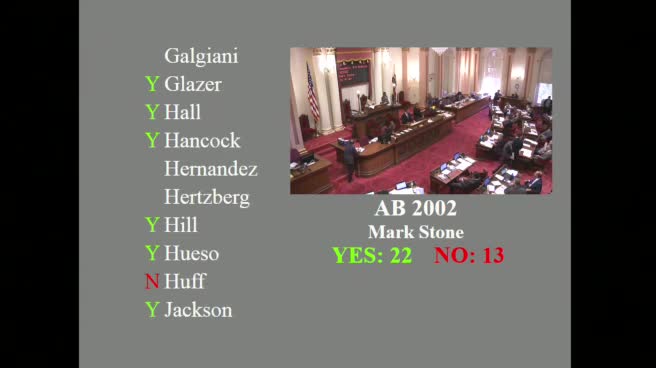
Bill Author


