AB 2775: Professional cosmetics: labeling requirements.
- Session Year: 2017-2018
- House: Assembly
- Latest Version Date: 2018-09-14
(1)The Sherman Food, Drug, and Cosmetic Law, among other things, regulates the labeling of cosmetics and authorizes the State Department of Public Health to require a cosmetic label to list ingredients under specified circumstances. The law generally defines the term cosmetic as an article, or its components, intended to be applied to the human body, or any part of the human body, for cleansing, beautifying, promoting attractiveness, or altering the appearance. The law makes a violation of its provisions a crime.
This bill would require a professional cosmetic manufactured on or after July 1, 2020, for sale in this state to have a label affixed on the container that satisfies all of the labeling requirements for any other cosmetic pursuant to specific federal laws. By expanding the requirements of this law, the bill would expand the scope of a crime, and thus would impose a state-mandated local program. The bill would define terms for its purposes and make legislative findings in support of its provisions.
(2) The California Constitution requires the state to reimburse local agencies and school districts for certain costs mandated by the state. Statutory provisions establish procedures for making that reimbursement.
This bill would provide that no reimbursement is required by this act for a specified reason.
The Legislature finds and declares all of the following:
(a)According to the State Board of Barbering and Cosmetology, there are over 129,000 licensed manicurists, and almost 53,000 licensed salon businesses, many of which provide manicure services. There are over 312,000 licensed cosmetologists who are licensed to provide nail and hair services.
(b)Most cosmetologists and manicurists are of reproductive age and, therefore, are particularly vulnerable to chemical exposures.
(c)It is estimated that as many as 59 to 80 percent of manicurists in California are Vietnamese immigrants, many with limited English skills.
(d)Existing federal law does not regulate professional cosmetics in the same manner as cosmetics sold to consumers. Information on the ingredients in professional salon products is essential to ensuring that workers and owners can make safer product choices and take steps to protect themselves and their customers against harmful exposures.
SEC. 2.Section 110371 is added to the Health and Safety Code, to read:110371.(a)A professional cosmetic manufactured on or after July 1, 2020, for sale in this state shall have a label affixed on the container that satisfies all of the labeling requirements for any other cosmetic pursuant to the Federal Food, Drug, and Cosmetic Act (21 U.S.C. Sec. 301, et seq.), and the federal Fair Packaging and Labeling Act (15 U.S.C. Sec. 1451, et seq.).
(b)The following definitions shall apply to this section:
(1)Ingredient has the same meaning as in Section 111791.5.
(2)Professional means a person that has been granted a license by the State Board of Barbering and Cosmetology to practice in the field of cosmetology, nail care, barbering, or esthetics.
(3)Professional cosmetic means a cosmetic product as it is defined in Section 109900 that is intended or marketed to be used only by a professional on account of a specific ingredient, increased concentration of an ingredient, or other quality that requires safe handling, or is otherwise used by a professional.
SEC. 3.No reimbursement is required by this act pursuant to Section 6 of Article XIIIB of the California Constitution because the only costs that may be incurred by a local agency or school district will be incurred because this act creates a new crime or infraction, eliminates a crime or infraction, or changes the penalty for a crime or infraction, within the meaning of Section 17556 of the Government Code, or changes the definition of a crime within the meaning of Section 6 of Article XIIIB of the California Constitution.
REVISIONS: HeadingLine 2.|
Date
|
Status
|
|---|---|
| Sep 14, 2018 | Chaptered by Secretary of State - Chapter 393, Statutes of 2018. |
| Sep 14, 2018 | Approved by the Governor. |
| Sep 6, 2018 | Enrolled and presented to the Governor at 3 p.m. |
| Aug 28, 2018 | In Assembly. Ordered to Engrossing and Enrolling. |
| Aug 28, 2018 | Read third time. Passed. Ordered to the Assembly. |
| Aug 24, 2018 | Ordered to third reading. |
| Aug 21, 2018 | Ordered to special consent calendar. |
| Aug 17, 2018 | From committee: Do pass. (Ayes 7. Noes 0.) (August 16). |
| Aug 6, 2018 | In committee: Referred to APPR. suspense file. |
| Jun 28, 2018 | From committee: Do pass and re-refer to Com. on APPR. with recommendation: To Consent Calendar. (Ayes 9. Noes 0.) (June 27). Re-referred to Com. on APPR. |
| Jun 21, 2018 | From committee: Do pass and re-refer to Com. on HEALTH with recommendation: To Consent Calendar. (Ayes 7. Noes 0.) (June 20). Re-referred to Com. on HEALTH. |
| Jun 7, 2018 | Referred to Coms. on EQ. and HEALTH. |
| May 31, 2018 | In Senate. Read first time. To Com. on RLS. for assignment. |
| May 30, 2018 | Read third time. Passed. Ordered to the Senate. |
| May 25, 2018 | Coauthors revised. |
| Apr 25, 2018 | In committee: Set, first hearing. Referred to APPR. suspense file. |
| Apr 11, 2018 | From committee: Do pass and re-refer to Com. on APPR. (Ayes 7. Noes 0.) (April 10). Re-referred to Com. on APPR. |
| Apr 4, 2018 | Coauthors revised. |
| Mar 8, 2018 | Referred to Coms. on HEALTH and E.S. & T.M. |
| Feb 17, 2018 | From printer. May be heard in committee March 19. |
| Feb 16, 2018 | Read first time. To print. |
|
Date
|
Description
|
Location
|
Votes
|
|
|---|---|---|---|---|
| Aug 28, 2018 | Assembly 3rd Reading AB2775 Kalra et al. By Lara | Senate Floor |
Passed |
|
| Aug 16, 2018 | Do pass | Senate Standing Committee on Appropriations |
Passed |
|
| Aug 6, 2018 | Placed on suspense file | Senate Standing Committee on Appropriations |
Passed |
|
| Jun 27, 2018 | Do pass, but first be re-referred to the Committee on [Appropriations] with the recommendation: To Consent Calendar | Senate Standing Committee on Health |
Passed |
|
| Jun 20, 2018 | Do pass, but first be re-referred to the Committee on [Health] with the recommendation: To Consent Calendar | Senate Standing Committee on Environmental Quality |
Passed |
|
| May 30, 2018 | AB 2775 KALRA Assembly Third Reading | Assembly Floor |
Passed |
|
| May 25, 2018 | Do pass. | Assembly Standing Committee on Appropriations |
Passed |
|
| Apr 10, 2018 | Do pass and be re-referred to the Committee on [Appropriations] | Assembly Standing Committee on Environmental Safety and Toxic Materials |
Passed |
|
| Apr 3, 2018 | Do pass and be re-referred to the Committee on [Environmental Safety and Toxic Materials] | Assembly Standing Committee on Health |
Passed |
This list shows positions taken on this bill by organizations on the date displayed, which is linked to the original source.
Positions by individuals are not included.
Office of Senate Floor Analyses (916) 651-1520 Fax: (916) 327-4478 | AB |
THIRD READING
Bill No: AB 2775
:
SENATE ENVIRONMENTAL QUALITY COMMITTEE: 7-0, 6/20/18
AYES: Wieckowski, Stone, Gaines, Hill, Lara, Skinner, Stern
SENATE HEALTH COMMITTEE: 9-0, 6/27/18
AYES: Pan, Nguyen, Beall, Hernandez, Leyva, Mitchell, Monning, Nielsen, Roth
SENATE APPROPRIATIONS COMMITTEE: 7-0, 8/16/18
AYES: Portantino, Bates, Beall, Bradford, Hill, Nielsen, Wiener
ASSEMBLY FLOOR: 76-0, 5/30/18 - See last page for vote
DIGEST: This bill requires a professional cosmetic manufactured on or after July 1, 2020, for sale in this state to have a label affixed on the container that satisfies all of the labeling requirements for any other cosmetic pursuant to specific federal laws.
Existing federal law:
- Enacts the federal Food, Drug & Cosmetic Act (FD&C Act), which:
- Defines “cosmetics” as “articles intended to be rubbed, poured, sprinkled, or sprayed on, introduced into, or otherwise applied to the human body...for cleansing, beautifying, promoting attractiveness, or altering the appearance” [FD&C Act, §201(i)]. Among the products included in this definition are skin moisturizers, perfumes, lipsticks, fingernail polishes, eye and facial makeup preparations, cleansing shampoos, permanent waves, hair colors, and deodorants, as well as any substance intended for use as a component of a cosmetic product.
- Requires cosmetics produced or distributed for retail sale to consumers for their personal care to bear an ingredient declaration.
- Provides that ingredients intended for fragrance or flavor may be listed as “fragrance” or “flavor” rather than by individual ingredient.
- Requires, pursuant to the federal Fair Packaging and Labeling Act (FPLA), each package of household “consumer commodities” to bear a label on which there is a statement identifying the commodity, e.g., detergent, sponges, etc.; the name and place of business of the manufacturer, packer, or distributor; and, the net quantity of contents in terms of weight, measure, or numerical count.
- Requires, pursuant to the Toxic Substances Control Act (TSCA), the United States Environmental Protection Agency (US EPA) to regulate chemicals sold in the United States and to collect data on chemicals in order to evaluate, assess, mitigate, and control risks that may be posed by their manufacture, processing, and use.
Existing state law:
- Requires, pursuant to the California Sherman Food, Drug, and Cosmetic Law (Sherman Act), the California Department of Public Health (DPH), to regulate various products. States that California regulation of cosmetics are those that have been adopted by the federal government pursuant to FPLA. Permits DPH to adopt additional regulations.
- Creates, pursuant to the California Safe Cosmetics Act of 2005 (CSCA), the Safe Cosmetics Program (CSCP), requiring the manufacturer of any cosmetic product subject to regulation under the FDCA and FPLA to provide DPH with a complete and accurate list of its cosmetic products that are sold in the state and that contain any ingredient that is a chemical identified as causing cancer or reproductive toxicity.
This bill requires professional cosmetics to meet the same federal labeling requirements as cosmetics sold at retail for consumer use. Specifically, this bill:
- Requires, on or after July 1, 2020, a professional cosmetic for sale to have a label affixed on the container that satisfies all of the labeling requirements for any other cosmetic pursuant to the FD&C Act and the FPLA.
- Defines "professional" as a person that has been granted a license by the State Board of Barbering and Cosmetology to practice in the field of cosmetology, nail care, barbering, or esthetics.
- Defines "professional cosmetic" as a cosmetic product that is intended or marketed to be used only by a professional on account of a specific ingredient, an increased concentration of an ingredient, or another quality that requires safe handling, or is otherwise used by a professional.
Background
- Federal cosmetic labeling requirements. Cosmetics produced or distributed for retail sale to consumers for their personal care are required to bear an ingredient declaration.
Cosmetics not customarily distributed for retail sale, e.g., hair preparations or make-up products used by professionals on customers at their establishments and skin cleansing or emollient creams used by persons at their places of work, are exempt from this requirement provided these products are not also sold to consumers at professional establishments or workplaces for their consumption at home.
The ingredient declaration must be conspicuous so that it is likely to be read at the time of purchase. It may appear on any information panel of the package, i.e., the folding carton, box wrapping if the immediate container is so packaged, and may also appear on a firmly affixed tag, tape or card. The letters must not be less than 1/16 of an inch in height. If the total package surface available to bear labeling is less than 12 square inches, the letters must not be less than 1/32 of an inch in height. Off-package ingredient labeling is permitted if the cosmetic is held in tightly compartmented trays or racks, it is not enclosed in a folding carton, and the package surface area is less than 12 square inches.
The ingredients must be declared in descending order of predominance. Color additives and ingredients present at one percent or less may be declared without regard for predominance. The ingredients must be identified by the names established or adopted by regulation; those accepted by the FDA as exempt from public disclosure may be stated as “and other ingredients”.
Cosmetics which are also drugs must first identify the drug ingredient(s) as “active ingredient(s)” before listing the cosmetic ingredients.
All label statements required by regulation must be in the English language and must be placed on the label or labeling with such prominence and conspicuousness that they are readily noticed and understood by consumers under customary conditions of purchase.
Cosmetics which may be hazardous to consumers when misused must bear appropriate label warnings and adequate directions for safe use. The statements must be prominent and conspicuous. Some cosmetics must bear label warnings or cautions prescribed by regulation. Cosmetics in self-pressurized containers (aerosol products), feminine deodorant sprays, and children’s bubble bath products are examples of products requiring such statements.
The FD&C Act does not require that cosmetic manufacturers or marketers test their products for safety. However, according to the federal Food and Drug Administration website, FDA “strongly urges cosmetic manufacturers to conduct whatever toxicological or other tests are appropriate to substantiate the safety of their cosmetics. If the safety of a cosmetic is not adequately substantiated, the product may be considered misbranded and may be subject to regulatory action unless the label bears the following statement: Warning--The safety of this product has not been determined.”
- Why is Disclosure Important and the Enactment of the California Safe Cosmetics Act? CSCA, SB 484 (Migden, Chapter 729, Statutes of 2005) requires cosmetics sold within the state that contain ingredients known or suspected to cause cancer, birth defects, or other reproductive harm to be disclosed to DPH. Ingredients that are claimed trade secrets need only be identified as trade secreted ingredients.
The Act applies to all manufacturers, packers, and/or distributors listed on cosmetic product labels. Companies with reportable ingredients in their products must submit information to the CSCP if the company:
- Has annual aggregate sales of cosmetic products of one million dollars or more, and
- Has sold cosmetic products in California on or after January 1, 2007.
Products that do not contain ingredients linked to cancer or reproductive or developmental harm are not required to be reported and will not be found in the CSCP database.
In addition, products may fall under the two exemptions described above (annual sales less than one million dollars, or not selling in California since 2006).
Products containing ingredients that may cause other potential health impacts, such as asthma, allergies, or hormone disruption, are not required to be reported.
Since the launch of the online reporting system on June 15, 2009, to December 17, 2015, 77 unique ingredients that are carcinogens or developmental or reproductive toxicants have been reported in over 57,313 total products by 481 companies. The fifth most common ingredient that has been reported as a carcinogen or a developmental or reproductive toxicant is listed as a trade secret.
The majority of products reported (63%) were makeup products, followed by nail products and skin care. There were 33 baby care products reported which contained carcinogens or developmental or reproductive toxicants including lead and formaldehyde.
Additionally there is more that is not known: (a) Not all products containing carcinogens or developmental or reproductive toxicants can be found in the database due to companies’ failing to fully report. The extent of noncompliance is difficult to assess because there is no mandatory registration system or other source to indicate the total number of cosmetics companies or products and whether the products should be reported. (b) As mentioned above, ingredients that potentially cause other negative health impacts, such endocrine system disruption, are not required to be disclosed.
- Retail versus professional cosmetic labeling requirements. The federal law and regulation regarding the labeling of cosmetics is limited to retail cosmetics intended for personal use. There is no labeling requirement for professional cosmetics. The Safety Data Sheet (formerly MSDS) is required to disclose some hazards, but the information is on the product container.
Comments
- Purpose of bill. According to the author:
“AB 2775 would require manufacturers to list all ingredients on the labels of professional cosmetic products, except for those protected by trade secrets, to provide open information for consumers, salon workers, and the general public. It is important to note that under current law, professional cosmetic products; those used in salons on a daily basis, are not required to be labeled. This bill would simply apply the existing industry labeling requirement for retail cosmetic products to commercial products.
“While retail cosmetic products are sold to the public for lifestyle consumption, professional cosmetic products are used by salon workers for upwards of 8 hours per day, resulting in many cases of acute to severe health symptoms. AB 2775 gives salon workers and consumers the ability to view ingredients in an open way that is already standardized across our food, cleaning, and retail cosmetics.”
- Déjà vu. This bill is identical to AB 1575 (Kalra, 2017) which passed out of the Senate Committee on Environmental Quality on a vote of 6-0 and the Senate Committee on Health on a vote of 8-0, but was held on suspense in the Senate Committee on Appropriations.
Related/Prior Legislation
AB 1575 (Kalra, 2017) was identical to AB 2775. It was held in Senate Appropriations Committee.
SB 258 (Lara, Chapter 830, Statutes of 2017) required a manufacturer of a cleaning product manufactured or sold in California on or after July 1, 2018, to disclose each ingredient contained in the product on the product label.
AB 2125 (Chu, Chapter 564, Statutes of 2016) required the Department of Toxic Substances Control to publish guidelines for cities, counties, and cities and counties to voluntarily implement local healthy nail salon recognition programs. Allowed the guidelines to include, but not be limited to, specified criteria, such as the potential for exposure of nail salon workers and customers to chemicals.
SB 1019 (Leno, Chapter 862, Statutes of 2014) required labels on upholstered furniture to indicate if the product contains chemical flame retardants.
FISCAL EFFECT: Appropriation: Fiscal Com.: Local:
According to the Senate Appropriations Committee, ongoing cost of about $350,000 (General Fund) for DPH to investigate complaints and impose subsequent penalties.
A Voice for Choice
ACT for Women and Girls
Alaska Community Action on Toxics
American Cancer Society Action Network
American College of Obstetricians and Gynecologists
Asian Health Services
Asian Immigrant Women Advocates
Asian Pacific Environmental Network
Beautycounter
Black Women for Wellness
Breast Cancer Prevention Partners
California Chamber of Commerce
California Health Coalition Advocacy
California Healthy Nail Salon Collaborative
California Labor Federation
California Public Interest Research Group
Center for Environmental Health
City and County of San Francisco
Clean Water Action California
Community Health Partnership
Consumer Federation of California
Cote
County of San Mateo Board of Supervisors
Educate Advocate
Empower Family California
Environmental Engineering
Environmental Working Group
Jacqueline Tran
National Employment Law Project
Personal Care Products Council
Physicians for Social Responsibility – Los Angeles
Physicians for Social Responsibility – SF Bay Area
Professional Beauty Association
Sierra Club California
Silent Spring Institute
SkinOwl
Southwest CA Legislative Council
Tenoverten
UCLA Labor Occupational Safety and Health Program
Unilever
Vapour Organic Beauty
Women’s Voices for the Earth
Women's Foundation of California
Worksafe
OPPOSITION: (Verified 8/17/18)
None received
ASSEMBLY FLOOR: 76-0, 5/30/18
AYES: Acosta, Aguiar-Curry, Travis Allen, Arambula, Baker, Berman, Bigelow, Bloom, Bonta, Brough, Burke, Caballero, Calderon, Carrillo, Cervantes, Chau, Chávez, Chen, Chiu, Choi, Chu, Cooley, Cooper, Cunningham, Dahle, Daly, Eggman, Flora, Fong, Frazier, Friedman, Gallagher, Cristina Garcia, Eduardo Garcia, Gipson, Gloria, Gonzalez Fletcher, Gray, Grayson, Harper, Holden, Irwin, Jones-Sawyer, Kalra, Kamlager-Dove, Lackey, Levine, Limón, Low, Maienschein, Mathis, Mayes, McCarty, Medina, Melendez, Mullin, Muratsuchi, Nazarian, O'Donnell, Patterson, Quirk, Quirk-Silva, Reyes, Rodriguez, Rubio, Salas, Santiago, Steinorth, Mark Stone, Thurmond, Ting, Voepel, Waldron, Weber, Wood, Rendon
NO VOTE RECORDED: Kiley, Obernolte
8/18/18 13:55:30
**** END ****
SENATE COMMITTEE ON APPROPRIATIONS
Senator Anthony Portantino, Chair
2017 - 2018 Regular Session
AB 2775 (Kalra) - Professional cosmetics: labeling requirements
Version: February 16, 2018 | Policy Vote: E.Q. 7 - 0, HEALTH 9 - 0 |
Urgency: No | Mandate: Yes |
Hearing Date: August 6, 2018 | Consultant: Ashley Ames |
This bill meets the criteria for referral to the Suspense File.
Bill Summary:
This bill would require manufacturers to label professional cosmetics manufactured on or after July 1, 2020 with ingredient labels that meet the current federal standards that apply to retail products.
Fiscal Impact:
Ongoing cost of about $350,000 (General Fund) for the Department of Public Health to investigate complaints and impose subsequent penalties.
Background: Cosmetics produced or distributed for retail are required to bear an ingredient declaration. Cosmetics not customarily distributed for retail sale (such as hair preparations or make-up products used by professionals on customers at their establishments) are exempt from this requirement provided these products are not also sold to consumers at professional establishments or workplaces for their consumption at home.
The federal law and state regulation regarding the labeling of cosmetics is limited to retail cosmetics intended for personal use. There is no labeling requirement for professional cosmetics. The Safety Data Sheet (SDS, formerly MSDS) is required to disclose some hazards, but the information is on the product container where many consumers would not notice it.
Proposed Law: This bill would require, on or after July 1, 2020, a professional cosmetic for sale to have a label affixed on the container that satisfies all of the labeling requirements for any other cosmetic pursuant to the Federal Food, Drug, and Cosmetic Act (FD&C Act) and the Federal Fair Packaging and Labeling Act (FPLA).
-- END --
SENATE COMMITTEE ON HEALTH
Senator Dr. Richard Pan, Chair
BILL NO: AB 2775
AUTHOR: | Kalra | ||
VERSION: | February 16, 2018 | ||
HEARING DATE: | June 27, 2018 | ||
CONSULTANT: | Melanie Moreno | ||
SUBJECT: Professional cosmetics: labeling requirements
SUMMARY:
Requires a professional cosmetic, as defined, manufactured on or after July 1, 2020, for sale in this state to have a label affixed on the container that satisfies all of the labeling requirements for any other cosmetic pursuant to the Federal Food, Drug, and Cosmetic Act and the federal Fair Packaging and Labeling Act.
Existing law:
- Regulates the labeling of cosmetics under the Sherman Food, Drug, and Cosmetic Law. Permits the Department of Public Health (DPH) to require a cosmetic label to list ingredients under specified circumstances. [HSC §109875, et seq.]
- Defines “cosmetic” as any article, or its components, intended to be rubbed, poured, sprinkled, or sprayed on, introduced into, or otherwise applied to, the human body, or any part of the human body, for cleansing, beautifying, promoting attractiveness, or altering the appearance, but does not include soap. [HSC §109900]
- Requires cosmetic manufacturers, pursuant to the California Safe Cosmetics Act of 2005 (CSC Act), to provide the Department of Public Health (DPH) with a complete and accurate list of its cosmetic products that are sold in the state and that contain any ingredient that is identified as causing cancer or reproductive toxicity.
- Requires, under the Federal Food, Drug, and Cosmetic Act (FD&C Act), cosmetics marketed in the United States, whether they are manufactured here or are imported from abroad, to comply with the labeling requirements of the FD&C Act. The FD&C Act was enacted to protect consumers from unsafe or deceptively labeled or packaged products by prohibiting the movement in interstate commerce of adulterated or misbranded food, drug devices and cosmetics. [21 U.S.C. §301, et seq.]
- Requires, under the Fair Packaging and Labeling Act (FP&L Act), that packages and labels provide consumers with accurate information about the quantity of contents. [15 U.S.C. §1451, et seq.]
This bill:
- Requires a professional cosmetic, as defined, manufactured on or after July 1, 2020, for sale in this state to have a label affixed on the container that satisfies all of the labeling requirements for any other cosmetic pursuant to the FD&C Act and the FP&L Act.
- Defines “professional cosmetic” as a cosmetic product intended to marketed for use by only by someone licensed by the Board of Barbering and Cosmetology (BBC) on account of a specific ingredient, or other quality that requires safe handling, or is otherwise used by a professional.
FISCAL EFFECT:
According to the Assembly Appropriations Committee, expected administrative costs to the DPH in the range of $350,000 General Fund annually for compliance investigations. Future-year costs may be lower if compliance is high.
PRIOR VOTES:
Assembly Floor: | 76 - 0 |
Assembly Appropriations Committee: | 15 - 1 |
Assembly ESTM Assembly Health Committee: | 7 - 0 15 - 0 |
COMMENTS:
- Author’s statement. According to the author, this bill would require manufacturers to list all ingredients on the labels of professional cosmetic products, except for those protected by trade secrets, to provide open information for consumers, salon workers, and the general public. It is important to note that under current law, professional cosmetic products, or those used in salons on a daily basis, are not required to be labeled. This bill would simply apply the existing industry labeling requirement for retail cosmetic products to commercial products. While retail cosmetic products are sold to the public for lifestyle consumption, professional cosmetic products are used by salon workers for upwards of eight hours per day, resulting in many cases of acute to severe health symptoms. This bill gives salon workers and consumers the ability to view ingredients in an open way that is already standardized across our food, cleaning, and retail cosmetics.
- Health concerns for nail salon workers. In recent years, many advocates have worked to raise the issue of unsafe products and the harmful exposure to toxic chemicals that can occur for those practicing in professions licensed by the BBC. Nail care services establishments have been the focus of particular attention to health and safety impacts from certain products, given the high preponderance of minority women working for extremely long hours in settings that are not always properly ventilated and having constant contact with potentially dangerous chemicals linked to illness and reproductive health problems. In 2008, the Senate Office of Research published a report titled “Pedicures At What Price?” exploring the unique dangers posed by this profession and included recommended steps for state regulatory bodies like the BBC to take in order to better promote health and safety. In May 2015, the New York Times (NYT) published two articles stemming from interviews with more than 150 nail salon workers and owners that found a pattern of health ailments among nail salon workers including: cancers, miscarriages, and children with low birthweights and developmental disabilities. The most common health effects reported were skin afflictions and an asthma-like cough. The article links these health impacts to the potent chemical solvents, polishes, hardeners, and glues that nail workers handle daily. According to the NYT, “Of the 20 common nail product ingredients listed as causing health problems in the appendix of a safety brochure put out by the EPA, 17 are hazardous to the respiratory tract, according to the agency.” According to the NYT, while these ingredients may not cause harm to the patron who visits the salon once every few weeks, nail workers spend their entire work day in a haze of acrylic powder while being overexposed to potentially hazardous chemicals.
- Hazardous ingredient reporting. The California Safe Cosmetics Act of 2005 established the California Safe Cosmetics Program (CSCP), where manufacturers of cosmetics are required to report any products that contain ingredients known or suspected to cause cancer, birth defects, or other reproductive harm. CSCP collects this data and makes it available online to the public. Since the launch of the online program in 2009, a total of 77 unique ingredients that are carcinogens or developmental or reproductive toxins have been reported in over 57,313 products by 481 companies. Sixty-three percent of the reported products were makeup, 13% were nail products, 8% skin care products, and 6% sun-related products. However, DPH states that not all companies are complying with the reporting requirements and that the extent of non-compliance is difficult to assess.
- Federal authority. The Food and Drug Administration’s (FDA) regulation of cosmetics is different than its regulation of other products like drugs and medical devices. Certain cosmetic products and their ingredients are not subject to the FDA authority and the FDA has maintained that cosmetic firms are responsible for ensuring that their products are safe prior to marketing them. FDA regulations do, however, prohibit or restrict the use of several ingredients in cosmetic products and require warning statements on the labels of certain types of cosmetics. The Environmental Protection Agency (EPA) is responsible for gathering health and safety and exposure data on pollutants and toxic substances that can affect public health. The U.S. Department of Labor’s Occupational Health and Safety Administration sets permissible exposure limits at which many chemicals are considered safe. Certain chemicals found in products used in BBC establishments are of concern and listed on California’s Proposition 65 list of chemicals known to cause cancer or reproductive toxicity, but are not prohibited for use in cosmetics in the U.S.
- FD&C and FP&L Acts. According to the FDA, cosmetic ingredient declarations are required only on the label of the outer container of cosmetics customarily sold at retail or used in the performance of services conducted within the households. It does not apply, for example, to products used at professional establishments or samples distributed free of charge, unless such products are customarily also sold at retail, even if they were labeled "For professional use only." Pursuant to the FD&C Act and FP&L Act, the following information must appear on the principal display panel:
- An identity statement, indicating the nature and use of the product, by means of either the common or usual name, a descriptive name, a fanciful name understood by the public, or an illustration [21 CFR §701.11]; and,
- An accurate statement of the net quantity of contents, in terms of weight, measure, numerical count or a combination of numerical count and weight or measure [21 CFR §701.13].
The following information must appear on an information panel:
- Name and place of business. This may be the manufacturer, packer, or distributor. This includes the street address, city, state, and ZIP Code. Manufacturers may omit the street address if it is listed in a current phone directory or city directory [21 CFR §701.12(a)];
- Distributor statement. If the name and address are not those of the manufacturer, the label must say "Manufactured for..." or "Distributed by...," or similar wording expressing the facts [21 CFR §701.12(c)];
- Material facts. Failure to reveal material facts is one form of misleading labeling and therefore makes a product misbranded [21 CFR §1.21]. An example is directions for safe use, if a product could be unsafe if used incorrectly;
- Warning and caution statements. These must be prominent and conspicuous. The FD&C Act and related regulations specify warning and caution statements related to specific products [21 CFR 700]. In addition, cosmetics that may be hazardous to consumers must bear appropriate label warnings [21 CFR §740.1]. An example of such hazardous products is flammable cosmetics; and,
- Ingredients. If the product is sold on a retail basis to consumers, even if it is labeled "For professional use only" or words to that effect, the ingredients must appear on an information panel, in descending order of predominance. [21 CFR §701.3]. If the product is also a drug, its labeling must comply with the regulations for both over-the-counter drug and cosmetic ingredient labeling.
- Prior legislation. AB 1575 (Kalra of 2017) was substantially similar to this bill. AB 1575 was held on the Senate Appropriations Committee suspense file.
- AB 2125 (Chiu, Chapter 564, Statutes of 2016) requires the Department of Toxic Substances Control to publish guidelines for cities, counties, and cities and counties to voluntarily implement local healthy nail salon recognition programs.
SB 977 (Yee of 2012) would have raised fines for mislabeling of nail polishes from $1,000 to $2,000. Governor Brown vetoed this bill stating that it did not make sense to focus on one product.
AB 237 (Galgiani of 2011) and AB 595 (Dymally of 2007) would have required cosmetic product manufacturers that do not comply with the U.S. Food and Drug Administration (FDA) Voluntary Cosmetic Reporting Program (VCRP) to provide to DPH the same kind of information disclosed through the VCRP. AB 237 was held on the Assembly Appropriations Committee suspense file, and AB 595 was held on the Senate Appropriations Committee suspense file.
SB 1712 (Migden of 2008) would have required a manufacturer of lipstick sold in this state to provide evidence to DPH that the lipstick contains no more than an unavoidable trace of lead. SB 1712 died in the Assembly Health Committee.
AB 2689 (Tran of 2007) would have established the Vietnamese Nail Worker Information Act, requiring manufacturers and certain other persons that sell or use professional use-only nail care products to prepare, translate and provide material safety data sheets in the Vietnamese language to purchasers of the products as well as licensed professional nail care employees upon request. AB 2689 was held on the Assembly Appropriations Committee suspense file.
SB 484 (Migden, Chapter 729, Statutes of 2005) establishes the Safe Cosmetics Act of 2005 and requires cosmetics sold within the state that contain ingredients known or suspected to cause cancer, birth defects, or other reproductive harm.
AB 908 (Chu of 2005) would have prohibited a person or entity from manufacturing, selling, or distributing in commerce any cosmetic that contains any of two specified phthalates, and would have defined a cosmetic as misbranded if sold by an internet website where the list of ingredients in the cosmetic is not easily viewable before the purchase. AB 908 failed passage in the Assembly Health Committee.
AB 2012 (Chu of 2004) would have required, by January 1, 2006, the manufacturer of any cosmetic or personal care product subject to regulation by the FDA and manufactured, processed, or distributed in commerce in the state to notify California Office of Environmental Health Hazard Assessment (OEHHA) of any ingredient in its product that is a chemical identified as causing cancer or reproductive toxicity, as specified. AB 2012 failed passage in the Assembly Health Committee.
AB 2025 (Chu of 2004) would have required the manufacturer of any cosmetic or personal care product sold in California to submit to OEHHA the a list of ingredients contained in the product, including the name of each ingredient for purposes of fragrance or flavoring and the name of each ingredient identified by the phrase “and other ingredients.” AB 2025 would have banned a cosmetic or personal care product that contains a chemical known to cause cancer or reproductive toxicity unless OEHHA issued a safe use determination on that product. AB 2025 was not heard in the Assembly Health Committee at the request of the author.
- Support if amended. The BBC requests amendments to include, in the definition of “professional,” all of its license types represented in the bill.
- Support. Supporters write that that on a daily basis, for long hours, nail and hair salon professionals handle solvents, glues, polishes, straighteners, and other beauty products containing a multitude of chemicals known or suspected to cause cancer, neurological and reproductive farm, asthma, and allergies. Supporters state that California’s beauty professionals have the right to know what chemicals they are being exposed to while on the job and that this bill will help ensure this right and fill this significant gap in law.
SUPPORT AND OPPOSITION:
Support: Breast Cancer Prevention Partners (co-sponsor)
Women’s Voices for the Earth (co-sponsor)
A Voice for Choice Advocacy
ACT for Women and Girls
Alaska Community Action on Toxics
American Cancer Society Action Network
American College of Obstetricians and Gynecologists
Asian Health Services
Asian Immigrant Women Advocates
Asian Pacific Environmental Network
Beautycounter
Black Women for Wellness
California Chamber of Commerce
California Health Coalition Advocacy
California Healthy Nail Salon Collaborative
California Labor Federation
CALPIRG
Center for Environmental Health
City and County of San Francisco
Clean Water Action California
Community Health Partnership
Consumer Federation of California
Cote
Educate Advocate
Empower Family California
Environmental Engineering
Environmental Working Group
National Employment Law Project
Personal Care Products Council
Physicians for Social Responsibility Los Angeles
Physicians for Social Responsibility San Francisco Bay Area Chapter
Professional Beauty Association
Personal Care Products Council
San Mateo County Board of Supervisors
Sierra Club California
Silent Spring Institute
SkinOwl
Tenoverten
UCLA Labor Occupational Safety and Health Program
Unilever
Vapour Organic Beauty
Women's Foundation of California
Worksafe
One Individual
Oppose: None received
-- END --
SENATE COMMITTEE ON ENVIRONMENTAL QUALITY
Senator Wieckowski, Chair
2017 - 2018 Regular
Bill No: AB 2775
Author: | Kalra | ||
Version: | 2/16/2018 | Hearing Date: | 6/20/2018 |
Urgency: | No | Fiscal: | Yes |
Consultant: | Rachel Wagoner | ||
SUBJECT: Professional cosmetics: labeling requirements
ANALYSIS:
Existing federal law:
- Pursuant to the federal Food, Drug & Cosmetic Act (FD&C Act):
- Defines “cosmetics” as “articles intended to be rubbed, poured, sprinkled, or sprayed on, introduced into, or otherwise applied to the human body...for cleansing, beautifying, promoting attractiveness, or altering the appearance” [FD&C Act, §201(i)]. Among the products included in this definition are skin moisturizers, perfumes, lipsticks, fingernail polishes, eye and facial makeup preparations, cleansing shampoos, permanent waves, hair colors, and deodorants, as well as any substance intended for use as a component of a cosmetic product.
- Requires cosmetics produced or distributed for retail sale to consumers for their personal care to bear an ingredient declaration.
- Provides that ingredients intended for fragrance or flavor may be listed as “fragrance” or “flavor” rather than by individual ingredient.
- Pursuant to the federal Fair Packaging and Labeling Act (FPLA), requires each package of household “consumer commodities” to bear a label on which there is a statement identifying the commodity, e.g., detergent, sponges, etc.; the name and place of business of the manufacturer, packer, or distributor; and, the net quantity of contents in terms of weight, measure, or numerical count.
- Pursuant to the Toxic Substances Control Act (TSCA) requires the United States Environmental Protection Agency (US EPA) to regulate chemicals sold in the United States and to collect data on chemicals in order to evaluate, assess, mitigate, and control risks that may be posed by their manufacture, processing, and use.
Existing state law:
- Pursuant to the California Sherman Food, Drug, and Cosmetic Law (Sherman Act), requires the California Department of Public Health (DPH), to regulate various products. States that California regulation of cosmetics are those that have been adopted by the federal government pursuant to FPLA. Permits DPH to adopt additional regulations.
- Pursuant to the California Safe Cosmetics Act of 2005 (CSCA), creates the Safe Cosmetics Program (CSCP), requiring the manufacturer of any cosmetic product subject to regulation under the FDCA and FPLA to provide DPH with a complete and accurate list of its cosmetic products that are sold in the state and that contain any ingredient that is a chemical identified as causing cancer or reproductive toxicity.
This bill: Requires professional cosmetics to meet the same federal labeling requirements as cosmetics sold at retail for consumer use. Specifically, this bill:
- Requires, on or after July 1, 2020, a professional cosmetic for sale to have a label affixed on the container that satisfies all of the labeling requirements for any other cosmetic pursuant to the Federal Food, Drug, and Cosmetic Act (FD&C Act) and the Federal Fair Packaging and Labeling Act (FPLA).
- Defines "professional" as a person that has been granted a license by the State Board of Barbering and Cosmetology to practice in the field of cosmetology, nail care, barbering, or esthetics.
- Defines "professional cosmetic" as a cosmetic product that is intended or marketed to be used only by a professional on account of a specific ingredient, an increased concentration of an ingredient, or another quality that requires safe handling, or is otherwise used by a professional.
Background
- Federal Cosmetic Labeling Requirements. Cosmetics produced or distributed for retail sale to consumers for their personal care are required to bear an ingredient declaration.
Cosmetics not customarily distributed for retail sale, e.g., hair preparations or make-up products used by professionals on customers at their establishments and skin cleansing or emollient creams used by persons at their places of work, are exempt from this requirement provided these products are not also sold to consumers at professional establishments or workplaces for their consumption at home.
The ingredient declaration must be conspicuous so that it is likely to be read at the time of purchase. It may appear on any information panel of the package, i.e., the folding carton, box wrapping if the immediate container is so packaged, and may also appear on a firmly affixed tag, tape or card. The letters must not be less than 1/16 of an inch in height. If the total package surface available to bear labeling is less than 12 square inches, the letters must not be less than 1/32 of an inch in height. Off-package ingredient labeling is permitted if the cosmetic is held in tightly compartmented trays or racks, it is not enclosed in a folding carton, and the package surface area is less than 12 square inches.
The ingredients must be declared in descending order of predominance. Color additives and ingredients present at one percent or less may be declared without regard for predominance. The ingredients must be identified by the names established or adopted by regulation; those accepted by the FDA as exempt from public disclosure may be stated as “and other ingredients”.
Cosmetics which are also drugs must first identify the drug ingredient(s) as “active ingredient(s)” before listing the cosmetic ingredients.
All label statements required by regulation must be in the English language and must be placed on the label or labeling with such prominence and conspicuousness that they are readily noticed and understood by consumers under customary conditions of purchase.
Cosmetics which may be hazardous to consumers when misused must bear appropriate label warnings and adequate directions for safe use. The statements must be prominent and conspicuous. Some cosmetics must bear label warnings or cautions prescribed by regulation. Cosmetics in self-pressurized containers (aerosol products), feminine deodorant sprays, and children’s bubble bath products are examples of products requiring such statements.
The FD&C Act does not require that cosmetic manufacturers or marketers test their products for safety. However, according to the federal Food and Drug Administration website, FDA “strongly urges cosmetic manufacturers to conduct whatever toxicological or other tests are appropriate to substantiate the safety of their cosmetics. If the safety of a cosmetic is not adequately substantiated, the product may be considered misbranded and may be subject to regulatory action unless the label bears the following statement: Warning--The safety of this product has not been determined.”
- Why is Disclosure Important and the Enactment of the California Safe Cosmetics Act? CSCA, SB 484 (Migden, Chapter 729, Statutes of 2005) requires cosmetics sold within the state that contain ingredients known or suspected to cause cancer, birth defects, or other reproductive harm to be disclosed to DPH. Ingredients that are claimed trade secrets need only be identified as trade secreted ingredients.
The Act applies to all manufacturers, packers, and/or distributors listed on cosmetic product labels. Companies with reportable ingredients in their products must submit information to the CSCP if the company:
- Has annual aggregate sales of cosmetic products of one million dollars or more, and
- Has sold cosmetic products in California on or after January 1, 2007.
Products that do not contain ingredients linked to cancer or reproductive or developmental harm are not required to be reported and will not be found in the CSCP database.
In addition, products may fall under the two exemptions described above (annual sales less than one million dollars, or not selling in California since 2006).
Products containing ingredients that may cause other potential health impacts, such as asthma, allergies, or hormone disruption, are not required to be reported.
Since the launch of the online reporting system on June 15, 2009 to December 17, 2015, 77 unique ingredients that are carcinogens or developmental or reproductive toxicants have been reported in over 57,313 total products by 481 companies. The fifth most common ingredient that has been reported as a carcinogen or a developmental or reproductive toxicant is listed as a trade secret.
The majority of products reported (63%) were makeup products, followed by nail products and skin care. There were 33 baby care products reported which contained carcinogens or developmental or reproductive toxicants including lead and formaldehyde.
Additionally there is more that is not known. 1) Not all products containing carcinogens or developmental or reproductive toxicants can be found in the database due to companies’ failing to fully report. The extent of noncompliance is difficult to assess because there is no mandatory registration system or other source to indicate the total number of cosmetics companies or products and whether the products should be reported. 2) As mentioned above, ingredients that potentially cause other negative health impacts, such endocrine system disruption, are not required to be disclosed.
- Retail verses Professional Cosmetic Labeling Requirements. The federal law and regulation regarding the labeling of cosmetics is limited to retail cosmetics intended for personal use. There is no labeling requirement for professional cosmetics. The Safety Data Sheet (SDS, formerly MSDS) is required to disclose some hazards, but the information is on the product container.
Comments
- Purpose of Bill. According to the author:
“AB 2775 would require manufacturers to list all ingredients on the labels of professional cosmetic products, except for those protected by trade secrets, to provide open information for consumers, salon workers, and the general public. It is important to note that under current law, professional cosmetic products; those used in salons on a daily basis, are not required to be labeled. This bill would simply apply the existing industry labeling requirement for retail cosmetic products to commercial products.
While retail cosmetic products are sold to the public for lifestyle consumption, professional cosmetic products are used by salon workers for upwards of 8 hours per day, resulting in many cases of acute to severe health symptoms. AB 2775 gives salon workers and consumers the ability to view ingredients in an open way that is already standardized across our food, cleaning, and retail cosmetics.”
- Déjà vu. This bill is identical to AB 1575 (Kalra, 2017) which passed out of the Senate Committee on Environmental Quality on a vote of 6 to 0 and the Senate Committee on Health on a vote of 8 to 0 but was held on suspense in the Senate Committee on Appropriations.
Related/Prior Legislation
AB 1575 (Kalra, 2017). This bill was identical to AB 2775. It was held in Senate Appropriations Committee.
SB 258 (Lara, Chapter 830, Statutes of 2017). Requires a manufacturer of a cleaning product manufactured or sold in California on or after July 1, 2018, to disclose each ingredient contained in the product on the product label.
AB 2125 (Chu, Chapter 564, Statutes of 2016). Requires DTSC to publish guidelines for cities, counties, and cities and counties to voluntarily implement local HNSR programs. Allows the guidelines to include, but not be limited to, specified criteria, such as the potential for exposure of nail salon workers and customers to chemicals.
SB 1019 (Leno, Chapter 862, Statutes of 2014). Requires labels on upholstered furniture to indicate if the product contains chemical flame retardants.
DOUBLE REFERRAL:
If this measure is approved by the Senate Environmental Quality Committee, the do pass motion must include the action to re-refer the bill to the Senate Health Committee.
SOURCE:
California Healthy Nail Salon Collaborative
Black Women for Wellness
Women’s Voices for the Earth
Breast Cancer Prevention Partners
SUPPORT:
A Voice for Choice Advocacy
ACT for Women and Girls
Alaska Community Action on Toxics
American Cancer Society Action Network
American College of Obstetricians and Gynecologists
Asian Health Services
Asian Immigrant Women Advocates
Asian Pacific Environmental Network
Beautycounter
Black Women for Wellness
Breast Cancer Prevention Partners
California Chamber of Commerce
California Health Coalition Advocacy
California Labor Federation
Center for Environmental Health
City and County of San Francisco
Clean Water Action
Community Health Partnership
Consumer Federation of California
Cote
County of San Mateo
Educate Advocate
Environmental Engineering
Environmental Working Group
National Employment Law Project
Personal Care Products Council
Physicians for Social Responsibility – Los Angeles
Physicians for Social Responsibility – San Francisco Bay Area
Professional Beauty Association
Sierra Club California
Silent Spring Institute
SkinOwl
Tenoverten
Unilever
University of California, Los Angeles, Labor Occupational Safety and Health Program
Vapour Organic Beauty
Women’s Foundation of California
Women’s Voices for the Earth
Worksafe
1 Individual
OPPOSITION:
None received
-- END --
ASSEMBLY THIRD READING
ATR Bill Id:AB 2775
Author:()
As Introduced Ver:February 16, 2018
Majority vote
Committee | Votes | Ayes | Noes |
Health | 15-0 | Wood, Maienschein, Aguiar-Curry, Bonta, Burke, Carrillo, Flora, Limón, McCarty, Nazarian, Rodriguez, Santiago, Steinorth, Thurmond, Waldron | |
Environmental Safety | 7-0 | Quirk, Melendez, Arambula, Brough, Friedman, Holden, Muratsuchi | |
Appropriations | 15-1 | Gonzalez Fletcher, Bigelow, Bloom, Bonta, Calderon, Carrillo, Chau, Eggman, Fong, Friedman, Gallagher, Eduardo Garcia, Nazarian, Quirk, Reyes | Obernolte |
SUMMARY: Requires a professional cosmetic manufactured on or after July 1, 2020, and sold in California to have a label affixed on the container that satisfies all of the labeling requirements for any other cosmetic pursuant to the Federal Food, Drug, and Cosmetic Act, and the Federal Fair Packaging and Labeling Act (FPLA). Specifically, this bill:
- Defines "ingredient," as is defined in federal regulations, as any single chemical entity or mixture used as a component in the manufacture of a cosmetic product, however this does not require any trade secret be divulged.
- Defines "professional" as a person that has been granted a license by the California Board of Barbering and Cosmetology to practice in the field of cosmetology, nail care, barbering, or esthetics.
- Defines "professional cosmetic" as a cosmetic product that is intended or marketed to be used only by a professional on account of a specific ingredient, increased concentration of an ingredient, or other quality that requires safe handling, or is otherwise used by a professional.
FISCAL EFFECT: According to the Assembly Appropriations Committee, expected administrative costs to the California Department of Public Health in the range of $350,000 General Fund annually for compliance investigations. Future-year costs may be lower if compliance is high.
COMMENTS: According to the author, this bill would require manufacturers to list all ingredients on the labels of professional cosmetic products, except for those protected by trade secrets, to provide open information for consumers, salon workers, and the general public. It is important to note that under current law, professional cosmetic products; those used in salons on a daily basis, are not required to be labeled. The author argues, this bill would simply apply the existing industry labeling requirement for retail cosmetic products to commercial products. The author states that while retail cosmetic products are sold to the public for lifestyle consumption; professional cosmetic products are used by salon workers for upwards of eight hours per day, resulting in many cases of acute to severe health symptoms. The author concludes, this bill gives salon workers and consumers the ability to view ingredients in an open way that is already standardized across our food, cleaning, and retail cosmetics.
Under current federal law, cosmetics produced or distributed for retail sale to consumers for their personal care are required to bear an ingredient declaration. FPLA states that it is against federal law for a cosmetic to contain any ingredients that makes the product harmful when consumers use it according to directions on the label, or in the customary or expected way. This applies even if there is not a regulation that specifically prohibits or restricts the use of the ingredients in cosmetics. The federal Food and Drug Administration states that since FPLA applies only to consumer commodities and their packages as defined, cosmetic ingredient declarations are required only on the label of the outer container of cosmetics customarily sold at retail or used in the performance of services conducted within the households. It does not apply, for example, to products used at professional establishments unless these products are sold to consumers at the professional establishment or workplaces for their consumption at home.
The U.S. Occupational Safety and Health Administration (OSHA) has published information on its website about the chemical hazards found in nail salons and the products used there, and provides suggestions to prevent exposures and protect the workers' health. Workers may breathe in harmful vapors, dusts and mists, get the product on their skin or in their eyes, or swallow the product if it is accidentally transferred to food. OSHA warns that these exposures can add up, especially when many products are used at the same time, day after day, or when there is poor ventilation in the salon. OSHA lists a dozen potentially hazardous chemicals commonly found in nail products and advises workers to read the product label and Safety Data Sheets (SDS) as well as the manufacturer's directions for proper use. The SDS explains the health risks of the product and lists precautions for worker protection. The SDS must provide information about hazardous ingredients in the product, how users can be exposed to the ingredients, health and safety risks to users, and precautions for safely using and storing the product. The SDS is required for products containing hazardous materials at concentrations of 1% or higher, but this information is not required on the product container. Many common products used in a shop or salon contain hazardous chemicals such as: shaving cream; hair spray; hair coloring; nail polish; shampoo; and, chemical hair relaxer or chemical straightening products.
The California Healthy Nail Salon Collaborative, Black Women for Wellness, Breast Cancer Prevention Partners, Women's Voices for the Earth are the cosponsors and write that this bill will require manufacturers to list ingredients on the labels of professional cosmetics and make information on the potential health effects of ingredients more accessible. The cosponsors state that California's beauty professionals have the right-to-know what chemicals they are being exposed to while on-the-job and that this bill will help ensure this right and fill the significant gap in law.
There is no known opposition to this bill.
Analysis Prepared by: Monica Montano / HEALTH / (916) 319-2097 FN: 0003210
Date of Hearing: April 25, 2018
ASSEMBLY COMMITTEE ON APPROPRIATIONS
Lorena Gonzalez Fletcher, Chair
ABPCA Bill Id:AB 2775
Author:(Kalra) – As Introduced Ver:February 16, 2018
Policy Committee: | Health | Vote: | 15 - 0 |
Environmental Safety and Toxic Materials | 7 - 0 |
Urgency: No State Mandated Local Program: Yes Reimbursable: No
SUMMARY:
This bill requires manufacturers to label professional cosmetics manufactured on or after July 1, 2020, with ingredient labels that meet current federal standards that apply to retail products.
FISCAL EFFECT:
Expected administrative costs to the California Department of Public Health in the range of $350,000 GF annually for compliance investigations. Future-year costs may be lower if compliance is high.
COMMENTS:
- Purpose and Background. The author notes this bill extends an existing retail labeling requirement to professional cosmetic products including hair dyes, nail polish, and chemical straightening products, among others. The author notes this disclosure is important because products sold for professional use may include higher concentrations of chemicals than those sold for retail use, and professionals use the products for extended periods of time. Pursuant to federal law, material safety data sheets are available for chemical-containing products, but the ingredients are not currently required to be listed on the label, which reduces access to the information in a practical sense. This bill has a diverse array of supporters, including environmental and health advocates as well as cosmetic manufacturers, and no opposition.
- Prior Legislation. AB 1575 (Kalra), of the current legislative session, was similar to this bill and was held on the Suspense File in the Senate Appropriations Committee.
Analysis Prepared by: Lisa Murawski / APPR. / (916) 319-2081
Date of Hearing: April 10, 2018
ASSEMBLY COMMITTEE ON ENVIRONMENTAL SAFETY AND TOXIC MATERIALS
Bill Quirk, Chair
ABPCA Bill Id:AB 2775 (
Author:Kalra) – As Introduced Ver:February 16, 2018
SUBJECT: Professional cosmetics: labeling requirements
SUMMARY: Requires professional cosmetics to meet the same federal labeling requirements as cosmetics sold at retail for consumer use. Specifically, this bill:
- Requires, on or after July 1, 2020, a professional cosmetic for sale to have a label affixed on the container that satisfies all of the labeling requirements for any other cosmetic pursuant to the Federal Food, Drug, and Cosmetic Act (FD&C Act) and the Federal Fair Packaging and Labeling Act (FPLA).
- Defines "professional" as a person that has been granted a license by the State Board of Barbering and Cosmetology to practice in the field of cosmetology, nail care, barbering, or esthetics.
- Defines "professional cosmetic" as a cosmetic product that is intended or marketed to be used only by a professional on account of a specific ingredient, an increased concentration of an ingredient, or another quality that requires safe handling, or is otherwise used by a professional.
EXISTING LAW:
- Considers, pursuant to the Sherman, Food Drug & Cosmetic Act (Sherman Act) any cosmetic misbranded if its package does not bear a label containing all of the following information: the name and place of business of the manufacturer, packer, or distributor; and, an accurate statement of the quantity of the contents in terms of weight, measure, or numerical count. (Health & Safety Code (HSC) § 111740)
- Requires, pursuant to the Safe Consumer Cosmetic Act (Cosmetics Act), manufacturers of a cosmetic subject to regulation by the federal Food and Drug Administration (FDA) to submit to California Department of Public Health (CDPH) a list of its cosmetic products sold in California that contain any ingredient that is a chemical identified as causing cancer or reproductive toxicity. (HSC § 111792)
- Requires, pursuant to the FD&C Act, cosmetics produced or distributed for retail sale to consumers for their personal care to bear an ingredient declaration. (21 Code of Federal Regulations (CFR) 701.3)
- Requires, pursuant to the FPLA, each package of household "consumer commodities" to bear a label on which there is a statement identifying the commodity, e.g., detergent, sponges, etc.; the name and place of business of the manufacturer, packer, or distributor; and, the net quantity of contents in terms of weight, measure, or numerical count. (16 CFR Parts 500, 501, 502, 503)
FISCAL EFFECT: Unknown.
COMMENTS:
Need for the bill: According to the author:
"AB 2775 would require manufacturers to list all ingredients on the labels of professional cosmetic products, except for those protected by trade secrets, to provide open information for consumers, salon workers, and the general public. It is important to note that under current law, professional cosmetic products; those used in salons on a daily basis, are not required to be labeled. This bill would simply apply the existing industry labeling requirement for retail cosmetic products to commercial products.
While retail cosmetic products are sold to the public for lifestyle consumption, professional cosmetic products are used by salon workers for upwards of 8 hours per day, resulting in many cases of acute to severe health symptoms. AB 2775 gives salon workers and consumers the ability to view ingredients in an open way that is already standardized across our food, cleaning, and retail cosmetics."
Public health dangers of salon cosmetics: Cosmetic products are most heavily used by women of childbearing age, increasing the likelihood of exposing mothers, fetuses, and nursing children to substances that can cause cancer and reproductive toxicity. Chemicals in professional cosmetics can also be harmful to salon customers.
According to the United States Department of Labor, "Working in a nail salon exposes workers to many different chemicals each day. These exposures can "add up," especially when many products are being used at the same time, the products are used day after day, or when there is poor ventilation in the salon. When this happens, workers can get sick. Many salon workers also work long hours, which adds to the amount of time they may be exposed to chemicals. These types of exposures may make workers sick immediately or cause effects over time."
A 2012 study conducted by the Department of Toxic Substances Control (DTSC), Summary of Data and Findings from Testing of Nail Products Collected from the San Francisco Bay Area, revealed that numerous nail care products sampled in the San Francisco Bay Area displayed toxic-free claims that were not supported by laboratory testing. DTSC scientists discovered that despite claims to be free of one or more of the "toxic-trio" ingredients – toluene, formaldehyde, and DBP – some nail care products sold in Northern California contained high levels of toluene and DBP. The study provided a snapshot of whether potentially harmful chemicals could be found in available products.
Federal cosmetic regulatory requirements: Under the FD&C Act (21 United States Code Sec. 301), cosmetics and their ingredients are not required to be approved before they are sold to the public and the FDA does not have the authority to require manufacturers to file health and safety data on cosmetic ingredients or to order a recall of a dangerous cosmetic product.
As it relates to labeling, cosmetics marketed in the United States, whether manufactured here or imported from abroad, must be in compliance with the provisions of the federal FD&C Act and the FPLA. The FPLA requires each package of household "consumer commodities" to bear a label on which there is a statement identifying the commodity, e.g., detergent, sponges, etc.; the name and place of business of the manufacturer, packer, or distributor; and, the net quantity of contents in terms of weight, measure, or numerical count.
The FD&C Act requires ingredients to be identified by the names established or adopted by regulation; those accepted by the FDA as exempt from public disclosure may be stated as "and other ingredients" (21 CFR 701.3(a)). The FD&C Act exempts chemicals used as fragrances or flavoring from being identified as ingredients on the labels of cosmetic products.
Cosmetics produced or distributed for retail sale to consumers for personal use are required to have an ingredient declaration (21 CFR 701.3). Professional cosmetics, such as hair preparation products, make-up products, skin cleansing or emollient creams used by persons at their places of work, are exempt from this requirement provided these products are not also sold to consumers at professional establishments or workplaces for their consumption at home. In other words, the FD&C Act does not require any ingredient labeling on cosmetic products sold for commercial use only, thereby denying any information on ingredients to professional salon workers.
State cosmetic regulatory requirements: California's Cosmetics Act (SB 484 (Migden), Chapter 729, Statutes of 2005) requires that for all cosmetic products sold in California, the manufacturer, packer, and/or distributor named on the product label shall provide CDPH a list of all cosmetic products that contain any ingredients known or suspected to cause cancer, birth defects, or other reproductive harm. CDPH maintains an active, searchable database with all of the data collected from manufacturers under the Cosmetics Act to make that data user-friendly and available to the public. Anyone can search the database for a type of product; a specific product name; or, a brand or company name to get more information about whether a product contains a covered chemical.
There are several issues with the Cosmetics Act that make it relatively ineffective. First, there is a general lack of knowledge about the existence of the CDPH database, and it is unknown how widely it is used or whether it is helpful to consumers, employers, or anyone else interested in ascertaining the toxicity of a cosmetic product. Second, the database includes carcinogenic and reproductive toxicants, but not all ingredients that could cause harm, such as skin and respiratory irritants, neurotoxins, etc. Third, CDPH does not have any enforcement authority or penalty authority over the manufacturers that are covered, so not all manufacturers are currently complying and submitting their products' information, and there is no way to compel their compliance.
It is also unknown how much overlap there is with the cosmetics represented in the database and those covered under this bill.
The Sherman Act, administered by CDPH to regulate cosmetics, broadly defines a cosmetic as any article, or its components, intended to be rubbed, poured, sprinkled, or sprayed on, introduced into, or otherwise applied to, the human body, or any part of the human body, for cleansing, beautifying, promoting attractiveness, or altering the appearance.
The Sherman Act establishes specific labeling requirements consistent with federal labeling requirements, deeming a cosmetic to be "misbranded if it is in package form and it does not bear a label containing all of the following information: (a) The name and place of business of the manufacturer, packer, or distributor; and, (b) An accurate statement of the quantity of the contents in terms of weight, measure, or numerical count." (HSC § 111740)
The Sherman Act also authorizes CDPH to require that the label on a cosmetic to bear the common or usual name of the article, if any, and in case the article consists of two or more ingredients, the common or usual name of each ingredient listed in order of decreasing predominance by weight; however, trade secrets are exempt from this requirement. (HSC § 110370)
Establishing consistency: Cosmetics sold at the retail level are required to be labeled with ingredients, while cosmetic sold to professionals are not. However, there are some manufacturers who make both retail and professional-grade cosmetics. For example, OPI nail polish is sold to both retail consumers and professional salons. There are likely more examples.
The intent of this bill is to create labeling parity for all cosmetics.
Related legislation:
AB 1575 (Kalra, 2017). This bill was identical to AB 2775. It was held in Senate Appropriations Committee.
SB 258 (Lara, Chapter 830, Statutes of 2017). Requires a manufacturer of a cleaning product manufactured or sold in California on or after July 1, 2018, to disclose each ingredient contained in the product on the product label.
AB 2125 (Chu, Chapter 564, Statutes of 2016). Requires DTSC to publish guidelines for cities, counties, and cities and counties to voluntarily implement local HNSR programs. Allows the guidelines to include, but not be limited to, specified criteria, such as the potential for exposure of nail salon workers and customers to chemicals.
SB 1019 (Leno, Chapter 862, Statutes of 2014). Requires labels on upholstered furniture to indicate if the product contains chemical flame retardants.
SB 928 (Simitian, 2010). Would have required manufacturers to disclosure the chemical content of specified types of cleaning products sold in California. It was held in the Assembly Appropriations Committee.
Double referral: This bill was heard in the Assembly Health Committee on April 3, 2018, where it was approved unanimously, 15-0.
REGISTERED SUPPORT / OPPOSITION:
Support
A Voice for Choice Advocacy
ACT for Women and Girls
Alaska Community Action on Toxics
American Cancer Society Action Network
American College of Obstetricians and Gynecologists
Asian Health Services
Asian Immigrant Women Advocates
Asian Pacific Environmental Network
Beautycounter
Black Women for Wellness
Breast Cancer Prevention Partners
California Chamber of Commerce
California Healthy Nail Salon Collaborative
California Pan-Ethnic Health Network
Clean Water Action
Community Health Partnership
Consumer Federation of California
Côte
Educate. Advocate.
Empower Family California
Environmental Working Group
National Employment Law Project
Personal Care Products Council
Physicians for Social Responsibility – Los Angeles
Physicians for Social Responsibility – San Francisco Bay Area
Professional Beauty Association
Sierra Club California
Silent Spring Institute
SkinOwl
Tenoverten
University of California, Los Angeles, Labor Occupational Safety and Health Program
Vapour Organic Beauty
Women's Foundation of CA
Women’s Voices for the Earth
Worksafe
Opposition
None on file.
Analysis Prepared by: Paige Brokaw / E.S. & T.M. /
Date of Hearing: April 3, 2018
ASSEMBLY COMMITTEE ON HEALTH
Jim Wood, Chair
ABPCA Bill Id:AB 2775
Author:(Kalra) – As Introduced Ver:February 16, 2018
SUBJECT: Professional cosmetics: labeling requirements.
SUMMARY: Requires a professional cosmetic manufactured on or after July 1, 2020, and sold in California to have a label affixed on the container that satisfies all of the labeling requirements for any other cosmetic pursuant to the Federal Food, Drug, and Cosmetic Act (FDCA), and the Federal Fair Packaging and Labeling Act (FPLA). Specifically, this bill:
- Defines “ingredient,” as is defined in federal regulations, as any single chemical entity or mixture used as a component in the manufacture of a cosmetic product, however this does not require any trade secret be divulged.
- Defines “professional” as a person that has been granted a license by the California Board of Barbering and Cosmetology (Board) to practice in the field of cosmetology, nail care, barbering, or esthetics.
- Defines “professional cosmetic” as a cosmetic product that is intended or marketed to be used only by a professional on account of a specific ingredient, increased concentration of an ingredient, or other quality that requires safe handling, or is otherwise used by a professional.
EXISTING LAW:
- Defines cosmetics, pursuant to FDCA, as articles, or its components, intended to be rubbed, poured, sprinkled, or sprayed on, introduced into, or otherwise applied to the human body, or any part of the human body, for cleansing, beautifying, promoting attractiveness, or altering the appearance.
- Requires, under FDCA and FPLA that cosmetics produced or distributed for retail sale to consumers, for their personal care, to bear an ingredient declaration.
- Requires, under the California Safe Cosmetics Act of 2005 (CSCA), which created the California Safe Cosmetics Program (CSCP), the manufacturer of any cosmetic product subject to regulation under the FDCA and FPLA to provide to the Department of Public Health (DPH) with a complete and accurate list of its cosmetic products that are sold in the state and that contain any ingredient that is a chemical identified as causing cancer or reproductive toxicity.
- Establishes the California Sherman Food, Drug, and Cosmetic Law, administered by DPH, to regulate various products and states that California regulation of cosmetics are those that have been adopted by the federal government pursuant to FPLA, permits DPH to adopt additional regulations.
FISCAL EFFECT: This bill has not yet been analyzed by a fiscal committee.
COMMENTS:
- PURPOSE OF THIS BILL. The author states, this bill would require manufacturers to list all ingredients on the labels of professional cosmetic products, except for those protected by trade secrets, to provide open information for consumers, salon workers, and the general public. It is important to note that under current law, professional cosmetic products; those used in salons on a daily basis, are not required to be labeled. The author argues, this bill would simply apply the existing industry labeling requirement for retail cosmetic products to commercial products. The author states that while retail cosmetic products are sold to the public for lifestyle consumption; professional cosmetic products are used by salon workers for upwards of eight hours per day, resulting in many cases of acute to severe health symptoms. The author concludes, this bill gives salon workers and consumers the ability to view ingredients in an open way that is already standardized across our food, cleaning, and retail cosmetics.
- BACKGROUND.
- Federal Law. Under current federal law, cosmetics produced or distributed for retail sale to consumers for their personal care are required to bear an ingredient declaration. FPLA states that it is against federal law for a cosmetic to contain any ingredients that makes the product harmful when consumers use it according to directions on the label, or in the customary or expected way. This applies even if there is not a regulation that specifically prohibits or restricts the use of the ingredients in cosmetics. The federal Food and Drug Administration (FDA) states that since FPLA applies only to consumer commodities and their packages as defined, cosmetic ingredient declarations are required only on the label of the outer container of cosmetics customarily sold at retail or used in the performance of services conducted within the households. It does not apply, for example, to products used at professional establishments unless these products are sold to consumers at the professional establishment or workplaces for their consumption at home.
- Training on Health Hazards. The Board’s mission is to ensure the health and safety of California consumers by promoting ethical standards and by enforcing the laws of the barbering and beauty industry. The Board also requires a Health and Safety Training Course for all students who wish to become licensed. The occupational health professionals from the Labor Occupational Health Program, based at the School of Public Health Program, University of California, Berkley worked extensively to research, create and test “Health and Safety for Hair Care and Beauty Professionals- A Curriculum on Hazards at Work.” Additionally, DPH created CSCP in response to SB 484 (Migden), Chapter 729, Statutes of 2005. Manufacturers are required to report to CSCP if products sold in California have been identified as known or suspected carcinogens or harmful to reproductive health. CSCP collects this data and makes it available online to the public.
- U.S. Occupational Safety and Health Administration (OSHA). OSHA has published information on its website about the chemical hazards found in nail salons and the products used there, and provides suggestions to prevent exposures and protect the workers’ health. Workers may breathe in harmful vapors, dusks and mists, get the product on their skin or in their eyes, or swallow the product if it is accidentally transferred to food. OSHA warns that these exposures can add up, especially when many products are used at the same time, day after day, or when there is poor ventilation in the salon. It lists a dozen potentially hazardous chemicals commonly found in nail products and advises workers to read the product label and Safety Data Sheets (SDS) as well as the manufacturer’s directions for proper use. The SDS explains the health risks of the product and lists precautions for worker protection. The SDS must provide information about hazardous ingredients in the product, how users can be exposed to the ingredients, health and safety risks to users, and precautions for safely using and storing the product. The SDS is required for products containing hazardous materials at concentrations of 1% or higher, but this information is not required on the product container. Many common products used in a shop or salon contain chemicals such as: shaving cream; hair spray; hair coloring; nail polish; shampoo; and, chemical hair relaxer or chemical straightening products. These various products can be used daily for long periods of time by barbers, cosmetologists, manicurists, estheticians, or electrologists. In the barbering and beauty industry there is an increased risk of individuals developing dermatitis, inflammation of the skin. Products, such as hair spray, acrylic nail products, or shampoos, can irritate skin with prolonged exposure.
- SUPPORT. The California Healthy Nail Salon Collaborative (Collaborative) states this bill will require manufacturers to list ingredients on the labels of professional cosmetics and make information on the potential health effects of ingredients more accessible. The Collaborative argues that on a daily basis, for long hours, nail and hair salon professionals handle solvents, glues, polishes, straighteners, and other beauty products containing a multitude of chemicals known or suspected to cause cancer, neurological and reproductive farm, asthma, and allergies. The Collaborative concludes that California’s beauty professionals have the right-to-know what chemicals they are being exposed to while on-the-job and that this bill will help ensure this right and fill the significant gap in law.
- RELATED LEGISLATION. SB 1249 (Galgiani) would make it unlawful for any cosmetic manufacturer to knowingly import for profit, sell at retails, or offer for sale at retail in this state any cosmetic developed or manufactured using animal testing after January 1, 2020. SB 1249 is currently pending in the Senate Rules Committee.
- PREVIOUS LEGISLATION.
- AB 1575 (Kalra) 2017, would have required professional cosmetics, manufactured on or after July 1, 2019, to have a label affixed on the container that satisfies all of the labeling requirements for any other cosmetic pursuant to the FDCA. AB 1575 was held in the Senate Appropriations Committee placed on suspense file.
- AB 2125 (Chiu), Chapter 564, Statutes of 2016, requires the California Department of Toxic Substances Control, to publish guidelines for healthy nail salon recognition (HNSR) programs voluntarily implemented by local cities and counties. Specifies criteria for the guidelines and requires the DTSC to promote the HNSR guidelines and consult with the Division of Occupational Safety and Health, DPH, and the Board in developing the guidelines.
- SB 258 (Lara) Chapter 830, Statutes of 2017, requires a manufacturer of a designated product, as defined, that is sold in the state to disclose on the product label and on the product’s Internet Website information related to chemical contained the designated product.
- AB 2689 (Tran) 2007, would have established the Vietnamese Nail Worker Information Act, requiring manufacturers and certain other persons that sell or use professional use-only nail care products to prepare, translate and provide material safety data sheets in the Vietnamese language to purchasers of the products as well as licensed professional nail care employees upon request. AB 2689 was held on suspense in the Assembly Appropriations Committee.
- SB 484 established the CSCA and requires cosmetics sold within the state that contain ingredients known or suspected to cause cancer, birth defects, or other reproductive harm.
- AB 2012 (Chu) 2004, would have required, by January 1, 2006, the manufacturer of any cosmetic or personal care product subject to regulation by the FDA and manufactured, processed, or distributed in commerce in the state to notify the Office of Environmental Health Hazard Assessment of any ingredient in its product that is a chemical identified as causing cancer or reproductive toxicity, as specified. AB 2012 failed passage in the Assembly Health Committee.
- DOUBLE REFERRAL. This bill has been double referred; upon passage of this Committee, it will be heard by the Assembly Committee on Environmental Safety and Toxic Materials.
REGISTERED SUPPORT / OPPOSITION:
Support
Breast Cancer Prevention Partners (cosponsor)
Black Women for Wellness (cosponsor)
California Healthy Nail Salon Collaborative (cosponsor)
Women’s Voices for the Earth (cosponsor)
ACT for Women and Girls
Alaska Community Action on Toxics
American Cancer Society- Cancer Action Network
American College of Obstetricians and Gynecologists – District IX California
Asian Health Services
Asian Immigrant Women Advocates
Asian Pacific Environmental Network
Beautycounter
California Chamber of Commerce
Clean Water Action
Community Health Partnership
Consumer Federation of California
Cote
Educate Advocate
Empower Family California
Environmental Working Group
National Employment Law Project
Personal Care Products Council
Physicians for Social Responsibility- Los Angeles
Physicians for Social Responsibility- San Francisco Bay Area Chapter
Professional Beauty Association
Sierra Club California
Silent Spring Institute
Skin Owl
Tenoverten
UCLA- Labor Occupational Safety and Health Program
Vapour Organic Beauty
Voice for Choice Advocacy
Women’s Foundation of California
Worksafe
Several individuals
Opposition
None on file.
Analysis Prepared by: Monica Montano / HEALTH / (916) 319-2097
Discussed in Hearing
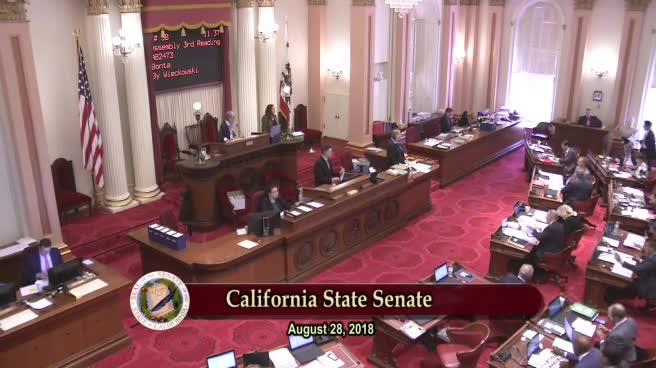 2MIN
Senate Floor
 1H
Senate Standing Committee on Appropriations
 2MIN
Assembly Floor
 12MIN
Assembly Standing Committee on Environmental Safety and Toxic Materials
 14MIN
Assembly Standing Committee on Health
Bill Author




