AB 2799: Adult-use cannabis and medicinal cannabis: license application: OSHA training.
- Session Year: 2017-2018
- House: Assembly
- Latest Version Date: 2018-09-30
The Control, Regulate and Tax Adult Use of Marijuana Act of 2016 (AUMA), an initiative measure approved as Proposition 64 at the November 8, 2016, statewide general election, authorizes a person who obtains a state license under AUMA to engage in commercial adult-use cannabis activity pursuant to that license and applicable local ordinances. AUMA authorizes the Legislature to amend its provisions with a 2/3 vote of both houses to further its purposes and intent.
The Medicinal and Adult-Use Cannabis Regulation and Safety Act (MAUCRSA), among other things, consolidates the licensure and regulation of commercial medicinal and adult-use cannabis activities and requires an applicant for any type of license issued under MAUCRSA to provide to the licensing authority specified information, including a statement, signed by the applicant under penalty of perjury, that the information provided is complete, true, and accurate.
This bill, except as specified, would require an applicant for initial licensure or renewal of a state license under MAUCRSA to provide a statement that the applicant employs, or will employ within one year of receiving a license or renewal, one supervisor and one employee who have successfully completed a Cal-OSHA 30-hour general industry course offered by a training provider that is authorized by an OSHA Training Institute Education Center to provide the course. By expanding the scope of the crime of perjury, this bill would impose a state-mandated local program.
The bill would declare that its provisions further specified purposes and intent of AUMA.
This bill would incorporate additional changes to Section 26051.5 of the Business and Professions Code proposed by AB 2980 and AB 3261 to be operative only if this bill and either or both AB 2980 and AB 3261 are enacted and this bill is enacted last.
The California Constitution requires the state to reimburse local agencies and school districts for certain costs mandated by the state. Statutory provisions establish procedures for making that reimbursement.
This bill would provide that no reimbursement is required by this act for a specified reason.
The Control, Regulate and Tax Adult Use of Marijuana Act of 2016 (AUMA), an initiative measure approved as Proposition 64 at the November 8, 2016, statewide general election, authorizes a person who obtains a state license under AUMA to engage in commercial adult-use cannabis activity pursuant to that license and applicable local ordinances. AUMA authorizes the Legislature to amend its provisions with a 2/3 vote of both houses to further its purposes and intent.
The Medicinal and Adult-Use Cannabis Regulation and Safety Act (MAUCRSA), among other things, consolidates the licensure and regulation of commercial medicinal and adult-use cannabis activities and requires an applicant for any type of license issued under MAUCRSA to provide to the licensing authority specified information, including a statement, signed by the applicant under penalty of perjury, that the information provided is complete, true, and accurate.
This bill, except as specified, would require an applicant for initial licensure or renewal of a state license under MAUCRSA to provide a statement that the applicant employs, or will employ within one year of receiving a license or renewal, one supervisor and one employee who have successfully completed a Cal-OSHA 30-hour general industry course offered by a training provider that is authorized by an OSHA Training Institute Education Center to provide the course. By expanding the scope of the crime of perjury, this bill would impose a state-mandated local program.
The bill would declare that its provisions further specified purposes and intent of AUMA.
This bill would incorporate additional changes to Section 26051.5 of the Business and Professions Code proposed by AB 2980 to be operative only if this bill and AB 2980 are enacted and this bill is enacted last.
The California Constitution requires the state to reimburse local agencies and school districts for certain costs mandated by the state. Statutory provisions establish procedures for making that reimbursement.
This bill would provide that no reimbursement is required by this act for a specified reason.
The Control, Regulate and Tax Adult Use of Marijuana Act of 2016 (AUMA), an initiative measure approved as Proposition 64 at the November 8, 2016, statewide general election, authorizes a person who obtains a state license under AUMA to engage in commercial adult-use cannabis activity pursuant to that license and applicable local ordinances. AUMA authorizes the Legislature to amend its provisions with a 2/3 vote of both houses to further its purposes and intent.
The Medicinal and Adult-Use Cannabis Regulation and Safety Act (MAUCRSA), among other things, consolidates the licensure and regulation of commercial medicinal and adult-use cannabis activities and requires an applicant for any type of license issued under MAUCRSA to provide to the licensing authority specified information, including a statement, signed by the applicant under penalty of perjury, that the information provided is complete, true, and accurate.
This bill, except as specified, would require an applicant for initial licensure or renewal of a state license under MAUCRSA to provide a statement that the applicant employs, or will employ within one year of receiving a license or renewal, one supervisor and one employee who have successfully completed a Cal-OSHA 30-hour general industry course offered by a training provider that is authorized by an OSHA Training Institute Education Center to provide the course. By expanding the scope of the crime of perjury, this bill would impose a state-mandated local program.
The bill would declare that its provisions further specified purposes and intent of AUMA.
The California Constitution requires the state to reimburse local agencies and school districts for certain costs mandated by the state. Statutory provisions establish procedures for making that reimbursement.
This bill would provide that no reimbursement is required by this act for a specified reason.
The Control, Regulate and Tax Adult Use of Marijuana Act of 2016 (AUMA), an initiative measure approved as Proposition 64 at the November 8, 2016, statewide general election, authorizes a person who obtains a state license under AUMA to engage in commercial adult-use cannabis activity pursuant to that license and applicable local ordinances. AUMA authorizes the Legislature to amend its provisions with a 2/3 vote of both houses to further its purposes and intent.
The Medicinal and Adult-Use Cannabis Regulation and Safety Act (MAUCRSA), among other things, consolidates the licensure and regulation of commercial medicinal and adult-use cannabis activities and requires an applicant for any type of license issued under MAUCRSA to provide to the licensing authority specified information, including a statement, signed by the applicant under penalty of perjury, that the information provided is complete, true, and accurate.
This bill bill, except as specified, would require an applicant for initial licensure or renewal of a state license under MAUCRSA to provide a statement that the applicant employs, or will employ within one year of receiving a license, license or renewal, one supervisor and one employee who have successfully completed the Division of Occupational Safety and Health (Cal-OSHA) a 30-hour general industry course given offered by a Cal-OSHA authorized training provider. provider that is authorized by an OSHA Training Institute Education Center to provide the course. By expanding the scope of the crime of perjury, this bill would impose a state-mandated local program.
The bill would declare that its provisions further specified purposes and intent of AUMA.
The California Constitution requires the state to reimburse local agencies and school districts for certain costs mandated by the state. Statutory provisions establish procedures for making that reimbursement.
This bill would provide that no reimbursement is required by this act for a specified reason.
The Control, Regulate and Tax Adult Use of Marijuana Act of 2016 (AUMA), an initiative measure approved as Proposition 64 at the November 8, 2016, statewide general election, authorizes a person who obtains a state license under AUMA to engage in commercial adult-use cannabis activity pursuant to that license and applicable local ordinances. AUMA authorizes the Legislature to amend its provisions with a 2/3 vote of both houses to further its purposes and intent.
The Medicinal and Adult-Use Cannabis Regulation and Safety Act (MAUCRSA), among other things, consolidates the licensure and regulation of commercial medicinal and adult-use cannabis activities and requires an applicant for any type of license issued under MAUCRSA to provide to the licensing authority specified information, including a statement, signed by the applicant under penalty of perjury, that the information provided is complete, true, and accurate.
This bill would require an applicant for a state license under MAUCRSA to provide a statement that the applicant employs, or will employ within one year of receiving a license, one supervisor and one employee who have successfully completed the Division of Occupational Safety and Health (Cal-OSHA) 30-hour general industry course given by a Cal-OSHA authorized training provider. By expanding the scope of the crime of perjury, this bill would impose a state-mandated local program.
The bill would declare that its provisions further specified purposes and intent of AUMA.
The California Constitution requires the state to reimburse local agencies and school districts for certain costs mandated by the state. Statutory provisions establish procedures for making that reimbursement.
This bill would provide that no reimbursement is required by this act for a specified reason.
(a)An applicant for any type of state license issued pursuant to this division shall do all of the following:
(1)Require that each owner of the applicant electronically submit to the Department of Justice fingerprint images and related information required by the Department of Justice of all applicants for any type of state license issued pursuant to this division, for the purpose of obtaining information as to the existence and content of a record of state or federal convictions and state and federal arrests, and also information as to the existence and content of a record of state or federal convictions and arrests for which the Department of Justice establishes that the person is free on bail or on his or her recognizance pending trial or appeal.
(A)Notwithstanding any other law, the Bureau of Cannabis Control, the Department of Food and Agriculture, and the State Department of Public Health may obtain and receive, at their discretion, criminal history information from the Department of Justice and the Federal Bureau of Investigation for an applicant for any state license under this division, including any license established by a licensing authority by regulation pursuant to subdivision (b) of Section 26012.
(B) When received, the Department of Justice shall transmit fingerprint images and related information received pursuant to this section to the Federal Bureau of Investigation for the purpose of obtaining a federal criminal history records check. The Department of Justice shall review the information returned from the Federal Bureau of Investigation and compile and disseminate a response to the licensing authority.
(C)The Department of Justice shall provide a response to the licensing authority pursuant to paragraph (1) of subdivision (p) of Section 11105 of the Penal Code.
(D)The licensing authority shall request from the Department of Justice subsequent notification service, as provided pursuant to Section 11105.2 of the Penal Code, for applicants.
(E)The Department of Justice shall charge the applicant a fee sufficient to cover the reasonable cost of processing the requests described in this paragraph.
(2)Provide evidence of the legal right to occupy and use the proposed location and provide a statement from the landowner of real property or that landowners agent where the commercial cannabis activity will occur, as proof to demonstrate the landowner has acknowledged and consented to permit commercial cannabis activities to be conducted on the property by the tenant applicant.
(3)Provide evidence that the proposed location is in compliance with subdivision (b) of Section 26054.
(4)Provide a statement, signed by the applicant under penalty of perjury, that the information provided is complete, true, and accurate.
(5)(A)For an applicant with 20 or more employees, provide a statement that the applicant will enter into, or demonstrate that it has already entered into, and abide by the terms of a labor peace agreement.
(B)For the purposes of this paragraph, employee does not include a supervisor.
(C)For the purposes of this paragraph, supervisor means an individual having authority, in the interest of the applicant, to hire, transfer, suspend, lay off, recall, promote, discharge, assign, reward, or discipline other employees, or responsibility to direct them or to adjust their grievances, or effectively to recommend such action, if, in connection with the foregoing, the exercise of that authority is not of a merely routine or clerical nature, but requires the use of independent judgment.
(6)Provide the applicants valid sellers permit number issued pursuant to Part 1 (commencing with Section 6001) of Division 2 of the Revenue and Taxation Code or indicate that the applicant is currently applying for a sellers permit.
(7)Provide any other information required by the licensing authority.
(8)For an applicant seeking a cultivation license, provide a statement declaring the applicant is an agricultural employer, as defined in the Alatorre-Zenovich-Dunlap-Berman Agricultural Labor Relations Act of 1975 (Part 3.5 (commencing with Section 1140) of Division 2 of the Labor Code), to the extent not prohibited by law.
(9)Pay all applicable fees required for licensure by the licensing authority.
(10)Provide proof of a bond to cover the costs of destruction of cannabis or cannabis products if necessitated by a violation of licensing requirements.
(11)(A)Provide a statement, upon initial application and application for renewal, that the applicant employs, or will employ within one year of receiving or renewing a license, one supervisor and one employee who have successfully completed a Cal-OSHA 30-hour general industry outreach course offered by a training provider that is authorized by an OSHA Training Institute Education Center to provide the course. This paragraph shall not be construed to alter or amend existing requirements for employers to provide occupational safety and health training to employees.
(B)An applicant with only one employee shall not be subject to subparagraph (A).
(C)For purposes of this paragraph employee has the same meaning as provided in subparagraph (B) of paragraph (5) and supervisor has the same meaning as provided in subparagraph (C) of paragraph (5).
(b)An applicant shall also include in the application a detailed description of the applicants operating procedures for all of the following, as required by the licensing authority:
(1)Cultivation.
(2)Extraction and infusion methods.
(3)The transportation process.
(4)Inventory procedures.
(5)Quality control procedures.
(6)Security protocols.
(7)For applicants seeking licensure to cultivate, the source or sources of water the applicant will use for cultivation, as provided in subdivisions (a) to (c), inclusive, of Section 26060.1. For purposes of this paragraph, cultivation as used in Section 26060.1 shall have the same meaning as defined in Section 26001. The Department of Food and Agriculture shall consult with the State Water Resources Control Board and the Department of Fish and Wildlife in the implementation of this paragraph.
(c)The applicant shall also provide a complete detailed diagram of the proposed premises wherein the license privileges will be exercised, with sufficient particularity to enable ready determination of the bounds of the premises, showing all boundaries, dimensions, entrances and exits, interior partitions, walls, rooms, and common or shared entryways, and include a brief statement or description of the principal activity to be conducted therein, and, for licenses permitting cultivation, measurements of the planned canopy, including aggregate square footage and individual square footage of separate cultivation areas, if any, roads, water crossings, points of diversion, water storage, and all other facilities and infrastructure related to the cultivation.
(d)Provide a complete list of every person with a financial interest in the person applying for the license as required by the licensing authority. For purposes of this subdivision, persons with a financial interest does not include persons whose only interest in a licensee is an interest in a diversified mutual fund, blind trust, or similar instrument.
SEC. 1.1.Section 26051.5 of the Business and Professions Code is amended to read:26051.5.(a)An applicant for any type of state license issued pursuant to this division shall do all of the following:
(1)Require that each owner of the applicant electronically submit to the Department of Justice fingerprint images and related information required by the Department of Justice of all applicants for any type of state license issued pursuant to this division, for the purpose of obtaining information as to the existence and content of a record of state or federal convictions and state and federal arrests, and also information as to the existence and content of a record of state or federal convictions and arrests for which the Department of Justice establishes that the person is free on bail or on his or her recognizance pending trial or appeal.
(A)Notwithstanding any other law, the Bureau of Cannabis Control, the Department of Food and Agriculture, and the State Department of Public Health may obtain and receive, at their discretion, criminal history information from the Department of Justice and the Federal Bureau of Investigation for an applicant for any state license under this division, including any license established by a licensing authority by regulation pursuant to subdivision (b) of Section 26012.
(B) When received, the Department of Justice shall transmit fingerprint images and related information received pursuant to this section to the Federal Bureau of Investigation for the purpose of obtaining a federal criminal history records check. The Department of Justice shall review the information returned from the Federal Bureau of Investigation and compile and disseminate a response to the licensing authority.
(C)The Department of Justice shall provide a response to the licensing authority pursuant to paragraph (1) of subdivision (p) of Section 11105 of the Penal Code.
(D)The licensing authority shall request from the Department of Justice subsequent notification service, as provided pursuant to Section 11105.2 of the Penal Code, for applicants.
(E)The Department of Justice shall charge the applicant a fee sufficient to cover the reasonable cost of processing the requests described in this paragraph.
(2)Provide evidence of the legal right to occupy and use the proposed location and provide a statement from the landowner of real property or that landowners agent where the commercial cannabis activity will occur, as proof to demonstrate the landowner has acknowledged and consented to permit commercial cannabis activities to be conducted on the property by the tenant applicant.
(3)Provide evidence that the proposed location is in compliance with subdivision (b) of Section 26054.
(4)Provide a statement, signed by the applicant under penalty of perjury, that the information provided is complete, true, and accurate.
(5)(A)For an applicant with 20 or more employees, provide a statement that the applicant will enter into, or demonstrate that it has already entered into, and abide by the terms of a labor peace agreement.
(B)For the purposes of this paragraph, employee does not include a supervisor.
(C)For the purposes of this paragraph, supervisor means an individual having authority, in the interest of the applicant, to hire, transfer, suspend, lay off, recall, promote, discharge, assign, reward, or discipline other employees, or responsibility to direct them or to adjust their grievances, or effectively to recommend such action, if, in connection with the foregoing, the exercise of that authority is not of a merely routine or clerical nature, but requires the use of independent judgment.
(6)Provide the applicants valid sellers permit number issued pursuant to Article 2 (commencing with Section 6066) of Chapter 2 of Part 1 of Division 2 of the Revenue and Taxation Code or indicate that the applicant is currently applying for a sellers permit.
(7)Provide any other information required by the licensing authority.
(8)For an applicant seeking a cultivation license, provide a statement declaring the applicant is an agricultural employer, as defined in the Alatorre-Zenovich-Dunlap-Berman Agricultural Labor Relations Act of 1975 (Part 3.5 (commencing with Section 1140) of Division 2 of the Labor Code), to the extent not prohibited by law.
(9)Pay all applicable fees required for licensure by the licensing authority.
(10)Provide proof of a bond to cover the costs of destruction of cannabis or cannabis products if necessitated by a violation of licensing requirements.
(11)(A)Provide a statement, upon initial application and application for renewal, that the applicant employs, or will employ within one year of receiving or renewing a license, one supervisor and one employee who have successfully completed a Cal-OSHA 30-hour general industry outreach course offered by a training provider that is authorized by an OSHA Training Institute Education Center to provide the course. This paragraph shall not be construed to alter or amend existing requirements for employers to provide occupational safety and health training to employees.
(B)An applicant with only one employee shall not be subject to subparagraph (A).
(C)For purposes of this paragraph employee has the same meaning as provided in subparagraph (B) of paragraph (5) and supervisor has the same meaning as provided in subparagraph (C) of paragraph (5).
(b)An applicant shall also include in the application a detailed description of the applicants operating procedures for all of the following, as required by the licensing authority:
(1)Cultivation.
(2)Extraction and infusion methods.
(3)The transportation process.
(4)Inventory procedures.
(5)Quality control procedures.
(6)Security protocols.
(7)For applicants seeking licensure to cultivate, the source or sources of water the applicant will use for cultivation, as provided in subdivisions (a) to (c), inclusive, of Section 26060.1. For purposes of this paragraph, cultivation as used in Section 26060.1 shall have the same meaning as defined in Section 26001. The Department of Food and Agriculture shall consult with the State Water Resources Control Board and the Department of Fish and Wildlife in the implementation of this paragraph.
(c)(1)The applicant shall also provide a complete detailed diagram of the proposed premises wherein the license privileges will be exercised, with sufficient particularity to enable ready determination of the bounds of the premises, showing all boundaries, dimensions, entrances and exits, interior partitions, walls, rooms, and common or shared entryways, and include a brief statement or description of the principal activity to be conducted therein, and, for licenses permitting cultivation, measurements of the planned canopy, including aggregate square footage and individual square footage of separate cultivation areas, if any, roads, water crossings, points of diversion, water storage, and all other facilities and infrastructure related to the cultivation.
(2)Nothing in paragraph (1) shall be construed to prohibit two or more licensed premises from sharing common use areas, such as a bathroom, breakroom, locker room, hallway, or loading dock, wherein no license privileges will be exercised so long as all licensees comply with the requirements of this division.
(d)Provide a complete list of every person with a financial interest in the person applying for the license as required by the licensing authority. For purposes of this subdivision, persons with a financial interest does not include persons whose only interest in a licensee is an interest in a diversified mutual fund, blind trust, or similar instrument.
SEC. 1.2.Section 26051.5 of the Business and Professions Code is amended to read:26051.5.(a)An applicant for any type of state license issued pursuant to this division shall do all of the following:
(1)Require that each owner electronically submit to the Department of Justice fingerprint images and related information required by the Department of Justice of all applicants for any type of state license issued pursuant to this division, for the purpose of obtaining information as to the existence and content of a record of state or federal convictions and state and federal arrests, and also information as to the existence and content of a record of state or federal convictions and arrests for which the Department of Justice establishes that the person is free on bail or on his or her recognizance pending trial or appeal.
(A)Notwithstanding any other law, the Bureau of Cannabis Control, the Department of Food and Agriculture, and the State Department of Public Health may obtain and receive, at their discretion, criminal history information from the Department of Justice and the Federal Bureau of Investigation for an applicant for any state license under this division, including any license established by a licensing authority by regulation pursuant to subdivision (b) of Section 26012.
(B) When received, the Department of Justice shall transmit fingerprint images and related information received pursuant to this section to the Federal Bureau of Investigation for the purpose of obtaining a federal criminal history records check. The Department of Justice shall review the information returned from the Federal Bureau of Investigation and compile and disseminate a response to the licensing authority.
(C)The Department of Justice shall provide a response to the licensing authority pursuant to paragraph (1) of subdivision (p) of Section 11105 of the Penal Code.
(D)The licensing authority shall request from the Department of Justice subsequent notification service, as provided pursuant to Section 11105.2 of the Penal Code, for applicants.
(E)The Department of Justice shall charge the applicant a fee sufficient to cover the reasonable cost of processing the requests described in this paragraph.
(2)Provide evidence of the legal right to occupy and use the proposed location and provide a statement from the landowner of real property or that landowners agent where the commercial cannabis activity will occur, as proof to demonstrate the landowner has acknowledged and consented to permit commercial cannabis activities to be conducted on the property by the tenant applicant.
(3)Provide evidence that the proposed location is in compliance with subdivision (b) of Section 26054.
(4)Provide a statement, signed by the applicant under penalty of perjury, that the information provided is complete, true, and accurate.
(5)(A)For an applicant with 20 or more employees, provide a statement that the applicant will enter into, or demonstrate that it has already entered into, and abide by the terms of a labor peace agreement.
(B)For the purposes of this paragraph, employee does not include a supervisor.
(C)For the purposes of this paragraph, supervisor means an individual having authority, in the interest of the applicant, to hire, transfer, suspend, lay off, recall, promote, discharge, assign, reward, or discipline other employees, or responsibility to direct them or to adjust their grievances, or effectively to recommend such action, if, in connection with the foregoing, the exercise of that authority is not of a merely routine or clerical nature, but requires the use of independent judgment.
(6)Provide the applicants valid sellers permit number issued pursuant to Part 1 (commencing with Section 6001) of Division 2 of the Revenue and Taxation Code or indicate that the applicant is currently applying for a sellers permit.
(7)Provide any other information required by the licensing authority.
(8)For an applicant seeking a cultivation license, provide a statement declaring the applicant is an agricultural employer, as defined in the Alatorre-Zenovich-Dunlap-Berman Agricultural Labor Relations Act of 1975 (Part 3.5 (commencing with Section 1140) of Division 2 of the Labor Code), to the extent not prohibited by law.
(9)Pay all applicable fees required for licensure by the licensing authority.
(10)Provide proof of a bond to cover the costs of destruction of cannabis or cannabis products if necessitated by a violation of licensing requirements.
(11)(A)Provide a statement, upon initial application and application for renewal, that the applicant employs, or will employ within one year of receiving or renewing a license, one supervisor and one employee who have successfully completed a Cal-OSHA 30-hour general industry outreach course offered by a training provider that is authorized by an OSHA Training Institute Education Center to provide the course. This paragraph shall not be construed to alter or amend existing requirements for employers to provide occupational safety and health training to employees.
(B)An applicant with only one employee shall not be subject to subparagraph (A).
(C)For purposes of this paragraph employee has the same meaning as provided in subparagraph (B) of paragraph (5) and supervisor has the same meaning as provided in subparagraph (C) of paragraph (5).
(b)An applicant shall also include in the application a detailed description of the applicants operating procedures for all of the following, as required by the licensing authority:
(1)Cultivation.
(2)Extraction and infusion methods.
(3)The transportation process.
(4)Inventory procedures.
(5)Quality control procedures.
(6)Security protocols.
(7)For applicants seeking licensure to cultivate, the source or sources of water the applicant will use for cultivation, as provided in subdivisions (a) to (c), inclusive, of Section 26060.1. For purposes of this paragraph, cultivation as used in Section 26060.1 shall have the same meaning as defined in Section 26001. The Department of Food and Agriculture shall consult with the State Water Resources Control Board and the Department of Fish and Wildlife in the implementation of this paragraph.
(c)The applicant shall also provide a complete detailed diagram of the proposed premises wherein the license privileges will be exercised, with sufficient particularity to enable ready determination of the bounds of the premises, showing all boundaries, dimensions, entrances and exits, interior partitions, walls, rooms, and common or shared entryways, and include a brief statement or description of the principal activity to be conducted therein, and, for licenses permitting cultivation, measurements of the planned canopy, including aggregate square footage and individual square footage of separate cultivation areas, if any, roads, water crossings, points of diversion, water storage, and all other facilities and infrastructure related to the cultivation.
(d)Provide a complete list of every person with a financial interest in the person applying for the license as required by the licensing authority. For purposes of this subdivision, persons with a financial interest does not include persons whose only interest in a licensee is an interest in a diversified mutual fund, blind trust, or similar instrument.
SEC. 1.3.Section 26051.5 of the Business and Professions Code is amended to read:26051.5.(a)An applicant for any type of state license issued pursuant to this division shall do all of the following:
(1)Require that each owner electronically submit to the Department of Justice fingerprint images and related information required by the Department of Justice of all applicants for any type of state license issued pursuant to this division, for the purpose of obtaining information as to the existence and content of a record of state or federal convictions and state and federal arrests, and also information as to the existence and content of a record of state or federal convictions and arrests for which the Department of Justice establishes that the person is free on bail or on his or her recognizance pending trial or appeal.
(A)Notwithstanding any other law, the Bureau of Cannabis Control, the Department of Food and Agriculture, and the State Department of Public Health may obtain and receive, at their discretion, criminal history information from the Department of Justice and the Federal Bureau of Investigation for an applicant for any state license under this division, including any license established by a licensing authority by regulation pursuant to subdivision (b) of Section 26012.
(B) When received, the Department of Justice shall transmit fingerprint images and related information received pursuant to this section to the Federal Bureau of Investigation for the purpose of obtaining a federal criminal history records check. The Department of Justice shall review the information returned from the Federal Bureau of Investigation and compile and disseminate a response to the licensing authority.
(C)The Department of Justice shall provide a response to the licensing authority pursuant to paragraph (1) of subdivision (p) of Section 11105 of the Penal Code.
(D)The licensing authority shall request from the Department of Justice subsequent notification service, as provided pursuant to Section 11105.2 of the Penal Code, for applicants.
(E)The Department of Justice shall charge the applicant a fee sufficient to cover the reasonable cost of processing the requests described in this paragraph.
(2)Provide evidence of the legal right to occupy and use the proposed location and provide a statement from the landowner of real property or that landowners agent where the commercial cannabis activity will occur, as proof to demonstrate the landowner has acknowledged and consented to permit commercial cannabis activities to be conducted on the property by the tenant applicant.
(3)Provide evidence that the proposed location is in compliance with subdivision (b) of Section 26054.
(4)Provide a statement, signed by the applicant under penalty of perjury, that the information provided is complete, true, and accurate.
(5)(A)For an applicant with 20 or more employees, provide a statement that the applicant will enter into, or demonstrate that it has already entered into, and abide by the terms of a labor peace agreement.
(B)For the purposes of this paragraph, employee does not include a supervisor.
(C)For the purposes of this paragraph, supervisor means an individual having authority, in the interest of the applicant, to hire, transfer, suspend, lay off, recall, promote, discharge, assign, reward, or discipline other employees, or responsibility to direct them or to adjust their grievances, or effectively to recommend such action, if, in connection with the foregoing, the exercise of that authority is not of a merely routine or clerical nature, but requires the use of independent judgment.
(6)Provide the applicants valid sellers permit number issued pursuant to Article 2 (commencing with Section 6066) of Chapter 2 of Part 1 of Division 2 of the Revenue and Taxation Code or indicate that the applicant is currently applying for a sellers permit.
(7)Provide any other information required by the licensing authority.
(8)For an applicant seeking a cultivation license, provide a statement declaring the applicant is an agricultural employer, as defined in the Alatorre-Zenovich-Dunlap-Berman Agricultural Labor Relations Act of 1975 (Part 3.5 (commencing with Section 1140) of Division 2 of the Labor Code), to the extent not prohibited by law.
(9)Pay all applicable fees required for licensure by the licensing authority.
(10)Provide proof of a bond to cover the costs of destruction of cannabis or cannabis products if necessitated by a violation of licensing requirements.
(11)(A)Provide a statement, upon initial application and application for renewal, that the applicant employs, or will employ within one year of receiving or renewing a license, one supervisor and one employee who have successfully completed a Cal-OSHA 30-hour general industry outreach course offered by a training provider that is authorized by an OSHA Training Institute Education Center to provide the course. This paragraph shall not be construed to alter or amend existing requirements for employers to provide occupational safety and health training to employees.
(B)An applicant with only one employee shall not be subject to subparagraph (A).
(C)For purposes of this paragraph employee has the same meaning as provided in subparagraph (B) of paragraph (5) and supervisor has the same meaning as provided in subparagraph (C) of paragraph (5).
(b)An applicant shall also include in the application a detailed description of the applicants operating procedures for all of the following, as required by the licensing authority:
(1)Cultivation.
(2)Extraction and infusion methods.
(3)The transportation process.
(4)Inventory procedures.
(5)Quality control procedures.
(6)Security protocols.
(7)For applicants seeking licensure to cultivate, the source or sources of water the applicant will use for cultivation, as provided in subdivisions (a) to (c), inclusive, of Section 26060.1. For purposes of this paragraph, cultivation as used in Section 26060.1 shall have the same meaning as defined in Section 26001. The Department of Food and Agriculture shall consult with the State Water Resources Control Board and the Department of Fish and Wildlife in the implementation of this paragraph.
(c)(1)The applicant shall also provide a complete detailed diagram of the proposed premises wherein the license privileges will be exercised, with sufficient particularity to enable ready determination of the bounds of the premises, showing all boundaries, dimensions, entrances and exits, interior partitions, walls, rooms, and common or shared entryways, and include a brief statement or description of the principal activity to be conducted therein, and, for licenses permitting cultivation, measurements of the planned canopy, including aggregate square footage and individual square footage of separate cultivation areas, if any, roads, water crossings, points of diversion, water storage, and all other facilities and infrastructure related to the cultivation.
(2)Nothing in paragraph (1) shall be construed to prohibit two or more licensed premises from sharing common use areas, such as a bathroom, breakroom, locker room, hallway, or loading dock, wherein no license privileges will be exercised so long as all licensees comply with the requirements of this division.
(d)Provide a complete list of every person with a financial interest in the person applying for the license as required by the licensing authority. For purposes of this subdivision, persons with a financial interest does not include persons whose only interest in a licensee is an interest in a diversified mutual fund, blind trust, or similar instrument.
SEC. 2.(a)Section 1.1 of this bill incorporates amendments to Section 26051.5 of the Business and Professions Code proposed by both this bill and Assembly Bill 2980. That section shall only become operative if (1) both bills are enacted and become effective on or before January 1, 2019, (2) each bill amends Section 26051.5 of the Business and Professions Code, and (3) Assembly Bill 3261 is not enacted or as enacted does not amend that section, and (4) this bill is enacted after Assembly Bill 2980, in which case Sections 1, 1.2, and 1.3 of this bill shall not become operative.
(b)Section 1.2 of this bill incorporates amendments to Section 26051.5 of the Business and Professions Code proposed by both this bill and Assembly Bill 3261. That section shall only become operative if (1) both bills are enacted and become effective on or before January 1, 2019, (2) each bill amends Section 26051.5 of the Business and Professions Code, (3) Assembly Bill 2980 is not enacted or as enacted does not amend that section, and (4) this bill is enacted after Assembly Bill 3261 in which case Sections 1, 1.1, and 1.3 of this bill shall not become operative.
(c)Section 1.3 of this bill incorporates amendments to Section 26051.5 of the Business and Professions Code proposed by this bill, Assembly Bill 2980, and Assembly Bill 3261. That section shall only become operative if (1) all three bills are enacted and become effective on or before January 1, 2019, (2) all three bills amend Section 26051.5 of the Business and Professions Code, and (3) this bill is enacted after Assembly Bill 2980 and Assembly Bill 3261, in which case Sections 1, 1.1, and 1.2 of this bill shall not become operative.
SEC. 3.No reimbursement is required by this act pursuant to Section 6 of Article XIIIB of the California Constitution because the only costs that may be incurred by a local agency or school district will be incurred because this act creates a new crime or infraction, eliminates a crime or infraction, or changes the penalty for a crime or infraction, within the meaning of Section 17556 of the Government Code, or changes the definition of a crime within the meaning of Section 6 of Article XIIIB of the California Constitution.
SEC. 4.The Legislature finds and declares that Section 1 of this act, amending Section 26051.5 of the Business and Professions Code, furthers the purposes and intent of the Control, Regulate and Tax Adult Use of Marijuana Act because it enacts protections for employees and other workers of licensees that are in addition to the protections provided for in the Control, Regulate and Tax Adult Use of Marijuana Act.
(a)An applicant for any type of state license issued pursuant to this division shall do all of the following:
(1)Require that each owner of the applicant electronically submit to the Department of Justice fingerprint images and related information required by the Department of Justice of all applicants for any type of state license issued pursuant to this division, for the purpose of obtaining information as to the existence and content of a record of state or federal convictions and state and federal arrests, and also information as to the existence and content of a record of state or federal convictions and arrests for which the Department of Justice establishes that the person is free on bail or on his or her recognizance pending trial or appeal.
(A)Notwithstanding any other law, the Bureau of Cannabis Control, the Department of Food and Agriculture, and the State Department of Public Health may obtain and receive, at their discretion, criminal history information from the Department of Justice and the Federal Bureau of Investigation for an applicant for any state license under this division, including any license established by a licensing authority by regulation pursuant to subdivision (b) of Section 26012.
(B) When received, the Department of Justice shall transmit fingerprint images and related information received pursuant to this section to the Federal Bureau of Investigation for the purpose of obtaining a federal criminal history records check. The Department of Justice shall review the information returned from the Federal Bureau of Investigation and compile and disseminate a response to the licensing authority.
(C)The Department of Justice shall provide a response to the licensing authority pursuant to paragraph (1) of subdivision (p) of Section 11105 of the Penal Code.
(D)The licensing authority shall request from the Department of Justice subsequent notification service, as provided pursuant to Section 11105.2 of the Penal Code, for applicants.
(E)The Department of Justice shall charge the applicant a fee sufficient to cover the reasonable cost of processing the requests described in this paragraph.
(2)Provide evidence of the legal right to occupy and use the proposed location and provide a statement from the landowner of real property or that landowners agent where the commercial cannabis activity will occur, as proof to demonstrate the landowner has acknowledged and consented to permit commercial cannabis activities to be conducted on the property by the tenant applicant.
(3)Provide evidence that the proposed location is in compliance with subdivision (b) of Section 26054.
(4)Provide a statement, signed by the applicant under penalty of perjury, that the information provided is complete, true, and accurate.
(5)(A)For an applicant with 20 or more employees, provide a statement that the applicant will enter into, or demonstrate that it has already entered into, and abide by the terms of a labor peace agreement.
(B)For the purposes of this paragraph, employee does not include a supervisor.
(C)For the purposes of this paragraph, supervisor means an individual having authority, in the interest of the applicant, to hire, transfer, suspend, lay off, recall, promote, discharge, assign, reward, or discipline other employees, or responsibility to direct them or to adjust their grievances, or effectively to recommend such action, if, in connection with the foregoing, the exercise of that authority is not of a merely routine or clerical nature, but requires the use of independent judgment.
(6)Provide the applicants valid sellers permit number issued pursuant to Part 1 (commencing with Section 6001) of Division 2 of the Revenue and Taxation Code or indicate that the applicant is currently applying for a sellers permit.
(7)Provide any other information required by the licensing authority.
(8)For an applicant seeking a cultivation license, provide a statement declaring the applicant is an agricultural employer, as defined in the Alatorre-Zenovich-Dunlap-Berman Agricultural Labor Relations Act of 1975 (Part 3.5 (commencing with Section 1140) of Division 2 of the Labor Code), to the extent not prohibited by law.
(9)Pay all applicable fees required for licensure by the licensing authority.
(10)Provide proof of a bond to cover the costs of destruction of cannabis or cannabis products if necessitated by a violation of licensing requirements.
(11)(A)Provide a statement, upon initial application and application for renewal, that the applicant employs, or will employ within one year of receiving or renewing a license, one supervisor and one employee who have successfully completed a Cal-OSHA 30-hour general industry outreach course offered by a training provider that is authorized by an OSHA Training Institute Education Center to provide the course. This paragraph shall not be construed to alter or amend existing requirements for employers to provide occupational safety and health training to employees.
(B)An applicant with only one employee shall not be subject to subparagraph (A).
(C)For purposes of this paragraph employee has the same meaning as provided in subparagraph (B) of paragraph (5) and supervisor has the same meaning as provided in subparagraph (C) of paragraph (5).
(b)An applicant shall also include in the application a detailed description of the applicants operating procedures for all of the following, as required by the licensing authority:
(1)Cultivation.
(2)Extraction and infusion methods.
(3)The transportation process.
(4)Inventory procedures.
(5)Quality control procedures.
(6)Security protocols.
(7)For applicants seeking licensure to cultivate, the source or sources of water the applicant will use for cultivation, as provided in subdivisions (a) to (c), inclusive, of Section 26060.1. For purposes of this paragraph, cultivation as used in Section 26060.1 shall have the same meaning as defined in Section 26001. The Department of Food and Agriculture shall consult with the State Water Resources Control Board and the Department of Fish and Wildlife in the implementation of this paragraph.
(c)The applicant shall also provide a complete detailed diagram of the proposed premises wherein the license privileges will be exercised, with sufficient particularity to enable ready determination of the bounds of the premises, showing all boundaries, dimensions, entrances and exits, interior partitions, walls, rooms, and common or shared entryways, and include a brief statement or description of the principal activity to be conducted therein, and, for licenses permitting cultivation, measurements of the planned canopy, including aggregate square footage and individual square footage of separate cultivation areas, if any, roads, water crossings, points of diversion, water storage, and all other facilities and infrastructure related to the cultivation.
(d)Provide a complete list of every person with a financial interest in the person applying for the license as required by the licensing authority. For purposes of this subdivision, persons with a financial interest does not include persons whose only interest in a licensee is an interest in a diversified mutual fund, blind trust, or similar instrument.
SEC. 1.5.SEC. 1.1.Section 26051.5 of the Business and Professions Code is amended to read:26051.5.(a)An applicant for any type of state license issued pursuant to this division shall do all of the following:
(1)Require that each owner of the applicant electronically submit to the Department of Justice fingerprint images and related information required by the Department of Justice of all applicants for any type of state license issued pursuant to this division, for the purpose of obtaining information as to the existence and content of a record of state or federal convictions and state and federal arrests, and also information as to the existence and content of a record of state or federal convictions and arrests for which the Department of Justice establishes that the person is free on bail or on his or her recognizance pending trial or appeal.
(A)Notwithstanding any other law, the Bureau of Cannabis Control, the Department of Food and Agriculture, and the State Department of Public Health may obtain and receive, at their discretion, criminal history information from the Department of Justice and the Federal Bureau of Investigation for an applicant for any state license under this division, including any license established by a licensing authority by regulation pursuant to subdivision (b) of Section 26012.
(B) When received, the Department of Justice shall transmit fingerprint images and related information received pursuant to this section to the Federal Bureau of Investigation for the purpose of obtaining a federal criminal history records check. The Department of Justice shall review the information returned from the Federal Bureau of Investigation and compile and disseminate a response to the licensing authority.
(C)The Department of Justice shall provide a response to the licensing authority pursuant to paragraph (1) of subdivision (p) of Section 11105 of the Penal Code.
(D)The licensing authority shall request from the Department of Justice subsequent notification service, as provided pursuant to Section 11105.2 of the Penal Code, for applicants.
(E)The Department of Justice shall charge the applicant a fee sufficient to cover the reasonable cost of processing the requests described in this paragraph.
(2)Provide evidence of the legal right to occupy and use the proposed location and provide a statement from the landowner of real property or that landowners agent where the commercial cannabis activity will occur, as proof to demonstrate the landowner has acknowledged and consented to permit commercial cannabis activities to be conducted on the property by the tenant applicant.
(3)Provide evidence that the proposed location is in compliance with subdivision (b) of Section 26054.
(4)Provide a statement, signed by the applicant under penalty of perjury, that the information provided is complete, true, and accurate.
(5)(A)For an applicant with 20 or more employees, provide a statement that the applicant will enter into, or demonstrate that it has already entered into, and abide by the terms of a labor peace agreement.
(B)For the purposes of this paragraph, employee does not include a supervisor.
(C)For the purposes of this paragraph, supervisor means an individual having authority, in the interest of the applicant, to hire, transfer, suspend, lay off, recall, promote, discharge, assign, reward, or discipline other employees, or responsibility to direct them or to adjust their grievances, or effectively to recommend such action, if, in connection with the foregoing, the exercise of that authority is not of a merely routine or clerical nature, but requires the use of independent judgment.
(6)Provide the applicants valid sellers permit number issued pursuant to Article 2 (commencing with Section 6066) of Chapter 2 of Part 1 of Division 2 of the Revenue and Taxation Code or indicate that the applicant is currently applying for a sellers permit.
(7)Provide any other information required by the licensing authority.
(8)For an applicant seeking a cultivation license, provide a statement declaring the applicant is an agricultural employer, as defined in the Alatorre-Zenovich-Dunlap-Berman Agricultural Labor Relations Act of 1975 (Part 3.5 (commencing with Section 1140) of Division 2 of the Labor Code), to the extent not prohibited by law.
(9)Pay all applicable fees required for licensure by the licensing authority.
(10)Provide proof of a bond to cover the costs of destruction of cannabis or cannabis products if necessitated by a violation of licensing requirements.
(11)(A)Provide a statement, upon initial application and application for renewal, that the applicant employs, or will employ within one year of receiving or renewing a license, one supervisor and one employee who have successfully completed a Cal-OSHA 30-hour general industry outreach course offered by a training provider that is authorized by an OSHA Training Institute Education Center to provide the course. This paragraph shall not be construed to alter or amend existing requirements for employers to provide occupational safety and health training to employees.
(B)An applicant with only one employee shall not be subject to subparagraph (A).
(C)For purposes of this paragraph employee has the same meaning as provided in subparagraph (B) of paragraph (5) and supervisor has the same meaning as provided in subparagraph (C) of paragraph (5).
(b)An applicant shall also include in the application a detailed description of the applicants operating procedures for all of the following, as required by the licensing authority:
(1)Cultivation.
(2)Extraction and infusion methods.
(3)The transportation process.
(4)Inventory procedures.
(5)Quality control procedures.
(6)Security protocols.
(7)For applicants seeking licensure to cultivate, the source or sources of water the applicant will use for cultivation, as provided in subdivisions (a) to (c), inclusive, of Section 26060.1. For purposes of this paragraph, cultivation as used in Section 26060.1 shall have the same meaning as defined in Section 26001. The Department of Food and Agriculture shall consult with the State Water Resources Control Board and the Department of Fish and Wildlife in the implementation of this paragraph.
(c)(1)The applicant shall also provide a complete detailed diagram of the proposed premises wherein the license privileges will be exercised, with sufficient particularity to enable ready determination of the bounds of the premises, showing all boundaries, dimensions, entrances and exits, interior partitions, walls, rooms, and common or shared entryways, and include a brief statement or description of the principal activity to be conducted therein, and, for licenses permitting cultivation, measurements of the planned canopy, including aggregate square footage and individual square footage of separate cultivation areas, if any, roads, water crossings, points of diversion, water storage, and all other facilities and infrastructure related to the cultivation.
(2)Nothing in paragraph (1) shall be construed to prohibit two or more licensed premises from sharing common use areas, such as a bathroom, breakroom, locker room, hallway, or loading dock, wherein no license privileges will be exercised so long as all licensees comply with the requirements of this division.
(d)Provide a complete list of every person with a financial interest in the person applying for the license as required by the licensing authority. For purposes of this subdivision, persons with a financial interest does not include persons whose only interest in a licensee is an interest in a diversified mutual fund, blind trust, or similar instrument.
SEC. 1.2.Section 26051.5 of the Business and Professions Code is amended to read:26051.5.(a)An applicant for any type of state license issued pursuant to this division shall do all of the following:
(1)Require that each owner of the applicant electronically submit to the Department of Justice fingerprint images and related information required by the Department of Justice of all applicants for any type of state license issued pursuant to this division, for the purpose of obtaining information as to the existence and content of a record of state or federal convictions and state and federal arrests, and also information as to the existence and content of a record of state or federal convictions and arrests for which the Department of Justice establishes that the person is free on bail or on his or her recognizance pending trial or appeal.
(A)Notwithstanding any other law, the Bureau of Cannabis Control, the Department of Food and Agriculture, and the State Department of Public Health may obtain and receive, at their discretion, criminal history information from the Department of Justice and the Federal Bureau of Investigation for an applicant for any state license under this division, including any license established by a licensing authority by regulation pursuant to subdivision (b) of Section 26012.
(B) When received, the Department of Justice shall transmit fingerprint images and related information received pursuant to this section to the Federal Bureau of Investigation for the purpose of obtaining a federal criminal history records check. The Department of Justice shall review the information returned from the Federal Bureau of Investigation and compile and disseminate a response to the licensing authority.
(C)The Department of Justice shall provide a response to the licensing authority pursuant to paragraph (1) of subdivision (p) of Section 11105 of the Penal Code.
(D)The licensing authority shall request from the Department of Justice subsequent notification service, as provided pursuant to Section 11105.2 of the Penal Code, for applicants.
(E)The Department of Justice shall charge the applicant a fee sufficient to cover the reasonable cost of processing the requests described in this paragraph.
(2)Provide evidence of the legal right to occupy and use the proposed location and provide a statement from the landowner of real property or that landowners agent where the commercial cannabis activity will occur, as proof to demonstrate the landowner has acknowledged and consented to permit commercial cannabis activities to be conducted on the property by the tenant applicant.
(3)Provide evidence that the proposed location is in compliance with subdivision (b) of Section 26054.
(4)Provide a statement, signed by the applicant under penalty of perjury, that the information provided is complete, true, and accurate.
(5)(A)For an applicant with 20 or more employees, provide a statement that the applicant will enter into, or demonstrate that it has already entered into, and abide by the terms of a labor peace agreement.
(B)For the purposes of this paragraph, employee does not include a supervisor.
(C)For the purposes of this paragraph, supervisor means an individual having authority, in the interest of the applicant, to hire, transfer, suspend, lay off, recall, promote, discharge, assign, reward, or discipline other employees, or responsibility to direct them or to adjust their grievances, or effectively to recommend such action, if, in connection with the foregoing, the exercise of that authority is not of a merely routine or clerical nature, but requires the use of independent judgment.
(6)Provide the applicants valid sellers permit number issued pursuant to Part 1 (commencing with Section 6001) of Division 2 of the Revenue and Taxation Code or indicate that the applicant is currently applying for a sellers permit.
(7)Provide any other information required by the licensing authority.
(8)For an applicant seeking a cultivation license, provide a statement declaring the applicant is an agricultural employer, as defined in the Alatorre-Zenovich-Dunlap-Berman Agricultural Labor Relations Act of 1975 (Part 3.5 (commencing with Section 1140) of Division 2 of the Labor Code), to the extent not prohibited by law.
(9)Pay all applicable fees required for licensure by the licensing authority.
(10)Provide proof of a bond to cover the costs of destruction of cannabis or cannabis products if necessitated by a violation of licensing requirements.
(11)(A)Provide a statement, upon initial application and application for renewal, that the applicant employs, or will employ within one year of receiving or renewing a license, one supervisor and one employee who have successfully completed a Cal-OSHA 30-hour general industry outreach course offered by a training provider that is authorized by an OSHA Training Institute Education Center to provide the course. This paragraph shall not be construed to alter or amend existing requirements for employers to provide occupational safety and health training to employees.
(B)An applicant with only one employee shall not be subject to subparagraph (A).
(C)For purposes of this paragraph employee has the same meaning as provided in subparagraph (B) of paragraph (5) and supervisor has the same meaning as provided in subparagraph (C) of paragraph (5).
(b)An applicant shall also include in the application a detailed description of the applicants operating procedures for all of the following, as required by the licensing authority:
(1)Cultivation.
(2)Extraction and infusion methods.
(3)The transportation process.
(4)Inventory procedures.
(5)Quality control procedures.
(6)Security protocols.
(7)For applicants seeking licensure to cultivate, the source or sources of water the applicant will use for cultivation, as provided in subdivisions (a) to (c), inclusive, of Section 26060.1. For purposes of this paragraph, cultivation as used in Section 26060.1 shall have the same meaning as defined in Section 26001. The Department of Food and Agriculture shall consult with the State Water Resources Control Board and the Department of Fish and Wildlife in the implementation of this paragraph.
(c)The applicant shall also provide a complete detailed diagram of the proposed premises wherein the license privileges will be exercised, with sufficient particularity to enable ready determination of the bounds of the premises, showing all boundaries, dimensions, entrances and exits, interior partitions, walls, rooms, and common or shared entryways, and include a brief statement or description of the principal activity to be conducted therein, and, for licenses permitting cultivation, measurements of the planned canopy, including aggregate square footage and individual square footage of separate cultivation areas, if any, roads, water crossings, points of diversion, water storage, and all other facilities and infrastructure related to the cultivation.
(d)Provide a complete list of every person with a financial interest in the person applying for the license as required by the licensing authority. For purposes of this subdivision, persons with a financial interest does not include persons whose only interest in a licensee is an interest in a diversified mutual fund, blind trust, or similar instrument.
SEC. 1.3.Section 26051.5 of the Business and Professions Code is amended to read:26051.5.(a)An applicant for any type of state license issued pursuant to this division shall do all of the following:
(1)Require that each owner of the applicant electronically submit to the Department of Justice fingerprint images and related information required by the Department of Justice of all applicants for any type of state license issued pursuant to this division, for the purpose of obtaining information as to the existence and content of a record of state or federal convictions and state and federal arrests, and also information as to the existence and content of a record of state or federal convictions and arrests for which the Department of Justice establishes that the person is free on bail or on his or her recognizance pending trial or appeal.
(A)Notwithstanding any other law, the Bureau of Cannabis Control, the Department of Food and Agriculture, and the State Department of Public Health may obtain and receive, at their discretion, criminal history information from the Department of Justice and the Federal Bureau of Investigation for an applicant for any state license under this division, including any license established by a licensing authority by regulation pursuant to subdivision (b) of Section 26012.
(B) When received, the Department of Justice shall transmit fingerprint images and related information received pursuant to this section to the Federal Bureau of Investigation for the purpose of obtaining a federal criminal history records check. The Department of Justice shall review the information returned from the Federal Bureau of Investigation and compile and disseminate a response to the licensing authority.
(C)The Department of Justice shall provide a response to the licensing authority pursuant to paragraph (1) of subdivision (p) of Section 11105 of the Penal Code.
(D)The licensing authority shall request from the Department of Justice subsequent notification service, as provided pursuant to Section 11105.2 of the Penal Code, for applicants.
(E)The Department of Justice shall charge the applicant a fee sufficient to cover the reasonable cost of processing the requests described in this paragraph.
(2)Provide evidence of the legal right to occupy and use the proposed location and provide a statement from the landowner of real property or that landowners agent where the commercial cannabis activity will occur, as proof to demonstrate the landowner has acknowledged and consented to permit commercial cannabis activities to be conducted on the property by the tenant applicant.
(3)Provide evidence that the proposed location is in compliance with subdivision (b) of Section 26054.
(4)Provide a statement, signed by the applicant under penalty of perjury, that the information provided is complete, true, and accurate.
(5)(A)For an applicant with 20 or more employees, provide a statement that the applicant will enter into, or demonstrate that it has already entered into, and abide by the terms of a labor peace agreement.
(B)For the purposes of this paragraph, employee does not include a supervisor.
(C)For the purposes of this paragraph, supervisor means an individual having authority, in the interest of the applicant, to hire, transfer, suspend, lay off, recall, promote, discharge, assign, reward, or discipline other employees, or responsibility to direct them or to adjust their grievances, or effectively to recommend such action, if, in connection with the foregoing, the exercise of that authority is not of a merely routine or clerical nature, but requires the use of independent judgment.
(6)Provide the applicants valid sellers permit number issued pursuant to Part 1 Article 2 (commencing with Section 6001) 6066) of Chapter 2 of Part 1 of Division 2 of the Revenue and Taxation Code or indicate that the applicant is currently applying for a sellers permit.
(7)Provide any other information required by the licensing authority.
(8)For an applicant seeking a cultivation license, provide a statement declaring the applicant is an agricultural employer, as defined in the Alatorre-Zenovich-Dunlap-Berman Agricultural Labor Relations Act of 1975 (Part 3.5 (commencing with Section 1140) of Division 2 of the Labor Code), to the extent not prohibited by law.
(9)Pay all applicable fees required for licensure by the licensing authority.
(10)Provide proof of a bond to cover the costs of destruction of cannabis or cannabis products if necessitated by a violation of licensing requirements.
(11)(A)Provide a statement, upon initial application and application for renewal, that the applicant employs, or will employ within one year of receiving or renewing a license, one supervisor and one employee who have successfully completed a Cal-OSHA 30-hour general industry outreach course offered by a training provider that is authorized by an OSHA Training Institute Education Center to provide the course. This paragraph shall not be construed to alter or amend existing requirements for employers to provide occupational safety and health training to employees.
(B)An applicant with only one employee shall not be subject to subparagraph (A).
(C)For purposes of this paragraph employee has the same meaning as provided in subparagraph (B) of paragraph (5) and supervisor has the same meaning as provided in subparagraph (C) of paragraph (5).
(b)An applicant shall also include in the application a detailed description of the applicants operating procedures for all of the following, as required by the licensing authority:
(1)Cultivation.
(2)Extraction and infusion methods.
(3)The transportation process.
(4)Inventory procedures.
(5)Quality control procedures.
(6)Security protocols.
(7)For applicants seeking licensure to cultivate, the source or sources of water the applicant will use for cultivation, as provided in subdivisions (a) to (c), inclusive, of Section 26060.1. For purposes of this paragraph, cultivation as used in Section 26060.1 shall have the same meaning as defined in Section 26001. The Department of Food and Agriculture shall consult with the State Water Resources Control Board and the Department of Fish and Wildlife in the implementation of this paragraph.
(c)(1)The applicant shall also provide a complete detailed diagram of the proposed premises wherein the license privileges will be exercised, with sufficient particularity to enable ready determination of the bounds of the premises, showing all boundaries, dimensions, entrances and exits, interior partitions, walls, rooms, and common or shared entryways, and include a brief statement or description of the principal activity to be conducted therein, and, for licenses permitting cultivation, measurements of the planned canopy, including aggregate square footage and individual square footage of separate cultivation areas, if any, roads, water crossings, points of diversion, water storage, and all other facilities and infrastructure related to the cultivation.
(2)Nothing in paragraph (1) shall be construed to prohibit two or more licensed premises from sharing common use areas, such as a bathroom, breakroom, locker room, hallway, or loading dock, wherein no license privileges will be exercised so long as all licensees comply with the requirements of this division.
(d)Provide a complete list of every person with a financial interest in the person applying for the license as required by the licensing authority. For purposes of this subdivision, persons with a financial interest does not include persons whose only interest in a licensee is an interest in a diversified mutual fund, blind trust, or similar instrument.
SEC. 2.Section 1.5 of this bill incorporates amendments to Section 26051.5 of the Business and Professions Code proposed by both this bill and Assembly Bill 2980. That section of this bill shall only become operative if (1) both bills are enacted and become effective on or before January 1, 2019, (2) each bill amends Section 26051.5 of the Business and Professions Code, and (3) this bill is enacted after Assembly Bill 2980, in which case Section 1 of this bill shall not become operative.SEC. 2.(a)Section 1.1 of this bill incorporates amendments to Section 26051.5 of the Business and Professions Code proposed by both this bill and Assembly Bill 2980. That section shall only become operative if (1) both bills are enacted and become effective on or before January 1, 2019, (2) each bill amends Section 26051.5 of the Business and Professions Code, and (3) Assembly Bill 3261 is not enacted or as enacted does not amend that section, and (4) this bill is enacted after Assembly Bill 2980, in which case Sections 1, 1.2, and 1.3 of this bill shall not become operative.
(b)Section 1.2 of this bill incorporates amendments to Section 26051.5 of the Business and Professions Code proposed by both this bill and Assembly Bill 3261. That section shall only become operative if (1) both bills are enacted and become effective on or before January 1, 2019, (2) each bill amends Section 26051.5 of the Business and Professions Code, (3) Assembly Bill 2980 is not enacted or as enacted does not amend that section, and (4) this bill is enacted after Assembly Bill 3261 in which case Sections 1, 1.1, and 1.3 of this bill shall not become operative.
(c)Section 1.3 of this bill incorporates amendments to Section 26051.5 of the Business and Professions Code proposed by this bill, Assembly Bill 2980, and Assembly Bill 3261. That section shall only become operative if (1) all three bills are enacted and become effective on or before January 1, 2019, (2) all three bills amend Section 26051.5 of the Business and Professions Code, and (3) this bill is enacted after Assembly Bill 2980 and Assembly Bill 3261, in which case Sections 1, 1.1, and 1.2 of this bill shall not become operative.
SEC. 3.No reimbursement is required by this act pursuant to Section 6 of Article XIIIB of the California Constitution because the only costs that may be incurred by a local agency or school district will be incurred because this act creates a new crime or infraction, eliminates a crime or infraction, or changes the penalty for a crime or infraction, within the meaning of Section 17556 of the Government Code, or changes the definition of a crime within the meaning of Section 6 of Article XIIIB of the California Constitution.
SEC. 4.The Legislature finds and declares that Section 1 of this act, amending Section 26051.5 of the Business and Professions Code, furthers the purposes and intent of the Control, Regulate and Tax Adult Use of Marijuana Act because it enacts protections for employees and other workers of licensees that are in addition to the protections provided for in the Control, Regulate and Tax Adult Use of Marijuana Act.
(a)An applicant for any type of state license issued pursuant to this division shall do all of the following:
(1)Require that each owner of the applicant electronically submit to the Department of Justice fingerprint images and related information required by the Department of Justice of all applicants for any type of state license issued pursuant to this division, for the purpose of obtaining information as to the existence and content of a record of state or federal convictions and state and federal arrests, and also information as to the existence and content of a record of state or federal convictions and arrests for which the Department of Justice establishes that the person is free on bail or on his or her recognizance pending trial or appeal.
(A)Notwithstanding any other law, the Bureau of Cannabis Control, the Department of Food and Agriculture, and the State Department of Public Health may obtain and receive, at their discretion, criminal history information from the Department of Justice and the Federal Bureau of Investigation for an applicant for any state license under this division, including any license established by a licensing authority by regulation pursuant to subdivision (b) of Section 26012.
(B) When received, the Department of Justice shall transmit fingerprint images and related information received pursuant to this section to the Federal Bureau of Investigation for the purpose of obtaining a federal criminal history records check. The Department of Justice shall review the information returned from the Federal Bureau of Investigation and compile and disseminate a response to the licensing authority.
(C)The Department of Justice shall provide a response to the licensing authority pursuant to paragraph (1) of subdivision (p) of Section 11105 of the Penal Code.
(D)The licensing authority shall request from the Department of Justice subsequent notification service, as provided pursuant to Section 11105.2 of the Penal Code, for applicants.
(E)The Department of Justice shall charge the applicant a fee sufficient to cover the reasonable cost of processing the requests described in this paragraph.
(2)Provide evidence of the legal right to occupy and use the proposed location and provide a statement from the landowner of real property or that landowners agent where the commercial cannabis activity will occur, as proof to demonstrate the landowner has acknowledged and consented to permit commercial cannabis activities to be conducted on the property by the tenant applicant.
(3)Provide evidence that the proposed location is in compliance with subdivision (b) of Section 26054.
(4)Provide a statement, signed by the applicant under penalty of perjury, that the information provided is complete, true, and accurate.
(5)(A)For an applicant with 20 or more employees, provide a statement that the applicant will enter into, or demonstrate that it has already entered into, and abide by the terms of a labor peace agreement.
(B)For the purposes of this paragraph, employee does not include a supervisor.
(C)For the purposes of this paragraph, supervisor means an individual having authority, in the interest of the applicant, to hire, transfer, suspend, lay off, recall, promote, discharge, assign, reward, or discipline other employees, or responsibility to direct them or to adjust their grievances, or effectively to recommend such action, if, in connection with the foregoing, the exercise of that authority is not of a merely routine or clerical nature, but requires the use of independent judgment.
(6)Provide the applicants valid sellers permit number issued pursuant to Part 1 (commencing with Section 6001) of Division 2 of the Revenue and Taxation Code or indicate that the applicant is currently applying for a sellers permit.
(7)Provide any other information required by the licensing authority.
(8)For an applicant seeking a cultivation license, provide a statement declaring the applicant is an agricultural employer, as defined in the Alatorre-Zenovich-Dunlap-Berman Agricultural Labor Relations Act of 1975 (Part 3.5 (commencing with Section 1140) of Division 2 of the Labor Code), to the extent not prohibited by law.
(9)Pay all applicable fees required for licensure by the licensing authority.
(10)Provide proof of a bond to cover the costs of destruction of cannabis or cannabis products if necessitated by a violation of licensing requirements.
(11)(A)Provide a statement, upon initial application and application for renewal, that the applicant employs, or will employ within one year of receiving or renewing a license, one supervisor and one employee who have successfully completed a Cal-OSHA 30-hour general industry outreach course offered by a training provider that is authorized by an OSHA Training Institute Education Center to provide the course. This paragraph shall not be construed to alter or amend existing requirements for employers to provide occupational safety and health training to employees.
(B)An applicant with only one employee shall not be subject to subparagraph (A).
(C)For purposes of this paragraph employee has the same meaning as provided in subparagraph (B) of paragraph (5) and supervisor has the same meaning as provided in subparagraph (C) of paragraph (5).
(b)An applicant shall also include in the application a detailed description of the applicants operating procedures for all of the following, as required by the licensing authority:
(1)Cultivation.
(2)Extraction and infusion methods.
(3)The transportation process.
(4)Inventory procedures.
(5)Quality control procedures.
(6)Security protocols.
(7)For applicants seeking licensure to cultivate, the source or sources of water the applicant will use for cultivation, as provided in subdivisions (a) to (c), inclusive, of Section 26060.1. For purposes of this paragraph, cultivation as used in Section 26060.1 shall have the same meaning as defined in Section 26001. The Department of Food and Agriculture shall consult with the State Water Resources Control Board and the Department of Fish and Wildlife in the implementation of this paragraph.
(c)The applicant shall also provide a complete detailed diagram of the proposed premises wherein the license privileges will be exercised, with sufficient particularity to enable ready determination of the bounds of the premises, showing all boundaries, dimensions, entrances and exits, interior partitions, walls, rooms, and common or shared entryways, and include a brief statement or description of the principal activity to be conducted therein, and, for licenses permitting cultivation, measurements of the planned canopy, including aggregate square footage and individual square footage of separate cultivation areas, if any, roads, water crossings, points of diversion, water storage, and all other facilities and infrastructure related to the cultivation.
(d)Provide a complete list of every person with a financial interest in the person applying for the license as required by the licensing authority. For purposes of this subdivision, persons with a financial interest does not include persons whose only interest in a licensee is an interest in a diversified mutual fund, blind trust, or similar instrument.
SEC. 1.5.Section 26051.5 of the Business and Professions Code is amended to read:26051.5.(a)An applicant for any type of state license issued pursuant to this division shall do all of the following:
(1)Require that each owner of the applicant electronically submit to the Department of Justice fingerprint images and related information required by the Department of Justice of all applicants for any type of state license issued pursuant to this division, for the purpose of obtaining information as to the existence and content of a record of state or federal convictions and state and federal arrests, and also information as to the existence and content of a record of state or federal convictions and arrests for which the Department of Justice establishes that the person is free on bail or on his or her recognizance pending trial or appeal.
(A)Notwithstanding any other law, the Bureau of Cannabis Control, the Department of Food and Agriculture, and the State Department of Public Health may obtain and receive, at their discretion, criminal history information from the Department of Justice and the Federal Bureau of Investigation for an applicant for any state license under this division, including any license established by a licensing authority by regulation pursuant to subdivision (b) of Section 26012.
(B) When received, the Department of Justice shall transmit fingerprint images and related information received pursuant to this section to the Federal Bureau of Investigation for the purpose of obtaining a federal criminal history records check. The Department of Justice shall review the information returned from the Federal Bureau of Investigation and compile and disseminate a response to the licensing authority.
(C)The Department of Justice shall provide a response to the licensing authority pursuant to paragraph (1) of subdivision (p) of Section 11105 of the Penal Code.
(D)The licensing authority shall request from the Department of Justice subsequent notification service, as provided pursuant to Section 11105.2 of the Penal Code, for applicants.
(E)The Department of Justice shall charge the applicant a fee sufficient to cover the reasonable cost of processing the requests described in this paragraph.
(2)Provide evidence of the legal right to occupy and use the proposed location and provide a statement from the landowner of real property or that landowners agent where the commercial cannabis activity will occur, as proof to demonstrate the landowner has acknowledged and consented to permit commercial cannabis activities to be conducted on the property by the tenant applicant.
(3)Provide evidence that the proposed location is in compliance with subdivision (b) of Section 26054.
(4)Provide a statement, signed by the applicant under penalty of perjury, that the information provided is complete, true, and accurate.
(5)(A)For an applicant with 20 or more employees, provide a statement that the applicant will enter into, or demonstrate that it has already entered into, and abide by the terms of a labor peace agreement.
(B)For the purposes of this paragraph, employee does not include a supervisor.
(C)For the purposes of this paragraph, supervisor means an individual having authority, in the interest of the applicant, to hire, transfer, suspend, lay off, recall, promote, discharge, assign, reward, or discipline other employees, or responsibility to direct them or to adjust their grievances, or effectively to recommend such action, if, in connection with the foregoing, the exercise of that authority is not of a merely routine or clerical nature, but requires the use of independent judgment.
(6)Provide the applicants valid sellers permit number issued pursuant to Part 1 Article 2 (commencing with Section 6001) 6066) of Chapter 2 of Part 1 of Division 2 of the Revenue and Taxation Code or indicate that the applicant is currently applying for a sellers permit.
(7)Provide any other information required by the licensing authority.
(8)For an applicant seeking a cultivation license, provide a statement declaring the applicant is an agricultural employer, as defined in the Alatorre-Zenovich-Dunlap-Berman Agricultural Labor Relations Act of 1975 (Part 3.5 (commencing with Section 1140) of Division 2 of the Labor Code), to the extent not prohibited by law.
(9)Pay all applicable fees required for licensure by the licensing authority.
(10)Provide proof of a bond to cover the costs of destruction of cannabis or cannabis products if necessitated by a violation of licensing requirements.
(11)(A)Provide a statement, upon initial application and application for renewal, that the applicant employs, or will employ within one year of receiving or renewing a license, one supervisor and one employee who have successfully completed a Cal-OSHA 30-hour general industry outreach course offered by a training provider that is authorized by an OSHA Training Institute Education Center to provide the course. This paragraph shall not be construed to alter or amend existing requirements for employers to provide occupational safety and health training to employees.
(B)An applicant with only one employee shall not be subject to subparagraph (A).
(C)For purposes of this paragraph employee has the same meaning as provided in subparagraph (B) of paragraph (5) and supervisor has the same meaning as provided in subparagraph (C) of paragraph (5).
(b)An applicant shall also include in the application a detailed description of the applicants operating procedures for all of the following, as required by the licensing authority:
(1)Cultivation.
(2)Extraction and infusion methods.
(3)The transportation process.
(4)Inventory procedures.
(5)Quality control procedures.
(6)Security protocols.
(7)For applicants seeking licensure to cultivate, the source or sources of water the applicant will use for cultivation, as provided in subdivisions (a) to (c), inclusive, of Section 26060.1. For purposes of this paragraph, cultivation as used in Section 26060.1 shall have the same meaning as defined in Section 26001. The Department of Food and Agriculture shall consult with the State Water Resources Control Board and the Department of Fish and Wildlife in the implementation of this paragraph.
(c)(1)The applicant shall also provide a complete detailed diagram of the proposed premises wherein the license privileges will be exercised, with sufficient particularity to enable ready determination of the bounds of the premises, showing all boundaries, dimensions, entrances and exits, interior partitions, walls, rooms, and common or shared entryways, and include a brief statement or description of the principal activity to be conducted therein, and, for licenses permitting cultivation, measurements of the planned canopy, including aggregate square footage and individual square footage of separate cultivation areas, if any, roads, water crossings, points of diversion, water storage, and all other facilities and infrastructure related to the cultivation.
(2)Nothing in paragraph (1) shall be construed to prohibit two or more licensed premises from sharing common use areas, such as a bathroom, breakroom, locker room, hallway, or loading dock, wherein no license privileges will be exercised so long as all licensees comply with the requirements of this division.
(d)Provide a complete list of every person with a financial interest in the person applying for the license as required by the licensing authority. For purposes of this subdivision, persons with a financial interest does not include persons whose only interest in a licensee is an interest in a diversified mutual fund, blind trust, or similar instrument.
SEC. 2.Section 1.5 of this bill incorporates amendments to Section 26051.5 of the Business and Professions Code proposed by both this bill and Assembly Bill 2980. That section of this bill shall only become operative if (1) both bills are enacted and become effective on or before January 1, 2019, (2) each bill amends Section 26051.5 of the Business and Professions Code, and (3) this bill is enacted after Assembly Bill 2980, in which case Section 1 of this bill shall not become operative.
SEC. 2.SEC. 3.No reimbursement is required by this act pursuant to Section 6 of Article XIIIB of the California Constitution because the only costs that may be incurred by a local agency or school district will be incurred because this act creates a new crime or infraction, eliminates a crime or infraction, or changes the penalty for a crime or infraction, within the meaning of Section 17556 of the Government Code, or changes the definition of a crime within the meaning of Section 6 of Article XIIIB of the California Constitution.
SEC. 3.SEC. 4.The Legislature finds and declares that Section 1 of this act, amending Section 26051.5 of the Business and Professions Code, furthers the purposes and intent of the Control, Regulate and Tax Adult Use of Marijuana Act because it enacts protections for employees and other workers of licensees that are in addition to the protections provided for in the Control, Regulate and Tax Adult Use of Marijuana Act.
(a)An applicant for any type of state license issued pursuant to this division shall do all of the following:
(1)Require that each owner of the applicant electronically submit to the Department of Justice fingerprint images and related information required by the Department of Justice for the purpose of obtaining information as to the existence and content of a record of state or federal convictions and arrests, and information as to the existence and content of a record of state or federal convictions and arrests for which the Department of Justice establishes that the person is free on bail or on his or her own recognizance, pending trial or appeal.
(A)Notwithstanding any other law, the Bureau of Cannabis Control, the Department of Food and Agriculture, and the State Department of Public Health may obtain and receive, at their discretion, criminal history information from the Department of Justice and the United States Federal Bureau of Investigation for an applicant for any state license under this division, including any license established by a licensing authority by regulation pursuant to subdivision (b) of Section 26012.
(B)The Department of Justice shall forward to the United States Federal Bureau of Investigation all requests for federal criminal history record information received pursuant to this section. The Department of Justice shall review the information returned from the United States Federal Bureau of Investigation and compile and disseminate a response to the licensing authority.
(C)The Department of Justice shall provide a response to the licensing authority pursuant to paragraph (1) of subdivision (p) of Section 11105 of the Penal Code.
(D)The licensing authority shall request from the Department of Justice subsequent notification service, as provided pursuant to Section 11105.2 of the Penal Code, for applicants.
(E)The Department of Justice shall charge the applicant a fee sufficient to cover the reasonable cost of processing the requests described in this paragraph.
(2)Provide evidence of the legal right to occupy and use the proposed location and provide a statement from the landowner of real property or that landowners agent where the commercial cannabis activity will occur, as proof to demonstrate the landowner has acknowledged and consented to permit commercial cannabis activities to be conducted on the property by the tenant applicant.
(3)Provide evidence that the proposed location is in compliance with subdivision (b) of Section 26054.
(4)Provide a statement, signed by the applicant under penalty of perjury, that the information provided is complete, true, and accurate.
(5)(A)For an applicant with 20 or more employees, provide a statement that the applicant will enter into, or demonstrate that it has already entered into, and abide by the terms of a labor peace agreement.
(B)For the purposes of this paragraph, employee does not include a supervisor.
(C)For the purposes of this paragraph, supervisor means an individual having authority, in the interest of the applicant, to hire, transfer, suspend, lay off, recall, promote, discharge, assign, reward, or discipline other employees, or responsibility to direct them or to adjust their grievances, or effectively to recommend such action, if, in connection with the foregoing, the exercise of that authority is not of a merely routine or clerical nature, but requires the use of independent judgment.
(6)Provide the applicants valid sellers permit number issued pursuant to Part 1 (commencing with Section 6001) of Division 2 of the Revenue and Taxation Code or indicate that the applicant is currently applying for a sellers permit.
(7)Provide any other information required by the licensing authority.
(8)For an applicant seeking a cultivation license, provide a statement declaring the applicant is an agricultural employer, as defined in the Alatorre-Zenovich-Dunlap-Berman Agricultural Labor Relations Act of 1975 (Part 3.5 (commencing with Section 1140) of Division 2 of the Labor Code), to the extent not prohibited by law.
(9)Pay all applicable fees required for licensure by the licensing authority.
(10)Provide proof of a bond to cover the costs of destruction of cannabis or cannabis products if necessitated by a violation of licensing requirements.
(11)(A)Provide a statement, upon initial application and application for renewal, that the applicant employs, or will employ within one year of receiving or renewing a license, one supervisor and one employee who have successfully completed a Cal-OSHA 30-hour general industry outreach course offered by a training provider that is authorized by an OSHA Training Institute Education Center to provide the course. This paragraph shall not be construed to alter or amend existing requirements for employers to provide occupational safety and health training to employees.
(B)An applicant with only one employee shall not be subject to subparagraph (A).
(C)For purposes of this paragraph employee has the same meaning as provided in subparagraph (B) of paragraph (5) and supervisor has the same meaning as provided in subparagraph (C) of paragraph (5).
(b)An applicant shall also include in the application a detailed description of the applicants operating procedures for all of the following, as required by the licensing authority:
(1)Cultivation.
(2)Extraction and infusion methods.
(3)The transportation process.
(4)Inventory procedures.
(5)Quality control procedures.
(6)Security protocols.
(7)For applicants seeking licensure to cultivate, the source or sources of water the applicant will use for cultivation, as provided in subdivisions (a) to (c), inclusive, of Section 26060.1. For purposes of this paragraph, cultivation as used in Section 26060.1 shall have the same meaning as defined in Section 26001. The Department of Food and Agriculture shall consult with the State Water Resources Control Board and the Department of Fish and Wildlife in the implementation of this paragraph.
(c)The applicant shall also provide a complete detailed diagram of the proposed premises wherein the license privileges will be exercised, with sufficient particularity to enable ready determination of the bounds of the premises, showing all boundaries, dimensions, entrances and exits, interior partitions, walls, rooms, and common or shared entryways, and include a brief statement or description of the principal activity to be conducted therein, and, for licenses permitting cultivation, measurements of the planned canopy, including aggregate square footage and individual square footage of separate cultivation areas, if any, roads, water crossings, points of diversion, water storage, and all other facilities and infrastructure related to the cultivation.
(d)Provide a complete list of every person with a financial interest in the person applying for the license as required by the licensing authority. For purposes of this subdivision, persons with a financial interest does not include persons whose only interest in a licensee is an interest in a diversified mutual fund, blind trust, or similar instrument.
SEC. 2.No reimbursement is required by this act pursuant to Section 6 of Article XIIIB of the California Constitution because the only costs that may be incurred by a local agency or school district will be incurred because this act creates a new crime or infraction, eliminates a crime or infraction, or changes the penalty for a crime or infraction, within the meaning of Section 17556 of the Government Code, or changes the definition of a crime within the meaning of Section 6 of Article XIIIB of the California Constitution.
SEC. 3.The Legislature finds and declares that Section 1 of this act, amending Section 26051.5 of the Business and Professions Code, furthers the purposes and intent of the Control, Regulate and Tax Adult Use of Marijuana Act because it enacts protections for employees and other workers of licensees that are in addition to the protections provided for in the Control, Regulate and Tax Adult Use of Marijuana Act.
(a)An applicant for any type of state license issued pursuant to this division shall do all of the following:
(1)Require that each owner of the applicant electronically submit to the Department of Justice fingerprint images and related information required by the Department of Justice for the purpose of obtaining information as to the existence and content of a record of state or federal convictions and arrests, and information as to the existence and content of a record of state or federal convictions and arrests for which the Department of Justice establishes that the person is free on bail or on his or her own recognizance, pending trial or appeal.
(A)Notwithstanding any other law, the Bureau of Cannabis Control, the Department of Food and Agriculture, and the State Department of Public Health may obtain and receive, at their discretion, criminal history information from the Department of Justice and the United States Federal Bureau of Investigation for an applicant for any state license under this division, including any license established by a licensing authority by regulation pursuant to subdivision (b) of Section 26012.
(B)The Department of Justice shall forward to the United States Federal Bureau of Investigation all requests for federal criminal history record information received pursuant to this section. The Department of Justice shall review the information returned from the United States Federal Bureau of Investigation and compile and disseminate a response to the licensing authority.
(C)The Department of Justice shall provide a response to the licensing authority pursuant to paragraph (1) of subdivision (p) of Section 11105 of the Penal Code.
(D)The licensing authority shall request from the Department of Justice subsequent notification service, as provided pursuant to Section 11105.2 of the Penal Code, for applicants.
(E)The Department of Justice shall charge the applicant a fee sufficient to cover the reasonable cost of processing the requests described in this paragraph.
(2)Provide evidence of the legal right to occupy and use the proposed location and provide a statement from the landowner of real property or that landowners agent where the commercial cannabis activity will occur, as proof to demonstrate the landowner has acknowledged and consented to permit commercial cannabis activities to be conducted on the property by the tenant applicant.
(3)Provide evidence that the proposed location is in compliance with subdivision (b) of Section 26054.
(4)Provide a statement, signed by the applicant under penalty of perjury, that the information provided is complete, true, and accurate.
(5)(A)For an applicant with 20 or more employees, provide a statement that the applicant will enter into, or demonstrate that it has already entered into, and abide by the terms of a labor peace agreement.
(B)For the purposes of this paragraph, employee does not include a supervisor.
(C)For the purposes of this paragraph, supervisor means an individual having authority, in the interest of the applicant, to hire, transfer, suspend, lay off, recall, promote, discharge, assign, reward, or discipline other employees, or responsibility to direct them or to adjust their grievances, or effectively to recommend such action, if, in connection with the foregoing, the exercise of that authority is not of a merely routine or clerical nature, but requires the use of independent judgment.
(6)Provide the applicants valid sellers permit number issued pursuant to Part 1 (commencing with Section 6001) of Division 2 of the Revenue and Taxation Code or indicate that the applicant is currently applying for a sellers permit.
(7)Provide any other information required by the licensing authority.
(8)For an applicant seeking a cultivation license, provide a statement declaring the applicant is an agricultural employer, as defined in the Alatorre-Zenovich-Dunlap-Berman Agricultural Labor Relations Act of 1975 (Part 3.5 (commencing with Section 1140) of Division 2 of the Labor Code), to the extent not prohibited by law.
(9)Pay all applicable fees required for licensure by the licensing authority.
(10)Provide proof of a bond to cover the costs of destruction of cannabis or cannabis products if necessitated by a violation of licensing requirements.
(11)(A)Provide a statement, upon initial application and application for renewal, that the applicant employs, or will employ within one year of receiving or renewing a license, one supervisor and one employee who have successfully completed a 30-hour general industry outreach course offered by a training provider that is authorized by an OSHA Training Institute Education Center to provide the course. This paragraph shall not be construed to alter or amend existing requirements for employers to provide occupational safety and health training to employees.
(B)An applicant with only one employee shall not be subject to subparagraph (A).
(C)For purposes of this paragraph employee has the same meaning as provided in subparagraph (B) of paragraph (5) and supervisor has the same meaning as provided in subparagraph (C) of paragraph (5).
(b)An applicant shall also include in the application a detailed description of the applicants operating procedures for all of the following, as required by the licensing authority:
(1)Cultivation.
(2)Extraction and infusion methods.
(3)The transportation process.
(4)Inventory procedures.
(5)Quality control procedures.
(6)Security protocols.
(7)For applicants seeking licensure to cultivate, the source or sources of water the applicant will use for cultivation, as provided in subdivisions (a) to (c), inclusive, of Section 26060.1. For purposes of this paragraph, cultivation as used in Section 26060.1 shall have the same meaning as defined in Section 26001. The Department of Food and Agriculture shall consult with the State Water Resources Control Board and the Department of Fish and Wildlife in the implementation of this paragraph.
(c)The applicant shall also provide a complete detailed diagram of the proposed premises wherein the license privileges will be exercised, with sufficient particularity to enable ready determination of the bounds of the premises, showing all boundaries, dimensions, entrances and exits, interior partitions, walls, rooms, and common or shared entryways, and include a brief statement or description of the principal activity to be conducted therein, and, for licenses permitting cultivation, measurements of the planned canopy, including aggregate square footage and individual square footage of separate cultivation areas, if any, roads, water crossings, points of diversion, water storage, and all other facilities and infrastructure related to the cultivation.
(d)Provide a complete list of every person with a financial interest in the person applying for the license as required by the licensing authority. For purposes of this subdivision, persons with a financial interest does not include persons whose only interest in a licensee is an interest in a diversified mutual fund, blind trust, or similar instrument.
SEC. 2.No reimbursement is required by this act pursuant to Section 6 of Article XIIIB of the California Constitution because the only costs that may be incurred by a local agency or school district will be incurred because this act creates a new crime or infraction, eliminates a crime or infraction, or changes the penalty for a crime or infraction, within the meaning of Section 17556 of the Government Code, or changes the definition of a crime within the meaning of Section 6 of Article XIIIB of the California Constitution.
SEC. 3.The Legislature finds and declares that Section 1 of this act, amending Section 26051.5 of the Business and Professions Code, furthers the purposes and intent of the Control, Regulate and Tax Adult Use of Marijuana Act because it enacts protections for employees and other workers of licensees that are in addition to the protections provided for in the Control, Regulate and Tax Adult Use of Marijuana Act.
(a)An applicant for any type of state license issued pursuant to this division shall do all of the following:
(1)Require that each owner of the applicant electronically submit to the Department of Justice fingerprint images and related information required by the Department of Justice for the purpose of obtaining information as to the existence and content of a record of state or federal convictions and arrests, and information as to the existence and content of a record of state or federal convictions and arrests for which the Department of Justice establishes that the person is free on bail or on his or her own recognizance, pending trial or appeal.
(A)The Department of Justice shall provide a response to the licensing authority pursuant to paragraph (1) of subdivision (p) of Section 11105 of the Penal Code.
(B)The licensing authority shall request from the Department of Justice subsequent notification service, as provided pursuant to Section 11105.2 of the Penal Code, for applicants.
(C)The Department of Justice shall charge the applicant a fee sufficient to cover the reasonable cost of processing the requests described in this paragraph.
(2)Provide evidence of the legal right to occupy and use the proposed location and provide a statement from the landowner of real property or that landowners agent where the commercial cannabis activity will occur, as proof to demonstrate the landowner has acknowledged and consented to permit commercial cannabis activities to be conducted on the property by the tenant applicant.
(3)Provide evidence that the proposed location is in compliance with subdivision (b) of Section 26054.
(4)Provide a statement, signed by the applicant under penalty of perjury, that the information provided is complete, true, and accurate.
(5)(A)For an applicant with 20 or more employees, provide a statement that the applicant will enter into, or demonstrate that it has already entered into, and abide by the terms of a labor peace agreement.
(B)For the purposes of this paragraph, employee does not include a supervisor.
(C)For the purposes of this paragraph, supervisor means an individual having authority, in the interest of the applicant, to hire, transfer, suspend, lay off, recall, promote, discharge, assign, reward, or discipline other employees, or responsibility to direct them or to adjust their grievances, or effectively to recommend such action, if, in connection with the foregoing, the exercise of that authority is not of a merely routine or clerical nature, but requires the use of independent judgment.
(6)Provide the applicants valid sellers permit number issued pursuant to Part 1 (commencing with Section 6001) of Division 2 of the Revenue and Taxation Code or indicate that the applicant is currently applying for a sellers permit.
(7)Provide any other information required by the licensing authority.
(8)For an applicant seeking a cultivation license, provide a statement declaring the applicant is an agricultural employer, as defined in the Alatorre-Zenovich-Dunlap-Berman Agricultural Labor Relations Act of 1975 (Part 3.5 (commencing with Section 1140) of Division 2 of the Labor Code), to the extent not prohibited by law.
(9)Pay all applicable fees required for licensure by the licensing authority.
(10)Provide proof of a bond to cover the costs of destruction of cannabis or cannabis products if necessitated by a violation of licensing requirements.
(11)(A)Provide a statement that the applicant employs, or will employ within one year of receiving a license, one supervisor and one employee who have successfully completed the Division of Occupational Safety and Health (Cal-OSHA) 30-hour general industry outreach course given by a Cal-OSHA authorized training provider. The training provider shall be authorized by a Cal-OSHA Training Institute Education Center to provide the course. This paragraph shall not be construed to alter or amend existing requirements for employers to provide occupational safety and health training to employees.
(B)For purposes of this paragraph, employee has the same meaning as provided in subparagraph (B) of paragraph (5) and supervisor has the same meaning as provided in subparagraph (C) of paragraph (5).
(b)An applicant shall also include in the application a detailed description of the applicants operating procedures for all of the following, as required by the licensing authority:
(1)Cultivation.
(2)Extraction and infusion methods.
(3)The transportation process.
(4)Inventory procedures.
(5)Quality control procedures.
(6)Security protocols.
(7)For applicants seeking licensure to cultivate, the source or sources of water the applicant will use for cultivation, as provided in subdivisions (a) to (c), inclusive, of Section 26060.1. For purposes of this paragraph, cultivation as used in Section 26060.1 shall have the same meaning as defined in Section 26001. The Department of Food and Agriculture shall consult with the State Water Resources Control Board and the Department of Fish and Wildlife in the implementation of this paragraph.
(c)The applicant shall also provide a complete detailed diagram of the proposed premises wherein the license privileges will be exercised, with sufficient particularity to enable ready determination of the bounds of the premises, showing all boundaries, dimensions, entrances and exits, interior partitions, walls, rooms, and common or shared entryways, and include a brief statement or description of the principal activity to be conducted therein, and, for licenses permitting cultivation, measurements of the planned canopy, including aggregate square footage and individual square footage of separate cultivation areas, if any, roads, water crossings, points of diversion, water storage, and all other facilities and infrastructure related to the cultivation.
(d)Provide a complete list of every person with a financial interest in the person applying for the license as required by the licensing authority. For purposes of this subdivision, persons with a financial interest does not include persons whose only interest in a licensee is an interest in a diversified mutual fund, blind trust, or similar instrument.
SEC. 2.No reimbursement is required by this act pursuant to Section 6 of Article XIIIB of the California Constitution because the only costs that may be incurred by a local agency or school district will be incurred because this act creates a new crime or infraction, eliminates a crime or infraction, or changes the penalty for a crime or infraction, within the meaning of Section 17556 of the Government Code, or changes the definition of a crime within the meaning of Section 6 of Article XIIIB of the California Constitution.
SEC. 3.The Legislature finds and declares that Section 1 of this act, amending Section 26051.5 of the Business and Professions Code, furthers the purposes and intent of the Control, Regulate and Tax Adult Use of Marijuana Act because it enacts protections for employees and other workers of licensees that are in addition to the protections provided for in the Control, Regulate and Tax Adult Use of Marijuana Act.
|
Date
|
Status
|
|---|---|
| Sep 30, 2018 | Chaptered by Secretary of State - Chapter 971, Statutes of 2018. |
| Sep 30, 2018 | Approved by the Governor. |
| Sep 12, 2018 | Enrolled and presented to the Governor at 12 p.m. |
| Aug 31, 2018 | In Assembly. Concurrence in Senate amendments pending. |
| Aug 31, 2018 | Read third time. Passed. Ordered to the Assembly. |
| Aug 27, 2018 | Read second time. Ordered to third reading. |
| Aug 24, 2018 | Read third time and amended. Ordered to second reading. |
| Aug 8, 2018 | Read second time. Ordered to third reading. |
| Aug 7, 2018 | Read third time and amended. Ordered to second reading. |
| Jul 3, 2018 | Read second time. Ordered to third reading. |
| Jul 2, 2018 | Read third time and amended. Ordered to second reading. |
| Jun 26, 2018 | Read second time. Ordered to third reading. |
| Jun 25, 2018 | From committee: Be ordered to second reading pursuant to Senate Rule 28.8. |
| Jun 11, 2018 | From committee: Do pass and re-refer to Com. on APPR. (Ayes 7. Noes 1.) (June 11). Re-referred to Com. on APPR. |
| Jun 4, 2018 | From committee chair, with author's amendments: Amend, and re-refer to committee. Read second time, amended, and re-referred to Com. on B., P. & E.D. |
| May 24, 2018 | Referred to Com. on B., P. & E.D. |
| May 15, 2018 | In Senate. Read first time. To Com. on RLS. for assignment. |
| May 14, 2018 | Read third time. Passed. Ordered to the Senate. |
| May 3, 2018 | Read second time. Ordered to third reading. |
| May 2, 2018 | From committee: Do pass. (Ayes 12. Noes 5.) (May 2). |
| Apr 19, 2018 | From committee: Do pass and re-refer to Com. on APPR. (Ayes 6. Noes 0.) (April 18). Re-referred to Com. on APPR. |
| Apr 3, 2018 | From committee: Do pass and re-refer to Com. on L. & E. (Ayes 12. Noes 3.) (April 3). Re-referred to Com. on L. & E. |
| Mar 22, 2018 | Referred to Coms. on B. & P. and L. & E. |
| Feb 17, 2018 | From printer. May be heard in committee March 19. |
| Feb 16, 2018 | Read first time. To print. |
|
Date
|
Description
|
Location
|
Votes
|
|
|---|---|---|---|---|
| Aug 31, 2018 | Assembly 3rd Reading AB2799 Jones-Sawyer By Wilk | Senate Floor |
Passed |
|
| Aug 31, 2018 | AB 2799 Jones-Sawyer Concurrence in Senate Amendments | Assembly Floor |
Passed |
|
| Jun 11, 2018 | Do pass, but first be re-referred to the Committee on [Appropriations] | Senate Standing Committee on Business, Professions and Economic Development |
Passed |
|
| May 14, 2018 | AB 2799 JONES-SAWYER Assembly Third Reading | Assembly Floor |
Passed |
|
| May 2, 2018 | Do pass. | Assembly Standing Committee on Appropriations |
Passed |
|
| Apr 18, 2018 | Do pass and be re-referred to the Committee on [Appropriations] | Assembly Standing Committee on Labor and Employment |
Passed |
|
| Apr 3, 2018 | Do pass and be re-referred to the Committee on [Labor and Employment] | Assembly Standing Committee on Business and Professions |
Passed |
This list shows positions taken on this bill by organizations on the date displayed, which is linked to the original source.
Positions by individuals are not included.
CONCURRENCE IN SENATE AMENDMENTS
CSA1 Bill Id:AB 2799
Author:(Jones-Sawyer)
As Amended Ver:August 24, 2018
2/3 vote
ASSEMBLY: | 55-21 | (May 14, 2018) | SENATE: | 32-6 | (August 31, 2018) |
Original Committee Reference: B. & P.
SUMMARY: Requires an applicant for a state license under the Medicinal and Adult Use Cannabis Regulation and Safety Act (MAUCRSA) to provide a statement that the applicant employs, or will employ within one year of receiving a license, an employee who has successfully completed a training course offered by a training provider authorized by an Occupational Safety and Health Administration (OSHA) Training Institute Education Center. Exempts applicants with only one employee.
The Senate amendments clarify that that training must be CAL-OSHA authorized and that the applicant must provide a statement verifying or a commitment to employ a supervisor and employee that have completed the course. Exempt applicants with only one employee. Make other clarifying, technical, and chaptering amendments.
EXISTING LAW: Establishes the Bureau of Cannabis Control (Bureau) under the Department of Consumer Affairs (DCA) to establish a comprehensive system to control and regulate the cultivation, distribution, transport, storage, manufacturing, processing, and sale of cannabis products. (Business and Professions Code (BPC) Section 26000 et seq.)
FISCAL EFFECT: Minor and absorbable costs to the Bureau of Cannabis Control to draft regulations and a $3,000 projected information technology cost for minor configuration changes (Cannabis Control Fund).
COMMENTS: Purpose. This bill is sponsored by the United Food and Commercial Workers. According to the author: "Since the passage of Prop 64 in 2016 by we have seen the birth of a new industry in California. This new industry will create thousands of new jobs and help revitalize communities that have been harmed by the war of drugs. As a new industry, these workers need to be protected, which includes knowing how to recognize and avoid common job safety hazards. Requiring licensees to train their workers in Cal-OSHA will ensure workplace safety in the cannabis industry.
Background. History of Legal Cannabis in California. In 1996, California voters passed Proposition 215, legalizing the use of medical cannabis (MC) in the state. In October 2015, nearly 20 years after the authorization of the use of MC, Governor Jerry Brown signed into law a trio of bills [AB 243 (Wood), Chapter 688, Statutes of 2015, AB 266 (Bonta, Cooley, Jones-Sawyer, Lackey, and Wood), Chapter 689, Statutes of 2015, and SB 643 (McGuire), Chapter 719, Statutes of 2015] collectively known as the Medical Cannabis Regulation and Safety Act (MCRSA). MCRSA established the state's first comprehensive regulatory framework for MC.
In 2016, the voters of California passed Proposition 64, the Adult Use of Marijuana Act (AUMA) to legalize the recreational use of cannabis in the state by 2018. In June 2017, AUMA and MCRSA were combined via the budget process to form one system for the regulation of cannabis, MAUCRSA.
Applicants for Licensure. Current law prescribes 11 steps for licensure for cannabis-related businesses. These include transmission of fingerprints, submission to a background check, and fees as well as a requirement that applicants with more than 20 employees seeking licensure to engage in marijuana related business must submit to the licensing authority a statement that the applicant will enter into or demonstrate that it has already entered into a labor peace agreement.
30 Hour General Industry OSHA Course. OSHA is an agency of the United States Department of Labor regulating safe and healthy work conditions by enforcing standards and providing training, education, and technical assistance to workers and employers. The OSHA 30-hour General Industry Outreach Training course is a comprehensive safety program designed for workers with safety responsibility. The course emphasizes hazard identification, avoidance, control, and prevention. Completion of the course includes a card for proof.
This bill requires that an applicant for cannabis related licensure under MAUCRSA employ an individual that has successfully completed an OSHA 30-hour general industry course, either at the time of application or within one year of employment.
Analysis Prepared by: Jimmy Fremgen / B. & P. / (916) 319-3301 FN: 0005182
Office of Senate Floor Analyses (916) 651-1520 Fax: (916) 327-4478 | AB |
THIRD READING
Bill No: AB 2799
:
SENATE BUS., PROF. & ECON. DEV. COMMITTEE: 7-1, 6/11/18
AYES: Hill, Dodd, Galgiani, Glazer, Hernandez, Pan, Wilk
NOES: Fuller
NO VOTE RECORDED: Newman
SENATE APPROPRIATIONS COMMITTEE: Senate Rule 28.8
ASSEMBLY FLOOR: 55-21, 5/14/18 - See last page for vote
SUBJECT: Adult-use cannabis and medicinal cannabis: license application: OSHA training
SOURCE: United Food and Commercial Workers Western States Council
DIGEST:
This bill requires an applicant for any type of state cannabis license to provide a statement upon initial licensure and renewal that the applicant employs, or will employ within one year of receiving a license, one supervisor and one employee who have successfully completed a 30-hour Cal-OSHA general industry outreach course offered by a training provider authorized by an Occupational Safety and Health Administration (OSHA) Training Institute Education Center.
Senate Floor Amendments of 8/24/18 remove chaptering conflicts with AB 2980 (Gipson) and AB 3261 (Low).
Senate Floor Amendments of 8/7/18 remove chaptering conflicts with AB 2980 (Gipson).
Senate Floor Amendments of 7/2/18 clarify that the 30-hour general industry outreach course shall be Cal-OSHA.
Existing law:
- Establishes the Bureau of Cannabis Control under the Department of Consumer Affairs to regulate the medical and adult-use cannabis industry. (Business and Professions Code (BPC) § 26010)
- Establishes the Medicinal and Adult-Use Cannabis Regulation and Safety Act to regulate the cultivation, distribution, transport, storage, manufacturing, processing, and sale of both medicinal cannabis and adult-use cannabis. (BPC § 26000)
- Requires each applicant for any type of state cannabis license to provide information required by the licensing authority, including:
- For an applicant with 20 or more employees, providing a statement that the applicant will enter into, or demonstrate that it has already entered into, and abide by the terms of a labor peace agreement.
- For an applicant seeking a cultivation license, providing a statement declaring the applicant is an “agricultural employer,” as defined in the Alatorre-Zenovich-Dunlap-Berman Agricultural Labor Relations Act of 1975 to the extent not prohibited by law. (BPC § 26051.5 (a))
- Defines “supervisor” to mean an individual having authority, in the interest of the applicant, to hire, transfer, suspend, lay off, recall, promote, discharge, assign, reward, or discipline other employees, or responsibility to direct them or to adjust their grievances, or effectively to recommend such action, if, in connection with the foregoing, the exercise of that authority is not of a merely routine or clerical nature, but requires the use of independent judgment. States that an “employee” does not include a supervisor. (BPC § 26051.5 (a))
- Declares the policy of the State of California to encourage and protect the right of agricultural employees to full freedom of association, self-organization, and designation of representatives of their own choosing, to negotiate the terms and conditions of their employment, and to be free from the interference, restraint, or coercion of employers of labor, or their agents, in the designation of such representatives or in self-organization or in other concerted activities for the purpose of collective bargaining or other mutual aid or protection. (Labor Code § 1140.2)
This bill:
- Requires an applicant for any type of state cannabis license to provide a statement upon initial licensure and application for renewal that the applicant employs, or will employ within one year of receiving or renewing a license, one supervisor and one employee who have successfully completed a Cal-OSHA 30-hour general industry outreach course offered by a training provider authorized by an OSHA Training Institute Education Center to provide the course.
- Clarifies that these amendments shall not be construed to alter or amend existing requirements for employers to provide occupational safety and health training to employees.
- Exempts applicants with only one employee from the course requirements.
- Makes legislative findings and declarations that this bill furthers the purposes and intent of the Control, Regulate and Tax Adult Use of Marijuana Act because it enacts protections for employees and other workers of licensees that are in addition to the protections provided for in the Control, Regulate and Tax Adult Use of Marijuana Act.
Background
OSHA Training. The United States Congress created OSHA in 1970 to ensure safe and healthful working conditions for workers by setting and enforcing standards and by providing training, outreach, education and assistance. OSHA is part of the United States Department of Labor. OSHA offers guidance in a number of industries, including agriculture, healthcare, oil and gas, construction, and poultry processing. It offers training programs in construction, general industry, maritime, and disaster sites. OSHA uses the term “general industry” to refer to all industries except agriculture, construction or maritime.
According to OSHA’s Web site, the OSHA Outreach Training Program for General Industry provides training for workers and employers on the recognition, avoidance, abatement, and prevention of safety and health hazards in workplaces. The program also provides information regarding workers’ rights, employer responsibilities, and how to file a complaint.
The Outreach Training Program is offered in either a 10- or 30-hour class delivered by OSHA-authorized trainers. The 10-hour training program is primarily intended for entry level workers, and the 30-hour training program is intended to provide workers with some safety responsibility a greater depth and variety of training. All outreach training is intended to cover an overview of the hazards a worker may encounter on a job site. Training emphasizes hazard identification, avoidance, control and prevention, not OSHA standards.
OSHA Authorized Trainers. OSHA Training Institute Education Centers sponsor OSHA trainer courses for individuals who want to teach OSHA courses. OSHA authorized outreach trainers are not OSHA personnel, but are rather independent service providers. To become an Authorized Outreach Trainer, interested individuals must meet industry safety experience requirements and complete a training course in the applicable OSHA standards and a trainer course to become authorized. Trainers must attend an update course every four years. There are four OSHA Training Institute Education Centers throughout California.
This bill requires only that a cannabis licensee employs, or promises to hire within one year of receiving a license, one supervisor and one employee who have successfully completed the coursework requirements. There are no requirements for these individuals to update their knowledge at any specified intervals. This is not uncommon, however; California requires a number of training topics for specified professions (particularly in construction), and most require only initial training, though some issues are mandated for review annually, quarterly, or upon program changes.
Comments
According to the author’s office, “Cal-OSHA trainings are voluntary for most industries. Being a newly regulated industry, the state’s cannabis industry in California would greatly benefit from becoming Cal-OSHA certified. Having never been steeped in legally operating businesses, career cannabis business people are uniquely far less familiar with California’s many workplace safety laws and requirements than comparable business people who have spent careers in running lawful businesses.
“Other states recognize the need for this industry to understand workplace safety regulations. For example, the state of Washington created a website to introduce the cannabis industry OSHA regulations and to common health and safety hazards for growers, processors and retailers. Similarly, Colorado published a report called ‘Guide to Worker Safety and Health in the Marijuana Industry.’
FISCAL EFFECT: Appropriation: Fiscal Com.: Local:
United Food and Commercial Workers Western States Council (source)
California Labor Federation
California Police Chiefs Association
California Teamsters Public Affairs Council
Coalition for Humane Immigrant Rights
United Cannabis Business Association
Worksafe
OPPOSITION: (Verified 8/27/18)
None received
ARGUMENTS IN SUPPORT: The United Food and Commercial Workers Western States Council writes “The growing, manufacture, and sale of cannabis implicates the health of workers in many ways and far more than most industries….Just some of the hazards in the cannabis industry for those who work in it include:
- heat illness
- exposure to pesticides
- field sanitation problems
- carbon dioxide from air-enrichment procedures using dry ice or tanks of compressed carbon dioxide frequently to accelerate and improve plant growth
- carbon monoxide from the use of fuel burning equipment
- exposure to equipment with exposed rotating, cutting or pinching hazards used to process and destroy waste plant products
- repetitive motion and other ergonomic issues while trimming
- flammable and chemical hazards while performing extractions.
“Drafted with the technical assistance of the Department of Industrial Relations, this bill will save lives and prevent needless harm to workers and, by extension, their families and communities. We respectfully urge your support for this common sense measure.”
ASSEMBLY FLOOR: 55-21, 5/14/18
AYES: Aguiar-Curry, Arambula, Berman, Bloom, Bonta, Burke, Caballero, Calderon, Carrillo, Cervantes, Chau, Chiu, Chu, Cooley, Cooper, Daly, Eggman, Flora, Frazier, Friedman, Eduardo Garcia, Gipson, Gloria, Gonzalez Fletcher, Gray, Grayson, Holden, Irwin, Jones-Sawyer, Kalra, Kamlager-Dove, Levine, Limón, Low, Maienschein, McCarty, Medina, Mullin, Muratsuchi, Nazarian, O'Donnell, Quirk, Quirk-Silva, Reyes, Rodriguez, Rubio, Salas, Santiago, Steinorth, Mark Stone, Thurmond, Ting, Weber, Wood, Rendon
NOES: Acosta, Travis Allen, Baker, Bigelow, Brough, Chávez, Chen, Choi, Cunningham, Dahle, Fong, Gallagher, Harper, Kiley, Lackey, Mathis, Melendez, Obernolte, Patterson, Voepel, Waldron
NO VOTE RECORDED: Cristina Garcia, Mayes
8/27/18 19:48:36
**** END ****
Office of Senate Floor Analyses (916) 651-1520 Fax: (916) 327-4478 | AB |
THIRD READING
Bill No: AB 2799
:
SENATE BUS., PROF. & ECON. DEV. COMMITTEE: 7-1, 6/11/18
AYES: Hill, Dodd, Galgiani, Glazer, Hernandez, Pan, Wilk
NOES: Fuller
NO VOTE RECORDED: Newman
SENATE APPROPRIATIONS COMMITTEE: Senate Rule 28.8
ASSEMBLY FLOOR: 55-21, 5/14/18 - See last page for vote
SOURCE: United Food and Commercial Workers Western States Council
DIGEST:
This bill requires an applicant for any type of state cannabis license to provide a statement upon initial licensure and renewal that the applicant employs, or will employ within one year of receiving a license, one supervisor and one employee who have successfully completed a 30-hour Cal-OSHA general industry outreach course offered by a training provider authorized by an Occupational Safety and Health Administration (OSHA) Training Institute Education Center.
Senate Floor Amendments of 8/7/18 remove chaptering conflicts with AB 2980 (Gipson).
Senate Floor Amendments of 7/2/18 clarify that the 30-hour general industry outreach course shall be Cal-OSHA.
Existing law:
- Establishes the Bureau of Cannabis Control under the Department of Consumer Affairs to regulate the medical and adult-use cannabis industry. (Business and Professions Code (BPC) § 26010)
- Establishes the Medicinal and Adult-Use Cannabis Regulation and Safety Act to regulate the cultivation, distribution, transport, storage, manufacturing, processing, and sale of both medicinal cannabis and adult-use cannabis. (BPC § 26000)
- Requires each applicant for any type of state cannabis license to provide information required by the licensing authority, including:
- Requiring each owner of a cannabis business to electronically submit to the Department of Justice fingerprint images and related information for the purpose of obtaining information as to the existence and content of a record of state or federal convictions and arrests, and information as to the existence and content of a record of state or federal convictions and arrests.
- For an applicant with 20 or more employees, providing a statement that the applicant will enter into, or demonstrate that it has already entered into, and abide by the terms of a labor peace agreement.
- For an applicant seeking a cultivation license, providing a statement declaring the applicant is an “agricultural employer,” as defined in the Alatorre-Zenovich-Dunlap-Berman Agricultural Labor Relations Act of 1975 to the extent not prohibited by law. (BPC § 26051.5 (a))
- Defines “supervisor” to mean an individual having authority, in the interest of the applicant, to hire, transfer, suspend, lay off, recall, promote, discharge, assign, reward, or discipline other employees, or responsibility to direct them or to adjust their grievances, or effectively to recommend such action, if, in connection with the foregoing, the exercise of that authority is not of a merely routine or clerical nature, but requires the use of independent judgment. States that an “employee” does not include a supervisor. (BPC § 26051.5 (a))
- Declares the policy of the State of California to encourage and protect the right of agricultural employees to full freedom of association, self-organization, and designation of representatives of their own choosing, to negotiate the terms and conditions of their employment, and to be free from the interference, restraint, or coercion of employers of labor, or their agents, in the designation of such representatives or in self-organization or in other concerted activities for the purpose of collective bargaining or other mutual aid or protection. (Labor Code § 1140.2)
This bill:
- Requires an applicant for any type of state cannabis license to provide a statement upon initial licensure and application for renewal that the applicant employs, or will employ within one year of receiving or renewing a license, one supervisor and one employee who have successfully completed a Cal-OSHA 30-hour general industry outreach course offered by a training provider authorized by an OSHA Training Institute Education Center to provide the course.
- Clarifies that these amendments shall not be construed to alter or amend existing requirements for employers to provide occupational safety and health training to employees.
- Exempts applicants with only one employee from the course requirements.
- Makes legislative findings and declarations that this bill furthers the purposes and intent of the Control, Regulate and Tax Adult Use of Marijuana Act because it enacts protections for employees and other workers of licensees that are in addition to the protections provided for in the Control, Regulate and Tax Adult Use of Marijuana Act.
Background
OSHA Training. The United States Congress created OSHA in 1970 to ensure safe and healthful working conditions for workers by setting and enforcing standards and by providing training, outreach, education and assistance. OSHA is part of the United States Department of Labor. OSHA offers guidance in a number of industries, including agriculture, healthcare, oil and gas, construction, and poultry processing. It offers training programs in construction, general industry, maritime, and disaster sites. OSHA uses the term “general industry” to refer to all industries except agriculture, construction or maritime.
According to OSHA’s Web site, the OSHA Outreach Training Program for General Industry provides training for workers and employers on the recognition, avoidance, abatement, and prevention of safety and health hazards in workplaces. The program also provides information regarding workers’ rights, employer responsibilities, and how to file a complaint.
The Outreach Training Program is offered in either a 10- or 30-hour class delivered by OSHA-authorized trainers. The 10-hour training program is primarily intended for entry level workers, and the 30-hour training program is intended to provide workers with some safety responsibility a greater depth and variety of training. All outreach training is intended to cover an overview of the hazards a worker may encounter on a job site. Training emphasizes hazard identification, avoidance, control and prevention, not OSHA standards.
OSHA Authorized Trainers. OSHA Training Institute Education Centers sponsor OSHA trainer courses for individuals who want to teach OSHA courses. OSHA authorized outreach trainers are not OSHA personnel, but are rather independent service providers. To become an Authorized Outreach Trainer, interested individuals must meet industry safety experience requirements and complete a training course in the applicable OSHA standards and a trainer course to become authorized. Trainers must attend an update course every four years. There are four OSHA Training Institute Education Centers throughout California.
This bill requires only that a cannabis licensee employs, or promises to hire within one year of receiving a license, one supervisor and one employee who have successfully completed the coursework requirements. There are no requirements for these individuals to update their knowledge at any specified intervals. This is not uncommon, however; California requires a number of training topics for specified professions (particularly in construction), and most require only initial training, though some issues are mandated for review annually, quarterly, or upon program changes.
Comments
According to the author’s office, “Cal-OSHA trainings are voluntary for most industries. Being a newly regulated industry, the state’s cannabis industry in California would greatly benefit from becoming Cal-OSHA certified. Having never been steeped in legally operating businesses, career cannabis business people are uniquely far less familiar with California’s many workplace safety laws and requirements than comparable business people who have spent careers in running lawful businesses.
“Other states recognize the need for this industry to understand workplace safety regulations. For example, the state of Washington created a website to introduce the cannabis industry OSHA regulations and to common health and safety hazards for growers, processors and retailers. Similarly, Colorado published a report called ‘Guide to Worker Safety and Health in the Marijuana Industry.’
FISCAL EFFECT: Appropriation: Fiscal Com.: Local:
United Food and Commercial Workers Western States Council (source)
California Labor Federation
California Police Chiefs Association
California Teamsters Public Affairs Council
Coalition for Humane Immigrant Rights
United Cannabis Business Association
Worksafe
None received
ARGUMENTS IN SUPPORT: The United Food and Commercial Workers Western States Council writes “The growing, manufacture, and sale of cannabis implicates the health of workers in many ways and far more than most industries….Just some of the hazards in the cannabis industry for those who work in it include:
- heat illness
- exposure to pesticides
- field sanitation problems
- carbon dioxide from air-enrichment procedures using dry ice or tanks of compressed carbon dioxide frequently to accelerate and improve plant growth
- carbon monoxide from the use of fuel burning equipment
- exposure to equipment with exposed rotating, cutting or pinching hazards used to process and destroy waste plant products
- repetitive motion and other ergonomic issues while trimming
- flammable and chemical hazards while performing extractions.
“Drafted with the technical assistance of the Department of Industrial Relations, this bill will save lives and prevent needless harm to workers and, by extension, their families and communities. We respectfully urge your support for this common sense measure.”
ASSEMBLY FLOOR: 55-21, 5/14/18
AYES: Aguiar-Curry, Arambula, Berman, Bloom, Bonta, Burke, Caballero, Calderon, Carrillo, Cervantes, Chau, Chiu, Chu, Cooley, Cooper, Daly, Eggman, Flora, Frazier, Friedman, Eduardo Garcia, Gipson, Gloria, Gonzalez Fletcher, Gray, Grayson, Holden, Irwin, Jones-Sawyer, Kalra, Kamlager-Dove, Levine, Limón, Low, Maienschein, McCarty, Medina, Mullin, Muratsuchi, Nazarian, O'Donnell, Quirk, Quirk-Silva, Reyes, Rodriguez, Rubio, Salas, Santiago, Steinorth, Mark Stone, Thurmond, Ting, Weber, Wood, Rendon
NOES: Acosta, Travis Allen, Baker, Bigelow, Brough, Chávez, Chen, Choi, Cunningham, Dahle, Fong, Gallagher, Harper, Kiley, Lackey, Mathis, Melendez, Obernolte, Patterson, Voepel, Waldron
NO VOTE RECORDED: Cristina Garcia, Mayes
8/8/18 13:01:56
**** END ****
Office of Senate Floor Analyses (916) 651-1520 Fax: (916) 327-4478 | AB |
THIRD READING
Bill No: AB 2799
:
SENATE BUS., PROF. & ECON. DEV. COMMITTEE: 7-1, 6/11/18
AYES: Hill, Dodd, Galgiani, Glazer, Hernandez, Pan, Wilk
NOES: Fuller
NO VOTE RECORDED: Newman
SENATE APPROPRIATIONS COMMITTEE: Senate Rule 28.8
ASSEMBLY FLOOR: 55-21, 5/14/18 - See last page for vote
SOURCE: United Food and Commercial Workers Western States Council
DIGEST:
This bill requires an applicant for any type of state cannabis license to provide a statement upon initial licensure and renewal that the applicant employs, or will employ within one year of receiving a license, one supervisor and one employee who have successfully completed a 30-hour general industry outreach course offered by a training provider authorized by an Occupational Safety and Health Administration (OSHA) Training Institute Education Center.
Senate Floor Amendments of 7/2/18 clarify that the 30-hour general industry outreach course shall be Cal-OSHA.
Existing law:
- Establishes the Bureau of Cannabis Control under the Department of Consumer Affairs to regulate the medical and adult-use cannabis industry. (Business and Professions Code (BPC) § 26010)
- Establishes the Medicinal and Adult-Use Cannabis Regulation and Safety Act to regulate the cultivation, distribution, transport, storage, manufacturing, processing, and sale of both medicinal cannabis and adult-use cannabis. (BPC § 26000)
- Requires each applicant for any type of state cannabis license to provide information required by the licensing authority, including:
- Requiring each owner of a cannabis business to electronically submit to the Department of Justice fingerprint images and related information for the purpose of obtaining information as to the existence and content of a record of state or federal convictions and arrests, and information as to the existence and content of a record of state or federal convictions and arrests.
- For an applicant with 20 or more employees, providing a statement that the applicant will enter into, or demonstrate that it has already entered into, and abide by the terms of a labor peace agreement.
- For an applicant seeking a cultivation license, providing a statement declaring the applicant is an “agricultural employer,” as defined in the Alatorre-Zenovich-Dunlap-Berman Agricultural Labor Relations Act of 1975 to the extent not prohibited by law. (BPC § 26051.5 (a))
- Defines “supervisor” to mean an individual having authority, in the interest of the applicant, to hire, transfer, suspend, lay off, recall, promote, discharge, assign, reward, or discipline other employees, or responsibility to direct them or to adjust their grievances, or effectively to recommend such action, if, in connection with the foregoing, the exercise of that authority is not of a merely routine or clerical nature, but requires the use of independent judgment. States that an “employee” does not include a supervisor. (BPC § 26051.5 (a))
- Declares the policy of the State of California to encourage and protect the right of agricultural employees to full freedom of association, self-organization, and designation of representatives of their own choosing, to negotiate the terms and conditions of their employment, and to be free from the interference, restraint, or coercion of employers of labor, or their agents, in the designation of such representatives or in self-organization or in other concerted activities for the purpose of collective bargaining or other mutual aid or protection. (Labor Code § 1140.2)
This bill:
- Requires an applicant for any type of state cannabis license to provide a statement upon initial licensure and application for renewal that the applicant employs, or will employ within one year of receiving or renewing a license, one supervisor and one employee who have successfully completed a Cal-OSHA 30-hour general industry outreach course offered by a training provider authorized by an OSHA Training Institute Education Center to provide the course.
- Clarifies that these amendments shall not be construed to alter or amend existing requirements for employers to provide occupational safety and health training to employees.
- Exempts applicants with only one employee from the course requirements.
- Makes legislative findings and declarations that this bill furthers the purposes and intent of the Control, Regulate and Tax Adult Use of Marijuana Act because it enacts protections for employees and other workers of licensees that are in addition to the protections provided for in the Control, Regulate and Tax Adult Use of Marijuana Act.
Background
OSHA Training. The United States Congress created OSHA in 1970 to ensure safe and healthful working conditions for workers by setting and enforcing standards and by providing training, outreach, education and assistance. OSHA is part of the United States Department of Labor. OSHA offers guidance in a number of industries, including agriculture, healthcare, oil and gas, construction, and poultry processing. It offers training programs in construction, general industry, maritime, and disaster sites. OSHA uses the term “general industry” to refer to all industries except agriculture, construction or maritime.
According to OSHA’s Web site, the OSHA Outreach Training Program for General Industry provides training for workers and employers on the recognition, avoidance, abatement, and prevention of safety and health hazards in workplaces. The program also provides information regarding workers’ rights, employer responsibilities, and how to file a complaint.
The Outreach Training Program is offered in either a 10- or 30-hour class delivered by OSHA-authorized trainers. The 10-hour training program is primarily intended for entry level workers, and the 30-hour training program is intended to provide workers with some safety responsibility a greater depth and variety of training. All outreach training is intended to cover an overview of the hazards a worker may encounter on a job site. Training emphasizes hazard identification, avoidance, control and prevention, not OSHA standards.
OSHA Authorized Trainers. OSHA Training Institute Education Centers sponsor OSHA trainer courses for individuals who want to teach OSHA courses. OSHA authorized outreach trainers are not OSHA personnel, but are rather independent service providers. To become an Authorized Outreach Trainer, interested individuals must meet industry safety experience requirements and complete a training course in the applicable OSHA standards and a trainer course to become authorized. Trainers must attend an update course every four years. There are four OSHA Training Institute Education Centers throughout California.
This bill requires only that a cannabis licensee employs, or promises to hire within one year of receiving a license, one supervisor and one employee who have successfully completed the coursework requirements. There are no requirements for these individuals to update their knowledge at any specified intervals. This is not uncommon, however; California requires a number of training topics for specified professions (particularly in construction), and most require only initial training, though some issues are mandated for review annually, quarterly, or upon program changes.
Comments
According to the author’s office, “Cal-OSHA trainings are voluntary for most industries. Being a newly regulated industry, the state’s cannabis industry in California would greatly benefit from becoming Cal-OSHA certified. Having never been steeped in legally operating businesses, career cannabis business people are uniquely far less familiar with California’s many workplace safety laws and requirements than comparable business people who have spent careers in running lawful businesses.
“Other states recognize the need for this industry to understand workplace safety regulations. For example, the state of Washington created a website to introduce the cannabis industry OSHA regulations and to common health and safety hazards for growers, processors and retailers. Similarly, Colorado published a report called ‘Guide to Worker Safety and Health in the Marijuana Industry.’”
FISCAL EFFECT: Appropriation: Fiscal Com.: Local:
United Food and Commercial Workers Western States Council (source)
California Labor Federation
California Police Chiefs Association
California Teamsters Public Affairs Council
Coalition for Humane Immigrant Rights
United Cannabis Business Association
Worksafe
None received
ARGUMENTS IN SUPPORT: The United Food and Commercial Workers Western States Council writes:
“The growing, manufacture, and sale of cannabis implicates the health of workers in many ways and far more than most industries….Just some of the hazards in the cannabis industry for those who work in it include:
- heat illness
- exposure to pesticides
- field sanitation problems
- carbon dioxide from air-enrichment procedures using dry ice or tanks of compressed carbon dioxide frequently to accelerate and improve plant growth
- carbon monoxide from the use of fuel burning equipment
- exposure to equipment with exposed rotating, cutting or pinching hazards used to process and destroy waste plant products
- repetitive motion and other ergonomic issues while trimming
- flammable and chemical hazards while performing extractions.
“Drafted with the technical assistance of the Department of Industrial Relations, this bill will save lives and prevent needless harm to workers and, by extension, their families and communities. We respectfully urge your support for this common sense measure.”
ASSEMBLY FLOOR: 55-21, 5/14/18
AYES: Aguiar-Curry, Arambula, Berman, Bloom, Bonta, Burke, Caballero, Calderon, Carrillo, Cervantes, Chau, Chiu, Chu, Cooley, Cooper, Daly, Eggman, Flora, Frazier, Friedman, Eduardo Garcia, Gipson, Gloria, Gonzalez Fletcher, Gray, Grayson, Holden, Irwin, Jones-Sawyer, Kalra, Kamlager-Dove, Levine, Limón, Low, Maienschein, McCarty, Medina, Mullin, Muratsuchi, Nazarian, O'Donnell, Quirk, Quirk-Silva, Reyes, Rodriguez, Rubio, Salas, Santiago, Steinorth, Mark Stone, Thurmond, Ting, Weber, Wood, Rendon
NOES: Acosta, Travis Allen, Baker, Bigelow, Brough, Chávez, Chen, Choi, Cunningham, Dahle, Fong, Gallagher, Harper, Kiley, Lackey, Mathis, Melendez, Obernolte, Patterson, Voepel, Waldron
NO VOTE RECORDED: Cristina Garcia, Mayes
7/3/18 15:32:07
**** END ****
Office of Senate Floor Analyses (916) 651-1520 Fax: (916) 327-4478 | AB |
THIRD READING
Bill No: AB 2799
:
SENATE BUS., PROF. & ECON. DEV. COMMITTEE: 7-1, 6/11/18
AYES: Hill, Dodd, Galgiani, Glazer, Hernandez, Pan, Wilk
NOES: Fuller
NO VOTE RECORDED: Newman
SENATE APPROPRIATIONS COMMITTEE: Senate Rule 28.8
ASSEMBLY FLOOR: 55-21, 5/14/18 - See last page for vote
SOURCE: United Food and Commercial Workers Western States Council
DIGEST:
This bill requires an applicant for any type of state cannabis license to provide a statement upon initial licensure and renewal that the applicant employs, or will employ within one year of receiving a license, one supervisor and one employee who have successfully completed a 30-hour general industry outreach course offered by a training provider authorized by an Occupational Safety and Health Administration (OSHA) Training Institute Education Center.
Existing law:
- Establishes the Bureau of Cannabis Control under the Department of Consumer Affairs to regulate the medical and adult-use cannabis industry. (Business and Professions Code (BPC) § 26010)
- Establishes the Medicinal and Adult-Use Cannabis Regulation and Safety Act to regulate the cultivation, distribution, transport, storage, manufacturing, processing, and sale of both medicinal cannabis and adult-use cannabis. (BPC § 26000)
- Requires each applicant for any type of state cannabis license to provide information required by the licensing authority, including:
- Requiring each owner of a cannabis business to electronically submit to the Department of Justice fingerprint images and related information for the purpose of obtaining information as to the existence and content of a record of state or federal convictions and arrests, and information as to the existence and content of a record of state or federal convictions and arrests.
- For an applicant with 20 or more employees, providing a statement that the applicant will enter into, or demonstrate that it has already entered into, and abide by the terms of a labor peace agreement.
- For an applicant seeking a cultivation license, providing a statement declaring the applicant is an “agricultural employer,” as defined in the Alatorre-Zenovich-Dunlap-Berman Agricultural Labor Relations Act of 1975 to the extent not prohibited by law. (BPC § 26051.5 (a))
- Defines “supervisor” to mean an individual having authority, in the interest of the applicant, to hire, transfer, suspend, lay off, recall, promote, discharge, assign, reward, or discipline other employees, or responsibility to direct them or to adjust their grievances, or effectively to recommend such action, if, in connection with the foregoing, the exercise of that authority is not of a merely routine or clerical nature, but requires the use of independent judgment. States that an “employee” does not include a supervisor. (BPC § 26051.5 (a))
- Declares the policy of the State of California to encourage and protect the right of agricultural employees to full freedom of association, self-organization, and designation of representatives of their own choosing, to negotiate the terms and conditions of their employment, and to be free from the interference, restraint, or coercion of employers of labor, or their agents, in the designation of such representatives or in self-organization or in other concerted activities for the purpose of collective bargaining or other mutual aid or protection. (Labor Code § 1140.2)
This bill:
- Requires an applicant for any type of state cannabis license to provide a statement upon initial licensure and application for renewal that the applicant employs, or will employ within one year of receiving or renewing a license, one supervisor and one employee who have successfully completed a 30-hour general industry outreach course offered by a training provider authorized by an OSHA Training Institute Education Center to provide the course.
- Clarifies that these amendments shall not be construed to alter or amend existing requirements for employers to provide occupational safety and health training to employees.
- Exempts applicants with only one employee from the course requirements.
- Makes legislative findings and declarations that this bill furthers the purposes and intent of the Control, Regulate and Tax Adult Use of Marijuana Act because it enacts protections for employees and other workers of licensees that are in addition to the protections provided for in the Control, Regulate and Tax Adult Use of Marijuana Act.
Background
OSHA Training. The United States Congress created OSHA in 1970 to ensure safe and healthful working conditions for workers by setting and enforcing standards and by providing training, outreach, education and assistance. OSHA is part of the United States Department of Labor. OSHA offers guidance in a number of industries, including agriculture, healthcare, oil and gas, construction, and poultry processing. It offers training programs in construction, general industry, maritime, and disaster sites. OSHA uses the term “general industry” to refer to all industries except agriculture, construction or maritime.
According to OSHA’s Web site, the OSHA Outreach Training Program for General Industry provides training for workers and employers on the recognition, avoidance, abatement, and prevention of safety and health hazards in workplaces. The program also provides information regarding workers’ rights, employer responsibilities, and how to file a complaint.
The Outreach Training Program is offered in either a 10- or 30-hour class delivered by OSHA-authorized trainers. The 10-hour training program is primarily intended for entry level workers, and the 30-hour training program is intended to provide workers with some safety responsibility a greater depth and variety of training. All outreach training is intended to cover an overview of the hazards a worker may encounter on a job site. Training emphasizes hazard identification, avoidance, control and prevention, not OSHA standards.
OSHA Authorized Trainers. OSHA Training Institute Education Centers sponsor OSHA trainer courses for individuals who want to teach OSHA courses. OSHA authorized outreach trainers are not OSHA personnel, but are rather independent service providers. To become an Authorized Outreach Trainer, interested individuals must meet industry safety experience requirements and complete a training course in the applicable OSHA standards and a trainer course to become authorized. Trainers must attend an update course every four years. There are four OSHA Training Institute Education Centers throughout California.
This bill requires only that a cannabis licensee employs, or promises to hire within one year of receiving a license, one supervisor and one employee who have successfully completed the coursework requirements. There are no requirements for these individuals to update their knowledge at any specified intervals. This is not uncommon, however; California requires a number of training topics for specified professions (particularly in construction), and most require only initial training, though some issues are mandated for review annually, quarterly, or upon program changes.
Comments
According to the author’s office, “Cal-OSHA trainings are voluntary for most industries. Being a newly regulated industry, the state’s cannabis industry in California would greatly benefit from becoming Cal-OSHA certified. Having never been steeped in legally operating businesses, career cannabis business people are uniquely far less familiar with California’s many workplace safety laws and requirements than comparable business people who have spent careers in running lawful businesses.
“Other states recognize the need for this industry to understand workplace safety regulations. For example, the state of Washington created a website to introduce the cannabis industry OSHA regulations and to common health and safety hazards for growers, processors and retailers. Similarly, Colorado published a report called ‘Guide to Worker Safety and Health in the Marijuana Industry.’”
FISCAL EFFECT: Appropriation: Fiscal Com.: Local:
United Food and Commercial Workers Western States Council (source)
California Labor Federation
California Police Chiefs Association
California Teamsters Public Affairs Council
Coalition for Humane Immigrant Rights
United Cannabis Business Association
Worksafe
OPPOSITION: (Verified 6/26/18)
None received
ARGUMENTS IN SUPPORT: The United Food and Commercial Workers Western States Council writes:
“The growing, manufacture, and sale of cannabis implicates the health of workers in many ways and far more than most industries….Just some of the hazards in the cannabis industry for those who work in it include:
- heat illness
- exposure to pesticides
- field sanitation problems
- carbon dioxide from air-enrichment procedures using dry ice or tanks of compressed carbon dioxide frequently to accelerate and improve plant growth
- carbon monoxide from the use of fuel burning equipment
- exposure to equipment with exposed rotating, cutting or pinching hazards used to process and destroy waste plant products
- repetitive motion and other ergonomic issues while trimming
- flammable and chemical hazards while performing extractions.
“Drafted with the technical assistance of the Department of Industrial Relations, this bill will save lives and prevent needless harm to workers and, by extension, their families and communities. We respectfully urge your support for this common sense measure.”
ASSEMBLY FLOOR: 55-21, 5/14/18
AYES: Aguiar-Curry, Arambula, Berman, Bloom, Bonta, Burke, Caballero, Calderon, Carrillo, Cervantes, Chau, Chiu, Chu, Cooley, Cooper, Daly, Eggman, Flora, Frazier, Friedman, Eduardo Garcia, Gipson, Gloria, Gonzalez Fletcher, Gray, Grayson, Holden, Irwin, Jones-Sawyer, Kalra, Kamlager-Dove, Levine, Limón, Low, Maienschein, McCarty, Medina, Mullin, Muratsuchi, Nazarian, O’Donnell, Quirk, Quirk-Silva, Reyes, Rodriguez, Rubio, Salas, Santiago, Steinorth, Mark Stone, Thurmond, Ting, Weber, Wood, Rendon
NOES: Acosta, Travis Allen, Baker, Bigelow, Brough, Chávez, Chen, Choi, Cunningham, Dahle, Fong, Gallagher, Harper, Kiley, Lackey, Mathis, Melendez, Obernolte, Patterson, Voepel, Waldron
NO VOTE RECORDED: Cristina Garcia, Mayes
6/27/18 9:08:18
**** END ****
SENATE COMMITTEE ON
BUSINESS, PROFESSIONS AND ECONOMIC DEVELOPMENT
Senator Jerry Hill, Chair
2017 - 2018 Regular
Bill No: AB 2799 Hearing Date: June 11, 2018
Author: | Jones-Sawyer | ||
Version: |
| ||
Urgency: | Fiscal: | ||
Consultant: | |||
Subject: Adult-use cannabis and medicinal cannabis: license application: OSHA training
SUMMARY:
Requires an applicant for any type of state cannabis license to provide a statement upon initial licensure and renewal that the applicant employs, or will employ within one year of receiving a license, one supervisor and one employee who have successfully completed a 30-hour general industry outreach course offered by a training provider authorized by an Occupational Safety and Health Administration (OSHA) Training Institute Education Center.
Existing law:
- Establishes the Bureau of Cannabis Control (Bureau) under the Department of Consumer Affairs to regulate the medical and adult-use cannabis industry. (Business and Professions Code (BPC) § 26010)
- Establishes the Medicinal and Adult-Use Cannabis Regulation and Safety Act (AUMA) to regulate the cultivation, distribution, transport, storage, manufacturing, processing, and sale of both medicinal cannabis and adult-use cannabis.
(BPC § 26000) - Requires each applicant for any type of state cannabis license provide information required by the licensing authority, including:
- Require each owner of a cannabis business to electronically submit to the Department of Justice fingerprint images and related information for the purpose of obtaining information as to the existence and content of a record of state or federal convictions and arrests, and information as to the existence and content of a record of state or federal convictions and arrests.
- For an applicant with 20 or more employees, provide a statement that the applicant will enter into, or demonstrate that it has already entered into, and abide by the terms of a labor peace agreement.
- For an applicant seeking a cultivation license, provide a statement declaring the applicant is an “agricultural employer,” as defined in the Alatorre-Zenovich-Dunlap-Berman Agricultural Labor Relations Act of 1975 to the extent not prohibited by law. (BPC § 26051.5 (a))
- Defines “supervisor” to mean an individual having authority, in the interest of the applicant, to hire, transfer, suspend, lay off, recall, promote, discharge, assign, reward, or discipline other employees, or responsibility to direct them or to adjust their grievances, or effectively to recommend such action, if, in connection with the foregoing, the exercise of that authority is not of a merely routine or clerical nature, but requires the use of independent judgment. States that an “employee” does not include a supervisor. (BPC § 26051.5 (a))
- Declares the policy of the State of California to encourage and protect the right of agricultural employees to full freedom of association, self-organization, and designation of representatives of their own choosing, to negotiate the terms and conditions of their employment, and to be free from the interference, restraint, or coercion of employers of labor, or their agents, in the designation of such representatives or in self-organization or in other concerted activities for the purpose of collective bargaining or other mutual aid or protection. (Labor Code § 1140.2)
This bill:
- Requires an applicant for any type of state cannabis license to provide a statement upon initial licensure and application for renewal that the applicant employs, or will employ within one year of receiving or renewing a license, one supervisor and one employee who have successfully completed a 30-hour general industry outreach course offered by a training provider authorized by an Occupational Safety and Health Administration (OSHA) Training Institute Education Center to provide the course.
- Clarifies that these amendments shall not be construed to alter or amend existing requirements for employers to provide occupational safety and health training to employees.
- Exempts applicants with only one employee from the course requirements.
- Makes Legislative findings and declarations that this bill furthers the purposes and intent of the Control, Regulate and Tax Adult Use of Marijuana Act because it enacts protections for employees and other workers of licensees that are in addition to the protections provided for in the Control, Regulate and Tax Adult Use of Marijuana Act.
FISCAL EFFECT:
According to the Assembly Appropriations Committee analysis dated May 2, 2018, this bill has minor and absorbable costs to the Bureau to draft regulations and a $3,000 projected information technology cost for minor configuration changes (Cannabis Control Fund).
COMMENTS:
- Purpose. This bill is sponsored by the United Food and Commercial Workers, State Council. According to the Author’s office, “Cal-OSHA trainings are voluntary for most industries. Being a newly regulated industry, the state’s cannabis industry in California would greatly benefit from becoming Cal-OSHA certified. Having never been steeped in legally operating businesses, career cannabis businesspeople are uniquely far less familiar with California’s many workplace safety laws and requirements than comparable businesspeople who have spent careers in running lawful businesses.
“Other states recognize the need for this industry to understand workplace safety regulations. For example, the state of Washington created a website to introduce the cannabis industry OSHA regulations and to common health and safety hazards for growers, processors and retailers. Similarly, Colorado published a report called ‘Guide to Worker Safety and Health in the Marijuana Industry.’”
- OSHA Training. The United States Congress created OSHA in 1970 to ensure safe and healthful working conditions for workers by setting and enforcing standards and by providing training, outreach, education and assistance. OSHA is part of the United States Department of Labor. OSHA offers guidance in a number of industries, including agriculture, healthcare, oil and gas, construction, and poultry processing. It offers training programs in construction, general industry, maritime, and disaster sites. OSHA uses the term "general industry" to refer to all industries except agriculture, construction or maritime.
According to OSHA’s Web site, the OSHA Outreach Training Program for General Industry provides training for workers and employers on the recognition, avoidance, abatement, and prevention of safety and health hazards in workplaces. The program also provides information regarding workers' rights, employer responsibilities, and how to file a complaint.
The Outreach Training Program is offered in either a 10 or 30-hour class delivered by OSHA-authorized trainers. The 10-hour training program is primarily intended for entry level workers, and the 30-hour training program is intended to provide workers with some safety responsibility a greater depth and variety of training. All outreach training is intended to cover an overview of the hazards a worker may encounter on a job site. Training emphasizes hazard identification, avoidance, control and prevention, not OSHA standards.
- OSHA Authorized Trainers. OSHA Training Institute Education Centers sponsor OSHA trainer courses for individuals who want to teach OSHA courses. OSHA authorized outreach trainers are not OSHA personnel, but are rather independent service providers. To become an Authorized Outreach Trainer, interested individuals must meet industry safety experience requirements and complete a training course in the applicable OSHA standards and a trainer course to become authorized. Trainers must attend an update course every 4 years. There are four OSHA Training Institute Education Centers throughout California.
This bill requires only that a cannabis licensee employs, or promises to hire within one year of receiving a license, one supervisor and one employee who have successfully completed the coursework requirements. There are no requirements for these individuals to update their knowledge at any specified intervals. This is not uncommon, however; California requires a number of training topics for specified professions (particularly in construction), and most require only initial training, though some issues are mandated for review annually, quarterly, or upon program changes.
- Arguments in Support. The United Food and Commercial Workers Western States Council writes, “The growing, manufacture, and sale of cannabis implicates the health of workers in many ways and far more than most industries….Just some of the hazards in the cannabis industry for those who work in it include:
- heat illness
- exposure to pesticides
- field sanitation problems
- carbon dioxide from air-enrichment procedures using dry ice or tanks of compressed carbon dioxide frequently to accelerate and improve plant growth
- carbon monoxide from the use of fuel burning equipment
- exposure to equipment with exposed rotating, cutting or pinching hazards used to process and destroy waste plant products
- repetitive motion and other ergonomic issues while trimming
- flammable and chemical hazards while performing extractions.
“Drafted with the technical assistance of the Department of Industrial Relations, this bill will save lives and prevent needless harm to workers and, by extension, their families and communities. We respectfully urge your support for this common sense measure.”
- Previous Related Legislation. AB 1700 (Cooper) of 2017 would have required an applicant for a state cannabis license to provide a statement that the applicant employs, or will employ within one year of receiving a license, an employee who has successfully completed a federal OSHA 10-hour general industry course. (Status: This bill was held in the Senate Appropriations Committee.)
SUPPORT AND OPPOSITION:
Support:
United Food and Commercial Workers Western States Council (Sponsor)
California Labor Federation
California Police Chiefs Association
California Teamsters Public Affairs Council
Coalition for Humane Immigrant Rights
United Cannabis Business Association
Worksafe
Opposition:
None on file as of June 5, 2018
-- END --
ASSEMBLY THIRD READING
ATR Bill Id:AB 2799
Author:(Jones-Sawyer)
As Introduced Ver:February 16, 2018
2/3 vote
Committee | Votes | Ayes | Noes |
Business & Professions | 12-3 | Low, Arambula, Bloom, Chiu, Eggman, Gipson, Grayson, Holden, Irwin, Mullin, Steinorth, Ting | Brough, Baker, Cunningham |
Labor | 6-0 | Thurmond, Flora, Gonzalez Fletcher, Jones-Sawyer, Kalra, McCarty | |
Appropriations | 12-5 | Gonzalez Fletcher, Bloom, Bonta, Calderon, Carrillo, Chau, Eggman, Friedman, Eduardo Garcia, Nazarian, Quirk, Reyes | Bigelow, Brough, Fong, Gallagher, Obernolte |
SUMMARY: Requires an applicant for a state license under the Medicinal and Adult Use Cannabis Regulation and Safety Act (MAUCRSA) to provide a statement that the applicant employs, or will employ within one year of receiving a license, an employee who has successfully completed an Occupational Safety and Health Administration (OSHA) 30-hour general industry course.
EXISTING LAW: Establishes the Bureau of Cannabis Control (Bureau) under the Department of Consumer Affairs (DCA) to establish a comprehensive system to control and regulate the cultivation, distribution, transport, storage, manufacturing, processing, and sale of cannabis products. (Business and Professions Code (BPC) Section 26000 et seq.)
THIS BILL: Requires that applicants for a state license under MAUCRSA to provide a statement that the applicant employs, or will employ within one year of receiving a license, an employee who has successfully completed the OSHA 30-hour general industry course.
FISCAL EFFECT: Unknown. This bill has been keyed fiscal by Legislative Counsel.
COMMENTS:
Purpose. This bill is sponsored by the United Food and Commercial Workers. According to the author: "Since the passage of Prop 64 in 2016 by we have seen the birth of a new industry in California. This new industry will create thousands of new jobs and help revitalize communities that have been harmed by the war of drugs. As a new industry, these workers need to be protected, which includes knowing how to recognize and avoid common job safety hazards. Requiring licensees to train their workers in Cal-OSHA will ensure workplace safety in the cannabis industry.
Background. History of Legal Cannabis in California. In 1996, California voters passed Proposition 215, legalizing the use of medical cannabis (MC) in the state. In October 2015, nearly 20 years after the authorization of the use of MC, Governor Jerry Brown signed into law a trio of bills [AB 243 (Wood), Chapter 688, Statutes of 2015, AB 266 (Bonta), Chapter 689, Statutes of 2015, and SB 643 (McGuire), Chapter 719, Statutes of 2015] collectively known as the Medical Cannabis Regulation and Safety Act (MCRSA). MCRSA established the state's first comprehensive regulatory framework for MC.
In 2016, the voters of California passed Proposition 64, the Adult Use of Marijuana Act (AUMA) to legalize the recreational use of cannabis in the state by 2018. In June 2017, AUMA and MCRSA were combined via the budget process to form one system for the regulation of cannabis, MAUCRSA.
Applicants for Licensure. Current law prescribes 11 steps for licensure for cannabis-related businesses. These include transmission of fingerprints, submission to a background check, and fees as well as a requirement that applicants with more than 20 employees seeking licensure to engage in marijuana related business must submit to the licensing authority a statement that the applicant will enter into or demonstrate that it has already entered into a labor peace agreement.
30 Hour General Industry OSHA Course. OSHA is an agency of the United States Department of Labor regulating safe and healthy work conditions by enforcing standards and providing training, education, and technical assistance to workers and employers. The OSHA 30-hour General Industry Outreach Training course is a comprehensive safety program designed for workers with safety responsibility. The course emphasizes hazard identification, avoidance, control, and prevention. Completion of the course includes a card for proof.
This bill requires that an applicant for cannabis related licensure under MAUCRSA employ an individual that has successfully completed an OSHA 30-hour general industry course, either at the time of application or within one year of employment.
Analysis Prepared by: Jimmy Fremgen / B. & P. / (916) 319-3301 FN: 0002785
Date of Hearing: May 2, 2018
ASSEMBLY COMMITTEE ON APPROPRIATIONS
Lorena Gonzalez Fletcher, Chair
ABPCA Bill Id:AB 2799
Author:(Jones-Sawyer) – As Introduced Ver:February 16, 2018
Policy Committee: | Business and Professions | Vote: | 12 - 3 |
Labor and Employment | 6 - 0 |
Urgency: No State Mandated Local Program: Yes Reimbursable: No
SUMMARY:
This bill requires an applicant for a cannabis-related state license to provide a statement that the applicant employs, or will employ within one year of receiving a license, an employee and a supervisor who has successfully completed an Occupational Safety and Health Administration (OSHA) 30-hour general industry course.
FISCAL EFFECT:
Minor and absorbable costs to the Bureau of Cannabis Control to draft regulations and a $3,000 projected information technology cost for minor configuration changes (Cannabis Control Fund).
COMMENTS:
- Purpose. The author asserts the emergence of cannabis businesses in the legal market has raised serious concerns around employee safety, knowledge of worker rights, and employer responsibilities. This bill intends to address the issue by ensuring each cannabis-related licensee employs at least one employee and one supervisor who each has completed an OSHA 30-hour general industry course. These courses addresses illness and injury prevention, personal protective equipment, and industrial hygiene, among other topics. This bill is sponsored by the United Food and Commercial Workers (UFCW), Western States Council and has no opposition.
- Background. Pursuant to voter propositions, medical and non-medical use of cannabis (also called marijuana) is now legal in the state. As of January 1, 2018, the state is issuing licenses for cultivation, manufacturing, retail sale, transportation, storage, delivery and testing of medical and non-medical cannabis. This bill would apply to licensees in all of those categories.
Analysis Prepared by: Lisa Murawski / APPR. / (916) 319-2081
Date of Hearing: April 18, 2018
ASSEMBLY COMMITTEE ON LABOR AND EMPLOYMENT
Tony Thurmond, Chair
ABPCA Bill Id:AB 2799 (
Author:Jones-Sawyer) – As Introduced Ver:February 16, 2018
SUBJECT: Adult-use cannabis and medicinal cannabis: license application: OSHA training
SUMMARY: Requires an applicant for a state license under the Medicinal and Adult-Use Cannabis Regulation and Safety Act (MAUCRSA) to provide a statement that the applicant employs, or will employ within one year of receiving a license, one supervisor and one employee who has successfully completed the Division of Occupational Safety and Health (Cal/OSHA) 30-hour general industry course by a Cal/OSHA authorized trainer.
EXISTING LAW:
Establishes the Medicinal and Adult-Use Cannabis Regulation and Safety Act (MAUCRSA), to do, among other things, consolidate the licensure and regulation of commercial medicinal and adult-use cannabis activities and require an applicant for any type of license issued under MAUCRSA to provide to the licensing authority specified information, including a statement, signed by the applicant under penalty of perjury, that the information provided is complete, true, and accurate.
FISCAL EFFECT: Unknown
COMMENTS: According to the author, as a newly regulated industry, “the state’s cannabis industry in California would greatly benefit from becoming Cal/OSHA certified. Having never been steeped in legally operating businesses, career cannabis business people are uniquely far less familiar with California’s many workplace safety laws and requirements than comparable business people who have spent careers in running lawful businesses.”
The bill’s sponsor, the United Food and Commercial Workers (UFCW) Western States Council, contends that the Cal/OSHA training could help mitigate many of the hazards of the cannabis industry. The UFCW cites testimony from the Department of Industrial Relations in 2017, that identified potential hazards faced by cannabis workers as “heat illness, exposure to pesticides, field sanitation problems, carbon dioxide from air-enrichment procedures using dry ice or tanks of compressed carbon dioxide…to accelerate and improve plant-growth, carbon monoxide from the use of fuel burning equipment, exposure to equipment with exposed rotation, cutting or pinching hazards used to process and destroy waste products, repetitive motion and other ergonomic issues while trimming, and flammable and chemical hazards while performing extractions.”
Worksafe, also argues in support of the bill, “The mandatory 30-hour training required by this bill is proportional to the risks to the workers and the unique fact of an entirely, formerly unlawful industry suddenly becoming lawful.”
Background on Cannabis Related State Initiatives
In 1996, California voters passed Proposition 215, legalizing the use of medical cannabis (MC) in the state. In October 2015, nearly 20 years after the authorization of the use of MC, Governor Jerry Brown signed into law a trio of bills [AB 243 (Wood), Chapter 688, Statutes of 2015, AB 266 (Bonta, Cooley, Jones-Sawyer, Lackey, and Wood), Chapter 689, Statutes of 2015, and SB 643 (McGuire), Chapter 719, Statutes of 2015] collectively known as the Medical Cannabis Regulation and Safety Act (MCRSA). MCRSA established the state’s first comprehensive regulatory framework for MC.
In 2016, the voters of California passed Proposition 64, the Adult Use of Marijuana Act (AUMA) to legalize the recreational use of cannabis in the state by 2018. In June 2017, AUMA and MCRSA were combined via the budget process to form one system for the regulation of cannabis, MAUCRSA.
Prior and Related Legislation
AB 1700 (Cooper) of 2017, similar to this bill, would require an applicant for a state license under the Medicinal and Adult-Use Cannabis Regulation and Safety Act (MAUCRSA), to provide a statement that the applicant employs, or will employ within one year of receiving a license, an employee who has successfully completed a federal OSHA ten-hour general industry course. The bill was held by the Senate Appropriations Committee.
AB 1686 (Gloria) of 2017 was held by the Senate Appropriations Committee and would require that MAUCRSA applicants with more than 20 employees seeking licensure to engage in marijuana related business submit to the licensing authority a statement that the applicant will enter into or demonstrate that it has already entered into a labor peace agreement. AB 1686 would require that the applicant submit electronically a signed and notarized statement to fulfill this requirement.
AB 64 (Bonta, Cooley, Jones-Sawyer, Lackey, Wood) of 2017 seeks to reconcile a number of differences between MCRSA and AUMA to provide clarity in regulation and enforcement of both medicinal and recreational cannabis. This bill was held by the Senate Appropriations Committee.
REGISTERED SUPPORT / OPPOSITION:
Support
Coalition for Humane Immigrant Rights (CHIRLA)
United Cannabis Business Association
United Food and Commercial Workers Western States Council (sponsor)
Opposition
None on file.
Analysis Prepared by: Megan Lane / L. & E. /
Date of Hearing: April 18, 2018
ASSEMBLY COMMITTEE ON LABOR AND EMPLOYMENT
Tony Thurmond, Chair
ABPCA Bill Id:AB 2799 (
Author:Jones-Sawyer) – As Introduced Ver:February 16, 2018
REVISED
SUBJECT: Adult-use cannabis and medicinal cannabis: license application: OSHA training
SUMMARY: Requires an applicant for a state license under the Medicinal and Adult-Use Cannabis Regulation and Safety Act (MAUCRSA) to provide a statement that the applicant employs, or will employ within one year of receiving a license, one supervisor and one employee who has successfully completed the Division of Occupational Safety and Health (Cal/OSHA) 30-hour general industry course by a Cal/OSHA authorized trainer.
EXISTING LAW:
Establishes the Medicinal and Adult-Use Cannabis Regulation and Safety Act (MAUCRSA), to do, among other things, consolidate the licensure and regulation of commercial medicinal and adult-use cannabis activities and require an applicant for any type of license issued under MAUCRSA to provide to the licensing authority specified information, including a statement, signed by the applicant under penalty of perjury, that the information provided is complete, true, and accurate.
FISCAL EFFECT: Unknown
COMMENTS: According to the author, as a newly regulated industry, “the state’s cannabis industry in California would greatly benefit from becoming Cal/OSHA certified. Having never been steeped in legally operating businesses, career cannabis business people are uniquely far less familiar with California’s many workplace safety laws and requirements than comparable business people who have spent careers in running lawful businesses.”
The bill’s sponsor, the United Food and Commercial Workers (UFCW) Western States Council, contends that the Cal/OSHA training could help mitigate many of the hazards of the cannabis industry. The UFCW cites testimony from the Department of Industrial Relations in 2017, that identified potential hazards faced by cannabis workers as “heat illness, exposure to pesticides, field sanitation problems, carbon dioxide from air-enrichment procedures using dry ice or tanks of compressed carbon dioxide…to accelerate and improve plant-growth, carbon monoxide from the use of fuel burning equipment, exposure to equipment with exposed rotation, cutting or pinching hazards used to process and destroy waste products, repetitive motion and other ergonomic issues while trimming, and flammable and chemical hazards while performing extractions.”
Worksafe, also argues in support of the bill, “The mandatory 30-hour training required by this bill is proportional to the risks to the workers and the unique fact of an entirely, formerly unlawful industry suddenly becoming lawful.”
Background on Cannabis Related State Initiatives
In 1996, California voters passed Proposition 215, legalizing the use of medical cannabis (MC) in the state. In October 2015, nearly 20 years after the authorization of the use of MC, Governor Jerry Brown signed into law a trio of bills [AB 243 (Wood), Chapter 688, Statutes of 2015, AB 266 (Bonta, Cooley, Jones-Sawyer, Lackey, and Wood), Chapter 689, Statutes of 2015, and SB 643 (McGuire), Chapter 719, Statutes of 2015] collectively known as the Medical Cannabis Regulation and Safety Act (MCRSA). MCRSA established the state’s first comprehensive regulatory framework for MC.
In 2016, the voters of California passed Proposition 64, the Adult Use of Marijuana Act (AUMA) to legalize the recreational use of cannabis in the state by 2018. In June 2017, AUMA and MCRSA were combined via the budget process to form one system for the regulation of cannabis, MAUCRSA.
Prior and Related Legislation
AB 1700 (Cooper) of 2017, similar to this bill, would require an applicant for a state license under the Medicinal and Adult-Use Cannabis Regulation and Safety Act (MAUCRSA), to provide a statement that the applicant employs, or will employ within one year of receiving a license, an employee who has successfully completed a federal OSHA ten-hour general industry course. The bill was held by the Senate Appropriations Committee.
AB 1686 (Gloria) of 2017 was held by the Senate Appropriations Committee and would require that MAUCRSA applicants with more than 20 employees seeking licensure to engage in marijuana related business submit to the licensing authority a statement that the applicant will enter into or demonstrate that it has already entered into a labor peace agreement. AB 1686 would require that the applicant submit electronically a signed and notarized statement to fulfill this requirement.
AB 64 (Bonta, Cooley, Jones-Sawyer, Lackey, Wood) of 2017 seeks to reconcile a number of differences between MCRSA and AUMA to provide clarity in regulation and enforcement of both medicinal and recreational cannabis. This bill was held by the Senate Appropriations Committee.
REGISTERED SUPPORT / OPPOSITION:
Support
California Teamsters Public Affairs Council
Coalition for Humane Immigrant Rights (CHIRLA)
United Cannabis Business Association
United Food and Commercial Workers Western States Council (sponsor)
Worksafe
Opposition
None on file.
Analysis Prepared by: Megan Lane / L. & E. /
Date of Hearing: April 3, 2017
ASSEMBLY COMMITTEE ON BUSINESS AND PROFESSIONS
Evan Low, Chair
ABPCA Bill Id:AB 2799
Author:(Jones-Sawyer) – As Introduced Ver:February 16, 2018
NOTE: This bill is double-referred, and if passed by this Committee, it will be referred to the Assembly Committee on Labor and Employment.
SUBJECT: Adult-use cannabis and medicinal cannabis: license application: OSHA training.
SUMMARY: Requires an applicant for a state license under the Medicinal and Adult Use Cannabis Regulation and Safety Act (MAUCRSA) to provide a statement that the applicant employs, or will employ within one year of receiving a license, an employee who has successfully completed an Occupational Safety and Health Administration (OSHA) 30-hour general industry course.
EXISTING LAW:
- Establishes the Bureau of Cannabis Control (Bureau) under the Department of Consumer Affairs (DCA) to establish a comprehensive system to control and regulate the cultivation, distribution, transport, storage, manufacturing, processing, and sale of cannabis products. (Business and Professions Code (BPC) Section 26000 et seq.)
THIS BILL:
- Requires that applicants for a state license under MAUCRSA to provide a statement that the applicant employs, or will employ within one year of receiving a license, an employee who has successfully completed the OSHA 30-hour general industry course.
FISCAL EFFECT: Unknown. This bill has been keyed fiscal by Legislative Counsel.
COMMENTS:
Purpose. This bill is sponsored by the United Food and Commercial Workers. According to the author: “Since the passage of Prop 64 in 2016 by we have seen the birth of a new industry in California. This new industry will create thousands of new jobs and help revitalize communities that have been harmed by the war of drugs. As a new industry, these workers need to be protected, which includes knowing how to recognize and avoid common job safety hazards. Requiring licensees to train their workers in Cal-OSHA will ensure workplace safety in the cannabis industry.
Background. History of Legal Cannabis in California. In 1996, California voters passed Proposition 215, legalizing the use of medical cannabis (MC) in the state. In October 2015, nearly 20 years after the authorization of the use of MC, Governor Jerry Brown signed into law a trio of bills [AB 243 (Wood), Chapter 688, Statutes of 2015, AB 266 (Bonta, Cooley, Jones-Sawyer, Lackey, and Wood), Chapter 689, Statutes of 2015, and SB 643 (McGuire), Chapter 719, Statutes of 2015] collectively known as the Medical Cannabis Regulation and Safety Act (MCRSA). MCRSA established the state’s first comprehensive regulatory framework for MC.
In 2016, the voters of California passed Proposition 64, the Adult Use of Marijuana Act (AUMA) to legalize the recreational use of cannabis in the state by 2018. In June 2017, AUMA and MCRSA were combined via the budget process to form one system for the regulation of cannabis, MAUCRSA.
Applicants for Licensure. Current law prescribes 11 steps for licensure for cannabis-related businesses. These include transmission of fingerprints, submission to a background check, and fees as well as a requirement that applicants with more than 20 employees seeking licensure to engage in marijuana related business must submit to the licensing authority a statement that the applicant will enter into or demonstrate that it has already entered into a labor peace agreement.
30 Hour General Industry OSHA Course. OSHA is an agency of the United States Department of Labor regulating safe and healthy work conditions by enforcing standards and providing training, education, and technical assistance to workers and employers. The OSHA 30-hour General Industry Outreach Training course is a comprehensive safety program designed for workers with safety responsibility. The course emphasizes hazard identification, avoidance, control, and prevention. Completion of the course includes a card for proof.
This bill requires that an applicant for cannabis related licensure under MAUCRSA employ an individual that has successfully completed an OSHA 30-hour general industry course, either at the time of application or within one year of employment.
Prior Related Legislation. AB 1700 (Cooper) of the current legislative session, would have required an applicant for a state license under the Medicinal and Adult Use Cannabis Regulation and Safety Act (MAUCRSA), to provide a statement that the applicant employs, or will employ within one year of receiving a license, an employee who has successfully completed an OSHA 30-hour general industry course. STATUS: This bill was passed by the Assembly Committee on Business and Professions on April 26, 2017 and was held in the Assembly Committee on Appropriations.
AB 64 (Bonta, Cooley, Jones-Sawyer, Lackey, Wood) of the current legislative session seeks to reconcile a number of differences between MCRSA and AUMA to provide clarity in regulation and enforcement of both medical and recreational cannabis. STATUS: This bill was passed by the Assembly Committee on Business and Professions on April 18, 2017 and was held in the Assembly Committee on Appropriations.
ARGUMENTS IN SUPPORT:
United Food and Commercial Workers Western States Council (UFCW), which represents over 160,000 members, is the sponsor this bill. UFCW states: “Requiring a cannabis business to have at least one employee and one supervisor complete a 30-hour course from the California Occupational Safety and Health Administration (CalOSHA) will ensure compliance with life and health-preserving job-related safety and health hazards.”
ARGUMENTS IN OPPOSITION:
None on file.
REGISTERED SUPPORT:
United Food and Commercial Workers Western States Council (UFCW) (Sponsor)
REGISTERED OPPOSITION:
None on file.
Analysis Prepared by: Jimmy Fremgen / B. & P. / (916) 319-3301
Discussed in Hearing
 1MIN
Senate Floor
 1MIN
Assembly Floor
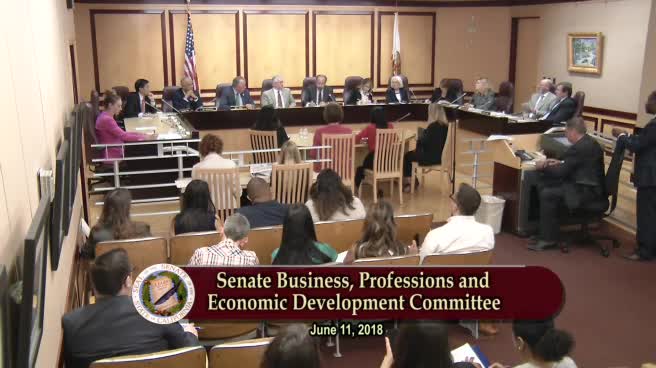 7MIN
Senate Standing Committee on Business, Professions and Economic Development
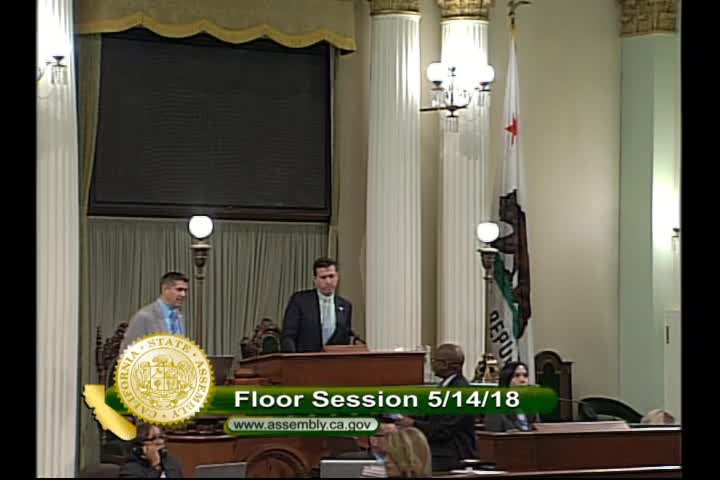 5MIN
Assembly Floor
 3MIN
Assembly Standing Committee on Appropriations
 4MIN
Assembly Standing Committee on Labor and Employment
Bill Author

Bill Co-Author(s):