AB 2802: Insurance payments: interception.
- Session Year: 2017-2018
- House: Assembly
- Latest Version Date: 2018-09-17
Existing law creates the Department of Child Support Services and provides for the interception of funds from state tax refunds, lottery winnings, unemployment compensation benefits, and benefits under the Public Employees Retirement System that otherwise would be paid to a person owing past due child support. Existing law creates the Department of Insurance, headed by the Insurance Commissioner, and prescribes the departments powers and duties.
This bill would, beginning January 1, 2020, require an insurer to cooperate with the Department of Child Support Services to identify claimants who are also obligors who owe past-due child support, and to report those claimants to the department. The bill would require an insurer to identify and report a claimant if his or her claim seeks an economic benefit, as defined, but would exempt specified economic benefits, including a payment to the mortgagee or lienholder of the property or a payment from an accelerated death benefit, and would limit withholding from a qualifying disability insurance payment to 50% of the claim for the benefits. The bill would require an insurer to comply with the requirements of a notice from the Department of Child Support Services that a reported insurance claim is payable to an obligor who owes past-due child support, unless the notice is received after the insurer has paid the claim. The bill would provide that an insurer, specified agent, specified insured, and a central reporting organization, as defined, that releases information in accordance with this bill, withholds payments, as specified, and makes disbursements, as specified, is immune from liability under certain circumstances. The bill would also require that the data obtained by the department, or by an insurer or its designated agent, only be used for the purpose of identifying claimants who are also obligors who owe past-due child support, and would specify that various laws protecting the privacy and security of data apply. The bill would authorize an insurer to use a central reporting organization to automate its claims identifying process, and would require an insurer that does not use a central reporting organization to determine if a claimant owes past-due child support before paying a claim, as specified.
Existing constitutional provisions require that a statute that limits the right of access to the meetings of public bodies or the writings of public officials and agencies be adopted with findings demonstrating the interest protected by the limitation and the need for protecting that interest.
This bill would make legislative findings to that effect.
Existing law creates the Department of Child Support Services and provides for the interception of funds from state tax refunds, lottery winnings, unemployment compensation benefits, and benefits under the Public Employees Retirement System that otherwise would be paid to a person owing past due child support. Existing law creates the Department of Insurance, headed by the Insurance Commissioner, and prescribes the departments powers and duties.
This bill would, beginning January 1, 2020, require an insurer to cooperate with the Department of Child Support Services to identify claimants who are also obligors who owe past-due child support, and to report those claimants to the department. The bill would require an insurer to identify and report a claimant if his or her claim seeks an economic benefit, as defined, but would exempt specified economic benefits, including a payment to the mortgagee or lienholder of the property or a payment from an accelerated death benefit. benefit, and would limit withholding from a qualifying disability insurance payment to 50% of the claim for the benefits. The bill would require an insurer to comply with the requirements of a notice from the Department of Child Support Services that a reported insurance claim is payable to an obligor who owes past-due child support, unless the notice is received after the insurer has paid the claim. The bill would provide that an insurer, specified agent, specified insured, and a central reporting organization, as defined, that releases information in accordance with this bill, withholds payments, as specified, and makes disbursements, as specified, is immune from liability under certain circumstances. The bill would also require that the data obtained by the department, or by an insurer or its designated agent, only be used for the purpose of identifying claimants who are also obligors who owe past-due child support, and would specify that various laws protecting the privacy and security of data apply. The bill would authorize an insurer to use a central reporting organization to automate its claims identifying process, and would require an insurer that does not use a central reporting organization to determine if a claimant owes past-due child support before paying a claim, as specified.
Existing constitutional provisions require that a statute that limits the right of access to the meetings of public bodies or the writings of public officials and agencies be adopted with findings demonstrating the interest protected by the limitation and the need for protecting that interest.
This bill would make legislative findings to that effect.
Existing law creates the Department of Child Support Services and provides for the interception of funds from state tax refunds, lottery winnings, unemployment compensation benefits, and benefits under the Public Employees Retirement System that otherwise would be paid to a person owing past due child support. Existing law creates the Department of Insurance, headed by the Insurance Commissioner, and prescribes the departments powers and duties.
This bill would, beginning January 1, 2020, require an insurer to cooperate with the Department of Child Support Services to match identify claimants with who are also obligors who owe past-due child support, and to report those claimants to the department. The bill would require an insurer to match identify and report a claimant if his or her claim seeks an economic benefit, as defined, but would exempt specified economic benefits, including a claim under a personal automobile insurance policy for actual repair, replacement, or loss of use of an insured vehicle. payment to the mortgagee or lienholder of the property or a payment from an accelerated death benefit. The bill would require an insurer to comply with the requirements of a notice from the Department of Child Support Services that a reported insurance claim is payable to an obligor who owes past-due child support, unless the notice is received after the insurer has paid the claim. The bill would provide that an insurer, specified agent, specified insured, and a central reporting organization, as defined, that releases information in accordance with this bill, withholds payments, as specified, and makes disbursements, as specified, is immune from liability under certain circumstances. The bill would also require that the data obtained by the department, or by an insurer or its designated agent, only be used for the purpose of matching identifying claimants with who are also obligors who owe past-due child support, and would specify that various laws protecting the privacy and security of data apply. The bill would authorize an insurer to use a central reporting organization to automate its claims matching identifying process, and would require an insurer that does not use a central reporting organization to determine if a claimant owes past-due child support before paying a claim, as specified.
Existing constitutional provisions require that a statute that limits the right of access to the meetings of public bodies or the writings of public officials and agencies be adopted with findings demonstrating the interest protected by the limitation and the need for protecting that interest.
This bill would make legislative findings to that effect.
Existing law creates the Department of Child Support Services and provides for the interception of funds from state tax refunds, lottery winnings, unemployment compensation benefits, and benefits under the Public Employees Retirement System that otherwise would be paid to a person owing past due child support. Existing law creates the Department of Insurance, headed by the Insurance Commissioner, and prescribes the departments powers and duties.
This bill would, beginning January 1, 2020, require an insurer to cooperate with the Department of Child Support Services to match claimants with obligors who owe past-due child support, and to report those claimants to the department. The bill would require an insurer to match and report a claimant if his or her claim seeks an economic benefit, as defined, but would exempt specified economic benefits, including a claim under a personal automobile insurance policy for actual repair, replacement, or loss of use of an insured vehicle. The bill would provide that an insurer, specified agent, or specified insured who specified insured, and a central reporting organization, as defined, that releases information in accordance with this bill, withholds payments payments, as specified, or makes disbursements as specified and makes disbursements, as specified, is immune from liability in specified under certain circumstances. The bill would also require that the data obtained by the department, or by an insurer or its designated agent, only be used for the purpose of matching claimants with obligors who owe past-due child support, and would specify that various laws protecting the privacy and security of data apply. The bill would authorize an insurer to use a 3rd-party service central reporting organization to automate its claims matching process, and would require an insurer that does not use a 3rd-party service central reporting organization to determine if a claimant owes past-due child support before paying a claim, as specified.
Existing constitutional provisions require that a statute that limits the right of access to the meetings of public bodies or the writings of public officials and agencies be adopted with findings demonstrating the interest protected by the limitation and the need for protecting that interest.
This bill would make legislative findings to that effect.
Existing law creates the Department of Child Support Services and provides for the interception of funds from state tax refunds, lottery winnings, unemployment compensation benefits, and benefits under the Public Employees Retirement System that otherwise would be paid to a person owing past due child support. Existing law creates the Department of Insurance, headed by the Insurance Commissioner, and prescribes the departments powers and duties.
This bill would create the Insurance Payment Intercept Program within the Department of Insurance and would require the department, in consultation with the Department of Child Support Services and representatives of the insurance industry in the state, to establish the program to improve the enforcement of child support, as specified. would, beginning January 1, 2020, require an insurer to cooperate with the Department of Child Support Services to match claimants with obligors who owe past-due child support, and to report those claimants to the department. The bill would require an insurer to match and report a claimant if his or her claim seeks an economic benefit, as defined, but would exempt specified economic benefits, including a claim under a personal automobile insurance policy for actual repair, replacement, or loss of use of an insured vehicle. The bill would provide that an insurer who participates in the program may not incur an obligation or insurer, specified agent, or specified insured who releases information in accordance with this bill, withholds payments as specified, or makes disbursements as specified is immune from liability in specified circumstances. The bill would also require that the data obtained pursuant to the program by the department, or by an insurer or its designated agent, only be used for the purpose of identifying child support obligors, as defined, matching claimants with obligors who owe past-due child support, and would specify that various laws protecting the privacy and security of data apply. The bill would require the Department of Insurance, on or before January 1, 2020, to measure admitted insurer participation in the Insurance Payment Intercept Program, and, if participation is less than 90% of the marketplace, as defined, would require all admitted insurers to participate in the program no later than January 1, 2021. The bill would authorize the commissioner to adopt rules and regulations if the program becomes mandatory. The bill would also require the Department of Insurance to prepare a report on insurer participation in the program and provide the report on its Internet Web site. The bill would make related findings and declarations. authorize an insurer to use a 3rd-party service to automate its claims matching process, and require an insurer that does not use a 3rd-party service to determine if a claimant owes past-due child support before paying a claim, as specified.
Existing constitutional provisions require that a statute that limits the right of access to the meetings of public bodies or the writings of public officials and agencies be adopted with findings demonstrating the interest protected by the limitation and the need for protecting that interest.
This bill would make legislative findings to that effect.
Existing law creates the Department of Child Support Services and provides for the interception of funds from state tax refunds, lottery winnings, unemployment compensation benefits, and benefits under the Public Employees Retirement System that otherwise would be paid to a person owing past due child support. Existing law creates the Department of Insurance, headed by the Insurance Commissioner, and prescribes the departments powers and duties.
This bill would create the Insurance Payment Intercept Program within the Department of Insurance and would require the department, in consultation with the Department of Child Support Services and representatives of the insurance industry in the state, to establish the program to improve the enforcement of child support, as specified. The bill would provide that an insurer who participates in the program may not incur an obligation or liability in specified circumstances. The bill would also require that the data obtained pursuant to the program only be used for the purpose of identifying child support obligors, as defined, and would specify that various laws protecting the privacy and security of data apply. The bill would require the Department of Insurance, on or before January 1, 2020, to measure admitted insurer participation in the Insurance Payment Intercept Program, and, if participation is less than 90% of the marketplace, as defined, would require all admitted insurers to participate in the program no later than January 1, 2021. The bill would authorize the commissioner to adopt rules and regulations if the program becomes mandatory. The bill would also require the Department of Insurance to prepare a report on insurer participation in the program and provide the report on its Internet Web site. The bill would make related findings and declarations.
Existing constitutional provisions require that a statute that limits the right of access to the meetings of public bodies or the writings of public officials and agencies be adopted with findings demonstrating the interest protected by the limitation and the need for protecting that interest.
This bill would make legislative findings to that effect.
(a)An insurer shall cooperate with the Department of Child Support Services to identify claimants who are also obligors who owe past-due child support and report those claimants to the Department of Child Support Services.
(b)An insurer shall identify and report a claimant to the Department of Child Support Services if the claim seeks an economic benefit for an obligor who owes past-due child support.
(1)An economic benefit under a life insurance policy, disability income insurance policy, or annuity means a payment totaling at least one thousand dollars ($1,000) in which an individual is paid as the payee or copayee for any of the following:
(A)A claim by a beneficiary under a life insurance policy.
(B)A payment of the cash surrender value of a life insurance policy or annuity.
(C)A payment to an annuitant.
(D)A payment from a disability income insurance policy.
(E)A loan against the cash value or surrender value of an insurance policy or annuity, including loans for premium payments.
(2)An economic benefit under a property and casualty insurance policy means a payment totaling at least one thousand dollars ($1,000), not including a claim for property damage, under a liability insurance policy or underinsured motorist policy issued by an insurance company authorized to do business in this state.
(c)Notwithstanding subdivision (b), and except as provided in subdivision (h), a claimant with any of following economic benefits shall not be reported:
(1)Payments made after the claimant presents a final bill or signed invoice from a vendor or repair facility showing payment made by the claimant for repair or replacement of the damaged property in an amount equal to or greater than the insurance payment.
(2)Payments to the mortgagee or lienholder of the property.
(3)Payments resulting from an accelerated death benefit.
(4)A claim for benefits assigned to be paid to a health care provider or facility for actual medical expenses owed by the insured that are not otherwise paid or reimbursed, or a payment made after the claimant provides proof of the amount actually paid by the claimant to a health care provider if the amount is at least as much as the insurance payment, but not any amounts billed but not paid.
(5)A claim for benefits to be paid under a limited benefit insurance policy that provides one of the following:
(A)Coverage for one or more specified diseases or illnesses.
(B)Dental or vision benefits.
(C)Hospital indemnity or other fixed indemnity coverage.
(D)Accident only coverage.
(6)A claim for benefits that are the result of a state of emergency, as defined in Section 8558 of the Government Code.
(7)A claim for benefits under a workers compensation policy, except as provided in Section 17510 of the Family Code and Section 138.5 of the Labor Code.
(d)An insurer in California subject to the requirements of this article shall identify and report a claimant to the Department of Child Support Services if any of the following apply:
(1)A payment is made to the owner of a life policy or annuity that was issued to the owner while residing or located in California.
(2)A beneficiary making a claim resides or is located in California.
(3)A claimant is making a property claim for property located in California.
(e)Withholding from a qualifying disability insurance payment made to an obligor who owes past-due child support shall be limited to 50 percent of the claim for benefits.
(f)(1)If an insurer identifies a claimant as an obligor who owes past-due child support and reports the claimant to the Department of Child Support Services, the Department of Child Support Services shall provide the insurer with either of the following to secure the payment of the amount of past-due child support:
(A)A notice of child support lien.
(B)An income-withholding order.
(2)Upon receiving notice from the Department of Child Support Services that a reported insurance claim is payable to an obligor with a child support delinquency, an insurer shall comply with the requirements of the notice.
(3)Notwithstanding paragraph (2), this section does not require an insurer to comply with a notice from the Department of Child Support Services on a reported insurance claim payable to an obligor with a child support delinquency if the notice is received after the insurer has paid the claim.
(g)For the purposes of this section, insurer includes a fraternal benefit society.
(h)This section does not prohibit an insurer from cooperating voluntarily with the Department of Child Support Services to identify claimants who are also obligors who owe past-due child support and report those claimants to the Department of Child Support Services.
13551.Notwithstanding any other law, an insurer or insurance company, its directors, agents, and employees, an insured individual on whose behalf the company makes a payment, and a central reporting organization and its respective employees and agents authorized by an insurer to act on its behalf who, in good faith, release information in accordance with this article, withhold amounts from payment based on the latest information supplied by the Department of Child Support Services pursuant to Section 13550, or make disbursements in accordance with Section 13550 shall be in compliance with this section and any applicable fair claim settlement act, and shall be immune from any liability to the claimant or other interested party arising from the payment.
13552.(a)Data obtained pursuant to this article shall only be used for the purpose of identifying claimants who are also obligors who owe past-due child support. If the Department of Child Support Services does not identify an obligor in the data obtained pursuant to this article with a child support obligor, the Department of Child Support Services shall not maintain that data and shall immediately destroy that data.
(b)An insurer that provides, attempts to provide, or in any way accesses data pursuant to this article shall comply with all applicable state and federal laws for the protection of the privacy and the security of that data, including, but not limited to, the Insurance Information and Privacy Protection Act (Article 6.6 (commencing with Section 791) of Chapter 1 of Part 2 of Division 1), the Information Practices Act of 1977 (Chapter 1 (commencing with Section 1798) of Title 1.8 of Part 4 of Division 3 of the Civil Code), and the federal Health Insurance Portability and Accountability Act of 1996 (Public Law 104-191).
(c)The Department of Child Support Services shall consider any information received from an insurer as confidential. That information shall be used or disclosed only for the purpose of collecting past-due child support.
(d)Information provided by the Department of Child Support Services to an insurer, or its designated agent, for the purpose of identifying claimants who are also obligors shall not be used by the insurer or its agent for any other purpose, and shall not be disclosed to any person except to the extent necessary to identify and report a claimant who owes past-due child support. This subdivision does not apply to information contained in a child support lien or an income-withholding order received from the Department of Child Support Services after the insurer has identified and reported a claimant.
(e)This section does not prohibit the Department of Child Support Services from disclosing aggregate data that does not reveal personally identifying information.
13553.(a)An insurer may satisfy its obligation to identify and report a claimant who owes past-due child support through the use of a central reporting organization. If an insurer does not use a central reporting organization to automate the process, the insurer shall determine if the claimant owes past-due child support before paying a claim.
(b)For claims involving periodic payments after the insurer has determined that benefits will be paid, the insurer shall only determine if the claimant owes past-due child support before the initial payment and either 12 months thereafter, or the insurer may provide a copy of the settlement to the Department of Child Support Services.
(c)If a central reporting organization identifies a claimant who is also an obligor, the central reporting organization shall notify the Department of Child Support Services, and the Department of Child Support Services shall follow the requirements of subdivision (e) of Section 13550.
13554.For the purposes of this article, central reporting organization means a third-party service that automates the claims identifying process or provides interactive lookups.
13555.This article shall become operative on January 1, 2020.
SEC. 2.The Legislature finds and declares that Section 1 of this act, which adds Section 13552 to the Insurance Code, imposes a limitation on the publics right of access to the meetings of public bodies or the writings of public officials and agencies within the meaning of Section 3 of Article I of the California Constitution. Pursuant to that constitutional provision, the Legislature makes the following findings to demonstrate the interest protected by this limitation and the need for protecting that interest:
In order to protect the privacy of insurance claimants and persons owed past-due support, it is necessary that the data obtained by the Department of Child Support Services from insurers pursuant to this act be kept confidential.
(a)An insurer shall cooperate with the Department of Child Support Services to identify claimants who are also obligors who owe past-due child support and report those claimants to the Department of Child Support Services.
(b)An insurer shall identify and report a claimant to the Department of Child Support Services if the claim seeks an economic benefit for an obligor who owes past-due child support.
(1)An economic benefit under a life insurance policy, disability income insurance policy, or annuity means a payment totaling at least one thousand dollars ($1,000) in which an individual is paid as the payee or copayee for any of the following:
(A)A claim by a beneficiary under a life insurance policy.
(B)A payment of the cash surrender value of a life insurance policy or annuity.
(C)A payment to an annuitant.
(D)A payment from a disability income insurance policy.
(E)A loan against the cash value or surrender value of an insurance policy or annuity, including loans for premium payments.
(2)An economic benefit under a property and casualty insurance policy means a payment totaling at least one thousand dollars ($1,000), not including a claim for property damage, under a liability insurance policy or underinsured motorist policy issued by an insurance company authorized to do business in this state.
(c)Notwithstanding subdivision (b), a claimant with any of following economic benefits shall not be reported:
(1)Payments made after the claimant presents a final bill or signed invoice from a vendor or repair facility showing payment made by the claimant for repair or replacement of the damaged property in an amount equal to or greater than the insurance payment.
(2)Payments to the mortgagee or lienholder of the property.
(3)Payments resulting from an accelerated death benefit.
(4)A claim for benefits assigned to be paid to a health care provider or facility for actual medical expenses owed by the insured that are not otherwise paid or reimbursed, or a payment made after the claimant provides proof of the amount actually paid by the claimant to a health care provider if the amount is at least as much as the insurance payment, but not any amounts billed but not paid.
(5)A claim for benefits to be paid under a limited benefit insurance policy that provides one of the following:
(A)Coverage for one or more specified diseases or illnesses.
(B)Dental or vision benefits.
(C)Hospital indemnity or other fixed indemnity coverage.
(D)Accident only coverage.
(6)A claim for benefits arising out of a natural catastrophe. that are the result of a state of emergency, as defined in Section 8558 of the Government Code.
(d)An insurer in California subject to the requirements of this article shall identify and report a claimant to the Department of Child Support Services if any of the following apply:
(1)A payment is made to the owner of a life policy or annuity that was issued to the owner while residing or located in California.
(2)A beneficiary making a claim resides or is located in California.
(3)A claimant is making a property claim for property located in California.
(e)Withholding from a qualifying disability insurance payment made to an obligor who owes past-due child support shall be limited to 50 percent of the claim for benefits.
(e)(f)(1)If an insurer identifies a claimant as an obligor who owes past-due child support and reports the claimant to the Department of Child Support Services, the Department of Child Support Services shall provide the insurer with either of the following to secure the payment of the amount of past-due child support:
(A)A notice of child support lien.
(B)An income-withholding order.
(2)Upon receiving notice from the Department of Child Support Services that a reported insurance claim is payable to an obligor with a child support delinquency, an insurer shall comply with the requirements of the notice.
(3)Notwithstanding paragraph (2), this section does not require an insurer to comply with a notice from the Department of Child Support Services on a reported insurance claim payable to an obligor with a child support delinquency if the notice is received after the insurer has paid the claim.
(f)(g)For the purposes of this section, insurer includes a fraternal benefit society.
(g)(h)This section does not prohibit an insurer from cooperating voluntarily with the Department of Child Support Services to identify claimants who are also obligors who owe past-due child support and report those claimants to the Department of Child Support Services.
13551.Notwithstanding any other law, an insurer or insurance company, its directors, agents, and employees, an insured individual on whose behalf the company makes a payment, and a central reporting organization and its respective employees and agents authorized by an insurer to act on its behalf who who, in good faith, release information in accordance with this article, who withhold amounts from payment based on the latest information supplied by the Department of Child Support Services pursuant to Section 13550, and who or make disbursements in good faith and in accordance with Section 13550 shall be in compliance with this section and any applicable fair claim settlement act, and shall be immune from any liability to the claimant or other interested party arising from the payment.
13552.(a)Data obtained pursuant to this article shall only be used for the purpose of identifying claimants who are also obligors who owe past-due child support. If the Department of Child Support Services does not identify an obligor in the data obtained pursuant to this article with a child support obligor, the Department of Child Support Services shall not maintain that data and shall immediately destroy that data.
(b)An insurer that provides, attempts to provide, or in any way accesses data pursuant to this article shall comply with all applicable state and federal laws for the protection of the privacy and the security of that data, including, but not limited to, the Insurance Information and Privacy Protection Act (Article 6.6 (commencing with Section 791) of Chapter 1 of Part 2 of Division 1), the Information Practices Act of 1977 (Chapter 1 (commencing with Section 1798) of Title 1.8 of Part 4 of Division 3 of the Civil Code), and the federal Health Insurance Portability and Accountability Act of 1996 (Public Law 104-191).
(c)The Department of Child Support Services shall consider any information received from an insurer as confidential. That information shall be used or disclosed only for the purpose of collecting past-due child support.
(d)Information provided by the Department of Child Support Services to an insurer, or its designated agent, for the purpose of identifying claimants who are also obligors shall not be used by the insurer or its agent for any other purpose, and shall not be disclosed to any person except to the extent necessary to identify and report a claimant who owes past-due child support. This subdivision does not apply to information contained in a child support lien or an income-withholding order received from the Department of Child Support Services after the insurer has identified and reported a claimant.
(e)This section does not prohibit the Department of Child Support Services from disclosing aggregate data that does not reveal personally identifying information.
13553.(a)An insurer may satisfy its obligation to identify and report a claimant who owes past-due child support through the use of a central reporting organization. If an insurer does not use a central reporting organization to automate the process, the insurer shall determine if the claimant owes past-due child support before paying a claim.
(b)For claims involving periodic payments after the insurer has determined that benefits will be paid, the insurer shall only determine if the claimant owes past-due child support before the initial payment and every either 12 months thereafter. thereafter, or the insurer may provide a copy of the settlement to the Department of Child Support Services.
(c)If a central reporting organization identifies a claimant who is also an obligor, the central reporting organization shall notify the Department of Child Support Services, and the Department of Child Support Services shall follow the requirements of subdivision (e) of Section 13550.
13554.For the purposes of this article, central reporting organization means a third-party service that automates the claims identifying process or provides interactive lookups.
13555.This article shall become operative on January 1, 2020.
SEC. 2.The Legislature finds and declares that Section 1 of this act, which adds Section 13552 to the Insurance Code, imposes a limitation on the publics right of access to the meetings of public bodies or the writings of public officials and agencies within the meaning of Section 3 of Article I of the California Constitution. Pursuant to that constitutional provision, the Legislature makes the following findings to demonstrate the interest protected by this limitation and the need for protecting that interest:
In order to protect the privacy of insurance claimants and persons owed past-due support, it is necessary that the data obtained by the Department of Child Support Services from insurers pursuant to this act be kept confidential.
(a)An insurer shall cooperate with the Department of Child Support Services to match identify claimants with who are also obligors who owe past-due child support and report those claimants to the Department of Child Support Services.
(b)An insurer shall match identify and report a claimant to the Department of Child Support Services if the claim seeks an economic benefit for an obligor who owes past-due child support.
(1)An economic benefit under a life insurance policy, disability income insurance policy, or annuity means a payment totaling at least one thousand dollars ($1,000) in which an individual is paid as the payee or copayee for any of the following:
(A)A claim by a beneficiary under a life insurance policy.
(B)A payment of the cash surrender value of a life insurance policy or annuity.
(C)A payment to an annuitant.
(D)A payment from a disability income insurance policy.
(E)A loan against the cash value or surrender value of an insurance policy or annuity, including loans for premium payments.
(2)(A)An economic benefit under a property and casualty insurance policy means a payment involving loss of, or damage to, property. totaling at least one thousand dollars ($1,000), not including a claim for property damage, under a liability insurance policy or underinsured motorist policy issued by an insurance company authorized to do business in this state.
(B)An insurer shall not match and report a claimant if his or her economic benefit under a property and casualty insurance policy is any of the following:(i)A claim under a personal automobile insurance policy for actual repair, replacement, or loss of use of an insured vehicle.(ii)A payment compensating the insured for the total loss of an insured vehicle.(iii)A claim under a residential property insurance policy for actual repair, replacement, or loss of use of an insured dwelling and contents, including additional living expenses actually incurred.(c)Notwithstanding subdivision (b), a claimant with any of following economic benefits shall not be reported:
(1)Payments made after the claimant presents a final bill or signed invoice from a vendor or repair facility showing payment made by the claimant for repair or replacement of the damaged property in an amount equal to or greater than the insurance payment.
(2)Payments to the mortgagee or lienholder of the property.
(3)Payments resulting from an accelerated death benefit.
(4)A claim for benefits assigned to be paid to a health care provider or facility for actual medical expenses owed by the insured that are not otherwise paid or reimbursed, or a payment made after the claimant provides proof of the amount actually paid by the claimant to a health care provider if the amount is at least as much as the insurance payment, but not any amounts billed but not paid.
(5)A claim for benefits to be paid under a limited benefit insurance policy that provides one of the following:
(A)Coverage for one or more specified diseases or illnesses.
(B)Dental or vision benefits.
(C)Hospital indemnity or other fixed indemnity coverage.
(D)Accident only coverage.
(6)A claim for benefits arising out of a natural catastrophe.
(d)An insurer in California subject to the requirements of this article shall match identify and report a claimant to the Department of Child Support Services if any of the following apply:
(1)A payment is made to the owner of a life policy or annuity that was issued to the owner while residing or located in California.
(2)A beneficiary making a claim resides or is located in California.
(3)A claimant is making a property claim for property located in California.
(e)(1)If an insurer matches identifies a claimant with as an obligor who owes past-due child support and reports the claimant to the Department of Child Support Services, the Department of Child Support Services shall provide the insurer with either of the following to secure the payment of the amount of past-due child support:
(1)(A)A notice of child support lien.
(2)(B)An income-withholding order.
(2)Upon receiving notice from the Department of Child Support Services that a reported insurance claim is payable to an obligor with a child support delinquency, an insurer shall comply with the requirements of the notice.
(3)Notwithstanding paragraph (2), this section does not require an insurer to comply with a notice from the Department of Child Support Services on a reported insurance claim payable to an obligor with a child support delinquency if the notice is received after the insurer has paid the claim.
(f)For the purposes of this section, insurer includes a fraternal benefit society.
(g)This section does not prohibit an insurer from cooperating voluntarily with the Department of Child Support Services to identify claimants who are also obligors who owe past-due child support and report those claimants to the Department of Child Support Services.
13551.Notwithstanding any other law, an insurer or insurance company, its directors, agents, and employees, an insured individual on whose behalf the company makes a payment, and a central reporting organization and its respective employees and agents authorized by an insurer to act on its behalf who release information in accordance with this article, who withhold amounts from payment based on the latest information supplied by the Department of Child Support Services pursuant to Section 13550, and who make disbursements in good faith and in accordance with Section 13550 shall be in compliance with this section and any applicable fair claim settlement act, and shall be immune from any liability to the claimant or other interested party arising from the payment.
13552.(a)Data obtained pursuant to this article shall only be used for the purpose of matching identifying claimants with who are also obligors who owe past-due child support. If the Department of Child Support Services does not find a match identify an obligor in the data obtained pursuant to this article with a child support obligor, the Department of Child Support Services shall not maintain that data and shall immediately destroy that data.
(b)An insurer that provides, attempts to provide, or in any way accesses data pursuant to this article shall comply with all applicable state and federal laws for the protection of the privacy and the security of that data, including, but not limited to, the Insurance Information and Privacy Protection Act (Article 6.6 (commencing with Section 791) of Chapter 1 of Part 2 of Division 1), the Information Practices Act of 1977 (Chapter 1 (commencing with Section 1798) of Title 1.8 of Part 4 of Division 3 of the Civil Code), and the federal Health Insurance Portability and Accountability Act of 1996 (Public Law 104-191).
(c)The Department of Child Support Services shall consider any information received from an insurer as confidential. That information shall be used or disclosed only for the purpose of collecting past-due child support.
(d)Information provided by the Department of Child Support Services to an insurer, or its designated agent, for the purpose of conducting a data match identifying claimants who are also obligors shall not be used by the insurer or its agent for any other purpose, and shall not be disclosed to any person except to the extent necessary to match identify and report a claimant who owes past-due child support. The insurer or its agent shall destroy or erase all information provided to the insurer after completion of matching and reporting. This subdivision does not apply to information contained in a child support lien or an income-withholding order received from the Department of Child Support Services after the insurer has matched identified and reported a claimant.
13553.(a)An insurer may satisfy its obligation to match identify and report a claimant who owes past-due child support through the use of a central reporting organization. If an insurer does not use a central reporting organization to automate the process, the insurer shall determine if the claimant owes past-due child support before paying a claim.
(b)For claims involving periodic payments after the insurer has determined that benefits will be paid, the insurer shall only determine if the claimant owes past-due child support before the initial payment and every 12 months thereafter.
(c)If a central reporting organization identifies a claimant who is also an obligor, the central reporting organization shall notify the Department of Child Support Services, and the Department of Child Support Services shall follow the requirements of subdivision (e) of Section 13550.
13554.For the purposes of this article, central reporting organization means a third-party service that automates the claims matching identifying process or provides interactive lookups.
13555.This article shall become operative on January 1, 2020.
SEC. 2.The Legislature finds and declares that Section 1 of this act, which adds Section 13552 to the Insurance Code, imposes a limitation on the publics right of access to the meetings of public bodies or the writings of public officials and agencies within the meaning of Section 3 of Article I of the California Constitution. Pursuant to that constitutional provision, the Legislature makes the following findings to demonstrate the interest protected by this limitation and the need for protecting that interest:
In order to protect the privacy of insurance claimants and persons owed past-due support, it is necessary that the data obtained by the Department of Child Support Services from insurers pursuant to this act be kept confidential.
(a)An insurer shall cooperate with the Department of Child Support Services to match claimants with obligors who owe past-due child support and report those claimants to the Department of Child Support Services.
(b)An insurer shall match and report a claimant to the Department of Child Support Services if the claim seeks an economic benefit for an obligor who owes past-due child support.
(1)An economic benefit under a life insurance policy, disability income insurance policy, or annuity means a payment in which an individual is paid as the payee or copayee for any of the following:
(A)A claim by a beneficiary under a life insurance policy.
(B)A payment of the cash surrender value of a life insurance policy or annuity.
(C)A payment to an annuitant.
(D)A payment from a disability income insurance policy.
(E)A loan against the cash value or surrender value of an insurance policy or annuity, including loans for premium payments.
(2)(A)An economic benefit under a property and casualty insurance policy means a payment involving loss of, or damage to, property.
(B)An insurer shall not match and report a claimant if his or her economic benefit under a property and casualty insurance policy is any of the following:
(i)A claim under a personal automobile insurance policy for actual repair, replacement, or loss of use of an insured vehicle.
(ii)A payment compensating the insured for the total loss of an insured vehicle.
(iii)A claim under a residential property insurance policy for actual repair, replacement, or loss of use of an insured dwelling and contents, including additional living expenses actually incurred.
(c)Notwithstanding subdivision (b), a claimant with any of following economic benefits shall not be reported:
(1)Payments made after the claimant presents a final bill or signed invoice from a vendor or repair facility showing payment made by the claimant for repair or replacement of the damaged property in an amount equal to or greater than the insurance payment.
(2)Payments to the mortgagee or lienholder of the property.
(3)Payments resulting from an accelerated death benefit.
(d)An insurer in California subject to the requirements of this article shall match and report a claimant to the Department of Child Support Services if any of the following apply:
(1)A payment is made to the owner of a life policy or annuity that was issued to the owner while residing or located in California.
(2)A beneficiary making a claim resides or is located in California.
(3)A claimant is making a property claim for property located in California.
(e)If an insurer matches a claimant with an obligor who owes past-due child support and reports the claimant to the Department of Child Support Services, the Department of Child Support Services shall provide the insurer with either of the following to secure the payment of the amount of past-due child support:
(1)A notice of child support lien.
(2)An income-withholding order.
(f)For the purposes of this section, insurer includes a fraternal benefit society.
13551.Notwithstanding any other law, an insurer or insurance company, its directors, agents, and employees, an insured individual on whose behalf the company makes a payment, and a central reporting organization and its respective employees and agents authorized by an insurer to act on its behalf who release information in accordance with this article, who withhold amounts from payment based on the latest information supplied by the Department of Child Support Services pursuant to Section 13550, and who make disbursements in good faith and in accordance with Section 13550 shall be in compliance with this section and any applicable fair claim settlement act, and shall be immune from any liability to the claimant or other interested party arising from the payment.
13552.(a)Data obtained pursuant to this article shall only be used for the purpose of matching claimants with obligors who owe past-due child support. If the Department of Child Support Services does not find a match in the data obtained pursuant to this article with a child support obligor, the Department of Child Support Services shall not maintain that data and shall immediately destroy that data.
(b)An insurer that provides, attempts to provide, or in any way accesses data pursuant to this article shall comply with all applicable state and federal laws for the protection of the privacy and the security of that data, including, but not limited to, the Insurance Information and Privacy Protection Act (Article 6.6 (commencing with Section 791) of Chapter 1 of Part 2 of Division 1), the Information Practices Act of 1977 (Chapter 1 (commencing with Section 1798) of Title 1.8 of Part 4 of Division 3 of the Civil Code), and the federal Health Insurance Portability and Accountability Act of 1996 (Public Law 104-191).
(c)The Department of Child Support Services shall consider any information received from an insurer as confidential. That information shall be used or disclosed only for the purpose of collecting past-due child support.
(d)Information provided by the Department of Child Support Services to an insurer, or its designated agent, for the purpose of conducting a data match shall not be used by the insurer or its agent for any other purpose, and shall not be disclosed to any person except to the extent necessary to match and report a claimant who owes past-due child support. The insurer or its agent shall destroy or erase all information provided to the insurer after completion of matching and reporting. This subdivision does not apply to information contained in a child support lien or an income-withholding order received from the Department of Child Support Services after the insurer has matched and reported a claimant.
13553.(a)An insurer may satisfy its obligation to match and report a claimant who owes past-due child support through the use of a third-party service that automates the claims matching process or provides interactive lookups. central reporting organization. If an insurer does not use a third-party service central reporting organization to automate the process, the insurer shall determine if the claimant owes past-due child support before paying a claim.
(b)For claims involving periodic payments after the insurer has determined that benefits will be paid, the insurer shall only determine if the claimant owes past-due child support before the initial payment and every 12 months thereafter.
13554.For the purposes of this article, central reporting organization means a third-party service that automates the claims matching process or provides interactive lookups.
13554. 13555.This article shall become operative on January 1, 2020.
SEC. 2.The Legislature finds and declares that Section 1 of this act, which adds Section 13552 to the Insurance Code, imposes a limitation on the publics right of access to the meetings of public bodies or the writings of public officials and agencies within the meaning of Section 3 of Article I of the California Constitution. Pursuant to that constitutional provision, the Legislature makes the following findings to demonstrate the interest protected by this limitation and the need for protecting that interest:
In order to protect the privacy of insurance claimants and persons owed past-due support, it is necessary that the data obtained by the Department of Child Support Services from insurers pursuant to this act be kept confidential.
(a)An insurer shall cooperate with the Department of Child Support Services to match claimants with obligors who owe past-due child support and report those claimants to the Department of Child Support Services.
(b)An insurer shall match and report a claimant to the Department of Child Support Services if the claim seeks an economic benefit for an obligor who owes past-due child support.
(1)An economic benefit under a life insurance policy, disability income insurance policy, or annuity means a payment in which an individual is paid as the payee or copayee for any of the following:
(A)A claim by a beneficiary under a life insurance policy.
(B)A payment of the cash surrender value of a life insurance policy or annuity.
(C)A payment to an annuitant.
(D)A payment from a disability income insurance policy.
(E)A loan against the cash value or surrender value of an insurance policy or annuity, including loans for premium payments.
(2)(A)An economic benefit under a property and casualty insurance policy means a payment involving loss of, or damage to, property.
(B)An insurer shall not match and report a claimant if his or her economic benefit under a property and casualty insurance policy is any of the following:
(i)A claim under a personal automobile insurance policy for actual repair, replacement, or loss of use of an insured vehicle.
(ii)A payment compensating the insured for the total loss of an insured vehicle.
(iii)A claim under a residential property insurance policy for actual repair, replacement, or loss of use of an insured dwelling and contents, including additional living expenses actually incurred.
(c)Notwithstanding subdivision (b), a claimant with any of following economic benefits shall not be reported:
(1)Payments made after the claimant presents a final bill or signed invoice from a vendor or repair facility showing payment made by the claimant for repair or replacement of the damaged property in an amount equal to or greater than the insurance payment.
(2)Payments to the mortgagee or lienholder of the property.
(3)Payments resulting from an accelerated death benefit.
(d)An insurer in California subject to the requirements of this article shall match and report a claimant to the Department of Child Support Services if any of the following apply:
(1)A payment is made to the owner of a life policy or annuity that was issued to the owner while residing or located in California.
(2)A beneficiary making a claim resides or is located in California.
(3)A claimant is making a property claim for property located in California.
(e)If an insurer matches a claimant with an obligor who owes past-due child support and reports the claimant to the Department of Child Support Services, the Department of Child Support Services shall provide the insurer with either of the following to secure the payment of the amount of past-due child support:
(1)A notice of child support lien.
(2)An income-withholding order.
(f)For the purposes of this section, insurer includes a fraternal benefit society.
13551.Notwithstanding any other law, an insurer or insurance company, its directors, agents, and employees, an insured individual on whose behalf the company makes a payment, and a central reporting organization and its respective employees authorized by an insurer to act on its behalf who release information in accordance with this article, who withhold amounts from payment based on the latest information supplied by the Department of Child Support Services pursuant to Section 13550, and who make disbursements in accordance with Section 13550 shall be in compliance with this section and any applicable fair claim settlement act, and shall be immune from any liability to the claimant or other interested party arising from the payment.
13552.(a)Data obtained pursuant to this article shall only be used for the purpose of matching claimants with obligors who owe past-due child support. If the Department of Child Support Services does not find a match in the data obtained pursuant to this article with a child support obligor, the Department of Child Support Services shall not maintain that data and shall immediately destroy that data.
(b)An insurer that provides, attempts to provide, or in any way accesses data pursuant to this article shall comply with all applicable state and federal laws for the protection of the privacy and the security of that data, including, but not limited to, the Insurance Information and Privacy Protection Act (Article 6.6 (commencing with Section 791) of Chapter 1 of Part 2 of Division 1), the Information Practices Act of 1977 (Chapter 1 (commencing with Section 1798) of Title 1.8 of Part 4 of Division 3 of the Civil Code), and the federal Health Insurance Portability and Accountability Act of 1996 (Public Law 104-191).
(c)The Department of Child Support Services shall consider any information received from an insurer as confidential. That information shall be used or disclosed only for the purpose of collecting past-due child support.
(d)Information provided by the Department of Child Support Services to an insurer, or its designated agent, for the purpose of conducting a data match shall not be used by the insurer or its agent for any other purpose, and shall not be disclosed to any person except to the extent necessary to match and report a claimant who owes past-due child support. The insurer or its agent shall destroy or erase all information provided to the insurer after completion of matching and reporting. This subdivision does not apply to information contained in a child support lien or an income-withholding order received from the Department of Child Support Services after the insurer has matched and reported a claimant.
13553.(a)An insurer may satisfy its obligation to match and report a claimant who owes past-due child support through the use of a third-party service that automates the claims matching process or provides interactive lookups. If an insurer does not use a third-party service to automate the process, the insurer shall determine if the claimant owes past-due child support before paying a claim.
(b)For claims involving periodic payments after the insurer has determined that benefits will be paid, the insurer shall only determine if the claimant owes past-due child support before the initial payment and every 12 months thereafter.
13554.This article shall become operative on January 1, 2020.
SEC. 2.The Legislature finds and declares that Section 1 of this act, which adds Section 13552 to the Insurance Code, imposes a limitation on the publics right of access to the meetings of public bodies or the writings of public officials and agencies within the meaning of Section 3 of Article I of the California Constitution. Pursuant to that constitutional provision, the Legislature makes the following findings to demonstrate the interest protected by this limitation and the need for protecting that interest:
In order to protect the privacy of insurance claimants and persons owed past-due support, it is necessary that the data obtained by the Department of Child Support Services from insurers pursuant to this act be kept confidential.
SECTION 1.The Legislature finds and declares the following:(a)In 1996, the United States Congress passed the federal Personal Responsibility and Work Opportunity Reconciliation Act of 1996, which allowed state child support agencies to obtain access, subject to privacy safeguards, to government and private records, including information about assets held by financial institutions, including insurance companies, and records held by private entities with respect to individuals who owe child support.(b)In 2005, Congress passed the federal Deficit Reduction Act of 2005, which authorized the United States Secretary of Health and Human Services to conduct matches of child support cases with insurers concerning insurance claims, settlements, awards, and payments and to furnish information resulting from the matches to child support enforcement agencies.(c)In 2000, Section 138.5 of the Labor Code and Section 17510 of the Family Code created the Workers Compensation Notification Project, which required the Division of Workers Compensation to cooperate with enforcement of child support obligations. (d)In 2002, the Department of Child Support Services created a voluntary program in which insurers could participate to match persons receiving insurance claim payments with child support obligors. (e)In 2015, approximately $17.6 million was intercepted annually through the voluntary program from insurance claim payments to satisfy child support arrearages.(f)Legislation is needed to increase insurer participation in the program because uniformity within the state will increase participation and interception. SEC. 2.Article 8 (commencing with Section 13550) is added to Chapter 2 of Division 3 of the Insurance Code, to read:8.Insurance Payment Intercept Program13550.The Insurance Payment Intercept Program is hereby established in furtherance of the enforcement of child support obligations in the state, and to enhance efforts to notify the Department of Child Support Services when an obligor is owed an insurance claim payment. 13551.For the purposes of this article:(a)Child support means a support obligation owing on behalf of a child pursuant to Section 4001 or 17400 of the Family Code, and includes child support delinquency, as defined in subdivision (c) of Section 17500 of the Family Code.(b)Obligor means a person owing a duty of support.(c)Arrearage or arrearages means the amount necessary to satisfy a child support judgment or order.13552.In consultation with the Department of Child Support Services and representatives of the insurance industry in this state, the Department of Insurance shall establish a program to improve the enforcement of child support. The program shall provide for the procedures, including data matches, under which insurers may voluntarily cooperate with the Department of Child Support Services, which will identify obligors who owe child support arrearages or who are subject to liens for child support arrearages in order to intercept insurance claim payments in satisfaction of the arrearage amounts. This article shall not delay payment of a claim.13553.(a)An insurer who participates in the provisions of this article shall not incur any obligation or liability to any person arising from any of the following:(1)Reporting information pursuant to Section 13552.(2)Withholding or transmitting payments pursuant to a notice from the Department of Child Support Services as a result of the data matching pursuant to Section 13552.(3)Any other action taken in good faith to comply with the requirements of this article.(b)Data obtained pursuant to this article shall only be used for the purpose of identifying child support obligors. If the Department of Child Support Services does not find a match in the data obtained pursuant to this article with a child support obligor, the Department of Child Support Services shall not maintain that data and shall immediately destroy that data.(c)An insurer that provides, attempts to provide, or in any way accesses data pursuant to this article shall comply with all applicable state and federal laws for the protection of the privacy and the security of that data, including, but not limited to, the Insurance Information and Privacy Protection Act (Article 6.6 (commencing with Section 791) of Chapter 1 of Part 2 of Division 1), the Information Practices Act of 1977 (Chapter 1 (commencing with Section 1798) of Title 1.8 of Part 4 of Division 3 of the Civil Code), and the federal Health Insurance Portability and Accountability Act of 1996 (Public Law 104-191).13554.If insurer participation becomes mandatory pursuant to subdivision (a) of Section 13556, the commissioner may adopt reasonable rules and regulations as are necessary to administer this article in accordance with the Administrative Procedure Act (Chapter 3.5 (commencing with Section 11340) of Part 1 of Division 3 of Title 2 of the Government Code).13555.On or before January 1, 2020, the department shall prepare a report on insurer participation in the Insurance Payment Intercept Program. The department shall provide the report on its Internet Web site.13556.(a)On or before January 1, 2020, the department shall measure admitted insurer participation in the Insurance Payment Intercept Program. If admitted insurer participation is less than 90 percent of the marketplace, then all admitted insurers shall be required to participate in the program described in this article by no later than January 1, 2021. The commissioner shall notify all admitted insurers of the requirement to participate in the program.(b)For the purposes of this section, marketplace means the total direct written premium by admitted insurers in California.SEC. 3.The Legislature finds and declares that Section 2 of this act, which adds Section 13553 to the Insurance Code, imposes a limitation on the publics right of access to the meetings of public bodies or the writings of public officials and agencies within the meaning of Section 3 of Article I of the California Constitution. Pursuant to that constitutional provision, the Legislature makes the following findings to demonstrate the interest protected by this limitation and the need for protecting that interest:In order to protect the privacy of insurance claimants and persons owed past-due support, it is necessary that the data obtained by the Department of Child Support Services from insurers pursuant to this act be kept confidential.The Legislature finds and declares the following:
(a)In 1996, the United States Congress passed the federal Personal Responsibility and Work Opportunity Reconciliation Act of 1996, which allowed state child support agencies to obtain access, subject to privacy safeguards, to government and private records, including information about assets held by financial institutions, including insurance companies, and records held by private entities with respect to individuals who owe child support.
(b)In 2005, Congress passed the federal Deficit Reduction Act of 2005, which authorized the United States Secretary of Health and Human Services to conduct matches of child support cases with insurers concerning insurance claims, settlements, awards, and payments and to furnish information resulting from the matches to child support enforcement agencies.
(c)In 2000, Section 138.5 of the Labor Code and Section 17510 of the Family Code created the Workers Compensation Notification Project, which required the Division of Workers Compensation to cooperate with enforcement of child support obligations.
(d)In 2002, the Department of Child Support Services created a voluntary program in which insurers could participate to match persons receiving insurance claim payments with child support obligors.
(e)In 2015, approximately $17.6 million was intercepted annually through the voluntary program from insurance claim payments to satisfy child support arrearages.
(f)Legislation is needed to increase insurer participation in the program because uniformity within the state will increase participation and interception.
SEC. 2.Article 8 (commencing with Section 13550) is added to Chapter 2 of Division 3 of the Insurance Code, to read:8.Insurance Payment Intercept Program13550.The Insurance Payment Intercept Program is hereby established in furtherance of the enforcement of child support obligations in the state, and to enhance efforts to notify the Department of Child Support Services when an obligor is owed an insurance claim payment.
13551.For the purposes of this article:
(a)Child support means a support obligation owing on behalf of a child pursuant to Section 4001 or 17400 of the Family Code, and includes child support delinquency, as defined in subdivision (c) of Section 17500 of the Family Code.
(b)Obligor means a person owing a duty of support.
(c)Arrearage or arrearages means the amount necessary to satisfy a child support judgment or order.
13552.In consultation with the Department of Child Support Services and representatives of the insurance industry in this state, the Department of Insurance shall establish a program to improve the enforcement of child support. The program shall provide for the procedures, including data matches, under which insurers may voluntarily cooperate with the Department of Child Support Services, which will identify obligors who owe child support arrearages or who are subject to liens for child support arrearages in order to intercept insurance claim payments in satisfaction of the arrearage amounts. This article shall not delay payment of a claim.
13553.(a)An insurer who participates in the provisions of this article shall not incur any obligation or liability to any person arising from any of the following:
(1)Reporting information pursuant to Section 13552.
(2)Withholding or transmitting payments pursuant to a notice from the Department of Child Support Services as a result of the data matching pursuant to Section 13552.
(3)Any other action taken in good faith to comply with the requirements of this article.
(b)Data obtained pursuant to this article shall only be used for the purpose of identifying child support obligors. If the Department of Child Support Services does not find a match in the data obtained pursuant to this article with a child support obligor, the Department of Child Support Services shall not maintain that data and shall immediately destroy that data.
(c)An insurer that provides, attempts to provide, or in any way accesses data pursuant to this article shall comply with all applicable state and federal laws for the protection of the privacy and the security of that data, including, but not limited to, the Insurance Information and Privacy Protection Act (Article 6.6 (commencing with Section 791) of Chapter 1 of Part 2 of Division 1), the Information Practices Act of 1977 (Chapter 1 (commencing with Section 1798) of Title 1.8 of Part 4 of Division 3 of the Civil Code), and the federal Health Insurance Portability and Accountability Act of 1996 (Public Law 104-191).
13554.If insurer participation becomes mandatory pursuant to subdivision (a) of Section 13556, the commissioner may adopt reasonable rules and regulations as are necessary to administer this article in accordance with the Administrative Procedure Act (Chapter 3.5 (commencing with Section 11340) of Part 1 of Division 3 of Title 2 of the Government Code).
13555.On or before January 1, 2020, the department shall prepare a report on insurer participation in the Insurance Payment Intercept Program. The department shall provide the report on its Internet Web site.
13556.(a)On or before January 1, 2020, the department shall measure admitted insurer participation in the Insurance Payment Intercept Program. If admitted insurer participation is less than 90 percent of the marketplace, then all admitted insurers shall be required to participate in the program described in this article by no later than January 1, 2021. The commissioner shall notify all admitted insurers of the requirement to participate in the program.
(b)For the purposes of this section, marketplace means the total direct written premium by admitted insurers in California.
SEC. 3.The Legislature finds and declares that Section 2 of this act, which adds Section 13553 to the Insurance Code, imposes a limitation on the publics right of access to the meetings of public bodies or the writings of public officials and agencies within the meaning of Section 3 of Article I of the California Constitution. Pursuant to that constitutional provision, the Legislature makes the following findings to demonstrate the interest protected by this limitation and the need for protecting that interest:
In order to protect the privacy of insurance claimants and persons owed past-due support, it is necessary that the data obtained by the Department of Child Support Services from insurers pursuant to this act be kept confidential.
|
Date
|
Status
|
|---|---|
| Sep 17, 2018 | Chaptered by Secretary of State - Chapter 439, Statutes of 2018. |
| Sep 17, 2018 | Approved by the Governor. |
| Sep 7, 2018 | Enrolled and presented to the Governor at 2:30 p.m. |
| Aug 29, 2018 | Assembly Rule 77 suspended. |
| Aug 28, 2018 | In Assembly. Concurrence in Senate amendments pending. May be considered on or after August 30 pursuant to Assembly Rule 77. |
| Aug 28, 2018 | Read third time. Passed. Ordered to the Assembly. |
| Aug 23, 2018 | Read second time. Ordered to third reading. |
| Aug 22, 2018 | Read third time and amended. Ordered to second reading. |
| Aug 21, 2018 | Ordered to special consent calendar. |
| Aug 17, 2018 | From committee: Do pass. (Ayes 7. Noes 0.) (August 16). |
| Aug 6, 2018 | In committee: Referred to APPR. suspense file. |
| Jul 3, 2018 | Read second time and amended. Re-referred to Com. on APPR. |
| Jul 2, 2018 | From committee: Amend, and do pass as amended and re-refer to Com. on APPR. (Ayes 12. Noes 0.) (June 27). |
| Jun 27, 2018 | From committee: Do pass and re-refer to Com. on INS. (Ayes 7. Noes 0.) (June 26). Re-referred to Com. on INS. |
| Jun 18, 2018 | From committee chair, with author's amendments: Amend, and re-refer to committee. Read second time, amended, and re-referred to Com. on JUD. |
| Jun 7, 2018 | Referred to Coms. on JUD. and INS. |
| May 31, 2018 | In Senate. Read first time. To Com. on RLS. for assignment. |
| May 30, 2018 | Read third time. Passed. Ordered to the Senate. |
| May 25, 2018 | From committee: Do pass. (Ayes 15. Noes 1.) (May 25). |
| May 9, 2018 | In committee: Set, first hearing. Referred to APPR. suspense file. |
| Apr 19, 2018 | Re-referred to Com. on APPR. |
| Apr 18, 2018 | Read second time and amended. |
| Apr 17, 2018 | From committee: Amend, and do pass as amended and re-refer to Com. on APPR. (Ayes 10. Noes 0.) (April 17). |
| Apr 4, 2018 | From committee: Do pass and re-refer to Com. on JUD. (Ayes 12. Noes 0.) (April 4). Re-referred to Com. on JUD. |
| Apr 2, 2018 | Re-referred to Com. on INS. |
| Mar 22, 2018 | From committee chair, with author's amendments: Amend, and re-refer to Com. on INS. Read second time and amended. |
| Mar 15, 2018 | Referred to Coms. on INS. and JUD. |
| Feb 17, 2018 | From printer. May be heard in committee March 19. |
| Feb 16, 2018 | Read first time. To print. |
|
Date
|
Description
|
Location
|
Votes
|
|
|---|---|---|---|---|
| Aug 29, 2018 | AB 2802 FRIEDMAN Concurrence in Senate Amendments | Assembly Floor |
Passed |
|
| Aug 28, 2018 | Assembly 3rd Reading AB2802 Friedman By Jackson | Senate Floor |
Passed |
|
| Aug 16, 2018 | Do pass | Senate Standing Committee on Appropriations |
Passed |
|
| Aug 6, 2018 | Placed on suspense file | Senate Standing Committee on Appropriations |
Passed |
|
| Jun 27, 2018 | Do pass as amended, but first amend, and re-refer to the Committee on [Appropriations] | Senate Standing Committee on Insurance |
Passed |
|
| Jun 26, 2018 | Do pass, but first be re-referred to the Committee on [Insurance] | Senate Standing Committee on Judiciary |
Passed |
|
| May 30, 2018 | AB 2802 FRIEDMAN Assembly Third Reading | Assembly Floor |
Passed |
|
| May 25, 2018 | Do pass. | Assembly Standing Committee on Appropriations |
Passed |
|
| Apr 17, 2018 | Do pass as amended and be re-referred to the Committee on [Appropriations] | Assembly Standing Committee on Judiciary |
Passed |
|
| Apr 4, 2018 | Do pass and be re-referred to the Committee on [Judiciary] | Assembly Standing Committee on Insurance |
Passed |
This list shows positions taken on this bill by organizations on the date displayed, which is linked to the original source.
Positions by individuals are not included.
CONCURRENCE IN SENATE AMENDMENTS
CSA1 Bill Id:AB 2802
Author:(Friedman)
As Amended Ver:August 22, 2018
Majority vote
ASSEMBLY: | 74-3 | (May 30, 2018) | SENATE: | 39-0 | (August 28, 2018) |
Original Committee Reference: INS.
SUMMARY: Requires insurers to participate in a program to "intercept" insurance payments to parents that have unpaid child support obligations (obligor). Specifically, this bill:
- Requires an insurer to check for unpaid child support obligations before issuing payments related to life insurance policies, annuities, disability income policies, and property insurance policies.
- Requires an insurer, if the recipient is an obligor, to redirect (commonly referred to as "intercept") that payment to the Department of Child Support Services (DCSS) to satisfy the unpaid child support obligation.
- Provides that payments to replace or repair lost or damaged property shall not be redirected.
- Requires DCSS to provide an insurer with either a child support lien or an income withholding order before the insurance payment is issued to DCSS.
- Includes fraternal benefit societies in the definition of insurer.
- Provides an insurer, its agents and employees, and the insured immunity from any liability arising out of the redirection of insurance payments authorized by the bill.
- Requires that information obtained and shared to comply with the requirements of the bill is confidential and is not to be used for any other purpose.
- Permits an insurer to satisfy the obligation to check for unpaid child support through a third party service.
- Requires an insurer issuing periodic payments to check for unpaid child support every twelve months.
- Delays implementation of the bill until January 1, 2020.
The Senate amendments:
- Require liability claim payments of $1,000 or more to be intercepted.
- Exempts payments from a range of specialty insurance plans from being intercepted.
- Clarify that permanent disability payments from a workers' compensation claim are exempt from being intercepted.
- Require that health care providers are paid for services related to the claim before intercepting the claim payment.
EXISTING LAW:
- Provides that a child's parents share equal responsibility to support the child in a manner suitable to the child's circumstances.
- Establishes DCSS and other public agencies to enforce liability for child or spousal support.
- Requires every employer and labor organization in the state to provide specified information, including earnings information, to the local child support agency or DCSS upon request.
- Requires the Employment Development Department to withhold from the unemployment compensation benefits or unemployment compensation disability benefits of individuals with unmet support obligations.
FISCAL EFFECT: According to the Senate Appropriations Committee:
- Unknown, significant costs to DCSS in the tens of thousands of dollars for data matching services. DCSS currently receives insurance match information from multiple sources, the primary of which being the Child Support Lien Network (CSLN). The CSLN contractor provides data matching services for a fee of $33.50 per match and has an annual cost of approximately $425,000. This bill will increase insurer participation, which will likely result in additional matches and increased costs.
- Potentially significant revenue for DCSS to the extent additional matches are made. This would also result in increased administrative costs to DCSS.
COMMENTS:
- Purpose. According to the author, child support is critical income for eligible families. Unfortunately, most families are not receiving all of the money that they are owed. In California alone, the total amount of unpaid child support is nearly $18 billion and over $116 billion in unpaid child support is due to families across the country. In 2002, DCSS created a voluntary program in which insurers could participate in matching persons who receive insurance claim payments with child support obligors and provide an opportunity to "intercept" those payments to pay past due child support. Unfortunately, only a small number of companies in California are voluntarily participating. In fiscal year 2016-2017, the California program only intercepted approximately $3.9 million, while the mandatory program in Texas intercepted $65 million. When Texas began requiring mandatory participation in 2009, they saw an initial 184% increase in child support collections from insurance payments. California has the potential to do the same by joining Texas and the six other states that have successful mandatory programs. Since 2011, CDI and DCSS have collaborated on increasing voluntary participation of insurance companies to assist in collecting past-due child support, but currently only 185 out of approximately 1,100 insurers participate in the voluntary program.
- Immunity. As the author correctly notes, above, many insurers choose not to participate in the voluntary intercept program currently available at the DCSS. The primary reason cited by insurers in this class is the lack of immunity from legal actions by parties who might otherwise be entitled to the insurance proceeds, but for the intercept, and from parties who are owed contractual and common law duties from the insurer. The three primary areas of concern involve the duty to defend the insured, the duty to indemnify the insured, and the contractual duty to pay the insured under the terms of the policy. A mandatory intercept program, at a minimum, impairs these obligations. It would be an unreasonably unfair burden on insurers to mandate that they participate in a program the on its face results in the insurer breaching these obligations. For this reason, the so-called Texas model, as well as the other states that have a mandatory intercept program, contains an immunity provision designed to protect the insurer for compliance with the intercept mandate.
AB 2802 in its current form also has an immunity protection for insurers that comply with the bill's mandate. As with other versions of mandatory intercept, this immunity provision is a necessary precondition to imposing the mandate. Absent immunity, insurers' in compliance with the mandate can be virtually assured to face litigation from parties who did not receive adequate defense, indemnity, or contractually guaranteed payments.
Nonetheless, in a prior iteration of a California mandatory intercept program proposal, an immunity provision was stripped out in the Senate Judiciary Committee. (See SB 585 (Leyva) of 2015.) With respect to AB 2802, the Committee may wish to consider seeking a commitment from the author that acknowledges that deletion or material change to the immunity provision would constitute a substantial substantive change in the bill, and that the bill would not be further pursued in that form.
- Previous Legislation. In 2015, Senate Bill 585 (Leyva) would have established a mandatory insurance intercept program to collect unpaid child support.
Analysis Prepared by: Paul Riches / INS. / (916) 319-2086 FN: 0005050
Office of Senate Floor Analyses (916) 651-1520 Fax: (916) 327-4478 | AB |
THIRD READING
Bill No: AB 2802
:
SENATE JUDICIARY COMMITTEE: 7-0, 6/26/18
AYES: Jackson, Moorlach, Anderson, Hertzberg, Monning, Stern, Wieckowski
SENATE INSURANCE COMMITTEE: 12-0, 6/27/18
AYES: Glazer, Gaines, Galgiani, Hernandez, Hertzberg, Hueso, Lara, Mitchell, Moorlach, Morrell, Portantino, Roth
NO VOTE RECORDED: Berryhill
SENATE APPROPRIATIONS COMMITTEE: 7-0, 8/16/18
AYES: Portantino, Bates, Beall, Bradford, Hill, Nielsen, Wiener
ASSEMBLY FLOOR: 74-3, 5/30/18 - See last page for vote
SUBJECT: Insurance payments: interception
SOURCE: California Department of Insurance
DIGEST: This bill establishes the Insurance Intercept Payment Program and requires insurers to cooperate with Department of Child Support Services (DCSS) to identify insurance claimants who are also obligors who owe past due child support, as specified.
Senate Floor Amendments of 8/22/18 clarify that the bill does not apply to claims for benefits under a workers’ compensation policy, except as otherwise provided in law.
Existing law:
- Grants the Insurance Commissioner broad powers to enforce the laws regulating the business of insurance in the state.
- Provides that the father and mother of a minor child have an equal responsibility to support their child in the manner suitable to the child’s circumstances.
- Creates the Financial Institution Data Match System whereby DCSS and the Franchise Tax Board match obligor’s information with financial institutions, and if a match is found, the DCSS can instruct the financial institution to remit or release the obligor’s funds in accordance with a court’s order.
- Provides that the Division of Worker’s Compensation, within the Department of Industrial Relations, shall assist in providing to the DCSS information concerning persons who are receiving permanent disability benefits.
- Permits a lien to be placed against a workers compensation claim for the reasonable living expenses of the spouse or minor children of the injured employee, or both, where the employee has deserted or is neglecting his or her family.
This bill:
- Establishes the Insurance Intercept Payment Program (program), and requires insurers to cooperate with DCSS to identify insurance claimants who are also obligors who owe past due child support.
- Defines an “economic benefit” subject to the provisions of the program under a life insurance policy, a payment of cash surrender value of a life insurance policy, a payment to an annuitant, a payment from a disability income insurance policy, or a loan against the cash value or surrender value of a life insurance policy or annuity as a claim payment totaling at least $1,000.
- Defines an “economic benefit” under a property and casualty insurance policy as a payment totaling at least $1,000, not including a claim for property damage under a liability insurance policy or underinsured motorist policy issued by an insurance company authorized to do business in the state.
- Specifies that insurers shall not match and report specified types of payments, including a claim for benefits assigned to be paid to a health care provider or facility for actual medical expenses owed by the insured, a payment for accelerated death benefits, and payments under a limited benefits policy such as for specified diseases or illnesses, vision or dental, claims that are the result of a natural disaster, or claims for benefits under a workers’ compensation policy, as specified.
- Requires an insurer to identify and report a claimant to the DCSS if a payment is made to the owner of a life insurance policy or annuity that was issued while the owner was residing in California; a beneficiary making a claim resides or is located in California; or if a claimant is making a property claim for property located in California.
- Requires the DCSS to provide the insurer with a notice of child support lien or income withholding order if an insurer identifies a claimant as an obligor.
- Provides that the insurer does not have to comply with a notice from DCSS if the notice is received after the insurer has paid the claim.
- Specifies that this program does not prohibit an insurer from cooperating voluntarily with DCSS to identify and report claimants who are also obligors to the DCSS.
- Provides that an insurer, its employees, and a central reporting organization used by an insurer on its behalf who act pursuant to this bill in good faith shall be immune from any liability to the claimant or any other interested party arising from the payment, as specified.
- Specifies the data obtained pursuant to this program shall be used only for the purpose of identifying claimants who may be obligors who owe past due child support, and if DCSS does not find an the claimant is an obligor, it must immediately destroy that data.
- Requires an insurer that provides or accesses data to comply with all applicable state and federal privacy laws, as specified.
- Requires DCSS to consider any information it receives from an insurer as confidential to be used only for the purposes of collecting past due child support.
- Specifies that insurers may not use information provided by DCSS for the purpose of identifying claimants who owe past due child support for any other purpose, but this restriction does not apply to information contained in the child support lien or income withholding order after the insurer has identified and reported a claimant.
- Provides that an insurer can satisfy its obligation through use of a central reporting organization, defined as a third party service that automates the claim identifying process or provides interactive lookups.
- Requires a central reporting organization to notify DCSS if it identifies a claimant as an obligor, and then requires DCSS to provide the insurer with a notice of lien or withholding order.
- Specifies that for claims involving periodic payments after the determination that benefits will be paid, requires the insurer to determine if payments are still due every 12 months.
- Provides the program shall become effective on January 1, 2020.
Background
Seven states currently have mandatory child support intercept programs of some kind for insurance: Texas (mandatory since 2009), New Jersey (mandatory since 2000), Oklahoma (mandatory since 2007), Pennsylvania (mandatory since 2006), Rhode Island (mandatory since 1995), Massachusetts (mandatory since 1999), and Oregon (mandatory since 2018). All other states participate voluntarily.
California Family Code Section 17453 outlines the Financial Institution Data Match program operated by the Franchise Tax Board through an Inter-Agency Agreement with the DCSS and operated by the Federal Office of Child Support Enforcement on the national level for multi-state financial institutions.
According to DCSS, child support liens are on net proceeds, and contractual liens have precedent over statutory liens. The priority process of payments when a person with insurance claims has a past due child support is established by the California Family Code and Civil Code.
In 1996, the United States Congress passed the federal Personal Responsibility and Work Opportunity Reconciliation Act which allowed state child support agencies to obtain access, subject to privacy safeguards, to government and private records, including information about assets held by financial institutions--including insurance companies--and records held by private entities with respect to individuals who owe child support.
In 2005, Congress passed the federal Deficit Reduction Act of 2005, which authorized the United States Secretary of Health and Human Services to conduct matches of child support cases with insurers concerning insurance claims, settlements, awards, and payments and to furnish information resulting from the matches to child support enforcement agencies.
Since 2011, the California Department of Insurance and DCSS have collaborated on increasing voluntary participation of insurance companies to assist in collecting past-due child support, but currently only approximately 185 companies out of 1,148 participate in the voluntary program. The primary reason cited by insurers who have opted not to participate in the voluntary program is the lack of immunity from legal actions by parties who might otherwise be entitled to the insurance proceeds, but for the intercept, and from parties who are owed contractual and common law duties from the insurer. The three primary areas of concern involve the duty to defend the insured, the duty to indemnify the insured, and the contractual duty to pay the insured under the terms of the policy. A mandatory intercept program, at a minimum, impairs these obligations. It would be an unreasonably unfair burden on insurers to mandate that they participate in a program that on its face results in the insurer breaching these obligations. For this reason, the so-called Texas model, as well as the other states that have a mandatory intercept program, contains an immunity provision designed to protect the insurer for compliance with the intercept mandate.
This bill in its current form is limited to payments over $1,000 and includes several exemptions from the insurance intercept requirement, including claims related to auto damage repairs or damage to a home, claims made for medical services provided and billed or paid by the insured, claims related to a declared state of emergency, and claims for disability income. The process allows for all those with legitimate claims against the insurance payment in a liability claim to have a reasonable opportunity to obtain that compensation prior to the intercept. It also provides exemptions for certain limited coverage policies including for vision and dental insurance, hospital indemnity or accident only coverage.
Insurers are provided immunity from liability if they comply in good faith with this bill's mandate. Absent immunity, insurers in compliance with the mandate would likely face litigation from parties who did not receive adequate defense, indemnity, or contractually guaranteed payments as a result of the intercepted payments.
FISCAL EFFECT: Appropriation: Fiscal Com.: Local:
According to the Senate Appropriations Committee:
- Unknown, significant costs to DCSS in the tens of thousands of dollars for data matching services. DCSS currently receives insurance match information from multiple sources, the primary of which being the Child Support Lien Network (CSLN). The CSLN contractor provides data matching services for a fee of $33.50 per match and has an annual cost of approximately $425,000. This bill will increase insurer participation, which will likely result in additional matches and increased costs.
- Potentially significant revenue for DCSS to the extent additional matches are made. This would also result in increased administrative costs to DCSS. (GF/federal)
California Department of Insurance (source)
Association of California Life and Health Insurance Companies
Children Now
Pacific Association of Domestic Insurance Companies
Property Casualty Insurers Association of America
OPPOSITION: (Verified 8/17/18)
None received
ARGUMENTS IN SUPPORT: Insurance Commissioner Dave Jones argues that mandatory participation will increase the success of California’s intercept program. He notes that Texas, a similarly large state with a mandatory intercept program, collected $65 million in past-due child support in the last fiscal year, while the voluntary California program only intercepted approximately $3.9 million. When Texas began requiring mandatory participation in 2009, they saw an initial 184% increase in child support collections from insurance payments. California has the potential to do the same by joining Texas and the six other states that have successful mandatory programs.
ASSEMBLY FLOOR: 74-3, 5/30/18
AYES: Acosta, Aguiar-Curry, Arambula, Baker, Berman, Bigelow, Bloom, Bonta, Burke, Caballero, Calderon, Carrillo, Cervantes, Chau, Chávez, Chen, Chiu, Choi, Chu, Cooley, Cooper, Cunningham, Dahle, Daly, Eggman, Flora, Fong, Frazier, Friedman, Gallagher, Cristina Garcia, Eduardo Garcia, Gipson, Gloria, Gonzalez Fletcher, Gray, Grayson, Holden, Irwin, Jones-Sawyer, Kalra, Kamlager-Dove, Kiley, Lackey, Levine, Limón, Low, Maienschein, Mathis, Mayes, McCarty, Medina, Melendez, Mullin, Muratsuchi, Nazarian, O'Donnell, Patterson, Quirk, Quirk-Silva, Reyes, Rodriguez, Rubio, Salas, Santiago, Steinorth, Mark Stone, Thurmond, Ting, Voepel, Waldron, Weber, Wood, Rendon
NOES: Brough, Harper, Obernolte
NO VOTE RECORDED: Travis Allen
8/23/18 16:08:28
**** END ****
Office of Senate Floor Analyses (916) 651-1520 Fax: (916) 327-4478 | AB |
THIRD READING
Bill No: AB 2802
:
SENATE JUDICIARY COMMITTEE: 7-0, 6/26/18
AYES: Jackson, Moorlach, Anderson, Hertzberg, Monning, Stern, Wieckowski
SENATE INSURANCE COMMITTEE: 12-0, 6/27/18
AYES: Glazer, Gaines, Galgiani, Hernandez, Hertzberg, Hueso, Lara, Mitchell, Moorlach, Morrell, Portantino, Roth
NO VOTE RECORDED: Berryhill
SENATE APPROPRIATIONS COMMITTEE: 7-0, 8/16/18
AYES: Portantino, Bates, Beall, Bradford, Hill, Nielsen, Wiener
ASSEMBLY FLOOR: 74-3, 5/30/18 - See last page for vote
SOURCE: California Department of Insurance
DIGEST: This bill establishes the Insurance Intercept Payment Program and requires insurers to cooperate with Department of Child Support Services (DCSS) to identify insurance claimants who are also obligors who owe past due child support, as specified.
Existing law:
- Grants the Insurance Commissioner broad powers to enforce the laws regulating the business of insurance in the state.
- Provides that the father and mother of a minor child have an equal responsibility to support their child in the manner suitable to the child’s circumstances.
- Creates the Financial Institution Data Match System whereby DCSS and the Franchise Tax Board match obligor’s information with financial institutions, and if a match is found, the DCSS can instruct the financial institution to remit or release the obligor’s funds in accordance with a court’s order.
- Provides that the Division of Worker’s Compensation, within the Department of Industrial Relations, shall assist in providing to the DCSS information concerning persons who are receiving permanent disability benefits.
- Permits a lien to be placed against a workers compensation claim for the reasonable living expenses of the spouse or minor children of the injured employee, or both, where the employee has deserted or is neglecting his or her family.
This bill:
- Establishes the Insurance Intercept Payment Program (program), and requires insurers to cooperate with DCSS to identify insurance claimants who are also obligors who owe past due child support.
- Defines an “economic benefit” subject to the provisions of the program under a life insurance policy, a payment of cash surrender value of a life insurance policy, a payment to an annuitant, a payment from a disability income insurance policy, or a loan against the cash value or surrender value of a life insurance policy or annuity as a claim payment totaling at least $1,000.
- Defines an “economic benefit” under a property and casualty insurance policy as a payment totaling at least $1,000, not including a claim for property damage under a liability insurance policy or underinsured motorist policy issued by an insurance company authorized to do business in the state.
- Specifies that insurers shall not match and report specified types of payments, including a claim for benefits assigned to be paid to a health care provider or facility for actual medical expenses owed by the insured, a payment for accelerated death benefits, and payments under a limited benefits policy such as for specified diseases or illnesses, vision or dental, or claims that are the result of a natural disaster, as specified.
- Requires an insurer to identify and report a claimant to the DCSS if a payment is made to the owner of a life insurance policy or annuity that was issued while the owner was residing in California; a beneficiary making a claim resides or is located in California; or if a claimant is making a property claim for property located in California.
- Requires the DCSS to provide the insurer with a notice of child support lien or income withholding order if an insurer identifies a claimant as an obligor.
- Provides that the insurer does not have to comply with a notice from DCSS if the notice is received after the insurer has paid the claim.
- Specifies that this program does not prohibit an insurer from cooperating voluntarily with DCSS to identify and report claimants who are also obligors to the DCSS.
- Provides that an insurer, its employees, and a central reporting organization used by an insurer on its behalf who act pursuant to this bill in good faith shall be immune from any liability to the claimant or any other interested party arising from the payment, as specified.
- Specifies the data obtained pursuant to this program shall be used only for the purpose of identifying claimants who may be obligors who owe past due child support, and if DCSS does not find an the claimant is an obligor, it must immediately destroy that data.
- Requires an insurer that provides or accesses data to comply with all applicable state and federal privacy laws, as specified.
- Requires DCSS to consider any information it receives from an insurer as confidential to be used only for the purposes of collecting past due child support.
- Specifies that insurers may not use information provided by DCSS for the purpose of identifying claimants who owe past due child support for any other purpose, but this restriction does not apply to information contained in the child support lien or income withholding order after the insurer has identified and reported a claimant.
- Provides that an insurer can satisfy its obligation through use of a central reporting organization, defined as a third party service that automates the claim identifying process or provides interactive lookups.
- Requires a central reporting organization to notify DCSS if it identifies a claimant as an obligor, and then requires DCSS to provide the insurer with a notice of lien or withholding order.
- Specifies that for claims involving periodic payments after the determination that benefits will be paid, requires the insurer to determine if payments are still due every 12 months.
- Provides the program shall become effective on January 1, 2020.
Background
Seven states currently have mandatory child support intercept programs of some kind for insurance: Texas (mandatory since 2009), New Jersey (mandatory since 2000), Oklahoma (mandatory since 2007), Pennsylvania (mandatory since 2006), Rhode Island (mandatory since 1995), Massachusetts (mandatory since 1999), and Oregon (mandatory since 2018). All other states participate voluntarily.
California Family Code Section 17453 outlines the Financial Institution Data Match program operated by the Franchise Tax Board through an Inter-Agency Agreement with the DCSS and operated by the Federal Office of Child Support Enforcement on the national level for multi-state financial institutions.
According to DCSS, child support liens are on net proceeds, and contractual liens have precedent over statutory liens. The priority process of payments when a person with insurance claims has a past due child support is established by the California Family Code and Civil Code.
In 1996, the United States Congress passed the federal Personal Responsibility and Work Opportunity Reconciliation Act which allowed state child support agencies to obtain access, subject to privacy safeguards, to government and private records, including information about assets held by financial institutions--including insurance companies--and records held by private entities with respect to individuals who owe child support.
In 2005, Congress passed the federal Deficit Reduction Act of 2005, which authorized the United States Secretary of Health and Human Services to conduct matches of child support cases with insurers concerning insurance claims, settlements, awards, and payments and to furnish information resulting from the matches to child support enforcement agencies.
Since 2011, the California Department of Insurance and DCSS have collaborated on increasing voluntary participation of insurance companies to assist in collecting past-due child support, but currently only approximately 185 companies out of 1,148 participate in the voluntary program. The primary reason cited by insurers who have opted not to participate in the voluntary program is the lack of immunity from legal actions by parties who might otherwise be entitled to the insurance proceeds, but for the intercept, and from parties who are owed contractual and common law duties from the insurer. The three primary areas of concern involve the duty to defend the insured, the duty to indemnify the insured, and the contractual duty to pay the insured under the terms of the policy. A mandatory intercept program, at a minimum, impairs these obligations. It would be an unreasonably unfair burden on insurers to mandate that they participate in a program that on its face results in the insurer breaching these obligations. For this reason, the so-called Texas model, as well as the other states that have a mandatory intercept program, contains an immunity provision designed to protect the insurer for compliance with the intercept mandate.
This bill in its current form is limited to payments over $1,000 and includes several exemptions from the insurance intercept requirement, including claims related to auto damage repairs or damage to a home, claims made for medical services provided and billed or paid by the insured, claims related to a declared state of emergency, and claims for disability income . The process allows for all those with legitimate claims against the insurance payment in a liability claim to have a reasonable opportunity to obtain that compensation prior to the intercept. It also provides exemptions for certain limited coverage policies including for vision and dental insurance, hospital indemnity or accident only coverage.
Insurers are provided immunity from liability if they comply in good faith with the bill's mandate. Absent immunity, insurers in compliance with the mandate would likely face litigation from parties who did not receive adequate defense, indemnity, or contractually guaranteed payments as a result of the intercepted payments.
FISCAL EFFECT: Appropriation: Fiscal Com.: Local:
According to the Senate Appropriations Committee:
- Unknown, significant costs to DCSS in the tens of thousands of dollars for data matching services. DCSS currently receives insurance match information from multiple sources, the primary of which being the Child Support Lien Network (CSLN). The CSLN contractor provides data matching services for a fee of $33.50 per match and has an annual cost of approximately $425,000. This bill will increase insurer participation, which will likely result in additional matches and increased costs.
- Potentially significant revenue for DCSS to the extent additional matches are made. This would also result in increased administrative costs to DCSS. (GF/federal)
California Department of Insurance (source)
Association of California Life and Health Insurance Companies
Children Now
Pacific Association of Domestic Insurance Companies
Property Casualty Insurers Association of America
OPPOSITION: (Verified 8/17/18)
None received
ARGUMENTS IN SUPPORT: Insurance Commissioner Dave Jones argues that mandatory participation will increase the success of California’s intercept program. He notes that Texas, a similarly large state with a mandatory intercept program, collected $65 million in past-due child support in the last fiscal year, while the voluntary California program only intercepted approximately $3.9 million. When Texas began requiring mandatory participation in 2009, they saw an initial 184% increase in child support collections from insurance payments. California has the potential to do the same by joining Texas and the six other states that have successful mandatory programs.
ASSEMBLY FLOOR: 74-3, 5/30/18
AYES: Acosta, Aguiar-Curry, Arambula, Baker, Berman, Bigelow, Bloom, Bonta, Burke, Caballero, Calderon, Carrillo, Cervantes, Chau, Chávez, Chen, Chiu, Choi, Chu, Cooley, Cooper, Cunningham, Dahle, Daly, Eggman, Flora, Fong, Frazier, Friedman, Gallagher, Cristina Garcia, Eduardo Garcia, Gipson, Gloria, Gonzalez Fletcher, Gray, Grayson, Holden, Irwin, Jones-Sawyer, Kalra, Kamlager-Dove, Kiley, Lackey, Levine, Limón, Low, Maienschein, Mathis, Mayes, McCarty, Medina, Melendez, Mullin, Muratsuchi, Nazarian, O'Donnell, Patterson, Quirk, Quirk-Silva, Reyes, Rodriguez, Rubio, Salas, Santiago, Steinorth, Mark Stone, Thurmond, Ting, Voepel, Waldron, Weber, Wood, Rendon
NOES: Brough, Harper, Obernolte
NO VOTE RECORDED: Travis Allen
8/18/18 13:12:20
**** END ****
SENATE COMMITTEE ON
Senator Anthony Portantino, Chair
2017 - 2018 Regular Session
AB 2802 (Friedman) - Insurance payments: interception
Version: | Policy Vote: |
Urgency: | Mandate: |
Hearing Date: | Consultant: |
This bill meets the criteria for referral to the Suspense File.
Bill Summary:
AB 2802 would require insurers to cooperate with the Department of Child Support Service (DCSS) to identify insurance claimants who are also obligors who owe past-due child support and intercept payments to those obligors and redirect them to satisfy unpaid child support obligations.
Fiscal Impact:
- Unknown, significant costs to DCSS in the tens of thousands of dollars for data matching services. DCSS currently receives insurance match information from multiple sources, the primary of which being the Child Support Lien Network (CSLN). The CSLN contractor provides data matching services for a fee of $33.50 per match and has an annual cost of approximately $425,000. This bill will increase insurer participation, which will likely result in additional matches and increased costs.
- Potentially significant revenue for DCSS to the extent additional matches are made. This would also result in increased administrative costs to DCSS. (GF/federal)
Background:
In 2002, the Department of Child Support Services created a voluntary program in which insurers could participate in matching persons who receive insurance claim payments with person who are past due on child support payments. In 2005, Congress passed the federal Deficit Reduction Act which authorized the U.S. Secretary of Health and Human Services to conduct matches of child support cases with insurers concerning insurance claims, settlements, awards, and payments so as to furnish information resulting from the matches to child support enforcement agencies. As of 2017, there are 185 companies that voluntarily participate in California’s intercept program. The primary reason cited by insurers who have opted not to participate in the voluntary program is the lack of immunity from legal actions by parties who might otherwise be entitled to the insurance proceeds, but for the intercept, and from parties who are owed contractual and common law duties from the insurer. In FY 2016-17, the program intercepted approximately $3.9 million.
Seven states currently have mandatory child support intercept programs of some kind for insurance: Texas (mandatory since 2009), New Jersey (mandatory since 2000), Oklahoma (mandatory since 2007), Pennsylvania (mandatory since 2006), Rhode Island (mandatory since 1995), Massachusetts (mandatory since 1999), and Oregon (mandatory since 2018). All other states participate voluntarily.
Proposed Law:
This bill would:
- Require insurers to cooperate with DCSS to identify insurance claimants who are also obligors who owe past due child support;
- Define an “economic benefit” subject to the provisions of the program under a life insurance policy, a payment of cash surrender value of a life insurance policy, a payment to an annuitant, a payment from a disability income insurance policy, or a loan against the cash value or surrender value of a life insurance policy or annuity as a claim payment totaling at least $1,000;
- Define an “economic benefit” under a property and casualty insurance policy as a payment totaling at least $1,000, not including a claim for property damage under a liability insurance policy or underinsured motorist policy issued by an insurance company authorized to do business in the state;
- Specify that insurers shall not match and report specified types of payments, including a claim for benefits assigned to be paid to a health care provider or facility for actual medical expenses owed by the insured, a payment for accelerated death benefits, and payments under a limited benefits policy such as for specified diseases or illnesses, vision or dental, or claims that are the result of a state of emergency, as specified;
- Require an insurer to identify and report a claimant to DCSS if a payment is made the owner of a life insurance policy or annuity while the owner was residing in California; a beneficiary making a claim resides or is located in California; or if a claimant is making a property claim for property located in California;
- Provide that withholding from a qualifying disability insurance payment made to an obligor who owes past-due child support shall be limited to 50% of the claim for benefits
- Require DCSS to provide the insurer with a notice of child support lien or income withholding order if an insurer identifies a claimant as an obligor;
- Provide that the insurer does not have to comply with a notice from DCSS if the notice is received after the insurer has paid the claim;
- Specify that this program does not prohibit an insurer from cooperating voluntarily with DCSS to identify and report claimants who are also obligors to the DCSS;
- Provide that an insurer, its employees, and a central reporting organization used by an insurer on its behalf who act pursuant to this act in good faith shall be immune from any liability to the claimant or any other interested party arising from the payment, as specified;
- Specify the data obtained pursuant to this program shall be used only for the purpose of identifying claimants who may be obligors who owe past due child support, and if DCSS does not find an the claimant is an obligor, it must immediately destroy that data;
- Require an insurer that provides or accesses data to comply with all applicable state and federal privacy laws, as specified;
- Require DCSS to consider any information it receives from an insurer as confidential to be used only for the purposes of collecting past due child support;
- Specify that insurers may not use information provided by DCSS for the purpose of identifying claimants who also owe past due child support for any other purpose, but this restriction does not apply to information contained in the child support lien or income withholding order after the insurer has identified and reported a claimant;
- Provide that these provisions do not prohibit DCSS from disclosing aggregate data that does not reveal personally identifying information;
- Provide that an insurer can satisfy its obligation through use of a central reporting organization, defined as a third party service that automates the claim identifying process or provides interactive lookups;
- Require a central reporting organization to notify DCSS if it identifies a claimant as an obligor, and then requires DCSS to provide the insurer with a notice of lien or withholding order;
- Specify that for claims involving periodic payments after the determination that benefits will be paid, requires the insurer to determine if payments are still due either 12 months thereafter, or the insurer may provide a copy of the settlement to DCSS;
- Provide that the program shall become effective on January 1, 2020.
Related Legislation:
SB 585 (Leyva, 2015) would have established a mandatory insurance intercept program to collect unpaid child support. It died in the Assembly Insurance Committee.
-- END --
SENATE COMMITTEE ON
Senator Steven Glazer, Chair
2017 - 2018 Regular
Bill No: Hearing Date: June 27, 2018
Author: | |||
Version: |
| ||
Urgency: | Fiscal: | ||
Consultant: | |||
Subject:
SUMMARY
Establishes the Insurance Intercept Payment Program and requires insurers to cooperate with Department of Child Support Services (DCSS) to identify insurance claimants who are also obligors who owe past due child support, as specified.
DIGEST
Existing law
- Grants the Insurance Commissioner (IC) broad powers to enforce the laws regulating the business of insurance in the state.
- Provides that the father and mother of a minor child have an equal responsibility to support their child in the manner suitable to the child’s circumstances. (Family Code Section 3900)
- Creates the Financial Institution Data Match System whereby DCSS and the Franchise Tax Board match obligor’s information with financial institutions, and if a match is found, the DCSS can instruct the financial institution to remit or release the obligor’s funds in accordance with a court’s order. (Family Code Section 17453)
- Provides that the Division of Worker’s Compensation, within the Department of Industrial Relations, shall assist in providing to the DCSS information concerning persons who are receiving permanent disability benefits. (Labor Code Section 138.5)
- Permits a lien to be placed against a workers compensation claim for the reasonable living expenses of the spouse or minor children of the injured employee, or both, where the employee has deserted or is neglecting his or her family. (Labor Code Section 4903
This bill
- Establishes the Insurance Intercept Payment Program (program), and requires insurers to cooperate with DCSS to identify insurance claimants who are also obligors who owe past due child support.
- Defines an “economic benefit” subject to the provisions of the program under a life insurance policy, a payment of cash surrender value of a life insurance policy, a payment to an annuitant, a payment from a disability income insurance policy, or a loan against the cash value or surrender value of a life insurance policy or annuity as a claim payment totaling at least $1,000.
- Defines an “economic benefit” under a property and casualty insurance policy as a payment totaling at least $1,000, not including a claim for property damage under a liability insurance policy or underinsured motorist policy issued by an insurance company authorized to do business in the state.
- Specifies that insurers shall not match and report specified types of payments, including a claim for benefits assigned to be paid to a health care provider or facility for actual medical expenses owed by the insured, a payment for accelerated death benefits, and payments under a limited benefits policy such as for specified diseases or illnesses, vision or dental, or claims that are the result of a natural disaster, as specified.
- Requires an insurer to identify and report a claimant to the DCSS if a payment is made the owner of a life insurance policy or annuity while the owner was residing in California; a beneficiary making a claim resides or is located in California; or if a claimant is making a property claim for property located in California.
- Requires the DCSS to provide the insurer with a notice of child support lien or income withholding order if an insurer identifies a claimant as an obligor.
- Provides that the insurer does not have to comply with a notice from DCSS if the notice is received after the insurer has paid the claim.
- Specifies that this program does not prohibit an insurer from cooperating voluntarily with DCSS to identify and report claimants who are also obligors to the DCSS.
- Provides that an insurer, its employees, and a central reporting organization used by an insurer on its behalf who act pursuant to this act in good faith shall be immune from any liability to the claimant or any other interested party arising from the payment, as specified.
- Specifies the data obtained pursuant to this program shall be used only for the purpose of identifying claimants who may be obligors who owe past due child support, and if DCSS does not find an the claimant is an obligor, it must immediately destroy that data.
- Requires an insurer that provides or accesses data to comply with all applicable state and federal privacy laws, as specified.
- Requires DCSS to consider any information it receives from an insurer as confidential to be used only for the purposes of collecting past due child support.
- Specifies that insurers may not use information provided by DCSS for the purpose of identifying claimants who also owe past due child support for any other purpose, but this restriction does not apply to information contained in the child support lien or income withholding order after the insurer has identified and reported a claimant.
- Provides that an insurer can satisfy its obligation through use of a central reporting organization, defined as a third party service that automates the claim identifying process or provides interactive lookups.
- Requires a central reporting organization to notify DCSS if it identifies a claimant as an obligor, and then requires DCSS to provide the insurer with a notice of lien or withholding order.
- Specifies that for claims involving periodic payments after the determination that benefits will be paid, requires the insurer to determine if payments are still due every 12 months.
- Provides the program shall become effective on January 1, 2020.
COMMENTS
- Purpose of the bill According to the author, child support is critical income for eligible families. Unfortunately, most families are not receiving all of the money that they are owed. In California alone, the total amount of unpaid child support is nearly $18 billion and over $116 billion in unpaid child support is due to families across the country. In 2002, DCSS created a voluntary program in which insurers could participate in matching persons who receive insurance claim payments with child support obligors and provide an opportunity to "intercept" those payments to pay past due child support. Unfortunately, only a small number of companies in California are voluntarily participating. In fiscal year 2016-2017, the California program only intercepted approximately $3.9 million, while the mandatory program in Texas intercepted $65 million. When Texas began requiring mandatory participation in 2009, they saw an initial 184% increase in child support collections from insurance payments. California has the potential to do the same by joining Texas and the six other states that have successful mandatory programs. Since 2011, California Department of Insurance (CDI) and DCSS have collaborated on increasing voluntary participation of insurance companies to assist in collecting past-due child support, but currently only 185 out of approximately 1,100 insurers participate in the voluntary program.
- Background
Seven states currently have mandatory child support intercept programs of some kind for insurance: Texas (mandatory since 2009), New Jersey (mandatory since 2000), Oklahoma (mandatory since 2007), Pennsylvania (mandatory since 2006), Rhode Island (mandatory since 1995), Massachusetts (mandatory since 1999), and Oregon (mandatory since 2018). All other states participate voluntarily.
Family Code 17453 outlines the Financial Institution Data Match (FIDM) program operated by the Franchise Tax Board (FTB) through an Inter-Agency Agreement with the Department of Child Support Services (DCSS) and operated by the Federal Office of Child Support Enforcement (OCSE) on the national level for multi-state financial institutions.
According to the DCSS attorney, the liens are on net proceeds. Contractual liens have precedent over statutory liens. The priority process of payments when a person with insurance claims has a past due child support is established by the statue of Family code and Code of Civil Procedure.
In 1996, the United States Congress passed the federal Personal Responsibility and Work Opportunity Reconciliation Act of 1996, which allowed state child support agencies to obtain access, subject to privacy safeguards, to government and private records, including information about assets held by financial institutions, including insurance companies, and records held by private entities with respect to individuals who owe child support.
In 2005, Congress passed the federal Deficit Reduction Act of 2005, which authorized the United States Secretary of Health and Human Services to conduct matches of child support cases with insurers concerning insurance claims, settlements, awards, and payments and to furnish information resulting from the matches to child support enforcement agencies
Since 2011, CDI and DCSS have collaborated on increasing voluntary participation of insurance companies to assist in collecting past-due child support, but currently only approximately 185 companies out of 1,148 participate in the voluntary program. The primary reason cited by insurers who have opted not to participate in the voluntary program is the lack of immunity from legal actions by parties who might otherwise be entitled to the insurance proceeds, but for the intercept, and from parties who are owed contractual and common law duties from the insurer. The three primary areas of concern involve the duty to defend the insured, the duty to indemnify the insured, and the contractual duty to pay the insured under the terms of the policy. A mandatory intercept program, at a minimum, impairs these obligations. It would be an unreasonably unfair burden on insurers to mandate that they participate in a program that on its face results in the insurer breaching these obligations. For this reason, the so-called Texas model, as well as the other states that have a mandatory intercept program, contains an immunity provision designed to protect the insurer for compliance with the intercept mandate.
This bill in its current form is limited to payments over $1,000 and exempts payments for claims related to auto damage repairs or damage to a home and payments made for medical services provided and billed or paid by the insured. The process allows for all those with legitimate claims against the insurance payment in a liability claim to have a reasonable opportunity to obtain that compensation prior to the intercept. It also provides exemptions for certain limited coverage policies including for vision and dental insurance, hospital indemnity or accident only coverage.
It also provides immunity from liability for insurers that comply in good faith with the bill's mandate. As with other versions of mandatory intercept, this immunity provision is a necessary precondition to imposing the mandate. Absent immunity, insurers' in compliance with the mandate can be virtually assured to face litigation from parties who did not receive adequate defense, indemnity, or contractually guaranteed payments.
- Support The author and the sponsor of this bill, Insurance Commissioner Dave Jones, argue that mandatory participation will increase the success of California’s intercept program. They note that Texas, a similarly large state with a mandatory intercept program, collected $65 million in past-due child support in the last fiscal year, while the voluntary California program only intercepted approximately $3.9 million. When Texas began requiring mandatory participation in 2009, they saw an initial 184% increase in child support collections from insurance payments. California has the potential to do the same by joining Texas and the six other states that have successful mandatory programs.
- Opposition None received.
- Questions In the case of a claim for benefits under a disability policy, should all of the claim for benefits be withheld? Should such a person be able to retain some portion of the benefits on which to live?
- Suggested Amendments
- On page 4, line 14 delete “arising out of a natural catastrophe” and ADD “that are the result of a state of emergency as defined in Section 8558 of the Government Code”
- On page 4, line 24, add a new subsection (e) that limits withholding from a qualifying disability insurance payment to an obligor to 50% of the claim for benefits.
- On page 6, line 27 Amend as following: “either every 12 months thereafter or the insurer may provide a copy of the settlement to the Department of Child Support Services.”
- Amendments adopted in Judiciary on 6/26/18 to be taken in Insurance Committee:
- Clarify that the “good faith” provision applies to all of the actions undertaken pursuant to the bill that are exempt from liability.
- In section 13552 ADD a provision allowing the DCSS to disclose aggregate, “(e) This section does not prohibit the Department of Child Support Services from disclosing aggregate data that does not reveal personally identifying information.”
- Prior and Related Legislation
SB 585 (Leyva, 2015) would have established a mandatory insurance intercept program to collect unpaid child support.
POSITIONS
Support
Association of California Life and Health Insurance Companies
California Department of Insurance (Sponsor)
Children Now
Pacific Association of Domestic Insurance Companies
Property Casualty Insurers Association of America
Oppose
None received
-- END --
Senator Hannah-Beth Jackson, Chair
2017-2018 Regular Session
Bill No: AB 2802 (Author:Friedman)
Version: June 18, 2018
Hearing Date: June 26, 2018
Fiscal: Yes
Urgency: No
Consultant: JDT
SUBJECT
Insurance payments: interception
DESCRIPTION
This bill would, beginning January 1, 2020, require insurers to cooperate with the Department of Child Support Services (DCSS) to identify claimants who are also obligors that owe past-due child support, and intercept payments to those obligors and redirect them to satisfy unpaid child support obligations. The bill would provide immunity for insurers who comply with its provisions, and would treat any data transmitted for these purposes as confidential.
BACKGROUND
Existing law provides that a child’s parents share equal responsibility to support the child in a manner suitable to the child’s circumstances. (Fam. Code Sec. 3900.) Child support is generally awarded when parents do not live together with the child, with the amount based on a number of factors, including the time a child spends with each parent and each parent’s earnings. Child support can either be determined by agreement of the parents or by court order. In California, the child support program is administered by the DCSS, and carried out at the county level. Recipients of child support may receive payments by check, direct deposit into a bank account, or by the state’s Electronic Pay Card.
Congress passed legislation in 2006 that authorized the Federal Office of Child Support Enforcement (OCSE) to compare information about individuals who owe past-due support with payee information on in-process insurance claims, settlements, and awards. OCSE partners with the insurance industry and state child support agencies to help states collect child support through this voluntary program. All 50 states, the District of Columbia, Guam, Puerto Rico, and the U.S. Virgin Islands participate in the Insurance Match program, although only seven states have enacted legislation which makes this program mandatory. This bill would, for specified insurance payments, do the same for California, beginning January 1, 2020.
CHANGES TO EXISTING LAW
Existing federal law creates the federal Office of Child Support Enforcement (OCSE) within the U.S. Department of Health and Human Services. (45 C.F.R. 301.0 et seq.)
Existing federal law authorizes the OCSE to compare information about individuals owing past due child support with information maintained by insurers (or their agents) related to insurance claims, settlements, awards, and payments. (42 U.S.C. 651 et seq.)
Existing law provides that the father and mother of a minor child have an equal responsibility to support their child in the manner suitable to the child’s circumstances. (Fam. Code Sec. 3900.)
Existing law requires each county to maintain a local child support agency responsible for establishing, modifying, and enforcing child support obligations. (Fam. Code Sec. 17400.)
Existing law establishes the Financial Institution Data Match System whereby the DCSS and the Franchise Tax Board match obligor’s information with financial institutions, and if a match is found, the DCSS can instruct the financial institution to remit or release the obligor’s funds in accordance with a court’s order. (Fam. Code Sec. 17453.)
Existing law requires the DCSS and a local child support agency to promptly and effectively collect and enforce child support obligations, and to administer wage withholdings for that purpose. (Fam. Code Sec. 17500.)
Existing law requires the Division of Worker’s Compensation, within the Department of Industrial Relations, to assist in providing to the DCSS information concerning persons who are receiving permanent disability benefits. (Lab. Code Sec. 138.5.)
Existing law permits a lien to be placed against a workers compensation claim for the reasonable living expenses of the spouse or minor children of the injured employee, or both, where the employee has deserted or is neglecting his or her family. (Lab. Code Sec. 4903.)
This bill would require an insurer to cooperate with the DCSS to identify claimants who are also obligors who owe past-due child support and report those claimants to the DCSS.
This bill would require an insurer to identify and report a claimant to the DCSS if the claim seeks an economic benefit for an obligor who owes past due child support.
This bill would provide that an “economic benefit” under a life insurance policy, disability income insurance policy, or annuity means a payment of at least $1,000 for any of the following:
- a claim by a beneficiary under a life insurance policy;
- a payment of the cash surrender value of a life insurance policy or annuity;
- a payment to an annuitant; and
- a loan against the cash value or surrender value of an insurance policy or annuity, including loans for premium payments.
This bill would provide that an “economic benefit” under a property and casualty insurance policy means a payment totaling at least $1,000, not including a claim for property damage, under a liability insurance policy or underinsured motorist policy issued by an insurance company authorized to do business in this state.
This bill would exclude from the reporting obligations a claimant with any of the following economic benefits:
- payments made after the claimant presents a final bill or signed invoice from a vendor for repair or replacement of the damaged property in an amount equal to or greater than the insurance payment;
- payments to the mortgagee or lienholder of the property;
- payments resulting from an accelerated death benefit;
- a claim for benefits assigned to be paid to a healthcare provider or facility for actual medical expenses owed by the insured that are not otherwise paid or reimbursed; or payments made after the claimant provides proof of the amount actually paid by the claimant to a healthcare provider or providers and the amount is at least as much as the insurance payment; but does not include any amounts billed but not paid; and
- a claim for benefits to be paid under a limited benefit insurance policy that provides one of the following:
- coverage for one or more specified diseases or illnesses;
- dental or vision benefits; or
- hospital indemnity or other fixed indemnity coverage.
This bill would require an insurer in California to match and report a claimant to the DCSS if any of the following apply:
- a payment made to the owner of a life policy or annuity that was issued to the owner while residing or located in California;
- a beneficiary making a claim resides or is located in California; or
- a claimant is making a property claim for property located in California.
This bill would require the DCSS, if an insurer identifies a claimant as an obligor who owes past-due child support and reports the claimant to the DCSS, to provide the insurer with either of the following to secure the payment of the amount of past-due child support:
- a notice of child support lien; or
- an income-withholding order.
This bill would require that upon receiving notice from the DCSS on a reported insurance claim payable to an obligor with a child support delinquency, the insurer must comply with the requirements of the notice, unless it was received after an insurer has paid a claim.
This bill would provide immunity from liability for an insurer and other specified entities operating on its behalf who release information, withhold amounts of payments, or make disbursements in good faith, in accordance with the bill’s provisions.
This bill would specify that data obtained pursuant to the bill’s provisions can only be used for the purpose of identifying claimants who are also obligors who owe past-due child support. If the DCSS does not find a match in the data, as specified, the bill would require the DCSS to immediately destroy the data.
This bill would require an insurer to comply with various laws protecting the security of data, as specified.
This bill would require the DCSS to consider any information received from an insurer as confidential and would limit the permissible purposes for which that information may be disclosed to collecting past-due child support.
This bill would provide that information provided by the DCSS to an insurer, or its designated agent, for the purpose of conducting a data match must not be used by the insurer of its agent for any other purpose, nor disclosed to any person except to the extent necessary to match and report a claimant who owes past-due child support. The bill would require the insurer or its agent to destroy or erase all information provided to the insurer after completion of matching and reporting.
This bill would become operative January 1, 2020.
This bill would include legislative findings and declarations indicating the need for curtailing the public’s constitutional right of access to the records of public officials and agencies.
COMMENT
1. Stated need for the bill
According to the author:
AB 2802, also known as Pay Kids First, would expand the Insurance Payment Intercept Program, building on an already existing successful program under the Department of Child Support Services. This program will facilitate collection of overdue child support and help improve the quality of life for children in California by matching individuals who owe past-due child support with insurance claims, payments, settlements and/or awards.
2. Insurance interceptions
In 2002, the Department of Child Support Services created a voluntary program in which insurers could participate in matching persons who receive insurance claim payments with person who are past due on child support payments. In 2005, Congress passed the federal Deficit Reduction Act which authorized the U.S. Secretary of Health and Human Services to conduct matches of child support cases with insurers concerning insurance claims, settlements, awards, and payments so as to furnish information resulting from the matches to child support enforcement agencies. As of 2017, there are 185 companies that voluntarily participate in California’s intercept program. In fiscal year 2016-2017, the program intercepted approximately $3.9 million.
While all states participate voluntarily in the federal version of this program, seven other states have opted to create a mandatory program: Texas, New Jersey, Oklahoma, Pennsylvania, Rhode Island, Massachusetts, and Oregon. Texas saw an initial 184 percent increase in child support collections from insurance payments upon switching to a mandatory participation intercept program in 2009. In Texas’s last fiscal year, the state intercepted payments totaling $65 million.
This bill would, beginning January 1, 2020, require an insurer to cooperate with the DCSS to identify claimants who are also obligors who owe past-due child support and report those claimants to the DCSS. This program will facilitate collection of overdue child support and help improve the quality of life for children in California by matching individuals who owe past-due child support with insurance claims, payments, settlements and/or awards.
The scope of the claims the bill covers generally includes claims of at least $1,000 for life specified policies that include:
- life insurance;
- disability income;
- annuities, or loans against annuities; and
- property insurance and casualty insurance, except claims for property damage, under a liability insurance policy or underinsured motorist policy;
The bill exempts payments:
- made after the claimant presents a final bill or signed invoice from a vendor or repair facility, as specified;
- to the mortgagee or lienholder of the property;
- resulting from an accelerated death benefit;
- for medical expenses and healthcare;
- made under limited benefit insurance policy for specified diseases or illnesses, dental or vision benefits, or hospital indemnity or other fixed indemnity coverage.
3. Immunity from liability
This bill would provide immunity from liability for insurers that comply with the bill’s provisions in the course of releasing information, withholding amounts of payments, and making disbursements. The prospect of liability has been the primary disincentive for insurers to participate in the voluntary intercept program the DCSS currently administers.
As a matter of policy, immunity provisions are generally disfavored because they act to preclude a party from recovering when he or she is injured. Liability acts not only to allow a victim to be made whole, but to encourage appropriate compliance with legal requirements. This immunity would prohibit an obligor (e.g., the person who owes support) or an obligee (e.g., the recipient of support) from recovering against an insurer who either took out too much money from a claim the obligor is expecting, or gave too little money to an obligee. In either situation, the parties may be relying on receiving a certain amount of funds. Absent an immunity provision, a custodial parent may be able to recover the amount of money owed to her and any costs she incurred because she did not receive the expected funds (e.g., late fees, child care, etc.), and an obligor may be able to recover the inappropriate amount withheld and any costs he or she incurred as a result of the insurer’s mistake. These amounts of money, although perhaps small or insignificant to an insurance company, may mean a lot to a parent struggling to make ends meet.
Arguably, an insurer who complies with this bill should not be subject to civil liability for following the law in good faith. The bill currently requires good faith when the insurer is making a disbursement, but does not require good faith when the insurer is releasing information or withholding payments. To avoid shielding insurers that act in bad faith, the Committee may wish to consider whether the good faith requirement should apply to all three actions that are immune from liability.
Amendment 1:
The author may wish to amend the provision governing immunity from liability to apply the good faith requirement to every action that is shielded from liability. That amendment could be made as follows:
13551. Notwithstanding any other law, an insurer or insurance company, its directors, agents, and employees, an insured individual on whose behalf the company makes a payment, and a central reporting organization and its respective employees and agents authorized by an insurer to act on its behalf who who, in good faith, release information in accordance with this article, who withhold amounts from payment based on the latest information supplied by the Department of Child Support Services pursuant to Section 13550, and who or make disbursements in good faith and in accordance with Section 13550 shall be in compliance with this section and any applicable fair claim settlement act, and shall be immune from any liability to the claimant or other interested party arising from the payment.
4. Balancing privacy and public access
The interception of payments requires insurers and DCSS to exchange a substantial amount of information related to the financial activities of private individuals, including lists of persons who are delinquent on their child support payments, as well as information about insurance claims and payments. Much of this information may be sensitive and subject to laws limiting disclosure and protecting confidentiality. In recognition of this, the bill requires insurers to comply with various privacy laws protecting the security of data. The bill also requires an insurer to destroy or erase information provided to the insurer after completion of matching and reporting. These are sensible protections of important privacy interests.
Similar provisions apply to the DCSS: it must treat all information received as confidential, and may use that information only for the purpose of identifying claimants who are also obligors who owe past-due child support. If the DCSS does not find a match in the data, as specified, the bill would require the DCSS to immediately destroy the data.
Unlike the restrictions on insurers, the restrictions on DCSS impact the public’s right of access to the records of public officials and agencies within the meaning of Article I, Section 3 of the California Constitution. While the public does not have an interest in accessing the confidential information of any particular individual, it may have an interest in accessing aggregate data that does not contain personally identifiable information, as it will help the public better ascertain how this program is functioning and ensure that the DCSS and insurers are implementing the program as intended.
Amendment 2:
To preserve the public’s constitutional right to access the records of public officials and agency, and to ensure appropriate oversight of the insurance interception program, the author may wish to amend the bill to allow for the disclosure of aggregate data that does not reveal any personally identifiable information. That amendment could be made by adding subdivision (e) to Section 13552, which would read as follows:
(e) This section does not prohibit the Department of Child Support Services from disclosing aggregate data that does not reveal personally identifying information.
If this bill passes out of this Committee, the Senate Committee on Insurance will hear it next. Due to timing constraints the amendments proposed in this analysis would be taken by that committee.
Support: Children now
Opposition: None Known
HISTORY
Source: California Department of Insurance
Related Pending Legislation: None known
Prior Legislation: SB 585 (Leyva, 2015), which would have established a mandatory insurance intercept program, died in the Assembly Insurance Committee.
Prior Vote:
Assembly Floor (Ayes 74, Noes 3)
Assembly Appropriations Committee (Ayes 15, Noes 1)
Assembly Judiciary Committee (Ayes 10, Noes 0)
Assembly Insurance Committee (Ayes 12, Noes 0)
**************
ASSEMBLY THIRD READING
ATR Bill Id:AB 2802
Author:(Friedman)
As Amended Ver:April 18, 2018
Majority vote
Committee | Votes | Ayes | Noes |
Insurance | 12-0 | Daly, Mayes, Bigelow, Caballero, Calderon, Chen, Chu, Cooley, Cooper, Frazier, Gipson, Grayson | |
Judiciary | 10-0 | Mark Stone, Cunningham, Chau, Chiu, Gonzalez Fletcher, Holden, Kalra, Kiley, Maienschein, Reyes | |
Appropriations | 15-1 | Gonzalez Fletcher, Bigelow, Bloom, Bonta, Calderon, Carrillo, Chau, Eggman, Fong, Friedman, Gallagher, Eduardo Garcia, Nazarian, Quirk, Reyes | Obernolte |
SUMMARY: Requires insurers to participate in a program to "intercept" insurance payments to parents that have unpaid child support obligations (obligor). Specifically, this bill:
- Requires an insurer to check for unpaid child support obligations before issuing payments related to life insurance policies, annuities, disability income policies, and property insurance policies.
- Requires an insurer, if the recipient is an obligor, to redirect (commonly referred to as "intercept") that payment to the Department of Child Support Services (DCSS) to satisfy the unpaid child support obligation.
- Provides that payments to replace or repair lost or damaged property shall not be redirected.
- Requires DCSS to provide an insurer with either a child support lien or an income withholding order before the insurance payment is issued to DCSS.
- Includes fraternal benefit societies in the definition of insurer.
- Provides an insurer, its agents and employees, and the insured immunity from any liability arising out of the redirection of insurance payments authorized by the bill.
- Requires that information obtained and shared to comply with the requirements of the bill is confidential and is not to be used for any other purpose.
- Permits an insurer to satisfy the obligation to check for unpaid child support through a third party service.
- Requires an insurer issuing periodic payments to check for unpaid child support every 12 months.
- Delays implementation of the bill until January 1, 2020.
EXISTING LAW:
- Provides that a child's parents share equal responsibility to support the child in a manner suitable to the child's circumstances.
- Establishes DCSS and other public agencies to enforce liability for child or spousal support.
- Requires every employer and labor organization in the state to provide specified information, including earnings information, to the local child support agency or DCSS upon request.
- Requires the Employment Development Department to withhold from the unemployment compensation benefits or unemployment compensation disability benefits of individuals with unmet support obligations.
FISCAL EFFECT: According to the Assembly Appropriations Committee:
- To the extent additional matches are made, potentially significant revenue and administrative costs to DCSS associated with increased intercepted payments (GF/federal).
- Minor ongoing costs to DCSS associated with paying an existing contractor for additional matches and administrative costs to DCSS for data-sharing activities (GF/federal).
- The fiscal impact of the bill is limited by the exclusion of liability claims. DCSS indicates 93% of the $4.3 million in intercept collections in 2016-17 that occurred through the current voluntary program are related to liability payments, which this bill does not require to be intercepted.
COMMENTS:
- Purpose. According to the author, child support is critical income for eligible families. Unfortunately, most families are not receiving all of the money that they are owed. In California alone, the total amount of unpaid child support is nearly $18 billion and over $116 billion in unpaid child support is due to families across the country. In 2002, DCSS created a voluntary program in which insurers could participate in matching persons who receive insurance claim payments with child support obligors and provide an opportunity to "intercept" those payments to pay past due child support. Unfortunately, only a small number of companies in California are voluntarily participating. In fiscal year 2016-2017, the California program only intercepted approximately $3.9 million, while the mandatory program in Texas intercepted $65 million. When Texas began requiring mandatory participation in 2009, they saw an initial 184% increase in child support collections from insurance payments. California has the potential to do the same by joining Texas and the six other states that have successful mandatory programs. Since 2011, California Department of Insurance (CDI) and DCSS have collaborated on increasing voluntary participation of insurance companies to assist in collecting past-due child support, but currently only 185 out of approximately 1,100 insurers participate in the voluntary program.
- Immunity. As the author correctly notes, above, many insurers choose not to participate in the voluntary intercept program currently available at the DCSS. The primary reason cited by insurers in this class is the lack of immunity from legal actions by parties who might otherwise be entitled to the insurance proceeds, but for the intercept, and from parties who are owed contractual and common law duties from the insurer. The three primary areas of concern involve the duty to defend the insured, the duty to indemnify the insured, and the contractual duty to pay the insured under the terms of the policy. A mandatory intercept program, at a minimum, impairs these obligations. It would be an unreasonably unfair burden on insurers to mandate that they participate in a program the on its face results in the insurer breaching these obligations. For this reason, the so-called Texas model, as well as the other states that have a mandatory intercept program, contains an immunity provision designed to protect the insurer for compliance with the intercept mandate.
This bill in its current form also has an immunity protection for insurers that comply with the bill's mandate. As with other versions of mandatory intercept, this immunity provision is a necessary precondition to imposing the mandate. Absent immunity, insurers' in compliance with the mandate can be virtually assured to face litigation from parties who did not receive adequate defense, indemnity, or contractually guaranteed payments.
Nonetheless, in a prior iteration of a California mandatory intercept program proposal, an immunity provision was stripped out in the Senate Judiciary Committee. (See SB 585 (Leyva) of 2015.) With respect to AB 2802, the Committee may wish to consider seeking a commitment from the author that acknowledges that deletion or material change to the immunity provision would constitute a substantial substantive change in the bill, and that the bill would not be further pursued in that form.
- Framework. The language currently in the bill is a framework substantially derived from Texas regulations establishing a child support intercept program for insurers. It broadly lays out the universe of payments eligible to be "intercepted", the mandate to do so, and provides immunity for the participants in that process. However, this framework will require more effort to refine and detail the processes used by all the participants. The committee staff and stakeholders have expressed a readiness to continue working with the author to find agreement on these necessary refinements as the bill proceeds through the legislative process.
- Liability Claims. The bill does not currently require payments related to liability insurance claims to be matched or intercepted. Third party liability claims present scenarios with far more complication than those currently included in the bill. To begin with, introducing an injured third party alone multiplies those with the potential to be aggrieved by the redirection of a payment. However, that is just the beginning because in most liability claims there are a range of other entities that have a claim on the payment resulting from the injury. Healthcare providers, attorneys, health insurers, health care service plans, public healthcare programs (e.g. Medi-Cal and Medicare), hospitals, rehabilitation facilities, workers compensation insurers, or any other entity that paid for or provided previously uncompensated services to the injured party have a legitimate claim to recover their costs from the insurance payment. The author has expressed the intent to add liability claims to the bill and is working with committee staff and stakeholders to reach agreement on language that ensures that the intercept process allows for all those with legitimate claims against the insurance payment in a liability claim to have a reasonable opportunity to obtain that compensation prior to the intercept.
- Previous Legislation. In 2015, Senate Bill 585 (Leyva) would have established a mandatory insurance intercept program to collect unpaid child support.
Analysis Prepared by: Paul Riches / INS. / (916) 319-2086 FN: 0003061
Date of Hearing: May 9, 2018
ASSEMBLY COMMITTEE ON APPROPRIATIONS
Lorena Gonzalez Fletcher, Chair
ABPCA Bill Id:AB 2802
Author:(Friedman) – As Amended Ver:April 18, 2018
Policy Committee: | Insurance | Vote: | 12 - 0 |
Judiciary | 10 - 0 |
Urgency: No State Mandated Local Program: No Reimbursable: No
SUMMARY:
This bill requires insurers to verify a claimant in specified lines of insurance business has no unpaid child support obligations prior to paying a claim. If the claimant owes child support, it requires the insurer to intercept that payment and direct payment according to a match between the claimant and a person on a list provided by the Department of Child Support services (DCSS) to satisfy the unpaid obligation, as specified.
It also provides insurers immunity from liability for payments redirected under the program and specifies data-sharing and data privacy requirements.
FISCAL EFFECT:
- To the extent additional matches are made, potentially significant revenue and administrative costs to DCSS associated with increased intercepted payments (GF/federal).
- Minor ongoing costs to DCSS associated with paying an existing contractor for additional matches and administrative costs to DCSS for data-sharing activities (GF/federal).
- The fiscal impact of the bill is limited by the exclusion of liability claims. DCSS indicates 93% of the $4.3 million in intercept collections in 2016-17 that occurred through the current voluntary program are related to liability payments, which this bill does not require to be intercepted.
COMMENTS:
- Purpose. According to the author, child support is critical income for eligible families. Unfortunately, most families are not receiving all of the money they are owed. In California alone, the total amount of unpaid child support is nearly $18 billion. This bill is modeled after a successful program in Texas that has collected $65 million in fiscal year 2016-17 in unpaid child support. It is sponsored by the California Department of Insurance.
- Background. In 2002, DCSS created a voluntary program in which insurers could participate in matching persons who receive insurance claim payments with persons who owe child support and provide an opportunity to "intercept" those payments to pay past due child support. Many insurers choose not to participate in this voluntary intercept program. The primary reason cited by insurers is lack of immunity from legal actions by parties who might otherwise be entitled to the insurance proceeds, but for the intercept. This bill makes participation mandatory for insurers and offers them immunity from liability.
This bill applies to life insurance policies, annuities, disability insurance policies, and property insurance policies. Intercepts are not required for auto and home repair claims.
- Staff Comment. Because liability insurance payments are a large potential source of intercepted payments but are complicated by third-party claims to payment from attorneys, physicians, and other claimants, the bill currently does not make mandatory intercepts for liability insurance. However, the author and interested parties continue to discuss this issue with the intent of adding intercepts for liability insurance.
Analysis Prepared by: Lisa Murawski / APPR. / (916) 319-2081
Date of Hearing: April 17, 2018
ASSEMBLY COMMITTEE ON JUDICIARY
Mark Stone, Chair
ABPCA Bill Id:AB 2802
Author:(Friedman) – As Amended Ver:March 22, 2018
As Proposed to be Amended
SUBJECT: Insurance payments: CHILD SUPPORT interception
KEY ISSUES:
- SHOULD INSURANCE COMPANIES BE REQUIRED TO cooperate with the Department of Child Support Services to match claimants with obligors who owe past-due child support, and to report those claimants to the department?
- SHOULD INSURANCE COMPANIES THAT Release INFORMATION, withhold payments, or makE disbursements IN ACCORDANCE WITH THIS BILL BE IMMUNE FROM LIABILITY RESULTING FROM THEIR ACTIONS?
SYNOPSIS
This bill seeks to improve the collection of the nearly $18 billion in unpaid child support in California by mandating that insurance companies participate in the Insurance Payment Intercept Program administered by the Department of Child Support Services (Department). The Insurance Payment Intercept Program would require the Department to provide insurance companies data on persons with unpaid child support to see if those persons match claimants on insurance policies being paid by the insurance company. If a match is found, the insurance company would then intercept the payment and redirect all or part of it to satisfy the unpaid child support claim.
In return for participating in the Insurance Payment Intercept Program, as proposed to be amended, this bill would provide the insurance companies and the central reporting organization that assists them in processing the claims with immunity so long as they acted in good faith and in accordance with the provisions of the bill. This bill is sponsored by the California Department of Insurance and Insurance Commissioner Dave Jones and has no known opposition. This measure was previously heard by the Assembly Insurance Committee where it was approved by a 12-0 vote.
SUMMARY: Creates the Insurance Payment Intercept Program to be administered by the Department. The program would require insurance companies to identify claimants of insurance benefits and report them to the Department, and to intercept those benefits to satisfy the claimant’s back-due child support. Specifically, this bill:
- Requires an insurer to check for unpaid child support obligations before issuing payments related to life insurance policies, annuities, disability income policies, and property insurance policies.
- Requires an insurer, if the recipient is a child support obligor, to redirect, or intercept, that payment to the Department to satisfy the unpaid child support obligation.
- Provides that payments to replace or repair lost or damaged property shall not be redirected.
- Requires the Department to provide an insurer with either a child support lien or an income withholding order before the insurance payment is issued to the Department.
- Includes fraternal benefit societies in the definition of insurer.
- Provides an insurer, its agents and employees, and the insured immunity from any liability arising out of the redirection of insurance payments authorized by the bill so long as the insurer, its agents, and employees act in good faith and in accordance with the provisions of the bill.
- Requires that information obtained and shared to comply with the requirements of the bill is confidential and is not to be used for any other purpose.
- Permits an insurer to satisfy the obligation to check for unpaid child support through a central reporting organization, as defined.
- Requires an insurer issuing periodic payments to check for unpaid child support every twelve months.
- Defines “central reporting organization” as a third-party service that automates the claims matching process or provides interactive lookup.
- Delays implementation of the bill until January 1, 2020.
EXISTING LAW:
- Provides that the father and mother of a minor child have an equal responsibility to support their child in the manner suitable to the child’s circumstances. (Family Code Section 3900.)
- Creates the Financial Institution Data Match System whereby the Department and the Franchise Tax Board match obligor’s information with financial institutions, and if a match is found, the Department can instruct the financial institution to remit or release the obligor’s funds in accordance with a court’s order. (Family Code Section 17453.)
- Provides that the Division of Worker’s Compensation, within the Department of Industrial Relations, shall assist in providing to the Department information concerning persons who are receiving permanent disability benefits. (Labor Code Section 138.5.)
- Permits a lien to be placed against a workers compensation claim for the reasonable living expenses of the spouse or minor children of the injured employee, or both, where the employee has deserted or is neglecting his or her family. (Labor Code Section 4903.)
FISCAL EFFECT: As currently in print the bill is keyed fiscal.
COMMENTS: This bill seeks to codify the Insurance Payment Intercept Program, that would require insurance companies to identify and intercept insurance payments to a claimant that owes past-due child support, and report the claimant to the Department. This bill seeks to enable better enforcement of California’s child support laws.
California families are hurt by the significant amount of child support that goes unpaid. Child support is designed to provide critical income to California children when one parent is not directly supporting the family due to divorce or other estrangement. However, significant quantities of child support go unpaid every year. California currently has $18 billion in unpaid child support claims. To remedy this deficit, the Department created a voluntary child support intercept program for insurance companies in 2002; however, that program suffers from a chronic lack of participation. The Department estimates that only 185 of California’s 1,148 authorized insurance companies participate in the program, and accordingly only $3.9 million in past-due child support was collected in the 2016-2017 fiscal year.
The author and sponsor of this bill, Insurance Commissioner Dave Jones, argue that mandatory participation will increase the success of California’s intercept program. They note that Texas, a similarly large state with a mandatory intercept program, collected $65 million in past-due child support in the last fiscal year. In support of this bill, the author states:
This program will facilitate collection of overdue child support and help improve the quality of life for children in California by matching individuals who owe past-due child support with insurance claims, payments, settlements and/or awards.
The scope of claims intercepted. As noted, the Assembly Insurance Committee previously heard this bill. In that Committee, the author narrowed the scope of claims to, primarily encompass life insurance claims with some payments from annuities, disability income policies, and property insurance policies included. As currently in print, the bill also exempts claims made to reimburse economic losses, including funds paid to a mortgagee or property lienholder, auto repair facility, and accelerated death benefits. This exemption is, ostensibly, designed to ensure that third-party service providers are made whole and do not lose economic benefits on account of providing service to those who are delinquent on their child support.
As well intentioned as these exceptions are, they significantly limit the ability of needy families to recover. To that end, there are ongoing discussions between the sponsor, author, and insurance carriers about adding certain personal liability claims into the range of claims that may be subject to interception under this program.
Significant liability protections for insurers. As currently in print, this bill provides that insurers and the central reporting organizations that process claims on their behalf are immune from liability related to the data disclosures and payments required by this bill so long as they act “in accordance with this article.” The prior version of the bill required the insurer to make a good faith effort to “comply with the requirements of this article.” That language was nearly identical to compromise language developed in the Senate Judiciary Committee when this bill’s predecessor, SB 585 (Leyva, 2015) passed that Committee three years ago.
According to the Merriam-Webster dictionary, the "accordance" in the bill as currently in print simply requires the insurer to act in a manner that agrees with the law. The prior compliance language however mandated that insurers act in a manner as required by the law. The existing standard provides far more latitude to the insurer to escape liability for acts or mistakes that fall outside of the provisions of this bill.
The insurers will, correctly, point out that this bill forces them to rely on information provided by the Department that they cannot independently validate. They argue that when reliance on the accuracy of a third party’s data is required, the stricter standard should not be applied. In support of this belief they point to the Texas law that underpins the successful program the author uses to justify the need for mandating this program. The Texas law provides near blanket immunity to a party acting in accordance with a child lien issued under the statute. (Tex. Fam. Code Section 157.329.) Although insurers successfully manage these intercept programs in states requiring compliance with the law (see Oregon Rev. Stat. Section 25.643), their fears of liability for the errors or omissions of a state agency are not without merit.
As proposed to be amended, this bill seeks to strike a balance in providing liability protection for the insurance industry. The voluntary child support intercept statute in federal law provides a reasonable middle ground. The federal law provides, in part, that “an insurer…shall not be liable…to any person...for any action taken in good faith in accordance with” the statute. (42 U.S.C. Section 652 (m).) By adding the requirement that the insurer act in good faith, in addition to in accordance with the law, the federal statute provides an additional degree of responsibility on the insurer.
A similar addition of a good faith requirement would benefit this measure. This standard has been applied to California insurance law before. Typically, good faith requires a company to refrain from “unreasonable conduct or an action taken without proper cause.” (Shade Foods, Inc. v. Innovative Prods. Sales & Mktg., Inc., 78 Cal. App. 4th 847, 881 (2000).) As applied to the Insurance Payment Intercept Program proposed by this bill, the standard would excuse all errors that result from the reliance on the Department’s or other party’s mistake. However, if the insurer acted in a manner that was unreasonable, for example not processing an intercept in accordance with the insurer’s own internal guidelines and policies, they can and reasonably should be liable.
Accordingly, as proposed to be amended, the liability provisions would read as follows:
13551. Notwithstanding any other law, an insurer or insurance company, its directors, agents, and employees, an insured individual on whose behalf the company makes a payment, and a central reporting organization and its respective employees and agents authorized by an insurer to act on its behalf who release information in accordance with this article, who withhold amounts from payment based on the latest information supplied by the Department of Child Support Services pursuant to Section 13550, and who make disbursements in good faith and in accordance with Section 13550 shall be in compliance with this section and any applicable fair claim settlement act, and shall be immune from any liability to the claimant or other interested party arising from the payment.
Balancing Privacy and Public Oversight. To carry out the Insurance Payment Intercept Program significant quantities of data are required to be transmitted between the Department and insurance providers. The Department will be providing the insurers with a list of persons owing child support, whether or not they are seeking an insurance claim, and the insurers are providing the Department with potentially sensitive insurance claim information. This information, especially if it contains health information, is subject to numerous state and federal laws limiting disclosure. To that end, this bill contains several provisions significantly limiting each party’s ability to use and disclose the data received from the other and mandates compliance with state and federal privacy law.
Despite the important need for privacy, the Department is a public agency and is subject to the Public Records Act. The bill provides that the Department shall consider any information received from an insurance company confidential. This provision applies to all information, whether or not it falls within existing privacy law. To ensure that the spirit of the Public Records Act is maintained, and appropriate oversight of the program can take place, the author may wish to continue discussing the scope of the confidentiality provisions imposed on the Department, and if any revisions are necessary as this bill moves through the process.
Additional Technical Amendments. As currently in print, this bill refers to both “third-party service that automates the claims matching process or provides interactive lookup” and “central reporting organizations.” After consulting with the author’s office and several insurance companies it was clarified that the terms are interchangeable. Accordingly, as proposed to be amended, the bill defines “central reporting organization” as a third-party service that automates the claims matching process or provides interactive lookup. Additionally, the amendments make several technical and clarifying changes to ensure that term is used consistently throughout the bill.
ARGUMENTS IN SUPPORT: In support of this measure, its sponsor the California Department of Insurance and Insurance Commissioner Dave Jones, argue:
Child support is critical income for eligible families. Unfortunately, most families are not receiving all of the money that they are owed.
AB 2802 would require insurance companies to participate in the already existing intercept program in order to facilitate the collection of overdue child support and help improve the quality of life for children in California.
REGISTERED SUPPORT / OPPOSITION:
Support
Department of Insurance (sponsor)
Opposition
None on file
Analysis Prepared by: Nicholas Liedtke / JUD. / (916) 319-2334
Date of Hearing: April 4, 2018
ASSEMBLY COMMITTEE ON INSURANCE
Tom Daly, Chair
ABPCA Bill Id:AB 2802 (
Author:Friedman) – As Amended Ver:March 22, 2018
SUBJECT: Insurance payments: interception
SUMMARY: Requires insurers to participate in a program to "intercept" insurance payments to parents that have unpaid child support obligations (obligor). Specifically, this bill:
- Requires an insurer to check for unpaid child support obligations before issuing payments related to life insurance policies, annuities, disability income policies, and property insurance policies.
- Requires an insurer, if the recipient is an obligor, to redirect (commonly referred to as "intercept") that payment to the Department of Child Support Services (DCSS) to satisfy the unpaid child support obligation.
- Provides that payments to replace or repair lost or damaged property shall not be redirected.
- Requires DCSS to provide an insurer with either a child support lien or an income withholding order before the insurance payment is issued to DCSS.
- Includes fraternal benefit societies in the definition of insurer.
- Provides an insurer, its agents and employees, and the insured immunity from any liability arising out of the redirection of insurance payments authorized by the bill.
- Requires that information obtained and shared to comply with the requirements of the bill is confidential and is not to be used for any other purpose.
- Permits an insurer to satisfy the obligation to check for unpaid child support through a third party service.
- Requires an insurer issuing periodic payments to check for unpaid child support every twelve months.
- Delays implementation of the bill until January 1, 2020.
EXISTING LAW:
- Provides that a child’s parents share equal responsibility to support the child in a manner suitable to the child’s circumstances.
- Establishes DCSS and other public agencies to enforce liability for child or spousal support.
- Requires every employer and labor organization in the state to provide specified information, including earnings information, to the local child support agency or DCSS upon request.
- Requires the Employment Development Department to withhold from the unemployment compensation benefits or unemployment compensation disability benefits of individuals with unmet support obligations.
FISCAL EFFECT: Undetermined
COMMENTS:
- Purpose. According to the author, child support is critical income for eligible families. Unfortunately, most families are not receiving all of the money that they are owed. In California alone, the total amount of unpaid child support is nearly $18 billion and over $116 billion in unpaid child support is due to families across the country. In 2002, DCSS created a voluntary program in which insurers could participate in matching persons who receive insurance claim payments with child support obligors and provide an opportunity to "intercept" those payments to pay past due child support. Unfortunately, only a small number of companies in California are voluntarily participating. In fiscal year 2016-2017, the California program only intercepted approximately $3.9 million, while the mandatory program in Texas intercepted $65 million. When Texas began requiring mandatory participation in 2009, they saw an initial 184% increase in child support collections from insurance payments. California has the potential to do the same by joining Texas and the six other states that have successful mandatory programs. Since 2011, CDI and DCSS have collaborated on increasing voluntary participation of insurance companies to assist in collecting past-due child support, but currently only 185 out of approximately 1,100 insurers participate in the voluntary program.
- Immunity. As the author correctly notes, above, many insurers choose not to participate in the voluntary intercept program currently available at the DCSS. The primary reason cited by insurers in this class is the lack of immunity from legal actions by parties who might otherwise be entitled to the insurance proceeds, but for the intercept, and from parties who are owed contractual and common law duties from the insurer. The three primary areas of concern involve the duty to defend the insured, the duty to indemnify the insured, and the contractual duty to pay the insured under the terms of the policy. A mandatory intercept program, at a minimum, impairs these obligations. It would be an unreasonably unfair burden on insurers to mandate that they participate in a program the on its face results in the insurer breaching these obligations. For this reason, the so-called Texas model, as well as the other states that have a mandatory intercept program, contains an immunity provision designed to protect the insurer for compliance with the intercept mandate.
AB 2802 in its current form also has an immunity protection for insurers that comply with the bill’s mandate. As with other versions of mandatory intercept, this immunity provision is a necessary precondition to imposing the mandate. Absent immunity, insurers’ in compliance with the mandate can be virtually assured to face litigation from parties who did not receive adequate defense, indemnity, or contractually guaranteed payments.
Nonetheless, in a prior iteration of a California mandatory intercept program proposal, an immunity provision was stripped out in the Senate Judiciary Committee. (See SB 585 (Leyva) of 2015.) With respect to AB 2802, the Committee may wish to consider seeking a commitment from the author that acknowledges that deletion or material change to the immunity provision would constitute a substantial substantive change in the bill, and that the bill would not be further pursued in that form. - Framework. The language currently in the bill is a framework substantially derived from Texas regulations establishing a child support intercept program for insurers. It broadly lays out the universe of payments eligible to be "intercepted", the mandate to do so, and provides immunity for the participants in that process. However, this framework will require more effort to refine and detail the processes used by all the participants. The committee staff and stakeholders have expressed a readiness to continue working with the author to find agreement on these necessary refinements as the bill proceeds through the legislative process.
- Liability Claims. The bill does not currently require payments related to liability insurance claims to be matched or intercepted. Third party liability claims present scenarios with far more complication than those currently included in the bill. To begin with, introducing an injured third party alone multiplies those with the potential to be aggrieved by the redirection of a payment. However, that is just the beginning because in most liability claims there are a range of other entities that have a claim on the payment resulting from the injury. Healthcare providers, attorneys, health insurers, health care service plans, public healthcare programs (e.g. Medi-Cal and Medicare), hospitals, rehabilitation facilities, workers compensation insurers, or any other entity that paid for or provided previously uncompensated services to the injured party have a legitimate claim to recover their costs from the insurance payment. The author has expressed the intent to add liability claims to the bill and is working with committee staff and stakeholders to reach agreement on language that ensures that the intercept process allows for all those with legitimate claims against the insurance payment in a liability claim to have a reasonable opportunity to obtain that compensation prior to the intercept.
- Previous Legislation. In 2015, Senate Bill 585 (Leyva) would have established a mandatory insurance intercept program to collect unpaid child support.
REGISTERED SUPPORT / OPPOSITION:
Support
Department of Insurance (Sponsor)
Opposition
None received
Analysis Prepared by: Paul Riches / INS. / (916) 319-2086
Discussed in Hearing
 1MIN
Assembly Floor
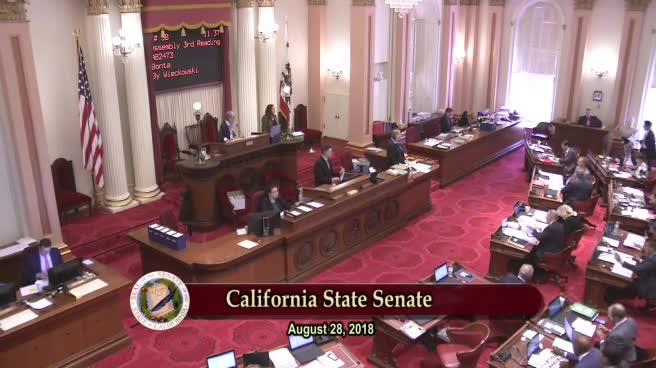 3MIN
Senate Floor
 1H
Senate Standing Committee on Appropriations
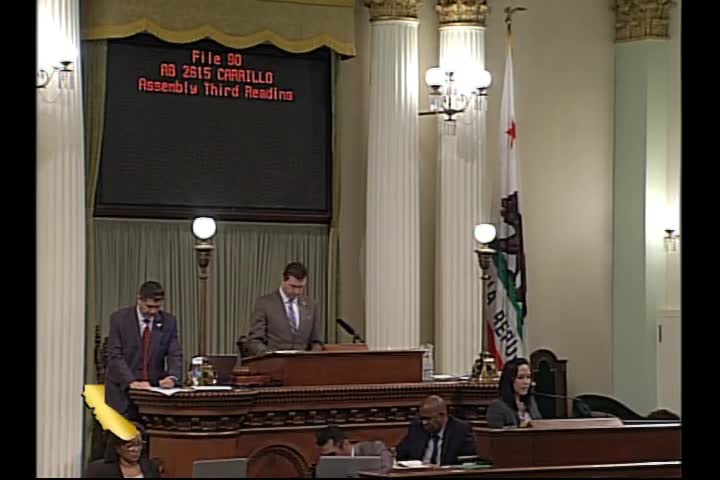 2MIN
Assembly Floor
 6MIN
Assembly Standing Committee on Judiciary
 7MIN
Assembly Standing Committee on Insurance
Bill Author

Bill Co-Author(s):