AB 2808: Education finance: funding level of K–12 public schools.
- Session Year: 2017-2018
- House: Assembly
- Latest Version Date: 2018-08-17
Existing law establishes a public school financing system that requires state funding for county superintendents of schools, school districts districts, and charter schools to be calculated pursuant to a local control funding formula, formula (LCFF), as specified. Existing law requires funding pursuant to the local control funding formula to include, in addition to a base grant, supplemental and concentration grant add-ons that are based on the percentage of pupils who are English learners, foster youth, or eligible for free or reduced-price meals, as specified, served by the county superintendent of schools, school district district, or charter school. Existing law specifies the amount of the base grant in the 201314 fiscal year, as provided, and requires that amount to be adjusted for inflation in subsequent fiscal years. Existing law requires the Superintendent of Public Instruction to compute the supplemental and concentration grant add-ons as certain percentages of the amount of the base grant. Existing law, upon full implementation of the local control funding formula, requires, as a condition of the receipt of a specified adjustment to base grant funds, all school districts to maintain an average class enrollment for each schoolsite for kindergarten and grades 1 to 3, inclusive, of not more than 24 pupils for each schoolsite in kindergarten and grades 1 to 3, inclusive, unless a collectively bargained alternative ratio is agreed to by the school district.
This bill would delete the provision specifying the amount of the base grant in the 201314 fiscal year and would instead specify new, higher amounts for the 201920 fiscal year, which would also increase the supplemental and concentration grant amounts and result in various other changes to funding calculations for purposes of the local control funding formula. The bill instead would impose that average class enrollment condition upon full implementation of the local control funding formula or commencing with the 201920 fiscal year, whichever is earlier. express findings and declarations of the Legislature with respect to the level of funding provided to K12 public schools in the state. The bill would also express the intent of the Legislature to enact legislation providing that, beginning in the 201920 fiscal year, the state shall begin to provide increases to the LCFF and fund California K12 public schools at a level that is equal to, or above, the average of the top 10 states nationally by 2025 and, at a minimum, to maintain this level of funding indefinitely.
Existing law establishes a public school financing system that requires state funding for school districts and charter schools to be calculated pursuant to a local control funding formula, as specified. Existing law requires funding pursuant to the local control funding formula to include, in addition to a base grant, supplemental and concentration grant add-ons that are based on the percentage of pupils who are English learners, foster youth, or eligible for free or reduced-price meals, as specified, served by the school district or charter school. Existing law specifies the amount of the base grant in the 201314 fiscal year, as provided, and requires that amount to be adjusted for inflation in subsequent fiscal years. Existing law requires the Superintendent of Public Instruction to compute the supplemental and concentration grant add-ons as certain percentages of the amount of the base grant. Existing law, upon full implementation of the local control funding formula, requires, as a condition of the receipt of a specified adjustment to base grant funds, all school districts to maintain an average class enrollment for each schoolsite for kindergarten and grades 1 to 3, inclusive, of not more than 24 pupils for each schoolsite in kindergarten and grades 1 to 3, inclusive, unless a collectively bargained alternative ratio is agreed to by the school district.
This bill would delete the provision specifying the amount of the base grant in the 201314 fiscal year and would instead specify new, higher amounts for the 201819 201920 fiscal year, which would also increase the supplemental and concentration grant amounts and result in various other changes to funding calculations for purposes of the local control funding formula. The bill instead would impose that average class enrollment condition upon full implementation of the local control funding formula or commencing with the 201920 fiscal year, whichever is earlier.
This bill would declare that it is to take effect immediately as an urgency statute.Existing law establishes a public school financing system that requires state funding for school districts and charter schools to be calculated pursuant to a local control funding formula, as specified. Existing law requires funding pursuant to the local control funding formula to include, in addition to a base grant, supplemental and concentration grant add-ons that are based on the percentage of pupils who are English learners, foster youth, or eligible for free or reduced-price meals, as specified, served by the school district or charter school. Existing law specifies the amount of the base grant in the 201314 fiscal year, as provided, and requires that amount to be adjusted for inflation in subsequent fiscal years. Existing law requires the Superintendent of Public Instruction to compute the supplemental and concentration grant add-ons as certain percentages of the amount of the base grant.
This bill would delete the provision specifying the amount of the base grant in the 201314 fiscal year and would instead specify new, higher amounts for the 201819 fiscal year, which would also increase the supplemental and concentration grant amounts and result in various other changes to funding calculations for purposes of the local control funding formula.
This bill would declare that it is to take effect immediately as an urgency statute.
(a)The Legislature finds and declares all of the following:
(1)Despite Californias leadership in the global economy, this state falls in the nations bottom quintile in nearly every measure of K12 public school funding and staffing.
(2)California ranks 45th nationally in the percentage of taxable income spent on education, 41st in per-pupil funding, 45th in pupil-teacher ratios, and 48th in pupil-staff ratios, and K12 public school funding in this state has not substantially increased, on an inflation-adjusted basis, for more than a decade.
(3)Under the local control funding formula (LCFF), state funding for K12 public schools has only recently returned to the levels of funding that predated the Great Recession that began around 2007, and the modest revenue increases since the implementation of the LCFF have been eroded by rapidly increasing costs for health care, pensions, transportation, and utilities.
(4)Fifty-eight percent of Californias K12 public school pupils are eligible for free and reduced-price lunches, which is 13 percent above the national average, and 23 percent of California K12 public school pupils are English learners, which is more than twice the national average.
(5)California funds its K12 public schools at a level that is roughly $1,961 per pupil lower than the national average, and this amount translates to $3,462 per pupil when it is adjusted to reflect Californias high cost of living. California trails the average of the top 10 states in per-pupil funding by almost $7,000 per pupil.
(6)In order to prepare our pupils for participation in a democratic society and an increasingly competitive, technology-driven global economy, California must fund public schools at a level sufficient to support pupil success.
(7)If California is to close opportunity and achievement gaps and create a K12 public school system that offers consistently high levels of education, this state must provide public schools with the resources to meet the needs of their specific pupil populations.
(b)Therefore, it is the intent of the Legislature to enact legislation providing that, beginning in the 201920 fiscal year, the state shall begin to provide increases to the LCFF to address the existing inequities in per-pupil funding and fund California K12 public schools at a level that is equal to, or above, the average of the top 10 states nationally by 2025 and, at a minimum, to maintain this level of funding indefinitely.
All matter omitted in this version of the bill appears in the bill as amended in the Assembly, April, 2, 2018. (JR11)(a)The amount computed pursuant to this section shall be known as the school district and charter school local control funding formula.
(b)(1)For purposes of this section unduplicated pupil means a pupil enrolled in a school district or a charter school who is either classified as an English learner, eligible for a free or reduced-price meal, or is a foster youth. A pupil shall be counted only once for purposes of this section if any of the following apply:
(A)The pupil is classified as an English learner and is eligible for a free or reduced-price meal.
(B)The pupil is classified as an English learner and is a foster youth.
(C)The pupil is eligible for a free or reduced-price meal and is classified as a foster youth.
(D)The pupil is classified as an English learner, is eligible for a free or reduced-price meal, and is a foster youth.
(2)Under procedures and timeframes established by the Superintendent, commencing with the 201314 fiscal year, a school district or charter school shall annually submit its enrolled free and reduced-price meal eligibility, foster youth, and English learner pupil-level records for enrolled pupils to the Superintendent using the California Longitudinal Pupil Achievement Data System.
(3)(A)Commencing with the 201314 fiscal year, a county office of education shall review and validate certified aggregate English learner, foster youth, and free or reduced-price meal eligible pupil data for school districts and charter schools under its jurisdiction to ensure the data is reported accurately. The Superintendent shall provide each county office of education with appropriate access to school district and charter school data reports in the California Longitudinal Pupil Achievement Data System for purposes of ensuring data reporting accuracy.
(B)The Controller shall include the instructions necessary to enforce paragraph (2) in the audit guide required by Section 14502.1. The instructions shall include, but are not necessarily limited to, procedures for determining if the English learner, foster youth, and free or reduced-price meal eligible pupil counts are consistent with the school districts or charter schools English learner, foster youth, and free or reduced-price meal eligible pupil records.
(4)The Superintendent shall make the calculations pursuant to this section using the data submitted by local educational agencies, including charter schools, through the California Longitudinal Pupil Achievement Data System. Under timeframes and procedures established by the Superintendent, school districts and charter schools may review and revise their submitted data on English learner, foster youth, and free or reduced-price meal eligible pupil counts to ensure the accuracy of data reflected in the California Longitudinal Pupil Achievement Data System.
(5)The Superintendent shall annually compute the percentage of unduplicated pupils for each school district and charter school by dividing the enrollment of unduplicated pupils in a school district or charter school by the total enrollment in that school district or charter school pursuant to all of the following:
(A)For the 201314 fiscal year, divide the sum of unduplicated pupils for the 201314 fiscal year by the sum of the total pupil enrollment for the 201314 fiscal year.
(B)For the 201415 fiscal year, divide the sum of unduplicated pupils for the 201314 and 201415 fiscal years by the sum of the total pupil enrollment for the 201314 and 201415 fiscal years.
(C)For the 201516 fiscal year and each fiscal year thereafter, divide the sum of unduplicated pupils for the current fiscal year and the two prior fiscal years by the sum of the total pupil enrollment for the current fiscal year and the two prior fiscal years.
(D)(i)For purposes of the quotients determined pursuant to subparagraphs (B) and (C), the Superintendent shall use a school districts or charter schools enrollment of unduplicated pupils and total pupil enrollment in the 201415 fiscal year instead of the enrollment of unduplicated pupils and total pupil enrollment in the 201314 fiscal year if doing so would yield an overall greater percentage of unduplicated pupils.
(ii)It is the intent of the Legislature to review each school district and charter schools enrollment of unduplicated pupils for the 201314 and 201415 fiscal years and provide one-time funding, if necessary, for a school district or charter school with higher enrollment of unduplicated pupils in the 201415 fiscal year as compared to the 201314 fiscal year.
(6)The data used to determine the percentage of unduplicated pupils shall be final once that data is no longer used in the current fiscal year calculation of the percentage of unduplicated pupils. This paragraph does not apply to a change that is the result of an audit that has been appealed pursuant to Section 41344.
(c)Commencing with the 201314 fiscal year and each fiscal year thereafter, the Superintendent shall annually calculate a local control funding formula grant for each school district and charter school in the state pursuant to this section.
(d)The Superintendent shall compute a grade span adjusted base grant equal to the total of the following amounts:
(1)For the 201314 fiscal year, a base grant of:
(A)Six thousand eight hundred forty-five dollars ($6,845) for average daily attendance in kindergarten and grades 1 to 3, inclusive.
(B)Six thousand nine hundred forty-seven dollars ($6,947) for average daily attendance in grades 4 to 6, inclusive.
(C)Seven thousand one hundred fifty-four dollars ($7,154) for average daily attendance in grades 7 and 8.
(D)Eight thousand two hundred eighty-nine dollars ($8,289) for average daily attendance in grades 9 to 12, inclusive.
(2)In each year the grade span adjusted base grants in paragraph (1) shall be adjusted by the percentage change in the annual average value of the Implicit Price Deflator for State and Local Government Purchases of Goods and Services for the United States, as published by the United States Department of Commerce for the 12-month period ending in the third quarter of the prior fiscal year. This percentage change shall be determined using the latest data available as of May 10 of the preceding fiscal year compared with the annual average value of the same deflator for the 12-month period ending in the third quarter of the second preceding fiscal year, using the latest data available as of May 10 of the preceding fiscal year, as reported by the Department of Finance.
(3)(A)The Superintendent shall compute an additional adjustment to the kindergarten and grades 1 to 3, inclusive, base grant as adjusted for inflation pursuant to paragraph (2) equal to 10.4 percent. The additional grant shall be calculated by multiplying the kindergarten and grades 1 to 3, inclusive, base grant, as adjusted by paragraph (2), by 10.4 percent.
(B)Until paragraph (4) of subdivision (b) of Section 42238.03 is effective, as a condition of the receipt of funds in this paragraph, a school district shall make progress toward maintaining an average class enrollment of not more than 24 pupils for each schoolsite in kindergarten and grades 1 to 3, inclusive, unless a collectively bargained alternative annual average class enrollment for each schoolsite in those grades is agreed to by the school district, pursuant to the following calculation:
(i)Determine a school districts average class enrollment for each schoolsite for kindergarten and grades 1 to 3, inclusive, in the prior year. For the 201314 fiscal year, this amount shall be the average class enrollment for each schoolsite for kindergarten and grades 1 to 3, inclusive, in the 201213 fiscal year.
(ii)Determine a school districts proportion of total need pursuant to paragraph (2) of subdivision (b) of Section 42238.03.
(iii)Determine the percentage of the need calculated in clause (ii) that is met by funding provided to the school district pursuant to paragraph (3) of subdivision (b) of Section 42238.03.
(iv)Determine the difference between the amount computed pursuant to clause (i) and an average class enrollment of not more than 24 pupils.
(v)Calculate a current year average class enrollment adjustment for each schoolsite for kindergarten and grades 1 to 3, inclusive, equal to the adjustment calculated in clause (iv) multiplied by the percentage determined pursuant to clause (iii).
(C)School districts that have an average class enrollment for each schoolsite for kindergarten and grades 1 to 3, inclusive, of 24 pupils or less for each schoolsite in the 201213 fiscal year, shall be exempt from the requirements of subparagraph (B) so long as the school district continues to maintain an average class enrollment for each schoolsite for kindergarten and grades 1 to 3, inclusive, of not more than 24 pupils, unless a collectively bargained alternative ratio is agreed to by the school district.
(D)Upon full implementation of the local control funding formula, or commencing with the 201920 fiscal year, whichever is earlier, as a condition of the receipt of funds in this paragraph, all school districts shall maintain an average class enrollment for each schoolsite for kindergarten and grades 1 to 3, inclusive, of not more than 24 pupils for each schoolsite in kindergarten and grades 1 to 3, inclusive, unless a collectively bargained alternative ratio is agreed to by the school district.
(E)The average class enrollment requirement for each schoolsite for kindergarten and grades 1 to 3, inclusive, established pursuant to this paragraph shall not be subject to waiver by the state board pursuant to Section 33050 or by the Superintendent.
(F)The Controller shall include the instructions necessary to enforce this paragraph in the audit guide required by Section 14502.1. The instructions shall include, but are not necessarily limited to, procedures for determining if the average class enrollment for each schoolsite for kindergarten and grades 1 to 3, inclusive, exceeds 24 pupils, or an alternative average class enrollment for each schoolsite pursuant to a collectively bargained alternative ratio. The procedures for determining average class enrollment for each schoolsite shall include criteria for employing sampling.
(4)The Superintendent shall compute an additional adjustment to the base grant for grades 9 to 12, inclusive, as adjusted for inflation pursuant to paragraph (2), equal to 2.6 percent. The additional grant shall be calculated by multiplying the base grant for grades 9 to 12, inclusive, as adjusted by paragraph (2), by 2.6 percent.
(e)The Superintendent shall compute a supplemental grant add-on equal to 20 percent of the base grants as specified in subparagraphs (A) to (D), inclusive, of paragraph (1) of subdivision (d), as adjusted by paragraphs (2) to (4), inclusive, of subdivision (d), for each school districts or charter schools percentage of unduplicated pupils calculated pursuant to paragraph (5) of subdivision (b). The supplemental grant shall be calculated by multiplying the base grants as specified in subparagraphs (A) to (D), inclusive, of paragraph (1), as adjusted by paragraphs (2) to (4), inclusive, of subdivision (d), by 20 percent and by the percentage of unduplicated pupils calculated pursuant to paragraph (5) of subdivision (b) in that school district or charter school. The supplemental grant shall be expended in accordance with the regulations adopted pursuant to Section 42238.07.
(f)(1)The Superintendent shall compute a concentration grant add-on equal to 50 percent of the base grants as specified in subparagraphs (A) to (D), inclusive, of paragraph (1) of subdivision (d), as adjusted by paragraphs (2) to (4), inclusive, of subdivision (d), for each school districts or charter schools percentage of unduplicated pupils calculated pursuant to paragraph (5) of subdivision (b) in excess of 55 percent of the school districts or charter schools total enrollment. The concentration grant shall be calculated by multiplying the base grants as specified in subparagraphs (A) to (D), inclusive, of paragraph (1) of subdivision (d), as adjusted by paragraphs (2) to (4), inclusive, of subdivision (d), by 50 percent and by the percentage of unduplicated pupils calculated pursuant to paragraph (5) of subdivision (b) in excess of 55 percent of the total enrollment in that school district or charter school.
(2)(A)For a charter school physically located in only one school district, the percentage of unduplicated pupils calculated pursuant to paragraph (5) of subdivision (b) in excess of 55 percent used to calculate concentration grants shall not exceed the percentage of unduplicated pupils calculated pursuant to paragraph (5) of subdivision (b) in excess of 55 percent of the school district in which the charter school is physically located. For a charter school physically located in more than one school district, the charter schools percentage of unduplicated pupils calculated pursuant to paragraph (5) of subdivision (b) in excess of 55 percent used to calculate concentration grants shall not exceed that of the school district with the highest percentage of unduplicated pupils calculated pursuant to paragraph (5) of subdivision (b) in excess of 55 percent of the school districts in which the charter school has a school facility. The concentration grant shall be expended in accordance with the regulations adopted pursuant to Section 42238.07.
(B)For purposes of this paragraph and subparagraph (A) of paragraph (1) of subdivision (f) of Section 42238.03, a charter school shall report its physical location to the department under timeframes established by the department. For a charter school authorized by a school district, the department shall include the authorizing school district in the departments determination of physical location. For a charter school authorized on appeal pursuant to subdivision (j) of Section 47605, the department shall include the sponsoring school district in the departments determination of physical location. The reported physical location of the charter school shall be considered final as of the second principal apportionment for that fiscal year. For purposes of this paragraph, the percentage of unduplicated pupils of the school district associated with the charter school pursuant to subparagraph (A) shall be considered final as of the second principal apportionment for that fiscal year.
(g)The Superintendent shall compute an add-on to the total sum of a school districts or charter schools base, supplemental, and concentration grants equal to the amount of funding a school district or charter school received from funds allocated pursuant to the Targeted Instructional Improvement Block Grant program, as set forth in Article 6 (commencing with Section 41540) of Chapter 3.2, for the 201213 fiscal year, as that article read on January 1, 2013. A school district or charter school shall not receive a total funding amount from this add-on greater than the total amount of funding received by the school district or charter school from that program in the 201213 fiscal year. The amount computed pursuant to this subdivision shall reflect the reduction specified in paragraph (2) of subdivision (a) of Section 42238.03.
(h)(1)The Superintendent shall compute an add-on to the total sum of a school districts or charter schools base, supplemental, and concentration grants equal to the amount of funding a school district or charter school received from funds allocated pursuant to the Home-to-School Transportation program, as set forth in former Article 2 (commencing with Section 39820) of Chapter 1 of Part 23.5, former Article 10 (commencing with Section 41850) of Chapter 5, and the Small School District Transportation program, as set forth in former Article 4.5 (commencing with Section 42290), as those articles read on January 1, 2013, for the 201213 fiscal year. A school district or charter school shall not receive a total funding amount from this add-on greater than the total amount received by the school district or charter school for those programs in the 201213 fiscal year. The amount computed pursuant to this subdivision shall reflect the reduction specified in paragraph (2) of subdivision (a) of Section 42238.03.
(2)If a home-to-school transportation joint powers agency, established pursuant to Article 1 (commencing with Section 6500) of Chapter 5 of Division 7 of Title 1 of the Government Code for purposes of providing pupil transportation, received an apportionment directly from the Superintendent from any of the funding sources specified in paragraph (1) for the 201213 fiscal year, the joint powers agency may identify the member local educational agencies and transfer entitlement to that funding to any of those member local educational agencies by reporting to the Superintendent, on or before September 30, 2015, the reassignment of a specified amount of the joint powers agencys 201213 fiscal year entitlement to the member local educational agency. Commencing with the 201516 fiscal year, the Superintendent shall compute an add-on to the total sum of a school districts or charter schools base, supplemental, and concentrations grants equal to the amount of the entitlement to funding transferred by the joint powers agency to the member school district or charter school.
(i)(1)The sum of the local control funding formula rates computed pursuant to subdivisions (c) to (f), inclusive, shall be multiplied by:
(A)For school districts, the average daily attendance of the school district in the corresponding grade level ranges computed pursuant to Section 42238.05, excluding the average daily attendance computed pursuant to paragraph (2) of subdivision (a) of Section 42238.05 for purposes of the computation specified in subdivision (d).
(B)For charter schools, the total current year average daily attendance in the corresponding grade level ranges.
(2)The amount computed pursuant to Article 4 (commencing with Section 42280) shall be added to the amount computed pursuant to paragraphs (1) to (4), inclusive, of subdivision (d), as multiplied by subparagraph (A) or (B) of paragraph (1), as appropriate.
(j)The Superintendent shall adjust the sum of each school districts or charter schools amount determined in subdivisions (g) to (i), inclusive, pursuant to the calculation specified in Section 42238.03, less the sum of the following:
(1)(A)For school districts, the property tax revenue received pursuant to Chapter 3.5 (commencing with Section 75) and Chapter 6 (commencing with Section 95) of Part 0.5 of Division 1 of the Revenue and Taxation Code.
(B)For charter schools, the in-lieu property tax amount provided to a charter school pursuant to Section 47635.
(2)The amount, if any, received pursuant to Part 18.5 (commencing with Section 38101) of Division 2 of the Revenue and Taxation Code.
(3)The amount, if any, received pursuant to Chapter 3 (commencing with Section 16140) of Part 1 of Division 4 of Title 2 of the Government Code.
(4)Prior years taxes and taxes on the unsecured roll.
(5)Fifty percent of the amount received pursuant to Section 41603.
(6)The amount, if any, received pursuant to the Community Redevelopment Law (Part 1 (commencing with Section 33000) of Division 24 of the Health and Safety Code), less any amount received pursuant to Section 33401 or 33676 of the Health and Safety Code that is used for land acquisition, facility construction, reconstruction, or remodeling, or deferred maintenance and that is not an amount received pursuant to Section 33492.15, or paragraph (4) of subdivision (a) of Section 33607.5, or Section 33607.7 of the Health and Safety Code that is allocated exclusively for educational facilities.
(7)The amount, if any, received pursuant to Sections 34177, 34179.5, 34179.6, 34183, and 34188 of the Health and Safety Code.
(8)Revenue received pursuant to subparagraph (B) of paragraph (3) of subdivision (e) of Section 36 of Article XIII of the California Constitution.
(k)A school district shall annually transfer to each of its charter schools funding in lieu of property taxes pursuant to Section 47635.
(l)(1)Nothing in this section shall be interpreted to authorize a school district that receives funding on behalf of a charter school pursuant to Section 47651 to redirect this funding for another purpose unless otherwise authorized in law pursuant to paragraph (2) or pursuant to an agreement between the charter school and its chartering authority.
(2)A school district that received funding on behalf of a locally funded charter school in the 201213 fiscal year pursuant to paragraph (2) of subdivision (b) of Section 42605, Section 42606, and subdivision (b) of Section 47634.1, as those sections read on January 1, 2013, or a school district that was required to pass through funding to a conversion charter school in the 201213 fiscal year pursuant to paragraph (2) of subdivision (b) of Section 42606, as that section read on January 1, 2013, may annually redirect for another purpose a percentage of the amount of the funding received on behalf of that charter school. The percentage of funding that may be redirected shall be determined pursuant to the following computation:
(A)(i)Determine the sum of the need fulfilled for that charter school pursuant to paragraph (3) of subdivision (b) of Section 42238.03 in the then current fiscal year for the charter school.
(ii)Determine the sum of the need fulfilled in every fiscal year before the then current fiscal year pursuant to paragraph (3) of subdivision (b) of Section 42238.03 adjusted for changes in average daily attendance pursuant to paragraph (3) of subdivision (a) of Section 42238.03 for the charter school.
(iii)Subtract the amount computed pursuant to paragraphs (1) to (3), inclusive, of subdivision (a) of Section 42238.03 from the amount computed for that charter school under the local control funding formula entitlement computed pursuant to subdivision (i) of this section.
(iv)Compute a percentage by dividing the sum of the amounts computed to clauses (i) and (ii) by the amount computed pursuant to clause (iii).
(B)Multiply the percentage computed pursuant to subparagraph (A) by the amount of funding the school district received on behalf of the charter school in the 201213 fiscal year pursuant to paragraph (2) of subdivision (b) of Section 42605, Section 42606, and subdivision (b) of Section 47634.1, as those sections read on January 1, 2013.
(C)The maximum amount that may be redirected shall be the lesser of the amount of funding the school district received on behalf of the charter school in the 201213 fiscal year pursuant to paragraph (2) of subdivision (b) of Section 42605, Section 42606, and subdivision (b) of Section 47634.1, as those sections read on January 1, 2013, or the amount computed pursuant to subparagraph (B).
(3)Commencing with the 201314 fiscal year, a school district operating one or more affiliated charter schools shall provide each affiliated charter school schoolsite with no less than the amount of funding the schoolsite received pursuant to the charter school block grant in the 201213 fiscal year.
(m)Any calculations in law that are used for purposes of determining if a local educational agency is an excess tax school entity or basic aid school district, including, but not limited to, this section and Sections 42238.03, 41544, 47632, 47660, 47663, 48310, and 48359.5, and Section 95 of the Revenue and Taxation Code, shall be made exclusive of the revenue received pursuant to subparagraph (B) of paragraph (3) of subdivision (e) of Section 36 of Article XIII of the California Constitution.
(n)The funds apportioned pursuant to this section and Section 42238.03 shall be available to implement the activities required pursuant to Article 4.5 (commencing with Section 52060) of Chapter 6.1 of Part 28 of Division 4.
(o)A school district that does not receive an apportionment of state funds pursuant to this section, as implemented pursuant to Section 42238.03, excluding funds apportioned pursuant to the requirements of subparagraph (A) of paragraph (2) of subdivision (e) of Section 42238.03, shall be considered a basic aid school district or an excess tax entity.
(p)This section shall become inoperative on July 1, 2019, and, as of January 1, 2020, is repealed.
SEC. 2.Section 42238.02 is added to the Education Code, to read:42238.02.(a)The amount computed pursuant to this section shall be known as the school district and charter school local control funding formula.
(b)(1)For purposes of this section, unduplicated pupil means a pupil enrolled in a school district or a charter school who is either classified as an English learner, eligible for a free or reduced-price meal, or is a foster youth. A pupil shall be counted only once for purposes of this section if any of the following apply:
(A)The pupil is classified as an English learner and is eligible for a free or reduced-price meal.
(B)The pupil is classified as an English learner and is a foster youth.
(C)The pupil is eligible for a free or reduced-price meal and is classified as a foster youth.
(D)The pupil is classified as an English learner, is eligible for a free or reduced-price meal, and is a foster youth.
(2)Under procedures and timeframes established by the Superintendent, commencing with the 201314 fiscal year, a school district or charter school shall annually submit its enrolled free and reduced-price meal eligibility, foster youth, and English learner pupil-level records for enrolled pupils to the Superintendent using the California Longitudinal Pupil Achievement Data System.
(3)(A)Commencing with the 201314 fiscal year, a county office of education shall review and validate certified aggregate English learner, foster youth, and free or reduced-price meal eligible pupil data for school districts and charter schools under its jurisdiction to ensure the data is reported accurately. The Superintendent shall provide each county office of education with appropriate access to school district and charter school data reports in the California Longitudinal Pupil Achievement Data System for purposes of ensuring data reporting accuracy.
(B)The Controller shall include the instructions necessary to enforce paragraph (2) in the audit guide required by Section 14502.1. The instructions shall include, but are not necessarily limited to, procedures for determining if the English learner, foster youth, and free or reduced-price meal eligible pupil counts are consistent with the school districts or charter schools English learner, foster youth, and free or reduced-price meal eligible pupil records.
(4)The Superintendent shall make the calculations pursuant to this section using the data submitted by local educational agencies, including charter schools, through the California Longitudinal Pupil Achievement Data System. Under timeframes and procedures established by the Superintendent, school districts and charter schools may review and revise their submitted data on English learner, foster youth, and free or reduced-price meal eligible pupil counts to ensure the accuracy of data reflected in the California Longitudinal Pupil Achievement Data System.
(5)The Superintendent shall annually compute the percentage of unduplicated pupils for each school district and charter school by dividing the enrollment of unduplicated pupils in a school district or charter school by the total enrollment in that school district or charter school pursuant to all of the following:
(A)For the 201314 fiscal year, divide the sum of unduplicated pupils for the 201314 fiscal year by the sum of the total pupil enrollment for the 201314 fiscal year.
(B)For the 201415 fiscal year, divide the sum of unduplicated pupils for the 201314 and 201415 fiscal years by the sum of the total pupil enrollment for the 201314 and 201415 fiscal years.
(C)For the 201516 fiscal year and each fiscal year thereafter, divide the sum of unduplicated pupils for the current fiscal year and the two prior fiscal years by the sum of the total pupil enrollment for the current fiscal year and the two prior fiscal years.
(D)(i)For purposes of the quotients determined pursuant to subparagraphs (B) and (C), the Superintendent shall use a school districts or charter schools enrollment of unduplicated pupils and total pupil enrollment in the 201415 fiscal year instead of the enrollment of unduplicated pupils and total pupil enrollment in the 201314 fiscal year if doing so would yield an overall greater percentage of unduplicated pupils.
(ii)It is the intent of the Legislature to review each school district and charter schools enrollment of unduplicated pupils for the 201314 and 201415 fiscal years and provide one-time funding, if necessary, for a school district or charter school with higher enrollment of unduplicated pupils in the 201415 fiscal year as compared to the 201314 fiscal year.
(6)The data used to determine the percentage of unduplicated pupils shall be final once that data is no longer used in the current fiscal year calculation of the percentage of unduplicated pupils. This paragraph does not apply to a change that is the result of an audit that has been appealed pursuant to Section 41344.
(c)Commencing with the 201314 fiscal year and each fiscal year thereafter, the Superintendent shall annually calculate a local control funding formula grant for each school district and charter school in the state pursuant to this section.
(d)The Superintendent shall compute a grade span adjusted base grant equal to the total of the following amounts:
(1)For the 201920 fiscal year, a base grant of:
(A)Eleven thousand seven hundred ninety-nine dollars ($11,799) for average daily attendance in kindergarten and grades 1 to 3, inclusive.
(B)Eleven thousand nine hundred seventy-five dollars ($11,975) for average daily attendance in grades 4 to 6, inclusive.
(C)Twelve thousand three hundred thirty-two dollars ($12,332) for average daily attendance in grades 7 and 8.
(D)Fourteen thousand two hundred eighty-nine dollars ($14,289) for average daily attendance in grades 9 to 12, inclusive.
(2)In each year the grade span adjusted base grants in paragraph (1) shall be adjusted by the percentage change in the annual average value of the Implicit Price Deflator for State and Local Government Purchases of Goods and Services for the United States, as published by the United States Department of Commerce for the 12-month period ending in the third quarter of the prior fiscal year. This percentage change shall be determined using the latest data available as of May 10 of the preceding fiscal year compared with the annual average value of the same deflator for the 12-month period ending in the third quarter of the second preceding fiscal year, using the latest data available as of May 10 of the preceding fiscal year, as reported by the Department of Finance.
(3)(A)The Superintendent shall compute an additional adjustment to the kindergarten and grades 1 to 3, inclusive, base grant as adjusted for inflation pursuant to paragraph (2) equal to 10.4 percent. The additional grant shall be calculated by multiplying the kindergarten and grades 1 to 3, inclusive, base grant, as adjusted by paragraph (2), by 10.4 percent.
(B)Until paragraph (4) of subdivision (b) of Section 42238.03 is effective, as a condition of the receipt of funds in this paragraph, a school district shall make progress toward maintaining an average class enrollment of not more than 24 pupils for each schoolsite in kindergarten and grades 1 to 3, inclusive, unless a collectively bargained alternative annual average class enrollment for each schoolsite in those grades is agreed to by the school district, pursuant to the following calculation:
(i)Determine a school districts average class enrollment for each schoolsite for kindergarten and grades 1 to 3, inclusive, in the prior year. For the 201314 fiscal year, this amount shall be the average class enrollment for each schoolsite for kindergarten and grades 1 to 3, inclusive, in the 201213 fiscal year.
(ii)Determine a school districts proportion of total need pursuant to paragraph (2) of subdivision (b) of Section 42238.03.
(iii)Determine the percentage of the need calculated in clause (ii) that is met by funding provided to the school district pursuant to paragraph (3) of subdivision (b) of Section 42238.03.
(iv)Determine the difference between the amount computed pursuant to clause (i) and an average class enrollment of not more than 24 pupils.
(v)Calculate a current year average class enrollment adjustment for each schoolsite for kindergarten and grades 1 to 3, inclusive, equal to the adjustment calculated in clause (iv) multiplied by the percentage determined pursuant to clause (iii).
(C)School districts that have an average class enrollment for each schoolsite for kindergarten and grades 1 to 3, inclusive, of 24 pupils or less for each schoolsite in the 201213 fiscal year, shall be exempt from the requirements of subparagraph (B) so long as the school district continues to maintain an average class enrollment for each schoolsite for kindergarten and grades 1 to 3, inclusive, of not more than 24 pupils, unless a collectively bargained alternative ratio is agreed to by the school district.
(D)Upon full implementation of the local control funding formula or commencing with the 201920 fiscal year, whichever is earlier, as a condition of the receipt of funds in this paragraph, all school districts shall maintain an average class enrollment for each schoolsite for kindergarten and grades 1 to 3, inclusive, of not more than 24 pupils for each schoolsite in kindergarten and grades 1 to 3, inclusive, unless a collectively bargained alternative ratio is agreed to by the school district.
(E)The average class enrollment requirement for each schoolsite for kindergarten and grades 1 to 3, inclusive, established pursuant to this paragraph shall not be subject to waiver by the state board pursuant to Section 33050 or by the Superintendent.
(F)The Controller shall include the instructions necessary to enforce this paragraph in the audit guide required by Section 14502.1. The instructions shall include, but are not necessarily limited to, procedures for determining if the average class enrollment for each schoolsite for kindergarten and grades 1 to 3, inclusive, exceeds 24 pupils, or an alternative average class enrollment for each schoolsite pursuant to a collectively bargained alternative ratio. The procedures for determining average class enrollment for each schoolsite shall include criteria for employing sampling.
(4)The Superintendent shall compute an additional adjustment to the base grant for grades 9 to 12, inclusive, as adjusted for inflation pursuant to paragraph (2), equal to 2.6 percent. The additional grant shall be calculated by multiplying the base grant for grades 9 to 12, inclusive, as adjusted by paragraph (2), by 2.6 percent.
(e)The Superintendent shall compute a supplemental grant add-on equal to 20 percent of the base grants as specified in subparagraphs (A) to (D), inclusive, of paragraph (1) of subdivision (d), as adjusted by paragraphs (2) to (4), inclusive, of subdivision (d), for each school districts or charter schools percentage of unduplicated pupils calculated pursuant to paragraph (5) of subdivision (b). The supplemental grant shall be calculated by multiplying the base grants as specified in subparagraphs (A) to (D), inclusive, of paragraph (1), as adjusted by paragraphs (2) to (4), inclusive, of subdivision (d), by 20 percent and by the percentage of unduplicated pupils calculated pursuant to paragraph (5) of subdivision (b) in that school district or charter school. The supplemental grant shall be expended in accordance with the regulations adopted pursuant to Section 42238.07.
(f)(1)The Superintendent shall compute a concentration grant add-on equal to 50 percent of the base grants as specified in subparagraphs (A) to (D), inclusive, of paragraph (1) of subdivision (d), as adjusted by paragraphs (2) to (4), inclusive, of subdivision (d), for each school districts or charter schools percentage of unduplicated pupils calculated pursuant to paragraph (5) of subdivision (b) in excess of 55 percent of the school districts or charter schools total enrollment. The concentration grant shall be calculated by multiplying the base grants as specified in subparagraphs (A) to (D), inclusive, of paragraph (1) of subdivision (d), as adjusted by paragraphs (2) to (4), inclusive, of subdivision (d), by 50 percent and by the percentage of unduplicated pupils calculated pursuant to paragraph (5) of subdivision (b) in excess of 55 percent of the total enrollment in that school district or charter school.
(2)(A)For a charter school physically located in only one school district, the percentage of unduplicated pupils calculated pursuant to paragraph (5) of subdivision (b) in excess of 55 percent used to calculate concentration grants shall not exceed the percentage of unduplicated pupils calculated pursuant to paragraph (5) of subdivision (b) in excess of 55 percent of the school district in which the charter school is physically located. For a charter school physically located in more than one school district, the charter schools percentage of unduplicated pupils calculated pursuant to paragraph (5) of subdivision (b) in excess of 55 percent used to calculate concentration grants shall not exceed that of the school district with the highest percentage of unduplicated pupils calculated pursuant to paragraph (5) of subdivision (b) in excess of 55 percent of the school districts in which the charter school has a school facility. The concentration grant shall be expended in accordance with the regulations adopted pursuant to Section 42238.07.
(B)For purposes of this paragraph and subparagraph (A) of paragraph (1) of subdivision (f) of Section 42238.03, a charter school shall report its physical location to the department under timeframes established by the department. For a charter school authorized by a school district, the department shall include the authorizing school district in the departments determination of physical location. For a charter school authorized on appeal pursuant to subdivision (j) of Section 47605, the department shall include the sponsoring school district in the departments determination of physical location. The reported physical location of the charter school shall be considered final as of the second principal apportionment for that fiscal year. For purposes of this paragraph, the percentage of unduplicated pupils of the school district associated with the charter school pursuant to subparagraph (A) shall be considered final as of the second principal apportionment for that fiscal year.
(g)The Superintendent shall compute an add-on to the total sum of a school districts or charter schools base, supplemental, and concentration grants equal to the amount of funding a school district or charter school received from funds allocated pursuant to the Targeted Instructional Improvement Block Grant program, as set forth in Article 6 (commencing with Section 41540) of Chapter 3.2, for the 201213 fiscal year, as that article read on January 1, 2013. A school district or charter school shall not receive a total funding amount from this add-on greater than the total amount of funding received by the school district or charter school from that program in the 201213 fiscal year. The amount computed pursuant to this subdivision shall reflect the reduction specified in paragraph (2) of subdivision (a) of Section 42238.03.
(h)(1)The Superintendent shall compute an add-on to the total sum of a school districts or charter schools base, supplemental, and concentration grants equal to the amount of funding a school district or charter school received from funds allocated pursuant to the Home-to-School Transportation program, as set forth in former Article 2 (commencing with Section 39820) of Chapter 1 of Part 23.5, former Article 10 (commencing with Section 41850) of Chapter 5, and the Small School District Transportation program, as set forth in former Article 4.5 (commencing with Section 42290), as those articles read on January 1, 2013, for the 201213 fiscal year. A school district or charter school shall not receive a total funding amount from this add-on greater than the total amount received by the school district or charter school for those programs in the 201213 fiscal year. The amount computed pursuant to this subdivision shall reflect the reduction specified in paragraph (2) of subdivision (a) of Section 42238.03.
(2)If a home-to-school transportation joint powers agency, established pursuant to Article 1 (commencing with Section 6500) of Chapter 5 of Division 7 of Title 1 of the Government Code for purposes of providing pupil transportation, received an apportionment directly from the Superintendent from any of the funding sources specified in paragraph (1) for the 201213 fiscal year, the joint powers agency may identify the member local educational agencies and transfer entitlement to that funding to any of those member local educational agencies by reporting to the Superintendent, on or before September 30, 2015, the reassignment of a specified amount of the joint powers agencys 201213 fiscal year entitlement to the member local educational agency. Commencing with the 201516 fiscal year, the Superintendent shall compute an add-on to the total sum of a school districts or charter schools base, supplemental, and concentrations grants equal to the amount of the entitlement to funding transferred by the joint powers agency to the member school district or charter school.
(i)(1)The sum of the local control funding formula rates computed pursuant to subdivisions (c) to (f), inclusive, shall be multiplied by:
(A)For school districts, the average daily attendance of the school district in the corresponding grade level ranges computed pursuant to Section 42238.05, excluding the average daily attendance computed pursuant to paragraph (2) of subdivision (a) of Section 42238.05 for purposes of the computation specified in subdivision (d).
(B)For charter schools, the total current year average daily attendance in the corresponding grade level ranges.
(2)The amount computed pursuant to Article 4 (commencing with Section 42280) shall be added to the amount computed pursuant to paragraphs (1) to (4), inclusive, of subdivision (d), as multiplied by subparagraph (A) or (B) of paragraph (1), as appropriate.
(j)The Superintendent shall adjust the sum of each school districts or charter schools amount determined in subdivisions (g) to (i), inclusive, pursuant to the calculation specified in Section 42238.03, less the sum of the following:
(1)(A)For school districts, the property tax revenue received pursuant to Chapter 3.5 (commencing with Section 75) and Chapter 6 (commencing with Section 95) of Part 0.5 of Division 1 of the Revenue and Taxation Code.
(B)For charter schools, the in-lieu property tax amount provided to a charter school pursuant to Section 47635.
(2)The amount, if any, received pursuant to Part 18.5 (commencing with Section 38101) of Division 2 of the Revenue and Taxation Code.
(3)The amount, if any, received pursuant to Chapter 3 (commencing with Section 16140) of Part 1 of Division 4 of Title 2 of the Government Code.
(4)Prior years taxes and taxes on the unsecured roll.
(5)Fifty percent of the amount received pursuant to Section 41603.
(6)The amount, if any, received pursuant to the Community Redevelopment Law (Part 1 (commencing with Section 33000) of Division 24 of the Health and Safety Code), less any amount received pursuant to Section 33401 or 33676 of the Health and Safety Code that is used for land acquisition, facility construction, reconstruction, or remodeling, or deferred maintenance and that is not an amount received pursuant to Section 33492.15, or paragraph (4) of subdivision (a) of Section 33607.5, or Section 33607.7 of the Health and Safety Code that is allocated exclusively for educational facilities.
(7)The amount, if any, received pursuant to Sections 34177, 34179.5, 34179.6, 34183, and 34188 of the Health and Safety Code.
(8)Revenue received pursuant to subparagraph (B) of paragraph (3) of subdivision (e) of Section 36 of Article XIII of the California Constitution.
(k)A school district shall annually transfer to each of its charter schools funding in lieu of property taxes pursuant to Section 47635.
(l)(1)Nothing in this section shall be interpreted to authorize a school district that receives funding on behalf of a charter school pursuant to Section 47651 to redirect this funding for another purpose unless otherwise authorized in law pursuant to paragraph (2) or pursuant to an agreement between the charter school and its chartering authority.
(2)A school district that received funding on behalf of a locally funded charter school in the 201213 fiscal year pursuant to paragraph (2) of subdivision (b) of Section 42605, Section 42606, and subdivision (b) of Section 47634.1, as those sections read on January 1, 2013, or a school district that was required to pass through funding to a conversion charter school in the 201213 fiscal year pursuant to paragraph (2) of subdivision (b) of Section 42606, as that section read on January 1, 2013, may annually redirect for another purpose a percentage of the amount of the funding received on behalf of that charter school. The percentage of funding that may be redirected shall be determined pursuant to the following computation:
(A)(i)Determine the sum of the need fulfilled for that charter school pursuant to paragraph (3) of subdivision (b) of Section 42238.03 in the then current fiscal year for the charter school.
(ii)Determine the sum of the need fulfilled in every fiscal year before the then current fiscal year pursuant to paragraph (3) of subdivision (b) of Section 42238.03 adjusted for changes in average daily attendance pursuant to paragraph (3) of subdivision (a) of Section 42238.03 for the charter school.
(iii)Subtract the amount computed pursuant to paragraphs (1) to (3), inclusive, of subdivision (a) of Section 42238.03 from the amount computed for that charter school under the local control funding formula entitlement computed pursuant to subdivision (i) of this section.
(iv)Compute a percentage by dividing the sum of the amounts computed to clauses (i) and (ii) by the amount computed pursuant to clause (iii).
(B)Multiply the percentage computed pursuant to subparagraph (A) by the amount of funding the school district received on behalf of the charter school in the 201213 fiscal year pursuant to paragraph (2) of subdivision (b) of Section 42605, Section 42606, and subdivision (b) of Section 47634.1, as those sections read on January 1, 2013.
(C)The maximum amount that may be redirected shall be the lesser of the amount of funding the school district received on behalf of the charter school in the 201213 fiscal year pursuant to paragraph (2) of subdivision (b) of Section 42605, Section 42606, and subdivision (b) of Section 47634.1, as those sections read on January 1, 2013, or the amount computed pursuant to subparagraph (B).
(3)Commencing with the 201314 fiscal year, a school district operating one or more affiliated charter schools shall provide each affiliated charter school schoolsite with no less than the amount of funding the schoolsite received pursuant to the charter school block grant in the 201213 fiscal year.
(m)Any calculations in law that are used for purposes of determining if a local educational agency is an excess tax school entity or basic aid school district, including, but not limited to, this section and Sections 42238.03, 41544, 47632, 47660, 47663, 48310, and 48359.5, and Section 95 of the Revenue and Taxation Code, shall be made exclusive of the revenue received pursuant to subparagraph (B) of paragraph (3) of subdivision (e) of Section 36 of Article XIII of the California Constitution.
(n)The funds apportioned pursuant to this section and Section 42238.03 shall be available to implement the activities required pursuant to Article 4.5 (commencing with Section 52060) of Chapter 6.1 of Part 28 of Division 4.
(o)A school district that does not receive an apportionment of state funds pursuant to this section, as implemented pursuant to Section 42238.03, excluding funds apportioned pursuant to the requirements of subparagraph (A) of paragraph (2) of subdivision (e) of Section 42238.03, shall be considered a basic aid school district or an excess tax entity.
(p)This section shall become operative on July 1, 2019.
SECTION 1.Section 42238.02 of the Education Code is amended to read:42238.02.(a)The amount computed pursuant to this section shall be known as the school district and charter school local control funding formula.(b)(1)For purposes of this section unduplicated pupil means a pupil enrolled in a school district or a charter school who is either classified as an English learner, eligible for a free or reduced-price meal, or is a foster youth. A pupil shall be counted only once for purposes of this section if any of the following apply:(A)The pupil is classified as an English learner and is eligible for a free or reduced-price meal.(B)The pupil is classified as an English learner and is a foster youth.(C)The pupil is eligible for a free or reduced-price meal and is classified as a foster youth.(D)The pupil is classified as an English learner, is eligible for a free or reduced-price meal, and is a foster youth.(2)Under procedures and timeframes established by the Superintendent, commencing with the 201314 fiscal year, a school district or charter school shall annually submit its enrolled free and reduced-price meal eligibility, foster youth, and English learner pupil-level records for enrolled pupils to the Superintendent using the California Longitudinal Pupil Achievement Data System.(3)(A)Commencing with the 201314 fiscal year, a county office of education shall review and validate certified aggregate English learner, foster youth, and free or reduced-price meal eligible pupil data for school districts and charter schools under its jurisdiction to ensure the data is reported accurately. The Superintendent shall provide each county office of education with appropriate access to school district and charter school data reports in the California Longitudinal Pupil Achievement Data System for purposes of ensuring data reporting accuracy.(B)The Controller shall include the instructions necessary to enforce paragraph (2) in the audit guide required by Section 14502.1. The instructions shall include, but are not necessarily limited to, procedures for determining if the English learner, foster youth, and free or reduced-price meal eligible pupil counts are consistent with the school districts or charter schools English learner, foster youth, and free or reduced-price meal eligible pupil records.(4)The Superintendent shall make the calculations pursuant to this section using the data submitted by local educational agencies, including charter schools, through the California Longitudinal Pupil Achievement Data System. Under timeframes and procedures established by the Superintendent, school districts and charter schools may review and revise their submitted data on English learner, foster youth, and free or reduced-price meal eligible pupil counts to ensure the accuracy of data reflected in the California Longitudinal Pupil Achievement Data System.(5)The Superintendent shall annually compute the percentage of unduplicated pupils for each school district and charter school by dividing the enrollment of unduplicated pupils in a school district or charter school by the total enrollment in that school district or charter school pursuant to all of the following:(A)For the 201314 fiscal year, divide the sum of unduplicated pupils for the 201314 fiscal year by the sum of the total pupil enrollment for the 201314 fiscal year.(B)For the 201415 fiscal year, divide the sum of unduplicated pupils for the 201314 and 201415 fiscal years by the sum of the total pupil enrollment for the 201314 and 201415 fiscal years.(C)For the 201516 fiscal year and each fiscal year thereafter, divide the sum of unduplicated pupils for the current fiscal year and the two prior fiscal years by the sum of the total pupil enrollment for the current fiscal year and the two prior fiscal years.(D)(i)For purposes of the quotients determined pursuant to subparagraphs (B) and (C), the Superintendent shall use a school districts or charter schools enrollment of unduplicated pupils and total pupil enrollment in the 201415 fiscal year instead of the enrollment of unduplicated pupils and total pupil enrollment in the 201314 fiscal year if doing so would yield an overall greater percentage of unduplicated pupils.(ii)It is the intent of the Legislature to review each school district and charter schools enrollment of unduplicated pupils for the 201314 and 201415 fiscal years and provide one-time funding, if necessary, for a school district or charter school with higher enrollment of unduplicated pupils in the 201415 fiscal year as compared to the 201314 fiscal year.(6)The data used to determine the percentage of unduplicated pupils shall be final once that data is no longer used in the current fiscal year calculation of the percentage of unduplicated pupils. This paragraph does not apply to a change that is the result of an audit that has been appealed pursuant to Section 41344.(c)Commencing with the 201314 fiscal year and each fiscal year thereafter, the Superintendent shall annually calculate a local control funding formula grant for each school district and charter school in the state pursuant to this section.(d)The Superintendent shall compute a grade span adjusted base grant equal to the total of the following amounts:(1)For the 201819 fiscal year, a base grant of:(A)Eleven thousand seven hundred ninety-nine dollars ($11,799) for average daily attendance in kindergarten and grades 1 to 3, inclusive.(B)Eleven thousand nine hundred seventy-five dollars ($11,975) for average daily attendance in grades 4 to 6, inclusive.(C)Twelve thousand three hundred thirty-two dollars ($12,332) for average daily attendance in grades 7 and 8.(D)Fourteen thousand two hundred eighty-nine dollars ($14,289) for average daily attendance in grades 9 to 12, inclusive.(2)In each year the grade span adjusted base grants in paragraph (1) shall be adjusted by the percentage change in the annual average value of the Implicit Price Deflator for State and Local Government Purchases of Goods and Services for the United States, as published by the United States Department of Commerce for the 12-month period ending in the third quarter of the prior fiscal year. This percentage change shall be determined using the latest data available as of May 10 of the preceding fiscal year compared with the annual average value of the same deflator for the 12-month period ending in the third quarter of the second preceding fiscal year, using the latest data available as of May 10 of the preceding fiscal year, as reported by the Department of Finance.(3)(A)The Superintendent shall compute an additional adjustment to the kindergarten and grades 1 to 3, inclusive, base grant as adjusted for inflation pursuant to paragraph (2) equal to 10.4 percent. The additional grant shall be calculated by multiplying the kindergarten and grades 1 to 3, inclusive, base grant, as adjusted by paragraph (2), by 10.4 percent.(B)Until paragraph (4) of subdivision (b) of Section 42238.03 is effective, as a condition of the receipt of funds in this paragraph, a school district shall make progress toward maintaining an average class enrollment of not more than 24 pupils for each schoolsite in kindergarten and grades 1 to 3, inclusive, unless a collectively bargained alternative annual average class enrollment for each schoolsite in those grades is agreed to by the school district, pursuant to the following calculation:(i)Determine a school districts average class enrollment for each schoolsite for kindergarten and grades 1 to 3, inclusive, in the prior year. For the 201314 fiscal year, this amount shall be the average class enrollment for each schoolsite for kindergarten and grades 1 to 3, inclusive, in the 201213 fiscal year.(ii)Determine a school districts proportion of total need pursuant to paragraph (2) of subdivision (b) of Section 42238.03.(iii)Determine the percentage of the need calculated in clause (ii) that is met by funding provided to the school district pursuant to paragraph (3) of subdivision (b) of Section 42238.03.(iv)Determine the difference between the amount computed pursuant to clause (i) and an average class enrollment of not more than 24 pupils.(v)Calculate a current year average class enrollment adjustment for each schoolsite for kindergarten and grades 1 to 3, inclusive, equal to the adjustment calculated in clause (iv) multiplied by the percentage determined pursuant to clause (iii).(C)School districts that have an average class enrollment for each schoolsite for kindergarten and grades 1 to 3, inclusive, of 24 pupils or less for each schoolsite in the 201213 fiscal year, shall be exempt from the requirements of subparagraph (B) so long as the school district continues to maintain an average class enrollment for each schoolsite for kindergarten and grades 1 to 3, inclusive, of not more than 24 pupils, unless a collectively bargained alternative ratio is agreed to by the school district.(D)Upon full implementation of the local control funding formula, as a condition of the receipt of funds in this paragraph, all school districts shall maintain an average class enrollment for each schoolsite for kindergarten and grades 1 to 3, inclusive, of not more than 24 pupils for each schoolsite in kindergarten and grades 1 to 3, inclusive, unless a collectively bargained alternative ratio is agreed to by the school district.(E)The average class enrollment requirement for each schoolsite for kindergarten and grades 1 to 3, inclusive, established pursuant to this paragraph shall not be subject to waiver by the state board pursuant to Section 33050 or by the Superintendent.(F)The Controller shall include the instructions necessary to enforce this paragraph in the audit guide required by Section 14502.1. The instructions shall include, but are not necessarily limited to, procedures for determining if the average class enrollment for each schoolsite for kindergarten and grades 1 to 3, inclusive, exceeds 24 pupils, or an alternative average class enrollment for each schoolsite pursuant to a collectively bargained alternative ratio. The procedures for determining average class enrollment for each schoolsite shall include criteria for employing sampling.(4)The Superintendent shall compute an additional adjustment to the base grant for grades 9 to 12, inclusive, as adjusted for inflation pursuant to paragraph (2), equal to 2.6 percent. The additional grant shall be calculated by multiplying the base grant for grades 9 to 12, inclusive, as adjusted by paragraph (2), by 2.6 percent.(e)The Superintendent shall compute a supplemental grant add-on equal to 20 percent of the base grants as specified in subparagraphs (A) to (D), inclusive, of paragraph (1) of subdivision (d), as adjusted by paragraphs (2) to (4), inclusive, of subdivision (d), for each school districts or charter schools percentage of unduplicated pupils calculated pursuant to paragraph (5) of subdivision (b). The supplemental grant shall be calculated by multiplying the base grants as specified in subparagraphs (A) to (D), inclusive, of paragraph (1), as adjusted by paragraphs (2) to (4), inclusive, of subdivision (d), by 20 percent and by the percentage of unduplicated pupils calculated pursuant to paragraph (5) of subdivision (b) in that school district or charter school. The supplemental grant shall be expended in accordance with the regulations adopted pursuant to Section 42238.07.(f)(1)The Superintendent shall compute a concentration grant add-on equal to 50 percent of the base grants as specified in subparagraphs (A) to (D), inclusive, of paragraph (1) of subdivision (d), as adjusted by paragraphs (2) to (4), inclusive, of subdivision (d), for each school districts or charter schools percentage of unduplicated pupils calculated pursuant to paragraph (5) of subdivision (b) in excess of 55 percent of the school districts or charter schools total enrollment. The concentration grant shall be calculated by multiplying the base grants as specified in subparagraphs (A) to (D), inclusive, of paragraph (1) of subdivision (d), as adjusted by paragraphs (2) to (4), inclusive, of subdivision (d), by 50 percent and by the percentage of unduplicated pupils calculated pursuant to paragraph (5) of subdivision (b) in excess of 55 percent of the total enrollment in that school district or charter school.(2)(A)For a charter school physically located in only one school district, the percentage of unduplicated pupils calculated pursuant to paragraph (5) of subdivision (b) in excess of 55 percent used to calculate concentration grants shall not exceed the percentage of unduplicated pupils calculated pursuant to paragraph (5) of subdivision (b) in excess of 55 percent of the school district in which the charter school is physically located. For a charter school physically located in more than one school district, the charter schools percentage of unduplicated pupils calculated pursuant to paragraph (5) of subdivision (b) in excess of 55 percent used to calculate concentration grants shall not exceed that of the school district with the highest percentage of unduplicated pupils calculated pursuant to paragraph (5) of subdivision (b) in excess of 55 percent of the school districts in which the charter school has a school facility. The concentration grant shall be expended in accordance with the regulations adopted pursuant to Section 42238.07.(B)For purposes of this paragraph and subparagraph (A) of paragraph (1) of subdivision (f) of Section 42238.03, a charter school shall report its physical location to the department under timeframes established by the department. For a charter school authorized by a school district, the department shall include the authorizing school district in the departments determination of physical location. For a charter school authorized on appeal pursuant to subdivision (j) of Section 47605, the department shall include the sponsoring school district in the departments determination of physical location. The reported physical location of the charter school shall be considered final as of the second principal apportionment for that fiscal year. For purposes of this paragraph, the percentage of unduplicated pupils of the school district associated with the charter school pursuant to subparagraph (A) shall be considered final as of the second principal apportionment for that fiscal year.(g)The Superintendent shall compute an add-on to the total sum of a school districts or charter schools base, supplemental, and concentration grants equal to the amount of funding a school district or charter school received from funds allocated pursuant to the Targeted Instructional Improvement Block Grant program, as set forth in Article 6 (commencing with Section 41540) of Chapter 3.2, for the 201213 fiscal year, as that article read on January 1, 2013. A school district or charter school shall not receive a total funding amount from this add-on greater than the total amount of funding received by the school district or charter school from that program in the 201213 fiscal year. The amount computed pursuant to this subdivision shall reflect the reduction specified in paragraph (2) of subdivision (a) of Section 42238.03.(h)(1)The Superintendent shall compute an add-on to the total sum of a school districts or charter schools base, supplemental, and concentration grants equal to the amount of funding a school district or charter school received from funds allocated pursuant to the Home-to-School Transportation program, as set forth in former Article 2 (commencing with Section 39820) of Chapter 1 of Part 23.5, former Article 10 (commencing with Section 41850) of Chapter 5, and the Small School District Transportation program, as set forth in former Article 4.5 (commencing with Section 42290), as those articles read on January 1, 2013, for the 201213 fiscal year. A school district or charter school shall not receive a total funding amount from this add-on greater than the total amount received by the school district or charter school for those programs in the 201213 fiscal year. The amount computed pursuant to this subdivision shall reflect the reduction specified in paragraph (2) of subdivision (a) of Section 42238.03.(2)If a home-to-school transportation joint powers agency, established pursuant to Article 1 (commencing with Section 6500) of Chapter 5 of Division 7 of Title 1 of the Government Code for purposes of providing pupil transportation, received an apportionment directly from the Superintendent from any of the funding sources specified in paragraph (1) for the 201213 fiscal year, the joint powers agency may identify the member local educational agencies and transfer entitlement to that funding to any of those member local educational agencies by reporting to the Superintendent, on or before September 30, 2015, the reassignment of a specified amount of the joint powers agencys 201213 fiscal year entitlement to the member local educational agency. Commencing with the 201516 fiscal year, the Superintendent shall compute an add-on to the total sum of a school districts or charter schools base, supplemental, and concentrations grants equal to the amount of the entitlement to funding transferred by the joint powers agency to the member school district or charter school.(i)(1)The sum of the local control funding formula rates computed pursuant to subdivisions (c) to (f), inclusive, shall be multiplied by:(A)For school districts, the average daily attendance of the school district in the corresponding grade level ranges computed pursuant to Section 42238.05, excluding the average daily attendance computed pursuant to paragraph (2) of subdivision (a) of Section 42238.05 for purposes of the computation specified in subdivision (d).(B)For charter schools, the total current year average daily attendance in the corresponding grade level ranges.(2)The amount computed pursuant to Article 4 (commencing with Section 42280) shall be added to the amount computed pursuant to paragraphs (1) to (4), inclusive, of subdivision (d), as multiplied by subparagraph (A) or (B) of paragraph (1), as appropriate.(j)The Superintendent shall adjust the sum of each school districts or charter schools amount determined in subdivisions (g) to (i), inclusive, pursuant to the calculation specified in Section 42238.03, less the sum of the following:(1)(A)For school districts, the property tax revenue received pursuant to Chapter 3.5 (commencing with Section 75) and Chapter 6 (commencing with Section 95) of Part 0.5 of Division 1 of the Revenue and Taxation Code.(B)For charter schools, the in-lieu property tax amount provided to a charter school pursuant to Section 47635.(2)The amount, if any, received pursuant to Part 18.5 (commencing with Section 38101) of Division 2 of the Revenue and Taxation Code.(3)The amount, if any, received pursuant to Chapter 3 (commencing with Section 16140) of Part 1 of Division 4 of Title 2 of the Government Code.(4)Prior years taxes and taxes on the unsecured roll.(5)Fifty percent of the amount received pursuant to Section 41603.(6)The amount, if any, received pursuant to the Community Redevelopment Law (Part 1 (commencing with Section 33000) of Division 24 of the Health and Safety Code), less any amount received pursuant to Section 33401 or 33676 of the Health and Safety Code that is used for land acquisition, facility construction, reconstruction, or remodeling, or deferred maintenance and that is not an amount received pursuant to Section 33492.15, or paragraph (4) of subdivision (a) of Section 33607.5, or Section 33607.7 of the Health and Safety Code that is allocated exclusively for educational facilities.(7)The amount, if any, received pursuant to Sections 34177, 34179.5, 34179.6, 34183, and 34188 of the Health and Safety Code.(8)Revenue received pursuant to subparagraph (B) of paragraph (3) of subdivision (e) of Section 36 of Article XIII of the California Constitution.(k)A school district shall annually transfer to each of its charter schools funding in lieu of property taxes pursuant to Section 47635.(l)(1)Nothing in this section shall be interpreted to authorize a school district that receives funding on behalf of a charter school pursuant to Section 47651 to redirect this funding for another purpose unless otherwise authorized in law pursuant to paragraph (2) or pursuant to an agreement between the charter school and its chartering authority.(2)A school district that received funding on behalf of a locally funded charter school in the 201213 fiscal year pursuant to paragraph (2) of subdivision (b) of Section 42605, Section 42606, and subdivision (b) of Section 47634.1, as those sections read on January 1, 2013, or a school district that was required to pass through funding to a conversion charter school in the 201213 fiscal year pursuant to paragraph (2) of subdivision (b) of Section 42606, as that section read on January 1, 2013, may annually redirect for another purpose a percentage of the amount of the funding received on behalf of that charter school. The percentage of funding that may be redirected shall be determined pursuant to the following computation:(A)(i)Determine the sum of the need fulfilled for that charter school pursuant to paragraph (3) of subdivision (b) of Section 42238.03 in the then current fiscal year for the charter school.(ii)Determine the sum of the need fulfilled in every fiscal year before the then current fiscal year pursuant to paragraph (3) of subdivision (b) of Section 42238.03 adjusted for changes in average daily attendance pursuant to paragraph (3) of subdivision (a) of Section 42238.03 for the charter school.(iii)Subtract the amount computed pursuant to paragraphs (1) to (3), inclusive, of subdivision (a) of Section 42238.03 from the amount computed for that charter school under the local control funding formula entitlement computed pursuant to subdivision (i) of this section.(iv)Compute a percentage by dividing the sum of the amounts computed to clauses (i) and (ii) by the amount computed pursuant to clause (iii).(B)Multiply the percentage computed pursuant to subparagraph (A) by the amount of funding the school district received on behalf of the charter school in the 201213 fiscal year pursuant to paragraph (2) of subdivision (b) of Section 42605, Section 42606, and subdivision (b) of Section 47634.1, as those sections read on January 1, 2013.(C)The maximum amount that may be redirected shall be the lesser of the amount of funding the school district received on behalf of the charter school in the 201213 fiscal year pursuant to paragraph (2) of subdivision (b) of Section 42605, Section 42606, and subdivision (b) of Section 47634.1, as those sections read on January 1, 2013, or the amount computed pursuant to subparagraph (B).(3)Commencing with the 201314 fiscal year, a school district operating one or more affiliated charter schools shall provide each affiliated charter school schoolsite with no less than the amount of funding the schoolsite received pursuant to the charter school block grant in the 201213 fiscal year.(m)Any calculations in law that are used for purposes of determining if a local educational agency is an excess tax school entity or basic aid school district, including, but not limited to, this section and Sections 42238.03, 41544, 47632, 47660, 47663, 48310, and 48359.5, and Section 95 of the Revenue and Taxation Code, shall be made exclusive of the revenue received pursuant to subparagraph (B) of paragraph (3) of subdivision (e) of Section 36 of Article XIII of the California Constitution.(n)The funds apportioned pursuant to this section and Section 42238.03 shall be available to implement the activities required pursuant to Article 4.5 (commencing with Section 52060) of Chapter 6.1 of Part 28 of Division 4.(o)A school district that does not receive an apportionment of state funds pursuant to this section, as implemented pursuant to Section 42238.03, excluding funds apportioned pursuant to the requirements of subparagraph (A) of paragraph (2) of subdivision (e) of Section 42238.03, shall be considered a basic aid school district or an excess tax entity.SEC. 2.SEC. 3.Nothing in this act shall be construed to require school districts and charter schools to receive additional funding for purposes of the 201314 fiscal year to the 201718 201819 fiscal year, inclusive.
SEC. 3.This act is an urgency statute necessary for the immediate preservation of the public peace, health, or safety within the meaning of Article IV of the California Constitution and shall go into immediate effect. The facts constituting the necessity are:In order to ensure that school districts and charter schools receive increased funding to more effectively provide instruction to pupils, it is necessary for this act to take immediate effect. REVISIONS: HeadingLine 2.(a)The amount computed pursuant to this section shall be known as the school district and charter school local control funding formula.
(b)(1)For purposes of this section unduplicated pupil means a pupil enrolled in a school district or a charter school who is either classified as an English learner, eligible for a free or reduced-price meal, or is a foster youth. A pupil shall be counted only once for purposes of this section if any of the following apply:
(A)The pupil is classified as an English learner and is eligible for a free or reduced-price meal.
(B)The pupil is classified as an English learner and is a foster youth.
(C)The pupil is eligible for a free or reduced-price meal and is classified as a foster youth.
(D)The pupil is classified as an English learner, is eligible for a free or reduced-price meal, and is a foster youth.
(2)Under procedures and timeframes established by the Superintendent, commencing with the 201314 fiscal year, a school district or charter school shall annually submit its enrolled free and reduced-price meal eligibility, foster youth, and English learner pupil-level records for enrolled pupils to the Superintendent using the California Longitudinal Pupil Achievement Data System.
(3)(A)Commencing with the 201314 fiscal year, a county office of education shall review and validate certified aggregate English learner, foster youth, and free or reduced-price meal eligible pupil data for school districts and charter schools under its jurisdiction to ensure the data is reported accurately. The Superintendent shall provide each county office of education with appropriate access to school district and charter school data reports in the California Longitudinal Pupil Achievement Data System for purposes of ensuring data reporting accuracy.
(B)The Controller shall include the instructions necessary to enforce paragraph (2) in the audit guide required by Section 14502.1. The instructions shall include, but are not necessarily limited to, procedures for determining if the English learner, foster youth, and free or reduced-price meal eligible pupil counts are consistent with the school districts or charter schools English learner, foster youth, and free or reduced-price meal eligible pupil records.
(4)The Superintendent shall make the calculations pursuant to this section using the data submitted by local educational agencies, including charter schools, through the California Longitudinal Pupil Achievement Data System. Under timeframes and procedures established by the Superintendent, school districts and charter schools may review and revise their submitted data on English learner, foster youth, and free or reduced-price meal eligible pupil counts to ensure the accuracy of data reflected in the California Longitudinal Pupil Achievement Data System.
(5)The Superintendent shall annually compute the percentage of unduplicated pupils for each school district and charter school by dividing the enrollment of unduplicated pupils in a school district or charter school by the total enrollment in that school district or charter school pursuant to all of the following:
(A)For the 201314 fiscal year, divide the sum of unduplicated pupils for the 201314 fiscal year by the sum of the total pupil enrollment for the 201314 fiscal year.
(B)For the 201415 fiscal year, divide the sum of unduplicated pupils for the 201314 and 201415 fiscal years by the sum of the total pupil enrollment for the 201314 and 201415 fiscal years.
(C)For the 201516 fiscal year and each fiscal year thereafter, divide the sum of unduplicated pupils for the current fiscal year and the two prior fiscal years by the sum of the total pupil enrollment for the current fiscal year and the two prior fiscal years.
(D)(i)For purposes of the quotients determined pursuant to subparagraphs (B) and (C), the Superintendent shall use a school districts or charter schools enrollment of unduplicated pupils and total pupil enrollment in the 201415 fiscal year instead of the enrollment of unduplicated pupils and total pupil enrollment in the 201314 fiscal year if doing so would yield an overall greater percentage of unduplicated pupils.
(ii)It is the intent of the Legislature to review each school district and charter schools enrollment of unduplicated pupils for the 201314 and 201415 fiscal years and provide one-time funding, if necessary, for a school district or charter school with higher enrollment of unduplicated pupils in the 201415 fiscal year as compared to the 201314 fiscal year.
(6)The data used to determine the percentage of unduplicated pupils shall be final once that data is no longer used in the current fiscal year calculation of the percentage of unduplicated pupils. This paragraph does not apply to a change that is the result of an audit that has been appealed pursuant to Section 41344.
(c)Commencing with the 201314 fiscal year and each fiscal year thereafter, the Superintendent shall annually calculate a local control funding formula grant for each school district and charter school in the state pursuant to this section.
(d)The Superintendent shall compute a grade span adjusted base grant equal to the total of the following amounts:
(1)For the 201314 201819 fiscal year, a base grant of:
(A)Six thousand eight hundred forty-five dollars ($6,845) Eleven thousand seven hundred ninety-nine dollars ($11,799) for average daily attendance in kindergarten and grades 1 to 3, inclusive.
(B)Six thousand nine hundred forty-seven dollars ($6,947) Eleven thousand nine hundred seventy-five dollars ($11,975) for average daily attendance in grades 4 to 6, inclusive.
(C)Seven thousand one hundred fifty-four dollars ($7,154) Twelve thousand three hundred thirty-two dollars ($12,332) for average daily attendance in grades 7 and 8.
(D)Eight thousand two hundred eighty-nine dollars ($8,289) Fourteen thousand two hundred eighty-nine dollars ($14,289) for average daily attendance in grades 9 to 12, inclusive.
(2)In each year the grade span adjusted base grants in paragraph (1) shall be adjusted by the percentage change in the annual average value of the Implicit Price Deflator for State and Local Government Purchases of Goods and Services for the United States, as published by the United States Department of Commerce for the 12-month period ending in the third quarter of the prior fiscal year. This percentage change shall be determined using the latest data available as of May 10 of the preceding fiscal year compared with the annual average value of the same deflator for the 12-month period ending in the third quarter of the second preceding fiscal year, using the latest data available as of May 10 of the preceding fiscal year, as reported by the Department of Finance.
(3)(A)The Superintendent shall compute an additional adjustment to the kindergarten and grades 1 to 3, inclusive, base grant as adjusted for inflation pursuant to paragraph (2) equal to 10.4 percent. The additional grant shall be calculated by multiplying the kindergarten and grades 1 to 3, inclusive, base grant, as adjusted by paragraph (2), by 10.4 percent.
(B)Until paragraph (4) of subdivision (b) of Section 42238.03 is effective, as a condition of the receipt of funds in this paragraph, a school district shall make progress toward maintaining an average class enrollment of not more than 24 pupils for each schoolsite in kindergarten and grades 1 to 3, inclusive, unless a collectively bargained alternative annual average class enrollment for each schoolsite in those grades is agreed to by the school district, pursuant to the following calculation:
(i)Determine a school districts average class enrollment for each schoolsite for kindergarten and grades 1 to 3, inclusive, in the prior year. For the 201314 fiscal year, this amount shall be the average class enrollment for each schoolsite for kindergarten and grades 1 to 3, inclusive, in the 201213 fiscal year.
(ii)Determine a school districts proportion of total need pursuant to paragraph (2) of subdivision (b) of Section 42238.03.
(iii)Determine the percentage of the need calculated in clause (ii) that is met by funding provided to the school district pursuant to paragraph (3) of subdivision (b) of Section 42238.03.
(iv)Determine the difference between the amount computed pursuant to clause (i) and an average class enrollment of not more than 24 pupils.
(v)Calculate a current year average class enrollment adjustment for each schoolsite for kindergarten and grades 1 to 3, inclusive, equal to the adjustment calculated in clause (iv) multiplied by the percentage determined pursuant to clause (iii).
(C)School districts that have an average class enrollment for each schoolsite for kindergarten and grades 1 to 3, inclusive, of 24 pupils or less for each schoolsite in the 201213 fiscal year, shall be exempt from the requirements of subparagraph (B) so long as the school district continues to maintain an average class enrollment for each schoolsite for kindergarten and grades 1 to 3, inclusive, of not more than 24 pupils, unless a collectively bargained alternative ratio is agreed to by the school district.
(D)Upon full implementation of the local control funding formula, as a condition of the receipt of funds in this paragraph, all school districts shall maintain an average class enrollment for each schoolsite for kindergarten and grades 1 to 3, inclusive, of not more than 24 pupils for each schoolsite in kindergarten and grades 1 to 3, inclusive, unless a collectively bargained alternative ratio is agreed to by the school district.
(E)The average class enrollment requirement for each schoolsite for kindergarten and grades 1 to 3, inclusive, established pursuant to this paragraph shall not be subject to waiver by the state board pursuant to Section 33050 or by the Superintendent.
(F)The Controller shall include the instructions necessary to enforce this paragraph in the audit guide required by Section 14502.1. The instructions shall include, but are not necessarily limited to, procedures for determining if the average class enrollment for each schoolsite for kindergarten and grades 1 to 3, inclusive, exceeds 24 pupils, or an alternative average class enrollment for each schoolsite pursuant to a collectively bargained alternative ratio. The procedures for determining average class enrollment for each schoolsite shall include criteria for employing sampling.
(4)The Superintendent shall compute an additional adjustment to the base grant for grades 9 to 12, inclusive, as adjusted for inflation pursuant to paragraph (2), equal to 2.6 percent. The additional grant shall be calculated by multiplying the base grant for grades 9 to 12, inclusive, as adjusted by paragraph (2), by 2.6 percent.
(e)The Superintendent shall compute a supplemental grant add-on equal to 20 percent of the base grants as specified in subparagraphs (A) to (D), inclusive, of paragraph (1) of subdivision (d), as adjusted by paragraphs (2) to (4), inclusive, of subdivision (d), for each school districts or charter schools percentage of unduplicated pupils calculated pursuant to paragraph (5) of subdivision (b). The supplemental grant shall be calculated by multiplying the base grants as specified in subparagraphs (A) to (D), inclusive, of paragraph (1), as adjusted by paragraphs (2) to (4), inclusive, of subdivision (d), by 20 percent and by the percentage of unduplicated pupils calculated pursuant to paragraph (5) of subdivision (b) in that school district or charter school. The supplemental grant shall be expended in accordance with the regulations adopted pursuant to Section 42238.07.
(f)(1)The Superintendent shall compute a concentration grant add-on equal to 50 percent of the base grants as specified in subparagraphs (A) to (D), inclusive, of paragraph (1) of subdivision (d), as adjusted by paragraphs (2) to (4), inclusive, of subdivision (d), for each school districts or charter schools percentage of unduplicated pupils calculated pursuant to paragraph (5) of subdivision (b) in excess of 55 percent of the school districts or charter schools total enrollment. The concentration grant shall be calculated by multiplying the base grants as specified in subparagraphs (A) to (D), inclusive, of paragraph (1) of subdivision (d), as adjusted by paragraphs (2) to (4), inclusive, of subdivision (d), by 50 percent and by the percentage of unduplicated pupils calculated pursuant to paragraph (5) of subdivision (b) in excess of 55 percent of the total enrollment in that school district or charter school.
(2)(A)For a charter school physically located in only one school district, the percentage of unduplicated pupils calculated pursuant to paragraph (5) of subdivision (b) in excess of 55 percent used to calculate concentration grants shall not exceed the percentage of unduplicated pupils calculated pursuant to paragraph (5) of subdivision (b) in excess of 55 percent of the school district in which the charter school is physically located. For a charter school physically located in more than one school district, the charter schools percentage of unduplicated pupils calculated pursuant to paragraph (5) of subdivision (b) in excess of 55 percent used to calculate concentration grants shall not exceed that of the school district with the highest percentage of unduplicated pupils calculated pursuant to paragraph (5) of subdivision (b) in excess of 55 percent of the school districts in which the charter school has a school facility. The concentration grant shall be expended in accordance with the regulations adopted pursuant to Section 42238.07.
(B)For purposes of this paragraph and subparagraph (A) of paragraph (1) of subdivision (f) of Section 42238.03, a charter school shall report its physical location to the department under timeframes established by the department. For a charter school authorized by a school district, the department shall include the authorizing school district in the departments determination of physical location. For a charter school authorized on appeal pursuant to subdivision (j) of Section 47605, the department shall include the sponsoring school district in the departments determination of physical location. The reported physical location of the charter school shall be considered final as of the second principal apportionment for that fiscal year. For purposes of this paragraph, the percentage of unduplicated pupils of the school district associated with the charter school pursuant to subparagraph (A) shall be considered final as of the second principal apportionment for that fiscal year.
(g)The Superintendent shall compute an add-on to the total sum of a school districts or charter schools base, supplemental, and concentration grants equal to the amount of funding a school district or charter school received from funds allocated pursuant to the Targeted Instructional Improvement Block Grant program, as set forth in Article 6 (commencing with Section 41540) of Chapter 3.2, for the 201213 fiscal year, as that article read on January 1, 2013. A school district or charter school shall not receive a total funding amount from this add-on greater than the total amount of funding received by the school district or charter school from that program in the 201213 fiscal year. The amount computed pursuant to this subdivision shall reflect the reduction specified in paragraph (2) of subdivision (a) of Section 42238.03.
(h)(1)The Superintendent shall compute an add-on to the total sum of a school districts or charter schools base, supplemental, and concentration grants equal to the amount of funding a school district or charter school received from funds allocated pursuant to the Home-to-School Transportation program, as set forth in former Article 2 (commencing with Section 39820) of Chapter 1 of Part 23.5, former Article 10 (commencing with Section 41850) of Chapter 5, and the Small School District Transportation program, as set forth in former Article 4.5 (commencing with Section 42290), as those articles read on January 1, 2013, for the 201213 fiscal year. A school district or charter school shall not receive a total funding amount from this add-on greater than the total amount received by the school district or charter school for those programs in the 201213 fiscal year. The amount computed pursuant to this subdivision shall reflect the reduction specified in paragraph (2) of subdivision (a) of Section 42238.03.
(2)If a home-to-school transportation joint powers agency, established pursuant to Article 1 (commencing with Section 6500) of Chapter 5 of Division 7 of Title 1 of the Government Code for purposes of providing pupil transportation, received an apportionment directly from the Superintendent from any of the funding sources specified in paragraph (1) for the 201213 fiscal year, the joint powers agency may identify the member local educational agencies and transfer entitlement to that funding to any of those member local educational agencies by reporting to the Superintendent, on or before September 30, 2015, the reassignment of a specified amount of the joint powers agencys 201213 fiscal year entitlement to the member local educational agency. Commencing with the 201516 fiscal year, the Superintendent shall compute an add-on to the total sum of a school districts or charter schools base, supplemental, and concentrations grants equal to the amount of the entitlement to funding transferred by the joint powers agency to the member school district or charter school.
(i)(1)The sum of the local control funding formula rates computed pursuant to subdivisions (c) to (f), inclusive, shall be multiplied by:
(A)For school districts, the average daily attendance of the school district in the corresponding grade level ranges computed pursuant to Section 42238.05, excluding the average daily attendance computed pursuant to paragraph (2) of subdivision (a) of Section 42238.05 for purposes of the computation specified in subdivision (d).
(B)For charter schools, the total current year average daily attendance in the corresponding grade level ranges.
(2)The amount computed pursuant to Article 4 (commencing with Section 42280) shall be added to the amount computed pursuant to paragraphs (1) to (4), inclusive, of subdivision (d), as multiplied by subparagraph (A) or (B) of paragraph (1), as appropriate.
(j)The Superintendent shall adjust the sum of each school districts or charter schools amount determined in subdivisions (g) to (i), inclusive, pursuant to the calculation specified in Section 42238.03, less the sum of the following:
(1)(A)For school districts, the property tax revenue received pursuant to Chapter 3.5 (commencing with Section 75) and Chapter 6 (commencing with Section 95) of Part 0.5 of Division 1 of the Revenue and Taxation Code.
(B)For charter schools, the in-lieu property tax amount provided to a charter school pursuant to Section 47635.
(2)The amount, if any, received pursuant to Part 18.5 (commencing with Section 38101) of Division 2 of the Revenue and Taxation Code.
(3)The amount, if any, received pursuant to Chapter 3 (commencing with Section 16140) of Part 1 of Division 4 of Title 2 of the Government Code.
(4)Prior years taxes and taxes on the unsecured roll.
(5)Fifty percent of the amount received pursuant to Section 41603.
(6)The amount, if any, received pursuant to the Community Redevelopment Law (Part 1 (commencing with Section 33000) of Division 24 of the Health and Safety Code), less any amount received pursuant to Section 33401 or 33676 of the Health and Safety Code that is used for land acquisition, facility construction, reconstruction, or remodeling, or deferred maintenance and that is not an amount received pursuant to Section 33492.15, or paragraph (4) of subdivision (a) of Section 33607.5, or Section 33607.7 of the Health and Safety Code that is allocated exclusively for educational facilities.
(7)The amount, if any, received pursuant to Sections 34177, 34179.5, 34179.6, 34183, and 34188 of the Health and Safety Code.
(8)Revenue received pursuant to subparagraph (B) of paragraph (3) of subdivision (e) of Section 36 of Article XIII of the California Constitution.
(k)A school district shall annually transfer to each of its charter schools funding in lieu of property taxes pursuant to Section 47635.
(l)(1)Nothing in this section shall be interpreted to authorize a school district that receives funding on behalf of a charter school pursuant to Section 47651 to redirect this funding for another purpose unless otherwise authorized in law pursuant to paragraph (2) or pursuant to an agreement between the charter school and its chartering authority.
(2)A school district that received funding on behalf of a locally funded charter school in the 201213 fiscal year pursuant to paragraph (2) of subdivision (b) of Section 42605, Section 42606, and subdivision (b) of Section 47634.1, as those sections read on January 1, 2013, or a school district that was required to pass through funding to a conversion charter school in the 201213 fiscal year pursuant to paragraph (2) of subdivision (b) of Section 42606, as that section read on January 1, 2013, may annually redirect for another purpose a percentage of the amount of the funding received on behalf of that charter school. The percentage of funding that may be redirected shall be determined pursuant to the following computation:
(A)(i)Determine the sum of the need fulfilled for that charter school pursuant to paragraph (3) of subdivision (b) of Section 42238.03 in the then current fiscal year for the charter school.
(ii)Determine the sum of the need fulfilled in every fiscal year before the then current fiscal year pursuant to paragraph (3) of subdivision (b) of Section 42238.03 adjusted for changes in average daily attendance pursuant to paragraph (3) of subdivision (a) of Section 42238.03 for the charter school.
(iii)Subtract the amount computed pursuant to paragraphs (1) to (3), inclusive, of subdivision (a) of Section 42238.03 from the amount computed for that charter school under the local control funding formula entitlement computed pursuant to subdivision (i) of this section.
(iv)Compute a percentage by dividing the sum of the amounts computed to clauses (i) and (ii) by the amount computed pursuant to clause (iii).
(B)Multiply the percentage computed pursuant to subparagraph (A) by the amount of funding the school district received on behalf of the charter school in the 201213 fiscal year pursuant to paragraph (2) of subdivision (b) of Section 42605, Section 42606, and subdivision (b) of Section 47634.1, as those sections read on January 1, 2013.
(C)The maximum amount that may be redirected shall be the lesser of the amount of funding the school district received on behalf of the charter school in the 201213 fiscal year pursuant to paragraph (2) of subdivision (b) of Section 42605, Section 42606, and subdivision (b) of Section 47634.1, as those sections read on January 1, 2013, or the amount computed pursuant to subparagraph (B).
(3)Commencing with the 201314 fiscal year, a school district operating one or more affiliated charter schools shall provide each affiliated charter school schoolsite with no less than the amount of funding the schoolsite received pursuant to the charter school block grant in the 201213 fiscal year.
(m)Any calculations in law that are used for purposes of determining if a local educational agency is an excess tax school entity or basic aid school district, including, but not limited to, this section and Sections 42238.03, 41544, 47632, 47660, 47663, 48310, and 48359.5, and Section 95 of the Revenue and Taxation Code, shall be made exclusive of the revenue received pursuant to subparagraph (B) of paragraph (3) of subdivision (e) of Section 36 of Article XIII of the California Constitution.
(n)The funds apportioned pursuant to this section and Section 42238.03 shall be available to implement the activities required pursuant to Article 4.5 (commencing with Section 52060) of Chapter 6.1 of Part 28 of Division 4.
(o)A school district that does not receive an apportionment of state funds pursuant to this section, as implemented pursuant to Section 42238.03, excluding funds apportioned pursuant to the requirements of subparagraph (A) of paragraph (2) of subdivision (e) of Section 42238.03, shall be considered a basic aid school district or an excess tax entity.
SEC. 2.Nothing in this act shall be construed to require school districts and charter schools to receive additional funding for purposes of the 201314 fiscal year to the 201718 fiscal year, inclusive.
SEC. 3.This act is an urgency statute necessary for the immediate preservation of the public peace, health, or safety within the meaning of Article IV of the California Constitution and shall go into immediate effect. The facts constituting the necessity are:
In order to ensure that school districts and charter schools receive increased funding to more effectively provide instruction to pupils, it is necessary for this act to take immediate effect.
|
Date
|
Status
|
|---|---|
| Aug 31, 2018 | Ordered to inactive file at the request of Assembly Member Muratsuchi. |
| Aug 29, 2018 | Assembly Rule 77 suspended. |
| Aug 28, 2018 | In Assembly. Concurrence in Senate amendments pending. May be considered on or after August 30 pursuant to Assembly Rule 77. |
| Aug 28, 2018 | Read third time. Passed. Ordered to the Assembly. |
| Aug 20, 2018 | Read second time. Ordered to third reading. |
| Aug 17, 2018 | From committee: Amend, and do pass as amended. (Ayes 7. Noes 0.) (August 16). |
| Aug 6, 2018 | In committee: Referred to APPR. suspense file. |
| Jun 28, 2018 | From committee: Do pass and re-refer to Com. on APPR. (Ayes 7. Noes 0.) (June 27). Re-referred to Com. on APPR. |
| Jun 13, 2018 | Referred to Com. on ED. |
| Jun 4, 2018 | In Senate. Read first time. To Com. on RLS. for assignment. |
| May 31, 2018 | Read third time. Passed. Ordered to the Senate. |
| May 25, 2018 | Coauthors revised. |
| Apr 25, 2018 | In committee: Set, first hearing. Referred to APPR. suspense file. |
| Apr 12, 2018 | Coauthors revised. |
| Apr 3, 2018 | Re-referred to Com. on ED. |
| Apr 2, 2018 | From committee chair, with author's amendments: Amend, and re-refer to Com. on ED. Read second time and amended. |
| Mar 21, 2018 | In committee: Set, first hearing. Hearing canceled at the request of author. |
| Mar 8, 2018 | Referred to Com. on ED. |
| Feb 17, 2018 | From printer. May be heard in committee March 19. |
| Feb 16, 2018 | Read first time. To print. |
|
Date
|
Description
|
Location
|
Votes
|
|
|---|---|---|---|---|
| Aug 28, 2018 | Assembly 3rd Reading AB2808 Muratsuchi et al. By Portantino | Senate Floor |
Passed |
|
| Aug 16, 2018 | Do pass as amended | Senate Standing Committee on Appropriations |
Passed |
|
| Aug 6, 2018 | Placed on suspense file | Senate Standing Committee on Appropriations |
Passed |
|
| Jun 27, 2018 | Do pass, but first be re-referred to the Committee on [Appropriations] | Senate Standing Committee on Education |
Passed |
|
| May 31, 2018 | AB 2808 MURATSUCHI Assembly Third Reading | Assembly Floor |
Passed |
|
| May 25, 2018 | Do pass. | Assembly Standing Committee on Appropriations |
Passed |
|
| Apr 11, 2018 | Do pass and be re-referred to the Committee on [Appropriations] | Assembly Standing Committee on Education |
Passed |
This list shows positions taken on this bill by organizations on the date displayed, which is linked to the original source.
Positions by individuals are not included.
CONCURRENCE IN SENATE AMENDMENTS
CSA1 Bill Id:AB 2808
Author:(Muratsuchi)
As Amended Ver:August 17, 2018
Majority vote
ASSEMBLY: |
| (May 31, 2018) | SENATE: | 39-0 | (August 28, 2018) |
(vote not relevant)
Original Committee Reference: ED.
SUMMARY: Expresses the intent of the Legislature to enact legislation providing that, beginning in the 2019–20 fiscal year, the state shall begin to provide increases to the Local Control Funding Formula (LCFF) to address the existing inequities in per-pupil funding and fund California K–12 public schools at a level that is equal to, or above, the average of the top 10 states nationally by 2025 and, at a minimum, to maintain this level of funding indefinitely.
The Senate amendments delete the Assembly version of this bill, and instead:
- Makes the following findings:
- Despite California's leadership in the global economy, this state falls in the nation's bottom quintile in nearly every measure of K–12 public school funding and staffing;
- California ranks 45th nationally in the percentage of taxable income spent on education, 41st in per-pupil funding, 45th in pupil-teacher ratios, and 48th in pupil-staff ratios, and K–12 public school funding in this state has not substantially increased, on an inflation-adjusted basis, for more than a decade;
- Under the LCFF, state funding for K–12 public schools has only recently returned to the levels of funding that predated the Great Recession that began around 2007, and the modest revenue increases since the implementation of the LCFF have been eroded by rapidly increasing costs for health care, pensions, transportation, and utilities;
- Fifty-eight percent of California's K–12 public school pupils are eligible for free and reduced-price lunches, which is 13 percent above the national average, and 23 percent of California K–12 public school pupils are English learners, which is more than twice the national average;
- California funds its K–12 public schools at a level that is roughly $1,961 per pupil lower than the national average, and this amount translates to $3,462 per pupil when it is adjusted to reflect California's high cost of living. California trails the average of the top 10 states in per-pupil funding by almost $7,000 per pupil;
- In order to prepare our pupils for participation in a democratic society and an increasingly competitive, technology-driven global economy, California must fund public schools at a level sufficient to support pupil success; and
- If California is to close opportunity and achievement gaps and create a K–12 public school system that offers consistently high levels of education, this state must provide public schools with the resources to meet the needs of their specific pupil populations.
- Expresses the intent of the Legislature to enact legislation providing that, beginning in the 2019–20 fiscal year, the state shall begin to provide increases to the LCFF to address the existing inequities in per-pupil funding and fund California K–12 public schools at a level that is equal to, or above, the average of the top 10 states nationally by 2025 and, at a minimum, to maintain this level of funding indefinitely.
EXISTING LAW: Establishes the LCFF, which, for school districts and charter schools, is comprised of the following components:
- A base grant of equal amounts per average daily attendance for each of the following grade spans:
- Kindergarten and grades 1 to 3;
- Grades 4 to 6;
- Grades 7 to 8; and
- Grades 9 to 12.
- A supplemental grant equal to 20% of the base grant for each pupil identified as either low income, an English learner, or in foster care ("unduplicated pupils").
- A concentration grant based on the number of unduplicated pupils in excess of 55% of the district or charter school total enrollment.
FISCAL EFFECT: None.
COMMENTS: As approved by the Assembly, this bill increased the LCFF targets by 60%. Senate amendments delete the Assembly version and, instead, express the intent of the Legislature to enact legislation providing that, beginning in the 2019–20 fiscal year, the state shall begin to provide increases to the LCFF to address the existing inequities in per-pupil funding and fund California K–12 public schools at a level that is equal to, or above, the average of the top 10 states nationally by 2025 and, at a minimum, to maintain this level of funding indefinitely. The LCFF is the formula through which nearly all general purpose K-12 funding is allocated to local education agencies. However, the level of K-12 funding is determined primarily by the Proposition 98 minimum funding guarantee.
Analysis Prepared by: Rick Pratt / ED. / (916) 319-2087 FN: 0005029
Office of Senate Floor Analyses (916) 651-1520 Fax: (916) 327-4478 | AB |
THIRD READING
Bill No: AB 2808
: Senate
SENATE EDUCATION COMMITTEE: 7-0, 6/27/18
AYES: Allen, Wilk, Galgiani, Leyva, McGuire, Pan, Vidak
SENATE APPROPRIATIONS COMMITTEE: 7-0, 8/16/18
AYES: Portantino, Bates, Beall, Bradford, Hill, Nielsen, Wiener
ASSEMBLY FLOOR: 70-3, 5/31/18 - See last page for vote
SUBJECT: Education finance: funding level of K–12 public schools
DIGEST:
This bill makes various findings and declarations about education funding in California and expresses the Legislature’s intent to enact legislation providing that, beginning in the 2019-20 fiscal year, the state shall begin to provide increases to the Local Control Funding Formula (LCFF), as specified.
ANALYSIS: Existing law establishes the LCFF, providing per-pupil funding targets, with adjustments for different student grade levels, and including supplemental funding for local educational agencies (LEAs) serving students who are low-income, English learners, or foster youth.
This bill makes various findings and declarations about education funding in California and expresses the Legislature’s intent to enact legislation providing that, beginning in the 2019-20 fiscal year, the state shall begin to provide increases to the LCFF to fund California K-12 public schools at a level that is equal to, or above, the average of the top 10 states nationally by 2025 and, at minimum, to maintain this level of funding indefinitely.
Background
Existing law establishes the LCFF, providing per-pupil funding targets, with adjustments for different student grade levels, and including supplemental funding for LEAs serving students who are low-income, English learners, or foster youth. The LCFF replaced almost all sources of state funding for LEAs, including most categorical programs, with general purpose funding including few spending restrictions.
The largest component of the LCFF is a base grant generated by each student. Current law establishes base grant target amounts for the 2013-14 fiscal year, which are increased each year by the Implicit Price Deflator for State and Local Government Purchases of Goods and Services for the United States.
The base grant target rates for each grade span for the 2018-19 fiscal year are as follows:
- $8,236 for grades K-3 (includes a 10.4% class size reduction adjustment);
- $7,571 for grades 4-6;
- $7,796 for grades 7-8;
- $9,268 for grades 9-12 (includes a 2.6% career technical education adjustment).
For each disadvantaged student, a district receives a supplemental grant equal to 20 percent of its base grant. A district serving a student population with more than 55 percent of disadvantaged students receives a concentration grant funding equal to 50 percent of the base grant for each disadvantaged student above the 55 percent threshold.
Comments
- Need for the bill. According to the author, “In 2013-14, California enacted the LCFF, replacing the state’s categorical grant education funding model. LCFF was designed to provide districts with greater discretion over how funds are utilized to educate students at the local level, with an emphasis on providing additional resources to students with the greatest needs. The new funding formula promised to return districts to their 2007-08 funding level, over the course of seven years, fully funding targets by 2020-21.
In the 2018-19 budget, the Governor has proposed to fully fund LCFF 2 years ahead of schedule, dedicating $3 billion in new funding to the formula. However, at full implementation of LCFF, California will still retain among the lowest per pupil funding rates in the nation. California school districts will continue to face a dilemma: the inadequacy of base funding to cover rising fixed costs imposed since the creation of the LCFF.”
- Does the LCFF or Proposition 98 determine public school funding levels? While the LCFF establishes the formula by which LEAs receive state funding, the Proposition 98 minimum guarantee constitutionally governs the amount of state funding provided to public schools (including community colleges). Supporters of this measure argue that LCFF funding increases will help ensure that LEAs can meet existing cost pressures and allow for future growth of instructional programs. However, absent increases to Proposition 98 or the amount that the Legislature must appropriate for education in subsequent budgets, the total amount of funding provided to schools now or in the future is unlikely to change.
- National education funding rankings vary widely. This bill includes legislative intent language to begin funding public schools at a level that is equal to, or above, the average of the top 10 states nationally by 2025. In trying to determine what California spends compared to other states on a per-pupil basis, the rankings vary widely depending on how spending is calculated and how up-to-date the data are. For example, a ranking from Education Week based on 2013-14 data ranked California 46th in the nation, spending $8,694 per student ($3,462 less than the national average of $12,156 per student) while a ranking from the National Education Association for the same year ranked California 26th in the nation, spending $10,329 per student ($1,017 less than the national average of $11,346 per student).
Given these wide variances in national rankings, and that this bill does not specify which methodology will be used to determine whether or not California public school funding is in the top 10 nationally, it is unclear what impact this bill will have on education funding in the state.
FISCAL EFFECT: Appropriation: Fiscal Com.: No Local:
According to the Senate Appropriations Committee, this bill is not expected to result in significant costs to the state.
State Superintendent of Public Instruction Tom Torlakson
Alameda County Office of Education
Alameda Unified School District
Albany Unified School District
Alta Loma School District
Association of California School Administrators
AVID
Big Sur Unified School District
Brentwood Union School District
Cabrillo Unified School District
California Association of School Business Officials
California Association of Suburban School Districts
California Federation of Teachers
California Retired Teachers Association
California School Boards Association
California School Funding Coalition
California State PTA
California Teachers Association
Central Union School District
Central Valley Education Coalition
Chula Vista Elementary School District
Clovis Unified School District
Colton Joint Unified School District
Compton Unified School District
Cupertino Union School District
Cyprus School District
El Segundo Unified School District
Elk Grove Unified School District
Etiwanda School District
Fresno Unified School District
Golden Valley Unified School District
Hanford Joint Union High School District
Hawthorne School District
Kerman Unified School District
Kern County Superintendent of Schools
Kingsburg Joint Union School District
La Canada Unified School District
Los Angeles Unified School District
Manteca Unified School District
Merced Union High School District
Moreno Valley Unified School District
Mountain Empire Unified School District
New Haven Unified School District
Oakland Unified School District
Paramount Unified School District
Pierce Joint Unified School District
Pixley Union School District
Placentia Yorba Linda Unified School District
Placer Union High School District
Redondo Beach Unified School District
Riverside County Office of Education
San Benito High School District
San Bernardino City Unified School District
San Bernardino County District Advocates for Better Schools
San Marcos Unified School District
Sanger Unified School District
Savannah School District
School Employers Association of California
Scotts Valley Unified School District
South Bay Union School District
South Pasadena Unified School District
Sundale Union Elementary School District
Temecula Valley Unified School District
Tipton Elementary School District
Torrance Unified School District
Tulare Joint Union High School District
Tustin Unified School District
One individual
OPPOSITION: (Verified 8/17/18)
ASSEMBLY FLOOR: 70-3, 5/31/18
AYES: Acosta, Aguiar-Curry, Arambula, Baker, Berman, Bigelow, Bloom, Bonta, Burke, Caballero, Calderon, Carrillo, Cervantes, Chau, Chávez, Chiu, Chu, Cooley, Cooper, Cunningham, Daly, Eggman, Flora, Fong, Frazier, Friedman, Cristina Garcia, Eduardo Garcia, Gipson, Gloria, Gonzalez Fletcher, Gray, Grayson, Harper, Holden, Irwin, Jones-Sawyer, Kalra, Kamlager-Dove, Lackey, Levine, Limón, Low, Maienschein, Mathis, Mayes, McCarty, Medina, Melendez, Mullin, Muratsuchi, Nazarian, Obernolte, O'Donnell, Patterson, Quirk, Quirk-Silva, Reyes, Rodriguez, Rubio, Salas, Santiago, Steinorth, Mark Stone, Thurmond, Ting, Waldron, Weber, Wood, Rendon
NOES: Brough, Gallagher, Kiley
NO VOTE RECORDED: Travis Allen, Chen, Choi, Dahle, Voepel
8/19/18 13:34:21
**** END ****
SENATE COMMITTEE ON APPROPRIATIONS
Senator Anthony Portantino, Chair
2017 - 2018 Regular Session
AB 2808 (Muratsuchi) - Education finance: local control funding formula: funding increase
Version: April 2, 2018 | Policy Vote: ED. 7 - 0 |
Urgency: No | Mandate: No |
Hearing Date: August 16, 2018 | Consultant: Lenin Del Castillo |
Bill Summary:
This bill increases the per-student base grant funding targets for local educational agencies (LEAs) under the Local Control Funding Formula (LCFF), as specified.
*********** ANALYSIS ADDENDUM – SUSPENSE FILE ***********
The following information is revised to reflect amendments
adopted by the committee on August 16, 2018
Fiscal Impact:
This bill is not expected to result in significant costs to the state.
Committee Amendments:
Replace the bill’s content with specified legislative findings and intent language regarding the adequate funding of public schools.
-- END --
SENATE COMMITTEE ON APPROPRIATIONS
Senator Anthony Portantino, Chair
2017 - 2018 Regular Session
AB 2808 (Muratsuchi) - Education finance: local control funding formula: funding increase
Version: April 2, 2018 | Policy Vote: ED. 7 - 0 |
Urgency: No | Mandate: No |
Hearing Date: August 6, 2018 | Consultant: Lenin Del Castillo |
This bill meets the criteria for referral to the Suspense File.
Bill Summary:
This bill increases the per-student base grant funding targets for local educational agencies (LEAs) under the Local Control Funding Formula (LCFF), as specified.
Fiscal Impact:
While the LCFF establishes the formula by which LEAs receive a majority of their state funding, the Proposition 98 guarantee constitutionally determines the minimum amount of state funding provided to public schools each year. This bill would not impact the Proposition 98 calculation or the amount that the Legislature must appropriate for education. However, it appears that as currently drafted, the bill would authorize the California Department of Education to immediately fund school districts’ LCFF entitlements at the increased funding targets. At full implementation, the Proposition 98 General Fund cost to fund these targets would be an additional $35 billion each year. Staff notes that the 2018 Budget Act includes approximately $61.1 billion (Proposition 98 General Fund) for the LCFF.
Background:
The LCFF establishes per-pupil funding targets, with adjustments for different student grade levels, and includes supplemental funding for local educational agencies (LEAs) serving students who are low-income, English learners, or foster youth. The LCFF replaced almost all sources of state funding for LEAs, including most categorical programs, with general purpose funding including few spending restrictions.
The largest component of the LCFF is a base grant generated by each student. Current law establishes base grant target amounts which are increased each year by the Implicit Price Deflator for State and Local Government Purchases of Goods and Services for the United States. The base grant target rates for each grade span for the 2018-19 fiscal year are as follows:
- $8,236 for grades K-3 (includes a 10.4% class size reduction adjustment);
- $7,571 for grades 4-6;
- $7,796 for grades 7-8;
- $9,268 for grades 9-12 (includes a 2.6% career technical education adjustment).
For each disadvantaged student, a district receives a supplemental grant equal to 20 percent of its base grant. A district serving a student population with more than 55 percent of disadvantaged students receives a concentration grant funding equal to 50 percent of the base grant for each disadvantaged student above the 55 percent threshold.
Proposed Law:
This bill increases the LCFF per-student base grant funding targets for school districts and charter schools for the 2019-20 fiscal year up to the following:
- $13,026 for grades K-3 (includes a 10.4 percent class size reduction adjustment);
- $11,975 for grades 4-6;
- $12,332 for grades 7-8;
- $14,661 for grades 9-12 (includes 2.6 percent career technical education adjustment).
-- END --
SENATE COMMITTEE ON EDUCATION
Senator Benjamin Allen, Chair
2017 - 2018 Regular
Bill No: AB 2808 Hearing Date: June 27, 2018
Author: | |||
Version: | April 2, 2018 | ||
Urgency: | No | Fiscal: | Yes |
Consultant: | Ian Johnson | ||
Subject: Education finance: local control funding formula: funding increase.
SUMMARY
This bill increases the per-student base grant funding targets for school districts and charter schools under the Local Control Funding Formula (LCFF), as specified.
BACKGROUND
In 2013, the LCFF was enacted. The LCFF establishes per-pupil funding targets, with adjustments for different student grade levels, and includes supplemental funding for local educational agencies (LEAs) serving students who are low-income, English learners, or foster youth. The LCFF replaced almost all sources of state funding for LEAs, including most categorical programs, with general purpose funding including few spending restrictions.
The largest component of the LCFF is a base grant generated by each student. Current law establishes base grant target amounts for the 2013-14 fiscal year, which are increased each year by the Implicit Price Deflator for State and Local Government Purchases of Goods and Services for the United States.
The base grant target rates for each grade span for the 2018-19 fiscal year are as follows:
- $8,236 for grades K-3 (includes a 10.4% class size reduction adjustment);
- $7,571 for grades 4-6;
- $7,796 for grades 7-8;
- $9,268 for grades 9-12 (includes a 2.6% career technical education adjustment).
For each disadvantaged student, a district receives a supplemental grant equal to 20 percent of its base grant. A district serving a student population with more than 55 percent of disadvantaged students receives a concentration grant funding equal to 50 percent of the base grant for each disadvantaged student above the 55 percent threshold.
ANALYSIS
This bill increases the Local Control Funding Formula (LCFF) per-student base grant funding targets for school districts and charter schools for the 2019-20 fiscal year up to the following:
- $13,026 for grades K-3 (includes a 10.4 percent class size reduction adjustment);
- $11,975 for grades 4-6;
- $12,332 for grades 7-8;
- $14,661 for grades 9-12 (includes 2.6 percent career technical education adjustment).
STAFF COMMENTS
- Need for the bill. According to the author, “In 2013-14, California enacted the Local Control Funding Formula (LCFF), replacing the state’s categorical grant education funding model. LCFF was designed to provide districts with greater discretion over how funds are utilized to educate students at the local level, with an emphasis on providing additional resources to students with the greatest needs. The new funding formula promised to return districts to their 2007-08 funding level, over the course of seven years, fully funding targets by 2020-21.
In the 2018-19 budget, the Governor has proposed to fully fund LCFF 2 years ahead of schedule, dedicating $3 billion in new funding to the formula. However, at full implementation of LCFF, California will still retain among the lowest per pupil funding rates in the nation. California school districts will continue to face a dilemma: the inadequacy of base funding to cover rising fixed costs imposed since the creation of the LCFF.
AB 2808 establishes new, higher LCFF base rate targets funded by growth in the Proposition 98 guarantee to address districts’ fixed cost needs and to set forth goals for California to attain, at the very least, the national average in per pupil funding. In its 2018-19 Proposition 98 Education Analysis, the LAO noted that, “Increased base rates would provide both high- and low-poverty districts additional general purpose funding to accommodate these cost pressures.”
All districts would benefit from increased investments to public education for a variety of purposes, including: scaling up high school programs to offer a full range of college and career preparation options; additional support for special education; additional support for English language learners; providing a broad range of professional development opportunities for new and veteran teachers; and implementing other strategies designed to enhance student achievement and close the achievement gap.”
- Does this bill provide more funding for education? While the LCFF establishes the formula by which local educational agencies (LEAs) receive state funding, the Proposition 98 minimum guarantee constitutionally governs the amount of state funding provided to public schools (including community colleges). Supporters of this measure argue that new funding targets will help ensure that local educational agencies (LEAs) can meet existing cost pressures and allow for future growth of instructional programs. However, because this bill would not impact Proposition 98 or the amount that the Legislature must appropriate for education in subsequent budgets, it would have no impact on the total amount of funding provided to schools now or in the future.
- Do new targets provide some other benefit to LEAs? Even though this bill will not provide any additional funding for education, the California Teachers Association states that “This important measure would establish the Legislature’s continued commitment to the ideals espoused in the local control funding formula while setting a road map for future funding targets. While this measure does not include a funding mechanism, CTA believes increasing the base funding targets would encourage the state to move closer to the top quartile in per-pupil funding…”
While increasing the base grant targets could be interpreted by some as the beginning of a second, multi-year transition to a new targeted level of funding for LEAs, significant uncertainties about the future political and fiscal climate remain. To the extent that increasing the base grant targets would discourage LEAs from managing their multi-year budgets prudently—by signaling that these targets will be funded in the near future—this bill could result in less fiscal stability among LEAs (not more).
- Opponents cite Local Control Funding Formula (LCFF) fiscal transparency and proportionality concerns. Opponents of this bill have raised concerns that it would return the state to an implementation period for LCFF funding, during which LEAs are guided by the “proportionality calculation” to determine the amount that must be spent to increase or improve services for unduplicated students. Further, the opponents claim that “parents and community members have had a difficult time with budget transparency under the LCFF….AB 2808 would resume the implementation period and set back various efforts to improve transparency.”
The LCFF spending regulations adopted by the State Board of Education provide a calculation that LEAs use to determine their minimum proportionality percentage. LEAs must describe within their Local Control and Accountability Plan (LCAP), reviewed by county offices of education, how they will meet this percentage of increased or improved services for unduplicated pupils over what is provided for all other students using qualitative and/or quantitative measures. This is a snapshot of services that an LEA must provide in a given year, and would not change as a result of this bill. Moreover, given that all LEAs are now funded equitably—with every district receiving the same base grant amount per-pupil—transitioning to the targets established by this bill would not recreate any prior fiscal transparency challenges.
SUPPORT
Alameda County Office of Education
Alameda Unified School District
Albany Unified School District
Alta Loma School District
Association of California School Administrators
AVID
Big Sur Unified School District
Brentwood Union School District
Cabrillo Unified School District
California Association of School Business Officials
California Association of Suburban School Districts
California Federation of Teachers
California Retired Teachers Association
California School Boards Association
California School Funding Coalition
California State PTA
California Teachers Association
Central Union School District
Central Valley Education Coalition
Chula Vista Elementary School District
Clovis Unified School District
Colton Joint Unified School District
Compton Unified School District
Cupertino Union School District
Cyprus School District
Elk Grove Unified School District
El Segundo Unified School District
Etiwanda School District
Fresno Unified School District
Golden Valley Unified School District
Hanford Joint Union High School District
Hawthorne School District
Kerman Unified School District
Kern County Superintendent of Schools
Kingsburg Joint Union School District
La Canada Unified School District
Los Angeles Unified School District
Manteca Unified School District
Merced Union High School District
Moreno Valley Unified School District
Mountain Empire Unified School District
New Haven Unified School District
Oakland Unified School District
Paramount Unified School District
Pierce Joint Unified School District
Pixley Union School District
Placentia Yorba Linda Unified School District
Placer Union High School District
Redondo Beach Unified School District
Riverside County Office of Education
San Benito High School District
San Bernardino City Unified School District
San Bernardino County District Advocates for Better Schools
San Marcos Unified School District
Sanger Unified School District
Savannah School District
School Employers Association of California
Scotts Valley Unified School District
South Bay Union School District
South Pasadena Unified School District
State Superintendent of Public Instruction, Tom Torlakson
Sundale Union Elementary School District
Temecula Valley Unified School District
Tipton Elementary School District
Torrance Unified School District
Tulare Joint Union High School District
Tustin Unified School District
One individual
OPPOSITION
Children Now
The Education Trust—West
-- END --
ASSEMBLY THIRD READING
ATR Bill Id:AB 2808
Author:(Muratsuchi)
As Amended Ver:April 2, 2018
Majority vote
Committee | Votes | Ayes | Noes |
Education | 5-0 | O'Donnell, Kalra, McCarty, Thurmond, Weber | |
Appropriations | 13-1 | Gonzalez Fletcher, Bloom, Bonta, Calderon, Carrillo, Chau, Eggman, Friedman, Eduardo Garcia, Nazarian, Obernolte, Quirk, Reyes | Bigelow |
SUMMARY: Increases the school district and charter school Local Control Funding Formula (LCFF) base grant funding targets. Specifically, this bill: For the 2019-20 fiscal year, establishes base grants per average daily attendance (ADA) as follows:
- For kindergarten and grades one to three, inclusive, $11,799.
- For grades four to six, inclusive, $11,975.
- For grades nine to 12, inclusive, $14,289
- Provides that the kindergarten and grades one through three, inclusive, maximum average class size of 24 shall take effect beginning in the year in which the LCFF targets are fully funded or the 2019-20 fiscal year, whichever comes earlier.
EXISTING LAW: Establishes the LCFF, which, for school districts and charter schools, is comprised of the following components:
- A base grant of the following amounts per ADA in 2017-18:
- $7,942 for grades K through three, which includes a 10.4% grade span adjustment for class size reduction;
- $7,301 for grades four-six;
- $7,518 for grades seven-eight; and
- $8,938 for grades nine through 12, which includes a 2.6% grade span adjustment for college and career readiness.
- A supplemental grant equal to 20% of the base grant for each pupil identified as either low income, an English learner, or in foster care ("unduplicated pupils").
- A concentration grant based on the number of unduplicated pupils in excess of 55% of the district or charter school total enrollment.
- Requires, upon full implementation of the LCFF, as a condition of receiving funds, school districts to maintain an average class enrollment for each schoolsite for kindergarten and grades one to three, inclusive, of not more than 24 pupils, unless a collectively bargained alternative ratio is agreed to by the district.
FISCAL EFFECT: According to the Assembly Appropriations Committee: ongoing Proposition 98 General Fund costs of about $35 billion annually at full implementation for increases to LCFF target rates. Of this amount, about $11 billion annually will go for kindergarten and grades one to three; $8 billion will go for grades four to six; $5 billion will go for grades seven and eight; and $12 billion will go for grades nine to 12. Assuming enrollment trends continue and historic growth trends in K-12 cost of living adjustments and per capita personal income continue to grow, this bill could be fully funded within the Proposition 98 General Fund guarantee by the late 2030s.
COMMENTS: The LCFF was established in the 2013-14 fiscal year to provide a more equitable distribution of funding among school districts, charter schools, and county offices of education. The three main components of the LCFF for school districts and charter schools are the base, supplemental, and concentration grants. The amount of the base grant is different for four different grade spans and receives a statutory annual cost-of-living adjustment (COLA). The K-3 grade span funding is increased by 10.5% for class size reduction, and the grade nine through 12 grade span funding is increased by 2.6% for college and career readiness programs.
In addition to the base grant, school districts and charter schools also receive supplemental funding for each enrolled pupil who is either an English learner, low income (as determined by eligibility for free- or reduced-price meals), or in foster care. These are referred to as "unduplicated" pupils, because pupils who fall into more than one of these categories are counted only once for LCFF purposes. The supplemental grant is an additional 20% of the base grant amount for each unduplicated pupil. The concentration grant is provided to districts and charter schools that have a significant concentration of unduplicated pupils and takes effect when the enrollment of unduplicated pupils exceeds 55% of total enrollment.
Funding targets for the LCFF were established that, when fully funded, would restore school district purchasing power to pre-recession levels. Until now the targets have never been fully funded. Instead, available funding in excess of the amount needed for the COLA have been added to the formula to gradually reduce the gap between the targets and actual funding. The Governor proposes to fully fund the targets for the first time in 2018-19.
This bill increases base targets at each grade level by 60% over the Governor's proposed funding for 2019-20. Because supplemental and concentration grants are calculated as a percentage of base grant funding, they are automatically increased whenever the base grant funding is increased. The Legislative Analyst estimates that a statewide increase of $600 million for base grant funding increases supplemental and concentration grant funding by $100 million.
Total school funding is determined by Proposition 98, not by the LCFF. Increasing the LCFF funding targets does not increase school funding. Rather, school funding is determined by Proposition 98, which requires a minimum level of funding, but has also, in practice, served as a funding ceiling. The LCFF is the mechanism for allocating general purpose Proposition 98 funds to local education agencies.
Analysis Prepared by: Rick Pratt / ED. / (916) 319-2087 FN: 0003163
Date of Hearing: April 25, 2018
ASSEMBLY COMMITTEE ON APPROPRIATIONS
Lorena Gonzalez Fletcher, Chair
ABPCA Bill Id:AB 2808
Author:(Muratsuchi) – As Amended Ver:April 2, 2018
Policy Committee: | Education | Vote: | 5 - 0 |
|
| ||
|
|
Urgency: No State Mandated Local Program: No Reimbursable: No
SUMMARY: This bill increases the Local Control Funding Formula (LCFF) per-student base grant funding targets at K-12 schools. Specifically, for the 2019-20 fiscal year, it establishes base grants per average daily attendance: for kindergarten and grades one to three, $11,799; for grades four to six, $11,975; for grades seven to eight, $12,332; and for grades nine to 12, $14,289.
FISCAL EFFECT:
Ongoing Proposition 98 General Fund costs of about $35 billion annually at full implementation for increases to LCFF target rates. Of this amount, about $11 billion annually will go for kindergarten and grades one to three; $8 billion will go for grades four to six; $5 billion will go for grades seven and eight; and $12 billion will go for grades nine to 12. Assuming enrollment trends continue and historic growth trends in K-12 cost of living adjustments and per capita personal income continue to grow, this bill could be fully funded within the Proposition 98 General Fund guarantee by the late 2030s.
COMMENTS:
- Purpose. The author's office states, despite significant funding gains in recent years, those gains have not kept pace with increases in fixed costs that school districts face. One objective of this bill is to provide districts with the resources to keep up with growing needs. Another objective is to increase per-student funding to at least the national average.
- Background. The state enacted the LCFF in 2013‑14. Previously, the state allocated school funding through a combination of general purpose grants and more than 40 state categorical programs. In 2013‑14, the state eliminated most categorical programs, replacing previous program-specific funding formulas with the LCFF. LCFF is general purpose funding, which provides flexible funding to schools to address their district’s needs.
The largest component of LCFF is a base grant generated by each student. Base rates vary across the grade spans, with students in higher grades generally generating more funding than those in lower grades. In addition to the base grant, districts receive funding for serving disadvantaged students, defined as a student that is an English learner, low-income, or a foster youth. For each disadvantaged student, a district receives a supplemental grant equal to 20% of its base grant. A district serving a student population with more than 55% disadvantaged students receives a concentration grant funding equal to 50% of the base grant for each disadvantaged student above the 55% threshold.
In the initial year of implementation, the state set aspirational per-student base rates and has, every year since, increased LCFF funding to get closer to those targets. Decisions of how much funding to dedicate to LCFF have been part of annual budget negotiations.
- Governor’s LCFF Proposal. The governor proposes to provide $60.3 billion for LCFF in 2018-19, a $2.9 billion increase over 2017-18 levels. Under the proposal, LCFF targets will be fully funded for the first time. These fully-funded target base rates are as follows: for kindergarten and grades one to three, $8,141; for grades four to six, $7,484; for grades seven and eight, $7,707; and for grades nine to 12, $9,163.
- School Funding Is Determined by the Proposition 98 Guarantee. Increasing LCFF funding targets does not increase school funding overall. The state determines funding for schools through the amount of Proposition 98 General Fund available in a given year. Proposition 98 guarantees the state will provide schools a minimum level of funding each year. This level is tied to the overall General Fund condition. In 2016-17, Proposition 98 funding for K-12 schools was an estimated $62 billion. Long-term growth in the Proposition 98 guarantee generally approximates growth in per capita personal income, which has averaged about 3% over the past 30 years.
The Legislature determines how much Proposition 98 it would like to devote to LCFF on an annual basis. This decision generally depends on how much funding is available in the guarantee and whether the Legislature wants to devote Proposition 98 for other school-funding priorities outside of LCFF.
- Increased Pension Costs to School Districts. Due to concerns with unfunded teacher pension liabilities, in 2014 the Legislature enacted a statutory plan to help address these costs. Specifically, the plan phases in higher contributions to pensions from the state, districts, and teachers over multiple years. According to the Legislative Analyst’s Office, whereas all districts face the same increases in pension contribution rates, districts have experienced varying Proposition 98 funding increases since the inception of LCFF. Specifically, school districts with relatively high numbers of disadvantaged students and below-average historical funding rates have received relatively large increases, which has allowed them to increase student programming and services while funding pension rate increases. School districts with fewer disadvantaged students and above-average historical funding rates have received relatively smaller increases, which has resulted in difficulty increasing programs and services while funding pension rate increases.
- National Per-Student Funding. According to the United States Census Bureau, state and local per-student spending in California was $9,220 in 2013, $1,480 below the national average of $10,700. However, these calculations do not take into account different cost of living across the country. In 2014, the publication EdWeek provided an estimate that adjusted by region per-student spending, which found California’s was spending $8,694, $3,462 below the national average of $12,156.
- Proposal Would Increase Per-Student Funding Above National Average. This bill would increase funding far above the national average under either the Census Bureau or EdWeek estimates. The bill, however, will be implemented over time and the national average likely will increase over that time period, as well.
Analysis Prepared by: Natasha Collins / APPR. / (916) 319-2081
Date of Hearing: April 11, 2018
ASSEMBLY COMMITTEE ON EDUCATION
Patrick O'Donnell, Chair
ABPCA Bill Id:AB 2808 (
Author:Muratsuchi) – As Amended Ver:April 2, 2018
SUBJECT: Education finance: local control funding formula: funding increase
SUMMARY: Increases the school district and charter school Local Control Funding Formula (LCFF) base grant funding targets. Specifically, this bill: For the 2018-19 fiscal year, establishes base grants per average daily attendance (ADA) as follows:
- For kindergarten and grades 1 to 3, inclusive, $11,799.
- For grades 4 to 6, inclusive, $11,975.
- For grades 9 to 12, inclusive, $14,289
- Provides that the kindergarten and grades 1 through 3, inclusive, maximum average class size of 24 shall take effect beginning in the year in which the LCFF targets are fully funded or the 2019-20 fiscal year, whichever comes earlier.
EXISTING LAW: Establishes the LCFF, which, for school districts and charter schools, is comprised of the following components:
- A base grant of the following amounts per ADA in 2017-18:
- $7,942 for grades K-3, which includes a 10.4% grade span adjustment for class size reduction;
- $7,301 for grades 4-6;
- $7,518 for grades 7-8; and
- $8,938 for grades 9-12, which includes a 2.6% grade span adjustment for college and career readiness.
- A supplemental grant equal to 20% of the base grant for each pupil identified as either low income, an English learner, or in foster care ("unduplicated pupils").
- A concentration grant based on the number of unduplicated pupils in excess of 55% of the district or charter school total enrollment.
- Requires, upon full implementation of the LCFF, as a condition of receiving funds, school districts to maintain an average class enrollment for each schoolsite for kindergarten and grades 1 to 3, inclusive, of not more than 24 pupils, unless a collectively bargained alternative ratio is agreed to by the district.
FISCAL EFFECT: Unknown
COMMENTS: The LCFF was established in the 2013-14 fiscal year to provide a more equitable distribution of funding among school districts, charter schools, and county offices of education. The three main components of the LCFF for school districts and charter schools are the base, supplemental, and concentration grants. The amount of the base grant is different for four different grade spans and receives a statutory annual cost-of-living adjustment (COLA). The following table shows the base grant amounts in 2013-14 and 2017-18 and the Governor's proposed amounts for 2018-19:
Table 1: LCFF Base Grant Targets by Grade Span and Fiscal Year (Existing Law)
Grade Span | 2013-14 | 2017-18 | 2018-19 (Proposed) |
K-3 | $6,845 | $7,492 | $8,141 |
4-6 | $6,947 | $7,301 | $7,484 |
7-8 | $7,154 | $7,518 | $7,707 |
9-12 | $8,289 | $8,938 | $9,163 |
These targets have been increased to the current levels through statutory cost-of-living adjustments. The K-3 grade span funding is increased by 10.5% for class size reduction, and the grade 9-12 grade span funding is increased by 2.6% for college and career readiness programs. The table above reflects these adjustments for the 2017-78 and 2018-19 fiscal years.
In addition to the base grant, school districts and charter schools also receive funding for each enrolled pupil who is either an English learner, low income (as determined by eligibility for free- or reduced-price meals), or in foster care. These are referred to as "unduplicated" pupils, because pupils who fall into more than one of these categories are counted only once for LCFF purposes. Districts and charter schools receive an addition 20% of the base grant amount for each unduplicated pupil.
The concentration grant is provided to districts and charter schools that have a significant concentration of unduplicated pupils. The concentration grant takes effect whenever the enrollment of unduplicated pupils exceeds 55% of total enrollment. The amount received is one-half of the district or charter school's total base grant multiplied by the amount by which the district's enrollment of unduplicated pupils exceeds 55%. For example, if a district's total base grant is $1 million and its unduplicated pupils enrollment is 70% of total enrollment, then its concentration grant would be $500,000 (one-half of its base grant of $1 million) times 15% (70% minus 55%), or $75,000.
Funding targets for the LCFF were established that, when fully funded, would restore school district purchasing power to pre-recession levels. Until now the targets have never been fully funded. Instead, available funding in excess of the amount needed for the COLA have been added to the formula to gradually reduce the gap between the targets and actual funding. The Governor proposes to fully fund the targets for the first time in 2018-19.
This bill increases the base grant targets from the current levels as follows:
Table 2: Impact AB 2808 on LCFF Base Grant Targets
Grade Span | Governor's Proposal | AB 2808 | Change | % Change |
K-3 | $8,141* | $13,026* | $4,885 | 60% |
4-6 | $7,484 | $11,975 | $4,491 | 60% |
7-8 | $7,707 | $12,332 | $4,625 | 60% |
9-12 | $9,163* | $14,661* | $5,498 | 60% |
*Note: Includes the class size reduction and college and career readiness adjustments.
As Table 2 shows, this bill increases base targets at each grade level by 60% over the Governor's proposed funding for 2018-19. Because supplemental and concentration grants are calculated as a percentage of base grant funding, they are automatically increased whenever the base grant funding is increased. The Legislative Analyst estimates that a statewide increase of $600 million for base grant funding increases supplemental and concentration grant funding by $100 million.
Where California ranks in per pupil funding. According to the United States Census Bureau, state and local per-pupil spending in California was $9,220 in 2013, which ranked 36th among the 50 states and the District of Columbia (DC) and was $1,480 below the national average of $10,700. (Note that this number is higher than reflected in Table 2, because it includes spending of state and local revenue outside of the LCFF, such as spending for special education and home-to-school transportation.) However, this does not mean that California ranked 36th in the purchasing power of school spending, because a dollar in California does not buy as much as a dollar in most other states.
To account for this, the publication, EdWeek, issues an annual ranking of per-pupil spending that adjusts for regional differences in cost of living. In 2014, California's regionally adjusted per pupil ranked 45th of all states and DC. Only Arizona, Idaho, Nevada, Oklahoma, Texas, and Utah ranked lower. In that year, California's regionally-adjusted per pupil spending was $8,694, which was $3,462 below the national average of $12,156. Put another way, per pupil spending in California would need to be increased by 40% to get to the EdWeek national average, and by 16% to get to the Census Bureau national average.
Another measure of the effort that states put forth to support K-12 education is to look at total K-12 spending per $1,000 of personal income. This is a measure of how much of a state's wealth is devoted to education. Data compiled by the National Education Association show that, in 2015, California spent $33 per $1,000 of personal income on K-12 schools. This compares to a national average of $37, and ranked 37th among all states and DC.
Reason for the bill. The author's office states that, despite significant funding gains in recent years, those gains have not kept pace with an even steeper increase in fixed costs that school districts face. This has resulted in a growing number of districts feeling financial distress, with about 20% of all districts deficit spending in 2016-17, according to the Fiscal Crisis and Management Assistance Team (FCMAT). Therefore, one objective of this bill is to provide districts with the resources to keep up with growing needs.
Another objective is to increase per-pupil funding to at least the national average. However, a 60% increase would put California spending among the top ten of the EdWeek and Census Bureau rankings, well above the current national average. Of course, by the time it would take to fully fund the new target, the national average will have increased as well.
Total school funding is determined by Proposition 98, not by the LCFF. Increasing the LCFF funding targets does not increase school funding. Rather, school funding is determined by Proposition 98, which requires a minimum level of funding, but has also, in practice, served as a funding ceiling. Accordingly, the increased targets established by this bill are aspirational, just as the original targets were.
Competing demands for ongoing funding. One objective of increasing the LCFF targets is to help ensure that funding increases generated by Proposition 98 that are in excess of what is needed to fully fund the statutory cost-of-living adjustments will be applied to the formula. However, there are other demands for increased funding, such as for special education equalization and career-technical education programs. Most likely, competing demands for on-going K-12 funding will continue to be determined through the annual budget process.
Interaction with K-3 class size reduction. As a condition of receiving the K-3 class size reduction (CSR) adjustment, districts must make progress toward a class size of no more than 24 pupils in grades K-13 during the period of time that the targets are not fully funded. Once the targets are fully funded, then, as a condition of receiving the CSR funding, districts must maintain K-3 class sizes of no more than 24. CSR requirements do not apply if the district negotiates an alternative class size with its teachers through collective bargaining.
Under the Governor's budget proposal, the LCFF targets will be fully funded in 2018-19, which means that districts can no longer make progress toward a maximum class size of 24, but must maintain that maximum to retain the CSR adjustment. If this bill is enacted, then the LCFF targets would not be fully funded. To prevent this bill from causing an indefinite delay in the effective date of the CSR requirement, this bill provides that they take effect when the targets are fully funded or beginning in the 2019-20 fiscal year, whichever comes first.
Arguments in support. Supporters argue that, "the new funding targets established in AB 2808 will help ensure that all school districts can meet existing cost pressures and allow for future growth and enrichment of instructional programs for all students. Current LCFF targets look backwards to 2007-08 funding levels and do not keep pace with the massive growth in fixed costs such as employer pension contributions, health care, and special education services. It is imperative that California look ahead and specify new, higher LCFF targets."
REGISTERED SUPPORT / OPPOSITION:
Support
Alameda County Office of Education
Alameda Unified School District
Albany Unified School District
Alta Loma School District
Association of California School Administrators
AVID
Big Sur Unified School District
Brentwood Union School District
Cabrillo Unified School District
California Association of School Business Officials
California Association of Suburban School Districts
California Federation of Teachers
California Retired Teachers Association
California School Boards Association
California School Funding Coalition
California State PTA
Central Union School District
Central Valley Education Coalition
Chula Vista Elementary School District
Clovis Unified School District
Colton Joint Unified School District
Cupertino Union School District
Cyprus School District
Elk Grove Unified School District
El Segundo Unified School District
Etiwanda School District
Fresno Unified School District
Golden Valley Unified School District
Hanford Joint Union High School District
Hawthorne School District
Kerman Unified School District
Kern County Superintendent of Schools
Kingsburg Joint Union School District
La Canada Unified School District
Los Angeles Unified School District
Manteca Unified School District
Merced Union High School District
Moreno Valley Unified School District
Mountain Empire Unified School District
New Haven Unified School District
Oakland Unified School District
Paramount Unified School District
Pierce Joint Unified School District
Pixley Union School District
Placentia Yorba Linda Unified School District
Placer Union High School District
Redondo Beach Unified School District
Riverside County Office of Education
San Benito High School District
San Bernardino City Unified School District
San Marcos Unified School District
Sanger Unified School District
Savannah School District
Scotts Valley Unified School District
South Bay Union School District
South Pasadena Unified School District
State Superintendent of Public Instruction, Tom Torlakson
Sundale Union Elementary School District
Temecula Valley Unified School District
Tipton Elementary School District
Torrance Unified School District
Tulare Joint Union High School District
Tustin Unified School District
One individual
Opposition
None received
Analysis Prepared by: Rick Pratt / ED. / (916) 319-2087
Discussed in Hearing
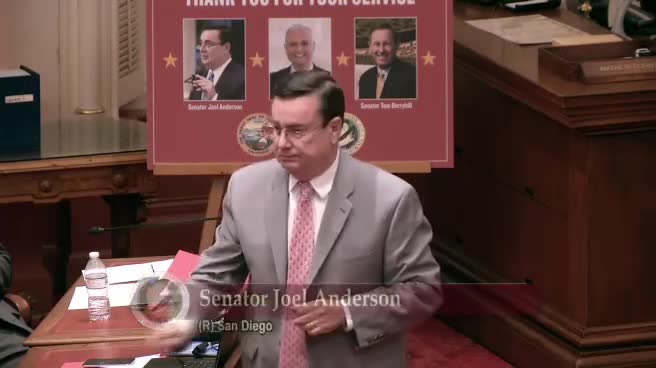 4MIN
Senate Floor
 1H
Senate Standing Committee on Appropriations
 10MIN
Assembly Floor
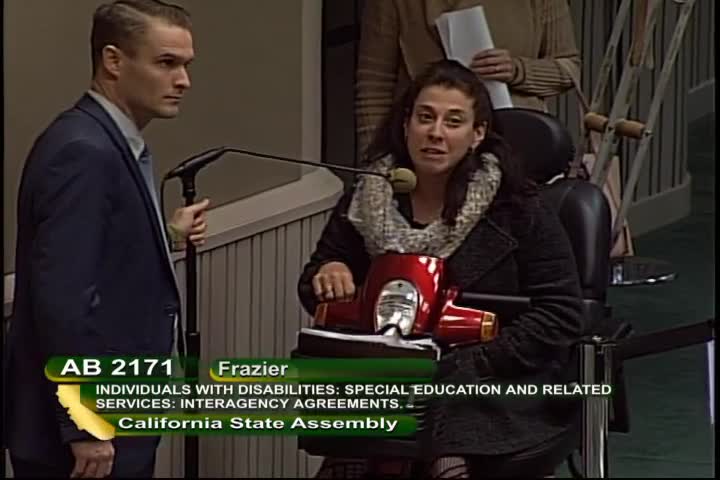 23MIN
Assembly Standing Committee on Education
Bill Author

Bill Co-Author(s):