AB 2816: Pesticides: schoolsites: report.
- Session Year: 2017-2018
- House: Assembly
- Latest Version Date: 2018-09-23
Existing law, the Healthy Schools Act of 2000, requires that the preferred method of managing pests at schoolsites, as defined, is to use effective, least toxic pest management practices and requires schoolsites to maintain records of all pesticides used at the schoolsite for a period of 4 years. Existing law requires schools to provide all staff and parents or guardians of pupils enrolled at a school written notification of, among other things, expected pesticide use at that schoolsite. Existing law requires the Department of Pesticide Regulation to establish an integrated pest management training program in order to facilitate the adoption of a model integrated pest management program and least-hazardous pest control practices by schoolsites and requires certain persons who, in the course of their work, intend to apply a pesticide at a schoolsite to annually complete a training course provided by that department.
This bill would require the department to submit a report to the Legislature on or before January 1, 2021, that evaluates the implementation, and the effect of the implementation, of the Healthy Schools Act of 2000 and that provides recommendations on improving the implementation and efficacy of the Healthy Schools Act of 2000.
Existing law, the Healthy Schools Act of 2000, requires that the preferred method of managing pests at schoolsites, as defined, is to use effective, least toxic pest management practices and requires schoolsites to maintain records of all pesticides used at the schoolsite for a period of 4 years. Existing law requires schools to provide all staff and parents or guardians of pupils enrolled at a school written notification of, among other things, expected pesticide use at that schoolsite. Existing law requires the Department of Pesticide Regulation to establish an integrated pest management training program in order to facilitate the adoption of a model integrated pest management program and least-hazardous pest control practices by schoolsites and requires certain persons who, in the course of their work, intend to apply a pesticide at a schoolsite to annually complete a training course provided by that department.
This bill would require the department to submit a report to the Legislature on or before January 1, 2020, 2021, that evaluates the implementation, and the effect of the implementation, of the Healthy Schools Act of 2000 and that recommends whether the restriction or prohibition of the use of one or more pesticides at schoolsites should be considered. The bill would require the department, when determining whether to recommend that the use of a pesticide be restricted or prohibited, to, among other things, consult, as appropriate, with specified entities and consider what alternatives to the pesticide are available to schoolsites. provides recommendations on improving the implementation and efficacy of the Healthy Schools Act of 2000.
Existing law, the Healthy Schools Act of 2000, requires that the preferred method of managing pests at schoolsites, as defined, is to use effective, least toxic pest management practices and requires schoolsites to maintain records of all pesticides used at the schoolsite for a period of 4 years. Existing law requires schools to provide all staff and parents or guardians of pupils enrolled at a school written notification of, among other things, expected pesticide use at that schoolsite. Existing law requires the Department of Pesticide Regulation to establish an integrated pest management training program in order to facilitate the adoption of a model integrated pest management program and least-hazardous pest control practices by schoolsites and requires certain persons who, in the course of their work, intend to apply a pesticide at a schoolsite to annually complete a training course provided by that department.
This bill would require the department to submit a report to the Legislature on or before January 1, 2020, that evaluates the implementation and effect of certain provisions implementation, and the effect of the implementation, of the Healthy Schools Act of 2000 and related provisions, as specified, and that recommends whether the restriction or prohibition of the use of one or more pesticides should be banned for use at schoolsites. at schoolsites should be considered. The bill would require the department, when determining whether to ban a pesticide, to consult to recommend that the use of a pesticide be restricted or prohibited, to, among other things, consult, as appropriate, with specified entities and consider what alternative options to that alternatives to the pesticide are available, as provided. available to schoolsites.
Existing law, the Healthy Schools Act of 2000, requires that the preferred method of managing pests at schoolsites, as defined, is to use effective, least toxic pest management practices and requires schoolsites to maintain records of all pesticides used at the schoolsite for a period of 4 years. Existing law requires schools to provide all staff and parents or guardians of pupils enrolled at a school written notification of, among other things, expected pesticide use at that schoolsite. Existing law requires the Department of Pesticide Regulation to establish an integrated pest management training program in order to facilitate the adoption of a model integrated pest management program and least-hazardous pest control practices by schoolsites and requires certain persons who, in the course of their work, intend to apply a pesticide at a schoolsite to annually complete a training course provided by that department.
This bill would prohibit the indoor and outdoor use of pesticides on a schoolsite, except as specified, unless a local public health officer determines that a public health emergency exists requiring emergency application of a pesticide. If a public health officer determines that a public health emergency exists requiring emergency application of a pesticide, the bill would prohibit the pesticide from being sprayed, released, deposited, or applied indoors on a schoolsite while pupils are present or connected through the same ventilation system, or outdoors on a schoolsite while pupils are located in, on, or adjacent to the area of the pesticide application.This bill would require the department to submit a report to the Legislature on or before January 1, 2020, that evaluates the implementation and effect of certain provisions of the Healthy Schools Act of 2000 and related provisions, as specified, and that recommends whether one or more pesticides should be banned for use at schoolsites. The bill would require the department, when determining whether to ban a pesticide, to consult with specified entities and consider what alternative options to that pesticide are available, as provided.
Existing law, the Healthy Schools Act of 2000, requires that the preferred method of managing pests at schoolsites, as defined, is to use effective, least toxic pest management practices and requires schoolsites to maintain records of all pesticides used at the schoolsite for a period of 4 years. Existing law requires schools to provide all staff and parents or guardians of pupils enrolled at a school written notification of, among other things, expected pesticide use at that schoolsite. Existing law requires the Department of Pesticide Regulation to establish an integrated pest management training program in order to facilitate the adoption of a model integrated pest management program and least-hazardous pest control practices by schoolsites and requires certain persons who, in the course of their work, intend to apply a pesticide at a schoolsite to annually complete a training course provided by that department.
This bill would prohibit the indoor and outdoor use of pesticides on a schoolsite, except as specified, unless a local public health officer determines that a public health emergency exists requiring emergency application of a pesticide. If a public health officer determines that a public health emergency exists requiring emergency application of a pesticide, the bill would prohibit the pesticide from being sprayed, released, deposited, or applied indoors on a schoolsite while pupils are present or connected through the same ventilation system, or outdoors on a schoolsite while pupils are located in, on, or adjacent to the area of the pesticide application.
Existing law provides for the administration and operation of juvenile court schools to serve pupils who are placed in juvenile detention facilities and specified other facilities and to provide the juvenile court school pupils with quality education and training.This bill would make nonsubstantive changes to these provisions.Existing law provides for the administration and operation of juvenile court schools to serve pupils who are placed in juvenile detention facilities and specified other facilities and to provide the juvenile court school pupils with quality education and training.
This bill would make nonsubstantive changes to these provisions.
(a)On or before January 1, 2021, the Department of Pesticide Regulation shall submit a report to the Legislature that does both of the following:
(1)Evaluates the implementation, and the effect of the implementation, of the provisions of the Healthy Schools Act of 2000, as set forth in this article and Article 17 (commencing with Section 13180) of Chapter 2 of Division 7 of the Food and Agricultural Code.
(2)Provides recommendations on improving the implementation and efficacy of the Healthy Schools Act of 2000, as set forth in this article and Article 17 (commencing with Section 13180) of Chapter 2 of Division 7 of the Food and Agricultural Code.
(b)The Department of Pesticide Regulation may consult, as appropriate, with relevant local, state, or federal agencies, stakeholders, and experts in the preparation of the report required pursuant to subdivision (a).
(c)The report required pursuant to subdivision (a) shall be submitted in compliance with Section 9795 of the Government Code.
(d)This section shall become inoperative on July 1, 2021, and, as of January 1, 2022, is repealed.
(a)On or before January 1, 2020, 2021, the Department of Pesticide Regulation shall submit a report to the Legislature that does both of the following:
(1)Evaluates the implementation, and the effect of the implementation, of the provisions of the Healthy Schools Act of 2000, as set forth in this article and Article 17 (commencing with Section 13180) of Chapter 2 of Division 7 of the Food and Agricultural Code.
(2)Recommends whether the restriction or prohibition of the use of one or more pesticides at schoolsites should be considered.(b)In determining whether to recommend that the use of a pesticide be restricted or prohibited pursuant to subdivision (a), the Department of Pesticide Regulation shall do all of the following:(1)Consider the potential health impacts of exposure to the pesticide to pupils, staff, and school visitors.(2)Consider the potential environmental impacts of the use of the pesticide, including, but not limited to, the impact on nontarget wildlife.(3)Consider what alternatives to the pesticide are available to schoolsites.(2)Provides recommendations on improving the implementation and efficacy of the Healthy Schools Act of 2000, as set forth in this article and Article 17 (commencing with Section 13180) of Chapter 2 of Division 7 of the Food and Agricultural Code.
(4)Consult, as(b)The Department of Pesticide Regulation may consult, as appropriate, with relevant local, state, or federal agencies, stakeholders, and experts. experts in the preparation of the report required pursuant to subdivision (a).
(c)The report required pursuant to subdivision (a) shall be submitted in compliance with Section 9795 of the Government Code.
(d)This section shall become inoperative on July 1, 2020, 2021, and, as of January 1, 2021, 2022, is repealed.
(a)On or before January 1, 2020, the Department of Pesticide Regulation shall submit a report to the Legislature that does both of the following:
(1)Evaluates the implementation and effect implementation, and the effect of the implementation, of the provisions of Senate Bill 1405 (Chapter 848 of the Statutes of 2014). the Healthy Schools Act of 2000, as set forth in this article and Article 17 (commencing with Section 13180) of Chapter 2 of Division 7 of the Food and Agricultural Code.
(2)Recommends whether the restriction or prohibition of the use of one or more pesticides should be banned for use at schoolsites. at schoolsites should be considered.
(b)In determining whether to recommend that the use of a pesticide should be banned be restricted or prohibited pursuant to subdivision (a), the Department of Pesticide Regulation shall do both all of the following:
(1)Consider the potential health impacts of exposure to the pesticide to pupils, staff, and school visitors.
(2)Consider the potential environmental impacts of the use of the pesticide, including, but not limited to, the impact on nontarget wildlife.
(1)(3)Consider what options alternatives to the pesticide are available to schoolsites to address an infestation for which the pesticide being considered to be banned is used. schoolsites.
(2)Consult with appropriate(4)Consult, as appropriate, with relevant local, state, or federal agencies, stakeholders, and experts.
(c)The report required pursuant to subdivision (a) shall be submitted in compliance with Section 9795 of the Government Code.
(d)This section shall become inoperative on July 1, 2020, and, as of January 1, 2021, is repealed.
(a)On or before January 1, 2020, the Department of Pesticide Regulation shall submit a report to the Legislature that does both of the following:
(1)Evaluates the implementation and effect of the provisions of Senate Bill 1405 (Chapter 848 of the Statutes of 2014).
(2)Recommends whether one or more pesticides should be banned for use at schoolsites.
(b)In determining whether a pesticide should be banned pursuant to subdivision (a), the Department of Pesticide Regulation shall do both of the following:
(1)Consider what options are available to schoolsites to address an infestation for which the pesticide being considered to be banned is used.
(2)Consult with appropriate local, state, or federal agencies, stakeholders, and experts.
(c)The report required pursuant to subdivision (a) shall be submitted in compliance with Section 9795 of the Government Code.
(d)This section shall become inoperative on July 1, 2020, and, as of January 1, 2021, is repealed.
SECTION 1.This act shall be known, and may be cited, as the Healthy Schools Act of 2018. SEC. 2.The Legislature hereby finds and declares all of the following:(a)Pesticides have been linked to numerous acute and chronic illnesses, including cancer and asthma.(b)According to the federal Centers for Disease Control and Prevention, children between 6 and 11 years of age have higher levels of commonly used pesticides in their bodies than any other age group, with an average of six pesticides per child. According to research conducted by the University of California, San Francisco, childrens diseases and conditions linked to pesticide exposure, which include learning disabilities, cancer of the brain and leukemia, birth defects, and asthma, have increased dramatically over the past 30 years. Because childrens bodies and brains are still developing, exposure to pesticides can have irreversible detrimental effects. Our greatest care and caution in the use of pesticides should be employed when children are present.(c)Recognizing the impact of pesticides on the school community, the Department of Pesticide Regulation has developed an Internet Web site, written training materials, and conducted regional training sessions to assist schools that have chosen to adopt least-toxic integrated pest management techniques and to eliminate use of the most dangerous pesticides. Many school districts and pest control operators have implemented integrated pest management programs that operate with greatly reduced use of pesticides. Many schools, maintenance staff, and pest control operators have made substantial progress since 2000 in reducing the use of pesticides on school campuses.(d)However, many California public schools continue to use highly toxic pesticides. One-third of school districts use at least one nonexempt pesticide, as measured by the report titled, 2010 Integrated Pest Management Survey of California School Districts, prepared for the Department of Pesticide Regulation. From 2004 to 2010, surveys indicated no change in the proportion of school districts that use those less desirable pesticide practices, and 61 percent of school districts that responded to the 2010 survey stated that they were still broadcast spraying pesticides, one of the highest risk practices for exposing children and staff and contaminating the environment. Of the school districts that claimed to be implementing integrated pest management practices, 56 percent stated that the costs were the same or less than using chemical-intensive methods.(e)According to the State Department of Education, there are over 1,000 school districts, and over 10,000 schools in California serving over 6,200,000 pupils.(f)It is necessary to take precautionary measures to protect the health and safety of California schoolchildren and teachers, and better ensure a safe learning and working environment.SEC. 3.Section 17610.2 is added to the Education Code, to read:17610.2.(a)The indoor use of a pesticide on a schoolsite, excluding family day care homes, as defined in Section 1596.78 of the Health and Safety Code, is prohibited unless a local public health officer determines that a public health emergency exists requiring emergency application of a pesticide.(b)For purposes of this section, pesticide does not include any of the following:(1)Antimicrobial pesticides and products.(2)Rodent bait used in a tamper-resistant, secured container.(3)Ready-to-use gel formulations of insecticide applied in areas inaccessible to pupils and the general public.(4)Insect bait used in a tamper-resistant container, or placed in an area inaccessible to pupils and the general public.(5)Pesticides classified by the federal Environmental Protection Agency as exempt under Section 152.25 of Title 40 of the Code of Federal Regulations.(6)Boric acid and disodium octaborate tetrahydrate.(7)Horticultural soaps and oils containing no synthetic pesticides or synergists and exempt under Section 25(b) of the Federal Insecticide, Fungicide, and Rodenticide Act (7 U.S.C. Sec. 136w(b)).(c)If a local public health officer determines that a public health emergency exists requiring emergency application of a pesticide pursuant to subdivision (a), the pesticide shall not be sprayed, released, deposited, or applied indoors on the schoolsite while pupils are present or connected through the same ventilation system.(d)This section does not abrogate the authority of county health officers, the Department of Food and Agriculture, mosquito and vector control districts, the State Department of Public Health, or other state agencies that are responsible for pest management decisions that may affect public schools in California.(e)This section does not preclude a school district from adopting or enforcing stricter pesticide use policies.SEC. 4.Section 17610.3 is added to the Education Code, to read:17610.3.(a)The outdoor use of a pesticide on a schoolsite, excluding family day care homes, as defined in Section 1596.78 of the Health and Safety Code, is prohibited unless a local public health officer determines that a public health emergency exists requiring emergency application of a pesticide.(b)For purposes of this section, pesticide does not include any of the following:(1)Antimicrobial pesticides and products.(2)An aerosol product exempt under Section 25(b) of the Federal Insecticide, Fungicide, and Rodenticide Act (7 U.S.C. Sec. 136w(b)) with a direct spray, in a container of 18 fluid ounces or less, when used to protect individuals from an imminent threat from stinging and biting arthropods.(3)Insect or rodent bait used in a tamper-resistant, secured container.(4)Pesticides classified by the federal Environmental Protection Agency as exempt under Section 152.25 of Title 40 of the Code of Federal Regulations.(5)Boric acid and disodium octaborate tetrahydrate.(6)Horticultural soaps and oils containing no synthetic pesticides or synergists and exempt under Section 25(b) of the Federal Insecticide, Fungicide, and Rodenticide Act (7 U.S.C. Sec. 136w(b)).(7)Activities undertaken at a school by participants in the state program of agricultural career technical education, pursuant to Article 7 (commencing with Section 52450) of Chapter 9 of Part 28 of Division 4 of Title 2, if the activities are necessary to meet the curriculum requirements prescribed in Section 52454. Nothing in this subdivision relieves schools participating in the state program of agricultural career technical education of any duties pursuant to this section for activities that are not directly related to the curriculum requirements of Section 52454.(8)Agricultural uses.(c)If a local public health officer determines that a public health emergency exists requiring emergency application of a pesticide pursuant to subdivision (a), the pesticide shall not be sprayed, released, deposited, or applied outdoors on the schoolsite while pupils are located in, on, or adjacent to the area of the pesticide application.(d)This section does not abrogate the authority of county health officers, the Department of Food and Agriculture, mosquito and vector control districts, the State Department of Public Health, or other state agencies that are responsible for pest management decisions that may affect public schools in California.(e)This section does not preclude a school district from adopting or enforcing stricter pesticide use policies.This act shall be known, and may be cited, as the Healthy Schools Act of 2018.
SEC. 2.The Legislature hereby finds and declares all of the following:
(a)Pesticides have been linked to numerous acute and chronic illnesses, including cancer and asthma.
(b)According to the federal Centers for Disease Control and Prevention, children between 6 and 11 years of age have higher levels of commonly used pesticides in their bodies than any other age group, with an average of six pesticides per child. According to research conducted by the University of California, San Francisco, childrens diseases and conditions linked to pesticide exposure, which include learning disabilities, cancer of the brain and leukemia, birth defects, and asthma, have increased dramatically over the past 30 years. Because childrens bodies and brains are still developing, exposure to pesticides can have irreversible detrimental effects. Our greatest care and caution in the use of pesticides should be employed when children are present.
(c)Recognizing the impact of pesticides on the school community, the Department of Pesticide Regulation has developed an Internet Web site, written training materials, and conducted regional training sessions to assist schools that have chosen to adopt least-toxic integrated pest management techniques and to eliminate use of the most dangerous pesticides. Many school districts and pest control operators have implemented integrated pest management programs that operate with greatly reduced use of pesticides. Many schools, maintenance staff, and pest control operators have made substantial progress since 2000 in reducing the use of pesticides on school campuses.
(d)However, many California public schools continue to use highly toxic pesticides. One-third of school districts use at least one nonexempt pesticide, as measured by the report titled, 2010 Integrated Pest Management Survey of California School Districts, prepared for the Department of Pesticide Regulation. From 2004 to 2010, surveys indicated no change in the proportion of school districts that use those less desirable pesticide practices, and 61 percent of school districts that responded to the 2010 survey stated that they were still broadcast spraying pesticides, one of the highest risk practices for exposing children and staff and contaminating the environment. Of the school districts that claimed to be implementing integrated pest management practices, 56 percent stated that the costs were the same or less than using chemical-intensive methods.
(e)According to the State Department of Education, there are over 1,000 school districts, and over 10,000 schools in California serving over 6,200,000 pupils.
(f)It is necessary to take precautionary measures to protect the health and safety of California schoolchildren and teachers, and better ensure a safe learning and working environment.
SEC. 3.Section 17610.2 is added to the Education Code, to read:17610.2.(a)The indoor use of a pesticide on a schoolsite, excluding family day care homes, as defined in Section 1596.78 of the Health and Safety Code, is prohibited unless a local public health officer determines that a public health emergency exists requiring emergency application of a pesticide.
(b)For purposes of this section, pesticide does not include any of the following:
(1)Antimicrobial pesticides and products.
(2)Rodent bait used in a tamper-resistant, secured container.
(3)Ready-to-use gel formulations of insecticide applied in areas inaccessible to pupils and the general public.
(4)Insect bait used in a tamper-resistant container, or placed in an area inaccessible to pupils and the general public.
(5)Pesticides classified by the federal Environmental Protection Agency as exempt under Section 152.25 of Title 40 of the Code of Federal Regulations.
(6)Boric acid and disodium octaborate tetrahydrate.
(7)Horticultural soaps and oils containing no synthetic pesticides or synergists and exempt under Section 25(b) of the Federal Insecticide, Fungicide, and Rodenticide Act (7 U.S.C. Sec. 136w(b)).
(c)If a local public health officer determines that a public health emergency exists requiring emergency application of a pesticide pursuant to subdivision (a), the pesticide shall not be sprayed, released, deposited, or applied indoors on the schoolsite while pupils are present or connected through the same ventilation system.
(d)This section does not abrogate the authority of county health officers, the Department of Food and Agriculture, mosquito and vector control districts, the State Department of Public Health, or other state agencies that are responsible for pest management decisions that may affect public schools in California.
(e)This section does not preclude a school district from adopting or enforcing stricter pesticide use policies.
SEC. 4.Section 17610.3 is added to the Education Code, to read:17610.3.(a)The outdoor use of a pesticide on a schoolsite, excluding family day care homes, as defined in Section 1596.78 of the Health and Safety Code, is prohibited unless a local public health officer determines that a public health emergency exists requiring emergency application of a pesticide.
(b)For purposes of this section, pesticide does not include any of the following:
(1)Antimicrobial pesticides and products.
(2)An aerosol product exempt under Section 25(b) of the Federal Insecticide, Fungicide, and Rodenticide Act (7 U.S.C. Sec. 136w(b)) with a direct spray, in a container of 18 fluid ounces or less, when used to protect individuals from an imminent threat from stinging and biting arthropods.
(3)Insect or rodent bait used in a tamper-resistant, secured container.
(4)Pesticides classified by the federal Environmental Protection Agency as exempt under Section 152.25 of Title 40 of the Code of Federal Regulations.
(5)Boric acid and disodium octaborate tetrahydrate.
(6)Horticultural soaps and oils containing no synthetic pesticides or synergists and exempt under Section 25(b) of the Federal Insecticide, Fungicide, and Rodenticide Act (7 U.S.C. Sec. 136w(b)).
(7)Activities undertaken at a school by participants in the state program of agricultural career technical education, pursuant to Article 7 (commencing with Section 52450) of Chapter 9 of Part 28 of Division 4 of Title 2, if the activities are necessary to meet the curriculum requirements prescribed in Section 52454. Nothing in this subdivision relieves schools participating in the state program of agricultural career technical education of any duties pursuant to this section for activities that are not directly related to the curriculum requirements of Section 52454.
(8)Agricultural uses.
(c)If a local public health officer determines that a public health emergency exists requiring emergency application of a pesticide pursuant to subdivision (a), the pesticide shall not be sprayed, released, deposited, or applied outdoors on the schoolsite while pupils are located in, on, or adjacent to the area of the pesticide application.
(d)This section does not abrogate the authority of county health officers, the Department of Food and Agriculture, mosquito and vector control districts, the State Department of Public Health, or other state agencies that are responsible for pest management decisions that may affect public schools in California.
(e)This section does not preclude a school district from adopting or enforcing stricter pesticide use policies.
SECTION 1.Section 48645 of the Education Code is amended to read:48645.(a)The purpose of this article is to provide for the administration and operation of public schools in juvenile halls, juvenile homes, day centers, juvenile ranches, juvenile camps, regional youth educational facilities, or Orange County youth correctional centers in existence and providing services before January 1, 1990, established pursuant to Article 23 (commencing with Section 850), Article 24 (commencing with Section 880), Article 24.5 (commencing with Section 894) of Chapter 2 of Part 1 of Division 2, or Article 9 (commencing with Section 1850) of Chapter 1 of Division 2.5, of the Welfare and Institutions Code or in any group home housing 25 or more children placed pursuant to Sections 362, 727, and 730, of the Welfare and Institutions Code or in any group home housing 25 or more children and operating one or more additional sites under a central administration for children placed pursuant to Section 362, 727, or 730 of the Welfare and Institutions Code, with acceptable school structures at one or more centrally located sites to serve the single or composite populations, and to provide the juvenile court school pupils detained with quality education and training.(b)Nothing in this section shall be construed as indicating that it is the intent of the Legislature to prevent juvenile court school pupils who are housed in group homes from enrolling in regular public schools, or that it is the intent of the Legislature to transfer the responsibility for any costs associated with the operation of group homes to the counties.(c)The Orange County Office of Education shall only provide educational services in youth correctional centers for individuals up to 19 years of age.(a)The purpose of this article is to provide for the administration and operation of public schools in juvenile halls, juvenile homes, day centers, juvenile ranches, juvenile camps, regional youth educational facilities, or Orange County youth correctional centers in existence and providing services prior to the effective date of the amendments to this section made by the Statutes of 1989, before January 1, 1990, established pursuant to Article 23 (commencing with Section 850), Article 24 (commencing with Section 880), Article 24.5 (commencing with Section 894) of Chapter 2 of Part 1 of Division 2, or Article 9 (commencing with Section 1850) of Chapter 1 of Division 2.5, of the Welfare and Institutions Code or in any group home housing 25 or more children placed pursuant to Sections 362, 727, and 730, of the Welfare and Institutions Code or in any group home housing 25 or more children and operating one or more additional sites under a central administration for children placed pursuant to Section 362, 727, or 730 of the Welfare and Institutions Code, with acceptable school structures at one or more centrally located sites to serve the single or composite populations, and to provide the juvenile court school pupils therein detained with quality education and training.
Nothing(b)Nothing in this section shall be construed as indicating that it is the intent of the Legislature to prevent juvenile court school pupils who are housed in group homes from enrolling in regular public schools, or that it is the intent of the Legislature to transfer the responsibility for any costs associated with the operation of group homes to the counties.
The(c)The Orange County Office of Education shall only provide educational services in youth correctional centers for individuals up to 19 years of age.
|
Date
|
Status
|
|---|---|
| Sep 23, 2018 | Chaptered by Secretary of State - Chapter 720, Statutes of 2018. |
| Sep 23, 2018 | Approved by the Governor. |
| Sep 5, 2018 | Enrolled and presented to the Governor at 3 p.m. |
| Aug 27, 2018 | Senate amendments concurred in. To Engrossing and Enrolling. |
| Aug 23, 2018 | In Assembly. Concurrence in Senate amendments pending. May be considered on or after August 25 pursuant to Assembly Rule 77. |
| Aug 23, 2018 | Read third time. Passed. Ordered to the Assembly. |
| Aug 20, 2018 | Read second time. Ordered to third reading. |
| Aug 17, 2018 | From committee: Amend, and do pass as amended. (Ayes 5. Noes 1.) (August 16). |
| Aug 6, 2018 | In committee: Referred to APPR. suspense file. |
| Jun 28, 2018 | From committee: Do pass and re-refer to Com. on APPR. (Ayes 7. Noes 0.) (June 27). Re-referred to Com. on APPR. |
| Jun 21, 2018 | From committee: Do pass and re-refer to Com. on ED. (Ayes 6. Noes 1.) (June 20). Re-referred to Com. on ED. |
| Jun 13, 2018 | Referred to Coms. on EQ. and ED. |
| Jun 4, 2018 | In Senate. Read first time. To Com. on RLS. for assignment. |
| May 31, 2018 | Read third time. Passed. Ordered to the Senate. |
| May 25, 2018 | From committee: Do pass. (Ayes 13. Noes 2.) (May 25). |
| May 16, 2018 | In committee: Set, first hearing. Referred to APPR. suspense file. |
| Apr 30, 2018 | Re-referred to Com. on APPR. |
| Apr 26, 2018 | Read second time and amended. |
| Apr 25, 2018 | From committee: Amend, and do pass as amended and re-refer to Com. on APPR. (Ayes 5. Noes 0.) (April 24). |
| Apr 17, 2018 | Re-referred to Com. on E.S. & T.M. |
| Apr 16, 2018 | Read second time and amended. |
| Apr 12, 2018 | From committee: Amend, and do pass as amended and re-refer to Com. on E.S. & T.M. (Ayes 6. Noes 0.) (April 11). |
| Apr 2, 2018 | Re-referred to Com. on ED. |
| Mar 22, 2018 | Referred to Coms. on ED. and E.S. & T.M. |
| Feb 17, 2018 | From printer. May be heard in committee March 19. |
| Feb 16, 2018 | Read first time. To print. |
|
Date
|
Description
|
Location
|
Votes
|
|
|---|---|---|---|---|
| Aug 27, 2018 | AB 2816 MURATSUCHI Concurrence in Senate Amendments | Assembly Floor |
Passed |
|
| Aug 23, 2018 | Assembly 3rd Reading AB2816 Muratsuchi et al. By Pan | Senate Floor |
Passed |
|
| Aug 16, 2018 | Do pass as amended | Senate Standing Committee on Appropriations |
Passed |
|
| Aug 6, 2018 | Placed on suspense file | Senate Standing Committee on Appropriations |
Passed |
|
| Jun 27, 2018 | Do pass, but first be re-referred to the Committee on [Appropriations] | Senate Standing Committee on Education |
Passed |
|
| Jun 20, 2018 | Do pass, but first be re-referred to the Committee on [Education] | Senate Standing Committee on Environmental Quality |
Passed |
|
| May 31, 2018 | AB 2816 MURATSUCHI Assembly Third Reading | Assembly Floor |
Passed |
|
| May 25, 2018 | Do pass. | Assembly Standing Committee on Appropriations |
Passed |
|
| Apr 24, 2018 | Do pass as amended and be re-referred to the Committee on [Appropriations] | Assembly Standing Committee on Environmental Safety and Toxic Materials |
Passed |
|
| Apr 11, 2018 | Do pass as amended and be re-referred to the Committee on [Environmental Safety and Toxic Materials] | Assembly Standing Committee on Education |
Passed |
This list shows positions taken on this bill by organizations on the date displayed, which is linked to the original source.
Positions by individuals are not included.
CONCURRENCE IN SENATE AMENDMENTS
CSA1 Bill Id:AB 2816
Author:(Muratsuchi)
As Amended Ver:August 17, 2018
Majority vote
ASSEMBLY: | 62-8 | (May 31, 2018) | SENATE: | 34-3 | (August 23, 2018) |
Original Committee Reference: ED.
SUMMARY: Requires the Department of Pesticide Regulation (DPR), on or before January 1, 2021, to submit a report to the Legislature that 1) evaluates the implementation, and the effect of the implementation, of the provisions of the Healthy Schools Act of 2000; and 2) provides recommendations on improving the implementation and efficacy of the Healthy Schools Act of 2000. Authorizes the DPR to consult, as appropriate, with relevant local, state, or federal agencies, stakeholders, and experts in the preparation of the report.
The Senate amendments change the date of the report from January 1, 2020 to January 1, 2021, and strike the provisions requiring the DPR to consider the health and environmental effects on the use of pesticides and the alternatives available to schoolsites in the report.
FISCAL EFFECT: According to the Senate Appropriations Committee, low hundreds of thousands of dollars (General Fund) over three years for DPR to complete the report.
COMMENTS: Pests in schools: Pests such as insects, rodents, fungi, and weeds can affect the school environment and the people who work and learn there. While pests can be found in many places in and around schools, common habitats for pests include cafeterias, classrooms, lockers, gyms, locker rooms, dumpsters, landscapes, school grounds, and athletic fields. Pests can cause human health problems, structural damage, and plant damage.
Risks of pesticide exposure: The US Environmental Protection Agency (US EPA) reports that the adverse effects of pesticide exposure range from mild symptoms, such as dizziness and nausea, to serious, long-term effects, including neurological, developmental, reproductive, endocrine disrupting, and carcinogenic effects. According to the American Medical Association, pesticide poisoning is a commonly under-diagnosed illness, as it can resemble acute upper respiratory tract illness, conjunctivitis, gastrointestinal illness, and many other conditions.
Healthy Schools Act (HSA). The HSA, established by AB 2260 (Shelley), Chapter 718, Statutes of 2000, expresses the policy of the state that the least toxic pest management practices are the preferred method of managing pests at schoolsites in order to reduce children's exposure to toxic pesticides. The HSA established a process for notifying school staff and parents or guardians of pesticide use, including through posting warning signs at schoolsites 72 hours prior to pesticide application and through an annual written notification. Schools are required to keep records of pesticide use for four years. AB 2260 also required the DPR to assist schools in the development of Integrated Pest Management (IPM) programs that include a model program guidebook, resources provided through the DPR's Internet Web site, and a training program.
IPM. Under the HSA, IPM, a strategy also recommended by the US EPA, is defined as a pest management strategy that focuses on long-term prevention or suppression of pest problems through a combination of techniques such as monitoring for pest presence and establishing treatment threshold levels, using non-chemical practices to make the habitat less conducive to pest development, improving sanitation, and employing mechanical and physical controls. The IPM strategy offers use of the least toxic pesticides only after careful monitoring indicates they are needed according to pre-established guidelines and treatment thresholds.
The HSA exempts certain pesticides from the requirements of the HSA, including pesticide that is in the form of a self-contained bait or trap, gel or paste deployed as a crack and crevice treatment, any pesticide exempted from regulation by the US EPA, or antimicrobial pesticides, including sanitizers and disinfectants. All other pesticides are commonly referred to as "non-exempt pesticides".
After several attempts to ban specified pesticides in schools, then Senator DeSaulnier introduced SB 1405, Chapter 848, in 2014. The bill required schools to develop an IPM and required school staff and pest control applicators to receive training on the safe use of pesticides if certain pesticides will be used. SB 1405 was signed into law by Governor Brown.
DPR offers two school IPM workshops and two specialized IPM workshops per year. DPR also administers an online training video pursuant to the requirements of SB 1405.
The best way to illustrate the HSA in more detail is to list the requirements for public K–12 schools, public and private child care centers, and employer-sponsored child care centers. These requirements include:
- Designating a district employee who will make sure the requirements of the HSA are met when pesticides are used in the district;
- Developing, if a school chooses to use a non-exempt pesticide, an IPM plan using the DPR IPM Plan template or its own school district IPM plan, approved by DPR, and posting the IPM plan on the district website;
- Sending parents, guardians, and staff a written notification of pesticides expected to be applied at district schools during the year;
- Establishing a registry for all interested parents, guardians, and staff to sign up and receive notifications of individual pesticide applications;
- Posting signs where pesticides will be applied;
- Keeping records of pesticide applications made by district staff and pest management contractors for at least four years;
- Sending pesticide use reports for pesticide applications made by district staff to DPR at least once per year;
- Never using prohibited pesticides; and,
- Ensuring that the IPM coordinator and any person who applies any pesticide (including exempt pesticides) on school grounds completes the required IPM training (annually for district staff and during each licensing period for professional applicators).
DPR surveys and pesticide report. DPR has conducted four surveys (2001, 2002, 2004, 2010) assessing public schools' implementation of IPM. Survey results showed increasing adoption of IPM strategies over time. As of the 2010 survey, 68% of districts reported adoption of IPM programs while all districts reported using at least one pesticide product during the year. Pursuant to SB 1405, presumably, all districts that use non-exempt pesticides have adopted IPMs and pesticide administrators are receiving training. A 2015 DPR report on pesticide use in schools and child care centers shows the two most used applications to be glyphosate, used for weed control, and strychnine, used in bait projects placed in gopher burrows underground. The most common outdoor locations where pesticides were used were landscape and building exterior and the two most common indoor locations were cafeteria/kitchen and classrooms. Administration was done mainly on Saturdays and August was the month with the most applications reported.
This bill requires DPR to submit a report to the Legislature, on or before January 1, 2021, evaluating the effects, and the effects of the implementation, of the Healthy Schools Act of 2000, and provide recommendations on improving the implementation and efficacy of the Healthy Schools Act. Amendments adopted in the Senate Appropriations Committee deleted specific components required to be considered in the report, including the health and environmental effects of pesticides on people and the environment and alternatives to pesticides than can be used by schoolsites.
A coalition of supporters argues, "A growing body of scientific evidence indicates that even some of the most ubiquitous and unrestricted pesticides may have a terrible impact on children's health. We are especially concerned about the widespread use of glyphosate (marketed as Roundup) as a weed killer in public spaces, including schools. New evidence of glyphosate's carcinogenicity has led some California school districts to ban its use on campus. There is also growing concern over the pesticide aluminum phosphide (marketed as Fumitoxin), which continues to be used for gopher control on school athletic fields despite numerous exposure incidents in which young children have been sickened, most recently in the Palos Verdes Peninsula… As parents learn about the potential for harm caused by chemicals to which their children are routinely exposed, and start to connect the dots with the health impacts they face in their own families, they are increasingly joining together to ask that schools take steps to keep school campuses safe. AB 2816 would require close and public evaluation of such protections to all children."
Analysis Prepared by: Sophia Kwong Kim / ED. / (916) 319-2087 FN: 0004331
Office of Senate Floor Analyses (916) 651-1520 Fax: (916) 327-4478 | AB |
THIRD READING
Bill No: AB 2816
Amended: 8/17/18 in Senate
SENATE ENVIRONMENTAL QUALITY COMMITTEE: 6-1, 6/20/18
AYES: Wieckowski, Gaines, Hill, Lara, Skinner, Stern
NOES: Stone
SENATE EDUCATION COMMITTEE: 7-0, 6/27/18
AYES: Allen, Wilk, Galgiani, Leyva, McGuire, Pan, Vidak
SENATE APPROPRIATIONS COMMITTEE: 5-1, 8/16/18
AYES: Portantino, Beall, Bradford, Hill, Wiener
NOES: Nielsen
NO VOTE RECORDED: Bates
ASSEMBLY FLOOR: 62-8, 5/31/18 - See last page for vote
DIGEST:
This bill requires the Department of Pesticide Regulation (DPR) to submit a report to the Legislature that evaluates the Healthy Schools Act and provides recommendations for improving the implementation and efficacy of the act.
Existing law, under the Healthy Schools Act (HSA) of 2000:
- Requires schools to annually provide a written notice to staff and parents with the name of all pesticide products expected to be applied at the school during the upcoming year.
- Requires schools to post a warning sign at each area of the school site where pesticides will be applied.
- Requires schools to keep records for four years of all pesticides used at the schoolsite.
- Requires schools to post specified information on their websites.
- Prohibits the use of a pesticide that has been granted conditional registration, an interim registration, or an experimental use permit.
- Exempts agriculture vocational programs if the activity is necessary to meet curriculum requirements.
- Requires the Department of Pesticide Regulation (DPR) to promote and facilitate the voluntary adoption of Integrated Pest Management (IPM) programs for schools and child daycare facilities.
- Requires DPR to maintain a Web site with specific information, and requires DPR to ensure that adequate resources are available to respond to inquiries from schools regarding the use of IPM practices.
- Requires DPR to establish an IPM training program to facilitate the adoption of a model integrated pest management program and least-hazardous pest control practices by schools.
- Requires DPR to prepare a school pesticide use form to be used by licensed and certified pest control operators when they apply any pesticides at a school.
This bill:
- Requires DPR, on or before January 1, 2021, to submit a report to the Legislature that does the following:
- Evaluates the implementation, and the effect of the implementation, of the provisions of Healthy Schools Act of 2000; and,
- Provides recommendations on improving the implementation and efficacy of the Healthy Schools Act.
- Sunsets on July 1, 2021.
Background
- Pests in schools: Pests such as insects, rodents, fungi, and weeds can affect the school environment and the people who work and learn there. While pests can be found in many places in and around schools, common habitats for pests include cafeterias, classrooms, lockers, gyms, locker rooms, dumpsters, landscapes, school grounds, and athletic fields. Pests can cause human health problems, structural damage, and plant damage.
- Risks of pesticide exposure: The US Environmental Protection Agency (US EPA) reports that the adverse effects of pesticide exposure range from mild symptoms, such as dizziness and nausea, to serious, long-term effects, including neurological, developmental, reproductive, endocrine disrupting, and carcinogenic effects. According to the American Medical Association, pesticide poisoning is a commonly under-diagnosed illness, as it can resemble acute upper respiratory tract illness, conjunctivitis, gastrointestinal illness, and many other conditions.
- Healthy Schools Act (HSA). The HSA, established by AB 2260 (Shelley, Chapter 718, Statutes of 2000), expresses the policy of the state that the least toxic pest management practices are the preferred method of managing pests at schoolsites in order to reduce children's exposure to toxic pesticides. The HSA established a process for notifying school staff and parents or guardians of pesticide use, including through posting warning signs at schoolsites 72 hours prior to pesticide application and through an annual written notification. Schools are required to keep records of pesticide use for four years. AB 2260 also required the DPR to assist schools in the development of Integrated Pest Management (IPM) programs that include a model program guidebook, resources provided through the DPR’s Internet Web site, and a training program.
- IPM. Under the HSA, IPM, a strategy also recommended by the US EPA, is defined as a pest management strategy that focuses on long-term prevention or suppression of pest problems through a combination of techniques such as monitoring for pest presence and establishing treatment threshold levels, using non-chemical practices to make the habitat less conducive to pest development, improving sanitation, and employing mechanical and physical controls. The IPM strategy offers use of the least toxic pesticides only after careful monitoring indicates they are needed according to pre-established guidelines and treatment thresholds.
The HSA exempts certain pesticides from the requirements of the HSA, including pesticide that is in the form of a self-contained bait or trap, gel or paste deployed as a crack and crevice treatment, any pesticide exempted from regulation by the US EPA, or antimicrobial pesticides, including sanitizers and disinfectants. All other pesticides are commonly referred to as “non-exempt pesticides.”
After several attempts to ban specified pesticides in schools, then Senator DeSaulnier introduced SB 1405 (DeSaulnier, Chapter 848, Statutes of 2014). The bill required schools to develop an IPM and required school staff and pest control applicators to receive training on the safe use of pesticides if certain pesticides will be used. SB 1405 was signed into law by Governor Brown.
DPR offers two school IPM workshops and two specialized IPM workshops per year. DPR also administers an online training video pursuant to the requirements of SB 1405.
The best way to illustrate the HSA in more detail is to list the requirements for public K–12 schools, public and private child care centers, and employer-sponsored child care centers. These requirements include:- Designating a district employee who will make sure the requirements of the HSA are met when pesticides are used in the district;
- Developing, if a school chooses to use a non-exempt pesticide, an IPM plan using the DPR IPM Plan template or its own school district IPM plan, approved by DPR, and posting the IPM plan on the district website;
- Sending parents, guardians, and staff a written notification of pesticides expected to be applied at district schools during the year;
- Establishing a registry for all interested parents, guardians, and staff to sign up and receive notifications of individual pesticide applications;
- Posting signs where pesticides will be applied;
- Keeping records of pesticide applications made by district staff and pest management contractors for at least four years;
- Sending pesticide use reports for pesticide applications made by district staff to DPR at least once per year;
- Never using prohibited pesticides; and,
- Ensuring that the IPM coordinator and any person who applies any pesticide (including exempt pesticides) on school grounds completes the required IPM training (annually for district staff and during each licensing period for professional applicators).
- Designating a district employee who will make sure the requirements of the HSA are met when pesticides are used in the district;
- DPR surveys and pesticide report. DPR has conducted four surveys (2001, 2002, 2004, and 2010) assessing public schools’ implementation of IPM. Survey results showed increasing adoption of IPM strategies over time. As of the 2010 survey, 68% of districts reported adoption of IPM programs while all districts reported using at least one pesticide product during the year. Pursuant to SB 1405, presumably, all districts that use non-exempt pesticides have adopted IPMs and pesticide administrators are receiving training. A 2015 DPR report on pesticide use in schools and child care centers shows the two most used applications to be glyphosate, used for weed control, and strychnine, used in bait projects placed in gopher burrows underground. The most common outdoor locations where pesticides were used were landscape and building exterior and the two most common indoor locations were cafeteria/kitchen and classrooms. Administration was done mainly on Saturdays and August was the month with the most applications reported.
Comments
- Purpose of Bill. According to the author, “under current law, the least toxic pest management practices are the preferred method of managing pests at school sites. A 2010 CA Department of Pesticide Regulation (DPR) survey revealed that most schools using these practices found them to be more effective and no more costly than the conventional practices they had used in the past. The last survey in 2010 survey found that 40 percent of school districts continue to use high-exposure methods for treating weed problems, and only 60 percent use low-exposure baits for ant management.
“AB 2816 ensures children are protected from exposure to highly toxic pesticides on school sites. Children are more exposed and susceptible to pesticides than adults, since their bodies are still growing and developing. This measure is a first step to protect school children from exposure to highly toxic pesticides by requiring the Department of Pesticide Regulation to evaluate the implementation of Integrated Pest Management plans and recommend whether certain pesticides should be banned at schools sites.”
Related/Prior Legislation
SB 1405 (DeSaulnier, Chapter 848, Statutes of 2014) required, under the Healthy Schools Act of 2000 (HSA), a school designee to post on the Internet Web site of a schoolsite an integrated pest management plan if certain pesticides are used at a schoolsite; required reporting of specified pesticide use at a schoolsite; and required individuals applying pesticides at schoolsites to complete an annual training.
FISCAL EFFECT: Appropriation: Fiscal Com.: Local:
According to the Senate Appropriations Committee, AB 2816 would cost several hundreds of thousands of dollars (General Fund) over two years for DPR to complete the report.
Association of Regional Center Agencies
California Federation of Teachers
California Guild
California Rural Legal Assistance Foundation
California School Employees Association
California Teachers Association
Californians for Pesticide Reform
Center for Environmental Health
Center on Race, Poverty, and the Environment
Central California Environmental Justice Network
Moms Across America
Moms Advocating Sustainability
Monterey Bay Central Labor Council
Pesticide Action Network
Physicians for Social Responsibility – Los Angeles
OPPOSITION: (Verified 8/17/18)
None received
ASSEMBLY FLOOR: 62-8, 5/31/18
AYES: Acosta, Aguiar-Curry, Travis Allen, Arambula, Baker, Berman, Bloom, Bonta, Burke, Caballero, Calderon, Carrillo, Cervantes, Chau, Chiu, Chu, Cooley, Cooper, Cunningham, Daly, Eggman, Friedman, Cristina Garcia, Eduardo Garcia, Gipson, Gloria, Gonzalez Fletcher, Gray, Grayson, Holden, Irwin, Jones-Sawyer, Kalra, Kamlager-Dove, Kiley, Lackey, Levine, Limón, Low, Maienschein, McCarty, Medina, Melendez, Mullin, Muratsuchi, Nazarian, Obernolte, O'Donnell, Quirk, Quirk-Silva, Reyes, Rodriguez, Rubio, Salas, Santiago, Mark Stone, Thurmond, Ting, Voepel, Weber, Wood, Rendon
NOES: Bigelow, Brough, Chávez, Dahle, Gallagher, Harper, Mathis, Waldron
NO VOTE RECORDED: Chen, Choi, Flora, Fong, Frazier, Mayes, Patterson, Steinorth
8/19/18 13:59:26
**** END ****
SENATE COMMITTEE ON APPROPRIATIONS
Senator Anthony Portantino, Chair
2017 - 2018 Regular Session
AB 2816 (Muratsuchi) - Pesticides: schoolsites: report
Version: April 26, 2018 | Policy Vote: E.Q. 6 - 1, ED. 7 - 0 |
Urgency: No | Mandate: No |
Hearing Date: August 16, 2018 | Consultant: Ashley Ames |
Bill Summary:
This bill would require the Department of Pesticide Regulation (DPR) to submit a report by January 1, 2020, on the Healthy Schools Act (HSA) of 2000. The report would evaluate the act’s implementation and make recommendations about whether certain pesticides at school sites should be restricted or prohibited.
*********** ANALYSIS ADDENDUM – SUSPENSE FILE ***********
The following information is revised to reflect amendments
adopted by the committee on August 16, 2018
Fiscal Impact:
Low hundreds of thousands of dollars (General Fund) over three years for DPR to complete the report.
Author Amendments:
Extend by one year the deadline for the report and make reporting requirements more flexible to lower costs for DPR.
-- END --
SENATE COMMITTEE ON APPROPRIATIONS
Senator Anthony Portantino, Chair
2017 - 2018 Regular Session
AB 2816 (Muratsuchi) - Pesticides: schoolsites: report
Version: April 26, 2018 | Policy Vote: E.Q. 6 - 1, ED. 7 - 0 |
Urgency: No | Mandate: No |
Hearing Date: August 6, 2018 | Consultant: Ashley Ames |
This bill meets the criteria for referral to the Suspense File.
Bill Summary:
This bill would require the Department of Pesticide Regulation (DPR) to submit a report by January 1, 2020, on the Healthy Schools Act (HSA) of 2000. The report would evaluate the act’s implementation and make recommendations about whether certain pesticides at school sites should be restricted or prohibited.
Fiscal Impact:
$261,000 (General Fund) each in 2018-19 and 2019-20 for DPR to complete the report.
Background: Existing law, the Healthy Schools Act of 2000, requires DPR to promote and facilitate the voluntary adoption of integrated pest management for school districts. It also requires DPR to establish an integrated pest management training program in order to facilitate the adoption of least-hazardous pest control practices by school sites.
Proposed Law:
This bill would require the DPR, on or before January 1, 2020, to submit a report to the Legislature that does the following:
- Evaluates the implementation, and the effect of the implementation, of the provisions of Healthy Schools Act of 2000; and,
- Recommends whether the restriction or prohibition of the use of one or more pesticides at school sites should be considered.
It would also require DPR, in determining whether to recommend that the use of a pesticide should be restricted or prohibited, to do the following:
- Consider the potential health impacts of exposure to the pesticide to pupils, staff, and school visitors;
- Consider the potential environmental impacts of the use of the pesticide, including, but not limited to, the impact on nontarget wildlife;
- Consider what alternatives to the pesticide are available to schoolsites; and,
- Consult, as appropriate, with relevant local, state, or federal agencies, stakeholders, and experts.
-- END --
SENATE COMMITTEE ON EDUCATION
Senator Benjamin Allen, Chair
2017 - 2018 Regular
Bill No: Hearing Date: June 27, 2018
Author: | |||
Version: |
| ||
Urgency: | Fiscal: | ||
Consultant: | |||
Subject:
SUMMARY
This bill requires the Department of Pesticide Regulation (DPR) to submit a report to the Legislature by January 1, 2020 evaluating the implementation of the Healthy Schools Act and recommending whether restrictions on schoolsite pesticide use should be considered.
BACKGROUND
Existing law, under the Healthy Schools Act:
- Requires schools to annually provide a written notice to staff and parents with the name of all pesticide products expected to be applied at the school during the upcoming year.
- Requires schools to post a warning sign at each area of the school site where pesticides will be applied.
- Requires schools to keep records for four years of all pesticides used at the schoolsite.
- Requires schools to post specified information on their websites.
- Prohibits the use of a pesticide that has been granted conditional registration, an interim registration, or an experimental use permit.
- Exempts agriculture vocational programs if the activity is necessary to meet curriculum requirements.
- Requires the DPR to promote and facilitate the voluntary adoption of Integrated Pest Management (IPM) programs for schools and child daycare facilities.
- Requires DPR to maintain a website with specific information, and requires DPR to ensure that adequate resources are available to respond to inquiries from schools regarding the use of IPM practices.
- Requires DPR to establish an IPM training program to facilitate the adoption of a model integrated pest management program and least-hazardous pest control practices by schools.
- Requires Department of Pesticide Regulation (DPR) to prepare a school pesticide use form to be used by licensed and certified pest control operators when they apply any pesticides at a school.
ANALYSIS
This bill requires the DPR to submit a report to the Legislature by January 1, 2020 evaluating the implementation of the Healthy Schools Act and recommending whether restrictions on schoolsite pesticide use should be considered. Specifically, this bill:
- Requires DPR, on or before January 1, 2020, to submit a report to the Legislature that does the following:
- Evaluates the implementation, and the effect of the implementation, of the provisions of Healthy Schools Act of 2000; and,
- Recommends whether the restriction or prohibition of the use of one or more pesticides at schoolsites should be considered.
- Requires DPR, in determining whether to recommend that the use of a pesticide should be restricted or prohibited, to do the following:
- Consider the potential health impacts of exposure to the pesticide to pupils, staff, and school visitors;
- Consider the potential environmental impacts of the use of the pesticide, including, but not limited to, the impact on nontarget wildlife;
- Consider what alternatives to the pesticide are available to schoolsites; and,
- Consult, as appropriate, with relevant local, state, or federal agencies, stakeholders, and experts.
STAFF COMMENTS
- Need for the bill. According to the author, “under current law, the least toxic pest management practices are the preferred method of managing pests at school sites. A 2010 CA Department of Pesticide Regulation (DPR) survey revealed that most schools using these practices found them to be more effective and no more costly than the conventional practices they had used in the past. The last survey in 2010 survey found that 40 percent of school districts continue to use high-exposure methods for treating weed problems, and only 60 percent use low-exposure baits for ant management.
AB 2816 ensures children are protected from exposure to highly toxic pesticides on school sites. Children are more exposed and susceptible to pesticides than adults, since their bodies are still growing and developing. This measure is a first step to protect school children from exposure to highly toxic pesticides by requiring the Department of Pesticide Regulation to evaluate the implementation of Integrated Pest Management plans and recommend whether certain pesticides should be banned at schools sites.” - Healthy Schools Act (HSA). The HSA, established in 2000, expresses the policy of the state that the least toxic pest management practices are the preferred method of managing pests at schoolsites to reduce children's exposure to toxic pesticides. The HSA established a process for notifying school staff and parents or guardians of pesticide use, including through posting warning signs at schoolsites 72 hours prior to pesticide application and through an annual written notification. Schools are required to keep records of pesticide use for four years. The HSA also required the Department of Pesticide Regulation (DPR) to assist schools in the development of Integrated Pest Management programs that include a model program guidebook, resources provided through the DPR’s Internet Web site, and a training program.
- Integrated Pest Management (IPM) Programs. Under the HSA, IPM is defined as a pest management strategy that focuses on long-term prevention or suppression of pest problems through a combination of techniques such as monitoring for pest presence and establishing treatment threshold levels, using non-chemical practices to make the habitat less conducive to pest development, improving sanitation, and employing mechanical and physical controls. The IPM strategy offers use of the least toxic pesticides only after careful monitoring indicates they are needed according to pre-established guidelines and treatment thresholds.
The HSA exempts certain pesticides from the requirements of the HSA, including pesticide that is in the form of a self-contained bait or trap, gel or paste deployed as a crack and crevice treatment, any pesticide exempted from regulation by the US Environmental Protection Agency, or antimicrobial pesticides, including sanitizers and disinfectants. All other pesticides are commonly referred to as “non-exempt pesticides.”
The DPR offers two school IPM workshops and two specialized IPM workshops per year. The DPR also administers an online training video pursuant to existing law.
SUPPORT
Association of Regional Center Agencies
California Federation of Teachers
California Guild
California Rural Legal Assistance Foundation
California School Employees Association
California Teachers Association
Californians for Pesticide Reform
Center for Environmental Health
Center on Race, Poverty, and the Environment
Central California Environmental Justice Network
Moms Across America
Moms Advocating Sustainability
Monterey Bay Central Labor Council
Pesticide Action Network
Physicians for Social Responsibility – Los Angeles
OPPOSITION
American Chemistry Council
Household & Commercial Products Association
RISE
Western Plant Health Association
-- END --
SENATE COMMITTEE ON ENVIRONMENTAL QUALITY
Senator Wieckowski, Chair
2017 - 2018 Regular
Bill No: AB 2816
Author: | Muratsuchi | ||
Version: | 4/26/2018 | Hearing Date: | 6/20/2018 |
Urgency: | No | Fiscal: | Yes |
Consultant: | Rachel Machi Wagoner | ||
SUBJECT: Pesticides: schoolsites: report
ANALYSIS:
Existing law, under the Healthy Schools Act (HSA) of 2000:
- Requires schools to annually provide a written notice to staff and parents with the name of all pesticide products expected to be applied at the school during the upcoming year.
- Requires schools to post a warning sign at each area of the school site where pesticides will be applied.
- Requires schools to keep records for four years of all pesticides used at the schoolsite.
- Requires schools to post specified information on their websites.
- Prohibits the use of a pesticide that has been granted conditional registration, an interim registration, or an experimental use permit.
- Exempts agriculture vocational programs if the activity is necessary to meet curriculum requirements.
- Requires the Department of Pesticide Regulation (DPR) to promote and facilitate the voluntary adoption of Integrated Pest Management (IPM) programs for schools and child daycare facilities.
- Requires DPR to maintain a website with specific information, and requires DPR to ensure that adequate resources are available to respond to inquiries from schools regarding the use of IPM practices.
- Requires DPR to establish an IPM training program to facilitate the adoption of a model integrated pest management program and least-hazardous pest control practices by schools.
- Requires DPR to prepare a school pesticide use form to be used by licensed and certified pest control operators when they apply any pesticides at a school.
This bill: Requires the Department of Pesticide Regulation (DPR) to submit a report to the Legislature that evaluates the implementation, and the effect of the implementation, of the provisions of the Healthy Schools Act of 2000.
Specifically, this bill:
- Requires DPR, on or before January 1, 2020, to submit a report to the Legislature that does the following:
- Evaluates the implementation, and the effect of the implementation, of the provisions of Healthy Schools Act of 2000; and,
- Recommends whether the restriction or prohibition of the use of one or more pesticides at schoolsites should be considered.
- Requires DPR, in determining whether to recommend that the use of a pesticide should be restricted or prohibited, to do the following:
- Consider the potential health impacts of exposure to the pesticide to pupils, staff, and school visitors;
- Consider the potential environmental impacts of the use of the pesticide, including, but not limited to, the impact on nontarget wildlife;
- Consider what alternatives to the pesticide are available to schoolsites; and,
- Consult, as appropriate, with relevant local, state, or federal agencies, stakeholders, and experts.
- Sunsets on July 1, 2020.
Background
- Pests in schools: Pests such as insects, rodents, fungi, and weeds can affect the school environment and the people who work and learn there. While pests can be found in many places in and around schools, common habitats for pests include cafeterias, classrooms, lockers, gyms, locker rooms, dumpsters, landscapes, school grounds, and athletic fields. Pests can cause human health problems, structural damage, and plant damage.
- Risks of pesticide exposure: The US Environmental Protection Agency (US EPA) reports that the adverse effects of pesticide exposure range from mild symptoms, such as dizziness and nausea, to serious, long-term effects, including neurological, developmental, reproductive, endocrine disrupting, and carcinogenic effects. According to the American Medical Association, pesticide poisoning is a commonly under-diagnosed illness, as it can resemble acute upper respiratory tract illness, conjunctivitis, gastrointestinal illness, and many other conditions.
- Healthy Schools Act (HSA). The HSA, established by AB 2260 (Shelley, Chapter 718, Statutes of 2000), expresses the policy of the state that the least toxic pest management practices are the preferred method of managing pests at schoolsites in order to reduce children's exposure to toxic pesticides. The HSA established a process for notifying school staff and parents or guardians of pesticide use, including through posting warning signs at schoolsites 72 hours prior to pesticide application and through an annual written notification. Schools are required to keep records of pesticide use for four years. AB 2260 also required the DPR to assist schools in the development of Integrated Pest Management (IPM) programs that include a model program guidebook, resources provided through the DPR’s Internet Web site, and a training program.
- IPM. Under the HSA, IPM, a strategy also recommended by the US EPA, is defined as a pest management strategy that focuses on long-term prevention or suppression of pest problems through a combination of techniques such as monitoring for pest presence and establishing treatment threshold levels, using non-chemical practices to make the habitat less conducive to pest development, improving sanitation, and employing mechanical and physical controls. The IPM strategy offers use of the least toxic pesticides only after careful monitoring indicates they are needed according to pre-established guidelines and treatment thresholds.
The HSA exempts certain pesticides from the requirements of the HSA, including pesticide that is in the form of a self-contained bait or trap, gel or paste deployed as a crack and crevice treatment, any pesticide exempted from regulation by the US EPA, or antimicrobial pesticides, including sanitizers and disinfectants. All other pesticides are commonly referred to as “non-exempt pesticides.”
After several attempts to ban specified pesticides in schools, then Senator DeSaulnier introduced SB 1405 (DeSaulnier, Chapter 848, Statutes of 2014). The bill required schools to develop an IPM and required school staff and pest control applicators to receive training on the safe use of pesticides if certain pesticides will be used. SB 1405 was signed into law by Governor Brown.
DPR offers two school IPM workshops and two specialized IPM workshops per year. DPR also administers an online training video pursuant to the requirements of SB 1405.
The best way to illustrate the HSA in more detail is to list the requirements for public K–12 schools, public and private child care centers, and employer-sponsored child care centers. These requirements include:- Designating a district employee who will make sure the requirements of the HSA are met when pesticides are used in the district;
- Developing, if a school chooses to use a non-exempt pesticide, an IPM plan using the DPR IPM Plan template or its own school district IPM plan, approved by DPR, and posting the IPM plan on the district website;
- Sending parents, guardians, and staff a written notification of pesticides expected to be applied at district schools during the year;
- Establishing a registry for all interested parents, guardians, and staff to sign up and receive notifications of individual pesticide applications;
- Posting signs where pesticides will be applied;
- Keeping records of pesticide applications made by district staff and pest management contractors for at least four years;
- Sending pesticide use reports for pesticide applications made by district staff to DPR at least once per year;
- Never using prohibited pesticides; and,
- Ensuring that the IPM coordinator and any person who applies any pesticide (including exempt pesticides) on school grounds completes the required IPM training (annually for district staff and during each licensing period for professional applicators).
- Designating a district employee who will make sure the requirements of the HSA are met when pesticides are used in the district;
- DPR surveys and pesticide report. DPR has conducted four surveys (2001, 2002, 2004, and 2010) assessing public schools’ implementation of IPM. Survey results showed increasing adoption of IPM strategies over time. As of the 2010 survey, 68% of districts reported adoption of IPM programs while all districts reported using at least one pesticide product during the year. Pursuant to SB 1405, presumably, all districts that use non-exempt pesticides have adopted IPMs and pesticide administrators are receiving training. A 2015 DPR report on pesticide use in schools and child care centers shows the two most used applications to be glyphosate, used for weed control, and strychnine, used in bait projects placed in gopher burrows underground. The most common outdoor locations where pesticides were used were landscape and building exterior and the two most common indoor locations were cafeteria/kitchen and classrooms. Administration was done mainly on Saturdays and August was the month with the most applications reported.
Comments
- Purpose of Bill. According to the author, “under current law, the least toxic pest management practices are the preferred method of managing pests at school sites. A 2010 CA Department of Pesticide Regulation (DPR) survey revealed that most schools using these practices found them to be more effective and no more costly than the conventional practices they had used in the past. The last survey in 2010 survey found that 40 percent of school districts continue to use high-exposure methods for treating weed problems, and only 60 percent use low-exposure baits for ant management.
“AB 2816 ensures children are protected from exposure to highly toxic pesticides on school sites. Children are more exposed and susceptible to pesticides than adults, since their bodies are still growing and developing. This measure is a first step to protect school children from exposure to highly toxic pesticides by requiring the Department of Pesticide Regulation to evaluate the implementation of Integrated Pest Management plans and recommend whether certain pesticides should be banned at schools sites.”
Related/Prior Legislation
SB 1405 (DeSaulnier, Chapter 848, Statutes of 2014) requires, under the Healthy Schools Act of 2000 (HSA), a school designee to post on the Internet Web site of a schoolsite an integrated pest management plan if certain pesticides are used at a schoolsite; requires reporting of specified pesticide use at a schoolsite; and requires individuals applying pesticides at schoolsites to complete an annual training.
DOUBLE REFERRAL:
If this measure is approved by the Senate Environmental Quality Committee, the do pass motion must include the action to re-refer the bill to the Senate Education Committee.
SOURCE:
Author
SUPPORT:
Association of regional Center Agencies
California Guild
California Rural Legal Assistance Foundation
California School Employees Association
California Teachers Association
Californians for Pesticide Reform
Center for Environmental Health
Center on Race, Poverty, and the Environment
Central California Environmental Justice Network
Moms Across America
Moms Advocating Sustainability
Monterey Bay Central Labor Council
Pesticide Action Network
Physicians for Social Responsibility – Los Angeles
OPPOSITION:
American Chemistry Council
Household & Commercial Products Association
RISE
Western Plant Health Association
ARGUMENTS IN SUPPORT:
A coalition of supporters argues, “A growing body of scientific evidence indicates that even some of the most ubiquitous and unrestricted pesticides may have a terrible impact on children’s health. We are especially concerned about the widespread use of glyphosate (marketed as Roundup) as a weed killer in public spaces, including schools. New evidence of glyphosate’s carcinogenicity has led some California school districts to ban its use on campus. There is also growing concern over the pesticide aluminum phosphide (marketed as Fumitoxin), which continues to be used for gopher control on school athletic fields despite numerous exposure incidents in which young children have been sickened, most recently in the Palos Verdes Peninsula … As parents learn about the potential for harm caused by chemicals to which their children are routinely exposed, and start to connect the dots with the health impacts they face in their own families, they are increasingly joining together to ask that schools take steps to keep school campuses safe. AB 2816 would require close and public evaluation of such protections to all children.”
The California Teachers Association writes in support, “… children with asthma and allergies are adversely impacted because of the use of toxic pesticides around their classrooms and at their school sites. Additionally, we know the use of toxic pesticides adversely impacts air pollution. And, lastly, the use of non-hazardous pesticides results in fewer workplace-related employee absences.”
ARGUMENTS IN OPPOSITION:
Opponents, in a joint letter, argue, “All products proposed for registration in California must be supported by scientific data. Prior to registering any pesticide product for use in California, DPR reviews extensive data on product performance, along with human health and ecological risks … After registration, DPR continues to evaluate products through a variety of programs including, pesticide illness surveillance, human exposure monitoring, air and water monitoring, and more … DPR also has authority to initiate a risk assessment, which is a process designed to answer questions about how toxic a chemical is, what exposure results from its various uses, what is the likelihood that use will cause harm, and how to characterize that risk… DPR has express authority to cancel, suspend, or refuse to register any pesticide in the state. DPR also has the authority to place any use restrictions or require any mitigation efforts for any products. The current bill language requires DPR to recommend "whether one or more pesticides" should be banned from use in schools. It is unnecessary, and potentially dangerous, to require DPR to report back to the legislature what pesticide should be banned, when they already have the authority to ban those pesticides without legislative oversight. If DPR were to find a product is so dangerous it should be banned from use in schools, they should initiate action on that information immediately, and not wait for the legislature to do so. It is also concerning that the language require DPR to recommend one or more pesticides, which suggests there is no option for DPR to report that no products need to be banned.”
-- END --
ASSEMBLY THIRD READING
ATR Bill Id:AB 2816
Author:(Muratsuchi)
As Amended Ver:April 26, 2018
Majority vote
Committee | Votes | Ayes | Noes |
Education | 6-0 | O'Donnell, Kiley, Kalra, McCarty, Thurmond, Weber | |
Environmental Safety | 5-0 | Quirk, Arambula, Bloom, Holden, Muratsuchi | |
Appropriations | 13-2 | Gonzalez Fletcher, Bloom, Bonta, Calderon, Carrillo, Chau, Eggman, Friedman, Eduardo Garcia, Nazarian, Obernolte, Quirk, Reyes | Bigelow, Gallagher |
SUMMARY: Requires the Department of Pesticide Regulation (DPR) to submit a report to the Legislature that evaluates the implementation, and the effect of the implementation, of the provisions of the Healthy Schools Act of 2000. Specifically, this bill:
- Requires DPR, on or before January 1, 2020, to submit a report to the Legislature that does the following:
- Evaluates the implementation, and the effect of the implementation, of the provisions of Healthy Schools Act of 2000; and,
- Recommends whether the restriction or prohibition of the use of one or more pesticides at schoolsites should be considered.
- Requires DPR, in determining whether to recommend that the use of a pesticide should be restricted or prohibited, to do the following:
- Consider the potential health impacts of exposure to the pesticide to pupils, staff, and school visitors;
- Consider the potential environmental impacts of the use of the pesticide, including, but not limited to, the impact on nontarget wildlife;
- Consider what alternatives to the pesticide are available to schoolsites; and,
- Consult, as appropriate, with relevant local, state, or federal agencies, stakeholders, and experts.
- Sunsets on July 1, 2020.
FISCAL EFFECT: According to the Assembly Appropriations Committee, $261,000 General Fund each in 2018-19 and 2019-20 for DPR to complete the report.
COMMENTS:
Pests in schools: Pests such as insects, rodents, fungi, and weeds can affect the school environment and the people who work and learn there. While pests can be found in many places in and around schools, common habitats for pests include cafeterias, classrooms, lockers, gyms, locker rooms, dumpsters, landscapes, school grounds, and athletic fields. Pests can cause human health problems, structural damage, and plant damage.
Risks of pesticide exposure: The US Environmental Protection Agency (US EPA) reports that the adverse effects of pesticide exposure range from mild symptoms, such as dizziness and nausea, to serious, long-term effects, including neurological, developmental, reproductive, endocrine disrupting, and carcinogenic effects. According to the American Medical Association, pesticide poisoning is a commonly under-diagnosed illness, as it can resemble acute upper respiratory tract illness, conjunctivitis, gastrointestinal illness, and many other conditions.
Healthy Schools Act (HSA). The HSA, established by AB 2260 (Shelley), Chapter 718, Statutes of 2000, expresses the policy of the state that the least toxic pest management practices are the preferred method of managing pests at schoolsites in order to reduce children's exposure to toxic pesticides. The HSA established a process for notifying school staff and parents or guardians of pesticide use, including through posting warning signs at schoolsites 72 hours prior to pesticide application and through an annual written notification. Schools are required to keep records of pesticide use for four years. AB 2260 also required the DPR to assist schools in the development of Integrated Pest Management (IPM) programs that include a model program guidebook, resources provided through the DPR's Internet Web site, and a training program.
IPM. Under the HSA, IPM, a strategy also recommended by the US EPA, is defined as a pest management strategy that focuses on long-term prevention or suppression of pest problems through a combination of techniques such as monitoring for pest presence and establishing treatment threshold levels, using non-chemical practices to make the habitat less conducive to pest development, improving sanitation, and employing mechanical and physical controls. The IPM strategy offers use of the least toxic pesticides only after careful monitoring indicates they are needed according to pre-established guidelines and treatment thresholds.
The HSA exempts certain pesticides from the requirements of the HSA, including pesticide that is in the form of a self-contained bait or trap, gel or paste deployed as a crack and crevice treatment, any pesticide exempted from regulation by the US EPA, or antimicrobial pesticides, including sanitizers and disinfectants. All other pesticides are commonly referred to as "non-exempt pesticides".
After several attempts to ban specified pesticides in schools, then Senator DeSaulnier introduced SB 1405, Chapter 848, in 2014. The bill required schools to develop an IPM and required school staff and pest control applicators to receive training on the safe use of pesticides if certain pesticides will be used. SB 1405 was signed into law by Governor Brown.
DPR offers two school IPM workshops and two specialized IPM workshops per year. DPR also administers an online training video pursuant to the requirements of SB 1405.
The best way to illustrate the HSA in more detail is to list the requirements for public K–12 schools, public and private child care centers, and employer-sponsored child care centers. These requirements include:
- Designating a district employee who will make sure the requirements of the HSA are met when pesticides are used in the district;
- Developing, if a school chooses to use a non-exempt pesticide, an IPM plan using the DPR IPM Plan template or its own school district IPM plan, approved by DPR, and posting the IPM plan on the district website;
- Sending parents, guardians, and staff a written notification of pesticides expected to be applied at district schools during the year;
- Establishing a registry for all interested parents, guardians, and staff to sign up and receive notifications of individual pesticide applications;
- Posting signs where pesticides will be applied;
- Keeping records of pesticide applications made by district staff and pest management contractors for at least four years;
- Sending pesticide use reports for pesticide applications made by district staff to DPR at least once per year;
- Never using prohibited pesticides; and,
- Ensuring that the IPM coordinator and any person who applies any pesticide (including exempt pesticides) on school grounds completes the required IPM training (annually for district staff and during each licensing period for professional applicators).
DPR surveys and pesticide report. DPR has conducted four surveys (2001, 2002, 2004, 2010) assessing public schools’ implementation of IPM. Survey results showed increasing adoption of IPM strategies over time. As of the 2010 survey, 68% of districts reported adoption of IPM programs while all districts reported using at least one pesticide product during the year. Pursuant to SB 1405, presumably, all districts that use non-exempt pesticides have adopted IPMs and pesticide administrators are receiving training. A 2015 DPR report on pesticide use in schools and child care centers shows the two most used applications to be glyphosate, used for weed control, and strychnine, used in bait projects placed in gopher burrows underground. The most common outdoor locations where pesticides were used were landscape and building exterior and the two most common indoor locations were cafeteria/kitchen and classrooms. Administration was done mainly on Saturdays and August was the month with the most applications reported.
This bill requires DPR to evaluate the effects, and the effects of the implementation, of the Healthy Schools Act of 2000, including making recommendations on whether one or more pesticides should be restricted for use at schoolsites. A prior version of this bill would have banned specified pesticides use at schoolsites. The author sought to ban specified pesticides following reports that students enrolled in the Palos Verde Peninsula School District showed symptoms that included rashes and difficulty breathing after treatment to eradicate gophers.
Arguments in Support. A coalition of supporters argues, "A growing body of scientific evidence indicates that even some of the most ubiquitous and unrestricted pesticides may have a terrible impact on children’s health. We are especially concerned about the widespread use of glyphosate (marketed as Roundup) as a weed killer in public spaces, including schools. New evidence of glyphosate's carcinogenicity has led some California school districts to ban its use on campus. There is also growing concern over the pesticide aluminum phosphide (marketed as Fumitoxin), which continues to be used for gopher control on school athletic fields despite numerous exposure incidents in which young children have been sickened, most recently in the Palos Verdes Peninsula… As parents learn about the potential for harm caused by chemicals to which their children are routinely exposed, and start to connect the dots with the health impacts they face in their own families, they are increasingly joining together to ask that schools take steps to keep school campuses safe. AB 2816 would require close and public evaluation of such protections to all children."
Arguments in opposition. Opponents, in a joint letter, argue, "All products proposed for registration in California must be supported by scientific data. Prior to registering any pesticide product for use in California, DPR reviews extensive data on product performance, along with human health and ecological risks… After registration, DPR continues to evaluate products through a variety of programs including, pesticide illness surveillance, human exposure monitoring, air and water monitoring, and more… DPR also has authority to initiate a risk assessment, which is a process designed to answer questions about how toxic a chemical is, what exposure results from its various uses, what is the likelihood that use will cause harm, and how to characterize that risk… DPR has express authority to cancel, suspend, or refuse to register any pesticide in the state. DPR also has the authority to place any use restrictions or require any mitigation efforts for any products. The current bill language requires DPR to recommend "whether one or more pesticides" should be banned from use in schools. It is unnecessary, and potentially dangerous, to require DPR to report back to the legislature what pesticide should be banned, when they already have the authority to ban those pesticides without legislative oversight. If DPR were to find a product is so dangerous it should be banned from use in schools, they should initiate action on that information immediately, and not wait for the legislature to do so. It is also concerning that the language require DPR to recommend one or more pesticides, which suggests there is no option for DPR to report that no products need to be banned."
Analysis Prepared by: Sophia Kwong Kim / ED. / (916) 319-2087 FN: 0003356
Date of Hearing: May 16, 2018
ASSEMBLY COMMITTEE ON APPROPRIATIONS
Lorena Gonzalez Fletcher, Chair
ABPCA Bill Id:AB 2816
Author:(Muratsuchi) – As Amended Ver:April 26, 2018
Policy Committee: | Education | Vote: | 6 - 0 |
Environmental Safety and Toxic Materials | 5 - 0 | ||
|
|
Urgency: No State Mandated Local Program: No Reimbursable: No
SUMMARY: This bill requires the Department of Pesticide Regulation (DPR) to submit a report by January 1, 2020, on the Healthy Schools Act (HSA) of 2000. The report must evaluate the act’s implementation and make recommendations about whether certain pesticides at school sites should be restricted or prohibited. In making its recommendations, DPR must consult with stakeholders and consider alternatives.
FISCAL EFFECT:
$261,000 GF each in 2018-19 and 2019-20 for DPR to complete the report.
COMMENTS:
- Purpose. According to the author, a 2010 DPR survey found that 40% of school districts continue to use high-exposure methods for treating weed problems, and only 60% use low-exposure baits for ant management. The author cites research indicating pesticides cause a variety of health problems, especially in children.
- Healthy Schools Act. Established by AB 2260 (Shelley), Chapter 718, Statutes of 2000, the HSA expresses the policy of the state that the least toxic pest management practices are the preferred method of managing pests at school sites, with the goal of reducing children's exposure to toxic pesticides. The HSA created a process for notifying school staff and parents or guardians of pesticide use and requires schools to maintain records of their pesticide use for four years. The HSA also required the DPR to assist schools in developing “integrated pest management” programs by creating model program guide, online resources, and a training program. Integrated pest management is a pest management strategy focused on longer-term prevention or suppression of pests by combining various pest control methods, such as improvement of sanitation, monitoring, and use of chemical treatments only after review.
- Related Legislation. SB 1405 (DeSaulnier), Chapter 848, Statutes of 2014, requires a) a school designee to post on a school site’s website an integrated pest management plan if certain pesticides are used at a school site, b) reporting of specified pesticide use at a school site, and c) individuals applying pesticides at school sites to complete an annual training.
Analysis Prepared by: Natasha Collins / APPR. / (916) 319-2081
Date of Hearing: April 24, 2018
ASSEMBLY COMMITTEE ON ENVIRONMENTAL SAFETY AND TOXIC MATERIALS
Bill Quirk, Chair
ABPCA Bill Id:AB 2816 (
Author:Muratsuchi) – As Amended Ver:April 16, 2018
SUBJECT: Pesticides: schoolsites
SUMMARY: Requires the Department of Pesticide Regulation (DPR) to submit a report to the Legislature that evaluates the implementation and effect of specified provisions of the Healthy Schools Act of 2000 and that recommends whether one or more pesticides should be banned for use at schoolsites. Specifically, this bill:
- Requires DPR, on or before January 1, 2020, to submit a report to the Legislature that does both of the following:
- Evaluates the implementation and effect of the provisions of Senate Bill (SB) 1405 (DeSaulnier, Chapter 848, Statutes of 2014), which amended the Healthy Schools Act of 2000; and,
- Recommends whether one or more pesticides should be banned for use at schoolsites.
- Requires DPR, in determining whether a pesticide should be banned, to do both of the following:
- Consider what options are available to schoolsites to address an infestation for which the pesticide being considered to be banned is used; and,
- Consult with appropriate local, state, or federal agencies, stakeholders, and experts.
- Sunsets the reporting requirement on July 1, 2020.
EXISTING LAW:
- Provides that the purposes of California's pest control operations statute are to, among other things, provide for the proper, safe, and efficient use of pesticides essential for production of food and fiber and for protection of the public health and safety; protect the environment from environmentally harmful pesticides by prohibiting, regulating, or ensuring proper stewardship of those pesticides; and, encourage the development and implementation of pest management systems, stressing application of biological and cultural pest control techniques with selective pesticides when necessary to achieve acceptable levels of control with the least possible harm to nontarget organisms and the environment. (FAC § 11501)
Under the Healthy Schools Act of 2000 (HSA):
- Establishes the HSA under the Education Code (EC) and the Food and Agricultural Code (FAC). (EC § 17608 and FAC § 13180)
- Defines "school designee" or "IPM coordinator" (IPM stands for integrated pest management) as a schoolsite or school district employee identified by a schoolsite or school district to ensure that the requirements of the HSA are carried out. (EC § 17609 (e))
- Defines "schoolsite" as any facility used for K-12 school purposes or used as a child day care facility, including the buildings or structures, playgrounds, athletic fields, vehicles, or any other area of property visited or used by students. Exempts postsecondary educational facilities attended by secondary pupils and private K-12 facilities from the definition. (EC § 17609 (f))
- Provides that it is the policy of the state that effective, least-toxic pest management practices should be the preferred method of managing pests at schoolsites, and that the state, in order to reduce children's exposure to toxic chemicals, shall take the necessary steps to facilitate the adoption of effective, least-toxic pest management practices at schools. Establishes that it is the intent of the Legislature that all school personnel involved in the application of a pesticide at a schoolsite be trained in IPM and the safe use of pesticides in relation to the unique nature of schoolsites and children’s health. (EC § 17610 and FAC § 13182)
- Prohibits the use of a pesticide that has been granted conditional registration, an interim registration, or an experimental use permit by DPR, or if the pesticide is subject to an experimental registration issued by the United States Environmental Protection Agency (US EPA) as specified. (EC § 17610.1)
- Exempts from the prohibition any pesticide product deployed in the form of a self-contained bait or trap; a gel or paste deployed as a crack and crevice treatment; a pesticide exempted from regulation pursuant to the Federal Insecticide, Fungicide, and Rodenticide Act (FIFRA, 7 U.S.C. Sec. 136 et seq.); and, antimicrobial pesticides, including sanitizers and disinfectants. (EC § 17610.5)
- Requires schools to keep records for four years of all pesticides used at the schoolsite and requires this information to be made available to the public. (EC § 17611 (a))
- Requires, if a schoolsite chooses to use a non-exempt pesticide, the school designee to submit to DPR a copy of the records of all pesticide use at the schoolsite for the calendar year. (EC § 17611 (b))
- Requires, if certain pesticides are used at a schoolsite, a school designee to develop and post on a school’s website an IPM plan. (EC § 17611.5)
- Requires schools to annually provide a written notice to staff and parents with the name of all pesticide products expected to be applied at the school during the upcoming year. Requires schools to post a warning sign at each area of the schoolsite where pesticides will be applied. (EC § 17612)
- Requires the school designee and any person, including staff, who intends to apply a non-exempt pesticide at a schoolsite to annually complete a training course provided by DPR. Requires the training course to include IPM and the safe use of pesticides in relation to the unique nature of schoolsites and children’s health. (EC § 17614 (a) and FAC § 13186.5(a))
- Requires any person hired to apply a non-exempt pesticide at a schoolsite to complete at least a one-hour training course in IPM and the safe use of pesticides in relation to the unique nature of schoolsites and children's health before applying pesticides at a schoolsite and during each subsequent licensing period. (EC § 17614 (b) and FAC § 13186.5(b))
- Defines, as it relates to school facilities and child day care facilities, "integrated pest management" (IPM) as a pest management strategy that focuses on long-term prevention or suppression of pest problems through a combination of techniques such as monitoring for pest presence and establishing treatment threshold levels, using nonchemical practices to make the habitat less conducive to pest development, improving sanitation, and employing mechanical and physical controls. Provides that pesticides that pose the least possible hazard and are effective in a manner that minimizes risks to people, property, and the environment, are used only after careful monitoring indicates they are needed according to pre-established guidelines and treatment thresholds. (FAC § 13181)
- Requires DPR to promote and facilitate the voluntary adoption of IPM programs for schoolsites and child day care facilities, excluding privately operated child day care facilities. (FAC § 13183 (a) and (b))
- Requires DPR to develop a training course to train any person who intends to apply pesticides on a schoolsite. Requires the training course to cover IPM and the safe use of pesticides in relation to the unique nature of schoolsites and children’s health. (FAC § 13183 (c))
- Requires DPR to establish an IPM training program in order to facilitate the adoption of a model IPM program and least-hazardous pest control practices by schoolsites. (FAC § 13185)
- Requires DPR to prepare a school pesticide use form to be used by licensed and certified pest control operators when they apply any pesticides at a school. (FAC § 13186)
FISCAL EFFECT: Unknown.
COMMENTS:
Need for the bill: According to the author,
"Under current law, the least toxic pest management practices are the preferred method of managing pests at school sites. A 2010 CA Department of Pesticide Regulation (DPR) survey revealed that most schools using these practices found them to be more effective and no more costly than the conventional practices they had used in the past. The last survey in 2010 survey found that 40 percent of school districts continue to use high-exposure methods for treating weed problems, and only 60 percent use low-exposure baits for ant management.
In 2017 the Palos Verdes Peninsula School District suspended the use of chemicals and pesticides at several schools. Concerned parents reported to the district that students showed symptoms that included rashes and difficulty breathing. The district decided to suspend pesticide use due to health concerns.
Pesticides cause a variety of health problems. According to the U.S. Environmental Protection Agency, "adverse effects of pesticide exposure range from mild symptoms of dizziness and nausea to serious, long-term neurological, developmental and reproductive disorders." Further, the Agency states, "There are ‘critical periods’ in human development when exposure to a toxin can permanently alter the way an individual's biological system operates."
The National Academy of Sciences reports that children are more susceptible to chemicals than adults and estimates that 50% of lifetime pesticide exposure occurs during the first five years of life. Pesticides can increase susceptibility to certain cancers, by breaking down the immune system’s surveillance against cancer cells. Infants and children, the elderly, and the chronically ill are at greatest risk from chemically-induced immune suppression.
Children are more exposed to pesticides than adults and are more susceptible to pesticides than adults since their bodies are growing and developing. AB 2816 ensures children are protected from exposure to highly toxic pesticides on school sites."
Pests in schools: Pests such as insects, rodents, fungi, and weeds can affect the school environment and the people who work and learn there. While pests can be found in many places in and around schools, common habitats for pests include cafeterias, classrooms, lockers, gyms, locker rooms, dumpsters, landscapes, school grounds, and athletic fields. Pests can cause human health problems, structural damage, and plant damage.
The US EPA notes that by using IPM instead of solely relying on extensive pesticide applications, schools can reduce pest populations and reduce the use of pesticides, making schools safer for children and for school personnel. Schools can reduce pest infestations by identifying and removing conditions that will attract pests.
Risks of pesticide exposure: The US EPA reports that the adverse effects of pesticide exposure range from mild symptoms, such as dizziness and nausea, to serious, long-term effects, including neurological, developmental, reproductive, endocrine disrupting, and carcinogenic effects. According to the American Medical Association, pesticide poisoning is a commonly under-diagnosed illness, as it can resemble acute upper respiratory tract illness, conjunctivitis, gastrointestinal illness, and many other conditions.
Children and pesticide exposure: According to the American Academy of Pediatrics (AAP), children encounter pesticides daily and have unique susceptibilities to their potential toxicity. While acute pesticide poisoning risks are clear, an understanding of chronic health implications from both acute and chronic exposure to pesticides is emerging. Epidemiologic evidence demonstrates associations between early life exposure to pesticides and pediatric cancers, neurobehavioral and cognitive deficits, and asthma. Related animal toxicology studies provide supportive biological plausibility for these findings.
The AAP notes that children encounter pesticides daily in air, food, dust, and soil and on surfaces through home and public lawn or garden application, household insecticide use, application to pets, and agricultural product residues. For many children, diet may be the most influential source of pesticide exposure. In agricultural settings, pesticide spray drift may impact residences near treated crops or by take-home exposure on clothing and footwear of agricultural workers. Teen workers may have occupational exposures on the farm or in lawn care. Heavy use of pesticides may also occur in urban pest control. Schools and day care facilities are another location where children may encounter pesticides. Children's exposures to pesticides should be limited as much as possible.
Integrated pest management (IPM): According to the University of California Statewide Integrated Pest Management Program, "IPM is an ecosystem-based strategy that focuses on long-term prevention of pests or their damage through a combination of techniques such as biological control, habitat manipulation, modification of cultural practices, and use of resistant varieties. Pesticides are used only after monitoring indicates they are needed according to established guidelines, and treatments are made with the goal of removing only the target organism. Pest control materials are selected and applied in a manner that minimizes risks to human health, beneficial and nontarget organisms, and the environment."
California law (FAC §13181) defines IPM, as it relates to school facilities and child day care facilities, as a pest management strategy that focuses on long-term prevention or suppression of pest problems through a combination of techniques such as monitoring for pest presence and establishing treatment threshold levels; using nonchemical practices to make the habitat less conducive to pest development; improving sanitation; and, employing mechanical and physical controls. The law provides that pesticides that pose the least possible hazard and are effective in a manner that minimizes risks to people, property, and the environment are to be used only after careful monitoring indicates they are needed according to pre-established guidelines and treatment thresholds.
Pest management in schools: The USEPA reports that preventive pest control measures are easy to implement and often improve the overall maintenance of the school. These measures can include: restricting where food is eaten; moving dumpsters and food disposal containers away from the school; repairing and maintaining leaking pipes, pressure cleaning food service areas; sealing cracks and crevices; instituting sanitation measures; cleaning gutters and directing water flow away from buildings to prevent saturation; and, educating students and staff about how their actions affect pest management and control.
The USEPA adds that in addition to adopting preventive measures, the IPM approach includes evaluating a school's pest management practices and choosing lower-risk methods of pest removal and prevention. When developing an IPM program, schools should consider methods that minimize health risks to humans and the environment; minimize disruption of the natural, outdoor environment; are least-toxic to species that are not pests; prevent a recurrence of the pest infestation; are safe and easy to apply effectively; and, are cost-effective.
History of the Healthy Schools Act (HSA): The HSA of 2000 (AB 2260, Shelley, Chapter 718, Statutes of 2000) aims to reduce children's exposure to pesticides in schools through the schools' voluntary adoption of IPM and least-toxic methods of pest control. The HSA was amended in 2005 (AB 405, Montanez, Chapter 566, Statutes of 2005) to prohibit the use of certain pesticides at schools and public child day care facilities. In 2006, AB 2865 (Torrico, Chapter 865, Statutes of 2006), expanded the requirements in the HSA to also include private child day care facilities. In 2014, SB 1405 (DeSaulnier, Chapter 848, Statutes of 2014) built upon the HSA by requiring a school designee to post on the Internet Web site of a schoolsite an IPM plan if certain pesticides are used; requiring online notification of pesticide use at schools; requiring schools to submit pesticide use information to DPR; requiring DPR to create a school IPM training course; and, requiring individuals applying pesticides at schoolsites to complete an annual IPM training.
The HSA: The goals of the HSA are to address the health and environmental concerns associated with the use of pesticides at schools and child care centers and to assure healthy learning environments for California children. DPR is charged with carrying out the HSA.
The HSA provides that it is the policy of the state that effective, least-toxic pest management practices should be the preferred method of managing pests at schoolsites, and that the state, in order to reduce children's exposure to toxic chemicals, shall take the necessary steps to facilitate the adoption of effective least-toxic pest management practices at schools. The best way to illustrate the HSA in more detail is to list the requirements for public K–12 schools, public and private child care centers, and employer-sponsored child care centers. These requirements include:
- Designating a district employee who will make sure the requirements of the HSA are met when pesticides are used in the district;
- Developing, if a school chooses to use a non-exempt pesticide, an IPM plan using the DPR IPM Plan template or its own school district IPM plan, approved by DPR, and posting the IPM plan on the district website;
- Sending parents, guardians, and staff a written notification of pesticides expected to be applied at district schools during the year;
- Establishing a registry for all interested parents, guardians, and staff to sign up and receive notifications of individual pesticide applications;
- Posting signs where pesticides will be applied;
- Keeping records of pesticide applications made by district staff and pest management contractors for at least four years;
- Sending pesticide use reports for pesticide applications made by district staff to DPR at least once per year;
- Never using prohibited pesticides; and,
- Ensuring that the IPM coordinator and any person who applies any pesticide (including exempt pesticides) on school grounds completes the required IPM training (annually for district staff and during each licensing period for professional applicators).
The HSA includes additional requirements for DPR, including promoting and facilitating the voluntary adoption of IPM programs for schoolsites and child day care facilities; developing a training course on IPM and the safe use of pesticides in relation to the unique nature of schoolsites and children’s health for any person who intends to apply pesticides on a schoolsite; establishing an IPM training program; and, preparing a school pesticide use form to be used by licensed and certified pest control operators when applying pesticides at a school.
Schoolsite compliance with the requirements of the HSA: The most recent, readily available data available on school compliance with HSA statute are the results of a 2010 DPR school district survey (day care centers were surveyed separately). This survey was performed prior to the enactment of SB 1405 (DeSaulnier, Chapter 848, Statutes of 2014), which expanded the requirements of the HSA. As a result of the survey, DPR reported that almost all reporting school districts posted the required warning signs and notified families and staff annually of expected pesticide use. Eighty-seven percent annually provided staff and parents with written notification of expected pesticide use at their school. Roughly three-quarters of districts maintained a list of parents who wanted notification about specific pesticide applications, and two-thirds maintained school site records of all pesticides used for at least four years. Despite the law being in place since 2001, not all districts complied with all of the requirements of the HSA. The survey found that three factors significantly predict better compliance with the HSA in 2010 by school districts: attending DPR’s IPM training; contracting for pest management by licensed professionals; and, employing more experienced IPM coordinators.
Child care facility compliance with the HSA: The most recent, readily available data available on child care facility compliance with HSA statute are the results of a 2013 DPR child care facility survey. This survey was performed prior to the enactment of SB 1405 (DeSaulnier, Chapter 848, Statutes of 2014), which expanded the requirements of the HSA. As a result of the survey, DPR reported that only one-third of centers responding to the survey said that they always sent annual notification of pesticide use to parents. Less than one half of centers required to post warning signs for the use of high exposure potential pesticides actually posted the signs. Approximately half of responding centers reported that they received advance notice from pest management providers and property owners who applied pesticides at the center and only 17% of centers had a registry of parents for pesticide use notification. Less than one-half of centers using high exposure potential pesticides kept written records of pesticide applications. DPR ultimately concluded that the survey results indicate that, at the time, most child care centers were still not following the HSA requirements.
This bill seeks to strengthen the protection of children and school staff from pesticide exposure at schools and day care facilities by requiring DPR to draft and submit a report to the Legislature that evaluates the implementation and effect of the specified provisions of the HSA and recommends whether one or more pesticides should be banned for use at schoolsites.
Arguments in support: A coalition of supporters argues, "A growing body of scientific evidence indicates that even some of the most ubiquitous and unrestricted pesticides may have a terrible impact on children’s health. We are especially concerned about the widespread use of glyphosate (marketed as Roundup) as a weed killer in public spaces, including schools. New evidence of glyphosate’s carcinogenicity has led some California school districts to ban its use on campus. There is also growing concern over the pesticide aluminum phosphide (marketed as Fumitoxin), which continues to be used for gopher control on school athletic fields despite numerous exposure incidents in which young children have been sickened, most recently in the Palos Verdes Peninsula… As parents learn about the potential for harm caused by chemicals to which their children are routinely exposed, and start to connect the dots with the health impacts they face in their own families, they are increasingly joining together to ask that schools take steps to keep school campuses safe. AB 2816 would require close and public evaluation of such protections to all children."
The California Teachers Association writes in support, "…children with asthma and allergies are adversely impacted because of the use of toxic pesticides around their classrooms and at their school sites. Additionally, we know the use of toxic pesticides adversely impacts air pollution. And, lastly, the use of non-hazardous pesticides results in fewer workplace-related employee absences."
Arguments in opposition: Opponents, in a joint letter, argue, "All products proposed for registration in California must be supported by scientific data. Prior to registering any pesticide product for use in California, DPR reviews extensive data on product performance, along with human health and ecological risks… After registration, DPR continues to evaluate products through a variety of programs including, pesticide illness surveillance, human exposure monitoring, air and water monitoring, and more… DPR also has authority to initiate a risk assessment, which is a process designed to answer questions about how toxic a chemical is, what exposure results from its various uses, what is the likelihood that use will cause harm, and how to characterize that risk… DPR has express authority to cancel, suspend, or refuse to register any pesticide in the state. DPR also has the authority to place any use restrictions or require any mitigation efforts for any products. The current bill language requires DPR to recommend "whether one or more pesticides" should be banned from use in schools. It is unnecessary, and potentially dangerous, to require DPR to report back to the legislature what pesticide should be banned, when they already have the authority to ban those pesticides without legislative oversight. If DPR were to find a product is so dangerous it should be banned from use in schools, they should initiate action on that information immediately, and not wait for the legislature to do so. It is also concerning that the language require DPR to recommend one or more pesticides, which suggests there is no option for DPR to report that no products need to be banned."
Previous related legislation:
- SB 1405 (DeSaulnier, Chapter 848, Statutes of 2014). Requires a school designee to post on the website of a schoolsite an IPM plan if certain pesticides are used at a schoolsite; requires reporting of specified pesticide use at a schoolsite to DPR; and, requires individuals applying pesticides at schoolsites to complete IPM training, as specified.
- SB 394 (DeSaulnier, 2011). Would have prohibited the indoor and outdoor use of pesticides on a schoolsite unless a local public health officer determined that a public health emergency existed requiring emergency application of a pesticide. This bill was referred to the Senate Committee on Rules where it died pursuant to Joint Rule 56.
- SB 1157 (DeSaulnier, 2010). Would have required the adoption of an IPM program by all schools and required DPR to reimburse school districts for the costs of IPM training. The bill was vetoed by Governor Schwarzenegger with the following veto message:
"While currently voluntary in state law, I support the policy of implementing integrated pest management programs at schools to the greatest extent possible. Unfortunately, I cannot support paying for this school program out of an alternative fund at DPR. To do so would start a dangerous precedent for finding unrelated revenue sources to fund, expand, or create K-12 programs outside of the Proposition 98 guarantee."
- AB 2865 (Torrico, Chapter 865, Statutes of 2006). Expanded the HSA to include private child care facilities.
- AB 1006 (Chu, 2003). Would have prohibited specified pesticides from being used in schools. The hearing in the Senate Agriculture and Water Resources Committee on this bill was cancelled at the author’s request and the bill subsequently died on file.
- AB 2260 (Shelley, Chapter 718, Statutes of 2000). Established the Healthy Schools Act of 2000.
Double referral: This bill passed out of the Assembly Committee on Education on a 6 – 0 vote on April 11, 2018.
Proposed amendments: The Committee may wish to consider amending the bill to require that the report includes an evaluation of the implementation of all of the provisions of the Healthy Schools Act of 2000 in the EC and the FAC, not just those provisions enacted by SB 1405; that the report includes a recommendation of whether one or more pesticides should be considered for restricted use or prohibition at schoolsites, instead of a recommendation of whether a pesticide should be banned; and, that potential public health and environmental impacts be considered when DPR is determining whether a pesticide should be considered for restricted use or prohibition at schoolsites.
REGISTERED SUPPORT / OPPOSITION:
Support
California Guild
California Rural Legal Assistance Foundation
California Teachers Association
Californians for Pesticide Reform
Center for Environmental Health
Center on Race, Poverty, and the Environment
Central California Environmental Justice Network
Monterey Bay Central Labor Council
Non Toxic Communities
Pesticide Action Network
Physicians for Social Responsibility – Los Angeles
Four individuals including Michelle Perro, MD
Opposition
American Chemistry Council
Household & Commercial Products Association
RISE
Western Plant Health Association
Analysis Prepared by: Shannon McKinney / E.S. & T.M. /
Date of Hearing: April 11, 2018
ASSEMBLY COMMITTEE ON EDUCATION
Patrick O'Donnell, Chair
ABPCA Bill Id:AB 2816 (
Author:Muratsuchi) – As Amended Ver:March 22, 2018
[Note: This bill is doubled referred to the Assembly Environmental Safety and Toxic Materials Committee and will be heard as it relates to issues under its jurisdiction.]
SUBJECT: Pesticides: schoolsites
SUMMARY: Prohibits indoor and outdoor use of pesticides on a schoolsite, except as specified. Specifically, this bill:
- Prohibits the indoor and outdoor use of a pesticide on a schoolsite unless a local public health officer determines that a public health emergency exists requiring emergency application of a pesticide.
- Specifies that for the purposes of this bill, “pesticide” does not include any of the following:
- Antimicrobial pesticides and products.
- Rodent bait used in a tamper-resistant, secured container.
- Ready-to-use gel formulations of insecticide applied in areas inaccessible to pupils and the general public.
- Insect bait used in a tamper-resistant container, or placed in an area inaccessible to pupils and the general public.
- Pesticides classified by the federal Environmental Protection Agency as exempt under Section 152.25 of Title 40 of the Code of Federal Regulations.
- Boric acid and disodium octaborate tetrahydrate.
- Horticultural soaps and oils containing no synthetic pesticides or synergists and exempt under Section 25(b) of the Federal Insecticide, Fungicide, and Rodenticide Act (7 U.S.C. Sec. 136w(b)).
- An aerosol product exempt under Section 25(b) of the Federal Insecticide, Fungicide, and Rodenticide Act (7 U.S.C. Sec. 136w(b)) with a direct spray, in a container of 18 fluid ounces or less, when used to protect individuals from an imminent threat from stinging and biting arthropods. (outdoor use)
- Activities undertaken at a school by participants in the state program of agricultural career technical education (CTE) if the activities are necessary to meet curriculum requirements. Nothing in this subdivision relieves schools participating in the state program of agricultural CTE of any duties pursuant to this section for activities that are not directly related to the curriculum requirements. (outdoor use)
- Agricultural uses. (outdoor use)
- Specifies that if a local public health officer determines that a public health emergency exists requiring emergency application of a pesticide:
- The pesticide shall not be sprayed, released, deposited, or applied indoors on the schoolsite while pupils are present or connected through the same ventilation system.
- The pesticide shall not be sprayed, released, deposited, or applied outdoors on the schoolsite while pupils are located in, on, or adjacent to the area of the pesticide application.
- Specifies that this bill does not abrogate the authority of county health officers, the Department of Food and Agriculture, mosquito and vector control districts, the State Department of Public Health, or other state agencies that are responsible for pest management decisions that may affect public schools in California.
- Specifies that this bill does not preclude a school district from adopting or enforcing stricter pesticide use policies.
- Makes a number of findings and declarations regarding children’s exposure to pesticides and their negative health effects.
EXISTING LAW:
- Establishes the Healthy Schools Act of 2000 (HSA) under the Education Code and Food and Agricultural Code. Defines “schoolsite” as any facility used for K-12 school purposes or for child care (including day care centers, employer- sponsored child care centers, but excludes family day care homes). The term includes the buildings or structures, playgrounds, athletic fields, vehicles, or any other area of property visited or used by students. "Schoolsite" does not include any postsecondary educational facility attended by secondary pupils or private K-12 facilities. (Education Code (EC) Section 17609)
- Provides that it is the policy of the state that effective least toxic pest management practices should be the preferred method of managing pests at schoolsites, and that the state shall take the necessary steps to facilitate the adoption of effective least toxic pest management practices at schools. Expresses the intent of the Legislature to encourage appropriate training to be provided to school personnel involved in the application of a pesticide at a schoolsite. (EC Section 17610 and Food and Agricultural Code (FAC) Section 13182)
- Prohibits the use of a pesticide that has been granted conditional registration, an interim registration or an experimental use permit. (EC Section 17610.1)
- Requires schools to keep records for four years of all pesticides used at the schoolsite. (EC Section 17611)
- Requires schools to annually provide a written notice to staff and parents with the name of all pesticide products expected to be applied at the school during the upcoming year. Requires schools to provide written notification at least 72 hours prior to any application of pesticides that was not included in the annual notification. Requires schools to post a warning sign at each area of the schoolsite where pesticides will be applied. Requires schools to provide the opportunity for parents and staff to register to receive notification at least 72 hours prior to a pesticide application. Exempts agriculture vocational programs if the activity is necessary to meet curriculum requirements. (EC Section 17612)
- Specifies that the requirements to maintain records of all pesticide use at a schoolsite for a period of four years described in (4) above and the notification requirements described in (5) above do not apply to a pesticide product deployed in the form of a self-contained bait or trap, to gel or paste deployed as a crack and crevice treatment, to any pesticide exempted from regulation by the U.S. Environmental Protection Agency (US EPA), or to antimicrobial pesticides, including hand sanitizers and disinfectants. (EC Section 17610.5)
- Defines “integrated pest management,” applicable to schools and child care facilities, as a pest management strategy that focuses on long-term prevention or suppression of pest problems through a combination of techniques such as monitoring for pest presence and establishing treatment threshold levels, using non-chemical practices to make the habitat less conducive to pest development, improving sanitation, and employing mechanical and physical controls. This definition further states that pesticides that pose the least possible hazard and are effective in a manner that minimizes risks to people, property, and the environment, are used only after careful monitoring indicates they are needed according to pre-established guidelines and treatment thresholds. (FAC Section 13181)
- Requires a school official to develop and post on a school’s Internet Web site an integrated pest management plan (IPM) if certain pesticides are used at a schoolsite. (EC Section 17611.5)
- Requires, beginning July 1, 2016, the school designee and any person, including, but not limited to, a pest control applicator or schoolsite or school district employee, who, in the course of his or her work intends to apply a pesticide at a schoolsite, to annually complete a training course provided by the Department of Pesticide Regulation (DPR) or an agent authorized by the DPR. The training course shall include IPM and the safe use of pesticides in relation to the unique nature of schoolsites and children’s health. (EC Section 17614)
- Requires, commencing July 1, 2016, any person hired to apply a pesticide at a schoolsite to complete at least a one-hour training course in integrated pest management and the safe use of pesticides in relation to the unique nature of schoolsites and children's health before applying pesticides at a schoolsite and during each subsequent licensing period in which the person applies a pesticide at a schoolsite pursuant to the HSA. Specify that the training course may be applied to his or her professional continuing education requirements required by the Structural Pest Control Board or the DPR. (EC Section 17614)
- Requires the DPR to prepare a school pesticide use form to be used by licensed and certified pest control operators when they apply any pesticides at a school. (FAC Section 13186)
FISCAL EFFECT: None. This bill is keyed non-fiscal by the Legislative Counsel.
COMMENTS: This bill prohibits any pesticides to be used indoor or outdoor at schoolsites, with the exception of baits, traps, gel or pastes, and certain products classified as exempt by the US EPA, antimicrobial products and other specified chemicals. The bill also exempts use if the local public health officer declares a public health emergency requiring the use of pesticides.
Healthy Schools Act. The HSA, established by AB 2260 (Shelley), Chapter 718, Statutes of 2000, expresses the policy of the state that the least toxic pest management practices are the preferred method of managing pests at schoolsites in order to reduce children's exposure to toxic pesticides. The HSA established a process for notifying school staff and parents or guardians of pesticide use, including through posting warning signs at schoolsites 72 hours prior to pesticide application and through an annual written notification. Schools are required to keep records of pesticide use for four years. AB 2260 also required the DPR to assist schools in the development of IPM programs that include a model program guidebook, resources provided through the DPR's Internet Web site, and a training program.
IPM. Under the HSA, IPM, a strategy also recommended by the US EPA, is defined as a pest management strategy that focuses on long-term prevention or suppression of pest problems through a combination of techniques such as monitoring for pest presence and establishing treatment threshold levels, using non-chemical practices to make the habitat less conducive to pest development, improving sanitation, and employing mechanical and physical controls. The IPM strategy offers use of the least toxic pesticides only after careful monitoring indicates they are needed according to pre-established guidelines and treatment thresholds.
The HSA exempts certain pesticides from the requirements of the HSA, including pesticide that is in the form of a self-contained bait or trap, gel or paste deployed as a crack and crevice treatment, any pesticide exempted from regulation by the US EPA, or antimicrobial pesticides, including sanitizers and disinfectants. All other pesticides are commonly referred to as "non-exempt pesticides".
After several attempts to ban specified pesticides in schools, then Senator DeSaulnier introduced SB 1405 in 2014. The bill required schools to develop an IPM and required school staff and pest control applicators to receive training on the safe use of pesticides if certain pesticides will be used. SB 1405 was signed into law by Governor Brown.
DPR offers two school IPM workshops and two specialized IPM workshops per year. DPR also administers an online training video pursuant to the requirements of SB 1405.
DPR surveys and pesticide report. DPR has conducted four surveys (2001, 2002, 2004, 2010) assessing public schools’ implementation of IPM. Survey results showed increasing adoption of IPM strategies over time. As of the 2010 survey, 68% of districts reported adoption of IPM programs while all districts reported using at least one pesticide product during the year. Pursuant to SB 1405, presumably, all districts that use non-exempt pesticides have adopted IPMs and pesticide administrators are receiving training. A 2015 DPR report on pesticide use in schools and child care centers shows the two most used applications to be glyphosate, used for weed control, and strychnine, used in bait projects placed in gopher burrows underground. The most common outdoor locations where pesticides were used were landscape and building exterior and the two most common indoor locations were cafeteria/kitchen and classrooms. Administration was done mainly on Saturdays and August was the month with the most applications reported.
Arguments in Support. The author states that “pesticides cause a variety of health problems. According to the U.S. Environmental Protection Agency, ‘adverse effects of pesticide exposure range from mild symptoms of dizziness and nausea to serious, long-term neurological, developmental and reproductive disorders.’ Further, the Agency states, ‘There are ‘critical periods’ in human development when exposure to a toxin can permanently alter the way an individual's biological system operates.’ The National Academy of Sciences reports that children are more susceptible to chemicals than adults and estimates that 50% of lifetime pesticide exposure occurs during the first five years of life. Pesticides can increase susceptibility to certain cancers, by breaking down the immune system’s surveillance against cancer cells. Infants and children, the elderly, and the chronically ill are at greatest risk from chemically-induced immune suppression.”
According to the author, this bill was introduced following reports that students enrolled in the Palos Verde Peninsula School District showed symptoms that included rashes and difficulty breathing after treatment to eradicate gophers. According to the author, the school district suspended the use of chemicals and pesticides at several schools in 2017.
Arguments in opposition. Opposition expresses concerns that the bill may have inadvertent consequences. The Los Angeles Unified School District (LAUSD), which opposes the bill, has been recognized by DPR on more than one occasion for its robust IPM program, which was established in 1999. LAUSD states that while the district advocates for alternative means to eradicate pests, such as inspection, sanitation, behavioral practices, mechanical pest eradication and training, there is still a need for pesticide products on campuses. This bill would prevent the district from responding to such service calls as those that involve bees, bedbugs, fleas, mites, cockroaches and other noxious pests that without the use of pesticides could cause severe health risks to students, who may be allergic to bees, may cause infection by mites, or cause students to bring home bedbugs.
Concern has also been raised that with a new requirement to implement food composting recycling at schools SB 1383 (Lara), Chapter 395, Statutes of 2016, school districts will be confronted with new pest control challenges.
Exemption for public health emergency unclear. The bill allows pesticides to be used if a local public health officer declares a public health emergency requiring the use of pesticides. It is unclear what conditions would qualify as a public health emergency. Does an insect infestation at one schoolsite constitute a public health emergency?
Potential consequences. The Committee may wish to consider whether a ban, while reducing children’s exposure to pesticides, may create unintended problems if a ban is enacted without ensuring that school districts have other tools in the event of an infestation. For example, if a school is found to have a sudden roach infestation in the school’s kitchen, will that school be able to address the problem expeditiously without exposing students’ lunches to bacteria and students to potential diseases?
SB 1405 was enacted in 2014 following several attempts to ban specified pesticides in school. The goal of SB 1405 is to move school districts toward more organic strategies to control problems with pests while preserving a school district’s ability to use pesticides as a last resort. The requirements of SB 1405 took effect on July 1, 2016. The Committee may wish to consider the following: Should the Legislature provide more time for implementation before imposing a ban? Should there be an evaluation of the effect of that bill before a ban is imposed? Should all non-exempt pesticides be banned? If the Legislature chooses to ban those considered to have the worst health impact, should that determination be based on a body with expertise?
Staff recommends striking the contents of the bill and inserting an amendment to require the DPR to do the following:
- Conduct an evaluation of the implementation of SB 1405 requiring the development of an IPM if certain pesticides are used and training of pesticide administrators.
- Recommend to the Legislature whether one or more pesticides should be banned. Require DPR to consider a school district’s options to address an infestation if those pesticides are banned.
- Authorize DPR to consult with other state or federal agencies, stakeholders, and experts in developing the recommendation.
Previous legislation. SB 1405 (DeSaulnier), Chapter 848, Statutes of 2014, requires a school designee to post on the Internet Web site of a schoolsite an IPM plan if certain pesticides are used at a schoolsite; requires reporting of specified pesticide use at a schoolsite; and requires individuals applying pesticides at schoolsites to complete an annual training.
SB 394 (DeSaulnier), held on the Senate Appropriations Committee suspense file in 2011, would have required school staff to attend an IPM training once every three years. Earlier versions of the bill would have banned specified pesticides from use in schools.
SB 1157 (DeSaulnier) would have required the adoption of an IPM program by all schools and required the DPR to reimburse school districts for the costs of IPM training. The bill was vetoed by Governor Schwarzenegger in 2010 with the following veto message:
"While currently voluntary in state law, I support the policy of implementing integrated pest management programs at schools to the greatest extent possible. Unfortunately, I cannot support paying for this school program out of an alternative fund at DPR. To do so would start a dangerous precedent for finding unrelated revenue sources to fund, expand, or create K-12 programs outside of the Proposition 98 guarantee."
AB 2865 (Torrico), Chapter 865, Statutes of 2006, expanded the Healthy Schools Act to include private child care facilities.
AB 1006 (Chu), introduced in 2003, would have prohibited specified pesticides to be used in schools. The bill was held in the Senate by the author in 2004.
AB 2260 (Shelley), Chapter 718, Statutes of 2000, established the Healthy Schools Act of 2000.
REGISTERED SUPPORT / OPPOSITION:
Support
California Guild
Californians for Pesticide Reform
Clean Water Action
Several individuals
Opposition
American Chemistry Council
Household & Commercial Products Association
Los Angeles Unified School District
Pest Control Operators of California
Rise
Western Plant Health Association
Analysis Prepared by: Sophia Kwong Kim / ED. / (916) 319-2087
Discussed in Hearing
 1MIN
Assembly Floor
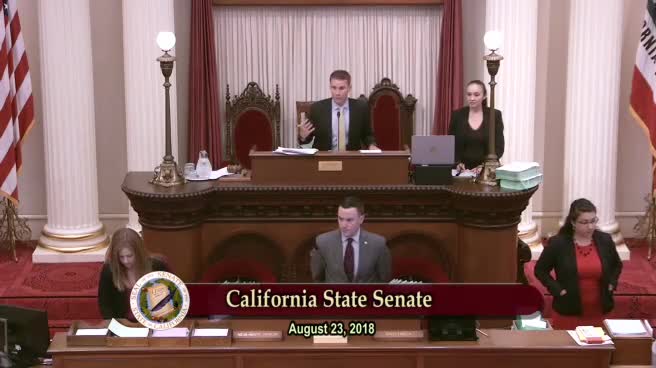 2MIN
Senate Floor
 1H
Senate Standing Committee on Appropriations
 1MIN
Assembly Floor
 16MIN
Assembly Standing Committee on Environmental Safety and Toxic Materials
 11MIN
Assembly Standing Committee on Education
Bill Author




