AB 1680: Crimes: emergency personnel.
- Session Year: 2015-2016
- House: Assembly
- Latest Version Date: 2016-09-29
Existing law provides that every person who goes to the scene of an emergency or stops at the scene of an emergency, for the purpose of viewing the scene or the activities of police officers, firefighters, emergency medical, or other emergency personnel, or military personnel coping with the emergency in the course of their duties during the time it is necessary for emergency vehicles or those personnel to be at the scene of the emergency or to be moving to or from the scene of the emergency for the purpose of protecting lives or property, unless it is part of the duties of that persons employment to view that scene or those activities, and thereby impedes police officers, firefighters, emergency medical, or other emergency personnel or military personnel, in the performance of their duties in coping with the emergency, is guilty of a misdemeanor.
This bill would include, for purposes of these provisions, the operation or use of an unmanned aerial vehicle, remote piloted aircraft, or drone, regardless of the operators location, in the definition of a person. By expanding the scope of a crime, this bill would create a state-mandated local program.
The California Constitution requires the state to reimburse local agencies and school districts for certain costs mandated by the state. Statutory provisions establish procedures for making that reimbursement.
This bill would provide that no reimbursement is required by this act for a specified reason.
Existing law provides that every person who goes to the scene of an emergency or stops at the scene of an emergency, for the purpose of viewing the scene or the activities of police officers, firefighters, emergency medical, or other emergency personnel, or military personnel coping with the emergency in the course of their duties during the time it is necessary for emergency vehicles or those personnel to be at the scene of the emergency or to be moving to or from the scene of the emergency for the purpose of protecting lives or property, unless it is part of the duties of that persons employment to view that scene or those activities, and thereby impedes police officers, firefighters, emergency medical, or other emergency personnel or military personnel, in the performance of their duties in coping with the emergency, is guilty of a misdemeanor.
This bill would include, for purposes of these provisions, the operation or use of an unmanned aerial vehicle, remote piloted aircraft, or drones drone, regardless of the operators location, in the definition of a person. By expanding the scope of a crime, this bill would create a state-mandated local program.
The California Constitution requires the state to reimburse local agencies and school districts for certain costs mandated by the state. Statutory provisions establish procedures for making that reimbursement.
This bill would provide that no reimbursement is required by this act for a specified reason.
Existing law provides that every person who goes to the scene of an emergency or stops at the scene of an emergency, for the purpose of viewing the scene or the activities of police officers, firefighters, emergency medical, or other emergency personnel, or military personnel coping with the emergency in the course of their duties during the time it is necessary for emergency vehicles or those personnel to be at the scene of the emergency or to be moving to or from the scene of the emergency for the purpose of protecting lives or property, unless it is part of the duties of that persons employment to view that scene or activities, and thereby impedes police officers, firefighters, emergency medical, or other emergency personnel or military personnel, in the performance of their duties in coping with the emergency, is guilty of a misdemeanor.
This bill would include, for purposes of these provisions, the operation or use of an unmanned aerial vehicle, remote piloted aircraft, or drones in the definition of a person. By expanding the scope of a crime, this bill would create a state-mandated local program.
The California Constitution requires the state to reimburse local agencies and school districts for certain costs mandated by the state. Statutory provisions establish procedures for making that reimbursement.
This bill would provide that no reimbursement is required by this act for a specified reason.
(a)(1)Every person who goes to the scene of an emergency, or stops at the scene of an emergency, for the purpose of viewing the scene or the activities of police officers, firefighters, emergency medical, or other emergency personnel, or military personnel coping with the emergency in the course of their duties during the time it is necessary for emergency vehicles or those personnel to be at the scene of the emergency or to be moving to or from the scene of the emergency for the purpose of protecting lives or property, unless it is part of the duties of that persons employment to view that scene or those activities, and thereby impedes police officers, firefighters, emergency medical, or other emergency personnel or military personnel, in the performance of their duties in coping with the emergency, is guilty of a misdemeanor.
(2)For purposes of this subdivision, a person shall include a person, regardless of his or her location, who operates or uses an unmanned aerial vehicle, remote piloted aircraft, or drone that is at the scene of an emergency.
(b)Every person who knowingly resists or interferes with the lawful efforts of a lifeguard in the discharge or attempted discharge of an official duty in an emergency situation, when the person knows or reasonably should know that the lifeguard is engaged in the performance of his or her official duty, is guilty of a misdemeanor.
(c)For the purposes of this section, an emergency includes a condition or situation involving injury to persons, damage to property, or peril to the safety of persons or property, which results from a fire, an explosion, an airplane crash, flooding, windstorm damage, a railroad accident, a traffic accident, a powerplant accident, a toxic chemical or biological spill, or any other natural or human-caused event.
SEC. 2.No reimbursement is required by this act pursuant to Section 6 of Article XIIIB of the California Constitution because the only costs that may be incurred by a local agency or school district will be incurred because this act creates a new crime or infraction, eliminates a crime or infraction, or changes the penalty for a crime or infraction, within the meaning of Section 17556 of the Government Code, or changes the definition of a crime within the meaning of Section 6 of Article XIIIB of the California Constitution.
(a)(1)Every person who goes to the scene of an emergency, or stops at the scene of an emergency, for the purpose of viewing the scene or the activities of police officers, firefighters, emergency medical, or other emergency personnel, or military personnel coping with the emergency in the course of their duties during the time it is necessary for emergency vehicles or those personnel to be at the scene of the emergency or to be moving to or from the scene of the emergency for the purpose of protecting lives or property, unless it is part of the duties of that persons employment to view that scene or those activities, and thereby impedes police officers, firefighters, emergency medical, or other emergency personnel or military personnel, in the performance of their duties in coping with the emergency, is guilty of a misdemeanor. For purposes of this subdivision, a person shall include a person who operates or uses an unmanned aerial vehicle, remote piloted aircraft, or drone.
(2)For purposes of this subdivision, a person shall include a person, regardless of his or her location, who operates or uses an unmanned aerial vehicle, remote piloted aircraft, or drone that is at the scene of an emergency.
(b)Every person who knowingly resists or interferes with the lawful efforts of a lifeguard in the discharge or attempted discharge of an official duty in an emergency situation, when the person knows or reasonably should know that the lifeguard is engaged in the performance of his or her official duty, is guilty of a misdemeanor.
(c)For the purposes of this section, an emergency includes a condition or situation involving injury to persons, damage to property, or peril to the safety of persons or property, which results from a fire, an explosion, an airplane crash, flooding, windstorm damage, a railroad accident, a traffic accident, a power plant powerplant accident, a toxic chemical or biological spill, or any other natural or human-caused event.
SEC. 2.No reimbursement is required by this act pursuant to Section 6 of Article XIIIB of the California Constitution because the only costs that may be incurred by a local agency or school district will be incurred because this act creates a new crime or infraction, eliminates a crime or infraction, or changes the penalty for a crime or infraction, within the meaning of Section 17556 of the Government Code, or changes the definition of a crime within the meaning of Section 6 of Article XIIIB of the California Constitution.
(a)Every person who goes to the scene of an emergency, or stops at the scene of an emergency, for the purpose of viewing the scene or the activities of police officers, firefighters, emergency medical, or other emergency personnel, or military personnel coping with the emergency in the course of their duties during the time it is necessary for emergency vehicles or those personnel to be at the scene of the emergency or to be moving to or from the scene of the emergency for the purpose of protecting lives or property, unless it is part of the duties of that persons employment to view that scene or activities, and thereby impedes police officers, firefighters, emergency medical, or other emergency personnel or military personnel, in the performance of their duties in coping with the emergency, is guilty of a misdemeanor. For purposes of this subdivision, a person shall include a person who operates or uses an unmanned aerial vehicle, remote piloted aircraft, or drone.
(b)Every person who knowingly resists or interferes with the lawful efforts of a lifeguard in the discharge or attempted discharge of an official duty in an emergency situation, when the person knows or reasonably should know that the lifeguard is engaged in the performance of his or her official duty, is guilty of a misdemeanor.
(c)For the purposes of this section, an emergency includes a condition or situation involving injury to persons, damage to property, or peril to the safety of persons or property, which results from a fire, an explosion, an airplane crash, flooding, windstorm damage, a railroad accident, a traffic accident, a power plant accident, a toxic chemical or biological spill, or any other natural or human-caused event.
SEC. 2.No reimbursement is required by this act pursuant to Section 6 of Article XIIIB of the California Constitution because the only costs that may be incurred by a local agency or school district will be incurred because this act creates a new crime or infraction, eliminates a crime or infraction, or changes the penalty for a crime or infraction, within the meaning of Section 17556 of the Government Code, or changes the definition of a crime within the meaning of Section 6 of Article XIIIB of the California Constitution.
|
Date
|
Status
|
|---|---|
| Aug 29, 2016 | Enrolled and presented to the Governor at 4 p.m. |
| Aug 16, 2016 | Read third time. Passed. Ordered to the Assembly. (Ayes 38. Noes 0. Page 5015.). |
| Aug 16, 2016 | Read third time. Passed. Ordered to the Assembly. (Ayes 38. Noes 0.). |
| Aug 16, 2016 | In Assembly. Ordered to Engrossing and Enrolling. |
| Aug 16, 2016 | Read third time. Passed. Ordered to the Assembly. |
| Aug 2, 2016 | Read second time. Ordered to third reading. |
| Aug 1, 2016 | From committee: Be placed on second reading file pursuant to Senate Rule 28.8. |
| Jun 22, 2016 | From committee: Do pass and re-refer to Com. on APPR. (Ayes 7. Noes 0.) (June 21). Re-referred to Com. on APPR. |
| Jun 21, 2016 | From committee: Do pass and re-refer to Com. on APPR. (Ayes 7. Noes 0.) (June 21). Re-referred to Com. on APPR. |
| May 19, 2016 | Referred to Com. on PUB. S. |
| May 9, 2016 | Read third time. Passed. Ordered to the Senate. (Ayes 78. Noes 0. Page 4717.) |
| May 9, 2016 | In Senate. Read first time. To Com. on RLS. for assignment. |
| May 9, 2016 | Read third time. Passed. Ordered to the Senate. |
| May 5, 2016 | Read third time and amended. Ordered to third reading. (Page 4674.) |
| May 5, 2016 | Read third time and amended. Ordered to third reading. |
| Apr 21, 2016 | From Consent Calendar. |
| Apr 21, 2016 | Ordered to third reading. |
| Apr 14, 2016 | Read second time. Ordered to Consent Calendar. |
| Apr 13, 2016 | From committee: Do pass. To Consent Calendar. (Ayes 20. Noes 0.) (April 13). |
| Mar 28, 2016 | From committee: Do pass and re-refer to Com. on APPR. (Ayes 7. Noes 0.) (March 15). Re-referred to Com. on APPR. |
| Feb 18, 2016 | Referred to Com. on PUB. S. |
| Jan 20, 2016 | From printer. May be heard in committee February 19. |
| Jan 19, 2016 | Read first time. To print. |
|
Date
|
Description
|
Location
|
Votes
|
|
|---|---|---|---|---|
| Aug 16, 2016 | Assembly 3rd Reading AB1680 Rodriguez By Anderson | Senate Floor |
Passed |
|
| Jun 21, 2016 | Do pass, but first be re-referred to the Committee on [Appropriations] | Senate Standing Committee on Public Safety |
Passed |
|
| May 9, 2016 | AB 1680 RODRIGUEZ Assembly Third Reading | Assembly Floor |
Passed |
|
| Apr 13, 2016 | Do pass. To Consent Calendar. | Assembly Standing Committee on Appropriations |
Passed |
|
| Mar 15, 2016 | Do pass and be re-referred to the Committee on [Appropriations] | Assembly Standing Committee on Public Safety |
Passed |
This list shows positions taken on this bill by organizations on the date displayed, which is linked to the original source.
Positions by individuals are not included.
Office of Senate Floor Analyses (916) 651-1520 Fax: (916) 327-4478 | AB |
THIRD READING
Bill No: AB 1680
:
SENATE PUBLIC SAFETY COMMITTEE: 7-0, 6/21/16
AYES: Hancock, Anderson, Glazer, Leno, Liu, Monning, Stone
SENATE APPROPRIATIONS COMMITTEE: Senate Rule 28.8
ASSEMBLY FLOOR: 78-0, 5/9/16 - See last page for vote
DIGEST: This bill makes it a misdemeanor to use a drone to impede specified emergency personnel in the performance of their duties while coping with an emergency.
Existing law:
- States that every person who willfully resists, delays, or obstructs any public officer, peace officer, or an emergency medical technician, as specified, in the discharge or attempt to discharge any duty of his or her office or employment, is guilty of a misdemeanor. (Penal Code § 148 (a).)
- Specifies that the fact that a person takes a photograph or makes an audio or video recording of a public officer or peace officer, while the officer is in a public place or the person taking the photograph or making the recording is in a place he or she has the right to be, does not constitute, in and of itself, a violation of resisting, delaying or obstructing an officer, nor does it constitute reasonable suspicion to detain the person or probable cause to arrest the person. (Penal Code § 148 (g).)
- States that every person who willfully commits any of the following acts at the burning of a building or at any other time and place where any fireman or firemen or emergency rescue personnel are discharging or attempting to discharge an official duty, is guilty of a misdemeanor: (a) resists or interferes with the lawful efforts of any fireman or firemen or emergency rescue personnel in the discharge or attempt to discharge an official duty; (b) disobeys the lawful orders of any fireman or public officer; (c) engages in any disorderly conduct which delays or prevents a fire from being timely extinguished; or (d) forbids or prevents others from assisting in extinguishing a fire or exhorts another person, as to whom he has no legal right or obligation to protect or control, from assisting in extinguishing a fire. (Penal Code § 148.2)
- Provides that any person who hinders, delays, or obstructs any portion of the militia parading or performing any military duty, or who attempts so to do, is guilty of a misdemeanor. (Military & Veterans Code § 396.)
- States that every person who goes to the scene of an emergency, or stops at the scene of an emergency, for the purpose of viewing the scene or the activities of police officers, firefighters, emergency medical, or other emergency personnel, or military personnel coping with the emergency in the course of their duties during the time it is necessary for emergency vehicles or those personnel to be at the scene of the emergency or to be moving to or from the scene of the emergency for the purpose of protecting lives or property, unless it is part of the duties of that person's employment to view that scene or activities, and thereby impedes police officers, firefighters, emergency medical, or other emergency personnel or military personnel, in the performance of their duties in coping with the emergency, is guilty of a misdemeanor. (Penal Code § 402 (a).)
- Provides that every person who knowingly resists or interferes with the lawful efforts of a lifeguard in the discharge or attempted discharge of an official duty in an emergency situation, when the person knows or reasonably should know that the lifeguard is engaged in the performance of his or her official duty, is guilty of a misdemeanor. (Penal Code § 402 (b).)
- Specifies that “emergency” includes a condition or situation involving injury to persons, damage to property, or peril to the safety of persons or property, which results from a fire, an explosion, an airplane crash, flooding, windstorm damage, a railroad accident, a traffic accident, a power plant accident, a toxic chemical or biological spill, or any other natural or human-caused event. (Penal Code § 402(c).)
This bill amends Penal Code Section 402 to state that a person subject to this section shall include a person, regardless of his or her location, who operates or uses an unmanned aerial vehicle, remote piloted aircraft, or drone that is at the scene of an emergency.
Comments
According to the author:
Recently in California a pilot flying a helicopter with seven firefighters on board who were battling a blaze threatening nearby homes, saw a four-rotor drone only 10 feet from his windshield. This forced him to make a hard left to avoid a collision about 500 feet above ground. In another incident, the sighting of five drones in the area of a wildfire that closed Interstate 15 in Southern California and destroyed numerous vehicles, grounded air tanker crews for 20 minutes as flames spread.
The unregulated and irresponsible use of drones is placing Californians, our firefighters and emergency response personnel in increasing danger.
The existing Penal Code section dealing with interfering with police, fire and EMTs does not specifically state that the crime can be committed by using a drone. By clarifying existing law, police, fire and EMTs will be able to tell drone operators that the use of an unmanned aircraft that interferes with their official activities is a crime and that they must discontinue their use or face being charged.
Unmanned aircraft or the use of a drone is an emerging industry and technology that is rapidly gaining in popularity. The sheer numbers of drones is creating problems and concerns about how and where they should be used and it is only now that they are being regulated by the FAA. AB 1680 recognizes the fact that drones will need additional federal and state regulation but takes a common sense intermediate approach to doing so.
Last year the Joint Legislative Committee on Emergency management and the Senate Judiciary Committee held a hearing on drones in California. While the use of drones has been presenting increasing numbers of problems and difficulties, many of those testifying recommended moving slowly to see what the Federal Aviation Administration’s response would be in regulating unmanned aerial vehicles.
AB 1680 is a modest step in ensuring that drones do not interfere with law enforcement, fire fighters and emergency personnel.
FISCAL EFFECT: Appropriation: Fiscal Com.: Local:
Association for Los Angeles Deputy Sheriffs
California Association of Air Medical Services
California Fire Chiefs Association
California Police Chiefs Association
California Special Districts Association
California State Sheriffs’ Association
California Statewide Law Enforcement Association
East Bay Regional Park District
Fire Districts Association of California
Los Angeles County Sheriff’s Department
Los Angeles Police Protective League
Los Angeles Professional Peace Officers Association
Riverside Sheriffs’ Association
Legal Services for Prisoners with Children
ASSEMBLY FLOOR: 78-0, 5/9/16
AYES: Achadjian, Alejo, Travis Allen, Arambula, Atkins, Baker, Bigelow, Bloom, Bonilla, Bonta, Brough, Brown, Burke, Calderon, Campos, Chang, Chau, Chávez, Chiu, Chu, Cooley, Cooper, Dababneh, Dahle, Daly, Dodd, Eggman, Frazier, Gallagher, Cristina Garcia, Gatto, Gipson, Gomez, Gonzalez, Gordon, Gray, Grove, Hadley, Harper, Roger Hernández, Holden, Irwin, Jones, Jones-Sawyer, Kim, Lackey, Levine, Linder, Lopez, Low, Maienschein, Mathis, Mayes, McCarty, Medina, Melendez, Mullin, Nazarian, Obernolte, O'Donnell, Olsen, Patterson, Quirk, Ridley-Thomas, Rodriguez, Salas, Santiago, Steinorth, Mark Stone, Thurmond, Ting, Wagner, Waldron, Weber, Wilk, Williams, Wood, Rendon
NO VOTE RECORDED: Beth Gaines, Eduardo Garcia
8/3/16 18:49:55
**** END ****
SENATE COMMITTEE ON PUBLIC SAFETY
Senator Loni Hancock, Chair
2015 - 2016 Regular
Bill No: AB 1680 Hearing Date: June 21, 2016
Author: | Rodriguez | ||
Version: | May 5, 2016 | ||
Urgency: | No | Fiscal: | Yes |
Consultant: | MK | ||
Subject: Crimes: Emergency Personnel
HISTORY
Source: Author
Prior Legislation: SB 167 (Gaines) not heard 2015
SB 170 (Gaines) Vetoed 2015
SB 262 (Galgiani) Failed Senate Judiciary 2015
SB 263 (Gaines) not heard 2015
SB 271 (Gaines) Vetoed 2015
AB 56 (Quirk) inactive Senate Floor
SB 15 (Padilla) failed Assembly Public Safety 2014
AB 1327 (Gorell) Vetoed 2014
Support: California Association of Air Medical Services; California Fire Chiefs Association; California Police Chiefs Association; California Special Districts Association; California State Sheriffs’ Association; California Statewide Law Enforcement Association; Fire Districts Association of California; Los Angeles County Sheriff’s Department
Opposition: Legal Services for Prisoners with Children
Assembly Floor Vote: 78 - 0
PURPOSE
The purpose of this bill is to make it a misdemeanor to use a drone to impede specified emergency personnel in the performance of their duties while coping with an emergency.
Existing law states that every person who willfully resists, delays, or obstructs any public officer, peace officer, or an emergency medical technician, as specified, in the discharge or attempt to discharge any duty of his or her office or employment, is guilty of a misdemeanor. (Penal Code § 148 (a).)
Existing law specifies that the fact that a person takes a photograph or makes an audio or video recording of a public officer or peace officer, while the officer is in a public place or the person taking the photograph or making the recording is in a place he or she has the right to be, does not constitute, in and of itself, a violation of resisting, delaying or obstructing an officer, nor does it constitute reasonable suspicion to detain the person or probable cause to arrest the person. (Penal Code § 148 (g).)
Existing law states that every person who willfully commits any of the following acts at the burning of a building or at any other time and place where any fireman or firemen or emergency rescue personnel are discharging or attempting to discharge an official duty, is guilty of a misdemeanor: Resists or interferes with the lawful efforts of any fireman or firemen or emergency rescue personnel in the discharge or attempt to discharge an official duty b) Disobeys the lawful orders of any fireman or public officer; Engages in any disorderly conduct which delays or prevents a fire from being timely extinguished; or Forbids or prevents others from assisting in extinguishing a fire or exhorts another person, as to whom he has no legal right or obligation to protect or control, from assisting in extinguishing a fire. (Penal Code, § 148.2)
Existing law provides that any person who hinders, delays, or obstructs any portion of the militia parading or performing any military duty, or who attempts so to do, is guilty of a misdemeanor. (Military & Veterans Code, § 396.)
Existing law states that every person who goes to the scene of an emergency, or stops at the scene of an emergency, for the purpose of viewing the scene or the activities of police officers, firefighters, emergency medical, or other emergency personnel, or military personnel coping with the emergency in the course of their duties during the time it is necessary for emergency vehicles or those personnel to be at the scene of the emergency or to be moving to or from the scene of the emergency for the purpose of protecting lives or property, unless it is part of the duties of that person's employment to view that scene or activities, and thereby impedes police officers, firefighters, emergency medical, or other emergency personnel or military personnel, in the performance of their duties in coping with the emergency, is guilty of a misdemeanor. (Penal Code § 402 (a).)
Existing law provides that every person who knowingly resists or interferes with the lawful efforts of a lifeguard in the discharge or attempted discharge of an official duty in an emergency situation, when the person knows or reasonably should know that the lifeguard is engaged in the performance of his or her official duty, is guilty of a misdemeanor. (Penal Code § 402 (b).)
Existing law specifies that “emergency” includes a condition or situation involving injury to persons, damage to property, or peril to the safety of persons or property, which results from a fire, an explosion, an airplane crash, flooding, windstorm damage, a railroad accident, a traffic accident, a power plant accident, a toxic chemical or biological spill, or any other natural or human-caused event. (Penal Code § 402(c).)
This bill amends Penal Code Section 402 to state that a person subject to this section shall include a person, regardless of his or her location, who operates or uses an unmanned aerial vehicle, remote piloted aircraft, or drone that is at the scene of an emergency.
RECEIVERSHIP/OVERCROWDING CRISIS AGGRAVATION
For the past several years this Committee has scrutinized legislation referred to its jurisdiction for any potential impact on prison overcrowding. Mindful of the United States Supreme Court ruling and federal court orders relating to the state’s ability to provide a constitutional level of health care to its inmate population and the related issue of prison overcrowding, this Committee has applied its “ROCA” policy as a content-neutral, provisional measure necessary to ensure that the Legislature does not erode progress in reducing prison overcrowding.
On February 10, 2014, the federal court ordered California to reduce its in-state adult institution population to 137.5% of design capacity by February 28, 2016, as follows:
- 143% of design bed capacity by June 30, 2014;
- 141.5% of design bed capacity by February 28, 2015; and,
- 137.5% of design bed capacity by February 28, 2016.
In December of 2015 the administration reported that as “of December 9, 2015, 112,510 inmates were housed in the State’s 34 adult institutions, which amounts to 136.0% of design bed capacity, and 5,264 inmates were housed in out-of-state facilities. The current population is 1,212 inmates below the final court-ordered population benchmark of 137.5% of design bed capacity, and has been under that benchmark since February 2015.” (Defendants’ December 2015 Status Report in Response to February 10, 2014 Order, 2:90-cv-00520 KJM DAD PC, 3-Judge Court, Coleman v. Brown, Plata v. Brown (fn. omitted).) One year ago, 115,826 inmates were housed in the State’s 34 adult institutions, which amounted to 140.0% of design bed capacity, and 8,864 inmates were housed in out-of-state facilities. (Defendants’ December 2014 Status Report in Response to February 10, 2014 Order, 2:90-cv-00520 KJM DAD PC, 3-Judge Court, Coleman v. Brown, Plata v. Brown (fn. omitted).)
While significant gains have been made in reducing the prison population, the state must stabilize these advances and demonstrate to the federal court that California has in place the “durable solution” to prison overcrowding “consistently demanded” by the court. (Opinion Re: Order Granting in Part and Denying in Part Defendants’ Request For Extension of December 31, 2013 Deadline, NO. 2:90-cv-0520 LKK DAD (PC), 3-Judge Court, Coleman v. Brown, Plata v. Brown (2-10-14). The Committee’s consideration of bills that may impact the prison population therefore will be informed by the following questions:
- Whether a proposal erodes a measure which has contributed to reducing the prison population;
- Whether a proposal addresses a major area of public safety or criminal activity for which there is no other reasonable, appropriate remedy;
- Whether a proposal addresses a crime which is directly dangerous to the physical safety of others for which there is no other reasonably appropriate sanction;
- Whether a proposal corrects a constitutional problem or legislative drafting error; and
- Whether a proposal proposes penalties which are proportionate, and cannot be achieved through any other reasonably appropriate remedy.
COMMENTS
1. Need for This Bill
According to the author:
Recently in California a pilot flying a helicopter with seven firefighters on board who were battling a blaze threatening nearby homes, saw a four-rotor drone only 10 feet from his windshield. This forced him to make a hard left to avoid a collision about 500 feet above ground. In another incident, the sighting of five drones in the area of a wildfire that closed Interstate 15 in Southern California and destroyed numerous vehicles, grounded air tanker crews for 20 minutes as flames spread.
The unregulated and irresponsible use of drones is placing Californians, our firefighters and emergency response personnel in increasing danger.
The existing Penal Code section dealing with interfering with police, fire and EMTs does not specifically state that the crime can be committed by using a drone. By clarifying existing law, police, fire and EMTs will be able to tell drone operators that the use of an unmanned aircraft that interferes with their official activities is a crime and that they must discontinue their use or face being charged.
Unmanned aircraft or the use of a drone is an emerging industry and technology that is rapidly gaining in popularity. The sheer numbers of drones is creating problems and concerns about how and where they should be used and it is only now that they are being regulated by the FAA. AB 1680 recognizes the fact that drones will need additional federal and state regulation but takes a common sense intermediate approach to doing so.
Last year the Joint Legislative Committee on Emergency management and the Senate Judiciary Committee held a hearing on drones in California. While the use of drones has been presenting increasing numbers of problems and difficulties, many of those testifying recommended moving slowly to see what the Federal Aviation Administration’s response would be in regulating unmanned aerial vehicles.
AB 1680 is a modest step in ensuring that drones do not interfere with law enforcement, fire fighters and emergency personnel.
2. Unmanned Aerial Vehicles or Drones
The Federal Aviation Administration (FAA), uses the term “unmanned aircraft systems” to refer to vehicles commonly known as drones. Regarding the types of aircraft that may be considered unmanned aircraft systems, the FAA’s fact sheet notes:
Unmanned Aircraft Systems (UAS) come in a variety of shapes and sizes and serve diverse purposes. They may have a wingspan as large as a jet airliner or smaller than a radio-controlled model airplane. Regardless of size, the responsibility to fly safely applies equally to manned and unmanned aircraft operations. Because they are inherently different from manned aircraft, introducing UAS into the nation’s airspace is challenging for both the FAA and aviation community. UAS must be integrated into a National Airspace System (NAS) that is evolving from ground-based navigation aids to a GPS-based system in NextGen. Safe integration of UAS involves gaining a better understanding of operational issues, such as training requirements, operational specifications and technology considerations. (https://www.faa.gov/news/fact_sheets/news_story.cfm?newsId=18297)
Although not always thought of when the word “drone” is used, hobby-size airplanes and helicopters that are equipped with digital cameras are becoming more and more affordable for the average consumer. This hobby aircraft may be used for pure novelty, surveying one’s yard, or even checking to see the condition of a roof.
If a drone meets the definition of “model aircraft,” and operates within specified parameters, the operator does not need specific authorization from the FAA to fly it. Under FAA regulations a ‘Model aircraft’’ is (1) capable of sustained flight in the atmosphere; (2) flown within visual line of sight of the person operating the aircraft; and (3) flown for hobby or recreational purposes. (Section 336 of Public Law 112-95 (the FAA Modernization and Reform Act of 2012).)
The FAA has the authority under its existing regulations to pursue legal enforcement action against persons operating model aircraft when the operations endanger the safety of the National Airspace System, even if they are operating in accordance with UAS regulations. So, for example, a Model aircraft operation conducted, as specified, may be subject to an enforcement action for a violation if the operation is conducted in a careless or reckless manner so as to endanger the life or property of another. (https://www.faa.gov/uas/regulations_policies/media/FAA_UAS-PO_LEA_Guidance.pdf)
Drone operations that are not model aircraft operations may only be operated with specific authorization from the FAA. In addition, all UAS operations that are not operated as model aircraft are subject to current and future FAA regulation. At a minimum, any such flights are currently required under the FAA’s regulations to be operated with an authorized aircraft (certificated or exempted), with a valid registration number with a certificated pilot, and with specific FAA authorization (Certificate of Waiver or Authorization). Regardless of the type of UAS operation, the FAA’s statutes and the Federal Aviation Regulations prohibit any conduct that endangers individuals and property on the surface, other aircraft, or otherwise endangers the safe operation of other aircraft in the National Airspace System. (https://www.faa.gov/uas/regulations_policies/media/FAA_UAS-PO_LEA_Guidance.pdf
3. Obstructing, Interfering with or Impeding Emergency Personnel
The Penal Code specifies that it is a misdemeanor to obstruct, delay, or resist specified positions who are engaged in the discharged of their duties. The list includes firemen, emergency rescue personnel, emergency medical technicians, police officers, peace officers, and public officers in positions for which it is a crime to interfere with discharge of their duties. In addition, a Military & Vet. Code section makes it a misdemeanor for a person to delay or obstructs National Guard or California State Military Reserve from performing any military duty.
In addition, Penal Code section 402 prohibits conduct that impedes specified personnel responding to an emergency. Arguably a person could not be prosecuted under Penal Code Section 402 when using a drone from a remote location, because the section only prohibits conduct that impedes specified individuals performing their duties in coping with an emergency when the “person goes to the scene of an emergency, or stops at the scene of an emergency, . . .”
This bill clarifies that a person operating a unmanned aerial vehicle from a remote location is included in the definition of Penal Code § 402.
This section does the same thing as AB 2320 (Calderon) which is also being heard at the June 21, 2016 hearing.
4. Governor’s Veto Message on 2015 Drone Bills
SB 168 (Gaines) 2015, was vetoed by the Governor, and would have made it a misdemeanor operate a UAS, in a manner that prevents or delays the extinguishment of a fire, or in any way interferes with the efforts of firefighters to control, contain, or extinguish a fire.
SB 271 (Gaines), Legislative 2015, was vetoed by Governor, and would have made it an infraction to knowingly and intentionally operate an unmanned aircraft system on the grounds of, or less than 350 feet above ground level within the airspace overlaying, a public school providing instruction in kindergarten or grades 1 to 12, inclusive, during school hours and without the written permission of the school principal or higher authority, or his or her designee, or equivalent school authority.
SB 170 (Gaines), Legislative Session of 2015-2016 was vetoed by the Governor, and would have created a felony crime for the use of a UAS to deliver contraband into a prison or county jail and creates a misdemeanor crime for the use of UAS over a prison or capture images of a prison.
The Governor vetoed those bills and issued this statement applying to all three bills:
Each of these bills creates a new crime - usually by finding a novel way to characterize and criminalize conduct that is already proscribed. This multiplication and particularization of criminal behavior creates increasing complexity without commensurate benefit.
Over the last several decades, California's criminal code has grown to more than 5,000 separate provisions, covering almost every conceivable form of human misbehavior. During the same period, our jail and prison populations have exploded.
Before we keep going down this road, I think we should pause and reflect on how our system of criminal justice could be made more human, more just and more cost-effective.
5. Support
The California Fire Chiefs Association and the Fire Districts Association of California support this bill stating:
Firefighters and other emergency service providers have reported a number of incidents where drones have significantly altered their ability to respond to an emergency. It is time to establish a criminal penalty for those who choose to ignore common sense and deploy drones in areas where wildfires are being fought and who interfere with firefighters and EMS personnel attempting to perform their duties in responding to emergencies.
6. Opposition
Legal Services for Prisoners with Children opposes this bill stating:
The stated purpose of this bill is to ensure the safety of emergency responders and protect the site of an emergency or crime. However, including an additional action in the scope of a misdemeanor will not actually keep people from using drones to interfere with emergency personnel, but will put more people behind bars. When this bill is looked at in isolation, it may appear that it would contribute to overall safety of the public and ability of emergency personnel to respond to emergencies without interference. However, when evaluated in the context of the actual results it would cause, it becomes evident that the effects of this bill would not achieve the author’s intended consequences. Rather than protecting the emergency personnel at the site of emergencies, this bill would incarcerate more citizens.
-- END –
ASSEMBLY THIRD READING
ATR Bill Id:AB 1680
Author:(Rodriguez)
As Amended Ver:May 5, 2016
Majority vote
Committee | Votes | Ayes | Noes |
Public Safety | 7-0 | Jones-Sawyer, Melendez, Lackey, Lopez, Low, Quirk, Santiago |
|
Appropriations | 20-0 | Gonzalez, Bigelow, Bloom, Bonilla, Bonta, Calderon, Chang, Daly, Eggman, Gallagher, Eduardo Garcia, Roger Hernández, Holden, Jones, Obernolte, Quirk, Santiago, Wagner, Weber, Wood |
|
SUMMARY:
Makes it a misdemeanor to use a drone to impede specified emergency personnel in the performance of their duties while coping with an emergency. Specifically, this bill:
- Amends existing statute which makes it a misdemeanor for a person to go to, or stop at, the scene of an emergency and impedes police officers, firefighters, emergency medical, or other emergency personnel, or military personnel in the performance of their emergency duties.
- Provides that the term "person" shall include a person, regardless of his or her location, who operates or uses an unmanned aerial vehicle, remote piloted aircraft, or drone that is at the scene of an emergency.
EXISTING LAW:
- States that every person who goes to the scene of an emergency, or stops at the scene of an emergency, for the purpose of viewing the scene or the activities of police officers, firefighters, emergency medical, or other emergency personnel, or military personnel coping with the emergency in the course of their duties during the time it is necessary for emergency vehicles or those personnel to be at the scene of the emergency or to be moving to or from the scene of the emergency for the purpose of protecting lives or property, unless it is part of the duties of that person's employment to view that scene or activities, and thereby impedes police officers, firefighters, emergency medical, or other emergency personnel or military personnel, in the performance of their duties in coping with the emergency, is guilty of a misdemeanor.
- Provides that every person who knowingly resists or interferes with the lawful efforts of a lifeguard in the discharge or attempted discharge of an official duty in an emergency situation, when the person knows or reasonably should know that the lifeguard is engaged in the performance of his or her official duty, is guilty of a misdemeanor.
- Specifies that "emergency" includes a condition or situation involving injury to persons, damage to property, or peril to the safety of persons or property, which results from a fire, an explosion, an airplane crash, flooding, windstorm damage, a railroad accident, a traffic accident, a power plant accident, a toxic chemical or biological spill, or any other natural or human-caused event.
- States that every person who willfully resists, delays, or obstructs any public officer, peace officer, or an emergency medical technician, as specified, in the discharge or attempt to discharge any duty of his or her office or employment, is guilty of a misdemeanor.
- Specifies that the fact that a person takes a photograph or makes an audio or video recording of a public officer or peace officer, while the officer is in a public place or the person taking the photograph or making the recording is in a place he or she has the right to be, does not constitute, in and of itself, a violation of resisting, delaying or obstructing an officer, nor does it constitute reasonable suspicion to detain the person or probable cause to arrest the person.
- States that every person who willfully commits any of the following acts at the burning of a building or at any other time and place where any fireman or firemen or emergency rescue personnel are discharging or attempting to discharge an official duty, is guilty of a misdemeanor:
- Resists or interferes with the lawful efforts of any fireman or firemen or emergency rescue personnel in the discharge or attempt to discharge an official duty;
- Disobeys the lawful orders of any fireman or public officer;
- Engages in any disorderly conduct which delays or prevents a fire from being timely extinguished; or
- Forbids or prevents others from assisting in extinguishing a fire or exhorts another person, as to whom he has no legal right or obligation to protect or control, from assisting in extinguishing a fire.
- Specifies that as used in specified code sections, "fireman" or "firefighter" includes "any person who is an officer, employee or member of a fire department or fire protection or firefighting agency of the federal government, the State of California, a city, county, city and county, district, or other public or municipal corporation or political subdivision of this state, whether this person is a volunteer or partly paid or fully paid."
- Specifies that, "emergency rescue personnel" means "any person who is an officer, employee or member of a fire department or fire protection or firefighting agency of the federal government, the State of California, a city, county, city and county, district, or other public or municipal corporation or political subdivision of this state, whether this person is a volunteer or partly paid or fully paid, while he or she is actually engaged in the on-the-site rescue of persons or property during an emergency" as specified.
- "Emergency Medical Technician-I" or "EMT-I" means an individual trained in all facets of basic life support according to standards prescribed by this part and who has a valid certificate issued pursuant to this part. This definition shall include, but not be limited to, EMT-I (FS) and EMT-I-A.
- "Emergency Medical Technician-II", "EMT-II," "Advanced Emergency Medical Technician," or "Advanced EMT" means "an EMT-I with additional training in limited advanced life support according to standards prescribed by this part and who has a valid certificate issued pursuant to this part."
- "Emergency Medical Technician-Paramedic," "EMT-P," "paramedic" or "mobile intensive care paramedic" means "an individual whose scope of practice to provide advanced life support is according to standards prescribed by this division and who has a valid certificate issued pursuant to this division."
- Any person who hinders, delays, or obstructs any portion of the militia parading or performing any military duty, or who attempts so to do, is guilty of a misdemeanor.
- Specifies that the militia of the State shall consist of the National Guard, State Military Reserve and the Naval Militia.
FISCAL EFFECT:
According to the Assembly Appropriations Committee, minor non-reimbursable costs to cities and counties for enforcement, offset to some extent by fine revenues.
COMMENTS:
According to the author, "Recently in California a pilot flying a helicopter with seven firefighters on board who were battling a blaze threatening nearby homes, saw a four-rotor drone only 10 feet from his windshield. This forced him to make a hard left to avoid a collision about 500 feet above ground. In another incident, the sighting of five drones in the area of a wildfire that closed Interstate 15 in Southern California and destroyed numerous vehicles, grounded air tanker crews for 20 minutes as flames spread.
"The unregulated and irresponsible use of drones is placing Californians, our firefighters and emergency response personnel in increasing danger.
"The existing Penal Code section dealing with interfering with police, fire and EMTs does not specifically state that the crime can be committed by using a drone. By clarifying existing law, police, fire and EMTs will be able to tell drone operators that the use of an unmanned aircraft that interferes with their official activities is a crime and that they must discontinue their use or face being charged.
"Unmanned aircraft or the use of a drone is an emerging industry and technology that is rapidly gaining in popularity. The sheer numbers of drones is creating problems and concerns about how and where they should be used and it is only now that they are being regulated by the FAA. AB 1680 recognizes the fact that drones will need additional federal and state regulation but takes a common sense intermediate approach to doing so."
Analysis Prepared by: David Billingsley / PUB. S. / (916) 319-3744 FN: 0002834
ASSEMBLY THIRD READING
ATR Bill Id:AB 1680
Author:(Rodriguez)
As Introduced Ver:
Majority vote
Committee | Votes | Ayes | Noes |
Public Safety | 7-0 | Jones-Sawyer, Melendez, Lackey, Lopez, Low, Quirk, Santiago | |
Appropriations | 20-0 | Gonzalez, Bigelow, Bloom, Bonilla, Bonta, Calderon, Chang, Daly, Eggman, Gallagher, Eduardo Garcia, Roger Hernández, Holden, Jones, Obernolte, Quirk, Santiago, Wagner, Weber, Wood |
SUMMARY:
Makes it a misdemeanor to use a drone to impede specified emergency personnel in the performance of their duties while coping with an emergency. Specifically, this bill:
- Amends existing statute which makes it a misdemeanor for a person to go to, or stop at, the scene of an emergency and impedes police officers, firefighters, emergency medical, or other emergency personnel, or military personnel in the performance of their emergency duties.
- Specifies that a person shall include a person who operates or uses an unmanned aerial vehicle, remote piloted aircraft, or drone.
EXISTING LAW:
- States that every person who goes to the scene of an emergency, or stops at the scene of an emergency, for the purpose of viewing the scene or the activities of police officers, firefighters, emergency medical, or other emergency personnel, or military personnel coping with the emergency in the course of their duties during the time it is necessary for emergency vehicles or those personnel to be at the scene of the emergency or to be moving to or from the scene of the emergency for the purpose of protecting lives or property, unless it is part of the duties of that person's employment to view that scene or activities, and thereby impedes police officers, firefighters, emergency medical, or other emergency personnel or military personnel, in the performance of their duties in coping with the emergency, is guilty of a misdemeanor.
- Provides that every person who knowingly resists or interferes with the lawful efforts of a lifeguard in the discharge or attempted discharge of an official duty in an emergency situation, when the person knows or reasonably should know that the lifeguard is engaged in the performance of his or her official duty, is guilty of a misdemeanor.
- Specifies that "emergency" includes a condition or situation involving injury to persons, damage to property, or peril to the safety of persons or property, which results from a fire, an explosion, an airplane crash, flooding, windstorm damage, a railroad accident, a traffic accident, a power plant accident, a toxic chemical or biological spill, or any other natural or human-caused event.
- States that every person who willfully resists, delays, or obstructs any public officer, peace officer, or an emergency medical technician, as specified, in the discharge or attempt to discharge any duty of his or her office or employment, is guilty of a misdemeanor.
- Specifies that the fact that a person takes a photograph or makes an audio or video recording of a public officer or peace officer, while the officer is in a public place or the person taking the photograph or making the recording is in a place he or she has the right to be, does not constitute, in and of itself, a violation of resisting, delaying or obstructing an officer, nor does it constitute reasonable suspicion to detain the person or probable cause to arrest the person.
- States that every person who willfully commits any of the following acts at the burning of a building or at any other time and place where any fireman or firemen or emergency rescue personnel are discharging or attempting to discharge an official duty, is guilty of a misdemeanor:
- Resists or interferes with the lawful efforts of any fireman or firemen or emergency rescue personnel in the discharge or attempt to discharge an official duty;
- Disobeys the lawful orders of any fireman or public officer;
- Engages in any disorderly conduct which delays or prevents a fire from being timely extinguished; or
- Forbids or prevents others from assisting in extinguishing a fire or exhorts another person, as to whom he has no legal right or obligation to protect or control, from assisting in extinguishing a fire.
- Specifies that as used in specified code sections, "fireman" or "firefighter" includes "any person who is an officer, employee or member of a fire department or fire protection or firefighting agency of the federal government, the State of California, a city, county, city and county, district, or other public or municipal corporation or political subdivision of this state, whether this person is a volunteer or partly paid or fully paid."
- Specifies that, "emergency rescue personnel" means "any person who is an officer, employee or member of a fire department or fire protection or firefighting agency of the federal government, the State of California, a city, county, city and county, district, or other public or municipal corporation or political subdivision of this state, whether this person is a volunteer or partly paid or fully paid, while he or she is actually engaged in the on-the-site rescue of persons or property during an emergency" as specified.
- "Emergency Medical Technician-I" or "EMT-I" means an individual trained in all facets of basic life support according to standards prescribed by this part and who has a valid certificate issued pursuant to this part. This definition shall include, but not be limited to, EMT-I (FS) and EMT-I-A.
- "Emergency Medical Technician-II", "EMT-II," "Advanced Emergency Medical Technician," or "Advanced EMT" means "an EMT-I with additional training in limited advanced life support according to standards prescribed by this part and who has a valid certificate issued pursuant to this part."
- "Emergency Medical Technician-Paramedic," "EMT-P," "paramedic" or "mobile intensive care paramedic" means "an individual whose scope of practice to provide advanced life support is according to standards prescribed by this division and who has a valid certificate issued pursuant to this division."
- Any person who hinders, delays, or obstructs any portion of the militia parading or performing any military duty, or who attempts so to do, is guilty of a misdemeanor.
- Specifies that the militia of the State shall consist of the National Guard, State Military Reserve and the Naval Militia.
FISCAL EFFECT:
According to the Assembly Appropriations Committee, minor non-reimbursable costs to cities and counties for enforcement, offset to some extent by fine revenues.
COMMENTS:
According to the author, "Recently in California a pilot flying a helicopter with seven firefighters on board who were battling a blaze threatening nearby homes, saw a four-rotor drone only 10 feet from his windshield. This forced him to make a hard left to avoid a collision about 500 feet above ground. In another incident, the sighting of five drones in the area of a wildfire that closed Interstate 15 in Southern California and destroyed numerous vehicles, grounded air tanker crews for 20 minutes as flames spread.
The unregulated and irresponsible use of drones is placing Californians, our firefighters and emergency response personnel in increasing danger.
"The existing Penal Code section dealing with interfering with police, fire and EMTs does not specifically state that the crime can be committed by using a drone. By clarifying existing law, police, fire and EMTs will be able to tell drone operators that the use of an unmanned aircraft that interferes with their official activities is a crime and that they must discontinue their use or face being charged.
"Unmanned aircraft or the use of a drone is an emerging industry and technology that is rapidly gaining in popularity. The sheer numbers of drones is creating problems and concerns about how and where they should be used and it is only now that they are being regulated by the FAA. AB 1680 recognizes the fact that drones will need additional federal and state regulation but takes a common sense intermediate approach to doing so.”
Analysis Prepared by: David Billingsley/ PUB. S. / (916) 319-3744 FN: 0002764
Date of Hearing: April 13, 2016
ASSEMBLY COMMITTEE ON APPROPRIATIONS
Lorena Gonzalez, Chair
ABPCA Bill Id:AB 1680
Author:(Rodriguez) – As Introduced Ver:January 19, 2016
Policy Committee: | Public Safety | Vote: | 7 - 0 |
|
| ||
|
|
Urgency: No State Mandated Local Program: Yes Reimbursable: No
SUMMARY:
This bill, for purposes of existing law which makes it a misdemeanor for a person to go to, or stop at, the scene of an emergency and impede police officers, firefighters, emergency medical, or other emergency personnel, or military personnel in the performance of their emergency duties, specifies a person includes a person who operates or uses an unmanned aerial vehicle, remote piloted aircraft, or drone.
FISCAL EFFECT:
Minor nonreimbursable costs to cities and counties for enforcement, offset to some extent by fine revenues.
COMMENTS:
- Background. Under current law, a person who goes to the scene of an emergency, as defined, or stops at the scene of an emergency, for the purpose of viewing the scene or the activities of police officers, firefighters, emergency medical, or other emergency personnel, or military personnel coping with the emergency in the course of their duties, unless it is part of the duties of that person's employment to view that scene or activities, and thereby impedes police officers, firefighters, emergency medical, or other emergency personnel or military personnel, in the performance of their duties in coping with the emergency, is guilty of a misdemeanor.
The Federal Aviation Administration (FAA) uses the term “unmanned aircraft systems” (UAS) to refer to vehicles commonly known as drones. UAS come in a variety of shapes and sizes and serve diverse purposes. Although not always thought of when the word “drone” is used, hobby-size airplanes and helicopters that are equipped with digital cameras are becoming more and more affordable for the average consumer. This hobby aircraft may be used for pure novelty, surveying one’s yard, or even checking to see the condition of a roof. If a drone meets the definition of “model aircraft,” and operates within specified parameters, the operator does not need specific authorization from the FAA to fly it.
- Purpose. According to the author, "Recently in California a pilot flying a helicopter with seven firefighters on board who were battling a blaze threatening nearby homes, saw a four-rotor drone only 10 feet from his windshield. This forced him to make a hard left to avoid a collision about 500 feet above ground. In another incident, the sighting of five drones in the area of a wildfire that closed Interstate 15 in Southern California and destroyed numerous vehicles, grounded air tanker crews for 20 minutes as flames spread. The unregulated and irresponsible use of drones is placing Californians, our firefighters and emergency response personnel in increasing danger.
“The existing Penal Code section dealing with interfering with police, fire and EMTs does not specifically state that the crime can be committed by using a drone. By clarifying existing law, police, fire and EMTs will be able to tell drone operators that the use of an unmanned aircraft that interferes with their official activities is a crime and that they must discontinue their use or face being charged.” - Support. According to Los Angeles Professional Peace Officers Association, “ Over the past few years, the popularity of drones has resulted in an increase of these devices in the sky; often times at accident sites, forest fires, crowded public events and other locations that have proven problematic for law enforcement and emergency response. There have been examples where public safety crews have had to avoid drones in mid-air responses and divert action plans to alternative sites to prevent endangering public safety officers and the public.
“AB 1680 would address this currently unregulated activity and would clarify that these problematic incidents will be classified as misdemeanors; mirroring existing penalties for interfering with law enforcement in any other manner. This appropriate action will likely result in a reduction of these dangerous, unnecessary encounters between drones and law enforcement officers responding to a crisis.” - Prior Legislation. The following three bills, of the current legislative session, were vetoed by Governor Brown who expressed concern over the creation of new crimes:
- SB 168 (Gaines) would have made it a misdemeanor operate a UAS, in a manner that prevents or delays the extinguishment of a fire, or in any way interferes with the efforts of firefighters to control, contain, or extinguish a fire.
- SB 271 (Gaines) would have made it an infraction to knowingly and intentionally operate an UAS on the grounds of, or less than 350 feet above ground level within the airspace overlaying, a public school providing instruction in kindergarten or grades 1 to 12, inclusive, during school hours and without the written permission of the school principal or higher authority, or his or her designee, or equivalent school authority.
- SB 170 (Gaines) would have created a felony crime for the use of a UAS to deliver contraband into a prison or county jail and creates a misdemeanor crime for the use of UAS over a prison or capture images of a prison.
- SB 168 (Gaines) would have made it a misdemeanor operate a UAS, in a manner that prevents or delays the extinguishment of a fire, or in any way interferes with the efforts of firefighters to control, contain, or extinguish a fire.
Analysis Prepared by: Pedro Reyes / APPR. / (916) 319-2081
Date of Hearing:
Counsel: David Billingsley
ASSEMBLY COMMITTEE ON PUBLIC SAFETY
Reginald Byron Jones-Sawyer, Sr., Chair
ABPCA Bill Id:AB 1680
Author:(Rodriguez) – As Introduced Ver:January 19, 2016
SUMMARY:
Makes it a misdemeanor to use a drone to impede specified emergency personnel in the performance of their duties while coping with an emergency. Specifically, this bill:
- Amends existing statute which makes it a misdemeanor for a person to go to, or stop at, the scene of an emergency and impedes police officers, firefighters, emergency medical, or other emergency personnel, or military personnel in the performance of their emergency duties.
- Specifies that a person shall include a person who operates or uses an unmanned aerial vehicle, remote piloted aircraft, or drone.
EXISTING LAW:
- States that every person who goes to the scene of an emergency, or stops at the scene of an emergency, for the purpose of viewing the scene or the activities of police officers, firefighters, emergency medical, or other emergency personnel, or military personnel coping with the emergency in the course of their duties during the time it is necessary for emergency vehicles or those personnel to be at the scene of the emergency or to be moving to or from the scene of the emergency for the purpose of protecting lives or property, unless it is part of the duties of that person's employment to view that scene or activities, and thereby impedes police officers, firefighters, emergency medical, or other emergency personnel or military personnel, in the performance of their duties in coping with the emergency, is guilty of a misdemeanor. (Pen. Code, § 402, subd. (a).)
- Provides that every person who knowingly resists or interferes with the lawful efforts of a lifeguard in the discharge or attempted discharge of an official duty in an emergency situation, when the person knows or reasonably should know that the lifeguard is engaged in the performance of his or her official duty, is guilty of a misdemeanor. (Pen. Code, § 402, subd. (b).)
- Specifies that “emergency” includes a condition or situation involving injury to persons, damage to property, or peril to the safety of persons or property, which results from a fire, an explosion, an airplane crash, flooding, windstorm damage, a railroad accident, a traffic accident, a power plant accident, a toxic chemical or biological spill, or any other natural or human-caused event. (Pen. Code, § 402, subd. (c).)
- States that every person who willfully resists, delays, or obstructs any public officer, peace officer, or an emergency medical technician, as specified, in the discharge or attempt to discharge any duty of his or her office or employment, is guilty of a misdemeanor. (Pen. Code, § 148, subd. (a).)
- Specifies that the fact that a person takes a photograph or makes an audio or video recording of a public officer or peace officer, while the officer is in a public place or the person taking the photograph or making the recording is in a place he or she has the right to be, does not constitute, in and of itself, a violation of resisting, delaying or obstructing an officer, nor does it constitute reasonable suspicion to detain the person or probable cause to arrest the person. (Pen. Code, § 148, subd. (g).)
- States that every person who willfully commits any of the following acts at the burning of a building or at any other time and place where any fireman or firemen or emergency rescue personnel are discharging or attempting to discharge an official duty, is guilty of a misdemeanor:
- Resists or interferes with the lawful efforts of any fireman or firemen or emergency rescue personnel in the discharge or attempt to discharge an official duty; (Pen. Code, § 148.2, subd. (a).)
- Disobeys the lawful orders of any fireman or public officer; (Pen. Code, § 148.2, subd. (b).)
- Engages in any disorderly conduct which delays or prevents a fire from being timely extinguished; or (Pen. Code, § 148.2, subd. (c).)
- Forbids or prevents others from assisting in extinguishing a fire or exhorts another person, as to whom he has no legal right or obligation to protect or control, from assisting in extinguishing a fire. (Pen. Code, § 148.2, subd. (d).)
- Resists or interferes with the lawful efforts of any fireman or firemen or emergency rescue personnel in the discharge or attempt to discharge an official duty; (Pen. Code, § 148.2, subd. (a).)
- Specifies that as used in specified code sections, "fireman" or "firefighter" includes "any person who is an officer, employee or member of a fire department or fire protection or firefighting agency of the federal government, the State of California, a city, county, city and county, district, or other public or municipal corporation or political subdivision of this state, whether this person is a volunteer or partly paid or fully paid."
- Specifies that, "emergency rescue personnel" means "any person who is an officer, employee or member of a fire department or fire protection or firefighting agency of the federal government, the State of California, a city, county, city and county, district, or other public or municipal corporation or political subdivision of this state, whether this person is a volunteer or partly paid or fully paid, while he or she is actually engaged in the on-the-site rescue of persons or property during an emergency" as specified.
- "Emergency Medical Technician-I" or "EMT-I" means an individual trained in all facets of basic life support according to standards prescribed by this part and who has a valid certificate issued pursuant to this part." This definition shall include, but not be limited to, EMT-I (FS) and EMT-I-A. (Health & Saf., § 1797.80.)
- "Emergency Medical Technician-II", "EMT-II," "Advanced Emergency Medical Technician," or "Advanced EMT" means "an EMT-I with additional training in limited advanced life support according to standards prescribed by this part and who has a valid certificate issued pursuant to this part." (Health & Saf., § 1797.82.)
- "Emergency Medical Technician-Paramedic," "EMT-P," "paramedic" or "mobile intensive care paramedic" means "an individual whose scope of practice to provide advanced life support is according to standards prescribed by this division and who has a valid certificate issued pursuant to this division." (Health & Saf., § 1797.82.)
- Any person who hinders, delays, or obstructs any portion of the militia parading or performing any military duty, or who attempts so to do, is guilty of a misdemeanor. (Military & Vet. Code, § 396.)
- Specifies that the militia of the State shall consist of the National Guard, State Military Reserve and the Naval Militia. (Military & Vet. Code, § 120.)
FISCAL EFFECT:
Unknown
COMMENTS:
- Author's Statement: According to the author, "Recently in California a pilot flying a helicopter with seven firefighters on board who were battling a blaze threatening nearby homes, saw a four-rotor drone only 10 feet from his windshield. This forced him to make a hard left to avoid a collision about 500 feet above ground. In another incident, the sighting of five drones in the area of a wildfire that closed Interstate 15 in Southern California and destroyed numerous vehicles, grounded air tanker crews for 20 minutes as flames spread.
The unregulated and irresponsible use of drones is placing Californians, our firefighters and emergency response personnel in increasing danger.
“The existing Penal Code section dealing with interfering with police, fire and EMTs does not specifically state that the crime can be committed by using a drone. By clarifying existing law, police, fire and EMTs will be able to tell drone operators that the use of an unmanned aircraft that interferes with their official activities is a crime and that they must discontinue their use or face being charged.
“Unmanned aircraft or the use of a drone is an emerging industry and technology that is rapidly gaining in popularity. The sheer numbers of drones is creating problems and concerns about how and where they should be used and it is only now that they are being regulated by the FAA. AB 1680 recognizes the fact that drones will need additional federal and state regulation but takes a common sense intermediate approach to doing so.”
- Unmanned Aerial Vehicles or Drones: The Federal Aviation Administration (FAA), uses the term “unmanned aircraft systems” to refer to vehicles commonly known as drones. Regarding the types of aircraft that may be considered unmanned aircraft systems, the FAA’s fact sheet notes:
Unmanned Aircraft Systems (UAS) come in a variety of shapes and sizes and serve diverse purposes. They may have a wingspan as large as a jet airliner or smaller than a radio-controlled model airplane. Regardless of size, the responsibility to fly safely applies equally to manned and unmanned aircraft operations.
Because they are inherently different from manned aircraft, introducing UAS into the nation’s airspace is challenging for both the FAA and aviation community. UAS must be integrated into a National Airspace System (NAS) that is evolving from ground-based navigation aids to a GPS-based system in NextGen. Safe integration of UAS involves gaining a better understanding of operational issues, such as training requirements, operational specifications and technology considerations. (https://www.faa.gov/news/fact_sheets/news_story.cfm?newsId=18297)
Although not always thought of when the word “drone” is used, hobby-size airplanes and helicopters that are equipped with digital cameras are becoming more and more affordable for the average consumer. This hobby aircraft may be used for pure novelty, surveying one’s yard, or even checking to see the condition of a roof. - FAA Policy on Drones: If a drone meets the definition of “model aircraft,” and operates within specified parameters, the operator does not need specific authorization from the FAA to fly it. Under FAA regulations a ‘Model aircraft’’ is (1) capable of sustained flight in the atmosphere; (2) flown within visual line of sight of the person operating the aircraft; and (3) flown for hobby or recreational purposes. (Section 336 of Public Law 112-95 (the FAA Modernization and Reform Act of 2012).)
The FAA has the authority under its existing regulations to pursue legal enforcement action against persons operating model aircraft when the operations endanger the safety of the National Airspace System, even if they are operating in accordance with UAS regulations. So, for example, a Model aircraft operation conducted, as specified, may be subject to an enforcement action for a violation if the operation is conducted in a careless or reckless manner so as to endanger the life or property of another. (https://www.faa.gov/uas/regulations_policies/media/FAA_UAS-PO_LEA_Guidance.pdf)
Drone operations that are not model aircraft operations may only be operated with specific authorization from the FAA. It is important to understand that all UAS operations that are not operated as model aircraft are subject to current and future FAA regulation. At a minimum, any such flights are currently required under the FAA’s regulations to be operated with an authorized aircraft (certificated or exempted), with a valid registration number (“N-number”), with a certificated pilot, and with specific FAA authorization (Certificate of Waiver or Authorization). Regardless of the type of UAS operation, the FAA’s statutes and the Federal Aviation Regulations prohibit any conduct that endangers individuals and property on the surface, other aircraft, or otherwise endangers the safe operation of other aircraft in the National Airspace System. (https://www.faa.gov/uas/regulations_policies/media/FAA_UAS-PO_LEA_Guidance.pdf) - Governor’s Veto Message on SB 271 (Gaines) and SB 170 (Gaines) Drone Bills: SB 168 (Gaines), of the 2015-2016 Legislative Session was vetoed by the Governor, and would have made it a misdemeanor operate a UAS, in a manner that prevents or delays the extinguishment of a fire, or in any way interferes with the efforts of firefighters to control, contain, or extinguish a fire.
SB 271 (Gaines), Legislative Session of 2015-2016 was vetoed by Governor, and would have made it an infraction to knowingly and intentionally operate an unmanned aircraft system on the grounds of, or less than 350 feet above ground level within the airspace overlaying, a public school providing instruction in kindergarten or grades 1 to 12, inclusive, during school hours and without the written permission of the school principal or higher authority, or his or her designee, or equivalent school authority.
SB 170 (Gaines), Legislative Session of 2015-2016 was vetoed by the Governor, and would have created a felony crime for the use of a UAS to deliver contraband into a prison or county jail and creates a misdemeanor crime for the use of UAS over a prison or capture images of a prison. SB 170 passed the Senate on a 40-0 vote and will be heard in the Assembly Privacy and Consumer Protection Committee on July 7, 2015.
The Governor vetoed those bills and issued this statement applying to all three bills:
“Each of these bills creates a new crime - usually by finding a novel way to characterize and criminalize conduct that is already proscribed. This multiplication and particularization of criminal behavior creates increasing complexity without commensurate benefit.
“Over the last several decades, California's criminal code has grown to more than 5,000 separate provisions, covering almost every conceivable form of human misbehavior. During the same period, our jail and prison populations have exploded.
“Before we keep going down this road, I think we should pause and reflect on how our system of criminal justice could be made more human, more just and more cost-effective.”
- Existing Law Already Criminalizes Obstructing or Delaying Firemen, Emergency Rescue Personnel, Emergency Medical Technicians, Police Officers, Peace Officers, Public Officers, and National Guard Members Discharging Their Duties: The Penal Code specifies that it is a misdemeanor to obstruct, delay, or resist specified positions who are engaged in the discharged of their duties. The list includes firemen, emergency rescue personnel, emergency medical technicians, police officers, peace officers, and public officers in positions for which it is a crime to interfere with discharge of their duties. In addition, a Military & Vet. Code section makes it a misdemeanor for a person to delay or obstructs National Guard or California State Military Reserve from performing any military duty.
The language prohibiting “obstructing or delaying” prohibit such behavior regardless of the particular manifestation. Because of the general prohibition on obstructing or delaying, there is not a need to list specific ways (such as use of a drone) that a person can “obstruct, delay, or resist.”
The Author mentions two situations in which a drone affected firefighting efforts. One involved firefighters in a helicopter and another incident resulted in the grounding of air tankers fighting a wildfire. Both of those incidents could have been charged under Penal Code section 148.2, which prohibits obstructing, delaying, or resisting a fireman, to the extent that the conduct of the drone operator obstructed or delayed the firemen in the performance of their duties. - Penal Code Section 402 Does Not Necessarily Criminalize Use of a Drone to Impede Personnel Coping with an Emergency: Penal Code section 402 prohibits conduct that impedes specified personnel responding to an emergency. Arguably a person could not be prosecuted under Penal Code section 402 when using a drone from a remote location, because the section only prohibits conduct that impedes specified individuals performing their duties in coping with an emergency when the “person goes to the scene of an emergency, or stops at the scene of an emergency, . . .”
Given the requirement that the person goes to the scene of the emergency, or stops at the scene of the emergency, a person impeding an emergency response by operating a drone when the drone operator was at a remote location, does not fit within the scope of Penal Code section 402.
To the extent that a District Attorney’s Office felt that criminal charges were warranted, the delay or obstruction of personnel at the scene of an emergency with a drone could currently be prosecuted under the codes mentioned above which criminalize delaying or obstructing specified personnel whether or not they are at the scene of an emergency.
If it is important to ensure that Penal Code section 402 addresses the use of drones, it is appropriate to add language to that section. The language of this bill would need to be narrowed or modified to ensure that it addresses the use of a drone at an accident scene from a remote location. The language of this bill does not modify the requirement that the person must go to, or stop at the scene of the emergency, to violate the statute. The current language referring to drones does not necessarily reach individuals that impede an emergency from a location that is remote from the emergency scene. - Argument in Support: According to Los Angeles Professional Peace Officers Association, “Existing law provides that it is a misdemeanor to impede the duties of law enforcement officers, firefighters or emergency personnel; but current law is silent regarding the interference of law enforcement activity with a “drone” or “unmanned aerial vehicle.” Over the past few years, the popularity of drones has resulted in an increase of these devices in the sky; often times at accident sites, forest fires, crowded public events and other locations that have proven problematic for law enforcement and emergency response. There have been examples where public safety crews have had to avoid drones in mid-air responses and divert action plans to alternative sites to prevent endangering public safety officers and the public.
“AB 1680 would address this currently unregulated activity and would clarify that these problematic incidents will be classified as misdemeanors; mirroring existing penalties for interfering with law enforcement in any other manner. This appropriate action will likely result in a reduction of these dangerous, unnecessary encounters between drones and law enforcement officers responding to a crisis.” - Prior Legislation:
- SB 168 (Gaines), of the 2015-2016 Legislative Session, would have made it a misdemeanor operate a UAS, in a manner that prevents or delays the extinguishment of a fire, or in any way interferes with the efforts of firefighters to control, contain, or extinguish a fire. SB 168 was vetoed by the Governor.
- SB 271 (Gaines), of the 2015-2016 Legislative Session, would have made it an infraction to knowingly and intentionally operate an UAS on the grounds of, or less than 350 feet above ground level within the airspace overlaying, a public school providing instruction in kindergarten or grades 1 to 12, inclusive, during school hours and without the written permission of the school principal or higher authority, or his or her designee, or equivalent school authority. SB 271 was vetoed by Governor.
- SB 170 (Gaines), of the 2015-2016 Legislative Session, would have created a felony crime for the use of a UAS to deliver contraband into a prison or county jail and creates a misdemeanor crime for the use of UAS over a prison or capture images of a prison. SB 170 passed the Senate on a 40-0 vote and will be heard in the Assembly Privacy and Consumer Protection Committee on July 7, 2015. SB 170 was vetoed by the Governor.
- SB 411 (Lara), Chapter 177, Statutes of 2015, specifies the fact that a person takes a photograph or makes an audio or video recording of law enforcement officer, while the officer is in a public place or the person taking the photograph or making the recording is in a place he or she has the right to be, is not, in and of itself, a violation of willfully resisting, delaying, or obstructing an officer.
- SB 168 (Gaines), of the 2015-2016 Legislative Session, would have made it a misdemeanor operate a UAS, in a manner that prevents or delays the extinguishment of a fire, or in any way interferes with the efforts of firefighters to control, contain, or extinguish a fire. SB 168 was vetoed by the Governor.
REGISTERED SUPPORT / OPPOSITION:
Support
California Fire Chiefs Association
California State Sheriffs’ Association
DJI Technology
Los Angeles Deputy Sheriffs
Los Angeles Police Protective League
Los Angeles County Professional Peace Officers Association
Riverside Sheriffs Association
Opposition
None
Analysis Prepared by:
David Billingsley / PUB. S. / (916) 319-3744
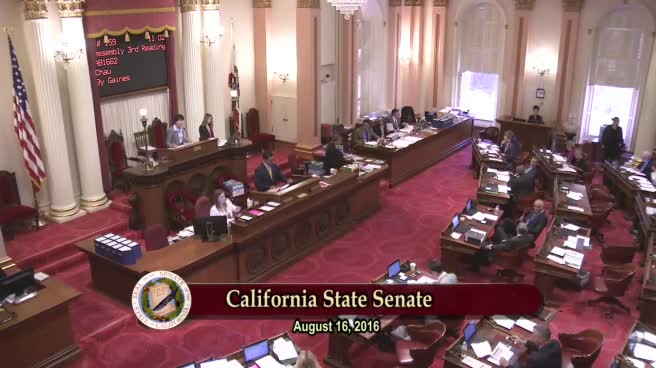
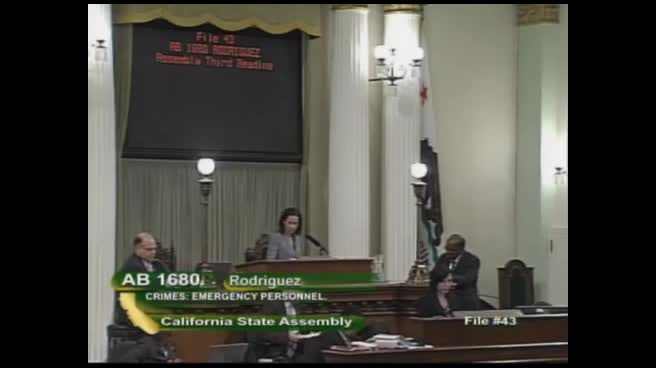
Bill Author

Bill Co-Author(s):