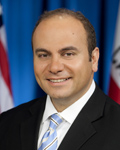
AB 2863: Health care coverage: prescriptions.
- Session Year: 2017-2018
- House: Assembly
- Latest Version Date: 2018-09-26
Existing law, the Knox-Keene Health Care Service Plan Act of 1975, provides for the licensure and regulation of health care service plans by the Department of Managed Health Care, and makes a willful violation of the act a crime. Existing law provides for the regulation of health insurers by the Department of Insurance. Existing law requires a health care service plan or health insurer that covers outpatient prescription drug benefits to provide coverage for specified prescription drugs, and requires cost sharing for outpatient prescription drugs to be reasonable so as to allow access to medically necessary outpatient prescription drugs.
This bill would limit the amount a health care service plan or health insurer may require an enrollee or insured to pay at the point of sale for a covered prescription to the lesser of the applicable cost-sharing amount or the retail price. The bill would prohibit a health care service plan or health insurer from requiring a pharmacy to charge or collect a cost-sharing amount from an enrollee or insured that exceeds the total retail price for the prescription drug, and would provide that the payment rendered by an enrollee or insured would constitute the applicable cost sharing, as specified.
The bill would require a pharmacy to inform a customer whether the retail price for a covered prescription is lower than the applicable cost-sharing amount, unless the pharmacy automatically charges the customer the lower price. If the customer pays the retail price, the bill would require the pharmacy to submit the claim to the health care service plan or health insurer in the same manner as if the customer had purchased the prescription drug by paying the cost-sharing amount when submitted by the network pharmacy. The bill would make a contract provision that is inconsistent with these provisions void and unenforceable.
The California Constitution requires the state to reimburse local agencies and school districts for certain costs mandated by the state. Statutory provisions establish procedures for making that reimbursement.
This bill would provide that no reimbursement is required by this act for a specified reason.
Existing law, the Knox-Keene Health Care Service Plan Act of 1975, provides for the licensure and regulation of health care service plans by the Department of Managed Health Care, and makes a willful violation of the act a crime. Existing law provides for the regulation of health insurers by the Department of Insurance. Existing law requires a health care service plan or health insurer that covers outpatient prescription drug benefits to provide coverage for specified prescription drugs, and requires cost sharing for outpatient prescription drugs to be reasonable so as to allow access to medically necessary outpatient prescription drugs.
This bill would limit the amount a health care service plan or health insurer may require an enrollee or insured to pay at the point of sale for a covered prescription to the lesser of the applicable cost-sharing amount or the retail price. The bill would prohibit a health care service plan or health insurer from requiring a pharmacy to charge or collect a cost-sharing amount from an enrollee or insured that exceeds the total retail price for the prescription drug, and would provide that the payment rendered by an enrollee or insured would constitute the applicable cost sharing, as specified.
The bill would require a pharmacy to inform a customer whether the retail price for a covered prescription is lower than the applicable cost-sharing amount, unless the pharmacy automatically charges the customer the lower price. If the customer pays the retail price, the bill would require the pharmacy to submit the claim to the health care service plan or health insurer in the same manner as if the customer had purchased the prescription drug by paying the cost-sharing amount when submitted by the network pharmacy. The bill would make a contract provision that is inconsistent with these provisions void and unenforceable.
The California Constitution requires the state to reimburse local agencies and school districts for certain costs mandated by the state. Statutory provisions establish procedures for making that reimbursement.
This bill would provide that no reimbursement is required by this act for a specified reason.
Existing law, the Knox-Keene Health Care Service Plan Act of 1975, provides for the licensure and regulation of health care service plans by the Department of Managed Health Care, and makes a willful violation of the act a crime. Existing law provides for the regulation of health insurers by the Department of Insurance. Existing law requires a health care service plan or health insurer that covers outpatient prescription drug benefits to provide coverage for specified prescription drugs, and requires cost sharing for outpatient prescription drugs to be reasonable so as to allow access to medically necessary outpatient prescription drugs.
This bill would limit the amount a health care service plan or health insurer may require an enrollee or insured to pay at the point of sale for a covered prescription to the lesser of the applicable cost-sharing amount or the retail price. The bill would prohibit a health care service plan or health insurer from requiring a pharmacy to charge or collect a cost-sharing amount from an enrollee or insured that exceeds the total retail price for the prescription drug. The bill would require the amount paid for a prescription to be applied to the enrollees or insureds deductible and out-of-pocket maximum if the enrollee or insured pays the retail price. drug, and would provide that the payment rendered by an enrollee or insured would constitute the applicable cost sharing, as specified.
The bill would require a pharmacy to inform a customer whether the retail price for a covered prescription is lower than the applicable cost-sharing amount, unless the pharmacy automatically charges the customer the lower price. If the customer pays the retail price, the bill would require the pharmacy to submit the claim to the health care service plan or health insurer in the same manner as if the customer had purchased the prescription drug by paying the cost-sharing amount when submitted by the network pharmacy. The bill would make a contract provision that is inconsistent with these provisions void and unenforceable.
The California Constitution requires the state to reimburse local agencies and school districts for certain costs mandated by the state. Statutory provisions establish procedures for making that reimbursement.
This bill would provide that no reimbursement is required by this act for a specified reason.
Existing law, the Knox-Keene Health Care Service Plan Act of 1975, provides for the licensure and regulation of health care service plans by the Department of Managed Health Care, and makes a willful violation of the act a crime. Existing law provides for the regulation of health insurers by the Department of Insurance. Existing law requires a health care service plan or health insurer that covers outpatient prescription drug benefits to provide coverage for specified prescription drugs, and requires cost sharing for outpatient prescription drugs to be reasonable so as to allow access to medically necessary outpatient prescription drugs.
This bill would limit the amount a health care service plan or health insurer may require an enrollee or insured to pay at the point of sale for a covered prescription to the lesser of the applicable cost-sharing amount or the retail price. The bill would prohibit a health care service plan or health insurer from requiring a pharmacy to charge or collect a copayment cost-sharing amount from an enrollee or insured that exceeds the total submitted charges by the network pharmacy. retail price for the prescription drug. The bill would require the amount paid for a prescription to be applied to the enrollees or insureds deductible and out-of-pocket maximum if the enrollee or insured pays the retail price.
The bill would require a pharmacy to inform a customer whether the retail price for a covered prescription is lower than the applicable cost-sharing amount. amount, unless the pharmacy automatically charges the customer the lower price. If the customer pays the retail price, the bill would require the pharmacy to submit the claim to the health care service plan or health insurer in the same manner as if the customer had purchased the prescription medication drug by paying the cost-sharing amount when submitted by the network pharmacy. The bill would make a contract provision that is inconsistent with these provisions void and unenforceable.
The California Constitution requires the state to reimburse local agencies and school districts for certain costs mandated by the state. Statutory provisions establish procedures for making that reimbursement.
This bill would provide that no reimbursement is required by this act for a specified reason.
Existing law, the Knox-Keene Health Care Service Plan Act of 1975, provides for the licensure and regulation of health care service plans by the Department of Managed Health Care, and makes a willful violation of the act a crime. Existing law provides for the regulation of health insurers by the Department of Insurance. Existing law requires a health care service plan or health insurer that covers outpatient prescription drug benefits to provide coverage for specified prescription drugs, and requires cost sharing for outpatient prescription drugs to be reasonable so as to allow access to medically necessary outpatient prescription drugs.
This bill would limit the amount a health care service plan or health insurer may require an enrollee or insured to pay at the point of sale for a covered prescription to the lesser of the applicable cost-sharing amount or the retail price. The bill would prohibit a health care service plan or health insurer from requiring a pharmacy to charge or collect a copayment from an enrollee or insured that exceeds the total submitted charges by the network pharmacy. The bill would require the amount paid for a prescription to be applied to the enrollees or insureds deductible and out-of-pocket maximum if the enrollee or insured pays the retail price.
The bill would require a pharmacy to inform a customer whether the retail price for a covered prescription is lower than the applicable cost-sharing amount. If the customer pays the retail price, the bill would require the pharmacy to submit the claim to the health care service plan or health insurer in the same manner as if the customer had purchased the prescription medication by paying the cost-sharing amount when submitted by the network pharmacy. The bill would make a contract provision that is inconsistent with these provisions void and unenforceable.
The California Constitution requires the state to reimburse local agencies and school districts for certain costs mandated by the state. Statutory provisions establish procedures for making that reimbursement.
This bill would provide that no reimbursement is required by this act for a specified reason.
Existing law, the Knox-Keene Health Care Service Plan Act of 1975, provides for the licensure and regulation of health care service plans by the Department of Managed Health Care, and makes a willful violation of the act a crime. Existing law provides for the regulation of health insurers by the Department of Insurance. Existing law requires a health care service plan or health insurer that covers outpatient prescription drug benefits to provide coverage for specified prescription drugs, and requires cost sharing for outpatient prescription drugs to be reasonable so as to allow access to medically necessary outpatient prescription drugs.
This bill would limit the amount a health care service plan, health insurer, or pharmacy benefit manager plan or health insurer may require an enrollee or insured to pay at the point of sale for a covered prescription to the lesser of the applicable cost-sharing amount or the retail price. The bill would prohibit a health care service plan, health insurer, or pharmacy benefit manager plan or health insurer from requiring a pharmacy to charge or collect a copayment from an enrollee or insured that exceeds the total submitted charges by the network pharmacy. The bill would require the amount paid for a prescription to be applied to the enrollees or insureds deductible and out-of-pocket maximum if the enrollee or insured pays the retail price.
The California Constitution requires the state to reimburse local agencies and school districts for certain costs mandated by the state. Statutory provisions establish procedures for making that reimbursement.
This bill would provide that no reimbursement is required by this act for a specified reason.
Existing law, the Knox-Keene Health Care Service Plan Act of 1975, provides for the licensure and regulation of health care service plans by the Department of Managed Health Care, and makes a willful violation of the act a crime. Existing law provides for the regulation of health insurers by the Department of Insurance. Existing law requires a health care service plan or health insurer that covers outpatient prescription drug benefits to provide coverage for specified prescription drugs, and requires cost sharing for outpatient prescription drugs to be reasonable so as to allow access to medically necessary outpatient prescription drugs.
This bill would limit the amount a health care service plan, health insurer, or pharmacy benefit manager may require an enrollee or insured to pay at the point of sale for a covered prescription to the lesser of the applicable cost-sharing amount or the retail price. The bill would prohibit a health care service plan, health insurer, or pharmacy benefit manager from requiring a pharmacy to charge or collect a copayment from an enrollee or insured that exceeds the total submitted charges by the network pharmacy. The bill would require the amount paid for a prescription to be applied to the enrollees or insureds deductible and out-of-pocket maximum if the enrollee or insured pays the retail price.
The California Constitution requires the state to reimburse local agencies and school districts for certain costs mandated by the state. Statutory provisions establish procedures for making that reimbursement.
This bill would provide that no reimbursement is required by this act for a specified reason.
The Pharmacy Law provides for the licensing and regulation of the practice of pharmacy under the jurisdiction of the California State Board of Pharmacy within the Department of Consumer Affairs. Existing law establishes requirements for prescriptions, including specific requirements for the substitution of drugs on filling a prescription order.Existing law requires a pharmacy benefit manager that reimburses a contracting pharmacy for a drug on a maximum allowable cost basis to include information identifying any national drug pricing compendia or other data sources used to determine the maximum allowable cost for the drugs on a maximum allowable cost list and to provide for an appeal process for the contracting pharmacy in any contract entered into or renewed on or after January 1, 2016. Existing law requires a pharmacy benefit manager to make available to a contracting pharmacy, upon request, the most up-to-date maximum allowable cost list or lists used by the pharmacy benefit manager for patients served by the pharmacy.This bill would prohibit a contract between a health carrier or a pharmacy benefit manager and a pharmacy from penalizing a pharmacys disclosure of the cost of the prescription medication or the availability of alternative medications or less costly alternative methods of purchasing a medication to a health benefit plan beneficiary. The bill would limit the amount a health carrier or pharmacy benefit manager may require a health benefit plan beneficiary to pay at the point of sale for a covered prescription medication to the lesser of the applicable cost-sharing amount or the amount the beneficiary would pay without using a health benefit plan. The bill would prohibit a health carrier or pharmacy benefit manager from requiring a pharmacy to charge or collect a copayment from a beneficiary that exceeds the total submitted charges by the network pharmacy. The bill would require the amount paid for a prescription to be applied to the beneficiarys deductible and out-of-pocket maximum if the beneficiary opts to pay the cash price.The Pharmacy Law provides for the licensing and regulation of the practice of pharmacy under the jurisdiction of the California State Board of Pharmacy within the Department of Consumer Affairs. Existing law establishes requirements for prescriptions, including specific requirements for the substitution of drugs on filling a prescription order.
This bill would make nonsubstantive changes to those substitution provisions.Existing law requires a pharmacy benefit manager that reimburses a contracting pharmacy for a drug on a maximum allowable cost basis to include information identifying any national drug pricing compendia or other data sources used to determine the maximum allowable cost for the drugs on a maximum allowable cost list and to provide for an appeal process for the contracting pharmacy in any contract entered into or renewed on or after January 1, 2016. Existing law requires a pharmacy benefit manager to make available to a contracting pharmacy, upon request, the most up-to-date maximum allowable cost list or lists used by the pharmacy benefit manager for patients served by the pharmacy.
This bill would prohibit a contract between a health carrier or a pharmacy benefit manager and a pharmacy from penalizing a pharmacys disclosure of the cost of the prescription medication or the availability of alternative medications or less costly alternative methods of purchasing a medication to a health benefit plan beneficiary. The bill would limit the amount a health carrier or pharmacy benefit manager may require a health benefit plan beneficiary to pay at the point of sale for a covered prescription medication to the lesser of the applicable cost-sharing amount or the amount the beneficiary would pay without using a health benefit plan. The bill would prohibit a health carrier or pharmacy benefit manager from requiring a pharmacy to charge or collect a copayment from a beneficiary that exceeds the total submitted charges by the network pharmacy. The bill would require the amount paid for a prescription to be applied to the beneficiarys deductible and out-of-pocket maximum if the beneficiary opts to pay the cash price.
The Pharmacy Law provides for the licensing and regulation of the practice of pharmacy under the jurisdiction of the California State Board of Pharmacy within the Department of Consumer Affairs. Existing law establishes requirements for prescriptions, including specific requirements for the substitution of drugs on filling a prescription order.
This bill would make nonsubstantive changes to those substitution provisions.
(a)A pharmacy shall inform a customer at the point of sale for a covered prescription drug whether the retail price is lower than the applicable cost-sharing amount for the prescription drug, unless the pharmacy automatically charges the customer the lower price.
(b)If the customer pays the retail price, the pharmacy shall submit the claim to the health care service plan or health insurer in the same manner as if the customer had purchased the prescription drug by paying the cost-sharing amount when submitted by the network pharmacy.
(c)The payment rendered shall constitute the applicable cost sharing and shall apply to the deductible, if any, and also to the maximum out-of-pocket limit in the same manner as if the enrollee had purchased the prescription drug by paying the cost-sharing amount.
(d)A contract provision that is inconsistent with this section is void and unenforceable.
(e)The provisions of this section are severable. If any provision of this section or its application is held invalid, that invalidity shall not affect other provisions or applications that can be given effect without the invalid provision or application.
(f)A violation of this provision shall not be grounds for disciplinary action or a criminal action.
SEC. 2.Section 1367.47 is added to the Health and Safety Code, to read:1367.47.(a)The maximum amount a health care service plan may require an enrollee to pay at the point of sale for a covered prescription drug is the lesser of the following:
(1)The applicable cost-sharing amount for the prescription drug.
(2)The retail price.
(b)A health care service plan shall not require a pharmacist or pharmacy to charge or collect from an enrollee a cost-sharing amount that exceeds the total retail price for the prescription drug.
(c)The payment rendered shall constitute the applicable cost sharing and shall apply to the deductible, if any, and also to the maximum out-of-pocket limit in the same manner as if the enrollee had purchased the prescription drug by paying the cost-sharing amount.
SEC. 3.Section 10123.65 is added to the Insurance Code, to read:10123.65.(a)The maximum amount a health insurer may require an insured to pay at the point of sale for a covered prescription drug is the lesser of the following:
(1)The applicable cost-sharing amount for the prescription drug.
(2)The retail price.
(b)A health insurer shall not require a pharmacist or pharmacy to charge or collect from an insured a cost-sharing amount that exceeds the total retail price for the prescription drug.
(c)The payment rendered shall constitute the applicable cost sharing and shall apply to the deductible, if any, and also to the maximum out-of-pocket limit in the same manner as if the insured had purchased the prescription drug by paying the cost-sharing amount.
SEC. 4.No reimbursement is required by this act pursuant to Section 6 of Article XIIIB of the California Constitution because the only costs that may be incurred by a local agency or school district will be incurred because this act creates a new crime or infraction, eliminates a crime or infraction, or changes the penalty for a crime or infraction, within the meaning of Section 17556 of the Government Code, or changes the definition of a crime within the meaning of Section 6 of Article XIIIB of the California Constitution.
(a)A pharmacy shall inform a customer at the point of sale for a covered prescription drug whether the retail price is lower than the applicable cost-sharing amount for the prescription drug, unless the pharmacy automatically charges the customer the lower price.
(b)If the customer pays the retail price, the pharmacy shall submit the claim to the health care service plan or health insurer in the same manner as if the customer had purchased the prescription drug by paying the cost-sharing amount when submitted by the network pharmacy.
(c)The payment rendered shall constitute the applicable cost sharing and shall apply to the deductible, if any, and also to the maximum out-of-pocket limit in the same manner as if the enrollee had purchased the prescription drug by paying the cost-sharing amount.
(d)A contract provision that is inconsistent with this section is void and unenforceable.
(e)The provisions of this section are severable. If any provision of this section or its application is held invalid, that invalidity shall not affect other provisions or applications that can be given effect without the invalid provision or application.
(f)A violation of this provision shall not be grounds for disciplinary action or a criminal action.
SEC. 2.Section 1367.47 is added to the Health and Safety Code, to read:1367.47.(a)The maximum amount a health care service plan may require an enrollee to pay at the point of sale for a covered prescription drug is the lesser of the following:
(1)The applicable cost-sharing amount for the prescription drug.
(2)The retail price.
(b)A health care service plan shall not require a pharmacist or pharmacy to charge or collect from an enrollee a cost-sharing amount that exceeds the total retail price for the prescription drug.
(c)The payment rendered shall constitute the applicable cost sharing and shall apply to the deductible, if any, and also to the maximum out-of-pocket limit in the same manner as if the enrollee had purchased the prescription drug by paying the cost-sharing amount.
SEC. 3.Section 10123.65 is added to the Insurance Code, to read:10123.65.(a)The maximum amount a health insurer may require an insured to pay at the point of sale for a covered prescription drug is the lesser of the following:
(1)The applicable cost-sharing amount for the prescription drug.
(2)The retail price.
(b)A health insurer shall not require a pharmacist or pharmacy to charge or collect from an insured a cost-sharing amount that exceeds the total retail price for the prescription drug.
(c)The payment rendered shall constitute the applicable cost sharing and shall apply to the deductible, if any, and also to the maximum out-of-pocket limit in the same manner as if the insured had purchased the prescription drug by paying the cost-sharing amount.
SEC. 4.No reimbursement is required by this act pursuant to Section 6 of Article XIIIB of the California Constitution because the only costs that may be incurred by a local agency or school district will be incurred because this act creates a new crime or infraction, eliminates a crime or infraction, or changes the penalty for a crime or infraction, within the meaning of Section 17556 of the Government Code, or changes the definition of a crime within the meaning of Section 6 of Article XIIIB of the California Constitution.
(a)A pharmacy shall inform a customer at the point of sale for a covered prescription drug whether the retail price is lower than the applicable cost-sharing amount for the prescription drug, unless the pharmacy automatically charges the customer the lower price.
(b)If the customer pays the retail price, the pharmacy shall submit the claim to the health care service plan or health insurer in the same manner as if the customer had purchased the prescription drug by paying the cost-sharing amount when submitted by the network pharmacy.
(c)The payment rendered shall constitute the applicable cost sharing and shall apply to the deductible, if any, and also to the maximum out-of-pocket limit in the same manner as if the enrollee had purchased the prescription drug by paying the cost-sharing amount.
(c)(d)A contract provision that is inconsistent with this section is void and unenforceable.
(d)(e)The provisions of this section are severable. If any provision of this section or its application is held invalid, that invalidity shall not affect other provisions or applications that can be given effect without the invalid provision or application.
(e)(f)A violation of this provision shall not be grounds for disciplinary action or a criminal action.
SEC. 2.Section 1367.47 is added to the Health and Safety Code, to read:1367.47.(a)The maximum amount a health care service plan may require an enrollee to pay at the point of sale for a covered prescription drug is the lesser of the following:
(1)The applicable cost-sharing amount for the prescription drug.
(2)The retail price.
(b)A health care service plan shall not require a pharmacist or pharmacy to charge or collect from an enrollee a cost-sharing amount that exceeds the total retail price for the prescription drug. If an enrollee pays the retail price instead of paying the cost-sharing amount for the prescription drug, that amount shall be applied to the enrollees deductible and out-of-pocket maximum in the same manner as if the enrollee had purchased the prescription drug by paying the cost-sharing amount when submitted by the network pharmacy.
(c)The payment rendered shall constitute the applicable cost sharing and shall apply to the deductible, if any, and also to the maximum out-of-pocket limit in the same manner as if the enrollee had purchased the prescription drug by paying the cost-sharing amount.
SEC. 3.Section 10123.65 is added to the Insurance Code, to read:10123.65.(a)The maximum amount a health insurer may require an insured to pay at the point of sale for a covered prescription drug is the lesser of the following:
(1)The applicable cost-sharing amount for the prescription drug.
(2)The retail price.
(b)A health insurer shall not require a pharmacist or pharmacy to charge or collect from an insured a cost-sharing amount that exceeds the total retail price for the prescription drug. If an insured pays the retail price instead of paying the cost-sharing amount for the prescription drug, that amount shall be applied to the insureds deductible and out-of-pocket maximum in the same manner as if the insured had purchased the prescription drug by paying the cost-sharing amount when submitted by the network pharmacy.
(c)The payment rendered shall constitute the applicable cost sharing and shall apply to the deductible, if any, and also to the maximum out-of-pocket limit in the same manner as if the insured had purchased the prescription drug by paying the cost-sharing amount.
SEC. 4.No reimbursement is required by this act pursuant to Section 6 of Article XIIIB of the California Constitution because the only costs that may be incurred by a local agency or school district will be incurred because this act creates a new crime or infraction, eliminates a crime or infraction, or changes the penalty for a crime or infraction, within the meaning of Section 17556 of the Government Code, or changes the definition of a crime within the meaning of Section 6 of Article XIIIB of the California Constitution.
(a)A pharmacy shall inform a customer at the point of sale for a covered prescription medication drug whether the retail price is lower than the applicable cost-sharing amount for the prescription medication. drug, unless the pharmacy automatically charges the customer the lower price.
(b)If the customer pays the retail price, the pharmacy shall submit the claim to the health care service plan or health insurer in the same manner as if the customer had purchased the prescription medication drug by paying the cost-sharing amount when submitted by the network pharmacy.
(c)A contract provision that is inconsistent with this section is void and unenforceable.
(d)The provisions of this section are severable. If any provision of this section or its application is held invalid, that invalidity shall not affect other provisions or applications that can be given effect without the invalid provision or application.
(e)A violation of this provision shall not be grounds for disciplinary action or a criminal action.
SEC. 2.Section 1367.47 is added to the Health and Safety Code, to read:1367.47.(a)The maximum amount a health care service plan may require an enrollee to pay at the point of sale for a covered prescription medication drug is the lesser of the following:
(1)The applicable cost-sharing amount for the prescription medication. drug.
(2)The retail price.
(b)A health care service plan shall not require a pharmacist or pharmacy to charge or collect from an enrollee a copayment cost-sharing amount that exceeds the total submitted charges by the network pharmacy. retail price for the prescription drug. If an enrollee pays the retail price instead of paying the cost-sharing amount for the prescription medication, drug, that amount shall be applied to the enrollees deductible and out-of-pocket maximum in the same manner as if the enrollee had purchased the prescription medication drug by paying the cost-sharing amount when submitted by the network pharmacy.
SEC. 3.Section 10123.65 is added to the Insurance Code, to read:10123.65.(a)The maximum amount a health insurer may require an insured to pay at the point of sale for a covered prescription medication drug is the lesser of the following:
(1)The applicable cost-sharing amount for the prescription medication. drug.
(2)The retail price.
(b)A health insurer shall not require a pharmacist or pharmacy to charge or collect from an insured a copayment cost-sharing amount that exceeds the total submitted charges by the network pharmacy. retail price for the prescription drug. If an insured pays the retail price instead of paying the cost-sharing amount for the prescription medication, drug, that amount shall be applied to the insureds deductible and out-of-pocket maximum in the same manner as if the insured had purchased the prescription medication drug by paying the cost-sharing amount when submitted by the network pharmacy.
SEC. 4.No reimbursement is required by this act pursuant to Section 6 of Article XIIIB of the California Constitution because the only costs that may be incurred by a local agency or school district will be incurred because this act creates a new crime or infraction, eliminates a crime or infraction, or changes the penalty for a crime or infraction, within the meaning of Section 17556 of the Government Code, or changes the definition of a crime within the meaning of Section 6 of Article XIIIB of the California Constitution.
(a)A pharmacy shall inform a customer at the point of sale for a covered prescription medication whether the retail price is lower than the applicable cost-sharing amount for the prescription medication.
(b)If the customer pays the retail price, the pharmacy shall submit the claim to the health care service plan or health insurer in the same manner as if the customer had purchased the prescription medication by paying the cost-sharing amount when submitted by the network pharmacy.
(c)A contract provision that is inconsistent with this section is void and unenforceable.
(d)The provisions of this section are severable. If any provision of this section or its application is held invalid, that invalidity shall not affect other provisions or applications that can be given effect without the invalid provision or application.
(e)A violation of this provision shall not be grounds for disciplinary action or a criminal action.
SECTION 1. SEC. 2.Section 1367.47 is added to the Health and Safety Code, to read:1367.47.(a)The maximum amount a health care service plan may require an enrollee to pay at the point of sale for a covered prescription medication is the lesser of the following:
(1)The applicable cost-sharing amount for the prescription medication.
(2)The retail price.
(b)A health care service plan shall not require a pharmacist or pharmacy to charge or collect from an enrollee a copayment that exceeds the total submitted charges by the network pharmacy. If an enrollee pays the retail price instead of paying the cost-sharing amount for the prescription medication, that amount shall be applied to the enrollees deductible and out-of-pocket maximum in the same manner as if the enrollee had purchased the prescription medication by paying the cost-sharing amount. amount when submitted by the network pharmacy.
SEC. 2.SEC. 3.Section 10123.65 is added to the Insurance Code, to read:10123.65.(a)The maximum amount a health insurer may require an insured to pay at the point of sale for a covered prescription medication is the lesser of the following:
(1)The applicable cost-sharing amount for the prescription medication.
(2)The retail price.
(b)A health insurer shall not require a pharmacist or pharmacy to charge or collect from an insured a copayment that exceeds the total submitted charges by the network pharmacy. If an insured pays the retail price instead of paying the cost-sharing amount for the prescription medication, that amount shall be applied to the insureds deductible and out-of-pocket maximum in the same manner as if the insured had purchased the prescription medication by paying the cost-sharing amount. amount when submitted by the network pharmacy.
SEC. 3.SEC. 4.No reimbursement is required by this act pursuant to Section 6 of Article XIIIB of the California Constitution because the only costs that may be incurred by a local agency or school district will be incurred because this act creates a new crime or infraction, eliminates a crime or infraction, or changes the penalty for a crime or infraction, within the meaning of Section 17556 of the Government Code, or changes the definition of a crime within the meaning of Section 6 of Article XIIIB of the California Constitution.
(a)The maximum amount a health care service plan or pharmacy benefit manager, as defined in Section 4430 of the Business and Professions Code, may require an enrollee to pay at the point of sale for a covered prescription medication is the lesser of the following:
(1)The applicable cost-sharing amount for the prescription medication.
(2)The retail price.
(b)A health care service plan or pharmacy benefit manager shall not require a pharmacist or pharmacy to charge or collect from an enrollee a copayment that exceeds the total submitted charges by the network pharmacy. If an enrollee pays the retail price instead of paying the cost-sharing amount for the prescription medication, that amount shall be applied to the enrollees deductible and out-of-pocket maximum in the same manner as if the enrollee had purchased the prescription medication by paying the cost-sharing amount.
SEC. 2.Section 10123.65 is added to the Insurance Code, to read:10123.65.(a)The maximum amount a health insurer or pharmacy benefit manager, as defined in Section 4430 of the Business and Professions Code, may require an insured to pay at the point of sale for a covered prescription medication is the lesser of the following:
(1)The applicable cost-sharing amount for the prescription medication.
(2)The retail price.
(b)A health insurer or pharmacy benefit manager shall not require a pharmacist or pharmacy to charge or collect from an insured a copayment that exceeds the total submitted charges by the network pharmacy. If an insured pays the retail price instead of paying the cost-sharing amount for the prescription medication, that amount shall be applied to the insureds deductible and out-of-pocket maximum in the same manner as if the insured had purchased the prescription medication by paying the cost-sharing amount.
SEC. 3.No reimbursement is required by this act pursuant to Section 6 of Article XIIIB of the California Constitution because the only costs that may be incurred by a local agency or school district will be incurred because this act creates a new crime or infraction, eliminates a crime or infraction, or changes the penalty for a crime or infraction, within the meaning of Section 17556 of the Government Code, or changes the definition of a crime within the meaning of Section 6 of Article XIIIB of the California Constitution.
(a)The maximum amount a health care service plan or pharmacy benefit manager, as defined in Section 4430 of the Business and Professions Code, may require an enrollee to pay at the point of sale for a covered prescription medication is the lesser of the following:
(1)The applicable cost-sharing amount for the prescription medication.
(2)The retail price.
(b)A health care service plan or pharmacy benefit manager shall not require a pharmacist or pharmacy to charge or collect from an enrollee a copayment that exceeds the total submitted charges by the network pharmacy. If an enrollee pays the retail price instead of paying the cost-sharing amount for the prescription medication, that amount shall be applied to the enrollees deductible and out-of-pocket maximum in the same manner as if the enrollee had purchased the prescription medication by paying the cost-sharing amount.
SEC. 2.Section 10123.65 is added to the Insurance Code, to read:10123.65.(a)The maximum amount a health insurer or pharmacy benefit manager, as defined in Section 4430 of the Business and Professions Code, may require an insured to pay at the point of sale for a covered prescription medication is the lesser of the following:
(1)The applicable cost-sharing amount for the prescription medication.
(2)The retail price.
(b)A health insurer or pharmacy benefit manager shall not require a pharmacist or pharmacy to charge or collect from an insured a copayment that exceeds the total submitted charges by the network pharmacy. If an insured pays the retail price instead of paying the cost-sharing amount for the prescription medication, that amount shall be applied to the insureds deductible and out-of-pocket maximum in the same manner as if the insured had purchased the prescription medication by paying the cost-sharing amount.
SEC. 3.No reimbursement is required by this act pursuant to Section 6 of Article XIIIB of the California Constitution because the only costs that may be incurred by a local agency or school district will be incurred because this act creates a new crime or infraction, eliminates a crime or infraction, or changes the penalty for a crime or infraction, within the meaning of Section 17556 of the Government Code, or changes the definition of a crime within the meaning of Section 6 of Article XIIIB of the California Constitution.
SECTION 1.Section 4445 is added to the Business and Professions Code, to read:4445.(a)A contract entered into or renewed on or after January 1, 2019, between a health carrier or a pharmacy benefit manager and a pharmacist or pharmacy may not penalize a pharmacists or pharmacys disclosure of any of the following information to a health benefit plan beneficiary purchasing prescription medication:(1)The cost of the prescription medication to the beneficiary.(2)The availability of any therapeutically equivalent alternative medications or alternative methods of purchasing the prescription medication that are less expensive than the cost of the prescription medication to the beneficiary, including, but not limited to, paying the cash price.(b)The maximum amount a health carrier or pharmacy benefit manager may require a health benefit plan beneficiary to pay at the point of sale for a covered prescription medication is the lesser of the following:(1)The applicable cost-sharing amount for the prescription medication.(2)The amount the beneficiary would pay for the prescription medication if the beneficiary purchased the prescription medication without using a health benefit plan or any other source of prescription medication benefits or discounts.(c)A health carrier or pharmacy benefit manager shall not require a pharmacist or pharmacy to charge or collect from a beneficiary a copayment that exceeds the total submitted charges by the network pharmacy. If a beneficiary pays the amount specified in paragraph (2) of subdivision (b) instead of paying the cost-sharing amount for the prescription medication, that amount shall be applied to the beneficiarys deductible and out-of-pocket maximum in the same manner as if the beneficiary had purchased the prescription medication by paying the cost-sharing amount. REVISIONS: HeadingLine 2.(a)A contract entered into or renewed on or after January 1, 2019, between a health carrier or a pharmacy benefit manager and a pharmacist or pharmacy may not penalize a pharmacists or pharmacys disclosure of any of the following information to a health benefit plan beneficiary purchasing prescription medication:
(1)The cost of the prescription medication to the beneficiary.
(2)The availability of any therapeutically equivalent alternative medications or alternative methods of purchasing the prescription medication that are less expensive than the cost of the prescription medication to the beneficiary, including, but not limited to, paying the cash price.
(b)The maximum amount a health carrier or pharmacy benefit manager may require a health benefit plan beneficiary to pay at the point of sale for a covered prescription medication is the lesser of the following:
(1)The applicable cost-sharing amount for the prescription medication.
(2)The amount the beneficiary would pay for the prescription medication if the beneficiary purchased the prescription medication without using a health benefit plan or any other source of prescription medication benefits or discounts.
(c)A health carrier or pharmacy benefit manager shall not require a pharmacist or pharmacy to charge or collect from a beneficiary a copayment that exceeds the total submitted charges by the network pharmacy. If a beneficiary pays the amount specified in paragraph (2) of subdivision (b) instead of paying the cost-sharing amount for the prescription medication, that amount shall be applied to the beneficiarys deductible and out-of-pocket maximum in the same manner as if the beneficiary had purchased the prescription medication by paying the cost-sharing amount.
SECTION 1.Section 4073 of the Business and Professions Code is amended to read:4073.(a)A pharmacist filling a prescription order for a drug product prescribed by its trade or brand name may select another drug product with the same active chemical ingredients of the same strength, quantity, and dosage form, and of the same generic drug name as determined by the United States Adopted Names Council and accepted by the federal Food and Drug Administration, of those drug products having the same active chemical ingredients.(b)A selection shall not be made pursuant to this section if the prescriber personally indicates, either orally or in his or her own handwriting, Do not substitute, or words of similar meaning. Nothing in this subdivision shall prohibit a prescriber from checking a box on a prescription marked Do not substitute; provided that the prescriber personally initials the box or checkmark. To indicate that a selection shall not be made pursuant to this section for an electronic data transmission prescription as defined in subdivision (c) of Section 4040, a prescriber may indicate Do not substitute, or words of similar meaning, in the prescription as transmitted by electronic data, or may check a box marked on the prescription Do not substitute. In either instance, it shall not be required that the prohibition on substitution be manually initialed by the prescriber.(c)Selection pursuant to this section is within the discretion of the pharmacist, except as provided in subdivision (b). The person who selects the drug product to be dispensed pursuant to this section shall assume the same responsibility for selecting the dispensed drug product as would be incurred in filling a prescription for a drug product prescribed by generic name. There shall be no liability on the prescriber for an act or omission by a pharmacist in selecting, preparing, or dispensing a drug product pursuant to this section. The pharmacist shall not select a drug product pursuant to this section unless the drug product selected costs the patient less than the prescribed drug product. Cost, as used in this subdivision, is defined to include any professional fee that may be charged by the pharmacist.(d)This section shall apply to all prescriptions, including those presented by or on behalf of persons receiving assistance from the federal government or pursuant to the Medi-Cal Act (Chapter 7 (commencing with Section 14000) of Part 3 of Division 9 of the Welfare and Institutions Code).(e)When a substitution is made pursuant to this section, the use of the cost-saving drug product dispensed shall be communicated to the patient and the name of the dispensed drug product shall be indicated on the prescription label, except where the prescriber orders otherwise.(a)A pharmacist filling a prescription order for a drug product prescribed by its trade or brand name may select another drug product with the same active chemical ingredients of the same strength, quantity, and dosage form, and of the same generic drug name as determined by the United States Adopted Names (USAN) Council and accepted by the federal Food and Drug Administration (FDA), Administration, of those drug products having the same active chemical ingredients.
(b)In no case shall a A selection shall not be made pursuant to this section if the prescriber personally indicates, either orally or in his or her own handwriting, Do not substitute, or words of similar meaning. Nothing in this subdivision shall prohibit a prescriber from checking a box on a prescription marked Do not substitute; provided that the prescriber personally initials the box or checkmark. To indicate that a selection shall not be made pursuant to this section for an electronic data transmission prescription as defined in subdivision (c) of Section 4040, a prescriber may indicate Do not substitute, or words of similar meaning, in the prescription as transmitted by electronic data, or may check a box marked on the prescription Do not substitute. In either instance, it shall not be required that the prohibition on substitution be manually initialed by the prescriber.
(c)Selection pursuant to this section is within the discretion of the pharmacist, except as provided in subdivision (b). The person who selects the drug product to be dispensed pursuant to this section shall assume the same responsibility for selecting the dispensed drug product as would be incurred in filling a prescription for a drug product prescribed by generic name. There shall be no liability on the prescriber for an act or omission by a pharmacist in selecting, preparing, or dispensing a drug product pursuant to this section. In no case shall the The pharmacist shall not select a drug product pursuant to this section unless the drug product selected costs the patient less than the prescribed drug product. Cost, Cost, as used in this subdivision, is defined to include any professional fee that may be charged by the pharmacist.
(d)This section shall apply to all prescriptions, including those presented by or on behalf of persons receiving assistance from the federal government or pursuant to the California Medical Assistance Program set forth in Chapter Medi-Cal Act (Chapter 7 (commencing with Section 14000) of Part 3 of Division 9 of the Welfare and Institutions Code. Code).
(e)When a substitution is made pursuant to this section, the use of the cost-saving drug product dispensed shall be communicated to the patient and the name of the dispensed drug product shall be indicated on the prescription label, except where the prescriber orders otherwise.
|
Date
|
Status
|
|---|---|
| Sep 26, 2018 | Chaptered by Secretary of State - Chapter 770, Statutes of 2018. |
| Sep 26, 2018 | Approved by the Governor. |
| Sep 7, 2018 | Enrolled and presented to the Governor at 2:30 p.m. |
| Aug 29, 2018 | Senate amendments concurred in. To Engrossing and Enrolling. |
| Aug 28, 2018 | From committee: That the Senate amendments be concurred in. (Ayes 18. Noes 0.) (August 28). |
| Aug 23, 2018 | Re-referred to Com. on B. & P. pursuant to Assembly Rule 77.2. |
| Aug 20, 2018 | In Assembly. Concurrence in Senate amendments pending. May be considered on or after August 22 pursuant to Assembly Rule 77. |
| Aug 20, 2018 | Read third time. Passed. Ordered to the Assembly. |
| Aug 14, 2018 | Read second time. Ordered to third reading. |
| Aug 13, 2018 | Read third time and amended. Ordered to second reading. |
| Aug 7, 2018 | Read second time. Ordered to third reading. |
| Aug 6, 2018 | From committee: Be ordered to second reading pursuant to Senate Rule 28.8. |
| Jul 3, 2018 | From committee chair, with author's amendments: Amend, and re-refer to committee. Read second time, amended, and re-referred to Com. on APPR. |
| Jun 27, 2018 | In committee: Set, first hearing. Hearing canceled at the request of author. |
| Jun 19, 2018 | Read second time and amended. Re-referred to Com. on APPR. |
| Jun 18, 2018 | From committee: Amend, and do pass as amended and re-refer to Com. on APPR. (Ayes 8. Noes 0.) (June 13). |
| Jun 7, 2018 | Referred to Com. on HEALTH. |
| May 25, 2018 | In Senate. Read first time. To Com. on RLS. for assignment. |
| May 25, 2018 | Read third time. Passed. Ordered to the Senate. |
| May 22, 2018 | Read second time. Ordered to third reading. |
| May 21, 2018 | Read second time and amended. Ordered returned to second reading. |
| May 17, 2018 | From committee: Amend, and do pass as amended. (Ayes 17. Noes 0.) (May 16). |
| Apr 24, 2018 | From committee: Do pass and re-refer to Com. on APPR. (Ayes 16. Noes 0.) (April 24). Re-referred to Com. on APPR. |
| Apr 18, 2018 | From committee: Do pass and re-refer to Com. on B. & P. (Ayes 15. Noes 0.) (April 17). Re-referred to Com. on B. & P. |
| Apr 12, 2018 | Re-referred to Com. on HEALTH. |
| Apr 11, 2018 | From committee chair, with author's amendments: Amend, and re-refer to Com. on HEALTH. Read second time and amended. |
| Apr 2, 2018 | Re-referred to Com. on HEALTH. |
| Mar 23, 2018 | From committee chair, with author's amendments: Amend, and re-refer to Com. on HEALTH. Read second time and amended. |
| Mar 22, 2018 | Referred to Coms. on HEALTH and B. & P. |
| Feb 17, 2018 | From printer. May be heard in committee March 19. |
| Feb 16, 2018 | Read first time. To print. |
|
Date
|
Description
|
Location
|
Votes
|
|
|---|---|---|---|---|
| Aug 29, 2018 | AB 2863 NAZARIAN Concurrence in Senate Amendments | Assembly Floor |
Passed |
|
| Aug 28, 2018 | With recommendation: That Senate amendments be concurred in. | Assembly Standing Committee on Business and Professions |
Passed |
|
| Aug 20, 2018 | Assembly 3rd Reading AB2863 Nazarian et al. By Wiener | Senate Floor |
Passed |
|
| Jun 13, 2018 | Do pass as amended, but first amend, and re-refer to the Committee on [Appropriations] | Senate Standing Committee on Health |
Passed |
|
| May 25, 2018 | AB 2863 NAZARIAN Assembly Third Reading | Assembly Floor |
Passed |
|
| May 16, 2018 | Do pass as amended. | Assembly Standing Committee on Appropriations |
Passed |
|
| Apr 24, 2018 | Do pass and be re-referred to the Committee on [Appropriations] | Assembly Standing Committee on Business and Professions |
Passed |
|
| Apr 17, 2018 | Do pass and be re-referred to the Committee on [Business and Professions] | Assembly Standing Committee on Health |
Passed |
This list shows positions taken on this bill by organizations on the date displayed, which is linked to the original source.
Positions by individuals are not included.
CONCURRENCE IN SENATE AMENDMENTS
CSA2 Bill Id:AB 2863
Author:(Nazarian)
As Amended Ver:August 13, 2018
Majority vote
ASSEMBLY: | 70-0 | (May 25, 2018) | SENATE: | 39-0 | (August 20, 2018) |
COMMITTEE VOTE: | 18-0 | (August 28, 2018) | RECOMMENDATION: | concur |
(B. & P.)
Original Committee Reference: B. & P.
SUMMARY: This bill requires a pharmacy to inform a customer whether the retail price for a prescription drug is lower than the applicable cost-sharing amount for the prescription drug. The bill prohibits a health plan or health insurer from requiring an enrollee or insured to pay the applicable cost-sharing amount for a prescription medication if the cost-sharing amount is greater than the retail price.
THE SENATE AMENDMENTS: add a requirement that pharmacies inform customers at the point of sale whether the retail price of a prescription drug is lower than the cost-sharing amount. The amendments also establish the requirements for submitting claims by pharmacies and applying deductibles and out-of-pocket maximums by health plans and insurers.
EXISTING LAW:
- Regulates health plans under the Knox-Keene Health Care Service Plan Act of 1975 through the Department of Managed Health Care and regulates health insurers under the Insurance Code through the California Department of Insurance. (Health and Safety Code Section 1340 et seq., Insurance Code Section 10110 et seq.)
- Requires health plans and health insurance policies that provide prescription drug benefits to provide coverage for all medically necessary outpatient drugs, except as specified. (Health and Safety Code Section 1342.71, Insurance Code Section 10123.201)
- Requires a health plan contract or health insurance policy that provides coverage for outpatient prescription drugs to provide coverage for medically necessary prescription drugs, including non-formulary drugs determined to be medically necessary, and, for an insurer, requires copayments, coinsurance, and other cost sharing for outpatient prescription drugs to be reasonable. (Health and Safety Code Section 1342.71, Insurance Code Section 10123.193)
- Requires (in regulation) that a health plan's prescription drug benefit provide that, if the pharmacy's retail price for a prescription drug is less than the applicable copayment amount, the enrollee is not required to pay any more than the retail amount. (California Code of Regulations Section 1300.67.24 (c))
- Provides for the licensure and regulation of pharmacists and pharmacies by the Board of Pharmacy. (Business and Professions Code Section 4000 et seq.)
- Imposes requirements on audits of pharmacy services provided to beneficiaries of a health benefit plan. (Business and Professions Code Section 4430 et seq.)
- Prohibits an entity conducting a pharmacy audit from receiving payment or any other consideration on any basis that is tied to the amount claimed or actual amount recovered from the pharmacy that is the subject of the audit. States that this shall not be construed to prevent the pharmacy benefit manager or health benefit plan from charging or assessing the plan sponsor, directly or indirectly, based on amounts recouped if both of the following conditions are met:
- The plan sponsor and the pharmacy benefit manager or health benefit plan have a contract that explicitly states the percentage charge or assessment to the plan sponsor; and,
- No commission or financial incentive is paid to an agent or employee of the entity conducting the pharmacy audit based, directly or indirectly, on amounts recouped. (Business and Professions Code Section 4433)
- Prohibits a pharmacy from being subject to recoupment of funds for a clerical or recordkeeping error, unless the error resulted in actual financial harm to the pharmacy benefit manager, the carrier, or the beneficiary of a health benefit plan. (Business and Professions Code Section 4433)
- Requires a pharmacy benefit manager that reimburses a contracting pharmacy for a drug on a maximum allowable cost basis to do the following, among other provisions related to maximum allowable cost:
- Include in a contract with the contracting pharmacy, information identifying any national drug pricing compendia or other data sources used to determine the maximum allowable cost for the drugs on a maximum allowable cost list; and,
- Make available to a contracting pharmacy, upon request, the most up-to-date maximum allowable cost list or lists used by the pharmacy benefit manager for patients served by that pharmacy in a readily accessible, secure, and usable Web-based format or other comparable format. (Business and Professions Code Section 4440)
- Defines a pharmacy benefit manager as a person, business, or other entity that, pursuant to a contract or under an employment relationship with a carrier, health benefit plan sponsor, or other third-party payer, either directly or through an intermediary, manages the prescription drug coverage provided by the carrier, plan sponsor, or other third-party payer, including, but not limited to, the processing and payment of claims for prescription drugs, the performance of drug utilization review, the processing of drug prior authorization requests, the adjudication of appeals or grievances related to prescription drug coverage, contracting with network pharmacies, and controlling the cost of covered prescription drugs. (Business and Professions Code Section 4430)
THIS BILL:
- With respect to pharmacies:
- Requires a pharmacy to inform a customer whether the retail price for a covered prescription drug is lower than the applicable cost-sharing amount, unless the pharmacy automatically charges the customer the lower price.
- If the customer pays the retail price, the bill requires a pharmacy to submit a claim to a health plan or health insurer in the same manner as if the customer had paid the cost-sharing amount.
- Require the payment made to apply to the deductible and out-of-pocket maximum for the customer's health plan or health insurance policy in the same manner as if the customer had paid the cost-sharing amount.
- Makes any contract provision that is inconsistent with this section of the bill unenforceable.
- Includes a severability clause.
- Provides that a violation of the above requirements is not grounds for disciplinary action or criminal action against a pharmacy or pharmacist.
- With respect to health plans and health insurers:
- Provides that the maximum amount a health plan or health insurer may require an enrollee to pay at the point of sale for a covered prescription medication is the lesser of the applicable cost-sharing amount or the retail price.
- Prohibits a health plan or health insurer from requiring a pharmacist or pharmacy to charge or collect from an enrollee a cost-sharing amount that exceeds the total retail price for a prescription drug.
- Provides that the payment rendered shall constitute the applicable cost sharing and shall apply to the deductible and/or the maximum out-of-pocket limit in the same manner as if the enrollee had purchased the prescription drug by paying the cost-sharing amount.
FISCAL EFFECT: According to the Senate Appropriations Committee, pursuant to Senate Rule 28.8, no significant state fiscal impact is anticipated.
COMMENTS:
Background. Clawback provisions. According to research by the University of Southern California Leonard D. Schaeffer Center for Health Policy & Economics (USC research), prescription drug overpayments (also known as clawbacks) occur when commercially insured patients' copayments exceed the total cost of the drug to their insurer or pharmacy benefit manager. Recent increases in prescription drug prices and patients' ability to afford them have received attention from policymakers and the media, with focus on patients' out-of-pocket expenditures for drugs. For insured patients, an important element of out-of-pocket spending is the copayment, a fixed dollar amount paid per prescription by the patient. This copayment suggests that the patient and insurer are sharing the total cost of the drug, in which the patient pays the copayment, and the insurer pays the remaining cost. However, recent investigations have shown that on some prescription claims, the total cost of the drug is less than the patient's copayment, and the insurer or pharmacy benefit manager keeps the difference in what is known as a clawback. Some pharmacists have expressed frustration that they are bound by "gag clauses" in their contracts with insurers and pharmacy benefit manager not to disclose to patients when they could save money by not using their insurance because of such practices.
The USC research study used pharmacy claims data from a large commercial insurer, combined with data on national average drug reimbursements, to identify claims that likely involved overpayments. Although the data provides a national average of transaction prices rather than the transaction prices themselves, the USC research contends that this comparison provides a sense of how frequently these overpayments may be happening and their general magnitude. In 2013, almost one quarter of filled pharmacy prescriptions (23%) involved a patient copayment that exceeded the average reimbursement paid by the insurer by more than $2.00. Among these overpayment claims, the average overpayment is $7.69. Overpayments are more likely on claims for generic versus brand drugs (28% vs. 6%), but the average size of the overpayment on generic claims is smaller ($7.32 vs. $13.46). In 2013, total overpayments amounted to $135 million in the USC research sample, or $10.51 per covered life. With over 200 million Americans commercially insured in 2013, these findings suggest the practice of overpayments may account for a non-negligible share of overall drug spending and patient out-of-pocket costs.
The USC research further notes that numerous lawsuits have been filed against insurers and pharmacies for this practice, and several states have taken legislative steps to prevent it, including Maryland in 2007, Arkansas in 2015, Louisiana in 2016, and North Dakota, Georgia, Connecticut, Maine, and Texas in 2017; similar legislation is currently pending in North Carolina and New York. For the most part, these investigations and lawsuits have relied on anecdotes and examples to demonstrate the phenomenon and the USC research notes of no analysis that uses large-scale data to quantify how frequently it occurs, or the dollar values involved. This is primarily due to the unavailability of reliable data on the prices actually paid by commercial insurers for prescription drugs.
California Health Benefits Review Program (CHBRP) analysis. SB 1021 (Weiner) of the current legislative session contains provisions that are similar to the provisions of this bill. SB 1021 states that an enrollee or an insured is not required to pay more than the retail price for a prescription drug if a pharmacy's retail price is less than the applicable copayment or coinsurance amount.
CHBRP states in its analysis of SB 1021:
"Some PBMs insert clauses into pharmacists' contracts that prohibit pharmacists from telling a customer whether there is a lower retail price for their prescription compared to the cost-sharing amount determined by a health insurance plan or policy. According to a survey conducted by the National Community Pharmacists Association in 2016, 59% of pharmacists encountered this restriction at least 10 times in a 30-day time period. Additionally, when an enrollee pays a higher amount than the retail cost of a prescription at a pharmacy, PBMs may recoup the excess amount from the pharmacy, called a "clawback." Many pharmacists (83%) reported recently witnessing a clawback within the month preceding the survey; however, two-thirds of respondents said the practice is limited to certain PBMs."
Analysis Prepared by: Brendan McCarthy / B. & P. / (916) 319-3301 FN: 0005011
Date of Hearing: August 28, 2018
ASSEMBLY COMMITTEE ON BUSINESS AND PROFESSIONS
Evan Low, Chair
ABPCA Bill Id:AB 2863
Author:(Nazarian) – As Amended Ver:August 13, 2018
Note: this bill was referred to this Committee pursuant to Assembly Rule 77.2. The Committee may recommend that the Assembly concur in the Senate amendments, recommend that the Assembly not concur in the Senate amendments, or hold the bill in the Committee.
SUBJECT: Health care coverage: prescriptions.
SUMMARY: AB 2863 requires a pharmacy to inform a customer whether the retail price for a prescription drug is lower than the applicable cost-sharing amount for the prescription drug. The bill prohibits a health plan or health insurer from requiring an enrollee or insured to pay the applicable cost-sharing amount for a prescription medication if the cost-sharing amount is greater than the retail price.
THE SENATE AMENDMENTS: add a requirement that pharmacies inform customers at the point of sale whether the retail price of a prescription drug is lower than the cost-sharing amount. The amendments also establish the requirements for submitting claims by pharmacies and applying deductibles and out-of-pocket maximums by health plans and insurers.
EXISTING LAW:
- Regulates health plans under the Knox-Keene Health Care Service Plan Act of 1975 through the Department of Managed Health Care and regulates health insurers under the Insurance Code through the California Department of Insurance. (Health and Safety Code Section 1340 et seq., Insurance Code Section 10110 et seq.)
- Requires health plans and health insurance policies that provide prescription drug benefits to provide coverage for all medically necessary outpatient drugs, except as specified. (Health and Safety Code Section 1342.71, Insurance Code Section 10123.201)
- Requires a health plan contract or health insurance policy that provides coverage for outpatient prescription drugs to provide coverage for medically necessary prescription drugs, including non-formulary drugs determined to be medically necessary, and, for an insurer, requires copayments, coinsurance, and other cost sharing for outpatient prescription drugs to be reasonable. (Health and Safety Code Section 1342.71, Insurance Code Section 10123.193)
- Requires (in regulation) that a health plan’s prescription drug benefit provide that, if the pharmacy’s retail price for a prescription drug is less than the applicable copayment amount, the enrollee is not required to pay any more than the retail amount. (California Code of Regulations Section 1300.67.24 (c))
- Provides for the licensure and regulation of pharmacists and pharmacies by the Board of Pharmacy. (Business and Professions Code Section 4000 et seq.)
- Imposes requirements on audits of pharmacy services provided to beneficiaries of a health benefit plan. (Business and Professions Code Section 4430 et seq.)
- Prohibits an entity conducting a pharmacy audit from receiving payment or any other consideration on any basis that is tied to the amount claimed or actual amount recovered from the pharmacy that is the subject of the audit. States that this shall not be construed to prevent the pharmacy benefit manager or health benefit plan from charging or assessing the plan sponsor, directly or indirectly, based on amounts recouped if both of the following conditions are met:
- The plan sponsor and the pharmacy benefit manager or health benefit plan have a contract that explicitly states the percentage charge or assessment to the plan sponsor; and,
- No commission or financial incentive is paid to an agent or employee of the entity conducting the pharmacy audit based, directly or indirectly, on amounts recouped. (Business and Professions Code Section 4433)
- Prohibits a pharmacy from being subject to recoupment of funds for a clerical or recordkeeping error, unless the error resulted in actual financial harm to the pharmacy benefit manager, the carrier, or the beneficiary of a health benefit plan. (Business and Professions Code Section 4433)
- Requires a pharmacy benefit manager that reimburses a contracting pharmacy for a drug on a maximum allowable cost basis to do the following, among other provisions related to maximum allowable cost:
- Include in a contract with the contracting pharmacy, information identifying any national drug pricing compendia or other data sources used to determine the maximum allowable cost for the drugs on a maximum allowable cost list; and,
- Make available to a contracting pharmacy, upon request, the most up-to-date maximum allowable cost list or lists used by the pharmacy benefit manager for patients served by that pharmacy in a readily accessible, secure, and usable Web-based format or other comparable format. (Business and Professions Code Section 4440)
- Defines a pharmacy benefit manager as a person, business, or other entity that, pursuant to a contract or under an employment relationship with a carrier, health benefit plan sponsor, or other third-party payer, either directly or through an intermediary, manages the prescription drug coverage provided by the carrier, plan sponsor, or other third-party payer, including, but not limited to, the processing and payment of claims for prescription drugs, the performance of drug utilization review, the processing of drug prior authorization requests, the adjudication of appeals or grievances related to prescription drug coverage, contracting with network pharmacies, and controlling the cost of covered prescription drugs. (Business and Professions Code Section 4430)
THIS BILL:
- With respect to pharmacies:
- Requires a pharmacy to inform a customer whether the retail price for a covered prescription drug is lower than the applicable cost-sharing amount, unless the pharmacy automatically charges the customer the lower price.
- If the customer pays the retail price, the bill requires a pharmacy to submit a claim to a health plan or health insurer in the same manner as if the customer had paid the cost-sharing amount.
- Require the payment made to apply to the deductible and out-of-pocket maximum for the customer’s health plan or health insurance policy in the same manner as if the customer had paid the cost-sharing amount.
- Makes any contract provision that is inconsistent with this section of the bill unenforceable.
- Includes a severability clause.
- Provides that a violation of the above requirements is not grounds for disciplinary action or criminal action against a pharmacy or pharmacist.
- With respect to health plans and health insurers:
- Provides that the maximum amount a health plan or health insurer may require an enrollee to pay at the point of sale for a covered prescription medication is the lesser of the applicable cost-sharing amount or the retail price.
- Prohibits a health plan or health insurer from requiring a pharmacist or pharmacy to charge or collect from an enrollee a cost-sharing amount that exceeds the total retail price for a prescription drug.
- Provides that the payment rendered shall constitute the applicable cost sharing and shall apply to the deductible and/or the maximum out-of-pocket limit in the same manner as if the enrollee had purchased the prescription drug by paying the cost-sharing amount.
FISCAL EFFECT: According to the Senate Appropriations Committee, pursuant to Senate Rule 28.8, no significant state fiscal impact is anticipated.
COMMENTS:
Purpose. This bill is sponsored by the California Chronic Care Coalition.
According to the author, “Americans pay more for prescription medications than any other developed nation. The various players in the healthcare system—drug manufacturers, health plans, pharmacy benefit managers—all have a hand in the price paid by consumers at the point of sale. People assume that the various “discounts” negotiated between these entities provide them with the lowest prescription costs. While this should be true, it is not always the case. There are times when the co-pay benefit for a prescription is higher than the retail price. This has given way to a recent problem that’s being called the PBM clawback. It occurs when a patient’s health benefit copay cost is higher than a drug’s retail price, and the difference gets remitted back to the PBM. AB 2863 aims at curtailing this problem and ensuring that consumers pay the lowest available cost for their prescriptions.”
Background. Clawback provisions. According to research by the University of Southern California Leonard D. Schaeffer Center for Health Policy & Economics (USC research), prescription drug overpayments (also known as clawbacks) occur when commercially insured patients’ copayments exceed the total cost of the drug to their insurer or pharmacy benefit manager. Recent increases in prescription drug prices and patients’ ability to afford them have received attention from policymakers and the media, with focus on patients’ out-of-pocket expenditures for drugs. For insured patients, an important element of out-of-pocket spending is the copayment, a fixed dollar amount paid per prescription by the patient. This copayment suggests that the patient and insurer are sharing the total cost of the drug, in which the patient pays the copayment, and the insurer pays the remaining cost. However, recent investigations have shown that on some prescription claims, the total cost of the drug is less than the patient’s copayment, and the insurer or pharmacy benefit manager keeps the difference in what is known as a clawback. Some pharmacists have expressed frustration that they are bound by “gag clauses” in their contracts with insurers and pharmacy benefit manager not to disclose to patients when they could save money by not using their insurance because of such practices.
The USC research study used pharmacy claims data from a large commercial insurer, combined with data on national average drug reimbursements, to identify claims that likely involved overpayments. Although the data provides a national average of transaction prices rather than the transaction prices themselves, the USC research contends that this comparison provides a sense of how frequently these overpayments may be happening and their general magnitude. In 2013, almost one quarter of filled pharmacy prescriptions (23%) involved a patient copayment that exceeded the average reimbursement paid by the insurer by more than $2.00. Among these overpayment claims, the average overpayment is $7.69. Overpayments are more likely on claims for generic versus brand drugs (28% vs. 6%), but the average size of the overpayment on generic claims is smaller ($7.32 vs. $13.46). In 2013, total overpayments amounted to $135 million in the USC research sample, or $10.51 per covered life. With over 200 million Americans commercially insured in 2013, these findings suggest the practice of overpayments may account for a non-negligible share of overall drug spending and patient out-of-pocket costs.
The USC research further notes that numerous lawsuits have been filed against insurers and pharmacies for this practice, and several states have taken legislative steps to prevent it, including Maryland in 2007, Arkansas in 2015, Louisiana in 2016, and North Dakota, Georgia, Connecticut, Maine, and Texas in 2017; similar legislation is currently pending in North Carolina and New York. For the most part, these investigations and lawsuits have relied on anecdotes and examples to demonstrate the phenomenon and the USC research notes of no analysis that uses large-scale data to quantify how frequently it occurs, or the dollar values involved. This is primarily due to the unavailability of reliable data on the prices actually paid by commercial insurers for prescription drugs.
California Health Benefits Review Program (CHBRP) analysis. SB 1021 (Weiner) contains provisions that are similar to the provisions of this bill. SB 1021 states that an enrollee or an insured is not required to pay more than the retail price for a prescription drug if a pharmacy’s retail price is less than the applicable copayment or coinsurance amount.
CHBRP states in its analysis of SB 1021:
“Some PBMs insert clauses into pharmacists’ contracts that prohibit pharmacists from telling a customer whether there is a lower retail price for their prescription compared to the cost-sharing amount determined by a health insurance plan or policy. According to a survey conducted by the National Community Pharmacists Association in 2016, 59% of pharmacists encountered this restriction at least 10 times in a 30-day time period. Additionally, when an enrollee pays a higher amount than the retail cost of a prescription at a pharmacy, PBMs may recoup the excess amount from the pharmacy, called a “clawback.” Many pharmacists (83%) reported recently witnessing a clawback within the month preceding the survey; however, two-thirds of respondents said the practice is limited to certain PBMs.”
Current Related Legislation.
AB 315 (Wood) includes language almost identical to the language in Section 1 of this bill, requiring a pharmacy to inform a customer whether the retail price of a prescription drug is lower than the applicable cost sharing and imposing related requirements. That bill would also require a pharmacy benefit manager to register with the Department of Managed Health Care before conducting business in California. The bill would require a pharmacy benefit manager to periodically disclose to a purchaser, at the purchaser’s request, certain information such as drug acquisition cost, rebates received from pharmaceutical manufacturers, and rates negotiated with pharmacies. The bill would prohibit a pharmacy benefit manager from including in a contract with a pharmacy network provider provisions that prohibit the provider from informing consumers of alternative medication options or from dispensing a certain amount of prescribed medication. AB 315 is currently on the Senate Floor.
SB 1021 (Weiner) would require a prescription drug benefit to provide that an enrollee or an insured is not required to pay more than the retail price for a prescription drug if a pharmacy’s retail price is less than the applicable copayment or coinsurance amount. SB 1021 is pending in on the Assembly Floor.
Prior Related Legislation.
AB 29 (Nazarian) of 2017 contained many similar provisions to AB 315 (Wood), including pharmacy benefit manager licensure by the Department of Managed Health Care and disclosure requirements. NOTE: AB 29 was held on suspense in the Assembly Appropriations Committee.
ARGUMENTS IN SUPPORT:
The California Chronic Care Coalition (CCCC) states that they are starting to find that patients are paying more for their prescription medications than necessary; this happens when their prescription co-pay is more than the drug cost if they paid the cash prices and when this happens, the overpayment goes to the PBM as profit. CCCC says this practice forces patients to decide whether to use their insurance and pay more with their co-pay or pay the cash price and not have it apply towards their insurance benefit.
The American Diabetes Association believes this bill limits cost-sharing health plans or PBMs can charge patients, and prohibits PBMs from requiring pharmacies to charge cost-sharing that is higher than the cost of a medication to a health plan.
The California Association of Health Plans, Association of California Life and Health Insurance Companies, and America’s Health Insurance Plans indicate that since 2001, California regulations stipulate that health plan enrollees will pay no more than their applicable co-pay or the cash price, whichever is less, at the pharmacy counter, and these rules were folded into the essential health benefits for both CDI and DMHC products in 2013. The members of these associations also support applying the amount paid toward enrollees’ deductibles and out-of-pocket maximums, so long as that amount has been submitted as a claim by the network pharmacy to the carrier.
The California Retailers Association and the National Association of Chain Drug Stores write that this bill will give pharmacists the ability to ensure consumers are informed of the lowest cost option for their prescription medications, and ensure pharmacists are not penalized for educating patients about the retail prices of their prescription medications.
The California Pharmacists Association believes this bill will force PBMs to do what they claim, “helping our clients achieve better health outcomes with lower total costs beyond pharmacy,” and provide important consumer protections.
Express Scripts states that requiring in-network pharmacies to dispense at the lowest cost, whether it be their copay, coinsurance or cash price, has long been a standard provision in their contracts.
ARGUMENTS IN OPPOSITION:
None on file.
REGISTERED SUPPORT:
California Chronic Care Coalition (sponsor)
AIDS Healthcare Foundation
America’s Health Insurance Plans
American Cancer Society Cancer Action Network
American Diabetes Association
Anthem Blue Cross
Arthritis Foundation
Association of California Life and Health Insurance Companies
California Academy of Family Physicians
California Access Coalition
California Association of Health Plans
California Health Collaborative
California Hepatitis C Task Force
California Pharmacists Association
California Retailers Association
California Rheumatology Alliance
California State Retirees
Community Health Improvement Partners
Epilepsy California
Express Scripts
International Foundation for Autoimmune & Autoinflammatory Arthritis
International Pain Foundation
Kaiser Permanente
Latino Diabetes Association
Lupus LA
Mental Health America of California
National Association of Chain Drug Stores
National Eczema Association
National Multiple Sclerosis Society
National Patient Advocate Foundation
National Psoriasis Foundation
Neuropathy Action Foundation
United Food & Commercial Workers Union, Western States Council
US Pain Foundation
REGISTERED OPPOSITION:
None on file.
Analysis Prepared by: Brendan McCarthy / B. & P. / (916) 319-3301
CONCURRENCE IN SENATE AMENDMENTS
CSA1 Bill Id:AB 2863
Author:(Nazarian)
As Amended Ver:August 13, 2018
Majority vote
ASSEMBLY: | 70-0 | (May 25, 2018) | SENATE: | 39-0 | (August 20, 2018) |
Original Committee Reference: HEALTH
SUMMARY: Limits the maximum amount a health plan or health insurer may require an enrollee or insured to pay at the point of sale for a covered prescription medication to the lesser of the applicable cost-sharing amount for the prescription medication or the retail price.
The Senate amendments:
- Add provisions that require a pharmacy to inform a customer at the point of sale for a covered prescription drug whether the retail price is lower than the applicable cost-sharing amount for the prescription drug, unless the pharmacy automatically charges the customer the lower price. Also require the pharmacy to submit the claim to the health plan or health insurer in the same manner as if the customer had purchased the prescription drug by paying the cost-sharing amount when submitted by the network pharmacy, if the customer pays the retail price.
- Revise provisions to clarify that payment rendered constitute the applicable cost sharing that applies to the deductible, if any, and also to the maximum out of pocket limit in the same manner as if the enrollee or insured had purchased the prescription drug by paying the cost sharing amount.
- Revise references from medication to drug and from copayment to cost sharing amount.
- Clarify that a health plan or health insurer may not require a pharmacist or pharmacy to charge or collect from an enrollee or insured a cost-sharing amount that exceeds the total retail price for the prescription drug.
FISCAL EFFECT: According to the Senate Appropriations Committee, pursuant to Senate Rule 28.8, negligible state costs.
COMMENTS: According to the author, the cost of healthcare in our country is astronomical and drug prices continue to rise. Americans pay more for prescription medications than any other developed nation. The various players in the healthcare system, drug manufacturers, health plans, pharmacy benefit managers (PBMs), all have a hand in the price paid by consumers at the point of sale. People assume that the various "discounts" negotiated between drug companies, insurers, and PBMs provide them with the lowest prescription costs. While this should be true, it is not always the case. There are times when the copay benefit for a prescription is higher than the retail price. This has given way to a recent problem that's being called the PBM clawback. Clawback occurs when a patient's health benefit copay cost is higher than a drug's retail price, and the difference gets remitted back to the PBM. This is unacceptable. Patients should always pocket any available savings on their medications, not corporations. This bill aims at curtailing this problem and ensuring that consumers pay the lowest available cost for their prescriptions.
Clawback provisions. According to research by the University of Southern California (USC) Leonard D. Schaeffer Center for Health Policy & Economics (USC research), prescription drug overpayments (also known as clawbacks) occur when commercially insured patients' copayments exceed the total cost of the drug to their insurer or PBM. Recent increases in prescription drug prices and patients' ability to afford them have received attention from policymakers and the media, with focus on patients' out of pocket (OOP) expenditures for drugs. For insured patients, an important element of OOP spend is the copayment, a fixed dollar amount paid per prescription by the patient. This copayment suggests that the patient and insurer are sharing the total cost of the drug, in which the patient pays the copayment, and the insurer pays the remaining cost. However, recent investigations have shown that on some prescription claims, the total cost of the drug is less than the patient's copayment, and the insurer or PBM keeps the difference in what is known as a clawback. Some pharmacists have expressed frustration that they are bound by "gag clauses" in their contracts with insurers and PBMs not to disclose to patients when they could save money by not using their insurance because of such practices.
The USC research used pharmacy claims data from a large commercial insurer, combined with data on national average drug reimbursements, to identify claims that likely involved overpayments. Although the data provides a national average of transaction prices rather than the transaction prices themselves, the USC research contends that this comparison provides a sense of how frequently these overpayments may be happening and their general magnitude. In 2013, almost one quarter of filled pharmacy prescriptions (23%) involved a patient copayment that exceeded the average reimbursement paid by the insurer by more than $2.00. Among these overpayment claims, the average overpayment is $7.69. Overpayments are more likely on claims for generic versus brand drugs (28% vs. 6%), but the average size of the overpayment on generic claims is smaller ($7.32 vs. $13.46). In 2013, total overpayments amounted to $135 million in the USC research sample, or $10.51 per covered life. With over 200 million Americans commercially insured in 2013, these findings suggest the practice of overpayments may account for a non-negligible share of overall drug spending and patient OOP costs.
The USC research further notes that numerous lawsuits have been filed against insurers and pharmacies for this practice, and several states have taken legislative steps to prevent it, including Maryland in 2007, Arkansas in 2015, Louisiana in 2016, and North Dakota, Georgia, Connecticut, Maine, and Texas in 2017; similar legislation is currently pending in North Carolina and New York. For the most part, these investigations and lawsuits have relied on anecdotes and examples to demonstrate the phenomenon and the USC research notes of no analysis that uses large-scale data to quantify how frequently it occurs, or the dollar values involved. This is primarily due to the unavailability of reliable data on the prices actually paid by commercial insurers for prescription drugs.
California Chronic Care Coalition, sponsor of this bill, states that this bill will ensure consumers are seeing the benefit when prescription costs decrease while ensuring payments made can apply towards their deductibles and OOP maximum. AIDS Healthcare Foundation writes that this bill would give pharmacies greater latitude to share actual drug costs as well as information about alternative medications with the patient.
There is no known opposition to this bill.
Analysis Prepared by: Kristene Mapile / HEALTH / (916) 319-2097 FN: 0004438
Office of Senate Floor Analyses (916) 651-1520 Fax: (916) 327-4478 | AB |
THIRD READING
Bill No: AB 2863
:
SENATE HEALTH COMMITTEE: 8-0, 6/13/18
AYES: Pan, Nguyen, Hernandez, Leyva, Mitchell, Monning, Nielsen, Roth
NO VOTE RECORDED: Newman
SENATE APPROPRIATIONS COMMITTEE: Senate Rule 28.8
ASSEMBLY FLOOR: 70-0, 5/25/18 - See last page for vote
SOURCE: California Chronic Care Coalition
DIGEST:
- This bill limits the maximum amount a health plan or health insurer may require an enrollee or insured to pay at the point of sale for a covered prescription drug to the lesser of the applicable cost-sharing amount for the prescription drug or the retail price, and requires a pharmacy to inform a customer at the point of sell if the retail prices is less than the applicable copayment amount unless the pharmacy automatically charges the lower price.
Senate Floor Amendments of 8/13/18 rewrite a requirement that the payment rendered constitute the applicable cost-sharing and be applied to the deductible, if any, and also the maximum out-of-pocket limit in the same manner as if the enrollee had purchased the prescription drug by paying the cost-sharing amount, and add this requirement to the requirements on a pharmacy.
Existing law:
- Establishes the Department of Managed Health Care (DMHC) to regulate health plans and the California Department of Insurance (CDI) to regulate health insurance. [HSC §1340, et seq. and IC §106, et seq.]
- Establishes as California's essential health benefits benchmark the Kaiser Small Group Health Maintenance Organization, existing California mandates, and 10 Affordable Care Act (ACA) mandated benefits. [HSC §1367.005 and IC §10112.27]
- Prohibits, under existing DMHC regulation, a health plan enrollee from being required to pay any more than the retail price under the health plan’s prescription drug benefit if the pharmacy’s retail price for a prescription drug is less than the applicable copayment amount. [28 CCR §1300.67.24]
This bill:
- Limits the maximum amount a health plan or health insurer may require an enrollee or insured to pay at the point of sale for a covered prescription drug to the lesser of the following:
- The applicable cost-sharing amount for the prescription drug; or,
- The retail price.
- Prohibits a health plan or health insurer from requiring a pharmacist or pharmacy to charge or collect from an enrollee or insured a cost-sharing amount that exceeds the total retail price of the prescription drug.
- Requires if an enrollee or insured pays the retail price instead of paying the cost-sharing amount for the prescription drug, the payment rendered to constitute the applicable cost-sharing and be applied to the enrollee’s or insured’s deductible, if any, and also to the out-of-pocket maximum in the same manner as if the enrollee or insured had purchased the prescription drug by paying the cost-sharing amount.
- Requires a pharmacy to inform a customer at the point of sale for a covered prescription drug whether the retail price is lower than the applicable cost-sharing amount for the prescription drug, unless the pharmacy automatically charges the lower price.
- Requires, if the customer pays the retail price, the pharmacy to submit the claim to the health plan or health insurer in the same manner as if the customer had purchased the prescription drug by paying the cost-sharing amount when submitted by the network pharmacy.
- Makes a contract provision that is inconsistent with 4) and 5), above, void and unenforceable.
- Makes the provisions of 4) through 6), above, severable. If any provision or its application is held invalid, that invalidity shall not affect other provisions or applications that can be given effect without the invalid provision or application.
- Prohibits a violation of 4) and 5), above, from being grounds for disciplinary action or a criminal action.
Comments
- Author’s statement. According to the author, the cost of healthcare in our country is astronomical and with drug prices continuing to rise. Americans pay more for prescription medications than any other developed nation. People assume that the various “discounts” negotiated between drug companies, insurers, and pharmacy benefit managers provide them with the lowest prescription costs. While this should be true, it is not always the case. There are times when the co-pay benefit for a prescription is higher than the retail price. This has given way to a recent problem that’s being called the pharmacy benefit manager (PBM) clawback. This occurs when a patient’s health benefit copay cost is higher than a drug’s retail price, and the difference gets remitted back to the PBM. This is unacceptable. Patients should always pocket any available savings on their medications, not corporations. AB 2863 aims at curtailing this problem and ensuring that consumers pay the lowest available cost for their prescriptions.
- Clawback. A March 2018 study published by the USC Schaefer Center for Health Policy and Economics indicates that recent investigations have shown that on some prescription claims, the total cost of the drug is less than the patient’s copayment, and the insurer or PBM keeps the difference in what is known as a “clawback.” According to the paper, some pharmacists have expressed frustration that they are bound by “gag clauses” in their contracts with insurers and PBMs not to disclose to patients when they could save money by not using their insurance because of such practices. Numerous lawsuits have been filed against insurers and pharmacies for this practice, and several states have taken legislative steps to prevent it, including Maryland in 2007, Arkansas in 2015, Louisiana in 2016, and North Dakota, Georgia, Connecticut, Maine and Texas in 2017; similar legislation is currently pending in North Carolina and New York. For the most part, these investigations and lawsuits have relied on anecdotes and examples to demonstrate the phenomenon. This is primarily due to the unavailability of reliable data on the prices actually paid by commercial insurers for prescription drugs.
- The USC Schaefer Center study also indicates that the Prescription Drug Benefit Manual states that Part D sponsors must ensure that their payment systems are set up to charge beneficiaries the lesser of a drug’s negotiated price or applicable copayment amount in all phases of the benefit. Despite this requirement, some overpayments do apparently occur on Medicare claims. The National Community Pharmacists Association surveyed their members about overpayments in 2016; 59% of survey respondents reported that overpayments were indeed taking place on Medicare Part D claims in their practices.
Using data from the first half of 2013 (the only period for which survey data on actual reimbursements were available) the authors of the study found that overpayments occurred on 28% of commercial pharmacy claims for generic drugs and 6% for brand drugs. While these figures may seem surprisingly high, one analyst has commented that overpayments are “far from outliers,” occurring on 10% of pharmacy transactions. Another anecdotal estimate by an independent pharmacist puts the figure at 20% to 25% of claims in 2016. The results of this study are consistent with these anecdotal estimates, and suggest that the practice is not rare. The USC Schaefer Center study dataset estimated that total overpayments were worth over $135 million in 2013, or $10.51 per member per year.
FISCAL EFFECT: Appropriation: Fiscal Com.: Local:
California Chronic Care Coalition (source)
AIDS Healthcare Foundation
America’s Health Insurance Plans
American Cancer Society Cancer Action Network
American Diabetes Association
Anthem Blue Cross
Arthritis Foundation
Association of California Life and Health Insurance Companies
California Academy of Family Physicians
California Access Coalition
California Association of Health Plans
California Health Collaborative
California Hepatitis C Task Force
California Pharmacists Association
California Retailers Association
California Rheumatology Alliance
California State Retirees
Community Health Improvement Partners
Epilepsy California
Express Scripts
International Foundation for Autoimmune & Autoinflammatory Arthritis
International Pain Foundation
Kaiser Permanente
Latino Diabetes Association
Lupus LA
Mental Health America of California
National Association of Chain Drug Stores
National Eczema Association
National Multiple Sclerosis Society
National Patient Advocate Foundation
National Psoriasis Foundation
Neuropathy Action Foundation
United Food & Commercial Workers Union, Western States Council
US Pain Foundation
OPPOSITION: (Verified 8/13/18)
None received
ARGUMENTS IN SUPPORT: The California Chronic Care Coalition (CCCC) states that they are starting to find that patients are paying more for their prescription medications than necessary; this happens when their prescription co-pay is more than the drug cost if they paid the cash prices and when this happens, the overpayment goes to the PBM as profit. CCCC says this practice forces patients to decide whether to use their insurance and pay more with their co-pay or pay the cash price and not have it apply towards their insurance benefit. The American Diabetes Association believes this bill limits cost-sharing health plans or PBMs can charge patients, and prohibits PBMs from requiring pharmacies to charge cost-sharing that is higher than the cost of a medication to a health plan. The California Association of Health Plans, Association of California Life and Health Insurance Companies, and America’s Health Insurance Plans indicate that since 2001, California regulations stipulate that health plan enrollees will pay no more than their applicable co-pay or the cash price, whichever is less, at the pharmacy counter, and these rules were folded into the essential health benefits for both CDI and DMHC products in 2013. The members of these associations also support applying the amount paid toward enrollees’ deductibles and out-of-pocket maximums, so long as that amount has been submitted as a claim by the network pharmacy to the carrier. The California Retailers Association and the National Association of Chain Drug Stores write that this bill will give pharmacists the ability to ensure consumers are informed of the lowest cost option for their prescription medications, and ensure pharmacists are not penalized for educating patients about the retail prices of their prescription medications. The California Pharmacists Association believes this bill will force PBMs to do what they claim, “helping our clients achieve better health outcomes with lower total costs beyond pharmacy,” and provide important consumer protections. Express Scripts states that requiring in-network pharmacies to dispense at the lowest cost, whether it be their copay, coinsurance or cash price, has long been a standard provision in their contracts.
ASSEMBLY FLOOR: 70-0, 5/25/18
AYES: Acosta, Aguiar-Curry, Baker, Berman, Bigelow, Bloom, Bonta, Burke, Caballero, Calderon, Carrillo, Cervantes, Chau, Chávez, Chen, Chiu, Choi, Chu, Cooley, Cooper, Cunningham, Dahle, Daly, Eggman, Flora, Fong, Frazier, Friedman, Gallagher, Cristina Garcia, Eduardo Garcia, Gipson, Gloria, Gonzalez Fletcher, Gray, Grayson, Harper, Holden, Irwin, Jones-Sawyer, Kalra, Kamlager-Dove, Kiley, Lackey, Limón, Low, Maienschein, Mathis, Mayes, McCarty, Medina, Melendez, Muratsuchi, Nazarian, Obernolte, O'Donnell, Patterson, Quirk, Quirk-Silva, Reyes, Rodriguez, Rubio, Salas, Santiago, Mark Stone, Thurmond, Ting, Voepel, Weber, Wood
NO VOTE RECORDED: Travis Allen, Arambula, Brough, Levine, Mullin, Steinorth, Waldron, Rendon
8/14/18 10:56:04
**** END ****
Office of Senate Floor Analyses (916) 651-1520 Fax: (916) 327-4478 | AB |
THIRD READING
Bill No: AB 2863
:
SENATE HEALTH COMMITTEE: 8-0, 6/13/18
AYES: Pan, Nguyen, Hernandez, Leyva, Mitchell, Monning, Nielsen, Roth
NO VOTE RECORDED: Newman
SENATE APPROPRIATIONS COMMITTEE: Senate Rule 28.8
ASSEMBLY FLOOR: 70-0, 5/25/18 - See last page for vote
SOURCE: California Chronic Care Coalition
DIGEST:
- This bill limits the maximum amount a health plan or health insurer may require an enrollee or insured to pay at the point of sale for a covered prescription drug to the lesser of the applicable cost-sharing amount for the prescription drug or the retail price, and requires a pharmacy to inform a customer at the point of sell if the retail prices is less than the applicable copayment amount unless the pharmacy automatically charges the lower price.
Existing law:
- Establishes the Department of Managed Health Care (DMHC) to regulate health plans and the California Department of Insurance (CDI) to regulate health insurance. [HSC §1340, et seq. and IC §106, et seq.]
- Establishes as California's essential health benefits benchmark the Kaiser Small Group Health Maintenance Organization, existing California mandates, and 10 Affordable Care Act (ACA) mandated benefits. [HSC §1367.005 and IC §10112.27]
- Prohibits, under existing DMHC regulation, a health plan enrollee from being required to pay any more than the retail price under the health plan’s prescription drug benefit if the pharmacy’s retail price for a prescription drug is less than the applicable copayment amount. [28 CCR §1300.67.24]
This bill:
- Limits the maximum amount a health plan or health insurer may require an enrollee or insured to pay at the point of sale for a covered prescription drug to the lesser of the following:
- The applicable cost-sharing amount for the prescription drug; or,
- The retail price.
- Prohibits a health plan or health insurer from requiring a pharmacist or pharmacy to charge or collect from an enrollee or insured a cost-sharing amount that exceeds the total retail price of the prescription drug .
- Requires if an enrollee or insured pays the retail price instead of paying the cost-sharing amount for the prescription drug, that amount to be applied to the enrollee’s or insured’s deductible and out-of-pocket maximum in the same manner as if the enrollee or insured had purchased the prescription drug by paying the cost-sharing amount.
- Requires a pharmacy to inform a customer at the point of sale for a covered prescription drug whether the retail price is lower than the applicable cost-sharing amount for the prescription drug, unless the pharmacy automatically charges the lower price.
- Requires, if the customer pays the retail price, the pharmacy to submit the claim to the health plan or health insurer in the same manner as if the customer had purchased the prescription drug by paying the cost-sharing amount when submitted by the network pharmacy.
- Makes a contract provision that is inconsistent with 4) and 5), above, void and unenforceable.
- Makes the provisions of 4) through 6), above, severable. If any provision or its application is held invalid, that invalidity shall not affect other provisions or applications that can be given effect without the invalid provision or application.
- Prohibits a violation of 4) and 5), above, from being grounds for disciplinary action or a criminal action.
Comments
- Author’s statement. According to the author, the cost of healthcare in our country is astronomical and with drug prices continuing to rise. Americans pay more for prescription medications than any other developed nation. People assume that the various “discounts” negotiated between drug companies, insurers, and pharmacy benefit managers provide them with the lowest prescription costs. While this should be true, it is not always the case. There are times when the co-pay benefit for a prescription is higher than the retail price. This has given way to a recent problem that’s being called the pharmacy benefit manager (PBM) clawback. This occurs when a patient’s health benefit copay cost is higher than a drug’s retail price, and the difference gets remitted back to the PBM. This is unacceptable. Patients should always pocket any available savings on their medications, not corporations. AB 2863 aims at curtailing this problem and ensuring that consumers pay the lowest available cost for their prescriptions.
- Clawback. A March 2018 study published by the USC Schaefer Center for Health Policy and Economics indicates that recent investigations have shown that on some prescription claims, the total cost of the drug is less than the patient’s copayment, and the insurer or PBM keeps the difference in what is known as a “clawback.” According to the paper, some pharmacists have expressed frustration that they are bound by “gag clauses” in their contracts with insurers and PBMs not to disclose to patients when they could save money by not using their insurance because of such practices. Numerous lawsuits have been filed against insurers and pharmacies for this practice, and several states have taken legislative steps to prevent it, including Maryland in 2007, Arkansas in 2015, Louisiana in 2016, and North Dakota, Georgia, Connecticut, Maine and Texas in 2017; similar legislation is currently pending in North Carolina and New York. For the most part, these investigations and lawsuits have relied on anecdotes and examples to demonstrate the phenomenon. This is primarily due to the unavailability of reliable data on the prices actually paid by commercial insurers for prescription drugs.
- The USC Schaefer Center study also indicates that the Prescription Drug Benefit Manual states that Part D sponsors must ensure that their payment systems are set up to charge beneficiaries the lesser of a drug’s negotiated price or applicable copayment amount in all phases of the benefit. Despite this requirement, some overpayments do apparently occur on Medicare claims. The National Community Pharmacists Association surveyed their members about overpayments in 2016; 59% of survey respondents reported that overpayments were indeed taking place on Medicare Part D claims in their practices.
Using data from the first half of 2013 (the only period for which survey data on actual reimbursements were available) the authors of the study found that overpayments occurred on 28% of commercial pharmacy claims for generic drugs and 6% for brand drugs. While these figures may seem surprisingly high, one analyst has commented that overpayments are “far from outliers,” occurring on 10% of pharmacy transactions. Another anecdotal estimate by an independent pharmacist puts the figure at 20% to 25% of claims in 2016. The results of this study are consistent with these anecdotal estimates, and suggest that the practice is not rare. The USC Schaefer Center study dataset estimated that total overpayments were worth over $135 million in 2013, or $10.51 per member per year.
FISCAL EFFECT: Appropriation: Fiscal Com.: Local:
California Chronic Care Coalition (source)
AIDS Healthcare Foundation
America’s Health Insurance Plans
American Cancer Society Cancer Action Network
American Diabetes Association
Anthem Blue Cross
Arthritis Foundation
Association of California Life and Health Insurance Companies
California Academy of Family Physicians
California Access Coalition
California Association of Health Plans
California Health Collaborative
California Hepatitis C Task Force
California Pharmacists Association
California Retailers Association
California Rheumatology Alliance
California State Retirees
Community Health Improvement Partners
Epilepsy California
Express Scripts
International Foundation for Autoimmune & Autoinflammatory Arthritis
International Pain Foundation
Kaiser Permanente
Latino Diabetes Association
Lupus LA
Mental Health America of California
National Association of Chain Drug Stores
National Eczema Association
National Multiple Sclerosis Society
National Patient Advocate Foundation
National Psoriasis Foundation
Neuropathy Action Foundation
United Food & Commercial Workers Union, Western States Council
US Pain Foundation
None received
ARGUMENTS IN SUPPORT: The California Chronic Care Coalition (CCCC) states that they are starting to find that patients are paying more for their prescription medications than necessary; this happens when their prescription co-pay is more than the drug cost if they paid the cash prices and when this happens, the overpayment goes to the PBM as profit. CCCC says this practice forces patients to decide whether to use their insurance and pay more with their co-pay or pay the cash price and not have it apply towards their insurance benefit. The American Diabetes Association believes this bill limits cost-sharing health plans or PBMs can charge patients, and prohibits PBMs from requiring pharmacies to charge cost-sharing that is higher than the cost of a medication to a health plan. The California Association of Health Plans, Association of California Life and Health Insurance Companies, and America’s Health Insurance Plans indicate that since 2001, California regulations stipulate that health plan enrollees will pay no more than their applicable co-pay or the cash price, whichever is less, at the pharmacy counter, and these rules were folded into the essential health benefits for both CDI and DMHC products in 2013. The members of these associations also support applying the amount paid toward enrollees’ deductibles and out-of-pocket maximums, so long as that amount has been submitted as a claim by the network pharmacy to the carrier. The California Retailers Association and the National Association of Chain Drug Stores write that this bill will give pharmacists the ability to ensure consumers are informed of the lowest cost option for their prescription medications, and ensure pharmacists are not penalized for educating patients about the retail prices of their prescription medications. The California Pharmacists Association believes this bill will force PBMs to do what they claim, “helping our clients achieve better health outcomes with lower total costs beyond pharmacy,” and provide important consumer protections. Express Scripts states that requiring in-network pharmacies to dispense at the lowest cost, whether it be their copay, coinsurance or cash price, has long been a standard provision in their contracts.
ASSEMBLY FLOOR: 70-0, 5/25/18
AYES: Acosta, Aguiar-Curry, Baker, Berman, Bigelow, Bloom, Bonta, Burke, Caballero, Calderon, Carrillo, Cervantes, Chau, Chávez, Chen, Chiu, Choi, Chu, Cooley, Cooper, Cunningham, Dahle, Daly, Eggman, Flora, Fong, Frazier, Friedman, Gallagher, Cristina Garcia, Eduardo Garcia, Gipson, Gloria, Gonzalez Fletcher, Gray, Grayson, Harper, Holden, Irwin, Jones-Sawyer, Kalra, Kamlager-Dove, Kiley, Lackey, Limón, Low, Maienschein, Mathis, Mayes, McCarty, Medina, Melendez, Muratsuchi, Nazarian, Obernolte, O'Donnell, Patterson, Quirk, Quirk-Silva, Reyes, Rodriguez, Rubio, Salas, Santiago, Mark Stone, Thurmond, Ting, Voepel, Weber, Wood
NO VOTE RECORDED: Travis Allen, Arambula, Brough, Levine, Mullin, Steinorth, Waldron, Rendon
8/8/18 10:34:45
**** END ****
SENATE COMMITTEE ON HEALTH
Senator Dr. Richard Pan, Chair
BILL NO: AB 2863
AUTHOR: | Nazarian | ||
VERSION: | May 21, 2018 | ||
HEARING DATE: | June 13, 2018 | ||
CONSULTANT: | Teri Boughton | ||
SUBJECT: Health care coverage: prescriptions.
SUMMARY:
- Limits the maximum amount a health plan or health insurer may require an enrollee or insured to pay at the point of sale for a covered prescription medication to the lesser of the applicable cost-sharing amount for the prescription medication or the retail price.
Existing law:
- Establishes the Department of Managed Health Care (DMHC) to regulate health plans and the California Department of Insurance (CDI) to regulate health insurance. [HSC §1340, et seq. and IC §106, et seq.]
- Establishes as California's essential health benefits (EHBs) benchmark the Kaiser Small Group Health Maintenance Organization, existing California mandates, and ten Affordable Care Act (ACA) mandated benefits. [HSC §1367.005 and IC §10112.27]
- Prohibits, under existing DMHC regulation, a health plan enrollee from being required to pay any more than the retail price under the health plan’s prescription drug benefit if the pharmacy’s retail price for a prescription drug is less than the applicable copayment amount. [28 CCR §1300.67.24]
This bill:
- Limits the maximum amount a health plan or health insurer may require an enrollee or insured to pay at the point of sale for a covered prescription medication to the lesser of the following:
- The applicable cost-sharing amount for the prescription medication; or,
- The retail price.
- Prohibits a health plan or health insurer from requiring a pharmacist or pharmacy to charge or collect from an enrollee or insured a copayment that exceeds the total submitted charges by the network pharmacy.
- Requires if an enrollee or insured pays the retail price instead of paying the cost-sharing amount for the prescription medication, that amount to be applied to the enrollee’s or insured’s deductible and out-of-pocket maximum in the same manner as if the enrollee or insured had purchased the prescription medication by paying the cost-sharing amount.
FISCAL EFFECT:
According to the Assembly Appropriations Committee, minor and absorbable costs to DMHC (Managed Care Fund) and CDI (Insurance Fund) to verify compliance with this requirement.
PRIOR VOTES:
Assembly Floor: | 70 - 0 |
Assembly Appropriations Committee: | 17 - 0 |
Assembly Health Committee: | 15 - 0 |
COMMENTS:
- Author’s statement. According to the author, the cost of healthcare in our country is astronomical and with drug prices continuing to rise. Americans pay more for prescription medications than any other developed nation. People assume that the various “discounts” negotiated between drug companies, insurers, and pharmacy benefit managers provide them with the lowest prescription costs. While this should be true, it is not always the case. There are times when the co-pay benefit for a prescription is higher than the retail price. This has given way to a recent problem that’s being called the pharmacy benefit manager (PBM) clawback. This occurs when a patient’s health benefit copay cost is higher than a drug’s retail price, and the difference gets remitted back to the PBM. This is unacceptable. Patients should always pocket any available savings on their medications, not corporations. AB 2863 aims at curtailing this problem and ensuring that consumers pay the lowest available cost for their prescriptions.
- Clawback. A March 2018 study published by the USC Schaefer Center for Health Policy and Economics indicates that recent investigations have shown that on some prescription claims, the total cost of the drug is less than the patient’s copayment, and the insurer or PBM keeps the difference in what is known as a “clawback.” According to the paper, some pharmacists have expressed frustration that they are bound by “gag clauses” in their contracts with insurers and PBMs not to disclose to patients when they could save money by not using their insurance because of such practices. Numerous lawsuits have been filed against insurers and pharmacies for this practice, and several states have taken legislative steps to prevent it, including Maryland in 2007, Arkansas in 2015, Louisiana in 2016, and North Dakota, Georgia, Connecticut, Maine and Texas in 2017; similar legislation is currently pending in North Carolina and New York. For the most part, these investigations and lawsuits have relied on anecdotes and examples to demonstrate the phenomenon. This is primarily due to the unavailability of reliable data on the prices actually paid by commercial insurers for prescription drugs.
The USC Schaefer Center study also indicates that the Prescription Drug Benefit Manual states that Part D sponsors must ensure that their payment systems are set up to charge beneficiaries the lesser of a drug’s negotiated price or applicable copayment amount in all phases of the benefit. Despite this requirement, some overpayments do apparently occur on Medicare claims. The National Community Pharmacists Association surveyed their members about overpayments in 2016; 59% of survey respondents reported that overpayments were indeed taking place on Medicare Part D claims in their practices.
Using data from the first half of 2013 (the only period for which survey data on actual reimbursements were available) the authors of the study found that overpayments occurred on 28% of commercial pharmacy claims for generic drugs and 6% for brand drugs. While these figures may seem surprisingly high, one analyst has commented that overpayments are “far from outliers,” occurring on 10% of pharmacy transactions. Another anecdotal estimate by an independent pharmacist puts the figure at 20% to 25% of claims in 2016. The results of this study are consistent with these anecdotal estimates, and suggest that the practice is not rare. The USC Schaefer Center study dataset estimated that total overpayments were worth over $135 million in 2013, or $10.51 per member per year.
- Related legislation. SB 1021 (Wiener) mandates health plan contracts and health insurance policies cover a single-table drug regimen for the prevention of HIV infection and AIDS; extends the January 1, 2020 sunset on law that caps cost sharing for a covered outpatient prescription drug at $250/$500 per 30-day supply, as specified, as well as other formulary requirements; and codifies a regulation that prohibits an enrollee or insured from being charged more than the retail price for a prescription drug when the applicable copayment or coinsurance is a higher amount. SB 1021 is pending in the Assembly Health Committee.
AB 1860 (Limón) deletes the January 1, 2019 sunset on existing law that prohibits an individual or group health plan contract or health insurance policy that provides coverage for prescribed, orally administered anticancer medications used to kill or slow the growth of cancerous cells, from requiring an enrollee or insured to pay, notwithstanding any deductible, a total amount of copayments and coinsurance that exceeds $200 for an individual prescription of up to a 30-day supply of a prescribed orally administered anticancer medication, as specified; and permits the $200 to be adjusted annually by not more than the Consumer Price Index for that year. AB 1860 is scheduled for hearing on June 27, 2018 in this Committee.
AB 315 (Wood) requires PBMs to obtain register with DMHC before conducting business in California, as specified; and prohibits a PBM from including in a contract with a pharmacy network provider a provision that prohibits the provider from informing a patient of a less costly alternative to a prescribed medication. AB 315 is pending on the Senate Floor Inactive File.
- Support. The California Chronic Care Coalition (CCCC) states that they are starting to find that patients are paying more for their prescription medications than necessary; this happens when their prescription co-pay is more than the drug cost if they paid the cash prices and when this happens, the overpayment goes to the PBM as profit. CCCC says this practice forces patients to decide whether to use their insurance and pay more with their co-pay or pay the cash price and not have it apply towards their insurance benefit. The American Diabetes Association believes this bill limits cost-sharing health plans or PBMs can charge patients, and prohibits PBMs from requiring pharmacies to charge cost-sharing that is higher than the cost of a medication to a health plan. The California Association of Health Plans, Association of California Life and Health Insurance Companies, and America’s Health Insurance Plans indicate that since 2001, California regulations stipulate that health plan enrollees will pay no more than their applicable co-pay or the cash price, whichever is less, at the pharmacy counter, and these rules were folded into the essential health benefits for both CDI and DMHC products in 2013. The members of these associations also support applying the amount paid toward enrollees’ deductibles and out-of-pocket maximums, so long as that amount has been submitted as a claim by the network pharmacy to the carrier. The California Retailers Association and the National Association of Chain Drug Stores write that this bill will give pharmacists the ability to ensure consumers are informed of the lowest cost option for their prescription medications, and ensure pharmacists are not penalized for educating patients about the retail prices of their prescription medications. The California Pharmacists Association believes this bill will force PBMs to do what they claim, “helping our clients achieve better health outcomes with lower total costs beyond pharmacy,” and provide important consumer protections. Express Scripts states that requiring in-network pharmacies to dispense at the lowest cost, whether it be their copay, coinsurance or cash price, has long been a standard provision in their contracts.
- Policy comment. Proponents of this bill believe that it will end practices of “gag” clauses where pharmacists are prohibited from informing patients about lower cost options for drug purchases. This bill largely codifies a requirement that has existed for many years in California. Background information provided by the author (a Los Angeles Times, August 9, 2017 article) provides an example of California woman who was not informed by her pharmacy that she could have paid a lower cash price for her prescription than the copayment she was charged. This bill does not prohibit the pharmacist from collecting the higher charge nor does it require the pharmacist to inform the customer that the drug is available at a cheaper retail price. The Committee may wish to request an amendment to ensure that the pharmacist informs the patient of lower cost options and does not charge the higher copayment amount.
SUPPORT AND OPPOSITION:
Support: California Chronic Care Coalition (sponsor)
American Cancer Society Cancer Action Network
American Diabetes Association
America’s Health Insurance Plans
Anthem Blue Cross
Arthritis Foundation
Association of California Life and Health Insurance Companies
AIDS Healthcare Foundation
California Academy of Family Physicians
California Access Coalition
California Association of Health Plans
California Health Collaborative
California Hepatitis C Task Force
California Pharmacists Association
California Retailers Association
California Rheumatology Alliance
California State Retirees
Community Health Improvement Partners
Epilepsy California
Express Scripts
International Foundation for Autoimmune & Autoinflammatory Arthritis
International Pain Foundation
Latino Diabetes Association
Lupus LA
Mental Health America of California
National Association of Chain Drug Stores
National Eczema Association
National Multiple Sclerosis Society
National Patient Advocate Foundation
National Psoriasis Foundation
Neuropathy Action Foundation
United Food & Commercial Workers Union, Western States Council
US Pain Foundation
Oppose: None received
-- END --
ASSEMBLY THIRD READING
ATR Bill Id:AB 2863
Author:()
As Amended Ver:May 21, 2018
Majority vote
Committee | Votes | Ayes | Noes |
Health | 15-0 | Wood, Mayes, Aguiar-Curry, Bigelow, Bonta, Burke, Carrillo, Flora, Limón, McCarty, Nazarian, Rodriguez, Santiago, Thurmond, Waldron | |
Business & Professions | 16-0 | Low, Brough, Arambula, Baker, Bloom, Chen, Chiu, Cunningham, Eggman, Fong, Gipson, Grayson, Holden, Irwin, Mullin, Ting | |
Appropriations | 17-0 | Gonzalez Fletcher, Bigelow, Bloom, Bonta, Brough, Calderon, Carrillo, Chau, Eggman, Fong, Friedman, Gallagher, Eduardo Garcia, Nazarian, Obernolte, Quirk, Reyes |
SUMMARY: Prohibits a health care service plan (health plan) or health insurer from requiring an enrollee or insured to pay the applicable cost sharing amount for the prescription medication, if the retail price is less at the point of sale. Specifically, this bill:
- Provides that the maximum amount a health plan or health insurer may require an enrollee or insured to pay at the point of sale for a covered prescription medication is the lesser of the following:
- The applicable cost sharing amount for the prescription medication; or,
- The retail price.
- Prohibits a health plan or health insurer from requiring a pharmacist or pharmacy to charge or collect from an enrollee or insured a copayment that exceeds the total submitted charges by the network pharmacy. Requires the amount, if the enrollee or insured pays the retail price instead of the cost sharing amount for the prescription medication, to apply to the enrollee or insured's deductible and out-of-pocket (OOP) maximum in the same manner as if the enrollee or insured had purchased the prescription medication by paying the cost sharing amount.
FISCAL EFFECT: According to the Assembly Appropriations Committee, minor and absorbable costs to the Department of Managed Health Care (Managed Care Fund) and the Department of Insurance (Insurance Fund) to verify compliance with this requirement.
COMMENTS: According to the author, the cost of healthcare in our country is astronomical and drug prices continue to rise. Americans pay more for prescription medications than any other developed nation. The various players in the healthcare system—drug manufacturers, health plans, pharmacy benefit managers (PBMs)—all have a hand in the price paid by consumers at the point of sale. People assume that the various "discounts" negotiated between drug companies, insurers, and PBMs provide them with the lowest prescription costs. While this should be true, it is not always the case. There are times when the copay benefit for a prescription is higher than the retail price. This has given way to a recent problem that's being called the PBM clawback. Clawback occurs when a patient's health benefit copay cost is higher than a drug's retail price, and the difference gets remitted back to the PBM. This is unacceptable. Patients should always pocket any available savings on their medications, not corporations. My bill aims at curtailing this problem and ensuring that consumers pay the lowest available cost for their prescriptions.
- Clawback provisions. According to research by the University of Southern California (USC) Leonard D. Schaeffer Center for Health Policy & Economics (USC research), prescription drug overpayments (also known as clawbacks) occur when commercially insured patients' copayments exceed the total cost of the drug to their insurer or PBM. Recent increases in prescription drug prices and patients' ability to afford them have received attention from policymakers and the media, with focus on patients' OOP expenditures for drugs. For insured patients, an important element of OOP spend is the copayment, a fixed dollar amount paid per prescription by the patient. This copayment suggests that the patient and insurer are sharing the total cost of the drug, in which the patient pays the copayment, and the insurer pays the remaining cost. However, recent investigations have shown that on some prescription claims, the total cost of the drug is less than the patient's copayment, and the insurer or PBM keeps the difference in what is known as a clawback. Some pharmacists have expressed frustration that they are bound by "gag clauses" in their contracts with insurers and PBMs not to disclose to patients when they could save money by not using their insurance because of such practices.
The USC research used pharmacy claims data from a large commercial insurer, combined with data on national average drug reimbursements, to identify claims that likely involved overpayments. Although the data provides a national average of transaction prices rather than the transaction prices themselves, the USC research contends that this comparison provides a sense of how frequently these overpayments may be happening and their general magnitude. In 2013, almost one quarter of filled pharmacy prescriptions (23%) involved a patient copayment that exceeded the average reimbursement paid by the insurer by more than $2.00. Among these overpayment claims, the average overpayment is $7.69. Overpayments are more likely on claims for generic versus brand drugs (28% vs. 6%), but the average size of the overpayment on generic claims is smaller ($7.32 vs. $13.46). In 2013, total overpayments amounted to $135 million in the USC research sample, or $10.51 per covered life. With over 200 million Americans commercially insured in 2013, these findings suggest the practice of overpayments may account for a non-negligible share of overall drug spending and patient OOP costs.
The USC research further notes that numerous lawsuits have been filed against insurers and pharmacies for this practice, and several states have taken legislative steps to prevent it, including Maryland in 2007, Arkansas in 2015, Louisiana in 2016, and North Dakota, Georgia, Connecticut, Maine, and Texas in 2017; similar legislation is currently pending in North Carolina and New York. For the most part, these investigations and lawsuits have relied on anecdotes and examples to demonstrate the phenomenon and the USC research notes of no analysis that uses large-scale data to quantify how frequently it occurs, or the dollar values involved. This is primarily due to the unavailability of reliable data on the prices actually paid by commercial insurers for prescription drugs.
- California Health Benefits Review Program (CHBRP) analysis. SB 1021 (Weiner), of the current legislative session, contains provisions that are similar to the provisions of this bill. SB 1021 states that an enrollee or an insured is not required to pay more than the retail price for a prescription drug if a pharmacy's retail price is less than the applicable copayment or coinsurance amount. SB 1021 was sent to CHBRP for review.
CHBRP states in its analysis of SB 1021, the following:
Some PBMs insert clauses into pharmacists' contracts that prohibit pharmacists from telling a customer whether there is a lower retail price for their prescription compared to the cost-sharing amount determined by a health insurance plan or policy. According to a survey conducted by the National Community Pharmacists Association in 2016, 59% of pharmacists encountered this restriction at least 10 times in a 30-day time period. Additionally, when an enrollee pays a higher amount than the retail cost of a prescription at a pharmacy, PBMs may recoup the excess amount from the pharmacy, called a "clawback." Many pharmacists (83%) reported recently witnessing a clawback within the month preceding the survey; however, two-thirds of respondents said the practice is limited to certain PBMs. CHBRP cites a study that recently examined claims data to determine the frequency of overpayments, when an enrollee's copayment or coinsurance exceeds the retail cost of a prescription. The authors of that study found overpayments affected 23% of all prescriptions and 28% of generic prescriptions. The mean overpayment was $7.69; less than one-fifth (17%) of overpayments exceeded $10.
California Chronic Care Coalition, sponsor of this bill, states that this bill will ensure consumers are seeing the benefit when prescription costs decrease while ensuring payments made can apply towards their deductibles and OOP maximum. AIDS Healthcare Foundation writes that this bill would give pharmacies greater latitude to share actual drug costs as well as information about alternative medications with the patient.
There is no known opposition to this bill.
Analysis Prepared by: Kristene Mapile / HEALTH / (916) 319-2097 FN: 0002989
Date of Hearing: April 17, 2018
ASSEMBLY COMMITTEE ON HEALTH
Jim Wood, Chair
ABPCA Bill Id:AB 2863
Author:(Nazarian) – As Amended Ver:April 11, 2018
SUBJECT: Health care coverage: prescriptions.
SUMMARY: Prohibits a health care service plan (health plan) or health insurer or pharmacy benefit manager (PBM), as defined, from requiring an enrollee or insured to pay the applicable cost sharing amount for the prescription medication, if the retail price is less at the point of sale. Specifically, this bill:
- Provides that the maximum amount a health plan or health insurer or PBM, as defined, may require an enrollee or insured to pay at the point of sale for a covered prescription medication is the lesser of the following:
- The applicable cost sharing amount for the prescription medication; or,
- The retail price.
- Prohibits a health plan or health insurer or PBM from requiring a pharmacist or pharmacy to charge or collect from an enrollee or insured a copayment that exceeds the total submitted charges by the network pharmacy. Requires the amount, if the enrollee or insured pays the retail price instead of the cost sharing amount for the prescription medication, to apply to the enrollee or insured’s deductible and out-of-pocket (OOP) maximum in the same manner as if the enrollee or insured had purchased the prescription medication by paying the cost sharing amount.
EXISTING LAW:
- Regulates health plans under the Knox-Keene Health Care Service Plan Act of 1975 through the Department of Managed Health Care (DMHC) and regulates health insurers under the Insurance Code through the California Department of Insurance.
- Mandates the 10 federally required essential health benefits (EHBs) in the individual and small group market and establishes the Kaiser Small Group health plan as California’s EHB benchmark plan, including prescription drug benefits, as specified, and incorporates by reference state law and regulations related to outpatient prescription drug coverage.
- Requires health plans that provide prescription drug benefits to provide coverage for all medically necessary outpatient drugs, except as specified.
- Requires a health plan contract or health insurance policy that provides coverage for outpatient prescription drugs to provide coverage for medically necessary prescription drugs, including non-formulary drugs determined to be medically necessary, and, for an insurer, requires copayments, coinsurance, and other cost sharing for outpatient prescription drugs to be reasonable.
- Imposes various requirements on contracts and policies that cover prescription drug benefits, including that a copayment or percentage coinsurance, not to exceed 50% of the cost to the health plan. Defines “cost to the plan” as the actual cost incurred by the health plan or its contracting provider to acquire and dispense a covered outpatient prescription drug, without subtracting or otherwise considering any copayment or coinsurance amount to be paid by enrollees.
- States in regulations that a health plan’s prescription drug benefits provide that if the pharmacy’s retail price for a prescription drug is less than the applicable copayment amount, the enrollee is not required to pay any more than the retail amount.
- Provides for the licensure and regulation of pharmacists and pharmacies by the Board of Pharmacy.
- Imposes requirements on audits of pharmacy services provided to beneficiaries of a health benefit plan.
- Prohibits an entity conducting a pharmacy audit from receiving payment or any other consideration on any basis that is tied to the amount claimed or actual amount recovered from the pharmacy that is the subject of the audit. States that this shall not be construed to prevent the PBM or health benefit plan from charging or assessing the plan sponsor, directly or indirectly, based on amounts recouped if both of the following conditions are met:
- The plan sponsor and the PBM or health benefit plan have a contract that explicitly states the percentage charge or assessment to the plan sponsor; and,
- No commission or financial incentive is paid to an agent or employee of the entity conducting the pharmacy audit based, directly or indirectly, on amounts recouped.
- Prohibits a pharmacy from being subject to recoupment of funds for a clerical or recordkeeping error, unless the error resulted in actual financial harm to the PBM, the carrier, or the beneficiary of a health benefit plan.
- Requires a PBM that reimburses a contracting pharmacy for a drug on a maximum allowable cost basis to do the following, among other provisions related to maximum allowable cost:
- Include in a contract, initially entered into, or renewed on its scheduled renewal date, on or after January 1, 2016, with the contracting pharmacy information identifying any national drug pricing compendia or other data sources used to determine the maximum allowable cost for the drugs on a maximum allowable cost list; and,
- Make available to a contracting pharmacy, upon request, the most up-to-date maximum allowable cost list or lists used by the PBM for patients served by that pharmacy in a readily accessible, secure, and usable Web-based format or other comparable format.
- Defines PBM as a person, business, or other entity that, pursuant to a contract or under an employment relationship with a carrier, health benefit plan sponsor, or other third-party payer, either directly or through an intermediary, manages the prescription drug coverage provided by the carrier, plan sponsor, or other third-party payer, including, but not limited to, the processing and payment of claims for prescription drugs, the performance of drug utilization review, the processing of drug prior authorization requests, the adjudication of appeals or grievances related to prescription drug coverage, contracting with network pharmacies, and controlling the cost of covered prescription drugs.
FISCAL EFFECT: This bill has not yet been analyzed by a fiscal committee.
COMMENTS:
- PURPOSE OF THIS BILL. According to the author, the cost of healthcare in our country is astronomical and drug prices continue to rise. Americans pay more for prescription medications than any other developed nation. The various players in the healthcare system—drug manufacturers, health plans, PBMs—all have a hand in the price paid by consumers at the point of sale. People assume that the various “discounts” negotiated between drug companies, insurers, and PBMs provide them with the lowest prescription costs. While this should be true, it is not always the case. There are times when the copay benefit for a prescription is higher than the retail price. This has given way to a recent problem that’s being called the PBM clawback. Clawback occurs when a patient’s health benefit copay cost is higher than a drug’s retail price, and the difference gets remitted back to the PBM. This is unacceptable. Patients should always pocket any available savings on their medications, not corporations. My bill aims at curtailing this problem and ensuring that consumers pay the lowest available cost for their prescriptions.
- BACKGROUND.
- Clawback provisions. According to research by the USC Leonard D. Schaeffer Center for Health Policy & Economics (USC research), prescription drug overpayments (also known as clawbacks) occur when commercially insured patients’ copayments exceed the total cost of the drug to their insurer or PBM. Recent increases in prescription drug prices and patients’ ability to afford them have received attention from policymakers and the media, with focus on patients’ OOP expenditures for drugs. For insured patients, an important element of OOP spend is the copayment, a fixed dollar amount paid per prescription by the patient. This copayment suggests that the patient and insurer are sharing the total cost of the drug, in which the patient pays the copayment, and the insurer pays the remaining cost. However, recent investigations have shown that on some prescription claims, the total cost of the drug is less than the patient’s copayment, and the insurer or PBM keeps the difference in what is known as a clawback. Some pharmacists have expressed frustration that they are bound by “gag clauses” in their contracts with insurers and PBMs not to disclose to patients when they could save money by not using their insurance because of such practices.
The USC research used pharmacy claims data from a large commercial insurer, combined with data on national average drug reimbursements, to identify claims that likely involved overpayments. Although the data provides a national average of transaction prices rather than the transaction prices themselves, the USC research contends that this comparison provides a sense of how frequently these overpayments may be happening and their general magnitude. In 2013, almost one quarter of filled pharmacy prescriptions (23%) involved a patient copayment that exceeded the average reimbursement paid by the insurer by more than $2.00. Among these overpayment claims, the average overpayment is $7.69. Overpayments are more likely on claims for generic versus brand drugs (28% vs. 6%), but the average size of the overpayment on generic claims is smaller ($7.32 vs. $13.46). In 2013, total overpayments amounted to $135 million in the USC research sample, or $10.51 per covered life. With over 200 million Americans commercially insured in 2013, these findings suggest the practice of overpayments may account for a non-negligible share of overall drug spending and patient OOP costs.
The USC research further notes that numerous lawsuits have been filed against insurers and pharmacies for this practice, and several states have taken legislative steps to prevent it, including Maryland in 2007, Arkansas in 2015, Louisiana in 2016, and North Dakota, Georgia, Connecticut, Maine, and Texas in 2017; similar legislation is currently pending in North Carolina and New York. For the most part, these investigations and lawsuits have relied on anecdotes and examples to demonstrate the phenomenon and the USC research notes of no analysis that uses large-scale data to quantify how frequently it occurs, or the dollar values involved. This is primarily due to the unavailability of reliable data on the prices actually paid by commercial insurers for prescription drugs.
b) California Health Benefits Review Program (CHBRP) analysis. SB 1021 (Weiner) contains provisions that are similar to the provisions of this bill. SB 1021 states that an enrollee or an insured is not required to pay more than the retail price for a prescription drug if a pharmacy’s retail price is less than the applicable copayment or coinsurance amount. SB 1021 was sent to CHBRP for review.
CHBRP states in its analysis of SB 1021, the following:
Some PBMs insert clauses into pharmacists’ contracts that prohibit pharmacists from telling a customer whether there is a lower retail price for their prescription compared to the cost-sharing amount determined by a health insurance plan or policy. According to a survey conducted by the National Community Pharmacists Association in 2016, 59% of pharmacists encountered this restriction at least 10 times in a 30-day time period. Additionally, when an enrollee pays a higher amount than the retail cost of a prescription at a pharmacy, PBMs may recoup the excess amount from the pharmacy, called a “clawback.” Many pharmacists (83%) reported recently witnessing a clawback within the month preceding the survey; however, two-thirds of respondents said the practice is limited to certain PBMs. CHBRP cites a study that recently examined claims data to determine the frequency of overpayments, when an enrollee’s copayment or coinsurance exceeds the retail cost of a prescription. The authors of that study found overpayments affected 23% of all prescriptions and 28% of generic prescriptions. The mean overpayment was $7.69; less than one-fifth (17%) of overpayments exceeded $10.
- SUPPORT. California Chronic Care Coalition, sponsor of this bill, states that this bill will ensure consumers are seeing the benefit when prescription costs decrease while ensuring payments made can apply towards their deductibles and OOPM. AIDS Healthcare Foundation writes that this bill would give pharmacies greater latitude to share actual drug costs as well as information about alternative medications with the patient.
- RELATED LEGISLATION.
- AB 315 (Wood) requires PBMs to obtain register with the DMHC before conducting business in California, as specified. Also requires a PBM to exercise a duty of good faith and fair dealing in the performance of its contractual duties to a purchaser, and requires a PBM to disclose to a purchaser any conflict of interest that would interfere with the discharge of that duty. Requires a PBM to periodically disclose to a purchaser, at the purchaser’s request, certain information such as drug acquisition cost, rebates received from pharmaceutical manufacturers, and rates negotiated with pharmacies. Prohibits a PBM from including in a contract with a pharmacy network provider provisions that prohibit the provider from informing consumers of alternative medication options or from dispensing a certain amount of prescribed medication, as specified. AB 315 is currently on the Senate Inactive File.
- SB 1021 (Weiner) requires a prescription drug benefit to provide that an enrollee or an insured is not required to pay more than the retail price for a prescription drug if a pharmacy’s retail price is less than the applicable copayment or coinsurance amount. SB 1021 is pending in Senate Health Committee.
- PREVIOUS LEGISLATION.
- AB 29 (Nazarian) of 2017 contained many similar provisions to AB 315 (Wood), including PBM licensure by DMHC and disclosure requirements. AB 29 was held on suspense in the Assembly Appropriations Committee.
- AB 1960 (Pavley) of 2004 would have required PBMs to make various disclosures to purchasers and prospective purchasers of PBM services. Requires PBM contracts to include certain provisions. Prohibits PBMs from substituting medications in specified situations. AB 1960 was vetoed by the Governor, who stated in his veto message that the bill “…would have the unintended consequence of increasing drug costs to health plans, the Medi-Cal Program and other purchasers, without providing any real consumer benefit. Studies, including one from the Federal Trade Commission, have shown that enactment of this legislation will limit competition and significantly increase the cost of prescription drugs."
- DOUBLE REFERRAL. This bill has been double-referred; upon passage of this committee, it will be referred to the Assembly Business and Professions Committee.
REGISTERED SUPPORT / OPPOSITION:
Support
California Chronic Care Coalition (sponsor)
AIDS Health Care Foundation
Anthem
Arthritis Foundation
California Academy of Family Physicians
California Health Collaborative
California Rheumatology
Consumers Union
Express Scripts
Lupus LA
National Eczema Association
National Psoriasis Foundation
Neuropathy Action Foundation
U.S. Pain Foundation
Opposition
None on file.
Analysis Prepared by: Kristene Mapile / HEALTH / (916) 319-2097
Date of Hearing: May 16, 2018
ASSEMBLY COMMITTEE ON APPROPRIATIONS
Lorena Gonzalez Fletcher, Chair
ABPCA Bill Id:AB 2863
Author:(Nazarian) – As Amended Ver:April 11, 2018
Policy Committee: | Health | Vote: | 15 - 0 |
Business and Professions | 16 - 0 |
Urgency: No State Mandated Local Program: Yes Reimbursable: No
SUMMARY:
This bill limits the amount a health plan or insurer, or a pharmacy benefit manager (PBM), can charge an enrollee at the point of sale for a covered prescription to the lower of the retail price or the cost-sharing amount.
It also requires, if a person pays an amount lower than the cost-sharing amount, that the lower amount is credited towards their total out-of-pocket costs.
FISCAL EFFECT:
Minor and absorbable costs to the Department of Managed Health Care (Managed Care Fund) and the Department of Insurance (Insurance Fund) to verify compliance with this requirement.
COMMENTS:
- Purpose and Background. According to the author, various players in the healthcare system—drug manufacturers, health plans, PBMs—all have a hand in the price paid by consumers at the point of sale. People assume that discounts negotiated between drug companies, insurers, and PBMs provide them with the lowest prescription costs, but this is not always true. Sometimes a $3 drug has a $5 co-payment, and a pharmacist is prohibited from telling a consumer they could pay less by purchasing the drug without insurance. The author states some PBMs require a "clawback" where the difference between a co-payment cost and a drug’s retail price gets remitted back to the PBM. Under this bill, if a drug's cost was lower than the co-payment, a consumer would just pay the cost of the drug.
- Related Legislation. AB 315 (Wood), pending on the Senate Inactive File, requires PBMs to register with the DMHC.
SB 1021 (Weiner), pending in the Senate Appropriations Committee, is similar to this bill and also includes other provisions related to drug costs and patient cost-sharing.
- Staff Comment. This bill needs a clarifying amendment. DMHC and CDI currently have no direct enforcement authority over PBMs, but regulate health plans and insurers who subcontract to PBMs. The bill should be amended to refer to PBMs acting through contractual relationships with plans and insurers. This would clearly align the bill's requirements with current enforcement authority and prevent confusion about whether regulators are required to establish direct regulatory oversight of PBMs.
Analysis Prepared by: Lisa Murawski / APPR. / (916) 319-2081
Date of Hearing: April 24, 2018
ASSEMBLY COMMITTEE ON BUSINESS AND PROFESSIONS
Evan Low, Chair
ABPCA Bill Id:AB 2863
Author:(Nazarian) – As Amended Ver:April 11, 2018
NOTE: This bill is double-referred, having previously been heard in the Assembly Health Committee on April 17th and approved on a 15-0 vote.
SUBJECT: Health care coverage: prescriptions.
SUMMARY: AB 2863 would prohibit a health plan, health insurer, or pharmacy benefit manager (PBM) from requiring an enrollee or insured to pay the applicable cost-sharing amount for a prescription medication if the cost-sharing amount is greater than the retail price.
EXISTING LAW:
- Regulates health plans under the Knox-Keene Health Care Service Plan Act of 1975 through the Department of Managed Health Care and regulates health insurers under the Insurance Code through the California Department of Insurance. (Health and Safety Code Section 1340 et seq., Insurance Code Section 10110 et seq.)
- Requires health plans and health insurance policies that provide prescription drug benefits to provide coverage for all medically necessary outpatient drugs, except as specified. (Health and Safety Code Section 1342.71, Insurance Code Section 10123.201)
- Requires a health plan contract or health insurance policy that provides coverage for outpatient prescription drugs to provide coverage for medically necessary prescription drugs, including non-formulary drugs determined to be medically necessary, and, for an insurer, requires copayments, coinsurance, and other cost sharing for outpatient prescription drugs to be reasonable. (Health and Safety Code Section 1342.71, Insurance Code Section 10123.193)
- Requires (in regulation) that a health plan’s prescription drug benefit provide that, if the pharmacy’s retail price for a prescription drug is less than the applicable copayment amount, the enrollee is not required to pay any more than the retail amount. (California Code of Regulations Section 1300.67.24 (c))
- Provides for the licensure and regulation of pharmacists and pharmacies by the Board of Pharmacy. (Business and Professions Code Section 4000 et seq.)
- Imposes requirements on audits of pharmacy services provided to beneficiaries of a health benefit plan. (Business and Professions Code Section 4430 et seq.)
- Prohibits an entity conducting a pharmacy audit from receiving payment or any other consideration on any basis that is tied to the amount claimed or actual amount recovered from the pharmacy that is the subject of the audit. States that this shall not be construed to prevent the pharmacy benefit manager or health benefit plan from charging or assessing the plan sponsor, directly or indirectly, based on amounts recouped if both of the following conditions are met:
- The plan sponsor and the pharmacy benefit manager or health benefit plan have a contract that explicitly states the percentage charge or assessment to the plan sponsor; and,
- No commission or financial incentive is paid to an agent or employee of the entity conducting the pharmacy audit based, directly or indirectly, on amounts recouped. (Business and Professions Code Section 4433)
- Prohibits a pharmacy from being subject to recoupment of funds for a clerical or recordkeeping error, unless the error resulted in actual financial harm to the pharmacy benefit manager, the carrier, or the beneficiary of a health benefit plan. (Business and Professions Code Section 4433)
- Requires a pharmacy benefit manager that reimburses a contracting pharmacy for a drug on a maximum allowable cost basis to do the following, among other provisions related to maximum allowable cost:
- Include in a contract with the contracting pharmacy, information identifying any national drug pricing compendia or other data sources used to determine the maximum allowable cost for the drugs on a maximum allowable cost list; and,
- Make available to a contracting pharmacy, upon request, the most up-to-date maximum allowable cost list or lists used by the pharmacy benefit manager for patients served by that pharmacy in a readily accessible, secure, and usable Web-based format or other comparable format. (Business and Professions Code Section 4440)
- Defines a pharmacy benefit manager as a person, business, or other entity that, pursuant to a contract or under an employment relationship with a carrier, health benefit plan sponsor, or other third-party payer, either directly or through an intermediary, manages the prescription drug coverage provided by the carrier, plan sponsor, or other third-party payer, including, but not limited to, the processing and payment of claims for prescription drugs, the performance of drug utilization review, the processing of drug prior authorization requests, the adjudication of appeals or grievances related to prescription drug coverage, contracting with network pharmacies, and controlling the cost of covered prescription drugs. (Business and Professions Code Section 4430)
THIS BILL:
- Would require that the maximum amount a health plan, health insurer, or pharmacy benefit manager may require an enrollee to pay at the point of sale for a covered prescription medication is the lesser of the applicable cost-sharing amount for the prescription medication or the retail price.
- Would prohibit a health plan, health insurer, or pharmacy benefit manager from requiring a pharmacist or pharmacy to charge or collect from an enrollee or insured a copayment that exceeds the total submitted charges by the network pharmacy.
- Would require that, if an enrollee or insured pays the retail price instead of the cost-sharing amount, the payment amount shall be applied to the enrollee or insured’s deductible and out-of-pocket maximum in the same manner as if the enrollee or insured had paid the cost-sharing amount.
FISCAL EFFECT: Unknown. This bill is keyed fiscal by Legislative Counsel.
COMMENTS:
Purpose. This bill is sponsored by the California Chronic Care Coalition.
According to the author, “Americans pay more for prescription medications than any other developed nation. The various players in the healthcare system—drug manufacturers, health plans, pharmacy benefit managers—all have a hand in the price paid by consumers at the point of sale. People assume that the various “discounts” negotiated between these entities provide them with the lowest prescription costs. While this should be true, it is not always the case. There are times when the co-pay benefit for a prescription is higher than the retail price. This has given way to a recent problem that’s being called the PBM clawback. It occurs when a patient’s health benefit copay cost is higher than a drug’s retail price, and the difference gets remitted back to the PBM. AB 2863 aims at curtailing this problem and ensuring that consumers pay the lowest available cost for their prescriptions.”
Background.
Clawback provisions. According to research by the University of Southern California Leonard D. Schaeffer Center for Health Policy & Economics (USC research), prescription drug overpayments (also known as clawbacks) occur when commercially insured patients’ copayments exceed the total cost of the drug to their insurer or pharmacy benefit manager. Recent increases in prescription drug prices and patients’ ability to afford them have received attention from policymakers and the media, with focus on patients’ out-of-pocket expenditures for drugs. For insured patients, an important element of out-of-pocket spending is the copayment, a fixed dollar amount paid per prescription by the patient. This copayment suggests that the patient and insurer are sharing the total cost of the drug, in which the patient pays the copayment, and the insurer pays the remaining cost. However, recent investigations have shown that on some prescription claims, the total cost of the drug is less than the patient’s copayment, and the insurer or pharmacy benefit manager keeps the difference in what is known as a clawback. Some pharmacists have expressed frustration that they are bound by “gag clauses” in their contracts with insurers and pharmacy benefit manager not to disclose to patients when they could save money by not using their insurance because of such practices.
The USC research study used pharmacy claims data from a large commercial insurer, combined with data on national average drug reimbursements, to identify claims that likely involved overpayments. Although the data provides a national average of transaction prices rather than the transaction prices themselves, the USC research contends that this comparison provides a sense of how frequently these overpayments may be happening and their general magnitude. In 2013, almost one quarter of filled pharmacy prescriptions (23%) involved a patient copayment that exceeded the average reimbursement paid by the insurer by more than $2.00. Among these overpayment claims, the average overpayment is $7.69. Overpayments are more likely on claims for generic versus brand drugs (28% vs. 6%), but the average size of the overpayment on generic claims is smaller ($7.32 vs. $13.46). In 2013, total overpayments amounted to $135 million in the USC research sample, or $10.51 per covered life. With over 200 million Americans commercially insured in 2013, these findings suggest the practice of overpayments may account for a non-negligible share of overall drug spending and patient out-of-pocket costs.
The USC research further notes that numerous lawsuits have been filed against insurers and pharmacies for this practice, and several states have taken legislative steps to prevent it, including Maryland in 2007, Arkansas in 2015, Louisiana in 2016, and North Dakota, Georgia, Connecticut, Maine, and Texas in 2017; similar legislation is currently pending in North Carolina and New York. For the most part, these investigations and lawsuits have relied on anecdotes and examples to demonstrate the phenomenon and the USC research notes of no analysis that uses large-scale data to quantify how frequently it occurs, or the dollar values involved. This is primarily due to the unavailability of reliable data on the prices actually paid by commercial insurers for prescription drugs.
California Health Benefits Review Program (CHBRP) analysis. SB 1012 (Weiner) contains provisions that are similar to the provisions of this bill. SB 1012 states that an enrollee or an insured is not required to pay more than the retail price for a prescription drug if a pharmacy’s retail price is less than the applicable copayment or coinsurance amount.
CHBRP states in its analysis of SB 1012:
“Some PBMs insert clauses into pharmacists’ contracts that prohibit pharmacists from telling a customer whether there is a lower retail price for their prescription compared to the cost-sharing amount determined by a health insurance plan or policy. According to a survey conducted by the National Community Pharmacists Association in 2016, 59% of pharmacists encountered this restriction at least 10 times in a 30-day time period. Additionally, when an enrollee pays a higher amount than the retail cost of a prescription at a pharmacy, PBMs may recoup the excess amount from the pharmacy, called a “clawback.” Many pharmacists (83%) reported recently witnessing a clawback within the month preceding the survey; however, two-thirds of respondents said the practice is limited to certain PBMs.”
Current Related Legislation.
AB 315 (Wood) would require pharmacy benefit manager to obtain register with the Department of Managed Health Care before conducting business in California. The bill would require a pharmacy benefit manager to periodically disclose to a purchaser, at the purchaser’s request, certain information such as drug acquisition cost, rebates received from pharmaceutical manufacturers, and rates negotiated with pharmacies. The bill would prohibit a pharmacy benefit manager from including in a contract with a pharmacy network provider provisions that prohibit the provider from informing consumers of alternative medication options or from dispensing a certain amount of prescribed medication. STATUS: AB 315 is currently on the Senate Inactive File.
SB 1012 (Weiner) would require a prescription drug benefit to provide that an enrollee or an insured is not required to pay more than the retail price for a prescription drug if a pharmacy’s retail price is less than the applicable copayment or coinsurance amount. STATUS: SB 1012 is pending in Senate Health Committee.
Prior Related Legislation.
AB 29 (Nazarian) of 2017 contained many similar provisions to AB 315 (Wood), including pharmacy benefit manager licensure by the Department of Managed Health Care and disclosure requirements. NOTE: AB 29 was held on suspense in the Assembly Appropriations Committee.
ARGUMENTS IN SUPPORT:
The Chronic Care Foundation writes in support “we are starting to find that patients are paying more for their prescription medications than necessary; this happens when their prescription co-pay is more than the drug cost if they paid the cash price and when this happens, the overpayment goes to the PBM as profit. This policy forces patients to decide whether to use their insurance and pay more with their co-pay or pay the cash price and not have it apply towards their insurance benefit. Neither decision benefits the consumer and ends up costing them more. Assembly Bill 2863 would solve this inequity and ensure consumers are seeing the benefit when prescription costs decrease while ensuring payments made can apply towards their deductibles and out of pocket maximums.”
Consumers Union writes in support “This bill creates key protections for consumers by prohibiting “gag clauses,” which limit the ability of pharmacists to disclose lower-cost options than using insurance or using a therapeutic alternative; “clawbacks,” where pharmacy benefit managers (PBMs) profit of consumers unknowingly paying more by using their insurance benefit for their prescription than they would paying cash for the retail price; and by protecting consumers from having to choose between paying the lowest price possible for a prescription drug, which may be the retail price rather than a copay, and spending towards their deductible and out-of-pocket maximum”.
Express Scripts writes in support “This bill will ensure that all insured Californians pay the lowest price, while protecting the integrity of the benefit and the patient’s medication history”.
ARGUMENTS IN OPPOSITION:
None on file.
REGISTERED SUPPORT:
California Chronic Care Coalition (sponsor)
AIDS Health Care Foundation
American Diabetes Foundation
America’s Health Insurance Plans
Anthem
Arthritis Foundation
Association of California Life and Health Insurance Companies
California Academy of Family Physicians
California Association of Health Plans
California Health Collaborative
California Hepatitis C Task Force
Consumers Union
Epilepsy Foundation
Express Scripts
Latino Diabetes Association
Lupus LA
International Pain Foundation
National Eczema Association
National Patient Advocate Foundation
National Psoriasis Foundation
Neuropathy Action Foundation
U.S. Pain Foundation
REGISTERED OPPOSITION:
None on file.
Analysis Prepared by: Brendan McCarthy / B. & P. / (916) 319-3301
Discussed in Hearing
 1MIN
Assembly Floor
 2MIN
Assembly Standing Committee on Business and Professions
 4MIN
Senate Floor
 3MIN
Senate Standing Committee on Health
 1MIN
Assembly Floor
 1MIN
Assembly Standing Committee on Appropriations
 5MIN
Assembly Standing Committee on Business and Professions
 10MIN
Assembly Standing Committee on Health
Bill Author