AB 2887: Migrant farm labor centers.
- Session Year: 2017-2018
- House: Assembly
- Latest Version Date: 2018-09-30
Existing law requires the Department of Housing and Community Development, through its Office of Migrant Services, to assist in the development, construction, reconstruction, rehabilitation, or operation of migrant farm labor centers, as provided. Existing law authorizes the Director of Housing and Community Development to contract with specified local public and private entities, including school districts and housing authorities, for the procurement or construction of housing or shelter and to obtain specified services for migratory agricultural workers.
This bill would require the department to allow in an operating contract the entity operating the contract to have flexibility in its opening date if needed to adjust for variable seasonal or climate changes and if certain requirements are met. The bill would authorize the department to enter into multiyear operating contracts with entities, and provide funding annually by making an amendment to that contract, as specified.
Existing law authorizes any entity operating a migrant farm labor center to establish a reserve account comprised of the excess funds provided through the annual operating contract received from the department if the department certifies there is no need to address reasonable general maintenance requirements or repairs, rehabilitation, and replacement needs of the requesting migrant farm labor center which affect the immediate health and safety of residents, as specified. Existing law prohibits the cumulative balance of the reserve account from exceeding 10% of the annual operating funds annually committed to the entity by the department.
This bill would instead require any entity operating a migrant farm labor center to establish a capital reserve account under the same conditions, as specified. The bill would permit the cumulative balance of the reserve account to exceed 10% of the annual operating funds annually committed to the entity by the department if authorized by the department, and would require the cumulative balance of the reserve account to be reported annually to the department.
Existing law requires the Department of Housing and Community Development, through its Office of Migrant Services, to assist in the development, construction, reconstruction, rehabilitation, or operation of migrant farm labor centers, as provided. Existing law authorizes the Director of Housing and Community Development to contract with specified local public and private entities, including school districts and housing authorities, for the procurement or construction of housing or shelter and to obtain specified services for migratory agricultural workers.
This bill would require the department to allow in an operating contract the entity operating the contract to have flexibility in its opening date if needed to adjust for variable seasonal or climate changes. changes, and if certain requirements are met. The bill would require authorize the department to enter into multiyear operating contracts with entities, containing mutually agreeable language, that would be effective until terminated by the department, and provide funding annually by making an amendment to that contract. contract, as specified.
Existing law authorizes any entity operating a migrant farm labor center to establish a reserve account comprised of the excess funds provided through the annual operating contract received from the department if the department certifies there is no need to address reasonable general maintenance requirements or repairs, rehabilitation, and replacement needs of the requesting migrant farm labor center which affect the immediate health and safety of residents, as specified. Existing law prohibits the cumulative balance of the reserve account from exceeding 10% of the annual operating funds annually committed to the entity by the department.
This bill would instead require any entity operating a migrant farm labor center to establish a capital reserve account under the same conditions, as specified. The bill would permit the cumulative balance of the reserve account to exceed 10% of the annual operating funds annually committed to the entity by the department if authorized by the department, and would require the cumulative balance of the reserve account to be reported annually to the department.
Existing law requires the Department of Housing and Community Development, through its Office of Migrant Services, to assist in the development, construction, reconstruction, rehabilitation, or operation of migrant farm labor centers, as provided. Existing law authorizes the Director of Housing and Community Development to contract with specified local public and private entities, including school districts and housing authorities, for the procurement or construction of housing or shelter and to obtain specified services for migratory agricultural workers.
This bill would require the department to allow in an operating contract the entity operating the contract to have flexibility in its opening date if needed to adjust for variable seasonal or climate changes. The bill would require the department to enter into operating contracts with entities, containing mutually agreeable language, that would be effective until terminated by the department, and provide funding annually by making an amendment to that contract.
This bill, on or before January 1, 2020, and on or before January 1 of each year thereafter, would require an entity operating a migrant farm labor center to provide a report to the Office of Migrant Services containing specified data about the migratory agricultural workers that resided at the center during the most recent contract period that ended, organized by household. The bill would require the director to consider the data contained in the reports to determine the needs of the residents served at the migrant farm labor centers and how to better serve those needs.Existing law authorizes any entity operating a migrant farm labor center to establish a reserve account comprised of the excess funds provided through the annual operating contract received from the department if the department certifies there is no need to address reasonable general maintenance requirements or repairs, rehabilitation, and replacement needs of the requesting migrant farm labor center which affect the immediate health and safety of residents, as specified. Existing law prohibits the cumulative balance of the reserve account from exceeding 10% of the annual operating funds annually committed to the entity by the department.
This bill would instead require any entity operating a migrant farm labor center to establish a capital reserve account under the same conditions, as specified. The bill would permit the cumulative balance of the reserve account to exceed 10% of the annual operating funds annually committed to the entity by the department if authorized by the department, and would require the cumulative balance of the reserve account to be reported annually to the department.
Existing law requires the Department of Housing and Community Development, through its Office of Migrant Services, to assist in the development, construction, reconstruction, rehabilitation, or operation of migrant farm labor centers, as provided. Existing law authorizes the Director of Housing and Community Development to contract with specified local public and private entities, including school districts and housing authorities, for the procurement or construction of housing or shelter and to obtain specified services for migratory agricultural workers.
This bill would require the department to allow in an annual operating contract the entity operating the contract to have flexibility in its opening date if needed to adjust for variable seasonal or climate changes. The bill would require the department to enter into operating contracts with entities, containing mutually agreeable language, that would be effective until terminated by the department, and provide funding annually by making an amendment to that contract. The bill would require the department to allow an entity to provide housing at a migrant farm labor center to single migratory agricultural workers if there are any vacant units after the housing needs for multimembered migratory agricultural worker households have been accommodated, as specified.
This bill, on or before January 1, 2020, and on or before January 1 of each year thereafter, would require an entity operating a migrant farm labor center to provide a report to the Office of Migrant Services containing specified data about the migratory agricultural workers that resided at the center during the most recent contract period that ended, organized by household. The bill would require the director to consider the data contained in the reports to determine the needs of the residents served at the migrant farm labor centers and how to better serve those needs.
Existing law authorizes any entity operating a migrant farm labor center to establish a reserve account comprised of the excess funds provided through the annual operating contract received from the department if the department certifies there is no need to address reasonable general maintenance requirements or repairs, rehabilitation, and replacement needs of the requesting migrant farm labor center which affect the immediate health and safety of residents, as specified.
This bill would instead require any entity operating a migrant farm labor center to establish a capital reserve account under the same conditions, as specified.
Existing law requires the Department of Housing and Community Development, through its Office of Migrant Services, to assist in the development, construction, reconstruction, rehabilitation, or operation of migrant farm labor centers, as provided. Existing law authorizes the Director of Housing and Community Development to contract with specified local public and private entities, including school districts and housing authorities, for the procurement or construction of housing or shelter and to obtain specified services for migratory agricultural workers.
This bill would require the department to allow in an annual operating contract the entity operating the contract to have flexibility in its opening date if needed to adjust for variable seasonal or climate changes. The bill would allow require the department to enter into operating contracts with entities entities, containing mutually agreeable language, that would be effective until terminated by the department if the department determines such contracts would be more efficient to administer, department, and provide funding annually by making an amendment to that contract. The bill would require the department to consider, and allow the department to approve, any proposal or plan submitted by an entity operating a migrant farm labor center that proposes to allow a specified number of units at the center to be reserved for occupancy by lower income households, as specified. The bill would require the department to allow an entity to provide housing at a migrant farm labor center to single migratory agricultural workers if there are any vacant units after the housing needs for multimembered migratory agricultural worker households have been accommodated within an occupancy period. accommodated, as specified.
This bill, on or before January 1, 2020, and on or before January 1 of each year thereafter, would require an entity operating a migrant farm labor center to provide a report to the Office of Migrant Services containing specified data about the migratory agricultural workers that resided at the center during the most recent contract period that ended, organized by household. The bill would allow require the director to use consider the data contained in the reports to determine the needs of the residents served at the migrant farm labor centers and how to better serve those needs.
This bill would state the intent of the Legislature to enact legislation to provide funds to entities operating a migrant farm labor center for the purpose of making capital improvements to real property at those centers, based on physical needs assessments and operational performance of the center.Existing law authorizes any entity operating a migrant farm labor center to establish a reserve account comprised of the excess funds provided through the annual operating contract received from the department if the department certifies there is no need to address reasonable general maintenance requirements or repairs, rehabilitation, and replacement needs of the requesting migrant farm labor center which affect the immediate health and safety of residents, as specified.
This bill would instead require any entity operating a migrant farm labor center to establish a capital reserve account under the same conditions, as specified.
Existing law requires the Department of Housing and Community Development, through its Office of Migrant Services, to assist in the development, construction, reconstruction, rehabilitation, or operation of migrant farm labor centers, as provided. Existing law authorizes the Director of Housing and Community Development to contract with specified local public and private entities, including school districts and housing authorities, for the procurement or construction of housing or shelter and to obtain specified services for migratory agricultural workers.
This bill would require the department to allow in an annual operating contract the entity operating the contract to have flexibility in its opening date if needed to adjust for variable seasonal or climate changes. The bill would allow the department to enter into operating contracts with entities that would be effective until terminated by the department if the department determines such contracts would be more efficient to administer, and provide funding annually by making an amendment to that contract. The bill would require the department to consider, and allow the department to approve, any proposal or plan submitted by an entity operating a migrant farm labor center that proposes to allow a specified number of units at the center to be reserved for occupancy by lower income households, as specified. The bill would require the department to allow an entity to provide housing at a migrant farm labor center to single migratory agricultural workers if there are any vacant units after the housing needs for multimembered migratory agricultural worker households have been accommodated within an occupancy period.
This bill, on or before January 1, 2020, and on or before January 1 of each year thereafter, would require an entity operating a migrant farm labor center to provide a report to the Office of Migrant Services containing specified data about the migratory agricultural workers that resided at the center during the most recent contract period that ended, organized by household. The bill would allow the director to use the data contained in the reports to determine the needs of the residents served at the migrant farm labor centers and how to better serve those needs.
This bill would state the intent of the Legislature to enact legislation to provide funds to entities operating a migrant farm labor center for the purpose of making capital improvements to real property at those centers, based on physical needs assessments and operational performance of the center.
(a)If all the development costs of any migrant farm labor center assisted pursuant to this chapter are provided by federal, state, or local grants, and if inadequate funds are available from any federal, state, or local service to write-down operating costs, the department may approve rents for that center that are in excess of rents charged in other centers assisted by the Office of Migrant Services. However, notwithstanding any other provision of law, commencing with the 2006 growing season, the department shall not increase rents for residents of any facility assisted by the Office of Migrant Services to a level that exceeds 30 percent of the average annualized household incomes of residents of the facility without specific legislative authorization. Prior to approving these rents, the department shall consider the adequacy of evidence presented by the entity operating the center that the rents reimburse actual, reasonable, and necessary costs of operation.
(b)At the end of each fiscal year, any entity operating a migrant farm labor center pursuant to this chapter shall establish a capital reserve account comprised of the excess funds provided through the annual operating contract received from the department if the department certifies there is no need to address reasonable general maintenance requirements or repairs, rehabilitation, and replacement needs of the requesting migrant farm labor center which affect the immediate health and safety of residents. The cumulative balance of the reserve account shall not exceed 10 percent of the annual operating funds annually committed to the entity by the department unless authorized by the department, and shall be reported annually to the department. Funds in the reserve account shall be used only for capital improvements such as replacing or repairing structural elements, furniture, fixtures, or equipment of the migrant farm labor center, the replacement or repair of which are reasonably required to preserve the migrant farm labor center. An entity shall first use the available capital reserve funds for required improvements or repairs before requesting additional funding from the department for that use. Withdrawals from the reserve account shall be made only upon the written approval of the department of the amount and nature of expenditures.
(c)A migrant farm labor center governed by this chapter may be operated for an extended period prior to or beyond the standard 180-day period, as further provided in paragraph (8) below, after approval by the department, provided that all of the following conditions are satisfied:
(1)No additional subsidies provided by the department are used for the operation or administration of the migrant farm center during the extended occupancy period except to the extent that state funds are appropriated or authorized for the purpose of funding all or part of the cost of subsidizing extended occupancy periods.
(2)Rents are not to be increased above the rents charged during the standard 180-day occupancy period unless the department finds that an increase is necessary to cover the difference between reasonable operating costs necessary to keep the center open during the extended occupancy period and the amount of state funds available pursuant to paragraph (1) and any contributions from agricultural employers or other federal, local, or private sources. These contributions shall not be used to reduce the amount of state funds that otherwise would be made available to the center to subsidize rents during an extended occupancy period.
(3)In no event shall the rent during the extended occupancy period exceed the average daily operating cost of the center, less any subsidy funds available pursuant to paragraph (1) or (2). With respect to an extended occupancy beyond the standard 180-day period, households representing at least 25 percent of the units in the center shall have indicated their desire and intention to remain in residency by signing a petition to the local entity to keep the center open for an extended period at rents that are the same or higher than rents during the regular period of occupancy. Each household shall receive a clear bilingual notice describing the extended occupancy options attached to the lease.
The Legislature finds and declares that because the number of residents may be substantially reduced during the extended occupancy period, a rent increase may be necessary to cover operating costs. It is the intent of the Legislature that the public sector, private sector, and farmworkers should each play an important role in ensuring the financial viability of this important source of needed housing.
(4)An extended occupancy period is requested by an entity operating the migrant farm labor center and received by the department no earlier than 30 days and no later than 15 days prior to the centers scheduled opening or closing date. The department shall notify the entity and petitioning residents of the final decision no later than seven days prior to the centers scheduled opening or closing date. During the extended occupancy period, occupancy shall be limited to migrant farmworkers and their families who resided or intended to reside at a migrant center during the regular period of occupancy.
(5)Before approving or denying an early opening or an extension and establishing the rents for the extended occupancy period, both of which shall be within the sole discretion of the department, the department shall take into consideration all of the following factors:
(A)The structural and physical condition of the center, including water and sewer pond capacity and the capacity and willingness of the local entity to operate the center during the extended occupancy period.
(B)Whether local approvals are required, and whether there are competing demands for the use of the centers facilities.
(C)Whether there is adequate documentation that there is a need for residents of the migrant center to continue work in the area, as confirmed by the local entity.
(D)The climate during the extended occupancy period.
(E)The amount of subsidy funds available that can be allocated to each center to subsidize rents below the operating costs and the cost of operating each center during the extended occupancy period.
(F)The extended occupancy period is deemed necessary for the health and safety of the migrant farmworkers and their families.
(G)Other relevant factors affecting the migrant farmworkers and their families and the operation of the centers.
(6)The rents collected during the extended occupancy period shall be remitted to the department. However, based on financial records to the satisfaction of the department, the department may reduce the amount to be remitted by an amount it determines the local entity has expended during the extended occupancy period that is not being reimbursed by department funds.
(7)The occupancy during the extended occupancy period represents a new tenancy and is not subject to existing and statutory and regulatory limitations governing rents. Prior to the beginning of the extended occupancy period, residents shall be provided at least two days advance written notice of any rent increase and of the expected length of the extended occupancy period, including the scheduled date of the beginning of the extended occupancy period and closure of the center. Prior to being eligible for residency during the extended occupancy period, residents shall sign rental documents deemed necessary by the department.
(8)Notwithstanding anything to the contrary contained in this section, the standard 180-day occupancy period combined with any extended occupancy periods shall not exceed a cumulative operating period of 275 days in any calendar year.
(d)The Legislature finds and declares that variable annual climates and changing agricultural techniques create an inability to accurately predict the end of a harvest season for the purposes of housing migrant farmworkers and their families. Because of these factors, in any part of this state, and in any specific year, one or more migrant farmworker housing centers governed by this chapter need to open early or remain open up to a total of 275 days to allow the residents to provide critical assistance to growers in harvesting crops while also fulfilling work expectations that encouraged them to migrate to the areas of the centers. In addition, if the centers close prematurely or open late, the migrant farmworkers often must remain or reside in the areas to work. During this time they will not be able to obtain decent, safe, and affordable housing and the health and safety of their families and the surrounding community will be threatened.
The Legislature therefore finds and declares that, for the purposes of any public or private right, obligation, or authorization related to the use of property and improvements thereon as a 180-day migrant center, an extended use of any housing center governed by this chapter pursuant to this section is deemed to be the same as the 180-day use generally authorized by this chapter.
(e)Because of the presumed income levels of the occupants of migrant farm labor centers, an entity operating a migrant farm labor center shall be deemed eligible for the California Alternative Rates for Energy program established pursuant to Sections 382 and 739.1 of the Public Utilities Code. Any savings from a reduction in energy rates shall be passed on to the occupants of the migrant farm labor center.
SEC. 2.Section 50710.2 is added to the Health and Safety Code, to read:50710.2.The department shall allow, in an operating contract, the entity operating the contract to have flexibility in its opening date if needed to adjust for variable seasonal or climate changes if all of the following occur every operating year:
(a)A majority of the residents council, at the last meeting of the operating period, vote in favor of having a flexible opening date rather than a set opening date.
(b)The residents council, at the last meeting of the operating period, determines the amount of notice required before an opening date and the method of outreach to residents.
(c)The entity operating the migrant center outlines how the flexible opening date will interact with the admission priorities of the center.
(d)There are no competing demands for use of the center.
(e)At least 25 percent of the units will be occupied upon opening.
SEC. 3.Section 50710.4 is added to the Health and Safety Code, to read:50710.4.(a)The department may enter into multiyear operating contracts with entities, and provide funding annually by making an amendment to that contract.
(b)The director shall consider the data contained in the annual reports, pursuant to Section 50717, to determine the needs of the residents served at the migrant farm labor centers and how to better serve those needs in operating contracts and annual amendments.
(c)This section shall not be interpreted to allow an operating period to exceed a term that is otherwise authorized by this chapter.
(a)If all the development costs of any migrant farm labor center assisted pursuant to this chapter are provided by federal, state, or local grants, and if inadequate funds are available from any federal, state, or local service to write-down operating costs, the department may approve rents for that center that are in excess of rents charged in other centers assisted by the Office of Migrant Services. However, notwithstanding any other provision of law, commencing with the 2006 growing season, the department shall not increase rents for residents of any facility assisted by the Office of Migrant Services to a level that exceeds 30 percent of the average annualized household incomes of residents of the facility without specific legislative authorization. Prior to approving these rents, the department shall consider the adequacy of evidence presented by the entity operating the center that the rents reimburse actual, reasonable, and necessary costs of operation.
(b)At the end of each fiscal year, any entity operating a migrant farm labor center pursuant to this chapter shall establish a capital reserve account comprised of the excess funds provided through the annual operating contract received from the department if the department certifies there is no need to address reasonable general maintenance requirements or repairs, rehabilitation, and replacement needs of the requesting migrant farm labor center which affect the immediate health and safety of residents. The cumulative balance of the reserve account shall not exceed 10 percent of the annual operating funds annually committed to the entity by the department unless authorized by the department, and shall be reported annually to the department. Funds in the reserve account shall be used only for capital improvements such as replacing or repairing structural elements, furniture, fixtures, or equipment of the migrant farm labor center, the replacement or repair of which are reasonably required to preserve the migrant farm labor center. An entity shall first use the available capital reserve funds for required improvements or repairs before requesting additional funding from the department for that use. Withdrawals from the reserve account shall be made only upon the written approval of the department of the amount and nature of expenditures.
(c)A migrant farm labor center governed by this chapter may be operated for an extended period prior to or beyond the standard 180-day period, as further provided in paragraph (8) below, after approval by the department, provided that all of the following conditions are satisfied:
(1)No additional subsidies provided by the department are used for the operation or administration of the migrant farm center during the extended occupancy period except to the extent that state funds are appropriated or authorized for the purpose of funding all or part of the cost of subsidizing extended occupancy periods.
(2)Rents are not to be increased above the rents charged during the standard 180-day occupancy period unless the department finds that an increase is necessary to cover the difference between reasonable operating costs necessary to keep the center open during the extended occupancy period and the amount of state funds available pursuant to paragraph (1) and any contributions from agricultural employers or other federal, local, or private sources. These contributions shall not be used to reduce the amount of state funds that otherwise would be made available to the center to subsidize rents during an extended occupancy period.
(3)In no event shall the rent during the extended occupancy period exceed the average daily operating cost of the center, less any subsidy funds available pursuant to paragraph (1) or (2). With respect to an extended occupancy beyond the standard 180-day period, households representing at least 25 percent of the units in the center shall have indicated their desire and intention to remain in residency by signing a petition to the local entity to keep the center open for an extended period at rents that are the same or higher than rents during the regular period of occupancy. Each household shall receive a clear bilingual notice describing the extended occupancy options attached to the lease.
The Legislature finds and declares that because the number of residents may be substantially reduced during the extended occupancy period, a rent increase may be necessary to cover operating costs. It is the intent of the Legislature that the public sector, private sector, and farmworkers should each play an important role in ensuring the financial viability of this important source of needed housing.
(4)An extended occupancy period is requested by an entity operating the migrant farm labor center and received by the department no earlier than 30 days and no later than 15 days prior to the centers scheduled opening or closing date. The department shall notify the entity and petitioning residents of the final decision no later than seven days prior to the centers scheduled opening or closing date. During the extended occupancy period, occupancy shall be limited to migrant farmworkers and their families who resided or intended to reside at a migrant center during the regular period of occupancy.
(5)Before approving or denying an early opening or an extension and establishing the rents for the extended occupancy period, both of which shall be within the sole discretion of the department, the department shall take into consideration all of the following factors:
(A)The structural and physical condition of the center, including water and sewer pond capacity and the capacity and willingness of the local entity to operate the center during the extended occupancy period.
(B)Whether local approvals are required, and whether there are competing demands for the use of the centers facilities.
(C)Whether there is adequate documentation that there is a need for residents of the migrant center to continue work in the area, as confirmed by the local entity.
(D)The climate during the extended occupancy period.
(E)The amount of subsidy funds available that can be allocated to each center to subsidize rents below the operating costs and the cost of operating each center during the extended occupancy period.
(F)The extended occupancy period is deemed necessary for the health and safety of the migrant farmworkers and their families.
(G)Other relevant factors affecting the migrant farmworkers and their families and the operation of the centers.
(6)The rents collected during the extended occupancy period shall be remitted to the department. However, based on financial records to the satisfaction of the department, the department may reduce the amount to be remitted by an amount it determines the local entity has expended during the extended occupancy period that is not being reimbursed by department funds.
(7)The occupancy during the extended occupancy period represents a new tenancy and is not subject to existing and statutory and regulatory limitations governing rents. Prior to the beginning of the extended occupancy period, residents shall be provided at least two days advance written notice of any rent increase and of the expected length of the extended occupancy period, including the scheduled date of the beginning of the extended occupancy period and closure of the center. Prior to being eligible for residency during the extended occupancy period, residents shall sign rental documents deemed necessary by the department.
(8)Notwithstanding anything to the contrary contained in this section, the standard 180-day occupancy period combined with any extended occupancy periods shall not exceed a cumulative operating period of 275 days in any calendar year.
(d)The Legislature finds and declares that variable annual climates and changing agricultural techniques create an inability to accurately predict the end of a harvest season for the purposes of housing migrant farmworkers and their families. Because of these factors, in any part of this state, and in any specific year, one or more migrant farmworker housing centers governed by this chapter need to open early or remain open up to a total of 275 days to allow the residents to provide critical assistance to growers in harvesting crops while also fulfilling work expectations that encouraged them to migrate to the areas of the centers. In addition, if the centers close prematurely or open late, the migrant farmworkers often must remain or reside in the areas to work. During this time they will not be able to obtain decent, safe, and affordable housing and the health and safety of their families and the surrounding community will be threatened.
The Legislature therefore finds and declares that, for the purposes of any public or private right, obligation, or authorization related to the use of property and improvements thereon as a 180-day migrant center, an extended use of any housing center governed by this chapter pursuant to this section is deemed to be the same as the 180-day use generally authorized by this chapter.
(e)Because of the presumed income levels of the occupants of migrant farm labor centers, an entity operating a migrant farm labor center shall be deemed eligible for the California Alternative Rates for Energy program established pursuant to Sections 382 and 739.1 of the Public Utilities Code. Any savings from a reduction in energy rates shall be passed on to the occupants of the migrant farm labor center.
SEC. 2.Section 50710.2 is added to the Health and Safety Code, to read:50710.2.The department shall allow, in an operating contract, the entity operating the contract to have flexibility in its opening date if needed to adjust for variable seasonal or climate changes. changes if all of the following occur every operating year:
(a)A majority of the residents council, at the last meeting of the operating period, vote in favor of having a flexible opening date rather than a set opening date.
(b)The residents council, at the last meeting of the operating period, determines the amount of notice required before an opening date and the method of outreach to residents.
(c)The entity operating the migrant center outlines how the flexible opening date will interact with the admission priorities of the center.
(d)There are no competing demands for use of the center.
(e)At least 25 percent of the units will be occupied upon opening.
SEC. 3.Section 50710.4 is added to the Health and Safety Code, to read:50710.4.(a)The department shall may enter into multiyear operating contracts with entities, containing mutually agreeable language, that would be effective until terminated by the department, and provide funding annually by making an amendment to that contract.
(b)The director shall consider the data contained in the annual reports, pursuant to Section 50717, to determine the needs of the residents served at the migrant farm labor centers and how to better serve those needs in operating contracts and annual amendments.
(b)(c)This section shall not be interpreted to allow an operating period to exceed a term that is otherwise authorized by this chapter.
(a)If all the development costs of any migrant farm labor center assisted pursuant to this chapter are provided by federal, state, or local grants, and if inadequate funds are available from any federal, state, or local service to write-down operating costs, the department may approve rents for that center that are in excess of rents charged in other centers assisted by the Office of Migrant Services. However, notwithstanding any other provision of law, commencing with the 2006 growing season, the department shall not increase rents for residents of any facility assisted by the Office of Migrant Services to a level that exceeds 30 percent of the average annualized household incomes of residents of the facility without specific legislative authorization. Prior to approving these rents, the department shall consider the adequacy of evidence presented by the entity operating the center that the rents reimburse actual, reasonable, and necessary costs of operation.
(b)At the end of each fiscal year, any entity operating a migrant farm labor center pursuant to this chapter shall establish a capital reserve account comprised of the excess funds provided through the annual operating contract received from the department if the department certifies there is no need to address reasonable general maintenance requirements or repairs, rehabilitation, and replacement needs of the requesting migrant farm labor center which affect the immediate health and safety of residents. The cumulative balance of the reserve account shall not exceed 10 percent of the annual operating funds annually committed to the entity by the department unless authorized by the department, and shall be reported annually to the department. Funds in the reserve account shall be used only for capital improvements such as replacing or repairing structural elements, furniture, fixtures, or equipment of the migrant farm labor center, the replacement or repair of which are reasonably required to preserve the migrant farm labor center. An entity shall first use the available capital reserve funds for required improvements or repairs before requesting additional funding from the department for that use. Withdrawals from the reserve account shall be made only upon the written approval of the department of the amount and nature of expenditures.
(c)A migrant farm labor center governed by this chapter may be operated for an extended period prior to or beyond the standard 180-day period, as further provided in paragraph (8) below, after approval by the department, provided that all of the following conditions are satisfied:
(1)No additional subsidies provided by the department are used for the operation or administration of the migrant farm center during the extended occupancy period except to the extent that state funds are appropriated or authorized for the purpose of funding all or part of the cost of subsidizing extended occupancy periods.
(2)Rents are not to be increased above the rents charged during the standard 180-day occupancy period unless the department finds that an increase is necessary to cover the difference between reasonable operating costs necessary to keep the center open during the extended occupancy period and the amount of state funds available pursuant to paragraph (1) and any contributions from agricultural employers or other federal, local, or private sources. These contributions shall not be used to reduce the amount of state funds that otherwise would be made available to the center to subsidize rents during an extended occupancy period.
(3)In no event shall the rent during the extended occupancy period exceed the average daily operating cost of the center, less any subsidy funds available pursuant to paragraph (1) or (2). With respect to an extended occupancy beyond the standard 180-day period, households representing at least 25 percent of the units in the center shall have indicated their desire and intention to remain in residency by signing a petition to the local entity to keep the center open for an extended period at rents that are the same or higher than rents during the regular period of occupancy. Each household shall receive a clear bilingual notice describing the extended occupancy options attached to the lease.
The Legislature finds and declares that because the number of residents may be substantially reduced during the extended occupancy period, a rent increase may be necessary to cover operating costs. It is the intent of the Legislature that the public sector, private sector, and farmworkers should each play an important role in ensuring the financial viability of this important source of needed housing.
(4)An extended occupancy period is requested by an entity operating the migrant farm labor center and received by the department no earlier than 30 days and no later than 15 days prior to the centers scheduled opening or closing date. The department shall notify the entity and petitioning residents of the final decision no later than seven days prior to the centers scheduled opening or closing date. During the extended occupancy period, occupancy shall be limited to migrant farmworkers and their families who resided or intended to reside at a migrant center during the regular period of occupancy.
(5)Before approving or denying an early opening or an extension and establishing the rents for the extended occupancy period, both of which shall be within the sole discretion of the department, the department shall take into consideration all of the following factors:
(A)The structural and physical condition of the center, including water and sewer pond capacity and the capacity and willingness of the local entity to operate the center during the extended occupancy period.
(B)Whether local approvals are required, and whether there are competing demands for the use of the centers facilities.
(C)Whether there is adequate documentation that there is a need for residents of the migrant center to continue work in the area, as confirmed by the local entity.
(D)The climate during the extended occupancy period.
(E)The amount of subsidy funds available that can be allocated to each center to subsidize rents below the operating costs and the cost of operating each center during the extended occupancy period.
(F)The extended occupancy period is deemed necessary for the health and safety of the migrant farmworkers and their families.
(G)Other relevant factors affecting the migrant farmworkers and their families and the operation of the centers.
(6)The rents collected during the extended occupancy period shall be remitted to the department. However, based on financial records to the satisfaction of the department, the department may reduce the amount to be remitted by an amount it determines the local entity has expended during the extended occupancy period that is not being reimbursed by department funds.
(7)The occupancy during the extended occupancy period represents a new tenancy and is not subject to existing and statutory and regulatory limitations governing rents. Prior to the beginning of the extended occupancy period, residents shall be provided at least two days advance written notice of any rent increase and of the expected length of the extended occupancy period, including the scheduled date of the beginning of the extended occupancy period and closure of the center. Prior to being eligible for residency during the extended occupancy period, residents shall sign rental documents deemed necessary by the department.
(8)Notwithstanding anything to the contrary contained in this section, the standard 180-day occupancy period combined with any extended occupancy periods shall not exceed a cumulative operating period of 275 days in any calendar year.
(d)The Legislature finds and declares that variable annual climates and changing agricultural techniques create an inability to accurately predict the end of a harvest season for the purposes of housing migrant farmworkers and their families. Because of these factors, in any part of this state, and in any specific year, one or more migrant farmworker housing centers governed by this chapter need to open early or remain open up to a total of 275 days to allow the residents to provide critical assistance to growers in harvesting crops while also fulfilling work expectations that encouraged them to migrate to the areas of the centers. In addition, if the centers close prematurely or open late, the migrant farmworkers often must remain or reside in the areas to work. During this time they will not be able to obtain decent, safe, and affordable housing and the health and safety of their families and the surrounding community will be threatened.
The Legislature therefore finds and declares that, for the purposes of any public or private right, obligation, or authorization related to the use of property and improvements thereon as a 180-day migrant center, an extended use of any housing center governed by this chapter pursuant to this section is deemed to be the same as the 180-day use generally authorized by this chapter.
(e)Because of the presumed income levels of the occupants of migrant farm labor centers, an entity operating a migrant farm labor center shall be deemed eligible for the California Alternative Rates for Energy program established pursuant to Sections 382 and 739.1 of the Public Utilities Code. Any savings from a reduction in energy rates shall be passed on to the occupants of the migrant farm labor center.
SEC. 2.Section 50710.2 is added to the Health and Safety Code, to read:50710.2.The department shall allow, in an operating contract, the entity operating the contract to have flexibility in its opening date if needed to adjust for variable seasonal or climate changes.
SEC. 3.Section 50710.3 is added to the Health and Safety Code, to read:50710.3.SEC. 3.Section 50710.4 is added to the Health and Safety Code, to read:50710.4.(a)The department shall enter into operating contracts with entities, containing mutually agreeable language, that would be effective until terminated by the department, and provide funding annually by making an amendment to that contract.
(b)This section shall not be interpreted to allow an operating period to exceed a term that is otherwise authorized by this chapter.
SEC. 4.Section 50717 is added to the Health and Safety Code, to read:50717.(a)On or before January 1, 2020, and on or before January 1 of each year thereafter, an entity operating a migrant farm labor center shall provide a report to the Office of Migrant Services that contains the data specified in subdivision (b) about the migratory agricultural workers that resided at the center during the most recent contract period that ended. This data shall be reported in an aggregate, anonymous format, without any individual identifiable information.(b)The report shall include the following information:(1)Where the migratory agricultural workers are migrating from.(2)Household income.(3)Race or ethnicity of members of the household.(4)Genders of the members of the household.(5)Number of schoolaged children, including number of participants in the Migrant Education Program, and the number of residents enrolled in postsecondary school programs.(6)Identifying if members are homeowners or renters.(7)Identifying if there are elderly or disabled members.(c)The director shall consider the data contained in the reports to determine the needs of the residents served at the migrant farm labor centers and how to better serve those needs in operating contracts and annual amendments pursuant to Section 50710.3.(a)If all the development costs of any migrant farm labor center assisted pursuant to this chapter are provided by federal, state, or local grants, and if inadequate funds are available from any federal, state, or local service to write-down operating costs, the department may approve rents for that center that are in excess of rents charged in other centers assisted by the Office of Migrant Services. However, notwithstanding any other provision of law, commencing with the 2006 growing season, the department shall not increase rents for residents of any facility assisted by the Office of Migrant Services to a level that exceeds 30 percent of the average annualized household incomes of residents of the facility without specific legislative authorization. Prior to approving these rents, the department shall consider the adequacy of evidence presented by the entity operating the center that the rents reimburse actual, reasonable, and necessary costs of operation.
(b)At the end of each fiscal year, any entity operating a migrant farm labor center pursuant to this chapter shall establish a capital reserve account comprised of the excess funds provided through the annual operating contract received from the department if the department certifies there is no need to address reasonable general maintenance requirements or repairs, rehabilitation, and replacement needs of the requesting migrant farm labor center which affect the immediate health and safety of residents. The cumulative balance of the reserve account shall be reported annually to the department. Funds in the reserve account shall be used only for capital improvements such as replacing or repairing structural elements, furniture, fixtures, or equipment of the migrant farm labor center, the replacement or repair of which are reasonably required to preserve the migrant farm labor center. An entity shall first use the available cap capital reserve funds for required improvements or repairs before requesting additional funding from the department for that use. Withdrawals from the reserve account shall be made only upon the written approval of the department of the amount and nature of expenditures.
(c)A migrant farm labor center governed by this chapter may be operated for an extended period prior to or beyond the standard 180-day period, as further provided in paragraph (8) below, after approval by the department, provided that all of the following conditions are satisfied:
(1)No additional subsidies provided by the department are used for the operation or administration of the migrant farm center during the extended occupancy period except to the extent that state funds are appropriated or authorized for the purpose of funding all or part of the cost of subsidizing extended occupancy periods.
(2)Rents are not to be increased above the rents charged during the standard 180-day occupancy period unless the department finds that an increase is necessary to cover the difference between reasonable operating costs necessary to keep the center open during the extended occupancy period and the amount of state funds available pursuant to paragraph (1) and any contributions from agricultural employers or other federal, local, or private sources. These contributions shall not be used to reduce the amount of state funds that otherwise would be made available to the center to subsidize rents during an extended occupancy period.
(3)In no event shall the rent during the extended occupancy period exceed the average daily operating cost of the center, less any subsidy funds available pursuant to paragraph (1) or (2). With respect to an extended occupancy beyond the standard 180-day period, households representing at least 25 percent of the units in the center shall have indicated their desire and intention to remain in residency by signing a petition to the local entity to keep the center open for an extended period at rents that are the same or higher than rents during the regular period of occupancy. Each household shall receive a clear bilingual notice describing the extended occupancy options attached to the lease.
The Legislature finds and declares that because the number of residents may be substantially reduced during the extended occupancy period, a rent increase may be necessary to cover operating costs. It is the intent of the Legislature that the public sector, private sector, and farmworkers should each play an important role in ensuring the financial viability of this important source of needed housing.
(4)An extended occupancy period is requested by an entity operating the migrant farm labor center and received by the department no earlier than 30 days and no later than 15 days prior to the centers scheduled opening or closing date. The department shall notify the entity and petitioning residents of the final decision no later than seven days prior to the centers scheduled opening or closing date. During the extended occupancy period, occupancy shall be limited to migrant farmworkers and their families who resided or intended to reside at a migrant center during the regular period of occupancy.
(5)Before approving or denying an early opening or an extension and establishing the rents for the extended occupancy period, both of which shall be within the sole discretion of the department, the department shall take into consideration all of the following factors:
(A)The structural and physical condition of the center, including water and sewer pond capacity and the capacity and willingness of the local entity to operate the center during the extended occupancy period.
(B)Whether local approvals are required, and whether there are competing demands for the use of the centers facilities.
(C)Whether there is adequate documentation that there is a need for residents of the migrant center to continue work in the area, as confirmed by the local entity.
(D)The climate during the extended occupancy period.
(E)The amount of subsidy funds available that can be allocated to each center to subsidize rents below the operating costs and the cost of operating each center during the extended occupancy period.
(F)The extended occupancy period is deemed necessary for the health and safety of the migrant farmworkers and their families.
(G)Other relevant factors affecting the migrant farmworkers and their families and the operation of the centers.
(6)The rents collected during the extended occupancy period shall be remitted to the department. However, based on financial records to the satisfaction of the department, the department may reduce the amount to be remitted by an amount it determines the local entity has expended during the extended occupancy period that is not being reimbursed by department funds.
(7)The occupancy during the extended occupancy period represents a new tenancy and is not subject to existing and statutory and regulatory limitations governing rents. Prior to the beginning of the extended occupancy period, residents shall be provided at least two days advance written notice of any rent increase and of the expected length of the extended occupancy period, including the scheduled date of the beginning of the extended occupancy period and closure of the center. Prior to being eligible for residency during the extended occupancy period, residents shall sign rental documents deemed necessary by the department.
(8)Notwithstanding anything to the contrary contained in this section, the standard 180-day occupancy period combined with any extended occupancy periods shall not exceed a cumulative operating period of 275 days in any calendar year.
(d)The Legislature finds and declares that variable annual climates and changing agricultural techniques create an inability to accurately predict the end of a harvest season for the purposes of housing migrant farmworkers and their families. Because of these factors, in any part of this state, and in any specific year, one or more migrant farmworker housing centers governed by this chapter need to open early or remain open up to a total of 275 days to allow the residents to provide critical assistance to growers in harvesting crops while also fulfilling work expectations that encouraged them to migrate to the areas of the centers. In addition, if the centers close prematurely or open late, the migrant farmworkers often must remain or reside in the areas to work. During this time they will not be able to obtain decent, safe, and affordable housing and the health and safety of their families and the surrounding community will be threatened.
The Legislature therefore finds and declares that, for the purposes of any public or private right, obligation, or authorization related to the use of property and improvements thereon as a 180-day migrant center, an extended use of any housing center governed by this chapter pursuant to this section is deemed to be the same as the 180-day use generally authorized by this chapter.
(e)Because of the presumed income levels of the occupants of migrant farm labor centers, an entity operating a migrant farm labor center shall be deemed eligible for the California Alternative Rates for Energy program established pursuant to Sections 382 and 739.1 of the Public Utilities Code. Any savings from a reduction in energy rates shall be passed on to the occupants of the migrant farm labor center.
SEC. 2.Section 50710.2 is added to the Health and Safety Code, to read:50710.2.The department shall allow, in an annual operating contract, the entity operating the contract to have flexibility in its opening date if needed to adjust for variable seasonal or climate changes.
SEC. 3.Section 50710.3 is added to the Health and Safety Code, to read:50710.3.(a)The department shall enter into operating contracts with entities, containing mutually agreeable language, that would be effective until terminated by the department, and provide funding annually by making an amendment to that contract.
(b)This section shall not be interpreted to allow an operating period to exceed a term that is otherwise authorized by this chapter.
SEC. 4.Section 50710.7 is added to the Health and Safety Code, to read:50710.7.If there are any vacant units after the housing needs for multimembered migratory agricultural workers have been met, the department shall allow an entity to provide housing at a migrant farm labor center to single migratory in those vacant units.SEC. 5.SEC. 4.Section 50717 is added to the Health and Safety Code, to read:50717.(a)On or before January 1, 2020, and on or before January 1 of each year thereafter, an entity operating a migrant farm labor center shall provide a report to the Office of Migrant Services that contains the data specified in subdivision (b) about the migratory agricultural workers that resided at the center during the most recent contract period that ended. This data shall be reported in an aggregate, anonymous format, without any individual identifiable information.
(b)The report shall include the following information:
(1)Where the migratory agricultural workers are migrating from.
(2)Household income.
(3)Race or ethnicity of members of the household.
(4)Genders of the members of the household.
(5)Number of schoolaged children, including number of participants in the Migrant Education Program, and the number of residents enrolled in postsecondary school programs.
(6)Identifying if members are homeowners or renters.
(7)Identifying if there are elderly or disabled members.
(c)The director shall consider the data contained in the reports to determine the needs of the residents served at the migrant farm labor centers and how to better serve those needs. needs in operating contracts and annual amendments pursuant to Section 50710.3.
(a)If all the development costs of any migrant farm labor center assisted pursuant to this chapter are provided by federal, state, or local grants, and if inadequate funds are available from any federal, state, or local service to write-down operating costs, the department may approve rents for that center that are in excess of rents charged in other centers assisted by the Office of Migrant Services. However, notwithstanding any other provision of law, commencing with the 2006 growing season, the department shall not increase rents for residents of any facility assisted by the Office of Migrant Services to a level that exceeds 30 percent of the average annualized household incomes of residents of the facility without specific legislative authorization. Prior to approving these rents, the department shall consider the adequacy of evidence presented by the entity operating the center that the rents reimburse actual, reasonable, and necessary costs of operation.
(b)At the end of each fiscal year, any entity operating a migrant farm labor center pursuant to this chapter may shall establish a capital reserve account comprised of the excess funds provided through the annual operating contract received from the department if the department certifies there is no need to address reasonable general maintenance requirements or repairs, rehabilitation, and replacement needs of the requesting migrant farm labor center which affect the immediate health and safety of residents. The cumulative balance of the reserve account shall not exceed 10 percent of the annual operating funds annually committed to the entity by the department. be reported annually to the department. Funds in the reserve account shall be used only for capital improvements such as replacing or repairing structural elements, furniture, fixtures, or equipment of the migrant farm labor center, the replacement or repair of which are reasonably required to preserve the migrant farm labor center. An entity shall first use the available cap reserve funds for required improvements or repairs before requesting additional funding from the department for that use. Withdrawals from the reserve account shall be made only upon the written approval of the department of the amount and nature of expenditures.
(c)A migrant farm labor center governed by this chapter may be operated for an extended period prior to or beyond the standard 180-day period, as further provided in paragraph (8) below, after approval by the department, provided that all of the following conditions are satisfied:
(1)No additional subsidies provided by the department are used for the operation or administration of the migrant farm center during the extended occupancy period except to the extent that state funds are appropriated or authorized for the purpose of funding all or part of the cost of subsidizing extended occupancy periods.
(2)Rents are not to be increased above the rents charged during the standard 180-day occupancy period unless the department finds that an increase is necessary to cover the difference between reasonable operating costs necessary to keep the center open during the extended occupancy period and the amount of state funds available pursuant to paragraph (1) and any contributions from agricultural employers or other federal, local, or private sources. These contributions shall not be used to reduce the amount of state funds that otherwise would be made available to the center to subsidize rents during an extended occupancy period.
(3)In no event shall the rent during the extended occupancy period exceed the average daily operating cost of the center, less any subsidy funds available pursuant to paragraph (1) or (2). With respect to an extended occupancy beyond the standard 180-day period, households representing at least 25 percent of the units in the center shall have indicated their desire and intention to remain in residency by signing a petition to the local entity to keep the center open for an extended period at rents that are the same or higher than rents during the regular period of occupancy. Each household shall receive a clear bilingual notice describing the extended occupancy options attached to the lease.
The Legislature finds and declares that because the number of residents may be substantially reduced during the extended occupancy period, a rent increase may be necessary to cover operating costs. It is the intent of the Legislature that the public sector, private sector, and farmworkers should each play an important role in ensuring the financial viability of this important source of needed housing.
(4)An extended occupancy period is requested by an entity operating the migrant farm labor center and received by the department no earlier than 30 days and no later than 15 days prior to the centers scheduled opening or closing date. The department shall notify the entity and petitioning residents of the final decision no later than seven days prior to the centers scheduled opening or closing date. During the extended occupancy period, occupancy shall be limited to migrant farmworkers and their families who resided or intended to reside at a migrant center during the regular period of occupancy.
(5)Before approving or denying an early opening or an extension and establishing the rents for the extended occupancy period, both of which shall be within the sole discretion of the department, the department shall take into consideration all of the following factors:
(A)The structural and physical condition of the center, including water and sewer pond capacity and the capacity and willingness of the local entity to operate the center during the extended occupancy period.
(B)Whether local approvals are required, and whether there are competing demands for the use of the centers facilities.
(C)Whether there is adequate documentation that there is a need for residents of the migrant center to continue work in the area, as confirmed by the local entity.
(D)The climate during the extended occupancy period.
(E)The amount of subsidy funds available that can be allocated to each center to subsidize rents below the operating costs and the cost of operating each center during the extended occupancy period.
(F)The extended occupancy period is deemed necessary for the health and safety of the migrant farmworkers and their families.
(G)Other relevant factors affecting the migrant farmworkers and their families and the operation of the centers.
(6)The rents collected during the extended occupancy period shall be remitted to the department. However, based on financial records to the satisfaction of the department, the department may reduce the amount to be remitted by an amount it determines the local entity has expended during the extended occupancy period that is not being reimbursed by department funds.
(7)The occupancy during the extended occupancy period represents a new tenancy and is not subject to existing and statutory and regulatory limitations governing rents. Prior to the beginning of the extended occupancy period, residents shall be provided at least two days advance written notice of any rent increase and of the expected length of the extended occupancy period, including the scheduled date of the beginning of the extended occupancy period and closure of the center. Prior to being eligible for residency during the extended occupancy period, residents shall sign rental documents deemed necessary by the department.
(8)Notwithstanding anything to the contrary contained in this section, the standard 180-day occupancy period combined with any extended occupancy periods shall not exceed a cumulative operating period of 275 days in any calendar year.
(d)The Legislature finds and declares that variable annual climates and changing agricultural techniques create an inability to accurately predict the end of a harvest season for the purposes of housing migrant farmworkers and their families. Because of these factors, in any part of this state, and in any specific year, one or more migrant farmworker housing centers governed by this chapter need to open early or remain open up to a total of 275 days to allow the residents to provide critical assistance to growers in harvesting crops while also fulfilling work expectations that encouraged them to migrate to the areas of the centers. In addition, if the centers close prematurely or open late, the migrant farmworkers often must remain or reside in the areas to work. During this time they will not be able to obtain decent, safe, and affordable housing and the health and safety of their families and the surrounding community will be threatened.
The Legislature therefore finds and declares that, for the purposes of any public or private right, obligation, or authorization related to the use of property and improvements thereon as a 180-day migrant center, an extended use of any housing center governed by this chapter pursuant to this section is deemed to be the same as the 180-day use generally authorized by this chapter.
(e)Because of the presumed income levels of the occupants of migrant farm labor centers, an entity operating a migrant farm labor center shall be deemed eligible for the California Alternative Rates for Energy program established pursuant to Sections 382 and 739.1 of the Public Utilities Code. Any savings from a reduction in energy rates shall be passed on to the occupants of the migrant farm labor center.
SECTION 1.SEC. 2.Section 50710.2 is added to the Health and Safety Code, to read:50710.2.The department shall allow allow, in an annual operating contract contract, the entity operating the contract to have flexibility in its opening date if needed to adjust for variable seasonal or climate changes.
SEC. 2.SEC. 3.Section 50710.3 is added to the Health and Safety Code, to read:50710.3.(a)The department may shall enter into operating contracts with entities entities, containing mutually agreeable language, that would be effective until terminated by the department if the department determines such contracts would be more efficient to administer, department, and provide funding annually by making an amendment to that contract.
(b) This section shall not be interpreted to allow an operating period to exceed a term that is otherwise authorized by this chapter.
SEC. 3.Section 50710.4 is added to the Health and Safety Code, to read:50710.4.(a)The department shall consider and may approve any proposal or plan submitted by an entity operating a migrant farm labor center that proposes to allow a specified number of units at the center to be reserved for occupancy by lower income households. (b)Any proposal or plan approved by the department shall not allow more than 30 percent of available units in a migrant farm labor center to be reserved for occupancy by lower income households.(c)An entity shall allow for and consider public input on any proposal or plan prior to submission of that proposal or plan to the department. Public input shall include input from the migratory agricultural workers and their families, agricultural employers, and the general public.(d)The department shall consider the thoroughness of the plan, the incorporation of any public input, and demonstrated need in that jurisdiction for the proposal or plan, when determining whether to approve a proposal or plan.(e)Any proposal or plan approved by the department shall be incorporated into the operating contract for that migrant farm labor center.(f)For purposes of this section, lower income households means migratory agricultural worker households with incomes that are below ____ percent of median income.SEC. 4.Section 50710.6 is added to the Health and Safety Code, to read:50710.6.It is the intent of the Legislature to enact legislation to provide funds to entities operating a migrant farm labor center for the purpose of making capital improvements to real property at those centers, based on physical needs assessments and operational performance of the center.SEC. 5.SEC. 4.Section 50710.7 is added to the Health and Safety Code, to read:50710.7.The If there are any vacant units after the housing needs for multimembered migratory agricultural workers have been met, the department shall allow an entity to provide housing at a migrant farm labor center to single migratory agricultural workers if there are any vacant units after the housing needs for multimembered migratory agricultural worker households have been accommodated within an occupancy period. in those vacant units.
SEC. 6.SEC. 5.Section 50717 is added to the Health and Safety Code, to read:50717.(a)On or before January 1, 2020, and on or before January 1 of each year thereafter, an entity operating a migrant farm labor center shall provide a report to the Office of Migrant Services that contains the data specified in subdivision (b) about the migratory agricultural workers that resided at the center during the most recent contract period that ended, organized by household. ended. This data shall be reported in an aggregate, anonymous format, without any individual identifiable information.
(b)The report shall include, but is not limited to, include the following information:
(1)Where the migratory agricultural workers are migrating from.
(2)Household income.
(3)Race or ethnicity of members of the household.
(4)Genders of the members of the household.
(5)Number of schoolaged children. children, including number of participants in the Migrant Education Program, and the number of residents enrolled in postsecondary school programs.
(6)Identifying if members are homeowners or renters.
(7)Identifying if there are elderly or disabled members.
(c)The director may use shall consider the data contained in the reports to determine the needs of the residents served at the migrant farm labor centers and how to better serve those needs, and may require any other data to be included in the report that he or she deems appropriate to aid in the administration of the migrant housing program. needs.
The department shall allow in an annual operating contract the entity operating the contract to have flexibility in its opening date if needed to adjust for variable seasonal or climate changes.
SEC. 2.Section 50710.3 is added to the Health and Safety Code, to read:50710.3.(a)The department may enter into operating contracts with entities that would be effective until terminated by the department if the department determines such contracts would be more efficient to administer, and provide funding annually by making an amendment to that contract.
(b) This section shall not be interpreted to allow an operating period to exceed a term that is otherwise authorized by this chapter.
SEC. 3.Section 50710.4 is added to the Health and Safety Code, to read:50710.4.(a)The department shall consider and may approve any proposal or plan submitted by an entity operating a migrant farm labor center that proposes to allow a specified number of units at the center to be reserved for occupancy by lower income households.
(b)Any proposal or plan approved by the department shall not allow more than 30 percent of available units in a migrant farm labor center to be reserved for occupancy by lower income households.
(c)An entity shall allow for and consider public input on any proposal or plan prior to submission of that proposal or plan to the department. Public input shall include input from the migratory agricultural workers and their families, agricultural employers, and the general public.
(d)The department shall consider the thoroughness of the plan, the incorporation of any public input, and demonstrated need in that jurisdiction for the proposal or plan, when determining whether to approve a proposal or plan.
(e)Any proposal or plan approved by the department shall be incorporated into the operating contract for that migrant farm labor center.
(f)For purposes of this section, lower income households means migratory agricultural worker households with incomes that are below ____ percent of median income.
SEC. 4.Section 50710.6 is added to the Health and Safety Code, to read:50710.6.It is the intent of the Legislature to enact legislation to provide funds to entities operating a migrant farm labor center for the purpose of making capital improvements to real property at those centers, based on physical needs assessments and operational performance of the center.
SEC. 5.Section 50710.7 is added to the Health and Safety Code, to read:50710.7.The department shall allow an entity to provide housing at a migrant farm labor center to single migratory agricultural workers if there are any vacant units after the housing needs for multimembered migratory agricultural worker households have been accommodated within an occupancy period.
SEC. 6.Section 50717 is added to the Health and Safety Code, to read:50717.(a)On or before January 1, 2020, and on or before January 1 of each year thereafter, an entity operating a migrant farm labor center shall provide a report to the Office of Migrant Services that contains the data specified in subdivision (b) about the migratory agricultural workers that resided at the center during the most recent contract period that ended, organized by household.
(b)The report shall include, but is not limited to, the following information:
(1)Where the migratory agricultural workers are migrating from.
(2)Household income.
(3)Race or ethnicity of members of the household.
(4)Genders of the members of the household.
(5)Number of schoolaged children.
(6)Identifying if members are homeowners or renters.
(7)Identifying if there are disabled members.
(c)The director may use the data contained in the reports to determine the needs of the residents served at the migrant farm labor centers and how to better serve those needs, and may require any other data to be included in the report that he or she deems appropriate to aid in the administration of the migrant housing program.
|
Date
|
Status
|
|---|---|
| Sep 30, 2018 | Chaptered by Secretary of State - Chapter 999, Statutes of 2018. |
| Sep 30, 2018 | Approved by the Governor. |
| Sep 11, 2018 | Enrolled and presented to the Governor at 4:30 p.m. |
| Aug 30, 2018 | Senate amendments concurred in. To Engrossing and Enrolling. |
| Aug 29, 2018 | In Assembly. Concurrence in Senate amendments pending. |
| Aug 29, 2018 | Read third time. Passed. Ordered to the Assembly. |
| Aug 27, 2018 | Read second time. Ordered to third reading. |
| Aug 24, 2018 | Read third time and amended. Ordered to second reading. |
| Aug 20, 2018 | Read second time. Ordered to third reading. |
| Aug 17, 2018 | From committee: Amend, and do pass as amended. (Ayes 7. Noes 0.) (August 16). |
| Aug 6, 2018 | In committee: Referred to APPR. suspense file. |
| Jun 20, 2018 | From committee: Do pass and re-refer to Com. on APPR. with recommendation: To Consent Calendar. (Ayes 12. Noes 0.) (June 19). Re-referred to Com. on APPR. |
| Jun 13, 2018 | Referred to Com. on T. & H. |
| May 31, 2018 | In Senate. Read first time. To Com. on RLS. for assignment. |
| May 30, 2018 | Read third time. Passed. Ordered to the Senate. |
| May 25, 2018 | From committee: Do pass. (Ayes 16. Noes 0.) (May 25). |
| May 16, 2018 | In committee: Set, first hearing. Referred to APPR. suspense file. |
| May 1, 2018 | Re-referred to Com. on APPR. |
| Apr 30, 2018 | Read second time and amended. |
| Apr 26, 2018 | From committee: Amend, and do pass as amended and re-refer to Com. on APPR. (Ayes 7. Noes 0.) (April 25). |
| Apr 18, 2018 | Re-referred to Com. on H. & C.D. |
| Apr 17, 2018 | From committee chair, with author's amendments: Amend, and re-refer to Com. on H. & C.D. Read second time and amended. |
| Mar 8, 2018 | Referred to Com. on H. & C.D. |
| Feb 17, 2018 | From printer. May be heard in committee March 19. |
| Feb 16, 2018 | Read first time. To print. |
|
Date
|
Description
|
Location
|
Votes
|
|
|---|---|---|---|---|
| Aug 30, 2018 | AB 2887 AGUIAR-CURRY Concurrence in Senate Amendments | Assembly Floor |
Passed |
|
| Aug 29, 2018 | Assembly 3rd Reading AB2887 Aguiar-Curry et al. By Lara | Senate Floor |
Passed |
|
| Aug 16, 2018 | Do pass as amended | Senate Standing Committee on Appropriations |
Passed |
|
| Aug 6, 2018 | Placed on suspense file | Senate Standing Committee on Appropriations |
Passed |
|
| Jun 19, 2018 | Do pass, but first be re-referred to the Committee on [Appropriations] with the recommendation: To Consent Calendar | Senate Standing Committee on Transportation and Housing |
Passed |
|
| May 30, 2018 | AB 2887 AGUIAR-CURRY Assembly Third Reading | Assembly Floor |
Passed |
|
| May 25, 2018 | Do pass. | Assembly Standing Committee on Appropriations |
Passed |
|
| Apr 25, 2018 | Do pass as amended and be re-referred to the Committee on [Appropriations] | Assembly Standing Committee on Housing and Community Development |
Passed |
This list shows positions taken on this bill by organizations on the date displayed, which is linked to the original source.
Positions by individuals are not included.
CONCURRENCE IN SENATE AMENDMENTS
CSA1 Bill Id:AB 2887
Author:(Aguiar-Curry)
As Amended Ver:August 24, 2018
Majority vote
ASSEMBLY: | 78-0 | (May 30, 2018) | SENATE: | 39-0 | (August 29, 2018) |
Original Committee Reference: H. & C.D.
SUMMARY: Makes several modifications to the operation of migrant farm labor centers (centers). Specifically, this bill:
- Requires, rather than authorizes, a center to establish a capital reserve account with excess funds from the annual operating contract provided by the Department of Housing and Community Development (HCD) at the end of each fiscal year. Prior to establishing such an account, HCD must certify there is no need to address reasonable general maintenance requirements or repairs, rehabilitation, and replacement needs that affect the immediate health and safety of the residents.
- Allows a center's operating funds to exceed 10% of the cumulative reserve account balance annually, if approved by HCD.
- Specifies that an entity operating a center, before requesting additional funding from HCD, must first use the available capital reserve funds for required improvements or repairs.
- Requires HCD to allow, in an operating contract, the entity operating the contract to have flexibility in its opening date if needed to adjust for variable seasonal or climate changes provided that the following occur every operating year:
- A majority of the residents council at the last meeting of the operating period vote in favor of having a flexible opening date rather than a set opening date;
- The residents council at the last meeting of the operating period, determines the amount of notice required before an opening date and method of outreach to residents;
- The entity operating the migrant center outlines how the flexible opening date will interact with the admission priorities of the center;
- There are no competing demands for use of the center; and
- At least 25% of units will be occupied upon opening.
- Allows to HCD to enter into multi-year operating contracts with entities and provide funding annually by making an amendment to that contract.
- Requires the Director of HCD to consider data contained in annual reports centers are required to submit to the determine the needs of residents served in centers and how to better serve those needs.
- Provides that this section may not be interpreted to allow an operating period to exceed a term that is otherwise authorized.
The Senate amendments:
- Delete the requirement that centers report specified information to HCD each year regarding migrants that use the centers.
- Allow rather than require HCD to allow centers to adjust the opening date for the center and add additional requirements centers must comply with before adjusting the opening day.
- Requires the Director of HCD to review annual reports submitted by centers to determine if any changes should be made to center's operating contracts based on the needs of residents.
- Allows centers to retain more than 10% in their operating reserves provided all maintenance issues in the center have been addressed and HCD has approved.
FISCAL EFFECT: According to the Assembly committee on Appropriations: Estimated costs of $173,000 (General Fund (GF)) in the first year and $158,000 (GF) ongoing to HCD for one additional staff to carry out the requirements of the bill.
COMMENTS:
Background: HCD assists agricultural communities in California with the development, construction, reconstruction, rehabilitation, and operation of migrant farm labor centers. Through the Office of Migrant Services (OMS), HCD provides rental housing during the peak harvesting season.
OMS provides grants to local government agencies that contract with HCD to operate centers located throughout the state. HCD obtains and administers funds for the construction and rebuilding of centers. Counties, housing authorities, and grower associations typically provide land for migrant centers as an in-kind contribution while HCD owns the structures. Child day care and after-school support services are typically available and tenants are charged a subsidized, affordable daily rent. HCD contracts biennially with local operating agencies and provides grants for OMS center operation, paid from the State General Fund and from OMS rental income. Given that this program was created for migrant farmworkers, occupancy is normally limited to six months (180 days) per year.
There are currently 24 migrant farm labor centers that operate in 15 counties in California. The centers, counties, and units per center are listed in the chart on page 5. Under current HCD procedure, each center must renegotiate its operating contract and budget with OMS every two years. In addition, current law allows entities operating centers to establish a capital reserve account, not to exceed 10% of the center's annual allocation from HCD, at the end of each fiscal year if the center received excess funds. These funds can only be used for capital improvements, and HCD must approve withdrawals in writing.
This bill requires HCD to enter into ongoing operating contracts with centers and amend those existing contracts each year to provide funding adjustments, rather than creating brand new contracts every two years. This bill will also require centers to provide annual reports to OMS with specified information on the migrant agricultural households the centers are serving, and require the Director of HCD to refer to those reports when amending centers' contracts. The first round of reports will be due by January 1, 2020.
This bill also repeals the 10% cap on capital reserve funds and instead requires centers to report the cumulative balance of the account annually to HCD, while preserving the ability of HCD to sign off on expenditures from these accounts.
Extended Occupancy Period: HCD currently has the ability to approve requests from OMS centers to open early or stay open beyond the standard six month operating period if certain conditions are met. This extended time period plus the original six month period cannot exceed 275 days in a calendar year. In the case of opening early, the center operating entity must request an extended operating period no earlier than 30 days prior to the center's scheduled opening date. HCD must consider several factors before approving or denying such a request, including whether there is documentation of a need for residents to continue work (or begin work early) in the area, and the climate during the extended occupancy period.
In the last four years, several centers have requested extensions (see below for data). HCD did not deny any requests for extensions from 2015-18.
2015 | 2016 | 2017 | 2018 | |
Centers Requesting Extensions | 10 | 14 | 16 | 9 |
This bill requires HCD to allow OMS centers to have flexibility in their opening dates, if needed, to adjust for seasonal or climate changes. This would supersede the existing procedure for requesting an extended occupancy period prior to the scheduled opening date of an OMS center, instead allowing local entities operating the centers to change a scheduled opening date as needed.
Need for the bill: According to the author, "This bill will increase flexibility in the OMS housing program to better serve our state's migratory agricultural workers, and increase efficiency at the state level. If needed, a local operator of a migrant farm labor center should be able to adjust dates for variable seasonal or climate changes. "
Analysis Prepared by: Lisa Engel / H. & C.D. / (916) 319-2085 FN: 0005156
Office of Senate Floor Analyses (916) 651-1520 Fax: (916) 327-4478 | AB |
THIRD READING
Bill No: AB 2887
: 8/24/18
SENATE TRANS. & HOUSING COMMITTEE: 12-0, 6/19/18
AYES: Beall, Cannella, Dodd, Gaines, Galgiani, McGuire, Morrell, Roth, Skinner, Vidak, Wieckowski, Wiener
NO VOTE RECORDED: Allen
SENATE APPROPRIATIONS COMMITTEE: 7-0, 8/16/18
AYES: Portantino, Bates, Beall, Bradford, Hill, Nielsen, Wiener
ASSEMBLY FLOOR: 78-0, 5/30/18 - See last page for vote
DIGEST:
This bill makes several modifications to operation of migrant farm labor centers (centers).
Senate Floor Amendments of 8/24/18 replace a provision that was inadvertently deleted and add language to facilitate implementation.
Existing law:
- Requires the state Department of Housing and Community Development (HCD), through its Office of Migrant Services (OMS), to assist in the development, construction, rehabilitation, or operation of centers.
- Authorizes HCD to contract with school districts, housing authorities, health agencies, and other local public and private non-profit agencies for the procurement or construction of housing or shelter and to obtain specified services for migratory agricultural workers.
- Authorizes the operator of a center (operator), at the end of each fiscal year, to establish a reserve account consisting of the excess funds provided through the annual operating contract with HCD, if HCD certifies there is no need to address reasonable general maintenance requirements or repairs, rehabilitation, and replacement needs of the center which affect the immediate health and safety of the residents.
- Caps a center’s reserve at 10% of annual operating funds and specifies that reserve account funds may only be used for capital improvements.
- Requires written approval from HCD to make withdrawals from the reserve account.
- Authorizes a center to operate for an extended period beyond the standard 180 days, subject to HCD approval, if specified conditions are met but prohibits the extended occupancy period from exceeding 275 days per calendar year.
- Requires HCD, prior to approving or denying an early opening or extension for a center, to take into consideration a number of specified factors.
This bill:
- Requires, rather than allows, an operator to establish a reserve account and specifies that it is a capital reserve account.
- Provides that an operator may exceed the 10% cap on the reserve if authorized by HCD.
- Requires the operator to first use available capital reserve funds for required improvements or repairs before requesting additional funds from HCD.
- Requires HCD to provide flexibility in an operating contract relating to the opening date of the center if needed to adjust for variable seasonal or climate changes if the following occur every year:
- A majority of the resident council, at the last meeting of the year, vote in favor of having a flexible opening date rather than a set opening date.
- The resident council, at the last meeting of the year, determines the amount of notice required before an opening date and the method of outreach to residents.
- The operator outlines how the flexible opening date with interact with the admission priorities of the center.
- There are no competing demands for use of the center.
- At least 25% of the units will be occupied upon opening.
- Authorizes HCD to enter into multiyear operating contracts with operators and to provide funding annually by making an amendment to the contract. Provides that this requirement shall not be interpreted to allow an operating period to exceed a term otherwise authorized by existing law.
- Requires HCD to consider the data contained in the reports to determine the needs of the residents served at the centers and how to better serve those needs in operating contracts and annual amendments.
Background
OMS aims to provide safe, decent, and affordable seasonal rental housing and support services to migrant farmworker families during the peak harvest season. Counties, housing authorities, and grower associations typically provide land for centers as an in-kind contribution. HCD owns the structures; day care and after-school support services are typically provided. Tenants are charged a subsidized, affordable daily rent. HCD contracts with local operating agencies on an annual basis and provides grants for OMS center operation, paid from the General Fund and from OMS rental income. OMS centers currently receive approximately $5.6 million in General Fund support annually. Given that this program was created for migrant farmworkers, occupancy is normally limited to six months per year. There are currently 24 centers operating in 15 counties: Colusa, Fresno, Kern, Madera, Merced, Modoc, Monterey, San Benito, San Joaquin, Santa Clara, Santa Cruz, Solano, Stanislaus, Sutter, and Yolo.
Comments
- Purpose. The author states that the demographics and needs of California’s farmworkers are shifting. This bill takes into account feedback from OMS housing operators across the state. This bill will increase flexibility in the OMS program to better serve our state’s migratory agricultural workers and increase program efficiency. If needed, a local operator of a migrant farm labor center should be able to adjust dates for variable seasonal or climate changes. In addition, many issues with the structure of the OMS program come from the lack of detailed information about the farmworkers living and working in our fields. There is no existing process for the state to collect data about our farmworkers’ demographics, incomes, home locations, etc. Some local housing operators do this voluntarily, but data collection is not required or standardized. This bill creates a process for collecting and reporting aggregated and anonymous data to the state in order to allow each center to provide services and conditions most appropriate to the residents actually living there.
- Reserve requirement. Existing law allows a center to establish a reserve, which is capped at 10% of annual operating funds. This bill instead requires a center to establish a capital reserve and allows an operator to exceed the cap if HCD authorizes it. The author states that this will enable operators to save up sufficient funds to purchase badly needed items such as new refrigerators.
- Contracts. This bill makes several changes in contracting intended to provide more flexibility for operators, such as requiring HCD to enter into ongoing contracts that can be amended annually. The author states that having to enter into a new contract every year, as is currently required, is onerous and doesn’t make sense for an ongoing program.
- Recent amendments. This bill was amended in the Senate Appropriations Committee to remove reporting language (due to conflicts with budget trailer language) and to reinstate the 10% cap on reserve accounts, but allow this cap to be exceeded with HCD authorization. It was further amended on the Senate Floor to add requirements that must be met by centers in order for HCD to allow them flexibility on opening dates; authorize, rather than require, HCD to enter into multiyear operating contracts with centers; and reinsert a provision, accidentally deleted in prior amendments, requiring HCD to consider the data in annual reports to determine the needs of center residents.
Related/Prior Legislation
AB 571 (E. Garcia, Chapter 372, Statutes of 2017) made changes to the farmworker housing tax credit set-aside within the Low Income Housing Tax Credit Program. Also prohibited the standard 180-day occupancy period, combined with any approved extended occupancy period, from exceeding a cumulative 275 days in any calendar year.
FISCAL EFFECT: Appropriation: Fiscal Com.: Local:
According to the Senate Appropriations Committee:
- Ongoing HCD costs of up to $90,000 annually in staff time to create forms, update contracts and IT systems, coordinate with stakeholders, and administer the reserve account and data collection requirements. (General Fund)
- Unknown cost pressures related to the requirement that all centers establish reserve accounts. To the extent this results in the retention of funds by center operators that would otherwise revert to the state, this bill would result in foregone revenues that could otherwise be used for future allocations for center operations in a subsequent year. (General Fund)
California Association of Housing Authorities
California Association of Winegrape Growers
California Farm Bureau Federation
City of Woodland
Delta Community Developers Corp.
Family Winemakers of California
Housing Authority of the County of Monterey
Regional Housing Authority
Santa Barbara Women’s Political Committee
OPPOSITION: (Verified 8/24/18)
None received
ARGUMENTS IN SUPPORT: The California Association of Housing Authorities states that this bill will provide flexibilities to ensure that migrant farm labor centers will operate successfully in the 21st century.
ASSEMBLY FLOOR: 78-0, 5/30/18
AYES: Acosta, Aguiar-Curry, Travis Allen, Arambula, Baker, Berman, Bigelow, Bloom, Bonta, Brough, Burke, Caballero, Calderon, Carrillo, Cervantes, Chau, Chávez, Chen, Chiu, Choi, Chu, Cooley, Cooper, Cunningham, Dahle, Daly, Eggman, Flora, Fong, Frazier, Friedman, Gallagher, Cristina Garcia, Eduardo Garcia, Gipson, Gloria, Gonzalez Fletcher, Gray, Grayson, Harper, Holden, Irwin, Jones-Sawyer, Kalra, Kamlager-Dove, Kiley, Lackey, Levine, Limón, Low, Maienschein, Mathis, Mayes, McCarty, Medina, Melendez, Mullin, Muratsuchi, Nazarian, Obernolte, O'Donnell, Patterson, Quirk, Quirk-Silva, Reyes, Rodriguez, Rubio, Salas, Santiago, Steinorth, Mark Stone, Thurmond, Ting, Voepel, Waldron, Weber, Wood, Rendon
8/27/18 19:37:46
**** END ****
Office of Senate Floor Analyses (916) 651-1520 Fax: (916) 327-4478 | AB |
THIRD READING
Bill No: AB 2887
: 8/17/18
SENATE TRANS. & HOUSING COMMITTEE: 12-0, 6/19/18
AYES: Beall, Cannella, Dodd, Gaines, Galgiani, McGuire, Morrell, Roth, Skinner, Vidak, Wieckowski, Wiener
NO VOTE RECORDED: Allen
SENATE APPROPRIATIONS COMMITTEE: 7-0, 8/16/18
AYES: Portantino, Bates, Beall, Bradford, Hill, Nielsen, Wiener
ASSEMBLY FLOOR: 78-0, 5/30/18 - See last page for vote
DIGEST:
This bill makes several modifications to operation of migrant farm labor centers (centers).
Existing law:
- Requires the state Department of Housing and Community Development (HCD), through its Office of Migrant Services (OMS), to assist in the development, construction, rehabilitation, or operation of centers.
- Authorizes HCD to contract with school districts, housing authorities, health agencies, and other local public and private non-profit agencies for the procurement or construction of housing or shelter and to obtain specified services for migratory agricultural workers.
- Authorizes the operator of a center (operator), at the end of each fiscal year, to establish a reserve account consisting of the excess funds provided through the annual operating contract with HCD, if HCD certifies there is no need to address reasonable general maintenance requirements or repairs, rehabilitation, and replacement needs of the center which affect the immediate health and safety of the residents.
- Caps a center’s reserve at 10% of annual operating funds and specifies that reserve account funds may only be used for capital improvements.
- Requires written approval from HCD to make withdrawals from the reserve account.
- Authorizes a center to operate for an extended period beyond the standard 180 days, subject to HCD approval, if specified conditions are met but prohibits the extended occupancy period from exceeding 275 days per calendar year.
- Requires HCD, prior to approving or denying an early opening or extension for a center, to take into consideration a number of specified factors.
This bill:
- Requires, rather than allows, an operator to establish a reserve account and specifies that it is a capital reserve account.
- Provides that an operator may exceed the 10% cap on the reserve if authorized by HCD.
- Requires the operator to first use available capital reserve funds for required improvements or repairs before requesting additional funds from HCD.
- Requires HCD to provide flexibility in an operating contract relating to the opening date of the center if needed to adjust for variable seasonal or climate changes.
- Requires HCD to enter into operating contracts with operators, containing mutually agreeable language, that would be effective until terminated by HCD, and to provide funding annually by making an amendment to the contract. Provides that this requirement shall not be interpreted to allow an operating period to exceed a term otherwise authorized by existing law.
- Requires HCD to consider the data contained in the reports to determine the needs of the residents served at the centers and how to better serve those needs in operating contracts and annual amendments.
Background
OMS aims to provide safe, decent, and affordable seasonal rental housing and support services to migrant farmworker families during the peak harvest season. Counties, housing authorities, and grower associations typically provide land for centers as an in-kind contribution. HCD owns the structures; day care and after-school support services are typically provided. Tenants are charged a subsidized, affordable daily rent. HCD contracts with local operating agencies on an annual basis and provides grants for OMS center operation, paid from the General Fund and from OMS rental income. OMS centers currently receive approximately $5.6 million in General Fund support annually. Given that this program was created for migrant farmworkers, occupancy is normally limited to six months per year. There are currently 24 centers operating in 15 counties: Colusa, Fresno, Kern, Madera, Merced, Modoc, Monterey, San Benito, San Joaquin, Santa Clara, Santa Cruz, Solano, Stanislaus, Sutter, and Yolo.
Comments
- Purpose. The author states that the demographics and needs of California’s farmworkers are shifting. This bill takes into account feedback from OMS housing operators across the state. This bill will increase flexibility in the OMS program to better serve our state’s migratory agricultural workers and increase program efficiency. If needed, a local operator of a migrant farm labor center should be able to adjust dates for variable seasonal or climate changes. In addition, many issues with the structure of the OMS program come from the lack of detailed information about the farmworkers living and working in our fields. There is no existing process for the state to collect data about our farmworkers’ demographics, incomes, home locations, etc. Some local housing operators do this voluntarily, but data collection is not required or standardized. This bill creates a process for collecting and reporting aggregated and anonymous data to the state in order to allow each center to provide services and conditions most appropriate to the residents actually living there.
- Reserve requirement. Existing law allows a center to establish a reserve, which is capped at 10% of annual operating funds. This bill instead requires a center to establish a capital reserve and allows an operator to exceed the cap if HCD authorizes it. The author states that this will enable operators to save up sufficient funds to purchase badly needed items such as new refrigerators.
- Contracts. This bill makes several changes in contracting intended to provide more flexibility for operators, such as requiring HCD to enter into ongoing contracts that can be amended annually. The author states that having to enter into a new contract every year, as is currently required, is onerous and doesn’t make sense for an ongoing program.
- Appropriations amendments. This bill was amended in the Senate Appropriations Committee to remove reporting language (due to conflicts with budget trailer language) to reinstate the 10% cap on reserve accounts but allow this cap to be exceeded with HCD authorization.
Related/Prior Legislation
AB 571 (E. Garcia, Chapter 372, Statutes of 2017) made changes to the farmworker housing tax credit set-aside within the Low Income Housing Tax Credit Program. Also prohibits the standard 180-day occupancy period, combined with any approved extended occupancy period, from exceeding a cumulative 275 days in any calendar year.
FISCAL EFFECT: Appropriation: Fiscal Com.: Local:
According to the Senate Appropriations Committee:
- Ongoing HCD costs of up to $90,000 annually in staff time to create forms, update contracts and IT systems, coordinate with stakeholders, and administer the reserve account and data collection requirements. (General Fund)
- Unknown cost pressures related to the requirement that all centers establish reserve accounts. To the extent this results in the retention of funds by center operators that would otherwise revert to the state, the bill would result in foregone revenues that could otherwise be used for future allocations for center operations in a subsequent year. (General Fund)
California Association of Housing Authorities
California Association of Winegrape Growers
California Farm Bureau Federation
City of Woodland
Delta Community Developers Corp.
Family Winemakers of California
Housing Authority of the County of Monterey
Regional Housing Authority
Santa Barbara Women’s Political Committee
OPPOSITION: (Verified 8/16/18)
None received
ARGUMENTS IN SUPPORT: The California Association of Housing Authorities states that this bill will provide flexibilities to ensure that migrant farm labor centers will operate successfully in the 21st century.
ASSEMBLY FLOOR: 78-0, 5/30/18
AYES: Acosta, Aguiar-Curry, Travis Allen, Arambula, Baker, Berman, Bigelow, Bloom, Bonta, Brough, Burke, Caballero, Calderon, Carrillo, Cervantes, Chau, Chávez, Chen, Chiu, Choi, Chu, Cooley, Cooper, Cunningham, Dahle, Daly, Eggman, Flora, Fong, Frazier, Friedman, Gallagher, Cristina Garcia, Eduardo Garcia, Gipson, Gloria, Gonzalez Fletcher, Gray, Grayson, Harper, Holden, Irwin, Jones-Sawyer, Kalra, Kamlager-Dove, Kiley, Lackey, Levine, Limón, Low, Maienschein, Mathis, Mayes, McCarty, Medina, Melendez, Mullin, Muratsuchi, Nazarian, Obernolte, O'Donnell, Patterson, Quirk, Quirk-Silva, Reyes, Rodriguez, Rubio, Salas, Santiago, Steinorth, Mark Stone, Thurmond, Ting, Voepel, Waldron, Weber, Wood, Rendon
8/20/18 11:11:27
**** END ****
SENATE COMMITTEE ON
Senator Anthony Portantino, Chair
2017 - 2018 Regular Session
AB 2887 (Aguiar-Curry) - Migrant farm labor centers
Version: | Policy Vote: |
Urgency: | Mandate: |
Hearing Date: | Consultant: |
Bill Summary:
AB 2887 would require operators of migrant farm labor centers to establish a capital reserve account and annually report reserve balances to the Department of Housing and Community Development (HCD), make changes regarding center operating contracts, and require center operators to annually collect and report specified information on labor center residents.
*********** ANALYSIS ADDENDUM – SUSPENSE FILE ***********
The following information is revised to reflect amendments
adopted by the committee on August 16, 2018
Fiscal Impact:
- Ongoing HCD costs of up to $90,000 annually in staff time to create forms, update contracts and IT systems, coordinate with stakeholders, and administer the reserve account and data collection requirements. (General Fund)
- Unknown cost pressures related to the requirement that all centers establish reserve accounts. To the extent this results in the retention of funds by center operators that would otherwise revert to the state, the bill would result in foregone revenues that could otherwise be used for future allocations for center operations in a subsequent year. (General Fund)
Author Amendments:
Delete the requirement that operators annually report information on labor center residents to avoid conflicts with a budget trailer bill (SB 850 (Senate Committee on Budget and Fiscal Review), Chap. 48/2018).
Committee Amendments:
Reinstate the reserve account caps to 10% of the annual operating funds, but allow the amount retained by the operator to exceed that amount, upon authorization by HCD.
-- END --
SENATE COMMITTEE ON APPROPRIATIONS
Senator Anthony Portantino, Chair
2017 - 2018 Regular Session
AB 2887 (Aguiar-Curry) - Migrant farm labor centers
Version: April 30, 2018 | Policy Vote: T. & H. 12 - 0 |
Urgency: No | Mandate: No |
Hearing Date: August 6, 2018 | Consultant: Mark McKenzie |
This bill meets the criteria for referral to the Suspense File.
Bill Summary:
AB 2887 would require operators of migrant farm labor centers to establish a capital reserve account and annually report reserve balances to the Department of Housing and Community Development (HCD), make changes regarding center operating contracts, and require center operators to annually collect and report specified information on labor center residents.
Fiscal Impact:
- Ongoing HCD costs of up to $90,000 annually in staff time to create forms, update contracts and IT systems, coordinate with stakeholders, and administer the reserve account and data collection requirements. (General Fund)
- Unknown cost pressures related to the requirement that all centers establish reserve accounts and removal of the 10% cap on reserve balances. To the extent this results in the retention of funds by center operators that would otherwise revert to the state, the bill would result in foregone revenues that could otherwise be used for future allocations for center operations in a subsequent year. (General Fund)
Background:
Existing law requires HCD, through its Office of Migrant Services (OMS), to assist in the development, construction, reconstruction, rehabilitation, and operation of migrant farm labor centers, which provide subsidized farmworker rental housing during the peak harvesting season. HCD contracts with local public and private entities for the operation of farmworker centers and provision of specified services, such as education and childcare, for farmworker tenants and their family members. Occupancy in the 24 OMS migrant farmworker centers is generally limited to 180 days, but existing law authorizes HCD to approve extended occupancy periods under specified conditions, and specifies that extended periods may not exceed 275 days per calendar year. HCD provides grants for OMS center operation, paid from the General Fund and OMS rental income. There are currently 24 migrant farm labor centers operating in 15 counties throughout the state. OMS centers currently receive approximately $5.6 million in General Fund support annually.
Existing law authorizes the operator of a center to establish a reserve account at the end of each fiscal year that consists of any excess funding provided through the annual operating contract with HCD, if there is no certified need to address maintenance, repair, rehabilitation, and replacement needs that affect the immediate health and safety needs of the residents. The balance of a reserve account must not exceed 10% of the annual operating funds committed to the operator by HCD. Reserve funds may only be used for capital improvements, and withdrawals from a reserve account may only be made upon written HCD approval.
Proposed Law:
AB 2887 would make the following changes regarding the administration and operation agricultural worker migrant farm labor centers:
- Require, rather than authorize, entities operating migrant farm labor centers to establish a capital reserve account, delete the requirement that reserve account balances be limited to 10% of annual operating funds, require the reserve balance to be reported to HCD annually, and require an operator to first use available capital reserves for improvements or repairs before requesting additional funding from HCD for that purpose.
- Require HCD to allow a labor center operator to have flexibility in its opening date to adjust for variable seasonal or climate changes, as necessary.
- Require HCD to enter into operating contracts with operators that would be effective until terminated, and provide for annual funding by making an amendment to that contract.
- Require an operating entity to provide an annual report to OMS, beginning on or before January 1, 2020, that contains the following aggregate data about the migratory agricultural workers that resided at the center in the most recent contract period:
- Where the agricultural workers are migrating from.
- Household income.
- Race or ethnicity of the household members.
- Genders of the household members.
- Number of school-aged children, including the number of participants in the Migrant Education Program, and the number of residents enrolled in postsecondary school programs.
- Identifying if members are homeowners or renters.
- Identifying if there are elderly or disabled members.
- Require HCD to consider the reported data to determine the needs of the migrant farm labor center residents, and how to better serve those needs in operating contracts and annual amendments.
Related Legislation:
AB 571 (E.Garcia), Chap. 372/2017, authorized extended operating periods for migrant farm labor centers, not to exceed 275 days in a calendar year, and made changes to the farmworker housing tax credit set-aside within the Low Income Housing Tax Credit Program.
SB 850 (Senate Committee on Budget and Fiscal Review), Chap. 48/2018, included provisions that require annual data collection on the residents of migrant farm labor centers, and allows operators to make up to 50% of units available to non-migrant farm workers if they have school-aged children enrolled in local schools until 2024.
Recommended Amendments:
This bill has several conflicts with SB 850, a recently-enacted budget trailer bill (see above). Specifically, this bill proposes to add two new Health and Safety Code sections that would chapter out provisions of SB 850 that added statutes with the same section numbers. Staff recommends that the bill be amended to:
- Move the proposed section 50710.3 to a new section to avoid chaptering out a different version of section 50710.3 that was added by SB 850.
- Either delete section 50717, as proposed in this bill, or conform it to the version of section 50717 that was added by SB 850. (Both versions of 50717 contain reporting requirements, with slightly different provisions).
-- END --
SENATE COMMITTEE ON TRANSPORTATION AND HOUSING
Senator Jim Beall, Chair
2017 - 2018 Regular
Bill No: Hearing Date: 6/19/2018
Author: | Aguiar-Curry | ||
Version: | 4/30/2018 | ||
Urgency: | No | Fiscal: | Yes |
Consultant: | Erin Riches | ||
SUBJECT:
DIGEST: This bill would make several modifications to operation of migrant farm labor centers (centers).
ANALYSIS:
Existing law:
- Requires the state Department of Housing and Community Development (HCD), through its Office of Migrant Services (OMS), to assist in the development, construction, rehabilitation, or operation of centers.
- Authorizes HCD to contract with school districts, housing authorities, health agencies, and other local public and private non-profit agencies for the procurement or construction of housing or shelter and to obtain specified services for migratory agricultural workers.
- Authorizes the operator of a center (operator), at the end of each fiscal year, to establish a reserve account consisting of the excess funds provided through the annual operating contract with HCD, if HCD certifies there is no need to address reasonable general maintenance requirements or repairs, rehabilitation, and replacement needs of the center which affect the immediate health and safety of the residents.
- Caps a center’s reserve at 10% of annual operating funds and specifies that reserve account funds may only be used for capital improvements.
- Requires written approval from HCD to make withdrawals from the reserve account.
- Authorizes a center to operate for an extended period beyond the standard 180 days, subject to HCD approval, if specified conditions are met but prohibits the extended occupancy period from exceeding 275 days per calendar year.
- Requires HCD, prior to approving or denying an early opening or extension for a center, to take into consideration a number of specified factors.
This bill:
- Requires, rather than allows, an operator to establish a reserve account and specifies that it is a capital reserve account.
- Eliminates the 10% cap on the reserve and requires the operator to annually report the reserve balance to HCD.
- Requires the operator to first use available capital reserve funds for required improvements or repairs before requesting additional funds from HCD.
- Requires HCD to provide flexibility in an operating contract relating to the opening date of the center if needed to adjust for variable seasonal or climate changes.
- Requires HCD to enter into operating contracts with operators, containing mutually agreeable language, that would be effective until terminated by HCD, and to provide funding annually by making an amendment to the contract. Provides that this requirement shall not be interpreted to allow an operating period to exceed a term otherwise authorized by existing law.
- Requires an operator, on or before January 1, 2020 and annually thereafter, to provide a report to OMS about the migratory agricultural workers who resided at the center during the most recently ended contract period. The report shall include specified data, which shall be reported in an aggregate, anonymous format.
- Requires HCD to consider the data contained in the reports to determine the needs of the residents served at the centers and how to better serve those needs in operating contracts and annual amendments.
COMMENTS
- Purpose. The author states that the demographics and needs of California’s farmworkers are shifting. This bill takes into account feedback from OMS housing operators across the state. This bill will increase flexibility in the OMS program to better serve our state’s migratory agricultural workers and increase program efficiency. If needed, a local operator of a migrant farm labor center should be able to adjust dates for variable seasonal or climate changes. In addition, many issues with the structure of the OMS program come from the lack of detailed information about the farmworkers living and working in our fields. There is no existing process for the state to collect data about our farmworkers’ demographics, incomes, home locations, etc. Some local housing operators do this voluntarily, but data collection is not required or standardized. This bill creates a process for collecting and reporting aggregated and anonymous data to the state in order to allow each center to provide services and conditions most appropriate to the residents actually living there.
- Background on the OMS program. OMS aims to provide safe, decent, and affordable seasonal rental housing and support services to migrant farmworker families during the peak harvest season. Counties, housing authorities, and grower associations typically provide land for centers as an in-kind contribution. HCD owns the structures; day care and after-school support services are typically provided. Tenants are charged a subsidized, affordable daily rent. HCD contracts with local operating agencies on an annual basis and provides grants for OMS center operation, paid from the General Fund and from OMS rental income. OMS centers currently receive approximately $5.6 million in General Fund support annually. Given that this program was created for migrant farmworkers, occupancy is normally limited to six months per year. There are currently 24 centers operating in 15 counties: Colusa, Fresno, Kern, Madera, Merced, Modoc, Monterey, San Benito, San Joaquin, Santa Clara, Santa Cruz, Solano, Stanislaus, Sutter, and Yolo.
- Reserve requirement. Existing law allows a center to establish a reserve, which is capped at 10% of annual operating funds. This bill instead requires a center to establish a capital reserve, and eliminates the cap. The author states that this will enable operators to save up sufficient funds to purchase badly needed items such as new refrigerators. While this is a valid concern, allowing one center to run up a big reserve could have the unintended consequence of reducing funds available for other centers, given the minimal budget for the OMS program. Moving forward, the author may wish to consider raising the cap on the reserve rather than eliminating it altogether.
- Contracts. This bill makes several changes in contracting intended to provide more flexibility for operators, such as requiring HCD to enter into ongoing contracts that can be amended annually. The author states that having to enter into a new contract every year, as is currently required, is onerous and doesn’t make sense for an ongoing program. The committee understands, however, that annual contracts are a fairly standard practice for programs that receive annual appropriations through the state budget.
- Reporting requirement. The housing budget trailer bills (SB 850 and AB 1816, as amended June 11th) include a reporting requirement that slightly differs from this bill (differences in bold):
AB 2887 | Budget TBL |
Where the migratory agricultural workers are migrating from. | Where the migratory agricultural workers are migrating from. |
Household income. | Household income. |
Race or ethnicity of members of the household. | Race or ethnicity of members of the household. |
Gender of members of the household. | Gender of members of the household. |
Number of school aged children, including the number of participants in the Migrant Education Program and the number of household members enrolled in postsecondary school programs. | Number of school aged children, including the number of participants in the Migrant Education Program and the number of household members enrolled in K-12 programs. |
Information regarding the intended schooling for the children once the migrant farm labor center closes. | |
Whether household members are homeowners or renters. | Where household members reside when not in the migrant farm labor center and whether they own or rent. |
Whether household members include elderly or disabled individuals. | Whether household members include elderly or disabled individuals. |
Should the OMS reporting language be included in the final TBL that is signed by the Governor, the author may wish to consider removing the reporting section from this bill to avoid conflict.
Assembly Votes:
Floor: 78-0
Approps: 16-0
H&CD: 7-0
Related Legislation:
AB 571 (E. Garcia, Chapter 372, Statutes of 2017) — made changes to the farmworker housing tax credit set-aside within the Low Income Housing Tax Credit Program. Also prohibits the standard 180-day occupancy period, combined with any approved extended occupancy period, from exceeding a cumulative 275 days in any calendar year.
FISCAL EFFECT: Appropriation: No Fiscal Com.: Yes Local: No
POSITIONS: (Communicated to the committee before noon on Wednesday,
June 13, 2018.)
SUPPORT:
California Association of Housing Authorities
California Association of Winegrape Growers
California Farm Bureau Federation
City of Woodland
Delta Community Developers Corp.
Family Winemakers of California
Housing Authority of the County of Monterey
Regional Housing Authority
Santa Barbara Women’s Political Committee
OPPOSITION:
None received.
-- END --
ASSEMBLY THIRD READING
ATR Bill Id:AB 2887
Author:(Aguiar-Curry)
As Amended Ver:April 30, 2018
Majority vote
Committee | Votes | Ayes | Noes |
Housing | 7-0 | Chiu, Maienschein, Chau, Choi, Gloria, Limón, Wood | |
Appropriations | 16-0 | Gonzalez Fletcher, Bigelow, Bloom, Bonta, Calderon, Carrillo, Chau, Eggman, Fong, Friedman, Gallagher, Eduardo Garcia, Nazarian, Obernolte, Quirk, Reyes |
|
SUMMARY: Makes several modifications to the operation of migrant farm labor centers (centers). Specifically, this bill:
- Requires, rather than authorizes, a center to establish a capital reserve account with excess funds from the annual operating contract provided by the Department of Housing and Community Development (HCD) at the end of each fiscal year. Prior to establishing such an account, HCD must certify there is no need to address reasonable general maintenance requirements or repairs, rehabilitation, and replacement needs that affect the immediate health and safety of the residents.
- Repeals the 10% cap on cumulative reserve account balance and instead requires the cumulative balance of the account to be reported annually to HCD.
- Specifies that an entity operating a center, before requesting additional funding from HCD, shall first use the available capital reserve funds for required improvements or repairs.
- Requires HCD to allow, in an operating contract, the entity operating the contract to have flexibility in its opening date if needed to adjust for variable seasonal or climate changes.
- Requires HCD to enter into operating contracts with entities, containing mutually agreeable language, that would be effective until terminated by HCD, and requires HCD to provide funding annually by making an amendment to that contract.
- Provides that this section may not be interpreted to allow an operating period to exceed a term that is otherwise authorized.
- Requires, on or before January 1, 2020, and on or before January 1 of each year thereafter, an entity operating a center to provide a report to the Office of Migrant Services (OMS) that contains specified data about the migratory agricultural workers that resided at the center during the most recent contract period. The data shall be reported in an aggregate, anonymous format, without any individual identifiable information. The report shall include the following information:
- Where the migratory agricultural workers are migrating from;
- Household income;
- Race or ethnicity of members of the household;
- Genders of the members of the household;
- Number of school-aged children, including number of participants in the Migrant Education Program, and the number of residents enrolled in postsecondary school programs;
- Identify if members are homeowners or renters; and
- Identify if there are elderly or disabled members.
- Requires the director of HCD to consider the data contained in the reports to determine the needs of the residents served at the centers and how to better serve those needs through changes to operating contracts.
FISCAL EFFECT: According to the Assembly committee on Appropriations: Estimated costs of $173,000 (General Fund (GF)) in the first year and $158,000 (GF) ongoing to HCD for one additional staff to carry out the requirements of the bill.
COMMENTS:
Background: HCD assists agricultural communities in California with the development, construction, reconstruction, rehabilitation, and operation of migrant farm labor centers. Through OMS, HCD provides rental housing during the peak harvesting season.
OMS provides grants to local government agencies that contract with HCD to operate centers located throughout the state. HCD obtains and administers funds for the construction and rebuilding of centers. Counties, housing authorities, and grower associations typically provide land for migrant centers as an in-kind contribution while HCD owns the structures. Child day care and after-school support services are typically available and tenants are charged a subsidized, affordable daily rent. HCD contracts biennially with local operating agencies and provides grants for OMS center operation, paid from the State General Fund and from OMS rental income. Given that this program was created for migrant farmworkers, occupancy is normally limited to six months (180 days) per year.
There are currently 24 migrant farm labor centers that operate in 15 counties in California. The centers, counties, and units per center are listed in the chart on page four. Under current HCD procedure, each center must renegotiate its operating contract and budget with OMS every two years. In addition, current law allows entities operating centers to establish a capital reserve account, not to exceed 10% of the center's annual allocation from HCD, at the end of each fiscal year if the center received excess funds. These funds can only be used for capital improvements, and HCD must approve withdrawals in writing.
This bill requires HCD to enter into ongoing operating contracts with centers and amend those existing contracts each year to provide funding adjustments, rather than creating brand new contracts every two years. This bill will also require centers to provide annual reports to OMS with specified information on the migrant agricultural households the centers are serving, and require the Director of HCD to refer to those reports when amending centers' contracts. The first round of reports will be due by January 1, 2020.
This bill also repeals the 10% cap on capital reserve funds and instead requires centers to report the cumulative balance of the account annually to HCD, while preserving the ability of HCD to sign off on expenditures from these accounts.
Extended Occupancy Period: HCD currently has the ability to approve requests from OMS centers to open early or stay open beyond the standard six month operating period if certain conditions are met. This extended time period plus the original six month period cannot exceed 275 days in a calendar year. In the case of opening early, the center operating entity must request an extended operating period no earlier than 30 days prior to the center's scheduled opening date. HCD must consider several factors before approving or denying such a request, including whether there is documentation of a need for residents to continue work (or begin work early) in the area, and the climate during the extended occupancy period.
In the last four years, several centers have requested extensions (see below for data). HCD did not deny any requests for extensions from 2015-18.
2015 | 2016 | 2017 | 2018 | |
Centers Requesting Extensions | 10 | 14 | 16 | 9 |
This bill requires HCD to allow OMS centers to have flexibility in their opening dates, if needed, to adjust for seasonal or climate changes. This would supersede the existing procedure for requesting an extended occupancy period prior to the scheduled opening date of an OMS center, instead allowing local entities operating the centers to change a scheduled opening date as needed.
Need for the bill: According to the author, "the demographics and needs of our state's farmworkers are shifting. AB 2887 takes into account feedback from OMS housing operators statewide. This bill will increase flexibility in the OMS housing program to better serve our state's migratory agricultural workers, and increase efficiency at the state level. If needed, a local operator of a migrant farm labor center should be able to adjust dates for variable seasonal or climate changes. In addition, many issues with the structure of the OMS program come from the lack of detailed information about the farmworkers living and working in our fields. There is no existing process for the state to collect data about our farmworkers' demographics, incomes, home locations, etc. Some local housing operators do this voluntarily, but data collection is not required or standardized. This bill creates a process for collecting and reporting aggregated and anonymous data to the state, in order to allow each center to provide services and conditions most appropriate to the residents actually living there."
Related legislation:
AB 571 (Eduardo Garcia), Chapter 372, Statutes of 2017: Made changes to the farmworker housing tax credit set-aside within the Low Income Housing Tax Credit (LIHTC) Program and to HCD's OMS.
AB 1165 (Caballero) of the current legislative session: Prohibits HCD from imposing requirements that a migrant farmworker reside outside any particular radius of a center for any period of time in order to be eligible for that center. This bill is pending in the Senate Rules Committee.
Analysis Prepared by: Lisa Engel / H. & C.D. / (916) 319-2085 FN: 0003087
Date of Hearing: May 16, 2018
ASSEMBLY COMMITTEE ON APPROPRIATIONS
Lorena Gonzalez Fletcher, Chair
ABPCA Bill Id:AB 2887
Author:(Aguiar-Curry) – As Amended Ver:April 30, 2018
Policy Committee: | Housing and Community Development | Vote: | 7 - 0 |
|
| ||
|
|
Urgency: No State Mandated Local Program: No Reimbursable: No
SUMMARY:
This bill makes several modifications to the operation of migrant farm labor centers (centers). Specifically, this bill:
- Requires, rather than authorizes as in current law, a center to establish a capital reserve account with excess funds from the annual operating contract provided by the Department of Housing and Community Development (HCD) at the end of each fiscal year.
- Repeals the 10% cap on cumulative reserve account balance and instead requires the cumulative balance of the account to be reported annually to HCD.
- Requires HCD to allow, in an annual operating contract, the entity operating the contract to have flexibility in its opening date if needed to adjust for variable seasonal or climate changes.
- Requires HCD to enter into ongoing operating contracts with entities, containing mutually agreeable language, and requires HCD to provide funding annually by amending such contracts.
- Requires, on or before January 1, 2020, and on or before January 1 of each year thereafter, an entity operating a center report to the Office of Migrant Services (OMS) on specified data about the migratory agricultural workers that resided at the center during the most recent contract period.
- Requires the director of HCD to consider the data contained in the reports to OMS to determine the needs of the residents served at the centers and how to better serve those needs.
FISCAL EFFECT:
Estimated costs of $173,000 (GF) in the first year and $158,000 (GF) ongoing to HCD for one additional staff to carry out the requirements of the bill.
COMMENTS:
- Purpose. This bill is intended to provide needed flexibility in the OMS housing program to ensure the centers operate successfully. According to the author:
The demographics and needs of our state’s farmworkers are shifting. AB 2887 takes into account feedback from OMS housing operators statewide. This bill will increase flexibility in the OMS housing program to better serve our state’s migratory agricultural workers, and increase efficiency at the state level.
- Background. HCD assists agricultural communities in California with the development, construction, reconstruction, rehabilitation, and operation of migrant farm labor centers. Through OMS, HCD provides rental housing during the peak harvesting season.
OMS provides grants to local government agencies that contract with HCD to operate centers located throughout the state. HCD obtains and administers funds for the construction and rebuilding of the centers. Counties, housing authorities, and grower associations typically provide land for migrant centers as an in-kind contribution while HCD owns the structures. Child day care and after-school support services are typically available and tenants are charged a subsidized, affordable daily rent. HCD contracts biennially with local operating agencies and provides grants for OMS center operation, paid from the State General Fund and from OMS rental income. Because this program was created for migrant farmworkers, occupancy is normally limited to six months (180 days) per year.
There are currently 24 migrant farm labor centers that operate in 15 counties in California. Under HCD procedure, each center must renegotiate its operating contract and budget with OMS every two years. In addition, current law allows entities operating centers to establish a capital reserve account, not to exceed 10% of the center’s annual allocation from HCD, at the end of each fiscal year if the center received excess funds. These funds can only be used for capital improvements, and HCD must approve withdrawals in writing.
This bill requires HCD to enter into ongoing operating contracts with centers and amend those existing contracts each year to provide funding adjustments, rather than creating brand new contracts every two years. This bill also repeals the 10% cap on capital reserve funds and instead requires centers to report the cumulative balance of the accounts annually to HCD, while preserving the ability of HCD to sign off on expenditures from these accounts.
This bill further requires HCD to allow OMS centers to have flexibility in their opening dates, if needed, to adjust for seasonal or climate changes. This would replace the existing procedure, instead allowing local entities operating the centers to change a scheduled opening date as needed.
- Related legislation.
AB 571 (Eduardo Garcia), Chapter 372, Statutes of 2017, made changes to the farmworker housing tax credit set-aside within the Low Income Housing Tax Credit (LIHTC) Program and to HCD's OMS.
AB 1165 (Caballero), of this legislative session, was amended on the Senate Floor to prohibit HCD from imposing requirements that a migrant farmworker reside outside any particular radius of a center for any period of time in order to be eligible for that center. That bill is pending in Senate Rules Committee.
Analysis Prepared by: Jennifer Swenson / APPR. / (916) 319-2081
Date of Hearing: April 25, 2018
ASSEMBLY COMMITTEE ON HOUSING AND COMMUNITY DEVELOPMENT
David Chiu, Chair
ABPCA Bill Id:AB 2887 (
Author:Aguiar-Curry) – As Amendedpril Ver:April 17, 2018
SUBJECT: Migrant farm labor centers
SUMMARY: Makes several modifications to the operation of migrant farm labor centers (centers). Specifically, this bill:
- Requires, rather than authorizes, a center to establish a capital reserve account with excess funds from the annual operating contract provided by the Department of Housing and Community Development (HCD) at the end of each fiscal year. Prior to establishing such an account, HCD must certify there is no need to address reasonable general maintenance requirements or repairs, rehabilitation, and replacement needs that affect the immediate health and safety of the residents.
- Repeals the 10% cap on cumulative reserve account balance and instead requires the cumulative balance of the account to be reported annually to HCD.
- Specifies that an entity operating a center, before requesting additional funding from HCD, shall first use the available capital reserve funds for required improvements or repairs.
- Requires HCD to allow, in an annual operating contract, the entity operating the contract to have flexibility in its opening date if needed to adjust for variable seasonal or climate changes.
- Requires HCD to enter into operating contracts with entities, containing mutually agreeable language, that would be effective until terminated by HCD, and requires HCD to provide funding annually by making an amendment to that contract.
- Provides that this section may not be interpreted to allow an operating period to exceed a term that is otherwise authorized.
- Requires HCD, if there are any vacant units in a center after the housing needs for multi-membered migratory agricultural worker households have been met, to allow the center to provide housing to single migratory agricultural workers in those vacant units.
- Requires, on or before January 1, 2020, and on or before January 1 of each year thereafter, an entity operating a center to provide a report to the Office of Migrant Services (OMS) that contains specified data about the migratory agricultural workers that resided at the center during the most recent contract period. The data shall be reported in an aggregate, anonymous format, without any individual identifiable information. The report shall include the following information:
- Where the migratory agricultural workers are migrating from;
- Household income;
- Race or ethnicity of members of the household;
- Genders of the members of the household;
- Number of school-aged children, including number of participants in the Migrant Education Program, and the number of residents enrolled in postsecondary school programs;
- Identify if members are homeowners or renters; and
- Identify if there are elderly or disabled members.
- Requires the director of HCD to consider the data contained in the reports to determine the needs of the residents served at the centers and how to better serve those needs.
EXISTING LAW:
- Assists agricultural communities with the development, construction, reconstruction, rehabilitation, and operation of migrant farm labor centers through HCD's OMS
- Requires HCD to assist in the development of family units, or dormitory-style units, as may be appropriate, in centers in any counties where there is a substantial unmet need for migrant farmworker housing.
- Expresses legislative intent, in permitting the development of dormitory-style housing, that family households not be mixed with single person households unless a contractor or sponsor can make reasonable accommodations to provide separate living and sleeping areas in the dormitory to those family households.
- Authorizes the director of HCD to contract with specified local public and private entities, including school districts and housing authorities, for the procurement or construction of housing or shelter and to obtain specified services for migratory agricultural workers.
- Authorizes, at the end of each fiscal year, a center to establish a reserve account with excess funds provided through the annual operating contract received from HCD, if HCD certifies there is no need to address reasonable general maintenance requirements or repairs, rehabilitation, and replacement needs that affect the immediate health and safety of residents at the center.
- Places a cap of 10% of the annual operating funds committed to the center by HCD on the cumulative balance of the reserve account, and specifies that reserve funds may only be used for capital improvements.
- Requires, in order to make withdrawals from the reserve account, the written approval of HCD of the amount and nature of expenditures.
- Authorizes a center to operate for an extended period prior to or beyond the standard 180-day period upon approval by HCD, provided that specified conditions are met.
- Requires HCD, before approving or denying an early opening or an extension, to take into consideration the following factors:
- The structural and physical condition of the center, including water and sewer pond capacity and the capacity and willingness of the local entity to operate the center during the extended occupancy period;
- Whether local approvals are required, and whether there are competing demands for the use of the center’s facilities;
- Whether there is adequate documentation that there is a need for residents to continue work in the area, as confirmed by the local entity;
- The climate during the extended occupancy period;
- The amount of subsidy funds that can be allocated to each center to subsidize rents below the operating costs and the cost of operating each center during the extended occupancy period;
- The extended occupancy period is deemed necessary for the health and safety of the migrant farmworkers and their families; and
- Other relevant factors affecting the migrant farmworkers and their families and the operation of the centers.
- Prohibits the standard 180-day occupancy period combined with any extended occupancy periods from exceeding a cumulative operating period of 275 days in any calendar year.
FISCAL EFFECT: Unknown.
COMMENTS:
Background: HCD assists agricultural communities in California with the development, construction, reconstruction, rehabilitation, and operation of migrant farm labor centers. Through OMS, HCD provides rental housing during the peak harvesting season.
OMS provides grants to local government agencies that contract with HCD to operate centers located throughout the state. HCD obtains and administers funds for the construction and rebuilding of centers. Counties, housing authorities, and grower associations typically provide land for migrant centers as an in-kind contribution while HCD owns the structures. Child day care and after-school support services are typically available and tenants are charged a subsidized, affordable daily rent. HCD contracts biennially with local operating agencies and provides grants for OMS center operation, paid from the State General Fund and from OMS rental income. Given that this program was created for migrant farmworkers, occupancy is normally limited to six months (180 days) per year.
There are currently 24 migrant farm labor centers that operate in 15 counties in California. The centers, counties, and units per center are listed in the chart on page 5. Under current HCD procedure, each center must renegotiate its operating contract and budget with OMS every two years. In addition, current law allows entities operating centers to establish a capital reserve account, not to exceed 10% of the center’s annual allocation from HCD, at the end of each fiscal year if the center received excess funds. These funds can only be used for capital improvements, and HCD must approve withdrawals in writing.
This bill requires HCD to enter into ongoing operating contracts with centers and amend those existing contracts each year to provide funding adjustments, rather than creating brand new contracts every two years. This bill will also require centers to provide annual reports to OMS with specified information on the migrant agricultural households the centers are serving, and require the Director of HCD to refer to those reports when amending centers’ contracts. The first round of reports will be due by January 1, 2020.
This bill also repeals the 10% cap on capital reserve funds and instead requires centers to report the cumulative balance of the account annually to HCD, while preserving the ability of HCD to sign off on expenditures from these accounts.
Extended Occupancy Period: HCD currently has the ability to approve requests from OMS centers to open early or stay open beyond the standard six month operating period if certain conditions are met. This extended time period plus the original six month period cannot exceed 275 days in a calendar year. In the case of opening early, the center operating entity must request an extended operating period no earlier than 30 days prior to the center’s scheduled opening date. HCD must consider several factors before approving or denying such a request, including whether there is documentation of a need for residents to continue work (or begin work early) in the area, and the climate during the extended occupancy period.
In the last four years, several centers have requested extensions (see below for data). HCD did not deny any requests for extensions from 2015-18.
2015 | 2016 | 2017 | 2018 | |
Centers Requesting Extensions | 10 | 14 | 16 | 9 |
This bill requires HCD to allow OMS centers to have flexibility in their opening dates, if needed, to adjust for seasonal or climate changes. This would supersede the existing procedure for requesting an extended occupancy period prior to the scheduled opening date of an OMS center, instead allowing local entities operating the centers to change a scheduled opening date as needed.
Vacant Units: OMS has issued regulations that govern the operations of the centers. These regulations require there to be more than one person in an applicant’s household in order to be eligible for admission to a center. Regulations also set out occupancy standards, which specify a maximum number of persons per number of bedrooms, in order to prevent overcrowding. The chart below shows every OMS center in the state, the total number of units per center, and the number of family units left vacant in each from 2015-17. According to this data, 3.8% of units were left vacant in 2016 and 2017.
OMS Center | County | Units per center | Vacancies in 2015 | Vacancies in 2016 | Vacancies in 2017 |
Williams | Colusa | 100 | 33 | 5 | 3 |
Parlier | Fresno | 130 | 0 | 0 | 0 |
Arvin | Kern | 88 | 0 | 0 | 0 |
Shafter | Kern | 88 | 12 | 0 | 3 |
Pomona Ranch | Madera | 50 | 0 | 0 | 0 |
Atwater-Livingston | Merced | 62 | 0 | 0 | 0 |
Rafael Silva (Los Baños) | Merced | 48 | 0 | 0 | 0 |
Felix Torres (Planada) | Merced | 62 | 44 | 29 | 29 |
Merced (RD) | Merced | 50 | 0 | 0 | 0 |
Newell | Modoc | 53 | 31 | 30 | 27 |
King City | Monterey | 79 | 0 | 6 | 3 |
Hollister | San Benito | 67 | 0 | 0 | 0 |
Artesi II (French Camp) | San Joaquin | 95 | 0 | 0 | 0 |
Artesi III (French Camp) | San Joaquin | 95 | 0 | 0 | 0 |
Harney Lane (Lodi) | San Joaquin | 95 | 0 | 0 | 0 |
Arturo Ochoa (Gilroy) | Santa Clara | 100 | 0 | 0 | 0 |
Buena Vista (Watsonville) | Santa Cruz | 105 | 0 | 0 | 0 |
FH Rehrman (Dixon) | Solano | 80 | 0 | 0 | 0 |
Empire | Stanislaus | 90 | 0 | 0 | 0 |
Westley | Stanislaus | 85 | 0 | 0 | 0 |
Patterson | Stanislaus | 41 | 0 | 0 | 0 |
Yuba City | Sutter | 77 | 1 | 3* | 8* |
Davis | Yolo | 62 | 0 | 0 | 0 |
Madison | Yolo | 88 | 0 | 0 | 0 |
TOTAL | 1890 | 121 | 73 | 73 | |
*These units have been left vacant because they are in need of repairs and cannot be occupied. | |||||
This bill requires HCD to allow centers to provide housing to single workers only if there are vacant units left after meeting the housing needs of eligible families.
Need for the bill: According to the author, "the demographics and needs of our state’s farmworkers are shifting. AB 2887 takes into account feedback from OMS housing operators statewide. This bill will increase flexibility in the OMS housing program to better serve our state’s migratory agricultural workers, and increase efficiency at the state level. If needed, a local operator of a migrant farm labor center should be able to adjust dates for variable seasonal or climate changes. In addition, many issues with the structure of the OMS program come from the lack of detailed information about the farmworkers living and working in our fields. There is no existing process for the state to collect data about our farmworkers’ demographics, incomes, home locations, etc. Some local housing operators do this voluntarily, but data collection is not required or standardized. This bill creates a process for collecting and reporting aggregated and anonymous data to the state, in order to allow each center to provide services and conditions most appropriate to the residents actually living there."
Arguments in opposition
According to the United Farm Workers, “[this bill] would require the Department of Housing and Community Development to consider, and allow to be approved, employer-owned farm worker housing including a return to essentially all-male barracks.
In addition, the bill permits approval of any proposal or any plan including allowing for the severe power-imbalance of someone controlling both a farm worker’s source of income and shelter. This bill takes California back to the days of the company town, company store and gender discrimination.”
Committee amendments:
To better reflect the author’s intent and correct errors in drafting, the Committee may wish to consider the below amendments:
- Strike out provisions of the bill allowing centers to provide housing to single migratory agricultural workers.
- Require the director of HCD to consider the data contained in annual reports in the process of amending operating contracts with centers.
- Make technical corrections.
The proposed committee amendments are as follows:
- On page 3, in line 34, strike out “cap” and insert:
capital
- On page 7, in line 4, strike out “annual”
- On page 7, strike out line 15 to line 23.
- On page 7, in line 26, strike out “SEC. 5” and insert:
SEC. 4
- On page 9, strike out line 13, and insert:
needs in operating contracts and annual amendments pursuant to Section 50710.3.
Related legislation:
AB 571 (Eduardo Garcia), Chapter 372, Statutes of 2017: Made changes to the farmworker housing tax credit set-aside within the Low Income Housing Tax Credit (LIHTC) Program and to HCD's OMS.
AB 1165 (Caballero), 2017: Prohibits HCD from imposing requirements that a migrant farmworker reside outside any particular radius of a center for any period of time in order to be eligible for that center. This bill is pending in Senate Rules Committee.
REGISTERED SUPPORT / OPPOSITION:
Support
California Association of Housing Authorities
Family Winemakers of California
Opposition
United Farm Workers
Analysis Prepared by: Nicole Restmeyer / H. & C.D. / (916) 319-2085
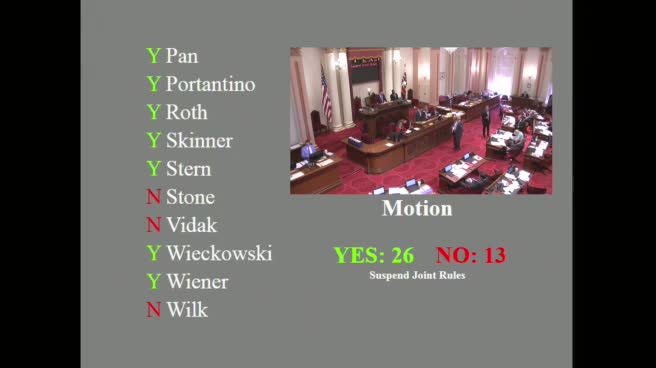
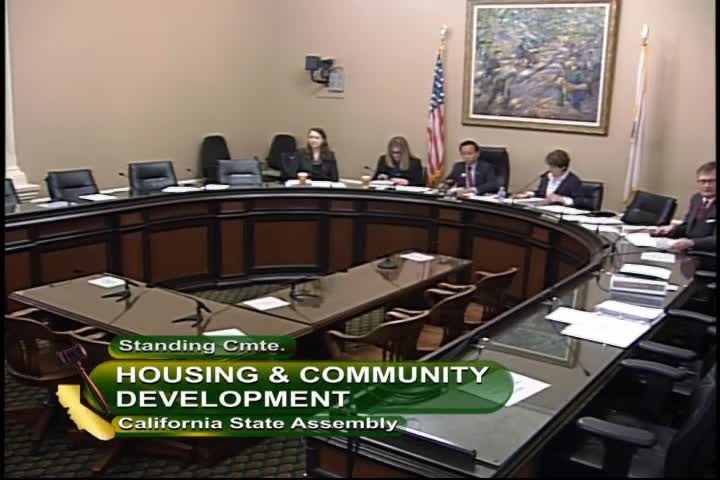
Bill Author

Bill Co-Author(s):
