AB 289: Office of Emergency Services: State Emergency Plan: update.
- Session Year: 2017-2018
- House: Assembly
- Latest Version Date: 2017-07-24
The California Emergency Services Act requires the Governor to coordinate the State Emergency Plan and any programs necessary for the mitigation of the effects of an emergency in this state, as specified. That act also required the Office of Emergency Services to update the State Emergency Plan by July 31, 2015, to include proposed best practices for local governments and nongovernmental entities to use to mobilize and evacuate people with disabilities, and others with access and functional needs, during an emergency or natural disaster.
This bill would require the Office of Emergency Services to update the State Emergency Plan on or before January 1, 2019, and every 5 years thereafter.
The Office of Emergency Services shall update the State Emergency Plan on or before January 1, 2019, and every five years thereafter.
The Office of Emergency Services shall update the State Emergency Plan on or before January 1, 2019, and every five years thereafter.
The Office of Emergency Services shall update the State Emergency Plan on or before January 1, 2019, and every five years thereafter.
|
Date
|
Status
|
|---|---|
| Jul 24, 2017 | Chaptered by Secretary of State - Chapter 106, Statutes of 2017. |
| Jul 24, 2017 | Approved by the Governor. |
| Jul 12, 2017 | Enrolled and presented to the Governor at 11:30 a.m. |
| Jul 3, 2017 | In Assembly. Ordered to Engrossing and Enrolling. |
| Jul 3, 2017 | Read third time. Passed. Ordered to the Assembly. |
| Jun 27, 2017 | Read second time. Ordered to Consent Calendar. |
| Jun 26, 2017 | From committee: Be placed on second reading file pursuant to Senate Rule 28.8 and ordered to consent calendar. |
| Jun 13, 2017 | From committee: Do pass and re-refer to Com. on APPR. with recommendation: To Consent Calendar. (Ayes 12. Noes 0.) (June 13). Re-referred to Com. on APPR. |
| May 10, 2017 | Referred to Com. on G.O. |
| Apr 20, 2017 | In Senate. Read first time. To Com. on RLS. for assignment. |
| Apr 20, 2017 | Read third time. Passed. Ordered to the Senate. (Ayes 74. Noes 0. Page 1143.) |
| Apr 6, 2017 | Read second time. Ordered to Consent Calendar. |
| Apr 5, 2017 | From committee: Do pass. To Consent Calendar. (Ayes 17. Noes 0.) (April 5). |
| Mar 15, 2017 | From committee: Do pass and re-refer to Com. on APPR. with recommendation: To Consent Calendar. (Ayes 17. Noes 0.) (March 15). Re-referred to Com. on APPR. |
| Feb 13, 2017 | Referred to Com. on G.O. |
| Feb 3, 2017 | From printer. May be heard in committee March 5. |
| Feb 2, 2017 | Read first time. To print. |
|
Date
|
Description
|
Location
|
Votes
|
|
|---|---|---|---|---|
| Jul 3, 2017 | Consent Calendar 2nd AB289 | Senate Floor |
Passed |
|
| Jun 13, 2017 | Do pass, but first be re-referred to the Committee on [Appropriations] with the recommendation: To Consent Calendar | Senate Standing Committee on Governmental Organization |
Passed |
|
| Apr 20, 2017 | Favorable (Agriculture & Property Rights Subcommittee) | Assembly Floor |
Passed |
|
| Apr 5, 2017 | Do pass. To Consent Calendar. | Assembly Standing Committee on Appropriations |
Passed |
|
| Mar 15, 2017 | Do pass and be re-referred to the Committee on [Appropriations] with recommendation: To Consent Calendar | Assembly Standing Committee on Governmental Organization |
Passed |
This list shows positions taken on this bill by organizations on the date displayed, which is linked to the original source.
Positions by individuals are not included.
Office of Senate Floor Analyses (916) 651-1520 Fax: (916) 327-4478 | AB |
CONSENT
Bill No: AB 289
:
SENATE GOVERNMENTAL ORG. COMMITTEE: 12-0, 6/13/17
AYES: Dodd, Bradford, Cannella, Gaines, Galgiani, Glazer, Hill, Hueso, Lara, Mendoza, Portantino, Vidak
NO VOTE RECORDED: Berryhill
SENATE APPROPRIATIONS COMMITTEE: Senate Rule 28.8
ASSEMBLY FLOOR: 74-0, 4/20/17 (Consent) - See last page for vote
DIGEST: This bill requires the Office of Emergency Services (OES) to update the State Emergency Plan (SEP) on or before January 1, 2019, and every five years thereafter.
ANALYSIS:
Existing law:
- Establishes OES by the Governor's Reorganization Plan No. 2, operative July 1, 2013.
- Requires OES to perform a variety of duties with respect to specified emergency preparedness, mitigation, and response activities in the state, including emergency medical services.
- Specifies that the SEP shall be in effect in each political subdivision of the state and the governing body of each political subdivision shall take such action as may be necessary to carry out the provisions thereof.
- Requires the Governor to coordinate the SEP and those programs necessary to mitigate the effects of an emergency.
- Requires the Governor to coordinate the preparation of plans and programs for the mitigation of the effects of an emergency by the political subdivisions of the State of California, such plans and programs to be integrated into and coordinated with the SEP and the plans and programs of the federal government and of other states to the fullest possible extent.
- Specifies that the Governor may, in accordance with the SEP, authorize programs for the mitigation of the effects of an emergency, as specified.
- Requires OES to update the SEP, on or before July 31, 2015, to include proposed best practices for local governments and nongovernmental entities to use to mobilize and evacuate people with disabilities and others with access and functional needs, during an emergency or natural disaster.
This bill requires OES to update the SEP on or before January 1, 2019, and every five years thereafter.
Background
Purpose of the bill. According to the author's office, “this bill will help to ensure that the SEP reflects recent advances in emergency management capabilities and changes in the California Emergency Services Act (Act). An updated SEP can take into consideration developments in mitigation, preparedness, response, and recovery activities. In addition, revision of this plan will reflect changes in the structure and function of California governmental agencies. This includes changes in roles, responsibilities, and the addition of new departments. Revisions to the SEP would also reflect federal government agency roles, which have changed and/or been modified.”
The author's office also states that, “California has long been a leader in preparing for emergencies and disasters, both natural and human-caused. An updated SEP will further provide a framework for the best possible management of emergencies and assistance to all Californians when disaster strikes.”
State Emergency Plan. The SEP addresses the state's response to extraordinary emergency situations associated with natural disasters or human-caused emergencies. In accordance with the Act, the plan describes the methods for carrying out emergency operations, the process for rendering mutual aid, the emergency services of governmental agencies, how resources are mobilized, how the public will be informed, and the process to ensure continuity of government during and emergency or disaster.
The SEP is a management document intended to be read and understood before an emergency occurs. It is designed to outline the activities of all California jurisdictions within a statewide emergency management system and embraces the capabilities and resources in the broader emergency management community that includes individuals, businesses, non-governmental organizations, tribal governments, other states, the federal government, and international assistance.
Related/Prior Legislation
AB 2311 (Brown, Chapter 520, Statutes of 2016) required each county, including a city and county, to integrate access and functional needs, as defined, into its emergency plan.
AB 1346 (Gray, 2015) would have required OES to update the SEP on or before January 1, 2018, and every five years thereafter, and would require the plan to be consistent with specified state climate adaptation strategies. (Senate Inactive File)
AB 918 (Cooley, Chapter 187, Statutes of 2013) required OES, on or before July 31, 2015, to update the SEP to include proposed best practices for local governments and nongovernmental entities to use to mobilize and evacuate people with disabilities and others with access and functional needs during an emergency or natural disaster.
FISCAL EFFECT: Appropriation: Fiscal Com.: Local:
American Red Cross
California Fire Chiefs Association
Fire Districts Association of California
OPPOSITION: (Verified 6/27/17)
None received
ARGUMENTS IN SUPPORT: According to the American Red Cross, “maintaining an updated SEP allows for the state to re-examine current processes and change as the state or federal government re-organize or evolve. Further, with a five year schedule in place, AB 289 codifies a deliberate process for that crucial examination to take place.”
ASSEMBLY FLOOR: 74-0, 4/20/17
AYES: Acosta, Aguiar-Curry, Travis Allen, Arambula, Baker, Berman, Bigelow, Bloom, Bocanegra, Bonta, Burke, Caballero, Calderon, Cervantes, Chau, Chávez, Chen, Chiu, Chu, Cooley, Cooper, Cunningham, Dababneh, Dahle, Daly, Eggman, Flora, Fong, Frazier, Friedman, Cristina Garcia, Eduardo Garcia, Gipson, Gloria, Gomez, Gonzalez Fletcher, Gray, Grayson, Harper, Holden, Irwin, Jones-Sawyer, Kalra, Kiley, Lackey, Levine, Limón, Low, Maienschein, Mayes, McCarty, Medina, Melendez, Mullin, Muratsuchi, Nazarian, Obernolte, O'Donnell, Quirk, Quirk-Silva, Reyes, Rodriguez, Rubio, Salas, Santiago, Steinorth, Mark Stone, Thurmond, Ting, Voepel, Waldron, Weber, Wood, Rendon
NO VOTE RECORDED: Brough, Choi, Gallagher, Mathis, Patterson, Ridley-Thomas
6/28/17 14:42:48
**** END ****
SENATE COMMITTEE ON GOVERNMENTAL ORGANIZATION
Senator Bill Dodd
Chair
2017 - 2018 Regular
Bill No: 289 Hearing Date: 6/13/2017
Author: | |||
Version: | 2/2/2017 Introduced | ||
Urgency: | No | Fiscal: | Yes |
Consultant: | Felipe Lopez | ||
SUBJECT: Office of Emergency Services: State Emergency Plan: update
DIGEST: This bill requires the Office of Emergency Services (OES) to update the State Emergency Plan (SEP) on or before January 1, 2019, and every five years thereafter.
ANALYSIS:
Existing law:
- Establishes OES by the Governor's Reorganization Plan No. 2, operative July 1, 2013.
- Requires OES to perform a variety of duties with respect to specified emergency preparedness, mitigation, and response activities in the state, including emergency medical services.
- Specifies that the SEP shall be in effect in each political subdivision of the state and the governing body of each political subdivision shall take such action as may be necessary to carry out the provisions thereof.
- Requires the Governor to coordinate the SEP and those programs necessary to mitigate the effects of an emergency.
- Requires the Governor to coordinate the preparation of plans and programs for the mitigation of the effects of an emergency by the political subdivisions of the State of California, such plans and programs to be integrated into and coordinated with the SEP and the plans and programs of the federal government and of other states to the fullest possible extent.
- Specifies that the Governor may, in accordance with the SEP, authorize programs for the mitigation of the effects of an emergency, as specified.
- Requires OES to update the SEP, on or before July 31, 2015, to include proposed best practices for local governments and nongovernmental entities to use to mobilize and evacuate people with disabilities and others with access and functional needs, during an emergency or natural disaster.
This bill requires OES to update the SEP on or before January 1, 2019, and every five years thereafter.
Background
Purpose of the bill. According to the author's office, “this bill will help to ensure that the SEP reflects recent advances in emergency management capabilities and changes in the California Emergency Services Act (Act). An updated SEP can take into consideration developments in mitigation, preparedness, response, and recovery activities. In addition, revision of this plan will reflect changes in the structure and function of California governmental agencies. This includes changes in roles, responsibilities, and the addition of new departments. Revisions to the SEP would also reflect federal government agency roles, which have changed and/or been modified.”
The author's office also states that, “California has long been a leader in preparing for emergencies and disasters, both natural and human-caused. An updated SEP will further provide a framework for the best possible management of emergencies and assistance to all Californians when disaster strikes.”
State Emergency Plan. The SEP addresses the state's response to extraordinary emergency situations associated with natural disasters or human-caused emergencies. In accordance with the Act, the plan describes the methods for carrying out emergency operations, the process for rendering mutual aid, the emergency services of governmental agencies, how resources are mobilized, how the public will be informed, and the process to ensure continuity of government during and emergency or disaster.
The SEP is a management document intended to be read and understood before an emergency occurs. It is designed to outline the activities of all California jurisdictions within a statewide emergency management system and embraces the capabilities and resources in the broader emergency management community that includes individuals, businesses, non-governmental organizations, tribal governments, other states, the federal government, and international assistance.
Prior/Related Legislation
AB 2311 (Brown, Chapter 520, Statutes of 2016) required each county, including a city and county, to integrate access and functional needs, as defined, into its emergency plan.
AB 1346 (Gray, 2015) would have required OES to update the SEP on or before January 1, 2018, and every five years thereafter, and would require the plan to be consistent with specified state climate adaptation strategies. (Senate Inactive File)
AB 918 (Cooley, Chapter 187, Statutes of 2013) required OES, on or before July 31, 2015, to update the SEP to include proposed best practices for local governments and nongovernmental entities to use to mobilize and evacuate people with disabilities and others with access and functional needs during an emergency or natural disaster.
FISCAL EFFECT: Appropriation: Fiscal Com.: Local:
SUPPORT:
American Red Cross
California Fire Chiefs Association
Fire Districts Association of California
OPPOSITION:
None received
ARGUMENTS IN SUPPORT: According to the American Red Cross, “maintaining an updated SEP allows for the state to re-examine current processes and change as the state or federal government re-organize or evolve. Further, with a five year schedule in place, AB 289 codifies a deliberate process for that crucial examination to take place.”
Date of Hearing: April 5, 2017
ASSEMBLY COMMITTEE ON APPROPRIATIONS
Lorena Gonzalez Fletcher, Chair
ABPCA Bill Id:AB 289
Author:(Gray) – As Introduced Ver:February 2, 2017
Policy Committee: | Governmental Organization | Vote: | 17 - 0 |
|
| ||
|
|
Urgency: No State Mandated Local Program: No Reimbursable: No
SUMMARY:
This bill requires the Office of Emergency Services (OES) to update the State Emergency Plan (Plan) on or before January 1, 2019, and every 5 years thereafter.
FISCAL EFFECT:
Absorbable costs because OES already makes updates to the Plan.
COMMENTS:
- Purpose. According to the author, AB 289 will ensure the Plan reflects recent advances in emergency management capabilities, including developments in mitigation, preparedness, response, and recovery activities. Consistent and regular revisions to the plan will also reflect changes in the structure and function of federal and state government agencies.
- Plan updates. OES considers the Plan to be a dynamic document and often makes less formal updates than what is required under AB 289. The last comprehensive update to the Plan was in 2009, with revisions made to it in 2012 and in 2016. This bill will standardize these updates and make them more predictable, both for OES and for local governments and California residents.
- Previous legislation. This bill is substantively similar to the version of AB 1346 (Gray), 2015/16, that passed the Assembly. Like this bill, AB 1346 required an update to the Plan every 5 years. However, upon reaching the Senate, author amendments fully replaced the bill’s original contents, and it was eventually placed on the Senate Inactive File.
Analysis Prepared by: Luke Reidenbach / APPR. / 916 319-2081
Date of Hearing: March 15, 2017
ASSEMBLY COMMITTEE ON GOVERNMENTAL ORGANIZATION
Adam Gray, Chair
ABPCA Bill Id:AB 289 (
Author:Gray) – As Introduced Ver:February 2, 2017
SUBJECT: Office of Emergency Services: State Emergency Plan: update
SUMMARY: Would require the Office of Emergency Services (Cal OES) to update the State Emergency Plan (SEP) on or before January 1, 2019, and every 5 years thereafter.
EXISTING LAW:
- Establishes the Cal OES by the Governor's Reorganization Plan No. 2, operative July 1, 2013.
- Requires Cal OES to perform a variety of duties with respect to specified emergency preparedness, mitigation, and response activities in the state, including emergency medical services.
- Specifies that the SEP shall be in effect in each political subdivision of the state, and the governing body of each political subdivision shall take such action as may be necessary to carry out the provisions thereof.
- Requires the Governor to coordinate SEP and those programs necessary to mitigate the effects of an emergency.
- Requires the Governor to coordinate the preparation of plans and programs for the mitigation of the effects of an emergency by the political subdivisions of the State of California, such plans and programs to be integrated into and coordinated with SEP and the plans and programs of the federal government and of other states to the fullest possible extent.
- Specifies that the Governor may, in accordance with SEP, authorize programs for the mitigation of the effects of an emergency, as specified.
- Requires Cal OES to update SEP, on or before January 1, 2015, to include proposed best practices for local governments and nongovernmental entities to use to mobilize and evacuate people with disabilities and others with access and functional needs, during an emergency or natural disaster.
FISCAL EFFECT: Unknown
COMMENTS:
Purpose of the bill: According to the author's office, this bill will help to ensure that SEP reflects recent advances in emergency management capabilities and changes in the Emergency Services Act (Act). The overall plan has not been updated since 2009; specific provisions of SEP were scheduled to be updated in 2014. An updated SEP can take into consideration developments in mitigation, preparedness, response, and recovery activities. In addition, revision of this plan will reflect changes in the structure and function of California governmental agencies. This includes changes in roles, responsibilities, and the addition of new departments. Revisions to SEP would also reflect federal government agency roles, which have changed and/or been modified.
The author's office states, California has long been a leader in preparing for emergencies and disasters, both natural and human-caused. An updated SEP will further provide a framework for the best possible management of emergencies and assistance to all Californians when disaster strikes.
Background:
Disaster Acts in California: The California Disaster Act was enacted by the State Legislature in 1945. The Act combined responsibility for planning and preparing for emergencies, whether natural, technological and human-caused into a single state agency. The California Emergency Services Act was enacted in 1970 to supersede the California Disaster Act. The new Act established the Governor's Office Emergency Services with a Director reporting to the Governor. The office was given responsibility to coordinate statewide emergency preparedness, post emergency recovery and mitigation efforts, and the development, review, approval, and integration of emergency plans.
In 2009, the California Legislature merged the powers, purposes, and responsibilities of the former Cal OES with those of the Office of Homeland Security (OHS) into the newly- created California Emergency Management Agency (CalEMA).On July 1, 2013, Governor Edmund G. Brown Jr.’s Reorganization Plan #2 eliminated Cal EMA and restored it to the Governor’s Office, renaming it the California Governor’s Office of Emergency Services (CalOES), and merging it with the Office of Public Safety Communications. Today, Cal OES is responsible for overseeing and coordinating emergency preparedness, response, recovery and homeland security activities within the state.
State Emergency Plan (SEP): On June 23, 2009, Governor Arnold Schwarzenegger promulgated the 2009 edition of the State of California Emergency Plan. The plan, in accordance with the California Emergency Services Act (CESA) addresses the state's response to extraordinary emergency situations associated with natural disasters or human-caused emergencies. The SEP is a management document intended to be read and understood before an emergency occurs. In accordance with the Act, the plan describes the methods for carrying out emergency operations, the process for rendering mutual aid, the emergency services of governmental agencies, how resources are mobilized, how the public will be informed and the process to ensure continuity of government during an emergency or disaster.
The SEP is designed to outline the activities of all California jurisdictions within a statewide emergency management system and it embraces the capabilities and resources in the broader emergency management community that includes individuals, businesses, non-governmental organizations, tribal governments, other states, federal government and international assistance.
Prior legislation: AB 1346 (Gray) of 2015/2016 Legislative Session. Required Cal OES to update the SEP on or before January 1, 2018, and every 5 years thereafter, and would require the plan to be consistent with specified state climate adaptation strategies. (Senate Inactive File)
AB 918 (Cooley), Chapter 187, Statutes of 2013. Required Cal OES, on or before July 31, 2015, to update SEP to include proposed best practices for local governments and nongovernmental entities to use to mobilize and evacuate people with disabilities and others with access and functional needs during an emergency or natural disaster.
AB 2327 (Caballero), Chapter 361, Statutes of 2008. Required disaster-related services and assistance agencies to strive to ensure that all victims receive the assistance they need and for which they are eligible. It requires public employees to assist evacuees and others in securing disaster-related assistance and services without eliciting any information or document that is not strictly necessary to determine eligibility under state and federal laws.
AB 1421 (Levine), 2007-2008 Legislative Session. Required OES to develop a requirement for specified local agencies to develop a registry for each California County of elderly and non-elderly disabled so that those people could be notified and assisted in evacuations. (Held in Assembly Appropriations)
SB 1451 (Kehoe), Chapter 600, Statutes of 2006. Required the Director of OES to appoint representatives of the disabled community to serve on State Emergency Management System committees, ensure committee recommendations include the needs of people with disabilities, produce a report containing recommendations for evacuating the disabled, and work on producing informational materials.
REGISTERED SUPPORT / OPPOSITION:
Support
American Red Cross
Opposition
None on file
Analysis Prepared by: Kenton Stanhope / G.O. / (916) 319-2531
Discussed in Hearing
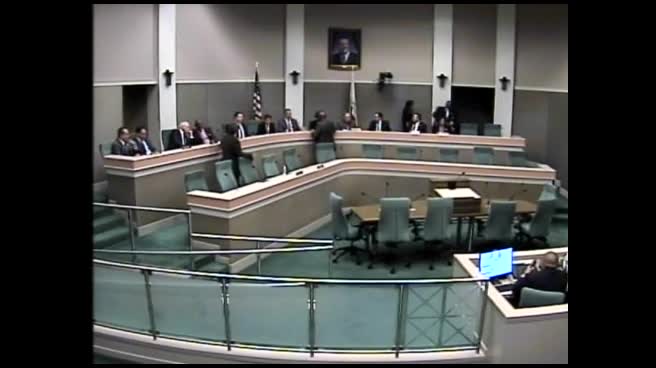 7MIN
Assembly Standing Committee on Governmental Organization
Bill Author

Bill Co-Author(s):