AB 1687: Customer records: age information: commercial online entertainment employment service providers.
- Session Year: 2015-2016
- House: Assembly
- Latest Version Date: 2016-09-24
Existing law requires a business that owns, licenses, or maintains personal information about a California resident to implement and maintain reasonable security procedures and practices appropriate to the nature of the information, to protect the personal information from unauthorized access, destruction, use, modification, or disclosure. Existing law provides specified civil penalties for a violation of these provisions.
This bill would prohibit a commercial online entertainment employment service provider that enters into a contractual agreement to provide specified employment services to an individual paid subscriber from publishing information about the subscribers age in an online profile of the subscriber and would require the provider, within 5 days, to remove from public view in an online profile of the subscriber certain information regarding the subscribers age on any companion Internet Web site under the providers control if requested by the subscriber. The bill would define terms for purposes of these provisions. Under the bill, a provider that permits the public to upload or modify content on its own Internet Web site or any Internet Web site under its control without prior review by that provider would not be in violation of these provisions unless the subscriber first requested the provider to remove age information.
Existing law requires a business that owns, licenses, or maintains personal information about a California resident to implement and maintain reasonable security procedures and practices appropriate to the nature of the information, to protect the personal information from unauthorized access, destruction, use, modification, or disclosure. Existing law provides specified civil penalties for a violation of these provisions.
This bill would prohibit a commercial online entertainment employment service provider that enters into a contractual agreement to provide specified employment services to an individual paid subscriber from publishing information about the subscribers age in an online profile of the subscriber and would require the provider, within 5 days, to remove any from public view in an online profile of the subscriber certain information regarding the subscribers age from an online profile of the subscriber from on any companion Internet Web site under the providers control if requested by the subscriber. The bill would define terms for purposes of these provisions. Under the bill, a provider that permits the public to upload or modify content on its own Internet Web site or any Internet Web site under its control without prior review by that provider would not be in violation of these provisions unless the subscriber first requested the provider to remove age information.
Existing law requires a business that owns, licenses, or maintains personal information about a California resident to implement and maintain reasonable security procedures and practices appropriate to the nature of the information, to protect the personal information from unauthorized access, destruction, use, modification, or disclosure. Existing law provides specified civil penalties for a violation of these provisions.
This bill would prohibit a commercial online entertainment employment service provider that enters into a contractual agreement to provide specified employment services to an individual paid subscriber from publishing information about the subscribers age in an online profile of the subscriber and would require the provider, within 5 days, to remove any information regarding the subscribers age from an online profile of the subscriber from any Internet Web site under the providers control if requested by the subscriber. The bill would define terms for purposes of these provisions. Under the bill, a provider that permits the public to upload or modify content on its own Internet Web site or any Internet Web site under its control without prior review by that provider would not be in violation of these provisions unless the subscriber first requested the provider to remove age information.
Existing law requires a business that owns, licenses, or maintains personal information about a California resident to implement and maintain reasonable security procedures and practices appropriate to the nature of the information, to protect the personal information from unauthorized access, destruction, use, modification, or disclosure. Existing law provides specified civil penalties for a violation of these provisions.
This bill would prohibit a commercial online entertainment employment service provider that enters into a contractual agreement to provide specified employment services to an individual paid subscriber from publishing information about the subscribers age and would require the provider provider, within 5 days, to remove any information regarding the subscribers age from any Internet Web site under the providers control if requested by the subscriber. The bill would define terms for purposes of these provisions. Under the bill, a provider that permits the public to upload or modify content on its own Internet Web site or any Internet Web site under its control without prior review by that provider would not be in violation of these provisions unless the subscriber first requested the provider to remove age information.
Existing law requires a business that owns, licenses, or maintains personal information about a California resident to implement and maintain reasonable security procedures and practices appropriate to the nature of the information, to protect the personal information from unauthorized access, destruction, use, modification, or disclosure. Existing law provides specified civil penalties for a violation of these provisions.
This bill would prohibit a commercial online entertainment employment service provider, as defined, provider that enters into a contractual agreement to provide specified employment services to an individual paid subscriber from publishing information about the subscribers age and would require the provider to remove any information regarding the subscribers age from any Internet Web site under the providers control if requested by the subscriber. The bill would define terms for purposes of these provisions.
Existing law requires a business that owns, licenses, or maintains personal information about a California resident to implement and maintain reasonable security procedures and practices appropriate to the nature of the information, to protect the personal information from unauthorized access, destruction, use, modification, or disclosure. Existing law provides specified civil penalties for a violation of these provisions.
This bill would prohibit a commercial online entertainment employment service provider, as defined, that enters into a contractual agreement to provide specified employment services to an individual paid subscriber from publishing information about the subscribers age and would require the provider to remove any information regarding the subscribers age from any Internet Web site under the providers control if requested by the subscriber.
(a)The purpose of this section is to ensure that information obtained on an Internet Web site regarding an individuals age will not be used in furtherance of employment or age discrimination.
(b)A commercial online entertainment employment service provider that enters into a contractual agreement to provide employment services to an individual for a subscription payment shall not, upon request by the subscriber, do either of the following:
(1)Publish or make public the subscribers date of birth or age information in an online profile of the subscriber.
(2)Share the subscribers date of birth or age information with any Internet Web sites for the purpose of publication.
(c)A commercial online entertainment employment service provider subject to subdivision (b) shall, within five days, remove from public view in an online profile of the subscriber the subscribers date of birth and age information on any companion Internet Web sites under its control upon specific request by the subscriber naming the Internet Web sites. A commercial online entertainment employment service provider that permits members of the public to upload or modify Internet content on its own Internet Web site or any Internet Web site under its control without prior review by that provider shall not be deemed in violation of this section unless first requested by the subscriber to remove age information.
(d)For purposes of this section, the following definitions apply:
(1)Commercial online entertainment employment service provider means a person or business that owns, licenses, or otherwise possesses computerized information, including, but not limited to, age and date of birth information, about individuals employed in the entertainment industry, including television, films, and video games, and that makes the information available to the public or potential employers.
(2)Payment means a fee in exchange for advertisements, or any other form of compensation or benefit.
(3)Provide employment services means post resumes, photographs, or other information about a subscriber when one of the purposes is to provide individually identifiable information about the subscriber to a prospective employer.
(4)Subscriber means a natural person who enters into a contractual agreement with a commercial online entertainment employment service provider to receive employment services in return for a subscription payment.
(a)The purpose of this section is to ensure that information obtained on an Internet Web site regarding an individuals age will not be used in furtherance of employment or age discrimination.
(b)A commercial online entertainment employment service provider that enters into a contractual agreement to provide employment services to an individual for a subscription payment shall not, upon request by the subscriber, do either of the following:
(1)Publish or make public the subscribers date of birth or age information in an online profile of the subscriber.
(2)Share the subscribers date of birth or age information with any Internet Web sites for the purpose of publication.
(c)A commercial online entertainment employment service provider subject to subdivision (b) shall, within five days, remove from public view in an online profile of the subscriber the subscribers date of birth and age information from public view on all any companion Internet Web sites under its control upon specific request by the subscriber naming the Internet Web sites. A commercial online entertainment employment service provider that permits members of the public to upload or modify Internet content on its own Internet Web site or any Internet Web site under its control without prior review by that provider shall not be deemed in violation of this section unless first requested by the subscriber to remove age information.
(d)For purposes of this section, the following definitions apply:
(1)Commercial online entertainment employment service provider means a person or business that owns, licenses, or otherwise possesses computerized information, including, but not limited to, age and date of birth information, about individuals employed in the entertainment industry, including television, films, and video games, and that makes the information available to the public or potential employers.
(2)Payment means a fee in exchange for advertisements, or any other form of compensation or benefit.
(3)Provide employment services means post resumes, photographs, or other information about a subscriber when one of the purposes is to provide individually identifiable information about the subscriber to a prospective employer.
(4)Subscriber means a natural person who enters into a contractual agreement with a commercial online entertainment employment service provider to receive employment services in return for a subscription payment.
(a)The purpose of this section is to ensure that information obtained on an Internet Web site regarding an individuals age will not be used in furtherance of employment or age discrimination.
(b)A commercial online entertainment employment service provider that enters into a contractual agreement to provide employment services to an individual for a subscription payment shall not, upon request by the subscriber, do either of the following:
(1)Publish or make public the subscribers date of birth or age information. information in an online profile of the subscriber.
(2)Share the subscribers date of birth or age information with any Internet Web sites for the purpose of publication.
(c)A commercial online entertainment employment service provider subject to subdivision (b) shall, within five days, remove from an online profile of the subscriber the subscribers date of birth and age information from public view on all Internet Web sites under its control upon specific request by the subscriber naming the Internet Web sites. A commercial online entertainment employment service provider that permits members of the public to upload or modify Internet content on its own Internet Web site or any Internet Web site under its control without prior review by that provider shall not be deemed in violation of this section unless first requested by the subscriber to remove age information.
(d)For purposes of this section, the following definitions apply:
(1)Commercial online entertainment employment service provider means a person or business that owns, licenses, or otherwise possesses computerized information, including, but not limited to, age and date of birth information, about individuals employed in the entertainment industry, including television, films, and video games, and that makes the information available to the public or potential employers.
(2)Payment means a fee in exchange for advertisements, or any other form of compensation or benefit.
(3)Provide employment services means post resumes, photographs, or other information about a subscriber when one of the purposes is to provide individually identifiable information about the subscriber to a prospective employer.
(4)Subscriber means a natural person who enters into a contractual agreement with a commercial online entertainment employment service provider to receive employment services in return for a subscription payment.
(a)The purpose of this section is to ensure that information obtained on an Internet Web site regarding an individuals age will not be used in furtherance of employment or age discrimination.
(b)A commercial online entertainment employment service provider that enters into a contractual agreement to provide employment services to an individual for a subscription payment shall not, upon request by the subscriber, do either of the following:
(1)Publish or make public the subscribers date of birth or age information.
(2)Share the subscribers date of birth or age information with any Internet Web sites for the purpose of publication.
(c)A commercial online entertainment employment service provider subject to subdivision (b) shall shall, within five days, remove the subscribers date of birth and age information from public view on all Internet Web sites under its control upon specific request by the subscriber naming the Internet Web sites. A commercial online entertainment employment service provider that permits members of the public to upload or modify Internet content on its own Internet Web site or any Internet Web site under its control without prior review by that provider shall not be deemed in violation of this section unless first requested by the subscriber to remove age information.
(d)For purposes of this section, the following definitions apply:
(1)Commercial online entertainment employment service provider means a person or business that owns, licenses, or otherwise possesses computerized data information, including, but not limited to, age and date of birth information, about individuals employed in the entertainment industry, including television, films, and video games, and that makes the information available to the public or potential employers.
(2)Payment means a fee in exchange for advertisements, or any other form of compensation or benefit.
(3)Provide employment services means post resumes, photographs, or other information about a subscriber when one of the purposes is to provide individually identifiable information about the subscriber to a prospective employer.
(4)Subscriber means a natural person who enters into a contractual agreement with a commercial online entertainment employment service provider to receive employment services in return for a subscription payment.
(a)The purpose of this section is to ensure that information obtained on an Internet Web site regarding a persons an individuals age will not be used in furtherance of employment or age discrimination.
(b)A commercial online entertainment employment service provider that enters into a contractual agreement to provide employment services to an individual for a subscription payment shall not, upon request by the subscriber, do either of the following:
(1)Publish or make public the subscribers date of birth or age information.
(2)Share the subscribers date of birth or age information with any Internet Web sites for the purpose of publication.
(c)A commercial online entertainment employment service provider subject to subdivision (b) shall remove the subscribers date of birth and age information from public view on all Internet Web sites under its control upon specific request by the subscriber naming the Internet Web sites.
(d)For purposes of this section, the following definitions apply:
(1)Commercial online entertainment employment service provider means a person or business that owns, licenses, or otherwise possesses computerized data that includes personal information of people information, including, but not limited to, age and date of birth information, about individuals employed in the entertainment industry, including television, films, and video games, and that makes the personal information available to the public or potential employers.
(2)Payment means a fee in exchange for advertisements, or any other form of compensation or benefit.
(3)Provide employment services means post resumes, photographs, or other information about a job applicant subscriber when one of the purposes is to provide individually identifiable information about the subscriber to a prospective employer.
(4)Subscriber means a natural person who enters into a contractual agreement with a commercial online entertainment employment service provider to receive employment services in return for a subscription payment.
(a)The purpose of this section is to ensure that information obtained on an Internet Web site regarding a persons age will not be used in furtherance of employment or age discrimination.
(b)A commercial online entertainment employment service provider that enters into a contractual agreement to provide employment services to an individual for a subscription payment shall not, upon request by the subscriber, do either of the following:
(1)Publish or make public the subscribers date of birth or age information.
(2)Share the subscribers date of birth or age information with any Internet Web sites for the purpose of publication.
(c)A commercial online entertainment employment service provider subject to subdivision (b) shall remove the subscribers date of birth and age information from public view on all Internet Web sites under its control upon specific request by the subscriber naming the Internet Web sites.
(d)For purposes of this section, the following definitions apply:
(1)Commercial online entertainment employment service provider means a person or business that owns, licenses, or otherwise possesses computerized data that includes personal information of people employed in the entertainment industry, including television, films, and video games, and that makes the personal information available to the public or potential employers.
(2)Payment means a fee in exchange for advertisements, or any other form of compensation or benefit.
(3)Provide employment services means post resumes, photographs, or other information about a job applicant when one of the purposes is to provide individually identifiable information to a prospective employer.
|
Date
|
Status
|
|---|---|
| Aug 26, 2016 | Enrolled and presented to the Governor at 4:30 p.m. |
| Aug 22, 2016 | Senate amendments concurred in. To Engrossing and Enrolling. (Ayes 61. Noes 15. Page 6028.). |
| Aug 22, 2016 | Senate amendments concurred in. To Engrossing and Enrolling. |
| Aug 16, 2016 | In Assembly. Concurrence in Senate amendments pending. May be considered on or after August 18 pursuant to Assembly Rule 77. |
| Aug 15, 2016 | Read third time. Passed. Ordered to the Assembly. (Ayes 25. Noes 12. Page 4960.). |
| Aug 15, 2016 | Read third time. Passed. Ordered to the Assembly. (Ayes 25. Noes 12.). |
| Aug 15, 2016 | Read third time. Passed. Ordered to the Assembly. |
| Aug 2, 2016 | Read second time and amended. Ordered to third reading. |
| Aug 1, 2016 | From committee: Amend, and do pass as amended. (Ayes 5. Noes 1.) (June 28). |
| Jun 16, 2016 | From committee chair, with author's amendments: Amend, and re-refer to committee. Read second time, amended, and re-referred to Com. on JUD. |
| Jun 14, 2016 | In committee: Set, first hearing. Hearing canceled at the request of author. |
| May 19, 2016 | Referred to Com. on JUD. |
| May 12, 2016 | Read third time. Passed. Ordered to the Senate. (Ayes 71. Noes 4. Page 4776.) |
| May 12, 2016 | Read third time. Passed. Ordered to the Senate. (Ayes 71. Noes 4.) |
| May 12, 2016 | In Senate. Read first time. To Com. on RLS. for assignment. |
| May 12, 2016 | Read third time. Passed. Ordered to the Senate. |
| May 9, 2016 | Read second time. Ordered to third reading. |
| May 5, 2016 | Read second time and amended. Ordered returned to second reading. |
| May 4, 2016 | From committee: Amend, and do pass as amended. (Ayes 11. Noes 0.) (May 3). |
| Apr 26, 2016 | Re-referred to Com. on P. & C.P. |
| Apr 25, 2016 | From committee chair, with author's amendments: Amend, and re-refer to Com. on P. & C.P. Read second time and amended. |
| Apr 12, 2016 | From committee: Do pass and re-refer to Com. on P. & C.P. (Ayes 6. Noes 1.) (April 12). Re-referred to Com. on P. & C.P. |
| Feb 8, 2016 | Referred to Coms. on A.,E.,S.,T., & I.M. and P. & C.P. |
| Jan 21, 2016 | From printer. May be heard in committee February 20. |
| Jan 20, 2016 | Read first time. To print. |
|
Date
|
Description
|
Location
|
Votes
|
|
|---|---|---|---|---|
| Aug 22, 2016 | AB 1687 CALDERON Concurrence in Senate Amendments | Assembly Floor |
Passed |
|
| Aug 15, 2016 | Assembly 3rd Reading AB1687 Calderon By Hertzberg | Senate Floor |
Passed |
|
| Jun 28, 2016 | Do pass as amended | Senate Standing Committee on Judiciary |
Passed |
|
| May 12, 2016 | AB 1687 CALDERON Assembly Third Reading | Assembly Floor |
Passed |
|
| May 3, 2016 | Do pass as amended. | Assembly Standing Committee on Privacy and Consumer Protection |
Passed |
|
| Apr 12, 2016 | Do pass and be re-referred to the Committee on [Privacy and Consumer Protection] | Assembly Standing Committee on Arts, Entertainment, Sports, Tourism, and Internet Media |
Passed |
This list shows positions taken on this bill by organizations on the date displayed, which is linked to the original source.
Positions by individuals are not included.
CONCURRENCE IN SENATE AMENDMENTS
CSA1 Bill Id:AB 1687
Author:(Calderon)
As Amended Ver:August 2, 2016
Majority vote
ASSEMBLY: | 71-4 | (May 12, 2016) | SENATE: | 25-12 | (August 15, 2016) |
Original Committee Reference: A.,E.,S.,T., & I.M.
SUMMARY: Prohibits a commercial online entertainment employment service provider, as defined, that enters into an agreement to provide certain employment services from publishing information about the subscriber's age in an online profile of the subscriber, and would require the provider to remove the subscriber's age information from public view in any online profile of the subscriber on any companion Internet Web site under the provider's control, if requested by the subscriber.
The Senate amendments were technical in nature.
EXISTING LAW:
- Provides, under the Unruh Civil Rights Act, that all persons within the jurisdiction of this state are free and equal, and no matter what their sex, race, color, religion, ancestry, national origin, disability, medical condition, genetic information, marital status, sexual orientation, citizenship, primary language, or immigration status are entitled to the full and equal accommodations, advantages, facilities, privileges, or services in all business establishments of every kind whatsoever. (Civil Code Section 51(b))
- Prohibits employment discrimination based on race, religious creed, color, national origin, ancestry, physical disability, mental disability, medical condition, genetic information, marital status, sex, gender, gender identity, gender expression, age, sexual orientation, or military and veteran status and applies these prohibitions to employment discrimination covering employers, labor organizations, employment agencies, apprenticeship programs and any person or entity who aids, abets, incites, compels, or coerces the doing of a discriminatory act. (Government Code Section 12940 et seq.)
FISCAL EFFECT: None
COMMENTS: Senate amendments clarified the scope of the bill by stating its provisions only apply to online profiles of subscribers to commercial online entertainment employment services and that the subscriber's age information must be removed from public view. In addition they limited the scope of affected Internet Web sites which must comply with the bill's provisions to companion sites of the subject commercial online entertainment employment service.
Analysis Prepared by: Dana Mitchell / A.,E.,S.,T., & I.M. / (916) 319-3450 FN: 0004217
Office of Senate Floor Analyses (916) 651-1520 Fax: (916) 327-4478 | AB |
THIRD READING
Bill No: AB 1687
:
SENATE JUDICIARY COMMITTEE: 5-1, 6/28/16
AYES: Jackson, Hertzberg, Leno, Monning, Wieckowski
NOES: Anderson
NO VOTE RECORDED: Moorlach
ASSEMBLY FLOOR: 71-4, 5/12/16 - See last page for vote
SOURCE: Screen Actors Guild – American Federation of Television and Radio
Artists
DIGEST: This bill prohibits a commercial online entertainment employment service provider (service provider) that enters into a contractual agreement to provide employment services to an individual, upon request of the subscriber, from either publishing or making public the subscriber’s date of birth or age information in an online profile of the subscriber, or sharing the subscriber’s date of birth or age information with any Internet Web sites for the purpose of publication. This bill additionally requires a service provider to remove within five days the subscriber’s date of birth and age information in an online profile from public view on any companion Internet Web sites under its control upon request by the subscriber.
Existing law:
- Prohibits as a matter of public policy, under the Fair Employment and Housing Act (FEHA), discrimination and harassment in employment on the basis of race, religious creed, color, national origin, ancestry, physical disability, mental disability, medical condition, genetic information, marital status, sex, gender, gender identity, gender expression, age, sexual orientation, or military and veteran status. (Gov. Code Sec. 12940 et seq.)
- Prohibits, unless based upon a bona fide occupational qualification, or, except where based upon applicable security regulations, as specified, an employer to refuse to hire or employ a person or to refuse to select a person for a training program leading to employment or to bar or to discharge a person from employment or from a training program leading to employment, or to discriminate against a person in compensation or in terms, conditions, or privileges of employment on the basis of age. (Gov. Code Sec. 12940(a).)
- Prohibits an employer or employment agency from printing or circulating or causing to be printed or circulated any publication, or from making any nonjob-related inquiry of an employee or applicant, either verbal or through use of an application form, that expresses, directly or indirectly, any limitation, specification, or discrimination as to age, or any intent to make any such limitation, specification, or discrimination. This provision does not prohibit an employer or employment agency from inquiring into the age of an applicant, or from specifying age limitations, where the law compels or provides for that action. (Gov. Code Sec. 12940(d).)
This bill:
- Provides that a service provider that enters into a contractual agreement to provide employment services to an individual for a subscription payment shall not, upon request by the subscriber, do either of the following:
- Publish or make public the subscriber’s date of birth or age information in an online profile of the subscriber; or
- Share the subscriber’s date of birth or age information with any Internet Web sites for the purpose of publication.
- Provides that a service provider shall, within five days, remove from public view an online profile of the subscriber a subscriber’s date of birth and age information on any companion Internet Web sites under its control upon specific request by the subscriber naming the Internet Web sites, as specified.
- Defines “commercial online entertainment employment service provider” to mean a person or business that owns, licenses, or otherwise possesses computerized information, including, but not limited to, age and date of birth information, about individuals employed in the entertainment industry, including television, films, and video games, and that makes the information available to the public or potential employers.
Background
Existing law, the FEHA, prohibits discrimination in housing and employment because of race, religious creed, color, national origin, ancestry, physical disability, mental disability, medical condition, genetic information, marital status, sex, gender, gender identity, gender expression, age, sexual orientation, or military and veteran status (protected characteristics). Over time, these statutes have been amended to include other characteristics such as medical conditions, marital status, and sexual orientation, reflecting the state’s public policy against discrimination in all forms.
Despite laws like FEHA which seek to prohibit discrimination on the basis of age, recent news articles suggest that age discrimination remains a problem in the entertainment industry. A recent article in the Guardian states:
The commonplace practice of casting a much younger female against a much older male has been prevalent since Hollywood’s golden age: Kim Novak was half the 50-year-old James Stewart’s age during filming of 1958’s Vertigo.
. . .
However, Hollywood finds itself under increasing scrutiny in 2015 for failing to represent women fairly on screen and behind the cameras. Earlier this month, the American Civil Liberties Union announced it would demand that state and federal agencies investigate why major studios regularly fail to hire aspiring and seasoned female directors for movies, citing “rampant discrimination” in the industry. Meanwhile, a report by the Center for the Study of Women in Television, Film & New Media at San Diego State University found that female actors took just 12 [percent] of leading roles in the top 100 domestic-grossing films of 2014. (Ben Child, Maggie Gyllenhaal: At 37 I was 'Too Old' for Role Opposite 55-Year-Old Man, Guardian (May 21, 2015) <https://www.theguardian.com/film/2015/may/21/maggie-gyllenhaal-too-old-hollywood [as of June 4, 2016].)
This bill allows individuals, including actors, actresses, and directors, to prohibit service providers from publishing or making public the date of birth or age information in an online profile of a subscriber, or sharing the subscriber’s date of birth or age information with any Internet Web sites for the purpose of publication.
Comments
The author writes:
Age discrimination in employment is against both federal and state law. In California, the relevant statute is the California Fair Employment and Housing Act (FEHA). Yet, age discrimination continues to exist and is facilitated through public distribution of potential job applicants’ birth and age information. Statistics from the U.S. Equal Employment Opportunity Commission show that from 2006-2013, age discrimination claims rose 38 [percent].
Under FEHA, an employer is generally prohibited from asking about the age of a job applicant until a bona fide offer of employment was made. In the past, when prospective employers learned about prospective job applicants almost exclusively through employment applications, information about the applicant’s date of birth would not be asked and an employer could not as easily discriminate. In the internet age, this has all changed and information about prospective job seekers is now [publicly] available on employment related websites and social media. Thus, a prospective employer investigating a job applicant may come across information that would permit age discrimination to occur without it being traced. This is an area of special concern to artists in the entertainment industry. In particular, actors are often cast in roles in which they portray characters who are younger or older than their real biological age. Casting directors and others frequently use web sites, such as [IMDb], to access information about actors, which contain information that should not be available until the part is cast. As actors age, they are very concerned that they will be shut out from parts based on unlawful age bias.
Under FEHA, an employer may have a defense to a charge of unlawful employment discrimination if there is a “bona fide occupational qualification” (BFOQ). For actors, how a person looks or sounds, their race or gender, and other qualities would be a BFOQ even where it would not for other occupations. Thus, this defense would allow a studio to lawfully discriminate against women if the part is for a man. While a BFOQ provides a safe harbor in these instances, it would not protect a studio from limiting the right of actors to audition for a role to an actor younger or older than a particular birth year. This would prevent an actor from doing what is the essence of their craft—convincingly play a role of something they are not.
AB 1687 provides a common sense solution to this problem by requiring web sites that provide employment related services on a subscription basis to remove date of birth information on the request of the subscriber. Thus, if a subscriber is concerned about age discrimination, he or she can have the information deleted. No one should have to pay for a service that contains information that can lead to age discrimination.
Related/Prior Legislation
AB 984 (Calderon, 2015) would have prohibited an employer from using information regarding a person’s age in making any employment decision regarding that person, and would have specified that a service provider, as defined, that knowingly accepts payment from persons in California in exchange for posting their resumes and professional photos online shall be considered as doing business in this state and subject to the antidiscrimination laws of California. The bill died in the Assembly Appropriations Committee.
FISCAL EFFECT: Appropriation: Fiscal Com.: Local:
Screen Actors Guild – American Federation of Television and Radio Artists (source)
Association of Talent Agents
California Labor Federation
WME IMG
Computer & Communications Industry Association
Electronic Frontier Foundation
Internet Association
State Privacy and Security Coalition, Inc.
TechNet
ASSEMBLY FLOOR: 71-4, 5/12/16
AYES: Achadjian, Alejo, Travis Allen, Arambula, Atkins, Baker, Bigelow, Bloom, Bonilla, Bonta, Brough, Brown, Calderon, Campos, Chang, Chau, Chávez, Chiu, Chu, Cooley, Cooper, Dababneh, Dahle, Daly, Dodd, Eggman, Frazier, Gallagher, Cristina Garcia, Eduardo Garcia, Gatto, Gipson, Gomez, Gonzalez, Gordon, Gray, Hadley, Roger Hernández, Holden, Irwin, Jones, Kim, Lackey, Levine, Linder, Lopez, Low, Maienschein, Mathis, McCarty, Medina, Melendez, Mullin, Nazarian, O'Donnell, Olsen, Quirk, Ridley-Thomas, Rodriguez, Salas, Santiago, Steinorth, Mark Stone, Thurmond, Ting, Wagner, Waldron, Weber, Wilk, Wood, Rendon
NOES: Beth Gaines, Grove, Harper, Obernolte
NO VOTE RECORDED: Burke, Jones-Sawyer, Mayes, Patterson, Williams
8/3/16 18:49:55
**** END ****
Senator Hannah-Beth Jackson, Chair
2015-2016 Regular Session
Bill No: AB 1687 (Author:Calderon)
Version: June 16, 2016
Hearing Date: June 28, 2016
Fiscal: No
Urgency: No
Consultant: TH
SUBJECT
Customer Records: Age Information: Commercial Online Entertainment Employment Service Providers
DESCRIPTION
This bill would prohibit a commercial online entertainment employment service provider (service provider) that enters into a contractual agreement to provide employment services to an individual, upon request by the subscriber, from either publishing or making public the subscriber’s date of birth or age information in an online profile of the subscriber, or sharing the subscriber’s date of birth or age information with any Internet Web sites for the purpose of publication. This bill would additionally require a service provider to remove within five days the subscriber’s date of birth and age information in an online profile from public view on all Internet Web sites under its control upon request by the subscriber.
BACKGROUND
Existing law, the Fair Employment and Housing Act (FEHA), prohibits discrimination in housing and employment because of race, religious creed, color, national origin, ancestry, physical disability, mental disability, medical condition, genetic information, marital status, sex, gender, gender identity, gender expression, age, sexual orientation, or military and veteran status (protected characteristics). Over time, these statutes have been amended to include other characteristics such as medical conditions, marital status, and sexual orientation, reflecting the state’s public policy against discrimination in all forms.
Despite laws like FEHA which seek to prohibit discrimination on the basis of age, recent news articles suggest that age discrimination remains a problem in the entertainment industry. A recent article in the Guardian states:
The commonplace practice of casting a much younger female against a much older male has been prevalent since Hollywood’s golden age: Kim Novak was half the 50-year-old James Stewart’s age during filming of 1958’s Vertigo.
. . .
However, Hollywood finds itself under increasing scrutiny in 2015 for failing to represent women fairly on screen and behind the cameras. Earlier this month, the American Civil Liberties Union announced it would demand that state and federal agencies investigate why major studios regularly fail to hire aspiring and seasoned female directors for movies, citing “rampant discrimination” in the industry. Meanwhile, a report by the Center for the Study of Women in Television, Film & New Media at San Diego State University found that female actors took just 12 [percent] of leading roles in the top 100 domestic-grossing films of 2014. (Ben Child, Maggie Gyllenhaal: At 37 I was 'Too Old' for Role Opposite 55-Year-Old Man, Guardian (May 21, 2015) <https://www.theguardian.com/film/2015/may/21/maggie-gyllenhaal-too-old-hollywood> [as of June 4, 2016].)
This bill would allow individuals, including actors, actresses, and directors, to prohibit commercial online entertainment employment service providers from publishing or making public a subscriber’s date of birth or age information in an online profile of the subscriber, or sharing the subscriber’s date of birth or age information with any Internet Web sites for the purpose of publication.
CHANGES TO EXISTING LAW
Existing law, the Fair Employment and Housing Act (FEHA), prohibits, as a matter of public policy, discrimination and harassment in employment on the basis of race, religious creed, color, national origin, ancestry, physical disability, mental disability, medical condition, genetic information, marital status, sex, gender, gender identity, gender expression, age, sexual orientation, or military and veteran status. (Gov. Code Sec. 12940 et seq.)
Existing law prohibits, unless based upon a bona fide occupational qualification, or, except where based upon applicable security regulations, as specified, an employer to refuse to hire or employ a person or to refuse to select a person for a training program leading to employment or to bar or to discharge a person from employment or from a training program leading to employment, or to discriminate against a person in compensation or in terms, conditions, or privileges of employment on the basis of age. (Gov. Code Sec. 12940(a).)
Existing law prohibits an employer or employment agency from printing or circulating or causing to be printed or circulated any publication, or from making any nonjob-related inquiry of an employee or applicant, either verbal or through use of an application form, that expresses, directly or indirectly, any limitation, specification, or discrimination as to age, or any intent to make any such limitation, specification, or discrimination. This provision does not prohibit an employer or employment agency from inquiring into the age of an applicant, or from specifying age limitations, where the law compels or provides for that action. (Gov. Code Sec. 12940(d).)
This bill provides that a commercial online entertainment employment service provider that enters into a contractual agreement to provide employment services to an individual for a subscription payment shall not, upon request by the subscriber, do either of the following:
- publish or make public the subscriber’s date of birth or age information in an online profile of the subscriber; or
- share the subscriber’s date of birth or age information with any Internet Web sites for the purpose of publication.
This bill provides that a commercial online entertainment employment service provider shall, within five days, remove from an online profile of the subscriber a subscriber’s date of birth and age information from public view on all Internet Web sites under its control upon specific request by the subscriber naming the Internet Web sites, as specified.
This bill defines “commercial online entertainment employment service provider” to mean a person or business that owns, licenses, or otherwise possesses computerized information, including, but not limited to, age and date of birth information, about individuals employed in the entertainment industry, including television, films, and video games, and that makes the information available to the public or potential employers.
COMMENT
- Stated need for the bill
The author writes:
Age discrimination in employment is against both federal and state law. In California, the relevant statute is the California Fair Employment and Housing Act (FEHA). Yet, age discrimination continues to exist and is facilitated through public distribution of potential job applicants’ birth and age information. Statistics from the U.S. Equal Employment Opportunity Commission show that from 2006-2013, age discrimination claims rose 38 [percent].
Under FEHA, an employer is generally prohibited from asking about the age of a job applicant until a bona fide offer of employment was made. In the past, when prospective employers learned about prospective job applicants almost exclusively through employment applications, information about the applicant’s date of birth would not be asked and an employer could not as easily discriminate. In the internet age, this has all changed and information about prospective job seekers is now [publicly] available on employment related websites and social media. Thus, a prospective employer investigating a job applicant may come across information that would permit age discrimination to occur without it being traced. This is an area of special concern to artists in the entertainment industry. In particular, actors are often cast in roles in which they portray characters who are younger or older than their real biological age. Casting directors and others frequently use web sites, such as [IMDb], to access information about actors, which contain information that should not be available until the part is cast. As actors age, they are very concerned that they will be shut out from parts based on unlawful age bias.
Under FEHA, an employer may have a defense to a charge of unlawful employment discrimination if there is a “bona fide occupational qualification” (BFOQ). For actors, how a person looks or sounds, their race or gender, and other qualities would be a BFOQ even where it would not for other occupations. Thus, this defense would allow a studio to lawfully discriminate against women if the part is for a man. While a BFOQ provides a safe harbor in these instances, it would not protect a studio from limiting the right of actors to audition for a role to an actor younger or older than a particular birth year. This would prevent an actor from doing what is the essence of their craft—convincingly play a role of something they are not.
AB 1687 provides a common sense solution to this problem by requiring web sites that provide employment related services on a subscription basis to remove date of birth information on the request of the subscriber. Thus, if a subscriber is concerned about age discrimination, he or she can have the information deleted. No one should have to pay for a service that contains information that can lead to age discrimination.
- Providing age discrimination protection in the entertainment industry
The Fair Employment and Housing Act (FEHA) generally prohibits discrimination against an employee or employment applicant on the basis of age, unless an employer can demonstrate a bona fide occupational qualification that warrants such discrimination. (Gov. Code Sec. 12940(a).) As noted in the Background, above, age discrimination is widely perceived as a problem in the entertainment industry. While the nature of some entertainment positions, such as character roles depicting an individual of a certain age, may authorize employers to lawfully screen applicants on that basis, stakeholders such as the Association of Talent Agents assert that “[unlawful] age discrimination continues to exist and is facilitated through public distribution of potential job applicant’s birth and age information via commercial online employment service providers.”
In 2011, an actress named Huong Hoang, also known as Junie Hoang, sued an internet-based entertainment database known as IMDb for publicly revealing her age, alleging that doing so negatively impacted her ability to land roles in the entertainment industry. IMDb holds itself out as “the world’s most popular and authoritative source for movie, TV and celebrity content” and offers consumers “a searchable database of more than 185 million data items including more than 3 million movies, TV and entertainment programs and more than 6 million cast and crew members.” (See http://www.imdb.com/pressroom/ [as of June 4, 2016].) Ms. Hoang alleged that she had signed up for the pro version of Internet Movie Database in 2008, during which she gave IMDb detailed personal and credit card information, and that soon thereafter, IMDb listed the legal date of her birth on her public profile. Claiming that attaching an age to her name caused her economic harm, Ms. Hoang stated:
“If one is perceived to be ‘over-the-hill,’ i.e. approaching 40, it is nearly impossible for an up-and-coming actress . . . to get work as she is thought to have less of an ‘upside’ therefore casting directors, producers, directors, agents/managers, etc. do not give her the same opportunities, regardless of her appearance and talent.” (Eriq Gardner, Actress Sues IMDb for $1 Million for Revealing Her Age, The Hollywood Reporter (October 18, 2011) <http://www.hollywoodreporter.com/thr-esq/actress-sues-imdb-1-million-revealing-her-age-249854> [as of June 4, 2016].)
In 2013, the jury in Ms. Hoang’s case returned a defense verdict in favor of IMDb, finding that the company had not breached any legal obligations owed to the actress. (See Eriq Gardner, IMDb Wins Lawsuit over Actress Age Revelation, The Hollywood Reporter (April 11, 2013) <http://www.hollywoodreporter.com/thr-esq/imdb-wins-lawsuit-actress-age-437828> [as of June 4, 2016].)
This bill would prohibit companies like IMDb from revealing the age of subscribers who sign up for paid employment services, like IMDb pro, at the subscriber’s election. The bill would also require such companies to, within five days of a subscriber’s request, remove from an online profile of the subscriber their date of birth and age information on all Web sites under their control. In so doing, this bill would arguably help potential employees keep sensitive age information out of the public sphere so as to lessen the possibility that they would become the victim of unlawful age discrimination.
- Potential impact to free speech
As noted above in Comment 2, this bill would not only empower the subscriber of a commercial online entertainment employment service to be able to prohibit the disclosure of sensitive age-related information on the internet, but would also empower the subscriber to require such a service to remove this information from any other Web site under its control. This second provision could allow subscribers to collaterally impact Web sites that disclose sensitive age information in an online profile, even if such information was obtained outside the subscriber-service provider relationship or pre-dated that relationship, provided the Web site in question was under the control of the service provider. Thus, taking Ms. Hoang’s conflict with IMDb as an example, under this bill Ms. Hoang would potentially be able to sign up for IMDb’s entertainment employment service solely to force IMDb’s public-facing Web site to remove any sensitive age information relating to her. Depending on the facts in a particular case, this provision could impact the exercise of free speech on unrelated Web sites controlled by entertainment employment service providers, such as news Web sites that profile figures in the entertainment industry. Given this possibility, the Committee may wish to consider an amendment restricting the reach of this bill to only cover sensitive age information disclosed as part of the subscriber-service provider relationship.
Support: Association of Talent Agents; California Labor Federation; WME IMG
Opposition: Internet Association; State Privacy and Security Coalition, Inc.
HISTORY
Source: Screen Actors Guild – American Federation of Television and Radio Artists
Related Pending Legislation: None Known
Prior Legislation: AB 984 (Calderon, 2016) would have prohibited an employer from using information regarding a person’s age in making any employment decision regarding that person, and would have specified that a commercial online entertainment employment service provider, as defined, that knowingly accepts payment from persons in California in exchange for posting their resumes and professional photos online shall be considered as doing business in this state and subject to the antidiscrimination laws of California.
Prior Vote:
Assembly Floor (Ayes 71, Noes 4)
Assembly Privacy and Consumer Protection Committee (Ayes 11, Noes 0)
Assembly Arts, Entertainment, Sports, Tourism, and Internet Media Committee (Ayes 6, Noes 1)
**************
Senator Hannah-Beth Jackson, Chair
2015-2016 Regular Session
Bill No: AB 1687 (Author:Calderon)
Version: May 5, 2016
Hearing Date: June 14, 2016
Fiscal: No
Urgency: No
Consultant: TH
SUBJECT
Customer Records: Age Information: Commercial Online Entertainment Employment Service Providers
DESCRIPTION
This bill would prohibit a commercial online entertainment employment service provider (service provider) that enters into a contractual agreement to provide employment services to an individual, upon request by the subscriber, from either publishing or making public the subscriber’s date of birth or age information, or sharing the subscriber’s date of birth or age information with any Internet Web sites for the purpose of publication. This bill would additionally require a service provider to remove within five days the subscriber’s date of birth and age information from public view on all Internet Web sites under its control upon request by the subscriber.
BACKGROUND
Existing law, the Fair Employment and Housing Act (FEHA), prohibits discrimination in housing and employment because of race, religious creed, color, national origin, ancestry, physical disability, mental disability, medical condition, genetic information, marital status, sex, gender, gender identity, gender expression, age, sexual orientation, or military and veteran status (protected characteristics). Over time, these statutes have been amended to include other characteristics such as medical conditions, marital status, and sexual orientation, reflecting the state’s public policy against discrimination in all forms.
Despite laws like FEHA which seek to prohibit discrimination on the basis of age, recent news articles suggest that age discrimination remains a problem in the entertainment industry. A recent article in the Guardian states:
The commonplace practice of casting a much younger female against a much older male has been prevalent since Hollywood’s golden age: Kim Novak was half the 50-year-old James Stewart’s age during filming of 1958’s Vertigo.
. . .
However, Hollywood finds itself under increasing scrutiny in 2015 for failing to represent women fairly on screen and behind the cameras. Earlier this month, the American Civil Liberties Union announced it would demand that state and federal agencies investigate why major studios regularly fail to hire aspiring and seasoned female directors for movies, citing “rampant discrimination” in the industry. Meanwhile, a report by the Center for the Study of Women in Television, Film & New Media at San Diego State University found that female actors took just 12 [percent] of leading roles in the top 100 domestic-grossing films of 2014. (Ben Child, Maggie Gyllenhaal: At 37 I was 'Too Old' for Role Opposite 55-Year-Old Man, Guardian (May 21, 2015) <https://www.theguardian.com/film/2015/may/21/maggie-gyllenhaal-too-old-hollywood> [as of June 4, 2016].)
This bill would allow individuals, including actors, actresses, and directors, to prohibit commercial online entertainment employment service providers from publishing or making public a subscriber’s date of birth or age information, or sharing the subscriber’s date of birth or age information with any Internet Web sites for the purpose of publication.
CHANGES TO EXISTING LAW
Existing law, the Fair Employment and Housing Act (FEHA), prohibits, as a matter of public policy, discrimination and harassment in employment on the basis of race, religious creed, color, national origin, ancestry, physical disability, mental disability, medical condition, genetic information, marital status, sex, gender, gender identity, gender expression, age, sexual orientation, or military and veteran status. (Gov. Code Sec. 12940 et seq.)
Existing law prohibits, unless based upon a bona fide occupational qualification, or, except where based upon applicable security regulations, as specified, an employer to refuse to hire or employ a person or to refuse to select a person for a training program leading to employment or to bar or to discharge a person from employment or from a training program leading to employment, or to discriminate against a person in compensation or in terms, conditions, or privileges of employment on the basis of age. (Gov. Code Sec. 12940(a).)
Existing law prohibits an employer or employment agency from printing or circulating or causing to be printed or circulated any publication, or from making any nonjob-related inquiry of an employee or applicant, either verbal or through use of an application form, that expresses, directly or indirectly, any limitation, specification, or discrimination as to age, or any intent to make any such limitation, specification, or discrimination. This provision does not prohibit an employer or employment agency from inquiring into the age of an applicant, or from specifying age limitations, where the law compels or provides for that action. (Gov. Code Sec. 12940(d).)
This bill provides that a commercial online entertainment employment service provider that enters into a contractual agreement to provide employment services to an individual for a subscription payment shall not, upon request by the subscriber, do either of the following:
- publish or make public the subscriber’s date of birth or age information; or
- share the subscriber’s date of birth or age information with any Internet Web sites for the purpose of publication.
This bill provides that a commercial online entertainment employment service provider shall, within five days, remove a subscriber’s date of birth and age information from public view on all Internet Web sites under its control upon specific request by the subscriber naming the Internet Web sites, as specified.
This bill defines “commercial online entertainment employment service provider” to mean a person or business that owns, licenses, or otherwise possesses computerized information, including, but not limited to, age and date of birth information, about individuals employed in the entertainment industry, including television, films, and video games, and that makes the information available to the public or potential employers.
COMMENT
- Stated need for the bill
The author writes:
Age discrimination in employment is against both federal and state law. In California, the relevant statute is the California Fair Employment and Housing Act (FEHA). Yet, age discrimination continues to exist and is facilitated through public distribution of potential job applicants’ birth and age information. Statistics from the U.S. Equal Employment Opportunity Commission show that from 2006-2013, age discrimination claims rose 38 [percent].
Under FEHA, an employer is generally prohibited from asking about the age of a job applicant until a bona fide offer of employment was made. In the past, when prospective employers learned about prospective job applicants almost exclusively through employment applications, information about the applicant’s date of birth would not be asked and an employer could not as easily discriminate. In the internet age, this has all changed and information about prospective job seekers is now [publicly] available on employment related websites and social media. Thus, a prospective employer investigating a job applicant may come across information that would permit age discrimination to occur without it being traced. This is an area of special concern to artists in the entertainment industry. In particular, actors are often cast in roles in which they portray characters who are younger or older than their real biological age. Casting directors and others frequently use web sites, such as [IMDb], to access information about actors, which contain information that should not be available until the part is cast. As actors age, they are very concerned that they will be shut out from parts based on unlawful age bias.
Under FEHA, an employer may have a defense to a charge of unlawful employment discrimination if there is a “bona fide occupational qualification” (BFOQ). For actors, how a person looks or sounds, their race or gender, and other qualities would be a BFOQ even where it would not for other occupations. Thus, this defense would allow a studio to lawfully discriminate against women if the part is for a man. While a BFOQ provides a safe harbor in these instances, it would not protect a studio from limiting the right of actors to audition for a role to an actor younger or older than a particular birth year. This would prevent an actor from doing what is the essence of their craft—convincingly play a role of something they are not.
AB 1687 provides a common sense solution to this problem by requiring web sites that provide employment related services on a subscription basis to remove date of birth information on the request of the subscriber. Thus, if a subscriber is concerned about age discrimination, he or she can have the information deleted. No one should have to pay for a service that contains information that can lead to age discrimination.
- Providing age discrimination protection in the entertainment industry
The Fair Employment and Housing Act (FEHA) generally prohibits discrimination against an employee or employment applicant on the basis of age, unless an employer can demonstrate a bona fide occupational qualification that warrants such discrimination. (Gov. Code Sec. 12940(a).) As noted in the Background, above, age discrimination is widely perceived as a problem in the entertainment industry. While the nature of some entertainment positions, such as character roles depicting an individual of a certain age, may authorize employers to lawfully screen applicants on that basis, stakeholders such as the Association of Talent Agents assert that “[unlawful] age discrimination continues to exist and is facilitated through public distribution of potential job applicant’s birth and age information via commercial online employment service providers.”
In 2011, an actress named Huong Hoang, also known as Junie Hoang, sued an internet-based entertainment database known as IMDb for publicly revealing her age, alleging that doing so negatively impacted her ability to land roles in the entertainment industry. IMDb holds itself out as “the world’s most popular and authoritative source for movie, TV and celebrity content” and offers consumers “a searchable database of more than 185 million data items including more than 3 million movies, TV and entertainment programs and more than 6 million cast and crew members.” (See http://www.imdb.com/pressroom/ [as of June 4, 2016].) Ms. Hoang alleged that she had signed up for the pro version of Internet Movie Database in 2008, during which she gave IMDb detailed personal and credit card information, and that soon thereafter IMDb listed the legal date of her birth on her public profile. Claiming that attaching an age to her name caused her economic harm, Ms. Hoang stated:
“If one is perceived to be ‘over-the-hill,’ i.e. approaching 40, it is nearly impossible for an up-and-coming actress . . . to get work as she is thought to have less of an ‘upside’ therefore casting directors, producers, directors, agents/managers, etc. do not give her the same opportunities, regardless of her appearance and talent.” (Eriq Gardner, Actress Sues IMDb for $1 Million for Revealing Her Age, The Hollywood Reporter (October 18, 2011) <http://www.hollywoodreporter.com/thr-esq/actress-sues-imdb-1-million-revealing-her-age-249854> [as of June 4, 2016].)
In 2013, the jury in Ms. Hoang’s case returned a defense verdict in favor of IMDb, finding that the company had not breached any legal obligations owed to the actress. (See Eriq Gardner, IMDb Wins Lawsuit over Actress Age Revelation, The Hollywood Reporter (April 11, 2013) <http://www.hollywoodreporter.com/thr-esq/imdb-wins-lawsuit-actress-age-437828> [as of June 4, 2016].)
This bill would prohibit companies like IMDb from revealing the age of subscribers who sign up for paid employment services, like IMDb pro, at the subscriber’s election. The bill would also require such companies to, within five days of a subscriber’s request, remove a subscriber’s date of birth and age information from all Web sites under their control. In so doing, this bill would arguably help potential employees keep sensitive age information out of the public sphere so as to lessen the possibility that they would become the victim of unlawful age discrimination.
- Potential impact to free speech
As noted above in Comment 2, this bill would not only empower the subscriber of a commercial online entertainment employment service to be able to prohibit the disclosure of sensitive age-related information on the internet, but would also empower the subscriber to require such a service to remove this information from any other Web site under its control. This second provision could allow subscribers to collaterally impact Web sites that disclose sensitive age information, even if such information was obtained outside the subscriber-service provider relationship or pre-dated that relationship, provided the Web site in question was under the control of the service provider. Thus, taking Ms. Hoang’s conflict with IMDb as an example, under this bill Ms. Hoang would potentially be able to sign up for IMDb’s entertainment employment service solely to force IMDb’s public-facing Web site to remove any sensitive age information relating to her. Depending on the facts in a particular case, this provision could impact the exercise of free speech on unrelated Web sites controlled by entertainment employment service providers, and given this possibility, the Committee may wish to consider an amendment restricting the reach of this bill to only cover sensitive age information disclosed as part of the subscriber-service provider relationship.
Support: Association of Talent Agents; California Labor Federation; WME IMG
Opposition: None Known
HISTORY
Source: Screen Actors Guild – American Federation of Television and Radio Artists
Related Pending Legislation: None Known
Prior Legislation: AB 984 (Calderon, 2016) would have prohibited an employer from using information regarding a person’s age in making any employment decision regarding that person, and would have specified that a commercial online entertainment employment service provider, as defined, that knowingly accepts payment from persons in California in exchange for posting their resumes and professional photos online shall be considered as doing business in this state and subject to the antidiscrimination laws of California.
Prior Vote:
Assembly Floor (Ayes 71, Noes 4)
Assembly Privacy and Consumer Protection Committee (Ayes 11, Noes 0)
Assembly Arts, Entertainment, Sports, Tourism, and Internet Media Committee (Ayes 6, Noes 1)
**************
ASSEMBLY THIRD READING
ATR Bill Id:AB 1687
Author:(Calderon)
As Amended Ver:May 5, 2016
Majority vote
Committee | Votes | Ayes | Noes |
Arts | 6-1 | Chu, Hadley, Levine, Low, Medina, Nazarian | Obernolte |
Privacy | 11-0 | Chau, Wilk, Baker, Calderon, Chang, Cooper, Dababneh, Gatto, Gordon, Low, Olsen |
SUMMARY: Prohibits a commercial online entertainment employment service provider, as defined, that enters into an agreement to provide certain employment services from publishing or sharing information about the subscriber's age, and would require the provider to remove the subscriber's age information from any Internet Web site under the provider's control, if requested by the subscriber. Specifically, this bill:
- Provides that a commercial online entertainment employment service provider (Web site) that enters into a contractual agreement to provide employment services to an individual for a subscription payment shall not, upon request by the subscriber:
- Publish or make public the subscriber's date of birth or age information; or
- Share the subscriber's date of birth or age information with any Internet Web sites for the purpose of publication.
- Requires the Web site to remove the subscriber's date of birth and age information from public view on all Web sites under its control within 5 day upon request by the subscriber.
- Declares that a commercial online entertainment employment service provider that permits members of the public to upload or modify Internet content on its own Internet Web site or any Internet Web site under its control without prior review by that provider shall not be deemed in violation of this section unless first requested by the subscriber to remove age information.
- Defines the following terms for purposes of this section:
- "Commercial online entertainment employment service provider" means a person or business that owns, licenses, or otherwise possesses computerized information, including but not limited to age and date of birth information, about individuals employed in the entertainment industry, including television, films, and video games, and that makes the information available to the public or potential employers.
- "Payment" means a fee in exchange for advertisements, or any other form of compensation or benefit.
- "Provide employment services" means to post resumes, photographs, or other information about a subscriber when one of the purposes is to provide information about the subscriber to a prospective employer.
- "Subscriber" means a natural person who enters into a contractual agreement with a commercial online entertainment employment service provider to receive employment services for a subscription payment.
- Declares that the purpose of the bill is to ensure that information obtained on a Web site regarding an individual's age will not be used in furtherance of employment or age discrimination.
FISCAL EFFECT: None. This bill is keyed non-fiscal by the Legislative Counsel.
COMMENTS: According to the author, "Age discrimination in employment is against both federal and state law. In California the relevant statutes are the California Fair Employment and Housing Act (FEHA) and the Unruh Civil Rights Act. Sadly, despite these laws age discrimination continues to exist and is facilitated through public distribution of potential job applicant's birth and age information via commercial online employment service providers.
"Under California's FEHA, an employer is generally prohibited from asking the age of a job applicant until a bone fide offer of employment is made. However, since the advent of the internet and social media, employment referral Web sites designed for the use of casting professionals and others have provided access online to birthdate information which would be illegal for employers to seek in hard copy. Once having this information, they may discriminate against the job seeker on the basis of age without it being traced."
This bill applies only where there is a contractual relationship between a Web site and an individual subscriber to host information about the subscriber for a fee. Therefore, this bill would apply to California-based businesses as well as out-of-state businesses that have subscribers in California. It would not apply to Web sites such as Wikipedia, which may post publicly available information about an artist, such as age and date of birth, but do not offer paid subscriptions or employment services to artists.
However, this bill does specifically prohibit a commercial online entertainment employment service provider from sharing a subscriber's date of birth or age with public Web sites, such as Wikipedia, if the subscriber makes a request to the provider not to share this information. This provision is important because while birth records are public records, many artists use a pseudonym or stage name rather than their birth name, so in fact their true name, age and date of birth are not readily accessible to the public.
Please see Assembly Arts, Entertainment, Sports, Tourism, and Internet Media analysis for a full discussion of the measure.
Analysis Prepared by: Dana Mitchell / A.,E.,S.,T., & I.M. / (916) 319-3450 FN: 0002864
Date of Hearing: May 3, 2016
ASSEMBLY COMMITTEE ON PRIVACY AND CONSUMER PROTECTION
Ed Chau, Chair
ABPCA Bill Id:AB 1687 (
Author:Calderon) – As Amended Ver:April 25, 2016
SUBJECT: Customer records: age information: commercial online entertainment employment service providers
SUMMARY: Prohibits a commercial online entertainment employment service provider, as defined, that enters into an agreement to provide certain employment services from publishing or sharing information about the subscriber’s age, and would require the provider to remove the subscriber’s age information from any Internet website under the provider’s control, if requested by the subscriber. Specifically, this bill:
- Provides that a commercial online entertainment employment service provider (website) that enters into a contractual agreement to provide employment services to an individual for a subscription payment shall not, upon request by the subscriber:
- Publish or make public the subscriber’s date of birth or age information; or
- Share the subscriber’s date of birth or age information with any Internet websites for the purpose of publication.
- Requires the website to remove the subscriber’s date of birth and age information from public view on all websites under its control upon request by the subscriber.
- Defines the following terms for purposes of this section:
- “Commercial online entertainment employment service provider” means a person or business that owns, licenses, or otherwise possesses computerized information, including but not limited to age and date of birth information, about individuals employed in the entertainment industry, including television, films, and video games, and that makes the information available to the public or potential employers.
- “Payment” means a fee in exchange for advertisements, or any other form of compensation or benefit.
- “Provide employment services” means to post resumes, photographs, or other information about a subscriber when one of the purposes is to provide information about the subscriber to a prospective employer.
- “Subscriber” means a natural person who enters into a contractual agreement with a commercial online entertainment employment service provider to receive employment services for a subscription payment.
- Declares that the purpose of the bill is to ensure that information obtained on a website regarding an individual’s age will not be used in furtherance of employment or age discrimination.
EXISTING LAW:
- Provides, under the Unruh Civil Rights Act, that all persons within the jurisdiction of this state are free and equal, and no matter what their sex, race, color, religion, ancestry, national origin, disability, medical condition, genetic information, marital status, sexual orientation, citizenship, primary language, or immigration status are entitled to the full and equal accommodations, advantages, facilities, privileges, or services in all business establishments of every kind whatsoever. (Civil Code Section 51(b))
- Prohibits employment discrimination based on race, religious creed, color, national origin, ancestry, physical disability, mental disability, medical condition, genetic information, marital status, sex, gender, gender identity, gender expression, age, sexual orientation, or military and veteran status and applies these prohibitions to employment discrimination covering employers, labor organizations, employment agencies, apprenticeship programs and any person or entity who aids, abets, incites, compels, or coerces the doing of a discriminatory act. (Government Code Section 12940 et seq.)
FISCAL EFFECT: None. This bill is keyed nonfiscal by the Legislative Counsel.
COMMENTS:
- Purpose of this bill. This bill is intended to help artists protect their age in order to prevent age-based employment discrimination in the entertainment industry by giving artists control over whether their age and date of birth are posted on subscription websites used for employment purposes. This measure is sponsored by Screen Actors Guild-American Federation of Television and Radio Artists (SAG-AFTRA).
- Author’s statement. According to the author, "Age discrimination in employment is against both federal and state law. In California the relevant statutes are the California Fair Employment and Housing Act (FEHA) and the Unruh Civil Rights Act. Sadly, despite these laws age discrimination continues to exist and is facilitated through public distribution of potential job applicant's birth and age information via commercial online employment service providers."
- Age discrimination as a growing problem. Since the recent economic downturn, evidence suggests that older workers have seen an increase in age-related discrimination. According to statistics from the U.S. Equal Employment Opportunity Commission, age discrimination claims rose 38% between 2006 and 2013. Older workers also remained unemployed longer than their younger counterparts.
The American Association of Retired Persons (AARP) reports that, "Age discrimination claims have been on the rise since 1997, when 15,785 reports were filed, according to the Equal Employment Opportunity Commission. Last year, 21,396 [age discrimination] claims were recorded. Not every lawsuit is valid, experts say. Many are settled without assigning blame. Companies are sometimes hamstrung by the law from giving their side of the story in age discrimination cases. On the other hand, consumer advocates and lawyers say recorded claims represent only a slice of the total number of workers who get pushed out of a job because they are older. One possible reason for the trend: an aging population. More than 20% of workers in the United States, some 33 million, are age 55 and up, according to the Bureau of Labor Statistics." (“Forced Out, Older Workers Are Fighting Back,” by Carole Fleck, AARP Bulletin, May 2014, http://www.aarp.org/work/on-the-job/info-2014/workplace-age-discrimination-infographic.html, accessed April 22, 2015. - Preventing discrimination based on age in the entertainment industry. The author states that clarification of the law is needed in the fight against age discrimination in Hollywood because of the notion that artistic freedom provides a haven from antidiscrimination laws.
Current law recognizes a defense against charges of discrimination for a bona fide occupational qualification (BFOQ) which would allow for a man to be cast in the role of a husband, or a child to be cast in the role of a school girl. The author contends, however, that anyone who has watched Glee or 21 Jump Street knows high school aged characters are not played by high school-aged actors. For example, Olivia Newton-John was 29 when she starred as high school cheerleader Sandy in the movie Grease.
The author contends that the true question posed under the age discrimination BFOQ is what age an actor is capable of playing – not what year they were born. - This bill in practice. The bill places two restrictions on websites that provide employment- related online services on a subscription basis: 1) the website must remove date of birth information at the request of a subscriber; and 2) the website may not share date of birth information with other websites that post public information about artists.
The author’s amendments described in Comment 11 below, clarify that websites that let the public add information about a subscriber, such as IMDb.com, are not obliged to remove that information unless and until the subscriber requests the information to be removed.
- Would this bill apply to out-of-state businesses? This measure is targeted at commercial online employment services, some of which are located outside of California, but who have contracts with Californians or who otherwise do business in California.
Generally speaking, in order for any state to assert jurisdiction over a business located in another state, the law requires that there be sufficient minimum contacts, (e.g. contracts, directed advertisements or customers) for the assertion of jurisdiction to be found reasonable. The United States Supreme Court has decided a number of cases that have established and refined the principle that it is unfair for a court to assert jurisdiction over a business unless that business’s contacts with the state are such that the business "could reasonably expect to be hauled into court" in that state. The jurisdiction must "not offend traditional notions of fair play and substantial justice". International Shoe Co. v. Washington, 326 U.S. 310 (1945)
The Ninth Circuit’s legal test for whether a website has “minimum contacts” with a state (for purposes of jurisdiction) is outlined in the Zippo decision, where the court found that commercial websites that do a substantial volume of business over the Internet, and through which customers in any location can immediately engage in business with the website owner, provides a basis for jurisdiction. Zippo Manufacturing Co. v. Zippo Dot Com, Inc., 952 F. Supp. 1119 (W.D. Pa. 1997); Cybersell, Inc. v. Cybersell, Inc., 130 F.3d.414 (9th Cir. 1997)
This bill applies only where there is a contractual relationship between a website and an individual subscriber to host information about the subscriber for a fee. Therefore, this bill would apply to California-based businesses as well as out-of-state businesses that have subscribers in California. It would not apply to websites such as Wikipedia, which may post publicly available information about an artist, such as age and date of birth, but do not offer paid subscriptions or employment services to artists.
However, this bill does specifically prohibit a commercial online entertainment employment service provider from sharing a subscriber’s date of birth or age with public websites, such as Wikipedia, if the subscriber makes a request to the provider not to share this information. This provision is important because while birth records are public records, many artists use a pseudonym or stage name rather than their birth name, so in fact their true name, age and date of birth are not readily accessible to the public.
- Arguments in support. According to the bill’s sponsor, SAG-AFTRA, "Under California's FEHA, an employer is generally prohibited from asking the age of a job applicant until a bone fide offer of employment is made. However, since the advent of the internet and social media, employment referral websites designed for the use of casting professionals and others have provided access online to birthdate information which would be illegal for employers to seek in hard copy. Once having this information, they may discriminate against the job seeker on the basis of age without it being traced."
SAG-AFTRA adds, "In the case of actors, an employer casting a part may make a decision based on how young or old the actor looks but may not exclude the actor from trying out for the part simply because of his or her biological age. In other words, an actor's biological age cannot be a bar to applying for the part. We all know that frequently actors play the role of persons that are different from their true biological age. After all, the essence of acting is creating an illusion."
- Related legislation. AB 2068 (Holden) of 2016 would require talent services that post information about artists under contract via online services, online applications, and mobile applications, to remove photographs and other artist information from those locations upon an artist’s request within 10 days. This measure is currently pending before the Assembly Appropriations Committee.
- Prior legislation. AB 984 (Calderon) of 2015 would have prohibited employers from using age and birthdate information found online to discriminate against job applicants. AB 984 died in the Assembly Appropriations Committee.
- Double-referral. This bill was double-referred to the Assembly Arts, Entertainment, Sports, Tourism and Internet Media Committee, where it was heard on April 12, 2016, and passed on a 6-1 vote.
- Author’s amendments. The author has agreed to accept the below amendments to address a drafting error, establish a deadline by which commercial online entertainment employment service provider must comply with a request under this bill, and, lastly, to address a concern expressed when the bill was heard in the prior committee that a provider should not be held liable for content posted by the public on its website unless a subscriber first requests that the age information be removed:
- On Page 2, line 23, strike “data”
- On Page 2, line 16, strike out “shall” and insert:
- On Page 2, line 23, strike “data”
shall, within five days
- On page 2, line 19, after the period insert:
A commercial online entertainment employment service provider that permits members of the public to upload or modify Internet content on its own Internet Web site or any Internet Website under its control without prior review by that provider shall not be deemed in violation of this section unless first requested by the subscriber to remove age information.
REGISTERED SUPPORT / OPPOSITION:
Support
Screen Actors Guild-American Federation of Television and Radio Artists (SAG-AFTRA) (sponsor)
Association of Talent Agents
California Labor Federation
Opposition
None on file.
Analysis Prepared by: Jennie Bretschneider / P. & C.P. / (916) 319-2200
Date of Hearing: April 12, 2016
ASSEMBLY COMMITTEE ON ARTS, ENTERTAINMENT, SPORTS, TOURISM, AND INTERNET MEDIA
Kansen Chu, Chair
ABPCA Bill Id:AB 1687 (
Author:Calderon) – As Introduced Ver:January 20, 2016
SUBJECT: Customer records: age information: commercial online entertainment employment service providers.
SUMMARY: Prohibits a commercial online entertainment employment service provider, as defined, that enters into an agreement to provide certain employment services from publishing or sharing information about the subscriber’s age as specified, and would require the provider to remove any information regarding the subscriber’s age from any Internet website under the provider’s control if requested by the subscriber.
Specifically, this bill:
- Declares that the purpose of this section is to ensure that information obtained on an Internet website regarding a person’s age will not be used in furtherance of employment or age discrimination.
- Provides that a commercial online entertainment employment service provider that enters into a contractual agreement to provide employment services to an individual for a subscription payment shall not, upon request by the subscriber, do either of the following:
- Publish or make public the subscriber’s date of birth or age information.
- Share the subscriber’s date of birth or age information with any Internet websites for the purpose of publication.
- Further provides that a commercial online entertainment employment service provider subject to item 2 above shall remove the subscriber’s date of birth and age information from public view on all Internet websites under its control upon specific request by the subscriber naming the Internet websites.
- States that for purposes of this section, the following definitions apply:
- “Commercial online entertainment employment service provider” means a person or business that owns, licenses, or otherwise possesses computerized data that includes personal information of people employed in the entertainment industry, including television, films, and video games, and that makes the personal information available to the public or potential employers.
- “Payment” means a fee in exchange for advertisements, or any other form of compensation or benefit.
- “Provide employment services” means post resumes, photographs, or other information about a job applicant when one of the purposes is to provide individually identifiable information to a prospective employer.
- Makes related findings and declarations.
EXISTING LAW:
- Prohibits employment discrimination based on race or color; religion; national origin or ancestry, physical disability; mental disability or medical condition; marital status; sex or sexual orientation; age, with respect to persons over the age of 40; and pregnancy, childbirth, or related medical conditions.
Applies the above stated prohibitions to employment discrimination covering employers, labor organizations, employment agencies, apprenticeship programs and any person or entity who aids, abets, incites, compels, or coerces the doing of a discriminatory act. (Government 12900 et seq.)
2) States that all persons within the jurisdiction of this state are free and equal and no matter what their sex, race, color, religion, ancestry, national origin, disability, or medical condition and are entitled to the full and equal accommodations, advantages, facilities, privileges, or services in all business establishments of every kind whatsoever. [Civil Code Section 51(b).]
FISCAL EFFECT: Unknown.
COMMENTS:
- Author & sponsor's statement of need for legislation: Existing laws against age discrimination need shoring up in the online employment environment. According to the author, "Age discrimination in employment is against both federal and state law. In California the relevant statutes are the California Fair Employment and Housing Act (FEHA) and the Unruh Civil Rights Act. Sadly, despite these laws age discrimination continues to exist and is facilitated through public distribution of potential job applicant's birth and age information via commercial online employment service providers."
The Screen Actors Guild/American Federation of Television and Radio Artists (SAG-AFTRA) are the sponsors of this legislation and have written the committee to say, "Under California's FEHA, an employer is generally prohibited from asking the age of a job applicant until a bone fide offer of employment is made. However, since the advent of the internet and social media, employment referral websites designed for the use of casting professionals and others have provided access online to birthdate information which would be illegal for employers to seek in hard copy. Once having this information, they may discriminate against the job seeker on the basis of age without it being traced."
Additionally, the author point out that clarification of the law is needed due to the "complicating factor in the fight against age discrimination in Hollywood which is the notion that artistic freedom provides a haven from antidiscrimination laws. Indeed the law recognizes a defense against charges of discrimination for a bona fide occupational qualification (BFOQ) which would allow for a man to be cast in the role of a husband, or a child to be cast in the role of a school girl." However, the author contends that, "anyone who has ever seen Glee or 21 Jump Street knows we are not looking at high school aged actors, and famously Olivia Newton-John was 29 when she starred as high school cheerleader Sandy in the movie Grease. Therefore, the true question posed under the age discrimination BFOQ is what age can an actor play – not what year are they born."
SAG-AFTRA adds, "In the case of actors, an employer casting a part may make a decision based on how young or old the actor looks but may not exclude the actor from trying out for the part simply because of his or her biological age. In other words, an actor's biological age cannot be a bar to applying for the part. We all know that frequently actors play the role of persons that are different from their true biological age. After all, the essence of acting is creating an illusion."
- Age discrimination remains a stubborn problem. According to studies, the recent economic downturn now known as the Great Recession led to large increases in unemployment rates and unemployment durations for workers of all ages, but duration of unemployment rose far more for older workers than for younger workers. Statistics from the U.S. Equal Employment Opportunity Commission show that from 2006-2013, age discrimination claims rose 38%. The AARP reports that, "Age discrimination claims have been on the rise since 1997, when 15,785 reports were filed, according to the Equal Employment Opportunity Commission. Last year, 21,396 claims were recorded. Not every lawsuit is valid, experts say. Many are settled without assigning blame. Companies are sometimes hamstrung by the law from giving their side of the story in age discrimination cases. On the other hand, consumer advocates and lawyers say recorded claims represent only a slice of the total number of workers who get pushed out of a job because they are older. One possible reason for the trend: an aging population. More than 20% of workers in the United States, some 33 million, are age 55 and up, according to the Bureau of Labor Statistics." (Forced Out, Older Workers Are Fighting Back, by Carole Fleck, AARP Bulletin, May 2014, http://www.aarp.org/work/on-the-job/info-2014/workplace-age-discrimination-infographic.html, accessed April 22, 2015.)
Even the fear of age discrimination is troubling in the entertainment industry, where one woman sued Internet Movie Database (IMDb), an online cast and crew employment referral site used by the entertainment community, for revealing her age. In her complaint, the plaintiff pointed out that, "one is perceived to be 'over-the-hill,' when approaching 40 in Hollywood." She further alleges that age is such a powerful employment screening factor, it is nearly impossible for an up-and-coming actress, such as the Plaintiff, to get work as she is thought to have less of an "upside" therefore casting directors, producers, directors, agents/managers, etc. do not give her the same opportunities, regardless of her appearance and talent.
- Long arm jurisdiction of California: Purposeful availment and sufficient minimum contacts. This measure is targeted at commercial online employment services, some of which are located outside of California. In order for one state to assert jurisdiction over a business located in another state, the law requires that there be sufficient minimum contacts, (e.g. contracts, directed advertisements or customers) for the assertion of jurisdiction to be found reasonable. The United States Supreme Court has decided a number of cases that have established and refined the principle that it is unfair for a court to assert jurisdiction over a party unless that party's contacts with the state in which that court sits are such that the party "could reasonably expect to be hauled into court" in that state. This jurisdiction must "not offend traditional notions of fair play and substantial justice". International Shoe Co. v. Washington, 326 U.S. 310 (1945).
A non-resident defendant has minimum contacts with the forum state if they 1) have direct contact with the state; 2) have a contract with a resident of the state; 3) have placed their product into the stream of commerce such that it reaches the forum state, 4) seek to serve residents of the forum state; 5) have satisfied the Calder effects test; or 6) have a non-passive website viewed within the forum state. (Citations omitted.)
The test for whether websites may provide minimum contacts is outlined in the Zippo decision, where the court found that commercial websites which do a substantial volume of business over the Internet, and through which customers in any location can immediately engage in business with the website owner, provides a basis for jurisdiction. Zippo Manufacturing Co. v. Zippo Dot Com, Inc., 952 F. Supp. 1119 (W.D. Pa. 1997).
In this case, the proposed legislation is targeted to commercial Internet sites which knowingly do business with California residents through exchanging payment for the service of posting resumes and photographs on their site. Thus, the bill appears to comply with the constitutional requirements for California to assert jurisdiction.
4) Prior and related legislation.
a) AB 2068 (Holden), Legislation of 2016, would require talent services that post information about artists under contract via online services, online applications, and mobile applications, to remove photographs and other artist information from those locations upon an artist’s request within 10 days. This measure is currently pending before the committee.
b) AB 984 (Calderon) of 2015, would have prohibited employers from using age and birthdate information found online, as specified, to discriminate against job applicants. Status: Held in the Assembly Appropriations Committee.
5) Double-referral: Should this bill pass out of this committee, it will be re-referred to the Assembly Committee on Privacy and Consumer Protection.
REGISTERED SUPPORT / OPPOSITION:
Support
SAG-AFTRA (sponsor)
California Labor Federation
Opposition
There is no opposition on file
Analysis Prepared by: Dana Mitchell / A.,E.,S.,T., & I.M. / (916) 319-3450




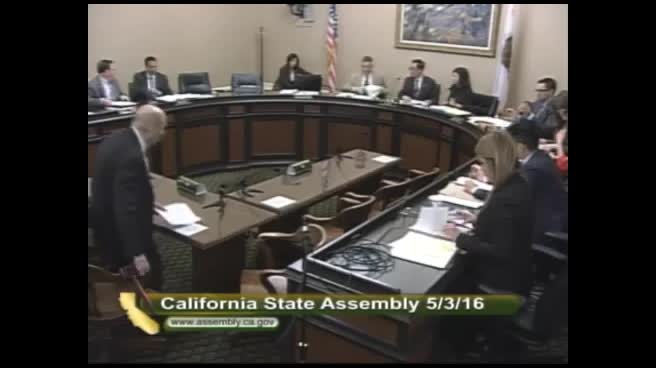
Bill Author

Bill Co-Author(s):