AB 2920: Transactions and use taxes: North Lake Tahoe Transportation Authority and City of Berkeley.
- Session Year: 2017-2018
- House: Assembly
- Latest Version Date: 2018-09-26
(1)Existing law authorizes cities, counties, and districts, subject to certain limitations and approval requirements, to levy a transactions and use tax for general or specific purposes, in accordance with the procedures and requirements set forth in the Transactions and Use Tax Law, including a requirement that the combined rate of all taxes that may be imposed in accordance with that law in the county not exceed 2%.
This bill would authorize the City of Berkeley to impose a transactions and use tax for general or specific purposes at a rate of no more than 0.5% that, in combination with other transactions and use taxes, would exceed the above-described combined rate limit of 2%, if the city adopts an ordinance proposing the tax and the ordinance proposing the tax is approved by the voters, subject to applicable voter approval requirements, as specified.
(2)The North Lake Tahoe Transportation Authority Act authorizes the establishment of the North Lake Tahoe Transportation Authority within the County of Placer and authorizes that authority to levy a retail transactions and use tax following an election on the question, for a period of no more than 20 years and at a rate not to exceed a maximum tax rate of .50%. The authority is required to adopt a transportation expenditure plan prior to the election and to annually review and amend that plan, as specified. That act requires the authority to have a board of directors consisting of 5 members elected by the voters from within the district. The act additionally requires the North Tahoe Resort Association, prior to the authority levying a retail transactions and use tax, to function as an advisor to the authority, as specified.
This bill would increase the number of years that the retail transaction and use tax may be levied by the North Lake Tahoe Transportation Authority to 30 years, and increase the maximum tax rate to 1%. The bill would revise the provisions related to the transportation expenditure plan and instead require the authority to adopt a transportation plan, as specified. The bill would expand the board of directors to 7 members, and instead provide that those members be appointed from various bodies within the boundaries of the district, as specified. This bill would repeal the requirement that the North Tahoe Resort Association function as an advisor to the authority.
(3)This bill would make legislative findings and declarations as to the necessity of a special statute for the City of Berkeley and the County of Placer.
(1)Existing law authorizes cities, counties, and districts, subject to certain limitations and approval requirements, to levy a transactions and use tax for general or specific purposes, in accordance with the procedures and requirements set forth in the Transactions and Use Tax Law, including a requirement that the combined rate of all taxes that may be imposed in accordance with that law in the county not exceed 2%.
This bill would authorize the City of Berkeley to impose a transactions and use tax for general or specific purposes at a rate of no more than 0.5% that, in combination with other transactions and use taxes, would exceed the above-described combined rate limit of 2%, if the city adopts an ordinance proposing the tax and the ordinance proposing the tax is approved by the voters, subject to applicable voter approval requirements, as specified.
(2)The North Lake Tahoe Transportation Authority Act authorizes the establishment of the North Lake Tahoe Transportation Authority within the County of Placer and authorizes that authority to levy a retail transactions and use tax following an election on the question, for a period of no more than 20 years and at a rate not to exceed a maximum tax rate of .50%. The authority is required to adopt a transportation expenditure plan prior to the election and to annually review and amend that plan, as specified. That act requires the authority to have a board of directors consisting of 5 members elected by the voters from within the district. The act additionally requires the North Tahoe Resort Association, prior to the authority levying a retail transactions and use tax, to function as an advisor to the authority, as specified.
This bill would increase the number of years that the retail transaction and use tax may be levied by the North Lake Tahoe Transportation Authority to 30 years, and increase the maximum tax rate to 1%. The bill would revise the provisions related to the transportation expenditure plan and instead require the authority to adopt a transportation plan, as specified. The bill would expand the board of directors to 7 members, and instead provide that those members be appointed from various bodies within the boundaries of the district, as specified. This bill would repeal the requirement that the North Tahoe Resort Association function as an advisor to the authority.
(3)This bill would make legislative findings and declarations as to the necessity of a special statute for the City of Berkeley and the County of Placer.
(1)Existing law authorizes cities and cities, counties, and districts, subject to certain limitations and approval requirements, to levy a transactions and use tax for general or specific purposes, in accordance with the procedures and requirements set forth in the Transactions and Use Tax Law, including a requirement that the combined rate of all taxes that may be imposed in accordance with that law in the county not exceed 2%.
This bill would authorize the City of Berkeley to impose a transactions and use tax for general or specific purposes at a rate of no more than 0.5% that, in combination with other transactions and use taxes, would exceed the above-described combined rate limit of 2%, if the city adopts an ordinance proposing the tax and the ordinance proposing the tax is approved by the voters, subject to applicable voter approval requirements, as specified.
(2)The North Lake Tahoe Transportation Authority Act authorizes the establishment of the North Lake Tahoe Transportation Authority within the County of Placer and authorizes that authority to levy a retail transactions and use tax following an election on the question, for a period of no more than 20 years and at a rate not to exceed a maximum tax rate of .50%. The authority is required to adopt a transportation expenditure plan prior to the election and to annually review and amend that plan, as specified. That act requires the authority to have a board of directors consisting of 5 members elected by the voters from within the district. The act additionally requires the North Tahoe Resort Association, prior to the authority levying a retail transactions and use tax, to function as an advisor to the authority, as specified.
This bill would increase the number of years that the retail transaction and use tax may be levied by the North Lake Tahoe Transportation Authority to 30 years, and increase the maximum tax rate to 1%. The bill would revise the provisions related to the transportation expenditure plan and instead require the authority to adopt a transportation plan, as specified. The bill would expand the board of directors to 7 members, and instead provide that those members be appointed from various bodies within the boundaries of the district, as specified. This bill would repeal the requirement that the North Tahoe Resort Association function as an advisor to the authority.
This bill would make legislative findings and declarations as to the necessity of a special statute for the City of Berkeley. Berkeley and the County of Placer.
Existing law authorizes cities and counties, subject to certain limitations and approval requirements, to levy a transactions and use tax for general or specific purposes, in accordance with the procedures and requirements set forth in the Transactions and Use Tax Law, including a requirement that the combined rate of all taxes that may be imposed in accordance with that law in the county not exceed 2%.
This bill would authorize the City of Berkeley to impose a transactions and use tax for general or specific purposes at a rate of no more than 0.5% that, in combination with other transactions and use taxes, would exceed the above-described combined rate limit of 2%, if the city adopts an ordinance proposing the tax and the ordinance proposing the tax is approved by the voters, subject to applicable voter approval requirements, as specified.
This bill would make legislative findings and declarations as to the necessity of a special statute for the City of Berkeley.
Existing law establishes the State Department of Social Services under the management of a director who, among other things, is responsible for the administration of the laws pertaining to the administration of public social services, except for health care services and medical assistance.This bill would establish the Regional Homeless Efforts Matching Grant Program. The bill would require the State Department of Social Services to award grants, subject to appropriation for that purpose and in a total aggregate amount not exceeding $100,000,000, to cities that meet specified criteria and require that an eligible recipient use any grant awarded pursuant to the program for specified purposes in helping to alleviate homelessness. The bill would require an eligible recipient to apply to the department in order to receive a grant.Existing law establishes the State Department of Social Services under the management of a director who, among other things, is responsible for the administration of the laws pertaining to the administration of public social services, except for health care services and medical assistance.
This bill would establish the Regional Homeless Efforts Matching Grant Program. The bill would require the State Department of Social Services to award grants, subject to appropriation for that purpose and in a total aggregate amount not exceeding $100,000,000, to cities that meet specified criteria and require that an eligible recipient use any grant awarded pursuant to the program for specified purposes in helping to alleviate homelessness. The bill would require an eligible recipient to apply to the department in order to receive a grant.
Existing law requires the establishment of various homeless youth emergency service pilot programs, monitored by the Office of Emergency Services, in order to locate these youth, to provide for their emergency survival needs, and to assist them in reunifying with their parents or in finding a suitable home.This bill would make technical, nonsubstantive changes to those provisions.Existing law requires the establishment of various homeless youth emergency service pilot programs, monitored by the Office of Emergency Services, in order to locate these youth, to provide for their emergency survival needs, and to assist them in reunifying with their parents or in finding a suitable home.
This bill would make technical, nonsubstantive changes to those provisions.
Unless the context otherwise requires, the following terms have the following meanings:
(a)Authority means the North Lake Tahoe Transportation Authority created under this title.
(b)Board means the board of directors of the authority.
(c)Transportation means mobility infrastructure including trails and transit.
SEC. 2.Section 67964 of the Government Code is amended to read:67964.The North Lake Tahoe Transportation Authority may be created upon approval of a resolution calling for the creation of the authority by a majority vote of the membership of the board of supervisors of the County of Placer.
SEC. 3.Section 67968 of the Government Code is repealed.SEC. 4.Section 67968 is added to the Government Code, to read:67968.(a)The authority shall be governed by a board of directors consisting of seven members appointed as follows:
(1)Two members of the board of supervisors of the County of Placer.
(2)One member of the governing body of the North Tahoe Public Utility District.
(3)One member of the governing body of the Squaw Valley Public Services District.
(4)One member of the governing body of the Tahoe City Public Utility District.
(5)One member of the governing body of the Truckee Tahoe Airport District.
(6)One member of the governing body of the Northstar Community Services District.
(b)If any of the districts cease providing services within the boundaries of the authority, the district shall lose its membership on the board of directors and the number of members of the board of directors shall be adjusted accordingly.
(c)The initial terms of office of each member of the board of directors shall be established by the appointing authority of the member.
SEC. 5.Section 67969 of the Government Code is repealed.SEC. 6.Section 67970 of the Government Code is amended to read:67970.(a)A retail transactions and use tax ordinance applicable within the boundaries of the authority may be imposed by the authority in accordance with this chapter and Part 1.6 (commencing with Section 7251) of Division 2 of the Revenue and Taxation Code, if all of the following occur:
(1)The tax ordinance is adopted by a majority vote of the board.
(2)Imposition of the tax is approved by a two-thirds vote of the voters voting on the measure at a special election called for that purpose by the board.
(3)A transportation plan is adopted by the authority pursuant to Section 67978.
(b)The retail transactions and use tax shall remain in effect for not longer than 30 years, or any lesser period of time specified in the tax ordinance. The tax may be continued in effect, or reimposed, by a tax ordinance adopted by a majority vote of the authority, if the reimposition of the tax is approved by a two-thirds vote of the voters.
SEC. 7.Section 67972 of the Government Code is amended to read:67972.(a)In the ordinance, the authority shall do all of the following:
(1)State the nature of the tax to be imposed.
(2)Provide the tax rate or the maximum tax rate.
(3)Specify the period during which the tax will be imposed.
(4)Specify the purposes for which the revenue derived from the tax will be used.
(b)The tax rate may be in .25 percent increments and may not exceed a maximum tax rate of 1 percent.
SEC. 8.Section 67976 of the Government Code is amended to read:67976.(a)Any retail transactions and use tax ordinance adopted pursuant to this chapter shall be operative on the first day of the first calendar quarter commencing more than 120 days after adoption of the ordinance.
(b)Prior to the operative date of the ordinance, the authority shall contract with the State Board of Equalization to perform all functions incidental to the administration and operation of the ordinance.
SEC. 9.Section 67978 of the Government Code is amended to read:67978.(a)Prior to calling the election required under Section 67970, the authority shall adopt a transportation plan. The transportation plan shall give due consideration to the needs of both local residents of, and visitors to, the North Lake Tahoe region, and shall provide for the coordination, operation, and expansion of transportation services that are beneficial to the local economy, attractive to visitors, and convenient to residents.
(b)The authority shall annually review and may propose amendments to the transportation plan to provide for the use of available federal, state, and local transportation funds, to account for unexpected revenues, or to take into consideration unforeseen circumstances.
SEC. 10.Chapter 3.92 (commencing with Section 7299) is added to Part 1.7 of Division 2 of the Revenue and Taxation Code, to read:3.92.Local Government Finance in the City of Berkeley 7299.Notwithstanding any other law, the City of Berkeley may impose a transactions and use tax for general or specific purposes at a rate of no more than 0.5 percent that would, in combination with all taxes imposed in accordance with the Transactions and Use Tax Law (Part 1.6 (commencing with Section 7251)), exceed the limit established in Section 7251.1, if all of the following requirements are met:
(a)The city adopts an ordinance proposing the transactions and use tax by any applicable voting approval requirement.
(b)The ordinance proposing the transactions and use tax is submitted to the electorate and is approved by the voters voting on the ordinance pursuant to Article XIII C of the California Constitution.
(c)The transactions and use tax conforms to the Transactions and Use Tax Law (Part 1.6 (commencing with Section 7251)), other than Section 7251.1.
SEC. 11.The Legislature finds and declares that a special statute is necessary and that a general statute cannot be made applicable within the meaning of Section 16 of Article IV of the California Constitution because of the unique circumstances the City of Berkeley faces in addressing homelessness within its borders, and the unique transportation needs facing the County of Placer with regard to the area served by the North Lake Tahoe Transportation Authority.
Unless the context otherwise requires, the following terms have the following meanings:
(a)Authority means the North Lake Tahoe Transportation Authority created under this title.
(b)Board means the board of directors of the authority.
(c)Transportation means mobility infrastructure including trails and transit.
SEC. 2.Section 67964 of the Government Code is amended to read:67964.The North Lake Tahoe Transportation Authority may be created upon approval of a resolution calling for the creation of the authority by a majority vote of the membership of the board of supervisors of the County of Placer.
SEC. 3.Section 67968 of the Government Code is repealed.SEC. 4.Section 67968 is added to the Government Code, to read:67968.(a)The authority shall be governed by a board of directors consisting of seven members appointed as follows:
(1)Two members of the board of supervisors of the County of Placer.
(2)One member of the governing body of the North Tahoe Public Utility District.
(3)One member of the governing body of the Squaw Valley Public Services District.
(4)One member of the governing body of the Tahoe City Public Utility District.
(5)One member of the governing body of the Truckee Tahoe Airport District.
(6)One member of the governing body of the Northstar Community Services District.
(b)If any of the districts cease providing services within the boundaries of the authority, the district shall lose its membership on the board of directors and the number of members of the board of directors shall be adjusted accordingly.
(c)The initial terms of office of each member of the board of directors shall be established by the appointing authority of the member.
SEC. 5.Section 67969 of the Government Code is repealed.SEC. 6.Section 67970 of the Government Code is amended to read:67970.(a)A retail transactions and use tax ordinance applicable within the boundaries of the authority may be imposed by the authority in accordance with this chapter and Part 1.6 (commencing with Section 7251) of Division 2 of the Revenue and Taxation Code, if all of the following occur:
(1)The tax ordinance is adopted by a majority vote of the board.
(2)Imposition of the tax is approved by a two-thirds vote of the voters voting on the measure at a special election called for that purpose by the board.
(3)A transportation plan is adopted by the authority pursuant to Section 67978.
(b)The retail transactions and use tax shall remain in effect for not longer than 30 years, or any lesser period of time specified in the tax ordinance. The tax may be continued in effect, or reimposed, by a tax ordinance adopted by a majority vote of the authority, if the reimposition of the tax is approved by a two-thirds vote of the voters.
SEC. 7.Section 67972 of the Government Code is amended to read:67972.(a)In the ordinance, the authority shall do all of the following:
(1)State the nature of the tax to be imposed.
(2)Provide the tax rate or the maximum tax rate.
(3)Specify the period during which the tax will be imposed.
(4)Specify the purposes for which the revenue derived from the tax will be used.
(b)The tax rate may be in .25 percent increments and may not exceed a maximum tax rate of 1 percent.
SEC. 8.Section 67976 of the Government Code is amended to read:67976.(a)Any retail transactions and use tax ordinance adopted pursuant to this chapter shall be operative on the first day of the first calendar quarter commencing more than 120 days after adoption of the ordinance.
(b)Prior to the operative date of the ordinance, the authority shall contract with the State Board of Equalization to perform all functions incidental to the administration and operation of the ordinance.
SEC. 9.Section 67978 of the Government Code is amended to read:67978.(a)Prior to calling the election required under Section 67970, the authority shall adopt a transportation plan. The transportation plan shall give due consideration to the needs of both local residents of, and visitors to, the North Lake Tahoe region, and shall provide for the coordination, operation, and expansion of transportation services that are beneficial to the local economy, attractive to visitors, and convenient to residents.
(b)The authority shall annually review and may propose amendments to the transportation plan to provide for the use of available federal, state, and local transportation funds, to account for unexpected revenues, or to take into consideration unforeseen circumstances.
SEC. 10.Chapter 3.92 (commencing with Section 7299) is added to Part 1.7 of Division 2 of the Revenue and Taxation Code, to read:3.92.Local Government Finance in the City of Berkeley 7299.Notwithstanding any other law, the City of Berkeley may impose a transactions and use tax for general or specific purposes at a rate of no more than 0.5 percent that would, in combination with all taxes imposed in accordance with the Transactions and Use Tax Law (Part 1.6 (commencing with Section 7251)), exceed the limit established in Section 7251.1, if all of the following requirements are met:
(a)The city adopts an ordinance proposing the transactions and use tax by any applicable voting approval requirement.
(b)The ordinance proposing the transactions and use tax is submitted to the electorate and is approved by the voters voting on the ordinance pursuant to Article XIII C of the California Constitution.
(c)The transactions and use tax conforms to the Transactions and Use Tax Law (Part 1.6 (commencing with Section 7251)), other than Section 7251.1.
SEC. 11.The Legislature finds and declares that a special statute is necessary and that a general statute cannot be made applicable within the meaning of Section 16 of Article IV of the California Constitution because of the unique circumstances the City of Berkeley faces in addressing homelessness within its borders, and the unique transportation needs facing the County of Placer with regard to the area served by the North Lake Tahoe Transportation Authority.
Unless the context otherwise requires, the following terms have the following meanings:
(a)Association means the North Tahoe Resort Association.(b)(a)Authority means the North Lake Tahoe Transportation Authority created under this title.
(c)(b)Board means the board of directors of the authority.
(d)Management association means the Truckee-North Lake Tahoe Transportation Management Association.(c)Transportation means mobility infrastructure including trails and transit.
SEC. 2.Section 67964 of the Government Code is amended to read:67964.The North Lake Tahoe Transportation Authority may be created upon approval of a resolution calling for the creation of the authority by a majority vote of the membership of the board of supervisors of each county that has territory within the authority. the County of Placer.
SEC. 3.Section 67968 of the Government Code is repealed.67968.(a)The authority shall have a board of directors consisting of five persons elected to staggered four-year terms by a majority of the electors residing within the boundaries of the authority and voting in the election.(b)The initial terms of office shall be established by the board of supervisors at the time of the call of the election.(c)The Tahoe Transportation District may appoint one person to serve as a sixth, ex officio member of the board in a nonvoting capacity.SEC. 4.Section 67968 is added to the Government Code, to read:67968.(a)The authority shall be governed by a board of directors consisting of seven members appointed as follows:
(1)Two members of the board of supervisors of the County of Placer.
(2)One member of the governing body of the North Tahoe Public Utility District.
(3)One member of the governing body of the Squaw Valley Public Services District.
(4)One member of the governing body of the Tahoe City Public Utility District.
(5)One member of the governing body of the Truckee Tahoe Airport District.
(6)One member of the governing body of the Northstar Community Services District.
(b)If any of the districts cease providing services within the boundaries of the authority, the district shall lose its membership on the board of directors and the number of members of the board of directors shall be adjusted accordingly.
(c)The initial terms of office of each member of the board of directors shall be established by the appointing authority of the member.
SEC. 5.Section 67969 of the Government Code is repealed.67969.(a)(1)Before the date on which the voters approve the tax ordinance proposed under Section 67970, the association shall function as an advisor to the authority and shall be provided full opportunity to participate in the activities and decisions of the authority.(2)On and after the date on which the voters approve the tax ordinance proposed under Section 67970, the management association shall function as an advisor to the authority and shall be provided full opportunity to participate in the activities and decisions of the authority.(b)The authority, the association, and the management association shall confer to establish written procedures and policies governing the participation of the association and the management association.SEC. 6.Section 67970 of the Government Code is amended to read:67970.(a)A retail transactions and use tax ordinance applicable within the boundaries of the authority may be imposed by the authority in accordance with this chapter and Part 1.6 (commencing with Section 7251) of Division 2 of the Revenue and Taxation Code, if all of the following occur:
(1)The tax ordinance is adopted by a majority vote of the board.
(2)Imposition of the tax is approved by a two-thirds vote of the voters voting on the measure at a special election called for that purpose by the board.
(3)A transportation expenditure plan is adopted by the authority pursuant to Section 67978.
(b)The retail transactions and use tax shall remain in effect for not longer than 20 30 years, or any lesser period of time specified in the tax ordinance. The tax may be continued in effect, or reimposed, by a tax ordinance adopted by a majority vote of the authority, if the reimposition of the tax is approved by a two-thirds vote of the voters.
SEC. 7.Section 67972 of the Government Code is amended to read:67972.(a)In the ordinance, the authority shall do all of the following:
(1)State the nature of the tax to be imposed.
(2)Provide the tax rate or the maximum tax rate.
(3)Specify the period during which the tax will be imposed.
(4)Specify the purposes for which the revenue derived from the tax will be used.
(b)The tax rate may be in .25 percent increments and may not exceed a maximum tax rate of .50 1 percent.
SEC. 8.Section 67976 of the Government Code is amended to read:67976.(a)Any retail transactions and use tax ordinance adopted pursuant to this chapter shall be operative on the first day of the first calendar quarter commencing more than 120 days after adoption of the ordinance.
(b)Prior to the operative date of the ordinance, the authority shall contract with the State Board of Equalization to perform all functions incidental to the administration and operation of the ordinance.
SEC. 9.Section 67978 of the Government Code is amended to read:67978.(a)Prior to calling the election required under Section 67970, the authority shall adopt a transportation expenditure plan consisting of the North Lake Tahoe Long Range Transit Implementation Study, dated September 30, 1997, and other transit plans for serving local residents that were in effect on January 1, 1998. plan. The transportation plan shall give due consideration to the needs of both local residents of, and visitors to, the North Lake Tahoe region, and shall provide for the coordination, operation, and expansion of transit transportation services that are beneficial to the local economy, attractive to visitors, and convenient to residents.
(b)(1)The authority shall annually review and may propose amendments to the transportation expenditure plan to provide for the use of available federal, state, and local transportation funds, to account for unexpected revenues, or to take into consideration unforeseen circumstances.
(2)Any amendments proposed under paragraph (1) shall be developed in cooperation with the Tahoe Transportation District and the Tahoe Regional Planning Agency and shall be for the purpose of implementing transportation programs and not for transportation planning, except where that planning is necessary to the creation of a joint powers or other similar agreement with governmental agencies located outside the boundaries of the authority.(3)The authority shall refer all amendments proposed under paragraph (1) to the association, the management association, and any other organization interested in transit issues in the North Lake Tahoe region for comment and recommendations, prior to adoption of those amendments and not less than 45 days prior to the effective date of the amendments.SECTION 1.SEC. 10.Chapter 3.92 (commencing with Section 7299) is added to Part 1.7 of Division 2 of the Revenue and Taxation Code, to read:3.92.Local Government Finance in the City of Berkeley 7299.Notwithstanding any other law, the City of Berkeley may impose a transactions and use tax for general or specific purposes at a rate of no more than 0.5 percent that would, in combination with all taxes imposed in accordance with the Transactions and Use Tax Law (Part 1.6 (commencing with Section 7251)), exceed the limit established in Section 7251.1, if all of the following requirements are met:
(a)The city adopts an ordinance proposing the transactions and use tax by any applicable voting approval requirement.
(b)The ordinance proposing the transactions and use tax is submitted to the electorate and is approved by the voters voting on the ordinance pursuant to Article XIII C of the California Constitution.
(c)The transactions and use tax conforms to the Transactions and Use Tax Law (Part 1.6 (commencing with Section 7251)), other than Section 7251.1.
SEC. 2.SEC. 11.The Legislature finds and declares that a special statute is necessary and that a general statute cannot be made applicable within the meaning of Section 16 of Article IV of the California Constitution because of the unique circumstances the City of Berkeley faces in addressing homelessness within its borders. borders, and the unique transportation needs facing the County of Placer with regard to the area served by the North Lake Tahoe Transportation Authority.
Notwithstanding any other law, the City of Berkeley may impose a transactions and use tax for general or specific purposes at a rate of no more than 0.5 percent that would, in combination with all taxes imposed in accordance with the Transactions and Use Tax Law (Part 1.6 (commencing with Section 7251)), exceed the limit established in Section 7251.1, if all of the following requirements are met:
(a)The city adopts an ordinance proposing the transactions and use tax by any applicable voting approval requirement.
(b)The ordinance proposing the transactions and use tax is submitted to the electorate and is approved by the voters voting on the ordinance pursuant to Article XIII C of the California Constitution.
(c)The transactions and use tax conforms to the Transactions and Use Tax Law (Part 1.6 (commencing with Section 7251)), other than Section 7251.1.
SEC. 2.The Legislature finds and declares that a special statute is necessary and that a general statute cannot be made applicable within the meaning of Section 16 of Article IV of the California Constitution because of the unique circumstances the City of Berkeley faces in addressing homelessness within its borders.
SECTION 1.Section 10619.5 is added to the Welfare and Institutions Code, to read:10619.5.(a)For purposes of this section:(1)Eligible recipient means a city that meets the following criteria:(A)The city has adopted a housing element in accordance with Article 10.6 (commencing with Section 65580) of Chapter 3 of Division 1 of Title 7 of the Government Code.(B)The city has demonstrated an ability to provide matching funds for either capital or service expenditures, including by means of bonds approved by the voters of the city, or the county in which the city is located, the proceeds of which are dedicated to the development of housing.(C)The city is part of a regional coalition established by agreement, including by a memorandum of understanding or by a joint powers agreement entered into pursuant to the Joint Exercise of Powers Act (Chapter 5 (commencing with Section 6500) of Division 7 of Title 1 of the Government Code), with one or more other local agencies that are adjacent to, or include within their territorial boundaries, the city in order to provide the services described in this section.(2)Program means the Regional Homeless Efforts Matching Grant Program established pursuant to this section.(b)There is hereby established the Regional Homeless Efforts Matching Grant Program. Upon appropriation by the Legislature for purposes of this section, the department shall award grants on a first-come-first-served basis pursuant to the program, the total aggregate amount of which shall not exceed one hundred million dollars ($100,000,000), to eligible recipients. An eligible recipient shall use any grant awarded pursuant to the program for the following purposes in helping to alleviate homelessness:(1)Mental health services.(2)Vocational training.(3)Substance abuse counseling.(4)Tenant relocation assistance.(c)In order to receive a grant pursuant to the program in any fiscal year, an eligible recipient shall apply to the department in the form and manner prescribed by the department.(a)For purposes of this section:
(1)Eligible recipient means a city that meets the following criteria:
(A)The city has adopted a housing element in accordance with Article 10.6 (commencing with Section 65580) of Chapter 3 of Division 1 of Title 7 of the Government Code.
(B)The city has demonstrated an ability to provide matching funds for either capital or service expenditures, including by means of bonds approved by the voters of the city, or the county in which the city is located, the proceeds of which are dedicated to the development of housing.
(C)The city is part of a regional coalition established by agreement, including by a memorandum of understanding or by a joint powers agreement entered into pursuant to the Joint Exercise of Powers Act (Chapter 5 (commencing with Section 6500) of Division 7 of Title 1 of the Government Code), with one or more other local agencies that are adjacent to, or include within their territorial boundaries, the city in order to provide the services described in this section.
(2)Program means the Regional Homeless Efforts Matching Grant Program established pursuant to this section.
(b)There is hereby established the Regional Homeless Efforts Matching Grant Program. Upon appropriation by the Legislature for purposes of this section, the department shall award grants on a first-come-first-served basis pursuant to the program, the total aggregate amount of which shall not exceed one hundred million dollars ($100,000,000), to eligible recipients. An eligible recipient shall use any grant awarded pursuant to the program for the following purposes in helping to alleviate homelessness:
(1)Mental health services.
(2)Vocational training.
(3)Substance abuse counseling.
(4)Tenant relocation assistance.
(c)In order to receive a grant pursuant to the program in any fiscal year, an eligible recipient shall apply to the department in the form and manner prescribed by the department.
SECTION 1.Section 13700 of the Welfare and Institutions Code is amended to read:13700.The Legislature finds and declares all of the following:(a)There are homeless minors living on the streets of major urban centers in this state without adequate food, shelter, health care, or financial support.(b)Many of the homeless youth in these urban centers come from out-of-city or out-of-county locations.(c)The homeless child, in many instances, has a history of physical or sexual abuse at home, and of having been rejected or forced out of the parental home.(d)While living on the streets, these youth fall prey to drug abuse, prostitution, and other illegal activities.(e)Local public agencies are unable to provide these youth with an adequate level or range of remedial services.(f)These homeless minors urgently need specialized services to locate them, to assist them with their immediate survival needs, and to address their long-term need to reunite with their parents or find a suitable home.(g)Two homeless youth emergency service pilot programs, one in the City of Los Angeles, and one in the City and County of San Francisco, have demonstrated the need for ongoing programs to meet the needs of homeless minors and the effectiveness of these programs in meeting these needs.(h)Therefore, it is the purpose of this chapter to maintain one homeless youth emergency project in the County of Los Angeles and one in the City and County of San Francisco, where the problem is most acute, and to the extent funds are appropriated, to establish additional homeless youth emergency service pilot projects pursuant to this chapter. It is the further purpose of this chapter to examine the condition of homeless youth in major urban areas of this state with populations of 500,000 or more, as well as other urban, suburban, and rural areas, and to develop a profile of homeless youth in terms of background and available services, in order to locate these youth, to provide for their emergency survival needs, and to assist them in reunifying with their parents or in finding a suitable home.The Legislature finds and declares all of the following:
(a)There are homeless minors living on the streets of major urban centers in this state without adequate food, shelter, health care, or financial support.
(b)Many of these the homeless youth in these urban centers come from out-of-city or out-of-county locations.
(c)The homeless child, in many instances, has a history of physical or sexual abuse at home, and of having been rejected or forced out of the parental home.
(d)While living on the streets, these youth fall prey to drug abuse, prostitution, and other illegal activities.
(e)Local public agencies are unable to provide these youth with an adequate level or range of remedial services.
(f)These homeless minors are urgently in need of urgently need specialized services to locate them, to assist them with their immediate survival needs, and to address their long-term need to reunite with their parents or find a suitable home.
(g)Two homeless youth emergency service pilot programs, one in the City of Los Angeles, and one in the City and County of San Francisco, have demonstrated the need for ongoing programs to meet the needs of homeless minors and the effectiveness of these programs in meeting these needs.
The(h)Therefore, it is the purpose of this chapter is therefore to maintain one homeless youth emergency project in the County of Los Angeles and one in the City and County of San Francisco, where the problem is most acute, and to the extent funds are appropriated in the Budget Act of 1991, appropriated, to establish additional homeless youth emergency service pilot projects pursuant to this chapter. It is the further purpose of this chapter to examine the condition of homeless youth in major urban areas of this state with populations of 500,000 or more, as well as other urban, suburban, and rural areas, and to develop a profile of homeless youth in terms of background and available services, in order to locate these youth, to provide for their emergency survival needs, and to assist them in reunification reunifying with their parents or in finding a suitable home.
|
Date
|
Status
|
|---|---|
| Sep 26, 2018 | Chaptered by Secretary of State - Chapter 771, Statutes of 2018. |
| Sep 26, 2018 | Approved by the Governor. |
| Aug 29, 2018 | Enrolled and presented to the Governor at 4 p.m. |
| Aug 23, 2018 | Senate amendments concurred in. To Engrossing and Enrolling. |
| Aug 20, 2018 | From committee: That the Senate amendments be concurred in. (Ayes 6. Noes 3.) (August 20). |
| Aug 13, 2018 | Re-referred to Com. on L. GOV. pursuant to Assembly Rule 77.2. |
| Aug 9, 2018 | In Assembly. Concurrence in Senate amendments pending. May be considered on or after August 11 pursuant to Assembly Rule 77. |
| Aug 9, 2018 | Read third time. Passed. Ordered to the Assembly. |
| Jun 28, 2018 | Read second time. Ordered to third reading. |
| Jun 27, 2018 | From committee: Do pass. (Ayes 8. Noes 3.) (June 26). |
| Jun 21, 2018 | Re-referred to Com. on T. & H. |
| Jun 20, 2018 | From committee: Do pass and re-refer to Com. on RLS. (Ayes 5. Noes 2.) (June 20). Re-referred to Com. on RLS. |
| Jun 13, 2018 | From committee chair, with author's amendments: Amend, and re-refer to committee. Read second time, amended, and re-referred to Com. on GOV. & F. |
| Jun 6, 2018 | In committee: Hearing postponed by committee. |
| May 24, 2018 | Referred to Com. on GOV. & F. |
| May 15, 2018 | In Senate. Read first time. To Com. on RLS. for assignment. |
| May 14, 2018 | Read third time. Passed. Ordered to the Senate. |
| May 9, 2018 | Read second time. Ordered to third reading. |
| May 8, 2018 | From committee: Do pass. (Ayes 7. Noes 3.) (May 7). |
| Apr 26, 2018 | From committee: Do pass and re-refer to Com. on REV. & TAX. (Ayes 6. Noes 2.) (April 25). Re-referred to Com. on REV. & TAX. |
| Apr 16, 2018 | From committee: Be re-referred to Coms. on L. GOV. and REV. & TAX. (Ayes 9. Noes 0.) (April 16). Re-referred to Com. on L. GOV. |
| Apr 12, 2018 | Re-referred to Com. on RLS. pursuant to Assembly Rule 96. |
| Apr 10, 2018 | Re-referred to Com. on HUM. S. |
| Apr 9, 2018 | From committee chair, with author's amendments: Amend, and re-refer to Com. on HUM. S. Read second time and amended. |
| Apr 2, 2018 | Re-referred to Com. on HUM. S. |
| Mar 22, 2018 | Referred to Com. on HUM. S. |
| Feb 17, 2018 | From printer. May be heard in committee March 19. |
| Feb 16, 2018 | Read first time. To print. |
|
Date
|
Description
|
Location
|
Votes
|
|
|---|---|---|---|---|
| Aug 23, 2018 | AB 2920 THURMOND Concurrence in Senate Amendments | Assembly Floor |
Passed |
|
| Aug 20, 2018 | With recommendation: That Senate amendments be concurred in. | Assembly Standing Committee on Local Government |
Passed |
|
| Aug 9, 2018 | Assembly 3rd Reading AB2920 Thurmond By McGuire | Senate Floor |
Passed |
|
| Jun 26, 2018 | Do pass | Senate Standing Committee on Transportation and Housing |
Passed |
|
| Jun 20, 2018 | Do pass, but first be re-referred to the Committee on [Rules] | Senate Standing Committee on Governance and Finance |
Passed |
|
| May 14, 2018 | AB 2920 THURMOND Assembly Third Reading | Assembly Floor |
Passed |
|
| May 7, 2018 | Do pass. | Assembly Standing Committee on Revenue and Taxation |
Passed |
|
| Apr 25, 2018 | Do pass and be re-referred to the Committee on [Revenue and Taxation] | Assembly Standing Committee on Local Government |
Passed |
|
| Apr 16, 2018 | Be re-referred to the Committees on [Local Government] and [Revenue and Taxation] | Assembly Standing Committee on Rules |
Passed |
This list shows positions taken on this bill by organizations on the date displayed, which is linked to the original source.
Positions by individuals are not included.
CONCURRENCE IN SENATE AMENDMENTS
CSA2 Bill Id:AB 2920
Author:(Thurmond)
As Amended Ver:June 13, 2018
Majority vote
ASSEMBLY: | 47-29 | (May 14, 2018) | SENATE: | 24-11 | (August 09, 2018) |
(vote not relevant)
COMMITTEE VOTE: | 6-3 | (August 20, 2018) | RECOMMENDATION: | concur |
(L. Gov.)
Original Committee Reference: L. GOV.
SUMMARY: Allows the City of Berkeley to impose a transactions and use tax (TUT) for general or special purposes at a rate of no more than 0.5%, outside the 2% cap; and, enacts several changes to the North Lake Tahoe Transportation Authority (Authority) Act.
The Senate amendments:
- Enact the following changes to the Authority Act:
- Replace its current five-member governing structure of elected board members with a seven-member appointed board with two members appointed by the Placer County Board of Supervisors; one member of the governing body of the North Tahoe Public Utility District; one member of the governing body of the Squaw Valley Public Services District; one member of the governing body of the Tahoe City Public Utility District; one member of the governing body of the Truckee Tahoe Airport District; and, one member of the governing body of the Northstar Community Services District.
- Provide that if any of the districts specified in a), above, cease providing services within the boundaries of the Authority, the district loses its membership on the board, with the number of members adjusted accordingly;
- Specify that the initial terms of office of each member of the board of directors shall be established by the appointing Authority of the member;
- Extend the duration of the TUT the Authority can impose from 20 to 30 years;
- Allow the tax rate to be imposed up to a 1% cap, instead of its current .5%; and,
- Make other technical and clarifying amendments to the Authority Act.
- Contain a legislative finding justifying the need for applying solely to the City of Berkeley and the Authority.
EXISTING LAW:
- Authorizes cities and counties to impose local sales and use taxes.
- Authorizes cities and counties to impose transactions and use taxes.
- Prohibits, in any county, the combined rate of all taxes imposed in accordance with TUT law from exceeding 2%.
- Enacts the Authority Act, which authorizes the Placer County Board of Supervisors to create the Authority.
- Uses surveying guidelines to specify the Authority's borders within a specified portion of Placer County that includes the North Lake Tahoe Basin and the surrounding resorts in the northern region of Lake Tahoe (Martis Valley, Squaw Valley and Alpine Meadows).
- Provides that the Authority's governing board is composed of five members, elected to staggered four-year terms by voters within the district's boundaries.
- Authorizes the Authority to impose a TUT within the Authority's borders in increments
of .25% of up to .5%, for up to 20 years.
FISCAL EFFECT: None
COMMENTS:
- Transactions and Use Taxes. Existing law authorizes cities and counties to impose transactions and use taxes in 0.125% increments, in addition to the state's 7.5% sales tax, provided that the combined rate in the county does not exceed 2%. Transactions and use taxes are taxes imposed on the total retail price of any tangible personal property and the use or storage of such property when sales tax is not paid. These types of taxes may be levied as general taxes (majority vote required), which are unrestricted, or special taxes (two-thirds vote required), which are restricted for a specified use.
Prior to 2003, cities lacked the ability to place transactions and use taxes before their voters without first obtaining approval by the Legislature to bring an ordinance before the city council, and, if approved at the council level, to the voters. This was remedied by SB 566 (Scott), Chapter 709, Statutes of 2003. SB 566 also contained provisions to increase a county's TUT cap because of the possibility that certain counties were going to run out of room under their caps, if cities within those counties approved transactions and use taxes.
Because of the interaction between city-imposed and county-imposed transactions and use taxes, the concern that counties will run into the 2% cap still applies today. Currently, the Counties of Alameda, Contra Costa, Los Angeles, Santa Clara, and San Mateo have reached the 2% limit, and the Counties of Marin, Santa Cruz, and Sonoma are near the 2% limit. The Legislature has granted several exemptions to the 2% cap, including to several counties to allow an additional countywide TUT for transportation purposes.
According to the State Board of Equalization, as of April 1, 2017, 257 local agencies impose their own transactions and use taxes: six of 54 county-imposed taxes are general purpose taxes and 48 are special purpose taxes with 35 dedicated for transportation purposes. Of the 203 city-imposed taxes, 163 are general purpose and 40 are special purpose.
- North Lake Tahoe Transportation Authority. SB 1488 (Rainey), Chapter 1044, Statutes of 1998, enacted the Authority Act, which authorized the Placer County Board of Supervisors to create the Authority within a specified part of the county with the goal of paying for transportation improvement and transit programs within the North Lake Tahoe area. While counties can create transportation authorities, this act was distinctive because its jurisdiction only included a specific portion of eastern Placer County. Unique at the time, the Legislature authorized the Authority to impose a TUT within the Authority's borders of up
to 0.5% for up to 20 years. However, the Authority was never formed after two local tax measures failed.
Public transit is currently provided in this area by the Truckee Tahoe Area Regional Transit, a service of Placer County. The county expects that service to continue even if the sales tax funding the Authority is approved. Two members of the Placer County Board of Supervisors are members of the Authority's seven-member governing board.
- Bill Summary. This bill provides an exemption to the City of Berkeley from the 2% TUT combined rate cap that is currently in statute, and authorizes the City to adopt an ordinance to propose the imposition of a TUT for general or specific purposes at a rate of no more than 0.5%, and with the appropriate voter approval pursuant to the California Constitution.
Amendments taken in the Senate authorize the Authority to impose a voter approved TUT of up to 1%, instead of the current limit of .5%, within its boundaries, and change the board of directors of the Authority from an elected board to an appointed board. The City of Berkeley is the sponsor of this bill.
- Author's Statement. According to the author, "The City of Berkeley faces challenges relating to homelessness that are unique to its borders. AB 2920 will give the voters of the city the ability to decide whether they want to increase taxes to fund city services. In addition, this bill will grant voters in Placer County the opportunity to approve a tax increase to improve transportation services for residents and visitors to the area."
- Uneven Boundaries. Currently, all 257 TUTs are applied within a whole county or city. In these cities and counties, retailers collect the applicable district tax rate for sales made at their business location. When administering a TUT, the California Department of Tax and Fee Administration (CDTFA) assigns a specific code to properly identify accounts within a district. As long as a tax is imposed within city or county boundaries, CDTFA can electronically identify accounts within these areas. However, when a tax applies on a subjurisdictional basis, CDTFA must instead manually identify accounts and addresses located in these areas, leading to higher costs and potential compliance issues for retailers. For example, retailers selling or delivering into these areas would need to determine whether or not the customer they're shipping to is located in the part of the County subject to the tax. Retailers usually use software or the CDTFA's website to determine the appropriate rate, but could end up overpaying the tax, resulting in potential refunds, or underpaying, which can lead to audits, penalties, and interest.
The Legislature authorized the Authority's subjurisdictional tax 20 years ago. Recently, the Legislature allowed the San Diego County Metropolitan Transit System and the North County Transit District to impose similar taxes [AB 805, (Gonzalez Fletcher), Chapter 658, Statutes of 2017]. Additionally, the Legislature allowed counties to impose TUTs only in unincorporated areas [AB 2119, (Stone), Chapter 148, Statutes of 2014], but no county has yet imposed a tax using that authority.
With that said, CDTFA collects its costs from local agencies before remitting funds, so high administrative costs can significantly reduce local agency revenues from any tax. Placer County states that the Authority's statutory boundaries are well known, and currently uses these boundaries to differentiate transient occupancy taxes (TOTs or hotel taxes) applicable within these boundaries that do not apply in the rest of the county. The County adds that a tax election also has precedent, as residents of this area have previously voted to increase TOT taxes only applicable in this area.
- Arguments in Support. The City of Berkeley argues that, "With this increase in funding, the City seeks to direct these funds towards our Community Oriented Policing program, which includes the recruitment and retention of police officers, mental health outreach services which will help people in crisis on our streets, and our mental health transport program. The City of Berkeley is the only district city that is an independent mental health jurisdiction with direct funding from the state of California for providing mental health services. This measure will generate much needed funding that will improve community policing, help retain police officers, provide relief to its residents suffering from mental illness, help address its homeless encampments, and ensure residents get safe access to medical services."
Additionally, the Placer County Board of Supervisors argues that, "The inclusion of updated and modernized language regarding the Authority will support local transportation agencies in the North Lake Tahoe region to better manage, fund, build and maintain multi-model transportation projects. The updated language will help implement regional and statewide plans including the regional transportation plans of the Tahoe Regional Planning Agency (TRPA), the Placer County Transportation Agency and the State Climate Action Plan. Furthermore, special districts and local businesses within the Authority support increased funding that is controlled locally for the development of transportation projects that protect the environment and improve the quality of life for individuals and businesses that choose to live, work, or play in the region."
- Arguments in Opposition. According to the Howard Jarvis Taxpayers Association, "AB 2920 would allow the Legislature to authorize an additional half-cent sales tax for the City of Berkeley in excess of the 2% Bradley-Burns sales tax cap imposed on local municipalities. This would set Berkeley's overall sales tax rate at 9.75%. Only 24 other municipalities in California have a sales tax as high or higher. The bill also authorizes the North Lake Tahoe Transportation Authority to impose up to a one cent sales tax increase for 30 years. While the measure appears to abide by all local voting requirements, it sets a dangerous precedent to begin to allow counties to increase taxes beyond existing law. Counties need to learn to balance their budgets and control pension excesses. We simply cannot justify increased regressive taxation upon hard working families when California already has the highest state sales tax rate in the nation."
Analysis Prepared by: Jimmy MacDonald / L. GOV. / (916) 319-3958 FN: 0004473
Date of Hearing: August 20, 2018
ASSEMBLY COMMITTEE ON LOCAL GOVERNMENT
Cecilia Aguiar-Curry, Chair
ABPCA Bill Id:AB 2920 (
Author:Thurmond) – As Amended Ver:June 13, 2018
SUBJECT: Transactions and use taxes: North Lake Tahoe Transportation Authority and
City of Berkeley.
SUMMARY: Allows the City of Berkeley to impose a transactions and use tax (TUT) for general or special purposes at a rate of no more than 0.5%, outside the 2% cap; and, enacts several changes to the North Lake Tahoe Transportation Authority (Authority) Act.
The Senate amendments:
- Enact the following changes to the Authority Act:
- Replace its current five-member governing structure of elected board members with a seven-member appointed board with:
- Two members appointed by the Placer County Board of Supervisors;
- One member of the governing body of the North Tahoe Public Utility District;
- One member of the governing body of the Squaw Valley Public Services District;
- One member of the governing body of the Tahoe City Public Utility District;
- One member of the governing body of the Truckee Tahoe Airport District; and,
- One member of the governing body of the Northstar Community Services District.
- Provide that if any of the districts specified in a), above, cease providing services within the boundaries of the Authority, the district loses its membership on the board, with the number of members adjusted accordingly;
- Specify that the initial terms of office of each member of the board of directors shall be established by the appointing Authority of the member;
- Extend the duration of the TUT the Authority can impose from 20 to 30 years;
- Allow the tax rate to be imposed up to a 1% cap, instead of its current .5%; and,
- Make other technical and clarifying amendments to the Authority Act.
- Replace its current five-member governing structure of elected board members with a seven-member appointed board with:
- Contain a legislative finding justifying the need for applying solely to the City of Berkeley and the Authority.
EXISTING LAW:
- Authorizes cities and counties to impose local sales and use taxes.
- Authorizes cities and counties to impose transactions and use taxes.
- Prohibits, in any county, the combined rate of all taxes imposed in accordance with TUT law from exceeding 2%.
- Enacts the Authority Act, which authorizes the Placer County Board of Supervisors to create the Authority.
- Uses surveying guidelines to specify the Authority's borders within a specified portion of Placer County that includes the North Lake Tahoe Basin and the surrounding resorts in the northern region of Lake Tahoe (Martis Valley, Squaw Valley and Alpine Meadows).
- Provides that the Authority's governing board is composed of five members, elected to staggered four-year terms by voters within the district's boundaries.
- Authorizes the Authority to impose a TUT within the Authority's borders in increments
of .25% of up to .5%, for up to 20 years.
FISCAL EFFECT: None
COMMENTS:
- Transactions and Use Taxes. Existing law authorizes cities and counties to impose transactions and use taxes in 0.125% increments, in addition to the state's 7.5% sales tax, provided that the combined rate in the county does not exceed 2%. Transactions and use taxes are taxes imposed on the total retail price of any tangible personal property and the use or storage of such property when sales tax is not paid. These types of taxes may be levied as general taxes (majority vote required), which are unrestricted, or special taxes (two-thirds vote required), which are restricted for a specified use.
Prior to 2003, cities lacked the ability to place transactions and use taxes before their voters without first obtaining approval by the Legislature to bring an ordinance before the city council, and, if approved at the council level, to the voters. This was remedied by SB 566 (Scott), Chapter 709, Statutes of 2003. SB 566 also contained provisions to increase a county's TUT cap because of the possibility that certain counties were going to run out of room under their caps, if cities within those counties approved transactions and use taxes.
Because of the interaction between city-imposed and county-imposed transactions and use taxes, the concern that counties will run into the 2% cap still applies today. Currently, the Counties of Alameda, Contra Costa, Los Angeles, Santa Clara, and San Mateo have reached the 2% limit, and the Counties of Marin, Santa Cruz, and Sonoma are near the 2% limit. The Legislature has granted several exemptions to the 2% cap, including to several counties to allow an additional countywide TUT for transportation purposes.
According to the State Board of Equalization, as of April 1, 2017, 257 local agencies impose their own transactions and use taxes: six of 54 county-imposed taxes are general purpose taxes and 48 are special purpose taxes with 35 dedicated for transportation purposes. Of the 203 city-imposed taxes, 163 are general purpose and 40 are special purpose.
- North Lake Tahoe Transportation Authority. SB 1488 (Rainey), Chapter 1044, Statutes of 1998, enacted the Authority Act, which authorized the Placer County Board of Supervisors to create the Authority within a specified part of the county with the goal of paying for transportation improvement and transit programs within the North Lake Tahoe area. While counties can create transportation authorities, this act was distinctive because its jurisdiction only included a specific portion of eastern Placer County. Unique at the time, the Legislature authorized the Authority to impose a TUT within the Authority’s borders of up
to 0.5% for up to 20 years. However, the Authority was never formed after two local tax measures failed.
Public transit is currently provided in this area by the Truckee Tahoe Area Regional Transit, a service of Placer County. The county expects that service to continue even if the sales tax funding the Authority is approved. Two members of the Placer County Board of Supervisors are members of the Authority’s seven-member governing board.
- Bill Summary. This bill provides an exemption to the City of Berkeley from the 2% TUT combined rate cap that is currently in statute, and authorizes the City to adopt an ordinance to propose the imposition of a TUT for general or specific purposes at a rate of no more than 0.5%, and with the appropriate voter approval pursuant to the California Constitution.
Amendments taken in the Senate authorize the Authority to impose a voter approved TUT of up to 1%, instead of the current limit of .5%, within its boundaries, and change the board of directors of the Authority from an elected board to an appointed board. The City of Berkeley is the sponsor of this bill.
- Author's Statement. According to the author, "The City of Berkeley faces challenges relating to homelessness that are unique to its borders. AB 2920 will give the voters of the city the ability to decide whether they want to increase taxes to fund city services. In addition, this bill will grant voters in Placer County the opportunity to approve a tax increase to improve transportation services for residents and visitors to the area."
- Uneven Boundaries. Currently, all 257 TUTs are applied within a whole county or city. In these cities and counties, retailers collect the applicable district tax rate for sales made at their business location. When administering a TUT, the California Department of Tax and Fee Administration (CDTFA) assigns a specific code to properly identify accounts within a district. As long as a tax is imposed within city or county boundaries, CDTFA can electronically identify accounts within these areas. However, when a tax applies on a subjurisdictional basis, CDTFA must instead manually identify accounts and addresses located in these areas, leading to higher costs and potential compliance issues for retailers. For example, retailers selling or delivering into these areas would need to determine whether or not the customer they’re shipping to is located in the part of the County subject to the tax. Retailers usually use software or the CDTFA’s website to determine the appropriate rate, but could end up overpaying the tax, resulting in potential refunds, or underpaying, which can lead to audits, penalties, and interest.
The Legislature authorized the Authority’s subjurisdictional tax 20 years ago. Recently, the Legislature allowed the San Diego County Metropolitan Transit System and the North County Transit District to impose similar taxes [AB 805, (Gonzales Fletcher), Chapter 658, Statutes of 2017]. Additionally, the Legislature allowed counties to impose TUTs only in unincorporated areas [AB 2119, (Stone), Chapter 148, Statutes of 2014], but no county has yet imposed a tax using that authority.
With that said, CDTFA collects its costs from local agencies before remitting funds, so high administrative costs can significantly reduce local agency revenues from any tax. Placer County states that the Authority’s statutory boundaries are well known, and currently uses these boundaries to differentiate transient occupancy taxes (TOTs or hotel taxes) applicable within these boundaries that do not apply in the rest of the county. The County adds that a tax election also has precedent, as residents of this area have previously voted to increase TOT taxes only applicable in this area.
- Arguments in Support. The City of Berkeley argues that, “With this increase in funding, the City seeks to direct these funds towards our Community Oriented Policing program, which includes the recruitment and retention of police officers, mental health outreach services which will help people in crisis on our streets, and our mental health transport program. The City of Berkeley is the only district city that is an independent mental health jurisdiction with direct funding from the state of California for providing mental health services. This measure will generate much needed funding that will improve community policing, help retain police officers, provide relief to its residents suffering from mental illness, help address its homeless encampments, and ensure residents get safe access to medical services.”
Additionally, the Placer County Board of Supervisors argues that, “The inclusion of updated and modernized language regarding the Authority will support local transportation agencies in the North Lake Tahoe region to better manage, fund, build and maintain multi-model transportation projects. The updated language will help implement regional and statewide plans including the regional transportation plans of the Tahoe Regional Planning Agency (TRPA), the Placer County Transportation Agency and the State Climate Action Plan. Furthermore, special districts and local businesses within the Authority support increased funding that is controlled locally for the development of transportation projects that protect the environment and improve the quality of life for individuals and businesses that choose to live, work, or play in the region.”
- Arguments in Opposition. According to the Howard Jarvis Taxpayers Association,
"AB 2920 would allow the Legislature to authorize an additional half-cent sales tax for the City of Berkeley in excess of the 2% Bradley-Burns sales tax cap imposed on local municipalities. This would set Berkeley's overall sales tax rate at 9.75%. Only 24 other municipalities in California have a sales tax as high or higher. The bill also authorizes the North Lake Tahoe Transportation Authority to impose up to a one cent sales tax increase for 30 years. While the measure appears to abide by all local voting requirements, it sets a dangerous precedent to begin to allow counties to increase taxes beyond existing law. Counties need to learn to balance their budgets and control pension excesses. We simply cannot justify increased regressive taxation upon hard working families when California already has the highest state sales tax rate in the nation.”
REGISTERED SUPPORT / OPPOSITION:
Support
City of Berkeley [SPONSOR]
California Tahoe Alliance
North Lake Tahoe Chamber of Commerce
North Lake Tahoe Resort Association
North Tahoe Business Association
Placer County Board of Supervisors
Squaw Valley Public Service District
Tahoe City Public Utility District
Tahoe Transportation District
Opposition
California Taxpayers Association
Howard Jarvis Taxpayers Association
Analysis Prepared by: Jimmy MacDonald / L. GOV. / (916) 319-3958
CONCURRENCE IN SENATE AMENDMENTS
CSA1 Bill Id:AB 2920
Author:(Thurmond)
As Amended Ver:June 13, 2018
Majority vote
ASSEMBLY: | 47-29 | (May 14, 2018) | SENATE: | 24-11 | (August 9, 2018) |
Original Committee Reference: L. GOV.
SUMMARY: This bill allows the City of Berkeley to impose a transactions and use tax for general or special purposes at a rate of no more than 0.5%, outside the 2% cap; and enacts several changes to the North Lake Tahoe Transportation Authority (Authority) Act.
The Senate amendments:
- Enacts the following changes to the Authority Act:
- Replaces its current five-member governing structure of elected board members with a seven-member appointed board with:
- Two members appointed by the Placer County Board of Supervisors;
- One member of the governing body of the North Tahoe Public Utility District;
- One member of the governing body of the Squaw Valley Public Services District;
- One member of the governing body of the Tahoe City Public Utility District;
- One member of the governing body of the Truckee Tahoe Airport District; and,
- One member of the governing body of the Northstar Community Services District.
- Provides that if any of the districts cease providing services within the boundaries of the authority, the district loses its membership on the board, with the number of members adjusted accordingly;
- Extends the duration of the transactions and use tax the Authority can impose from 20 to 30 years; and,
- Allows the tax rate to be imposed up to a 1% cap, instead of its current .5%.
- Replaces its current five-member governing structure of elected board members with a seven-member appointed board with:
- Contains a legislative finding justifying the need for applying solely to the City of Berkeley and the Authority.
EXISTING LAW:
- Authorizes cities and counties to impose local sales and use taxes.
- Authorizes cities and counties to impose transactions and use taxes.
- Prohibits, in any county, the combined rate of all taxes imposed in accordance with Transactions and Use Tax Law from exceeding 2%.
- Enacts the Authority Act, which authorizes the Placer County Board of Supervisors to create the Authority within a specified part of the county with the goal of paying for transportation improvement and transit programs within the North Lake Tahoe area (SB 1488 (Rainey), Chapter 1044, Statutes of 1998).
- Uses surveying guidelines to specify the Authority's borders within a specified portion of Placer County that includes the North Lake Tahoe Basin and the surrounding resorts in the northern region of Lake Tahoe (Martis Valley, Squaw Valley and Alpine Meadows).
- Provides that the Authority's governing board is composed of five members, elected to staggered four year terms by voters within the district's boundaries.
- Authorizes the authority to impose a transactions and use tax within the Authority's borders in increments of .25% of up to .5% for up to 20 years.
AS PASSED BY THE ASSEMBLY, this bill:
- Allowed the City of Berkeley to impose a transactions and use tax for general or specific purposes to support countywide or citywide programs, as applicable, at a rate of no more than 0.5% that would, in combination with all other transactions and use taxes, exceed the 2% cap established by existing law, if all of the following conditions are met:
- The city adopts an ordinance proposing the transactions and use tax by any applicable voting requirements;
- The ordinance proposing the transactions and use tax is approved by the voters voting on the ordinance in accordance with California Constitution Article XIII C; and,
- The transactions and use tax conforms to the Transactions and Use Tax Law, as specified.
- Found and declared that a special law is necessary because of the unique circumstances the City of Berkeley faces in addressing homelessness within its borders.
FISCAL EFFECT: None
COMMENTS:
- Transactions and Use Taxes. Existing law authorizes cities and counties to impose transactions and use taxes in 0.125% increments, in addition to the state's 7.5% sales tax, provided that the combined rate in the county does not exceed 2%. Transactions and use taxes are taxes imposed on the total retail price of any tangible personal property and the use or storage of such property when sales tax is not paid. These types of taxes may be levied as general taxes (majority vote required), which are unrestricted, or special taxes (two-thirds vote required), which are restricted for a specified use.
Prior to 2003, cities lacked the ability to place transactions and use taxes before their voters without first obtaining approval by the Legislature to bring an ordinance before the city council, and, if approved at the council level, to the voters. This was remedied by SB 566 (Scott), Chapter 709, Statutes of 2003. SB 566 also contained provisions to increase a county's transactions and use tax cap because of the possibility that certain counties were going to run out of room under their caps, if cities within those counties approved transactions and use taxes.
Because of the interaction between city-imposed and county-imposed transactions and use taxes, the concern that counties will run into the 2% cap still applies today. Currently, the Counties of Alameda, Contra Costa, Los Angeles, Santa Clara, and San Mateo have reached the 2% limit, and the Counties of Marin, Santa Cruz, and Sonoma are near the 2% limit. The Legislature has granted several exemptions to the 2% cap, including to several counties to allow an additional countywide transactions and use tax for transportation purposes.
According to the State Board of Equalization, as of April 1, 2017, 257 local agencies impose their own transactions and use taxes: six of 54 county-imposed taxes are general purpose taxes and 48 are special purpose taxes with 35 dedicated for transportation purposes. Of the 203 city-imposed taxes, 163 are general purpose and 40 are special purpose.
- Bill Summary. This bill provides an exemption to the City of Berkeley from the 2% transactions and use tax combined rate cap that is currently in statute. This bill authorizes the City to adopt an ordinance to propose the imposition of a transactions and use tax for general or specific purposes at a rate of no more than 0.5%, and with the appropriate voter approval pursuant to the California Constitution. This bill also allows voters to approve a transactions and use tax increase within the boundaries of the Authority, and changes the board of directors of the Authority from an elected board to an appointed board. The City of Berkeley is the sponsor of this bill.
- Author's Statement. According to the author, "The City of Berkeley faces challenges relating to homelessness that are unique to its borders. AB 2920 will give the voters of the city the ability to decide whether they want to increase taxes to fund city services. In addition, this bill will grant voters in Placer County the opportunity to approve a tax increase to improve transportation services for residents and visitors to the area."
- Exemptions to the 2% Cap. The Legislature has previously granted exemptions to the 2% statutory cap in Alameda, Contra Costa, Los Angeles, Monterey, and San Mateo counties.
- Alameda County. In 2010, voters in Union City in Alameda County approved a transactions and use tax of 0.5%, which in addition to three other county 0.5% taxes, crowded out the county from imposing any additional taxes under the 2% combined rate. In 2011, the Legislature provided a one-time exemption for Alameda County from the 2% transactions and use tax combined rate cap [AB 1086 (Wieckowski), Chapter 327, Statutes of 2011]. However, while 66.53% of Alameda County voters approved the tax, it was not enacted as it fell short of the two-thirds vote required (Measure B1). The Legislature extended the authority for Alameda County to adopt an ordinance imposing a transactions and use tax from January 1, 2014, to December 31, 2020, and authorized Contra Costa County to adopt an ordinance imposing a transactions and use tax in the same manner as Alameda County [AB 210 (Wieckowski), Chapter 194, Statutes of 2013].
In November of 2014, voters in Alameda County passed Measure BB, a transactions and use tax at 0.5% to fund transportation improvements for 30 years. AB 1665 (Bonilla), Chapter 45, Statutes of 2016, removed the existing authority granted to Alameda County and Contra Costa County to impose an additional transactions and use tax, subject to voter approval, and instead, granted Contra Costa County's existing authority to the Contra Costa Transportation Authority. That tax also fell short, garnering 63.45% (Measure X). Most recently, AB 366 (Bonta), Chapter 502, Statutes of 2016, provided an exemption to the City of Alameda from the 2% combined rate cap, until January 1, 2025.
- Los Angeles County. SB 314 (Murray), Chapter 785, Statutes of 2003, originally enacted provisions that authorized the Los Angeles County Metropolitan Transportation Authority (MTA) to impose a 0.5% transactions and use tax, not subject to the 2% cap for no more than six and one-half years, for specific transportation projects and programs. The authority to put a tax measure on the ballot was never used. AB 2321 (Feuer), Chapter 302, Statutes of 2008, modified those provisions to allow MTA to impose a transactions and use tax for 30 years. In November 2008, more than 67% of Los Angeles County voters approved this tax in a ballot measure known as Measure R.
AB 1446 (Feuer), Chapter 806, Statutes of 2012, authorized MTA, subject to voter approval, to extend the existing transactions and use tax (Measure R) for an unlimited amount of time, allowing MTA to determine a sunset date, if any. However, Measure J put before Los Angeles County voters in November 2012, narrowly failed to achieve the two-thirds threshold necessary for passage. SB 767 (De León), Chapter 580, Statutes of 2015, authorized MTA to impose an additional countywide 0.5% transactions and use tax. In November of 2016, Los Angeles County voters passed Measure M with 71.15% of the vote.
- Statewide. AB 464 (Mullin) of 2015 would have increased the countywide transactions and use tax combined cap from 2% to 3%, but was vetoed by the Governor.
- Last year. SB 703 (Skinner), Chapter 651, Statutes of 2017, allowed the Counties of Alameda and Santa Clara, as well as the City of Santa Fe Springs, to impose transactions and use taxes outside the current 2% countywide cap.
- Arguments in Support. Supporters argue that with this increase in funding, the City seeks to direct these funds towards its Community Oriented Policing program, which includes the recruitment and retention of police officers, mental health outreach services, and its mental health transport program. This bill will generate much needed funding that will improve community policing, help retain police officers, provide relief to its residents suffering from mental illness, help address its homeless encampments, and ensure residents get safe access to medical services. In addition, this bill will grant voters in Placer County the opportunity to help approve a tax increase to improve transportation services for residents and visitors to the area.
- Arguments in Opposition. According to the Howard Jarvis Taxpayers Association,
"AB 2920 would allow the Legislature to authorize an additional half-cent sales tax for the City of Berkeley in excess of the 2% Bradley-Burns sales tax cap imposed on local municipalities. This would set Berkeley's overall sales tax rate at 9.75%. Only 24 other municipalities in California have a sales tax as high or higher. The measure sets a dangerous precedent to begin to allow counties to increase taxes beyond existing law. Counties need to learn to balance budgets and control pension excesses. We simply cannot justify increased regressive taxation upon hard working families when California already has the highest state sales tax rate in the nation."
Analysis Prepared by: Jimmy MacDonald / L. GOV. / (916) 319-3958 FN: 0003678
Office of Senate Floor Analyses (916) 651-1520 Fax: (916) 327-4478 | AB |
THIRD READING
Bill No: AB 2920
:
SENATE GOVERNANCE & FIN. COMMITTEE: 5-2, 6/20/18
AYES: McGuire, Beall, Hernandez, Hertzberg, Lara
NOES: Nguyen, Moorlach
SENATE TRANS. & HOUSING COMMITTEE: 8-3, 6/26/18
AYES: Beall, Cannella, Allen, Dodd, Galgiani, McGuire, Skinner, Wiener
NOES: Gaines, Morrell, Vidak
NO VOTE RECORDED: Roth, Wieckowski
ASSEMBLY FLOOR: 47-29, 5/14/18 - See last page for vote
DIGEST:
This bill allows the City of Berkeley to impose a transactions and use tax for general or special purposes at a rate of no more than 0.5%, outside the 2% cap; and enacts several changes to the North Lake Tahoe Transportation Authority Act.
Existing law:
- Imposes the sales tax on every retailer engaged in business in this state that sells tangible personal property, and requires them to collect the appropriate tax from the purchase and remit the amount to the Board of Equalization (BOE).
- Applies whenever a retail sale is made, which is basically any sale other than one for resale in the regular course of business.
- Provides that unless the person pays the sales tax to the retailer, he or she is liable for the use tax, which is imposed on any person consuming tangible personal property in the state. The use tax rate is the same rate as the sales tax rate, and must be remitted on or before the last day of the month following the quarterly period in which the person made the purchase.
- Levies the sales and use tax at a current rate of 7.25%.
- States that taxes levied by local governments are either general taxes, subject to majority approval of its voters, or special taxes, subject to 2/3 vote (California Constitution, Article XIII C).
- Allows cities and counties to increase the sales and use tax applied within their jurisdictions, also known as district or transactions and use taxes (TUTs), in increments of .125% for either specific or general purposes pursuant to the California Constitution’s voter approval requirements.
- Caps the maximum TUT rate at 2% within the county; however, allows exceptions from the cap for the City of El Cerrito, Contra Costa County, San Mateo County, Transportation Agency for Monterey County, and the Los Angeles Metropolitan Transportation Authority (MTA).
- Enacts the North Lake Tahoe Transportation Authority Act, which authorizes the Placer County Board of Supervisors to create the North Lake Tahoe Transportation Authority within a specified part of the county with the goal of paying for transportation improvement and transit programs within the North Lake Tahoe area (SB 1488, Rainey, Chapter 1044, Statutes of 1998).
- Uses surveying guidelines to specify the Authority’s borders within a specified portion of Placer County that includes the North Lake Tahoe Basin and the surrounding resorts in the northern region of Lake Tahoe (Martis Valley, Squaw Valley and Alpine Meadows).
- Provides that the Authority’s governing board is composed of five members, elected to staggered four year terms by voters within the district’s boundaries.
- Authorizes the authority to impose a transactions and use tax within the Authority’s borders in increments of .25% of up to .5% for up to 20 years.
This bill:
- Allows the City of Berkeley to impose a TUT for general or special purposes at a rate of no more than .5%, outside the 2% cap, so long as:
- The city adopts an ordinance placing the tax before voters, who can impose the tax according to the relevant constitutional requirements, and
- The tax conforms with general TUT law.
- Enacts several changes to the North Lake Tahoe Transportation Authority Act, such as:
- Replaces its current five-member governing structure of elected board members with a seven-member appointed board with:
- Two members appointed by the Placer County Board of Supervisors,
- One member of the governing body of the North Tahoe Public Utility District,
- One member of the governing body of the Squaw Valley Public Services District,
- One member of the governing body of the Tahoe City Public Utility District,
- One member of the governing body of the Truckee Tahoe Airport District, and
- One member of the governing body of the Northstar Community Services District.
- Provides that if any of the districts cease providing services within the boundaries of the authority, the district loses its membership on the board, with the number of members adjusted accordingly.
- Extends the duration of the transactions and use tax the Authority can impose from 20 to 30 years.
- Allows the tax rate to be imposed up to a 1% cap, instead of its current .5%.
- Replaces its current five-member governing structure of elected board members with a seven-member appointed board with:
- Makes technical and conforming changes.
- Contains a legislative finding justifying the need for applying solely to Berkeley and North Lake Tahoe within Placer County.
FISCAL EFFECT: Appropriation: Fiscal Com.: Local:
California Tahoe Alliance
City of Berkeley
North Lake Tahoe Chamber of Commerce
North Lake Tahoe Resort Association
North Tahoe Business Association
Placer County
Squaw Valley Public Service District
Tahoe City Public Utilities District
OPPOSITION: (Verified 6/29/18)
California Taxpayers Association
Howard Jarvis Taxpayers Association
ARGUMENTS IN SUPPORT: According to the author, “The City of Berkeley faces challenges relating to homelessness that are unique to its borders. AB 2920 will give the voters of the city the ability to decide whether they want to increase taxes to fund city services. In addition, this bill will grant voters in Placer County the opportunity to approve a tax increase to improve transportation services for residents and visitors to the area.”
ARGUMENTS IN OPPOSITION: According to the Howard Jarvis Taxpayers Association, “AB 2920 would allow the Legislature to authorize an additional half-cent sales tax for the City of Berkeley in excess of the 2% Bradley-Burns sales tax cap imposed on local municipalities. This would set Berkeley’s overall sales tax rate at 9.75%. Only 24 other municipalities in California have a sales tax as high or higher. The measure sets a dangerous precedent to begin to allow counties to increase taxes beyond existing law. Counties need to learn to balance budgets and control pension excesses. We simply cannot justify increased regressive taxation upon hard working families when California already has the highest state sales tax rate in the nation.”
ASSEMBLY FLOOR: 47-29, 5/14/18
AYES: Aguiar-Curry, Arambula, Berman, Bloom, Bonta, Burke, Caballero, Calderon, Carrillo, Chau, Chiu, Chu, Cooley, Cooper, Daly, Eggman, Frazier, Friedman, Eduardo Garcia, Gipson, Gloria, Gonzalez Fletcher, Gray, Grayson, Holden, Jones-Sawyer, Kalra, Kamlager-Dove, Levine, Limón, Low, McCarty, Medina, Mullin, Nazarian, O'Donnell, Quirk, Reyes, Rodriguez, Rubio, Santiago, Mark Stone, Thurmond, Ting, Weber, Wood, Rendon
NOES: Acosta, Travis Allen, Baker, Bigelow, Brough, Cervantes, Chávez, Chen, Choi, Cunningham, Dahle, Flora, Fong, Gallagher, Harper, Irwin, Kiley, Lackey, Maienschein, Mathis, Mayes, Melendez, Obernolte, Patterson, Quirk-Silva, Salas, Steinorth, Voepel, Waldron
NO VOTE RECORDED: Cristina Garcia, Muratsuchi
6/29/18 15:34:18
**** END ****
SENATE COMMITTEE ON TRANSPORTATION AND HOUSING
Senator Jim Beall, Chair
2017 - 2018 Regular
Bill No: Hearing Date: 6/26/2018
Author: | Thurmond | ||
Version: | 6/13/2018 | ||
Urgency: | No | Fiscal: | No |
Consultant: | Randy Chinn | ||
SUBJECT:
DIGEST: This bill enacts several changes to the organization of the North Lake Tahoe Transportation Authority and authorizes the City of Berkeley to impose a transaction and use tax for general or special purposes at a rate of no more than 0.5%, outside the local agency 2% cap.
ANALYSIS:
Existing law:
- Establishes the North Lake Tahoe Transportation Authority Act, which authorized the Placer County Board of Supervisors to create the North Lake Tahoe Transportation Authority (Authority) within a specified part of the county with the goal of paying for transportation improvement and transit programs within the North Lake Tahoe area. The Authority is authorized to impose a transaction and use tax (e.g. sales tax) of up to 0.5%, subject to approval by the board of the Authority and two-thirds popular vote.
- Imposes the sales tax on every retailer engaged in business in this state that sells tangible personal property, and requires them to collect the appropriate tax from the purchaser, and remit the amount to the California Department of Tax and Fee Administration.
- Authorizes cities and counties to increase the sales tax rates by up to 2% for either specific or general purposes, with specified exemptions to the 2% cap.
This bill:
- Enacts several changes to the North Lake Tahoe Transportation Authority Act, including replacing its current five-member governing structure of elected board members with a seven-member appointed board with:
- Two members appointed by the Placer County Board of Supervisors,
- One member of the governing body of the North Tahoe Public Utility District,
- One member of the governing body of the Squaw Valley Public Services District,
- One member of the governing body of the Tahoe City Public Utility District,
- One member of the governing body of the Truckee Tahoe Airport District, and
- One member of the governing body of the Northstar Community Services District.
- Provides that if any of the districts cease providing services within the boundaries of the Authority, the district loses its membership on the board, with the number of members adjusted accordingly. The measure also extends the duration of the transactions and use tax the Authority can impose from 20 to 30 years, and allows the tax rate to be imposed up to a 1% cap, instead of the current 0.5% cap.
- Allows the City of Berkeley to add up to an additional 0.5% rate on top of its three currently imposed transactions and use taxes, which could result in a total rate of 9.75%.
COMMENTS
- Author’s Statement. The City of Berkeley faces challenges relating to homelessness that are unique to its borders. AB 2920 will give the voters of the city the ability to decide whether they want to increase taxes to fund city services. In addition, this bill will grant voters in Placer County the opportunity to approve a tax increase to improve transportation services for residents and visitors to the area.
- North Lake Tahoe Transportation Authority. In 1998, the Legislature enacted the North Lake Tahoe Transportation Authority Act, which authorized the Placer County Board of Supervisors to create the North Lake Tahoe Transportation Authority (Authority) within a specified part of the county with the goal of paying for transportation improvement and transit programs within the North Lake Tahoe area. While counties can create transportation authorities, this act was unique because its jurisdiction only included a specific portion of eastern Placer County, which includes the North Lake Tahoe Basin and the surrounding resorts in the northern region of Lake Tahoe (Martis Valley, Squaw Valley and Alpine Meadows). (Truckee is not part of Placer County and therefore not part of the Authority). The Authority’s borders were established in statute using surveying guidelines. The Authority’s governing board was composed of five members, elected to staggered four year terms by voters within the district’s boundaries.
Unique at the time, the Legislature authorized the Authority to impose a transaction and use tax within the Authority’s borders of up to 0.5% for up to 20 years. However, the authority was never formed after two local tax measures failed. Placer County wants to reform the authority with a new governing structure to impose a tax to fund transportation in the North Lake Tahoe basin. The focus is on transit and walking/biking trails through this destination recreation area.
Public transit is currently provided in this area by the Truckee Tahoe Area Regional Transit, a service of Placer County. The county expects that service to continue even if the sales tax funding the Authority is approved. Two members of the Placer County Board of Supervisors are members of the Authority’s seven member governing board.
- Berkeley. Alameda County imposes four 0.5% district taxes, so with the county at the 2% limit, the City of Berkeley cannot enact a new district tax without specific legislative authority. Seeking additional funds to improve recruitment and retention of police officers for the community oriented policing program, and provide additional funding for mental health outreach services and the mental health transport program, the City of Berkeley wants authorization to impose an additional sales tax of up to 0.5%. Similar authorizations have been made for the Cities of El Cerrito and Santa Fe Springs, Alameda County, Contra Costa County, San Mateo County, Transportation Agency for Monterey County, and the Los Angeles Metropolitan Transportation Authority (MTA).
- This bill was heard by the Governance and Finance Committee on June 20, 2018 and was approved on a 5-2 vote.
Related Legislation:
AB 1613 (Mullin; Chapter 231 of 2017) — Authorizes the San Mateo County Transit District, subject to voter approval, to exceed the 2% transactions and use tax limit at a rate of no more than 0.5%.
AB 1189 (E. Garcia; Chapter 642 of 2017) — Increases the maximum transactions and use tax rate, from 0.5% to 1%, which Riverside County Transportation Commission may impose, subject to voter approval.
FISCAL EFFECT: Appropriation: No Fiscal Com.: No Local: No
POSITIONS: (Communicated to the committee before noon on Wednesday,
June 20, 2018.)
SUPPORT:
North Lake Tahoe Chamber of Commerce
North Lake Tahoe Resort Association
North Tahoe Business Association
Placer County Board of Supervisors
Squaw Valley Public Service District
Tahoe City Public Utility District
OPPOSITION:
CalTax
Howard Jarvis Taxpayers Association
-- END --
SENATE COMMITTEE ON GOVERNANCE AND FINANCE
Senator Mike McGuire, Chair
2017 - 2018 Regular
Bill No: | AB 2920 | Hearing Date: | 6/20/18 |
Author: | Thurmond | Tax Levy: | No |
Version: | 6/13/18 Amended | Fiscal: | No |
Consultant: | Grinnell | ||
Transactions and use taxes: North Lake Tahoe Transportation Authority and City of Berkeley
Allows the City of Berkeley to impose a transactions and use tax for general or special purposes at a rate of no more than 0.5%, outside the 2% cap; enacts several changes to the North Lake Tahoe Transportation Authority Act.
Background
Sales and Use Taxes. State law imposes the sales tax on every retailer engaged in business in this state that sells tangible personal property, and requires them to collect the appropriate tax from the purchaser, and remit the amount to the California Department of Tax and Fee Administration. Sales tax applies whenever a retail sale is made, which is basically any sale other than one for resale in the regular course of business. Unless the person pays the sales tax to the retailer, he or she is liable for the use tax, which is imposed on any person consuming tangible personal property in the state. The use tax rate is the same rate as the sales tax rate, and must be remitted on or before the last day of the month following the quarterly period in which the person made the purchase. The current rate is 7.25% as shown in the table below.
Rate | Jurisdiction | Purpose/Authority | |
|---|---|---|---|
3.9375% | State (General Fund) | State general purposes | |
1.0625% |
| Local governments to fund local public safety services | |
0.50% | State (1991 Realignment) | Local governments to fund health and welfare programs | |
0.50% | State (1993) | Local governments to fund public safety services | |
1.25% | Local (City/County) 1.00% City and County | City and county general operations. Dedicated to county transportation purposes | |
7.25% | Total Statewide Rate |
Transactions and Use Taxes. Additionally, cities and counties may increase the sales and use tax, also known as district or transactions and use taxes (TUTs), rates by up to 2% for either specific or general purposes. The California Constitution states that taxes levied by local governments are either general taxes, subject to majority approval of its voters, or special taxes, subject to 2/3 vote (Article XIII C). Proposition 13 (1978) required a 2/3 vote of each house of the Legislature for state tax increases, and 2/3 vote of local voters for local special taxes. Proposition 62 (1986) prohibited local agencies from imposing general taxes without majority approval of local voters, and a 2/3 vote for special taxes. Proposition 218 (1996) extended those vote thresholds to charter cities and limited local agencies’ powers to levy new assessments, fees, and taxes. Local agencies generally propose to increase taxes by adopting an ordinance or a resolution at a public hearing.
As of April 1, 2018, 269 local agencies impose their own transactions and use taxes: 4 of 58 county-imposed taxes are general purpose taxes and 54 are special purpose taxes, with 35 dedicated for transportation purposes. Of the 211 city-imposed taxes, 174 are general purpose and 37 are special purpose. Some cities and counties impose more than one district tax. These taxes are counted as separate taxes, with the exception of the Bay Area Rapid Transit which is counted as one despite covering Alameda, Contra Costa, and San Francisco Counties, and the Sonoma-Marin Rail which is counted as one. State law caps the total rate for any county at 2%, with exceptions for the Cities of El Cerrito and Santa Fe Springs, Alameda County, Contra Costa County, San Mateo County, Transportation Agency for Monterey County, and the Los Angeles Metropolitan Transportation Authority (MTA).
The County of Alameda has nine district taxes imposed within its borders - four county-wide taxes and five city-wide taxes. Alameda County imposes four .5% district taxes, so with the county at the 2% limit, the City of Berkeley cannot enact a new district tax without specific legislative authority. Seeking additional funds to improve recruitment and retention of police officers for the community oriented policing program, and provide additional funding for mental health outreach services and the mental health transport program, the City of Berkeley wants authorization to impose an additional TUT of up to .5%.
The North Lake Tahoe Transportation Authority. In 1998, the Legislature enacted the North Lake Tahoe Transportation Authority Act, which authorized the Placer County Board of
Supervisors to create the North Lake Tahoe Transportation Authority within a specified part of the county with the goal of paying for transportation improvement and transit programs within the North Lake Tahoe area (SB 1888, Rainey). While counties can create transportation authorities, SB 1888’s was unique because its jurisdiction only included a specific portion of
Placer County, which includes the North Lake Tahoe Basin and the surrounding resorts in the northern region of Lake Tahoe (Martis Valley, Squaw Valley and Alpine Meadows). The Authority’s borders were established in statute using surveying guidelines. The Authority’s governing board was composed of five members, elected to staggered four year terms by voters within the district’s boundaries.
Unique at the time, the Legislature authorized the authority to impose a transactions and use tax within the Authority’s borders of up to .5% for up to 20 years. However, the authority was never formed after two local tax measures failed. Placer County wants to reform the authority with a new governing structure to hopefully impose a tax to fund transportation and transit in the North Lake Tahoe basin.
Proposed Law
Transactions and Use Tax. Assembly Bill 2920 allows the City of Berkeley to impose a TUT for general or special purposes at a rate of no more than .5%, outside the 2% cap. The City must adopt an ordinance placing the tax before voters, who can impose the tax according to the relevant constitutional requirements. The tax must also conform with general TUT law.
The North Lake Tahoe Transportation Authority. AB 2920 also enacts several changes to the North Lake Tahoe Transportation Authority Act, including replacing its current five-member governing structure of elected board members with a seven-member appointed board with:
- Two members appointed by the Placer County Board of Supervisors,
- One member of the governing body of the North Tahoe Public Utility District,
- One member of the governing body of the Squaw Valley Public Services District,
- One member of the governing body of the Tahoe City Public Utility District,
- One member of the governing body of the Truckee Tahoe Airport District, and
- One member of the governing body of the Northstar Community Services District.
The bill provides that if any of the districts cease providing services within the boundaries of the authority, the district loses its membership on the board, with the number of members adjusted accordingly. The measure also extends the duration of the transactions and use tax the Authority can impose from 20 to 30 years, and allows the tax rate to be imposed up to a 1% cap, instead of its current .5%.
The measure also makes technical and conforming changes.
State Revenue Impact
No estimate.
Comments
1. Purpose of the bill. According to the author, ““The City of Berkeley faces challenges relating to homelessness that are unique to its borders. AB 2920 gives city council the ability to put before the voters of the city, the choice of whether or not they want to increase taxes to fund city services.”
2. Too high? While the state sales and use tax rate decreased from 7.5% to 7.25% on January 1, 2017, California’s SUT rate is high compared to other states, especially when incorporating locally-imposed TUTs. Tax experts argue that sales and use taxes are regressive, meaning that the tax incidence falls more on low-income individuals than high-income individuals because they would be spending a greater percentage of their income on taxable sales. AB 2920 would allow the City of Berkeley to add up to an additional .5% rate on top of its three currently imposed transactions and use taxes, which could result in a total rate of 9.75%. The Committee may wish to consider whether AB 2920 allows for a rate which is too high.
3. Uneven boundaries. Currently, all 257 TUTs are applied within a whole county or city. In these cities and counties, retailers collect the applicable district tax rate for sales made at their business location. When administering a TUT, CDTFA assigns a specific code to properly identify accounts within a district. As long as a tax is imposed within city or county boundaries, CDTFA can electronically identify accounts within these areas. However, when a tax applies on a subjurisdictional basis, CDTFA must instead manually identify accounts and addresses located in these areas, leading to higher costs and potential compliance issues for retailers. For example, retailers selling or delivering into these areas would need to determine whether or not the customer they’re shipping to is located in the part of the County subject to the tax. Retailers usually use software or the CDTFA’s website to determine the appropriate rate, but could end up overpaying the tax, resulting in potential refunds, or underpaying, which can lead to audits, penalties, and interest. However, the Legislature authorized North Lake Tahoe Transportation Authority’s subjurisdictional tax 20 years ago, and the Legislature allowed the San Diego County Metropolitan Transit System and the North County Transit District to impose similar taxes last year (AB 805, Gonzales Fletcher). Additionally, the Legislature allowed counties to impose TUTs only in unincorporated areas (AB 2119, Stone, 2014), but no county has yet imposed a tax using that authority. With that said, CDTFA collects its costs from local agencies before remitting funds, so high administrative costs can significantly reduce local agency revenues from any tax. Placer County states that the authority’s statutory boundaries are well known, and currently uses these boundaries to differentiate transient occupancy taxes (TOTs or hotel taxes) applicable within these boundaries that don’t apply in the rest of the county. The County adds that a tax election also has precedent, as residents of this area have previously voted to increase TOT taxes only applicable in this area.
4. Existing cap. SB 566 (Scott, 2003) imposed the uniform 2% cap for both cities and counties, in response to a multitude of jurisdiction-specific bills seeking to authorize TUTs. The cap set an upper limit on the local rate, as California’s sales and use tax rate is very high as noted above. In 2015, AB 464 (Mullin) attempted to raise the cap to 3%, however, Governor Brown vetoed the bill, stating:
“This bill would raise, on a blanket basis, the limit on local transactions and use tax for all counties and cities from two percent to three percent. Although I have approved raising the limit for individual counties, I am reluctant to approve this measure in view of all the taxes being discussed and proposed for the 2016 ballot.”
5. Special legislation. The California Constitution prohibits special legislation when a general law can apply (Article IV, §16). AB 2920 contains findings and declarations explaining the need for legislation that applies only to the City of Berkeley and Placer County.
6. Motion. Because of recent amendments adding provisions relating to the North Lake Tahoe Transportation Authority, the appropriate motion for AB 2920 is “Do Pass to Rules,” to allow the Rules Committee to determine whether the measure should be referred to the Transportation and Housing Committee.
Assembly Actions
Assembly Rules Committee: 9-0
Assembly Local Government Committee: 6-2
Assembly Revenue and Taxation Committee: 7-3
Assembly Floor: 47-29
Support and Opposition
(6/15/18)
Support: City of Berkeley; North Lake Tahoe Chamber of Commerce, Placer County, Squaw Valley Public Service District; Tahoe City Public Utilities District
Opposition: California Taxpayers Association; Howard Jarvis Taxpayer Association.
-- END --
ASSEMBLY THIRD READING
ATR Bill Id:AB 2920
Author:(Thurmond)
As Amended Ver:April 9, 2018
Majority vote
Committee | Votes | Ayes | Noes |
Local Government | 6-2 | Aguiar-Curry, Bloom, Caballero, Cooley, Grayson, Mark Stone | Waldron, Lackey |
Revenue & Taxation | 7-3 | Burke, Carrillo, Chu, Gray, McCarty, Mullin, Quirk | Brough, Melendez, Voepel |
SUMMARY: Allows the City of Berkeley to adopt an ordinance proposing the imposition of a transactions and use tax that exceeds the 2% statutory limitation. Specifically, this bill:
- Allows the City of Berkeley to impose a transactions and use tax for general or specific purposes to support countywide or citywide programs, as applicable, at a rate of no more than 0.5% that would, in combination with all other transactions and use taxes, exceed the 2% cap established by existing law, if all of the following conditions are met:
- The city adopts an ordinance proposing the transactions and use tax by any applicable voting requirements;
- The ordinance proposing the transactions and use tax is approved by the voters voting on the ordinance in accordance with California Constitution Article XIII C; and,
- The transactions and use tax conforms to the Transactions and Use Tax Law, as specified.
- Finds and declares that a special law is necessary because of the unique circumstances the City of Berkeley faces in addressing homelessness within its borders.
EXISTING LAW:
- Authorizes cities and counties to impose local sales and use taxes.
- Authorizes cities and counties to impose transactions and use taxes.
- Prohibits, in any county, the combined rate of all taxes imposed in accordance with Transactions and Use Tax Law from exceeding 2%.
FISCAL EFFECT: None
COMMENTS:
- Transactions and Use Taxes. Existing law authorizes cities and counties to impose transactions and use taxes in 0.125% increments, in addition to the state's 7.5% sales tax, provided that the combined rate in the county does not exceed 2%. Transactions and use taxes are taxes imposed on the total retail price of any tangible personal property and the use or storage of such property when sales tax is not paid. These types of taxes may be levied as general taxes (majority vote required), which are unrestricted, or special taxes (two-thirds vote required), which are restricted for a specified use.
Prior to 2003, cities lacked the ability to place transactions and use taxes before their voters without first obtaining approval by the Legislature to bring an ordinance before the city council, and, if approved at the council level, to the voters. This was remedied by SB 566 (Scott), Chapter 709, Statutes of 2003. SB 566 also contained provisions to increase a county's transactions and use tax cap because of the possibility that certain counties were going to run out of room under their caps, if cities within those counties approved transactions and use taxes.
Because of the interaction between city-imposed and county-imposed transactions and use taxes, the concern that counties will run into the 2% cap still applies today. Currently, the Counties of Alameda, Contra Costa, Los Angeles, Santa Clara, and San Mateo have reached the 2% limit, and the Counties of Marin, Santa Cruz, and Sonoma are near the 2% limit. The Legislature has granted several exemptions to the 2% cap, including to several counties to allow an additional countywide transactions and use tax for transportation purposes.
According to the State Board of Equalization, as of April 1, 2017, 257 local agencies impose their own transactions and use taxes: six of 54 county-imposed taxes are general purpose taxes and 48 are special purpose taxes with 35 dedicated for transportation purposes. Of the 203 city-imposed taxes, 163 are general purpose and 40 are special purpose.
- Bill Summary. This bill provides an exemption to the City of Berkeley from the 2% transactions and use tax combined rate cap that is currently in statute. This bill authorizes the City to adopt an ordinance to propose the imposition of a transactions and use tax for general or specific purposes at a rate of no more than 0.5%, and with the appropriate voter approval pursuant to the California Constitution, which requires a majority vote for transaction and use taxes for general purposes and a two-thirds vote for specific purposes. The City of Berkeley is the sponsor of this bill.
- Author's Statement. According to the author, "The City of Berkeley faces challenges relating to homelessness that are unique to its borders. AB 2920 will give the voters of the city the ability to decide whether they want to increase taxes to fund city services."
- Exemptions to the 2% Cap. The Legislature has previously granted exemptions to the 2% statutory cap in Alameda, Contra Costa, Los Angeles, Monterey, and San Mateo counties.
- Alameda County. In 2010, voters in Union City in Alameda County approved a transactions and use tax of 0.5%, which in addition to three other county 0.5% taxes, crowded out the county from imposing any additional taxes under the 2% combined rate. In 2011, the Legislature provided a one-time exemption for Alameda County from the 2% transactions and use tax combined rate cap [AB 1086 (Wieckowski), Chapter 327, Statutes of 2011]. However, while 66.53% of Alameda County voters approved the tax, it was not enacted as it fell short of the two-thirds vote required (Measure B1). The Legislature extended the authority for Alameda County to adopt an ordinance imposing a transactions and use tax from January 1, 2014, to December 31, 2020, and authorized Contra Costa County to adopt an ordinance imposing a transactions and use tax in the same manner as Alameda County [AB 210 (Wieckowski), Chapter 194, Statutes of 2013].
In November of 2014, voters in Alameda County passed Measure BB, a transactions and use tax at 0.5% to fund transportation improvements for 30 years. AB 1665 (Bonilla), Chapter 45, Statutes of 2016, removed the existing authority granted to Alameda County and Contra Costa County to impose an additional transactions and use tax, subject to voter approval, and instead, granted Contra Costa County's existing authority to the Contra Costa Transportation Authority. That tax also fell short, garnering 63.45% (Measure X). Most recently, AB 366 (Bonta), Chapter 502, Statutes of 2016, provided an exemption to the City of Alameda from the 2% combined rate cap, until January 1, 2025.
- Los Angeles County. SB 314 (Murray), Chapter 785, Statutes of 2003, originally enacted provisions that authorized the Los Angeles County Metropolitan Transportation Authority (MTA) to impose a 0.5% transactions and use tax, not subject to the 2% cap for no more than six and one-half years, for specific transportation projects and programs. The authority to put a tax measure on the ballot was never used. AB 2321 (Feuer), Chapter 302, Statutes of 2008, modified those provisions to allow MTA to impose a transactions and use tax for 30 years. In November 2008, more than 67% of Los Angeles County voters approved this tax in a ballot measure known as Measure R.
AB 1446 (Feuer), Chapter 806, Statutes of 2012, authorized MTA, subject to voter approval, to extend the existing transactions and use tax (Measure R) for an unlimited amount of time, allowing MTA to determine a sunset date, if any. However, Measure J put before Los Angeles County voters in November 2012, narrowly failed to achieve the two-thirds threshold necessary for passage. SB 767 (De León), Chapter 580, Statutes of 2015, authorized MTA to impose an additional countywide 0.5% transactions and use tax. In November of 2016, Los Angeles County voters passed Measure M with 71.15% of the vote.
- Statewide. AB 464 (Mullin) of 2015 would have increased the countywide transactions and use tax combined cap from 2% to 3%, but was vetoed by the Governor.
- Last year. SB 703 (Skinner), Chapter 651, Statutes of 2017, allowed the Counties of Alameda and Santa Clara, as well as the City of Santa Fe Springs, to impose transactions and use taxes outside the current 2% countywide cap.
- Arguments in Support. Supporters argue that with this increase in funding, the City seeks to direct these funds towards its Community Oriented Policing program, which includes the recruitment and retention of police officers, mental health outreach services, and its mental health transport program. This bill will generate much needed funding that will improve community policing, help retain police officers, provide relief to its residents suffering from mental illness, help address its homeless encampments, and ensure residents get safe access to medical services.
- Arguments in Opposition. Opponents argue that while this measure appears to abide by all local voting requirements, it sets a dangerous precedent to allow local agencies to increase taxes beyond existing law. Local agencies need to learn to balance their budgets and control pension excesses. The existing 2% Bradley-Burns threshold for local sales tax has been in place for decades with good reason. It promotes uniformity and keeps taxes reasonable.
Analysis Prepared by: Jimmy MacDonald / L. GOV. / (916) 319-3958 FN: 0002861
Date of Hearing: May 7, 2018
ASSEMBLY COMMITTEE ON REVENUE AND TAXATION
Autumn R. Burke, Chairwoman
ABPCA Bill Id:AB 2920 (
Author:Thurmond) – As Amended Ver:April 9, 2018
Majority vote.
SUBJECT: Transactions and use taxes: City of Berkeley.
SUMMARY: Allows the City of Berkeley to adopt an ordinance proposing the imposition of a transactions and use tax (TUT) that exceeds the 2% statutory limitation. Specifically, this bill:
- Allows the City of Berkeley to impose a TUT for a general or specific purpose at a rate of no more than 0.5% that would, in combination with all other TUTs, exceed the 2% cap if all of the following conditions are met:
- The city adopts an ordinance proposing the TUT by any applicable voting approval requirement;
- The ordinance proposing the TUT is submitted to the electorate and is approved by the voters voting on the ordinance pursuant to the California Constitution, Article XIII C; and,
- The TUT conforms to the TUT Law.
- Finds and declares that a special law is necessary because of the unique circumstances that the City of Berkeley faces in addressing homelessness within its borders.
EXISTING LAW:
- Authorizes cities and counties, under the Bradley-Burns Uniform Local Sales and Use Tax (SUT) Law, to impose a local SUT.
- Authorizes cities and counties under the TUT Law and the Additional Local Taxes (ALT) Law to impose local taxes under specified conditions. Counties may impose a district tax for general purposes or special purposes at a rate of 0.125%, or multiples of 0.125%, if the ordinance imposing the tax is approved by the required percentage of voters in the county. Cities also may impose a district tax for general purposes or special purposes at a rate of 0.125%, or multiples of 0.125%, if the ordinance imposing the tax is approved by the required percentage of voters in the city.
- Prohibits, generally, the combined rate of all taxes imposed in accordance with the TUT Law and the ALT Law from exceeding 2%.
- Exempts the counties of Alameda, Contra Costa, Los Angeles, Monterey, Santa Clara, San Francisco, and San Mateo and the cities of Alameda, El Cerrito, and Santa Fe Springs from the 2% cap.
FISCAL EFFECT: Unknown
COMMENTS:
- The author has provided the following statement in support of this bill:
The City of Berkeley faces challenges relating to homelessness that are unique to its borders. AB 2920 will give the voters of the city the ability to decide whether they want to increase taxes to fund city services.
- Proponents state that "[t]he City of Berkeley's current tax rate is set at 9.25% which is exactly 2% above the current statewide rate of 7.25%. By allowing Berkeley to impose an incremental rate of no more than .5% above the current cap, of course approved by voters, it will bring the city rate to 9.75%." Furthermore "the City seeks to direct these funds towards our Community Oriented Policing program which includes the recruitment and retention of police officers, mental health outreach services which will help people in crisis on our streets, and our mental health transport program. The City of Berkeley is the only distinct city that is an independent mental health jurisdiction with direct funding from the state of California for providing mental health services."
- Opponents argue that "[i]n 1953, the Senate Committee on State and Local Taxation recommended that California adopt a uniform state and local sales tax that included a cap on local sales tax rates. The committee issued a report, which found that with a cap, the local sales tax would have a 'minimum adverse' impact on taxpayers. The committee noted the following principles to consider when adopting sales tax changes: '[Local sales and use taxes] may and frequently do place unduly heavy compliance costs upon retailers;' and 'Local business taxes levied under various ordinances and at different rates may produce artificial and unfair discrimination between retailers in the jurisdiction….'" Opponents further state that "[t]he sales and use tax is a regressive tax that impacts California's most vulnerable residents, making it more expensive to purchase everyday necessities. California has one of the highest state-level sales and use tax rates in the country, and Berkeley residents already face a sales tax rate over 9 percent, straining budgets in one of California's least affordable regions."
- Committee Staff Comments:
- 2% Cap: SB 566 (Scott), Chapter 709, Statutes of 2003, increased the cap on total allowable TUT rates to 2%. The rationale for a 2% combined rate limitation is unclear to Committee staff since several large counties and cities are currently exempt from the limitation. Currently, the Counties of Alameda, Contra Costa, Los Angeles, Santa Clara, and San Mateo have reached the 2% limit, and the Counties of Marin, Santa Cruz, and Sonoma are near the 2% limit. In the past, the Legislature attempted to increase the cap on all cities and counties. The Governor, however, vetoed AB 464 (Mullin), of the 2015-16 Legislative Session, which would have increased the cap from 2% to 3%. In vetoing AB 464, the Governor provided the following statement:
Although I have approved raising the limit for individual counties, I am reluctant to approve this measure in view of all the taxes being discussed and proposed for the 2016 ballot.
In light of the veto, the Legislature continues to consider piecemeal legislation to increase the 2% limit for individual localities. SB 703 (Skinner), Chapter 651, Statute of 2017, authorized the Counties of Alameda and Santa Clara to impose a TUT for general purposes at a rate of no more than 0.5% or 0.625%, respectively, and the City of Santa Fe Springs to impose a TUT for general or specific purposes at a rate of no more than 1%. SB 797 (Hill), Chapter 653, Statutes of 2017, authorized the Peninsula Corridor Joint Powers Board, by a resolution approved by 2/3 of the board and with the approval of specified entities, to impose a TUT at a rate not to exceed 0.125%. Finally, AB 1613 (Mullin), Chapter 231, Statutes of 2017, authorized the San Mateo County Transit District to impose a 0.5% countywide transportation program TUT. All of these bills allowed the TUT to exceed the 2% cap. This bill would, again, allow a city to impose a TUT that exceeds the 2% limitation.
- County of Alameda: The Legislature has granted several exemptions to the 2% cap. The County of Alameda has nine district taxes imposed within its borders - four county-wide taxes and five city-wide taxes. Because Alameda County imposes four 0.5% district taxes, the county is at the 2% limit. As such, the City of Berkeley cannot enact a new district tax without specific authority because the combined rate of district taxes imposed in every city in Alameda County is already at the 2% limit. According to the author's office, this bill is needed to help address homelessness issues in the City of Berkeley. The additional funds will be used to improve recruitment and retention of police officers for the community oriented policing program, and provide additional funding for mental health outreach services and the mental health transport program.
- Double-referral: This bill was heard in the Assembly Committee on Local Government on April 25, 2018, and passed that Committee on a vote of 6 to 2.
REGISTERED SUPPORT / OPPOSITION:
Support
City of Berkeley (Sponsor)
Opposition
California Taxpayers Association
Analysis Prepared by: Carlos Anguiano / REV. & TAX. / (916) 319-2098
Date of Hearing: April 25, 2018
ASSEMBLY COMMITTEE ON LOCAL GOVERNMENT
Cecilia Aguiar-Curry, Chair
ABPCA Bill Id:AB 2920 (
Author:Thurmond) – As Amended Ver:April 9, 2018
SUBJECT: Transactions and use taxes: City of Berkeley.
SUMMARY: Allows the City of Berkeley to adopt an ordinance proposing the imposition of a transactions and use tax that exceeds the 2% statutory limitation. Specifically, this bill:
- Allows the City of Berkeley to impose a transactions and use tax for general or specific purposes to support countywide or citywide programs, as applicable, at a rate of no more than 0.5% that would, in combination with all other transactions and use taxes, exceed the 2% cap established by existing law, if all of the following conditions are met:
- The city adopts an ordinance proposing the transactions and use tax by any applicable voting requirements;
- The ordinance proposing the transactions and use tax is approved by the voters voting on the ordinance in accordance with California Constitution Article XIII C; and,
- The transactions and use tax conforms to the Transactions and Use Tax Law, as specified.
- Finds and declares that a special law is necessary because of the unique circumstances the City of Berkeley faces in addressing homelessness within its borders.
EXISTING LAW:
- Authorizes cities and counties to impose a local sales and use tax.
- Authorizes cities and counties to impose transactions and use taxes.
- Prohibits, in any county, the combined rate of all taxes imposed in accordance with Transactions and Use Tax Law from exceeding 2%.
FISCAL EFFECT: None
COMMENTS:
- Transactions and Use Taxes. Existing law authorizes cities and counties to impose transactions and use taxes in 0.125% increments, in addition to the state's 7.5% sales tax, provided that the combined rate in the county does not exceed 2%. Transactions and use taxes are taxes imposed on the total retail price of any tangible personal property and the use or storage of such property when sales tax is not paid. These types of taxes may be levied as general taxes (majority vote required), which are unrestricted, or special taxes (two-thirds vote required), which are restricted for a specified use.
Prior to 2003, cities lacked the ability to place transactions and use taxes before their voters without first obtaining approval by the Legislature to bring an ordinance before the city council, and, if approved at the council level, to the voters. This was remedied by SB 566 (Scott), Chapter 709, Statutes of 2003. SB 566 also contained provisions to increase a county's transactions and use tax cap because of the possibility that certain counties were going to run out of room under their caps, if cities within those counties approved transactions and use taxes.
Because of the interaction between city-imposed and county-imposed transactions and use taxes, the concern that counties will run into the 2% cap still applies today. Currently, the Counties of Alameda, Contra Costa, Los Angeles, Santa Clara, and San Mateo have reached the 2% limit, and the Counties of Marin, Santa Cruz, and Sonoma are near the 2% limit. The Legislature has granted several exemptions to the 2% cap, including to several counties to allow an additional countywide transactions and use tax for transportation purposes.
According to the State Board of Equalization, as of April 1, 2017, 257 local agencies impose their own transactions and use taxes: six of 54 county-imposed taxes are general purpose taxes and 48 are special purpose taxes with 35 dedicated for transportation purposes. Of the 203 city-imposed taxes, 163 are general purpose and 40 are special purpose.
- Bill Summary. This bill provides an exemption to the City of Berkeley from the 2% transactions and use tax combined rate cap that is currently in statute. This bill authorizes the City to adopt an ordinance to propose the imposition of a transactions and use tax for general or specific purposes at a rate of no more than 0.5%, and with the appropriate voter approval pursuant to the California Constitution, which requires a majority vote for transaction and use taxes for general purposes and a two-thirds vote for specific purposes. The City of Berkeley is the sponsor of this bill.
- Author’s Statement. According to the author, “The City of Berkeley faces challenges relating to homelessness that are unique to its borders. AB 2920 will give the voters of the city the ability to decide whether they want to increase taxes to fund city services.”
- Exemptions to the 2% Cap. The Legislature has previously granted exemptions to the
2% statutory cap in Alameda, Contra Costa, Los Angeles, Monterey, and San Mateo counties.
- Alameda County. In 2010, voters in Union City in Alameda County approved a transactions and use tax of 0.5%, which in addition to three other county 0.5% taxes, crowded out the county from imposing any additional taxes under the 2% combined rate. In 2011, the Legislature provided a one-time exemption for Alameda County from the 2% transactions and use tax combined rate cap [AB 1086 (Wieckowski), Chapter 327, Statutes of 2011]. However, while 66.53% of Alameda County voters approved the tax, it was not enacted as it fell short of the two-thirds vote required (Measure B1). The Legislature extended the authority for Alameda County to adopt an ordinance imposing
a transactions and use tax from January 1, 2014, to December 31, 2020, and authorized Contra Costa County to adopt an ordinance imposing a transactions and use tax in the same manner as Alameda County [AB 210 (Wieckowski), Chapter 194, Statutes of 2013].
- Alameda County. In 2010, voters in Union City in Alameda County approved a transactions and use tax of 0.5%, which in addition to three other county 0.5% taxes, crowded out the county from imposing any additional taxes under the 2% combined rate. In 2011, the Legislature provided a one-time exemption for Alameda County from the 2% transactions and use tax combined rate cap [AB 1086 (Wieckowski), Chapter 327, Statutes of 2011]. However, while 66.53% of Alameda County voters approved the tax, it was not enacted as it fell short of the two-thirds vote required (Measure B1). The Legislature extended the authority for Alameda County to adopt an ordinance imposing
In November of 2014, voters in Alameda County passed Measure BB, a transactions and use tax at 0.5% to fund transportation improvements for 30 years. AB 1665 (Bonilla), Chapter 45, Statutes of 2016, removed the existing authority granted to Alameda County and Contra Costa County to impose an additional transactions and use tax, subject to voter approval, and instead, granted Contra Costa County's existing authority to the Contra Costa Transportation Authority. That tax also fell short, garnering 63.45% (Measure X). Most recently, AB 366 (Bonta), Chapter 502, Statutes of 2016, provided an exemption to the City of Alameda from the 2% combined rate cap, until January 1, 2025.
- Los Angeles County. SB 314 (Murray), Chapter 785, Statutes of 2003, originally enacted provisions that authorized the Los Angeles County Metropolitan Transportation Authority (MTA) to impose a 0.5% transactions and use tax, not subject to the 2% cap for no more than six and one-half years, for specific transportation projects and programs. The authority to put a tax measure on the ballot was never used. AB 2321 (Feuer), Chapter 302, Statutes of 2008, modified those provisions to allow MTA to impose a transactions and use tax for 30 years. In November 2008, more than 67% of Los Angeles County voters approved this tax in a ballot measure known as Measure R.
AB 1446 (Feuer), Chapter 806, Statutes of 2012, authorized MTA, subject to voter approval, to extend the existing transactions and use tax (Measure R) for an unlimited amount of time, allowing MTA to determine a sunset date, if any. However, Measure J put before Los Angeles County voters in November 2012, narrowly failed to achieve the two-thirds threshold necessary for passage. SB 767 (De León), Chapter 580, Statutes of 2015, authorized MTA to impose an additional countywide 0.5% transactions and use tax. In November of 2016, Los Angeles County voters passed Measure M with 71.15% of the vote.
- Statewide. AB 464 (Mullin) of 2015 would have increased the countywide transactions and use tax combined cap from 2% to 3%, but was vetoed by the Governor.
- Last year. AB 703 (Skinner), Chapter 651, Statutes of 2017, allowed the Counties of Alameda and Santa Clara, as well as the City of Santa Fe Springs, to impose transactions and use taxes outside the current 2% countywide cap.
- Arguments in Support. Supporters argue that with this increase in funding, the City seeks to direct these funds towards its Community Oriented Policing program, which includes the recruitment and retention of police officers, mental health outreach services, and its mental health transport program. AB 2920 will generate much needed funding that will improve community policing, help retain police officers, provide relief to its residents suffering from mental illness, help address its homeless encampments, and ensure residents get safe access to medical services.
- Arguments in Opposition. Opponents argue that while this measure appears to abide by all local voting requirements, it sets a dangerous precedent to allow local agencies to increase taxes beyond existing law. Local agencies need to learn to balance their budgets and control pension excesses. The existing 2% Bradley-Burns threshold for local sales tax has been in place for decades with good reason. It promotes uniformity and keeps taxes reasonable.
- Double-Referral. This bill is double-referred to the Revenue and Taxation Committee.
REGISTERED SUPPORT / OPPOSITION:
Support
City of Berkeley [SPONSOR]
Opposition
Howard Jarvis Taxpayers Association
Analysis Prepared by: Jimmy MacDonald / L. GOV. / (916) 319-3958
Discussed in Hearing
 2MIN
Assembly Floor
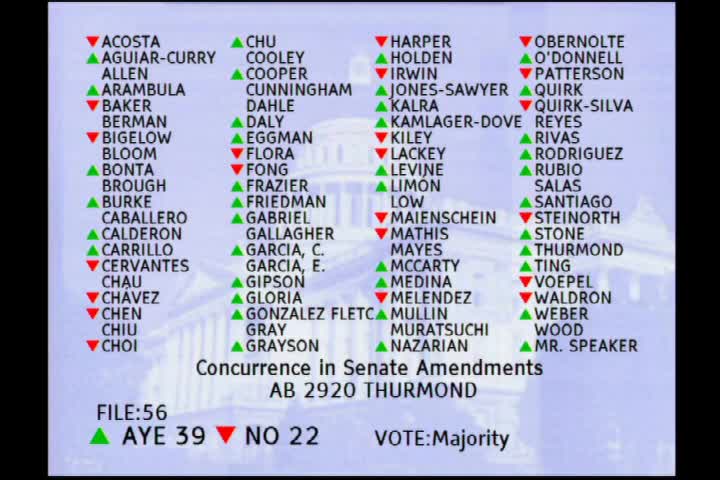 2MIN
Assembly Floor
 9MIN
Assembly Standing Committee on Local Government
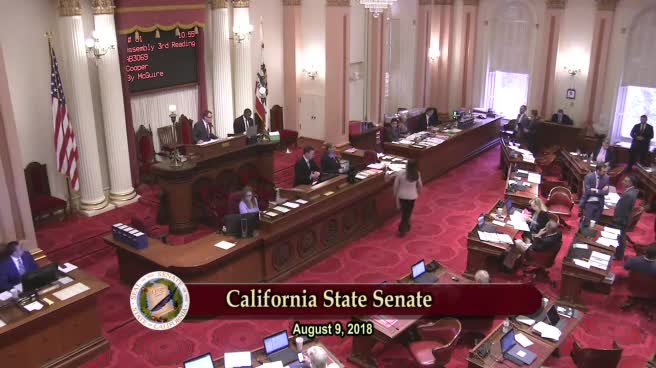 3MIN
Senate Floor
 7MIN
Senate Standing Committee on Transportation and Housing
 10MIN
Senate Standing Committee on Governance and Finance
 7MIN
Assembly Floor
 2MIN
Assembly Standing Committee on Revenue and Taxation
Bill Author

Bill Co-Author(s):