AB 1691: Vehicular air pollution: vehicle retirement.
- Session Year: 2015-2016
- House: Assembly
- Latest Version Date: 2016-08-03
Existing law creates an enhanced fleet modernization program for the retirement of high-polluting vehicles to be administered by the Bureau of Automotive Repair pursuant to guidelines adopted by the State Air Resources Board. Existing law requires the programs guidelines to be updated no later than June 30, 2015. Existing law requires the updated guidelines to ensure vehicle replacement be an option for all motor vehicle owners and may be in addition to compensation for vehicles retired, as specified. that all motor vehicle owners have the option of receiving compensation for both retiring and replacing their vehicles.
This bill would require the state board, by July 1, 2018, to update the guidelines, as specified, that would be operative until July 1, 2022.
Existing law establishes the Air Quality Improvement Program that is administered by the State Air Resources Board for the purposes of funding projects related to, among other things, the reduction of criteria air pollutants and improvement of air quality. Pursuant to its existing statutory authority, the state board has established the Plus-Up Pilot Project, as a part of the Air Quality Improvement Program, to provide financial assistance to low-income individuals to replace older polluting vehicles with cleaner, more fuel efficient fuel-efficient vehicles.
This bill would require the state board, by July 1, 2018, to develop guidelines that would be operative until July 1, 2022, for the purposes of the pilot project.
Existing law creates an enhanced fleet modernization program for the retirement of high-polluting vehicles to be administered by the Bureau of Automotive Repair pursuant to guidelines adopted by the State Air Resources Board. Existing law requires the programs guidelines to be updated no later than June 30, 2015. Existing law requires the updated guidelines to ensure vehicle replacement be an option for all motor vehicle owners and may be in addition to compensation for vehicles retired, as specified.
This bill would require the state board, by June 30, 2017, July 1, 2018, to update the guidelines, as specified, that would be operative until July 1, 2022.
Existing law establishes the Air Quality Improvement Program that is administered by the State Air Resources Board for the purposes of funding projects related to, among other things, the reduction of criteria air pollutants and improvement of air quality. Pursuant to its existing statutory authority, the state board has established the Plus-Up Pilot Project, as a part of the Air Quality Improvement Program, to provide financial assistance to low-income individuals to replace older polluting vehicles with cleaner, more fuel efficient vehicles.
This bill would require the state board, by June 30, 2017, July 1, 2018, to develop guidelines that would be operative until July 1, 2022, for the purposes of the pilot project.
Existing law creates an enhanced fleet modernization program for the retirement of high polluting high-polluting vehicles to be administered by the Bureau of Automotive Repair pursuant to guidelines adopted by the State Air Resources Board. Existing law requires the programs guidelines to be updated no later than June 30, 2015. Existing law requires the updated guidelines to ensure vehicle replacement be an option for all motor vehicle owners and may be in addition to compensation for vehicles retired, as specified.
This bill would require the state board, by June 30, 2017, to update the guidelines, as specified, that would be operative until July 1, 2022.
Existing law establishes the Air Quality Improvement Program that is administered by the State Air Resources Board for the purposes of funding projects related to, among other things, the reduction of criteria air pollutants and improvement of air quality. Pursuant to its existing statutory authority, the state board has established the Plus Up Plus-Up Pilot Project, as a part of the Air Quality Improvement Program, to provide financial assistance to low-income individuals to replace older polluting vehicles with cleaner cleaner, more fuel efficient vehicles.
This bill would require the state board, by June 30, 2017, to adopt develop guidelines that would be operative until July 1, 2022, for the purposes of the pilot project.
Existing law creates an enhanced fleet modernization program for the retirement of high polluting vehicles to be administered by the Bureau of Automotive Repair pursuant to guidelines adopted by the State Air Resources Board. Existing law requires the programs guidelines to be updated no later than June 30, 2015. Existing law requires the updated guidelines to ensure vehicle replacement be an option for all motor vehicle owners and may be in addition to compensation for vehicles retired, as specified.
This bill would require the state board, by June 30, 2017, to update the guidelines, as specified. as specified, that would be operative until July 1, 2022.
Existing law establishes the Air Quality Improvement Program that is administered by the State Air Resources Board for the purposes of funding projects related to, among other things, the reduction of criteria air pollutants and improvement of air quality. Pursuant to its existing statutory authority, the state board has established the Plus Up Project, as a part of the Air Quality Improvement Program, to provide financial assistance to low-income individuals to replace older polluting vehicles with cleaner more fuel efficient vehicles.
This bill would require the state board, by June 30, 2017, to adopt guidelines that would be operative until July 1, 2022, for the purposes of the pilot project.
Existing law creates an enhanced fleet modernization program for the retirement of high polluting vehicles to be administered by the Bureau of Automotive Repair pursuant to guidelines adopted by the State Air Resources Board. Existing law requires the programs guidelines to be updated no later than June 30, 2015. Existing law requires the updated guidelines to ensure vehicle replacement be an option for all motor vehicle owners and may be in addition to compensation for vehicles retired, as specified.
This bill would require the state board, in consultation with the bureau, to adopt, as a part of the program, an element of the program to commence on July 1, 2017, subject to appropriation by the Legislature, with a goal of annually replacing 10,000 vehicles from disadvantaged communities over a 5-year period. board, by June 30, 2017, to update the guidelines, as specified.
Existing law creates an enhanced fleet modernization program for the retirement of high polluting vehicles to be administered by the Bureau of Automotive Repair pursuant to guidelines adopted by the State Air Resources Board. Existing law requires the programs guidelines to be updated no later than June 30, 2015. Existing law requires the updated guidelines to ensure vehicle replacement be an option for all motor vehicle owners and may be in addition to compensation for vehicles retired, as specified.
This bill would require the state board, in consultation with the bureau, to adopt, as a part of the program, an element of the program to commence on July 1, 2017, subject to appropriation by the Legislature, with a goal of annually replacing 10,000 vehicles from disadvantaged communities over a 5-year period.
(a)No later than July 1, 2018, the state board shall update the guidelines adopted pursuant to Section 44125 to ensure all of the following:
(1)Each district implementing a program pursuant to Section 2627 of Title 13 of the California Code of Regulations with a backlog or a waiting list for applicants shall develop develops a plan with recommendations to the state board on how to eliminate the backlog or waiting list.
(2)Specific steps are taken, including, but not limited to, random income eligibility verification and contact with program participants at least once after their vehicles are replaced, taken to ensure the program operating pursuant to Section 2627 of Title 13 of the California Code of Regulations is not being misused. misused, including, but not limited to, random income eligibility verification and contact with program participants at least once after their vehicles are replaced.
(3)For programs operating pursuant to Section 2627 of Title 13 of the California Code of Regulations, inclusion of mandatory partnerships with, and a mandatory minimum amount of overall funding allocated to outreach for, community-based organizations to ensure program accessibility for the lowest income lowest-income disadvantaged communities in the state, with state. A district shall submit an outreach and partnership report to be submitted to the state board by the district every six months after July 1, 2018.
(4)Enhancement of the prescreening of applicants to the programs operating pursuant to Section 2627 of Title 13 of the California Code of Regulations, if determined by the state board to be appropriate.
(5)For the portion of the program operating pursuant to Section 2622 of Title 13 of the California Code of Regulations focused on disadvantaged communities, as identified pursuant to Section 39711, and for programs operating pursuant to Section 2627 of Title 13 of the California Code of Regulations, priority is given to the retirement of vehicles that are 15 years or older and with more than 75,000 miles.
(b)A plan or report required to be submitted by a district to the state board pursuant to this section may be combined with another report that the district is required to submit on a minimum of an annual basis to the state board pursuant to a different law.
(b)
(c)This section shall become inoperative on July 1, 2022, and, as of January 1, 2023, is repealed, unless a later enacted statute, that becomes operative on or before January 1, 2023, deletes or extends the dates on which it becomes inoperative and is repealed.
SEC. 2.Section 44274.1 is added to the Health and Safety Code, to read:44274.1.(a)It is the intent of the Legislature that the efforts of the Plus-Up Pilot Project developed by the state board pursuant to Section 44274 are focused on disadvantaged communities, as identified pursuant to Section 39711, and that the number of vehicles replaced is increased annually.
(b)Not No later than July 1, 2018, the state board shall develop guidelines for the Plus-Up Pilot Project to ensure all of the following:
(1)Each district implementing a program funded by the Plus-Up Pilot Project with a backlog or a waiting list for applicants shall develop develops a plan with recommendations to the state board on how to eliminate the backlog or waiting list.
(2)Specific steps are taken, including, but not limited to, random income eligibility verification and contact with program participants at least once after their vehicles are replaced, taken to ensure that the program is not being misused. misused, including, but not limited to, random income eligibility verification and contact with program participants at least once after their vehicles are replaced.
(3)Mandatory Inclusion of mandatory partnerships with, and a mandatory minimum amount of overall funding allocated to outreach for, community-based organizations to ensure program accessibility for the lowest income lowest-income disadvantaged communities within the district, with district. A district shall submit an outreach and partnership report to be submitted to the state board by the district every six months after July 1, 2018.
(4)Enhancement of the prescreening of applicants to the program, if determined by the state board to be appropriate.
(5)Priority is given to the replacement of vehicles that are 15 years or older and with more than 75,000 miles usage. miles.
(c)A plan or report required to be submitted by a district to the state board pursuant to this section may be combined with another report that the district is required to submit on a minimum of an annual basis to the state board pursuant to a different law.
(c)
(d)This section shall become inoperative on July 1, 2022, and, as of January 1, 2023, is repealed, unless a later enacted statute, that becomes operative on or before January 1, 2023, deletes or extends the dates on which it becomes inoperative and is repealed.
(a)No later than June 30, 2017, July 1, 2018, the state board shall update the guidelines adopted pursuant to Section 44125 to ensure all of the following:
(1)Each district implementing a program pursuant to Section 2627 of Title 13 of the California Code of Regulations with a backlog or a waiting list for applicants shall develop a plan with recommendations to the state board on how to eliminate the backlog or waiting list.
(2)Specific steps are taken, including, but not limited to, random income eligibility verification and contact with program participants at least once after their vehicles are replaced, to ensure the program operating pursuant to Section 2627 of Title 13 of the California Code of Regulations is not being misused.
(3)For programs operating pursuant to Section 2627 of Title 13 of the California Code of Regulations, mandatory partnerships with, and a mandatory minimum amount of overall funding allocated to outreach for, community-based organizations to ensure program accessibility for the lowest income disadvantaged communities in the state, with an outreach and partnership report to be submitted to the state board by the district every six months after July 1, 2017. July 1, 2018.
(4)Enhancement of prescreening of applicants to the programs operating pursuant to Section 2627 of Title 13 of the California Code of Regulations, if determined by the state board to be appropriate.
(5)For the portion of the program operating pursuant to Section 2622 of Title 13 of the California Code of Regulations focused on disadvantaged communities, as identified pursuant to Section 39711, and for programs operating pursuant to Section 2627 of Title 13 of the California Code of Regulations, priority is given to the retirement of vehicles that are 15 years or older and with more than 75,000 miles.
(b)This section shall become inoperative on July 1, 2022, and, as of January 1, 2023, is repealed, unless a later enacted statute, that becomes operative on or before January 1, 2023, deletes or extends the dates on which it becomes inoperative and is repealed.
SEC. 2.Section 44274.1 is added to the Health and Safety Code, to read:44274.1.(a)It is the intent of the Legislature that the efforts of the Plus-Up Pilot Project developed by the state board pursuant to Section 44274 are focused on disadvantaged communities, as identified pursuant to Section 39711 of the Health and Safety Code, 39711, and that the number of vehicles replaced is increased annually.
(b)Not later than June 30, 2017, July 1, 2018, the state board shall develop guidelines for the Plus-Up Pilot Project that include to ensure all of the following:
(1)Each district implementing a program funded by the Plus Up Plus-Up Pilot Project with a backlog or a waiting list for applicants shall develop a plan with recommendations to the state board on how to eliminate the backlog or waiting list.
(2)Specific steps are taken, including, but not limited to, random income eligibility verification and contact with program participants at least once after their vehicles are replaced, to ensure that the program is not being misused.
(3)Mandatory partnerships with, and a mandatory minimum amount of overall funding allocated to outreach for, community-based organizations to ensure program accessibility for the lowest income disadvantaged communities within the district, with an outreach and partnership report to be submitted to the state board by the district every six months after July 1, 2017. 2018.
(4)Enhancement of prescreening of applicants to the program, if determined by the state board to be appropriate.
(5)Priority is given to the replacement of vehicles that are 15 years or older and with more than 75,000 miles usage.
(c)This section shall become inoperative on July 1, 2022, and, as of January 1, 2023, is repealed, unless a later enacted statute, that becomes operative on or before January 1, 2023, deletes or extends the dates on which it becomes inoperative and is repealed.
(a)No later than June 30, 2017, the state board shall update the guidelines adopted pursuant to Section 44125 to ensure all of the following:
(1)Each district implementing a program pursuant to Section 2627 of Title 13 of the California Code of Regulations with a backlog or a waiting list for applicants shall develop a plan with recommendations to the state board on how to eliminate the backlog or waiting list.
(2)Specific steps are taken, including, but not limited to, random income eligibility verification and contact with program participants at least once after their vehicles are replaced, to ensure the program operating pursuant to Section 2627 of Title 13 of the California Code of Regulations is not being misused.
(3)For programs operating pursuant to Section 2627 of Title 13 of the California Code of Regulations, mandatory partnerships with, and a mandatory minimum amount of overall funding allocated to outreach for, community-based organizations to ensure program accessibility for the lowest income disadvantaged communities in the state, with an outreach and partnership report to be submitted to the state board by the district every six months after July 1, 2017.
(4)Enhancement of prescreening of applicants to the programs operating pursuant to Section 2627 of Title 13 of the California Code of Regulations, if determined by the state board to be appropriate.
(5)For the portion of the program operating pursuant to Section 2622 of Title 13 of the California Code of Regulations focused on disadvantaged communities, as identified pursuant to Section 39711, and for programs operating pursuant to Section 2627 of Title 13 of the California Code of Regulations, priority is given to the retirement of vehicles that are 15 years or older and with more than 75,000 miles.
(b)This section shall become inoperative on July 1, 2022, and, as of January 1, 2023, is repealed, unless a later enacted statute, that becomes operative on or before January 1, 2023, deletes or extends the dates on which it becomes inoperative and is repealed.
SEC. 2.Section 44274.1 is added to the Health and Safety Code, to read:44274.1.(a)It is the intent of the Legislature that the efforts of the Plus-Up Pilot Project developed by the state board pursuant to Section 44274 are focused on disadvantaged communities, as identified pursuant to Section 39711 of the Health and Safety Code, and that the number of vehicles replaced is increased annually.
(b)Not later than June 30, 2017, the state board shall develop guidelines for the Plus Up Plus-Up Pilot Project that include all of the following:
(1)Each district implementing a program funded by the Plus Up Pilot Project with a backlog or a waiting list for applicants shall develop a plan with recommendations to the state board on how to eliminate the backlog or waiting list.
(2)Specific steps are taken, including, but not limited to, random income eligibility verification and contact with program participants at least once after their vehicles are replaced, to ensure that the program is not being misused.
(3)Mandatory partnerships with, and a mandatory minimum amount of overall funding allocated to outreach for, community-based organizations to ensure program accessibility for the lowest income disadvantaged communities in the state, within the district, with an outreach and partnership report to be submitted to the state board by the district every six months after July 1, 2017.
(4)Enhancement of prescreening of applicants to the program, if determined by the state board to be appropriate.
(5)Priority is given to the replacement of vehicles that are 15 years or older and with more than 75,000 miles usage.
(c)This section shall become inoperative on July 1, 2022, and, as of January 1, 2023, is repealed, unless a later enacted statute, that becomes operative on or before January 1, 2023, deletes or extends the dates on which it becomes inoperative and is repealed.
It is the intent of the Legislature that the efforts of the Plus-Up Pilot Project developed by the State Air Resources Board are focused on disadvantaged communities, as identified pursuant to Section 39711 of the Health and Safety Code and that the program increases the number of vehicles replaced annually.
SEC. 2.SECTION 1.Section 44125.5 is added to the Health and Safety Code, to read:44125.5.(a)No later than June 30, 2017, the state board shall update the guidelines adopted pursuant to Section 44125 to ensure all of the following:
(a)
(1)Each district implementing a vehicle retirement program funded by the state boards Plus-Up Pilot Project program pursuant to Section 2627 of Title 13 of the California Code of Regulations with a backlog or a waiting list for applicants shall develop a plan with recommendations to the state board on how to eliminate the backlog or waiting list.
(b)
(2)Specific steps are taken taken, including, but not limited to, random income eligibility verification and contact with program participants at least once after their vehicles are replaced, to ensure the program operating pursuant to Section 2627 of Title 13 of the California Code of Regulations is not being misused. The steps shall include, but are not limited to, random income eligibility verification and contact with program participants at least once after their vehicles are replaced.
(c)Evaluation of whether prescreening of applicants for the program can be enhanced.
(3)For programs operating pursuant to Section 2627 of Title 13 of the California Code of Regulations, mandatory partnerships with, and a mandatory minimum amount of overall funding allocated to outreach for, community-based organizations to ensure program accessibility for the lowest income disadvantaged communities in the state, with an outreach and partnership report to be submitted to the state board by the district every six months after July 1, 2017.
(4)Enhancement of prescreening of applicants to the programs operating pursuant to Section 2627 of Title 13 of the California Code of Regulations, if determined by the state board to be appropriate.
(d)
(5)For the portion of the program operating pursuant to Section 2622 of Title 13 of the California Code of Regulations focused on disadvantaged communities, as identified pursuant to Section 39711, and for a districts program funded by the Plus-Up Pilot Project, programs operating pursuant to Section 2627 of Title 13 of the California Code of Regulations, priority is given to the retirement of vehicles that are 15 years or older and vehicles with more than 75,000 miles.
(b)This section shall become inoperative on July 1, 2022, and, as of January 1, 2023, is repealed, unless a later enacted statute, that becomes operative on or before January 1, 2023, deletes or extends the dates on which it becomes inoperative and is repealed.
SEC. 2.Section 44274.1 is added to the Health and Safety Code, to read:44274.1.(a)It is the intent of the Legislature that the efforts of the Plus-Up Pilot Project developed by the state board pursuant to Section 44274 are focused on disadvantaged communities, as identified pursuant to Section 39711 of the Health and Safety Code, and that the number of vehicles replaced is increased annually.
(b)Not later than June 30, 2017, the state board shall develop guidelines for the Plus Up Pilot Project that include all of the following:
(1)Each district implementing a program funded by the Plus Up Pilot Project with a backlog or a waiting list for applicants shall develop a plan with recommendations to the state board on how to eliminate the backlog or waiting list.
(2)Specific steps are taken, including, but not limited to, random income eligibility verification and contact with program participants at least once after their vehicles are replaced, to ensure that the program is not being misused.
(3)Mandatory partnerships with, and a mandatory minimum amount of overall funding allocated to outreach for, community-based organizations to ensure program accessibility for the lowest income disadvantaged communities in the state, with an outreach and partnership report to be submitted to the state board by the district every six months after July 1, 2017.
(4)Enhancement of prescreening of applicants to the program, if determined by the state board to be appropriate.
(5)Priority is given to the replacement of vehicles that are 15 years or older and with more than 75,000 miles usage.
(c)This section shall become inoperative on July 1, 2022, and, as of January 1, 2023, is repealed, unless a later enacted statute, that becomes operative on or before January 1, 2023, deletes or extends the dates on which it becomes inoperative and is repealed.
It is the intent of the Legislature that the efforts of the Plus-Up Pilot Project developed by the State Air Resources Board are focused on disadvantaged communities, as identified pursuant to Section 39711 of the Health and Safety Code and that the program increases the number of vehicles replaced annually.
SEC. 2.Section 44125.5 is added to the Health and Safety Code, to read:44125.5.No later than June 30, 2017, the state board shall update the guidelines adopted pursuant to Section 44125 to ensure all of the following:
(a)Each district implementing a vehicle retirement program funded by the state boards Plus-Up Pilot Project with a backlog or a waiting list for applicants shall develop a plan with recommendations to the state board on how to eliminate the backlog or waiting list.
(b)Specific steps are taken to ensure the program is not being misused. The steps shall include, but are not limited to, random income eligibility verification and contact with program participants at least once after their vehicles are replaced.
(c)Evaluation of whether prescreening of applicants for the program can be enhanced.
(d)For the portion of the program focused on disadvantaged communities, as identified pursuant to Section 39711, and for a districts program funded by the Plus-Up Pilot Project, priority is given to the retirement of vehicles that are 15 years or older and vehicles with more than 75,000 miles.
SECTION 1.Section 44125.5 is added to the Health and Safety Code, to read:44125.5.(a)As a part of the program adopted pursuant to Section 44125, the state board, in consultation with the bureau, shall adopt an element of the program to commence on July 1, 2017, subject to appropriation by the Legislature, that allows for the voluntary retirement of passenger vehicles and light-duty and medium-duty trucks that are high polluters, focusing the programs efforts in disadvantaged communities identified pursuant to Section 39711.
(b)The goal of the element adopted pursuant to subdivision (a) is to annually replace 10,000 vehicles from those disadvantaged communities with the lowest income levels.
(c)No later than June 30, 2017, the state board shall update the guidelines adopted pursuant to Section 44125 to implement this section. In updating the guidelines for the purposes of this section, the state board shall study and consider all of the following:
(1)Mandatory partnerships and a mandated minimum amount of overall funding allocated to outreach with community-based organizations to ensure program accessibility for the lowest income disadvantaged communities in the state, with an outreach and partnership report to be submitted to the state board every six months after July 1, 2017.
(2)A Primary Usage and Dependency document attesting to all of the following:
(A)The person receiving financial assistance from the program is dependent on the vehicle being retired.
(B)The person cannot replace the vehicle without financial assistance from the program.
(C)The loss of the vehicle would cause irreparable economic harm to the person.
(d)This section shall become inoperative on July 1, 2022, and, as of January 1, 2023, is repealed, unless a later enacted statute, that becomes operative on or before January 1, 2023, deletes or extends the dates on which it becomes inoperative and is repealed.
(a)As a part of the program adopted pursuant to Section 44125, the state board, in consultation with the bureau, shall adopt an element of the program to commence on July 1, 2017, subject to appropriation by the Legislature, that allows for the voluntary retirement of passenger vehicles and light-duty and medium-duty trucks that are high polluters, focusing the programs efforts in disadvantaged communities identified pursuant to Section 39711.
(b)The goal of the element adopted pursuant to subdivision (a) is to annually replace 10,000 vehicles from those disadvantaged communities with the lowest income levels.
(c)No later than June 30, 2017, the state board shall update the guidelines adopted pursuant to Section 44125 to implement this section. In updating the guidelines for the purposes of this section, the state board shall study and consider all of the following:
(1)Mandatory partnerships and a mandated minimum amount of overall funding allocated to outreach with community-based organizations to ensure program accessibility for the lowest income disadvantaged communities in the state, with an outreach and partnership report to be submitted to the state board every six months after July 1, 2017.
(2)A Primary Usage and Dependency document attesting to all of the following:
(A)The person receiving financial assistance from the program is dependent on the vehicle being retired.
(B)The person cannot replace the vehicle without financial assistance from the program.
(C)The loss of the vehicle would cause irreparable economic harm to the person.
(d)This section shall become inoperative on July 1, 2022, and, as of January 1, 2023, is repealed, unless a later enacted statute, that becomes operative on or before January 1, 2023, deletes or extends the dates on which it becomes inoperative and is repealed.
|
Date
|
Status
|
|---|---|
| Aug 11, 2016 | In committee: Held under submission. |
| Aug 8, 2016 | Referred to APPR. suspense file. |
| Aug 3, 2016 | From committee chair, with author's amendments: Amend, and re-refer to committee. Read second time, amended, and re-referred to Com. on APPR. |
| Aug 2, 2016 | Read second time and amended. Re-referred to Com. on APPR. |
| Aug 1, 2016 | From committee: Amend, and do pass as amended and re-refer to Com. on APPR. (Ayes 5. Noes 0.) (June 29). |
| Jun 22, 2016 | From committee: Do pass and re-refer to Com. on E.Q. (Ayes 7. Noes 0.) (June 21). Re-referred to Com. on E.Q. |
| Jun 2, 2016 | Referred to Coms. on T. & H. and E.Q. |
| May 23, 2016 | Read third time. Passed. Ordered to the Senate. (Ayes 59. Noes 18. Page 4897.) |
| May 23, 2016 | Read third time. Passed. Ordered to the Senate. (Ayes 59. Noes 18.) |
| May 23, 2016 | In Senate. Read first time. To Com. on RLS. for assignment. |
| May 23, 2016 | Read third time. Passed. Ordered to the Senate. |
| May 16, 2016 | Read second time. Ordered to third reading. |
| May 12, 2016 | Read second time and amended. Ordered returned to second reading. |
| May 11, 2016 | From committee: Amend, and do pass as amended. (Ayes 15. Noes 5.) (May 11). |
| Apr 21, 2016 | Re-referred to Com. on APPR. |
| Apr 20, 2016 | Read second time and amended. |
| Apr 19, 2016 | From committee: Amend, and do pass as amended and re-refer to Com. on APPR. (Ayes 13. Noes 1.) (April 18). |
| Apr 13, 2016 | Re-referred to Com. on TRANS. |
| Apr 12, 2016 | From committee chair, with author's amendments: Amend, and re-refer to Com. on TRANS. Read second time and amended. |
| Apr 6, 2016 | In committee: Hearing postponed by committee. |
| Feb 8, 2016 | Referred to Com. on TRANS. |
| Jan 22, 2016 | From printer. May be heard in committee February 21. |
| Jan 21, 2016 | Read first time. To print. |
|
Date
|
Description
|
Location
|
Votes
|
|
|---|---|---|---|---|
| Aug 8, 2016 | Placed on suspense file | Senate Standing Committee on Appropriations |
Passed |
|
| Jun 29, 2016 | Do pass as amended, but first amend, and re-refer to the Committee on [Appropriations] | Senate Standing Committee on Environmental Quality |
Passed |
|
| Jun 21, 2016 | Do pass, but first be re-referred to the Committee on [Environmental Quality] | Senate Standing Committee on Transportation and Housing |
Passed |
|
| May 23, 2016 | AB 1691 GIPSON Assembly Third Reading | Assembly Floor |
Passed |
|
| May 11, 2016 | Do pass as amended. | Assembly Standing Committee on Appropriations |
Passed |
|
| Apr 18, 2016 | Do pass as amended and be re-referred to the Committee on [Appropriations] | Assembly Standing Committee on Transportation |
Passed |
This list shows positions taken on this bill by organizations on the date displayed, which is linked to the original source.
Positions by individuals are not included.
SENATE COMMITTEE ON
Senator Ricardo Lara, Chair
2015 - 2016 Regular Session
AB 1691 (Gipson) - Vehicular air pollution: vehicle retirement
Version: | Policy Vote: |
Urgency: | Mandate: |
Hearing Date: | Consultant: |
This bill meets the criteria for referral to the Suspense File.
Bill Summary:
AB 1691 would require the California Air Resources Board (CARB) to develop guidelines for the Plus-Up Pilot Project and update guidelines for the Enhanced Fleet Modernization Program (EFMP) by January 1, 2018 in order to reduce application backlogs and waiting lists, target resources for the lowest-income disadvantaged communities, and prioritize older, higher-polluting vehicles for incentives, as specified.
Fiscal Impact:
- One-time CARB costs of up to $163,000 (Enhanced Fleet Modernization Subaccount) to update EFMP guidelines and establish Plus-Up Pilot Project guidelines, as specified, by January 1, 2018.
- Unknown cost pressures on the Greenhouse Gas Reduction Fund (GGRF), potentially in the millions annually through 2021-22, as a result of codified intent language that the number of vehicles replaced under the Plus-Up Pilot Project is increased annually.
Background:
The Consumer Assistance Program (CAP) was created to encourage voluntary accelerated vehicle retirement (“car scrap”) which provides monetary incentives to vehicle owners to retire older, high-polluting vehicles. Under this program owners who scrap their vehicles are given $1,000 ($1,500 for low income consumers) for vehicles that have failed their last smog test.
Existing state law establishes the EFMP, administered by CARB and the Bureau of Automotive Repair. EFMP provides for the voluntary retirement of passenger vehicles and light- and medium-duty trucks that are high polluters. Unlike CAP, EFMP allows vehicles to be retired without first having to fail a smog test, and offers a $1,000 voucher ($1,500 for low-income owners) to retire a high-polluting vehicle.
EFMP includes a vehicle replacement component, referred to as EFMP Plus-Up, which is operated by the San Joaquin and South Coast air districts, both of which are designated as extreme non-attainment areas for ozone, in partnership with CARB. Under EFMP Plus-Up, a low-income owner who lives in one of these districts can get a $2,500 “replacement” voucher in addition to the $1,500 base EFMP “retirement” voucher. The owner may use the funds to either purchase a car that is less than eight years old, or to obtain a public transit voucher. If a low-income owner lives within a disadvantaged community in one of these air districts, and wants to purchase a hybrid, plug-in hybrid, or battery electric vehicle, he or she can “stack” additional incentives on top of these two vouchers. While the program allows individuals to trade in their high-polluting cars for cleaner gas-powered cars, greater incentives are provided if the individual opts to purchase a hybrid, hybrid-electric, or fully electric vehicle. Depending on income and the type of replacement vehicle, the owner can get incentives worth up to $12,000 total toward the purchase of a new car.
EFMP is funded through vehicle surcharges, whereas EFMP Plus-Up has been funded through GGRF moneys. For 2015-16, funding for EFMP and EFMP Plus-Up is around $12.8 million which ARB estimates will provide incentives for about 1,500 vehicles. In the 2016-17 fiscal year, proposed funding for both programs totals $37.4 million ($30 million of which is GGRF), and would provide incentives for about 4,500 vehicles. EFMP Plus-Up Pilot Program was funded in 2015-16 with $20 million from GGRF. The 2016-17 investment plan for CARB’s low carbon transportation investments proposes $30 million from GGRF.
Proposed Law:
AB 1691 would require CARB to develop guidelines for the Plus-Up Pilot Project and update guidelines for the EFMP by January 1, 2018 to ensure all of the following:
- That each air district participating in either program that has a backlog or waiting list for applicant develop a plan with recommendations to CARB on how to eliminate the backlog or waiting list.
- That specific steps are taken to ensure the respective programs are not being misused, including random income eligibility verification and contact with program participants at least once after a vehicle is replaced.
- Inclusion of mandatory partnerships with, and a minimum amount of funding allocated to outreach for, community-based organizations to ensure accessibility for the lowest-income disadvantaged communities. Districts must submit an outreach and partnership report to CARB every six months after July 1, 2018.
- The programs have enhanced prescreening of applicants, if it is determined by CARB to be appropriate.
- Priority is given to retirement or replacement of vehicles that are 15 years or older with more than 75,000 miles. With respect to the EFMP, this requirement only applies to the portion of the program focused on disadvantaged communities.
The bill authorizes participating air districts to submit the specified outreach and partnership report in combination with another report that must be submitted to CARB at least annually. SB 1691 also states legislative intent that the efforts of the Plus-Up Pilot Project are focused on disadvantaged communities and that the number of vehicles replaced is increased annually. The bill’s provisions would sunset on July 1, 2022.
Related Legislation:
AB 1965 (Cooper) would require CARB to update its EFMP guidelines to expand the EFMP Plus-Up program in disadvantaged communities and in areas with poor air quality, as specified. That bill failed passage in the Senate Environmental Quality Committee this year.
Staff Comments:
EFMP Plus-Up has been particularly successful in the San Joaquin Valley, resulting in the retirement of 292 high-polluting vehicles in the first six months of the program. The San Joaquin Valley program uses “grass roots” advertising and outreach to invite low- and moderate-income vehicle owners to participate in events where they can get a free smog test and undergo pre-screening to determine whether they are eligible for various incentives. The South Coast program uses more traditional outreach tools such as flyers, billboards, and websites. While the South Coast program is also successful, with a long wait list, it does not currently offer pre-screening services that would enable staff to prioritize applications for the oldest, highest polluting cars. This bill would require CARB to enact updated guidelines to standardize the programs in participating air districts to ensure consistency in the administration of the EFMP and Plus-Up programs.
Staff notes that current law does not explicitly mention the Plus-Up program in statute. This bill would codify the program by requiring CARB to develop guidelines for the program, and place the requirements within the provisions of the Health and Safety Code pertaining to the Air Quality Improvement Program, a program administered by CARB to fund air quality improvement projects relating to fuel and vehicle technologies. It is unclear why the Plus-Up provisions of this bill are placed within the AQIP statutes.
Recommended Amendments:
Staff recommends that the bill be amended to remove GGRF cost pressures by deleting legislative intent that the number of vehicles replaced under the Plus-Up Pilot Project is increased annually. (page 3, lines 31-32 of the bill)
-- END --
SENATE COMMITTEE ON ENVIRONMENTAL QUALITY
Senator Wieckowski, Chair
2015 - 2016 Regular
Bill No: AB 1691
Author: | Gipson and Cristina Garcia | ||
Version: | 5/12/2016 | Hearing Date: | 6/29/2016 |
Urgency: | No | Fiscal: | Yes |
Consultant: | Rebecca Newhouse | ||
SUBJECT: Vehicular air pollution: vehicle retirement.
ANALYSIS:
Existing law:
- Establishes the Enhanced Fleet Modernization Program (EFMP), which allows for the voluntary retirement of passenger vehicles and light-duty and medium-duty trucks that are high polluters and requires the program be administered by the Bureau of Automotive Repair pursuant to guidelines adopted by the California Air Resources Board (ARB). (Health and Safety Code §44125)
- Establishes the Charge Ahead Initiative administered by ARB with the goals of reaching at least one million zero-emission and near-zero-emission vehicles by January 1, 2023, and increasing accessibility for disadvantaged, low-income, and moderate-income communities. ARB is required to establish programs that further increase access to and direct benefits for disadvantaged, low-income, and moderate-income communities and consumers from electric transportation. (HSC §44258 et seq.)
- Under the California Global Warming Solutions Act of 2006 (also known as AB 32), requires ARB to determine the 1990 statewide greenhouse gas (GHG) emissions level and approve a statewide GHG emissions limit that is equivalent to that level, to be achieved by 2020, and to adopt GHG emissions reductions measures by regulation. ARB is authorized to include the use of market-based mechanisms to comply with these regulations. (Health and Safety Code §38500 et seq.)
- Establishes the Greenhouse Gas Reduction Fund (GGRF) in the State Treasury, requires all moneys, except for fines and penalties, collected pursuant to a market-based mechanism be deposited in the fund. (Government Code §16428.8)
- Prohibits the state from approving allocations for a measure or program using GGRF moneys except after determining that the use of those moneys furthers the regulatory purposes of AB 32, and requires moneys from the GGRF be used to facilitate the achievement of reductions of GHG emissions in California. (HSC §39712)
This bill requires ARB to update the EFMP guidelines relative to EFMP Plus-Up, no later than June 30, 2017 and effective until July 1, 2022, to:
- Require each air district with a backlog or wait list of applicants to submit a plan to ARB with recommendations of how to eliminate the backlog.
- Require each air district to take steps to help prevent program abuse, including, but not limited to, randomly verifying income eligibility and contacting program participants at least once after their vehicles are replaced.
- Require each air district to partner with, and allocate a minimum amount of outreach funds for community-based organizations to help ensure program accessibility for the lowest income DACs in the state. Requires each district to report to ARB every six months on outreach and partnerships.
- Require each air district to enhance its pre-screening of applicants, if determined by ARB to be appropriate.
- Require each air district to prioritize retirement of vehicles that are 15 years or older and with more than 75,000 miles.
Background
- Air pollution in California and the transportation sector. The federal Clean Air Act, and its implementing regulations are intended to protect public health and environmental quality by limiting and reducing pollution from various sources. Under the federal Clean Air Act, US EPA establishes National Ambient Air Quality Standards (NAAQS) that apply for outdoor air throughout the country. These federal standards exist for several air pollutants due to their negative impact on public health above specified concentrations, including ozone, particulate matter (PM), NOx, oxides of sulfur (SOx), carbon monoxide, and lead. US EPA reviews each NAAQS at five-year intervals to ensure that the standards are based on the most recent scientific information.
Regions that do not meet the national standards for any one of the standards are designated nonattainment areas. The Clean Air Act sets deadlines for attainment based on the severity of nonattainment and requires states to develop comprehensive plans, known as the state implementation plan (SIP), to attain and maintain air quality standards for each area designated nonattainment for an NAAQS.
California has some of the most severe air pollution problems in the country. The South Coast and San Joaquin air basins, which contain over half of the state’s population, are extreme nonattainment regions (the highest degree of severity) for ozone pollution and are both nonattainment regions for particulate matter (PM).
Ground level ozone (or tropospheric ozone) is a primary component of smog and is formed from the reaction of NOx with volatile organic compounds in sunlight. Ozone has a number of negative health effects including irritated respiratory system, reduced lung function, aggravated asthma and inflammation and damage of the lining of the lung. Active children are at highest risk from ozone exposure.
PM can be directly emitted from combustion or can be formed in the atmosphere when gaseous pollutants such as SO2 and NOx react to form fine particles. Very fine particulate matter is particularly dangerous since it burrows deep into the lungs where it can enter the bloodstream and harm the heart and other organs. Fine particulate pollution poses an especially critical health danger for children, the elderly, and people with existing health problems. Exposure to PM 2.5 is also linked to cardiovascular disease. A 2010 ARB analysis based on scientific assessments by US EPA, reported that approximately 9,000 people in California are estimated to die prematurely each year as a result of exposure to fine particle pollution.
Nationally and statewide, the transportation sector is responsible for a major fraction of air pollution, and in particular NOx, which contributes to both ozone and PM formation. Across the US, motor vehicles emit more than half of all NOx emissions. In California, the transportation sector accounts for approximately 80% of the NOx emissions, and according to ARB, 75% of vehicular air pollution in the state is caused by just 25% of the fleet.
- Car scrap program. The Consumer Assistance Program (CAP) was created to encourage voluntary accelerated vehicle retirement (“car scrap”) which provides a monetary incentives to vehicle owners to retire older, high-polluting vehicles. Under this program owners who scrap their vehicles are given $1,000 ($1,500 for low income consumers) for vehicles that have failed their last smog test.
- EFMP and EFMP Plus-Up. Existing state law establishes the Enhanced Fleet Modernization Program (EFMP), administered by the ARB and BAR. EFMP provides for the voluntary retirement of passenger vehicles and light- and medium-duty trucks that are high polluters. Unlike CAP, EFMP allows vehicles to be retired without first having to fail a smog test, and offers a $1,000 voucher ($1,500 for low-income owners) to retire a high-polluting vehicle.
EFMP includes a vehicle replacement component, now known as EFMP Plus-Up, which is operated by the San Joaquin and South Coast air districts in partnership with ARB (both designated extreme non-attainment areas for ozone). Under EFMP Plus-Up, a low-income owner who lives in one of these districts can get a $2,500 “replacement” voucher in addition to the $1,500 base EFMP “retirement” voucher. The owner may use the funds to either purchase a car that is less than eight years old, or to obtain a public transit voucher. If a low-income owner lives within a disadvantaged community in one of these air districts, and wants to purchase a hybrid, plug-in hybrid, or battery electric vehicle, he or she can “stack” additional incentives on top of these two vouchers. While the program allows individuals to trade in their high-polluting cars for cleaner gas-powered cars, greater incentives are provided if the individual opts to purchase a hybrid, hybrid-electric, or fully electric vehicle. Depending on income and the type of replacement vehicle, the owner can get up to $12,000 total toward the purchase of a new car.
Funding. EFMP is funded through vehicle surcharges, whereas EFMP Plus-Up has been funded through GGRF moneys. For 2015-16, funding for EFMP and EFMP Plus-Up is around $12.8 million which ARB estimates will provide incentives for about 1,500 vehicles. In the 2016-17 fiscal year, proposed funding for both programs totals $37.4 million (of which $30 million is Greenhouse Gas Reduction Fund), and would provide incentives for about 4,500 vehicles.
EFMP Plus-Up pilot program was funded in FY 2015-16 with $20million from GGRF. The 2016-17 FY investment plan for ARB’s low carbon transportation investments proposes $30 million from GGRF.
Implementing EFMP Plus-Up. EFMP Plus-Up has been particularly successful in the San Joaquin Valley, resulting in the retirement of 292 high-polluting vehicles in the first six months of the program. The San Joaquin Valley program uses “grass roots” advertising and outreach to invite low- and moderate-income vehicle owners to participate in “events” where they can get a free smog test and undergo pre-screening to determine whether they are eligible for various incentives. The South Coast program uses more traditional outreach tools such as flyers, billboards, and websites. While the South Coast program is also successful, with a long wait list, it does not necessarily provide the pre-screening that would enable staff to prioritize applications for the oldest, highest polluting cars.
Comments
- Purpose of Bill. According to the author, “AB 1691 has been introduced to help encourage the most efficient use of EFMP funds within the Plus-Up program, to encourage the replacement of the oldest and dirtiest cars from California roadways, and to help the lowest-income individuals and households access the EFMP programs. To accomplish this, this bill would require ARB to update EFMP guidelines by June 30, 2017, to ensure that districts implementing the program have strategies in place to eliminate backlogs and waiting lists. Additionally, this bill would also call upon ARB to ensure the programs are not misused by requiring income eligibility verification and follow up with participants. AB 1691 also calls upon ARB to continuously evaluate the program to determine where program enhancements might be made.”
- South Coast Air Quality Management District suggested amendments. The South Coast air district has taken a “support with amendments” position on this bill. South Coast states that it does not anticipate having a wait list beyond fiscal year 2016-17, but also states that clearing the backlog is partly dependent on state funding levels for EFMP and EFMP Plus-Up. South Coast asks for amendments to allow a district to provide backlog information in its quarterly report instead of requiring a formal plan to ARB. South Coast also requests amendments to help ensure that the programs are available in areas of extreme non-attainment; make the vehicle replacement component available in all districts containing disadvantaged communities; increase outreach funding; and allocate funding in equal levels to EFMP and EFMP Plus-Up.
Several of SCAQMD’s requested amendments may be partially addressed in another measure this year, AB 1965 (Cooper), including expansion of the program to other local air districts containing disadvantaged communities, and additional emphasis on funding for outreach.
- Combining efforts. The Committee will be hearing AB 1965 (Cooper) which also directs ARB to update their EFMP guidelines, relative to the EFMP Plus-Up program, and requires the update by July 1, 2018. Specifically, AB 1965 expands the EFMP Plus-Up program to additional local air districts.
AB 1691 (Gipson), the subject of this analysis, directs ARB to update their guidelines by June 30, 2017, to reduce and eliminate backlogs and waitlists for the EFMP Plus-Up program, and prioritize older, higher-polluting for incentives.
Although the bills are not necessarily conflicting, they establish different timelines for when these updates to the EFMP guidelines relative to the EFMP Plus-Up program are required. As updating guidelines pursuant to the Administrative Procedures Act is a time consuming process, and could result in significant administrative expense, the authors of these measures may wish to combine efforts going forward to either consolidate both measures into a single bill, or, at a minimum, make the dates by which guidelines are required to be updated consistent.
Due to the timing issues associated with updating the guidelines, and to make the bill more consistent with AB 1965 (Cooper), an amendment is needed to change the date by which the guidelines are required to be updated to July 1, 2018.
Related/Prior Legislation
AB 1965 (Cooper) requires ARB to expand EFMP, relative to EFMP Plus-Up, in disadvantaged communities and in areas with poor air quality. This bill will also be heard by this committee today.
SB 1275 (de León, Chapter 530, Statutes of 2014) established the Charge Ahead Initiative, to provide incentives to increase the availability of zero-emission vehicles and near-zero-emission vehicles, particularly to low-income and moderate-income consumers and disadvantaged communities.
SB 459 (Pavley, Chapter 437, Statutes of 2013) required ARB to update the EFMP guidelines by June 30, 2015 to, among other things, focus program assistance on lower-income vehicle owners.
DOUBLE REFERRAL:
This measure was heard in Senate Transportation and Housing Committee on June 21, 2016, and passed out of committee with a vote of 7-0.
SOURCE:
Author
SUPPORT:
South Coast Air Quality Management District
OPPOSITION:
None received
-- END --
SENATE COMMITTEE ON TRANSPORTATION AND HOUSING
Senator Jim Beall, Chair
2015 - 2016 Regular
Bill No: Hearing Date: 6/21/2016
Author: | Gipson | ||
Version: | 5/12/2016 | ||
Urgency: | No | Fiscal: | Yes |
Consultant: | Erin Riches | ||
SUBJECT: Enhanced Fleet Modernization Program
DIGEST: This bill requires the state Air Resources Board (ARB) to update the Enhanced Fleet Modernization Program (EFMP), relative to EFMP Plus-Up, to help increase efficiencies and reduce program abuse.
ANALYSIS:
- Existing federal law, the Clean Air Act, requires the U.S. Environmental Protection Agency to establish National Ambient Air Quality Standards for certain air pollutants due to their negative impact on public health above specified concentrations. Regions that do not meet the national standards for any one of the standards are designated as non-attainment areas.
- Existing state law establishes the smog check program, administered by the Bureau of Automotive Repair (BAR). This program generally requires vehicles registered in non-attainment areas to undergo emission inspections. Specifically, vehicle owners must have their vehicles tested every two years, with some exceptions, including gas-powered vehicles manufactured prior to 1976, alternatively-fueled vehicles, and vehicles six years old or newer.
- Existing state law also establishes the Consumer Assistance Program (CAP) under BAR. CAP provides assistance to low-income owners of vehicles that have failed a smog test in the form of a repair cost waiver, repair cost assistance, or a monetary incentive of up to $1,500 to “retire” (scrap) the vehicle.
- Existing state law establishes the Enhanced Fleet Modernization Program (EFMP), administered by the state ARB and BAR. EFMP provides for the voluntary retirement of passenger vehicles and light- and medium-duty trucks that are high polluters. BAR determines whether an owner-applicant is eligible for CAP or EFMP (or neither). EFMP offers a $1,000 voucher ($1,500 for low-income owners) to retire a high-polluting vehicle.
EFMP includes a vehicle replacement component, now known as EFMP Plus-Up, which is operated by the San Joaquin and South Coast air districts in partnership with ARB. (These air districts are the only ones in the state classified as extreme non-attainment.) Under EFMP Plus-Up, a low-income owner who lives in one of these districts can get a $2,500 “replacement” voucher in addition to the $1,500 base EFMP “retirement” voucher. The owner may use the funds to either purchase a car that is less than eight years old or to obtain a public transit voucher. If a low-income owner lives within a disadvantaged community (DAC) in one of these air districts, and wants to purchase a hybrid, plug-in hybrid, or battery electric vehicle, he or she can “stack” additional incentives on top of these two vouchers. Depending on the owner’s income and the type of replacement vehicle, the owner can get up to $12,000 total toward the purchase of a new car.
This bill requires ARB to update the EFMP guidelines relative to EFMP Plus-Up, no later than June 30, 2017 and effective until July 1, 2022, to:
- Require each air district with a backlog or wait list of applicants to submit a plan to ARB with recommendations of how to eliminate the backlog.
- Require each air district to take steps to help prevent program abuse, including but not limited to randomly verifying income eligibility and contacting program participants at least once after their vehicles are replaced.
- Require each air district to partner with, and allocate a minimum amount of outreach funds for community-based organizations to help ensure program accessibility for the lowest income DACs in the state. Requires each district to report to ARB every six months on outreach and partnerships.
- Require each air district to enhance its pre-screening of applicants, if determined by ARB to be appropriate.
- Require each air district to prioritize retirement of vehicles that are 15 years or older and with more than 75,000 miles.
COMMENTS:
- Purpose. The author states that the current program does not include requirements to prevent fraud or clear a backlog of waitlisted applicants, leading to uneven program results. The author states that this bill will establish a common framework to help make program operations more efficient and better equipped to replace the cars that damage the environment the most. According to the author, this bill will also help focus EFMP Plus-Up on DACs and on annually increasing the number of vehicles replaced.
- Need for the program. According to ARB, 75% of vehicular air pollution is caused by just 25% of the fleet. While much attention has been focused on the zero-emissions vehicle (ZEV) mandate, which aims to have ZEVs comprise 15% of new cars sold in California by 2025, programs such as EFMP and EFMP Plus-Up are key to getting older, high-polluting cars off the road and thereby achieving significant emissions reductions. Because gross-polluting cars are often owned by lower-income individuals, providing financial assistance can be an essential element to helping them scrap these cars and replace them with newer, cleaner cars.
- Need for the bill. By requiring ARB to continuously evaluate district programs, this bill aims to encourage the use of new and innovative methodologies to better reach and assist low-income participants and further encourage retirement and replacement of the oldest and dirtiest cars. Tightening up EFMP Plus-Up and focusing the district programs on outreach, prevention of abuse, and prioritizing the oldest cars will help improve air quality in some of the state’s most highly polluted areas.
- How does EFMP Plus-Up work? EFMP Plus-Up has been particularly successful in the San Joaquin Valley, resulting in the retirement of 292 high-polluting vehicles in the first six months of the program. The San Joaquin Valley program uses “grass roots” advertising and outreach to invite low- and moderate-income vehicle owners to participate in “events” where they can get a free smog test and undergo pre-screening to determine whether they are eligible for various incentives. The South Coast program uses more traditional outreach tools such as flyers, billboards, and websites. While the South Coast program is also successful, with a long wait list, it does not necessarily provide the pre-screening that would enable staff to prioritize applications for the oldest, most high-polluting cars.
- How much does it cost? According to the Assembly Appropriations Committee analysis, funding for EFMP and EFMP Plus-Up totals $12.8 million in 2015-16, which ARB estimates will provide incentives for about 1,500 vehicles. For 2016-17, proposed funding for both programs totals $37.4 million (of which $30 million is Greenhouse Gas Reduction Fund), and would provide incentives for about 4,500 vehicles.
- South Coast concerns. The South Coast air district has taken a “support with amendments” position on this bill. South Coast states that it does not anticipate having a wait list beyond fiscal year 2016-17, but also states that clearing the backlog is partly dependent on state funding levels for EFMP and EFMP Plus-Up. South Coast asks for amendments to allow a district to provide backlog information in its quarterly report instead of requiring a formal plan to ARB. South Coast also requests amendments to help ensure that the programs are available in areas of extreme non-attainment; make the vehicle replacement component available in all districts containing DACs; increase outreach funding; and allocate funding in equal levels to EFMP and EFMP Plus-Up.
- Double-referral. This bill has also been referred to the Environmental Quality Committee.
Related Legislation:
AB 1965 (Cooper) — Requires ARB to expand EFMP, relative to EFMP Plus-Up, in DACs and in areas with poor air quality. This bill will also be heard by this committee today.
SB 1275 (De Leon, Chapter 530, Statutes of 2014) — established the Charge Ahead Initiative, to provide incentives to increase the availability of ZEVs and near-zevs, particularly in DACs.
SB 459 (Pavley, Chapter 437, Statutes of 2013) — required ARB to update the EFMP guidelines by June 30, 2015, to, among other things, focus program assistance on lower-income vehicle owners.
Assembly Votes:
Floor: 59-18
Appr: 15-5
Trans: 13-1
FISCAL EFFECT: Appropriation: No Fiscal Com.: Yes Local: No
POSITIONS: (Communicated to the committee before noon on Wednesday,
June 15, 2016.)
SUPPORT:
None received
OPPOSITION:
None received
-- END --
ASSEMBLY THIRD READING
ATR Bill Id:AB 1691
Author:(Gipson and Cristina Garcia)
As Amended Ver:May 12, 2016
Majority vote
Committee | Votes | Ayes | Noes |
Transportation | 13-1 | Frazier, Linder, Baker, Bloom, Brown, Chu, Daly, Dodd, Gomez, Mathis, Medina, Nazarian, O'Donnell | Melendez |
Appropriations | 15-5 | Gonzalez, Bloom, Bonilla, Bonta, Calderon, McCarty, Eggman, Gallagher, Eduardo Garcia, Chau, Holden, Quirk, Santiago, Weber, Wood | Bigelow, Chang, Jones, Obernolte, Wagner |
SUMMARY: Requires the California Air Resources Board (ARB) to update the Enhanced Fleet Modernization Program (EFMP) guidelines to create efficiencies in the EFMP Plus Up Pilot Project (Plus Up). Specifically, this bill:
- Declares the intent of the Legislature that Plus Up be focused on disadvantaged communities.
- Requires ARB, no later than June 30, 2017, to update EFMP guidelines to ensure the following occur with regard to the EFMP Plus Up Pilot Project (Plus Up):
- That each local air district implementing a vehicle retirement program with a backlog or a waiting list for applicants is required to develop a plan on how to eliminate the backlog or waiting list;
- That specific steps are taken to ensure that the program is not being misused, including, but not limited to, random income eligibility verification and contact with program participants at least once after their vehicles are replaced;
- That the program is accessible to the lowest income disadvantaged communities by developing mandatory partnerships with, and a mandatory minimum amount of overall funding allocated for outreach to community-based organizations;
- Requires that an outreach and partnership report be submitted to every six months after July 1, 2017;
- The applicant prescreening be enhanced, if deemed appropriate; and,
- That priority is given to the retirement of vehicles that are 15 years old or older and vehicles with more than 75,000 miles.
- Sunsets the provisions on July 1, 2022.
EXISTING LAW:
- AB 32 (Núñez), Chapter 488, Statutes of 2006, requires ARB to reduce greenhouse gas (GHG) emissions to the 1990 level by 2020 and authorized ARB to use market-based mechanisms (cap and trade) to achieve compliance with these regulations.
- Created the Consumer Assistance Program (CAP) to encourage voluntary accelerated vehicle retirement ("car scrap") which provides a monetary incentives to vehicle owners to retire older, high polluting vehicles. Under this program owners who scrap their vehicles are given $1,000 ($1,500 for low income consumers) for vehicles that have failed their last smog test.
- Established the EFMP pursuant to AB 118 (Núñez), Chapter 750, Statutes of 2007, to be funded by a $1 surcharge on motor vehicle registration, to encourage the retirement of high polluting passenger vehicles and light- and medium-duty trucks in areas with the greatest air quality impacts. The program offers $1,000 ($1,500 for low-income consumers) to retire specified high-polluting vehicles.
- Established the EFMP-Plus-Up as a pilot project in the Greater Los Angeles area and San Joaquin Valley to help low-income individuals and families retire high-polluting vehicles and purchase cleaner cars. The program provides increasingly larger cash payments for the lowest-income families to move into the cleaner cars.
- Established the Charge Ahead California Initiative (Initiative), pursuant to SB 1275
(de León), Chapter 530, Statutes of 2014, to provide incentives that increase the availability of zero-emission vehicles (ZEV) and near-zero-emission vehicles (NZEV) vehicles, particularly in disadvantaged and low-and-moderate-income communities.
FISCAL EFFECT: According to the Assembly Appropriations Committee, one-time special fund cost of around $100,000 for the ARB to update the EFMP and EFMP Plus-Up guidelines as prescribed by July 1, 2017. Ongoing costs to monitor compliance should be absorbable within existing program resources. [Air Pollution Control Fund]
COMMENTS: Approximately 40% of emissions generated in California can be attributed to the transportation sector. Older vehicles are known to be some of the highest polluting vehicles, because they lack the modern emission-reducing technologies that are currently available. ARB estimates that California has five times more cars that are over 20-years old compared to the national average.
To help improve air quality, meet the state's emissions reduction goals, a number of programs have been developed to encourage vehicle owners to scrap their older, high-polluting cars and trucks and replace them with newer, cleaner vehicles. While many of these programs are offered to all consumers, some programs are specifically target toward disadvantaged communities and lower-income residents who tend to own and operate some of the oldest, highest-polluting cars on our roads.
EFMP is a vehicle retirement and replacement program that was authorized by AB 118 and funded by a surcharge on motor vehicle registrations. EFMP has two components. The first is the retirement-only portion and the second is the retirement-and-replacement. The retirement-only portion of the program (CAP) is run by Bureau of Automotive Repair following guidelines set by ARB. Specifically, CAP provides compensation to vehicle owners to retire their older, high polluting vehicles. CAP offers consumers $1,000 to retire an older, high polluting vehicle ($1,500 for low-income consumers).
The retirement-and-replacement component of EFMP is administered by the South Coast Air Quality Management District (AQMD) and the San Joaquin Valley Air Pollution Control District in partnership with ARB. This component provides higher incentives to a person who retires a vehicle and purchases a replacement vehicle that meets certain fuel economy requirements. The program has tiered incentives, with the highest amounts allotted to the lowest income participants and the cleanest replacement vehicles. The Plus Up program offers additional incentives to lower-income vehicle owners living in or near disadvantaged communities in the South Coast or San Joaquin Valley regions if they purchase new or used hybrid, plug-in hybrid or pure zero-emission vehicles
For example, a qualifying participant who wants to purchase a plug-in hybrid (such as a Chevy Volt) or battery electric vehicle (such as a Nissan LEAF) would receive $4,500 from EFMP and an additional $5,000 from Plus Up for a total incentive of $9,500. When coupled with a Clean Air Vehicle Project rebate, an eligible consumer could receive as much as $12,000 towards the purchase of a new electric car.
EFMP and Plus-Up have been extremely successful and has resulted in the retirement of 292 high emitting vehicles in the first six months of the program in the San Joaquin Valley alone. The model used for the Plus-Up program in the San Joaquin Valley differs slightly for the pilot program established in the South Coast Air District. For example, in the San Joaquin Valley, the program uses "grass roots" advertising to encourage low- and moderate-income individuals and households to participate. The programs are offered at "events" where participants are offered free smog testing and information about what programs are available. Participants are screened at the event to determine their program qualification status. Following the screening participants are encouraged to take part in various programs for which they qualify. At the events, which are offered monthly, substantial numbers of individuals are offered vouchers for smog repairs and other interested, qualifying individuals informed about the car scrap and vehicle replacement programs. Using the pre-screening process, staff are able to identify qualifying participants operating the oldest, highest polluting vehicles.
This style of outreach is contrasted with the Plus-Up program piloted in the South Coast Air District whereby individuals are encouraged to participate using more traditional outreach methods like posters, flyers, billboards, and websites. While this style of outreach has been successful, it has resulted in long waiting lists of participants, it does not necessarily provide the pre-screening that allows the oldest, dirtiest cars to receive priority.
The author has introduced this bill to help encourage the most efficient use of EFMP funds within the Plus-Up program, to encourage the replacement of the oldest and dirtiest cars from California roadways, and to help the lowest-income individuals and households access vehicle retirement and replacement programs. To accomplish this, this bill would require ARB to update EFMP guidelines by June 30, 2017, to ensure that districts implementing the program have strategies in place to eliminate backlogs and waiting lists. Additionally, this bill would also call upon ARB to ensure the programs are not misused by requiring income eligibility verification and follow up with participants. This bill also calls upon ARB to continuously evaluate the program to determine where program enhancements might be made.
The requirement that ARB continuously work to enhance and update the program will undoubtedly increase program success statewide by encouraging the use of new and innovative methodologies to better reach and assist low income program participants and further encourage the retirement and replacement of the oldest and dirtiest cars first. With these measures in place, this bill will result in air quality improvements in some of California's most highly polluted areas.
Please see the policy committee analysis for full discussion of this bill.
Analysis Prepared by: Victoria Alvarez / TRANS. / (916) 319-2093 FN: 0002949
Date of Hearing: May 11, 2016
ASSEMBLY COMMITTEE ON APPROPRIATIONS
Lorena Gonzalez, Chair
ABPCA Bill Id:AB 1691
Author:(Gipson) – As Amended Ver:April 20, 2016
Policy Committee: | Transportation | Vote: | 13 - 1 |
|
| ||
|
|
Urgency: No State Mandated Local Program: No Reimbursable: No
SUMMARY:
This bill requires the Air Resources Board (ARB) to modify the Enhanced Fleet Modernization Program (EFMP) Plus-up pilot program guidelines to ensure that the program is not misused and that priority is given to replacement of the oldest, high-mileage vehicles. Specifically, this bill:
- Requires ARB, by June 30, 2017, to update guidelines for the vehicle retirement program funded as the EFMP Plus-Up pilot project to ensure that:
- Each participating air district develop a plan on how to eliminate any backlog or waiting list of applicants;
- Specific steps are taken to ensure the program is not being misused, including, random income eligibility verification and contact with program participants at least once after their vehicles are replaced;
- Mandatory partnerships with community-based organizations to ensure outreach accessibility to the lowest income communities;
- Evaluation of whether prescreening of applicants for the program can be enhanced; and,
- Priority is given to the retirement of vehicles 15 years old or older and with more than 75,000 miles.
- For the EFMP, priority is given to the retirement of vehicles that are 15 years old or older and vehicles with more than 75,000 miles
FISCAL EFFECT:
One-time special fund cost of around $100,000 for the ARB to update the EFMP and EFMP Plus-Up guidelines as prescribed by July 1, 2017. Ongoing costs to monitor compliance should be absorbable within existing program resources. [Air Pollution Control Fund]
COMMENTS:
- Background. Older vehicles are known to be some of the highest polluting vehicles, because they lack the modern emission reducing technologies that are currently available. ARB estimates that California has five times more cars that are over 20-years old compared to the national average.
To help improve air quality and help meet the state's GHG reduction goals, a number of programs have been developed to encourage vehicle owners to scrap their older, high-polluting cars and trucks and replace them with newer, cleaner vehicles. While many of these programs are offered to all consumers, some programs are specifically targeted toward disadvantaged communities and lower-income residents who tend to own and operate some of the oldest, high-polluting cars on our roads primarily because they are more affordable to purchase, but not necessarily inexpensive to fuel and operate.
The Consumer Assistance Program (CAP), administered by the Bureau of Automotive Repair, offers up to $500 to low-income drivers to complete repairs needed to pass a smog test. The EFMP, administered by ARB, augments CAP by allowing vehicles to be retired, without first having to fail a smog test, by authorizing vouchers to replace older, high-emitting vehicles with cleaner cars. The program offers consumers $1,000 to retire an older, high polluting vehicle ($1,500 for low-income consumers).
In addition, ARB also administers EFMP Plus-Up in two air districts in California that are classified as extreme non-attainment (San Joaquin Valley and South Coast). EFMP Plus-Up, with funding from the GGRF, provides additional down payment incentives (on top of the "base" EFMP incentives) to further encourage individuals to retire and replace their older, less-efficient vehicles with advanced-technology cars.
By "stacking" incentive payments, low-income consumers can receive between $4,000 and $9,500 toward the purchase of a replacement vehicle, depending on the make and model of the replacement vehicle. While the program allows individuals to trade in their high-polluting cars for cleaner gas-powered cars, greater incentives are provided if the individual opts to purchase a hybrid, hybrid-electric, or fully electric vehicle.
- Purpose. The model used for EFMP Plus-Up pilot program in the San Joaquin Valley differs from that in the South Coast Air District. In the San Joaquin Valley, the program uses "grass roots" advertising to encourage low- and moderate-income individuals and households to participate. Using a pre-screening process, staff are able to identify qualifying participants with the greatest need and who own and operate the oldest, highest polluting vehicles. In the South Coast Air District, individuals are encouraged to participate using more traditional outreach methods like posters, flyers, billboards, and websites. While this style of outreach has been successful, resulting in long waiting lists of participants, it does not necessarily provide the pre-screening that would allow staff to prioritize applications so that older, dirtier cars are addressed first.
The author has introduced AB 1691 to help encourage the most efficient use of EFMP funds within the Plus-Up program, to encourage the replacement of the oldest and dirtiest cars from California roadways, and to help the lowest-income individuals and households access the EFMP programs.
- Recommended Amendment. On page 4, line 10, strike "in the state" and insert "within the district," as participating air districts could only ensure program accessibility for the lowest income disadvantaged communities within their own district.
- Related Legislation. AB 1965 (Cooper), pending on this committee's Suspense file, expands the Enhanced Fleet Modernization Program Plus-Up (EFMP Plus-Up) in disadvantaged communities and in additional areas with poor air quality.
AB 1710 (Calderon), also on today's committee agenda, requires the ARB to implement a comprehensive program to promote advanced-technology light-duty vehicle deployment in the state.
AB 1851 (Gray), also on today's agenda, establishes and expands incentive programs to increase the use of clean-air vehicles.
Analysis Prepared by: Chuck Nicol / APPR. / (916) 319-2081
Date of Hearing: April 18, 2016
ASSEMBLY COMMITTEE ON TRANSPORTATION
Jim Frazier, Chair
ABPCA Bill Id:AB 1691 (
Author:Gipson) – As Amended Ver:April 12, 2016
SUBJECT: Vehicular air pollution: vehicle retirement
SUMMARY: Requires the California Air Resources Board (ARB) to evaluate the Enhanced Fleet Modernization Program (EFMP) guidelines to ensure that the program is not misused and that priority is given to replacement of the oldest, high-mileage vehicles. Specifically, this bill:
- Declares the intent of the Legislature that the Plus Up Pilot program be focused on disadvantaged communities and increase the number of vehicles that are replaced annually.
- Requires ARB, no later than June 30, 2017, to update the Plus Up Pilot guidelines to ensure the following:
- That each local air district implementing a vehicle retirement program funded by ARB's Plus Up Pilot Project with a backlog or a waiting list for applicants is required to develop a plan on how to eliminate the backlog or waiting list;
- That specific steps are taken to ensure the program is not being misused, including, but not limited to, random income eligibility verification and contact with program participants at least once after their vehicles are replaced;
- That evaluation of whether prescreening of applicants for the program can be enhanced; and,
- For the portion of the program focused on disadvantaged communities, that priority is given to the retirement of vehicles that are 15 years old or older and vehicles with more than 75,000 miles
EXISTING LAW:
- AB 32 (Núñez), Chapter 488, Statutes of 2006, requires ARB to reduce greenhouse gas (GHG) emissions to the 1990 level by 2020 and authorized ARB to use market-based mechanisms (cap and trade) to achieve compliance with these regulations.
- Created the Consumer Assistance Program (CAP) to encourage voluntary accelerated vehicle retirement ("car scrap") which provides a monetary incentives to vehicle owners to retire older, high polluting vehicles. Under this program owners who scrap their vehicles are given $1,000 ($1,500 for low income consumers) for vehicles that have failed their last smog test.
- Established the EFMP pursuant to AB 118 (Núñez), Chapter 750, Statutes of 2007, to be funded by a $1 surcharge on motor vehicle registration, to encourage the retirement of high polluting passenger vehicles and light- and medium-duty trucks in areas with the greatest air quality impacts. The program offers $1,000 ($1,500 for low-income consumers) to retire specified high-polluting vehicles.
- Established the EFMP-Plus-Up as a pilot project in the Greater Los Angeles area and San Joaquin Valley to help low-income individuals and families retire high-polluting vehicles and purchase cleaner cars. The program provides increasingly larger cash payments for the lowest-income families to move into the cleaner cars.
- Established the Charge Ahead California Initiative (Initiative), pursuant to SB 1275
(de León), Chapter 530, Statutes of 2014, to provide incentives that increase the availability of zero-emission vehicles (ZEV) and near-zero-emission vehicles (NZEV) vehicles, particularly in disadvantaged and low-and-moderate-income communities.
FISCAL EFFECT: Unknown
COMMENTS: Approximately 40% of emissions generated in California can be attributed to the transportation sector. Older vehicles are known to be some of the highest polluting vehicles, because they lack the modern emission-reducing technologies that are currently available. ARB estimates that California has five times more cars that are over 20-years old compared to the national average.
To help improve air quality and help meet the state's emissions reduction goals and improve air quality, a number of programs have been developed to encourage vehicle owners to scrap their older, high-polluting cars and trucks and replace them with newer, cleaner vehicles. While many of these programs are offered to all consumers, some programs are specifically target toward disadvantaged communities and lower-income residents who tend to own and operate some of the oldest, high-polluting cars on our roads primarily because they are more affordable to purchase, but not necessarily inexpensive to fuel and operate.
CAP, administered by the Bureau of Automotive Repair offers low-income drivers money to complete repairs needed to pass a smog test. The EFMP, administered by ARB, augments CAP by allowing vehicles to be retired, without first having to fail a smog test, by authorizing vouchers to replace older, high-emitting vehicles with cleaner cars. The program offers consumers $1,000 to retire an older, high polluting vehicle ($1,500 for low-income consumers).
In addition, ARB also administers EFMP Plus-Up in two air districts in California that are classified as extreme non-attainment (San Joaquin Valley and South Coast). EFMP Plus-Up, with funding from the Greenhouse Gas Reduction Fund (or cap-and-trade revenues), provides additional down payment incentives (on top of the "base" EFMP incentives) to further encourage individuals to retire and replace their older, less-efficient vehicles with advanced-technology cars.
By "stacking" incentive payments, low-income consumers can receive between $4,000 and $9,500 toward the purchase of a replacement vehicle, depending on the make and model of the replacement vehicle. While the program allows individuals to trade in their high-polluting cars for cleaner gas-powered cars, greater incentives are provided if the individual opts to purchase a hybrid, hybrid-electric, or fully electric vehicle.
The EFMP Plus-Up has been extremely successful and has resulted in the retirement of 292 high emitting vehicles in the first six months of the program in the San Joaquin Valley alone. The model used for EFMP Plus-Up pilot program in the San Joaquin Valley differs slightly for the pilot program established in the South Coast Air District. For example, in the San Joaquin Valley, the program uses "grass roots" advertising to encourage low- and moderate-income individuals and households to participate. The programs are offered at "events" where participants are offered free smog testing and information about what programs are available and participants are screened to determine their program qualification status. Following the screening participants are encouraged to take part in various programs for which they qualify. At the events, which are offered monthly, substantial numbers of individuals are offered vouchers for smog repairs and other interested qualifying individuals are guided through the car scrap and vehicle replacement programs by program staff. Using the pre-screening process, staff are able to identify participants qualifying participants with the greatest need and who own and operate the oldest, highest polluting vehicles.
This style of outreach is contrasted with the EFMP Plus-Up program piloted in the South Coast Air District whereby individuals are encouraged to participate using more traditional outreach methods like posters, flyers, billboards, and websites. While this style of outreach has been successful, resulting in long waiting lists of participants, it does not necessarily provide the pre-screening that would allow staff to prioritize applications so that older, dirtier cars are addressed first.
The author has introduced AB 1691 to help encourage the most efficient use of EFMP funds within the Plus-Up program, to encourage the replacement of the oldest and dirtiest cars from California roadways, and to help the lowest-income individuals and households access the EFMP programs. To accomplish this, this bill would require ARB to update EFMP guidelines by June 30, 2017, to ensure that districts implementing the program have strategies in place to eliminate backlogs and waiting lists. Additionally, this bill would also call upon ARB to ensure the programs are not misused by requiring income eligibility verification and follow up with participants. AB 1691 also calls upon ARB to continuously evaluate the program to determine where program enhancements might be made.
The requirement that ARB continuously work to enhance and update the program will undoubtedly increase program success by encouraging the use of new and innovative methodologies to better reach and assist low income program participants and further encourage the retirement and replacement of the oldest and dirtiest cars. With these measures in place, this bill will result in air quality improvements in some of California's most highly polluted areas.
Committee suggested amendments: This bill, in its current form, identifies the EFMP Plus-Up pilot program rather than EFMP, upon which the Plus-Up pilot is based. The author may wish to amend the bill to reference to the EFMP program as well as to include provisions that require ARB to evaluate community partnerships and outreach to ensure the programs are accessed by the lowest income disadvantaged communities in the state and that an outreach and partnership report be submitted to the state board every six months after July 1, 2017. The author may also wish to include sunset provisions (of July 1, 2022) since by that date it is likely that the program will be running smoothly and to avoid the imposition of unnecessary long-term reporting requirements.
Related legislation: AB 1965 (Cooper), requires ARB to expand the EFMP Plus-Up in disadvantaged communities and in areas with poor air quality to increase the retirement and replacement of high-polluting vehicles. AB 1965 passed out of this committee on April 11, 2016, with a vote of 12-3, and is awaiting a hearing in the Assembly Appropriations Committee.
Previous legislation: AB 1275 (de León), Chapter 530, Statutes of 2014, created the Charge Ahead California Initiative with the goal of placing at least 1 million ZEV and NZEVs into service by January 1, 2023, and increasing access to these vehicles by disadvantaged, low-income, and moderate-income communities and consumers.
SB 459 (Pavley), Chapter 437, Statutes of 2013, required ARB to update the EFMP guidelines by June 30, 2015, in accordance with specified goals and considerations. SB 459 included provisions that restricted program eligibility and adjusted vehicle retirement and replacement compensation amounts to ensure the program achieved greater emission reductions while also serving low-income drivers. Additionally, SB 459 permitted the vehicle retirement component of CAP to accept vehicles that have lapsed in registration.
AB 118 (Núñez), Chapter 750, Statutes of 2007, created the California Alternative and Renewable Fuel, Vehicle Technology, Clean Air, and Carbon Reduction Act of 2007 that required the California Energy Commission to implement certain programs and provide funding to develop and deploy technologies and alternative and renewable fuels in the marketplace to help attain the state's climate change policies.
AB 32 (Núñez), Chapter 488, Statutes of 2006, required ARB to develop and implement regulations necessary to reduce emissions to 1990 levels by the year 2020.
REGISTERED SUPPORT / OPPOSITION:
Support
None on file
Opposition
None on file
Analysis Prepared by: Victoria Alvarez / TRANS. / (916) 319-2093
Discussed in Hearing
 2MIN
Senate Standing Committee on Transportation and Housing
 1MIN
Assembly Floor
 1MIN
Assembly Standing Committee on Appropriations
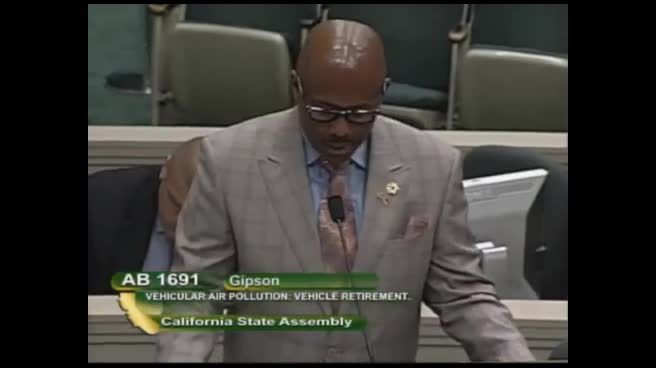 5MIN
Assembly Standing Committee on Transportation


Bill Co-Author(s):