AB 295: Skydiving or sport parachuting operations.
- Session Year: 2017-2018
- House: Assembly
- Latest Version Date: 2017-09-23
Existing law, the State Aeronautics Act, states that its purpose is to further and protect the public interest in aeronautics and aeronautical progress. The act provides that it is unlawful for a person who is under the influence of an alcoholic beverage or a drug, or the combined influence of an alcoholic beverage and a drug, to engage in parachuting for sport.
This bill would enact Tylers Law. The bill would, to the extent allowed by federal law, provide that owners and operators of a skydiving or sport parachuting operation have a duty to ensure that the parachutist in command of a tandem jump and the parachute rigger responsible for packing a parachute are in compliance with all federal laws relating to parachute safety and certification.
Existing law, the State Aeronautics Act, states that its purpose is to further and protect the public interest in aeronautics and aeronautical progress. The act provides that it is unlawful for a person who is under the influence of an alcoholic beverage or a drug, or the combined influence of an alcoholic beverage and a drug, to engage in parachuting for sport.
This bill would enact Tylers law. The bill would, to the extent allowed by federal law, provide that owners and operators of a skydiving or sport parachuting operation have a duty to ensure that the parachutist in command of a tandem jump and the parachute rigger responsible for packing a parachute are in compliance with all federal laws relating to parachute safety and certification.
Existing law, the State Aeronautics Act, states that its purpose is to further and protect the public interest in aeronautics and aeronautical progress. The act provides that it is unlawful for a person who is under the influence of an alcoholic beverage or a drug, or the combined influence of an alcoholic beverage and a drug, to engage in parachuting for sport.
This bill would, to the extent allowed by federal law, provide that owners and operators of a skydiving or sport parachuting operation have a duty to ensure that the parachutist in command of a tandem jump and the parachute rigger responsible for packing a parachute are in compliance with all federal laws relating to parachute safety and certification.
A person who violates this part, other than Section 21407.1 or Section 21709, or any of the rules or orders issued under this part, is punishable by a fine of not more than one thousand dollars ($1,000), by imprisonment of not more than six months, or by both that fine and imprisonment.
SEC. 2.Chapter 7 (commencing with Section 21708) is added to Part 1 of Division 9 of the Public Utilities Code, to read:7.Skydiving or Sport Parachuting Operations21708.This chapter shall be known and may be cited as Tylers Law.
21709.(a)To the extent allowed by federal law, the owners and operators of a skydiving or sport parachuting operation shall have a duty to ensure that the parachutist in command of a tandem jump and the parachute rigger responsible for packing the parachute are in compliance with all federal laws relating to parachute safety and certification.
(b)This section does not decrease any legal duties.
A person who violates this part, other than Section 21407.1 or Section 21708, 21709, or any of the rules or orders issued under this part, is punishable by a fine of not more than one thousand dollars ($1,000), by imprisonment of not more than six months, or by both that fine and imprisonment.
SEC. 2.Chapter 7 (commencing with Section 21708) is added to Part 1 of Division 9 of the Public Utilities Code, to read:7.Skydiving or Sport Parachuting Operations21708.This chapter shall be known and may be cited as Tylers Law.
21708. 21709.(a)To the extent allowed by federal law, the owners and operators of a skydiving or sport parachuting operation shall have a duty to ensure that the parachutist in command of a tandem jump and the parachute rigger responsible for packing the parachute are in compliance with all federal laws relating to parachute safety and certification.
(b)This section does not decrease any legal duties.
A person who violates this part, other than Section 21407.1 or Section 21708, or any of the rules or orders issued under this part, is punishable by a fine of not more than one thousand dollars ($1,000) or ($1,000), by imprisonment of not more than six months, or both. by both that fine and imprisonment.
SEC. 2.Chapter 7 (commencing with Section 21708) is added to Part 1 of Division 9 of the Public Utilities Code, to read:7.Skydiving or Sport Parachuting Operations21708.(a)To the extent allowed by federal law, the owners and operators of a skydiving or sport parachuting operation shall have a duty to ensure that the parachutist in command of a tandem jump and the parachute rigger responsible for packing the parachute are in compliance with all federal laws relating to parachute safety and certification.
(b)This section does not decrease any legal duties.
A person who violates this part, other than Section 21407.1 or Section 21708, or any of the rules or orders issued under this part, is punishable by a fine of not more than one thousand dollars ($1,000) or by imprisonment of not more than six months, or both.
SEC. 2.Chapter 7 (commencing with Section 21708) is added to Part 1 of Division 9 of the Public Utilities Code, to read:7.Skydiving or Sport Parachuting Operations21708.(a)To the extent allowed by federal law, the owners and operators of a skydiving or sport parachuting operation shall have a duty to ensure that the parachutist in command of a tandem jump and the parachute rigger responsible for packing the parachute are in compliance with all federal laws relating to parachute safety and certification.
(b)This section does not decrease any legal duties.
REVISIONS: HeadingLine 2.Any A person violating any of the provisions of who violates this part, other than Section 21407.1 or Section 21708, or any of the rules or orders issued under this part, is punishable by a fine of not more than one thousand dollars ($1,000) or by imprisonment of not more than six months, or both.
SEC. 2.Chapter 7 (commencing with Section 21708) is added to Part 1 of Division 9 of the Public Utilities Code, to read:7.Skydiving or Sport Parachuting Operations21708.To the extent allowed by federal law, the owners and operators of a skydiving or sport parachuting operation shall have a duty to ensure that the parachutist in command of a tandem jump and the parachute rigger responsible for packing the parachute are in compliance with all federal laws relating to parachute safety and certification.
|
Date
|
Status
|
|---|---|
| Sep 23, 2017 | Chaptered by Secretary of State - Chapter 258, Statutes of 2017. |
| Sep 23, 2017 | Approved by the Governor. |
| Sep 12, 2017 | Enrolled and presented to the Governor at 2:30 p.m. |
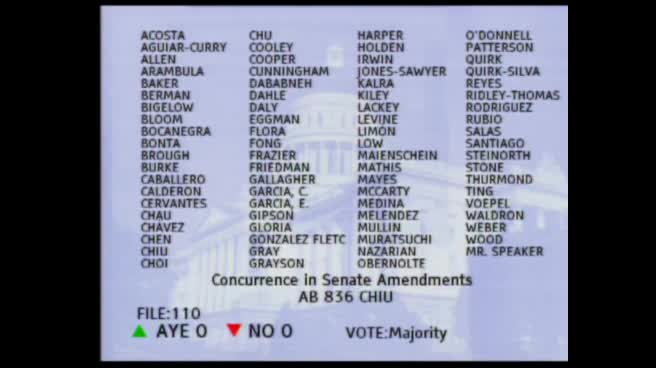
| Sep 5, 2017 | Senate amendments concurred in. To Engrossing and Enrolling. (Ayes 77. Noes 0.). |
| Aug 31, 2017 | In Assembly. Concurrence in Senate amendments pending. May be considered on or after September 2 pursuant to Assembly Rule 77. |
| Aug 31, 2017 | Read third time. Passed. Ordered to the Assembly. |
| Aug 23, 2017 | Ordered to special consent calendar. |
| Jul 19, 2017 | Read second time. Ordered to third reading. |
| Jul 18, 2017 | From committee: Do pass. (Ayes 12. Noes 0.) (July 18). |
| Jun 27, 2017 | From committee chair, with author's amendments: Amend, and re-refer to committee. Read second time, amended, and re-referred to Com. on T. & H. |
| Jun 1, 2017 | From committee chair, with author's amendments: Amend, and re-refer to committee. Read second time, amended, and re-referred to Com. on T. & H. |
| May 24, 2017 | Referred to Com. on T. & H. |
| May 15, 2017 | In Senate. Read first time. To Com. on RLS. for assignment. |
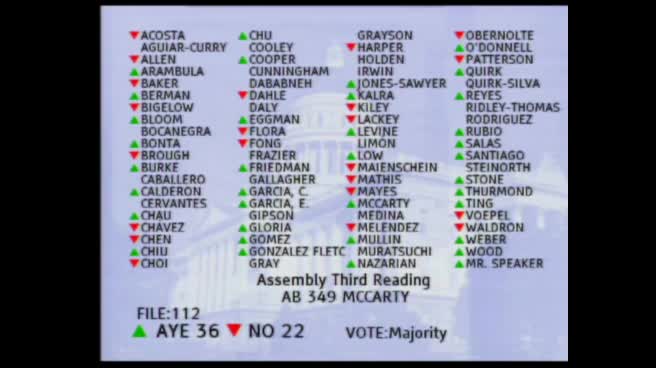
| May 15, 2017 | Read third time. Passed. Ordered to the Senate. (Ayes 76. Noes 0. Page 1544.) |
| May 11, 2017 | Read second time. Ordered to third reading. |
| May 10, 2017 | Coauthors revised. |
| May 2, 2017 | Re-referred to Com. on C. & C. |
| May 1, 2017 | From committee chair, with author's amendments: Amend, and re-refer to Com. on C. & C. Read second time and amended. |
| Feb 13, 2017 | Referred to Com. on C. & C. |
| Feb 7, 2017 | From printer. May be heard in committee March 9. |
| Feb 6, 2017 | Read first time. To print. |
|
Date
|
Description
|
Location
|
Votes
|
|
|---|---|---|---|---|
| Sep 5, 2017 | AB 295 EGGMAN Concurrence in Senate Amendments | Assembly Floor |
Passed |
|
| Aug 31, 2017 | Special Consent Calendar # AB295 | Senate Floor |
Passed |
|
| Jul 18, 2017 | Do pass | Senate Standing Committee on Transportation and Housing |
Passed |
|
| May 15, 2017 | AB 295 EGGMAN Assembly Third Reading | Assembly Floor |
Passed |
|
| May 10, 2017 | Do pass. | Assembly Standing Committee on Communications and Conveyance |
Passed |
This list shows positions taken on this bill by organizations on the date displayed, which is linked to the original source.
Positions by individuals are not included.
CONCURRENCE IN SENATE AMENDMENTS
CSA1 Bill Id:AB 295
Author:(Eggman)
As Amended Ver:June 27, 2017
Majority vote
ASSEMBLY: | 76-0 | (May 15, 2017) | SENATE: | 37-0 | (August 31, 2017) |
Original Committee Reference: C. & C.
SUMMARY: Requires the owners and operators of a skydiving or sport parachuting operation to ensure that the parachutist in command of a tandem jump and the parachute rigger responsible for packing the parachute are in compliance with all federal laws related to parachute safety and certification, as specified.
The Senate amendments make non-substantive and technical changes.
EXISTING LAW:
- Establishes the State Aeronautics Act, which governs various matters relative to aviation in the state, including, fostering and promoting safety in aeronautics and establishing regulations that are essential and clearly within the scope of the authority granted to the Department of Transportation by the Legislature, in order to further and protect the public interest in aeronautics and aeronautical progress. (Public Utilities Code (PUC) Section 21001 et seq.)
- Defines aeronautics to include, among other things, the operation, construction, repair, or maintenance of aircraft and the repair, packing, and maintenance of parachutes. (PUC Section 21011)
- Provides that any person violating the provision of the States Aeronautics Act, as specified, is punishable by a fine of not more than $1,000 or by imprisonment of not more than six months, or both. (PUC Section 21019)
FISCAL EFFECT: Unknown. This bill has been keyed non-fiscal by the Legislative Counsel.
COMMENTS:
- Authors Statement: According to the author, "In August 2016, [a family] went to the Skydive Lodi Parachute Center [for] a tandem jump with [an] instructor. However, a jumper's parachute did not open, and both [the jumper] and his instructor […] were killed. […] While [the United States Parachute Association (USPA)] has taken steps to address the improper training, the fact still remains that the tandem instructor in this most recent incident was not certified, and the operator should have the responsibility to the public for ensuring that instructors are qualified. Though jumpers sign waivers, a requirement in state code would formally establish this duty."
- Background: In a tandem jump, a student's harness is clipped to that of a tandem jump instructor, and the two share the same parachute. Parachutes are prepared by parachute riggers, who are responsible for packing, maintaining, or altering any type of parachute. Parachuting is regulated by the Federal Aviation Administration (FAA) under the United States Department of Transportation. In California, the Department of Transportation's Division of Aeronautics is tasked with issuing permits and annually inspects hospital heliports and public-use airports; as well as making recommendations regarding proposed school sites within two miles of airport runways; and authorizes helicopter landing sites at or near schools, among other things.
- Safety Regulations and Certification Process: There are different certification processes and safety regulations for tandem jump instructors and parachute riggers. Tandem jump instructors are certified by USPA or a manufacturer of tandem jump equipment, while a parachute rigger is certified by FAA.
Tandem Jump Instructors: To become a certified tandem jump instructor, federal regulations require three years of experience in parachuting, proof of completing a minimum of 500 skydives, a master parachute license issued by an organization recognized by FAA, and a successful completion of a tandem instructor course.
Parachute Riggers: The FAA certification process for parachute rigger includes written, oral, and practical tests on a riggers mechanical skills and parachute packing skills. According to federal safety regulations, parachute riggers are prohibited to pack, maintain, or supervise the packing of a parachute unless they have specified facilities and equipment available.
- Skydive Lodi Parachute Center: On August 6, 2016, a tandem jump instructor and a jumper at the Skydive Lodi Parachute Center fatally crashed to the ground after the instructor’s main and backup parachutes failed to open during the tandem jump. An investigation conducted by FAA and USPA determined that the tandem jump instructor did not follow proper procedures in handling the parachute equipment during the jump and was not certified. The FAA is moving forward with enforcement action against the operator and the instructor-examiner, and the United States Department of Transportation is opening a criminal investigation.
This bill requires the owners and operators of a skydiving or sport parachuting operation to have a duty to ensure that the parachutist in command of a tandem jump and the parachute rigger responsible for packing the parachute are in compliance with all federal laws relating to parachute safety and certification.
Analysis Prepared by: Edmond Cheung & Marilyn Limon / C. & C. / (916) 319-2637 FN: 0001280
Office of Senate Floor Analyses (916) 651-1520 Fax: (916) 327-4478 | AB |
THIRD READING
Bill No: AB 295
:
SENATE TRANS. & HOUSING COMMITTEE: 12-0, 7/18/17
AYES: Beall, Cannella, Allen, Atkins, Gaines, McGuire, Morrell, Roth, Skinner, Vidak, Wieckowski, Wiener
NO VOTE RECORDED: Mendoza
ASSEMBLY FLOOR: 76-0, 5/15/17 - See last page for vote
DIGEST:
This bill requires the owners and operators of a skydiving operation to ensure that the tandem jumper in charge and the parachute packer are in compliance with all federal laws relating to parachute safety and certification.
Existing law:
- Establishes the State Aeronautics Act to further and protect the public interest in aeronautics and aeronautical progress and grants the Department of Transportation (Caltrans) the authority to adopt, administer, and enforce rules and regulations of the act.
- Defines aeronautics to include, among other things, the operation, construction, repair, or maintenance of aircraft and the repair, packing, and maintenance of parachutes.
- Provides that it is unlawful for any person to operate an aircraft in a careless or reckless manner so as to endanger the life or property of another and declares that a court should consider federal statutes or regulations to determine whether the plane was operated carelessly or recklessly.
- Limits violations of any provision or rules of the State Aeronautics Act, except the provision on reckless operation of an aircraft, to penalties of no more than $1,000 or six months imprisonment, or both.
This bill:
- Requires, to the extent allowed by federal law, the owners and operators of a skydiving or sport parachuting operation to ensure that the parachutist in command of a tandem jump and the parachute rigger responsible for packing the parachute are in compliance with all federal laws relating to parachute safety and certification.
- Exempts violations of (1) from the punishment limitations set forth in Public Utilities Code Section 21019 of a fine of not more than $1,000, imprisonment of not more than six months, or by both that fine and imprisonment for general violations of the State Aeronautics Act.
Comments
- Purpose. According to the author, “In August 2016, Tyler Turner, of Los Banos, went to the Skydive Lodi Parachute Center with his mother and friends to celebrate a birthday. The jump was a gift from his mother. Turner was paired in a tandem jump with instructor Yong Kwon. Under conditions that are still being investigated, their parachute did not open, and both Turner and his instructor, Kwon, were killed. It was later discovered that the instructor was not properly certified. These were the 12th and 13th deaths recorded at the site since 2000; there have been many other incidents that were not fatal. Skydiving and parachuting is an admittedly dangerous sport that entails risk. Federal regulation of aircraft, drop-zones, and instructors is meant to minimize the risk to those who choose to jump out of a plane, who place a great deal of trust in their instructors and the sites where they operate. While [the United States Parachute Association (USPA)] has taken steps to address the improper training, the fact still remains that the tandem instructor in this most recent incident was not certified, and the operator should have the responsibility to the public for ensuring that instructors are qualified. Though jumpers sign waivers, a requirement in state code would formally establish this duty.”
- Tyler’s law. This bill is named after the 18-year-old young man, Tyler Turner, who died after both his main and backup parachutes failed to properly deploy while tandem skydiving in Lodi last year. According to the USPA, a non-profit that licenses tandem skydiving instructors in the U.S., Tyler’s instructor Yong Kwon, who also died in the fall, was not certified to tandem skydive. Further, Kwon’s instructor had been operating with a suspended rating, conducting unauthorized courses, and forging signatures on submitted post-course rating applications. Another instructor was identified who had also been improperly teaching courses. The USPA estimates that about 140 tandem instructors and candidates may have been affected by these instructors, not receiving proper training or being improperly certified. The USPA is requiring about 120 tandem instructors or candidates to take a newly developed refresher course and suspended the ratings of about 12 others who may have attended courses by instructors with suspended ratings, requiring them to undergo a full retraining.
- Regulations. The Federal Aviation Administration (FAA), under the U.S. Department of Transportation, regulates components of skydiving. The FAA’s rules and guidelines for skydiving are outlined in the Federal Aviation Regulations (FAR) under the Code of Federal Regulations. The FAR establishes requirements for certifications and ratings along with flight and parachute operating rules. The FAA certifies pilots, mechanics, air traffic controllers, and parachute riggers and requires approval data for aircraft and parachutes. Upon a skydiving violation, the FAA can fine the pilot, parachute rigger, or jumper, and can suspend or revoke the certification of the pilots and parachute riggers. The FAA works closely with the guidelines published by the USPA, however, they rely on a system of voluntary self-regulation within the skydiving community.
- Tandem regulations and certification. According to the FAR, there are a number of requirements that one must meet in order to be in command of a tandem skydive. The FAR requires such a parachutist to have a minimum of three years of documented experience in parachuting, at least 500 freefall parachute jumps, hold a master parachute license issued by an FAA-recognized organization (such as the USPA), has successfully completed an approved tandem instructor course, and has been certified as being properly trained on the specific tandem parachute system in use. Further, the parachutist in command must brief the passenger parachutist before boarding the aircraft and the parachute must be packed by a certified parachute rigger, the person in command making the next jump, or a person under direct supervision of a certified rigger.
- State law to ensure compliance with federal law. This bill provides that the owners and operators of a skydiving operation have a duty to ensure compliance with federal law for both the parachutist in command of a tandem jump and the parachute rigger. This bill also exempts the compliance provision from the statutory fine and prison time restrictions set for general violations of the State Aeronautics Act, which are capped at $1,000, six months in prison, or both fine and imprisonment. This puts the compliance provision in line with current law on reckless operation of an aircraft, which is also exempt from the fine and imprisonment caps. It remains unclear who exactly would enforce the certification compliance requirements, as this bill doesn’t specify, though Caltrans is generally responsible for enforcing regulations in the State Aeronautics Act. While enforcement may be unclear, this bill likely increases the liability of the owner or operator of a skydiving facility for accidents involving uncertified instructors.
- USPA letter of concern. The USPA, in a letter of concern, notes that they sympathize with the intent of this bill and are aware of the fatal tandem accident, but that they are concerned that this bill is duplicative of federal regulation and is unenforceable by the state.
FISCAL EFFECT: Appropriation: Fiscal Com.: Local:
Consumer Attorneys of California
OPPOSITION: (Verified 7/18/17)
None received
ARGUMENTS IN SUPPORT: Writing in support, the Consumer Attorneys of California state that though tandem instructors and parachute packers are federally required to be certified, it is the operators who have the responsibility of assuring their instructors are qualified.
ASSEMBLY FLOOR: 76-0, 5/15/17
AYES: Acosta, Aguiar-Curry, Arambula, Baker, Berman, Bigelow, Bloom, Bocanegra, Bonta, Brough, Burke, Caballero, Calderon, Cervantes, Chau, Chávez, Chen, Chiu, Choi, Chu, Cooley, Cooper, Cunningham, Dababneh, Dahle, Daly, Eggman, Flora, Fong, Frazier, Friedman, Gallagher, Cristina Garcia, Eduardo Garcia, Gipson, Gloria, Gomez, Gonzalez Fletcher, Grayson, Irwin, Jones-Sawyer, Kalra, Kiley, Lackey, Levine, Limón, Low, Maienschein, Mathis, Mayes, McCarty, Medina, Melendez, Mullin, Muratsuchi, Nazarian, Obernolte, O'Donnell, Patterson, Quirk, Quirk-Silva, Reyes, Ridley-Thomas, Rodriguez, Rubio, Salas, Santiago, Steinorth, Mark Stone, Thurmond, Ting, Voepel, Waldron, Weber, Wood, Rendon
NO VOTE RECORDED: Travis Allen, Gray, Harper, Holden
7/19/17 15:19:53
**** END ****
SENATE COMMITTEE ON TRANSPORTATION AND HOUSING
Senator Jim Beall, Chair
2017 - 2018 Regular
Bill No: Hearing Date: 7/18/2017
Author: | Eggman | ||
Version: | 6/27/2017 Amended | ||
Urgency: | No | Fiscal: | No |
Consultant: | Mikel Shybut | ||
SUBJECT:
DIGEST: This bill requires the owners and operators of a skydiving operation to ensure that the tandem jumper in charge and the parachute packer are in compliance with all federal laws relating to parachute safety and certification.
ANALYSIS:
Existing law:
- Establishes the State Aeronautics Act to further and protect the public interest in aeronautics and aeronautical progress and grants the Department of Transportation (Caltrans) the authority to adopt, administer, and enforce rules and regulations of the act.
- Defines aeronautics to include, among other things, the operation, construction, repair, or maintenance of aircraft and the repair, packing, and maintenance of parachutes.
- Provides that it is unlawful for any person to operate an aircraft in a careless or reckless manner so as to endanger the life or property of another and declares that a court should consider federal statutes or regulations to determine whether the plane was operated carelessly or recklessly.
- Limits violations of any provision or rules of the State Aeronautics Act, except the provision on reckless operation of an aircraft, to penalties of no more than $1,000 or six months imprisonment, or both.
This bill:
Requires, to the extent allowed by federal law, the owners and operators of a skydiving or sport parachuting operation to ensure that the parachutist in command of a tandem jump and the parachute rigger responsible for packing the parachute are in compliance with all federal laws relating to parachute safety and certification.
- Exempts violations of (1) from the punishment limitations set forth in Public Utilities Code (PUC) Section 21019 of a fine of not more than $1,000, imprisonment of not more than six months, or by both that fine and imprisonment for general violations of the State Aeronautics Act.
COMMENTS:
- Purpose. According to the author, “In August 2016, Tyler Turner, of Los Banos, went to the Skydive Lodi Parachute Center with his mother and friends to celebrate a birthday. The jump was a gift from his mother. Turner was paired in a tandem jump with instructor Yong Kwon. Under conditions that are still being investigated, their parachute did not open, and both Turner and his instructor, Kwon, were killed. It was later discovered that the instructor was not properly certified. These were the 12th and 13th deaths recorded at the site since 2000; there have been many other incidents that were not fatal. Skydiving and parachuting is an admittedly dangerous sport that entails risk. Federal regulation of aircraft, drop-zones, and instructors is meant to minimize the risk to those who choose to jump out of a plane, who place a great deal of trust in their instructors and the sites where they operate. While [the United States Parachute Association (USPA)] has taken steps to address the improper training, the fact still remains that the tandem instructor in this most recent incident was not certified, and the operator should have the responsibility to the public for ensuring that instructors are qualified. Though jumpers sign waivers, a requirement in state code would formally establish this duty.”
- Tyler’s law. This bill is named after the 18-year-old young man, Tyler Turner, who died after both his main and backup parachutes failed to properly deploy while tandem skydiving in Lodi last year. According to the USPA, a non-profit that licenses tandem skydiving instructors in the U.S., Tyler’s instructor Yong Kwon, who also died in the fall, was not certified to tandem skydive. Further, Kwon’s instructor had been operating with a suspended rating, conducting unauthorized courses, and forging signatures on submitted post-course rating applications. Another instructor was identified who had also been improperly teaching courses. The USPA estimates that about 140 tandem instructors and candidates may have been affected by these instructors, not receiving proper training or being improperly certified. The USPA is requiring about 120 tandem instructors or candidates to take a newly developed refresher course and suspended the ratings of about 12 others who may have attended courses by instructors with suspended ratings, requiring them to undergo a full retraining.
- Regulations. The Federal Aviation Administration (FAA), under the U.S. Department of Transportation, regulates components of skydiving. The FAA’s rules and guidelines for skydiving are outlined in the Federal Aviation Regulations (FAR) under the Code of Federal Regulations (CFR). The FAR establishes requirements for certifications and ratings along with flight and parachute operating rules. The FAA certifies pilots, mechanics, air traffic controllers, and parachute riggers and requires approval data for aircraft and parachutes. Upon a skydiving violation, the FAA can fine the pilot, parachute rigger, or jumper, and can suspend or revoke the certification of the pilots and parachute riggers. The FAA works closely with the guidelines published by the USPA, however, they rely on a system of voluntary self-regulation within the skydiving community.
- Tandem regulations and certification. According to the FAR, there are a number of requirements that one must meet in order to be in command of a tandem skydive. The FAR requires such a parachutist to have a minimum of three years of documented experience in parachuting, at least 500 freefall parachute jumps, hold a master parachute license issued by an FAA-recognized organization (such as the USPA), has successfully completed an approved tandem instructor course, and has been certified as being properly trained on the specific tandem parachute system in use. Further, the parachutist in command must brief the passenger parachutist before boarding the aircraft and the parachute must be packed by a certified parachute rigger, the person in command making the next jump, or a person under direct supervision of a certified rigger.
- State law to ensure compliance with federal law. This bill provides that the owners and operators of a skydiving operation have a duty to ensure compliance with federal law for both the parachutist in command of a tandem jump and the parachute rigger. This bill also exempts the compliance provision from the statutory fine and prison time restrictions set for general violations of the State Aeronautics Act, which are capped at $1,000, six months in prison, or both fine and imprisonment. This puts the compliance provision in line with current law on reckless operation of an aircraft, which is also exempt from the fine and imprisonment caps. It remains unclear who exactly would enforce the certification compliance requirements, as the bill doesn’t specify, though Caltrans is generally responsible for enforcing regulations in the State Aeronautics Act. While enforcement may be unclear, this bill likely increases the liability of the owner or operator of a skydiving facility for accidents involving uncertified instructors. Writing in support, the Consumer Attorneys of California state that though tandem instructors and parachute packers are federally required to be certified, it is the operators who have the responsibility of assuring their instructors are qualified.
Assembly votes:
Floor: 76 – 0
Communications and Conveyance: 12 – 0
FISCAL EFFECT: Appropriation: No Fiscal Com.: No Local: No
POSITIONS: (Communicated to the committee before noon on Wednesday,
July 12, 2017.)
SUPPORT:
Consumer Attorneys of California
OPPOSITION:
None received.
-- END --
ASSEMBLY THIRD READING
ATR Bill Id:AB 295
Author:(Eggman)
As Amended Ver:May 1, 2017
Majority vote
Committee | Votes | Ayes | Noes |
Communications | 12-0 | Santiago, Obernolte, Bonta, Cervantes, Dababneh, Eduardo Garcia, Holden, Lackey, Low, Maienschein, Rodriguez, Wood |
SUMMARY: Requires the owners and operators of a skydiving or sport parachuting operation to have a duty to ensure that the parachutist in command of a tandem jump and the parachute rigger responsible for packing the parachute are in compliance with all federal laws related to parachute safety and certification, as specified.
FISCAL EFFECT: Unknown. This bill has been keyed non-fiscal by the Legislative Counsel.
COMMENTS:
- Authors Statement: According to the author, "In August 2016, [a family] went to the Skydive Lodi Parachute Center [for] a tandem jump with [an] instructor. However, a jumper's parachute did not open, and both [the jumper] and his instructor […] were killed. […] While [the United States Parachute Association (USPA)] has taken steps to address the improper training, the fact still remains that the tandem instructor in this most recent incident was not certified, and the operator should have the responsibility to the public for ensuring that instructors are qualified. Though jumpers sign waivers, a requirement in state code would formally establish this duty."
- Background: In a tandem jump, a student's harness is clipped to that of a tandem jump instructor, and the two share the same parachute. Parachutes are prepared by parachute riggers, who are responsible for packing, maintaining, or altering any type of parachute. Parachuting is regulated by the Federal Aviation Administration (FAA) under the United States Department of Transportation. In California, the Department of Transportation's Division of Aeronautics is tasked with issuing permits and annually inspects hospital heliports and public-use airports; as well as making recommendations regarding proposed school sites within two miles of airport runways; and authorizes helicopter landing sites at or near schools, among other things.
- Safety Regulations and Certification Process: There are different certification processes and safety regulations for tandem jump instructors and parachute riggers. Tandem jump instructors are certified by USPA or a manufacturer of tandem jump equipment, while a parachute rigger is certified by FAA.
Tandem Jump Instructors: To become a certified tandem jump instructor, federal regulations require three years of experience in parachuting, proof of completing a minimum of 500 skydives, a master parachute license issued by an organization recognized by FAA, such as USPA, and a successfully completion of a tandem instructor course given by the manufacturer of the tandem parachute system. Federal law also prohibits a person from performing a tandem jump unless the main and reserve parachutes have been packed by certified riggers, the tandem parachute system contains an operational automatic aviation device, and the main parachute is equipped with a single-point release system, as specified.
Parachute Riggers: The FAA certification process for parachute rigger includes written, oral, and practical tests on a riggers mechanical skills and parachute packing skills. According to federal safety regulations, parachute riggers are prohibited to pack, maintain, or supervise the packing of a parachute unless they have specified facilities and equipment available. In addition, no certified parachute rigger may pack, maintain, or alter any parachute unless they are rated for that type of parachute, and no parachute rigger may pack a parachute that is not safe for emergency use and has not been thoroughly dried and aired.
- Skydive Lodi Parachute Center: On August 6, 2016, a tandem jump instructor and a jumper at the Skydive Lodi Parachute Center fatally crashed to the ground after the instructor's main and backup parachutes failed to open during the tandem jump. An investigation conducted by FAA and USPA determined that the tandem jump instructor did not follow proper procedures in handling the parachute equipment during the jump and was not certified. The FAA is moving forward with enforcement action against the operator and the instructor-examiner, and the United States Department of Transportation is opening a criminal investigation.
This bill requires the owners and operators of a skydiving or sport parachuting operation to have a duty to ensure that the parachutist in command of a tandem jump and the parachute rigger responsible for packing the parachute are in compliance with all federal laws relating to parachute safety and certification. It is unclear what, if any, federal or state penalty mechanisms are in place to ensure enforcement or verification of the provisions of this bill by the owners and operators of skydiving or parachuting operation.
Analysis Prepared by: Edmond Cheung & Marilyn Limon / C. & C. / (916) 319-2637 FN: 0000360
Date of Hearing: May 10, 2017
ASSEMBLY COMMITTEE ON COMMUNICATIONS AND CONVEYANCE
Miguel Santiago, Chair
ABPCA Bill Id:AB 295 (
Author:Eggman) – As Amended Ver:May 1, 2017
SUBJECT: Skydiving or sport parachuting operations
SUMMARY: Requires the owners and operators of a skydiving or sport parachuting operation to have a duty to ensure that the parachutist in command of a tandem jump and the parachute rigger responsible for packing the parachute are in compliance with all federal laws related to parachute safety and certification, as specified.
EXISTING LAW:
- Establishes the State Aeronautics Act, which governs various matters relative to aviation in the state, including, fostering and promoting safety in aeronautics and establishing regulations that are essential and clearly within the scope of the authority granted to the Department of Transportation by the Legislature, in order for a person to engage in every phase of aeronautics with the least possible restriction consistent with the safety and the rights of others. (Public Utilities Code (PUC) Section 21001 et seq.)
- Defines “aeronautics” to mean the science and art of flight, including transportation by aircraft, the operation, construction, repair, or maintenance of aircraft and aircraft power plants and accessories, including the repair, packing, and maintenance of parachutes, and the design, establishment, construction, extension, operation, improvement, repair, or maintenance of airports or other air navigation facilities. (PUC Section 21011)
- Specifies that any person violating the provision of the States Aeronautics Act, as specified, is punishable by a fine of not more than $1,000 or by imprisonment of not more than six months, or both. (PUC Section 21019)
- Specifies that it is unlawful for any person who is under the influence of an alcoholic beverage or any drug, or the combined influence of an alcoholic beverage and any drug, to operate an aircraft in the air, or on the ground or water, or to engage in parachuting for sport, as specified. (PUC Section 21407.1)
- Requires any person convicted of operating an aircraft in the air, or on the ground or water, or to engage in parachuting for sport under the influence of an alcoholic beverage, as specified, to be punished upon a first conviction by imprisonment in the county jail for not less than 30 days no more than six months or by a fine of not less than $250 nor more than $1,000 or by both that fine and imprisonment. (PUC Section 21407.6)
FISCAL EFFECT: Unknown. This bill has been keyed non-fiscal by the Legislative Counsel.
COMMENTS:
- Authors Statement: According to the author, “In August 2016, [a family] went to the Skydive Lodi Parachute Center [for] a tandem jump with [an] instructor. Under conditions that are still being investigated, [a] parachute did not open, and both [the jumper] and his instructor […] were killed. It was later discovered that the instructor was not properly certified. These were the 12th and 13th deaths recorded at the site since 2000; there have been many other incidents that were not fatal. Skydiving and parachuting is an admittedly dangerous sport that entails risk. Federal regulation of aircraft, drop-zones, and instructors is meant to minimize the risk to those who choose to jump out of a plane, who places a great deal of trust in their instructors and the sites where they operate. While [the United States Parachute Association (USPA)] has taken steps to address the improper training, the fact still remains that the tandem instructor in this most recent incident was not certified, and the operator should have the responsibility to the public for ensuring that instructors are qualified. Though jumpers sign waivers, a requirement in state code would formally establish this duty.”
- Background: Sports parachuting, or skydiving, is a recreational activity and is widely considered an extreme sport due to its high risks. In a tandem jump, a student’s harness is clipped to that of a tandem jump instructor, and the two share the same parachute. Parachutes are prepared by parachute riggers, who are responsible for packing, maintaining, or altering any type of parachute.
Parachuting is regulated by the Federal Aviation Administration (FAA) under the United States Department of Transportation. The FAA prescribes the Federal Aviation Regulations (FARs), which govern all aviation activities in the United States, including safety procedures for both parachute tandem jump instructors and parachute riggers. The FAA relies on the self-regulation of the participants through the guidelines and recommendations of USPA. The USPA represents more than 43,000 licensed skydivers and nearly 300 skydiving clubs and businesses, and is approved by the FAA to issue internationally recognized parachuting licenses.
In California, the State Aeronautics Act governs various matters related to aviation in the state. The Department of Transportation’s Division of Aeronautics is tasked with issuing permits and annually inspects hospital heliports and public-use airports; as well as making recommendations regarding proposed school sites within two miles of an airport runway; and authorizes helicopter landing sites at or near schools. In addition, the Division of Aeronautics administers noise regulation and land use planning laws around airports and other mitigating measures to lessen aircraft noise, air pollution, and other impacts caused by aviation.
- Safety Regulations and Certification Process: There are different certification processes and safety regulations for tandem jump instructors and parachute riggers. Tandem jump instructors are certified by USPA or a manufacturer of tandem jump equipment, while a parachute rigger is certified by FAA.
Tandem Jump Instructors: To become a certified tandem jump instructor, federal regulations require three years of experience in parachuting, proof of completing a minimum of 500 skydives, a master parachute license issued by an organization recognized by FAA, such as USPA, and a successfully completion of a tandem instructor course given by the manufacturer of the tandem parachute system. Under the USPA certification process, an individual has to receive training by a certified USPA instructor-examiner and successfully completed a series of courses that include oral and written exams, and practice skydives.
Federal safety regulations require the parachutist in command of a tandem jump to brief the passenger parachutist before boarding the aircraft. The briefing must include emergency procedures and landing, and uses of the harness position. Federal law prohibits a person from performing a tandem jump unless:
- The main parachute has been packed by a certified parachute rigger, the parachutist in command making the next jump with that parachute, or a person under the direct supervision of a certificated parachute rigger;
- The reserve parachute has been packed by a certificated parachute rigger;
- The tandem parachute system contains an operational automatic aviation device for the reserve parachute;
- The passenger parachutist is provided with a manual main parachute aviation device and instructed on how to use it, if it is required by the owner/operator; and,
- The main parachute is equipped with a single-point release system and the reserve parachute meets certain specifications.
Parachute Riggers: The FAA certification process for parachute rigger includes written, oral, and practical tests on a riggers mechanical skills and parachute packing skills. According to federal safety regulations, parachute riggers are prohibited to pack, maintain, or supervise the packing of a parachute unless they have specified facilities and equipment available. In addition, no certified parachute rigger may pack, maintain, or alter any parachute unless they are rated for that type of parachute, and no parachute rigger may pack a parachute that is not safe for emergency use and has not been thoroughly dried and aired. Furthermore, no parachute rigger may pack, maintain, or alter a parachute in any manner that deviates from procedures approved by the Administrator or the manufacturer of the parachute; or exercise the privileges of their certificate and type rating unless they understand the current manufacturer's instructions for the operation involved.
- Skydive Lodi Parachute Center: On August 6, 2016, a tandem jump instructor and a jumper at the Skydive Lodi Parachute Center fatally crashed to the ground after the instructor’s main and backup parachutes failed to open during the tandem jump. An investigation conducted by FAA and USPA determined that the tandem jump instructor did not follow proper procedures in handling the parachute equipment during the jump and was not certified. The tandem jump instructor had taken a course from an instructor-examiner who had suspended credentials. In addition, the instructor-examiner taught abbreviated courses and incorrect procedures on handling parachute equipment. Furthermore, the instructor-examiner failed to submit the student’s paperwork to USPA for official approval for certification. According to USPA, the owner of the Skydive Lodi Parachute Center was well aware that the instructor was not certified and had been trained by an instructor-examiner whose credentials had been suspended. The FAA is moving forward with enforcement action against the operator and the instructor-examiner, and the United States Department of Transportation is opening a criminal investigation.
This bill requires the owners and operators of a skydiving or sport parachuting operation to have a duty to ensure that the parachutist in command of a tandem jump and the parachute rigger responsible for packing the parachute are in compliance with all federal laws relating to parachute safety and certification. It is unclear what, if any, federal or state penalty mechanisms are in place to ensure enforcement or verification of the provisions of the bill by the owners and operators of skydiving or parachuting operation.
- Arguments in Support: According to the Consumer Attorneys of California, “Instructors in tandem jumps and those who supervise the packing of parachutes are required by federal regulation to be certified by [USPA]. While USPA has taken steps to address training, the fact still remains that operators bear responsibility to the public for ensuring that instructors are qualified.”
REGISTERED SUPPORT / OPPOSITION:
Support
Consumer Attorneys of California
Opposition
None on file.
Analysis Prepared by: Edmond Cheung & Marilyn Limon / C. & C. / (916) 319-2637
Discussed in Hearing
 51SEC
Assembly Floor
 10MIN
Senate Standing Committee on Transportation and Housing
 2MIN
Assembly Floor
 7MIN
Assembly Standing Committee on Communications and Conveyance
Bill Author

Bill Co-Author(s):
