AB 2960: Child care and development services: online portal.
- Session Year: 2017-2018
- House: Assembly
- Latest Version Date: 2018-09-27
The Child Care and Development Services Act has a purpose of providing a comprehensive, coordinated, and cost-effective system of child care and development services for children from infancy to 13 years of age and their parents, including a full range of supervision, health, and support services through full- and part-time programs. Existing law designates the State Department of Education as the single state agency responsible for the promotion, development, and provision of care of children in the absence of their parents during the workday or while engaged in other activities that require assistance of a third party. Existing law requires the Superintendent of Public Instruction to administer general child care and development programs.
This bill would require the Superintendent, subject to the availability of public or private funding for these purposes, on or before June 30, 2022, to develop and post on the departments Internet Web site, for use by the general public, an online portal for the states comprehensive child care and development services, as provided. The bill would require the Superintendent, in planning for future enhancements to the online portal, to convene, on or before June 30, 2019, a workgroup made up of specified stakeholders. The bill would require the workgroup, on or before June 30, 2020, to evaluate and provide recommendations to the Superintendent on any necessary modifications or improvements to the online portal to ensure its improved effectiveness, including the consideration of possible models for, and plans for inclusion in the online portal of, specified components. The bill would require the Superintendent, on or before January 1, 2021, to submit to the appropriate committees of the Legislature a comprehensive plan for implementing the recommendations of the workgroup and a report that proposes plans for enhancements to the online portal based on the above recommendations from the workgroup, as provided.
The Child Care and Development Services Act has a purpose of providing a comprehensive, coordinated, and cost-effective system of child care and development services for children from infancy to 13 years of age and their parents, including a full range of supervision, health, and support services through full- and part-time programs. Existing law designates the State Department of Education as the single state agency responsible for the promotion, development, and provision of care of children in the absence of their parents during the workday or while engaged in other activities that require assistance of a third party. Existing law requires the Superintendent of Public Instruction to administer general child care and development programs.
This bill would require the Superintendent, on or before June 30, 2022, to develop and post on the departments Internet Web site, for use by the general public, an online portal for the states comprehensive child care and development services, as provided. The bill would require the Superintendent, in planning for future enhancements to the online portal, to convene, on or before June 30, 2019, a workgroup made up of specified stakeholders. The bill would require the workgroup, on or before June 30, 2020, to evaluate and provide recommendations to the Superintendent on the any necessary modifications or improvements to the online portal to ensure its improved effectiveness, including the consideration of possible models for, and plans for inclusion in the online portal of, specified enhancements. components. The bill would require the Superintendent, on or before January 1, 2021, to submit to the appropriate committees of the Legislature a comprehensive plan for implementing the recommendations of the workgroup and a report that proposes plans for enhancements to the online portal based on the above recommendations from the workgroup, and a comprehensive plan for implementing the recommendations of the stakeholder workgroup, as provided.
The Child Care and Development Services Act has a purpose of providing a comprehensive, coordinated, and cost-effective system of child care and development services for children from infancy to 13 years of age and their parents, including a full range of supervision, health, and support services through full- and part-time programs. Existing law designates the State Department of Education as the single state agency responsible for the promotion, development, and provision of care of children in the absence of their parents during the workday or while engaged in other activities that require assistance of a third party. Existing law requires the Superintendent of Public Instruction to administer general child care and development programs.
This bill would require the Superintendent, on or before June 30, 2022, to develop and post on the departments Internet Web site, for use by the general public, an online portal for the states comprehensive child care and development services, as provided. The bill would require the online portal to accomplish certain things, including assisting families in gaining access to information about child care and development services, as provided. The bill would require, on or before January 1, 2020, the Superintendent to submit a report to appropriate committees of the Legislature detailing the current landscape of programs that provide child care and development services, among other things. The bill would require the Superintendent, in planning for future enhancements to the online portal, to convene, on or before June 30, 2019, a workgroup made up of specified stakeholders. The bill would require the workgroup, on or before June 30, 2020, to evaluate and provide recommendations to the Superintendent on the possible models for, and plans for inclusion in the online portal of, specified enhancements. The bill would require the Superintendent, on or before January 1, 2021, to submit to the appropriate committees of the Legislature a report that proposes plans for enhancements to the online portal based on the above recommendations from the workgroup, and a comprehensive plan for implementing the recommendations of the stakeholder workgroup, as provided.
The Child Care and Development Services Act has a purpose of providing a comprehensive, coordinated, and cost-effective system of child care and development services for children from infancy to 13 years of age and their parents, including a full range of supervision, health, and support services through full- and part-time programs. Existing law designates the State Department of Education as the single state agency responsible for the promotion, development, and provision of care of children in the absence of their parents during the workday or while engaged in other activities that require assistance of a third party. Existing law requires the Superintendent of Public Instruction to administer general child care and development programs.
This bill would require the Superintendent, on or before June 30, 2022, to develop and post on the departments Internet Web site, for use by the general public, an online portal for the states comprehensive child care and development services, as provided. The bill would require the online portal to accomplish certain things, including assisting families in gaining access to information about child care and development services, as provided. The bill would require, on or before January 1, 2020, the Superintendent to submit a report to appropriate committees of the Legislature detailing the current landscape of programs that provide child care and development services, among other things. The bill would require the Superintendent, in planning for future enhancements to the online portal, to convene, on or before June 30, 2019, a workgroup made up of specified stakeholders. The bill would require the workgroup, on or before June 30, 2020, to evaluate and provide recommendations to the Superintendent on the possible models for, and plans for inclusion in the online portal of, specified enhancements. The bill would require the Superintendent, on or before January 1, 2021, to submit to the appropriate committees of the Legislature a report that proposes plans for enhancements to the online portal based on the above recommendations from the workgroup, as provided.
The Child Care and Development Services Act has a purpose of providing a comprehensive, coordinated, and cost-effective system of child care and development services for children from infancy to 13 years of age and their parents, including a full range of supervision, health, and support services through full- and part-time programs. Existing law designates the State Department of Education as the single state agency responsible for the promotion, development, and provision of care of children in the absence of their parents during the workday or while engaged in other activities that require assistance of a third party. Existing law requires the Superintendent of Public Instruction to administer general child care and development programs.
This bill would require the Superintendent, on or before June 30, 2021, 2022, to develop and post on the departments Internet Web site, for use by the general public, an online portal for the states comprehensive child care and development services, as provided. The bill would require the online portal to accomplish certain things, including assisting families in gaining access to information about child care and development services, as provided. The bill would require, on or before June 30, 2019, January 1, 2020, the Superintendent to submit a report to appropriate committees of the Legislature detailing the current landscape of programs that provide child care and development services, among other things.
The Child Care and Development Services Act has a purpose of providing a comprehensive, coordinated, and cost-effective system of child care and development services for children from infancy to 13 years of age and their parents, including a full range of supervision, health, and support services through full- and part-time programs. Existing law designates the State Department of Education as the single state agency responsible for the promotion, development, and provision of care of children in the absence of their parents during the workday or while engaged in other activities that require assistance of a third party. Existing law requires the Superintendent of Public Instruction to administer general child care and development programs.
This bill would require the department, upon an appropriation by the Legislature, Superintendent, on or before June 30, 2021, to develop a comprehensive and post on the departments Internet Web site, for use by the general public, an online portal for the states comprehensive child care and development online portal, services, as provided. The bill would require the online portal to accomplish certain things, including assisting families in gaining access to information about child care and development programs, services, as provided. The bill would require, on or before June 30, 2019, the Superintendent to submit a report to appropriate committees of the Legislature detailing the current landscape of programs that provide child care and development services, among other things.
The Child Care and Development Services Act has a purpose of providing a comprehensive, coordinated, and cost-effective system of child care and development services for children from infancy to 13 years of age and their parents, including a full range of supervision, health, and support services through full- and part-time programs. Existing law designates the State Department of Education as the single state agency responsible for the promotion, development, and provision of care of children in the absence of their parents during the workday or while engaged in other activities that require assistance of a third party.
This bill would require the department, upon an appropriation by the Legislature, to develop a comprehensive child care and development online portal, as provided. The bill would require the online portal to accomplish certain things, including assisting families in gaining access to information about child care and development programs, as provided.
Existing law requires the Superintendent of Public Instruction to ensure that eligible children with exceptional needs are given equal access to all child care and development programs. Existing law requires available federal and state funds for children with exceptional needs above the standard reimbursement amount to be used to assist agencies in developing and supporting appropriate programs for these children.This bill would make nonsubstantive changes to these provisions.Existing law requires the Superintendent of Public Instruction to ensure that eligible children with exceptional needs are given equal access to all child care and development programs. Existing law requires available federal and state funds for children with exceptional needs above the standard reimbursement amount to be used to assist agencies in developing and supporting appropriate programs for these children.
This bill would make nonsubstantive changes to these provisions.
The Legislature finds and declares all of the following:
(a)The disparity in educational outcomes between pupil populations with regard to test scores, graduation rates, and college readiness is one of the most serious challenges facing our public education system.
(b)Access to high quality, affordable child care and development services is essential to prepare Californias children to succeed in school and in life and to allow families to work and contribute to the states economy with the assurance that their children are safe, well cared for, and learning.
(c)Expanded learning opportunities are also essential for childrens safety and to ensure that academic gains made during the schoolday are retained. With 80 percent of waking hours for schoolage children spent outside of the classroom, quality and affordable expanded learning experiences after school and in the summer are essential strategies for equalizing pupil outcomes. Families also need care beyond the schoolday in order to work.
(d)Californias current child care and development services encompass multiple programs with distinct histories, missions, and funding streams, yet share similar purposes. These programs include home visits, early childhood special education programs, school readiness programs, such as California State Preschool, Head Start and Early Head Start, and transitional kindergarten, programs designed to support working parents, such as general child care and development and voucher-based alternative payment programs, including CalWORKs, and after school programs such as the After School Education and Safety Program and the 21st Century Community Learning Centers program.
(e)Californias rich delivery system of child care and early education programs has evolved to support parental choice in accessing services that balance the developmental needs of children with the working needs of families. Families are supported with access to racially, ethnically, and linguistically diverse child development services, with information delivered in a format that best supports informed choices and that will maximize longer-term educational outcomes.
(f)Eligible families in California struggle to access child care and development services that they and their children need and deserve, due to a lack of service capacity statewide, but also due to complex and siloed eligibility and enrollment requirements. Families also deserve information about all the child development services for which their children may be eligible, in order to make informed decisions about where to enroll their children.
(g)Harnessing the power of technology to extend the reach of child care and development services as a system while preserving the distinct missions of each program would help to ensure that the states investments get to more of the children and families who need them.
(h)The federal Child Care and Development Block Grant of 2014 (Public Law 113-186) is the primary program for early childhood education and requires states to have a child care and development consumer education Internet Web site to support parents in making informed choices for child care. The child care and development consumer education Internet Web site is currently in development and is the foundation for the online portal.
SEC. 2.Article 1.1 (commencing with Section 8209.6) is added to Chapter 2 of Part 6 of Division 1 of Title 1 of the Education Code, to read:1.1.Online Portal for Child Care and Development Services8209.6.(a)It is the intent of the Legislature in adopting this article that every family in California have access to current and robust information regarding the states vast array of child care and development services through a publicly available online portal hosted and maintained by the department that includes, among other things, program and eligibility information, the opportunity to connect with resource and referral agencies and providers, the ability to use an online eligibility screening tool in order to assess eligibility for services, a way to link to local child care resource and referral agencies and alternative payment programs for additional assistance in selecting and assessing child care, and access to placement on waiting lists for local subsidized child care programs.
(b)On or before June 30, 2022, the Superintendent shall develop and post on the departments Internet Web site, for use by the general public, an online portal for Californias comprehensive child care and development services.
(c)(1)In planning for future enhancements to the online portal, the Superintendent shall convene, on or before June 30, 2019, a workgroup made up of stakeholders, including, but not limited to, representatives of child care resource and referral programs, alternative payment programs, contracted center-based programs, First 5 county commissions, county offices of education, school-based providers, private center-based care providers, and family child care homes. This workgroup shall, on or before June 30, 2020, evaluate, and provide recommendations to the Superintendent on any necessary modifications or improvements to the online portal to ensure its improved effectiveness, including the consideration of possible models for, and plans for inclusion in the online portal of, components, including, but not limited to, both of the following:
(A)Components to link parents to local child care resource and referral agencies and alternative payment programs for additional assistance in selecting and assessing child care and to place parents on waiting lists for local subsidized child care programs for which subsidized slots are not readily available.
(B)An online eligibility screening tool used to assess eligibility for services.
(2)(A)On or before January 1, 2021, the Superintendent shall submit to the appropriate committees of the Legislature a comprehensive plan for implementing the recommendations of the workgroup and a report proposing plans for enhancements to the online portal, based on recommendations received from the workgroup developed pursuant to paragraph (1), including the components described in subparagraphs (A) and (B) of paragraph (1).
(B)The Superintendent may contract with an outside entity for purposes of completing the report required pursuant to subparagraph (A).
(C)Pursuant to Section 10231.5 of the Government Code, the requirement for submitting a report imposed by this paragraph is inoperative on January 1, 2025.
(d)The requirements of this section are subject to the availability of public or private funding for the purposes of this section. The department may accept grants or in-kind support from any source, public or private, to help perform the requirements of this section.
The Legislature finds and declares all of the following:
(a)The disparity in educational outcomes between pupil populations with regard to test scores, graduation rates, and college readiness is one of the most serious challenges facing our public education system.
(b)Access to high quality, affordable child care and development services is essential to prepare Californias children to succeed in school and in life and to allow families to work and contribute to the states economy with the assurance that their children are safe, well cared for, and learning.
(c)Expanded learning opportunities are also essential for childrens safety and to ensure that academic gains made during the schoolday are retained. With 80 percent of waking hours for schoolage children spent outside of the classroom, quality and affordable expanded learning experiences after school and in the summer are essential strategies for equalizing pupil outcomes. Families also need care beyond the schoolday in order to work.
(d)Californias current child care and development services encompass multiple programs with distinct histories, missions, and funding streams, yet share similar purposes. These programs include home visits, early childhood special education programs, school readiness programs, such as California State Preschool, Head Start and Early Head Start, and transitional kindergarten, programs designed to support working parents, such as general child care and development and voucher-based alternative payment programs, including CalWORKs, and after school programs such as the After School Education and Safety Program and the 21st Century Community Learning Centers program.
(e)Californias rich delivery system of child care and early education programs has evolved to support parental choice in accessing services that balance the developmental needs of children with the working needs of families. Families are supported with access to racially, ethnically, and linguistically diverse child development services, with information delivered in a format that best supports informed choices and that will maximize longer-term educational outcomes.
(e)(f)Eligible families in California struggle to access child care and development services that they and their children need and deserve, due to a lack of service capacity statewide, but also due to complex and siloed eligibility and enrollment requirements. Families also deserve information about all the child development services for which their children may be eligible, in order to make informed decisions about where to enroll their children.
(f)(g)Harnessing the power of technology to extend the reach of child care and development services as a system while preserving the distinct missions of each program would help to ensure that the states investments get to more of the children and families who need them.
(g)(h)The federal Child Care and Development Block Grant of 2014 (Public Law 113-186) is the primary program for early childhood education and requires states to have a child care and development consumer education Internet Web site to support parents in making informed choices for child care. The child care and development consumer education Internet Web site is currently in development and is the foundation for the online portal.
SEC. 2.Article 1.1 (commencing with Section 8209.6) is added to Chapter 2 of Part 6 of Division 1 of Title 1 of the Education Code, to read:1.1.Online Portal for Child Care and Development Services8209.6.(a)It is the intent of the Legislature in adopting this article that every family in California have access to current and robust information regarding the states vast array of child care and development services through a publicly available online portal hosted and maintained by the department that includes, among other things, program and eligibility information, the opportunity to connect with resource and referral agencies and providers, and the ability to apply through a single, uniform application, and to enroll on a statewide waiting list for subsidized child care programs. use an online eligibility screening tool in order to assess eligibility for services, a way to link to local child care resource and referral agencies and alternative payment programs for additional assistance in selecting and assessing child care, and access to placement on waiting lists for local subsidized child care programs.
(b)On or before June 30, 2022, the Superintendent shall develop and post on the departments Internet Web site, for use by the general public, an online portal for Californias comprehensive child care and development services.
(c)(1)In planning for future enhancements to the online portal, the Superintendent shall convene, on or before June 30, 2019, a workgroup made up of stakeholders, including, but not limited to, representatives of child care resource and referral programs, alternative payment programs, contracted center-based programs, Quality Rating and Improvement System data systems, First 5 county commissions, county offices of education, school-based providers, the California Early Care and Education Workforce Registry, private center-based care providers, and family child care homes. This workgroup shall, on or before June 30, 2020, evaluate, and provide recommendations to the Superintendent on any necessary modifications or improvements to the online portal to ensure its improved effectiveness, including the consideration of possible models for, and plans for inclusion in the online portal developed pursuant to this section of, components, including, but not limited to, both of the following:
(A)Establishing and maintaining a statewide waiting list for child care and development services programs where subsidized slots are not readily available.(B)Developing a single, uniform application for use in applying for subsidies.(A)Components to link parents to local child care resource and referral agencies and alternative payment programs for additional assistance in selecting and assessing child care and to place parents on waiting lists for local subsidized child care programs for which subsidized slots are not readily available.
(B)An online eligibility screening tool used to assess eligibility for services.
(2)(A)On or before January 1, 2021, the Superintendent shall submit to the appropriate committees of the Legislature a comprehensive plan for implementing the recommendations of the workgroup and a report proposing plans for enhancements to the online portal, based on recommendations received from the workgroup developed pursuant to paragraph (1) for the inclusion of a single, uniform application and statewide waiting list for subsidized child care programs in the online portal, and a comprehensive plan for implementing the recommendations of the stakeholder workgroup. (1), including the components described in subparagraphs (A) and (B) of paragraph (1).
(B)The Superintendent may contract with an outside entity for purposes of completing the report required pursuant to subparagraph (A).
(C)Pursuant to Section 10231.5 of the Government Code, the requirement for submitting a report imposed by this paragraph is inoperative on January 1, 2025.
The Legislature finds and declares all of the following:
(a)The disparity in educational outcomes between pupil populations with regard to test scores, graduation rates, and college readiness is one of the most serious challenges facing our public education system.
(b)Access to high quality, affordable child care and development services is essential to prepare Californias children to succeed in school and in life and to allow families to work and contribute to the states economy with the assurance that their children are safe, well cared for, and learning.
(c)Expanded learning opportunities are also essential for childrens safety and to ensure that academic gains made during the schoolday are retained. With 80 percent of waking hours for schoolage children spent outside of the classroom, quality and affordable expanded learning experiences after school and in the summer are essential strategies for equalizing pupil outcomes. Families also need care beyond the schoolday in order to work.
(d)Californias current child care and development services encompass multiple programs with distinct histories, missions, and funding streams, yet share similar purposes. These programs include home visits, early childhood special education programs, school readiness programs, such as California State Preschool, Head Start and Early Head Start, and transitional kindergarten, programs designed to support working parents, such as general child care and development and voucher-based alternative payment programs, including CalWORKs, and after school programs such as the After School Education and Safety Program and the 21st Century Community Learning Centers program.
(e)Eligible families in California struggle to access child care and development services that they and their children need and deserve, due to a lack of service capacity statewide, but also due to complex and siloed eligibility and enrollment requirements. Families also deserve information about all the child development services for which their children may be eligible, in order to make informed decisions about where to enroll their children.
(f)Harnessing the power of technology to extend the reach of child care and development services as a system while preserving the distinct missions of each program would help to ensure that the states investments get to more of the children and families who need them.
(g)The federal Child Care and Development Block Grant of 2014 (Public Law 113-186) is the primary program for early childhood education and requires states to have a child care and development consumer education Internet Web site to support parents in making informed choices for child care. The child care and development consumer education Internet Web site is currently in development and is the foundation for the online portal.
SEC. 2.Article 1.1 (commencing with Section 8209.5) 8209.6) is added to Chapter 2 of Part 6 of Division 1 of Title 1 of the Education Code, to read:1.1.Online Portal for Child Care and Development Services8209.5.8209.6.(a)It is the intent of the Legislature in adopting this article that every family in California have access to current and robust information regarding the states vast array of child care and development services through a publicly available online portal hosted and maintained by the department that includes, among other things, program and eligibility information, the opportunity to connect with resource and referral agencies and providers, and the ability to apply through a single, uniform application, and to enroll on a statewide waiting list for subsidized child care programs.
(b)On or before June 30, 2022, the Superintendent shall develop and post on the departments Internet Web site, for use by the general public, an online portal for Californias comprehensive child care and development services.
(c)The online portal shall accomplish all of the following:(1)Assist families in gaining access to information about child care and development services, including location of services, availability of slots, and quality indicators for individual programs.(2)Allow families to do both of the following:(A)Learn about eligibility for local, state, and federally supported subsidies and programs.(B)Connect with local child care resource and referral agencies for additional assistance in selecting and accessing care.(3)Allow child care and development service providers to do all of the following:(A)Connect with families in the community who have opted to share their information for purposes of finding providers.(B)Share enrollment and licensing information more easily with state agencies.(C)Find and access professional development opportunities.(d)In developing the portal, the Superintendent shall do all of the following:(1)(A)Consult with state and local stakeholders about objectives and components of the online portal, including, but not limited to, how the portal will serve particularly vulnerable populations, including children with special needs.(B)For purposes of this paragraph, stakeholders shall include, but not be limited to, representatives of resource and referral programs, alternative payment programs, contracted center-based programs, Quality Rating and Improvement System (QRIS) data systems, school-based providers, workforce registry, private center-based care providers, and family child care homes.(2)Coordinate with existing information infrastructure at the state and local level.(3)Take into consideration the full spectrum of programs that serve children and their families.(e)In developing the online portal, the Superintendent may contract with an outside entity for purposes of developing the information infrastructure to support the portal.(f)(c)(1)In planning for future enhancements to the online portal, the Superintendent shall convene, on or before June 30, 2019, a workgroup made up of stakeholders, including, but not limited to, representatives of child care resource and referral programs, alternative payment programs, contracted center-based programs, Quality Rating and Improvement System (QRIS) data systems, school-based providers, workforce registry, the California Early Care and Education Workforce Registry, private center-based care providers, and family child care homes. This workgroup shall, on or before June 30, 2020, evaluate, and provide recommendations to the Superintendent on possible models for, and plans for inclusion in the online portal developed pursuant to this section of, both of the following:
(A)Establishing and maintaining a statewide waiting list for child care and development services programs where subsidized slots are not readily available.
(B)Developing a single, uniform application for use in applying for subsidies.
(2)(A)On or before January 1, 2021, the Superintendent shall submit to the appropriate committees of the Legislature a report to the appropriate committees of the Legislature proposing plans for enhancements to the online portal, based on recommendations received from the workgroup developed pursuant to paragraph (1) for the inclusion of a single, uniform application and statewide waiting list for subsidized child care programs in the online portal. portal, and a comprehensive plan for implementing the recommendations of the stakeholder workgroup.
(B)The Superintendent may contract with an outside entity for purposes of completing the report required pursuant to subparagraph (A).
(B)(C)Pursuant to Section 10231.5 of the Government Code, the requirement for submitting a report imposed by this paragraph shall become is inoperative on January 1, 2025.
8209.6.(a)On or before January 1, 2020, the Superintendent shall submit a report to the appropriate committees of the Legislature detailing the current landscape of programs that provide child care and development services in California, existing information infrastructure related to these programs, and a comprehensive plan for developing a portal that links programs together for parents and providers. The report shall include changes that need to be implemented within individual programs and information systems to allow for seamless integration into the single state portal.(b)The Superintendent may contract with an outside entity for purposes of completing the report.(c)Pursuant to Section 10231.5 of the Government Code, this section is repealed on January 1, 2024.The Legislature finds and declares all of the following:
(a)The disparity in educational outcomes between pupil populations with regard to test scores, graduation rates, and college readiness is one of the most serious challenges facing our public education system.
(b)Access to high quality, affordable child care and development services is essential to prepare Californias children to succeed in school and in life and to allow families to work and contribute to the states economy with the assurance that their children are safe, well cared for, and learning.
(c)Expanded learning opportunities are also essential for childrens safety and to ensure that academic gains made during the schoolday are retained. With 80 percent of waking hours for schoolage children spent outside of the classroom, quality and affordable expanded learning experiences after school and in the summer are essential strategies for equalizing pupil outcomes. Families also need care beyond the schoolday in order to work.
(d)Californias current child care and development services encompasses a patchwork of programs with distinct but overlapping purposes and designs, that are often funded by and accountable to multiple uncoordinated agencies at the county, state, and federal levels. These include home visits and special education programs; school readiness programs such as California State Preschool, Head Start and Early Head Start, and transitional kindergarten; programs designed to support working parents, such as general child care and development and voucher-based alternative payment programs, including CalWORKs; and after school programs such as the After School Education and Safety Program and the 21st Century Community Learning Centers program.(e)Eligible families in California struggle to make sense of the confusing system and face administrative and practical barriers to accessing services, including complex enrollment processes and inadequate information about options in their communities.(f)Counties frequently send child care and development services funding back to the state, in part because programs struggle to connect with eligible families, despite having an unmet need for child care and development services.(g)Variation in quality standards for subsidized programs means that children of similar age and need receive very different learning opportunities. Families need information about program quality to make an informed decision about where to enroll their children.(h)Although California collects, or requires counties and programs to collect, information about the supply of licensed child care slots and enrollment in state programs, this information is often not easily accessible for parents.SEC. 2.Article 1.1 (commencing with Section 8209.5) is added to Chapter 2 of Part 6 of Division 1 of Title 1 of the Education Code, to read:1.1.Online Portal for Child Care and Development Services8209.5.(a)On It is the intent of the Legislature in adopting this article that every family in California have access to current and robust information regarding the states vast array of child care and development services through a publicly available online portal hosted and maintained by the department that includes, among other things, program and eligibility information, the opportunity to connect with resource and referral agencies and providers, and the ability to apply through a single, uniform application, and to enroll on a statewide waiting list for subsidized child care programs.
(b)On or before June 30, 2022, the Superintendent shall develop and post on the departments Internet Web site, for use by the general public, an online portal for Californias comprehensive child care and development services.
(b)(c)The online portal shall accomplish all of the following:
(1)Assist families in gaining access to information about child care and development services, including location of services, availability of slots, and quality indicators for individual programs.
(2)Allow families to do all both of the following:
(A)Learn about eligibility for local, state, and federally supported subsidies and programs.
(B)Apply for subsidies through a single, uniform application.(C)Enroll on a waiting list for programs where slots are not readily available.(D)(B)Connect with local child care resource and referral agencies for additional assistance in selecting and accessing care.
(3)Allow child care and development service providers to do all of the following:
(A)Connect with families in the community. community who have opted to share their information for purposes of finding providers.
(B)Share enrollment and licensing information more easily with state agencies.
(C)Find and access professional development opportunities.
(c)(d)In developing the portal, the Superintendent shall do all of the following:
(1)(A)Consult with state and local stakeholders. stakeholders about objectives and components of the online portal, including, but not limited to, how the portal will serve particularly vulnerable populations, including children with special needs.
(B)For purposes of this paragraph, stakeholders shall include, but not be limited to, representatives of resource and referral programs, alternative payment programs, contracted center-based programs, Quality Rating and Improvement System (QRIS) data systems, school-based providers, workforce registry, private center-based care providers, and family child care homes.
(2)Coordinate with existing information infrastructure at the state and local level.
(3)Take into consideration the full spectrum of programs that serve children and their families.
(d)(e)In developing the online portal, the Superintendent may contract with an outside entity for purposes of developing the information infrastructure to support the portal.
(f)(1)In planning for future enhancements to the online portal, the Superintendent shall convene, on or before June 30, 2019, a workgroup made up of stakeholders, including, but not limited to, representatives of resource and referral programs, alternative payment programs, contracted center-based programs, Quality Rating and Improvement System (QRIS) data systems, school-based providers, workforce registry, private center-based care providers, and family child care homes. This workgroup shall, on or before June 30, 2020, evaluate, and provide recommendations to the Superintendent on possible models for, and plans for inclusion in the online portal developed pursuant to this section of, both of the following:
(A)Establishing and maintaining a statewide waiting list for child care and development services programs where subsidized slots are not readily available.
(B)Developing a single, uniform application for use in applying for subsidies.
(2)(A)On or before January 1, 2021, the Superintendent shall submit a report to the appropriate committees of the Legislature proposing plans for enhancements to the online portal, based on recommendations received from the workgroup developed pursuant to paragraph (1) for the inclusion of a single, uniform application and statewide waiting list for subsidized child care programs in the online portal.
(B)Pursuant to Section 10231.5 of the Government Code, this paragraph shall become inoperative on January 1, 2025.
8209.6.(a)On or before January 1, 2020, the Superintendent shall submit a report to the appropriate committees of the Legislature detailing the current landscape of programs that provide child care and development services in California, existing information infrastructure related to these programs, and a comprehensive plan for developing a portal that links programs together for parents and providers. The report shall include changes that need to be implemented within individual programs and information systems to allow for seamless integration into the single state portal.
(b)The Superintendent may contract with an outside entity for purposes of completing the report.
(c)Pursuant to Section 10231.5 of the Government Code, this section is repealed on January 1, 2024.
The Legislature finds and declares all of the following:
(a)The disparity in educational outcomes between pupil populations with regard to test scores, graduation rates, and college readiness is one of the most serious challenges facing our public education system.
(b)Access to high quality, affordable child care and development services is essential to prepare Californias children to succeed in school and in life and to allow families to work and contribute to the states economy with the assurance that their children are safe, well cared for, and learning.
(c)Expanded learning opportunities are also essential for childrens safety and to ensure that academic gains made during the schoolday are retained. With 80 percent of waking hours for schoolage children spent outside of the classroom, quality and affordable expanded learning experiences after school and in the summer are essential strategies for equalizing pupil outcomes. Families also need care beyond the schoolday in order to work.
(d)Californias current child care and development services encompasses a patchwork of programs with distinct but overlapping purposes and designs, that are often funded by and accountable to multiple uncoordinated agencies at the county, state, and federal levels. These include home visits and special education programs; school readiness programs such as California State Preschool, Head Start and Early Head Start, and transitional kindergarten; programs designed to support working parents, such as general child care and development and voucher-based alternative payment programs, including CalWORKs; and after school programs such as the After School Education and Safety Program and the 21st Century Community Learning Centers program.
(e)Eligible families in California struggle to make sense of the confusing system and face administrative and practical barriers to accessing services, including complex enrollment processes and inadequate information about options in their communities.
(f)Counties frequently send child care and development services funding back to the state, in part because programs struggle to connect with eligible families, despite having an unmet need for child care and development services.
(g)Variation in quality standards for subsidized programs means that children of similar age and need receive very different learning opportunities. Families need information about program quality to make an informed decision about where to enroll their children.
(h)Although California collects, or requires counties and programs to collect, information about the supply of licensed child care slots and enrollment in state programs, this information is often not easily accessible for parents.
SEC. 2.Article 1.1 (commencing with Section 8209.5) is added to Chapter 2 of Part 6 of Division 1 of Title 1 of the Education Code, to read:1.1.Online Portal for Child Care and Development Services8209.5.(a)On or before June 30, 2021, 2022, the Superintendent shall develop and post on the departments Internet Web site, for use by the general public, an online portal for Californias comprehensive child care and development services.
(b)The online portal shall accomplish all of the following:
(1)Assist families in gaining access to information about child care and development services, including location of services, availability of slots, and quality indicators for individual programs.
(2)Allow families to do all of the following:
(A)Learn about eligibility for local, state, and federally supported subsidies and programs.
(B)Apply for subsidies through a single, uniform application.
(C)Enroll on a waiting list for programs where slots are not readily available.
(D)Connect with local child care resource and referral agencies for additional assistance in selecting and accessing care.
(3)Allow child care and development service providers to do all of the following:
(A)Connect with families in the community.
(B)Share enrollment and licensing information more easily with state agencies.
(C)Find and access professional development opportunities.
(c)In developing the portal, the Superintendent shall do all of the following:
(1)Consult with state and local stakeholders.
(2)Coordinate with existing information infrastructure at the state and local level.
(3)Take into consideration the full spectrum of programs that serve children and their families.
(d)In developing the online portal, the Superintendent may contract with an outside entity for purposes of developing the information infrastructure to support the portal.
8209.6.(a)On or before June 30, 2019, January 1, 2020, the Superintendent shall submit a report to the appropriate committees of the Legislature detailing the current landscape of programs that provide child care and development services in California, existing information infrastructure related to these programs, and a comprehensive plan for developing a portal that links programs together for parents and providers. The report shall include changes that need to be implemented within individual programs and information systems to allow for seamless integration into the single state portal.
(b)The Superintendent may contract with an outside entity for purposes of completing the report.
(c)Pursuant to Section 10231.5 of the Government Code, this section is repealed on June 30, 2023. January 1, 2024.
The Legislature finds and declares all of the following:
(a)The disparity in educational outcomes between pupil populations with regard to test scores, graduation rates, and college readiness is one of the most serious challenges facing our public education system.
(b)Access to high quality, affordable child care and development services is essential to prepare Californias children to succeed in school and in life and to allow families to work and contribute to the states economy with the assurance that their children are safe, well cared for, and learning.
(c)Expanded learning opportunities are also essential for childrens safety and to ensure that academic gains made during the schoolday are retained. With 80 percent of waking hours for schoolage children spent outside of the classroom, quality and affordable expanded learning experiences after school and in the summer are essential strategies for equalizing pupil outcomes. Families also need care beyond the schoolday in order to work.
(d)Californias current child care and development services encompasses a patchwork of programs with distinct but overlapping purposes and designs, that are often funded by and accountable to multiple uncoordinated agencies at the county, state, and federal levels. These include home visits and special education programs; school readiness programs such as California State Preschool, Head Start and Early Head Start, and transitional kindergarten; programs designed to support working parents, such as general child care and development and voucher-based alternative payment programs, including CalWORKs; and after school programs such as the After School Education and Safety Program and the 21st Century Community Learning Centers program.
(e)Eligible families in California struggle to make sense of the confusing system and face administrative and practical barriers to accessing services, including complex enrollment processes and inadequate information about options in their communities.
(f)Counties frequently send child care and development services funding back to the state, in part because programs struggle to connect with eligible families, despite having an unmet need for child care and development services.
(g)Variation in quality standards for subsidized programs means that children of similar age and need receive very different learning opportunities. Families need information about program quality to make an informed decision about where to enroll their children.
(h)Although California collects, or requires counties and programs to collect, information about the supply of licensed child care slots and enrollment in state programs, this information is often not easily accessible for parents.
SEC. 2.Article 1.1 (commencing with Section 8209.5) is added to Chapter 2 of Part 6 of Division 1 of Title 1 of the Education Code, to read:1.1.Online Portal for Child Care and Development Services8209.5.(a)On or before June 30, 2021, the Superintendent shall develop and post on the departments Internet Web site, for use by the general public, an online portal for Californias comprehensive child care and development services.
(b)The online portal shall accomplish all of the following:
(1)Assist families in gaining access to information about child care and development services, including location of services, availability of slots, and quality indicators for individual programs.
(2)Allow families to do all of the following:
(A)Learn about eligibility for local, state, and federally supported subsidies and programs.
(B)Apply for subsidies through a single, uniform application.
(C)Enroll on a waiting list for programs where slots are not readily available.
(D)Connect with local child care resource and referral agencies for additional assistance in selecting and accessing care.
(3)Allow child care and development service providers to do all of the following:
(A)Connect with families in the community.
(B)Share enrollment and licensing information more easily with state agencies.
(C)Find and access professional development opportunities.
(c)In developing the portal, the Superintendent shall do all of the following:
(1)Consult with state and local stakeholders.
(2)Coordinate with existing information infrastructure at the state and local level.
(3)Take into consideration the full spectrum of programs that serve children and their families.
(d)In developing the online portal, the Superintendent may contract with an outside entity for purposes of developing the information infrastructure to support the portal.
8209.6.(a)On or before June 30, 2019, the Superintendent shall submit a report to the appropriate committees of the Legislature detailing the current landscape of programs that provide child care and development services in California, existing information infrastructure related to these programs, and a comprehensive plan for developing a portal that links programs together for parents and providers. The report shall include changes that need to be implemented within individual programs and information systems to allow for seamless integration into the single state portal.
(b)The Superintendent may contract with an outside entity for purposes of completing the report.
(c)Pursuant to section 10231.5 of the Government Code, this section is repealed on June 30, 2023.
SECTION 1.Section 8206.7 is added to the Education Code, to read:8206.7.(a)Upon an appropriation by the Legislature for these purposes, the department shall develop a comprehensive child care and development online portal, in coordination with existing information and infrastructure at the state and local level.(b)The online portal shall accomplish all of the following:(1)Assist families in gaining access to information about child care and development programs, including location of services, availability of slots, and quality indicators for individual programs.(2)Allow families to learn about their eligibility for subsidies and targeted programs and apply for subsidies through a single, uniform application.(3)Assist child care and development providers by connecting them with families in their community, allowing them to share enrollment and licensing information more easily with state agencies, and finding professional development opportunities.(c)In developing the online portal pursuant to this section, the department shall collaborate with ____ organizations and consult with local stakeholders, and in doing so shall take into consideration the full spectrum of programs that affect families and their young children.(a)Upon an appropriation by the Legislature for these purposes, the department shall develop a comprehensive child care and development online portal, in coordination with existing information and infrastructure at the state and local level.
(b)The online portal shall accomplish all of the following:
(1)Assist families in gaining access to information about child care and development programs, including location of services, availability of slots, and quality indicators for individual programs.
(2)Allow families to learn about their eligibility for subsidies and targeted programs and apply for subsidies through a single, uniform application.
(3)Assist child care and development providers by connecting them with families in their community, allowing them to share enrollment and licensing information more easily with state agencies, and finding professional development opportunities.
(c)In developing the online portal pursuant to this section, the department shall collaborate with ____ organizations and consult with local stakeholders, and in doing so shall take into consideration the full spectrum of programs that affect families and their young children.
SECTION 1.Section 8250 of the Education Code is amended to read:8250.(a)The Superintendent shall ensure that eligible children with exceptional needs are given equal access to all child care and development programs. Available federal and state funds for children with exceptional needs above the standard reimbursement amount shall be used to assist agencies in developing and supporting appropriate programs for these children.(b)To provide children with exceptional needs with additional access to child care and development programs, the Superintendent shall establish alternate appropriate placements, such as self-contained programs and innovative programs using the least restrictive environment. These programs shall be started as expansion funds become available and shall be expanded throughout the implementation of the plan. The Superintendent shall use existing program models and input from program specialists to develop new program criteria and guidelines for programs serving children with exceptional needs. These programs may serve children with exceptional needs up to 21 years of age.(c)A child with exceptional needs served in child care and development programs shall be afforded all rights and protections guaranteed in state and federal laws and regulations for individuals with exceptional needs.(d)Notwithstanding any other provision of this chapter, the Superintendent may develop unique reimbursement rates for, and make reimbursements to, child care and development programs that received state funding for the 198081 fiscal year and serve severely disabled children, as defined in subdivision (y) of Section 8208, when all of the following conditions exist:(1)Eligibility for enrollment of a severely disabled child in the program is the sole basis of the childs need for service.(2)Services are provided to severely disabled children from birth to 21 years of age.(3)No fees are charged to the parents of the severely disabled children receiving the services.(e)The Superintendent shall include child care and development providers in all personnel development for persons providing services for children with exceptional needs.(a)The Superintendent shall ensure that eligible children with exceptional needs are given equal access to all child care and development programs. Available federal and state funds for children with exceptional needs above the standard reimbursement amount shall be used to assist agencies in developing and supporting appropriate programs for these children.
(b)To provide children with exceptional needs with additional access to child care and development programs, the Superintendent shall establish alternate appropriate placements, such as self-contained programs and innovative programs using the least restrictive environment. These programs shall be started as expansion funds become available and shall be expanded throughout the implementation of the plan. The Superintendent shall utilize use existing program models and input from program specialists to develop new program criteria and guidelines for programs serving children with exceptional needs. These programs may serve children with exceptional needs up to 21 years of age.
(c)Any A child with exceptional needs served in child care and development programs shall be afforded all rights and protections guaranteed in state and federal laws and regulations for individuals with exceptional needs.
(d)Notwithstanding any other provision of this chapter, the Superintendent may develop unique reimbursement rates for, and make reimbursements to, child care and development programs that received state funding for the 198081 fiscal year and serve severely disabled children, as defined in subdivision (y) of Section 8208, when all of the following conditions exist:
(1)Eligibility for enrollment of a severely disabled child in the program is the sole basis of the childs need for service.
(2)Services are provided to severely disabled children from birth to 21 years of age.
(3)No fees are charged to the parents of the severely disabled children receiving the services.
(e)The Superintendent shall include child care and development providers in all personnel development for persons providing services for children with exceptional needs.
|
Date
|
Status
|
|---|---|
| Sep 27, 2018 | Chaptered by Secretary of State - Chapter 829, Statutes of 2018. |
| Sep 27, 2018 | Approved by the Governor. |
| Sep 7, 2018 | Enrolled and presented to the Governor at 2:30 p.m. |
| Aug 29, 2018 | Senate amendments concurred in. To Engrossing and Enrolling. |
| Aug 27, 2018 | In Assembly. Concurrence in Senate amendments pending. May be considered on or after August 29 pursuant to Assembly Rule 77. |
| Aug 27, 2018 | Read third time. Passed. Ordered to the Assembly. |
| Aug 20, 2018 | Read second time. Ordered to third reading. |
| Aug 17, 2018 | From committee: Amend, and do pass as amended. (Ayes 7. Noes 0.) (August 16). |
| Aug 6, 2018 | In committee: Referred to APPR. suspense file. |
| Jun 27, 2018 | From committee: Do pass and re-refer to Com. on APPR. with recommendation: To Consent Calendar. (Ayes 6. Noes 0.) (June 26). Re-referred to Com. on APPR. |
| Jun 21, 2018 | From committee chair, with author's amendments: Amend, and re-refer to committee. Read second time, amended, and re-referred to Com. on HUMAN S. |
| Jun 20, 2018 | From committee: Do pass and re-refer to Com. on HUMAN S. with recommendation: To Consent Calendar. (Ayes 7. Noes 0.) (June 20). Re-referred to Com. on HUMAN S. |
| Jun 13, 2018 | Referred to Coms. on ED. and HUMAN S. |
| May 31, 2018 | In Senate. Read first time. To Com. on RLS. for assignment. |
| May 30, 2018 | Read third time. Passed. Ordered to the Senate. |
| May 29, 2018 | Read second time. Ordered to third reading. |
| May 25, 2018 | From committee: Amend, and do pass as amended. (Ayes 16. Noes 0.) (May 25). |
| May 16, 2018 | In committee: Set, first hearing. Referred to APPR. suspense file. |
| May 1, 2018 | Re-referred to Com. on APPR. |
| Apr 30, 2018 | Read second time and amended. |
| Apr 26, 2018 | From committee: Amend, and do pass as amended and re-refer to Com. on APPR. (Ayes 7. Noes 0.) (April 24). |
| Apr 17, 2018 | Re-referred to Com. on HUM. S. |
| Apr 16, 2018 | Read second time and amended. |
| Apr 12, 2018 | From committee: Amend, and do pass as amended and re-refer to Com. on HUM. S. with recommendation: To Consent Calendar. (Ayes 7. Noes 0.) (April 11). |
| Apr 9, 2018 | Re-referred to Com. on ED. |
| Apr 5, 2018 | From committee chair, with author's amendments: Amend, and re-refer to Com. on ED. Read second time and amended. |
| Apr 4, 2018 | Re-referred to Com. on ED. |
| Apr 3, 2018 | From committee chair, with author's amendments: Amend, and re-refer to Com. on ED. Read second time and amended. |
| Apr 2, 2018 | Referred to Coms. on ED. and HUM. S. |
| Feb 17, 2018 | From printer. May be heard in committee March 19. |
| Feb 16, 2018 | Read first time. To print. |
|
Date
|
Description
|
Location
|
Votes
|
|
|---|---|---|---|---|
| Aug 29, 2018 | AB 2960 THURMOND Concurrence in Senate Amendments | Assembly Floor |
Passed |
|
| Aug 27, 2018 | Assembly 3rd Reading AB2960 Thurmond By Mitchell | Senate Floor |
Passed |
|
| Aug 16, 2018 | Do pass as amended | Senate Standing Committee on Appropriations |
Passed |
|
| Aug 6, 2018 | Placed on suspense file | Senate Standing Committee on Appropriations |
Passed |
|
| Jun 26, 2018 | Do pass, but first be re-referred to the Committee on [Appropriations] with the recommendation: To Consent Calendar | Senate Standing Committee on Human Services |
Passed |
|
| Jun 20, 2018 | Do pass, but first be re-referred to the Committee on [Human Services] with the recommendation: To Consent Calendar | Senate Standing Committee on Education |
Passed |
|
| May 30, 2018 | AB 2960 THURMOND Assembly Third Reading | Assembly Floor |
Passed |
|
| May 25, 2018 | Do pass as amended. | Assembly Standing Committee on Appropriations |
Passed |
|
| Apr 24, 2018 | Do pass as amended and be re-referred to the Committee on [Appropriations] | Assembly Standing Committee on Human Services |
Passed |
|
| Apr 11, 2018 | Do pass as amended, and be re-referred to the Committee on [Human Services] with recommendation: To Consent Calendar | Assembly Standing Committee on Education |
Passed |
This list shows positions taken on this bill by organizations on the date displayed, which is linked to the original source.
Positions by individuals are not included.
CONCURRENCE IN SENATE AMENDMENTS
CSA1 Bill Id:AB 2960
Author:(Thurmond)
As Amended Ver:August 17, 2018
Majority vote
ASSEMBLY: | 78-0 | (May 30, 2018) | SENATE: | 39-0 | (August 27, 2018) |
Original Committee Reference: ED.
SUMMARY: Requires, subject to the availability of funding, the Superintendent of Public Instruction (SPI) to develop an online portal for California's comprehensive child care and development services by June 30, 2022, and to convene a workgroup to evaluate and provide recommendations to the SPI on any necessary modifications or improvements to the portal, as specified, and requires the SPI to submit the Legislature a comprehensive plan for implementing the recommendation of the workgroup by January 1, 2021, as specified.
The Senate amendments:
- Specify that the requirements of this bill are subject to the availability of public or private funding for this purpose and authorize the California Department of Education (CDE) to accept grants or in-kind support from any source, public or private, to assist in meeting these requirements.
- Remove references to establishing and maintaining a statewide waiting list for subsidized child care and development services, and instead direct the workgroup, to be convened by the SPI, to consider how the portal could include a method of linking parents to local child care resource and referral agencies and alternative payment programs for additional assistance in selecting and assessing child care and to place parents on waiting lists for local subsidized child care programs when subsidized slots are not readily available.
- Remove reference to a single, statewide uniform application for subsidized child care and instead, specify that the workgroup consider how the portal could include an online eligibility screening tool to assess a family's eligibility for subsidized child care and development services.
- Add additional findings regarding California's rich delivery system of child care and early education programs.
- Other technical and clarifying changes.
FISCAL EFFECT: According to the Senate Appropriations Committee, "the bill's provisions would be subject to the availability of funding. However, there could be significant one-time General Fund cost pressure for the state to develop the infrastructure for an online child care and development services portal. A precise amount is unknown as it would depend on the capabilities of the portal, but it could be in the low millions of dollars."
COMMENTS: According to the author, "the current early childhood education system in California is extremely complicated for parents and providers to navigate. The state has over a dozen publicly funded early childhood education programs for children under five, each with their own eligibility requirements and enrollment process. Resource and referral agencies are limited in the amount of assistance they can provide due to insufficient resources outdated technology, and a lack of coordination among publicly funded early childhood education programs. Because California's information and technology infrastructure to support these services is fragmented and incomplete, this results in confusion for parents and caregivers, duplication of efforts, systemic inefficiencies and providers closing due to an inability to connect with eligible families. This bill seeks to streamline and centralize information regarding the state's early childcare and development services by requiring the SPI to create an online portal for that purpose."
Background. California's child care and early education system includes a myriad of programs for children from birth through age 13, and is funded by a variety of funding streams at the federal, state, county, and local level. Each of these has specific funding and operational requirements as well as varying accountability and reporting requirements.
Collectively these programs serve an estimated 500,000 children each year. Due to a lack of a statewide eligibility database, it is difficult to identify the total number of children and families eligible for care or the number of children and families currently waiting for care.
At the present time there is no single data system that encompasses the myriad of child care and development programs. Both the CDE and the Department of Social Services maintain various information systems to track program enrollment, funding levels, licensure status, and notices of licensing violations, among other elements. In addition, local planning councils, and resource and referral agencies, at the county level are required to maintain specified elements of data relating to child care and development programs.
In 2014, the federal government reauthorized the Child Care and Development Block Grant (CCDBG) with a number of significant requirements for state agencies receiving funding. The Governor's 2018-19 Budget estimates that California will receive $617 million in CCDF funds. These funds support a number of California's subsidized early childhood education programs. One of the new requirements requires the state to maintain a consumer education website with provider-specific information, including quality information. The development of an online portal, as required by this bill, may increase compliance with federal CCDBG consumer education requirements.
Analysis Prepared by: Debbie Look / ED. / (916) 319-2087 FN: 0004361
Office of Senate Floor Analyses (916) 651-1520 Fax: (916) 327-4478 | AB |
THIRD READING
Bill No: AB 2960
:
SENATE EDUCATION COMMITTEE: 7-0, 6/20/18
AYES: Allen, Wilk, Galgiani, Leyva, McGuire, Pan, Vidak
SENATE HUMAN SERVICES COMMITTEE: 6-0, 6/26/18
AYES: Wiener, Glazer, Leyva, McGuire, Nguyen, Portantino
NO VOTE RECORDED: Berryhill
SENATE APPROPRIATIONS COMMITTEE: 7-0, 8/16/18
AYES: Portantino, Bates, Beall, Bradford, Hill, Nielsen, Wiener
ASSEMBLY FLOOR: 78-0, 5/30/18 - See last page for vote
DIGEST:
This bill requires, subject to the availability of funding, the Superintendent of Public Instruction (SPI) to develop an online portal for California’s comprehensive child care and development services by June 30, 2022, and to convene a workgroup to evaluate and provide recommendations to the SPI on any necessary modifications or improvements to the portal, as specified, and requires the SPI to submit the Legislature a comprehensive plan for implementing the recommendation of the workgroup, as specified.
Analysis
Existing law:
- Establishes the Child Care and Development Services Act to provide child care and development services as part of a coordinated, comprehensive, and cost-effective system serving children from birth to 13 years old and their parents, and including a full range of supervision, health, and support services through full- and part-time programs. (Education Code § 8200 et seq.)
- Defines “child care and development programs” as those programs that offer a full range of services for children from infancy through 13 years of age, for any part of a day, by a public or private agency in centers and family child care homes. (EC§ 8208)
- States the intent of the Legislature that all families have access to child care and development services, through resource and referral where appropriate, and regardless of demographic background or special needs, and that families are provided the opportunity to attain financial stability through employment, while maximizing growth and development of their children, and enhancing their parenting skills through participation in child care and development programs. (EC § 8202)
- Appropriates funds annually for allocation to child care and development resource and referral (R&R) agencies operated by public or private nonprofit entities. Specifies that R&R programs serve a defined geographic area and must provide the following services: (EC § 8210 - 8212).
- Requires the California Department of Education (CDE) to coordinate with the State Department of Social Services (CDSS), the California Children and Families Commission, and other stakeholders to develop the Child Care and Development Fund (CCDF) Plan and submit to the federal government for approval (EC § 8206.1).
- Requires, as a condition of receiving federal CCDF, California to maintain a consumer education website with provider-specific information, including, if available, quality information through a Quality Rating and Improvement System (QRIS) or other transparent system of quality indicators. (The Child Care Development Block Grant Reauthorization Act of 2014)
This bill:
- Makes a number of legislative findings and declarations related to the importance of affordable child care and development services for children and youth, parental choice, the complex nature of California’s subsidized child care and expanded learning systems.
- Expresses the intent of the Legislature that every family in California have access to current and robust information regarding the state’s child care and development services through a publicly available online portal hosted and maintained by CDE.
- Requires the SPI to develop and post on CDE’s Web site, for use by the general public, an online portal for California’s comprehensive child care and development services or before June 30, 2022.
- Requires the SPI to, in planning for future enhancements to the online portal, convene, on or before June 30, 2019, a workgroup made up of stakeholders, including, but not limited to, representatives of child care R&R programs, alternative payment (AP) programs, contracted center-based programs, First 5 county commissions, county offices of education, school-based providers, private center-based care providers, and family child care homes.
- Requires the workgroup to, on or before June 30, 2020, evaluate, and provide recommendations to the SPI on any necessary modifications or improvements to the online portal to ensure its improved effectiveness, including the consideration of possible models for, and plans for inclusion in the online portal of, components, including, but not limited to, both of the following:
- Components to link parents to local child care R&R agencies and AP programs for additional assistance in selecting and assessing child care and to place parents on waiting lists for local subsidized child care programs for which subsidized slots are not readily available.
- An online eligibility screening tool used to assess eligibility for services.
- Requires the SPI to, on or before January 1, 2021, submit to the appropriate committees of the Legislature a comprehensive plan for implementing the recommendations of the workgroup and a report proposing plans for enhancements to the online portal, based on recommendations received from the workgroup.
- Authorizes the SPI to contract with an outside entity for purposes of completing the report and repeals the reporting requirement as of January 1, 2025.
- Makes the bill’s provisions subject to the availability of public or private funding for the specified purpose and authorizes the department to accept grants or in-kind support from any source, public or private to help perform the requirements of the bill.
Comments
- State’s subsidize child care delivery system is complex. A Learning Policy Institute 2018 report, “California’s early learning system,” found that California’s current ECE system is composed of a patchwork of programs with distinct but overlapping purposes and designs. These programs are administered by multiple state agencies, and often are funded by and accountable to multiple agencies at the county, state, and federal levels. The complexity at the state level is passed down to county administrators, who do not have the capacity or authority to untangle the web. District-run and special education preschool programs are often isolated. The report asserts that navigating this system is daunting for parents and providers. The report makes the following recommendations relative simplifying the state’s early learning system to make it easy for providers and parents to navigate:
- Identify and invest in a state-level governing body with the authority and expertise to coordinate all early childhood education programs.
- Fully fund and grant decision-making authority to a single coordinating body at the county or regional level.
- Develop a one-stop shop for parents and providers through an online portal and through existing brick-and-mortar resource and referral agencies where parents and providers meet with experts.
- Fully fund Local Child Care and Development Planning Councils.
- Reinstate funding for centralized eligibility lists.
- Create a uniform intake process across agencies that streamline eligibility paperwork.
This bill seeks to centralize information for the state’s early childcare and development services by requiring the SPI to create an online portal that is available to the public for that purpose.
- Federal Funding Requires a Consumer Education Database. In 2014, the federal government reauthorized the Child Care Development Block Grant with a number of significant new requirements for state agencies that receive funding. In order to be eligible for Child Care Development fund funding, CDE, was required to submit a three- year plan detailing how the state was meeting, or intended to meet the specified requirements.
One of the new requirements relates to consumer education and is intended to help parents make informed consumer choices and access information to support child development.
In California’s state plan, information is provided on the degree to which California meets federal requirements or the plans to meet the requirements, which include the following:
- Information about the availability of child care services is provided through the 71 Child Care R&R agencies that CDE contracts with to help families find child care and to support child care providers. The R&Rs operate a statewide toll-free line and provide online access to connect parents with their local R&R.
- County welfare departments connect eligible families to a range of support services including subsidized child care as well as other services such as health care, food programs, housing programs and energy assistance.
- CDSS maintains websites that display data on child care facilities, including compliance with licensing and health and safety requirements, complaints received, and other data for families searching for care as well as for providers, and also maintains a statewide hotline for reporting complaints and licensing related inquiries.
- Information on quality ratings of California child care agencies participating in the QRIS system is available on individual county QRIS websites.
CDE has contracted with the Resource and Referral Network to support data collection efficiencies, which has resulted in the creation of the My Child Care Plan website, an online portal for parents to access child care information and referral tools online. Presumably the online portal required in this bill would build on these existing efforts.
FISCAL EFFECT: Appropriation: No Fiscal Com.: Yes Local: No
According to the Senate Appropriations Committee, this bill’s provisions would be subject to the availability of funding. However, there could be significant one-time General Fund cost pressure for the state to develop the infrastructure for an online child care and development services portal. A precise amount is unknown as it would depend on the capabilities of the portal, but it could be in the low millions of dollars.
American Academy of Pediatrics
CAPPA
Child Care Alliance Los Angeles
Child Care Law Center
Child Care Resource Center
Children Now
Common Sense Kids Action
Early Edge California
First 5 LA
UDW AFSCME Local 3930
OPPOSITION: (Verified 8/17/18)
None received
ASSEMBLY FLOOR: 78-0, 5/30/18
AYES: Acosta, Aguiar-Curry, Travis Allen, Arambula, Baker, Berman, Bigelow, Bloom, Bonta, Brough, Burke, Caballero, Calderon, Carrillo, Cervantes, Chau, Chávez, Chen, Chiu, Choi, Chu, Cooley, Cooper, Cunningham, Dahle, Daly, Eggman, Flora, Fong, Frazier, Friedman, Gallagher, Cristina Garcia, Eduardo Garcia, Gipson, Gloria, Gonzalez Fletcher, Gray, Grayson, Harper, Holden, Irwin, Jones-Sawyer, Kalra, Kamlager-Dove, Kiley, Lackey, Levine, Limón, Low, Maienschein, Mathis, Mayes, McCarty, Medina, Melendez, Mullin, Muratsuchi, Nazarian, Obernolte, O'Donnell, Patterson, Quirk, Quirk-Silva, Reyes, Rodriguez, Rubio, Salas, Santiago, Steinorth, Mark Stone, Thurmond, Ting, Voepel, Waldron, Weber, Wood, Rendon
8/19/18 13:34:22
**** END ****
SENATE COMMITTEE ON APPROPRIATIONS
Senator Anthony Portantino, Chair
2017 - 2018 Regular Session
AB 2960 (Thurmond) - Child care and development services: online portal
Version: June 21, 2018 | Policy Vote: ED. 7 - 0, HUMAN S. 6 - 0 |
Urgency: No | Mandate: No |
Hearing Date: August 16, 2018 | Consultant: Lenin Del Castillo |
Bill Summary:
> This bill requires the Superintendent of Public Instruction (SPI) to develop a comprehensive child care and development services online portal for families and providers.
*********** ANALYSIS ADDENDUM – SUSPENSE FILE ***********
The following information is revised to reflect amendments
adopted by the committee on August 16, 2018
Fiscal Impact:
The bill’s provisions would be subject to the availability of funding. However, there could be significant one-time General Fund cost pressure for the state to develop the infrastructure for an online child care and development services portal. A precise amount is unknown as it would depend on the capabilities of the portal, but it could be in the low millions of dollars.
Author Amendments:
Make the bill’s provisions subject to the availability of funds.
-- END --
SENATE COMMITTEE ON
Senator Anthony Portantino, Chair
2017 - 2018 Regular Session
AB 2960 (Thurmond) - Child care and development services: online portal
Version: | Policy Vote: |
Urgency: | Mandate: |
Hearing Date: | Consultant: |
This bill meets the criteria for referral to the Suspense File.
Bill Summary:
This bill requires the Superintendent of Public Instruction (SPI) to develop a comprehensive child care and development services online portal for families and providers.
Fiscal Impact:
- This bill would result in significant one-time General Fund costs for the state to develop the infrastructure for an online child care and development services portal. A precise amount is unknown as it would depend on the capabilities of the portal, but it could be in the low millions of dollars.
- The California Department of Education (CDE) estimates General Fund costs of $132,000 in the first year and $93,000 in each of the next two years to convene the workgroup and produce the report on plans for the online portal. This estimate includes contracting with a consultant to determine CDE and stakeholder needs for the data system and the writing of a comprehensive plan for implementing the recommendations of the stakeholders. Staff notes that these costs could be lower due to efforts already underway.
Background:
Existing law establishes the Child Care and Development Services Act to provide child care and development services as part of a coordinated, comprehensive, and cost-effective system serving children from birth to 13 years old and their parents, and including a full range of supervision, health, and support services through full- and part-time programs.
Existing law defines “child care and development programs” as those programs that offer a full range of services for children from infancy through 13 years of age, for any part of a day, by a public or private agency in centers and family child care homes. These programs include, but are not limited to, general child care and development, migrant child care and development, and the state preschool program.
Existing law establishes child care and development resource and referral (R&R) agencies operated by public or private nonprofit entities. It specifies that R&R programs serve a defined geographic area and must provide the following services:
- Identification of the full range of existing child care services and the development, maintenance, and quarterly updating of a resource file, including information by type of program, hours of service, ages of children served, fees and eligibility for services, and significant program information.
- A referral process which responds to parental need for information, makes referrals to child care facilities, and conducts outreach to parents through a toll-free line, conveniently located office space, referrals in languages spoken in the community, and publicizing of services through all available media sources or other methods.
- Maintenance of ongoing documentation of requests for service through the internal referral process.
- Provision of technical assistance to existing and potential providers of all types of child care services.
- Provision of a child care navigator to support children in foster care.
Proposed Law:
This bill requires, by June 30, 2022, the SPI to develop and post on the California Department of Education’s Web site, for use by the general public, an online portal for California’s comprehensive child care and development services.
This bill requires the SPI, in planning for future enhancements to the online portal, to convene, by June 30, 2019, a workgroup made up of stakeholders, including but not limited to, representatives of child care resource and referral programs, alternative payment programs, contracted center-based programs, First 5 county commissions, school-based providers, private center-based care providers, and family child care homes.
This workgroup would be required, by June 30, 2020, to evaluate, and provide recommendations on possible models for, and plans for inclusion in the online portal, both of the following: components to link parents to local child care resource and referral agencies and alternative payment programs for additional assistance in selecting and assessing child care and to place parents on waiting lists for local subsidized child care programs for which subsidized slots are not readily available; and an online eligibility screening tool used to assess eligibility for services.
This bill requires, by January 1, 2021, the SPI to submit to the appropriate committees of the Legislature a comprehensive plan for implementing the recommendations of the workgroup and a report proposing plans for enhancements to the online portal, as specified, and authorizes the SPI to contract with an outside entity for purposes of completing the report.
-- END --
SENATE COMMITTEE ON HUMAN SERVICES
Senator Wiener, Chair
2017 - 2018 Regular
Bill No: AB 2960
Author: | Thurmond | ||
Version: | June 21, 2018 | Hearing Date: | June 26, 2018 |
Urgency: | No | Fiscal: | Yes |
Consultant: | Taryn Smith | ||
Subject: Child care and development services: online portal
SUMMARY
This bill requires the Superintendent of Public Instruction to develop an online portal for California’s comprehensive child care and development services by June 30, 2022, and to convene a workgroup to evaluate and provide recommendations to the Superintendent on any necessary modifications or improvements to the portal, as specified, and requires the Superintendent to submit the Legislature a comprehensive plan for implementing the recommendation of the workgroup, as specified.
ABSTRACT
Existing law:
- Establishes the Child Care and Development Services Act to provide child care and development services as part of a coordinated, comprehensive, and cost-effective system serving children from birth to 13 years old and their parents including a full range of supervision, health, and support services through full- and part-time programs. (EDC 8200 et seq.)
- States the intent of the Legislature that all families have access to child care and development services, through resource and referral where appropriate, and regardless of demographic background or special needs, and that families are provided the opportunity to attain financial stability through employment, while maximizing growth and development of their children, and enhancing their parenting skills through participation in child care and development programs. (EDC 8202)
- Requires the California Department of Education (CDE) to coordinate with the California Department of Social Services (CDSS), the California Children and Families Commission, and other stakeholders to develop the Child Care and Development Fund (CCDF) Plan and submit to the federal government for approval. (EC 8206.1)
- Defines “child care and development programs” as those programs that offer a full range of services for children from infancy through 13 years of age, for any part of a day, by a public or private agency in centers and family child care homes. These programs include, but are not limited to, all of the following:
- General child care and development
- Migrant child care and development
- Child care provided by the California School Age Families Education Program
- California state preschool program
- Resource and referral
- Child care and development services for children with exceptional needs
- Family child care home education network
- Alternative payment
- Schoolage community child care (EDC 8208)
- Defines “child care and development services” to mean services designed to meet a wide variety of children’s and families’ needs while parents and guardians are working, in training, seeking employment, incapacitated, or in need of respite. (EDC 8208 (j))
- Establishes several programs providing subsidized child care and development services that serve low-income families who are working, seeking work, in training, or providing community service. These programs are administered by CDE and require the Superintendent of Public Instruction to adopt rules and regulations on eligibility, enrollment, family fees, provider rates, and priority services. (EDC 8235, EDC 8263)
- Requires the Superintendent of Public Instruction to administer general child care and development programs to include, among other things, as specified, age- and developmentally-appropriate activities, supervision, parenting education and involvement, and nutrition. Further allows such programs to be designed to meet child-related needs identified by parents or guardians, as specified. (EDC 8240, EDC 8241)
- Requires the Superintendent of Public Instruction to implement a plan that establishes reasonable standards and assigned reimbursement rates for child care and development services, to vary by length of program year and hours of service, and establishes amounts for, and provides for an annual cost-of-living adjustment to, the standard reimbursement rate. (EDC 8265)
- Makes an annual appropriation to be used for child care resource and referral (R&R) programs, which are established to serve a defined geographic area and required to provide the following services, as specified. (EDC 8210-8212)
- Requires child care resources and referral to be provided to all persons requesting services and to all types of child care providers, regardless of income level or other eligibility criteria, and permits child care R&R to provide a wide variety of parent and provider support and educational services beyond what is prescribed in state law. (EDC 8214)
- Establishes three stages of child care services through which a California Work Opportunity and Responsibility to Kids (CalWORKs) recipient, or any successor program, will pass. Further provides that, as families’ child care needs are met by county welfare departments and later by other local child care and development contractors, it is the intent of the Legislature that families experience no break in their child care services due to a transition between the three stages of child care services. (EDC 8350 (b))
- Establishes at the federal level the Child Care and Development Block Grant (CCDBG) to, among other things, allow each state maximum flexibility in developing child care programs and policies that best suit the needs of children and parents within that state and to promote parental choice regarding the child care services that best suit the needs of their family. (42 USC 9857 et seq.)
- Defines at the federal level “Child Care and Development Fund” (CCDF) to mean the child care programs conducted under the provisions of the CCDBG, as specified. (45 CFR 98.2)
- Requires, as a condition of receiving federal CCDF, California to maintain a consumer education website with provider-specific information, including, if available, quality information through a Quality Rating and Improvement System (QRIS) or other transparent system of quality indicators. Also requires the inclusion of the following information:
- Provider-specific reports and results from child care monitoring inspections in a consumer-friendly and easily accessible format;
- Provider-specific consumer education statement that includes a summary of the state’s health and safety and licensing policies; and
- Annual number of deaths, serious injuries, and instances of substantiated child abuse that occurred in all CCDF-eligible child care settings. (42 CFR 98.33)
- Requires the Superintendent of Public Education to collaborate with the Secretary of Health and Human Services to develop a state plan required pursuant to the federal CCDF and establishes timelines and requirements regarding the submission of that plan to the federal government. (EDC 8206.1)
This bill:
- Makes a number of Legislative findings and declarations related to the importance of affordable child care and development services for children and youth, parental choice, the complex nature of California’s subsidized child care and expanded learning systems.
- Expresses the intent of the Legislature that every family in California have access to current and robust information regarding the state’s child care and development services through a publicly available online portal hosted and maintained by CDE.
- Requires the Superintendent to develop and post on CDE’s Web site, for use by the general public, an online portal for California’s comprehensive child care and development services or before June 30, 2022.
- Requires the Superintendent to, in planning for future enhancements to the online portal, convene, on or before June 30, 2019, a workgroup made up of stakeholders, including, but not limited to, representatives of child care R&R programs, alternative payment (AP) programs, contracted center-based programs, First 5 county commissions, county offices of education, school-based providers, private center-based care providers, and family child care homes.
- Requires the workgroup to, on or before June 30, 2020, evaluate, and provide recommendations to the Superintendent on any necessary modifications or improvements to the online portal to ensure its improved effectiveness, including the consideration of possible models for, and plans for inclusion in the online portal of, components, including, but not limited to, both of the following:
- Components to link parents to local child care R&R agencies and AP programs for additional assistance in selecting and assessing child care and to place parents on waiting lists for local subsidized child care programs for which subsidized slots are not readily available.
- An online eligibility screening tool used to assess eligibility for services.
- Requires the Superintendent to, on or before January 1, 2021, submit to the appropriate committees of the Legislature a comprehensive plan for implementing the recommendations of the workgroup and a report proposing plans for enhancements to the online portal, based on recommendations received from the workgroup.
- Authorizes the Superintendent to contract with an outside entity for purposes of completing the report and repeals the reporting requirement as of January 1, 2025.
FISCAL IMPACT
According to the Assembly Committee on Appropriations, this bill would likely have the following fiscal impact:
- General Fund (GF) costs in the low- to mid-hundreds-of-thousands of dollars over Fiscal Years 2018-19 and 2019-20 for CDE to convene a workgroup and produce reports on plans for the online portal. This includes contracting with a technical system contractor to facilitate statewide stakeholder groups and administrative staff to support these efforts.
- One-time GF costs, likely ranging in the high hundreds-of-thousands of dollars to millions of dollars, to develop the technology infrastructure for an online state's child care and development services portal by 2022. Costs would be lower or higher depending on the capabilities of the portal.
- Ongoing GF costs, likely ranging in the tens- or hundreds-of-thousands of dollars, for ongoing maintenance of the portal. Costs would be lower or higher depending on the capabilities of the portal.
BACKGROUND AND DISCUSSION
Purpose of the bill:
According to the author, “The current child care and development system is complicated and difficult for parents and providers to navigate. Given the patchwork of existing resources and services and a lack of coordination amongst publicly funded programs, it is difficult for parents to find care. In addition, duplication of administration and reporting efforts, and inefficiencies in linking eligible children with providers can result in providers closing their doors. AB 2960 requires CDE to develop a comprehensive online portal for early education in coordination with existing information infrastructure that would ensure California families have access to the child care information they need and could connect providers to families in their community.”
Subsidized Child Care
Many low- to middle-income working families spend a significant portion of their income on child care. The statewide average cost of child care in a family child care home for an infant in 2014 was $705 per month. For child care centers, this cost was even higher at $1,111 per month. In higher-cost areas of the state, it is even more costly. In San Francisco, the 2014 cost of family child care for an infant was $1,010 per month and for center care, it was $1,461 per month. California’s subsidized child care system is designed to assist parents or guardians who are working, in training, seeking employment, homeless, incapacitated, or in need of respite with finding and affording child care services.
California’s Complex Early Care and Education (ECE) System
California offers an array of state- and federally funded ECE programs for children birth to age five, particularly those living in or near poverty. Each of these programs has a distinct purpose and design. These include school readiness programs such as California State Preschool, Head Start and Early Head Start, and transitional kindergarten. Others are designed to support working parents, such as the voucher-based AP programs and General Child Care and Development. Still others include home visiting and special education. Each of these has specific requirements as well as varying accountability and reporting requirements.
State and/or federally funded ECE programs serving children and families in California include, but are not limited to, the following:
- General Child Care and Development Programs include center-based or family child care home, provide part or full-time care for children from birth to five years of age and out of school care for school age children up to age 13 for income eligible families who have a need for care.
- AP Programs provide voucher-based child care subsidies to low-income parents to access child care through a wide range of providers. This includes vouchers offered through CalWORKs, as well as programs specifically for migrant children.
- California State Preschool Program (CSPP) provides center-based preschool for three and four year old children from income eligible families.
- Head Start and Early Head Start are federally funded preschool and child development programs serving children from families with incomes below the federal poverty level, and offer education, child care, extensive family engagement, and wraparound services.
- Transitional Kindergarten (TK) is a school-based program for children just below the age cut-off for kindergarten and is not based on income eligibility.
No Statewide Data for Child Care and Development Programs
Collectively these programs serve an estimated 500,000 children each year. It is difficult to gain an accurate count of how many children are served for a number of reasons. Children enter and leave programs throughout the year and, due to a lack of a unique child identifier, these children may be counted multiple times. In addition, many children receive service from multiple programs simultaneously for different parts of the day and thus may be counted more than once.
At the present time there is no single data system that encompasses the myriad of child care and development programs. Due to a lack of a statewide database, it is difficult to identify the total number of children and families eligible for care or the number of children and families currently waiting for care.
However, CDE and CDSS each maintain information systems to track program enrollment, funding levels, licensure status, notices of licensing violations, among other elements. In addition, local planning councils (LPCs) and R&R agencies at the county level are required to maintain specified elements of data relating to child care and development programs.
According to a report from Learning Policy Institute “Understanding California’s Early Care and Education System,” in Fiscal Year 2015-16 approximately 963,000 children under the age of five were eligible for enrollment in a publicly funded child care and development program based on their parents’ income and work requirements. However, only 33 percent of these children were served in a state or federal program that year, and many were enrolled in programs for a few hours each day. An estimated 650,000 children in families at or near the poverty level do not have access to publicly funded programs. This unmet need is particularly acute for infants and toddlers. An estimated 14 percent of eligible children from birth to age three are enrolled in subsidized programs. Over 430,000 eligible families living in poverty lack access to subsidized care for their infants and toddlers.
According to the California Child Care R&R Network, licensed child care is available for just 23 percent of children from birth to 12 years of age with parents in the labor force.
SB 68 (Committee on Budget and Fiscal Review, Chapter 78, Statutes of 2005) required each county to develop a central eligibility list (CEL) for families waiting to obtain CDE-administered subsidized child care and development services. Contractors receiving funding from CDE were required to participate in the CEL for enrollment purposes and were to report data to the CDE on a regular basis. From 2005 through 2010, $7.9 million was appropriated annually to administer the lists in all 58 counties as well as the state level. This funding was eliminated in 2011 and CELs were no longer administered as of June 30, 2011. Some counties have chosen to voluntarily maintain locally funded CELs, but this is no longer a state funded or coordinated program.
Federal Funding Requires a Consumer Education Database
In 2014, the federal government reauthorized the CCDBG with a number of significant new requirements for state agencies that receive funding. In order to be eligible for CCDF funding, CDE, was required to submit a three- year plan detailing how the state was meeting, or intended to meet the specified requirements.
One of the new requirements relates to consumer education and is intended to help parents make informed consumer choices and access information to support child development. Under these provisions, states are required to:
- Disseminate information to parents, providers, and the general public on child care services and other assistance programs.
- Provide parents applying for child care assistance with information about developmental screenings to identify any delays or disabilities.
- Describe the state’s policies relating to suspension and expulsion in early childhood settings.
- Maintain a consumer education website with provider-specific information, including quality information.
- Post provider-specific reports and results from child care monitoring inspections in a consumer-friendly and easily accessible format.
- Provide CCDF families with a provider-specific consumer education statement that includes a summary of the state’s health and safety and licensing policies.
- Post the annual number of deaths, serious injuries, and instances of substantiated child abuse that occurred in all CCDF-eligible child care settings.
In California’s state plan, information is provided on the degree to which California meets these requirements or the plans to meet the requirements, which include the following:
- Information about the availability of child care services is provided through the 71 Child Care R&R agencies that CDE contracts with to help families find child care and to support child care providers. The R&Rs operate a statewide toll-free line and provide online access to connect parents with their local R&R.
- County welfare departments connect eligible families to a range of support services including subsidized child care as well as other services such as health care, food programs, housing programs and energy assistance.
- CDSS maintains websites that display data on child care facilities, including compliance with licensing and health and safety requirements, complaints received, and other data for families searching for care as well as for providers, and also maintains a statewide hotline for reporting complaints and licensing related inquiries.
- Information on quality ratings of California child care agencies participating in the QRIS system is available on individual county QRIS websites.
CDE has contracted with the R&R Network to support data collection efficiencies, which has resulted in the creation of the My Child Care Plan website, an online portal for parents to access child care information and referral tools online. Presumably the online portal required in this bill would build on these existing efforts.
Related legislation:
P.L. 113-186, the CCDBG Act of 2014, reauthorized the CCDBG and included a number of new goals and requirements for state compliance.
AB 93 (Weber, Chapter 10, Statutes of 2015), among other things, appropriated $300,000 for CDE to contract with the R&R Network to create a consumer education and referral database project.
COMMENTS
This bill requires CDE to develop an on-line portal that would provide families with access to information on California’s comprehensive child care and development services. The bill requires a workgroup to develop recommendations for modification or improvements to the portal that include components to link parents to local child care R&R agencies and AP programs and an online eligibility screening tool. The development of such a portal may increase compliance with federal CCDF consumer education requirements.
PRIOR VOTES
Assembly Floor: | 78 - 0 |
Assembly Appropriations Committee: | 16 - 0 |
Assembly Education Committee: | 7 - 0 |
POSITIONS
Support:
Child Care Alliance Los Angeles
Child Care Resource Center
Oppose:
None received
-- END --
SENATE COMMITTEE ON EDUCATION
Senator Benjamin Allen, Chair
2017 - 2018 Regular
Bill No: Hearing Date: June 20, 2018
Author: | Thurmond | ||
Version: |
| ||
Urgency: | Fiscal: | ||
Consultant: | |||
Subject:
NOTE: This bill has been referred to the Committees on Education and Human Services. A "do pass" motion should include referral to the Committee on Human Services.
SUMMARY
This bill requires the Superintendent of Public Instruction to develop a comprehensive child care and development services online portal for families and providers.
BACKGROUND
Existing law:
- Establishes the Child Care and Development Services Act to provide child care and development services as part of a coordinated, comprehensive, and cost-effective system serving children from birth to 13 years old and their parents, and including a full range of supervision, health, and support services through full- and part-time programs. (Education Code § 8200 et seq.)
- Defines “child care and development programs” as those programs that offer a full range of services for children from infancy through 13 years of age, for any part of a day, by a public or private agency in centers and family child care homes. These programs include, but are not limited to, all of the following: (EC§ 8208)
- General child care and development.
- Migrant child care and development.
- Childcare provided by the California School Age Families Education Program.
- California state preschool program.
- Resource and referral.
- Child care and development services for children with exceptional needs.
- Family child care home education network.
- Alternative payment.
- Schoolage community child care
- States the intent of the Legislature that all families have access to child care and development services, through resource and referral where appropriate, and regardless of demographic background or special needs, and that families are provided the opportunity to attain financial stability through employment, while maximizing growth and development of their children, and enhancing their parenting skills through participation in child care and development programs. (EC § 8202)
- Appropriate funds annually for allocation to child care and development resource and referral (R&R) agencies operated by public or private nonprofit entities. Specifies that R&R programs serve a defined geographic area and must provide the following services: (EC 8210 - 8212).
- Identification of the full range of existing child care services and the development, maintenance, and quarterly updating of a resource file, including information by type of program, hours of service, ages of children served, fees and eligibility for services, and significant program information.
- A referral process which responds to parental need for information, makes referrals to child care facilities, and conducts outreach to parents through a toll-free line, conveniently located office space, referrals in languages spoken in the community, and publicizing of services through all available media sources or other methods.
- Maintenance of ongoing documentation of requests for service through the internal referral process.
- Provision of technical assistance to existing and potential providers of all types of child care services.
- Provision of a child care navigator to support children in foster care.
- Requires the California Department of Education (CDE) to coordinate with the State Department of Social Services (DSS), the California Children and Families Commission, and other stakeholders to develop the Child Care and Development Fund (CCDF) Plan and submit to the federal government for approval (EC § 8206.1).
- Requires, as a condition of receiving federal CCDF, California to maintain a consumer education website with provider-specific information, including, if available, quality information through a Quality Rating and Improvement System (QRIS) or other transparent system of quality indicators. Also requires the inclusion of the following information:
- Provider-specific reports and results from child care monitoring inspections in a consumer-friendly and easily accessible format.
- Provider-specific consumer education statement that includes a summary of the state’s health and safety and licensing policies.
- Annual number of deaths, serious injuries, and instances of substantiated child abuse that occurred in all Child Care and Development Fund (CCDF)-eligible child care settings. (The Child Care Development Block Grant (CCDBG) Reauthorization Act of 2014)
ANALYSIS
This bill:
- Requires, by June 30, 2022, the Superintendent to develop and post on the California Department of Education’s (CDE’s) Web site, for use by the general public, an online portal for California’s comprehensive child care and development services.
- Requires the Superintendent, in planning for future enhancements to the online portal, to convene, by June 30, 2019, a workgroup made up of stakeholders, including but not limited to, representatives of child care resource and referral programs, alternative payment programs, contracted center-based programs, Quality Rating and Improvement System data systems, school-based providers, the California Early Care and Education Workforce Registry, private center-based care providers, and family child care homes.
- Requires, by June 30, 2020, the specified workgroup to evaluate, and provide recommendations to the Superintendent on possible models for, and plans for inclusion in the online portal developed pursuant to the bill, both of the following:
- Establishing and maintaining a statewide waiting list for child care and
development services programs were subsidized slots are not readily available.
- Developing a single, uniform application for use in applying for subsidies.
- Requires, by January 1, 2021, the Superintendent to submit to the appropriate committees of the Legislature a report proposing plans for enhancements to the online portal, as specified.
- Authorizes the Superintendent to contract with an outside entity for purposes of completing the report required in 4) above.
- Makes the reporting requirement provisions inoperative on January 1, 2025.
- Declares that it is the Legislature’s intent in adopting the provisions of this bill that every family in California have access to current and robust information regarding the state’s vast array of child care and development services through a publicly available online portal hosted and maintained by CDE, as described.
- States legislative declarations and findings relative to the importance of informing families about child development services.
STAFF COMMENTS
- Need for the bill. According to the author, “the current early childhood education system in California is extremely complicated for parents and providers to navigate. The state has over a dozen publicly funded early childhood education programs for children under 5, each with their own eligibility requirements and enrollment process. Resource and referral agencies are limited in the amount of assistance they can provide due to insufficient resources outdated technology, and a lack of coordination among publicly funded ECE and expanded learning programs. So because California’s information and technology infrastructure to support these services is fragmented and incomplete, this results in confusion for parents and caregivers, duplication of efforts, systemic inefficiencies and providers closing due to an inability to connect with eligible families.”
This bill seeks to streamline and centralized information regarding the state’s early childcare and development services by requiring the Superintendent to create an online portal for that purpose.
- State subsidize child care delivery system is complex. Families may be eligible for state-subsidized child care through participation in CalWORKs, or based on income and if they can show need for child care services. Income eligibility for families that are not current recipients of CalWORKs (general child care) is established, initially, at 70 percent of state median income. Families remain income eligible until their adjusted monthly income exceeds 85 percent of the most recent state median income, adjusted for family size. The state’s child care and development services are delivered to eligible families through two categories of providers, providers with a direct service contract with the California Department of Education (CDE) and voucher-based— licensed and licensed-exempt . This mixed delivery system allows families to choose from center-based care, family child care homes and in-home care.
- Resource and Referral agencies. Resource and referral agencies can be public or private non-profit entities that support parents, providers, and local communities in finding, planning for, and providing affordable, quality child care. Every county in California is served by at least one resource and referral program. The California Department of Education administers the resource and referral programs’ state contracts. The roles, responsibilities, and requirements that resource and referral programs are required to meet, are contained in statute and state regulations.
- Related report by the Learning Policy Institute (LPI). The LPI 2018 report, “California’s early learning system,” notes that California’s current ECE system is composed of a patchwork of programs with distinct but overlapping purposes and designs. These programs are administered by multiple state agencies, and often are funded by and accountable to multiple agencies at the county, state, and federal levels. The complexity at the state level is passed down to county administrators, who do not have the capacity or authority to untangle the web. District-run and special education preschool programs are often isolated. The report asserts that navigating this system is daunting for parents and providers. The report makes the following recommendations relative simplifying the state’s early learning system to make it easy for providers and parents to navigate:
- Identify and invest in a state-level governing body with the authority and expertise to coordinate all early childhood education programs.
- Fully fund and grant decision-making authority to a single coordinating body at the county or regional level.
- Develop a one-stop shop for parents and providers through an online portal and through existing brick-and-mortar resource and referral agencies where parents and providers meet with experts.
- Fully fund Local Child Care and Development Planning Councils.
- Reinstate funding for centralized eligibility lists.
- Create a uniform intake process across agencies that streamline eligibility paperwork.
The bill’s provisions, direct a workgroup of early childhood education stakeholders to evaluate and make recommendations to the Superintendent for inclusion of a statewide waiting list for child care and development services programs as well as development of a single, uniform application for use in applying for subsidies.
- Author plans to amend. Staff notes that the author plans to amend this bill in Senate Human Services Committee that will modify reporting requirements, change the composition of the workgroup and to direct the workgroup to consider and make recommendations for inclusion in the online portal the following:
- Link parents to local child care resource and referral and alternative payment agencies for additional assistance in selecting and assessing care and to be placed on local waiting lists (rather than statewide wait list) for subsidized child care programs where subsidized slots are not readily available.
- Developing an online eligibility screening tool (rather than a single uniform application) in order to assess eligibility for services.
SUPPORT
American Academy of Pediatrics
CAPPA
Child Care Alliance Los Angeles
Child Care Law Center
Child Care Resource Center
Children Now
Common Sense Kids Action
Early Edge California
First 5 LA
UDW AFSCME Local 3930
OPPOSITION
None received
-- END --
ASSEMBLY THIRD READING
ATR Bill Id:
Author:(Thurmond)
As Amended Ver:May 25, 2018
Majority vote
Committee | Votes | Ayes | Noes |
Education | 7-0 | O'Donnell, Kiley, Kalra, McCarty, Steinorth, Thurmond, Weber | |
Human Services | 7-0 | Rubio, Choi, Arambula, Maienschein, Reyes, Mark Stone, Thurmond | |
Appropriations | 16-0 | Gonzalez Fletcher, Bigelow, Bloom, Bonta, Calderon, Carrillo, Chau, Eggman, Fong, Friedman, Gallagher, Eduardo Garcia, Nazarian, Obernolte, Quirk, Reyes |
|
SUMMARY: Requires the Superintendent of Public Instruction (SPI) to develop a comprehensive child care and development services online portal for families and providers. Specifically, this bill:
- Makes a number of Legislative findings and declarations related to the importance of affordable child care and development services for children and youth, the complex nature of California’s subsidized child care and expanded learning systems.
- Expresses the intent of the Legislature that every family in California have access to current and robust information regarding the state’s child care and development services through a publicly available online portal hosted and maintained by the California Department of Education (CDE).
- Requires the SPI to, by June 30, 2022, develop and post an online portal for California’s comprehensive child care and development services on the CDE website for use by the general public.
- Requires the SPI, in planning for future enhancements to the online portal, to convene a workgroup made up of specified stakeholders by June 30, 2019, and requires the workgroup by June 30, 2020 to evaluate and provide recommendations to the SPI on possible models for, and plans for inclusion in the online portal of both of the following:
- Establishing and maintaining a statewide waiting list for child care and development services programs where subsidized slots are not readily available.
- Developing a single, uniform application for use in applying for subsidies.
- Requires the Superintendent, by January 1, 2021, to submit a report to the appropriate committees of the Legislature proposing plans for enhancements to the online portal, based upon recommendations received from the workgroup for the inclusion of a single, uniform application and statewide waiting list for subsidized child care programs in the online portal, and a comprehensive plan for implementing the recommendations of the stakeholder workgroup.
- Authorizes the Superintendent to contract with an outside entity to complete the report and repeals the reporting requirement as of January 1, 2025.
FISCAL EFFECT: According to the Assembly Appropriations Committee:
- General Fund (GF) costs in the low- to mid-hundreds-of-thousands of dollars over 2018-19 and 2019-20 for CDE to convene a workgroup and produce reports on plans for the online portal. This includes contracting with a technical system contractor to facilitate statewide stakeholder groups and administrative staff to support these efforts.
- One-time GF costs, likely ranging in the high hundreds-of-thousands of dollars to millions of dollars, to develop the technology infrastructure for an online state's child care and development services portal by 2022. Costs would be lower or higher depending on the capabilities of the portal.
- Ongoing GF costs, likely ranging in the tens- or hundreds-of-thousands of dollars, for ongoing maintenance of the portal. Costs would be lower or higher depending on the capabilities of the portal.
COMMENTS: According to the author:
The current child care and development system is complicated and difficult for parents and providers to navigate. Given the patchwork of existing resources and services and a lack of coordination amongst publicly funded programs, it is difficult for parents to find care. In addition, duplication of administration and reporting efforts, and inefficiencies in linking eligible children with providers can result in providers closing their doors.
At the present time there is no single data system that encompasses the myriad of child care and development programs. Both the CDE and the Department of Social Services maintain various information systems to track program enrollment, funding levels, licensure status, and notices of licensing violations, among other elements. In 2005 legislation was enacted requiring each county to develop a central eligibility list (CEL) for families waiting to obtain subsidized child care and development services. From 2005 through 2010, $7.9 million was appropriated annually to administer the lists in all 58 counties as well as the state level. This funding was eliminated in the Budget Act of 2011 and CELs were no longer administered as of June 30, 2011. Some counties have chosen to voluntarily maintain locally funded CELs, but this is no longer a state funded or coordinated program.
In 2014, the federal government reauthorized the Child Care and Development Block Grant (CCDBG) with a number of significant requirements for state agencies receiving funding. One of the new requirements relates to consumer education and is intended to help parents make informed consumer choices and access information to support child development. The development of an online portal, as required by this bill, may increase compliance with federal CCDBG consumer education requirements.
Analysis Prepared by: Debbie Look / ED. / (916) 319-2087 FN: 0003313
Date of Hearing: May 16, 2018
ASSEMBLY COMMITTEE ON APPROPRIATIONS
Lorena Gonzalez Fletcher, Chair
ABPCA Bill Id:AB 2960
Author:(Thurmond) – As Amended Ver:April 30, 2018
Policy Committee: | Education | Vote: | 7 - 0 |
Human Services | 7 - 0 | ||
|
|
Urgency: No State Mandated Local Program: No Reimbursable: No
SUMMARY: This bill requires the California Department of Education (CDE), to convene a stakeholder workgroup by June 30, 2019, to evaluate and provide recommendations on the development of an online portal for the state’s child care and development services and to submit a report on its findings to the Superintendent of Public Instruction by January 1, 2020. It requires, by January 1, 2021, the superintendent to submit to the Legislature a report proposing plans for the online portal, based on the recommendations from the workgroup. The bill then requires the CDE to post a portal on its website, by June 30, 2022.
FISCAL EFFECT:
- GF costs in the low- to mid-hundreds-of-thousands of dollars over 2018-19 and 2019-20 for CDE to convene a workgroup and produce reports on plans for the online portal. This includes contracting with a technical system contractor to facilitate statewide stakeholder groups and administrative staff to support these efforts.
- One-time GF costs, likely ranging in the high hundreds-of-thousands of dollars to millions of dollars, to develop the technology infrastructure for an online state’s child care and development services portal by 2022. Costs would be lower or higher depending on the capabilities of the portal. (For example, costs would be higher if data on child care slot availability was updated in real time and lower if it was updated periodically.)
- Ongoing GF costs, likely ranging in the tens- or hundreds-of-thousands of dollars, for ongoing maintenance of the portal. Costs would be lower or higher depending on the capabilities of the portal.
COMMENTS:
- Purpose. According to the author:
The current (early childhood education) system is complicated and difficult for parents and providers to navigate. Given the patchwork of existing resources and services, a lack of coordination amongst publicly funded early childhood education programs results in burdensome administrative processes that make it difficult for parents to find care, duplication of administration and reporting efforts, and inefficiencies linking eligible children with providers which can result in providers closing their doors.
- Background. The state offers numerous early childhood education programs, each with specific requirements. Currently, CDE and the Department of Social Services each maintains various information systems to track program enrollment, funding levels, licensure status, and notices of licensing violations for numerous early childhood education programs, among other elements. In addition, local planning councils and resource and referral agencies at the county level are required to maintain specified elements of data relating to child care and development programs.
In 2014, the federal government reauthorized its primary program for early childhood education, the Child Care and Development Block Grant. These funds support a number of California’s subsidized state’s child care and development programs. (In 2018-19, California is to receive about $600 million from the program.) The reauthorization included several new requirements for states and required states to submit a three-year plan detailing how the state was meeting, or intended to meet, requirements. One requirement was for states to provide information to parents on early childhood education options to help them make informed consumer choices. While California’s plan describes some of the work the state is doing to comply with this requirement, such as providing quality rankings for child care agencies, this bill’s goal of developing a comprehensive portal could bring California further into federal compliance.
- Related Legislation. AB 1754 (McCarty, Bonta, Friedman, Garcia), of this session, requires the state to provide all eligible low-income four-year-old children with access to early care and education programs, subject to appropriation. The bill is currently on this committee’s suspense file.
Analysis Prepared by: Natasha Collins / APPR. / (916) 319-2081
Date of Hearing: April 24, 2018
ASSEMBLY COMMITTEE ON HUMAN SERVICES
Blanca Rubio, Chair
ABPCA Bill Id:AB 2960 (
Author:Thurmond) – As Amended Ver:April 16, 2018
SUBJECT: Child care and development services: online portal
SUMMARY: Requires the Superintendent of Public Instruction (Superintendent) to develop a comprehensive child care and development services online portal for families and providers.
Specifically, this bill:
- Makes a number of Legislative findings and declarations related to the importance of affordable child care and development services for children and youth and to the complex nature of California’s subsidized child care system.
- Requires the Superintendent to, by June 30, 2022, develop and post an online portal for California’s comprehensive child care and development services on the Department of Education’s (CDE’s) Internet Web site for use by the general public and further, requires this online portal to do all of the following, as specified:
- Assist families in accessing information about child care and development services;
- Allow families to:
- Learn about eligibility for local, state, and federally supported subsidies and programs;
- Apply for subsidies through a single, uniform application;
- Enroll on a waiting list for programs where slots are not readily available; and
- Connect with local child care resource and referral agencies for additional assistance in selecting and accessing care; and
- Allow child care and development services providers to :
- Connect with families in the community;
- Share enrollment and licensing information more easily with state agencies; and
- Find and access professional development opportunities.
- Requires the Superintendent, in developing the portal, to:
- Consult with state and local stakeholders;
- Coordinate with existing information infrastructure at the state and local level; and
- Take into consideration the full spectrum of programs that serve children and their families.
- Authorizes the Superintendent, in developing the portal, to contract with an outside entity for purposes of developing the information infrastructure to support the portal.
- Requires the Superintendent, by January 1, 2020, to submit a report to the Legislature regarding, as specified: child care and development services in the state; the current information infrastructure related to those services; a plan for developing a portal that links programs together for parents and providers; and necessary changes to allow for seamless integration into the single state portal.
- Authorizes the Superintendent to contract with an outside entity to complete the report, and repeals the provisions of this bill related to the report on January 1, 2024.
EXISTING LAW:
- Establishes the Child Care and Development Services Act to provide child care and development services as part of a coordinated, comprehensive, and cost-effective system serving children from birth to 13 years old and their parents including a full range of supervision, health, and support services through full- and part-time programs. (EDC 8200 et seq.)
- Defines “child care and development services” to mean services designed to meet a wide variety of children’s and families’ needs while parents and guardians are working, in training, seeking employment, incapacitated, or in need of respite. (EDC 8208 (j))
- States the intent of the Legislature that all families have access to child care and development services, through resource and referral where appropriate, and regardless of demographic background or special needs, and that families are provided the opportunity to attain financial stability through employment, while maximizing growth and development of their children, and enhancing their parenting skills through participation in child care and development programs. (EDC 8202)
- Requires the Superintendent of Public Instruction to administer general child care and development programs to include, among other things as specified, age- and developmentally-appropriate activities, supervision, parenting education and involvement, and nutrition. Further allows such programs to be designed to meet child-related needs identified by parents or guardians, as specified. (EDC 8240 and 8241)
- Requires the Superintendent of Public Instruction to implement a plan that establishes reasonable standards and assigned reimbursement rates for child care and development services, to vary by length of program year and hours of service, and establishes amounts for, and provides for an annual cost-of-living adjustment to, the standard reimbursement rate. (EDC 8265)
- Makes an annual appropriation to be used for child care resource and referral programs, which are established to serve a defined geographic area and required to provide the following services, as specified:
- Identification of the full range of existing child care services and development and maintenance of a resource file, to be updated at least quarterly, of those services;
- Establishment of a referral process that is responsive to parental needs, affords parents maximum access to all referral information, and is well-publicized;
- Maintenance of ongoing documentation of requests for services tabulated through the internal referral process;
- Provision of technical assistance to existing and potential providers of all types of child care services; and
- Provision of a child care navigator to support children who are currently or were previously in foster care and children of parents involved in the child welfare services system. (EDC 8210-8212)
- Requires child care resources and referral to be provided to all persons requesting services and to all types of child care providers, regardless of income level or other eligibility criteria, and permits child care resource and referral to provide a wide variety of parent and provider support and educational services beyond what is prescribed in state law. (EDC 8214)
- Establishes at the federal level the Child Care and Development Block Grant to, among other things, allow each state maximum flexibility in developing child care programs and policies that best suit the needs of children and parents within that state and to promote parental choice regarding the child care services that best suit the needs of their family. (42 U.S.C. § 9857 et seq.)
- Defines at the federal level “Child Care and Development Fund” to mean the child care programs conducted under the provisions of the Child Care and Development Block Grant, as specified. (45 C.F.R. 98.2)
- Requires, in federal regulations, the Child Care and Development Fund lead agency (in California, CDE) to certify that it will collect and disseminate consumer education information to parents of eligible children, the general public, and providers through a consumer-friendly and easily accessible Web site, to include, among other things and as specified: lead agency processes such as provider inspections and background checks; a localized list of all licensed child care providers; quality information through a Quality Rating and Improvement System (QRIS) or other transparent system of quality indicators; and results of monitoring and inspection reports. (42 C.F.R. 98.33)
- Requires the Superintendent to collaborate with the Secretary of Health and Human Services to develop a state plan required pursuant to the federal Child Care and Development Fund and establishes timelines and requirements regarding the submission of that plan to the federal government. (EDC 8206.1)
FISCAL EFFECT: Unknown.
COMMENTS:
Subsidized child care: Many low- to middle-income working families spend a significant portion of their income on child care. The statewide average cost of child care in a family child care home for an infant in 2014 was $8,462 ($705 per month); for child care centers, this annual cost was even higher at $13,327 ($1,111 per month). And, it would follow, the amount paid for child care is even more in higher-cost areas of the state: in San Francisco, the 2014 cost of family child care for an infant was $12,118 ($1,010 per month) and for center care, it was $17,534 ($1,461 per month).
California’s subsidized child care system is designed to assist families with parents or guardians who are working, in training, seeking employment, homeless, incapacitated, or in need of respite. Depending on the program, subsidized child care can be obtained through three main types of providers: licensed child care centers, licensed family child care homes, and license-exempt providers (for example, family members, neighbors, or friends). This child care is available through a number of programs; additionally, California offers State Preschool Programs to eligible three-and four-year-olds. The three main subsidized child care programs are:
- California Work Opportunity and Responsibility to Kids (CalWORKs), for parents who receive or have received CalWORKs. CalWORKs child care is paid for using vouchers and can be provided in either centers, family child care homes, or license-exempt settings;
- Alternative Payment Programs (APPs), a voucher-based system of care, which allows families to choose their own child care in either centers, family child care homes, or license-exempt settings; and
- General Child Care, which is provided through contracted centers and family child care home networks that are administered through private or public agencies and offer child care and education/development services.
In Fiscal Year 2017-18, there are approximately 187,000 subsidized child care slots offered across the various programs, as well as over 165,000 State Preschool (101,000 part-day and 65,000 full-day) and 83,000 Transitional Kindergarten slots. Families are typically eligible for subsidized child care if they meet specified requirements and income qualifications, including: parents have a need related to work, training, or education; children are under 13 years old (or under 22 years old if they have exceptional needs), and parents earn incomes less than 70% of the most recent state median income (SMI) when first applying – up to $52,076 per year for a family of 3 – and less than 85% of the most recent SMI – up to $63,235 per year for a family of 3 – when renewing eligibility.
Federal requirements regarding consumer and provider education: The federal Child Care and Development Block Grant (CCDBG) provides funding to states for child care subsidies and improvements to child care quality and availability. The CCDBG was reauthorized in 2014, creating a number of new goals and requirements. One of the new statutory requirements was the collection and dissemination of information for consumers and providers. Federal regulations (42 C.F.R. 98.33) require the Child Care and Development Fund (CCDF) lead agency (in California, CDE) to certify that it will collect and disseminate consumer education information to parents of eligible children, the general public, and providers through a consumer-friendly and easily accessible Web site, to include, among other things: lead agency processes such as provider inspections and background checks; a localized list of all licensed child care providers; quality information through a Quality Rating and Improvement System (QRIS) or other transparent system of quality indicators; and results of monitoring and inspection reports. California’s CCDF state plan provides information on ways in which the state meets, or intends to meet, these requirements; for example, the state plan points to services provided through California’s Child Care Resource and Referral agencies, information provided by county human services agencies regarding child care and other services, and Web sites administered by the Department of Social Service’s Community Care Licensing Division that offer information related to licensure of, and complaints regarding, child care facilities.
Additionally, $300,000 was appropriated in the 2015-16 Budget Act (AB 93 (Weber), Chapter 10, Statutes of 2015) for CDE to contract with the Resource and Referral Network to create a consumer education and referral database project.
Need for this bill: According to the author, “The current [early childhood education] system is complicated and difficult for parents and providers to navigate. Given the patchwork of existing resources and services, a lack of coordination amongst publicly funded ECE programs results in burdensome administrative processes that make it difficult for parents to find care, duplication of administration and reporting efforts, and inefficiencies linking eligible children with providers which can result in providers closing their doors. The same problems exist within expanded learning programs as well. This bill will result in the maximization of existing resources.”
Recommended amendments: In order to allow sufficient time for the development of recommendations for a statewide waiting list and uniform application through a comprehensive stakeholder process, and in order to adopt changes that acknowledge both the strengths of the state’s current child care and development service system and the goal of increasing the availability of access to information about that system, committee staff recommends the following amendments:
- Delete lines 19 through 26 on page 2, and lines 1 through 20 on page 3 of the bill.
- Make the following change beginning on line 28 of page 3 of the bill:
28
8209.5. (a) It is the intent of the Legislature in adopting this article that every family in California have access to current, robust information regarding the state’s vast array of child care and development services through a publicly available online portal hosted and maintained by the department that includes, among other things, program and eligibility information, the opportunity to connect with resource and referral agencies and providers, and the ability to apply through a single, uniform application and to enroll on a statewide waiting list for subsidized child care programs.
(b) On or before June 30, 2021, 2022, the
29
Superintendent shall develop and post on the department’s Internet
30
Web site, for use by the general public, an online portal for
31
California’s comprehensive child care and development services.
32
(b) (c) The online portal shall accomplish all of the following:
33
(1) Assist families in gaining access to information about child
34
care and development services, including location of services,
35
availability of slots, and quality indicators for individual programs.
36
(2) Allow families to do all both of the following:
37
(A) Learn about eligibility for local, state, and federally
38
supported subsidies and programs.
39
(B) Apply for subsidies through a single, uniform application.
P4 1
(C) Enroll on a waiting list for programs where slots are not
2
readily available.
3
(D) (B) Connect with local child care resource and referral agencies
4
for additional assistance in selecting and accessing care.
5
(3) Allow child care and development service providers to do
6
all of the following:
7
(A) Connect with families in the community who have opted to share their information for purposes of finding providers.
8
(B) Share enrollment and licensing information more easily
9
with state agencies.
10
(C) Find and access professional development opportunities.
11
(c) (d) In developing the portal, the Superintendent shall do all of
12
the following:
13
(1) Consult with state and local stakeholders about objectives and components of the online portal, including, among other things, how the portal will serve particularly vulnerable populations, including children with special needs. Stakeholders shall include, but not be limited to, representatives of resource and referral programs, alternative payment programs, contracted center-based programs, QRIS data systems, school-based providers, workforce registry, private center-based care providers, and family child care homes.
14
(2) Coordinate with existing information infrastructure at the
15
state and local level.
16
(3) Take into consideration the full spectrum of programs that
17
serve children and their families.
18
(d) (e) In developing the online portal, the Superintendent may
19
contract with an outside entity for purposes of developing the
20
information infrastructure to support the portal.
(f) In planning for future enhancements to the online portal, the Superintendent shall convene, on or before June 30, 2019, a workgroup made up of stakeholders, including, but not limited to, representatives of resource and referral programs, alternative payment programs, contracted center-based programs, QRIS data systems, school-based providers, workforce registry, private center-based care providers, and family child care homes. This workgroup shall, on or before June 30, 2020, evaluate, and provide recommendations to the Superintendent on possible models for, and plans for inclusion in the online portal developed pursuant to this section of, both of the following:
(1) Establishing and maintaining a statewide waiting list for child care and development services programs where subsidized slots are not readily available.
(2) Developing a single, uniform application for use in applying for subsidies.
21
8209.6. (a) On or before June 30, 2019, January 1, 2020, the
22
Superintendent shall submit a report to the appropriate committees
23
of the Legislature detailing the current landscape of programs that
24
provide child care and development services in California, existing
25
information infrastructure related to these programs, and a
26
comprehensive plan for developing a portal that links programs
27
together for parents and providers. The report shall include changes
28
that need to be implemented within individual programs and
29
information systems to allow for seamless integration into the
30
single state portal.
31
(b) (i) The Superintendent may contract with an outside entity for
32
purposes of completing the report.
(b) On or before January 1, 2021, the Superintendent shall submit a report to the appropriate committees of the Legislature proposing plans, based on recommendations received from the workgroup developed pursuant to subdivision (f) of Section 8209.5, for the inclusion of a single, uniform application and statewide waiting list for subsidized child care programs in the online portal.
33
(c) Pursuant to Section 10231.5 of the Government Code, this
34
section is repealed on June 30, 2023. January 1, 2024.
PRIOR LEGISLATION:
P.L. 113-186, the CCDBG Act of 2014, reauthorized the CCDBG and included a number of new goals and requirements for state compliance.
AB 93 (Weber), Chapter 10, Statutes of 2015, among a number of other things as part of the 2015-16 Budget Act, appropriated $300,000 for CDE to contract with the Resource and Referral Network to create a consumer education and referral database project.
SECOND COMMITTEE OF REFERENCE. This bill was previously heard in the Assembly Education Committee on April 11, 2018 and was approved on a 7-0 vote.
REGISTERED SUPPORT / OPPOSITION:
Support
Child Care Resource Center
Children Now
Early Edge California
First 5 California
The Child Care Alliance of Los Angeles
UDW/AFSCME Local 3930
Opposition
None on file.
Analysis Prepared by: Daphne Hunt / HUM. S. / (916) 319-2089
Date of Hearing: April 11, 2018
ASSEMBLY COMMITTEE ON EDUCATION
Patrick O'Donnell, Chair
ABPCA Bill Id:AB 2960 (
Author:Thurmond) – As Amended Ver:April 5, 2018
[Note: This bill is doubled referred to the Assembly Human Services Committee and will be heard by that Committee as it relates to issues under its jurisdiction.]
SUBJECT: Child care and development services: online portal
SUMMARY: Expresses findings and declarations regarding the importance of child care and development services, and requires the California Department of Education (CDE) to develop a comprehensive child care and development online portal to assist families in finding care and linking providers with state agencies. Specifically, this bill:
- Expresses findings and declarations of all of the following:
- The disparity in educational outcomes between pupil populations with regard to test scores, graduation rates, and college readiness is one of the most serious challenges facing our public education system.
- Access to high quality, affordable child care and development services is essential to prepare California’s children to succeed in school and in life and to allow families to work and contribute to the state’s economy with the assurance that their children are safe, well cared for, and learning.
- Expanded learning opportunities are also essential for children’s safety and to ensure that academic gains made during the schoolday are retained. With 80 percent of waking hours for schoolage children spent outside of the classroom, quality and affordable expanded learning experiences after school and in the summer are essential strategies for equalizing pupil outcomes. Families also need care beyond the schoolday in order to work.
- California’s current child care and development services encompasses a patchwork of programs with distinct but overlapping purposes and designs, that are often funded by and accountable to multiple uncoordinated agencies at the county, state, and federal levels. These include home visits and special education programs; school readiness programs such as California State Preschool, Head Start and Early Head Start, and transitional kindergarten; programs designed to support working parents, such as general child care and development and voucher-based alternative payment programs, including CalWORKs; and after school programs such as the After School Education and Safety Program and the 21st Century Community Learning Centers program.
- Eligible families in California struggle to make sense of the confusing system and face administrative and practical barriers to accessing services, including complex enrollment processes and inadequate information about options in their communities.
- Counties frequently send child care and development services funding back to the state, in part because programs struggle to connect with eligible families, despite having an unmet need for child care and development services.
- Variation in quality standards for subsidized programs means that children of similar age and need receive very different learning opportunities. Families need information about program quality to make an informed decision about where to enroll their children.
- Although California collects, or requires counties and programs to collect, information about the supply of licensed child care slots and enrollment in state programs, this information is often not easily accessible for parents.
- Requires the SPI, by June 30, 2019, to submit a report to the appropriate committees of the Legislature detailing the current landscape of programs that provide child care and development services in California, existing information infrastructure related to these programs, and a comprehensive plan for developing a portal that links programs together for parents and providers. The report shall include changes that need to be implemented within individual programs and information systems to allow for seamless integration into the single state portal.
- Authorizes the SPI to contract with an outside entity for purposes of completing the report specified in (2) above.
- Repeals the reporting requirement in (2) above as of June 30, 2023.
- Requires the Superintendent of Public Instruction (SPI) by June 30, 2021 to develop, and post on the department’s website, an online portal for California’s comprehensive child care and development services for use by the general public.
- Requires the online portal to accomplish all of the following:
- Assist families in gaining access to information about child care and development services, including location of services, availability of slots, and quality indicators for individual programs.
- Allow families to do all of the following:
- Learn about eligibility for local, state, and federally supported subsidies and programs.
- Apply for subsidies through a single, uniform application.
- Enroll on a waiting list for programs where slots are not readily available.
- Connect with local child care resource and referral agencies for additional assistance in selecting and accessing care.
- Allow child care and development service providers to do all of the following:
- Connect with families in the community.
- Share enrollment and licensing information more easily with state agencies.
- Find and access professional development opportunities.
- Requires the SPI, in the development of the portal, to:
- Consult with state and local stakeholders.
- Coordinate with existing information infrastructure at the state and local level.
- Take into consideration the full spectrum of programs that serve children and their families.
- Authorizes the Superintendent to contract with an outside entity for purposes of developing the information infrastructure to support the portal.
EXISTING LAW:
- Establishes the Child Care and Development Services Act to provide child care and development services as part of a coordinated, comprehensive, and cost-effective system serving children from birth to 13 years old and their parents, and including a full range of supervision, health, and support services through full- and part-time programs. (EDC 8200 et seq.)
- Defines “child care and development programs” as those programs that offer a full range of services for children from infancy through 13 years of age, for any part of a day, by a public or private agency in centers and family child care homes. These programs include, but are not limited to, all of the following: (EDC 8208)
- General child care and development
- Migrant child care and development
- Child care provided by the California School Age Families Education Program
- California state preschool program
- Resource and referral
- Child care and development services for children with exceptional needs
- Family child care home education network
- Alternative payment
- Schoolage community child care
- States the intent of the Legislature that all families have access to child care and development services, through resource and referral where appropriate, and regardless of demographic background or special needs, and that families are provided the opportunity to attain financial stability through employment, while maximizing growth and development of their children, and enhancing their parenting skills through participation in child care and development programs. (EDC 8202)
- Appropriate funds annually for allocation to child care and development resource and referral (R&R) agencies operated by public or private nonprofit entities. Specifies that R&R programs serve a defined geographic area and must provide the following services: (EC 8210 - 8212).
- Identification of the full range of existing child care services and the development, maintenance, and quarterly updating of a resource file, including information by type of program, hours of service, ages of children served, fees and eligibility for services, and significant program information.
- A referral process which responds to parental need for information, makes referrals to child care facilities, and conducts outreach to parents through a toll-free line, conveniently located office space, referrals in languages spoken in the community, and publicizing of services through all available media sources or other methods.
- Maintenance of ongoing documentation of requests for service through the internal referral process.
- Provision of technical assistance to existing and potential providers of all types of child care services.
- Provision of a child care navigator to support children in foster care.
- Requires the CDE to coordinate with the State Department of Social Services (DSS), the California Children and Families Commission, and other stakeholders to develop the Child Care and Development Fund (CCDF) Plan and submit to the federal government for approval (EC 8206.1).
- Requires, as a condition of receiving federal Child Care and Development Funds, California to maintain a consumer education website with provider-specific information, including, if available, quality information through a Quality Rating and Improvement System (QRIS) or other transparent system of quality indicators. Also requires the inclusion of the following information:
- Provider-specific reports and results from child care monitoring inspections in a consumer-friendly and easily accessible format.
- Provider-specific consumer education statement that includes a summary of the state’s health and safety and licensing policies.
- Annual number of deaths, serious injuries, and instances of substantiated child abuse that occurred in all CCDF-eligible child care settings. (The Child Care Development Block Grant (CCDBG) Reauthorization Act of 2014)
FISCAL EFFECT: Unknown
COMMENTS: Need for the bill. According to the author, “The current child care and development system is complicated and difficult for parents and providers to navigate. Given the patchwork of existing resources and services and a lack of coordination amongst publicly funded programs, it is difficult for parents to find care. In addition, duplication of administration and reporting efforts, and inefficiencies in linking eligible children with providers can result in providers closing their doors.”
California’s highly complex early care and education (ECE) system. A recent report by the Learning Policy Institute, “Understanding California’s Early Care and Education System” includes a graphic that displays the highly complex nature of ECE system:

As the graphic above shows, the system is funded by numerous funding streams at the federal, state, county, and local level. Each of these has specific funding and operational requirements as well as varying accountability and reporting requirements.
The state and/or federally funded early care and education programs serving children and families in California, include but are not limited to the following:
- General Child Care and Development Programs include center-based or family child care home care, provide part or full-time care for children from 0-5 years and out of school care for school age children up to age 13 from income eligible families who have a need for care.
- Alternative Payment (AP) Programs provide voucher-based child care subsidies to low-income parents to access child care through a wide range of providers. Includes vouchers offered through California’s state welfare program, California Work Opportunity and Responsibility to Kids (CalWORKs), as well as programs specifically for migrant children.
- California State Preschool Program (CSPP) provides center-based preschool for three and four year old children from income eligible families.
- Head Start and Early Head Start are federally funded preschool and child development programs serving children from families with incomes below the federal poverty level, and offer education, child care, extensive family engagement, and wraparound services.
- Transitional Kindergarten (TK) is a school-based program for children just below the age cut-off for kindergarten and is not based on income eligibility.
Funding for child care and development programs fluctuates significantly. According to the Learning Policy Institute report, from 2006 to 2013, publicly funded child care programs were cut by over $1 billion, resulting in a loss of approximately 110,000 child care slots or 25 percent of the system’s capacity between 2008-09 and 2012-13. During this period, reimbursement rates were static and did not keep pace with inflation or cost of living increases.
In recent years state spending on child care and development programs has approached pre-recession levels. In 2014 the Legislature provided more than $450 million for over 16,300 new child care slots, increased reimbursement rates and made investments in quality improvement efforts. In 2016 the Legislature invested $137 million to raise reimbursement rates and to create 8,877 new full-day preschool slots to be added over a four-year span.
According to the Legislative Analyst’s Office, total funding for child care and development programs from both state and federal sources was $3.98 billion in 2017-18. The Governor’s 2018-19 budget proposes total expenditures of $4.39 billion.
Child care and development program capacity is insufficient to serve all eligible children and families. Collectively these programs serve an estimated 500,000 children each year. It is difficult to gain an accurate count of the number of children served for a number of reasons. Children enter and leave programs throughout the year and due to a lack of a unique child identifier, these children may be counted multiple times. In addition, many children receive service from multiple programs simultaneously for different parts of the day and thus may again be counted more than once.
In addition, due to a lack of a statewide eligibility database, it is difficult to identify the total number of children and families eligible for care or the number of children and families currently waiting for care. According to the LPI report, in 2015-16 approximately 963,000 children under the age of five were eligible for enrollment in a publicly funded child care and development program based on their parents’ income and work requirements. However, only 33 percent of these children were served in a state or federal program that year, and many were enrolled in programs for a few hours each day. An estimated 650,000 children in families at or near the poverty level do not have access to publicly funded programs. This unmet need is particularly acute for infants and toddlers. Only an estimated 14 percent of eligible children from birth to age three are enrolled in subsidized programs. Over 430,000 eligible families living in poverty lack access to subsidized care for their infants and toddlers.
The state has made progress in recent years in meeting the needs of income eligible preschool aged children. Approximately 69% of low-income four-year olds have access to a child care and development program and 38% of eligible three-year olds are enrolled. In addition to access to Head Start programs, recent actions to expand available state preschool slots and expand the availability of transitional kindergarten have provided opportunities for these children.
Lack of cohesive data infrastructure for the child care and development programs. At the present time there is no single data system that encompasses the myriad of child care and development programs.
Both the California Department of Education (CDE) and the Department of Social Services (DSS) maintains various information systems to track program enrollment, funding levels, licensure status, notices of licensing violations, among other elements. In addition, local planning councils (LPCs) and resource and referral agencies (R&R) at the county level are required to maintain specified elements of data relating to child care and development programs.
In 2005 legislation was enacted requiring each county to develop a central eligibility list (CEL) for families waiting to obtain CDE-administered subsidized child care and development services. Contractors receiving funding from CDE were required to participate in the CEL for enrollment purposes and were to report data to the CDE on a regular basis. From 2005 through 2010, $7.9 million was appropriated annually to administer the lists in all 58 counties as well as the state level. This funding was eliminated in the Budget Act of 2011 and CELs were no longer administered as of June 30, 2011. Some counties have chosen to voluntarily maintain locally funded CELs, but this is no longer a state funded or coordinated program.
Federal government funding requires a consumer education database. In 2014, the federal government reauthorized the Child Care and Development Block Grant (CCDBG) with a number of significant requirements for state agencies receiving funding. The Governor’s 2018-19 Budget estimates that California will receive $617 million in CCDF funds. These funds support a number of California’s subsidized ECE programs.
In order to be eligible for funding through the program, CDE as the lead state agency, was required to submit a three-year Child Care and Development Fund (CCDF) plan detailing how the state was meeting, or intended to meet the specified requirements.
One of the new requirements relates to consumer education and is intended to help parents make informed consumer choices and access information to support child development. Under these provisions, states are required to:
- Disseminate information to parents, providers, and the general public on child care services and other assistance programs.
- Provide parents applying for child care assistance with information about developmental screenings to identify any delays or disabilities.
- Describe the state’s policies relating to suspension and expulsion in early childhood settings.
- Maintain a consumer education website with provider-specific information, including quality information.
- Post provider-specific reports and results from child care monitoring inspections in a consumer-friendly and easily accessible format.
- Provide CCDF families with a provider-specific consumer education statement that includes a summary of the state’s health and safety and licensing policies.
- Post the annual number of deaths, serious injuries, and instances of substantiated child abuse that occurred in all CCDF-eligible child care settings.
In California’s state plan, information is provided on the degree to which California meets these requirements or the plans to meet the requirements, which include the following:
- Information about the availability of child care services is provided through the 71 Child Care Resource and Referral (R&R) agencies that the CDE contracts with to help families find child care and to support child care providers. The R&Rs operate a statewide toll-free line and provide online access to connect parents with their local R&R.
- County welfare departments connect eligible families to a range of support services including subsidized child care as well as other services including health care, food programs, housing programs and energy assistance.
- DSS’s Community Care Licensing program maintains websites that display data on child care facilities, including compliance with licensing and health and safety requirements, complaints received, and other data for families searching for care as well as for providers, and also maintains a statewide hotline for reporting complaints and licensing related inquiries.
- Information on quality ratings of California child care agencies participating in the Quality Ratings and Improvement (QRIS) system is available on individual county QRIS websites.
The development of an online portal, as required by this bill, may increase compliance with federal CCDF consumer education requirements. This bill proposes that the SPI develop an online portal for California’s comprehensive child care and development system. The intent would be to provide families with access to information and an ability to enroll in the available subsidized programs that best meet their needs; to allow providers to connect with families and share data with state agencies.
The Budget Act of 2015 appropriated $300,000 in one-time federal CCDF funds to permit the CDE to contract with the Resource and Referral Network to support data collection efficiencies, which has resulted in the creation of the My Child Care Plan website (www.mychildCAreplan.org), an online portal for parents to access child care information and referral tools online. Presumably the online portal required in this bill would build on these existing efforts.
The bill’s language is simplistic and thus, it is difficult to judge the specific parameters that such a system or portal would encompass or the actual functionality. Presumably, this is being left to the CDE to determine. As the above information illustrates, this would be a complex task involving multiple state and local agencies, thousands of providers, and a multitude of stakeholders. The bill calls for the SPI to provide a comprehensive plan for developing this portal as well as the changes that would need to be implemented within the individual programs and information systems to allow for seamless integration into a single state portal by June 30, 2019. As this bill would take effect on January 1, 2019, the SPI would be required to complete this plan within a six month period.
Committee staff recommends that the bill be amended to extend the deadline for the report to January 1, 2020 and for the completion of the online portal to June 30, 2022.
REGISTERED SUPPORT / OPPOSITION:
Support
California Alternative Payment Program Association
Child Care Alliance of Los Angeles
Child Care Resource Center
Opposition
None on file
Analysis Prepared by: Debbie Look / ED. / (916) 319-2087
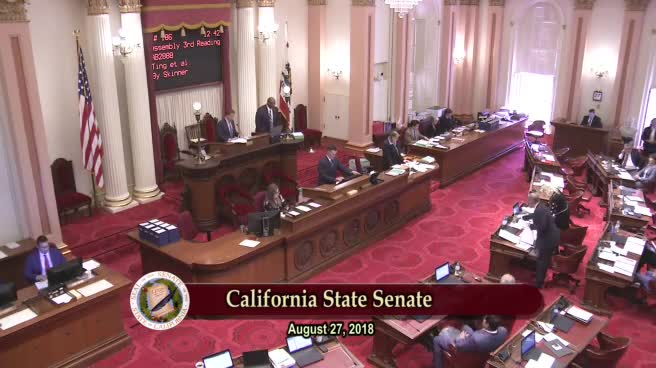
Bill Author

Bill Co-Author(s):