AB 2961: Emergency medical services.
- Session Year: 2017-2018
- House: Assembly
- Latest Version Date: 2018-09-21
Existing law creates the Commission on Emergency Medical Services, within the California Health and Human Services Agency, to, among other things, advise the Emergency Medical Services Authority on the development of an emergency medical data collection system. Existing law requires the Emergency Medical Services Authority to develop a statewide standard methodology for the calculation and reporting of ambulance patient offload time, as defined, by a local emergency medical services (EMS) agency. Existing law authorizes a county to develop an emergency medical services program, and authorizes a local EMS agency to adopt policies and procedures to calculate and report ambulance patient offload time.
This bill would require a local EMS agency to submit quarterly data to the authority that, among other things, is sufficient for the authority to calculate ambulance patient offload time by local EMS agency jurisdiction and by each facility in a local EMS agency jurisdiction. The bill would require the authority to calculate ambulance patient offload time and report it twice per year to the Commission on Emergency Medical Services. The bill would also require the authority, in collaboration with local EMS agencies, on or before December 1, 2020, to submit a report to the Legislature on ambulance patient offload time and recommendations to reduce or eliminate ambulance patient offload time.
Existing law creates the Commission on Emergency Medical Services, within the California Health and Human Services Agency, to, among other things, advise the Emergency Medical Services Authority on the development of an emergency medical data collection system. Existing law requires the Emergency Medical Services Authority to develop a statewide standard methodology for the calculation and reporting of ambulance patient offload time, as defined, by a local emergency medical services (EMS) agency. Existing law authorizes a county to develop an emergency medical services program, and authorizes a local EMS agency to adopt policies and procedures to calculate and report ambulance patient offload time.
This bill would require a local EMS agency to submit quarterly data to the authority that, among other things, is sufficient for the authority to calculate ambulance patient offload time by local EMS agency jurisdiction and by each facility in a local EMS agency jurisdiction. The bill would require the authority to calculate ambulance patient offload time and report it twice per year to the Commission on Emergency Medical Services. The bill would also require the authority, in collaboration with local EMS agencies, on or before December 1, 2020, to submit a report to the Legislature on ambulance patient offload time and recommendations to reduce or eliminate ambulance patient offload time.
Existing law creates the Commission on Emergency Medical Services, within the California Health and Human Services Agency, to, among other things, advise the Emergency Medical Services Authority on the development of an emergency medical data collection system. Existing law requires the Emergency Medical Services Authority to develop a statewide standard methodology for the calculation and reporting of ambulance patient offload time, as defined, by a local emergency medical services (EMS) agency. Existing law authorizes a county to develop an emergency medical services program, and authorizes a local EMS agency to adopt policies and procedures to calculate and report ambulance patient offload time.
This bill would require a local EMS agency to submit quarterly data to the authority that, among other things, is sufficient for the authority to calculate ambulance patient offload time by local EMS agency jurisdiction and by each facility in a local EMS agency jurisdiction. The bill would require the authority to calculate ambulance patient offload time and report it twice per year to the Commission on Emergency Medical Services. The bill would also require the authority, in collaboration with local EMS agencies, on or before December 1, 2020, to submit a report to the Legislature on ambulance patient offload time and recommendations to reduce or eliminate ambulance patient offload time.
Existing law creates the Commission on Emergency Medical Services, within the California Health and Human Services Agency, to, among other things, advise the Emergency Medical Services Authority on the development of an emergency medical data collection system. Existing law requires the Emergency Medical Services Authority to develop a statewide standard methodology for the calculation and reporting of ambulance patient offload time, as defined, by a local emergency medical services (EMS) agency. Existing law authorizes a county to develop an emergency medical services program, and authorizes a local EMS agency to adopt policies and procedures to calculate and report ambulance patient offload time.
This bill would require a local EMS agency to submit quarterly data to the authority that, among other things, is sufficient for the authority to calculate the average ambulance patient offload time by local EMS agency jurisdiction and by each facility in a local EMS agency jurisdiction. The bill would require the authority to calculate those averages ambulance patient offload time and report them it twice per year to the Commission on Emergency Medical Services. The bill would also require the authority, on or before December 1, 2020, to submit a report to the Legislature on the average ambulance patient offload time and recommendations to reduce or eliminate ambulance patient offload time.
Existing law creates the Commission on Emergency Medical Services, within the California Health and Human Services Agency, to, among other things, advise the Emergency Medical Services Authority on the development of an emergency medical data collection system. Existing law requires the Emergency Medical Services Authority to develop a statewide standard methodology for the calculation and reporting of ambulance patient offload time, as defined, by a local emergency medical services (EMS) agency. Existing law authorizes a county to develop an emergency medical services program, and authorizes a local EMS agency to adopt policies and procedures to calculate and report ambulance patient offload time.
This bill would require a local EMS agency to submit quarterly data to the authority that, among other things, is sufficient for the authority to calculate the average ambulance patient offload time by local EMS agency jurisdiction and by each facility in a local EMS agency jurisdiction. The bill would require the authority to calculate those averages and report them twice per year to the Commission on Emergency Medical Services. The bill would also require the authority, on or before December 1, 2020, to submit a report to the Legislature on the average ambulance patient offload time and recommendations to reduce or eliminate ambulance patient offload time.
The California Constitution requires the state to reimburse local agencies and school districts for certain costs mandated by the state. Statutory provisions establish procedures for making that reimbursement.This bill would provide that, if the Commission on State Mandates determines that the bill contains costs mandated by the state, reimbursement for those costs shall be made pursuant to the statutory provisions noted above.Existing law creates the Commission on Emergency Medical Services, within the California Health and Human Services Agency, to, among other things, advise the Emergency Medical Services Authority on the development of an emergency medical data collection system. Existing law requires the Emergency Medical Services Authority to develop a statewide standard methodology for the calculation and reporting of ambulance patient offload time, as defined, by a local emergency medical services (EMS) agency. Existing law authorizes a local EMS agency to adopt policies and procedures to calculate and report ambulance patient offload time.
This bill would make technical, nonsubstantive changes to that provision. require a local EMS agency to submit quarterly data to the authority that, among other things, is sufficient for the authority to calculate the average ambulance patient offload time by local EMS agency jurisdiction and by each facility in a local EMS agency jurisdiction. The bill would require the authority to calculate those averages and report them twice per year to the Commission on Emergency Medical Services. The bill would also require the authority, on or before December 1, 2020, to submit a report to the Legislature on the average ambulance patient offload time and recommendations to reduce or eliminate ambulance patient offload time.
The California Constitution requires the state to reimburse local agencies and school districts for certain costs mandated by the state. Statutory provisions establish procedures for making that reimbursement.
This bill would provide that, if the Commission on State Mandates determines that the bill contains costs mandated by the state, reimbursement for those costs shall be made pursuant to the statutory provisions noted above.
Existing law requires the Emergency Medical Services Authority to develop a statewide standard methodology for the calculation and reporting of ambulance patient offload time, as defined, by a local emergency medical services (EMS) agency. Existing law authorizes a local EMS agency to adopt policies and procedures to calculate and report ambulance patient offload time.
This bill would make technical, nonsubstantive changes to that provision.
The Legislature finds and declares the following:
(a)In 2015, the Legislature directed the Emergency Medical Services Authority (EMSA) to develop a methodology to measure and report ambulance patient offload time.
(b)Ambulance patient offload time is the interval between the arrival via ambulance of a patient at an emergency department and the time the patient is transferred to an emergency department gurney, bed, chair, or other acceptable location and the emergency department assumes responsibility for the care of the patient.
(c)Patients who are experiencing an emergency and are transported to the hospital must get rapid, efficient transfer and attention at an emergency care facility. Ensuring immediate transfer of patient care at emergency rooms will not only benefit the patient under direct care, but also ensure that emergency medical services (EMS) professionals can reenter the field to help others in need.
(d)Significant delays in ambulance patient offload time unacceptably prevent a patient from receiving appropriate and immediate care, and pose a public safety risk by having fewer qualified EMS personnel available to respond to other emergencies.
(e)Chapter 379 of the Statutes of 2015 required the EMSA to create a common definition of ambulance patient offload time and charged the EMSA with establishing a standard way of measuring the problem across the state, while allowing for the collection of data needed to measure ambulance patient offload time and address issues.
(f)While the EMSA has established the methodology, reporting by local EMS agencies has been intermittent. Some local EMS agencies reported ambulance patient offload time quarterly during 2017, some local EMS agencies reported incomplete data, and more than a dozen local EMS agencies have not reported any data.
(g)Chapter 377 of the Statutes of 2015 directs EMS providers to utilize an electronic patient care record system to track patient care records and to submit that data to local EMS agencies. An electronic system allows for better data collection, better data sharing between agencies, and better coordination between the EMS system and emergency departments.
(h)Electronic patient care records include data tracking for each emergency response call that includes transferring a patient to an emergency department. Currently, electronic patient care record data is not shared consistently or completely with EMSA.
(i)It is imperative that local EMS agencies report this data to EMSA to inform EMSA and EMS system stakeholders in considering or adopting reasonable policy solutions to reduce or eliminate ambulance patient offload time.
SEC. 2.Section 1797.123 is added to the Health and Safety Code, immediately following Section 1797.122, to read:1797.123.(a)Upon receipt of data reported by a local EMS agency to the authority pursuant to Section 1797.228, the authority shall calculate ambulance patient offload time by local EMS agency jurisdiction and by each facility in a local EMS agency jurisdiction.
(b)The authority shall report twice per year to the Commission on Emergency Medical Services the ambulance patient offload time by local EMS agency jurisdiction and by each facility in a local EMS agency jurisdiction.
(c)On or before December 1, 2020, the authority, in collaboration with local EMS agencies, shall submit a report to the Legislature on ambulance patient offload time and recommendations to reduce or eliminate ambulance patient offload time. The report shall be submitted in compliance with Section 9795 of the Government Code.
SEC. 3.Section 1797.228 is added to the Health and Safety Code, immediately following Section 1797.227, to read:1797.228.(a)(1)On or before July 1, 2019, a local EMS agency shall transmit ambulance patient offload time data quarterly to the authority, consistent with the policies and procedures developed pursuant to Section 1797.225.
(2)The data must be sufficient for the authority to calculate ambulance patient offload time, as defined in subdivision (b) of Section 1797.120, by local EMS agency jurisdiction and by each facility in a local EMS agency jurisdiction.
(b)Notwithstanding Section 1797.122, the local EMS agency shall ensure that personally identifying patient data is not included in the submission of data to calculate patient offload time.
The Legislature finds and declares the following:
(a)In 2015, the Legislature directed the Emergency Medical Services Authority (EMSA) to develop a methodology to measure and report ambulance patient offload time.
(b)Ambulance patient offload time is the interval between the arrival via ambulance of a patient at an emergency department and the time the patient is transferred to an emergency department gurney, bed, chair, or other acceptable location and the emergency department assumes responsibility for the care of the patient.
(c)Patients who are experiencing an emergency and are transported to the hospital must get rapid, efficient transfer and attention at an emergency care facility. Ensuring immediate transfer of patient care at emergency rooms will not only benefit the patient under direct care, but also ensure that emergency medical services (EMS) professionals can reenter the field to help others in need.
(d)Significant delays in ambulance patient offload time unacceptably prevent a patient from receiving appropriate and immediate care, and pose a public safety risk by having fewer qualified EMS personnel available to respond to other emergencies.
(e)Chapter 379 of the Statutes of 2015 required the EMSA to create a common definition of ambulance patient offload time and charged the EMSA with establishing a standard way of measuring the problem across the state, while allowing for the collection of data needed to measure ambulance patient offload time and address issues.
(f)While the EMSA has established the methodology, reporting by local EMS agencies has been intermittent. Some local EMS agencies reported ambulance patient offload time quarterly during 2017, some local EMS agencies reported incomplete data, and more than a dozen local EMS agencies have not reported any data.
(g)Chapter 377 of the Statutes of 2015 directs EMS providers to utilize an electronic patient care record system to track patient care records and to submit that data to local EMS agencies. An electronic system allows for better data collection, better data sharing between agencies, and better coordination between the EMS system and emergency departments.
(h)Electronic patient care records include data tracking for each emergency response call that includes transferring a patient to an emergency department. Currently, electronic patient care record data is not shared consistently or completely with EMSA.
(i)It is imperative that local EMS agencies report this data to EMSA to inform EMSA and EMS system stakeholders in considering or adopting reasonable policy solutions to reduce or eliminate ambulance patient offload time.
SEC. 2.Section 1797.123 is added to the Health and Safety Code, immediately following Section 1797.122, to read:1797.123.(a)Upon receipt of data reported by a local EMS agency to the authority pursuant to Section 1797.228, the authority shall calculate ambulance patient offload time by local EMS agency jurisdiction and by each facility in a local EMS agency jurisdiction.
(b)The authority shall report twice per year to the Commission on Emergency Medical Services the ambulance patient offload time by local EMS agency jurisdiction and by each facility in a local EMS agency jurisdiction.
(c)On or before December 1, 2020, the authority, in collaboration with local EMS agencies, shall submit a report to the Legislature on ambulance patient offload time and recommendations to reduce or eliminate ambulance patient offload time. The report shall be submitted in compliance with Section 9795 of the Government Code.
SEC. 3.Section 1797.228 is added to the Health and Safety Code, immediately following Section 1797.227, to read:1797.228.(a)(1)On or before July 1, 2019, a local EMS agency shall transmit ambulance patient offload time data quarterly to the authority, consistent with the policies and procedures developed pursuant to Section 1797.225.
(2)The data must be sufficient for the authority to calculate ambulance patient offload time, as defined in subdivision (b) of Section 1797.120, by local EMS agency jurisdiction and by each facility in a local EMS agency jurisdiction.
(b)Notwithstanding Section 1797.122, the local EMS agency shall ensure that personally identifying patient data is not included in the submission of data to calculate patient offload time.
The Legislature finds and declares the following:
(a)In 2015, the Legislature directed the Emergency Medical Services Authority (EMSA) to develop a methodology to measure and report ambulance patient offload time.
(b)Ambulance patient offload time is the interval between the arrival via ambulance of a patient at an emergency department and the time the patient is transferred to an emergency department gurney, bed, chair, or other acceptable location and the emergency department assumes responsibility for the care of the patient.
(c)Patients who are experiencing an emergency and are transported to the hospital must get rapid, efficient transfer and attention at an emergency care facility. Ensuring immediate transfer of patient care at emergency rooms will not only benefit the patient under direct care, but also ensure that emergency medical services (EMS) professionals can reenter the field to help others in need.
(d)Significant delays in ambulance patient offload time unacceptably prevent a patient from receiving appropriate and immediate care, and pose a public safety risk by having fewer qualified EMS personnel available to respond to other emergencies.
(e)Chapter 379 of the Statutes of 2015 required the EMSA to create a common definition of ambulance patient offload time and charged the EMSA with establishing a standard way of measuring the problem across the state, while allowing for the collection of data needed to measure ambulance patient offload time and address issues.
(f)While the EMSA has established the methodology, reporting by local EMS agencies has been intermittent. Some local EMS agencies reported ambulance patient offload time quarterly during 2017, some local EMS agencies reported incomplete data, and more than a dozen local EMS agencies have not reported any data.
(g)Chapter 377 of the Statutes of 2015 directs EMS providers to utilize an electronic patient care record system to track patient care records and to submit that data to local EMS agencies. An electronic system allows for better data collection, better data sharing between agencies, and better coordination between the EMS system and emergency departments.
(h)Electronic patient care records include data tracking for each emergency response call that includes transferring a patient to an emergency department. Currently, that electronic patient care record data is not shared consistently or completely with EMSA.
(i)It is imperative that local EMS agencies report this data to EMSA to inform EMSA and EMS system stakeholders in considering or adopting reasonable policy solutions to reduce or eliminate ambulance patient offload time.
SEC. 2.Section 1797.123 is added to the Health and Safety Code, immediately following Section 1797.122, to read:1797.123.(a)Upon receipt of data reported by a local EMS agency to the authority pursuant to Section 1797.228, the authority shall calculate ambulance patient offload time by local EMS agency jurisdiction and by each facility in a local EMS agency jurisdiction.
(b)The authority shall report twice per year to the Commission on Emergency Medical Services the ambulance patient offload time by local EMS agency jurisdiction and by each facility in a local EMS agency jurisdiction.
(c)On or before December 1, 2020, the authority authority, in collaboration with local EMS agencies, shall submit a report to the Legislature on ambulance patient offload time and recommendations to reduce or eliminate ambulance patient offload time. The report shall be submitted in compliance with Section 9795 of the Government Code.
SEC. 3.Section 1797.228 is added to the Health and Safety Code, immediately following Section 1797.227, to read:1797.228.(a)(1)On or before July 1, 2019, a local EMS agency shall transmit ambulance patient offload time data quarterly to the authority, consistent with the policies and procedures developed pursuant to Section 1797.225 or by utilizing electronic health record system data reported by emergency medical care providers pursuant to Section 1797.227. 1797.225.
(b)If a local EMS agency elects to submit data from the electronic patient care records under an electronic health record system, reported pursuant to Section 1797.227, the(2)The data must be sufficient for the authority to calculate ambulance patient offload time, as defined in subdivision (b) of Section 1797.120, by local EMS agency jurisdiction and by each facility in a local EMS agency jurisdiction.
(c)Before submitting data to the authority,(b)Notwithstanding Section 1797.122, the local EMS agency shall ensure that personally identifying patient data is not included in the submission. submission of data to calculate patient offload time.
(d)A local EMS agency shall submit quarterly data to the authority no later than 15 days after the end of the quarter.The Legislature finds and declares the following:
(a)In 2015, the Legislature directed the Emergency Medical Services Authority (EMSA) to develop a methodology to measure and report ambulance patient offload time.
(b)Ambulance patient offload time is the interval between the arrival via ambulance of a patient at an emergency department and the time the patient is transferred to an emergency department gurney, bed, chair, or other acceptable location and the emergency department assumes responsibility for the care of the patient.
(c)Patients who are experiencing an emergency and are transported to the hospital must get rapid, efficient transfer and attention at an emergency care facility. Ensuring immediate transfer of patient care at emergency rooms will not only benefit the patient under direct care, but also ensure that emergency medical services (EMS) professionals can reenter the field to help others in need.
(d)Significant delays in ambulance patient offload time unacceptably prevent a patient from receiving appropriate and immediate care, and pose a public safety risk by having fewer qualified EMS personnel available to respond to other emergencies.
(e)Chapter 379 of the Statutes of 2015 required the EMSA to create a common definition of ambulance patient offload time and charged the EMSA with establishing a standard way of measuring the problem across the state, while allowing for the collection of data needed to measure ambulance patient offload time and address issues.
(f)While the EMSA has established the methodology, reporting by local EMS agencies has been intermittent. Some local EMS agencies reported ambulance patient offload time quarterly during 2017, some local EMS agencies reported incomplete data, and more than a dozen local EMS agencies have not reported any data.
(g)Chapter 377 of the Statutes of 2015 directs EMS providers to utilize an electronic patient care record system to track patient care records and to submit that data to local EMS agencies. An electronic system allows for better data collection, better data sharing between agencies, and better coordination between the EMS system and emergency departments.
(h)Electronic patient care records include data tracking for each emergency response call that includes transferring a patient to an emergency department. Currently, that data is not shared with EMSA.
(i)It is imperative that local EMS agencies report this data to EMSA to inform EMSA and EMS system stakeholders in considering or adopting reasonable policy solutions to reduce or eliminate ambulance patient offload time.
SEC. 2.Section 1797.123 is added to the Health and Safety Code, immediately following Section 1797.122, to read:1797.123.(a)Upon receipt of data reported by a local EMS agency to the authority pursuant to Section 1797.228, the authority shall calculate average ambulance patient offload time by local EMS agency jurisdiction and by each facility in a local EMS agency jurisdiction.
(b)The authority shall report twice per year to the Commission on Emergency Medical Services the average ambulance patient offload time by local EMS agency jurisdiction and by each facility in a local EMS agency jurisdiction.
(c)On or before December 1, 2020, the authority shall submit a report to the Legislature on the average ambulance patient offload time and recommendations to reduce or eliminate ambulance patient offload time. The report shall be submitted in compliance with Section 9795 of the Government Code.
SEC. 3.Section 1797.228 is added to the Health and Safety Code, immediately following Section 1797.227, to read:1797.228.(a)On or before July 1, 2019, a local EMS agency shall transmit ambulance patient offload time data to the authority, consistent with the policies and procedures developed pursuant to Section 1797.225 or by utilizing electronic health record system data reported by emergency medical care providers pursuant to Section 1797.227.
(b)If a local EMS agency elects to submit data from the electronic patient care records under an electronic health record system, reported pursuant to Section 1797.227, the data must be sufficient for the authority to calculate average ambulance patient offload time, as defined in subdivision (b) of Section 1797.120, by local EMS agency jurisdiction and by each facility in a local EMS agency jurisdiction.
(c)Before submitting data to the authority, the local EMS agency shall ensure that personally identifying patient data is not included in the submission.
(d)A local EMS agency shall submit quarterly data to the authority no later than 15 days after the end of the quarter.
The Legislature finds and declares the following:
(a)In 2015, the Legislature directed the Emergency Medical Services Authority (EMSA) to develop a methodology to measure and report ambulance patient offload time.
(b)Ambulance patient offload time is the interval between the arrival via ambulance of a patient at an emergency department and the time the patient is transferred to an emergency department gurney, bed, chair, or other acceptable location and the emergency department assumes responsibility for the care of the patient.
(c)Patients who are experiencing an emergency and are transported to the hospital must get rapid, efficient transfer and attention at an emergency care facility. Ensuring immediate transfer of patient care at emergency rooms will not only benefit the patient under direct care, but also ensure that emergency medical services (EMS) professionals can reenter the field to help others in need.
(d)Significant delays in ambulance patient offload time unacceptably prevent a patient from receiving appropriate and immediate care, and pose a public safety risk by having fewer qualified EMS personnel available to respond to other emergencies.
(e)Chapter 379 of the Statutes of 2015 required the EMSA to create a common definition of ambulance patient offload time and charged the EMSA with establishing a standard way of measuring the problem across the state, while allowing for the collection of data needed to measure ambulance patient offload time and address issues.
(f)While the EMSA has established the methodology, reporting by local EMS agencies has been intermittent. Some local EMS agencies reported ambulance patient offload time quarterly during 2017, some local EMS agencies reported incomplete data, and more than a dozen local EMS agencies have not reported any data.
(g)Chapter 377 of the Statutes of 2015 directs EMS providers to utilize an electronic patient care record system to track patient care records and to submit that data to local EMS agencies. An electronic system allows for better data collection, better data sharing between agencies, and better coordination between the EMS system and emergency departments.
(h)Electronic patient care records include data tracking for each emergency response call that includes transferring a patient to an emergency department. Currently, that data is not shared with EMSA.
(i)It is imperative that local EMS agencies report this data to EMSA to inform EMSA and EMS system stakeholders in considering or adopting reasonable policy solutions to reduce or eliminate ambulance patient offload time.
SEC. 2.Section 1797.123 is added to the Health and Safety Code, immediately following Section 1797.122, to read:1797.123.(a)Upon receipt of data reported by a local EMS agency to the authority pursuant to Section 1797.228, the authority shall calculate average ambulance patient offload time by local EMS agency jurisdiction and by each facility in a local EMS agency jurisdiction.
(b)The authority shall report twice per year to the Commission on Emergency Medical Services the average ambulance patient offload time by local EMS agency jurisdiction and by each facility in a local EMS agency jurisdiction.
(c)On or before December 1, 2020, the authority shall submit a report to the Legislature on the average ambulance patient offload time and recommendations to reduce or eliminate ambulance patient offload time. The report shall be submitted in compliance with Section 9795 of the Government Code.
SEC. 3.Section 1797.228 is added to the Health and Safety Code, immediately following Section 1797.227, to read:1797.228.(a)On or before July 1, 2019, a local EMS agency shall transmit ambulance patient offload time data to the authority, consistent with the policies and procedures developed pursuant to Section 1797.225 or by utilizing electronic health record system data reported by emergency medical care providers pursuant to Section 1797.227.
(b)If a local EMS agency elects to submit data from the electronic patient care records under an electronic health record system, reported pursuant to Section 1797.227, the data must be sufficient for the authority to calculate average ambulance patient offload time, as defined in subdivision (b) of Section 1797.120, by local EMS agency jurisdiction and by each facility in a local EMS agency jurisdiction.
(c)Before submitting data to the authority, the local EMS agency shall ensure that personally identifying patient data is not included in the submission.
(d)A local EMS agency shall submit quarterly data to the authority no later than 15 days after the end of the quarter.
SEC. 4.If the Commission on State Mandates determines that this act contains costs mandated by the state, reimbursement to local agencies and school districts for those costs shall be made pursuant to Part 7 (commencing with Section 17500) of Division 4 of Title 2 of the Government Code.The Legislature finds and declares the following:
(a)In 2015, the Legislature directed the Emergency Medical Services Authority (EMSA) to develop a methodology to measure and report ambulance patient offload time.
(b)Ambulance patient offload time is the interval between the arrival via ambulance of a patient at an emergency department and the time the patient is transferred to an emergency department gurney, bed, chair, or other acceptable location and the emergency department assumes responsibility for the care of the patient.
(c)Patients who are experiencing an emergency and are transported to the hospital must get rapid, efficient transfer and attention at an emergency care facility. Ensuring immediate transfer of patient care at emergency rooms will not only benefit the patient under direct care, but also ensure that emergency medical services (EMS) professionals can reenter the field to help others in need.
(d)Significant delays in ambulance patient offload time unacceptably prevent a patient from receiving appropriate and immediate care, and pose a public safety risk by having fewer qualified EMS personnel available to respond to other emergencies.
(e)Chapter 379 of the Statutes of 2015 required the EMSA to create a common definition of ambulance patient offload time and charged the EMSA with establishing a standard way of measuring the problem across the state, while allowing for the collection of data needed to measure ambulance patient offload time and address issues.
(f)While the EMSA has established the methodology, reporting by local EMS agencies has been intermittent. Some local EMS agencies reported ambulance patient offload time quarterly during 2017, some local EMS agencies reported incomplete data, and more than a dozen local EMS agencies have not reported any data.
(g)Chapter 377 of the Statutes of 2015 directs EMS providers to utilize an electronic patient care record system to track patient care records and to submit that data to local EMS agencies. An electronic system allows for better data collection, better data sharing between agencies, and better coordination between the EMS system and emergency departments.
(h)Electronic patient care records include data tracking for each emergency response call that includes transferring a patient to an emergency department. Currently, that data is not shared with EMSA.
(i)It is imperative that local EMS agencies report this data to EMSA to inform EMSA and EMS system stakeholders in considering or adopting reasonable policy solutions to reduce or eliminate ambulance patient offload time.
SEC. 2.Section 1797.123 is added to the Health and Safety Code, immediately following Section 1797.122, to read:1797.123.(a)Upon receipt of data reported by a local EMS agency to the authority pursuant to Section 1797.228, the authority shall calculate average ambulance patient offload time by local EMS agency jurisdiction and by each facility in a local EMS agency jurisdiction.
(b)The authority shall report twice per year to the Commission on Emergency Medical Services the average ambulance patient offload time by local EMS agency jurisdiction and by each facility in a local EMS agency jurisdiction.
(c)On or before December 1, 2020, the authority shall submit a report to the Legislature on the average ambulance patient offload time and recommendations to reduce or eliminate ambulance patient offload time. The report shall be submitted in compliance with Section 9795 of the Government Code.
SEC. 3.Section 1797.228 is added to the Health and Safety Code, immediately following Section 1797.227, to read:1797.228.(a)On or before July 1, 2019, a local EMS agency shall transmit ambulance patient offload time data to the authority, consistent with the policies and procedures developed pursuant to Section 1797.225 or by utilizing electronic health record system data reported by emergency medical care providers pursuant to Section 1797.227.
(b)If a local EMS agency elects to submit data from the electronic patient care records under an electronic health record system, reported pursuant to Section 1797.227, the data must be sufficient for the authority to calculate average ambulance patient offload time, as defined in subdivision (b) of Section 1797.120, by local EMS agency jurisdiction and by each facility in a local EMS agency jurisdiction.
(c)Before submitting data to the authority, the local EMS agency shall ensure that personally identifying patient data is not included in the submission.
(d)A local EMS agency shall submit quarterly data to the authority no later than 15 days after the end of the quarter.
SEC. 4.If the Commission on State Mandates determines that this act contains costs mandated by the state, reimbursement to local agencies and school districts for those costs shall be made pursuant to Part 7 (commencing with Section 17500) of Division 4 of Title 2 of the Government Code.
SECTION 1.Section 1797.225 of the Health and Safety Code is amended to read:1797.225.(a)A local EMS agency may adopt policies and procedures for calculating and reporting ambulance patient offload time, as defined in subdivision (b) of Section 1797.120.(b)A local EMS agency that adopts policies and procedures for calculating and reporting ambulance patient offload time pursuant to subdivision (a) shall do both of the following:(1)Use the statewide standard methodology for calculating and reporting ambulance patient offload time developed by the authority pursuant to Section 1797.120.(2)Establish criteria for the reporting of, and quality assurance followup for, a nonstandard patient offload time, as defined in subdivision (c).(c)(1)For the purposes of this section, a nonstandard patient offload time means that the ambulance patient offload time for a patient exceeds the period of time designated in the criteria established by the local EMS agency pursuant to paragraph (2) of subdivision (b).(2)Nonstandard patient offload time does not include instances in which the ambulance patient offload time exceeds the period set by the local EMS agency due to acts of God, natural disasters, or manmade disasters. REVISIONS: HeadingLine 2.(a)A local EMS agency may adopt policies and procedures for calculating and reporting ambulance patient offload time, as defined in subdivision (b) of Section 1797.120.
(b)A local EMS agency that adopts policies and procedures for calculating and reporting ambulance patient offload time pursuant to subdivision (a) shall do all both of the following:
(1)Use the statewide standard methodology for calculating and reporting ambulance patient offload time developed by the authority pursuant to Section 1797.120.
(2)Establish criteria for the reporting of, and quality assurance followup for, a nonstandard patient offload time, as defined in subdivision (c).
(c)(1)For the purposes of this section, a nonstandard patient offload time means that the ambulance patient offload time for a patient exceeds a the period of time designated in the criteria established by the local EMS agency pursuant to paragraph (2) of subdivision (b).
(2)Nonstandard patient offload time does not include instances in which the ambulance patient offload time exceeds the period set by the local EMS agency due to acts of God, natural disasters, or manmade disasters.
|
Date
|
Status
|
|---|---|
| Sep 21, 2018 | Chaptered by Secretary of State - Chapter 656, Statutes of 2018. |
| Sep 21, 2018 | Approved by the Governor. |
| Sep 11, 2018 | Enrolled and presented to the Governor at 4:30 p.m. |
| Aug 30, 2018 | Senate amendments concurred in. To Engrossing and Enrolling. |
| Aug 29, 2018 | In Assembly. Concurrence in Senate amendments pending. |
| Aug 29, 2018 | Read third time. Passed. Ordered to the Assembly. |
| Aug 27, 2018 | Read second time. Ordered to third reading. |
| Aug 24, 2018 | Read third time and amended. Ordered to second reading. |
| Aug 22, 2018 | Ordered to third reading. |
| Aug 21, 2018 | Ordered to special consent calendar. |
| Aug 17, 2018 | From committee: Do pass. (Ayes 7. Noes 0.) (August 16). |
| Aug 6, 2018 | In committee: Referred to APPR. suspense file. |
| Jul 3, 2018 | Read second time and amended. Re-referred to Com. on APPR. |
| Jul 2, 2018 | From committee: Amend, and do pass as amended and re-refer to Com. on APPR. (Ayes 9. Noes 0.) (June 27). |
| Jun 13, 2018 | Referred to Com. on HEALTH. |
| May 31, 2018 | In Senate. Read first time. To Com. on RLS. for assignment. |
| May 30, 2018 | Read third time. Passed. Ordered to the Senate. |
| May 29, 2018 | Read second time. Ordered to third reading. |
| May 25, 2018 | From committee: Amend, and do pass as amended. (Ayes 12. Noes 0.) (May 25). |
| Apr 25, 2018 | In committee: Set, first hearing. Referred to APPR. suspense file. |
| Apr 11, 2018 | Coauthors revised. |
| Mar 21, 2018 | Re-referred to Com. on HEALTH. |
| Mar 20, 2018 | From committee chair, with author's amendments: Amend, and re-refer to Com. on HEALTH. Read second time and amended. |
| Mar 19, 2018 | Referred to Com. on HEALTH. |
| Feb 17, 2018 | From printer. May be heard in committee March 19. |
| Feb 16, 2018 | Read first time. To print. |
|
Date
|
Description
|
Location
|
Votes
|
|
|---|---|---|---|---|
| Aug 30, 2018 | AB 2961 O'DONNELL Concurrence in Senate Amendments | Assembly Floor |
Passed |
|
| Aug 29, 2018 | Assembly 3rd Reading AB2961 O'Donnell et al. By Hernandez | Senate Floor |
Passed |
|
| Aug 16, 2018 | Do pass | Senate Standing Committee on Appropriations |
Passed |
|
| Aug 6, 2018 | Placed on suspense file | Senate Standing Committee on Appropriations |
Passed |
|
| Jun 27, 2018 | Do pass as amended, but first amend, and re-refer to the Committee on [Appropriations] | Senate Standing Committee on Health |
Passed |
|
| May 30, 2018 | AB 2961 O'DONNELL Assembly Third Reading | Assembly Floor |
Passed |
|
| May 25, 2018 | Do pass as amended. | Assembly Standing Committee on Appropriations |
Passed |
|
| Apr 10, 2018 | Do pass and be re-referred to the Committee on [Appropriations] | Assembly Standing Committee on Health |
Passed |
This list shows positions taken on this bill by organizations on the date displayed, which is linked to the original source.
Positions by individuals are not included.
CONCURRENCE IN SENATE AMENDMENTS
CSA1 Bill Id:AB 2961
Author:(O'Donnell)
As Amended Ver:August 24, 2018
Majority vote
ASSEMBLY: | 78-0 | (May 30, 2018) | SENATE: | 39-0 | (August 29, 2018) |
Original Committee Reference: HEALTH
SUMMARY: Requires, on or before July 1, 2019, local emergency medical service agencies (LEMSAs) to transmit patient offload time data to the Emergency Medical Services Authority (EMSA), and requires EMSA, upon receipt of the data, to calculate ambulance patient offload time (APOT) by LEMSA jurisdiction and by each facility in a LEMSA jurisdiction.
The Senate amendments are technical and clarifying, with respect to how APOT is calculated and reported.
FISCAL EFFECT: According to the Senate Appropriations Committee, $197,000 (General Fund (GF)) in FY 2018-19 and $145,000 (GF), ongoing, for EMSA administrative resources to develop a statewide program to collect and report submitted data to LEMSAs, a one-time consultant to set up the database, and costs to purchase a software semi-automate data entry. Specifically:
- $147,000 (GF) in fiscal year 2018-19 and $140,000 (GF) ongoing annually thereafter for 1.0 full-time permanent research program specialist I (RPS I) to develop a statewide program to collect, consolidate, analyze and report submitted data from LEMSAs.
- One-time $30,000 (GF) for a consultant to set up the database, program reports, and staff training.
- $20,000 (GF) in fiscal year 2018-19 and $5,000 (GF) ongoing, annually thereafter, to purchase the license for software to semi-automate data entry and analysis, as the department is currently using Excel.
- Unknown GF state-reimbursable mandate costs. Any new costs incurred for development and implementation of LEMSA data collection infrastructure, data collection costs, and personnel costs for preparation and submission of reports could likely qualify as a state-reimbursable mandate. About half of the 33 LEMSAs already report data, but those that do not are in various stages of infrastructure development.
COMMENTS: According to the author, ensuring patients have access to quick, efficient and effective care during emergency situations is paramount. The author states that significant delay in APOT unacceptably prevents patients from receiving appropriate and immediate care, and poses a public safety risk by having fewer qualified EMS personnel available to respond to other emergencies. In order to adopt reasonable policy solutions for addressing these unacceptable delays, we must first have all relevant data. The author notes that this bill works to obtain this information by requiring LEMSAs to provide APOT data to EMSA on a consistent basis so that EMSA and the Legislature can work to implement policy solutions that achieve efficient APOTs across the state. The author concludes that improving APOT will improve patient care for patients in the entire medical response system and increase the public’s safety overall.
- APOT. AB 1223 (O’Donnell), Chapter 379, Statutes of 2015, required EMSA to adopt a statewide standard methodology for the calculation and reporting by a LEMSA of APOT, and permits LEMSAs to adopt policies and procedures for calculating and reporting APOT using the statewide methodology. In collaboration with stakeholders, EMSA developed measures for APOT and adopted a statewide methodology for LEMSAs to calculate and report APOT. EMSA also developed guidance for the implementation and reporting of the measures to support LEMSAs with their efforts.
EMSA's guidance, "APOT Methodology Guidance 2016" proposed a recommended APOT of 20 minutes. Most LEMSAs chose a standard APOT of around 30 minutes. According to EMSA, it is not yet possible to provide statewide statistics for APOT delay due to the limited data. EMSA notes that the data received show that certain local jurisdictions and specific hospitals have long APOT delays and there are seasonal variances that correspond to health system impact of influenza and other respiratory viruses. EMSA states that delays in APOT are highly dependent on the specific hospital, and that the data also show that relatively small numbers of facilities with significant APOT delays can result in significant impacts to EMS systems.
As of December 2017, 14 of the 33 LEMSAs had provided at least one-quarter of APOT information that represented 231 hospitals. To date EMSA has received a least one quarter's data from 15 LEMSAs.
- Toolkit to address APOT delays. In 2013, the California Hospital Association (CHA) and EMSA created the Ambulance Patient Offload Delay Collaborative to analyze and develop solutions for the APOT delays that were increasing pressure on both hospitals and ambulance providers. The goals of this collaborative were to: a) develop standardized language, definitions, metrics and reporting opportunities for ambulance patient throughput; b) identify ways to reduce delays and improve transfer times; and, c) assist local jurisdictions in developing processes and sustainable goals to reduce the incidence of APOT delays. In a national study involving 200 cities, including some in California, the national average wait time for handing off ambulance patients has doubled from 20 minutes in 2006 to more than 45 minutes. Through survey research, the collaborative learned that the offload delay problem in California is not uniform or consistently reported. Of the 124 hospitals that responded to the survey, 74 (or 60%) said that APOT delays were "neutral" or "not significant," which was consistent with what 19 out of 33 LEMSAs (58%) reported as well. In contrast, 45 hospitals and 13 LEMSAs reported that APOT delays were "extremely significant," "very significant," or "somewhat significant." Those 13 LEMSAs reporting a problem represent regions that include 70% of California's population.
As a result of this collaborative effort, in August of 2014 the Toolkit to Reduce Ambulance Patient Offload Delays in the Emergency Department (Toolkit) was published by CHA. The Toolkit includes definitions, process guidelines and strategies to be considered to evaluate current practices and develop specific process improvements at the local level. The theme of the Toolkit was that local EMS systems and hospitals are unique, and that collaborative problem solving should be used to identify and solve problems locally. However, the Toolkit did identify three key factors for success, starting with improving the emergency department intake process, followed by continuous quality improvement measures, and hospital and LEMSA collaboration.
The California Professional Firefighters (CPF) is the sponsor of this bill and states that significant delays in APOT is a well-known issue in California. CPF notes these delays not only jeopardize the patient under direct care by preventing immediate attention, but also prevent critical EMS personnel from re-entering the field to respond to other emergencies. CPF notes that existing law authorizes, but does not require LEMSAs to adopt policies and procedures for reporting APOT to EMSA. CPF concludes that this bill will ensure that EMSA and the Legislature will have the information needed to implement policy changes that achieve efficient APOTs across the state, and that improving APOT will improve care for patients in the entire EMS system.
CHA opposes this bill noting that, for the past four years hospitals and health systems have worked with EMSA and LEMSAs to develop standard methodology and quality improvement collaboratives that identify issues and resolve processes within hospital or pre-hospital providers' control. CHA states that many best practices have been deployed, however, the work continues to expose the issues that neither hospitals nor pre-hospital providers have control over, such as increasing use of EDs for non-medical, non-emergent needs. CHA argues, because of this, longer than average APOT are inevitable and uncontrollable in certain situations. CHA states that not all LEMSAs or hospitals experience ambulance patient offload delays, however this bill would require providers to report on a problem that does not exist for all.
Analysis Prepared by: Lara Flynn / HEALTH / (916) 319-2097 FN: 00048870004887
Office of Senate Floor Analyses (916) 651-1520 Fax: (916) 327-4478 | AB |
THIRD READING
Bill No: AB 2961
Amended: 8/24/18 in Senate
SENATE HEALTH COMMITTEE: 9-0, 6/27/18
AYES: Pan, Nguyen, Beall, Hernandez, Leyva, Mitchell, Monning, Nielsen, Roth
SENATE APPROPRIATIONS COMMITTEE: 7-0, 8/16/18
AYES: Portantino, Bates, Beall, Bradford, Hill, Nielsen, Wiener
ASSEMBLY FLOOR: 78-0, 5/30/18 - See last page for vote
SOURCE: California Professional Firefighters
DIGEST:
This bill requires a local emergency medical services agency (LEMSA) to report ambulance patient offload time to the Emergency Medical Services Agency (EMSA), and requires EMSA to calculate ambulance patient offload time by jurisdiction and by each facility within a jurisdiction, and report this data to the Commission on Emergency Medical Services twice per year, and to submit a report to the Legislature by December 1, 2020.
Senate Floor Amendments of 8/24/18 delete the option of LEMSAs to report ambulance patient offload data to EMSA by utilizing electronic health record system data, as specified, so that instead the data is simply required to be reported consistent with policies and procedures specified under existing law.
Existing law:
- Establishes EMSA, which is responsible for the coordination and integration of all state activities concerning emergency medical services (EMS), including the establishment of minimum standards, policies, and procedures. [HSC §1797.100, et seq.]
- Requires EMSA, utilizing regional and local information, to assess each EMS area or the system’s service area for the purpose of determining the need for additional emergency services, and the coordination and effectiveness of EMS. Requires EMSA to develop planning and implementation guidelines for EMS systems which address specified components, including communications, system organization and management, and data collection and evaluation. [HSC §1797.102 and §1797.103]
- Authorizes counties to develop an EMS program and designate a LEMSA responsible for planning and implementing an EMS system, which includes day-to-day EMS system operations. [HSC §1797.200, et seq.]
- Establishes an 18-member Commission on EMS, within the California Health and Human Services Agency (HHSA). Defines the duties of the Commission to include reviewing regulations, standards, and guidelines developed by EMSA; advising EMSA on a data collection system; advise on emergency facilities and services, emergency communications, medical equipment, personnel training, and various aspects of the EMS system; and, to make recommendations for further development of the EMS system. [HSC §1799, et seq.]
- Requires EMSA to develop, and after approval by the Commission on EMS, adopt a statewide standard methodology for the calculation and reporting by a LEMSA of ambulance patient offload time (APOT), using input from stakeholders, including, but not limited to, hospitals, LEMSAs, and public and private EMS providers. [HSC §1797.120]
- Defines APOT as the interval between the arrival of an ambulance patient at an emergency department, and the time that the patient is transferred to an emergency department gurney, bed, chair, or other acceptable location and the emergency departments assumes responsibility for care of the patient. [HSC §1797.120]
- Permits a LEMSA to adopt policies and procedures for calculating and reporting APOT, and requires a LEMSA that adopts these policies and procedures to do all of the following: a) use the statewide standard methodology for calculating and reporting APOT developed by EMSA; and, b) establish criteria for the reporting of, and quality assurance follow-up for, a “nonstandard patient offload time,” as defined. [HSC §1797.225]
- Defines “nonstandard patient offload time” as an offload time that exceeds a period of time designated in the criteria established by the LEMSA, but excludes from this definition instances in which the offload times exceeds the designated period of time due to acts of God, natural disasters, or manmade disasters. [HSC §1797.225]
- Requires an EMS provider to do both of the following when collecting and submitting data to a LEMSA: a) use an electronic health record system that exports data in a format that is compliance with the current versions of the California Emergency Medical Services Information System (CEMSIS) and the National Emergency Medical Services Information System (NEMSIS) standards; and b) ensure that the electronic health record system can be integrated with the LEMSA’s data system. [HSC §1797.227]
This bill:
- Requires a LEMSA, on or before July 1, 2019, to transmit APOT data quarterly to EMSA, consistent with the policies and procedures developed under existing law, as specified. Requires the APOT data to be sufficient for EMSA to calculate APOT by LEMSA jurisdiction and by each facility in a LEMSA jurisdiction.
- Requires a LEMSA to ensure that personally identifying patient data is not included in the submission of data to calculate APOT.
- Requires EMSA, upon receipt of the APOT data reported by a LEMSA, to calculate APOT by LEMSA jurisdiction and by each facility in a LEMSA jurisdiction. Requires EMSA to report this data twice per year to the Commission on EMS.
- Requires EMSA, on or before December 1, 2020, in collaboration with LEMSAs, to submit a report to the Legislature, in accordance with specified provisions of law governing reports to the Legislature, on APOT and recommendations to reduce or eliminate APOT.
- Makes various legislative findings and declarations, including that in 2015, the Legislature directed EMSA to develop a methodology to measure and report APOT, that significant delays in APOT pose a public safety risk by having fewer EMS personnel available to respond to other emergencies, that reporting of this data by LEMSAs has been intermittent and that some agencies have not reported any data, and that it is imperative that LEMSAs report this data to EMSA to inform stakeholders in considering or adopting reasonable policy solutions to reduce or eliminate APOT.
Background
- Creation of toolkit to address offload delays. In 2013, the California Hospital Association and EMSA created the Ambulance Patient Offload Delay Collaborative to analyze and develop solutions for the offload delays that were increasing pressure on both hospitals and ambulance providers. The goals of this collaborative were to: a) develop standardized language, definitions, metrics and reporting opportunities for ambulance patient throughput; b) identify ways to reduce delays and improve transfer times; and, c) assist local jurisdictions in developing processes and sustainable goals to reduce the incidence of ambulance patient offload delays. In a national study involving 200 cities, including some in California, the average wait time for handing off ambulance patients has doubled from 20 minutes in 2006 to more than 45 minutes. Through survey research, the collaborative learned that the offload delay problem in California is not uniform or consistently reported. Of the 124 hospitals that responded to the survey, 74 (or 60%) said that offload delays were “neutral” or “not significant,” which was consistent with what 19 out of 33 LEMSAs (58%) reported as well. In contrast, 45 hospitals and 13 LEMSAs reported that offload delays were “extremely significant,” “very significant,” or “somewhat significant.” However, those 13 LEMSAs reporting a problem represent regions that include 70% of California’s population.
As a result of this collaborative effort, in August of 2014 the Toolkit to Reduce Ambulance Patient Offload Delays in the Emergency Department (Toolkit) was published by the California Hospital Association. The Toolkit includes definitions, process guidelines and strategies to be considered to evaluate current practices and develop specific process improvements at the local level. The theme of the Toolkit was that local EMS systems and hospitals are unique, and that collaborative problem solving should be used to identify and solve problems locally. However, the Toolkit did identify three key factors for success, starting with improving the emergency department intake process, followed by continuous quality improvement measures, and hospital and LEMSA collaboration. - NEMSIS and CEMSIS. NEMSIS was formed in 2001 by the National Association of State EMS Directors, in conjunction with the National Highway Traffic Safety Administration and the Trauma/EMS Systems program of the Health Resources and Services Administration’s Maternal Child Health Bureau, in order to develop a national EMS database. NEMSIS is the national repository that will be used to potentially store EMS data from every state in the nation, and was developed to help states collect more standardized elements to allow submission to the national database.
According to EMSA, CEMSIS is a demonstration project for improving EMS data analysis across California. CEMSIS offers a secure, centralized data system for collecting data about individual EMS requests, patients treated at hospitals, and EMS provider organizations. CEMSIS uses the NEMSIS standard for how patient care information resulting from a 911 call for emergency assistance is collected. EMSA states that at least 14 of California’s 33 LEMSAs currently send a variety of local data collections to CEMSIS on a voluntary basis, and in return, these local agencies gain access to digital tools for running comprehensive reports on their own data at no cost. EMSA states when fully operational with 100% local participation, it is estimated that CEMSIS will catalogue more than three million EMS events per year. According to EMSA, it will use the data to develop and coordinate high quality emergency medical care in California through activities such as healthcare quality programs that monitor patient care outcomes, agency collaboration across jurisdictional boundaries, and public health surveillance. - Current status of APOT reporting. Pursuant to AB 1223 (O’Donnell, Chapter 379, Statutes of 2015), EMSA developed standardized methods for data collection and reporting of APOT, and approved these standards in December of 2016. These APOT reporting standards established two reporting metrics (APOT-1 and APOT-2). APOT-1 is a measure of how many minutes it took to transfer care of 90% of the patients in the report (i.e., if there were 100 patients in a given APOT report, and they were sorted from the shortest APOT to the longest, the APOT-1 measure would be how long it took to transfer the 90th patient). APOT-2 is a measure of the percentage of ambulance patients with an APOT within a 20 minute target, and the percentage that exceeded that target in reference to 60, 120, and 180 minute intervals. These reports are required to be stratified by hospital, with the number of patients transported to each hospital to provide context for the hospital reports. The reports are to be on a quarterly basis. While it is up to the LEMSA to decide whether to report APOT data, if they choose to report, they are required to use the methodology developed by EMSA.
To date, 15 of the 33 LEMSAs have submitted at least one quarterly report, and only about ten or 11 are submitting reports on a regular basis. The author provided data from the first quarter of 2017, which showed, among other things, that of the LEMSAs that reported, the Central California EMS Agency (which consists of Fresno, Kings, Tulare, and Madera Counties) had the highest APOT-1 times, at nearly 60 minutes for the 90th percentile in the month of January of 2017, with the Sacramento EMS Agency also exceeding 50 minutes for APOT-1 in that same month. In comparison, Napa County EMS Agency reported about 12 minutes for its APOT-1, Los Angeles County was at 43 minutes, and Orange County was at 30 minutes, all in January of 2017. According to EMSA, in its guidance it recommended an offload time of 20 minutes, but stated that most LEMSAs chose a standard offload time of around 30 minutes.
Comments
- Author’s statement. According to the author, ensuring patients have access to quick, efficient and effective care during emergency situations is paramount. Significant delay in APOT unacceptably prevents patients from receiving appropriate and immediate care, and poses a public safety risk by having fewer qualified EMS personnel available to respond to other emergencies. In order to adopt reasonable policy solutions for addressing these unacceptable delays, we must first have all relevant data. This bill works to obtain this information by requiring LEMSAs to provide APOT data to EMSA on a consistent basis. With this information, EMSA and the Legislature can work to implement policy solutions that achieve efficient APOTs across the state. Improving APOT will improve patient care for patients in the entire medical response system and increase the public’s safety overall.
Related/Prior Legislation
AB 1223 (O’Donnell, Chapter 379, Statutes of 2015) required EMSA to adopt a statewide standard methodology for the calculation and reporting by a LEMSA of APOT, and permitted LEMSAs to adopt policies and procedures for calculating and reporting APOT using the statewide methodology.
FISCAL EFFECT: Appropriation: Fiscal Com.: Local:
According to the Senate Appropriations Committee:
- $197,000 (General Fund) in FY 2018-19 and $145,000 (General Fund), ongoing, for EMSA administrative resources to develop a statewide program to collect and report submitted data to LEMSAs, a one-time consultant to set up the database, and costs to purchase a software semi-automate data entry. Specifically:
- $147,000 (General Fund) in fiscal year 2018-19 and $140,000 (General Fund) ongoing annually thereafter for 1.0 full-time permanent research program specialist I to develop a statewide program to collect, consolidate, analyze and report submitted data from LEMSAs.
- One-time $30,000 (General Fund) for a consultant to set up the database, program reports, and staff training.
- $20,000 (General Fund) in fiscal year 2018-19 and $5,000 (General Fund) ongoing, annually thereafter, to purchase the license for a SAS or SPSS software to semi-automate data entry and analysis, as the department is currently using Excel.
- Unknown General Fund state-reimbursable mandate costs. Any new costs incurred for development and implementation of LEMSA data collection infrastructure, data collection costs, and personnel costs for preparation and submission of reports could likely be qualify as a state-reimbursable mandate. About half of the 33 LEMSAs already report data, but those that do not are in various stages of infrastructure development.
California Professional Firefighters (source)
California Ambulance Association
California Chapter of the American College of Emergency Physicians
OPPOSITION: (Verified 8/24/18)
California Hospital Association
ARGUMENTS IN SUPPORT: This bill is sponsored by the California Professional Firefighters (CPF), which states that in 2015, legislation was enacted which directed EMSA to develop a methodology to measure and report APOT, and authorized, but did not require, LEMSAs to adopt policies and procedures for reporting APOT to EMSA. However, CPF states that regrettably, while EMSA did establish a methodology for measuring APOT, reporting of APOT data by LEMSAs has been intermittent at best, and that more than half of LEMSAs have not reported any data at all. According to CPF, these APOT delays are troublesome because the patient being taken to the emergency department is not getting timely care, and while the paramedic is waiting to transfer the patient, they are not able to respond to other emergency medical needs in the community. CPF states that the absence of consistent statewide data creates significant challenges for stakeholders working to develop policies that can reduce or eliminate APOT. The California Chapter of the American College of Emergency Physicians supports this bill, stating that APOT is a serious problem which reduces capacity to respond to other 911 calls as well as driving up costs to local governments, and that collecting accurate and uniform data statewide enables stakeholders and policy makers to make informed recommendations for solutions.
ARGUMENTS IN OPPOSITION: The California Hospital Association (CHA) opposes this bill, stating that it would place undue requirements on LEMSAs and hospitals, and will not lead to accurate information on APOT delays. CHA states that California’s hospitals and health systems have worked tirelessly over the past four years with EMSA and LEMSAs to develop standard methodology and quality improvement collaboratives that identify issues and resolve processes within hospital or pre-hospital providers’ control. However, CHA states that this work continues to expose the issues that neither hospitals nor pre-hospital providers have control over, such as increasing use of emergency departments for non-medical, non-emergent needs. CHA also states that not all LEMSAs or hospitals experience APOT delays, and so this bill would require providers to report on a problem that does not exist. CHA states that because APOT reporting is in its infancy, many processes have not been well established or shown to be statistically sound, particularly the transfer of information from the LEMSAs to EMSA.
ASSEMBLY FLOOR: 78-0, 5/30/18
AYES: Acosta, Aguiar-Curry, Travis Allen, Arambula, Baker, Berman, Bigelow, Bloom, Bonta, Brough, Burke, Caballero, Calderon, Carrillo, Cervantes, Chau, Chávez, Chen, Chiu, Choi, Chu, Cooley, Cooper, Cunningham, Dahle, Daly, Eggman, Flora, Fong, Frazier, Friedman, Gallagher, Cristina Garcia, Eduardo Garcia, Gipson, Gloria, Gonzalez Fletcher, Gray, Grayson, Harper, Holden, Irwin, Jones-Sawyer, Kalra, Kamlager-Dove, Kiley, Lackey, Levine, Limón, Low, Maienschein, Mathis, Mayes, McCarty, Medina, Melendez, Mullin, Muratsuchi, Nazarian, Obernolte, O'Donnell, Patterson, Quirk, Quirk-Silva, Reyes, Rodriguez, Rubio, Salas, Santiago, Steinorth, Mark Stone, Thurmond, Ting, Voepel, Waldron, Weber, Wood, Rendon
8/27/18 19:50:37
**** END ****
Office of Senate Floor Analyses (916) 651-1520 Fax: (916) 327-4478 | AB |
THIRD READING
Bill No: AB 2961
:
SENATE HEALTH COMMITTEE: 9-0, 6/27/18
AYES: Pan, Nguyen, Beall, Hernandez, Leyva, Mitchell, Monning, Nielsen, Roth
SENATE APPROPRIATIONS COMMITTEE: 7-0, 8/16/18
AYES: Portantino, Bates, Beall, Bradford, Hill, Nielsen, Wiener
ASSEMBLY FLOOR: 78-0, 5/30/18 - See last page for vote
SOURCE: California Professional Firefighters
DIGEST:
This bill requires a local emergency medical services agency to report ambulance patient offload time to the Emergency Medical Services Agency (EMSA), and requires EMSA to calculate ambulance patient offload time by jurisdiction and by each facility within a jurisdiction, and report this data to the Commission on Emergency Medical Services twice per year, and to submit a report to the Legislature by December 1, 2020.
Existing law:
- Establishes EMSA, which is responsible for the coordination and integration of all state activities concerning emergency medical services (EMS), including the establishment of minimum standards, policies, and procedures. [HSC §1797.100, et seq.]
- Requires EMSA, utilizing regional and local information, to assess each EMS area or the system’s service area for the purpose of determining the need for additional emergency services, and the coordination and effectiveness of EMS. Requires EMSA to develop planning and implementation guidelines for EMS systems which address specified components, including communications, system organization and management, and data collection and evaluation. [HSC §1797.102 and §1797.103]
- Authorizes counties to develop an EMS program and designate a local EMS agency (LEMSA) responsible for planning and implementing an EMS system, which includes day-to-day EMS system operations. [HSC §1797.200, et seq.]
- Establishes an 18-member Commission on EMS, within the California Health and Human Services Agency (HHSA). Defines the duties of the Commission to include reviewing regulations, standards, and guidelines developed by EMSA; advising EMSA on a data collection system; advise on emergency facilities and services, emergency communications, medical equipment, personnel training, and various aspects of the EMS system; and, to make recommendations for further development of the EMS system. [HSC §1799, et seq.]
- Requires EMSA to develop, and after approval by the Commission on EMS, adopt a statewide standard methodology for the calculation and reporting by a LEMSA of ambulance patient offload time (APOT), using input from stakeholders, including, but not limited to, hospitals, LEMSAs, and public and private EMS providers. [HSC §1797.120]
- Defines APOT as the interval between the arrival of an ambulance patient at an emergency department, and the time that the patient is transferred to an emergency department gurney, bed, chair, or other acceptable location and the emergency departments assumes responsibility for care of the patient. [HSC §1797.120]
- Permits a LEMSA to adopt policies and procedures for calculating and reporting APOT, and requires a LEMSA that adopts these policies and procedures to do all of the following: a) use the statewide standard methodology for calculating and reporting APOT developed by EMSA; and, b) establish criteria for the reporting of, and quality assurance follow-up for, a “nonstandard patient offload time,” as defined. [HSC §1797.225]
- Defines “nonstandard patient offload time” as an offload time that exceeds a period of time designated in the criteria established by the LEMSA, but excludes from this definition instances in which the offload times exceeds the designated period of time due to acts of God, natural disasters, or manmade disasters. [HSC §1797.225]
- Requires an EMS provider to do both of the following when collecting and submitting data to a LEMSA: a) use an electronic health record system that exports data in a format that is compliance with the current versions of the California Emergency Medical Services Information System (CEMSIS) and the National Emergency Medical Services Information System (NEMSIS) standards; and b) ensure that the electronic health record system can be integrated with the LEMSA’s data system. [HSC §1797.227]
This bill:
- Requires a LEMSA, on or before July 1, 2019, to transmit APOT data to EMSA, consistent with the policies and procedures developed under existing law, as specified, or by utilizing electronic health record system data reported by EMS providers under specified provisions of law that require this data to be reported to LEMSAs in a format that is compliant with CEMSIS and NEMSIS.
- Requires the APOT data, if a LEMSA elects to submit the data from the electronic health record system, to be sufficient for EMSA to calculate APOT by LEMSA jurisdiction and by each facility in a LEMSA jurisdiction.
- Requires a LEMSA, prior to submitting data to EMSA, to ensure that personally identifying patient data is not included in the submission.
- Requires a LEMSA to submit quarterly data to EMSA no later than 15 days after the end of the quarter.
- Requires EMSA, upon receipt of the APOT data reported by a LEMSA, to calculate APOT by LEMSA jurisdiction and by each facility in a LEMSA jurisdiction. Requires EMSA to report this data twice per year to the Commission on EMS.
- Requires EMSA, on or before December 1, 2020, to submit a report to the Legislature, in accordance with specified provisions of law governing reports to the Legislature, on APOT and recommendations to reduce or eliminate APOT.
- Makes various legislative findings and declarations, including that in 2015, the Legislature directed EMSA to develop a methodology to measure and report APOT, that significant delays in APOT pose a public safety risk by having fewer EMS personnel available to respond to other emergencies, that reporting of this data by LEMSAs has been intermittent and that some agencies have not reported any data, and that it is imperative that LEMSAs report this data to EMSA to inform stakeholders in considering or adopting reasonable policy solutions to reduce or eliminate APOT.
Background
- Creation of toolkit to address offload delays. In 2013, the California Hospital Association and EMSA created the Ambulance Patient Offload Delay Collaborative to analyze and develop solutions for the offload delays that were increasing pressure on both hospitals and ambulance providers. The goals of this collaborative were to: a) develop standardized language, definitions, metrics and reporting opportunities for ambulance patient throughput; b) identify ways to reduce delays and improve transfer times; and, c) assist local jurisdictions in developing processes and sustainable goals to reduce the incidence of ambulance patient offload delays. In a national study involving 200 cities, including some in California, the average wait time for handing off ambulance patients has doubled from 20 minutes in 2006 to more than 45 minutes. Through survey research, the collaborative learned that the offload delay problem in California is not uniform or consistently reported. Of the 124 hospitals that responded to the survey, 74 (or 60%) said that offload delays were “neutral” or “not significant,” which was consistent with what 19 out of 33 LEMSAs (58%) reported as well. In contrast, 45 hospitals and 13 LEMSAs reported that offload delays were “extremely significant,” “very significant,” or “somewhat significant.” However, those 13 LEMSAs reporting a problem represent regions that include 70% of California’s population.
As a result of this collaborative effort, in August of 2014 the Toolkit to Reduce Ambulance Patient Offload Delays in the Emergency Department (Toolkit) was published by the California Hospital Association. The Toolkit includes definitions, process guidelines and strategies to be considered to evaluate current practices and develop specific process improvements at the local level. The theme of the Toolkit was that local EMS systems and hospitals are unique, and that collaborative problem solving should be used to identify and solve problems locally. However, the Toolkit did identify three key factors for success, starting with improving the emergency department intake process, followed by continuous quality improvement measures, and hospital and LEMSA collaboration. - NEMSIS and CEMSIS. NEMSIS was formed in 2001 by the National Association of State EMS Directors, in conjunction with the National Highway Traffic Safety Administration and the Trauma/EMS Systems program of the Health Resources and Services Administration’s Maternal Child Health Bureau, in order to develop a national EMS database. NEMSIS is the national repository that will be used to potentially store EMS data from every state in the nation, and was developed to help states collect more standardized elements to allow submission to the national database.
According to EMSA, CEMSIS is a demonstration project for improving EMS data analysis across California. CEMSIS offers a secure, centralized data system for collecting data about individual EMS requests, patients treated at hospitals, and EMS provider organizations. CEMSIS uses the NEMSIS standard for how patient care information resulting from a 911 call for emergency assistance is collected. EMSA states that at least 14 of California’s 33 LEMSAs currently send a variety of local data collections to CEMSIS on a voluntary basis, and in return, these local agencies gain access to digital tools for running comprehensive reports on their own data at no cost. EMSA states when fully operational with 100% local participation, it is estimated that CEMSIS will catalogue more than three million EMS events per year. According to EMSA, it will use the data to develop and coordinate high quality emergency medical care in California through activities such as healthcare quality programs that monitor patient care outcomes, agency collaboration across jurisdictional boundaries, and public health surveillance. - Current status of APOT reporting. Pursuant to AB 1223 (O’Donnell, Chapter 379, Statutes of 2015), EMSA developed standardized methods for data collection and reporting of APOT, and approved these standards in December of 2016. These APOT reporting standards established two reporting metrics (APOT-1 and APOT-2). APOT-1 is a measure of how many minutes it took to transfer care of 90% of the patients in the report (i.e., if there were 100 patients in a given APOT report, and they were sorted from the shortest APOT to the longest, the APOT-1 measure would be how long it took to transfer the 90th patient). APOT-2 is a measure of the percentage of ambulance patients with an APOT within a 20 minute target, and the percentage that exceeded that target in reference to 60, 120, and 180 minute intervals. These reports are required to be stratified by hospital, with the number of patients transported to each hospital to provide context for the hospital reports. The reports are to be on a quarterly basis. While it is up to the LEMSA to decide whether to report APOT data, if they choose to report, they are required to use the methodology developed by EMSA.
To date, 15 of the 33 LEMSAs have submitted at least one quarterly report, and only about ten or 11 are submitting reports on a regular basis. The author provided data from the first quarter of 2017, which showed, among other things, that of the LEMSAs that reported, the Central California EMS Agency (which consists of Fresno, Kings, Tulare, and Madera Counties) had the highest APOT-1 times, at nearly 60 minutes for the 90th percentile in the month of January of 2017, with the Sacramento EMS Agency also exceeding 50 minutes for APOT-1 in that same month. In comparison, Napa County EMS Agency reported about 12 minutes for its APOT-1, Los Angeles County was at 43 minutes, and Orange County was at 30 minutes, all in January of 2017. According to EMSA, in its guidance it recommended an offload time of 20 minutes, but stated that most LEMSAs chose a standard offload time of around 30 minutes.
Comments
- Author’s statement. According to the author, ensuring patients have access to quick, efficient and effective care during emergency situations is paramount. Significant delay in APOT unacceptably prevents patients from receiving appropriate and immediate care, and poses a public safety risk by having fewer qualified EMS personnel available to respond to other emergencies. In order to adopt reasonable policy solutions for addressing these unacceptable delays, we must first have all relevant data. This bill works to obtain this information by requiring LEMSAs to provide APOT data to EMSA on a consistent basis. With this information, EMSA and the Legislature can work to implement policy solutions that achieve efficient APOTs across the state. Improving APOT will improve patient care for patients in the entire medical response system and increase the public’s safety overall.
Related/Prior Legislation
AB 1223 (O’Donnell, Chapter 379, Statutes of 2015) required EMSA to adopt a statewide standard methodology for the calculation and reporting by a LEMSA of APOT, and permitted LEMSAs to adopt policies and procedures for calculating and reporting APOT using the statewide methodology.
FISCAL EFFECT: Appropriation: Fiscal Com.: Local:
According to the Senate Appropriations Committee:
- $197,000 (General Fund) in FY 2018-19 and $145,000 (General Fund), ongoing, for EMSA administrative resources to develop a statewide program to collect and report submitted data to LEMSAs, a one-time consultant to set up the database, and costs to purchase a software semi-automate data entry. Specifically:
- $147,000 (General Fund) in fiscal year 2018-19 and $140,000 (General Fund) ongoing annually thereafter for 1.0 full-time permanent research program specialist I to develop a statewide program to collect, consolidate, analyze and report submitted data from LEMSAs.
- One-time $30,000 (General Fund) for a consultant to set up the database, program reports, and staff training.
- $20,000 (General Fund) in fiscal year 2018-19 and $5,000 (General Fund) ongoing, annually thereafter, to purchase the license for a SAS or SPSS software to semi-automate data entry and analysis, as the department is currently using Excel.
- Unknown General Fund state-reimbursable mandate costs. Any new costs incurred for development and implementation of LEMSA data collection infrastructure, data collection costs, and personnel costs for preparation and submission of reports could likely be qualify as a state-reimbursable mandate. About half of the 33 LEMSAs already report data, but those that do not are in various stages of infrastructure development.
California Professional Firefighters (source)
California Ambulance Association
California Chapter of the American College of Emergency Physicians
OPPOSITION: (Verified 8/15/18)
California Hospital Association
ARGUMENTS IN SUPPORT: This bill is sponsored by the California Professional Firefighters (CPF), which states that in 2015, legislation was enacted which directed EMSA to develop a methodology to measure and report APOT, and authorized, but did not require, LEMSAs to adopt policies and procedures for reporting APOT to EMSA. However, CPF states that regrettably, while EMSA did establish a methodology for measuring APOT, reporting of APOT data by LEMSAs has been intermittent at best, and that more than half of LEMSAs have not reported any data at all. According to CPF, these APOT delays are troublesome because the patient being taken to the emergency department is not getting timely care, and while the paramedic is waiting to transfer the patient, they are not able to respond to other emergency medical needs in the community. CPF states that the absence of consistent statewide data creates significant challenges for stakeholders working to develop policies that can reduce or eliminate APOT. The California Chapter of the American College of Emergency Physicians supports this bill, stating that APOT is a serious problem which reduces capacity to respond to other 911 calls as well as driving up costs to local governments, and that collecting accurate and uniform data statewide enables stakeholders and policy makers to make informed recommendations for solutions.
ARGUMENTS IN OPPOSITION: The California Hospital Association (CHA) opposes this bill, stating that it would place undue requirements on LEMSAs and hospitals, and will not lead to accurate information on APOT delays. CHA states that California’s hospitals and health systems have worked tirelessly over the past four years with EMSA and LEMSAs to develop standard methodology and quality improvement collaboratives that identify issues and resolve processes within hospital or pre-hospital providers’ control. However, CHA states that this work continues to expose the issues that neither hospitals nor pre-hospital providers have control over, such as increasing use of emergency departments for non-medical, non-emergent needs. CHA also states that not all LEMSAs or hospitals experience APOT delays, and so this bill would require providers to report on a problem that does not exist. CHA states that because APOT reporting is in its infancy, many processes have not been well established or shown to be statistically sound, particularly the transfer of information from the LEMSAs to EMSA.
ASSEMBLY FLOOR: 78-0, 5/30/18
AYES: Acosta, Aguiar-Curry, Travis Allen, Arambula, Baker, Berman, Bigelow, Bloom, Bonta, Brough, Burke, Caballero, Calderon, Carrillo, Cervantes, Chau, Chávez, Chen, Chiu, Choi, Chu, Cooley, Cooper, Cunningham, Dahle, Daly, Eggman, Flora, Fong, Frazier, Friedman, Gallagher, Cristina Garcia, Eduardo Garcia, Gipson, Gloria, Gonzalez Fletcher, Gray, Grayson, Harper, Holden, Irwin, Jones-Sawyer, Kalra, Kamlager-Dove, Kiley, Lackey, Levine, Limón, Low, Maienschein, Mathis, Mayes, McCarty, Medina, Melendez, Mullin, Muratsuchi, Nazarian, Obernolte, O'Donnell, Patterson, Quirk, Quirk-Silva, Reyes, Rodriguez, Rubio, Salas, Santiago, Steinorth, Mark Stone, Thurmond, Ting, Voepel, Waldron, Weber, Wood, Rendon
8/18/18 13:58:58
**** END ****
SENATE COMMITTEE ON APPROPRIATIONS
Senator Anthony Portantino, Chair
2017 - 2018 Regular Session
AB 2961 (O'Donnell) - Emergency medical services
Version: July 3, 2018 | Policy Vote: HEALTH 9 - 0 |
Urgency: No | Mandate: No |
Hearing Date: August 6, 2018 | Consultant: Samantha Lui |
This bill meets the criteria for referral to the Suspense File.
Bill Summary:
Requires a local emergency medical services agency (LEMSA), by July 1, 2019, to report ambulance patient offload time to the Emergency Medical Services Agency (EMSA), and requires EMSA to calculate and report the data to the Commission on Emergency Medical Services twice per year. Requires EMSA to submit a report, to the Legislature by December 1, 2020, including specified data and recommendation to reduce or eliminate ambulance patient offload time.
Fiscal Impact:
- $197,000 (General Fund) in FY 2018-19 and $145,000 (General Fund), ongoing, for EMSA administrative resources to develop a statewide program to collect and report submitted data to LEMSAs, a one-time consultant to set up the database, and costs to purchase a software semi-automate data entry. Specifically:
- $147,000 (General Fund) in fiscal year 2018-19 and $140,000 (General Fund) ongoing annually thereafter for 1.0 full-time permanent research program specialist I (RPSI I) to develop a statewide program to collect, consolidate, analyze and report submitted data from LEMSAs.
- One-time $30,000 (General Fund) for a consultant to set up the database, program reports, and staff training.
- $20,000 (General Fund) in fiscal year 2018-19 and $5,000 (General Fund) ongoing, annually thereafter, to purchase the license for a SAS or SPSS software to semi-automate data entry and analysis, as the department is currently using Excel.
- Unknown GF state-reimbursable mandate costs. Any new costs incurred for development and implementation of LEMSA data collection infrastructure, data collection costs, and personnel costs for preparation and submission of reports could likely be qualify as a state-reimbursable mandate. About half of the 33 LEMSAs already report data, but those that do not are in various stages of infrastructure development.
Background:
- In 2013, the California Hospital Association and EMSA created the Ambulance Patient Offload Delay Collaborative to analyze and develop solutions for the offload delays that were increasing pressure on both hospitals and ambulance providers. The goals of this collaborative were to: a) develop standardized language, definitions, metrics and reporting opportunities for ambulance patient throughput; b) identify ways to reduce delays and improve transfer times; and, c) assist local jurisdictions in developing processes and sustainable goals to reduce the incidence of ambulance patient offload delays. In a national study involving 200 cities, including some in California, the average wait time for handing off ambulance patients has doubled from 20 minutes in 2006 to more than 45 minutes. Through survey research, the collaborative learned that the offload delay problem in California is not uniform or consistently reported. Of the 124 hospitals that responded to the survey, 74 (or 60%) said that offload delays were “neutral” or “not significant,” which was consistent with what 19 out of 33 LEMSAs (58%) reported as well. In contrast, 45 hospitals and 13 LEMSAs reported that offload delays were “extremely significant,” “very significant,” or “somewhat significant.” However, those 13 LEMSAs reporting a problem represent regions that include 70% of California’s population.
Pursuant to AB 1223 (O’Donnell, Chapter 379, Statutes of 2015), EMSA developed standardized methods for data collection and reporting of APOT, and approved these standards in December of 2016. These APOT reporting standards established two reporting metrics (APOT-1 and APOT-2). APOT-1 is a measure of how many minutes it took to transfer care of 90% of the patients in the report; and, APOT-2 is a measure of the percentage of ambulance patients with an APOT within a 20 minute target, and the percentage that exceeded that target in reference to 60, 120, and 180 minute intervals. While it is up to the LEMSA to decide whether to report APOT data, if they choose to report, they are required to use the methodology developed by EMSA.
To date, 15 of the 33 LEMSAs have submitted at least one quarterly report, and only about ten or 11 are submitting reports on a regular basis. Data from the first quarter of 2017 indicate that of the LEMSAs that reported, the Central California EMS Agency (Fresno, Kings, Tulare, and Madera Counties) had the highest APOT-1 times, at nearly 60 minutes for the 90th percentile in the month of January of 2017, with the Sacramento EMS Agency also exceeding 50 minutes for APOT-1 in that same month. In comparison, Napa County EMS Agency reported about 12 minutes for its APOT-1, Los Angeles County was at 43 minutes, and Orange County was at 30 minutes, all in January of 2017.
Proposed Law:
The bill includes the following provisions:
Calculation of ambulance patient offload time and legislative reporting requirements. Requires the EMSA, upon receipt of data reported by a local EMS agency to the authority, to calculate ambulance patient offload time by local EMS agency jurisdiction and by each facility in a local EMS agency jurisdiction. In addition, the bill:
- Requires the EMSA to report twice per year to the Commission on Emergency Medical Services the ambulance patient offload time by local EMS agency jurisdiction and by each facility in a local EMS agency jurisdiction.
- Requires, on or before December 1, 2020, the EMSA to submit a report to the Legislature on ambulance patient offload time and recommendations to reduce or eliminate ambulance patient offload time.
- Requires, on or before July 1, 2019, a local EMS agency, to transmit ambulance patient offload time data to the authority, consistent with the policies and procedures developed pursuant to state law or by utilizing electronic health record system data reported by emergency medical care providers pursuant to state law.
Local EMS agency submission of data to EMSA. Provides that if a local EMS agency elects to submit data from the electronic patient care records under an electronic health record system, the data must be sufficient for the authority to calculate ambulance patient offload time, as defined in statute, by local EMS agency jurisdiction and by each facility in a local EMS agency jurisdiction. In addition, the bill:
- Requires the local EMS agency to ensure that personally identifying patient data is not included in the submission before submitting information to the EMSA.
- Requires a local EMS agency to submit quarterly data to the authority no later than 15 days after the end of the quarter.
Related Legislation:
The Legislature deliberated similar proposals, including:
- AB 1223 (O’Donnell) required EMSA to adopt a statewide standard methodology for the calculation and reporting by a LEMSA of APOT, and permits LEMSAs to adopt policies and procedures for calculating and reporting APOT using the statewide methodology.
- AB 1129 (Burke, Chapter 377, Statutes of 2015) requires an emergency medical care provider, when submitting data to a LEMSA, to use an electronic health record system that is compatible with specified standards, and that includes those data elements that are required by the LEMSA.
- AB 503 (Rodriguez, Chapter 362, Statutes of 2015) authorizes health facilities to release patient-identifiable medical information to an EMS provider and LEMSA when specific data elements are requested for the purpose of quality assessment and improvement.
-- END --
SENATE COMMITTEE ON HEALTH
Senator Dr. Richard Pan, Chair
BILL NO: AB 2961
AUTHOR: | O'Donnell | ||
VERSION: | May 25, 2018 | ||
HEARING DATE: | June 27, 2018 | ||
CONSULTANT: | Vincent D. Marchand | ||
SUBJECT: Emergency medical services.
SUMMARY:
Requires a local emergency medical services agency to report ambulance patient offload time to the Emergency Medical Services Agency (EMSA), and requires EMSA to calculate averages of this data and report these averages to the Commission on Emergency Medical Services twice per year, and to submit a report to the Legislature by December 1, 2020.
Existing law:
- Establishes EMSA, which is responsible for the coordination and integration of all state activities concerning emergency medical services (EMS), including the establishment of minimum standards, policies, and procedures. [HSC §1797.100, et seq.]
- Requires EMSA, utilizing regional and local information, to assess each EMS area or the system’s service area for the purpose of determining the need for additional emergency services, and the coordination and effectiveness of EMS. Requires EMSA to develop planning and implementation guidelines for EMS systems which address specified components, including communications, system organization and management, and data collection and evaluation. [HSC §1797.102 and §1797.103]
- Authorizes counties to develop an EMS program and designate a local EMS agency (LEMSA) responsible for planning and implementing an EMS system, which includes day-to-day EMS system operations. [HSC §1797.200, et seq.]
- Establishes an 18-member Commission on EMS, within the California Health and Human Services Agency (HHSA). Defines the duties of the Commission to include reviewing regulations, standards, and guidelines developed by EMSA; advising EMSA on a data collection system; advise on emergency facilities and services, emergency communications, medical equipment, personnel training, and various aspects of the EMS system; and, to make recommendations for further development of the EMS system. [HSC §1799, et seq.]
- Requires EMSA to develop, and after approval by the Commission on EMS, adopt a statewide standard methodology for the calculation and reporting by a LEMSA of ambulance patient offload time (APOT), using input from stakeholders, including, but not limited to, hospitals, LEMSAs, and public and private EMS providers. [HSC §1797.120]
- Defines APOT as the interval between the arrival of an ambulance patient at an emergency department, and the time that the patient is transferred to an emergency department gurney, bed, chair, or other acceptable location and the emergency departments assumes responsibility for care of the patient. [HSC §1797.120]
- Permits a LEMSA to adopt policies and procedures for calculating and reporting APOT, and requires a LEMSA that adopts these policies and procedures to do all of the following: a) use the statewide standard methodology for calculating and reporting APOT developed by EMSA; and, b) establish criteria for the reporting of, and quality assurance follow-up for, a “nonstandard patient offload time,” as defined. [HSC §1797.225]
- Defines “nonstandard patient offload time” as an offload time that exceeds a period of time designated in the criteria established by the LEMSA, but excludes from this definition instances in which the offload times exceeds the designated period of time due to acts of God, natural disasters, or manmade disasters. [HSC §1797.225]
- Requires an EMS provider to do both of the following when collecting and submitting data to a LEMSA: a) use an electronic health record system that exports data in a format that is compliance with the current versions of the California Emergency Medical Services Information System (CEMSIS) and the National Emergency Medical Services Information System (NEMSIS) standards; and b) ensure that the electronic health record system can be integrated with the LEMSA’s data system. [HSC §1797.227]
This bill:
- Requires a LEMSA, on or before July 1, 2019, to transmit APOT data to EMSA, consistent with the policies and procedures developed under existing law, as specified, or by utilizing electronic health record system data reported by EMS providers under specified provisions of law that require this data to be reported to LEMSAs in a format that is compliant with CEMSIS and NEMSIS.
- Requires the APOT data, if a LEMSA elects to submit the data from the electronic health record system, to be sufficient for EMSA to calculate average APOT by LEMSA jurisdiction and by each facility in a LEMSA jurisdiction.
- Requires a LEMSA, prior to submitting data to EMSA, to ensure that personally identifying patient data is not included in the submission.
- Requires a LEMSA to submit quarterly data to EMSA no later than 15 days after the end of the quarter.
- Requires EMSA, upon receipt of the APOT data reported by a LEMSA, to calculate average APOT by LEMSA jurisdiction and by each facility in a LEMSA jurisdiction. Requires EMSA to report these averages twice per year to the Commission on EMS.
- Requires EMSA, on or before December 1, 2020, to submit a report to the Legislature, in accordance with specified provisions of law governing reports to the Legislature, on the average APOT and recommendations to reduce or eliminate APOT.
- Makes various legislative findings and declarations, including that in 2015, the Legislature directed EMSA to develop a methodology to measure and report APOT, that significant delays in APOT pose a public safety risk by having fewer EMS personnel available to respond to other emergencies, that reporting of this data by LEMSAs has been intermittent and that some agencies have not reported any data, and that it is imperative that LEMSAs report this data to EMSA to inform stakeholders in considering or adopting reasonable policy solutions to reduce or eliminate APOT.
FISCAL EFFECT:
According to the Assembly Appropriations Committee:
- Annual costs in the range of $150,000 General Fund (GF) to EMSA to collect, consolidate, analyze, and report data.
- Unknown, significant GF state-reimbursable mandate costs. Any new costs incurred for development and implementation of LEMSA data collection infrastructure, data collection costs, and personnel costs for preparation and submission of reports would likely be reimbursable. Development and implementation of a data collection infrastructure is potentially the most costly component. About half of the 33 LEMSAs already report data, and those that do not are in various stages of infrastructure development.
PRIOR VOTES:
Assembly Floor: | 78 - 0 |
Assembly Appropriations Committee: | 12 - 0 |
Assembly Health Committee: | 14 - 0 |
COMMENTS:
- Author’s statement. According to the author, ensuring patients have access to quick, efficient and effective care during emergency situations is paramount. Significant delay in APOT unacceptably prevents patients from receiving appropriate and immediate care, and poses a public safety risk by having fewer qualified EMS personnel available to respond to other emergencies. In order to adopt reasonable policy solutions for addressing these unacceptable delays, we must first have all relevant data. This bill works to obtain this information by requiring LEMSAs to provide APOT data to EMSA on a consistent basis. With this information, EMSA and the Legislature can work to implement policy solutions that achieve efficient APOTs across the state. Improving APOT will improve patient care for patients in the entire medical response system and increase the public’s safety overall.
- Background and creation of toolkit to address offload delays. In 2013, the California Hospital Association and EMSA created the Ambulance Patient Offload Delay Collaborative to analyze and develop solutions for the offload delays that were increasing pressure on both hospitals and ambulance providers. The goals of this collaborative were to: a) develop standardized language, definitions, metrics and reporting opportunities for ambulance patient throughput; b) identify ways to reduce delays and improve transfer times; and, c) assist local jurisdictions in developing processes and sustainable goals to reduce the incidence of ambulance patient offload delays. In a national study involving 200 cities, including some in California, the average wait time for handing off ambulance patients has doubled from 20 minutes in 2006 to more than 45 minutes. Through survey research, the collaborative learned that the offload delay problem in California is not uniform or consistently reported. Of the 124 hospitals that responded to the survey, 74 (or 60%) said that offload delays were “neutral” or “not significant,” which was consistent with what 19 out of 33 LEMSAs (58%) reported as well. In contrast, 45 hospitals and 13 LEMSAs reported that offload delays were “extremely significant,” “very significant,” or “somewhat significant.” However, those 13 LEMSAs reporting a problem represent regions that include 70% of California’s population.
As a result of this collaborative effort, in August of 2014 the Toolkit to Reduce Ambulance Patient Offload Delays in the Emergency Department (Toolkit) was published by the California Hospital Association. The Toolkit includes definitions, process guidelines and strategies to be considered to evaluate current practices and develop specific process improvements at the local level. The theme of the Toolkit was that local EMS systems and hospitals are unique, and that collaborative problem solving should be used to identify and solve problems locally. However, the Toolkit did identify three key factors for success, starting with improving the emergency department intake process, followed by continuous quality improvement measures, and hospital and LEMSA collaboration. - NEMSIS and CEMSIS. NEMSIS was formed in 2001 by the National Association of State EMS Directors, in conjunction with the National Highway Traffic Safety Administration and the Trauma/EMS Systems program of the Health Resources and Services Administration’s Maternal Child Health Bureau, in order to develop a national EMS database. NEMSIS is the national repository that will be used to potentially store EMS data from every state in the nation, and was developed to help states collect more standardized elements to allow submission to the national database.
According to EMSA, CEMSIS is a demonstration project for improving EMS data analysis across California. CEMSIS offers a secure, centralized data system for collecting data about individual EMS requests, patients treated at hospitals, and EMS provider organizations. CEMSIS uses the NEMSIS standard for how patient care information resulting from a 911 call for emergency assistance is collected. EMSA states that at least 14 of California’s 33 LEMSAs currently send a variety of local data collections to CEMSIS on a voluntary basis, and in return, these local agencies gain access to digital tools for running comprehensive reports on their own data at no cost. EMSA states when fully operational with 100% local participation, it is estimated that CEMSIS will catalogue more than three million EMS events per year. According to EMSA, it will use the data to develop and coordinate high quality emergency medical care in California through activities such as healthcare quality programs that monitor patient care outcomes, agency collaboration across jurisdictional boundaries, and public health surveillance. - Current status of APOT reporting. Pursuant to AB 1223 (O’Donnell, Chapter 379, Statutes of 2015), EMSA developed standardized methods for data collection and reporting of APOT, and approved these standards in December of 2016. These APOT reporting standards established two reporting metrics (APOT-1 and APOT-2). APOT-1 is a measure of how many minutes it took to transfer care of 90% of the patients in the report (i.e., if there were 100 patients in a given APOT report, and they were sorted from the shortest APOT to the longest, the APOT-1 measure would be how long it took to transfer the 90th patient). APOT-2 is a measure of the percentage of ambulance patients with an APOT within a 20 minute target, and the percentage that exceeded that target in reference to 60, 120, and 180 minute intervals. These reports are required to be stratified by hospital, with the number of patients transported to each hospital to provide context for the hospital reports. The reports are to be on a quarterly basis. While it is up to the LEMSA to decide whether to report APOT data, if they choose to report, they are required to use the methodology developed by EMSA.
To date, 15 of the 33 LEMSAs have submitted at least one quarterly report, and only about ten or 11 are submitting reports on a regular basis. The author provided data from the first quarter of 2017, which showed, among other things, that of the LEMSAs that reported, the Central California EMS Agency (which consists of Fresno, Kings, Tulare, and Madera Counties) had the highest APOT-1 times, at nearly 60 minutes for the 90th percentile in the month of January of 2017, with the Sacramento EMS Agency also exceeding 50 minutes for APOT-1 in that same month. In comparison, Napa County EMS Agency reported about 12 minutes for its APOT-1, Los Angeles County was at 43 minutes, and Orange County was at 30 minutes, all in January of 2017. According to EMSA, in its guidance it recommended an offload time of 20 minutes, but stated that most LEMSAs chose a standard offload time of around 30 minutes. - Prior legislation. AB 1223 (O’Donnell) required EMSA to adopt a statewide standard methodology for the calculation and reporting by a LEMSA of APOT, and permits LEMSAs to adopt policies and procedures for calculating and reporting APOT using the statewide methodology.
AB 1129 (Burke, Chapter 377, Statutes of 2015) requires an emergency medical care provider, when submitting data to a LEMSA, to use an electronic health record system that is compatible with specified standards, and that includes those data elements that are required by the LEMSA.
AB 503 (Rodriguez, Chapter 362, Statutes of 2015) authorizes health facilities to release patient-identifiable medical information to an EMS provider and LEMSA when specific data elements are requested for the purpose of quality assessment and improvement. - Support. This bill is sponsored by the California Professional Firefighters (CPF), which states that in 2015, legislation was enacted which directed EMSA to develop a methodology to measure and report APOT, and authorized, but did not require, LEMSAs to adopt policies and procedures for reporting APOT to EMSA. However, CPF states that regrettably, while EMSA did establish a methodology for measuring APOT, reporting of APOT data by LEMSAs has been intermittent at best, and that more than half of LEMSAs have not reported any data at all. According to CPF, these APOT delays are troublesome because the patient being taken to the emergency department is not getting timely care, and while the paramedic is waiting to transfer the patient, they are not able to respond to other emergency medical needs in the community. CPF states that the absence of consistent statewide data creates significant challenges for stakeholders working to develop policies that can reduce or eliminate APOT. The California Chapter of the American College of Emergency Physicians supports this bill, stating that APOT is a serious problem which reduces capacity to respond to other 911 calls as well as driving up costs to local governments, and that collecting accurate and uniform data statewide enables stakeholders and policy makers to make informed recommendations for solutions.
- Support if amended. The California Ambulance Association (CAA) states that it supports this bill if amended to align the bill with current measurement standards and practices. According to CAA, this bill makes several references to “calculating the average,” but this is inappropriate language for EMS measurements, arguing that average calculation does not provide a meaningful statistic for EMS services. According to CAA, the APOT specifications developed by EMSA use different and more complex measurements, in part to determine the span of frequency distributions, and that this bill should reference these more complex measurements. CAA also states that this bill, in addition to requiring a report to the Legislature, should also require reporting of this data to the public on EMSA’s website and each LEMSA’s website.
- Opposition. The California Hospital Association (CHA) opposes this bill, stating that it would place undue requirements on LEMSAs and hospitals, and will not lead to accurate information on APOT delays. CHA states that California’s hospitals and health systems have worked tirelessly over the past four years with EMSA and LEMSAs to develop standard methodology and quality improvement collaboratives that identify issues and resolve processes within hospital or pre-hospital providers’ control. However, CHA states that this work continues to expose the issues that neither hospitals nor pre-hospital providers have control over, such as increasing use of emergency departments for non-medical, non-emergent needs. CHA also states that not all LEMSAs or hospitals experience APOT delays, and so this bill would require providers to report on a problem that does not exist. CHA states that because APOT reporting is in its infancy, many processes have not been well established or shown to be statistically sound, particularly the transfer of information from the LEMSAs to EMSA.
- Policy comment. In addition to making it mandatory for LEMSAs to report APOT, this bill also requires EMSA to calculate and report the “average” APOT. However, EMSA has already developed standardized methods for reporting APOT, including two different reporting metrics that are more accurate measures of whether there are significant APOT delays at a given region or facility. The author may wish to consider removing the word “average,” so that the more sophisticated metrics established by EMSA is what is reported to the Commission on EMS and the Legislature.
SUPPORT AND OPPOSITION:
Support: California Professional Firefighters (sponsor)
California Chapter of the American College of Emergency Physicians
Oppose: California Hospital Association
-- END --
ASSEMBLY THIRD READING
ATR Bill Id:AB 2961
Author:(O'Donnell)
As Amended Ver:
Majority vote
Committee | Votes | Ayes | Noes |
Health | 14-0 | Wood, Mayes, Aguiar-Curry, Bigelow, Bonta, Carrillo, Flora, Limón, McCarty, Nazarian, Rodriguez, Santiago, Thurmond, Waldron | |
Appropriations | 12-0 | Gonzalez Fletcher, Bloom, Bonta, Calderon, Carrillo, Chau, Eggman, Friedman, Eduardo Garcia, Nazarian, Quirk, Reyes |
|
SUMMARY: Requires, on or before July 1, 2019, local emergency medical service agencies (LEMSAs) to transmit patient offload time data to the Emergency Medical Services Authority (EMSA), and requires EMSA, upon receipt of the data, to calculate average ambulance patient offload time (APOT) by LEMSA jurisdiction and by each facility in a LEMSA jurisdiction. Specifically, this bill:
- Requires, if a LEMSA elects to submit data from the electronic patient care records under an electronic health record system, that the data must be sufficient for EMSA to calculate average APOT, as defined.
- Requires a LEMSA, before submitting data to EMSA, to ensure that personally identifying patient data is not included in the submission.
- Requires a LEMSA to submit quarterly data to the EMSA no later than 15 days after the end of the quarter.
- Requires EMSA to report twice a year to the Commission on Emergency Medical Services, the average APOT by LEMSA jurisdiction and by each facility in a LEMSA.
- Requires EMSA, on or before December 1, 2020, to submit a report to the Legislature on the average APOT and recommendations to reduce or eliminate APOT.
- Makes findings and declarations regarding the need for LEMSAs to report APOT data to EMSA to inform EMSA and emergency medical services (EMS) stakeholders in considering or adopting reasonable policy solutions to reduce or eliminate APOT.
FISCAL EFFECT: According to the Assembly Appropriations Committee, costs in the range of $150,000 General Fund to EMSA to collect, consolidate, analyze, and report data.
COMMENTS: According to the author, ensuring patients have access to quick, efficient and effective care during emergency situations is paramount. The author states that significant delay in APOT unacceptably prevents patients from receiving appropriate and immediate care, and poses a public safety risk by having fewer qualified EMS personnel available to respond to other emergencies. In order to adopt reasonable policy solutions for addressing these unacceptable delays, we must first have all relevant data. The author notes that this bill works to obtain this information by requiring LEMSAs to provide APOT data to EMSA on a consistent basis so that EMSA and the Legislature can work to implement policy solutions that achieve efficient APOTs across the state. The author concludes that improving APOT will improve patient care for patients in the entire medical response system and increase the public’s safety overall.
- APOT. AB 1223 (O’Donnell), Chapter 379, Statutes of 2015, required EMSA to adopt a statewide standard methodology for the calculation and reporting by a LEMSA of APOT, and permits LEMSAs to adopt policies and procedures for calculating and reporting APOT using the statewide methodology. In collaboration with stakeholders, EMSA developed measures for APOT and adopted a statewide methodology for LEMSAs to calculate and report APOT. EMSA also developed guidance for the implementation and reporting of the measures to support LEMSAs with their efforts.
EMSA's guidance, "APOT Methodology Guidance 2016" proposed a recommended APOT of 20 minutes. Most LEMSAs chose a standard APOT of around 30 minutes. According to EMSA, it is not yet possible to provide statewide statistics for APOT delay due to the limited data. EMSA notes that the data received show that certain local jurisdictions and specific hospitals have long APOT delays and there are seasonal variances that correspond to health system impact of influenza and other respiratory viruses. EMSA states that delays in APOT are highly dependent on the specific hospital, and that the data also show that relatively small numbers of facilities with significant APOT delays can result in significant impacts to EMS systems.
As of December 2017, 14 of the 33 LEMSAs had provided at least one-quarter of APOT information that represented 231 hospitals. To date EMSA has received a least one quarter's data from 15 LEMSAs.
- Toolkit to address APOT delays. In 2013, the California Hospital Association (CHA) and EMSA created the Ambulance Patient Offload Delay Collaborative to analyze and develop solutions for the APOT delays that were increasing pressure on both hospitals and ambulance providers. The goals of this collaborative were to: a) develop standardized language, definitions, metrics and reporting opportunities for ambulance patient throughput; b) identify ways to reduce delays and improve transfer times; and, c) assist local jurisdictions in developing processes and sustainable goals to reduce the incidence of APOT delays. In a national study involving 200 cities, including some in California, the national average wait time for handing off ambulance patients has doubled from 20 minutes in 2006 to more than 45 minutes. Through survey research, the collaborative learned that the offload delay problem in California is not uniform or consistently reported. Of the 124 hospitals that responded to the survey, 74 (or 60%) said that APOT delays were "neutral" or "not significant," which was consistent with what 19 out of 33 LEMSAs (58%) reported as well. In contrast, 45 hospitals and 13 LEMSAs reported that APOT delays were "extremely significant," "very significant," or "somewhat significant." Those 13 LEMSAs reporting a problem represent regions that include 70% of California’s population.
As a result of this collaborative effort, in August of 2014 the Toolkit to Reduce Ambulance Patient Offload Delays in the Emergency Department (Toolkit) was published by CHA. The Toolkit includes definitions, process guidelines and strategies to be considered to evaluate current practices and develop specific process improvements at the local level. The theme of the Toolkit was that local EMS systems and hospitals are unique, and that collaborative problem solving should be used to identify and solve problems locally. However, the Toolkit did identify three key factors for success, starting with improving the emergency department intake process, followed by continuous quality improvement measures, and hospital and LEMSA collaboration.
The California Professional Firefighters (CPF) is the sponsor of this bill and states that significant delays in APOT is a well-known issue in California. CPF notes these delays not only jeopardize the patient under direct care by preventing immediate attention, but also prevent critical EMS personnel from re-entering the field to respond to other emergencies. CPF notes that existing law authorizes, but does not require LEMSAs to adopt policies and procedures for reporting APOT to EMSA. CPF concludes that this bill will ensure that EMSA and the Legislature will have the information needed to implement policy changes that achieve efficient APOTs across the state, and that improving APOT will improve care for patients in the entire EMS system.
CHA opposes this bill noting that, for the past four years hospitals and health systems have worked with EMSA and LEMSAs to develop standard methodology and quality improvement collaboratives that identify issues and resolve processes within hospital or pre-hospital providers' control. CHA states that many best practices have been deployed, however, the work continues to expose the issues that neither hospitals nor pre-hospital providers have control over, such as increasing use of EDs for non-medical, non-emergent needs. CHA argues, because of this, longer than average APOT are inevitable and uncontrollable in certain situations. CHA states that not all LEMSAs or hospitals experience ambulance patient offload delays, however this bill would require providers to report on a problem that does not exist for all.
Analysis Prepared by: Lara Flynn / HEALTH / (916) 319-2097 FN: 0003353
Date of Hearing: April 25, 2018
ASSEMBLY COMMITTEE ON APPROPRIATIONS
Lorena Gonzalez Fletcher, Chair
ABPCA Bill Id:AB 2961
Author:(O'Donnell) – As Amended Ver:March 20, 2018
Policy Committee: | Health | Vote: | 14 - 0 |
Urgency: No State Mandated Local Program: Yes Reimbursable: No
SUMMARY:
This bill requires reporting of ambulance patient offload time data. Specifically, this bill:
- On or before July 1, 2019, requires a local EMS agency (LEMSA) to transmit ambulance patient offload time data to the EMS Authority (EMSA), as specified.
- On or before December 1, 2020, requires EMSA to submit a report to the Legislature on the average ambulance patient offload time and recommendations to reduce or eliminate ambulance patient offload time.
- Requires EMSA to report twice a year to the Commission on Emergency Medical Services, average data by LEMSA jurisdiction and by each facility in a LEMSA.
FISCAL EFFECT:
- Annual costs in the range of $150,000 GF to EMSA to collect, consolidate, analyze, and report data.
- Unknown, significant GF state-reimbursable mandate costs. Any new costs incurred for development and implementation of LEMSA data collection infrastructure, data collection costs, and personnel costs for preparation and submission of reports would likely be reimbursable. Development and implementation of a data collection infrastructure is potentially the most costly component. About half of 33 LEMSAs already report data, and those that do not are in various stages of infrastructure development.
COMMENTS:
- Purpose. The author cites significant delays for first responders delivering patients to emergency departments and that collecting standardized statewide data is necessary to quantify and address the problem.
- Background. Data indicates ambulance providers sometimes experience significant delays in transferring patients to emergency room care. These providers assert delays reduce efficiency and overall EMS capacity, posing public safety concerns. AB 1223 (O'Donnell), Chapter 379, Statutes of 2015 required EMSA to develop a statewide standard methodology for the calculation and reporting of patient offload time by LEMSAs. The bill defined "ambulance patient offload time" as the interval between the arrival of a patient transported by ambulance at an emergency department (ED) and the time that the ED assumes responsibility for care of the patient. About half of the state's 33 LEMSAs are currently reporting such data. This bill would make reporting mandatory and require a statewide analysis and report.
- Support and Opposition. The California Professional Firefighters (CPF), as sponsor of this bill, asserts it will ensure EMSA and the Legislature have the information needed to implement policy changes that achieve efficient ambulance patient offload times across the state and that improving these times will improve care for patients in the entire EMS system. The California Hospital Association (CHA) opposes this bill, noting collaborative work with EMSA and LEMSAs to develop standard methodology and quality improvement initiatives that identify issues and resolve processes within hospital or pre-hospital providers' control. CHA also objects to universal reporting on wait times that are not universally problematic across the state.
Analysis Prepared by: Lisa Murawski / APPR. / (916) 319-2081
Date of Hearing: April 10, 2018
ASSEMBLY COMMITTEE ON HEALTH
Jim Wood, Chair
ABPCA Bill Id:AB 2961
Author:(O'Donnell) – As Amended Ver:March 20, 2018
SUBJECT: Emergency medical services.
SUMMARY: Requires, on or before July 1, 2019, local emergency medical service agencies (LEMSAs) to transmit patient offload time data to the Emergency Medical Services Authority (EMSA), and requires EMSA, upon receipt of the data, to calculate average ambulance patient offload time (APOT) by LEMSA jurisdiction and by each facility in a LEMSA jurisdiction. Specifically, this bill:
- Requires, if a LEMSA elects to submit data from the electronic patient care records under an electronic health record system, that the data must be sufficient for EMSA to calculate average APOT, as defined.
- Requires a LEMSA, before submitting data to EMSA, to ensure that personally identifying patient data is not included in the submission.
- Requires a LEMSA to submit quarterly data to the EMSA no later than 15 days after the end of the quarter.
- Requires EMSA to report twice a year to the Commission on Emergency Medical Services, the average APOT by LEMSA jurisdiction and by each facility in a LEMSA.
- Requires EMSA, on or before December 1, 2020, to submit a report to the Legislature on the average APOT and recommendations to reduce or eliminate APOT.
- Makes findings and declarations regarding the need for LEMSAs to report APOT data to EMSA to inform EMSA and emergency medical services (EMS) stakeholders in considering or adopting reasonable policy solutions to reduce or eliminate APOT.
EXISTING LAW:
- Establishes EMSA, which is responsible for the coordination and integration of all state activities concerning EMS, including the establishment of minimum standards, policies, and procedures.
- Requires EMSA to develop and adopt, with input from stakeholders, a statewide standard methodology for the calculation and reporting by a LEMSA of APOT.
- Defines APOT as the interval between the arrival of an ambulance patient at an emergency department (ED) and the time that the patient is transferred to an ED gurney, bed, chair, or other acceptable location and the ED assumes responsibility for care of the patient.
- Authorizes LEMSAs to adopt policies and procedures for calculating and reporting APOT.
- Requires a LEMSA that adopts policies and procedures pursuant to 4) above to do all of the following:
- Use the statewide standard methodology for calculating and reporting APOT; and,
- Establish criteria for the reporting of, and quality assurance follow-up for a nonstandard patient offload time (POT). Defines nonstandard POT as meaning that the APOT time for a patient exceeds the period of time established by the LEMSA pursuant to 4) above.
- Specifies that nonstandard POT does not include instances in which the APOT exceeds the period set by the LEMSA due to acts of God, natural disasters, or manmade disasters.
- Requires EMS medical care providers to do both of the following when collecting and submitting data to a LEMSA:
- Use an electronic health records system that exports data in a format that is compliant with the current versions of the California Emergency Medical Services Information System (CEMSIS) and the National Emergency Medical Services Information System (NEMSIS) standards and includes the data elements required by the LEMSA; and,
- Ensure that the electronic health record system can be integrated with the LEMSAs data system so that the LEMSA can collect data from the provider.
- Specifies that a LEMSA cannot require a provider to use a specific electronic health records system to collect and share data with the LEMSA.
- Establishes the federal Health Insurance Portability and Accountability Act of 1996 (HIPAA) and the state Confidentiality of Medical Information Act (CMIA). HIPAA, among other things, provides standards for privacy of individually identifiable health information and security standards for the protection of electronic protected health information. CMIA defines medical information to mean, among other things, any individually identifiable information, in electronic or physical form, in possession of or derived from a provider of healthcare regarding a patient’s medical history, mental or physical condition, or treatment.
FISCAL EFFECT: This bill has not yet been analyzed by a fiscal committee.
COMMENTS:
- PURPOSE OF THIS BILL. According to the author, ensuring patients have access to quick, efficient and effective care during emergency situations is paramount. The author states that significant delay in APOT unacceptably prevents patients from receiving appropriate and immediate care, and poses a public safety risk by having fewer qualified EMS personnel available to respond to other emergencies. In order to adopt reasonable policy solutions for addressing these unacceptable delays, we must first have all relevant data. The author notes that this bill works to obtain this information by requiring LEMSAs to provide APOT data to EMSA on a consistent basis so that EMSA and the Legislature can work to implement policy solutions that achieve efficient APOTs across the state. The author concludes that improving APOT will improve patient care for patients in the entire medical response system and increase the public’s safety overall.
- BACKGROUND.
- APOT. AB 1223 (O’Donnell), Chapter 379, Statutes of 2015, required EMSA to adopt a statewide standard methodology for the calculation and reporting by a LEMSA of APOT, and permits LEMSAs to adopt policies and procedures for calculating and reporting APOT using the statewide methodology. In collaboration with stakeholders, EMSA developed measures for APOT and adopted a statewide methodology for LEMSAs to calculate and report APOT. EMSA also developed guidance for the implementation and reporting of the measures to support LEMSAs with their efforts.
EMSA's guidance, "APOT Methodology Guidance 2016" proposed a recommended APOT of 20 minutes. Most LEMSAs chose a standard APOT of around 30 minutes. According to EMSA, it is not yet possible to provide statewide statistics for APOT delay due to the limited data. EMSA notes that the data received show that certain local jurisdictions and specific hospitals have long APOT delays and there are seasonal variances that correspond to health system impact of influenza and other respiratory viruses. EMSA states that delays in APOT are highly dependent on the specific hospital, and that the data also show that relatively small numbers of facilities with significant APOT delays can result in significant impacts to EMS systems.
As of December 2017, 14 of the 33 LEMSAs had provided at least one-quarter of APOT information that represented 231 hospitals. To date EMSA has received a least one quarter's data from 15 LEMSAs. - Toolkit to address APOT delays. In 2013, the California Hospital Association (CHA) and EMSA created the Ambulance Patient Offload Delay Collaborative to analyze and develop solutions for the APOT delays that were increasing pressure on both hospitals and ambulance providers. The goals of this collaborative were to: i) develop standardized language, definitions, metrics and reporting opportunities for ambulance patient throughput; ii) identify ways to reduce delays and improve transfer times; and, iii) assist local jurisdictions in developing processes and sustainable goals to reduce the incidence of APOT delays. In a national study involving 200 cities, including some in California, the national average wait time for handing off ambulance patients has doubled from 20 minutes in 2006 to more than 45 minutes. Through survey research, the collaborative learned that the offload delay problem in California is not uniform or consistently reported. Of the 124 hospitals that responded to the survey, 74 (or 60%) said that APOT delays were “neutral” or “not significant,” which was consistent with what 19 out of 33 LEMSAs (58%) reported as well. In contrast, 45 hospitals and 13 LEMSAs reported that APOT delays were “extremely significant,” “very significant,” or “somewhat significant.” Those 13 LEMSAs reporting a problem represent regions that include 70% of California’s population.
As a result of this collaborative effort, in August of 2014 the Toolkit to Reduce Ambulance Patient Offload Delays in the Emergency Department (Toolkit) was published by CHA. The Toolkit includes definitions, process guidelines and strategies to be considered to evaluate current practices and develop specific process improvements at the local level. The theme of the Toolkit was that local EMS systems and hospitals are unique, and that collaborative problem solving should be used to identify and solve problems locally. However, the Toolkit did identify three key factors for success, starting with improving the emergency department intake process, followed by continuous quality improvement measures, and hospital and LEMSA collaboration.
- APOT. AB 1223 (O’Donnell), Chapter 379, Statutes of 2015, required EMSA to adopt a statewide standard methodology for the calculation and reporting by a LEMSA of APOT, and permits LEMSAs to adopt policies and procedures for calculating and reporting APOT using the statewide methodology. In collaboration with stakeholders, EMSA developed measures for APOT and adopted a statewide methodology for LEMSAs to calculate and report APOT. EMSA also developed guidance for the implementation and reporting of the measures to support LEMSAs with their efforts.
- SUPPORT. The California Professional Firefighters (CPF) is the sponsor of this bill and states that significant delays in APOT is a well-known issue in California. CPF notes these delays not only jeopardize the patient under direct care by preventing immediate attention, but also prevent critical EMS personnel from re-entering the field to respond to other emergencies. CPF notes that existing law authorizes, but does not require LEMSAs to adopt policies and procedures for reporting APOT to EMSA. CPF concludes that this bill will ensure that EMSA and the Legislature will have the information needed to implement policy changes that achieve efficient APOTs across the state, and that improving APOT will improve care for patients in the entire EMS system.
- OPPOSITION. CHA opposes this bill noting that, for the past four years hospitals and health systems have worked with EMSA and LEMSAs to develop standard methodology and quality improvement collaboratives that identify issues and resolve processes within hospital or pre-hospital providers' control. CHA states that many best practices have been deployed, however, the work continues to expose the issues that neither hospitals nor pre-hospital providers have control over, such as increasing use of EDs for non-medical, non-emergent needs. CHA argues, because of this, longer than average APOT are inevitable and uncontrollable in certain situations. CHA states that not all LEMSAs or hospitals experience ambulance patient offload delays, however this bill would require providers to report on a problem that does not exist for all.
- RELATED LEGISLATION. AB 2280 (Chen) would require EMSA, on or before July 1, 2020, and annually thereafter, to report to the Legislature the information reported by LEMSAs regarding nonstandard patient offload times. AB 2280 would require the report to include any costs attributed to the nonstandard patient offload times. AB 2280 is pending in the Assembly Health Committee.
- PREVIOUS LEGISLATION.
- AB 1223 requires EMSA to adopt a statewide standard methodology for the calculation and reporting by a LEMSA of APOT, and permits LEMSA to adopt policies and procedures for calculating and reporting APOT using the statewide methodology.
- AB 1129 (Burke), Chapter 377, Statutes of 2015, requires an emergency medical care provider, when submitting data to a LEMSA, to use an electronic health record system that is compatible with specified standards, and that includes those data elements that are required by the LEMSA.
- AB 503 (Rodriguez), Chapter 362, Statutes of 2015, authorizes health facilities to release patient-identifiable medical information to an EMS provider and LEMSA when specific data elements are requested for the purpose of quality assessment and improvement.
REGISTERED SUPPORT / OPPOSITION:
Support
California Professional Firefighters (sponsor)
Opposition
California Hospital Association
Analysis Prepared by: Lara Flynn / HEALTH / (916) 319-2097
Discussed in Hearing
 57SEC
Assembly Floor
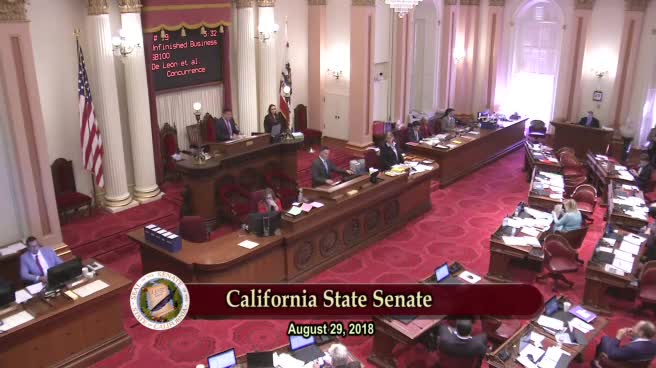 2MIN
Senate Floor
 1H
Senate Standing Committee on Appropriations
 6MIN
Senate Standing Committee on Health
 1MIN
Assembly Floor
 12MIN
Assembly Standing Committee on Health
Bill Author

Bill Co-Author(s):