AB 2974: Workforce development: local workforce development board.
- Session Year: 2017-2018
- House: Assembly
- Latest Version Date: 2018-03-19
The federal Workforce Innovation and Opportunity Act of 2014 provides for various workforce investment activities and requires that local workforce development boards be established in each local area of a state, which are required to submit a local plan that meets specified requirements. Existing law establishes local workforce development boards to perform duties related to the implementation and coordination of local workforce development activities and requires each local board to perform specified duties consistent with the federal Workforce Innovation and Opportunity Act, including leading efforts to engage with a diverse range of employers and with entities in the region involved to do specified things.
This bill would also require a local board to lead those efforts in order to provide support to the efforts of employers to align with public contracting needs in a manner that will support local workforce opportunities. By increasing the duties of the local workforce development board, this bill would impose a state-mandated local program.
The California Constitution requires the state to reimburse local agencies and school districts for certain costs mandated by the state. Statutory provisions establish procedures for making that reimbursement.
This bill would provide that, if the Commission on State Mandates determines that the bill contains costs mandated by the state, reimbursement for those costs shall be made pursuant to the statutory provisions noted above.
The Corporation Tax Law allows various credits against the taxes imposed by that law, including, for each taxable year beginning on and after January 1, 2014, and before January 1, 2025, a credit in an amount as provided in a written agreement between the Governors Office of Business and Economic Development and the taxpayer, determined by the California Competes Tax Credit Committee based on specified factors.This bill would make nonsubstantive changes to this credit.The Corporation Tax Law allows various credits against the taxes imposed by that law, including, for each taxable year beginning on and after January 1, 2014, and before January 1, 2025, a credit in an amount as provided in a written agreement between the Governors Office of Business and Economic Development and the taxpayer, determined by the California Competes Tax Credit Committee based on specified factors.
This bill would make nonsubstantive changes to this credit.
Consistent with the requirements of the Workforce Innovation and Opportunity Act, the local board shall do all of the following:
(a)In partnership with the chief elected official for the local area involved, develop and submit a local plan to the Governor that meets the requirements of the Workforce Innovation and Opportunity Act. If the local area is part of a planning region that includes other local areas, the local board shall collaborate with the other local boards and chief elected officials from such other local areas in the preparation and submission of a regional plan as described in the Workforce and Innovation and Opportunity Act.
(b)In order to assist in the development and implementation of the local plan, the local board shall do all of the following:
(1)Carry out analyses of the economic conditions in the region, the needed knowledge and skills for the region, the workforce in the region, and workforce development activities, including education and training, in the region described in Section 3123(b)(1)(D) of Title 29 of the United States Code, and regularly update such information.
(2)Assist the Governor in developing the statewide workforce and labor market information system described in Section 15(e) of the Wagner-Peyser Act (29 U.S.C. Sec. 49l2(e)), specifically in the collection, analysis, and utilization of workforce and labor market information for the region.
(3)Conduct such other research, data collection, and analysis related to the workforce needs of the regional economy as the board, after receiving input from a wide array of stakeholders, determines to be necessary to carry out its functions.
(c)Convene local workforce development system stakeholders to assist in the development of the local plan under Section 3123 of Title 29 of the United States Code and in identifying nonfederal expertise and resources to leverage support for workforce development activities. The local board, including standing committees, may engage such stakeholders in carrying out the functions described in this subdivision.
(d)Lead efforts to engage with a diverse range of employers and with entities in the region involved to do all of the following:
(1)Promote business representation, particularly representatives with optimal policymaking or hiring authority from employers whose employment opportunities reflect existing and emerging employment opportunities in the region, on the local board.
(2)Develop effective linkages, including the use of intermediaries, with employers in the region to support employer utilization of the local workforce development system and to support local workforce investment activities.
(3)Ensure that workforce investment activities meet the needs of employers and support economic growth in the region, by enhancing communication, coordination, and collaboration among employers, economic development entities, and service providers.
(4)Develop and implement proven or promising strategies for meeting the employment and skill needs of workers and employers, like the establishment of industry and sector partnerships, that provide the skilled workforce needed by employers in the region, and that expand employment and career advancement opportunities for workforce development system participants in in-demand industry sectors or occupations.
(5)Provide support to the efforts of employers to align with public contracting needs in a manner that will support local workforce opportunities.
(e)With representatives of secondary and postsecondary education programs, lead efforts in the local area to develop and implement career pathways within the local area by aligning the employment, training, education, and supportive services that are needed by adults and youth, particularly individuals with barriers to employment.
(f)Lead efforts in the local area to accomplish both of the following:
(1)Identify and promote proven and promising strategies and initiatives for meeting the needs of employers, and workers and jobseekers, including individuals with barriers to employment, in the local workforce development system, including providing physical and programmatic accessibility, in accordance with Section 3248 of Title 29 of the United States Code, if applicable, and applicable provisions of the Americans with Disabilities Act of 1990 (42 U.S.C. Sec. 12101 et seq.), to the one-stop delivery system.
(2)Identify and disseminate information on proven and promising practices carried out in other local areas for meeting these needs.
(g)Develop strategies for using technology to maximize the accessibility and effectiveness of the local workforce development system for employers, and workers and jobseekers, by doing all of the following:
(1)Facilitating connections among the intake and case management information systems of the one-stop partner programs to support a comprehensive workforce development system in the local area.
(2)Facilitating access to services provided through the one-stop delivery system involved, including facilitating the access in remote areas.
(3)Identifying strategies for better meeting the needs of individuals with barriers to employment, including strategies that augment traditional service delivery, and increase access to services and programs of the one-stop delivery system, such as improving digital literacy skills.
(4)Leveraging resources and capacity within the local workforce development system, including resources and capacity for services for individuals with barriers to employment.
(h)In partnership with the chief elected official for the local area, shall conduct oversight for local youth workforce investment activities as required under the federal Workforce Innovation and Opportunity Act, ensure the appropriate use and management of the funds as required under the Workforce Innovation and Opportunity Act, and, for workforce development activities, ensure the appropriate use, management, and investment of funds to maximize performance outcomes as required under the federal Workforce Innovation and Opportunity Act.
(i)Negotiate and reach agreement on local performance accountability measures, as described in Section 3141(c) of Title 29 of the United States Code, with the chief elected official and the Governor.
(j)Select and provide access to system operators, service providers, trainers, and educators, in a manner consistent with the requirements of the Workforce Innovation and Opportunity Act and applicable state laws, including all of the following:
(1)Consistent with Section 3151(d) of Title 29 of the United States Code, and with the agreement of the chief elected official for the local area, designate or certify one-stop operators as described in Section 3151(d)(2)(A) of Title 29 of the United States Code and terminate for cause the eligibility of these operators.
(2)Consistent with Section 3153 of Title 29 of the United States Code, identify eligible providers of youth workforce investment activities in the local area by awarding grants or contracts on a competitive basis, except as provided in Section 3153(b) of Title 29 of the United States Code, based on the recommendations of the youth standing committee, if such a committee is established for the local area and terminate for cause the eligibility of these providers.
(3)Consistent with Section 3152 of Title 29 of the United States Code and paragraph (4) of subdivision (d) of Section 14020, identify eligible providers of training services in the local area.
(4)If the one-stop operator does not provide career services described in Section 3174(c)(2) of Title 29 of the United States Code in a local area, identify eligible providers of those career services in the local area by awarding contracts.
(5)Consistent with Section 3152 of Title 29 of the United States Code and paragraphs (2) and (3) of Section 3174(c) of Title 29 of the United States Code, work with the state to ensure there are sufficient numbers and types of providers of career services and training services, including eligible providers with expertise in assisting individuals with disabilities and eligible providers with expertise in assisting adults in need of adult education and literacy activities, serving the local area and providing the services involved in a manner that maximizes consumer choice, as well as providing opportunities that lead to competitive integrated employment for individuals with disabilities.
(k)Consistent with the requirements of the Workforce Innovation and Opportunity Act, coordinate activities with education and training providers in the local area, including providers of workforce development activities, providers of adult education and literacy activities under Title II of the Workforce Innovation and Opportunity Act, providers of career and technical education, as defined in Section 2302 of Title 20 of the United States Code, and local agencies administering plans under Title I of the Rehabilitation Act of 1973 (29 U.S.C. Sec. 720 et seq.), other than Section 112 or Part C of that Title (29 U.S.C. Sec. 732, 741).
SEC. 2.If the Commission on State Mandates determines that this act contains costs mandated by the state, reimbursement to local agencies and school districts for those costs shall be made pursuant to Part 7 (commencing with Section 17500) of Division 4 of Title 2 of the Government Code.
SECTION 1.Section 23689 of the Revenue and Taxation Code is amended to read:23689.(a)(1)For each taxable year beginning on and after January 1, 2014, and before January 1, 2025, there shall be allowed as a credit against the tax, as defined in Section 23036, an amount as determined by the committee pursuant to paragraph (2) and approved pursuant to Section 18410.2.(2)The credit under this section shall be allocated by GO-Biz with respect to the 201314 fiscal year through and including the 201718 fiscal year. The amount of credit allocated to a taxpayer with respect to a fiscal year pursuant to this section shall be as set forth in a written agreement between GO-Biz and the taxpayer and shall be based on the following factors:(A)The number of jobs the taxpayer will create or retain in this state.(B)The compensation paid, or proposed to be paid, by the taxpayer to its employees, including wages and fringe benefits.(C)The amount of investment in this state by the taxpayer.(D)The extent of unemployment or poverty in the area according to the United States Census in which the taxpayers project or business is proposed or located.(E)The incentives available to the taxpayer in this state, including incentives from the state, local government, and other entities.(F)The incentives available to the taxpayer in other states.(G)The duration of the proposed project and the duration the taxpayer commits to remain in this state.(H)The overall economic impact in this state of the taxpayers project or business.(I)The strategic importance of the taxpayers project or business to the state, region, or locality.(J)The opportunity for future growth and expansion in this state by the taxpayers business.(K)The extent to which the anticipated benefit to the state exceeds the projected benefit to the taxpayer from the tax credit.(3)The written agreement entered into pursuant to paragraph (2) shall include:(A)Terms and conditions that include the taxable year or years for which the credit allocated shall be allowed, a minimum compensation level, and a minimum job retention period.(B)Provisions indicating whether the credit is to be allocated in full upon approval or in increments based on mutually agreed upon milestones when satisfactorily met by the taxpayer.(C)Provisions that allow the committee to recapture the credit, in whole or in part, if the taxpayer fails to fulfill the terms and conditions of the written agreement.(b)For purposes of this section:(1)Committee means the California Competes Tax Credit Committee established pursuant to Section 18410.2.(2)GO-Biz means the Governors Office of Business and Economic Development.(c)For purposes of this section, GO-Biz shall do the following:(1)Give priority to a taxpayer whose project or business is located or proposed to be located in an area of high unemployment or poverty.(2)Negotiate with a taxpayer the terms and conditions of proposed written agreements that provide the credit allowed pursuant to this section to a taxpayer.(3)Provide the negotiated written agreement to the committee for its approval pursuant to Section 18410.2.(4)Inform the Franchise Tax Board of the terms and conditions of the written agreement upon approval of the written agreement by the committee.(5)Inform the Franchise Tax Board of any recapture, in whole or in part, of a previously allocated credit upon approval of the recapture by the committee.(6)Post on its Internet Web site all of the following:(A)The name of each taxpayer allocated a credit pursuant to this section.(B)The estimated amount of the investment by each taxpayer.(C)The estimated number of jobs created or retained.(D)The amount of the credit allocated to the taxpayer.(E)The amount of the credit recaptured from the taxpayer, if applicable.(F)The primary location where the taxpayer has committed to increasing the net number of jobs or make investments. The primary location shall be listed by city or, in the case of unincorporated areas, by county.(G)Information that identifies each tax credit award that was given a priority for being located in a high unemployment or poverty area, pursuant to paragraph (1).(H)Information that identifies each tax credit award that is being counted toward the requirement of paragraph (3) of subdivision (g).(7)When determining whether to enter into a written agreement with a taxpayer pursuant to this section, GO-Biz may consider other factors, including, but not limited to, the following:(A)The financial solvency of the taxpayer and the taxpayers ability to finance its proposed expansion.(B)The taxpayers current and prior compliance with federal and state laws.(C)Current and prior litigation involving the taxpayer.(D)The reasonableness of the fee arrangement between the taxpayer and any third party providing any services related to the credit allowed pursuant to this section.(E)Any other factors GO-Biz deems necessary to ensure that the administration of the credit allowed pursuant to this section is a model of accountability and transparency and that the effective use of the limited amount of credit available is maximized.(d)For purposes of this section, the Franchise Tax Board shall do all of the following:(1)(A)Except as provided in subparagraph (B), review the books and records of all taxpayers allocated a credit pursuant to this section to ensure compliance with the terms and conditions of the written agreement between the taxpayer and GO-Biz.(B)In the case of a taxpayer that is a small business, as defined in Section 23626, review the books and records of the taxpayer allocated a credit pursuant to this section to ensure compliance with the terms and conditions of the written agreement between the taxpayer and GO-Biz when, in the sole discretion of the Franchise Tax Board, a review of those books and records is appropriate or necessary in the best interests of the state.(2)Notwithstanding Section 19542, both of the following:(A)Notify GO-Biz of a possible breach of the written agreement by a taxpayer and provide detailed information regarding the basis for that determination.(B)Provide information to GO-Biz with respect to whether a taxpayer is a small business, as defined in Section 23626.(e)In the case where the credit allowed under this section exceeds the tax, as defined in Section 23036, for a taxable year, the excess credit may be carried over to reduce the tax in the following taxable year, and succeeding five taxable years, if necessary, until the credit has been exhausted.(f)Any recapture, in whole or in part, of a credit approved by the committee pursuant to Section 18410.2 shall be treated as a mathematical error appearing on the return. Any amount of tax resulting from that recapture shall be assessed by the Franchise Tax Board in the same manner as provided by Section 19051. The amount of tax resulting from the recapture shall be added to the tax otherwise due by the taxpayer for the taxable year in which the committees recapture determination occurred.(g)(1)The aggregate amount of credit that may be allocated in any fiscal year pursuant to this section and Section 17059.2 shall be an amount equal to the sum of subparagraphs (A), (B), and (C), less the amount specified in subparagraphs (D) and (E):(A)Thirty million dollars ($30,000,000) for the 201314 fiscal year, one hundred fifty million dollars ($150,000,000) for the 201415 fiscal year, and two hundred million dollars ($200,000,000) for each fiscal year from 201516 to 201718, inclusive.(B)The unallocated credit amount, if any, from the preceding fiscal year.(C)The amount of any previously allocated credits that have been recaptured.(D)The amount estimated by the Director of Finance, in consultation with the Franchise Tax Board and the State Board of Equalization, to be necessary to limit the aggregation of the estimated amount of exemptions claimed pursuant to Section 6377.1 and of the amounts estimated to be claimed pursuant to this section and Sections 17053.73, 17059.2, and 23626 to no more than seven hundred fifty million dollars ($750,000,000) for either the current fiscal year or the next fiscal year.(i)The Director of Finance shall notify the Chairperson of the Joint Legislative Budget Committee of the estimated annual allocation authorized by this paragraph. Any allocation pursuant to these provisions shall be made no sooner than 30 days after written notification has been provided to the Chairperson of the Joint Legislative Budget Committee and the chairpersons of the committees of each house of the Legislature that consider appropriations, or not sooner than whatever lesser time the Chairperson of the Joint Legislative Budget Committee, or his or her designee, may determine.(ii)In no event shall the amount estimated in this subparagraph be less than zero dollars ($0).(E)(i)For the 201516 fiscal year and each fiscal year thereafter, the amount of credit estimated by the Director of Finance to be allowed to all qualified taxpayers for that fiscal year pursuant to subparagraph (A) or subparagraph (B) of paragraph (1) of subdivision (c) of Section 23636.(ii)If the amount available per fiscal year pursuant to this section and Section 17059.2 is less than the aggregate amount of credit estimated by the Director of Finance to be allowed to qualified taxpayers pursuant to subparagraph (A) or subparagraph (B) of paragraph (1) of subdivision (c) of Section 23636, the aggregate amount allowed pursuant to Section 23636 shall not be reduced and, in addition to the reduction required by clause (i), the aggregate amount of credit that may be allocated pursuant to this section and Section 17059.2 for the next fiscal year shall be reduced by the amount of that deficit.(iii)It is the intent of the Legislature that the reductions specified in this subparagraph of the aggregate amount of credit that may be allocated pursuant to this section and Section 17059.2 shall continue if the repeal dates of the credits allowed by this section and Section 17059.2 are removed or extended.(2)(A)In addition to the other amounts determined pursuant to paragraph (1), the Director of Finance may increase the aggregate amount of credit that may be allocated pursuant to this section and Section 17059.2 by up to twenty-five million dollars ($25,000,000) per fiscal year through the 201718 fiscal year. The amount of any increase made pursuant to this paragraph, when combined with any increase made pursuant to paragraph (2) of subdivision (g) of Section 17059.2, shall not exceed twenty-five million dollars ($25,000,000) per fiscal year through the 201718 fiscal year.(B)It is the intent of the Legislature that the Director of Finance increase the aggregate amount under subparagraph (A) in order to mitigate the reduction of the amount available due to the credit allowed to all qualified taxpayers pursuant to subparagraph (A) or (B) of paragraph (1) of subdivision (c) of Section 23636.(3)Each fiscal year, 25 percent of the aggregate amount of the credit that may be allocated pursuant to this section and Section 17059.2 shall be reserved for small business, as defined in Section 17053.73 or 23626.(4)Each fiscal year, no more than 20 percent of the aggregate amount of the credit that may be allocated pursuant to this section shall be allocated to any one taxpayer.(h)GO-Biz may prescribe rules and regulations as necessary to carry out the purposes of this section. Any rule or regulation prescribed pursuant to this section may be by adoption of an emergency regulation in accordance with Chapter 3.5 (commencing with Section 11340) of Part 1 of Division 3 of Title 2 of the Government Code.(i)(1)A written agreement between GO-Biz and a taxpayer with respect to the credit authorized by this section shall not restrict, broaden, or otherwise alter the ability of the taxpayer to assign that credit or any portion thereof in accordance with Section 23663.(2)A written agreement between GO-Biz and a taxpayer with respect to the credit authorized by this section must comply with existing law on the date the agreement is executed.(j)(1)Upon the effective date of this section, the Department of Finance shall estimate the total dollar amount of credits that will be claimed under this section with respect to each fiscal year from the 201314 fiscal year to the 202425 fiscal year, inclusive.(2)The Franchise Tax Board shall annually provide to the Joint Legislative Budget Committee, by no later than March 1, a report of the total dollar amount of the credits claimed under this section with respect to the relevant fiscal year. The report shall compare the total dollar amount of credits claimed under this section with respect to that fiscal year with the departments estimate with respect to that same fiscal year. If the total dollar amount of credits claimed for the fiscal year is less than the estimate for that fiscal year, the report shall identify options for increasing annual claims of the credit so as to meet estimated amounts.(k)This section is repealed on December 1, 2025.(a)(1)For each taxable year beginning on and after January 1, 2014, and before January 1, 2025, there shall be allowed as a credit against the tax, as defined in Section 23036, an amount as determined by the committee pursuant to paragraph (2) and approved pursuant to Section 18410.2.
(2)The credit under this section shall be allocated by GO-Biz with respect to the 201314 fiscal year through and including the 201718 fiscal year. The amount of credit allocated to a taxpayer with respect to a fiscal year pursuant to this section shall be as set forth in a written agreement between GO-Biz and the taxpayer and shall be based on the following factors:
(A)The number of jobs the taxpayer will create or retain in this state.
(B)The compensation paid paid, or proposed to be paid paid, by the taxpayer to its employees, including wages and fringe benefits.
(C)The amount of investment in this state by the taxpayer.
(D)The extent of unemployment or poverty in the area according to the United States Census in which the taxpayers project or business is proposed or located.
(E)The incentives available to the taxpayer in this state, including incentives from the state, local government, and other entities.
(F)The incentives available to the taxpayer in other states.
(G)The duration of the proposed project and the duration the taxpayer commits to remain in this state.
(H)The overall economic impact in this state of the taxpayers project or business.
(I)The strategic importance of the taxpayers project or business to the state, region, or locality.
(J)The opportunity for future growth and expansion in this state by the taxpayers business.
(K)The extent to which the anticipated benefit to the state exceeds the projected benefit to the taxpayer from the tax credit.
(3)The written agreement entered into pursuant to paragraph (2) shall include:
(A)Terms and conditions that include the taxable year or years for which the credit allocated shall be allowed, a minimum compensation level, and a minimum job retention period.
(B)Provisions indicating whether the credit is to be allocated in full upon approval or in increments based on mutually agreed upon milestones when satisfactorily met by the taxpayer.
(C)Provisions that allow the committee to recapture the credit, in whole or in part, if the taxpayer fails to fulfill the terms and conditions of the written agreement.
(b)For purposes of this section:
(1)Committee means the California Competes Tax Credit Committee established pursuant to Section 18410.2.
(2)GO-Biz means the Governors Office of Business and Economic Development.
(c)For purposes of this section, GO-Biz shall do the following:
(1)Give priority to a taxpayer whose project or business is located or proposed to be located in an area of high unemployment or poverty.
(2)Negotiate with a taxpayer the terms and conditions of proposed written agreements that provide the credit allowed pursuant to this section to a taxpayer.
(3)Provide the negotiated written agreement to the committee for its approval pursuant to Section 18410.2.
(4)Inform the Franchise Tax Board of the terms and conditions of the written agreement upon approval of the written agreement by the committee.
(5)Inform the Franchise Tax Board of any recapture, in whole or in part, of a previously allocated credit upon approval of the recapture by the committee.
(6)Post on its Internet Web site all of the following:
(A)The name of each taxpayer allocated a credit pursuant to this section.
(B)The estimated amount of the investment by each taxpayer.
(C)The estimated number of jobs created or retained.
(D)The amount of the credit allocated to the taxpayer.
(E)The amount of the credit recaptured from the taxpayer, if applicable.
(F)The primary location where the taxpayer has committed to increasing the net number of jobs or make investments. The primary location shall be listed by city or, in the case of unincorporated areas, by county.
(G)Information that identifies each tax credit award that was given a priority for being located in a high unemployment or poverty area, pursuant to paragraph (1).
(H)Information that identifies each tax credit award that is being counted toward the requirement of paragraph (3) of subdivision (g).
(7)When determining whether to enter into a written agreement with a taxpayer pursuant to this section, GO-Biz may consider other factors, including, but not limited to, the following:
(A)The financial solvency of the taxpayer and the taxpayers ability to finance its proposed expansion.
(B)The taxpayers current and prior compliance with federal and state laws.
(C)Current and prior litigation involving the taxpayer.
(D)The reasonableness of the fee arrangement between the taxpayer and any third party providing any services related to the credit allowed pursuant to this section.
(E)Any other factors GO-Biz deems necessary to ensure that the administration of the credit allowed pursuant to this section is a model of accountability and transparency and that the effective use of the limited amount of credit available is maximized.
(d)For purposes of this section, the Franchise Tax Board shall do all of the following:
(1)(A)Except as provided in subparagraph (B), review the books and records of all taxpayers allocated a credit pursuant to this section to ensure compliance with the terms and conditions of the written agreement between the taxpayer and GO-Biz.
(B)In the case of a taxpayer that is a small business, as defined in Section 23626, review the books and records of the taxpayer allocated a credit pursuant to this section to ensure compliance with the terms and conditions of the written agreement between the taxpayer and GO-Biz when, in the sole discretion of the Franchise Tax Board, a review of those books and records is appropriate or necessary in the best interests of the state.
(2)Notwithstanding Section 19542: 19542, both of the following:
(A)Notify GO-Biz of a possible breach of the written agreement by a taxpayer and provide detailed information regarding the basis for that determination.
(B)Provide information to GO-Biz with respect to whether a taxpayer is a small business, as defined in Section 23626.
(e)In the case where the credit allowed under this section exceeds the tax, as defined in Section 23036, for a taxable year, the excess credit may be carried over to reduce the tax in the following taxable year, and succeeding five taxable years, if necessary, until the credit has been exhausted.
(f)Any recapture, in whole or in part, of a credit approved by the committee pursuant to Section 18410.2 shall be treated as a mathematical error appearing on the return. Any amount of tax resulting from that recapture shall be assessed by the Franchise Tax Board in the same manner as provided by Section 19051. The amount of tax resulting from the recapture shall be added to the tax otherwise due by the taxpayer for the taxable year in which the committees recapture determination occurred.
(g)(1)The aggregate amount of credit that may be allocated in any fiscal year pursuant to this section and Section 17059.2 shall be an amount equal to the sum of subparagraphs (A), (B), and (C), less the amount specified in subparagraphs (D) and (E):
(A)Thirty million dollars ($30,000,000) for the 201314 fiscal year, one hundred fifty million dollars ($150,000,000) for the 201415 fiscal year, and two hundred million dollars ($200,000,000) for each fiscal year from 201516 to 201718, inclusive.
(B)The unallocated credit amount, if any, from the preceding fiscal year.
(C)The amount of any previously allocated credits that have been recaptured.
(D)The amount estimated by the Director of Finance, in consultation with the Franchise Tax Board and the State Board of Equalization, to be necessary to limit the aggregation of the estimated amount of exemptions claimed pursuant to Section 6377.1 and of the amounts estimated to be claimed pursuant to this section and Sections 17053.73, 17059.2, and 23626 to no more than seven hundred fifty million dollars ($750,000,000) for either the current fiscal year or the next fiscal year.
(i)The Director of Finance shall notify the Chairperson of the Joint Legislative Budget Committee of the estimated annual allocation authorized by this paragraph. Any allocation pursuant to these provisions shall be made no sooner than 30 days after written notification has been provided to the Chairperson of the Joint Legislative Budget Committee and the chairpersons of the committees of each house of the Legislature that consider appropriations, or not sooner than whatever lesser time the Chairperson of the Joint Legislative Budget Committee, or his or her designee, may determine.
(ii)In no event shall the amount estimated in this subparagraph be less than zero dollars ($0).
(E)(i)For the 201516 fiscal year and each fiscal year thereafter, the amount of credit estimated by the Director of Finance to be allowed to all qualified taxpayers for that fiscal year pursuant to subparagraph (A) or subparagraph (B) of paragraph (1) of subdivision (c) of Section 23636.
(ii)If the amount available per fiscal year pursuant to this section and Section 17059.2 is less than the aggregate amount of credit estimated by the Director of Finance to be allowed to qualified taxpayers pursuant to subparagraph (A) or subparagraph (B) of paragraph (1) of subdivision (c) of Section 23636, the aggregate amount allowed pursuant to Section 23636 shall not be reduced and, in addition to the reduction required by clause (i), the aggregate amount of credit that may be allocated pursuant to this section and Section 17059.2 for the next fiscal year shall be reduced by the amount of that deficit.
(iii)It is the intent of the Legislature that the reductions specified in this subparagraph of the aggregate amount of credit that may be allocated pursuant to this section and Section 17059.2 shall continue if the repeal dates of the credits allowed by this section and Section 17059.2 are removed or extended.
(2)(A)In addition to the other amounts determined pursuant to paragraph (1), the Director of Finance may increase the aggregate amount of credit that may be allocated pursuant to this section and Section 17059.2 by up to twenty-five million dollars ($25,000,000) per fiscal year through the 201718 fiscal year. The amount of any increase made pursuant to this paragraph, when combined with any increase made pursuant to paragraph (2) of subdivision (g) of Section 17059.2, shall not exceed twenty-five million dollars ($25,000,000) per fiscal year through the 201718 fiscal year.
(B)It is the intent of the Legislature that the Director of Finance increase the aggregate amount under subparagraph (A) in order to mitigate the reduction of the amount available due to the credit allowed to all qualified taxpayers pursuant to subparagraph (A) or (B) of paragraph (1) of subdivision (c) of Section 23636.
(3)Each fiscal year, 25 percent of the aggregate amount of the credit that may be allocated pursuant to this section and Section 17059.2 shall be reserved for small business, as defined in Section 17053.73 or 23626.
(4)Each fiscal year, no more than 20 percent of the aggregate amount of the credit that may be allocated pursuant to this section shall be allocated to any one taxpayer.
(h)GO-Biz may prescribe rules and regulations as necessary to carry out the purposes of this section. Any rule or regulation prescribed pursuant to this section may be by adoption of an emergency regulation in accordance with Chapter 3.5 (commencing with Section 11340) of Part 1 of Division 3 of Title 2 of the Government Code.
(i)(1)A written agreement between GO-Biz and a taxpayer with respect to the credit authorized by this section shall not restrict, broaden, or otherwise alter the ability of the taxpayer to assign that credit or any portion thereof in accordance with Section 23663.
(2)A written agreement between GO-Biz and a taxpayer with respect to the credit authorized by this section must comply with existing law on the date the agreement is executed.
(j)(1)Upon the effective date of this section, the Department of Finance shall estimate the total dollar amount of credits that will be claimed under this section with respect to each fiscal year from the 201314 fiscal year to the 202425 fiscal year, inclusive.
(2)The Franchise Tax Board shall annually provide to the Joint Legislative Budget Committee, by no later than March 1, a report of the total dollar amount of the credits claimed under this section with respect to the relevant fiscal year. The report shall compare the total dollar amount of credits claimed under this section with respect to that fiscal year with the departments estimate with respect to that same fiscal year. If the total dollar amount of credits claimed for the fiscal year is less than the estimate for that fiscal year, the report shall identify options for increasing annual claims of the credit so as to meet estimated amounts.
(k)This section is repealed on December 1, 2025.
|
Date
|
Status
|
|---|---|
| May 25, 2018 | In committee: Held under submission. |
| Apr 25, 2018 | In committee: Set, first hearing. Referred to APPR. suspense file. |
| Apr 17, 2018 | From committee: Do pass and re-refer to Com. on APPR. (Ayes 7. Noes 0.) (April 17). Re-referred to Com. on APPR. |
| Apr 12, 2018 | From committee: Do pass and re-refer to Com. on J., E.D., & E. (Ayes 7. Noes 0.) (April 11). Re-referred to Com. on J., E.D., & E. |
| Mar 20, 2018 | Re-referred to Com. on L. & E. |
| Mar 19, 2018 | From committee chair, with author's amendments: Amend, and re-refer to Com. on L. & E. Read second time and amended. |
| Mar 19, 2018 | Referred to Coms. on L. & E. and J., E.D., & E. |
| Feb 17, 2018 | From printer. May be heard in committee March 19. |
| Feb 16, 2018 | Read first time. To print. |
|
Date
|
Description
|
Location
|
Votes
|
|
|---|---|---|---|---|
| Apr 17, 2018 | Do pass and be re-referred to the Committee on [Appropriations] | Assembly Standing Committee on Jobs, Economic Development, and the Economy |
Passed |
|
| Apr 11, 2018 | Do pass and be re-referred to the Committee on [Jobs, Economic Development, and the Economy] | Assembly Standing Committee on Labor and Employment |
Passed |
This list shows positions taken on this bill by organizations on the date displayed, which is linked to the original source.
Positions by individuals are not included.
Date of Hearing: April 25, 2018
ASSEMBLY COMMITTEE ON APPROPRIATIONS
Lorena Gonzalez Fletcher, Chair
ABPCA Bill Id:AB 2974
Author:(Reyes) – As Amended Ver:March 19, 2018
Policy Committee: | Labor and Employment | Vote: | 7 - 0 |
Jobs, Economic Development, and the Economy | 7 - 0 | ||
|
|
Urgency: No State Mandated Local Program: Yes Reimbursable: Yes
SUMMARY:
This bill requires local workforce development boards (LWDBs) to support employer efforts to align with public contracting needs in a manner that supporters local workforce development opportunities.
FISCAL EFFECT:
Up to $4.5 million each year across LWDBs if each LWDB hires one employee to connect employers to public contracting opportunities. These costs are possibly reimbursable by the state. (See Comment #3.)
COMMENTS:
- Purpose. According to the author, AB 2974 will help local employers compete for public contracts. The author notes that state contracting is complicated for local employers and it is critical to do more to communicate opportunities to participants in local economies.
- Workforce Innovation and Opportunity Act (WIOA). WIOA provides states with federal funding for job training and employment investment activities and programs, including work incentive and employment training outreach programs. Distribution of the funds is based on a set formula which includes specified economic and demographic data and flows to the state through three primary programs: Adult, Youth, and Dislocated Worker. California received approximately $390 million for program year 2017-18, with $332 million being allocated and available to LWDBs to provide services for adults, laid-off workers, and youth, and $58 million remaining at the state level for program oversight and discretionary programs.
- Federal dollars. LWDB activities are funded through WOIA only if those activities are considered allowable. AB 2974’s new requirement for LWDBs is vaguely drafted and it is unclear if the workload created for LWDBs would be supported by federal dollars. According to the author’s statement on this bill, AB 2974 will assist employers in competing for public contracts, which will help local workforces and local economies. However, this activity could be interpreted as primarily business development activity, which is not considered an allowable activity under WOIA. AB 2974 should be amended to provide greater clarity about the scope and intent of this new requirement for LWDBs.
Analysis Prepared by: Luke Reidenbach / APPR. / (916) 319-2081
Date of Hearing: April 17, 2018
ASSEMBLY COMMITTEE ON JOBS, ECONOMIC DEVELOPMENT, AND THE ECONOMY
Sharon Quirk-Silva, Chair
ABPCA Bill Id:AB 2974 (
Author:Reyes) – As Amended Ver:March 19, 2018
SUBJECT: Workforce development: local workforce development board
SUMMARY: Expands the facilitation and engagement responsibilities of a local workforce development board (local board) to include supporting the efforts of employers to align with public contracting needs in a manner that will support local workforce opportunities.
EXISTING LAW:
- Requires the Department of General Services (DGS) to implement a certification program for small businesses and disabled veteran business enterprises (DVBEs) who are interested in state procurement opportunities.
- Requires the CPUC to adopt criteria for verifying and determining the eligibility of women, minority, and LGBT business enterprises for procurement contracts, as specified.
- Requires the California Workforce Development Board (CWDB) to assist the Governor in promoting the development of a well-educated and highly skilled 21st century workforce, which includes recommending adult and dislocated worker training policies and investments that offer a variety of career opportunities while upgrading the skills of California’s workforce. These may include training policies and investments pertaining to:
- Occupational skills training, including training for nontraditional employment;
- On-the-job training;
- Programs that combine workplace training with related instruction, which may include cooperative education programs;
- Training programs operated by the private sector;
- Skills upgrading and retraining;
- Entrepreneurial training;
- Incumbent worker training, as specified;
- Transitional jobs, as defined;
- Job readiness training provided in combination with other specified services described in (a) through (h) above;
- Adult education and literacy activities provided in combination with services described in any of subparagraphs (a) to (g), inclusive; and
- Customized training conducted with a commitment by an employer or group of employers to employ an individual upon successful completion of the training.
- Requires the local board to lead efforts to engage with a diverse range of employers and with these entities to accomplish all of the following:
- Promote business representation on the local board, particularly for representatives who have optimal policymaking or hiring authority from employers whose employment opportunities reflect existing and emerging employment opportunities in the region.
- Develop effective linkages, including the use of intermediaries, with employers in the region to support employer utilization of the local workforce development system and to support local workforce investment activities.
- Ensure that workforce investment activities meet the needs of employers and support economic growth in the region, by enhancing communication, coordination, and collaboration among employers, economic development entities, and service providers.
- Develop and implement proven or promising strategies for meeting the employment and skill needs of workers and employers, like the establishment of industry and sector partnerships, that provide the skilled workforce needed by employers in the region and that expand employment and career advancement opportunities for workforce development system participants in in-demand industry sectors or occupations.
- Requires the local board to lead efforts in the local area to accomplish both of the following:
- Identify and promote proven and promising strategies and initiatives for meeting the needs of employers, workers, and jobseekers, including individuals with barriers to employment, in the local workforce development system, as specified.
- Identify and disseminate information on proven and promising practices carried out in other local areas for meeting these needs.
FISCAL EFFECT: Unknown
POLICY FRAME: Government contracts represent key economic opportunities for small businesses and early stage companies. Participating in government procurement, however, is challenging. To be successful, a business must have the skills to identify appropriate bid opportunities, prepare a competitive and timely-filed bid package, evaluate and negotiate contract specifications, complete the work, and properly invoice for services rendered. This bill requires local workforce boards to help provide the rightly skilled workforce for businesses to be competitive in the public contracting arena.
The analysis includes information on the California small business economy, impact of changing demographics on the workplace, and targeted public procurement programs. Suggested amendments are included in Comment 7.
COMMENTS:
- The Role of Small Businesses within the California Economy: California's dominance in many economic areas is based, in part, on the significant role small businesses play in the state's $2.6 trillion economy. Two separate studies, one by the U.S. Census Bureau and another by the Kaufman Foundation, found that net job growth was strongest among businesses with fewer than 20 employees. Among other advantages, small businesses are crucial in the state's international competitiveness and are an important means for dispersing the economic benefits of trade throughout the California economy.
Sole proprietorships comprise the single largest component of businesses in California, with 4.7 million being reported in 2015. Excluding sole proprietorships, businesses with fewer than 20 employees comprise over 88% of all businesses and employ approximately 18% of all workers. Businesses with fewer than 100 employees represent 97% of all businesses and employ 32% of the workforce. These non-employer and small employer firms create jobs, generate taxes, support important industry sectors, and revitalize communities. Since the recession, these businesses have become increasingly important because of their ability to be more flexible and suited to niche foreign and domestic market needs.
Comparison of Business Growth by Race, Ethnicity, and Veterans | |
Business Ownership | Percent Change 2007 to 2012 Number of all Firms |
American Indian and Alaska Native Women | 35.7% |
American Indian and Alaska Native Men | 7.4% |
Asian American Women | 44.3% |
Asian American Men | 25.7% |
Black Women | 67.5% |
Black Men | 18.8% |
Hispanic Women | 87.3% |
Hispanic Men | 39.3% |
White Women | 10.1% |
White Men | 0.7% |
Veteran Women | 29.6% |
Veteran Men | 7.7% |
Source: 2012 Survey of Business Owners | |
However, their small size also results in certain market challenges, including having difficulty in meeting the procedural requirements of the state's complex regulatory structure and the traditional credit and collateral requirements of mainstream financial institutions. Specialized technical assistance, access to credit enhancements, and targeting of state procurement activities help many small businesses overcome or at least minimize these difficulties.
- Market Impacts on California's Demographic Shift: As unprecedented numbers of baby boomers prepare to retire from the marketplace, new businesses are emerging, and older companies are restructuring and/or disbanding.
This demographic trend reflects not only a generational shift in the U.S. but also marks a shift in the race and ethnicity of the nation's working age population. In 2014, California became the ninth state in the U.S. to have Latinos be recorded as the majority population based on race and ethnicity and millennials became the largest population group in the U.S. based on age.
Companies that wish to remain competitive need to address these changing demographics, as well as increasing business ownership patterns by previously underrepresented ownership groups (chart below). These changes not only affect customer and community needs, but also quality and access to resources, workers, technology, and business-to-business relationships. For many firms this means expanding outreach to identify new business partners, offering technical assistance to new and prospective partners, and joining and participating in network activities. These activities benefit the businesses by increasing the pool of potential workers, partners, and suppliers.
In California there are a number of targeted government procurement programs, which can be used as stepping stones for economic growth and transitioning to this new, more diverse workplace. The following comments include information on state, federal, local, and CPUC small business and diverse supplier programs. The objective of these government promoted activities is to expand the available pool of potential qualified contractors, including having a skilled workforce that is able to meet the technical needs of government contracting.
- Future Employment Growth: The Employment Development Department (EDD) has forecasted that California will add 2.6 million nongovernment jobs between 2014 and 2024, which includes 100% recovery of the number of jobs lost during the recession.
By 2024, California is expected to have 19.7 million people in the workforce. Over the 2014-2024 projection period, EDD estimates that California will generate:
- 2,651,100 new jobs from industry growth; and
- 3,962,200 jobs due to replacement needs.
EDD estimates that 71% of the job growth will be concentrated in one of five industry sectors: educational services; health and social services; professional and business services; leisure and hospitality; and construction. With net new job growth being highest among California's smallest businesses, many workers will be asked to possess multiple professional and administrative skills.
- Small Business Procurement Act: The California Small Business Procurement Act was implemented more than 30 years ago to establish a small business preference within the state's procurement process for the purpose of increasing the number of contracts between the state and small businesses. A DBVE component was added in 1989. Today, approximately 85% of DVBEs have dual certification as a small business or microbusiness.
While statute sets an annual 3% DVBE participation goal, the 25% small business goal is provided through two executive orders: EO D-43-01 issue by Governor Gray Davis in 2001 and EO S-02-06 issue by Governor Arnold Schwarzenegger in 2006.
In order for procurement activities to count toward state supplier goals, the business must be certified through DGS. In 2015-16, the state government entered into $5.8 billion in contracts, of which 36% were awarded to small businesses. The chart below shows small business and microbusiness aggregate procurement participation rates for fiscal years 2011-12 through 2015-16 for mandatory reporting agencies.
Small Business and Microbusiness Contracting Activity Mandated Reporters (dollars in millions) | ||||
Fiscal year | Total Contract Dollars | Total Small Business and Micobusiness Contract Dollars | Total Percent | Total Number of Contracts |
2015-16 | $5,855 | $2,112 | 36.08% | 116,169 |
2014-15 | $8,117 | $2,079 | 25.61% | 482,707 |
2013-14 | $7,101 | $2,013 | 28.35% | 90,784 |
2012-13 | $7,616 | $1,801 | 23.66% | 105,617 |
2011-12 | $7,399 | $1,796 | 24.28% | 165,523 |
Average | $ 7217 | $1960 | % 27.66 | 192,160 |
DGS Statewide Consolidated Annual Report 2013-14 to 2015-16 | ||||
The federal government and many local governments operate similar targeted procurement programs as part of their overall procurement activities. Changing demographics are opening new procurement opportunities as decades old supplier relationships are ending. Government is in need of its next generation of procurement partners and contractors.
- California Public Utilities Commission and GO 156: Beginning in 1986, the Legislature enacted a series of statutes, and the CPUC adopted GO 156, for the purpose of encouraging greater diverse business participation in utility contracts. Currently utilities that are mandated to participate in GO 156 include electrical, gas, water, wireless telecommunications service providers, and telephone corporations with gross annual revenues over $25 million, including commission-regulated subsidiaries and affiliates.
Statute and GO 156 include rules and regulations for the utilities' compliance with the Supplier Diversity Contracting Program, and requires participating utilities to inform, recruit, and work toward having at least 21.5% of their procurement activities over a five-year period be with business enterprises primarily owned and operated by women-, minority-, and/or disabled veteran-owned business enterprises. More specifically, the targets are 15% for minority-owned businesses, 5% for women-owned businesses, and 1.5% for DVBEs.
The CPUC has not yet set a minimum procurement participation target for LGBT-owned business enterprises. GO 156 states that during the first five years of implementation, the utilities are excused from setting numerically-based goals and, instead, the utilities should focus their efforts on updating their supplier diversity policies, developing targeted outreach programs, and ensuring LGBT business entities are aware of available technical assistance, among other actions.
In order for the procurement activities to count toward supplier diversity goals, a woman-, minority-, or LGBT-owned business enterprise has to become certified through an entity recognized by the CPUC’s Utility Diversity Supplier Program clearinghouse. These third-party certifications generally cost money. Businesses owned and operated by disabled veterans use the free DGS certification process established under the California Disabled Veteran Business Enterprise Program.
As of July 31st, 2017, the Clearinghouse database has a total of 8,270 verified diverse vendors, including:
- 2,736 women business enterprises;
- 2,514 minority business enterprises;
- 1,232, minority women-owned or woman and minority male–owned businesses;
- 1,823, DVBEs;
- 110 LGBT-business enterprises; and
- 46 Small Business Administration 8(a) certified businesses.
- Workforce Innovation Opportunity Act and California Workforce Board: Enacted in 2014, WIOA provides states with federal funding for job training and employment investment activities and programs, including work incentive and employment training outreach programs. Distribution of the funds is based on a set formula which includes specified economic and demographic data and flows to the state through three primary programs: Adult, Youth, and Dislocated Worker.
California's workforce development funding from the U.S. Department of Labor has declined over the years from a high of $630 million in 2000-01 to $397 million in 2016-17. Federal law dictates that 85% of Adult and Youth formula funds, and 60% of Dislocated Worker formula funds, are distributed to local workforce development boards. Funding for the state's discretionary activities is derived from the 15% discretionary funds.
California received approximately $390 million for program year 2017-18, with $332 million being allocated and available to local workforce boards to provide services for adults, laid-off workers, and youth, and $58 million remaining at the state-level for program oversight and discretionary programs.
California's WIOA dollars are overseen by the 51-member CWD, of which 51% of the members represent the private sector, as required by federal law. The CWD has a staff of 29.9 authorized positions and is currently led by Executive Director Tim Rainey. In 2008, a Green Collar Jobs Council was established to address the workforce development needs of the emerging clean and green economy.
Among its primary duties, the CWD provides guidance to local workforce boards and is responsible for the development of a unified, strategic plan to coordinate various education, training, and employment programs that result in an integrated workforce development system that supports economic development. The plan is required to be updated at least every 2 years in order to address the state’s changing economic, demographic, and workplace needs.
The CWD submitted its first plan under WIOA to the U.S. Labor Department in 2016, which set three policy objectives: Fostering "demand-driven skills attainment;" enabling upward mobility for all Californians; and aligning, coordinating, and integrating programs and services. These objectives support the accomplishment of the state goals (2017 to 2027) of producing a million "middle-skill" industry-valued and recognized postsecondary credentials, while also doubling the number of people enrolled in apprenticeship programs.
There are 49 local workforce boards that plan for and oversee the workforce system at the local and regional levels. Local workforce boards are comprised of a range of workforce stakeholders, a majority of which are required to be representatives from businesses. Each local workforce development board has one or more One-Stop Career Centers, called America's Jobs Centers under WIOA, which provide access to career information, counseling, and funding for education, training, and supportive services.
In 2017, the local workforce boards submitted regional plans that brought together local and regional level data on the workforce needs, skills gaps, and initiatives that are designed to address those needs, including benchmarks. A priority for the state, regional, and local plans is serving individuals who face employment barriers. In the following years, state funding through WIOA will be modified by the U.S. Department of Labor, based on the ability of the state to meet these goals.
- Proposed Amendments: The Committee may wish to consider the following amendment:
Revise the current provisions to require the local workforce board to lead efforts with other local and regional entities to develop and implement proven or promising strategies to support the efforts of employers to align and participate in public contracting opportunities in a manner that will support local workforce opportunities.
- Related Legislation: Below is a list of bills from the current and prior sessions.
- AB 80 (Campos) Interagency Task Force on the Status of Boys and Men: This bill would have established a 20-member Interagency Task Force on the Status of Boys and Men of Color. Issues to be addressed by the Task Force would include, but not be limited to, employment and wealth creation, health and safety, education, and juvenile justice. Status: Vetoed by the Governor, 2015. Governor’s Veto Message: How state policy can be tailored to promote the well-being of boys and men of color is profoundly important. These issues, however, are best addressed through concrete actions, not another non-binding commission. The Legislature and the Administration are working on the critical issues raised by this bill, such as the Local Control Funding Formula, healthcare expansion and criminal justice reform. Much more can be done, and I am committed to advancing this work.
- AB 1058 (Atkins) Second Chance Program: This bill establishes the Second Chance Program under the administrative direction of the Department of Corrections for the purpose of investing in community-based programs, services, and initiatives for formerly incarcerated individuals in need of mental health and substance use treatment services. The grant program will be funded through the savings resulting from the implementation of Proposition 47, the Safe Neighborhoods and Schools Act of 2014, and other specified sources. The bill also extends the sunset on the Social Innovation Financing Program until 2022. Status: Signed by the Governor, Chapter 748, Statutes of 2015.
- AB 1093 (E. Garcia) Supervised Population Workforce Training Grant Program: This bill expedites the allocation of funding under the existing Supervised Population Workforce Training Grant Program, which is administered through the California Workforce Development Board. Status: Signed by the Governor, Chapter 220, Statutes of 2015. In addition, $1.5 million was authorized in the 2015-16 Budget for additional funding rounds.
- AB 1111 (Garcia, Arambula, Eggman, Maienschein, Quirk-Silva, Santiago, and Steinorth) Breaking Barriers to Employment Initiative: Establishes the Breaking Barriers to Employment Initiative for the purpose of assisting individuals who have multiple barriers to employment to receive the remedial education and work readiness skills that will help them to successfully participate in training, apprenticeship, or employment opportunities that will lead to self-sufficiency and economic stability. Status: Signed by the Governor, Chapter 824, Statutes of 2017.
- Double Referral: The Assembly Rules Committee has referred this measure to the Assembly Committee on Labor and Employment and the Assembly Committee on Jobs, Economic Development, and the Economy. This measure passed Labor on a 7 to 0 vote.
REGISTERED SUPPORT / OPPOSITION:
Support
None on File
Opposition
None on File
Analysis Prepared by: Toni Symonds / J., E.D., & E. / (916) 319-2090
Date of Hearing: April 11, 2018
ASSEMBLY COMMITTEE ON LABOR AND EMPLOYMENT
Tony Thurmond, Chair
ABPCA Bill Id:AB 2974 (
Author:Reyes) – As Amended Ver:March 19, 2018
SUBJECT: Workforce development: local workforce development board
SUMMARY: Requires local workforce development boards (LWDBs) to provide support to the efforts of employers to align with public contracting needs in a manner that will support local workforce development opportunities.
EXISTING LAW:
- Provides, through the federal Workforce Innovation and Opportunity Act of 2014(WIOA), for various workforce investment activities and requires that LWDBs be established in each local area of a state, which are required to submit a local plan that meets specified requirements.
- Establishes LWDBs to perform duties related to the implementation and coordination to perform specified duties consistent with the federal Workforce Innovation and Opportunity Act, including leading efforts to engage with a diverse range of employers and with entities in the region involved to do specified things.
FISCAL EFFECT: Unknown
COMMENTS: Note: This bill is double referred to Assembly Jobs Committee upon passage out of this Committee.
According to the author, “Often times state contracting can be complicated to access for local employers as they seek to look for opportunities which will drive local workforce demands. The state of California spends millions in state contracting every year and due to multiple barriers it is often unclear if all regions in the state have adequate access to benefit from filling these needs. Without the assurance of a chance, many of these local employers are unable to compete and they along with local workforces do not benefit to the fullest extent possible. It is critical that as we consider local businesses and the needs of local workforces that opportunities be communicated to participants in local economies.
Background on the 2016-2020 Workforce Development State Plan
Consistent with WIOA, the California Workforce Development Board (CWDB) has developed a Unified State Plan to guide the workforce system. The State Plan, “Skills Attainment for Upward Mobility; Aligned Services for Shared Prosperity”, provides the policy framework and direction for day-to-day operations of WIOA-funded programs, while also laying out a vision for collaboration with non-WIOA programs that provide relevant programs and services.
The State Plan has three overarching policy objectives. These objectives affect both state-level policy and administrative practices across programs, as well as local policy and service delivery and are:
- Fostering “demand-driven skills attainment” in order to ensure workforce and education programs align program content with the state’s industry sector needs so as to provide California’s employers and businesses with the skilled workforce necessary to compete in the global economy.
- Enabling upward mobility for all Californians, including populations with barriers to employment. Workforce and education programs need to be accessible for all Californians and ensure that everyone has access to a marketable set of skills, and is able to access the level of education necessary to get a good job that ensures both long-term economic self-sufficiency and economic security.
- Aligning, coordinating, and integrating programs and services, to economize limited resources to achieve scale and impact, while also providing the right services to clients, based on each client’s particular and potentially unique needs, including any needs for skills-development.
Prior Legislation
AB 916 (Quirk-Silva) of 2017. Encourages workforce investment programs and services to consider the training needs of employers who have different-sized businesses and who are organized under varying legal structures, to identify and promote strategies that support the training needs of certain business types, including worker cooperatives, social enterprises, and sole proprietorships. Requires LWDBs to lead efforts to identify and promote sector strategies, career pathways, and earn-and-learn training models that are meant to support “new ways of working”, including, but not limited to, programs and investments that meet the needs of social benefit corporations, worker cooperatives, and social enterprises. The measure is currently in the Senate Labor and Industrial Relations Committee.
AB 1270 (E. Garcia), Chapter 94, Statutes of 2015. Revised California’s workforce development statutes to conform to the new federal guidelines under WIOA while preserving core elements of California's workforce development policies. Updated statutory references to the Workforce Investment Act of 1998 to instead refer to WIOA and made related conforming changes. Renamed the California Workforce Investment Board the CWDB and revised the membership of the board. Renamed local boards as local workforce development boards and revised their duties consistent with WIOA.
AB 285 (Brown) of 2013. Would have required the California Workforce Investment Board to make recommendations and provide technical assistance on entrepreneurial training opportunities that could be made available through local workforce investment boards. AB 285 would have also deleted certain required duties of the California Workforce Investment Board and made changes to the definition of microenterprise. The measure was vetoed.
Governor Brown’s Veto Message:
This bill, like SB 118, deals with the California Workforce Investment Board and various aspects of job training. Unlike SB 118, it is overly prescriptive in the way it directs the Board to provide technical assistance for entrepreneurial training and to make recommendations. I believe this unduly infringes on the Board's authority and discretion.
SB 118 (Lieu), Chapter , Statutes of 2013. Required the California Workforce Investment Board (CWIB) to incorporate specific principles into the state’s strategic plan that align the education and workforce investment systems of the state to the needs of the 21st century economy and promotes a well-educated and highly skilled workforce to meet the future workforce needs.
REGISTERED SUPPORT / OPPOSITION:
Support
None on file.
Opposition
None on file.
Analysis Prepared by: Jennifer Richard / L. & E. /
Discussed in Hearing
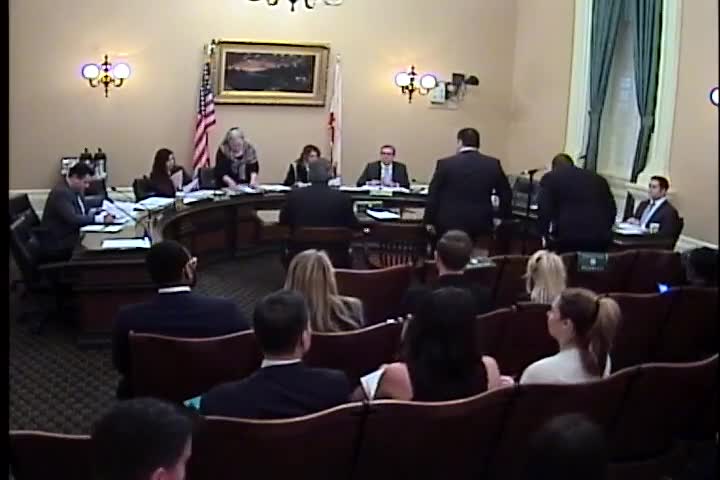 7MIN
Assembly Standing Committee on Jobs, Economic Development, and the Economy
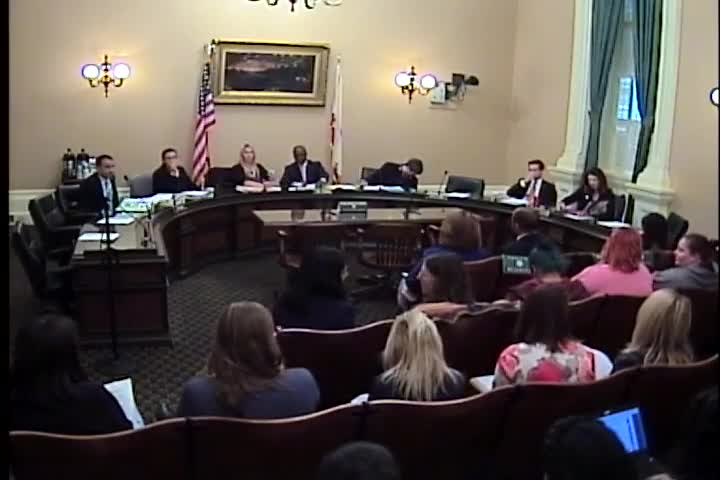 6MIN
Assembly Standing Committee on Labor and Employment
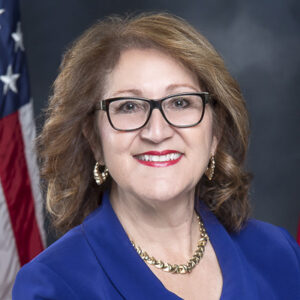
Bill Author
Bill Co-Author(s):