AB 3017: Qualified medical supplies providers: sales taxes: repayment.
- Session Year: 2017-2018
- House: Assembly
- Latest Version Date: 2018-08-14
Existing state sales and use tax laws impose a tax on retailers measured by gross receipts on the sale of tangible personal property sold at retail in this state, or on the storage, use, or other consumption in this state of tangible personal property purchased from a retailer for storage, use, or other consumption in this state.
This bill would provide a procedure for a qualified medical supplies provider to submit a claim for qualified repayments, as defined, with the California Department of Tax and Fee Administration, as provided. This bill would define a qualified medical supplies provider to mean a pharmacy or durable medical equipment provider enrolled in Medi-Cal who, among other things, paid sales taxes imposed under the Sales and Use Tax Law and the California Constitution for sales of medical supplies or equipment furnished to Medi-Cal beneficiaries occurring during the period beginning June 1, 2011, and before November 1, 2013, for which a portion of payments from Medi-Cal for those sales, which included applicable sales tax reimbursement, was paid back to the State Department of Health Care Services by the pharmacy or durable medical equipment provider due to the reduction of Medi-Cal payment by specified law.
This bill would, on or before March 1, 2020, require the California Department of Tax and Fee Administration to provide to the Controller the amount of qualified repayments to be made to each qualified medical supplies provider, and would appropriate an amount necessary from the General Fund to the department to make the payments of qualified repayments. The bill would provide that the total amount of money available to make qualified repayments shall not exceed the aggregate amount paid to the State Department of Health Care Services, as described above.
This bill would make findings regarding the public purpose served by the bill.
This bill would declare that it is to take effect immediately as an urgency statute.
Existing law prohibits the disclosure of the home addresses of certain public employees and officials, and the respective spouse or child of those persons, that appear in records of the Department of Motor Vehicles, except to a court, a law enforcement agency, an attorney in a civil or criminal action under certain circumstances, and certain other official entities.This bill would extend that prohibition, subject to those same exceptions, to the disclosure of the home addresses of federal air marshals.Existing constitutional provisions require that a statute that limits the right of access to the meetings of public bodies or the writings of public officials and agencies be adopted with findings demonstrating the interest protected by the limitation and the need for protecting that interest.This bill would make legislative findings to that effect.Existing law prohibits the disclosure of the home addresses of certain public employees and officials, and the respective spouse or child of those persons, that appear in records of the Department of Motor Vehicles, except to a court, a law enforcement agency, an attorney in a civil or criminal action under certain circumstances, and certain other official entities.
This bill would extend that prohibition, subject to those same exceptions, to the disclosure of the home addresses of federal air marshals.
Existing constitutional provisions require that a statute that limits the right of access to the meetings of public bodies or the writings of public officials and agencies be adopted with findings demonstrating the interest protected by the limitation and the need for protecting that interest.
This bill would make legislative findings to that effect.
(a)A qualified medical supplies provider may receive from the state a qualified repayment if all of the provisions of this section are satisfied.
(b)(1)For purposes of this section, a qualified medical supplies provider means a pharmacy or durable medical equipment provider enrolled in Medi-Cal who meets all of the following requirements:
(A)The pharmacy or durable medical equipment provider furnished medical supplies or equipment to Medi-Cal beneficiaries as a Medi-Cal provider and had its reimbursement payments from Medi-Cal for those medical supplies or equipment reduced pursuant to Chapter 3 of the Statutes of 2011.
(B)The pharmacy or provider paid to the State Board of Equalization sales taxes imposed under the Sales and Use Tax Law (Part 1 (commencing with Section 6001)), and Sections 35 and 36 of Article XIII of the California Constitution on the gross receipts from the sales of medical supplies or equipment furnished to Medi-Cal beneficiaries occurring during the period beginning June 1, 2011, and before November 1, 2013, for which a portion of payments from Medi-Cal for those sales, which included applicable sales tax reimbursement, was paid back to the State Department of Health Care Services by the pharmacy or durable medical equipment provider due to the reduction of Medi-Cal payment by Chapter 3 of the Statutes of 2011.
(2)Qualified repayment means an amount equal to the amount of sales tax reimbursement paid back to the State Department of Health Care Services by the qualified medical supplies provider described in subparagraph (B) of paragraph (1), less any amounts previously refunded, credited, or paid to a qualified medical supplies provider through any means whatsoever.
(c)(1)Before January 1, ____, a qualified medical supplies provider may file a claim for a qualified repayment with the California Department of Tax and Fee Administration.
(2)The claim shall be in writing, and shall be completed in accordance with any instructions or regulations as the department may prescribe, including, but not limited to, proof of payment of the tax described in subparagraph (B) of paragraph (1) of subdivision (b).
(3)The department shall work with representatives of a qualified medical supplies provider to establish the information and documentation necessary to process a claim for repayment using information available to the qualified medical supplies provider from the Medi-Cal program.
(4)On or before March 1, 2020, the department shall provide to the Controller the amount of qualified repayments to be made to each qualified medical supplies provider pursuant to this section. The total amount of money available to make qualified repayments shall not exceed an amount equal to the aggregate amount of qualified repayments paid to the State Department of Health and Care Services. If the total amount of claims filed exceeds the amount appropriated or the amount appropriated is less than the aggregate amount of qualified repayments received by the State Department of Health and Care Services, the department shall determine the pro rata share due to each qualified medical supplies provider based on the proportion each claim bears to the total amount of claims and shall report that amount to be provided.
(5)There is hereby appropriated from the General Fund to the department an amount necessary to make the payments of qualified repayments to qualified medical supplies providers allowed pursuant to this section.
(6)No interest shall be paid on any qualified repayment made pursuant to this section.
SEC. 2.The Legislature finds and declares that the addition of Section 6836 to the Revenue and Taxation Code by this act serves a public purpose and does not constitute a gift of public funds within the meaning of Section 6 of Article XVI of the California Constitution by allowing Medi-Cal providers, who furnish medical supplies or equipment to vulnerable Californians and were denied a refund by the statute of limitations, to recoup a portion of sale tax amounts paid on the sales of those items for which Medi-Cal reimbursements were reduced retroactively after delays by court action.
SEC. 3.This act is an urgency statute necessary for the immediate preservation of the public peace, health, or safety within the meaning of Article IV of the California Constitution and shall go into immediate effect. The facts constituting the necessity are:
To protect the financial solvency of affected qualified medical supplies providers who furnish medical supplies or equipment to vulnerable Californians as soon as possible, it is necessary that this act take effect immediately.
SECTION 1.Section 1808.4 of the Vehicle Code is amended to read:1808.4.(a)For all of the following persons, his or her home address that appears in a record of the department is confidential if the person requests the confidentiality of that information:(1)Attorney General.(2)State Public Defender.(3)A Member of the Legislature.(4)A judge or court commissioner.(5)A district attorney.(6)A public defender.(7)An attorney employed by the Department of Justice, the office of the State Public Defender, or a county office of the district attorney or public defender.(8)A city attorney, city prosecutor, or an attorney who submits verification from his or her public employer that the attorney represents the city in matters that routinely place the attorney in personal contact with persons under investigation for, charged with, or convicted of, committing criminal acts, if that attorney is employed by a city attorney or city prosecutor.(9)A nonsworn police dispatcher.(10)A child abuse investigator or social worker, working in child protective services within a social services department.(11)An active or retired peace officer, as defined in Chapter 4.5 (commencing with Section 830) of Title 3 of Part 2 of the Penal Code.(12)An employee of the Department of Corrections and Rehabilitation, Division of Juvenile Facilities, or the Prison Industry Authority specified in Sections 20403 and 20405 of the Government Code.(13)A nonsworn employee of a city police department, a county sheriffs office, the Department of the California Highway Patrol, a federal, state, or local detention facility, or a local juvenile hall, camp, ranch, or home, who submits agency verification that, in the normal course of his or her employment, he or she controls or supervises inmates or is required to have a prisoner in his or her care or custody.(14)A county counsel assigned to child abuse cases.(15)An investigator employed by the Department of Justice, a county district attorney, or a county public defender.(16)A member of a city council.(17)A member of a board of supervisors.(18)A federal prosecutor, criminal investigator, air marshal, or National Park Service Ranger working in this state.(19)An active or retired city enforcement officer engaged in the enforcement of the Vehicle Code or municipal parking ordinances.(20)An employee of a trial court.(21)A psychiatric social worker employed by a county.(22)A police or sheriff department employee designated by the chief of police of the department or the sheriff of the county as being in a sensitive position. A designation pursuant to this paragraph shall, for purposes of this section, remain in effect for three years subject to additional designations that, for purposes of this section, shall remain in effect for additional three-year periods.(23)A state employee in one of the following classifications:(A)Licensing-Registration Examiner, Department of Motor Vehicles.(B)Motor Carrier Specialist I, Department of the California Highway Patrol.(C)Museum Security Officer and Supervising Museum Security Officer.(D)Licensing Program Analyst, State Department of Social Services.(24)(A)The spouse or child of a person listed in paragraphs (1) to (23), inclusive, regardless of the spouses or childs place of residence.(B)The surviving spouse or child of a peace officer, as defined in Chapter 4.5 (commencing with Section 830) of Title 3 of Part 2 of the Penal Code, if the peace officer died in the line of duty.(C)(i)Subparagraphs (A) and (B) shall not apply if the person listed in those subparagraphs was convicted of a crime and is on active parole or probation.(ii)For requests made on or after January 1, 2011, the person requesting confidentiality for their spouse or child listed in subparagraph (A) or (B) shall declare, at the time of the request for confidentiality, whether the spouse or child has been convicted of a crime and is on active parole or probation.(iii)Neither the listed persons employer nor the department shall be required to verify, or be responsible for verifying, that a person listed in subparagraph (A) or (B) was convicted of a crime and is on active parole or probation.(D)(i)The department shall discontinue holding a home address confidential pursuant to this subdivision for a person specified in subparagraph (A) or (B) who is the child or spouse of a person described in paragraph (9), (11), (13), or (22) if the child or spouse is convicted of a felony in this state or is convicted of an offense in another jurisdiction that, if committed in California, would be a felony.(ii)The department shall comply with this subparagraph upon receiving notice of a disqualifying conviction from the agency that employs or formerly employed the parent or spouse of the convicted person, or as soon as the department otherwise becomes aware of the disqualifying conviction.(b)The confidential home address of a person listed in subdivision (a) shall not be disclosed, except to any of the following:(1)A court.(2)A law enforcement agency.(3)The State Board of Equalization.(4)An attorney in a civil or criminal action that demonstrates to a court the need for the home address, if the disclosure is made pursuant to a subpoena.(5)A governmental agency to which, under any provision of law, information is required to be furnished from records maintained by the department.(c)(1)A record of the department containing a confidential home address shall be open to public inspection, as provided in Section 1808, if the address is completely obliterated or otherwise removed from the record.(2)Following termination of office or employment, a confidential home address shall be withheld from public inspection for three years, unless the termination is the result of conviction of a criminal offense. If the termination or separation is the result of the filing of a criminal complaint, a confidential home address shall be withheld from public inspection during the time in which the terminated individual may file an appeal from termination, while an appeal from termination is ongoing, and until the appeal process is exhausted, after which confidentiality shall be at the discretion of the employing agency if the termination or separation is upheld. Upon reinstatement to an office or employment, the protections of this section are available.(3)With respect to a retired peace officer, his or her home address shall be withheld from public inspection permanently upon request of confidentiality at the time the information would otherwise be opened. The home address of the surviving spouse or child listed in subparagraph (B) of paragraph (24) of subdivision (a) shall be withheld from public inspection for three years following the death of the peace officer.(4)The department shall inform a person who requests a confidential home address what agency the individual whose address was requested is employed by or the court at which the judge or court commissioner presides.(d)A violation of subdivision (a) by the disclosure of the confidential home address of a peace officer, as specified in paragraph (11) of subdivision (a), a nonsworn employee of the city police department or county sheriffs office, or the spouses or children of these persons, including, but not limited to, the surviving spouse or child listed in subparagraph (B) of paragraph (24) of subdivision (a), that results in bodily injury to the peace officer, employee of the city police department or county sheriffs office, or the spouses or children of these persons is a felony.SEC. 2.The Legislature finds and declares that Section 1 of this act, which amends Section 1808.4 of the Vehicle Code, imposes a limitation on the publics right of access to the meetings of public bodies or the writings of public officials and agencies within the meaning of Section 3 of Article I of the California Constitution. Pursuant to that constitutional provision, the Legislature makes the following findings to demonstrate the interest protected by this limitation and the need for protecting that interest:The need to protect the privacy of federal air marshals from the public disclosure of their home addresses outweighs the interest in public disclosure of that information.(a)For all of the following persons, his or her home address that appears in a record of the department is confidential if the person requests the confidentiality of that information:
(1)Attorney General.
(2)State Public Defender.
(3)A Member of the Legislature.
(4)A judge or court commissioner.
(5)A district attorney.
(6)A public defender.
(7)An attorney employed by the Department of Justice, the office of the State Public Defender, or a county office of the district attorney or public defender.
(8)A city attorney, city prosecutor, or an attorney who submits verification from his or her public employer that the attorney represents the city in matters that routinely place the attorney in personal contact with persons under investigation for, charged with, or convicted of, committing criminal acts, if that attorney is employed by a city attorney or city prosecutor.
(9)A nonsworn police dispatcher.
(10)A child abuse investigator or social worker, working in child protective services within a social services department.
(11)An active or retired peace officer, as defined in Chapter 4.5 (commencing with Section 830) of Title 3 of Part 2 of the Penal Code.
(12)An employee of the Department of Corrections and Rehabilitation, Division of Juvenile Facilities, or the Prison Industry Authority specified in Sections 20403 and 20405 of the Government Code.
(13)A nonsworn employee of a city police department, a county sheriffs office, the Department of the California Highway Patrol, a federal, state, or local detention facility, or a local juvenile hall, camp, ranch, or home, who submits agency verification that, in the normal course of his or her employment, he or she controls or supervises inmates or is required to have a prisoner in his or her care or custody.
(14)A county counsel assigned to child abuse cases.
(15)An investigator employed by the Department of Justice, a county district attorney, or a county public defender.
(16)A member of a city council.
(17)A member of a board of supervisors.
(18)A federal prosecutor, criminal investigator, air marshal, or National Park Service Ranger working in this state.
(19)An active or retired city enforcement officer engaged in the enforcement of the Vehicle Code or municipal parking ordinances.
(20)An employee of a trial court.
(21)A psychiatric social worker employed by a county.
(22)A police or sheriff department employee designated by the chief of police of the department or the sheriff of the county as being in a sensitive position. A designation pursuant to this paragraph shall, for purposes of this section, remain in effect for three years subject to additional designations that, for purposes of this section, shall remain in effect for additional three-year periods.
(23)A state employee in one of the following classifications:
(A)Licensing-Registration Examiner, Department of Motor Vehicles.
(B)Motor Carrier Specialist I, Department of the California Highway Patrol.
(C)Museum Security Officer and Supervising Museum Security Officer.
(D)Licensing Program Analyst, State Department of Social Services.
(24)(A)The spouse or child of a person listed in paragraphs (1) to (23), inclusive, regardless of the spouses or childs place of residence.
(B)The surviving spouse or child of a peace officer, as defined in Chapter 4.5 (commencing with Section 830) of Title 3 of Part 2 of the Penal Code, if the peace officer died in the line of duty.
(C)(i)Subparagraphs (A) and (B) shall not apply if the person listed in those subparagraphs was convicted of a crime and is on active parole or probation.
(ii)For requests made on or after January 1, 2011, the person requesting confidentiality for their spouse or child listed in subparagraph (A) or (B) shall declare, at the time of the request for confidentiality, whether the spouse or child has been convicted of a crime and is on active parole or probation.
(iii)Neither the listed persons employer nor the department shall be required to verify, or be responsible for verifying, that a person listed in subparagraph (A) or (B) was convicted of a crime and is on active parole or probation.
(D)(i)The department shall discontinue holding a home address confidential pursuant to this subdivision for a person specified in subparagraph (A) or (B) who is the child or spouse of a person described in paragraph (9), (11), (13), or (22) if the child or spouse is convicted of a felony in this state or is convicted of an offense in another jurisdiction that, if committed in California, would be a felony.
(ii)The department shall comply with this subparagraph upon receiving notice of a disqualifying conviction from the agency that employs or formerly employed the parent or spouse of the convicted person, or as soon as the department otherwise becomes aware of the disqualifying conviction.
(b)The confidential home address of a person listed in subdivision (a) shall not be disclosed, except to any of the following:
(1)A court.
(2)A law enforcement agency.
(3)The State Board of Equalization.
(4)An attorney in a civil or criminal action that demonstrates to a court the need for the home address, if the disclosure is made pursuant to a subpoena.
(5)A governmental agency to which, under any provision of law, information is required to be furnished from records maintained by the department.
(c)(1)A record of the department containing a confidential home address shall be open to public inspection, as provided in Section 1808, if the address is completely obliterated or otherwise removed from the record.
(2)Following termination of office or employment, a confidential home address shall be withheld from public inspection for three years, unless the termination is the result of conviction of a criminal offense. If the termination or separation is the result of the filing of a criminal complaint, a confidential home address shall be withheld from public inspection during the time in which the terminated individual may file an appeal from termination, while an appeal from termination is ongoing, and until the appeal process is exhausted, after which confidentiality shall be at the discretion of the employing agency if the termination or separation is upheld. Upon reinstatement to an office or employment, the protections of this section are available.
(3)With respect to a retired peace officer, his or her home address shall be withheld from public inspection permanently upon request of confidentiality at the time the information would otherwise be opened. The home address of the surviving spouse or child listed in subparagraph (B) of paragraph (24) of subdivision (a) shall be withheld from public inspection for three years following the death of the peace officer.
(4)The department shall inform a person who requests a confidential home address what agency the individual whose address was requested is employed by or the court at which the judge or court commissioner presides.
(d)A violation of subdivision (a) by the disclosure of the confidential home address of a peace officer, as specified in paragraph (11) of subdivision (a), a nonsworn employee of the city police department or county sheriffs office, or the spouses or children of these persons, including, but not limited to, the surviving spouse or child listed in subparagraph (B) of paragraph (24) of subdivision (a), that results in bodily injury to the peace officer, employee of the city police department or county sheriffs office, or the spouses or children of these persons is a felony.
SEC. 2.The Legislature finds and declares that Section 1 of this act, which amends Section 1808.4 of the Vehicle Code, imposes a limitation on the publics right of access to the meetings of public bodies or the writings of public officials and agencies within the meaning of Section 3 of Article I of the California Constitution. Pursuant to that constitutional provision, the Legislature makes the following findings to demonstrate the interest protected by this limitation and the need for protecting that interest:
The need to protect the privacy of federal air marshals from the public disclosure of their home addresses outweighs the interest in public disclosure of that information.
|
Date
|
Status
|
|---|---|
| Aug 16, 2018 | Re-referred to Com. on RLS. pursuant to Senate Rule 29.10(c). |
| Aug 15, 2018 | Read second time. Ordered to third reading. |
| Aug 14, 2018 | Read third time and amended. Ordered to second reading. |
| Aug 13, 2018 | From Consent Calendar. |
| Aug 7, 2018 | Read second time. Ordered to Consent Calendar. |
| Aug 6, 2018 | From committee: Be ordered to second reading file pursuant to Senate Rule 28.8 and ordered to Consent Calendar. |
| Jun 26, 2018 | From committee: Do pass and re-refer to Com. on APPR. with recommendation: To Consent Calendar. (Ayes 7. Noes 0.) (June 26). Re-referred to Com. on APPR. |
| May 3, 2018 | Referred to Com. on PUB. S. |
| Apr 19, 2018 | In Senate. Read first time. To Com. on RLS. for assignment. |
| Apr 19, 2018 | Read third time. Passed. Ordered to the Senate. (Ayes 71. Noes 0.) |
| Apr 12, 2018 | Read second time. Ordered to Consent Calendar. |
| Apr 11, 2018 | From committee: Do pass. To Consent Calendar. (Ayes 15. Noes 0.) (April 11). |
| Apr 3, 2018 | From committee: Do pass and re-refer to Com. on APPR. with recommendation: To Consent Calendar. (Ayes 14. Noes 0.) (April 2). Re-referred to Com. on APPR. |
| Mar 12, 2018 | Referred to Com. on TRANS. |
| Feb 17, 2018 | From printer. May be heard in committee March 19. |
| Feb 16, 2018 | Read first time. To print. |
|
Date
|
Description
|
Location
|
Votes
|
|
|---|---|---|---|---|
| Jun 26, 2018 | Do pass, but first be re-referred to the Committee on [Appropriations] with the recommendation: To Consent Calendar | Senate Standing Committee on Public Safety |
Passed |
|
| Apr 19, 2018 | AB 3017 ACOSTA Consent Calendar Second Day Regular Session | Assembly Floor |
Passed |
|
| Apr 11, 2018 | Do pass. To Consent Calendar. | Assembly Standing Committee on Appropriations |
Passed |
|
| Apr 2, 2018 | Do pass and be re-referred to the Committee on [Appropriations] with recommendation: To Consent Calendar | Assembly Standing Committee on Transportation |
Passed |
This list shows positions taken on this bill by organizations on the date displayed, which is linked to the original source.
Positions by individuals are not included.
Office of Senate Floor Analyses (916) 651-1520 Fax: (916) 327-4478 | AB |
CONSENT
Bill No: AB 3017
:
SENATE PUBLIC SAFETY COMMITTEE: 7-0, 6/26/18
AYES: Skinner, Anderson, Bradford, Jackson, Mitchell, Stone, Wiener
SENATE APPROPRIATIONS COMMITTEE: Senate Rule 28.8
ASSEMBLY FLOOR: 71-0, 4/19/18 (Consent) - See last page for vote
DIGEST:
This bill adds federal air marshals to those who may request an additional level of confidentiality from the Department of Motor Vehicles.
Existing law:
- Provides that the residential addresses of certain public employees and their families are confidential. (Vehicle Code §§ 1808.4 and 1808.6 - began in 1977.)
- States that all residence addresses in any record of the Department of Motor Vehicles (DMV) are confidential and shall not be disclosed to any person, except a court, law enforcement agency, or other governmental agency, or as authorized in Section 1808.22 of the Vehicle Code. (Vehicle Code §§ 1808.21 - added in 1989.)
- States that any person may seek suppression of any DMV registration or driver’s license record if he or she can show that he or she is the subject of stalking or a threat of death or great bodily injury. The suppression will be for a period of one year renewable for two more one-year periods. (Vehicle Code § 1808.21(d).)
- Provides that the home address of specified persons which appear in the records of DMV is confidential upon the request of the person and that it not be disclosed except as specified. Included in the list of specified persons a child abuse investigator or social working in child protective services within a social services department. (Vehicle Code §§ 1808.4 and 1808.6.)
- Provides that the willful, unauthorized disclosure of this information as it relates to specified law enforcement (peace officers, employees of city police departments, and county sheriffs’ offices and their families) that results in the bodily injury to the individual or individuals whose specified information was confidential, is a felony. (Vehicle Code §§ 1808.4.)
- Provides that the release of such confidential information, for all other persons specified, is a misdemeanor and punishable by a fine of up to $5,000 and/or by up to one year in a county jail. (Vehicle Code § 1808.45.)
This bill adds federal air marshals to those who can request an additional layer of confidentiality from the DMV.
Background
DMV Confidentiality
Vehicle Code Section 1808.4 was added by statute in 1977 to provide confidentiality of home addresses to specified public employees and their families.
In 1989, Vehicle Code Section 1808.21 was added to make all residence addresses contained within the DMV files confidential. Vehicle Code Section 1808.21(a) states the following:
The residence address in any record of the department is confidential and cannot be disclosed to any person except a court, law enforcement agency, or other governmental agency, or as authorized in Section 1808.22 or 1808.23.
This Section was further amended in 1994 to allow individuals under specific circumstances to request that their entire records be suppressed. Any individual who is the subject of stalking or who is experiencing a threat of death or great bodily injury to his or her person may request their entire record to be suppressed under this Section.
Upon suppression of a record, each request for information about that record has to be authorized by the subject of the record or verified as legitimate by other investigative means by the DMV before the information is released.
A record is suppressed for a one-year period. At the end of the one-year period, the suppression is continued for a period determined by the DMV and if the person submits verification acceptable to the department that he or she continues to have reasonable cause to believe that he or she is the subject of stalking or that there exists a threat of death or great bodily injury to his or her person.
DMV has long maintained that all residence addresses are suppressed and only persons authorized by statute can access this information.
Under Sections 1808.4 and 1808.6 the home addresses of specific individuals are suppressed and can only be accessed through the Confidential Records Unit of the DMV while under Section 1808.21, the residence address portion of all individuals’ records are suppressed but can be accessed by a court, law enforcement agency, or other governmental agency or other authorized persons.
In other words, no person can get another person’s information from DMV without special authorization, and those that are authorized can also get information on people whose records are further suppressed, it just takes another step and costs DMV more to access those records.
FISCAL EFFECT: Appropriation: Fiscal Com.: Local:
None received
None received
ASSEMBLY FLOOR: 71-0, 4/19/18
AYES: Acosta, Aguiar-Curry, Travis Allen, Arambula, Baker, Berman, Bigelow, Bloom, Bonta, Brough, Burke, Caballero, Carrillo, Cervantes, Chau, Chávez, Chen, Chiu, Choi, Chu, Cooley, Cooper, Cunningham, Dahle, Daly, Eggman, Flora, Fong, Frazier, Friedman, Gallagher, Gipson, Gloria, Gonzalez Fletcher, Gray, Grayson, Harper, Holden, Irwin, Jones-Sawyer, Kalra, Kamlager-Dove, Kiley, Lackey, Levine, Limón, Low, Maienschein, Mathis, Mayes, McCarty, Medina, Muratsuchi, Nazarian, Obernolte, O'Donnell, Patterson, Quirk-Silva, Reyes, Rubio, Salas, Santiago, Steinorth, Mark Stone, Thurmond, Ting, Voepel, Waldron, Weber, Wood, Rendon
NO VOTE RECORDED: Calderon, Cristina Garcia, Eduardo Garcia, Melendez, Mullin, Quirk, Rodriguez
8/7/18 17:24:00
**** END ****
SENATE COMMITTEE ON PUBLIC SAFETY
Senator Nancy Skinner, Chair
2017 - 2018 Regular
Bill No: AB 3017 Hearing Date: June 26, 2018
Author: | Acosta | ||
Version: | February 16, 2018 | ||
Urgency: | No | Fiscal: | Yes |
Consultant: | MK | ||
Subject: Department of Motor Vehicles: Records: Federal Air Marshal
HISTORY
Source: Author
Prior Legislation: SB 362 (Galgiani) Held in Senate Appropriations 2017
SB 1131 (Galgiani) Held Senate Appropriations 2016
SB 372 (Galgiani) 2015 this version held in Senate Appropriations
SB 767 (Lieu) (as amended in the Assembly) failed Assembly
Transportation, 2014
AB 2687 (Bocanegra) Ch. 273, Stats. 2014
AB 1270 (Eggman) failed Assembly Appropriations, 2013
AB 923 (Swanson) failed Assembly Appropriations, 2009
AB 529 (Lowenthal) failed Assembly Appropriations, 2009
AB 1958 (Swanson) failed Assembly Appropriations, 2008
AB 1311 (Berryhill) not heard Assembly Transportation, 2007
AB 1706 (Strickland) failed Assembly Transportation, 2005
AB 2012 (Chu) section amended out of the bill, 2004
AB 130 (Campbell) not heard Assembly Transportation, 2003
AB 246 (Cox) not heard Assembly Transportation, 2003
AB 1775 (Ortiz) no vote in Senate Public Safety, 2002
AB 84 (Hertzberg) Ch. 809, Stats. 2001
AB 1029 (Oropeza) Ch. 486, Stats. 2001
AB 151 (Longville) vetoed, 2000
AB 298 (Battin) held in Assembly Transportation, 2000
AB 1310 (Granlund) vetoed, 2000
AB 1358 (Shelley) Ch. 808, Stats. 2000
AB 1864 (Correa) held Assembly Appropriations, 2000
SB 171 (Knight) vetoed, 1998
AB 1941 (Bordonaro) Ch. 880, Stats. 1996
AB 191(Cannella) died in Sen. Committee on Criminal Procedure, 1996
AB 3033 (Baca) died in Sen. Committee on Criminal Procedure, 1996
AB 3391 (Ducheny) never heard, 1996
AB 688 (Frusetta) died in Sen. Committee on Criminal Procedure, 1996
AB 1396 (Poochigian) died in Sen. Committee on Criminal Procedure,
1996
AB 1931 (Conroy) Ch. 77, Stats. 1994
AB 3454 (Speier) Ch. 395, Stats. 1994
AB 3161 (Frazee) Ch. 838, Stats. 1994
AB 1268 (Martinez) Ch. 1268, Stats. 1993
AB 2367 (Polanco) Ch. 1291, Stats. 1993
SB 274 (Committee on Transportation) Ch. 1292, Stats. 1993
SB 602 (1992) Chaptered
AB 1779 (1989) Chaptered
Support: Unknown
Opposition: None known
Assembly Floor Vote: 71 - 0
PURPOSE
The purpose of this bill is to add federal air marshals to those who may request an additional level of confidentiality from the Department of Motor Vehicles.
Under existing law the residential addresses of certain public employees and their families are confidential. (Vehicle Code §§ 1808.4 and 1808.6 - began in 1977.)
Existing law states that all residence addresses in any record of the Department of Motor Vehicles (DMV) are confidential and shall not be disclosed to any person, except a court, law enforcement agency, or other governmental agency, or as authorized in section 1808.22 of the Vehicle Code. (Vehicle Code §§ 1808.21 - added in 1989.)
Existing law states that any person may seek suppression of any DMV registration or driver’s license record if he or she can show that he or she is the subject of stalking or a threat of death or great bodily injury. The suppression will be for a period of one year renewable for two more one year periods. (Vehicle Code § 1808.21(d).)
Existing law provides that the home address of specified persons which appear in the records of DMV is confidential upon the request of the person and that it not be disclosed except as specified. Included in the list of specified persons a child abuse investigator or social working in child protective services within a social services department. (Vehicle Code §§ 1808.4 and 1808.6.)
Existing law provides that the willful, unauthorized disclosure of this information as it relates to specified law enforcement (peace officers, employees of city police departments, and county sheriffs’ offices and their families) that results in the bodily injury to the individual or individuals whose specified information was confidential, is a felony. (Vehicle Code §§ 1808.4.)
Existing law provides that the release of such confidential information, for all other persons specified, is a misdemeanor and punishable by a fine of up to $5,000 and/or by up to one year in a county jail. (Vehicle Code § 1808.45.)
This bill would add federal air marshals to those who can request an additional layer of confidentiality from the DMV.
COMMENTS
1. Need for This Bill
According to the author:
Existing law prohibits the disclosure of the home addresses of certain public employees and officials that appear in records of the Department of Motor Vehicles, except to a court, a law enforcement agency, an attorney in a civil or criminal action under certain circumstances. The home addresses of everyone else may be disclosed, in limited circumstances, to financial institutions, insurance companies, attorneys, vehicle manufacturers, and persons doing statistical research.
This bill will extend the option for a Code Enforcement Officer, Parking Control Officers and Non-Sworn Investigators at the Department of Insurance to enroll in the Department of Motor Vehicles (DMV) confidentiality protections, specifically to protect their home addresses.
Code enforcement officers are on the front line of code compliance, and sometimes drug trafficking and gang-related enforcement efforts in local governments and are frequently required to deal with hostile, non-compliant persons. It is not uncommon for citizens to become angry when a Code Enforcement Officer takes action to enforce regulations as they see it as an unnecessary intrusion of their private property.
Ironically, if a Code Enforcement Officer or Parking Enforcement Officer is employed under their local police department, their information will fall under the DMV confidentiality requirement.
Parking control officers also face clear and present danger in the fulfillment of their job duties andhave received credible threats and have been victims of physical assaults.
Non-sworn investigators at the Department of Insurance regularly conduct investigations of licensees and non-licensees which may result in administrative action. About 50-60% of their cases is criminal casework, and so these investigators have frequent contact with those involved with criminal activity. Many times these investigations result in license revocation or possible incarceration and therefore there is a potential for violence or retribution.
These Investigators should be afforded the same protections from potential retaliation.
2. Background of DMV Confidentiality
Vehicle Code section 1808.4 was added by statute in 1977 to provide confidentiality of home addresses to specified public employees and their families.
In 1989, Vehicle Code section 1808.21 was added to make all residence addresses contained within the Department of Motor Vehicle files confidential. Vehicle Code section 1808.21(a) states the following:
The residence address in any record of the department is confidential and cannot
be disclosed to any person except a court, law enforcement agency, or other governmental agency, or as authorized in Section 1808.22 or 1808.23.
This section was further amended in 1994 to allow individuals under specific circumstances to request that their entire records be suppressed. Any individual who is the subject of stalking or who is experiencing a threat of death or great bodily injury to his or her person may request their entire record to be suppressed under this section.
Upon suppression of a record, each request for information about that record has to be authorized by the subject of the record or verified as legitimate by other investigative means by the DMV before the information is released.
A record is suppressed for a one-year period. At the end of the one year period, the suppression is continued for a period determined by the department and if the person submits verification acceptable to the department that he or she continues to have reasonable cause to believe that he or she is the subject of stalking or that there exists a threat of death or great bodily injury to his or her person.
DMV has long maintained that all residence addresses are suppressed and only persons authorized by statute can access this information.
Under sections 1808.4 and 1808.6 the home addresses of specific individuals are suppressed and can only be accessed through the Confidential Records Unit of the Department of Motor Vehicles while under section 1808.21, the residence address portion of all individuals’ records are suppressed but can be accessed by a court, law enforcement agency, or other governmental agency or other authorized persons.
In other words, no person can get another person’s information from DMV without special authorization, and those that are authorized can also get information on people whose records are further suppressed, it just takes another step and costs DMV more to access those records.
3. The Department of Motor Vehicles
There have been a number of bills adding or attempting to add various public employees to the enhanced confidentiality provisions of the Vehicle Code.
According to a Senate Committee on Public Safety analysis for June 11, 1996 of AB 1941 (Bordonaro):
According to a letter dated June 9, 1995 from the Department of Motor Vehicles concerning related measures initially set for hearing last year (AB 191, AB 688,
AB 1396) on this issue, AB 1941 “is just one of four bills slated for the Criminal Procedure Committee hearing on June 13 which seek to include various professions within the category of confidential records that have historically been reserved for law enforcement personnel. When names are added to this special category, they cannot be accessed except through a telephone procedure utilized in one particular file security area in the DMV’s Sacramento headquarters location. Currently, we estimate that this file contains close to half a million individual records which must be manually entered and individually retrieved when access is authorized.
The DMV has stated that approximately 1000 requests for confidentiality of home addresses are made each week. The Confidential Records Unit of the DMV consists of 12 people and only two of these people review these forms to determine whether the individuals requesting confidentiality are in fact qualified to do so.
According to the DMV, a majority of these requests are granted due to the fact that the DMV restricts the release of the request forms to qualifying agencies and individuals only. The Confidential Records Unit of the DMV updated “5900 records in May 1995 and only 273 applications were rejected.”
4. Addition of Federal Air Marshals
This bill would add federal air marshals to those who can request an additional layer of confidentiality from the DMV.
5. Other Bills This Year
Earlier this year this Committee passed SB 1390 (Galgiani) and SB 1093 (Jackson) both of which expanded the section expanded by this bill. Both bills were held in Senate Appropriations.
-- END –
Date of Hearing: April 11, 2018
ASSEMBLY COMMITTEE ON APPROPRIATIONS
Lorena Gonzalez Fletcher, Chair
ABPCA Bill Id:AB 3017
Author:(Acosta) – As Introduced Ver:February 16, 2018
Policy Committee: | Transportation | Vote: | 14 - 0 |
Urgency: No State Mandated Local Program: No Reimbursable: No
SUMMARY:
This bill adds federal air marshals to the list of persons who can request the Department of Motor Vehicles (DMV) to keep his or her home address confidential through the Confidential Records Program (CRP).
FISCAL EFFECT:
Minor and absorbable costs to DMV.
COMMENTS:
- Background. Until 1989, DMV records were considered public records unless state law specifically made them confidential, as was the case for the addresses of peace officers and certain other officials thought to be at risk. Because home addresses were not considered confidential, any person who gave a reason that DMV deemed legitimate and could present to DMV a person's driver's license number or license plate number could obtain address information on that individual. In 1989, there was a high-profile murder case where the perpetrator obtained the victim’s address through the DMV (via an intermediary). In response, the Legislature enacted AB 1779 (Roos), Chapter 1213, Statutes of 1989, which made all home addresses in DMV records confidential, with limited exceptions. AB 1779 left in place existing confidentiality provisions through the CRP program that applied only to peace officers and certain other officials.
- Purpose. According to the author:
This bill is intended to provide additional peace of mind and security for federal air marshals and their families while their vehicles are parked for long periods of time at the airport during frequent and extended travel. Nearly all Air Marshals are also prior Peace Officer Standards and Training (POST) certified law enforcement officers who have spent time on the beat and made numerous arrests. Although they are no longer making daily arrests, former arrestees are still able to recognize these former officers on the street. Any additional protections that can be offered to these air marshals and their families should be afforded to them to ensure their safety.
- Benefits and tradeoffs of CRP program. Given that DMV records are universally confidential, with limited exceptions, and the fact that DMV is not aware of any instances since the implementation of AB 1779 in which DMV home address information has been used for physical harm or for violent criminal purposes, the need for this bill is unclear. While it may appear that the CRP provides a greater level of confidentiality than is available to the general public, functionally the level of confidentiality is the same. People seeking confidential information about others generally do not look to DMV records for personal data since those records are so carefully protected and the same information is much more easily obtainable via the internet and social media. However, there have been reports of individuals protected under the CRP program evading tickets and tolls or receiving preferential treatment during a traffic stop due to the person’s enrollment in the CRP program.
Analysis Prepared by: Jessica Peters / APPR. / (916) 319-2081
Date of Hearing: April 2, 2018
ASSEMBLY COMMITTEE ON TRANSPORTATION
Jim Frazier, Chair
ABPCA Bill Id:AB 3017 (
Author:Acosta) – As Introduced Ver:February 16, 2018
SUBJECT: Department of Motor Vehicles: records: federal air marshal
SUMMARY: Adds federal air marshals to the list of persons who can request that their home address be held confidential by the Department of Motor Vehicles (DMV).
EXISTING LAW:
- Lists 23 classes of persons, primarily in law enforcement fields, plus the spouses and children of those persons, that may request that their home addresses be held confidential by DMV. The home addresses of these persons may only be disclosed to a court; a law enforcement agency; the State Board of Equalization (BOE); an attorney in a civil or criminal action who demonstrates to a court the need for the home address, if the disclosure is made pursuant to a subpoena; and any governmental agency legally required to be furnished the information.
- Makes confidential the home addresses of all individuals contained within DMV records. These provisions similarly allow for disclosure to courts, law enforcement agencies, and other governmental agencies, but also allow for limited disclosure to financial institutions, insurance companies, attorneys, vehicle manufacturers, and persons doing statistical research.
- Grants DMV the authority to suppress all records for at least one year for persons who are under threat of death or bodily injury. Under these circumstances, the entire record, including the address, is rendered inaccessible.
FISCAL EFFECT: Unknown
COMMENTS: Until 1989, DMV records were considered public records unless state law specifically made them confidential, as was the case for the addresses of peace officers and certain other officials thought to be at risk. Because home addresses were not considered confidential, any person who gave a reason that DMV deemed legitimate and could present to DMV a person's driver's license number or license plate number could obtain address information on that individual.
In 1989, actress Rebecca Schaeffer was stalked and killed. The murderer obtained her address from a private investigation agency doing business in Arizona. The private investigation agency acquired her address through a subcontractor agent in California, who obtained it from DMV. In response, the Legislature enacted AB 1779 (Roos), Chapter 1213, Statutes of 1989, which made all home addresses in DMV records confidential, with limited exceptions. AB 1779 left in place existing confidentiality provisions that applied only to peace officers and certain other officials. The list of those to whom the pre-AB 1779 confidentiality provisions apply, generally referred to as the Confidential Records Program (CRP), now includes 23 classes of persons. DMV is not aware of any instances since the implementation of AB 1779 where confidential home address information has been used for physical harm or for violent criminal purposes.
Peace officers are already included in the CRP. Air marshals are not, however, considered a peace officer for the purpose of this section.
According to the author, “This bill is intended to provide additional piece of mind and security for Federal air marshals and their families while their vehicles are parked for long periods of time at the airport during frequent and extended travel. Nearly all Air Marshals are also prior Peace Officer Standards and Training (POST) certified law enforcement officers who have spent time on the beat and made numerous arrests. Although they are no longer making daily arrests, former arrestees are still able to recognize these former officers on the street. Any additional protections that can be offered to these…air marshals and their families should be afforded to them to ensure their safety…”.
Given that DMV records are universally confidential, with limited exceptions, and the fact that DMV is not aware of any instances since the implementation of AB 1779 in which DMV home address information has been used for physical harm or for violent criminal purposes, the need for this bill is unclear. While it may appear that the CRP provides a greater level of confidentiality than is available to the general public, functionally the level of confidentiality is the same. People seeking confidential information about others generally do not look to DMV records for personal data since those records are so carefully protected and the same information is much more easily obtainable via the internet and social media. Further, if it is the case that nearly all air marshals are former California peace officers, then their prior position would allow them to remain on the CRP for the rest of their lives.
A 2009 investigative article from Jennifer Muir at the Orange County Register found another use for individuals protected under the CRP: evading tickets. The article found:
- Vehicles with protected license plates can run through dozens of intersections controlled by red light cameras and breeze along the 91 toll lanes with impunity.
- Parking citations issued to vehicles with protected plates are often dismissed because the process necessary to pierce the shield is too cumbersome.
- Some patrol officers let drivers with protected plates off with a warning because the plates signal that the drivers are “one of their own” or related to someone who is.
In fact, the Register found through a public records request of the Orange County Transportation Authority that there were 14,535 unpaid trips on toll facilities in the county by motorists with confidential plates over a five year period.
Current legislation: AB 2322 (Daly) Requires the Department of Motor Vehicles (DMV), upon request, to make a retired judge or court commissioner’s home address confidential for the rest of his or her life and for any surviving spouse or child for three years following the death of the judge or court commissioner. AB 2322 is currently in Assembly Appropriations Committee.
SB 1093 (Jackson) adds adult abuse investigators or social workers to the list of persons who can request their home address be held confidential by the DMV. SB 1093 is set to be heard by the Senate Public Safety Committee on April 10, 2018.
Prior legislation: Over the past 12 years, there have been a number of bills proposing to expand the list of those eligible to apply for the CRP, only one of which was chaptered, including:
AB 2687 (Bocanegra), Chapter 273, Statutes of 2014, added Licensing Program Analysts with the Department of Social Services to the list.
SB 362 (Galgiani) of 2017, SB 1131 (Galgiani) of 2016 and SB 372 (Galgiani) of 2015: These bills would have added Department of Insurance investigators, code enforcement officers, and parking control officers to the list of categories for which the (DMV) must hold home addresses confidential. These bills were held on the Senate Appropriations Committee suspense file.
AB 222 (Achadjian) of 2015, would have added certain employees of the Department of State Hospitals (DSH) and the California Department of Corrections and Rehabilitation (CDCR) to the list of persons who can request that their home address be held confidential by the DMV.
AB 222 was held on the Senate Appropriations Committee suspense file.
SB 767 (Lieu) of 2014, would have added code enforcement officers and would have required eligible persons requesting confidentiality for their spouse or child to disclose whether the spouse or child had been convicted of a crime and or was on mandatory supervision or post release community supervision at the time of the request for confidentiality. SB 767 was referred to this committee but was not heard at the request of the author.
AB 1270 (Eggman) of 2013, would have added code enforcement officers and their spouses and children. AB 1270 was held in the Assembly Appropriations Committee on the suspense file.
AB 923 (Swanson) of 2009, would have added BOE members, code enforcement officers, and certain veterinarians. AB 923 was held in the Assembly Appropriations Committee on the suspense file.
AB 592 (Lowenthal) of 2009, would have added BOE staff who are designated to exercise limited peace officer authority and duties. AB 592 was held in the Assembly Appropriations Committee on the suspense file.
AB 1958 (Swanson) of 2008, would have added firefighters, code enforcement officers, and certain veterinarians. AB 1958 was held in the Assembly Appropriations Committee on the suspense file.
AB 1311 (Berryhill) of 2007, would have added community service and public service officers employed by police departments. AB 1311 was referred to this committee but was not heard at the request of the author.
AB 1706 (Strickland) of 2005, would have added fraud investigators, park rangers, emergency dispatchers, and DMV employees who test new drivers. AB 1706 was referred to this committee but was not heard at the request of the author.
AB 2012 (Chu) of 2004, would have added court-appointed attorneys, their investigators, and social workers assigned to child abuse cases. These provisions were eventually amended out of the bill.
AB 130 (Campbell) of 2003 and AB 246 (Cox) of 2003, both bills would have added members of Congress. Both bills were referred to this committee but neither was heard.
REGISTERED SUPPORT / OPPOSITION:
Support
None on File
Opposition
None on File
Analysis Prepared by: David Sforza / TRANS. / (916) 319-2093
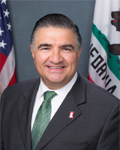
Bill Author
Bill Co-Author(s):