AB 3021: Farm animals: egg-laying hens: confinement.
- Session Year: 2017-2018
- House: Assembly
- Latest Version Date: 2018-05-25
(1)Existing law, enacted by Proposition 2, an initiative measure approved by the voters at the November 4, 2008, statewide general election, prohibits a person from tethering or confining a calf raised for veal, a pregnant pig, or an egg-laying hen on a farm in a manner that prevents the animal from lying down, standing up, fully extending its limbs, or turning around freely, except under specified circumstances. Existing statutory law prohibits a shelled egg from being sold or contracted for sale for human consumption in California if the seller knows or should have known that the egg is the product of an egg-laying hen that was confined on a farm or place that is not in compliance with the above-specified animal care standards.
This bill would also prohibit a farm owner or operator in California from confining an egg-laying hen in an enclosure that is not in compliance with specified standards, except as provided. The bill would prohibit a person from selling or contracting to sell shell eggs or liquid eggs in California from an egg-laying hen that was in an enclosure not in compliance with the specified standards. The bill would make a violation of the bills provisions a misdemeanor, thereby imposing a state-mandated local program. The bill would require the Department of Food and Agriculture to promulgate regulations for the implementation of those provisions on or before September 1, 2019.
(2)Existing law requires California and out-of-state egg handlers and producers to pay to the Secretary of Food and Agriculture a maximum fee of $0.15 for each 30 dozen eggs sold in this state, as provided. Existing law requires the fees paid to the secretary under these provisions to be deposited in the Department of Food and Agriculture Fund, a continuously appropriated fund for these purposes. Existing law requires the secretary to establish a lower rate for these fees if the funds derived from the assessment are more than reasonably necessary to cover the cost of administration and enforcement of the preparation for market and marketing of eggs, as specified.
This bill would additionally authorize these fees to be used for the administration and enforcement of the provisions described in paragraph (1) and would make a conforming change. By expanding the purposes of a continuously appropriated fund, this bill would make an appropriation.
The(3)The California Constitution requires the state to reimburse local agencies and school districts for certain costs mandated by the state. Statutory provisions establish procedures for making that reimbursement.
This bill would provide that no reimbursement is required by this act for a specified reason.
Existing law, enacted by Proposition 2, an initiative measure approved by the voters at the November 4, 2008, statewide general election, prohibits a person from tethering or confining a calf raised for veal, a pregnant pig, or an egg-laying hen on a farm in a manner that prevents the animal from lying down, standing up, fully extending its limbs, or turning around freely, except under specified circumstances. Existing statutory law prohibits a shelled egg from being sold or contracted for sale for human consumption in California if the seller knows or should have known that the egg is the product of an egg-laying hen that was confined on a farm or place that is not in compliance with the above-specified animal care standards.
This bill would also prohibit a farm owner or operator in California from confining an egg-laying hen in an enclosure that is not in compliance with specified standards, except as provided. The bill would prohibit a person from selling or contracting to sell shell eggs or liquid eggs in California from an egg-laying hen that was in an enclosure not in compliance with the specified standards. The bill would make a violation of the bills provisions a misdemeanor, thereby imposing a state-mandated local program. The bill would require the Department of Food and Agriculture to promulgate regulations for the implementation of those provisions on or before September 1, 2019.
The California Constitution requires the state to reimburse local agencies and school districts for certain costs mandated by the state. Statutory provisions establish procedures for making that reimbursement.
This bill would provide that no reimbursement is required by this act for a specified reason.
The fees provided in Section 27551 are maximum fees and shall be established at a lower rate by the secretary at any time the funds derived from the assessment are more than reasonably necessary to cover the cost of administration and enforcement of Division 8.5 (commencing with Section 16200) and this chapter, including the maintenance of a reasonable reserve fund for those purposes.
SEC. 2.Section 27554 of the Food and Agricultural Code is amended to read:27554.The moneys which that are received by the director secretary pursuant to this chapter shall be deposited in the Department of Food and Agriculture Fund and shall be used only for the administration and enforcement of Division 8.5 (commencing with Section 16200) and this chapter, including, but not limited to, payments to commissioners pursuant to Article 5 (commencing with Section 27561). The moneys are exempt from the provisions of Article 2 (commencing with Section 13320) of Chapter 3 of Part 3 of Division 3 of Title 2 of the Government Code.
SECTION 1.SEC. 3.Division 8.5 (commencing with Section 16200) is added to the Food and Agricultural Code, to read:8.5.Farm Animal Confinement16200.For purposes of this division, the following terms have the following meanings:
(a)Cage-free housing system means an indoor or outdoor controlled environment for egg-laying hens within which the egg-laying hens are free to roam unrestricted, are provided enrichments that allow them to exhibit natural behaviors, including, at a minimum, scratch areas, perches, nest boxes, and dust bathing areas, and within which farm employees can provide care while standing within the hens usable floor space. Cage-free housing systems include, to the extent they comply with the requirements of this subdivision, the following:
(1)Multitiered aviaries in which egg-laying hens have access to multiple elevated platforms that provide egg-laying hens with usable floor space both on top of and underneath the platforms.
(2)Partially slatted systems in which egg-laying hens have access to elevated flat platforms under which manure drops through the flooring to pit a pit litter removal belt below.
(3)Single level all litter floor systems bedded with litter in which egg-laying hens have limited or no access to elevated flat platforms.
(4)Other systems that comply with the requirements of this subdivision, as determined by the department.
(b)Covered animal means an egg-laying hen.
(c)Egg-laying hen means any female domesticated chicken, turkey, duck, goose, or guinea fowl kept for the purpose of egg production.
(d)Enclosure means any cage, crate, or other structure used to confine a covered animal, including, but not limited to, a battery cage.
(e)Farm means the land, building, support facilities, and other equipment that is wholly or partially used for the commercial production of animals or animal products used for food or fiber. Farm does not include live animal markets or plants at which mandatory inspection is maintained under the federal Egg Products Inspection Act (21 U.S.C. Sec. 1031 et seq.).
(f)Farm owner or operator means any person who owns or controls the operations of a farm.
(g)Liquid eggs means eggs intended for use as human food from an egg-laying hen broken from the shells with the yolks and whites in their natural proportions or with the yolks and whites separated, mixed, or mixed and strained. Liquid eggs may also include sugar, salt, water, seasoning, coloring, flavoring, preservatives, stabilizers, and similar food additives that are added to the liquid eggs.
(h)Person means an individual, firm, partnership, joint venture, association, limited liability company, corporation, estate, trust, receiver, or syndicate.
(i)(1)Sale means a commercial sale by a person of any item covered by this division except a sale undertaken at an official plant at which mandatory inspection is maintained under the federal Egg Products Inspection Act (21 U.S.C. Sec. 1031 et seq.).
(2)A sale shall be deemed to occur at the location where the buyer takes physical possession of a product from a covered animal.
(j)Shell egg means a whole egg of an egg-laying hen in its shell form intended for use as human food.
(k)Usable floor space means the total square footage of floor space provided to each covered animal, calculated by dividing the total square footage of floor space provided to the animals in an enclosure by the number of animals in that enclosure and includes both ground space and elevated level flat platforms upon which egg-laying hens can roost, but does not include perches or ramps.
16201.(a)A farm owner or operator in California shall not confine an egg-laying hen in an enclosure that is not in compliance with the standard set forth in subdivision (d) of Section 1350 of Title 3 of the California Code of Regulations as of January 1, 2019.
(b)On and after January 1, 2020, a farm owner or operator in California shall not confine an egg-laying hen in an enclosure with less than 144 square inches of usable floor space per egg-laying hen.
(c)On and after January 1, 2024, a farm owner or operator in California shall not confine an egg-laying hen in an enclosure with less than the amount of usable floor space per egg-laying hen required by the 2017 edition of the United Egg Producers Animal Husbandry Guidelines for U.S. Egg-Laying Flocks: Guidelines for Cage-Free Housing, or in an enclosure other than a cage-free housing system.
(d)A person shall not sell or contract to sell shell eggs or liquid eggs in California if the seller knows or should have known that the shell eggs or liquid eggs are from an egg-laying hen that was confined in an enclosure not in compliance with the standards set forth in this section.
(e)It shall be a defense to an action to enforce subdivision (d) that the seller relied in good faith upon a written certification by the supplier that the shell eggs or liquid eggs were from an egg-laying hen that was confined in an enclosure in compliance with the standards set forth in this section.
(f)Nothing in this section shall require the use of standards of quality, condition, weight, quantity, or grade that are in addition to, or different from, standards required pursuant to federal law.
16202.This division shall not apply in any of the following circumstances:
(a)During scientific or agricultural medical research.
(b)During examination, testing, individual treatment, or operation of a covered animal for veterinary purposes.
(c)During transportation of a covered animal.
(d)During rodeo exhibitions, state or county fair exhibitions, 4-H Clubs, Future Farmers of America programs, and similar youth programs.
(e)During the slaughter of a covered animal in accordance with the provisions of Chapter 6 (commencing with Section 19501) of Part 3 of Division 9.
(f)During temporary periods for animal husbandry purposes for no more than 24 hours in a 72-hour period and no more than 72 hours total in any 30-day period.
16203.The department shall promulgate regulations for the implementation of this division on or before September 1, 2019.
16204.A person who violates a provision of this division is guilty of a misdemeanor punishable by a fine not to exceed one thousand dollars ($1,000) or by imprisonment in the county jail for a period not to exceed 180 days, or by both that fine and imprisonment.
16205.The Legislature finds and declares that it is not the intent for this division to conflict with or amend Chapter 13.8 (commencing with Section 25990) or Chapter 14 (commencing with Section 25995) of Division 20 of the Health and Safety Code.
SEC. 2.SEC. 4.No reimbursement is required by this act pursuant to Section 6 of Article XIIIB of the California Constitution because the only costs that may be incurred by a local agency or school district will be incurred because this act creates a new crime or infraction, eliminates a crime or infraction, or changes the penalty for a crime or infraction, within the meaning of Section 17556 of the Government Code, or changes the definition of a crime within the meaning of Section 6 of Article XIIIB of the California Constitution.
For purposes of this division, the following terms have the following meanings:
(a)Cage-free housing system means an indoor or outdoor controlled environment for egg-laying hens within which the egg-laying hens are free to roam unrestricted, are provided enrichments that allow them to exhibit natural behaviors, including, at a minimum, scratch areas, perches, nest boxes, and dust bathing areas, and within which farm employees can provide care while standing within the hens usable floor space. Cage-free housing systems include, to the extent they comply with the requirements of this subdivision, the following:
(1)Multitiered aviaries in which egg-laying hens have access to multiple elevated platforms that provide egg-laying hens with usable floor space both on top of and underneath the platforms.
(2)Partially slatted systems in which egg-laying hens have access to elevated flat platforms under which manure drops through the flooring to pit a litter removal belt below.
(3)Single level all litter floor systems bedded with litter in which egg-laying hens have limited or no access to elevated flat platforms.
(4)Other systems that comply with the requirements of this subdivision, as determined by the department.
(b)Covered animal means an egg-laying hen.
(c)Egg-laying hen means any female domesticated chicken, turkey, duck, goose, or guinea fowl kept for the purpose of egg production.
(d)Enclosure means any cage, crate, or other structure used to confine a covered animal, including, but not limited to, a battery cage.
(e)Farm means the land, building, support facilities, and other equipment that is wholly or partially used for the commercial production of animals or animal products used for food or fiber. Farm does not include live animal markets or plants at which mandatory inspection is maintained under the federal Egg Products Inspection Act (21 U.S.C. Sec. 1031 et seq.).
(f)Farm owner or operator means any person who owns or controls the operations of a farm.
(g)Liquid eggs means eggs intended for use as human food from an egg-laying hen broken from the shells with the yolks and whites in their natural proportions or with the yolks and whites separated, mixed, or mixed and strained. Liquid eggs may also include sugar, salt, water, seasoning, coloring, flavoring, preservatives, stabilizers, and similar food additives that are added to the liquid eggs.
(h)Person means an individual, firm, partnership, joint venture, association, limited liability company, corporation, estate, trust, receiver, or syndicate.
(i)(1)Sale means a commercial sale by a person of any item covered by this division except a sale undertaken at an official plant at which mandatory inspection is maintained under the federal Egg Products Inspection Act (21 U.S.C. Sec. 1031 et seq.).
(2)A sale shall be deemed to occur at the location where the buyer takes physical possession of a product from a covered animal.
(j)Shell egg means a whole egg of an egg-laying hen in its shell form intended for use as human food.
(k)Usable floor space means the total square footage of floor space provided to each covered animal, calculated by dividing the total square footage of floor space provided to the animals in an enclosure by the number of animals in that enclosure and includes both ground space and elevated level flat platforms upon which egg-laying hens can roost, but does not include perches or ramps.
16201.(a)A farm owner or operator in California shall not confine an egg-laying hen in an enclosure that is not in compliance with the standard set forth in subdivision (d) of Section 1350 of Title 3 of the California Code of Regulations as of January 1, 2019.
(b)On and after January 1, 2020, a farm owner or operator in California shall not confine an egg-laying hen in an enclosure with less than 144 square inches of usable floor space per egg-laying hen.
(c)On and after January 1, 2024, a farm owner or operator in California shall not confine an egg-laying hen in an enclosure with less than the amount of usable floor space per egg-laying hen required by the 2017 edition of the United Egg Producers Animal Husbandry Guidelines for U.S. Egg-Laying Flocks: Guidelines for Cage-Free Housing, or in an enclosure other than a cage-free housing system.
(d)A person shall not sell or contract to sell shell eggs or liquid eggs in California if the seller knows or should have known that the shell eggs or liquid eggs are from an egg-laying hen that was confined in an enclosure not in compliance with the standards set forth in this section.
(e)It shall be a defense to an action to enforce subdivision (d) that the seller relied in good faith upon a written certification by the supplier that the shell eggs or liquid eggs were from an egg-laying hen that was confined in an enclosure in compliance with the standards set forth in this section.
(f)Nothing in this section shall require the use of standards of quality, condition, weight, quantity, or grade that are in addition to, or different from, standards required pursuant to federal law.
16202.This division shall not apply in any of the following circumstances:
(a)During scientific or agricultural medical research.
(b)During examination, testing, individual treatment, or operation of a covered animal for veterinary purposes.
(c)During transportation of a covered animal.
(d)During rodeo exhibitions, state or county fair exhibitions, 4-H Clubs, Future Farmers of America programs, and similar youth programs.
(e)During the slaughter of a covered animal in accordance with the provisions of Chapter 6 (commencing with Section 19501) of Part 3 of Division 9.
(f)During temporary periods for animal husbandry purposes for no more than 24 hours in a 72-hour period and no more than 72 hours total in any 30-day period.
16203.The department shall promulgate regulations for the implementation of this division on or before September 1, 2019.
16204.A person who violates a provision of this division is guilty of a misdemeanor punishable by a fine not to exceed one thousand dollars ($1,000) or by imprisonment in the county jail for a period not to exceed 180 days, or by both that fine and imprisonment.
16205.The Legislature finds and declares that it is not the intent for this division to conflict with or amend Chapter 13.8 (commencing with Section 25990) or Chapter 14 (commencing with Section 25995) of Division 20 of the Health and Safety Code.
SEC. 2.No reimbursement is required by this act pursuant to Section 6 of Article XIIIB of the California Constitution because the only costs that may be incurred by a local agency or school district will be incurred because this act creates a new crime or infraction, eliminates a crime or infraction, or changes the penalty for a crime or infraction, within the meaning of Section 17556 of the Government Code, or changes the definition of a crime within the meaning of Section 6 of Article XIIIB of the California Constitution.
REVISIONS: HeadingLine 2.|
Date
|
Status
|
|---|---|
| Aug 16, 2018 | In committee: Held under submission. |
| Jul 2, 2018 | In committee: Referred to APPR. suspense file. |
| Jun 20, 2018 | Withdrawn from committee. |
| Jun 19, 2018 | From committee: Do pass and re-refer to Com. on PUB. S. (Ayes 3. Noes 1.) (June 19). Re-referred to Com. on PUB. S. |
| Jun 13, 2018 | Referred to Coms. on AGRI. and PUB. S. |
| May 31, 2018 | In Senate. Read first time. To Com. on RLS. for assignment. |
| May 30, 2018 | Read third time. Passed. Ordered to the Senate. |
| May 29, 2018 | Read second time. Ordered to third reading. |
| May 25, 2018 | From committee: Amend, and do pass as amended. (Ayes 15. Noes 1.) (May 25). |
| Apr 25, 2018 | In committee: Set, first hearing. Referred to APPR. suspense file. |
| Apr 12, 2018 | Coauthors revised. |
| Mar 12, 2018 | Referred to Com. on AGRI. |
| Feb 17, 2018 | From printer. May be heard in committee March 19. |
| Feb 16, 2018 | Read first time. To print. |
|
Date
|
Description
|
Location
|
Votes
|
|
|---|---|---|---|---|
| Jul 2, 2018 | Placed on suspense file | Senate Standing Committee on Appropriations |
Passed |
|
| Jun 19, 2018 | Do pass, but first be re-referred to the Committee on [Public Safety] | Senate Standing Committee on Agriculture |
Passed |
|
| May 30, 2018 | AB 3021 LEVINE Assembly Third Reading | Assembly Floor |
Passed |
|
| May 25, 2018 | Do pass as amended. | Assembly Standing Committee on Appropriations |
Passed |
|
| Apr 11, 2018 | Do pass and be re-referred to the Committee on [Appropriations] | Assembly Standing Committee on Agriculture |
Passed |
This list shows positions taken on this bill by organizations on the date displayed, which is linked to the original source.
Positions by individuals are not included.
SENATE COMMITTEE ON
Senator Anthony Portantino, Chair
2017 - 2018 Regular Session
AB 3021 (Levine) - Farm animals: egg-laying hens: confinement
Version: | Policy Vote: |
Urgency: | Mandate: |
Hearing Date: | Consultant: |
This bill meets the criteria for referral to the Suspense File.
Bill Summary:
AB 3021 would (1) require the adoption of cage-free standards for egg-laying hens, (2) prohibit a farm owner or operator in California from confining an egg-laying hen in an enclosure that is not in compliance with specified cage-free standards, and (3) prohibit selling in California shelled eggs for human consumption produced by hens on farms not in compliance with cage-free standards.
Fiscal Impact:
The California Department of Food and Agriculture (CDFA) indicates that the fiscal impact of this bill is unknown, and would be driven by the number of suppliers that would sell eggs in California under the provisions of the bill. Annual costs to CDFA would most likely be in the hundreds of thousands of dollars annually, supported by the current assessment on the egg industry (Special Fund).
Background:
California regulates eggs for food safety, animal health, consumer protection and animal welfare. In 2008, Proposition 2 was approved by the voters, regulating egg-laying hen enclosure space and mandating enough space for each hen to “lie down,” “stand up,” “turn around freely,” and “fully extend” their wings without touching another hen or side of the enclosure. Proposition 2 went into full effect on January 1, 2015. AB 1437 (Huffman, Chapter 51, Statutes of 2010) requires all eggs sold in California to meet Proposition 2 standards.
Proposed Law:
This bill would, among other things, do the following:
- Require California farm owners or operators, starting January 1, 2019, to comply with current regulations related to enclosed hens.
- Require California farm owners or operators, on or after January 2020, to not confine hens to enclosures of less than 144 square inches of floor space per hen.
- Require California farm owners or operators, on or after January 2024, not to confine hens in enclosures of less than 144 square inches of floor space per hen for multi-tier enclosures or less than 216 square inches of floor space per hen for single-level enclosures.
- Require all eggs sold in California for human consumption to meet the California standard for enclosures space for hens.
- Provide for the following exemption to California's cage-free standard: (1) during scientific or agricultural medical research, (2) during examination, testing, individual treatment, or operation of a covered animal for veterinary purposes, (3) during transportation of a covered animal, (4) during rodeo exhibitions, state or county fair exhibitions, 4-H clubs, Future Farmers of America programs, and similar youth programs, (5) during the slaughter of a covered animal in accordance with current law, or (6) during temporary periods for animal husbandry purposes for no more than 24 hours in a 72-hour period and no more than 72 hours total in any 30-day period.
- Require CDFA to develop regulations related to California's cage-free standard by September 1, 2019.
- Authorize fees collected on the sale of eggs in California to be used for the administration and enforcement of these provisions.
- Allow for a fine of up to $1,000 and/or incarceration up to 180 days for violation of this law.
Staff Comments:
CDFA indicates that there are 4,500 retail outlets, egg production farms, and egg wholesalers and distributors potentially requiring inspection. Many of the bill’s costs would be driven by how many of these entities would remain in the California egg market if this bill were enacted. The department is unable to estimate the bill’s potential decline on the supply side of the market.
Nevertheless, CDFA anticipates ongoing staffing and resources costs as a result of the bill. Specifically, it would result in minor one-time and ongoing costs associated with rulemaking, program implementation, enforcement and compliance, and legal resources. Funding would be derived from assessments and registration fees paid by registered egg handlers and egg producers.
-- END --
SENATE COMMITTEE ON AGRICULTURE
Senator Cathleen Galgiani, Chair
2017 - 2018 Regular
Bill No: AB 3021 Hearing Date: 6/19/18
Author: | Levine | ||
Version: | 5/25/18 Amended | ||
Urgency: | No | Fiscal: | Yes |
Consultant: | Reichel Everhart | ||
Subject: Farm animals: egg-laying hens: confinement
SUMMARY
:
This bill requires the adoption of cage-free standards for egg-laying hens. It would prohibit a farm owner or operator in California from confining an egg-laying hen in an enclosure that is not in compliance with specified cage-free standards and would prohibit selling in California shelled eggs for human consumption produced by hens on farms not in compliance with cage-free standards.
BACKGROUND AND EXISTING LAW
:
- Proposition 2, passed by the voters in 2008:
- Prohibits a person from tethering or confining a calf raised for veal, a pregnant pig, or a hen on a farm in a manner that prevents the animal from lying down, standing up, fully extending its limbs, or turning around freely, except under specified circumstances.
- Prohibits eggs from being sold for human consumption in California if the eggs are the product of a hen that was confined on a farm or place that is not in compliance with Proposition 2 animal care standards.
- Authorizes the secretary of the California Department of Food and Agriculture to establish a maximum fee of $0.15 for each 30 dozen eggs sold in California.
PROPOSED LAW
:
This bill:
- Defines the following:
- “Cage-free housing system” to mean an indoor or outdoor controlled environment for egg-hens (hens) within which the hens are free to roam unrestricted, are provided enrichments that allow them to exhibit natural behaviors, including, at a minimum, scratchy areas, perches, nest boxes, and dust bathing areas, and within which farm employees can provide care while standing within the hens’ usable floor space. Cage-free housing systems include, to the extent they comply with the requirements of this subdivision, the following:
- Multi-tiered aviaries in which hens have access to multiple elevated platforms that provide hens with usable floor space both on top of and underneath the platforms;
- Partially slatted systems in which hens have access to elevated flat platforms under which manure drops through the flooring to a pit litter removal belt;
- Single level all litter floor systems bedded with litter in which hens have limited or no access to elevated flat platforms; and,
- Other systems that comply with the requirements of this subdivision, as determined by the California Department of Food and Agriculture (CDFA).
- “Covered animal” means an egg-laying hen;
- “Egg-laying hen” means any female domesticated chicken, turkey, duck, goose, or guinea fowl kept for the purpose of egg production;
- “Enclosure” means any cage, crate, or structure used to confine a covered animal, including, but not limited to, a battery cage;
- “Farm” means the land, building, support facilities, and other equipment that is wholly or partially used for the commercial production of animals or animal products used for food or fiber. “Farm” does not include live animal markets or plants at which mandatory inspection is maintained under the federal Egg Products Inspection Act (EPI Act).
- “Farm owner or operator” means any person who owns or controls the operations of a farm;
- “Liquid eggs” means eggs intended for use as human food from a hen broken from the shells with the yolks and whites in their natural proportions or with the yolks and whites separated, mixed, or mixed and strained. Liquid eggs may also include sugar, salt, water, seasoning, coloring, flavoring, preservatives, stabilizers, and similar food additives that are added to the liquid eggs;
- “Person” means an individual, firm, partnership, joint venture, association, limited liability company, corporation, estate, trust, receiver, or syndicate;
- “Sale” means a commercial sale by a person of any item covered by this division except a sale undertaken at an official plant at which mandatory inspection is maintained under the federal EPI Act. Requires a sale to be deemed to occur at the location where the buyer takes physical possession of a product from a covered animal.
- “Shell egg” means a whole egg of a hen in its shell form intended for use as human food; and,
- “Usable floor space” means the total square footage of floor space provided to each covered animal, calculated by dividing the total square footage of floor space provided to the animals in an enclosure by the number of animals in that enclosure and includes both ground space and elevated level flat platforms upon which hens can roost, but does not include perches or ramps.
- “Cage-free housing system” to mean an indoor or outdoor controlled environment for egg-hens (hens) within which the hens are free to roam unrestricted, are provided enrichments that allow them to exhibit natural behaviors, including, at a minimum, scratchy areas, perches, nest boxes, and dust bathing areas, and within which farm employees can provide care while standing within the hens’ usable floor space. Cage-free housing systems include, to the extent they comply with the requirements of this subdivision, the following:
- Requires California farm owners or operators, starting January 1, 2019, to comply with current regulations (3 CCR § 1350(d)) related to enclosed hens.
- Requires California farm owners or operators, on or after January 2020 to not confine hens to enclosures of less than 144 square inches of floor space per hen.
- Requires California farm owners or operators, on or after January 2024 not to confine hens in enclosures of less than 144 square inches of floor space per hen for multi-tier enclosures or less than 216 square inches of floor space per hen for single-level enclosures.
- Requires all eggs sold in California for human consumption to meet the California standard for enclosures space for hens.
- Allows, in the case of an enforcement action, for a seller to use good faith defense, if they can show written certification from the supplier that the eggs purchased comply with California's cage-free standard.
- Makes the following exemption to California's cage-free standard:
- During scientific or agricultural medical research;
- During examination, testing, individual treatment, or operation of a covered animal for veterinary purposes;
- During transportation of a covered animal;
- During rodeo exhibitions, state or county fair exhibitions, 4-H clubs, Future Farmers of America programs, and similar youth programs;
- During the slaughter of a covered animal in accordance with current law; or,
- During temporary periods for animal husbandry purposes for no more than 24 hours in a 72-hour period and no more than 72 hours total in any 30-day period.
- Requires CDFA to make regulations related to California's cage-free standard by September 1, 2019.
- Authorizes fees collected on the sale of eggs in California to be used for the administration and enforcement of these provisions.
- Allows for a fine of up to $1,000 and/or incarceration up to 180 days for violation of this law.
- Makes legislative findings and declarations that it is not the intent of this law to interfere with laws related to farm animal confinement and animal welfare standards for eggs sold in California.
ARGUMENTS IN SUPPORT:
According to the author, “This bill incorporates national cage-free standards into California law and staggers the implementation of the hen housing requirements to minimize impacts on consumers and the nationwide industry.” The author states this legislation, “Retains California’s leadership in animal welfare and helps meet the expectations of California consumers that they are purchasing eggs raised cage-free and to the highest standards of animal care, freshness and food safety.”
The California Grain and Feed Association (CGFA) and the Pacific Coast Rendering Association (PCRA) state that the bill incorporates national cage-free standards into California law and provides for a staggered implementation of the hen housing requirements to avoid “supply disruptions, provides better enforcement, and is not severable.” They state that the bill is better for consumers than the ballot measure that was recently certified (Initiative Statute: Establishes New Standards for Confinement of Certain Farm Animals; Bans Sale of Certain Non-Complying Products (#1823)) because it focuses only on eggs and provides six years to convert to cage-free housing systems.
ARGUMENTS IN OPPOSITION:
Social Compassion in Legislation states that, while they support strong welfare protections for egg-laying hens, they feel the bill falls short of the standards Californians have demanded since passing Proposition 2 in 2008. They are concerned that there might be a loophole in the bill that allows for relaxed standards where there is “scientific” research yet doesn’t define what is considered research. They also oppose the delayed implementation of confinement standards for egg-laying hens until 2024, two years longer than the current ballot initiative requires. Additionally, they also oppose excluding pigs and calves from the measure as it would leave countless animals vulnerable to cruel and unsafe forms of confinement.
COMMENTS
:
In 2008, Proposition 2 was passed by California voters, regulating egg-laying hen enclosure space and mandating enough space for each hen to “lie down,” “stand up,” “turn around freely,” and “fully extend” their wings without touching another hen or side of the enclosure. The proposition has been fully implemented since January 1, 2015. In 2010, Assembly Bill (AB) 1437 (Huffman) was signed into law (Chapter 51, Statutes of 2010) requiring all eggs sold in California to meet the standards established in Proposition 2.
Other states have pursued litigation as a result of the requirement that all eggs sold in California meet the standards as set forth in Proposition 2:
State of Missouri v. State of California: Thirteen states are suing California alleging that Proposition 2 has blocked the sale of out-of-state eggs that don’t meet the proposition’s cage conditions. The lawsuit contends this current law is in violation of the Commerce Clause.
Missouri et al. v. Harris: Missouri, Nebraska, Oklahoma, Alabama, Kentucky, and Iowa filed a complaint against AB 1437 (Huffman) in 2014. The six states said the bill violated the Commerce Clause. The case was heard on October 2, 2014, and the court concluded that the states did not have standing to challenge the law. The case was appealed to the United States Court of Appeals for the Ninth Circuit (9th Circuit Court). On November 17, 2016, the court dismissed the case, agreeing with the lower court’s ruling.
The Senate Rules Committee has double referred this bill to the Senate Public Safety Committee as the second committee of referral. Therefore, if this measure is approved by this committee, the motion should include an action to re-refer the bill to the Senate Committee on Public Safety.
RELATED LEGISLATION
:
AB 1437 (Huffman: Chapter 51, Statutes of 2010): requires all shelled eggs sold in California to meet the standards set forth in Proposition 2 (enough space for each hen to “lie down, stand up, turn around freely and fully extend their wings without touching another hen or side of the enclosure.”
PRIOR ACTIONS
:
Assembly Floor: | 72 - 2 |
Assembly Appropriations Committee: | 15 - 1 |
Assembly Agriculture Committee: | 10 - 0 |
SUPPORT
:
California Grain and Feed Association
A Voice for Choice Advocacy
Empower Family California
OPPOSITION
:
San Rafael-based Humane Farming Association
Mercy for Animals
Social Compassion in Legislation
-- END --
ASSEMBLY THIRD READING
ATR Bill Id:AB 3021
Author:(Levine, et al.)
As Amended Ver:May 25, 2018
Majority vote
Committee | Votes | Ayes | Noes |
Agriculture | 10-0 | Caballero, Mathis, Aguiar-Curry, Flora, Gallagher, Gray, Eggman, Jones-Sawyer, Levine, Salas | |
Appropriations | 15-1 | Gonzalez Fletcher, Bigelow, Bloom, Bonta, Calderon, Carrillo, Chau, Eggman, Fong, Friedman, Gallagher, Eduardo Garcia, Nazarian, Quirk, Reyes | Obernolte |
SUMMARY: This bill requires the adoption of cage-free standards for egg-laying hens. Specifically, this bill:
- Requires California farm owners and operators to confine a hen in an enclosure with at least 144 square inches per usable floor space by January 1, 2020, and with cage-free standards, as defined, by January 1, 2024.
- Prohibits the selling of shell eggs or liquid eggs in California if the seller knows, or should have known, that the eggs are from an egg-laying hen that was not confined in compliance with the standards created under this bill.
- Requires the California Department of Food and Agriculture (CDFA) to promulgate regulations for implementation of this bill on or before September 1, 2019.
FISCAL EFFECT:
According to the Assembly Appropriations Committee, this bill has significant one-time special fund costs in excess of $500,000 for CDFA to develop regulations, train staff, draft policies, and conduct outreach activities to stakeholders.
COMMENTS:
This bill would require all eggs produced and sold in California to be cage free by 2024. California regulates eggs for food safety, animal health, consumer protection and animal welfare. In 2008, Prop 2 was passed regulating egg-laying hen enclosure space and mandating enough space for each hen to "lie down," "stand up," "turn around freely," and "fully extend" their wings without touching another hen or side of the enclosure. Prop 2 went into full effect on January 1, 2015. Furthermore, in 2010, AB 1437 (Huffman), Chapter 51, was passed requiring all eggs sold in California to meet Prop 2 standards.
According to the author, since California implemented Prop 2 requirements, the expectations of California's consumers, retailers and grocers on hen welfare and food safety expectations continued to evolve. Many of the major egg retailers and buyers have expressed intentions to provide exclusively cage-free eggs. According to the United States Department of Agriculture, more than 72% of the nation's food, retail, hospitality, foodservice and food manufacturing businesses have committed to serve and sell cage-free eggs with most of those targeting 2025 for exclusive use of cage-free eggs.
Supporters state that in order to ensure an orderly transition for consumers and farmers across the country, the bill sets up a staggered implementation schedule. This bill requires all hens must be provided at least 144 square inches of space on January 1, 2020, progressing to full cage-free production technologies by January 1, 2024. The author states this staggered approach will help maintain a ready supply of California compliant eggs. It also will minimize impacts on supply or price for California's consumers while providing all the nation's farmers who want to sell eggs in California the necessary time to transition their hen housing to cage free.
Opponents state California already has a pending ballot measure aimed at phasing out the use of battery cages in the egg industry. Furthermore, this bill is an insufficient alternative that is more likely to prolong the confinement of animals than it is to prevent it. The pending ballot measure, in respect to cage free hens, is similar in all aspects except the timing. The ballot measure would have a 2022 deadline to transition to a cage free system.
Opponents state that this bill "would instead give egg producers until 2024—another two years—to eliminate cages, even though producers have already had since 2008 to transition to cage-free housing." Neither Prop 2 nor subsequent court cases clarified if the standards in Prop 2 required cage-free or larger enclosures for hens. This lack of clarity on cage-free vs. larger enclosures is one of the reasons cited in recent news articles for the proposed ballot measure.
Recent news articles have pointed to public attitudes shifting even more in favor of animal rights since Prop 2. Citing public demand, Subway, McDonald's, Dunkin' Donuts, Walmart, Target, Costco, and other businesses, have said they will make a transition to eggs from cage-free hens over 10 years. Much of this is due to the work the Humane Society has done that persuaded many retail and restaurant customers to phase in the exclusive use of cage-free eggs by 2025.
RELATED LEGAL ACTION:
State of Missouri v. State of California: 13 states suing California have asked the Supreme Court to directly take its complaints about new California egg laws that have blocked the sale of out-of-state eggs there that don't meet Prop 2 cage conditions. The lawsuit states California's current law is in violation of the Commerce Clause.
Missouri et al. v. Harris: Missouri, Nebraska, Oklahoma, Alabama, Kentucky, and Iowa filed a complaint against AB 1437 (Huffman) in 2014. AB 1437 applied to standards of Proposition 2 to shelled eggs sold in California. The six states said the bill violated the Commerce Clause. The case on October 2, 2014, when the court concluded that the states did not having standing to challenge the law. Missouri et al. v. Harris was appealed to the United States Court of Appeals for the Ninth Circuit (9th Circuit Court). On November 17, 2016, the court issued a ruling. The three judges agreed with the district court and dismissed the case.
Association des Eleveurs de Canards et d'Oies du Quebec v. Harris: California enacted a law in 2004 that banned serving foie gras that was produced through force feeding birds in order to fatten up their liver before slaughter. It took nearly a decade for the state to actually enact the law, finally implementing it in 2012. A lawsuit led by foie gras producers succeeded in getting the law struck down in 2015 by a district court judge who ruled that the state law wrongfully superseded federal law.
In late 2017, a panel of judges on the Ninth Circuit Court of Appeals reinstated it. "Nothing in the federal law or its implementing regulations limits a state's ability to regulate the types of poultry that may be sold for human consumption." The litigants plan to appeal to the full 9th circuit court.
At this time it is legal to sell and buy foie gras in California, but not produce it here.
Analysis Prepared by: Victor Francovich / AGRI. / (916) 319-2084 FN: 0003166
Date of Hearing: April 25, 2018
ASSEMBLY COMMITTEE ON APPROPRIATIONS
Lorena Gonzalez Fletcher, Chair
ABPCA Bill Id:AB 3021
Author:(Levine) – As Introduced Ver:February 16, 2018
Policy Committee: | Agriculture | Vote: | 10 - 0 |
|
| ||
|
|
Urgency: No State Mandated Local Program: Yes Reimbursable: No
SUMMARY:
This bill requires the adoption of cage-free standards for egg-laying hens. Specifically, this bill:
- Requires California farm owners and operators to confine a hen in an enclosure with at least 144 square inches per usable floor space by January 1, 2020, and with cage-free standards, as defined, by January 1, 2024.
- Prohibits the selling of shell eggs or liquid eggs in California if the seller knows, or should have known, that the eggs are from an egg-laying hen that was not confined in compliance with the standards created under this bill.
- Requires the California Department of Food and Agriculture (CDFA) to promulgate regulations for implementation of this bill on or before September 1, 2019.
FISCAL EFFECT:
Significant one-time special fund costs in excess of $500,000 for CDFA to develop regulations, train staff, draft policies, and conduct outreach activities to stakeholders, and ongoing annual special fund costs of approximately $3 to $5 million to enforce the new cage-free requirements.
COMMENTS:
- Background. Proposition 2 (2008) requires egg-laying hen enclosures to have enough space for each hen to lie down, stand up, turn around freely, and fully extend their wings. These standards went into full effect on January 1, 2015. AB 1437 (Huffman), Chapter 51, Statutes of 2010, requires all eggs sold in California to meet Proposition 2 standards.
- Proposed ballot initiative. A proposed ballot initiative, called the California Farm Animal Confinement Initiative, requires similar cage-free standards for egg-laying hens by January 1, 2022, instead of January 1, 2024 as proposed by AB 3021. This initiative also imposes new standards around the confinement of calves raised for veal and breeding pigs.
- Purpose. According to supporters, AB 3021 will ensure an orderly transition for consumers and farmers through a staggered implementation schedule to reach cage-free standards. According to the author, this approach will help maintain a ready supply of California compliant eggs and will minimize the impact on supply and price for consumers.
Analysis Prepared by: Luke Reidenbach / APPR. / (916) 319-2081
Date of Hearing: April 11, 2018
ASSEMBLY COMMITTEE ON AGRICULTURE
Anna Caballero, Chair
ABPCA Bill Id:AB 3021
Author:(Levine) – As Introduced Ver:February 16, 2018
SUBJECT: Farm animals: egg-laying hens: confinement.
SUMMARY: This bill would prohibit a farm owner or operator in California from confining an egg-laying hen (hen) in an enclosure that is not in compliance with specified cage-free standard and would prohibit selling shelled eggs for human consumption in California produced by hens on farms not in compliance with cage-free standards. Specifically, this bill:
- Defines the following:
- Cage-free housing system means an indoor or outdoor controlled environment for hens within which the hens are free to roam unrestricted, and are provided enhancements that allow them to exhibit natural behaviors, as specified. Cage-free housing systems include, to the extent they comply with cage-free standards, the following:
- Multi-tiered aviaries in which hens have access to multiple elevated platforms that provide hens with usable floor space both on top of and underneath the platforms;
- Partially slatted systems in which hens have access to elevated flat platforms under which manure drops through the flooring to pit a litter removal belt;
- Single level all litter floor systems bedded with litter in which hens have limited or no access to elevated flat platforms; and,
- Other systems that comply with the requirements of this subdivision, as determined by the California Department of Food and Agriculture (CDFA).
- Covered animal means an egg-laying hen;
- Egg-laying hen means any female domesticated chicken, turkey, duck, goose, or guinea fowl kept for the purpose of egg production;
- Enclosure means any cage, crate, or structure used to confine a covered animal, including, but not limited to, a battery cage;
- Farm means the land, building, support facilities, and other equipment that is wholly or partially used for the commercial production of animals or animal products used for food or fiber;
- Farm does not include live animal markets or plants at which mandatory inspection is maintained under the federal Egg Products Inspection Act (EPI Act).
- Farm owner or operator means any person who owns or controls the operations of a farm;
- Liquid eggs means eggs intended for use as human food from a hen broken from the shells with the yolks and whites in their natural proportions or with the yolks and whites separated, mixed, or mixed and strained. Liquid eggs may also include sugar, salt, water, seasoning, coloring, flavoring, preservatives, stabilizers, and similar food additives that are added to the liquid eggs;
- Person means an individual, firm, partnership, joint venture, association, limited liability company, corporation, estate, trust, receiver, or syndicate;
- Sale means a commercial sale by a person of any item covered by this division except a sale undertaken at an official plant at which mandatory inspection is maintained under the federal EPI Act;
- Requires a sale to be deemed to occur at the location where the buyer takes physical possession of a product from a covered animal.
- Shell egg means a whole egg of a hen in its shell form intended for use as human food; and,
- Usable floor space means the total square footage of floor space provided to each covered animal, calculated by dividing the total square footage of floor space provided to the animals in an enclosure by the number of animals in that enclosure and includes both ground space and elevated level flat platforms upon which hens can roost, but does not include perches or ramps.
- Cage-free housing system means an indoor or outdoor controlled environment for hens within which the hens are free to roam unrestricted, and are provided enhancements that allow them to exhibit natural behaviors, as specified. Cage-free housing systems include, to the extent they comply with cage-free standards, the following:
- Requires California farm owners or operators, starting January 1, 2019, to comply with current regulations (3 CCR § 1350(d)) related to enclosed hens.
- Requires California farm owners or operators, on or after January 2020, to not confine hens to enclosures of less than 144 square inches of floor space per hen.
- Requires California farm owners or operators, on or after January 2024, not to confine hens in enclosures of less than 144 square inches of floor space per hen for multi-tier enclosures or less than 216 square inches of floor space per hen for single-level enclosures.
- Requires all eggs sold in California, for human consumption, to meet the California standard for enclosures space for hens.
- Allows, in the case of an enforcement action, for a seller to use good faith defense, if they can show written certification from the supplier that the eggs purchased comply with California's cage-free standard.
- Makes the following exemption to California's cage-free standard;
- During scientific or agricultural medical research;
- During examination, testing, individual treatment, or operation of a covered animal for veterinary purposes;
- During transportation of a covered animal;
- During rodeo exhibitions, state or county fair exhibitions, 4-H Clubs, Future Farmers of America programs, and similar youth programs;
- During the slaughter of a covered animal in accordance with current law; or,
- During temporary periods for animal husbandry purposes for no more than 24 hours in a 72-hour period and no more than 72 hours total in any 30-day period.
- Requires CDFA to make regulations related to California's cage-free standard by September 1, 2019.
- Allows for a fine of up to $1,000 and/or incarceration up to 180 days for violation of this law.
- Makes legislative findings and declarations that it is not the intent of this law to interfere with laws related to farm animal confinement and animal welfare standards for eggs sold in California.
EXISTING LAW:
- Prohibits a person from tethering or confining a calf raised for veal, a pregnant pig, or a hen on a farm in a manner that prevents the animal from lying down, standing up, fully extending its limbs, or turning around freely, except under specified circumstances. (Proposition 2, 2008)
- Prohibits eggs from being sold for human consumption in California if the eggs are the product of a hen that was confined on a farm or place that is not in compliance with Proposition (Prop) 2's animal care standards.
FISCAL EFFECT: Unknown
COMMENTS: AB 3021 would require all eggs produced and sold in California to be cage free by 2024. California regulates eggs for food safety, animal health, consumer protection and animal welfare. In 2008, Prop 2 was passed regulating egg-laying hen enclosure space and mandating enough space for each hen to “lie down,” “stand up,” “turn around freely,” and “fully extend” their wings without touching another hen or side of the enclosure. Prop 2 went into full effect on January 1, 2015. Furthermore, in 2010, AB 1437 (Huffman) was passed requiring all eggs sold in California to meet Prop 2 standards.
According to the author, since California implemented Prop 2 requirements, the expectations of California’s consumers, retailers and grocers on hen welfare and food safety expectations continued to evolve. Many of the major egg retailers and buyers have expressed intentions to provide exclusively cage-free eggs. According to the U.S. Department of Agriculture, more than 72% of the nation’s food, retail, hospitality, foodservice and food manufacturing businesses have committed to serve and sell cage-free eggs with most of those targeting 2025 for exclusive use of cage-free eggs.
Supporters state that in order to ensure an orderly transition for consumers and farmers across the country, the bill sets up a staggered implementation schedule. This bill requires all hens must be provided at least 144 square inches of space on January 1, 2020, progressing to full cage-free production technologies by January 1, 2024. The author states this staggered approach will help maintain a ready supply of California compliant eggs. It also will minimize impacts on supply or price for California’s consumers while providing all the nation’s farmers who want to sell eggs in California the necessary time to transition their hen housing to cage free.
Opponents state California already has a pending ballot measure aimed at phasing out the cruel use of battery cages in the egg industry. Furthermore, this bill is an insufficient alternative that is more likely to prolong the cruel confinement of animals than it is to prevent it. The pending ballot measure, in respect to cage free hens, is similar in all aspects except the timing. The ballot measure would have a 2022 deadline to transition to a cage free system.
Opponents state that this bill "would instead give egg producers until 2024—another two years—to eliminate cages, even though producers have already had since 2008 to transition to cage-free housing." Neither Prop 2 nor subsequent court cases clarified if the standards in Prop 2 required cage-free or larger enclosures for hens. This lack of clarity on cage-free vs. larger enclosures is one of the reasons cited in recent news articles for the proposed ballot measure.
Recent news articles have pointed to public attitudes shifting even more in favor of animal rights since Prop 2. Citing public demand, Subway, McDonald's, Dunkin' Donuts, Walmart, Target, Costco, and other businesses, have said they will make a transition to eggs from cage-free hens over 10 years. Much of this is due to the work the Humane Society has done that persuaded many retail and restaurant customers to phase in the exclusive use of cage-free eggs by 2025.
RELATED LEGAL ACTION:
State of Missouri v. State of California: 13 states suing California have asked the Supreme Court to directly take its complaints about new California egg laws that have blocked the sale of out-of-state eggs there that don’t meet Prop 2 cage conditions. The lawsuit states California's current law is in violation of the Commerce Clause.
Missouri et al. v. Harris: Missouri, Nebraska, Oklahoma, Alabama, Kentucky, and Iowa filed a complaint against AB 1437 (Huffman) in 2014. AB 1437 applied to standards of Proposition 2 to shelled eggs sold in California. The six states said the bill violated the Commerce Clause. The case on October 2, 2014, when the court concluded that the states did not having standing to challenge the law. Missouri et al. v. Harris was appealed to the United States Court of Appeals for the Ninth Circuit (9th Circuit Court). On November 17, 2016, the court issued a ruling. The three judges agreed with the district court and dismissed the case.
Association des Eleveurs de Canards et d'Oies du Quebec v. Harris: California enacted a law in 2004 that banned serving foie gras that was produced through force feeding birds in order to fatten up their liver before slaughter. It took nearly a decade for the state to actually enact the law, finally implementing it in 2012. A lawsuit led by foie gras producers succeeded in getting the law struck down in 2015 by a district court judge who ruled that the state law wrongfully superseded federal law.
In late 2017, a panel of judges on the Ninth Circuit Court of Appeals reinstated it. “Nothing in the federal law or its implementing regulations limits a state’s ability to regulate the types of poultry that may be sold for human consumption." The litigants plan to appeal to the full 9th circuit court.
At this time it is legal to sell and buy foie gras in California, but not produce it here.
REGISTERED SUPPORT / OPPOSITION:
Support
California Chamber of Commerce
California Grain and Feed Association
Educate. Advocate.
Empower Family California
Pacific Coast Rendering Association
Voice for Choice Advocacy
Opposition
Humane Farming Association
Mercy for Animals
Social Compassion in Legislation
216 Individuals
Analysis Prepared by: Victor Francovich / AGRI. / (916) 319-2084
Discussed in Hearing
 1H
Senate Standing Committee on Appropriations
 9MIN
Senate Standing Committee on Agriculture
 1MIN
Assembly Floor
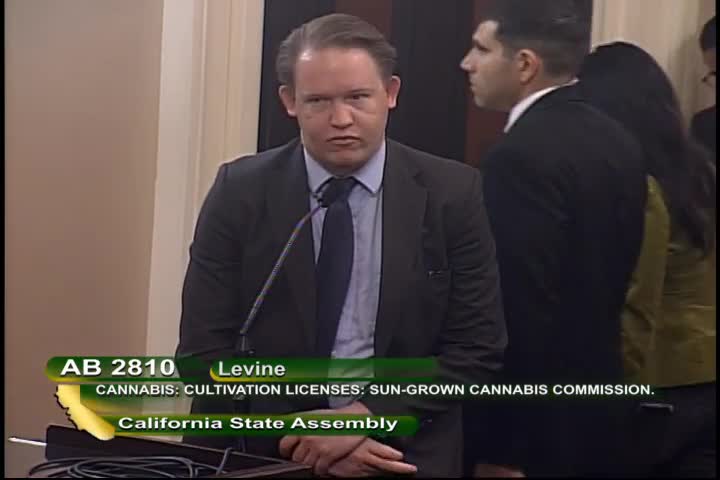 24MIN
Assembly Standing Committee on Agriculture



Bill Co-Author(s):
