AB 3034: Public transit employer-employee relations: San Francisco Bay Area Rapid Transit District.
- Session Year: 2017-2018
- House: Assembly
- Latest Version Date: 2018-09-05
(1)Existing law contains provisions relating to employer-employee relations between the state and its employees, public schools and their employees, local public agencies and their employees, and postsecondary educational institutions and their employees. The Meyers-Milias-Brown Act, in this regard, generally governs employer-employee relations between local public agencies and their employees. Existing laws provide these public employees with the right to form, join, and participate in the activities of employee organizations for the purpose of representation on all matters of employer-employee relations. The selected employee organization has the right to represent its members on all matters of employer-employee relations, including disputes.
Existing law also prescribes the powers and duties of public transit districts, including administering employer-employee relations. The courts have held that the Meyers-Milias-Brown Act, pertaining to employer-employee relations between local public agencies and their employees, does not apply to public transit districts that have a statutorily prescribed method of administering employer-employee relations that was in existence at the time the Meyers-Milias-Brown Act was enacted.
This bill would give employees within the supervisory units of the San Francisco Bay Area Rapid Transit District the right to form, join, and participate in the activities of employee organizations of their own choosing for the purposes of representation on all employer-employee relations matters and would permit these employees to meet, confer, and enter into memoranda of understanding for these purposes pursuant to the Meyers-Milias-Brown Act. The bill would provide that the act governs these employer-employee relations and that they are subject to the exclusive jurisdiction of, and are to be administered by, the Public Employment Relations Board.
By increasing the duties of local public transit officials, the bill would create a state-mandated local program.
(2)The California Constitution requires the state to reimburse local agencies and school districts for certain costs mandated by the state. Statutory provisions establish procedures for making that reimbursement.
This bill would provide that, if the Commission on State Mandates determines that the bill contains costs mandated by the state, reimbursement for those costs shall be made pursuant to the statutory provisions noted above.
Existing law requires specified records to be maintained with respect to public work and public purchases. Existing law makes those provisions inapplicable to maintenance work, work occasioned by emergency, and work costing less than $15,000.This bill would make a nonsubstantive change to this provision.Existing law requires specified records to be maintained with respect to public work and public purchases. Existing law makes those provisions inapplicable to maintenance work, work occasioned by emergency, and work costing less than $15,000.
This bill would make a nonsubstantive change to this provision.
(a)For employees within the supervisory units, including, without limitation, supervisory, professional, and technical employees, of the San Francisco Bay Area Rapid Transit District covered under this chapter, employer-employee relations shall be governed under the Meyers-Milias-Brown Act (Chapter 10 (commencing with Section 3500) of Division 4 of Title 1 of the Government Code).
(b)Employer-employee relations governed under the Meyers-Milias-Brown Act shall be subject to the exclusive jurisdiction of, and shall be administered by, the Public Employment Relations Board, established pursuant to Section 3541 of the Government Code.
SEC. 2.If the Commission on State Mandates determines that this act contains costs mandated by the state, reimbursement to local agencies and school districts for those costs shall be made pursuant to Part 7 (commencing with Section 17500) of Division 4 of Title 2 of the Government Code.
SECTION 1.Section 4000 of the Government Code is amended to read:4000.This chapter does not apply to maintenance work, work occasioned by emergency, and work that costs less than fifteen thousand dollars ($15,000).This chapter does not apply to maintenance work, work occasioned by emergency, and work costing that costs less than fifteen thousand dollars ($15,000).
|
Date
|
Status
|
|---|---|
| Sep 28, 2018 | Vetoed by Governor. |
| Sep 12, 2018 | Enrolled and presented to the Governor at 12 p.m. |
| Aug 31, 2018 | In Assembly. Ordered to Engrossing and Enrolling. |
| Aug 31, 2018 | Read third time. Passed. Ordered to the Assembly. |
| Aug 17, 2018 | From committee: Do pass. (Ayes 5. Noes 2.) (August 16). |
| Aug 6, 2018 | In committee: Referred to APPR. suspense file. |
| Jun 26, 2018 | From committee: Do pass and re-refer to Com. on APPR. (Ayes 3. Noes 2.) (June 25). Re-referred to Com. on APPR. |
| May 30, 2018 | Referred to Com. on P.E. & R. |
| May 10, 2018 | In Senate. Read first time. To Com. on RLS. for assignment. |
| May 10, 2018 | Read third time. Passed. Ordered to the Senate. |
| May 3, 2018 | Read second time. Ordered to third reading. |
| May 2, 2018 | From committee: Do pass. (Ayes 12. Noes 5.) (May 2). |
| Apr 18, 2018 | From committee: Do pass and re-refer to Com. on APPR. (Ayes 5. Noes 1.) (April 18). Re-referred to Com. on APPR. |
| Apr 2, 2018 | Re-referred to Com. on P.E., R., & S.S. |
| Mar 23, 2018 | From committee chair, with author's amendments: Amend, and re-refer to Com. on P.E., R., & S.S. Read second time and amended. |
| Mar 22, 2018 | Referred to Com. on P.E., R., & S.S. |
| Feb 17, 2018 | From printer. May be heard in committee March 19. |
| Feb 16, 2018 | Read first time. To print. |
|
Date
|
Description
|
Location
|
Votes
|
|
|---|---|---|---|---|
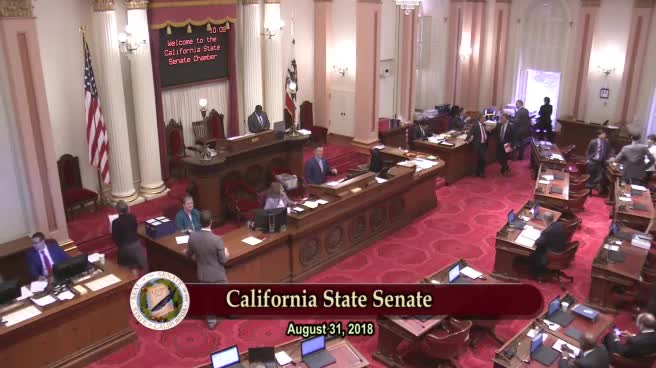
| Aug 31, 2018 | Assembly 3rd Reading AB3034 Low By Pan | Senate Floor |
Passed |
|
| Aug 16, 2018 | Do pass | Senate Standing Committee on Appropriations |
Passed |
|
| Aug 6, 2018 | Placed on suspense file | Senate Standing Committee on Appropriations |
Passed |
|
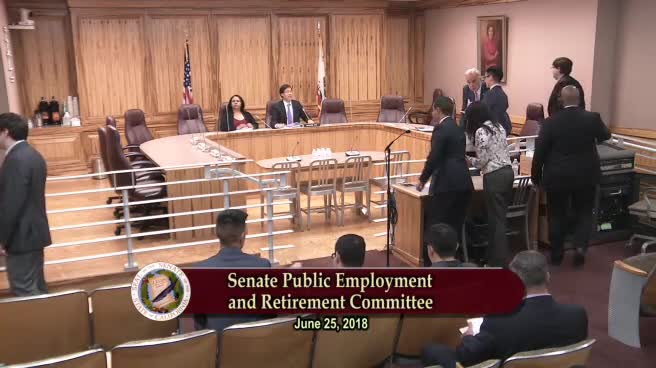
| Jun 25, 2018 | Do pass, but first be re-referred to the Committee on [Appropriations] | Senate Standing Committee on Public Employment and Retirement |
Passed |
|
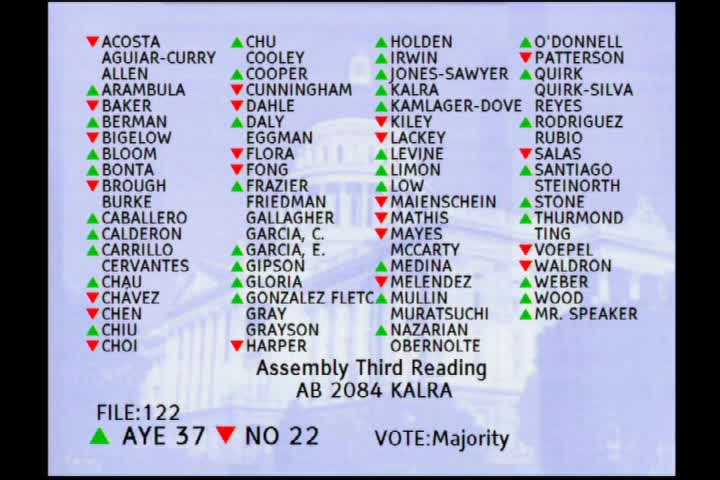
| May 10, 2018 | AB 3034 LOW Assembly Third Reading | Assembly Floor |
Passed |
|
| May 10, 2018 | AB 3034 LOW Assembly Third Reading Amend By BAKER Set #2 Motion to Lay on the Table By CALDERON | Assembly Floor |
Passed |
|
| May 10, 2018 | AB 3034 LOW Assembly Third Reading Amend By BAKER Set #1 Motion to Lay on the Table By CALDERON | Assembly Floor |
Passed |
|
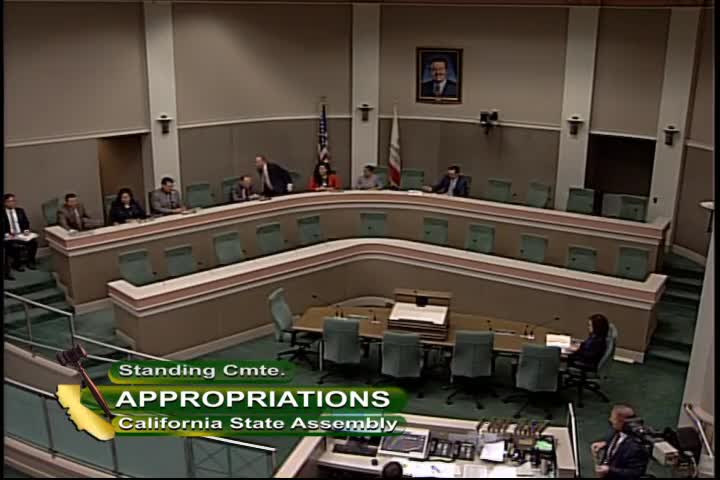
| May 2, 2018 | Do pass. | Assembly Standing Committee on Appropriations |
Passed |
|
| Apr 18, 2018 | Do pass and be re-referred to the Committee on [Appropriations] | Assembly Standing Committee on Public Employees, Retirement, and Social Security |
Passed |
This list shows positions taken on this bill by organizations on the date displayed, which is linked to the original source.
Positions by individuals are not included.
GOVERNOR'S VETO
GV Bill Id:AB 3034
Author:(Low)
As Enrolled Ver:September 12, 2018
2/3 vote
Committee | Votes | Ayes | Noes |
Public Employees | 5-1 | Rodriguez, Cervantes, Cooley, Cooper, O'Donnell | Brough |
Appropriations | 12-5 | Gonzalez Fletcher, Bloom, Bonta, Calderon, Carrillo, Chau, Eggman, Friedman, Eduardo Garcia, Nazarian, Quirk, Reyes | Bigelow, Brough, Fong, Gallagher, Obernolte |
ASSEMBLY: | 50-23 | (May 10, 2018) | SENATE: | 22-13 | (August 31, 2018) |
Original Committee Reference: P.E.,R., & S.S.
SUMMARY: Amends the Public Utilities Code (PUC) by placing supervisory, professional, and technical employee units of the San Francisco Bay Area Rapid Transit District (BART) under the Meyers-Milias-Brown Act (MMBA); thereby, granting them certain statutory rights related to the employer-employee relationship, and bringing them under the jurisdiction of the Public Employment Relations Board (PERB).
EXISTING LAW:
- Governs collective bargaining in the private sector under the federal National Relations Labor Relations Act (NLRA) but leaves it to the states to regulate collective bargaining in their respective public sectors.
While the NLRA and the decisions of its National Labor Relations Board often provide persuasive precedent in interpreting state collective bargaining law, public employees have no collective bargaining rights absent specific statutory authority establishing those rights.
- Provides several statutory frameworks under California law to provide public employees collective bargaining rights, govern public employer-employee relations, and limit labor strife and economic disruption in the public sector through a reasonable method of resolving disputes regarding wages, hours and other terms and conditions of employment between public employers and recognized public employee organizations or their exclusive representatives. These include the MMBA which provides for public employer-employee relations between local government employers and their employees.
- Establishes the PERB, a quasi-judicial administrative agency charged with administering certain statutory frameworks governing employer-employee relations, resolving disputes, and enforcing the statutory duties and rights of public agency employers and employee organizations, but provides the City and County of Los Angeles a local alternative to PERB oversight.
- Does not cover California's public transit districts by a common collective bargaining statute. Instead, while some transit agencies are subject to the MMBA, the majority of transit agencies are subject to labor relations provisions that are found in each district's specific PUC enabling statute, in joint powers agreements, or in articles of incorporation and bylaws.
These provisions provide employees with basic rights to organization and representation, but do not define or prohibit unfair labor practices. Unlike other California public agencies and employees, these transit agencies and their employees have no recourse to the PERB. Instead, they must rely upon the courts to remedy any alleged violations. Additionally, they may be subject to provisions of the federal Labor Management Relations Act of 1947 and the 1964 Urban Mass Transit Act (now known as the Federal Transit Act).
- Establishes, pursuant to the PUC Sections 28500 et seq., the San Francisco BART Act. This act, pursuant to Sections 28850 through 28855 provides labor provisions for BART. These provisions provide for representation by a labor organization; unit determination; collective bargaining; personnel; and, provisions relating to retirement benefits. The act also defines “San Francisco Bay area” to mean the Counties of San Francisco, Marin, Sonoma, Napa, Solano, Contra Costa, Alameda, Santa Clara, and San Mateo.
FISCAL EFFECT: According to the Senate Appropriations Committee, the PERB indicates that it would incur annual General Fund costs of $42,000 to implement the provisions of the bill. In addition, by requiring BART to represent itself before PERB, this bill creates a state-mandated local program. To the extent the Commission on State Mandates determines that the provisions of this bill create a new program or impose a higher level of service on local agencies, local agencies could claim reimbursement of those costs (General Fund). The annual magnitude of these claims would likely be in the hundreds of thousands of dollars annually.
COMMENTS: According to the author, “[t]his bill will help BART and its supervisory unit resolve unfair labor practice disputes through the guidance of an established, comprehensive labor relations statute and a neutral administrative agency. As the Assembly Committee on Public Employees, Retirement, and Social Security notes in its analysis, this bill does not establish a new collective bargaining framework for these employees. Rather, it places these employees who are currently required to seek resolution in court, under coverage of MMBA and the jurisdiction of PERB.”
GOVERNOR'S VETO MESSAGE:
Over the years, the Legislature has expanded the Board's jurisdiction, but the necessary funding for the increased workload has not kept pace. This has resulted in significant backlogs at the Board - both labor and employers have complained about this problem. This Administration has recently increased the Board's funding to help correct this problem. The Board's jurisdiction should not be expanded again until the Board's ability to handle its previously expanded caseload is established.
Analysis Prepared by: Michael Bolden / P.E.,R., & S.S. / (916) 319-3957 FN: 0005299
Office of Senate Floor Analyses (916) 651-1520 Fax: (916) 327-4478 | AB |
THIRD READING
Bill No: AB 3034
:
SENATE PUBLIC EMP. & RET. COMMITTEE: 3-2, 6/25/18
AYES: Pan, Leyva, Portantino
NOES: Morrell, Moorlach
SENATE APPROPRIATIONS COMMITTEE: 5-2, 8/16/18
AYES: Portantino, Beall, Bradford, Hill, Wiener
NOES: Bates, Nielsen
ASSEMBLY FLOOR: 50-23, 5/10/18 - See last page for vote
DIGEST:
This bill requires that employer-employee relations for San Francisco Bay Area Rapid Transit District (BART) supervisory employees, as specified, be governed under the Meyers-Milias-Brown Act (MMBA) and disputes regarding those relations be resolved through the Public Employment Retirement Board (PERB).
ANALYSIS:
Existing law:
- Governs collective bargaining in the private sector under the federal National Relations Labor Relations Act (NLRA) but leaves it to the states to regulate collective bargaining in their respective public sectors.
- Provides that while the NLRA and the decisions of its National Labor Relations Board (NLRB) often provide persuasive precedent in interpreting state collective bargaining law, public employees have no collective bargaining rights absent specific statutory authority establishing those rights.
- Provides several statutory frameworks under California law to provide public employees collective bargaining rights, govern public employer-employee relations, and limit labor strife and economic disruption in the public sector through a reasonable method of resolving disputes regarding wages, hours and other terms and conditions of employment between public employers and recognized public employee organizations or their exclusive representatives, including the MMBA which provides for public employer-employee relations between local government employers and their employees.
- Establishes PERB, a quasi-judicial administrative agency charged with administering certain statutory frameworks governing employer-employee relations, resolving disputes, and enforcing the statutory duties and rights of public agency employers and employee organizations, but provides the City and County of Los Angeles local alternatives to PERB oversight.
- Does not cover California's public transit districts by a common collective bargaining statute. Instead, while some transit agencies are subject to the MMBA, the majority of transit agencies are subject to labor relations provisions that are found in each district's specific Public Utilities Code (PUC) enabling statute, in joint powers agreements, or in articles of incorporation and bylaws.
- Provides that these provisions provide employees with basic rights to organization and representation, but do not define or prohibit unfair labor practices. Unlike other California public agencies and employees, these transit agencies and their employees have no recourse to PERB. Instead, they must rely upon the courts to remedy any alleged violations. Additionally, they may be subject to provisions of the federal Labor Management Relations Act of 1947 and the 1964 Urban Mass Transit Act (now known as the Federal Transit Act).
- Establishes, pursuant to PUC Sections 28500 et seq, the San Francisco BART Act. This act, pursuant to Sections 28850 through 28855 provides labor relations provisions for BART. These provisions provide for representation by a labor organization; unit determination; collective bargaining; personnel; and, provisions relating to retirement benefits. The act also defines “San Francisco Bay Area” to mean the Counties of San Francisco, Marin, Sonoma, Napa, Solano, Contra Costa, Alameda, Santa Clara, and San Mateo.
This bill:
- Requires employer-employee relations between BART and BART employees within the supervisory units, including, without limitation, supervisory, professional, and technical employees to be governed under the MMBA.
- Provides that BART employer-employee relations governed under the MMBA shall be subject to the exclusive jurisdiction of, and shall be administered by, PERB.
- States that if the Commission on State Mandates determines that this act contains costs mandated by the state, reimbursement to local agencies and school districts for those costs shall be made pursuant to Part 7 (commencing with Section 17500) of Division 4 of Title 2 of the Government Code.
Background
Many public transit districts have historical antecedents as private sector companies that were taken over by public agencies in the post - World War II period during company consolidation as the private sector withdrew from mass transit. Federal legislation linked transportation project funding to the preservation of transit district employees’ collective bargaining rights at a time when public sector employees had not yet attained collective bargaining. Consequently, transit district employees often enjoyed collective bargaining protections earlier than other state and local public employees. When the state authorized collective bargaining for state and local public employees through various labor relations statutes, many transit districts already were governed by collective bargaining arrangements and were not included in the new labor relations statutes.
Those districts retain the traditional method of resolving labor disputes through litigation in the court system whereas the statutory frameworks for most public sector labor relations regimes now provide for disputes to be resolved by PERB, through its expertise in public labor law and its emphasis on cooperation and labor peace in the public sector. This bill seeks to bring a portion of BART’s work force within the purview of the MMBA and consequently, have any labor disputes between the agency and the covered employees adjudicated by PERB.
Related/Prior Legislation
AB 2886 (Daly, 2018), currently on the Senate Floor, transfers jurisdiction over the adjudication of unfair labor practices for the Orange County Transportation Authority and San Joaquin Regional Transit District from the judicial system to PERB with respect to unfair labor practice charges.
AB 2305 (Rodriguez, 2018), currently on the Senate Floor, expands the jurisdiction of PERB, as specified, related to peace office employee organizations.
AB 530 (Cooper, 2017) would have expanded the jurisdiction of PERB to include specified peace officers. The bill was vetoed by the Governor with the following message.
This bill authorizes peace officers to bring unfair practice charges to the Public Employment Relations Board while preserving their existing right to directly petition a superior court for injunctive relief.
No other group has both of these rights and I'm unconvinced that providing such a unique procedure is warranted.
FISCAL EFFECT: Appropriation: Fiscal Com.: Local:
According to the Senate Appropriations Committee:
- PERB indicates that it would incur annual General Fund costs of $42,000 to implement the provisions of this bill.
- In addition, by requiring BART to represent itself before PERB, this bill creates a state-mandated local program. To the extent the Commission on State Mandates determines that the provisions of this bill create a new program or impose a higher level of service on local agencies, local agencies could claim reimbursement of those costs (General Fund). The annual magnitude of these claims would likely be in the hundreds of thousands of dollars annually.
AFSCME, AFL-CIO (source)
AFSCME, Local 3993
OPPOSITION: (Verified 8/17/18)
California Transit Association
East Bay Leadership Council
San Francisco Bay Area Rapid Transit District
ARGUMENTS IN SUPPORT: According to AFSCME, AFL-CIO:
Under existing law, to enforce an unfair labor practice (ULP), a BART union must file a writ in superior court seeking BART to carry out its mandatory duty to act in good faith. This is time-consuming, costly and means that the labor issue may be adjudicated by a judge who may not have sufficient expertise in labor law. Because of these difficulties, enforcement is rare. Similarly, representation disputes at BART are subject to procedures that are archaic, riddled with ambiguity and thus, rarely invoked.
The end result is that many unresolved ULP and representation disputes are left to fester, increasing animosity and unrest during times when the parties should be resolving disputes and building better relations. This bill would encourage labor peace simply by providing both parties access to existing, tried and true resolution processes so that contract bargaining could begin on solid, stable footing.
ARGUMENTS IN OPPOSITION: According to BART:
For one bargaining unit of approximately 275 employees, AB 3034 would require BART to operate under the MMBA for mid-contract disputes and potentially both the BART Act and MMBA during future contract negotiations.
Under AB 3034, BART would lose the ability to resolve issues locally if either side declares an impasse and the issue moves to fact finding and adjudication before PERB. If an impasse is related to a new essential project, such as the retrofit of the Transbay Tube or installation of the next generation of train control equipment, progress and delivery of the final project could be delayed until the PERB process concludes.
Court rulings result in immediate enforcement and carry contempt proceedings to enforce a judge’s decision. It is unclear how AB 3034 is any more advantageous or cost effective than current processes under existing law or BART’s labor agreements.
ASSEMBLY FLOOR: 50-23, 5/10/18
AYES: Aguiar-Curry, Arambula, Berman, Bloom, Bonta, Burke, Caballero, Calderon, Carrillo, Cervantes, Chau, Chiu, Chu, Cooper, Daly, Eggman, Frazier, Eduardo Garcia, Gipson, Gloria, Gonzalez Fletcher, Gray, Grayson, Holden, Irwin, Jones-Sawyer, Kalra, Kamlager-Dove, Levine, Limón, Low, McCarty, Medina, Mullin, Muratsuchi, Nazarian, O'Donnell, Quirk, Quirk-Silva, Reyes, Rodriguez, Rubio, Salas, Santiago, Mark Stone, Thurmond, Ting, Weber, Wood, Rendon
NOES: Acosta, Baker, Bigelow, Brough, Chávez, Chen, Choi, Cunningham, Dahle, Flora, Fong, Gallagher, Harper, Kiley, Lackey, Maienschein, Mathis, Mayes, Melendez, Patterson, Steinorth, Voepel, Waldron
NO VOTE RECORDED: Travis Allen, Cooley, Friedman, Cristina Garcia, Obernolte
8/18/18 13:41:57
**** END ****
SENATE COMMITTEE ON APPROPRIATIONS
Senator Anthony Portantino, Chair
2017 - 2018 Regular Session
AB 3034 (Low) - Public transit employer-employee relations: San Francisco Bay Area Rapid Transit District
Version: March 23, 2018 | Policy Vote: P.E. & R. 3 - 2 |
Urgency: No | Mandate: Yes |
Hearing Date: August 6, 2018 | Consultant: Robert Ingenito |
This bill meets the criteria for referral to the Suspense File.
Bill Summary:
AB 3034 would require that (1) employer-employee relations for San Francisco Bay Area Rapid Transit District (BART) supervisory employees, as specified, be governed under the Meyers-Milias-Brown Act (MMBA), and (2) disputes regarding those relations be resolved through the Public Employment Retirement Board (PERB).
Fiscal Impact:
- PERB indicates that it would incur annual General Fund costs of $42,000 to implement the provisions of the bill.
- In addition, by requiring BART to represent itself before PERB, this bill creates a state-mandated local program. To the extent the Commission on State Mandates determines that the provisions of this bill create a new program or impose a higher level of service on local agencies, local agencies could claim reimbursement of those costs (General Fund). The annual magnitude of these claims would likely be in the hundreds of thousands of dollars annually.
Background:
PERB is a quasi-judicial agency that oversees public sector collective bargaining in the State. Its major functions involve the evaluation and adjudication of unfair practice charges filed, and the administration of the collective bargaining process through which employees select organizations to represent them in their labor relations with their employer.
Covered employees may file an unfair practice charge with PERB within six months of the alleged unfair practice. Once the charge has been properly filed, a Board agent reviews it to determine if a complaint should be issued, or dismisses it if there is insufficient factual evidence. A dismissal may be appealed. If a complaint is filed, the case proceeds to an informal settlement conference, or may proceed to a formal hearing conducted by an administrative law judge if no settlement can be reached.
Public transit districts in many cases have historical antecedents as private sector companies that were taken over by public agencies following World War II. Federal legislation linked transportation project funding to the preservation of transit district employees’ collective bargaining rights at a time when public sector employees had not yet attained collective bargaining. Consequently, transit district employees often enjoyed collective bargaining protections earlier than other state and local public employees. When the State authorized collective bargaining for state and local public employees through various labor relations statutes, many transit districts already were governed by collective bargaining arrangements and were not included in the new labor relations statutes. Those districts retain the traditional method of resolving labor disputes through litigation in the court system. In contrast, the statutory frameworks for most public sector labor relations regimes now provide for disputes to be resolved by PERB.
Proposed Law:
This bill would (1) require employer-employee relations between BART and BART employees within the supervisory units, including, without limitation, supervisory, professional, and technical employees to be governed under the MMBA, and (2) provide that BART employer-employee relations governed under the MMBA shall be subject to the exclusive jurisdiction of, and shall be administered by, PERB.
Related Legislation:
- AB 2886 (Daly) would transfer jurisdiction over the adjudication of unfair labor practices for the Orange County Transportation Authority and San Joaquin Regional Transit District from the judicial system to PERB with respect to unfair labor practice charges. The bill is currently pending in this Committee.
- AB 2305 (Rodriguez) would expand the jurisdiction of PERB, as specified, related to peace office employee organizations. The bill is currently pending before this Committee.
- AB 530 (Cooper, 2017), would have expanded the jurisdiction of PERB to include specified peace officers. The bill was vetoed by the Governor.
Staff Comments:
This bill would bring a portion of BART’s work force within the purview of the MMBA. Consequently, any labor disputes between BART and the covered employees would be adjudicated by PERB. As noted previously, costs incurred by BART to represent itself before PERB may impose a reimbursable mandate. BART estimates that its administrative cost would be $9,500 for each dispute referred to PERB; as an example, BART indicates that roughly a dozen current labor disputes could be under PERB’s jurisdiction as a result of the bill. Additionally, BART indicates that, to negotiate a new process under the MMBA, it would require the employment of technical experts and outside counsel for a one-time cost of $200,000. To manage the process and interface with PERB, BART would need two positions at an annual cost of $400,000.
PERB anticipates that the bill could generate under 10 unfair practice charges per year, at a total annual cost of $41,600. To the extent that BART employees were to use utilize the option of bringing labor disputes before PERB more frequently than assumed, costs to both PERB and BART could be higher.
-- END --
SENATE COMMITTEE ON
PUBLIC EMPLOYMENT AND RETIREMENT
Dr. Richard Pan, Chair
2017 - 2018 Regular
Bill No: AB 3034 Hearing Date: 6/25/18
Author: | Low | ||
Version: | 3/23/18 As amended | ||
Urgency: | No | Fiscal: | Yes |
Consultant: | Glenn Miles | ||
Subject: Public transit employer-employee relations: San Francisco Bay Area Rapid Transit District.
SOURCE: American Federation of State, County and Municipal Employees,
AFL-CIO
ASSEMBLY VOTES:
Assembly Floor: | 50 - 23 |
Assembly Appropriations Committee: | 12 - 5 |
Assembly Public Employees, Retirement, and Social Security Committee: | 5 - 1 |
DIGEST: This bill would require that employer-employee relations for San Francisco Bay Area Rapid Transit District (BART) supervisory employees, as specified, be governed under the Meyers-Milias-Brown Act (MMBA) and disputes regarding those relations be resolved through the Public Employment Retirement Board (PERB).
ANALYSIS:
Existing law:
- Governs collective bargaining in the private sector under the federal National Relations Labor Relations Act (NLRA) but leaves it to the states to regulate collective bargaining in their respective public sectors.
- While the NLRA and the decisions of its National Labor Relations Board (NLRB) often provide persuasive precedent in interpreting state collective bargaining law, public employees have no collective bargaining rights absent specific statutory authority establishing those rights.
- Provides several statutory frameworks under California law to provide public employees collective bargaining rights, govern public employer-employee relations, and limit labor strife and economic disruption in the public sector through a reasonable method of resolving disputes regarding wages, hours and other terms and conditions of employment between public employers and recognized public employee organizations or their exclusive representatives, including the MMBA which provides for public employer-employee relations between local government employers and their employees.
- Establishes PERB, a quasi-judicial administrative agency charged with administering certain statutory frameworks governing employer-employee relations, resolving disputes, and enforcing the statutory duties and rights of public agency employers and employee organizations, but provides the City and County of Los Angeles local alternatives to PERB oversight.
- Does not cover California's public transit districts by a common collective bargaining statute. Instead, while some transit agencies are subject to the MMBA, the majority of transit agencies are subject to labor relations provisions that are found in each district's specific Public Utilities Code (PUC) enabling statute, in joint powers agreements, or in articles of incorporation and bylaws.
- These provisions provide employees with basic rights to organization and representation, but do not define or prohibit unfair labor practices. Unlike other California public agencies and employees, these transit agencies and their employees have no recourse to PERB. Instead, they must rely upon the courts to remedy any alleged violations. Additionally, they may be subject to provisions of the federal Labor Management Relations Act of 1947 and the 1964 Urban Mass Transit Act (now known as the Federal Transit Act).
- Establishes, pursuant to PUC Sections 28500 et seq, the San Francisco BART Act. This act, pursuant to Sections 28850 through 28855 provides labor relations provisions for BART. These provisions provide for representation by a labor organization; unit determination; collective bargaining; personnel; and, provisions relating to retirement benefits. The act also defines “San Francisco Bay Area” to mean the Counties of San Francisco, Marin, Sonoma, Napa, Solano, Contra Costa, Alameda, Santa Clara, and San Mateo.
This bill:
- Requires employer-employee relations between BART and BART employees within the supervisory units, including, without limitation, supervisory, professional, and technical employees to be governed under the MMBA.
- Provides that BART employer-employee relations governed under the MMBA shall be subject to the exclusive jurisdiction of, and shall be administered by, PERB.
- States that if the Commission on State Mandates determines that this act contains costs mandated by the state, reimbursement to local agencies and school districts for those costs shall be made pursuant to Part 7 (commencing with Section 17500) of Division 4 of Title 2 of the Government Code.
Background
Many public transit districts have historical antecedents as private sector companies that were taken over by public agencies in the post - World War II period during company consolidation as the private sector withdrew from mass transit. Federal legislation linked transportation project funding to the preservation of transit district employees’ collective bargaining rights at a time when public sector employees had not yet attained collective bargaining. Consequently, transit district employees often enjoyed collective bargaining protections earlier than other state and local public employees. When the state authorized collective bargaining for state and local public employees through various labor relations statutes, many transit districts already were governed by collective bargaining arrangements and were not included in the new labor relations statutes.
Those districts retain the traditional method of resolving labor disputes through litigation in the court system whereas the statutory frameworks for most public sector labor relations regimes now provide for disputes to be resolved by PERB, through its expertise in public labor law and its emphasis on cooperation and labor peace in the public sector. This bill seeks to bring a portion of BART’s work force within the purview of the MMBA and consequently, have any labor disputes between the agency and the covered employees adjudicated by PERB.
Related/Prior Legislation
AB 2886 (Daly, 2018), currently in Senate Judiciary Committee, would transfer jurisdiction over the adjudication of unfair labor practices for the Orange County Transportation Authority and San Joaquin Regional Transit District from the judicial system to PERB with respect to unfair labor practice charges.
AB 2305 (Rodriguez, 2018), currently in Senate Public Employment and Retirement Committee, would expand the jurisdiction of PERB, as specified, related to peace office employee organizations.
AB 530 (Cooper, 2017), would have expanded the jurisdiction of PERB to include specified peace officers. Vetoed by the Governor.
I am returning Assembly Bill 530 without my signature.
This bill authorizes peace officers to bring unfair practice charges to the Public Employment Relations Board while preserving their existing right to directly petition a superior court for injunctive relief.
No other group has both of these rights and I'm unconvinced that providing such a unique procedure is warranted.
Sincerely,
Edmund G. Brown Jr
FISCAL EFFECT: Appropriation: No Fiscal Com.: Yes Local: Yes
According to Assembly Appropriations Committee,
- Modest annual General Fund costs to PERB in the range of $40,000 as a result of additional new disputes subject to the jurisdiction of PERB. The number of new disputes each year is expected to be minor.
- Potentially reimbursable costs to BART to the extent that placing employees under MMBA imposes new requirements for the local agency. It is unlikely these costs will be significant.
SUPPORT:
American Federation of State, County and Municipal Employees, AFL-CIO
(source)
American Federation of State, County and Municipal Employees, Local 3993
OPPOSITION:
California Transit Association
San Francisco Bay Area Rapid Transit District
ARGUMENTS IN SUPPORT: According to the Sponsor,
Under existing law, to enforce an unfair labor practice (ULP), a BART union must file a writ in superior court seeking BART to carry out its mandatory duty to act in good faith. This is time-consuming, costly and means that the labor issue may be adjudicated by a judge who may not have sufficient expertise in labor law. Because of these difficulties, enforcement is rare. Similarly, representation disputes at BART are subject to procedures that are archaic, riddled with ambiguity and thus, rarely invoked.
The end result is that many unresolved ULP and representation disputes are left to fester, increasing animosity and unrest during times when the parties should be resolving disputes and building better relations. This bill would encourage labor peace simply by providing both parties access to existing, tried and true resolution processes so that contract bargaining could begin on solid, stable footing.
ARGUMENTS IN OPPOSITION: According to BART,
For one bargaining unit of approximately 275 employees, AB 3034 would require BART to operate under the MMBA for mid-contract disputes and potentially both the BART Act and MMBA during future contract negotiations.
Under AB 3034, BART would lose the ability to resolve issues locally if either side declares an impasse and the issue moves to fact finding and adjudication before PERB. If an impasse is related to a new essential project, such as the retrofit of the Transbay Tube or installation of the next generation of train control equipment, progress and delivery of the final project could be delayed until the PERB process concludes.
Court rulings result in immediate enforcement and carry contempt proceedings to enforce a judge’s decision. It is unclear how AB 3034 is any more advantageous or cost effective than current processes under existing law or BART’s labor agreements.
ASSEMBLY THIRD READING
ATR Bill Id:AB 3034
Author:(Low)
As Amended Ver:March 23, 2018
Majority vote
Committee | Votes | Ayes | Noes |
Public Employees | 5-1 | Rodriguez, Cervantes, Cooley, Cooper, O'Donnell | Brough |
Appropriations | 12-5 | Gonzalez Fletcher, Bloom, Bonta, Calderon, Carrillo, Chau, Eggman, Friedman, Eduardo Garcia, Nazarian, Quirk, Reyes | Bigelow, Brough, Fong, Gallagher, Obernolte |
SUMMARY: Amends the Public Utilities Code (PUC) by placing supervisory, professional, and technical employee units of the San Francisco Bay Area Rapid Transit District (BART) under the Meyers-Milias-Brown Act (MMBA); thereby granting them certain statutory rights related to the employer-employee relationship, and bringing them under the jurisdiction of the Public Employment Relations Board (PERB).
EXISTING LAW:
- Governs collective bargaining in the private sector under the federal National Relations Labor Relations Act (NLRA) but leaves it to the states to regulate collective bargaining in their respective public sectors.
While the NLRA and the decisions of its National Labor Relations Board often provide persuasive precedent in interpreting state collective bargaining law, public employees have no collective bargaining rights absent specific statutory authority establishing those rights.
- Provides several statutory frameworks under California law to provide public employees collective bargaining rights, govern public employer-employee relations, and limit labor strife and economic disruption in the public sector through a reasonable method of resolving disputes regarding wages, hours and other terms and conditions of employment between public employers and recognized public employee organizations or their exclusive representatives. These include the MMBA which provides for public employer-employee relations between local government employers and their employees.
- Establishes the PERB, a quasi-judicial administrative agency charged with administering certain statutory frameworks governing employer-employee relations, resolving disputes, and enforcing the statutory duties and rights of public agency employers and employee organizations, but provides the City and County of Los Angeles a local alternative to PERB oversight.
- Does not cover California's public transit districts by a common collective bargaining statute. Instead, while some transit agencies are subject to the MMBA, the majority of transit agencies are subject to labor relations provisions that are found in each district's specific PUC enabling statute, in joint powers agreements, or in articles of incorporation and bylaws.
These provisions provide employees with basic rights to organization and representation, but do not define or prohibit unfair labor practices. Unlike other California public agencies and employees, these transit agencies and their employees have no recourse to the PERB. Instead, they must rely upon the courts to remedy any alleged violations. Additionally, they may be subject to provisions of the federal Labor Management Relations Act of 1947 and the 1964 Urban Mass Transit Act (now known as the Federal Transit Act).
- Establishes, pursuant to the PUC Sections 28500 et seq, the San Francisco BART Act. This act, pursuant to Sections 28850 through 28855 provides labor provisions for BART. These provisions provide for representation by a labor organization; unit determination; collective bargaining; personnel; and, provisions relating to retirement benefits. The act also defines “San Francisco Bay area” to mean the Counties of San Francisco, Marin, Sonoma, Napa, Solano, Contra Costa, Alameda, Santa Clara, and San Mateo.
FISCAL EFFECT: According to the Assembly Appropriations Committee, this bill would result in modest General Fund costs to the PERB in the range of $40,000 as a result of additional new disputes subject to the board's jurisdiction. The number of new disputes each year is expected to be minor. In addition, the bill would result in potentially reimbursable costs to BART to the extent that placing employers under the MMBA imposes new requirements for the local agency. It is unlikely that these costs will be significant.
COMMENTS: According to the author, this bill will help BART and its supervisory unit resolve unfair labor practice disputes through the guidance of an established, comprehensive labor relations statute and a neutral administrative agency. As the Assembly Committee on Public Employees, Retirement, and Social Security notes in its analysis this bill does not establish a new collective bargaining framework for these employees. Rather, it places these employees, who are currently required to seek resolution in court, under coverage of MMBA and the jurisdiction of PERB.
Analysis Prepared by: Michael Bolden / P.E.,R., & S.S. / (916) 319-3957 FN: 0002783
Date of Hearing: May 2, 2018
ASSEMBLY COMMITTEE ON APPROPRIATIONS
Lorena Gonzalez Fletcher, Chair
ABPCA Bill Id:AB 3034
Author:(Low) – As Amended Ver:March 23, 2018
Policy Committee: | Public Employees, Retirement, and Social Security | Vote: | 5 - 1 |
Urgency: No State Mandated Local Program: Yes Reimbursable: Yes
SUMMARY:
This bill places supervisory, professional, and technical employee units of the San Francisco Bay Area Rapid Transit (BART) District under the Meyer-Milias-Brown Act (MMBA) and brings them under the jurisdiction of the Public Employment Relations Board (PERB).
FISCAL EFFECT:
- Modest annual General Fund costs to PERB in the range of $40,000 as a result of additional new disputes subject to the jurisdiction of PERB. The number of new disputes each year is expected to be minor.
- Potentially reimbursable costs to BART to the extent that placing employees under MMBA imposes new requirements for the local agency. It is unlikely these costs will be significant.
COMMENTS:
- Purpose. According to the author, AB 3034 will help BART and its supervisory unit resolve unfair labor practice disputes through the guidance of an established, comprehensive labor relations statute and a neutral administrative agency. As the Assembly Committee on Public Employees, Retirement, and Social Security notes in its analysis, AB 3034 does not establish a new collective bargaining framework for these employees. Rather, it places these employees, who are currently required to seek resolution in court, under coverage of MMBA and the jurisdiction of PERB.
- PERB and case backlog. PERB oversees public sector collective bargaining in California. Its major functions involve the evaluation and adjudication of unfair practice charges and the administration of the collective bargaining process.
Over the years, PERB’s jurisdiction has expanded, resulting in a backlog of cases. In April 2017, PERB began a Case Processing Efficiency Initiative to improve and streamline internal processes. In February 2018, PERB released a report that listed possible efficiencies and administrative changes to prioritize and expedite cases.
- Related legislation. AB 3034 is one of three bills pending in this committee that expand PERB’s jurisdiction. AB 2886 (Daly) transfers jurisdiction over the adjudication of unfair labor practices for the Orange County Transportation Authority and the San Joaquin Regional Transition District from the judicial system to PERB. AB 2305 (Rodriguez) expands PERB’s jurisdiction to include to certain peace officer employee organization.
- Recent legislation. AB 530 (Cooper), of the 2017-18 Legislative Session, expands jurisdiction of PERB to include certain peace officers. AB 530 was vetoed by the governor because the existing rights of peace officers to directly petition a superior court for injunctive relief, a dual procedure not afforded to any other group.
Analysis Prepared by: Luke Reidenbach / APPR. / (916) 319-2081
Date of Hearing: April 18, 2018
ASSEMBLY COMMITTEE ON PUBLIC EMPLOYEES, RETIREMENT, AND SOCIAL SECURITY
Freddie Rodriguez, Chair
ABPCA Bill Id:AB 3034 (
Author:Low) – As Amended Ver:March 23, 2018
SUBJECT: Public transit employer-employee relations: San Francisco Bay Area Rapid Transit District
SUMMARY: Amends the Public Utilities Code (P.U.C.) by placing supervisory, professional, and technical employee units of the San Francisco Bay Area Rapid Transit District (BART) under the Meyers-Milias-Brown Act (MMBA); thereby granting them certain statutory rights related to the employer-employee relationship, and bringing them under the jurisdiction of the Public Employment Relations Board (PERB).
EXISTING LAW:
- Governs collective bargaining in the private sector under the federal National Relations Labor Relations Act (NLRA) but leaves it to the states to regulate collective bargaining in their respective public sectors.
While the NLRA and the decisions of its National Labor Relations Board often provide persuasive precedent in interpreting state collective bargaining law, public employees have no collective bargaining rights absent specific statutory authority establishing those rights.
2) Provides several statutory frameworks under California law to provide public employees collective bargaining rights, govern public employer-employee relations, and limit labor strife and economic disruption in the public sector through a reasonable method of resolving disputes regarding wages, hours and other terms and conditions of employment between public employers and recognized public employee organizations or their exclusive representatives. These include:
- The MMBA which provides for public employer-employee relations between local government employers and their employees.
- The Los Angeles County Metropolitan Transit Authority Transit (LAMTA) Employer-Employee Relations Act (TEERA) providing for public employer-employee relations between the employer and supervisory employees of the LAMTA.
2) Establishes the PERB, a quasi-judicial administrative agency charged with administering certain statutory frameworks governing employer-employee relations, resolving disputes, and enforcing the statutory duties and rights of public agency employers and employee organizations, but provides the City and County of Los Angeles a local alternative to PERB oversight.
3) Does not cover California’s public transit districts by a common collective bargaining statute. Instead, while some transit agencies are subject to the MMBA, the majority of transit agencies are subject to labor relations provisions that are found in each district’s specific P.U.C. enabling statute, in joint powers agreements, or in articles of incorporation and bylaws.
These provisions provide employees with basic rights to organization and representation, but do not define or prohibit unfair labor practices. Unlike other California public agencies and employees, these transit agencies and their employees have no recourse to the PERB. Instead, they must rely upon the courts to remedy any alleged violations. Additionally, they may be subject to provisions of the federal Labor Management Relations Act of 1947 and the 1964 Urban Mass Transit Act (now known as the Federal Transit Act).
4) Establishes, pursuant to Sections 28500 et seq. of the P.U.C., the San Francisco BART Act. This act, pursuant to Sections 28850 through 28855 provides labor provisions for BART. These provisions provide for representation by a labor organization; unit determination; collective bargaining; personnel; and, provisions relating to retirement benefits.
The act also defines “San Francisco Bay area” to mean the Counties of San Francisco, Marin, Sonoma, Napa, Solano, Contra Costa, Alameda, Santa Clara, and San Mateo.
FISCAL EFFECT: Unknown. This bill has been flagged fiscal by Legislative Counsel.
COMMENTS: According to the author, “Assembly Bill (AB) 3034 provides the guidance of an established, comprehensive labor relations statute – MMBA – and a neutral administrative agency – PERB – to aid BART and its supervisory unit in resolving unfair labor practice and representation labor relations disputes.”
1) Public Transit Districts: Jurisdictional Variation for Handling Alleged Workplace Violations
The courts have held that the MMBA does not apply to public transit districts that have a statutorily prescribed method of administering employer-employee relations that were in existence at the time the MMBA was enacted.
Existing law, pursuant to Chapter 833, Statutes of 2003 (AB 199, Oropeza), establishes the TEERA which governs employer-employee relations for supervisory employees of the transit LAMTA.
As stated under “Existing Law”, supra, with the exception of the TEERA and MMBA, existing law does not cover all public transit districts by common collective statute. For these transit districts, PERB is not the venue for recourse relating to alleged workplace violations. Instead, these transit districts must rely upon the courts for a remedy. However, although the TEERA is codified within the P.U.C., the employer-employee relationship for LAMTA supervisory employees is administered by, and within the jurisdiction of, the PERB to ensure harmonious labor relations, while BART supervisory employees who are not covered by a common collective statute, must rely on the courts. This jurisdictional variation for handling workplace violations may be viewed as inequity in public employer-employee relations, as well as result in inconsistent decisions issued by the courts, and those of the PERB related to workplace violations.
2) This Measure Does Not Establish a New and Separate Collective Bargaining Statute
This measure does not establish a new statutory collective bargaining framework for specified BART employees. Instead, it places these employees who are currently statutorily governed by the P.U.C., and are currently required to seek resolution in a court of competent jurisdiction to remedy alleged workplace violations, under coverage of the MMBA with rights and obligations thereunder borne by both the employer and employees; thereby making them subject to the jurisdiction of the PERB.
3) Potential to Minimize Employer-Employee Disputes Relating to Specific Employees
For decades, issues that cannot be resolved during the collective bargaining process have resulted in disruptions in service, injury to, or death of workers, and significant negative economic effects to the region, among others. The challenges relating to collective bargaining and the subsequent effects on the San Francisco Bay area, as defined, are well documented.
While this measure only applies to supervisory employees at BART who are outnumbered by the transit district’s nonsupervisory employees, this measure may provide a modicum of relief towards minimizing the effects of labor strife on the region and BART’s services with respect to these employees in the future.
4) Potential to Provide Consistent Application of Law; Appropriate Forum for the Adjudication of Public Employer-Employee Disputes; and, Court Relief
This measure may provide consistent adjudication of employer-employee disputes. Notwithstanding the separate jurisdictional purview of laws administered by the PERB and ruling of courts, a court of competent jurisdiction might receive an alleged workplace violation, hear arguments and review evidence received by the parties, and rule accordingly based on the arguments, evidence, its interpretation or precedent. However, through a similar process, the PERB may issue a different ruling on the same, if not substantially similar matter. This has the potential to create confusion, and provide inconsistent application of the law.
Rather than defer to a court which may not be as experienced in public employment law like the PERB, this measure would place these employees under the jurisdiction of the PERB, which, when compared to the courts, is more experienced in this area. Although the PERB is not responsible for the administration of laws relating to public transit districts external to its jurisdiction, it is responsible for those under the MMBA and TEERA, as stated supra
In addition, while California’s courts continue to adjudicate the backlog of filed legal matters, a separate and appropriate forum – the PERB – exists for public employment relations that might provide help to relieve the case clog that currently exists in the courts.
5) Comments by Supporters
According to the American Federation of State, County and Municipal Employees, AFL-CIO (AFSCME), “[f]ollowing the 2013 BART strike, it became apparent that more needed to be done to resolve differences as they arose so that contract bargaining was not burdened by the weight of unresolved unfair labor practice (ULP) and representation disputes. The labor relations statute applicable to BART is bare-bones – falling short of providing any set process or standards for resolving ULPs.
‘Under existing law, to enforce a ULP, a BART union must file a writ in superior court seeking BART to carry out its mandatory duty to act in good faith. This is time-consuming, costly and means that the labor issue may be adjudicated by a judge who may not have sufficient expertise in [public] labor law. Because of these difficulties, enforcement is rare. Similarly, representation disputes at BART are subject to procedures that are archaic, riddled with ambiguity and thus, rarely invoked.
‘The end result is that many unresolved ULP and representation disputes are left to fester, increasing animosity and unrest during times when the parties should be resolving disputes and building better relations. This bill would encourage labor peace simply by providing both parties access to existing, tried and true resolution processes so that contract bargaining could begin on solid, stable footing.”
6) Related/Prior Legislation
Assembly Bill 2886 (Daly) would transfer jurisdiction over the adjudication of unfair labor practices for the Orange County Transportation Authority and San Joaquin Regional Transit District from the judicial system to the PERB related to unfair practice charges. This bill is currently pending in the Assembly Committee on Public Employees, Retirement, and Social Security.
Assembly Bill 2305 (Rodriguez) would expand the jurisdiction of the PERB, as specified, related to peace office employee organizations, and excludes employers and employees under the jurisdiction of employee relations commissions for the County and City of Los Angeles, as specified. This bill is currently pending in the Assembly Committee on Public Employees, Retirement, and Social Security.
Assembly Bill 530 (Cooper, 2017) would have expanded the jurisdiction of the PERB to include specified peace officers. This bill was vetoed by the Governor because the bill also preserved the existing right of peace officers to directly petition a superior court for injunctive relief – a dual procedure not afforded to any other group. This bill is currently pending in the Assembly Committee on Public Employees, Retirement, and Social Security.
REGISTERED SUPPORT / OPPOSITION:
Support
American Federation of State, County and Municipal Employees, AFL-CIO (Sponsor)
Opposition
None on file.
Analysis Prepared by: Michael Bolden / P.E.,R., & S.S. / (916) 319-3957
Discussed in Hearing
 6MIN
Senate Floor
 1H
Senate Standing Committee on Appropriations
 11MIN
Senate Standing Committee on Public Employment and Retirement
 14MIN
Assembly Floor
 5MIN
Assembly Standing Committee on Appropriations
 10MIN
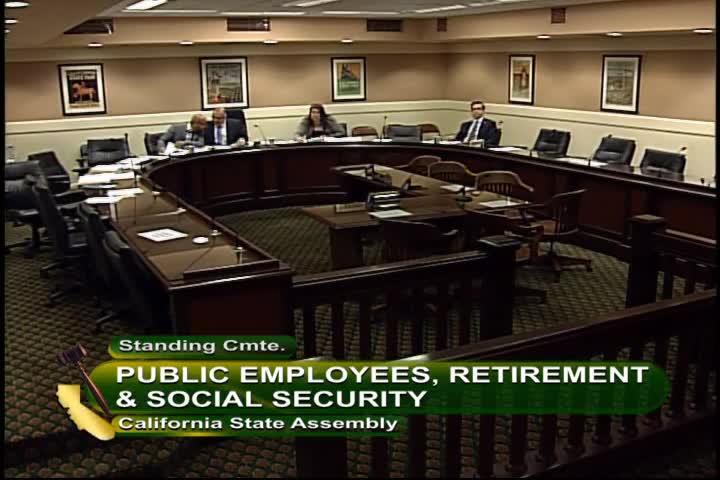
Assembly Standing Committee on Public Employees, Retirement, and Social Security
Bill Author

Bill Co-Author(s):