AB 3036: Solid waste: byproducts from the processing of food or beverages.
- Session Year: 2017-2018
- House: Assembly
- Latest Version Date: 2018-09-27
The California Integrated Waste Management Act of 1989, administered by the Department of Resources Recycling and Recovery, generally regulates the disposal, management, and recycling of solid waste. The act authorizes each county, city, district, or other local governmental agency to determine, among other things, whether solid waste handling services are provided for by means of a nonexclusive, partially exclusive, or wholly exclusive franchise, contract, license, permit, or otherwise.
This bill would prohibit a county, city , district, or local governmental agency from subjecting the hauling of certain byproducts from the processing of food or beverages to an exclusive franchise, contract, license, or permit.
The California Integrated Waste Management Act of 1989, administered by the Department of Resources Recycling and Recovery, generally regulates the disposal, management, and recycling of solid waste. The act authorizes each county, city, district, or other local governmental agency to determine, among other things, whether solid waste handling services are provided means of a nonexclusive, partially exclusive, or wholly exclusive franchise, contract, license, permit, or otherwise.
This bill would exclude from the acts definition of solid waste byproducts from processing food, if those byproducts meet certain conditions, including, among others, that the byproducts are destined for use as animal feed.This bill would prohibit a county, city , district, or local governmental agency from subjecting the hauling of certain byproducts from the processing of food or beverages to an exclusive franchise, contract, license, or permit.
The California Integrated Waste Management Act of 1989, administered by the Department of Resources Recycling and Recovery, generally regulates the disposal, management, and recycling of solid waste.
This bill would exclude from the acts definition of solid waste byproducts from processing food, if those byproducts meet certain conditions, including, among others, that the byproducts are intended destined for use as animal feed.
The California Integrated Waste Management Act of 1989, administered by the Department of Resources Recycling and Recovery, generally regulates the disposal, management, and recycling of solid waste.
This bill would exclude from the acts definition of solid waste byproducts from processing food, if those byproducts meet certain conditions, including, among others, that the byproducts are intended for use as animal feed.
The California Integrated Waste Management Act of 1989, administered by the Department of Resources Recycling and Recovery, generally regulates the disposal, management, and recycling of solid waste.
This bill would exclude from the acts definition of solid waste byproducts from processing food, if those byproducts are intended for use as animal feed.
(a)For purposes of this section, industrial source means any of the following:
(1)An entity required to be registered pursuant to Section 110460 of the Health and Safety Code.
(2)An entity exempted from registration pursuant to Section 110480 of the Health and Safety Code.
(3)A beer manufacturer, as defined in Section 23012 of the Business and Professions Code.
(4)A distilled spirits manufacturer, as defined in Section 23015 of the Business and Professions Code.
(b)A county, city, district, or local governmental agency shall not subject the hauling of byproducts from the processing of food or beverages to an exclusive franchise, contract, license, or permit, if those byproducts meet all of the following conditions:
(1)The byproducts originate from agricultural or industrial sources.
(2)The byproducts do not include animal, including fish, processing byproducts.
(3)The byproducts are source separated by the generator of the byproducts.
(4)The byproducts are not discarded.
(5)The byproducts are used as animal feed.
SECTION 1.Section 40191 of the Public Resources Code is amended to read:40191.(a)Except as provided in subdivision (b), solid waste means all putrescible and nonputrescible solid, semisolid, and liquid wastes, including garbage, trash, refuse, paper, rubbish, ashes, industrial wastes, demolition and construction wastes, abandoned vehicles and parts thereof, discarded home and industrial appliances, dewatered, treated, or chemically fixed sewage sludge which is not hazardous waste, manure, vegetable or animal solid and semisolid wastes, and other discarded solid and semisolid wastes.(b)Solid waste does not include any of the following wastes:(1)Hazardous waste, as defined in Section 40141.(2)Radioactive waste regulated pursuant to the Radiation Control Law (Chapter 8 (commencing with Section 114960) of Part 9 of Division 104 of the Health and Safety Code).(3)Medical waste regulated pursuant to the Medical Waste Management Act (Part 14 (commencing with Section 117600) of Division 104 of the Health and Safety Code). Untreated medical waste shall not be disposed of in a solid waste landfill, as defined in Section 40195.1. Medical waste that has been treated and deemed to be solid waste shall be regulated pursuant to this division.(4)Byproducts from processing food, if those byproducts meet all of the following conditions:(A)They originate from agricultural or industrial sources.(B)They do not include animal, including fish, processing byproducts.(C)They are source separated by the generator of the byproducts.(D)They are not discarded.(E)They are destined for use as animal feed.(a)Except as provided in subdivision (b), solid waste means all putrescible and nonputrescible solid, semisolid, and liquid wastes, including garbage, trash, refuse, paper, rubbish, ashes, industrial wastes, demolition and construction wastes, abandoned vehicles and parts thereof, discarded home and industrial appliances, dewatered, treated, or chemically fixed sewage sludge which is not hazardous waste, manure, vegetable or animal solid and semisolid wastes, and other discarded solid and semisolid wastes.
(b)Solid waste does not include any of the following wastes:
(1)Hazardous waste, as defined in Section 40141.
(2)Radioactive waste regulated pursuant to the Radiation Control Law (Chapter 8 (commencing with Section 114960) of Part 9 of Division 104 of the Health and Safety Code).
(3)Medical waste regulated pursuant to the Medical Waste Management Act (Part 14 (commencing with Section 117600) of Division 104 of the Health and Safety Code). Untreated medical waste shall not be disposed of in a solid waste landfill, as defined in Section 40195.1. Medical waste that has been treated and deemed to be solid waste shall be regulated pursuant to this division.
(4)Byproducts from processing food, if those byproducts meet all of the following conditions:
(A)They originate from agricultural or industrial sources.
(B)They do not include animal, including fish, processing byproducts.
(C)They are source separated by the generator of the byproducts.
(D)They are not discarded.
(E)They are intended destined for use as animal feed.
(a)Except as provided in subdivision (b), solid waste means all putrescible and nonputrescible solid, semisolid, and liquid wastes, including garbage, trash, refuse, paper, rubbish, ashes, industrial wastes, demolition and construction wastes, abandoned vehicles and parts thereof, discarded home and industrial appliances, dewatered, treated, or chemically fixed sewage sludge which is not hazardous waste, manure, vegetable or animal solid and semisolid wastes, and other discarded solid and semisolid wastes.
(b)Solid waste does not include any of the following wastes:
(1)Hazardous waste, as defined in Section 40141.
(2)Radioactive waste regulated pursuant to the Radiation Control Law (Chapter 8 (commencing with Section 114960) of Part 9 of Division 104 of the Health and Safety Code).
(3)Medical waste regulated pursuant to the Medical Waste Management Act (Part 14 (commencing with Section 117600) of Division 104 of the Health and Safety Code). Untreated medical waste shall not be disposed of in a solid waste landfill, as defined in Section 40195.1. Medical waste that has been treated and deemed to be solid waste shall be regulated pursuant to this division.
(4)Byproducts from processing food, if those byproducts are intended for use as animal feed. meet all of the following conditions:
(A)They originate from agricultural or industrial sources.
(B)They do not include animal, including fish, processing byproducts.
(C)They are source separated by the generator of the byproducts.
(D)They are not discarded.
(E)They are intended for use as animal feed.
(a)Except as provided in subdivision (b), solid waste means all putrescible and nonputrescible solid, semisolid, and liquid wastes, including garbage, trash, refuse, paper, rubbish, ashes, industrial wastes, demolition and construction wastes, abandoned vehicles and parts thereof, discarded home and industrial appliances, dewatered, treated, or chemically fixed sewage sludge which is not hazardous waste, manure, vegetable or animal solid and semisolid wastes, and other discarded solid and semisolid wastes.
(b)Solid waste does not include any of the following wastes:
(1)Hazardous waste, as defined in Section 40141.
(2)Radioactive waste regulated pursuant to the Radiation Control Law (Chapter 8 (commencing with Section 114960) of Part 9 of Division 104 of the Health and Safety Code).
(3)Medical waste regulated pursuant to the Medical Waste Management Act (Part 14 (commencing with Section 117600) of Division 104 of the Health and Safety Code). Untreated medical waste shall not be disposed of in a solid waste landfill, as defined in Section 40195.1. Medical waste that has been treated and deemed to be solid waste shall be regulated pursuant to this division.
(4)Byproducts from processing food, if those byproducts are intended for use as animal feed.
|
Date
|
Status
|
|---|---|
| Sep 27, 2018 | Chaptered by Secretary of State - Chapter 832, Statutes of 2018. |
| Sep 27, 2018 | Approved by the Governor. |
| Sep 10, 2018 | Enrolled and presented to the Governor at 3:30 p.m. |
| Aug 29, 2018 | Senate amendments concurred in. To Engrossing and Enrolling. |
| Aug 27, 2018 | In Assembly. Concurrence in Senate amendments pending. May be considered on or after August 29 pursuant to Assembly Rule 77. |
| Aug 27, 2018 | Read third time. Passed. Ordered to the Assembly. |
| Aug 22, 2018 | Read second time. Ordered to third reading. |
| Aug 21, 2018 | Read third time and amended. Ordered to second reading. |
| Jul 3, 2018 | Read second time. Ordered to third reading. |
| Jul 2, 2018 | From committee: Be ordered to second reading pursuant to Senate Rule 28.8. |
| Jun 6, 2018 | From committee: Do pass and re-refer to Com. on APPR. (Ayes 5. Noes 0.) (June 6). Re-referred to Com. on APPR. |
| May 17, 2018 | Referred to Com. on EQ. |
| May 7, 2018 | In Senate. Read first time. To Com. on RLS. for assignment. |
| May 7, 2018 | Read third time. Passed. Ordered to the Senate. |
| May 3, 2018 | Read third time and amended. Ordered to third reading. |
| Apr 30, 2018 | From Consent Calendar. |
| Apr 26, 2018 | Read second time. Ordered to Consent Calendar. |
| Apr 25, 2018 | From committee: Do pass. To Consent Calendar. (Ayes 17. Noes 0.) (April 25). |
| Apr 17, 2018 | From committee: Do pass and re-refer to Com. on APPR. (Ayes 10. Noes 0.) (April 16). Re-referred to Com. on APPR. |
| Apr 10, 2018 | Re-referred to Com. on NAT. RES. |
| Apr 9, 2018 | From committee chair, with author's amendments: Amend, and re-refer to Com. on NAT. RES. Read second time and amended. |
| Mar 12, 2018 | Referred to Com. on NAT. RES. |
| Feb 17, 2018 | From printer. May be heard in committee March 19. |
| Feb 16, 2018 | Read first time. To print. |
|
Date
|
Description
|
Location
|
Votes
|
|
|---|---|---|---|---|
| Aug 29, 2018 | AB 3036 COOLEY Concurrence in Senate Amendments | Assembly Floor |
Passed |
|
| Aug 27, 2018 | Assembly 3rd Reading AB3036 Cooley By Nielsen | Senate Floor |
Passed |
|
| Jun 6, 2018 | Do pass, but first be re-referred to the Committee on [Appropriations] | Senate Standing Committee on Environmental Quality |
Passed |
|
| May 7, 2018 | AB 3036 COOLEY Assembly Third Reading | Assembly Floor |
Passed |
|
| Apr 25, 2018 | Do pass. To Consent Calendar. | Assembly Standing Committee on Appropriations |
Passed |
|
| Apr 16, 2018 | Do pass and be re-referred to the Committee on [Appropriations] | Assembly Standing Committee on Natural Resources |
Passed |
This list shows positions taken on this bill by organizations on the date displayed, which is linked to the original source.
Positions by individuals are not included.
CONCURRENCE IN SENATE AMENDMENTS
CSA1 Bill Id:AB 3036
Author:(Cooley)
As Amended Ver:August 21, 2018
Majority vote
ASSEMBLY: | 74-0 | (May 7, 2018) | SENATE: | 39-0 | (August 27, 2018) |
Original Committee Reference: NAT. RES.
SUMMARY: Prohibits a local government's franchise agreement to manage solid waste from including the handling of byproducts from the processing of food or beverages, as specified.
The Senate amendments:
- Remove the provision that excludes material that originates from agricultural or industrial sources; does not include animal, including fish, processing byproducts; is source separated by the generator; is not discarded; and, is destined for use as animal feed from the definition of solid waste; and instead;
- Prohibits a local government's franchise agreement to manage solid waste from including the hauling of those materials.
EXISTING LAW:
- Pursuant to the Integrated Waste Management Act:
- Establishes a state recycling goal of 75% of solid waste generated be diverted from landfill disposal by 2020 through source reduction, recycling, and composting.
- Requires each local jurisdiction to divert 50% of solid waste from landfill disposal through source reduction, recycling, and composting.
- Requires commercial waste generators, including multi-family dwellings, to arrange for recycling services and requires local governments to implement commercial solid waste recycling programs designed to divert solid waste from businesses.
- Requires generators of specified amounts of organic waste (i.e., food waste and yard waste) to arrange for recycling services for that material.
- Establishes methane emission reduction goals that include targets to reduce the landfill disposal of organic waste 50% by 2020 and 75% by 2025 from the 2014 level. Requires the Department of Resources Recycling and Recovery (CalRecycle), in consultation with the Air Resources Board (ARB), to adopt regulations to achieve the organics reduction targets, which go into effect in 2022.
- Requires exporters, brokers, and transporters of recyclables or compost to submit periodic information to CalRecycle on the types, quantities, and destinations of materials that are disposed of, sold, or transferred.
- Defines "solid waste" as all putrescible and nonputrescible solid, semisolid, and liquid wastes, including garbage, trash, refuse, paper, rubbish, ashes, industrial wastes, demolition and construction wastes, abandoned vehicles and parts thereof, discarded home and industrial appliances, dewatered, treated, or chemically fixed sewage sludge, manure, vegetable or animal solid and semisolid wastes, and other discarded solid and semisolid wastes. Specifies that solid waste does not include medical, radioactive, or hazardous waste.
- Specifies that individuals have the right to donate, sell, or otherwise dispose of their recyclable materials.
- Pursuant to the Unfair Practices Act (Act):
- States that the purpose of the Act is to safeguard the public against the creation or perpetuation of monopolies and to foster and encourage competition by prohibiting unfair, dishonest, deceptive, destructive, fraudulent, and discriminatory practices by which fair and honest competition is destroyed or prevented.
- Prohibits unfair competition, which is defined as unlawful, unfair, or fraudulent business act or practice and unfair, deceptive, untrue, or misleading advertising.
- Establishes civil penalties up to $2,500 for each violation. Authorizes the courts to make orders or judgements necessary to prevent the use or employment by any person that constitutes unfair competition, or as necessary to restore to any person in interest any money or property acquired by unfair competition. Establishes civil penalties up to $6,000 for any violation of an injunction issued by a court to prevent unfair competition.
- Pursuant to the 1994 California Supreme Court ruling City of Rancho Mirage and Waste Management of the Desert v. Palm Springs Recycling Center, Inc., a city's authority to grant exclusive franchise rights for waste management does not prohibit people in the franchise area from selling their recyclable materials to other companies.
FISCAL EFFECT: According to the Senate Appropriations Committee, pursuant to Senate Rule 28.8, this bill has negligible state costs.
COMMENTS: An estimated 35 million tons of waste are disposed of in California’s landfills annually, of which 32% is compostable organic materials, 29% is construction and demolition debris, and 17% is paper. CalRecycle is tasked with diverting at least 75% of solid waste from landfills statewide by 2020. Local governments have been required to divert 50% of the waste generated within the jurisdiction from landfill disposal since 2000. AB 341 (Chesbro), Chapter 476, Statutes of 2011, requires commercial waste generators, including multi-family dwellings, to arrange for recycling services for the material they generate and requires local governments to implement commercial solid waste recycling programs designed to divert solid waste generated by businesses out of the landfill. A follow up bill, AB 1826 (Chesbro), Chapter 727, Statutes of 2014, requires generators of organic waste (i.e., food waste and yard waste) to arrange for recycling services for that material to keep the material out of the landfill.
SB 1383 (Lara), Chapter 395, Statutes of 2016, required the ARB to approve and implement the comprehensive short-lived climate pollutant strategy to achieve, from 2013 levels, a 40% reduction in methane, a 40% reduction in hydrofluorocarbon gases, and a 50% reduction in anthropogenic black carbon, by 2030. In order to accomplish these goals, the bill specified that the methane emission reduction goals include targets to reduce the landfill disposal of organic waste 50% by 2020 and 75% by 2025 from the 2014 level.
The purpose of the state's organic recycling goals it so divert material that is going to landfill to better purposes. However, some actions taken by solid waste local enforcement agencies to comply with the state's organics recycling requirements have resulted in material from agricultural operations that have historically been recycled into animal feed, soil amendments, and mulch and have never gone to landfill being pulled into the traditional waste management system. These agricultural recycling systems have been taking place for decades and serve a number of beneficial purposes that are consistent with the US Environmental Protection Agency's food recovery hierarchy, which sets priorities for food waste management: 1) source reduction; 2) feed hungry people; 3) feed animals; 4) industrial uses (i.e., rendering, fuel conversion, anaerobic digestion, and composting); and, 5) disposal.
This bill attempts to provide clarity how this agricultural material can be handled. Agricultural operations have historically managed their own waste materials in environmentally beneficial ways. For example, fruit and vegetable growers may send their waste materials to a rancher to be used as cattle feed. Wineries may operate their own on-site composting operations to manage trimmings and generate compost to improve the quality of their soil. These practices keep costs down and comply with the state's waste management goals by keeping the material out of landfills. Traditionally, these practices have operated outside of the solid waste management system. Most jurisdictions in the state operate with some form of "franchise," or contract, that limits solid waste hauling within the jurisdiction to one or more companies. Franchises are often, but not always, accompanied by a local ordinance. Exclusive franchises specify one hauler within a jurisdiction. Non-exclusive franchises allow for more than one hauler, but establish specific requirements for hauling within the jurisdiction. Franchises can apply to residential, commercial, or industrial solid waste hauling and any combination thereof. Not all communities in California have franchise agreements. In 1994, the California Supreme Court ruled that franchises do not prohibit individuals within the franchise area from selling recyclable materials, as those materials are not waste because they have value. Additionally, state law specifies that individuals have the right to donate or sell recyclable materials.
Analysis Prepared by: Elizabeth MacMillan / NAT. RES. / (916) 319-2092 FN: 0004635
Office of Senate Floor Analyses (916) 651-1520 Fax: (916) 327-4478 | AB |
THIRD READING
Bill No: AB 3036
:
SENATE ENVIRONMENTAL QUALITY COMMITTEE: 5-0, 6/6/18
AYES: Wieckowski, Stone, Gaines, Hill, Skinner
NO VOTE RECORDED: Lara, Stern
SENATE APPROPRIATIONS COMMITTEE: Senate Rule 28.8
ASSEMBLY FLOOR: 74-0, 5/7/18 - See last page for vote
SUBJECT: Solid waste: byproducts from the processing of food or beverages
SOURCE: California Farm Bureau Federation
DIGEST:
This bill prohibits local governments from subjecting the hauling of certain byproducts of processed food or beverages to exclusive franchises, contracts, licenses, or permits.
Senate Floor Amendments of 8/21/18 delete its contents and insert language that would substantively accomplish the same objective.
ANALYSIS: Existing law, the California Integrated Waste Management Act (IWMA) of 1989 (PRC § 40000 et seq.):
- Establishes a state policy goal that 75% of solid waste generated be source reduced, recycled, or composed by 2020 (PRC §41780.01).
- Requires each state agency and each large state facility to divert at least 50% of all solid waste through source reduction, recycling and composting activities (PRC § 42921).
- Requires each city, county, and regional agency to divert 50% of all solid waste through source reduction, recycling, and composting activities (PRC § 41780).
- Authorizes a county, city, district, or other governmental entity to grant a wholly exclusive franchise for authority over solid waste handling services within the jurisdiction if necessary to promote public health, safety, and well-being (PRC § 40059).
- Requires a business that generates a certain amount of organic waste to arrange for recycling services specifically for organic waste and requires each jurisdiction to implement an organic waste recycling program that is designed specifically to divert organic waste generated by the businesses (PRC §§ 42649.81, 42649.82).
- Requires the recycling services to be consistent with state and local laws and requirements, including a local ordinance or local jurisdiction’s franchise agreement (PRC §42649.81).
- Defines organic waste to include food waste and yard waste (PRC § 42649.8).
This bill prohibits counties, cities, districts, and local governmental agencies from subjecting the hauling of byproducts from the processing of food or beverages to an exclusive franchise, contract, license, or permit, if those byproducts (1) originate from agricultural or industrial sources, (2) do not include animal, including fish, processing byproducts, (3) are source separated by the generator of the byproducts, (4) are not discarded, and (5) are used as animal feed.
Background
- Solid waste in California. For three decades, the Department of Resources Recycling and Recovery (CalRecycle) has been tasked with reducing disposal of municipal solid waste and promoting recycling in California through the IWMA. Under IWMA, the state has established a statewide 75 percent source reduction, recycling, and composting goal by 2020 and over the years the Legislature has enacted various laws relating to increasing the amount of waste that is diverted from landfills. According to CalRecycle’s State of Disposal and Recycling in California 2017 Update, 42.7 million tons of material were disposed into landfills in 2016.
- Organic waste. Organic waste is a type of solid waste, but is handled differently than traditional solid waste. Organic materials, which include food waste, yard waste, lumber, paper, and other carbon-containing materials, account for more than one-third of the materials in California’s waste stream. Existing law requires businesses that generate a certain amount of organic waste per week to recycle that organic waste and requires cities and counties to implement an organic waste recycling program to divert that organic waste. According to CalRecycle, mandatory recycling of organic waste is the next step toward achieving California’s aggressive recycling and greenhouse gas emission goals. Organic waste such as green materials and food materials are recyclable through composting and mulching, and through anaerobic digestion, which can produce renewable energy and fuel. Food scraps are the largest single category of disposed waste in California. Once in a landfill, food rapidly degrades, releasing methane, a type of greenhouse gas. Greenhouse gas emissions resulting from the decomposition of organic wastes in landfills have been identified as a significant source of emissions contributing to global climate change.
- Food Recovery Hierarchy. According to the United States Environmental Protection Agency (US EPA), the sustainable management of food is a systematic approach that seeks to reduce waste food and its associated impacts over the entire life cycle. In furtherance of this, the US EPA developed a food recovery hierarchy which prioritizes actions organizations can take to prevent and divert wasted food. The order of the priority is (a) source reduction, (b) feeding hungry people, (c) animal feed, (d) industrial uses, (e) composting, and (f) landfill or incineration. According to the US EPA, the top levels of the hierarchy are the best ways to prevent and divert wasted food because they create the most benefits for the environment, society, and the economy.
- City of Rancho Mirage and Waste Management of the Desert v. Palm Springs Recycling Center, Inc. In 1994, the California Supreme Court ruled that the IWMA, despite its authorization for cities to grant exclusive franchise rights for authority over solid waste management if necessary to promote public health, safety, and wellbeing, does not prohibit people in the franchisee’s jurisdiction from selling their recyclable materials to other companies. The court reasoned that recyclables are not waste until the owner discards them. If recyclables are being sold, this is an indication that they are not discarded and therefore do not fall under city waste management authority. In other words, an item does not become “solid waste” and within the jurisdiction of a solid waste management company’s exclusive authority to handle that waste until that item has been “discarded.”
Comments
- Purpose of Bill. According to the author, ‘[t]he [United States Environmental Protection Agency] has developed a food recovery hierarchy, which recommends the priorities for preventing and diverting wasted food. Use as animal feed ranks third in the hierarchy and is ahead of industrial uses, composting, and landfill disposal. California should work to ensure barriers to the use of food byproducts for animal feeds are reduced or eliminated to prevent these products from going to lower priority uses, ensuring that as a state we continue to lead the way in waste recycling and recovery.
- Waste as animal feed. The purpose of the state's recycling goals is to divert material from landfills for better purposes. It is common practice for agricultural operations in California to manage some of their waste material by diverting certain byproducts, such as grain products and vegetable and fruit peels and rinds, from landfills to other beneficial uses such as feed for livestock, soil amendments, or mulch. While these byproducts may not be suitable or desirable for human consumption, they may be suitable as a source of energy and nutrition for certain species of animals. These actions help to further the state’s goal of diverting 75% of waste from landfills while also being consistent with the US EPA’s food recovery hierarchy.
However, there has been some question as to whether that material falls within the definition of “solid waste” or “organic waste” and is therefore subject to the state’s traditional solid waste and organic waste diversion requirements. In the context of local jurisdictions, it is a question of whether the material is subject to an exclusive franchise agreement for waste management, including transporting of such waste, between a local jurisdiction and a waste management company. The result is that material which has historically been used as animal feed, soil amendments, or mulch is being pulled into the traditional waste management stream.
- How would this new specific prohibition on local jurisdictions affect existing law? Currently, the definition of solid waste includes materials such as the food byproducts, which historically have never been a part of the waste stream. Consistent with the findings of the California Supreme Court in City of Rancho Mirage, AB 3036 would specifically prohibit a local jurisdiction’s exclusive franchise, contract, license, or permit from including the hauling of certain food or beverage byproducts. Because these are items that have not traditionally been a part of the waste management stream, the narrow exception would not appear to have an effect on a jurisdictions ability to meet certain diversion requirements.
FISCAL EFFECT: Appropriation: Fiscal Com.: Local:
California Farm Bureau Federation (source)
California Cattlemen’s Association
Western United Dairymen
OPPOSITION: (Verified 8/22/18)
None received
ASSEMBLY FLOOR: 74-0, 5/7/18
AYES: Acosta, Aguiar-Curry, Travis Allen, Arambula, Baker, Berman, Bigelow, Bloom, Brough, Burke, Caballero, Calderon, Carrillo, Cervantes, Chau, Chávez, Chiu, Choi, Chu, Cooley, Cooper, Dahle, Daly, Eggman, Flora, Fong, Frazier, Friedman, Gallagher, Eduardo Garcia, Gipson, Gloria, Gonzalez Fletcher, Gray, Grayson, Harper, Holden, Irwin, Jones-Sawyer, Kalra, Kamlager-Dove, Kiley, Lackey, Levine, Limón, Low, Maienschein, Mathis, Mayes, McCarty, Medina, Melendez, Mullin, Muratsuchi, Nazarian, Obernolte, O'Donnell, Patterson, Quirk, Quirk-Silva, Reyes, Rodriguez, Rubio, Salas, Santiago, Steinorth, Mark Stone, Thurmond, Ting, Voepel, Waldron, Weber, Wood, Rendon
NO VOTE RECORDED: Bonta, Chen, Cunningham, Cristina Garcia
8/22/18 15:00:56
**** END ****
Office of Senate Floor Analyses (916) 651-1520 Fax: (916) 327-4478 | AB |
THIRD READING
Bill No: AB 3036
:
SENATE ENVIRONMENTAL QUALITY COMMITTEE: 5-0, 6/6/18
AYES: Wieckowski, Stone, Gaines, Hill, Skinner
NO VOTE RECORDED: Lara, Stern
SENATE APPROPRIATIONS COMMITTEE: Senate Rule 28.8
ASSEMBLY FLOOR: 74-0, 5/7/18 - See last page for vote
SOURCE: California Farm Bureau Federation
DIGEST:
This bill excludes from the definition of “solid waste,” for purposes of the California Integrated Waste Management Act of 1989, byproducts from processing food that meets specified requirements.
ANALYSIS: Existing law, the California Integrated Waste Management Act (IWMA) of 1989 (PRC § 40000 et seq.):
- Establishes a state policy goal that 75% of solid waste generated be source reduced, recycled, or composed by 2020 (PRC §41780.01).
- Requires each state agency and each large state facility to divert at least 50% of all solid waste through source reduction, recycling and composting activities (PRC § 42921).
- Requires each city, county, and regional agency to divert 50% of all solid waste through source reduction, recycling, and composting activities (PRC § 41780).
- Authorizes a county, city, district, or other governmental entity to grant a wholly exclusive franchise for authority over solid waste handling services within the jurisdiction if necessary to promote public health, safety, and well-being (PRC § 40059).
- Requires a business that generates a certain amount of organic waste to arrange for recycling services specifically for organic waste and requires each jurisdiction to implement an organic waste recycling program that is designed specifically to divert organic waste generated by the businesses (PRC §§ 42649.81, 42649.82).
- Requires the recycling services to be consistent with state and local laws and requirements, including a local ordinance or local jurisdiction’s franchise agreement (PRC §42649.81).
- Defines organic waste to include food waste and yard waste (PRC § 42649.8).
- Requires an operator of a disposal facility to pay a quarterly fee based on the amount of solid waste disposed of at each disposal site and deposits the revenue from the fees be deposited into the Integrated Waste Management Account (PRC § 48000).
- Defines “solid waste” as all putrescible and nonputrescrible solid, semisolid, and liquid wastes, including garbage, trash, refuse, paper, rubbish, ashes, industrial wastes, demolition and construction wastes, abandoned vehicles and parts thereof, discarded home and industrial appliances, dewatered, treated, or chemically fixed sewage sludge which is not hazardous waste, manure, vegetable or animal solid and semisolid wastes, and other discarded solid and semisolid wastes (PRC § 40191).
- Excludes from the definition of “solid waste” hazardous waste, medical waste, and radioactive waste.
This bill excludes from the definition of “solid waste” byproducts from processing food that (1) originate from agricultural or industrial sources, (2) do not include animal, including fish, processing byproducts, (3) are source separated by the generator of the byproducts, (4) are not discarded, and (5) are destined for use as animal feed.
Background
- Solid waste in California. For three decades, the Department of Resources Recycling and Recovery (CalRecycle) has been tasked with reducing disposal of municipal solid waste and promoting recycling in California through the IWMA. Under IWMA, the state has established a statewide 75 percent source reduction, recycling, and composting goal by 2020 and over the years the Legislature has enacted various laws relating to increasing the amount of waste that is diverted from landfills. According to CalRecycle’s State of Disposal and Recycling in California 2017 Update, 42.7 million tons of material were disposed into landfills in 2016.
- Organic waste. Organic waste is a type of solid waste, but is handled differently than traditional solid waste. Organic materials, which include food waste, yard waste, lumber, paper, and other carbon-containing materials, account for more than one-third of the materials in California’s waste stream. Existing law requires businesses that generate a certain amount of organic waste per week to recycle that organic waste and requires cities and counties to implement an organic waste recycling program to divert that organic waste. According to CalRecycle, mandatory recycling of organic waste is the next step toward achieving California’s aggressive recycling and greenhouse gas emission goals. Organic waste such as green materials and food materials are recyclable through composting and mulching, and through anaerobic digestion, which can produce renewable energy and fuel. Food scraps are the largest single category of disposed waste in California. Once in a landfill, food rapidly degrades, releasing methane, a type of greenhouse gas. Greenhouse gas emissions resulting from the decomposition of organic wastes in landfills have been identified as a significant source of emissions contributing to global climate change.
- Food Recovery Heirarchy. According to the United States Environmental Protection Agency (US EPA), the sustainable management of food is a systematic approach that seeks to reduce waste food and its associated impacts over the entire life cycle. In furtherance of this, the US EPA developed a food recovery hierarchy which prioritizes actions organizations can take to prevent and divert wasted food. The order of the priority is (a) source reduction, (b) feeding hungry people, (c) animal feed, (d) industrial uses, (e) composting, and (f) landfill or incineration. According to the US EPA, the top levels of the hierarchy are the best ways to prevent and divert wasted food because they create the most benefits for the environment, society, and the economy.
- City of Rancho Mirage and Waste Management of the Desert v. Palm Springs Recycling Center, Inc. In 1994, the California Supreme Court ruled that the IWMA, despite it’s authorization for cities to grant exclusive franchise rights for authority over solid waste management if necessary to promote public health, safety, and wellbeing, does not prohibit people in the franchisee’s jurisdiction from selling their recyclable materials to other companies. The court reasoned that recyclables are not waste until the owner discards them. If recyclables are being sold, this is an indication that they are not discarded and therefore do not fall under city waste management authority. In other words, an item does not become “solid waste” and within the jurisdiction of a solid waste management company’s exclusive authority to handle that waste until that item has been “discarded.”
Comments
- Purpose of Bill. According to the author, ‘[t]he [United States Environmental Protection Agency] has developed a food recovery hierarchy, which recommends the priorities for preventing and diverting wasted food. Use as animal feed ranks third in the hierarchy and is ahead of industrial uses, composting, and landfill disposal. California should work to ensure barriers to the use of food byproducts for animal feeds are reduced or eliminated to prevent these products from going to lower priority uses, ensuring that as a state we continue to lead the way in waste recycling and recovery.
- Waste as animal feed. The purpose of the state's recycling goals is to divert material from landfills for better purposes. It is common practice for agricultural operations in California to manage some of their waste material by diverting certain byproducts, such as grain products and vegetable and fruit peels and rinds, from landfills to other beneficial uses such as feed for livestock, soil amendments, or mulch. While these byproducts may not be suitable or desirable for human consumption, they may be suitable as a source of energy and nutrition for certain species of animals. These actions help to further the state’s goal of diverting 75% of waste from landfills while also being consistent with the US EPA’s food recovery hierarchy.
However, there has been some question as to whether that material falls within the definition of “solid waste” or “organic waste” and is therefore subject to the state’s traditional solid waste and organic waste diversion requirements. In the context of local jurisdictions, it is a question of whether the material is subject to an exclusive franchise agreement for waste management, including transporting of such waste, between a local jurisdiction and a waste management company. The result is that material which has historically been used as animal feed, soil amendments, or mulch is being pulled into the traditional waste management stream.
- How would this new definition of solid waste affect existing law? Currently, the definition of solid waste includes materials such as the food byproducts, which historically have never been a part of the waste stream. Consistent with the findings of the California Supreme Court in City of Rancho Mirage, AB 3036 would specifically exclude from the definition of solid waste certain byproducts of processed food. Because these are items that have not traditionally been a part of the waste management stream, the narrow exception would not appear to have an effect on the various solid waste requirements imposed by existing law or a jurisdictions ability to meet certain diversion requirements.
- Industrial sources. In order to not be considered solid waste, AB 3036 requires byproducts from processing foods to meet certain requirements, including that the byproducts originate from either agricultural or industrial sources. The term “industrial source” is vague. According to the sponsor, the term “industrial sources” is intended to refer to facilities that are engaged in processing a food product for human consumption, the byproduct of which is considered agricultural waste. One example given by the sponsor is a tomato canning plant. Such operation is left with the tomato peels. These byproducts, as agricultural waste, are not a part of the traditional waste stream and can be used for other purposes instead of being sent to landfills.
However, there may be entities that are considered industrial sources and that meet the other four requirements of the exemption that are not contemplated by the sponsor. Although the four other requirements listed would significantly narrow the type of industrial source that would fall within AB 3036’s exemption, the term “industrial sources” needs further refinement to ensure that the exemption is not overly broad.
The author has made a commitment to work with the Senate Environmental Quality Committee to further define the term “industrial sources.”
FISCAL EFFECT: Appropriation: Fiscal Com.: Local:
California Farm Bureau Federation (source)
California Cattlemen’s Association
Western United Dairymen
None received
ASSEMBLY FLOOR: 74-0, 5/7/18
AYES: Acosta, Aguiar-Curry, Travis Allen, Arambula, Baker, Berman, Bigelow, Bloom, Brough, Burke, Caballero, Calderon, Carrillo, Cervantes, Chau, Chávez, Chiu, Choi, Chu, Cooley, Cooper, Dahle, Daly, Eggman, Flora, Fong, Frazier, Friedman, Gallagher, Eduardo Garcia, Gipson, Gloria, Gonzalez Fletcher, Gray, Grayson, Harper, Holden, Irwin, Jones-Sawyer, Kalra, Kamlager-Dove, Kiley, Lackey, Levine, Limón, Low, Maienschein, Mathis, Mayes, McCarty, Medina, Melendez, Mullin, Muratsuchi, Nazarian, Obernolte, O'Donnell, Patterson, Quirk, Quirk-Silva, Reyes, Rodriguez, Rubio, Salas, Santiago, Steinorth, Mark Stone, Thurmond, Ting, Voepel, Waldron, Weber, Wood, Rendon
NO VOTE RECORDED: Bonta, Chen, Cunningham, Cristina Garcia
7/3/18 15:56:07
**** END ****
SENATE COMMITTEE ON ENVIRONMENTAL QUALITY
Senator Wieckowski, Chair
2017 - 2018 Regular
Bill No: AB 3036
Author: | Cooley | ||
Version: | 5/3/2018 | Hearing Date: | 6/6/2018 |
Urgency: | No | Fiscal: | Yes |
Consultant: | Genevieve Wong | ||
SUBJECT: Solid waste: definition
ANALYSIS:
Existing law, the California Integrated Waste Management Act (IWMA) of 1989 (PRC § 40000 et seq.):
- Establishes a state policy goal that 75% of solid waste generated be source reduced, recycled, or composed by 2020 (PRC §41780.01).
- Requires each state agency and each large state facility to divert at least 50% of all solid waste through source reduction, recycling and composting activities (PRC § 42921).
- Requires each city, county, and regional agency to divert 50% of all solid waste through source reduction, recycling, and composting activities (PRC § 41780).
- Authorizes a county, city, district, or other governmental entity to grant a wholly exclusive franchise for authority over solid waste handling services within the jurisdiction if necessary to promote public health, safety, and well-being (PRC § 40059).
- Requires a business that generates a certain amount of organic waste to arrange for recycling services specifically for organic waste and requires each jurisdiction to implement an organic waste recycling program that is designed specifically to divert organic waste generated by the businesses (PRC §§ 42649.81, 42649.82).
- Requires the recycling services to be consistent with state and local laws and requirements, including a local ordinance or local jurisdiction’s franchise agreement (PRC §42649.81).
- Defines organic waste to include food waste and yard waste (PRC § 42649.8).
- Requires the recycling services to be consistent with state and local laws and requirements, including a local ordinance or local jurisdiction’s franchise agreement (PRC §42649.81).
- Requires an operator of a disposal facility to pay a quarterly fee based on the amount of solid waste disposed of at each disposal site and deposits the revenue from the fees be deposited into the Integrated Waste Management Account (PRC § 48000).
- Defines “solid waste” as all putrescible and nonputrescrible solid, semisolid, and liquid wastes, including garbage, trash, refuse, paper, rubbish, ashes, industrial wastes, demolition and construction wastes, abandoned vehicles and parts thereof, discarded home and industrial appliances, dewatered, treated, or chemically fixed sewage sludge which is not hazardous waste, manure, vegetable or animal solid and semisolid wastes, and other discarded solid and semisolid wastes (PRC § 40191).
- Excludes from the definition of “solid waste” hazardous waste, medical waste, and radioactive waste.
- Excludes from the definition of “solid waste” hazardous waste, medical waste, and radioactive waste.
This bill excludes from the definition of “solid waste” byproducts from processing food that (1) originate from agricultural or industrial sources, (2) do not include animal, including fish, processing byproducts, (3) are source separated by the generator of the byproducts, (4) are not discarded, and (5) are destined for use as animal feed.
Background
- Solid waste in California. For three decades, the Department of Resources Recycling and Recovery (CalRecycle) has been tasked with reducing disposal of municipal solid waste and promoting recycling in California through the IWMA. Under IWMA, the state has established a statewide 75 percent source reduction, recycling, and composting goal by 2020 and over the years the Legislature has enacted various laws relating to increasing the amount of waste that is diverted from landfills (see Related/Prior legislation below). According to CalRecycle’s State of Disposal and Recycling in California 2017 Update, 42.7 million tons of material were disposed into landfills in 2016.
- Organic waste. Organic waste is a type of solid waste, but is handled differently than traditional solid waste. Organic materials, which include food waste, yard waste, lumber, paper, and other carbon-containing materials, account for more than one-third of the materials in California’s waste stream. AB 1826 requires businesses that generate a certain amount of organic waste per week to recycle that organic waste and requires cities and counties to implement an organic waste recycling program to divert that organic waste. According to CalRecycle, mandatory recycling of organic waste is the next step toward achieving California’s aggressive recycling and greenhouse gas emission goals. Organic waste such as green materials and food materials are recyclable through composting and mulching, and through anaerobic digestion, which can produce renewable energy and fuel. Food scraps are the largest single category of disposed waste in California. Once in a landfill, food rapidly degrades, releasing methane, a type of greenhouse gas. Greenhouse gas emissions resulting from the decomposition of organic wastes in landfills have been identified as a significant source of emissions contributing to global climate change.
- Food Recovery Heirarchy. According to the United States Environmental Protection Agency (US EPA), the sustainable management of food is a systematic approach that seeks to reduce waste food and its associated impacts over the entire life cycle. In furtherance of this, the US EPA developed a food recovery hierarchy which prioritizes actions organizations can take to prevent and divert wasted food. The order of the priority is (1) source reduction, (2) feeding hungry people, (3) animal feed, (4) industrial uses, (5) composting, and (6) landfill or incineration. According to the US EPA, the top levels of the hierarchy are the best ways to prevent and divert wasted food because they create the most benefits for the environment, society, and the economy.
- City of Rancho Mirage and Waste Management of the Desert v, Palm Springs Recycling Center, Inc. In 1994, the California Supreme Court ruled that the IWMA, despite it’s authorization for cities to grant exclusive franchise rights for authority over solid waste management if necessary to promote public health, safety, and wellbeing, does not prohibit people in the franchisee’s jurisdiction from selling their recyclable materials to other companies. The court reasoned that recyclables are not waste until the owner discards them. If recyclables are being sold, this is an indication that they are not discarded and therefore do not fall under city waste management authority. In other words, an item does not become “solid waste” and within the jurisdiction of a solid waste management company’s exclusive authority to handle that waste until that item has been “discarded.”
Comments
- Purpose of Bill. According to the author, ‘[t]he [United States Environmental Protection Agency] has developed a food recovery hierarchy, which recommends the priorities for preventing and diverting wasted food. Use as animal feed ranks third in the hierarchy and is ahead of industrial uses, composting, and landfill disposal. California should work to ensure barriers to the use of food byproducts for animal feeds are reduced or eliminated to prevent these products from going to lower priority uses, ensuring that as a state we continue to lead the way in waste recycling and recovery.
- Waste as animal feed. The purpose of the state's recycling goals is to divert material from landfills for better purposes. It is common practice for agricultural operations in California to manage some of their waste material by diverting certain byproducts, such as grain products and vegetable and fruit peels and rinds, from landfills to other beneficial uses such as feed for livestock, soil amendments, or mulch. While these byproducts may not be suitable or desirable for human consumption, they may be suitable as a source of energy and nutrition for certain species of animals. These actions help to further the state’s goal of diverting 75% of waste from landfills while also being consistent with the US EPA’s food recovery hierarchy.
However, there has been some question as to whether that material falls within the definition of “solid waste” or “organic waste” and is therefore subject to the state’s traditional solid waste and organic waste diversion requirements. In the context of local jurisdictions, it is a question of whether the material is subject to an exclusive franchise agreement for waste management, including transporting of such waste, between a local jurisdiction and a waste management company. The result is that material which has historically been used as animal feed, soil amendments, or mulch is being pulled into the traditional waste management stream.
- How would this new definition of solid waste affect existing law? Currently, the definition of solid waste includes materials such as the food byproducts, which historically have never been a part of the waste stream. Consistent with the findings of the California Supreme Court in City of Rancho Mirage, AB 3036 would specifically exclude from the definition of solid waste certain byproducts of processed food. Because these are items that have not traditionally been a part of the waste management stream, the narrow exception would not appear to have an effect on the various solid waste requirements imposed by existing law or a jurisdictions ability to meet certain diversion requirements.
- Industrial sources. In order to not be considered solid waste, AB 3036 requires byproducts from processing foods to meet certain requirements, including that the byproducts originate from either agricultural or industrial sources. The term “industrial source” is vague. According to the sponsor, the term “industrial sources” is intended to refer to facilities that are engaged in processing a food product for human consumption, the byproduct of which is considered agricultural waste. One example given by the sponsor is a tomato canning plant. Such operation is left with the tomato peels. These byproducts, as agricultural waste, are not a part of the traditional waste stream and can be used for other purposes instead of being sent to landfills.
However, there may be entities that are considered industrial sources and that meet the other four requirements of the exemption that are not contemplated by the sponsor. Although the four other requirements listed would significantly narrow the type of industrial source that would fall within AB 3036’s exemption, the committee may wish to require the author to work with the committee staff to further define “industrial sources” to ensure that the exemption is not overly broad.
Related/Prior Legislation
AB 341 (Chesbro, Chapter 476, Statutes of 2011) established the statewide 75% recycling goal by 2020, requires local jurisdictions to implement commercial recycling programs to divert recyclable material away from landfills and requires commercial generators and multi-family residences to arrange for recycling services.
AB 1826 (Chesbro, Chapter 727, Statutes of 2014) requires businesses and multi-family residences to recycle their organic waste and requires local jurisdictions to implement organic waste recycling programs to divert organic material away from landfills.
AB 901 (Gordon, Chapter 746, Statutes of 2016) updates recycling and composting reporting requirements and streamlines diversion and disposal reporting requirements.
SB 1383 (Lara, Chapter 395, Statutes of 2016) established targets to achieve a 50% reduction in statewide disposal of organic waste by 2020 and a 75% reduction by 2025. SB 1383 also requires CalRecycle to adopt regulations to achieve those organic waste targets and to recover no less than 20% of currently disposed edible food for human consumption by 2025.
SOURCE:
California Farm Bureau Federation
SUPPORT:
California Cattlemen’s Association
California Farm Bureau Federation
Western United Dairymen
OPPOSITION:
None received
-- END --
ASSEMBLY THIRD READING
ATR Bill Id:AB 3036
Author:(Cooley)
As Amended Ver:May 3, 2018
Majority vote
Committee | Votes | Ayes | Noes |
Natural Resources | 10-0 | Muratsuchi, Acosta, Chau, Eggman, Flora, Limón, McCarty, Melendez, Mark Stone, Bloom |
|
Appropriations | 17-0 | Gonzalez Fletcher, Bigelow, Bloom, Bonta, Brough, Calderon, Carrillo, Chau, Eggman, Fong, Friedman, Gallagher, Eduardo Garcia, Nazarian, Obernolte, Quirk, Reyes |
|
SUMMARY: Excludes byproducts from processing food from the state's definition of solid waste if the material originates from agricultural or industrial sources; does not include animal, including fish, processing byproducts; is source separated by the generator; is not discarded; and, is destined for use as animal feed.
EXISTING LAW:
- Pursuant to the Integrated Waste Management Act:
- Establishes a state recycling goal of 75% of solid waste generated be diverted from landfill disposal by 2020 through source reduction, recycling, and composting.
- Requires each local jurisdiction to divert 50% of solid waste from landfill disposal through source reduction, recycling, and composting.
- Requires commercial waste generators, including multi-family dwellings, to arrange for recycling services and requires local governments to implement commercial solid waste recycling programs designed to divert solid waste from businesses.
- Requires generators of specified amounts of organic waste (i.e., food waste and yard waste) to arrange for recycling services for that material.
- Establishes methane emission reduction goals that include targets to reduce the landfill disposal of organic waste 50% by 2020 and 75% by 2025 from the 2014 level. Requires the Department of Resources Recycling and Recovery (CalRecycle), in consultation with the Air Resources Board (ARB), to adopt regulations to achieve the organics reduction targets, which go into effect in 2022.
- Requires exporters, brokers, and transporters of recyclables or compost to submit periodic information to CalRecycle on the types, quantities, and destinations of materials that are disposed of, sold, or transferred.
- Defines "solid waste" as all putrescible and nonputrescible solid, semisolid, and liquid wastes, including garbage, trash, refuse, paper, rubbish, ashes, industrial wastes, demolition and construction wastes, abandoned vehicles and parts thereof, discarded home and industrial appliances, dewatered, treated, or chemically fixed sewage sludge, manure, vegetable or animal solid and semisolid wastes, and other discarded solid and semisolid wastes. Specifies that solid waste does not include medical, radioactive, or hazardous waste.
- Specifies that individuals have the right to donate, sell, or otherwise dispose of their recyclable materials.
- Pursuant to the Unfair Practices Act (Act):
- States that the purpose of the Act is to safeguard the public against the creation or perpetuation of monopolies and to foster and encourage competition by prohibiting unfair, dishonest, deceptive, destructive, fraudulent, and discriminatory practices by which fair and honest competition is destroyed or prevented.
- Prohibits unfair competition, which is defined as unlawful, unfair, or fraudulent business act or practice and unfair, deceptive, untrue, or misleading advertising.
- Establishes civil penalties up to $2,500 for each violation. Authorizes the courts to make orders or judgements necessary to prevent the use or employment by any person that constitutes unfair competition, or as necessary to restore to any person in interest any money or property acquired by unfair competition. Establishes civil penalties up to $6,000 for any violation of an injunction issued by a court to prevent unfair competition.
- Pursuant to the 1994 California Supreme Court ruling City of Rancho Mirage and Waste Management of the Desert v. Palm Springs Recycling Center, Inc., a city's authority to grant exclusive franchise rights for waste management does not prohibit people in the franchise area from selling their recyclable materials to other companies.
FISCAL EFFECT: According to the Assembly Appropriations Committee, Negligible state costs, if any.
COMMENTS:
- Meeting the state's recycling goals. An estimated 35 million tons of waste are disposed of in California's landfills annually, of which 32% is compostable organic materials, 29% is construction and demolition debris, and 17% is paper. CalRecycle is tasked with diverting at least 75% of solid waste from landfills statewide by 2020. Local governments have been required to divert 50% of the waste generated within the jurisdiction from landfill disposal since 2000. AB 341 (Chesbro), Chapter 476, Statutes of 2011, requires commercial waste generators, including multi-family dwellings, to arrange for recycling services for the material they generate and requires local governments to implement commercial solid waste recycling programs designed to divert solid waste generated by businesses out of the landfill. A follow up bill, AB 1826 (Chesbro), Chapter 727, Statutes of 2014, requires generators of organic waste (i.e., food waste and yard waste) to arrange for recycling services for that material to keep the material out of the landfill.
SB 1383 (Lara), Chapter 395, Statutes of 2016 required the ARB to approve and implement the comprehensive short-lived climate pollutant strategy to achieve, from 2013 levels, a 40% reduction in methane, a 40% reduction in hydrofluorocarbon gases, and a 50% reduction in anthropogenic black carbon, by 2030. In order to accomplish these goals, the bill specified that the methane emission reduction goals include targets to reduce the landfill disposal of organic waste 50% by 2020 and 75% by 2025 from the 2014 level.
The purpose of the state's organic recycling goals it so divert material that is going to landfill to better purposes. However, some actions taken by solid waste local enforcement agencies to comply with the state's organics recycling requirements have resulted in material from agricultural operations that have historically been recycled into animal feed, soil amendments, and mulch and have never gone to landfill being pulled into the traditional waste management system. These agricultural recycling systems have been taking place for decades and serve a number of beneficial purposes that are consistent with the United States Environmental Protection Agency's food recovery hierarchy, which sets priorities for food waste management: 1) source reduction; 2) feed hungry people; 3) feed animals; 4) industrial uses (i.e., rendering, fuel conversion, anaerobic digestion, and composting); and, 5) disposal.
- What is waste? This bill attempts to provide clarity to the agricultural and the solid waste communities about what constitutes solid waste. The current definition of solid waste includes materials that never make it into the waste stream. Agricultural operations have historically managed their own waste materials in environmentally beneficial ways. For example, fruit and vegetable growers may send their waste materials to a rancher to be used as cattle feed. Wineries may operate their own on-site composting operations to manage trimmings and generate compost to improve the quality of their soil. These practices keep costs down and comply with the state's waste management goals by keeping the material out of landfills. Traditionally, these practices have operated outside of the solid waste management system. Most jurisdictions in the state operate with some form of "franchise," or contract, that limits solid waste hauling within the jurisdiction to one or more companies. Franchises are often, but not always, accompanied by a local ordinance. Exclusive franchises specify one hauler within a jurisdiction. Non-exclusive franchises allow for more than one hauler, but establish specific requirements for hauling within the jurisdiction. Franchises can apply to residential, commercial, or industrial solid waste hauling and any combination thereof. Not all communities in California have franchise agreements. In 1994, the California Supreme Court ruled that franchises do not prohibit individuals within the franchise area from selling recyclable materials, as those materials are not waste because they have value. Additionally, state law specifies that individuals have the right to donate or sell recyclable materials. This bill would not impact existing franchise agreements.
Analysis Prepared by: Elizabeth MacMillan / NAT. RES. / (916) 319-2092 FN: 0002779
ASSEMBLY THIRD READING
ATR Bill Id:AB 3036
Author:(Cooley)
As Amended Ver:April 9, 2018
Majority vote
Committee | Votes | Ayes | Noes |
Natural Resources | 10-0 | Muratsuchi, Acosta, Chau, Eggman, Flora, Limón, McCarty, Melendez, Mark Stone, Bloom | |
Appropriations | 17-0 | Gonzalez Fletcher, Bigelow, Bloom, Bonta, Brough, Calderon, Carrillo, Chau, Eggman, Fong, Friedman, Gallagher, Eduardo Garcia, Nazarian, Obernolte, Quirk, Reyes |
|
SUMMARY: Excludes byproducts from processing food from the state's definition of solid waste if the material originates from agricultural or industrial sources; does not include animal, including fish, processing byproducts; is source separated by the generator; is not discarded; and, is intended for use as animal feed.
FISCAL EFFECT: According to the Assembly Appropriations Committee, this bill has negligible state costs, if any.
COMMENTS: An estimated 35 million tons of waste are disposed of in California's landfills annually, of which 32% is compostable organic materials, 29% is construction and demolition debris, and 17% is paper. CalRecycle is tasked with diverting at least 75% of solid waste from landfills statewide by 2020. Local governments have been required to divert 50% of the waste generated within the jurisdiction from landfill disposal since 2000. AB 341 (Chesbro), Chapter 476, Statutes of 2011, requires commercial waste generators, including multi-family dwellings, to arrange for recycling services for the material they generate and requires local governments to implement commercial solid waste recycling programs designed to divert solid waste generated by businesses out of the landfill. A follow up bill, AB 1826 (Chesbro), Chapter 727, Statutes of 2014, requires generators of organic waste (i.e., food waste and yard waste) to arrange for recycling services for that material to keep the material out of the landfill.
SB 1383 (Lara), Chapter 395, Statutes of 2016 required the Air Resources Board (ARB) to approve and implement the comprehensive short-lived climate pollutant strategy to achieve, from 2013 levels, a 40% reduction in methane, a 40% reduction in hydrofluorocarbon gases, and a 50% reduction in anthropogenic black carbon, by 2030. In order to accomplish these goals, the bill specified that the methane emission reduction goals include targets to reduce the landfill disposal of organic waste 50% by 2020 and 75% by 2025 from the 2014 level.
The purpose of the state's organic recycling goals it to divert material that is going to landfill to better purposes. However, in some cases, efforts to achieve the state's organics recycling goals have resulted in material from agricultural operations that have never gone to landfill being directed into the traditional waste management system. These agricultural recycling systems have been taking place for decades and serve a number of beneficial purposes that are consistent with the United States Environmental Protection Agency's food recovery hierarchy, which sets priorities for food waste management: 1) source reduction; 2) feed hungry people; 3) feed animals; 4) industrial uses (i.e., rendering, fuel conversion, anaerobic digestion, and composting); and, 5) disposal.
This bill attempts to provide clarity to the agricultural and the solid waste communities about what constitutes solid waste. The current definition of solid waste includes materials that never make it into the waste stream. Agricultural operations have historically managed their own waste materials in environmentally beneficial ways. For example, fruit and vegetable growers may send their waste materials to a rancher to be used as cattle feed. Wineries may operate their own on-site composting operations to manage trimmings and generate compost to improve the quality of their soil. These practices keep costs down and comply with the state's waste management goals by keeping the material out of landfills. Traditionally, these practices have operated outside of the solid waste management system.
Most jurisdictions in the state operate with some form of "franchise," or contract, which limits solid waste hauling within the jurisdiction to one or more companies. Franchises are often, but not always, accompanied by a local ordinance. Exclusive franchises specify one hauler within a jurisdiction. Non-exclusive franchises allow for more than one hauler, but establish specific requirements for hauling within the jurisdiction. Franchises can apply to residential, commercial, or industrial solid waste hauling and any combination thereof. Not all communities in California have franchise agreements. In 1994, the California Supreme Court ruled that franchises do not prohibit individuals within the franchise area from selling recyclable materials, as those materials are not waste because they have value. Additionally, state law specifies that individuals have the right to donate or sell recyclable materials. This bill would not impact existing franchise agreements.
Analysis Prepared by: Elizabeth MacMillan / NAT. RES. / (916) 319-2092 FN: 0002760
Revised
Date of Hearing: April 25, 2018
ASSEMBLY COMMITTEE ON APPROPRIATIONS
Lorena Gonzalez Fletcher, Chair
ABPCA Bill Id:AB 3036
Author:(Cooley) – As Amended Ver:April 9, 2018
Policy Committee: | Natural Resources | Vote: | 10 - 0 |
|
| ||
|
|
Urgency: No State Mandated Local Program: No Reimbursable: No
SUMMARY:
This bill revises the definition of solid waste to exclude byproducts from processing food if the byproducts meet certain conditions.
Specifically, this bill provides the exclusion if the byproducts: 1) originate from agricultural or industrial sources; 2) do not include animal or fish processing byproducts; 3) are source-separated by the generator; 4) are not discarded; and, 5) are intended for use as animal feed.
FISCAL EFFECT:
Negligible state costs, if any.
COMMENTS:
- Purpose. According to the author, “Current law defines many food processing byproducts as waste material. This classification can trigger both licensing requirements by local solid waste authorities for the transportation of these materials as well as reporting requirements.”
This bill attempts to provide clarity to the agricultural and the solid waste communities about what constitutes solid waste.
- Background. Current law defines "solid waste" as all putrescible and nonputrescible solid, semisolid, and liquid wastes, including garbage, trash, refuse, paper, rubbish, ashes, industrial wastes, demolition and construction wastes, abandoned vehicles and parts thereof, discarded home and industrial appliances, dewatered, treated, or chemically fixed sewage sludge, manure, vegetable or animal solid and semisolid wastes, and other discarded solid and semisolid wastes. Solid waste does not include medical, radioactive, or hazardous waste.
The current definition of solid waste includes materials that never make it into the waste stream. Agricultural operations have historically managed their own waste materials in environmentally beneficial ways. For example, fruit and vegetable growers may send their waste materials to a rancher to be used as cattle feed. Wineries may operate their own on-site composting operations to manage trimmings and generate compost to improve the quality of their soil. These practices keep costs down and comply with the state's waste management goals by keeping the material out of landfills. This bill helps ensure products with value for re-use will not be treated as waste and disposed of in landfills.
Analysis Prepared by: Jennifer Galehouse / APPR. / (916) 319-2081
Date of Hearing: April 25, 2018
ASSEMBLY COMMITTEE ON APPROPRIATIONS
Lorena Gonzalez Fletcher, Chair
ABPCA Bill Id:AB 3036
Author:(Cooley) – As Amended Ver:April 9, 2018
Policy Committee: | Natural Resources | Vote: | 10 - 0 |
|
| ||
|
|
Urgency: No State Mandated Local Program: No Reimbursable: No
SUMMARY:
This bill revises the definition of solid waste to exclude byproducts from processing food if the byproducts meet certain conditions.
Specifically, this bill provides the exclusion if the byproducts: 1) originate from agricultural or industrial sources; 2) do not include animal or fish processing byproducts; 3) are source-separated by the generator; 4) are not discarded; and, 5) are not intended for use as animal feed.
FISCAL EFFECT:
Negligible state costs, if any.
COMMENTS:
- Purpose. According to the author, “Current law defines many food processing byproducts as waste material. This classification can trigger both licensing requirements by local solid waste authorities for the transportation of these materials as well as reporting requirements.”
This bill attempts to provide clarity to the agricultural and the solid waste communities about what constitutes solid waste.
- Background. Current law defines "solid waste" as all putrescible and nonputrescible solid, semisolid, and liquid wastes, including garbage, trash, refuse, paper, rubbish, ashes, industrial wastes, demolition and construction wastes, abandoned vehicles and parts thereof, discarded home and industrial appliances, dewatered, treated, or chemically fixed sewage sludge, manure, vegetable or animal solid and semisolid wastes, and other discarded solid and semisolid wastes. Solid waste does not include medical, radioactive, or hazardous waste.
The current definition of solid waste includes materials that never make it into the waste stream. Agricultural operations have historically managed their own waste materials in environmentally beneficial ways. For example, fruit and vegetable growers may send their waste materials to a rancher to be used as cattle feed. Wineries may operate their own on-site composting operations to manage trimmings and generate compost to improve the quality of their soil. These practices keep costs down and comply with the state's waste management goals by keeping the material out of landfills. This bill helps ensure products with value for re-use will not be treated as waste and disposed of in landfills.
Analysis Prepared by: Jennifer Galehouse / APPR. / (916) 319-2081
Date of Hearing: April 16, 2018
ASSEMBLY COMMITTEE ON NATURAL RESOURCES
Al Muratsuchi, Acting Chair
ABPCA Bill Id:AB 3036 (
Author:Cooley) – As Amended Ver:April 9, 2018
SUBJECT: Solid waste: definition
SUMMARY: Excludes byproducts from processing food from the state's definition of solid waste if the material originates from agricultural or industrial sources; does not include animal, including fish, processing byproducts; is source separated by the generator; is not discarded; and, is intended for use as animal feed.
EXISTING LAW:
- Pursuant to the Integrated Waste Management Act:
- Establishes a state recycling goal of 75% of solid waste generated be diverted from landfill disposal by 2020 through source reduction, recycling, and composting.
- Requires each local jurisdiction to divert 50% of solid waste from landfill disposal through source reduction, recycling, and composting.
- Requires commercial waste generators, including multi-family dwellings, to arrange for recycling services and requires local governments to implement commercial solid waste recycling programs designed to divert solid waste from businesses.
- Requires generators of specified amounts of organic waste (i.e., food waste and yard waste) to arrange for recycling services for that material.
- Establishes methane emission reduction goals that include targets to reduce the landfill disposal of organic waste 50% by 2020 and 75% by 2025 from the 2014 level. Requires the Department of Resources Recycling and Recovery (CalRecycle), in consultation with the Air Resources Board (ARB), to adopt regulations to achieve the organics reduction targets, which go into effect in 2022.
- Requires exporters, brokers, and transporters of recyclables or compost to submit periodic information to CalRecycle on the types, quantities, and destinations of materials that are disposed of, sold, or transferred.
- Defines "solid waste" as all putrescible and nonputrescible solid, semisolid, and liquid wastes, including garbage, trash, refuse, paper, rubbish, ashes, industrial wastes, demolition and construction wastes, abandoned vehicles and parts thereof, discarded home and industrial appliances, dewatered, treated, or chemically fixed sewage sludge, manure, vegetable or animal solid and semisolid wastes, and other discarded solid and semisolid wastes. Specifies that solid waste does not include medical, radioactive, or hazardous waste.
- Specifies that individuals have the right to donate, sell, or otherwise dispose of their recyclable materials.
- Pursuant to the Unfair Practices Act (Act):
- States that the purpose of the Act is to safeguard the public against the creation or perpetuation of monopolies and to foster and encourage competition by prohibiting unfair, dishonest, deceptive, destructive, fraudulent, and discriminatory practices by which fair and honest competition is destroyed or prevented.
- Prohibits unfair competition, which is defined as unlawful, unfair, or fraudulent business act or practice and unfair, deceptive, untrue, or misleading advertising.
- Establishes civil penalties up to $2,500 for each violation. Authorizes the courts to make orders or judgements necessary to prevent the use or employment by any person that constitutes unfair competition, or as necessary to restore to any person in interest any money or property acquired by unfair competition. Establishes civil penalties up to $6,000 for any violation of an injunction issued by a court to prevent unfair competition.
- Pursuant to the 1994 California Supreme Court ruling City of Rancho Mirage and Waste Management of the Desert v. Palm Springs Recycling Center, Inc., a city's authority to grant exclusive franchise rights for waste management does not prohibit people in the franchise area from selling their recyclable materials to other companies.
FISCAL EFFECT: Unknown
COMMENTS:
- Author's statement:
Current law defines many food processing byproducts as waste material. This classification can trigger both licensing requirements by local solid waste authorities for the transportation of these materials as well as reporting requirements. Some of these products are very low in value and additional burdens placed on their use could mean that livestock producers choose to replace them with other feed sources. If these products were replaced, it would mean more materials actually being treated as waste by disposing of them in landfills.
- Meeting the state’s recycling goals. An estimated 35 million tons of waste are disposed of in California’s landfills annually, of which 32% is compostable organic materials, 29% is construction and demolition debris, and 17% is paper. CalRecycle is tasked with diverting at least 75% of solid waste from landfills statewide by 2020. Local governments have been required to divert 50% of the waste generated within the jurisdiction from landfill disposal since 2000. AB 341 (Chesbro), Chapter 476, Statutes of 2011, requires commercial waste generators, including multi-family dwellings, to arrange for recycling services for the material they generate and requires local governments to implement commercial solid waste recycling programs designed to divert solid waste generated by businesses out of the landfill. A follow up bill, AB 1826 (Chesbro), Chapter 727, Statutes of 2014, requires generators of organic waste (i.e., food waste and yard waste) to arrange for recycling services for that material to keep the material out of the landfill.
Chapter 395, Statutes of 2016 (SB 1383, Lara) required the ARB to approve and implement the comprehensive short-lived climate pollutant strategy to achieve, from 2013 levels, a 40% reduction in methane, a 40% reduction in hydrofluorocarbon gases, and a 50% reduction in anthropogenic black carbon, by 2030. In order to accomplish these goals, the bill specified that the methane emission reduction goals include targets to reduce the landfill disposal of organic waste 50% by 2020 and 75% by 2025 from the 2014 level.
The purpose of the state's organic recycling goals it so divert material that is going to landfill to better purposes. However, some actions taken by solid waste local enforcement agencies to comply with the state's organics recycling requirements have resulted in material from agricultural operations that have historically been recycled into animal feed, soil amendments, and mulch and have never gone to landfill being pulled into the traditional waste management system. These agricultural recycling systems have been taking place for decades and serve a number of beneficial purposes that are consistent with the US Environmental Protection Agency's food recovery hierarchy, which sets priorities for food waste management: 1) source reduction; 2) feed hungry people; 3) feed animals; 4) industrial uses (i.e., rendering, fuel conversion, anaerobic digestion, and composting); and, 5) disposal.
- What is waste? This bill attempts to provide clarity to the agricultural and the solid waste communities about what constitutes solid waste. The current definition of solid waste includes materials that never make it into the waste stream. Agricultural operations have historically managed their own waste materials in environmentally beneficial ways. For example, fruit and vegetable growers may send their waste materials to a rancher to be used as cattle feed. Wineries may operate their own on-site composting operations to manage trimmings and generate compost to improve the quality of their soil. These practices keep costs down and comply with the state's waste management goals by keeping the material out of landfills. Traditionally, these practices have operated outside of the solid waste management system.
Most jurisdictions in the state operate with some form of "franchise," or contract, that limits solid waste hauling within the jurisdiction to one or more companies. Franchises are often, but not always, accompanied by a local ordinance. Exclusive franchises specify one hauler within a jurisdiction. Non-exclusive franchises allow for more than one hauler, but establish specific requirements for hauling within the jurisdiction. Franchises can apply to residential, commercial, or industrial solid waste hauling and any combination thereof. Not all communities in California have franchise agreements. In 1994, the California Supreme Court ruled that franchises do not prohibit individuals within the franchise area from selling recyclable materials, as those materials are not waste because they have value. Additionally, state law specifies that individuals have the right to donate or sell recyclable materials. This bill would not impact existing franchise agreements.
REGISTERED SUPPORT / OPPOSITION:
Support
California Cattlemen's Association
California Farm Bureau Federation
Western United Dairymen
Opposition
None on file
Analysis Prepared by: Elizabeth MacMillan / NAT. RES. /
Discussed in Hearing
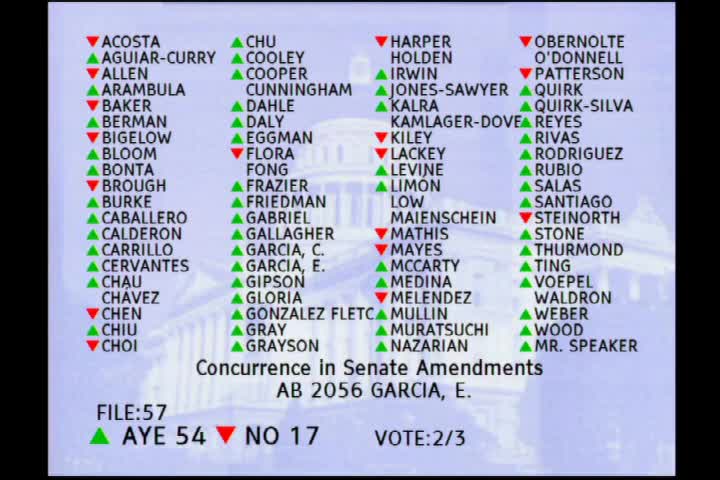 36SEC
Assembly Floor
 3MIN
Senate Floor
 6MIN
Senate Standing Committee on Environmental Quality
 1MIN
Assembly Floor
 1MIN
Assembly Floor
 6MIN
Assembly Standing Committee on Natural Resources
Bill Author

Bill Co-Author(s):