AB 3068: County government: contract legal counsel: auditor-controller.
- Session Year: 2017-2018
- House: Assembly
- Latest Version Date: 2018-09-07
(1)Existing law requires a county board of supervisors, upon request of the county assessor or sheriff, to contract with legal counsel to assist the assessor or sheriff with duties for which the district attorney or county counsel would have a conflict of interest in representing the assessor or sheriff. In the event the board of supervisors does not concur with the assessor or sheriff that a conflict of interest exists, existing law authorizes the county assessor or sheriff to initiate an ex parte proceeding before the presiding judge of the superior court, as provided.
This bill would extend these provisions to additionally require the board of supervisors to contract with legal counsel to assist the auditor-controller, as described above. The bill would also, if the presiding judge determines that a conflict exists and the creation of an ethical wall within the county counsels or district attorneys office is inappropriate, require the presiding judge to select the legal counsel that the board of supervisors employs for the assessor, auditor-controller, or sheriff, as provided.
By adding to the duties of county boards of supervisors with respect to contracts for legal counsel, this bill would impose a state-mandated local program.
(2)The California Constitution requires the state to reimburse local agencies and school districts for certain costs mandated by the state. Statutory provisions establish procedures for making that reimbursement.
This bill would provide that, if the Commission on State Mandates determines that the bill contains costs mandated by the state, reimbursement for those costs shall be made pursuant to the statutory provisions noted above.
(1)Existing law requires a county board of supervisors, upon request of the county assessor or sheriff, to contract with legal counsel to assist the assessor or sheriff with duties for which the district attorney or county counsel would have a conflict of interest in representing the assessor or sheriff. In the event the board of supervisors does not concur with the assessor or sheriff that a conflict of interest exists, existing law authorizes the county assessor or sheriff to initiate an ex parte proceeding before the presiding judge of the superior court, as provided.
This bill would extend these provisions to additionally require the board of supervisors to contract with legal counsel to assist the auditor-controller, as described above. The bill would also, if the presiding judge determines that a conflict exists and the creation of an ethical wall within the county counsels or district attorneys office is inappropriate, require the presiding judge to select the legal counsel that the board of supervisors employs for the assessor, auditor-controller, or sheriff, as provided.
By adding to the duties of county boards of supervisors with respect to contracts for legal counsel, this bill would impose a state-mandated local program.
(2)The California Constitution requires the state to reimburse local agencies and school districts for certain costs mandated by the state. Statutory provisions establish procedures for making that reimbursement.
This bill would provide that, if the Commission on State Mandates determines that the bill contains costs mandated by the state, reimbursement for those costs shall be made pursuant to the statutory provisions noted above.
(1)Existing law requires a county board of supervisors, upon request of the county assessor or sheriff, to contract with legal counsel to assist the assessor or sheriff with duties for which the district attorney or county counsel would have a conflict of interest in representing the assessor or sheriff. In the event the board of supervisors does not concur with the assessor or sheriff that a conflict of interest exists, existing law authorizes the county assessor or sheriff to initiate an ex parte proceeding before the presiding judge of the superior court, as provided.
This bill would extend these provisions to additionally require the board of supervisors to contract with legal counsel to assist the auditor-controller, as described above. The bill would also, if the presiding judge determines that a conflict exists and the creation of an ethical wall within the county counsels or district attorneys office is inappropriate, require the presiding judge to select the legal counsel that the board of supervisors employs for the assessor, auditor-controller, or sheriff. sheriff, as provided.
By adding to the duties of county boards of supervisors with respect to contracts for legal counsel, this bill would impose a state-mandated local program.
(4)(2)The California Constitution requires the state to reimburse local agencies and school districts for certain costs mandated by the state. Statutory provisions establish procedures for making that reimbursement.
This bill would provide that, if the Commission on State Mandates determines that the bill contains costs mandated by the state, reimbursement for those costs shall be made pursuant to the statutory provisions noted above.
(1)Existing law requires the county auditor or auditor-controller to be the chief accounting officer of the county. Existing law authorizes a county board of supervisors to create the office of controller, to be held ex officio by the county auditor, and prescribes its duties. Upon order of the board of supervisors, existing law requires the county auditor or auditor-controller to prescribe the accounting forms and methods of all offices under the control of the board of supervisors and to supervise generally practices in those offices, which includes the ability to review departmental and countywide internal controls.
This bill would require the county auditor or auditor-controller to also be the chief auditor of the county. This bill would grant the county auditor or auditor-controller, as part of its supervisory powers, the authority to audit, rather than review, departmental and countywide internal controls.
By adding to the duties of county auditors, this bill would impose a state-mandated local program.
(2)Existing law authorizes the board of supervisors of a county to contract for certain special services on behalf of specified public entities.
This bill would prohibit this authorization from being construed to limit either (A) the ability of the auditor-controller, district attorney, ethics commission, or sheriff of a county to retain special services for the respective auditing, accounting, prosecutorial, and investigative functions of those offices or (B) the ability of any district or court to retain special services.
(3)Existing law requires a county board of supervisors, upon request of the county assessor or sheriff, to contract with legal counsel to assist the assessor or sheriff with duties for which the district attorney or county counsel would have a conflict of interest in representing the assessor or sheriff. In the event the board of supervisors does not concur with the assessor or sheriff that a conflict of interest exists, existing law authorizes the county assessor or sheriff to initiate an ex parte proceeding before the presiding judge of the superior court, as provided.
This bill would extend these provisions to additionally require the board of supervisors to contract with legal counsel to assist the auditor-controller, as described above. The bill would also, if the presiding judge determines that a conflict exists and the creation of an ethical wall within the county counsels or district attorneys office is inappropriate, require the presiding judge to select the legal counsel that the board of supervisors employs for the assessor, auditor-controller, or sheriff.
By adding to the duties of county boards of supervisors with respect to contracts for legal counsel, this bill would impose a state-mandated local program.
(4)The California Constitution requires the state to reimburse local agencies and school districts for certain costs mandated by the state. Statutory provisions establish procedures for making that reimbursement.
This bill would provide that, if the Commission on State Mandates determines that the bill contains costs mandated by the state, reimbursement for those costs shall be made pursuant to the statutory provisions noted above.
(a)Upon request of the assessor, auditor-controller, or the sheriff of the county, the board of supervisors shall contract with and employ legal counsel to assist the assessor, auditor-controller, or the sheriff in the performance of his or her duties in any case where the county counsel or the district attorney would have a conflict of interest in representing the assessor, auditor-controller, or the sheriff.
(b)In the event that the board of supervisors does not concur with the assessor, auditor-controller, or the sheriff that a conflict of interest exists, the assessor, auditor-controller, or the sheriff, after giving notice to the county counsel or the district attorney, may initiate an ex parte proceeding before the presiding judge of the superior court. The county counsel or district attorney may file an affidavit in the proceeding in opposition to, or in support of, the assessors, auditor-controllers, or the sheriffs position.
(c)The presiding superior court judge that determines in any ex parte proceeding that a conflict actually exists, must, if requested by one of the parties, also rule whether representation by the county counsel or district attorney through the creation of an ethical wall is appropriate. The factors to be considered in this determination of whether an ethical wall should be created are: (1) equal representation, (2) level of support, (3) access to resources, (4) zealous representation, or (5) any other consideration that relates to proper representation.
(d)If a court determines that the action brought by the assessor, auditor-controller, or sheriff is frivolous and in bad faith, the assessors office, auditor-controllers office, or sheriffs office shall pay their own legal costs and all costs incurred in the action by the opposing party. As used in this section, bad faith and frivolous have the meaning given in Section 128.5 of the Code of Civil Procedure.
(e)If the presiding judge determines that a conflict of interest does exist, and that representation by the county counsel or district attorney through the creation of an ethical wall is inappropriate, the board of supervisors shall immediately employ legal counsel selected by the presiding judge to assist the assessor, the auditor-controller, or the sheriff. The assessor, the auditor-controller, or the sheriff may recommend specific legal counsel for selection by the presiding judge. The board of supervisors may also separately recommend specific legal counsel for selection by the presiding judge. When selecting counsel pursuant to this section, the presiding judge shall consider the counsel compensation rates prevailing in the county for similar work.
(f)As used in this section, conflict of interest means a conflict of interest as defined in Rule 3-310 of the Rules of Professional Conduct of the State Bar of California, as construed for public attorneys.
(g)This section shall also apply to any matter brought after an assessor, auditor-controller, or sheriff leaves office if the matter giving rise to the need for independent legal counsel was within the scope of the duties of the assessor, auditor-controller, or sheriff while in office, and the assessor, auditor-controller, or sheriff would have been authorized under this section to request the appointment of independent legal counsel.
SEC. 2.If the Commission on State Mandates determines that this act contains costs mandated by the state, reimbursement to local agencies and school districts for those costs shall be made pursuant to Part 7 (commencing with Section 17500) of Division 4 of Title 2 of the Government Code.
(a)Upon request of the assessor, auditor-controller, or the sheriff of the county, the board of supervisors shall contract with and employ legal counsel to assist the assessor, auditor-controller, or the sheriff in the performance of his or her duties in any case where the county counsel or the district attorney would have a conflict of interest in representing the assessor, auditor-controller, or the sheriff.
(b)In the event that the board of supervisors does not concur with the assessor, auditor-controller, or the sheriff that a conflict of interest exists, the assessor, auditor-controller, or the sheriff, after giving notice to the county counsel or the district attorney, may initiate an ex parte proceeding before the presiding judge of the superior court. The county counsel or district attorney may file an affidavit in the proceeding in opposition to, or in support of, the assessors, auditor-controllers, or the sheriffs position.
(c)The presiding superior court judge that determines in any ex parte proceeding that a conflict actually exists, must, if requested by one of the parties, also rule whether representation by the county counsel or district attorney through the creation of an ethical wall is appropriate. The factors to be considered in this determination of whether an ethical wall should be created are: (1) equal representation, (2) level of support, (3) access to resources, (4) zealous representation, or (5) any other consideration that relates to proper representation.
(d)If a court determines that the action brought by the assessor, auditor-controller, or sheriff is frivolous and in bad faith, the assessors office, auditor-controllers office, or sheriffs office shall pay their own legal costs and all costs incurred in the action by the opposing party. As used in this section, bad faith and frivolous have the meaning given in Section 128.5 of the Code of Civil Procedure.
(e)If the presiding judge determines that a conflict of interest does exist, and that representation by the county counsel or district attorney through the creation of an ethical wall is inappropriate, the board of supervisors shall immediately employ legal counsel selected by the presiding judge to assist the assessor, the auditor-controller, or the sheriff. The assessor, the auditor-controller, or the sheriff may recommend specific legal counsel for selection by the presiding judge. The board of supervisors may also separately recommend specific legal counsel for selection by the presiding judge. When selecting counsel pursuant to this section, the presiding judge shall consider the counsel compensation rates prevailing in the county for similar work.
(f)As used in this section, conflict of interest means a conflict of interest as defined in Rule 3-310 of the Rules of Professional Conduct of the State Bar of California, as construed for public attorneys.
(g)This section shall also apply to any matter brought after an assessor, auditor-controller, or sheriff leaves office if the matter giving rise to the need for independent legal counsel was within the scope of the duties of the assessor, auditor-controller, or sheriff while in office, and the assessor, auditor-controller, or sheriff would have been authorized under this section to request the appointment of independent legal counsel.
SEC. 2.If the Commission on State Mandates determines that this act contains costs mandated by the state, reimbursement to local agencies and school districts for those costs shall be made pursuant to Part 7 (commencing with Section 17500) of Division 4 of Title 2 of the Government Code.
(a)Upon request of the assessor, auditor-controller, or the sheriff of the county, the board of supervisors shall contract with and employ legal counsel to assist the assessor, auditor-controller, or the sheriff in the performance of his or her duties in any case where the county counsel or the district attorney would have a conflict of interest in representing the assessor, auditor-controller, or the sheriff.
(b)In the event that the board of supervisors does not concur with the assessor, auditor-controller, or the sheriff that a conflict of interest exists, the assessor, auditor-controller, or the sheriff, after giving notice to the county counsel or the district attorney, may initiate an ex parte proceeding before the presiding judge of the superior court. The county counsel or district attorney may file an affidavit in the proceeding in opposition to, or in support of, the assessors, auditor-controllers, or the sheriffs position.
(c)The presiding superior court judge that determines in any ex parte proceeding that a conflict actually exists, must, if requested by one of the parties, also rule whether representation by the county counsel or district attorney through the creation of an ethical wall is appropriate. The factors to be considered in this determination of whether an ethical wall should be created are: (1) equal representation, (2) level of support, (3) access to resources, (4) zealous representation, or (5) any other consideration that relates to proper representation.
(d)If a court determines that the action brought by the assessor, auditor-controller, or sheriff is frivolous and in bad faith, the assessors office, auditor-controllers office, or sheriffs office shall pay their own legal costs and all costs incurred in the action by the opposing party. As used in this section, bad faith and frivolous have the meaning given in Section 128.5 of the Code of Civil Procedure.
(e)If the presiding judge determines that a conflict of interest does exist, and that representation by the county counsel or district attorney through the creation of an ethical wall is inappropriate, the board of supervisors shall immediately employ legal counsel selected by the presiding judge to assist the assessor, the auditor-controller, or the sheriff. The assessor, the auditor-controller, or the sheriff may recommend specific legal counsel for selection by the presiding judge. The board of supervisors may also separately recommend specific legal counsel for selection by the presiding judge. When selecting counsel pursuant to this section, the presiding judge shall consider the counsel compensation rates prevailing in the county for similar work.
(f)As used in this section, conflict of interest means a conflict of interest as defined in Rule 3-310 of the Rules of Professional Conduct of the State Bar of California, as construed for public attorneys.
(g)This section shall also apply to any matter brought after an assessor, auditor-controller, or sheriff leaves office if the matter giving rise to the need for independent legal counsel was within the scope of the duties of the assessor, auditor-controller, or sheriff while in office, and the assessor, auditor-controller, or sheriff would have been authorized under this section to request the appointment of independent legal counsel.
SEC. 4.SEC. 2.If the Commission on State Mandates determines that this act contains costs mandated by the state, reimbursement to local agencies and school districts for those costs shall be made pursuant to Part 7 (commencing with Section 17500) of Division 4 of Title 2 of the Government Code.
The county auditor, or auditor or, in counties that have the office of controller, the auditor-controller, shall be the chief accounting officer of the county. county and the chief auditor of the county. Upon order of the board of supervisors, the auditor or auditor-controller shall prescribe, and shall exercise a general supervision, including the ability to review audit departmental and countywide internal controls, over the accounting forms and the method of keeping the accounts of all offices, departments and institutions under the control of the board of supervisors and of all districts whose funds are kept in the county treasury.
SEC. 2.Section 31000 of the Government Code is amended to read:31000.The board of supervisors may contract for special services on behalf of the following public entities: the county, any county officer or department, or any district or court in the county. Such contracts shall be with persons specially trained, experienced, expert and competent to perform the special services. The special services shall consist of services, advice, education or training for such public entities or the employees thereof. The special services shall be in financial, economic, accounting (including the preparation and issuance of payroll checks or warrants), engineering, legal, medical, therapeutic, administrative, architectural, airport or building security matters, laundry services or linen services. They may include maintenance or custodial matters if the board finds that the site is remote from available county employee resources and that the countys economic interests are served by such a contract rather than by paying additional travel and subsistence expenses to existing county employees. The board may pay from any available funds such compensation as it deems proper for these special services. The board of supervisors may, by ordinance, direct the purchasing agent to enter into contracts authorized by this section within the monetary limit specified in Section 25502.5 of the Government Code. Nothing in this section shall be construed to limit either (a) the ability of the auditor-controller, district attorney, ethics commission, or sheriff of a county to retain special services for the respective auditing, accounting, prosecutorial, and investigative functions of those offices or (b) the ability of any district or court to retain special services.
SEC. 3.Section 31000.6 of the Government Code is amended to read:31000.6.(a)Upon request of the assessor or assessor, auditor-controller, or the sheriff of the county, the board of supervisors shall contract with and employ legal counsel to assist the assessor or assessor, auditor-controller, or the sheriff in the performance of his or her duties in any case where the county counsel or the district attorney would have a conflict of interest in representing the assessor or assessor, auditor-controller, or the sheriff.
(b)In the event that the board of supervisors does not concur with the assessor or assessor, auditor-controller, or the sheriff that a conflict of interest exists, the assessor or assessor, auditor-controller, or the sheriff, after giving notice to the county counsel or the district attorney, may initiate an ex parte proceeding before the presiding judge of the superior court. The county counsel or district attorney may file an affidavit in the proceeding in opposition to, or in support of, the assessors or assessors, auditor-controllers, or the sheriffs position.
(c)The presiding superior court judge that determines in any ex parte proceeding that a conflict actually exists, must, if requested by one of the parties, also rule whether representation by the county counsel or district attorney through the creation of an ethical wall is appropriate. The factors to be considered in this determination of whether an ethical wall should be created are: (1) equal representation, (2) level of support, (3) access to resources, (4) zealous representation, or (5) any other consideration that relates to proper representation.
(d)If a court determines that the action brought by the assessor or assessor, auditor-controller, or sheriff is frivolous and in bad faith, the assessors office or office, auditor-controllers office, or sheriffs office shall pay their own legal costs and all costs incurred in the action by the opposing party. As used in this section, bad faith and frivolous have the meaning given in Section 128.5 of the Code of Civil Procedure.
(e)If the presiding judge determines that a conflict of interest does exist, and that representation by the county counsel or district attorney through the creation of an ethical wall is inappropriate, the board of supervisors shall immediately employ legal counsel selected by the presiding judge to assist the assessor or assessor, the auditor-controller, or the sheriff. The assessor, the auditor-controller, or the sheriff may recommend specific legal counsel for selection by the presiding judge.
(f)As used in this section, conflict of interest means a conflict of interest as defined in Rule 3-310 of the Rules of Professional Conduct of the State Bar of California, as construed for public attorneys.
(g)This section shall also apply to any matter brought after an assessor or assessor, auditor-controller, or sheriff leaves office if the matter giving rise to the need for independent legal counsel was within the scope of the duties of the assessor or assessor, auditor-controller, or sheriff while in office, and the assessor or assessor, auditor-controller, or sheriff would have been authorized under this section to request the appointment of independent legal counsel.
SEC. 4.If the Commission on State Mandates determines that this act contains costs mandated by the state, reimbursement to local agencies and school districts for those costs shall be made pursuant to Part 7 (commencing with Section 17500) of Division 4 of Title 2 of the Government Code.
|
Date
|
Status
|
|---|---|
| Sep 7, 2018 | Chaptered by Secretary of State - Chapter 307, Statutes of 2018. |
| Sep 7, 2018 | Approved by the Governor. |
| Aug 29, 2018 | Enrolled and presented to the Governor at 4 p.m. |
| Aug 23, 2018 | In Assembly. Ordered to Engrossing and Enrolling. |
| Aug 23, 2018 | Read third time. Passed. Ordered to the Assembly. |
| Aug 17, 2018 | Read second time. Ordered to third reading. |
| Aug 6, 2018 | In committee: Referred to APPR. suspense file. |
| Jun 27, 2018 | From committee: Do pass and re-refer to Com. on APPR. (Ayes 5. Noes 2.) (June 26). Re-referred to Com. on APPR. |
| Jun 20, 2018 | From committee: Do pass and re-refer to Com. on JUD. (Ayes 6. Noes 1.) (June 20). Re-referred to Com. on JUD. |
| Jun 18, 2018 | Joint Rule 62(a), file notice suspended. (Page 4717.) |
| Jun 13, 2018 | Referred to Coms. on GOV. & F. and JUD. |
| May 31, 2018 | In Senate. Read first time. To Com. on RLS. for assignment. |
| May 30, 2018 | Read third time. Passed. Ordered to the Senate. |
| May 25, 2018 | From committee: Do pass. (Ayes 16. Noes 0.) (May 25). |
| May 9, 2018 | In committee: Set, first hearing. Referred to APPR. suspense file. |
| Apr 26, 2018 | From committee: Do pass and re-refer to Com. on APPR. (Ayes 8. Noes 0.) (April 25). Re-referred to Com. on APPR. |
| Apr 17, 2018 | Re-referred to Com. on L. GOV. |
| Apr 16, 2018 | From committee chair, with author's amendments: Amend, and re-refer to Com. on L. GOV. Read second time and amended. |
| Mar 12, 2018 | Referred to Com. on L. GOV. |
| Feb 17, 2018 | From printer. May be heard in committee March 19. |
| Feb 16, 2018 | Read first time. To print. |
|
Date
|
Description
|
Location
|
Votes
|
|
|---|---|---|---|---|
| Aug 23, 2018 | Assembly 3rd Reading AB3068 Daly et al. By Bates | Senate Floor |
Passed |
|
| Aug 16, 2018 | Do pass | Senate Standing Committee on Appropriations |
Passed |
|
| Aug 6, 2018 | Placed on suspense file | Senate Standing Committee on Appropriations |
Passed |
|
| Jun 26, 2018 | Do pass, but first be re-referred to the Committee on [Appropriations] | Senate Standing Committee on Judiciary |
Passed |
|
| Jun 20, 2018 | Do pass, but first be re-referred to the Committee on [Judiciary] | Senate Standing Committee on Governance and Finance |
Passed |
|
| May 30, 2018 | AB 3068 DALY Assembly Third Reading | Assembly Floor |
Passed |
|
| May 25, 2018 | Do pass. | Assembly Standing Committee on Appropriations |
Passed |
|
| Apr 25, 2018 | Do pass and be re-referred to the Committee on [Appropriations] | Assembly Standing Committee on Local Government |
Passed |
This list shows positions taken on this bill by organizations on the date displayed, which is linked to the original source.
Positions by individuals are not included.
Office of Senate Floor Analyses (916) 651-1520 Fax: (916) 327-4478 | AB |
THIRD READING
Bill No: AB 3068
:
SENATE GOVERNANCE & FIN. COMMITTEE: 6-1, 6/20/18
AYES: McGuire, Nguyen, Beall, Hernandez, Hertzberg, Lara
NOES: Moorlach
SENATE JUDICIARY COMMITTEE: 5-2, 6/26/18
AYES: Jackson, Hertzberg, Monning, Stern, Wieckowski
NOES: Moorlach, Anderson
SENATE APPROPRIATIONS COMMITTEE: 7-0, 8/16/18
AYES: Portantino, Bates, Beall, Bradford, Hill, Nielsen, Wiener
ASSEMBLY FLOOR: 77-0, 5/30/18 - See last page for vote
SOURCE: Auditor-Controller of Orange County
DIGEST:
This bill requires county boards of supervisors to obtain independent legal counsel to assist a county auditor-controller if a county counsel or district attorney would have a conflict of interest in representing the auditor-controller.
- Provides for the following under the California Constitution:
- Divides the state into 58 counties.
- Tasks the Legislature with developing uniform procedures for their formation, consolidation, and boundary changes.
- Requires the Legislature to establish general laws providing for county powers, an elected county sheriff, an elected district attorney, an elected assessor, and an elected governing body in each county.
- Provides that each general law county is governed by a five-member board of supervisors, in which is vested the exercise of the county’s powers.
- Creates additional county officers, including a county auditor, and, if appointed by the board of supervisors, a county counsel that serves as the chief legal advisor to the county and is appointed by the board of supervisors for a four year term.
- Requires a county board of supervisors, at the request of the sheriff or assessor, to hire outside counsel where a conflict of interest exists for the county counsel.
- Allows the board of supervisors to ask a court to rule on:
- If a conflict actually exists,
- If an “ethical wall” may instead be established, and
- If the request by the sheriff or assessor was brought frivolously.
- Requires, if the request was frivolous, the sheriff or assessor to pay their own legal costs.
This bill:
- Adds auditor-controllers to the process established for sheriffs and assessors.
- Requires the presiding judge to select the counsel to be employed by the board of supervisors if a conflict exists.
- Allows the sheriff, auditor-controller, or assessor, as well as the board of supervisors, to recommend specific legal counsel to the presiding judge.
- Requires the presiding judge must consider counsel compensation rates prevailing in the county for similar work.
Background
Board of Supervisors. The board of supervisors controls the exercise of the county’s powers and the conduct of its officers. Under state law, the powers of a county can only be exercised by the board of supervisors or through officers acting under the authority of the board or authority conferred by law, and the board supervises the official conduct of all county officers, particularly as their activities pertain to the management and disbursement of public funds.
Auditor-controller. County auditors serve as the chief accounting officers for counties, allocating property tax revenues and performing audits on county departments, special districts, and joint powers authorities. Counties may also create the office of county controller, who is responsible for the county’s bookkeeping and check writing. Absent a designation to the contrary, the office of county controller is held by the county auditor. State law permits counties to consolidate the two offices into the office of the county auditor-controller. County auditor-controllers must perform specified audits under state law, and the county boards of supervisors can also request other audits. Most county auditor-controllers are elected officials, but county supervisors can convert the position to an appointed one with majority voter approval.
Conflict of Interest. Under the Rules of Professional Conduct, a county counsel must represent the interests of the entire county, and state law specifically requires county counsel to prosecute or defend any action brought by or against the auditor-controller contesting the validity of a payment if the interest of the county is not adverse. Where the county counsel has an actual conflict of interest because he or she cannot ethically represent both sides in a disagreement between the board and county officers that have authority to act independently of the board—typically the constitutionally-created offices of sheriff and assessor—the county counsel acts as the legal advisor to the board of supervisors.
Orange County. Orange County’s auditor-controller is elected. The combined auditor-controller office came into being in 1982, when the Board of Supervisors consolidated the formerly independent functions into a single Office of Auditor-Controller. Today, the county’s Auditor-Controller is responsible for conducting independent audits of county departments, as well as basic bookkeeping and check writing.
In recent years, press reports have documented disputes between the Orange County Auditor-Controller and the board of supervisors, including:
- Whether internal audits should be assigned to the Auditor-Controller or the county’s Internal Audit Department.
- A decision by the Auditor-Controller to withhold pension payments for a county supervisor that the Auditor-Controller deemed illegal.
- A 2016 decision by the Auditor-Controller to halt payment for mailers that the Auditor-Controller deemed in violation of Fair Political Practices Commission rules.
Comments
- Purpose of the bill. Auditor-controllers are the financial watchdogs of the county. In their auditor role, they investigate financial malfeasance and identify improper or inefficient expenditures. These activities can put an elected auditor-controller at odds with county supervisors, as illustrated by recent events in Orange County. But the auditor-controller may not hire outside counsel without the approval of the board of supervisors, even though county counsel is the legal advisor to the board of supervisors under state law and thus may not be able to fairly represent the auditor-controller. AB 3068 addresses this conflict in existing law by allowing auditor-controllers to hire outside counsel where a conflict of interest exists, just as is already allowed for sheriffs and assessors. It also lets sheriffs, assessors, and auditor-controllers recommend specific counsel to the presiding judge, while allowing the board of supervisors to do the same. This allows auditor-controllers to mount an appropriate legal defense when necessary, while striking an appropriate balance of power among county offices. By addressing these issues, AB 3068 enables elected auditor-controllers, as well as the sheriff and assessor, to more effectively carry out their responsibilities. This ultimately protects the fiscal health of counties.
- Home rule. AB 3068 emerges from a series of disputes within Orange County, but modifies the authority for auditor-controllers statewide. Yet local avenues exist for resolving these conflicts. County charters provide the voters in an individual county the opportunity to modify the powers and duties of their county officers, and the board of supervisors is ultimately accountable to local voters for their actions. Moreover, the particular conflicts giving rise to this bill appear to have been resolved because the disputed charges were ultimately paid. Accordingly, the issues raised by this bill may be best resolved at the local level instead of through a statewide bill.
FISCAL EFFECT: Appropriation: Fiscal Com.: Local:
According to the Senate Appropriations Committee, unknown, potentially significant reimbursable county costs to provide outside counsel to the auditor-controller, to the extent that the Commission on State Mandates determines that this measure imposes a state-mandated local program. Actual costs in a given year would depend upon the number of instances in which independent counsel must be hired by counties, the complexity of the issues, the length of the services required, and whether or not the matters include litigation. (General Fund)
Auditor-Controller of Orange County (source)
Association of Local Government Auditors
Auditor-Controller of Amador County
Auditor-Controller of Calaveras County
Auditor-Controller of Colusa County
Auditor-Controller of Del Norte County
Auditor-Controller of El Dorado County
Auditor-Controller of Humboldt County
Auditor-Controller of Imperial County
Auditor-Controller of Kern County
Auditor-Controller of Lassen County
Auditor-Controller of Madera County
Auditor-Controller of Mariposa County
Auditor-Controller of Mendocino County
Auditor-Controller of Merced County
Auditor-Controller of Monterey County
Auditor-Controller of Nevada County
Auditor-Controller of Riverside County
Auditor-Controller of Santa Barbara County
Auditor-Controller of Sierra County
Auditor-Controller of Siskiyou County
Auditor-Controller of Solano County
Auditor-Controller of Stanislaus County
Auditor-Controller of Sutter County
Auditor-Controller of Tehama County
Auditor-Controller of Trinity County
Auditor-Controller of Tulare County
Auditor-Controller of Tuolumne County
Auditor-Controller of Ventura County
Auditor-Controller of Yuba County
Auditor-Controller/Treasurer/Tax Collector of San Bernardino County
Colusa County Sheriff
Elected members of the State Association of County Auditors
Orange County Sheriff
One individual
OPPOSITION: (Verified 8/17/18)
None received
ASSEMBLY FLOOR: 77-0, 5/30/18
AYES: Acosta, Aguiar-Curry, Travis Allen, Arambula, Baker, Berman, Bigelow, Bloom, Bonta, Brough, Burke, Caballero, Calderon, Carrillo, Cervantes, Chau, Chávez, Chen, Chiu, Choi, Chu, Cooley, Cooper, Cunningham, Dahle, Daly, Eggman, Flora, Fong, Frazier, Friedman, Gallagher, Cristina Garcia, Eduardo Garcia, Gipson, Gloria, Gonzalez Fletcher, Gray, Grayson, Harper, Holden, Irwin, Jones-Sawyer, Kalra, Kamlager-Dove, Kiley, Lackey, Levine, Limón, Low, Maienschein, Mathis, Mayes, McCarty, Melendez, Mullin, Muratsuchi, Nazarian, Obernolte, O'Donnell, Patterson, Quirk, Quirk-Silva, Reyes, Rodriguez, Rubio, Salas, Santiago, Steinorth, Mark Stone, Thurmond, Ting, Voepel, Waldron, Weber, Wood, Rendon
NO VOTE RECORDED: Medina
8/18/18 13:58:59
**** END ****
SENATE COMMITTEE ON
Senator Anthony Portantino, Chair
2017 - 2018 Regular Session
AB 3068 (Daly) - County government: contract legal counsel: auditor-controller
Version: | Policy Vote: |
Urgency: | Mandate: |
Hearing Date: | Consultant: |
This bill meets the criteria for referral to the Suspense File.
Bill Summary:
AB 3068 would require a county board of supervisors to contract with legal counsel to assist the auditor-controller with duties for which the district attorney or county counsel would have a conflict of interest in representing the auditor-controller.
Fiscal Impact:
Unknown, potentially significant reimbursable county costs to provide outside counsel to the auditor-controller, to the extent that the Commission on State Mandates determines that this measure imposes a state-mandated local program. Actual costs in a given year would depend upon the number of instances in which independent counsel must be hired by counties, the complexity of the issues, the length of the services required, and whether or not the matters include litigation. (General Fund)
Background:
County auditors serve as the chief accounting officers for counties, allocating property tax revenues and performing audits on county departments, special districts, and joint powers authorities. Counties may also create the office of county controller, who is responsible for the county’s bookkeeping and check writing. Absent a designation to the contrary, the office of county controller is held by the county auditor. State law permits counties to consolidate the two offices into the office of the county auditor-controller. County auditor-controllers must perform specified audits under state law, and the county boards of supervisors can also request other audits. Most county auditor-controllers are elected officials, but county supervisors can convert the position to an appointed one with majority voter approval. The county auditor-controller is appointed in 11 counties.
Existing law requires a county board of supervisors, upon request of the county assessor or sheriff, to contract with legal counsel to assist the assessor or sheriff with duties for which the district attorney or county counsel would have a conflict of interest in representing the assessor or sheriff. In the event the board of supervisors does not concur with the assessor or sheriff that a conflict of interests exists, existing law authorizes the county assessor or sheriff to initiate an ex parte proceeding before the presiding judge of the superior court, as provided. If the judge determines that a conflict exists through an ex parte proceeding, he or she may rule that representation may be provided by the district attorney or county counsel through an “ethical wall,” as provided, or order the board of supervisors to employ outside legal counsel.
Proposed Law:
AB 3068 would require a county board of supervisors, upon request of the auditor-controller, to contract with legal counsel to assist the auditor-controller with duties for which the district attorney or county counsel would have a conflict of interest in representing the auditor-controller.
The bill would also explicitly authorize the assessor, auditor-controller, or sheriff to recommend specific legal counsel for selection by that presiding judge, and authorize the board of supervisors to separately make a recommendation as well. When selecting counsel, the judge must consider the counsel compensation rates prevailing in the county for similar work.
Related Legislation:
SB 292 (Bates), which was held on the Assembly Appropriations Committee’s Suspense File last year, was substantially similar to this bill.
Staff Comments:
This bill is intended to address instances in which a conflict arises between an auditor-controller and a board of supervisors, and the county counsel or district attorney could not fairly represent the auditor-controller in a dispute. Examples that have arisen in recent history include a refusal by an auditor-controller to make pension payments that were considered illegal, refusal to pay for a fire engine that was believed to be funded by illegally collected fees, and an instance in which payments requested by a board of supervisor for mass mailings were halted by the auditor-controller.
-- END --
Senator Hannah-Beth Jackson, Chair
2017-2018 Regular Session
Bill No: AB 3068 (Author:Daly)
Version: April 16, 2018
Hearing Date: June 26, 2018
Fiscal: Yes
Urgency: No
Consultant: MEC
SUBJECT
County government: contract legal counsel: auditor-controller.
DESCRIPTION
Existing law requires a county board of supervisors, upon request of the county assessor or sheriff, to contract with legal counsel to assist the assessor or sheriff with duties for which the district attorney or county counsel would have a conflict of interest in representing the assessor or sheriff. Existing law provides for the county assessor or sheriff to initiate an ex parte proceeding before the presiding judge of the superior court in the event the board of supervisors does not concur with the assessor or sheriff that a conflict of interests exists. This bill would expand these provisions to apply to the county auditor-controller. This bill would also provide that the assessor, the auditor-controller, or the sheriff may recommend specific legal counsel for selection by the presiding judge and that the board of supervisors may also separately recommend specific legal counsel for selection by the presiding judge. When selecting counsel pursuant to these provisions, this bill would require the presiding judge to consider the counsel compensation rates prevailing in the county for similar work.
BACKGROUND
The California Constitution divides the state into counties and tasks the Legislature with developing uniform procedures for their formation, consolidation, and boundary changes. Additionally, it requires the Legislature to establish general laws providing for county powers, an elected county sheriff, an elected district attorney, an elected assessor, and an elected governing body in each county. (Cal. Const., art. XI, Sec. 1.) State law provides that each county is governed by a five-member board of supervisors, with each county then being able to adopt their own charters that may increase the number of supervisors, create additional officers, and assign different powers to those officers. (Gov. Code Sec. 2500 et. seq.)
State law also creates additional county officers, including a county auditor-controller, and, if appointed by the board of supervisors, a county counsel. The county counsel is the chief legal advisor to the county and is appointed by the board of supervisors for a four year term. A county counsel may only be removed by a grand jury or the board of supervisors for cause, such as for misconduct, malfeasance, or failing to perform his or her duty. (Gov. Code Sec. 26529.)
In addition, the Government Code specifically requires the board of supervisors, at the request of the sheriff or assessor, to hire outside counsel where a conflict of interest exists. The board may ask a court to rule on: (1) if a conflict actually exists, (2) if an “ethical wall” may instead be established, and (3) if the request by the sheriff or assessor was brought frivolously. If the request was frivolous, the sheriff or assessor must pay their own legal costs. (Gov. Code Sec. 31000.6.)
This bill would add the county auditor-controller to this existing provision that requires the board of supervisors, at the request of the auditor-controller, to hire outside counsel where a conflict of interest exists. Additionally, this bill would provide that the assessor, the auditor-controller, or the sheriff may recommend specific legal counsel for selection by the presiding judge and that the board of supervisors may also separately recommend specific legal counsel for selection by the presiding judge. When selecting counsel pursuant to these provisions, this bill would require the presiding judge to consider the counsel compensation rates prevailing in the county for similar work.
CHANGES TO EXISTING LAW
Existing law provides that upon the request of the assessor or the sheriff of the county, the board of supervisors shall contract with and employ legal counsel to assist the assessor or the sheriff in the performance of his or her duties in any case where the county counsel or the district attorney would have a conflict of interest in representing the assessor or the sheriff. (Gov. Code Sec. 31000.6(a).)
Existing law provides that in the event that the board of supervisors does not concur with the assessor or the sheriff that a conflict of interest exists, the assessor or the sheriff, after giving notice to the county counsel or the district attorney, may initiate an ex parte proceeding before the presiding judge of the superior court. The county counsel or district attorney may file an affidavit in the proceeding in opposition to, or in support of, the assessor’s or the sheriff’s position. (Gov. Code Sec. 31000.6(b).)
Existing law provides that the presiding superior court judge that determines in any ex parte proceeding that a conflict actually exists, must, if requested by one of the parties, also rule whether representation by the county counsel or district attorney through the creation of an “ethical wall” is appropriate. The factors to be considered in this determination of whether an “ethical wall” should be created are:
- equal representation;
- level of support;
- access to resources;
- zealous representation; or
- any other consideration that relates to proper representation. (Gov. Code Sec. 31000.6(c).)
Existing law provides that if a court determines that the action brought by the assessor or sheriff is frivolous and in bad faith, the assessor’s office or sheriff’s office shall pay their own legal costs and all costs incurred in the action by the opposing party. (Gov. Code Sec. 31000.6(d).)
Existing law defines frivolous, for this purpose, as meaning totally and completely without merit or for the sole purpose of harassing an opposing party. (Code Civ. Proc. Sec. 128.5(b)(2).)
Existing law provides that if the presiding judge determines that a conflict of interest does exist, and that representation by the county counsel or district attorney through the creation of an ethical wall is inappropriate, the board of supervisors shall immediately employ legal counsel to assist the assessor or the sheriff. (Gov. Code Sec. 31000.6(e).)
Existing law, as used in this section, means conflict of interest as defined in Rule 3-310 of the Rules of Professional Conduct of the State Bar of California, as construed for public attorneys. (Gov. Code Sec. 31000.6(f).)
Existing law provides that this section shall also apply to any matter brought after an assessor or sheriff leaves office if the matter giving rise to the need for independent legal counsel was within the scope of the duties of the assessor or sheriff while in office, and the assessor or sheriff would have been authorized under this section to request the appointment of independent legal counsel. (Gov. Code Sec. 31000.6(g).)
This bill would add a county’s auditor-controller to the above code section, enabling an auditor-controller to have the same access to outside legal counsel as the assessor or sheriff of the county.
This bill would provide that the assessor, the auditor-controller, or the sheriff may recommend specific legal counsel for selection by the presiding judge and that the board of supervisors may also separately recommend specific legal counsel for selection by the presiding judge.
This bill would require the presiding judge to consider the counsel compensation rates prevailing in the county for similar work when selecting counsel pursuant to these provisions.
COMMENT
- Stated need for this bill
According to the author:
There have been instances in recent years where conflicts have arisen between auditor-controllers and the board of supervisors of their respective counties regarding questionable payments the board requests the auditor-controller execute.
The El Dorado County Auditor-Controller was sued by the Board of Supervisors when he refused to pay for a fire engine that he believed was being funded by illegally collected fees. The Monterey County Auditor-Controller questioned the legality of paying retroactive pay increases that contradicted a local ordinance and increased the pensions of two Supervisors who had been defeated for re-election, but he was forced to rely on county counsel, who reports to the board of supervisors. [ . . . ] The Orange County Auditor-Controller has experienced instances where he felt payments requested by individual members of the board of supervisors may have been illegal, one set of instances involving the Mass Mailing Act and the other instance involving a four-year retroactive pension payment.
These instances demonstrate the need for legislation that will allow auditor-controllers to have access to outside legal counsel in limited circumstances where county counsel has been deemed to have a conflict of interest.
AB 3068 attempts to solve this problem by adding auditor-controllers to an existing list of county officials that may seek the advice of outside counsel if the presiding judge deems there to be a legitimate conflict of interest. AB 3068 also allows the assessor, auditor-controller, or sheriff, respectively, as well as the board of supervisors to make a recommendation to the presiding judge as to which attorney or law firm should be selected as the outside counsel.
- Role of the Auditor-Controller
County auditors serve as the chief accounting officers for counties, allocating property tax revenues and performing audits on county departments, special districts, and joint powers authorities. Counties may also create the office of county controller, who is responsible for the county’s bookkeeping and check writing. Absent a designation to the contrary, the office of county controller is held by the county auditor. State law permits counties to consolidate the two offices into the office of the county auditor-controller. County auditor-controllers must perform specified audits under state law and the county boards of supervisors can also request other audits.
Arguably, a county’s auditor-controller acts as a watchdog for how taxpayer’s money is spent. This, at times, puts the auditor-controller at odds with other county officials. In 2013, the Territorial Dispatch reported on an instance where the Sutter County District Attorney brought charges against the Sutter County Auditor-Controller seemingly in an effort to make the auditor-controller, in this instance an elected official, step down. The Territorial Dispatch reported that the charges were dropped as soon as the Sutter County Auditor-Controller announced his plans to retire. The Sutter County Auditor-Controller had no option but to hire his own defense counsel, to defend against accusations that stemmed from his role as the auditor-controller. (Binninger, Carl Adams vs. Robert Stark, Territorial Dispatch (Dec. 18, 2013) p. 1.) This bill seeks to address instances of local misconduct, ensuring a county’s auditor-controller has the tools they need to fulfill their public role.
The Orange County Auditor-Controller, sponsor of this bill, writes:
Like many county auditor-controllers, my office has had its independence threatened while we lacked non-conflicted legal counsel. During my first year as Orange County Auditor-Controller, when I was out of the office for several days for a medical procedure, the county counsel refused to provide my staff with any advice when they were threatened with criminal prosecution for attempting to withhold payment for a four-year retroactive pension payment for a member of the board of supervisors. In 2016, the county counsel threatened my office for trying to scrutinize payments on two county supervisors’ mailers that were to be sent shortly before an election. My effort to hire independent counsel was even deleted from a meeting agenda of the board of supervisors preventing the board from even having a public discussion or vote on the issue.
The examples highlighted by the author and sponsor arguably provide justification for ensuring that the auditor-controller, just like the sheriff and assessor, have the opportunity to ask the court for independent legal counsel. Moreover, the determination of whether a conflict exists and what to do about it would continue to rest with the court.
Support: California State Association of County Auditors; Colusa County Auditor-Controller; Colusa County Sheriff; Kern County Auditor-Controller; Lassen County Auditor-Controller; Madera County Auditor-Controller; Mendocino County Auditor-Controller; Monterey County Auditor-Controller; Orange County Sheriff; San Bernardino County Auditor-Controller, Treasurer, Tax Collector; Santa Barbara County Auditor-Controller; Siskiyou County Auditor-Controller; Sutter County Auditor-Controller; Tulare County Auditor-Controller; Ventura County Auditor-Controller
Opposition: None Known
HISTORY
Source: Orange County Auditor-Controller
Related Pending Legislation: SB 292 (Bates, 2017) was identical to this bill except for: the provisions allowing the assessor, the auditor-controller, or the sheriff to recommend specific legal counsel for selection by the presiding judge and allowing the board of supervisors to separately recommend specific legal counsel for selection by the presiding judge; and the provision that would require the presiding judge to consider the counsel compensation rates prevailing in the county for similar work when selecting counsel pursuant to these provisions. This bill was held in committee and under submission in the Assembly Committee on Appropriations.
Prior Legislation: AB 783 (Daly, 2015) would have given responsibility for internal audits, in Orange County, to the independently-elected auditor-controller, rather than the county board of supervisors. AB 783 died on the Senate Floor.
Prior Vote:
Assembly Floor (Ayes 77, Noes 0)
Assembly Appropriations Committee (Ayes 16, Noes 0)
Assembly Local Government Committee (Ayes 8, Noes 0)
**************
SENATE COMMITTEE ON GOVERNANCE AND FINANCE
Senator Mike McGuire, Chair
2017 - 2018 Regular
Bill No: | AB 3068 | Hearing Date: | 6/20/18 |
Author: | Daly | Tax Levy: | No |
Version: | 4/16/18 | Fiscal: | Yes |
Consultant: | Favorini-Csorba | ||
County government: contract legal counsel: auditor-controller
Requires county boards of supervisors to obtain independent legal counsel to assist a county auditor-controller if a county counsel or district attorney would have a conflict of interest in representing the auditor-controller.
Background
County governance. The California Constitution divides the state into counties and tasks the Legislature with developing uniform procedures for their formation, consolidation, and boundary changes. It also requires the Legislature to establish general laws providing for county powers, an elected county sheriff, an elected district attorney, an elected assessor, and an elected governing body in each county. State law provides that each general law county is governed by a five-member board of supervisors. Counties that adopt their own charters may increase the number of supervisors on the board, create additional officers, and assign different powers to those officers.
The board of supervisors controls the exercise of the county’s powers and the conduct of its officers. Under state law, the powers of a county can only be exercised by the board of supervisors or through officers acting under the authority of the board or authority conferred by law. The board also supervises the official conduct of all county officers, particularly as their activities pertain to the management and disbursement of public funds. The board of supervisors is additionally vested with the constitutional authority to provide for the number, compensation, tenure, and appointment of employees (Article XI, Section 1).
County counsel. State law creates additional county officers, including a county auditor, and, if appointed by the board of supervisors, a county counsel. The county counsel is the chief legal advisor to the county and is appointed by the board of supervisors for a four year term. A county counsel may only be removed by a grand jury or the board of supervisors for cause, such as for misconduct, malfeasance, or failing to perform his or her duty.
Under the Rules of Professional Conduct, a county counsel must represent the interests of the entire county, and state law specifically requires county counsel to prosecute or defend any action brought by or against the auditor-controller contesting the validity of a payment if the interest of the county is not adverse. Where the county counsel has an actual conflict of interest because he or she cannot ethically represent both sides in a disagreement between the board and county officers that have authority to act independently of the board—typically the constitutionally-created offices of sheriff and assessor—the county counsel acts as the legal advisor to the board of supervisors.
In addition, the Government Code specifically requires the board of supervisors, at the request of the sheriff or assessor, to hire outside counsel where a conflict of interest exists. The board may ask a court to rule on: (1) if a conflict actually exists, (2) if an “ethical wall” may instead be established, and (3) if the request by the sheriff or assessor was brought frivolously. If the request was frivolous, the sheriff or assessor must pay their own legal costs.
Auditor-controller. County auditors serve as the chief accounting officers for counties, allocating property tax revenues and performing audits on county departments, special districts, and joint powers authorities. Counties may also create the office of county controller, who is responsible for the county’s bookkeeping and check writing. Absent a designation to the contrary, the office of county controller is held by the county auditor. State law permits counties to consolidate the two offices into the office of the county auditor-controller. County auditor-controllers must perform specified audits under state law, and the county boards of supervisors can also request other audits.
Most county auditor-controllers are elected officials, but county supervisors can convert the position to an appointed one with majority voter approval. The county auditor-controller is appointed in 11 counties. General law counties may consolidate the auditor-controller's duties with those of the tax collector and treasurer, within either the elective or appointive office of the director of finance. Charter counties have constitutional authority to assign the auditor-controller’s statutory duties to other officers or structures (Article XI, Section 4).
Orange County. Orange County’s auditor-controller is elected. The combined auditor-controller office came into being in 1982, when the Board of Supervisors consolidated the formerly independent functions into a single Office of Auditor-Controller. Today, the county’s Auditor-Controller is responsible for conducting independent audits of county departments, as well as basic bookkeeping and check writing.
In 1994, Orange County became the largest municipality in U.S. history to file for bankruptcy as a result of the mismanagement of county investments. In the wake of the bankruptcy, investigators concluded that county auditors were too close to their colleagues at the county Treasurer-Tax Collector’s office, and had failed to oversee the latter’s questionable investments.
In recent years, press reports have documented disputes between the Orange County Auditor-Controller and the board of supervisors, including:
- Whether internal audits should be assigned to the Auditor-Controller or the county’s Internal Audit Department.
- A decision by the Auditor-Controller to withhold pension payments for a county supervisor that the Auditor-Controller deemed illegal.
- A 2016 decision by the Auditor-Controller to halt payment for mailers that the Auditor-Controller deemed in violation of Fair Political Practices Commission rules.
Illegal charges. State law penalizes an officer that pays, assists in paying, or audits an illegal claim in violation of the law by holding that officer personally liable to the person damaged by that illegal action. The Penal Code further penalizes an officer of the state or local government or any other person charged with overseeing public moneys with imprisonment in state prison and disqualifies them from holding any public office if that person, among other offenses, makes fraudulent charges, embezzles public funds, or willfully refuses, omits to pay over, or transfer public money.
The Orange County Auditor-Controller asserts that these liabilities and the statutory role of county counsel as the advisor to the board of supervisors can prevent an auditor-controller from effectively carrying out his or her responsibilities. He wants the Legislature to provide greater protections and authority to elected auditor-controllers.
Proposed Law
Assembly Bill 3068 adds an auditor-controller to provisions of existing law that require the board of supervisors to contract with outside legal counsel upon request of the sheriff or assessor if there is a conflict of interest on the part of the county counsel or district attorney, as well as into additional existing procedures for determining whether an actual conflict of interest exists. AB 3068 requires the presiding judge to select the counsel to be employed by the board of supervisors if a conflict exists. The bill also allows the sheriff, auditor-controller, or assessor, as well as the board of supervisors, to recommend specific legal counsel to the presiding judge. The presiding judge must consider counsel compensation rates prevailing in the county for similar work.
State Revenue Impact
No estimate.
Comments
1. Purpose of the bill. Auditor-controllers are the financial watchdogs of the county. In their auditor role, they investigate financial malfeasance and identify improper or inefficient expenditures. These activities can put an elected auditor-controller at odds with county supervisors, as illustrated by recent events in Orange County. But the auditor-controller may not hire outside counsel without the approval of the board of supervisors, even though county counsel is the legal advisor to the board of supervisors under state law and thus may not be able to fairly represent the auditor-controller. AB 3068 addresses this conflict in existing law by allowing auditor-controllers to hire outside counsel where a conflict of interest exists, just as is already allowed for sheriffs and assessors. It also lets sheriffs, assessors, and auditor-controllers recommend specific counsel to the presiding judge, while allowing the board of supervisors to do the same. This allows auditor-controllers to mount an appropriate legal defense when necessary, while striking an appropriate balance of power among county offices. By addressing these issues, AB 3068 enables elected auditor-controllers, as well as the sheriff and assessor, to more effectively carry out their responsibilities. This ultimately protects the fiscal health of counties.
2. Home rule. AB 3068 emerges from a series of disputes within Orange County, but modifies the authority for auditor-controllers statewide. Yet local avenues exist for resolving these conflicts. County charters provide the voters in an individual county the opportunity to modify the powers and duties of their county officers, and the board of supervisors is ultimately accountable to local voters for their actions. Moreover, the particular conflicts giving rise to this bill appear to have been resolved because the disputed charges were ultimately paid. Accordingly, the issues raised by this bill may be best resolved at the local level instead of through a statewide bill.
3. You are special. Assessors and sheriffs are constitutionally-established offices, which grants them additional independence from the board of supervisors. Auditor-controllers, on the other hand, are creatures of statute established under the direction of the board. The provisions of existing law that apply to assessors and sheriffs are intended to help protect their unique status: because these entities can act to some degree independently of the board, situations can arise where they may need outside legal counsel. By contrast, regardless of whether the auditor-controller is appointed or elected, they are always subordinate to the board. Accordingly, it is unclear when they would need their own legal counsel due to a true conflict of interest. In addition, such a move could establish a precedent for other county officers seeking independence from the board. Should the same special status granted to constitutional officers also be granted to the auditor-controller?
4. Mandate. The California Constitution requires the state to reimburse local governments for the costs of new or expanded state mandated local programs. Because AB 3068 imposes additional duties on county boards of supervisors with respect to contracts for legal counsel, Legislative Counsel says that it imposes a new state mandate. AB 3068 requires the state to reimburse local agencies if the Commission on State Mandates determines that the bill imposes a reimbursable mandate.
5. Double referral. The Senate Rules Committee has ordered a double-referral of AB 3068—first to the Senate Governance & Finance Committee, which has jurisdiction over bills relating to the powers and duties of county auditors, and then to the Senate Judiciary Committee, which has jurisdiction over bills relating to judges.
6. Related legislation. SB 292 (Bates, 2017), which the Committee passed at its March 29th, 2017 hearing on a vote of 6-0, initially would have revised the statutory liabilities and powers of auditor-controllers, but was amended by this Committee to contain similar provisions allowing auditor-controllers the ability to hire outside counsel in the event of a conflict. SB 292 was held in the Assembly Appropriations Committee. AB 783 (Daly, 2015) would have given responsibility for internal audits in Orange County to the independently-elected auditor-controller, rather than the county board of supervisors. The Senate Governance and Committee approved AB 783 on a 5-1 vote. AB 783 died on the Senate Floor.
Assembly Actions
Assembly Local Government Committee: 8-0
Assembly Appropriations Committee: 16-0
Assembly Floor: 77-0
Support and Opposition
(6/15/18)
Support: Orange County Auditor-Controller (sponsor); Auditor-Controller, Colusa County; Auditor-Controller, Kern County; Auditor-Controller, Lassen County; Auditor-Controller, Madera County; Auditor-Controller, Mendocino County; Auditor-Controller, Treasurer, Tax
Collector of San Bernardino County; Auditor –Controller, Santa Barbara County; Auditor-Controller, Siskiyou County; Auditor-Controller, Sutter County; Auditor-Controller, Tulare County; Auditor-Controller, Ventura County; California State Association of County Auditors; Orange County Sheriff’s Department; Office of the Sheriff, Colusa County.
Opposition: Unknown.
-- END --
ASSEMBLY THIRD READING
ATR Bill Id:AB 3068
Author:(Daly)
As Amended Ver:April 16, 2018
Majority vote
Committee | Votes | Ayes | Noes |
Local Government | 8-0 | Aguiar-Curry, Waldron, Bloom, Caballero, Cooley, Grayson, Lackey, Mark Stone | |
Appropriations | 16-0 | Gonzalez Fletcher, Bigelow, Bloom, Bonta, Calderon, Carrillo, Chau, Eggman, Fong, Friedman, Gallagher, Eduardo Garcia, Nazarian, Obernolte, Quirk, Reyes |
|
SUMMARY: Requires county boards of supervisors to obtain independent legal counsel to assist a county auditor-controller who requests such assistance, if a county counsel or district attorney would have a conflict of interest in representing the auditor-controller. Specifically, this bill:
- Expands existing law that governs instances in which a county counsel or district attorney would have a conflict of interest in representing a county assessor or a county sheriff, by requiring, upon request of a county auditor-controller, a board of supervisors to contract with and employ legal counsel to assist the auditor-controller in the performance of his or her duties in any case where the county counsel or the district attorney would have a conflict of interest in representing the auditor-controller.
- Allows a county auditor-controller to initiate an ex parte proceeding before the presiding judge of the superior court, after giving notice to the county counsel or the district attorney, in the event that the board of supervisors does not concur with the auditor-controller that a conflict of interest exists. The county counsel or district attorney may file an affidavit in the proceeding in opposition to, or in support of, the auditor-controller's position.
- Requires a presiding superior court judge that determines in any ex parte proceeding that a conflict actually exists to also rule on whether representation by the county counsel or district attorney through the creation of an "ethical wall" is appropriate, if requested by one of the parties. The factors to be considered in this determination of whether an "ethical wall" should be created are: equal representation; level of support; access to resources; zealous representation; or, any other consideration that relates to proper representation.
- Requires the auditor-controller's office to pay its own legal costs and all costs incurred in the action by the opposing party if a court determines that the action brought by the auditor-controller is frivolous and in bad faith, as specified.
- Requires a board of supervisors to immediately employ legal counsel to assist the auditor-controller if the presiding judge determines that a conflict of interest does exist, and that representation by the county counsel or district attorney through the creation of an ethical wall is inappropriate.
- Requires legal counsel employed to assist an assessor, an auditor-controller or a sheriff to be selected by the presiding judge, who must consider the counsel compensation rates prevailing in the county for similar work, and allows an assessor, an auditor-controller, a sheriff, or the board of supervisors to recommend specific legal counsel to the judge.
- Defines "conflict of interest" to mean a conflict of interest as defined in Rule 3-310 of the Rules of Professional Conduct of the State Bar of California, as construed for public attorneys.
- Provides that these provisions also apply to any matter brought after an auditor-controller leaves office if the matter giving rise to the need for independent legal counsel was within the scope of the duties of the auditor-controller while in office, and the auditor-controller would have been authorized under this bill to request the appointment of independent legal counsel.
- Provides that, if the Commission on State Mandates determines that this bill contains costs mandated by the state, reimbursement to local agencies and school districts for those costs shall be made pursuant to current law governing state mandated local costs.
FISCAL EFFECT: According to the Assembly Appropriations Committee, there are unknown, potentially reimbursable costs (general fund/local funds) to counties to provide outside counsel to the auditor-controller. The state will need to reimburse these costs to the extent the Commission on State Mandates determines this measure imposes a reimbursable state-mandated local program. The extent to which the bill's requirement would be triggered is unknown, but if there were two to three cases statewide annually, the costs could surpass $150,000 depending on the complexity of the issues, the length of the services required, and whether the matters include litigation.
COMMENTS:
- Bill Summary. This bill requires county boards of supervisors to obtain independent legal counsel to assist a county auditor-controller who requests such assistance, if a county counsel or district attorney would have a conflict of interest in representing the auditor-controller. This bill also requires legal counsel employed to assist an assessor, an auditor-controller or a sheriff to be selected by the presiding judge, and allows an assessor, an auditor-controller, a sheriff, or the board of supervisors to recommend specific legal counsel to the judge. This bill is sponsored by Orange County Auditor-Controller Eric Woolery.
- Author's Statement. According to the author, "This bill will strengthen the independence and effectiveness of county auditor-controllers by allowing them to request the hiring of outside legal counsel, using the same process that is currently available to county assessors and sheriffs. Through these changes, these individuals can remain objective and thoroughly evaluate the financial decisions within their counties, free from fear and intimidation."
- Background. Existing law provides for county powers and governance, including an elected county board of supervisors, an elected county sheriff, an elected district attorney, and an elected assessor. The powers of a county can only be exercised by the board of supervisors or through officers acting under the authority of the board or authority conferred by law. The board supervises the official conduct of all county officers, particularly as their activities pertain to the management and disbursement of public funds. The board of supervisors is also vested with the constitutional authority to provide for the number, compensation, tenure, and appointment of employees.
State law creates additional county officers, including a county auditor and a county counsel. The county auditor can be elected or appointed. The county counsel is appointed by the board of supervisors and is the chief legal advisor to the county. A county counsel may only be removed by a grand jury or the board of supervisors for cause, such as for misconduct, malfeasance, or failing to perform his or her duty.
Under the State Bar of California's Rules of Professional Conduct, a county counsel must represent the interests of the entire county, and state law specifically requires a county counsel to prosecute or defend any action brought by or against the auditor-controller contesting the validity of a payment if the interest of the county is not adverse. If a county counsel has a conflict of interest because he or she cannot ethically represent both sides in a disagreement between the board and county officers that have authority to act independently of the board, the county counsel acts as the legal advisor to the board of supervisors.
In addition, existing law specifically requires a board of supervisors, at the request of its sheriff or assessor, to hire outside counsel when the county counsel or district attorney would have a conflict representing the sheriff or the assessor. The board may ask a court to rule on: a) if a conflict actually exists, b) if an "ethical wall" may instead be established, and c) if the request by the sheriff or assessor was brought frivolously. If the request was frivolous, the sheriff or assessor must pay their own legal costs.
- Illegal Charges. Existing law penalizes a government official who pays a claim in violation of the law by holding that officer personally liable to the person damaged by that illegal action. Existing law also penalizes an officer of the state or local government or any other person charged with overseeing public moneys with imprisonment in state prison, and disqualifies that person from holding any public office if he or she makes fraudulent charges, embezzles public funds, or willfully refuses or omits to pay over or transfer public money, among other prohibited activities.
- Office of County Auditor-Controller. County auditors serve as the chief accounting officers for counties, allocating property tax revenues and performing audits on county departments, special districts, and joint powers authorities. Counties may also create the office of county controller, who is responsible for the county's bookkeeping and check writing. Absent a designation to the contrary, the office of county controller is held by the county auditor. State law permits counties to consolidate the two offices into the office of the county auditor-controller. County auditor-controllers must perform specified audits under state law, and county boards of supervisors can also request other audits.
Most county auditor-controllers are elected officials, but county supervisors can convert the position to an appointed one with majority voter approval. According to the California State Association of Counties, the county auditor-controller is appointed in only four counties: San Francisco, Santa Clara, Los Angeles, and San Diego. General law counties may consolidate the auditor-controller's duties with those of the tax collector and treasurer, within the elective or appointive office of the director of finance. Charter counties have constitutional authority to assign the auditor-controller's statutory duties to other officers or structures.
- Orange County Auditor-Controller. Orange County's auditor-controller is elected. The combined auditor-controller office came into being in 1982, when the board of supervisors consolidated the formerly independent functions into a single Office of Auditor-Controller. Today, the county's Auditor-Controller is responsible for conducting independent audits of county departments, as well as basic bookkeeping and check writing.
In 1994, Orange County became the largest municipality in United States history to file for bankruptcy as a result of the mismanagement of county investments. In the wake of the bankruptcy, investigators concluded that county auditors were too close to their colleagues at the county Treasurer-Tax Collector's office, and had failed to oversee the latter's questionable investments.
In recent years, press reports have documented disputes between the Orange County Auditor-Controller and the board of supervisors, including:
- Whether internal audits should be assigned to the Auditor-Controller or the county's Internal Audit Department;
- A decision by the Auditor-Controller to withhold pension payments for a county supervisor that the Auditor-Controller deemed illegal; and,
- A 2016 decision by the Auditor-Controller to halt payment for mailers that the Auditor-Controller deemed in violation of Fair Political Practices Commission rules.
- State Mandate. This bill is keyed a state mandate, which means the state could be required to reimburse local agencies and school districts for implementing the bill's provisions if the Commission on State Mandates determines that the bill contains costs mandated by the state.
- Arguments in Support. Orange County Auditor-Controller Eric Woolery, sponsor of this bill, writes, "Under current law, if a county auditor-controller is presented with an illegal charge or claim from another government agency or elected official, the county auditor-controller is subject to criminal liability if he or she refuses to pay the illegal charge or claim. If the county auditor-controller pays the illegal charge or claim, the county auditor-controller is then personally liable. Existing law explicitly declares the county counsel to be the legal advisor of the board of supervisors, but the county auditor-controller cannot retain outside counsel without approval of the board of supervisors. This produces an inherent conflict of interest when the board of supervisors presents a potentially illegal charge or claim to the county auditor-controller. AB 3068 resolves this conflict of interest by allowing the county auditor-controller to utilize the existing process that county assessors and county sheriffs use to seek outside counsel. It also strengthens that process by ensuring the presiding judge approves the selection of the attorney."
- Arguments in Opposition. None on file.
Analysis Prepared by: Angela Mapp / L. GOV. / (916) 319-3958 FN: 0003029
Date of Hearing: May 9, 2018
ASSEMBLY COMMITTEE ON APPROPRIATIONS
Lorena Gonzalez Fletcher, Chair
ABPCA Bill Id:AB 3068
Author:(Daly) – As Amended Ver:April 16, 2018
Policy Committee: | Local Government | Vote: | 8 - 0 |
Urgency: No State Mandated Local Program: Yes Reimbursable: Yes
SUMMARY:
This bill requires county boards of supervisors to obtain independent legal counsel to assist a county auditor-controller who requests such assistance, if a county counsel or district attorney would have a conflict of interest in representing the auditor-controller.
FISCAL EFFECT:
Unknown, potentially reimbursable costs (GF/local funds) to counties to provide outside counsel to the auditor-controller. The state will need to reimburse these costs to the extent the Commission on State Mandates determines this measure imposes a reimbursable state-mandated local program. The extent to which the bill’s requirement would be triggered is unknown, but if there were two to three cases statewide annually, the costs could surpass $150,000 depending on the complexity of the issues, the length of the services required, and whether the matters include litigation.
COMMENTS:
- Purpose. This bill is sponsored by the Orange County Auditor-Controller. The bill applies statewide, but specifically seeks to remedy long-standing tensions between the Orange County Auditor Controller and the Orange County Board of Supervisors regarding conflicts of interest. According to the author:
This bill will strengthen the independence and effectiveness of county auditor-controllers by allowing them to request the hiring of outside legal counsel, using the same process that is currently available to county assessors and sheriffs. Through these changes, these individuals can remain objective and thoroughly evaluate the financial decisions within their counties, free from fear and intimidation.
- Background. County auditors serve as the chief accounting officers for counties, allocating property tax revenues and performing audits on county departments, special districts, and joint powers authorities. Counties may also create the office of county controller, which is responsible for the county’s bookkeeping and check writing. State law permits counties to consolidate the two offices into the office of the county auditor-controller. County auditor-controllers perform specified audits under state law and other audits at the request of county boards of supervisors. Under the State Bar of California's Rules of Professional Conduct, a county counsel must represent the interests of the entire county, and state law specifically requires a county counsel to prosecute or defend any action brought by or against the auditor-controller contesting the validity of a payment if the interest of the county is not adverse. If a county counsel has a conflict of interest because the counsel cannot ethically represent both sides in a disagreement between the board and county officers that have authority to act independently of the board, the county counsel acts as the legal advisor to the board of supervisors.
Existing law requires a county board of supervisors, at the request of the county assessor or sheriff, to contract with outside legal counsel when the district attorney or county counsel would have a conflict of interest in representing the assessor or sheriff. This bill extends these provisions to include a county auditor-controller.
- Prior Legislation.
SB 292 (Bates), of this legislative session, was substantially similar to this bill. SB 292 was held on this committee’s Suspense file.
AB 783 (Daly), of the 2015-16 Legislative Session, would have given responsibility for internal audits in Orange County to the auditor-controller rather than the board of supervisors. That bill was held on the Senate Floor.
AB 2715 (Runner), Chapter 423, Statutes of 2006, expanded the requirement for independent counsel to include assistance to former sheriffs and assessors.
AB 1579 (Kehoe), Chapter 41, Statutes of 2001, expanded the requirement for independent counsel to include assistance to sheriffs.
Analysis Prepared by: Jennifer Swenson / APPR. / (916) 319-2081
Date of Hearing: April 25, 2018
ASSEMBLY COMMITTEE ON LOCAL GOVERNMENT
Cecilia Aguiar-Curry, Chair
ABPCA Bill Id:AB 3068 (
Author:Daly) – As Amended Ver:April 16, 2018
SUBJECT: County government: contract legal counsel: auditor-controller.
SUMMARY: Requires county boards of supervisors to obtain independent legal counsel to assist a county auditor-controller who requests such assistance, if a county counsel or district attorney would have a conflict of interest in representing the auditor-controller. Specifically, this bill:
- Expands existing law that governs instances in which a county counsel or district attorney would have a conflict of interest in representing a county assessor or a county sheriff, by requiring, upon request of a county auditor-controller, a board of supervisors to contract with and employ legal counsel to assist the auditor-controller in the performance of his or her duties in any case where the county counsel or the district attorney would have a conflict of interest in representing the auditor-controller.
- Allows a county auditor-controller to initiate an ex parte proceeding before the presiding judge of the superior court, after giving notice to the county counsel or the district attorney, in the event that the board of supervisors does not concur with the auditor-controller that a conflict of interest exists. The county counsel or district attorney may file an affidavit in the proceeding in opposition to, or in support of, the auditor-controller's position.
- Requires a presiding superior court judge that determines in any ex parte proceeding that a conflict actually exists to also rule on whether representation by the county counsel or district attorney through the creation of an "ethical wall" is appropriate, if requested by one of the parties. The factors to be considered in this determination of whether an "ethical wall" should be created are: equal representation; level of support; access to resources; zealous representation; or, any other consideration that relates to proper representation.
- Requires the auditor-controller's office to pay its own legal costs and all costs incurred in the action by the opposing party if a court determines that the action brought by the auditor-controller is frivolous and in bad faith, as specified.
- Requires a board of supervisors to immediately employ legal counsel to assist the auditor-controller if the presiding judge determines that a conflict of interest does exist, and that representation by the county counsel or district attorney through the creation of an ethical wall is inappropriate.
- Requires legal counsel employed to assist an assessor, an auditor-controller or a sheriff to be selected by the presiding judge, who must consider the counsel compensation rates prevailing in the county for similar work, and allows an assessor, an auditor-controller, a sheriff, or the board of supervisors to recommend specific legal counsel to the judge.
- Defines "conflict of interest" to mean a conflict of interest as defined in Rule 3-310 of the Rules of Professional Conduct of the State Bar of California, as construed for public attorneys.
- Provides that these provisions also apply to any matter brought after an auditor-controller leaves office if the matter giving rise to the need for independent legal counsel was within the scope of the duties of the auditor-controller while in office, and the auditor-controller would have been authorized under this bill to request the appointment of independent legal counsel.
- Provides that, if the Commission on State Mandates determines that this bill contains costs mandated by the state, reimbursement to local agencies and school districts for those costs shall be made pursuant to current law governing state mandated local costs.
EXISTING LAW requires a county board of supervisors, at the request of the county assessor or county sheriff, to obtain outside counsel if the county counsel or the district attorney would have a conflict of interest in representing the sheriff or assessor, pursuant to the provisions that this bill would extend to such situations with auditor-controllers.
FISCAL EFFECT: This bill is keyed fiscal and contains a state-mandated local program.
COMMENTS:
- Bill Summary. This bill requires county boards of supervisors to obtain independent legal counsel to assist a county auditor-controller who requests such assistance, if a county counsel or district attorney would have a conflict of interest in representing the auditor-controller. This bill also requires legal counsel employed to assist an assessor, an auditor-controller or a sheriff to be selected by the presiding judge, and allows an assessor, an auditor-controller, a sheriff, or the board of supervisors to recommend specific legal counsel to the judge.
This bill is sponsored by Orange County Auditor-Controller Eric Woolery.
- Author's Statement. According to the author, "This bill will strengthen the independence and effectiveness of county auditor-controllers by allowing them to request the hiring of outside legal counsel, using the same process that is currently available to county assessors and sheriffs. Through these changes, these individuals can remain objective and thoroughly evaluate the financial decisions within their counties, free from fear and intimidation."
- Background. Existing law provides for county powers and governance, including an elected county board of supervisors, an elected county sheriff, an elected district attorney, and an elected assessor. The powers of a county can only be exercised by the board of supervisors or through officers acting under the authority of the board or authority conferred by law. The board supervises the official conduct of all county officers, particularly as their activities pertain to the management and disbursement of public funds. The board of supervisors is also vested with the constitutional authority to provide for the number, compensation, tenure, and appointment of employees.
State law creates additional county officers, including a county auditor and a county counsel. The county auditor can be elected or appointed. The county counsel is appointed by the board of supervisors and is the chief legal advisor to the county. A county counsel may only be removed by a grand jury or the board of supervisors for cause, such as for misconduct, malfeasance, or failing to perform his or her duty.
Under the State Bar of California's Rules of Professional Conduct, a county counsel must represent the interests of the entire county, and state law specifically requires a county counsel to prosecute or defend any action brought by or against the auditor-controller contesting the validity of a payment if the interest of the county is not adverse. If a county counsel has a conflict of interest because he or she cannot ethically represent both sides in a disagreement between the board and county officers that have authority to act independently of the board, the county counsel acts as the legal advisor to the board of supervisors.
In addition, existing law specifically requires a board of supervisors, at the request of its sheriff or assessor, to hire outside counsel when the county counsel or district attorney would have a conflict representing the sheriff or the assessor. The board may ask a court to rule on: a) if a conflict actually exists, b) if an "ethical wall" may instead be established, and c) if the request by the sheriff or assessor was brought frivolously. If the request was frivolous, the sheriff or assessor must pay their own legal costs.
- Illegal Charges. Existing law penalizes a government official who pays a claim in violation of the law by holding that officer personally liable to the person damaged by that illegal action. Existing law also penalizes an officer of the state or local government or any other person charged with overseeing public moneys with imprisonment in state prison, and disqualifies that person from holding any public office if he or she makes fraudulent charges, embezzles public funds, or willfully refuses or omits to pay over or transfer public money, among other prohibited activities.
- Office of County Auditor-Controller. County auditors serve as the chief accounting officers for counties, allocating property tax revenues and performing audits on county departments, special districts, and joint powers authorities. Counties may also create the office of county controller, who is responsible for the county’s bookkeeping and check writing. Absent a designation to the contrary, the office of county controller is held by the county auditor. State law permits counties to consolidate the two offices into the office
of the county auditor-controller. County auditor-controllers must perform specified audits under state law, and county boards of supervisors can also request other audits.
Most county auditor-controllers are elected officials, but county supervisors can convert the position to an appointed one with majority voter approval. According to the California State Association of Counties, the county auditor-controller is appointed in only four counties: San Francisco, Santa Clara, Los Angeles, and San Diego. General law counties may consolidate the auditor-controller's duties with those of the tax collector and treasurer, within the elective or appointive office of the director of finance. Charter counties have constitutional authority to assign the auditor-controller’s statutory duties to other officers or structures.
- Orange County Auditor-Controller. Orange County’s auditor-controller is elected. The combined auditor-controller office came into being in 1982, when the board of supervisors consolidated the formerly independent functions into a single Office of Auditor-Controller. Today, the county’s Auditor-Controller is responsible for conducting independent audits of county departments, as well as basic bookkeeping and check writing.
In 1994, Orange County became the largest municipality in U.S. history to file for bankruptcy as a result of the mismanagement of county investments. In the wake of the bankruptcy, investigators concluded that county auditors were too close to their colleagues at the county Treasurer-Tax Collector’s office, and had failed to oversee the latter’s questionable investments.
In recent years, press reports have documented disputes between the Orange County Auditor-Controller and the board of supervisors, including:
- Whether internal audits should be assigned to the Auditor-Controller or the county’s Internal Audit Department;
- A decision by the Auditor-Controller to withhold pension payments for a county supervisor that the Auditor-Controller deemed illegal; and,
- A 2016 decision by the Auditor-Controller to halt payment for mailers that the Auditor-Controller deemed in violation of Fair Political Practices Commission rules.
- Previous Legislation. SB 292 (Bates) of 2017 was substantially similar to this bill. SB 292 was held in the Assembly Appropriations Committee.
AB 783 (Daly) of 2015 would have given responsibility for internal audits in Orange County to the auditor-controller rather than the board of supervisors. AB 783 was held on the Senate Floor.
- State Mandate. This bill is keyed a state mandate, which means the state could be required to reimburse local agencies and school districts for implementing the bill's provisions if the Commission on State Mandates determines that the bill contains costs mandated by the state.
- Arguments in Support. Orange County Auditor-Controller Eric Woolery, sponsor of this bill, writes, "Under current law, if a county auditor-controller is presented with an illegal charge or claim from another government agency or elected official, the county auditor-controller is subject to criminal liability if he or she refuses to pay the illegal charge or claim. If the county auditor-controller pays the illegal charge or claim, the county auditor-controller is then personally liable.
"Existing law explicitly declares the county counsel to be the legal advisor of the board of supervisors, but the county auditor-controller cannot retain outside counsel without approval of the board of supervisors. This produces an inherent conflict of interest when the board of supervisors presents a potentially illegal charge or claim to the county auditor-controller.
AB 3068 resolves this conflict of interest by allowing the county auditor-controller to utilize the existing process that county assessors and county sheriffs use to seek outside counsel.
It also strengthens that process by ensuring the presiding judge approves the selection of the attorney."
- Arguments in Opposition. None on file.
REGISTERED SUPPORT / OPPOSITION:
Support
Orange County Auditor-Controller Eric Woolery [SPONSOR]
Association of Local Government Auditors
California State Association of County Auditors
Colusa County Auditor-Controller Peggy Scroggins
Colusa County Sheriff Joe Garofalo
Mendocino County Auditor-Controller Lloyd Weer
Orange County Sheriff-Coroner Sandra Hutchens
San Bernardino County Auditor-Controller/Treasurer/Tax Collector Oscar Valdez
State Association of County Auditors
Sutter County Auditor-Controller Nathan M. Black, CPA
Ventura County Auditor-Controller Jeffrey S. Burgh
Opposition
None on file
Analysis Prepared by: Angela Mapp / L. GOV. / (916) 319-3958
Discussed in Hearing
 3MIN
Senate Floor
 1H
Senate Standing Committee on Appropriations
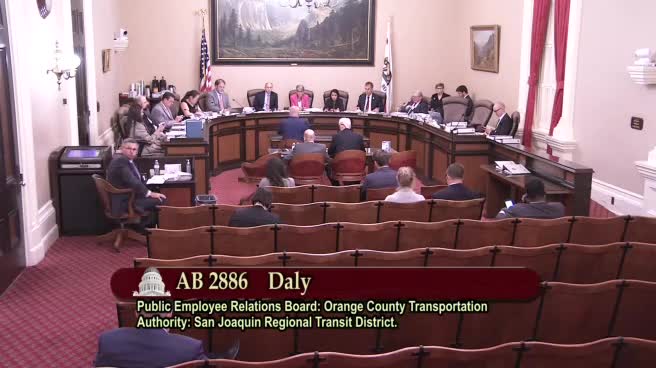 4MIN
Senate Standing Committee on Judiciary
 12MIN
Senate Standing Committee on Governance and Finance
 1MIN
Assembly Floor
 11MIN
Assembly Standing Committee on Local Government
Bill Author