AB 3075: Office of Elections Cybersecurity.
- Session Year: 2017-2018
- House: Assembly
- Latest Version Date: 2018-08-28
Existing law establishes the Secretary of State as the chief elections officer of the state.
This bill would create within the Secretary of State the Office of Elections Cybersecurity to coordinate efforts between the Secretary of State and local elections officials to reduce the likelihood and severity of cyber incidents that could interfere with the security or integrity of elections in the state, and to monitor and counteract false or misleading information regarding the electoral process that is published online or on other platforms and that may suppress voter participation or cause confusion and disruption of the orderly and secure administration of elections.
Existing law establishes the Secretary of State as the chief elections officer of the state.
This bill would create within the Secretary of State the Office of Elections Cybersecurity to coordinate efforts between the Secretary of State and local elections officials to reduce the likelihood and severity of cyber incidents that could interfere with the security or integrity of elections in the state. state, and to monitor and counteract false or misleading information regarding the electoral process that is published online or on other platforms and that may suppress voter participation or cause confusion and disruption of the orderly and secure administration of elections.
Existing law establishes the Secretary of State as the chief elections officer of the state.
This bill would create within the Secretary of State the Office of Elections Cybersecurity to coordinate efforts between the Secretary of State and local elections officials to reduce the likelihood and severity of cyber incidents that could interfere with the security or integrity of elections in the state.
Existing law requires that the vote by mail ballot be available to any registered voter and requires that an application for a vote by mail voters ballot be made in writing to the elections official having jurisdiction over the election between the 29th and the 7th day before the election. Existing law requires any applications received by the elections official before the 29th day before the election to be kept and processed during the application period.This bill would make technical, nonsubstantive changes to this provision.Existing law requires that the vote by mail ballot be available to any registered voter and requires that an application for a vote by mail voters ballot be made in writing to the elections official having jurisdiction over the election between the 29th and the 7th day before the election. Existing law requires any applications received by the elections official before the 29th day before the election to be kept and processed during the application period.
This bill would make technical, nonsubstantive changes to this provision.
(a)There is established within the Secretary of State the Office of Elections Cybersecurity.
(b)The primary missions of the Office of Elections Cybersecurity are both of the following:
(1)To coordinate efforts between the Secretary of State and local elections officials to reduce the likelihood and severity of cyber incidents that could interfere with the security or integrity of elections in the state.
(2)To monitor and counteract false or misleading information regarding the electoral process that is published online or on other platforms and that may suppress voter participation or cause confusion and disruption of the orderly and secure administration of elections.
(c)The Office of Elections Cybersecurity shall do all of the following:
(1)Coordinate with federal, state, and local agencies the sharing of information on threats to election cybersecurity, risk assessment, and threat mitigation in a timely manner and in a manner that protects sensitive information.
(2)In consultation with federal, state, and local agencies and private organizations, develop best practices for protecting against threats to election cybersecurity.
(3)In consultation with state and local agencies, develop and include best practices for cyber incident responses in emergency preparedness plans for elections.
(4)Identify resources, such as protective security tools, training, and other resources available to state and county elections officials.
(5)Advise the Secretary of State on issues related to election cybersecurity, and make recommendations for changes to state laws, regulations, and policies to further protect election infrastructure.
(6)Serve as a liaison between the Secretary of State, other state agencies, federal agencies, and local elections officials on election cybersecurity issues.
(7)Coordinate efforts within the Secretary of State to protect the security of Internet-connected elections-related resources, including all of the following:
(i)The states online voter registration system established pursuant to Section 2196.
(ii)The statewide voter registration database developed in compliance with the requirements of the federal Help America Vote Act of 2002 (52 U.S.C. Sec. 20901 et seq.).
(iii)The Secretary of States election night results Internet Web site.
(iv)The online campaign and lobbying filing and disclosure system developed by the Secretary of State pursuant to Chapter 4.6 (commencing with Section 84600) of Title 9 of the Government Code.
(v)Other parts of the Secretary of States Internet Web site.
(8)Assess the false or misleading information regarding the electoral process described in paragraph (2) of subdivision (b), mitigate the false or misleading information, and educate voters, especially new and unregistered voters, with valid information from elections officials such as a county elections official or the Secretary of State.
(a)There is established within the Secretary of State the Office of Elections Cybersecurity.
(b)The primary mission missions of the Office of Elections Cybersecurity is to are both of the following:
(1)To coordinate efforts between the Secretary of State and local elections officials to reduce the likelihood and severity of cyber incidents that could interfere with the security or integrity of elections in the state.
(2)To monitor and counteract false or misleading information regarding the electoral process that is published online or on other platforms and that may suppress voter participation or cause confusion and disruption of the orderly and secure administration of elections.
(c)The Office of Elections Cybersecurity shall do all of the following:
(1)Coordinate with federal, state, and local agencies the sharing of information on threats to election cybersecurity, risk assessment, and threat mitigation in a timely manner and in a manner that protects sensitive information.
(2)In consultation with federal, state, and local agencies and private organizations, develop best practices for protecting against threats to election cybersecurity.
(3)In consultation with state and local agencies, develop and include best practices for cyber incident responses in emergency preparedness plans for elections.
(4)Identify resources, such as protective security tools, training, and other resources available to state and county elections officials.
(5)Advise the Secretary of State on issues related to election cybersecurity, and make recommendations for changes to state laws, regulations, and policies to further protect election infrastructure.
(6)Serve as a liaison between the Secretary of State, other state agencies, federal agencies, and local elections officials on election cybersecurity issues.
(7)Coordinate efforts within the Secretary of State to protect the security of Internet-connected elections-related resources, including all of the following:
(i)The states online voter registration system established pursuant to Section 2196.
(ii)The statewide voter registration database developed in compliance with the requirements of the federal Help America Vote Act of 2002 (52 U.S.C. Sec. 20901 et seq.).
(iii)The Secretary of States election night results Internet Web site.
(iv)The online campaign and lobbying filing and disclosure system developed by the Secretary of State pursuant to Chapter 4.6 (commencing with Section 84600) of Title 9 of the Government Code.
(v)Other parts of the Secretary of States Internet Web site.
(8)Assess the false or misleading information regarding the electoral process described in paragraph (2) of subdivision (b), mitigate the false or misleading information, and educate voters, especially new and unregistered voters, with valid information from elections officials such as a county elections official or the Secretary of State.
(a)There is established within the Secretary of State the Office of Elections Cybersecurity.
(b)The primary mission of the Office of Elections Cybersecurity is to coordinate efforts between the Secretary of State and local elections officials to reduce the likelihood and severity of cyber incidents that could interfere with the security or integrity of elections in the state.
(c)The Office of Elections Cybersecurity shall do all of the following:
(1)Coordinate with federal, state, and local agencies the sharing of information on threats to election cybersecurity, risk assessment, and threat mitigation in a timely manner and in a manner that protects sensitive information.
(2)In consultation with federal, state, and local agencies and private organizations, develop best practices for protecting against threats to election cybersecurity.
(3)In consultation with state and local agencies, develop and include best practices for cyber incident responses in emergency preparedness plans for elections.
(4)Identify resources, such as protective security tools, training, and other resources available to state and county elections officials.
(5)Advise the Secretary of State on issues related to election cybersecurity, and make recommendations for changes to state laws, regulations, and policies to further protect election infrastructure.
(6)Serve as a liaison between the Secretary of State, other state agencies, federal agencies, and local elections officials on election cybersecurity issues.
(7)Coordinate efforts within the Secretary of State to protect the security of Internet-connected elections-related resources, including all of the following:
(i)The state's online voter registration system established pursuant to Section 2196.
(ii)The statewide voter registration database developed in compliance with the requirements of the federal Help America Vote Act of 2002 (52 U.S.C. Sec. 20901 et seq.).
(iii)The Secretary of State's election night results Internet Web site.
(iv)The online campaign and lobbying filing and disclosure system developed by the Secretary of State pursuant to Chapter 4.6 (commencing with Section 84600) of Title 9 of the Government Code.
(v)Other parts of the Secretary of State's Internet Web site.
SECTION 1.Section 3001 of the Elections Code is amended to read:3001.Except as provided in Chapter 3 (commencing with Section 3200) and Sections 3007.5, 3007.7, and 3007.8, application for a vote by mail voters ballot shall be made in writing to the elections official having jurisdiction over the election between the 29th and the 7th day before the election. The application shall be signed by the applicant and shall show his or her place of residence. Applications received by the elections official before the 29th day before the election shall be kept and processed during the application period. REVISIONS: Headingline 2.Except as provided in Chapter 3 (commencing with Section 3200) and Sections 3007.5, 3007.7, and 3007.8, application for a vote by mail voters ballot shall be made in writing to the elections official having jurisdiction over the election between the 29th and the 7th day prior to before the election. The application shall be signed by the applicant and shall show his or her place of residence. Any applications Applications received by the elections official prior to before the 29th day before the election shall be kept and processed during the application period.
|
Date
|
Status
|
|---|---|
| Aug 28, 2018 | Chaptered by Secretary of State - Chapter 241, Statutes of 2018. |
| Aug 28, 2018 | Approved by the Governor. |
| Aug 16, 2018 | Enrolled and presented to the Governor at 4 p.m. |
| Aug 13, 2018 | Senate amendments concurred in. To Engrossing and Enrolling. |
| Aug 7, 2018 | In Assembly. Concurrence in Senate amendments pending. May be considered on or after August 9 pursuant to Assembly Rule 77. |
| Aug 6, 2018 | Read third time. Passed. Ordered to the Assembly. |
| Jul 5, 2018 | Read second time. Ordered to third reading. |
| Jul 3, 2018 | Read third time and amended. Ordered to second reading. |
| Jun 26, 2018 | Read second time. Ordered to third reading. |
| Jun 25, 2018 | From committee: Be ordered to second reading pursuant to Senate Rule 28.8. |
| Jun 6, 2018 | From committee: Do pass and re-refer to Com. on APPR. (Ayes 5. Noes 0.) (June 6). Re-referred to Com. on APPR. |
| May 17, 2018 | Referred to Com. on E. & C.A. |
| May 3, 2018 | In Senate. Read first time. To Com. on RLS. for assignment. |
| May 3, 2018 | Read third time. Passed. Ordered to the Senate. |
| Apr 26, 2018 | Read second time. Ordered to Consent Calendar. |
| Apr 25, 2018 | From committee: Do pass. To Consent Calendar. (Ayes 17. Noes 0.) (April 25). |
| Apr 11, 2018 | From committee: Do pass and re-refer to Com. on APPR. (Ayes 6. Noes 0.) (April 11). Re-referred to Com. on APPR. |
| Mar 21, 2018 | Re-referred to Com. on E. & R. |
| Mar 20, 2018 | From committee chair, with author's amendments: Amend, and re-refer to Com. on E. & R. Read second time and amended. |
| Mar 19, 2018 | Referred to Com. on E. & R. |
| Feb 17, 2018 | From printer. May be heard in committee March 19. |
| Feb 16, 2018 | Read first time. To print. |
|
Date
|
Description
|
Location
|
Votes
|
|
|---|---|---|---|---|
| Aug 13, 2018 | AB 3075 BERMAN Concurrence in Senate Amendments | Assembly Floor |
Passed |
|
| Aug 6, 2018 | Assembly 3rd Reading AB3075 Berman et al. By Stern | Senate Floor |
Passed |
|
| Jun 6, 2018 | Do pass, but first be re-referred to the Committee on [Appropriations] | Senate Standing Committee on Elections and Constitutional Amendments |
Passed |
|
| May 3, 2018 | AB 3075 BERMAN Consent Calendar Second Day Regular Session | Assembly Floor |
Passed |
|
| Apr 25, 2018 | Do pass. To Consent Calendar. | Assembly Standing Committee on Appropriations |
Passed |
|
| Apr 11, 2018 | Do pass and be re-referred to the Committee on [Appropriations] | Assembly Standing Committee on Elections and Redistricting |
Passed |
This list shows positions taken on this bill by organizations on the date displayed, which is linked to the original source.
Positions by individuals are not included.
CONCURRENCE IN SENATE AMENDMENTS
CSA1 Bill Id:AB 3075
Author:(Berman)
As Amended Ver:July 3, 2018
Majority vote
ASSEMBLY: | 71-0 | (May 3, 2018) | SENATE: | 25-8 | (August 6, 2018) |
Original Committee Reference: E. & R.
SUMMARY: Creates the Office of Elections Cybersecurity (OEC) within the Office of the Secretary of State (SOS). Specifically, this bill:
- Establishes the OEC and specifies that the primary mission of the OEC is to coordinate efforts between the SOS and local elections officials to reduce the likelihood and severity of cyber incidents that could interfere with the security or integrity of elections in the state.
- Requires the OEC to do all of the following:
- Coordinate with federal, state, and local agencies the sharing of information on threats to election cybersecurity, risk assessment, and threat mitigation in a timely manner and in a manner that protects sensitive information.
- In consultation with federal, state, and local agencies and private organizations, develop best practices for protecting against threats to election cybersecurity.
- In consultation with state and local agencies, develop and include best practices for cyber incident responses in emergency preparedness plans for elections.
- Identify resources, such as protective security tools, training, and other resources available to state and county elections officials.
- Advise the SOS on issues related to election cybersecurity, and make recommendations for changes to state laws, regulations, and policies to further protect election infrastructure.
- Serve as a liaison between the SOS, other state agencies, federal agencies, and local elections officials on election cybersecurity issues.
- Coordinate efforts within the SOS's office to protect the security of Internet-connected elections-related resources, as specified.
The Senate amendments:
- Specify that one of the missions of the OEC is to monitor and counteract false or misleading information regarding the electoral process that may suppress voter participation or cause confusion and disruption of the orderly and secure administration of elections.
- Require the OEC to assess false or misleading information regarding the electoral process, mitigate that false or misleading information, and educate voters with valid information from elections officials, as specified.
FISCAL EFFECT: According to the Senate Appropriations Committee, pursuant to Senate Rule 28.8, negligible state costs.
COMMENTS: According to the author, "Earlier this year, the Assembly Elections and Redistricting Committee and the Senate Elections and Constitutional Amendments Committee held a joint informational hearing on the topic of Cybersecurity and California Elections…One of the recurring themes that emerged during the testimony at the informational hearing is that maximizing the cybersecurity of our state's elections will require additional resources dedicated to that purpose…Strategies designed to mitigate the spread of election-related misinformation intended to confuse voters, suppress turnout, or cause other disruptions were also discussed among panelists and committee members.
"AB 3075 creates the OEC within the SOS’s office. The OEC will coordinate efforts between federal, state, and local officials, including county registrars of voters, to reduce the likelihood and severity of cyber incidents that threaten the integrity of California elections. Additionally, the OEC will be responsible for monitoring and counteracting false or misleading information regarding the electoral process.
"Given the ongoing and increasingly sophisticated threats posed to our elections systems, California cannot afford to be complacent about the security of our elections. AB 3075 is an important step forward to ensuring that state and county elections officials have the information and the tools necessary to defend our democracy from cyber-attacks and from misinformation that is designed to undermine the integrity of our elections."
The state budget for the 2018-19 fiscal year, as enacted by the Legislature, included a $2 million ongoing annual appropriation to the SOS for the purpose of establishing and operating the OEC. In addition to funding for the OCE to take steps to reduce the likelihood and severity of cyber incidents that could interfere with the security or integrity of elections, as proposed by the Assembly version of this bill, the budget appropriation also included funding for the OEC to monitor and counteract false or misleading information regarding the electoral process. The Senate amendments to this bill broaden the scope of responsibility for the OEC to conform to the action taken in the budget. Accordingly, this bill, as amended in the Senate, is consistent with the Legislature's previous actions in approving the state budget.
Please see the policy committee analysis for a full discussion of this bill.
Analysis Prepared by: Ethan Jones / E. & R. / (916) 319-2094 FN: 0003760
Office of Senate Floor Analyses (916) 651-1520 Fax: (916) 327-4478 | AB |
THIRD READING
Bill No: AB 3075
:
SENATE ELECTIONS & C.A. COMMITTEE: 5-0, 6/6/18
AYES: Stern, Anderson, Allen, Hertzberg, Leyva
SENATE APPROPRIATIONS COMMITTEE: Senate Rule 28.8
ASSEMBLY FLOOR: 71-0, 5/3/18 (Consent) - See last page for vote
DIGEST:
This bill establishes the Office of Elections Cybersecurity (OEC) within the Secretary of State (SOS).
Senate Floor Amendments of 7/3/18 expand the mission of the OEC to require the office monitor and counteract false or misleading information published online and that may suppress voter participation or cause confusion or disruption of the electoral process; and also provide additional duties for the OEC by having the office assess and mitigate false or misleading information regarding an election while educating voters with valid information from an elections official.
Existing law:
- Provides that the SOS is the chief elections officer of the state.
- Requires the SOS to administer the provisions of the Elections Code.
- Requires the SOS to see that elections are efficiently conducted and that state election laws are enforced. Permits the SOS to require elections officers to make reports concerning elections in their jurisdictions.
- Requires each state, pursuant to the Help America Vote Act (HAVA), to implement a single, uniform, official, centralized, interactive computerized statewide voter registration list defined, maintained, and administered at the state level that contains the name and registration information of every legally registered voter in the state and assigns a unique identifier to each legally registered voter in the state.
- Permits a person who is qualified to register to vote and who has a valid California driver’s license or state identification card to submit an affidavit of voter registration electronically on the SOS’s Internet Web site.
- Requires the SOS to provide online and electronic filing processes for use by specified political committees, lobbyists, lobbying firms, and lobbyist employers. This online reporting and disclosure system is commonly referred to as the Cal-Access system.
This bill:
- Establishes the OEC and specifies that the primary missions of the OEC include:
- Coordinating efforts between the SOS and local elections officials to reduce the likelihood and severity of cyber incidents that could interfere with the security or integrity of elections in the state.
- Monitoring and counteracting false or misleading information published online or on other platforms regarding the electoral process and that may suppress voter participation or cause confusion and disruption of the orderly and secure administration of elections.
- Requires the OEC to do all of the following:
- Coordinate with federal, state, and local agencies the sharing of information on threats to election cybersecurity, risk assessment, and threat mitigation in a timely manner and in a manner that protects sensitive information.
- In consultation with federal, state, and local agencies and private organizations, develop best practices for protecting against threats to election cybersecurity.
- In consultation with state and local agencies, develop and include best practices for cyber incident responses in emergency preparedness plans for elections.
- Identify resources, such as protective security tools, training, and other resources available to state and county elections officials.
- Advise the SOS on issues related to election cybersecurity, and make recommendations for changes to state laws, regulations, and policies to further protect election infrastructure.
- Serve as a liaison between the SOS, other state agencies, federal agencies, and local elections officials on election cybersecurity issues.
- Coordinate efforts within the SOS's office to protect the security of Internet-connected elections-related resources, including all of the following:
- The state's online voter registration system.
- The statewide voter registration database developed in compliance with the requirements of HAVA.
- The SOS's election night results Internet Web site.
- The SOS's online campaign and lobbying filing and disclosure system commonly referred to as the Cal-Access system.
- Other parts of the SOS's Internet Web site.
- Assess the false or misleading information regarding the electoral process as specified, mitigate the false or misleading information, and educate voters with valid information from elections officials.
Background
Joint Informational Hearing on Election Cybersecurity. On March 7, 2018, the Senate Elections and Constitutional Amendments Committee held a joint informational hearing with the Assembly Elections and Redistricting Committee focusing on issues related to cybersecurity and California’s elections. As a response to the increased attention to election security since the 2016 elections, the purpose of the hearing was to explore California's policies for protecting the security of our elections systems in an environment where the number and sophistication of threats to our election infrastructure continues to increase. Witnesses that participated in the hearing included the SOS, a member of the United States Election Assistance Commission (EAC), three California county elections officials, the former Senior Director for Cybersecurity Policy at The White House, and a Senior Advisor and Past President to a nonprofit organization that advocates for legislation and regulation that promotes accuracy, transparency, and verifiability of elections.
Witnesses at the hearing generally agreed that there was no evidence to suggest that voting machines or vote tallying in California were compromised during the 2016 election. However, all of the witnesses stressed the importance of continuing to evaluate cyber and other security threats to election infrastructure. In addition, the witnesses also discussed the significance of being able to regularly evaluate processes and procedures to protect against cyber threats to promote voter confidence in the accuracy of election results.
There were several common recommendations made by witnesses at the hearing for putting state and county elections officials in the best position to defend against and respond to cyber threats, and to protect public confidence in California elections. Many witnesses stressed the importance of funding elections, and expressed support for the funding included in the Governor’s proposed 2018-19 Budget to assist counties with the costs of replacing their voting systems. Witnesses also noted that the lack of reimbursement by the state for elections-related state mandates and for the costs of special elections for filling vacancies in the Legislature and Congress had the effect of limiting resources that were available at the local level for election security. Several witnesses also stressed the importance of coordinating the sharing of cybersecurity information and resources, particularly with smaller counties that have more limited resources, and of developing robust post-election auditing procedures—including risk-limiting audits—to improve voter confidence in the accuracy of election results. Other recommendations included improving efforts to take advantage of security expertise in the private sector and at academic institutions in the state, ensuring that elections officials develop cyber incident response plans that include considerations of how to recover from cyber incidents, and working with third-party validators to help disseminate accurate information about elections as a way to counter bad information that could negatively impact elections and voter confidence.
Critical Infrastructure Designation. On January 6, 2017, then-Secretary of the federal Department of Homeland Security (DHS) Jeh Johnson announced that he was designating election infrastructure in the country as critical infrastructure, a decision that was later reaffirmed by the Trump administration. According to information from DHS, critical infrastructure is a designation "established by the Patriot Act and given to 'systems and assets, whether physical or virtual, so vital to the United States that the incapacity or destruction of such systems and assets would have a debilitating impact on security, national economic security, national public health or safety, or any combination of those matters.'" In his announcement, Secretary Johnson noted that the designation generally gives DHS the ability to provide additional cybersecurity assistance to state and local elections officials, but does not mean that there will be new or additional federal regulation or oversight of the conduct of elections by state and local governments.
The DHS has prepared a Cybersecurity Services Catalog for Election Infrastructure that outlines the services and other assistance available to the election infrastructure community, including state and local elections officials. Among the services provided are various no-cost cybersecurity assessments, information sharing about cybersecurity threats, cybersecurity training, assistance in cyber incident planning and cyber incident response, and network protection.
Federal Election Security Funding. On March 23, 2018, President Trump signed the Consolidated Appropriations Act of 2018 (Act). The Act was an omnibus spending bill for the federal fiscal year ending on September 30, 2018. Among other provisions, the Act provided $380 million in HAVA funding to the EAC to make payments to states for activities to improve the administration of elections for federal office, including enhancing election technology and making election security improvements. States that receive federal funds are required to provide a match of five percent of the funds received within two years of receiving the federal funds.
According to information from the EAC, California’s share of the federal funding is $34,558,874, and the state’s required five percent match totals $1,727,944. The EAC notes that a joint explanatory statement prepared by Congress to indicate congressional intent on how the funds may be spent specifies that states may use the funds to replace electronic voting equipment that does not have a paper trail, to implement a post-election audit system, to upgrade election-related computer systems to address cyber vulnerabilities, to facilitate cybersecurity training for state and local election officials, to implement established cybersecurity best practices, and to fund other activities that will improve the security of elections for federal office.
Comments
- According to the author, earlier this year, the Assembly Elections and Redistricting Committee and the Senate Elections and Constitutional Amendments Committee held a joint informational hearing on the topic of Cybersecurity and California Elections. At that hearing, the committees heard from federal, state, and county elections officials and other experts regarding the extent of the threat to the security of our elections and options for additional steps that California can take to protect the integrity of our elections and to bolster public confidence in the election results.
One of the recurring themes that emerged during the testimony at the informational hearing is that maximizing the cybersecurity of our state's elections will require additional resources dedicated to that purpose. In particular, many witnesses emphasized the importance of information sharing and coordinated efforts between federal, state, and local government agencies. Strategies designed to mitigate the spread of election-related misinformation intended to confuse voters, suppress turnout, or cause other disruptions were also discussed among panelists and committee members.
AB 3075 creates the OEC within the SOS’s office. The OEC will coordinate efforts between federal, state, and local officials, including county registrars of voters, to reduce the likelihood and severity of cyber incidents that threaten the integrity of California elections. Additionally, the OEC will be responsible for monitoring and counteracting false or misleading information regarding the electoral process.
Given the ongoing and increasingly sophisticated threats posed to our elections systems, California cannot afford to be complacent about the security of our elections. AB 3075 is an important step forward to ensuring that state and county elections officials have the information and the tools necessary to defend our democracy from cyber-attacks and from misinformation that is designed to undermine the integrity of our elections.
Related/Prior Legislation
AB 1678 (Berman, 2018) requires the SOS to adopt regulations that describe the best practices for storage and security of voter registration information, requires disclosure of breaches in the security of the storage of that information, and makes it a crime to distribute specified false information regarding elections and voting. AB 1678 is pending action by the Governor.
AB 2748 (Chau, 2018) requires the Office of Information Security in the Department of Technology, the Office of Emergency Services, and the California Military Department to establish a pilot program to conduct independent security assessments of election infrastructure in participating counties. AB 2748 is pending in the Senate Appropriations Committee.
FISCAL EFFECT: Appropriation: Fiscal Com.: Local:
Secretary of State Alex Padilla
California Association of Clerks and Election Officials
California Common Cause
League of Women Voters of California
Los Angeles County Board of Supervisors
OPPOSITION: (Verified 6/28/18)
None received
ASSEMBLY FLOOR: 71-0, 5/3/18
AYES: Acosta, Aguiar-Curry, Arambula, Baker, Berman, Bigelow, Bloom, Bonta, Brough, Burke, Calderon, Carrillo, Cervantes, Chau, Chávez, Chen, Chiu, Chu, Cooley, Cooper, Cunningham, Dahle, Daly, Eggman, Flora, Fong, Frazier, Friedman, Gallagher, Eduardo Garcia, Gipson, Gloria, Gonzalez Fletcher, Gray, Harper, Holden, Irwin, Jones-Sawyer, Kalra, Kamlager-Dove, Kiley, Lackey, Levine, Limón, Low, Maienschein, Mathis, Mayes, McCarty, Medina, Melendez, Mullin, Muratsuchi, Nazarian, Obernolte, O'Donnell, Patterson, Quirk, Reyes, Rodriguez, Rubio, Salas, Santiago, Steinorth, Mark Stone, Thurmond, Ting, Waldron, Weber, Wood, Rendon
NO VOTE RECORDED: Travis Allen, Caballero, Choi, Cristina Garcia, Grayson, Quirk-Silva, Voepel
8/1/18 14:12:00
Office of Senate Floor Analyses (916) 651-1520 Fax: (916) 327-4478 | AB |
THIRD READING
Bill No: AB 3075
:
SENATE ELECTIONS & C.A. COMMITTEE: 5-0, 6/6/18
AYES: Stern, Anderson, Allen, Hertzberg, Leyva
SENATE APPROPRIATIONS COMMITTEE: Senate Rule 28.8
ASSEMBLY FLOOR: 71-0, 5/3/18 (Consent) - See last page for vote
DIGEST:
This bill establishes the Office of Elections Cybersecurity (OEC) within the Secretary of State (SOS) to coordinate efforts to reduce the likelihood and severity of cyber incidents that interfere with election security or integrity.
Existing law:
- Provides that the SOS is the chief elections officer of the state.
- Requires the SOS to administer the provisions of the Elections Code.
- Requires the SOS to see that elections are efficiently conducted and that state election laws are enforced. Permits the SOS to require elections officers to make reports concerning elections in their jurisdictions.
- Requires each state, pursuant to the Help America Vote Act (HAVA), to implement a single, uniform, official, centralized, interactive computerized statewide voter registration list defined, maintained, and administered at the state level that contains the name and registration information of every legally registered voter in the state and assigns a unique identifier to each legally registered voter in the state.
- Permits a person who is qualified to register to vote and who has a valid California driver’s license or state identification card to submit an affidavit of voter registration electronically on the SOS’s Internet Web site.
- Requires the SOS to provide online and electronic filing processes for use by specified political committees, lobbyists, lobbying firms, and lobbyist employers. This online reporting and disclosure system is commonly referred to as the Cal-Access system.
This bill:
- Establishes the OEC and specifies that the primary mission of the OEC is to coordinate efforts between the SOS and local elections officials to reduce the likelihood and severity of cyber incidents that could interfere with the security or integrity of elections in the state.
- Requires the OEC to do all of the following:
- Coordinate with federal, state, and local agencies the sharing of information on threats to election cybersecurity, risk assessment, and threat mitigation in a timely manner and in a manner that protects sensitive information.
- In consultation with federal, state, and local agencies and private organizations, develop best practices for protecting against threats to election cybersecurity.
- In consultation with state and local agencies, develop and include best practices for cyber incident responses in emergency preparedness plans for elections.
- Identify resources, such as protective security tools, training, and other resources available to state and county elections officials.
- Advise the SOS on issues related to election cybersecurity, and make recommendations for changes to state laws, regulations, and policies to further protect election infrastructure.
- Serve as a liaison between the SOS, other state agencies, federal agencies, and local elections officials on election cybersecurity issues.
- Coordinate efforts within the SOS's office to protect the security of Internet-connected elections-related resources, including all of the following:
- The state's online voter registration system.
- The statewide voter registration database developed in compliance with the requirements of HAVA.
- The SOS's election night results Internet Web site.
- The SOS's online campaign and lobbying filing and disclosure system commonly referred to as the Cal-Access system.
- Other parts of the SOS's Internet Web site.
- The state's online voter registration system.
- Coordinate with federal, state, and local agencies the sharing of information on threats to election cybersecurity, risk assessment, and threat mitigation in a timely manner and in a manner that protects sensitive information.
Background
Joint Informational Hearing on Election Cybersecurity. On March 7, 2018, the Senate Elections and Constitutional Amendments Committee held a joint informational hearing with the Assembly Elections and Redistricting Committee focusing on issues related to cybersecurity and California’s elections. As a response to the increased attention to election security since the 2016 elections, the purpose of the hearing was to explore California's policies for protecting the security of our elections systems in an environment where the number and sophistication of threats to our election infrastructure continues to increase. Witnesses that participated in the hearing included the SOS, a member of the United States Election Assistance Commission (EAC), three California county elections officials, the former Senior Director for Cybersecurity Policy at The White House, and a Senior Advisor and Past President to a nonprofit organization that advocates for legislation and regulation that promotes accuracy, transparency, and verifiability of elections.
Witnesses at the hearing generally agreed that there was no evidence to suggest that voting machines or vote tallying in California were compromised during the 2016 election. However, all of the witnesses stressed the importance of continuing to evaluate cyber and other security threats to election infrastructure. In addition, the witnesses also discussed the significance of being able to regularly evaluate processes and procedures to protect against cyber threats to promote voter confidence in the accuracy of election results.
There were several common recommendations made by witnesses at the hearing for putting state and county elections officials in the best position to defend against and respond to cyber threats, and to protect public confidence in California elections. Many witnesses stressed the importance of funding elections, and expressed support for the funding included in the Governor’s proposed 2018-19 Budget to assist counties with the costs of replacing their voting systems. Witnesses also noted that the lack of reimbursement by the state for elections-related state mandates and for the costs of special elections for filling vacancies in the Legislature and Congress had the effect of limiting resources that were available at the local level for election security. Several witnesses also stressed the importance of coordinating the sharing of cybersecurity information and resources, particularly with smaller counties that have more limited resources, and of developing robust post-election auditing procedures—including risk-limiting audits—to improve voter confidence in the accuracy of election results. Other recommendations included improving efforts to take advantage of security expertise in the private sector and at academic institutions in the state, ensuring that elections officials develop cyber incident response plans that include considerations of how to recover from cyber incidents, and working with third-party validators to help disseminate accurate information about elections as a way to counter bad information that could negatively impact elections and voter confidence.
Critical Infrastructure Designation. On January 6, 2017, then-Secretary of the federal Department of Homeland Security (DHS) Jeh Johnson announced that he was designating election infrastructure in the country as critical infrastructure, a decision that was later reaffirmed by the Trump administration. According to information from DHS, critical infrastructure is a designation "established by the Patriot Act and given to 'systems and assets, whether physical or virtual, so vital to the United States that the incapacity or destruction of such systems and assets would have a debilitating impact on security, national economic security, national public health or safety, or any combination of those matters.'" In his announcement, Secretary Johnson noted that the designation generally gives DHS the ability to provide additional cybersecurity assistance to state and local elections officials, but does not mean that there will be new or additional federal regulation or oversight of the conduct of elections by state and local governments.
The DHS has prepared a Cybersecurity Services Catalog for Election Infrastructure that outlines the services and other assistance available to the election infrastructure community, including state and local elections officials. Among the services provided are various no-cost cybersecurity assessments, information sharing about cybersecurity threats, cybersecurity training, assistance in cyber incident planning and cyber incident response, and network protection.
Federal Election Security Funding. On March 23, 2018, President Trump signed the Consolidated Appropriations Act of 2018 (Act). The Act was an omnibus spending bill for the federal fiscal year ending on September 30, 2018. Among other provisions, the Act provided $380 million in HAVA funding to the EAC to make payments to states for activities to improve the administration of elections for federal office, including enhancing election technology and making election security improvements. States that receive federal funds are required to provide a match of five percent of the funds received within two years of receiving the federal funds.
According to information from the EAC, California’s share of the federal funding is $34,558,874, and the state’s required five percent match totals $1,727,944. The EAC notes that a joint explanatory statement prepared by Congress to indicate congressional intent on how the funds may be spent specifies that states may use the funds to replace electronic voting equipment that does not have a paper trail, to implement a post-election audit system, to upgrade election-related computer systems to address cyber vulnerabilities, to facilitate cybersecurity training for state and local election officials, to implement established cybersecurity best practices, and to fund other activities that will improve the security of elections for federal office.
Comments
- According to the author, earlier this year, the Assembly Elections and Redistricting Committee and the Senate Elections and Constitutional Amendments Committee held a joint informational hearing on the topic of Cybersecurity and California Elections. At that hearing, the committees heard from federal, state, and county elections officials and other experts regarding the extent of the threat to the security of our elections and options for additional steps that California can take to protect the integrity of our elections and to bolster public confidence in the election results.
One of the recurring themes that emerged during the testimony at the informational hearing is that maximizing the cybersecurity of our state's elections will require additional resources dedicated to that purpose. In particular, many witnesses emphasized the importance of information sharing and coordinated efforts between federal, state, and local government agencies.
AB 3075 creates the OEC within the SOS’s office. The OEC would coordinate efforts between federal, state, and local officials, including county registrars of voters, to reduce the likelihood and severity of cyber incidents that threaten the integrity of California elections.
Given the ongoing and increasingly sophisticated threats posed to our elections systems, California cannot afford to be complacent about the security of our elections. AB 3075 is an important step forward to ensuring that state and county elections officials have the information and the tools necessary to defend our democracy from cyber-attacks.
Related/Prior Legislation
AB 1678 (Berman, 2018) requires the SOS to adopt regulations that describe the best practices for storage and security of voter registration information, requires disclosure of breaches in the security of the storage of that information, and makes it a crime to distribute specified false information regarding elections and voting. AB 1678 is pending in the Assembly Elections and Redistricting Committee.
AB 2748 (Chau, 2018) requires the Office of Information Security in the Department of Technology, the Office of Emergency Services, and the California Military Department to establish a pilot program to conduct independent security assessments of election infrastructure in participating counties. AB 2748 is pending in the Senate Appropriations Committee.
FISCAL EFFECT: Appropriation: Fiscal Com.: Local:
Secretary of State Alex Padilla
California Association of Clerks and Election Officials
California Common Cause
League of Women Voters of California
Los Angeles County Board of Supervisors
OPPOSITION: (Verified 6/28/18)
None received
ASSEMBLY FLOOR: 71-0, 5/3/18
AYES: Acosta, Aguiar-Curry, Arambula, Baker, Berman, Bigelow, Bloom, Bonta, Brough, Burke, Calderon, Carrillo, Cervantes, Chau, Chávez, Chen, Chiu, Chu, Cooley, Cooper, Cunningham, Dahle, Daly, Eggman, Flora, Fong, Frazier, Friedman, Gallagher, Eduardo Garcia, Gipson, Gloria, Gonzalez Fletcher, Gray, Harper, Holden, Irwin, Jones-Sawyer, Kalra, Kamlager-Dove, Kiley, Lackey, Levine, Limón, Low, Maienschein, Mathis, Mayes, McCarty, Medina, Melendez, Mullin, Muratsuchi, Nazarian, Obernolte, O'Donnell, Patterson, Quirk, Reyes, Rodriguez, Rubio, Salas, Santiago, Steinorth, Mark Stone, Thurmond, Ting, Waldron, Weber, Wood, Rendon
NO VOTE RECORDED: Travis Allen, Caballero, Choi, Cristina Garcia, Grayson, Quirk-Silva, Voepel
6/28/18 9:01:52
SENATE COMMITTEE ON
ELECTIONS AND CONSTITUTIONAL AMENDMENTS
Senator Henry Stern, Chair
2017 - 2018 Regular
Bill No: 3075 Hearing Date: 6/6/18
Author: | Berman | ||
Version: |
| ||
Urgency: | Fiscal: | ||
Consultant: | |||
Subject:
DIGEST
This bill establishes the Office of Elections Cybersecurity (OEC) within the Secretary of State (SOS) to coordinate efforts to reduce the likelihood and severity of cyber incidents that interfere with election security or integrity.
ANALYSIS
Existing Law:
- Provides that the SOS is the chief elections officer of the state.
- Requires the SOS to administer the provisions of the Elections Code.
- Requires the SOS to see that elections are efficiently conducted and that state election laws are enforced. Permits the SOS to require elections officers to make reports concerning elections in their jurisdictions.
- Requires each state, pursuant to Help America Vote Act (HAVA), to implement a single, uniform, official, centralized, interactive computerized statewide voter registration list defined, maintained, and administered at the state level that contains the name and registration information of every legally registered voter in the state and assigns a unique identifier to each legally registered voter in the state.
- Permits a person who is qualified to register to vote and who has a valid California driver’s license or state identification card to submit an affidavit of voter registration electronically on the SOS’s Internet website.
- Requires the SOS to provide online and electronic filing processes for use by specified political committees, lobbyists, lobbying firms, and lobbyist employers. This online reporting and disclosure system is commonly referred to as the Cal-Access system.
This bill:
- Establishes the OEC and specifies that the primary mission of the OEC is to coordinate efforts between the SOS and local elections officials to reduce the likelihood and severity of cyber incidents that could interfere with the security or integrity of elections in the state.
- Requires the OEC to do all of the following:
- Coordinate with federal, state, and local agencies the sharing of information on threats to election cybersecurity, risk assessment, and threat mitigation in a timely manner and in a manner that protects sensitive information.
- In consultation with federal, state, and local agencies and private organizations, develop best practices for protecting against threats to election cybersecurity.
- In consultation with state and local agencies, develop and include best practices for cyber incident responses in emergency preparedness plans for elections.
- Identify resources, such as protective security tools, training, and other resources available to state and county elections officials.
- Advise the SOS on issues related to election cybersecurity, and make recommendations for changes to state laws, regulations, and policies to further protect election infrastructure.
- Serve as a liaison between the SOS, other state agencies, federal agencies, and local elections officials on election cybersecurity issues.
- Coordinate efforts within the SOS's office to protect the security of Internet-connected elections-related resources, including all of the following:
- The state's online voter registration system.
- The statewide voter registration database developed in compliance with the requirements of HAVA.
- The SOS's election night results Internet website.
- The SOS's online campaign and lobbying filing and disclosure system commonly referred to as the Cal-Access system.
- Other parts of the SOS's Internet website.
- The state's online voter registration system.
- Coordinate with federal, state, and local agencies the sharing of information on threats to election cybersecurity, risk assessment, and threat mitigation in a timely manner and in a manner that protects sensitive information.
BACKGROUND
Joint Informational Hearing on Election Cybersecurity. On March 7, 2018, this committee held a Joint Informational Hearing with the Assembly Committee on Elections & Redistricting focusing on issues related to cybersecurity and California’s elections. As a response to the increased attention to election security since the 2016 elections, the purpose of the hearing was to explore California's policies for protecting the security of our elections systems in an environment where the number and sophistication of threats to our election infrastructure continues to increase. Witnesses that participated in the hearing included the Secretary of State, a member of the United States Election Assistance Commission (EAC), three California county elections officials, the former Senior Director for Cybersecurity Policy at The White House, and a Senior Advisor and Past President to a nonprofit organization that advocates for legislation and regulation that promotes accuracy, transparency, and verifiability of elections.
Witnesses at the hearing generally agreed that there was no evidence to suggest that voting machines or vote tallying in California were compromised during the 2016 election. However, all of the witnesses stressed the importance of continuing to evaluate cyber and other security threats to election infrastructure. In addition, the witnesses also discussed the significance of being able to regularly evaluate processes and procedures to protect against cyber threats to promote voter confidence in the accuracy of election results.
There were several common recommendations made by witnesses at the hearing for putting state and county elections officials in the best position to defend against and respond to cyber threats, and to protect public confidence in California elections. Many witnesses stressed the importance of funding elections, and expressed support for the $134 million included in the Governor’s proposed 2018-19 budget to assist counties with the costs of replacing their voting systems. Witnesses also noted that the lack of reimbursement by the state for elections-related state mandates and for the costs of special elections for filling vacancies in the Legislature and Congress had the effect of limiting resources that were available at the local level for election security. Several witnesses also stressed the importance of coordinating the sharing of cybersecurity information and resources, particularly with smaller counties that have more limited resources, and of developing robust post-election auditing procedures—including risk-limiting audits—to improve voter confidence in the accuracy of election results. Other recommendations included improving efforts to take advantage of security expertise in the private sector and at academic institutions in the state, ensuring that elections officials develop cyber incident response plans that include considerations of how to recover from cyber incidents, and working with third-party validators to help disseminate accurate information about elections as a way to counter bad information that could negatively impact elections and voter confidence.
Critical Infrastructure Designation. On January 6, 2017, then-Secretary of the federal Department of Homeland Security (DHS) Jeh Johnson announced that he was designating election infrastructure in the country as critical infrastructure, a decision that was later reaffirmed by the Trump administration. According to information from DHS, critical infrastructure is a designation "established by the Patriot Act and given to 'systems and assets, whether physical or virtual, so vital to the United States that the incapacity or destruction of such systems and assets would have a debilitating impact on security, national economic security, national public health or safety, or any combination of those matters.'" In his announcement, Secretary Johnson noted that the designation generally gives DHS the ability to provide additional cybersecurity assistance to state and local elections officials, but does not mean that there will be new or additional federal regulation or oversight of the conduct of elections by state and local governments.
The DHS has prepared a Cybersecurity Services Catalog for Election Infrastructure that outlines the services and other assistance available to the election infrastructure community, including state and local elections officials. Among the services provided are various no-cost cybersecurity assessments, information sharing about cybersecurity threats, cybersecurity training, assistance in cyber incident planning and cyber incident response, and network protection.
Federal Election Security Funding. On March 23, 2018, President Trump signed the Consolidated Appropriations Act of 2018 (Act). The Act was an omnibus spending bill for the federal fiscal year ending on September 30, 2018. Among other provisions, the Act provided $380 million in HAVA funding to the EAC to make payments to states for activities to improve the administration of elections for Federal office, including enhancing election technology and making election security improvements. States that receive federal funds are required to provide a match of five percent of the funds received within two years of receiving the federal funds.
According to information from the EAC, California’s share of the federal funding is $34,558,874, and the state’s required five percent match totals $1,727,944. The EAC notes that a joint explanatory statement prepared by Congress to indicate congressional intent on how the funds may be spent specifies that states may use the funds to replace electronic voting equipment that does not have a paper trail, to implement a post-election audit system, to upgrade election-related computer systems to address cyber vulnerabilities, to facilitate cybersecurity training for state and local election officials, to implement established cybersecurity best practices, and to fund other activities that will improve the security of elections for federal office.
COMMENTS
- According to the Author: Earlier this year, the Assembly Elections & Redistricting Committee and the Senate Elections & Constitutional Amendments Committee held a joint informational hearing on the topic of Cybersecurity and California Elections. At that hearing, the committees heard from federal, state, and county elections officials and other experts regarding the extent of the threat to the security of our elections and options for additional steps that California can take to protect the integrity of our elections and to bolster public confidence in the election results.
One of the recurring themes that emerged during the testimony at the informational hearing is that maximizing the cybersecurity of our state's elections will require additional resources dedicated to that purpose. In particular, many witnesses emphasized the importance of information sharing and coordinated efforts between federal, state, and local government agencies.
AB 3075 would create the Office of Elections Cybersecurity (OEC) within the Secretary of State's office. The OEC would coordinate efforts between federal, state, and local officials, including county registrars of voters, to reduce the likelihood and severity of cyber incidents that threaten the integrity of California elections.
Given the ongoing and increasingly sophisticated threats posed to our elections systems, California cannot afford to be complacent about the security of our elections. AB 3075 is an important step forward to ensuring that state and county elections officials have the information and the tools necessary to defend our democracy from cyber-attacks.
- Argument in Support: In support of AB 3075, California Secretary of State Alex Padilla writes:
The security of our elections systems is important for the integrity of our democracy. As conducting elections has become more dependent on evolving technology, elections officials are assuming greater responsibility for the cybersecurity of these systems. Election officials must now ensure the security of their hardware, software, and data used to conduct elections.
The OEC will work with relevant public entities responsible for conducting elections to help ensure the integrity of relevant networks, programs, and data from attack, damage, or unauthorized access. This will include coordinating best practices and other actions which will reduce the likelihood and severity of cyber incidents. Additionally, the Office will prioritize ensuring the security of public websites that provide information about elections, voter registration, and candidates.
RELATED/PRIOR LEGISLATION
AB 1678 (Berman) of 2018, requires the SOS to adopt regulations that describe the best practices for storage and security of voter registration information, requires disclosure of breaches in the security of the storage of that information, and makes it a crime to distribute specified false information regarding elections and voting. AB 1678 is currently pending on the Senate Floor.
AB 2748 (Chau) of 2018, requires the Office of Information Security in the Department of Technology, the Office of Emergency Services, and the California Military Department to establish a pilot program to conduct independent security assessments of election infrastructure in participating counties. AB 2748 is pending referral in the Senate.
PRIOR ACTION
Assembly Floor: | 71 - 0 |
Assembly Appropriations Committee: | 17 - 0 |
Assembly Committee: | 6 - 0 |
POSITIONS
Sponsor: Author
Support: Secretary of State Alex Padilla
California Common Cause
League of Women Voters of California
Oppose: None Received
-- END --
Date of Hearing: April 25, 2018
ASSEMBLY COMMITTEE ON APPROPRIATIONS
Lorena Gonzalez Fletcher, Chair
ABPCA Bill Id:AB 3075
Author:(Berman) – As Amended Ver:March 20, 2018
Policy Committee: | Elections and Redistricting | Vote: | 6 - 0 |
|
| ||
|
|
Urgency: No State Mandated Local Program: No Reimbursable: No
SUMMARY:
This bill creates the Office of Elections Cybersecurity (OEC) within the Office of the Secretary of State (SOS). The primary mission of the OEC is to coordinate efforts between the SOS and local elections officials to reduce the likelihood and severity of cyber incidents that could interfere with the security or integrity of elections in the state. This bill requires the OEC to do the following:
- Coordinate the sharing of information on threats to election cybersecurity, risk assessment, and threat mitigation with federal, state, and local agencies, as specified.
- Develop best practices for protecting against threats to election cybersecurity and cyber incident responses in emergency preparedness plans for elections, in consultation with federal, state, and local agencies and private organizations.
- Identify resources, such as protective security tools, training, and other resources available to state and county elections officials.
- Advise the SOS on issues related to election cybersecurity and make recommendations for changes to state laws, regulations, and policies to further protect election infrastructure.
- Serve as a liaison between the SOS, other state agencies, federal agencies, and local elections officials on election cybersecurity issues.
- Coordinate efforts within the SOS's office to protect the security of internet-connected elections-related resources, as specified.
FISCAL EFFECT:
Costs of establishing and operating the OEC within the SOS are absorbable within existing resources.
COMMENTS:
- Rationale. Earlier this year, the Assembly Elections & Redistricting Committee and the Senate Elections & Constitutional Amendments Committee held a joint informational hearing on the topic of Cybersecurity and California Elections.
One of the recurring themes that emerged during testimony was that maximizing the cybersecurity of the state’s elections will require additional resources dedicated for that purpose. Specifically, witnesses emphasized the importance of information sharing and coordinated efforts among federal, state, and local government agencies.
According to the author, “This bill creates the OEC to coordinate the efforts between federal, state, and local officials, including county registrar of voters, to reduce the likelihood and severity of cyber incidents that threaten the integrity of California elections.”
- Proposed State Funding for Voting Equipment. The majority of voting technology in California is from the late 1990s or early 2000s. Much of the equipment has reached the end of its useful life. The age and lack of the availability of replacement parts decreases the reliability and security of the equipment.
The proposed 2018-19 budget includes a one-time augmentation of $134.3 million GF to support the licensing and replacement of voting systems and technology in all 58 counties. This funding will provide a 50% of the total voting system replacement costs; counties will be responsible for the other 50%.
SB 450 (Allen), Chapter 832, Statutes of 2016, provided counties with the option to conduct less-costly elections by sending all voters a vote-by-mail ballot and establishing regional centers throughout the county to allow voting at convenient times and places in the days preceding an election.
It is expected that most counties will transition to the vote center model authorized by SB 450, which will reduce equipment costs. The proposed budget assumes all jurisdictions with more than 50 precincts will go to a vote center model, and counties with less than 50 precincts will continue with the precinct model.
- Federal Election Security Funding. In March, President Trump signed the Consolidated Appropriations Act of 2018 (Act). Among other provisions, the Act provided $380 million in Help America Vote Act (HAVA) funding to make payments to states for activities to improve the administration of elections for federal office, including enhancing election technology and making election security improvements. States that receive federal funds are required to provide a match of five percent of the funds received within two years of receiving the federal funds.
California’s share of the federal funding is expected to be $34. 6 million and the state’s required five percent match totals $1.7 million. Eligible expenditures include upgrading election-related computer systems to address cyber vulnerabilities; facilitating cybersecurity training for state and local election officials; implementing established cybersecurity best practices; and funding other activities to improve the security of elections for federal office.
Analysis Prepared by: Jennifer Galehouse / APPR. / (916) 319-2081
Date of Hearing: April 11, 2018
ASSEMBLY COMMITTEE ON ELECTIONS AND REDISTRICTING
Marc Berman, Chair
ABPCA Bill Id:AB 3075 (
Author:Berman) – As Amended Ver:March 20, 2018
SUBJECT: Office of Elections Cybersecurity.
SUMMARY: Creates the Office of Elections Cybersecurity (OEC) within the Office of the Secretary of State (SOS), and charges it with coordinating efforts to reduce the likelihood and severity of cyber incidents that interfere with election security or integrity. Specifically, this bill:
- Establishes the OEC and specifies that the primary mission of the OEC is to coordinate efforts between the SOS and local elections officials to reduce the likelihood and severity of cyber incidents that could interfere with the security or integrity of elections in the state.
- Requires the OEC to do all of the following:
- Coordinate with federal, state, and local agencies the sharing of information on threats to election cybersecurity, risk assessment, and threat mitigation in a timely manner and in a manner that protects sensitive information.
- In consultation with federal, state, and local agencies and private organizations, develop best practices for protecting against threats to election cybersecurity.
- In consultation with state and local agencies, develop and include best practices for cyber incident responses in emergency preparedness plans for elections.
- Identify resources, such as protective security tools, training, and other resources available to state and county elections officials.
- Advise the SOS on issues related to election cybersecurity, and make recommendations for changes to state laws, regulations, and policies to further protect election infrastructure.
- Serve as a liaison between the SOS, other state agencies, federal agencies, and local elections officials on election cybersecurity issues.
- Coordinate efforts within the SOS's office to protect the security of Internet-connected elections-related resources, including all of the following:
- The state's online voter registration system;
- The statewide voter registration database developed in compliance with the requirements of the federal Help America Vote Act of 2002 (HAVA);
- The SOS's election night results Internet website;
- The SOS's online campaign and lobbying filing and disclosure system commonly referred to as the Cal-Access system; and,
- Other parts of the SOS's Internet website.
- The state's online voter registration system;
- Coordinate with federal, state, and local agencies the sharing of information on threats to election cybersecurity, risk assessment, and threat mitigation in a timely manner and in a manner that protects sensitive information.
EXISTING LAW:
- Provides that the SOS is the chief elections officer of the state.
- Requires the SOS to administer the provisions of the Elections Code.
- Requires the SOS to see that elections are efficiently conducted and that state election laws are enforced. Permits the SOS to require elections officers to make reports concerning elections in their jurisdictions.
- Requires each state, pursuant to HAVA, to implement a single, uniform, official, centralized, interactive computerized statewide voter registration list defined, maintained, and administered at the state level that contains the name and registration information of every legally registered voter in the state and assigns a unique identifier to each legally registered voter in the state.
- Permits a person who is qualified to register to vote and who has a valid California driver’s license or state identification card to submit an affidavit of voter registration electronically on the SOS’s Internet website.
- Requires the SOS to provide online and electronic filing processes for use by specified political committees, lobbyists, lobbying firms, and lobbyist employers. This online reporting and disclosure system is commonly referred to as the Cal-Access system.
FISCAL EFFECT: Unknown
COMMENTS:
- Purpose of the Bill: According to the author:
Earlier this year, the Assembly Elections & Redistricting Committee and the Senate Elections & Constitutional Amendments Committee held a joint informational hearing on the topic of Cybersecurity and California Elections. At that hearing, the committees heard from federal, state, and county elections officials and other experts regarding the extent of the threat to the security of our elections and options for additional steps that California can take to protect the integrity of our elections and to bolster public confidence in the election results.
One of the recurring themes that emerged during the testimony at the informational hearing is that maximizing the cybersecurity of our state's elections will require additional resources dedicated to that purpose. In particular, many witnesses emphasized the importance of information sharing and coordinated efforts between federal, state, and local government agencies.
AB 3075 would create the Office of Elections Cybersecurity (OEC) within the Secretary of State's office. The OEC would coordinate efforts between federal, state, and local officials, including county registrars of voters, to reduce the likelihood and severity of cyber incidents that threaten the integrity of California elections.
Given the ongoing and increasingly sophisticated threats posed to our elections systems, California cannot afford to be complacent about the security of our elections. AB 3075 is an important step forward to ensuring that state and county elections officials have the information and the tools necessary to defend our democracy from cyber-attacks.
- Joint Informational Hearing on Election Cybersecurity: On March 7, this committee held a Joint Informational Hearing with the Senate Committee on Elections & Constitutional Amendments on the topic of Cybersecurity and California Elections. In light of the increased focus on election security since the 2016 elections, the purpose of the hearing was to explore California's policies for protecting the security of our elections systems in an environment where the number and sophistication of threats to our election infrastructure continues to increase. Witnesses that participated in the hearing included the Secretary of State, a member of the United States Election Assistance Commission (EAC), three California county elections officials, the former Senior Director for Cybersecurity Policy at The White House, and a Senior Advisor and Past President to a nonprofit organization that advocates for legislation and regulation that promotes accuracy, transparency and verifiability of elections.
Witnesses at the hearing generally agreed that there was no evidence to suggest that voting machines or vote tallying in California were compromised during the 2016 election. Nonetheless, all of the witnesses stressed the importance of continuing to evaluate cyber and other security threats to election infrastructure and to regularly evaluate processes and procedures to protect against those threats and to promote voter confidence in the accuracy of election results.
There were several common recommendations made by witnesses at the hearing for putting state and county elections officials in the best position to defend against and respond to cyber threats, and to protect public confidence in California elections. Many witnesses stressed the importance of funding elections, and expressed support for the $134 million included in the Governor’s proposed 2018-19 budget to assist counties with the costs of replacing their voting systems. Witnesses also noted that the lack of reimbursement by the state for elections-related state mandates and for the costs of special elections for filling vacancies in the Legislature and Congress had the effect of limiting resources that were available at the local level for election security. Several witnesses also stressed the importance of coordinating the sharing of cybersecurity information and resources, particularly with smaller counties that have more limited resources, and of developing robust post-election auditing procedures—including risk-limiting audits—to improve voter confidence in the accuracy of election results. Other recommendations included improving efforts to take advantage of security expertise in the private sector and at academic institutions in the state, ensuring that elections officials develop cyber incident response plans that include considerations of how to recover from cyber incidents, and working with third-party validators to help disseminate accurate information about elections as a way to counter bad information that could negatively impact elections and voter confidence. - Critical Infrastructure Designation: On January 6, 2017, then-Secretary of the federal Department of Homeland Security (DHS) Jeh Johnson announced that he was designating election infrastructure in the country as critical infrastructure, a decision that was later reaffirmed by the Trump administration. According to information from DHS, critical infrastructure is a designation "established by the Patriot Act and given to 'systems and assets, whether physical or virtual, so vital to the United States that the incapacity or destruction of such systems and assets would have a debilitating impact on security, national economic security, national public health or safety, or any combination of those matters.'" In his announcement, Secretary Johnson noted that the designation generally gives DHS the ability to provide additional cybersecurity assistance to state and local elections officials, but does not mean that there will be new or additional federal regulation or oversight of the conduct of elections by state and local governments.
The DHS has prepared a Cybersecurity Services Catalog for Election Infrastructure that outlines the services and other assistance available to the election infrastructure community, including state and local elections officials. Among the services provided are various no-cost cybersecurity assessments, information sharing about cybersecurity threats, cybersecurity training, assistance in cyber incident planning and cyber incident response, and network protection. - Federal Election Security Funding: On March 23, 2018, President Trump signed the Consolidated Appropriations Act of 2018 (Act)—the omnibus spending bill for the federal fiscal year ending on September 30, 2018. Among other provisions, the Act provided $380 million in HAVA funding to the EAC to make payments to states for activities to improve the administration of elections for Federal office, including to enhance election technology and make election security improvements. States that receive federal funds are required to provide a match of five percent of the funds received within two years of receiving the federal funds.
According to information from the EAC, California’s share of the federal funding is $34,558,876, and the state’s required five percent match totals $1,727,944. The EAC notes that a joint explanatory statement prepared by Congress to indicate congressional intent on how the funds may be spent specifies that states may use the funds to replace electronic voting equipment that does not have a paper trail; to implement a post-election audit system; to upgrade election-related computer systems to address cyber vulnerabilities; to facilitate cybersecurity training for state and local election officials; to implement established cybersecurity best practices; and to fund other activities that will improve the security of elections for federal office. - Related Legislation: AB 2748 (Chau) requires the Office of Information Security in the Department of Technology, the Office of Emergency Services, and the California Military Department to establish a pilot program to conduct independent security assessments of election infrastructure in participating counties. AB 2748 is pending in the Assembly Privacy & Consumer Protection Committee and has been double-referred to this committee.
REGISTERED SUPPORT / OPPOSITION:
Support
California Common Cause
League of Women Voters of California
Secretary of State Alex Padilla
Opposition
None on file.
Analysis Prepared by: Ethan Jones / E. & R. / (916) 319-2094
Discussed in Hearing
 3MIN
Assembly Floor
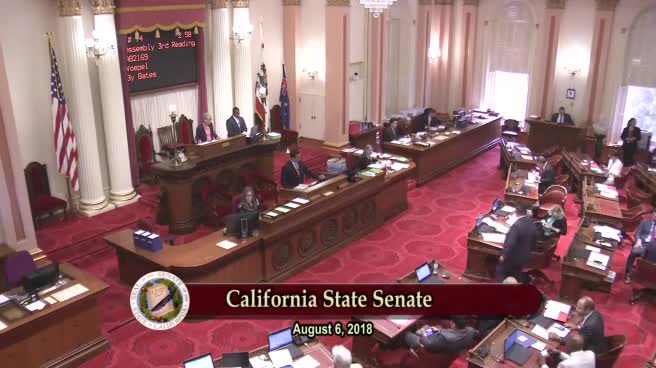 5MIN
Senate Floor
 5MIN
Senate Standing Committee on Elections and Constitutional Amendments
 4MIN
Assembly Standing Committee on Elections and Redistricting
Bill Author

Bill Co-Author(s):