AB 3080: Employment discrimination: enforcement.
- Session Year: 2017-2018
- House: Assembly
- Latest Version Date: 2018-08-23
Existing law imposes various restrictions on employers with respect to contracts and applications for employment. A violation of those restrictions is a misdemeanor.
Existing law creates the Division of Labor Standards Enforcement, which is under the direction of the Labor Commissioner, and generally commits to the commissioner the authority and responsibility for the enforcement of employment laws.
This bill would prohibit a person from, as a condition of employment, continued employment, the receipt of any employment-related benefit, or as a condition of entering into a contractual agreement, prohibiting an applicant for employment, employee, or independent contractor from disclosing to any person an instance of sexual harassment that the employee or independent contractor suffers, witnesses, or discovers in the workplace or in the performance of the contract, or otherwise opposing any lawful practice, or from exercising any right or obligation or participating in any investigation or proceeding with respect to unlawful harassment or discrimination. The bill would also prohibit an employer from requiring any applicant for employment or any employee to waive any right, forum, or procedure for a violation of any provision of the California Fair Employment and Housing Act (FEHA) or other specific statutes governing employment, as a condition of employment, continued employment, the receipt of any employment-related benefit, or as a condition of entering into a contractual agreement. The bill would also prohibit an employer from threatening, retaliating or discriminating against, or terminating any applicant for employment or any employee because of the refusal to consent to the waiver of any right, forum, or procedure for a violation of specific statutes governing employment. The bill would establish a specific exemption from those prohibitions. Because a violation of these prohibitions would be a crime, the bill would impose a state-mandated local program.
FEHA makes specified employment and housing practices unlawful and provides procedures for enforcement by the Department of Fair Employment and Housing. FEHA authorizes a person alleging a violation of specified provisions of the act relating to employment discrimination to submit a verified complaint to the Department of Fair Employment and Housing, and requires the department to take actions to investigate and conciliate that complaint. FEHA authorizes the department to bring a civil action on behalf of the person who submitted the complaint upon the failure to eliminate an unlawful practice under these provisions. FEHA requires the department to issue a right-to-sue notice to a person who submitted the complaint if certain conditions occur, and FEHA requires a person who has been issued a right-to-sue notice to bring an action within one year from when the department issued that notice.
This bill would additionally make violations of the prohibitions described above, relating to sexual harassment and waivers, unlawful employment practices under FEHA.
The California Constitution requires the state to reimburse local agencies and school districts for certain costs mandated by the state. Statutory provisions establish procedures for making that reimbursement.
This bill would provide that no reimbursement is required by this act for a specified reason.
Existing law imposes various restrictions on employers with respect to contracts and applications for employment. A violation of those restrictions is a misdemeanor.
Existing law creates the Division of Labor Standards Enforcement, which is under the direction of the Labor Commissioner, and generally commits to the commissioner the authority and responsibility for the enforcement of employment laws.
This bill would prohibit an employer a person from, as a condition of employment employment, continued employment, the receipt of any employment-related benefit, or as a condition of entering into a contractual agreement, prohibiting an employee applicant for employment, employee, or independent contractor from disclosing to any person an instance of sexual harassment that the employee or independent contractor suffers, witnesses, or discovers in the workplace or in the performance of the contract. contract, or otherwise opposing any lawful practice, or from exercising any right or obligation or participating in any investigation or proceeding with respect to unlawful harassment or discrimination. The bill would also prohibit an employer from requiring any applicant for employment or prospective employment or any employee to waive any right, forum, or procedure for a violation of any provision of the California Fair Employment and Housing Act (FEHA) or other specific statutes governing employment, as a condition of employment, continued employment, or the receipt of any employment-related benefit. benefit, or as a condition of entering into a contractual agreement. The bill would also prohibit an employer from threatening, retaliating or discriminating against, or terminating any applicant for employment or prospective employment or any employee because of the refusal to consent to the waiver of any right, forum, or procedure for a violation of specific statutes governing employment. The bill would establish a specific exemption from those prohibitions. Because a violation of these prohibitions would be a crime, the bill would impose a state-mandated local program.
FEHA makes specified employment and housing practices unlawful and provides procedures for enforcement by the Department of Fair Employment and Housing. FEHA authorizes a person alleging a violation of specified provisions of the act relating to employment discrimination to submit a verified complaint to the Department of Fair Employment and Housing, and requires the department to take actions to investigate and conciliate that complaint. FEHA authorizes the department to bring a civil action on behalf of the person who submitted the complaint upon the failure to eliminate an unlawful practice under these provisions. FEHA requires the department to issue a right-to-sue notice to a person who submitted the complaint if certain conditions occur, and FEHA requires a person who has been issued a right-to-sue notice to bring an action within one year from when the department issued that notice.
This bill would additionally make violations of the prohibitions described above, relating to sexual harassment and waivers, unlawful employment practices under FEHA.
The California Constitution requires the state to reimburse local agencies and school districts for certain costs mandated by the state. Statutory provisions establish procedures for making that reimbursement.
This bill would provide that no reimbursement is required by this act for a specified reason.
Existing law imposes various restrictions on employers with respect to contracts and applications for employment. A violation of those restrictions is a misdemeanor.
Existing law creates the Division of Labor Standards Enforcement, which is under the direction of the Labor Commissioner, and generally commits to the commissioner the authority and responsibility for the enforcement of employment laws.
This bill would prohibit an employer from, as a condition of employment or as a condition of entering into a contractual agreement, prohibiting an employee or independent contractor from disclosing to any person an instance of sexual harassment that the employee or independent contractor suffers, witnesses, or discovers in the workplace or in the performance of the contract. The bill would also prohibit an employer from requiring any applicant for employment or prospective employment or any employee to waive any right, forum, or procedure for a violation of any provision of the California Fair Employment and Housing Act (FEHA) or other specific statutes governing employment, as a condition of employment, continued employment, or the receipt of any employment-related benefit. The bill would also prohibit an employer from threatening, retaliating or discriminating against, or terminating any applicant for employment or prospective employment or any employee because of the refusal to consent to the waiver of any right, forum, or procedure for a violation of specific statutes governing employment. The bill would establish a specific exemption from those prohibitions. Because a violation of these prohibitions would be a crime, the bill would impose a state-mandated local program.
FEHA makes specified employment and housing practices unlawful and provides procedures for enforcement by the Department of Fair Employment and Housing. FEHA authorizes a person alleging a violation of specified provisions of the act relating to employment discrimination to submit a verified complaint to the Department of Fair Employment and Housing, and requires the department to take actions to investigate and conciliate that complaint. FEHA authorizes the department to bring a civil action on behalf of the person who submitted the complaint upon the failure to eliminate an unlawful practice under these provisions. FEHA requires the department to issue a right-to-sue notice to a person who submitted the complaint if certain conditions occur, and FEHA requires a person who has been issued a right-to-sue notice to bring an action within one year from when the department issued that notice.
This bill would additionally make violations of the prohibitions described above, relating to sexual harassment and waivers, unlawful employment practices under FEHA.
The California Constitution requires the state to reimburse local agencies and school districts for certain costs mandated by the state. Statutory provisions establish procedures for making that reimbursement.
This bill would provide that no reimbursement is required by this act for a specified reason.
Existing law prohibits an employer from using the federal electronic employment verification system known as E-Verify to check the employment authorization status of an existing employee or an applicant who has not been offered employment, except as required by federal law or as a condition of receiving federal funds.This bill would make a nonsubstantive change to these provisions.Existing law prohibits an employer from using the federal electronic employment verification system known as E-Verify to check the employment authorization status of an existing employee or an applicant who has not been offered employment, except as required by federal law or as a condition of receiving federal funds.
This bill would make a nonsubstantive change to these provisions.
(a)The Legislature finds and declares that it is the policy of this state to ensure that all persons have the full benefit of the rights, forums, and procedures established in the California Fair Employment and Housing Act Part 2.8 (commencing with Section 12900) of Division 3 of Title 2 of the Government Code and the Labor Code.
(b)It is the purpose of this act to ensure that individuals are not retaliated against for refusing to consent to the waiver of those rights and procedures and to ensure that any contract relating to those rights and procedures be entered into as a matter of voluntary consent, not coercion.
SEC. 2.Section 12953 is added to the Government Code, to read:12953.It is an unlawful employment practice for an employer to violate Section 432.4 or 432.6 of the Labor Code.
SEC. 3.Section 432.4 is added to the Labor Code, to read:432.4.(a)A person shall not, as a condition of employment, continued employment, the receipt of any employment-related benefit, or as a condition of entering into a contractual agreement, prohibit any applicant for employment, employee, or independent contractor from disclosing to any person an instance of sexual harassment that the employee or independent contractor suffers, witnesses, or discovers in the workplace or in the performance of the contract, or otherwise opposing any unlawful practice, or from exercising any right or obligation or participating in any investigation or proceeding with respect to unlawful harassment or discrimination.
(b)This section applies to contracts for employment entered into, modified, or extended on or after January 1, 2019.
SEC. 4.Section 432.6 is added to the Labor Code, to read:432.6.(a)A person shall not, as a condition of employment, continued employment, the receipt of any employment-related benefit, or as a condition of entering into a contractual agreement, require any applicant for employment or any employee to waive any right, forum, or procedure for a violation of any provision of the California Fair Employment and Housing Act (Part 2.8 (commencing with Section 12900) of Division 3 of Title 2 of the Government Code) or this code, including the right to file and pursue a civil action or a complaint with, or otherwise notify, any state agency, other public prosecutor, law enforcement agency, or any court or other governmental entity of any alleged violation.
(b)An employer shall not threaten, retaliate or discriminate against, or terminate any applicant for employment or any employee because of the refusal to consent to the waiver of any right, forum, or procedure for a violation of the California Fair Employment and Housing Act or this code, including the right to file and pursue a civil action or a complaint with, or otherwise notify, any state agency, other public prosecutor, law enforcement agency, or any court or other governmental entity of any alleged violation.
(c)For purposes of this section, an agreement that requires an employee to opt out of a waiver or take any affirmative action in order to preserve their rights is deemed a condition of employment.
(d)In addition to injunctive relief and any other remedies available, a court may award a prevailing plaintiff enforcing his or her rights under this section reasonable attorneys fees.
(e)This section does not apply to a person registered with a self-regulatory organization as defined by the Securities Exchange Act of 1934 (15 U.S.C. Sec. 78c) or regulations adopted under that act pertaining to any requirement of a self-regulatory organization that a person arbitrate disputes that arise between the person and his or her employer or any other person as specified by the rules of the self-regulatory organization.
(f)This section applies to contracts for employment entered into, modified, or extended on or after January 1, 2019.
(g)The provisions of this section are severable. If any provision of this section or its application is held invalid, that invalidity shall not affect other provisions or applications that can be given effect without the invalid provision or application.
SEC. 5.No reimbursement is required by this act pursuant to Section 6 of Article XIIIB of the California Constitution because the only costs that may be incurred by a local agency or school district will be incurred because this act creates a new crime or infraction, eliminates a crime or infraction, or changes the penalty for a crime or infraction, within the meaning of Section 17556 of the Government Code, or changes the definition of a crime within the meaning of Section 6 of Article XIIIB of the California Constitution.
(a)The Legislature finds and declares that it is the policy of this state to ensure that all persons have the full benefit of the rights, forums, and procedures established in the California Fair Employment and Housing Act Part 2.8 (commencing with Section 12900) of Division 3 of Title 2 of the Government Code and the Labor Code, and that individuals not be retaliated against for refusing to consent to the waiver of those rights and procedures. Code.
(b)It is the purpose of this act to ensure that individuals are not retaliated against for refusing to consent to the waiver of those rights and procedures and to ensure that any contract relating to those rights and procedures be entered into as a matter of voluntary consent, not coercion.
SEC. 2.Section 12953 is added to the Government Code, to read:12953.It is an unlawful employment practice for an employer to violate Section 432.4 or 432.6 of the Labor Code.
SEC. 3.Section 432.4 is added to the Labor Code, to read:432.4.(a)An employer A person shall not, as a condition of employment employment, continued employment, the receipt of any employment-related benefit, or as a condition of entering into a contractual agreement, prohibit an employee any applicant for employment, employee, or independent contractor from disclosing to any person an instance of sexual harassment that the employee or independent contractor suffers, witnesses, or discovers in the workplace or in the performance of the contract. contract, or otherwise opposing any unlawful practice, or from exercising any right or obligation or participating in any investigation or proceeding with respect to unlawful harassment or discrimination.
(b)This section applies to contracts for employment entered into, modified, or extended on or after January 1, 2019.
SEC. 4.Section 432.6 is added to the Labor Code, to read:432.6.(a)An employer A person shall not not, as a condition of employment, continued employment, the receipt of any employment-related benefit, or as a condition of entering into a contractual agreement, require any applicant for employment or prospective employment or any employee to waive any right, forum, or procedure for a violation of any provision of the California Fair Employment and Housing Act (Part 2.8 (commencing with Section 12900) of Division 3 of Title 2 of the Government Code) or this code, as a condition of employment, continued employment, or the receipt of any employment-related benefit, including the right to file and pursue a civil action or a complaint with, or otherwise notify, any state agency, other public prosecutor, law enforcement agency, or any court or other governmental entity of any alleged violation.
(b)An employer shall not threaten, retaliate or discriminate against, or terminate any applicant for employment or prospective employment or any employee because of the refusal to consent to the waiver of any right, forum, or procedure for a violation of the California Fair Employment and Housing Act or this code, including the right to file and pursue a civil action or a complaint with, or otherwise notify, any state agency, other public prosecutor, law enforcement agency, or any court or other governmental entity of any alleged violation.
(c)For purposes of this section, an agreement that requires an employee to opt out of a waiver or take any affirmative action in order to preserve their rights is deemed a condition of employment.
(c)(d)In addition to injunctive relief and any other remedies available, a court may award a prevailing plaintiff enforcing his or her rights under this section reasonable attorneys fees.
(d)(e)This section does not apply to a person registered with a self-regulatory organization as defined by the Securities Exchange Act of 1934 (15 U.S.C. Sec. 78c) or regulations adopted under that act pertaining to any requirement of a self-regulatory organization that a person arbitrate disputes that arise between the person and his or her employer or any other person as specified by the rules of the self-regulatory organization.
(e)(f)This section applies to contracts for employment entered into, modified, or extended on or after January 1, 2019.
(f)(g)The provisions of this section are severable. If any provision of this section or its application is held invalid, that invalidity shall not affect other provisions or applications that can be given effect without the invalid provision or application.
SEC. 5.No reimbursement is required by this act pursuant to Section 6 of Article XIIIB of the California Constitution because the only costs that may be incurred by a local agency or school district will be incurred because this act creates a new crime or infraction, eliminates a crime or infraction, or changes the penalty for a crime or infraction, within the meaning of Section 17556 of the Government Code, or changes the definition of a crime within the meaning of Section 6 of Article XIIIB of the California Constitution.
The Legislature finds and declares that it is the policy of this state to ensure that all persons have the full benefit of the rights, forums, and procedures established in the California Fair Employment and Housing Act Part 2.8 (commencing with Section 12900) of Division 3 of Title 2 of the Government Code and the Labor Code, and that individuals not be retaliated against for refusing to consent to the waiver of those rights and procedures.
SEC. 2.Section 12953 is added to the Government Code, to read:12953.It is an unlawful employment practice for an employer to violate Section 432.4 or 432.6 of the Labor Code.
SEC. 3.Section 432.4 is added to the Labor Code, to read:432.4.(a)An employer shall not, as a condition of employment or as a condition of entering into a contractual agreement, prohibit an employee or independent contractor from disclosing to any person an instance of sexual harassment that the employee or independent contractor suffers, witnesses, or discovers in the workplace or in the performance of the contract.
(b)This section applies to contracts for employment entered into, modified, or extended on or after January 1, 2019.
SEC. 4.Section 432.6 is added to the Labor Code, to read:432.6.(a)An employer shall not require any applicant for employment or prospective employment or any employee to waive any right, forum, or procedure for a violation of any provision of the California Fair Employment and Housing Act (Part 2.8 (commencing with Section 12900) of Division 3 of Title 2 of the Government Code) or this code, as a condition of employment, continued employment, or the receipt of any employment-related benefit, including the right to file and pursue a civil action or a complaint with, or otherwise notify, any state agency, other public prosecutor, law enforcement agency, or any court or other governmental entity of any alleged violation.
(b)An employer shall not threaten, retaliate or discriminate against, or terminate any applicant for employment or prospective employment or any employee because of the refusal to consent to the waiver of any right, forum, or procedure for a violation of the California Fair Employment and Housing Act or this code, including the right to file and pursue a civil action or a complaint with, or otherwise notify, any state agency, other public prosecutor, law enforcement agency, or any court or other governmental entity of any alleged violation.
(c)In addition to injunctive relief and any other remedies available, a court may award a prevailing plaintiff enforcing his or her rights under this section reasonable attorneys fees.
(d)This section does not apply to a person registered with a self-regulatory organization as defined by the Securities Exchange Act of 1934 (15 U.S.C. Sec. 78c) or regulations adopted under that act pertaining to any requirement of a self-regulatory organization that a person arbitrate disputes that arise between the person and his or her employer or any other person as specified by the rules of the self-regulatory organization.
(e)This section applies to contracts for employment entered into, modified, or extended on or after January 1, 2019.
(f)The provisions of this section are severable. If any provision of this section or its application is held invalid, that invalidity shall not affect other provisions or applications that can be given effect without the invalid provision or application.
SEC. 5.No reimbursement is required by this act pursuant to Section 6 of Article XIIIB of the California Constitution because the only costs that may be incurred by a local agency or school district will be incurred because this act creates a new crime or infraction, eliminates a crime or infraction, or changes the penalty for a crime or infraction, within the meaning of Section 17556 of the Government Code, or changes the definition of a crime within the meaning of Section 6 of Article XIIIB of the California Constitution.
SECTION 1.Section 2814 of the Labor Code is amended to read:2814.(a)(1)Except as required by federal law or as a condition of receiving federal funds, it shall be unlawful for an employer, or any other person or entity to use the federal electronic employment verification system known as E-Verify to check the employment authorization status of an existing employee or an applicant who has not been offered employment at a time or in a manner not required under subsection (b) of Section 1324a of Title 8 of the United States Code or not authorized under any federal agency memorandum of understanding governing the use of a federal electronic employment verification system.(2)Nothing in this section shall prohibit an employer from utilizing the federal E-Verify system, in accordance with federal law, to check the employment authorization status of a person who has been offered employment.(b)Upon using the federal E-Verify system to check the employment authorization status of a person, if the employer receives a tentative nonconfirmation issued by the Social Security Administration or the United States Department of Homeland Security, which indicates the information entered in E-Verify did not match federal records, the employer shall comply with the required employee notification procedures under any memorandum of understanding governing the use of the federal E-Verify system. The employer shall furnish to the employee any notification issued by the Social Security Administration or the United States Department of Homeland Security containing information specific to the employees E-Verify case or any tentative nonconfirmation notice. The notification shall be furnished as soon as practicable.(c)In addition to other remedies available, an employer who violates this section is liable for a civil penalty not to exceed ten thousand dollars ($10,000) for each violation of this section. Each unlawful use of the E-Verify system on an employee or applicant constitutes a separate violation.(d)It is the intent of the section to prevent discrimination in employment rather than to sanction the potential hiring and employment of persons who are not authorized for employment under federal law.(a)(1)Except as required by federal law or as a condition of receiving federal funds, it shall be unlawful for an employer, or any other person or entity to use the federal electronic employment verification system known as E-Verify to check the employment authorization status of an existing employee or an applicant who has not been offered employment at a time or in a manner not required under subsection (b) of Section 1324a of Title 8 of the United States Code or not authorized under any federal agency memorandum of understanding governing the use of a federal electronic employment verification system.
(2)Nothing in this section shall prohibit an employer from utilizing the federal E-Verify system, in accordance with federal law, to check the employment authorization status of a person who has been offered employment.
(b)Upon using the federal E-Verify system to check the employment authorization status of a person, if the employer receives a tentative nonconfirmation issued by the Social Security Administration or the United States Department of Homeland Security, which indicates the information entered in E-Verify did not match federal records, the employer shall comply with the required employee notification procedures under any memorandum of understanding governing the use of the federal E-Verify system. The employer shall furnish to the employee any notification issued by the Social Security Administration or the United States Department of Homeland Security containing information specific to the employees E-Verify case or any tentative nonconfirmation notice. The notification shall be furnished as soon as practicable.
(c)In addition to other remedies available, an employer who violates this section is liable for a civil penalty not to exceed ten thousand dollars ($10,000) for each violation of this section. Each unlawful use of the E-Verify system on an employee or applicant constitutes a separate violation.
(d)This section is intended It is the intent of the section to prevent discrimination in employment rather than to sanction the potential hiring and employment of persons who are not authorized for employment under federal law.
|
Date
|
Status
|
|---|---|
| Sep 30, 2018 | Vetoed by Governor. |
| Aug 27, 2018 | Enrolled and presented to the Governor at 3 p.m. |
| Aug 22, 2018 | In Assembly. Ordered to Engrossing and Enrolling. |
| Aug 22, 2018 | Read third time. Passed. Ordered to the Assembly. |
| Aug 17, 2018 | From committee: Do pass. (Ayes 5. Noes 2.) (August 16). |
| Aug 6, 2018 | In committee: Referred to APPR. suspense file. |
| Jun 28, 2018 | From committee: Do pass and re-refer to Com. on APPR. (Ayes 4. Noes 1.) (June 27). Re-referred to Com. on APPR. |
| Jun 20, 2018 | From committee: Do pass and re-refer to Com. on L. & I.R. (Ayes 5. Noes 2.) (June 19). Re-referred to Com. on L. & I.R. |
| Jun 13, 2018 | Referred to Coms. on JUD. and L. & I.R. |
| May 31, 2018 | In Senate. Read first time. To Com. on RLS. for assignment. |
| May 30, 2018 | Read third time. Passed. Ordered to the Senate. |
| May 29, 2018 | Read second time. Ordered to third reading. |
| May 25, 2018 | From committee: Amend, and do pass as amended. (Ayes 12. Noes 4.) (May 25). |
| May 16, 2018 | In committee: Set, first hearing. Referred to APPR. suspense file. |
| Apr 24, 2018 | From committee: Do pass and re-refer to Com. on APPR. (Ayes 7. Noes 3.) (April 24). Re-referred to Com. on APPR. |
| Apr 19, 2018 | From committee: Do pass and re-refer to Com. on JUD. (Ayes 5. Noes 1.) (April 18). Re-referred to Com. on JUD. |
| Apr 2, 2018 | Re-referred to Com. on L. & E. |
| Mar 22, 2018 | Referred to Coms. on L. & E. and JUD. |
| Feb 17, 2018 | From printer. May be heard in committee March 19. |
| Feb 16, 2018 | Read first time. To print. |
|
Date
|
Description
|
Location
|
Votes
|
|
|---|---|---|---|---|
| Aug 22, 2018 | Assembly 3rd Reading AB3080 Gonzalez Fletcher et al. By Jackson | Senate Floor |
Passed |
|
| Aug 16, 2018 | Do pass | Senate Standing Committee on Appropriations |
Passed |
|
| Aug 6, 2018 | Placed on suspense file | Senate Standing Committee on Appropriations |
Passed |
|
| Jun 27, 2018 | Do pass, but first be re-referred to the Committee on [Appropriations] | Senate Standing Committee on Labor and Industrial Relations |
Passed |
|
| Jun 19, 2018 | Do pass, but first be re-referred to the Committee on [Labor and Industrial Relations] | Senate Standing Committee on Judiciary |
Passed |
|
| May 30, 2018 | AB 3080 GONZALEZ FLETCHER Assembly Third Reading | Assembly Floor |
Passed |
|
| May 25, 2018 | Do pass as amended. | Assembly Standing Committee on Appropriations |
Passed |
|
| Apr 24, 2018 | Do pass and be re-referred to the Committee on [Appropriations] | Assembly Standing Committee on Judiciary |
Passed |
|
| Apr 18, 2018 | Do pass and be re-referred to the Committee on [Judiciary] | Assembly Standing Committee on Labor and Employment |
Passed |
This list shows positions taken on this bill by organizations on the date displayed, which is linked to the original source.
Positions by individuals are not included.
GOVERNOR'S VETO
GV Bill Id:AB 3080
Author:(Gonzalez Fletcher)
As Enrolled Ver:August 27, 2018
2/3 vote
Committee | Votes | Ayes | Noes |
Labor | 5-1 | Thurmond, Gonzalez Fletcher, Jones-Sawyer, Kalra, McCarty | Flora |
Judiciary | 7-3 | Mark Stone, Chau, Chiu, Weber, Holden, Kalra, Reyes | Cunningham, Kiley, Maienschein |
Appropriations | 12-4 | Gonzalez Fletcher, Bloom, Bonta, Calderon, Carrillo, Chau, Eggman, Friedman, Eduardo Garcia, Nazarian, Quirk, Reyes | Bigelow, Fong, Gallagher, Obernolte |
ASSEMBLY: | 47-25 | (May 30, 2018) | SENATE: | 26-12 | (August 22, 2018) |
SUMMARY: Prohibits a person from conditioning employment, continued employment, or the receipt of any employment-related benefit on the applicant for employment, the employee or independent contractor waiving certain rights and/or not disclosing sexual harassment. Specifically, this bill:
- Prohibits a person from conditioning employment, continued employment, the receipt of any employment-related benefit or a contractual arrangement on the prohibition of disclosing an instance of sexual harassment or otherwise opposing any lawful practice, or from exercising any right or obligation or participating in any investigation or proceeding with respect to unlawful harassment or discrimination.
- Prohibits a person from conditioning employment, the receipt of any employment-related benefit or as a condition of entering into a contractual agreement, on an employee or applicant waiving any right, forum, or procedure for a violation of any provision the California Fair Employment and Housing Act or the Labor Code, and prohibits a person from threatening, retaliating, or discriminating against any applicant or employee because of their refusal to agree to such a waiver.
FISCAL EFFECT: According to the Assembly Appropriations Committee, one-time special fund costs of $420,000 and ongoing costs of $400,000 as a result of an anticipated increase in retaliation claims.
COMMENTS: According to the author, "Recent revelations of widespread sexual harassment have focused policy makers on the need to ensure that victims have access to justice and that violators are held accountable. They have also demonstrated the harm that comes from keeping these cases confidential," which the author asserts exposes "countless other women to the same treatment." The author also contends, "Arbitration is a highly effective dispute resolution method when both parties chose it freely. It is far less successful when the more powerful party forces the other to accept the terms"
Arguments in Support
The American Civil Liberties Union (ACLU) writes in support of this bill that the measure promotes, "consent and fairness in the waiver of important workplace rights, such as by private arbitration or other agreements." They continue, "It expresses no hostility to arbitration to protect against the forced and involuntary waiver of vital rights enacted by the legislature for the public good. The law is replete with examples of rules to prevent injustice in the enforcement of private agreements – some by statute and others crafted by the courts, such as the strictures applied to adhesion contracts and the unconscionability doctrine that invalidates contracts too one-sided to be upheld."
The ACLU asserts, "With respect to agreements that purport to waive unwaivable employment rights, the California Supreme Court observed in Armendariz v.Foundation Health Psychcare Services, Inc. (2000) 24 Cal. 4th 83 that the Federal Arbitration Act does not exempt arbitration clauses from general principles that apply to all contracts. First, Civil Code Section 1668 states: 'All contracts which have for their object, directly or indirectly, to exempt anyone from responsibility for his own fraud, or willful injury to the person or property of another, or violation of law, whether willful or negligent, are against the policy of the law.' 'Agreements whose object, directly or indirectly, is to exempt [their] parties from violation of the law are against public policy and may not be enforced.' Second, Civil Code section 3513 states, "Anyone may waive the advantage of a law intended solely for his benefit. But a law established for a public reason cannot be contravened by a private agreement." The ACLU continues, "Armendariz recognized that the statutory rights established by the Fair Employment and Housing Act (FEHA) are for a public reason that cannot be annulled by private contracts. The provisions of the Labor Code are no different."
Arguments in Opposition
The California Chamber of Commerce and others write that they oppose this measure because, they believe "it: 1) prohibits settlement agreements for labor and employment claims; 2) prohibits arbitration of labor and employment claims; 3) creates significant litigation exposure and expense; 4) is preempted by federal law; and 5) only serves to benefit trial attorneys at the expense of both employers and employees."
The Chamber and others also argue that the measure denies low-wage employees access to justice. They assert, "By banning arbitration, the only option left for employees to resolve many labor and employment claims is litigation." They continue, "Several studies support this notion that access to civil courts is not a realistic option for low wage employees. See University of San Francisco Law Review, "Employment Arbitration and Workplace Justice," Lewis L. Maltby, President of the National Workrights Institute, 2003, '[I]t would be a terrible mistake to eliminate the use of arbitration as a tool for addressing and resolving employment disputes. Employees are more likely to have their day in court in arbitration than in litigation and are more likely to receive justice when the day is over. Employment arbitration needs to be preserved and improved, not abandoned;' and University of Michigan Law School, 'Mandatory Arbitration: Why It's Better Than It Looks,' Theodore St. Antoine, 2003, 'The vast majority of ordinary, lower- and middle-income employees (essentially, those making less than $60,000 a year) cannot get access to the courts to vindicate their contractual and statutory rights. Most lawyers will not find their cases worth the time and expense. Their only practical hope is the generally cheaper, faster, and more informal process of arbitration. If that is so-called mandatory arbitration, so be it. There is no viable alternative.'"
This bill prohibits an applicant for employment or employee from being required to waive his or her right to a judicial forum as a condition of employment or continued employment.
In my veto message of a similar bill in 2015, I referred to recent court decisions that invalidated state policies which unduly impeded arbitration. I also wanted to see how future United States Supreme Court decisions developed before endorsing a broad ban on mandatory arbitration agreements.
The direction from the Supreme Court since my earlier veto has been clear - states must follow the Federal Arbitration Act and the Supreme Court's interpretation of the Act. DIRECTV, Inc. v. Imburgia, 136 S. Ct. 463, 468 (2015).
This bill is based on a theory that the Act only governs the enforcement and not the initial formation of arbitration agreements and therefore California is free to prevent mandatory arbitration agreements from being formed at the outset. The Supreme Court has made it explicit this approach is impermissible. In 2017 Justice Kagan, an appointee of President Obama, writing on behalf of a near-unanimous Supreme Court, clearly rejected the assertion that the Federal Arbitration Act has no application to contract formation issues:
"By its terms, . . . the Act cares not only about the "enforce[ment]" of arbitration agreements, but also about their initial "valid[ity]"-that is, about what it takes to enter into them. Or said otherwise: A rule selectively finding arbitration contracts invalid because improperly formed fares no better under the Act than a rule selectively refusing to enforce those agreements once properly made. Precedent confirms that point."
Kindred Nursing Centers Ltd. Partnership v. Clark, 137 S. Ct. 1421, 1428 (2017).
Since this bill plainly violates federal law, I cannot sign this measure.
Analysis Prepared by: Jennifer Richard / L. & E. / (916) 319-2091 FN: 0005353
Office of Senate Floor Analyses (916) 651-1520 Fax: (916) 327-4478 | AB |
THIRD READING
Bill No: AB 3080
:
SENATE JUDICIARY COMMITTEE: 5-2, 6/19/18
AYES: Jackson, Hertzberg, Monning, Stern, Wieckowski
NOES: Moorlach, Anderson
SENATE LABOR & IND. REL. COMMITTEE: 4-1, 6/27/18
AYES: Lara, Jackson, Mitchell, Wieckowski
NOES: Stone
SENATE APPROPRIATIONS COMMITTEE: 5-2, 8/16/18
AYES: Portantino, Beall, Bradford, Hill, Wiener
NOES: Bates, Nielsen
ASSEMBLY FLOOR: 47-25, 5/30/18 - See last page for vote
SOURCE: California Labor Federation
Consumer Attorneys of California
DIGEST:
This bill addresses two legal tactics, commonly used in relation to employment contracts, that can be and have been exploited to silence victims and witnesses of workplace sexual harassment: (1) the inclusion of non-disparagement clauses; and (2) forcing workers to sign mandatory arbitration agreements. As to the first tactic, this bill tries to limit abuse of non-disparagement agreements by making it unlawful for employers to prohibit workers from disclosing an instance of sexual harassment, opposing an unlawful practice, or participating in any investigation relating to harassment or discrimination. As to the second tactic, since current federal case law strongly favors enforcement of mandatory arbitration agreements, even when used to keep allegations of sexual harassment from becoming public, California cannot outlaw or discriminate against such agreements. Instead, this bill ensures that California workers who sign agreements to waive their rights to any particular forum or procedure for dispute resolution do so voluntarily and that those who elect not to sign such agreements are not subjected to retaliation as a result.
Existing law:
- Prohibits setting aside or contravening a broad category of labor rights, which includes the minimum wage, timely payment of wages, wage stubs, and overtime pay, through a written or oral contract. (Labor Code §§ 219, 1197.1.)
- Prohibits an employer from: (a) requiring, as a condition of employment, that an employee refrain from disclosing information about the employer’s working conditions; (b) requiring an employee to sign a waiver or other document that purports to deny the employee the right to disclose information about the employer’s working conditions; and (c) discharging, formally disciplining, or otherwise discriminating against an employee who discloses information about the employer’s working conditions. (Labor Code § 232.5.)
- Provides that it is an unlawful employment practice to discriminate, refuse to hire, or employ any person on the basis of race, religious creed, color, national origin, ancestry, physical disability, mental disability, medical condition, genetic information, marital status, sex, gender, gender identity, gender expression, age, sexual orientation, or military and veteran status. (Government Code §12940)
- Authorizes a court, if it finds as a matter of law that the contract or any clause of the contract was unconscionable at the time it was made, to refuse to enforce the contract, or it may enforce the remainder of the contract without the unconscionable clause, or it may so limit the application of any unconscionable clause as to avoid any unconscionable result. (Civil Code §1670.5)
- Establishes the California Arbitration Act which provides that agreements to arbitrate shall be valid, irrevocable, and enforceable, except on such grounds as exist at law or in equity for the revocation of any contract. (Code of Civil Procedure §§1280-1294.4)
- Provides, pursuant to the Federal Arbitration Act (FAA), that agreements to arbitrate shall be valid, irrevocable, and enforceable, except on such grounds as exist at law or in equity for the revocation of any contract. (9 U.S.C. Sec. 2.)
This bill:
- Finds and declares that it is the policy of the state to ensure that all persons have the full benefit of the rights, forums, and procedures established in FEHA and the Labor Code.
- Declares that the purpose of the bill is to ensure that individuals are not retaliated against for refusing to waive their rights and the procedures under FEHA and the Labor Code as well as to ensure that any contract relating to those rights and procedures be executed as a matter of voluntary consent.
- Provides that an employer cannot, as a condition of employment or as a condition of entering into a contractual agreement, prohibit an employee or independent contractor from: (a) disclosing to any person an instance of sexual harassment that the employee or independent contractor suffers, witnesses, or discovers in the workplace or in the performance of the contract; (b) opposing any unlawful practice; or (c) exercising any right or obligation or participating in any investigation or proceeding with respect to unlawful harassment or discrimination.
- Prohibits an employer from requiring any applicant for employment or prospective employment, or any employee or independent contractor, to waive any right, forum, or procedure for a violation of any provision of the California Fair Employment and Housing Act or the Labor Code, as a condition of employment, continued employment, or the receipt of any employment-related benefit.
- Provides that an employer shall not threaten, retaliate, or discriminate against, or terminate any applicant for employment or prospective employment or any employee because of the refusal to consent to the waiver of any right, forum, or procedure for a violation of the California Fair Employment and Housing Act (FEHA) or the Labor Code.
- Provides that an employee may seek injunctive relief to enforce the provisions of this bill. This bill would provide that its terms do not apply to specified self-regulatory organizations, as defined by the Securities Exchange Act of 1934. This bill would provide that the bill only applies to contracts for employment entered into, modified, or extended on or after January 1, 2019.
- Provides that any violation of the provisions of the bill constitutes an unlawful employment practice pursuant to the FEHA.
Background
Non-disparagement agreements protect an employer’s reputation against the disclosure of information that only an employee would have access to. Alternative dispute resolution mechanisms, arbitration among them, can provide companies and their workers with relatively inexpensive, informal options for resolving workplace claims. As countless stories from the #MeToo movement illustrate, however, when used in the context of allegations about sexual harassment, these same legal tools also can be used as powerful weapons to silence victims and foster an environment of impunity.
Two recent, prominent cases illustrate this dynamic well. According to media accounts based on the reports of victims and company employees, entertainment mogul Harvey Weinstein repeatedly sexually harassed and assaulted scores of actresses and employees over a period of three decades. Weinstein’s behavior was not a secret among those who worked closely with him. Yet he was able to hide it from the public and from the unsuspecting victims he preyed upon. One of the key factors that allowed Weinstein to get away with these atrocities for so long was the fact that employees at the Weinstein Company were required, as a condition of working for the company, to sign employment contracts stipulating that they would not make any comments that could harm the company’s business reputation or the reputation of anyone working at the company.
Gretchen Carlson is a well-known cable television journalist. For many years, she was a Fox News anchor. Upon joining that company, and long before she had any reason to believe she would have any problems working there, Carlson signed an employment contract agreeing to resolve any employment conflicts she might have with the company through one particular form of dispute resolution only: confidential arbitration. In July 2016, after years working at Fox News, Carlson sued the network and its CEO Roger Ailes for sexual harassment. Fox reportedly tried to force Carlson to arbitrate the matter behind closed doors in accordance with her contract. For reasons that are unclear, Carlson managed to get around the clause that would have prevented her from filing her case in a more public forum. Once Carlson’s allegations became public, other victims came forward, ultimately leading to Ailes ouster from Fox News. Had Carlson not been able to find a way around the forced arbitration clause in her employment contract, however, it is not clear that Ailes’ serial sexual harassment would ever have come to light.
These are just two widely reported stories. Aside from the involvement of wealthy celebrities, however, they are not unique. Non-disparagement and forced arbitration agreements are now common in the American workplace. According to the Economic Policy Institute, 67.4% of all California employers now mandate arbitration of employment disputes.[1] The impact of these agreements may help to explain why sexual harassment remains a widespread and seemingly intractable problem. Whatever other purposes these contractual tools may serve, the #MeToo movement has made it clear that non-disparagement clauses and forced arbitration agreements can and do allow serial perpetrators to evade public detection and escape accountability.
Comments
New limitations on the scope of non-disparagement clauses
The first component of this bill, the creation of new limitations on how broadly a non-disparagement agreement can sweep, is the less controversial of the two. While still allowing non-disparagement agreements in employment contracts, the bill would prohibit those clauses from acting to prevent an employee from disclosing an instance of sexual harassment, opposing an unlawful practice, or participating in any investigation relating to harassment or discrimination.
Since California law already places a number of limitations on what an employer can prohibit employees from divulging, this bill’s modest expansion of those limitations is more a matter of degree than kind. For example, under existing law, unlawful contract provisions are those that are: (1) contrary to an express provision of law; (2) contrary to the policy of express law, though not expressly prohibited; or (3) otherwise contrary to good morals. (Civ. Code Sec. 1667.) In a similar vein, existing law renders void as against public policy “all contracts which have for their object, directly or indirectly, to exempt anyone from responsibility for his own fraud, or willful injury to the person or property of another, or violation of law, whether willful or negligent.” (Civ. Code Sec. 1668.) Other provisions of existing law bar the use of payments to try to prevent a witness from testifying in a criminal investigation. (Civ. Code Sec. 1669.7.)
Still, because non-disparagement clauses have proven to be effective tools for silencing victims and witnesses of sexual harassment in civil matters, this bill would operate to cut off that impact. Non-disparagement agreements would still be enforceable for other lawful purposes.
Ensuring that employees genuinely consent to mandatory arbitration and all other waivers of their right to seek justice through the available forum of their choosing
The second component of the bill addresses the circumstances in which employees and employers negotiate the part of an employment contract that governs what forums and procedures will be available to the respective parties in the event that a dispute arises between them involving allegations that the employer has violated either the employee’s workplace civil rights or the Labor Code. This includes, though it is not limited to, mandatory arbitration agreements.
Under the Supremacy Clause of the U.S. Constitution, federal laws and regulations preempt state laws and policies where they conflict. (U.S. Const., art. VI, cl. 2.) The Federal Arbitration Act governs law in the area of arbitration agreements. (9 U.S.C. 1 et seq.)
The opponents of this bill are correct that there is a lengthy and extensive history favoring enforcement of arbitration agreements, striking down state laws that discriminate against arbitration agreements, and voiding state laws that interfere with the enforcement of arbitration agreements once executed. The federal courts have ruled that the Federal Arbitration Act was intended to promote arbitration. (Epic Systems Corp., supra (May 21, 2018, No. 16–285) 584 U.S. ___ at p. 5.) State laws or rules that interfere with the enforcement of arbitration agreements are preempted, except on such grounds as exist at law or in equity for the revocation of any contract. (9 U.S.C. Sec. 2; AT&T Mobility LLC v. Concepcion (2011) 563 U.S. 333, 339.) Moreover, state laws that explicitly or covertly discriminate against arbitration agreements as compared to other contracts are also preempted. (Epic Systems Corp., supra (May 21, 2018, No. 16–285) 584 U.S. ___ at p. 7.)
According to its proponents, this bill is carefully crafted so as not to run afoul of these rules. In slightly simplified prose, it would make it an unlawful employment practice for an employer to require an applicant or employee to agree to waive the right to seek justice for a violation of the Fair Employment and Housing Act or the Labor Code through any particular dispute resolution mechanism, as a condition of hire or continued employment. Nothing would prevent an employee from voluntarily entering into an agreement – including, but not at all limited to, a mandatory arbitration agreement – in which the employee consents to submit any and all disputes that may come up under FEHA or the Labor Code to one particular resolution mechanism and to waive all others. And, if the employee does voluntarily enter into such an agreement, it would be wholly and fully enforceable, save upon any other existing grounds for invalidating such an agreement. If the employee elects not to agree to such a waiver, however, the employer would be prohibited from retaliating against the employee for that decision.
It is thus a mischaracterization of AB 3080 to say that it prohibits, discriminates against, or discourages arbitration agreements. If AB 3080 leads to a reduction in the prevalence of mandatory arbitration agreements, it will be because, given a genuinely free choice, fewer employees are willing to bind themselves, in advance, to arbitration as their exclusive path to a possible remedy.
Given the differing perspectives on the bill, there is little doubt that, if enacted, it would be challenged in court. There is a chance, particularly under the current composition of the U.S. Supreme Court, that it would be found preempted. At the same time, there is a reasoned case to be made that the author and sponsor of this bill have carefully crafted a statute that responds to preemption doctrine by taking the U.S. Supreme Court’s admonition seriously: that consent is the touchstone of arbitration agreements. (Stolt-Nielsen S. A. v. Animal Feeds Int’l Corp. (2010) 559 U.S. 662, 681.) In this way, this bill would ensure employees may choose to waive their rights in order to get or keep a job, but they are never forced to.
Distinctions between this bill and prior legislation deemed or thought to be preempted
AB 3080 shares many features of two prior bills, AB 2617 (Weber, Ch. 910, Stats. 2014) and AB 465 (Hernandez, 2016). AB 2617 established that Californians could not be required to waiver their rights under the Ralph and Bane Civil Rights Acts, while AB 465 proposed a similar law for rights under the Labor Code. Governor Brown vetoed AB 465 based on his desire to see how a preemption challenge to AB 2617 played out, and, in fact, AB 2617 was eventually struck down by a California appellate court on preemption grounds. (Saheli v. White Memorial Medical Center (2018) 21 Cal.App.5th 308.)
There are key differences between AB 3080 and these prior bills. Both of the prior bills contained provisions making it so that any waiver of rights “shall be deemed involuntary, unconscionable, against public policy, and unenforceable.” Both bills also put the burden of proving voluntary consent, in any dispute to enforce the provisions of a waiver, onto the party seeking to enforce the waiver.
These provisions were at the heart of the Saheli court’s decision that AB 2617 was preempted by the FAA. AB 3080 contains neither of these provisions. AB 3080 does not deem waivers involuntary, unconscionable, against public policy, or unenforceable and AB 3080 makes no alterations to the burden of proof in a dispute over enforceability of a waiver. Thus, AB 3080 does not appear to contain any of the terms upon which the Saheli court found AB 2617 preempted.
FISCAL EFFECT: Appropriation: Fiscal Com.: Local:
According to the Senate Appropriations Committee, the Department of Industrial Relations indicates that it would incur a first-year cost of $422,000, and $407,000 annually thereafter, to implement the provisions of the bill (Labor Enforcement and Compliance Fund).
California Labor Federation, AFL-CIO (co-source)
Consumer Attorneys of California (co-source)
Attorney General Xavier Becerra
ACLU of California
American Federation of State, County & Municipal Employees, AFL-CIO
California Conference Board of the Amalgamated Transit Union
California Conference of Machinists
California Employment Lawyers Association
California IATSE Council
California Immigrant Policy Center
California Partnership for Working Families
California Professional Firefighters
California Rural Legal Assistance Foundation
California School Employees Association
California Teamsters Public Affairs Council
California Women’s Law Center
Central Coast Alliance United for a Sustainable Economy
Communication Workers of America
Consumer Federation of California
Consumers for Auto Reliability and Safety
Courage Campaign
East Bay Alliance for a Sustainable Economy
Engineers and Scientists of California, IFPTE Local 20
Equal Rights Advocates
International Longshore and Warehouse Union
Jockeys Guild
National Association for the advancement of Colored People
National Employment Law Project
National Organization for Women
Orange County Communities Organized for Responsible Development
Professional and Technical Engineers Local 21
ROC United
SAG-AFTRA
Silicon Valley Rising Coalition
Southern California Coalition for Occupational Safety and Health
Stronger California Network
The Legislative Women’s Caucus
The Women’s Foundation of California
UNITE HERE, Local 11
United Chamber Advocacy Network
United Food and Commercial Workers
UNITE-HERE
Utility Workers of America
Voices for Progress
Warehouse Workers Resource Center
Work Equity
OPPOSITION: (Verified 8/17/18)
Associated Builders and Contractors, Inc. – Northern California Chapter
Associated General Contractors
Building Owners and Managers Association of California
California Ambulance Association
California Apartment Association
California Association for Health Services at Home
California Association of Joint Powers Authorities
California Association of Licensed Security Agencies, Guards & Associates
California Association of Winegrape Growers
California Bankers Association
California Building Industry Association
California Business Properties Association
California Chamber of Commerce
California Employment Law Council
California Farm Bureau Federation
California Hospital Association
California Hotel and Lodging Association
California League of Food Producers
California Lodging Industry Association
California Manufacturers and Technology Association
California New Car Dealers Association
California Professional Association of Specialty Contractors
California Restaurant Association
California Retailers Association
California State Association of Counties
California Trucking Association
Citizens Against Lawsuit Abuse
Civil Justice Association of California
Commercial Real Estate Development Corporation – NAIOP of California
Family Business Association of California
Family Winemakers of California
Folsom Chamber of Commerce
Greater Conejo Valley Chamber of Commerce
Greater Riverside Chambers of Commerce
International Council of Shopping Centers
Job Creators for Workplace Fairness
Lodi District Chamber of Commerce
National Federation of Independent Business
North Orange County Chamber
Official Police Garages of Los Angeles
Orange County Business Council
Oxnard Chamber of Commerce
Personal Insurance Federation of California
Rancho Cordova Chamber of Commerce
Retail Industry Leaders Association
San Gabriel Valley Economic Partnership
Santa Ana Chamber of Commerce
Southwest California Legislative Council
TechNet
United Chamber Advocacy Network
Western Carwash Association
Wine Institute
ARGUMENTS IN SUPPORT: According to the author:
“The Legislature has passed strong worker protections, but those laws are worthless if they cannot be enforced in court or by state agencies because an employer has forced their workers to sign away their rights in an arbitration agreement.
“[…] Forcing workers to sign these waivers lets companies keep harassment, discrimination, and labor violation claims out of court, effectively cloaking them in secrecy and, in some cases, allowing serial harassers and repeat violators to continue their conduct for years. […]
“Requiring workers to waive their basic rights as a condition of employment is fundamentally unfair. All contracts must be voluntary, not the result of coercion, and denying a worker a livelihood if they do not sign is anything but voluntary.”
As co-sponsor of the bill, the California Labor Federation writes, “Forced arbitration of sexual harassment claims epitomizes all of the most harmful practices that have enabled widespread abuse to go undetected for decades. Workers are forced to sign away their rights in order to get hired. When they seek to report violations, they are denied the ability to go to court or file a claim with the Labor Commissioner. Instead, they are trapped in the employer’s handpicked arbitration system. The system is secret and confidential, protecting abusers from any public scrutiny. State agencies have no knowledge of repeat violations or arbitration decisions and there is no public record.”
ARGUMENTS IN OPPOSITION: In opposition to the bill, the California Chamber of Commerce and 49 co-signing entities write:
“AB 3080 will create more litigation, significant delays in the resolution of disputes, and higher costs for employers and employees. […]
“Arbitration is a less formal, less costly, and a less time-consuming forum to resolve a dispute. The cost savings is not in the compensation paid to the employees; it is in the fees paid to attorneys. Although studies demonstrate that employees generally win the same percentage of cases in arbitration, if not more, the trial attorneys may not recover as much in fees. The ultimate beneficiary of an arbitration and class action waiver ban are trial attorneys, not the employers and not the employees.
“AB 3080 is also likely preempted, and therefore, will create significant litigation without actually providing any benefit to employees. […]
“By banning arbitration, the only option left for employees to resolve many labor and employment claims is litigation. […] [T]he civil justice system is accessible mainly to the wealthy, who trial attorneys will agree to represent, leaving many low-wage workers with no alternative.”
ASSEMBLY FLOOR: 47-25, 5/30/18
AYES: Aguiar-Curry, Arambula, Berman, Bloom, Bonta, Burke, Caballero, Calderon, Carrillo, Chau, Chiu, Chu, Cooley, Cooper, Daly, Eggman, Frazier, Friedman, Cristina Garcia, Eduardo Garcia, Gloria, Gonzalez Fletcher, Grayson, Holden, Jones-Sawyer, Kalra, Kamlager-Dove, Levine, Limón, Low, McCarty, Medina, Mullin, Muratsuchi, Nazarian, O'Donnell, Quirk, Reyes, Rodriguez, Rubio, Santiago, Mark Stone, Thurmond, Ting, Weber, Wood, Rendon
NOES: Travis Allen, Baker, Bigelow, Brough, Chávez, Chen, Choi, Cunningham, Dahle, Flora, Fong, Gallagher, Gray, Harper, Kiley, Lackey, Maienschein, Mathis, Melendez, Obernolte, Patterson, Salas, Steinorth, Voepel, Waldron
NO VOTE RECORDED: Acosta, Cervantes, Gipson, Irwin, Mayes, Quirk-Silva
Prepared by: Timothy Griffiths / JUD. / (916) 651-4113
8/20/18 10:17:19
Colvin, The Growing Use of Mandatory Arbitration (April 6, 2018) Economic Policy Institute <https://www.epi.org/publication/the-growing-use-of-mandatory-arbitration-access-to-the-courts-is-now-barred-for-more-than-60-million-american-workers/> (as of June 18, 2018). ↑
SENATE COMMITTEE ON APPROPRIATIONS
Senator Anthony Portantino, Chair
2017 - 2018 Regular Session
AB 3080 (Gonzalez Fletcher) - Employment discrimination: enforcement
Version: May 25, 2018 | Policy Vote: JUD. 5 - 2, L. & I.R. 4 - 1 |
Urgency: No | Mandate: Yes |
Hearing Date: August 6, 2018 | Consultant: Robert Ingenito |
This bill meets the criteria for referral to the Suspense File.
Bill Summary:
AB 3080 would prohibit requiring any applicant for employment or employee from being required to waive his or her right to a judicial forum as a condition of employment or continued employment.
Fiscal Impact:
The Department of Industrial Relations (DIR) indicates that it would incur a first-year cost of $422,000, and $407,000 annually thereafter, to implement the provisions of the bill (Labor Enforcement and Compliance Fund).
Background:
Non-disparagement agreements are typically signed as part of a legal settlement, and take place after a violation has occurred and damages have been paid to a victim. However, recent publicized cases of sexual harassment in the workplace have drawn attention to the practice of requiring employees to sign nondisclosure agreements as a condition of employment.
Arbitration is a dispute resolution process where, instead of using the court system, disputing parties select an impartial arbiter to hear the facts of the case and develop a binding solution. Unlike the court system, arbitration can be flexible, allowing both sides to decide rules of evidence and pursue a more informal process. This can both lower dispute resolution costs and speed up the resolution timeline.
Arbitration is most commonly used with respect to commercial disputes. In these cases, two independent businesses attempt to resolve a dispute as equals. Presumably, both businesses are well-positioned to arbitrate the dispute, and both businesses may frequently utilize arbitration to resolve contractual disputes. In these cases, arbitration may greatly assist in quickly resolving a contractual issue that might be complex and involve sensitive competitive issues.
With respect to labor law disputes, arbitration has become much more widely used in recent years. In these cases, workers are required to sign arbitration agreements as a condition of employment, and then required to arbitrate disputes around labor law. In these instances, employees waive their right to sue or to file a complaint. The Economic Policy Institute notes that about twenty years ago, about two percent of workers were covered by an arbitration agreement. Today, about two-thirds of all California employers mandate arbitration of employment disputes.
Proposed Law:
This bill would, among other things, do the following:
- Provide that an employer cannot, as a condition of employment or as a condition of entering into a contractual agreement, prohibit an employee or independent contractor from: (1) disclosing to any person an instance of sexual harassment that the employee or independent contractor suffers, witnesses, or discovers in the workplace or in the performance of the contract, (2) opposing any unlawful practice, or (3) exercising any right or obligation or participating in any investigation or proceeding with respect to unlawful harassment or discrimination.
- Prohibit an employer from requiring any applicant for employment or prospective employment, or any employee or independent contractor, to waive any right, forum, or procedure for a violation of any provision of the California Fair Employment and Housing Act or the Labor Code, as a condition of employment, continued employment, or the receipt of any employment-related benefit.
- Provide that an employer shall not threaten, retaliate, or discriminate against, or terminate any applicant for employment or prospective employment or any employee because of the refusal to consent to the waiver of any right, forum, or procedure for a violation of the California Fair Employment and Housing Act (FEHA) or the Labor Code.
- Provide that an employee may seek injunctive relief to enforce the provisions of this bill. This bill would provide that its terms do not apply to specified self-regulatory organizations, as defined by the Securities Exchange Act of 1934. This bill would provide that the bill only applies to contracts for employment entered into, modified, or extended on or after January 1, 2019.
- Provide that any violation of the provisions of the bill constitutes an unlawful employment practice pursuant to the FEHA.
Related Legislation:
- AB 2617 (Weber, Chapter 910, Statutes of 2014) provides that any waiver of any legal right, under the Ralph and Tom Bane Civil Rights Acts that is required as a condition of entering into a contract for goods or services shall be deemed involuntary, unconscionable, against public policy, and unenforceable. This law was later found to be preempted by the Federal Arbitration Act.\
- AB 465 (Hernández, 2015) would have prohibited any person from requiring another person, as a condition of employment, to agree to the waiver of any legal right, penalty, forum, or procedure for any employment law violations. The bill was vetoed by the Governor.
Staff Comments:
DIR anticipates that the bill would result in it receiving additional retaliation claims, requiring additional staff resources of $422,000 in the first year, and $407,000 annually thereafter.
Any local government costs resulting from the mandate in this measure are not state-reimbursable because the mandate only involves the definition of a crime or the penalty for conviction of a crime.
-- END --
SENATE COMMITTEE ON LABOR AND INDUSTRIAL RELATIONS
Senator Ricardo Lara, Chair
2017 - 2018 Regular
Bill No: AB 3080 Hearing Date: June 27, 2018
Author: | Gonzalez Fletcher | ||
Version: | May 25, 2018 | ||
Urgency: | No | Fiscal: | Yes |
Consultant: | Gideon Baum | ||
Subject: Employment discrimination: enforcement.
KEY ISSUE
Should the Legislature prohibit requiring any applicant for employment or employee from being required to waive his or her right to a judicial forum as a condition of employment or continued employment?
ANALYSIS
Existing law:
- Prohibits setting aside or contravening a broad category of labor rights, which includes the minimum wage, timely payment of wages, wage stubs, and overtime pay, through a written or oral contract. (Labor Code §§ 219, 1197.1.)
- Prohibits an employer from: (1) requiring, as a condition of employment, that an employee refrain from disclosing information about the employer’s working conditions; (2) requiring an employee to sign a waiver or other document that purports to deny the employee the right to disclose information about the employer’s working conditions; (3) discharging, formally disciplining, or otherwise discriminating against an employee who discloses information about the employer’s working conditions. (Labor Code § 232.5.)
- Provides that it is an unlawful employment practice to discriminate, refuse to hire, or employ any person on the basis of race, religious creed, color, national origin, ancestry, physical disability, mental disability, medical condition, genetic information, marital status, sex, gender, gender identity, gender expression, age, sexual orientation, or military and veteran status. (Government Code §12940)
- Authorizes a court, if it finds as a matter of law that the contract or any clause of the contract was unconscionable at the time it was made, to refuse to enforce the contract, or it may enforce the remainder of the contract without the unconscionable clause, or it may so limit the application of any unconscionable clause as to avoid any unconscionable result. (Civil Code §1670.5)
- Establishes the California Arbitration Act which provides that agreements to arbitrate shall be valid, irrevocable, and enforceable, except on such grounds as exist at law or in equity for the revocation of any contract. (Code of Civil Procedure §§1280-1294.4)
- Provides, pursuant to the Federal Arbitration Act (FAA), that agreements to arbitrate shall be valid, irrevocable, and enforceable, except on such grounds as exist at law or in equity for the revocation of any contract. (9 U.S.C. Sec. 2.)
This bill:
- Finds and declares that it is the policy of the state to ensure that all persons have the full benefit of the rights, forums, and procedures established in FEHA and the Labor Code.
- Declare that the purpose of the bill is to ensure that individuals are not retaliated against for refusing to consent to waive their rights and the procedures under FEHA and the Labor Code as well as to ensure that any contract relating to those rights and procedures be executed as a matter of voluntary consent.
- Provides that an employer cannot, as a condition of employment or as a condition of entering into a contractual agreement, prohibit an employee or independent contractor from: (1) disclosing to any person an instance of sexual harassment that the employee or independent contractor suffers, witnesses, or discovers in the workplace or in the performance of the contract; (2) opposing any unlawful practice; or (3) exercising any right or obligation or participating in any investigation or proceeding with respect to unlawful harassment or discrimination.
- Prohibits an employer from requiring any applicant for employment or prospective employment, or any employee or independent contractor, to waive any right, forum, or procedure for a violation of any provision of the California Fair Employment and Housing Act or the Labor Code, as a condition of employment, continued employment, or the receipt of any employment-related benefit.
- Provide that an employer shall not threaten, retaliate, or discriminate against, or terminate any applicant for employment or prospective employment or any employee because of the refusal to consent to the waiver of any right, forum, or procedure for a violation of the California Fair Employment and Housing Act (FEHA) or the Labor Code.
- Provides that an employee may seek injunctive relief to enforce the provisions of this bill. This bill would provide that its terms do not apply to specified self-regulatory organizations, as defined by the Securities Exchange Act of 1934. This bill would provide that the bill only applies to contracts for employment entered into, modified, or extended on or after January 1, 2019.
- This bill would provide that any violation of the provisions of the bill constitutes an unlawful employment practice pursuant to the FEHA.
COMMENTS
1. Need for this bill?
The author states the following:
“Forced arbitration of sexual harassment claims epitomizes all of the most harmful practices that have enabled widespread abuse to go undetected for decades. Workers are forced to sign away their rights in order to get hired. When they seek to report violations, they are denied the ability to go to court or a state agency for help. Instead they are trapped in the employer’s handpicked arbitration system. The system is secret and confidential, protecting abusers from any public scrutiny. State agencies have no knowledge of repeat violations and there is no public record.
…
Arbitration is a highly effective dispute resolution method when both parties chose it freely. It is far less successful when the more powerful party forces the other to accept the terms. Unfortunately, forced arbitration has increased dramatically overused in recent years. In 2012, the number of workers bound by forced arbitration agreements was 16%. That figure rose to 43% in 2014. A new study by Economic Policy Institute found that more than 55% of all workers in the private sector today are bound by forced arbitration agreements. That figure goes up to 65% when looking at employees of large companies.
The real impact of forced arbitration is not alternative dispute resolution, but claim suppression. A February 2018 report by Cynthia Estlund at New York University School of law, titled “The Black Hole of Mandatory Arbitration,” concludes that the vast majority of employment disputes subject to mandatory arbitration agreements “simply evaporate before they are ever filed.”
The Supreme Court has repeatedly held that under the Federal Arbitration Act (FAA) there is a national policy favoring arbitration agreements and has ruled that most attempts to invalidate an arbitration agreement is preempted…. AB 3080 follows a new, narrower approach that falls outside the scope of the FAA, avoiding federal preemption.
The Supreme Court has never ruled that the FAA applies in the absence of a valid agreement. AB 3080 regulates employer behavior prior to an agreement being reach[ed]. Further, understanding the Courts’ hostile precedence toward policies that outright ban or invalidate arbitration agreements, AB 3080 does neither. Both pre-dispute and post dispute agreements remain allowable and the bill takes no steps to invalidate any arbitration agreement that would otherwise be enforceable under the FAA.”
2. Arbitration and the Challenge of Extrajudicial Justice:
Arbitration is a dispute resolution process where, instead of using the court system, disputing parties select an impartial arbiter to hear the facts of the case and develop a binding solution for the dispute. Unlike the court system, arbitration can be flexible, allowing both sides to decide rules of evidence and pursue a more informal process. This can both lower dispute resolution costs and speed up the resolution timeline.
Arbitration is most commonly used in commercial disputes. In these cases, two independent businesses attempt to resolve a dispute as equals. Presumably, both businesses are well-positioned to arbitrate the dispute, and both businesses may frequently utilize arbitration to resolve contractual disputes. In these cases, arbitration may greatly assist in quickly resolving a contractual issue that might be complex, involve sensitive competitive issues, or the like.
Concerns about arbitration generally pop up around a growing arena in the use of arbitration: labor law disputes. In these cases, workers are required to sign arbitration agreements as a condition of employment, and then required to arbitrate disputes around labor law. According to the Economic Policy Institute (EPI), only 2% of workers were covered by an arbitration agreement. After some arbitration-friendly U.S. Supreme Court decisions in the early 2000s, this number grew dramatically. Today, according to EPI, 67.4% of all California employers mandate arbitration of employment disputes.
For the employer, many of the benefits of arbitration remain. For the worker, however, similar benefits are difficult to see. Unlike a business in a commercial dispute, the worker is unlikely to have experience with an arbitration process. The worker would lack an attorney to assist with his or her case. The worker would likely not have a social network to draw from to suggest a different arbiter. If discovery was limited, the worker may not be able to fully pursue his or her case.
And then there’s the potential conflict of interest: if an arbiter secured a significant proportion of his or her income from arbitrating disputes from an employer or group of employers, the arbiter might not be truly impartial. Moreover, as the worker is not going to be utilizing the services of an arbiter or securing arbitration agreements in his or her normal course of business, this would be a one-sided conflict of interest. Taken together, the issues discussed above raise the specter of mandatory labor law arbitration serving employer-funded extrajudicial system that undermines California’s labor law protections and places the aggrieved worker at a fundamental and inherent disadvantage.
3. AB 3080 and Constitutional Preemption:
However, the Legislature is limited in the restrictions that it can place on arbitration. This is because the Federal Arbitration Act has been construed by the Supreme Court to limit the applicability of state law (Southland Corp. v. Keating, (1984) 465 U.S. 1; AT&T Mobility v. Concepcion, (2011) 563 U.S. 333; Epic Systems Corp. v. Lewis, (2018) 584 U.S. ____ ).
However, as noted in the Senate Judiciary Committee’s analysis, AB 3080 seeks to sidestep the preemption issue by not prohibiting, discouraging, or restricting the use of arbitration agreements by employers or workers, but rather requiring applying prior case law that stressed the need for consent in arbitration agreements. For the sake of clarity, this analysis will excerpt the relevant section from the Senate Judiciary Committee’s analysis below:
This structure arguably succeeds in steering clear of preemption under the Federal Arbitration Act. Under this theory, the bill does not prohibit, restrict, or discourage anyone from entering into a mandatory arbitration agreement, if they wish to consent to do so freely and voluntarily. It does not interfere with enforcement of arbitration agreements. In fact, once a mandatory arbitration agreement has been signed, this bill has nothing more to say about the situation. All the bill does is say that an employee cannot be forced to sign an arbitration agreement, and if the employee elects not to, the employee cannot be retaliated against. Finally, the bill does not just apply to arbitration agreements: its edicts would apply equally to waiver of any dispute resolution forum or procedure. In short, nothing in the bill discriminates against arbitration and nothing in the bill interferes with the enforcement of an agreement to arbitrate once executed.
…
[T]he opponents of this bill are correct that there is a lengthy and extensive history favoring enforcement of arbitration agreements, striking down state laws that discriminate against arbitration agreements, and voiding state laws that interfere with the enforcement of arbitration agreements once executed. With that in mind, there is no doubt that, if enacted, this bill would be challenged in court and there is a chance, under the current composition of the U.S. Supreme Court, that it would be found preempted. At the same time, there is a reasoned case to be made that the author and sponsor of this bill have carefully crafted a statute that responds to preemption doctrine by taking the U.S. Supreme Court’s admonition seriously: that consent is the touchstone of arbitration agreements. (Stolt-Nielsen S. A. v. Animal Feeds Int’l Corp. (2010) 559 U.S. 662, 681.) In this way, this bill would ensure employees may choose to waive their rights in order to get or keep a job, but they are never forced to.
4. Double Referral:
As noted above, AB 3080 was heard in the Senate Judiciary Committee on June 20th. It was approved by the Senate Judiciary Committee on a 5-2 vote.
5. Proponent Arguments:
The California Labor Federation, writing in support, argues the following:
“Recent revelations of widespread sexual harassment have focused policy makers on the need to ensure that victims have access to justice and that violators are held accountable. They have also demonstrated the harm that comes from keeping these cases confidential and exposing countless other women to the same treatment.
...
Under forced arbitration, these same rules apply to workers who seek to remedy pay equity violations, outright discrimination, and all types of wage theft. They lose access to the state agency charged with worker protection, where staff can help with language or cultural barriers and can protect them from retaliation. They lose access to court, effectively denying them access to counsel who can assist a low-wage worker in navigating a case against a wealthier and more sophisticated employer. They are on their own in an arbitration process they did not chose and do not understand, often against a large corporation that established the rules and paid for the arbitrator.
Arbitration can be a highly effective dispute resolution method when both parties chose it freely. It is far less successful when the more powerful party forces the other to accept the terms. Unfortunately, the use of forced arbitration has increased dramatically in recent years. In 2012, the number of workers bound by forced arbitration agreements was 16%. That figure rose to 43% in 2014. A new study from the Economic Policy Institute found that today over 55% of all workers in the private sector are bound by forced arbitration agreements.
The use of forced arbitration is even higher in California and most frequently used against low-wage workers, women workers, and Black and Latino workers.
The real impact of forced arbitration is not dispute resolution, but claim suppression. A February 2018 article in the North Carolina Law Review by Cynthia Estlund at New York University School of Law entitled “The Black Hole of Mandatory Arbitration,” concludes that the vast majority of employment disputes subject to mandatory arbitration agreements “simply evaporate before they are ever filed.”
The disappearance of workplace claims cannot be an acceptable outcome. California has passed a plethora of worker laws and protections and those protections must be enforced to be meaningful. No employer should be able to escape accountability by forcing workers to waive rights.
AB 3080 does not prohibit employers from using arbitration agreements to resolve workplace disputes. Instead, it merely requires that employees chose to sign such agreements without the threat of job loss or other retaliatory actions. AB 3080 does not seek to render such agreements unenforceable, it simply provides for injunctive relief when employers are forcing workers to waive rights in order to apply, maintain, or keep a job.
AB 3080 follows the dictates of the Supreme Court that arbitration under the FAA is a matter of “consent and not coercion” and protects employees from retaliation for not consenting to waive their rights. It is consistent with the bi-partisan legislation introduced in Congress, and moving in numerous other states, that would ensure victims of sexual assault and harassment are not forced into arbitration agreements.
…
It is time for California to take meaningful action to protect workers from harassment, discrimination, and wage theft. AB 3080 is an important step toward protecting victims and holding violators accountable.”
6. Opponent Arguments:
The California Chamber of Commerce, writing in opposition, argues the following:
“AB 3080 prohibits arbitration agreements made as a condition of employment for any claims arising under the Labor Code or FEHA and/or including class action waivers. Arbitration is a less formal, less costly, and a less time-consuming forum to resolve a dispute. The cost savings is not in the compensation paid to the employees; it is in the fees paid to attorneys. Although studies demonstrate that employees generally win the same percentage of cases in arbitration, if not more, the trial attorneys may not recover as much in fees. The ultimate beneficiary of an arbitration and class action waiver ban are trial attorneys, not the employers and not the employees.
AB 3080 is also likely preempted, and therefore, will create significant litigation without actually providing any benefit to employees…. Similar to AB 3080, the “special restrictions” at issue in AB 2617 was that arbitration clauses could not be created as a condition of the contract. The Court in Saheli deemed such restrictions as preempted under FAA.
…
By banning arbitration, the only option left for employees to resolve many labor and employment claims is litigation.…the civil justice system is accessible mainly to the wealthy, who trial attorneys will agree to represent, leaving many low-wage workers with no alternative.
….
AB 3080 prohibits an employer from requiring an applicant or employee to waive any right, forum, or procedure under the Fair Employment and Housing Act (FEHA) or the Labor Code for receipt of any “employment-related benefit.” This language precludes any settlement agreement for any claims arising under FEHA or the Labor Code. A settlement agreement in the most basic terms is the promise to provide something of value to a party who agrees to dismiss a pending complaint in court and/or waive their rights to pursue any claim the individual may have, including those under the Labor Code or FEHA. In an employment context, the value provided in a settlement agreement is generally compensation in some form of wage replacement, whether it be back pay, loss of wages, or front pay. This compensation would likely be considered an “employment-related benefit” and, therefore, AB 3080 would prohibit such an agreement.
Precluding the informal resolution of civil claims would simply overwhelm California’s judiciary system by forcing all claims to be tried by a jury or judge, creating significant delays that would harm individuals who have suffered a wrong.”
7. Prior Legislation:
AB 2617 (Weber), Chapter 910, Statutes of 2014, provides that any waiver of any legal right, under the Ralph and Tom Bane Civil Rights Acts that is required as a condition of entering into a contract for goods or services shall be deemed involuntary, unconscionable, against public policy, and unenforceable. This law was later found to be preempted by the Federal Arbitration Act in Saheli v. White Memorial Medical Center (2018) 21 Cal.App.5th 308.)
SUPPORT
Consumer Attorneys of California (Co-sponsor)
California Labor Federation, AFL-CIO (Co-sponsor)
ACLU of California
American Federation of State, County & Municipal Employees, AFL-CIO
California Conference Board of the Amalgamated Transit Union
California Conference of Machinists
California Employment Lawyers Association
California IATSE Council
California Immigrant Policy Center
California Partnership for Working Families
California Professional Firefighters
California Rural Legal Assistance Foundation
California School Employees Association
California Teamsters Public Affairs Council
California Women’s Law Center
Central Coast Alliance United for a Sustainable Economy
Courage Campaign
East Bay Alliance for a Sustainable Economy
Engineers and Scientists of CA, IFPTE Local 20
Equal Rights Advocates
International Longshore and Warehouse Union
Jockeys Guild
National Association for the advancement of Colored People (NAACP)
National Employment Law Project
National Organization for Women (NOW)
Orange County Communities Organized for Responsible Development
Professional and Technical Engineers Local 21
ROC United
SAG-AFTRA
Silicon Valley Rising Coalition
Southern California Coalition for Occupational Safety and Health
Stronger California Network
The Legislative Women’s Caucus
The Women’s Foundation of California
UNITE HERE, Local 11
United Food and Commercial Workers
UNITE-HERE
Utility Workers of America
Voices for Progress
Warehouse Workers Resource Center
Work Equity
OPPOSITION
Associated Builders and Contractors, Inc. – Northern California Chapter
Associated General Contractors
Building Owners and Managers Association of California
California Ambulance Association
California Apartment Association
California Association for Health Services at Home
California Association of Joint Powers Authorities
California Association of Licensed Security Agencies, Guards & Associates
California Association of Winegrape Growers
California Bankers Association
California Building Industry Association
California Business Properties Association
California Chamber of Commerce
California Employment Law Council
California Farm Bureau Federation
California Hospital Association
California Hotel and Lodging Association
California League of Food Producers
California Lodging Industry Association
California Manufacturers and Technology Association
California New Car Dealers Association
California Professional Association of Specialty Contractors
California Restaurant Association
California Retailers Association
California State Association of Counties
California Trucking Association
Citizens Against Lawsuit Abuse
Civil Justice Association of California
Commercial Real Estate Development Corporation – NAIOP of California
Family Business Association of California
Family Winemakers of California
Folsom Chamber of Commerce
Greater Conejo Valley Chamber of Commerce
Greater Riverside Chambers of Commerce
International Council of Shopping Centers
Job Creators for Workplace Fairness
Lodi District Chamber of Commerce
National Federation of Independent Business
North Orange County Chamber
Official Police Garages of Los Angeles
Orange County Business Council
Oxnard Chamber of Commerce
Personal Insurance Federation of California
Rancho Cordova Chamber of Commerce
Retail Industry Leaders Association
San Gabriel Valley Economic Partnership
Santa Ana Chamber of Commerce
Southwest California Legislative Council
TechNet
United Chamber Advocacy Network
Western Carwash Association
Wine Institute
-- END --
SENATE COMMITTEE ON LABOR AND INDUSTRIAL RELATIONS
Senator Ricardo Lara, Chair
2017 - 2018 Regular
Bill No: AB 3080 Hearing Date: June 27, 2018
Author: | Gonzalez Fletcher | ||
Version: | May 25, 2018 | ||
Urgency: | No | Fiscal: | Yes |
Consultant: | Gideon Baum | ||
Subject: Employment discrimination: enforcement.
KEY ISSUE
Should the Legislature prohibit requiring any applicant for employment or employee from being required to waive his or her right to a judicial forum as a condition of employment or continued employment?
ANALYSIS
Existing law:
- Prohibits setting aside or contravening a broad category of labor rights, which includes the minimum wage, timely payment of wages, wage stubs, and overtime pay, through a written or oral contract. (Labor Code §§ 219, 1197.1.)
- Prohibits an employer from: (1) requiring, as a condition of employment, that an employee refrain from disclosing information about the employer’s working conditions; (2) requiring an employee to sign a waiver or other document that purports to deny the employee the right to disclose information about the employer’s working conditions; (3) discharging, formally disciplining, or otherwise discriminating against an employee who discloses information about the employer’s working conditions. (Labor Code § 232.5.)
- Provides that it is an unlawful employment practice to discriminate, refuse to hire, or employ any person on the basis of race, religious creed, color, national origin, ancestry, physical disability, mental disability, medical condition, genetic information, marital status, sex, gender, gender identity, gender expression, age, sexual orientation, or military and veteran status. (Government Code §12940)
- Authorizes a court, if it finds as a matter of law that the contract or any clause of the contract was unconscionable at the time it was made, to refuse to enforce the contract, or it may enforce the remainder of the contract without the unconscionable clause, or it may so limit the application of any unconscionable clause as to avoid any unconscionable result. (Civil Code §1670.5)
- Establishes the California Arbitration Act which provides that agreements to arbitrate shall be valid, irrevocable, and enforceable, except on such grounds as exist at law or in equity for the revocation of any contract. (Code of Civil Procedure §§1280-1294.4)
- Provides, pursuant to the Federal Arbitration Act (FAA), that agreements to arbitrate shall be valid, irrevocable, and enforceable, except on such grounds as exist at law or in equity for the revocation of any contract. (9 U.S.C. Sec. 2.)
This bill:
- Finds and declares that it is the policy of the state to ensure that all persons have the full benefit of the rights, forums, and procedures established in FEHA and the Labor Code.
- Declare that the purpose of the bill is to ensure that individuals are not retaliated against for refusing to consent to waive their rights and the procedures under FEHA and the Labor Code as well as to ensure that any contract relating to those rights and procedures be executed as a matter of voluntary consent.
- Provides that an employer cannot, as a condition of employment or as a condition of entering into a contractual agreement, prohibit an employee or independent contractor from: (1) disclosing to any person an instance of sexual harassment that the employee or independent contractor suffers, witnesses, or discovers in the workplace or in the performance of the contract; (2) opposing any unlawful practice; or (3) exercising any right or obligation or participating in any investigation or proceeding with respect to unlawful harassment or discrimination.
- Prohibits an employer from requiring any applicant for employment or prospective employment, or any employee or independent contractor, to waive any right, forum, or procedure for a violation of any provision of the California Fair Employment and Housing Act or the Labor Code, as a condition of employment, continued employment, or the receipt of any employment-related benefit.
- Provide that an employer shall not threaten, retaliate, or discriminate against, or terminate any applicant for employment or prospective employment or any employee because of the refusal to consent to the waiver of any right, forum, or procedure for a violation of the California Fair Employment and Housing Act (FEHA) or the Labor Code.
- Provides that an employee may seek injunctive relief to enforce the provisions of this bill. This bill would provide that its terms do not apply to specified self-regulatory organizations, as defined by the Securities Exchange Act of 1934. This bill would provide that the bill only applies to contracts for employment entered into, modified, or extended on or after January 1, 2019.
- This bill would provide that any violation of the provisions of the bill constitutes an unlawful employment practice pursuant to the FEHA.
COMMENTS
1. Need for this bill?
The author states the following:
“Forced arbitration of sexual harassment claims epitomizes all of the most harmful practices that have enabled widespread abuse to go undetected for decades. Workers are forced to sign away their rights in order to get hired. When they seek to report violations, they are denied the ability to go to court or a state agency for help. Instead they are trapped in the employer’s handpicked arbitration system. The system is secret and confidential, protecting abusers from any public scrutiny. State agencies have no knowledge of repeat violations and there is no public record.
…
Arbitration is a highly effective dispute resolution method when both parties chose it freely. It is far less successful when the more powerful party forces the other to accept the terms. Unfortunately, forced arbitration has increased dramatically overused in recent years. In 2012, the number of workers bound by forced arbitration agreements was 16%. That figure rose to 43% in 2014. A new study by Economic Policy Institute found that more than 55% of all workers in the private sector today are bound by forced arbitration agreements. That figure goes up to 65% when looking at employees of large companies.
The real impact of forced arbitration is not alternative dispute resolution, but claim suppression. A February 2018 report by Cynthia Estlund at New York University School of law, titled “The Black Hole of Mandatory Arbitration,” concludes that the vast majority of employment disputes subject to mandatory arbitration agreements “simply evaporate before they are ever filed.”
The Supreme Court has repeatedly held that under the Federal Arbitration Act (FAA) there is a national policy favoring arbitration agreements and has ruled that most attempts to invalidate an arbitration agreement is preempted…. AB 3080 follows a new, narrower approach that falls outside the scope of the FAA, avoiding federal preemption.
The Supreme Court has never ruled that the FAA applies in the absence of a valid agreement. AB 3080 regulates employer behavior prior to an agreement being reach[ed]. Further, understanding the Courts’ hostile precedence toward policies that outright ban or invalidate arbitration agreements, AB 3080 does neither. Both pre-dispute and post dispute agreements remain allowable and the bill takes no steps to invalidate any arbitration agreement that would otherwise be enforceable under the FAA.”
2. Arbitration and the Challenge of Extrajudicial Justice:
Arbitration is a dispute resolution process where, instead of using the court system, disputing parties select an impartial arbiter to hear the facts of the case and develop a binding solution for the dispute. Unlike the court system, arbitration can be flexible, allowing both sides to decide rules of evidence and pursue a more informal process. This can both lower dispute resolution costs and speed up the resolution timeline.
Arbitration is most commonly used in commercial disputes. In these cases, two independent businesses attempt to resolve a dispute as equals. Presumably, both businesses are well-positioned to arbitrate the dispute, and both businesses may frequently utilize arbitration to resolve contractual disputes. In these cases, arbitration may greatly assist in quickly resolving a contractual issue that might be complex, involve sensitive competitive issues, or the like.
Concerns about arbitration generally pop up around a growing arena in the use of arbitration: labor law disputes. In these cases, workers are required to sign arbitration agreements as a condition of employment, and then required to arbitrate disputes around labor law. According to the Economic Policy Institute (EPI), only 2% of workers were covered by an arbitration agreement. After some arbitration-friendly U.S. Supreme Court decisions in the early 2000s, this number grew dramatically. Today, according to EPI, 67.4% of all California employers mandate arbitration of employment disputes.
For the employer, many of the benefits of arbitration remain. For the worker, however, similar benefits are difficult to see. Unlike a business in a commercial dispute, the worker is unlikely to have experience with an arbitration process. The worker would lack an attorney to assist with his or her case. The worker would likely not have a social network to draw from to suggest a different arbiter. If discovery was limited, the worker may not be able to fully pursue his or her case.
And then there’s the potential conflict of interest: if an arbiter secured a significant proportion of his or her income from arbitrating disputes from an employer or group of employers, the arbiter might not be truly impartial. Moreover, as the worker is not going to be utilizing the services of an arbiter or securing arbitration agreements in his or her normal course of business, this would be a one-sided conflict of interest. Taken together, the issues discussed above raise the specter of mandatory labor law arbitration serving employer-funded extrajudicial system that undermines California’s labor law protections and places the aggrieved worker at a fundamental and inherent disadvantage.
3. AB 3080 and Constitutional Preemption:
However, the Legislature is limited in the restrictions that it can place on arbitration. This is because the Federal Arbitration Act has been construed by the Supreme Court to limit the applicability of state law (Southland Corp. v. Keating, (1984) 465 U.S. 1; AT&T Mobility v. Concepcion, (2011) 563 U.S. 333; Epic Systems Corp. v. Lewis, (2018) 584 U.S. ____ ).
However, as noted in the Senate Judiciary Committee’s analysis, AB 3080 seeks to sidestep the preemption issue by not prohibiting, discouraging, or restricting the use of arbitration agreements by employers or workers, but rather requiring applying prior case law that stressed the need for consent in arbitration agreements. For the sake of clarity, this analysis will excerpt the relevant section from the Senate Judiciary Committee’s analysis below:
This structure arguably succeeds in steering clear of preemption under the Federal Arbitration Act. Under this theory, the bill does not prohibit, restrict, or discourage anyone from entering into a mandatory arbitration agreement, if they wish to consent to do so freely and voluntarily. It does not interfere with enforcement of arbitration agreements. In fact, once a mandatory arbitration agreement has been signed, this bill has nothing more to say about the situation. All the bill does is say that an employee cannot be forced to sign an arbitration agreement, and if the employee elects not to, the employee cannot be retaliated against. Finally, the bill does not just apply to arbitration agreements: its edicts would apply equally to waiver of any dispute resolution forum or procedure. In short, nothing in the bill discriminates against arbitration and nothing in the bill interferes with the enforcement of an agreement to arbitrate once executed.
…
[T]he opponents of this bill are correct that there is a lengthy and extensive history favoring enforcement of arbitration agreements, striking down state laws that discriminate against arbitration agreements, and voiding state laws that interfere with the enforcement of arbitration agreements once executed. With that in mind, there is no doubt that, if enacted, this bill would be challenged in court and there is a chance, under the current composition of the U.S. Supreme Court, that it would be found preempted. At the same time, there is a reasoned case to be made that the author and sponsor of this bill have carefully crafted a statute that responds to preemption doctrine by taking the U.S. Supreme Court’s admonition seriously: that consent is the touchstone of arbitration agreements. (Stolt-Nielsen S. A. v. Animal Feeds Int’l Corp. (2010) 559 U.S. 662, 681.) In this way, this bill would ensure employees may choose to waive their rights in order to get or keep a job, but they are never forced to.
4. Double Referral:
As noted above, AB 3080 was heard in the Senate Judiciary Committee on June 20th. It was approved by the Senate Judiciary Committee on a 5-2 vote.
5. Proponent Arguments:
The California Labor Federation, writing in support, argues the following:
“Recent revelations of widespread sexual harassment have focused policy makers on the need to ensure that victims have access to justice and that violators are held accountable. They have also demonstrated the harm that comes from keeping these cases confidential and exposing countless other women to the same treatment.
...
Under forced arbitration, these same rules apply to workers who seek to remedy pay equity violations, outright discrimination, and all types of wage theft. They lose access to the state agency charged with worker protection, where staff can help with language or cultural barriers and can protect them from retaliation. They lose access to court, effectively denying them access to counsel who can assist a low-wage worker in navigating a case against a wealthier and more sophisticated employer. They are on their own in an arbitration process they did not chose and do not understand, often against a large corporation that established the rules and paid for the arbitrator.
Arbitration can be a highly effective dispute resolution method when both parties chose it freely. It is far less successful when the more powerful party forces the other to accept the terms. Unfortunately, the use of forced arbitration has increased dramatically in recent years. In 2012, the number of workers bound by forced arbitration agreements was 16%. That figure rose to 43% in 2014. A new study from the Economic Policy Institute found that today over 55% of all workers in the private sector are bound by forced arbitration agreements.
The use of forced arbitration is even higher in California and most frequently used against low-wage workers, women workers, and Black and Latino workers.
The real impact of forced arbitration is not dispute resolution, but claim suppression. A February 2018 article in the North Carolina Law Review by Cynthia Estlund at New York University School of Law entitled “The Black Hole of Mandatory Arbitration,” concludes that the vast majority of employment disputes subject to mandatory arbitration agreements “simply evaporate before they are ever filed.”
The disappearance of workplace claims cannot be an acceptable outcome. California has passed a plethora of worker laws and protections and those protections must be enforced to be meaningful. No employer should be able to escape accountability by forcing workers to waive rights.
AB 3080 does not prohibit employers from using arbitration agreements to resolve workplace disputes. Instead, it merely requires that employees chose to sign such agreements without the threat of job loss or other retaliatory actions. AB 3080 does not seek to render such agreements unenforceable, it simply provides for injunctive relief when employers are forcing workers to waive rights in order to apply, maintain, or keep a job.
AB 3080 follows the dictates of the Supreme Court that arbitration under the FAA is a matter of “consent and not coercion” and protects employees from retaliation for not consenting to waive their rights. It is consistent with the bi-partisan legislation introduced in Congress, and moving in numerous other states, that would ensure victims of sexual assault and harassment are not forced into arbitration agreements.
…
It is time for California to take meaningful action to protect workers from harassment, discrimination, and wage theft. AB 3080 is an important step toward protecting victims and holding violators accountable.”
6. Opponent Arguments:
The California Chamber of Commerce, writing in opposition, argues the following:
“AB 3080 prohibits arbitration agreements made as a condition of employment for any claims arising under the Labor Code or FEHA and/or including class action waivers. Arbitration is a less formal, less costly, and a less time-consuming forum to resolve a dispute. The cost savings is not in the compensation paid to the employees; it is in the fees paid to attorneys. Although studies demonstrate that employees generally win the same percentage of cases in arbitration, if not more, the trial attorneys may not recover as much in fees. The ultimate beneficiary of an arbitration and class action waiver ban are trial attorneys, not the employers and not the employees.
AB 3080 is also likely preempted, and therefore, will create significant litigation without actually providing any benefit to employees…. Similar to AB 3080, the “special restrictions” at issue in AB 2617 was that arbitration clauses could not be created as a condition of the contract. The Court in Saheli deemed such restrictions as preempted under FAA.
…
By banning arbitration, the only option left for employees to resolve many labor and employment claims is litigation.…the civil justice system is accessible mainly to the wealthy, who trial attorneys will agree to represent, leaving many low-wage workers with no alternative.
….
AB 3080 prohibits an employer from requiring an applicant or employee to waive any right, forum, or procedure under the Fair Employment and Housing Act (FEHA) or the Labor Code for receipt of any “employment-related benefit.” This language precludes any settlement agreement for any claims arising under FEHA or the Labor Code. A settlement agreement in the most basic terms is the promise to provide something of value to a party who agrees to dismiss a pending complaint in court and/or waive their rights to pursue any claim the individual may have, including those under the Labor Code or FEHA. In an employment context, the value provided in a settlement agreement is generally compensation in some form of wage replacement, whether it be back pay, loss of wages, or front pay. This compensation would likely be considered an “employment-related benefit” and, therefore, AB 3080 would prohibit such an agreement.
Precluding the informal resolution of civil claims would simply overwhelm California’s judiciary system by forcing all claims to be tried by a jury or judge, creating significant delays that would harm individuals who have suffered a wrong.”
7. Prior Legislation:
AB 2617 (Weber), Chapter 910, Statutes of 2014, provides that any waiver of any legal right, under the Ralph and Tom Bane Civil Rights Acts that is required as a condition of entering into a contract for goods or services shall be deemed involuntary, unconscionable, against public policy, and unenforceable. This law was later found to be preempted by the Federal Arbitration Act in Saheli v. White Memorial Medical Center (2018) 21 Cal.App.5th 308.)
SUPPORT
Consumer Attorneys of California (Co-sponsor)
California Labor Federation, AFL-CIO (Co-sponsor)
ACLU of California
American Federation of State, County & Municipal Employees, AFL-CIO
California Conference Board of the Amalgamated Transit Union
California Conference of Machinists
California Employment Lawyers Association
California IATSE Council
California Immigrant Policy Center
California Partnership for Working Families
California Professional Firefighters
California Rural Legal Assistance Foundation
California School Employees Association
California Teamsters Public Affairs Council
California Women’s Law Center
Central Coast Alliance United for a Sustainable Economy
Courage Campaign
East Bay Alliance for a Sustainable Economy
Engineers and Scientists of CA, IFPTE Local 20
Equal Rights Advocates
International Longshore and Warehouse Union
Jockeys Guild
National Association for the advancement of Colored People (NAACP)
National Employment Law Project
National Organization for Women (NOW)
Orange County Communities Organized for Responsible Development
Professional and Technical Engineers Local 21
ROC United
SAG-AFTRA
Silicon Valley Rising Coalition
Southern California Coalition for Occupational Safety and Health
Stronger California Network
The Legislative Women’s Caucus
The Women’s Foundation of California
UNITE HERE, Local 11
United Chamber Advocacy Network
United Food and Commercial Workers
UNITE-HERE
Utility Workers of America
Voices for Progress
Warehouse Workers Resource Center
Work Equity
OPPOSITION
Associated Builders and Contractors, Inc. – Northern California Chapter
Associated General Contractors
Building Owners and Managers Association of California
California Ambulance Association
California Apartment Association
California Association for Health Services at Home
California Association of Joint Powers Authorities
California Association of Licensed Security Agencies, Guards & Associates
California Association of Winegrape Growers
California Bankers Association
California Building Industry Association
California Business Properties Association
California Chamber of Commerce
California Employment Law Council
California Farm Bureau Federation
California Hospital Association
California Hotel and Lodging Association
California League of Food Producers
California Lodging Industry Association
California Manufacturers and Technology Association
California New Car Dealers Association
California Professional Association of Specialty Contractors
California Restaurant Association
California Retailers Association
California State Association of Counties
California Trucking Association
Citizens Against Lawsuit Abuse
Civil Justice Association of California
Commercial Real Estate Development Corporation – NAIOP of California
Family Business Association of California
Family Winemakers of California
Folsom Chamber of Commerce
Greater Conejo Valley Chamber of Commerce
Greater Riverside Chambers of Commerce
International Council of Shopping Centers
Job Creators for Workplace Fairness
Lodi District Chamber of Commerce
National Federation of Independent Business
North Orange County Chamber
Official Police Garages of Los Angeles
Orange County Business Council
Oxnard Chamber of Commerce
Personal Insurance Federation of California
Rancho Cordova Chamber of Commerce
Retail Industry Leaders Association
San Gabriel Valley Economic Partnership
Santa Ana Chamber of Commerce
Southwest California Legislative Council
TechNet
United Chamber Advocacy Network
Western Carwash Association
Wine Institute
-- END --
Senator Hannah-Beth Jackson, Chair
2017-2018 Regular Session
Bill No: AB 3080 (Author:Gonzalez Fletcher)
Version: May 25, 2018
Hearing Date: June 19, 2018
Fiscal: Yes
Urgency: No
Consultant: TSG
SUBJECT
Employment discrimination: enforcement
DESCRIPTION
This bill would address two legal tactics, commonly used in relation to employment contracts, that can and have been exploited to silence victims and witnesses of workplace sexual harassment: the inclusion of non-disparagement clauses and forcing workers to sign mandatory arbitration agreements. As to the first tactic, this bill would try to limit abuse of non-disparagement agreements by making it unlawful for employers to prohibit workers from disclosing an instance of sexual harassment, opposing an unlawful practice, or participating in any investigation relating to harassment or discrimination. As to the second tactic, since current federal case law strongly favors enforcement of mandatory arbitration agreements, even when used to keep allegations of sexual harassment from becoming public, California cannot outlaw or discriminate against such agreements. Instead, this bill would simply ensure that California workers who sign agreements to waive their rights to any particular forum or procedure for dispute resolution do so freely and that those who elect not to sign such agreements are not subjected to retaliation as a result.
BACKGROUND
Non-disparagement agreements protect an employer’s reputation against the disclosure of information that only an employee would have access to. Alternative dispute resolution mechanisms, arbitration among them, can provide companies and their workers with relatively inexpensive, informal options for resolving workplace claims. As countless stories from the #MeToo movement illustrate, however, when used in the context of allegations about sexual harassment, these same legal tools also can be used as powerful weapons to silence victims and foster an environment of impunity.
Two recent, prominent cases illustrate this dynamic well. According to media accounts based on the reports of victims and company employees, entertainment mogul Harvey Weinstein repeatedly sexually harassed and assaulted scores of actresses and employees over a period of three decades. Weinstein’s behavior was not a secret among those who worked closely with him. Yet he was able to hide it from the public and from the unsuspecting victims he preyed upon. One of the key factors that allowed Weinstein to get away with these atrocities for so long was the fact that employees at the Weinstein Company were required, as a condition of working for the company, to sign employment contracts stipulating that they would not make any comments that could harm the company’s business reputation or the reputation of anyone working at the company.[1]
Gretchen Carlson is a well-known cable television journalist. For many years, she was a Fox News anchor. Upon joining that company, and long before she had any reason to believe she would have any problems working there, Carlson signed an employment contract agreeing to resolve any employment conflicts she might have with the company through one particular form of dispute resolution only: confidential arbitration. In July 2016, after years working at Fox News, Carlson sued the network and its CEO Roger Ailes for sexual harassment. Fox reportedly tried to force Carlson to arbitrate the matter behind closed doors in accordance with her contract. For reasons that are unclear, Carlson managed to get around the clause that would have prevented her from filing her case in a more public forum. Once Carlson’s allegations became public, other victims came forward, ultimately leading to Ailes ouster from Fox News. Had Carlson not been able to find a way around the forced arbitration clause in her employment contract, however, it is not clear that Ailes’ serial sexual harassment would ever have come to light.
These are just two widely reported stories. Aside from the involvement of wealthy celebrities, however, they are not unique. Non-disparagement and forced arbitration agreements are now common in the American workplace and their impact may help to explain why sexual harassment remains a widespread and seemingly intractable problem. Whatever other purposes these contractual tools may serve, the #MeToo movement has made it clear that non-disparagement clauses and forced arbitration agreements can and do allow serial perpetrators to evade public detection and escape accountability.
This bill would attempt to prevent the use of non-disparagement clauses and forced arbitration agreements for nefarious purposes. With regard to non-disparagement agreements, the bill would allow their use generally, but not when the non-disparagement agreement would prevent an employee from disclosing an instance of sexual harassment, opposing an unlawful practice, or participating in any investigation relating to harassment or discrimination.
Tackling the nefarious use of forced arbitration is more difficult. Prohibiting advance agreements to arbitrate all potential disputes is arguably the right solution, but current federal law does not permit state laws to interfere with the enforcement of arbitration or to discourage or discriminate against the use of arbitration.[2] (See Comment 4, below, for a detailed discussion of preemption in the context of arbitration agreements.)
Recognizing those limitations, this bill would simply ensure that if a California employee elects to agree, in advance, to give up the right to pursue justice for violations of the Fair Employment and Housing Act or the Labor Code in any particular forum – including, but by not limited to, arbitration -- then the employee’s choice to do so is truly one of consent, and, that if, by contrast, the employee elects not to agree to give up the right to pursue such claims in any particular forum, the employee will not be subjected to retaliation for that decision.
In this way, arguably, the bill does not prohibit arbitration, it does not discourage arbitration, it does not discriminate against arbitration, and it does not interfere with the full enforcement of the terms of an arbitration agreement once executed. It simply creates the conditions under which employees and employers may freely enter into mandatory arbitration agreements regarding their civil rights and labor rights, but they are never forced to do so.
CHANGES TO EXISTING LAW
Existing law provides that the Division of Labor Standards Enforcement, within the Department of Industrial Relations, may enforce the provisions of the Labor Code and all labor laws of the state, the enforcement of which is not specifically vested in any other officer, board, or commission. (Lab. Code Sec. 95.)
Existing law authorizes the Labor Commissioner to investigate employee complaints and provides that the Commissioner may provide for a hearing in any action to recover wages, penalties, and other demands for compensation, including liquidated damages, and shall determine all matters arising under his or her jurisdiction. (Lab. Code Sec. 98.)
Existing law provides that the Labor Commissioner may prosecute all actions for the collection of wages, penalties, and demands of persons who in the judgment of the Labor Commissioner are financially unable to employ counsel and the Labor Commissioner believes have claims which are valid and enforceable. (Lab. Code Sec. 98.3.)
Existing law provides that the Labor Commissioner may hold a hearing to recover civil penalties due pursuant to violations of any provision regulating working hours against any employer or other person acting on behalf of an employer. (Lab. Code Sec. 98.)
Existing law prohibits an employer from: (1) requiring, as a condition of employment, that an employee refrain from disclosing information about the employer’s working conditions; (2) requiring an employee to sign a waiver or other document that purports to deny the employee the right to disclose information about the employer’s working conditions; (3) discharging, formally disciplining, or otherwise discriminating against an employee who discloses information about the employer’s working conditions. (Lab. Code Sec. 232.5.)
Existing law prohibits an employer, or any person acting on behalf of the employer from adopting or enforcing any rule, regulation, or policy preventing an employee from disclosing information to a government or law enforcement agency, to a person with authority over the employee, or to another employee who has authority to investigate, discover, or correct the violation or noncompliance, or from providing information to, or testifying before, any public body conducting an investigation, hearing, or inquiry, if the employee has reasonable cause to believe that the information discloses a violation of state or federal statute, or a violation of or noncompliance with a local, state, or federal rule or regulation, regardless of whether disclosing the information is part of the employee’s job duties. (Lab. Code Sec. 1102.5(a).)
Existing law prohibits an employer from retaliating against an employee for disclosing information, or because the employer believes that the employee disclosed or may disclose information, to a government or law enforcement agency, to a person with authority over the employee or another employee who has the authority to investigate, discover, or correct the violation or noncompliance, or for providing information to, or testifying before, any public body conducting an investigation, hearing, or inquiry, if the employee has reasonable cause to believe that the information discloses a violation of state or federal statute, or a violation of or noncompliance with a local, state, or federal rule or regulation, regardless of whether disclosing the information is part of the employee’s job duties. (Lab. Code Sec. 1102.5(b).)
Existing law provides that no statutory right provided for general occupations under Article 1, Sections 200 through 244 of the Labor Code, can in any way be contravened or set aside by a private agreement, whether written, oral, or implied. (Lab. Code Sec. 219.)
Existing law provides that the Department of Fair Employment and Housing may receive, investigate, conciliate, mediate, and prosecute complaints alleging unlawful employment practices under the Fair Employment and Housing Act. (Gov. Code Sec. 12930(f)(1).)
Existing law provides that it is an unlawful employment practice to discriminate on the basis of race, religious creed, color, national origin, ancestry, physical disability, mental disability, medical condition, genetic information, marital status, sex, gender, gender identity, gender expression, age, sexual orientation, or military and veteran status of any person, to refuse to hire or employ the person or to refuse to select the person for a training program leading to employment, or to bar or to discharge the person from employment or from a training program leading to employment, or to discriminate against the person in compensation or in terms, conditions, or privileges of employment. (Gov. Code Sec. 12940(a).)
Existing law prohibits an employer, labor organization, employment agency, or person from discharging, expelling, or otherwise discriminating against any person because the person has opposed any practices forbidden under the Fair Employment and Housing Act, or because the person has filed a complaint, testified, or assisted in any proceeding subject to that Act. (Gov. Code Sec. 12940(h).)
Existing law makes it an unlawful employment practice for an employer, labor organization, employment agency, apprenticeship training program or any training program leading to employment, or any other person, because of race, religious creed, color, national origin, ancestry, physical disability, mental disability, medical condition, genetic information, marital status, sex, gender, gender identity, gender expression, age, sexual orientation, or military and veteran status, to harass an employee, an applicant, an unpaid intern or volunteer, or a person providing services pursuant to a contract. Harassment of an employee, an applicant, an unpaid intern or volunteer, or a person providing services pursuant to a contract by an employee, other than an agent or supervisor, shall be unlawful if the entity, or its agents or supervisors, knows or should have known of this conduct and fails to take immediate and appropriate corrective action. (Gov. Code Section 12940 (j)(1).)
Existing law regulates the formation of contracts and provides that anyone may waive the advantage of a law intended solely for that person’s own benefit but specifies that a law established for a public reason cannot be waived by a private agreement. (Civ. Code Sec. 3513.)
Existing law authorizes a court, if it finds as a matter of law that the contract or any clause of the contract was unconscionable at the time it was made, to refuse to enforce the contract, or it may enforce the remainder of the contract without the unconscionable clause, or it may so limit the application of any unconscionable clause as to avoid any unconscionable result. (Civ. Code Sec. 1670.5(a).)
Existing law establishes the California Arbitration Act which provides that agreements to arbitrate shall be valid, irrevocable, and enforceable, except on such grounds as exist at law or in equity for the revocation of any contract. (Code Civ. Proc. Sec. 1280 et seq.)
Existing law provides, pursuant to the Federal Arbitration Act (FAA), that agreements to arbitrate shall be valid, irrevocable, and enforceable, except on such grounds as exist at law or in equity for the revocation of any contract. (9 U.S.C. Sec. 2.)
This bill would find and declare that it is the policy of the state to ensure that all persons have the full benefit of the rights, forums, and procedures established in FEHA and the Labor Code.
This bill would declare that the purpose of the bill is to ensure that individuals are not retaliated against for refusing to consent to waive their rights and the procedures under FEHA and the Labor Code as well as to ensure that any contract relating to those rights and procedures be executed as a matter of voluntary consent.
This bill would provide that an employer cannot, as a condition of employment or as a condition of entering into a contractual agreement, prohibit an employee or independent contractor from: (1) disclosing to any person an instance of sexual harassment that the employee or independent contractor suffers, witnesses, or discovers in the workplace or in the performance of the contract; (2) opposing any unlawful practice; or (3) exercising any right or obligation or participating in any investigation or proceeding with respect to unlawful harassment or discrimination.
This bill would prohibit an employer from requiring any applicant for employment or prospective employment, or any employee or independent contractor, to waive any right, forum, or procedure for a violation of any provision of the California Fair Employment and Housing Act or the Labor Code, as a condition of employment, continued employment, or the receipt of any employment-related benefit.
This bill would provide that an employer shall not threaten, retaliate, or discriminate against, or terminate any applicant for employment or prospective employment or any employee because of the refusal to consent to the waiver of any right, forum, or procedure for a violation of the California Fair Employment and Housing Act or the Labor Code.
This bill would provide that an employee may seek injunctive relief to enforce the provisions of this bill.
This bill would provide that its terms do not apply to specified self-regulatory organizations, as defined by the Securities Exchange Act of 1934.
This bill would provide that the bill only applies to contracts for employment entered into, modified, or extended on or after January 1, 2019.
This bill would provide that any violation of the provisions of the bill constitutes an unlawful employment practice pursuant to the California Fair Employment and Housing Act.
COMMENT
1. Stated need for the bill
According to the author:
The Legislature has passed strong worker protections, but those laws are worthless if they cannot be enforced in court or by state agencies because an employer has forced their workers to sign away their rights in an arbitration agreement.
These documents generally prohibit a worker from filing a claim to a state agency or court, and require that any potential claims be submitted to the employer’s arbitrator. Forcing workers to sign these waivers lets companies keep harassment, discrimination, and labor violation claims out of court, effectively cloaking them in secrecy and, in some cases, allowing serial harassers and repeat violators to continue their conduct for years.
Unlike in court, where workers can stand together and collectively file claims, the arbitration process makes workers stand alone and keeps the process secret. Confidentiality clauses are so common in arbitration agreements that courts have stated an “attack on the confidentiality provision is, in part, an attack on the character of arbitration itself.” A recent study by the Economic Policy Institute found that since the early 2000s, the share of workers subject to mandatory arbitration has more than doubled and now exceeds 55 percent.
Requiring workers to waive their basic rights as a condition of employment is fundamentally unfair. All contracts must be voluntary, not the result of coercion, and denying a worker a livelihood if they do not sign is anything but voluntary.
As co-sponsor of the bill, the California Labor Federation writes:
Forced arbitration of sexual harassment claims epitomizes all of the most harmful practices that have enabled widespread abuse to go undetected for decades. Workers are forced to sign away their rights in order to get hired. When they seek to report violations, they are denied the ability to go to court or file a claim with the Labor Commissioner. Instead, they are trapped in the employer’s handpicked arbitration system. The system is secret and confidential, protecting abusers from any public scrutiny. State agencies have no knowledge of repeat violations or arbitration decisions and there is no public record.
Under forced arbitration, these same rules apply to workers who seek to remedy pay equity violations, outright discrimination, and all types of wage theft. They lose access to the state agency charged with worker protection, where staff can help with language or cultural barriers and can protect them from retaliation. They lose access to court, effectively denying them access to counsel who can assist a low-wage worker in navigating a case against a wealthier and more sophisticated employer. They are on their own in an arbitration process they did not choose and do not understand, often against a large corporation that established the rules and paid for the arbitrator.
Arbitration can be a highly effective dispute resolution method when both parties choose it freely. It is far less successful when the more powerful party forces the other to accept the terms. […]
The disappearance of workplace claims cannot be an acceptable outcome. California has passed a plethora of worker laws and protections and those protections must be enforced to be meaningful. No employer should be able to escape accountability by forcing workers to waive rights.
2. Concerns expressed about the bill
In opposition to the bill, the California Chamber of Commerce and 49 co-signing entities write:
AB 3080 will create more litigation, significant delays in the resolution of disputes, and higher costs for employers and employees. […]
Arbitration is a less formal, less costly, and a less time-consuming forum to resolve a dispute. The cost savings is not in the compensation paid to the employees; it is in the fees paid to attorneys. Although studies demonstrate that employees generally win the same percentage of cases in arbitration, if not more, the trial attorneys may not recover as much in fees. The ultimate beneficiary of an arbitration and class action waiver ban are trial attorneys, not the employers and not the employees.
AB 3080 is also likely preempted, and therefore, will create significant litigation without actually providing any benefit to employees. […]
By banning arbitration, the only option left for employees to resolve many labor and employment claims is litigation. […] [T]he civil justice system is accessible mainly to the wealthy, who trial attorneys will agree to represent, leaving many low-wage workers with no alternative.
3. New limitations on the scope of non-disparagement clauses
The first component of this bill, the creation of new limitations on how broadly a non-disparagement agreement can sweep, is the less controversial of the two. While still allowing non-disparagement agreements in employment contracts, the bill would prohibit those clauses from acting to prevent an employee from disclosing an instance of sexual harassment, opposing an unlawful practice, or participating in any investigation relating to harassment or discrimination.
Since California law already places a number of limitations on what an employer can prohibit employees from divulging, this bill’s modest expansion of those limitations is more a matter of degree than kind. For example, under existing law, unlawful contract provisions are those that are: (1) contrary to an express provision of law; (2) contrary to the policy of express law, though not expressly prohibited; or (3) otherwise contrary to good morals. (Civ. Code Sec. 1667.) In a similar vein, existing law renders void as against public policy “all contracts which have for their object, directly or indirectly, to exempt anyone from responsibility for his own fraud, or willful injury to the person or property of another, or violation of law, whether willful or negligent.” (Civ. Code Sec. 1668.) Other provisions of existing law bar the use of payments to try to prevent a witness from testifying in a criminal investigation. (Civ. Code Sec. 1669.7.)
Still, because non-disparagement clauses have proven to be effective tools for silencing victims and witnesses of sexual harassment in civil matters, this bill would operate to cut off that impact. Non-disparagement agreements would still be enforceable for other lawful purposes.
4. Ensuring that employees genuinely consent to mandatory arbitration and all other waivers of their right to seek justice through the available forum of their choosing
The second component of the bill addresses the circumstances in which employees and employers negotiate the part of an employment contract that governs what forums and procedures will be available to the respective parties in the event the employee alleges a violation of either the employee’s workplace civil rights or the Labor Code. To be sure, the proponents of this bill hope that this aspect of it will reduce the prevalence of mandatory arbitration clauses in California employment contracts. For the reasons to be discussed, however, this component of the bill would apply to any dispute resolution forum and, accordingly, does not discourage or discriminate against arbitration in any way. These points are discussed, in turn, below.
- Dispute resolution forums ordinarily available to California workers
The provisions of this bill relating to waiver of rights and forums for resolution of claims would apply to two types of disputes: those arising over allegations of violations of the workplace rights enshrined in the Labor Code, and those arising over allegations of workplace discrimination, harassment, and retaliation as prohibited by the Fair Employment and Housing Act.
Absent a contractual agreement waiving these rights, California workers are entitled to file and pursue most Labor Code violation claims through administrative adjudication proceedings operated by the California Labor Commissioner. Alternatively, almost all allegations of Labor Code violations can be brought directly in civil courts.
Similarly, absent a contractual agreement waiving this right, California workers can file and pursue claims of workplace discrimination, harassment, or related retaliation through an administrative investigation and enforcement process run by the California Department of Fair Employment and Housing (DFEH). Unlike Labor Code violations, allegations fair employment law violations must be filed with DFEH before a lawsuit can be brought in civil court. This is sometimes referred to as the requirement to exhaust administrative remedies, though in practice workers can, and many do, request “right to sue” letters from DFEH almost immediately after filing their complaint. Such a letter allows the worker to proceed to file in civil court.
In summary, absent a contractual agreement to the contrary, California workers have the right to seek remedies for violations of their workplace rights through administrative adjudication processes as well as, ultimately, in civil court. Thus, where this bill would provide that it is an unlawful employment practice for an employer to require an applicant or employee to waive rights to any particular forum or procedure for adjudication of claims, the bill is primarily relevant to these options.
- The pros and cons of arbitration
Arbitration is an alternative method of resolving disputes in which two parties present their individual sides of a complaint to an arbitrator or panel of arbitrators. The arbitrator decides the rules, weighs the facts and arguments of both parties, and then decides the winner of the dispute. Arbitration may be voluntary or mandatory.
In voluntary arbitration, both sides in the dispute voluntarily agree to submit their disagreement to arbitration after it arises, and they have an opportunity to investigate their best options for resolving their claim. In mandatory arbitration, the employer and the employee agree to submit any dispute that may arise to binding arbitration as a condition of employment. The employee is required to waive his or her right to sue, to participate in a class action lawsuit, or to appeal. The arbitrator’s decision is binding, and the results are not public.
In recent years, there have been frequent discussions as to the merits and benefits of mandatory private arbitration as an alternative forum to the civil justice system. Supporters of mandatory arbitration generally assert that it is a more efficient and less costly manner of resolving legal disputes because the parties are able to limit discovery, set their own rules for presenting evidence, schedule proceedings at their own convenience, and select the third party who will decide their cases. However, critics of private arbitration contend that it is an unregulated industry, which is often costly and unreceptive to workers.
Concerns about arbitration are compounded by the fact that there are very few regulations or legal standards imposed on arbitrators or their decisions. Regardless of the level or type of mistake, or even misconduct, by the arbitrator, the grounds on which a court will allow judicial review of an arbitrator’s decision are extremely narrow. (See Moncharsh v. Heily & Blase (1992) 3 Cal.4th 1 (holding that a court is not permitted to vacate an arbitration award based on errors of law by the arbitrator, except for certain narrow exceptions).)
Since Moncharsh v. Heily & Blase (1992) 3 Cal.4th 1, the controversy regarding the merits and flaws of mandatory private arbitration has raged unabated in the Legislature, with at least one or more measure each session attempting to address concerns about the impact of mandatory arbitration.
In the 25 years since the Moncharsh decision, more and more employers are requiring workers to sign employment documents, before, during, or upon termination of employment, that contain inconspicuous terms, including mandatory arbitration clauses, waiving or releasing liability of the employer for any and all employment claims.[3] In exchange for signing these documents, the employer may offer bonuses, raises, or continued employment to those workers. Current law invalidates waivers of employment rights under Labor Code statutes that are enacted as a matter of public policy, but there is no express limitation on the ability to waive claims for penalties, remedies, forum, or procedures under the Labor Code.
- Preemption considerations
Under the Supremacy Clause of the U.S. Constitution, federal laws and regulations preempt state laws and policies where they conflict. (U.S. Const., art. VI, cl. 2.) The Federal Arbitration Act governs law in the area of arbitration agreements. (9 U.S.C. 1 et seq.)
As recently as March of 2016, this Committee held informational hearings regarding arbitration. A link to the background paper for that hearing can be found on this Committee’s Web page. It includes an in-depth discussion of federal preemption as it relates to arbitration and includes discussion of all of the major court decisions in this area up to that time. To that comprehensive list and discussion, it suffices just to add that more recent U.S. Supreme Court decisions continue the trend of strong judicial backing for the plenary enforcement of arbitration agreements.
Just a month ago, for example, the U.S. Supreme Court ruled in a suite of cases that arbitration agreements which have the effect of preventing class actions must nonetheless be enforced, even though class actions might be considered “concerted action” protected under the National Labor Relations Act. (Epic Systems Corp. v. Lewis (May 21, 2018, No. 16–285) 584 U.S. ___; 2018 WL 2292444; decided together with Ernst & Young LLP et al. v. Morris et al. (No. 16–300); and National Labor Relations Board v. Murphy Oil USA, Inc., et al. (No. 16–307).) Though the context of that case is different from what this bill would propose, in that this bill proposes to enact a state law and is not specifically related to class action waivers as such, the Epic Systems holding is nonetheless a further indication that the judiciary remains strongly supportive of arbitration.
To understand this bill, to understand why it might reduce the prevalence of mandatory arbitration agreements, and to understand why the bill’s proponents assert that it would not be preempted, it is necessary to understand three key aspects of the law surrounding arbitration and preemption. First, the federal courts have ruled that the Federal Arbitration Act was intended to promote arbitration. (Epic Systems Corp., supra (May 21, 2018, No. 16–285) 584 U.S. ___ at p. 5.) Second, state laws or rules that interfere with the enforcement of arbitration agreements are preempted, except on such grounds as exist at law or in equity for the revocation of any contract. (9 U.S.C. Sec. 2; AT&T Mobility LLC v. Concepcion (2011) 563 U.S. 333, 339.) Third, state laws that explicitly or covertly discriminate against arbitration agreements as compared to other contracts are also preempted. (Epic Systems Corp., supra (May 21, 2018, No. 16–285) 584 U.S. ___ at p. 7.)
According to its proponents, this bill is carefully crafted so as not to run afoul of these rules. In slightly simplified prose, it would make it an unlawful employment practice for an employer to require an applicant or employee to agree to waive the right to seek justice for a violation of the Fair Employment and Housing Act or the Labor Code through any particular dispute resolution mechanism, as a condition of hire or continued employment. Nothing would prevent an employee from voluntarily entering into an agreement – including, but not at all limited to, a mandatory arbitration agreement – in which the employee consents to submit any and all disputes that may come up under FEHA or the Labor Code to one particular resolution mechanism and to waive all others. And, if the employee does voluntarily enter into such an agreement, it would be wholly and fully enforceable, save upon any other existing grounds for invalidating such an agreement. If the employee elects not to agree to such a waiver, however, the employer would be prohibited from retaliating against the employee for that decision.
It is thus not a correct characterization of AB 3080 to say that it prohibits arbitration agreements. Rather, AB 3080 thus takes seriously the courts’ repeated admonition that: [a]rbitration under the FAA is a matter of consent, not coercion…” (Saheli v. White Memorial Medical Center, 21 Cal.App.4th 308, 316. Internal citations omitted.)
This structure arguably succeeds in steering clear of preemption under the Federal Arbitration Act. Under this theory, the bill does not prohibit, restrict, or discourage anyone from entering into a mandatory arbitration agreement, if they wish to consent to do so freely and voluntarily. It does not interfere with enforcement of arbitration agreements. In fact, once a mandatory arbitration agreement has been signed, this bill has nothing more to say about the situation. All the bill does is say that an employee cannot be forced to sign an arbitration agreement, and if the employee elects not to, the employee cannot be retaliated against. Finally, the bill does not just apply to arbitration agreements: its edicts would apply equally to waiver of any dispute resolution forum or procedure. In short, nothing in the bill discriminates against arbitration and nothing in the bill interferes with the enforcement of an agreement to arbitrate once executed.
If AB 3080 leads to a reduction in the prevalence of mandatory arbitration agreements, it will not be because this bill discriminates against or otherwise discourages arbitration; it will be because, given a genuinely free choice, fewer employees are willing to bind themselves, in advance, to arbitration as their exclusive path to a possible remedy.
In their opposition to this bill, the Chamber of Commerce and its co-signers argue that the proponents are mistaken, and that the bill, if enacted and challenged in court, would likely be found preempted. For that proposition, they set forth a lengthy string citation of cases. There is little question that the U.S. Supreme Court has been consistent in favoring the enforcement of arbitration agreements; the Chamber’s list of cases is powerful evidence of that. However, comparing the Chamber’s description of the holding in each of these cases against what this bill would propose arguably reveals a reasonable case for why the bill would not, in fact, be preempted.
- Case: Southland Corp. v. Keating (1984) 465 U.S. 1, 10.
Holding: FAA pre-empts state financial investment statute’s prohibition of arbitration of claims brought under that statute.
Comparison: Nothing in this bill prohibits arbitration of any claims. Once the employer and employee have mutually agreed to arbitrate, that agreement is fully enforceable.
- Case: Perry v. Thomas (1987) 482 U.S. 483.
Holding: FAA pre-empts state-law requirement that litigants be provided a judicial forum for wage disputes.
Comparison: Nothing in this bill requires the provision of a judicial forum for any claim.
- Case: Mastrobuono v. Shearson Lehman Hutton, Inc. (1995) 514 U.S. 52, 56.
Holding: FAA pre-empts state law requiring judicial resolution of claims involving punitive damages.
Comparison: Nothing in this bill requires judicial resolution of any claims.
- Case: Doctor’s Associates, Inc. v. Casarotto, (1996) 517 U.S. 681.
Holding: FAA pre-empts state statute that required special notice requirements for arbitration agreements, as such notice requirements were not required for all other contracts.
Comparison: Nothing in this bill requires a special notice of any kind. Nothing in this bill treats arbitration agreements differently from any other type of contract.
- Case: Preston v. Ferrer, (2008) 552 U.S. 346.
Holding: FAA pre-empts state law granting state commissioner exclusive jurisdiction to decide issues the parties agreed to arbitrate.
Comparison: Nothing in this bill grants exclusive jurisdiction of any kind.
- Case: DIRECTV, Inc. v. Imburgia (2015) 136 S.Ct. 463.
Holding: California’s application of an invalid state law to only arbitration agreements and no other contracts, placed arbitration agreements on unequal footing with other contracts and, therefore, was preempted by the FAA.
Comparison: Nothing in this bill places arbitration agreements on a different footing from other types of contracts.
- Case: Kindred Nursing Centers Ltd. Partnership v. Clark (2017) 137 S.Ct. 1421.
Holding: State law based on “contract formation” was invalid and preempted under the FAA as it was applicable only to arbitration provisions.
Comparison: Nothing in this bill applies only to arbitration provisions.
- Case: Epic Systems Corp. v. Lewis, (May 21, 2018) 2018 WL 2292444.
Holding: Affirmed the validity of arbitration agreements for employment disputes that include class action waivers.
Comparison: Nothing in this bill would preclude, undermine the validity of, or otherwise interfere with the enforcement of the terms of an arbitration agreement, including a class action waiver, once the arbitration agreement is executed.
- Case: Sanchez v. Valencia Holding Co., LLC (2015) 61 Cal.4th 899.
Holding: A mandatory, consumer, adhesion arbitration agreement that contained a class action waiver is enforceable as the FAA preempts any state statute, including the California Consumer Legal Remedies Act, which interferes with arbitration.
Comparison: Nothing in this bill would preclude, undermine, or otherwise interfere with the enforcement of the terms of an arbitration agreement, including a class action waiver, if the employee executes it.
- Case: Iskanian v. CLS Transportation Los Angeles, LLC (2014) 59 Cal.4th 348.
Holding: An employment arbitration agreement that includes a class action waiver is enforceable, but is not applicable to Private Attorney General Act); and
- Case: Sonic-Calabasas A, Inc. v. Moreno (Sonic II) (2013) 57 Cal.4th 1109 (2013) Holding: Reversing its initial decision after the Supreme Court’s ruling in AT&T, supra, and holding that an arbitration agreement that waives an employee’s right to pursue a Berman hearing before the Labor Commissioner is not per se unenforceable.
Comparison: Nothing in this bill interferes with the enforcement of an arbitration agreement once executed. Accordingly, nothing in this bill would alter Sonic II’s holding that arbitration agreements must be upheld if not unconscionable under state law and that the unconscionability analysis should be guided by a comparison of the procedural protections afforded by the particular arbitration clause against the procedural protections available to the parties in the absence of the arbitration agreement.
As this summary review demonstrates, the opponents of this bill are correct that there is a lengthy and extensive history favoring enforcement of arbitration agreements, striking down state laws that discriminate against arbitration agreements, and voiding state laws that interfere with the enforcement of arbitration agreements once executed. With that in mind, there is no doubt that, if enacted, this bill would be challenged in court and there is a chance, under the current composition of the U.S. Supreme Court, that it would be found preempted. At the same time, there is a reasoned case to be made that the author and sponsor of this bill have carefully crafted a statute that responds to preemption doctrine by taking the U.S. Supreme Court’s admonition seriously: that consent is the touchstone of arbitration agreements. (Stolt-Nielsen S. A. v. Animal Feeds Int’l Corp. (2010) 559 U.S. 662, 681.) In this way, this bill would ensure employees may choose to waive their rights in order to get or keep a job, but they are never forced to.
- Impact of the bill on the use of mandatory arbitration and the courts
The proponents of this bill assert that they have no animus toward arbitration as such. On the contrary, they agree that voluntary arbitration, when freely chosen by both parties, can sometimes be a superior dispute resolution forum. They do, however, hope to put an end to what they term “forced arbitration,” meaning agreeing to mandatory arbitration not out of a preference for that forum, but because there is no other option.
At the same time, the proponents recognize that the Federal Arbitration Act, as currently interpreted by the courts, prevents the California Legislature from discouraging or discriminating against arbitration – overtly or covertly. They have therefore crafted a bill to give individual choices to California employees. The theory seems to be that, once employees are truly freed to choose for themselves, there will be no need to put a hand on the scales for or against arbitration or any other forum; employees will gravitate away from entering into mandatory arbitration agreements because they will conclude that such agreements are not in their best interests.
However in practice, an employee may still be hesitant to choose not to sign the arbitration agreement. Imagine the high school graduate showing up for the first day of work or even the seasoned professional on the verge of a landing a new promotion. Presented with a stack of paperwork to sign in order to formalize the deal, among which is a provision waiving the right to pursue remedies administratively or through the courts, what does the employee do? Simply put, even if the employer cannot technically retaliate against an employee for declining to enter into a mandatory arbitration agreement, deciding whether to exercise that right may be fraught. There is a lot riding on the decision, and the employee knows it.
This is, after all, another of the major lessons of the #MeToo movement: that anti-retaliation laws are all very well in theory, but in practice, everyone is perfectly aware of the employer’s soft powers to compel obedience, and acts accordingly. We are all constantly and consistently acquiescing to the demands of employers not because we are “forced” to do so in the sense of having a gun to our heads, but because we want to please the boss, to get the raise, to avoid conflict, or, at the very least, to make sure not to ruin our chances of getting the positive reference that will enable us to move on to someplace better. Everyone who has ever worked for a living can relate to this dynamic. Women, people of color, and anyone surviving paycheck to paycheck know it intimately. On top of all of this is the very simple, stark reality: income from a job will put food on the table tonight. An employment retaliation claim that might perhaps yield some sort of compensation in the form of a settlement or verdict two years hence, will not.
- Distinctions between this bill and prior legislation deemed or thought to be preempted
AB 3080 shares many features of two prior bills, AB 2617 (Weber, Ch. 910, Stats. 2014) and AB 465 (Hernandez, 2016). AB 2617 established that Californians could not be required to waiver their rights under the Ralph and Bane Civil Rights Acts, while AB 465 proposed a similar law for rights under the Labor Code. Governor Brown vetoed AB 465 based on his desire to see how a preemption challenge to AB 2617 played out, and, in fact, AB 2617 was eventually struck down by a California appellate court on preemption grounds. (Saheli v. White Memorial Medical Center (2018) 21 Cal.App.5th 308.)
There are key differences between AB 3080 and these prior bills. Both of the prior bills contained provisions making it so that any waiver of rights “shall be deemed involuntary, unconscionable, against public policy, and unenforceable.” Both bills also put the burden of proving voluntary consent, in any dispute to enforce the provisions of a waiver, onto the party seeking to enforce the waiver.
These provisions were at the heart of the Saheli court’s decision that AB 2617 was preempted by the FAA:
The Ralph Act and Bane Act, as amended by Assembly Bill 2617, unquestionably discriminate against arbitration by placing special restrictions on waivers of judicial forums and procedures in connection with claims brought under those acts. In effect, sections 51.7 and 52.1 deem an agreement to arbitrate such claims unenforceable unless the party seeking to enforce it proves (1) the other party knowingly and voluntarily agreed to arbitration, and (2) the arbitration agreement was not made a condition of a contract for goods or services or of providing or receiving goods or services. (§§ 51.7, subd. (b)(5), 52.1, subd. (l).) For the reasons we discuss, we conclude these restrictions are preempted by the FAA. (Saheli, supra, 21 Cal.App.5th 308 at 323.)
AB 3080 contains neither of these provisions. AB 3080 does not deem waivers involuntary, unconscionable, against public policy, or unenforceable and AB 3080 makes no alterations to the burden of proof in a dispute over enforceability of a waiver. Thus, AB 3080 does not appear to contain any of the terms upon which the Saheli court found AB 2617 preempted.
- Inadvertent restriction on settlement agreements?
The proponents of AB 3080’s provisions regarding waiver of rights and forums intend them to serve as protection for a workers’ free choice whether or not to waive certain rights and forums as a condition of employment. There is no indication that they mean the bill to restrict the ability of workers to enter into agreements that include provisions waiving claims as a condition of leaving work: things like settlement agreements and severance packages.
In its opposition to the bill, however, the Chamber of Commerce argues that the bill would do precisely that: prohibit settlement agreements and severance packages. It points to the fact that the bill makes it an unlawful employment practice for an employer to require an employee to enter into a “contractual agreement” in exchange for “an employment related benefit.” This is, from the Chamber’s point of view, exactly what most settlement agrees entail.
The Chamber’s concern may not apply to the bill. Just as the bill does not prohibit employees and employers from entering into mandatory arbitration agreements voluntarily, it would not prohibit them from voluntarily entering into a contractual agreement where the employee’s receipt of a “employment-related benefit” is a condition of signing a contract waiving rights. The key is that the employer cannot force this upon the employee. Nonetheless, however, there seems little harm in adding language to the bill clarifying that the provision relating to waiver of rights, forums, and procedures, is not applicable to a post-dispute settlement agreement or severance package. The author may wish to consider such an amendment.
Support: ACCE; American Association of University Women; American Civil Liberties Union of California; American Federation of State, County and Municipal Employees (AFSCME); California Asset Building Coalition; California Child Care Resource and Referral Network; California Conference Board of the Amalgamated Transit Union; California Conference of Machinists; California Domestic Worker Coalition; California Employment Lawyers Association; California Latinas for Reproductive Justice; California Partnership for Working Families; California Rural Legal Assistance Foundation; California Conference of the National Association for the Advancement of Colored People; California Teamsters Public Affairs Council; California Women’s Law Center; California Work and Family Coalition; Career Ladders Project; Center for Popular Democracy; Central Coast Alliance United for a Sustainable Economy; Child Care Law Center; Courage Campaign; East Bay Alliance for Sustainable Economy; Engineers and Scientists of California, Local 20; Equal Rights Advocates; International Longshore & Warehouse Union; Jockeys’ Guild; LAANE; Legal Aid at Work; Mujeres Unidas y Activas; National Council of Jewish Women; National Employment Law Project; National Organization for Women California; Opportunity Institute; Orange County Communities Organized for Responsible Development; Parent Voices; Professional and Technical Engineers, Local 21; Raising California Together; Restaurant Opportunities Centers of California; SAG-AFTRA; SEIU California; Silicon Valley Rising; Southern California Coalition for Occupational Safety & Health; Stronger California Advocates Network; Tradeswomen, Inc.; UNITE-HERE; UNITE HERE Local 11; United Food and Commercial Workers – Western States Council; Utility Workers of America; Voices for Progress; Warehouse Worker Resource Center; Western Center on Law & Poverty; Women’s Foundation of California; Working Partnerships USA; 9 to 5
Opposition: Associated Builders and Contractors, Inc. – Northern California Chapter; Associated General Contractors; Building Owners and Managers Association of California; California Ambulance Association; California Apartment Association; California Association for Health Services at Home; California Association of Licensed Security Agencies, Guards & Associates; California Association of Winegrape Growers; California Bankers Association; California Building Industry Association; California Business Properties Association; California Chamber of Commerce; California Employment Law Council; California Farm Bureau Federation; California Hospital Association; California Hotel and Lodging Association; California League of Food Producers; California Lodging Industry Association; California Manufacturers and Technology Association; California New Car Dealers Association; California Professional Association of Specialty Contractors; California Restaurant Association; California Retailers Association; California State Association of Counties; California Trucking Association; Citizens Against Lawsuit Abuse; Civil Justice Association of California; Commercial Real Estate Development Corporation – NAIOP of California; Family Business Association of California; Family Winemakers of California; Folsom Chamber of Commerce; Greater Conejo Valley Chamber of Commerce; Greater Riverside Chambers of Commerce; International Council of Shopping Centers; Job Creators for Workplace Fairness; Lodi District Chamber of Commerce
National Federation of Independent Business; North Orange County Chamber
Official Police Garages of Los Angeles; Orange County Business Council
Oxnard Chamber of Commerce; Personal Insurance Federation of California
Rancho Cordova Chamber of Commerce; Retail Industry Leaders Association
San Gabriel Valley Economic Partnership Santa Ana Chamber of Commerce; Southwest California Legislative Council; TechNet; United Chamber Advocacy Network; Western Carwash Association; Wine Institute
HISTORY
Source: California Labor Federation; Consumer Attorneys of California
Related Pending Legislation:
SB 1300 (Jackson, 2018) would make it an unlawful employment practice for an employer, in exchange for a raise or bonus, or as a condition of employment or continued employment, to require an employee to sign a non-disparagement agreement or a release of a claim or right under FEHA. SB 1300 is currently pending consideration before the Assembly Committee on Judiciary.
AB 3109 (Stone, 2018) would render unenforceable, prospectively, any provision in a contract or settlement agreement that either: (1) prevents a person from testifying, in response to a subpoena or official request, about alleged criminal conduct or sexual harassment in a judicial, administrative, or legislative proceeding; or (2) substantially constrains a person’s ability to engage in a lawful trade, profession, or occupation. AB 3109 is currently pending consideration before the Senate Committee on Judiciary.
Prior Legislation:
AB 465 (Hernandez, 2016) would have prohibited any person from requiring another person, with some exemptions, to agree, as a condition of employment, to the waiver of any legal right, penalty, forum, or procedure for any employment law violations. The bill would also have prohibited threats, retaliation, or discrimination for refusing to agree to such a waiver. Finally, it would have required that any waiver of these rights be knowing, voluntary, in writing, and expressly not made as a condition of employment. Governor Brown vetoed AB 465, writing: “Recent decisions by both the California and United States Supreme Courts have found that state policies which unduly impede arbitration are invalid. Indeed, the U.S. Supreme Court is currently considering two more cases arising out of California courts involving preemption of state arbitration policies under the FAA. Before enacting a law as broad as this, and one that will surely result in years of costly litigation and legal uncertainty, I would prefer to see the outcome of those cases.”
AB 2617 (Weber, Ch. 910, Stats. 2014) imposed specified, prospective restrictions on the contractual waivers of rights under the Ralph Civil Rights Act and the Tom Bane Civil Rights Act. A California Court of Appeals struck down AB 2617 on preemption grounds. (Saheli v. White Memorial Medical Center (2018) 21 Cal.App.5th 308.)
SB 1407 (Jackson, 2014) would have provided that waiver or release of claims under FEHA is contrary to public policy and unenforceable, unless the waiver or release of claims is knowing and voluntary and is clearly stated as part of a negotiated settlement agreement of the claims. SB 1407 died on the Assembly Floor Inactive File.
AB 1715 (Committee on Judiciary, 2003) would have provided that any waiver of rights or procedures under FEHA must be knowing, voluntary, and not made as a condition of employment or continued employment. AB 1715 also would have invalidated arbitration agreements between employers and employees that relate to employment practices covered by FEHA that are required as a condition of employment or continued employment. Governor Davis vetoed AB 1715, expressing concern about adversely affecting the ability of California business to resolve disputes in a cost-effective manner.
SB 1538 (Burton, 2002) would have prohibited employee waivers of their Fair Employment and Housing Act rights. AB 1538 was vetoed by Governor Davis who stated that, in those difficult economic times, he was not prepared to place additional burdens on employers by preventing them from requiring alternative dispute resolution of employment claims.
Prior Vote:
Assembly Floor (Ayes 47, Noes 25)
Assembly Appropriations Committee (Ayes 12, Noes 4)
Assembly Judiciary Committee (Ayes 7, Noes 3)
Assembly Labor and Employment Committee (Ayes 5, Noes 1)
**************
Kantor and Twohey. Harvey Weinstein Paid Off Sexual Harassment Accusers for Decades (Oc.t 5, 2017) New York Times <https://www.nytimes.com/2017/10/05/us/harvey-weinstein-harassment-allegations.html> (as of June 11, 2018). ↑
There is some bipartisan movement in Congress to try to roll back that law, though its prospects for success are unclear. See U.S. Senate Bill 2203 (Gillibrand, 115th Congress (2017-2018)), Ending Forced Arbitration of Sexual Harassment Act of 2017. Ms. Carlson is among the primary advocates.) ↑
Colvin, The Growing Use of Mandatory Arbitration (April 6, 2018) Economic Policy Institute <https://www.epi.org/publication/the-growing-use-of-mandatory-arbitration-access-to-the-courts-is-now-barred-for-more-than-60-million-american-workers/> (as of June 18, 2018). ↑
ASSEMBLY THIRD READING
ATR Bill Id:
Author:(Gonzalez Fletcher)
As Amended Ver:
Majority vote
Committee | Votes | Ayes | Noes |
Labor | 5-1 | Thurmond, Gonzalez Fletcher, Jones-Sawyer, Kalra, McCarty | Flora |
Judiciary | 7-3 | Mark Stone, Chau, Chiu, Weber, Holden, Kalra, Reyes | Cunningham, Kiley, Maienschein |
Appropriations | 12-4 | Gonzalez Fletcher, Bloom, Bonta, Calderon, Carrillo, Chau, Eggman, Friedman, Eduardo Garcia, Nazarian, Quirk, Reyes | Bigelow, Fong, Gallagher, Obernolte |
SUMMARY: Prohibits a person from conditioning employment, continued employment, or the receipt of any employment-related benefit on the applicant for employment, the employee or independent contractor waiving certain rights and/or not disclosing sexual harassment. Specifically, this bill:
- Prohibits a person from conditioning employment, continued employment, the receipt of any employment-related benefit or a contractual arrangement on the prohibition of disclosing an instance of sexual harassment or otherwise opposing any lawful practice, or from exercising any right or obligation or participating in any investigation or proceeding with respect to unlawful harassment or discrimination.
- Prohibits a person from conditioning employment, the receipt of any employment-related benefit or as a condition of entering into a contractual agreement, on an employee or applicant waiving any right, forum, or procedure for a violation of any provision the California Fair Employment and Housing Act or the Labor Code, and prohibits a person from threatening, retaliating, or discriminating against any applicant or employee because of their refusal to agree to such a waiver.
FISCAL EFFECT: According to the Assembly Appropriations Committee, one-time special fund costs of $420,000 and ongoing costs of $400,000 as a result of an anticipated increase in retaliation claims.
COMMENTS: According to the author, "Recent revelations of widespread sexual harassment have focused policy makers on the need to ensure that victims have access to justice and that violators are held accountable. They have also demonstrated the harm that comes from keeping these cases confidential," which the author asserts exposes "countless other women to the same treatment." The author also contends, "Arbitration is a highly effective dispute resolution method when both parties chose it freely. It is far less successful when the more powerful party forces the other to accept the terms"
Arguments in Support
The American Civil Liberties Union (ACLU) writes in support of this bill that the measure promotes, "consent and fairness in the waiver of important workplace rights, such as by private arbitration or other agreements." They continue, "It expresses no hostility to arbitration to protect against the forced and involuntary waiver of vital rights enacted by the legislature for the public good. The law is replete with examples of rules to prevent injustice in the enforcement of private agreements – some by statute and others crafted by the courts, such as the strictures applied to adhesion contracts and the unconscionability doctrine that invalidates contracts too one-sided to be upheld."
The ACLU asserts, "With respect to agreements that purport to waive unwaivable employment rights, the California Supreme Court observed in Armendariz v.Foundation Health Psychcare Services, Inc. (2000) 24 Cal. 4th 83 that the Federal Arbitration Act does not exempt arbitration clauses from general principles that apply to all contracts. First, Civil Code Section 1668 states: 'All contracts which have for their object, directly or indirectly, to exempt anyone from responsibility for his own fraud, or willful injury to the person or property of another, or violation of law, whether willful or negligent, are against the policy of the law.' 'Agreements whose object, directly or indirectly, is to exempt [their] parties from violation of the law are against public policy and may not be enforced.' Second, Civil Code section 3513 states, "Anyone may waive the advantage of a law intended solely for his benefit. But a law established for a public reason cannot be contravened by a private agreement." The ACLU continues, "Armendariz recognized that the statutory rights established by the Fair Employment and Housing Act (FEHA) are for a public reason that cannot be annulled by private contracts. The provisions of the Labor Code are no different."
Arguments in Opposition
The California Chamber of Commerce and others write that they oppose this measure because, they believe "it: 1) prohibits settlement agreements for labor and employment claims; 2) prohibits arbitration of labor and employment claims; 3) creates significant litigation exposure and expense; 4) is preempted by federal law; and 5) only serves to benefit trial attorneys at the expense of both employers and employees."
The Chamber and others also argue that the measure denies low-wage employees access to justice. They assert, "By banning arbitration, the only option left for employees to resolve many labor and employment claims is litigation." They continue, "Several studies support this notion that access to civil courts is not a realistic option for low wage employees. See University of San Francisco Law Review, "Employment Arbitration and Workplace Justice," Lewis L. Maltby, President of the National Workrights Institute, 2003, '[I]t would be a terrible mistake to eliminate the use of arbitration as a tool for addressing and resolving employment disputes. Employees are more likely to have their day in court in arbitration than in litigation and are more likely to receive justice when the day is over. Employment arbitration needs to be preserved and improved, not abandoned;' and University of Michigan Law School, 'Mandatory Arbitration: Why It's Better Than It Looks,' Theodore St. Antoine, 2003, 'The vast majority of ordinary, lower- and middle-income employees (essentially, those making less than $60,000 a year) cannot get access to the courts to vindicate their contractual and statutory rights. Most lawyers will not find their cases worth the time and expense. Their only practical hope is the generally cheaper, faster, and more informal process of arbitration. If that is so-called mandatory arbitration, so be it. There is no viable alternative.'"
Analysis Prepared by: Jennifer Richard / L. & E. / (916) 319-2091 FN: 0003142
Date of Hearing: May 16, 2018
ASSEMBLY COMMITTEE ON APPROPRIATIONS
Lorena Gonzalez Fletcher, Chair
ABPCA Bill Id:AB 3080
Author:(Gonzalez Fletcher) – As Amended Ver:March 22, 2018
Policy Committee: | Labor and Employment | Vote: | 5 - 1 |
Judiciary | 7 - 3 | ||
|
|
Urgency: No State Mandated Local Program: Yes Reimbursable: No
SUMMARY:
This bill prohibits an employer from conditioning employment or a contractual arrangement on the employee not disclosing sexual harassment or on the employee waiving specified rights. Specifically, this bill:
- Prohibits an employer from conditioning employment or a contractual arrangement on the prohibition of disclosing an instance of sexual harassment in the workplace or in the performance of a contract.
- Prohibits an employer from conditioning employment or the receipt of any employment-related benefit on an employee or applicant waiving any right, forum, or procedure for a violation of any provision the California Fair Employment and Housing Act (FEHA) or the Labor Code, and prohibits an employer from threatening, retaliating, or discriminating against any applicant or employee because of their refusal to agree to such a waiver.
FISCAL EFFECT:
One-time special fund costs of $420,000 and ongoing costs of $400,000 as a result of an anticipated increase in retaliation claims.
COMMENTS:
- Nondisclosure agreements. A nondisclosure agreement is typically signed as a part of a legal settlement and occurs after a violation has occurred and damages have been paid to the victim. However, recent publicized cases of workplace sexual harassment exposed the practice of requiring employees to sign nondisclosure agreements as a condition of employment. AB 3080 prohibits employers from requiring that employees sign nondisclosure agreements as a condition of employment with regards to sexual harassment claims.
- Forced arbitration. Forced arbitration occurs when a company requires an employee to submit any dispute that may arise to binding arbitration as a condition of employment. In these instances, the employee waives their to sue or to file a complaint. Opponents to AB 3080 contend that the bill unfairly targets and discriminates against arbitration clauses in employment contracts, while supporters contend that AB 3080 focuses on the formation of an employment contract and does not express hostility to any one means of adjudicating disputes.
- Purpose. AB 3080 seeks to protect workers against the forced wavier of their statutory rights. According to supporters, recent revelations of widespread sexual harassment have demonstrated the harm that comes from keeping cases confidential and AB 3080 promotes consent and fairness in the waiver of important workplace rights.
- Recent legislation. AB 465 (Hernández), of the 2015-16 Legislative Session, would have prohibited any person from requiring another person, as a condition of employment, to agree to the waiver of any legal right, penalty, forum, or procedure for any employment law violations. AB 465 was vetoed by the governor, whose veto message concluded:
A blanket ban on mandatory arbitration agreements is a far-reaching approach that has been consistently struck down in other states as violating the Federal Arbitration Act ("FAA"). Recent decisions by both the California and United States Supreme Courts have found that state policies which unduly impede arbitration are invalid. Indeed, the U.S. Supreme Court is currently considering two more cases arising out of California courts involving preemption of state arbitration policies under the FAA. Before enacting a law as broad as this, and one that will surely result in years of costly litigation and legal uncertainty, I would prefer to see the outcome of those cases.
Analysis Prepared by: Luke Reidenbach / APPR. / (916) 319-2081
Date of Hearing: April 24, 2018
ASSEMBLY COMMITTEE ON JUDICIARY
Mark Stone, Chair
ABPCA Bill Id:AB 3080
Author:(Gonzalez Fletcher) – As Amended Ver:March 22, 2018
SUBJECT: Employment discrimination: enforcement
KEY ISSUES:
- should employment offers and contracts conditioned on an employee’s agreement to waive their right to disclose an instance of sexual harassment be prohibited?
- Should contRacts that require prospective employees or current employees to waive any statutory rights under the Labor Code or Fair Employment and Housing Act as a condition of employment, continued employment, or the receipt of an employment-related benefit be prohibited?
SYNOPSIS
This bill is one of several proposals to be introduced in the wake of the #MeToo movement and the national discussion about the prevalence of sexual harassment in the American workplace. Since the national conversation about sexual harassment began in the fall of 2017, a focus of the discussion has surrounded workplace policies that make it difficult for victims to speak out and seek justice without fear of retaliation and potential job loss. Existing law provides employees a broad array of rights to fight workplace harassment and threats of retaliation. To protect employees and ensure that victims of workplace abuse cannot be silenced, this bill prohibits employers from forcing employees to waive their right to disclose instances of sexual harassment, and prohibits employers from conditioning employment, and associated benefits, on employees’ waiver of any of their aforementioned rights under the California Labor Code or the Fair Employment and Housing Act.
This bill is sponsored by the California Labor Federation and the Consumer Attorneys of California, and has the support of a broad coalition of labor organizations and civil liberties groups who argue that the protections offered to employees in this bill are essential to protecting workers and ensuring that employees and employers can negotiate employment agreements on a level playing field. In opposition to this bill, a diverse group of employer-sided organizations, led by the California Chamber of Commerce, claim that this bill will cost jobs in California, preclude settlements in employment cases, and is likely preempted by federal law. While the interaction between state and federal law in certain employment situations is subject to several court cases, the supporters contend that this bill focuses on an area of law that has yet to be settled, and that in the absence of clear federal preemption, the State of California should be free to act to protect employees from waiving their rights to report workplace harassment and adjudicate employment related claims in any venue provided by existing law. This bill previously passed the Assembly Labor and Employment Committee with a five to one vote.
SUMMARY: Ensures that California workers cannot be forced to waive their right to disclose sexual harassment, or any other right under the California Labor Code or Fair Employment and Housing Act, as a condition of entering into or continuing employment or receiving an employment-related benefit. Specifically, this bill:
- Provides that an employer cannot, as a condition of employment or as a condition of entering into a contractual agreement, prohibit an employee or independent contractor from disclosing to any person an instance of sexual harassment that the employee or independent contractor suffers, witnesses, or discovers in the workplace or in the performance of the contract.
- Prohibits an employer from requiring any applicant for employment or prospective employment, or any employee, to waive any right, forum, or procedure for a violation of any provision of the California Fair Employment and Housing Act or the Labor Code, as a condition of employment, continued employment, or the receipt of any employment-related benefit.
- Provides that an employer shall not threaten, retaliate, or discriminate against, or terminate any applicant for employment or prospective employment or any employee because of the refusal to consent to the waiver of any right, forum, or procedure for a violation of the California Fair Employment and Housing Act or the Labor Code.
- Provides that an employee may seek injunctive relief to enforce the provisions of this bill.
- Provides that this bill does not apply to specified self-regulatory organizations, as defined by the Securities Exchange Act of 1934.
- Provides that the bill only applies to contracts for employment entered into, modified, or extended on or after January 1, 2019.
- Provides that any violation of the provisions of the bill constitutes an unlawful employment practice pursuant to the California Fair Employment and Housing Act.
EXISTING LAW:
- Provides that the Division of Labor Standards Enforcement, within the Department of Industrial Relations, may enforce the provisions of the Labor Code and all labor laws of the state, the enforcement of which is not specifically vested in any other officer, board, or commission. (Labor Code Section 95.)
- Authorizes the Labor Commissioner to investigate employee complaints and provides that the Commissioner may provide for a hearing in any action to recover wages, penalties, and other demands for compensation, including liquidated damages, and shall determine all matters arising under his or her jurisdiction. (Labor Code Section 98.)
- Provides that the Labor Commissioner may prosecute all actions for the collection of wages, penalties, and demands of persons who in the judgment of the Labor Commissioner are financially unable to employ counsel and the Labor Commissioner believes have claims which are valid and enforceable. (Labor Code Section 98.3.)
- Provides that the Labor Commissioner may provide for a hearing to recover civil penalties due pursuant to violations of any provision regulating working hours against any employer or other person acting on behalf of an employer. (Labor Code Section 98.)
- Provides that the Labor Commissioner, after investigation and upon determination that wages or monetary benefits are due and unpaid to any worker in the State of California, may collect such wages or benefits on behalf of the worker without assignment of such wages or benefits to the Commissioner. (Labor Code Section 95.)
- Prohibits an employer from doing any of the following:
- Requiring, as a condition of employment, that an employee refrain from disclosing the amount of his or her wages;
- Requiring an employee to sign a waiver or other document that purports to deny the employee the right to disclose the amount of his or her wages; or
- Discharging, formally disciplining, or otherwise discriminating against an employee who discloses the amount of his or her wages. (Labor Code Section 232.)
- Prohibits an employer from doing any of the following:
- Requiring, as a condition of employment, that an employee refrain from disclosing information about the employer’s working conditions;
- Requiring an employee to sign a waiver or other document that purports to deny the employee the right to disclose information about the employer’s working conditions;
- Discharging, formally disciplining, or otherwise discriminating against an employee who discloses information about the employer’s working conditions. (Labor Code Section 232.5.)
- Prohibits an employer, or any person acting on behalf of the employer from adopting or enforcing any rule, regulation, or policy preventing an employee from disclosing information to a government or law enforcement agency, to a person with authority over the employee, or to another employee who has authority to investigate, discover, or correct the violation or noncompliance, or from providing information to, or testifying before, any public body conducting an investigation, hearing, or inquiry, if the employee has reasonable cause to believe that the information discloses a violation of state or federal statute, or a violation of or noncompliance with a local, state, or federal rule or regulation, regardless of whether disclosing the information is part of the employee’s job duties. (Labor Code Section 1102.5 (a).)
- Prohibits an employer from retaliating against an employee for disclosing information, or because the employer believes that the employee disclosed or may disclose information, to a government or law enforcement agency, to a person with authority over the employee or another employee who has the authority to investigate, discover, or correct the violation or noncompliance, or for providing information to, or testifying before, any public body conducting an investigation, hearing, or inquiry, if the employee has reasonable cause to believe that the information discloses a violation of state or federal statute, or a violation of or noncompliance with a local, state, or federal rule or regulation, regardless of whether disclosing the information is part of the employee’s job duties. (Labor Code Section 1102.5 (b).)
- Provides that no statutory right provided for general occupations under Article 1, Sections 200 through 244 of the Labor Code, can in any way be contravened or set aside by a private agreement, whether written, oral, or implied. (Labor Code Section 219.)
- Provides that any employee may file a complaint with the Division of Labor Standards Enforcement that the wages paid are less than the wages to which the employee is entitled and provides that the Division may commence and prosecute, unless otherwise requested by the employee or affected group of employees, a civil action on behalf of the employee and on behalf of a similarly affected group of employees to recover unpaid wages and liquidated damages. (Labor Code Section 1197.5.)
- Provides that the Department of Fair Housing and Employment, within the Business, Consumer Services, and Housing Agency, may receive, investigate, conciliate, mediate, and prosecute complaints alleging unlawful employment practices under the Fair Employment and Housing Act. (Government Code Section 12930 (f)(1).)
- Provides that the Department of Fair Employment and Housing may adopt procedural rules regarding investigations, prosecutions, and dispute resolutions to carry out the functions and duties of the Department. (Government Code Section 12930 (e).)
- Provides that it is an unlawful employment practice to discriminate on the basis of race, religious creed, color, national origin, ancestry, physical disability, mental disability, medical condition, genetic information, marital status, sex, gender, gender identity, gender expression, age, sexual orientation, or military and veteran status of any person, to refuse to hire or employ the person or to refuse to select the person for a training program leading to employment, or to bar or to discharge the person from employment or from a training program leading to employment, or to discriminate against the person in compensation or in terms, conditions, or privileges of employment. (Government Code Section 12940 (a).)
- Prohibits an employer, labor organization, employment agency, or person from discharging, expelling, or otherwise discriminating against any person because the person has opposed any practices forbidden under the Fair Employment and Housing Act or because the person has filed a complaint, testified, or assisted in any proceeding subject to that Act. (Government Code Section 12940 (h).)
- Provides that harassment of an employee shall be unlawful if the employer, or its agents or supervisors, knew or should have known of the conduct and failed to take immediate and appropriate corrective action. (Government Code Section 12940 (j)(1).)
- Regulates the formation of contracts and provides that anyone may waive the advantage of a law intended solely for his benefit but specifies that a law established for a public reason cannot be waived by a private agreement. (Civil Code Section 3513.)
- Authorizes a court, if it finds as a matter of law that the contract or any clause of the contract was unconscionable at the time it was made, to refuse to enforce the contract, or it may enforce the remainder of the contract without the unconscionable clause, or it may so limit the application of any unconscionable clause as to avoid any unconscionable result. (Civil Code Section 1670.5 (a).)
- Prohibits any settlement agreement from containing a provision that prevents the disclosure of factual information that may establish a cause of action for an act that may be prosecuted as a felony sex offense, childhood sexual abuse, or sexual assault. (Code of Civil Procedure Section 1002.)
- Establishes the California Arbitration Act which provides that agreements to arbitrate shall be valid, irrevocable, and enforceable, except on such grounds as exist at law or in equity for the revocation of any contract. (Code of Civil Procedure Section 1280 et seq.)
- Provides, pursuant to the Federal Arbitration Act (FAA), that agreements to arbitrate shall be valid, irrevocable, and enforceable, except on such grounds as exist at law or in equity for the revocation of any contract. (9 U.S.C. Section 2.)
FISCAL EFFECT: As currently in print this bill is keyed fiscal.
COMMENTS: This bill seeks to protect California workers against the forced waiver of their statutory rights, including the right to disclose instances of sexual harassment or adjudicate employment related claims in any venue permitted by law, as a basic condition of employment. This bill does not dictate a preferred venue for adjudicating any employment claims, rather it provides that an employee cannot be forced to waive a venue for adjudication as a condition of employment.
The author notes that in the wake of the litany of sexual harassment allegations that have come to light across industries as a result of the #MeToo movement, ensuring basic protections for all employees is critical. To that end, this bill provides the additional statutory protections necessary to ensure that employees can vindicate all of their rights under California employment law, and that improper conduct in the workplace can no longer be hidden from public scrutiny. In support of the measure, the author notes:
Recent revelations of widespread sexual harassment have focused policymakers on the need to ensure that victims have access to justice and that violators are held accountable. They have also demonstrated the harm that comes from keeping these cases confidential and exposing countless other women to the same treatment.
AB 3080 would prohibit employers requiring their new hires to waive their right to take worker protection claims – such as those involving sexual assault, harassment, discrimination, pay equity, or retaliation – to court or a state agency as a condition of gaining employment, continuing in the position, or receiving an employment-related benefit. Employers would be forbidden from retaliating against any employee who declines to sign such an agreement. The bill also includes a “whistleblower” provision prohibiting employees, prospective employees or independent contractors from publicly disclosing any sexual harassment that they endured or witnessed.
The #MeToo movement and the law’s role in combatting America’s pervasive culture of sexual harassment in the workplace. In the wake of the allegations of rampant sexual harassment committed by Harvey Weinstein, numerous women came forward with allegations of harassment against dozens of other high-profile men. Underscoring the inescapable nature of sexual harassment in far too many American workplaces, millions of American women subsequently posted their own stories of sexual harassment to social media using the hashtag #MeToo. Whether the perpetrator is world famous or unheard of, the #MeToo movement demonstrated the need to better protect women, and especially women in the workplace, from harassment.
According to the National Law Center for Women (NLCW), while no occupation is immune from sexual harassment, the incidents of harassment increase dramatically in workplaces where there is a stark power imbalance between workers and employers. (Raghu, Maya, and Joanna Suriani. #MeTooWhatNext: Strengthening Workplace Sexual Harassment Protections and Accountability. National Women's Law Center, Dec. 2017.) The NLCW also reported that women often remain silent for fear of job loss, retaliation, and potential career harm. The NLCW notes that too frequently the existing laws and internal corporate systems inflicted significant economic, physical, and psychological harm on victims while denying them proper redress and protecting the perpetrator. (Id.)
This bill. To address the employee-employer power imbalance that can breed a culture of workplace harassment, and ensure that all employee rights are protected regardless of the situation, this bill seeks to ensure that employees are not required to waive statutory rights as a condition of accepting employment. This bill proffers two new statutory provisions designed to return contracting between the employee and employer to the common law notion of an “arm’s length transaction” between two co-equal parties by untying the signing of a contract from a person’s right to earn a living. First, this bill would prohibit conditioning employment or a contract for employment on an employee’s agreement to waive their right to disclose an instance of sexual harassment. Secondly, the bill prohibits prospective employees or current employees from being required to waive any statutory rights under the Labor Code or Fair Employment and Housing Act as a condition of employment, continued employment, or the receipt of an employment-related benefit. This bill does not prohibit such a waiver in general; it simply requires both parties to agree to such terms on a level playing field in which one party’s livelihood is not contingent on waiving their statutory rights. This bill seeks to restore confidence in victims of sexual harassment, and other workplace violations, seeking to vindicate their statutory rights by ensuring that they cannot be forced to waive their rights under the law simply as a condition of obtaining or maintaining gainful employment.
Defining sexual harassment under California law. Although California statutes and case law provide a fairly clear test for determining liability for sexual harassment, there are few technical definitions of harassment provided in statute, despite the frequent use of the terms across the California Codes. As applicable to this bill, the Fair Employment and Housing Act prohibits sexual harassment as a form of gender discrimination, yet provides no standard definition. However, the Department of Fair Employment and Housing has promulgated regulations adopting a general definition of "unwelcome sexual advances, requests for sexual favors, and other verbal, visual, or physical conduct of a sexual nature, made by someone from or in the work setting." The regulations also specifies that sexual harassment may be either of the following: "Quid pro quo" sexual harassment, which is "characterized by explicit or implicit conditioning of a job or promotion on an applicant or employee's submission to sexual advances or other sexual conduct;" or "hostile work environment" sexual harassment, which is "characterized by unwelcome comments or sexual conduct that unreasonably interferes with an employee's work performance or creates an intimidating, hostile, or offensive work environment." (2 CCR Sections 11019 and 11034.)
Given that the provisions of this bill regarding sexual harassment are in a separate section from the provisions related to enforcement of an employee’s rights under the Fair Employment and Housing Act, as this bill progresses the author may wish to consider more explicitly tying the sexual harassment provisions to the existing regulatory definition or create a statutory definition.
California law provides employees several avenues to ensure their rights are protected. California law provides employees significant protections designed to better level the power imbalance between employees and employers, and provides employees opportunities to vindicate their rights, both in and out of court. Generally, employees may turn to the California Labor Commission or the Department of Fair Employment and Housing for assistance in workplace related claims, or the aggrieved employee may file a lawsuit to recover civil penalties on behalf of themselves, other employees, and the State of California for Labor Code violations utilizing California’s Private Attorney General Act. (Labor Code Sections 2698 et seq.) If an employee opts not to file a lawsuit, existing law provides additional non-judicial remedies.
Of particular relevance to this bill, the Department of Fair Employment and Housing provides significant assistance to aggrieved employees. The Department will investigate complaints and provide employees assistance in prosecuting claims. Additionally, the Department offers settlement hearings and dispute resolution services for the employee and employer to utilize in place of filing a lawsuit in court. Similarly, the Labor Commission has the power to hold informal conferences to adjudicate wage claims or hold hearings in which witnesses can be called.
In addition to these processes, California law, generally, also recognizes any additional contractual rights, legal venues, or waivers that an employee and employer may agree to in an employment contract. This bill does not preclude such waivers, rather it provides that a waiver cannot be directly conditioned on employment.
Mandatory waiver of rights as a means to hide sexual harassment and other workplace violations of existing law. One of the most vexing issues that came to light as a part of the #MeToo movement was the widespread use of nondisclosure agreements as a means of silencing victims and hiding instances of workplace harassment. Nondisclosure agreements are typically signed as a part of a legal settlement and occur after a violation has occurred and damages have been paid to the victim. The #MeToo movement exposed the practice of requiring employees to sign nondisclosure agreements as a condition of employment. While these agreements can be useful to prevent employees from sharing trade secrets or disparaging the employer, they also serve to prevent victims from coming forward and stopping witnesses from offering their support. For example, not only did the Weinstein Company require employees to contractually agree to avoid making any comment that could harm the company’s “business reputation,” employees were also preemptively prohibited from making comments that could harm “any employee’s personal reputation,” including the bringing of a sexual harassment complaint. (Hemel, Daniel. How Nondisclosure Agreements Protect Sexual Predators. Vox, 9 Oct. 2017.)
This bill would narrowly prohibit employers from requiring that employees sign nondisclosure agreements as a condition of employment with regards to sexual harassment claims. Existing law already contains several similar protections for workers disclosing other workplace issues. For example, the Labor Code permits employees to disclose their wages and hours, workplace safety violations, and other known violations of the law by their employer. (Labor Code Sections 232, 232.5, and 1102.5.) Furthermore, those provisions prohibit the employer from retaliating against the employee making the disclosure. Similarly, this bill is narrowly constructed to permit the disclosure of sexual harassment, while enabling the continued use of nondisclosure agreements in most other contexts, including prohibiting employees from disclosing trade secrets or openly disparaging the company for non-harassment related reasons.
Employment benefits: vacation, insurance, and the right to settle lawsuits? This bill provides that an employee cannot be forced to waive any of their above mentioned statutory rights as a condition of employment, continued employment, or the receipt of any employment-related benefit. In opposition to this measure, the California Chamber of Commerce and a coalition of employer-sided organizations, contend that this language would preclude an employer’s ability to enter into “any settlement agreement for any claims arising under the Fair Employment and Housing Act or Labor Code.” As a result of the supposed inability to settle nearly all employment litigation, the opposition argues this will harm employees, overwhelm the judicial system, and only serve to make attorneys money.
The basis of the opposition’s argument rests on the meaning of an “employment-related benefit.” Most settlement agreements require the party that initially filed the legal challenge to waive future legal rights to the claim in return for settling on legal damages. If the case involved a claim under the Fair Employment and Housing Act or Labor Code, such a settlement would require the employee to waive their legal rights to continue pursuing their claims under those laws. Additionally, most settlement agreements related to employment typically award the employee back wages and related damages which, had they been provided in a timely manner and in compliance with the law, would likely have been deemed an “employment-related benefit.” Accordingly, the opposition argues that a settlement agreement that pays an employee damages in return for a waiver of their continued right to pursue a claim under the Fair Employment and Housing Act or Labor Code would violate the law as proposed in this bill.
This reading of the statute certainly stretches the bounds of any reasonable definition of an “employment-related benefit.” There is little question that timely paid wages, vacation days, and health insurance are employment benefits. However, when an employee is forced to adjudicate a legal claim against their employer, and the employer is subsequently forced to pay damages to that employee as a result of their own bad actions, it is questionable how much benefit was actually conferred on the employee. Additionally, depending on the issue subject to adjudication, settlements can include damages wholly unrelated to initial back pay. Furthermore, if the case is related to harassment, or other non-pay related claims, there is little question any damages paid as a part of a settlement agreement are not benefits of the employment. Nonetheless, as the bill moves through the process the author may wish to amend the bill to better define an “employment-related benefit” to ensure that no future act of mental gymnastics by a creative attorney or judge may inadvertently curtail an aggrieved employee’s ability to settle a claim against their employer.
Addressing bargaining inequities at the time of contract formation. As noted, this bill seeks to restore negotiating parody between employees and employers. Typically, employees are presented with an employment agreement and are told to sign the agreement or decline employment. This bill simply provides that a take it or leave it employment contract cannot require an employee to waive their rights under existing law. Upon employment, an employee and employer are free to negotiate additional agreements on a range of topics from dispute resolution to additional vacation time. So long as these agreements are not conditioned on employment, an employer is free to ask, and an employee is free to agree, to waive any number of rights under statute. This bill simply seeks to remove the threat of job loss from such negotiations, thereby placing the employee and employer in a more even bargaining position.
The Federal Arbitration Act and the interplay with state-level employment laws. Over the past two decades, the United States Supreme Court has broadened the scope and applicability of the Federal Arbitration Act, thereby causing the Act to preempt a growing number of state laws. Seizing on the broad applicability of the Federal Arbitration Act provided by case law, the opposition argues that this bill would be preempted by the Federal Arbitration Act because it “unfairly targets and discriminates against arbitration clauses in employment contracts.” In light of the Supreme Court’s ongoing, and at times troubling, insistence of the supremacy of the Federal Arbitration Act in most instances, this argument is not without merit.
To counter, the supporters of this measure, a coalition of labor and allied organizations, argue that the bill simply ensures that generally applicable state employment laws are applied to all contracts for employment. The bill, essentially, seeks to utilize the legal doctrine known as state effective vindication. This doctrine focuses on the savings clause provided in Section 2 of the Federal Arbitration Act that provides that arbitration agreements are valid, “except such grounds as exist at law or in equity for the revocation of any contract.” (9 U.S.C. Section 2.) One traditionally held ground for striking down contracts is the notion that contract provisions may be void as against public policy. A nearly 20-year old legal precedent applied in California courts recognizes that the statutory rights provided in the Fair Employment and Housing Act cannot be annulled in private contracts. (Amandariz v. Foundation Health Services (2000) 24 Ca.4th 83.) This bill, in essence, codifies that right and recognizes the protections in the Labor Code as well.
Furthermore, the supporters of this measure note that this bill focuses on the formation of the contract and does not express hostility to any one means of adjudicating disputes so long as all rights under state employment law are maintained. They argue that the Supreme Court has deferred issues related to contract formation to the states, noting that prior Supreme Court decisions have held that the Supreme Court “should apply ordinary state-law principles that govern the formation of contracts.” (First Options of Chicago, Inc. v. Kaplan (1999) 514 U.S. 938, 944.) The supporters maintain that this bill simply prevents one-sided contract terms from being imposed on employees as a condition of employment. The author contends that the bill does not seek to invalidate any arbitration agreement that would otherwise be valid and does not remove any category of claim from arbitration. Furthermore, supporters contend that the approach to contracting envisioned by this bill is being considered by several other states beyond California. (Lovett, Kenneth. Cuomo Proposes Package Banning Secret Sex Harassment Settlements. New York Daily News, 2 Jan. 2018.)
To counter this argument, the opposition points to a recent Supreme Court decision that held that a state law based on contract formation was preempted if it was applicable to only arbitration. (Kindred Nursing Centers Limited Partnership v. Clark (2017) 137 S. Ct. 1421.) The Supreme Court did note that the Federal Arbitration Act, “preempts any state rule discriminating on its face arbitration,” and that it “displaces any rule that covertly accomplishes the same objective by disfavoring contracts that (oh so coincidentally) have the defining features of arbitration agreements.” (Id. at 1426.) However, this bill, unlike the Kentucky Supreme Court precedent in question in Kindred Nursing, does not attack arbitration on its face or covertly. Furthermore, the Supreme Court reiterated “we do not suggest that a state…is precluded from announcing a new, generally applicable rule of law in an arbitration case…that rule must in fact apply generally, rather than single out arbitration.” (Id. at 1429.) This bill does just that. The bill would disapprove of any contract mandating the exclusive use of a dispute resolution at the behest of all others. This bill would apply the same negative treatment to a contract that required the exclusive use of the Department of Fair Employment and Housing’s dispute resolution process to a contract that only permitted adjudication by arbitration or by the courts. The bill simply states that no employee can be forced to waive any means of adjudication as a condition of employment.
This bill seeks to utilize one of the few areas of contract law the Supreme Court has not subjected to full preemption by the Federal Arbitration Act. To that end, the author and sponsors should be vigilant of the ever-changing legal landscape surrounding the Federal Arbitration Act and employment law. At both the state and federal levels, cases are moving through the appellate process that may refine the potential analysis under the Federal Arbitration Act before the end of this legislative session. (See, e.g., National Labor Relations Board v. Murphy Oil USA, Inc., Docket No. 16-307; Saheli v. White Memorial Medical Center (2018) 21 Cal.App.5th 308.) As this bill progresses, the author and sponsors should be aware of any legal changes necessitating a refinement of this bill should it be approved by this Committee.
ARGUMENTS IN SUPPORT: This bill is supported by a coalition of labor, civil rights, and employment law organizations. In support of the bill its sponsor, the California Labor Federation, notes:
Recent revelations of widespread sexual harassment have focused policy makers on the need to ensure that victims have access to justice and that violators are held accountable. They have also demonstrated the harm that comes from keeping these cases confidential and exposing countless other women to the same treatment.
It is time for California to take meaningful action to protect workers from harassment, discrimination, and wage theft. AB 3080 is an important step in toward protecting victims and holding their violators accountable.
Additionally, in support of the bill and regarding potential preemption by the Federal Arbitration Act, the American Civil Liberties Union of California adds:
With respect to agreements that purport to waive unwaivable employment rights, the California Supreme Court observed…that the Federal Arbitration Act does not exempt arbitration clauses from general principles that apply to all contracts. First, Civil Code section 1668 states: “All contracts which have for their object, directly or indirectly, to exempt anyone from responsibility for his own fraud, or willful injury to the person or property of another, or violation of law, whether willful or negligent, are against the policy of the law.” “Agreements whose object, directly or indirectly, is to exempt [their] parties from violation of the law are against public policy and may not be enforced.” Second, Civil Code section 3513 states, "Anyone may waive the advantage of a law intended solely for his benefit. But a law established for a public reason cannot be contravened by a private agreement.”
ARGUMENTS IN OPPOSITION: In opposition to this measure, the California Chamber of Commerce argues that it will ultimately harm, or kill if one prefers the term, job growth in California. The Chamber of Commerce along with a broad coalition of California businesses oppose the bill for five delineated reasons arguing that, “it: (1) prohibits settlement agreements for labor and employment claims; (2) prohibits arbitration of labor and employment claims; (3) creates significant litigation exposure and expense; (4) is preempted by federal law; and (5) only serves to benefit trial attorneys at the expense of both employers and employees.”
Additionally, the opposition believes that the bill, in fact, does represent an unlawful restriction on arbitration that will harm employees. In support of their belief that the bill is preempted by federal law they suggest:
The scope of the Federal Arbitration Act is broad and mandates the enforcement of any written arbitration agreement regarding the resolution of any dispute arising out of a transaction involving commerce. The only exception to this mandate is if the contract is unenforceable due to contractual defenses that exist and are applicable to any contract.
AB 3080 is not applicable to all contracts and is not a general contractual defense. It unfairly targets and discriminates against arbitration clauses in employment contracts, leaving all other terms of employment conditional and mandatory. Accordingly, it is preempted under the Federal Arbitration Act.
REGISTERED SUPPORT / OPPOSITION:
Support
California Labor Federation (co-sponsor)
Consumer Attorneys of California (co-sponsor)
ACLU California
American Federation of State, County and Municipal Employees
CA Conference Board of the Amalgamated Transit Union
CA Conference of Machinists
California Employment Lawyers Association
California Partnership for Working Families
California Rural Legal Assistance Foundation
California Teamsters Public Affairs Council
Central Coast Alliance United for a Sustainable Economy
Courage Campaign
East Bay Alliance for Sustainable Economy
Engineers and Scientists of CA, Local 20
International Longshore & Warehouse Union
Jockeys' Guild
LAANE
National Employment Law Project
Orange County Communities Organized for Responsible Development
Professional and Technical Engineers, Local 21
SAF-AFTRA
SEIU California
Silicon Valley Rising
Southern California Coalition for Occupational Safety & Health
UNITE-HERE
Utility Workers of America
Warehouse Worker Resource Center
Working Partnerships USA
Opposition
Associated Builders and Contractors, Inc. – Northern California Chapter
Building Owners and Managers Association of California
California Ambulance Association
California Apartment Association
California Association for Health Services at Home
California Association of Winegrape Growers
California Building Industry Association
California Business Properties Association
California Chamber of Commerce
California Farm Bureau Federation
California Hotel and Lodging Association
California League of Food Producers
California Lodging Industry Association
California Manufacturers and Technology Association
California New Car Dealers Association
California Professional Association of Specialty Contractors
California Retailers Association
California State Association of Counties
Citizens Against Lawsuit Abuse
Civil Justice Association of California
Commercial Real Estate Development Corporation – NAIOP of California
International Council of Shopping Centers
Job Creators for Workplace Fairness
National Federation of Independent Business
Official Police Garages of Los Angeles
Oxnard Chamber of Commerce
Rancho Cordova Chamber of Commerce
Santa Ana Chamber of Commerce
Southwest California Legislative Council
Wine Institute
Analysis Prepared by: Nicholas Liedtke / JUD. / (916) 319-2334
Date of Hearing: April 18, 2018
ASSEMBLY COMMITTEE ON LABOR AND EMPLOYMENT
Tony Thurmond, Chair
ABPCA Bill Id:AB 3080 (
Author:Gonzalez Fletcher) – As Amended Ver:March 22, 2018
SUBJECT: Employment discrimination: enforcement
SUMMARY: Prohibits an employer from conditioning employment, continued employment, or the receipt of any employment-related benefit on the applicant for employment or the employee waiving certain rights. Specifically, this bill:
- Prohibits and employer from, as a condition of employment or as a condition of entering into a contractual agreement, prohibiting an employee or independent contractor from disclosing to any person an instance of sexual harassment that the employee or independent contractor suffers, witnesses, or discovers in the workplace or in the performance of the contract.
- Prohibits an employer from requiring any applicant for employment or prospective employment or any employee to waive any right, forum, or procedure for a violation of any provision of the California Fair Employment and Housing Act (FEHA) or other specific statues governing employment, as a condition of employment, continued employment, or the receipt of any employment-related benefit.
- Prohibits an employer from threatening, retaliating or discriminating against or terminating any applicant for employment or prospective employment or any employee because of the refusal to consent to the waiver of any right, forum, or procedure for a violation of specific statutes governing employment.
- Allows a court to provide injunctive relief in addition to any other remedies available and to award a prevailing plaintiff enforcing his or her rights under these provisions reasonable attorney’s fees.
- Establishes a specific exemption from these prohibitions
- Makes violations of the prohibitions described above, relating to sexual harassment and waivers, unlawful employment practices under FEHA.
EXISTING LAW:
- Imposes various restrictions on employers with respect to contracts and applications for employment.
- Creates the Division of Labor Standards Enforcement (DLSE) which is under the direction of the Labor Commissioner (LC), and generally commits to the commissioner the authority and responsibility for the enforcement of employment laws.
- FEHA makes specified employment and housing practices unlawful and provides procedures for enforcement by the Department of Fair Employment and Housing (DFEH).
- FEHA authorizes a person alleging a violation of specified provisions of the act relating to employment discrimination to submit a verified complaint to the Department of Fair Employment and Housing, and requires the department to take actions to investigate and conciliate that complaint.
- FEHA authorizes DFEH to bring a civil action on behalf of the person who submitted the complaint upon the failure to eliminate an unlawful practice under these provisions.
- FEHA requires the department to issue a right-to-sue notice to a person who submitted the complaint if certain conditions occur and requires the person who has been issued a right-to-sue notice to bring an action within one year from when the department issued that notice.
FISCAL EFFECT: Unknown
COMMENTS: According to the author, “Recent revelations of widespread sexual harassment have focused policy makers on the need to ensure that victims have access to justice and that violators are held accountable. They have also demonstrated the harm that comes from keeping these cases confidential,” which the author asserts exposes “countless other women to the same treatment.” The author also contends, “Arbitration is a highly effective dispute resolution method when both parties chose it freely. It is far less successful when the more powerful party forces the other to accept the terms”
Prevalence of Mandatory Arbitration
In a trend driven by a series of Supreme Court decisions dating back to 1991, American employers are increasingly requiring their workers to sign mandatory arbitration agreements. In 1992 the share of workers subject to mandatory arbitration was just over two percent. By the early 2000s the share of workers subject to mandatory arbitration had risen to almost a quarter of the workforce. More recently, a September 2017 study by the Economic Policy Institute found that more than half of private-sector nonunion workers are subject to mandatory arbitration.
The Federal Arbitration Act
The Supreme Court has repeatedly held that under the Federal Arbitration Act (FAA) there is a national policy favoring arbitration agreements and has ruled that most attempts to invalidate an arbitration agreement are preempted by the FAA. This bill follows a new, narrower approach that falls outside the scope of the FAA, in order to avoid federal preemption.
The Supreme Court has never ruled that the FAA applies in the absence of a valid agreement. This bill regulates employer behavior prior to an agreement being reached. Further, understanding the Courts hostile precedents toward policies that outright ban or invalidate arbitration agreements, this bill does neither. Both pre-dispute and post dispute agreements remain allowable and the bill takes no steps to invalidate any arbitration agreement that would otherwise be enforceable under the FAA. These steps help ensures this bill falls outside the purview of FAA.
Arguments in Support
The American Civil Liberties Union (ACLU) writes in support of AB 3080 that the measure promotes, “consent and fairness in the waiver of important workplace rights, such as by private arbitration or other agreements.” They continue, “It expresses no hostility to arbitration to protect against the forced and involuntary waiver of vital rights enacted by the legislature for the public good. The law is replete with examples of rules to prevent injustice in the enforcement of private agreements – some by statute and others crafted by the courts, such as the strictures applied to adhesion contracts and the unconscionability doctrine that invalidates contracts too one-sided to be upheld.”
The ACLU asserts, “With respect to agreements that purport to waive unwaivable employment rights, the California Supreme Court observed in Armendariz v.Foundation Health Psychcare Services, Inc. (2000) 24 Cal. 4th 83 that the Federal Arbitration Act does not exempt arbitration clauses from general principles that apply to all contracts. First, Civil Code section 1668 states: ‘All contracts which have for their object, directly or indirectly, to exempt anyone from responsibility for his own fraud, or willful injury to the person or property of another, or violation of law, whether willful or negligent, are against the policy of the law.’ ‘Agreements whose object, directly or indirectly, is to exempt [their] parties from violation of the law are against public policy and may not be enforced.’ Second, Civil Code section 3513 states, "Anyone may waive the advantage of a law intended solely for his benefit. But a law established for a public reason cannot be contravened by a private agreement.” The ACLU continues, “Armendariz recognized that the statutory rights established by the Fair Employment and Housing Act (FEHA) are for a public reason that cannot be annulled by private contracts. The provisions of the Labor Code are no different.”
Arguments in Opposition
The California Chamber of Commerce and others write that they oppose this measure because, they believe “it: (1) prohibits settlement agreements for labor and employment claims; (2) prohibits arbitration of labor and employment claims; (3) creates significant litigation exposure and expense; (4) is preempted by federal law; and (5) only serves to benefit trial attorneys at the expense of both employers and employees.”
The Chamber and others also argue that the measure denies low-wage employees access to justice. They assert, “By banning arbitration, the only option left for employees to resolve many labor and employment claims is litigation.” They continue, “Several studies support this notion that access to civil courts is not a realistic option for low wage employees. See University of San Francisco Law Review, “Employment Arbitration and Workplace Justice,” Lewis L. Maltby, President of the National Workrights Institute, 2003, ‘[I]t would be a terrible mistake to eliminate the use of arbitration as a tool for addressing and resolving employment disputes. Employees are more likely to have their day in court in arbitration than in litigation and are more likely to receive justice when the day is over. Employment arbitration needs to be preserved and improved, not abandoned;’ and University of Michigan Law School, ‘Mandatory Arbitration: Why It’s Better Than It Looks,’ Theodore St. Antoine, 2003, ‘The vast majority of ordinary, lower- and middle-income employees (essentially, those making less than $60,000 a year) cannot get access to the courts to vindicate their contractual and statutory rights. Most lawyers will not find their cases worth the time and expense. Their only practical hope is the generally cheaper, faster, and more informal process of arbitration. If that is so-called mandatory arbitration, so be it. There is no viable alternative.’”
Prior and Related Legislation
AB 465 (Hernandez) of 2016. Would have prohibited any person from requiring another person, with some exemptions, as a condition of employment, to agree to the waiver of any legal right, penalty, forum, or procedure for any employment law violations. Would have prohibited threats, retaliation, or discrimination for refusing to agree to such waiver. Would have required that any waiver be knowing and voluntary and in writing, and expressly not made as a condition of employment. The measure was vetoed.
AB 2617 (Weber), Chapter 910, Statutes of 2014. Imposed specified restrictions on the future contractual waivers of rights under the Ralph Civil Rights Act and the Tom Bane Civil Rights Act. The appeals court recently deemed the provisions of this bill preempted by the FAA.
REGISTERED SUPPORT / OPPOSITION:
Support
ACLU California
American Federation of State, County and Municipal Employees
CA Conference Board of the Amalgamated Transit Union
CA Conference of Machinists
California Employment Lawyers Association
California Labor Federation (sponsor)
California Partnership for Working Families
California Rural Legal Assistance Foundation
California Teamsters Public Affairs Council
Central Coast Alliance United for a Sustainable Economy
Courage Campaign
East Bay Alliance for Sustainable Economy
Engineers and Scientists of CA, Local 20
International Longshore & Warehouse Union
Jockeys' Guild
LAANE, et al.
National Employment Law Project
Orange County Communities Organized for Responsible Development
Professional and Technical Engineers, Local 21
SAF-AFTRA
SEIU California
Silicon Valley Rising
Southern California Coalition for Occupational Safety & Health
UNITE-HERE
Utility Workers of America
Warehouse Worker Resource Center
Working Partnerships USA
Opposition
Associated Builders and Contractors, Inc. – Northern California Chapter
Building Owners and Managers Association of California
California Ambulance Association
California Apartment Association
California Association for Health Services at Home
California Association of Winegrape Growers
California Building Industry Association
California Business Properties Association
California Chamber of Commerce
California Farm Bureau Federation
California Hotel and Lodging Association
California League of Food Producers
California Lodging Industry Association
California Manufacturers and Technology Association
California New Car Dealers Association
California Professional Association of Specialty Contractors
California Retailers Association
California State Association of Counties
Citizens Against Lawsuit Abuse
Civil Justice Association of California
Commercial Real Estate Development Corporation – NAIOP of California
International Council of Shopping Centers
Job Creators for Workplace Fairness
National Federation of Independent Business
Official Police Garages of Los Angeles
Oxnard Chamber of Commerce
Rancho Cordova Chamber of Commerce
Santa Ana Chamber of Commerce
Southwest California Legislative Council
Wine Institute
Analysis Prepared by: Jennifer Richard / L. & E. /
Discussed in Hearing
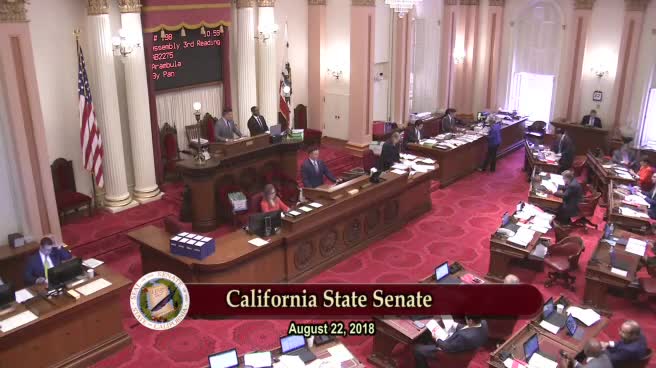 10MIN
Senate Floor
 1H
Senate Standing Committee on Appropriations
 19MIN
Senate Standing Committee on Labor and Industrial Relations
 27MIN
Senate Standing Committee on Judiciary
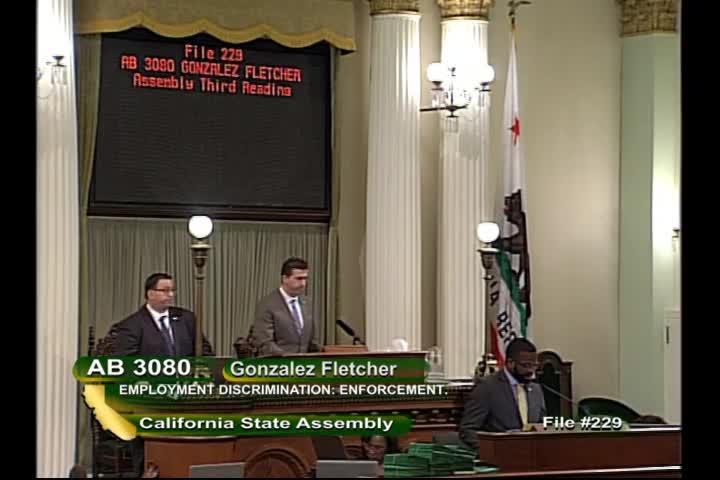 11MIN
Assembly Floor
 27MIN
Assembly Standing Committee on Judiciary
 24MIN