AB 1705: Jails: searches.
- Session Year: 2015-2016
- House: Assembly
- Latest Version Date: 2016-08-22
Existing law generally prohibits strip searches and body cavity searches of prearraignment detainees arrested for infraction or misdemeanor offenses. Existing law allows a person who has been arrested and taken into custody to be subjected to patdown searches, metal detector searches, and thorough clothing searches in order to discover and retrieve concealed weapons and contraband substances prior to being placed in a booking cell.
This bill would also allow law enforcement personnel to subject a person who is arrested and taken into custody to a body scanner search for those weapons or substances. The bill would require an agency utilizing a body scanner to endeavor to avoid knowingly using a body scanner to scan a woman who is pregnant. The bill would require a person within sight of the visual display of a body scanner depicting the body during a scan to be of the same sex as the person being scanned, except for physicians or licensed medical personnel.
Existing law generally prohibits strip searches and body cavity searches of prearraignment detainees arrested for infraction or misdemeanor offenses. Existing law allows a person who has been arrested and taken into custody to be subjected to patdown searches, metal detector searches, and thorough clothing searches in order to discover and retrieve concealed weapons and contraband substances prior to being placed in a booking cell.
This bill would also allow law enforcement personnel to subject a person who is arrested and taken into custody to a body scanner search for those weapons or substances.
(a)(1)The Legislature finds and declares that law enforcement policies and practices for conducting strip or body cavity searches of detained persons vary widely throughout California. Consequently, some people have been arbitrarily subjected to unnecessary strip and body cavity searches after arrests for minor misdemeanor and infraction offenses. Some present search practices violate state and federal constitutional rights to privacy and freedom from unreasonable searches and seizures.
(2)It is the intent of the Legislature in enacting this section to protect the state and federal constitutional rights of the people of California by establishing a statewide policy strictly limiting strip and body cavity searches.
(b)The provisions of this section shall apply only to prearraignment detainees arrested for infraction or misdemeanor offenses and to any minor detained prior to a detention hearing on the grounds that he or she is a person described in Section 300, 601, or 602 of the Welfare and Institutions Code alleged to have committed a misdemeanor or infraction offense. The provisions of this section shall not apply to a person in the custody of the Secretary of the Department of Corrections and Rehabilitation or the Director of the Division of Juvenile Justice in the Department of Corrections and Rehabilitation.
(c)As used in this section the following definitions shall apply:
(1)Body cavity only means the stomach or rectal cavity of a person, and vagina of a female person.
(2)Physical body cavity search means physical intrusion into a body cavity for the purpose of discovering any object concealed in the body cavity.
(3)Strip search means a search which requires a person to remove or arrange some or all of his or her clothing so as to permit a visual inspection of the underclothing, breasts, buttocks, or genitalia of such person.
(4)Visual body cavity search means visual inspection of a body cavity.
(d)(1)Notwithstanding any other law, including Section 40304.5 of the Vehicle Code, if a person is arrested and taken into custody, that person may be subjected to patdown searches, metal detector searches, body scanners, and thorough clothing searches in order to discover and retrieve concealed weapons and contraband substances prior to being placed in a booking cell.
(2)An agency that utilizes a body scanner pursuant to this subdivision shall endeavor to avoid knowingly using a body scanner to scan a woman who is pregnant.
(e)A person arrested and held in custody on a misdemeanor or infraction offense, except those involving weapons, controlled substances, or violence, or a minor detained prior to a detention hearing on the grounds that he or she is a person described in Section 300, 601, or 602 of the Welfare and Institutions Code, except for those minors alleged to have committed felonies or offenses involving weapons, controlled substances, or violence, shall not be subjected to a strip search or visual body cavity search prior to placement in the general jail population, unless a peace officer has determined there is reasonable suspicion, based on specific and articulable facts, to believe that person is concealing a weapon or contraband, and a strip search will result in the discovery of the weapon or contraband. A strip search or visual body cavity search, or both, shall not be conducted without the prior written authorization of the supervising officer on duty. The authorization shall include the specific and articulable facts and circumstances upon which the reasonable suspicion determination was made by the supervisor.
(f)(1)Except pursuant to the provisions of paragraph (2), a person arrested and held in custody on a misdemeanor or infraction offense not involving weapons, controlled substances, or violence, shall not be confined in the general jail population unless all of the following are true:
(A)The person is not cited and released.
(B)The person is not released on his or her own recognizance pursuant to Article 9 (commencing with Section 1318) of Chapter 1 of Title 10 of Part 2.
(C)The person is not able to post bail within a reasonable time, not less than three hours.
(2)A person shall not be housed in the general jail population prior to release pursuant to the provisions of paragraph (1) unless a documented emergency exists and there is no reasonable alternative to that placement. The person shall be placed in the general population only upon prior written authorization documenting the specific facts and circumstances of the emergency. The written authorization shall be signed by the uniformed supervisor of the facility or by a uniformed watch commander. A person confined in the general jail population pursuant to paragraph (1) shall retain all rights to release on citation, his or her own recognizance, or bail that were preempted as a consequence of the emergency.
(g)A person arrested on a misdemeanor or infraction offense, or a minor described in subdivision (b), shall not be subjected to a physical body cavity search except under the authority of a search warrant issued by a magistrate specifically authorizing the physical body cavity search.
(h)A copy of the prior written authorization required by subdivisions (e) and (f) and the search warrant required by subdivision (g) shall be placed in the agencys records and made available, on request, to the person searched or his or her authorized representative. With regard to a strip search or visual or physical body cavity search, the time, date, and place of the search, the name and sex of the person conducting the search, and a statement of the results of the search, including a list of items removed from the person searched, shall be recorded in the agencys records and made available, upon request, to the person searched or his or her authorized representative.
(i)Persons conducting a strip search or a visual body cavity search shall not touch the breasts, buttocks, or genitalia of the person being searched.
(j)A physical body cavity search shall be conducted under sanitary conditions, and only by a physician, nurse practitioner, registered nurse, licensed vocational nurse, or emergency medical technician Level II licensed to practice in this state. A physician engaged in providing health care to detainees and inmates of the facility may conduct physical body cavity searches.
(k)(1)A person conducting or otherwise present or within sight of the inmate during a strip search or visual or physical body cavity search shall be of the same sex as the person being searched, except for physicians or licensed medical personnel.
(2)A person within sight of the visual display of a body scanner depicting the body during a scan shall be of the same sex as the person being scanned, except for physicians or licensed medical personnel.
(l)All strip, visual, and physical body cavity searches shall be conducted in an area of privacy so that the search cannot be observed by persons not participating in the search. Persons are considered to be participating in the search if their official duties relative to search procedure require them to be present at the time the search is conducted.
(m)A person who knowingly and willfully authorizes or conducts a strip search or visual or physical body cavity search in violation of this section is guilty of a misdemeanor.
(n)This section does not limit the common law or statutory rights of a person regarding an action for damages or injunctive relief, or preclude the prosecution under another law of a peace officer or other person who has violated this section.
(o)Any person who suffers damage or harm as a result of a violation of this section may bring a civil action to recover actual damages, or one thousand dollars ($1,000), whichever is greater. In addition, the court may, in its discretion, award punitive damages, equitable relief as it deems necessary and proper, and costs, including reasonable attorneys fees.
(a)(1)The Legislature finds and declares that law enforcement policies and practices for conducting strip or body cavity searches of detained persons vary widely throughout California. Consequently, some people have been arbitrarily subjected to unnecessary strip and body cavity searches after arrests for minor misdemeanor and infraction offenses. Some present search practices violate state and federal constitutional rights to privacy and freedom from unreasonable searches and seizures.
(2)It is the intent of the Legislature in enacting this section to protect the state and federal constitutional rights of the people of California by establishing a statewide policy strictly limiting strip and body cavity searches.
(b)The provisions of this section shall apply only to prearraignment detainees arrested for infraction or misdemeanor offenses and to any minor detained prior to a detention hearing on the grounds that he or she is a person described in Section 300, 601, or 602 of the Welfare and Institutions Code alleged to have committed a misdemeanor or infraction offense. The provisions of this section shall not apply to a person in the custody of the Secretary of the Department of Corrections and Rehabilitation or the Director of the Division of Juvenile Justice in the Department of Corrections and Rehabilitation.
(c)As used in this section the following definitions shall apply:
(1)Body cavity only means the stomach or rectal cavity of a person, and vagina of a female person.
(2)Physical body cavity search means physical intrusion into a body cavity for the purpose of discovering any object concealed in the body cavity.
(3)Strip search means a search which requires a person to remove or arrange some or all of his or her clothing so as to permit a visual inspection of the underclothing, breasts, buttocks, or genitalia of such person.
(4)Visual body cavity search means visual inspection of a body cavity.
(d)(1)Notwithstanding any other law, including Section 40304.5 of the Vehicle Code, if a person is arrested and taken into custody, that person may be subjected to patdown searches, metal detector searches, body scanners, and thorough clothing searches in order to discover and retrieve concealed weapons and contraband substances prior to being placed in a booking cell.
(2)An agency that utilizes a body scanner pursuant to this subdivision shall endeavor to avoid knowingly using a body scanner to scan a woman who is pregnant.
(e)A person arrested and held in custody on a misdemeanor or infraction offense, except those involving weapons, controlled substances, or violence, or a minor detained prior to a detention hearing on the grounds that he or she is a person described in Section 300, 601 601, or 602 of the Welfare and Institutions Code, except for those minors alleged to have committed felonies or offenses involving weapons, controlled substances, or violence, shall not be subjected to a strip search or visual body cavity search prior to placement in the general jail population, unless a peace officer has determined there is reasonable suspicion, based on specific and articulable facts, to believe that person is concealing a weapon or contraband, and a strip search will result in the discovery of the weapon or contraband. A strip search or visual body cavity search, or both, shall not be conducted without the prior written authorization of the supervising officer on duty. The authorization shall include the specific and articulable facts and circumstances upon which the reasonable suspicion determination was made by the supervisor.
(f)(1)Except pursuant to the provisions of paragraph (2), a person arrested and held in custody on a misdemeanor or infraction offense not involving weapons, controlled substances, or violence, shall not be confined in the general jail population unless all of the following are true:
(A)The person is not cited and released.
(B)The person is not released on his or her own recognizance pursuant to Article 9 (commencing with Section 1318) of Chapter 1 of Title 10 of Part 2.
(C)The person is not able to post bail within a reasonable time, not less than three hours.
(2)A person shall not be housed in the general jail population prior to release pursuant to the provisions of paragraph (1) unless a documented emergency exists and there is no reasonable alternative to that placement. The person shall be placed in the general population only upon prior written authorization documenting the specific facts and circumstances of the emergency. The written authorization shall be signed by the uniformed supervisor of the facility or by a uniformed watch commander. A person confined in the general jail population pursuant to paragraph (1) shall retain all rights to release on citation, his or her own recognizance, or bail that were preempted as a consequence of the emergency.
(g)A person arrested on a misdemeanor or infraction offense, or a minor described in subdivision (b), shall not be subjected to a physical body cavity search except under the authority of a search warrant issued by a magistrate specifically authorizing the physical body cavity search.
(h)A copy of the prior written authorization required by subdivisions (e) and (f) and the search warrant required by subdivision (g) shall be placed in the agencys records and made available, on request, to the person searched or his or her authorized representative. With regard to a strip search or visual or physical body cavity search, the time, date, and place of the search, the name and sex of the person conducting the search, and a statement of the results of the search, including a list of items removed from the person searched, shall be recorded in the agencys records and made available, upon request, to the person searched or his or her authorized representative.
(i)Persons conducting a strip search or a visual body cavity search shall not touch the breasts, buttocks, or genitalia of the person being searched.
(j)A physical body cavity search shall be conducted under sanitary conditions, and only by a physician, nurse practitioner, registered nurse, licensed vocational nurse, or emergency medical technician Level II licensed to practice in this state. A physician engaged in providing health care to detainees and inmates of the facility may conduct physical body cavity searches.
(k)(1)A person conducting or otherwise present or within sight of the inmate during a strip search or visual or physical body cavity search shall be of the same sex as the person being searched, except for physicians or licensed medical personnel.
(2)A person within sight of the visual display of a body scanner depicting the body during a scan shall be of the same sex as the person being scanned, except for physicians or licensed medical personnel.
(l)All strip, visual, and physical body cavity searches shall be conducted in an area of privacy so that the search cannot be observed by persons not participating in the search. Persons are considered to be participating in the search if their official duties relative to search procedure require them to be present at the time the search is conducted.
(m)A person who knowingly and willfully authorizes or conducts a strip search or visual or physical body cavity search in violation of this section is guilty of a misdemeanor.
(n)This section does not limit the common law or statutory rights of a person regarding an action for damages or injunctive relief, or preclude the prosecution under another law of a peace officer or other person who has violated this section.
(o)Any person who suffers damage or harm as a result of a violation of this section may bring a civil action to recover actual damages, or one thousand dollars ($1,000), whichever is greater. In addition, the court may, in its discretion, award punitive damages, equitable relief as it deems necessary and proper, and costs, including reasonable attorneys fees.
(a)(1)The Legislature finds and declares that law enforcement policies and practices for conducting strip or body cavity searches of detained persons vary widely throughout California. Consequently, some people have been arbitrarily subjected to unnecessary strip and body cavity searches after arrests for minor misdemeanor and infraction offenses. Some present search practices violate state and federal constitutional rights to privacy and freedom from unreasonable searches and seizures.
(2)It is the intent of the Legislature in enacting this section to protect the state and federal constitutional rights of the people of California by establishing a statewide policy strictly limiting strip and body cavity searches.
(b)The provisions of this section shall apply only to prearraignment detainees arrested for infraction or misdemeanor offenses and to any minor detained prior to a detention hearing on the grounds that he or she is a person described in Section 300, 601, or 602 of the Welfare and Institutions Code alleged to have committed a misdemeanor or infraction offense. The provisions of this section shall not apply to a person in the custody of the Secretary of the Department of Corrections and Rehabilitation or the Director of the Division of Juvenile Justice in the Department of Corrections and Rehabilitation.
(c)As used in this section the following definitions shall apply:
(1)Body cavity only means the stomach or rectal cavity of a person, and vagina of a female person.
(2)Physical body cavity search means physical intrusion into a body cavity for the purpose of discovering any object concealed in the body cavity.
(3)Strip search means a search which requires a person to remove or arrange some or all of his or her clothing so as to permit a visual inspection of the underclothing, breasts, buttocks, or genitalia of such person.
(4)Visual body cavity search means visual inspection of a body cavity.
(d)Notwithstanding any other law, including Section 40304.5 of the Vehicle Code, when if a person is arrested and taken into custody, that person may be subjected to patdown searches, metal detector searches, body scanners, and thorough clothing searches in order to discover and retrieve concealed weapons and contraband substances prior to being placed in a booking cell.
(e)A person arrested and held in custody on a misdemeanor or infraction offense, except those involving weapons, controlled substances, or violence, or a minor detained prior to a detention hearing on the grounds that he or she is a person described in Section 300, 601 or 602 of the Welfare and Institutions Code, except for those minors alleged to have committed felonies or offenses involving weapons, controlled substances, or violence, shall not be subjected to a strip search or visual body cavity search prior to placement in the general jail population, unless a peace officer has determined there is reasonable suspicion, based on specific and articulable facts, to believe that person is concealing a weapon or contraband, and a strip search will result in the discovery of the weapon or contraband. A strip search or visual body cavity search, or both, shall not be conducted without the prior written authorization of the supervising officer on duty. The authorization shall include the specific and articulable facts and circumstances upon which the reasonable suspicion determination was made by the supervisor.
(f)(1)Except pursuant to the provisions of paragraph (2), a person arrested and held in custody on a misdemeanor or infraction offense not involving weapons, controlled substances, or violence, shall not be confined in the general jail population unless all of the following are true:
(A)The person is not cited and released.
(B)The person is not released on his or her own recognizance pursuant to Article 9 (commencing with Section 1318) of Chapter 1 of Title 10 of Part 2.
(C)The person is not able to post bail within a reasonable time, not less than three hours.
(2)A person shall not be housed in the general jail population prior to release pursuant to the provisions of paragraph (1) unless a documented emergency exists and there is no reasonable alternative to that placement. The person shall be placed in the general population only upon prior written authorization documenting the specific facts and circumstances of the emergency. The written authorization shall be signed by the uniformed supervisor of the facility or by a uniformed watch commander. A person confined in the general jail population pursuant to paragraph (1) shall retain all rights to release on citation, his or her own recognizance, or bail that were preempted as a consequence of the emergency.
(g)A person arrested on a misdemeanor or infraction offense, or a minor described in subdivision (b), shall not be subjected to a physical body cavity search except under the authority of a search warrant issued by a magistrate specifically authorizing the physical body cavity search.
(h)A copy of the prior written authorization required by subdivisions (e) and (f) and the search warrant required by subdivision (g) shall be placed in the agencys records and made available, on request, to the person searched or his or her authorized representative. With regard to a strip search or visual or physical body cavity search, the time, date, and place of the search, the name and sex of the person conducting the search, and a statement of the results of the search, including a list of items removed from the person searched, shall be recorded in the agencys records and made available, upon request, to the person searched or his or her authorized representative.
(i)Persons conducting a strip search or a visual body cavity search shall not touch the breasts, buttocks, or genitalia of the person being searched.
(j)A physical body cavity search shall be conducted under sanitary conditions, and only by a physician, nurse practitioner, registered nurse, licensed vocational nurse, or emergency medical technician Level II licensed to practice in this state. A physician engaged in providing health care to detainees and inmates of the facility may conduct physical body cavity searches.
(k)A person conducting or otherwise present or within sight of the inmate during a strip search or visual or physical body cavity search shall be of the same sex as the person being searched, except for physicians or licensed medical personnel.
(l)All strip, visual, and physical body cavity searches shall be conducted in an area of privacy so that the search cannot be observed by persons not participating in the search. Persons are considered to be participating in the search if their official duties relative to search procedure require them to be present at the time the search is conducted.
(m)A person who knowingly and willfully authorizes or conducts a strip search or visual or physical body cavity search in violation of this section is guilty of a misdemeanor.
(n)Nothing in this section shall be construed as limiting This section does not limit the common law or statutory rights of a person regarding an action for damages or injunctive relief, or as precluding preclude the prosecution under another law of a peace officer or other person who has violated this section.
(o)Any person who suffers damage or harm as a result of a violation of this section may bring a civil action to recover actual damages, or one thousand dollars ($1,000), whichever is greater. In addition, the court may, in its discretion, award punitive damages, equitable relief as it deems necessary and proper, and costs, including reasonable attorneys fees.
|
Date
|
Status
|
|---|---|
| Aug 22, 2016 | Chaptered by Secretary of State - Chapter 162, Statutes of 2016. |
| Aug 22, 2016 | Approved by the Governor. |
| Aug 10, 2016 | Enrolled and presented to the Governor at 3 p.m. |
| Aug 4, 2016 | Senate amendments concurred in. To Engrossing and Enrolling. (Ayes 74. Noes 2. Page 5701.). |
| Aug 4, 2016 | Senate amendments concurred in. To Engrossing and Enrolling. |
| Aug 2, 2016 | In Assembly. Concurrence in Senate amendments pending. May be considered on or after August 4 pursuant to Assembly Rule 77. |
| Aug 1, 2016 | Read third time. Passed. Ordered to the Assembly. (Ayes 38. Noes 0. Page 4730.). |
| Aug 1, 2016 | Read third time. Passed. Ordered to the Assembly. |
| Jun 30, 2016 | Read second time. Ordered to third reading. |
| Jun 29, 2016 | From committee: Do pass. (Ayes 7. Noes 0.) (June 28). |
| Jun 14, 2016 | In committee: Set, first hearing. Hearing canceled at the request of author. |
| Jun 8, 2016 | From committee chair, with author's amendments: Amend, and re-refer to committee. Read second time, amended, and re-referred to Com. on PUB. S. |
| Apr 7, 2016 | Referred to Com. on PUB. S. |
| Mar 31, 2016 | Read third time. Passed. Ordered to the Senate. (Ayes 60. Noes 4. Page 4124.) |
| Mar 31, 2016 | In Senate. Read first time. To Com. on RLS. for assignment. |
| Mar 31, 2016 | Read third time. Passed. Ordered to the Senate. |
| Mar 16, 2016 | Read second time. Ordered to third reading. |
| Mar 15, 2016 | From committee: Do pass. (Ayes 5. Noes 1.) (March 15). |
| Mar 1, 2016 | In committee: Set, first hearing. Hearing canceled at the request of author. |
| Feb 8, 2016 | Referred to Com. on PUB. S. |
| Jan 26, 2016 | From printer. May be heard in committee February 25. |
| Jan 25, 2016 | Read first time. To print. |
|
Date
|
Description
|
Location
|
Votes
|
|
|---|---|---|---|---|
| Aug 4, 2016 | AB 1705 RODRIGUEZ Concurrence in Senate Amendments | Assembly Floor |
Passed |
|
| Aug 1, 2016 | Assembly 3rd Reading AB1705 Rodriguez By Glazer | Senate Floor |
Passed |
|
| Jun 28, 2016 | Do pass | Senate Standing Committee on Public Safety |
Passed |
|
| Mar 31, 2016 | AB 1705 RODRIGUEZ Assembly Third Reading | Assembly Floor |
Passed |
|
| Mar 15, 2016 | Do pass. | Assembly Standing Committee on Public Safety |
Passed |
This list shows positions taken on this bill by organizations on the date displayed, which is linked to the original source.
Positions by individuals are not included.
CONCURRENCE IN SENATE AMENDMENTS
CSA1 Bill Id:AB 1705
Author:(Rodriguez)
As Amended Ver:June 8, 2016
Majority vote
ASSEMBLY: | 60-4 | (March 31, 2016) | SENATE: | 38-0 | (August 1, 2016) |
Original Committee Reference: PUB. S.
SUMMARY: Authorizes law enforcement to use a body scanner to search a person arrested for the commission of any misdemeanor or infraction and taken into custody.
The Senate amendments:
- Require an agency utilizing a body scanner to try to avoid knowingly using a body scanner on a woman who is pregnant.
- Require a person within sight of the image depicting the body of the detainee to be of the same sex as the detainee, except for physicians or licensed medical personnel.
EXISTING LAW:
- States legislative intent to protect the state and federal constitutional rights of the people of California by establishing a statewide policy strictly limiting strip and body cavity searches after arrests for minor misdemeanor and infraction offenses.
- States that when a person is arrested and taken into custody for a misdemeanor or infraction, that person may be subjected to pat-down searches, metal-detector searches, and thorough-clothing searches in order to discover and retrieve concealed weapons and contraband substances prior to being placed in a booking cell.
- Provides that no arrestee held in custody for a misdemeanor or infraction, except for those involving weapons, controlled substances or violence shall be subjected to a strip search or visual body-cavity search prior to placement in the general jail population, unless a peace officer has determined there is reasonable suspicion based on specific and articulable facts to believe such person is concealing a weapon or contraband, and that a strip search will result in the discovery of the weapon or contraband.
- Allows a strip search or body cavity search without reasonable suspicion based on specific and articulable facts if a person is arrested on a misdemeanor or infraction involving weapons, controlled substances, or violence.
- Requires the supervising officer on duty to authorize a strip search or visual body cavity search.
- Prohibits a person arrested and held in custody for a misdemeanor or infraction not involving weapons, controlled substances, or violence from being confined in the general jail population unless the person is not cited and released, is not released on his or her own recognizance, and is not able to post bail within a reasonable time, not less than three hours.
- Prohibits law enforcement from subjecting a person arrested and held in custody for a misdemeanor or infraction to a physical body cavity search without obtaining a search warrant.
- States that when a detainee is being subjected to a strip search or a body cavity search, the person conducting the search, as well as persons present or within sight of the detainee, must be of the same sex as the detainee being searched.
- Defines "strip search," "physical body cavity search," and "visual body cavity search" as specified.
AS PASSED BY THE ASSEMBLY, this bill provided that if a person is arrested and taken into custody for a misdemeanor or infraction, that person may be subjected to a body scanner search in order to discover and retrieve concealed weapons and contraband substances before being placed in a booking cell.
FISCAL EFFECT: None. This bill is keyed non-fiscal by the Legislative Counsel.
COMMENTS: According to the author, "Body scanners are non-invasive devices that efficiently search individuals for unauthorized substances or weapons, often times reducing the need for additional and otherwise intrusive search procedures such as patdowns and full clothing searches. The same principle of security is used in airports across the country to screen for unauthorized devices or paraphernalia. AB 1705 would authorize law enforcement to utilize this time-saving and effective technology to screen individuals who have been taken into custody."
Analysis Prepared by: Sandy Uribe / PUB. S. / (916) 319-3744 FN: 0003649
Office of Senate Floor Analyses (916) 651-1520 Fax: (916) 327-4478 | AB |
THIRD READING
Bill No: AB 1705
:
SENATE PUBLIC SAFETY COMMITTEE: 7-0, 6/28/16
AYES: Hancock, Anderson, Glazer, Leno, Liu, Monning, Stone
ASSEMBLY FLOOR: 60-4, 3/31/16 - See last page for vote
SOURCE: California State Sheriffs’ Association
DIGEST: This bill authorizes law enforcement to use a body scanner to search a person arrested for the commission of any misdemeanor or infraction and taken into custody.
Existing law:
- States legislative intent to protect the state and federal constitutional rights of the people of California by establishing a statewide policy strictly limiting strip and body cavity searches after arrests for minor misdemeanor and infraction offenses. (Penal Code § 4030(a)(2).)
- States that when a person is arrested and taken into custody for a misdemeanor or infraction, that person may be subjected to pat-down searches, metal-detector searches, and thorough-clothing searches in order to discover and retrieve concealed weapons and contraband substances prior to being placed in a booking cell. (Penal Code § 4030(d).)
- Provides that no arrestee held in custody for a misdemeanor or infraction, except for those involving weapons, controlled substances or violence shall be subjected to a strip search or body-cavity search prior to placement in the general jail population, unless a peace officer has determined there is reasonable suspicion based on specific and articulable facts to believe such person is concealing a weapon or contraband, and that a strip search will result in the discovery of the weapon or contraband. (Penal Code § 4030(e).)
- Allows a strip search or body cavity search without reasonable suspicion based on specific and articulable facts if a person is arrested on a misdemeanor or infraction involving weapons, controlled substances, or violence. (Penal Code § 4030 (e).)
- Requires the supervising officer on duty to authorize a strip search or visual body cavity search. (Penal Code § 4030(e).)
- Prohibits a person arrested and held in custody for a misdemeanor or infraction not involving weapons, controlled substances, or violence from being confined in the general jail population unless the person is not cited and released, is not released on his or her own recognizance, and is not able to post bail within a reasonable time, not less than three hours. (Penal Code § 4030(f).)
- Prohibits law enforcement from subjecting a person arrested and held in custody for a misdemeanor or infraction to a physical body cavity search without obtaining a search warrant. (Penal Code § 4030(h).)
- States that when a detainee is being subjected to a strip search or a body cavity search, the person conducting the search, as well as persons present or within sight of the detainee, must be of the same sex as the detainee being searched. (Penal Code § 4030(k).)
- Defines “strip search,” “physical body cavity search,” and “visual body cavity search,” as specified. (Penal Code § 4030(c).)
This bill:
- Allows law enforcement personnel to subject a person who is arrested and taken into custody to a body scanner search for those weapons or substances.
- Provides that an agency that utilizes a body scanner shall endeavor to avoid knowingly using a body scanner to scan a woman who is pregnant.
- Provides that a person within sight of the visual display of a body scanner depicting the body during a scan shall be of the same sex as the person being scanned, except for physicians or licensed medical personnel.
Comments
In Florence v. Board of Chosen Freeholders of County of Burlington (2012) 566 U.S. __, 132 S.Ct. 1510, the Supreme Court, in a 5-4 decision, held that the strip searches for inmates entering the general population of a prison do not violate the Fourth Amendment. The Court explicitly refused to limit the authority to use strip searches only to situations in which a specific individual gave officers a reason to consider that prisoner to be dangerous or likely to be carrying a concealed weapon or drugs. The Court upheld the validity of strip searches by jail officials for even minor offenses. The Court concluded that a prisoner's likelihood of possessing contraband based on the severity of the current offense or an arrestee's criminal history is too difficult to determine effectively.
Under California law, a person arrested for a minor misdemeanor or infraction and taken into custody is subject to pat down searches, metal detector searches, and thorough clothing searches in order to discover contraband before being placed in a booking cell. But the Legislature declared its intent to strictly limit strip and body cavity searches on adult and juvenile pre-arraignment detainees arrested for infractions or misdemeanors. Thus, existing state law regulates when and how strip searches occur in local detention facilities for this population. A person arrested for a misdemeanor not involving weapons, controlled substances, or violence cannot as a matter of course be subjected to a strip search or body cavity search before being placed in the general population. Strip-searches or body-cavity searches on these persons require some individualized suspicion.
This bill permits a person arrested for any misdemeanor or infraction to be subject to a body-scanner search.
FISCAL EFFECT: Appropriation: Fiscal Com.: Local:
California State Sheriffs’ Association (source)
Association for Los Angeles Deputy Sheriffs
California Peace Officers’ Association
California Police Chiefs Association
California State Association of Counties
Los Angeles County Sheriff’s Department
Los Angeles Police Protective League
Los Angeles Professional Peace Officers Association
Orange County Board of Supervisors
Peace Officers Research Association of California
Riverside Sheriffs’ Association
American Civil Liberties Union
California Attorneys for Criminal Justice
Legal Services for Prisoners with Children
ARGUMENTS IN SUPPORT: The California State Sheriffs’ Association states:
Existing law, Penal Code Section 4030, establishes a statewide policy strictly limiting the use of strip and cavity searches for pre-arraignment detainees arrested for infraction and misdemeanor offenses, due to their intrusive nature. The statute specifically states that a person who is arrested and taken into custody may be subjected to pat down searches, metal detector searches, and thorough clothing searches in order to discover and retrieve concealed weapons and contraband.
The constant flow of contraband is of great concern for correctional facilities and can present a safety hazard for the individual, staff, and other inmates. The use of body scanners is a more efficient, effective, and less invasive means of assessing if an individual is harboring weapons or contraband substances than many other methods currently authorized under state law. Body scanning technology can detect contraband hidden inside and on a person's body in less time than conventional search methods and is currently successfully used in many correctional facilities nationwide. While current law does not restrict the use of this technology, it has yet to be updated to specifically authorize law enforcement personnel to subject individuals who have been arrested and booked to this type of search.
ARGUMENTS IN OPPOSITION: The American Civil Liberties Union states:
The Legislature carefully put strict limits on strip searches and visual body cavity searches in order to protect and respect Californians state and federal constitutional rights to privacy and freedom from unreasonable searches and seizures. Expanding the law to include body scanners triggers these same rights.
Body scanners have been the focus of much public debate in recent years. Chief among the concerns raised by critics are those related to the images produced by the scanners, as certain body scanners have the ability to produce strikingly graphic images of the searched person’s body under the person’s clothes. This type of body scanner, one that displays a person’s soft tissue, or naked body, is essentially a virtual strip search, permitting those viewing the image to see the searched person’s private body parts, including the size and shape of the person’s breasts and genitals….
Without limits to ensure that inmates who are subjected to a virtual strip search as described above are afforded the same types of protections as those subject to a traditional strip search or visual body cavity search, we fear that the privacy and unreasonable search and seizure concerns so carefully addressed by Legislatures past may resurface.
ASSEMBLY FLOOR: 60-4, 3/31/16
AYES: Achadjian, Alejo, Travis Allen, Baker, Bloom, Brough, Burke, Calderon, Chang, Chau, Chávez, Chiu, Chu, Cooley, Cooper, Dababneh, Dahle, Daly, Dodd, Eggman, Frazier, Beth Gaines, Gallagher, Eduardo Garcia, Gatto, Gipson, Gomez, Gonzalez, Gordon, Gray, Hadley, Roger Hernández, Holden, Irwin, Jones, Kim, Lackey, Levine, Lopez, Low, Maienschein, Mathis, Mayes, McCarty, Medina, Mullin, Nazarian, Obernolte, O'Donnell, Olsen, Patterson, Ridley-Thomas, Rodriguez, Salas, Thurmond, Waldron, Wilk, Williams, Wood, Rendon
NOES: Jones-Sawyer, Quirk, Mark Stone, Ting
NO VOTE RECORDED: Atkins, Bigelow, Bonilla, Bonta, Brown, Campos, Cristina Garcia, Grove, Harper, Linder, Melendez, Santiago, Steinorth, Wagner, Weber
7/29/16 10:43:33
SENATE COMMITTEE ON PUBLIC SAFETY
Senator Loni Hancock, Chair
2015 - 2016 Regular
Bill No: AB 1705 Hearing Date: June 28, 2016
Author: | Rodriguez | ||
Version: | June 8, 2016 | ||
Urgency: | No | Fiscal: | No |
Consultant: | JRD | ||
Subject: Jails: Searches
FOR VOTE ONLY
HISTORY
Source: California State Sheriffs’ Association
Prior Legislation: SB 795 (Committee on Public Safety) – Chapter 499, Statutes of 2015
AB 303 (Gonzalez) – Chapter 464, Statutes of 2015
Support: California Peace Officers’ Association; California Police Chiefs Association; California State Association of Counties; Association for Los Angeles Deputy Sheriffs; Los Angeles County Sheriff’s Department; Los Angeles Police Protective League; Los Angeles Professional Peace Officers Association; Orange County Board of Supervisors; Peace Officers Research Association of California; Riverside Sheriffs Association
Opposition: American Civil Liberties Union; California Attorneys for Criminal Justice; Legal Services for Prisoners with Children
Assembly Floor Vote: 60 - 4
PURPOSE
The purpose of this bill is to authorize law enforcement to use a body scanner to search a person arrested for the commission of any misdemeanor or infraction and taken into custody, as specified.
Existing law states legislative intent to protect the state and federal constitutional rights of the people of California by establishing a statewide policy strictly limiting strip and body cavity searches after arrests for minor misdemeanor and infraction offenses. (Penal Code § 4030(a)(2).)
Existing law states that when a person is arrested and taken into custody for a misdemeanor or infraction, that person may be subjected to pat-down searches, metal-detector searches, and thorough-clothing searches in order to discover and retrieve concealed weapons and contraband substances prior to being placed in a booking cell. (Penal Code § 4030(d).)
Existing law provides that no arrestee held in custody for a misdemeanor or infraction, except for those involving weapons, controlled substances or violence shall be subjected to a strip search or body-cavity search prior to placement in the general jail population, unless a peace officer has determined there is reasonable suspicion based on specific and articulable facts to believe such person is concealing a weapon or contraband, and that a strip search will result in the discovery of the weapon or contraband. (Penal Code § 4030(e).)
Existing law allows a strip search or body cavity search without reasonable suspicion based on specific and articulable facts if a person is arrested on a misdemeanor or infraction involving weapons, controlled substances, or violence. (Penal Code § 4030 (e).)
Existing law requires the supervising officer on duty to authorize a strip search or visual body cavity search. (Pena Code § 4030(e).)
Existing law prohibits a person arrested and held in custody for a misdemeanor or infraction not involving weapons, controlled substances, or violence from being confined in the general jail population unless the person is not cited and released, is not released on his or her own recognizance, and is not able to post bail within a reasonable time, not less than three hours. (Penal Code§ 4030(f).)
Existing law prohibits law enforcement from subjecting a person arrested and held in custody for a misdemeanor or infraction to a physical body cavity search without obtaining a search warrant. (Penal Code § 4030(h).)
Existing law states that when a detainee is being subjected to a strip search or a body cavity search, the person conducting the search, as well as persons present or within sight of the detainee, must be of the same sex as the detainee being searched. (Penal Code § 4030(k).)
Existing law defines “strip search,” “physical body cavity search,” and “visual body cavity search” as specified. (Penal Code § 4030(c).)
This bill would allow law enforcement personnel to subject a person who is arrested and taken into custody to a body scanner search for those weapons or substances.
This bill provides that an agency that utilizes a body scanner shall endeavor to avoid knowingly using a body scanner to scan a woman who is pregnant.
This bill provides that a person within sight of the visual display of a body scanner depicting the body during a scan shall be of the same sex as the person being scanned, except for physicians or licensed medical personnel.
RECEIVERSHIP/OVERCROWDING CRISIS AGGRAVATION
For the past several years this Committee has scrutinized legislation referred to its jurisdiction for any potential impact on prison overcrowding. Mindful of the United States Supreme Court ruling and federal court orders relating to the state’s ability to provide a constitutional level of health care to its inmate population and the related issue of prison overcrowding, this Committee has applied its “ROCA” policy as a content-neutral, provisional measure necessary to ensure that the Legislature does not erode progress in reducing prison overcrowding.
On February 10, 2014, the federal court ordered California to reduce its in-state adult institution population to 137.5% of design capacity by February 28, 2016, as follows:
- 143% of design bed capacity by June 30, 2014;
- 141.5% of design bed capacity by February 28, 2015; and,
- 137.5% of design bed capacity by February 28, 2016.
In December of 2015 the administration reported that as “of December 9, 2015, 112,510 inmates were housed in the State’s 34 adult institutions, which amounts to 136.0% of design bed capacity, and 5,264 inmates were housed in out-of-state facilities. The current population is 1,212 inmates below the final court-ordered population benchmark of 137.5% of design bed capacity, and has been under that benchmark since February 2015.” (Defendants’ December 2015 Status Report in Response to February 10, 2014 Order, 2:90-cv-00520 KJM DAD PC, 3-Judge Court, Coleman v. Brown, Plata v. Brown (fn. omitted).) One year ago, 115,826 inmates were housed in the State’s 34 adult institutions, which amounted to 140.0% of design bed capacity, and 8,864 inmates were housed in out-of-state facilities. (Defendants’ December 2014 Status Report in Response to February 10, 2014 Order, 2:90-cv-00520 KJM DAD PC, 3-Judge Court, Coleman v. Brown, Plata v. Brown (fn. omitted).)
While significant gains have been made in reducing the prison population, the state must stabilize these advances and demonstrate to the federal court that California has in place the “durable solution” to prison overcrowding “consistently demanded” by the court. (Opinion Re: Order Granting in Part and Denying in Part Defendants’ Request For Extension of December 31, 2013 Deadline, NO. 2:90-cv-0520 LKK DAD (PC), 3-Judge Court, Coleman v. Brown, Plata v. Brown (2-10-14). The Committee’s consideration of bills that may impact the prison population therefore will be informed by the following questions:
- Whether a proposal erodes a measure which has contributed to reducing the prison population;
- Whether a proposal addresses a major area of public safety or criminal activity for which there is no other reasonable, appropriate remedy;
- Whether a proposal addresses a crime which is directly dangerous to the physical safety of others for which there is no other reasonably appropriate sanction;
- Whether a proposal corrects a constitutional problem or legislative drafting error; and
- Whether a proposal proposes penalties which are proportionate, and cannot be achieved through any other reasonably appropriate remedy.
COMMENTS
- Need for This Bill
According to the author:
Body scanners are non-invasive devices that efficiently search individuals for unauthorized substances or weapons, often times reducing the need for additional and otherwise intrusive search procedures such as patdowns and full clothing searches. The same principle of security is used in airports across the country to screen for unauthorized devices or paraphernalia. AB 1705 would authorize law enforcement to utilize this time-saving and effective technology to screen individuals who have been taken into custody.
- Effect of Legislation
In Florence v. Board of Chosen Freeholders of County of Burlington (2012) 566 U.S. __, 132 S.Ct. 1510, the Supreme Court, in a 5-4 decision, held that the strip searches for inmates entering the general population of a prison do not violate the Fourth Amendment. The Court explicitly refused to limit the authority to use strip searches only to situations in which a specific individual gave officers a reason to consider that prisoner to be dangerous or likely to be carrying a concealed weapon or drugs. The Court upheld the validity of strip searches by jail officials for even minor offenses. The Court concluded that a prisoner's likelihood of possessing contraband based on the severity of the current offense or an arrestee's criminal history is too difficult to determine effectively.
Under California law, a person arrested for a minor misdemeanor or infraction and taken into custody is subject to pat down searches, metal detector searches, and thorough clothing searches in order to discover contraband before being placed in a booking cell. But the Legislature declared its intent to strictly limit strip and body cavity searches on adult and juvenile pre-arraignment detainees arrested for infractions or misdemeanors. Thus, existing state law regulates when and how strip searches occur in local detention facilities for this population. A person arrested for a misdemeanor not involving weapons, controlled substances, or violence cannot as a matter of course be subjected to a strip search or body cavity search before being placed in the general population. Strip-searches or body-cavity searches on these persons require some individualized suspicion.
This bill permits a person arrested for any misdemeanor or infraction to be subject to a body-scanner search.
3. 2015 Public Safety Omnibus Bill
Senate Bill 795 (Committee on Public Safety, of 2015), originally included a provision authorizing the use of body scanners on a person arrested before placing that person in a booking cell. This provision was in the bill when it passed out of the Senate with no “no” votes and was deleted from the bill in the Assembly.
4. Argument in Support
The California State Sheriffs Association states:
Existing law, Penal Code Section 4030, establishes a statewide policy strictly limiting the use of strip and cavity searches for pre-arraignment detainees arrested for infraction and misdemeanor offenses, due to their intrusive nature. The statute specifically states that a person who is arrested and taken into custody may be subjected to pat down searches, metal detector searches, and thorough clothing searches in order to discover and retrieve concealed weapons and contraband.
The constant flow of contraband is of great concern for correctional facilities and can present a safety hazard for the individual, staff, and other inmates. The use of body scanners is a more efficient, effective, and less invasive means of assessing if an individual is harboring weapons or contraband substances than many other methods currently authorized under state law. Body scanning technology can detect contraband hidden inside and on a person's body in less time than conventional search methods and is currently successfully used in many correctional facilities nationwide. While current law does not restrict the use of this technology, it has yet to be updated to specifically authorize law enforcement personnel to subject individuals who have been arrested and booked to this type of search.
5. Argument in Opposition
The American Civil Liberties Union states:
The Legislature carefully put strict limits on strip searches and visual body cavity searches in order to protect and respect Californians state and federal constitutional rights to privacy and freedom from unreasonable searches and seizures. Expanding the law to include body scanners triggers these same rights.
Body scanners have been the focus of much public debate in recent years. Chief among the concerns raised by critics are those related to the images produced by the scanners, as certain body scanners have the ability to produce strikingly graphic images of the searched person’s body under the person’s clothes. This type of body scanner, one that displays a person’s soft tissue, or naked body, is essentially a virtual strip search, permitting those viewing the image to see the searched person’s private body parts, including the size and shape of the person’s breasts and genitals….
Without limits to ensure that inmates who are subjected to a virtual strip search as described above are afforded the same types of protections as those subject to a traditional strip search or visual body cavity search, we fear that the privacy and unreasonable search and seizure concerns so carefully addressed by Legislatures past may resurface.
-- END –
SENATE COMMITTEE ON PUBLIC SAFETY
Senator Loni Hancock, Chair
2015 - 2016 Regular
Bill No: AB 1705 Hearing Date: June 14, 2016
Author: | Rodriguez | ||
Version: | June 8, 2016 | ||
Urgency: | No | Fiscal: | No |
Consultant: | JRD | ||
Subject: Jails: Searches
HISTORY
Source: California State Sheriffs’ Association
Prior Legislation: SB 795 (Committee on Public Safety) – Chapter 499, Statutes of 2015
AB 303 (Gonzalez) – Chapter 464, Statutes of 2015
Support: California Peace Officers’ Association; California Police Chiefs Association; California State Association of Counties; Association for Los Angeles Deputy Sheriffs; Los Angeles County Sheriff’s Department; Los Angeles Police Protective League; Los Angeles Professional Peace Officers Association; Orange County Board of Supervisors; Peace Officers Research Association of California; Riverside Sheriffs Association
Opposition: American Civil Liberties Union; California Attorneys for Criminal Justice; Legal Services for Prisoners with Children
Assembly Floor Vote: 60 - 4
PURPOSE
The purpose of this bill is to authorize law enforcement to use a body scanner to search a person arrested for the commission of any misdemeanor or infraction and taken into custody, as specified.
Existing law states legislative intent to protect the state and federal constitutional rights of the people of California by establishing a statewide policy strictly limiting strip and body cavity searches after arrests for minor misdemeanor and infraction offenses. (Penal Code § 4030(a)(2).)
Existing law states that when a person is arrested and taken into custody for a misdemeanor or infraction, that person may be subjected to pat-down searches, metal-detector searches, and thorough-clothing searches in order to discover and retrieve concealed weapons and contraband substances prior to being placed in a booking cell. (Penal Code § 4030(d).)
Existing law provides that no arrestee held in custody for a misdemeanor or infraction, except for those involving weapons, controlled substances or violence shall be subjected to a strip search or body-cavity search prior to placement in the general jail population, unless a peace officer has determined there is reasonable suspicion based on specific and articulable facts to believe such person is concealing a weapon or contraband, and that a strip search will result in the discovery of the weapon or contraband. (Penal Code § 4030(e).)
Existing law allows a strip search or body cavity search without reasonable suspicion based on specific and articulable facts if a person is arrested on a misdemeanor or infraction involving weapons, controlled substances, or violence. (Penal Code § 4030 (e).)
Existing law requires the supervising officer on duty to authorize a strip search or visual body cavity search. (Pena Code § 4030(e).)
Existing law prohibits a person arrested and held in custody for a misdemeanor or infraction not involving weapons, controlled substances, or violence from being confined in the general jail population unless the person is not cited and released, is not released on his or her own recognizance, and is not able to post bail within a reasonable time, not less than three hours. (Penal Code§ 4030(f).)
Existing law prohibits law enforcement from subjecting a person arrested and held in custody for a misdemeanor or infraction to a physical body cavity search without obtaining a search warrant. (Penal Code § 4030(h).)
Existing law states that when a detainee is being subjected to a strip search or a body cavity search, the person conducting the search, as well as persons present or within sight of the detainee, must be of the same sex as the detainee being searched. (Penal Code § 4030(k).)
Existing law defines “strip search,” “physical body cavity search,” and “visual body cavity search” as specified. (Penal Code § 4030(c).)
This bill would allow law enforcement personnel to subject a person who is arrested and taken into custody to a body scanner search for those weapons or substances.
This bill provides that an agency that utilizes a body scanner shall endeavor to avoid knowingly using a body scanner to scan a woman who is pregnant.
This bill provides that a person within sight of the visual display of a body scanner depicting the body during a scan shall be of the same sex as the person being scanned, except for physicians or licensed medical personnel.
RECEIVERSHIP/OVERCROWDING CRISIS AGGRAVATION
For the past several years this Committee has scrutinized legislation referred to its jurisdiction for any potential impact on prison overcrowding. Mindful of the United States Supreme Court ruling and federal court orders relating to the state’s ability to provide a constitutional level of health care to its inmate population and the related issue of prison overcrowding, this Committee has applied its “ROCA” policy as a content-neutral, provisional measure necessary to ensure that the Legislature does not erode progress in reducing prison overcrowding.
On February 10, 2014, the federal court ordered California to reduce its in-state adult institution population to 137.5% of design capacity by February 28, 2016, as follows:
- 143% of design bed capacity by June 30, 2014;
- 141.5% of design bed capacity by February 28, 2015; and,
- 137.5% of design bed capacity by February 28, 2016.
In December of 2015 the administration reported that as “of December 9, 2015, 112,510 inmates were housed in the State’s 34 adult institutions, which amounts to 136.0% of design bed capacity, and 5,264 inmates were housed in out-of-state facilities. The current population is 1,212 inmates below the final court-ordered population benchmark of 137.5% of design bed capacity, and has been under that benchmark since February 2015.” (Defendants’ December 2015 Status Report in Response to February 10, 2014 Order, 2:90-cv-00520 KJM DAD PC, 3-Judge Court, Coleman v. Brown, Plata v. Brown (fn. omitted).) One year ago, 115,826 inmates were housed in the State’s 34 adult institutions, which amounted to 140.0% of design bed capacity, and 8,864 inmates were housed in out-of-state facilities. (Defendants’ December 2014 Status Report in Response to February 10, 2014 Order, 2:90-cv-00520 KJM DAD PC, 3-Judge Court, Coleman v. Brown, Plata v. Brown (fn. omitted).)
While significant gains have been made in reducing the prison population, the state must stabilize these advances and demonstrate to the federal court that California has in place the “durable solution” to prison overcrowding “consistently demanded” by the court. (Opinion Re: Order Granting in Part and Denying in Part Defendants’ Request For Extension of December 31, 2013 Deadline, NO. 2:90-cv-0520 LKK DAD (PC), 3-Judge Court, Coleman v. Brown, Plata v. Brown (2-10-14). The Committee’s consideration of bills that may impact the prison population therefore will be informed by the following questions:
- Whether a proposal erodes a measure which has contributed to reducing the prison population;
- Whether a proposal addresses a major area of public safety or criminal activity for which there is no other reasonable, appropriate remedy;
- Whether a proposal addresses a crime which is directly dangerous to the physical safety of others for which there is no other reasonably appropriate sanction;
- Whether a proposal corrects a constitutional problem or legislative drafting error; and
- Whether a proposal proposes penalties which are proportionate, and cannot be achieved through any other reasonably appropriate remedy.
COMMENTS
- Need for This Bill
According to the author:
Body scanners are non-invasive devices that efficiently search individuals for unauthorized substances or weapons, often times reducing the need for additional and otherwise intrusive search procedures such as patdowns and full clothing searches. The same principle of security is used in airports across the country to screen for unauthorized devices or paraphernalia. AB 1705 would authorize law enforcement to utilize this time-saving and effective technology to screen individuals who have been taken into custody.
- Effect of Legislation
In Florence v. Board of Chosen Freeholders of County of Burlington (2012) 566 U.S. __, 132 S.Ct. 1510, the Supreme Court, in a 5-4 decision, held that the strip searches for inmates entering the general population of a prison do not violate the Fourth Amendment. The Court explicitly refused to limit the authority to use strip searches only to situations in which a specific individual gave officers a reason to consider that prisoner to be dangerous or likely to be carrying a concealed weapon or drugs. The Court upheld the validity of strip searches by jail officials for even minor offenses. The Court concluded that a prisoner's likelihood of possessing contraband based on the severity of the current offense or an arrestee's criminal history is too difficult to determine effectively.
Under California law, a person arrested for a minor misdemeanor or infraction and taken into custody is subject to pat down searches, metal detector searches, and thorough clothing searches in order to discover contraband before being placed in a booking cell. But the Legislature declared its intent to strictly limit strip and body cavity searches on adult and juvenile pre-arraignment detainees arrested for infractions or misdemeanors. Thus, existing state law regulates when and how strip searches occur in local detention facilities for this population. A person arrested for a misdemeanor not involving weapons, controlled substances, or violence cannot as a matter of course be subjected to a strip search or body cavity search before being placed in the general population. Strip-searches or body-cavity searches on these persons require some individualized suspicion.
This bill permits a person arrested for any misdemeanor or infraction to be subject to a body-scanner search.
3. 2015 Public Safety Omnibus Bill
Senate Bill 795 (Committee on Public Safety, of 2015), originally included a provision authorizing the use of body scanners on a person arrested before placing that person in a booking cell. This provision was in the bill when it passed out of the Senate with no “no” votes and was deleted from the bill in the Assembly.
4. Argument in Support
The California State Sheriffs Association states:
Existing law, Penal Code Section 4030, establishes a statewide policy strictly limiting the use of strip and cavity searches for pre-arraignment detainees arrested for infraction and misdemeanor offenses, due to their intrusive nature. The statute specifically states that a person who is arrested and taken into custody may be subjected to pat down searches, metal detector searches, and thorough clothing searches in order to discover and retrieve concealed weapons and contraband.
The constant flow of contraband is of great concern for correctional facilities and can present a safety hazard for the individual, staff, and other inmates. The use of body scanners is a more efficient, effective, and less invasive means of assessing if an individual is harboring weapons or contraband substances than many other methods currently authorized under state law. Body scanning technology can detect contraband hidden inside and on a person's body in less time than conventional search methods and is currently successfully used in many correctional facilities nationwide. While current law does not restrict the use of this technology, it has yet to be updated to specifically authorize law enforcement personnel to subject individuals who have been arrested and booked to this type of search.
5. Argument in Opposition
The American Civil Liberties Union states:
The Legislature carefully put strict limits on strip searches and visual body cavity searches in order to protect and respect Californians state and federal constitutional rights to privacy and freedom from unreasonable searches and seizures. Expanding the law to include body scanners triggers these same rights.
Body scanners have been the focus of much public debate in recent years. Chief among the concerns raised by critics are those related to the images produced by the scanners, as certain body scanners have the ability to produce strikingly graphic images of the searched person’s body under the person’s clothes. This type of body scanner, one that displays a person’s soft tissue, or naked body, is essentially a virtual strip search, permitting those viewing the image to see the searched person’s private body parts, including the size and shape of the person’s breasts and genitals….
Without limits to ensure that inmates who are subjected to a virtual strip search as described above are afforded the same types of protections as those subject to a traditional strip search or visual body cavity search, we fear that the privacy and unreasonable search and seizure concerns so carefully addressed by Legislatures past may resurface.
-- END –
ASSEMBLY THIRD READING
ATR Bill Id:AB 1705
Author:(Rodriguez)
As Introduced Ver:January 25, 2016
Majority vote
Committee | Votes | Ayes | Noes |
Public Safety | 5-1 | Melendez, Lackey, Lopez, Low, Santiago | Quirk |
SUMMARY:
Authorizes law enforcement to use a body scanner to search a person arrested for the commission of any misdemeanor or infraction and taken into custody. Specifically, this bill provides that if a person is arrested and taken into custody for a misdemeanor or infraction, that person may be subjected to a body scanner search in order to discover and retrieve concealed weapons and contraband substances before being placed in a booking cell.
EXISTING STATE LAW:
- States legislative intent to protect the state and federal constitutional rights of the people of California by establishing a statewide policy strictly limiting strip and body cavity searches after arrests for minor misdemeanor and infraction offenses.
- States that when a person is arrested and taken into custody for a misdemeanor or infraction, that person may be subjected to pat-down searches, metal-detector searches, and thorough-clothing searches in order to discover and retrieve concealed weapons and contraband substances prior to being placed in a booking cell.
- Provides that no arrestee held in custody for a misdemeanor or infraction, except for those involving weapons, controlled substances or violence shall be subjected to a strip search or visual body-cavity search prior to placement in the general jail population, unless a peace officer has determined there is reasonable suspicion based on specific and articulable facts to believe such person is concealing a weapon or contraband, and that a strip search will result in the discovery of the weapon or contraband.
- Allows a strip search or body cavity search without reasonable suspicion based on specific and articulable facts if a person is arrested on a misdemeanor or infraction involving weapons, controlled substances, or violence.
- Requires the supervising officer on duty to authorize a strip search or visual body cavity search.
- Prohibits a person arrested and held in custody for a misdemeanor or infraction not involving weapons, controlled substances, or violence from being confined in the general jail population unless the person is not cited and released, is not released on his or her own recognizance, and is not able to post bail within a reasonable time, not less than three hours.
- Prohibits law enforcement from subjecting a person arrested and held in custody for a misdemeanor or infraction to a physical body cavity search without obtaining a search warrant.
- States that when a detainee is being subjected to a strip search or a body cavity search, the person conducting the search, as well as persons present or within sight of the detainee, must be of the same sex as the detainee being searched.
- Defines "strip search," "physical body cavity search," and "visual body cavity search" as specified.
FISCAL EFFECT:
Unknown. This bill has been keyed non-fiscal by the Legislative Counsel.
COMMENTS:
According to the author, "Body scanners are non-invasive devices that efficiently search individuals for unauthorized substances or weapons, often times reducing the need for additional and otherwise intrusive search procedures such as patdowns and full clothing searches. The same principle of security is used in airports across the country to screen for unauthorized devices or paraphernalia. AB 1705 would authorize law enforcement to utilize this time-saving and effective technology to screen individuals who have been taken into custody."
Analysis Prepared by: Sandy Uribe / PUB. S. / (916) 319-3744 FN: 0002659
Date of Hearing:
Counsel: Sandra Uribe
ASSEMBLY COMMITTEE ON PUBLIC SAFETY
Reginald Byron Jones-Sawyer, Sr., Chair
ABPCA Bill Id:AB 1705
Author:(Rodriguez) – As Introduced Ver:January 25, 2016
SUMMARY:
Authorizes law enforcement to use a body scanner to search a person arrested for the commission of any misdemeanor or infraction and taken into custody. Specifically, this bill: Provides that if a person is arrested and taken into custody for a misdemeanor or infraction, that person may be subjected to a body scanner search in order to discover and retrieve concealed weapons and contraband substances before being placed in a booking cell.
EXISTING STATE LAW:
- States legislative intent to protect the state and federal constitutional rights of the people of California by establishing a statewide policy strictly limiting strip and body cavity searches after arrests for minor misdemeanor and infraction offenses. (Pen. Code, § 4030, subd. (a)(2).)
- States that when a person is arrested and taken into custody for a misdemeanor or infraction, that person may be subjected to pat-down searches, metal-detector searches, and thorough-clothing searches in order to discover and retrieve concealed weapons and contraband substances prior to being placed in a booking cell. (Pen. Code, § 4030, subd. (d).)
- Provides that no arrestee held in custody for a misdemeanor or infraction, except for those involving weapons, controlled substances or violence shall be subjected to a strip search or visual body-cavity search prior to placement in the general jail population, unless a peace officer has determined there is reasonable suspicion based on specific and articulable facts to believe such person is concealing a weapon or contraband, and that a strip search will result in the discovery of the weapon or contraband. (Pen. Code, § 4030, subd. (e).)
- Allows a strip search or body cavity search without reasonable suspicion based on specific and articulable facts if a person is arrested on a misdemeanor or infraction involving weapons, controlled substances, or violence. (Pen. Code, § 4030, subd. (e).)
- Requires the supervising officer on duty to authorize a strip search or visual body cavity search. (Pen. Code, § 4030, subd. (e).)
- Prohibits a person arrested and held in custody for a misdemeanor or infraction not involving weapons, controlled substances, or violence from being confined in the general jail population unless the person is not cited and released, is not released on his or her own recognizance, and is not able to post bail within a reasonable time, not less than three hours. (Pen. Code, § 4030, subd. (f).)
- Prohibits law enforcement from subjecting a person arrested and held in custody for a misdemeanor or infraction to a physical body cavity search without obtaining a search warrant. (Pen. Code, § 4030, subd. (h).)
- States that when a detainee is being subjected to a strip search or a body cavity search, the person conducting the search, as well as persons present or within sight of the detainee, must be of the same sex as the detainee being searched. (Pen. Code, § 4030, subd. (k).)
- Defines "strip search," "physical body cavity search," and "visual body cavity search" as specified. (Pen. Code, § 4030, subd. (c).)
FISCAL EFFECT:
Unknown
COMMENTS:
- Author's Statement: According to the author, "Body scanners are non-invasive devices that efficiently search individuals for unauthorized substances or weapons, often times reducing the need for additional and otherwise intrusive search procedures such as patdowns and full clothing searches. The same principle of security is used in airports across the country to screen for unauthorized devices or paraphernalia. AB 1705 would authorize law enforcement to utilize this time-saving and effective technology to screen individuals who have been taken into custody."
- Jail Searches before Entering the General Population: In Florence v. Board of Chosen Freeholders of County of Burlington (2012) 566 U.S. __, 132 S.Ct. 1510, the Supreme Court, in a 5-4 decision, held that the strip searches for inmates entering the general population of a prison do not violate the Fourth Amendment. The Court explicitly refused to limit the authority to use strip searches only to situations in which a specific individual gave officers a reason to consider that prisoner to be dangerous or likely to be carrying a concealed weapon or drugs. The Court upheld the validity of strip searches by jail officials for even minor offenses. The Court concluded that a prisoner's likelihood of possessing contraband based on the severity of the current offense or an arrestee's criminal history is too difficult to determine effectively.
Under California law, a person arrested for a minor misdemeanor or infraction and taken into custody is subject to pat down searches, metal detector searches, and thorough clothing searches in order to discover contraband before being placed in a booking cell. But the Legislature declared its intent to strictly limit strip and body cavity searches on adult and juvenile pre-arraignment detainees arrested for infractions or misdemeanors. Thus, existing state law regulates when and how strip searches occur in local detention facilities for this population. A person arrested for a misdemeanor not involving weapons, controlled substances, or violence cannot as a matter of course be subjected to a strip search or body cavity search before being placed in the general population. Strip-searches or body-cavity searches on these persons require some individualized suspicion.
This bill permits a person arrested for any misdemeanor or infraction to be subject to a body-scanner search.
- Body Scanners: Body scanners are designed to uncover what a physical pat-down could turn up but a metal detector would not find. The machines would also find guns, knives and other metallic objects that would set off a metal detector. There are two main types of body scanners: "millimeter wave" and "backscatter" machines.
Millimeter wave scanners send millimeter waves over a person and produce a three-dimensional image by measuring the energy reflected back. Several studies have determined that millimeter wave scanners pose little risk to persons subjected to the scan. The waves produced by these scanners are much larger than X-rays and are of the non-ionizing variety. Similar waves surround people every day. For example, a cell phone relies on millimeter wave technology to send and receive data and calls. (See e.g., http://science.howstuffworks.com/backscatter-machines-vs-millimeter-wave-scanners.htm.>)
Many millimeter wave scanners use a feature known as automated target recognition (ATR), which means it can detect threats and highlight them for easy identification. A millimeter wave scanner with ATR software produces a generic outline of a person -- exactly the same for everyone -- highlighting any areas that may require additional screening. (See e.g., Transportation Security Administration (TSA) Website <https://www.tsa.gov/travel/security-screening>.)
In contrast, backscatter scanners use low-level X-rays to create a two-dimensional image of the body. X-rays used in airport full body scanners have minimal interaction at the surface of the skin. (http://science.howstuffworks.com/backscatter-machines-vs-millimeter-wave-scanners.htm) One study concluded "there is no significant threat of radiation from the scans." "The radiation doses emitted by the scans are extremely small; the scans deliver an amount of radiation equivalent to 3 to 9 minutes of the radiation received through normal daily living." (Mehta & Smith-Bindman (2011) Airport Full-Body Screening: What is the Risk?, < http://www.ncbi.nlm.nih.gov/pubmed/21444831>.) The images produced by backscatter scanners are more detailed than those produced with millimeter wave scanners.
The original backscatter scanners used by the TSA were criticized because they revealed precise anatomical detail. Most of these were pulled from airports and given to prisons and jails around the country. (Los Angeles Times, March 9, 2016, <http://www.latimes.com/business/la-fi-fullbody-scanners-airports-prisons-20140523-story.html>.) In July 2014, The Monterey County Board of Supervisors authorized the Sheriff to purchase of one of these scanners at a reduced cost. (<https://monterey.legistar.com/LegislationDetail.aspx?ID=1854033&GUID=551AC963-2790-44E7-985C-7566FC819129 >.)
This bill treats all body scanners the same, despite the differences in resulting images. Should there be a distinction based on the detailed nature of the image? Should backscatter and full body x-ray scanners be treated like a virtual strip search?
Similarly, if a jail uses a backscatter or full body x-ray scanner which shows soft-tissue images, should there be a policy that jail personnel viewing the image, or within its sight, be of the same sex as the person being searched, as is the policy with strip searches? (See Pen. Code, 4030, subd. (k).) - Pregnant Arrestees: According to the U.S. Food and Drug Administration (FDA), "Diagnostic x-rays and other medical radiation procedures of the abdominal area also deserve extra attention during pregnancy." "[X]-rays of the mother's lower torso - abdomen, stomach, pelvis, lower back, or kidneys - may expose the unborn child to the direct x-ray beam." Thus, the FDA advises, that x-rays of this area "should be used only when they will give the doctor information needed to treat you." (<http://www.fda.gov/Radiation-EmittingProducts/RadiationEmittingProductsandProcedures/MedicalImaging/MedicalX-Rays/ucm142632.htm>.)
If a jail uses a backscatter scanner or a full-body x-ray scanner, should an exception be made for female arrestees who are, or think they may be, pregnant? - Retention of Images: Should a law-enforcement agency using body scanners in a custodial institution have a policy on the retention of the images?
- Argument in Support: The California State Sheriffs Association, the sponsor of this bill, states, "Existing law, Penal Code Section 4030, establishes a statewide policy strictly limiting the use of strip and cavity searches for pre-arraignment detainees arrested for infraction and misdemeanor offenses, due to their intrusive nature. The statute specifically states that a person who is arrested and taken into custody may be subjected to pat down searches, metal detector searches, and thorough clothing searches in order to discover and retrieve concealed weapons and contraband.
The constant flow of contraband is of great concern for correctional facilities and can present a safety hazard for the individual, staff, and other inmates. The use of body scanners is a more efficient, effective, and less invasive means of assessing if an individual is harboring weapons or contraband substances than many other methods currently authorized under state law. Body scanning technology can detect contraband hidden inside and on a person's body in less time than conventional search methods and is currently successfully used in many correctional facilities nationwide. While current law does not restrict the use of this technology, it has yet to be updated to specifically authorize law enforcement personnel to subject individuals who have been arrested and booked to this type of search."
- Argument in Opposition: The American Civil Liberties Union writes, "The Legislature carefully put strict limits on strip searches and visual body cavity searches in order to protect and respect Californians state and federal constitutional rights to privacy and freedom from unreasonable searches and seizures. Expanding the law to include body scanners triggers these same rights.
"Body scanners have been the focus of much public debate in recent years. Chief among the concerns raised by critics are those related to the images produced by the scanners, as certain body scanners have the ability to produce strikingly graphic images of the searched person’s body under the person’s clothes. This type of body scanner, one that displays a person’s soft tissue, or naked body, is essentially a virtual strip search, permitting those viewing the image to see the searched person’s private body parts, including the size and shape of the person’s breasts and genitals….
"Without limits to ensure that inmates who are subjected to a virtual strip search as described above are afforded the same types of protections as those subject to a traditional strip search or visual body cavity search, we fear that the privacy and unreasonable search and seizure concerns so carefully addressed by Legislatures past may resurface." - Prior Legislation:
- SB 795 (Committee on Public Safety), Chapter 499, Statutes of 2015, originally included a provision authorizing the use of body scanners on a person arrested before placing that person in a booking cell. This provision was deleted from the bill.
- AB 303 (Gonzalez), Chapter 464, Statutes of 2015, requires that during a strip search or body cavity search of a juvenile, all persons within sight be of the same sex as the person being searched, except for physicians or licensed medical personnel.
- SB 795 (Committee on Public Safety), Chapter 499, Statutes of 2015, originally included a provision authorizing the use of body scanners on a person arrested before placing that person in a booking cell. This provision was deleted from the bill.
REGISTERED SUPPORT / OPPOSITION:
Support
California State Sheriffs Association (Sponsor)
Association for Los Angeles Deputy Sheriffs
California Peace Officers Association
California Police Chiefs Association
California State Association of Counties
Los Angeles Police Protective League
Los Angeles Professional Peace Officers Association
Opposition
American Civil Liberties Union
California Attorneys for Criminal Justice
Analysis Prepared by:
Sandy Uribe / PUB. S. / (916) 319-3744
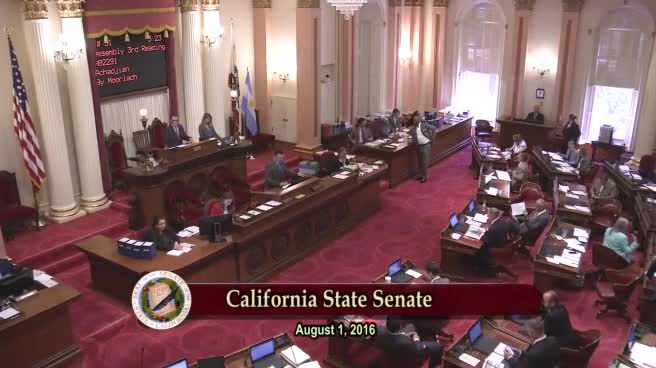
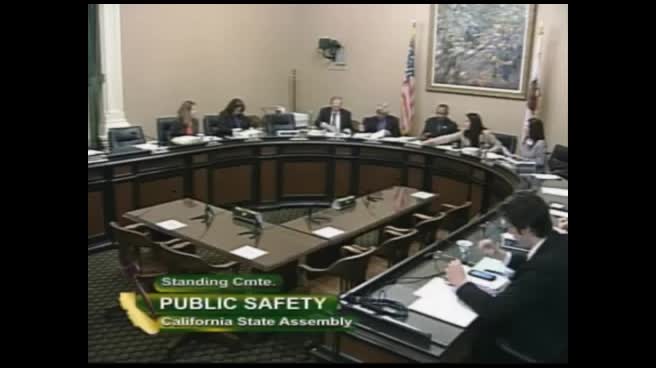
Bill Author

Bill Co-Author(s):