AB 3089: Student financial aid: Chafee grant awards.
- Session Year: 2017-2018
- House: Assembly
- Latest Version Date: 2018-09-20
Existing law establishes the Student Aid Commission as the state agency primarily responsible for the administration and coordination of student financial aid programs at California postsecondary educational institutions. Existing federal law establishes the Chafee Educational and Training Vouchers program for the purposes of providing financial aid to current and former foster youth who are attending qualifying postsecondary educational institutions. Existing law provides that the Student Aid Commission, through an interagency agreement with the State Department of Social Services, currently operates the program in California, and, commencing with the 201718 award year, requires the commission to make a new Chafee grant award to a student only if the student attends specified qualifying institutions. Commencing with the 201819 award year, and contingent upon an appropriation of sufficient funds in the annual Budget Act for this purpose, existing law adds the condition that the student not be 26 years of age or older by July 1 of the award year in order to receive a Chafee grant award. Existing law requires the commission to annually report to the Legislature specified information regarding Chafee grant awards for the preceding award year, including the number of students that apply to receive the Chafee grant award, and the number of, and age of, students paid through the program.
Commencing with the 201819 award year, this bill would authorize the commission and the State Department of Social Services to expend up to $80,000, of any moneys appropriated by the Legislature to expand the Chafee Educational and Training Vouchers Program age eligibility of former foster youth up to 26 years of age, for specified outreach purposes to newly eligible former foster youth who are at least 23 years of age, but are not yet 26 years of age for the 201819 to 202021, inclusive, fiscal years. By authorizing moneys previously appropriated to be expended for a different purpose, the bill would make an appropriation. The bill would require the commission to include as part of its annual report to the Legislature the amount spent on outreach and education efforts and the types of activities that were funded, as specified.
This bill would declare that it is to take effect immediately as an urgency statute.
Existing law establishes the Student Aid Commission as the state agency primarily responsible for the administration and coordination of student financial aid programs at California postsecondary educational institutions. Existing federal law establishes the Chafee Educational and Training Vouchers program for the purposes of providing financial aid to current and former foster youth who are attending qualifying postsecondary educational institutions. Existing law provides that the Student Aid Commission, through an interagency agreement with the State Department of Social Services, currently operates the program in California, and, commencing with the 201718 award year, requires the commission to make a new Chafee grant award to a student only if the student attends specified qualifying institutions. Commencing with the 201718 201819 award year, and contingent upon an appropriation of sufficient funds in the annual Budget Act for this purpose, existing law makes a new Chafee grant award to a student only if the student meets a specified condition. adds the condition that the student not be 26 years of age or older by July 1 of the award year in order to receive a Chafee grant award. Existing law requires the commission to annually report to the Legislature specified information regarding Chafee grant awards for the preceding award year, including the number of students that apply to receive the Chafee grant award, and the number of, and age of, students paid through the program.
Commencing with the 201920 201819 award year, this bill would provide that new Chafee grant awards may be available to students as long as they are under the age of 26 by December 31 of the award year. authorize the commission and the State Department of Social Services to expend up to $80,000, of any moneys appropriated by the Legislature to expand the Chafee Educational and Training Vouchers Program age eligibility of former foster youth up to 26 years of age, for specified outreach purposes to newly eligible former foster youth who are at least 23 years of age, but are not yet 26 years of age for the 201819 to 202021, inclusive, fiscal years. By authorizing moneys previously appropriated to be expended for a different purpose, the bill would make an appropriation. The bill would require the commission to annually include as part of its annual report to the Legislature specified information regarding Chafee grant awards for the preceding award year. the amount spent on outreach and education efforts and the types of activities that were funded, as specified.
This bill would declare that it is to take effect immediately as an urgency statute.
Existing law establishes the Student Aid Commission as the state agency primarily responsible for the administration and coordination of student financial aid programs at California postsecondary educational institutions. Existing federal law establishes the Chafee Educational and Training Vouchers program for the purposes of providing financial aid to current and former foster youth who are attending qualifying postsecondary educational institutions. Commencing with the 201718 award year, existing law makes a new Chafee grant award to a student only if the student meets a specified condition.
Commencing with the 201920 award year, this bill would provide that new Chafee grant awards may be available to students as long as they are under the age of 28 26 by December 31 of the award year. The bill would appropriate an additional $250,000 from the General Fund annually to expand the states allocation to the Chafee Educational and Training Vouchers program. The bill would require the commission to annually report to the Legislature specified information regarding Chafee grant awards for the preceding award year.
Existing law establishes the Student Aid Commission as the state agency primarily responsible for the administration and coordination of student financial aid programs at California postsecondary educational institutions. Existing federal law establishes the Chafee Educational and Training Vouchers program for the purposes of providing financial aid to current and former foster youth who are attending qualifying postsecondary educational institutions. Commencing with the 201718 award year, existing law makes a new Chafee grant award to a student only if the student meets a specified condition.
Commencing with the 201920 award year, this bill would provide that new Chafee grant awards may be available to students as long as they are under the age of 28. 28 by December 31 of the award year. The bill would appropriate an additional $250,000 from the General Fund annually to expand the states allocation to the Chafee Educational and Training Vouchers program. The bill would require the commission to annually report to the Legislature specified information regarding Chafee grant awards for the preceding award year.
Existing law establishes the Student Aid Commission as the state agency primarily responsible for the administration and coordination of student financial aid programs at California postsecondary educational institutions. Existing federal law establishes the Chafee Educational and Training Vouchers program for the purposes of providing financial aid to current and former foster youth who are attending qualifying postsecondary educational institutions. Commencing with the 201718 award year, existing law makes a new Chafee grant award to a student only if the student meets a specified condition.
Commencing with the 201920 award year, this bill would provide that new Chafee grant awards may be available to students as long as they are under the age of 28. The bill would appropriate an additional $250,000 from the General Fund annually to expand the states allocation to the Chafee Educational and Training Vouchers program.
Existing law requires the governing board of any school district to give diligent care to the health and physical development of pupils and authorizes the governing board of a school district to employ properly certified persons for the work.This bill would make a nonsubstantive change to that provision.Existing law requires the governing board of any school district to give diligent care to the health and physical development of pupils and authorizes the governing board of a school district to employ properly certified persons for the work.
This bill would make a nonsubstantive change to that provision.
(a)The commission, through an interagency agreement with the State Department of Social Services, currently operates a federally funded scholarship program, known as the Chafee Educational and Training Vouchers Program, that provides grant aid to provide access to Californias current and former foster youth to postsecondary education. Funds provided through an appropriation by the Legislature shall be supplemental to funds provided by the federal government, and are designated to ensure program availability in the absence of and prior to the annual receipt of federal funds for this purpose. The department shall opt in, as necessary, to expand program age eligibility of former foster youth up to 26 years of age pursuant to federal program guidelines. The department shall pursue and seek possible Chafee Educational and Training Vouchers Program federal matching dollars.
(b)Funds provided for this program shall be used to assist students who are current and former foster youth, for career and technical training or traditional college courses. The commission shall operate this program in accordance with the program instructions provided by the federal Department of Health and Human Services, Administration for Children and Families, and the program guidelines developed by the State Department of Social Services.
(c)The total amount of funding and the amount of individual awards shall depend upon the amount of federal funding provided in addition to state funding. The commission, in conjunction with the State Department of Social Services, shall determine the individual award amounts and total number of students awarded on an annual basis as the amount of total annual funding is determined.
(d)Commencing with the 201718 award year, the commission shall make a new Chafee grant award to a student only if the student attends either of the following:
(1)A qualifying institution that is eligible for participation in the Cal Grant Program pursuant to Section 69432.7.
(2)An institution that is not located in California that satisfies the provisions of subparagraphs (C) and (F) of paragraph (3) of subdivision (l) of Section 69432.7.
(e)(1)Commencing with the 201819 award year, the commission shall make a Chafee grant award to a student only if the student meets both of the following conditions:
(A)He or she will not be 26 years of age or older by July 1 of the award year.
(B)He or she attends either of the following institutions:
(i)A qualifying institution that is eligible for participation in the Cal Grant Program pursuant to Section 69432.7.
(ii)An institution that is not located in California that satisfies the provisions of subparagraphs (C) and (F) of paragraph (3) of subdivision (l) of Section 69432.7.
(2)Implementation of this subdivision is contingent upon an appropriation of sufficient funds in the annual Budget Act for this purpose.
(f)Commencing with the 201819 award year, up to $80,000 of any appropriation made by the Legislature in the annual Budget Act or another statute to expand the Chafee Educational and Training Vouchers Program age eligibility of former foster youth up to 26 years of age, may be used by the commission or the State Department of Social Services for outreach purposes to newly eligible former foster youth who are at least 23 years of age, but are not yet 26 years of age for the 201819 to 202021, inclusive, fiscal years. Outreach purposes may include travel, material development, printing or publication, and other costs, as necessary.
(g)The commission shall annually report to the Legislature all of the following information for the preceding award year:
(1)The number of students who apply to receive a Chafee grant award.
(2)The number of Chafee grants awarded.
(3)The number of Chafee applicants denied due to either of the following reasons:
(A)The Chafee applicant no longer meets the age requirements of the program.
(B)There is insufficient proof of the Chafee applicants status as a current or former foster youth.
(4)The number of Chafee awardees unpaid due to any of the following reasons:
(A)Failure to meet minimum enrollment requirements.
(B)Failure to meet standard academic progress according to campus policy.
(C)Any other common reason that a Chafee awardee did not receive a payment.
(5)The number and age of students paid through the Chafee Educational and Training Vouchers Program.
(6)The average Chafee grant award amount.
(7)Qualifying institutions where Chafee grant awards are utilized.
(8)Degree levels for which Chafee grant awards are utilized.
(9)The amount spent on outreach and education efforts and the types of activities that the authorization in subdivision (f) funded. This information shall include the distribution of outreach funding spent between the commission and the State Department of Social Services, and any other entity that was involved.
SEC. 2.This act is an urgency statute necessary for the immediate preservation of the public peace, health, or safety within the meaning of Article IV of the California Constitution and shall go into immediate effect. The facts constituting the necessity are:
In order to enact changes to the Chafee Educational and Training Vouchers Program for the 201819 fiscal year, it is necessary that this bill go into immediate effect.
(a)The commission, through an interagency agreement with the State Department of Social Services, currently operates a federally funded scholarship program, known as the Chafee Educational and Training Vouchers Program, that provides grant aid to provide access to Californias current and former foster youth to postsecondary education. Funds provided through an appropriation by the Legislature shall be supplemental to funds provided by the federal government, and are designated to ensure program availability in the absence of and prior to the annual receipt of federal funds for this purpose. The department shall opt in, as necessary, to expand program age eligibility of former foster youth up to 26 years of age pursuant to federal program guidelines. The department shall pursue and seek possible Chafee Educational and Training Vouchers Program federal matching dollars.
(b)Funds provided for this program shall be used to assist students who are current and former foster youth, for career and technical training or traditional college courses. The commission shall operate this program in accordance with the program instructions provided by the federal Department of Health and Human Services, Administration for Children and Families, and the program guidelines developed by the State Department of Social Services.
(c)The total amount of funding and the amount of individual awards shall depend upon the amount of federal funding provided in addition to state funding. The commission, in conjunction with the State Department of Social Services, shall determine the individual award amounts and total number of students awarded on an annual basis as the amount of total annual funding is determined.
(d)Commencing with the 201718 award year, the commission shall make a new Chafee grant award to a student only if the student attends either of the following:
(1)A qualifying institution that is eligible for participation in the Cal Grant Program pursuant to Section 69432.7.
(2)An institution that is not located in California that satisfies the provisions of subparagraphs (C) and (F) of paragraph (3) of subdivision (l) of Section 69432.7.
(e)(1)Commencing with the 201819 award year, the commission shall make a new Chafee grant award to a student only if the student meets both of the following conditions:
(A)He or she will not be 26 years of age or older by July 1 of the award year.
(B)He or she attends either of the following institutions:
(i)A qualifying institution that is eligible for participation in the Cal Grant Program pursuant to Section 69432.7.
(ii)An institution that is not located in California that satisfies the provisions of subparagraphs (C) and (F) of paragraph (3) of subdivision (l) of Section 69432.7.
(2)Implementation of this subdivision is contingent upon an appropriation of sufficient funds in the annual Budget Act for this purpose.
(f)Commencing with the 201819 award year, up to $80,000 of any appropriation made by the Legislature in the annual Budget Act or another statute to expand the Chafee Educational and Training Vouchers Program age eligibility of former foster youth up to 26 years of age, may be used by the commission or the State Department of Social Services for outreach purposes to newly eligible former foster youth who are at least 23 years of age, but are not yet 26 years of age for the 201819 to 202021, inclusive, fiscal years. Outreach purposes may include travel, material development, printing or publication, and other costs, as necessary.
(f)(g)The commission shall annually report to the Legislature all of the following information for the preceding award year:
(1)The number of students who apply to receive a Chafee grant award.
(2)The number of Chafee grants awarded.
(3)The number of Chafee applicants denied due to either of the following reasons:
(A)The Chafee applicant no longer meets the age requirements of the program.
(B)There is insufficient proof of the Chafee applicants status as a current or former foster youth.
(4)The number of Chafee awardees unpaid due to any of the following reasons:
(A)Failure to meet minimum enrollment requirements.
(B)Failure to meet standard academic progress according to campus policy.
(C)Any other common reason that a Chafee awardee did not receive a payment.
(5)The number and age of students paid through the Chafee Educational and Training Vouchers Program.
(6)The average Chafee grant award amount.
(7)Qualifying institutions where Chafee grant awards are utilized.
(8)Degree levels for which Chafee grant awards are utilized.
(9)The amount spent on outreach and education efforts and the types of activities that the authorization in subdivision (f) funded. This information shall include the distribution of outreach funding spent between the commission and State Department of Social Services, and any other entity that was involved.
SEC. 2.This act is an urgency statute necessary for the immediate preservation of the public peace, health, or safety within the meaning of Article IV of the California Constitution and shall go into immediate effect. The facts constituting the necessity are:
In order to enact changes to the Chafee Educational and Training Vouchers Program for the 201819 fiscal year, it is necessary that this bill go into immediate effect.
SECTION 1.Section 69519 of the Education Code is amended to read:69519.(a)The commission, through an interagency agreement with the State Department of Social Services, currently operates a federally funded scholarship program that provides grant aid to provide access to Californias current and former foster youth to postsecondary education. Funds provided through an appropriation by the Legislature shall be supplemental to funds provided by the federal government, and are designated to ensure program availability in the absence of and prior to the annual receipt of federal funds for this purpose.(b)Funds provided for this program shall be used to assist students who are current and former foster youth, for career and technical training or traditional college courses. The commission shall operate this program in accordance with the program instructions provided by the federal Department of Health and Human Services, Administration for Children and Families, and the program guidelines developed by the State Department of Social Services.(c)The total amount of funding and the amount of individual awards shall depend upon the amount of federal funding provided in addition to state funding. The commission, in conjunction with the State Department of Social Services, shall determine the individual award amounts and total number of students awarded on an annual basis as the amount of total annual funding is determined.(d)Commencing with the 201920 award year, the commission shall make a new Chafee grant award to a student only if the student meets both of the following conditions:(1)Will not be 26 years of age or older by December 31 of the award year.(2)Attends either of the following institutions:(A)A qualifying institution that is eligible for participation in the Cal Grant Program pursuant to Section 69432.7.(B)An institution that is not located in California that satisfies the provisions of subparagraphs (C) and (F) of paragraph (3) of subdivision (l) of Section 69432.7.(e)The commission shall annually report to the Legislature, pursuant to Section 9795 of the Government Code, all of the following information for the preceding award year:(1)The number of students that apply to receive a Chafee grant award.(2)The number of Chafee grants awarded.(3)The number of students paid through the Chafee Educational and Training Vouchers Program.(a)The commission, through an interagency agreement with the State Department of Social Services, currently operates a federally funded scholarship program that provides grant aid to provide access to Californias current and former foster youth to postsecondary education. Funds provided through an appropriation by the Legislature shall be supplemental to funds provided by the federal government, and are designated to ensure program availability in the absence of and prior to the annual receipt of federal funds for this purpose.
(b)Funds provided for this program shall be used to assist students who are current and former foster youth, for career and technical training or traditional college courses. The commission shall operate this program in accordance with the program instructions provided by the federal Department of Health and Human Services, Administration for Children and Families, and the program guidelines developed by the State Department of Social Services.
(c)The total amount of funding and the amount of individual awards shall depend upon the amount of federal funding provided in addition to state funding. The commission, in conjunction with the State Department of Social Services, shall determine the individual award amounts and total number of students awarded on an annual basis as the amount of total annual funding is determined.
(d)Commencing with the 201920 award year, the commission shall make a new Chafee grant award to a student only if the student meets both of the following conditions:
(1)Will not be 28 26 years of age or older by December 31 of the award year.
(2)Attends either of the following institutions:
(A)A qualifying institution that is eligible for participation in the Cal Grant Program pursuant to Section 69432.7.
(B)An institution that is not located in California that satisfies the provisions of subparagraphs (C) and (F) of paragraph (3) of subdivision (l) of Section 69432.7.
(e)Commencing with the 201920 award year, an additional two hundred fifty thousand dollars ($250,000) is annually appropriated from the General Fund to expand the states allocation to the Chafee Educational and Training Vouchers program.(f)(e)The commission shall annually report to the Legislature, pursuant to Section 9795 of the Government Code, all of the following information for the preceding award year:
(1)The number of students that apply to receive a Chafee grant award.
(2)The number of Chafee grants awarded.
(3)The number of students paid through the Chafee Educational and Training Vouchers Program.
(a)The commission, through an interagency agreement with the State Department of Social Services, currently operates a federally funded scholarship program that provides grant aid to provide access to Californias current and former foster youth to postsecondary education. Funds provided through an appropriation by the Legislature shall be supplemental to funds provided by the federal government, and are designated to ensure program availability in the absence of and prior to the annual receipt of federal funds for this purpose.
(b)Funds provided for this program shall be used to assist students who are current and former foster youth, for career and technical training or traditional college courses. The commission shall operate this program in accordance with the program instructions provided by the federal Department of Health and Human Services, Administration for Children and Families, and the program guidelines developed by the State Department of Social Services.
(c)The total amount of funding and the amount of individual awards shall depend upon the amount of federal funding provided in addition to state funding. The commission, in conjunction with the State Department of Social Services, shall determine the individual award amounts and total number of students awarded on an annual basis as the amount of total annual funding is determined.
(d)Commencing with the 201920 award year, the commission shall make a new Chafee grant award to a student only if the student meets both of the following conditions:
(1)Is under the age of 28. Will not be 28 years of age or older by December 31 of the award year.
(2)Attends either of the following institutions:
(A)A qualifying institution that is eligible for participation in the Cal Grant Program pursuant to Section 69432.7.
(B)An institution that is not located in California that satisfies the provisions of subparagraphs (C) and (F) of paragraph (3) of subdivision (l) of Section 69432.7.
(e)Commencing with the 201920 award year, an additional two hundred fifty thousand dollars ($250,000) is annually appropriated from the General Fund to expand the states allocation to the Chafee Educational and Training Vouchers program.
(f)The commission shall annually report to the Legislature, pursuant to Section 9795 of the Government Code, all of the following information for the preceding award year:
(1)The number of students that apply to receive a Chafee grant award.
(2)The number of Chafee grants awarded.
(3)The number of students paid through the Chafee Educational and Training Vouchers Program.
(a)The commission, through an interagency agreement with the State Department of Social Services, currently operates a federally funded scholarship program that provides grant aid to provide access to Californias current and former foster youth to postsecondary education. Funds provided through an appropriation by the Legislature shall be supplemental to funds provided by the federal government, and are designated to ensure program availability in the absence of and prior to the annual receipt of federal funds for this purpose.
(b)Funds provided for this program shall be used to assist students who are current and former foster youth, for career and technical training or traditional college courses. The commission shall operate this program in accordance with the program instructions provided by the federal Department of Health and Human Services, Administration for Children and Families, and the program guidelines developed by the State Department of Social Services.
(c)The total amount of funding and the amount of individual awards shall depend upon the amount of federal funding provided in addition to state funding. The commission, in conjunction with the State Department of Social Services, shall determine the individual award amounts and total number of students awarded on an annual basis as the amount of total annual funding is determined.
(d)Commencing with the 201718 201920 award year, the commission shall make a new Chafee grant award to a student only if the student attends either of the following: meets both of the following conditions:
(1)Is under the age of 28.
(2)Attends either of the following institutions:
(1)(A)A qualifying institution that is eligible for participation in the Cal Grant Program pursuant to Section 69432.7.
(2)(B)An institution that is not located in California that satisfies the provisions of subparagraphs (C) and (F) of paragraph (3) of subdivision (l) of Section 69432.7.
(e)Commencing with the 201920 award year, an additional two hundred fifty thousand dollars ($250,000) is annually appropriated from the General Fund to expand the states allocation to the Chafee Educational and Training Vouchers program.
SECTION 1.Section 49400 of the Education Code is amended to read:49400.The governing board of each school district shall give diligent care to the health and physical development of pupils, and may employ properly certified persons for the work.The governing board of any each school district shall give diligent care to the health and physical development of pupils, and may employ properly certified persons for the work.
|
Date
|
Status
|
|---|---|
| Sep 20, 2018 | Chaptered by Secretary of State - Chapter 594, Statutes of 2018. |
| Sep 20, 2018 | Approved by the Governor. |
| Sep 12, 2018 | Enrolled and presented to the Governor at 12 p.m. |
| Aug 31, 2018 | In Assembly. Concurrence in Senate amendments pending. |
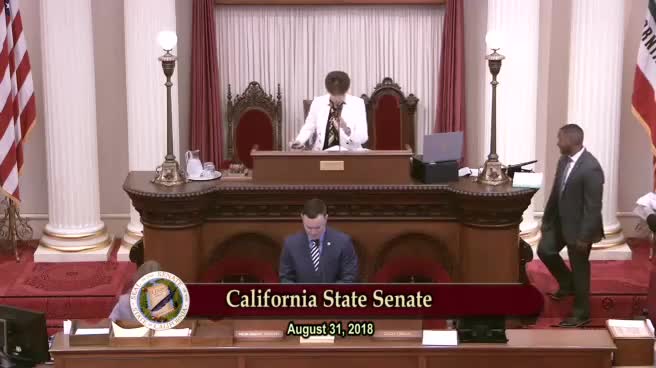
| Aug 31, 2018 | Read third time. Urgency clause adopted. Passed. Ordered to the Assembly. |
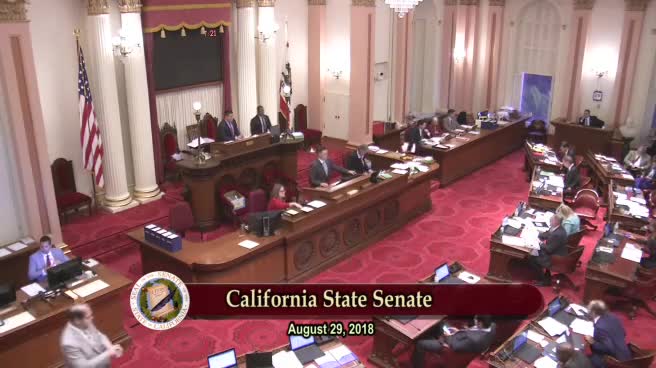
| Aug 29, 2018 | Read third time. Urgency clause refused adoption. |
| Aug 27, 2018 | Read second time. Ordered to third reading. |
| Aug 24, 2018 | Read third time and amended. Ordered to second reading. |
| Aug 21, 2018 | Read second time and amended. Ordered to third reading. |
| Aug 20, 2018 | From committee: Amend, and do pass as amended. (Ayes 7. Noes 0.) (August 16). |
| Jul 2, 2018 | In committee: Referred to APPR. suspense file. |
| Jun 20, 2018 | From committee: Do pass and re-refer to Com. on APPR. with recommendation: To Consent Calendar. (Ayes 7. Noes 0.) (June 20). Re-referred to Com. on APPR. |
| Jun 13, 2018 | Referred to Com. on ED. |
| May 31, 2018 | In Senate. Read first time. To Com. on RLS. for assignment. |
| May 30, 2018 | Read third time. Passed. Ordered to the Senate. |
| May 29, 2018 | Read second time. Ordered to third reading. |
| May 25, 2018 | From committee: Amend, and do pass as amended. (Ayes 16. Noes 0.) (May 25). |
| May 2, 2018 | In committee: Set, first hearing. Referred to APPR. suspense file. |
| Apr 18, 2018 | From committee: Do pass and re-refer to Com. on APPR. (Ayes 13. Noes 0.) (April 17). Re-referred to Com. on APPR. |
| Apr 3, 2018 | Re-referred to Com. on HIGHER ED. |
| Apr 2, 2018 | From committee chair, with author's amendments: Amend, and re-refer to Com. on HIGHER ED. Read second time and amended. |
| Mar 21, 2018 | Re-referred to Com. on HIGHER ED. |
| Mar 20, 2018 | From committee chair, with author's amendments: Amend, and re-refer to Com. on HIGHER ED. Read second time and amended. |
| Mar 19, 2018 | Referred to Com. on HIGHER ED. |
| Feb 17, 2018 | From printer. May be heard in committee March 19. |
| Feb 16, 2018 | Read first time. To print. |
|
Date
|
Description
|
Location
|
Votes
|
|
|---|---|---|---|---|
| Aug 31, 2018 | AB 3089 Thurmond Concurrence - Urgency Added | Assembly Floor |
Passed |
|
| Aug 31, 2018 | Assembly 3rd Reading AB3089 Thurmond et al. By Beall Urgency Clause | Senate Floor |
Passed |
|
| Aug 29, 2018 | Assembly 3rd Reading AB3089 Thurmond et al. By Beall Reconsider | Senate Floor |
Passed |
|
| Aug 29, 2018 | Assembly 3rd Reading AB3089 Thurmond et al. By Beall Urgency Clause | Senate Floor |
Passed |
|
| Aug 16, 2018 | Do pass as amended | Senate Standing Committee on Appropriations |
Passed |
|
| Jul 2, 2018 | Placed on suspense file | Senate Standing Committee on Appropriations |
Passed |
|
| Jun 20, 2018 | Do pass, but first be re-referred to the Committee on [Appropriations] with the recommendation: To Consent Calendar | Senate Standing Committee on Education |
Passed |
|
| May 30, 2018 | AB 3089 THURMOND Assembly Third Reading | Assembly Floor |
Passed |
|
| May 25, 2018 | Do pass as amended. | Assembly Standing Committee on Appropriations |
Passed |
|
| Apr 17, 2018 | Do pass and be re-referred to the Committee on [Appropriations] | Assembly Standing Committee on Higher Education |
Passed |
This list shows positions taken on this bill by organizations on the date displayed, which is linked to the original source.
Positions by individuals are not included.
CONCURRENCE IN SENATE AMENDMENTS
CSA1 Bill Id:AB 3089
Author:(Thurmond and Quirk-Silva)
As Amended Ver:August 24, 2018
2/3 vote. Urgency
ASSEMBLY: | 76-0 | (May 30, 2018) | SENATE: | 36-0 | (August 31, 2018) |
Original Committee Reference: HIGHER ED.
SUMMARY: Authorizes the California Student Aid Commission (CSAC), commencing with the 2018-19 award year, to provide Chafee grant awards to students as long as they are not 26 years of age or older by July 1 of the award year; and, requires CSAC to annually report to the Legislature specified information regarding Chafee grant awards.
The Senate amendments:
- Add an urgency clause.
- Specify students are eligible for a Chafee grant award if they are not 26 years of age or older by July 1 of the award year.
- Specify, commencing with the 2018-19 award year, up to $80,000 of any appropriation made by the Legislature in the annual Budget Act or another statute to expand the Chafee Educational and Training Vouchers (ETV) Program age eligibility of former foster youth up to 26 years of age, may be used by CSAC or the State Department of Social Services (SDSS) for outreach purposes to newly eligible former foster youth who are at least 23 years of age, but are not 26 years of age.
- Specify outreach purposes may include travel, material development, printing or publication, and other costs, as necessary.
- Add additional requirements that CSAC must include in its annual report the Legislature, including, but not limited to, the following:
- The amount spent on outreach and education efforts and the types of activities funded, including the distribution of outreach funding spent between CSAC and the SDSS, and any other entity that was involved;
- The number of Chafee applicants denied due to either of the following reasons:
- The Chafee applicant no longer meets the age requirements of the program; and,
- There is insufficient proof of the Chafee applicant's status as a current or former foster youth.
- Degree levels for which the Chafee grant awards are utilized; and,
- The average Chafee grant award amount.
- Make technical and clarifying changes.
EXISTING LAW:
- Establishes requirements for postsecondary education institutions to participate in the Cal Grant program, and requires, for the 2017-18 and subsequent academic years, an institution to maintain a graduation rate above 30% and a three-year cohort student loan default rate of less than 15.5% (Education Code (EC) Section 69432.7).
- Establishes the CSAC for the purpose of administering specified student financial programs (EC Section 69510, et seq.).
- Requires, commencing with the 2017-18 academic year, CSAC to ensure that postsecondary institutions meet eligibility requirements consistent with the Cal Grant Program in order to participate in the Chafee ETV program (EC Section 69519).
- Establishes the federal John H. Chafee Foster Care Independence Program to provide, among other benefits, education and training vouchers to qualifying current and former foster youth (United States Code, Title 42, Section 677).
FISCAL EFFECT: According to the Senate Appropriations Committee, this bill would authorize the SDSS to expend up to $80,000 in available funds for outreach purposes to newly eligible former foster youth, as specified.
COMMENTS: Background. The federal John H. Chafee Foster Care Independence Program (CFCIP) was created in 1999 to offer assistance to current and former foster care youth in achieving self-sufficiency. Federal grants are offered to States who submit a plan to assist youth in a wide variety of areas designed to support a successful transition to adulthood. The ETV for Youths Aging out of Foster Care was added to the CFCIP in 2002. The ETV provides resources specifically to meet the education and training needs of youth aging out of foster care.
In California, the Chafee Grant provides up to $5,000 in grants to foster youth. The budget for the program is about $14.3 million, which is evenly split between federal funds and the state GF. State funding for the program is accounted for in the Department of Social Services budget, the funding is distributed to CSAC through a Memorandum of Understanding (MOU) that outlines program operations; CSAC then directs money to students pursuant to the requirements of the MOU.
Current or former foster youth qualify for the Chafee Grant if they are under age 22 and were wards of the court and living in foster care for at least one day between the ages of 16 and 18. The maximum grant is $5,000 per academic year; the average awarded grant in 2016-17 was $4,149. Additionally, 3,499 students were served by the grant in 2016-17.
Purpose of the measure. According to the author, research shows that only four percent of former foster youth obtain a four-year degree by the time they reach 26 years of age. The author contends that research shows a significant barrier to former foster youth obtaining a postsecondary education is their lack of financial stability.
The author states, "Unlike most financial aid programs and grants, the Chafee Grant is crucial as it allows foster youth to pay for college-related expenses beyond tuition and fees...many eligible foster youth do not enroll into college immediately after emancipation out of the foster care system. Thus, they are unable to take advantage of the Chafee program". The author contends, "Often times, foster youth do not learn of the program until they have already exceeded the age limit or are only able to benefit from the program for a limited time despite not having completed their degree".
Prior legislation. AB 2506 (Thurmond), Chapter 388, Statutes of 2016, which, in part, commencing with the 2017-18 academic year, required CSAC to ensure that postsecondary institutions meet eligibility requirements consistent with the Cal Grant Program in order to participate in the Chafee Program.
Analysis Prepared by: Jeanice Warden / HIGHER ED. / (916) 319-3960 FN: 0004573
Office of Senate Floor Analyses (916) 651-1520 Fax: (916) 327-4478 | AB |
THIRD READING
Bill No: AB 3089
:
SENATE EDUCATION COMMITTEE: 7-0, 6/20/18
AYES: Allen, Wilk, Galgiani, Leyva, McGuire, Pan, Vidak
SENATE APPROPRIATIONS COMMITTEE: 7-0, 8/16/18
AYES: Portantino, Bates, Beall, Bradford, Hill, Nielsen, Wiener
SENATE FLOOR: 26-0, 8/29/18 (FAIL)
AYES: Allen, Atkins, Beall, Bradford, De León, Delgado, Dodd, Galgiani, Glazer, Hernandez, Hertzberg, Hill, Hueso, Jackson, Lara, Leyva, McGuire, Mitchell, Monning, Pan, Portantino, Roth, Skinner, Stern, Wieckowski, Wiener
NO VOTE RECORDED: Anderson, Bates, Berryhill, Cannella, Chang, Fuller, Gaines, Moorlach, Morrell, Nguyen, Nielsen, Stone, Vidak, Wilk
ASSEMBLY FLOOR: 76-0, 5/30/18 - See last page for vote
DIGEST:
This bill, an urgency measure, appropriates $80,000 for outreach to former foster youth who are newly eligible for the Chafee grant, and adds a data element to existing reporting requirements related to the Chafee grant.
Senate Floor Amendments of 8/24/18 add a coauthor and make a technical change.
Existing law:
- Establishes the California Student Aid Commission (CSAC) for the purpose of administering specified student financial programs. (Education Code § 69510 et seq.)
- Establishes requirements for postsecondary education institutions to participate in the Cal Grant program, and requires, for the 2012-13 and subsequent academic years, an institution to maintain a graduation rate above 30 percent and a three-year cohort student loan default rate of less than 15.5 percent. (EC § 69432.7)
- Establishes the federal John H. Chafee Foster Care Independence Program to provide, among other benefits, education and training vouchers to qualifying current and former foster youth. (United States Code, Title 42, § 677)
- Requires the CSAC, through an interagency agreement with the Department of Social Services (DSS), to operate a federally-funded scholarship program that provides grant aid to California’s current and former foster youth. Existing law requires funds to be used to assist students who are current and former foster youth, for career and technical training or traditional college courses. (EC § 69519)
- Requires, beginning with the 2017–18 award year, CSAC to make a new Chafee grant award to a student only if the student attends either of the following:
- A qualifying institution that is eligible for participation in the Cal Grant program.
- An institution that is not located in California that satisfies the provisions of a qualifying institution that is eligible for participation in the Cal Grant program. (EC § 69519)
- Requires, beginning with the 2018-19 award year, CSAC to make a new Chafee grant ward to a student only if the student is not 26 years of age or older by July 1 of the award year, and if the student attends an institution described in 5) above.
- Requires CSAC to annually report to the Legislature all of the following information for the preceding award year:
- The number of students who apply to receive a Chafee grant award.
- The number of Chafee grants awarded.
- The number of Chafee applicants denied due to either of the following reasons:
- The Chafee applicant no longer meets the age requirements of the program.
- There is insufficient proof of the Chafee applicant’s status as a current or former foster youth.
- The number of Chafee awardees unpaid due to any of the following reasons:
- Failure to meet minimum enrollment requirements.
- Failure to meet standard academic progress according to campus policy.
- Any other common reason that a Chafee awardee did not receive a payment.
- The number and age of students paid through the Chafee Educational and Training Vouchers Program.
- The average Chafee grant award amount.
- Qualifying institutions where Chafee grant awards are utilized.
- Degree levels for which Chafee grant awards are utilized. (EC § 69519)
This bill:
- Authorizes up to $80,000 of any appropriation made to expand the Chafee Educational and Training Voucher Program age eligibility up to 26 year of age, beginning with the 2018-190 award year, to be used by the CSAC or DSS for outreach purposes to newly eligible former foster youth who are at least 23 years of age, but are not yet 26 years of age, for the 2018-19 to 2020-21 fiscal years. This bill authorizes outreach to include travel, material development, printing or publication, and other costs as necessary.
- Expands elements of an existing annual report by CSAC to the Legislature to include the amount spent on outreach and education efforts and the types of activities that the authorization provided by this bill funded. This bill requires this information to include the distribution of outreach funding spent between the CSAC and DSS, and any other entity that was involved.
- Includes an urgency clause in order to enact changes to the Chafee Educational and Training Vouchers Program for the 2018-19 fiscal year.
Comments
Related Budget activity. AB 1811 (Committee on Budget, Chapter 35, Statutes of 2018), the human services budget trailer omnibus bill, expanded eligibility for the Chafee grant to former foster youth up to the age of 26 years. The 2018 Budget Act includes $4 million General Fund in ongoing funding to provide Chafee grants to former foster youth up to the age of 26. AB 1811 also included reporting provisions related to the Chafee; this bill adds an additional data element that is related to the utilization of outreach funds.
Chafee recipients in California. The maximum grant is $5,000 per academic year; the average awarded grant in 2016-17 was $4,149. There were 3,499 California students served by the Chafee grant in 2016-17.
FISCAL EFFECT: Appropriation: Fiscal Com.: Local:
According to the Senate Appropriations Committee, this bill would authorize DSS to expend up to $80,000 in available funds for outreach purposes to newly eligible former foster youth, as specified.
Journey House (source)
Baby2Baby
Echoes of Hope
Public Counsel
University of California, Davis, Department of Anthropology, Research Affiliate
OPPOSITION: (Verified 8/24/18)
None received
ASSEMBLY FLOOR: 76-0, 5/30/18
AYES: Acosta, Arambula, Baker, Berman, Bigelow, Bloom, Bonta, Brough, Burke, Caballero, Calderon, Carrillo, Cervantes, Chau, Chávez, Chen, Chiu, Choi, Chu, Cooley, Cooper, Cunningham, Dahle, Daly, Eggman, Flora, Fong, Frazier, Friedman, Gallagher, Cristina Garcia, Eduardo Garcia, Gipson, Gloria, Gonzalez Fletcher, Gray, Grayson, Harper, Holden, Irwin, Jones-Sawyer, Kalra, Kamlager-Dove, Kiley, Lackey, Levine, Limón, Low, Maienschein, Mathis, Mayes, McCarty, Medina, Melendez, Mullin, Muratsuchi, Nazarian, Obernolte, O'Donnell, Patterson, Quirk, Quirk-Silva, Reyes, Rodriguez, Rubio, Salas, Santiago, Steinorth, Mark Stone, Thurmond, Ting, Voepel, Waldron, Weber, Wood, Rendon
NO VOTE RECORDED: Aguiar-Curry, Travis Allen
8/30/18 10:22:06
**** END ****
Office of Senate Floor Analyses (916) 651-1520 Fax: (916) 327-4478 | AB |
THIRD READING
Bill No: AB 3089
Amended: 8/21/18 in Senate
SENATE EDUCATION COMMITTEE: 7-0, 6/20/18
AYES: Allen, Wilk, Galgiani, Leyva, McGuire, Pan, Vidak
SENATE APPROPRIATIONS COMMITTEE: 7-0, 8/16/18
AYES: Portantino, Bates, Beall, Bradford, Hill, Nielsen, Wiener
ASSEMBLY FLOOR: 76-0, 5/30/18 - See last page for vote
DIGEST:
This bill, an urgency measure, appropriates $80,000 for outreach to former foster youth who are newly eligible for the Chafee grant, and adds a data element to existing reporting requirements related to the Chafee grant.
Existing law:
- Establishes the California Student Aid Commission (CSAC) for the purpose of administering specified student financial programs. (Education Code § 69510 et seq.)
- Establishes requirements for postsecondary education institutions to participate in the Cal Grant program, and requires, for the 2012-13 and subsequent academic years, an institution to maintain a graduation rate above 30 percent and a three-year cohort student loan default rate of less than 15.5 percent. (EC § 69432.7)
- Establishes the federal John H. Chafee Foster Care Independence Program to provide, among other benefits, education and training vouchers to qualifying current and former foster youth. (United States Code, Title 42, § 677)
- Requires the CSAC, through an interagency agreement with the Department of Social Services (DSS), to operate a federally-funded scholarship program that provides grant aid to California’s current and former foster youth. Existing law requires funds to be used to assist students who are current and former foster youth, for career and technical training or traditional college courses. (EC § 69519)
- Requires, beginning with the 2017–18 award year, CSAC to make a new Chafee grant award to a student only if the student attends either of the following:
- A qualifying institution that is eligible for participation in the Cal Grant program.
- An institution that is not located in California that satisfies the provisions of a qualifying institution that is eligible for participation in the Cal Grant program. (EC § 69519)
- Requires, beginning with the 2018-19 award year, CSAC to make a new Chafee grant ward to a student only if the student is not 26 years of age or older by July 1 of the award year, and if the student attends an institution described in 5) above.
- Requires CSAC to annually report to the Legislature all of the following information for the preceding award year:
- The number of students who apply to receive a Chafee grant award.
- The number of Chafee grants awarded.
- The number of Chafee applicants denied due to either of the following reasons:
- The Chafee applicant no longer meets the age requirements of the program.
- There is insufficient proof of the Chafee applicant’s status as a current or former foster youth.
- The number of Chafee awardees unpaid due to any of the following reasons:
- Failure to meet minimum enrollment requirements.
- Failure to meet standard academic progress according to campus policy.
- Any other common reason that a Chafee awardee did not receive a payment.
- The number and age of students paid through the Chafee Educational and Training Vouchers Program.
- The average Chafee grant award amount.
- Qualifying institutions where Chafee grant awards are utilized.
- Degree levels for which Chafee grant awards are utilized. (EC § 69519)
This bill:
- Authorizes up to $80,000 of any appropriation made to expand the Chafee Educational and Training Voucher Program age eligibility up to 26 year of age, beginning with the 2018-190 award year, to be used by the CSAC or DSS for outreach purposes to newly eligible former foster youth who are at least 23 years of age, but are not yet 26 years of age, for the 2018-19 to 2020-21 fiscal years. This bill authorizes outreach to include travel, material development, printing or publication, and other costs as necessary.
- Expands elements of an existing annual report by CSAC to the Legislature to include the amount spent on outreach and education efforts and the types of activities that the authorization provided by this bill funded. This bill requires this information to include the distribution of outreach funding spent between the CSAC and DSS, and any other entity that was involved.
- Includes an urgency clause in order to enact changes to the Chafee Educational and Training Vouchers Program for the 2018-19 fiscal year.
Related Budget activity. AB 1811 (Committee on Budget, Chapter 35, Statutes of 2018), the human services budget trailer omnibus bill, expanded eligibility for the Chafee grant to former foster youth up to the age of 26 years. The 2018 Budget Act includes $4 million General Fund in ongoing funding to provide Chafee grants to former foster youth up to the age of 26. AB 1811 also included reporting provisions related to the Chafee; this bill adds an additional data element that is related to the utilization of outreach funds.
Chafee recipients in California. The maximum grant is $5,000 per academic year; the average awarded grant in 2016-17 was $4,149. There were 3,499 California students served by the Chafee grant in 2016-17.
FISCAL EFFECT: Appropriation: Fiscal Com.: Local:
According to the Senate Appropriations Committee, this bill would authorize DSS to expend up to $80,000 in available funds for outreach purposes to newly eligible former foster youth, as specified.
Journey House (source)
Baby2Baby
Echoes of Hope
Public Counsel
University of California, Davis, Department of Anthropology, Research Affiliate
OPPOSITION: (Verified 8/17/18)
None received
ASSEMBLY FLOOR: 76-0, 5/30/18
AYES: Acosta, Arambula, Baker, Berman, Bigelow, Bloom, Bonta, Brough, Burke, Caballero, Calderon, Carrillo, Cervantes, Chau, Chávez, Chen, Chiu, Choi, Chu, Cooley, Cooper, Cunningham, Dahle, Daly, Eggman, Flora, Fong, Frazier, Friedman, Gallagher, Cristina Garcia, Eduardo Garcia, Gipson, Gloria, Gonzalez Fletcher, Gray, Grayson, Harper, Holden, Irwin, Jones-Sawyer, Kalra, Kamlager-Dove, Kiley, Lackey, Levine, Limón, Low, Maienschein, Mathis, Mayes, McCarty, Medina, Melendez, Mullin, Muratsuchi, Nazarian, Obernolte, O'Donnell, Patterson, Quirk, Quirk-Silva, Reyes, Rodriguez, Rubio, Salas, Santiago, Steinorth, Mark Stone, Thurmond, Ting, Voepel, Waldron, Weber, Wood, Rendon
NO VOTE RECORDED: Aguiar-Curry, Travis Allen
8/21/18 19:02:53
**** END ****
SENATE COMMITTEE ON APPROPRIATIONS
Senator Anthony Portantino, Chair
2017 - 2018 Regular Session
AB 3089 (Thurmond) - Student financial aid: Chafee grant awards
Version: May 25, 2018 | Policy Vote: ED. 7 - 0 |
Urgency: No | Mandate: No |
Hearing Date: August 16, 2018 | Consultant: Lenin Del Castillo |
Bill Summary:
This bill expands eligibility for the Chafee grant to include former foster youth who are between age 22 and 26 years, and authorizes the California Student Aid Commission (CSAC) to award grants to this population beginning with the 2019-20 award year.
*********** ANALYSIS ADDENDUM – SUSPENSE FILE ***********
The following information is revised to reflect amendments
adopted by the committee on August 16, 2018
Fiscal Impact:
This bill would authorize the State Department of Social Services to expend up to $80,000 in available funds for outreach purposes to newly eligible former foster youth, as specified.
Author Amendments:
Allow Chafee grants to be used for outreach purposes.
-- END --
SENATE COMMITTEE ON APPROPRIATIONS
Senator Anthony Portantino, Chair
2017 - 2018 Regular Session
AB 3089 (Thurmond) - Student financial aid: Chafee grant awards
Version: May 25, 2018 | Policy Vote: ED. 7 - 0 |
Urgency: No | Mandate: No |
Hearing Date: July 2, 2018 | Consultant: Lenin Del Castillo |
This bill meets the criteria for referral to the Suspense File.
Bill Summary:
This bill expands eligibility for the Chafee grant to include former foster youth who are between age 22 and 26 years, and authorizes the California Student Aid Commission (CSAC) to award grants to this population beginning with the 2019-20 award year.
Fiscal Impact:
- By expanding eligibility for Chafee grants to include former foster youth who are between the ages of 22 and 26 years old, this bill would result General Fund cost pressure in the low millions of dollars each year. A precise estimate will depend on the number of newly qualifying foster youth students. While its provisions are not identical to those contained in this bill, the 2018 Budget Act provides an additional $4 million in ongoing General Fund to provide Chafee grants to former foster youth up to the age of 26. This amount is sufficient to fund a minimum of 800 new students assuming the maximum Chafee grant of $5,000 per academic year.
- The CSAC estimates ongoing General Fund costs of about $187,000 each year for increased workload associated with assisting these students.
Background:
Existing law establishes the federal John H. Chafee Foster Care Independence Program to provide, among other benefits, education and training vouchers (ETVs) to qualifying current and former foster youth. To qualify for a Chafee ETV, students must be a current or former foster youth, with dependency established or continued by the court between ages 16-18 and under the age of 22 years as of July 1 of the award year. Students must fill out the Free Application for Federal Student Aid, or California Dream Act Application, and the California Chafee grant application. Currently, there is no application deadline or guarantee of funds, and applications are processed on a rolling basis until all funds are expended. This often results in students not learning whether they received a grant until well into the school term. The Chafee ETV is not an entitlement, unlike the Cal Grant program.
Existing law requires the CSAC, through an interagency agreement with the Department of Social Services, to operate a federally-funded scholarship program that provides grant aid to California’s current and former foster youth. Existing law requires funds to be used to assist students who are current and former foster youth, for career and technical training or traditional college courses.
Existing law requires, beginning with the 2017–18 award year, CSAC to make a new Chafee grant award to a student only if the student attends either a qualifying institution that is eligible for participation in the Cal Grant program or an institution that is not located in California that satisfies the provisions of a qualifying institution that is eligible for participation in the Cal Grant program.
Proposed Law:
This bill expands eligibility for the Chafee grant to include former foster youth who are between age 22 and 26 years, and authorizes the CSAC to award grants to this population beginning with the 2019-20 award year.
This bill requires the CSAC to annually report to the Legislature all of the following information for the preceding award year: the number of students that apply to receive a Chafee grant award; the number of Chafee grants awarded; and the number of students paid through the Chafee Educational and Training Vouchers Program.
Staff Comments:
The 2018 Budget Act and accompanying human services trailer bill (AB 1811, Committee on Budget) includes $4 million in ongoing General Fund to provide Chafee grants to former foster youth up to the age of 26, and includes reporting provisions related to the Chafee.
The maximum Chafee grant is $5,000 per academic year; the average grant awarded in 2016-17 was $4,149. There were 3,499 California students served by the Chafee grant in 2016-17.
-- END --
SENATE COMMITTEE ON EDUCATION
Senator Benjamin Allen, Chair
2017 - 2018 Regular
Bill No: Hearing Date: June 20, 2018
Author: | Thurmond and Quirk-Silva | ||
Version: |
| ||
Urgency: | Fiscal: | ||
Consultant: | |||
Subject:
SUMMARY
This bill expands eligibility for the Chafee grant to include former foster youth who are between age 22 and 26 years, and authorizes the California Student Aid Commission (CSAC) to award grants to this population beginning with the 2019-20 award year.
BACKGROUND
Existing law:
- Establishes the CSAC for the purpose of administering specified student financial programs. (Education Code § 69510 et seq.)
- Establishes requirements for postsecondary education institutions to participate in the Cal Grant program, and requires, for the 2012-13 and subsequent academic years, an institution to maintain a graduation rate above 30 percent and a three-year cohort student loan default rate of less than 15.5 percent.
(EC § 69432.7) - Establishes the federal John H. Chafee Foster Care Independence Program to provide, among other benefits, education and training vouchers to qualifying current and former foster youth. (United States Code, Title 42, § 677)
- Requires the CSAC, through an interagency agreement with the Department of Social Services, to operate a federally-funded scholarship program that provides grant aid to California’s current and former foster youth. Existing law requires funds to be used to assist students who are current and former foster youth, for career and technical training or traditional college courses. (EC § 69519)
- Requires, beginning with the 2017–18 award year, CSAC to make a new Chafee grant award to a student only if the student attends either of the following:
- A qualifying institution that is eligible for participation in the Cal Grant program.
- An institution that is not located in California that satisfies the provisions of a qualifying institution that is eligible for participation in the Cal Grant program. (EC § 69519)
- A qualifying institution that is eligible for participation in the Cal Grant program.
ANALYSIS
- Expands eligibility for the Chafee grant to include former foster youth who are between age 22 and 26 years, and authorizes the California Student Aid Commission (CSAC) to award grants to this population beginning with the 2019-20 award year.
- Requires the CSAC to annually report to the Legislature all of the following information for the preceding award year:
- The number of students that apply to receive a Chafee grant award.
- The number of Chafee grants awarded.
- The number of students paid through the Chafee Educational and Training Vouchers Program.
- The number of students that apply to receive a Chafee grant award.
STAFF COMMENTS
- Need for the bill. According to the author, “Unlike most financial aid programs and grants, the Chafee Grant is crucial as it allows foster youth to pay for college-related expenses beyond tuition and fees, such as housing, childcare, transportation and books. Many eligible foster youth do not enroll into college immediately after emancipating out of the foster care system. Thus, they are unable to take advantage of the Chafee program. Extending the Chafee Grant eligibility age to 26 makes the standard consistent with the Cal Grant. This bill allow foster youth continuing or starting college after age 22 to access this grant. The Chafee program has been shown to improve outcomes for former foster youth: students who receive Chafee are 52 percent more likely to complete three semesters or more of community college. Chafee recipients also see an increase in the rate of course completion and the likelihood of obtaining a 2.0 grade point average or higher.”
- Chafee eligibility requirements. To qualify for a Chafee Education and Training Voucher (ETV), students must:
- Be a current or former foster youth, with dependency established or continued by the court between ages 16-18.
- Be under the age of 22 years as of July 1 of the award year.
- Be a current or former foster youth, with dependency established or continued by the court between ages 16-18.
Students must fill out the Free Application for Federal Student Aid, or California Dream Act Application, and the California Chafee grant application. Currently, there is no application deadline or guarantee of funds, and applications are processed on a rolling basis until all funds are expended. This often results in students not learning whether they received a grant until well into the school term.
The Chafee ETV is not an entitlement, unlike the Cal Grant program.
This bill expands eligibility for the Chafee grant to include former foster youth who are between age 22 and 26 years, and authorizes the California Student Aid Commission (CSAC) to award grants to this population beginning with the 2019-20 award year.
- Chafee recipients in California. The maximum grant is $5,000 per academic year; the average awarded grant in 2016-17 was $4,149. There were 3,499 California students served by the Chafee grant in 2016-17.
- Related Budget activity. The 2018 Budget agreement currently includes $4 million General Fund (GF) in ongoing funding to provide Chafee grants to former foster youth up to the age of 26, and includes reporting provisions related to the Chafee. The Budget agreement essentially mirrors this entire bill; therefore, this bill is unnecessary and would chapter out AB 1811 (Committee on Budget), which is the human services trailer bill.
- Fiscal impact. According to the Assembly Appropriations Committee, this bill would impose:
- Annual GF costs annually to expand the Chafee Program.
- Ongoing GF in the thousands of dollars annually for CSAC to report on the grant.
- Annual GF costs annually to expand the Chafee Program.
SUPPORT
Journey House (sponsor)
Baby2Baby
Echoes of Hope
Public Counsel
University of California, Davis, Department of Anthropology, Research Affiliate
OPPOSITION
None received
-- END --
ASSEMBLY THIRD READING
ATR Bill Id:
Author:(Thurmond and Quirk-Silva)
As Amended Ver:
Majority vote
Committee | Votes | Ayes | Noes |
Higher Education | 13-0 | Medina, Baker, Arambula, Bloom, Chávez, Irwin, Kiley, Levine, Low, Patterson, Quirk-Silva, Santiago, Weber | |
Appropriations | 16-0 | Gonzalez Fletcher, Bigelow, Bloom, Bonta, Calderon, Carrillo, Chau, Eggman, Fong, Friedman, Gallagher, Eduardo Garcia, Nazarian, Obernolte, Quirk, Reyes |
|
SUMMARY: Authorizes the California Student Aid Commission (CSAC), commencing with the 2019-20 award year, to provide new Chafee grant awards to students as long as they are under the age of 26 by December 31 of the award year; and, requires CSAC to annually report to the Legislature specified information regarding Chafee grant awards.
EXISTING LAW:
- Establishes requirements for postsecondary education institutions to participate in the Cal Grant program, and requires, for the 2017-18 and subsequent academic years, an institution to maintain a graduation rate above 30% and a three-year cohort student loan default rate of less than 15.5% (Education Code (EC) Section 69432.7).
- Establishes the CSAC for the purpose of administering specified student financial programs (EC Section 69510, et seq.).
- Requires, commencing with the 2017-18 academic year, CSAC to ensure that postsecondary institutions meet eligibility requirements consistent with the Cal Grant Program in order to participate in the Chafee Educational and Training Vouchers (ETV) program (EC Section 69519).
- Establishes the federal John H. Chafee Foster Care Independence Program to provide, among other benefits, education and training vouchers to qualifying current and former foster youth (United States Code, Title 42, Section 677).
FISCAL EFFECT: According to the Assembly Appropriations Committee:
- Annual General Fund costs annually to expand the Chafee Program.
- Ongoing General Fund in the thousands of dollars annually for CSAC to report on the grant.
COMMENTS: Background. The federal John H. Chafee Foster Care Independence Program (CFCIP) was created in 1999 to offer assistance to current and former foster care youth in achieving self-sufficiency. Federal grants are offered to States who submit a plan to assist youth in a wide variety of areas designed to support a successful transition to adulthood. The ETV for Youths Aging out of Foster Care was added to the CFCIP in 2002. The ETV provides resources specifically to meet the education and training needs of youth aging out of foster care.
In California, the Chafee Grant provides up to $5,000 in grants to foster youth. The budget for the program is about $14.3 million, which is evenly split between federal funds and the state GF. State funding for the program is accounted for in the Department of Social Services budget, the funding is distributed to CSAC through a Memorandum of Understanding (MOU) that outlines program operations; CSAC then directs money to students pursuant to the requirements of the MOU.
Current or former foster youth qualify for the Chafee Grant if they are under age 22 and were wards of the court and living in foster care for at least one day between the ages of 16 and 18. The maximum grant is $5,000 per academic year; the average awarded grant in 2016-17 was $4,149. Additionally, 3,499 students were served by the grant in 2016-17.
Purpose of the measure. According to the author, research shows that only four percent of former foster youth obtain a four-year degree by the time they reach 26 years of age. The author contends that research shows a significant barrier to former foster youth obtaining a postsecondary education is their lack of financial stability.
The author states, "Unlike most financial aid programs and grants, the Chafee Grant is crucial as it allows foster youth to pay for college-related expenses beyond tuition and fees...many eligible foster youth do not enroll into college immediately after emancipation out of the foster care system. Thus, they are unable to take advantage of the Chafee program". The author contends, "Often times, foster youth do not learn of the program until they have already exceeded the age limit or are only able to benefit from the program for a limited time despite not having completed their degree".
This measure modifies the age requirements of the Chafee Grant; commencing with the 2019-20 award year, a former foster youth will be eligible to receive an award if the student is not 26 years of age or older by December 31 of the award year, rather than not being age 22 or older of the award year.
Prior legislation. AB 2506 (Thurmond), Chapter 388, Statutes of 2016, which, in part, commencing with the 2017-18 academic year, required CSAC to ensure that postsecondary institutions meet eligibility requirements consistent with the Cal Grant Program in order to participate in the Chafee Program.
Analysis Prepared by: Jeanice Warden / HIGHER ED. / (916) 319-3960 FN: 0003326
Date of Hearing: May 2, 2018
ASSEMBLY COMMITTEE ON APPROPRIATIONS
Lorena Gonzalez Fletcher, Chair
ABPCA Bill Id:AB 3089
Author:(Thurmond) – As Amended Ver:April 2, 2018
Policy Committee: | Higher Education | Vote: | 13 - 0 |
|
| ||
|
|
Urgency: No State Mandated Local Program: No Reimbursable: No
SUMMARY: This bill authorizes the California Student Aid Commission (CSAC), commencing with the 2019-20 award year, to provide new Chafee Grant awards to students as long as they are under the age of 28 by December 31 of the award year, and appropriates an additional $250,000 annually from the General Fund to expand the state's allocation to the Chafee Educational and Training Vouchers (ETV) program. It also requires CSAC to annually report grant information to the Legislature.
FISCAL EFFECT:
- $250,000 General Fund annually to expand the Chafee Program. This will likely result in between 50 and 60 more foster youth receiving additional grants.
- Ongoing General Fund in the thousands of dollars annually for CSAC to report on the grant.
COMMENTS:
- Background. The federal John H. Chafee Foster Care Independence Program assists current and former foster care youth in achieving self-sufficiency. The ETV provides resources specifically to meet the education and training needs of youth aging out of foster care.
In California, current or former foster youth qualify for the Chafee Grant if they are under age 22 and were wards of the court and living in foster care for at least one day between the ages of 16 and 18. The maximum grant is $5,000 per academic year and the average awarded grant in 2016-17 was $4,149. In 2016-17, the program budget was about $14.3 million, which is evenly split between federal funds and the state General Fund. CSAC administers the program. In the 2016-17 school year, 3,499 students received grants.
- Purpose. The author indicates many ETV-eligible foster youth do not enroll into college immediately after emancipation out of foster care and are therefore unable to access the program.
Analysis Prepared by: Natasha Collins / APPR. / (916) 319-2081
Date of Hearing: April 17, 2018
ASSEMBLY COMMITTEE ON HIGHER EDUCATION
Jose Medina, Chair
ABPCA Bill Id:AB 3089 (
Author:Thurmond) – As Amended Ver:April 2, 2018
SUBJECT: Student financial aid: Chafee grant awards.
SUMMARY: Authorizes the California Student Aid Commission (CSAC), commencing with the 2019-20 award year, to provide new Chafee Grant awards to students as long as they are under the age of 28 by December 31 of the award year, and appropriates an additional $250,000 annually from the General Fund (GF) to expand the state's allocation to the Chafee Educational and Training Vouchers (ETV) program. Specifically, this bill:
- Authorizes CSAC, beginning with the 2019-20 award year, to make new Chafee Grant awards to students who will not be 28 years of age or older by December 31 of the award year.
- Appropriates, commencing with the 2019-20 award year, an additional $250,000 annually from the GF to expand the state's allocation to the Chafee ETV program.
- Requires CSAC to annually report to the Legislature, all of the following information for the preceding award year:
- The number of students that apply to receive a Chafee Grant award;
- The number of Chafee Grants awarded; and,
- The number of students paid through the Chafee ETV program.
EXISTING LAW:
- Establishes requirements for postsecondary education institutions to participate in the Cal Grant program, and requires, for the 2017-18 and subsequent academic years, an institution to maintain a graduation rate above 30 percent and a three-year cohort student loan default rate of less than 15.5 percent (Education Code (EC) Section 69432.7).
- Establishes the CSAC for the purpose of administering specified student financial programs (EC Section 69510, et seq.).
- Requires, commencing with the 2017-18 academic year, CSAC to ensure that postsecondary institutions meet eligibility requirements consistent with the Cal Grant Program in order to participate in the Chafee ETV Program (EC Section 69519).
- Establishes the federal John H. Chafee Foster Care Independence Program to provide, among other benefits, education and training vouchers to qualifying current and former foster youth (United States Code, Title 42, Section 677).
FISCAL EFFECT: Unknown
COMMENTS: Background. The federal John H. Chafee Foster Care Independence Program (CFCIP) was created in 1999 to offer assistance to current and former foster care youth in achieving self-sufficiency. Federal grants are offered to States who submit a plan to assist youth in a wide variety of areas designed to support a successful transition to adulthood. The ETV for Youths Aging out of Foster Care was added to the CFCIP in 2002. ETV provides resources specifically to meet the education and training needs of youth aging out of foster care.
In California, the Chafee Grant provides up to $5,000 in grants to foster youth. The budget for the program is about $14.3 million, which is evenly split between federal funds and the state GF. State funding for the program is accounted for in the Department of Social Services budget, the funding is distributed to CSAC through a Memorandum of Understanding (MOU) that outlines program operations; CSAC then directs money to students pursuant to the requirements of the MOU.
Current or former foster youth qualify for the Chafee Grant if they are under age 22 and were wards of the court and living in foster care for at least one day between the ages of 16 and 18. The maximum grant is $5,000 per academic year; the average awarded grant in 2016-17 was $4,149. Additionally, 3,499 students were served by the grant in 2016-17.
Purpose of the measure. According to the author, research shows that only four percent of former foster youth obtain a four-year degree by the time they reach 26 years of age. The author contends that research shows a significant barrier to former foster youth obtaining a postsecondary education is their lack of financial stability.
The author states, "Unlike most financial aid programs and grants, the Chafee Grant is crucial as it allows foster youth to pay for college-related expenses beyond tuition and fees...many eligible foster youth do not enroll into college immediately after emancipation out of the foster care system. Thus, they are unable to take advantage of the Chafee program". The author contends, "Often times, foster youth do not learn of the program until they have already exceeded the age limit or are only able to benefit from the program for a limited time despite not having completed their degree".
This measure modifies the age requirements of the Chafee Grant; commencing with the 2019-20 award year, a former foster youth will be eligible to receive an award if the student is not 28 years of age or older by December 31 of the award year, rather than not being age 22 or older of the award year. Additionally, the measure appropriates, commencing with the 2019-20 award year, an additional $250,000 annually from the GF to expand the state's allocation to the Chafee ETV program. Committee Staff understands that, due to the age eligibility requirements changing, the author intends for the augmented state allocation to the Chafee ETV program to offset the anticipated uptake in eligible foster youth accessing the Chafee ETV program.
Prior legislation. AB 2506 (Thurmond), Chapter 388, Statutes of 2016, which, in part, commencing with the 2017-18 academic year, required CSAC to ensure that postsecondary institutions meet eligibility requirements consistent with the Cal Grant Program in order to participate in the Chafee Program.
REGISTERED SUPPORT / OPPOSITION:
Support
Baby2Baby
Echoes of Hope
InsideOUT Writers
Journey House (Sponsor)
Public Counsel
1 Individual
Opposition
California Right to Life Committee, Inc.
Analysis Prepared by: Jeanice Warden / HIGHER ED. / (916) 319-3960



Bill Co-Author(s):