AB 3119: San Diego International Airport Mobility and Sustainability Committee: airport mobility and sustainability plan.
- Session Year: 2017-2018
- House: Assembly
- Latest Version Date: 2018-06-20
(1)Existing law establishes the San Diego County Regional Airport Authority, as a local government entity of regional government, with specified jurisdiction extending throughout the County of San Diego, and prescribes the functions, duties, and powers of the authority relating to the operation, management, and development of the San Diego International Airport and airport facilities.
This bill would create the San Diego International Airport Mobility and Sustainability Committee, consisting of 7 8 members, as prescribed, and would require the committee, by January 1, 2020, to prepare and submit to the governing board of the authority and the Legislature a plan to address specific issues of mobility and sustainability related to the San Diego International Airport that impact multiple public agencies, including, but not limited to, issues relating to traffic congestion, unmet transit need of airport passengers and employees, and impacts of climate change and environmental factors, as specified. By imposing new duties on local government entities with regard to appointment to and participation on the committee, this bill would impose a state-mandated local program.
(2)The California Constitution requires the state to reimburse local agencies and school districts for certain costs mandated by the state. Statutory provisions establish procedures for making that reimbursement.
This bill would provide that, if the Commission on State Mandates determines that the bill contains costs mandated by the state, reimbursement for those costs shall be made pursuant to the statutory provisions noted above.
(1)Existing law establishes the San Diego County Regional Airport Authority, as a local government entity of regional government, with specified jurisdiction extending throughout the County of San Diego, and prescribes the functions, duties, and powers of the authority relating to the operation, management, and development of the San Diego International Airport and airport facilities.
This bill would create the San Diego International Airport Mobility and Sustainability Committee, consisting of 7 members, as prescribed, and would require the committee, by January 1, 2020, to prepare and submit to the governing board of the authority and the Legislature a plan to address specific issues of mobility and sustainability related to the San Diego International Airport that impact multiple public agencies, including, but not limited to, issues relating to traffic congestion, unmet transit need of airport passengers and employees, and impacts of climate change and environmental factors, as specified. By imposing new duties on local government entities with regard to appointment to and participation on the committee, this bill would impose a state-mandated local program.
(2)The California Constitution requires the state to reimburse local agencies and school districts for certain costs mandated by the state. Statutory provisions establish procedures for making that reimbursement.
This bill would provide that, if the Commission on State Mandates determines that the bill contains costs mandated by the state, reimbursement for those costs shall be made pursuant to the statutory provisions noted above.
(1)Existing law establishes the San Diego Unified Port District and prescribes the functions, duties, and powers of the port district with regard to the acquisition, construction, maintenance, development, and regulation of the Port of San Diego, other tidelands and submerged lands, and navigable water surrounding the port within the port districts jurisdiction, as specified. Existing law establishes the San Diego County Regional Airport Authority, as a local government entity of regional government, with specified jurisdiction extending throughout the County of San Diego, and prescribes the functions, duties, and powers of the authority relating to the operation, management, and development of the San Diego International Airport and airport facilities.
This bill would enact the San Diego Unified Port Consolidation Act to consolidate the San Diego County Regional Airport Authority into the San Diego Unified Port District, and would specify that the port district is the successor to, and is vested with the powers, functions, and jurisdiction of the authority. The bill would provide that all title, ownership, and interests of the authority, including, but not limited to, the San Diego International Airport and its supporting facilities owned and held by the authority is vested in the port district. The bill would require the port district to appoint an audit committee, comprising specified members, to meet at least 4 times per year and carry out duties relating to the conduct of the port districts accounting, audit, and performance monitoring processes, as described. The bill would repeal, amend, and add various provisions to effectuate the consolidation and would make related changes. create the San Diego International Airport Mobility and Sustainability Committee, consisting of 7 members, as prescribed, and would require the committee, by January 1, 2020, to prepare and submit to the governing board of the authority and the Legislature a plan to address specific issues of mobility and sustainability related to the San Diego International Airport that impact multiple public agencies, including, but not limited to, issues relating to traffic congestion, unmet transit need of airport passengers and employees, and impacts of climate change and environmental factors, as specified. By imposing new duties on a local government entity local government entities with regard to the consolidation of the authority and operation and management of the San Diego International Airport, appointment to and participation on the committee, this bill would impose a state-mandated local program.
(2)The California Constitution requires the state to reimburse local agencies and school districts for certain costs mandated by the state. Statutory provisions establish procedures for making that reimbursement.
This bill would provide that, if the Commission on State Mandates determines that the bill contains costs mandated by the state, reimbursement for those costs shall be made pursuant to the statutory provisions noted above.
(1)Existing law establishes the San Diego Unified Port District and prescribes the functions, duties, and powers of the port district with regard to the acquisition, construction, maintenance, development, and regulation of the Port of San Diego, other tidelands and submerged lands, and navigable water surrounding the port within the port districts jurisdiction, as specified. Existing law establishes the San Diego County Regional Airport Authority, as a local government entity of regional government, with specified jurisdiction extending throughout the County of San Diego, and prescribes the functions, duties, and powers of the authority relating to the operation, management, and development of the San Diego International Airport and airport facilities.
This bill would enact the San Diego Unified Port Consolidation Act to consolidate the San Diego County Regional Airport Authority into the San Diego Unified Port District, and would specify that the port district is the successor to, and is vested with the powers, functions, and jurisdiction of the authority. The bill would provide that all title, ownership, and interests of the authority, including, but not limited to, the San Diego International Airport and its supporting facilities owned and held by the authority is vested in the port district. The bill would require the port district to appoint an audit committee, comprising specified members, to meet at least 4 times per year and carry out duties relating to the conduct of the port districts accounting, audit, and performance monitoring processes, as described. The bill would repeal, amend, and add various provisions to effectuate the consolidation and would make related changes. By imposing new duties on a local government entity with regard to the consolidation of the authority and operation and management of the San Diego International Airport, this bill would impose a state-mandated local program.
(2)The California Constitution requires the state to reimburse local agencies and school districts for certain costs mandated by the state. Statutory provisions establish procedures for making that reimbursement.
This bill would provide that, if the Commission on State Mandates determines that the bill contains costs mandated by the state, reimbursement for those costs shall be made pursuant to the statutory provisions noted above.
Existing law authorizes the Public Utilities Commission to fix the rates and charges for every public utility, and requires that those rates and charges be just and reasonable. Existing law requires a public utility to furnish and maintain such adequate, efficient, just, and reasonable service, instrumentalities, equipment, and facilities as are necessary to promote the safety, health, comfort, and convenience of its patrons, employees, and the public.This bill would make nonsubstantive changes to these provisions.Existing law authorizes the Public Utilities Commission to fix the rates and charges for every public utility, and requires that those rates and charges be just and reasonable. Existing law requires a public utility to furnish and maintain such adequate, efficient, just, and reasonable service, instrumentalities, equipment, and facilities as are necessary to promote the safety, health, comfort, and convenience of its patrons, employees, and the public.
This bill would make nonsubstantive changes to these provisions.
(a)The San Diego International Airport Mobility and Sustainability Committee is hereby created, consisting of seven eight members, as follows:
(1)A member of the board of directors of the San Diego Association of Governments, appointed by that board, or his or her designee.
(2)A member of the City of San Diego Metropolitan Transit Development Board, appointed by that board, or his or her designee.
(3)A member of the North San Diego County Transit Development Board, appointed by that board, or his or her designee.
(4)A member of the Board of Port Commissioners of the San Diego Unified Port District, appointed by that board, or his or her designee.
(5)A member of the Board of Directors of the San Diego County Regional Airport Authority, appointed by the board, or his or her designee, who shall serve as the chairperson of the committee.
(6)A representative of the City of San Diego, appointed by the City Council of the City of San Diego.
(7)A representative of the County of San Diego, appointed by the Board of Supervisors of the County of San Diego.
(8)The Commanding General of the Marine Corps Recruit Depot, San Diego, or his or her designee, who shall serve in a nonvoting capacity.
(b)By January 1, 2020, the committee shall prepare and submit to the board of directors and the Legislature a plan to address specific issues of mobility and sustainability related to the San Diego International Airport that impact multiple public agencies including, but not limited to, all of the following:
(1)Increased congestion of roadways near the airport, including North Harbor Drive.
(2)Unmet transit needs of airport passengers and employees and the potential to increase the share of airport passengers utilizing public transit.
(3)The impacts of climate change and environmental factors such as sea level rise and flooding.
(c)A majority of the voting members of the committee shall constitute a quorum.
(d)A recorded vote of a majority of the total voting membership of the committee is required for the committee to take any action.
(e)Nothing in this section is intended to delay, regulate, or require the creation of any new regulations related to the authoritys airport development plan, or to lessen the authoritys obligations to address impacts from the airport development plan.
SEC. 2.If the Commission on State Mandates determines that this act contains costs mandated by the state, reimbursement to local agencies and school districts for those costs shall be made pursuant to Part 7 (commencing with Section 17500) of Division 4 of Title 2 of the Government Code.
(a)The San Diego International Airport Mobility and Sustainability Committee is hereby created, consisting of seven members, as follows:
(1)A member of the board of directors of the San Diego Association of Governments, appointed by that board, or his or her designee.
(2)A member of the City of San Diego Metropolitan Transit Development Board, appointed by that board, or his or her designee.
(3)A member of the North San Diego County Transit Development Board, appointed by that board, or his or her designee.
(4)A member of the Board of Port Commissioners of the San Diego Unified Port District, appointed by that board, or his or her designee.
(5)A member of the Board of Directors of the San Diego County Regional Airport Authority, appointed by the board, or his or her designee, who shall serve as the chairperson of the committee.
(6)A representative of the City of San Diego, appointed by the City Council of the City of San Diego.
(7)A representative of the County of San Diego, appointed by the Board of Supervisors of the County of San Diego.
(b)By January 1, 2020, the committee shall prepare and submit to the board of directors and the Legislature a plan to address specific issues of mobility and sustainability related to the San Diego International Airport that impact multiple public agencies including, but not limited to, all of the following:
(1)Increased congestion of roadways near the airport, including North Harbor Drive.
(2)Unmet transit needs of airport passengers and employees and the potential to increase the share of airport passengers utilizing public transit.
(3)The impacts of climate change and environmental factors such as sea level rise and flooding.
(c)A majority of the members of the committee shall constitute a quorum.
(d)A recorded vote of a majority of the total membership of the committee is required for the committee to take any action.
(e)Nothing in this section is intended to delay, regulate, or require the creation of any new regulations related to the authoritys airport development plan, or to lessen the authoritys obligations to address impacts from the airport development plan.
SEC. 2.If the Commission on State Mandates determines that this act contains costs mandated by the state, reimbursement to local agencies and school districts for those costs shall be made pursuant to Part 7 (commencing with Section 17500) of Division 4 of Title 2 of the Government Code.
(a)The San Diego International Airport Mobility and Sustainability Committee is hereby created, consisting of seven members, as follows:
(1)A member of the board of directors of the San Diego Association of Governments, appointed by that board, or his or her designee.
(2)A member of the City of San Diego Metropolitan Transit Development Board, appointed by that board, or his or her designee.
(3)A member of the North San Diego County Transit Development Board, appointed by that board, or his or her designee.
(4)A member of the Board of Port Commissioners of the San Diego Unified Port District, appointed by that board, or his or her designee.
(5)A member of the Board of Directors of the San Diego Regional Airport Authority, appointed by the board, or his or her designee, who shall serve as the chairperson of the committee.
(6)A representative of the City of San Diego, appointed by the City Council of the City of San Diego.
(7)A representative of the County of San Diego, appointed by the Board of Supervisors of the County of San Diego.
(b)By January 1, 2020, the committee shall prepare and submit to the board of directors and the Legislature a plan to address specific issues of mobility and sustainability related to the San Diego International Airport that impact multiple public agencies including, but not limited to, all of the following:
(1)Increased congestion of roadways near the airport, including North Harbor Drive.
(2)Unmet transit needs of airport passengers and employees and the potential to increase the share of airport passengers utilizing public transit.
(3)The impacts of climate change and environmental factors such as sea level rise and flooding.
(c)A majority of the members of the committee shall constitute a quorum.
(d)A recorded vote of a majority of the total membership of the committee is required for the committee to take any action.
SEC. 18.SEC. 2.If the Commission on State Mandates determines that this act contains costs mandated by the state, reimbursement to local agencies and school districts for those costs shall be made pursuant to Part 7 (commencing with Section 17500) of Division 4 of Title 2 of the Government Code.
This division shall be known and may be cited as the San Diego County Regional Airport Authority Unified Port Consolidation Act.
SEC. 3.Section 170002 of the Public Utilities Code is amended to read:170002.There is hereby established the San Diego County Regional Airport (a)The San Diego County Regional Airport Authority, as a local governmental entity of regional government, with established by Section 170002, as it read on December 31, 2018, is hereby consolidated into the San Diego Unified Port District. In addition of the port districts jurisdictional authority before January 1, 2019, the port district shall have jurisdiction extending throughout the County of San Diego. Diego, as specified in this division.
(b)The San Diego Unified Port District is the successor to, and is vested with, the powers, functions, and jurisdiction of the former San Diego County Regional Airport Authority. Unless the context requires otherwise, whenever the term San Diego County Regional Airport Authority appears within any statute, it shall be deemed a reference to the San Diego Unified Port District.
SEC. 4.Section 170004 of the Public Utilities Code is repealed.170004.The Legislature finds and declares all of the following:(a)Airports help to link local, regional, statewide, national, and global economic activities. Airports are also essential features of comprehensive transportation systems, that include streets and highways, rail transit, transit over water, and mass transit.(b)It is essential to the public health, safety, and welfare that airports be developed and operated in the San Diego County region so that those airports promote economic development, protect environmental quality, and enhance social equity.(c)The significant regional consequences of airport planning, development, and operations require the creation of a regional airport authority.SEC. 5.Section 170004 is added to the Public Utilities Code, to read:170004.(a)The Legislature finds and declares the following:
(1)The consolidation of the former San Diego County Regional Airport Authority into the San Diego Unified Port District will facilitate the planning necessary to properly mitigate traffic, flooding, and other potential risks and impacts, and will prevent interagency disputes that arise because of traffic, flooding, and other potential environmental risks and impacts.
(2)The San Diego Unified Port District owns and is the trustee of the lands underlying the San Diego International Airport, the tidelands adjacent to the San Diego International Airport, and large segments of the primary roadways that provide access to the San Diego International Airport.
(3)The establishment of the San Diego Unified Port District was affirmed by the voters of the port districts five member cities, which include San Diego, Chula Vista, Coronado, National City, and Imperial Beach, and the port district owned and operated the San Diego International Airport until the Legislature, without voter approval, created the San Diego County Regional Airport Authority and transferred the ownership and operation of the San Diego International Airport to the San Diego County Regional Airport Authority.
(4)A primary purpose of creating the San Diego County Regional Airport Authority was to find an alternate site location for the San Diego International Airport, and to place a measure on the ballot to seek voter approval for such an alternate site. However, in 2006, the voters of the County of San Diego rejected the San Diego County Regional Airport Authoritys ballot proposal.
(5)Returning management and control of the San Diego International Airport to the San Diego Unified Port District would effectuate the intent of the residents of the County of San Diego to vest the authority to operate the airport with the port district.
(b)It is the intent of the Legislature to consolidate the San Diego County Regional Airport Authority into the San Diego Unified Port District, and to empower the port district with the powers and authority of the San Diego County Regional Airport Authority in addition to the powers and authority held by the port district before January 1, 2019.
SEC. 6.Section 170006 of the Public Utilities Code is amended to read:170006.For the purposes of this division, the following terms have the following meanings, unless the context requires otherwise.
(a)The authority Authority means the San Diego County Regional Airport Authority established under this division. Unified Port District established under the San Diego Unified Port District Act (Chapter 67 of the First Extraordinary Session of the Statutes of 1962).
(b)The board Board and board of directors means the governing board of the authority established as specified in Chapter 2 (commencing with Section 170010). Board of Commissioners of the San Diego Unified Port District.
(c)The consolidated agency means the authority resulting from the consolidation of the San Diego Association of Governments and the transit boards pursuant to Chapter 3 (commencing with Section 132350) of Division 12.7.(d)The east county cities means the Cities of El Cajon, La Mesa, Lemon Grove, and Santee.(e)The north county coastal cities means the Cities of Carlsbad, Del Mar, Encinitas, Oceanside, and Solana Beach.(f)The north county inland cities means the Cities of Escondido, Poway, San Marcos, and Vista.(g)The port(c)Port, port district, or district means the San Diego Unified Port District established under the San Diego Unified Port District Act (Chapter 67 of the Statutes of 1962, First Extraordinary Session). Session of the Statutes of 1962).
(h)(d)The San Diego International Airport means the airport located at Lindbergh Field in the County of San Diego.
(i)The south county cities means the Cities of Chula Vista, Coronado, Imperial Beach, and National City.SEC. 7.Chapter 2 (commencing with Section 170010) of Division 17 of the Public Utilities Code is repealed.SEC. 8.Section 170032 of the Public Utilities Code is repealed.170032.(a)The authority may sue and be sued in all actions and proceedings, in all courts and tribunals of competent jurisdiction.(b)All claims for money or damages against the authority are governed by Part 3 (commencing with Section 900) and Part 4 (commencing with Section 940) of Division 3.6 of Title 1 of the Government Code.SEC. 9.Section 170044 of the Public Utilities Code is repealed.170044.Except as otherwise specifically provided to the contrary in this chapter, a recorded majority vote of the total membership of the board of directors is required on each action.SEC. 10.Section 170052 of the Public Utilities Code is amended to read:170052.The authority shall be responsible for developing all aspects of airport facilities that it operates, including, but not limited to, all of the following:
(a)The location of terminals, hangars, aids to air navigation, Runway Protection Zones (RPZ), Airport Influence Areas (AIA), parking lots and structures, intermodal connections on airport property, and all other facilities and services necessary to serve passengers and other customers of the airport. directly and substantially related to the air transportation of passengers or property.
(b)Street and highway access improvements serving the airport facility, and access, ingress, and egress with the objective of minimizing, to the extent practicable, traffic congestion on access routes or vehicle miles traveled in the vicinity of the airport.
(c)Providing for public mass transportation access in cooperation and coordination with the responsible public transportation agency in whose jurisdiction the airport is located.
(d)Analyzing and developing intercity bus and passenger rail access to terminals in cooperation with an established agency or organization experienced in developing and operating that service, if the service or the technology proposed for implementation is demonstrated to be in regular, scheduled revenue service and is demonstrated to be a cost-effective investment when considering both direct and indirect benefits. If that service is proven feasible, the authority shall endeavor to maximize the convenience of its patrons by incorporating the service into the design of its terminals.
(e)Improvements, including, but not limited to, airport facility projects, to protect the San Diego International Airport from potential environmental risks and impacts.
SEC. 11.Section 170056 of the Public Utilities Code is amended to read:170056.The port shall transfer all title and ownership of the San Diego International Airport to the authority consistent with the terms of the transfer under Section 170060 and shall include, but need not be limited to, all of the following: All of the title, ownership, and interests of the former San Diego County Regional Airport Authority, including, but not limited to, those of the San Diego International Airport and its supporting facilities owned or held by the former San Diego County Regional Airport Authority, shall vest in the port district, which may record an instrument to accurately reflect the title and ownership interest in any facilities of the airport in the records of the San Diego County Recorders Office, including, but not limited to, the following:(a)All interest in real property and improvements, including, but not limited to, all terminals, runways, taxiways, aprons, hangars, Runway Protection Zones (RPZ), Airport Influence Areas (AIA), emergency vehicles or facilities, parking facilities for passengers and employees, facilities, above and below ground utility lines and connections, easements, rights-of-way, other rights for the use of property necessary or convenient to the use of airport properties, and buildings and facilities used to operate, maintain, and manage the airport which is consistent with the Airport Layout Plan (ALP) dated September 13, 2000, and identified as Drawing No. 724 on file with the clerk of the port, subject to paragraphs (1), (2), and (3). port.
(1)The following real properties shall not be transferred and shall remain under the ownership and control of the port:(A)All property originally leased to General Dynamics Corporation and identified in Document No. 12301 on file with the clerk of the port.(B)Property subleased by the port from TDY Industries, Inc., c/o Allegheny Teledyne (formerly Teledyne Ryan Aeronautical) and identified as Document No. 17600 on file with the clerk of the port.(C)Property leased to Solar Turbines, Incorporated for parking along Pacific Highway and identified as Document No. 39904 on file with the clerk of the port (Parcel No. 016-026).(D)Property leased to Solar Turbines, Incorporated, for parking along Laurel Street and identified as Document No. 29239 on file with the clerk of the port (Parcel No. 016-016 - Parcel 2).(E)Property leased to Sky Chefs, Incorporated, located at 2450 Winship Lane and identified as Document No. 37740 on file with the clerk of the port (Parcel No. 012-025).(F)(i)Property located at Parcel No. 034-002 and identified as Pond 20. The port shall retain ownership of Pond 20 and shall reimburse the airport fund for the fair market value of that property. The fair market value shall be determined by appraisal and negotiation. If there is no agreement following that negotiation, then the amount of payment shall be determined by arbitration.(ii)On January 1, 2003, the port shall commence repayment to the airport of the negotiated or arbitrated fair market value for the property. The repayment schedule shall be a 10-year amortized payment plan with interest based upon the rate of 1 percent above the prevailing prime rate.(2)The following additional real properties shall be transferred from the port to the authority:(A)Property(b)All interest in the real property and improvements adjacent to Pond 20 located at Parcel Nos. 042-002 and 042-003 (this parcel encompasses approximately two or three acres).
(B)Property(c)All interest in the real property and improvements acquired as Parcel No. 034-001 from Western Salt Processing Plant and identified as Document No. 39222 from GGTW, LLC.
(3)The following nonairport, real properties that presently provide airport-related services shall also be excluded from any land transfer to the authority:(A)Airport employee parking lot located at Harbor Island Drive and Harbor Island Drive East identified as District Parcel No. 007-020.(B)Airport taxi and shuttle overflow lot located at the southeast corner of North Harbor Drive and Harbor Island Drive identified as District Parcel No. 007-025.(C)Property leased to National Car Rental System, Incorporated, located east of the southeast corner of North Harbor Drive and Harbor Island Drive identified as District Parcel No. 007-034.(D)Property leased to The Hertz Corporation located east of the southeast corner of North Harbor Drive and Harbor Island Drive identified as District Parcel No. 007-035.(E)Property leased to Avis Rent-A-Car Corporation located at the southwest corner of North Harbor Drive and Rental Car Roadway identified as District Parcel No. 007-036.(F)Property leased to National Car Rental System, Incorporated, located at the southeast corner of North Harbor Drive and Rental Car Roadway identified as District Parcel No. 007-038.(G)Property leased in common to National Car Rental System, Incorporated; The Hertz Corporation; and Avis Rent-A-Car Corporation known as Joint-Use Roadway identified as District Parcel No. 007-037.(H)Property leased to Jimsair, Incorporated, located on the property previously known as the General Dynamics Parcel, south of Sassafras Street and west of Pacific Highway adjacent to the Airport Operation Area identified as District Parcel No. 016-042.(I)Property leased to Budget Rent A Car of San Diego located at both the northeast and southwest corners of Palm Street and Pacific Highway identified as District Parcel No. 016-001 (Parcel 1 and 2).(J)Property leased to Budget Rent A Car of San Diego located east of the northeast corner of Palm Street and Pacific Highway identified as District Parcel No. 016-001 (Parcel 3).(K)Property leased to Lichtenberger Equipment, Incorporated, located north of the northeast corner of Palm Street and Pacific Highway identified as District Parcel No. 016-034.(L)Property leased to Park and Ride, Incorporated, located at the northeast corner of Sassafras and Pacific Highway identified as District Parcel No. 016-038.(M)Property leased to Ace Parking Management, Incorporated, located north of the intersection of Sassafras Street and Pacific Highway identified as District Parcel No. 016-040.(N)Property leased to Federal Express Corporation located at the west end of the extension of Washington Street identified as District Parcel No. 015-008.(b)(d)All contracts with airport tenants, concessionaires, leaseholders, and others, including, but not limited to, fees from vehicle rental companies. companies, and collective bargaining agreements with labor organizations and employment contracts.
(c)(e)All airport-related financial obligations secured by revenues and fees generated from the operations of the airport, including, but not limited to, bonded indebtedness associated with the airport. The authority shall assume obligations issued or incurred by the port for San Diego International Airport, including, but not limited to, any long-term debt, grants, and grant assurances.
(d)(f)All airport-related financial reserves, including, but not limited to, sinking funds and other credits.
(e)(g)All personal property, including, but not limited to, emergency vehicles, office equipment, computers, records and files, software required for financial management, personnel management, and accounting and inventory systems, and any other personal property owned by the port authority used to operate or maintain the airport.
(f)Notwithstanding any provision of this section, the port shall agree to lease for a period of 66 years, commencing on January 1, 2003, to the authority parcels 1, 2, and 3 of the property originally leased to General Dynamics (identified in Document No. 12301 on file with the clerk of the port) consisting of approximately 89.75 acres west of the Pacific Highway and including property leased to JimsAir (identified as Parcel #016-042), property leased to Federal Express Corporation (identified as Parcel #015-008) and the Park, Shuttle and Fly lot operated by Five Star Parking under a management agreement with the port (identified as Clerk Document No. 38334, dated March 29, 1999), subject to the following terms:(1)The rent shall be paid monthly in arrears and the annual rent shall be level based on the fair market value of the property as of January 1, 2006, and a market rate of return on that date.(2)The authority shall lease to the port at the same fair market value per square foot a total of not to exceed 250 parking spaces in reasonable proximity to the ports administrative building located at 3165 Pacific Highway with the authority having a right to relocate or substitute substantially equivalent or better parking from time to time. The parties shall first meet and confer to determine by appraisal and negotiation the fair market value rent. If the authority and port do not reach agreement within 60 days after commencement of meetings for that purpose, either party may submit the matter to binding arbitration in San Diego in accordance with the Commercial Arbitration Rules of the American Arbitration Association. In the event airport operations cease to exist on the property leased to the authority pursuant to this section, control of the property will revert to the port as provided in Section 170060.(3)All other terms of the ground lease shall be in accordance with reasonable commercial practice in the San Diego area for long-term real property ground leases.SEC. 12.Section 170058 of the Public Utilities Code is repealed.170058.Property adjacent to the San Diego International Airport, owned by the port, and commonly referred to as the General Dynamics Property shall continue to be operated by the port.SEC. 13.Section 170062 of the Public Utilities Code is repealed.170062.(a)The authority may, in its sole discretion, from time to time, enter into agreements with the port for services including, but not limited to, operations, maintenance, and purchasing, as the authority may find necessary or beneficial to facilitate the operation of San Diego International Airport.(b)The authority shall have no obligation to purchase or procure any services, facilities, or equipment from or through the port. At no time shall the authority be obligated to purchase auditing, public affairs, and governmental relations, strategic planning, legal, or board support services from the port. However, the authority may elect to obtain these services and support in agreement with the port.(c)Performance of all these services shall be subject to the direction and control of the authority, and shall be provided in accordance with specifications, policies, and procedures as communicated by the authority to the port from time to time. In all cases, the port shall provide services of sufficient quality, quantity, reliability, and timeliness to ensure that the authority can continue the operation, maintenance, planning and improvement of and for San Diego International Airport consistent with the standards and practices under which the airport is operated on the effective date of the act that added this subparagraph or higher standards as the authority may adopt, or as may be required in the authoritys judgment to meet the requirements of federal or state law, or the needs of the users of the airport for the safe, secure, and efficient operation of the airport. The authority also, from time to time, may establish performance standards for and may conduct financial or performance audits, or both, of all services provided by the port and all charges or claims for payment for the services provided.(d)Services provided by the Harbor Police shall in no event be of less quality than the standard established for airport police services by the three other largest airports, based on annual passengers, in this state. The port shall cooperate fully, at its own cost, in any financial or performance audit, or both, conducted by, or on behalf of, the authority or by any government agency having jurisdiction.(e)The authority shall reimburse the port for the actual and reasonable direct costs, including, but not limited to, an appropriate allocation of general and administrative expenses associated with the provision of that service, incurred by the port to deliver services actually provided to the authority in accordance with the standards and requirements described in this section. The port shall request payment for services on a monthly basis. Those requests shall provide details regarding each service or element thereof for which payment is requested as the authority reasonably may request. The authority shall have the right to review and approve any request for payment for those services. Payment shall be due and payable 30 days after the request provided all necessary supporting documentation is received by the authority.(f)The San Diego Harbor Police Department shall remain under the jurisdiction of the San Diego Unified Port District, and employees shall incur no loss of employment or reduction in wages, health and welfare benefits, seniority, retirement benefits or contributions made to retirement plans, or other terms and conditions of employment as a result of enactment of this division. The San Diego Harbor Police Department shall have the exclusive contract for law enforcement services at San Diego International Airport during that time as the airport continues to operate at Lindbergh Field, and peace officers of the Harbor Police shall remain employees of the port.SEC. 14.Section 170084 of the Public Utilities Code is repealed.170084.The authority shall assume and be bound by the terms and conditions of employment set forth in any collective bargaining agreement or employment contract between the port and any labor organization or employee affected by the creation of the authority, as well as the duties, obligations, and liabilities arising from, or relating to, labor obligations imposed by state or federal law upon the port. Aviation division employees of the port affected by this division shall become employees of the authority and shall suffer no loss of employment or reduction in wages, health and welfare benefits, seniority, retirement benefits or contributions made to retirement plans, or any other term or condition of employment as a result of the enactment of this division. No employee of the port shall suffer loss of employment or reduction in wages or benefits as a result of the enactment of this division.SEC. 15.Section 170085 is added to the Public Utilities Code, to read:170085.(a)Every employee of the former San Diego County Regional Airport Authority shall become an employee of the port district.
(b)In addition to any existing power granted in Section 23 of the San Diego Unified Port District Act (Chapter 67 of the First Extraordinary Session of the Statutes of 1962), the port district may also bring an action in all courts and tribunals of competent jurisdiction to determine the validity of any of its equipment trust certificates or other evidence of indebtedness pursuant to Chapter 9 (commencing with Section 860) of Title 10 of Part 2 of the Code of Civil Procedure.
(c)In addition to any existing power granted in Section 61 of the San Diego Unified Port District Act (Chapter 67 of the First Extraordinary Session of the Statutes of 1962), the port district may also do all of the following:
(1)Levy assessments, reassessments, or special taxes, and issue bonds related to (A) airport facilities projects and related operations and maintenance; and (B) other projects, including, but not limited to, operations and maintenance projects independent of construction projects that are necessary to carry out its duties and responsibilities pursuant to this act or the San Diego Unified Port District Act (Chapter 67 of the First Extraordinary Session of the Statutes of 1962).
(2)Levy assessments, reassessments, or special taxes, and issue bonds in accordance with the requirements of the Landscaping and Lighting Act of 1972 (Part 2 (commencing with Section 22500) of Division 15 of the Streets and Highways Code).
(3)Apportion any special benefit assessment levied by the port district on any basis in accordance with Section 61 of the San Diego Unified Port District Act (Chapter 67 of the First Extraordinary Session of the Statutes of 1962), and any county in which the port district is located may collect, at the request of the port district, all special benefit assessments levied by the port district, and cause those revenues to be deposited into the county treasury to the credit of the port district, as set forth in that section.
SEC. 16.Section 170086 is added to the Public Utilities Code, to read:170086.(a)The board shall appoint members to an audit committee to serve as a standing committee for the port district. Each member of the committee shall be a voting member. The public members shall be appointed by the board for staggered three-year terms.
(b)The board shall select the three public members from among the following categories of persons, with no more than one appointee from each category at any one time:
(1)A professional with experience in the field of public finance and budgeting.
(2)An architect or civil engineer licensed to practice in this state.
(3)A professional with experience in the field of real estate or land economics.
(4)A person with experience in managing construction of large-scale public works projects.
(5)A person with public or private sector executive level decisionmaking experience.
(6)A person who resides within the airport influence area of the San Diego International Airport (Lindbergh Field).
(7)A person with experience in environmental justice as it pertains to land use.
(c)The board may appoint other persons to serve as nonvoting, noncompensated, ex officio members on the audit committee.
(d)In appointing the public members of the audit committee, the board shall provide for selection policies, appointment procedures, conflict-of-interest policies, length-of-term policies, and policies for providing compensation, if any.
(e)The audit committee shall serve as a guardian of the public trust, acting independently and charged with oversight responsibilities for reviewing the authoritys internal controls, financial reporting obligations, operating efficiencies, ethical behavior, and regular attention to cashflows, capital expenditures, regulatory compliance, and operations.
(f)The audit committee shall meet a minimum of four times per year and shall, at a minimum, do all the following:
(1)Regularly review the port districts accounting, audit, and performance monitoring processes.
(2)At the time of contract renewal, recommend to the appropriate committee and the board its nomination for an external auditor and the compensation of that auditor, and consider at least every three years whether there should be a rotation of the audit firm or the lead audit partner to ensure continuing auditor independence.
(3)Advise the appropriate committee and the board regarding the selection of the auditor.
(4)Be responsible for oversight and monitoring of internal and external audit functions, and monitoring performance of, and internal compliance with, the port district policies and procedures.
(5)Be responsible for overseeing the annual audit by the external auditors and any internal audits.
(6)Make recommendations to the port district regarding paragraphs (1) to (5), inclusive.
(g)An affirmative vote by at least five members of the audit committee shall be required for approval of the annual internal and external audits, including performance monitoring, the auditors annual audit plan for each fiscal year submitted to the board for approval, and actions recommending or approving debt financing for the port district.
(Amended by Stats. 2013, Ch. 83, Sec. 8. (AB 1058) Effective January 1, 2014.)
SEC. 17.The provisions of this act are severable. If any provision of this act or its application is held invalid, that invalidity shall not affect other provisions or applications that can be given effect without the invalid provision or application.
SEC. 18.If the Commission on State Mandates determines that this act contains costs mandated by the state, reimbursement to local agencies and school districts for those costs shall be made pursuant to Part 7 (commencing with Section 17500) of Division 4 of Title 2 of the Government Code.
SECTION 1.Section 451 of the Public Utilities Code is amended to read:451.(a)All charges demanded or received by any public utility, or by any two or more public utilities, for any product or commodity furnished or to be furnished or any service rendered or to be rendered shall be just and reasonable. Every unjust or unreasonable charge demanded or received for such a product or commodity or service is unlawful.(b)Every public utility shall furnish and maintain such adequate, efficient, just, and reasonable service, instrumentalities, equipment, and facilities, including telephone facilities, as defined in Section 54.1 of the Civil Code, as are necessary to promote the safety, health, comfort, and convenience of its patrons, employees, and the public.(c)All rules made by a public utility affecting or pertaining to its charges or service to the public shall be just and reasonable.(a)All charges demanded or received by any public utility, or by any two or more public utilities, for any product or commodity furnished or to be furnished or any service rendered or to be rendered shall be just and reasonable. Every unjust or unreasonable charge demanded or received for such a product or commodity or service is unlawful.
Every(b)Every public utility shall furnish and maintain such adequate, efficient, just, and reasonable service, instrumentalities, equipment, and facilities, including telephone facilities, as defined in Section 54.1 of the Civil Code, as are necesary necessary to promote the safety, health, comfort, and convenience of its patrons, employees, and the public.
All(c)All rules made by a public utility affecting or pertaining to its charges or service to the public shall be just and reasonable.
|
Date
|
Status
|
|---|---|
| Aug 6, 2018 | In committee: Hearing postponed by committee. |
| Aug 6, 2018 | In committee: Set, first hearing. Hearing canceled at the request of author. |
| Jun 28, 2018 | From committee: Do pass and re-refer to Com. on APPR. with recommendation: To Consent Calendar. (Ayes 7. Noes 0.) (June 27). Re-referred to Com. on APPR. |
| Jun 20, 2018 | From committee chair, with author's amendments: Amend, and re-refer to committee. Read second time, amended, and re-referred to Com. on GOV. & F. |
| Jun 13, 2018 | Referred to Com. on GOV. & F. |
| May 31, 2018 | In Senate. Read first time. To Com. on RLS. for assignment. |
| May 30, 2018 | Read third time. Passed. Ordered to the Senate. |
| May 29, 2018 | Read second time. Ordered to third reading. |
| May 25, 2018 | From committee: Amend, and do pass as amended. (Ayes 12. Noes 0.) (May 25). |
| May 16, 2018 | In committee: Set, first hearing. Referred to APPR. suspense file. |
| Apr 26, 2018 | From committee: Do pass and re-refer to Com. on APPR. (Ayes 7. Noes 0.) (April 25). Re-referred to Com. on APPR. |
| Apr 19, 2018 | Re-referred to Com. on L. GOV. |
| Apr 18, 2018 | From committee chair, with author's amendments: Amend, and re-refer to Com. on L. GOV. Read second time and amended. |
| Apr 2, 2018 | Re-referred to Com. on L. GOV. |
| Mar 22, 2018 | Referred to Com. on L. GOV. |
| Feb 17, 2018 | From printer. May be heard in committee March 19. |
| Feb 16, 2018 | Read first time. To print. |
|
Date
|
Description
|
Location
|
Votes
|
|
|---|---|---|---|---|
| Jun 27, 2018 | Do pass, but first be re-referred to the Committee on [Appropriations] with the recommendation: To Consent Calendar | Senate Standing Committee on Governance and Finance |
Passed |
|
| May 30, 2018 | AB 3119 GONZALEZ FLETCHER Assembly Third Reading | Assembly Floor |
Passed |
|
| May 25, 2018 | Do pass as amended. | Assembly Standing Committee on Appropriations |
Passed |
|
| Apr 25, 2018 | Do pass and be re-referred to the Committee on [Appropriations] | Assembly Standing Committee on Local Government |
Passed |
This list shows positions taken on this bill by organizations on the date displayed, which is linked to the original source.
Positions by individuals are not included.
SENATE COMMITTEE ON GOVERNANCE AND FINANCE
Senator Mike McGuire, Chair
2017 - 2018 Regular
Bill No: | AB 3119 | Hearing Date: | 6/27/18 |
Author: | Gonzalez Fletcher | Tax Levy: | No |
Version: | 6/20/18 Amended | Fiscal: | Yes |
Consultant: | Grinnell | ||
San Diego International Airport Mobility and Sustainability Committee: airport mobility and sustainability plan
Creates the San Diego International Airport Mobility and Sustainability Committee with a specified membership.
Background
In 2000, the Legislature created the San Diego Regional Government Efficiency Commission (RGEC), which developed plans to consolidate regional agencies and improve coordination of regional functions (SB 329, Peace, 2000). In 2001, RGEC released a report and recommended that the Legislature consolidate the region’s aviation responsibilities into a new San Diego Regional Airport Authority.
In response to those recommendations, AB 93 (Wayne, 2001) enacted the San Diego County Regional Airport Authority Act, which created the San Diego County Regional Airport Authority (the Authority) and authorized it to plan, site, own, and operate a new regional airport, shifting powers from the San Diego Unified Port District and the San Diego Association of Governments (SANDAG).
The Authority has three key functions:
- Own and operate the San Diego International Airport (Lindbergh Field).
- Adopt airport land use compatibility plans for the county’s 16 airports.
- Plan for the region’s future air transportation needs.
Current law provides that a nine-member board of directors governs the Authority:
- The Mayor of San Diego appoints three persons, two of whom are subject to confirmation by San Diego City Council, and at least one must be either a city councilmember or the Mayor.
- The Chair of the Board of Supervisors appoints two persons, subject to confirmation by San Diego County’s Board of Supervisors. At least one appointee must be a county supervisor.
- The mayors of the east county cities appoint one city councilmember or a resident from their cities.
- The mayors of the north county coastal cities appoint one city councilmember or a resident from their cities.
- The mayors of the north county inland cities appoint one city councilmember or a resident from their cities.
- The mayors of the south county cities appoint one city councilmember or a resident from their cities.
Constructed in 1928, the San Diego International Airport, also known as Lindbergh Field, is notoriously small and crowded, having only one runway to facilitate flights for the millions of passengers travelling through the airport. While the region has long debated whether to relocate the airport to make travel easier and cheaper, residents say that the current transportation infrastructure consisting only of Harbor Drive is insufficient to serve the current number of passengers, not to mention future ones, resulting in traffic congestion and neighborhood impacts. Passengers cannot use transit to get to the Airport except for one bus line.
Seeking to bring together the regional entities necessary to assess and enhance the San Diego Airport’s accessibility, the author wants to create an advisory committee to report to the Authority and the Legislature regarding issues relating to the airport’s mobility and sustainability.
Proposed Law
Assembly Bill 3119 creates the San Diego International Airport Mobility and Sustainability Committee within the San Diego County Regional Airport Authority Act. The measure states that the Committee, comprising eight members, as specified:
- A member of the board of directors of the SANDAG, appointed by that board, or his or her designee.
- A member of the City of San Diego Metropolitan Transit Development Board, appointed by that board, or his or her designee.
- A member of the North San Diego County Transit Development Board, appointed by that board, or his or her designee.
- A member of the Board of Port Commissioners of the San Diego Unified Port District, appointed by that board, or his or her designee.
- A member of the Board of Directors of the San Diego County Regional Airport Authority, appointed by the board, or his or her designee, who shall serve as the chairperson of the committee.
- A representative of the City of San Diego, appointed by the City Council of the City of San Diego.
- A representative of the County of San Diego, appointed by the Board of Supervisors of the County of San Diego.
- The Commanding General of the Marine Corps Recruit Depot, San Diego, or his or her designee, in a nonvoting capacity.
The bill directs the Committee to prepare and submit to the Authority’s board of directors and the Legislature a plan to address specific issues of mobility and sustainability related to the San Diego International Airport, such as:
- Increased congestion of roadways near the airport, including North Harbor Drive.
- Unmet transit needs of airport passengers and employees and the potential to increase the share of airport passengers utilizing public transit.
- The impacts of climate change and environmental factors such as sea level rise and flooding.
AB 3119 states that a majority of the voting members of the committee shall constitute a quorum, and only a recorded vote of a majority of the total voting membership of the committee can take any action. The bill additionally states that its provisions are not intended to delay, regulate, or require the creation of any new regulations related to the authority’s airport development plan, or to lessen the authority’s obligations to address impacts from the airport development plan.
State Revenue Impact
No estimate.
Comments
1. Purpose of the bill. According to the author, “San Diego is no longer a sleepy little beach town. It is a major metropolitan city with substantial air traffic that is looking to increase by some 10 million trips annually over the next 10 years. It is a region that suffers from increased traffic around the airport, no direct public transit to and from the airport, and a very real threat of sea-level rise that could leave our airport literally under water. Nonetheless, the San Diego County Regional Airport Authority has continued to operate in a silo from relevant local government and transportation agencies which all are responsible for serving the public health, safety, and welfare. This has meant that SDCRAA has been unable to address a variety of traffic and environmental issues that will only get worse in the coming years. For instance, the traffic along Harbor Drive, the only road leading in to the terminal area for passengers, impacts not just travelers but also nearby neighborhoods and businesses. As the airport expects to serve more passengers with additional terminals in the coming years, the heavy traffic on this road will increase and spill into downtown San Diego. This traffic is already a problem, and many locals have expressed concerns about the airport’s lack of efforts to mitigate their contributions to it. San Diego’s agencies and governmental entities have also lagged behind in investing in and collaborating with options for public transit. At last count, travelers arrived at San Diego’s airport via public transit at a rate of one-fifth the national average for all U.S. airports. Today, the only way to get to the airport via public transportation is by a single bus route convenient to very few. While Los Angeles, Oakland and San Francisco have recently completed or are in the advanced planning stages of massive projects to improve public transportation to their airports, San Diego needs to be every bit as bold and strategic. The airport authority can’t continue to operate in a bubble and ignore these very real problems for San Diegans and airline passengers alike, and neither can the rest of San Diego. AB 3119 would take a modest step forward by ensuring that relevant agencies, who in the past have felt disconnected, get together as a committee and collectively create a plan within one year for how to address some of these mobility and sustainability issues we face. Given that each of these agencies already is required to do some amount of this planning already, this committee will simply ensure better coordination, interagency planning and efficiency in addressing these issues. Functioning, sustainable airports and their interconnectedness with their surroundings are essential for modern California, and AB 3119 will help ensure that as San Diego International Airport grows, it continues to be such one.”
2. Mandate. The California Constitution generally requires the state to reimburse local agencies for their costs when the state imposes new programs or additional duties on them. Because the measure creates a new advisory committee and requires it to issue a report, AB 3119 creates a new state-mandated local program. The bill states that any mandate reimbursement must be made using existing statutory procedures.
Assembly Actions
Not relevant to this version of the bill.
Support and Opposition
(6/22/18)
Support: San Diego City Councilmember Chris Ward, the San Diego County Regional Airport Authority, Circulate San Diego, International Brotherhood of Electrical Workers Local 569, Port of San Diego, Unite Here Local 30.
Opposition: Unknown.
-- END --
ASSEMBLY THIRD READING
ATR Bill Id:AB 3119
Author:(Gonzalez Fletcher)
As Amended Ver:May 25, 2018
Majority vote
Committee | Votes | Ayes | Noes |
Local Government | 7-0 | Aguiar-Curry, Bloom, Caballero, Cooley, Grayson, Lackey, Mark Stone | |
Appropriations | 12-0 | Gonzalez Fletcher, Bloom, Bonta, Calderon, Carrillo, Chau, Eggman, Friedman, Eduardo Garcia, Nazarian, Quirk, Reyes |
|
SUMMARY: Establishes the San Diego Airport Mobility and Sustainability Committee (Committee). Specifically, this bill:
- Establishes the Committee with the following board membership:
- A member of the board of directors of the San Diego Association of Governments, appointed by that board, or his or her designee;
- A member of the City of San Diego Metropolitan Transit Development Board, appointed by that board, or his or her designee;
- A member of the North San Diego County Transit Development Board, appointed by that board, or his or her designee;
- A member of the board of the San Diego Unified Port District (Port), appointed by that board, or his or her designee;
- A member of the board of directors of the San Diego Regional Airport (airport) Authority (Authority), appointed by that board, or his or her designee;
- A representative of the City of San Diego, appointed by the City Council; and,
- A representative of the County of San Diego, appointed by the Board of Supervisors.
- Requires, by January 1, 2020, the Committee to prepare and submit to the board of directors of the airport Authority and the Legislature a plan to address specific issues of mobility and sustainability related to the airport that impact multiple public agencies, including, but not limited to, all of the following:
- Increased congestion of roadways near the airport, including North Harbor Drive;
- Unmet transit needs of airport passengers and employees and the potential to increase the share of airport passengers utilizing public transit; and,
- The impacts of climate change and environmental factors, such as sea level rise and flooding.
- Specifies that a majority of members of the Committee shall constitute a quorum.
- Provides that a recorded vote of a majority of the total membership of the Committee is required for the Committee to take any action.
- Specifies that if the Commission on State Mandates determines this measure contains costs mandated by the state, reimbursement to local agencies and school districts for those costs shall be made.
- Specifies that nothing in this bill is intended to delay, regulate, or require the creation of any new regulations related to the Authority's airport development plan, or to lessen the Authority's obligations to address impacts from the airport development plan.
EXISTING LAW:
- Establishes the airport Authority, as a local government entity of regional government, with specified jurisdiction extending throughout the County of San Diego, and prescribes the functions, duties, and powers of the Authority relating to the operation, management, and development of the airport and airport facilities.
- Provides that the board of the airport Authority shall consist of nine voting members.
- Authorizes the airport Authority to adopt a comprehensive plan on the future development of the airport.
FISCAL EFFECT: According to the Assembly Appropriations Committee, there are unknown onetime state mandated local costs to the seven Committee-member local agencies to participate on the Committee and prepare and submit a report addressing specified issues of the San Diego airport. These costs are potentially reimbursable by the state subject to a determination by the Commission on State Mandates, should a local agency submit a claim.
COMMENTS:
- San Diego Unified Port District. In 1962, when the region needed a central authority to coordinate development around San Diego Bay, the Legislature created the Port. The Port was subsequently affirmed by the voters of the Port's five-member cities of San Diego, Chula Vista, Coronado, National City, and Imperial Beach. The cities within the Port District's boundaries appoint the seven-member board of directors. The Port District operates harbor facilities, rail lines, state tidelands, parks, and prior to 2001, the Lindbergh Field Airport. After creation of the Port, the airport, which is located on Port-owned tidelands, was granted to the Port by the City of San Diego consistent with the original legislation that created the Port.
- San Diego Regional Government Efficiency Commission (RGEC). In 2000, SB 329 (Peace), Chapter 764, Statutes of 2000, created the RGEC. This measure required the 11-member RGEC to come up with a plan for the consolidation of regional agencies, and a plan for improving the coordination of regional functions. The August 1, 2001, report, "Continuing Our Excellence: Choices for Yet a Better Future," included the required consolidation and coordination plans. In addition, RGEC recommended that the Legislature consolidate the region's aviation responsibilities into a new Regional Airport Authority.
- San Diego County Regional Airport Authority. AB 93 (Wayne), Chapter 946, Statutes of 2001, created the current airport Authority. The Legislature shifted considerable powers from the Port and the San Diego Association of Governments to create the new airport Authority. The airport Authority was established in 2002 for three specific purposes:
- To operate the airport;
- To direct a comprehensive study of potential airport sites to serve the San Diego region into the future and to place on the ballot a proposed site no later than November 2006; and,
- To serve as the Airport Land Use Commission for the 16 civilian and military airports within San Diego County.
The Legislature restructured the Authority with passage of SB 10 (Kehoe), Chapter 287, Statutes of 2007, to provide direct accountability, save taxpayer money, improve the Authority's ability to operate the airport, and enhance transportation planning in the region by directly linking air and ground transportation planning.
The following year, with approval of SB 1510 (Kehoe), Chapter 620, Statutes of 2008, the Legislature made a number of changes to the powers and duties of the Authority dealing with the board and the Authority's powers regarding civil penalties; unclaimed property; board member benefits and stipends; regional, mayoral and gubernatorial appointees; the Authority's executive and audit committees; rental car fees; and, disaster relief.
AB 1058 (Chávez), Chapter 83, Statutes of 2013, made changes to the governance structure of the airport Authority, clarifying the board of the Authority shall consist of nine voting members and altered how the Authority's board members are appointed, among other changes.
- Bill Summary. This bill establishes the Committee to research and publish a study on increased congestion, unmet transit needs, and the effects of climate change on the airport. This bill specifies the members that will serve on the Committee, and requires the Committee to submit the study to the Legislature. The author is the sponsor of this bill.
- Author's Statement. According to the author, "San Diego is no longer a sleepy little beach town. It is a major metropolitan city with substantial air traffic that is looking to increase by some 10 million trips annually over the next 10 years. It is a region that suffers from increased traffic around the airport, no direct public transit to and from the airport, and a very real threat of sea-level rise that could leave our airport literally under water.
"Nonetheless, the airport Authority has continued to operate in a silo from relevant local government and transportation agencies which all are responsible for serving the public health, safety, and welfare. This has meant that airport Authority has been unable to address a variety of traffic and environmental issues that will only get worse in the coming years.
"For instance, the traffic along Harbor Drive, the only road leading in to the terminal area for passengers, impacts not just travelers but also nearby neighborhoods and businesses. As the airport expects to serve more passengers with additional terminals in the coming years, the heavy traffic on this road will increase and spill into downtown San Diego. This traffic is already a problem, and many locals have expressed concerns about the airport's lack of efforts to mitigate their contributions to it.
"San Diego's governmental entities have also lagged behind in investing in and collaborating with options for public transit. At last count, travelers arrived at San Diego's airport via public transit at a rate of one-fifth the national average for all U.S. airports. Today, the only way to get to the airport via public transportation is by a single bus route convenient to very few. While Los Angeles, Oakland, and San Francisco have recently completed or are in the advanced planning stages of massive projects to improve public transportation to their airports, San Diego needs to be every bit as bold and strategic.
"The airport Authority can't continue to operate in a bubble and ignore these very real problems for San Diegans and airline passengers alike, and neither can the rest of San Diego. AB 3119 would take a modest step forward by ensuring that relevant agencies, who in the past have felt disconnected, get together as a committee and collectively create a plan within one year for how to address some of these mobility and sustainability issues we face.
"Given that each of these agencies already is required to do some amount of this planning, this Committee will simply ensure better coordination, interagency planning, and efficiency in addressing these issues. Functioning, sustainable airports and their interconnectedness with their surroundings are essential for modern California, and AB 3119 will help ensure that as the airport grows, it continues to be one."
- Arguments in Support. Supporters argue that there are no shortcuts to good government because eventually the short-term effects and long-term consequences meet. Because the airport is a regional asset, an important conversation needs to take place about traffic, transit, sea level rise, and public safety. Transparency and collaboration in decision-making on these important issues are paramount for the San Diego region because they bring more minds and voices to the conversation. Discussions regarding sound planning for the real challenges facing the airport and surrounding communities need to happen. This bill promotes cooperation that can improve the status quo and move the San Diego region forward as a whole.
- Arguments in Opposition. None on file.
Analysis Prepared by: Jimmy MacDonald / L. GOV. / (916) 319-3958 FN: 0003089
Date of Hearing: May 16, 2018
ASSEMBLY COMMITTEE ON APPROPRIATIONS
Lorena Gonzalez Fletcher, Chair
ABPCA Bill Id:AB 3119
Author:(Gonzalez Fletcher) – As Amended Ver:April 18, 2018
Policy Committee: | Local Government | Vote: | 7 - 0 |
|
| ||
|
|
Urgency: No State Mandated Local Program: Yes Reimbursable: Yes
SUMMARY:
This bill creates the San Diego Airport Mobility and Sustainability Committee (Committee) to research and publish a study on increased traffic congestion, unmet transit needs, and the effects of climate change on the airport. The bill specifies the Committee’s members and requires the Committee to submit a plan to the Legislature by January 1, 2020.
FISCAL EFFECT:
Unknown onetime state mandated local costs to the seven Committee- member local agencies to participate on the Committee and prepare and submit a report addressing specified issues of the San Diego airport. These costs are potentially reimbursable by the state subject to a determination by the Commission on State Mandates, should a local agency submit a claim.
COMMENTS:
Background and Purpose. The San Diego airport is a regional asset that faces substantial challenges due to increasing vehicle traffic around the airport, a lack of direct public transit to and from the airport, and a threat of sea-level rise and flooding directly impacting airport lands. According to the author:
The airport Authority has continued to operate in a silo from relevant local government and transportation agencies which all are responsible for serving the public health, safety, and welfare. This has meant the airport Authority has been unable to address a variety of traffic and environmental issues that will only get worse in the coming years.
This bill brings relevant local agencies together to collectively make recommendations to the airport Authority and the Legislature regarding potential solutions.
The San Diego Unified Port District (Port), created in statute in1962, operates harbor facilities, rail lines, state tidelands, parks, and prior to 2001, the Lindbergh Field Airport. After creation of the Port, the airport, which is located on Port-owned tidelands, was granted to the Port by the City of San Diego. AB 93 (Wayne), Chapter 946, Statutes of 2001, created the San Diego County Regional Airport Authority, shifting powers from the Port and the San Diego Association of Governments to the Authority.
Analysis Prepared by: Jennifer Swenson / APPR. / (916) 319-2081
Date of Hearing: April 25, 2018
ASSEMBLY COMMITTEE ON LOCAL GOVERNMENT
Cecilia Aguiar-Curry, Chair
ABPCA Bill Id:AB 3119 (
Author:Gonzalez Fletcher) – As Amended Ver:April 18, 2018
SUBJECT: San Diego International Airport Mobility and Sustainability Committee: airport mobility and sustainability plan.
SUMMARY: Establishes the San Diego Airport Mobility and Sustainability Committee (Committee). Specifically, this bill:
- Establishes the Committee with the following board membership:
- A member of the board of directors of the San Diego Association of Governments, appointed by that board, or his or her designee;
- A member of the City of San Diego Metropolitan Transit Development Board, appointed by that board, or his or her designee;
- A member of the North San Diego County Transit Development Board, appointed by that board, or his or her designee;
- A member of the board of the San Diego Unified Port District (Port), appointed by that board, or his or her designee;
- A member of the board of directors of the San Diego Regional Airport (airport) Authority (Authority), appointed by that board, or his or her designee;
- A representative of the City of San Diego, appointed by the City Council; and,
- A representative of the County of San Diego, appointed by the Board of Supervisors.
- Requires, by January 1, 2020, the Committee to prepare and submit to the board of directors of the airport Authority and the Legislature a plan to address specific issues of mobility and sustainability related to the airport that impact multiple public agencies, including, but not limited to, all of the following:
- Increased congestion of roadways near the airport, including North Harbor Drive;
- Unmet transit needs of airport passengers and employees and the potential to increase the share of airport passengers utilizing public transit; and,
- The impacts of climate change and environmental factors, such as sea level rise and flooding.
- Specifies that a majority of members of the Committee shall constitute a quorum.
- Provides that a recorded vote of a majority of the total membership of the Committee is required for the Committee to take any action.
- Specifies that if the Commission on State Mandates determines this measure contains costs mandated by the state, reimbursement to local agencies and school districts for those costs shall be made.
EXISTING LAW:
- Establishes the airport Authority, as a local government entity of regional government, with specified jurisdiction extending throughout the County of San Diego, and prescribes the functions, duties, and powers of the Authority relating to the operation, management, and development of the airport and airport facilities.
- Provides that the board of the airport Authority shall consist of nine voting members.
- Authorizes the airport Authority to adopt a comprehensive plan on the future development of the airport.
FISCAL EFFECT: This bill is keyed fiscal and contains a state mandated local program.
COMMENTS:
- San Diego Unified Port District. In 1962, when the region needed a central authority to coordinate development around San Diego Bay, the Legislature created the Port. The Port was subsequently affirmed by the voters of the Port’s five-member cities of San Diego, Chula Vista, Coronado, National City, and Imperial Beach. The cities within the Port District's boundaries appoint the seven-member board of directors. The Port District operates harbor facilities, rail lines, state tidelands, parks, and prior to 2001, the Lindbergh Field Airport. After creation of the Port, the airport, which is located on Port-owned tidelands,
was granted to the Port by the City of San Diego consistent with the original legislation
that created the Port. - San Diego Regional Government Efficiency Commission (RGEC). In 2000, SB 329 (Peace), Chapter 764, Statutes of 2000, created the RGEC. This measure required the 11-member RGEC to come up with a plan for the consolidation of regional agencies, and a plan for improving the coordination of regional functions (SB 329, Peace, 2000). The August 1, 2001, report, “Continuing Our Excellence: Choices for Yet a Better Future,” included the required consolidation and coordination plans. In addition, RGEC recommended that the Legislature consolidate the region's aviation responsibilities into a new Regional Airport Authority.
- San Diego County Regional Airport Authority. AB 93 (Wayne), Chapter 946, Statutes
of 2001, created the current airport Authority. The Legislature shifted considerable powers from the Port and the San Diego Association of Governments to create the new airport Authority. The airport Authority was established in 2002 for three specific purposes:- To operate the airport;
- To direct a comprehensive study of potential airport sites to serve the San Diego region into the future and to place on the ballot a proposed site no later than November 2006; and,
- To serve as the Airport Land Use Commission for the 16 civilian and military airports within San Diego County.
- To operate the airport;
The Legislature restructured the Authority with passage of SB 10 (Kehoe), Chapter 287, Statutes of 2007, to provide direct accountability, save taxpayer money, improve the Authority's ability to operate the airport, and enhance transportation planning in the region
by directly linking air and ground transportation planning.
The following year, with approval of SB 1510 (Kehoe), Chapter 620, Statutes of 2008, the Legislature made a number of changes to the powers and duties of the Authority dealing with the board and the Authority’s powers regarding civil penalties; unclaimed property; board member benefits and stipends; regional, mayoral and gubernatorial appointees; the Authority’s executive and audit committees; rental car fees; and, disaster relief.
AB 1058 (Chavez), Chapter 83, Statutes of 2013, made changes to the governance structure of the airport Authority, clarifying the board of the Authority shall consist of nine voting members and altered how the Authority’s board members are appointed, among other changes.
- Bill Summary. AB 3119 establishes the Committee to research and publish a study on increased congestion, unmet transit needs, and the effects of climate change on the airport. This bill specifies the members that will serve on the Committee, and requires the Committee to submit the study to the Legislature. The author is the sponsor of the bill.
- Author’s Statement. According to the author, “San Diego is no longer a sleepy little beach town. It is a major metropolitan city with substantial air traffic that is looking to increase by some 10 million trips annually over the next 10 years. It is a region that suffers from increased traffic around the airport, no direct public transit to and from the airport, and a very real threat of sea-level rise that could leave our airport literally under water.
“Nonetheless, the airport Authority has continued to operate in a silo from relevant local government and transportation agencies which all are responsible for serving the public health, safety, and welfare. This has meant that airport Authority has been unable to address
a variety of traffic and environmental issues that will only get worse in the coming years.
“For instance, the traffic along Harbor Drive, the only road leading in to the terminal area for passengers, impacts not just travelers but also nearby neighborhoods and businesses. As the airport expects to serve more passengers with additional terminals in the coming years, the heavy traffic on this road will increase and spill into downtown San Diego. This traffic is already a problem, and many locals have expressed concerns about the airport’s lack of efforts to mitigate their contributions to it.
“San Diego’s governmental entities have also lagged behind in investing in and collaborating with options for public transit. At last count, travelers arrived at San Diego’s airport via public transit at a rate of one-fifth the national average for all U.S. airports. Today, the only way to get to the airport via public transportation is by a single bus route convenient to very few. While Los Angeles, Oakland, and San Francisco have recently completed or are in the advanced planning stages of massive projects to improve public transportation to their airports, San Diego needs to be every bit as bold and strategic.
“The airport Authority can’t continue to operate in a bubble and ignore these very real problems for San Diegans and airline passengers alike, and neither can the rest of San Diego. AB 3119 would take a modest step forward by ensuring that relevant agencies, who in the past have felt disconnected, get together as a committee and collectively create a plan within one year for how to address some of these mobility and sustainability issues we face.
“Given that each of these agencies already is required to do some amount of this planning, this Committee will simply ensure better coordination, interagency planning, and efficiency in addressing these issues. Functioning, sustainable airports and their interconnectedness with their surroundings are essential for modern California, and AB 3119 will help ensure that as the airport grows, it continues to be one.”
- Arguments in Support. Supporters argue that there are no shortcuts to good government because eventually the short-term effects and long-term consequences meet. Because the airport is a regional asset, an important conversation needs to take place about traffic, transit, sea level rise, and public safety. Transparency and collaboration in decision-making on these important issues are paramount for the San Diego region because they bring more minds and voices to the conversation. Discussions regarding sound planning for the real challenges facing the airport and surrounding communities need to happen. AB 3119 promotes cooperation that can improve the status quo and move the San Diego region forward as a whole.
- Arguments in Opposition. None on file.
REGISTERED SUPPORT / OPPOSITION:
Support
Unknown
Opposition
Unknown
Analysis Prepared by: Jimmy MacDonald / L. GOV. / (916) 319-3958
Discussed in Hearing
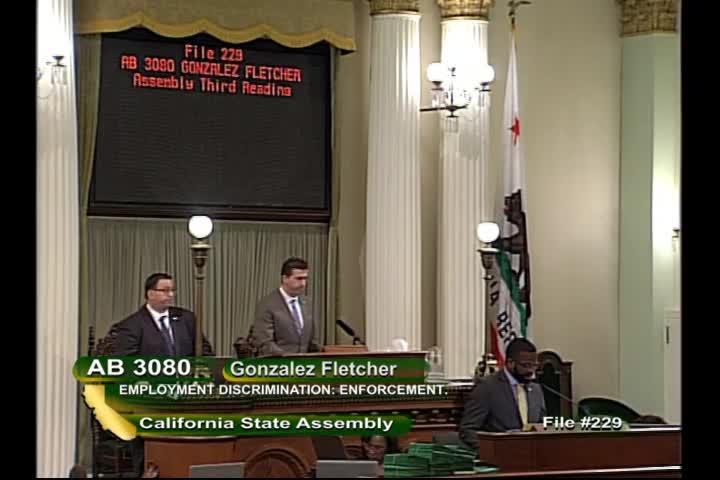 57SEC
Assembly Floor
 10MIN
Assembly Standing Committee on Local Government
Bill Author

Bill Co-Author(s):