AB 3144: Professional Fiduciaries Bureau.
- Session Year: 2017-2018
- House: Assembly
- Latest Version Date: 2018-09-22
Existing law, until January 1, 2019, establishes the Professional Fiduciaries Bureau within the Department of Consumer Affairs, and requires the bureau to license and regulate professional fiduciaries. Existing law prescribes specified qualifications, including education and work experience, for licensure as a professional fiduciary. Existing law requires the licensee to initially, and annually thereafter, file with the bureau a statement under penalty of perjury as to whether, among other things, he or she has been removed for cause as a conservator, guardian, trustee, or personal representative. Existing law requires the bureau to maintain specified information in the licensees file, including whether the licensee has ever been removed for cause or resigned as a conservator, guardian, trustee, or personal representative and requires the bureau to make this information available to a court for any purpose. Existing law requires the bureau to investigate the actions of a professional fiduciary upon receipt of a complaint from any person.
This bill would extend the operation of the bureau to January 1, 2023. The bill would expand the work experience requirements to qualify for licensure as a professional fiduciary and would require a licensee to additionally include in his or her statement, filed under penalty of perjury, whether he or she has been removed for cause as an agent under a durable power of attorney for health care or as an agent under a durable power of attorney for finances. By expanding the scope of the crime of perjury, this bill would impose a state-mandated local program.
This bill would also require the bureau to maintain in the licensees file, among other things, the licensees current principals under a durable power of attorney for healthcare or finances and whether the licensee has ever been removed for cause or resigned, as provided, as an agent under a durable power of attorney for health care or as an agent under a durable power of attorney for finances. The bill would prohibit a licensee, as specified, from billing a client, or imposing a fee on the estate or trust of a client, for responding to a complaint filed with the bureau against the licensee.
The California Constitution requires the state to reimburse local agencies and school districts for certain costs mandated by the state. Statutory provisions establish procedures for making that reimbursement.
This bill would provide that no reimbursement is required by this act for a specified reason.
Existing law, until January 1, 2019, establishes the Professional Fiduciaries Bureau within the Department of Consumer Affairs, and requires the bureau to license and regulate professional fiduciaries. Existing law prescribes specified qualifications, including education and work experience, for licensure as a professional fiduciary. Existing law requires the licensee to initially, and annually thereafter, file with the bureau a statement under penalty of perjury as to whether, among other things, he or she has been removed for cause as a conservator, guardian, trustee, or personal representative. Existing law requires the bureau to maintain specified information in the licensees file, including whether the licensee has ever been removed for cause or resigned as a conservator, guardian, trustee, or personal representative and requires the bureau to make this information available to a court for any purpose. Existing law requires the bureau to investigate the actions of a professional fiduciary upon receipt of a complaint from any person.
This bill would extend the operation of the bureau to January 1, 2023. The bill would expand the work experience requirements to qualify for licensure as a professional fiduciary and would require a licensee to additionally include in his or her statement, filed under penalty of perjury, whether he or she has been removed for cause as an agent under a durable power of attorney for health care or as an agent under a durable power of attorney for finances. By expanding the scope of the crime of perjury, this bill would impose a state-mandated local program.
The bill would also require the bureau to maintain in the licensees file file, among other things, the licensees current principals under a durable power of attorney for healthcare or finances and whether the licensee has ever been removed for cause or resigned, as provided, as an agent under a durable power of attorney for health care or as an agent under a durable power of attorney for finances. The bill would prohibit a licensee, as specified, from billing a client, or imposing a fee on the estate or trust of a client, for responding to a complaint filed with the bureau against the licensee.
The California Constitution requires the state to reimburse local agencies and school districts for certain costs mandated by the state. Statutory provisions establish procedures for making that reimbursement.
This bill would provide that no reimbursement is required by this act for a specified reason.
Existing law, until January 1, 2019, establishes the Professional Fiduciaries Bureau within the Department of Consumer Affairs, and requires the bureau to license and regulate professional fiduciaries. Existing law prescribes specified qualifications, including education and work experience, for licensure as a professional fiduciary. Existing law requires the licensee to initially, and annually thereafter, file with the bureau a statement under penalty of perjury as to whether, among other things, he or she has been removed for cause as a conservator, guardian, trustee, or personal representative. Existing law requires the bureau to maintain specified information in the licensees file, including whether the licensee has ever been removed for cause or resigned as a conservator, guardian, trustee, or personal representative and requires the bureau to make this information available to a court for any purpose. Existing law requires the bureau to investigate the actions of a professional fiduciary upon receipt of a complaint from any person.
This bill would extend the operation of the bureau to January 1, 2023. The bill would expand the work experience requirements to qualify for licensure as a professional fiduciary and would require a licensee to include in his or her statement, filed under penalty of perjury, whether he or she has been removed for cause as an agent under a durable power of attorney for health care or as an agent under a durable power of attorney for finances. By expanding the scope of the crime of perjury, this bill would impose a state-mandated local program.
The bill would also require the bureau to maintain in the licensees file the licensees current principals under a durable power of attorney for healthcare or finances and whether the licensee has ever been removed for cause or resigned, as provided, as an agent under a durable power of attorney for health care or as an agent under a durable power of attorney for finances. The bill would prohibit a licensee, as specified, from billing a client, or imposing a fee on the estate or trust of a client, for responding to a complaint filed with the bureau against the licensee.
The California Constitution requires the state to reimburse local agencies and school districts for certain costs mandated by the state. Statutory provisions establish procedures for making that reimbursement.
This bill would provide that no reimbursement is required by this act for a specified reason.
Existing law, until January 1, 2019, establishes the Professional Fiduciaries Bureau within the Department of Consumer Affairs, and requires the bureau to license and regulate professional fiduciaries.
This bill would extend the operation of the bureau to January 1, 2023.
As used in this chapter, the following terms have the following meanings:
(a)Act means this chapter.
(b)Bureau means the Professional Fiduciaries Bureau within the Department of Consumer Affairs, established pursuant to Section 6510.
(c)Client means an individual who is served by a professional fiduciary.
(d)Department means the Department of Consumer Affairs.
(e)Licensee means a person who is licensed under this chapter as a professional fiduciary.
(f)(1)Professional fiduciary means either of the following:
(A)A person who acts as a guardian or conservator of the person, the estate, or the person and estate, for two or more individuals at the same time who are not related to the professional fiduciary or to each other.
(B)A personal representative of a decedents estate, as defined in Section 58 of the Probate Code, for two or more individuals at the same time who are not related to the professional fiduciary or to each other.
(2)Professional fiduciary also means a person who acts as a trustee, agent under a durable power of attorney for health care, or agent under a durable power of attorney for finances, for more than three individuals, at the same time.
In counting individuals under this paragraph to determine whether a person is a professional fiduciary:
(A)Individuals who are related to the fiduciary shall not be counted.
(B)All individuals who are related to each other shall be counted as one individual.
(C)All trustors who are related to each other shall be counted as one individual, and neither the number of trusts nor the number of beneficiaries of those trusts shall be counted.
(3)For purposes of this subdivision, related means related by blood, adoption, marriage, or registered domestic partnership.
(4)Professional fiduciary does not include any of the following:
(A)A trust company, as defined in Section 83 of the Probate Code.
(B)An FDIC-insured institution, or its holding companies, subsidiaries, or affiliates. For the purposes of this subparagraph, affiliate means any entity that shares an ownership interest with, or that is under the common control of, the FDIC-insured institution.
(C)Any public agency, including the public guardian, public conservator, or other agency of the State of California or of a county of California or any regional center for persons with developmental disabilities as defined in Section 4620 of the Welfare and Institutions Code.
(D)Any nonprofit corporation or charitable trust that is described in Section 501(c)(3) of the Internal Revenue Code and that satisfies all of the following requirements:
(i)Is an organization described in Section 509(a)(1), Section 509(a)(2), or Section 509(a)(3) of the Internal Revenue Code.
(ii)Has been in existence for at least five years.
(iii)Has total institutional funds as described in subdivision (e) of Section 18502 of the Probate Code according to its most recent audited financial statement with a value of at least two million dollars ($2,000,000) net of encumbrances.
(iv)Is acting as a trustee, incidental to the purposes for which it was organized, of a trust that meets at least one of the following conditions:
(I)It is a trust from which annual distributions are limited to income, a sum certain, or a fixed percentage of the net fair market value of the trust assets as described in Section 664(d) of the Internal Revenue Code governing charitable remainder trusts.
(II)It is a trust from which annual distributions are limited to a guaranteed annuity or a fixed percentage of the fair market value of the property as described in Section 2055(e)(2)(B) or Section 2522(c)(2)(B) of the Internal Revenue Code.
(III)It is a trust from which annual distributions are limited to income, including a pooled income fund from which annual distributions are limited to income as described in Section 642(c)(5) of the Internal Revenue Code governing pooled income funds.
(IV)It is a trust as to which the value of the charitable interest was presently ascertainable upon creation of the trust and deductible for federal gift, estate, or income tax purposes under the Internal Revenue Code as in effect prior to enactment of the federal Tax Reform Act of 1969 (Public Law 91-172).
(E)A person employed by or acting as an agent on behalf of an entity or agency described in subparagraph (A), (B), (C), or (D) who is acting within the course and scope of that employment or agency, and a public officer of an agency described in subparagraph (C) acting in the course and scope of official duties.
(F)Any person whose sole activity as a professional fiduciary is as a broker-dealer, broker-dealer agent, investment adviser, or investment adviser representative registered and regulated under the Corporate Securities Law of 1968 (Division 1 (commencing with Section 25000) of Title 4 of the Corporations Code), the Investment Advisers Act of 1940 (15 U.S.C. Sec. 80b-1 et seq.), or the Securities Exchange Act of 1934 (15 U.S.C. Sec. 78a et seq.), or involves serving as a trustee to a company regulated by the Securities and Exchange Commission under the Investment Company Act of 1940 (15 U.S.C. Sec. 80a-1 et seq.).
(g)Committee means the Professional Fiduciaries Advisory Committee, as established pursuant to Section 6511.
SEC. 2.Section 6510 of the Business and Professions Code is amended to read:6510.(a)There is within the jurisdiction of the department the Professional Fiduciaries Bureau. The bureau is under the supervision and control of the director. The duty of enforcing and administering this chapter is vested in the chief of the bureau, who is responsible to the director. Every power granted or duty imposed upon the director under this chapter may be exercised or performed in the name of the director by a deputy director or by the chief, subject to conditions and limitations as the director may prescribe.
(b)The Governor shall appoint, subject to confirmation by the Senate, the chief of the bureau, at a salary to be fixed and determined by the director with the approval of the Director of Finance. The chief shall serve under the direction and supervision of the director and at the pleasure of the Governor.
(c)(1)This section shall remain in effect only until January 1, 2023, and as of that date is repealed.
(2)Notwithstanding any other provision of law, the repeal of this section renders the bureau subject to review by the appropriate policy committees of the Legislature.
(3)Notwithstanding any other law, upon the repeal of this section, the responsibilities and jurisdiction of the bureau shall be transferred to the Professional Fiduciaries Advisory Committee, as provided by Section 6511.
SEC. 3.Section 6533 of the Business and Professions Code is amended to read:6533.In order to meet the qualifications for licensure as a professional fiduciary a person shall meet all of the following requirements:
(a)Be at least 21 years of age.
(b)Have not committed any acts that are grounds for denial of a license under Section 480 or 6536.
(c)Submit fingerprint images as specified in Section 6533.5 in order to obtain criminal offender record information.
(d)Have completed the required prelicensing education described in Section 6538.
(e)Have passed the licensing examination administered by the bureau pursuant to Section 6539.
(f)Have at least one of the following:
(1)A baccalaureate degree of arts or sciences from a college or university accredited by a nationally recognized accrediting body of colleges and universities or a higher level of education.
(2)An associate of arts or sciences degree from a college or university accredited by a nationally recognized accrediting body of colleges and universities, and at least three years of experience with either of the following substantive fiduciary responsibilities:
(A)Serving as a conservator of a person, estate, or person and estate, a guardian of an estate or person and estate, a trustee, an agent under a durable power of attorney for health care, or an agent under a durable power of attorney for finances.
(B)Working for a professional fiduciary, a public agency, or a financial institution acting as a conservator of a person, estate, or person and estate, a guardian of an estate or person and estate, a trustee, an agent under a durable power of attorney for health care, or an agent under a durable power of attorney for finances.
(3) At least five years of experience with either of the following substantive fiduciary responsibilities:
(A)Serving as a conservator of a person, estate, or person and estate, a guardian of an estate or person and estate, a trustee, an agent under a durable power of attorney for health care, or an agent under a durable power of attorney for finances.
(B)Working for a professional fiduciary, a public agency, or a financial institution acting as a conservator of a person, estate, or person and estate, a guardian of an estate or person and estate, a trustee, an agent under a durable power of attorney for health care, or an agent under a durable power of attorney for finances.
(g)Agree to adhere to the Professional Fiduciaries Code of Ethics and to all statutes and regulations.
(h)Consent to the bureau conducting a credit check on the applicant.
(i)File a completed application for licensure with the bureau on a form provided by the bureau and signed by the applicant under penalty of perjury.
(j)Submit with the license application a nonrefundable application fee, as specified in this chapter.
SEC. 4.Section 6534 of the Business and Professions Code is amended to read:6534.(a)The bureau shall maintain the following information in each licensees file, shall make this information available to a court for any purpose, including the determination of the appropriateness of appointing or continuing the appointment of, or removing, the licensee as a conservator, guardian, trustee, personal representative, agent under a durable power of attorney for health care, or agent under a durable power of attorney for finances, and shall otherwise keep this information confidential, except as provided in subdivisions (b) and (c) of this section:
(1)The names of the licensees current conservatees, wards, principals under a durable power of attorney for health care, or principals under a durable power of attorney for finances, and the names of the trusts or estates currently administered by the licensee.
(2)The aggregate dollar value of all assets currently under the licensees supervision as a professional fiduciary.
(3)The licensees current addresses and telephone numbers for his or her place of business and place of residence.
(4)Whether the licensee has ever been removed for cause as a conservator, guardian, trustee, personal representative, agent under a durable power of attorney for health care, or agent under a durable power of attorney for finances, or has ever resigned as a conservator, guardian, trustee, personal representative, agent under a durable power of attorney for health care, or agent under a durable power of attorney for finances, in a specific case, the circumstances causing that removal or resignation, and the case names, court locations, and case numbers associated with the removal or resignation.
(5)The case names, court locations, and case numbers of all conservatorship, guardianship, or trust or other estate administration cases that are closed for which the licensee served as the conservator, guardian, trustee, or personal representative.
(6)Information regarding any discipline imposed upon the licensee by the bureau.
(7)Whether the licensee has filed for bankruptcy or held a controlling financial interest in a business that filed for bankruptcy in the last 10 years.
(b)The bureau shall make the information in paragraphs (2), (4), (6), and (7) of subdivision (a) available to the public.
(c)The bureau shall also publish information regarding licensees on the Internet as specified in Section 27. The information shall include, but shall not be limited to, information regarding license status and the information specified under subdivision (b).
SEC. 5.Section 6561 of the Business and Professions Code is amended to read:6561.(a)A licensee shall initially, and annually thereafter, file with the bureau a statement under penalty of perjury containing the following:
(1)Her or his business address, telephone number, and facsimile number.
(2)Whether or not he or she has been removed for cause as a conservator, guardian, trustee, personal representative, agent under a durable power of attorney for health care, or agent under a durable power of attorney for finances. The licensee may file an additional statement of the issues and facts pertaining to the case.
(3)The case names, court locations, and case numbers for all matters where the licensee has been appointed by the court.
(4)Whether he or she has been found by a court to have breached a fiduciary duty.
(5)Whether he or she has resigned or settled a matter in which a complaint has been filed, along with the case number and a statement of the issues and facts pertaining to the allegations.
(6)Any licenses or professional certificates held by the licensee.
(7)Any ownership or beneficial interests in any businesses or other enterprises held by the licensee or by a family member that receives or has received payments from a client of the licensee.
(8)Whether the licensee has filed for bankruptcy or held a controlling financial interest in a business that filed for bankruptcy in the last ten years.
(9)The name of any persons or entities that have an interest in the licensees professional fiduciary business.
(10)Whether the licensee has been convicted of a crime.
(b)The statement by the licensee required by this section may be filed electronically with the bureau, in a form approved by the bureau. However, any additional statement filed under paragraph (2) of subdivision (a) shall be filed in writing.
SEC. 6.Section 6581 is added to the Business and Professions Code, to read:6581.A licensee, or an agent working on behalf of a licensee, including an attorney, shall not bill a client or impose a fee on the estate or trust of a client for responding to a complaint filed with the bureau against the licensee.
SEC. 7.No reimbursement is required by this act pursuant to Section 6 of Article XIIIB of the California Constitution because the only costs that may be incurred by a local agency or school district will be incurred because this act creates a new crime or infraction, eliminates a crime or infraction, or changes the penalty for a crime or infraction, within the meaning of Section 17556 of the Government Code, or changes the definition of a crime within the meaning of Section 6 of Article XIIIB of the California Constitution.
As used in this chapter, the following terms have the following meanings:
(a)Act means this chapter.
(b)Bureau means the Professional Fiduciaries Bureau within the Department of Consumer Affairs, established pursuant to Section 6510.
(c)Client means an individual who is served by a professional fiduciary.
(d)Department means the Department of Consumer Affairs.
(e)Licensee means a person who is licensed under this chapter as a professional fiduciary.
(f)(1)Professional fiduciary means either of the following:
(A)A person who acts as a guardian or conservator of the person, the estate, or the person and estate, for two or more individuals at the same time who are not related to the professional fiduciary or to each other.
(B)A personal representative of a decedents estate, as defined in Section 58 of the Probate Code, for two or more individuals at the same time who are not related to the professional fiduciary or to each other.
(2)Professional fiduciary also means a person who acts as a trustee, agent under a durable power of attorney for health care, or agent under a durable power of attorney for finances, for more than three individuals, at the same time.
In counting individuals under this paragraph to determine whether a person is a professional fiduciary:
(A)Individuals who are related to the fiduciary shall not be counted.
(B)All individuals who are related to each other shall be counted as one individual.
(C)All trustors who are related to each other shall be counted as one individual, and neither the number of trusts nor the number of beneficiaries of those trusts shall be counted.
(3)For purposes of this subdivision, related means related by blood, adoption, marriage, or registered domestic partnership.
(4)Professional fiduciary does not include any of the following:
(A)A trust company, as defined in Section 83 of the Probate Code.
(B)An FDIC-insured institution, or its holding companies, subsidiaries, or affiliates. For the purposes of this subparagraph, affiliate means any entity that shares an ownership interest with, or that is under the common control of, the FDIC-insured institution.
(C)Any public agency, including the public guardian, public conservator, or other agency of the State of California or of a county of California or any regional center for persons with developmental disabilities as defined in Section 4620 of the Welfare and Institutions Code.
(D)Any nonprofit corporation or charitable trust that is described in Section 501(c)(3) of the Internal Revenue Code and that satisfies all of the following requirements:
(i)Is an organization described in Section 509(a)(1), Section 509(a)(2), or Section 509(a)(3) of the Internal Revenue Code.
(ii)Has been in existence for at least five years.
(iii)Has total institutional funds as described in subdivision (e) of Section 18502 of the Probate Code according to its most recent audited financial statement with a value of at least two million dollars ($2,000,000) net of encumbrances.
(iv)Is acting as a trustee, incidental to the purposes for which it was organized, of a trust that meets at least one of the following conditions:
(I)It is a trust from which annual distributions are limited to income, a sum certain, or a fixed percentage of the net fair market value of the trust assets as described in Section 664(d) of the Internal Revenue Code governing charitable remainder trusts.
(II)It is a trust from which annual distributions are limited to a guaranteed annuity or a fixed percentage of the fair market value of the property as described in Section 2055(e)(2)(B) or Section 2522(c)(2)(B) of the Internal Revenue Code.
(III)It is a trust from which annual distributions are limited to income, including a pooled income fund from which annual distributions are limited to income as described in Section 642(c)(5) of the Internal Revenue Code governing pooled income funds.
(IV)It is a trust as to which the value of the charitable interest was presently ascertainable upon creation of the trust and deductible for federal gift, estate, or income tax purposes under the Internal Revenue Code as in effect prior to enactment of the federal Tax Reform Act of 1969 (Public Law 91-172).
(E)A person employed by or acting as an agent on behalf of an entity or agency described in subparagraph (A), (B), (C), or (D) who is acting within the course and scope of that employment or agency, and a public officer of an agency described in subparagraph (C) acting in the course and scope of official duties.
(F)Any person whose sole activity as a professional fiduciary is as a broker-dealer, broker-dealer agent, investment adviser, or investment adviser representative registered and regulated under the Corporate Securities Law of 1968 (Division 1 (commencing with Section 25000) of Title 4 of the Corporations Code), the Investment Advisers Act of 1940 (15 U.S.C. Sec. 80b-1 et seq.), or the Securities Exchange Act of 1934 (15 U.S.C. Sec. 78a et seq.), or involves serving as a trustee to a company regulated by the Securities and Exchange Commission under the Investment Company Act of 1940 (15 U.S.C. Sec. 80a-1 et seq.).
(g)Committee means the Professional Fiduciaries Advisory Committee, as established pursuant to Section 6511.
SEC. 2.Section 6510 of the Business and Professions Code is amended to read:6510.(a)There is within the jurisdiction of the department the Professional Fiduciaries Bureau. The bureau is under the supervision and control of the director. The duty of enforcing and administering this chapter is vested in the chief of the bureau, who is responsible to the director. Every power granted or duty imposed upon the director under this chapter may be exercised or performed in the name of the director by a deputy director or by the chief, subject to conditions and limitations as the director may prescribe.
(b)The Governor shall appoint, subject to confirmation by the Senate, the chief of the bureau, at a salary to be fixed and determined by the director with the approval of the Director of Finance. The chief shall serve under the direction and supervision of the director and at the pleasure of the Governor.
(c)(1)This section shall remain in effect only until January 1, 2023, and as of that date is repealed.
(2)Notwithstanding any other provision of law, the repeal of this section renders the bureau subject to review by the appropriate policy committees of the Legislature.
(3)Notwithstanding any other law, upon the repeal of this section, the responsibilities and jurisdiction of the bureau shall be transferred to the Professional Fiduciaries Advisory Committee, as provided by Section 6511.
SEC. 3.Section 6533 of the Business and Professions Code is amended to read:6533.In order to meet the qualifications for licensure as a professional fiduciary a person shall meet all of the following requirements:
(a)Be at least 21 years of age.
(b)Have not committed any acts that are grounds for denial of a license under Section 480 or 6536.
(c)Submit fingerprint images as specified in Section 6533.5 in order to obtain criminal offender record information.
(d)Have completed the required prelicensing education described in Section 6538.
(e)Have passed the licensing examination administered by the bureau pursuant to Section 6539.
(f)Have at least one of the following:
(1)A baccalaureate degree of arts or sciences from a college or university accredited by a nationally recognized accrediting body of colleges and universities or a higher level of education.
(2)An associate of arts or sciences degree from a college or university accredited by a nationally recognized accrediting body of colleges and universities, and at least three years of experience with either of the following substantive fiduciary responsibilities:
(A)Serving as a conservator of a person, estate, or person and estate, a guardian of an estate or person and estate, a trustee, an agent under a durable power of attorney for health care, or an agent under a durable power of attorney for finances.
(B)Working for a professional fiduciary, a public agency, or a financial institution acting as a conservator of a person, estate, or person and estate, a guardian of an estate or person and estate, a trustee, an agent under a durable power of attorney for health care, or an agent under a durable power of attorney for finances.
(3) At least five years of experience with either of the following substantive fiduciary responsibilities:
(A)Serving as a conservator of a person, estate, or person and estate, a guardian of an estate or person and estate, a trustee, an agent under a durable power of attorney for health care, or an agent under a durable power of attorney for finances.
(B)Working for a professional fiduciary, a public agency, or a financial institution acting as a conservator of a person, estate, or person and estate, a guardian of an estate or person and estate, a trustee, an agent under a durable power of attorney for health care, or an agent under a durable power of attorney for finances.
(g)Agree to adhere to the Professional Fiduciaries Code of Ethics and to all statutes and regulations.
(h)Consent to the bureau conducting a credit check on the applicant.
(i)File a completed application for licensure with the bureau on a form provided by the bureau and signed by the applicant under penalty of perjury.
(j)Submit with the license application a nonrefundable application fee, as specified in this chapter.
SEC. 4.Section 6534 of the Business and Professions Code is amended to read:6534.(a)The bureau shall maintain the following information in each licensees file, shall make this information available to a court for any purpose, including the determination of the appropriateness of appointing or continuing the appointment of, or removing, the licensee as a conservator, guardian, trustee, personal representative, agent under a durable power of attorney for health care, or agent under a durable power of attorney for finances, and shall otherwise keep this information confidential, except as provided in subdivisions (b) and (c) of this section:
(1)The names of the licensees current conservatees, wards, principals under a durable power of attorney for health care, or principals under a durable power of attorney for finances, and the names of the trusts or estates currently administered by the licensee.
(2)The aggregate dollar value of all assets currently under the licensees supervision as a professional fiduciary.
(3)The licensees current addresses and telephone numbers for his or her place of business and place of residence.
(4)Whether the licensee has ever been removed for cause as a conservator, guardian, trustee, personal representative, agent under a durable power of attorney for health care, or agent under a durable power of attorney for finances, or has ever resigned as a conservator, guardian, trustee, personal representative, agent under a durable power of attorney for health care, or agent under a durable power of attorney for finances, in a specific case, the circumstances causing that removal or resignation, and the case names, court locations, and case numbers associated with the removal or resignation.
(5)The case names, court locations, and case numbers of all conservatorship, guardianship, or trust or other estate administration cases that are closed for which the licensee served as the conservator, guardian, trustee, or personal representative.
(6)Information regarding any discipline imposed upon the licensee by the bureau.
(7)Whether the licensee has filed for bankruptcy or held a controlling financial interest in a business that filed for bankruptcy in the last 10 years.
(b)The bureau shall make the information in paragraphs (2), (4), (6), and (7) of subdivision (a) available to the public.
(c)The bureau shall also publish information regarding licensees on the Internet as specified in Section 27. The information shall include, but shall not be limited to, information regarding license status and the information specified under subdivision (b).
SEC. 5.Section 6561 of the Business and Professions Code is amended to read:6561.(a)A licensee shall initially, and annually thereafter, file with the bureau a statement under penalty of perjury containing the following:
(1)Her or his business address, telephone number, and facsimile number.
(2)Whether or not he or she has been removed for cause as a conservator, guardian, trustee, personal representative, agent under a durable power of attorney for health care, or agent under a durable power of attorney for finances. The licensee may file an additional statement of the issues and facts pertaining to the case.
(3)The case names, court locations, and case numbers for all matters where the licensee has been appointed by the court.
(4)Whether he or she has been found by a court to have breached a fiduciary duty.
(5)Whether he or she has resigned or settled a matter in which a complaint has been filed, along with the case number and a statement of the issues and facts pertaining to the allegations.
(6)Any licenses or professional certificates held by the licensee.
(7)Any ownership or beneficial interests in any businesses or other enterprises held by the licensee or by a family member that receives or has received payments from a client of the licensee.
(8)Whether the licensee has filed for bankruptcy or held a controlling financial interest in a business that filed for bankruptcy in the last ten years.
(9)The name of any persons or entities that have an interest in the licensees professional fiduciary business.
(10)Whether the licensee has been convicted of a crime.
(b)The statement by the licensee required by this section may be filed electronically with the bureau, in a form approved by the bureau. However, any additional statement filed under paragraph (2) of subdivision (a) shall be filed in writing.
SEC. 6.Section 6581 is added to the Business and Professions Code, to read:6581.A licensee licensee, or an agent working on behalf of a licensee, including an attorney, shall not bill a client or impose a fee on the estate or trust of a client for responding to a complaint filed with the bureau against the licensee.
SEC. 7.No reimbursement is required by this act pursuant to Section 6 of Article XIIIB of the California Constitution because the only costs that may be incurred by a local agency or school district will be incurred because this act creates a new crime or infraction, eliminates a crime or infraction, or changes the penalty for a crime or infraction, within the meaning of Section 17556 of the Government Code, or changes the definition of a crime within the meaning of Section 6 of Article XIIIB of the California Constitution.
As used in this chapter, the following terms have the following meanings:
(a)Act means this chapter.
(b)Bureau means the Professional Fiduciaries Bureau within the Department of Consumer Affairs, established pursuant to Section 6510.
(c)Client means an individual who is served by a professional fiduciary.
(d)Department means the Department of Consumer Affairs.
(e)Licensee means a person who is licensed under this chapter as a professional fiduciary.
(f)(1)Professional fiduciary means a either of the following:
(A)A person who acts as a guardian or conservator of the person, the estate, or the person and estate, or guardian of the estate, or person and estate, for two or more individuals at the same time who are not related to the professional fiduciary or to each other.
(B)A personal representative of a decedents estate, as defined in Section 58 of the Probate Code, for two or more individuals at the same time who are not related to the professional fiduciary or to each other.
(2)Professional fiduciary also means a person who acts as a trustee, agent under a durable power of attorney for health care, or agent under a durable power of attorney for finances, for more than three individuals, at the same time.
In counting individuals under this paragraph to determine whether a person is a professional fiduciary:
(A)Individuals who are related to the fiduciary shall not be counted.
(B)All individuals who are related to each other shall be counted as one individual.
(C)All trustors who are related to each other shall be counted as one individual, and neither the number of trusts nor the number of beneficiaries of those trusts shall be counted.
(3)For purposes of this subdivision, related means related by blood, adoption, marriage, or registered domestic partnership.
(4)Professional fiduciary does not include any of the following:
(A)A trust company, as defined in Section 83 of the Probate Code.
(B)An FDIC-insured institution, or its holding companies, subsidiaries, or affiliates. For the purposes of this subparagraph, affiliate means any entity that shares an ownership interest with, or that is under the common control of, the FDIC-insured institution.
(C)Any public agency, including the public guardian, public conservator, or other agency of the State of California or of a county of California or any regional center for persons with developmental disabilities as defined in Section 4620 of the Welfare and Institutions Code.
(D)Any nonprofit corporation or charitable trust that is described in Section 501(c)(3) of the Internal Revenue Code and that satisfies all of the following requirements:
(i)Is an organization described in Section 509(a)(1), Section 509(a)(2), or Section 509(a)(3) of the Internal Revenue Code.
(ii)Has been in existence for at least five years.
(iii)Has total institutional funds as described in subdivision (e) of Section 18502 of the Probate Code according to its most recent audited financial statement with a value of at least two million dollars ($2,000,000) net of encumbrances.
(iv)Is acting as a trustee, incidental to the purposes for which it was organized, of a trust that meets at least one of the following conditions:
(I)It is a trust from which annual distributions are limited to income, a sum certain, or a fixed percentage of the net fair market value of the trust assets as described in Section 664(d) of the Internal Revenue Code governing charitable remainder trusts.
(II)It is a trust from which annual distributions are limited to a guaranteed annuity or a fixed percentage of the fair market value of the property as described in Section 2055(e)(2)(B) or Section 2522(c)(2)(B) of the Internal Revenue Code.
(III)It is a trust from which annual distributions are limited to income, including a pooled income fund from which annual distributions are limited to income as described in Section 642(c)(5) of the Internal Revenue Code governing pooled income funds.
(IV)It is a trust as to which the value of the charitable interest was presently ascertainable upon creation of the trust and deductible for federal gift, estate, or income tax purposes under the Internal Revenue Code as in effect prior to enactment of the federal Tax Reform Act of 1969 (Public Law 91-172).
(E)A person employed by or acting as an agent on behalf of an entity or agency described in subparagraph (A), (B), (C), or (D) who is acting within the course and scope of that employment or agency, and a public officer of an agency described in subparagraph (C) acting in the course and scope of official duties.
(F)Any person whose sole activity as a professional fiduciary is as a broker-dealer, broker-dealer agent, investment adviser, or investment adviser representative registered and regulated under the Corporate Securities Law of 1968 (Division 1 (commencing with Section 25000) of Title 4 of the Corporations Code), the Investment Advisers Act of 1940 (15 U.S.C. Sec. 80b-1 et seq.), or the Securities Exchange Act of 1934 (15 U.S.C. Sec. 78a et seq.), or involves serving as a trustee to a company regulated by the Securities and Exchange Commission under the Investment Company Act of 1940 (15 U.S.C. Sec. 80a-1 et seq.).
(g)Committee means the Professional Fiduciaries Advisory Committee, as established pursuant to Section 6511.
SECTION 1.SEC. 2.Section 6510 of the Business and Professions Code is amended to read:6510.(a)There is within the jurisdiction of the department the Professional Fiduciaries Bureau. The bureau is under the supervision and control of the director. The duty of enforcing and administering this chapter is vested in the chief of the bureau, who is responsible to the director. Every power granted or duty imposed upon the director under this chapter may be exercised or performed in the name of the director by a deputy director or by the chief, subject to conditions and limitations as the director may prescribe.
(b)The Governor shall appoint, subject to confirmation by the Senate, the chief of the bureau, at a salary to be fixed and determined by the director with the approval of the Director of Finance. The chief shall serve under the direction and supervision of the director and at the pleasure of the Governor.
(c)(1)This section shall remain in effect only until January 1, 2023, and as of that date is repealed.
(2)Notwithstanding any other provision of law, the repeal of this section renders the bureau subject to review by the appropriate policy committees of the Legislature.
(3)Notwithstanding any other law, upon the repeal of this section, the responsibilities and jurisdiction of the bureau shall be transferred to the Professional Fiduciaries Advisory Committee, as provided by Section 6511.
SEC. 3.Section 6533 of the Business and Professions Code is amended to read:6533.In order to meet the qualifications for licensure as a professional fiduciary a person shall meet all of the following requirements:
(a)Be at least 21 years of age.
(b)Have not committed any acts that are grounds for denial of a license under Section 480 or 6536.
(c)Submit fingerprint images as specified in Section 6533.5 in order to obtain criminal offender record information.
(d)Have completed the required prelicensing education described in Section 6538.
(e)Have passed the licensing examination administered by the bureau pursuant to Section 6539.
(f)Have at least one of the following:
(1)A baccalaureate degree of arts or sciences from a college or university accredited by a nationally recognized accrediting body of colleges and universities or a higher level of education.
(2)An associate of arts or sciences degree from a college or university accredited by a nationally recognized accrediting body of colleges and universities, and at least three years of experience working as a professional fiduciary or working with substantive fiduciary responsibilities for a professional fiduciary, public agency, or financial institution acting as a conservator, guardian, trustee, personal representative, or agent under a power of attorney. with either of the following substantive fiduciary responsibilities:
(A)Serving as a conservator of a person, estate, or person and estate, a guardian of an estate or person and estate, a trustee, an agent under a durable power of attorney for health care, or an agent under a durable power of attorney for finances.
(B)Working for a professional fiduciary, a public agency, or a financial institution acting as a conservator of a person, estate, or person and estate, a guardian of an estate or person and estate, a trustee, an agent under a durable power of attorney for health care, or an agent under a durable power of attorney for finances.
(3)Experience of not less than five years, prior to July 1, 2012, working as a professional fiduciary or working with substantive fiduciary responsibilities for a professional fiduciary, public agency, or financial institution acting as a conservator, guardian, trustee, personal representative, or agent under a power of attorney. At least five years of experience with either of the following substantive fiduciary responsibilities:
(A)Serving as a conservator of a person, estate, or person and estate, a guardian of an estate or person and estate, a trustee, an agent under a durable power of attorney for health care, or an agent under a durable power of attorney for finances.
(B)Working for a professional fiduciary, a public agency, or a financial institution acting as a conservator of a person, estate, or person and estate, a guardian of an estate or person and estate, a trustee, an agent under a durable power of attorney for health care, or an agent under a durable power of attorney for finances.
(g)Agree to adhere to the Professional Fiduciaries Code of Ethics and to all statutes and regulations.
(h)Consent to the bureau conducting a credit check on the applicant.
(i)File a completed application for licensure with the bureau on a form provided by the bureau and signed by the applicant under penalty of perjury.
(j)Submit with the license application a nonrefundable application fee, as specified in this chapter.
SEC. 4.Section 6534 of the Business and Professions Code is amended to read:6534.(a)The bureau shall maintain the following information in each licensees file, shall make this information available to a court for any purpose, including the determination of the appropriateness of appointing or continuing the appointment of, or removing, the licensee as a conservator, guardian, trustee, or personal representative, agent under a durable power of attorney for health care, or agent under a durable power of attorney for finances, and shall otherwise keep this information confidential, except as provided in subdivisions (b) and (c) of this section:
(1)The names of the licensees current conservatees or wards conservatees, wards, principals under a durable power of attorney for health care, or principals under a durable power of attorney for finances, and the names of the trusts or estates currently administered by the licensee.
(2)The aggregate dollar value of all assets currently under the licensees supervision as a professional fiduciary.
(3)The licensees current addresses and telephone numbers for his or her place of business and place of residence.
(4)Whether the licensee has ever been removed for cause as a conservator, guardian, trustee, or personal representative representative, agent under a durable power of attorney for health care, or agent under a durable power of attorney for finances, or has ever resigned as a conservator, guardian, trustee, or personal representative representative, agent under a durable power of attorney for health care, or agent under a durable power of attorney for finances, in a specific case, the circumstances causing that removal or resignation, and the case names, court locations, and case numbers associated with the removal or resignation.
(5)The case names, court locations, and case numbers of all conservatorship, guardianship, or trust or other estate administration cases that are closed for which the licensee served as the conservator, guardian, trustee, or personal representative.
(6)Information regarding any discipline imposed upon the licensee by the bureau.
(7)Whether the licensee has filed for bankruptcy or held a controlling financial interest in a business that filed for bankruptcy in the last 10 years.
(b)The bureau shall make the information in paragraphs (2), (4), (6), and (7) of subdivision (a) available to the public.
(c)The bureau shall also publish information regarding licensees on the Internet as specified in Section 27. The information shall include, but shall not be limited to, information regarding license status and the information specified under subdivision (b).
SEC. 5.Section 6561 of the Business and Professions Code is amended to read:6561.(a)A licensee shall initially, and annually thereafter, file with the bureau a statement under penalty of perjury containing the following:
(1)Her or his business address, telephone number, and facsimile number.
(2)Whether or not he or she has been removed for cause as a conservator, guardian, trustee, or personal representative for cause. representative, agent under a durable power of attorney for health care, or agent under a durable power of attorney for finances. The licensee may file an additional statement of the issues and facts pertaining to the case.
(3)The case names, court locations, and case numbers for all matters where the licensee has been appointed by the court.
(4)Whether he or she has been found by a court to have breached a fiduciary duty.
(5)Whether he or she has resigned or settled a matter in which a complaint has been filed, along with the case number and a statement of the issues and facts pertaining to the allegations.
(6)Any licenses or professional certificates held by the licensee.
(7)Any ownership or beneficial interests in any businesses or other enterprises held by the licensee or by a family member that receives or has received payments from a client of the licensee.
(8)Whether the licensee has filed for bankruptcy or held a controlling financial interest in a business that filed for bankruptcy in the last ten years.
(9)The name of any persons or entities that have an interest in the licensees professional fiduciary business.
(10)Whether the licensee has been convicted of a crime.
(b)The statement by the licensee required by this section may be filed electronically with the bureau, in a form approved by the bureau. However, any additional statement filed under paragraph (2) of subdivision (a) shall be filed in writing.
SEC. 6.Section 6581 is added to the Business and Professions Code, to read:6581.A licensee or an agent working on behalf of a licensee, including an attorney, shall not bill a client or impose a fee on the estate or trust of a client for responding to a complaint filed with the bureau against the licensee.
SEC. 7.No reimbursement is required by this act pursuant to Section 6 of Article XIIIB of the California Constitution because the only costs that may be incurred by a local agency or school district will be incurred because this act creates a new crime or infraction, eliminates a crime or infraction, or changes the penalty for a crime or infraction, within the meaning of Section 17556 of the Government Code, or changes the definition of a crime within the meaning of Section 6 of Article XIIIB of the California Constitution.
(a)There is within the jurisdiction of the department the Professional Fiduciaries Bureau. The bureau is under the supervision and control of the director. The duty of enforcing and administering this chapter is vested in the chief of the bureau, who is responsible to the director. Every power granted or duty imposed upon the director under this chapter may be exercised or performed in the name of the director by a deputy director or by the chief, subject to conditions and limitations as the director may prescribe.
(b)The Governor shall appoint, subject to confirmation by the Senate, the chief of the bureau, at a salary to be fixed and determined by the director with the approval of the Director of Finance. The chief shall serve under the direction and supervision of the director and at the pleasure of the Governor.
(c)(1)This section shall remain in effect only until January 1, 2019, and as of that date is repealed, unless a later enacted statute, that is enacted before January 1, 2019, deletes or extends that date.(c)(1)This section shall remain in effect only until January 1, 2023, and as of that date is repealed.
(2)Notwithstanding any other provision of law, the repeal of this section renders the bureau subject to review by the appropriate policy committees of the Legislature.
(3)Notwithstanding any other law, upon the repeal of this section, the responsibilities and jurisdiction of the bureau shall be transferred to the Professional Fiduciaries Advisory Committee, as provided by Section 6511.
|
Date
|
Status
|
|---|---|
| Sep 22, 2018 | Chaptered by Secretary of State - Chapter 681, Statutes of 2018. |
| Sep 22, 2018 | Approved by the Governor. |
| Sep 11, 2018 | Enrolled and presented to the Governor at 4:30 p.m. |
| Aug 30, 2018 | Senate amendments concurred in. To Engrossing and Enrolling. |
| Aug 29, 2018 | From committee: That the Senate amendments be concurred in. (Ayes 15. Noes 0.) (August 29). |
| Aug 28, 2018 | Re-referred to Com. on B. & P. pursuant to Assembly Rule 77.2. |
| Aug 27, 2018 | In Assembly. Concurrence in Senate amendments pending. May be considered on or after August 29 pursuant to Assembly Rule 77. |
| Aug 27, 2018 | Read third time. Passed. Ordered to the Assembly. |
| Aug 21, 2018 | Read second time. Ordered to third reading. |
| Aug 20, 2018 | Read third time and amended. Ordered to second reading. |
| Aug 17, 2018 | From committee: Do pass. (Ayes 7. Noes 0.) (August 16). |
| Aug 6, 2018 | In committee: Referred to APPR. suspense file. |
| Jun 26, 2018 | From committee: Do pass and re-refer to Com. on APPR. (Ayes 9. Noes 0.) (June 25). Re-referred to Com. on APPR. |
| Jun 19, 2018 | From committee chair, with author's amendments: Amend, and re-refer to committee. Read second time, amended, and re-referred to Com. on B., P. & E.D. |
| Jun 13, 2018 | Referred to Com. on B., P. & E.D. |
| May 31, 2018 | In Senate. Read first time. To Com. on RLS. for assignment. |
| May 30, 2018 | Read third time. Passed. Ordered to the Senate. |
| May 25, 2018 | From committee: Do pass. (Ayes 16. Noes 0.) (May 25). |
| May 16, 2018 | In committee: Set, first hearing. Referred to APPR. suspense file. |
| Apr 24, 2018 | From committee: Do pass and re-refer to Com. on APPR. (Ayes 15. Noes 0.) (April 24). Re-referred to Com. on APPR. |
| Mar 12, 2018 | Referred to Com. on B. & P. |
| Feb 17, 2018 | From printer. May be heard in committee March 19. |
| Feb 16, 2018 | Read first time. To print. |
|
Date
|
Description
|
Location
|
Votes
|
|
|---|---|---|---|---|
| Aug 30, 2018 | AB 3144 LOW Concurrence in Senate Amendments | Assembly Floor |
Passed |
|
| Aug 29, 2018 | With recommendation: That Senate amendments be concurred in. | Assembly Standing Committee on Business and Professions |
Passed |
|
| Aug 27, 2018 | Assembly 3rd Reading AB3144 Low By Hill | Senate Floor |
Passed |
|
| Aug 16, 2018 | Do pass | Senate Standing Committee on Appropriations |
Passed |
|
| Aug 6, 2018 | Placed on suspense file | Senate Standing Committee on Appropriations |
Passed |
|
| Jun 25, 2018 | Do pass, but first be re-referred to the Committee on [Appropriations] | Senate Standing Committee on Business, Professions and Economic Development |
Passed |
|
| May 30, 2018 | AB 3144 B. & P. Assembly Third Reading By LOW | Assembly Floor |
Passed |
|
| May 25, 2018 | Do pass. | Assembly Standing Committee on Appropriations |
Passed |
|
| Apr 24, 2018 | Do pass and be re-referred to the Committee on [Appropriations] | Assembly Standing Committee on Business and Professions |
Passed |
This list shows positions taken on this bill by organizations on the date displayed, which is linked to the original source.
Positions by individuals are not included.
CONCURRENCE IN SENATE AMENDMENTS
CSA2 Bill Id:AB 3144
Author:(Low)
As Amended Ver:August 20, 2018
Majority vote
ASSEMBLY: | 78-0 | (May 30, 2018) | SENATE: | 39-0 | (August 27, 2018) |
COMMITTEE VOTE: | 15-0 | (August 29, 2018) | RECOMMENDATION: | concur |
(B. & P.)
Original Committee Reference: B. & P.
SUMMARY: Extends the sunset date of the Professional Fiduciaries Bureau (Bureau) until January 1, 2023; expands and revises the pathways to licensure for a professional fiduciary; prohibits a professional fiduciary from billing a client for time spent responding to the Bureau about the complaint, as specified; and revises licensee reporting requirements.
THE SENATE AMENDMENTS prohibit a licensee or agent working on behalf of a licensee, including an attorney, from billing a client or imposing a fee on the estate or trust of a client for responding to a complaint filed with the Bureau against the licensee.
Expands on licensure qualifications for an applicant with an associate's degree or five years of experience to include either of the following substantive fiduciary responsibilities: serving as a conservator of a person, estate or person and estate, or working for a professional fiduciary, public agency, or financial institution.
Revises the information a fiduciary is correctly required to report to the Bureau for various purposes, as specified.
Adds "a personal representative of a decedent's estate, as defined," to the definition of a professional fiduciary.
EXISTING LAW:
- Establishes the Bureau within the Department of Consumer Affairs (DCA), to license and regulate professional fiduciaries under the Professional Fiduciaries Act (Act). (Business and Professions Code Section (BPC) 6510)
- Defines "professional fiduciary" as a person who acts as a conservator of the person, the estate, or person and estate, or guardian of the estate, or person and estate, for two or more individuals at the same time who are not related to the professional fiduciary or to each other, as specified. (BPC 6501)
- Requires an applicant for licensure to be at least 21 years of age, and have not committed any acts that are grounds for denial, as specified; submit fingerprints; complete the prelicensing requirements, and pass the licensing examination; and, have a bachelor's degree, an associate of arts degree and three years of work experience either as a professional fiduciary or providing professional fiduciary duties, or have not less than five years of work experience, prior to July 1, 2012, as specified. (BPC 6533)
- Requires the Bureau to maintain specified information in each of its licensees' file and make it available to a court for specified purposes. (BPC 6534)
THIS BILL:
- Adds "a personal representative of a decedent's estate as defined," to the definition of a professional fiduciary."
- Expands the pathway to licensure for an applicant with an associate's degree or five years of experience to allow the completion of additional substantive fiduciary responsibilities including, serving as a conservator of a person, estate or person and estate: guardian of an estate or person and estate, a trustee, an agent under a durable power of attorney for health care, or agent under a durable power of attorney for finances.
- Revises the current information a fiduciary is required to report to the Bureau for various purposes, as specified.
- Prohibits a licensee or agent working on behalf of a licensee, including an attorney, from billing a client or impose a fee on the estate or trust of a client for responding to a complaint filed with the Bureau against the licensee.
- Extends the sunset date of the Bureau until January 1, 2023.
- Makes other technical and clarifying changes.
FISCAL EFFECT: According to the Senate Committee on Appropriations:
- Ongoing annual costs of 2.6 personnel years (PYs) and $544,000 (Professional Fiduciary Fund), based on figures in the Budget Act of 2018, until the bill's sunset date of January 1, 2023. Fund is self-supported with fee-revenue.
- Minor and absorbable costs related to update Bureau applications and forms, its Web site, and to promulgate regulations related to the bill, as the bill expands licensure requirements, as specified. The Bureau anticipates possible increased licensee population and revenues.
- Minor and absorbable costs related to increase enforcement associated with increased licensee population, which could be recovered through fees.
- Absorbable IT workload ($2,500 special fund) related with adding two class types (Decedent Estate and Personal Representative) and a violation code, into the existing system.
COMMENTS:
Purpose. This bill is sponsored by the Author. According to the Author, "this bill is one of four "sunset review bills" authored by the Assembly Business and Professions Committee. This bill extends the sunset date on the Bureau and prevents the responsibilities and jurisdiction of the Bureau from transferring to the Professional Fiduciaries Advisory Committee."
Background. Oversight Hearings and Sunset Review of Licensing Boards and Programs. Beginning in 2017, the Senate Business and Professions Committee and the Assembly Business and Professions Committee (Committees) began their comprehensive sunset review oversight of 13 regulatory entities and the DCA. The Committees conducted two oversight hearings in February and March. This bill and the accompanying sunset bills are intended to implement legislative changes as recommended by staff of the Committees and which are reflected in the Background Papers prepared by Committee staff for each agency and program reviewed this year.
The Bureau. The Bureau is responsible for the licensure and regulation of non-family member professional fiduciaries, including conservators, guardians, trustees, and agents under durable power of attorney, as defined by the Professional Fiduciaries Act (Act). The Act was established in 2006 by SB 1550 (Figueroa), Chapter 491, Statutes of 2006. The Bureau was last reviewed in 2014.
Professional Fiduciaries. Professional fiduciaries provide critical services to seniors, persons with disabilities, and children. They manage matters for clients including daily care, housing and medical needs, and also offer financial management services ranging from basic bill paying to estate and investment management. Professional fiduciaries are licensed under the Bureau. A person seeking licensure must have a four-year degree from an accredited university, an associate's degree with work as professional fiduciary, or a minimum of five years of experience working as professional fiduciary prior to July 1, 2012. In addition, an applicant must complete 30 hours of prelicensure education, pass and examination, and submit to a fingerprint background check through the Department of Justice (DOJ).
Professional Fiduciary Reporting Requirements. Existing law, BPC 6534 requires the Bureau to maintain and make certain information on each licensee available to a court for any purpose including the determination of the appropriateness of that licensee continuing or being removed as a conservator, guardian, trustee or personal representative. Additionally, BPC § 6561requires a licensee to report annually to the Bureau specified information including whether or not he or she has been removed as a conservator, guardian, trustee or personal representative amongst other information. In addition, these two sections of law specify what information is made public, kept in the licensee's file or what should be included in an annual report to the Bureau. The Bureau notes that these two sections are inconsistent in some areas and causes licensee's to report incorrect or unnecessary information. This bill will help clarify the information to be reported to the Bureau by a licensee.
Experience Requirements. Currently an applicant for licensure as a professional fiduciary may qualify for licensure through three pathways: 1) possessing a baccalaureate degree; 2) possessing an associate degree and three years of experience; or, 3) having at least five years of experience working as a professional fiduciary prior to July 1, 2012. Regardless of the pathway, applicants must also complete 30 hours of pre-licensure coursework, pass an examination, and meet other requirements to be considered for licensure. In the Bureau's 2017 Sunset Review report, it raised the issue related to barriers to employment or licensure and noted, "BPC 6533(f)(3) requires an applicant who does not hold an associate's degree or higher, to have at least five years of experience prior to July 1, 2012, to qualify for licensure. This requirement was established to grandfather in existing practitioners when the Bureau was originally formed. However, this requirement effectively prevents new individuals without a traditional associate or bachelor's degree from being licensed as a fiduciary. The Bureau believes that having experience working in the field is the most valuable training a fiduciary can receive, and that it may be beneficial to have this date removed so that persons can enter the profession, provided they complete five years of experience and meet other requirements." To address this issue, this bill will add an additional pathway for licensure as a professional fiduciary and revise the current pathway for licensure to expand the experience opportunities for those individuals who have an associate's degree with experience. The expanded pathway will allow five years of experience to be counted for licensure including those working for a professional fiduciary as well as those who have served as a conservator, guardian, trustee, or agent under a power of attorney.
Current Practices. Licensed professional fiduciaries often bill clients for time spent, or time spent by attorneys for responding to complaints against the licensee to the Bureau. It is not common practice amongst other licensees under the DCA who charge clients for responding to complaints or other inquiries from their regulatory authority (board, bureau or committee). This bill would amend current law to clarify that a professional fiduciary may not bill a client for the licensee's time spent responding to the Bureau regarding a consumer complaint made against them. Because the consumer of a fiduciary could potentially be financially harmed for making a complaint to the Bureau, without this clarification in law, it could impact an individual's decision to do so, as they could be financially penalized to do so.
Analysis Prepared by: Danielle Sires / B. & P. / (916) 319-3301 FN: 0005123
Date of Hearing: August 29, 2018
ASSEMBLY COMMITTEE ON BUSINESS AND PROFESSIONS
Evan Low, Chair
ABPCA Bill Id:AB 3144
Author:(Committee on Business and Professions) – As Amended Ver:August 20, 2018
SUBJECT: Professional Fiduciaries Bureau.
SUMMARY: Extends the sunset date of the Professional Fiduciaries Bureau (Bureau) until January 1, 2023; expands and revises the pathways to licensure for a professional fiduciary; prohibits a professional fiduciary from billing a client for time spent responding to the Bureau about the complaint, as specified; and revises licensee reporting requirements.
EXISTING LAW:
- Establishes the Bureau within the Department of Consumer Affairs (DCA), to licenses and regulate professional fiduciaries under the Professional Fiduciaries Act (Act). (Business and Professions Code (BPC) § 6510)
- Defines "professional fiduciary" as a person who acts as a conservator of the person, the estate, or person and estate, or guardian of the estate, or person and estate, for two or more individuals at the same time who are not related to the professional fiduciary or to each other, as specified. (BPC § 6501)
- Requires an applicant for licensure to be at least 21 years of age, and have not committed any acts that are grounds for denial, as specified; submit fingerprints; complete the prelicensing requirements, and pass the licensing examination; and, 4) have a bachelor’s degree, an associate of arts degree and three years of work experience either as a professional fiduciary or providing professional fiduciary duties, or have not less than five years of work experience, prior to July 1, 2012, as specified. (BPC § 6533)
- Requires the Bureau to maintain specified information in each of its licensees’ file and make it available to a court for specified purposes. (BPC § 6534)
THIS BILL:
- Adds “a personal representative of a decedent’s estate as defined,” to the definition of a professional fiduciary.”
- Expands the pathway to licensure for an applicant with an associate’s degree or five years of experience to allow the completion of additional substantive fiduciary responsibilities including, serving as a conservator of a person, estate or person and estate: guardian of an estate or person and estate, a trustee, an agent under a durable power of attorney for health care, or agent under a durable power of attorney for finances.
- Revises the current information a fiduciary is required to report to the Bureau for various purposes, as specified.
- Prohibits a licensee or agent working on behalf of a licensee, including an attorney, from billing a client or impose a fee on the estate or trust of a client for responding to a complaint filed with the Bureau against the licensee.
- Extends the sunset date of the Bureau until January 1, 2023.
- Makes other technical and clarifying changes.
FISCAL EFFECT: According to the Senate Committee on Appropriations:
- Ongoing annual costs of 2.6 Personnel Years (PYs) and $544,000 (Professional Fiduciary Fund), based on figures in the Budget Act of 2018, until the bill's sunset date of January 1, 2023. Fund is self-supported with fee-revenue.
- Minor and absorbable costs related to update Bureau applications and forms, its Web site, and to promulgate regulations related to the bill, as this bill expands licensure requirements, as specified. The Bureau anticipates possible increased licensee population and revenues.
- Minor and absorbable costs related to increase enforcement associated with increased licensee population, which could be recovered through fees.
- Absorbable information technology (IT) workload ($2,500 special fund) related with adding two class types (Decedent Estate and Personal Representative) and a violation code, into the existing system.
COMMENTS:
Purpose. This bill is sponsored by the Author. According to the Author, "this bill is one of four "sunset review bills" authored by the Assembly Business and Professions Committee. This bill extends the sunset date on the Bureau and prevents the responsibilities and jurisdiction of the Bureau from transferring to the Professional Fiduciaries Advisory Committee."
Background. Oversight Hearings and Sunset Review of Licensing Boards and Programs. Beginning in 2017, the Senate Business and Professions Committee and the Assembly Business and Professions Committee (Committees) began their comprehensive sunset review oversight of 13 regulatory entities and the DCA. The Committees conducted two oversight hearings in February and March. This bill and the accompanying sunset bills are intended to implement legislative changes as recommended by staff of the Committees and which are reflected in the Background Papers prepared by Committee staff for each agency and program reviewed this year.
The Bureau. The Bureau is responsible for the licensure and regulation of non-family member professional fiduciaries, including conservators, guardians, trustees, and agents under durable power of attorney, as defined by the Professional Fiduciaries Act (Act). The Act was established in 2006 by SB 1550 (Figueroa, Chapter 491, Statutes of 2006). The Bureau was last reviewed in 2014.
Professional Fiduciaries. Professional fiduciaries provide critical services to seniors, persons with disabilities, and children. They manage matters for clients including daily care, housing and medical needs, and also offer financial management services ranging from basic bill paying to estate and investment management. Professional fiduciaries are licensed under the Bureau. A person seeking licensure must have a four-year degree from an accredited university, an associate's degree with work as professional fiduciary, or a minimum of five years of experience working as professional fiduciary prior to July 1, 2012. In addition, an applicant must complete 30 hours of prelicensure education, pass and examination, and submit to a fingerprint background check through the Department of Justice (DOJ).
Professional Fiduciary Reporting Requirements. Existing law, BPC Section 6534 requires the Bureau to maintain and make certain information on each licensee available to a court for any purpose including the determination of the appropriateness of that licensee continuing or being removed as a conservator, guardian, trustee or personal representative. Additionally, BPC Section 6561requires a licensee to report annually to the Bureau specified information including whether or not he or she has been removed as a conservator, guardian, trustee or personal representative amongst other information. In addition, these two sections of law specify what information is made public, kept in the licensee's file or what should be included in an annual report to the Bureau. The Bureau notes that these two sections are inconsistent in some areas and causes licensee's to report incorrect or unnecessary information. This bill will help clarify the information to be reported to the Bureau by a licensee.
Experience Requirements. Currently an applicant for licensure as a professional fiduciary may qualify for licensure through three pathways: 1) possessing a baccalaureate degree; 2) possessing an associate degree and three years of experience; or, 3) having at least five years of experience working as a professional fiduciary prior to July 1, 2012. Regardless of the pathway, applicants must also complete 30 hours of pre-licensure coursework, pass an examination, and meet other requirements to be considered for licensure. In the Bureau's 2017 Sunset Review report, it raised the issue related to barriers to employment or licensure and noted, "BPC Section 6533(f)(3) requires an applicant who does not hold an associate's degree or higher, to have at least five years of experience prior to July 1, 2012, to qualify for licensure. This requirement was established to grandfather in existing practitioners when the Bureau was originally formed. However, this requirement effectively prevents new individuals without a traditional associate or bachelor's degree from being licensed as a fiduciary. The Bureau believes that having experience working in the field is the most valuable training a fiduciary can receive, and that it may be beneficial to have this date removed so that persons can enter the profession, provided they complete five years of experience and meet other requirements." To address this issue, this bill will add an additional pathway for licensure as a professional fiduciary and revise the current pathway for licensure to expand the experience opportunities for those individuals who have an associate's degree with experience. The expanded pathway will allow five years of experience to be counted for licensure including those working for a professional fiduciary as well as those who have served as a conservator, guardian, trustee, or agent under a power of attorney.
Current Practices. Licensed professional fiduciaries often bill clients for time spent, or time spent by attorneys for responding to complaints against the licensee to the Bureau. It is not common practice amongst other licensees under the DCA who charge clients for responding to complaints or other inquiries from their regulatory authority (board, bureau or committee). This bill would amend current law to clarify that a professional fiduciary may not bill a client for the licensee's time spent responding to the Bureau regarding a consumer complaint made against them. Because the consumer of a fiduciary could potentially be financially harmed for making a complaint to the Bureau, without this clarification in law, it could impact an individual's decision to do so, as they could be financially penalized to do so.
Current Related Legislation. AB 3141 (Low) is the sunset vehicle for the Bureau of Automotive Repair. That bill is pending on the Assembly Floor.
AB 3142 (Low) is the sunset vehicle for the California Acupuncture Board. That bill is pending on the Assembly Floor.
AB 3143 (Low) is the sunset vehicle for the California Tax Education Council. That bill is also pending in this committee.
ARGUMENTS IN SUPPORT:
The Professional Fiduciary Association of California writes in support, “our association supports the continuation of the Bureau and the Act that work together to provide for the qualification, licensure, regulation, and continuing education of licensed professional fiduciaries as well as the protection of consumers. PFAC continues to support the provisions of AB 3144 that would extend the existence of the Professional Fiduciaries Bureau for four years.”
ARGUMENTS IN OPPOSITION:
The Coalition for Elder and Disability Rights, writes in opposition and notes concerns with the Bureau’s ability conduct investigations and review complaints.
REGISTERED SUPPORT:
Professional Fiduciary Association
REGISTERED OPPOSITION:
Coalition for Elder and Disability Rights
Analysis Prepared by: Danielle Sires / B. & P. / (916) 319-3301
CONCURRENCE IN SENATE AMENDMENTS
CSA1 Bill Id:AB 3144
Author:(Low)
As Amended Ver:August 20, 2018
Majority vote
ASSEMBLY: | 78-0 | (May 30, 2018) | SENATE: | 39-0 | (August 27, 2018) |
Original Committee Reference: B. & P.
SUMMARY: Extends the sunset date of the Professional Fiduciaries Bureau (Bureau) until January 1, 2023; expands and revises the pathways to licensure for a professional fiduciary; prohibits a professional fiduciary from billing a client for time spent responding to the Bureau about the complaint, as specified; and revises licensee reporting requirements.
The Senate amendments prohibit a licensee or agent working on behalf of a licensee, including an attorney, from billing a client or imposing a fee on the estate or trust of a client for responding to a complaint filed with the Bureau against the licensee.
Expand on licensure qualifications for an applicant with an associate's degree or five years of experience to include either of the following substantive fiduciary responsibilities: serving as a conservator of a person, estate or person and estate, or working for a professional fiduciary, public agency, or financial institution.
Revise the information a fiduciary is correctly required to report to the Bureau for various purposes, as specified.
Add "a personal representative of a decedent's estate, as defined," to the definition of a professional fiduciary.
EXISTING LAW:
- Establishes the Bureau within the Department of Consumer Affairs (DCA), to license and regulate professional fiduciaries under the Professional Fiduciaries Act (Act). (Business and Professions Code Section (BPC) 6510)
- Defines "professional fiduciary" as a person who acts as a conservator of the person, the estate, or person and estate, or guardian of the estate, or person and estate, for two or more individuals at the same time who are not related to the professional fiduciary or to each other, as specified. (BPC 6501)
- Requires an applicant for licensure to be at least 21 years of age, and have not committed any acts that are grounds for denial, as specified; submit fingerprints; complete the prelicensing requirements, and pass the licensing examination; and, have a bachelor's degree, an associate of arts degree and three years of work experience either as a professional fiduciary or providing professional fiduciary duties, or have not less than five years of work experience, prior to July 1, 2012, as specified. (BPC 6533)
- Requires the Bureau to maintain specified information in each of its licensees' file and make it available to a court for specified purposes. (BPC 6534)
FISCAL EFFECT: According to the Senate Committee on Appropriations:
- Ongoing annual costs of 2.6 Personnel Years (PYs) and $544,000 (Professional Fiduciary Fund), based on figures in the Budget Act of 2018, until the bill's sunset date of January 1, 2023. Fund is self-supported with fee-revenue.
- Minor and absorbable costs related to update Bureau applications and forms, its Web site, and to promulgate regulations related to the bill, as this bill expands licensure requirements, as specified. The Bureau anticipates possible increased licensee population and revenues.
- Minor and absorbable costs related to increase enforcement associated with increased licensee population, which could be recovered through fees.
- Absorbable information technology (IT) workload ($2,500 special fund) related with adding two class types (Decedent Estate and Personal Representative) and a violation code, into the existing system.
COMMENTS:
Purpose. This bill is sponsored by the Author. According to the Author, "this bill is one of four "sunset review bills" authored by the Assembly Business and Professions Committee. This bill extends the sunset date on the Bureau and prevents the responsibilities and jurisdiction of the Bureau from transferring to the Professional Fiduciaries Advisory Committee."
Background. Oversight Hearings and Sunset Review of Licensing Boards and Programs. Beginning in 2017, the Senate Business and Professions Committee and the Assembly Business and Professions Committee (Committees) began their comprehensive sunset review oversight of 13 regulatory entities and the DCA. The Committees conducted two oversight hearings in February and March. This bill and the accompanying sunset bills are intended to implement legislative changes as recommended by staff of the Committees and which are reflected in the Background Papers prepared by Committee staff for each agency and program reviewed this year.
The Bureau. The Bureau is responsible for the licensure and regulation of non-family member professional fiduciaries, including conservators, guardians, trustees, and agents under durable power of attorney, as defined by the Professional Fiduciaries Act (Act). The Act was established in 2006 by SB 1550 (Figueroa, Chapter 491, Statutes of 2006). The Bureau was last reviewed in 2014.
Professional Fiduciaries. Professional fiduciaries provide critical services to seniors, persons with disabilities, and children. They manage matters for clients including daily care, housing and medical needs, and also offer financial management services ranging from basic bill paying to estate and investment management. Professional fiduciaries are licensed under the Bureau. A person seeking licensure must have a four-year degree from an accredited university, an associate's degree with work as professional fiduciary, or a minimum of five years of experience working as professional fiduciary prior to July 1, 2012. In addition, an applicant must complete 30 hours of prelicensure education, pass and examination, and submit to a fingerprint background check through the Department of Justice (DOJ).
Professional Fiduciary Reporting Requirements. Existing law, BPC Section 6534 requires the Bureau to maintain and make certain information on each licensee available to a court for any purpose including the determination of the appropriateness of that licensee continuing or being removed as a conservator, guardian, trustee or personal representative. Additionally, BPC Section 6561requires a licensee to report annually to the Bureau specified information including whether or not he or she has been removed as a conservator, guardian, trustee or personal representative amongst other information. In addition, these two sections of law specify what information is made public, kept in the licensee's file or what should be included in an annual report to the Bureau. The Bureau notes that these two sections are inconsistent in some areas and causes licensee's to report incorrect or unnecessary information. This bill will help clarify the information to be reported to the Bureau by a licensee.
Experience Requirements. Currently an applicant for licensure as a professional fiduciary may qualify for licensure through three pathways: 1) possessing a baccalaureate degree; 2) possessing an associate degree and three years of experience; or, 3) having at least five years of experience working as a professional fiduciary prior to July 1, 2012. Regardless of the pathway, applicants must also complete 30 hours of pre-licensure coursework, pass an examination, and meet other requirements to be considered for licensure. In the Bureau's 2017 Sunset Review report, it raised the issue related to barriers to employment or licensure and noted, "BPC Section 6533(f)(3) requires an applicant who does not hold an associate's degree or higher, to have at least five years of experience prior to July 1, 2012, to qualify for licensure. This requirement was established to grandfather in existing practitioners when the Bureau was originally formed. However, this requirement effectively prevents new individuals without a traditional associate or bachelor's degree from being licensed as a fiduciary. The Bureau believes that having experience working in the field is the most valuable training a fiduciary can receive, and that it may be beneficial to have this date removed so that persons can enter the profession, provided they complete five years of experience and meet other requirements." To address this issue, this bill will add an additional pathway for licensure as a professional fiduciary and revise the current pathway for licensure to expand the experience opportunities for those individuals who have an associate's degree with experience. The expanded pathway will allow five years of experience to be counted for licensure including those working for a professional fiduciary as well as those who have served as a conservator, guardian, trustee, or agent under a power of attorney.
Current Practices. Licensed professional fiduciaries often bill clients for time spent, or time spent by attorneys for responding to complaints against the licensee to the Bureau. It is not common practice amongst other licensees under the DCA who charge clients for responding to complaints or other inquiries from their regulatory authority (board, bureau or committee). This bill would amend current law to clarify that a professional fiduciary may not bill a client for the licensee's time spent responding to the Bureau regarding a consumer complaint made against them. Because the consumer of a fiduciary could potentially be financially harmed for making a complaint to the Bureau, without this clarification in law, it could impact an individual's decision to do so, as they could be financially penalized to do so.
Analysis Prepared by: Danielle Sires / B. & P. / (916) 319-3301 FN: 0004405
Office of Senate Floor Analyses (916) 651-1520 Fax: (916) 327-4478 | AB |
THIRD READING
Bill No: AB 3144
:
SENATE BUS., PROF. & ECON. DEV. COMMITTEE: 9-0, 6/25/18
AYES: Hill, Fuller, Allen, Dodd, Galgiani, Glazer, Hernandez, Pan, Wilk
SENATE APPROPRIATIONS COMMITTEE: 7-0, 8/16/18
AYES: Portantino, Bates, Beall, Bradford, Hill, Nielsen, Wiener
ASSEMBLY FLOOR: 78-0, 5/30/18 - See last page for vote
DIGEST:
This bill extends the sunset date of the Professional Fiduciaries Bureau (Bureau) until January 1, 2023; expands and revises the pathways to licensure for a professional fiduciary; prohibits a professional fiduciary from billing a client for time spent responding to the Bureau about the complaint, as specified; and, revises licensee reporting requirements.
Senate Floor Amendments of 8/20/18 add a co-author and make a technical change.
ANALYSIS:
Existing law:
- Establishes the Bureau within the Department of Consumer Affairs (DCA), to licenses and regulate professional fiduciaries under the Professional Fiduciaries Act (Act). (Business and Professions Code (BPC) § 6510)
- Defines "professional fiduciary" as a person who acts as a conservator of the person, the estate, or person and estate, or guardian of the estate, or person and estate, for two or more individuals at the same time who are not related to the professional fiduciary or to each other, as specified. (BPC § 6501)
- Requires an applicant for licensure to be at least 21 years of age, and have not committed any acts that are grounds for denial, as specified; submit fingerprints; complete the prelicensing requirements, and pass the licensing examination; and, 4) have a bachelor’s degree, an associate of arts degree and three years of work experience either as a professional fiduciary or providing professional fiduciary duties, or have not less than five years of work experience, prior to July 1, 2012, as specified. (BPC § 6533)
- Requires the Bureau to maintain specified information in each of its licensees’ file and make it available to a court for specified purposes. (BPC § 6534)
This bill:
- Adds “a personal representative of a decedent’s estate as defined,” to the definition of a professional fiduciary.”
- Expands the pathway to licensure for an applicant with an associate’s degree or five years of experience to allow the completion of additional substantive fiduciary responsibilities including, serving as a conservator of a person, estate or person and estate: guardian of an estate or person and estate, a trustee, an agent under a durable power of attorney for health care, or agent under a durable power of attorney for finances.
- Revises the current information a fiduciary is required to report to the Bureau for various purposes, as specified.
- Prohibits a licensee or agent working on behalf of a licensee, including an attorney, from billing a client or impose a fee on the estate or trust of a client for responding to a complaint filed with the Bureau against the licensee.
- Extends the sunset date of the Bureau until January 1, 2023.
- Makes other technical and clarifying changes.
Background
Beginning in 2017, the Senate Business and Professions Committee and the Assembly Business and Professions Committee (Committees) began their comprehensive sunset review oversight of 13 regulatory entities and the DCA including: Bureau of Electronic and Appliance Repair, Home Furnishings and Thermal Insulation, Acupuncture Board, BAR, Professional Fiduciaries Bureau, Structural Pest Control Board, California Tax Education Council, and Dental Hygiene Committee of California. The Committees conducted two oversight hearings in February and March. This bill and the accompanying sunset bills are intended to implement legislative changes as recommended by staff of the Committees and which are reflected in the Background Papers prepared by Committee staff for each agency and program reviewed this year.
The Bureau is responsible for the licensure and regulation of non-family member professional fiduciaries, including conservators, guardians, trustees, and agents under durable power of attorney, as defined by the Professional Fiduciaries Act (Act). The Act was established in 2006 by SB 1550 (Figueroa, Chapter 491, Statutes of 2006). The Bureau was last reviewed in 2014.
Professional fiduciaries provide critical services to seniors, persons with disabilities, and children. They manage matters for clients including daily care, housing and medical needs, and also offer financial management services ranging from basic bill paying to estate and investment management. Professional fiduciaries are licensed under the Bureau. A person seeking licensure must have a four-year degree from an accredited university, an associate’s degree with work as professional fiduciary, or a minimum of five years of experience working as professional fiduciary prior to July 1, 2012. In addition, an applicant must complete 30 hours of prelicensure education, pass and examination, and submit to a fingerprint background check through the Department of Justice (DOJ).
Existing law, BPC § 6534 requires the Bureau to maintain and make certain information on each licensee available to a court for any purpose including the determination of the appropriateness of that licensee continuing or being removed as a conservator, guardian, trustee or personal representative. Additionally, BPC § 6561requires a licensee to report annually to the Bureau specified information including whether or not he or she has been removed as a conservator, guardian, trustee or personal representative amongst other information. In addition, these two sections of law specify what information is made public, kept in the licensee’s file or what should be included in an annual report to the Bureau. The Bureau notes that these two sections are inconsistent in some areas and causes licensee’s to report incorrect or unnecessary information. This bill will help clarify the information to be reported to the Bureau by a licensee.
Currently an applicant for licensure as a professional fiduciary may qualify for licensure through three pathways: 1) possessing a baccalaureate degree; 2) an associate degree and three years of experience; or, 3) at least five years of experience working as a professional fiduciary prior to July 1, 2012. Regardless of the pathway, applicants must also complete 30 hours of pre-licensure coursework, pass an examination, and meet other requirements to be considered for licensure. In the Bureau’s 2017 Sunset Review report, it raised the issue related to barriers to employment or licensure and noted, “BPC § 6533(f)(3) requires an applicant who does not hold an associate’s degree or higher, to have at least five years of experience prior to July 1, 2012, to qualify for licensure. This requirement was established to grandfather in existing practitioners when the Bureau was originally formed. However, this requirement effectively prevents new individuals without a traditional associate or bachelor’s degree from being licensed as a fiduciary. The Bureau believes that having experience working in the field is the most valuable training a fiduciary can receive, and that it may be beneficial to have this date removed so that persons can enter the profession, provided they complete five years of experience and meet other requirements.” To address this issue, this bill will add an additional pathway for licensure as a professional fiduciary and revise the current pathway for licensure to expand the experience opportunities for those individuals who have an associate’s degree with experience. The expanded pathway will allow five years of experience to be counted for licensure including those working for a professional fiduciary as well as those who have served as a conservator, guardian, trustee, or agent under a power of attorney.
Licensed professional fiduciaries often bill clients for time spent, or time spent by attorneys for responding to complaints against the licensee to the Bureau. It is not common practice amongst other licensees under the DCA who charge clients for responding to complaints or other inquiries from their regulatory authority (board, bureau or committee). This bill would amend current law to clarify that a professional fiduciary may not bill a client for the licensee’s time spent responding to the Bureau regarding a consumer complaint made against them. Because the consumer of a fiduciary could potentially be financially harmed for making a complaint to the Bureau, without this clarification in law, it could impact an individual’s decision to do so, as they could be financially penalized to do so.
FISCAL EFFECT: Appropriation: Fiscal Com.: Local:
According to the Senate Committee on Appropriations Analysis dated August 6, 2018, this bill will result in: ongoing annual costs of 2.6 PYs and $544,000 (Professional Fiduciary Fund), based on figures in the Budget Act of 2018, until the bill’s sunset date of January 1, 2023. Fund is self-supported with fee-revenue.
- Minor and absorbable costs related to update Bureau applications and forms, its website, and to promulgate regulations related to the bill, as the bill expands licensure requirements, as specified. The Bureau anticipates possible increased licensee population and revenues.
- Minor and absorbable costs related to increase enforcement associated with increased licensee population, which could be recovered through fees.
- Absorbable IT workload ($2,500 special fund) related with adding two class types (Decedent Estate and Personal Representative) and a violation code, into the existing system.
Professional Fiduciary Association
OPPOSITION: (Verified 8/20/18)
Coalition for Elder and Disability Rights
ARGUMENTS IN SUPPORT: The Professional Fiduciary Association of California writes in support, “our association supports the continuation of the Bureau and the Act that work together to provide for the qualification, licensure, regulation, and continuing education of licensed professional fiduciaries as well as the protection of consumers. PFAC continues to support the provisions of AB 3144 that would extend the existence of the Professional Fiduciaries Bureau for four years.”
ARGUMENTS IN OPPOSITION: The Coalition for Elder and Disability Rights, writes in opposition and notes concerns with the Bureau’s ability conduct investigations and review complaints.
ASSEMBLY FLOOR: 78-0, 5/30/18
AYES: Acosta, Aguiar-Curry, Travis Allen, Arambula, Baker, Berman, Bigelow, Bloom, Bonta, Brough, Burke, Caballero, Calderon, Carrillo, Cervantes, Chau, Chávez, Chen, Chiu, Choi, Chu, Cooley, Cooper, Cunningham, Dahle, Daly, Eggman, Flora, Fong, Frazier, Friedman, Gallagher, Cristina Garcia, Eduardo Garcia, Gipson, Gloria, Gonzalez Fletcher, Gray, Grayson, Harper, Holden, Irwin, Jones-Sawyer, Kalra, Kamlager-Dove, Kiley, Lackey, Levine, Limón, Low, Maienschein, Mathis, Mayes, McCarty, Medina, Melendez, Mullin, Muratsuchi, Nazarian, Obernolte, O'Donnell, Patterson, Quirk, Quirk-Silva, Reyes, Rodriguez, Rubio, Salas, Santiago, Steinorth, Mark Stone, Thurmond, Ting, Voepel, Waldron, Weber, Wood, Rendon
8/21/18 18:37:48
**** END ****
Office of Senate Floor Analyses (916) 651-1520 Fax: (916) 327-4478 | AB |
THIRD READING
Bill No: AB 3144
:
SENATE BUS., PROF. & ECON. DEV. COMMITTEE: 9-0, 6/25/18
AYES: Hill, Fuller, Allen, Dodd, Galgiani, Glazer, Hernandez, Pan, Wilk
SENATE APPROPRIATIONS COMMITTEE: 7-0, 8/16/18
AYES: Portantino, Bates, Beall, Bradford, Hill, Nielsen, Wiener
ASSEMBLY FLOOR: 78-0, 5/30/18 - See last page for vote
DIGEST:
This bill extends the sunset date of the Professional Fiduciaries Bureau (Bureau) until January 1, 2023; expands and revises the pathways to licensure for a professional fiduciary; prohibits a professional fiduciary from billing a client for time spent responding to the Bureau about the complaint, as specified; and, revises licensee reporting requirements.
Existing law:
- Establishes the Bureau within the Department of Consumer Affairs (DCA), to licenses and regulate professional fiduciaries under the Professional Fiduciaries Act (Act). (Business and Professions Code (BPC) § 6510)
- Defines "professional fiduciary" as a person who acts as a conservator of the person, the estate, or person and estate, or guardian of the estate, or person and estate, for two or more individuals at the same time who are not related to the professional fiduciary or to each other, as specified. (BPC § 6501)
- Requires an applicant for licensure to be at least 21 years of age, and have not committed any acts that are grounds for denial, as specified; submit fingerprints; complete the prelicensing requirements, and pass the licensing examination; and, 4) have a bachelor’s degree, an associate of arts degree and three years of work experience either as a professional fiduciary or providing professional fiduciary duties, or have not less than five years of work experience, prior to July 1, 2012, as specified. (BPC § 6533)
- Requires the Bureau to maintain specified information in each of its licensees’ file and make it available to a court for specified purposes. (BPC § 6534)
This bill:
- Adds “a personal representative of a decedent’s estate as defined,” to the definition of a professional fiduciary.”
- Expands the pathway to licensure for an applicant with an associate’s degree or five years of experience to allow the completion of additional substantive fiduciary responsibilities including, serving as a conservator of a person, estate or person and estate: guardian of an estate or person and estate, a trustee, an agent under a durable power of attorney for health care, or agent under a durable power of attorney for finances.
- Revises the current information a fiduciary is required to report to the Bureau for various purposes, as specified.
- Prohibits a licensee or agent working on behalf of a licensee, including an attorney, from billing a client or impose a fee on the estate or trust of a client for responding to a complaint filed with the Bureau against the licensee.
- Extends the sunset date of the Bureau until January 1, 2023.
- Makes other technical and clarifying changes.
Background
Beginning in 2017, the Senate Business and Professions Committee and the Assembly Business and Professions Committee (Committees) began their comprehensive sunset review oversight of 13 regulatory entities and the DCA including: Bureau of Electronic and Appliance Repair, Home Furnishings and Thermal Insulation, Acupuncture Board, BAR, Professional Fiduciaries Bureau, Structural Pest Control Board, California Tax Education Council, and Dental Hygiene Committee of California. The Committees conducted two oversight hearings in February and March. This bill and the accompanying sunset bills are intended to implement legislative changes as recommended by staff of the Committees and which are reflected in the Background Papers prepared by Committee staff for each agency and program reviewed this year.
The Bureau is responsible for the licensure and regulation of non-family member professional fiduciaries, including conservators, guardians, trustees, and agents under durable power of attorney, as defined by the Professional Fiduciaries Act (Act). The Act was established in 2006 by SB 1550 (Figueroa, Chapter 491, Statutes of 2006). The Bureau was last reviewed in 2014.
Professional fiduciaries provide critical services to seniors, persons with disabilities, and children. They manage matters for clients including daily care, housing and medical needs, and also offer financial management services ranging from basic bill paying to estate and investment management. Professional fiduciaries are licensed under the Bureau. A person seeking licensure must have a four-year degree from an accredited university, an associate’s degree with work as professional fiduciary, or a minimum of five years of experience working as professional fiduciary prior to July 1, 2012. In addition, an applicant must complete 30 hours of prelicensure education, pass and examination, and submit to a fingerprint background check through the Department of Justice (DOJ).
Existing law, BPC § 6534 requires the Bureau to maintain and make certain information on each licensee available to a court for any purpose including the determination of the appropriateness of that licensee continuing or being removed as a conservator, guardian, trustee or personal representative. Additionally, BPC § 6561requires a licensee to report annually to the Bureau specified information including whether or not he or she has been removed as a conservator, guardian, trustee or personal representative amongst other information. In addition, these two sections of law specify what information is made public, kept in the licensee’s file or what should be included in an annual report to the Bureau. The Bureau notes that these two sections are inconsistent in some areas and causes licensee’s to report incorrect or unnecessary information. This bill will help clarify the information to be reported to the Bureau by a licensee.
Currently an applicant for licensure as a professional fiduciary may qualify for licensure through three pathways: 1) possessing a baccalaureate degree; 2) an associate degree and three years of experience; or, 3) at least five years of experience working as a professional fiduciary prior to July 1, 2012. Regardless of the pathway, applicants must also complete 30 hours of pre-licensure coursework, pass an examination, and meet other requirements to be considered for licensure. In the Bureau’s 2017 Sunset Review report, it raised the issue related to barriers to employment or licensure and noted, “BPC § 6533(f)(3) requires an applicant who does not hold an associate’s degree or higher, to have at least five years of experience prior to July 1, 2012, to qualify for licensure. This requirement was established to grandfather in existing practitioners when the Bureau was originally formed. However, this requirement effectively prevents new individuals without a traditional associate or bachelor’s degree from being licensed as a fiduciary. The Bureau believes that having experience working in the field is the most valuable training a fiduciary can receive, and that it may be beneficial to have this date removed so that persons can enter the profession, provided they complete five years of experience and meet other requirements.” To address this issue, this bill will add an additional pathway for licensure as a professional fiduciary and revise the current pathway for licensure to expand the experience opportunities for those individuals who have an associate’s degree with experience. The expanded pathway will allow five years of experience to be counted for licensure including those working for a professional fiduciary as well as those who have served as a conservator, guardian, trustee, or agent under a power of attorney.
Licensed professional fiduciaries often bill clients for time spent, or time spent by attorneys for responding to complaints against the licensee to the Bureau. It is not common practice amongst other licensees under the DCA who charge clients for responding to complaints or other inquiries from their regulatory authority (board, bureau or committee). This bill would amend current law to clarify that a professional fiduciary may not bill a client for the licensee’s time spent responding to the Bureau regarding a consumer complaint made against them. Because the consumer of a fiduciary could potentially be financially harmed for making a complaint to the Bureau, without this clarification in law, it could impact an individual’s decision to do so, as they could be financially penalized to do so.
FISCAL EFFECT: Appropriation: Fiscal Com.: Local:
According to the Senate Committee on Appropriations:
Ongoing annual costs of 2.6 PYs and $544,000 (Professional Fiduciary Fund), based on figures in the Budget Act of 2018, until the bill’s sunset date of January 1, 2023. Fund is self-supported with fee-revenue.
- Minor and absorbable costs related to update Bureau applications and forms, its Web site, and to promulgate regulations related to the bill, as the bill expands licensure requirements, as specified. The Bureau anticipates possible increased licensee population and revenues.
- Minor and absorbable costs related to increase enforcement associated with increased licensee population, which could be recovered through fees.
- Absorbable IT workload ($2,500 special fund) related with adding two class types (Decedent Estate and Personal Representative) and a violation code, into the existing system.
Professional Fiduciary Association of California
OPPOSITION: (Verified 8/16/18)
Coalition for Elder and Disability Rights
ARGUMENTS IN SUPPORT: The Professional Fiduciary Association of California writes in support, but notes a concern with a provision of the bill as follows: “Our association supports the continuation of the Bureau and the Act that work together to provide for the qualification, licensure, regulation, and continuing education of licensed professional fiduciaries as well as the protection of consumers. PFAC continues to support the provisions of [this bill] that would extend the existence of the Professional Fiduciaries Bureau for four years. PFAC is quite concerned with the precedent, scope and impact of one specific provision that the pending amendments would add to the licensure Act. This is new [BPC] Section 6581 that would prohibit a licensee from billing a client or imposing a fee on the estate or trust of a client for responding to a complaint filed with the Bureau.”
ARGUMENTS IN OPPOSITION: The Coalition for Elder and Disability Rights, writes in opposition and notes concerns with the Bureau’s ability conduct investigations and review complaints.
ASSEMBLY FLOOR: 78-0, 5/30/18
AYES: Acosta, Aguiar-Curry, Travis Allen, Arambula, Baker, Berman, Bigelow, Bloom, Bonta, Brough, Burke, Caballero, Calderon, Carrillo, Cervantes, Chau, Chávez, Chen, Chiu, Choi, Chu, Cooley, Cooper, Cunningham, Dahle, Daly, Eggman, Flora, Fong, Frazier, Friedman, Gallagher, Cristina Garcia, Eduardo Garcia, Gipson, Gloria, Gonzalez Fletcher, Gray, Grayson, Harper, Holden, Irwin, Jones-Sawyer, Kalra, Kamlager-Dove, Kiley, Lackey, Levine, Limón, Low, Maienschein, Mathis, Mayes, McCarty, Medina, Melendez, Mullin, Muratsuchi, Nazarian, Obernolte, O'Donnell, Patterson, Quirk, Quirk-Silva, Reyes, Rodriguez, Rubio, Salas, Santiago, Steinorth, Mark Stone, Thurmond, Ting, Voepel, Waldron, Weber, Wood, Rendon
Prepared by: Elissa Silva / B., P. & E.D. / 916-651-4104
8/18/18 14:55:28
**** END ****
SENATE COMMITTEE ON
Senator Anthony Portantino, Chair
2017 - 2018 Regular Session
AB 3144 (Low) - Professional Fiduciaries Bureau
Version: | Policy Vote: |
Urgency: | Mandate: |
Hearing Date: | Consultant: |
This bill meets the criteria for referral to the Suspense File.
Bill Summary:
Extends the sunset date of the Professional Fiduciaries Bureau (Bureau) until January 1, 2023; expands and revises the pathways to licensure for a professional fiduciary; prohibits a professional fiduciary from billing a client for time spent responding to the Bureau about the complaint, as specified; and, revises licensee reporting requirements.
Fiscal Impact:
Ongoing annual costs of 2.6 PYs and $544,000 (Professional Fiduciary Fund), based on figures in the Budget Act of 2018, until the bill’s sunset date of January 1, 2023. Fund is self-supported with fee-revenue.
- Minor and absorbable costs related to update Bureau applications and forms, its website, and to promulgate regulations related to the bill, as the bill expands licensure requirements, as specified. The Bureau anticipates possible increased licensee population and revenues.
- Minor and absorbable costs related to increase enforcement associated with increased licensee population, which could be recovered through fees.
- Absorbable IT workload ($2,500 special fund) related with adding two class types (Decedent Estate and Personal Representative) and a violation code, into the existing system.
Background:
The Professional Fiduciaries Bureau (Bureau) in the Department of Consumer Affairs (Department) is responsible for the licensure and regulation of approximately 1,020 non-family member professional fiduciaries, including conservators, guardians, trustees, and agents under durable power of attorney, as defined by the Professional Fiduciaries Act (Act). The Act was established in 2006 by SB 1550 (Figueroa, Chapter 491, Statutes of 2006). Professional fiduciaries provide critical services to seniors, persons with disabilities, and children, including: daily care, housing and medical needs, and financial management services ranging from basic bill paying to estate and investment management. Professional fiduciaries are responsible for the property or well-being of their clients and coordinate overall care for their client’s medical and/or financial needs. A professional fiduciary is not necessarily an expert in all areas and may hire other persons to handle duties for the trust or estate. However, as the ultimate decision-maker, the professional fiduciary has the responsibility to ensure appropriate and adequate services are provided for their client.
Proposed Law:
Assembly Bill 3144 includes the following provisions, among others:
- Extends the sunset date of the Bureau until January 1, 2023.
- Prohibits a licensee or agent working on behalf of a licensee, including an attorney, from billing a client or impose a fee on the estate or trust of a client for responding to a complaint filed with the Bureau against the licensee.
- Expands on licensure qualifications for an applicant with an associate’s degree or five years of experience to include either of the following substantive fiduciary responsibilities: serving as a conservator of a person, estate or person and estate; working for a professional fiduciary, public agency, or financial institution; at least five years of experience, as specified.
- Revises the current information a fiduciary is required to report to the Bureau for various purposes, as specified.
- Adds “a personal representative of a decedent’s estate, as defined,” to the definition of a professional fiduciary.
Staff Comments:
This bill is a sunset review bill. For additional information about the Bureau, please see the background materials from the Joint Oversight Hearing convened by the Assembly Business and Professions Committee and the Senate Business, Professions, and Economic Development Committee on March 5, 2018.
-- END --
SENATE COMMITTEE ON
BUSINESS, PROFESSIONS AND ECONOMIC DEVELOPMENT
Senator Jerry Hill, Chair
2017 - 2018 Regular
Bill No: Hearing Date: June 25, 2018
Author: | Low | ||
Version: | June 19, 2018 | ||
Urgency: | No | Fiscal: | Yes |
Consultant: | Elissa Silva | ||
Subject:
SUMMARY:
Extends the sunset date of the Professional Fiduciaries Bureau (Bureau) until January 1, 2023; expands and revises the pathways to licensure for a professional fiduciary; prohibits a professional fiduciary from billing a client for time spent responding to the Bureau about the complaint, as specified; and, revises licensee reporting requirements.
Existing law:
- Establishes the Bureau within the Department of Consumer Affairs (DCA), to licenses and regulate professional fiduciaries under the Professional Fiduciaries Act (Act). (Business and Professions Code (BPC) § 6510)
- Defines "professional fiduciary" as a person who acts as a conservator of the person, the estate, or person and estate, or guardian of the estate, or person and estate, for two or more individuals at the same time who are not related to the professional fiduciary or to each other, as specified. (BPC § 6501)
- Specifies that the Bureau is responsible for administering the licensing and regulatory program for professional fiduciaries; and requires the Bureau to approve classes qualifying for prelicensure education, as well as classes qualifying for annual continuing education, as specified. (BPC § 6518(a)(b))
- Requires a person to meet all of the following requirements for licensure:
(BPC § 6533)- Be at least 21 years of age, and have not committed any acts that are grounds for denial, as specified;
- Submit fingerprints;
- Completed the prelicensing requirements, and pass the licensing examination;
- Have one of the three: a bachelor’s degree, an associate of arts degree and three years of work experience either as a professional fiduciary or providing professional fiduciary duties, or have not less than five years of work experience, prior to July 1, 2012, as specified.
- Be at least 21 years of age, and have not committed any acts that are grounds for denial, as specified;
- Requires the Bureau to maintain specified information in each of its licensees file and make it available to a court for any purpose, as specified. (BPC § 6534)
This bill:
- Adds “a personal representative of a decedent’s estate as defined,” to the definition of a professional fiduciary.”
- Expands the pathway to licensure for an applicant with an associate’s degree or five years of experience to allow the completion of additional substantive fiduciary responsibilities including, serving as a conservator of a person, estate or person and estate: guardian of an estate or person and estate, a trustee, an agent under a durable power of attorney for health care, or agent under a durable power of attorney for finances.
- Revises the current information a fiduciary is required to report to the Bureau for various purposes, as specified.
- Prohibits a licensee or agent working on behalf of a licensee, including an attorney, from billing a client or impose a fee on the estate or trust of a client for responding to a complaint filed with the Bureau against the licensee.
- Extends the sunset date of the Bureau until January 1, 2023.
- Makes other technical and clarifying changes.
FISCAL EFFECT:
This bill is keyed fiscal by Legislative Counsel. According to the Assembly Committee on Appropriations analysis dated May 16, 2018, this bill will not result in any new costs and ongoing special fund costs of approximately $544,000 annually (Professional Fiduciaries Fund) supporting three positions. This fund is fully self-supporting with fee revenue.
COMMENTS:
- Purpose. This bill is sponsored by the Author. According to the Author, “this bill is one of four “sunset review bills” authored by the Assembly Business and Professions Committee. This bill extends the sunset date on the Bureau and prevents the responsibilities and jurisdiction of the Bureau from transferring to the Professional Fiduciaries Advisory Committee. The other bills are AB 3141, relating to the Bureau of Automotive Repair, and AB 3142, relating to California Acupuncture Board, and AB 3143 reacting to California Tax Education Council”
- Background.
Oversight Hearings and Sunset Review of Licensing Boards and Programs. Beginning in 2017, the Senate Business and Professions Committee and the Assembly Business and Professions Committee (Committees) began their comprehensive sunset review oversight of 13 regulatory entities and the DCA including: Bureau of Electronic and Appliance Repair, Home Furnishings and Thermal Insulation, Acupuncture Board, BAR, Professional Fiduciaries Bureau, Structural Pest Control Board, California Tax Education Council, and Dental Hygiene Committee of California. The Committees conducted two oversight hearings in February and March. This bill and the accompanying sunset bills are intended to implement legislative changes as recommended by staff of the Committees and which are reflected in the Background Papers prepared by Committee staff for each agency and program reviewed this year.
The Bureau. The Bureau is responsible for the licensure and regulation of non-family member professional fiduciaries, including conservators, guardians, trustees, and agents under durable power of attorney, as defined by the Professional Fiduciaries Act (Act). The Act was established in 2006 by SB 1550 (Figueroa, Chapter 491, Statutes of 2006). The Bureau was last reviewed in 2014.
Professional Fiduciaries. Professional fiduciaries provide critical services to seniors, persons with disabilities, and children. They manage matters for clients including daily care, housing and medical needs, and also offer financial management services ranging from basic bill paying to estate and investment management. Professional fiduciaries are licensed under the Bureau. A person seeking licensure must have a four-year degree from an accredited university, an associate’s degree with work as professional fiduciary, or a minimum of five years of experience working as professional fiduciary prior to July 1, 2012. In addition, an applicant must complete 30 hours of prelicensure education, pass and examination, and submit to a fingerprint background check through the Department of Justice (DOJ).
Professional Fiduciary Reporting Requirements. Existing law, BPC § 6534 requires the Bureau to maintain and make certain information on each licensee available to a court for any purpose including the determination of the appropriateness of that licensee continuing or being removed as a conservator, guardian, trustee or personal representative. Additionally, BPC § 6561requires a licensee to report annually to the Bureau specified information including whether or not he or she has been removed as a conservator, guardian, trustee or personal representative amongst other information. In addition, these two sections of law specify what information is made public, kept in the licensee’s file or what should be included in an annual report to the Bureau. The Bureau notes that these two sections are inconsistent in some areas and causes licensee’s to report incorrect or unnecessary information. This bill will help clarify the information to be reported to the Bureau by a licensee.
Experience Requirements. Currently an applicant for licensure as a professional fiduciary may qualify for licensure through three pathways: 1) possessing a baccalaureate degree; 2) an associate degree and three years of experience; or, 3) at least five years of experience working as a professional fiduciary prior to July 1, 2012. Regardless of the pathway, applicants must also complete 30 hours of pre-licensure coursework, pass an examination, and meet other requirements to be considered for licensure. In the Bureau’s 2017 Sunset Review report, it raised the issue related to barriers to employment or licensure and noted, “BPC § 6533(f)(3) requires an applicant who does not hold an associate’s degree or higher, to have at least five years of experience prior to July 1, 2012, to qualify for licensure. This requirement was established to grandfather in existing practitioners when the Bureau was originally formed. However, this requirement effectively prevents new individuals without a traditional associate or bachelor’s degree from being licensed as a fiduciary. The Bureau believes that having experience working in the field is the most valuable training a fiduciary can receive, and that it may be beneficial to have this date removed so that persons can enter the profession, provided they complete five years of experience and meet other requirements.” To address this issue, this bill will add an additional pathway for licensure as a professional fiduciary and revise the current pathway for licensure to expand the experience opportunities for those individuals who have an associate’s degree with experience. The expanded pathway will allow five years of experience to be counted for licensure including those working for a professional fiduciary as well as those who have served as a conservator, guardian, trustee, or agent under a power of attorney.
Current Practices. Licensed professional fiduciaries often bill clients for time spent, or time spent by attorneys for responding to complaints against the licensee to the Bureau. It is not common practice amongst other licensees under the DCA who charge clients for responding to complaints or other inquiries from their regulatory authority (board, bureau or committee). This bill would amend current law to clarify that a professional fiduciary may not bill a client for the licensee’s time spent responding to the Bureau regarding a consumer complaint made against them. Because the consumer of a fiduciary could potentially be financially harmed for making a complaint to the Bureau, without this clarification in law, it could impact an individual’s decision to do so, as they could be financially penalized to do so.
- Arguments in Support. The Professional Fiduciary Association of California writes in support, but notes a concern with a provision of the bill as follows: “Our association supports the continuation of the Bureau and the Act that work together to provide for the qualification, licensure, regulation, and continuing education of licensed professional fiduciaries as well as the protection of consumers. PFAC continues to support the provisions of [this bill] that would extend the existence of the Professional Fiduciaries Bureau for four years. PFAC is quite concerned with the precedent, scope and impact of one specific provision that the pending amendments would add to the licensure Act. This is new [BPC] Section 6581 that would prohibit a licensee from billing a client or imposing a fee on the estate or trust of a client for responding to a complaint filed with the Bureau.”
- Arguments in Opposition. The Coalition for Elder and Disability Rights, writes in opposition and notes concerns with the Bureau’s ability conduct investigations and review complaints.
- Related Legislation This Session. SB 1481 (Hill) is the sunset vehicle for Structural Pest Control Board. (Status: This bill is currently pending in the Assembly Committee on Appropriations.)
SB 1482 (Hill) is the sunset vehicle for the Dental Hygiene Committee. (Status: This bill is currently pending in the Assembly Committee on Business and Professions)
SB 1483 (Hill) is the sunset vehicle for the Bureau of Electronic and Appliance Repair, Home Furnishings, and Thermal Insulation. (Status: This bill is currently pending in the Assembly Committee on Business and Professions)
AB 3141 (Low) is the sunset vehicle for the Bureau of Automotive Repair. (Status: This bill is currently pending in the Assembly Committee on Business Professions and Economic Development)
AB 3142 (Low) is the sunset vehicle for the California Acupuncture Board. (Status: This bill is currently pending in the Senate Committee on Business, Professions and Economic Development)
SUPPORT AND OPPOSITION:
Support:
Professional Fiduciaries Association of California
Opposition:
Coalition for Elder and Disability Rights
-- END --
ASSEMBLY THIRD READING
ATR Bill Id:AB 3144
Author:(Committee on Business and Professions)
As Introduced Ver:February 16, 2018
Majority vote
Committee | Votes | Ayes | Noes |
Business & Professions | 15-0 | Low, Brough, Arambula, Baker, Bloom, Chen, Chiu, Cunningham, Eggman, Fong, Grayson, Holden, Irwin, Mullin, Ting | |
Appropriations | 16-0 | Gonzalez Fletcher, Bigelow, Bloom, Bonta, Calderon, Carrillo, Chau, Eggman, Fong, Friedman, Gallagher, Eduardo Garcia, Nazarian, Obernolte, Quirk, Reyes |
|
SUMMARY: Extends the sunset date of the Professional Fiduciaries Bureau (Bureau) and the term of the chief of the Bureau by four years, until January 1, 2023.
FISCAL EFFECT: According to Assembly Appropriations Committee this bill creates no new costs. On-going special fund costs of approximately $544,000 annually (Professional Fiduciaries Fund) supporting three positions. This fund is fully self-supporting with fee revenue.
COMMENTS:
Purpose. This bill is sponsored by the Assembly Committee on Business and Professions as part of its review of the authorities and activities of the boards and bureaus under DCA. Unless legislation is carried this year to extend the sunset date for the Bureau, its enabling statute will be repealed on January 1, 2019. The issues raised concerning the Board in the Assembly Committee on Business and Professions' staff Background Paper and during its sunset review hearing in March of this year are in the process of being resolved with stakeholders and will be addressed as the bill moves forward.
Background. Existing law, the Professional Fiduciaries Act (the Act), establishes the Bureau to license and regulate non-family member professional fiduciaries, including conservators, guardians, trustees, and agents under durable power of attorney. Professional fiduciaries commonly manage the affairs for vulnerable populations, such as seniors, minors, and disabled persons, and offer services associated with daily care, housing and medical needs, and financial management. The Bureau currently licenses 727 professional fiduciaries.
Existing law repeals the statute that enables the existence of the Bureau and its chief on January 1, 2019. Upon repeal, the responsibilities and jurisdiction of the Bureau are transferred to the Professional Fiduciaries Advisory Committee, as specified.
Prior Related Legislation. AB 2741 (Bonilla), Chapter 344, Statutes of 2014, extended the sunset date of the Bureau from January 1, 2015, until January 1, 2019.
SB 543 (Steinberg), Chapter 488, Statutes of 2011, among other things, extended the sunset date of the Bureau from January 1, 2012, until January 1, 2015.
Analysis Prepared by: Danielle Sires / B. & P. / (916) 319-3301 0003114
Date of Hearing: May 16, 2018
ASSEMBLY COMMITTEE ON APPROPRIATIONS
Lorena Gonzalez Fletcher, Chair
ABPCA Bill Id:AB 3144
Author:(Committee on Business and Professions) – As Introduced Ver:February 16, 2018
Policy Committee: | Business and Professions | Vote: | 15 - 0 |
|
| ||
|
|
Urgency: No State Mandated Local Program: No Reimbursable: No
SUMMARY:
This bill extends the sunset date of the Professional Fiduciaries Bureau (Bureau) and the term of the chief of the Bureau by four years, until January 1, 2023.
FISCAL EFFECT:
No new costs. On-going special fund costs of approximately $544,000 annually (Professional Fiduciaries Fund) supporting three positions. This fund is fully self-supporting with fee revenue.
COMMENTS:
- Purpose. This bill is sponsored by the Assembly Committee on Business and Professions as part of its review of the authorities and activities of the boards and bureaus under DCA. Unless legislation is carried this year to extend the sunset date for the Bureau, its enabling statute will be repealed on January 1, 2019. The issues raised concerning the Board in the Assembly Committee on Business and Professions' staff Background Paper and during its sunset review hearing in March of this year are in the process of being resolved with stakeholders and will be addressed as the bill moves forward.
- Background. Existing law, the Professional Fiduciaries Act (the Act), establishes the Bureau to license and regulate non-family member professional fiduciaries, including conservators, guardians, trustees, and agents under durable power of attorney. Professional fiduciaries commonly manage the affairs for vulnerable populations, such as seniors, minors, and disabled persons, and offer services associated with daily care, housing and medical needs, and financial management. The Bureau currently licenses 727 professional fiduciaries.
Existing law repeals the statute that enables the existence of the Bureau and its chief on January 1, 2019. Upon repeal, the responsibilities and jurisdiction of the Bureau are transferred to the Professional Fiduciaries Advisory Committee, as specified.
- Prior Legislation.
AB 2741 (Bonilla), Chapter 344, Statutes of 2014, extended the sunset date of the Bureau from January 1, 2015, until January 1, 2019.
SB 543 (Steinberg, Price), Chapter 488, Statutes of 2011, among other things, extended the sunset date of the Bureau from January 1, 2012, until January 1, 2015.
Analysis Prepared by: Jennifer Swenson / APPR. / (916) 319-2081
Date of Hearing: April 24, 2018
ASSEMBLY COMMITTEE ON BUSINESS AND PROFESSIONS
Evan Low, Chair
ABPCA Bill Id:AB 3144
Author:(Committee on Business and Professions) – As Introduced Ver:February 16, 2018
SUBJECT: Professional Fiduciaries Bureau.
SUMMARY: Extends until January 1, 2023, the sunset date for the Professional Fiduciaries Bureau (Bureau) and the Chief of the Bureau.
EXISTING LAW:
- Licenses and regulates professional fiduciaries under the Professional Fiduciaries Act (Act) by the Professional Fiduciaries Bureau (Bureau) within the Department of Consumer Affairs (DCA), and makes the Bureau inoperative and repealed on January 1, 2015. (Business and Professions Code (BPC) § 6510)
- Defines "professional fiduciary" as a person who acts as a conservator of the person, the estate, or person and estate, or guardian of the estate, or person and estate, for two or more individuals at the same time who are not related to the professional fiduciary or to each other, as specified. (BPC § 6501)
- Establishes a Chief of the Bureau who is appointed by the Governor, subject to confirmation of the Senate, and provides that the Chief shall serve under the direction and supervision of the Director of Consumer Affairs and at the pleasure of the Governor. (BPC § 6510)
- Vests the duty of administering and enforcing the Act with the Bureau and the Chief, and provides that the Chief shall have all the powers and responsibilities of the head of a department, as specified. (BPC § 6515)
- Provides that, if the Bureau is repealed, the responsibilities and jurisdiction of the Bureau shall be transferred to the Professional Fiduciaries Advisory Committee, and that Committee shall be established as a board within DCA. (BPC § 6510 (h))
- Establishes the Professional Fiduciaries Advisory Committee within the Bureau. (BPC § 6511)
- The mission of the Professional Fiduciary Association of California is to advance excellence in fiduciary standards and practices. The purposes of the Professional Fiduciary Association of California are to: promote high standards of ethics and practice, maintain high qualifications for membership, require and provide continuing education, enhance awareness of and respect for the Professional Fiduciary Association of California and its members, contribute to the development and support of effective regulation, legislation and licensing, promote communication among members to share resources and mentor new members.
THIS BILL:
- Extends the sunset date on the provisions establishing the Bureau and the Bureau Chief from January 1, 2015 to January 1, 2023.
- Makes technical, conforming amendments.
FISCAL EFFECT: Unknown. This measure was keyed fiscal by Legislative Counsel.
COMMENTS:
Purpose. This bill is one of four “sunset review bills” authored by the Assembly Business and Professions Committee. This bill extends the sunset date on the Bureau and prevents the responsibilities and jurisdiction of the Bureau from transferring to the Professional Fiduciaries Advisory Committee. The other bills are AB 3141, relating to the Bureau of Automotive Repair, and AB 3142, relating to California Acupuncture Board, and AB 3143 reacting to California Tax Education Council.
Background. The Bureau is responsible for the licensure and regulation of non-family member professional fiduciaries, including conservators, guardians, trustees, and agents under durable power of attorney, as defined by the Professional Fiduciaries Act (Act). The Act was established in 2006 by SB 1550 (Figueroa), Chapter 491, Statutes of 2006.
Professional fiduciaries provide critical services to seniors, persons with disabilities, and children, including: daily care, housing and medical needs, and financial management services ranging from basic bill paying to estate and investment management. Professional fiduciaries are responsible for the property or well-being of their clients and coordinate overall care for their client’s medical and/or financial needs. A professional fiduciary is not necessarily an expert in all areas and may hire other persons to handle duties for the trust or estate. However, as the ultimate decision-maker, the professional fiduciary has the responsibility to ensure appropriate and adequate services are provided for their client.
The Bureau began operations July 1, 2007, and is charged with carrying out the following functions:
• Ensuring protection of the public is the Bureau’s highest priority;
• Promoting legal and ethical standards of professional conduct;
• Ensuring that applicants meet minimum requirements prior to licensure;
• Investigating all complaints; and
• Taking disciplinary action and issuing citations against licensees when appropriate.
The Bureau’s mission statement is: To protect consumers through licensing, education, and enforcement by ensuring the competency and ethical standards of professional fiduciaries.
The Bureau Chief is appointed by the Governor, subject to confirmation by the Senate, serves under the direction and supervision of the Director of Consumer Affairs, at the pleasure of the Governor. The duty of administering and enforcing the Act is vested in the Bureau Chief, and the Act mandates that protection of the public is the Bureau’s highest priority in exercising its licensing, regulatory, and disciplinary functions.
The Bureau has issued 727 licenses per the 2017 DCA annual report. There are three pathways to qualify for licensure: (a) possess a baccalaureate degree; (b) possess an associate degree and have gained three years of experience; or, (c) have gained five years of experience prior to July 1, 2012. Applicants must also complete 30 hours of approved education courses (e.g., conservatorship, guardianship, trust administration, and durable power of attorney) and pass an examination prior to licensure.
Licensees renew their licenses annually, are required to earn 15 hours of continuing education credit (including two hours on ethics for fiduciaries), and must submit an annual statement detailing their client casework each year. Licensees are also required to comply with reporting requirements and must abide by the Professional Fiduciaries Code of Ethics to ensure client matters are handled responsibly and without conflict.
Prior Related Legislation. AB 2740 (Bonilla) of 2014 was a sunset bill for the Bureau of Electronic and Appliance Repair, Home Furnishings and Thermal Insulation to review by the appropriate policy committees of the Legislature as if these provisions were scheduled to be repealed on January 1, 2019; requests the Bureau to report on specified issues by March 1, 2015. (Status: AB 2740 is set for hearing before the Senate Business, Professions and Economic Development Committee on June 23, 2014.)
AB 1147 (Bonilla) Revises, recasts and makes a number of substantive, clarifying, conforming and technical changes to the Massage Therapists Act as follows: deletes the preemption of ordinances and local land use authority for “certified-only” massage establishments; reconstitutes the California Massage Therapy Council (CAMTC); reinforces local massage ordinances; raises professional and educational standards for massage therapists; expands the disciplinary authority of CAMTC; specifies requirements for operators of massage businesses and establishment.. (Status: AB 1147 is set for hearing before the Senate Business, Professions and Economic Development Committee on June 23, 2014.)
AB 2024 (Bonilla, 2014) updates the Professional Fiduciary Act to authorize "retired" status for licensed fiduciaries and require cancellation of a license that is not renewed within three years. (Status: AB 2024 was heard and passed by the Senate Business, Professions and Economic Development Committee on June 16, 2014.)
AB 1859 (Maienschein, 2014) authorizes professional fiduciaries to organize as a professional corporation under the Moscone-Knox Professional Corporation Act. (Status: AB 1859 is set for hearing in the Senate Judiciary Committee on June 25, 2014.)
SB 543 (Price, Chapter 488, Statutes of 2011) among other things, extended the sunset date of the Bureau from 2012 to 2015.
SB 1550 (Figueroa, Chapter 491, Statutes of 2006) established the Professional Fiduciaries Act, provided for the licensure and regulation of professional fiduciaries; and created the Professional Fiduciaries Bureau within the DCA.
ARGUMENTS IN SUPPORT:
The Professional Fiduciary Association of California (PFAC) writes in support of the bill, stating PFAC sponsored the original legislation that created the Professional Fiduciaries Act and the Professional Fiduciaries Bureau within the DCA. Since their inception, these state licensure laws, which include state oversight and enforcement, have been in place to protect the public. The Bureau regulates non-family member professional fiduciaries, including conservators, guardians, trustees, and agents under durable power of attorney. “PFAC supports the provisions of AB 3144 that would extend the sunset on the Act from January 1, 2019 to January 1, 2023. The continuation of the Act will serve to protect consumers by ensuring the continuation of the Bureau that is charged with the following responsibilities: Educating consumers about their rights; Promoting legal and ethical standards of professional conduct; Investigating the background of applicants; Administering licensing examinations; Licensing [professional fiduciaries]; Investigating complaints from consumers; and, Taking disciplinary action and issuing citations.”
ARGUMENTS IN OPPOSITION:
None
POLICY ISSUE(S) FOR CONSIDERATION:
Issue #1 Requirement of Licensure of Decedent Estate Administrators
The protection of consumers will be enhanced by requiring licensure of those persons who are
appointed by the courts to administer the estates of the deceased. These individuals are providing fiduciary services as that are addressed by the licensure and practice requirements of the Professional Fiduciaries Act. It is important to provide for the protection of the estate since the individual is deceased and therefore not involved in any decisions.
Issue #2 Enrolled Agents Change to Statutory Language (Minor change)
Suggested language below:
(a) On and after January 1, 2009, no person shall act or hold himself or herself out to the public as a professional fiduciary unless that person is licensed as a professional fiduciary in accordance with the provisions of this chapter.
(b) This section does not apply to a person licensed as an attorney under the State Bar Act (Chapter 4 (commencing with Section 6000)).
(c) This section does not apply to a person licensed as, and acting within the scope of practice of, a certified public accountant pursuant to Chapter 1 (commencing with Section 5000) of
Division 3.
(d) This section does not apply to a person enrolled as an agent to practice before the Internal Revenue Service who is only acting within the scope of practice pursuant to Part 10 of Title 31 of the Code of Federal Regulations.
Issue #3 Billing of Clients for complaint response time
Licensed professional fiduciaries often bill their clients for time spent, or time their attorneys spend, responding to complaints filed with the Bureau. The Bureau is concerned that this common practice limits a consumer’s or concerned third parties’ willingness to file a complaint against the fiduciary because it will create additional costs to the protected consumer’s estate.
The Bureau is unaware of any other licensed profession that allows the billing of clients for response to complaints filed with their respective licensing agency. Fiduciaries have control over their clients’ finances, ensuring these billings are paid.
The laws governing licensees do not expressly prohibit licensees from engaging in this unsavory practice. However, the Bureau does cite and fine licensees for this practice under California Code of Regulations sections 4470 and 4482, which require licensees to do what is in the best interests of their client and their client’s estate, respectively. Despite this, Bureau staff have noticed during the course of investigating complaints an increase in the number of licensees who bill their clients for responding to the Bureau, suggesting a clear prohibition in statute is needed.
Suggested language to the issue below:
6581. A licensee or an agent working on behalf of a licensee, including an attorney, shall not may only bill a client or impose a fee on the estate or trust of a client for responding to a complaint filed with the bureau if at least one of the following applies:
[a] The fee is set forth in the agreement between the licensee and the client; or
[b] The court has approved the fee; or
[c] The bureau has not imposed a sanction as provided in Section 6580 upon the licensee in connection with the complaint.
Issue #4 Additional Pathway to Licensure
PFAC and the Bureau would be supportive of an additional pathway to licensure of a professional fiduciary by authorizing the Bureau to license individuals who have earned five years of experience either working for a professional fiduciary, or serving as a conservator, guardian, trustee, or agent under a durable power of attorney for health care or finances (hereafter power of attorney). It would be important to require applicants using experience as a minimum qualification for licensure to demonstrate substantive fiduciary responsibilities in their prior experience, whether obtained individually or while employed by a professional fiduciary or qualifying entity.
Issue #5 Additional Pathway to Licensure
As supported by both PFAC and the Bureau, codifying the requirement of licensed professional fiduciaries to report client cases in which they have been removed for cause as an agent under a durable power of attorney for health care and/or finances (hereafter: power of attorney), and report client cases in which they resigned as the direct result of a complaint filed with the court to the Bureau would support the current and ongoing suggested practice.
REGISTERED SUPPORT:
Professional Fiduciary Association of California
REGISTERED OPPOSITION:
None on file
Analysis Prepared by: Danielle Sires / B. & P. / (916) 319-3301
Discussed in Hearing
 47SEC
Assembly Floor
 1MIN
Senate Floor
 1H
Senate Standing Committee on Appropriations
 3MIN
Senate Standing Committee on Business, Professions and Economic Development
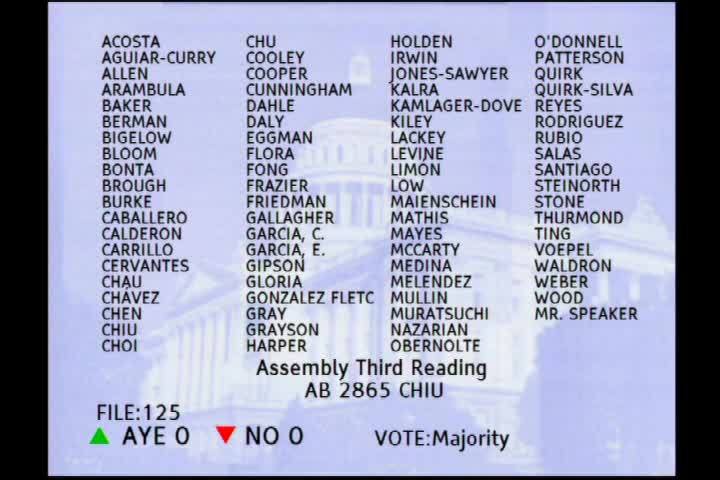 36SEC
Assembly Floor
 2MIN
Assembly Standing Committee on Business and Professions
Bill Author

Bill Co-Author(s):
