AB 3145: Disability insurance: state employees.
- Session Year: 2017-2018
- House: Assembly
- Latest Version Date: 2018-08-29
Existing law, otherwise known as the State Disability Insurance Program, provides a partial wage replacement insurance plan for workers that is funded through employee payroll deductions. Under that program, a disabled individual is eligible to receive disability benefits equal to 1/7 of his or her weekly benefit amount for each full day during which he or she is unemployed due to a disability if the Director of Employment Development makes specified findings, including that the individual has been unemployed and disabled for a waiting period of 7 consecutive days during each disability benefit period. A component of the program, known as Paid Family Leave, provides employees covered by the program with a part of their wages to take time off to care for a seriously ill family member, as specified, or to bond with a minor child, as specified.
Under existing law, when a state employee is disabled, whether temporarily or permanently, the employee is entitled, subject to certain conditions, to receive nonindustrial disability benefits not to exceed a specified amount per week, payable monthly for a period not exceeding 26 weeks for any one disability benefit period, unless a memorandum of understanding conflicts with this requirement.
This bill would authorize a state employee who is not subject to a certain memorandum of understanding to elect to participate in the State Disability Insurance Program, as specified, in lieu of receiving nonindustrial disability benefits.
The bill, by authorizing an increase in contributions into, and an increase in the expenditure of money from, the Unemployment Compensation Disability Fund, which is continuously appropriated, would make an appropriation.
Existing law, otherwise known as the State Disability Insurance Program, provides a partial wage replacement insurance plan for workers that is funded through employee payroll deductions. Under that program, a disabled individual is eligible to receive disability benefits equal to 1/7 of his or her weekly benefit amount for each full day during which he or she is unemployed due to a disability if the Director of Employment Development makes specified findings, including that the individual has been unemployed and disabled for a waiting period of 7 consecutive days during each disability benefit period. A component of the program, known as Paid Family Leave, provides employees covered by the program with a part of their wages to take time off to care for a seriously ill family member, as specified, or to bond with a minor child, as specified.
Under existing law, when a state employee is disabled, whether temporarily or permanently, the employee is entitled, subject to certain conditions, to receive nonindustrial disability benefits not to exceed a specified amount per week, payable monthly for a period not exceeding 26 weeks for any one disability benefit period, unless a memorandum of understanding conflicts with this requirement.
This bill would authorize a state employee who is not subject to a certain memorandum of understanding to elect to participate in the State Disability Insurance Program Program, as specified, in lieu of receiving nonindustrial disability benefits.
The bill, by authorizing an increase in contributions into, and an increase in the expenditure of money from, the Unemployment Compensation Disability Fund, which is continuously appropriated, would make an appropriation.
Existing law, otherwise known as the State Disability Insurance Program, provides a partial wage replacement insurance plan for workers that is funded through employee payroll deductions. Under that program, a disabled individual is eligible to receive disability benefits equal to 1/7 of his or her weekly benefit amount for each full day during which he or she is unemployed due to a disability if the Director of Employment Development makes specified findings, including that the individual has been unemployed and disabled for a waiting period of 7 consecutive days during each disability benefit period. A component of the program, known as Paid Family Leave, provides employees covered by the program with a part of their wages to take time off to care for a seriously ill family member, as specified, or to bond with a minor child, as specified.
Under existing law, when a state employee is disabled, whether temporarily or permanently, the employee is entitled, subject to certain conditions, to receive nonindustrial disability benefits not to exceed a specified amount per week, payable monthly for a period not exceeding 26 weeks for any one disability benefit period, unless a memorandum of understanding conflicts with this requirement.
This bill would authorize a state employee who is not subject to a certain memorandum of understanding to elect to participate in the State Disability Insurance Program in lieu of receiving nonindustrial disability benefits.
The bill, by authorizing an increase in contributions into, and an increase in the expenditure of money from, the Unemployment Compensation Disability Fund, which is continuously appropriated, would make an appropriation.
Existing law defines the terms wages and labor for purposes of provisions regarding the payment of wages to employees in various occupations.This bill would make nonsubstantive changes to those definitions.Existing law defines the terms wages and labor for purposes of provisions regarding the payment of wages to employees in various occupations.
This bill would make nonsubstantive changes to those definitions.
(a)Notwithstanding any other law, an employee who is not subject to a memorandum of understanding reached pursuant to Section 3517.5 may elect to participate in the state disability insurance program subject to Chapter 1 (commencing with Section 2601), Chapter 2 (commencing with Section 2625), Chapter 4 (commencing with Section 2901), Chapter 5 (commencing with Section 3001), and Chapter 7 (commencing with Section 3300) of Part 2 of the Unemployment Insurance Code in lieu of the receiving nonindustrial disability benefits provided pursuant to this chapter and Chapter 2.4 (commencing with Section 2781) of Part 2 of the Unemployment Insurance Code.
(b)The employee may make the election described in subdivision (a) at the time of hire and during an annual enrollment period determined by the department.
(c)An employee who makes the election shall be responsible for paying the premiums for coverage under the state disability insurance program and shall remain in the program for at least two years from the date of election.
(a)Notwithstanding any other law, an employee who is not subject to a memorandum of understanding reached pursuant to Section 3517.5 may elect to participate in the state disability insurance program subject to Chapter 1 (commencing with Section 2601), Chapter 2 (commencing with Section 2625), Chapter 4 (commencing with Section 2901), Chapter 5 (commencing with Section 3001), and Chapter 7 (commencing with Section 3300) of Part 2 of the Unemployment Insurance Code in lieu of the receiving nonindustrial disability benefits provided pursuant to this chapter and Chapter 2.4 (commencing with Section 2781) of Part 2 of the Unemployment Insurance Code.
(b)The employee may make the election described in subdivision (a) at the time of hire and during an annual enrollment period determined by the department.
SECTION 1.Section 200 of the Labor Code is amended to read:200.For purposes of this article:(a)Wages includes all amounts for labor performed by employees of every description, whether the amount is fixed or ascertained by the standard of time, task, piece, commission basis, or other method of calculation.(b)Labor includes labor, work, or service whether rendered or performed under contract, subcontract, partnership, station plan, or other agreement if the labor to be paid for is performed personally by the person demanding payment.As used in For purposes of this article: (a)
(a)Wages includes all amounts for labor performed by employees of every description, whether the amount is fixed or ascertained by the standard of time, task, piece, commission basis, or other method of calculation.
(b)Labor includes labor, work, or service whether rendered or performed under contract, subcontract, partnership, station plan, or other agreement if the labor to be paid for is performed personally by the person demanding payment.
|
Date
|
Status
|
|---|---|
| Sep 28, 2018 | Vetoed by Governor. |
| Sep 5, 2018 | Enrolled and presented to the Governor at 3 p.m. |
| Aug 27, 2018 | Senate amendments concurred in. To Engrossing and Enrolling. |
| Aug 22, 2018 | In Assembly. Concurrence in Senate amendments pending. May be considered on or after August 24 pursuant to Assembly Rule 77. |
| Aug 21, 2018 | Read third time. Passed. Ordered to the Assembly. |
| Aug 17, 2018 | From committee: Do pass. (Ayes 7. Noes 0.) (August 16). |
| Aug 6, 2018 | In committee: Referred to APPR. suspense file. |
| Jun 28, 2018 | From committee: Do pass and re-refer to Com. on APPR. (Ayes 5. Noes 0.) (June 27). Re-referred to Com. on APPR. |
| Jun 26, 2018 | From committee: Do pass and re-refer to Com. on L. & I.R. (Ayes 5. Noes 0.) (June 25). Re-referred to Com. on L. & I.R. |
| Jun 18, 2018 | From committee chair, with author's amendments: Amend, and re-refer to committee. Read second time, amended, and re-referred to Com. on P.E. & R. |
| Jun 13, 2018 | Referred to Coms. on P.E. & R. and L. & I.R. |
| May 31, 2018 | In Senate. Read first time. To Com. on RLS. for assignment. |
| May 30, 2018 | Read third time. Passed. Ordered to the Senate. |
| May 25, 2018 | From committee: Do pass. (Ayes 14. Noes 1.) (May 25). |
| May 16, 2018 | In committee: Set, first hearing. Referred to APPR. suspense file. |
| Apr 18, 2018 | From committee: Do pass and re-refer to Com. on APPR. (Ayes 5. Noes 0.) (April 18). Re-referred to Com. on APPR. |
| Apr 2, 2018 | Re-referred to Com. on P.E., R., & S.S. |
| Mar 23, 2018 | From committee chair, with author's amendments: Amend, and re-refer to Com. on P.E., R., & S.S. Read second time and amended. |
| Mar 22, 2018 | Referred to Com. on P.E., R., & S.S. |
| Feb 17, 2018 | From printer. May be heard in committee March 19. |
| Feb 16, 2018 | Read first time. To print. |
|
Date
|
Description
|
Location
|
Votes
|
|
|---|---|---|---|---|
| Aug 27, 2018 | AB 3145 SALAS Concurrence in Senate Amendments | Assembly Floor |
Passed |
|
| Aug 21, 2018 | Assembly 3rd Reading AB3145 Salas By Wiener | Senate Floor |
Passed |
|
| Aug 16, 2018 | Do pass | Senate Standing Committee on Appropriations |
Passed |
|
| Aug 6, 2018 | Placed on suspense file | Senate Standing Committee on Appropriations |
Passed |
|
| Jun 27, 2018 | Do pass, but first be re-referred to the Committee on [Appropriations] | Senate Standing Committee on Labor and Industrial Relations |
Passed |
|
| Jun 25, 2018 | Do pass, but first be re-referred to the Committee on [Labor and Industrial Relations] | Senate Standing Committee on Public Employment and Retirement |
Passed |
|
| May 30, 2018 | AB 3145 SALAS Assembly Third Reading | Assembly Floor |
Passed |
|
| May 25, 2018 | Do pass. | Assembly Standing Committee on Appropriations |
Passed |
|
| Apr 18, 2018 | Do pass and be re-referred to the Committee on [Appropriations] | Assembly Standing Committee on Public Employees, Retirement, and Social Security |
Passed |
This list shows positions taken on this bill by organizations on the date displayed, which is linked to the original source.
Positions by individuals are not included.
GOVERNOR'S VETO
GV Bill Id:AB 3145
Author:(Salas)
As Enrolled Ver:September 5, 2018
2/3 vote
ASSEMBLY: | 74-1 | (May 30, 2018) | SENATE: | 39-0 | (August 21, 2018) |
ASSEMBLY: | 79-0 | (August 27, 2018) |
|
|
|
Original Committee Reference: P.E.,R., & S.S.
SUMMARY: Authorizes a state excluded employee to elect to participate in the State Disability Insurance (SDI) program instead of receiving nonindustrial disability (NDI) benefits, and provides that the employee may make the election at the time of hire and during an annual enrollment period, as determined by the employing department.
The Senate amendments provide that an employee who makes an election to participate in the SDI program in lieu of receiving NDI benefits must be responsible for paying the premiums for coverage under the SDI program, and must remain in the program for at least two years from the date of election.
EXISTING LAW:
- Establishes the California Family Rights Act (CFRA) and the federal Family and Medical Leave Act (FMLA) which provides eligible employees of covered employers [those with 50 or more employees] up to 12 work weeks of unpaid, job-protected leave for specified family and medical reasons, with continued group health insurance coverage under the same terms and conditions as if the employee had not taken leave.
- Establishes the New Parent Leave Act requiring employers with 20 or more employees to provide eligible employees with up to 12 weeks of unpaid job-protected parental leave to bond with a new child within one year of the child's birth, adoption, or foster care placement, with continued health coverage during the duration of the parental leave.
- Establishes the Paid Family Leave (PFL) program, as a component of the SDI program, to provide eligible employees with up to six weeks of partial wage replacement benefits (approximately 60 to 70 percent of lost wages) to care for a seriously ill child, spouse or registered domestic partner, parent, siblings, grandparents, grandchildren, and parents-in-laws or to bond with a minor child within one year of birth, adoption or foster care placement. PFL does not provide job protection or return-to-work rights and does not require continued group health coverage during leave.
- Provides a NDI benefit to a state employee who is either temporarily or permanently disabled up to a specified amount each week that is payable monthly for up to 26 weeks for any one disability period, unless otherwise stated in a memorandum of understanding.
- Permits small business owners, entrepreneurs, and self-employed individuals who are not covered by the SDI program to elect to pay into disability insurance through the voluntary Disability Insurance Elective Coverage program, and requires participants to remain in the program for two complete calendar years unless they meet specified early termination criteria.
- Defines state excluded employees as those who are managerial, supervisory, confidential, or other specified employees who are excluded from coverage under the Ralph C. Dills Act, but are granted certain rights regarding their terms and conditions of employment and who may be represented by an employee organization for such employees.
- Under the Bill of Rights for State Excluded Employees, informs state excluded employees of their rights and terms and conditions of employment, including the right to join, form, and participate in the activities of an employee organization for such employees.
FISCAL EFFECT: According to the Senate Appropriations Committee, this bill would result in the following:
- A projected increase in expenditures from the Unemployment Compensation Disability Fund (UCDF), the special fund (whose major fund sources include a tax on workers and earnings from investments) that pays for SDI and PFL, of $32 million in 2019, $33 million in 2020, and $33 million in 2021. These increases are based on specified Employment Development Department (EDD) assumptions.
- Additionally, EDD projects that the increased expenditures from the UCDF would be offset by $49 million in annual increased contributions from excluded state employees who would participate in the SDI Program (UCDF).
- EDD would incur a one-time cost of $37,000 to update manuals, training materials, and website pages, and costs of $183,000 annually thereafter, to manage the additional SDI claims (UCDF).
- The bill would result in annual savings to the General Fund and various special funds starting in 2019 as a result of reduced NDI payments for excluded state employees opting to move into the SDI Program. The magnitude is unknown, but likely in the low millions of dollars.
- The State Controller's Office anticipates that it would incur General Fund costs of $800,000 in 2018-19, $1.5 million in both 2019-20 and 2020-21, and $302,000 annually thereafter, to analyze and implement payroll system changes and correct transaction errors.
COMMENTS: According to the author, "[i]n general, NDI benefits are less generous than SDI and can only be used for an employee's own illness or injury. SDI on the other hand can be used for a worker's own disability and additionally includes the Paid Family Leave benefit which can be used for time away from work to bond with a new child or to care for a seriously ill family member.
'Although some state workers may wish to remain enrolled in NDI despite the benefit discrepancy when compared to SDI, [some] state workers are not currently provided an option to enroll in SDI even if they wanted to. This is particularly problematic for those employees when they may need time off to care for a new child or a seriously ill family member. If that employee does not have enough of their own vacation or sick time to take leave from work, any approved time off would in most cases have to be taken unpaid.
'AB 3145 would allow specified state employees to elect to enroll in SDI in lieu of receiving NDI benefits. The specified state employees eligible for this option would include state employees not otherwise subject to collective bargaining agreements, including managerial employees, supervisory employees, legislative employees, and appointed officers of the executive branch."
The Department of Human Resources is developing a plan to offer paid family leave benefits to state managers and supervisors by July 1, 2019. This effort will not have the significant administrative costs of this bill and is therefore a better way to provide this benefit.
Analysis Prepared by: Michael Bolden / P.E.,R., & S.S. / (916) 319-3957 FN: 0005300
CONCURRENCE IN SENATE AMENDMENTS
CSA1 Bill Id:AB 3145
Author:(Salas)
As Amended Ver:June 18, 2018
Majority vote
ASSEMBLY: | 74-1 | (May 30, 2018) | SENATE: | 39-0 | (August 21, 2018) |
Original Committee Reference: P.E.,R., & S.S.
SUMMARY: Authorizes a state excluded employee to elect to participate in the State Disability Insurance (SDI) program instead of receiving nonindustrial disability (NDI) benefits, and provides that the employee may make the election at the time of hire and during an annual enrollment period, as determined by the employing department.
The Senate amendments provide that an employee who makes an election to participate in the SDI program in lieu of receiving NDI benefits must be responsible for paying the premiums for coverage under the SDI program, and must remain in the program for at least two years from the date of election.
EXISTING LAW:
- Establishes the California Family Rights Act (CFRA) and the federal Family and Medical Leave Act (FMLA) which provides eligible employees of covered employers [those with 50 or more employees] up to 12 work weeks of unpaid, job-protected leave for specified family and medical reasons, with continued group health insurance coverage under the same terms and conditions as if the employee had not taken leave.
- Establishes the New Parent Leave Act requiring employers with 20 or more employees to provide eligible employees with up to 12 weeks of unpaid job-protected parental leave to bond with a new child within one year of the child's birth, adoption, or foster care placement, with continued health coverage during the duration of the parental leave.
- Establishes the Paid Family Leave (PFL) program, as a component of the SDI program, to provide eligible employees with up to six weeks of partial wage replacement benefits (approximately 60 to 70% of lost wages) to care for a seriously ill child, spouse or registered domestic partner, parent, siblings, grandparents, grandchildren, and parents-in-laws or to bond with a minor child within one year of birth, adoption or foster care placement. PFL does not provide job protection or return-to-work rights and does not require continued group health coverage during leave.
- Provides a NDI benefit to a state employee who is either temporarily or permanently disabled up to a specified amount each week that is payable monthly for up to 26 weeks for any one disability period, unless otherwise stated in a memorandum of understanding.
- Permits small business owners, entrepreneurs, and self-employed individuals who are not covered by the SDI program to elect to pay into disability insurance through the voluntary Disability Insurance Elective Coverage program, and requires participants to remain in the program for two complete calendar years unless they meet specified early termination criteria.
- Defines state excluded employees as those who are managerial, supervisory, confidential, or other specified employees who are excluded from coverage under the Ralph C. Dills Act, but are granted certain rights regarding their terms and conditions of employment and who may be represented by an employee organization for such employees.
- Under the Bill of Rights for State Excluded Employees, informs state excluded employees of their rights and terms and conditions of employment, including the right to join, form, and participate in the activities of an employee organization for such employees.
FISCAL EFFECT: According to the Senate Appropriations Committee, this bill would result in the following:
- A projected increase in expenditures from the Unemployment Compensation Disability Fund (UCDF), the special fund (whose major fund sources include a tax on workers and earnings from investments) that pays for SDI and PFL, of $32 million in 2019, $33 million in 2020, and $33 million in 2021. These increases are based on specified Employment Development Department (EDD) assumptions.
- Additionally, EDD projects that the increased expenditures from the UCDF would be offset by $49 million in annual increased contributions from excluded state employees who would participate in the SDI Program (UCDF).
- EDD would incur a one-time cost of $37,000 to update manuals, training materials, and website pages, and costs of $183,000 annually thereafter, to manage the additional SDI claims (UCDF).
- The bill would result in annual savings to the General Fund and various special funds starting in 2019 as a result of reduced NDI payments for excluded state employees opting to move into the SDI Program. The magnitude is unknown, but likely in the low millions of dollars.
- The State Controller's Office anticipates that it would incur General Fund costs of $800,000 in 2018-19, $1.5 million in both 2019-20 and 2020-21, and $302,000 annually thereafter, to analyze and implement payroll system changes and correct transaction errors.
COMMENTS: Please see the policy committee analysis for a full discussion of this bill.
Analysis Prepared by: Michael Bolden / P.E.,R., & S.S. / (916) 319-3957 FN: 0004319
Office of Senate Floor Analyses (916) 651-1520 Fax: (916) 327-4478 | AB |
THIRD READING
Bill No: AB 3145
:
SENATE PUBLIC EMP. & RET. COMMITTEE: 5-0, 6/25/18
AYES: Pan, Morrell, Leyva, Moorlach, Portantino
SENATE LABOR & IND. REL. COMMITTEE: 5-0, 6/27/18
AYES: Lara, Stone, Jackson, Mitchell, Wieckowski
SENATE APPROPRIATIONS COMMITTEE: 7-0, 8/16/18
AYES: Portantino, Bates, Beall, Bradford, Hill, Nielsen, Wiener
ASSEMBLY FLOOR: 74-1, 5/30/18 - See last page for vote
DIGEST:
This bill authorizes a state excluded employee to elect to participate in the State Disability Insurance Program instead of receiving nonindustrial disability benefits, and provides that the employee may make the election at the time of hire and during an annual enrollment period, as determined by the employing department.
ANALYSIS:
Existing law:
- Establishes the federal Family and Medical Leave Act, which entitles eligible employees of covered employers to take unpaid, job-protected leave for specified family and medical reasons, with continued group health insurance coverage under the same terms and conditions as if the employee had not taken leave.
- Establishes the California Family Rights Act, which authorizes eligible employees to take up to 12 weeks of paid or unpaid job-protected leave during a 12 month period for specified purposes. While on leave, the employees keep the same employer-paid health benefits they had while working.
- Establishes the New Parent Leave Act requiring specified employers to provide eligible employees with up to 12 weeks of job-protected parental leave to bond with a new child within one year of the child’s birth, adoption, or foster care placement. During the leave period, employees keep the same employer-paid health benefits they had while working.
- Defines state excluded employees as managerial, confidential, supervisory, or other specified employees who are exempted from coverage under the Ralph C. Dills Act (Dills Act).
- Informs state excluded employees of their rights and terms and conditions of employment under the Bill of Rights for State Excluded Employees (BRSEE), including the right to join, form, and participate in the activities of an employee organization for such employees.
- Provides under the State Disability Insurance Program (SDI) a partial wage replacement insurance plan for workers, funded through employee payroll deductions.
- Establishes the Paid Family Leave Program (PFL) as a component of the SDI program, which provides a portion of the covered employee’s wages so that they may take time to care for a seriously ill family member, as specified, or to bond with a minor child, as specified.
- Provides a nonindustrial disability leave (NDI) benefit to a state employee who is either temporarily or permanently disabled up to a specified amount each week, payable monthly, up to 26 weeks for any one disability period, unless otherwise stated in a memorandum of understanding.
- Permits small business owners, entrepreneurs, and self-employed individuals who are not covered by the SDI program to elect for disability insurance through the voluntary disability insurance elective coverage program (DIEC), and requires participants to remain in the program for two complete calendar years unless they meet specified early termination criteria.
This bill:
- Authorizes a state employee who is not subject to a memorandum of understanding, as specified, to elect to participate in the state disability insurance program.
- States the employee may make the election described at the time of hire and during an annual enrollment period determined by the department.
- Specifies that an employee who makes the election to SDI shall be responsible for paying the premiums for coverage under the state disability insurance program and shall remain in the program for at least two years from the date of election.
Comments
According to the author’s office,
In general, NDI benefits are less generous than SDI and can only be used for an employee’s own illness or injury. SDI on the other hand can be used for a worker’s own disability and additionally includes the Paid Family Leave benefit which can be used for time away from work to bond with a new child or to care for a seriously ill family member.
Although some state workers may wish to remain enrolled in NDI despite the benefit discrepancy when compared to SDI, [some] state workers are not currently provided an option to enroll in SDI even if they wanted to. This is particularly problematic for those employees when they may need time off to care for a new child or a seriously ill family member. If that employee does not have enough of their own vacation or sick time to take leave from work, any approved time off would in most cases have to be taken unpaid.
AB 3145 would allow specified state employees to elect to enroll in SDI in lieu of receiving NDI benefits. The specified state employees eligible for this option would include state employees not otherwise subject to collective bargaining agreements, including managerial employees, supervisory employees, legislative employees, and appointed officers of the executive branch.
Excluded Employees Not Subject to a MOU
As this bill covers excluded state employees who are not subject to a memorandum of understanding, this bill will primarily affect state managers and supervisors who receive NDI benefits. These employees accrue leave at a higher rate than rank-and-file employees, and typically have accrued sizable banks of leave. This bill allows these employees to remain with NDI or elect for at least two years of coverage in the SDI program, which has a PFL component.
Non-Industrial Disability Insurance (NDI)
Paid for by the employer, NDI covers state excluded employees, career executive officers, legislative employees, appointed officers of the executive branch, and specified rank-and-file employees who are disabled and unable to work due to a non-work related injury or illness, including disability due to pregnancy or childbirth. NDI entitles employees to up to 26 weeks of leave with partial pay. If an employee is enrolled in the Annual Leave program, which replaces traditional sick and vacation leave with an annual leave pool, up to 50 percent of the employee’s gross pay is covered. If the employee is not enrolled in an Annual Leave Program, they may receive up to $135 per week. NDI does not offer a PFL program.
State Disability Leave (SDI)
Funded through employee payroll deductions for state disability leave, SDI provides approximately 18.3 million California workers, including specified state employees, with partial wage replacement benefits in the event they are unable to work due to a non-work-related illness, injury, or pregnancy. Benefits are payable for up to 52 weeks and weekly benefit amounts are approximately 60 to 70 percent of earned wages, up to a maximum of $1216 per week.
To receive benefits, an applicant must: file a claim for SDI benefits; serve a seven-day, non-payable waiting period; have earned at least $300 in wages subject to SDI contributions during a 12-month base period; and have a physician/practitioner certify the disability by completing the appropriate form.
Paid Family Leave Program (PFL)
A component of SDI, the PFL Program provides up to six weeks of partial pay (approximately 60 to 70 percent of an employee’s weekly salary, up to $1216 a week) to specified private and public sector employees who take time off from work to:
- Care for a seriously ill family member, defined as a parent, child, parent-in-law, grandparent, grandchild, sibling, spouse, or registered domestic partner.
- Bond with new child who has entered the family either by birth, adoption, or foster care placement.
An employee must file a claim for PFL benefits; have earned at least $300 in wages that are subject to state disability insurance deductions during the 12 month base period of the employee’s claim; and either provide proof of relationship for bonding claims or have the care recipient’s physician or practitioner certify the need for care by completing the appropriate forms.
Related/Prior Legislation
AB 908 (Gomez, Chapter 5, Statutes of 2016), increased the level and duration of benefits provided in the PFL and SDI programs, and removes the seven day waiting period for PFL.
FISCAL EFFECT: Appropriation: Fiscal Com.: Local:
According to the Senate Appropriations Committee:
- This bill would result in a projected increase in expenditures from the Unemployment Compensation Disability Fund (UCDF), the special fund (whose major fund sources include a tax on workers and earnings from investments) that pays for SDI and PFL benefits, of $32 million in 2019, $33 million in 2020, and $33 million in 2021. These increases are based on specified Employment Development Department (EDD) assumptions.
- Additionally, EDD projects that the increased expenditures from the UCDF would be offset by $49 million in annual increased contributions from excluded state employees who would participate in the SDI Program (UCDF).
- EDD would incur a one-time cost of $37,000 to update manuals, training materials, and website pages, and costs of $183,000 annually thereafter, to manage the additional SDI claims (UCDF).
- The bill would result in annual savings to the General Fund and various special funds starting in 2019 as a result of reduced NDI payments for excluded state employees opting to move into the SDI Program. The magnitude is unknown, but likely in the low millions of dollars.
- The State Controller’s Office anticipates that it would incur General Fund costs of $800,000 in 2018-19, $1.5 million in both 2019-20 and 2020-21, and $302,000 annually thereafter, to analyze and implement payroll system changes and correct transaction errors.
Association of California State Supervisors
OPPOSITION: (Verified 8/17/18)
None received
ARGUMENTS IN SUPPORT: The Association of California State Supervisors writes, “NDI benefits are less generous than SDI benefits and can only be used for an employee’s own injury or illness. Through allowing access to SDI benefits, AB 3145 will give state supervisors and managers the ability to take time off to care for a new child or a seriously ill family member, in addition to time off for their own health matters.”
ASSEMBLY FLOOR: 74-1, 5/30/18
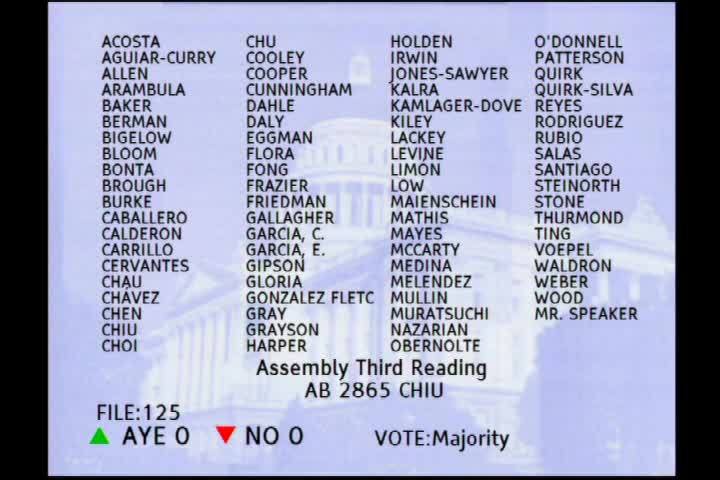
AYES: Acosta, Aguiar-Curry, Travis Allen, Arambula, Baker, Berman, Bigelow, Bloom, Bonta, Brough, Burke, Caballero, Calderon, Carrillo, Cervantes, Chau, Chávez, Chen, Chiu, Choi, Chu, Cooley, Cooper, Cunningham, Dahle, Daly, Eggman, Flora, Frazier, Friedman, Gallagher, Cristina Garcia, Eduardo Garcia, Gipson, Gloria, Gonzalez Fletcher, Gray, Grayson, Holden, Irwin, Jones-Sawyer, Kalra, Kamlager-Dove, Kiley, Lackey, Levine, Limón, Low, Maienschein, Mathis, Mayes, McCarty, Melendez, Mullin, Muratsuchi, Nazarian, Obernolte, O'Donnell, Quirk, Quirk-Silva, Reyes, Rodriguez, Rubio, Salas, Santiago, Steinorth, Mark Stone, Thurmond, Ting, Voepel, Waldron, Weber, Wood, Rendon
NOES: Harper
NO VOTE RECORDED: Fong, Medina, Patterson
8/18/18 13:41:59
**** END ****
SENATE COMMITTEE ON
Senator Anthony Portantino, Chair
2017 - 2018 Regular Session
AB 3145 (Salas) - Disability insurance: state employees
Version: | Policy Vote: |
Urgency: | Mandate: |
Hearing Date: | Consultant: |
This bill meets the criteria for referral to the Suspense File.
Bill Summary:
AB 3145 would authorize a state employee who is not subject to a memorandum of understanding (MOU), such as state managers and supervisors, to have the option to participate in and pay premiums for the State Disability Insurance (SDI) Program instead of receiving nonindustrial disability benefits (NDI).
Fiscal Impact:
- This bill would result in a projected increase in expenditures from the Unemployment Compensation Disability Fund (UCDF), the special fund (whose major fund sources include a tax on workers and earnings from investments) that pays for State Disability Insurance and Paid Family Leave benefits, of $32 million in 2019, $33 million in 2020, and $33 million in 2021. These increases are based on specified EDD assumptions (See Staff Comments).
- Additionally, EDD projects that the increased expenditures from the UCDF would be offset by $49 million in annual increased contributions from excluded state employees who would participate in the SDI Program (UCDF).
- EDD would incur a one-time cost of $37,000 to update manuals, training materials, and website pages, and costs of $183,000 annually thereafter, to manage the additional SDI claims (UCDF).
- The bill would result in annual savings to the General Fund and various special funds starting in 2019 as a result of reduced NDI payments for excluded state employees opting to move into the SDI Program. The magnitude is unknown, but likely in the low millions of dollars.
- The State Controller’s Office (STO) anticipates that it would incur General Fund costs of $800,000 in 2018-19, $1.5 million in both 2019-20 and 2020-21, and $302,000 annually thereafter, to analyze and implement payroll system changes and correct transaction errors.
Background:
The California SDI program is administered by EDD, and provides short-term disability insurance (DI) and paid family leave (PFL) wage replacement benefits to eligible workers who need to take time off from work. The SDI program is funded through employee payroll deductions, and it provides 18.3 million of the State’s workers (including private and certain specified state employees whose bargaining units have elected to participate in the program) with partial wage replacement benefits in the event they are unable to work due to the employees’ own non-work-related illness, injury, or pregnancy for up to 52 weeks (DI). Additionally, through PFL, eligible employees are able to take time off to (1) care for a seriously ill family member (defined as a parent, child, parent-in-law, grandparent, grandchild, sibling, spouse or registered domestic partner), or (2) bond with a new child within one year of birth, foster care or adoption placement. PFL is available for up to six weeks. DI and PFL provide weekly benefit amounts of roughly 60 to 70 percent of earned wages, up to a maximum of $1,216 per week; the precise amount depends on the employees’ base wages
In contrast, NDI is entirely employer-paid, and covers a narrower portion of the State’s workforce, including state excluded employees, career executive officers, legislative employees, appointed officers of the executive branch, and specified rank-and-file employees who are disabled and unable to work due to a non-work related injury or illness, including disability due to pregnancy or childbirth. NDI entitles employees to up to 26 weeks of leave with partial pay. If an employee is enrolled in the Annual Leave program (which replaces traditional sick and vacation leave with an annual leave pool), up to half percent of the employee’s gross pay is covered. Employees not enrolled in an Annual Leave Program may receive up to $135 per week. Unlike SDI, NDI does not offer a paid family leave program.
Proposed Law:
This bill would (1) authorize a state employee who is not subject to an MOU, as specified, to elect to participate in the SDI program in lieu of receiving NDI benefits, (2) provide that the employee may make this election either at the time of hire or during an annual enrollment period, as specified, and (3) specify that an employee who makes the election to participate in SDI is responsible for paying the premiums for coverage under the SDI program and shall remain in the program for at least two years from the date of election.
Related Legislation:
- AB 908 (Gomez, Chapter 5, Statutes of 2016) increased the level and duration of benefits provided in the PFL and SDI programs, and removed the seven day waiting period for PFL.
- SB 1123 (Jackson) would expand PFL to include families who take time off related to covered active duty in the United State Armed Forces. The bill is pending in the Assembly Appropriations Committee.
Staff Comments:
This bill would allow unrepresented state workers to opt-in to the SDI program in lieu of receiving NDI benefits. As noted above, the NDI program is a state funded, short-term disability wage loss program that provides partial wage replacement to eligible state employees who experience a non-work-related illness or injury. The NDI program does not offer PFL benefits; it only covers a worker’s own temporary disability.
EDD estimates that the bill would result in a slight increase in the amount of SDI benefits paid. Specifically, the department projects that 2019 benefits would rise from $7.245 billion (its baseline estimate) to $7.277 billion until the bill’s provisions, an increase of $32 million (or 0.4 percent). In 2020, EDD estimates that the additional benefits paid would be approximately $33 million, and would remain the same annually through 2022. Under EDD’s assumptions, the SDI contribution rate would not change. However, the greater number of participants as a result of the bill would increase SDI contributions (employee payroll deductions) by roughly $49 million annually through 2022.
This estimate relies on a number of assumptions regarding unrepresented state employees: (1) EDD assumes that the opt-in rate for the approximately 44,000 unrepresented (and therefore eligible) state employees is 100 percent, (2) employees would file 1,800 DI claims annually, reflecting the average rate of NDI claims filed under current law, (3) those employees opting-in would file approximately 900 total PFL claims per year, and (4) the average weekly benefit amount for these claims would be higher than the typical SDI claim, as unrepresented state employees are typically career or professional employees with higher salaries. To the extent that not all unrepresented workers were to-opt in to SDI, both the increase in benefits and the increase in contributions would be overstated. Even at this exposure level, EDD indicates that the forecasted UCDF fund balance at the end of 2022 would be $5.0 billion.
Additionally, EDD notes that the UCDF impact estimates discussed above do not account for the impact AB 908 (Gomez), which raised benefit levels for both PFL and DI effective January 1, 2018. If more employees use the SDI program due to AB 908 and AB 3145, the SDI contribution rate could have to be increased. Likewise, the estimate also does not consider the effects that SB 1123 (Jackson) may have on the Fund and EDD’s administrative processes and costs if both bills become law.
SCO’s fiscal impact reflects the anticipated need for nine two-year limited-term positions to analyze and implement payroll system changes, two additional positions to correct transaction errors as a result of the bill’s program changes to SDI and NDO, and an IT specialist to support maintenance and operations.
-- END --
SENATE COMMITTEE ON LABOR AND INDUSTRIAL RELATIONS
Senator Ricardo Lara, Chair
2017 - 2018 Regular
Bill No: AB 3145 Hearing Date: June 27, 2018
Author: | Salas | ||
Version: | June 18, 2018 | ||
Urgency: | No | Fiscal: | Yes |
Consultant: | Alma Perez-Schwab | ||
Subject: Disability insurance: state employees
KEY ISSUE
Should a state employee who is not subject to a memorandum of understanding (state managers and supervisors for example) have the option to participate in - and pay premiums for- the State Disability Insurance Program instead of receiving nonindustrial disability benefits through the state?
ANALYSIS
Existing law:
- Establishes the California Family Rights Act (CFRA) and the federal Family and Medical Leave Act (FMLA) which provides eligible employees of covered employers [those with 50 or more employees] up to 12 workweeks of unpaid, job-protected leave for specified family and medical reasons, with continued group health insurance coverage under the same terms and conditions as if the employee had not taken leave. (Government Code §12945.2 & 29 Code of Federal Regulations Part 825)
- Establishes the New Parent Leave Act requiring employers with 20 or more employees to provide eligible employees with up to 12 weeks of unpaid job-protected parental leave to bond with a new child within one year of the child’s birth, adoption, or foster care placement, with continued health coverage during the duration of the parental leave. (Government Code §12945.6)
- Establishes the Paid Family Leave (PFL) program, as a component of the State Disability Insurance program, to provide eligible employees with up to six weeks of partial wage replacement benefits (approximately 60-70 percent of lost wages) to care for a seriously ill child, spouse or registered domestic partner, parent, siblings, grandparents, grandchildren, and parents-in-laws or to bond with a minor child within one year of birth, adoption or foster care placement.
- PFL does not provide job protection or return to work rights.
- PFL does not require continued group health coverage during leave.
(Unemployment Insurance Code §3301)
- Provides a nonindustrial disability leave (NDI) benefit to a state employee who is either temporarily or permanently disabled up to a specified amount each week that is payable monthly for up to 26 weeks for any one disability period, unless otherwise stated in a memorandum of understanding. (UI Code §2781)
- Permits small business owners, entrepreneurs, and self-employed individuals who are not covered by the SDI program to elect to pay into disability insurance through the voluntary Disability Insurance Elective Coverage program (DIEC), and requires participants to remain in the program for two complete calendar years unless they meet specified early termination criteria. (UI Code §§701-713)
- Defines state excluded employees are those who are managerial, supervisory, confidential, or other specified employees who are excluded from coverage under the Ralph C. Dills Act (Dills Act), but are granted certain rights regarding their terms and conditions of employment and who may be represented by an employee organization for such employees. (Government Code §3513)
- Under the Bill of Rights for State Excluded Employees (BRSEE), informs state excluded employees of their rights and terms and conditions of employment, including the right to join, form, and participate in the activities of an employee organization for such employees. (Government Code §§3525-3539.5)
This Bill:
- Authorizes a state employee who is not subject to a memorandum of understanding, as specified, to elect to participate in the state disability insurance program in lieu of receiving NDI benefits.
- Provides that the employee may make the election described above at the time of hire and during an annual enrollment period determined by the department.
- Specifies that an employee who makes the election to participate in SDI is responsible for paying the premiums for coverage under the SDI program and shall remain in the program for at least two years from the date of election.
COMMENTS
1. State Disability Insurance & the Paid Family Leave Program:
Administered by the Employment Development Department (EDD), the California State Disability Insurance (SDI) program provides short-term Disability Insurance (DI) and Paid Family Leave (PFL) wage replacement benefits to eligible workers who need time off work. Funded through employee payroll deductions, SDI provides California workers, including private and some specified state employees whose bargaining units have elected to participate in the program, with partial wage replacement benefits in the event they are unable to work due to the employees own non-work-related illness, injury, or pregnancy for up to 52 weeks (DI).
Additionally, through PFL, eligible employees are able to take time off to care for a seriously ill family member (defined as a parent, child, parent-in-law, grandparent, grandchild, sibling, spouse or registered domestic partner) or to bond with a new child within one year of birth, foster care or adoption placement. PFL is available for up to six weeks.
DI and PFL provide weekly benefit amounts of approximately 60 to 70 percent of earned wages, up to a maximum of $1216 per week (dependent on the employees’ base wages).
2. Disability Insurance Elective Coverage Program:
Created in 1962, the Disability Insurance Elective Coverage (DIEC) Program serves as a safety net to small business owners, entrepreneurs, or self-employed individuals who make up a large portion of companies doing business in California. Unlike SDI, the DIEC program is voluntary and includes additional protections to prevent abuse. According to the EDD, to prevent customers from joining and leaving the program as short-term disabilities arise, participants are required to remain in the program for two complete calendar years. Premiums for DIEC are also higher than the SDI program’s contribution rates.
3. Non-Industrial Disability Insurance (NDI):
NDI is a government funded program available to the employee at no cost. According to the Senate Public Employment and Retirement Committee policy analysis:
“Paid for by the employer, NDI covers state excluded employees, career executive officers, legislative employees, appointed officers of the executive branch, and specified rank-and-file employees who are disabled and unable to work due to a non-work related injury or illness, including disability due to pregnancy or childbirth. NDI entitles employees to up to twenty-six weeks of leave with partial pay. If an employee is enrolled in the Annual Leave program, which replaces traditional sick and vacation leave with an annual leave pool, up to 50 percent of the employee’s gross pay is covered. If the employee is not enrolled in an Annual Leave Program, they may receive up to $135 per week. NDI does not offer a paid family leave program.”
4. Need for this bill?
According to the author, one of the lesser-known ironies of California’s vaunted paid family leave law is that it is out of reach for the majority of California’s own state employees. The author writes that, “Although some state workers may wish to remain enrolled in NDI despite the benefit discrepancy when compared to SDI, state workers are not currently provided an option to enroll in SDI even if they wanted to. This is particularly problematic for those employees when they may need time off to care for a new child or a seriously ill family member. If that employee does not have enough of their own vacation or sick time to take leave from work, any approved time off would in most cases have to be taken unpaid.”
As noted above, SDI provides a more generous weekly benefit amount than NDI and allows an employee (through the PFL program) to take time off to care for a seriously ill family member or to bond with a new child in addition to the employee’s own personal illness. This bill would allow excluded state employees who are not subject to a memorandum of understanding (primarily state managers and supervisors) the opportunity to pay into the SDI program and access benefits they otherwise are not entitled to. According to the State Controller’s Office, there are approximately 42,000 to 43,000 unrepresented state employees that could potentially participate in the program.
5. Proponent Arguments:
According to the Association of California State Supervisors, by allowing access to SDI benefits, this bill will give state supervisors and managers the ability to take time off to care for a new child or a seriously ill family member, in addition to taking time off for their own health matters. Additionally, they note that NDI benefits are less generous than SDI.
6. Opponent Arguments:
None received.
7. Double Referral:
This bill has been double referred and was previously heard by the Senate Public Employment & Retirement Committee.
8. Prior Legislation:
AB 908(Gomez) Chapter 5, Statutes of 2016: AB 908, among other things, increased the level and duration of benefits provided in the Paid Family Leave and State Disability insurance programs.
SUPPORT
Association of California State Supervisors
OPPOSITION
None received
-- END --
SENATE COMMITTEE ON
PUBLIC EMPLOYMENT AND RETIREMENT
Dr. Richard Pan, Chair
2017 - 2018 Regular
Bill No: AB 3145 Hearing Date: 6/25/18
Author: | Salas | ||
Version: | 6/18/18 As amended | ||
Urgency: | No | Fiscal: | Yes |
Consultant: | Korinne Sugasawara | ||
Subject: Disability insurance: state employees.
SOURCE: Author
ASSEMBLY VOTES:
Assembly Floor: | 74 - 1 |
Assembly Appropriations Committee: | 14 - 1 |
Assembly Public Employees, Retirement, and Social Security Committee: | 5 - 0 |
DIGEST: This bill authorizes a state excluded employee to elect to participate in the State Disability Insurance Program instead of receiving nonindustrial disability benefits, and provides that the employee may make the election at the time of hire and during an annual enrollment period, as determined by the employing department.
ANALYSIS:
Existing law:
- Establishes the federal Family and Medical Leave Act, which entitles eligible employees of covered employers to take unpaid, job-protected leave for specified family and medical reasons, with continued group health insurance coverage under the same terms and conditions as if the employee had not taken leave.
- Establishes the California Family Rights Act, which authorizes eligible employees to take up to twelve weeks of paid or unpaid job-protected leave during a twelve month period for specified purposes. While on leave, the employees keep the same employer-paid health benefits they had while working.
- Establishes the New Parent Leave Act requiring specified employers to provide eligible employees with up to twelve weeks of job-protected parental leave to bond with a new child within one year of the child’s birth, adoption, or foster care placement. During the leave period, employees keep the same employer-paid health benefits they had while working.
- Defines state excluded employees as managerial, confidential, supervisory, or other specified employees who are exempted from coverage under the Ralph C. Dills Act (Dills Act).
- Informs state excluded employees of their rights and terms and conditions of employment under the Bill of Rights for State Excluded Employees (BRSEE), including the right to join, form, and participate in the activities of an employee organization for such employees.
- Provides under the State Disability Insurance Program (SDI) a partial wage replacement insurance plan for workers, funded through employee payroll deductions.
- Establishes the Paid Family Leave Program (PFL) as a component of the SDI program, which provides a portion of the covered employee’s wages so that they may take time to care for a seriously ill family member, as specified, or to bond with a minor child, as specified.
- Provides a nonindustrial disability leave (NDI) benefit to a state employee who is either temporarily or permanently disabled up to a specified amount each week, payable monthly, up to twenty-six weeks for any one disability period, unless otherwise stated in a memorandum of understanding.
- Permits small business owners, entrepreneurs, and self-employed individuals who are not covered by the SDI program to elect for disability insurance through the voluntary disability insurance elective coverage program (DIEC), and requires participants to remain in the program for two complete calendar years unless they meet specified early termination criteria.
This bill:
- Authorizes a state employee who is not subject to a memorandum of understanding, as specified, to elect to participate in the state disability insurance program.
- States the employee may make the election described at the time of hire and during an annual enrollment period determined by the department.
- Specifies that an employee who makes the election to SDI shall be responsible for paying the premiums for coverage under the state disability insurance program and shall remain in the program for at least two years from the date of election.
Background
According to the author’s office,
“In general, NDI benefits are less generous than SDI and can only be used for an employee’s own illness or injury. SDI on the other hand can be used for a worker’s own disability and additionally includes the Paid Family Leave benefit which can be used for time away from work to bond with a new child or to care for a seriously ill family member.
Although some state workers may wish to remain enrolled in NDI despite the benefit discrepancy when compared to SDI, [some] state workers are not currently provided an option to enroll in SDI even if they wanted to. This is particularly problematic for those employees when they may need time off to care for a new child or a seriously ill family member. If that employee does not have enough of their own vacation or sick time to take leave from work, any approved time off would in most cases have to be taken unpaid.
AB 3145 would allow specified state employees to elect to enroll in SDI in lieu of receiving NDI benefits. The specified state employees eligible for this option would include state employees not otherwise subject to collective bargaining agreements, including managerial employees, supervisory employees, legislative employees, and appointed officers of the executive branch.”
Excluded Employees Not Subject to a MOU
As this bill covers excluded state employees who are not subject to a memorandum of understanding, this bill will primarily affect state managers and supervisors who receive NDI benefits. These employees accrue leave at a higher rate than rank-and-file employees, and typically have accrued sizable banks of leave. This bill would allow these employees to remain with NDI or elect for at least two years of coverage in the SDI program, which has a PFL component.
Non-Industrial Disability Insurance (NDI)
Paid for by the employer, NDI covers state excluded employees, career executive officers, legislative employees, appointed officers of the executive branch, and specified rank-and-file employees who are disabled and unable to work due to a non-work related injury or illness, including disability due to pregnancy or childbirth. NDI entitles employees to up to twenty-six weeks of leave with partial pay. If an employee is enrolled in the Annual Leave program, which replaces traditional sick and vacation leave with an annual leave pool, up to 50 percent of the employee’s gross pay is covered. If the employee is not enrolled in an Annual Leave Program, they may receive up to $135 per week. NDI does not offer a paid family leave program.
State Disability Leave (SDI)
Funded through employee payroll deductions for state disability leave, SDI provides approximately 18.3 million California workers, including specified state employees, with partial wage replacement benefits in the event they are unable to work due to a non-work-related illness, injury, or pregnancy. Benefits are payable for up to 52 weeks and weekly benefit amounts are approximately 60 to 70 percent of earned wages, up to a maximum of $1216 per week.
To receive benefits, an applicant must: file a claim for DI benefits; serve a seven-day, non-payable waiting period; have earned at least $300 in wages subject to SDI contributions during a twelve month base period; and have a physician/practitioner certify the disability by completing the appropriate form.
Paid Family Leave Program (PFL)
A component of SDI, the PFL Program provides up to six weeks of partial pay (approximately 60 to 70 percent of an employee’s weekly salary, up to $1216 a week) to specified private and public sector employees who take time off from work to:
- Care for a seriously ill family member, defined as a parent, child, parent-in-law, grandparent, grandchild, sibling, spouse, or registered domestic partner.
- Bond with new child who has entered the family either by birth, adoption, or foster care placement.
An employee must file a claim for PFL benefits; have earned at least $300 in wages that are subject to state disability insurance deductions during the twelve month base period of the employee’s claim; and either provide proof of relationship for bonding claims or have the care recipient’s physician or practitioner certify the need for care by completing the appropriate forms.
Related/Prior Legislation
AB 908 (Gomez, Chapter 5, Statutes of 2016), increases the level and duration of benefits provided in the Paid Family Leave and State Disability insurance programs, and removes the seven day waiting period for Paid Family Leave.
FISCAL EFFECT: Appropriation: Yes Fiscal Com.: Yes Local: No
According to the Assembly Appropriations Committee, this bill will result in:
- Initial one-time costs to EDD of $37,000 to update forms and process and ongoing cost of $183,000 to manage additional SDI claims.
- Ongoing $60 million in additional SDI Program benefits paid per year starting in 2019, offset by $31 million in increased contributions from excluded state employees now participating in the SDI program.
- Ongoing General Fund/special fund savings in the range of $20 million per year starting in 2019 as a result of reduced NDI payments for excluded state employees opting into the SDI Program.
SUPPORT:
Association of California State Supervisors
OPPOSITION:
None received.
ARGUMENTS IN SUPPORT:
The Association of California State Supervisors writes, “NDI benefits are less generous than SDI benefits and can only be used for an employee’s own injury or illness. Through allowing access to SDI benefits, AB 3145 will give state supervisors and managers the ability to take time off to care for a new child or a seriously ill family member, in addition to time off for their own health matters.”
ASSEMBLY THIRD READING
ATR Bill Id:AB 3145
Author:(Salas)
As Amended Ver:March 23, 2018
Majority vote
Committee | Votes | Ayes | Noes |
Public Employees | 5-0 | Rodriguez, Cervantes, Cooley, Cooper, O'Donnell | |
Appropriations | 14-1 | Gonzalez Fletcher, Bloom, Bonta, Calderon, Carrillo, Chau, Eggman, Friedman, Gallagher, Eduardo Garcia, Nazarian, Obernolte, Quirk, Reyes | Bigelow |
SUMMARY: Authorizes a state excluded employee to elect to participate in the State Disability Insurance (SDI) program in lieu of (i.e., in the place of, or instead of) receiving nonindustrial disability insurance (NDI) benefits, and provides that the employee may make the election at the time of hire and during an annual enrollment period, as determined by the department.
EXISTING LAW:
1) Generally, establishes the federal Family and Medical Leave Act (FMLA) and California Family Rights Act (state) that allow an individual to take unpaid leave from employment for individual care, or to care for family members who are ill, or children who are unable to take care of themselves.
2) Pursuant to Section 3513 of the Government Code, state excluded employees are those who are managerial, supervisory, confidential, or other specified employees who are excepted from coverage under the Ralph C. Dills Act (Dills Act), but are granted certain rights regarding their terms and conditions of employment and who may be represented by an employee organization for such employees.
3) Known as the Bill of Rights for State Excluded Employees (BRSEE), the BRSEE informs state supervisory, managerial, confidential, and other specified employees excepted from coverage under the Dills Act, of their rights and terms and conditions of employment; to inspire dedicated service; to recognize their important fundamental roles in the management of state government; and, to promote harmonious personnel relations among those representing state management in the conduct of state affairs.
4) Provides, under the SDI program, a partial wage replacement insurance plan for workers that is funded through employee payroll deductions.
5) Establishes as a component of the SDI program, the Paid Family Leave Program (PFL) that provides a part of the wages for covered employees so that they can take time off to care for a seriously ill family member, as specified, or to bond with a minor child, as specified.
6) Provides a nonindustrial disability benefit to a state employee who is either temporarily or permanently disabled up to a specified amount each week that is payable monthly for up to 26 weeks for any one disability benefit period, unless a memorandum of understanding provides otherwise.
FISCAL EFFECT: According to the Assembly Appropriations Committee, this bill would result in initial one-time costs to the Employment Development Department to $37,000 to update forms and processes and ongoing coasts of $183,000 to manage the additional SDI claims; ongoing $60 million in additional SDI program benefits paid per year starting in 2019, offset by $31 million in increased contributions from excluded state employees now participating in the SDI program; and, ongoing General Fund/special fund savings in the range of $20 million per year starting in 2019 as a result of reduced NDI payments for excluded state employees opting into the SDI Program.
COMMENTS: According to the author, "California has one of the most generous paid family leave (PFL) programs in the country, but unfortunately many state employees are left ineligible to receive its benefit because of the administrative structure of the program. The PFL program is a component of the SDI program, which is intended to cover private sector workers and is funded through payroll deductions to their wages.
State workers on the other hand receive their disability benefits through NDI. However, unlike SDI, the PFL program to bond with a new child or care for an ill family member is not a covered benefit. This places many state workers in a burdensome position when they choose to become parents or need to care for a family member. By allowing state employees to elect to enroll in the SDI program, this bill would give state employees an additional option to consider as they plan the start of their family or the care of loved ones."
While the author has expressed intent that these provisions also apply to employees of the Legislature, the current version of this bill does not apply to legislative employees.
For additional information, please see the policy committee analysis.
Analysis Prepared by: Michael Bolden / P.E.,R., & S.S. / (916) 319-3957 FN: 0003112
Date of Hearing: May 16, 2018
ASSEMBLY COMMITTEE ON APPROPRIATIONS
Lorena Gonzalez Fletcher, Chair
ABPCA Bill Id:AB 3145
Author:(Salas) – As Amended Ver:March 23, 2018
Policy Committee: | Public Employees, Retirement, and Social Security | Vote: | 5 - 0 |
|
| ||
|
|
Urgency: No State Mandated Local Program: No Reimbursable: No
SUMMARY:
This bill authorizes a state excluded employee, an employee not subject to a memorandum of understanding between the state and an employee organization, to participate in the State Disability Insurance (SDI) Program instead of receiving Nonindustrial Disability Insurance (NDI) benefits.
FISCAL EFFECT:
- Initial one-time costs to EDD to $37,000 to update forms and processes and ongoing coasts of $183,000 to manage the additional SDI claims.
- Ongoing $60 million in additional SDI Program benefits paid per year starting in 2019, offset by $31 million in increased contributions from excluded state employees now participating in the SDI Program.
- Ongoing General Fund / special fund savings in the range of $20 million per year starting in 2019 as a result of reduced NDI payments for excluded state employees opting into the SDI Program.
COMMENTS:
- NDI. NDI provides certain state employees (excluded and rank-and-file employees in specific bargaining units) with up to 26 weeks of partial wage replacement for leave taken due to an illness or injury. Wages paid to excluded employees are up to $135 per week and NDI is paid by employers, not employees.
- SDI. SDI provides up to 18.3 million California workers with up to 52 weeks of partial wage replacement for qualified disability leave. The partial wage replacement is worth between 60% and 70% of wages (but no more than $1,216) during a specified 12-month period of time. SDI is funded through a payroll tax paid by employees, and not employers. Moreover, SDI allows for up to six weeks of partial pay to take time off of work to care for a sick family member or to bond with a new child.
- Purpose. According to the author, AB 3145 will allow state excluded employees to access one of the most generous paid family leave programs in the country. Because these employees are covered by the NDI program, and not SDI, they are ineligible under existing law to receive the six weeks of partial wage replacement granted to other California employees.
Analysis Prepared by: Luke Reidenbach / APPR. / (916) 319-2081
Date of Hearing: April 18, 2018
ASSEMBLY COMMITTEE ON PUBLIC EMPLOYEES, RETIREMENT, AND SOCIAL SECURITY
Freddie Rodriguez, Chair
ABPCA Bill Id:AB 3145 (
Author:Salas) – As Amended Ver:March 23, 2018
SUBJECT: Disability insurance: state employees
SUMMARY: Authorizes a state excluded employee to elect to participate in the State Disability Insurance Program in lieu of (i.e., in the place of, or instead of) receiving nonindustrial disability benefits, and provides that the employee may make the election at the time of hire and during an annual enrollment period, as determined by the department.
EXISTING LAW:
1) Generally, establishes the federal Family and Medical Leave Act (FMLA) and California Family Rights Act (state) that allow an individual to take unpaid leave from employment for individual care, or to care for family members who are ill, or children who are unable to take care of themselves.
2) Pursuant to Section 3513 of the Government Code, state excluded employees are those who are managerial, supervisory, confidential, or other specified employees who are excepted from coverage under the Ralph C. Dills Act (Dills Act), but are granted certain rights regarding their terms and conditions of employment and who may be represented by an employee organization for such employees.
3) Known as the Bill of Rights for State Excluded Employees (BRSEE), the BRSEE informs state supervisory, managerial, confidential, and other specified employees excepted from coverage under the Dills Act, of their rights and terms and conditions of employment; to inspire dedicated service; to recognize their important fundamental roles in the management of state government; and, to promote harmonious personnel relations among those representing state management in the conduct of state affairs.
4) Provides, under the State Disability Insurance (SDI) program, a partial wage replacement insurance plan for workers that is funded through employee payroll deductions.
5) Establishes as a component of the SDI program, the Paid Family Leave Program (PFL) that provides a part of the wages for covered employees so that they can take time off to care for a seriously ill family member, as specified, or to bond with a minor child, as specified.
6) Provides a nonindustrial disability benefit to a state employee who is either temporarily or permanently disabled up to a specified amount each week that is payable monthly for up to 26 weeks for any one disability benefit period, unless a memorandum of understanding provides otherwise.
FISCAL EFFECT: Unknown. This bill has been flagged fiscal by Legislative Counsel.
COMMENTS: According to the author, “California has one of the most generous paid family leave (PFL) programs in the country, but unfortunately many state employees are left ineligible to receive its benefit because of the administrative structure of the program. The PFL program is a component of the SDI program, which is intended to cover private sector workers and is funded through payroll deductions to their wages.
‘State workers on the other hand receive their disability benefits through the nonindustrial disability insurance (NDI). However, unlike SDI, the PFL program to bond with a new child or care for an ill family member is not a covered benefit. This places many state workers in a burdensome position when they choose to become parents or need to care for a family member. By allowing state employees to elect to enroll in the SDI program, this bill would give state employees an additional option to consider as they plan the start of their family or the care of loved ones.”
1) Paid Family Leave Program
The PFL program provides up to 6 weeks of partial pay benefits to employees who take time off from work to care for a seriously ill family member (child, parent, parent-in-law, grandparent, grandchild, sibling, spouse, or registered domestic partner). Benefits are also available to new parents who need time to bond with a new child entering their life either by birth, adoption, or foster care placement.
To receive benefits, an employee must: (a) file a claim for PFL benefits; (b) have earned at least $300 in wages that are subject to SDI deductions during the 12-month base period of the employee’s claim; (c) provide proof of relationship for bonding claims (birth certificate or record, adoption paperwork, etc.); and, (d) have the care recipient’s physician/practitioner certify to the need for care by completing the appropriate form or forms for care claims.
According to the Employment Development Department, approximately 18.3 million California workers are covered by the PFL program, which is funded through mandatory employee payroll deductions.
2) Deficiency in Existing Law
According to the author, “PFL is a benefit of the SDI program, which is funded by payroll deductions on wages. The program was originally created as a temporary wage-replacement program for disabled private sector workers, and was expanded in the early part of the millennium to additionally cover time off to care for a seriously ill family member or bond with a new child.
‘However, state employees are not covered by SDI, except for a select few who have entered the program through a collective bargaining agreement (CBA). Instead of SDI, the state self-funds its own disability program specific for state workers called NDI. The issue for state employees, as it relates to eligibility for PFL benefits, is that those same benefits are nonexistent under NDI and thusly, out of reach for state workers who may wish to take paid time off to bond with a new child or care for a sick family member.
‘This bill seeks to remedy that issued by allowing specified state employees to enroll in the SDI program, thus, making them eligible to receive PFL benefits. The group of state workers this bill seeks to include are those employees who are not otherwise subject to CBAs, such as exempt employees, legislative employees, and appointed officers of the executive branch. State workers that are represented by employee organizations are not included in this bill out of respect for their collective bargaining process, which may result in similar benefits being extended to those workers as they already have for some bargaining units.”
REGISTERED SUPPORT / OPPOSITION:
Support
None on file.
Opposition
None on file.
Analysis Prepared by: Michael Bolden / P.E.,R., & S.S. / (916) 319-3957
Discussed in Hearing
 46SEC
Assembly Floor
 3MIN
Senate Floor
 1H
Senate Standing Committee on Appropriations
 5MIN
Senate Standing Committee on Labor and Industrial Relations
 10MIN
Senate Standing Committee on Public Employment and Retirement
 52SEC
Assembly Floor
 1MIN
Assembly Standing Committee on Public Employees, Retirement, and Social Security
Bill Author

Bill Co-Author(s):