AB 3159: Animal slaughter: poultry.
- Session Year: 2017-2018
- House: Assembly
- Latest Version Date: 2018-03-23
Existing law specifies the method by which designated animals are required to be slaughtered by any person engaged in the business of slaughtering those animals or by any person when all, or any part, of that animal is subsequently sold or used for commercial purposes. Existing law permits a method of slaughter that requires the animal to be rendered insensible to pain by specified means before being cut, shackled, hoisted, or cast, with the exception of poultry, which may be shackled. Under existing law, a violation of these provisions is a misdemeanor.
This bill would make nonsubstantive changes to these provisions. prohibit, when this method of slaughter is used, poultry from being shackled before being rendered insensible to pain by those specified means. Because a violation of this prohibition would be a crime, this bill would impose a state-mandated local program.
The California Constitution requires the state to reimburse local agencies and school districts for certain costs mandated by the state. Statutory provisions establish procedures for making that reimbursement.
This bill would provide that no reimbursement is required by this act for a specified reason.
Existing law specifies the method by which designated animals are required to be slaughtered by any person engaged in the business of slaughtering those animals or by any person when all, or any part, of that animal is subsequently sold or used for commercial purposes.
This bill would make nonsubstantive changes to these provisions.
(a)Cattle, calves, horses, mules, sheep, swine, goats, or fallow deer, or poultry shall be slaughtered by the methods prescribed in this section. A state agency shall not contract for, purchase, procure, or sell all or any portion of any animal, unless that animal is slaughtered in conformity with this chapter. This chapter applies to any person engaged in the business of slaughtering animals enumerated in this section, or any person slaughtering any of those animals when all, or any part of, that animal is subsequently sold or used for commercial purposes.
(b)All cattle, calves, horses, mules, sheep, swine, goats, or fallow deer deer, or poultry subject to this part, or poultry subject to Part 1 (commencing with Section 24501) of, Part 2 (commencing with Section 25401) of, and Part 3 (commencing with Section 26401) of, Division 12 shall be slaughtered by either of the following prescribed methods:
(1)The animal shall be rendered insensible to pain by a captive bolt, gunshot, electrical or chemical means, or any other means that is rapid and effective before being cut, shackled, hoisted, thrown, or cast, with the exception of poultry that may be shackled. cast.
(2)The animal shall be handled, prepared for slaughter, and slaughtered in accordance with ritual requirements of the Jewish or any other religious faith that prescribes a method of slaughter whereby the animal suffers loss of consciousness by anemia of the brain caused by the simultaneous and instantaneous severance of the carotid arteries with a sharp instrument.
(c)This section does not apply to the slaughter of spent hens and small game birds, as defined by the department by regulation.
SEC. 2.No reimbursement is required by this act pursuant to Section 6 of Article XIIIB of the California Constitution because the only costs that may be incurred by a local agency or school district will be incurred because this act creates a new crime or infraction, eliminates a crime or infraction, or changes the penalty for a crime or infraction, within the meaning of Section 17556 of the Government Code, or changes the definition of a crime within the meaning of Section 6 of Article XIIIB of the California Constitution.
(a)Cattle, calves, horses, mules, sheep, swine, goats, or fallow deer, or poultry shall be slaughtered by the methods prescribed in this section. No A state agency shall not contract for, purchase, procure, or sell all or any portion of any animal, unless that animal is slaughtered in conformity with this chapter. This chapter applies to any person engaged in the business of slaughtering animals enumerated in this section, or any person slaughtering any of those animals when all, or any part of, that animal is subsequently sold or used for commercial purposes.
(b)All cattle, calves, horses, mules, sheep, swine, goats, or fallow deer subject to this part, or poultry subject to Part 1 (commencing with Section 24501) of, Part 2 (commencing with Section 25401) of, and Part 3 (commencing with Section 26401) of, Division 12 shall be slaughtered by either of the following prescribed methods:
(1)The animal shall be rendered insensible to pain by a captive bolt, gunshot, electrical or chemical means, or any other means that is rapid and effective before being cut, shackled, hoisted, thrown, or cast, with the exception of poultry which that may be shackled.
(2)The animal shall be handled, prepared for slaughter, and slaughtered in accordance with ritual requirements of the Jewish or any other religious faith that prescribes a method of slaughter whereby the animal suffers loss of consciousness by anemia of the brain caused by the simultaneous and instantaneous severance of the carotid arteries with a sharp instrument.
This(c)This section does not apply to the slaughter of spent hens and small game birds, as defined by the department by regulation.
|
Date
|
Status
|
|---|---|
| May 23, 2018 | From committee: Without further action pursuant to Joint Rule 62(a). |
| Apr 25, 2018 | In committee: Set, second hearing. Failed passage. |
| Apr 11, 2018 | In committee: Set, first hearing. Hearing canceled at the request of author. |
| Apr 2, 2018 | Re-referred to Com. on AGRI. |
| Mar 23, 2018 | From committee chair, with author's amendments: Amend, and re-refer to Com. on AGRI. Read second time and amended. |
| Mar 22, 2018 | Referred to Com. on AGRI. |
| Feb 17, 2018 | From printer. May be heard in committee March 19. |
| Feb 16, 2018 | Read first time. To print. |
|
Date
|
Description
|
Location
|
Votes
|
|
|---|---|---|---|---|
| Apr 25, 2018 | Do pass and be re-referred to the Committee on [Appropriations] | Assembly Standing Committee on Agriculture |
Failed |
This list shows positions taken on this bill by organizations on the date displayed, which is linked to the original source.
Positions by individuals are not included.
Date of Hearing: April 25, 2018
ASSEMBLY COMMITTEE ON AGRICULTURE
Anna Caballero, Chair
ABPCA Bill Id:AB 3159
Author:(Thurmond) – As Amended Ver:March 23, 2018
SUBJECT: Animal slaughter: poultry.
SUMMARY: This bill removes the exemption of poultry from the list of animals, in being prepared for slaughter, to be rendered insensible to pain before being shackled.
EXISTING LAW:
- Specifies the method by which designated animals are required to be slaughtered when all, or any part, of that animal is sold or used for commercial purposes.
- Permits a method of slaughter that requires the animal to be rendered insensible to pain by specified means before being cut, shackled, hoisted, or cast, with the exception of poultry, which may be shackled.
FISCAL EFFECT: Unknown
COMMENTS: Current California law allows for poultry to be shackled during the slaughter process before it is rendered unconscious. Other farm animals (i.e. cows, pigs, and goats) are required to be rendered unconscious prior to slaughter and prior to being shackled. This exemption for poultry shackling is due to the primary way poultry is slaughtered through-out the United States and California.
The common way poultry, raised for consumption, is slaughtered involves being shackled by the feet to conveyors while conscious, hung on a conveyer, stunned in an electric water bath (EWB), and have their throats slit. The American Veterinary Medical Association Guidelines for the Humane Slaughter of Animals: 2016 Edition (AVMA guidelines) point out the most common problems are: 1) birds missing the stunner water bath because due to a being smaller size; 2) rapid return to consciousness after stunning; and, 3) If both the automatic throat-cutting machine and the backup bleeder person fail to cut a bird’s throat, it may return to consciousness and continue in the slaughter process while conscious. AVMA guidelines make several recommendations on how to prevent undue suffering during this process, including ensuring the EWB can accommodate different sized poultry and that the EWB has the proper electrical current levels to stun the poultry.
Supporters state that 9.5 billion chickens and turkeys are slaughtered for their meat in the United States each year, more than any other kind of animal, yet standards for their humane treatment are below that of other animals. Poultry animals are often shackled in order to be killed and processed efficiently. Yet, despite shackling being a terribly painful process, there is no requirement that these birds are rendered insensible to pain beforehand. Supporters explain that this bill, in abolishing the poultry exemption for shackling, will improve poultry slaughter by making it more humane.
Fast-food Moves the Market.
Recently, McDonald’s announced it is requiring suppliers to slaughter their chickens more humanely. Poultry purchased by the chain will no longer be shackled, stun bathed, and have their throats slit. In the U.S. and Canada, chickens will be killed via controlled atmospheric stunning (CAS), a method in which animals are placed in a container filled with an asphyxiating gas that causes unconsciousness. CAS is already practiced by McDonald’s suppliers throughout Europe and Australia. Tyson Foods Inc. and Cargill have announced they are moving to a CAS system to meet McDonald’s new standards. Other fast-food companies, including Subway, Burger King, TGI Fridays, Panera Bread, and Jack in the Box, have adopted new and higher humane standards for animal.
Controlled Atmosphere Stunning
CAS is a method to render animals unconsciousness by placing the animal in a container filled with an asphyxiating gas. According a 2013 report by Dr. Temple Grandin, CAS has several welfare advantages. Handling stress is reduced because live chickens no longer have to be hung on shackles. Another welfare advantage is that when a gas system runs correctly, 100% of the chickens will be rendered insensible before shackling and bleeding. Smaller chickens that may miss a water bath stunner will be effectively stunned by the gas.
Dr. Grandin states a major disadvantage of CAS is high installation and operating costs. Another disadvantage is that insensibility is not instantaneous. There has been some controversy about the effect of different gasses on discomfort to the birds during CAS. When CAS are compared to electrical stunning, the tradeoff between stressful reactions to the gas and a reduction in handling stress by eliminating live shackling must be considered. The report concludes that while electrical stunning provides instant insensibility, the process of live shackling is worse for bird welfare. The AVMA guidelines make several recommendations on how to prevent undue suffering during CAS, including visual monitoring of the CAS process to ensure a proper gas levels.
United State Department of Food and Agriculture (USDA) Meat inspection
The vast majority of poultry slaughter in California is done at USDA inspected plants and would not be subject to this law. CDFA's Meat, Poultry and Egg Safety Branch (MPES) licenses and inspects the following meat, poultry and egg production establishments that are exempt from federal (USDA) inspection:
- Meat Processing establishments that prepare meat and poultry products by curing, smoking for preservation, drying, or rendering for retail sales only.
- Custom livestock slaughterhouses (CLS) that slaughter cattle, sheep, swine, goats and fallow deer raised or bought live by owners. The meat from a CLS is used by the animal owner's personal consumption and cannot be sold.
- Poultry Plants that slaughter species that don't require federal inspection: rabbits; small game birds such as quail, pheasant, and partridge.
- Retail Poultry Plants that sell live poultry and slaughter them for customers.
- Non-retail Poultry Plants that slaughter or process fewer than 20,000 poultry or fewer than 5,000 turkeys a year.
MPES inspects around 50 to 60 slaughter and/or meat processing plants in California, which represents about 5% of the poultry slaughtered in California. Some of the plants that MPES inspect only process the poultry that is slaughtered elsewhere. Many of the plants regulated by MPES are small minority owned business in urban areas.
The author states that shackling is painful, and this pain is worse in birds due to the way poultry is housed, raised, handled, transported and prepped for slaughter. Furthermore, the handling, inversion, and shackling is traumatic and stressful for the poultry. The author points out that poultry may struggle in the shackles and commonly flap their wings vigorously, which may lead to dislocated joints and broken bones. According to the author, this legislation will ensure that poultry is rendered unconscious and insensible to pain prior to being shackled and killed, thus extending existing humane slaughter rules for livestock to poultry, creating parity throughout the industry.
REGISTERED SUPPORT / OPPOSITION:
Support
Humane Society of the United States (Sponsor)
Mercy for Animals (Sponsor)
Social Compassion in Legislation (Sponsor)
216 individuals
Opposition
California Farm Bureau Federation
Analysis Prepared by: Victor Francovich / AGRI. / (916) 319-2084
Discussed in Hearing
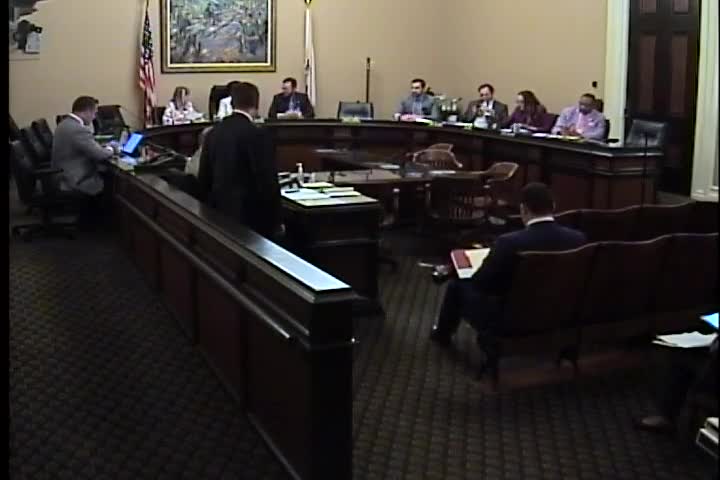 26MIN
Assembly Standing Committee on Agriculture
Bill Author

Bill Co-Author(s):