AB 3212: Service member protections.
- Session Year: 2017-2018
- House: Assembly
- Latest Version Date: 2018-09-19
(1)Existing law provides that the application by a service member for, or receipt by a service member of, a stay, postponement, or suspension in the payment of any tax, fine, penalty, insurance premium, or other civil obligation or liability of that person does not itself, without regard to other considerations, provide the basis for, among other things, a determination by any lender or other person that the service member is unable to pay any civil obligation or liability or the denial or revocation of credit by the creditor.
This bill would additionally provide that an application or receipt under these provisions does not provide a basis for an annotation in a service members record by a creditor or a person engaged in the practice of assembling or evaluating consumer credit information identifying the service member as a member of the active militia, or an active or reserve component of the Armed Forces. The bill would prohibit a person, in connection with the collection of any obligation, from falsely claiming to be a member or civilian employee of, among other things, the Armed Forces or of a component of the active militia or identifying himself or herself through the use of any military rank, rating, or title. The bill would additionally prohibit a person, in connection with the collection of any obligation from a member of the active militia or a member of the active or reserve components of the Armed Forces, from contacting the members military unit or chain of command without the written consent of the member given after the obligation becomes due and payable. By creating a new crime, this bill would impose a state-mandated local program.
(2)Under existing law, in any action or proceeding commenced in any court, if there is a default of any appearance by the defendant, the plaintiff, before entering judgment, is required to file in the court a declaration under penalty of perjury setting forth facts showing that the defendant is not in the military service. Under existing law, if the defendant is in the military service, a court may not make an order until after the court appoints an attorney to represent the defendant and protect his or her interests, and the court is required to make that appointment on application.
This bill, among other things, would, if an attorney appointed under this section to represent a service member cannot locate the service member, prohibit actions by the attorney in the case from waiving any defense of the service member or otherwise binding the service member.
Existing law provides that, at any stage in any action or proceeding in which a service member is involved, during the period of military service or 60 days thereafter, the court may, in its discretion, and is required to, on application by the service member, stay an action or proceeding unless, in the opinion of the court, the ability of the plaintiff to prosecute the action or the defendant to conduct his defense is not materially affected by reason of his or her military service.
This bill would extend these protections to 120 days after the period of military service. The bill would additionally authorize a service member who is granted a stay of a civil action or proceeding under these provisions to apply for an additional stay based on continuing material effect of military duty on the service members ability to appear, and require the court, if it refuses to grant an additional stay of proceedings, to appoint counsel to represent the service member in the action or proceeding.
(3)Existing law prohibits an obligation or liability bearing interest at a rate in excess of 6% per year incurred by a service member before that persons entry into service from bearing interest at a rate in excess of 6% per year during any part of the period of military service. Under existing law, for an obligation or liability consisting of a mortgage, trust deed, or other security in the nature of a mortgage, this prohibition extends to one year after the period of military service.
This bill would extend this prohibition, for an obligation or liability consisting of a student loan, to one year after the period of military service. This bill would extend this prohibition, for an obligation that does not consist of a student loan, mortgage, trust deed, or other security in the nature of a mortgage, to 120 days after the period of military service.
Existing law authorizes a member of the United States Military Reserve or the National Guard who is called to active duty, as specified, to defer payments on specified obligations, including credit cards and vehicle loans, while serving on active duty.
This bill would include student loans under these provisions.
(4)Existing law authorizes a person to terminate a lease covering premises occupied for dwelling, professional, business, agricultural, or similar purposes in any case in which the lease was executed by or on the behalf of the person who, after the execution of that lease, entered military service, as specified.
This bill would recast those provisions, and extend them to additionally authorize a person to terminate a lease of a motor vehicle, as specified. By creating a new crime, this bill would impose a state-mandated local program.
(5)This bill would additionally require any person who receives a good faith request from a service member for relief pursuant to any of the provisions described above and who believes the request is incomplete or otherwise not legally sufficient or that the service member is not entitled to the relief requested, to, within 30 days of the request, provide the service member with a written response acknowledging the request, as specified. The bill would provide that if the person fails to make such a response in the timeframe above, the person waives any objection to the request, and the service member shall be entitled to the relief requested.
This bill would incorporate additional changes to Section 800 of the Military and Veterans Code proposed by AB 2521 to be operative only if this bill and AB 2521 are enacted and this bill is enacted last.
The California Constitution requires the state to reimburse local agencies and school districts for certain costs mandated by the state. Statutory provisions establish procedures for making that reimbursement.
This bill would provide that no reimbursement is required by this act for a specified reason.
(1)Existing law provides that the application by a service member for, or receipt by a service member of, a stay, postponement, or suspension in the payment of any tax, fine, penalty, insurance premium, or other civil obligation or liability of that person does not itself, without regard to other considerations, provide the basis for, among other things, a determination by any lender or other person that the service member is unable to pay any civil obligation or liability or the denial or revocation of credit by the creditor.
This bill would additionally provide that an application or receipt under these provisions does not provide a basis for an annotation in a service members record by a creditor or a person engaged in the practice of assembling or evaluating consumer credit information identifying the service member as a member of the National Guard or a reserve component. active militia, or an active or reserve component of the Armed Forces. The bill would prohibit a person, in connection with the collection of any obligation, from falsely claiming to be a member or civilian employee of an active reserve component of of, among other things, the Armed Forces or of a component of the active militia or identifying himself or herself through the use of any military rank, rating, or title. The bill would additionally prohibit a person, in connection with the collection of any obligation from a member of the active militia or a member of the active or reserve components of the Armed Forces, from contacting the members military unit or chain of command without the written consent of the member given after the obligation becomes due and payable. By creating a new crime, this bill would impose a state-mandated local program.
(2)Under existing law, in any action or proceeding commenced in any court, if there is a default of any appearance by the defendant, the plaintiff, before entering judgment, is required to file in the court a declaration under penalty of perjury setting forth facts showing that the defendant is not in the military service. Under existing law, if the defendant is in the military service, a court may not make an order until after the court appoints an attorney to represent the defendant and protect his or her interests, and the court is required to make that appointment on application.
This bill, among other things, would, if an attorney appointed under this section to represent a service member cannot locate the service member, prohibit actions by the attorney in the case from waiving any defense of the service member or otherwise binding the service member.
Existing law provides that, at any stage in any action or proceeding in which a service member is involved, during the period of military service or 60 days thereafter, the court may, in its discretion, and is required to, on application by the service member, stay an action or proceeding unless, in the opinion of the court, the ability of the plaintiff to prosecute the action or the defendant to conduct his defense is not materially affected by reason of his or her military service.
This bill would extend these protections to 120 days after the period of military service. The bill would additionally authorize a service member who is granted a stay of a civil action or proceeding under these provisions to apply for an additional stay based on continuing material effect of military duty on the service members ability to appear, and require the court, if it refuses to grant an additional stay of proceedings, to appoint counsel to represent the service member in the action or proceeding.
(3)Existing law prohibits an obligation or liability bearing interest at a rate in excess of 6% per year incurred by a service member before that persons entry into service from bearing interest at a rate in excess of 6% per year during any part of the period of military service. Under existing law, for an obligation or liability consisting of a mortgage, trust deed, or other security in the nature of a mortgage, this prohibition extends to one year after the period of military service.
This bill would extend this prohibition, for an obligation or liability consisting of a student loan, to one year after the period of military service. This bill would extend this prohibition, for an obligation that does not consist of a student loan, mortgage, trust deed, or other security in the nature of a mortgage, to 120 days after the period of military service.
Existing law authorizes a member of the United States Military Reserve or the National Guard who is called to active duty, as specified, to defer payments on specified obligations, including credit cards and vehicle loans, while serving on active duty.
This bill would include student loans under these provisions.
(4)Existing law authorizes a person to terminate a lease covering premises occupied for dwelling, professional, business, agricultural, or similar purposes in any case in which the lease was executed by or on the behalf of the person who, after the execution of that lease, entered military service, as specified.
This bill would recast those provisions, and extend them to additionally authorize a person to terminate a lease of a motor vehicle, as specified. By creating a new crime, this bill would impose a state-mandated local program.
(5)This bill would additionally require any person who receives a good faith request from a service member for relief pursuant to any of the provisions described above and who believes the request is incomplete or otherwise not legally sufficient or that the service member is not entitled to the relief requested, to, within 30 days of the request, provide the service member with a written response acknowledging the request, as specified. The bill would provide that if the person fails to make such a response in the timeframe above, the person waives any objection to the request, and the service member shall be entitled to the relief requested.
The California Constitution requires the state to reimburse local agencies and school districts for certain costs mandated by the state. Statutory provisions establish procedures for making that reimbursement.
This bill would provide that no reimbursement is required by this act for a specified reason.
(1)Existing law provides that the application by a service member for, or receipt by a service member of, a stay, postponement, or suspension in the payment of any tax, fine, penalty, insurance premium, or other civil obligation or liability of that person does not itself, without regard to other considerations, provide the basis for, among other things, a determination by any lender or other person that the service member is unable to pay any civil obligation or liability or the denial or revocation of credit by the creditor.
This bill would additionally provide that an application or receipt under these provisions does not provide a basis for an annotation in a service members record by a creditor or a person engaged in the practice of assembling or evaluating consumer credit information identifying the service member as a member of the National Guard or a reserve component. The bill would prohibit a person, in connection with the collection of any obligation, from falsely claiming to be a member or civilian employee of an active reserve component of the Armed Forces or of a component of the active militia or identifying himself or herself through the use of any military rank, rating, or title. The bill would additionally prohibit a person, in connection with the collection of any obligation from a member of the active militia or a member of the active or reserve components of the Armed Forces, from contacting the members military unit or chain of command without the written consent of the member given after the obligation becomes due and payable. By creating a new crime, this bill would impose a state-mandated local program.
(2)Under existing law, in any action or proceeding commenced in any court, if there is a default of any appearance by the defendant, the plaintiff, before entering judgment, is required to file in the court a declaration under penalty of perjury setting forth facts showing that the defendant is not in the military service. Under existing law, if the defendant is in the military service, a court may not make an order until after the court appoints an attorney to represent the defendant and protect his or her interests, and the court is required to make that appointment on application.
This bill, among other things, would, if an attorney appointed under this section to represent a service member cannot locate the service member, prohibit actions by the attorney in the case from waiving any defense of the service member or otherwise binding the service member.
Existing law provides that, at any stage in any action or proceeding in which a service member is involved, during the period of military service or 60 days thereafter, the court may, in its discretion, and is required to, on application by the service member, stay an action or proceeding unless, in the opinion of the court, the ability of the plaintiff to prosecute the action or the defendant to conduct his defense is not materially affected by reason of his or her military service.
This bill would extend these protections to 120 days after the period of military service. The bill would additionally authorize a service member who is granted a stay of a civil action or proceeding under these provisions to apply for an additional stay based on continuing material effect of military duty on the service members ability to appear, and require the court, if it refuses to grant an additional stay of proceedings, to appoint counsel to represent the service member in the action or proceeding.
(3)Existing law prohibits an obligation or liability bearing interest at a rate in excess of 6% per year incurred by a service member before that persons entry into service from bearing interest at a rate in excess of 6% per year during any part of the period of military service. Under existing law, for an obligation or liability consisting of a mortgage, trust deed, or other security in the nature of a mortgage, this prohibition extends to one year after the period of military service.
This bill would extend this prohibition, for an obligation or liability consisting of a student loan, to one year after the period of military service. This bill would extend this prohibition, for an obligation that does not consist of a student loan, mortgage, trust deed, or other security in the nature of a mortgage, to 120 days after the period of military service.
Existing law authorizes a member of the United States Military Reserve or the National Guard who is called to active duty, as specified, to defer payments on specified obligations, including credit cards and vehicle loans, while serving on active duty.
This bill would include student loans under these provisions.
(4)Existing law authorizes a person to terminate a lease covering premises occupied for dwelling, professional, business, agricultural, or similar purposes in any case in which the lease was executed by or on the behalf of the person who, after the execution of that lease, entered military service, as specified.
This bill would recast those provisions, and extend them to additionally authorize a person to terminate a lease of a motor vehicle, as specified. By creating a new crime, this bill would impose a state-mandated local program.
(5)This bill would additionally require any person who receives a good faith request from a service member for relief pursuant to any of the provisions described above and who believes the request is incomplete or otherwise not legally sufficient or that the service member is not entitled to the relief requested, to, within 30 days of the request, provide the service member with a written response acknowledging the request, as specified. The bill would provide that if the person fails to make such a response in the timeframe above, the person waives any objection to the request, and the service member shall be entitled to the relief requested.
The California Constitution requires the state to reimburse local agencies and school districts for certain costs mandated by the state. Statutory provisions establish procedures for making that reimbursement.
This bill would provide that no reimbursement is required by this act for a specified reason.
Under existing law, the administering agency for the California Disabled Veteran Business Enterprise Program is the Department of General Services, except in the case of contracts for professional bond services. Existing law requires the Director of General Services to adopt written policies and guidelines establishing a uniform process for state contracting that would provide a disabled veteran business enterprise participation incentive to bidders.This bill would make technical, nonsubstantive changes to these provisions.Under existing law, the administering agency for the California Disabled Veteran Business Enterprise Program is the Department of General Services, except in the case of contracts for professional bond services. Existing law requires the Director of General Services to adopt written policies and guidelines establishing a uniform process for state contracting that would provide a disabled veteran business enterprise participation incentive to bidders.
This bill would make technical, nonsubstantive changes to these provisions.
For the purposes of this chapter, the following definitions apply:
(a)Armed Forces means the Army, Navy, Air Force, Marine Corps, and Coast Guard.
(b)Military orders, with respect to a service member, means official military orders, or any notification, certification, or verification from the service members commanding officer with respect to the service members current or future military duty status.
(c)Military service means, as to a member of the militia, full-time active state service or full-time active federal service. As to a person who is not a member of the militia, military service means full-time active duty for a period in excess of seven days in any 14-day period.
(d)Service member means all of the following:
(1)A member of the militia, as defined in Section 120, called or ordered into active state or federal service pursuant to Section 143 or 146 or federal law.
(2)A member of an active or reserve component of the Armed Forces who is ordered into active duty pursuant to federal law.
SEC. 3.Section 401 of the Military and Veterans Code is amended to read:401.(a)Application by a service member for, or receipt by a service member of, a stay, postponement, or suspension pursuant to this chapter in the payment of any tax, fine, penalty, insurance premium, or other civil obligation or liability of that person shall not itself, without regard to other considerations, provide the basis for any of the following:
(1)A determination by any lender or other person that the service member is unable to pay any civil obligation or liability in accordance with its terms.
(2)With respect to a credit transaction between a creditor and the service member, any of the following:
(A)A denial or revocation of credit by the creditor.
(B)A change by the creditor in the terms of an existing credit arrangement.
(C)A refusal by the creditor to grant credit to the service member in substantially the amount or on substantially the terms requested.
(3)An adverse report relating to the creditworthiness of the service member by or to any person or entity engaged in the practice of assembling or evaluating consumer credit information.
(4)A refusal by an insurer to insure the service member.
(5)An annotation in a service members record by a creditor or a person engaged in the practice of assembling or evaluating consumer credit information identifying the service member as a member of the active militia, as defined in Section 120, or an active or reserve component of the Armed Forces.
(b)A person shall not, in connection with the collection of any obligation, including any debt or payment, falsely claim to be a member or civilian employee of the Armed Forces, a component of the active militia, as defined in Section 120, the Department of Defense, the Department of Homeland Security, or the Military Department, or identify himself or herself through the use of any military rank, rating, or title.
(c)A person shall not, in connection with the collection of any obligation, including any debt or payment, from a member of the active militia, as defined in Section 120, or a member of an active or reserve component of the Armed Forces, contact the members military unit or chain of command without the written consent of the member given after the obligation becomes due and payable.
(d)Any person violating any provision of this section is liable for actual damages, reasonable attorneys fees, and costs incurred by the injured party.
(e)Any person violating any provision of this section is guilty of a misdemeanor, and shall be punishable by imprisonment not to exceed one year or by a fine not to exceed one thousand dollars ($1,000), or both.
SEC. 4.Section 402 of the Military and Veterans Code is amended to read:402.(a)In any action or proceeding commenced in any court, if there shall be a default of any appearance by the defendant, the plaintiff, before entering judgment shall file in the court a declaration under penalty of perjury setting forth facts showing that the defendant is not in the military service. If unable to file that declaration, the plaintiff shall, in lieu thereof, file a declaration setting forth either that the defendant is in the service or that the plaintiff is not able to determine whether or not the defendant is in the service. If a declaration is not filed showing that the defendant is not in the military service, no judgment shall be entered without first securing an order of court directing that entry, and no order shall be made if the defendant is in the military service until after the court appoints an attorney to represent the defendant and protect his or her interest, and the court shall, on application, make that appointment. If an attorney appointed under this section to represent a service member cannot locate the service member, actions by the attorney in the case shall not waive any defense of the service member or otherwise bind the service member. Unless it appears that the defendant is not in the military service the court may require, as a condition before judgment is entered, that the plaintiff file a bond approved by the court conditioned to indemnify the defendant, if in the military service, against any loss or damage that he or she may suffer by reason of any judgment should the judgment be thereafter set aside in whole or in part. The court may make such other and further order or enter that judgment as in its opinion may be necessary to protect the rights of the defendant under this section.
(b)Any person who shall, for purposes of this section, make or use a declaration declared to be true under penalty of perjury, knowing it to be false, is guilty of a misdemeanor and shall be punishable by imprisonment not to exceed one year or by a fine not to exceed one thousand dollars ($1,000), or both. Any person violating any provision of this section is also liable for actual damages, reasonable attorneys fees, and costs incurred by the injured party.
(c)In an action covered by this section in which the defendant is in military service, the court shall grant a stay of proceedings for a minimum period of 90 days under this subdivision upon application of counsel, or on the courts own motion, if the court determines that there may be a defense to the action and a defense cannot be presented without the presence of the defendant, or, after due diligence, counsel has been unable to contact the defendant or otherwise determine if a meritorious defense exists.
(d)In any action or proceeding in which a service member is a party, if the service member does not personally appear therein or is not represented by an authorized attorney, the court may appoint an attorney to represent him or her. In that case a bond may be required and an order made to protect the rights of the service member. However, no attorney appointed under this chapter to protect a service member shall have the power to waive any right of the person for whom he or she is appointed or bind him or her by his or her acts.
(e)If any judgment shall be rendered in any action or proceeding governed by this chapter against any service member during the period of that service or within 30 days thereafter, and it appears that the service member was prejudiced by reason of his or her military service in making his or her defense thereto, the judgment may, upon application made by the service member or his or her legal representative not later than 90 days after the termination of the service, be opened by the court rendering the same and the defendant or his or her legal representative let in to defend; provided the application states a meritorious or legal defense to the action or some part thereof. Vacating, setting aside, or reversing any judgment by reason of this chapter shall not impair any right or title acquired by any bona fide purchaser for value under that judgment.
(f)For purposes of this section and any declaration made under this section, a defendant shall be deemed to be in the military service if he or she is either:
(1)Currently in the military service.
(2)Was in the military service within the preceding 120 days.
SEC. 5.Section 403 of the Military and Veterans Code is amended to read:403.(a)At any stage in any action or proceeding in which a service member is involved, either as plaintiff or defendant, during a period of military service or within 120 days thereafter, the court may, in its discretion on its own motion, and shall, on application to it by the service member or some person on his or her behalf, stay the action or proceeding unless, in the opinion of the court, the ability of the plaintiff to prosecute the action or the defendant to conduct his or her defense is not materially affected by reason of his or her military service.
(b)When an action for compliance with the terms of any contract is stayed pursuant to this section, no fine or penalty shall accrue by reason of failure to comply with the terms of the contract during the period of the stay, and in any case where a person fails to perform any obligation and if a fine or penalty for the nonperformance is incurred a court may, on those terms as may be just, provide relief against the enforcement of that fine or penalty if it appears that the person who would suffer by that fine or penalty was in the military service when the penalty was incurred and that by reason of military service the ability of the person to pay or perform was thereby materially impaired.
(c)In any action or proceeding against a service member, before or during the period of the service, or within 120 days thereafter, the court may, in its discretion on its own motion, or shall, upon application to it by the service member or some person on his or her behalf, unless in the opinion of the court the ability of the defendant to comply with the judgment or order entered or sought is not materially affected by reason of his or her military service, do either of the following:
(1)Stay the execution of any judgment or order entered against a service member.
(2)Vacate or stay any attachment or garnishment of property, money, or debts in the hands of another, whether before or after judgment.
(d)Any stay of any action, proceeding, attachment, or execution ordered by any court under this section may, except as otherwise provided, be ordered for the period of military service and three months thereafter or any part of that period, and subject to those terms as may be just, including terms with respect to payment in installments of those amounts at those times as the court may fix. If the service member is a codefendant with others the plaintiff may nevertheless, by leave of court, proceed against the others.
(e)A service member who is granted a stay of a civil action or proceeding under this section may apply for an additional stay based on continuing material effect of military duty on the service members ability to appear. If the court refuses to grant an additional stay of proceedings, it shall appoint counsel to represent the service member in the action or proceeding.
(f)An application for a stay under this section does not constitute an appearance for jurisdictional purposes and does not constitute a waiver of any substantive or procedural defense, including a defense relating to lack of personal jurisdiction.
SEC. 6.Section 404 of the Military and Veterans Code is amended to read:404.(a)A period of military service shall not be included in computing any period now or hereafter to be limited by any law, regulation, or order for the bringing of any action or proceeding in any court, board, bureau, commission, department, or other agency of government by or against any service member or by or against his or her heirs, executors, administrators, or assigns, whether the cause of action or the right or privilege to institute the action or proceeding accrued prior to or during the period of service, nor shall any part of the period be included in computing any period now or hereafter provided by any law for the redemption of real property sold or forfeited to enforce any obligation, tax, or assessment.
(b)This section shall not apply with respect to any period of limitation prescribed by or under the federal Internal Revenue Code.
SEC. 7.Section 405 of the Military and Veterans Code is amended to read:405.(a)No obligation or liability bearing interest at a rate in excess of 6 percent per year incurred by a service member before that persons current period of military service shall, except as provided in subdivision (b), bear interest at a rate in excess of 6 percent per year as follows:
(1)For an obligation or liability consisting of a mortgage, trust deed, or other security in the nature of a mortgage, or any student loan, during any part of the period of military service and one year thereafter.
(2)For any other obligation or liability, during any part of the period of military service and 120 days thereafter.
(b)Notwithstanding subdivision (a), if in the opinion of a court, upon application thereto by the obligee, the ability of the service member to pay interest upon an obligation or liability at a rate in excess of 6 percent per year is not materially affected by reason of that service, the court may make that order as in its opinion may be just.
(c)As used in this section, interest includes service charges, renewal charges, fees, or any other charges, except bona fide insurance, in respect of any obligation or liability.
(d)Interest at a rate in excess of 6 percent per year that would otherwise be incurred but for the prohibition in this section is forgiven. The amount of any periodic payment due from a service member shall be reduced by the amount of the interest forgiven under this section that is allocable to the period for which the payment is made.
(e)Any person violating this section shall be liable for actual damages, reasonable attorneys fees, and costs incurred by the injured party.
SEC. 8.Section 406 of the Military and Veterans Code is amended to read:406.(a)No eviction or distress shall be made during the period of military service specified in Section 400, until 120 days after the service member is released from active service or duty if the premises are occupied primarily for dwelling purposes by the spouse, children, or other dependents of a service member, except upon leave of court granted upon application therefor or granted in an action or proceeding affecting the right of possession.
(b)On any application or in any action under this section, the court may on its own motion, and shall, on application, stay the proceedings for the period specified in subdivision (a) or rather than granting a complete stay, the court may require the tenant to make regular partial payments during the service members period of military service, or the court may make any other order that it finds to be just, unless the court finds that the ability of the tenant to pay the agreed rent is not materially affected by that military service. Where that stay is made by the court, the owner of the premises shall be entitled, upon application therefor, to relief in respect of those premises similar to that granted persons in military service in Sections 407, 408, and 409.1 to that extent and for that period as may appear to the court to be just.
(c)Any person violating this section shall be liable for actual damages, reasonable attorneys fees, and costs incurred by the injured party.
(d)Any person who knowingly takes part in any eviction or distress as provided in this section or who attempts to do so, is guilty of a misdemeanor, and shall be punishable by imprisonment not to exceed one year or by a fine not to exceed one thousand dollars ($1,000), or both.
SEC. 9.Section 407 of the Military and Veterans Code is amended to read:407.(a)No person who has received, or whose assignor has received, under a contract for the purchase of real or personal property, a deposit or installment of the purchase price, or a deposit or installment under the contract, from a person or from the assigner of a person who, after the date of payment of the deposit or installment, has entered into a period of military service, shall exercise any right or option under that contract to rescind or terminate the contract or resume possession of the property for nonpayment of any installment due or for any other breach of its terms occurring prior to or during the period of that military service, or for 120 days thereafter, except by action in a court of competent jurisdiction.
(b)Upon the hearing of that action as provided in subdivision (a), the court may order the repayment of prior installments or deposits or any part, as a condition of terminating the contract and resuming possession of the property, or may, in its discretion, on its own motion, and shall, on application to it by the service member or some person on the service members behalf, order a stay of proceedings as the court deems just, unless in the opinion of the court, the ability of the defendant to comply with the terms of the contract is not materially affected by reason of the service; or it may make any other disposition of the case as may be equitable to conserve the interests of all parties.
(c)Any person violating this section shall be liable for actual damages, reasonable attorneys fees, and costs incurred by the injured party.
(d)Any person who shall knowingly resume possession of property that is the subject of this section in a manner other than as provided in subdivision (a), or attempts to do so, is guilty of a misdemeanor, and shall be punishable by imprisonment not to exceed one year or by a fine not to exceed one thousand dollars ($1,000), or both.
SEC. 10.Section 408 of the Military and Veterans Code is amended to read:408.(a)This section shall apply only to obligations secured by mortgage, trust deed, or other security in the nature of a mortgage upon real or personal property owned by a service member.
(b)In any proceeding commenced in any court during, or within one year after, the period of military service to enforce that obligation as provided in subdivision (a), the court may, after hearing and in its discretion on its own motion, and shall, on application to it by the service member or some person on the defendants behalf, unless in the opinion of the court the ability of the defendant to comply with the terms of the obligation is not materially affected by reason of the defendants military service, do either of the following:
(1)Stay the proceedings for any period as the court deems just.
(2)Make any other disposition of the case as may be equitable to conserve the interests of all parties.
(c)No sale, foreclosure, or seizure of property for nonpayment of any sum due under any obligation as provided in subdivision (a), or for any other breach of the terms thereof, whether under a power of sale, under a judgment entered upon warrant of attorney to confess judgment contained therein, or otherwise, shall be valid if made during the period of military service or within one year thereafter, except pursuant to an agreement between the parties made after the nonpayment or breach, unless upon an order previously granted by the court and a return thereto made and approved by the court.
(d)Any person violating this section shall be liable for actual damages, reasonable attorneys fees, and costs incurred by the injured party.
(e)Any person who shall knowingly make or cause to be made any sale, foreclosure, or seizure of property, defined as invalid by subdivision (c), or attempts to do so, is guilty of a misdemeanor, and shall be punishable by imprisonment not to exceed one year or by a fine not to exceed one thousand dollars ($1,000), or both.
SEC. 11.Section 409 of the Military and Veterans Code is repealed.SEC. 12.Section 409 is added to the Military and Veterans Code, to read:409.(a)The lessee on a lease described in subdivision (b) may, at the lessees option, terminate the lease at any time after the lessees entry into military service, or the date of the lessees military orders described in subdivision (b). A lessees termination of a lease pursuant to this subdivision shall terminate any obligation a dependent of the lessee has under the lease.
(b)This section applies to the following leases:
(1)A lease of premises occupied, or intended to be occupied, by a service member or a service members dependents for a residential, professional, business, agricultural, or similar purpose if the lease is executed by or on behalf of a person who does either of the following:
(A)During the term of the lease, enters a period of military service.
(B)While in a period of military service, executes the lease and then receives military orders for a permanent change of station or to deploy with a military unit, or as an individual in support of a military operation, for a period of not less than 90 days.
(2)A lease of a motor vehicle used, or intended to be used, by a service member or a service members dependents for personal or business transportation if the lease is executed by or on behalf of a person who does either of the following:
(A)During the term of the lease, enters a period of military service under a call or order specifying a period of not less than 180 days.
(B)During the term of the lease, enters a period of military service under a call or order specifying a period of less than 180 days, and then receives orders extending the period of military service to a period of not less than 180 days.
(C)While in a period of military service, executes the lease and then receives military orders for a change of permanent station from a location in the continental United States to a location outside the continental United States, or from a location in a state outside the continental United States to any location outside that state, or to deploy with a military unit, or as an individual in support of a military operation, for a period of not less than 180 days.
(c)(1)Termination of a lease under subdivision (a) shall be made by delivery by the lessee of written notice of that termination, and a copy of the service members military orders, to the lessor or the lessors grantee, or to the lessors agent or the agents grantee, and in the case of a lease of a motor vehicle, by return of the motor vehicle by the lessee to the lessor or the lessors grantee, or to the lessors agent or the agents grantee, not later than 15 days after the date of the delivery of written notice.
(2)Notice under paragraph (1) may be accomplished by hand delivery, private business carrier, or by placing the written notice in an envelope with sufficient postage and with return receipt requested, and addressed as designated by the lessor or the lessors grantee, or to the lessors agent or the agents grantee, and depositing the written notice in the United States mail system.
(d)(1)In the case of a lease described in paragraph (1) of subdivision (b) that provides for monthly payment of rent, termination of the lease under subdivision (a) is effective 30 days after the first date on which the next rental payment is due and payable after the date on which the notice under subdivision (c) is delivered. In the case of any other lease described in paragraph (1) of subdivision (b), termination of the lease under subdivision (a) is effective on the last day of the month following the month in which the notice is delivered.
(2)In the case of a lease described in paragraph (2) of subdivision (b), termination of the lease under subdivision (a) is effective on the day on which the requirements of subdivision (c) are met for that termination.
(e)(1)Rent amounts for a lease described in paragraph (1) of subdivision (b) that are unpaid for the period preceding the effective date of the lease termination shall be paid on a prorated basis. The lessor may not impose an early termination charge, but any taxes, summonses, or other obligations and liabilities of the lessee in accordance with the terms of the lease, including reasonable charges to the lessee for excess wear, that are due and unpaid at the time of termination of the lease, shall be paid by the lessee.
(2)Lease amounts for a lease described in paragraph (2) of subdivision (b) that are unpaid for the period preceding the effective date of the lease termination shall be paid on a prorated basis. The lessor may not impose an early termination charge, but any taxes, summonses, title and registration fees, or other obligations and liabilities of the lessee in accordance with the terms of the lease, including reasonable charges to the lessee for excess wear or use and mileage, that are due and unpaid at the time of termination of the lease, shall be paid by the lessee.
(f)Rents or lease amounts paid in advance for a period after the effective date of the termination of the lease shall be refunded to the lessee by the lessor, or the lessors assignee or the assignees agent, within 30 days of the effective date of the termination of the lease.
(g)Upon application by the lessor to a court before the termination date provided in the written notice, relief granted by this section to a service member may be modified as justice and equity require.
(h)Any person who knowingly seizes, holds, or detains the personal effects, clothing, furniture, security deposit, or other property of any person who has lawfully terminated a lease covered by this section, or in any manner interfered with the removal of that property from the premises covered by that lease, for the purpose of subjecting or attempting to subject any of the property to a claim for rent accruing subsequent to the date of termination of the lease, or attempts to do so, is guilty of a misdemeanor and shall be punishable by imprisonment not to exceed one year or by a fine not to exceed one thousand dollars ($1,000), or both that fine and imprisonment.
SEC. 13.Section 409.1 of the Military and Veterans Code is amended to read:409.1.(a)Where any life insurance policy on the life of a service member in military service has been assigned prior to that persons period of military service to secure the payment of any obligation of the person, no assignee of the policy, except the insurer in connection with a policy loan, shall, during the period of military service of the insured or within one year thereafter, except upon the consent in writing of the insured made during that period or when the premiums thereon are due and unpaid or upon the death of the insured, exercise any right or option by virtue of that assignment unless upon leave of court granted upon an application made therefor by the assignee. The court may thereupon refuse to grant that leave unless in the opinion of the court the ability of the obligor to comply with the terms of the obligation is not materially affected by reason of his or her military service.
(b)No person shall exercise any right to foreclose or enforce any lien on the property or personal effects of a service member, including liens for storage, repair, or cleaning, during that persons period of military service and for 120 days thereafter, except upon an order previously granted by a court upon application therefor and a return thereto made and approved by the court. In a proceeding to foreclose or enforce a lien subject to this section, the court may on its own motion, or if requested by a service member whose ability to comply with the obligation resulting in the proceeding is materially affected by military service, stay the proceeding for a period of time as justice and equity require, or adjust the obligation to preserve the interests of all parties.
(c)Any person violating this section shall be liable for actual damages, reasonable attorneys fees, and costs incurred by the injured party.
(d)A person violating any provision of this section is guilty of a misdemeanor, and shall be punishable by imprisonment not to exceed one year or by a fine not to exceed one thousand dollars ($1,000), or both.
SEC. 14.Section 409.2 of the Military and Veterans Code is amended to read:409.2.(a)This section shall apply when any taxes or assessments, whether general or special, other than taxes on income, whether falling due prior to or during his or her most current period of military service, in respect of personal property, money, or credits, or real property owned and occupied for dwelling, professional, business, or agricultural purposes by a service member or his or her dependents at the commencement of the service members most current period of military service and still so occupied by the service members dependents or employees are not paid.
(b)No sale of this property shall be made to enforce the collection of any tax or assessment, or any proceeding or action commenced for that purpose, except upon leave of court granted upon application made therefor by the collector of taxes or other officer whose duty it is to enforce the collection of taxes or assessments. The court thereupon, unless in its opinion the ability of the service member to pay the taxes or assessments is not materially affected by reason of that service, may stay the proceedings or sale, as provided in this section, for a period extending not more than six months after the termination of the most current period of military service.
(c)When by law this property may be sold or forfeited to enforce the collection of any tax or assessment, the service member shall have the right to redeem or commence an action to redeem that property, at any time not later than six months after the termination of the period of military service.
(d)Whenever any tax or assessment shall not be paid when due, the tax or assessment due and unpaid shall bear interest until paid at the rate of 6 percent per year, and no other penalty or interest shall be incurred by reason of that nonpayment. Any lien for any unpaid taxes or assessment shall also include that interest thereon.
SEC. 15.Section 409.3 of the Military and Veterans Code is amended to read:409.3.(a)A service member may, at any time during his or her most current period of military service or within six months thereafter, petition a court for relief in respect of any obligation or liability incurred by the service member before the effective date of the orders for his or her most current period of military service or in respect of any tax or assessment whether falling due before or during his or her most current period of military service.
(b)The court shall set a hearing on the petition within 25 days from the date the petition is filed, unless the court shows good cause for extending the date of the hearing. The petition shall be served at least 10 days before the hearing. The respondent shall file and serve a response to the petition at least five days before the hearing.
(c)The court shall not charge a filing fee or court costs for a petition filed pursuant to this section.
(d)If, after notice and hearing, the court finds the ability of the service member to comply with the terms of any such obligation or liability, or to pay any such tax or assessment, has been materially affected by reason of his or her most current period of military service as defined in this chapter, the court may grant the following relief:
(1)In the case of an obligation payable in installments under a contract for the purchase of real estate, or secured by a mortgage or other instrument in the nature of a mortgage upon real estate, a deferment of the payments due on the obligation for a period of time equal to the period of military service, even if the service member requests the relief after the start of his or her current period of military service, subject to subdivision (a), and even if such payments extend beyond the termination of the period of military service. The obligation shall be extended for the period of time that payments were deferred, and the deferred payments shall be paid in equal installments during the combined period at the rate of interest on the unpaid balance as is prescribed in the contract, or other instrument evidencing the obligation, for installments paid when due, and subject to any other terms as may be just. Penalties shall not be imposed on the nonpayment of principal or interest during this period. Interest shall not be charged or accumulated on the principal or interest on which the payment was delayed.
(2)In the case of any other obligation, liability, tax, or assessment, a deferment of any payments on the obligation during the service members period of military service and, from the date of termination of the period of military service or from the date of application if made after the service, for a period of time equal to the period of military service of the applicant or any part of that period, subject to payment of the balance of principal and accumulated interest due and unpaid at the date of termination of the period of military service or the date of application, as the case may be, in equal periodic installments during the extended period at the rate of interest as may be prescribed for the obligation, liability, tax, or assessment, if paid when due, and subject to any other terms as may be just. Penalties shall not be imposed on the nonpayment of principal or interest during this period. Interest shall not be charged or accumulated on the principal or interest on which the payment was delayed.
(e)(1)When any court has granted a deferment as provided in this section, no fine or penalty shall accrue during the period the terms and conditions of the deferment are complied with by reason of failure to comply with the terms or conditions of the obligation, liability, tax, or assessment in respect of which the deferment was granted, including penalties on the nonpayment of principal or interest during this period. Interest shall not be charged or accumulated on the principal or interest on which the payment was delayed. Foreclosure or repossession of property on which payment has been deferred shall not take place during the period specified in this section.
(2)If a person has charged or accrued a fine or penalty in violation of paragraph (1), that person shall be liable for actual damages, reasonable attorneys fees, and costs incurred by the injured party as a result of the violation.
(f)Notwithstanding subdivision (d), any mortgage payments deferred pursuant to this section are due and payable upon the earlier of the following:
(1)The sale of the property or other event specified in the documents creating the obligation permitting the lender to accelerate the loan, other than a deferment of payments authorized by this section.
(2)Further encumbrance of the property other than for preservation or protection of the property.
(3)The maturity of the obligation, as defined under the terms of the documents creating the obligation, or, if applicable, as extended pursuant to subdivision (d).
(g)This section shall not relieve a service member with a mortgage subject to an impound account for the payment of property taxes, special assessments, mortgage insurance, and hazard insurance from making monthly payments of an amount that is at least sufficient to pay these amounts, unless the borrower and lender agree to a lesser amount.
(h)This section shall not preclude a service member from making payments toward the mortgage payments deferred before the occurrence of any of the events in subdivision (d).
(i)This section shall not permit a service member ordered to military service to obtain a delay, deferment, or stay on an obligation to pay child support. This section shall not preclude a service member ordered to military service from seeking a modification of an order to pay child support due to a reduction in income resulting from the order to service, or from seeking the imposition of the maximum interest rate provided by this chapter on arrearages in child support payments existing before the order to service.
SEC. 16.Section 409.4 of the Military and Veterans Code is amended to read:409.4.(a)A person who by reason of military service is entitled to the rights and benefits of this chapter shall also be entitled upon release from that current period of military service to reinstatement of any health insurance that was in effect on the day before the current period of service commenced, and was terminated effective on a date during the period of the service.
(b)An exclusion or a waiting period may not be imposed in connection with reinstatement of health insurance coverage of a health or physical condition of a person under subdivision (a), or a health or physical condition of any other person who is covered by the insurance by reason of the coverage of that person, if any of the following apply:
(1)The condition arose before or during that persons current period of service.
(2)An exclusion or waiting period would not have been imposed for the condition during a period of coverage resulting from participation by that person in the insurance.
(3)The condition of the person has not been determined by the Secretary of Veterans Affairs to be a disability incurred or aggravated in the line of duty within the meaning of Section 105 of Title 38 of the United States Code.
(c)Any person violating this section shall be liable for actual damages, reasonable attorneys fees, and costs incurred by the service member or other person entitled to the benefits and protections of this chapter.
SEC. 17.Section 409.15 is added to the Military and Veterans Code, to read:409.15.(a) Any person who receives a good faith request from a service member for relief pursuant to this chapter and who believes the request is incomplete or otherwise not legally sufficient, or that the service member is not entitled to the relief requested, shall, within 30 days of the request, provide the service member with a written response acknowledging the request, setting forth the persons basis for believing or asserting that the request is incomplete or not legally sufficient, or that the service member is not entitled to the relief requested. The response shall clearly identify the specific information or materials that are missing from the request and that would be required to grant the relief requested, and provide contact information, including a mailing address and telephone number, which the service member can use to contact the person.
(b)If the person fails to make such a response in the timeframe set forth in this section, the person waives any objection to the request, and the service member shall be entitled to the relief requested.
SEC. 18.Section 800 of the Military and Veterans Code is amended to read:800.(a)Subject to subdivision (b), in addition to any other benefits provided by law and to the extent permitted by federal law, a reservist who is called to active duty may defer payments on any of the following obligations while serving on active duty:
(1)An obligation secured by a mortgage or deed of trust.
(2)Credit card, as defined in Section 1747.02 of the Civil Code.
(3)Retail installment contract, as defined in Section 1802.6 of the Civil Code.
(4)Retail installment account, installment account, or revolving account, as defined in Section 1802.7 of the Civil Code.
(5)Up to two vehicle loans. For purposes of this chapter, vehicle means a vehicle as defined in Section 670 of the Vehicle Code.
(6)A payment of property tax or any special assessment of in-lieu property tax imposed on real property that is assessed on residential property owned by the reservist and used as that reservists primary place of residence on the date the reservist was ordered to active duty.
(7)An obligation owed to a utility company.
(8)A student loan.
(b)(1)In order for an obligation or liability of a reservist to be subject to the provisions of this chapter, the reservist or the reservists designee shall deliver to the obligor both of the following:
(A)A request by or on behalf of the reservist for a deferment of financial obligations.
(B)A copy of the reservists military orders.
(2)If required by a financial institution, proof that the reservists employer does not provide continuing income to the reservist while the reservist is on active military duty, including the reservists military pay, of more than 90 percent of the reservists monthly salary and wage income earned before the call to active duty.
(c)Upon request of the reservist or the reservists dependent or designee and within five working days of that request, if applicable, the employer of a reservist shall furnish the letter or other comparable evidence showing that the employers compensation policy does not provide continuing income to the reservist, including the reservists military pay, of more than 90 percent of the reservists monthly salary and wage income earned before the call to active duty.
(d)The deferral period on financial obligations shall be the lesser of 180 days or the period of active duty plus 60 calendar days and shall apply only to those payments due subsequent to the notice provided to a lender as provided in subdivision (b). In addition, the total period of the deferment shall not exceed 180 days within a 365-day period.
(e)If a lender defers payments on a closed end credit obligation or an open-end credit obligation with a maturity date, pursuant to this chapter, the lender shall extend the term of the obligation by the amount of months the obligation was deferred.
(f)If a lender defers payments on an open-end credit obligation pursuant to this chapter, the lender may restrict the availability of additional credit with respect to that obligation during the term of the deferral.
SEC. 18.5.Section 800 of the Military and Veterans Code is amended to read:800.(a)Subject to subdivision (b), in addition to any other benefits provided by law and to the extent permitted by federal law, a reservist who is called to active duty may defer payments on any of the following obligations while serving on active duty:
(1)An obligation secured by a mortgage or deed of trust.
(2)Credit card, as defined in Section 1747.02 of the Civil Code.
(3)Retail installment contract, as defined in Section 1802.6 of the Civil Code.
(4)Retail installment account, installment account, or revolving account, as defined in Section 1802.7 of the Civil Code.
(5)Up to two vehicle loans. For purposes of this chapter, vehicle means a vehicle as defined in Section 670 of the Vehicle Code.
(6)A payment of property tax or any special assessment of in-lieu property tax imposed on real property that is assessed on residential property owned by the reservist and used as that reservists primary place of residence on the date the reservist was ordered to active duty.
(7)An obligation owed to a utility company.
(8)A student loan.
(b)(1)In order for an obligation or liability of a reservist to be subject to the provisions of this chapter, the reservist or the reservists designee shall deliver to the obligor both of the following:
(A)A written request by or on behalf of the reservist for a deferment of financial obligations. For purposes of this subparagraph, written request includes an electronic communication.
(B)A copy of the reservists military orders.
(2)If required by a financial institution, proof that the reservists employer does not provide continuing income to the reservist while the reservist is on active military duty, including the reservists military pay, of more than 90 percent of the reservists monthly salary and wage income earned before the call to active duty.
(c)Upon request of the reservist or the reservists dependent or designee and within five working days of that request, if applicable, the employer of a reservist shall furnish the letter or other comparable evidence showing that the employers compensation policy does not provide continuing income to the reservist, including the reservists military pay, of more than 90 percent of the reservists monthly salary and wage income earned before the call to active duty.
(d)The deferral period on financial obligations shall be the lesser of 180 days or the period of active duty plus 60 calendar days and shall apply only to those payments due subsequent to the notice provided to a lender as provided in subdivision (b). In addition, the total period of the deferment shall not exceed 180 days within a 365-day period.
(e)If a lender defers payments on a closed end credit obligation or an open-end credit obligation with a maturity date, pursuant to this chapter, the lender shall extend the term of the obligation by the amount of months the obligation was deferred.
(f)If a lender defers payments on an open-end credit obligation pursuant to this chapter, the lender may restrict the availability of additional credit with respect to that obligation during the term of the deferral.
SEC. 19.Section 803 of the Military and Veterans Code is amended to read:803.The following definitions apply for purposes of this chapter:
(a)Reservist means either of the following:
(1)A member of the militia, as defined in Section 120, called or ordered into state military service pursuant to Section 143 or 146 or federal law.
(2)A member of a reserve component of the Armed Forces of the United States, as defined by Section 101 of Title 10 of the United States Code, who is ordered to active duty pursuant to federal law.
(b)Military orders means, with respect to a service member, official military orders, or any notification, certification, or verification from the service members commanding officer, with respect to the service members current or future military duty status.
(c)Military service means either of the following:
(1)Full-time active state service or full-time active federal service of a service member who is a member of the militia, as described in paragraph (1) of subdivision (a).
(2)Full-time active duty of a service member who is a reservist, as described in paragraph (2) of subdivision (a), for a period of no less than 30 consecutive days.
SEC. 20.Section 811 of the Military and Veterans Code is amended to read:811.(a)The spouse or legal dependent, or both, of a reservist who is called to active duty, shall be entitled to the benefits accorded to a reservist under this chapter, provided that the reservist is eligible for the benefits.
(b)This chapter applies only to an obligation specified in this chapter that was incurred prior to the date that a reservist was called to his or her current period of active duty.
SEC. 21.Section 813 is added to the Military and Veterans Code, to read:813.(a)Any person who receives a good faith request from a service member for relief pursuant to this chapter and who believes the request is incomplete or otherwise not legally sufficient, or that the service member is not entitled to the relief requested, shall, within 30 days of the request, provide the service member with a written response acknowledging the request, setting forth the persons basis for believing or asserting that the request is incomplete or not legally sufficient, or that the service member is not entitled to the relief requested. The response shall clearly identify the specific information or materials that are missing from the request and that would be required to grant the relief requested, and provide contact information, including a mailing address and telephone number, which the service member can use to contact the person.
(b)If the person fails to make such a response in the timeframe set forth in this section, the person waives any objection to the request, and the service member shall be entitled to the relief requested.
SEC. 22.Section 821 of the Military and Veterans Code is amended to read:821.For purposes of this chapter, the following definitions apply:
(a)Service member means either of the following:
(1)A member of the militia, as defined in Section 120, called or ordered into military service pursuant to Section 143 or 146 or federal law.
(2)A member of a reserve component of the Armed Forces of the United States, as defined by Section 101 of Title 10 of the United States Code, who is ordered to active duty pursuant to federal law.
(b)Military orders means, with respect to a service member, official military orders, or any notification, certification, or verification from the service members commanding officer, with respect to the service members current or future military duty status.
(c)Military service means either of the following:
(1)Full-time active state service or full-time active federal service of a service member who is a member of the militia, as described in paragraph (1) of subdivision (a).
(2)Full-time active duty of a service member who is a reservist, as described in paragraph (2) of subdivision (a), for a period of no less than 30 consecutive days.
SEC. 23.Section 822 of the Military and Veterans Code is amended to read:822.No county recorder in this state may impose a fee for the recordation of a power of attorney to act as the agent for a service member.
SEC. 24.Section 823.5 of the Military and Veterans Code is amended to read:823.5.(a)No person or entity licensed under the Business and Professions Code, Corporations Code, Financial Code, or Insurance Code shall market financial services or products to a service member or former service member, or the spouse of a service member or former service member, in a misleading or deceptive manner that suggests any of the following:
(1)That the person or entity marketing the financial service or product is acting on behalf of one or more branches of the United States military or the United States Department of Veterans Affairs.
(2)That the person or entity marketing the financial service or product is an affiliate of one or more branches of the United States military or the United States Department of Veterans Affairs.
(3)That the financial service or product is being offered on behalf of one or more branches of the United States military or the United States Department of Veterans Affairs.
(b)If a person who violates this section is licensed under any state licensing law, a violation of this section shall be deemed a violation of the laws under which that person is licensed.
(c)This section shall not apply to either of the following:
(1)Any bank as defined in Section 103 of the Financial Code.
(2)Any credit union as defined in Section 14002 of the Financial Code.
(d)For purposes of this section:
(1)Service member means a member of an active duty or reserve component of the Armed Forces of the United States or of the active militia, as defined by Section 120.
(2)Former service member means a veteran as defined by Section 980.
SEC. 25.Section 824 of the Military and Veterans Code is amended to read:824.(a)An institution shall, upon request, grant an academic leave of absence for military service to any student who is a member of the active militia, as defined by Section 120, or a reserve component of the Armed Forces of the United States, as defined by Section 101 of Title 10 of the United States Code, who is ordered to active duty pursuant to Section 143 or 146 or federal law.
(b)If requested by a student granted an academic leave of absence for military service, not later than one year after the students release from military service, other than a dishonorable release, the institution in which the student is enrolled shall do one of the following, as elected by the student:
(1)The institution shall make arrangements to reasonably accommodate and assist the student so that he or she is able to meet any and all coursework requirements that he or she may have missed due to military service.
(2)The institution shall refund the tuition and fees paid by the student for the academic term in which the student is required to report for military service regardless of whether the student was called to military service before the academic term had commenced or after the academic term had commenced. The refund shall equal 100 percent of the tuition and fee charges the student paid the institution for the applicable academic term.
(c)If requested by a student granted an academic leave of absence for military service, not later than one year after the students release from military service, other than a dishonorable release, the institution shall restore the student to the educational status the student had attained prior to being called to military service without loss of academic credits earned, scholarships or grants awarded, or tuition and other fees paid prior to the commencement of military service.
(d)If an institution fails to comply with this section, the student may bring an action against the institution to enforce its provisions in any court of competent jurisdiction of the county in which the student resides. If the student resides outside of this state, the action shall be brought in the court of the county in which the campus of the institution previously attended by the student is located. The court may award reasonable attorneys fees and expenses if the student prevails in the action.
(e)The Legislature hereby requests that the University of California adopt policies similar to those set forth in this section.
(f)For purposes of this section, institution includes any public postsecondary educational institution and any private postsecondary educational institution, as defined in Section 94858 of the Education Code.
SEC. 26.Section 826 of the Military and Veterans Code is amended to read:826.(a)On or after the effective date of the act adding this chapter, any service member who terminates a motor vehicle lease pursuant to the federal Servicemembers Civil Relief Act, or pursuant to Section 409, shall be allowed by the lessor to make payment of any arrearages and other obligations that are due and unpaid at the time of termination of the lease in equal installments over a period equal to at least the period of military service.
(b)Any person who files or completes a notice, application, or certification of lien sale or certificate of repossession shall, as part of that document, state under penalty of perjury that the lien sale or repossession was conducted in accordance with the requirements of Sections 407, 408, 409.1, and 409.3, and with the requirements of Sections 3952, 3953, and 3958 of Title 50 of the United States Code.
SEC. 27.Section 827 of the Military and Veterans Code is amended to read:827.(a)A qualified customer may apply for and shall receive shutoff protection from a service provider for a period of 180 days. The service provider may grant extensions after the initial 180-day period.
(b)A qualified customer may apply for shutoff protection for utility service by notifying the service provider that he or she is in need of assistance because of a reduction in household income as the result of a member of a qualified household being called to active duty status in the military.
(c)Notification of the need for assistance shall be submitted in writing and accompanied by a copy of the activation or deployment order of a service member that specifies the duration of the active duty status. The written notification shall also include self-certification that the qualified household of the qualified customer will be occupied by the qualified customers legal dependent or dependents during the duration of the shutoff protection period.
(d)A qualified customer receiving assistance under this section shall notify the service provider if the active duty status of the service member will be extended.
(e)If the qualified customer moves out of the residence that is receiving shutoff protection, he or she shall provide the service provider a written notice that includes the date of service termination and a forwarding address.
(f)Unless waived by the service provider, the shutoff protection provided under this section shall not void or limit the obligation of the qualified customer to pay for utility services received during the time of assistance.
(g)All service providers shall do the following:
(1)Establish a repayment plan requiring minimum monthly payments that allows the qualified customer to pay any past due amounts over a reasonable time period not to exceed one year after the service members release from active military duty.
(2)Not charge late payment fees or interest to the qualified customer during the period of military service or the repayment period.
(h)This section shall not affect or amend any rules or orders of the Public Utilities Commission pertaining to billing standards.
(i)If terms and conditions under this section are not followed by the qualified customer, the service provider may follow its procedures and rules on customer standards and billing practices for providing electric, water, and gas residential services.
(j)For public utilities regulated by the Public Utilities Commission, the commission shall allow recovery of reasonable costs incurred to implement this section.
(k)For purposes of this section:
(1)Service provider means a provider of utility services, including, but not limited to, public utilities that are subject to the jurisdiction of the Public Utilities Commission, local publicly owned electric utilities, as defined by Section 224.3 of the Public Utilities Code, and public water, sewer, or solid waste collection services, or any combination thereof. Service provider does not include any corporation described in subdivision (a) of Section 234 of the Public Utilities Code.
(2)Qualified customer means the customer of record of a qualified household.
(3)A qualified household is a residential household for which the income is reduced because the customer of record, the spouse of the customer of record, or the registered domestic partner of the customer of record, as defined by Section 297.5 of the Family Code, is a service member called to full-time active military service under Section 143 or 146 or federal law.
SEC. 28.Section 830 is added to the Military and Veterans Code, to read:830.(a)Any person who receives a good faith request from a service member for relief pursuant to this chapter and who believes the request is incomplete or otherwise not legally sufficient, or that the service member is not entitled to the relief requested, shall, within 30 days of the request, provide the service member with a written response acknowledging the request, setting forth the persons basis for believing or asserting that the request is incomplete or not legally sufficient, or that the service member is not entitled to the relief requested. The response shall clearly identify the specific information or materials that are missing from the request and that would be required to grant the relief requested, and provide contact information, including a mailing address and telephone number, which the service member can use to contact the person.
(b)If the person fails to make such a response in the timeframe set forth in this section, the person waives any objection to the request, and the service member shall be entitled to the relief requested.
SEC. 29.Section 18.5 of this bill incorporates amendments to Section 800 of the Military and Veterans Code proposed by both this bill and Assembly Bill 2521. That section of this bill shall only become operative if (1) both bills are enacted and become effective on or before January 1, 2019, (2) each bill amends Section 800 of the Military and Veterans Code, and (3) this bill is enacted after Assembly Bill 2521, in which case Section 18 of this bill shall not become operative.
SEC. 30.No reimbursement is required by this act pursuant to Section 6 of Article XIIIB of the California Constitution because the only costs that may be incurred by a local agency or school district will be incurred because this act creates a new crime or infraction, eliminates a crime or infraction, or changes the penalty for a crime or infraction, within the meaning of Section 17556 of the Government Code, or changes the definition of a crime within the meaning of Section 6 of Article XIIIB of the California Constitution.
For the purposes of this chapter, the following definitions apply:
(a)Armed Forces means the Army, Navy, Air Force, Marine Corps, and Coast Guard.
(b)Military orders, with respect to a service member, means official military orders, or any notification, certification, or verification from the service members commanding officer with respect to the service members current or future military duty status.
(c)Military service means, as to a member of the militia, full-time active state service or full-time active federal service. As to a person who is not a member of the militia, military service means full-time active duty for a period in excess of seven days in any 14-day period.
(d)Service member means all of the following:
(1)A member of the militia, as defined in Section 120, called or ordered into active state or federal service pursuant to Section 143 or 146 or federal law.
(2)A member of an active or reserve component of the Armed Forces who is ordered into active duty pursuant to federal law.
SEC. 3.Section 401 of the Military and Veterans Code is amended to read:401.(a)Application by a service member for, or receipt by a service member of, a stay, postponement, or suspension pursuant to this chapter in the payment of any tax, fine, penalty, insurance premium, or other civil obligation or liability of that person shall not itself, without regard to other considerations, provide the basis for any of the following:
(1)A determination by any lender or other person that the service member is unable to pay any civil obligation or liability in accordance with its terms.
(2)With respect to a credit transaction between a creditor and the service member, any of the following:
(A)A denial or revocation of credit by the creditor.
(B)A change by the creditor in the terms of an existing credit arrangement.
(C)A refusal by the creditor to grant credit to the service member in substantially the amount or on substantially the terms requested.
(3)An adverse report relating to the creditworthiness of the service member by or to any person or entity engaged in the practice of assembling or evaluating consumer credit information.
(4)A refusal by an insurer to insure the service member.
(5)An annotation in a service members record by a creditor or a person engaged in the practice of assembling or evaluating consumer credit information identifying the service member as a member of the active militia, as defined in Section 120, or an active or reserve component of the Armed Forces.
(b)A person shall not, in connection with the collection of any obligation, including any debt or payment, falsely claim to be a member or civilian employee of the Armed Forces, a component of the active militia, as defined in Section 120, the Department of Defense, the Department of Homeland Security, or the Military Department, or identify himself or herself through the use of any military rank, rating, or title.
(c)A person shall not, in connection with the collection of any obligation, including any debt or payment, from a member of the active militia, as defined in Section 120, or a member of an active or reserve component of the Armed Forces, contact the members military unit or chain of command without the written consent of the member given after the obligation becomes due and payable.
(d)Any person violating any provision of this section is liable for actual damages, reasonable attorneys fees, and costs incurred by the injured party.
(e)Any person violating any provision of this section is guilty of a misdemeanor, and shall be punishable by imprisonment not to exceed one year or by a fine not to exceed one thousand dollars ($1,000), or both.
SEC. 4.Section 402 of the Military and Veterans Code is amended to read:402.(a)In any action or proceeding commenced in any court, if there shall be a default of any appearance by the defendant, the plaintiff, before entering judgment shall file in the court a declaration under penalty of perjury setting forth facts showing that the defendant is not in the military service. If unable to file that declaration, the plaintiff shall, in lieu thereof, file a declaration setting forth either that the defendant is in the service or that the plaintiff is not able to determine whether or not the defendant is in the service. If a declaration is not filed showing that the defendant is not in the military service, no judgment shall be entered without first securing an order of court directing that entry, and no order shall be made if the defendant is in the military service until after the court appoints an attorney to represent the defendant and protect his or her interest, and the court shall, on application, make that appointment. If an attorney appointed under this section to represent a service member cannot locate the service member, actions by the attorney in the case shall not waive any defense of the service member or otherwise bind the service member. Unless it appears that the defendant is not in the military service the court may require, as a condition before judgment is entered, that the plaintiff file a bond approved by the court conditioned to indemnify the defendant, if in the military service, against any loss or damage that he or she may suffer by reason of any judgment should the judgment be thereafter set aside in whole or in part. The court may make such other and further order or enter that judgment as in its opinion may be necessary to protect the rights of the defendant under this section.
(b)Any person who shall, for purposes of this section, make or use a declaration declared to be true under penalty of perjury, knowing it to be false, is guilty of a misdemeanor and shall be punishable by imprisonment not to exceed one year or by a fine not to exceed one thousand dollars ($1,000), or both. Any person violating any provision of this section is also liable for actual damages, reasonable attorneys fees, and costs incurred by the injured party.
(c)In an action covered by this section in which the defendant is in military service, the court shall grant a stay of proceedings for a minimum period of 90 days under this subdivision upon application of counsel, or on the courts own motion, if the court determines that there may be a defense to the action and a defense cannot be presented without the presence of the defendant, or, after due diligence, counsel has been unable to contact the defendant or otherwise determine if a meritorious defense exists.
(d)In any action or proceeding in which a service member is a party, if the service member does not personally appear therein or is not represented by an authorized attorney, the court may appoint an attorney to represent him or her. In that case a bond may be required and an order made to protect the rights of the service member. However, no attorney appointed under this chapter to protect a service member shall have the power to waive any right of the person for whom he or she is appointed or bind him or her by his or her acts.
(e)If any judgment shall be rendered in any action or proceeding governed by this chapter against any service member during the period of that service or within 30 days thereafter, and it appears that the service member was prejudiced by reason of his or her military service in making his or her defense thereto, the judgment may, upon application made by the service member or his or her legal representative not later than 90 days after the termination of the service, be opened by the court rendering the same and the defendant or his or her legal representative let in to defend; provided the application states a meritorious or legal defense to the action or some part thereof. Vacating, setting aside, or reversing any judgment by reason of this chapter shall not impair any right or title acquired by any bona fide purchaser for value under that judgment.
(f)For purposes of this section and any declaration made under this section, a defendant shall be deemed to be in the military service if he or she is either:
(1)Currently in the military service.
(2)Was in the military service within the preceding 120 days.
SEC. 5.Section 403 of the Military and Veterans Code is amended to read:403.(a)At any stage in any action or proceeding in which a service member is involved, either as plaintiff or defendant, during a period of military service or within 120 days thereafter, the court may, in its discretion on its own motion, and shall, on application to it by the service member or some person on his or her behalf, stay the action or proceeding unless, in the opinion of the court, the ability of the plaintiff to prosecute the action or the defendant to conduct his or her defense is not materially affected by reason of his or her military service.
(b)When an action for compliance with the terms of any contract is stayed pursuant to this section, no fine or penalty shall accrue by reason of failure to comply with the terms of the contract during the period of the stay, and in any case where a person fails to perform any obligation and if a fine or penalty for the nonperformance is incurred a court may, on those terms as may be just, provide relief against the enforcement of that fine or penalty if it appears that the person who would suffer by that fine or penalty was in the military service when the penalty was incurred and that by reason of military service the ability of the person to pay or perform was thereby materially impaired.
(c)In any action or proceeding against a service member, before or during the period of the service, or within 120 days thereafter, the court may, in its discretion on its own motion, or shall, upon application to it by the service member or some person on his or her behalf, unless in the opinion of the court the ability of the defendant to comply with the judgment or order entered or sought is not materially affected by reason of his or her military service, do either of the following:
(1)Stay the execution of any judgment or order entered against a service member.
(2)Vacate or stay any attachment or garnishment of property, money, or debts in the hands of another, whether before or after judgment.
(d)Any stay of any action, proceeding, attachment, or execution ordered by any court under this section may, except as otherwise provided, be ordered for the period of military service and three months thereafter or any part of that period, and subject to those terms as may be just, including terms with respect to payment in installments of those amounts at those times as the court may fix. If the service member is a codefendant with others the plaintiff may nevertheless, by leave of court, proceed against the others.
(e)A service member who is granted a stay of a civil action or proceeding under this section may apply for an additional stay based on continuing material effect of military duty on the service members ability to appear. If the court refuses to grant an additional stay of proceedings, it shall appoint counsel to represent the service member in the action or proceeding.
(f)An application for a stay under this section does not constitute an appearance for jurisdictional purposes and does not constitute a waiver of any substantive or procedural defense, including a defense relating to lack of personal jurisdiction.
SEC. 6.Section 404 of the Military and Veterans Code is amended to read:404.(a)A period of military service shall not be included in computing any period now or hereafter to be limited by any law, regulation, or order for the bringing of any action or proceeding in any court, board, bureau, commission, department, or other agency of government by or against any service member or by or against his or her heirs, executors, administrators, or assigns, whether the cause of action or the right or privilege to institute the action or proceeding accrued prior to or during the period of service, nor shall any part of the period be included in computing any period now or hereafter provided by any law for the redemption of real property sold or forfeited to enforce any obligation, tax, or assessment.
(b)This section shall not apply with respect to any period of limitation prescribed by or under the federal Internal Revenue Code.
SEC. 7.Section 405 of the Military and Veterans Code is amended to read:405.(a)No obligation or liability bearing interest at a rate in excess of 6 percent per year incurred by a service member before that persons current period of military service shall, except as provided in subdivision (b), bear interest at a rate in excess of 6 percent per year as follows:
(1)For an obligation or liability consisting of a mortgage, trust deed, or other security in the nature of a mortgage, or any student loan, during any part of the period of military service and one year thereafter.
(2)For any other obligation or liability, during any part of the period of military service and 120 days thereafter.
(b)Notwithstanding subdivision (a), if in the opinion of a court, upon application thereto by the obligee, the ability of the service member to pay interest upon an obligation or liability at a rate in excess of 6 percent per year is not materially affected by reason of that service, the court may make that order as in its opinion may be just.
(c)As used in this section, interest includes service charges, renewal charges, fees, or any other charges, except bona fide insurance, in respect of any obligation or liability.
(d)Interest at a rate in excess of 6 percent per year that would otherwise be incurred but for the prohibition in this section is forgiven. The amount of any periodic payment due from a service member shall be reduced by the amount of the interest forgiven under this section that is allocable to the period for which the payment is made.
(e)Any person violating this section shall be liable for actual damages, reasonable attorneys fees, and costs incurred by the injured party.
SEC. 8.Section 406 of the Military and Veterans Code is amended to read:406.(a)No eviction or distress shall be made during the period of military service specified in Section 400, until 120 days after the service member is released from active service or duty if the premises are occupied primarily for dwelling purposes by the spouse, children, or other dependents of a service member, except upon leave of court granted upon application therefor or granted in an action or proceeding affecting the right of possession.
(b)On any application or in any action under this section, the court may on its own motion, and shall, on application, stay the proceedings for the period specified in subdivision (a) or rather than granting a complete stay, the court may require the tenant to make regular partial payments during the service members period of military service, or the court may make any other order that it finds to be just, unless the court finds that the ability of the tenant to pay the agreed rent is not materially affected by that military service. Where that stay is made by the court, the owner of the premises shall be entitled, upon application therefor, to relief in respect of those premises similar to that granted persons in military service in Sections 407, 408, and 409.1 to that extent and for that period as may appear to the court to be just.
(c)Any person violating this section shall be liable for actual damages, reasonable attorneys fees, and costs incurred by the injured party.
(d)Any person who knowingly takes part in any eviction or distress as provided in this section or who attempts to do so, is guilty of a misdemeanor, and shall be punishable by imprisonment not to exceed one year or by a fine not to exceed one thousand dollars ($1,000), or both.
SEC. 9.Section 407 of the Military and Veterans Code is amended to read:407.(a)No person who has received, or whose assignor has received, under a contract for the purchase of real or personal property, a deposit or installment of the purchase price, or a deposit or installment under the contract, from a person or from the assigner of a person who, after the date of payment of the deposit or installment, has entered into a period of military service, shall exercise any right or option under that contract to rescind or terminate the contract or resume possession of the property for nonpayment of any installment due or for any other breach of its terms occurring prior to or during the period of that military service, or for 120 days thereafter, except by action in a court of competent jurisdiction.
(b)Upon the hearing of that action as provided in subdivision (a), the court may order the repayment of prior installments or deposits or any part, as a condition of terminating the contract and resuming possession of the property, or may, in its discretion, on its own motion, and shall, on application to it by the service member or some person on the service members behalf, order a stay of proceedings as the court deems just, unless in the opinion of the court, the ability of the defendant to comply with the terms of the contract is not materially affected by reason of the service; or it may make any other disposition of the case as may be equitable to conserve the interests of all parties.
(c)Any person violating this section shall be liable for actual damages, reasonable attorneys fees, and costs incurred by the injured party.
(d)Any person who shall knowingly resume possession of property that is the subject of this section in a manner other than as provided in subdivision (a), or attempts to do so, is guilty of a misdemeanor, and shall be punishable by imprisonment not to exceed one year or by a fine not to exceed one thousand dollars ($1,000), or both.
SEC. 10.Section 408 of the Military and Veterans Code is amended to read:408.(a)This section shall apply only to obligations secured by mortgage, trust deed, or other security in the nature of a mortgage upon real or personal property owned by a service member.
(b)In any proceeding commenced in any court during, or within one year after, the period of military service to enforce that obligation as provided in subdivision (a), the court may, after hearing and in its discretion on its own motion, and shall, on application to it by the service member or some person on the defendants behalf, unless in the opinion of the court the ability of the defendant to comply with the terms of the obligation is not materially affected by reason of the defendants military service, do either of the following:
(1)Stay the proceedings for any period as the court deems just.
(2)Make any other disposition of the case as may be equitable to conserve the interests of all parties.
(c)No sale, foreclosure, or seizure of property for nonpayment of any sum due under any obligation as provided in subdivision (a), or for any other breach of the terms thereof, whether under a power of sale, under a judgment entered upon warrant of attorney to confess judgment contained therein, or otherwise, shall be valid if made during the period of military service or within one year thereafter, except pursuant to an agreement between the parties made after the nonpayment or breach, unless upon an order previously granted by the court and a return thereto made and approved by the court.
(d)Any person violating this section shall be liable for actual damages, reasonable attorneys fees, and costs incurred by the injured party.
(e)Any person who shall knowingly make or cause to be made any sale, foreclosure, or seizure of property, defined as invalid by subdivision (c), or attempts to do so, is guilty of a misdemeanor, and shall be punishable by imprisonment not to exceed one year or by a fine not to exceed one thousand dollars ($1,000), or both.
SEC. 11.Section 409 of the Military and Veterans Code is repealed.SEC. 12.Section 409 is added to the Military and Veterans Code, to read:409.(a)The lessee on a lease described in subdivision (b) may, at the lessees option, terminate the lease at any time after the lessees entry into military service, or the date of the lessees military orders described in subdivision (b). A lessees termination of a lease pursuant to this subdivision shall terminate any obligation a dependent of the lessee has under the lease.
(b)This section applies to the following leases:
(1)A lease of premises occupied, or intended to be occupied, by a service member or a service members dependents for a residential, professional, business, agricultural, or similar purpose if the lease is executed by or on behalf of a person who does either of the following:
(A)During the term of the lease, enters a period of military service.
(B)While in a period of military service, executes the lease and then receives military orders for a permanent change of station or to deploy with a military unit, or as an individual in support of a military operation, for a period of not less than 90 days.
(2)A lease of a motor vehicle used, or intended to be used, by a service member or a service members dependents for personal or business transportation if the lease is executed by or on behalf of a person who does either of the following:
(A)During the term of the lease, enters a period of military service under a call or order specifying a period of not less than 180 days.
(B)During the term of the lease, enters a period of military service under a call or order specifying a period of less than 180 days, and then receives orders extending the period of military service to a period of not less than 180 days.
(C)While in a period of military service, executes the lease and then receives military orders for a change of permanent station from a location in the continental United States to a location outside the continental United States, or from a location in a state outside the continental United States to any location outside that state, or to deploy with a military unit, or as an individual in support of a military operation, for a period of not less than 180 days.
(c)(1)Termination of a lease under subdivision (a) shall be made by delivery by the lessee of written notice of that termination, and a copy of the service members military orders, to the lessor or the lessors grantee, or to the lessors agent or the agents grantee, and in the case of a lease of a motor vehicle, by return of the motor vehicle by the lessee to the lessor or the lessors grantee, or to the lessors agent or the agents grantee, not later than 15 days after the date of the delivery of written notice.
(2)Notice under paragraph (1) may be accomplished by hand delivery, private business carrier, or by placing the written notice in an envelope with sufficient postage and with return receipt requested, and addressed as designated by the lessor or the lessors grantee, or to the lessors agent or the agents grantee, and depositing the written notice in the United States mail system.
(d)(1)In the case of a lease described in paragraph (1) of subdivision (b) that provides for monthly payment of rent, termination of the lease under subdivision (a) is effective 30 days after the first date on which the next rental payment is due and payable after the date on which the notice under subdivision (c) is delivered. In the case of any other lease described in paragraph (1) of subdivision (b), termination of the lease under subdivision (a) is effective on the last day of the month following the month in which the notice is delivered.
(2)In the case of a lease described in paragraph (2) of subdivision (b), termination of the lease under subdivision (a) is effective on the day on which the requirements of subdivision (c) are met for that termination.
(e)(1)Rent amounts for a lease described in paragraph (1) of subdivision (b) that are unpaid for the period preceding the effective date of the lease termination shall be paid on a prorated basis. The lessor may not impose an early termination charge, but any taxes, summonses, or other obligations and liabilities of the lessee in accordance with the terms of the lease, including reasonable charges to the lessee for excess wear, that are due and unpaid at the time of termination of the lease, shall be paid by the lessee.
(2)Lease amounts for a lease described in paragraph (2) of subdivision (b) that are unpaid for the period preceding the effective date of the lease termination shall be paid on a prorated basis. The lessor may not impose an early termination charge, but any taxes, summonses, title and registration fees, or other obligations and liabilities of the lessee in accordance with the terms of the lease, including reasonable charges to the lessee for excess wear or use and mileage, that are due and unpaid at the time of termination of the lease, shall be paid by the lessee.
(f)Rents or lease amounts paid in advance for a period after the effective date of the termination of the lease shall be refunded to the lessee by the lessor, or the lessors assignee or the assignees agent, within 30 days of the effective date of the termination of the lease.
(g)Upon application by the lessor to a court before the termination date provided in the written notice, relief granted by this section to a service member may be modified as justice and equity require.
(h)Any person who knowingly seizes, holds, or detains the personal effects, clothing, furniture, security deposit, or other property of any person who has lawfully terminated a lease covered by this section, or in any manner interfered with the removal of that property from the premises covered by that lease, for the purpose of subjecting or attempting to subject any of the property to a claim for rent accruing subsequent to the date of termination of the lease, or attempts to do so, is guilty of a misdemeanor and shall be punishable by imprisonment not to exceed one year or by a fine not to exceed one thousand dollars ($1,000), or both that fine and imprisonment.
SEC. 13.Section 409.1 of the Military and Veterans Code is amended to read:409.1.(a)Where any life insurance policy on the life of a service member in military service has been assigned prior to that persons period of military service to secure the payment of any obligation of the person, no assignee of the policy, except the insurer in connection with a policy loan, shall, during the period of military service of the insured or within one year thereafter, except upon the consent in writing of the insured made during that period or when the premiums thereon are due and unpaid or upon the death of the insured, exercise any right or option by virtue of that assignment unless upon leave of court granted upon an application made therefor by the assignee. The court may thereupon refuse to grant that leave unless in the opinion of the court the ability of the obligor to comply with the terms of the obligation is not materially affected by reason of his or her military service.
(b)No person shall exercise any right to foreclose or enforce any lien on the property or personal effects of a service member, including liens for storage, repair, or cleaning, during that persons period of military service and for 120 days thereafter, except upon an order previously granted by a court upon application therefor and a return thereto made and approved by the court. In a proceeding to foreclose or enforce a lien subject to this section, the court may on its own motion, or if requested by a service member whose ability to comply with the obligation resulting in the proceeding is materially affected by military service, stay the proceeding for a period of time as justice and equity require, or adjust the obligation to preserve the interests of all parties.
(c)Any person violating this section shall be liable for actual damages, reasonable attorneys fees, and costs incurred by the injured party.
(d)A person violating any provision of this section is guilty of a misdemeanor, and shall be punishable by imprisonment not to exceed one year or by a fine not to exceed one thousand dollars ($1,000), or both.
SEC. 14.Section 409.2 of the Military and Veterans Code is amended to read:409.2.(a)This section shall apply when any taxes or assessments, whether general or special, other than taxes on income, whether falling due prior to or during his or her most current period of military service, in respect of personal property, money, or credits, or real property owned and occupied for dwelling, professional, business, or agricultural purposes by a service member or his or her dependents at the commencement of the service members most current period of military service and still so occupied by the service members dependents or employees are not paid.
(b)No sale of this property shall be made to enforce the collection of any tax or assessment, or any proceeding or action commenced for that purpose, except upon leave of court granted upon application made therefor by the collector of taxes or other officer whose duty it is to enforce the collection of taxes or assessments. The court thereupon, unless in its opinion the ability of the service member to pay the taxes or assessments is not materially affected by reason of that service, may stay the proceedings or sale, as provided in this section, for a period extending not more than six months after the termination of the most current period of military service.
(c)When by law this property may be sold or forfeited to enforce the collection of any tax or assessment, the service member shall have the right to redeem or commence an action to redeem that property, at any time not later than six months after the termination of the period of military service.
(d)Whenever any tax or assessment shall not be paid when due, the tax or assessment due and unpaid shall bear interest until paid at the rate of 6 percent per year, and no other penalty or interest shall be incurred by reason of that nonpayment. Any lien for any unpaid taxes or assessment shall also include that interest thereon.
SEC. 15.Section 409.3 of the Military and Veterans Code is amended to read:409.3.(a)A service member may, at any time during his or her most current period of military service or within six months thereafter, petition a court for relief in respect of any obligation or liability incurred by the service member before the effective date of the orders for his or her most current period of military service or in respect of any tax or assessment whether falling due before or during his or her most current period of military service.
(b)The court shall set a hearing on the petition within 25 days from the date the petition is filed, unless the court shows good cause for extending the date of the hearing. The petition shall be served at least 10 days before the hearing. The respondent shall file and serve a response to the petition at least five days before the hearing.
(c)The court shall not charge a filing fee or court costs for a petition filed pursuant to this section.
(d)If, after notice and hearing, the court finds the ability of the service member to comply with the terms of any such obligation or liability, or to pay any such tax or assessment, has been materially affected by reason of his or her most current period of military service as defined in this chapter, the court may grant the following relief:
(1)In the case of an obligation payable in installments under a contract for the purchase of real estate, or secured by a mortgage or other instrument in the nature of a mortgage upon real estate, a deferment of the payments due on the obligation for a period of time equal to the period of military service, even if the service member requests the relief after the start of his or her current period of military service, subject to subdivision (a), and even if such payments extend beyond the termination of the period of military service. The obligation shall be extended for the period of time that payments were deferred, and the deferred payments shall be paid in equal installments during the combined period at the rate of interest on the unpaid balance as is prescribed in the contract, or other instrument evidencing the obligation, for installments paid when due, and subject to any other terms as may be just. Penalties shall not be imposed on the nonpayment of principal or interest during this period. Interest shall not be charged or accumulated on the principal or interest on which the payment was delayed.
(2)In the case of any other obligation, liability, tax, or assessment, a deferment of any payments on the obligation during the service members period of military service and, from the date of termination of the period of military service or from the date of application if made after the service, for a period of time equal to the period of military service of the applicant or any part of that period, subject to payment of the balance of principal and accumulated interest due and unpaid at the date of termination of the period of military service or the date of application, as the case may be, in equal periodic installments during the extended period at the rate of interest as may be prescribed for the obligation, liability, tax, or assessment, if paid when due, and subject to any other terms as may be just. Penalties shall not be imposed on the nonpayment of principal or interest during this period. Interest shall not be charged or accumulated on the principal or interest on which the payment was delayed.
(e)(1)When any court has granted a deferment as provided in this section, no fine or penalty shall accrue during the period the terms and conditions of the deferment are complied with by reason of failure to comply with the terms or conditions of the obligation, liability, tax, or assessment in respect of which the deferment was granted, including penalties on the nonpayment of principal or interest during this period. Interest shall not be charged or accumulated on the principal or interest on which the payment was delayed. Foreclosure or repossession of property on which payment has been deferred shall not take place during the period specified in this section.
(2)If a person has charged or accrued a fine or penalty in violation of paragraph (1), that person shall be liable for actual damages, reasonable attorneys fees, and costs incurred by the injured party as a result of the violation.
(f)Notwithstanding subdivision (d), any mortgage payments deferred pursuant to this section are due and payable upon the earlier of the following:
(1)The sale of the property or other event specified in the documents creating the obligation permitting the lender to accelerate the loan, other than a deferment of payments authorized by this section.
(2)Further encumbrance of the property other than for preservation or protection of the property.
(3)The maturity of the obligation, as defined under the terms of the documents creating the obligation, or, if applicable, as extended pursuant to subdivision (d).
(g)This section shall not relieve a service member with a mortgage subject to an impound account for the payment of property taxes, special assessments, mortgage insurance, and hazard insurance from making monthly payments of an amount that is at least sufficient to pay these amounts, unless the borrower and lender agree to a lesser amount.
(h)This section shall not preclude a service member from making payments toward the mortgage payments deferred before the occurrence of any of the events in subdivision (d).
(i)This section shall not permit a service member ordered to military service to obtain a delay, deferment, or stay on an obligation to pay child support. This section shall not preclude a service member ordered to military service from seeking a modification of an order to pay child support due to a reduction in income resulting from the order to service, or from seeking the imposition of the maximum interest rate provided by this chapter on arrearages in child support payments existing before the order to service.
SEC. 16.Section 409.4 of the Military and Veterans Code is amended to read:409.4.(a)A person who by reason of military service is entitled to the rights and benefits of this chapter shall also be entitled upon release from that current period of military service to reinstatement of any health insurance that was in effect on the day before the current period of service commenced, and was terminated effective on a date during the period of the service.
(b)An exclusion or a waiting period may not be imposed in connection with reinstatement of health insurance coverage of a health or physical condition of a person under subdivision (a), or a health or physical condition of any other person who is covered by the insurance by reason of the coverage of that person, if any of the following apply:
(1)The condition arose before or during that persons current period of service.
(2)An exclusion or waiting period would not have been imposed for the condition during a period of coverage resulting from participation by that person in the insurance.
(3)The condition of the person has not been determined by the Secretary of Veterans Affairs to be a disability incurred or aggravated in the line of duty within the meaning of Section 105 of Title 38 of the United States Code.
(c)Any person violating this section shall be liable for actual damages, reasonable attorneys fees, and costs incurred by the service member or other person entitled to the benefits and protections of this chapter.
SEC. 17.Section 409.15 is added to the Military and Veterans Code, to read:409.15.(a) Any person who receives a good faith request from a service member for relief pursuant to this chapter and who believes the request is incomplete or otherwise not legally sufficient, or that the service member is not entitled to the relief requested, shall, within 30 days of the request, provide the service member with a written response acknowledging the request, setting forth the persons basis for believing or asserting that the request is incomplete or not legally sufficient, or that the service member is not entitled to the relief requested. The response shall clearly identify the specific information or materials that are missing from the request and that would be required to grant the relief requested, and provide contact information, including a mailing address and telephone number, which the service member can use to contact the person.
(b)If the person fails to make such a response in the timeframe set forth in this section, the person waives any objection to the request, and the service member shall be entitled to the relief requested.
SEC. 18.Section 800 of the Military and Veterans Code is amended to read:800.(a)Subject to subdivision (b), in addition to any other benefits provided by law and to the extent permitted by federal law, a reservist who is called to active duty may defer payments on any of the following obligations while serving on active duty:
(1)An obligation secured by a mortgage or deed of trust.
(2)Credit card, as defined in Section 1747.02 of the Civil Code.
(3)Retail installment contract, as defined in Section 1802.6 of the Civil Code.
(4)Retail installment account, installment account, or revolving account, as defined in Section 1802.7 of the Civil Code.
(5)Up to two vehicle loans. For purposes of this chapter, vehicle means a vehicle as defined in Section 670 of the Vehicle Code.
(6)A payment of property tax or any special assessment of in-lieu property tax imposed on real property that is assessed on residential property owned by the reservist and used as that reservists primary place of residence on the date the reservist was ordered to active duty.
(7)An obligation owed to a utility company.
(8)A student loan.
(b)(1)In order for an obligation or liability of a reservist to be subject to the provisions of this chapter, the reservist or the reservists designee shall deliver to the obligor both of the following:
(A)A request by or on behalf of the reservist for a deferment of financial obligations.
(B)A copy of the reservists military orders.
(2)If required by a financial institution, proof that the reservists employer does not provide continuing income to the reservist while the reservist is on active military duty, including the reservists military pay, of more than 90 percent of the reservists monthly salary and wage income earned before the call to active duty.
(c)Upon request of the reservist or the reservists dependent or designee and within five working days of that request, if applicable, the employer of a reservist shall furnish the letter or other comparable evidence showing that the employers compensation policy does not provide continuing income to the reservist, including the reservists military pay, of more than 90 percent of the reservists monthly salary and wage income earned before the call to active duty.
(d)The deferral period on financial obligations shall be the lesser of 180 days or the period of active duty plus 60 calendar days and shall apply only to those payments due subsequent to the notice provided to a lender as provided in subdivision (b). In addition, the total period of the deferment shall not exceed 180 days within a 365-day period.
(e)If a lender defers payments on a closed end credit obligation or an open-end credit obligation with a maturity date, pursuant to this chapter, the lender shall extend the term of the obligation by the amount of months the obligation was deferred.
(f)If a lender defers payments on an open-end credit obligation pursuant to this chapter, the lender may restrict the availability of additional credit with respect to that obligation during the term of the deferral.
SEC. 18.5.Section 800 of the Military and Veterans Code is amended to read:800.(a)Subject to subdivision (b), in addition to any other benefits provided by law and to the extent permitted by federal law, a reservist who is called to active duty may defer payments on any of the following obligations while serving on active duty:
(1)An obligation secured by a mortgage or deed of trust.
(2)Credit card, as defined in Section 1747.02 of the Civil Code.
(3)Retail installment contract, as defined in Section 1802.6 of the Civil Code.
(4)Retail installment account, installment account, or revolving account, as defined in Section 1802.7 of the Civil Code.
(5)Up to two vehicle loans. For purposes of this chapter, vehicle means a vehicle as defined in Section 670 of the Vehicle Code.
(6)A payment of property tax or any special assessment of in-lieu property tax imposed on real property that is assessed on residential property owned by the reservist and used as that reservists primary place of residence on the date the reservist was ordered to active duty.
(7)An obligation owed to a utility company.
(8)A student loan.
(b)(1)In order for an obligation or liability of a reservist to be subject to the provisions of this chapter, the reservist or the reservists designee shall deliver to the obligor both of the following:
(A)A letter signed by the reservist, under penalty of perjury, requesting written request by or on behalf of the reservist for a deferment of financial obligations. For purposes of this subparagraph, written request includes an electronic communication.
(B)A copy of the reservists activation or deployment order and any other information that substantiates the duration of the service members military service. military orders.
(2)If required by a financial institution, proof that the reservists employer does not provide continuing income to the reservist while the reservist is on active military duty, including the reservists military pay, of more than 90 percent of the reservists monthly salary and wage income earned before the call to active duty.
(c)Upon request of the reservist or the reservists dependent or designee and within five working days of that request, if applicable, the employer of a reservist shall furnish the letter or other comparable evidence showing that the employers compensation policy does not provide continuing income to the reservist, including the reservists military pay, of more than 90 percent of the reservists monthly salary and wage income earned before the call to active duty.
(d)The deferral period on financial obligations shall be the lesser of 180 days or the period of active duty plus 60 calendar days and shall apply only to those payments due subsequent to the notice provided to a lender as provided in subdivision (b). In addition, the total period of the deferment shall not exceed 180 days within a 365-day period.
(e)If a lender defers payments on a closed end credit obligation or an open-end credit obligation with a maturity date, pursuant to this chapter, the lender shall extend the term of the obligation by the amount of months the obligation was deferred.
(f)If a lender defers payments on an open-end credit obligation pursuant to this chapter, the lender may restrict the availability of additional credit with respect to that obligation during the term of the deferral.
SEC. 19.Section 803 of the Military and Veterans Code is amended to read:803.The following definitions apply for purposes of this chapter:
(a)Reservist means either of the following:
(1)A member of the militia, as defined in Section 120, called or ordered into state military service pursuant to Section 143 or 146 or federal law.
(2)A member of a reserve component of the Armed Forces of the United States, as defined by Section 101 of Title 10 of the United States Code, who is ordered to active duty pursuant to federal law.
(b)Military orders means, with respect to a service member, official military orders, or any notification, certification, or verification from the service members commanding officer, with respect to the service members current or future military duty status.
(c)Military service means either of the following:
(1)Full-time active state service or full-time active federal service of a service member who is a member of the militia, as described in paragraph (1) of subdivision (a).
(2)Full-time active duty of a service member who is a reservist, as described in paragraph (2) of subdivision (a), for a period of no less than 30 consecutive days.
SEC. 20.Section 811 of the Military and Veterans Code is amended to read:811.(a)The spouse or legal dependent, or both, of a reservist who is called to active duty, shall be entitled to the benefits accorded to a reservist under this chapter, provided that the reservist is eligible for the benefits.
(b)This chapter applies only to an obligation specified in this chapter that was incurred prior to the date that a reservist was called to his or her current period of active duty.
SEC. 21.Section 813 is added to the Military and Veterans Code, to read:813.(a)Any person who receives a good faith request from a service member for relief pursuant to this chapter and who believes the request is incomplete or otherwise not legally sufficient, or that the service member is not entitled to the relief requested, shall, within 30 days of the request, provide the service member with a written response acknowledging the request, setting forth the persons basis for believing or asserting that the request is incomplete or not legally sufficient, or that the service member is not entitled to the relief requested. The response shall clearly identify the specific information or materials that are missing from the request and that would be required to grant the relief requested, and provide contact information, including a mailing address and telephone number, which the service member can use to contact the person.
(b)If the person fails to make such a response in the timeframe set forth in this section, the person waives any objection to the request, and the service member shall be entitled to the relief requested.
SEC. 22.Section 821 of the Military and Veterans Code is amended to read:821.For purposes of this chapter, the following definitions apply:
(a)Service member means either of the following:
(1)A member of the militia, as defined in Section 120, called or ordered into military service pursuant to Section 143 or 146 or federal law.
(2)A member of a reserve component of the Armed Forces of the United States, as defined by Section 101 of Title 10 of the United States Code, who is ordered to active duty pursuant to federal law.
(b)Military orders means, with respect to a service member, official military orders, or any notification, certification, or verification from the service members commanding officer, with respect to the service members current or future military duty status.
(c)Military service means either of the following:
(1)Full-time active state service or full-time active federal service of a service member who is a member of the militia, as described in paragraph (1) of subdivision (a).
(2)Full-time active duty of a service member who is a reservist, as described in paragraph (2) of subdivision (a), for a period of no less than 30 consecutive days.
SEC. 23.Section 822 of the Military and Veterans Code is amended to read:822.No county recorder in this state may impose a fee for the recordation of a power of attorney to act as the agent for a service member.
SEC. 24.Section 823.5 of the Military and Veterans Code is amended to read:823.5.(a)No person or entity licensed under the Business and Professions Code, Corporations Code, Financial Code, or Insurance Code shall market financial services or products to a service member or former service member, or the spouse of a service member or former service member, in a misleading or deceptive manner that suggests any of the following:
(1)That the person or entity marketing the financial service or product is acting on behalf of one or more branches of the United States military or the United States Department of Veterans Affairs.
(2)That the person or entity marketing the financial service or product is an affiliate of one or more branches of the United States military or the United States Department of Veterans Affairs.
(3)That the financial service or product is being offered on behalf of one or more branches of the United States military or the United States Department of Veterans Affairs.
(b)If a person who violates this section is licensed under any state licensing law, a violation of this section shall be deemed a violation of the laws under which that person is licensed.
(c)This section shall not apply to either of the following:
(1)Any bank as defined in Section 103 of the Financial Code.
(2)Any credit union as defined in Section 14002 of the Financial Code.
(d)For purposes of this section:
(1)Service member means a member of an active duty or reserve component of the Armed Forces of the United States or of the active militia, as defined by Section 120.
(2)Former service member means a veteran as defined by Section 980.
SEC. 25.Section 824 of the Military and Veterans Code is amended to read:824.(a)An institution shall, upon request, grant an academic leave of absence for military service to any student who is a member of the active militia, as defined by Section 120, or a reserve component of the Armed Forces of the United States, as defined by Section 101 of Title 10 of the United States Code, who is ordered to active duty pursuant to Section 143 or 146 or federal law.
(b)If requested by a student granted an academic leave of absence for military service, not later than one year after the students release from military service, other than a dishonorable release, the institution in which the student is enrolled shall do one of the following, as elected by the student:
(1)The institution shall make arrangements to reasonably accommodate and assist the student so that he or she is able to meet any and all coursework requirements that he or she may have missed due to military service.
(2)The institution shall refund the tuition and fees paid by the student for the academic term in which the student is required to report for military service regardless of whether the student was called to military service before the academic term had commenced or after the academic term had commenced. The refund shall equal 100 percent of the tuition and fee charges the student paid the institution for the applicable academic term.
(c)If requested by a student granted an academic leave of absence for military service, not later than one year after the students release from military service, other than a dishonorable release, the institution shall restore the student to the educational status the student had attained prior to being called to military service without loss of academic credits earned, scholarships or grants awarded, or tuition and other fees paid prior to the commencement of military service.
(d)If an institution fails to comply with this section, the student may bring an action against the institution to enforce its provisions in any court of competent jurisdiction of the county in which the student resides. If the student resides outside of this state, the action shall be brought in the court of the county in which the campus of the institution previously attended by the student is located. The court may award reasonable attorneys fees and expenses if the student prevails in the action.
(e)The Legislature hereby requests that the University of California adopt policies similar to those set forth in this section.
(f)For purposes of this section, institution includes any public postsecondary educational institution and any private postsecondary educational institution, as defined in Section 94858 of the Education Code.
SEC. 26.Section 826 of the Military and Veterans Code is amended to read:826.(a)On or after the effective date of the act adding this chapter, any service member who terminates a motor vehicle lease pursuant to the federal Servicemembers Civil Relief Act, or pursuant to Section 409, shall be allowed by the lessor to make payment of any arrearages and other obligations that are due and unpaid at the time of termination of the lease in equal installments over a period equal to at least the period of military service.
(b)Any person who files or completes a notice, application, or certification of lien sale or certificate of repossession shall, as part of that document, state under penalty of perjury that the lien sale or repossession was conducted in accordance with the requirements of Sections 407, 408, 409.1, and 409.3, and with the requirements of Sections 3952, 3953, and 3958 of Title 50 of the United States Code.
SEC. 27.Section 827 of the Military and Veterans Code is amended to read:827.(a)A qualified customer may apply for and shall receive shutoff protection from a service provider for a period of 180 days. The service provider may grant extensions after the initial 180-day period.
(b)A qualified customer may apply for shutoff protection for utility service by notifying the service provider that he or she is in need of assistance because of a reduction in household income as the result of a member of a qualified household being called to active duty status in the military.
(c)Notification of the need for assistance shall be submitted in writing and accompanied by a copy of the activation or deployment order of a service member that specifies the duration of the active duty status. The written notification shall also include self-certification that the qualified household of the qualified customer will be occupied by the qualified customers legal dependent or dependents during the duration of the shutoff protection period.
(d)A qualified customer receiving assistance under this section shall notify the service provider if the active duty status of the service member will be extended.
(e)If the qualified customer moves out of the residence that is receiving shutoff protection, he or she shall provide the service provider a written notice that includes the date of service termination and a forwarding address.
(f)Unless waived by the service provider, the shutoff protection provided under this section shall not void or limit the obligation of the qualified customer to pay for utility services received during the time of assistance.
(g)All service providers shall do the following:
(1)Establish a repayment plan requiring minimum monthly payments that allows the qualified customer to pay any past due amounts over a reasonable time period not to exceed one year after the service members release from active military duty.
(2)Not charge late payment fees or interest to the qualified customer during the period of military service or the repayment period.
(h)This section shall not affect or amend any rules or orders of the Public Utilities Commission pertaining to billing standards.
(i)If terms and conditions under this section are not followed by the qualified customer, the service provider may follow its procedures and rules on customer standards and billing practices for providing electric, water, and gas residential services.
(j)For public utilities regulated by the Public Utilities Commission, the commission shall allow recovery of reasonable costs incurred to implement this section.
(k)For purposes of this section:
(1)Service provider means a provider of utility services, including, but not limited to, public utilities that are subject to the jurisdiction of the Public Utilities Commission, local publicly owned electric utilities, as defined by Section 224.3 of the Public Utilities Code, and public water, sewer, or solid waste collection services, or any combination thereof. Service provider does not include any corporation described in subdivision (a) of Section 234 of the Public Utilities Code.
(2)Qualified customer means the customer of record of a qualified household.
(3)A qualified household is a residential household for which the income is reduced because the customer of record, the spouse of the customer of record, or the registered domestic partner of the customer of record, as defined by Section 297.5 of the Family Code, is a service member called to full-time active military service under Section 143 or 146 or federal law.
SEC. 28.Section 830 is added to the Military and Veterans Code, to read:830.(a)Any person who receives a good faith request from a service member for relief pursuant to this chapter and who believes the request is incomplete or otherwise not legally sufficient, or that the service member is not entitled to the relief requested, shall, within 30 days of the request, provide the service member with a written response acknowledging the request, setting forth the persons basis for believing or asserting that the request is incomplete or not legally sufficient, or that the service member is not entitled to the relief requested. The response shall clearly identify the specific information or materials that are missing from the request and that would be required to grant the relief requested, and provide contact information, including a mailing address and telephone number, which the service member can use to contact the person.
(b)If the person fails to make such a response in the timeframe set forth in this section, the person waives any objection to the request, and the service member shall be entitled to the relief requested.
SEC. 29.Section 18.5 of this bill incorporates amendments to Section 800 of the Military and Veterans Code proposed by both this bill and Assembly Bill 2521. That section of this bill shall only become operative if (1) both bills are enacted and become effective on or before January 1, 2019, (2) each bill amends Section 800 of the Military and Veterans Code, and (3) this bill is enacted after Assembly Bill 2521, in which case Section 18 of this bill shall not become operative.
SEC. 29.SEC. 30.No reimbursement is required by this act pursuant to Section 6 of Article XIIIB of the California Constitution because the only costs that may be incurred by a local agency or school district will be incurred because this act creates a new crime or infraction, eliminates a crime or infraction, or changes the penalty for a crime or infraction, within the meaning of Section 17556 of the Government Code, or changes the definition of a crime within the meaning of Section 6 of Article XIIIB of the California Constitution.
For the purposes of this chapter, the following definitions apply:
(a)Armed forces Forces means the Army, Navy, Air Force, Marine Corps, and Coast Guard.
(b)Military orders, with respect to a service member, means official military orders, or any notification, certification, or verification from the service members commanding officer with respect to the service members current or future military duty status.
(c)Military service means, as to a member of the militia, full-time active state service or full-time active federal service. As to a person who is not a member of the militia, military service means full-time active duty for a period in excess of seven days in any 14-day period.
(d)Service member means all of the following:
(1)A member of the militia, as defined in Section 120, called or ordered into active state or federal service pursuant to state Section 143 or 146 or federal law.
(2)A member of an active or reserve component of the Armed Forces who is ordered into active duty pursuant to state or federal law.
SEC. 3.Section 401 of the Military and Veterans Code is amended to read:401.(a)Application by a service member for, or receipt by a service member of, a stay, postponement, or suspension pursuant to this chapter in the payment of any tax, fine, penalty, insurance premium, or other civil obligation or liability of that person shall not itself, without regard to other considerations, provide the basis for any of the following:
(1)A determination by any lender or other person that the service member is unable to pay any civil obligation or liability in accordance with its terms.
(2)With respect to a credit transaction between a creditor and the service member, any of the following:
(A)A denial or revocation of credit by the creditor.
(B)A change by the creditor in the terms of an existing credit arrangement.
(C)A refusal by the creditor to grant credit to the service member in substantially the amount or on substantially the terms requested.
(3)An adverse report relating to the creditworthiness of the service member by or to any person or entity engaged in the practice of assembling or evaluating consumer credit information.
(4)A refusal by an insurer to insure the service member.
(5)An annotation in a service members record by a creditor or a person engaged in the practice of assembling or evaluating consumer credit information identifying the service member as a member of the National Guard or a reserve component. active militia, as defined in Section 120, or an active or reserve component of the Armed Forces.
(b)A person shall not, in connection with the collection of any obligation, including any debt or payment, falsely claim to be a member or civilian employee of an active reserve component of the Armed Forces or of the Armed Forces, a component of the active militia, as defined in Section 120, the Department of Defense, the Department of Homeland Security, or the Military Department, or identify himself or herself through the use of any military rank, rating, or title.
(c)A person shall not, in connection with the collection of any obligation, including any debt or payment, from a member of the active militia, as defined in Section 120, or a member of an active or reserve component of the Armed Forces, contact the members military unit or chain of command without the written consent of the member given after the obligation becomes due and payable.
(d)Any person violating any provision of this section is liable for actual damages, reasonable attorneys fees, and costs incurred by the injured party.
(e)Any person violating any provision of this section is guilty of a misdemeanor, and shall be punishable by imprisonment not to exceed one year or by a fine not to exceed one thousand dollars ($1,000), or both.
SEC. 4.Section 402 of the Military and Veterans Code is amended to read:402.(a)In any action or proceeding commenced in any court, if there shall be a default of any appearance by the defendant, the plaintiff, before entering judgment shall file in the court a declaration under penalty of perjury setting forth facts showing that the defendant is not in the military service. If unable to file that declaration, the plaintiff shall, in lieu thereof, file a declaration setting forth either that the defendant is in the service or that the plaintiff is not able to determine whether or not the defendant is in the service. If a declaration is not filed showing that the defendant is not in the military service, no judgment shall be entered without first securing an order of court directing that entry, and no order shall be made if the defendant is in the military service until after the court appoints an attorney to represent the defendant and protect his or her interest, and the court shall, on application, make that appointment. If an attorney appointed under this section to represent a service member cannot locate the service member, actions by the attorney in the case shall not waive any defense of the service member or otherwise bind the service member. Unless it appears that the defendant is not in the military service the court may require, as a condition before judgment is entered, that the plaintiff file a bond approved by the court conditioned to indemnify the defendant, if in the military service, against any loss or damage that he or she may suffer by reason of any judgment should the judgment be thereafter set aside in whole or in part. The court may make such other and further order or enter that judgment as in its opinion may be necessary to protect the rights of the defendant under this section.
(b)Any person who shall, for purposes of this section, make or use a declaration declared to be true under penalty of perjury, knowing it to be false, is guilty of a misdemeanor and shall be punishable by imprisonment not to exceed one year or by a fine not to exceed one thousand dollars ($1,000), or both. Any person violating any provision of this section is also liable for actual damages, reasonable attorneys fees, and costs incurred by the injured party.
(c)In an action covered by this section in which the defendant is in military service, the court shall grant a stay of proceedings for a minimum period of 90 days under this subdivision upon application of counsel, or on the courts own motion, if the court determines that there may be a defense to the action and a defense cannot be presented without the presence of the defendant, or, after due diligence, counsel has been unable to contact the defendant or otherwise determine if a meritorious defense exists.
(d)In any action or proceeding in which a service member is a party, if the service member does not personally appear therein or is not represented by an authorized attorney, the court may appoint an attorney to represent him or her. In that case a bond may be required and an order made to protect the rights of the service member. However, no attorney appointed under this chapter to protect a service member shall have the power to waive any right of the person for whom he or she is appointed or bind him or her by his or her acts.
(e)If any judgment shall be rendered in any action or proceeding governed by this chapter against any service member during the period of that service or within 30 days thereafter, and it appears that the service member was prejudiced by reason of his or her military service in making his or her defense thereto, the judgment may, upon application made by the service member or his or her legal representative not later than 90 days after the termination of the service, be opened by the court rendering the same and the defendant or his or her legal representative let in to defend; provided the application states a meritorious or legal defense to the action or some part thereof. Vacating, setting aside, or reversing any judgment by reason of this chapter shall not impair any right or title acquired by any bona fide purchaser for value under that judgment.
(f)For purposes of this section and any declaration made under this section, a defendant shall be deemed to be in the military service if he or she is either:
(1)Currently in the military service.
(2)Was in the military service within the preceding 120 days.
SEC. 5.Section 403 of the Military and Veterans Code is amended to read:403.(a)At any stage in any action or proceeding in which a service member is involved, either as plaintiff or defendant, during a period of military service or within 120 days thereafter, the court may, in its discretion on its own motion, and shall, on application to it by the service member or some person on his or her behalf, stay the action or proceeding unless, in the opinion of the court, the ability of the plaintiff to prosecute the action or the defendant to conduct his or her defense is not materially affected by reason of his or her military service.
(b)When an action for compliance with the terms of any contract is stayed pursuant to this section, no fine or penalty shall accrue by reason of failure to comply with the terms of the contract during the period of the stay, and in any case where a person fails to perform any obligation and if a fine or penalty for the nonperformance is incurred a court may, on those terms as may be just, provide relief against the enforcement of that fine or penalty if it appears that the person who would suffer by that fine or penalty was in the military service when the penalty was incurred and that by reason of military service the ability of the person to pay or perform was thereby materially impaired.
(c)In any action or proceeding against a service member, before or during the period of the service, or within 120 days thereafter, the court may, in its discretion on its own motion, or shall, upon application to it by the service member or some person on his or her behalf, unless in the opinion of the court the ability of the defendant to comply with the judgment or order entered or sought is not materially affected by reason of his or her military service, do either of the following:
(1)Stay the execution of any judgment or order entered against a service member.
(2)Vacate or stay any attachment or garnishment of property, money, or debts in the hands of another, whether before or after judgment.
(d)Any stay of any action, proceeding, attachment, or execution ordered by any court under this section may, except as otherwise provided, be ordered for the period of military service and three months thereafter or any part of that period, and subject to those terms as may be just, including terms with respect to payment in installments of those amounts at those times as the court may fix. If the service member is a codefendant with others the plaintiff may nevertheless, by leave of court, proceed against the others.
(e)A service member who is granted a stay of a civil action or proceeding under this section may apply for an additional stay based on continuing material effect of military duty on the service members ability to appear. If the court refuses to grant an additional stay of proceedings, it shall appoint counsel to represent the service member in the action or proceeding.
(f)An application for a stay under this section does not constitute an appearance for jurisdictional purposes and does not constitute a waiver of any substantive or procedural defense, including a defense relating to lack of personal jurisdiction.
SEC. 6.Section 404 of the Military and Veterans Code is amended to read:404.(a)A period of military service shall not be included in computing any period now or hereafter to be limited by any law, regulation, or order for the bringing of any action or proceeding in any court, board, bureau, commission, department, or other agency of government by or against any service member or by or against his or her heirs, executors, administrators, or assigns, whether the cause of action or the right or privilege to institute the action or proceeding accrued prior to or during the period of service, nor shall any part of the period be included in computing any period now or hereafter provided by any law for the redemption of real property sold or forfeited to enforce any obligation, tax, or assessment.
(b)This section shall not apply with respect to any period of limitation prescribed by or under the federal Internal Revenue Code.
SEC. 7.Section 405 of the Military and Veterans Code is amended to read:405.(a)No obligation or liability bearing interest at a rate in excess of 6 percent per year incurred by a service member before that persons current period of military service shall, except as provided in subdivision (b), bear interest at a rate in excess of 6 percent per year as follows:
(1)For an obligation or liability consisting of a mortgage, trust deed, or other security in the nature of a mortgage, or any student loan, during any part of the period of military service and one year thereafter.
(2)For any other obligation or liability, during any part of the period of military service and 120 days thereafter.
(b)Notwithstanding subdivision (a), if in the opinion of a court, upon application thereto by the obligee, the ability of the service member to pay interest upon an obligation or liability at a rate in excess of 6 percent per year is not materially affected by reason of that service, the court may make that order as in its opinion may be just.
(c)As used in this section, interest includes service charges, renewal charges, fees, or any other charges, except bona fide insurance, in respect of any obligation or liability.
(d)Interest at a rate in excess of 6 percent per year that would otherwise be incurred but for the prohibition in this section is forgiven. The amount of any periodic payment due from a service member shall be reduced by the amount of the interest forgiven under this section that is allocable to the period for which the payment is made.
(e)Any person violating this section shall be liable for actual damages, reasonable attorneys fees, and costs incurred by the injured party.
SEC. 8.Section 406 of the Military and Veterans Code is amended to read:406.(a)No eviction or distress shall be made during the period of military service specified in Section 400, until 120 days after the service member is released from active service or duty if the premises are occupied primarily for dwelling purposes by the spouse, children, or other dependents of a service member, except upon leave of court granted upon application therefor or granted in an action or proceeding affecting the right of possession.
(b)On any application or in any action under this section, the court may on its own motion, and shall, on application, stay the proceedings for the period specified in subdivision (a) or rather than granting a complete stay, the court may require the tenant to make regular partial payments during the service members period of military service, or the court may make any other order that it finds to be just, unless the court finds that the ability of the tenant to pay the agreed rent is not materially affected by that military service. Where that stay is made by the court, the owner of the premises shall be entitled, upon application therefor, to relief in respect of those premises similar to that granted persons in military service in Sections 407, 408, and 409.1 to that extent and for that period as may appear to the court to be just.
(c)Any person violating this section shall be liable for actual damages, reasonable attorneys fees, and costs incurred by the injured party.
(d)Any person who knowingly takes part in any eviction or distress as provided in this section or who attempts to do so, is guilty of a misdemeanor, and shall be punishable by imprisonment not to exceed one year or by a fine not to exceed one thousand dollars ($1,000), or both.
SEC. 9.Section 407 of the Military and Veterans Code is amended to read:407.(a)No person who has received, or whose assignor has received, under a contract for the purchase of real or personal property, a deposit or installment of the purchase price, or a deposit or installment under the contract, from a person or from the assigner of a person who, after the date of payment of the deposit or installment, has entered into a period of military service, shall exercise any right or option under that contract to rescind or terminate the contract or resume possession of the property for nonpayment of any installment due or for any other breach of its terms occurring prior to or during the period of that military service, or for 120 days thereafter, except by action in a court of competent jurisdiction.
(b)Upon the hearing of that action as provided in subdivision (a), the court may order the repayment of prior installments or deposits or any part, as a condition of terminating the contract and resuming possession of the property, or may, in its discretion, on its own motion, and shall, on application to it by the service member or some person on the service members behalf, order a stay of proceedings as the court deems just, unless in the opinion of the court, the ability of the defendant to comply with the terms of the contract is not materially affected by reason of the service; or it may make any other disposition of the case as may be equitable to conserve the interests of all parties.
(c)Any person violating this section shall be liable for actual damages, reasonable attorneys fees, and costs incurred by the injured party.
(d)Any person who shall knowingly resume possession of property that is the subject of this section in a manner other than as provided in subdivision (a), or attempts to do so, is guilty of a misdemeanor, and shall be punishable by imprisonment not to exceed one year or by a fine not to exceed one thousand dollars ($1,000), or both.
SEC. 10.Section 408 of the Military and Veterans Code is amended to read:408.(a)This section shall apply only to obligations secured by mortgage, trust deed, or other security in the nature of a mortgage upon real or personal property owned by a service member at the commencement of the current period of the military service and still so owned by the service member whose obligations originated prior to the persons current period of military service. member.
(b)In any proceeding commenced in any court during during, or within one year after, the period of military service to enforce that obligation as provided in subdivision (a) arising out of nonpayment of any sum due or out of any other breach of the terms of the mortgage, trust deed, or other security occurring prior to or during the current period of the service (a), the court may, after hearing and in its discretion on its own motion, and shall, on application to it by the service member or some person on the defendants behalf, unless in the opinion of the court the ability of the defendant to comply with the terms of the obligation is not materially affected by reason of the defendants military service, do either of the following:
(1)Stay the proceedings for any period as the court deems just.
(2)Make any other disposition of the case as may be equitable to conserve the interests of all parties.
(c)No sale, foreclosure, or seizure of property for nonpayment of any sum due under any obligation as provided in subdivision (a), or for any other breach of the terms thereof, whether under a power of sale, under a judgment entered upon warrant of attorney to confess judgment contained therein, or otherwise, shall be valid if made during the period of military service or within one year thereafter, except pursuant to an agreement between the parties made after the nonpayment or breach, unless upon an order previously granted by the court and a return thereto made and approved by the court.
(d)Any person violating this section shall be liable for actual damages, reasonable attorneys fees, and costs incurred by the injured party.
(e)Any person who shall knowingly make or cause to be made any sale, foreclosure, or seizure of property, defined as invalid by subdivision (c), or attempts to do so, is guilty of a misdemeanor, and shall be punishable by imprisonment not to exceed one year or by a fine not to exceed one thousand dollars ($1,000), or both.
SEC. 11.Section 409 of the Military and Veterans Code is repealed.SEC. 12.Section 409 is added to the Military and Veterans Code, to read:409.(a)The lessee on a lease described in subdivision (b) may, at the lessees option, terminate the lease at any time after the lessees entry into military service, or the date of the lessees military orders described in subdivision (b). A lessees termination of a lease pursuant to this subdivision shall terminate any obligation a dependent of the lessee has under the lease.
(b)This section applies to the following leases:
(1)A lease of premises occupied, or intended to be occupied, by a service member or a service members dependents for a residential, professional, business, agricultural, or similar purpose if the lease is executed by or on behalf of a person who does either of the following:
(A)During the term of the lease, enters a period of military service.
(B)While in a period of military service, executes the lease and then receives military orders for a permanent change of station or to deploy with a military unit, or as an individual in support of a military operation, for a period of not less than 90 days.
(2)A lease of a motor vehicle used, or intended to be used, by a service member or a service members dependents for personal or business transportation if the lease is executed by or on behalf of a person who does either of the following:
(A)During the term of the lease, enters a period of military service under a call or order specifying a period of not less than 180 days.
(B)During the term of the lease, enters a period of military service under a call or order specifying a period of less than 180 days, and then receives orders extending the period of military service to a period of not less than 180 days.
(C)While in a period of military service, executes the lease and then receives military orders for a change of permanent station from a location in the continental United States to a location outside the continental United States, or from a location in a state outside the continental United States to any location outside that state, or to deploy with a military unit, or as an individual in support of a military operation, for a period of not less than 180 days.
(c)(1)Termination of a lease under subdivision (a) shall be made by delivery by the lessee of written notice of that termination, and a copy of the service members military orders, to the lessor or the lessors grantee, or to the lessors agent or the agents grantee, and in the case of a lease of a motor vehicle, by return of the motor vehicle by the lessee to the lessor or the lessors grantee, or to the lessors agent or the agents grantee, not later than 15 days after the date of the delivery of written notice.
(2)Notice under paragraph (1) may be accomplished by hand delivery, private business carrier, or by placing the written notice in an envelope with sufficient postage and with return receipt requested, and addressed as designated by the lessor or the lessors grantee, or to the lessors agent or the agents grantee, and depositing the written notice in the United States mail system.
(d)(1)In the case of a lease described in paragraph (1) of subdivision (b) that provides for monthly payment of rent, termination of the lease under subdivision (a) is effective 30 days after the first date on which the next rental payment is due and payable after the date on which the notice under subdivision (c) is delivered. In the case of any other lease described in paragraph (1) of subdivision (b), termination of the lease under subdivision (a) is effective on the last day of the month following the month in which the notice is delivered.
(2)In the case of a lease described in paragraph (2) of subdivision (b), termination of the lease under subdivision (a) is effective on the day on which the requirements of subdivision (c) are met for that termination.
(e)(1)Rent amounts for a lease described in paragraph (1) of subdivision (b) that are unpaid for the period preceding the effective date of the lease termination shall be paid on a prorated basis. The lessor may not impose an early termination charge, but any taxes, summonses, or other obligations and liabilities of the lessee in accordance with the terms of the lease, including reasonable charges to the lessee for excess wear, that are due and unpaid at the time of termination of the lease, shall be paid by the lessee.
(2)Lease amounts for a lease described in paragraph (2) of subdivision (b) that are unpaid for the period preceding the effective date of the lease termination shall be paid on a prorated basis. The lessor may not impose an early termination charge, but any taxes, summonses, title and registration fees, or other obligations and liabilities of the lessee in accordance with the terms of the lease, including reasonable charges to the lessee for excess wear or use and mileage, that are due and unpaid at the time of termination of the lease, shall be paid by the lessee.
(f)Rents or lease amounts paid in advance for a period after the effective date of the termination of the lease shall be refunded to the lessee by the lessor, or the lessors assignee or the assignees agent, within 30 days of the effective date of the termination of the lease.
(g)Upon application by the lessor to a court before the termination date provided in the written notice, relief granted by this section to a service member may be modified as justice and equity require.
(h)Any person who knowingly seizes, holds, or detains the personal effects, clothing, furniture, security deposit, or other property of any person who has lawfully terminated a lease covered by this section, or in any manner interfered with the removal of that property from the premises covered by that lease, for the purpose of subjecting or attempting to subject any of the property to a claim for rent accruing subsequent to the date of termination of the lease, or attempts to do so, is guilty of a misdemeanor and shall be punishable by imprisonment not to exceed one year or by a fine not to exceed one thousand dollars ($1,000), or both that fine and imprisonment.
SEC. 13.Section 409.1 of the Military and Veterans Code is amended to read:409.1.(a)Where any life insurance policy on the life of a service member in military service has been assigned prior to that persons period of military service to secure the payment of any obligation of the person, no assignee of the policy, except the insurer in connection with a policy loan, shall, during the period of military service of the insured or within one year thereafter, except upon the consent in writing of the insured made during that period or when the premiums thereon are due and unpaid or upon the death of the insured, exercise any right or option by virtue of that assignment unless upon leave of court granted upon an application made therefor by the assignee. The court may thereupon refuse to grant that leave unless in the opinion of the court the ability of the obligor to comply with the terms of the obligation is not materially affected by reason of his or her military service.
(b)No person shall exercise any right to foreclose or enforce any lien on the property or personal effects of a service member, including liens for storage, repair, or cleaning, during that persons period of military service and for 120 days thereafter, except upon an order previously granted by a court upon application therefor and a return thereto made and approved by the court. In a proceeding to foreclose or enforce a lien subject to this section, the court may on its own motion, or if requested by a service member whose ability to comply with the obligation resulting in the proceeding is materially affected by military service, stay the proceeding for a period of time as justice and equity require, or adjust the obligation to preserve the interests of all parties.
(c)Any person violating this section shall be liable for actual damages, reasonable attorneys fees, and costs incurred by the injured party.
(d)A person violating any provision of this section is guilty of a misdemeanor, and shall be punishable by imprisonment not to exceed one year or by a fine not to exceed one thousand dollars ($1,000), or both.
SEC. 14.Section 409.2 of the Military and Veterans Code is amended to read:409.2.(a)This section shall apply when any taxes or assessments, whether general or special, other than taxes on income, whether falling due prior to or during his or her most current period of military service, in respect of personal property, money, or credits, or real property owned and occupied for dwelling, professional, business, or agricultural purposes by a service member or his or her dependents at the commencement of the service members most current period of military service and still so occupied by the service members dependents or employees are not paid.
(b)No sale of this property shall be made to enforce the collection of any tax or assessment, or any proceeding or action commenced for that purpose, except upon leave of court granted upon application made therefor by the collector of taxes or other officer whose duty it is to enforce the collection of taxes or assessments. The court thereupon, unless in its opinion the ability of the service member to pay the taxes or assessments is not materially affected by reason of that service, may stay the proceedings or sale, as provided in this section, for a period extending not more than six months after the termination of the most current period of military service.
(c)When by law this property may be sold or forfeited to enforce the collection of any tax or assessment, the service member shall have the right to redeem or commence an action to redeem that property, at any time not later than six months after the termination of the period of military service.
(d)Whenever any tax or assessment shall not be paid when due, the tax or assessment due and unpaid shall bear interest until paid at the rate of 6 percent per year, and no other penalty or interest shall be incurred by reason of that nonpayment. Any lien for any unpaid taxes or assessment shall also include that interest thereon.
SEC. 15.Section 409.3 of the Military and Veterans Code is amended to read:409.3.(a)A service member may, at any time during his or her most current period of military service or within six months thereafter, petition a court for relief in respect of any obligation or liability incurred by the service member before the effective date of the orders for his or her most current period of military service or in respect of any tax or assessment whether falling due before or during his or her most current period of military service.
(b)The court shall set a hearing on the petition within 25 days from the date the petition is filed, unless the court shows good cause for extending the date of the hearing. The petition shall be served at least 10 days before the hearing. The respondent shall file and serve a response to the petition at least five days before the hearing.
(c)The court shall not charge a filing fee or court costs for a petition filed pursuant to this section.
(d)If, after notice and hearing, the court finds the ability of the service member to comply with the terms of any such obligation or liability, or to pay any such tax or assessment, has been materially affected by reason of his or her most current period of military service as defined in this chapter, the court may grant the following relief:
(1)In the case of an obligation payable in installments under a contract for the purchase of real estate, or secured by a mortgage or other instrument in the nature of a mortgage upon real estate, a deferment of the payments due on the obligation for a period of time equal to the period of military service, even if the service member requests the relief after the start of his or her current period of military service, subject to subdivision (a), and even if such payments extend beyond the termination of the period of military service. The obligation shall be extended for the period of time that payments were deferred, and the deferred payments shall be paid in equal installments during the combined period at the rate of interest on the unpaid balance as is prescribed in the contract, or other instrument evidencing the obligation, for installments paid when due, and subject to any other terms as may be just. Penalties shall not be imposed on the nonpayment of principal or interest during this period. Interest shall not be charged or accumulated on the principal or interest on which the payment was delayed.
(2)In the case of any other obligation, liability, tax, or assessment, a deferment of any payments on the obligation during the service members period of military service and, from the date of termination of the period of military service or from the date of application if made after the service, for a period of time equal to the period of military service of the applicant or any part of that period, subject to payment of the balance of principal and accumulated interest due and unpaid at the date of termination of the period of military service or the date of application, as the case may be, in equal periodic installments during the extended period at the rate of interest as may be prescribed for the obligation, liability, tax, or assessment, if paid when due, and subject to any other terms as may be just. Penalties shall not be imposed on the nonpayment of principal or interest during this period. Interest shall not be charged or accumulated on the principal or interest on which the payment was delayed.
(e)(1)When any court has granted a deferment as provided in this section, no fine or penalty shall accrue during the period the terms and conditions of the deferment are complied with by reason of failure to comply with the terms or conditions of the obligation, liability, tax, or assessment in respect of which the deferment was granted, including penalties on the nonpayment of principal or interest during this period. Interest shall not be charged or accumulated on the principal or interest on which the payment was delayed. Foreclosure or repossession of property on which payment has been deferred shall not take place during the period specified in this section.
(2)If a person has charged or accrued a fine or penalty in violation of paragraph (1), that person shall be liable for actual damages, reasonable attorneys fees, and costs incurred by the injured party as a result of the violation.
(f)Notwithstanding subdivision (d), any mortgage payments deferred pursuant to this section are due and payable upon the earlier of the following:
(1)The sale of the property or other event specified in the documents creating the obligation permitting the lender to accelerate the loan, other than a deferment of payments authorized by this section.
(2)Further encumbrance of the property other than for preservation or protection of the property.
(3)The maturity of the obligation, as defined under the terms of the documents creating the obligation, or, if applicable, as extended pursuant to subdivision (d).
(g)This section shall not relieve a service member with a mortgage subject to an impound account for the payment of property taxes, special assessments, mortgage insurance, and hazard insurance from making monthly payments of an amount that is at least sufficient to pay these amounts, unless the borrower and lender agree to a lesser amount.
(h)This section shall not preclude a service member from making payments toward the mortgage payments deferred before the occurrence of any of the events in subdivision (d).
(i)This section shall not permit a service member ordered to military service to obtain a delay, deferment, or stay on an obligation to pay child support. This section shall not preclude a service member ordered to military service from seeking a modification of an order to pay child support due to a reduction in income resulting from the order to service, or from seeking the imposition of the maximum interest rate provided by this chapter on arrearages in child support payments existing before the order to service.
SEC. 16.Section 409.4 of the Military and Veterans Code is amended to read:409.4.(a)A person who by reason of military service is entitled to the rights and benefits of this chapter shall also be entitled upon release from that current period of military service to reinstatement of any health insurance that was in effect on the day before the current period of service commenced, and was terminated effective on a date during the period of the service.
(b)An exclusion or a waiting period may not be imposed in connection with reinstatement of health insurance coverage of a health or physical condition of a person under subdivision (a), or a health or physical condition of any other person who is covered by the insurance by reason of the coverage of that person, if any of the following apply:
(1)The condition arose before or during that persons current period of service.
(2)An exclusion or waiting period would not have been imposed for the condition during a period of coverage resulting from participation by that person in the insurance.
(3)The condition of the person has not been determined by the Secretary of Veterans Affairs to be a disability incurred or aggravated in the line of duty within the meaning of Section 105 of Title 38 of the United States Code.
(c)Any person violating this section shall be liable for actual damages, reasonable attorneys fees, and costs incurred by the service member or other person entitled to the benefits and protections of this chapter.
SEC. 17.Section 409.15 is added to the Military and Veterans Code, to read:409.15.(a) Any person who receives a good faith request from a service member for relief pursuant to this chapter and who believes the request is incomplete or otherwise not legally sufficient, or that the service member is not entitled to the relief requested, shall, within 30 days of the request, provide the service member with a written response acknowledging the request, setting forth the persons basis for believing or asserting that the request is incomplete or not legally sufficient, or that the service member is not entitled to the relief requested. The response shall clearly identify the specific information or materials that are missing from the request and that would be required to grant the relief requested, and provide contact information, including a mailing address and telephone number, which the service member can use to contact the person.
(b)If the person fails to make such a response in the timeframe set forth in this section, the person waives any objection to the request, and the service member shall be entitled to the relief requested.
SEC. 18.Section 800 of the Military and Veterans Code is amended to read:800.(a)Subject to subdivision (b), in addition to any other benefits provided by law and to the extent permitted by federal law, a reservist who is called to active duty may defer payments on any of the following obligations while serving on active duty:
(1)An obligation secured by a mortgage or deed of trust.
(2)Credit card, as defined in Section 1747.02 of the Civil Code.
(3)Retail installment contract, as defined in Section 1802.6 of the Civil Code.
(4)Retail installment account, installment account, or revolving account, as defined in Section 1802.7 of the Civil Code.
(5)Up to two vehicle loans. For purposes of this chapter, vehicle means a vehicle as defined in Section 670 of the Vehicle Code.
(6)A payment of property tax or any special assessment of in-lieu property tax imposed on real property that is assessed on residential property owned by the reservist and used as that reservists primary place of residence on the date the reservist was ordered to active duty.
(7)An obligation owed to a utility company.
(8)A student loan.
(b)(1)In order for an obligation or liability of a reservist to be subject to the provisions of this chapter, the reservist or the reservists designee shall deliver to the obligor both of the following:
(A)A letter signed by the reservist requesting request by or on behalf of the reservist for a deferment of financial obligations.
(B)A copy of the reservists military orders.
(2)If required by a financial institution, proof that the reservists employer does not provide continuing income to the reservist while the reservist is on active military duty, including the reservists military pay, of more than 90 percent of the reservists monthly salary and wage income earned before the call to active duty.
(c)Upon request of the reservist or the reservists dependent or designee and within five working days of that request, if applicable, the employer of a reservist shall furnish the letter or other comparable evidence showing that the employers compensation policy does not provide continuing income to the reservist, including the reservists military pay, of more than 90 percent of the reservists monthly salary and wage income earned before the call to active duty.
(d)The deferral period on financial obligations shall be the lesser of 180 days or the period of active duty plus 60 calendar days and shall apply only to those payments due subsequent to the notice provided to a lender as provided in subdivision (b). In addition, the total period of the deferment shall not exceed 180 days within a 365-day period.
(e)If a lender defers payments on a closed end credit obligation or an open-end credit obligation with a maturity date, pursuant to this chapter, the lender shall extend the term of the obligation by the amount of months the obligation was deferred.
(f)If a lender defers payments on an open-end credit obligation pursuant to this chapter, the lender may restrict the availability of additional credit with respect to that obligation during the term of the deferral.
SEC. 19.Section 803 of the Military and Veterans Code is amended to read:803.The following definitions apply for purposes of this chapter:
(a)Reservist means either of the following:
(1)A member of the militia, as defined in Section 120, called or ordered into state military service pursuant to state Section 143 or 146 or federal law.
(2)A member of a reserve component of the Armed Forces of the United States, as defined by Section 101 of Title 10 of the United States Code, who is ordered to active duty pursuant to state or federal law.
(b)Military orders means, with respect to a service member, official military orders, or any notification, certification, or verification from the service members commanding officer, with respect to the service members current or future military duty status.
(c)Military service means either of the following:
(1)Full-time active state service or full-time active federal service of a service member who is a member of the militia, as described in paragraph (1) of subdivision (a).
(2)Full-time active duty of a service member who is a reservist, as described in paragraph (2) of subdivision (a), for a period of no less than 30 consecutive days.
SEC. 20.Section 811 of the Military and Veterans Code is amended to read:811.(a)The spouse or legal dependent, or both, of a reservist who is called to active duty, shall be entitled to the benefits accorded to a reservist under this chapter, provided that the reservist is eligible for the benefits.
(b)This chapter applies only to an obligation specified in this chapter that was incurred prior to the date that a reservist was called to his or her current period of active duty.
SEC. 21.Section 813 is added to the Military and Veterans Code, to read:813.(a)Any person who receives a good faith request from a service member for relief pursuant to this chapter and who believes the request is incomplete or otherwise not legally sufficient, or that the service member is not entitled to the relief requested, shall, within 30 days of the request, provide the service member with a written response acknowledging the request, setting forth the persons basis for believing or asserting that the request is incomplete or not legally sufficient, or that the service member is not entitled to the relief requested. The response shall clearly identify the specific information or materials that are missing from the request and that would be required to grant the relief requested, and provide contact information, including a mailing address and telephone number, which the service member can use to contact the person.
(b)If the person fails to make such a response in the timeframe set forth in this section, the person waives any objection to the request, and the service member shall be entitled to the relief requested.
SEC. 22.Section 821 of the Military and Veterans Code is amended to read:821.For purposes of this chapter, the following definitions apply:
(a)Service member means either of the following:
(1)A member of the militia, as defined in Section 120, called or ordered into military service pursuant to state Section 143 or 146 or federal law.
(2)A member of a reserve component of the Armed Forces of the United States, as defined by Section 101 of Title 10 of the United States Code, who is ordered to active duty pursuant to state or federal law.
(b)Military orders means, with respect to a service member, official military orders, or any notification, certification, or verification from the service members commanding officer, with respect to the service members current or future military duty status.
(c)Military service means either of the following:
(1)Full-time active state service or full-time active federal service of a service member who is a member of the militia, as described in paragraph (1) of subdivision (a).
(2)Full-time active duty of a service member who is a reservist, as described in paragraph (2) of subdivision (a), for a period of no less than 30 consecutive days.
SEC. 23.Section 822 of the Military and Veterans Code is amended to read:822.No county recorder in this state may impose a fee for the recordation of a power of attorney to act as the agent for a service member.
SEC. 24.Section 823.5 of the Military and Veterans Code is amended to read:823.5.(a)No person or entity licensed under the Business and Professions Code, Corporations Code, Financial Code, or Insurance Code shall market financial services or products to a service member or former service member, or the spouse of a service member or former service member, in a misleading or deceptive manner that suggests any of the following:
(1)That the person or entity marketing the financial service or product is acting on behalf of one or more branches of the United States military or the United States Department of Veterans Affairs.
(2)That the person or entity marketing the financial service or product is an affiliate of one or more branches of the United States military or the United States Department of Veterans Affairs.
(3)That the financial service or product is being offered on behalf of one or more branches of the United States military or the United States Department of Veterans Affairs.
(b)If a person who violates this section is licensed under any state licensing law, a violation of this section shall be deemed a violation of the laws under which that person is licensed.
(c)This section shall not apply to either of the following:
(1)Any bank as defined in Section 103 of the Financial Code.
(2)Any credit union as defined in Section 14002 of the Financial Code.
(d)For purposes of this section:
(1)Service member means a member of an active duty or reserve component of the Armed Forces of the United States or of the active militia, as defined by Section 120.
(2)Former service member means a veteran as defined by Section 980.
SEC. 25.Section 824 of the Military and Veterans Code is amended to read:824.(a)An institution shall, upon request, grant an academic leave of absence for military service to any student who is a member of the active militia, as defined by Section 120, or a reserve component of the Armed Forces of the United States, as defined by Section 101 of Title 10 of the United States Code, who is ordered to active duty pursuant to state Section 143 or 146 or federal law.
(b)If requested by a student granted an academic leave of absence for military service, not later than one year after the students release from military service, other than a dishonorable release, the institution in which the student is enrolled shall do one of the following, as elected by the student:
(1)The institution shall make arrangements to reasonably accommodate and assist the student so that he or she is able to meet any and all coursework requirements that he or she may have missed due to military service.
(2)The institution shall refund the tuition and fees paid by the student for the academic term in which the student is required to report for military service regardless of whether the student was called to military service before the academic term had commenced or after the academic term had commenced. The refund shall equal 100 percent of the tuition and fee charges the student paid the institution for the applicable academic term.
(c)If requested by a student granted an academic leave of absence for military service, not later than one year after the students release from military service, other than a dishonorable release, the institution shall restore the student to the educational status the student had attained prior to being called to military service without loss of academic credits earned, scholarships or grants awarded, or tuition and other fees paid prior to the commencement of military service.
(d)If an institution fails to comply with this section, the student may bring an action against the institution to enforce its provisions in any court of competent jurisdiction of the county in which the student resides. If the student resides outside of this state, the action shall be brought in the court of the county in which the campus of the institution previously attended by the student is located. The court may award reasonable attorneys fees and expenses if the student prevails in the action.
(e)The Legislature hereby requests that the University of California adopt policies similar to those set forth in this section.
(f)For purposes of this section, institution includes any public postsecondary educational institution and any private postsecondary educational institution, as defined in Section 94858 of the Education Code.
SEC. 26.Section 826 of the Military and Veterans Code is amended to read:826.(a)On or after the effective date of the act adding this chapter, any service member who terminates a motor vehicle lease pursuant to the federal Servicemembers Civil Relief Act, or pursuant to Section 409, shall be allowed by the lessor to make payment of any arrearages and other obligations that are due and unpaid at the time of termination of the lease in equal installments over a period equal to at least the period of military service.
(b)Any person who files a notice of lien sale or notice of repossession with the Department of Motor Vehicles or completes a notice, application, or certification of lien sale or certificate of repossession shall, as part of that filing, document, state under penalty of perjury that the lien sale or repossession was conducted in accordance with the requirements of this code, Sections 407, 408, 409.1, and 409.3, and with the requirements of the Servicemembers Civil Relief Act. Sections 3952, 3953, and 3958 of Title 50 of the United States Code.
SEC. 27.Section 827 of the Military and Veterans Code is amended to read:827.(a)A qualified customer may apply for and shall receive shutoff protection from a service provider for a period of 180 days. The service provider may grant extensions after the initial 180-day period.
(b)A qualified customer may apply for shutoff protection for utility service by notifying the service provider that he or she is in need of assistance because of a reduction in household income as the result of a member of a qualified household being called to active duty status in the military.
(c)Notification of the need for assistance shall be submitted in writing and accompanied by a copy of the activation or deployment order of a service member that specifies the duration of the active duty status. The written notification shall also include self-certification that the qualified household of the qualified customer will be occupied by the qualified customers legal dependent or dependents during the duration of the shutoff protection period.
(d)A qualified customer receiving assistance under this section shall notify the service provider if the active duty status of the service member will be extended.
(e)If the qualified customer moves out of the residence that is receiving shutoff protection, he or she shall provide the service provider a written notice that includes the date of service termination and a forwarding address.
(f)Unless waived by the service provider, the shutoff protection provided under this section shall not void or limit the obligation of the qualified customer to pay for utility services received during the time of assistance.
(g)All service providers shall do the following:
(1)Establish a repayment plan requiring minimum monthly payments that allows the qualified customer to pay any past due amounts over a reasonable time period not to exceed one year after the service members release from active military duty.
(2)Not charge late payment fees or interest to the qualified customer during the period of military service or the repayment period.
(h)This section shall not affect or amend any rules or orders of the Public Utilities Commission pertaining to billing standards.
(i)If terms and conditions under this section are not followed by the qualified customer, the service provider may follow its procedures and rules on customer standards and billing practices for providing electric, water, and gas residential services.
(j)For public utilities regulated by the Public Utilities Commission, the commission shall allow recovery of reasonable costs incurred to implement this section.
(k)For purposes of this section:
(1)Service provider means a provider of utility services, including, but not limited to, public utilities that are subject to the jurisdiction of the Public Utilities Commission, local publicly owned electric utilities, as defined by Section 224.3 of the Public Utilities Code, and public water, sewer, or solid waste collection services, or any combination thereof. Service provider does not include any corporation described in subdivision (a) of Section 234 of the Public Utilities Code.
(2)Qualified customer means the customer of record of a qualified household.
(3)A qualified household is a residential household for which the income is reduced because the customer of record, the spouse of the customer of record, or the registered domestic partner of the customer of record, as defined by Section 297.5 of the Family Code, is a service member called to full-time active military service under state Section 143 or 146 or federal law.
SEC. 28.Section 830 is added to the Military and Veterans Code, to read:830.(a) Any person who receives a good faith request from a service member for relief pursuant to this chapter and who believes the request is incomplete or otherwise not legally sufficient, or that the service member is not entitled to the relief requested, shall, within 30 days of the request, provide the service member with a written response acknowledging the request, setting forth the persons basis for believing or asserting that the request is incomplete or not legally sufficient, or that the service member is not entitled to the relief requested. The response shall clearly identify the specific information or materials that are missing from the request and that would be required to grant the relief requested, and provide contact information, including a mailing address and telephone number, which the service member can use to contact the person.
(b)If the person fails to make such a response in the timeframe set forth in this section, the person waives any objection to the request, and the service member shall be entitled to the relief requested.
SEC. 29.No reimbursement is required by this act pursuant to Section 6 of Article XIIIB of the California Constitution because the only costs that may be incurred by a local agency or school district will be incurred because this act creates a new crime or infraction, eliminates a crime or infraction, or changes the penalty for a crime or infraction, within the meaning of Section 17556 of the Government Code, or changes the definition of a crime within the meaning of Section 6 of Article XIIIB of the California Constitution.
For the purposes of this chapter, the following definitions apply:
(a)Armed forces means the Army, Navy, Air Force, Marine Corps, and Coast Guard.
(b)Military orders, with respect to a service member, means official military orders, or any notification, certification, or verification from the service members commanding officer with respect to the service members current or future military duty status.
(c)Military service means, as to a member of the militia, full-time active state service or full-time active federal service. As to a person who is not a member of the militia, military service means full-time active duty for a period in excess of seven days in any 14-day period.
(d)Service member means all of the following:
(1)A member of the militia, as defined in Section 120, called or ordered into active state or federal service pursuant to state or federal law.
(2)A member of an active or reserve component of the Armed Forces who is ordered into active duty pursuant to state or federal law.
SEC. 3.Section 401 of the Military and Veterans Code is amended to read:401.(a)Application by a service member for, or receipt by a service member of, a stay, postponement, or suspension pursuant to this chapter in the payment of any tax, fine, penalty, insurance premium, or other civil obligation or liability of that person shall not itself, without regard to other considerations, provide the basis for any of the following:
(1)A determination by any lender or other person that the service member is unable to pay any civil obligation or liability in accordance with its terms.
(2)With respect to a credit transaction between a creditor and the service member, any of the following:
(A)A denial or revocation of credit by the creditor.
(B)A change by the creditor in the terms of an existing credit arrangement.
(C)A refusal by the creditor to grant credit to the service member in substantially the amount or on substantially the terms requested.
(3)An adverse report relating to the creditworthiness of the service member by or to any person or entity engaged in the practice of assembling or evaluating consumer credit information.
(4)A refusal by an insurer to insure the service member.
(5)An annotation in a service members record by a creditor or a person engaged in the practice of assembling or evaluating consumer credit information identifying the service member as a member of the National Guard or a reserve component.
(b)A person shall not, in connection with the collection of any obligation, including any debt or payment, falsely claim to be a member or civilian employee of an active reserve component of the Armed Forces or of a component of the active militia, as defined in Section 120, or identify himself or herself through the use of any military rank, rating, or title.
(c)A person shall not, in connection with the collection of any obligation, including any debt or payment, from a member of the active militia, as defined in Section 120, or a member of an active or reserve component of the Armed Forces, contact the members military unit or chain of command without the written consent of the member given after the obligation becomes due and payable.
(b)(d)Any person violating any provision of this section is liable for actual damages, reasonable attorneys fees, and costs incurred by the injured party.
(c)(e)Any person violating any provision of this section is guilty of a misdemeanor, and shall be punishable by imprisonment not to exceed one year or by a fine not to exceed one thousand dollars ($1,000), or both.
SEC. 4.Section 402 of the Military and Veterans Code is amended to read:402.(a)In any action or proceeding commenced in any court, if there shall be a default of any appearance by the defendant, the plaintiff, before entering judgment shall file in the court a declaration under penalty of perjury setting forth facts showing that the defendant is not in the military service. If unable to file that declaration, the plaintiff shall, in lieu thereof, file a declaration setting forth either that the defendant is in the service or that the plaintiff is not able to determine whether or not the defendant is in the service. If a declaration is not filed showing that the defendant is not in the military service, no judgment shall be entered without first securing an order of court directing that entry, and no order shall be made if the defendant is in the military service until after the court appoints an attorney to represent the defendant and protect his or her interest, and the court shall, on application, make that appointment. If an attorney appointed under this section to represent a service member cannot locate the service member, actions by the attorney in the case shall not waive any defense of the service member or otherwise bind the service member. Unless it appears that the defendant is not in the military service the court may require, as a condition before judgment is entered, that the plaintiff file a bond approved by the court conditioned to indemnify the defendant, if in the military service, against any loss or damage that he or she may suffer by reason of any judgment should the judgment be thereafter set aside in whole or in part. The court may make such other and further order or enter that judgment as in its opinion may be necessary to protect the rights of the defendant under this section.
(b)Any person who shall, for purposes of this section, make or use a declaration declared to be true under penalty of perjury, knowing it to be false, is guilty of a misdemeanor and shall be punishable by imprisonment not to exceed one year or by a fine not to exceed one thousand dollars ($1,000), or both. That person also is Any person violating any provision of this section is also liable for actual damages, reasonable attorneys fees, and costs incurred by the injured party.
(c)In an action covered by this section in which the defendant is in military service, the court shall grant a stay of proceedings for a minimum period of 90 days under this subdivision upon application of counsel, or on the courts own motion, if the court determines that there may be a defense to the action and a defense cannot be presented without the presence of the defendant, or, after due diligence, counsel has been unable to contact the defendant or otherwise determine if a meritorious defense exists.
(c)(d)In any action or proceeding in which a service member is a party, if the service member does not personally appear therein or is not represented by an authorized attorney, the court may appoint an attorney to represent him or her. In that case a bond may be required and an order made to protect the rights of the service member. However, no attorney appointed under this chapter to protect a service member shall have the power to waive any right of the person for whom he or she is appointed or bind him or her by his or her acts.
(d)(e)If any judgment shall be rendered in any action or proceeding governed by this chapter against any service member during the period of that service or within 30 days thereafter, and it appears that the service member was prejudiced by reason of his or her military service in making his or her defense thereto, the judgment may, upon application made by the service member or his or her legal representative not later than 90 days after the termination of the service, be opened by the court rendering the same and the defendant or his or her legal representative let in to defend; provided the application states a meritorious or legal defense to the action or some part thereof. Vacating, setting aside, or reversing any judgment by reason of this chapter shall not impair any right or title acquired by any bona fide purchaser for value under that judgment.
(f)For purposes of this section and any declaration made under this section, a defendant shall be deemed to be in the military service if he or she is either:
(1)Currently in the military service.
(2)Was in the military service within the preceding 120 days.
SEC. 5.Section 403 of the Military and Veterans Code is amended to read:403.(a)At any stage in any action or proceeding in which a service member is involved, either as plaintiff or defendant, during the a period of military service or within 60 120 days thereafter, the court may, in its discretion on its own motion, and shall, on application to it by the service member or some person on his or her behalf, stay the action or proceeding unless, in the opinion of the court, the ability of the plaintiff to prosecute the action or the defendant to conduct his or her defense is not materially affected by reason of his or her military service.
(b)When an action for compliance with the terms of any contract is stayed pursuant to this section, no fine or penalty shall accrue by reason of failure to comply with the terms of the contract during the period of the stay, and in any case where a person fails to perform any obligation and if a fine or penalty for the nonperformance is incurred a court may, on those terms as may be just, provide relief against the enforcement of that fine or penalty if it appears that the person who would suffer by that fine or penalty was in the military service when the penalty was incurred and that by reason of military service the ability of the person to pay or perform was thereby materially impaired.
(c)In any action or proceeding against a service member, before or during the period of the service, or within 60 120 days thereafter, the court may, in its discretion on its own motion, or shall, upon application to it by the service member or some person on his or her behalf, unless in the opinion of the court the ability of the defendant to comply with the judgment or order entered or sought is not materially affected by reason of his or her military service, do either of the following:
(1)Stay the execution of any judgment or order entered against a service member.
(2)Vacate or stay any attachment or garnishment of property, money, or debts in the hands of another, whether before or after judgment.
(d)Any stay of any action, proceeding, attachment, or execution ordered by any court under this section may, except as otherwise provided, be ordered for the period of military service and three months thereafter or any part of that period, and subject to those terms as may be just, including terms with respect to payment in installments of those amounts at those times as the court may fix. If the service member is a codefendant with others the plaintiff may nevertheless, by leave of court, proceed against the others.
(e)A service member who is granted a stay of a civil action or proceeding under this section may apply for an additional stay based on continuing material effect of military duty on the service members ability to appear. If the court refuses to grant an additional stay of proceedings, it shall appoint counsel to represent the service member in the action or proceeding.
(f)An application for a stay under this section does not constitute an appearance for jurisdictional purposes and does not constitute a waiver of any substantive or procedural defense, including a defense relating to lack of personal jurisdiction.
SEC. 6.Section 404 of the Military and Veterans Code is amended to read:404.(a)The A period of military service shall not be included in computing any period now or hereafter to be limited by any law, regulation, or order for the bringing of any action or proceeding in any court, board, bureau, commission, department, or other agency of government by or against any service member or by or against his or her heirs, executors, administrators, or assigns, whether the cause of action or the right or privilege to institute the action or proceeding accrued prior to or during the period of service, nor shall any part of the period be included in computing any period now or hereafter provided by any law for the redemption of real property sold or forfeited to enforce any obligation, tax, or assessment.
(b)This section shall not apply with respect to any period of limitation prescribed by or under the federal Internal Revenue Code.
(c)Any person violating this section shall be liable for actual damages, reasonable attorneys fees, and costs incurred by the injured party.(d)Any person violating any provision of this section is guilty of a misdemeanor, and shall be punishable by imprisonment not to exceed one year or by a fine not to exceed one thousand dollars ($1,000), or both.SEC. 7.Section 405 of the Military and Veterans Code is amended to read:405.(a)No obligation or liability bearing interest at a rate in excess of 6 percent per year incurred by a service member before that persons entry into current period of military service shall, except as provided in subdivision (b), bear interest at a rate in excess of 6 percent per year as follows:
(1)For an obligation or liability consisting of a mortgage, trust deed, or other security in the nature of a mortgage, or any student loan, during any part of the period of military service and one year thereafter.
(2)For any other obligation or liability, during any part of the period of military service. service and 120 days thereafter.
(b)Notwithstanding subdivision (a), if in the opinion of a court, upon application thereto by the obligee, the ability of the service member to pay interest upon an obligation or liability at a rate in excess of 6 percent per year is not materially affected by reason of that service, the court may make that order as in its opinion may be just.
(c)As used in this section, interest includes service charges, renewal charges, fees, or any other charges, except bona fide insurance, in respect of any obligation or liability.
(d)Interest at a rate in excess of 6 percent per year that would otherwise be incurred but for the prohibition in this section is forgiven. The amount of any periodic payment due from a service member shall be reduced by the amount of the interest forgiven under this section that is allocable to the period for which the payment is made.
(d)(e)Any person violating this section shall be liable for actual damages, reasonable attorneys fees, and costs incurred by the injured party.
SEC. 8.Section 406 of the Military and Veterans Code is amended to read:406.(a)No eviction or distress shall be made during the period of military service specified in Section 400, during which a service member is called to active state service pursuant to Section 143 or 146 or active federal service pursuant to Title 10 or 32 of the United States Code or active duty, until 30 until 120 days after the service member is released from active service or duty if the premises are occupied primarily for dwelling purposes by the spouse, children, or other dependents of a service member, except upon leave of court granted upon application therefor or granted in an action or proceeding affecting the right of possession.
(b)On any application or in any action under this section, the court may on its own motion, and shall, on application, stay the proceedings for the period specified in subdivision (a) or rather than granting a complete stay, the court may require the tenant to make regular partial payments during the service members period of military service, or the court may make any other order that it finds to be just, unless the court finds that the ability of the tenant to pay the agreed rent is not materially affected by that military service. Where that stay is made by the court, the owner of the premises shall be entitled, upon application therefor, to relief in respect of those premises similar to that granted persons in military service in Sections 407, 408, and 409.1 to that extent and for that period as may appear to the court to be just.
(c)Any person violating this section shall be liable for actual damages, reasonable attorneys fees, and costs incurred by the injured party.
(d)Any person who knowingly takes part in any eviction or distress as provided in this section or who attempts to do so, is guilty of a misdemeanor, and shall be punishable by imprisonment not to exceed one year or by a fine not to exceed one thousand dollars ($1,000), or both.
SEC. 9.Section 407 of the Military and Veterans Code is amended to read:407.(a)No person who has received, or whose assignor has received, under a contract for the purchase of real or personal property, a deposit or installment of the purchase price, or a deposit or installment under the contract, from a person or from the assigner of a person who, after the date of payment of the deposit or installment, has entered into a period of military service, shall exercise any right or option under that contract to rescind or terminate the contract or resume possession of the property for nonpayment of any installment due or for any other breach of its terms occurring prior to or during the period of that military service, except by action in a court of competent jurisdiction.
(b)Upon the hearing of that action as provided in subdivision (a), the court may order the repayment of prior installments or deposits or any part, as a condition of terminating the contract and resuming possession of the property, or may, in its discretion, on its own motion, and shall, on application to it by the service member or some person on the service members behalf, order a stay of proceedings as the court deems just, unless in the opinion of the court, the ability of the defendant to comply with the terms of the contract is not materially affected by reason of the service; or it may make any other disposition of the case as may be equitable to conserve the interests of all parties.
(c)Any person violating this section shall be liable for actual damages, reasonable attorneys fees, and costs incurred by the injured party.
(d)Any person who shall knowingly resume possession of property that is the subject of this section in a manner other than as provided in subdivision (a), or attempts to do so, is guilty of a misdemeanor, and shall be punishable by imprisonment not to exceed one year or by a fine not to exceed one thousand dollars ($1,000), or both.
SEC. 10.Section 408 of the Military and Veterans Code is amended to read:408.(a)This section shall apply only to obligations secured by mortgage, trust deed, or other security in the nature of a mortgage upon real or personal property owned by a service member at the commencement of the current period of the military service and still so owned by the service member whose obligations originated prior to the persons current period of military service.
(b)In any proceeding commenced in any court during the period of military service to enforce that obligation as provided in subdivision (a) arising out of nonpayment of any sum due or out of any other breach of the terms of the mortgage, trust deed, or other security occurring prior to or during the current period of the service the court may, after hearing and in its discretion on its own motion, and shall, on application to it by the service member or some person on the defendants behalf, unless in the opinion of the court the ability of the defendant to comply with the terms of the obligation is not materially affected by reason of the defendants military service, do either of the following:
(1)Stay the proceedings for any period as the court deems just.
(2)Make any other disposition of the case as may be equitable to conserve the interests of all parties.
(c)No sale, foreclosure, or seizure of property for nonpayment of any sum due under any obligation as provided in subdivision (a), or for any other breach of the terms thereof, whether under a power of sale, under a judgment entered upon warrant of attorney to confess judgment contained therein, or otherwise, shall be valid if made during the period of military service or within nine months one year thereafter, except pursuant to an agreement between the parties, parties made after the nonpayment or breach, unless upon an order previously granted by the court and a return thereto made and approved by the court.
(d)Any person violating this section shall be liable for actual damages, reasonable attorneys fees, and costs incurred by the injured party.
(e)Any person who shall knowingly make or cause to be made any sale, foreclosure, or seizure of property, defined as invalid by subdivision (c), or attempts to do so, is guilty of a misdemeanor, and shall be punishable by imprisonment not to exceed one year or by a fine not to exceed one thousand dollars ($1,000), or both.
SEC. 11.Section 409 of the Military and Veterans Code is repealed.409.(a)This section shall apply to any lease covering premises occupied for dwelling, professional, business, agricultural, or similar purposes in any case in which the lease was executed by or on the behalf of a person who, after the execution of such lease, entered military service, as defined by Section 400.(b)Any lease, as provided in subdivision (a), may be terminated by notice in writing delivered to the lessor or to the lessors agent by the lessee at any time following the date of the beginning of the period of military service. Delivery of this notice may be accomplished by placing it in an envelope properly stamped and duly addressed to the lessor or to the lessors agent and depositing the notice in the United States mail. Termination of any lease providing for monthly payment of rent shall be effective on the last day of the month following notice and in any case, no more than 45 days after notice is provided to the lessor and payable subsequent to the date when the notice is delivered or mailed. In the case of all other leases, termination shall be effected on the last day of the month following the month in which the notice is delivered or mailed and, in that case, any unpaid rent for a period preceding termination shall be prorated and any rent paid in advance for a period succeeding termination shall be refunded by the lessor. Upon application by the lessor to the appropriate court prior to the termination period provided for in the notice, any relief granted in this paragraph shall be subject to any modification or restriction as in the opinion of the court justice and equity may, in the circumstances, require.(c)Any person who shall knowingly seize, hold, or detain the personal effects, clothing, furniture, or other property of any person who has lawfully terminated a lease covered by this section, or in any manner interfered with the removal of that property from the premises covered by that lease, for the purpose of subjecting or attempting to subject any of the property to a claim for rent accruing subsequent to the date of termination of the lease, or attempts to do so, is guilty of a misdemeanor, and shall be punishable by imprisonment not to exceed one year or by a fine not to exceed one thousand dollars ($1,000), or both.SEC. 12.Section 409 is added to the Military and Veterans Code, to read:409.(a)The lessee on a lease described in subdivision (b) may, at the lessees option, terminate the lease at any time after the lessees entry into military service, or the date of the lessees military orders described in subdivision (b). A lessees termination of a lease pursuant to this subdivision shall terminate any obligation a dependent of the lessee has under the lease.
(b)This section applies to the following leases:
(1)A lease of premises occupied, or intended to be occupied, by a service member or a service members dependents for a residential, professional, business, agricultural, or similar purpose if the lease is executed by or on behalf of a person who does either of the following:
(A)During the term of the lease, enters a period of military service.
(B)While in a period of military service, executes the lease and then receives military orders for a permanent change of station or to deploy with a military unit, or as an individual in support of a military operation, for a period of not less than 90 days.
(2)A lease of a motor vehicle used, or intended to be used, by a service member or a service members dependents for personal or business transportation if the lease is executed by or on behalf of a person who does either of the following:
(A)During the term of the lease, enters a period of military service under a call or order specifying a period of not less than 180 days.
(B)During the term of the lease, enters a period of military service under a call or order specifying a period of less than 180 days, and then receives orders extending the period of military service to a period of not less than 180 days.
(C)While in a period of military service, executes the lease and then receives military orders for a change of permanent station from a location in the continental United States to a location outside the continental United States, or from a location in a state outside the continental United States to any location outside that state, or to deploy with a military unit, or as an individual in support of a military operation, for a period of not less than 180 days.
(c)(1)Termination of a lease under subdivision (a) shall be made by delivery by the lessee of written notice of that termination, and a copy of the service members military orders, to the lessor or the lessors grantee, or to the lessors agent or the agents grantee, and in the case of a lease of a motor vehicle, by return of the motor vehicle by the lessee to the lessor or the lessors grantee, or to the lessors agent or the agents grantee, not later than 15 days after the date of the delivery of written notice.
(2)Notice under paragraph (1) may be accomplished by hand delivery, private business carrier, or by placing the written notice in an envelope with sufficient postage and with return receipt requested, and addressed as designated by the lessor or the lessors grantee, or to the lessors agent or the agents grantee, and depositing the written notice in the United States mail system.
(d)(1)In the case of a lease described in paragraph (1) of subdivision (b) that provides for monthly payment of rent, termination of the lease under subdivision (a) is effective 30 days after the first date on which the next rental payment is due and payable after the date on which the notice under subdivision (c) is delivered. In the case of any other lease described in paragraph (1) of subdivision (b), termination of the lease under subdivision (a) is effective on the last day of the month following the month in which the notice is delivered.
(2)In the case of a lease described in paragraph (2) of subdivision (b), termination of the lease under subdivision (a) is effective on the day on which the requirements of subdivision (c) are met for that termination.
(e)(1)Rent amounts for a lease described in paragraph (1) of subdivision (b) that are unpaid for the period preceding the effective date of the lease termination shall be paid on a prorated basis. The lessor may not impose an early termination charge, but any taxes, summonses, or other obligations and liabilities of the lessee in accordance with the terms of the lease, including reasonable charges to the lessee for excess wear, that are due and unpaid at the time of termination of the lease, shall be paid by the lessee.
(2)Lease amounts for a lease described in paragraph (2) of subdivision (b) that are unpaid for the period preceding the effective date of the lease termination shall be paid on a prorated basis. The lessor may not impose an early termination charge, but any taxes, summonses, title and registration fees, or other obligations and liabilities of the lessee in accordance with the terms of the lease, including reasonable charges to the lessee for excess wear or use and mileage, that are due and unpaid at the time of termination of the lease, shall be paid by the lessee.
(f)Rents or lease amounts paid in advance for a period after the effective date of the termination of the lease shall be refunded to the lessee by the lessor, or the lessors assignee or the assignees agent, within 30 days of the effective date of the termination of the lease.
(g)Upon application by the lessor to a court before the termination date provided in the written notice, relief granted by this section to a service member may be modified as justice and equity require.
(h)Any person who knowingly seizes, holds, or detains the personal effects, clothing, furniture, security deposit, or other property of any person who has lawfully terminated a lease covered by this section, or in any manner interfered with the removal of that property from the premises covered by that lease, for the purpose of subjecting or attempting to subject any of the property to a claim for rent accruing subsequent to the date of termination of the lease, or attempts to do so, is guilty of a misdemeanor and shall be punishable by imprisonment not to exceed one year or by a fine not to exceed one thousand dollars ($1,000), or both that fine and imprisonment.
SEC. 13.Section 409.1 of the Military and Veterans Code is amended to read:409.1.(a)Where any life insurance policy on the life of a service member in military service has been assigned prior to that persons period of military service to secure the payment of any obligation of the person, no assignee of the policy, except the insurer in connection with a policy loan, shall, during the period of military service of the insured or within one year thereafter, except upon the consent in writing of the insured made during that period or when the premiums thereon are due and unpaid or upon the death of the insured, exercise any right or option by virtue of that assignment unless upon leave of court granted upon an application made therefor by the assignee. The court may thereupon refuse to grant that leave unless in the opinion of the court the ability of the obligor to comply with the terms of the obligation is not materially affected by reason of his or her military service.
(b)No person shall exercise any right to foreclose or enforce any lien for storage of household goods, furniture, or on the property or personal effects of a service member member, including liens for storage, repair, or cleaning, during that persons period of military service and for three months 120 days thereafter, except upon an order previously granted by a court upon application therefor and a return thereto made and approved by the court. In a proceeding to foreclose or enforce a lien subject to this section, the court may on its own motion, or if requested by a service member whose ability to comply with the obligation resulting in the proceeding is materially affected by military service, stay the proceeding for a period of time as justice and equity require, or adjust the obligation to preserve the interests of all parties. In that proceeding the court may, after hearing, in its discretion on its own motion, and shall, on petition to it by a service member or some person on his or her behalf, unless in the opinion of the court the ability of the defendant to pay the storage charges due is not materially affected by reason of his or her military service, do either of the following:
(1)Stay the proceedings as provided in this chapter.(2)Make that other disposition of the case as may be equitable to conserve the interest of all parties. This section shall not be construed in any way as affecting or as limiting the scope of Section 408.(c)Any person violating this section shall be liable for actual damages, reasonable attorneys fees, and costs incurred by the injured party.
(d)A person violating any provision of this section is guilty of a misdemeanor, and shall be punishable by imprisonment not to exceed one year or by a fine not to exceed one thousand dollars ($1,000), or both.
SEC. 14.Section 409.2 of the Military and Veterans Code is amended to read:409.2.(a)This section shall apply when any taxes or assessments, whether general or special, other than taxes on income, whether falling due prior to or during the his or her most current period of military service, in respect of personal property, money, or credits, or real property owned and occupied for dwelling, professional, business, or agricultural purposes by a service member or his or her dependents at the commencement of the service members most current period of military service and still so occupied by the service members dependents or employees are not paid.
(b)No sale of this property shall be made to enforce the collection of any tax or assessment, or any proceeding or action commenced for that purpose, except upon leave of court granted upon application made therefor by the collector of taxes or other officer whose duty it is to enforce the collection of taxes or assessments. The court thereupon, unless in its opinion the ability of the service member to pay the taxes or assessments is not materially affected by reason of that service, may stay the proceedings or sale, as provided in this section, for a period extending not more than six months after the termination of the most current period of military service.
(c)When by law this property may be sold or forfeited to enforce the collection of any tax or assessment, the service member shall have the right to redeem or commence an action to redeem that property, at any time not later than six months after the termination of the period of military service.
(d)Whenever any tax or assessment shall not be paid when due, the tax or assessment due and unpaid shall bear interest until paid at the rate of 6 percent per year, and no other penalty or interest shall be incurred by reason of that nonpayment. Any lien for any unpaid taxes or assessment shall also include that interest thereon.
SEC. 15.Section 409.3 of the Military and Veterans Code is amended to read:409.3.(a)A service member may, at any time during his or her most current period of military service or within six months thereafter, petition a court for relief in respect of any obligation or liability incurred by the service member before the effective date of the orders for his or her most current period of military service or in respect of any tax or assessment whether falling due before or during his or her most current period of military service.
(b)The court shall set a hearing on the petition within 25 days from the date the petition is filed, unless the court shows good cause for extending the date of the hearing. The petition shall be served at least 10 days before the hearing. The respondent shall file and serve a response to the petition at least five days before the hearing.
(c)The court shall not charge a filing fee or court costs for a petition filed pursuant to this section.
(d)If, after notice and hearing, the court finds the ability of the service member to comply with the terms of any such obligation or liability, or to pay any such tax or assessment, has been materially affected by reason of his or her most current period of military service as defined in this chapter, the court may grant the following relief:
(1)In the case of an obligation payable in installments under a contract for the purchase of real estate, or secured by a mortgage or other instrument in the nature of a mortgage upon real estate, a deferment of the payments due on the obligation for a period of time equal to the period of military service, even if the service member requests the relief after the start of his or her current period of military service, subject to subdivision (a), and even if such payments extend beyond the termination of the period of military service. The obligation shall be extended for the period of time that payments were deferred, and the deferred payments shall be paid in equal installments during the combined period at the rate of interest on the unpaid balance as is prescribed in the contract, or other instrument evidencing the obligation, for installments paid when due, and subject to any other terms as may be just. Penalties shall not be imposed on the nonpayment of principal or interest during this period. Interest shall not be charged or accumulated on the principal or interest on which the payment was delayed.
(2)In the case of any other obligation, liability, tax, or assessment, a deferment of any payments on the obligation during the service members period of military service and, from the date of termination of the period of military service or from the date of application if made after the service, for a period of time equal to the period of military service of the applicant or any part of that period, subject to payment of the balance of principal and accumulated interest due and unpaid at the date of termination of the period of military service or the date of application, as the case may be, in equal periodic installments during the extended period at the rate of interest as may be prescribed for the obligation, liability, tax, or assessment, if paid when due, and subject to any other terms as may be just. Penalties shall not be imposed on the nonpayment of principal or interest during this period. Interest shall not be charged or accumulated on the principal or interest on which the payment was delayed.
(e)(1)When any court has granted a deferment as provided in this section, no fine or penalty shall accrue during the period the terms and conditions of the deferment are complied with by reason of failure to comply with the terms or conditions of the obligation, liability, tax, or assessment in respect of which the deferment was granted, including penalties on the nonpayment of principal or interest during this period. Interest shall not be charged or accumulated on the principal or interest on which the payment was delayed. Foreclosure or repossession of property on which payment has been deferred shall not take place during the period specified in this section.
(2)If a person has charged or accrued a fine or penalty in violation of paragraph (1), that person shall be liable for actual damages, reasonable attorneys fees, and costs incurred by the injured party as a result of the violation.
(f)Notwithstanding subdivision (d), any mortgage payments deferred pursuant to this section are due and payable upon the earlier of the following:
(1)The sale of the property or other event specified in the documents creating the obligation permitting the lender to accelerate the loan, other than a deferment of payments authorized by this section.
(2)Further encumbrance of the property other than for preservation or protection of the property.
(3)The maturity of the obligation, as defined under the terms of the documents creating the obligation, or, if applicable, as extended pursuant to subdivision (d).
(g)This section shall not relieve a service member with a mortgage subject to an impound account for the payment of property taxes, special assessments, mortgage insurance, and hazard insurance from making monthly payments of an amount that is at least sufficient to pay these amounts, unless the borrower and lender agree to a lesser amount.
(h)This section shall not preclude a service member from making payments toward the mortgage payments deferred before the occurrence of any of the events in subdivision (d).
(i)This section shall not permit a service member ordered to military service to obtain a delay, deferment, or stay on an obligation to pay child support. This section shall not preclude a service member ordered to military service from seeking a modification of an order to pay child support due to a reduction in income resulting from the order to service, or from seeking the imposition of the maximum interest rate provided by this chapter on arrearages in child support payments existing before the order to service.
SEC. 16.Section 409.4 of the Military and Veterans Code is amended to read:409.4.(a)A person who by reason of military service is entitled to the rights and benefits of this chapter shall also be entitled upon release from that current period of military service to reinstatement of any health insurance that was in effect on the day before the current period of service commenced, and was terminated effective on a date during the period of the service.
(b)An exclusion or a waiting period may not be imposed in connection with reinstatement of health insurance coverage of a health or physical condition of a person under subdivision (a), or a health or physical condition of any other person who is covered by the insurance by reason of the coverage of that person, if any of the following apply:
(1)The condition arose before or during that persons current period of service.
(2)An exclusion or waiting period would not have been imposed for the condition during a period of coverage resulting from participation by that person in the insurance.
(3)The condition of the person has not been determined by the Secretary of Veterans Affairs to be a disability incurred or aggravated in the line of duty within the meaning of Section 105 of Title 38 of the United States Code.
(c)Any person violating this section shall be liable for actual damages, reasonable attorneys fees, and costs incurred by the service member or other person entitled to the benefits and protections of this chapter.
SEC. 17.Section 409.15 is added to the Military and Veterans Code, to read:409.15.(a) Any person who receives a good faith request from a service member for relief pursuant to this chapter and who believes the request is incomplete or otherwise not legally sufficient, or that the service member is not entitled to the relief requested, shall, within 30 days of the request, provide the service member with a written response acknowledging the request, setting forth the persons basis for believing or asserting that the request is incomplete or not legally sufficient, or that the service member is not entitled to the relief requested. The response shall clearly identify the specific information or materials that are missing from the request and that would be required to grant the relief requested, and provide contact information, including a mailing address and telephone number, which the service member can use to contact the person.
(b)If the person fails to make such a response in the timeframe set forth in this section, the person waives any objection to the request, and the service member shall be entitled to the relief requested.
SEC. 18.Section 800 of the Military and Veterans Code is amended to read:800.(a)Subject to subdivision (b), in addition to any other benefits provided by law and to the extent permitted by federal law, a reservist who is called to active duty may defer payments on any of the following obligations while serving on active duty:
(1)An obligation secured by a mortgage or deed of trust.
(2)Credit card, as defined in Section 1747.02 of the Civil Code.
(3)Retail installment contract, as defined in Section 1802.6 of the Civil Code.
(4)Retail installment account, installment account, or revolving account, as defined in Section 1802.7 of the Civil Code.
(5)Up to two vehicle loans. For purposes of this chapter, vehicle means a vehicle as defined in Section 670 of the Vehicle Code.
(6)A payment of property tax or any special assessment of in-lieu property tax imposed on real property that is assessed on residential property owned by the reservist and used as that reservists primary place of residence on the date the reservist was ordered to active duty.
(7)An obligation owed to a utility company.
(8)A student loan.
(b)(1)In order for an obligation or liability of a reservist to be subject to the provisions of this chapter, the reservist or the reservists designee shall deliver to the obligor both of the following:
(A)A letter signed by the reservist, under penalty of perjury, reservist requesting a deferment of financial obligations.
(B)A copy of the reservists activation or deployment order and any other information that substantiates the duration of the service members military service. military orders.
(2)If required by a financial institution, proof that the reservists employer does not provide continuing income to the reservist while the reservist is on active military duty, including the reservists military pay, of more than 90 percent of the reservists monthly salary and wage income earned before the call to active duty.
(c)Upon request of the reservist or the reservists dependent or designee and within five working days of that request, if applicable, the employer of a reservist shall furnish the letter or other comparable evidence showing that the employers compensation policy does not provide continuing income to the reservist, including the reservists military pay, of more than 90 percent of the reservists monthly salary and wage income earned before the call to active duty.
(d)The deferral period on financial obligations shall be the lesser of 180 days or the period of active duty plus 60 calendar days and shall apply only to those payments due subsequent to the notice provided to a lender as provided in subdivision (b). In addition, the total period of the deferment shall not exceed 180 days within a 365-day period.
(e)If a lender defers payments on a closed end credit obligation or an open-end credit obligation with a maturity date, pursuant to this chapter, the lender shall extend the term of the obligation by the amount of months the obligation was deferred.
(f)If a lender defers payments on an open-end credit obligation pursuant to this chapter, the lender may restrict the availability of additional credit with respect to that obligation during the term of the deferral.
SEC. 19.Section 803 of the Military and Veterans Code is amended to read:803.The following definitions apply for purposes of this chapter:
(a)Reservist means either of the following:
(1)A member of the militia, as defined in Section 120, called or ordered into state military service pursuant to Section 143 or Section 146, or in federal or state military service pursuant to Title 10 or Title 32 of the United States Code. state or federal law.
(2)A reservist of the United States Military Reserve who has been ordered to full-time federal active duty by the President of the United States pursuant to Title 10 of the United States Code.(2)A member of a reserve component of the Armed Forces of the United States, as defined by Section 101 of Title 10 of the United States Code, who is ordered to active duty pursuant to state or federal law.
(b)Military orders means, with respect to a service member, official military orders, or any notification, certification, or verification from the service members commanding officer, with respect to the service members current or future military duty status.
(b)(c)Military service means either of the following:
(1)Full-time active state service or full-time active federal service of a service member who is a member of the militia, as described in paragraph (1) of subdivision (a).
(2)Full-time active duty of a service member who is a reservist, as described in paragraph (2) of subdivision (a), for a period of no less than 30 consecutive days.
SEC. 20.Section 811 of the Military and Veterans Code is amended to read:811.(a)The spouse or legal dependent, or both, of a reservist who is called to active duty, shall be entitled to the benefits accorded to a reservist under this chapter, provided that the reservist is eligible for the benefits.
(b)This chapter applies only to an obligation specified in this chapter that was incurred prior to the date that a reservist was called to his or her current period of active duty.
SEC. 21.Section 813 is added to the Military and Veterans Code, to read:813.(a)Any person who receives a good faith request from a service member for relief pursuant to this chapter and who believes the request is incomplete or otherwise not legally sufficient, or that the service member is not entitled to the relief requested, shall, within 30 days of the request, provide the service member with a written response acknowledging the request, setting forth the persons basis for believing or asserting that the request is incomplete or not legally sufficient, or that the service member is not entitled to the relief requested. The response shall clearly identify the specific information or materials that are missing from the request and that would be required to grant the relief requested, and provide contact information, including a mailing address and telephone number, which the service member can use to contact the person.
(b)If the person fails to make such a response in the timeframe set forth in this section, the person waives any objection to the request, and the service member shall be entitled to the relief requested.
SEC. 22.Section 821 of the Military and Veterans Code is amended to read:821.For purposes of this chapter, the following definitions apply:
(a)Service member means either of the following:
(1)A member of the militia, as defined in Section 120, called or ordered into state military service pursuant to Section 143 or 146, or in federal or state military service pursuant to Title 10 or 32 of the United States Code. state or federal law.
(2)A reservist of the United States Military Reserve who has been ordered to full-time federal active duty by the President of the United States pursuant to Title 10 of the United States Code.(2)A member of a reserve component of the Armed Forces of the United States, as defined by Section 101 of Title 10 of the United States Code, who is ordered to active duty pursuant to state or federal law.
(b)Military orders means, with respect to a service member, official military orders, or any notification, certification, or verification from the service members commanding officer, with respect to the service members current or future military duty status.
(b)(c)Military service means either of the following:
(1)Full-time active state service or full-time active federal service of a service member who is a member of the militia, as described in paragraph (1) of subdivision (a).
(2)Full-time active duty of a service member who is a reservist, as described in paragraph (2) of subdivision (a), for a period of no less than 30 consecutive days.
SEC. 23.Section 822 of the Military and Veterans Code is amended to read:822.No county recorder in this state may impose a fee for the recordation of a power of attorney to act as the agent for a service member for the period the service member is in military service. member.
SEC. 24.Section 823.5 of the Military and Veterans Code is amended to read:823.5.(a)No person or entity licensed under the Business and Professions Code, Corporations Code, Financial Code, or Insurance Code shall market financial services or products to a service member or former service member, or the spouse of a service member or former service member, in a misleading or deceptive manner that suggests any of the following:
(1)That the person or entity marketing the financial service or product is acting on behalf of one or more branches of the United States military or the United States Department of Veterans Affairs.
(2)That the person or entity marketing the financial service or product is an affiliate of one or more branches of the United States military or the United States Department of Veterans Affairs.
(3)That the financial service or product is being offered on behalf of one or more branches of the United States military or the United States Department of Veterans Affairs.
(b)If a person who violates this section is licensed under any state licensing law, a violation of this section shall be deemed a violation of the laws under which that person is licensed.
(c)This section shall not apply to either of the following:
(1)Any bank as defined in Section 102 103 of the Financial Code.
(2)Any credit union as defined in Section 14002 of the Financial Code.
(d)For purposes of this section:
(1)Service member means any of the following: a member of an active duty or reserve component of the Armed Forces of the United States or of the active militia, as defined by Section 120.
(A)An active duty member of the Armed Forces of the United States.(B)An officer or enlisted member of the National Guard called or ordered into active state service by the Governor pursuant to Section 143 or 146, or into active federal service by the President of the United States, pursuant to Title 10 or 32 of the United States Code, for a period of 30 days or more.(C)A reservist of the United States Military Reserve who has been called to full-time active duty for a period of 30 days or more.(2)Former service member means a veteran as defined by Section 980.
SEC. 25.Section 824 of the Military and Veterans Code is amended to read:824.(a)An institution shall, upon request, grant an academic leave of absence for military service to any student who is a member of the active militia, as defined by Section 120, or a reserve component of the Armed Forces of the United States, as defined by Section 101 of Title 10 of the United States Code, who is ordered to active duty pursuant to state or federal law.
If(b)If requested by a student granted an academic leave of absence for military service, not later than one year after the students release from military service, other than a dishonorable release, the institution in which the student is enrolled shall do one of the following, as elected by the student:
(1)The institution shall make arrangements to reasonably accommodate and assist the student so that he or she is able to meet any and all coursework requirements that he or she may have missed due to military service.
(2)The institution shall refund the tuition and fees paid by the student for the academic term in which the student is required to report for military service regardless of whether the student was called to military service before the academic term had commenced or after the academic term had commenced. The refund shall equal 100 percent of the tuition and fee charges the student paid the institution for the applicable academic term.
(b)(c)If requested by a student granted an academic leave of absence for military service, not later than one year after the students release from military service, other than a dishonorable release, the institution shall restore the student to the educational status the student had attained prior to being called to military service without loss of academic credits earned, scholarships or grants awarded, or tuition and other fees paid prior to the commencement of military service.
(c)(d)If an institution fails to comply with this section, the student may bring an action against the institution to enforce its provisions in any court of competent jurisdiction of the county in which the student resides. If the student resides outside of this state, the action shall be brought in the court of the county in which the campus of the institution previously attended by the student is located. The court may award reasonable attorneys fees and expenses if the student prevails in the action.
(d)(e)The Legislature hereby requests that the University of California adopt policies similar to those set forth in this section.
(e)(f)For purposes of this section, institution includes any public postsecondary educational institution and any private postsecondary educational institution, as defined in Section 94858 of the Education Code.
SEC. 26.Section 826 of the Military and Veterans Code is amended to read:826.(a)On or after the effective date of the act adding this chapter, any service member who terminates a motor vehicle lease pursuant to the federal Servicemembers Civil Relief Act Act, or pursuant to Section 409, shall be allowed by the lessor to make payment of any arrearages and other obligations that are due and unpaid at the time of termination of the lease in equal installments over a period equal to at least the period of military service.
(b)Any person who files a notice of lien sale or notice of repossession with the Department of Motor Vehicles shall, as part of that filing, state under penalty of perjury that the lien sale or repossession was conducted in accordance with the requirements of this code, and with the requirements of the Servicemembers Civil Relief Act.
SEC. 27.Section 827 of the Military and Veterans Code is amended to read:827.(a)A qualified customer may apply for and shall receive shutoff protection from a service provider for a period of 180 days. The service provider may grant extensions after the initial 180-day period.
(b)A qualified customer may apply for shutoff protection for utility service by notifying the service provider that he or she is in need of assistance because of a reduction in household income as the result of a member of a qualified household being called to active duty status in the military.
(c)Notification of the need for assistance shall be submitted in writing and accompanied by a copy of the activation or deployment order of a service member that specifies the duration of the active duty status. The written notification shall also include self-certification that the qualified household of the qualified customer will be occupied by the qualified customers legal dependent or dependents during the duration of the shutoff protection period.
(d)A qualified customer receiving assistance under this section shall notify the service provider if the active duty status of the service member will be extended.
(e)If the qualified customer moves out of the residence that is receiving shutoff protection, he or she shall provide the service provider a written notice that includes the date of service termination and a forwarding address.
(f)Unless waived by the service provider, the shutoff protection provided under this section shall not void or limit the obligation of the qualified customer to pay for utility services received during the time of assistance.
(g)All service providers shall do the following:
(1)Establish a repayment plan requiring minimum monthly payments that allows the qualified customer to pay any past due amounts over a reasonable time period not to exceed one year after the service members release from active military duty.
(2)Not charge late payment fees or interest to the qualified customer during the period of military service or the repayment period.
(h)This section shall not affect or amend any rules or orders of the Public Utilities Commission pertaining to billing standards.
(i)If terms and conditions under this section are not followed by the qualified customer, the service provider may follow its procedures and rules on customer standards and billing practices for providing electric, water, and gas residential services.
(j)For public utilities regulated by the Public Utilities Commission, the commission shall allow recovery of reasonable costs incurred to implement this section.
(k)For purposes of this section:
(1)Service provider means a provider of utility services, including, but not limited to, public utilities that are subject to the jurisdiction of the Public Utilities Commission, local publicly owned electric utilities, as defined by Section 9604 224.3 of the Public Utilities Code, and public water, sewer, or solid waste collection services, or any combination thereof. Service provider does not include any corporation described in subdivision (a) of Section 234 of the Public Utilities Code.
(2)Qualified customer means the customer of record of a qualified household.
(3)A qualified household is a residential household for which the income is reduced because the customer of record, the spouse of the customer of record, or the registered domestic partner of the customer of record, as defined by Section 297.5 of the Family Code, is a service member called to full-time active military service by the President of the United States or the Governor of this state during a time of declared national or state emergency or war. under state or federal law.
SEC. 28.Section 830 is added to the Military and Veterans Code, to read:830.(a) Any person who receives a good faith request from a service member for relief pursuant to this chapter and who believes the request is incomplete or otherwise not legally sufficient, or that the service member is not entitled to the relief requested, shall, within 30 days of the request, provide the service member with a written response acknowledging the request, setting forth the persons basis for believing or asserting that the request is incomplete or not legally sufficient, or that the service member is not entitled to the relief requested. The response shall clearly identify the specific information or materials that are missing from the request and that would be required to grant the relief requested, and provide contact information, including a mailing address and telephone number, which the service member can use to contact the person.
(b)If the person fails to make such a response in the timeframe set forth in this section, the person waives any objection to the request, and the service member shall be entitled to the relief requested.
SEC. 29.No reimbursement is required by this act pursuant to Section 6 of Article XIIIB of the California Constitution because the only costs that may be incurred by a local agency or school district will be incurred because this act creates a new crime or infraction, eliminates a crime or infraction, or changes the penalty for a crime or infraction, within the meaning of Section 17556 of the Government Code, or changes the definition of a crime within the meaning of Section 6 of Article XIIIB of the California Constitution.
SECTION 1.Section 999.5 of the Military and Veterans Code is amended to read:999.5.(a)Except in case of professional bond services, the administering agency for the California Disabled Veteran Business Enterprise Program is the Department of General Services. The Department of General Services shall consult with the California Disabled Veteran Business Enterprise Program Advocate, appointed by the Secretary of the Department of Veterans Affairs pursuant to Section 999.11, on all matters relating to the California Disabled Veteran Business Enterprise Program. The Director of General Services shall adopt written policies and guidelines establishing a uniform process for state contracting that provide a disabled veteran business enterprise participation incentive to bidders. The incentive program shall be used by all state agencies when awarding contracts.(b)The Department of Veterans Affairs shall do all of the following:(1)Establish a method of monitoring adherence to the goals specified in Sections 999.1 and 999.2.(2)Promote the California Disabled Veteran Business Enterprise Program to the fullest extent possible.(3)Maintain complete records of its promotional efforts.(4)Establish a system to track the effectiveness of its efforts to promote the California Disabled Veteran Business Enterprise Program, which shall include regular, periodic surveys of newly certified disabled veteran business enterprises to determine how they learned of the program, why they became certified, and what their experience with awarding departments has been.(c)An awarding department shall not credit toward the departments 3-percent goal state funds expended on a contract with a disabled veteran business enterprise that does not meet and maintain the certification requirements.(d)Upon completion of an awarded contract for which a commitment to achieve a disabled veteran business enterprise goal was made, an awarding department shall require the prime contractor that entered into a subcontract with a disabled veteran business enterprise to certify to the awarding department all of the following:(1)The total amount the prime contractor received under the contract.(2)The name and address of the disabled veteran business enterprise that participated in the performance of the contract.(3)The amount each disabled veteran business enterprise received from the prime contractor.(4)That all payments under the contract have been made to the disabled veteran business enterprise. An awarding department shall keep that certification on file. A person or entity that knowingly provides false information shall be subject to a civil penalty for each violation in the minimum amount of two thousand five hundred dollars ($2,500) and the maximum amount of twenty-five thousand dollars ($25,000). An action for a civil penalty under this subdivision may be brought by any public prosecutor in the name of the people of the State of California and the penalty imposed shall be enforceable as a civil judgment.(e)A prime contractor may, subject to the approval of the Department of General Services, replace a disabled veteran business enterprise identified by the prime contractor in its bid or offer, pursuant to subdivision (a) of Section 999.10, with another disabled veteran business enterprise.(f)The administering agency shall adopt rules and regulations, including standards for good faith efforts, for the purpose of implementing this section. Emergency regulations consistent with this section may be adopted. REVISIONS: HeadingLine 2.(a)The Except in case of professional bond services, the administering agency for the California Disabled Veteran Business Enterprise Program is the Department of General Services, except in the case of contracts for professional bond services. Services. The Department of General Services shall consult with the California Disabled Veteran Business Enterprise Program Advocate, appointed by the Secretary of the Department of Veterans Affairs pursuant to Section 999.11, on all matters relating to the California Disabled Veteran Business Enterprise Program. The Director of General Services shall adopt written policies and guidelines establishing a uniform process for state contracting that would provide a disabled veteran business enterprise participation incentive to bidders. The incentive program shall be used by all state agencies when awarding contracts.
(b)The Department of Veterans Affairs shall do all of the following:
(1)Establish a method of monitoring adherence to the goals specified in Sections 999.1 and 999.2.
(2)Promote the California Disabled Veteran Business Enterprise Program to the fullest extent possible.
(3)Maintain complete records of its promotional efforts.
(4)Establish a system to track the effectiveness of its efforts to promote the California Disabled Veteran Business Enterprise Program, which shall include regular, periodic surveys of newly certified disabled veteran business enterprises to determine how they learned of the program, why they became certified, and what their experience with awarding departments has been.
(c)An awarding department shall not credit toward the departments 3-percent goal state funds expended on a contract with a disabled veteran business enterprise that does not meet and maintain the certification requirements.
(d)Upon completion of an awarded contract for which a commitment to achieve a disabled veteran business enterprise goal was made, an awarding department shall require the prime contractor that entered into a subcontract with a disabled veteran business enterprise to certify to the awarding department all of the following:
(1)The total amount the prime contractor received under the contract.
(2)The name and address of the disabled veteran business enterprise that participated in the performance of the contract.
(3)The amount each disabled veteran business enterprise received from the prime contractor.
(4)That all payments under the contract have been made to the disabled veteran business enterprise. An awarding department shall keep that certification on file. A person or entity that knowingly provides false information shall be subject to a civil penalty for each violation in the minimum amount of two thousand five hundred dollars ($2,500) and the maximum amount of twenty-five thousand dollars ($25,000). An action for a civil penalty under this subdivision may be brought by any public prosecutor in the name of the people of the State of California and the penalty imposed shall be enforceable as a civil judgment.
(e)A prime contractor may, subject to the approval of the Department of General Services, replace a disabled veteran business enterprise identified by the prime contractor in its bid or offer, pursuant to subdivision (a) of Section 999.10, with another disabled veteran business enterprise.
(f)The administering agency shall adopt rules and regulations, including standards for good faith efforts, for the purpose of implementing this section. Emergency regulations consistent with this section may be adopted.
|
Date
|
Status
|
|---|---|
| Sep 19, 2018 | Chaptered by Secretary of State - Chapter 555, Statutes of 2018. |
| Sep 19, 2018 | Approved by the Governor. |
| Sep 7, 2018 | Enrolled and presented to the Governor at 2:30 p.m. |
| Aug 29, 2018 | Senate amendments concurred in. To Engrossing and Enrolling. |
| Aug 27, 2018 | In Assembly. Concurrence in Senate amendments pending. May be considered on or after August 29 pursuant to Assembly Rule 77. |
| Aug 27, 2018 | Read third time. Passed. Ordered to the Assembly. |
| Aug 23, 2018 | Read second time. Ordered to third reading. |
| Aug 22, 2018 | Read third time and amended. Ordered to second reading. |
| Aug 13, 2018 | From Consent Calendar. |
| Aug 7, 2018 | Read second time. Ordered to Consent Calendar. |
| Aug 6, 2018 | From committee: Be ordered to second reading file pursuant to Senate Rule 28.8 and ordered to Consent Calendar. |
| Jun 27, 2018 | From committee: Do pass and re-refer to Com. on APPR. with recommendation: To Consent Calendar. (Ayes 7. Noes 0.) (June 26). Re-referred to Com. on APPR. |
| Jun 14, 2018 | From committee chair, with author's amendments: Amend, and re-refer to committee. Read second time, amended, and re-referred to Com. on JUD. |
| Jun 13, 2018 | From committee: Do pass and re-refer to Com. on JUD. (Ayes 5. Noes 0.) (June 12). Re-referred to Com. on JUD. |
| May 24, 2018 | Referred to Coms. on V.A. and JUD. |
| May 10, 2018 | In Senate. Read first time. To Com. on RLS. for assignment. |
| May 10, 2018 | Read third time. Passed. Ordered to the Senate. |
| May 3, 2018 | Read second time. Ordered to Consent Calendar. |
| May 2, 2018 | From committee: Do pass. To Consent Calendar. (Ayes 17. Noes 0.) (May 2). |
| Apr 17, 2018 | From committee: Do pass and re-refer to Com. on APPR. (Ayes 9. Noes 0.) (April 17). Re-referred to Com. on APPR. |
| Apr 11, 2018 | Coauthors revised. |
| Apr 2, 2018 | Re-referred to Com. on V.A. |
| Mar 23, 2018 | From committee chair, with author's amendments: Amend, and re-refer to Com. on V.A. Read second time and amended. |
| Mar 22, 2018 | Referred to Coms. on V.A. and JUD. |
| Feb 17, 2018 | From printer. May be heard in committee March 19. |
| Feb 16, 2018 | Read first time. To print. |
|
Date
|
Description
|
Location
|
Votes
|
|
|---|---|---|---|---|
| Aug 29, 2018 | AB 3212 IRWIN Concurrence in Senate Amendments | Assembly Floor |
Passed |
|
| Aug 27, 2018 | Assembly 3rd Reading AB3212 Irwin et al. By Roth | Senate Floor |
Passed |
|
| Jun 26, 2018 | Do pass, but first be re-referred to the Committee on [Appropriations] with the recommendation: To Consent Calendar | Senate Standing Committee on Judiciary |
Passed |
|
| Jun 12, 2018 | Do pass, but first be re-referred to the Committee on [Judiciary] | Senate Standing Committee on Veterans Affairs |
Passed |
|
| May 10, 2018 | AB 3212 IRWIN Consent Calendar Second Day Regular Session | Assembly Floor |
Passed |
|
| May 2, 2018 | Do pass. To Consent Calendar. | Assembly Standing Committee on Appropriations |
Passed |
|
| Apr 17, 2018 | Do pass and be re-referred to the Committee on [Appropriations] | Assembly Standing Committee on Judiciary |
Passed |
|
| Apr 10, 2018 | Do pass and be re-referred to the Committee on [Judiciary] | Assembly Standing Committee on Veterans Affairs |
Passed |
This list shows positions taken on this bill by organizations on the date displayed, which is linked to the original source.
Positions by individuals are not included.
CONCURRENCE IN SENATE AMENDMENTS
CSA1 Bill Id:AB 3212
Author:(Irwin)
As Amended Ver:August 22, 2018
Majority vote
ASSEMBLY: | 73-0 | (May 10, 2018) | SENATE: | 39-0 | (August 27, 2018) |
Original Committee Reference: V.A.
SUMMARY: This bill expands the classes of military and state militia members who receive specified civil liability protections; extends the duration after military service of existing provisions, as specified; adds a category of debt to existing protections that cap interest rates for military members called to active duty, as specified; and expands existing provisions allowing military members who have been called to active duty to seek release from lease obligations, among other changes.
The Senate amendments replace the phrase "National Guard" with "active militia" as defined in Military and Veterans code section 120. The amendments include chaptering-out language and also make other technical, clarifying, non-substantive changes.
EXISTING LAW:
- Provides that the application by a service member for, or receipt by a service member of, a stay, postponement, or suspension in the payment of any tax, fine, penalty, insurance premium, or other civil obligation or liability of that person does not itself, without regard to other considerations, provide the basis for, among other things, a determination by any lender or other person that the service member is unable to pay any civil obligation or liability or the denial or revocation of credit by the creditor;
- Requires, in any action or proceeding commenced in any court, if there is a default of any appearance by the defendant, the plaintiff, before entering judgment, or file in the court a declaration under penalty of perjury setting forth facts showing that the defendant is not in the military service;
- Prohibits, if the defendant is in the military service, a court from making an order until after the court appoints an attorney to represent the defendant and protect his or her interests, and the court is required to make that appointment on application;
- Provides that, at any stage in any action or proceeding in which a service member is involved, during the period of military service or 60 days thereafter, the court may, in its discretion, and is required to, on application by the service member, stay an action or proceeding unless, in the opinion of the court, the ability of the plaintiff to prosecute the action or the defendant to conduct his defense is not materially affected by reason of his or her military service;
- Prohibits an obligation or liability bearing interest at a rate in excess of six percent per year incurred by a service member before that person's entry into service from bearing interest at a rate in excess of six percent per year during any part of the period of military service, and for up to one year afterward for any obligation or liability consisting of a mortgage, trust deed, or other security in the nature of a mortgage.
- Authorizes a member of the United States Military Reserve or the National Guard who is called to active duty, as specified, to defer payments on specified obligations, including credit cards and vehicle loans, while serving on active duty.
- Authorizes a person to terminate a lease covering premises occupied for dwelling, professional, business, agricultural, or similar purposes in any case in which the lease was executed by or on the behalf of the person who, after the execution of that lease, entered military service, as specified.
Federal law, the Servicemembers Civil Relief Act, 50 United States Code Section 3901 et seq, provides a wide range of benefits and protections to those in military service, defined as including: full-time active duty members of the five military branches (Army, Navy, Air Force, Marine Corps and Coast Guard); Reservists on federal active duty; and members of the National Guard on federal orders for a period of more than 30 days. The SCRA also provides certain benefits and protections to service member dependents, and, in certain instances, to those who co-signed a loan for, or took out a loan with, a service member.
FISCAL EFFECT: According to the Senate Appropriations Committee, pursuant to Senate Rule 28.8, negligible state costs.
COMMENTS:
The need to provide active duty members of the military, as well as National Guard and Reserve service members who are called to active duty, with a certain measure of protection in civil liability cases is long-recognized, first during the Civil War and later, in the form of the Soldiers and Sailors Relief Act of 1940.
The Soldiers and Sailors Relief Act was updated in 2003 to the Servicemembers Civil Relief Act (SCRA), which gives members of the active duty military, and their dependents, a wide range of legal protections not available to the general public. It covers all active duty service members, reservists, and the members of the National Guard while on active duty. Among the protections provided by the SCRA are several included in this bill designed to help service members and their families cope with the unique demands of military life and deployment. These are largely provisions allowing for the modification, termination, or cap on financial obligations incurred before the period of military service and persisting in some cases during military service and for some time after.
State law also provides a range of protections, many of them similar to those of the SCRA, including protection against non-judicial foreclosure and default judgment to reserve component personnel, which include members of the California National Guard and Army Reserve. None of California's protections currently apply to California's 100,000+ active component personnel, who are generally always on active duty.
Many of the protections under state statute expire immediately or very shortly after a service member leaves active duty. Many service members face financial distress and instability during the time right after active duty, and need time to reintegrate into civilian life. For example, the protections against default judgments and non-judicial foreclosures expire immediately upon release from active duty. Likewise, protections against eviction expire 30 days after release from active duty. Under this bill, each of these protections would extend for 90-120 days after one's release from active duty to protect service members during their readjustment to civilian life.
Although active component personnel are covered by the SCRA, almost all of the SCRA's protections can be waived by the service member. Conversely, all of the California Military and Veterans Codes' (CMVC) protections are directly enforceable by the AG in state court, and none of these protections can be waived by the service member.
The bill's author has provided the following statement:
"California leads the nation in protecting the rights of military members under state law. But current state military consumer protections, contained in the CMVC, apply only to members of the National Guard and reservists who are called to active duty. These protections do not cover the more than 100,000 full time members of the active components of the armed forces who live in California.
While active component personnel receive critical protections under the federal Servicemembers Civil Relief Act (SCRA), direct enforcement of the SCRA relies on the US Department of Justice, and federal law makes it easy for service members to unknowingly waive their SCRA rights. In contrast, the CMVC's protections are directly enforceable in state court by the California Attorney General (AG), and the CMVC does not include a waiver provision.
Currently, most of the protections under the CMVC expire quickly after a service member leaves active duty. This is problematic because service members need time after deployment to reintegrate and may face financial distress during this period of transition.
The CMVC should be at least as protective as the federal SCRA, but it currently omits key protections found in federal law. Other provisions of the CMVC could also more effectively protect service members and military families."
Analysis Prepared by: Christian Burkin / V.A. / (916) 319-3550 FN: 0004977
Office of Senate Floor Analyses (916) 651-1520 Fax: (916) 327-4478 | AB |
THIRD READING
Bill No: AB 3212
:
SENATE VETERANS AFFAIRS COMMITTEE: 5-0, 6/12/18
AYES: Nielsen, Dodd, Nguyen, Roth, Wilk
NO VOTE RECORDED: Newman, Hueso
SENATE JUDICIARY COMMITTEE: 7-0, 6/26/18
AYES: Jackson, Moorlach, Anderson, Hertzberg, Monning, Stern, Wieckowski
SENATE APPROPRIATIONS COMMITTEE: Senate Rule 28.8
ASSEMBLY FLOOR: 73-0, 5/10/18 (Consent) - See last page for vote
DIGEST:
This bill expands the classes of federal military and state militia members who receive specified civil liability protections; extends duration of existing protections following military service as specified; adds a category of debt to existing protections that cap interest rates for members called to active duty, as specified; and expands existing provisions allowing members who have been called to active duty to seek release from lease obligations, among other changes.
Senate Floor Amendments of 8/22/18 insert double-jointing language to prevent a chaptering conflict with AB 2521 (Quirk-Silva).
Existing federal law:
- Provides, pursuant to the federal Servicemembers Civil Relief Act (SCRA), in order to enable service members to devote their entire energy to the defense needs of the nation, for the temporary suspension of judicial and administrative proceedings and transactions that may adversely affect the civil rights of service members during their military service.
- Provides that the SCRA protections are extended to members of the National Guard and Reserve, from receipt of orders to report for duty to the date that they report, and include a service member’s family members (such as a spouse or a child). In addition, if a service member has provided over half of a person’s support for the 180 days immediately preceding an application for relief under the Act, that person is considered a dependent also.
- Applies the SCRA protections to any court or administrative agency of the United States, a state or a political subdivision thereof, but excludes criminal proceedings.
- Provides, in the event that a judgment, order or adverse ruling is sought against a party who has not made an appearance, it is the duty of the court to determine whether that party is in the military.
Existing state law:
- Provides that no person who provides lending or financing shall discriminate against any person with respect to the terms of a loan or financing, including, but not limited to, the finance charge, based on that person’s membership in the military or naval forces of this state or of the United States.
- Defines “service member” to mean both of the following:
- Officers and enlisted members of the National Guard called into active state service by the Governor (pursuant to Military and Veterans Code Section 143 or 146) or called into active federal service by the President of the United States (pursuant to Title 10 or 32 of the United States Code).
- Members of the federal military reserve components who have been called to full-time active duty.
- Provides that application by a service member for, or receipt by a service member of, a stay, postponement, or suspension pursuant to this chapter in the payment of any tax, fine, penalty, insurance premium, or other civil obligation or liability of that person shall not itself, without regard to other considerations, provide the basis for any of the following:
- A determination by any lender or other person that the service member is unable to pay any civil obligation or liability in accordance with its terms.
- With respect to a credit transaction between a creditor and the service member, any of the following:
- A denial or revocation of credit by the creditor.
- A change by the creditor in the terms of an existing credit arrangement.
- A refusal by the creditor to grant credit to the service member in substantially the same amount or on substantially the same terms requested.
- An adverse report relating to the creditworthiness of the service member by or to any person or entity engaged in the practice of assembling or evaluating consumer credit information.
- A refusal by an insurer to insure the service member.
- Requires, in any action or proceeding commenced in any court – if there shall be a default of any appearance by the defendant – the plaintiff, before entering judgment shall file in the court a declaration under penalty of perjury setting forth facts showing that the defendant is not in the military service.
- Allows a court, in its discretion and on its own motion and requires a court, upon application by a service member, to stay an action or proceeding against a member at any stage in any action or proceeding in which a member is involved, either as plaintiff or defendant, during the period of military service or within 60 days thereafter, unless, in the opinion of the court, the ability of the plaintiff to prosecute the action or the defendant to conduct his or her defense is not materially affected by reason of his or her military service.
- Prohibits the period of military service from being included in computing any period that limits any action or proceeding in any court, board, bureau, commission, department, or other agency of government by or against any service member or by or against his or her heirs, executors, administrators, or assigns, whether the cause of action or the right or privilege to institute the action or proceeding accrued prior to or during the period of service. Also prohibits any part of the period be included in computing any period provided by any law for the redemption of real property sold or forfeited to enforce any obligation, tax, or assessment against the service member.
- Prohibits the accrual of interest on any obligation or liability from bearing interest at a rate in excess of six percent per year incurred by a service member before that person’s entry into military service when the obligation or liability consists of, among other things, a mortgage, trust deed, or other security in the nature of a mortgage.
- Prohibits the eviction of a service member or the family of the service member from premises that are occupied primarily for dwelling purposes by the spouse, children, or other dependents of a service member until 30 days after the service member is released from active service or duty, except upon leave of court; allows the court on its own motion, and requires the court on application of the service member, to stay the proceedings and require the tenant to make regular partial payments during the service member’s period of military service, or to make any other order that it finds to be just, unless the court finds that the ability of the tenant to pay the agreed rent is not materially affected by that military service.
- Prohibits anyone who has received, under a contract for the purchase of real or personal property, a deposit or installment of the purchase price, or a deposit or installment under the contract, from exercising any right under that contract to rescind or terminate the contract or resume possession of the property for nonpayment of any installment due or for any other breach of its terms occurring prior to or during the period of that military service, except upon the order of a court of competent jurisdiction.
- Entitles a service member to have reinstated a health insurance policy that was in effect on the day before the member’s service commenced.
- Provides, pursuant to the California Military Families Financial Relief (CMFFR) Act (MVC Sections 800-812) and the California Military Families Financial Relief Act of 2005 (MVC Sections 821-829), a number of benefits and protections to service members and their families, including the following:
- The deferral of payments due on installment contracts, such as credit cards, retail credit accounts, mortgages, property taxes, up to two vehicle loans, and obligations to a utility company.
- The right to an academic leave of absence and the right to a refund of any tuition paid for the academic term in which the student who was a service member was called to military duty.
This bill:
- Provides that an application or receipt under these provisions does not provide a basis for an annotation in a service member’s record by a creditor or a person engaged in the practice of assembling or evaluating consumer credit information identifying the service member as a member of the National Guard or a reserve component.
- Prohibits a person, in connection with collection of any obligation, from falsely claiming to be a member or civilian employee of an active reserve component of the Armed Forces or of a component of the active militia or identifying himself or herself through the use of any military rank, rating, or title.
- Prohibits a person, in connection with the collection of any obligation from a member of the active militia or a member of the active or reserve components of the Armed Forces, from contacting the member’s military unit or chain of command without the written consent of the member given after the obligation becomes due and payable.
- Imposes, by creating a new crime, a state-mandated local program.
- Provides that, if an attorney appointed under this bill to represent a service member cannot locate the member, prohibit actions by the attorney in the case from waiving any defense of the member or otherwise binding the member.
- Extends these protections to 120 days after the period of military service. This bill additionally authorizes a service member who is granted a stay of a civil action or proceeding under these provisions to apply for an additional stay based on continuing material effect of military duty on the service member’s ability to appear, and require the court, if it refuses to grant an additional stay of proceedings, to appoint counsel to represent the service member in the action or proceeding.
- Extends the existing prohibition (of the accrual of interest on any obligation or liability from bearing interest at a rate in excess of six percent per year incurred by a service member before that person’s entry into military service when the obligation or liability consists of, among other things, a mortgage, trust deed, or other security in the nature of a mortgage) for an obligation or liability consisting of a student loan, to one year after the period of military service. This bill extends this prohibition, for an obligation that does not consist of a student loan, mortgage, trust deed, or other security in the nature of a mortgage, to 120 days after the period of military service.
- Includes student loans under these provisions.
- Recasts those provisions, and extends them to additionally authorize a person to terminate a lease of a motor vehicle, as specified. By creating a new crime, this bill imposes a state-mandated local program.
- Requires any person who receives a good faith request from a service member for relief pursuant to any of the provisions described above and who believes the request is incomplete or otherwise not legally sufficient or that the service member is not entitled to the relief requested, to, within 30 days of the request, provide the service member with a written response acknowledging the request, as specified. This bill provides that if the person fails to make such a response in the timeframe above, the person waives any objection to the request, and the service member shall be entitled to the relief requested.
Background
The need to provide active duty members of the military, as well as National Guard and federal reserve members who are called to active duty, with a certain measure of protection in civil liability cases is long-recognized, first during the Civil War and later, within the federal Soldiers and Sailors Relief Act (SSRA) of 1940.
In 2003 the Congress updated the SSRA to become the federal SCRA, which gives members of the active duty military, and their dependents, a wide range of legal protections not available to the general public. It covers all active duty service members, including reservists and National Guard members serving on active duty. Among the SCRA protections are provisions allowing for the modification, termination, or cap of financial obligations incurred before the period of active service and persisting in some cases during and for some time after that service.
In response to the terrorist attacks of September 11, 2001, and subsequent U.S. military operations in Afghanistan and Iraq, the California Legislature has enacted various statutes that also help protect military service members, especially National Guard and federal reservists, from the burdensome impacts of financial obligations during periods of mobilization onto active military service. Most of the enacted protections, including the CMFFR Act, are concentrated within two portions of the Military and Veterans Code: Sections 400-409.14 and Sections 800-829.
Many of the California state provisions are similar to those provided by the federal SCRA, including protection against non-judicial foreclosure and default judgment to reserve component personnel, which include members of the National Guard and federal reserve components. None of California’s protections currently apply to California’s 100,000+ active component personnel, who are generally always on Title 10 (U.S. Code) active duty.
Many of the protections provided by state statute expire immediately or very shortly after a service member leaves active duty. Many service members face financial distress and instability during the time right after active duty, and need time to reintegrate into civilian life. For example, the protections against default judgments and non-judicial foreclosures expire immediately upon release from active duty. Likewise, protections against eviction expire 30 days after release from active duty. Under this bill, each of these protections would extend for 90-120 days after one’s release from active duty to protect service members during their readjustment to civilian life.
Although active component personnel are covered by the federal SCRA, almost all of the SCRA's protections can be waived by the service member. Conversely, all of the state MVC protections are directly enforceable by the Attorney General in state court, and none of these protections can be waived by the member.
Comments
According to the Senate Judiciary Committee, “This bill arises out of enforcement efforts of the Attorney General’s office over the last five years, as well as information and feedback received from the military community, including JAG legal assistance attorneys and financial counselors. For example, proposed Section 401 would improve existing protections by prohibiting debt collectors from contacting a service member’s unit or chain of command. These predatory practices are highly effective because service members often fear that they will be disciplined, lose a security clearance, or otherwise suffer harm if their command is contacted about an unpaid debt. The Attorney General’s office explains that they received reports of these practices from the military community and also point to the cases of People v. Abalkhad and In re USA Discounters prosecution. A creditor does not need to make nonconsensual contact with a service member’s command to verify a person’s military service. The person’s military service can be verified by contacting the Defense Manpower Data Center (DMDC) or the military services’ human resources commands. Both of these entities are required by statute to verify military status upon request.”
Related/Prior Legislation
AB 2521 (Quirk-Silva, Chapter 79, Statutes of 2018) requires a mobilized military reservist or designee – in order to invoke the protections of the CMFFR Act – to deliver a written request, which may be via electronic communication, for a deferment of financial obligations to the obligor. The bill removes the existing requirements that the request be by signed letter and under penalty of perjury.
FISCAL EFFECT: Appropriation: No Fiscal Com.: Yes Local: Yes
American GI Forum
AMVETS-Department of California
California District Attorneys Association
California State Commanders Veterans Council
Consumer Attorneys of California
Encore Capital Group, Inc.
Military Officers Association of America-California Council of Chapters
OPPOSITION: (Verified 8/22/18)
None received
ASSEMBLY FLOOR: 73-0, 5/10/18
AYES: Acosta, Aguiar-Curry, Arambula, Baker, Berman, Bigelow, Bloom, Bonta, Brough, Burke, Caballero, Calderon, Carrillo, Cervantes, Chau, Chávez, Chen, Chiu, Choi, Chu, Cooper, Cunningham, Dahle, Daly, Eggman, Flora, Fong, Frazier, Gallagher, Eduardo Garcia, Gipson, Gloria, Gonzalez Fletcher, Gray, Grayson, Harper, Holden, Irwin, Jones-Sawyer, Kalra, Kamlager-Dove, Kiley, Lackey, Levine, Limón, Low, Maienschein, Mathis, Mayes, McCarty, Medina, Melendez, Mullin, Muratsuchi, Nazarian, O'Donnell, Patterson, Quirk, Quirk-Silva, Reyes, Rodriguez, Rubio, Salas, Santiago, Steinorth, Mark Stone, Thurmond, Ting, Voepel, Waldron, Weber, Wood, Rendon
NO VOTE RECORDED: Travis Allen, Cooley, Friedman, Cristina Garcia, Obernolte
8/23/18 16:04:29
**** END ****
Office of Senate Floor Analyses (916) 651-1520 Fax: (916) 327-4478 | AB |
THIRD READING
Bill No: AB 3212
:
SENATE VETERANS AFFAIRS COMMITTEE: 5-0, 6/12/18
AYES: Nielsen, Dodd, Nguyen, Roth, Wilk
NO VOTE RECORDED: Newman, Hueso
SENATE JUDICIARY COMMITTEE: 7-0, 6/26/18
AYES: Jackson, Moorlach, Anderson, Hertzberg, Monning, Stern, Wieckowski
SENATE APPROPRIATIONS COMMITTEE: Senate Rule 28.8
ASSEMBLY FLOOR: 73-0, 5/10/18 (Consent) - See last page for vote
DIGEST:
This bill expands the classes of federal military and state militia members who receive specified civil liability protections; extends duration of existing protections following military service as specified; adds a category of debt to existing protections that cap interest rates for members called to active duty, as specified; and expands existing provisions allowing members who have been called to active duty to seek release from lease obligations, among other changes.
Existing federal law:
- Provides, pursuant to the federal Servicemembers Civil Relief Act (SCRA), in order to enable service members to devote their entire energy to the defense needs of the nation, for the temporary suspension of judicial and administrative proceedings and transactions that may adversely affect the civil rights of service members during their military service.
- Provides that the SCRA protections are extended to members of the National Guard and Reserve, from receipt of orders to report for duty to the date that they report, and include a service member’s family members (such as a spouse or a child). In addition, if a service member has provided over half of a person’s support for the 180 days immediately preceding an application for relief under the Act, that person is considered a dependent also.
- Applies the SCRA protections to any court or administrative agency of the United States, a state or a political subdivision thereof, but excludes criminal proceedings.
- Provides, in the event that a judgment, order or adverse ruling is sought against a party who has not made an appearance, it is the duty of the court to determine whether that party is in the military.
Existing state law:
- Provides that no person who provides lending or financing shall discriminate against any person with respect to the terms of a loan or financing, including, but not limited to, the finance charge, based on that person’s membership in the military or naval forces of this state or of the United States.
- Defines “service member” to mean both of the following:
- Officers and enlisted members of the National Guard called into active state service by the Governor (pursuant to Military and Veterans Code (MVC) Section 143 or 146) or called into active federal service by the President of the United States (pursuant to Title 10 or 32 of the United States Code).
- Members of the federal military reserve components who have been called to full-time active duty.
- Provides that application by a service member for, or receipt by a service member of, a stay, postponement, or suspension pursuant to this chapter in the payment of any tax, fine, penalty, insurance premium, or other civil obligation or liability of that person shall not itself, without regard to other considerations, provide the basis for any of the following:
- A determination by any lender or other person that the service member is unable to pay any civil obligation or liability in accordance with its terms.
- With respect to a credit transaction between a creditor and the service member, any of the following:
- A denial or revocation of credit by the creditor.
- A change by the creditor in the terms of an existing credit arrangement.
- A refusal by the creditor to grant credit to the service member in substantially the same amount or on substantially the same terms requested.
- An adverse report relating to the creditworthiness of the service member by or to any person or entity engaged in the practice of assembling or evaluating consumer credit information.
- A refusal by an insurer to insure the service member.
- Requires, in any action or proceeding commenced in any court – if there shall be a default of any appearance by the defendant – the plaintiff, before entering judgment shall file in the court a declaration under penalty of perjury setting forth facts showing that the defendant is not in the military service.
- Allows a court, in its discretion and on its own motion and requires a court, upon application by a service member, to stay an action or proceeding against a service member at any stage in any action or proceeding in which a service member is involved, either as plaintiff or defendant, during the period of military service or within 60 days thereafter, unless, in the opinion of the court, the ability of the plaintiff to prosecute the action or the defendant to conduct his or her defense is not materially affected by reason of his or her military service.
- Prohibits the period of military service from being included in computing any period that limits any action or proceeding in any court, board, bureau, commission, department, or other agency of government by or against any service member or by or against his or her heirs, executors, administrators, or assigns, whether the cause of action or the right or privilege to institute the action or proceeding accrued prior to or during the period of service. Also prohibits any part of the period be included in computing any period provided by any law for the redemption of real property sold or forfeited to enforce any obligation, tax, or assessment against the service member.
- Prohibits the accrual of interest on any obligation or liability from bearing interest at a rate in excess of six percent per year incurred by a service member before that person’s entry into military service when the obligation or liability consists of, among other things, a mortgage, trust deed, or other security in the nature of a mortgage.
- Prohibits the eviction of a service member or the family of the service member from premises that are occupied primarily for dwelling purposes by the spouse, children, or other dependents of a service member until 30 days after the service member is released from active service or duty, except upon leave of court; allows the court on its own motion, and requires the court on application of the service member, to stay the proceedings and require the tenant to make regular partial payments during the service member’s period of military service, or to make any other order that it finds to be just, unless the court finds that the ability of the tenant to pay the agreed rent is not materially affected by that military service.
- Prohibits anyone who has received, under a contract for the purchase of real or personal property, a deposit or installment of the purchase price, or a deposit or installment under the contract, from exercising any right under that contract to rescind or terminate the contract or resume possession of the property for nonpayment of any installment due or for any other breach of its terms occurring prior to or during the period of that military service, except upon the order of a court of competent jurisdiction.
- Entitles a service member to have reinstated a health insurance policy that was in effect on the day before the member’s service commenced.
- Provides, pursuant to the California Military Families Financial Relief (CMFFR) Act (MVC Sections 800-812) and the California Military Families Financial Relief Act of 2005 (MVC Sections 821-829), a number of benefits and protections to service members and their families, including the following:
- The deferral of payments due on installment contracts, such as credit cards, retail credit accounts, mortgages, property taxes, up to two vehicle loans, and obligations to a utility company.
- The right to an academic leave of absence and the right to a refund of any tuition paid for the academic term in which the student who was a service member was called to military duty.
This bill:
- Provides that an application or receipt under these provisions does not provide a basis for an annotation in a service member’s record by a creditor or a person engaged in the practice of assembling or evaluating consumer credit information identifying the service member as a member of the National Guard or a reserve component.
- Prohibits a person, in connection with collection of any obligation, from falsely claiming to be a member or civilian employee of an active reserve component of the Armed Forces or of a component of the active militia or identifying himself or herself through the use of any military rank, rating, or title.
- Prohibits a person, in connection with the collection of any obligation from a member of the active militia or a member of the active or reserve components of the Armed Forces, from contacting the member’s military unit or chain of command without the written consent of the member given after the obligation becomes due and payable.
- Imposes, by creating a new crime, a state-mandated local program.
- Provides that, if an attorney appointed under this bill to represent a service member cannot locate the member, prohibit actions by the attorney in the case from waiving any defense of the member or otherwise binding the member.
- Extends these protections to 120 days after the period of military service. This bill additionally authorizes a service member who is granted a stay of a civil action or proceeding under these provisions to apply for an additional stay based on continuing material effect of military duty on the service member’s ability to appear, and require the court, if it refuses to grant an additional stay of proceedings, to appoint counsel to represent the service member in the action or proceeding.
- Extends the existing prohibition (of the accrual of interest on any obligation or liability from bearing interest at a rate in excess of six percent per year incurred by a service member before that person’s entry into military service when the obligation or liability consists of, among other things, a mortgage, trust deed, or other security in the nature of a mortgage) for an obligation or liability consisting of a student loan, to one year after the period of military service. This bill extends this prohibition, for an obligation that does not consist of a student loan, mortgage, trust deed, or other security in the nature of a mortgage, to 120 days after the period of military service.
- Includes student loans under these provisions.
- Recasts those provisions, and extends them to additionally authorize a person to terminate a lease of a motor vehicle, as specified. By creating a new crime, this bill imposes a state-mandated local program.
- Requires any person who receives a good faith request from a service member for relief pursuant to any of the provisions described above and who believes the request is incomplete or otherwise not legally sufficient or that the service member is not entitled to the relief requested, to, within 30 days of the request, provide the service member with a written response acknowledging the request, as specified. This bill provides that if the person fails to make such a response in the timeframe above, the person waives any objection to the request, and the service member shall be entitled to the relief requested.
Background
The need to provide active duty members of the military, as well as National Guard and federal reserve members who are called to active duty, with a certain measure of protection in civil liability cases is long-recognized, first during the Civil War and later, within the federal Soldiers and Sailors Relief Act (SSRA) of 1940.
In 2003 the Congress updated the SSRA to become the federal SCRA, which gives members of the active duty military, and their dependents, a wide range of legal protections not available to the general public. It covers all active duty service members, including reservists and National Guard members serving on active duty. Among the SCRA protections are provisions allowing for the modification, termination, or cap of financial obligations incurred before the period of active service and persisting in some cases during and for some time after that service.
In response to the terrorist attacks of September 11, 2001, and subsequent U.S. military operations in Afghanistan and Iraq, the California Legislature has enacted various statutes that also help protect military service members, especially National Guard and federal reservists, from the burdensome impacts of financial obligations during periods of mobilization onto active military service. Most of the enacted protections, including the CMFFR Act, are concentrated within two portions of the Military and Veterans Code: Sections 400-409.14 and Sections 800-829.
Many of the California state provisions are similar to those provided by the federal SCRA, including protection against non-judicial foreclosure and default judgment to reserve component personnel, which include members of the National Guard and federal reserve components. None of California’s protections currently apply to California’s 100,000+ active component personnel, who are generally always on Title 10 (U.S. Code) active duty.
Many of the protections provided by state statute expire immediately or very shortly after a service member leaves active duty. Many service members face financial distress and instability during the time right after active duty, and need time to reintegrate into civilian life. For example, the protections against default judgments and non-judicial foreclosures expire immediately upon release from active duty. Likewise, protections against eviction expire 30 days after release from active duty. Under this bill, each of these protections would extend for 90-120 days after one’s release from active duty to protect service members during their readjustment to civilian life.
Although active component personnel are covered by the federal SCRA, almost all of the SCRA's protections can be waived by the service member. Conversely, all of the state MVC protections are directly enforceable by the Attorney General in state court, and none of these protections can be waived by the member.
Comments
According to the Senate Judiciary Committee, “This bill arises out of enforcement efforts of the Attorney General’s office over the last five years, as well as information and feedback received from the military community, including JAG legal assistance attorneys and financial counselors. For example, proposed Section 401 would improve existing protections by prohibiting debt collectors from contacting a service member’s unit or chain of command. These predatory practices are highly effective because service members often fear that they will be disciplined, lose a security clearance, or otherwise suffer harm if their command is contacted about an unpaid debt. The Attorney General’s office explains that they received reports of these practices from the military community and also point to the cases of People v. Abalkhad and In re USA Discounters prosecution. A creditor does not need to make nonconsensual contact with a service member’s command to verify a person’s military service. The person’s military service can be verified by contacting the Defense Manpower Data Center (DMDC) or the military services’ human resources commands. Both of these entities are required by statute to verify military status upon request.”
FISCAL EFFECT: Appropriation: Fiscal Com.: Local:
American GI Forum
AMVETS-Department of California
California District Attorneys Association
California State Commanders Veterans Council
Consumer Attorneys of California
Encore Capital Group, Inc.
Military Officers Association of America-California Council of Chapters
None received
ASSEMBLY FLOOR: 73-0, 5/10/18
AYES: Acosta, Aguiar-Curry, Arambula, Baker, Berman, Bigelow, Bloom, Bonta, Brough, Burke, Caballero, Calderon, Carrillo, Cervantes, Chau, Chávez, Chen, Chiu, Choi, Chu, Cooper, Cunningham, Dahle, Daly, Eggman, Flora, Fong, Frazier, Gallagher, Eduardo Garcia, Gipson, Gloria, Gonzalez Fletcher, Gray, Grayson, Harper, Holden, Irwin, Jones-Sawyer, Kalra, Kamlager-Dove, Kiley, Lackey, Levine, Limón, Low, Maienschein, Mathis, Mayes, McCarty, Medina, Melendez, Mullin, Muratsuchi, Nazarian, O'Donnell, Patterson, Quirk, Quirk-Silva, Reyes, Rodriguez, Rubio, Salas, Santiago, Steinorth, Mark Stone, Thurmond, Ting, Voepel, Waldron, Weber, Wood, Rendon
NO VOTE RECORDED: Travis Allen, Cooley, Friedman, Cristina Garcia, Obernolte
8/14/18 11:28:50
**** END ****
Senator Hannah-Beth Jackson, Chair
2017-2018 Regular Session
Bill No: AB 3212 (Author:Irwin)
Version: June 14, 2018
Hearing Date: June 26, 2018
Fiscal: Yes
Urgency: No
Consultant: MEC
SUBJECT
Service member protections
DESCRIPTION
This bill would strengthen California’s existing military consumer protection laws by enhancing existing protections and extending those protections to cover more members of the armed forces.
BACKGROUND
Existing law provides various consumer protections for members of the military. For example, existing law authorizes a member of the United States Military Reserve or the National Guard who is called to active duty to defer payments on specified obligations, including credit cards and vehicle loans, while serving on active duty. Another example of a consumer protection under existing law is that existing law authorizes a person to terminate a lease covering premises occupied for dwelling, professional, business, agricultural, or similar purposes in any case in which the lease was executed by or on the behalf of the person who, after the execution of that lease, entered military service.
This bill arises out of enforcement efforts of the Attorney General’s office over the last five years, as well as information and feedback received from the military community, including JAG legal assistance attorneys and financial counselors. For example, proposed Section 401 would improve existing protections by prohibiting debt collectors from contacting a service member’s unit or chain of command. These predatory practices are highly effective because service members often fear that they will be disciplined, lose a security clearance, or otherwise suffer harm if their command is contacted about an unpaid debt. The Attorney General’s office explains that they received reports of these practices from the military community and also point to the cases of People v. Abalkhad and In re USA Discounters prosecution. A creditor does not need to make nonconsensual contact with a service member’s command to verify a person’s military service. The person’s military service can be verified by contacting the Defense Manpower Data Center (DMDC) or the military services’ human resources commands. Both of these entities are required by statute to verify military status upon request.
This bill would strengthen protections by filling the gaps the Attorney General’s office identified in their work with the existing program; ensure that California’s protections remain at least as effective as the federal Servicemembers Civil Relief Act; and extend the duration of certain protections, including protections against foreclosure, eviction, and repossession.
CHANGES TO EXISTING LAW
Existing federal law, pursuant to the federal Servicemembers Civil Relief Act (SCRA), in order to enable service members to devote their entire energy to the defense needs of the Nation, provides for the temporary suspension of judicial and administrative proceedings and transactions that may adversely affect the civil rights of Service Members during their military service. (50 U.S.C. Sec. 3902.)
Existing federal law provides that the SCRA protections are extended to members of the National Guard and Reserve, from receipt of orders to report for duty to the date that they report, and include a Service Member’s family members (such as a spouse or a child). In addition, if a Service Member has provided over half of a person’s support for the 180 days immediately preceding an application for relief under the Act, that person is considered a dependent also. (50 U.S.C. Sec. 3917.)
Existing federal law applies the SCRA protections to any court or administrative agency of the United States, a state or a political subdivision thereof, but excludes criminal proceedings. (50 U.S.C. Sec. 3911(5), 3912 (b).)
Existing federal law provides, in the event that a judgment, order or adverse ruling is sought against a party who has not made an appearance, it is the duty of the court to determine whether that party is in the military. (50 U.S.C. 3931.)
Existing state law provides that no person who provides lending or financing shall discriminate against any person with respect to the terms of a loan or financing, including, but not limited to, the finance charge, based on that person’s membership in the military or naval forces of this State or of the United States. (Mil. & Vet. Code Sec. 394(f).)
Existing state law defines “service member” to mean both of the following:
- officers and enlisted members of the National Guard called or ordered into active state service by the Governor pursuant to the provisions of Section 143 or 146 or into active federal service by the President of the United States pursuant to Title 10 or 32 of the United States Code; and
- reservists of the United States Military Reserve who have been called to full-time active duty. (Mil. & Vet. Code Sec. 400(a).)
Existing state law provides that application by a service member for, or receipt by a service member of, a stay, postponement, or suspension pursuant to this chapter in the payment of any tax, fine, penalty, insurance premium, or other civil obligation or liability of that person shall not itself, without regard to other considerations, provide the basis for any of the following:
- a determination by any lender or other person that the service member is unable to pay any civil obligation or liability in accordance with its terms;
- with respect to a credit transaction between a creditor and the service member, any of the following: a denial or revocation of credit by the creditor; a change by the creditor in the terms of an existing credit arrangement; or, a refusal by the creditor to grant credit to the service member in substantially the same amount or on substantially the same terms requested.
- an adverse report relating to the creditworthiness of the service member by or to any person or entity engaged in the practice of assembling or evaluating consumer credit information; or
- refusal by an insurer to insure the service member. (Mil. & Vet. Code Sec. 401 (a).)
This bill would additionally provide that an application or receipt under these provisions does not provide a basis for an annotation in a service member’s record by a creditor or a person engaged in the practice of assembling or evaluating consumer credit information identifying the service member as a member of the active militia, or an active or reserve component of the Armed Forces.
This bill would additionally prohibit a person, in connection with the collection of any obligation from a member of the active militia or a member of the active or reserve components of the Armed Forces, from contacting the member’s military unit or chain of command without the written consent of the member given after the obligation becomes due and payable.
Existing state law requires, in any action or proceeding commenced in any court, if there shall be a default of any appearance by the defendant, the plaintiff, before entering judgment, shall file in the court a declaration under penalty of perjury setting forth facts showing that the defendant is not in the military service. (Mil. & Vet. Code Sec. 402 (a).)
This bill, among other things, would, if an attorney appointed under this section to represent a service member cannot locate the service member, prohibit actions by the attorney in the case from waiving any defense of the service member or otherwise binding the service member.
Existing state law allows a court, in its discretion and on its own motion, and requires a court, upon application by a service member, to stay an action or proceeding against a service member at any stage in any action or proceeding in which a service member is involved, either as plaintiff or defendant, during the period of military service or within 60 days thereafter, unless, in the opinion of the court, the ability of the plaintiff to prosecute the action or the defendant to conduct his or her defense is not materially affected by reason of his or her military service. (Mil. & Vet. Code Sec. 403.)
This bill would extend these protections to 120 days after the period of military service. The bill would additionally authorize a service member who is granted a stay of a civil action or proceeding under these provisions to apply for an additional stay based on continuing material effect of military duty on the service member’s ability to appear, and require the court, if it refuses to grant an additional stay of proceedings, to appoint counsel to represent the service member in the action or proceeding.
Existing state law prohibits the period of military service from being included in computing any period that limits any action or proceeding in any court, board, bureau, commission, department, or other agency of government by or against any service member or by or against his or her heirs, executors, administrators, or assigns, whether the cause of action or the right or privilege to institute the action or proceeding accrued prior to or during the period of service. Also prohibits any part of the period be included in computing any period provided by any law for the redemption of real property sold or forfeited to enforce any obligation, tax, or assessment against the service member. (Mil. & Vet. Code Sec. 404.)
Existing state law prohibits the accrual of interest on any obligation or liability from bearing interest at a rate in excess of 6 percent per year incurred by a service member before that person’s entry into military service when the obligation or liability consists of, among other things, a mortgage, trust deed, or other security in the nature of a mortgage. (Mil. & Vet. Code Sec. 405.)
This bill would extend this prohibition, for an obligation or liability consisting of a student loan, to one year after the period of military service. This bill would extend this prohibition, for an obligation that does not consist of a student loan, mortgage, trust deed, or other security in the nature of a mortgage, to 120 days after the period of military service.
Existing state law prohibits the eviction of a service member or the family of the service member from premises that are occupied primarily for dwelling purposes by the spouse, children, or other dependents of a service member until 30 days after the service member is released from active service or duty, except upon leave of court; allows the court on its own motion, and requires the court on application of the service member, to stay the proceedings and require the tenant to make regular partial payments during the service member’s period of military service, or to make any other order that it finds to be just, unless the court finds that the ability of the tenant to pay the agreed rent is not materially affected by that military service. (Mil. & Vet. Code Sec. 406.)
Existing state law prohibits anyone who has received, under a contract for the purchase of real or personal property, a deposit or installment of the purchase price, or a deposit or installment under the contract, from exercising any right under that contract to rescind or terminate the contract or resume possession of the property for nonpayment of any installment due or for any other breach of its terms occurring prior to or during the period of that military service, except upon the order of a court of competent jurisdiction. (Mil. & Vet. Code Sec. 407.)
This bill would recast the provisions of existing law that authorize a person to terminate a lease covering premises occupied for dwelling, professional, business, agricultural, or similar purposes in any case in which the lease was executed by or on the behalf of the person who, after the execution of that lease, entered military service, and extend them to additionally authorize a person to terminate a lease of a motor vehicle, as specified.
Existing state law entitles a service member to reinstatement of a health insurance policy that was in effect on the day before the member’s service commenced. (Mil. & Vet. Code Sec. 409.4.)
Existing state law, pursuant to the California Military Families Financial Relief Act (Sections 800-812) and the California Military Families Financial Relief Act of 2005 (Sections 821-829), provides a number of benefits and protections to service members and their families, including the following:
- the deferral of payments due on installment contracts, such as credit cards, retail credit accounts, mortgages, property taxes, up to two vehicle loans, and obligations to a utility company; and (Mil. & Vet. Code Sec. 800.)
- the right to an academic leave of absence and the right to a refund of any tuition paid for the academic term in which the student who was a service member was called to military duty. (Section 824.)
This bill would include student loans under the provisions in law that authorize a member of the United States Military Reserve or the National Guard who is called to active duty, as specified, to defer payments on specified obligations, including credit cards and vehicle loans, while serving on active duty.
This bill would require any person who receives a good faith request from a service member for relief pursuant to any of the provisions described above and who believes the request is incomplete or otherwise not legally sufficient or that the service member is not entitled to the relief requested, to, within 30 days of the request, provide the service member with a written response acknowledging the request, as specified. The bill would provide that if the person fails to make such a response in the timeframe above, the person waives any objection to the request, and the service member shall be entitled to the relief requested.
COMMENT
1. Stated need for the bill:
According to the author:
California leads the nation in protecting the rights of military members under state law. But current state military consumer protections, contained in the CMVC, apply only to members of the National Guard and reservists who are called to active duty. These protections do not cover the more than 100,000 full time members of the active components of the armed forces who live in California.
While active component personnel receive critical protections under the federal Servicemembers Civil Relief Act (SCRA), direct enforcement of the SCRA relies on the US Department of Justice, and federal law makes it easy for service members to unknowingly waive their SCRA rights. In contrast, the CMVC’s protections are directly enforceable in state court by the California Attorney General (AG), and the CMVC does not include a waiver provision.
Currently, most of the protections under the CMVC expire quickly after a service member leaves active duty. This is problematic because service members need time after deployment to reintegrate and may face financial distress during this period of transition.
The CMVC should be at least as protective as the federal SCRA, but it currently omits key protections found in federal law. Other provisions of the CMVC could also more effectively protect service members and military families.
The Attorney General Xavier Becerra, sponsor of the bill writes:
This bill is based on and motivated by the Department’s experience working with and protecting the rights of service members and military families throughout California.
Among the improvements, the bill expands the definition of “service member” and “military service” to include both reserve and active component personnel within the protections of the CMVC. It extends the length of time to 120 days that service members who leave active duty may receive various protections, including protections against default judgment and non-judicial foreclosure.
In addition, the bill updates and sharpens the CMVC’s existing protections, including those related to foreclosure, eviction, repossession and default judgments. This includes incorporating into the CMVC some protections that are currently only found in the federal Servicemembers Civil Relief Act (SCRA), like a right to terminate motor vehicle leases, expanded protections against lien sales and explicit confirmation that interest rates above the 6% cap on pre-service obligations is forgiven and not merely deferred.
2. Would add consumer protections for the military
This bill is sponsored by the Attorney General of California. The Attorney General’s office has a history of aiding consumers, including service members, in exercising their rights under the law. This bill was crafted by the Attorney General’s office to address various issues that the Attorney General’s office has encountered in their work with service members attempting to exercise the various consumer protections they are entitled to under current law. For example, proposed section 409.15 would require creditors who receive a good faith request for relief under this law to respond within 30 days, identify any deficiencies, and explain how the service member can correct them. This was motivated by the experience of a California Army National Guard Special Forces soldier who was shot multiple times during a rescue mission in Afghanistan. His lender ignored his request for relief and years later claimed that it was invalid because his wife submitted it on his behalf, even though he was seriously wounded at the time. This incident also led the Attorney General’s Office to propose amendments to section 800 that would delete the requirement that requests be submitted under penalty of perjury.
Another example of changes to law were motivated by a lawsuit filed and settled by the Attorney General. The case was filed against privatized military housing contractors who unlawfully evicted service members and their families. The Attorney General argued that the evictions violated the provisions of the California Military and Veterans Civil Relief Act that prohibit the entry of default judgment unless a lawyer has been appointed to represent the interest of the absent service members. The period of time in which a service member would be protected against default judgment would be increased under this bill to ensure that service members have more time to transition into civilian life after military service.
3. This bill has no opposition
The California Bankers Association, in a “neutral if amended” position suggests the author amend the bill to provide the ability to authenticate active duty military orders. According to the CBA, they have previously received military orders that they were unable to confirm electronically or through a human resources unit, and additionally have received orders that appeared to have been altered. They request an amendment to identify an appropriate contact to confirm orders, such as the Defense Manpower Data Center, a website that keeps data on military personnel in the United States or through another reliable means of confirmation. There is nothing in the bill that prevents the entity that needs to authenticate active duty military orders from using the Defense Manpower Data Center. In fact, the person’s military service can be verified by contacting the Defense Manpower Data Center or the military services’ human resources commands.
CBA also requests an amendment to clarify the term “good faith request.” They would like the language of the bill to specify what would qualify as an adequate or good faith request of relief by a service member. The CBA also requests that the 30 day time period to respond to a request for relief be changed to 45 days.
Support: American GI Forum; AMVETS-Department of California; California District Attorneys Association; California State Commanders Veterans Council; Consumer Attorneys of California; Encore Capital Group, Inc.; Military Officers Association of America-California Council of Chapters
Opposition: None Known
HISTORY
Source: Attorney General of California
Related Pending Legislation: None Known
Prior Legislation: None Known
Prior Vote:
Senate Veterans Affairs Committee (Ayes 5, Noes 0)
Assembly Floor (Ayes 73, Noes 0)
Assembly Appropriations Committee (Ayes 17, Noes 0)
Assembly Judiciary Committee (Ayes 9, Noes 0)
Assembly Veterans Affairs Committee (Ayes 9, Noes 0)
**************
SENATE COMMITTEE ON
Senator Josh Newman, Chair
2017 - 2018 Regular
Bill No: Hearing Date: 6/12/18
Author: | Irwin | ||
Version: | Amended | ||
Urgency: | Fiscal: | ||
Consultant: | |||
Subject:
DESCRIPTION
Summary:
This bill expands the classes of military and state militia members who receive specified civil liability protections; extends the duration after military service of existing protections, as specified; adds a category of debt to existing protections that cap interest rates for military members called to active duty, as specified; and expands existing provisions allowing military members who have been called to active duty to seek release from lease obligations, among other changes.
Existing law:
State law:
- Provides that no person who provides lending or financing shall discriminate against any person with respect to the terms of a loan or financing, including, but not limited to, the finance charge, based on that person’s membership in the military or naval forces of this State or of the United States. (Military and Veterans Code Section 394 (f). All further statutory references are to this code, unless otherwise indicated.)
- Defines “Service member” to mean both of the following:
- Officers and enlisted members of the National Guard called or ordered into active state service by the Governor pursuant to the provisions of Section 143 or 146 or into active federal service by the President of the United States pursuant to Title 10 or 32 of the United States Code.
- Members of the federal military reserve components who have been called to full-time active duty.
- Provides that application by a service member for, or receipt by a service member of, a stay, postponement, or suspension pursuant to this chapter in the payment of any tax, fine, penalty, insurance premium, or other civil obligation or liability of that person shall not itself, without regard to other considerations, provide the basis for any of the following:
- A determination by any lender or other person that the service member is unable to pay any civil obligation or liability in accordance with its terms.
- With respect to a credit transaction between a creditor and the service member, any of the following:
- A denial or revocation of credit by the creditor.
- A change by the creditor in the terms of an existing credit arrangement/
- A refusal by the creditor to grant credit to the service member in substantially the same amount or on substantially the same terms requested.
- An adverse report relating to the creditworthiness of the service member by or to any person or entity engaged in the practice of assembling or evaluating consumer credit information.
- A refusal by an insurer to insure the service member.
- Requires, in any action or proceeding commenced in any court, if there shall be a default of any appearance by the defendant, the plaintiff, before entering judgment shall file in the court a declaration under penalty of perjury setting forth facts showing that the defendant is not in the military service.
- Allows a court, in its discretion and on its own motion and requires a court, upon application by a service member, to stay an action or proceeding against a service member at any stage in any action or proceeding in which a service member is involved, either as plaintiff or defendant, during the period of military service or within 60 days thereafter, unless, in the opinion of the court, the ability of the plaintiff to prosecute the action or the defendant to conduct his or her defense is not materially affected by reason of his or her military service.
- Prohibits the period of military service from being included in computing any period that limits any action or proceeding in any court, board, bureau, commission, department, or other agency of government by or against any service member or by or against his or her heirs, executors, administrators, or assigns, whether the cause of action or the right or privilege to institute the action or proceeding accrued prior to or during the period of service. Also prohibits any part of the period be included in computing any period provided by any law for the redemption of real property sold or forfeited to enforce any obligation, tax, or assessment against the service member.
- Prohibits the accrual of interest on any obligation or liability from bearing interest at a rate in excess of 6 percent per year incurred by a service member before that person’s entry into military service when the obligation or liability consists of, among other things, a mortgage, trust deed, or other security in the nature of a mortgage.
- Prohibits the eviction of a service member or the family of the service member from premises that are occupied primarily for dwelling purposes by the spouse, children, or other dependents of a service member until 30 days after the service member is released from active service or duty, except upon leave of court; allows the court on its own motion, and requires the court on application of the service member, to stay the proceedings and require the tenant to make regular partial payments during the service member’s period of military service, or to make any other order that it finds to be just, unless the court finds that the ability of the tenant to pay the agreed rent is not materially affected by that military service.
- Prohibits anyone who has received, under a contract for the purchase of real or personal property, a deposit or installment of the purchase price, or a deposit or installment under the contract, from exercising any right under that contract to rescind or terminate the contract or resume possession of the property for nonpayment of any installment due or for any other breach of its terms occurring prior to or during the period of that military service, except upon the order of a court of competent jurisdiction.
- Entitles a service member to reinstatement of a health insurance policy that was in effect on the day before the member’s service commenced.
- Pursuant to the California Military Families Financial Relief Act (Sections 800-812) and the California Military Families Financial Relief Act of 2005 (Sections 821-829), provides a number of benefits and protections to service members and their families, including the following:
- The deferral of payments due on installment contracts, such as credit cards, retail credit accounts, mortgages, property taxes, up to two vehicle loans, and obligations to a utility company.
- The right to an academic leave of absence and the right to a refund of any tuition paid for the academic term in which the student who was a service member was called to military duty.
Federal law:
- Pursuant to the federal Servicemembers Civil Relief Act (SCRA), in order to enable service members to devote their entire energy to the defense needs of the Nation, provides for the temporary suspension of judicial and administrative proceedings and transactions that may adversely affect the civil rights of SMs during their military service.
- Provides that the SCRA protections are extended to members of the National Guard and Reserve, from receipt of orders to report for duty to the date that they report, and include a SM’s family members (such as a spouse or a child). In addition, if a SM has provided over half of a person’s support for the 180 days immediately preceding an application for relief under the Act, that person is considered a dependent also.
- Applies the SCRA protections to any court or administrative agency of the United States, a state or a political subdivision thereof, but excludes criminal proceedings.
- Provides, in the event that a judgment, order or adverse ruling is sought against a party who has not made an appearance, it is the duty of the court to determine whether that party is in the military.
This bill:
- Provides that an application or receipt under these provisions does not provide a basis for an annotation in a service member’s record by a creditor or a person engaged in the practice of assembling or evaluating consumer credit information identifying the service member as a member of the National Guard or a reserve component.
- Prohibits a person, in connection with the collection of any obligation, from falsely claiming to be a member or civilian employee of an active reserve component of the Armed Forces or of a component of the active militia or identifying himself or herself through the use of any military rank, rating, or title.
- Prohibits a person, in connection with the collection of any obligation from a member of the active militia or a member of the active or reserve components of the Armed Forces, from contacting the member’s military unit or chain of command without the written consent of the member given after the obligation becomes due and payable.
- By creating a new crime, this bill imposes a state-mandated local program.
- Provides that, if an attorney appointed under this section to represent a service member cannot locate the service member, prohibit actions by the attorney in the case from waiving any defense of the service member or otherwise binding the service member.
- Extends these protections to 120 days after the period of military service. The bill would additionally authorize a service member who is granted a stay of a civil action or proceeding under these provisions to apply for an additional stay based on continuing material effect of military duty on the service member’s ability to appear, and require the court, if it refuses to grant an additional stay of proceedings, to appoint counsel to represent the service member in the action or proceeding.
- Extends this prohibition, for an obligation or liability consisting of a student loan, to one year after the period of military service. This bill would extend this prohibition, for an obligation that does not consist of a student loan, mortgage, trust deed, or other security in the nature of a mortgage, to 120 days after the period of military service.
- Includes student loans under these provisions.
- Recasts those provisions, and extend them to additionally authorize a person to terminate a lease of a motor vehicle, as specified. By creating a new crime, this bill would impose a state-mandated local program.
- Requires any person who receives a good faith request from a service member for relief pursuant to any of the provisions described above and who believes the request is incomplete or otherwise not legally sufficient or that the service member is not entitled to the relief requested, to, within 30 days of the request, provide the service member with a written response acknowledging the request, as specified. The bill would provide that if the person fails to make such a response in the timeframe above, the person waives any objection to the request, and the service member shall be entitled to the relief requested.
BACKGROUND
Financial protections for military reservists. The need to provide active duty members of the military, as well as National Guard and reserve members who are called to active duty, with a certain measure of protection in civil liability cases is long-recognized, first during the Civil War and later, in the form of the federal Soldiers and Sailors Relief Act (SSRA) of 1940.
The SSRA was updated in 2003 to become the Servicemembers Civil Relief Act (SCRA), which gives members of the active duty military, and their dependents, a wide range of legal protections not available to the general public. It covers all active duty service members, reservists, and the members of the National Guard while on active duty. Among the protections provided by the SCRA are several included in this bill designed to help service members and their families cope with the unique demands of military life and deployment. These are largely provisions allowing for the modification, termination, or cap on financial obligations incurred before the period of military service and persisting in some cases during military service and for some time after.
In response to the terrorist attacks of September 11, 2001 and subsequent U.S. military operations in Afghanistan and Iraq, the California Legislature has enacted various statutes that also help protect military service members, especially National Guard and federal reservists, from the burdensome impacts of financial obligations during their periods of active military service. Most of the enacted protections, including the CMFFR Act, are concentrated within two portions of the Military and Veterans Code: Sections 400-409.14 and Sections 800-829.
Many of the California state provisions are similar to those provided by the federal SCRA, including protection against non-judicial foreclosure and default judgment to reserve component personnel, which include members of the National Guard and federal reserve components. None of California’s protections currently apply to California’s 100,000+ active component personnel, who are generally always on Title 10 (U.S. Code) active duty.
Many of the protections provided by state statute expire immediately or very shortly after a service member leaves active duty. Many service members face financial distress and instability during the time right after active duty, and need time to reintegrate into civilian life. For example, the protections against default judgments and non-judicial foreclosures expire immediately upon release from active duty. Likewise, protections against eviction expire 30 days after release from active duty. Under this bill, each of these protections would extend for 90-120 days after one’s release from active duty to protect service members during their readjustment to civilian life.
Although active component personnel are covered by the federal SCRA, almost all of the SCRA's protections can be waived by the service member. Conversely, all of the state MVC protections are directly enforceable by the AG in state court, and none of these protections can be waived by the service member.
The Related/Prior Legislation section (below) of this analysis provides some perspective on the gradual development of California’s state-level protections.
COMMENT
Author’s Statement:
“California leads the nation in protecting the rights of military members under state law. But current state military consumer protections, contained in the CMVC, apply only to members of the National Guard and reservists who are called to active duty. These protections do not cover the more than 100,000 full time members of the active components of the armed forces who live in California.
While active component personnel receive critical protections under the federal Servicemembers Civil Relief Act (SCRA), direct enforcement of the SCRA relies on the US Department of Justice, and federal law makes it easy for service members to unknowingly waive their SCRA rights. In contrast, the CMVC’s protections are directly enforceable in state court by the California Attorney General (AG), and the CMVC does not include a waiver provision.
Currently, most of the protections under the CMVC expire quickly after a service member leaves active duty. This is problematic because service members need time after deployment to reintegrate and may face financial distress during this period of transition.
“The CMVC should be at least as protective as the federal SCRA, but it currently omits key protections found in federal law. Other provisions of the CMVC could also more effectively protect service members and military families.”
Committee Analytical Comment:
The California Bankers Association (CBA) and the author’s office have been discussing the potential need for some minor amendments, but the proposals are not ready yet for insertion into the bill. The issues under discussion include (1) a definition of “good faith request,” and (2) replacing some terminology with other terminology that better reflects industry standards and practices. The author and CBA have been keeping Veterans Affairs Committee staff informed as to the progress of the discussions.
If AB 3212 is approved by the Veterans Affairs Committee, the measure moves on to the Senate Judiciary, which would be an appropriate venue for finalizing amendments on the matters of concern.
Related/Prior Legislation
AB 2521 (Quirk-Silva, pending Senate Veterans Affairs, 2018) requires a mobilized military reservist (or designee), in order to invoke the protections of the California Military Families Financial Relief Act (CMFFR Act), to deliver a written request, which may be via electronic communication, for a deferment of financial obligations to the obligor, of. The bill removes the existing requirements that the request be by signed letter and under penalty of perjury.
SB 720 (Correa, Chapter 220, Statutes of 2013) which extended the enhanced §§400 protections currently offered only to service members ordered to active duty as part of the conflicts in Iraq and Afghanistan, including protection from having to pay interest on the accumulated principal or interest of a deferred financial obligation, to all federal military reservists and California National Guard service members ordered to active duty. This bill also incorporated specific safeguards afforded to financial institutions under other deferment statutes to financial obligations deferred by service members under these enhanced protections.
AB 526 (Melendez, Chapter 236, Statutes of 2013) extends to a larger class of military reservists the enhanced §§800 financial protections currently offered only to service members ordered to active duty as part of the Iraq and Afghanistan conflicts. It also adds utility bills to the list of financial obligations subject to statutory deferment.
AB 713 (Block, Chapter 105, Statutes of 2011) clarifies that a service member may, at any time during their most current period of military service or within six months thereafter, petition for relief from any obligation or liability incurred prior to the effective date of the orders for their most current period of military service or petition for relief with respect to any tax or assessment whether falling due prior to or during their most current period of military service. Also extends to a service member’s dependents the reduction of interest rates to six percent on obligations or liabilities that were incurred prior to the service member’s military service, subject to judicial discretion as provided.
AB 2455 (Nava, Chapter 124, Statutes of 2010) extends protections allowing deferment of vehicle loans to spouses and dependents of service members, as provided.
AB 306 (Baca, Chapter 291, Statutes of 2005) authorizes members called to active duty as a result of the Iraq or Afghanistan conflicts to defer payments on specified obligations for the period of active duty, plus 60 calendar days, or 180 days, whichever is less.
AB 1433 (Horton, Chapter 60, Statutes of 2002) allows service members to petition a court for specified relief with respect to credit contract obligations, rental agreements, taxes (except income taxes), and health insurance, as well as eviction protection for the service members’ families.
POSITIONS
Sponsor: Attorney General Xavier Becerra
Support: Consumer Attorneys of California
Oppose: None received
-- END --
Date of Hearing: May 2, 2018
ASSEMBLY COMMITTEE ON APPROPRIATIONS
Lorena Gonzalez Fletcher, Chair
ABPCA Bill Id:AB 3212
Author:(Irwin) – As Amended Ver:March 23, 2018
Policy Committee: | Veterans Affairs | Vote: | 9 - 0 |
Judiciary | 9 - 0 | ||
|
|
Urgency: No State Mandated Local Program: Yes Reimbursable: No
SUMMARY:
This bill expands the classes of military members who receive certain civil liability protections to include active duty members of the regular component of the Armed Forces of the United States and further strengthens those protections. Specifically, this bill:
- Extends the prohibition on creditors charging interest rates higher than 6% to a one-year period after the end of service.
- Extends the interest rate provision to apply to student loan debt, by prohibiting a rate higher than 6% for 120 days after the end of the member’s service.
- Extends the time during which a court may, or in some cases must, stay a proceeding to 120 days after the period of military service.
- Authorizes a service member who is granted a stay of a civil action or proceeding under these provisions to apply for an additional stay based on continuing material effect of military duty on the service member’s ability to appear.
- Requires the court, if it refuses to grant an additional stay of proceedings, to appoint counsel to represent the service member in the action or proceeding.
- Extends the current ban on evictions of a service member or their family from premises that are occupied primarily for dwelling purposes from the 30 days to 120 days after the service member is released from active service or duty.
- Authorizes termination of a lease of premises in any case in which the lease was executed by or on the behalf of the person who subsequently entered military service.
- Extends the ability to terminate a lease to leases of motor vehicles.
FISCAL EFFECT:
- Negligible costs to the California Military Department and the Office of the Attorney General.
- Unknown, but likely minor costs to the courts.
COMMENTS:
- Purpose. This bill seeks to ease the legal and financial burdens placed on military personnel and their families by expanding and strengthening several consumer protections provided to active duty California service members. This bill is sponsored by the state attorney general. According to the author:
California leads the nation in protecting the rights of military members under state law. But current state military consumer protections apply only to members of the National Guard and reservists who are called to active duty. These protections do not cover the more than 100,000 full time members of the active components of the armed forces who live in California.
Currently, most of the protections expire quickly after a service member leaves active duty. This is problematic because service members need time after deployment to reintegrate and may face financial distress during this period of transition.
- Background. The national Servicemembers Civil Relief Act (SCRA) gives members of the active duty military, and their dependents, a wide range of legal protections not available to the general public. It covers all active-duty service members, reservists, and the members of the National Guard.
State law also provides a range of protections, many of them similar to those of the SCRA, to reserve component personnel, which include members of the California National Guard and Army Reserve. None of California’s protections currently apply to California’s 100,000 or more active component personnel, who are generally always on active duty.
Many of the protections under state statute expire immediately or very shortly after a service member leaves active duty. Many service members face financial distress and instability during the time right after active duty and need time to reintegrate into civilian life. For example, the protections against default judgments and non-judicial foreclosures expire immediately upon release from active duty. Likewise, protections against eviction expire 30 days after release from active duty. Under this bill, each of these protections would extend for 90-120 days after one’s release from active duty to protect service members during their readjustment to civilian life.
- Prior Legislation.
AB 583 (Chavez, Chapter 183, Statutes of 2015) extends existing employment protections to members of national guards of others states when they leave positions of private employment within California because they are called to active state service by other states’ governors or into active federal service by the President of the United States.
AB 2879 (Stone), of the 2015-16 Legislative Session, The Service Members Employment Protection Act, would have provided several employment protections to active military service members and reserve guard members. AB 2879 died on the inactive file on the Assembly floor.
Analysis Prepared by: Jennifer Swenson / APPR. / (916) 319-2081
Date of Hearing: April 17, 2018
ASSEMBLY COMMITTEE ON
, Chair
ABPCA Bill Id:
Author:() – As Ver:
SUBJECT:
KEY ISSUE: SHOULD EXISTING STATE LAW THAT PROTECTS MILITARY MEMBERS WHO HAVE BEEN CALLED TO ACTIVE DUTY FROM SPECIFIED LIABILITY, SUCH AS EVICTION, DEBT COLLECTION, AND RESPONSIBILITY TO REPAY LOANS, BE EXPANDED TO COVER A WIDER GROUP OF MILITARY MEMBERS FOR LONGER PERIODS OF TIME AND TO COVER ADDITIONAL TYPES OF DEBT AND CONTRACTS, SUCH AS STUDENT LOANS AND MOTOR VEHICLE LEASES?
SYNOPSIS
The need to provide active duty members of the military with special protection from civil liability is long-standing. In fact, it was first recognized during the Civil War and first codified in federal law with the enactment of the Soldiers and Sailors Relief Act of 1940. Although California also has a long history of protecting active and reserve members of the military from civil proceedings during their service, existing state law may not adequately protect all service members serving in the state in terms of the personnel who are covered by state law, the duration of the protection, and the scope of the protection. The goal of this bill, sponsored by Attorney General Xavier Becerra, is to more closely align the state law with more comprehensive federal law in order to fill these existing coverage gaps.
This bill includes a number of provisions designed to help service members and their families cope with the unique demands of military life and deployment. First, it would apply the protections of state law to members of the United States Military Reserve or the National Guard who are called to active duty. Second, it proposes to extend the protections of state law so that they apply for longer periods, generally at least 90-120 days after the service member’s release from active duty, in order to protect service members during the time when they are readjusting to civilian life. Key specific provisions of the bill include the following: (1) extends the prohibition on creditors from charging interest rates higher than six percent to a one year period after the end of service; (2) extends the interest rate provision to apply to student loan debt, proposing to prohibit the charging of a rate higher than six percent for 120 days after the end of the member’s service; (3) extends the time period during which a court may (or must) stay the proceeding to 120 days after the period of military service; (4) authorizes a service member who is granted a stay of a civil action or proceeding under these provisions to apply for an additional stay based on continuing material effect of military duty on the service member’s ability to appear; (5) requires the court, if it refuses to grant an additional stay of proceedings, to appoint counsel to represent the service member in the action or proceeding; (6) extends the current ban on evictions of a service member or the family of the service member from premises that are occupied primarily for dwelling purposes from the 30 days after the service member is released from active service or duty to 120 days after the service member is released from active service or duty; (7) authorizes termination of a lease of premises in any case in which the lease was executed by or on the behalf of the person who, after the execution of that lease, entered military service; and (8) extends the ability to terminate a lease to leases of motor vehicles.
The bill, previously passed by the Veterans Affairs Committee by a vote of 9-0, is supported by the California Advocates for Nursing Home Reform and Consumer Attorneys of California and has no opposition on file.
SUMMARY: In order to protect military members who have been called to active duty from financial hardship and legal peril, this bill expands the classes of military and state militia members who receive specified civil liability protections. Specifically, this bill:
- Provides that an application or receipt under the bill’s provisions does not provide a basis for an annotation in a service member’s record by a creditor or a person engaged in the practice of assembling or evaluating consumer credit information identifying the service member as a member of the National Guard or a reserve component.
- Prohibits a person, in connection with the collection of any obligation, from falsely claiming to be a member or civilian employee of an active reserve component of the Armed Forces or of a component of the active militia or identifying himself or herself through the use of any military rank, rating, or title.
- Prohibits a person, in connection with the collection of any obligation from a member of the active militia or a member of the active or reserve components of the Armed Forces, from contacting the member’s military unit or chain of command without the written consent of the member given after the obligation becomes due and payable.
- Prohibits an attorney appointed to represent a service member from waiving any defense of the service member or otherwise binding the service member, if they cannot locate the service member.
- Extends to 120 days after the period of military service a provision that allows the court, in its discretion, at any stage in any action or proceeding in which a service member is involved, and requires the court, on application by the service member, to stay an action or proceeding (except as provided).
- Authorizes a service member who is granted a stay of a civil action or proceeding under these provisions to apply for an additional stay based on continuing material effect of military duty on the service member’s ability to appear, and require the court, if it refuses to grant an additional stay of proceedings, to appoint counsel to represent the service member in the action or proceeding. Provides that an application for a stay does not constitute an appearance for jurisdictional purposes and does not constitute a waiver of any substantive or procedural defense, including a defense relating to lack of personal jurisdiction.
- Prohibits an obligation or liability consisting of a student loan, incurred before a service member’s period of military service, from bearing interest at a rate in excess of six percent per year during any part of that military service and for one year thereafter.
- Extends a prohibition against an obligation incurred before a service member’s entry into military service that consists of a mortgage, trust deed, or other security in the nature of a mortgage, from bearing interest at a rate in excess of six percent per year during any part of that service member’s military service in two ways: (1) so that it applies for one year after the end of service; and (2) so that it applies to student loans (but only for 120 days after the end of service).
- Extends existing provisions allowing a member of the United States Military Reserve or the National Guard who is called to active duty, as specified, to defer payments on specified obligations, including credit cards and vehicle loans, while serving on active duty to student loans.
- Provides that no eviction or distress shall be made during the period of military service until 120 days after the service member is released from active service or duty if the premises are occupied primarily for dwelling purposes by the spouse, children, or other dependents of a service member, except upon leave of court granted upon application therefor or granted in an action or proceeding affecting the right of possession.
- Recasts provisions authorizing a person to terminate a lease of premises, as specified, in any case in which the lease was executed by or on the behalf of the person who, after the execution of that lease, entered military service, as specified, and extends them to additionally authorize a person to terminate a lease of a motor vehicle.
- Requires any person who receives a good faith request from a service member for relief pursuant to any of the provisions described above and who believes the request is incomplete or otherwise not legally sufficient or that the service member is not entitled to the relief requested, to, within 30 days of the request, provide the service member with a written response acknowledging the request, as specified, and provides that if the person fails to make such a response in the timeframe above, the person waives any objection to the request, and the service member shall be entitled to the relief requested.
- Revises and recasts definitions of military service and military member to include active duty members of the regular component of the Armed Forces of the United States, as well as active duty members of the State Militia.
EXISTING LAW:
- Provides that no person who provides lending or financing shall discriminate against any person with respect to the terms of a loan or financing, including, but not limited to, the finance charge, based on that person’s membership in the military or naval forces of this State or of the United States. (Military and Veterans Code Section 394 (f). All further statutory references are to this code, unless otherwise indicated.)
- Defines “Service member” to mean both of the following:
- Officers and enlisted members of the National Guard called or ordered into active state service by the Governor pursuant to the provisions of Section 143 or 146 or into active federal service by the President of the United States pursuant to Title 10 or 32 of the United States Code.
- Reservists of the United States Military Reserve who have been called to full-time active duty. (Section 400 (a).)
- Provides that application by a service member for, or receipt by a service member of, a stay, postponement, or suspension pursuant to this chapter in the payment of any tax, fine, penalty, insurance premium, or other civil obligation or liability of that person shall not itself, without regard to other considerations, provide the basis for any of the following:
- A determination by any lender or other person that the service member is unable to pay any civil obligation or liability in accordance with its terms.
- With respect to a credit transaction between a creditor and the service member, any of the following:
- A denial or revocation of credit by the creditor.
- A change by the creditor in the terms of an existing credit arrangement.
- A refusal by the creditor to grant credit to the service member in substantially the same amount or on substantially the same terms requested.
- An adverse report relating to the creditworthiness of the service member by or to any person or entity engaged in the practice of assembling or evaluating consumer credit information.
- A refusal by an insurer to insure the service member. (Section 401 (a).)
- Requires, in any action or proceeding commenced in any court, if there shall be a default of any appearance by the defendant, the plaintiff, before entering judgment shall file in the court a declaration under penalty of perjury setting forth facts showing that the defendant is not in the military service. (Section 402 (a).)
- Allows a court, in its discretion and on its own motion and requires a court, upon application by a service member, to stay an action or proceeding against a service member at any stage in any action or proceeding in which a service member is involved, either as plaintiff or defendant, during the period of military service or within 60 days thereafter, unless, in the opinion of the court, the ability of the plaintiff to prosecute the action or the defendant to conduct his or her defense is not materially affected by reason of his or her military service. (Section 403.)
- Prohibits the period of military service from being included in computing any period that limits any action or proceeding in any court, board, bureau, commission, department, or other agency of government by or against any service member or by or against his or her heirs, executors, administrators, or assigns, whether the cause of action or the right or privilege to institute the action or proceeding accrued prior to or during the period of service. Also prohibits any part of the period be included in computing any period provided by any law for the redemption of real property sold or forfeited to enforce any obligation, tax, or assessment against the service member. (Section 404.)
- Prohibits the accrual of interest on any obligation or liability from bearing interest at a rate in excess of 6 percent per year incurred by a service member before that person’s entry into military service when the obligation or liability consists of, among other things, a mortgage, trust deed, or other security in the nature of a mortgage. (Section 405.)
- Prohibits the eviction of a service member or the family of the service member from premises that are occupied primarily for dwelling purposes by the spouse, children, or other dependents of a service member until 30 days after the service member is released from active service or duty, except upon leave of court; allows the court on its own motion, and requires the court on application of the service member, to stay the proceedings and require the tenant to make regular partial payments during the service member’s period of military service, or to make any other order that it finds to be just, unless the court finds that the ability of the tenant to pay the agreed rent is not materially affected by that military service. (Section 406.)
- Prohibits anyone who has received, under a contract for the purchase of real or personal property, a deposit or installment of the purchase price, or a deposit or installment under the contract, from exercising any right under that contract to rescind or terminate the contract or resume possession of the property for nonpayment of any installment due or for any other breach of its terms occurring prior to or during the period of that military service, except upon the order of a court of competent jurisdiction. (Section 407.)
- Entitles a service member to reinstatement of a health insurance policy that was in effect on the day before the member’s service commenced. (Section 409.4.)
- Pursuant to the California Military Families Financial Relief Act (Sections 800-812) and the California Military Families Financial Relief Act of 2005 (Sections 821-829), provides a number of benefits and protections to service members and their families, including the following:
- The deferral of payments due on installment contracts, such as credit cards, retail credit accounts, mortgages, property taxes, up to two vehicle loans, and obligations to a utility company. (Section 800.)
- The right to an academic leave of absence and the right to a refund of any tuition paid for the academic term in which the student who was a service member was called to military duty. (Section 824.)
- Pursuant to the federal Servicemembers Civil Relief Act (SCRA), in order to enable service members to devote their entire energy to the defense needs of the Nation, provides for the temporary suspension of judicial and administrative proceedings and transactions that may adversely affect the civil rights of SMs during their military service. (50 U.S.C. Section 3902.)
- Provides that the SCRA protections are extended to members of the National Guard and Reserve, from receipt of orders to report for duty to the date that they report, and include a SM’s family members (such as a spouse or a child). In addition, if a SM has provided over half of a person’s support for the 180 days immediately preceding an application for relief under the Act, that person is considered a dependent also. (50 U.S.C. Section 3917.)
- Applies the SCRA protections to any court or administrative agency of the United States, a state or a political subdivision thereof, but excludes criminal proceedings. (50 U.S.C. Section 3911 (5), 3912 (b).)
- Provides, in the event that a judgment, order or adverse ruling is sought against a party who has not made an appearance, it is the duty of the court to determine whether that party is in the military. (50 U.S.C. 3931.)
FISCAL EFFECT: As currently in print this bill is keyed fiscal.
COMMENTS: The need to provide active duty members of the military with special protection from civil liability is long-standing. In fact, it was first recognized during the Civil War and first codified in federal law with enactment of the Soldiers and Sailors Relief Act of 1940. The Soldiers and Sailors Relief Act was updated in 2003, when the Servicemembers Civil Relief Act (SCRA) was enacted. SCRA gives members of the active duty military, and their dependents, a wide range of legal protections not available to the general public. It covers all active duty service members, reservists, and the members of the National Guard while on active duty.
Although California also has a long history of protecting active and reserve members of the military from civil proceedings during their service, existing state law may not adequately protect all service members serving in the state in terms of the personnel who are covered by state law, the duration of the protection, and the scope of the protection. The goal of this bill is to more closely align the state law with more comprehensive federal law in order to fill these existing coverage gaps.
According to the author:
California leads the nation in protecting the rights of military members under state law. But current state military consumer protections, contained in the [California Military and Veterans Code, or CMVC] apply only to members of the National Guard and reservists who are called to active duty. These protections do not cover the more than 100,000 full time members of the active components of the armed forces who live in California.
While active component personnel receive critical protections under the federal Servicemembers Civil Relief Act (SCRA), direct enforcement of the SCRA relies on the US Department of Justice, and federal law makes it easy for service members to unknowingly waive their SCRA rights. In contrast, the CMVC’s protections are directly enforceable in state court by the California Attorney General (AG), and the CMVC does not include a waiver provision.
Currently, most of the protections under the CMVC expire quickly after a service member leaves active duty. This is problematic because service members need time after deployment to reintegrate and may face financial distress during this period of transition.
The CMVC should be at least as protective as the federal SCRA, but it currently omits key protections found in federal law. Other provisions of the CMVC could also more effectively protect service members and military families.
Federal law provides important and comprehensive protections from civil proceedings to military service members and their families. The SCRA, enacted in 2003 and amended several times since then, revised and expanded the Soldiers’ and Sailors’ Civil Relief Act of 1940 (SSCRA), a law designed to ease financial burdens on service members during periods of military service. (See 50 U.S.C. Sections 3901-4043.) The SCRA provides protections for military members as they enter active duty. It covers issues such as rental agreements, security deposits, prepaid rent, evictions, installment contracts, credit card interest rates, mortgage interest rates, mortgage foreclosures, civil judicial proceedings, automobile leases, life insurance, health insurance, and income tax payments.
Furthermore, courts have held that SCRA should be liberally construed so that it applies in a manner that furthers its intent. For example, the U.S. Supreme Court observed the following shortly after World War II: “[T]he Act must be read with an eye friendly to those who dropped their affairs to answer their country’s call.” (Le Maistre v. Leffers (1948) 333 U.S. 1, 6.) In other words, whenever possible, the SCRA should be construed in favor of the service members who Congress intended to protect when enacting it.
SCRA provides extensive benefits and protections to those serving in the military. The wide-ranging benefits, for example, include all of the following to those who are in “military service”:
- A six percent interest rate cap on financial obligations that were incurred prior to military service. (50 U.S.C. 3937.)
- In order to have the interest rate on a financial obligation such as a credit card or a mortgage capped at six percent per year, a service member must provide the creditor with a copy of his or her military orders and a written notice. The written notice and military orders must be provided to a creditor within 180 days of the end of the service member’s military service.
- In response, a creditor must forgive – not defer – interest greater than six percent per year. The creditor must forgive this interest retroactively. The creditor is also prohibited from accelerating the payment of principal in response to a properly made request for a six percent interest rate cap.
- For mortgages, interest is capped at six percent during the entire period of military service and for one year after the period of military service. For all other obligations, interest is capped at six percent only for the duration of the period of military service.
- The ability to stay civil court proceedings. (50 U.S.C. 3932.)
- Protections in connection with default judgments. (Ibid.)
- Protections in connection with residential (apartment) lease terminations. (50 U.S.C. 3955.)
- Protections in connection with evictions, mortgage foreclosures, and installment contracts such as car loans. (50 U.S.C. 3931, 3951-56.)
The SCRA defines the term “military service” broadly so that its protections apply to a large class of individuals, including the following: 1) Full-time active duty members of the five military branches (Army, Navy, Air Force, Marine Corps, and Coast Guard); 2) Reservists on federal active duty; and 3) Members of the National Guard on federal orders for a period of more than 30 days. (50 U.S.C. 3911(2).) Service members absent from duty for a lawful cause or because of sickness, wounds, or leave are also covered by the SCRA.
The SCRA also provides its wide range of benefits and protections to individuals who are associated with a service member. For example, it applies to the dependents of a service member (See, e.g., 50 U.S.C. 3955), and even, in certain instances, to those who co-sign a loan for, or took out a loan with, a service member. (See 50 U.S.C 3913.) The term “dependent” includes a service member’s spouse, children, and any other person for whom the service member has provided more than half of their financial support for the past 180 days. (50 U.S.C. 3911 (4).) For most service members, SCRA protections begin on the date they enter active duty military service, but for military reservists, protections begin upon the receipt of certain military orders. (See 50 U.S.C. 3911 (3), 3917 (a).)
Like federal law, California law provides wide-ranging protection from civil liability to members of the military during military service. State law also provides a range of protections, many of them similar to those of the SCRA, including protection against non-judicial foreclosure and default judgments. For example, Sections 400-409.13 provide a number of special protections to service members during military service, including relief from default judgments; a right to stay the execution of any civil judgment; the right to vacate any attachment or garnishment of property; and an extension for any applicable civil statute of limitations, among other rights. Also, the California Military Families Financial Relief Act (Sections 800-812) and the California Military Families Financial Relief Act of 2005 (Sections 821-829), provides a number of benefits and protections to service members and their families, including the following: (1) The deferral of payments due on installment contracts, such as credit cards, retail credit accounts, mortgages, property taxes, up to two vehicle loans, and obligations to a utility company (Section 800); and (2) The right to an academic leave of absence and the right to a refund of any tuition paid for the academic term in which the student who was a service member was called to military duty (Section 824).
While many of these protections in state law are similar to those in the SCRA, including protection against non-judicial foreclosure and default judgment, there are several significant differences. For example, California’s protections do not apply to two categories of service members: (1) Members of the U.S. Armed Forces who are on Active Duty while stationed in California; and (2) Members of the California State Military Reserve who are ordered to State Active Duty by the Governor. (According to the author, over 130,000 such service members are now serving on active duty in California, the vast majority of whom are members of the U.S. Armed Forces.)
Also, many of the protections under state law expire immediately or very shortly after a service member leaves active duty. Many service members face financial distress and instability immediately after active duty, and need time to reintegrate into civilian life and responsibilities. For example, under state law, the protections against default judgments and non-judicial foreclosures against service members expire immediately upon release from active duty. Likewise, protections against eviction expire 30 days after release from active duty.
Finally, although many provisions of the SCRA are stronger than current state law, the SCRA is less protective than state law in one important manner. Although active component personnel are covered by the SCRA, almost all of the SCRA's protections can be waived by the service member. Conversely, all of the California Military and Veterans Codes’ (CMVC) protections are directly enforceable by the AG in state court, and none of these protections can be waived by the service member.
The sponsor, Attorney General Xavier Becerra, writes the following in support of the bill:
The Attorney General is honored to sponsor Assembly Bill 3212 (AB 3212), a bill that seeks to ease the legal and financial burdens placed on military personnel and their families from the demands of active duty service. AB 3212 achieves this goal by expanding and strengthening several consumer protections that are provided to California service members through the California Military & Veterans Code (CMVC). This bill is based on and motivated by the Department’s experience working with and protecting the rights of service members and military families throughout California.
This Bill. This bill includes a number of provisions designed to help service members and their families cope with the unique demands of military life and deployment. These are largely provisions allowing for the modification, termination, or cap on financial obligations incurred before the period of military service and persisting in some cases during military service and for some time after. First, it would apply the protections of state law to members of the United States Military Reserve or the National Guard who is called to active duty. Second, it proposes to extend the protections of state law so that they apply for a longer period, generally for at least 90-120 days after the service member’s release from active duty, in order to protect service members during the time when they are readjusting to civilian life. Key specific provisions of the bill include the following:
Interest Rate Caps--Extended Time and Scope. Current law prohibits creditors from charging interest on a secured debt (i.e. a mortgage, trust deed, or other security in the nature of a mortgage) that is incurred before a service member’s entry into military service from bearing interest at a rate in excess of six percent per year during any part of that service member’s military service. This bill would extend the prohibition on creditors from charging higher interest rates to a one year period after the end of service. The bill would also extend the interest rate provision to apply to student loan debt, proposing to prohibit the charging of a rate higher than six percent for 120 days after the end of service.
Rights to Extended Stay of Civil Proceedings and to Appointed Counsel. Current law provides that, at any civil action or proceeding in which a service member is involved, the court may (or upon application of the service member, must) stay the proceedings during the period of service and during the following 60 days. This bill would extend the time period during which a court may (or must) stay the proceeding to 120 days after the period of military service. The bill also authorizes a service member who is granted a stay of a civil action or proceeding under these provisions to apply for an additional stay based on continuing material effect of military duty on the service member’s ability to appear. The bill also requires the court, if it refuses to grant an additional stay of proceedings, to appoint counsel to represent the service member in the action or proceeding.
Protections From Eviction and Ability to Terminate Leases. Current law generally prohibits the eviction of a service member or the family of the service member from premises that are occupied primarily for dwelling purposes by the spouse, children, or other dependents of a service member during the period of service and for 30 days after the service member is released from active service or duty. (Section 406.) This bill would prohibit eviction during the period of military service and for 120 days after the service member is released from active service or duty if the premises are occupied primarily for dwelling purposes by the spouse, children, or other dependents of a service member. It also proposes to authorize termination of a lease of premises in any case in which the lease was executed by or on the behalf of the person who, after the execution of that lease, entered military service. It would also extends this ability to terminate a lease to leases of motor vehicles.
Prior Similar Legislation: AB 583 (Chavez, Chap. 183, Stats. 2015) extends existing employment protections to members of national guards of others states when they leave positions of private employment within California because they are called to active state service by other states’ governors or into active federal service by the President of the United States.
AB 2879 (Stone, 2015) The Service Members Employment Protection Act, would have provided several key employment protections to active military service members and reserve guard members. Among other things, the bill would have prohibited employers from requiring an active or reserve duty service member, as a condition of employment, to waive any legal right, penalty, remedy, forum, or procedure for violations of Section 394 of the Military and Veterans Code, including the right to file and pursue a civil action or complaint with an appropriate court, law enforcement, or other governmental entity. AB 2879 was approved by this Committee, but was not taken up for a vote on the Assembly floor.
REGISTERED SUPPORT / OPPOSITION:
Support
Attorney General Xavier Becerra (sponsor)
California Advocates for Nursing Home Reform
Consumer Attorneys of California
Opposition
None on file
Analysis Prepared by:
Date of Hearing: April 10, 2018
ASSEMBLY COMMITTEE ON VETERANS AFFAIRS
Jacqui Irwin, Chair
ABPCA Bill Id:AB 3212 (
Author:Irwin) – As Amended Ver:March 23, 2018
SUBJECT: Service member protections
SUMMARY: This bill expands the classes of military and state militia members who receive specified civil liability protections; extends the duration after military service of existing provisions, as specified; adds a category of debt to existing protections that cap interest rates for military members called to active duty, as specified; and expands existing provisions allowing military members who have been called to active duty to seek release from lease obligations, among other changes. Specifically, this bill:
- Provides that an application or receipt under the bill’s provisions does not provide a basis for an annotation in a service member’s record by a creditor or a person engaged in the practice of assembling or evaluating consumer credit information identifying the service member as a member of the National Guard or a reserve component;
- Prohibits a person, in connection with the collection of any obligation, from falsely claiming to be a member or civilian employee of an active reserve component of the Armed Forces or of a component of the active militia or identifying himself or herself through the use of any military rank, rating, or title;
- Prohibits a person, in connection with the collection of any obligation from a member of the active militia or a member of the active or reserve components of the Armed Forces, from contacting the member’s military unit or chain of command without the written consent of the member given after the obligation becomes due and payable;
- Prohibits an attorney appointed under this section to represent a service member from waiving any defense of the service member or otherwise binding the service member, if they cannot locate the service member;
- Extends to 120 days after the period of military service a provision allowing the court, in its discretion, at any stage in any action or proceeding in which a service member is involved , the court may, in its discretion, and is required to, on application by the service member, stay an action or proceeding unless, in the opinion of the court, the ability of the plaintiff to prosecute the action or the defendant to conduct his defense is not materially affected by reason of his or her military service;
- Authorizes a service member who is granted a stay of a civil action or proceeding under these provisions to apply for an additional stay based on continuing material effect of military duty on the service member’s ability to appear, and require the court, if it refuses to grant an additional stay of proceedings, to appoint counsel to represent the service member in the action or proceeding;
- Prohibits an obligation or liability consisting of a student loan, incurred before a service member’s period of military service, from bearing interest at a rate in excess of six percent per year during any part of that military service and for one year after.
- Extends a prohibition against an obligation incurred before a service member’s entry into military service that does not consist of a student loan, mortgage, trust deed, or other security in the nature of a mortgage, from bearing interest at a rate in excess of six percent per year during any part of that service member’s military service and 120 days after.
- Includes student loans in existing provisions allowing a member of the United States Military Reserve or the National Guard who is called to active duty, as specified, to defer payments on specified obligations, including credit cards and vehicle loans, while serving on active duty.
- Recasts provisions authorizing a person to terminate a lease of premises, as specified, in any case in which the lease was executed by or on the behalf of the person who, after the execution of that lease, entered military service, as specified, and extends them to additionally authorize a person to terminate a lease of a motor vehicle, as specified
- Requires any person who receives a good faith request from a service member for relief pursuant to any of the provisions described above and who believes the request is incomplete or otherwise not legally sufficient or that the service member is not entitled to the relief requested, to, within 30 days of the request, provide the service member with a written response acknowledging the request, as specified, and provides that if the person fails to make such a response in the timeframe above, the person waives any objection to the request, and the service member shall be entitled to the relief requested.
- Revises and recasts definitions of military service and military member to include active duty members of the regular component of the Armed Forces of the United States, as well as active duty members of the State Militia, in provisions of the law.
EXISTING LAW:
- Provides that the application by a service member for, or receipt by a service member of, a stay, postponement, or suspension in the payment of any tax, fine, penalty, insurance premium, or other civil obligation or liability of that person does not itself, without regard to other considerations, provide the basis for, among other things, a determination by any lender or other person that the service member is unable to pay any civil obligation or liability or the denial or revocation of credit by the creditor;
- Requires, in any action or proceeding commenced in any court, if there is a default of any appearance by the defendant, the plaintiff, before entering judgment, o file in the court a declaration under penalty of perjury setting forth facts showing that the defendant is not in the military service;
- Prohibits, if the defendant is in the military service, a court from making an order until after the court appoints an attorney to represent the defendant and protect his or her interests, and the court is required to make that appointment on application;
- Provides that, at any stage in any action or proceeding in which a service member is involved, during the period of military service or 60 days thereafter, the court may, in its discretion, and is required to, on application by the service member, stay an action or proceeding unless, in the opinion of the court, the ability of the plaintiff to prosecute the action or the defendant to conduct his defense is not materially affected by reason of his or her military service;
- Prohibits an obligation or liability bearing interest at a rate in excess of six percent per year incurred by a service member before that person’s entry into service from bearing interest at a rate in excess of six percent per year during any part of the period of military service, and for up to one year afterward for any obligation or liability consisting of a mortgage, trust deed, or other security in the nature of a mortgage.
- Authorizes a member of the United States Military Reserve or the National Guard who is called to active duty, as specified, to defer payments on specified obligations, including credit cards and vehicle loans, while serving on active duty.
- Authorizes a person to terminate a lease covering premises occupied for dwelling, professional, business, agricultural, or similar purposes in any case in which the lease was executed by or on the behalf of the person who, after the execution of that lease, entered military service, as specified.
Federal law, the Servicemembers Civil Relief Act, 50 U.S.C. §3901 et seq, provides a wide range of benefits and protections to those in military service, defined as including: full-time active duty members of the five military branches (Army, Navy, Air Force, Marine Corps and Coast Guard); Reservists on federal active duty; and members of the National Guard on federal orders for a period of more than 30 days. The SCRA also provides certain benefits and protections to service member dependents, and, in certain instances, to those who co-signed a loan for, or took out a loan with, a service member.
FISCAL EFFECT: This bill has not been analyzed in a fiscal committee.
COMMENTS:
The need to provide active duty members of the military, as well as National Guard and Reserve service members who are called to active duty, with a certain measure of protection in civil liability cases is long-recognized, first during the Civil War and later, in the form of the Soldiers and Sailors Relief Act of 1940.
The Soldiers and Sailors Relief Act was updated in 2003 to the Servicemembers Civil Relief Act (SCRA), which gives members of the active duty military, and their dependents, a wide range of legal protections not available to the general public. It covers all active duty service members, reservists, and the members of the National Guard while on active duty. Among the protections provided by the SCRA are several included in this bill designed to help service members and their families cope with the unique demands of military life and deployment. These are largely provisions allowing for the modification, termination, or cap on financial obligations incurred before the period of military service and persisting in some cases during military service and for some time after.
State law also provides a range of protections, many of them similar to those of the SCRA, including protection against non-judicial foreclosure and default judgment to reserve component personnel, which include members of the California National Guard and Army Reserve. None of California’s protections currently apply to California’s 100,000+ active component personnel, who are generally always on active duty.
Many of the protections under state statute expire immediately or very shortly after a service member leaves active duty. Many service members face financial distress and instability during the time right after active duty, and need time to reintegrate into civilian life. For example, the protections against default judgments and non-judicial foreclosures expire immediately upon release from active duty. Likewise, protections against eviction expire 30 days after release from active duty. Under this bill, each of these protections would extend for 90-120 days after one’s release from active duty to protect service members during their readjustment to civilian life.
Although active component personnel are covered by the SCRA, almost all of the SCRA's protections can be waived by the service member. Conversely, all of the California Military and Veterans Codes’ (CMVC) protections are directly enforceable by the AG in state court, and none of these protections can be waived by the service member.
The bill’s author has provided the following statement:
“California leads the nation in protecting the rights of military members under state law. But current state military consumer protections, contained in the CMVC, apply only to members of the National Guard and reservists who are called to active duty. These protections do not cover the more than 100,000 full time members of the active components of the armed forces who live in California.
While active component personnel receive critical protections under the federal Servicemembers Civil Relief Act (SCRA), direct enforcement of the SCRA relies on the US Department of Justice, and federal law makes it easy for service members to unknowingly waive their SCRA rights. In contrast, the CMVC’s protections are directly enforceable in state court by the California Attorney General (AG), and the CMVC does not include a waiver provision.
Currently, most of the protections under the CMVC expire quickly after a service member leaves active duty. This is problematic because service members need time after deployment to reintegrate and may face financial distress during this period of transition.
The CMVC should be at least as protective as the federal SCRA, but it currently omits key protections found in federal law. Other provisions of the CMVC could also more effectively protect service members and military families.”
REGISTERED SUPPORT / OPPOSITION:
Support
Attorney General Xavier Becerra (Sponsor)
Consumer Attorneys of California
Opposition
None on file.
Analysis Prepared by: Christian Burkin / V.A. / (916) 319-3550
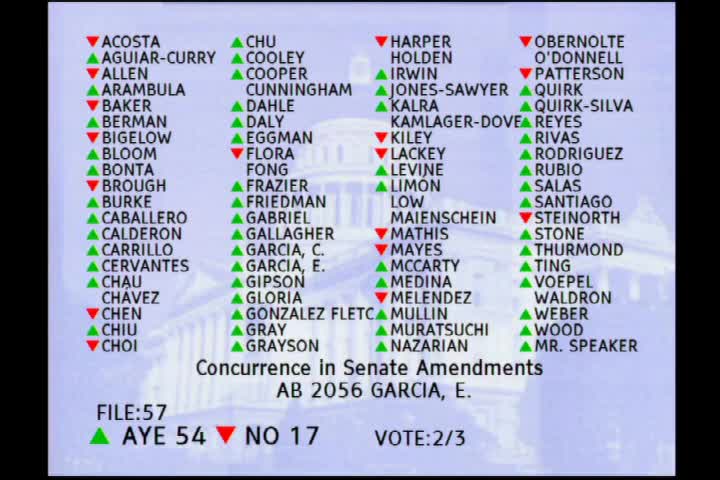

Bill Author


