AB 107: Personal income taxes: earned income credit.
- Session Year: 2015-2016
- House: Assembly
- Latest Version Date: 2015-06-16
The Personal Income Tax Law allows various credits against the taxes imposed by that law, including certain credits that are allowed in modified conformity to credits allowed by federal income tax laws. Federal income tax laws allow a refundable earned income tax credit for certain low-income individuals who have earned income and who meet certain other requirements.
This bill, for taxable years beginning on or after January 1, 2015, in modified conformity with federal income tax laws, would allow an earned income credit against personal income tax, and a payment in excess of that amount, to an eligible individual that is equal to that portion of the earned income tax credit allowed by federal law as determined by the earned income tax credit adjustment factor as set forth in the annual Budget Act.
Existing law requires any bill authorizing a new personal income tax credit to contain, among other things, specific goals, purposes, and objectives that the tax credit will achieve, detailed performance indicators, and data collection requirements, as provided.
To measure whether the earned income credit achieves its intended purpose, this bill would require the Franchise Tax Board to annually prepare a specified written report and to provide that report to specified legislative committees.
Existing law establishes the continuously appropriated Tax Relief and Refund Account, and provides that payments required to be made to taxpayers or other persons from the Personal Income Tax Fund are to be paid from that account.
By authorizing new payments from that account for amounts in excess of personal income tax liabilities, this bill would make an appropriation.
The Personal Income Tax Law imposes taxes based upon taxable income and also imposes interest and penalties with regard to those taxes under specified circumstances, including a penalty for the underpayment of estimated tax. Existing law provides no addition to tax shall be imposed to the extent that the underpayment was created or increased by any law that is chaptered during and operative for the taxable year of the underpayment.
This bill would provide that addition to tax shall not be imposed if the applicable percentage for the earned income tax credit for the taxable year was less than the applicable percentage for that credit for the preceding taxable year and would impose a penalty, in conformity with federal law, for failure to be diligent in determining eligibility for the earned income tax credit, as specified.
This bill would declare that it is to take effect immediately as a bill providing for appropriations related to the Budget Bill.
This bill would express the intent of the Legislature to enact statutory changes relating to the Budget Act of 2015.
This bill would express the intent of the Legislature to enact statutory changes relating to the Budget Act of 2015.
(a)(1)For each taxable year beginning on or after January 1, 2015, there shall be allowed against the net tax, as defined by Section 17039, an earned income tax credit in an amount equal to an amount determined in accordance with Section 32 of the Internal Revenue Code, relating to earned income, as applicable for federal income tax purposes for the taxable year, except as otherwise provided in this section.
(2)(A)The amount of the credit determined under Section 32 of the Internal Revenue Code, relating to earned income, as modified by this section, shall be multiplied by the earned income tax credit adjustment factor for the taxable year.
(B)Unless otherwise specified in the annual Budget Act, the earned income tax credit adjustment factor for a taxable year beginning on or after January 1, 2015, shall be zero percent.
(C)The earned income tax credit authorized by this section shall only be operative for taxable years for which resources are authorized in the annual Budget Act for the Franchise Tax Board to oversee and audit returns associated with the credit.
(b)(1)In lieu of the table prescribed in Section 32(b)(1) of the Internal Revenue Code, relating to percentages, the credit percentage and the phaseout percentage shall be determined as follows:
In the case of an eligible individual with: | The credit percentage is: | The phaseout percentage is: |
No qualifying children | 7.65% | 7.65% |
1 qualifying child | 34% | 34% |
2 or more qualifying children | 40% | 40% |
(2)(A)In lieu of the table prescribed in Section 32(b)(2)(A) of the Internal Revenue Code, the earned income amount and the phaseout amount shall be determined as follows:
In the case of an eligible individual with: | The earned income amount is: | The phaseout amount is: |
No qualifying children | $3,290 | $3,290 |
1 qualifying child | $4,940 | $4,940 |
2 or more qualifying children | $6,935 | $6,935 |
(B)Section 32(b)(2)(B) of the Internal Revenue Code, relating to joint returns, shall not apply.
(3)Section 32(b)(3)(A) of the Internal Revenue Code, relating to increased percentage for three or more qualifying children, is modified by substituting the credit percentage and phaseout percentage is 45 percent for the credit percentage is 45 percent.
(c)(1)Section 32(c)(1)(A)(ii)(I) of the Internal Revenue Code is modified by substituting this state for the United States.
(2)Section 32(c)(2)(A) of the Internal Revenue Code is modified as follows:
(A)Section 32(c)(2)(A)(i) of the Internal Revenue Code is modified by deleting plus and inserting in lieu thereof the following: and only if such amounts are subject to withholding pursuant to Division 6 (commencing with Section 13000) of the Unemployment Insurance Code.
(B)Section 32(c)(2)(A)(ii) of the Internal Revenue Code shall not apply.
(3)Section 32(c)(3)(C) of the Internal Revenue Code, relating to place of abode, is modified by substituting this state for the United States.
(d)Section 32(i)(1) of the Internal Revenue Code is modified by substituting $3,400 for $2,200.
(e)In lieu of Section 32(j) of the Internal Revenue Code, relating to inflation adjustments, for taxable years beginning on or after January 1, 2016, the amounts specified in paragraph (2) of subdivision (b) and in subdivision (d) shall be recomputed annually in the same manner as the recomputation of income tax brackets under subdivision (h) of Section 17041.
(f)If the amount allowable as a credit under this section exceeds the tax liability computed under this part for the taxable year, the excess shall be credited against other amounts due, if any, and the balance, if any, shall be paid from the Tax Relief and Refund Account and refunded to the taxpayer.
(g)The Franchise Tax Board may prescribe rules, guidelines, or procedures necessary or appropriate to carry out the purposes of this section. Chapter 3.5 (commencing with Section 11340) of Part 1 of Division 3 of Title 2 of the Government Code shall not apply to any rule, guideline, or procedure prescribed by the Franchise Tax Board pursuant to this section.
(h)Notwithstanding any other law, amounts refunded pursuant to this section shall be treated in the same manner as the federal earned income refund for the purpose of determining eligibility to receive benefits under Division 9 (commencing with Section 10000) of the Welfare and Institutions Code or amounts of those benefits.
(i)(1)For the purpose of implementing the credit allowed by this section for the 2015 taxable year, the Franchise Tax Board shall be exempt from the following:
(A)Special Project Report requirements under State Administrative Manual Sections 4819.36, 4945, and 4945.2.
(B)Special Project Report requirements under Statewide Information Management Manual Section 30.
(C)Section 11.00 of the 2015 Budget Act.
(D)Sections 12101, 12101.5, 12102, and 12102.1 of the Public Contract Code.
(2)The Franchise Tax Board shall formally incorporate the scope, costs, and schedule changes associated with the implementation of the credit allowed by this section in its next anticipated Special Project Report for its Enterprise Data to Revenue Project.
(j)(1)In accordance with Section 41 of the Revenue and Taxation Code, the purpose of the California Earned Income Tax Credit is to reduce poverty among Californias poorest working families and individuals. To measure whether the credit achieves its intended purpose, the Franchise Tax Board shall annually prepare a written report on the following:
(A)The number of tax returns claiming the credit.
(B)The number of individuals represented on tax returns claiming the credit.
(C)The average credit amount on tax returns claiming the credit.
(D)The distribution of credits by number of dependents and income ranges. The income ranges shall encompass the phase-in and phaseout ranges of the credit.
(E)Using data from tax returns claiming the credit, including an estimate of the federal tax credit determined under Section 32 of the Internal Revenue Code, an estimate of the number of families who are lifted out of deep poverty by the credit and an estimate of the number of families who are lifted out of deep poverty by the combination of the credit and the federal tax credit. For the purposes of this subdivision, a family is in deep poverty if the income of the family is less than 50 percent of the federal poverty threshold.
(2)The Franchise Tax Board shall provide the written report to the Senate Committee on Budget and Fiscal Review, the Assembly Committee on Budget, the Senate and Assembly Committees on Appropriations, the Senate Committee on Governance and Finance, the Assembly Committee on Revenue and Taxation, and the Senate and Assembly Committees on Human Services.
(k)The tax credit allowed by this section shall be known as the California Earned Income Tax Credit.
SEC. 2.Section 19136 of the Revenue and Taxation Code is amended to read:19136.(a)Section 6654 of the Internal Revenue Code, relating to failure by an individual to pay estimated income tax, shall apply, except as otherwise provided.
(b)Section 6654(a)(1) of the Internal Revenue Code is modified to refer to the rate determined under Section 19521 in lieu of Section 6621 of the Internal Revenue Code.
(c)(1)Section 6654(e)(1) of the Internal Revenue Code, relating to exceptions where the tax is a small amount, does not apply.
(2)No addition to the tax shall be imposed under this section if the tax imposed under Section 17041 or 17048 and the tax imposed under Section 17062 for the preceding taxable year, minus the sum of any credits against the tax provided by Part 10 (commencing with Section 17001) or this part, or the tax computed under Section 17041 or 17048 upon the estimated income for the taxable year, minus the sum of any credits against the tax provided by Part 10 (commencing with Section 17001) or this part, is less than five hundred dollars ($500), except in the case of a separate return filed by a married person the amount shall be less than two hundred fifty dollars ($250).
(d)Section 6654(f) of the Internal Revenue Code does not apply and for purposes of this section the term tax means the tax imposed under Section 17041 or 17048 and the tax imposed under Section 17062 less any credits against the tax provided by Part 10 (commencing with Section 17001) or this part, other than the credit provided by subdivision (a) of Section 19002.
(e)(1)The credit for tax withheld on wages, as specified in Section 6654(g) of the Internal Revenue Code, is the credit allowed under subdivision (a) of Section 19002.
(2)(A)Section 6654(g)(1) of the Internal Revenue Code is modified by substituting the phrase the applicable percentage for the phrase an equal part.
(B)For purposes of this paragraph, applicable percentage means the percentage amount prescribed under Section 6654(d)(1)(A) of the Internal Revenue Code, as modified by subdivision (a) of Section 19136.1.
(f)This section applies to a nonresident individual.
(g)(1)No addition to tax shall be imposed under this section to the extent that the underpayment was created or increased by any law that is chaptered during and operative for the taxable year of the underpayment. either of the following:
(A)Any law that is chaptered during and operative for the taxable year of the underpayment.
(B)If, for a taxable year prior to its repeal, the adjustment factor for the credit authorized by Section 17052 for the taxable year was less than the adjustment factor for that credit for the preceding taxable year.
(2)(A)Notwithstanding Section 18415, this section subparagraph (A) of paragraph (1) applies to penalties imposed under this section on and or after January 1, 2005.
(B)Notwithstanding Section 18415, subparagraph (B) of paragraph (1) applies to penalties imposed under this section on or after January 1, 2016.
(h)The amendments made to this section by Section 5 of Chapter 305 of the Statutes of 2008 apply to taxable years beginning on or after January 1, 2009.
(i)The amendments made to this section by the act adding this subdivision Section 3 of Chapter 15 of the fourth Extraordinary Session of the Statutes of 2009 apply to amounts withheld on wages beginning on or after January 1, 2009.
SEC. 3.Section 19167 of the Revenue and Taxation Code is amended to read:19167.A penalty shall be imposed under this section for any of the following:
(a)In accordance with Section 6695(a) of the Internal Revenue Code, for failure to furnish a copy of the return to the taxpayer, as required by Section 18625.
(b)In accordance with Section 6695(c) of the Internal Revenue Code, for failure to furnish an identifying number, as required by Section 18624.
(c)In accordance with Section 6695(d) of the Internal Revenue Code, for failure to retain a copy or list, as required by Section 18625 or for failure to retain an electronic filing declaration, as required by Section 18621.5.
(d)Failure to register as a tax preparer with the California Tax Education Council, as required by Section 22253 of the Business and Professions Code, unless it is shown that the failure was due to reasonable cause and not due to willful neglect.
(1)The amount of the penalty under this subdivision for the first failure to register is two thousand five hundred dollars ($2,500). This penalty shall be waived if proof of registration is provided to the Franchise Tax Board within 90 days from the date notice of the penalty is mailed to the tax preparer.
(2)The amount of the penalty under this subdivision for a failure to register, other than the first failure to register, is five thousand dollars ($5,000).
(e)The Franchise Tax Board shall not impose the penalties authorized by subdivision (d) until either one of the following has occurred:
(1)Commencing January 1, 2006, and continuing each year thereafter, there is an appropriation in the Franchise Tax Boards annual budget to fund the costs associated with the penalty authorized by subdivision (d).
(2)(A)An agreement has been executed between the California Tax Education Council and the Franchise Tax Board that provides that an amount equal to all first year costs associated with the penalty authorized by subdivision (d) shall be received by the Franchise Tax Board. For purposes of this subparagraph, first year costs include, but are not limited to, costs associated with the development of processes or systems changes, if necessary, and labor.
(B)An agreement has been executed between the California Tax Education Council and the Franchise Tax Board that provides that the annual costs incurred by the Franchise Tax Board associated with the penalty authorized by subdivision (d) shall be reimbursed by the California Tax Education Council to the Franchise Tax Board.
(C)Pursuant to the agreement described in subparagraph (A), the Franchise Tax Board has received an amount equal to the first year costs described in that subparagraph.
(f)In accordance with Section 6695(g) of the Internal Revenue Code, for failure to be diligent in determining eligibility for earned income credit for returns required to be filed on or after the effective date of the act adding this subdivision.
SEC. 4.In future years, it is the intent of the Legislature to enact legislation that would expand the California Earned Income Tax Credit allowed by Section 17052 of the Revenue and Taxation Code, as state budget conditions permit, to benefit a broader section of working poor Californians.
SEC. 5.This act is a bill providing for appropriations related to the Budget Bill within the meaning of subdivision (e) of Section 12 of Article IV of the California Constitution, has been identified as related to the budget in the Budget Bill, and shall take effect immediately.
SECTION 1.It is the intent of the Legislature to enact statutory changes relating to the Budget Act of 2015.
It is the intent of the Legislature to enact statutory changes relating to the Budget Act of 2015.
|
Date
|
Status
|
|---|---|
| Sep 11, 2015 | Ordered to inactive file at the request of Senator Mitchell. |
| Jun 18, 2015 | Ordered to third reading. |
| Jun 18, 2015 | Senate Rule 29 suspended. (Ayes 22. Noes 13. Page 1486.) |
| Jun 18, 2015 | From committee: Do pass. (Ayes 15. Noes 1.) (June 18). |
| Jun 16, 2015 | From committee chair, with author's amendments: Amend, and re-refer to committee. Read second time, amended, and re-referred to Com. on B. & F.R. |
| Jun 11, 2015 | In committee: Hearing postponed by committee. |
| Mar 23, 2015 | Referred to Com. on B. & F.R. |
| Mar 23, 2015 | In Senate. Read first time. To Com. on RLS. for assignment. |
| Mar 23, 2015 | Read third time. Passed. Ordered to the Senate. (Ayes 51. Noes 27. Page 637.) |
| Mar 19, 2015 | Ordered to second reading. |
| Mar 19, 2015 | Read second time. Ordered to third reading. |
| Mar 19, 2015 | Withdrawn from committee. |
| Mar 19, 2015 | Assembly Rule 63 suspended. (Ayes 51. Noes 25. Page 611.) |
| Mar 19, 2015 | Assembly Rule 96 suspended. (Ayes 51. Noes 25. Page 611.) |
| Jan 16, 2015 | Referred to Com. on BUDGET. |
| Jan 12, 2015 | From printer. May be heard in committee February 11. |
| Jan 12, 2015 | Read first time. |
| Jan 9, 2015 | Introduced. To print. |
|
Date
|
Description
|
Location
|
Votes
|
|
|---|---|---|---|---|
| Jun 18, 2015 | Do pass | Senate Standing Committee on Budget and Fiscal Review |
Passed |
|
| Mar 23, 2015 | AB 107 BUDGET Assembly Third Reading By WEBER | Assembly Floor |
Passed |
This list shows positions taken on this bill by organizations on the date displayed, which is linked to the original source.
Positions by individuals are not included.
AB 107
Page 4
|
Office of Senate Floor Analyses (916) 651-1520 Fax: (916) 327-4478 |
THIRD READING
Bill No: AB 107
Amended: 6/16/15 in Senate
SENATE BUDGET & FISCAL REVIEW COMMITTEE: 15-1, 6/18/15
AYES: Leno, Nielsen, Allen, Anderson, Beall, Block, Hancock, Mitchell, Monning, Nguyen, Pan, Pavley, Roth, Stone, Wolk
NOES: Moorlach
ASSEMBLY FLOOR: Not relevant
SUBJECT: Personal income taxes: earned income credit
DIGEST: This bill is necessary for the enactment of the 2015 Budget Act and establishes a refundable tax credit for eligible individuals based on a certain percentage of earned income up to a specified amount.
ANALYSIS: This bill creates a state Earned Income Tax Credit (EITC), providing a refundable tax credit for wage income. It focuses on households with incomes less than $6,580 if there are no dependents and up to $13,870 if there are three or more dependents. The proposed state program dovetails with the existing federal EITC and matches 85 percent of the federal credits, up to half of the federal phase-in range, and then begins to taper off relative to these maximum wage amounts. The credit would be available beginning with tax returns filed for wages earned in 2015, and is expected to reduce revenues by $380 million annually beginning in 2015-16. It will benefit an estimated 825,000 families and two million individuals. The estimated mean household benefit is $460 per year, with a maximum credit for a household with three or more dependents of over $2,600. The proposed state EITC is intended to complement the federal EITC. The Franchise Tax Board (FTB) is assigned responsibility for administering the proposed EITC program.
This bill establishes an EITC credit, specifically:
Establishes a refundable credit for tax years beginning on or after January 1, 2015 against personal income taxes owed based on earned wage income, which does not include self-employment income.
Provides for the calculation of a credit amount during a phase-in range of earned wage income according to specified percentages based on the number of qualifying children.
The credit percentage is 7.65 percent for individuals without qualifying children, 34 percent for individuals with one qualifying child, 40 percent for individuals with two or more qualifying children, and 45 percent for individuals with three or more qualifying children.
The phase-in range is for earned wage income of up to $3,290 for individuals without qualifying children, $4,940 for individuals with one qualifying child, and $6,935 for individuals with two or more qualifying children.
Provides for the calculation a phase-out of the credit when earned wage income reaches a certain threshold amount. The credit is phased out by an amount determined by multiplying the applicable phase-out percentage by the excess of the amount of the individual’s adjusted gross income (earned wage income plus certain other income) over the phase-out amount. The inclusion of additional income during the phase-out period results in a more rapid loss of the credit amount than there was again in the credit during the credit phase-in period.
The phase-out percentage is 7.65 percent for individuals without qualifying children, 34 percent for individuals with one qualifying child, 40 percent for individuals with two or more qualifying children, and 45 percent for individuals with three or more qualifying children.
The phase-out amount is $3,290 for individuals without qualifying children, $4,940 for individuals with one qualifying child, and $6,935 for individuals with two or more qualifying children.
Establishes that the credit amount is to be multiplied by the adjustment factor to determine the amount of the actual credit, with the adjustment factor specified in the annual Budget Act. Unless otherwise specified, the adjustment factor would be zero percent. The Administration has proposed 85 percent as the adjustment factor in 2015-16.
Specifies that the tax credit would be operative only for taxable years for which resources are authorized in the annual Budget Act for the Franchise Tax Board to administer the program.
Sets forth that if the amount of allowable credit exceeds an individual’s tax liability, the balance shall be paid to that individual from the Tax Relief and Refund Account, which is continuously appropriated.
Provides for a re-computation of the earned wage income amount and the phase-out amount based on inflation, in the same manner as the re-computation of income tax brackets under the personal income tax law.
Provides that disqualified income from interest and dividends, royalties and other similar sources in excess of $3,400 shall make an individual ineligible for the EITC, with this amount adjusted in the same manner as indicated in (g) above.
Specifies the failure to be diligent in determining eligibility for the EITC can result in a penalty of $500 for false claims for refund.
Includes annual reporting requirements of the Franchise Tax Board relating to the usage of the credit, average credit, distribution of the credit by income and number of dependents, and estimate of the impact on poverty.
Includes uncodified language expressing the Legislature’s intent to expand the EITC, as the state’s fiscal situation allows.
Continuously appropriates funds for the refundable tax credit.
FISCAL EFFECT: Appropriation: Yes Fiscal Com.: Yes Local: No
According to the Senate Budget and Fiscal Review Committee, refundable amounts would be continuously appropriated from the Tax Relief and Refund Account, and are expected to total $380 million during 2015-16 based on an adjustment factor of 85 percent incorporated in the 2015 Budget Act.
None received
OPPOSITION: (Verified 6/18/15)
Prepared by: Mark Ibele / B. & F.R. / (916) 651-4103
6/18/15 18:55:40
**** END ****
AB 107 (Committee on Budget) Page 3 of 3
SENATE COMMITTEE ON BUDGET AND FISCAL REVIEW
Senator Mark Leno, Chair
2015 - 2016 Regular
Bill No: AB 107 Hearing Date: June 18, 2015
Author: |
Committee on Budget |
||
Version: |
January 9, 2015 Introduced |
||
Urgency: |
No |
Fiscal: |
Yes |
Consultant: |
Mark Ibele |
||
Subject: Budget Act of 2015: Earned Income Tax Credit.
Summary:
This bill is necessary for the enactment of the 2015 Budget Act and would establish a refundable tax credit for eligible individuals based on a certain percentage of earned income up to a specified amount.
Background: The measure would create a state Earned Income Tax Credit (EITC), providing a refundable tax credit for wage income. It would focus on households with incomes less than $6,580 if there are no dependents and up to $13,870 if there are three or more dependents. The proposed state program dovetails with the existing federal EITC and would match 85 percent of the federal credits, up to half of the federal phase-in range, and then begin to taper off relative to these maximum wage amounts. The credit would be available beginning with tax returns filed for wages earned in 2015, and is expected to reduce revenues by $380 million annually beginning in 2015-16. It will benefit an estimated 825,000 families and two million individuals. The estimated mean household benefit is $460 per year, with a maximum credit for a household with three or more dependents of over $2,600. The proposed state EITC is intended to complement the federal EITC. The Franchise Tax Board (FTB) would be assigned responsibility for administering the proposed EITC program.
Proposed Law:
The bill would establish an EITC credit, specifically:
Establish a refundable credit for tax years beginning on or after January 1, 2015 against personal income taxes owed based on earned wage income, which does not include self-employment income.
Provide for the calculation of a credit amount during a phase-in range of earned wage income according to specified percentages based on the number of qualifying children.
The credit percentage would be 7.65 percent for individuals without qualifying children, 34 percent for individuals with one qualifying child, 40 percent for individuals with two or more qualifying children, and 45 percent for individuals with three or more qualifying children.
The phase-in range would be for earned wage income of up to $3,290 for individuals without qualifying children, $4,940 for individuals with one qualifying child, and $6,935 for individuals with two or more qualifying children.
Provide for the calculation a phase-out of the credit when earned wage income reaches a certain threshold amount. The credit is phased out by an amount determined by multiplying the applicable phase-out percentage by the excess of the amount of the individual’s adjusted gross income (earned wage income plus certain other income) over the phase-out amount. The inclusion of additional income during the phase-out period results in a more rapid loss of the credit amount than there was a gain in the credit during the credit phase-in period.
The phase-out percentage would be 7.65 percent for individuals without qualifying children, 34 percent for individuals with one qualifying child, 40 percent for individuals with two or more qualifying children, and 45 percent for individuals with three or more qualifying children.
The phase-out amount would be $3,290 for individuals without qualifying children, $4,940 for individuals with one qualifying child, and $6,935 for individuals with two or more qualifying children.
Establishes that the credit amount is to be multiplied by the adjustment factor to determine the amount of the actual credit, with the adjustment factor specified in the annual budget act. Unless otherwise specified, the adjustment factor would be zero percent. The Administration has proposed 85 percent as the adjustment factor in 2015-16.
Specifies that the tax credit would be operative only for taxable years for which resources are authorized in the annual budget act for the Franchise Tax Board to administer the program.
Sets forth that if the amount of allowable credit exceeds an individual’s tax liability, the balance shall be paid to that individual from the Tax Relief and Refund Account, which is continuously appropriated.
Provides for a re-computation of the earned wage income amount and the phase-out amount based on inflation, in the same manner as the re-computation of income tax brackets under the personal income tax law.
Provides that disqualified income from interest and dividends, royalties and other similar sources in excess of $3,400 shall make an individual ineligible for the EITC, with this amount adjusted in the same manner as indicated in (g) above.
Specifies the failure to be diligent in determining eligibility for the EITC can result in a penalty of $500 for false claims for refund.
Includes annual reporting requirements of the Franchise Tax Board relating to the usage of the credit, average credit, distribution of the credit by income and number of dependents, and estimate of the impact on poverty.
Includes uncodified language expressing the Legislature’s intent to expand the EITC, as the state’s fiscal situation allows.
Contains a continuous appropriation for the refundable tax credit.
Fiscal Effect:
Refundable amounts would be continuously appropriated from the Tax Relief and Refund Account, and are expected to total $380 million during 2015-16 based on an adjustment factor of 85 percent incorporated in the 2015 Budget Act..
Support:
None on file
Opposed:
None on file
Comments: The federal EITC has long been regarded as an effective and efficient program to direct resources to low-income households while theoretically providing work incentives. State EITCs, including the one proposed by the Governor, may channel additional resources towards low-income families, but are likely to have only a marginal work incentive effect, due to the credit amount available. While the maximum credit under the Governor’s proposal is around $2,600, Department of Finance indicates that the mean credit is about $460. In discussions with staff, Department of Finance indicated that the median—arguably a more suitable measure of central tendency of the credit—is “probably between $150 and $200.” (The median is the midpoint at which 50 percent of households would receive more and 50 percent less than that amount.) The design of the state EITC dovetails with the design of the federal EITC and is targeted at the lowest income population. As noted, the program does not include self-employment income, which is likely to result in the exclusion of the earnings of some individuals and disqualification of other individual entirely.
-- END --
Discussed in Hearing
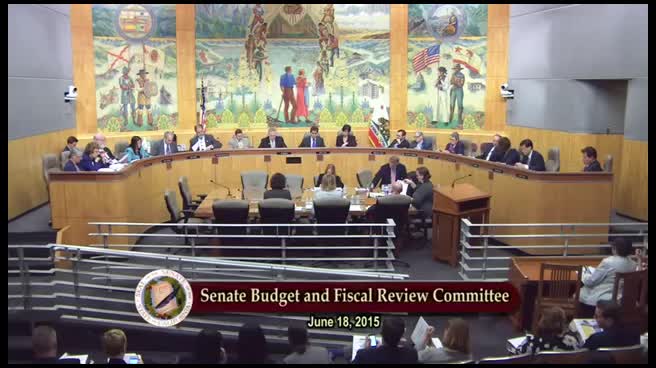 1MIN
Senate Standing Committee on Budget and Fiscal Review
Bill Author
Bill Co-Author(s):