AB 3222: Public works: prevailing wages.
- Session Year: 2017-2018
- House: Assembly
- Latest Version Date: 2018-02-16
Existing law defines public works, for the purposes of regulating public works contracts, as, among other things, construction, alteration, demolition, installation, or repair work done under contract and paid for, in whole or in part, out of public funds. Existing law further requires that, except as specified, not less than the general prevailing rate of per diem wages be paid to workers employed on public works and imposes misdemeanor penalties for a willful violation of this requirement.
This bill would expand the definition of public works, for the purposes of provisions relating to the prevailing rate of per diem wages, to also include any construction, alteration, demolition, installation, or repair work done under private contract on a project for a charter school, as defined, when the project is paid for, in whole or in part, with the proceeds of conduit revenue bonds, as defined, that were issued on or after January 1, 2019.
Because the willful violation of prevailing wage requirements when engaged in these public works projects would result in the imposition of misdemeanor penalties, this bill would impose a state-mandated local program.
The California Constitution requires the state to reimburse local agencies and school districts for certain costs mandated by the state. Statutory provisions establish procedures for making that reimbursement.
This bill would provide that no reimbursement is required by this act for a specified reason.
For the limited purposes of Article 2 (commencing with Section 1770) of this chapter, public works also means any construction, alteration, demolition, installation, or repair work done under private contract on a project for a charter school, when the project is paid for, in whole or in part, with the proceeds of conduit revenue bonds, as defined in Section 5870 of the Government Code, issued on or after January 1, 2019, by a public agency. For purposes of this section, charter school has the same meaning as the term is defined in Section 17173 of the Education Code.
SEC. 2.No reimbursement is required by this act pursuant to Section 6 of Article XIIIB of the California Constitution because the only costs that may be incurred by a local agency or school district will be incurred because this act creates a new crime or infraction, eliminates a crime or infraction, or changes the penalty for a crime or infraction, within the meaning of Section 17556 of the Government Code, or changes the definition of a crime within the meaning of Section 6 of Article XIIIB of the California Constitution.
|
Date
|
Status
|
|---|---|
| Aug 6, 2018 | In committee: Hearing postponed by committee. |
| Jun 28, 2018 | From committee: Do pass and re-refer to Com. on APPR. (Ayes 5. Noes 0.) (June 27). Re-referred to Com. on APPR. |
| Jun 20, 2018 | Referred to Com. on L. & I.R. |
| Jun 13, 2018 | In Senate. Read first time. To Com. on RLS. for assignment. |
| May 31, 2018 | Read third time. Passed. Ordered to the Senate. |
| May 25, 2018 | Read second time. Ordered to third reading. |
| May 9, 2018 | In committee: Set, first hearing. Referred to APPR. suspense file. |
| Apr 19, 2018 | From committee: Do pass and re-refer to Com. on APPR. (Ayes 6. Noes 0.) (April 18). Re-referred to Com. on APPR. |
| Mar 12, 2018 | Referred to Com. on L. & E. |
| Feb 17, 2018 | From printer. May be heard in committee March 19. |
| Feb 16, 2018 | Read first time. To print. |
|
Date
|
Description
|
Location
|
Votes
|
|
|---|---|---|---|---|
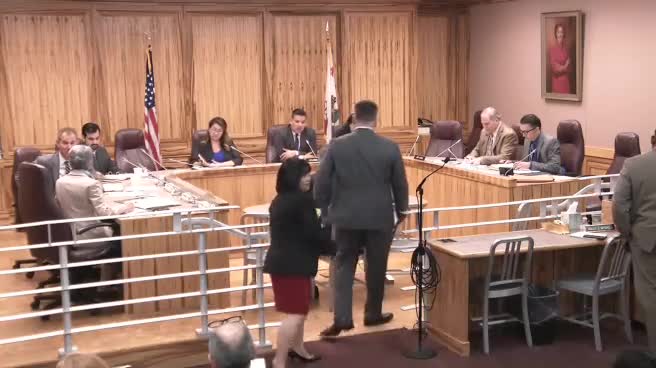
| Jun 27, 2018 | Do pass, but first be re-referred to the Committee on [Appropriations] | Senate Standing Committee on Labor and Industrial Relations |
Passed |
|
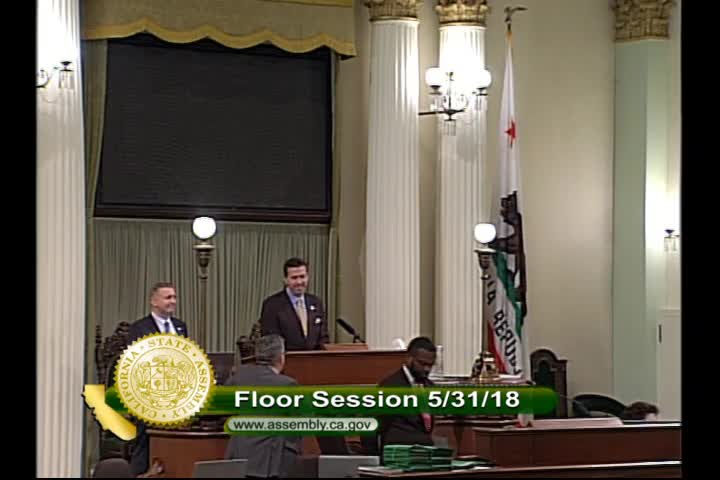
| May 31, 2018 | AB 3222 O'DONNELL Assembly Third Reading | Assembly Floor |
Passed |
|
| May 25, 2018 | Do pass. | Assembly Standing Committee on Appropriations |
Passed |
|
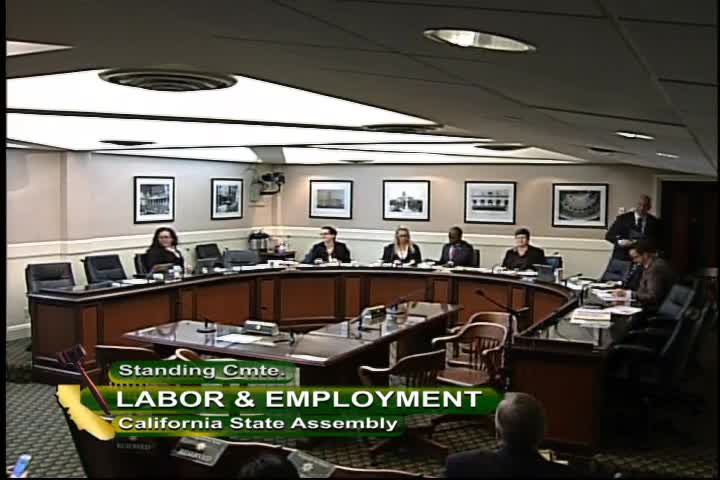
| Apr 18, 2018 | Do pass and be re-referred to the Committee on [Appropriations] | Assembly Standing Committee on Labor and Employment |
Passed |
This list shows positions taken on this bill by organizations on the date displayed, which is linked to the original source.
Positions by individuals are not included.
SENATE COMMITTEE ON LABOR AND INDUSTRIAL RELATIONS
Senator Ricardo Lara, Chair
2017 - 2018 Regular
Bill No: AB 3222 Hearing Date: June 27, 2018
Author: | O'Donnell | ||
Version: | February 16, 2018 | ||
Urgency: | No | Fiscal: | Yes |
Consultant: | Alma Perez-Schwab | ||
Subject: Public works: prevailing wages.
KEY ISSUE
Should the Legislature require the payment of prevailing wages for any work done under private contract on a project for a charter school when the project is paid for, in whole or in part, with the proceeds of conduit revenue bonds?
ANALYSIS
Existing law:
- Requires that not less than the general prevailing rate of per diem wages be paid to all workers employed on a "public works" project costing over $1,000 dollars and imposes misdemeanor penalties for violation of this requirement. (Labor Code §1771)
- Defines "public work" to include, among other things, construction, alteration, demolition, installation or repair work done under contract and paid for in whole or in part out of public funds. [Labor Code §1720(a)]
- Defines “paid for in whole or in part out of public funds” as, among other things, “Fees, costs, rents, insurance or bond premiums, loans, interest rates, or other obligations normally required in the execution of a contract that are paid, reduced, charged at less than fair market value, waived or forgiven.” [Labor Code §1720(b)]
- Requires that the applicable general prevailing rate of per diem wages be determined by the Director of the Department of Industrial Relations (DIR) for each locality in which the public work is to be performed and for each craft, classification, or type of worker needed to execute the public works project. (Labor Code §1773)
- Provides that private residential projects built on private property are not subject to the requirements of public works provisions, unless the projects are built pursuant to an agreement with a state agency, redevelopment agency, or local public housing authority. [Labor Code §1720(c)(1)]
- Defines “conduit financing provider” as any county, city, city and county, public district, public authority, public corporation, nonprofit corporation, joint powers authority, or other statutorily constituted public entity that issues one or more conduit revenue bonds. (Government Code §5870)
- Defines “conduit revenue bond” as any municipal security the proceeds of which are loaned to any nongovernmental borrower, including, but not limited to, persons, for-profit corporations, nonprofit corporations pursuant to the Internal Revenue Code, partnerships, and other legal entities for purposes that are permitted for qualified private activity bonds under applicable federal law. (Government Code §5870)
This Bill:
- Expands the definition of “public works,” for purposes of prevailing wage requirements, to also include any construction, alteration, demolition, installation, or repair work done under private contract on a project for a charter school when it is paid for, in whole or in part, with the proceeds of conduit revenue bonds issued on or after January 1, 2019.
COMMENTS
1. A Brief History of Prevailing Wage Law:
Existing law requires that not less than the general prevailing wage rate of per diem wages, as determined by the director of the Department of Industrial Relations (DIR), be paid to all workers employed on a “public works” projects. The prevailing wage rate is the basic hourly rate paid on public works projects to a majority of workers engaged in a particular craft, classification or type of work within the locality and in the nearest labor market area. The determination of whether a project is deemed to constitute a "public work" is important because the Labor Code requires (except for projects of $1,000 or less) that the "prevailing wage" be paid to all workers employed on public works projects.
In general, "public works" is defined to include construction, alteration, demolition, installation or repair work done under contract and "paid for in whole or in part out of public funds." Over a decade ago, there was much administrative and legislative action over what constituted the term "paid for in whole or in part out of public funds." These debates culminated in the enactment of SB 975 (Alarcón), Chapter #938, Statutes of 2001, which codified a definition of "paid for in whole or in part out of public funds" as well as exempted certain affordable housing, residential and private development projects, as specified.
2. Background on Conduit Revenue Bonds:
Bonds that are issued for the purpose of making loans to entities other than state or local governments are commonly referred to as “conduit bonds” or “conduit issues,” and state or local governments which issue these bonds are commonly referred to as “conduit issuers.” (Your Responsibilities as a Conduit Issuer of Tax-Exempt Bonds, Publication 5005 (4-2012) Catalog #59471F, Department of the Treasury, Internal Revenue Service) A conduit issuer typically issues the bonds and loans the bond proceeds to a conduit borrower. The public entity issuing the bond acts solely as a "conduit" and does not receive any bond proceeds. The bond proceeds are transferred to a private developer who is responsible for making the payments to the bondholders.
The California School Financing Authority (CSFA), housed within the State Treasurer’s Office, serves as a conduit issuer on behalf of nonprofit charter schools to provide access to capital markets. To date, CSFA has issued more than $720 million in bonds to provide low-cost, fixed rate financing to California’s charter schools.
3. Need for this bill?
Because these [conduit revenue bonds] types of public subsidies are not included under the definition of “paid for in whole or in part out of public funds,” they don’t currently trigger the coverage of the prevailing wage law. In 2015, AB 852 (Burke) Chapter 745, expanded the definition of “public works” to also include any construction, alteration, demolition, installation, or repair work done under private contract on a project for a general acute care hospital, as specified, when the project is paid for, in whole or in part, with the proceeds of conduit revenue bonds issued by a public agency on or after January 1, 2016. The rationale offered by the proponents of that measure (State Building and Construction Trades Council) was that the use of tax-exempt bond financing constitutes a loan at below-market interest rates and therefore is covered under Labor Code §1720(b)(4). This code section states that “paid for in whole or in part out of public funds” includes “(4) Fees, costs, rents, insurance or bond premiums, loans, interest rates, or other obligations that would normally be required in the execution of the contract, that are paid, reduced, charged at less than fair market value, waived, or forgiven by the state or political subdivision.”
Similarly, this bill would expand the definition of “public work” to include construction, alteration, demolition, installation, or repair work done under private contract on a project for a charter school when the project is paid for, in whole or in part, with the proceeds of conduit revenue bonds issued on or after January 1, 2019. According to the author, AB 3222 will ensure construction workers are paid a fair wage when a charter school is built using the proceeds of conduit revenue bonds. The author notes that the interest of these bonds is tax free, making project publicly subsidized.
4. Proponent Arguments:
The bill’s sponsor, the State Building and Construction Trades Council, argues that the bill is good public policy because it seeks to maximize the use of limited taxpayer resources by applying the prevailing wage standard to charter projects financed by conduit bond financing. They note that the prevailing wage already applies to public charter schools and to charter schools funded by statewide general obligation bonds. They argue that this bill will increase employment opportunities for young men and women enrolled as apprentices, promote the use of local highly skilled workers, and treat charter schools equally to other private entities that use conduit bond financing to fund construction.
5. Opponent Arguments:
Opponents of the measure argue that access to facilities and financing are huge barriers to charter school success. They argue that because a charter school must repay bond financing out of its general operating funds, this bill would reduce funding available for teachers, learning materials and other educational support for our students. Furthermore, they argue that conduit bonds are not publicly financed and therefore, projects should not be subject to prevailing wage requirements. Lastly, opponents argue that the state should not undermine one of the few remaining cost-effective private finance options for charter schools by imposing unnecessary and costly new requirements.
6. Prior Legislation:
AB 852 (Burke), Chapter 745, Statutes of 2015 expanded the definition of “public works” to include any construction, alteration, demolition, installation, or repair work done under private contract on a project for a general acute care hospital, as specified, when the project is paid for, in whole or in part, with the proceeds of conduit revenue bonds.
SUPPORT
State Building and Construction Trades Council (Sponsor)
Air Conditioning Sheet Metal Association
Air-conditioning & Refrigeration Contractors Association
California Chapters of the National Electrical Contractors Association
California Conference Board of the Amalgamated Transit Union
California Conference of Machinists
California Federation of Teachers
California Labor Federation, AFL-CIO
California Legislative Conference of the Plumbing, Heating and Piping Industry
California State Association of Electrical Workers
California State Pipe Trades Council
California Teamsters Public Affairs Council
Engineers and Scientists of California, IFPTE Local 21, AFL-CIO
International Longshore & Warehouse Union
International Union of Elevator Contractors
Northern California Allied Trades
Professional and Technical Engineers IFPTE Local 21, AFL-CIO
UNITE-HERE, AFL-CIO
United Contractors
Utility Workers of America
Wall and Ceiling Alliance
Western States Council of Sheet Metal Workers
Western Wall & Ceiling Contractors Association
OPPOSITION
Bright Star Schools
California Charter Schools Association
City Charter Schools
Fenton Charter Public Schools
ICEF Public Schools
KIPP LA Public Schools
Palisades Charter High School
STEM Prep Schools
YPI Charter Schools
-- END --
ASSEMBLY THIRD READING
ATR Bill Id:AB 3222
Author:(O'Donnell)
As Introduced Ver:February 16, 2018
Majority vote
Committee | Votes | Ayes | Noes |
Labor | 6-0 | Thurmond, Flora, Gonzalez Fletcher, Jones-Sawyer, Kalra, McCarty | |
Appropriations | 12-4 | Gonzalez Fletcher, Bloom, Bonta, Calderon, Carrillo, Chau, Eggman, Friedman, Eduardo Garcia, Nazarian, Quirk, Reyes | Bigelow, Fong, Gallagher, Obernolte |
SUMMARY: Expands the definition of "public works," for the purposes of the payment of prevailing wages, to also include any construction, alteration, demolition, installation, or repair work done under private contract on a project for a charter school when it is paid for, in whole or in part, with the proceeds of conduit revenue bonds issued on or after January 1, 2019.
EXISTING LAW:
- Defines "public works," for the purposes of regulating public works contracts, as, among other things, construction, alteration, demolition, installation, or repair work done under contract and paid for, in whole or in part, out of public funds.
- Requires that, except as specified, not less than the general prevailing rate of per diem wages be paid to workers employed on public works projects.
- Imposes misdemeanor penalties for a willful violation of the prevailing wage rate requirement.
FISCAL EFFECT: According to the Assembly Appropriations Committee, annual ongoing costs of $160,000 for the Division of Labor Standards Enforcement (DLSE) to enforce the provisions of this bill.
COMMENTS: According to the author, many charter school projects are funded by conduit revenue bonds. The author explains that "conduit financing is a mechanism of borrowing whereby a conduit issuer, typically a governmental agency, acts as a bridge between investors and the borrower. Interests received by investors that provide the funds for a project enjoy higher yields than general obligation bonds and are tax free. In return, the borrower benefits by paying lower interest rates. The project is therefore subsidized with public funds."
The author contends that the bill is needed to "ensure that workers who build projects with public funds receive fair wages. This measure does this by specifying that ‘public works’ include charter school construction or alteration projects funded in whole or in part by conduit revenue bond financing."
This bill's sponsor, the State Building and Construction Trades Council, argues that this bill is good public policy because it "seeks to maximize the use of limited taxpayer resources by applying the prevailing wage standard to charter projects financed by conduit bond financing. The prevailing wage already applies to public charter schools and to charter schools funded by statewide general obligation bonds. AB 3222 will increase employment opportunities for young men and women enrolled as apprentices, promote the use of local highly skilled workers, and treat charter schools equally to other private entities that use conduit bond financing to fund construction."
In opposition, the California Charter Schools Association states that "conduit financing has been a successful lower-cost funding mechanism used by many charter schools. From 2010 through 2017, the state treasurer has issued $1.1 billion in conduit bond financing to 69 charter school projects. This is one of the few facility financing options that is working well. The state should not undermine one of the few cost-effective private finance options for charter schools by imposing unnecessary and costly new requirements."
Related and Prior Legislation
AB 852 (Burke) Chapter 745, Statutes of 2015, provides that public works projects, for the purpose of paying prevailing wages, include private general acute care hospitals that are paid for, in whole or in part, by conduit revenue bonds.
Analysis Prepared by: Megan Lane / L. & E. / (916) 319-2091 FN: 0003139
Date of Hearing: May 9, 2018
ASSEMBLY COMMITTEE ON APPROPRIATIONS
Lorena Gonzalez Fletcher, Chair
ABPCA Bill Id:AB 3222
Author:(O'Donnell) – As Introduced Ver:February 16, 2018
Policy Committee: | Labor and Employment | Vote: | 6 - 0 |
|
| ||
|
|
Urgency: No State Mandated Local Program: Yes Reimbursable: No
SUMMARY:
This bill expands the definition of “public works” to include any construction, alteration, demolition, installation, or repair work done under private contract on a project for a charter school when that project is paid for, in whole or in part, with the proceeds of conduit revenue bonds issued on or after January 1, 2019.
FISCAL EFFECT:
Annual ongoing costs of $160,000 for the Division of Labor Standards Enforcement (DLSE) to enforce the provisions of this bill.
COMMENTS:
- Prevailing wage laws. Existing law requires prevailing wages to be paid to all workers on most public works projects. In general, "public works" is defined to include construction, alteration, demolition, installation or repair work done under contract and "paid for in whole or in part out of public funds." These laws aim to provide construction workers on these projects a wage that is commonly paid to similar construction workers in a particular region.
- Conduit bonds. Bonds that are issued for the purpose of making loans to entities other than state or local governments are commonly referred to as conduit bonds. The public entity issuing the bond acts solely as a "conduit" and does not receive any bond proceeds. The bond proceeds are transferred to a private developer who is responsible for making the payments to the bondholders. Unlike conventional municipal bonds where interest payments are generated from tax revenues and tolls, conduit bonds are repaid by the projects being funded. Thus, while interest of conduit bonds is tax-free to bondholders, there is more risk overall given the lack of security around interest payments.
- Purpose. According to the author, AB 3222 will ensure construction workers are paid a fair wage when a charter school is built using the proceeds of conduit revenue bonds. The author notes that the interest of these bonds is tax free, making project publicly subsidized.
- Recent legislation. AB 852 (Burke), Chapter 745, Statutes of 2015, provides that public works projects, for the purpose of paying prevailing wages, include private general acute care hospitals that are paid for, in whole or in part, by conduit revenue bonds.
Analysis Prepared by: Luke Reidenbach / APPR. / (916) 319-2081
Date of Hearing: April 18, 2018
ASSEMBLY COMMITTEE ON LABOR AND EMPLOYMENT
Tony Thurmond, Chair
ABPCA Bill Id:AB 3222 (
Author:O'Donnell) – As Introduced Ver:February 16, 2018
SUBJECT: Public works: prevailing wages
SUMMARY: Expands the definition of “public works,” for the purposes of the payment of prevailing wages, to also include any construction, alteration, demolition, installation, or repair work done under private contract on a project for a charter school when it is paid for, in whole or in part, with the proceeds of conduit revenue bonds issued on or after January 1, 2019.
EXISTING LAW:
- Defines “public works,” for the purposes of regulating public works contracts, as, among other things, construction, alteration, demolition, installation, or repair work done under contract and paid for, in whole or in part, out of public funds.
- Requires that, except as specified, not less than the general prevailing rate of per diem wages be paid to workers employed on public works projects.
- Imposes misdemeanor penalties for a willful violation of the prevailing wage rate requirement.
FISCAL EFFECT: Unknown
COMMENTS: According to the author, many charter school projects are funded by conduit revenue bonds. The author explains that “conduit financing is a mechanism of borrowing whereby a conduit issuer, typically a governmental agency, acts as a bridge between investors and the borrower. Interests received by investors that provide the funds for a project enjoy higher yields than general obligation bonds and are tax free. In return, the borrower benefits by paying lower interest rates. The project is therefore subsidized with public funds.”
The author contends that the bill is needed to “ensure that workers who build projects with public funds receive fair wages. This measure does this by specifying that ‘public works’ include charter school construction or alteration projects funded in whole or in part by conduit revenue bond financing.
The bill’s sponsor, the State Building and Construction Trades Council, argues that the bill is good public policy because it “seeks to maximize the use of limited taxpayer resources by applying the prevailing wage standard to charter projects financed by conduit bond financing. The prevailing wage already applies to public charter schools and to charter schools funded by statewide general obligation bonds. AB 3222 will increase employment opportunities for young men and women enrolled as apprentices, promote the use of local highly skilled workers, and treat charter schools equally to other private entities that use conduit bond financing to fund construction.”
In opposition, the California Charter Schools Association states that “conduit financing has been a successful lower-cost funding mechanism used by many charter schools. From 2010 through 2017, the state treasurer has issued $1.1 billion in conduit bond financing to 69 charter school projects. This is one of the few facility financing options that is working well. The state should not undermine one of the few cost-effective private finance options for charter schools by imposing unnecessary and costly new requirements.”
Related and Prior Legislation
AB 852 (Burke) Chapter 745, Statutes of 2015, provides that public works projects, for the purpose of paying prevailing wages, include private general acute care hospitals that are paid for, in whole or in part, by conduit revenue bonds.
REGISTERED SUPPORT / OPPOSITION:
Support
Air Conditioning Sheet Metal Association
Air-conditioning & Refrigeration Contractors Association
CA Conference Board of the Amalgamated Transit Union
CA Conference of Machinists
California Chapters of the National Electrical Contractors Association
California Labor Federation, AFL-CIO
California Legislative Conference of the Plumbing, Heating and Piping Industry
California Pipe Trades Council
California State Association of Electrical Workers
California Teamsters Public Affairs Council
Engineers and Scientists of CA, Local 20
International Longshore & Warehouse Union
International Union of Elevator Contractors
Northern California Allied Trades
Professional and Technical Engineers, Local 21
State Building and Construction Trades Council (sponsor)
United Contractors
UNITE-HERE
Utility Workers of America
Wall and Ceiling Alliance
Western States Council of Sheet Metal Workers
Western Wall & Ceiling Contractors Association
Opposition
California Charter Schools Association
Girls Athletic Leadership School Los Angeles
Rocketship Public Schools
Analysis Prepared by: Megan Lane / L. & E. /
Discussed in Hearing
 3MIN
Senate Standing Committee on Labor and Industrial Relations
 3MIN
Assembly Floor
 10MIN
Assembly Standing Committee on Labor and Employment
Bill Author

Bill Co-Author(s):