AB 3231: Employment: public works: apprenticeship.
- Session Year: 2017-2018
- House: Assembly
- Latest Version Date: 2018-09-22
Existing law requires each contractor and subcontractor to keep accurate payroll records showing the name, address, social security number, work classification, straight time, and overtime hours worked each day and week, and the actual per diem wages paid to each journeyman, apprentice, worker, or other employee employed by him or her in connection with the public work. Existing law provides that a joint labor-management committee, established pursuant to a specified provision of federal law, is authorized to bring an action against any employer who fails to pay prevailing wages as required by state law. Existing law requires that copies of payroll records on public works projects be made available for inspection as specified, including a limit on redactions if made available for inspection by, or furnished to, a joint labor management committee.
This bill would authorize a joint labor-management committee to also bring an action against an employer who fails to provide payroll records under the same provisions for bringing an action against an employer for failure to pay prevailing wage.
Existing law provides for apprenticeship programs within the Division of Apprenticeship Standards within the Department of Industrial Relations, sponsored by specific entities and employers, and requires the Chief of the Division of Apprenticeship Standards to perform various functions with respect to apprenticeship programs and the welfare of apprentices.
Existing law also establishes the California Apprenticeship Council within the Division of Apprenticeship Standards, and requires the council to aid the director in formulating policies with respect to apprentice regulation.
Existing law requires the Chief of the Division of Apprenticeship Standards and the California Apprenticeship Council to report annually through the Director of Industrial Relations on the activities of the division and the council, and further requires that the report include specified information with respect to apprenticeship programs in this state.
This bill would require the report to include an analysis of any apprenticeship standards or regulations that were proposed or adopted in the previous year.
Existing law requires each contractor and subcontractor to keep accurate payroll records showing the name, address, social security number, work classification, straight time, and overtime hours worked each day and week, and the actual per diem wages paid to each journeyman, apprentice, worker, or other employee employed by him or her in connection with the public work. Existing law provides that a joint labor-management committee, established pursuant to a specified provision of federal law, is authorized to bring an action against any employer who fails to pay prevailing wages as required by state law. Existing law requires that copies of payroll records on public works projects be made available for inspection as specified, including a limit on redactions if made available for inspection by, or furnished to, a joint labor management committee.
This bill would authorize a joint labor-management committee to also bring an action against an employer who fails to provide payroll records to the committee under the same provisions for bringing an action against an employer for failure to pay prevailing wage.
Existing law provides for apprenticeship programs within the Division of Apprenticeship Standards within the Department of Industrial Relations, sponsored by specific entities and employers, and requires the Chief of the Division of Apprenticeship Standards to perform various functions with respect to apprenticeship programs and the welfare of apprentices.
Existing law also establishes the California Apprenticeship Council within the Division of Apprenticeship Standards, and requires the council to aid the director in formulating policies with respect to apprentice regulation.
Existing law requires the Chief of the Division of Apprenticeship Standards and the California Apprenticeship Council to report annually through the Director of Industrial Relations on the activities of the division and the council, and further requires that the report include specified information with respect to apprenticeship programs in this state.
This bill would require the report to include an analysis of any apprenticeship standards or regulations that were proposed or adopted in the previous year.
(a)A joint labor-management committee established pursuant to the federal Labor Management Cooperation Act of 1978 (29 U.S.C. Sec. 175a) may bring an action in any court of competent jurisdiction against an employer that fails to pay the prevailing wage to its employees, as required by this article, or that fails to provide payroll records as required by Section 1776. This action shall be commenced not later than 18 months after the filing of a valid notice of completion in the office of the county recorder in each county in which the public work or some part thereof was performed, or not later than 18 months after acceptance of the public work, whichever occurs last.
(b)(1)In an action brought pursuant to this section, the court shall award restitution to an employee for unpaid wages, plus interest, under Section 3289 of the Civil Code from the date that the wages became due and payable, and liquidated damages equal to the amount of unpaid wages owed, and may impose civil penalties, only against an employer that failed to pay the prevailing wage to its employees, in accordance with Section 1775, injunctive relief, or any other appropriate form of equitable relief. The court shall follow the same standards and have the same discretion in setting the amount of penalties as are provided by subdivision (a) of Section 1775. The court shall award a prevailing joint labor-management committee its reasonable attorneys fees and costs incurred in maintaining the action, including expert witness fees.
(2)An action pursuant to this section shall not be based on the employers misclassification of the craft of a worker in its certified payroll records.
(3)Liquidated damages shall be awarded only if the complaint alleges with specificity the wages due and unpaid to the individual workers, including how that amount was calculated, and the defendant fails to pay the wages, deposit that amount with the court to be held in escrow, or provide proof to the court of an adequate surety bond to cover the wages, within 60 days of service of the complaint. Liquidated damages shall be awarded only on the wages found to be due and unpaid. Additionally, if the defendant demonstrates to the satisfaction of the court that the defendant had substantial grounds for contesting that a portion of the allegedly unpaid wages were owed, the court may exercise its discretion to waive the payment of the liquidated damages with respect to that portion of the unpaid wages.
(4)This subdivision does not limit any other available remedies for a violation of this chapter.
SEC. 2.Section 3073.5 of the Labor Code is amended to read:3073.5.The Chief of the Division of Apprenticeship Standards and the California Apprenticeship Council shall annually report through the Director of Industrial Relations to the Legislature and the public on the activities of the division and the council. The report shall contain information including, but not limited to, analyses of the following:
(a)(1)The number of individuals, including numbers of women and minorities, registered in apprenticeship programs in this state for the current year and each of the previous five years.
(2)For construction trade apprenticeship programs, the report shall include demographic data detailing the racial, ethnic, and gender makeup of those participants for the annual reporting period.
(b)The number and percentage of apprentices, including numbers and percentages of minorities and women, registered in each apprenticeship program having five or more apprentices, and the percentage of those apprentices who have completed their programs successfully in the current year and each of the previous five years.
(c)Remedial actions taken by the division to assist those apprenticeship programs having difficulty in achieving affirmative action goals or having very low completion rates.
(d)The number of disputed issues with respect to individual apprenticeship agreements submitted to the Administrator of Apprenticeship for determination and the number of those issues resolved by the council on appeal.
(e)The number of apprenticeship program applications received by the division, the number approved, the number denied and the reason for those denials, the number being reviewed, and deficiencies, if any, with respect to those program applications being reviewed.
(f)The number of apprenticeship programs, approved by the Division of Apprenticeship Standards, that are disapproved by the California Apprenticeship Council, and the reasons for those disapprovals.
(g)Any apprenticeship standards or regulations that were proposed or adopted in the previous year.
(a)A joint labor-management committee established pursuant to the federal Labor Management Cooperation Act of 1978 (29 U.S.C. Sec. 175a) may bring an action in any court of competent jurisdiction against an employer that fails to pay the prevailing wage to its employees, as required by this article, or that fails to provide payroll records to the committee as required by Section 1776. This action shall be commenced not later than 18 months after the filing of a valid notice of completion in the office of the county recorder in each county in which the public work or some part thereof was performed, or not later than 18 months after acceptance of the public work, whichever occurs last.
(b)(1)In an action brought pursuant to this section, the court shall award restitution to an employee for unpaid wages, plus interest, under Section 3289 of the Civil Code from the date that the wages became due and payable, and liquidated damages equal to the amount of unpaid wages owed, and may impose civil penalties, only against an employer that failed to pay the prevailing wage to its employees, in accordance with Section 1775, injunctive relief, or any other appropriate form of equitable relief. The court shall follow the same standards and have the same discretion in setting the amount of penalties as are provided by subdivision (a) of Section 1775. The court shall award a prevailing joint labor-management committee its reasonable attorneys fees and costs incurred in maintaining the action, including expert witness fees.
(2)An action pursuant to this section shall not be based on the employers misclassification of the craft of a worker in its certified payroll records.
(3)Liquidated damages shall be awarded only if the complaint alleges with specificity the wages due and unpaid to the individual workers, including how that amount was calculated, and the defendant fails to pay the wages, deposit that amount with the court to be held in escrow, or provide proof to the court of an adequate surety bond to cover the wages, within 60 days of service of the complaint. Liquidated damages shall be awarded only on the wages found to be due and unpaid. Additionally, if the defendant demonstrates to the satisfaction of the court that the defendant had substantial grounds for contesting that a portion of the allegedly unpaid wages were owed, the court may exercise its discretion to waive the payment of the liquidated damages with respect to that portion of the unpaid wages.
(4)This subdivision does not limit any other available remedies for a violation of this chapter.
SEC. 2.Section 3073.5 of the Labor Code is amended to read:3073.5.The Chief of the Division of Apprenticeship Standards and the California Apprenticeship Council shall annually report through the Director of Industrial Relations to the Legislature and the public on the activities of the division and the council. The report shall contain information including, but not limited to, analyses of the following:
(a)(1)The number of individuals, including numbers of women and minorities, registered in apprenticeship programs in this state for the current year and each of the previous five years.
(2)For construction trade apprenticeship programs, the report shall include demographic data detailing the racial, ethnic, and gender makeup of those participants for the annual reporting period.
(b)The number and percentage of apprentices, including numbers and percentages of minorities and women, registered in each apprenticeship program having five or more apprentices, and the percentage of those apprentices who have completed their programs successfully in the current year and each of the previous five years.
(c)Remedial actions taken by the division to assist those apprenticeship programs having difficulty in achieving affirmative action goals or having very low completion rates.
(d)The number of disputed issues with respect to individual apprenticeship agreements submitted to the Administrator of Apprenticeship for determination and the number of those issues resolved by the council on appeal.
(e)The number of apprenticeship program applications received by the division, the number approved, the number denied and the reason for those denials, the number being reviewed, and deficiencies, if any, with respect to those program applications being reviewed.
(f)The number of apprenticeship programs, approved by the Division of Apprenticeship Standards, that are disapproved by the California Apprenticeship Council, and the reasons for those disapprovals.
(g)Any apprenticeship standards or regulations that were proposed or adopted in the previous year.
(a)A joint labor-management committee established pursuant to the federal Labor Management Cooperation Act of 1978 (29 U.S.C. Sec. 175a) may bring an action in any court of competent jurisdiction against an employer that fails to pay the prevailing wage to its employees, as required by this article. article, or that fails to provide payroll records to the committee as required by Section 1776. This action shall be commenced not later than 18 months after the filing of a valid notice of completion in the office of the county recorder in each county in which the public work or some part thereof was performed, or not later than 18 months after acceptance of the public work, whichever occurs last.
(b)(1)In an action brought pursuant to this section, the court shall award restitution to an employee for unpaid wages, plus interest, under Section 3289 of the Civil Code from the date that the wages became due and payable, and liquidated damages equal to the amount of unpaid wages owed, and may impose civil penalties, only against an employer that failed to pay the prevailing wage to its employees, in accordance with Section 1775, injunctive relief, or any other appropriate form of equitable relief. The court shall follow the same standards and have the same discretion in setting the amount of penalties as are provided by subdivision (a) of Section 1775. The court shall award a prevailing joint labor-management committee its reasonable attorneys fees and costs incurred in maintaining the action, including expert witness fees.
(2)An action pursuant to this section shall not be based on the employers misclassification of the craft of a worker in its certified payroll records.
(3)Liquidated damages shall be awarded only if the complaint alleges with specificity the wages due and unpaid to the individual workers, including how that amount was calculated, and the defendant fails to pay the wages, deposit that amount with the court to be held in escrow, or provide proof to the court of an adequate surety bond to cover the wages, within 60 days of service of the complaint. Liquidated damages shall be awarded only on the wages found to be due and unpaid. Additionally, if the defendant demonstrates to the satisfaction of the court that the defendant had substantial grounds for contesting that a portion of the allegedly unpaid wages were owed, the court may exercise its discretion to waive the payment of the liquidated damages with respect to that portion of the unpaid wages.
(4)This subdivision does not limit any other available remedies for a violation of this chapter.
SECTION 1. SEC. 2.Section 3073.5 of the Labor Code is amended to read:3073.5.The Chief of the Division of Apprenticeship Standards and the California Apprenticeship Council shall annually report through the Director of Industrial Relations to the Legislature and the public on the activities of the division and the council. The report shall contain information including, but not limited to, analyses of the following:
(a)(1)The number of individuals, including numbers of women and minorities, registered in apprenticeship programs in this state for the current year and in each of the previous five years.
(2)For construction trade apprenticeship programs, the report shall include demographic data detailing the racial, ethnic, and gender makeup of those participants for the annual reporting period.
(b)The number and percentage of apprentices, including numbers and percentages of minorities and women, registered in each apprenticeship program having five or more apprentices, and the percentage of those apprentices who have completed their programs successfully in the current year and in each of the previous five years.
(c)Remedial actions taken by the division to assist those apprenticeship programs having difficulty in achieving affirmative action goals or having very low completion rates.
(d)The number of disputed issues with respect to individual apprenticeship agreements submitted to the Administrator of Apprenticeship for determination and the number of those issues resolved by the council on appeal.
(e)The number of apprenticeship program applications received by the division, the number approved, the number denied and the reason for those denials, the number being reviewed, and deficiencies, if any, with respect to those program applications being reviewed.
(f)The number of apprenticeship programs, approved by the Division of Apprenticeship Standards, that are disapproved by the California Apprenticeship Council, and the reasons for those disapprovals.
(g)Any apprenticeship standards or regulations that were proposed or adopted in the previous year.
The Chief of the Division of Apprenticeship Standards and the California Apprenticeship Council shall annually report through the Director of Industrial Relations to the Legislature and the public on the activities of the division and the council. The report shall contain information including, but not limited to, analyses of the following:
(a)(1)The number of individuals, including numbers of women and minorities, registered in apprenticeship programs in this state for the current year and in each of the previous five years.
(2)For construction trade apprenticeship programs, the report shall include demographic data detailing the racial, ethnic, and gender makeup of those participants for the annual reporting period.
(b)The number and percentage of apprentices, including numbers and percentages of minorities and women, registered in each apprenticeship program having five or more apprentices, and the percentage of those apprentices who have completed their programs successfully in the current year and in each of the previous five years.
(c)Remedial actions taken by the division to assist those apprenticeship programs having difficulty in achieving affirmative action goals or having very low completion rates.
(d)The number of disputed issues with respect to individual apprenticeship agreements submitted to the Administrator of Apprenticeship for determination and the number of those issues resolved by the council on appeal.
(e)The number of apprenticeship program applications received by the division, the number approved, the number denied and the reason for those denials, the number being reviewed, and deficiencies, if any, with respect to those program applications being reviewed.
(f)The number of apprenticeship programs, approved by the Division of Apprenticeship Standards, that are disapproved by the California Apprenticeship Council, and the reasons for those disapprovals.
(g)Any apprenticeship standards or regulations that were proposed or adopted in the previous year.
|
Date
|
Status
|
|---|---|
| Sep 22, 2018 | Chaptered by Secretary of State - Chapter 682, Statutes of 2018. |
| Sep 22, 2018 | Approved by the Governor. |
| Sep 11, 2018 | Enrolled and presented to the Governor at 4:30 p.m. |
| Aug 30, 2018 | Senate amendments concurred in. To Engrossing and Enrolling. |
| Aug 29, 2018 | From committee: That the Senate amendments be concurred in. (Ayes 6. Noes 1.) (August 29). |
| Aug 27, 2018 | Joint Rule 62(a), file notice suspended. |
| Aug 23, 2018 | Re-referred to Com. on L. & E. pursuant to Assembly Rule 77.2. |
| Aug 22, 2018 | In Assembly. Concurrence in Senate amendments pending. May be considered on or after August 24 pursuant to Assembly Rule 77. |
| Aug 21, 2018 | Read third time. Passed. Ordered to the Assembly. |
| Aug 7, 2018 | Read second time. Ordered to third reading. |
| Aug 6, 2018 | From committee: Be ordered to second reading pursuant to Senate Rule 28.8. |
| Jul 2, 2018 | Read second time and amended. Re-referred to Com. on APPR. |
| Jun 28, 2018 | From committee: Amend, and do pass as amended and re-refer to Com. on APPR. (Ayes 4. Noes 1.) (June 27). |
| Jun 27, 2018 | From committee: Do pass and re-refer to Com. on L. & I.R. (Ayes 5. Noes 2.) (June 26). Re-referred to Com. on L. & I.R. |
| Jun 20, 2018 | Re-referred to Coms. on JUD. and L. & I.R. |
| Jun 14, 2018 | From committee chair, with author's amendments: Amend, and re-refer to committee. Read second time, amended, and re-referred to Com. on RLS. |
| May 17, 2018 | Referred to Com. on RLS. |
| May 3, 2018 | In Senate. Read first time. To Com. on RLS. for assignment. |
| May 3, 2018 | Read third time. Passed. Ordered to the Senate. |
| Apr 26, 2018 | Read second time. Ordered to Consent Calendar. |
| Apr 25, 2018 | From committee: Do pass. To Consent Calendar. (Ayes 17. Noes 0.) (April 25). |
| Apr 19, 2018 | From committee: Do pass and re-refer to Com. on APPR. (Ayes 7. Noes 0.) (April 18). Re-referred to Com. on APPR. |
| Mar 15, 2018 | Referred to Com. on L. & E. |
| Feb 17, 2018 | From printer. May be heard in committee March 19. |
| Feb 16, 2018 | Read first time. To print. |
|
Date
|
Description
|
Location
|
Votes
|
|
|---|---|---|---|---|
| Aug 30, 2018 | AB 3231 GRAY Concurrence in Senate Amendments | Assembly Floor |
Passed |
|
| Aug 29, 2018 | With recommendation: That Senate amendments be concurred in. | Assembly Standing Committee on Labor and Employment |
Passed |
|
| Aug 21, 2018 | Assembly 3rd Reading AB3231 Gray By Cannella | Senate Floor |
Passed |
|
| Jun 27, 2018 | Do pass as amended, but first amend, and re-refer to the Committee on [Appropriations] | Senate Standing Committee on Labor and Industrial Relations |
Passed |
|
| Jun 26, 2018 | Do pass, but first be re-referred to the Committee on [Labor and Industrial Relations] | Senate Standing Committee on Judiciary |
Passed |
|
| May 3, 2018 | AB 3231 GRAY Consent Calendar Second Day Regular Session | Assembly Floor |
Passed |
|
| Apr 25, 2018 | Do pass. To Consent Calendar. | Assembly Standing Committee on Appropriations |
Passed |
|
| Apr 18, 2018 | Do pass and be re-referred to the Committee on [Appropriations] | Assembly Standing Committee on Labor and Employment |
Passed |
This list shows positions taken on this bill by organizations on the date displayed, which is linked to the original source.
Positions by individuals are not included.
CONCURRENCE IN SENATE AMENDMENTS
CSA2 Bill Id:AB 3231
Author:(Gray)
As Amended Ver:July 2, 2018
Majority vote
ASSEMBLY: | 71-0 | (May 3, 2018) | SENATE: | 28-11 | (August 21, 2018) |
COMMITTEE VOTE: | 6-1 | (August 29, 2018) | RECOMMENDATION: | concur |
(L. & E.)
Original Committee Reference: L. & E.
SUMMARY: Makes two separate modifications to California law governing the construction trades:
- Empowers a Joint Labor-Management Committee (JLMC) to seek a court order requiring a public works contractor or subcontractor to provide certified payroll records.
- Requires the California Apprenticeship Council (CAC) and Chief of the Division of Apprenticeship Standards (DAS) to include, in its annual report to the Legislature, any apprenticeship standards that were proposed or adopted in the previous year.
The Senate amendments permit a JLMC to seek a court order compelling an employer to provide payroll records as required under prevailing wage requirements.
EXISTING LAW:
- Requires contractors and subcontractors on a public works project to keep accurate payroll records, certified to be true and correct under penalty of perjury, showing: the name, address, social security number, work classification, straight time and overtime hours worked each day and week, and the actual per diem wages paid to each journeyman, apprentice, worker, or other employee employed by the contractor or subcontractor in connection with the public work.
- Requires certified payroll records to be available for inspection at all reasonable hours at the principal office of the contractor.
- Establishes apprenticeship programs as part of the DAS housed within the Department of Industrial Relations (DIR) and sponsored by specific entities and employers. (Labor Code Sections. 3070 to 3098.)
- Requires the Chief of the DAS to perform specified functions with respect to apprenticeship programs and the welfare of apprentices.
- Establishes the CAC within the DAS, and requires the CAC to aid the director in formulating policies with respect to apprentice regulation.
- Requires the Chief of the DAS and the CAC to report to the Legislature annually, through the DIR, on the activities of the DAS and the CAC, and further requires that the report include specified information with respect to apprenticeship programs in this state.
FISCAL EFFECT: According to the Senate Appropriations Committee, pursuant to Senate Rule 28.8, negligible state costs.
COMMENTS: To ensure that workers on a public works project receive the wages that are due to them, existing law requires contractors and subcontractors on a public works job to keep accurate payroll records and to certify them, under penalty of perjury, to be correct.
When the workers are not paid the rates to which they are entitled by the law or governing contract, either the JLMC overseeing the project can sue the responsible contractor or subcontractor to recover the applicable wages or benefits. The certified payroll records are a key piece of evidence for any such claim, and each contractor or subcontractor is supposed to provide them, through the public agency that awarded the public works contract, to the JLMC for inspection within 10 days of a request for them.
The proponents of this bill report that, in practice, JLMCs frequently encounter lengthy delays in getting access to the certified payroll records, which makes it more difficult for them to detect and remedy public works prevailing wage violations. With that in mind, this bill would empower JLMCs to seek court order for production of certified payroll records as a mechanism to force the hand of recalcitrant contractors and subcontractors.
This measure also requires CAC and Chief of DAS to include, in its annual report to the Legislature, any apprenticeship standards that were proposed or adopted in the previous year.
Analysis Prepared by: Jennifer Richard / L. & E. / (916) 319-2091 FN: 0005119 FN:
CONCURRENCE IN SENATE AMENDMENTS
CSA1 Bill Id:AB 3231
Author:(Gray)
As Amended Ver:July 2, 2018
Majority vote
ASSEMBLY: | 71-0 | (May 3, 2018) | SENATE: | 28-11 | (August 21, 2018) |
Original Committee Reference: L. & E.
SUMMARY: Makes two separate modifications to California law governing the construction trades:
- Empowers a Joint Labor-Management Committee (JLMC) to seek a court order requiring a public works contractor or subcontractor to provide certified payroll records.
- Requires the California Apprenticeship Council (CAC) and Chief of the Division of Apprenticeship Standards (DAS) to include, in its annual report to the Legislature, any apprenticeship standards that were proposed or adopted in the previous year.
The Senate amendments permit a JLMC to seek a court order compelling an employer to provide payroll records as required under prevailing wage requirements.
EXISTING LAW:
- Requires contractors and subcontractors on a public works project to keep accurate payroll records, certified to be true and correct under penalty of perjury, showing: the name, address, social security number, work classification, straight time and overtime hours worked each day and week, and the actual per diem wages paid to each journeyman, apprentice, worker, or other employee employed by the contractor or subcontractor in connection with the public work.
- Requires certified payroll records to be available for inspection at all reasonable hours at the principal office of the contractor.
- Establishes apprenticeship programs as part of the DAS housed within the Department of Industrial Relations (DIR) and sponsored by specific entities and employers. (Labor Code Sections. 3070 to 3098.)
- Requires the Chief of the DAS to perform specified functions with respect to apprenticeship programs and the welfare of apprentices.
- Establishes the CAC within the DAS, and requires the CAC to aid the director in formulating policies with respect to apprentice regulation.
- Requires the Chief of the DAS and the CAC to report to the Legislature annually, through the DIR, on the activities of the DAS and the CAC, and further requires that the report include specified information with respect to apprenticeship programs in this state.
FISCAL EFFECT: According to the Senate Appropriations Committee, pursuant to Senate Rule 28.8, negligible state costs.
COMMENTS: To ensure that workers on a public works project receive the wages that are due to them, existing law requires contractors and subcontractors on a public works job to keep accurate payroll records and to certify them, under penalty of perjury, to be correct.
When the workers are not paid the rates to which they are entitled by the law or governing contract, either the JLMC overseeing the project can sue the responsible contractor or subcontractor to recover the applicable wages or benefits. The certified payroll records are a key piece of evidence for any such claim, and each contractor or subcontractor is supposed to provide them, through the public agency that awarded the public works contract, to the JLMC for inspection within 10 days of a request for them.
The proponents of this bill report that, in practice, JLMCs frequently encounter lengthy delays in getting access to the certified payroll records, which makes it more difficult for them to detect and remedy public works prevailing wage violations. With that in mind, this bill would empower JLMCs to seek court order for production of certified payroll records as a mechanism to force the hand of recalcitrant contractors and subcontractors.
This measure also requires CAC and Chief of DAS to include, in its annual report to the Legislature, any apprenticeship standards that were proposed or adopted in the previous year.
Analysis Prepared by: Jennifer Richard / L. & E. / (916) 219-2091 FN: 0003921
Office of Senate Floor Analyses (916) 651-1520 Fax: (916) 327-4478 | AB |
THIRD READING
Bill No: AB 3231
:
SENATE JUDICIARY COMMITTEE: 5-2, 6/26/18
AYES: Jackson, Hertzberg, Monning, Stern, Wieckowski
NOES: Moorlach, Anderson
SENATE LABOR & IND. REL. COMMITTEE: 4-1, 6/27/18
AYES: Lara, Jackson, Mitchell, Wieckowski
NOES: Stone
SENATE APPROPRIATIONS COMMITTEE: Senate Rule 28.8
ASSEMBLY FLOOR: 71-0, 5/3/18 (Consent) - See last page for vote
DIGEST: This bill makes two separate modifications to California law governing the construction trades. First, this bill empowers a Joint Labor-Management Committee (JLMC) to seek a court order requiring a public works contractor or subcontractor to provide certified payroll records. Second, this bill requires the California Apprenticeship Council (CAC) and Chief of the Division of Apprenticeship Standards (DAS) to include, in its annual report to the Legislature, any apprenticeship standards that were proposed or adopted in the previous year.
Existing law:
- Requires contractors and subcontractors on a public works project to keep accurate payroll records, certified to be true and correct under penalty of perjury, showing: the name, address, social security number, work classification, straight time and overtime hours worked each day and week, and the actual per diem wages paid to each journeyman, apprentice, worker, or other employee employed by the contractor or subcontractor in connection with the public work. (Lab. Code Sec. 1776(a).)
- Requires certified payroll records to be available for inspection at all reasonable hours at the principal office of the contractor. (Lab. Code Sec. 1776(b).)
- Establishes apprenticeship programs as part of the DAS housed within the Department of Industrial Relations (DIR) and sponsored by specific entities and employers. (Lab. Code Secs. 3070 to 3098.)
- Requires the Chief of the DAS to perform specified functions with respect to apprenticeship programs and the welfare of apprentices. (Lab. Code Sec. 3073.)
- Establishes the CAC within the DAS, and requires the CAC to aid the director in formulating policies with respect to apprentice regulation. (Lab. Code Secs. 3070.)
- Requires the Chief of the DAS and the CAC to report to the Legislature annually, through the DIR, on the activities of the DAS and the CAC, and further requires that the report include specified information with respect to apprenticeship programs in this state. (Lab. Code Sec. 3073.5.)
This bill:
- Empowers a JLMC to seek a court order requiring a public works contractor or subcontractor to provide certified payroll records if the contractor or subcontractor fails to provide them to the Labor Commissioner.
- Requires the CAC and Chief of the DAS to include any apprenticeship standards that were proposed or adopted in the previous year in its annual report to the Legislature.
Several aspects of the construction industry are relatively unique. This bill deals with two of those: payroll records associated with public works projects and the state’s construction apprenticeship programs.
Turning to the payroll records issues first, public works projects – things like building a highway or a school – operate a little differently from construction projects undertaken for private sector clients. When they are performing work on a project at the behest of a government agency, workers are generally entitled to more favorable terms and benefits. Perhaps most notably, workers must receive the prevailing wage for work they perform in furtherance of a public works project valued at over $1,000. (Lab. Code Sec. 1771.)
To ensure that workers on a public works project receive the wages that are due to them, existing law requires contractors and subcontractors on a public works job to keep accurate payroll records and to certify them, under penalty of perjury, to be correct. (Lab. Code Sec. 1776(a).)
When the workers are not paid the rates to which they are entitled by the law or governing contract, either the JLMC overseeing the project can sue the responsible contractor or subcontractor to recover the applicable wages or benefits. (Lab. Code sec. 1771.2.) The certified payroll records are a key piece of evidence for any such claim, and each contractor or subcontractor is supposed to provide them, through the public agency that awarded the public works contract, to the JLMC for inspection within 10 days of a request for them. (Lab. Code Sec. 1776(b)(3) and (h).)
The proponents of this bill report that, in practice, JLMCs frequently encounter lengthy delays in getting access to the certified payroll records, which makes it more difficult for them to detect and remedy public works prevailing wage violations. With that in mind, this bill would empower JLMCs to seek court order for production of certified payroll records as a mechanism to force the hand of recalcitrant contractors and subcontractors.
Separately, this bill proposes a very modest change with regard to the operation of California’s construction trades apprenticeship programs. Currently, the two bodies responsible for overseeing California’s apprenticeship programs are: the CAC and the DAS. They have the legal authority to issue important rules and regulations that govern the administration of apprenticeship programs, but they are not required to include changes to the apprenticeship program rules and regulations in the annual report they are mandated to produce. Without proper knowledge of changes that have been made to the apprenticeship standards, job training organizations cannot properly prepare their apprentices. Accordingly, this bill would require the CAC and DIS to include any proposed or adopted apprenticeship program rules or regulations in their annual report.
Comments
Meaning and function of certified payroll records
Existing prevailing wage laws, which have been in place since the early 1930s, require that prevailing wages be paid to all workers employed on public works projects. Generally, “public work” is defined to mean construction, repair, remodeling, alteration, conversion, modernization, improvement, rehabilitation, replacement, or renovation done under contract and paid for in whole or in part with public funds. Prevailing wage requirements ensure that the work payed for by public funds is of the highest quality and performed by a highly-skilled, highly-trained workforce.
Existing law requires all contractors and subcontractors working on public works projects to submit monthly electronic certified payroll records to the Labor Commissioner using the DIR’s online reporting system. Additionally, existing law permits a JLMC, composed of representatives from labor and management, to inspect payroll records on public works projects and to take civil action to enforce prevailing wage requirements, if an employer fails to pay prevailing wage. That action must be commenced 18 months after the filing of a valid notice of completion or after the acceptance of the public work, whichever occurs last. Existing law requires certified public records to be delivered to the Labor Commissioner within ten days of the initial request.
Background on apprenticeship programs in California
Apprenticeship programs are collaborative training programs that combine classroom instruction with on-the-job training under the close supervision of a skilled worker in a craft, trade, or profession. Apprentices learn the skills needed for a career in a chosen field, in a manner that allows them to stay in the workforce and simultaneously become a skilled craftsperson with life-time employment opportunities. In 2015, there were 63,959 apprenticeships registered in over 560 recognized apprenticeship programs.
The CAC was created in 1939 to oversee the administration and develop standards for apprenticeship programs. Existing statute tasks the CAC with the responsibility of issuing regulations to establish minimum wages, maximum hours, and working conditions for apprentice agreements. The CAC also issues rules and regulations to ensure that selection procedures are impartially administered to all applicants (affirmative action and other equal opportunities), and it conducts appeal hearings in matters of apprentice disputes.
Operating within the DIR, the DAS administers California’s apprenticeship laws. DAS’s primary responsibility is to promote, develop, improve, and advance employment-based apprenticeship training programs. It provides apprenticeship consultation to industry sponsors, employers, and educators to ensure high training standards. Additionally, it oversees apprentice wages, hours, working conditions, training program length, required skill learning, and supplemental classroom instruction. DAS has the authority to audit apprenticeship programs to ensure that they are complying with the law, including wage and hour standards, training and oversight requirements, and classroom instruction standards.
State law requires the DAS and the CAC to submit annually to the Legislature a report which includes the following information about California’s apprenticeship programs, including but not limited to:
- demographic data, including the number of women and minorities enrolled in apprenticeship programs;
- the number and percentage of apprentices registered in each program, including the number and percentage of those who have successfully completed that program in the last five years;
- remedial actions taken to assist participants with completion; and
- the number of applications received by the division and the number of DAS-approved programs that are disapproved by the CAC, and the reasons for disapproval of both.
FISCAL EFFECT: Appropriation: Fiscal Com.: Local:
California Association of Sheet Metal and Air Conditioning Contractors National Association
California Labor Federation, AFL-CIO
California Professional Firefighters
California State Association of Electrical Workers
California State Pipe Trades Council
District Council 16 Painters and Allied Trades
International Union of Elevator Constructors
International Union of Painters and Allied Trades
International Union of Painters and Allied Trades - Auto, Marine, and Specialty Painters, Local 1176
International Union of Painters and Allied Trades - Carpet, Linoleum, and Soft Tile Workers, Local 12
International Union of Painters and Allied Trades - Carpet, Resilient Floor Covering, and Sign Workers, Local 1237
International Union of Painters and Allied Trades - Glaziers, Architectural Metal and Glass Workers, Local 169
International Union of Painters and Allied Trades - Glaziers, Architectural Metal and Glass Workers, Local 718
International Union of Painters and Allied Trades - Glaziers, Architectural Metal and Glass Workers, Local 767
International Union of Painters and Allied Trades - Glaziers, Architectural Metal and Glass Workers, Local 1621
International Union of Painters and Allied Trades - Mixed Crafts Local 294
International Union of Painters and Allied Trades - Painters and Drywall Finishers, Local 3
International Union of Painters and Allied Trades - Painters and Drywall Finishers, Local 83
International Union of Painters and Allied Trades - Painters and Drywall Finishers, Local 376
International Union of Painters and Allied Trades - Painters and Drywall Finishers, Local 741
International Union of Painters and Allied Trades - Painters and Drywall Finishers, Local 913
International Union of Painters and Allied Trades - Painters and Tapers, Local 487
International Union of Painters and Allied Trades - Painters and Tapers, Local 507
International Union of Painters and Allied Trades, District Council 16
State Building and Construction Trades Council, AFL-CIO
Western States Council of Sheet Metal Workers
Work Preservation Fund
OPPOSITION: (Verified 8/13/18)
Plumbing-Heating-Cooling Contractors Association of California
San Diego, Southern California, and Central California Chapters of Associated Builders and Contractors
Western Electrical Contractors Association
ARGUMENTS IN SUPPORT: According to the author:
AB 3231 takes two steps to strengthen California’s construction trades. First, the measure will provide JLMCs one more tool to ensure compliance with existing law, by allowing a JLMC to pursue court action to compel only the documents requested. Most employers in California who win public works contracts take all steps to comply with California’s exhaustive prevailing wage laws, which include requirements to maintain and make available CPRs illustrating compliance with those laws. Unfortunately, some employers fail to comply with those same laws, ignoring statutes to publish those records monthly and ignoring requests to furnish the documents. JLMCs spend extensive resources chasing bad actors running afoul of the law, making it extremely difficult to prove non-payment or underpayment of prevailing wage on public works contracts.
A common misconception among the awarding agencies is that, because DIR implemented an electronic CPR database, they no longer have the responsibility to collect CPRs from contractors and subcontractors upon request of the JLMC. As a result, CPR requests are increasingly ignored or delayed. Second, AB 3231 will ensure that all trades are aware of changes that are recommended or adopted by the California Apprenticeship Council, to ensure job training organizations can prepare properly their apprentices.
In support of the bill, the State Building and Construction Trades Council write:
[Labor-Management Cooperation Committee] LMMC compliance departments spend significant resources and time researching and interviewing building trades workers to try and determine if they were paid correctly or not. To aid those efforts, LMCC’s often also have to make requests of the employer to provide copies of the certified payroll records. […]
AB 3231 will hold those low-road employers accountable for ignoring those requests for certified payroll records. It will save LMCCs significant time and resources that currently go towards investigating proper payment of prevailing wages. And it will help ensure that workers get the pay they are entitled to.
ASSEMBLY FLOOR: 71-0, 5/3/18
AYES: Acosta, Aguiar-Curry, Arambula, Baker, Berman, Bigelow, Bloom, Bonta, Brough, Burke, Calderon, Carrillo, Cervantes, Chau, Chávez, Chen, Chiu, Chu, Cooley, Cooper, Cunningham, Dahle, Daly, Eggman, Flora, Fong, Frazier, Friedman, Gallagher, Eduardo Garcia, Gipson, Gloria, Gonzalez Fletcher, Gray, Harper, Holden, Irwin, Jones-Sawyer, Kalra, Kamlager-Dove, Kiley, Lackey, Levine, Limón, Low, Maienschein, Mathis, Mayes, McCarty, Medina, Melendez, Mullin, Muratsuchi, Nazarian, Obernolte, O'Donnell, Patterson, Quirk, Reyes, Rodriguez, Rubio, Salas, Santiago, Steinorth, Mark Stone, Thurmond, Ting, Waldron, Weber, Wood, Rendon
NO VOTE RECORDED: Travis Allen, Caballero, Choi, Cristina Garcia, Grayson, Quirk-Silva, Voepel
Prepared by: Timothy Griffiths / JUD. / (916) 651-4113
8/13/18 12:22:49
**** END ****
Senator Hannah-Beth Jackson, Chair
2017-2018 Regular Session
Bill No: AB 3231 (Author:Gray)
Version: June 14, 2018
Hearing Date: June 26, 2018
Fiscal: Yes
Urgency: No
Consultant: TSG
SUBJECT
Employment: public works: apprenticeship
DESCRIPTION
This bill would make two separate modifications to California law governing the construction trades. First, this bill would empower a Joint Labor-Management Committee (JLMC) to seek a court order requiring a public works contractor or subcontractor to provide certified payroll records to the JLMC. Second, this bill would require the California Apprenticeship Council (CAC) and Chief of the Division of Apprenticeship Standards (DAS) to include, in its annual report to the Legislature, any apprenticeship standards that were proposed or adopted in the previous year.
BACKGROUND
Several aspects of the construction industry are relatively unique. This bill deals with two of those: payroll records associated with public works projects and the state’s construction apprenticeship programs.
Turning to the payroll records issues first, public works projects – things like building a highway or a school – operate a little differently from construction projects undertaken for private sector clients. When they are performing work on a project at the behest of a government agency, workers are generally entitled to more favorable terms and benefits. Perhaps most notably, workers must receive the prevailing wage for work they perform in furtherance of a public works project valued at over $1,000. (Lab. Code Sec. 1771.)
To ensure that workers on a public works project receive the wages that are due to them, existing law requires contractors and subcontractors on a public works job to keep accurate payroll records and to certify them, under penalty of perjury, to be correct. (Lab. Code Sec. 1776(a).)
When the workers are not paid the rates to which they are entitled by the law or governing contract, either the Joint Labor Management Committee (JLMC) overseeing the project can sue the responsible contractor or subcontractor to recover the applicable wages or benefits. (Lab. Code sec. 1771.2.) The certified payroll records are a key piece of evidence for any such claim, and each contractor or subcontractor is supposed to provide them, through the public agency that awarded the public works contract, to the JLMC for inspection within 10 days of a request for them. (Lab. Code Sec. 1776(b)(3) and (h).)
The proponents of this bill report that, in practice, JLMCs frequently encounter lengthy delays in getting access to the certified payroll records, which makes it more difficult for them to detect and remedy public works prevailing wage violations. With that in mind, this bill would empower JLMCs to seek court order for production of certified payroll records as a mechanism to force the hand of recalcitrant contractors and subcontractors.
Separately, this bill proposes a very modest change with regard to the operation of California’s construction trades apprenticeship programs. Currently, the two bodies responsible for overseeing California’s apprenticeship programs are: the California Apprenticeship Council (CAC) and the Division of Apprenticeship Standards (DAS). They have the legal authority to issue important rules and regulations that govern the administration of apprenticeship programs, but they are not required to include changes to the apprenticeship program rules and regulations in the annual report they are mandated to produce. Without proper knowledge of changes that have been made to the apprenticeship standards, job training organizations cannot properly prepare their apprentices. Accordingly, this bill would require the CAC and DIS to include any proposed or adopted apprenticeship program rules or regulations in their annual report.
CHANGES TO EXISTING LAW
- Existing law requires contractors and subcontractors on a public works project to keep accurate payroll records, certified to be true and correct under penalty of perjury, showing: the name, address, social security number, work classification, straight time and overtime hours worked each day and week, and the actual per diem wages paid to each journeyman, apprentice, worker, or other employee employed by the contractor or subcontractor in connection with the public work. (Lab. Code Sec. 1776(a).)
Existing law requires certified payroll records to be available for inspection at all reasonable hours at the principal office of the contractor. (Lab. Code Sec. 1776(b).)
This bill would empower a joint labor-managements committee (JLMC) to seek a court order requiring a public works contractor or subcontractor to provide certified payroll records to the committee if the contractor or subcontractor fails to provide them to the Labor Commissioner.
- Existing law establishes apprenticeship programs as part of the Division of Apprenticeship Standards (DAS) housed within the Department of Industrial Relations (DIR) and sponsored by specific entities and employers. (Lab. Code Secs. 3070 to 3098.)
Existing law requires the Chief of the DAS to perform specified functions with respect to apprenticeship programs and the welfare of apprentices. (Lab. Code Sec. 3073.)
Existing law establishes the California Apprenticeship Council (CAC) within the DAS, and requires the Council to aid the director in formulating policies with respect to apprentice regulation. (Lab. Code Secs. 3070.)
Existing law requires the Chief of the DAS and the CAC to report to the Legislature annually, through the DIR, on the activities of the division and the council, and further requires that the report include specified information with respect to apprenticeship programs in this state. (Lab. Code Sec. 3073.5.)
This bill would require the California Apprenticeship Council (CAC) and Chief of the Division of Apprenticeship Standards (DAS) to include any apprenticeship standards that were proposed or adopted in the previous year in its annual report to the Legislature.
COMMENT
1. Stated need for the bill
According to the author:
AB 3231 takes two steps to strengthen California’s construction trades. First, the measure will provide JLMCs one more tool to ensure compliance with existing law, by allowing a JLMC to pursue court action to compel only the documents requested. Most employers in California who win public works contracts take all steps to comply with California’s exhaustive prevailing wage laws, which include requirements to maintain and make available CPRs illustrating compliance with those laws. Unfortunately, some employers fail to comply with those same laws, ignoring statutes to publish those records monthly and ignoring requests to furnish the documents. JLMCs spend extensive resources chasing bad actors running afoul of the law, making it extremely difficult to prove non-payment or underpayment of prevailing wage on public works contracts. A common misconception among the awarding agencies is that, because DIR implemented an electronic CPR database, they no longer have the responsibility to collect CPRs from contractors and subcontractors upon request of the JLMC. As a result, CPR requests are increasingly ignored or delayed. Second, AB 3231 will ensure that all trades are aware of changes that are recommended or adopted by the California Apprenticeship Council, to ensure job training organizations can prepare properly their apprentices.
In support of the bill, the State Building and Construction Trades write:
[Labor-Management Cooperation Committee] LMMC compliance departments spend significant resources and time researching and interviewing building trades workers to try and determine if they were paid correctly or not. To aid those efforts, LMCC’s often also have to make requests of the employer to provide copies of the certified payroll records. […]
AB 3231 will hold those low-road employers accountable for ignoring those requests for certified payroll records. It will save LMCCs significant time and resources that currently go towards investigating proper payment of prevailing wages. And it will help ensure that workers get the pay they are entitled to.
2. Meaning and function of certified payroll records
Existing prevailing wage laws, which have been in place since the early 1930s, require that prevailing wages be paid to all workers employed on public works projects. Generally, “public work” is defined to mean construction, repair, remodeling, alteration, conversion, modernization, improvement, rehabilitation, replacement, or renovation done under contract and paid for in whole or in part with public funds. Prevailing wage requirements ensure that the work payed for by public funds is of the highest quality and performed by a highly-skilled, highly-trained workforce.
Existing law requires all contractors and subcontractors working on public works projects to submit monthly electronic certified payroll records to the Labor Commissioner using the Department of Industrial Relations’ (DIR) online reporting system. Additionally, existing law permits a JLMC, composed of representatives from labor and management, to inspect payroll records on public works projects and to take civil action to enforce prevailing wage requirements, if an employer fails to pay prevailing wage. That action must be commenced 18 months after the filing of a valid notice of completion or after the acceptance of the public work, whichever occurs last. Existing law requires certified public records to be delivered to the Labor Commissioner within ten days of the initial request.
3. Examples of why JLMCs need the ability to seek court orders to compel provision of certified payroll records on public works projects
This bill would empower JLMCs to seek court orders requiring contractors and subcontractors on public works projects to provide them with certified payroll records. As evidence of the need for this authority, the author reports the following incidents:
In one case from last year, a public school district awarded a contract for a $1.5 million science classroom remodel. The joint labor management committee sought certified payroll records from the school district for painting, drywall, and flooring subcontractors three times: in June, July, and August 2017. The school district failed to respond to all requests. The joint labor management committee’s attorney then made multiple contacts with the school district from September to December 2017, demanding provision of the certified payroll records. Finally, in January 2018, the certified payroll records were finally delivered – six and a half months after the original request.
On a project for a different school district, the JLMC sought certified payroll records about a painting subcontractor, only to be informed that, because the Department of Industrial Relations now has a mandatory system for direct upload of certified payroll records, the school district no longer requests them from contractors on the job. The JLMC explained to the school district that the JLMC cannot obtain properly redacted payroll records from the DIR’s online system and that, moreover, the Labor Code still requires awarding agencies to provide payroll records upon request. The school district nonetheless continued to refuse. Finally, after attorneys for the JLMC got involved, the school district finally agreed to turn over the records – some four months after the original request.
4. Possible need for clarification about what entity can be sued to provide the records
The language in the bill states that a JLMC can seek a court order “against an employer” that fails to provide payroll records “to the committee” pursuant to Labor Code Section 1776. (Emphasis added.) By the terms of Labor Code Section 1776 and as the above examples illustrate, however, the employers themselves are not the ones with the direct duty to turn over the records to the JLMC for inspection; that duty technically belongs to the awarding agency. (Lab. Code Sec. 1776(b)(3).) It appears, therefore, that what the proponents of the bill actually want is the ability to seek a court order to force the employer to provide the records to the awarding agency, thereby making them accessible to the JLMC. Since Labor Code Section 1776 requires the awarding agency to act in this intermediary role, this bill should be drafted accordingly.
The author may wish to revise the bill so as to clarify this issue.
5. Background on apprenticeship programs in California
Apprenticeship programs are collaborative training programs that combine classroom instruction with on-the-job training under the close supervision of a skilled worker in a craft, trade, or profession. Apprentices learn the skills needed for a career in a chosen field, in a manner that allows them to stay in the workforce and simultaneously become a skilled craftsperson with life-time employment opportunities. In 2015, there were 63,959 apprenticeships registered in over 560 recognized apprenticeship programs.
The California Apprenticeship Council (CAC) was created in 1939 to oversee the administration and develop standards for apprenticeship programs. Existing statute tasks the CAC with the responsibility of issuing regulations to establish minimum wages, maximum hours, and working conditions for apprentice agreements. The CAC also issues rules and regulations to ensure that selection procedures are impartially administered to all applicants (affirmative action and other equal opportunities), and it conducts appeal hearings in matters of apprentice disputes.
Operating within the DIR, the Department of Apprenticeship Standards (DAS) administers California’s apprenticeship laws. DAS’s primary responsibility is to promote, develop, improve, and advance employment-based apprenticeship training programs. It provides apprenticeship consultation to industry sponsors, employers, and educators to ensure high training standards. Additionally, it oversees apprentice wages, hours, working conditions, training program length, required skill learning, and supplemental classroom instruction. DAS has the authority to audit apprenticeship programs to ensure that they are complying with the law, including wage and hour standards, training and oversight requirements, and classroom instruction standards.
State‐registered apprenticeship is a unique and important component of California’s workforce development system. Apprenticeship is a system of learning while earning, and learning by doing. It combines training on the job with related and supplemental instruction at school. Each program operates under apprenticeship training standards agreed to by labor and/or management in accordance with State and Federal laws, under which a person works with a skilled worker and gains on the job skills and know-how and in turn becomes an important part of the occupation and industry.
Apprenticeship programs are administered by DAS and the CAC. California continues to lead the nation, with 55,280 apprentices registered in over 540 programs recognized by DAS.
State law requires the DAS and the CAC to submit annually to the Legislature a report which includes the following information about California’s apprenticeship programs, including but not limited to:
• demographic data, including the number of women and minorities enrolled in apprenticeship programs;
• the number and percentage of apprentices registered in each program, including the number and percentage of those who have successfully completed that program in the last five years;
• remedial actions taken to assist participants with completion; and
• the number of applications received by the division and the number of DAS-approved programs that are disapproved by the CAC, and the reasons for disapproval of both.
6. Proposed Amendments
In order to address the issues set forth in the analysis, above, the author has offered to incorporate amendments into the bill that would:
- avoid inconsistency with Labor Code Section 1776 by clarifying that the employer would not be providing the records directly to the committee.
The specific amendments are as follows:
Amendment 1
On page 2, in line 8, strike out “to the committee”
This bill is scheduled to be heard in the Senate Committee on Labor and Industrial Relations on June 27, 2018. In order to accommodate this quick turnaround, the amendment offered here will officially be taken and processed in the Senate Committee on Labor and Industrial Relations.
Support: Auto, Marine & Specialty Painters Local Union 1176; California State Association of Electrical Workers; California Labor Federation; California State Pipe Trades Council; Carpet, Resilient Floor Covering & Sign Workers, Local Union 1237; Carpet, Linoleum & Soft Tile Workers, Local Union 12; Glaziers Local Union 169; Glaziers, Architectural Metal and Glass Workers, Local Union 767; Glaziers, Architectural Metal and Glass Workers, Local Union 718; Glaziers, Architectural Metal and Glass Workers, Local Union 1621; International Union of Elevator Constructors; International Union of Painters and Allied Trades, AFL-CIO; International Union of Painters and Allied Trades, District Council 16; International Union of Painters & Drywall Finishers Local Union 376; Painters & Drywall Finishers Local Union 3; Painters & Drywall Finishers Local Union 83; Painters & Drywall Finishers Local Union 741; Painters & Drywall Finishers Local Union 913; Painters Tapers Local 507; State Building and Trades Council; Western States Council of Sheet Metal Workers; Work Preservation Fund
Opposition: None known
HISTORY
Source: Author
Related Pending Legislation: AB 2358 (Carrillo, 2018) would prohibit discrimination in the operation of apprenticeship programs and establish protocols to affirm and implement a commitment to equal opportunity within apprenticeship programs. AB 2358 is pending consideration before the Senate Committee on Judiciary.
Prior Legislation:
SB 789 (Atkins & Newman, 2017) would have mandated that the Chief of the DAS and the CAC’s annual report include an analysis of any apprenticeship standards or regulations that were proposed or adopted in the previous year. SB 789 was later gut and amended to address entirely different matters.
AB 520 (Atkins & Levine, 2016) would have, among other provisions regarding apprenticeship, included a mandate that the Chief of the DAS and the CAC’s annual report include an analysis of any apprenticeship standards or regulations that were proposed or adopted in the previous year. AB 520 died on the Assembly Floor awaiting a concurrence vote.
Prior Vote:
Assembly Floor (Ayes 71, Noes 0)
Assembly Appropriations Committee (Ayes 17, Noes 0)
Assembly Labor and Employment Committee (Ayes 7, Noes 0)
**************
SENATE COMMITTEE ON LABOR AND INDUSTRIAL RELATIONS
Senator Ricardo Lara, Chair
2017 - 2018 Regular
Bill No: AB 3231 Hearing Date: June 27, 2018
Author: | Gray | ||
Version: | June 14, 2018 | ||
Urgency: | No | Fiscal: | Yes |
Consultant: | Jake Ferrera | ||
Subject: Employment: public works: apprenticeship.
KEY ISSUE
Should the Legislature allow Joint Labor-Management Committees to bring civil action against an employer that fails to provide payroll records to the committee?
Should the Legislature require the Chief of the Division of Apprenticeship Standards and the California Apprenticeship Council to include any apprenticeship standards or regulations that were proposed or adopted in the previous year?
ANALYSIS
Existing law:
- Stipulates that all workers employed on public works projects with a budget of at least one thousand dollars ($1,000) be paid the general prevailing rate of per diem wages for work of a similar character in the locality in which the public work is performed. (Labor Code §1771)
- Defines “Prevailing Rate of Per Diem Wages” as the basic hourly wage rate being paid to a majority of workers engaged in the particular type of work within the nearest labor market area. (Labor Code §1773.9)
- Requires that each contractor and subcontractor shall keep accurate payroll records, showing the name, address, social security number, work classification, straight time and overtime hours worked each day and week, and the actual per diem wages paid to each journeyman, apprentice, worker, or other employee employed by him or her in connection with a public works project. (Labor Code §1776)
- Provides for apprenticeship programs within the Division of Apprenticeship Standards (DAS) within the Department of Industrial Relations (DIR), sponsored by specific entities and employers, and requires the Chief of the DAS to perform various functions with respect to apprenticeship programs and the welfare of apprentices. (Labor Code §§3070-3098)
- Establishes the California Apprenticeship Council (CAC) within the DAS, and requires the council to aid the director in formulating policies with respect to apprentice regulation. (Labor Code §3073)
- Requires the Chief of the DAS and the CAC to report annually through the DIR on the activities of the division and the council, and further requires that the report include specified information with respect to apprenticeship programs in this state. (Labor Code §3073.5)
- Establishes that a joint labor-management committee established pursuant to the federal Labor Management Cooperation Act of 1978 (29 U.S.C. Sec. 175a) may bring an action in any court of competent jurisdiction against an employer that fails to pay the prevailing wage to its employees. (Labor Code §1771.2)
Existing Federal Law:
- Establishes the Labor Management Cooperation act of 1978, which authorizes and directs the Federal Mediation and Conciliation Service to provide assistance in the establishment and operation of plant, area and industrywide labor management committees for the purposes of improving labor management relationships, job security, organizational effectiveness, enhancing economic development or involving workers in decisions affecting their jobs including improving communication with respect to subjects of mutual interest and concern. (29 U.S. Code § 175a)
This Bill:
- Allows a Joint Labor-Management Committee (JLMC) established pursuant to the federal Labor Management Cooperation Act of 1978 to bring an action in any court of competent jurisdiction against an employer that fails to provide payroll records to the committee.
- Requires the Chief of the Division of Apprenticeship Standards and the California Apprenticeship Council to include in their annual report any apprenticeship standards or regulations that were proposed or adopted in the previous year.
COMMENTS
1. Need for this bill?
According to the author:
“A common misconception is that, because the Department of Industrial Relations now requires Certified Payroll Reports (CPRs) to be submitted online, contractors and awarding agencies no longer have to provide them to the Labor Commissioner or a JLMC upon request.
Additionally, although the CAC and the DAS have the legal authority to issue important rules and regulations that govern the administration of apprenticeship programs, they are not required to include proposed and/or adopted apprenticeship program changes in the annual report. Without proper knowledge of changes that have been made to the apprenticeship standards, job training organizations cannot properly prepare their apprentices.”
This bill amends existing law to clarify both of these problems in the Labor Code.
2. Proponent Arguments:
The Work Preservation Fund, writing in support of the bill, argues:
“Work Preservation Fund, a Labor Management Cooperation Committee, continues to have challenges with getting Awarding Agencies (AAs) to provide Certified Payroll Reports (CPRs) as allowed under section 1776 of the labor code and, over the last 2 years, since the implementation of the DIR’s eCPR system, the problem has become much more frequent. The comments that WPF frequently receives from the AAs is that they are no longer requires to obtain CPRs.
The International Union of Painters and Allied Trades District Council 16 argues in support:
“This measure requires timely reporting of proposed or adopted changes to apprenticeship standards regulations, which is an important to protecting California’s hundreds of thousands of employees, their job stability and their job training organizations. […] Job training organizations cannot adequately prepare their apprentices and employees cannot adequately do their jobs, without notice of proposed or adopted changes to apprenticeship standards regulations.”
- Opponent Arguments:
None Received.
- Double Referral
This bill has been double referred and will be heard by the Senate Judiciary Committee on June 26. If the bill passes out of Senate Judiciary Committee it will be heard by this committee on June 27.
- Prior Legislation:
AB 1336 (Frazier) Chaptered by Secretary of State, Chapter 792, Statutes of 2013
SB 792 (Padilla) 2014 Vetoed by the Governor directs the Department of Industrial Relations, in consultation with the Department of Toxic Substances Control, to adopt regulations, on or before January 1, 2016, to establish performance standards for corrosion prevention work on projects designated as public works.
AB 520 (Levine) 2016 Failed Passage on Assembly Floor requires the Occupational Health and Safety Board, by June 1, 2017, to adopt a standard that requires an employer performing corrosion prevention work on industrial and infrastructure projects to use trained and certified personnel, as specified
SUPPORT
California Association of Sheet Metal and Air Conditioning Contractors National Association
California Labor Federation, AFL-CIO
California Professional Firefighters
California State Association of Electrical Workers
California State Pipe Trades Council
District Council 16 Painters and Allied Trades
International Union of Elevator Constructors
International Union of Painters and Allied Trades
International Union of Painters and Allied Trades - Auto, Marine, and Specialty Painters,
Local 1176
International Union of Painters and Allied Trades - Carpet, Linoleum, and Soft Tile
Workers, Local 12
International Union of Painters and Allied Trades - Carpet, Resilient Floor Covering, and
Sign Workers, Local 1237
International Union of Painters and Allied Trades - Glaziers, Architectural Metal and
Glass Workers, Local 169
International Union of Painters and Allied Trades - Glaziers, Architectural Metal and
Glass Workers, Local 718
International Union of Painters and Allied Trades - Glaziers, Architectural Metal and
Glass Workers, Local 767
International Union of Painters and Allied Trades - Glaziers, Architectural Metal and
Glass Workers, Local 1621
International Union of Painters and Allied Trades - Mixed Crafts Local 294
International Union of Painters and Allied Trades - Painters and Drywall Finishers, Local 3
International Union of Painters and Allied Trades - Painters and Drywall Finishers, Local 83
International Union of Painters and Allied Trades - Painters and Drywall Finishers, Local 376
International Union of Painters and Allied Trades - Painters and Drywall Finishers, Local 741
International Union of Painters and Allied Trades - Painters and Drywall Finishers, Local 913
International Union of Painters and Allied Trades - Painters and Tapers, Local 487
International Union of Painters and Allied Trades - Painters and Tapers, Local 507
International Union of Painters and Allied Trades, District Council 16
State Building and Construction Trades Council, AFL-CIO
Western States Council of Sheet Metal Workers
Work Preservation Fund
OPPOSITION
None on file.
-- END --
Date of Hearing: April 25, 2018
ASSEMBLY COMMITTEE ON APPROPRIATIONS
Lorena Gonzalez Fletcher, Chair
ABPCA Bill Id:AB 3231
Author:(Gray) – As Introduced Ver:February 16, 2018
Policy Committee: | Labor and Employment | Vote: | 7 - 0 |
|
| ||
|
|
Urgency: No State Mandated Local Program: No Reimbursable: No
SUMMARY:
This bill requires the Chief of the Division of Apprenticeship Standards (DAS) and the California Apprenticeship Council (CAC) to expand their annual report to include an analysis of any apprenticeship standards or regulations that were proposed or adopted in the previous year.
FISCAL EFFECT:
No additional state costs.
COMMENTS:
Background and purpose. Each year DAS and CAC release a report on California’s apprenticeship programs. This report includes data on the demographics of participants and the types of programs available. According to supporters, AB 3231, by requiring a timely reporting of proposed, or adopted, changes to apprenticeship standards, will help ensure higher quality training.
Analysis Prepared by: Luke Reidenbach / APPR. / (916) 319-2081
Date of Hearing: April 18, 2018
ASSEMBLY COMMITTEE ON LABOR AND EMPLOYMENT
Tony Thurmond, Chair
ABPCA Bill Id:AB 3231 (
Author:Gray) – As Introduced Ver:February 16, 2018
SUBJECT: California Apprenticeship Council: report
SUMMARY: Requires the Chief of the Division of Apprenticeship Standards (DAS) and the California Apprenticeship Council (CAC) to expand their annual report to include an analysis of any apprenticeship standards or regulations that were proposed or adopted in the previous year.
EXISTING LAW:
- Provides for apprenticeship programs within the DAS within the Department of Industrial Relations (DIR), sponsored by specific entities and employers, and requires the Chief of the DAS to perform various functions with respect to apprenticeship programs and the welfare of apprentices.
- Establishes the CAC within the DAS, and requires the council to aid the director in formulating policies with respect to apprentice regulation.
- Requires the Chief of the DAS and the CAC to report annually through the DIR on the activities of the division and the council, and further requires that the report include specified information with respect to apprenticeship programs in this state.
FISCAL EFFECT: Unknown
COMMENTS: The author argues, “To ensure superiority in the quality of an apprentice’s training and in his or her work, CAC and DAS should be required to include in its annual report to the Legislature any apprenticeship standards that were proposed and/or adopted in the previous year.”
District Council 16 Painters and Allied Trades writes, “the measure requires timely reporting of proposed or adopted changes to apprenticeship standards regulations, which is an important step to protecting California’s hundreds of thousands of employees, their job stability, and their job training organizations.”
Background on California’s Apprenticeship System
State‐registered apprenticeship is a unique and important component of California’s workforce development system. Apprenticeship is a system of learning while earning, and learning by doing. It combines training on the job with related and supplemental instruction at school. Each program operates under apprenticeship training standards agreed to by labor and/or management in accordance with State and Federal laws, under which a person works with a skilled worker and gains on the job skills and know-how and in turn becomes an important part of the occupation and industry.
Apprenticeship programs are administered by DAS and the CAC. California continues to lead the nation, with 55,280 apprentices registered in over 540 programs recognized by DAS.
The California Apprenticeship Council (CAC)
The CAC was established by the Shelley-Maloney Apprentice Labor Standards Act of 1939. The council holds open quarterly meetings to conduct the business of apprenticeship in California and fulfill its statutory responsibilities including providing policy advice on apprenticeship matters to the director of industrial relations. It also issues rules and regulations, as necessary, to carry out the intent of the law and ensures that selection procedures are impartially administered. The Council conducts appeal hearings on matters of apprenticeship agreement disputes, new apprenticeship standards approval, and apprenticeship program administration. The CAC is comprised of 17 members, 14 of whom are appointed by the Governor to serve four‐year terms. Of the appointed members, six represent management, six represent labor, and two represent the public. The Director of the Department of Industrial Relations (DIR), the Superintendent of Public Instruction, and the Chancellor of the California Community Colleges, or their permanent and best qualified designees, are also members of CAC. The Chair of CAC is elected annually by the members of the Council. The Chief of DAS serves as secretary to CAC, and DAS provides staff services.
The Division of Apprenticeship Standards (DAS)
DAS operates within DIR and administers California’s apprenticeship law, the Shelley‐ Maloney Apprentice Labor Standards Act of 1939, as well as CAC’s regulations. As an integral part of the California workforce development system, the primary responsibilities of DAS are the promotion and development of apprenticeship training programs, the improvement of working conditions for apprentices, and the advancement of subsequent employment opportunities for apprentices. DAS accomplishes these objectives by providing consultative services to apprenticeship program sponsors, employers, employee organizations, and education providers. Additionally, DAS has oversight responsibilities for proper program management of apprenticeship programs, ensuring that high training standards are maintained for all apprentices. DAS monitors apprentice wages, hours, working conditions, learning of skills, length of training, and required supplemental classroom instruction resulting in a healthy rate of program graduations for all apprentices, including women and ethnic minorities. Through these efforts, the retiring skilled workforce is replenished with new skilled workers to keep California’s economic engine running strong.
Prior Related Legisaltion
SB 789 (Newman & Atkins) of 2017 (as introduced, but not after it was gutted and amended into a CEQA exemption bill for the Olympics by Bradford).
AB 520 (Levine and Atkins) of 2016, among other provisions regarding apprenticeship, included a mandate that the Chief of the DAS and the CAC’s annual report include an analysis of any apprenticeship standards or regulations that were proposed or adopted in the previous year. This measure died on the Assembly Floor awaiting a concurrence vote.
REGISTERED SUPPORT / OPPOSITION:
Support
International Union of Painters and Allied Trades, District Council 16
Opposition
None on file.
Analysis Prepared by: Jennifer Richard / L. & E. /
Discussed in Hearing
 54SEC
Assembly Floor
 6MIN
Assembly Standing Committee on Labor and Employment
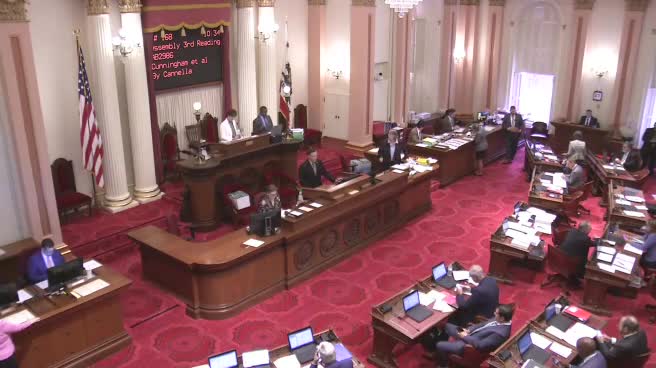 2MIN
Senate Floor
 9MIN
Senate Standing Committee on Labor and Industrial Relations
 4MIN
Senate Standing Committee on Judiciary
 3MIN
Assembly Standing Committee on Labor and Employment
Bill Author

Bill Co-Author(s):