AB 324: Crimes: disorderly conduct.
- Session Year: 2017-2018
- House: Assembly
- Latest Version Date: 2018-09-05
Existing law provides that a person who uses a camera or similar device to photograph, film, or otherwise record an identifiable person under or through their clothing, for the purpose of viewing their body or undergarments for the purpose of sexual gratification, or to record an identifiable person who is in a state of full or partial undress in an area in which they have a reasonable expectation of privacy, without their consent, is guilty of disorderly conduct, a misdemeanor.
This bill would define the term identifiable for the purpose of these provisions to mean capable of identification, or capable of being recognized, as specified.
The California Constitution requires the state to reimburse local agencies and school districts for certain costs mandated by the state. Statutory provisions establish procedures for making that reimbursement.
This bill would provide that no reimbursement is required by this act for a specified reason.
Existing law provides that a person who uses a camera or similar device to photograph, film, or otherwise record an identifiable person under or through their clothing, for the purpose of viewing their body or undergarments for the purpose of sexual gratification, or to record an identifiable person who is in a state of full or partial undress in an area in which they have a reasonable expectation of privacy, without their consent, is guilty of disorderly conduct, a misdemeanor.
This bill would eliminate the requirement that the recorded person in either of these circumstances be identifiable. define the term identifiable for the purpose of these provisions to mean capable of identification, or capable of being recognized, as specified.
The California Constitution requires the state to reimburse local agencies and school districts for certain costs mandated by the state. Statutory provisions establish procedures for making that reimbursement.
This bill would provide that no reimbursement is required by this act for a specified reason.
Existing law provides that a person who uses a camera or similar device to photograph, film, or otherwise record an identifiable person under or through their clothing, for the purpose of viewing their body or undergarments for the purpose of sexual gratification, or to record an identifiable person who is in a state of full or partial undress in an area in which they have a reasonable expectation of privacy, without their consent, is guilty of disorderly conduct, a misdemeanor.
This bill would eliminate the requirement that the recorded person in either of these circumstances be identifiable.
The California Constitution requires the state to reimburse local agencies and school districts for certain costs mandated by the state. Statutory provisions establish procedures for making that reimbursement.
This bill would provide that no reimbursement is required by this act for a specified reason.
It is the intent of the Legislature in this act to enact legislation to codify the definition of identifiable for the purposes of paragraphs (2) and (3) of subdivision (j) of Section 647 of the Penal Code consistent with People v. Johnson (2015) 234 Cal.App.4th 1432.
SEC. 2.Section 647 of the Penal Code is amended to read:647.Except as provided in paragraph (5) of subdivision (b) and subdivision (l), every person who commits any of the following acts is guilty of disorderly conduct, a misdemeanor:
(a)An individual who solicits anyone to engage in or who engages in lewd or dissolute conduct in any public place or in any place open to the public or exposed to public view.
(b)(1)An individual who solicits, or who agrees to engage in, or who engages in, any act of prostitution with the intent to receive compensation, money, or anything of value from another person. An individual agrees to engage in an act of prostitution when, with specific intent to so engage, he or she manifests an acceptance of an offer or solicitation by another person to so engage, regardless of whether the offer or solicitation was made by a person who also possessed the specific intent to engage in an act of prostitution.
(2)An individual who solicits, or who agrees to engage in, or who engages in, any act of prostitution with another person who is 18 years of age or older in exchange for the individual providing compensation, money, or anything of value to the other person. An individual agrees to engage in an act of prostitution when, with specific intent to so engage, he or she manifests an acceptance of an offer or solicitation by another person who is 18 years of age or older to so engage, regardless of whether the offer or solicitation was made by a person who also possessed the specific intent to engage in an act of prostitution.
(3)An individual who solicits, or who agrees to engage in, or who engages in, any act of prostitution with another person who is a minor in exchange for the individual providing compensation, money, or anything of value to the minor. An individual agrees to engage in an act of prostitution when, with specific intent to so engage, he or she manifests an acceptance of an offer or solicitation by someone who is a minor to so engage, regardless of whether the offer or solicitation was made by a minor who also possessed the specific intent to engage in an act of prostitution.
(4)A manifestation of acceptance of an offer or solicitation to engage in an act of prostitution does not constitute a violation of this subdivision unless some act, in addition to the manifestation of acceptance, is done within this state in furtherance of the commission of the act of prostitution by the person manifesting an acceptance of an offer or solicitation to engage in that act. As used in this subdivision, prostitution includes any lewd act between persons for money or other consideration.
(5)Notwithstanding paragraphs (1) to (3), inclusive, this subdivision does not apply to a child under 18 years of age who is alleged to have engaged in conduct to receive money or other consideration that would, if committed by an adult, violate this subdivision. A commercially exploited child under this paragraph may be adjudged a dependent child of the court pursuant to paragraph (2) of subdivision (b) of Section 300 of the Welfare and Institutions Code and may be taken into temporary custody pursuant to subdivision (a) of Section 305 of the Welfare and Institutions Code, if the conditions allowing temporary custody without warrant are met.
(c)Who accosts other persons in any public place or in any place open to the public for the purpose of begging or soliciting alms.
(d)Who loiters in or about any toilet open to the public for the purpose of engaging in or soliciting any lewd or lascivious or any unlawful act.
(e)Who lodges in any building, structure, vehicle, or place, whether public or private, without the permission of the owner or person entitled to the possession or in control of it.
(f)Who is found in any public place under the influence of intoxicating liquor, any drug, controlled substance, toluene, or any combination of any intoxicating liquor, drug, controlled substance, or toluene, in a condition that he or she is unable to exercise care for his or her own safety or the safety of others, or by reason of his or her being under the influence of intoxicating liquor, any drug, controlled substance, toluene, or any combination of any intoxicating liquor, drug, or toluene, interferes with or obstructs or prevents the free use of any street, sidewalk, or other public way.
(g)If a person has violated subdivision (f), a peace officer, if he or she is reasonably able to do so, shall place the person, or cause him or her to be placed, in civil protective custody. The person shall be taken to a facility, designated pursuant to Section 5170 of the Welfare and Institutions Code, for the 72-hour treatment and evaluation of inebriates. A peace officer may place a person in civil protective custody with that kind and degree of force that would be lawful were he or she effecting an arrest for a misdemeanor without a warrant. A person who has been placed in civil protective custody shall not thereafter be subject to any criminal prosecution or juvenile court proceeding based on the facts giving rise to this placement. This subdivision does not apply to the following persons:
(1)A person who is under the influence of any drug, or under the combined influence of intoxicating liquor and any drug.
(2)A person who a peace officer has probable cause to believe has committed any felony, or who has committed any misdemeanor in addition to subdivision (f).
(3)A person who a peace officer in good faith believes will attempt escape or will be unreasonably difficult for medical personnel to control.
(h)Who loiters, prowls, or wanders upon the private property of another, at any time, without visible or lawful business with the owner or occupant. As used in this subdivision, loiter means to delay or linger without a lawful purpose for being on the property and for the purpose of committing a crime as opportunity may be discovered.
(i)Who, while loitering, prowling, or wandering upon the private property of another, at any time, peeks in the door or window of any inhabited building or structure, without visible or lawful business with the owner or occupant.
(j)(1)A person who looks through a hole or opening, into, or otherwise views, by means of any instrumentality, including, but not limited to, a periscope, telescope, binoculars, camera, motion picture camera, camcorder, or mobile phone, the interior of a bedroom, bathroom, changing room, fitting room, dressing room, or tanning booth, or the interior of any other area in which the occupant has a reasonable expectation of privacy, with the intent to invade the privacy of a person or persons inside. This subdivision does not apply to those areas of a private business used to count currency or other negotiable instruments.
(2)A person who uses a concealed camcorder, motion picture camera, or photographic camera of any type, to secretly videotape, film, photograph, or record by electronic means, another identifiable person under or through the clothing being worn by that other person, for the purpose of viewing the body of, or the undergarments worn by, that other person, without the consent or knowledge of that other person, with the intent to arouse, appeal to, or gratify the lust, passions, or sexual desires of that person and invade the privacy of that other person, under circumstances in which the other person has a reasonable expectation of privacy. For the purposes of this paragraph, identifiable means capable of identification, or capable of being recognized, meaning that someone could identify or recognize the victim, including the victim herself or himself. It does not require the victims identity to actually be established.
(3)(A)A person who uses a concealed camcorder, motion picture camera, or photographic camera of any type, to secretly videotape, film, photograph, or record by electronic means, another identifiable person who may be in a state of full or partial undress, for the purpose of viewing the body of, or the undergarments worn by, that other person, without the consent or knowledge of that other person, in the interior of a bedroom, bathroom, changing room, fitting room, dressing room, or tanning booth, or the interior of any other area in which that other person has a reasonable expectation of privacy, with the intent to invade the privacy of that other person. For the purposes of this paragraph, identifiable means capable of identification, or capable of being recognized, meaning that someone could identify or recognize the victim, including the victim herself or himself. It does not require the victims identity to actually be established.
(B)Neither of the following is a defense to the crime specified in this paragraph:
(i)The defendant was a cohabitant, landlord, tenant, cotenant, employer, employee, or business partner or associate of the victim, or an agent of any of these.
(ii)The victim was not in a state of full or partial undress.
(4)(A)A person who intentionally distributes the image of the intimate body part or parts of another identifiable person, or an image of the person depicted engaged in an act of sexual intercourse, sodomy, oral copulation, sexual penetration, or an image of masturbation by the person depicted or in which the person depicted participates, under circumstances in which the persons agree or understand that the image shall remain private, the person distributing the image knows or should know that distribution of the image will cause serious emotional distress, and the person depicted suffers that distress.
(B)A person intentionally distributes an image described in subparagraph (A) when he or she personally distributes the image, or arranges, specifically requests, or intentionally causes another person to distribute that image.
(C)As used in this paragraph, intimate body part means any portion of the genitals, the anus and in the case of a female, also includes any portion of the breasts below the top of the areola, that is either uncovered or clearly visible through clothing.
(D)It shall not be a violation of this paragraph to distribute an image described in subparagraph (A) if any of the following applies:
(i)The distribution is made in the course of reporting an unlawful activity.
(ii)The distribution is made in compliance with a subpoena or other court order for use in a legal proceeding.
(iii)The distribution is made in the course of a lawful public proceeding.
(5)This subdivision does not preclude punishment under any section of law providing for greater punishment.
(k)In addition to any punishment prescribed by this section, a court may suspend, for not more than 30 days, the privilege of the person to operate a motor vehicle pursuant to Section 13201.5 of the Vehicle Code for any violation of subdivision (b) that was committed within 1,000 feet of a private residence and with the use of a vehicle. In lieu of the suspension, the court may order a persons privilege to operate a motor vehicle restricted, for not more than six months, to necessary travel to and from the persons place of employment or education. If driving a motor vehicle is necessary to perform the duties of the persons employment, the court may also allow the person to drive in that persons scope of employment.
(l)(1)A second or subsequent violation of subdivision (j) is punishable by imprisonment in a county jail not exceeding one year, or by a fine not exceeding two thousand dollars ($2,000), or by both that fine and imprisonment.
(2)If the victim of a violation of subdivision (j) was a minor at the time of the offense, the violation is punishable by imprisonment in a county jail not exceeding one year, or by a fine not exceeding two thousand dollars ($2,000), or by both that fine and imprisonment.
(m)(1)If a crime is committed in violation of subdivision (b) and the person who was solicited was a minor at the time of the offense, and if the defendant knew or should have known that the person who was solicited was a minor at the time of the offense, the violation is punishable by imprisonment in a county jail for not less than two days and not more than one year, or by a fine not exceeding ten thousand dollars ($10,000), or by both that fine and imprisonment.
(2)The court may, in unusual cases, when the interests of justice are best served, reduce or eliminate the mandatory two days of imprisonment in a county jail required by this subdivision. If the court reduces or eliminates the mandatory two days imprisonment, the court shall specify the reason on the record.
SEC. 3.No reimbursement is required by this act pursuant to Section 6 of Article XIIIB of the California Constitution because the only costs that may be incurred by a local agency or school district will be incurred because this act creates a new crime or infraction, eliminates a crime or infraction, or changes the penalty for a crime or infraction, within the meaning of Section 17556 of the Government Code, or changes the definition of a crime within the meaning of Section 6 of Article XIIIB of the California Constitution.
It is the intent of the Legislature in this act to enact legislation to codify the definition of identifiable for the purposes of paragraphs (2) and (3) of subdivision (j) of Section 647 of the Penal Code consistent with People v. Johnson (2015) 234 Cal.App.4th 1432.
SECTION 1.SEC. 2.Section 647 of the Penal Code is amended to read:647.Except as provided in paragraph (5) of subdivision (b) and subdivision (l), every person who commits any of the following acts is guilty of disorderly conduct, a misdemeanor:
(a)An individual who solicits anyone to engage in or who engages in lewd or dissolute conduct in any public place or in any place open to the public or exposed to public view.
(b)(1)An individual who solicits, or who agrees to engage in, or who engages in, any act of prostitution with the intent to receive compensation, money, or anything of value from another person. An individual agrees to engage in an act of prostitution when, with specific intent to so engage, he or she manifests an acceptance of an offer or solicitation by another person to so engage, regardless of whether the offer or solicitation was made by a person who also possessed the specific intent to engage in an act of prostitution.
(2)An individual who solicits, or who agrees to engage in, or who engages in, any act of prostitution with another person who is 18 years of age or older in exchange for the individual providing compensation, money, or anything of value to the other person. An individual agrees to engage in an act of prostitution when, with specific intent to so engage, he or she manifests an acceptance of an offer or solicitation by another person who is 18 years of age or older to so engage, regardless of whether the offer or solicitation was made by a person who also possessed the specific intent to engage in an act of prostitution.
(3)An individual who solicits, or who agrees to engage in, or who engages in, any act of prostitution with another person who is a minor in exchange for the individual providing compensation, money, or anything of value to the minor. An individual agrees to engage in an act of prostitution when, with specific intent to so engage, he or she manifests an acceptance of an offer or solicitation by someone who is a minor to so engage, regardless of whether the offer or solicitation was made by a minor who also possessed the specific intent to engage in an act of prostitution.
(4)A manifestation of acceptance of an offer or solicitation to engage in an act of prostitution does not constitute a violation of this subdivision unless some act, in addition to the manifestation of acceptance, is done within this state in furtherance of the commission of the act of prostitution by the person manifesting an acceptance of an offer or solicitation to engage in that act. As used in this subdivision, prostitution includes any lewd act between persons for money or other consideration.
(5)Notwithstanding paragraphs (1) to (3), inclusive, this subdivision does not apply to a child under 18 years of age who is alleged to have engaged in conduct to receive money or other consideration that would, if committed by an adult, violate this subdivision. A commercially exploited child under this paragraph may be adjudged a dependent child of the court pursuant to paragraph (2) of subdivision (b) of Section 300 of the Welfare and Institutions Code and may be taken into temporary custody pursuant to subdivision (a) of Section 305 of the Welfare and Institutions Code, if the conditions allowing temporary custody without warrant are met.
(c)Who accosts other persons in any public place or in any place open to the public for the purpose of begging or soliciting alms.
(d)Who loiters in or about any toilet open to the public for the purpose of engaging in or soliciting any lewd or lascivious or any unlawful act.
(e)Who lodges in any building, structure, vehicle, or place, whether public or private, without the permission of the owner or person entitled to the possession or in control of it.
(f)Who is found in any public place under the influence of intoxicating liquor, any drug, controlled substance, toluene, or any combination of any intoxicating liquor, drug, controlled substance, or toluene, in a condition that he or she is unable to exercise care for his or her own safety or the safety of others, or by reason of his or her being under the influence of intoxicating liquor, any drug, controlled substance, toluene, or any combination of any intoxicating liquor, drug, or toluene, interferes with or obstructs or prevents the free use of any street, sidewalk, or other public way.
(g)If a person has violated subdivision (f), a peace officer, if he or she is reasonably able to do so, shall place the person, or cause him or her to be placed, in civil protective custody. The person shall be taken to a facility, designated pursuant to Section 5170 of the Welfare and Institutions Code, for the 72-hour treatment and evaluation of inebriates. A peace officer may place a person in civil protective custody with that kind and degree of force that would be lawful were he or she effecting an arrest for a misdemeanor without a warrant. A person who has been placed in civil protective custody shall not thereafter be subject to any criminal prosecution or juvenile court proceeding based on the facts giving rise to this placement. This subdivision does not apply to the following persons:
(1)A person who is under the influence of any drug, or under the combined influence of intoxicating liquor and any drug.
(2)A person who a peace officer has probable cause to believe has committed any felony, or who has committed any misdemeanor in addition to subdivision (f).
(3)A person who a peace officer in good faith believes will attempt escape or will be unreasonably difficult for medical personnel to control.
(h)Who loiters, prowls, or wanders upon the private property of another, at any time, without visible or lawful business with the owner or occupant. As used in this subdivision, loiter means to delay or linger without a lawful purpose for being on the property and for the purpose of committing a crime as opportunity may be discovered.
(i)Who, while loitering, prowling, or wandering upon the private property of another, at any time, peeks in the door or window of any inhabited building or structure, without visible or lawful business with the owner or occupant.
(j)(1)A person who looks through a hole or opening, into, or otherwise views, by means of any instrumentality, including, but not limited to, a periscope, telescope, binoculars, camera, motion picture camera, camcorder, or mobile phone, the interior of a bedroom, bathroom, changing room, fitting room, dressing room, or tanning booth, or the interior of any other area in which the occupant has a reasonable expectation of privacy, with the intent to invade the privacy of a person or persons inside. This subdivision does not apply to those areas of a private business used to count currency or other negotiable instruments.
(2)A person who uses a concealed camcorder, motion picture camera, or photographic camera of any type, to secretly videotape, film, photograph, or record by electronic means, another identifiable person under or through the clothing being worn by that other person, for the purpose of viewing the body of, or the undergarments worn by, that other person, without the consent or knowledge of that other person, with the intent to arouse, appeal to, or gratify the lust, passions, or sexual desires of that person and invade the privacy of that other person, under circumstances in which the other person has a reasonable expectation of privacy. For the purposes of this paragraph, identifiable means capable of identification, or capable of being recognized, meaning that someone could identify or recognize the victim, including the victim herself or himself. It does not require the victims identity to actually be established.
(3)(A)A person who uses a concealed camcorder, motion picture camera, or photographic camera of any type, to secretly videotape, film, photograph, or record by electronic means, another identifiable person who may be in a state of full or partial undress, for the purpose of viewing the body of, or the undergarments worn by, that other person, without the consent or knowledge of that other person, in the interior of a bedroom, bathroom, changing room, fitting room, dressing room, or tanning booth, or the interior of any other area in which that other person has a reasonable expectation of privacy, with the intent to invade the privacy of that other person. For the purposes of this paragraph, identifiable means capable of identification, or capable of being recognized, meaning that someone could identify or recognize the victim, including the victim herself or himself. It does not require the victims identity to actually be established.
(B)Neither of the following is a defense to the crime specified in this paragraph:
(i)The defendant was a cohabitant, landlord, tenant, cotenant, employer, employee, or business partner or associate of the victim, or an agent of any of these.
(ii)The victim was not in a state of full or partial undress.
(4)(A)A person who intentionally distributes the image of the intimate body part or parts of another identifiable person, or an image of the person depicted engaged in an act of sexual intercourse, sodomy, oral copulation, sexual penetration, or an image of masturbation by the person depicted or in which the person depicted participates, under circumstances in which the persons agree or understand that the image shall remain private, the person distributing the image knows or should know that distribution of the image will cause serious emotional distress, and the person depicted suffers that distress.
(B)A person intentionally distributes an image described in subparagraph (A) when he or she personally distributes the image, or arranges, specifically requests, or intentionally causes another person to distribute that image.
(C)As used in this paragraph, intimate body part means any portion of the genitals, the anus and in the case of a female, also includes any portion of the breasts below the top of the areola, that is either uncovered or clearly visible through clothing.
(D)It shall not be a violation of this paragraph to distribute an image described in subparagraph (A) if any of the following applies:
(i)The distribution is made in the course of reporting an unlawful activity.
(ii)The distribution is made in compliance with a subpoena or other court order for use in a legal proceeding.
(iii)The distribution is made in the course of a lawful public proceeding.
(5)This subdivision does not preclude punishment under any section of law providing for greater punishment.
(k)In addition to any punishment prescribed by this section, a court may suspend, for not more than 30 days, the privilege of the person to operate a motor vehicle pursuant to Section 13201.5 of the Vehicle Code for any violation of subdivision (b) that was committed within 1,000 feet of a private residence and with the use of a vehicle. In lieu of the suspension, the court may order a persons privilege to operate a motor vehicle restricted, for not more than six months, to necessary travel to and from the persons place of employment or education. If driving a motor vehicle is necessary to perform the duties of the persons employment, the court may also allow the person to drive in that persons scope of employment.
(l)(1)A second or subsequent violation of subdivision (j) is punishable by imprisonment in a county jail not exceeding one year, or by a fine not exceeding two thousand dollars ($2,000), or by both that fine and imprisonment.
(2)If the victim of a violation of subdivision (j) was a minor at the time of the offense, the violation is punishable by imprisonment in a county jail not exceeding one year, or by a fine not exceeding two thousand dollars ($2,000), or by both that fine and imprisonment.
(m)(1)If a crime is committed in violation of subdivision (b) and the person who was solicited was a minor at the time of the offense, and if the defendant knew or should have known that the person who was solicited was a minor at the time of the offense, the violation is punishable by imprisonment in a county jail for not less than two days and not more than one year, or by a fine not exceeding ten thousand dollars ($10,000), or by both that fine and imprisonment.
(2)The court may, in unusual cases, when the interests of justice are best served, reduce or eliminate the mandatory two days of imprisonment in a county jail required by this subdivision. If the court reduces or eliminates the mandatory two days imprisonment, the court shall specify the reason on the record.
SEC. 2.SEC. 3.No reimbursement is required by this act pursuant to Section 6 of Article XIIIB of the California Constitution because the only costs that may be incurred by a local agency or school district will be incurred because this act creates a new crime or infraction, eliminates a crime or infraction, or changes the penalty for a crime or infraction, within the meaning of Section 17556 of the Government Code, or changes the definition of a crime within the meaning of Section 6 of Article XIIIB of the California Constitution.
Except as provided in paragraph (5) of subdivision (b) and subdivision (l), every person who commits any of the following acts is guilty of disorderly conduct, a misdemeanor:
(a)An individual who solicits anyone to engage in or who engages in lewd or dissolute conduct in any public place or in any place open to the public or exposed to public view.
(b)(1)An individual who solicits, or who agrees to engage in, or who engages in, any act of prostitution with the intent to receive compensation, money, or anything of value from another person. An individual agrees to engage in an act of prostitution when, with specific intent to so engage, he or she manifests an acceptance of an offer or solicitation by another person to so engage, regardless of whether the offer or solicitation was made by a person who also possessed the specific intent to engage in an act of prostitution.
(2)An individual who solicits, or who agrees to engage in, or who engages in, any act of prostitution with another person who is 18 years of age or older in exchange for the individual providing compensation, money, or anything of value to the other person. An individual agrees to engage in an act of prostitution when, with specific intent to so engage, he or she manifests an acceptance of an offer or solicitation by another person who is 18 years of age or older to so engage, regardless of whether the offer or solicitation was made by a person who also possessed the specific intent to engage in an act of prostitution.
(3)An individual who solicits, or who agrees to engage in, or who engages in, any act of prostitution with another person who is a minor in exchange for the individual providing compensation, money, or anything of value to the minor. An individual agrees to engage in an act of prostitution when, with specific intent to so engage, he or she manifests an acceptance of an offer or solicitation by someone who is a minor to so engage, regardless of whether the offer or solicitation was made by a minor who also possessed the specific intent to engage in an act of prostitution.
(4)A manifestation of acceptance of an offer or solicitation to engage in an act of prostitution does not constitute a violation of this subdivision unless some act, in addition to the manifestation of acceptance, is done within this state in furtherance of the commission of the act of prostitution by the person manifesting an acceptance of an offer or solicitation to engage in that act. As used in this subdivision, prostitution includes any lewd act between persons for money or other consideration.
(5)Notwithstanding paragraphs (1) to (3), inclusive, this subdivision does not apply to a child under 18 years of age who is alleged to have engaged in conduct to receive money or other consideration that would, if committed by an adult, violate this subdivision. A commercially exploited child under this paragraph may be adjudged a dependent child of the court pursuant to paragraph (2) of subdivision (b) of Section 300 of the Welfare and Institutions Code and may be taken into temporary custody pursuant to subdivision (a) of Section 305 of the Welfare and Institutions Code, if the conditions allowing temporary custody without warrant are met.
(c)Who accosts other persons in any public place or in any place open to the public for the purpose of begging or soliciting alms.
(d)Who loiters in or about any toilet open to the public for the purpose of engaging in or soliciting any lewd or lascivious or any unlawful act.
(e)Who lodges in any building, structure, vehicle, or place, whether public or private, without the permission of the owner or person entitled to the possession or in control of it.
(f)Who is found in any public place under the influence of intoxicating liquor, any drug, controlled substance, toluene, or any combination of any intoxicating liquor, drug, controlled substance, or toluene, in a condition that he or she is unable to exercise care for his or her own safety or the safety of others, or by reason of his or her being under the influence of intoxicating liquor, any drug, controlled substance, toluene, or any combination of any intoxicating liquor, drug, or toluene, interferes with or obstructs or prevents the free use of any street, sidewalk, or other public way.
(g)If a person has violated subdivision (f), a peace officer, if he or she is reasonably able to do so, shall place the person, or cause him or her to be placed, in civil protective custody. The person shall be taken to a facility, designated pursuant to Section 5170 of the Welfare and Institutions Code, for the 72-hour treatment and evaluation of inebriates. A peace officer may place a person in civil protective custody with that kind and degree of force that would be lawful were he or she effecting an arrest for a misdemeanor without a warrant. A person who has been placed in civil protective custody shall not thereafter be subject to any criminal prosecution or juvenile court proceeding based on the facts giving rise to this placement. This subdivision does not apply to the following persons:
(1)A person who is under the influence of any drug, or under the combined influence of intoxicating liquor and any drug.
(2)A person who a peace officer has probable cause to believe has committed any felony, or who has committed any misdemeanor in addition to subdivision (f).
(3)A person who a peace officer in good faith believes will attempt escape or will be unreasonably difficult for medical personnel to control.
(h)Who loiters, prowls, or wanders upon the private property of another, at any time, without visible or lawful business with the owner or occupant. As used in this subdivision, loiter means to delay or linger without a lawful purpose for being on the property and for the purpose of committing a crime as opportunity may be discovered.
(i)Who, while loitering, prowling, or wandering upon the private property of another, at any time, peeks in the door or window of any inhabited building or structure, without visible or lawful business with the owner or occupant.
(j)(1)A person who looks through a hole or opening, into, or otherwise views, by means of any instrumentality, including, but not limited to, a periscope, telescope, binoculars, camera, motion picture camera, camcorder, or mobile phone, the interior of a bedroom, bathroom, changing room, fitting room, dressing room, or tanning booth, or the interior of any other area in which the occupant has a reasonable expectation of privacy, with the intent to invade the privacy of a person or persons inside. This subdivision does not apply to those areas of a private business used to count currency or other negotiable instruments.
(2)A person who uses a concealed camcorder, motion picture camera, or photographic camera of any type, to secretly videotape, film, photograph, or record by electronic means, another person under or through the clothing being worn by that other person, for the purpose of viewing the body of, or the undergarments worn by, that other person, without the consent or knowledge of that other person, with the intent to arouse, appeal to, or gratify the lust, passions, or sexual desires of that person and invade the privacy of that other person, under circumstances in which the other person has a reasonable expectation of privacy.
(3)(A)A person who uses a concealed camcorder, motion picture camera, or photographic camera of any type, to secretly videotape, film, photograph, or record by electronic means, another person who may be in a state of full or partial undress, for the purpose of viewing the body of, or the undergarments worn by, that other person, without the consent or knowledge of that other person, in the interior of a bedroom, bathroom, changing room, fitting room, dressing room, or tanning booth, or the interior of any other area in which that other person has a reasonable expectation of privacy, with the intent to invade the privacy of that other person.
(B)Neither of the following is a defense to the crime specified in this paragraph:
(i)The defendant was a cohabitant, landlord, tenant, cotenant, employer, employee, or business partner or associate of the victim, or an agent of any of these.
(ii)The victim was not in a state of full or partial undress.
(4)(A)A person who intentionally distributes the image of the intimate body part or parts of another identifiable person, or an image of the person depicted engaged in an act of sexual intercourse, sodomy, oral copulation, sexual penetration, or an image of masturbation by the person depicted or in which the person depicted participates, under circumstances in which the persons agree or understand that the image shall remain private, the person distributing the image knows or should know that distribution of the image will cause serious emotional distress, and the person depicted suffers that distress.
(B)A person intentionally distributes an image described in subparagraph (A) when he or she personally distributes the image, or arranges, specifically requests, or intentionally causes another person to distribute that image.
(C)As used in this paragraph, intimate body part means any portion of the genitals, the anus and in the case of a female, also includes any portion of the breasts below the top of the areola, that is either uncovered or clearly visible through clothing.
(D)It shall not be a violation of this paragraph to distribute an image described in subparagraph (A) if any of the following applies:
(i)The distribution is made in the course of reporting an unlawful activity.
(ii)The distribution is made in compliance with a subpoena or other court order for use in a legal proceeding.
(iii)The distribution is made in the course of a lawful public proceeding.
(5)This subdivision does not preclude punishment under any section of law providing for greater punishment.
(k)In addition to any punishment prescribed by this section, a court may suspend, for not more than 30 days, the privilege of the person to operate a motor vehicle pursuant to Section 13201.5 of the Vehicle Code for any violation of subdivision (b) that was committed within 1,000 feet of a private residence and with the use of a vehicle. In lieu of the suspension, the court may order a persons privilege to operate a motor vehicle restricted, for not more than six months, to necessary travel to and from the persons place of employment or education. If driving a motor vehicle is necessary to perform the duties of the persons employment, the court may also allow the person to drive in that persons scope of employment.
(l)(1)A second or subsequent violation of subdivision (j) is punishable by imprisonment in a county jail not exceeding one year, or by a fine not exceeding two thousand dollars ($2,000), or by both that fine and imprisonment.
(2)If the victim of a violation of subdivision (j) was a minor at the time of the offense, the violation is punishable by imprisonment in a county jail not exceeding one year, or by a fine not exceeding two thousand dollars ($2,000), or by both that fine and imprisonment.
(m)(1)If a crime is committed in violation of subdivision (b) and the person who was solicited was a minor at the time of the offense, and if the defendant knew or should have known that the person who was solicited was a minor at the time of the offense, the violation is punishable by imprisonment in a county jail for not less than two days and not more than one year, or by a fine not exceeding ten thousand dollars ($10,000), or by both that fine and imprisonment.
(2)The court may, in unusual cases, when the interests of justice are best served, reduce or eliminate the mandatory two days of imprisonment in a county jail required by this subdivision. If the court reduces or eliminates the mandatory two days imprisonment, the court shall specify the reason on the record.
SEC. 2.No reimbursement is required by this act pursuant to Section 6 of Article XIIIB of the California Constitution because the only costs that may be incurred by a local agency or school district will be incurred because this act creates a new crime or infraction, eliminates a crime or infraction, or changes the penalty for a crime or infraction, within the meaning of Section 17556 of the Government Code, or changes the definition of a crime within the meaning of Section 6 of Article XIIIB of the California Constitution.
Except as provided in paragraph (5) of subdivision (b) and subdivision (l), every person who commits any of the following acts is guilty of disorderly conduct, a misdemeanor:
(a)An individual who solicits anyone to engage in or who engages in lewd or dissolute conduct in any public place or in any place open to the public or exposed to public view.
(b)(1)An individual who solicits, or who agrees to engage in, or who engages in, any act of prostitution with the intent to receive compensation, money, or anything of value from another person. An individual agrees to engage in an act of prostitution when, with specific intent to so engage, he or she manifests an acceptance of an offer or solicitation by another person to so engage, regardless of whether the offer or solicitation was made by a person who also possessed the specific intent to engage in an act of prostitution.
(2)An individual who solicits, or who agrees to engage in, or who engages in, any act of prostitution with another person who is 18 years of age or older in exchange for the individual providing compensation, money, or anything of value to the other person. An individual agrees to engage in an act of prostitution when, with specific intent to so engage, he or she manifests an acceptance of an offer or solicitation by another person who is 18 years of age or older to so engage, regardless of whether the offer or solicitation was made by a person who also possessed the specific intent to engage in an act of prostitution.
(3)An individual who solicits, or who agrees to engage in, or who engages in, any act of prostitution with another person who is a minor in exchange for the individual providing compensation, money, or anything of value to the minor. An individual agrees to engage in an act of prostitution when, with specific intent to so engage, he or she manifests an acceptance of an offer or solicitation by someone who is a minor to so engage, regardless of whether the offer or solicitation was made by a minor who also possessed the specific intent to engage in an act of prostitution.
(4)A manifestation of acceptance of an offer or solicitation to engage in an act of prostitution does not constitute a violation of this subdivision unless some act, in addition to the manifestation of acceptance, is done within this state in furtherance of the commission of the act of prostitution by the person manifesting an acceptance of an offer or solicitation to engage in that act. As used in this subdivision, prostitution includes any lewd act between persons for money or other consideration.
(5)Notwithstanding paragraphs (1) to (3), inclusive, this subdivision does not apply to a child under 18 years of age who is alleged to have engaged in conduct to receive money or other consideration that would, if committed by an adult, violate this subdivision. A commercially exploited child under this paragraph may be adjudged a dependent child of the court pursuant to paragraph (2) of subdivision (b) of Section 300 of the Welfare and Institutions Code and may be taken into temporary custody pursuant to subdivision (a) of Section 305 of the Welfare and Institutions Code, if the conditions allowing temporary custody without warrant are met.
(c)Who accosts other persons in any public place or in any place open to the public for the purpose of begging or soliciting alms.
(d)Who loiters in or about any toilet open to the public for the purpose of engaging in or soliciting any lewd or lascivious or any unlawful act.
(e)Who lodges in any building, structure, vehicle, or place, whether public or private, without the permission of the owner or person entitled to the possession or in control of it.
(f)Who is found in any public place under the influence of intoxicating liquor, any drug, controlled substance, toluene, or any combination of any intoxicating liquor, drug, controlled substance, or toluene, in a condition that he or she is unable to exercise care for his or her own safety or the safety of others, or by reason of his or her being under the influence of intoxicating liquor, any drug, controlled substance, toluene, or any combination of any intoxicating liquor, drug, or toluene, interferes with or obstructs or prevents the free use of any street, sidewalk, or other public way.
(g)If a person has violated subdivision (f), a peace officer, if he or she is reasonably able to do so, shall place the person, or cause him or her to be placed, in civil protective custody. The person shall be taken to a facility, designated pursuant to Section 5170 of the Welfare and Institutions Code, for the 72-hour treatment and evaluation of inebriates. A peace officer may place a person in civil protective custody with that kind and degree of force that would be lawful were he or she effecting an arrest for a misdemeanor without a warrant. A person who has been placed in civil protective custody shall not thereafter be subject to any criminal prosecution or juvenile court proceeding based on the facts giving rise to this placement. This subdivision does not apply to the following persons:
(1)A person who is under the influence of any drug, or under the combined influence of intoxicating liquor and any drug.
(2)A person who a peace officer has probable cause to believe has committed any felony, or who has committed any misdemeanor in addition to subdivision (f).
(3)A person who a peace officer in good faith believes will attempt escape or will be unreasonably difficult for medical personnel to control.
(h)Who loiters, prowls, or wanders upon the private property of another, at any time, without visible or lawful business with the owner or occupant. As used in this subdivision, loiter means to delay or linger without a lawful purpose for being on the property and for the purpose of committing a crime as opportunity may be discovered.
(i)Who, while loitering, prowling, or wandering upon the private property of another, at any time, peeks in the door or window of any inhabited building or structure, without visible or lawful business with the owner or occupant.
(j)(1)A person who looks through a hole or opening, into, or otherwise views, by means of any instrumentality, including, but not limited to, a periscope, telescope, binoculars, camera, motion picture camera, camcorder, or mobile phone, the interior of a bedroom, bathroom, changing room, fitting room, dressing room, or tanning booth, or the interior of any other area in which the occupant has a reasonable expectation of privacy, with the intent to invade the privacy of a person or persons inside. This subdivision does not apply to those areas of a private business used to count currency or other negotiable instruments.
(2)A person who uses a concealed camcorder, motion picture camera, or photographic camera of any type, to secretly videotape, film, photograph, or record by electronic means, another, identifiable another person under or through the clothing being worn by that other person, for the purpose of viewing the body of, or the undergarments worn by, that other person, without the consent or knowledge of that other person, with the intent to arouse, appeal to, or gratify the lust, passions, or sexual desires of that person and invade the privacy of that other person, under circumstances in which the other person has a reasonable expectation of privacy.
(3)(A)A person who uses a concealed camcorder, motion picture camera, or photographic camera of any type, to secretly videotape, film, photograph, or record by electronic means, another, identifiable another person who may be in a state of full or partial undress, for the purpose of viewing the body of, or the undergarments worn by, that other person, without the consent or knowledge of that other person, in the interior of a bedroom, bathroom, changing room, fitting room, dressing room, or tanning booth, or the interior of any other area in which that other person has a reasonable expectation of privacy, with the intent to invade the privacy of that other person.
(B)Neither of the following is a defense to the crime specified in this paragraph:
(i)The defendant was a cohabitant, landlord, tenant, cotenant, employer, employee, or business partner or associate of the victim, or an agent of any of these.
(ii)The victim was not in a state of full or partial undress.
(4)(A)A person who intentionally distributes the image of the intimate body part or parts of another identifiable person, or an image of the person depicted engaged in an act of sexual intercourse, sodomy, oral copulation, sexual penetration, or an image of masturbation by the person depicted or in which the person depicted participates, under circumstances in which the persons agree or understand that the image shall remain private, the person distributing the image knows or should know that distribution of the image will cause serious emotional distress, and the person depicted suffers that distress.
(B)A person intentionally distributes an image described in subparagraph (A) when he or she personally distributes the image, or arranges, specifically requests, or intentionally causes another person to distribute that image.
(C)As used in this paragraph, intimate body part means any portion of the genitals, the anus and in the case of a female, also includes any portion of the breasts below the top of the areola, that is either uncovered or clearly visible through clothing.
(D)It shall not be a violation of this paragraph to distribute an image described in subparagraph (A) if any of the following applies:
(i)The distribution is made in the course of reporting an unlawful activity.
(ii)The distribution is made in compliance with a subpoena or other court order for use in a legal proceeding.
(iii)The distribution is made in the course of a lawful public proceeding.
(5)This subdivision does not preclude punishment under any section of law providing for greater punishment.
(k)In addition to any punishment prescribed by this section, a court may suspend, for not more than 30 days, the privilege of the person to operate a motor vehicle pursuant to Section 13201.5 of the Vehicle Code for any violation of subdivision (b) that was committed within 1,000 feet of a private residence and with the use of a vehicle. In lieu of the suspension, the court may order a persons privilege to operate a motor vehicle restricted, for not more than six months, to necessary travel to and from the persons place of employment or education. If driving a motor vehicle is necessary to perform the duties of the persons employment, the court may also allow the person to drive in that persons scope of employment.
(l)(1)A second or subsequent violation of subdivision (j) is punishable by imprisonment in a county jail not exceeding one year, or by a fine not exceeding two thousand dollars ($2,000), or by both that fine and imprisonment.
(2)If the victim of a violation of subdivision (j) was a minor at the time of the offense, the violation is punishable by imprisonment in a county jail not exceeding one year, or by a fine not exceeding two thousand dollars ($2,000), or by both that fine and imprisonment.
(m)(1)If a crime is committed in violation of subdivision (b) and the person who was solicited was a minor at the time of the offense, and if the defendant knew or should have known that the person who was solicited was a minor at the time of the offense, the violation is punishable by imprisonment in a county jail for not less than two days and not more than one year, or by a fine not exceeding ten thousand dollars ($10,000), or by both that fine and imprisonment.
(2)The court may, in unusual cases, when the interests of justice are best served, reduce or eliminate the mandatory two days of imprisonment in a county jail required by this subdivision. If the court reduces or eliminates the mandatory two days imprisonment, the court shall specify the reason on the record.
SEC. 2.No reimbursement is required by this act pursuant to Section 6 of Article XIIIB of the California Constitution because the only costs that may be incurred by a local agency or school district will be incurred because this act creates a new crime or infraction, eliminates a crime or infraction, or changes the penalty for a crime or infraction, within the meaning of Section 17556 of the Government Code, or changes the definition of a crime within the meaning of Section 6 of Article XIIIB of the California Constitution.
|
Date
|
Status
|
|---|---|
| Sep 5, 2018 | Chaptered by Secretary of State - Chapter 246, Statutes of 2018. |
| Sep 5, 2018 | Approved by the Governor. |
| Aug 24, 2018 | Enrolled and presented to the Governor at 4:30 p.m. |
| Aug 20, 2018 | Senate amendments concurred in. To Engrossing and Enrolling. |
| Aug 14, 2018 | In Assembly. Concurrence in Senate amendments pending. May be considered on or after August 16 pursuant to Assembly Rule 77. |
| Aug 13, 2018 | Read third time. Passed. Ordered to the Assembly. |
| Aug 7, 2018 | Read second time. Ordered to third reading. |
| Aug 6, 2018 | From committee: Be ordered to second reading pursuant to Senate Rule 28.8. |
| Jun 26, 2018 | From committee: Do pass and re-refer to Com. on APPR. (Ayes 5. Noes 0.) (June 26). Re-referred to Com. on APPR. |
| Jun 18, 2018 | From committee chair, with author's amendments: Amend, and re-refer to committee. Read second time, amended, and re-referred to Com. on PUB. S. |
| Jul 11, 2017 | In committee: Set, second hearing. Failed passage. Reconsideration granted. |
| Jun 14, 2017 | In committee: Hearing postponed by committee. |
| Jun 6, 2017 | In committee: Set, first hearing. Hearing canceled at the request of author. |
| May 10, 2017 | Referred to Com. on PUB. S. |
| Apr 20, 2017 | In Senate. Read first time. To Com. on RLS. for assignment. |
| Apr 20, 2017 | Read third time. Passed. Ordered to the Senate. (Ayes 73. Noes 0. Page 1132.) |
| Apr 6, 2017 | Read second time. Ordered to third reading. |
| Apr 5, 2017 | From committee: Do pass. (Ayes 17. Noes 0.) (April 5). |
| Mar 23, 2017 | Re-referred to Com. on APPR. |
| Mar 22, 2017 | Read second time and amended. |
| Mar 21, 2017 | From committee: Amend, and do pass as amended and re-refer to Com. on APPR. (Ayes 7. Noes 0.) (March 14). |
| Feb 21, 2017 | Referred to Com. on PUB. S. |
| Feb 8, 2017 | From printer. May be heard in committee March 10. |
| Feb 7, 2017 | Read first time. To print. |
|
Date
|
Description
|
Location
|
Votes
|
|
|---|---|---|---|---|
| Aug 20, 2018 | AB 324 KILEY Concurrence in Senate Amendments | Assembly Floor |
Passed |
|
| Aug 13, 2018 | Assembly 3rd Reading AB324 Kiley By Nguyen | Senate Floor |
Passed |
|
| Jun 26, 2018 | Do pass, but first be re-referred to the Committee on [Appropriations] | Senate Standing Committee on Public Safety |
Passed |
|
| Jul 11, 2017 | [Second] hearing set for [07-11-2017]: Failed passage in Committee. Reconsideration granted | Senate Standing Committee on Public Safety |
Passed |
|
| Jul 11, 2017 | Do pass, but first be re-referred to the Committee on [Appropriations] | Senate Standing Committee on Public Safety |
Failed |
|
| Apr 20, 2017 | Favorable (Transportation & Infrastructure Subcommittee) | Assembly Floor |
Passed |
|
| Apr 5, 2017 | Do pass. | Assembly Standing Committee on Appropriations |
Passed |
|
| Mar 14, 2017 | Do pass as amended and be re-referred to the Committee on [Appropriations] | Assembly Standing Committee on Public Safety |
Passed |
This list shows positions taken on this bill by organizations on the date displayed, which is linked to the original source.
Positions by individuals are not included.
CONCURRENCE IN SENATE AMENDMENTS
CSA1 Bill Id:AB 324
Author:(Kiley)
As Amended Ver:June 18, 2018
Majority vote
ASSEMBLY: | 73-0 | (April 20, 2017) | SENATE: | 34-0 | (August 13, 2018) |
Original Committee Reference: PUB. S.
SUMMARY: Defines "identifiable" as "capable of identification, or capable of being recognized, meaning that someone could identify or recognize the victim, including the victim herself or himself" for the crimes of using a camera or similar device to photograph or record an identifiable person under or through their clothing, for the purpose of viewing their body or undergarments, for the purpose of sexual gratification, or to record an identifiable person who is in a state of full or partial undress in an area in which they have a reasonable expectation of privacy, without their consent.
The Senate amendments:
- Reintroduce the requirement that a victim be "identifiable" to establish the crimes of using a camera or similar device to photograph or otherwise record an identifiable person under or through their clothing, for the purpose of viewing their body or undergarments, for the purpose of sexual gratification, or to record an identifiable person who is in a state of full or partial undress in an area in which they have a reasonable expectation of privacy, without their consent.
- Define "identifiable" for purposes of this bill, as "capable of identification, or capable of being recognized, meaning that someone could identify or recognize the victim, including the victim herself or himself. It does not require the victim’s identity to actually be established."
EXISTING LAW:
- States that any person who looks through a hole or opening, into, or otherwise views, by means of any instrumentality, including, but not limited to, a periscope, telescope, binoculars, camera, motion picture camera, camcorder, or mobile phone, the interior of a bedroom, bathroom, changing room, fitting room, dressing room, or tanning booth, or the interior of any other area in which the occupant has a reasonable expectation of privacy, with the intent to invade the privacy of a person or persons inside is guilty of disorderly conduct, a misdemeanor.
- States that any person who uses a concealed camcorder, motion picture camera, or photographic camera of any type, to secretly videotape, film, photograph, or record by electronic means, another, identifiable person under or through the clothing being worn by that other person, for the purpose of viewing the body of, or the undergarments worn by, that other person, without the consent or knowledge of that other person, with the intent to arouse, appeal to, or gratify the lust, passions, or sexual desires of that person and invade the privacy of that other person, under circumstances in which the other person has a reasonable expectation of privacy inside is guilty of disorderly conduct, a misdemeanor.
- States that any person who uses a concealed camcorder, motion picture camera, or photographic camera of any type, to secretly videotape, film, photograph, or record by electronic means, another, identifiable person who may be in a state of full or partial undress, for the purpose of viewing the body of, or the undergarments worn by, that other person, without the consent or knowledge of that other person, in the interior of a bedroom, bathroom, changing room, fitting room, dressing room, or tanning booth, or the interior of any other area in which that other person has a reasonable expectation of privacy, with the intent to invade the privacy of that other person inside is guilty of disorderly conduct, a misdemeanor.
- States that any person who intentionally distributes the image of the intimate body part or parts of another identifiable person, or an image of the person depicted engaged in an act of sexual intercourse, sodomy, oral copulation, sexual penetration, or an image of masturbation by the person depicted or in which the person depicted participates, under circumstances in which the persons agree or understand that the image shall remain private, the person distributing the image knows or should know that distribution of the image will cause serious emotional distress, and the person depicted suffers that distress is guilty of disorderly conduct, a misdemeanor:
- Defines "distribution of an image" as "when he or she personally distributes the image, or arranges, specifically requests, or intentionally causes another person to distribute that image;"
- Defines "intimate body part" as "any portion of the genitals, the anus and in the case of a female, also includes any portion of the breasts below the top of the areola, that is either uncovered or clearly visible through clothing;" and
- States that it shall not be a violation of this paragraph to distribute an image described in subparagraph a), above, if any of the following applies:
- The distribution is made in the course of reporting an unlawful activity;
- The distribution is made in compliance with a subpoena or other court order for use in a legal proceeding; or
- The distribution is made in the course of a lawful public proceeding.
AS PASSED BY THE ASSEMBLY, this bill eliminated the requirement that a victim be "identifiable" from the crimes of using a camera or similar device to photograph or otherwise record an identifiable person under or through their clothing, for the purpose of viewing their body or undergarments, for the purpose of sexual gratification, or to record an identifiable person who is in a state of full or partial undress in an area in which they have a reasonable expectation of privacy, without their consent.
FISCAL EFFECT: According to the Senate Appropriations Committee, pursuant to Senate Rule 28.8, negligible state costs.
COMMENTS: According to the author, "Under California Penal Code Section 647 an individual who records or takes photographs of others in a state of partial or full undress for sexual gratification without their consent cannot be prosecuted for disorderly conduct if the victim is unidentifiable. This 'voyeurism loophole' has the potential to allow the alleged perpetrators to record and distribute the inappropriate images or videos without facing penalty. AB 324 would eliminate the requirement to identify the victim in the recording or image and would allow the evidence to be based on the recorded content without the need to show an identifiable victim. Californians should share the same right of privacy that is enjoyed by citizens in the District of Columbia and 47 other states."
Analysis Prepared by: David Billingsley / PUB. S. / (916) 319-3744 FN: 0003785
Office of Senate Floor Analyses (916) 651-1520 Fax: (916) 327-4478 | AB |
THIRD READING
Bill No: AB 324
:
SENATE PUBLIC SAFETY COMMITTEE: 3-1, 7/11/17 (FAIL)
AYES: Anderson, Stone, Wiener
NOES: Jackson
NO VOTE RECORDED: Skinner, Bradford, Mitchell
SENATE PUBLIC SAFETY COMMITTEE: 5-0, 6/26/18
AYES: Skinner, Anderson, Bradford, Stone, Wiener
NO VOTE RECORDED: Jackson, Mitchell
SENATE APPROPRIATIONS COMMITTEE: Senate Rule 28.8
ASSEMBLY FLOOR: 73-0, 4/20/17 - See last page for vote
DIGEST:
This bill defines the term “identifiable” for purposes of the crimes of secretly recording or photographing under or through the clothing worn by another identifiable person, or while the other person is in a state of full or partial undress, for the purpose of sexual gratification, as specified.
Existing law:
- Makes it a misdemeanor for any person to use a concealed device to secretly videotape or record by electronic means another identifiable person under or through his or her clothing, for the purpose of viewing that person’s body or undergarments without consent and under circumstances in which that person has a reasonable expectation of privacy, if the perpetrator commits the act with a prurient intent. (Pen. Code § 647, subd. (j)(2).)
- Makes it a misdemeanor for any person who uses a concealed camcorder, motion picture camera, or photographic camera of any type, to secretly videotape, film, photograph, or record by electronic means, another, identifiable person who may be in a state of full or partial undress, for the purpose of viewing the body of, or the undergarments worn by, that other person, without the consent or knowledge of that other person, in the interior of a bedroom, bathroom, changing room, fitting room, dressing room, or tanning booth, or the interior of any other area in which that other person has a reasonable expectation of privacy, with the intent to invade the privacy of that other person inside. (Pen. Code, § 647, subd. (j)(3).)
- Provides, Generally, that a violation of disorderly conduct is punishable by up to six months imprisonment in county jail or up to a fine of $1000, or both the fine and imprisonment. A second violation of subdivision (j) of Penal Code section 647 is punishable by up to one year in county jail, a fine not exceeding $2000, or both the fine and imprisonment. (Pen. Code § 647, subd. (l).)
- Provides that “identifiable” means capable of identification, or capable of being recognized, meaning that someone could identify or recognize the victim, including the victim herself or himself. It does not require that the victim's identity to actually be established. (People v. Johnson (2015) 234 Cal.App.4th 1432, 1441.)
This bill codifies the definition of “identifiable” from People v. Johnson, supra, for purposes of the crimes of secretly recording or photographing under or through the clothing worn by another identifiable person, or while the other person is in a state of full or partial undress, for the purpose of sexual gratification.
Background
One of the invasion of privacy crimes that this bill seeks to amend was enacted in 1999 by AB 182 (Ackerman, Chapter 231, Statutes of 1999), specifically the crime of taking photos through or under the clothing of another person pursuant to Penal Code section 647, subdivision (j)(2). When that bill was heard by the Senate Public Safety Committee, the analysis noted that:
The language of the bill may not clearly state whether or not the victim must be identifiable from the prohibited image to allow conviction under the new crime. However, it appears from the background information that the intent of the author of the bill is that the law could be applied in cases where there is no identifiable victim. Background information provided by the author included examples of ‘up-skirt’ photographs (or electronic scans of some sort of visual recording) found on the Internet. These images depicted only the underclothing of a woman, as seen from behind, under the woman's skirt. It does not appear possible to determine the identity of the person whose underclothing is depicted in the photograph. Thus, the bill raises the issue of whether a defendant can be found guilty of criminal violation of privacy where it cannot be determined whose privacy was invaded.
(People v. Johnson, supra, 234 Cal.App.4th at 1444, citing Sen. Com. on Public Safety, Analysis of Assem. Bill No. 182 (1999–2000 Reg. Sess.) as amended Apr. 26, 1999, p. 5.)
AB 182 was subsequently amended to include the “identifiable” element and included that language when it signed into law. When AB 1484 (Ackerman, Chapter 666, Statutes of 2004) enacted Penal Code section 647, subdivision (j)(3), which is the other invasion of privacy crime this bill seeks to amend, it was drafted to include the “identifiable” element for the new crime as well.
A prior version of this bill would have eliminated the “identifiable” requirement in both of these subdivisions. The amended version of this bill will instead define the term “identifiable,” consistent with the Johnson case.
FISCAL EFFECT: Appropriation: Fiscal Com.: Local:
Association of Orange County Deputy Sheriffs
California District Attorneys Association
California Police Chiefs Association
California State Sheriffs’ Association
California Statewide Law Enforcement Association
Conference of California Bar Associations
Crime Victims United
Fraternal Order of Police
Long Beach Police Officers Association
Los Angeles County District Attorney’s Office
Riverside Sheriffs Association
Sacramento County Deputy Sheriffs’ Association
San Diego County District Attorney’s Office
California Attorneys for Criminal Justice
California Public Defenders Association
ASSEMBLY FLOOR: 73-0, 4/20/17
AYES: Acosta, Aguiar-Curry, Travis Allen, Arambula, Baker, Berman, Bigelow, Bloom, Bocanegra, Burke, Caballero, Calderon, Cervantes, Chau, Chávez, Chen, Chiu, Choi, Chu, Cooley, Cooper, Cunningham, Dababneh, Dahle, Daly, Eggman, Flora, Fong, Frazier, Friedman, Gallagher, Cristina Garcia, Eduardo Garcia, Gipson, Gloria, Gomez, Gonzalez Fletcher, Gray, Grayson, Harper, Holden, Irwin, Kalra, Kiley, Lackey, Levine, Limón, Low, Maienschein, Mayes, Medina, Melendez, Mullin, Muratsuchi, Nazarian, Obernolte, O'Donnell, Patterson, Quirk, Quirk-Silva, Reyes, Rodriguez, Rubio, Salas, Santiago, Steinorth, Mark Stone, Thurmond, Voepel, Waldron, Weber, Wood, Rendon
NO VOTE RECORDED: Bonta, Brough, Jones-Sawyer, Mathis, McCarty, Ridley-Thomas, Ting
Prepared by: Gabe Caswell / PUB. S. /
8/8/18 16:48:45
**** END ****
SENATE COMMITTEE ON PUBLIC SAFETY
Senator Nancy Skinner, Chair
2017 - 2018 Regular
Bill No: AB 324 Hearing Date: June 26, 2018
Author: | Kiley | ||
Version: | June 18, 2018 | ||
Urgency: | No | Fiscal: | Yes |
Consultant: | SC | ||
Subject: Crimes: Disorderly Conduct
HISTORY
Source: Conference of California Bar Associations
Prior Legislation: AB 1310 (Gatto), Ch. 643, Stats. 2015
AB 1528 (Donnelly), 2012, failed passage in Assembly Public Safety
AB 1484 (Ackerman), Ch. 666, Stats. 2004
AB 182 (Ackerman), Ch. 231, Stats. 1999
Support: Association of Orange County Deputy Sheriffs; California District Attorneys Association; California Police Chiefs Association; California State Sheriffs’ Association; California Statewide Law Enforcement Association; Crime Victims United; Fraternal Order of Police; Long Beach Police Officers Association; Los Angeles County District Attorney’s Office; Riverside Sheriffs Association; Sacramento County Deputy Sheriffs’ Association; San Diego County District Attorney’s Office
Opposition: California Attorneys for Criminal Justice; California Public Defenders Association
Assembly Floor Vote: 73 - 0
PURPOSE
The purpose of this bill is to define the term “identifiable” for purposes of the crimes of secretly recording or photographing under or through the clothing worn by another identifiable person, or while the other person is in a state of full or partial undress, for the purpose of sexual gratification, as specified.
Existing law makes it a misdemeanor for any person to use a concealed device to secretly videotape or record by electronic means another identifiable person under or through his or her clothing, for the purpose of viewing that person’s body or undergarments without consent and under circumstances in which that person has a reasonable expectation of privacy, if the perpetrator commits the act with a prurient intent. (Pen. Code § 647, subd. (j)(2).)
Existing law makes it a misdemeanor for any person who uses a concealed camcorder, motion picture camera, or photographic camera of any type, to secretly videotape, film, photograph, or record by electronic means, another, identifiable person who may be in a state of full or partial undress, for the purpose of viewing the body of, or the undergarments worn by, that other person, without the consent or knowledge of that other person, in the interior of a bedroom, bathroom, changing room, fitting room, dressing room, or tanning booth, or the interior of any other area in which that other person has a reasonable expectation of privacy, with the intent to invade the privacy of that other person inside. (Pen. Code, § 647, subd. (j)(3).)
Existing law generally provides that a violation of disorderly conduct is punishable by up to six months imprisonment in county jail or up to a fine of $1000, or both the fine and imprisonment. A second violation of subdivision (j) of Penal Code section 647 is punishable by up to one year in county jail, a fine not exceeding $2000, or both the fine and imprisonment. (Pen. Code § 647, subd. (l).)
Existing law provides that “identifiable” means capable of identification, or capable of being recognized, meaning that someone could identify or recognize the victim, including the victim herself or himself. It does not require that the victim's identity to actually be established. (People v. Johnson (2015) 234 Cal.App.4th 1432, 1441.)
This bill would codify the definition of “identifiable” from People v. Johnson, supra, for purposes of the crimes of secretly recording or photographing under or through the clothing worn by another identifiable person, or while the other person is in a state of full or partial undress, for the purpose of sexual gratification.
COMMENTS
1. Need for This Bill
According to the author:
Under current law, an individual can only be charged with disorderly conduct for recording a person in a state of partial or full undress for sexual gratification if the person being recorded is “identifiable”. The term identifiable is not defined in this section, and thus has been narrowly interpreted by the courts to require the identification of the specific victim by a third party. Because these images and videos are frequently of women from the upskirt angle, the victim is most often not identifiable from this narrow definition. This stringent definition has led to the lack of ability for these crimes to be prosecuted, and thus women are not getting the justice they deserve. AB 324 seeks to define identifiable based on the definition provided in People v. Johnson, so that women can receive the justice they deserve.
2. Relevant Case Law
In People v. Johnson, supra, 234 Cal.App.4th 1432, the defendant was convicted of 12 counts of secretly videotaping, filming, photographing, or recording by electronic means, another, identifiable person under or through the clothing being worn by that other person, for the purpose of viewing the body of, or the undergarments worn by, that other person, without the consent or knowledge of that other person, with the intent to arouse, appeal to, or gratify the lust, passions, or sexual desires of that person and invade the privacy of that other person, under circumstances in which the other person has a reasonable expectation of privacy, in violation of subdivision (j)(2) of Penal Code section 647. Only three victims had been named, and the others were named Jane Does because law enforcement had not determined who their identities.
During the trial, the jury was shown video footage defendant had recorded in which he followed women and filmed under their skirts, without their knowledge. In some cases, the resulting footage did not capture the women's faces, or their profiles. (Id. at 1436.) In some cases only shoes, legs, skirts or dresses, purses, or the woman's back and the back of her head, appeared on screen. (Id. at 1437.) The court was called on to determine whether there was sufficient evidence to support findings that the defendant had violated the criminal statute when the evidence did not include the women’s faces.
The court noted that the elements of criminal statute require that the defendant must film an “identifiable person” to face criminal liability. The court held that “identifiable” means capable of identification, or capable of being recognized. The court stated that in order to be “identifiable” it does not require that the victim's identity must ultimately be established. The court held the prosecution does not have to prove up the victim's identity, does not have to prove the victim has actually been identified, located, or named, and does not have to offer evidence showing anyone has actually recognized the victim. (Id. at 1441.)
In reaching its decision the court stated that, “identifiable” means that when all of the available evidence is considered, it is reasonably probable that someone could identify or recognize the victim. This includes the victim herself or himself.” (Ibid.) The court reasoned that “[t]his is consistent with a legislative goal of criminalizing the invasive act when it poses the most significant risk of harm to specific individuals—when it is reasonably probable the victim could be recognized or recognize himself or herself, potentially leading to the victim's humiliation and embarrassment.” (Id. at 1451.)
On appeal, the court found that based on the totality of the evidence presented, there was sufficient evidence to meet find the victims “identifiable” even where their faces were not depicted in the secret recordings.
This bill codifies the definition of “identifiable” provided by the Johnson case.
3. Legislative History
One of the invasion of privacy crimes that this bill seeks to amend was enacted in 1999 by AB 182 (Ackerman), Chapter 231, Statutes of 1999, specifically the crime of taking photos through or under the clothing of another person pursuant to Penal Code section 647, subdivision (j)(2). When the bill was heard by the Senate Public Safety Committee, the analysis noted that:
The language of the bill may not clearly state whether or not the victim must be identifiable from the prohibited image to allow conviction under the new crime. However, it appears from the background information that the intent of the author of the bill is that the law could be applied in cases where there is no identifiable victim. Background information provided by the author included examples of ‘up-skirt’ photographs (or electronic scans of some sort of visual recording) found on the Internet. These images depicted only the underclothing of a woman, as seen from behind, under the woman's skirt. It does not appear possible to determine the identity of the person whose underclothing is depicted in the photograph. Thus, the bill raises the issue of whether a defendant can be found guilty of criminal violation of privacy where it cannot be determined whose privacy was invaded.
(People v. Johnson, supra, 234 Cal.App.4th at 1444, citing Sen. Com. on Public Safety, Analysis of Assem. Bill No. 182 (1999–2000 Reg. Sess.) as amended Apr. 26, 1999, p. 5.)
AB 182 was subsequently amended to include the “identifiable” element and included that language when it signed into law. When AB 1484 (Ackerman), Chapter 666, Statutes of 2004 enacted Penal Code section 647, subdivision (j)(3), which is the other invasion of privacy crime this bill seeks to amend, it was drafted to include the “identifiable” element for the new crime as well.
A prior version of this bill would have eliminated the “identifiable” requirement in both of these subdivisions. The amended version of this bill will instead define the term “identifiable,” consistent with the Johnson case.
-- END –
SENATE COMMITTEE ON PUBLIC SAFETY
Senator Nancy Skinner, Chair
2017 - 2018 Regular
Bill No: AB 324 Hearing Date: July 11, 2017
Author: | Kiley | ||
Version: | March 22, 2017 | ||
Urgency: | No | Fiscal: | Yes |
Consultant: | SC | ||
Subject: Crimes: Disorderly Conduct
HISTORY
Source: Conference of California Bar Associations
Prior Legislation: AB 1310 (Gatto), Ch. 643, Stats. 2015
AB 1528 (Donnelly), 2012, failed passage in Assembly Public Safety
AB 1484 (Ackerman), Ch. 666, Stats. 2004
AB 182 (Ackerman), Ch. 231, Stats. 1999
Support: Association of Orange County Deputy Sheriffs; California District Attorneys Association; California Police Chiefs Association; California State Sheriffs’ Association; California Statewide Law Enforcement Association; Crime Victims United; Fraternal Order of Police; Long Beach Police Officers Association; Los Angeles County District Attorney’s Office; Riverside Sheriffs Association; Sacramento County Deputy Sheriffs’ Association; San Diego County District Attorney’s Office
Opposition: American Civil Liberties Union of California; California Attorneys for Criminal Justice; California Public Defenders Association
Assembly Floor Vote: 73 - 0
PURPOSE
The purpose of this bill is to eliminate the requirement that a victim be “identifiable” from the crimes of secretly recording or photographing under or through the clothing worn by another identifiable person, or while the other person is in a state of full or partial undress, for the purpose of sexual gratification, as specified.
Existing law makes it a misdemeanor for any person to use a concealed device to secretly videotape or record by electronic means another identifiable person under or through his or her clothing, for the purpose of viewing that person’s body or undergarments without consent and under circumstances in which that person has a reasonable expectation of privacy, if the perpetrator commits the act with a prurient intent. (Pen. Code § 647, subd. (j)(2).)
Existing law makes it a misdemeanor for any person who uses a concealed camcorder, motion picture camera, or photographic camera of any type, to secretly videotape, film, photograph, or record by electronic means, another, identifiable person who may be in a state of full or partial undress, for the purpose of viewing the body of, or the undergarments worn by, that other person, without the consent or knowledge of that other person, in the interior of a bedroom, bathroom, changing room, fitting room, dressing room, or tanning booth, or the interior of any other area in which that other person has a reasonable expectation of privacy, with the intent to invade the privacy of that other person inside. (Pen. Code, § 647, subd. (j)(3).)
Existing law generally provides that a violation of disorderly conduct is punishable by up to six months imprisonment in county jail or up to a fine of $1000, or both the fine and imprisonment. A second violation of subdivision (j) of Penal Code section 647 is punishable by up to one year in county jail, a fine not exceeding $2000, or both the fine and imprisonment. (Pen. Code § 647, subd. (l).)
Existing law provides that “identifiable” means capable of identification, or capable of being recognized, meaning that someone could identify or recognize the victim, including the victim herself or himself. It does not require that the victim's identity to actually be established. (People v. Johnson (2015) 234 Cal.App.4th 1432, 1441.)
This bill would eliminate the requirement in the above provisions that the videotape or recording must be of an identifiable person.
COMMENTS
1. Need for This Bill
According to the author:
Existing law, California Penal Code 647, states than an individual can only be charged with disorderly conduct for recording a person(s) in a state of partial or full undress for sexual gratification if the person being recorded is identifiable. AB 324 will eliminate the requirement of identifying the person(s) being recorded without their consent.
2. Relevant Case Law
In People v. Johnson, supra, 234 Cal.App.4th 1432, the defendant was convicted of 12 counts of secretly videotaping, filming, photographing, or recording by electronic means, another, identifiable person under or through the clothing being worn by that other person, for the purpose of viewing the body of, or the undergarments worn by, that other person, without the consent or knowledge of that other person, with the intent to arouse, appeal to, or gratify the lust, passions, or sexual desires of that person and invade the privacy of that other person, under circumstances in which the other person has a reasonable expectation of privacy, in violation of subdivision (j)(2) of Penal Code section 647. Only three victims had been named, and the others were named Jane Does because law enforcement had not determined who their identities.
During the trial, the jury was shown video footage defendant had recorded in which he followed women and filmed under their skirts, without their knowledge. In some cases, the resulting footage did not capture the women's faces, or their profiles. (Id. at 1436.) In some cases only shoes, legs, skirts or dresses, purses, or the woman's back and the back of her head, appeared on
screen. (Id. at 1437.) The court was called on to determine whether there was sufficient evidence to support findings that the defendant had violated the criminal statute when the evidence did not include the women’s faces.
The court noted that the elements of criminal statute require that the defendant must film an “identifiable person” to face criminal liability. The court held that “identifiable” means capable of identification, or capable of being recognized. The court stated that in order to be “identifiable” it does not require that the victim's identity must ultimately be established. The court held the prosecution does not have to prove up the victim's identity, does not have to prove the victim has actually been identified, located, or named, and does not have to offer evidence showing anyone has actually recognized the victim. (Id. at 1441.)
In reaching its decision the court stated that, “identifiable” means that when all of the available evidence is considered, it is reasonably probable that someone could identify or recognize the victim. This includes the victim herself or himself.” (Ibid.) The court reasoned that “[t]his is consistent with a legislative goal of criminalizing the invasive act when it poses the most significant risk of harm to specific individuals—when it is reasonably probable the victim could be recognized or recognize himself or herself, potentially leading to the victim's humiliation and embarrassment.” (Id. at 1451.)
On appeal, the court found that based on the totality of the evidence presented, there was sufficient evidence to meet find the victims “identifiable” even where their faces were not depicted in the secret recordings.
The proponents of this bill argue that the “identifiable” element is too burdensome to prove and thus proposes to delete this element altogether. However, as illustrated by the Johnson case where the court found there was sufficient evidence to meet the identifiable element even though the majority of the victims were never actually identified, the definition in current law does not appear to be overly restrictive.
Perhaps a better solution would be to codify the definition of “identifiable” provided by the Johnson case in order to clarify that a victim does not have to be determined to meet the requirement.
3. Legislative History
One of the invasion of privacy crimes that this bill seeks to amend was enacted in 1999 by AB 182 (Ackerman), Chapter 231, Statutes of 1999, specifically the crime of taking photos through or under the clothing of another person pursuant to Penal Code section 647, subdivision (j)(2). When the bill was heard by the Senate Public Safety Committee, the analysis noted that:
The language of the bill may not clearly state whether or not the victim must be identifiable from the prohibited image to allow conviction under the new crime. However, it appears from the background information that the intent of the author of the bill is that the law could be applied in cases where there is no identifiable victim. Background information provided by the author included examples of ‘up-skirt’ photographs (or electronic scans of some sort of visual recording) found on the Internet. These images depicted only the underclothing of a woman, as seen from behind, under the woman's skirt. It does not appear possible to determine the identity of the person
whose underclothing is depicted in the photograph. Thus, the bill raises the issue of whether a defendant can be found guilty of criminal violation of privacy where it cannot be determined whose privacy was invaded.
(People v. Johnson, supra, 234 Cal.App.4th at 1444, citing Sen. Com. on Public Safety, Analysis of Assem. Bill No. 182 (1999–2000 Reg. Sess.) as amended Apr. 26, 1999, p. 5.)
The bill was subsequently amended to include the “identifiable” element and included that language when it signed into law. When AB 1484 (Ackerman), Chapter 666, Statutes of 2004 enacted Penal Code section 647, subdivision (j)(3), which is the other invasion of privacy crime this bill seeks to amend, it was drafted to include the “identifiable” element for the new crime as well. This bill would eliminate the “identifiable” requirement in both of these subdivisions.
4. Argument in Support
According to the Conference of California Bar Associations, the sponsor of this bill:
In California, [ ], a voyeur can surreptitiously record and distribute images and videos of the intimate body parts or sexual activities of another person without their knowledge or consent, if the person is not identifiable. This means that in California, it is not enough that a person is discovered taking or posting “up-skirt” or “down-blouse” pictures or videos, but the prosecution “must establish, beyond a reasonable doubt, that when all of the evidence is considered, it is reasonably probable someone could identify or recognize the victim.” (See People v. Johnson (2015) 234 Cal.App.4th 1432.) Absent images of victims’ faces or uniquely identifiable characteristics, this is an extremely difficult burden to overcome.
If the “identifiable” requirement is removed, prosecution for invasion of privacy would still require proof that the recording was made or distributed without the subject’s knowledge or consent. But such evidence could be based on the recorded content, the manner in which it was shot, and/or the defendant’s confession, without needing to show an ‘identifiable’ victim. Until then, careful voyeurs who avoid detection can capture and distribute “up-skirt” images and videos without fear of subsequent prosecution, as intimate body parts are typically not features from which persons can be identified.
5. Argument in Opposition
The American Civil Liberties Union of California, in opposition of the bill, argues:
These sections of Penal Code section 647 were enacted by AB 182, passed by the California Legislature in 1999. The requirement that the victim of the crime be “identifiable” was added to the bill when it was heard in the Senate Public Safety Committee. The Committee analysis states:
“[t]he language of the bill may not clearly state whether or not the victim must be identifiable from the prohibited image to allow conviction under the new crime. . . . [T]he bill raises the issue of whether a defendant can be found guilty of criminal violation of privacy where it cannot be determined whose privacy was invaded.”
Subsequently, the word “identifiable” was added, so that the statute now prohibits using electronic equipment to record the intimate body parts of “another, identifiable person,” with the requisite intent and without the person’s consent or knowledge.
. . . .
We understand the view that the use of the word “identifiable” in Penal Code section 647(j)(2) and (3) does not add clarity and has created unnecessary confusion. We do, however, think the point raised by the Senate Public Safety Committee analysis is valid and should be addressed. The crux of the crime is invasion of privacy. It requires evidence that the specific person who was recorded did not consent or have knowledge of the recording. We are concerned that simply deleting the term “identifiable,” without further clarifying that the lack of consent or knowledge must be proven for the specific victim alleged, will add greater confusion and lead to excessive prosecutions.
-- END –
ASSEMBLY THIRD READING
ATR Bill Id:AB 324
Author:(Kiley)
As Amended Ver:March 22, 2017
Majority vote
Committee | Votes | Ayes | Noes |
Public Safety | 7-0 | Jones-Sawyer, Lackey, Cunningham, Gonzalez Fletcher, Quirk, Rubio, Santiago | |
Appropriations | 17-0 | Gonzalez Fletcher, Bigelow, Bloom, Bocanegra, Bonta, Brough, Calderon, Chau, Eggman, Fong, Friedman, Gallagher, Eduardo Garcia, Gray, Muratsuchi, Obernolte, Reyes |
SUMMARY: Eliminates the requirement that a victim be "identifiable" from the crimes of using a camera or similar device to photograph or otherwise record an identifiable person under or through their clothing, for the purpose of viewing their body or undergarments, for the purpose of sexual gratification, or to record an identifiable person who is in a state of full or partial undress in an area in which they have a reasonable expectation of privacy, without their consent.
EXISTING LAW:
- States that any person who looks through a hole or opening, into, or otherwise views, by means of any instrumentality, including, but not limited to, a periscope, telescope, binoculars, camera, motion picture camera, camcorder, or mobile phone, the interior of a bedroom, bathroom, changing room, fitting room, dressing room, or tanning booth, or the interior of any other area in which the occupant has a reasonable expectation of privacy, with the intent to invade the privacy of a person or persons inside is guilty of disorderly conduct, a misdemeanor.
- States that any person who uses a concealed camcorder, motion picture camera, or photographic camera of any type, to secretly videotape, film, photograph, or record by electronic means, another, identifiable person under or through the clothing being worn by that other person, for the purpose of viewing the body of, or the undergarments worn by, that other person, without the consent or knowledge of that other person, with the intent to arouse, appeal to, or gratify the lust, passions, or sexual desires of that person and invade the privacy of that other person, under circumstances in which the other person has a reasonable expectation of privacy inside is guilty of disorderly conduct, a misdemeanor.
- States that any person who uses a concealed camcorder, motion picture camera, or photographic camera of any type, to secretly videotape, film, photograph, or record by electronic means, another, identifiable person who may be in a state of full or partial undress, for the purpose of viewing the body of, or the undergarments worn by, that other person, without the consent or knowledge of that other person, in the interior of a bedroom, bathroom, changing room, fitting room, dressing room, or tanning booth, or the interior of any other area in which that other person has a reasonable expectation of privacy, with the intent to invade the privacy of that other person inside is guilty of disorderly conduct, a misdemeanor.
- States that any person who intentionally distributes the image of the intimate body part or parts of another identifiable person, or an image of the person depicted engaged in an act of sexual intercourse, sodomy, oral copulation, sexual penetration, or an image of masturbation by the person depicted or in which the person depicted participates, under circumstances in which the persons agree or understand that the image shall remain private, the person distributing the image knows or should know that distribution of the image will cause serious emotional distress, and the person depicted suffers that distress is guilty of disorderly conduct, a misdemeanor:
- Defines "distribution of an image" as "when he or she personally distributes the image, or arranges, specifically requests, or intentionally causes another person to distribute that image;"
- Defines "intimate body part" as "any portion of the genitals, the anus and in the case of a female, also includes any portion of the breasts below the top of the areola, that is either uncovered or clearly visible through clothing;" and
- States that it shall not be a violation of this paragraph to distribute an image described in subparagraph (a) above, if any of the following applies:
- The distribution is made in the course of reporting an unlawful activity;
- The distribution is made in compliance with a subpoena or other court order for use in a legal proceeding; or
- The distribution is made in the course of a lawful public proceeding.
FISCAL EFFECT: According to the Assembly Appropriations Committee, moderate nonreimbursable local costs for incarceration, offset to a degree by fine revenue.
COMMENTS: According to the author, "Under California Penal Code Section 647 an individual who records or takes photographs of others in a state of partial or full undress for sexual gratification without their consent cannot be prosecuted for disorderly conduct if the victim is unidentifiable. This 'voyeurism loophole' has the potential to allow the alleged perpetrators to record and distribute the inappropriate images or videos without facing penalty. AB 324 would eliminate the requirement to identify the victim in the recording or image and would allow the evidence to be based on the recorded content without the need to show an identifiable victim. Californians should share the same right of privacy that is enjoyed by citizens in the District of Columbia and 47 other states."
Analysis Prepared by: David Billingsley / PUB. S. / (916) 319-3744 FN: 0000085
Date of Hearing: April 5, 2017
ASSEMBLY COMMITTEE ON APPROPRIATIONS
Lorena Gonzalez Fletcher, Chair
ABPCA Bill Id:AB 324
Author:(Kiley) – As Amended Ver:March 22, 2017
Policy Committee: | Public Safety | Vote: | 7 - 0 |
Urgency: No State Mandated Local Program: Yes Reimbursable: No
SUMMARY:
This bill eliminates the requirement that a victim be “identifiable” from the crime (a misdemeanor) of using a camera or similar device to photograph or record an identifiable person under or through their clothing, for the purpose of viewing their body or undergarments, for the purpose of sexual gratification, or to record an identifiable person who is in a state of full or partial undress in an area in which they have a reasonable expectation of privacy, without their consent.
FISCAL EFFECT:
Moderate nonreimbursable local costs for incarceration, offset to a degree by fine revenue.
COMMENTS:
- Background. Under current law, a person is guilty of disorderly conduct, a misdemeanor, if the person uses concealed camcorder, motion picture camera, or photographic camera of any type, to:
- Secretly videotape, film, photograph, or record by electronic means another, identifiable person under or through the clothing being worn by that other person, for the purpose of viewing the body of, or the undergarments worn by, that other person, without the consent or knowledge of that other person, with the intent to arouse, appeal to, or gratify the lust, passions, or sexual desires of that person and invade the privacy of that other person, under circumstances in which the other person has a reasonable expectation of privacy.
- Secretly videotape, film, photograph, or record by electronic means another, identifiable person who may be in a state of full or partial undress, for the purpose of viewing the body of, or the undergarments worn by, that other person, without the consent or knowledge of that other person, in any other area in which that other person has a reasonable expectation of privacy.
- Purpose. According to the author, "… an individual who records or takes photographs of others in a state of partial or full undress for sexual gratification without their consent cannot be prosecuted for disorderly conduct if the victim is unidentifiable. This ‘voyeurism loophole’ has the potential to allow the alleged perpetrators to record and distribute the inappropriate images or videos without facing penalty. AB 324 would eliminate the requirement to identify the victim in the recording or image and would allow the evidence to be based on the recorded content without the need to show an identifiable victim.”
- Support: According to The California Conference of Bar Associations, the sponsor of this bill, “AB 324 would conform California law relating to the use of concealed cameras to obtain unauthorized video of another person’s body or undergarments to the laws of nearly all other U.S. jurisdictions by removing the requirement that the person photographed be “identifiable.” This loophole in the law makes it extremely difficult to prosecute the conduct the statute was meant to address, because the nature of such images can make it difficult, if not impossible, to discern the identities of the victims.”
- Opposition: According to California Attorneys for Criminal Justice, “The bill strikes reference to an ‘identifiable’ victim for violations of Penal Code 647 (J)(3)(a). Although well intentioned, it is unclear what the practical impact would be on many prosecutions. Our primary concern is that such a deletion could be construed to either lessen or abrogate the requirement that the offense be committed without the "consent" or ‘knowledge’ of the individual. If the victim is not identifiable, how is it possible for law enforcement or prosecutors to truly determine that the acts were without consent or knowledge? No individual would be available to interview and confirm the circumstances of the video.”
- Related Legislation: SB 784 (Galgiani), would make it a crime to intentionally distribute or to make available, any image obtained by secretly recording the body or under garments of another person without their consent. SB 784 will be heard on April 18th in the Senate Public Safety Committee.
- Prior Legislation:
AB 1310 (Gatto), Chapter 643, Statutes of 2015, expanded jurisdiction for crimes involving peeping by use of camera, phone, or other instrumentality where intimate images are captured and distributed.
SB 255 (Cannella), Chapter 466, Statutes of 2013, provides that any person who photographs or records by any means the image of the intimate body part or parts of another identifiable person, under circumstances where the parties agree or understand that the image shall remain private, and the person subsequently distributes the image taken, with the intent to cause serious emotional distress, and the depicted person suffers serious emotional distress, is guilty of disorderly conduct and subject to that same punishment.
Analysis Prepared by: Pedro Reyes / APPR. / 916 319-2081
Date of Hearing: March 14, 2017
Counsel: David Billingsley
ASSEMBLY COMMITTEE ON
Reginald Byron Jones-Sawyer, Sr., Chair
ABPCA Bill Id:
Author:() – As Ver:
As Proposed to be Amended in Committee
SUMMARY:
Eliminates the requirement that a victim be “identifiable” from the crimes of using a camera or similar device to photograph or otherwise record an identifiable person under or through their clothing, for the purpose of viewing their body or undergarments, for the purpose of sexual gratification, or to record an identifiable person who is in a state of full or partial undress in an area in which they have a reasonable expectation of privacy, without their consent.
EXISTING LAW:
- States that any person who looks through a hole or opening, into, or otherwise views, by means of any instrumentality, including, but not limited to, a periscope, telescope, binoculars, camera, motion picture camera, camcorder, or mobile phone, the interior of a bedroom, bathroom, changing room, fitting room, dressing room, or tanning booth, or the interior of any other area in which the occupant has a reasonable expectation of privacy, with the intent to invade the privacy of a person or persons inside is guilty of disorderly conduct, a misdemeanor. (Pen. Code, § 647, subd. (j)(1).)
- States that any person who uses a concealed camcorder, motion picture camera, or photographic camera of any type, to secretly videotape, film, photograph, or record by electronic means, another, identifiable person under or through the clothing being worn by that other person, for the purpose of viewing the body of, or the undergarments worn by, that other person, without the consent or knowledge of that other person, with the intent to arouse, appeal to, or gratify the lust, passions, or sexual desires of that person and invade the privacy of that other person, under circumstances in which the other person has a reasonable expectation of privacy inside is guilty of disorderly conduct, a misdemeanor. (Pen. Code, § 647, subd. (j)(2).)
- States that any person who uses a concealed camcorder, motion picture camera, or photographic camera of any type, to secretly videotape, film, photograph, or record by electronic means, another, identifiable person who may be in a state of full or partial undress, for the purpose of viewing the body of, or the undergarments worn by, that other person, without the consent or knowledge of that other person, in the interior of a bedroom, bathroom, changing room, fitting room, dressing room, or tanning booth, or the interior of any other area in which that other person has a reasonable expectation of privacy, with the intent to invade the privacy of that other person inside is guilty of disorderly conduct, a misdemeanor. (Pen. Code, § 647, subd. (j)(3)(A).)
- States that any person who intentionally distributes the image of the intimate body part or parts of another identifiable person, or an image of the person depicted engaged in an act of sexual intercourse, sodomy, oral copulation, sexual penetration, or an image of masturbation by the person depicted or in which the person depicted participates, under circumstances in which the persons agree or understand that the image shall remain private, the person distributing the image knows or should know that distribution of the image will cause serious emotional distress, and the person depicted suffers that distress is guilty of disorderly conduct, a misdemeanor: (Pen. Code, § 647, subd. (j)(4)(A).)
- Defines “distribution of an image” as “when he or she personally distributes the image, or arranges, specifically requests, or intentionally causes another person to distribute that image”; (Pen. Code, § 647, subd. (j)(4)(B).)
- Defines "intimate body part" as “any portion of the genitals, the anus and in the case of a female, also includes any portion of the breasts below the top of the areola, that is either uncovered or clearly visible through clothing”; and (Pen. Code, § 647, subd. (j)(4)(C).)
- States that it shall not be a violation of this paragraph to distribute an image described in subparagraph (A) if any of the following applies:
- The distribution is made in the course of reporting an unlawful activity; (Pen. Code, § 647, subd. (j)(4)(D)(i).)
- The distribution is made in compliance with a subpoena or other court order for use in a legal proceeding; or (Pen. Code, § 647, subd. (j)(4)(D)(ii).)
- The distribution is made in the course of a lawful public proceeding. (Pen. Code, § 647, subd. (j)(4)(D)(iii).)
FISCAL EFFECT:
Unknown
COMMENTS:
- Author's Statement: According to the author, "Under California Penal Code section 647 an individual who records or takes photographs of others in a state of partial or full undress for sexual gratification without their consent cannot be prosecuted for disorderly conduct if the victim is unidentifiable. This ‘voyeurism loophole’ has the potential to allow the alleged perpetrators to record and distribute the inappropriate images or videos without facing penalty. AB 324 would eliminate the requirement to identify the victim in the recording or image and would allow the evidence to be based on the recorded content without the need to show an identifiable victim. Californians should share the same right of privacy that is enjoyed by citizens in the District of Columbia and 47 other states.”
- This Bill Provides a Response to an Appellate Court Decision Interpreting the Term “Identifiable”: In March 2013, a man was arrested after following a woman around a target store while using his camera phone to film under the woman’s dress. A search of the man’s phone revealed over a 100 “up skirt” videos and pictures. Additional “up skirt” videos were found on the man’s home computer. (People v. Johnson (2015), 234 Cal.App.4th 1432.) The man was prosecuted under the criminal law which prohibits “using photographic camera of any type, to secretly videotape, film, photograph, or record by electronic means, another, identifiable person under or through the clothing being worn by that other person, for the purpose of viewing the body of, or the undergarments worn by, that other person, without the consent or knowledge of that other person, with the intent to arouse, appeal to, or gratify the lust, passions, or sexual desires of that person and invade the privacy of that other person, under circumstances in which the other person has a reasonable expectation of privacy.” (Pen. Code, § 647(j)(2).) That section is one of the criminal laws which are the subject of this bill.
The jury was shown video footage defendant had recorded in which he followed women and filmed under their skirts, without their knowledge. In some cases, the resulting footage did not capture the women's faces, or their profiles. (Id. at 1436.) In some cases only shoes, legs, skirts or dresses, purses, or the woman's back and the back of her head, appeared on screen. (Id. at 1437.) The court was called on to determine whether there was sufficient evidence to support findings that the defendant had violated the criminal statute when the evidence did not include the women’s faces.
The court noted that the elements of criminal statute require that the defendant must film an “identifiable person” to face criminal liability. The court held that “identifiable” means capable of identification, or capable of being recognized. The court stated that in order to be “identifiable” it does not require that the victim's identity must ultimately be established. The court held the prosecution does not have to prove up the victim's identity, does not have to prove the victim has actually been identified, located, or named, and does not have to offer evidence showing anyone has actually recognized the victim. (Id. at 1441.)
In reaching its decision the court stated that, “identifiable” means that when all of the available evidence is considered, it is reasonably probable that someone could identify or recognize the victim. This includes the victim herself or himself.” (Id.)
The court clarified that the “statute does not require that the victim be identifiable solely from the defendant's photographs or videos.” “Whether the defendant has recorded an “identifiable person” must be determined from all of the available evidence, and is not limited to the defendant's photographs (or other electronic recordings) alone.” (Id.)
In this case, the court found that based on the totality of the evidence presented, there was sufficient evidence to meet find the victims “identifiable” even where their faces were not depicted in the secret recordings.
The court examined the legislative history of the statute. The court found that the legislative history indicated that, while an invasion of privacy may occur whenever a defendant takes an up-skirt or down-blouse photograph or video, regardless of what ends up in the recorded image, the Legislature did not intend to create criminal liability for up-skirt photography when it would be impossible for anyone to ever determine the identity of the victim. (Id. at 1451.) The court acknowledged the Legislature’s ability and right to amend the state to broaden or narrow the scope. (Id. at 1451-52.) This bill seeks to do precisely that by removing the word “identifiable” from two paragraphs of the statute.
Given the courts definition of “identifiable,” it does not seem likely that there would be a large number of factual situations where there is insufficient evidence to meet the threshold that it is “reasonably probable that someone could identify or recognize the victim.” However, eliminating “identifiable” does not change the criminal culpability of the perpetrator who secretly records another person in violation of their privacy. - Significance of Removing the Element of “Identifiable” From Two Paragraphs in the Statute Involving Crimes for Invasion of Privacy: This bill removes the element of “identifiable” from two paragraphs of the subdivision which relates to crimes involving filming or photographing individuals in violation of their right to privacy.
The statutory language of the criminal acts which are the subject of this bill is as follows:
States that any person who uses a concealed camcorder, motion picture camera, or photographic camera of any type, to secretly videotape, film, photograph, or record by electronic means, another, identifiable person under or through the clothing being worn by that other person, for the purpose of viewing the body of, or the undergarments worn by, that other person, without the consent or knowledge of that other person, with the intent to arouse, appeal to, or gratify the lust, passions, or sexual desires of that person and invade the privacy of that other person, under circumstances in which the other person has a reasonable expectation of privacy inside is guilty of disorderly conduct, a misdemeanor. (Pen. Code, § 647, subd. (j)(2).)
States that any person who uses a concealed camcorder, motion picture camera, or photographic camera of any type, to secretly videotape, film, photograph, or record by electronic means, another, identifiable person who may be in a state of full or partial undress, for the purpose of viewing the body of, or the undergarments worn by, that other person, without the consent or knowledge of that other person, in the interior of a bedroom, bathroom, changing room, fitting room, dressing room, or tanning booth, or the interior of any other area in which that other person has a reasonable expectation of privacy, with the intent to invade the privacy of that other person inside is guilty of disorderly conduct, a misdemeanor. (Pen. Code, § 647, subd. (j)(3)(A).)
The nature of these crimes involve an act which violates a person’s privacy, whether it is in a space such as a dressing room where the person has a legitimate expectation of privacy, or a violation of privacy by photographing/filming under the person’s clothes. The violation of individual’s privacy is the conduct of secretly filming/photographing. Whether or not the evidence (including the photographs or video) ultimately provides sufficient information that the person is “identifiable,” the perpetrator invaded the person’s privacy by committing the act of filming or photographing under the prohibited circumstances. The ability to identify the person does not change the criminal nature of the perpetrator’s acts of secretly filming or photographing. Removing “identifiable” does not change the fact that these crimes still require proof beyond a reasonable doubt that the filming was done without the knowledge or consent of the other person.
The crimes described above are different in nature from crime of “revenge porn.” “Revenge porn” is also a crime that based on a violation of privacy rights, but in “revenge porn” the criminal act is the distribution of photos or videos which are private in nature, and depict specified sexual content. “Revenge porn” also contains a requirement that distributed image be of an “identifiable” person. When the criminal act is the distribution of private images, the requirement that the individual be identifiable has more significance to the nature of the criminal act. When the crime is publication of private material the magnitude of harm to an individual who is depicted in the material largely dependent on whether or not they can be identified as the subject in the published material. If a private image is distributed in which an individual depicted in the image is not “identifiable,” that person is not exposed to the same public harm and embarrassment had people in the community been able to identify the subject of the image.
- Amendments Proposed to be Adopted in Committee: The amendments proposed to be adopted in committee keep the element of “identifiable person” in the crime of “revenge porn.” That amendment maintains current law to avoid including conduct which would be non-criminal in nature.
- Argument in Support: According to The California Conference of Bar Associations, the sponsor of this bill, “AB 324 would conform California law relating to the use of concealed cameras to obtain unauthorized video of another person’s body or undergarments to the laws of nearly all other U.S. jurisdictions by removing the requirement that the person photographed be “identifiable.” This loophole in the law makes it extremely difficult to prosecute the conduct the statute was meant to address, because the nature of such images can make it difficult, if not impossible, to discern the identities of the victims.
“On federal property, in the District of Columbia, and in 48 states, voyeurism laws protect every person without qualification. (See 18 U.S.C.S. § 1801; D.C. Code § 22–3531; Ala. Code § 13A-11-32.1; Alaska Stat. § 11.61.123; Ariz. Rev. Stat. § 13-1424; Ark. Code § 5-16-101; Colo. Rev. Stat. § 18-7-801; Conn. Gen. Stat. § 53A-189A; Del. Code Tit. 11; § 1335(a)(6)-(7); Fla. Stat. § 810.145; Ga. Code § 16-11-62; Haw. Rev. Stat. § 711-1111; Idaho Code § 18-6609; 720 Ill. Comp. Stat. 5/26-4; Ind. Code § 35-45-4-5; Iowa Code § 709.21; Ky. Rev. Stat. § 531.100; La. Rev. Stat. Tit. 14 § 283; Me. Rev. Stat. Tit. 17-A § 511(d); Md. Code, Crim. Law § 3-902; Mass. Gen. Law. ch. 272; § 451; MCL § 750.539j; Minn. Stat. § 609.746; Miss. Code § 97-29-63; Mo. Rev. Stat. § 565.252.1; Mont. Code § 45-5-223; Neb. Rev. Stat. § 28-311.08; Nev. Rev. Stat. § 200.604; RSA 644:9; N.J. Stat. § 2C:14-9; N.M. Stat. § 30-9-20; N.Y. Penal Law § 250.45; N.C. Gen. Stat. § 14-202; N.D. Cent. Code § 12.1-31-01; Ohio Rev. Code § 2907.08; Okla. Stat. Tit. 21; § 1171; Or. Rev. Stat. § 163.700; 18 Pa. Cons. Stat. § 7507.1; R.I. Gen. Laws § 11-64-2; S.C. Code § 16-17-470; S.D. Codified Laws § 22-21-4; Tenn. Code § 39-13-605; Tex. Penal Code § 21.15; Utah Code § 76-9-702.7; V.S.A. § 2605; Va. Code § 18.2-386.1; Wash. Rev. Code § 9A.44.115; W. Va. Code § 61-8-28; Wis. Stat. § 942.08; Wyo. Stat. § 6-4-304.)
“In California, however, a voyeur can surreptitiously record and distribute images and videos of the intimate body parts or sexual activities of another person without their knowledge or consent, if the person is not identifiable. This means that in California, it is not enough that a person is discovered taking or posting ‘up-skirt’ or ‘down-blouse’ pictures or videos, but the prosecution ‘must establish, beyond a reasonable doubt, that when all of the evidence is considered, it is reasonably probable someone could identify or recognize the victim.’ (See People v. Johnson (2015) 234 Cal.App.4th 1432.) Absent images of victims’ faces or uniquely identifiable characteristics, this is an extremely difficult burden to overcome.
“If the ‘identifiable’ requirement is removed, prosecution for invasion of privacy would still require proof that the recording was made or distributed without the subject’s knowledge or consent. But such evidence could be based on the recorded content, the manner in which it was shot, and/or the defendant’s confession, without needing to show an ‘identifiable’ victim. Until then, careful voyeurs who avoid detection can capture and distribute “up-skirt” images and videos without fear of subsequent prosecution, as intimate body parts are typically not features from which persons can be identified.” - Argument in Opposition: According to California Attorneys for Criminal Justice, “The bill strikes reference to an ‘identifiable’ victim for violations of Penal Code 647 (J)(3)(a). Although well intentioned, it is unclear what the practical impact would be on many prosecutions. Our primary concern is that such a deletion could be construed to either lessen or abrogate the requirement that the offense be committed without the "consent" or ‘knowledge’ of the individual. If the victim is not identifiable, how is it possible for law enforcement or prosecutors to truly determine that the acts were without consent or knowledge? No individual would be available to interview and confirm the circumstances of the video. This may not be a concern in many cases, but there are others in which this would be critical. For these reasons, CACJ asks that this bill be amended.
“Understandably, current law criminalizes acts of untoward photography of individuals. However, it also requires an identification of the person in the photo or that the person be identifiable. One benefit of this requirement is that law enforcement is able to investigate and confirm that the photograph was taken without the consent of the individual. AB 324 eliminates this identification requirement. This could give law enforcement and prosecutors full authority to level criminal charges against an individual without direct evidence of lack of consent, or without being able to determine when and under what circumstances such photography took place. Law enforcement won't be able to even interview the individual. It also eliminates the incentive to find and interview the individual, and instead rely on circumstantial evidence to justify an arrest. The practical effect could also be to shift the legal burden to any accused to ‘prove’ that such a photograph was taken with consent. What if law enforcement doesn’t believe the accused? Law enforcement can nonetheless arrest someone since the law would not require that the police even state the name of the victim. This is significant erosion of the "innocent until proven guilty" principle. While such a change may make it easier for prosecutors to file charges against someone, it also increases the likelihood of wrongful prosecutions and convictions.
“The objective of AB 324 may be address cases where lack of consent is more apparent, such as covert videotaping in a dressing room. However, Penal Code 647((J)(3)(a) also covers recordings taking place in a bedroom or someone's home. One could imagine a scenario where law enforcement discovers videos taped in an accused's bedroom or home. In these circumstances clearly establishing lack of consent or knowledge can be more complicated. Deleting the term ‘identifiable’ adds to the complexity. Law enforcement would not only be unable to establish who is the alleged victim and whether he or she consented, but it also eliminates the incentive to investigate. The ‘identifiable’ requirement in current law ensures that public resources are expended on prosecutions where sufficient evidence of a crime exists; AB 324 could be interpreted to undermine these key principles. CACJ is willing to work with you to refine this bill.”
- Related Legislation: SB 784 (Galgiani), would make it a crime to intentionally distribute or to make available, any image obtained by secretly recording the body or under garments of another person without their consent. SB 784 is awaiting a hearing in the Senate Public Safety Committee.
- Prior Legislation:
- AB 1310 (Gatto), Chapter 643, Statutes of 2015, expanded jurisdiction for crimes involving peeping by use of camera, phone, or other instrumentality where intimate images are captured and distributed.
- SB 255 (Cannella), Chapter 466, Statutes of 2013, provides that any person who photographs or records by any means the image of the intimate body part or parts of another identifiable person, under circumstances where the parties agree or understand that the image shall remain private, and the person subsequently distributes the image taken, with the intent to cause serious emotional distress, and the depicted person suffers serious emotional distress, is guilty of disorderly conduct and subject to that same punishment.
- AB 655 (Canella), Chapter 658, Statutes of 2011, made a 2nd or subsequent violation of specified invasions of privacy, or for a first violation of these provisions if the victim of the violation was a minor, punishable by imprisonment in a county jail up to one year and/or by a fine not exceeding $2,000.
- AB 1528 (Donnelly), of the 2011-2012 Legislative Session , would have made specified invasion of privacy offenses a felony punishable by imprisonment in a state prison for 16 months, or 2 or 3 years. AB 1528 was held in the Assembly Public Safety Committee.
- AB 182 (Ackerman), Chapter 231, Statutes of 1999, made it a misdemeanor to secretly videotape, film, photograph, or record by electronic means, another, identifiable person under or through his or her clothing, for the purpose of viewing the body of, or the undergarments worn by, that other person, without the consent or knowledge of that other person, with the intent to arouse, appeal to, or gratify the lust, passions, or sexual desires of that person and invade the privacy of that other person, under circumstances in which the other person has a reasonable expectation of privacy.
- AB 1310 (Gatto), Chapter 643, Statutes of 2015, expanded jurisdiction for crimes involving peeping by use of camera, phone, or other instrumentality where intimate images are captured and distributed.
REGISTERED SUPPORT / OPPOSITION:
Support
Conference of California Bar Associations (Sponsor)
California Police Chiefs Association
California State Sheriffs’ Association
Opposition
American Civil Liberties Union of California
California Attorneys for Criminal Justice
California Public Defenders Association
Analysis Prepared by:
Discussed in Hearing
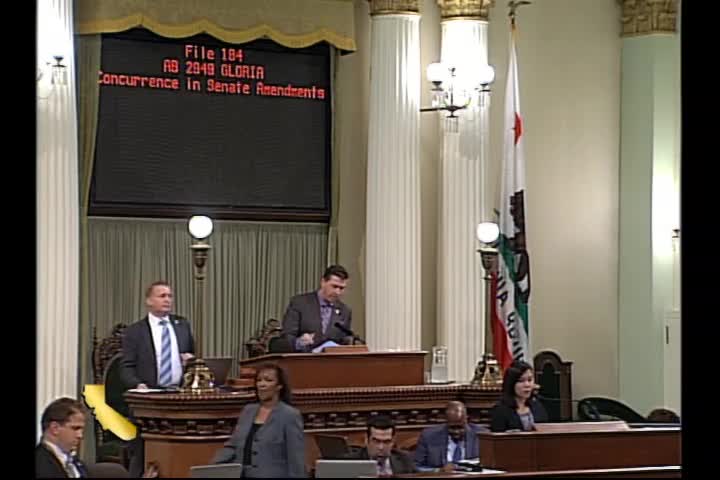 53SEC
Assembly Floor
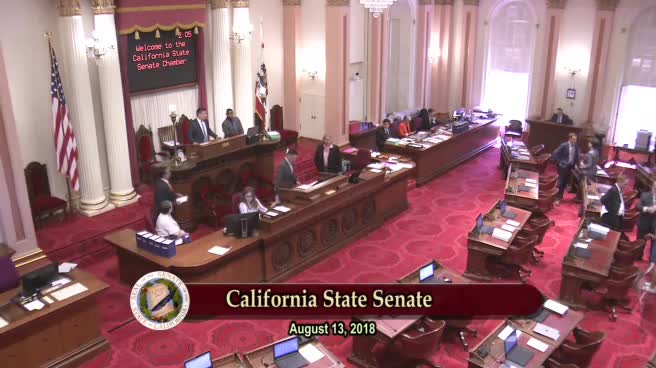 2MIN
Senate Floor
 18MIN
Senate Standing Committee on Public Safety
 2MIN
Assembly Floor
 1MIN
Assembly Standing Committee on Appropriations
 14MIN
Assembly Standing Committee on Public Safety
Bill Author

Bill Co-Author(s):