AB 1721: Student financial aid: Cal Grant Program.
- Session Year: 2015-2016
- House: Assembly
- Latest Version Date: 2016-06-22
(1)The Cal Grant Program establishes the Cal Grant A and B Entitlement awards, the California Community College Transfer Entitlement awards, the Competitive Cal Grant A and B awards, the Cal Grant C awards, and the Cal Grant T awards under the administration of the Student Aid Commission, and establishes eligibility requirements for awards under these programs for participating students attending qualifying institutions, as defined.
This bill would express the intent of the Legislature to renew Californias commitment to college affordability by increasing the aid available to needy students, and, specifically, broadening access to financial aid to students enrolled in California community college career technical education programs leading to industry valued credentials, through expanding the Cal Grant Program. colleges.
(2)Under existing law, no more than a total of 25,750 Competitive Cal Grant A and B awards may be granted annually.
This bill, commencing with the 201617 academic year, would raise that limit to 34,000. The bill would, effective with the fall term or semester of the 201718 academic year, make students enrolled in occupational or technical training courses leading to industry valued credentials of no less than 4 months in length at a California community college eligible for Cal Grant B awards under an existing allocation reserved for community college students, notwithstanding an existing requirement that limits Cal Grant B awards to for-credit instructional programs that are not less than one academic year in length.
(3)Existing law requires a Cal Grant C award to be utilized only for occupational or technical training in a course of not less than 4 months. Existing law requires that there be the same number of Cal Grant C awards each year as were made in the 200001 fiscal year.
This bill instead would require that there be the same number of Cal Grant C awards each year as were paid in the 201516 fiscal year.
(1)The Cal Grant Program establishes the Cal Grant A and B Entitlement awards, the California Community College Transfer Entitlement awards, the Competitive Cal Grant A and B awards, the Cal Grant C awards, and the Cal Grant T awards under the administration of the Student Aid Commission, and establishes eligibility requirements for awards under these programs for participating students attending qualifying institutions, as defined.
This bill would express the intent of the Legislature to renew Californias commitment to college affordability by increasing the aid available to needy students students, and, specifically, broadening access to financial aid to students enrolled in California community college career technical education programs leading to industry valued credentials, through expanding the Cal Grant Program.
(2)Under existing law, an award for access costs, as defined, under the Cal Grant B Entitlement Program is limited to no more than $1,551.
This bill would raise the amount of the maximum award for access costs under the Cal Grant B program to $3,000.
(3)Under existing law, to be eligible for an award under the California Community College Transfer Entitlement Program, an applicant may not be 28 years of age or older by December 31 of the award year, and is required to have attended a California community college in the academic year immediately preceding the academic year for which the award will be used, among other requirements.
This bill would instead provide that an applicant for an award under the California Community College Transfer Entitlement Program may not be 31 years of age or older by December 31 of the award year, and is required to have attended a California community college no more than 3 academic years before the academic year for which the award will be used, among other requirements.
(4)
(2)Under existing law, no more than a total of 25,750 Competitive Cal Grant A and B awards may be granted annually.
This bill bill, commencing with the 201617 academic year, would raise that limit to 30,000. 34,000. The bill would, effective with the fall term or semester of the 201718 academic year, make students enrolled in occupational or technical training courses leading to industry valued credentials of no less than 4 months in length at a California community college eligible for Cal Grant B awards under an existing allocation reserved for community college students, notwithstanding an existing requirement that limits Cal Grant B awards to for-credit instructional programs that are not less than one academic year in length.
(3)Existing law requires a Cal Grant C award to be utilized only for occupational or technical training in a course of not less than 4 months. Existing law requires that there be the same number of Cal Grant C awards each year as were made in the 200001 fiscal year.
This bill instead would require that there be the same number of Cal Grant C awards each year as were paid in the 201516 fiscal year.
(1)The Cal Grant Program establishes the Cal Grant A and B Entitlement awards, the California Community College Transfer Entitlement awards, the Competitive Cal Grant A and B awards, the Cal Grant C awards, and the Cal Grant T awards under the administration of the Student Aid Commission, and establishes eligibility requirements for awards under these programs for participating students attending qualifying institutions, as defined.
This bill would express the intent of the Legislature to renew Californias commitment to college affordability by increasing the aid available to needy students through expanding the Cal Grant Program.
(2)Under existing law, an award for access costs, as defined, under the Cal Grant B Entitlement Program is limited to no more than $1,551.
This bill would raise the amount of the maximum award for access costs under the Cal Grant B program to $3,000.
(3)Under existing law, to be eligible for an award under the California Community College Transfer Entitlement Program, an applicant may not be 28 years of age or older by December 31 of the award year, and is required to have attended a California community college in the academic year immediately preceding the academic year for which the award will be used, among other requirements.
This bill would instead provide that an applicant for an award under the California Community College Transfer Entitlement Program may not be 31 years of age or older by December 31 of the award year, and is required to have attended a California community college no more than 3 academic years before the academic year for which the award will be used, among other requirements.
(4)Under existing law, no more than a total of 25,750 Competitive Cal Grant A and B awards may be granted annually.
This bill would raise that limit to 30,000.
(a)The Legislature finds and declares all of the following:
(1)To remain economically competitive, California will need to produce 11,900,000 degrees and credentials by 2025, but the state is only estimated to produce 9,500,000, which would create a degree and credential attainment gap of 2,400,000 by 2025.
(2)Californias community colleges have strong transfer preparation and career technical education missions and are well positioned to close this impending gap.
(3)Overall, only 32 percent of students at California colleges complete credentials on time, and low-income students are much less likely than higher income students to enroll in or complete college.
(4)A major factor in a students enrollment and success in college is his or her ability to pay for fees and tuition, textbooks, transportation, housing, food, and other access costs.
(5)California has made an important investment in need-based financial aid for Californias college students through the Cal Grant Program and the BOG Fee Waiver Program of the Board of Governors of the California Community Colleges.
(6)The Cal Grant Program awards more than two billion dollars ($2,000,000,000) annually, and it is the largest state grant program in the nation in terms of dollars awarded to students. The BOG Fee Waiver Program is more extensive than any other free community college plan in the nation, and it provides almost one-half of all students of the California Community Colleges, and more than 60 percent of full-time students of the California Community Colleges, with free tuition.
(7)Despite Californias strong commitment to financial aid, access grants for qualifying students are insufficient to cover nontuition college costs, and many low-income students are left out of the program entirely.
(8)Students at Californias community colleges are disproportionately more likely to be the first in their family to attend college, come from an immigrant background, or be financially needy.
(9)After taking into account the total cost of attendance and all federal, state, and institutional financial aid available for students, on average it is more expensive for a needy student to go to a California community college than to attend the University of California or the California State University.
(10)The affordability challenge faced by Californias community college students stems from nontuition costs, and the solution to that challenge is to increase grant aid that covers nontuition costs.
(11)The 1960 California Master Plan for Higher Education in California guarantees an affordable, high-quality education to every Californian who can benefit.
(b)It is the intent of the Legislature to renew Californias commitment to college affordability by increasing the aid available to needy students, and, specifically, broadening access to financial aid to students enrolled in California community college career technical education programs leading to industry valued credentials, through expanding the Cal Grant Program. colleges.
(c)It is the intent of the Legislature that California community colleges provide outreach and education to students to inform them of the expanded availability of financial aid for students enrolled in career technical education programs and to encourage these students to complete the Free Application for Federal Student Aid by the September 2 deadline.
SEC. 2.Section 69437 of the Education Code is amended to read:69437.(a)Commencing with the 200102 academic year, and each academic year thereafter, there shall be established the Competitive Cal Grant A and B award program for students who did not receive a Cal Grant A or B entitlement award pursuant to Article 2 (commencing with Section 69434), Article 3 (commencing with Section 69435), or Article 4 (commencing with Section 69436). Awards made under this section are not entitlements. The submission of an application by a student under this section shall not entitle that student to an award. The selection of students under this article shall be determined pursuant to subdivision (c) and other relevant criteria established by the commission.
(b) Commencing with the 201617 academic year, a total of up to 34,000 Cal Grant A and B awards shall be granted annually under this article on a competitive basis for applicants who meet the general eligibility criteria established in Article 1 (commencing with Section 69430) and the priorities established by the commission pursuant to subdivision (c).
(1)Fifteen thousand of the awards referenced in this subdivision are available to all students, including California community college students, who meet the financial need and academic requirements established pursuant to this article. A student enrolling at a qualifying baccalaureate degree granting institution shall apply by the March 2 deadline. A California community college student is eligible to apply at the March 2 or the September 2 deadline.
(2)Nineteen thousand of the awards referenced in this subdivision are reserved for students who will be enrolled at a California community college. The commission shall establish a second application deadline of September 2 for community college students to apply for these awards. Notwithstanding paragraph (1) of subdivision (a) of Section 69435, effective with the fall term or semester of the 201718 academic year, students enrolled in occupational or technical training courses leading to industry valued credentials of no less than four months in length at a California community college shall be eligible for Cal Grant B awards issued under this paragraph.
(3)If any awards are not distributed pursuant to paragraphs (1) and (2) upon initial allocation of the awards under this article, the commission shall make awards to as many eligible students as possible, beginning with the students with the lowest expected family contribution and highest academic merit, consistent with the criteria adopted by the commission pursuant to subdivision (c), as practicable without exceeding an annual cumulative total of 34,000 awards.
(c)(1)On or before February 1, 2001, acting pursuant to a public hearing process that is consistent with the Bagley-Keene Open Meeting Act (Article 9 (commencing with Section 11120) of Chapter 1 of Part 1 of Division 3 of Title 2 of the Government Code), the commission shall establish selection criteria for Cal Grant A and B awards under the competitive program that give special consideration to disadvantaged students, taking into consideration those financial, educational, cultural, language, home, community, environmental, and other conditions that hamper a students access to, and ability to persist in, postsecondary education programs.
(2)Additional consideration shall be given to both of the following:
(A)Students pursuing Cal Grant B awards who reestablish their grade point averages.
(B)Students who did not receive awards pursuant to Article 2 (commencing with Section 69434), Article 3 (commencing with Section 69435), or Article 4 (commencing with Section 69436).
(d)All other students who meet the eligibility requirements pursuant to Article 1 (commencing with Section 69430) are eligible to compete for an award pursuant to this article.
SEC. 3.Section 69439 of the Education Code is amended to read:69439.(a)For the purposes of this section, the following terms have the following meanings:
(1)Career pathway has the same meaning as set forth in Section 88620.
(2)Economic security has the same meaning as set forth in Section 14005 of the Unemployment Insurance Code.
(3)Industry cluster has the same meaning as set forth in Section 88620.
(4)Long-term unemployed means, with respect to an award applicant, a person who has been unemployed for more than 26 weeks at the time of submission to the commission of his or her application.
(5)Occupational or technical training means that phase of education coming after the completion of a secondary school program and leading toward recognized occupational goals approved by the commission.
(b)A Cal Grant C award shall be utilized only for occupational or technical training in a course of not less than four months. There shall be the same number of Cal Grant C awards each year as were paid in the 201516 fiscal year. The maximum award amount and the total amount of funding shall be determined each year in the annual Budget Act.
(c)The commission may use criteria it deems appropriate in selecting students to receive grants for occupational or technical training and shall give special consideration to the social and economic situations of the students applying for these grants, giving additional weight to disadvantaged applicants, applicants who face economic hardship, and applicants who face particular barriers to employment. Criteria to be considered for these purposes shall include, but are not limited to, all of the following:
(1)Family income and household size.
(2)Students or the students parents household status, including whether the student is a single parent or child of a single parent.
(3)The employment status of the applicant and whether the applicant is unemployed, giving greater weight to the long-term unemployed.
(d)The Cal Grant C award recipients shall be eligible for renewal of their grants until they have completed their occupational or technical training in conformance with terms prescribed by the commission. A determination by the commission for a subsequent award year that the program under which a Cal Grant C award was initially awarded is no longer deemed to receive priority shall not affect an award recipients renewal. In no case shall the grants exceed two calendar years.
(e)Cal Grant C awards may be used for institutional fees, charges, and other costs, including tuition, plus training-related costs, such as special clothing, local transportation, required tools, equipment, supplies, books, and living expenses. In determining the individual award amounts, the commission shall take into account the financial means available to the student to fund his or her course of study and costs of attendance as well as other state and federal programs available to the applicant.
(f)(1)To ensure alignment with the states dynamic economic needs, the commission, in consultation with appropriate state and federal agencies, including the Economic and Workforce Development Division of the Office of the Chancellor of the California Community Colleges and the California Workforce Investment Board, shall identify areas of occupational and technical training for which students may utilize Cal Grant C awards. The commission, to the extent feasible, shall also consult with representatives of the states leading competitive and emerging industry clusters, workforce professionals, and career technical educators, to determine which occupational training programs and industry clusters should be prioritized.
(2)(A)Except as provided in subparagraph (B), the areas of occupational and technical training developed pursuant to paragraph (1) shall be regularly reviewed and updated at least every five years, beginning in 2012.
(B)By January 1, 2016, the commission shall update the priority areas of occupational and technical training.
(3)(A)The commission shall give priority in granting Cal Grant C awards to students pursuing occupational or technical training in areas that meet two of the following criteria pertaining to job quality:
(i)High employer need or demand for the specific skills offered in the program.
(ii)High employment growth in the occupational field or industry cluster for which the student is being trained.
(iii)High employment salary and wage projections for workers employed in the occupations for which they are being trained.
(iv)The occupation or training program is part of a well-articulated career pathway to a job providing economic security.
(B)To receive priority pursuant to subparagraph (A), at least one of the criteria met shall be specified in clause (iii) or (iv) of that subparagraph.
(g)The commission shall determine areas of occupational or technical training that meet the criteria described in paragraph (3) of subdivision (f) in consultation with the Employment Development Department, the Economic and Workforce Development Division of the Office of the Chancellor of the California Community Colleges, and the California Workforce Investment Board using projections available through the Labor Market Information Data Library. The commission may supplement the analyses of the Employment Development Departments Labor Market Information Data Library with the labor market analyses developed by the Economic and Workforce Development Division of the Office of the Chancellor of the California Community Colleges and the California Workforce Investment Board, as well as the projections of occupational shortages and skills gap developed by industry leaders. The commission shall publish, and retain, on its Internet Web site a current list of the areas of occupational or technical training that meet the criteria described in paragraph (3) of subdivision (f), and update this list as necessary.
(h)Using the best available data, the commission shall examine the graduation rates and job placement data, or salary data, of eligible programs. Commencing with the 201415 academic year, the commission shall give priority to Cal Grant C award applicants seeking to enroll in programs that rate high in graduation rates and job placement data, or salary data.
(i)(1)The commission shall consult with the Employment Development Department, the Office of the Chancellor of the California Community Colleges, the California Workforce Investment Board, and the local workforce investment boards to develop a plan to publicize the existence of the grant award program to Californias long-term unemployed to be used by those consulting agencies when they come in contact with members of the population who are likely to be experiencing long-term unemployment. The outreach plan shall use existing administrative and service delivery processes making use of existing points of contact with the long-term unemployed. The local workforce investment boards are required to participate only to the extent that the outreach efforts are a part of their existing responsibilities under the federal Workforce Investment Act of 1998 (Public Law 105-220).
(2)The commission shall consult with the Workforce Services Branch of the Employment Development Department, the Office of the Chancellor of the California Community Colleges, the California Workforce Investment Board, and the local workforce investment boards to develop a plan to make students receiving awards aware of job search and placement services available through the Employment Development Department and the local workforce investment boards. Outreach shall use existing administrative and service delivery processes making use of existing points of contact with the students. The local workforce investment boards are required to participate only to the extent that the outreach efforts are a part of their existing responsibilities under the federal Workforce Investment Act of 1998 (Public Law 105-220).
(j)(1)Notwithstanding Section 10231.5 of the Government Code, the Legislative Analysts Office shall submit a report to the Legislature on the outcomes of the Cal Grant C program on or before April 1, 2015, and on or before April 1 of each odd-numbered year thereafter. This report shall include, but not necessarily be limited to, information on all of the following:
(A)The age, gender, and segment of attendance for recipients in two prior award years.
(B)The occupational and technical training program categories prioritized.
(C)The number and percentage of students who received selection priority as defined in paragraph (3) of subdivision (f).
(D)The extent to which recipients in these award years were successfully placed in jobs that meet local, regional, or state workforce needs.
(2)For the report due on or before April 1, 2015, the Legislative Analysts Office shall include data for two additional prior award years and shall compare the mix of occupational and technical training programs and institutions in which Cal Grant C award recipients enrolled before and after implementation of subdivision (f).
(3)A report to be submitted pursuant to this subdivision shall be submitted in compliance with Section 9795 of the Government Code.
(a)The Legislature finds and declares all of the following:
(1)To remain economically competitive, California will need to produce 11,900,000 degrees and credentials by 2025, but the state is only estimated to produce 9,500,000, which would create a degree and credential attainment gap of 2,400,000 by 2025.
(2)Californias community colleges have strong transfer preparation and career technical education missions and are well positioned to close this impending gap.
(2)
(3)Overall, only 32 percent of students at California colleges complete credentials on time, and low-income students are much less likely than higher income students to enroll in or complete college.
(3)
(4)A major factor in a students enrollment and success in college is his or her ability to pay for fees and tuition, textbooks, transportation, housing, food, and other access costs.
(4)
(5)California has made an important investment in need-based financial aid for Californias college students through the Cal Grant Program and the BOG Fee Waiver Program of the Board of Governors of the California Community Colleges.
(5)
(6)The Cal Grant Program awards more than one two billion five hundred million dollars ($1,500,000,000) ($2,000,000,000) annually, and it is the largest state grant program in the nation in terms of dollars awarded to students. The BOG Fee Waiver Program is more extensive than any other free community college plan in the nation, and it provides almost one-half of all students of the California Community Colleges, and more than 60 percent of full-time students of the California Community Colleges, with free tuition.
(6)
(7)Despite Californias strong commitment to financial aid, access grants for qualifying students are insufficent insufficient to cover nontuition college costs, and many low-income students are left out of the program entirely.
(7)
(8)Students at Californias community colleges are disproportionately more likely to be the first in their family to attend college, come from an immigrant background, or be financially needy.
(8)
(9)After taking into account the total cost of attendance and all federal, state, and institutional financial aid available for students, on average it is more expensive for a needy student to go to a California community college than to attend the University of California or the California State University.
(9)
(10)The affordability challenge faced by Californias community college students stems from nontuition costs, and the solution to that challenge is to increase grant aid that covers nontuition costs.
(10)
(11)The 1960 California Master Plan for Higher Education in California guarantees an affordable, high-quality education to every Californian who can benefit.
(b)It is the intent of the Legislature to renew Californias commitment to college affordability by increasing the aid available to needy students students, and, specifically, broadening access to financial aid to students enrolled in California community college career technical education programs leading to industry valued credentials, through expanding the Cal Grant Program.
(c)It is the intent of the Legislature that California community colleges provide outreach and education to students to inform them of the expanded availability of financial aid for students enrolled in career technical education programs and to encourage these students to complete the Free Application for Federal Student Aid by the September 2 deadline.
SEC. 2.Section 69435 of the Education Code is amended to read:69435.(a)(1)A Cal Grant B award shall be used only for tuition, student fees, and access costs in a for-credit instructional program that is not less than one academic year in length.
(2)The commission, or a qualifying institution pursuant to Article 8 (commencing with Section 69450), shall award access grants in a students first academic year. In subsequent years, the award shall include an additional amount to pay tuition or fees, or both, to attend college at a public or private four-year college or university or other qualifying institution for all Cal Grant B awards pursuant to paragraph (2) of subdivision (b) of Section 66021.2. In no event shall the total award in any year exceed the applicants calculated financial need.
(3)Not more than 2 percent of new Cal Grant B recipients enrolling for the first time in an institution of postsecondary education shall be eligible for payments for tuition or fees, or both, in their first academic year of attendance. The commission shall adopt regulations specifying the criteria used to determine which applicants, if any, receive both tuition and fees plus the access grant in the first year of enrollment. Priority shall be given to students with the lowest expected family contribution pursuant to Section 69432.7 and the highest level of academic merit.
(b)An award for access costs under this article shall be in an annual amount not to exceed three thousand dollars ($3,000). This amount may be adjusted in the annual Budget Act.
SEC. 3.Section 69436 of the Education Code is amended to read:69436.(a)A student who was not awarded a Cal Grant A or B award pursuant to Article 2 (commencing with Section 69434) or Article 3 (commencing with Section 69435) at the time of his or her high school graduation but, at the time of transfer from a California community college to a qualifying baccalaureate program, meets all of the criteria set forth in subdivision (b), shall be entitled to a Cal Grant A or B award.
(b)Any California resident transferring from a California community college to a qualifying institution that offers a baccalaureate degree is entitled to receive, and the commission, or a qualifying institution pursuant to Article 8 (commencing with Section 69450), shall award, a Cal Grant A or B award depending on the eligibility determined pursuant to subdivision (c), if all of the following criteria are met:
(1)A complete official financial aid application has been submitted or postmarked pursuant to Section 69432.9, no later than the March 2 of the year immediately preceding the award year.
(2)The student demonstrates financial need pursuant to Section 69433.
(3)The student has earned a community college grade point average of at least 2.4 on a 4.0 scale and is eligible to transfer to a qualifying institution that offers a baccalaureate degree.
(4)The students household has an income and asset level not exceeding the limits set forth in Section 69432.7.
(5)The student is pursuing a baccalaureate degree that is offered by a qualifying institution.
(6)He or she is enrolled at least part time.
(7)The student meets the general Cal Grant eligibility requirements set forth in Article 1 (commencing with Section 69430).
(8)The student will not be 31 years of age or older by December 31 of the award year.
(9)The student graduated from a California high school or its equivalent during or after the 200001 academic year.
(10)The student attended a California community college in an academic year no more than three academic years before the academic year for which the award will be used.
(c)The amount and type of the award pursuant to this article shall be determined as follows:
(1)For applicants with income and assets at or under the Cal Grant A limits, the award amount shall be the amount established pursuant to Article 2 (commencing with Section 69434).
(2)For applicants with income and assets at or under the Cal Grant B limits, the award amount shall be the amount established pursuant to Article 3 (commencing with Section 69435).
(d)(1)A student meeting the requirements of paragraph (9) of subdivision (b) by means of high school graduation, rather than its equivalent, shall be required to have graduated from a California high school, unless that California resident graduated from a high school outside of California due solely to orders received from a branch of the United States Armed Forces by that student or by that students parent or guardian that required that student to be outside of California at the time of high school graduation.
(2)For the purposes of this article, both of the following are exempt from the requirements of subdivision (e) of Section 69433.9 and paragraph (9) of subdivision (b) of this section:
(A)A student for whom a claim under this article was paid prior to December 1, 2005.
(B)A student for whom a claim under this article for the 200405 award year or the 200506 award year was or is paid on or after December 1, 2005, but no later than October 15, 2006.
(3)(A)The commission, or a qualifying institution pursuant to Article 8 (commencing with Section 69450), shall make preliminary awards to all applicants currently eligible for an award under this article. At the time an applicant receives a preliminary award, the commission, or a qualifying institution pursuant to Article 8 (commencing with Section 69450), shall require that applicant to affirm, in writing, under penalty of perjury, that he or she meets the requirements set forth in subdivision (e) of Section 69433.9, paragraph (9) of subdivision (b) of this section, and paragraph (1) of this subdivision. The commission, or a qualifying institution pursuant to Article 8 (commencing with Section 69450), shall notify each person who receives a preliminary award under this paragraph that his or her award is subject to an audit pursuant to subparagraph (B).
(B)The commission shall select, at random, a minimum of 10 percent of the new and renewal awards made under subparagraph (A), and shall require, prior to the disbursement of Cal Grant funds to the affected postsecondary institution, that the institution verify that the recipient meets the requirements of subdivision (e) of Section 69433.9, paragraph (9) of subdivision (b) of this section, and paragraph (1) of this subdivision. An award that is audited under this paragraph and found to be valid shall not be subject to a subsequent audit.
(C)Pursuant to Section 69517.5, the commission shall seek repayment of any and all funds found to be improperly disbursed under this article.
(D)On or before November 1 of each year, the commission shall submit a report to the Legislature and the Governor including, but not necessarily limited to, both of the following:
(i)The number of awards made under this article in the preceding 12 months.
(ii)The number of new and renewal awards selected, in the preceding 12 months, for verification under subparagraph (B), and the results of that verification with respect to students at the University of California, at the California State University, at independent nonprofit institutions, and at independent for-profit institutions.
SEC. 4.SEC. 2.Section 69437 of the Education Code is amended to read:69437.(a)Commencing with the 200102 academic year, and each academic year thereafter, there shall be established the Competitive Cal Grant A and B award program for students who did not receive a Cal Grant A or B entitlement award pursuant to Article 2 (commencing with Section 69434), Article 3 (commencing with Section 69435), or Article 4 (commencing with Section 69436). Awards made under this section are not entitlements. The submission of an application by a student under this section shall not entitle that student to an award. The selection of students under this article shall be determined pursuant to subdivision (c) and other relevant criteria established by the commission.
(b) Commencing with the 201516 201617 academic year, a total of up to 30,000 34,000 Cal Grant A and B awards shall be granted annually under this article on a competitive basis for applicants who meet the general eligibility criteria established in Article 1 (commencing with Section 69430) and the priorities established by the commission pursuant to subdivision (c).
(1)Fifty percent Fifteen thousand of the awards referenced in this subdivision are available to all students, including California community college students, who meet the financial need and academic requirements established pursuant to this article. A student enrolling at a qualifying baccalaureate degree granting institution shall apply by the March 2 deadline. A California community college student is eligible to apply at the March 2 or the September 2 deadline.
(2)Fifty percent Nineteen thousand of the awards referenced in this subdivision are reserved for students who will be enrolled at a California community college. The commission shall establish a second application deadline of September 2 for community college students to apply for these awards effective with the fall term or semester of the 200102 academic year. awards. Notwithstanding paragraph (1) of subdivision (a) of Section 69435, effective with the fall term or semester of the 201718 academic year, students enrolled in occupational or technical training courses leading to industry valued credentials of no less than four months in length at a California community college shall be eligible for Cal Grant B awards issued under this paragraph.
(3)If any awards are not distributed pursuant to paragraphs (1) and (2) upon initial allocation of the awards under this article, the commission shall make awards to as many eligible students as possible, beginning with the students with the lowest expected family contribution and highest academic merit, consistent with the criteria adopted by the commission pursuant to subdivision (c), as practicable without exceeding an annual cumulative total of 30,000 34,000 awards.
(c)(1)On or before February 1, 2001, acting pursuant to a public hearing process that is consistent with the Bagley-Keene Open Meeting Act (Article 9 (commencing with Section 11120) of Chapter 1 of Part 1 of Division 3 of Title 2 of the Government Code), the commission shall establish selection criteria for Cal Grant A and B awards under the competitive program that give special consideration to disadvantaged students, taking into consideration those financial, educational, cultural, language, home, community, environmental, and other conditions that hamper a students access to, and ability to persist in, postsecondary education programs.
(2)Additional consideration shall be given to both of the following:
(A)Students pursuing Cal Grant B awards who reestablish their grade point averages.
(B)Students who did not receive awards pursuant to Article 2 (commencing with Section 69434), Article 3 (commencing with Section 69435), or Article 4 (commencing with Section 69436).
(d)All other students who meet the eligibility requirements pursuant to Article 1 (commencing with Section 69430) are eligible to compete for an award pursuant to this article.
SEC. 3.Section 69439 of the Education Code is amended to read:69439.(a)For the purposes of this section, the following terms have the following meanings:
(1)Career pathway has the same meaning as set forth in Section 88620.
(2)Economic security has the same meaning as set forth in Section 14005 of the Unemployment Insurance Code.
(3)Industry cluster has the same meaning as set forth in Section 88620.
(4)Long-term unemployed means, with respect to an award applicant, a person who has been unemployed for more than 26 weeks at the time of submission to the commission of his or her application.
(5)Occupational or technical training means that phase of education coming after the completion of a secondary school program and leading toward recognized occupational goals approved by the commission.
(b)A Cal Grant C award shall be utilized only for occupational or technical training in a course of not less than four months. There shall be the same number of Cal Grant C awards each year as were made paid in the 200001 201516 fiscal year. The maximum award amount and the total amount of funding shall be determined each year in the annual Budget Act.
(c)The commission may use criteria it deems appropriate in selecting students to receive grants for occupational or technical training and shall give special consideration to the social and economic situations of the students applying for these grants, giving additional weight to disadvantaged applicants, applicants who face economic hardship, and applicants who face particular barriers to employment. Criteria to be considered for these purposes shall include, but are not limited to, all of the following:
(1)Family income and household size.
(2)Students or the students parents household status, including whether the student is a single parent or child of a single parent.
(3)The employment status of the applicant and whether the applicant is unemployed, giving greater weight to the long-term unemployed.
(d)The Cal Grant C award recipients shall be eligible for renewal of their grants until they have completed their occupational or technical training in conformance with terms prescribed by the commission. A determination by the commission for a subsequent award year that the program under which a Cal Grant C award was initially awarded is no longer deemed to receive priority shall not affect an award recipients renewal. In no case shall the grants exceed two calendar years.
(e)Cal Grant C awards may be used for institutional fees, charges, and other costs, including tuition, plus training-related costs, such as special clothing, local transportation, required tools, equipment, supplies, books, and living expenses. In determining the individual award amounts, the commission shall take into account the financial means available to the student to fund his or her course of study and costs of attendance as well as other state and federal programs available to the applicant.
(f)(1)To ensure alignment with the states dynamic economic needs, the commission, in consultation with appropriate state and federal agencies, including the Economic and Workforce Development Division of the Office of the Chancellor of the California Community Colleges and the California Workforce Investment Board, shall identify areas of occupational and technical training for which students may utilize Cal Grant C awards. The commission, to the extent feasible, shall also consult with representatives of the states leading competitive and emerging industry clusters, workforce professionals, and career technical educators, to determine which occupational training programs and industry clusters should be prioritized.
(2)(A)Except as provided in subparagraph (B), the areas of occupational and technical training developed pursuant to paragraph (1) shall be regularly reviewed and updated at least every five years, beginning in 2012.
(B)By January 1, 2016, the commission shall update the priority areas of occupational and technical training.
(3)(A)The commission shall give priority in granting Cal Grant C awards to students pursuing occupational or technical training in areas that meet two of the following criteria pertaining to job quality:
(i)High employer need or demand for the specific skills offered in the program.
(ii)High employment growth in the occupational field or industry cluster for which the student is being trained.
(iii)High employment salary and wage projections for workers employed in the occupations for which they are being trained.
(iv)The occupation or training program is part of a well-articulated career pathway to a job providing economic security.
(B)To receive priority pursuant to subparagraph (A), at least one of the criteria met shall be specified in clause (iii) or (iv) of that subparagraph.
(g)The commission shall determine areas of occupational or technical training that meet the criteria described in paragraph (3) of subdivision (f) in consultation with the Employment Development Department, the Economic and Workforce Development Division of the Office of the Chancellor of the California Community Colleges, and the California Workforce Investment Board using projections available through the Labor Market Information Data Library. The commission may supplement the analyses of the Employment Development Departments Labor Market Information Data Library with the labor market analyses developed by the Economic and Workforce Development Division of the Office of the Chancellor of the California Community Colleges and the California Workforce Investment Board, as well as the projections of occupational shortages and skills gap developed by industry leaders. The commission shall publish, and retain, on its Internet Web site a current list of the areas of occupational or technical training that meet the criteria described in paragraph (3) of subdivision (f), and update this list as necessary.
(h)Using the best available data, the commission shall examine the graduation rates and job placement data, or salary data, of eligible programs. Commencing with the 201415 academic year, the commission shall give priority to Cal Grant C award applicants seeking to enroll in programs that rate high in graduation rates and job placement data, or salary data.
(i)(1)The commission shall consult with the Employment Development Department, the Office of the Chancellor of the California Community Colleges, the California Workforce Investment Board, and the local workforce investment boards to develop a plan to publicize the existence of the grant award program to Californias long-term unemployed to be used by those consulting agencies when they come in contact with members of the population who are likely to be experiencing long-term unemployment. The outreach plan shall use existing administrative and service delivery processes making use of existing points of contact with the long-term unemployed. The local workforce investment boards are required to participate only to the extent that the outreach efforts are a part of their existing responsibilities under the federal Workforce Investment Act of 1998 (Public Law 105-220).
(2)The commission shall consult with the Workforce Services Branch of the Employment Development Department, the Office of the Chancellor of the California Community Colleges, the California Workforce Investment Board, and the local workforce investment boards to develop a plan to make students receiving awards aware of job search and placement services available through the Employment Development Department and the local workforce investment boards. Outreach shall use existing administrative and service delivery processes making use of existing points of contact with the students. The local workforce investment boards are required to participate only to the extent that the outreach efforts are a part of their existing responsibilities under the federal Workforce Investment Act of 1998 (Public Law 105-220).
(j)(1)Notwithstanding Section 10231.5 of the Government Code, the Legislative Analysts Office shall submit a report to the Legislature on the outcomes of the Cal Grant C program on or before April 1, 2015, and on or before April 1 of each odd-numbered year thereafter. This report shall include, but not necessarily be limited to, information on all of the following:
(A)The age, gender, and segment of attendance for recipients in two prior award years.
(B)The occupational and technical training program categories prioritized.
(C)The number and percentage of students who received selection priority as defined in paragraph (3) of subdivision (f).
(D)The extent to which recipients in these award years were successfully placed in jobs that meet local, regional, or state workforce needs.
(2)For the report due on or before April 1, 2015, the Legislative Analysts Office shall include data for two additional prior award years and shall compare the mix of occupational and technical training programs and institutions in which Cal Grant C award recipients enrolled before and after implementation of subdivision (f).
(3)A report to be submitted pursuant to this subdivision shall be submitted in compliance with Section 9795 of the Government Code.
(a)The Legislature finds and declares all of the following:
(1)To remain economically competitive, California will need to produce 11,900,000 degrees and credentials by 2025, but the state is only estimated to produce 9,500,000, which would create a degree and credential attainment gap of 2,400,000 by 2025.
(2)Overall, only 32 percent of students at California colleges complete credentials on time, and low-income students are much less likely than higher income students to enroll in or complete college.
(3)A major factor in a students enrollment and success in college is his or her ability to pay for fees and tuition, textbooks, transportation, housing, food, and other access costs.
(4)California has made an important investment in need-based financial aid for Californias college students through the Cal Grant Program and the BOG Fee Waiver Program of the Board of Governors of the California Community Colleges.
(5)The Cal Grant Program awards more than one billion five hundred million dollars ($1,500,000,000) annually, and it is the largest state grant program in the nation in terms of dollars awarded to students. The BOG Fee Waiver Program is more extensive than any other free community college plan in the nation, and it provides almost one-half of all students of the California Community Colleges, and more than 60 percent of full-time students of the California Community Colleges, with free tuition.
(6)Despite Californias strong commitment to financial aid, access grants for qualifying students are insufficent to cover nontuition college costs, and many low-income students are left out of the program entirely.
(7)Students at Californias community colleges are disproportionately more likely to be the first in their family to attend college, come from an immigrant background, or be financially needy.
(8)After taking into account the total cost of attendance and all federal, state, and institutional financial aid available for students, on average it is more expensive for a needy student to go to a California community college than to attend the University of California or the California State University.
(9)The affordability challenge faced by Californias community college students stems from nontuition costs, and the solution to that challenge is to increase grant aid that covers nontuition costs.
(10)The 1960 California Master Plan for Higher Education in California guarantees an affordable, high-quality education to every Californian who can benefit.
(b)It is the intent of the Legislature to renew Californias commitment to college affordability by increasing the aid available to needy students through expanding the Cal Grant Program.
SEC. 2.Section 69435 of the Education Code is amended to read:69435.(a)(1)A Cal Grant B award shall be used only for tuition, student fees, and access costs in a for-credit instructional program that is not less than one academic year in length.
(2)The commission, or a qualifying institution pursuant to Article 8 (commencing with Section 69450), shall award access grants in a students first academic year. In subsequent years, the award shall include an additional amount to pay tuition or fees, or both, to attend college at a public or private four-year college or university or other qualifying institution for all Cal Grant B awards pursuant to paragraph (2) of subdivision (b) of Section 66021.2. In no event shall the total award in any year exceed the applicants calculated financial need.
(3)Not more than 2 percent of new Cal Grant B recipients enrolling for the first time in an institution of postsecondary education shall be eligible for payments for tuition or fees, or both, in their first academic year of attendance. The commission shall adopt regulations specifying the criteria used to determine which applicants, if any, receive both tuition and fees plus the access grant in the first year of enrollment. Priority shall be given to students with the lowest expected family contribution pursuant to Section 69432.7 and the highest level of academic merit.
(b)An award for access costs under this article shall be in an annual amount not to exceed one thousand five hundred fifty-one dollars ($1,551). three thousand dollars ($3,000). This amount may be adjusted in the annual Budget Act.
SEC. 3.Section 69436 of the Education Code is amended to read:69436.(a)A student who was not awarded a Cal Grant A or B award pursuant to Article 2 (commencing with Section 69434) or Article 3 (commencing with Section 69435) at the time of his or her high school graduation but, at the time of transfer from a California community college to a qualifying baccalaureate program, meets all of the criteria set forth in subdivision (b), shall be entitled to a Cal Grant A or B award.
(b)Any California resident transferring from a California community college to a qualifying institution that offers a baccalaureate degree is entitled to receive, and the commission, or a qualifying institution pursuant to Article 8 (commencing with Section 69450), shall award, a Cal Grant A or B award depending on the eligibility determined pursuant to subdivision (c), if all of the following criteria are met:
(1)A complete official financial aid application has been submitted or postmarked pursuant to Section 69432.9, no later than the March 2 of the year immediately preceding the award year.
(2)The student demonstrates financial need pursuant to Section 69433.
(3)The student has earned a community college grade point average of at least 2.4 on a 4.0 scale and is eligible to transfer to a qualifying institution that offers a baccalaureate degree.
(4)The students household has an income and asset level not exceeding the limits set forth in Section 69432.7.
(5)The student is pursuing a baccalaureate degree that is offered by a qualifying institution.
(6)He or she is enrolled at least part time.
(7)The student meets the general Cal Grant eligibility requirements set forth in Article 1 (commencing with Section 69430).
(8)The student will not be 28 31 years of age or older by December 31 of the award year.
(9)The student graduated from a California high school or its equivalent during or after the 200001 academic year.
(10)(A)Except as provided for in subparagraph (B), the The student attended a California community college in the an academic year immediately preceding no more than three academic years before the academic year for which the award will be used.
(B)A student otherwise eligible to receive an award pursuant to this section, who attended a California community college in the 201112 academic year, may use the award for the 201213 and 201314 academic years.
(c)The amount and type of the award pursuant to this article shall be determined as follows:
(1)For applicants with income and assets at or under the Cal Grant A limits, the award amount shall be the amount established pursuant to Article 2 (commencing with Section 69434).
(2)For applicants with income and assets at or under the Cal Grant B limits, the award amount shall be the amount established pursuant to Article 3 (commencing with Section 69435).
(d)(1)A student meeting the requirements of paragraph (9) of subdivision (b) by means of high school graduation, rather than its equivalent, shall be required to have graduated from a California high school, unless that California resident graduated from a high school outside of California due solely to orders received from a branch of the United States Armed Forces by that student or by that students parent or guardian that required that student to be outside of California at the time of high school graduation.
(2)For the purposes of this article, both of the following are exempt from the requirements of subdivision (e) of Section 69433.9 and paragraph (9) of subdivision (b) of this section:
(A)A student for whom a claim under this article was paid prior to December 1, 2005.
(B)A student for whom a claim under this article for the 200405 award year or the 200506 award year was or is paid on or after December 1, 2005, but no later than October 15, 2006.
(3)(A)The commission, or a qualifying institution pursuant to Article 8 (commencing with Section 69450), shall make preliminary awards to all applicants currently eligible for an award under this article. At the time an applicant receives a preliminary award, the commission, or a qualifying institution pursuant to Article 8 (commencing with Section 69450), shall require that applicant to affirm, in writing, under penalty of perjury, that he or she meets the requirements set forth in subdivision (e) of Section 69433.9, paragraph (9) of subdivision (b) of this section, and paragraph (1) of this subdivision. The commission, or a qualifying institution pursuant to Article 8 (commencing with Section 69450), shall notify each person who receives a preliminary award under this paragraph that his or her award is subject to an audit pursuant to subparagraph (B).
(B)The commission shall select, at random, a minimum of 10 percent of the new and renewal awards made under subparagraph (A), and shall require, prior to the disbursement of Cal Grant funds to the affected postsecondary institution, that the institution verify that the recipient meets the requirements of subdivision (e) of Section 69433.9, paragraph (9) of subdivision (b) of this section, and paragraph (1) of this subdivision. An award that is audited under this paragraph and found to be valid shall not be subject to a subsequent audit.
(C)Pursuant to Section 69517.5, the commission shall seek repayment of any and all funds found to be improperly disbursed under this article.
(D)On or before November 1 of each year, the commission shall submit a report to the Legislature and the Governor including, but not necessarily limited to, both of the following:
(i)The number of awards made under this article in the preceding 12 months.
(ii)The number of new and renewal awards selected, in the preceding 12 months, for verification under subparagraph (B), and the results of that verification with respect to students at the University of California, at the California State University, at independent nonprofit institutions, and at independent for-profit institutions.
SEC. 4.Section 69437 of the Education Code is amended to read:69437.(a)Commencing with the 200102 academic year, and each academic year thereafter, there shall be established the Competitive Cal Grant A and B award program for students who did not receive a Cal Grant A or B entitlement award pursuant to Article 2 (commencing with Section 69434), Article 3 (commencing with Section 69435), or Article 4 (commencing with Section 69436). Awards made under this section are not entitlements. The submission of an application by a student under this section shall not entitle that student to an award. The selection of students under this article shall be determined pursuant to subdivision (c) and other relevant criteria established by the commission.
(b) Commencing with the 201516 academic year, a total of 25,750 up to 30,000 Cal Grant A and B awards shall be granted annually under this article on a competitive basis for applicants who meet the general eligibility criteria established in Article 1 (commencing with Section 69430) and the priorities established by the commission pursuant to subdivision (c).
(1)Fifty percent of the awards referenced in this subdivision are available to all students, including California community college students, who meet the financial need and academic requirements established pursuant to this article. A student enrolling at a qualifying baccalaureate degree granting institution shall apply by the March 2 deadline. A California community college student is eligible to apply at the March 2 or the September 2 deadline.
(2)Fifty percent of the awards referenced in this subdivision are reserved for students who will be enrolled at a California community college. The commission shall establish a second application deadline of September 2 for community college students to apply for these awards effective with the fall term or semester of the 200102 academic year.
(3)If any awards are not distributed pursuant to paragraphs (1) and (2) upon initial allocation of the awards under this article, the commission shall make awards to as many eligible students as possible, beginning with the students with the lowest expected family contribution and highest academic merit, consistent with the criteria adopted by the commission pursuant to subdivision (c), as practicable without exceeding an annual cumulative total of 25,750 30,000 awards.
(c)(1)On or before February 1, 2001, acting pursuant to a public hearing process that is consistent with the Bagley-Keene Open Meeting Act (Article 9 (commencing with Section 11120) of Chapter 1 of Part 1 of Division 3 of Title 2 of the Government Code), the commission shall establish selection criteria for Cal Grant A and B awards under the competitive program that give special consideration to disadvantaged students, taking into consideration those financial, educational, cultural, language, home, community, environmental, and other conditions that hamper a students access to, and ability to persist in, postsecondary education programs.
(2)Additional consideration shall be given to both of the following:
(A)Students pursuing Cal Grant B awards who reestablish their grade point averages.
(B)Students who did not receive awards pursuant to Article 2 (commencing with Section 69434), Article 3 (commencing with Section 69435), or Article 4 (commencing with Section 69436).
(d)All other students who meet the eligibility requirements pursuant to Article 1 (commencing with Section 69430) are eligible to compete for an award pursuant to this article.
|
Date
|
Status
|
|---|---|
| Aug 11, 2016 | In committee: Held under submission. |
| Aug 1, 2016 | In committee: Referred to APPR. suspense file. |
| Jun 29, 2016 | From committee: Do pass and re-refer to Com. on APPR. (Ayes 9. Noes 0.) (June 29). Re-referred to Com. on APPR. |
| Jun 22, 2016 | From committee chair, with author's amendments: Amend, and re-refer to committee. Read second time, amended, and re-referred to Com. on ED. |
| Jun 13, 2016 | In committee: Hearing postponed by committee. |
| Jun 9, 2016 | Referred to Com. on ED. |
| Jun 6, 2016 | In Senate. Read first time. To Com. on RLS. for assignment. |
| Jun 2, 2016 | Read third time. Passed. Ordered to the Senate. (Ayes 73. Noes 4. Page 5214.) |
| Jun 2, 2016 | Read third time. Passed. Ordered to the Senate. (Ayes 73. Noes 4.) |
| Jun 2, 2016 | Read third time. Passed. Ordered to the Senate. |
| Jun 1, 2016 | Read second time. Ordered to third reading. |
| May 31, 2016 | Read second time and amended. Ordered returned to second reading. |
| May 27, 2016 | From committee: Amend, and do pass as amended. (Ayes 15. Noes 1.) (May 27). |
| Apr 27, 2016 | In committee: Set, first hearing. Referred to APPR. suspense file. |
| Apr 13, 2016 | From committee: Do pass and re-refer to Com. on APPR. (Ayes 12. Noes 1.) (April 12). Re-referred to Com. on APPR. |
| Feb 29, 2016 | Referred to Com. on HIGHER ED. |
| Jan 29, 2016 | From printer. May be heard in committee February 28. |
| Jan 28, 2016 | Read first time. To print. |
|
Date
|
Description
|
Location
|
Votes
|
|
|---|---|---|---|---|
| Aug 1, 2016 | Placed on suspense file | Senate Standing Committee on Appropriations |
Passed |
|
| Jun 29, 2016 | Do pass, but first be re-referred to the Committee on [Appropriations] | Senate Standing Committee on Education |
Passed |
|
| Jun 2, 2016 | AB 1721 MEDINA Assembly Third Reading | Assembly Floor |
Passed |
|
| May 27, 2016 | Do pass as amended. | Assembly Standing Committee on Appropriations |
Passed |
|
| Apr 12, 2016 | Do pass and be re-referred to the Committee on [Appropriations] | Assembly Standing Committee on Higher Education |
Passed |
This list shows positions taken on this bill by organizations on the date displayed, which is linked to the original source.
Positions by individuals are not included.
SENATE COMMITTEE ON APPROPRIATIONS
Senator Ricardo Lara, Chair
2015 - 2016 Regular Session
AB 1721 (Medina) - Student financial aid: Cal Grant Program
Version: June 22, 2016 | Policy Vote: ED. 9 - 0 |
Urgency: No | Mandate: No |
Hearing Date: August 1, 2016 | Consultant: Jillian Kissee |
This bill meets the criteria for referral to the Suspense File.
Bill Summary:
This bill increases the number of competitive Cal Grant awards by 8,250, bringing the total number of awards to 34,000 per year, and expands the number of these awards available to, and reserved for, community college students.
Fiscal Impact:
- According to the California Student Aid Commission (Commission), this bill results in costs of approximately $14 million in the first year, increasing to $52 million General Fund in the fourth year and thereafter.
- Administrative costs to implement this bill are anticipated to be minor.
Background:
Existing law authorizes the Cal Grant program, administered by the Commission, to provide grants to students who have financial need to attend a college or university. The Cal Grant programs include both the entitlement and the competitive Cal Grant awards. The program consists of the Cal Grant A, Cal Grant B, and Cal Grant C and eligibility is based upon financial need, grade point average (GPA), California residency, and other criteria. (Education Code § 69430-69433)
The Cal Grant A High School Entitlement Program provides tuition fee funding for the equivalent of four full-time years at qualifying postsecondary institutions to eligible lower and middle income high school graduates who have at least a 3.0 GPA on a four-point scale and apply within one year of graduation. (Education Code § 69434)
The Cal Grant B High School Entitlement Program provides funds to eligible low-income high school graduates who have at least a 2.0 GPA on a four-point scale and apply within one year of graduation. The award provides $1,648 for books and living expenses for the first year and each year following for up to four years (or equivalent of four full-time years). After the first year, the award also provides tuition fee funding at qualifying postsecondary institutions. (Education Code § 69435.3)
The Cal Grant Competitive Award Program provides 25,750 Cal Grant A and B awards to applicants who meet financial, academic, and general program eligibility requirements. Half of these awards are reserved for students enrolled at a community college and who met the September 2 application deadline. (Education Code § 69437-§ 69437.7) According to the Commission’s website, eligibility for this program is geared toward nontraditional students, such as those who did not go to college right after high school, and takes into account not only GPA, but also time out of high school, family income, parents’ education levels, high school performance standards and other factors, such as whether the student comes from a single-parent household or was a foster youth.
Proposed Law:
This bill increases competitive Cal Grant awards by 8,250, bringing the total number of awards to 34,000, and expands the number of these awards available to, and reserved for, community college students.
Current law provides for a 50-50 split of the total number of authorized competitive Cal Grant awards (25,750) to be available to all students, including California Community College (CCC) students and reserved specifically for CCC students. This bill instead allocates a larger portion of awards (56 percent) specifically for CCC students. CCC students would also be eligible for the additional 2,125 awards available to all students.
Related Legislation:
AB 1357 (Block, 2016) required, contingent upon funding provided in the annual budget act, that the Commission annually augment the award amount of all recipients of Cal Grant B Entitlement awards and Competitive Cal Grant B awards who are enrolled at the CCC by $1,500 starting in the 2017-18 award year. AB 1357 failed passage in this committee.
AB 1449 (Medina, 2016) exempts a student from the high school graduation requirement of the California Community College Transfer Cal Grant Entitlement Program, if the student was a California resident on his or her 18th birthday. AB 1449 is pending in this committee.
Staff Comments:
The Budget Act of 2015 provided an additional $8 million, growing to $23.4 million by 2018-19, to provide an additional 3,250 competitive Cal Grant awards. This brings the total number of awards to 25,750.
The Budget Act of 2015 also provided $39 million in ongoing Proposition 98 funds for purposes of the Full-Time Student Success Grant Program, to be distributed to students who are receiving the Cal Grant B Access Award and are taking 12 units or more, to assist CCC students with their living costs. The Budget Act of 2016 provides $41 million for this program which also includes CCC students who are receiving Cal Grant C awards. The award is required not to exceed $600 per student annually.
Recommended Amendments:
Staff recommends setting an implementation date for the 2017-18 award year so as to not require mid-year award adjustments if this bill were to be enacted.
-- END --
SENATE COMMITTEE ON EDUCATION
Senator Carol Liu, Chair
2015 - 2016 Regular
Bill No:
Author: | Medina | ||
Version: | June 22, 2016 Hearing Date: June 29, 2016 | ||
Urgency: | Fiscal: | ||
Consultant: | |||
Subject:
SUMMARY
This bill increases the total number of competitive Cal Grant awards authorized from 25,750 to 34,000, and expands the number of these awards available to, and reserved for, community college students.
BACKGROUND
Existing law authorizes the Cal Grant Program, administered by the California Student Aid Commission, to provide grants to financially needy students to attend college. The Cal Grant programs include both the entitlement and the competitive Cal Grant awards. The program consists of the Cal Grant A, Cal Grant B, and Cal Grant C programs, and eligibility is based upon financial need, grade point average, California residency, and other eligibility criteria, as specified in Education Code § 69433.9.
(Education Code § 69430-69433.9)
Current law provides for the Cal Grant A and B Entitlement programs. The
Cal Grant A High School Entitlement Program provides tuition fee funding for the equivalent of four full-time years at qualifying postsecondary institutions to eligible lower and middle income high school graduates who have at least a 3.0 grade point average (GPA) on a four-point scale and apply within one year of graduation.
(Education Code § 69434)
The Cal Grant B High School Entitlement Program provides funds to eligible low-income high school graduates who have at least a 2.0 GPA on a four-point scale and apply within one year of graduation. The award provides up to $1,551 for books and living expenses for the first year and each year following for up to four years (or equivalent of four full-time years). After the first year, the award also provides tuition fee funding at qualifying postsecondary institutions. Current law authorizes up to 2 percent of new Cal Grant B recipients to be eligible for payment of tuition or fees or both in their first academic year of attendance. (Education Code § 69435.3)
Current law also establishes the Cal Grant Competitive Award Program and, beginning in 2015-16, provides 25,750 Cal Grant A and B awards to applicants who meet financial, academic, and general program eligibility requirements. Half of these awards are reserved for students enrolled at a community college and who met the September 2 application deadline. (Education Code § 69437-§ 69437.7)
ANALYSIS
This bill:
- Beginning with the 2016-17 academic year, increases the number of Competitive Cal Grant awards from 25,750 to 34,000.
- Reserves 19,000 Competitive Cal Grant awards for California Community Colleges (CCC) students with the remaining 15,000 available to all students, including community college students.
STAFF COMMENTS
- Need for the bill. According to the author, despite comprising about 2/3 of the undergraduate higher education population in California, community college students only receive 6 percent of the resources distributed by Cal Grants. At the same time, community college students are more likely to be socio-economically disadvantaged, undocumented, retraining adults, or the first in their family to attend college. In addition, once the total cost of attendance and all available financial aid is taken into account, it is often more expensive for a financially needy student to attend a community college than a University of California (UC) or California State University (CSU) campus. This bill increases the number of competitive Cal Grants and ensures access for the neediest students by reserving 19,000 of these awards for CCC students.
- Net effect? Existing law reserves half of the 25,750 authorized competitive Cal Grant awards for community college students (12,875). Existing law also makes the remaining awards eligible to all students, including community college students. This bill would authorize an additional 8,250 of these awards, 6,125 of which would be reserved for community college students for a total of 19,000 awards. Community college students would also be eligible for the additional 2,125 awards available to all students.
- Competitive Cal Grant program. According to an April 2013 report by The
Institute for College Access & Success (TICAS), Strengthening Cal Grants to Better Serve Today's Students, in 2010-11 the majority of Cal Grant recipients (72%) received grants as a high school entitlement award, 5% received transfer entitlement awards, and competitive awards went to 18% of all Cal Grant recipients. According to the TICAS report, many otherwise eligible applicants miss the application deadline or enroll well after they have graduated from high school, and these are particular concerns for the lowest income students who miss timely application because they are unaware of the financial aid that is available. For these students the alternative would be a Competitive Cal Grant.
Prior to the 2015-16 academic year, only 22,500 Competitive Cal Grants were statutorily authorized annually. California Student Aid Commission reports that in the 2014-15 award year, more than 300,000 qualified students applied for the Competitive Cal Grant. The average GPA of these applicants was 2.92.
According to the California Student Aid Commission, Competitive Cal Grant applicants have an average family income of about $21,666, a family size of three, and an average age of 27.
- Funding? The 2015 Budget Act increased the number of competitive Cal Grants that would d be funded from 22,500 to 25,750 beginning in the 2015-16 academic year. The 2016 Budget Act did not provide any funding for the increase in competitive Cal Grants proposed by this bill.
SUPPORT
Board of Governors of the California Community Colleges
California Chamber of Commerce
California Immigrant Policy Center
California Student Aid Commission
Foothill-De Anza Community College District
Kern Community College District
Los Rios Community College District
San Diego Community College District
South Orange County Community College District
The Institute for College Access & Success
Western Association for College Admission Counseling
OPPOSITION
None received.
-- END --
ASSEMBLY THIRD READING
ATR Bill Id:
Author:(Medina)
As Amended Ver:May 31, 2016
Majority vote
Committee | Votes | Ayes | Noes |
Higher Education | 12-1 | Medina, Baker, Bloom, Chávez, Irwin, Jones-Sawyer, Levine, Linder, Low, Santiago, Weber, Williams | Olsen |
Appropriations | 15-1 | Gonzalez, Bloom, Bonilla, Bonta, Calderon, Daly, Eggman, Eduardo Garcia, Roger Hernández, Holden, Obernolte, Quirk, Santiago, Weber, Wood | Bigelow |
SUMMARY: Expands the number of Cal Grant awards with the intent to provide additional financial aid resources to California Community College (CCC) students. Specifically, this bill:
- Increases the number of Competitive Cal Grant awards from 25,750 to 34,000.
- Provides that 19,000 Competitive Cal Grant awards shall be reserved for CCC students.
- Authorizes CCC students enrolled in occupational or career and technical training (CTE) courses leading to industry valued credentials of no less than four months in length at a CCC to be eligible for Competitive Cal Grant B awards.
- Provides that the number of Cal Grant C awards shall be the same as the number that were paid in the 2015-16 fiscal year.
EXISTING LAW:
- Establishes the Cal Grant program, administered by the California Student Aid Commission (CSAC), to provide tuition and access cost assistance to eligible students attending qualified institutions:
- Cal Grant A Entitlement Awards. Students that meet income, asset and other eligibility requirements, have at least a 3.0 grade point average (GPA), and apply either the year they graduate from high school or the following year are entitled to an award that provides coverage for tuition and fees.
- Cal Grant B Entitlement Awards. Students that meet income and asset (lower thresholds than Cal Grant A) and other eligibility requirements, have at least a 2.0 GPA and apply either the year they graduate from high school or the following year are entitled to a living allowance and tuition and fee assistance. Awards for first-year students are limited to an allowance for books and living expenses. In the second and subsequent years, the award provides tuition and fee support.
- CCC Transfer Entitlement Awards. Cal Grant A and B awards are guaranteed to every student who graduated from a California high school after June 30, 2000, was a California resident at the time of high school graduation, transferred to a qualifying baccalaureate-degree granting institution from a CCC during the award year, was under the age of 28 at the time of the transfer, and had a minimum CCC GPA of 2.4.
- Competitive Cal Grant A and B Awards. Students who are not eligible for entitlement awards may compete for a Cal Grant A or B Competitive award. The award benefits and eligibility requirements are the same as the entitlement program, but awards are not guaranteed. Annually, 25,750 Cal Grant Competitive awards are available. Of these, 50% are for students who do not qualify for a Cal Grant Entitlement award, but who otherwise meet the Cal Grant requirements. The remaining awards are set aside for eligible CCC students.
- Cal Grant C Awards. Students attending qualifying occupational, technical, and vocational programs are eligible for up to $547 for books and equipment and $2,462 for tuition and fees.
- Maximum award amounts for California State University (CSU) and University of California (UC) are established in the annual Budget Act and have traditionally covered all systemwide tuition and fees. The maximum tuition award for Cal Grant A and B for students attending private for-profit colleges is $4,000 (commencing 2013-14), and for students attending non-profit or Western Association of Schools and Colleges (WASC)-accredited for-profit institutions is $8,056 (commencing 2015-16). CCC students do not receive a Cal Grant tuition award as the Board of Governors (BOG) Fee Waiver program fully covers enrollment fees (but not other costs of attendance) for financially needy students.
FISCAL EFFECT: According to the Assembly Appropriations Committee, estimated General Fund costs for increasing the Cal Grant Competitive Awards are $14 million in 2016-17, increasing to about $50 million in 2019-20 and thereafter.
COMMENTS: Purpose of this bill. According to the author, "to remain economically competitive, California will need to produce 2.4 million more degrees by 2025 than the state is currently on track to produce. Overall, only 32% of students at California colleges and universities complete credentials on time, and low-income students are much less likely than higher income students to enroll in or complete college. A major factor in a student's enrollment and success in college is his or her ability to pay for fees and tuition, textbooks, transportation, housing, food, and other access costs. California has made an important investment in need-based financial aid through the Cal Grant Program and the BOG Fee Waiver program, but despite this commitment, access grants for qualifying students are insufficient to cover non-tuition college costs, and many low-income students are left out of the program entirely. The author notes that, after taking into account the total cost of attendance and all available financial aid, on average it is more expensive for a needy student to go to a CCC than to attend the UC or CSU. This bill aims to renew California's commitment to CCC affordability by making important changes to the Cal Grant program to better assist CCC students."
Increasing the number of Competitive Cal Grant Awards. As previously noted, the Cal Grant Entitlement Programs guarantee awards to students who meet specified GPA and income-related criteria and apply within deadlines. The majority of Cal Grant recipients (211,300 in 2013-14) receive this type of award. The majority of Cal Grant applicants, however, do not qualify for an Entitlement award because they are more than a year out of high school, decide to go to college after the Entitlement application deadline, or do not meet age or other requirements when they transfer. Competitive Cal Grant A and B awards are available to middle and low income applicants who did not receive an entitlement award. Over 300,000 applicants compete for only 25,750 awards annually; Competitive Program award recipients must significantly exceed minimum requirements. According to The Institute for College Access and Success (TICAS), denied Competitive Program applicants have an average family income of less than $21,000, a family size of three, and GPA of 2.9. This bill proposes to increase the number of Competitive Cal Grants from 25,750 to 34,000. According to supporters, this increase will help California's neediest students take more classes, go to school full-time, and complete their college degree.
Authorizing CCC CTE students to receive a Cal Grant B. Under existing law, CCC CTE students at a CCC enrolled in programs of between 4 months and 1 year in length are eligible for a Cal Grant C award. The Cal Grant C award requires students to apply by March 1, and provides CCC students only $547 to cover non-tuition related costs. Currently, the Cal Grant C program is underutilized, it is estimated that 3,000 grants will go unclaimed in 2016-17. The Cal Grant B Access Award provides CCC students enrolled in programs of more than one year in length an access grant of $1,656; the Competitive award cycle for CCC students provides students until September to file an application. By moving (currently unclaimed) Cal Grant C awards from the C program, and making CCC CTE students eligible for the Cal Grant B award, this bill will increase grant award amounts available to CCC CTE students and provide them with additional time to file financial aid applications.
Analysis Prepared by: Laura Metune / HIGHER ED. / (916) 319-3960 FN: 0003103
Date of Hearing: April 27, 2016
ASSEMBLY COMMITTEE ON APPROPRIATIONS
Lorena Gonzalez, Chair
ABPCA Bill Id:AB 1721
Author:(Medina) – As Introduced Ver:January 28, 2016
Policy Committee: | Higher Education | Vote: | 12 - 1 |
|
|
Urgency: No State Mandated Local Program: No Reimbursable: No
SUMMARY:
This bill makes several expansions to the Cal Grant program, including to provide additional financial aid opportunities to California Community College (CCC) students. Specifically, this bill:
- Increases the Cal Grant B access award, which can be used by students for tuition, student fees, and other costs, to $3,000. This amount would continue to be authorized to be adjusted through the annual Budget Act, and is currently established at $1,648.
- Extends the qualifying age limit for a CCC Transfer Entitlement Program award from 27 to 30.
- Requires, in order to qualify for a CCC Transfer Entitlement, that the awardee had attended the CCC within three years of transfer rather than having attended the CCC within the preceding academic year.
- Increases the number of new Competitive Cal Grant awards from 25,750 to 30,000 annually.
FISCAL EFFECT:
- Cal Gran Award Cost: When all the above changes are fully-phased in, annual GF cost would be about $470 million annually.
- Increase Cal Grant B Access Award: Based on the current number of Cal Grant B recipients, annual costs would be about $275 million.
- CCC Transfer Entitlement Expansion: Estimated GF costs of $90 million in 2016-17, increasing to $155 million in 2019-20 and thereafter.
- Increase Competitive Cal Grant Awards: Estimated GF costs of $15 million in 2016-17, increasing to $40 million in 2019-20 and thereafter.
- CSAC will incur ongoing administrative costs of $200,000 (GF) for the equivalent of two positions associated with implementing program expansions, responding to additional inquiries from applicants and institutions, and information technology modifications.
COMMENTS:
- Purpose. According to the author, "…Overall, only 32% of students at California colleges and universities complete credentials on time, and low-income students are much less likely than higher income students to enroll in or complete college. A major factor in a student’s enrollment and success in college is his or her ability to pay for fees and tuition, textbooks, transportation, housing, food, and other access costs. California has made an important investment in need-based financial aid through the Cal Grant Program and the BOG Fee Waiver program, but despite this commitment, access grants for qualifying students are insufficient to cover non-tuition college costs, and many low-income students are left out of the program entirely.
- Cal Grant B Access Awards. The Cal Grant B program began as the "College Opportunity Grant" (COG) in the late 1960s. At that time, policymakers acknowledged that the lowest income students needed assistance with other college costs, such as living expenses, textbooks, and supplies. In 1969-70, the first stipend was set at $900. The stipend was approximately 20% of the indirect costs in 1989-90, as determined by CSAC. Since that time it has declined in relative terms; the current access award of $1,648 is only about one-quarter of what the original award would be had it kept pace with inflation.
- Transfer Entitlement Program. This program provides financially needy CCC students whom did not receive a Cal Grant A or B award after leaving high school with a "second chance" to receive an award upon transfer to a baccalaureate degree-granting institution. According to information provided by CSAC, an estimated 60,000 to 75,000 CCC transfer students could benefit from a Transfer Entitlement, yet only about 17,800 new and renewal award offers are made annually. CSAC indicates that the remaining students may be disqualified for a variety of reasons. This bill addresses two possible causes of underutilization in the Transfer Entitlement:
Age limitation. Increasing the age limitation from 28 to 31, as is proposed in this bill, would increase the eligibility pool by over 23,000 students.
Gap years. In 2012, the education budget trailer bill added a requirement to the Transfer Entitlement that students had to attend a CCC in the academic year immediately preceding the award year. This bill would provide for up to three "gap years" for Transfer Entitlement students. According to CSAC, in 2013-14 a one-year gap-year was authorized, resulting in an additional 2,280 award offers.
- Competitive Cal Grant Awards. The Cal Grant Entitlement Programs guarantee awards to students who meet specified GPA and income-related criteria and apply within deadlines. The majority of Cal Grant recipients (211,300 in 2013-14) receive this type of award. The majority of Cal Grant applicants, however, do not qualify for an Entitlement award because they are more than a year out of high school, decide to go to college after the Entitlement application deadline, or do not meet age or other requirements when they transfer. Competitive Cal Grant A and B awards are available to middle and low income applicants who did not receive an entitlement award. Over 300,000 applicants compete for only 25,750 awards annually. This bill increases the number of competitive awards to 30,000.
Analysis Prepared by: Chuck Nicol / APPR. / (916) 319-2081
Date of Hearing: April 12, 2016
ASSEMBLY COMMITTEE ON HIGHER EDUCATION
Jose Medina, Chair
ABPCA Bill Id:AB 1721 (
Author:Medina) – As Introduced Ver:January 28, 2016
SUBJECT: Student financial aid: Cal Grant Program
SUMMARY: Makes various changes to expand the Cal Grant Program with the intent to provide additional financial aid resources to California Community College (CCC) students. Specifically, this bill:
- Increases the Cal Grant B access award, which can be used by students for tuition, student fees, and access costs from, as authorized in statute, $1,551 to $3,000. This amount would continue to be authorized to be adjusted in the annual Budget Act (currently established in the Budget Act at $1,648).
- Extends, for the California Community College (CCC) Transfer Entitlement Program (Transfer Entitlement), the age limitation for a qualified awardee from 28 to 31 years of age.
- Extends, for the CCC Transfer Entitlement, the required transfer period from requiring that a qualifying awardee have attended a CCC in the academic year immediately preceding the award year to requiring attendance no more than three academic years before the award year.
- Increases the number of Competitive Cal Grant awards from 25,750 to 30,000.
EXISTING LAW:
- Establishes the Cal Grant program, administered by the California Student Aid Commission (CSAC), to provide tuition and access cost assistance to eligible students attending qualified institutions:
- Cal Grant A Entitlement Awards. Students that meet income, asset and other eligibility requirements, have at least a 3.0 grade point average, and apply either the year they graduate from high school or the following year are entitled to an award that provides coverage for tuition and fees.
- Cal Grant B Entitlement Awards. Students that meet income and asset (lower thresholds than Cal Grant A) and other eligibility requirements, have at least a 2.0 GPA and apply either the year they graduate from high school or the following year are entitled to a living allowance and tuition and fee assistance. Awards for first-year students are limited to an allowance for books and living expenses. In the second and subsequent years, the award provides tuition and fee support.
- CCC Transfer Entitlement Awards. Cal Grant A and B awards are guaranteed to every student who graduated from a California high school after June 30, 2000, was a California resident at the time of high school graduation, transferred to a qualifying baccalaureate-degree granting institution from a CCC during the award year, was under the age of 28 at the time of the transfer, and had a minimum CCC GPA of 2.4.
- Competitive Cal Grant A and B Awards. Students who are not eligible for entitlement awards may compete for a Cal Grant A or B Competitive award. The award benefits and eligibility requirements are the same as the entitlement program, but awards are not guaranteed. Annually, 25,750 Cal Grant Competitive awards are available. Of these, 50 percent are for students who do not qualify for a Cal Grant Entitlement award, but who otherwise meet the Cal Grant requirements. The remaining awards are set aside for eligible CCC students.
- Cal Grant C Awards. Students attending qualifying occupational, technical, and vocational programs are eligible for up to $547 for books and equipment and $2,462 for tuition and fees.
- Maximum award amounts for CSU and UC are established in the annual Budget Act and have traditionally covered all systemwide tuition and fees. The maximum tuition award for Cal Grant A and B for students attending private for-profit colleges is $4,000 (commencing 2013-14), and for students attending non-profit or WASC-accredited for-profit institutions is $8,056 (commencing 2015-16). CCC students do not receive a Cal Grant tuition award as the Board of Governors (BOG) Fee Waiver program fully covers enrollment fees (but not other costs of attendance) for financially needy students.
FISCAL EFFECT: Unknown.
COMMENTS: Purpose of this bill. According to the author, "to remain economically competitive, California will need to produce 2.4 million more degrees by 2025 than the state is currently on track to produce. Overall, only 32% of students at California colleges and universities complete credentials on time, and low-income students are much less likely than higher income students to enroll in or complete college. A major factor in a student’s enrollment and success in college is his or her ability to pay for fees and tuition, textbooks, transportation, housing, food, and other access costs. California has made an important investment in need-based financial aid through the Cal Grant Program and the BOG Fee Waiver program, but despite this commitment, access grants for qualifying students are insufficient to cover non-tuition college costs, and many low-income students are left out of the program entirely. The author notes that, after taking into account the total cost of attendance and all available financial aid, on average it is more expensive for a needy student to go to a CCC than to attend the UC or CSU. This bill aims to renew California's commitment to CCC affordability by making important changes to the Cal Grant program to better assist CCC students."
Increasing the Cal Grant B Access Award amount. The Cal Grant B program began as the "College Opportunity Grant" (COG) in the late 1960s. At that time policymakers acknowledged that the lowest income students needed assistance with other college costs, such as living expenses, textbooks, and supplies. In 1969-70, the first stipend was set at $900. The stipend was approximately 20% of the indirect costs in 1989-90, as determined by CSAC. Since that time it has declined in relative terms; for 2015-16 the Cal Grant B Access Award is $1,656, one quarter of what the original award would be worth had it kept pace with inflation. This bill would increase the award amount to $3,000.
Expanding the Transfer Entitlement Program. The Transfer Entitlement provides financially needy California students whom did not receive a Cal Grant A or B award after leaving high school with a "second chance" to receive an award upon transfer to a qualifying institution. According to information provided by CSAC, an estimated 60,000 to 75,000 transfer students could benefit from a Transfer Entitlement; approximately 17,800 award offers are made annually. CSAC indicates that the remaining students may be disqualified for a variety of reasons. This bill addresses two possible causes of underutilization in the Transfer Entitlement:
Age limitation. According to CSAC, increasing the age limitation from 28 to 31, as is proposed in this bill, would bring in an additional 23,600 students, and estimated 16,500 additional awards to the Transfer Entitlement.
Gap years. In 2012, the education budget trailer bill added a requirement to the Transfer Entitlement that students had to attend a CCC in the academic year immediately preceding the award year. This bill would provide for up to three "gap years" for Transfer Entitlement students. According to CSAC, in 2013-14 a one-year gap-year was authorized, resulting in an additional 2,280 award offers.
Increasing the number of Competitive Cal Grant Awards. As previously noted, the Cal Grant Entitlement Programs guarantee awards to students who meet specified GPA and income-related criteria and apply within deadlines. The majority of Cal Grant recipients (211,300 in 2013-14) receive this type of award. The majority of Cal Grant applicants, however, do not qualify for an Entitlement award because they are more than a year out of high school, decide to go to college after the Entitlement application deadline, or do not meet age or other requirements when they transfer. Competitive Cal Grant A and B awards are available to middle and low income applicants who did not receive an entitlement award. Over 300,000 applicants compete for only 25,750 awards annually; Competitive Program award recipients must significantly exceed minimum requirements. According to The Institute for College Access and Success (TICAS), denied Competitive Program applicants have an average family income of less than $21,000, a family size of three, and GPA of 2.9. This bill proposes to increase the number of Competitive Cal Grants from 25,750 to 30,000. According to supporters, this increase will help California's neediest students take more classes, go to school full-time, and complete their college degree.
Related legislation. This bill is part of a package of bills introduced by Assembly Members to establish a CCC Promise Program to ensure affordability and success for CCC students. Other bills in the package include: AB 1583 (Medina), pending in this Committee, which would expands the CCC Board of Governors Fee Waiver Program to include specified categories of students, and establish a need-based aid program to cover access costs for CCC students; and, AB 1741 (Rodriguez), pending in this Committee, to provide funds to CCC districts to implement California Promise Partnerships between school districts, California's public universities, and community stakeholders.
REGISTERED SUPPORT / OPPOSITION:
Support
Board of Governors, California Community Colleges (Sponsor)
Community College League of California (Sponsor)
California Chamber of Commerce
California Community College Association of Student Trustees
California Competes
California EDGE Coalition
California Immigrant Policy Center
California State Student Association
California State University
The Campaign for College Opportunity
Chabot-Las Positas Community College District
EARN
The Education Trust-West
Foothill-De Anza Community College District
The Institute for College Access & Success
Imperial Community College District
Kern Community College District
Los Angeles Area Chamber of Commerce
Los Rios Community College District
MALDEF
NAACP Los Angeles
National Association of Social Workers-California Chapter
North Orange County Community College District
Peralta Community College District
Public Advocates Inc.
San Diego Community College District
Santa Barbara City College
Santa Monica College
South Orange County Community College District
Southern California College Access Network
Student Senate for California Community Colleges
uAspire
Ventura County Community College District Board of Trustees
Young Invincibles
Opposition
None on File
Analysis Prepared by: Laura Metune / HIGHER ED. / (916) 319-3960
Discussed in Hearing
 3MIN
Senate Standing Committee on Appropriations
 7MIN
Senate Standing Committee on Education
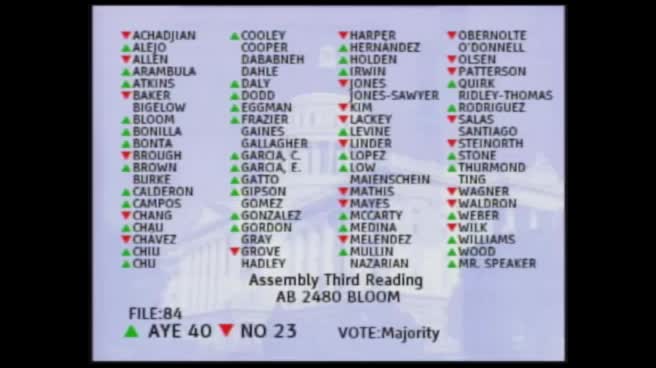 1MIN
Assembly Floor
Bill Author





