AB 1722: Limited liability companies: dissolution: cancellation of articles of organization.
- Session Year: 2015-2016
- House: Assembly
- Latest Version Date: 2016-07-22
Existing law, the California Revised Uniform Limited Liability Company Act, authorizes a limited liability company to have any lawful purpose, except as specified. A limited liability company is an entity distinct from its members. Existing law authorizes one or more persons to form a limited liability company by, among other things, signing and delivering articles of organization to the Secretary of State. Under existing law, a limited liability company is a member-managed limited liability company unless the articles of organization contain a statement that the limited liability company is to be manager managed. Under existing law, the operating agreement governs, among other things, relations among the members as members and between the members and the limited liability company and the activities of the limited liability company.
Under existing law, a limited liability company is dissolved, and its activities are required to be wound up, if, among other things, a majority of the members of the limited liability company votes to dissolve.
This bill would instead require the vote of 50% or more of the voting interests of the members of the limited liability company to dissolve.
Under existing law, if a domestic limited liability company has not conducted any business, only a majority of the members, or, if there are no members, the majority of the managers, if any, or if no members or managers, the person or a majority of the persons signing the articles of organization, are authorized to execute and acknowledge a certificate of cancellation of articles of organization, on a specified form prescribed by the Secretary of State.
This bill would replace that majority requirement to cancel the articles of organization with 50% or more of the voting interests of the members or managers, or 50% or more of the persons signing the articles of incorporation, as applicable.
Existing law, the California Revised Uniform Limited Liability Company Act, authorizes a limited liability company to have any lawful purpose, except as specified. A limited liability company is an entity distinct from its members. Existing law authorizes one or more persons to form a limited liability company by, among other things, signing and delivering articles of organization to the Secretary of State. Under existing law, a limited liability company is a member-managed limited liability company unless the articles of organization contain a statement that the limited liability company is to be manager managed. Under existing law, the operating agreement governs, among other things, relations among the members as members and between the members and the limited liability company and the activities of the limited liability company.
Under existing law, a limited liability company is dissolved, and its activities are required to be wound up, if, among other things, a majority of the members of the limited liability company votes to dissolve.
This bill would instead require the vote of 50% of the voting interests of the members of the limited liability company to dissolve.
Under existing law, if a domestic limited liability company has not conducted any business, only a majority of the members, or, if there are no members, the majority of the managers, if any, or if no members or managers, the person or a majority of the persons signing the articles of organization, are authorized to execute and acknowledge a certificate of cancellation of articles of organization, on a specified form prescribed by the Secretary of State.
This bill would replace that majority requirement to cancel the articles of organization with 50% of the voting interests of the members or managers, or 50% of the persons signing the articles of incorporation, as applicable.
A limited liability company is dissolved, and its activities shall be wound up, upon the happening of the first to occur of the following:
(a)On the happening of an event set forth in a written operating agreement or the articles of organization.
(b)By the vote of 50 percent or more of the voting interests of the members of the limited liability company or a greater percentage of the voting interests of members as may be specified in the articles of organization, or a written operating agreement.
(c)The passage of 90 consecutive days during which the limited liability company has no members, except that, on the death of a natural person who is the sole member of a limited liability company, the status of the member, including a membership interest, may pass to one or more heirs, successors, and assigns of the member by will or applicable law. An heir, successor, or assign of the members interest becomes a substituted member pursuant to paragraph (4) of subdivision (c) of Section 17704.01, subject to administration as provided by applicable law, without the permission or consent of the heirs, successors, or assigns or those administering the estate of the deceased member.
(d)Entry of a decree of judicial dissolution pursuant to Section 17707.03.
SEC. 2.Section 17707.02 of the Corporations Code is amended to read:17707.02.(a)Notwithstanding any other provision of this title, if a domestic limited liability company has not conducted any business, 50 percent or more of the voting interests of the members, or, if there are no members, 50 percent or more of the voting interests of the managers, if any, or if no members or managers, the person or 50 percent or more of the persons signing the articles of organization, may execute and acknowledge a certificate of cancellation of articles of organization, on a form prescribed by the Secretary of State, stating all of the following:
(1)The name of the domestic limited liability company and the Secretary of States file number.
(2)That the certificate of cancellation is being filed within 12 months from the date the articles of organization was filed.
(3)That the limited liability company does not have any debts or other liabilities, except as provided in paragraph (4).
(4)That a final franchise tax return, as described by Section 23332 of the Revenue and Taxation Code, or a final annual tax return, as described by Section 17947 of the Revenue and Taxation Code, has been or will be filed with the Franchise Tax Board, as required under Part 10.2 (commencing with Section 18401) of Division 2 of the Revenue and Taxation Code.
(5)That the known assets of the limited liability company remaining after payment of, or adequately providing for, known debts and liabilities have been distributed to the persons entitled thereto or that the limited liability company acquired no known assets, as the case may be.
(6)That the limited liability company has not conducted any business from the time of the filing of the articles of organization.
(7)That 50 percent or more of the voting interests of the managers or members voted, or, if no managers or members, the person or 50 percent or more of the persons signing the articles of organization, voted to dissolve the limited liability company.
(8)If the limited liability company has received payments for interests from investors, that those payments have been returned to those investors.
(b)A certificate of cancellation executed and acknowledged pursuant to subdivision (a) shall be filed with the Secretary of State within 12 months from the date that the articles of organization was filed. The Secretary of State shall notify the Franchise Tax Board of the cancellation.
(c)Upon filing a certificate of cancellation pursuant to subdivision (a), a limited liability company shall be canceled and its powers, rights, and privileges shall cease.
A limited liability company is dissolved, and its activities shall be wound up, upon the happening of the first to occur of the following:
(a)On the happening of an event set forth in a written operating agreement or the articles of organization.
(b)By the vote of a majority 50 percent of the voting interests of the members of the limited liability company or a greater percentage of the voting interests of members as may be specified in the articles of organization, or a written operating agreement.
(c)The passage of 90 consecutive days during which the limited liability company has no members, except that, on the death of a natural person who is the sole member of a limited liability company, the status of the member, including a membership interest, may pass to one or more heirs, successors, and assigns of the member by will or applicable law. An heir, successor, or assign of the members interest becomes a substituted member pursuant to paragraph (4) of subdivision (c) of Section 17704.01, subject to administration as provided by applicable law, without the permission or consent of the heirs, successors, or assigns or those administering the estate of the deceased member.
(d)Entry of a decree of judicial dissolution pursuant to Section 17707.03.
SEC. 2.Section 17707.02 of the Corporations Code is amended to read:17707.02.(a)Notwithstanding any other provision of this title, if a domestic limited liability company has not conducted any business, only a majority 50 percent of the voting interests of the members, or, if there are no members, the majority 50 percent of the voting interests of the managers, if any, or if no members or managers, the person or a majority 50 percent of the persons signing the articles of organization, may execute and acknowledge a certificate of cancellation of articles of organization, on a form prescribed by the Secretary of State, stating all of the following:
(1)The name of the domestic limited liability company and the Secretary of States file number.
(2)That the certificate of cancellation is being filed within 12 months from the date the articles of organization was filed.
(3)That the limited liability company does not have any debts or other liabilities, except as provided in paragraph (4).
(4)That a final franchise tax return, as described by Section 23332 of the Revenue and Taxation Code, or a final annual tax return, as described by Section 17947 of the Revenue and Taxation Code, has been or will be filed with the Franchise Tax Board, as required under Part 10.2 (commencing with Section 18401) of Division 2 of the Revenue and Taxation Code.
(5)That the known assets of the limited liability company remaining after payment of, or adequately providing for, known debts and liabilities have been distributed to the persons entitled thereto or that the limited liability company acquired no known assets, as the case may be.
(6)That the limited liability company has not conducted any business from the time of the filing of the articles of organization.
(7)That a majority 50 percent of the voting interests of the managers or members voted, or, if no managers or members, the person or a majority 50 percent of the persons signing the articles of organization, voted to dissolve the limited liability company.
(8)If the limited liability company has received payments for interests from investors, that those payments have been returned to those investors.
(b)A certificate of cancellation executed and acknowledged pursuant to subdivision (a) shall be filed with the Secretary of State within 12 months from the date that the articles of organization was filed. The Secretary of State shall notify the Franchise Tax Board of the cancellation.
(c)Upon filing a certificate of cancellation pursuant to subdivision (a), a limited liability company shall be canceled and its powers, rights, and privileges shall cease.
|
Date
|
Status
|
|---|---|
| Jul 22, 2016 | Chaptered by Secretary of State - Chapter 66, Statutes of 2016. |
| Jul 22, 2016 | Approved by the Governor. |
| Jul 11, 2016 | Enrolled and presented to the Governor at 4:30 p.m. |
| Jun 30, 2016 | Read third time. Passed. Ordered to the Assembly. (Ayes 37. Noes 0. Page 4650.). |
| Jun 30, 2016 | In Assembly. Ordered to Engrossing and Enrolling. |
| Jun 30, 2016 | Read third time. Passed. Ordered to the Assembly. |
| Jun 28, 2016 | Read second time. Ordered to Consent Calendar. |
| Jun 27, 2016 | From committee: Be placed on second reading file pursuant to Senate Rule 28.8 and ordered to consent calendar. |
| Jun 15, 2016 | From committee: Do pass and re-refer to Com. on APPR. with recommendation: To Consent Calendar. (Ayes 7. Noes 0.) (June 14). Re-referred to Com. on APPR. |
| Apr 28, 2016 | Referred to Com. on JUD. |
| Apr 14, 2016 | Read third time. Passed. Ordered to the Senate. (Ayes 76. Noes 0. Page 4360.) |
| Apr 14, 2016 | Read third time. Passed. Ordered to the Senate. (Ayes 76. Noes 0.) |
| Apr 14, 2016 | In Senate. Read first time. To Com. on RLS. for assignment. |
| Apr 14, 2016 | Read third time. Passed. Ordered to the Senate. |
| Apr 7, 2016 | Read second time. Ordered to Consent Calendar. |
| Apr 6, 2016 | From committee: Do pass. To Consent Calendar. (Ayes 18. Noes 0.) (April 6). |
| Mar 15, 2016 | From committee: Do pass and re-refer to Com. on APPR. (Ayes 12. Noes 0.) (March 14). Re-referred to Com. on APPR. |
| Mar 1, 2016 | Re-referred to Com. on B. & F. |
| Feb 29, 2016 | From committee chair, with author's amendments: Amend, and re-refer to Com. on B. & F. Read second time and amended. |
| Feb 18, 2016 | Referred to Com. on B. & F. |
| Jan 29, 2016 | From printer. May be heard in committee February 28. |
| Jan 28, 2016 | Read first time. To print. |
|
Date
|
Description
|
Location
|
Votes
|
|
|---|---|---|---|---|
| Jun 30, 2016 | Consent Calendar 2nd AB1722 Wagner | Senate Floor |
Passed |
|
| Jun 14, 2016 | Do pass, but first be re-referred to the Committee on [Appropriations] with the recommendation: To Consent Calendar | Senate Standing Committee on Judiciary |
Passed |
|
| Apr 14, 2016 | AB 1722 WAGNER Consent Calendar Second Day Regular Session | Assembly Floor |
Passed |
|
| Apr 6, 2016 | Do pass. To Consent Calendar. | Assembly Standing Committee on Appropriations |
Passed |
|
| Mar 14, 2016 | Do pass and be re-referred to the Committee on [Appropriations] | Assembly 1st Extraordinary Session on Finance |
Passed |
This list shows positions taken on this bill by organizations on the date displayed, which is linked to the original source.
Positions by individuals are not included.
Office of Senate Floor Analyses (916) 651-1520 Fax: (916) 327-4478 | AB |
CONSENT
Bill No: AB 1722
:
SENATE JUDICIARY COMMITTEE: 7-0, 6/14/16
AYES: Jackson, Moorlach, Anderson, Hertzberg, Leno, Monning, Wieckowski
SENATE APPROPRIATIONS COMMITTEE: Senate Rule 28.8
ASSEMBLY FLOOR: 76-0, 4/14/16 (Consent) - See last page for vote
SOURCE: Conference of California Bar Associations
DIGEST: This bill inserts a “50 percent or more” standard in place of current law requirements that a “majority” of an limited liability company’s voting power, as specified, vote to dissolve or to cancel its articles of organization.
Existing law:
- Provides that any corporation may elect voluntarily to wind up and dissolve by the vote of shareholders holding shares representing 50 percent or more of the voting power.
- Provides that a limited liability company (LLC) is dissolved, and its activities shall be wound up, upon the happening of the first to occur of the following:
- on the happening of an event set forth in a written operating agreement or the articles of organization;
- by the vote of a majority of the members of the LLC or a greater percentage of the voting interests of members as may be specified in the articles of organization, or a written operating agreement;
- the passage of 90 consecutive days during which the LLC has no members, except that, on the death of a natural person who is the sole member of an LLC, the status of the member, including a membership interest, may pass to one or more heirs, successors, and assigns of the member by will or applicable law, as specified; or
- entry of a decree of judicial dissolution pursuant to specified law.
- Provides that, notwithstanding any other provision of the Revised Uniform Limited Liability Company Act (RULLCA), if a domestic LLC has not conducted any business, only a majority of the members, or, if there are no members, the majority of the managers, if any, or if no members or managers, the person or a majority of the persons signing the articles of organization, may execute and acknowledge a certificate of cancellation of articles of organization, on a form prescribed by the Secretary of State, stating specified information, including:
- that the certificate of cancellation is being filed within 12 months from the date the articles of organization was filed;
- that the LLC does not have any debts or other liabilities, except as provided, below;
- that a final franchise tax return or a final annual tax return, as specified, has been or will be filed with the Franchise Tax Board;
- that the known assets of the LLC remaining after payment of, or adequately providing for, known debts and liabilities have been distributed to the persons entitled thereto or that the LLC acquired no known assets, as the case may be;
- that the LLC has not conducted any business from the time of the filing of the articles of organization;
- that a majority of the managers or members voted, or, if no managers or members, the person or a majority of the persons signing the articles of organization, voted to dissolve the LLC.
- Provides for various provisions governing suits for judicial dissolution.
This bill:
- Allows, instead, for an LLC to dissolve by a vote of 50 percent or more of the voting interests of the members (unless a greater percentage of the voting interests of members is specified in the articles of organization, or a written operating agreement).
- Allows, instead, for a domestic LLC to cancel its articles of organization with 50 percent or more of the voting interests of the members; or, if there are no members, 50 percent or more of the managers, if any; or, if there are no members or managers, 50 percent or more of the persons signing the articles of incorporation.
Background
A California LLC is a hybrid between a corporation and a partnership. An LLC generally has the characteristics of a partnership for operational and taxation purposes, but its members enjoy the immunity provided by a corporation to its shareholders for contract debts or tort liability. The interest of a member in an LLC is an economic interest, in the same manner that a partnership interest or a corporate share is an economic interest, that may be transferred under terms and conditions provided by the LLC agreement, the partnership agreement, or the corporate structure.
California first recognized LLCs in 1994 with the enactment of the Beverly-Killea Limited Liability Company Act (Beverly-Killea), which provided comprehensive provisions for the organization, management, and dissolution of LLCs (SB 469 Beverly, Chapter 1200, Statutes of 1994). That same year, the National Conference of Commissioners on Uniform State Laws (NCCUSL) approved the use of a Uniform Limited Liability Company Act. In 2006, after reviewing the development of LLC laws in the United States, NCCUSL adopted the RULLCA, which has been enacted in five states (Idaho, Iowa, Nebraska, Utah, and Wyoming) and the District of Colombia.
In 2012, SB 323 (Vargas, Chapter 419, Statutes of 2012), sponsored by the Partnerships and Limited Liability Companies Committee of the Business Law Section of the State Bar of California, was enacted to repeal Beverly-Killea and, taking into account California’s particular LLC protections, replace it with a modified version of RULLCA. Currently, under RULLCA, an LLC may file a short form certificate of cancellation with the Secretary of State’s office within 12 months of the filing of the articles of organization, as specified, and would make the cancellation of the LLC effective upon filing of that form. To do so, however, a majority of the members (or, if there are no members, the majority of the managers, if any, or if no members or managers, the person or a majority of the persons signing the articles of organization) are needed to execute the certificate of cancellation of articles of organization. Otherwise, California law generally requires a majority of members of an LLC to vote to dissolve or cancel the articles of organization. (Corp. Code Secs. 17707.01(a), 17707.02.)
This bill, instead, only requires 50 percent or more of the voting interests of the LLC members, or 50 percent of the members, managers, or persons signing the articles of organization, as applicable, to effectuate the above provisions authorizing the dissolution or cancellation of an LLC.
Comments
As stated by the author:
Where a corporation may voluntarily elect to dissolve and wind-up business by vote of shareholders holding 50 [percent] or more of the voting power (See Corp. Code, [Sec.] 1900(a)), it takes an absolute majority vote of the membership of an LLC to achieve the same end (Corporations Code [Sec.] 17707.01(b).) – even though the LLC may consist of no more than two people with equal ownership. In the case of a 50-50 standoff, the only way to seek dissolution would be by the member(s) bringing a costly and time-consuming action in court for a judicial dissolution.
AB 1722 is needed to avoid unnecessary and costly litigation currently required to effect dissolution of two-member and other small LLCs where acrimony between members stands in the way. It also will eliminate the prospect of unpleasant surprise to those seeking dissolution of a small LLC to realize that, unlike other business organizations, dissolving the LLC will require an absolute majority vote, even if the LLC consists of only two members. Many small businesses are organizing without the aid of legal counsel (e.g., using the online self-help websites) and do not realize the ramification of forming an LLC with equal ownership. This will change the default rule to 50 [percent] or more and avoid the costly litigation that these small companies often cannot afford.
The Conference of California Bar Associations, sponsor of this bill, writes:
Under existing law, absent a contrary provision in the articles of organization or written operating agreement, it takes a majority vote of the members of an LLC to dissolve the entity and wind up its activities. This can create major problems with small LLCs having an equal number of ownership interests - particularly two-member LLCs that are often 50-50 owners, where the requirement requires the decision to dissolve, in effect, be unanimous. If a majority vote cannot be achieved, the only way to seek dissolution is by the member(s) bringing a costly and time-consuming action in court for a judicial dissolution. In contrast, it takes only 50 [percent] of the voting power of corporate shareholders to [a]ffect a dissolution under that business model (see Corporation Code [Sec.] 1900(a)).
AB 1722 would harmonize the LLC dissolution statute with the corporate voluntary dissolution statute to require only 50 [percent] of the voting power of the LLC’s member to initiate voluntary dissolution under default circumstances. If the members wish to require a higher voting percentage to [a]ffect dissolution, they may still do so through the LLC’s articles of organization or operating agreement.
This change in the law will maintain flexibility for LLCs to shape their articles and operating agreements in the manner that works best for them, while eliminating the unpleasant “surprise” existing law may hold for two-member and other small LLCs who are unaware that their dissolution can be far more complex than if they had formed as another type of business entity.
FISCAL EFFECT: Appropriation: Fiscal Com.: Local:
Conference of California Bar Associations (source)
OPPOSITION: (Verified 6/27/16)
None received
ASSEMBLY FLOOR: 76-0, 4/14/16
AYES: Achadjian, Alejo, Travis Allen, Arambula, Atkins, Baker, Bigelow, Bloom, Bonilla, Bonta, Brough, Brown, Burke, Calderon, Campos, Chang, Chau, Chávez, Chiu, Chu, Cooley, Cooper, Dababneh, Dahle, Daly, Dodd, Eggman, Frazier, Beth Gaines, Gallagher, Cristina Garcia, Eduardo Garcia, Gatto, Gipson, Gomez, Gonzalez, Gordon, Gray, Grove, Hadley, Harper, Roger Hernández, Holden, Jones, Jones-Sawyer, Kim, Lackey, Linder, Lopez, Low, Maienschein, Mathis, Mayes, McCarty, Medina, Mullin, Obernolte, O'Donnell, Olsen, Patterson, Quirk, Ridley-Thomas, Rodriguez, Salas, Santiago, Steinorth, Mark Stone, Thurmond, Ting, Wagner, Waldron, Weber, Wilk, Williams, Wood, Rendon
NO VOTE RECORDED: Irwin, Levine, Melendez, Nazarian
6/29/16 15:50:38
**** END ****
Senator Hannah-Beth Jackson, Chair
2015-2016 Regular Session
Bill No: AB 1722 (Author:Wagner)
Version: February 29, 2016
Hearing Date: June 14, 2016
Fiscal: Yes
Urgency: No
Consultant: RD
SUBJECT
Limited liability companies: dissolution: cancellation of articles of organization
DESCRIPTION
This bill would insert a “50 percent or more” standard in place of current law requirements that a “majority” of an LLC’s voting power, as specified, vote to dissolve or to cancel its articles of organization.
BACKGROUND
A California limited liability company (LLC) is a hybrid between a corporation and a partnership. An LLC generally has the characteristics of a partnership for operational and taxation purposes, but its members enjoy the immunity provided by a corporation to its shareholders for contract debts or tort liability. The interest of a member in an LLC is an economic interest, in the same manner that a partnership interest or a corporate share is an economic interest, that may be transferred under terms and conditions provided by the LLC agreement, the partnership agreement, or the corporate structure.
California first recognized LLCs in 1994 with the enactment of the Beverly-Killea Limited Liability Company Act (Beverly-Killea), which provided comprehensive provisions for the organization, management, and dissolution of LLCs. (SB 469 (Beverly, Ch. 1200, Stats. 1994).) That same year, the National Conference of Commissioners on Uniform State Laws (NCCUSL) approved the use of a Uniform Limited Liability Company Act. In 2006, after reviewing the development of LLC laws in the United States, NCCUSL adopted the Revised Uniform Limited Liability Company Act (RULLCA), which has been enacted in five states (Idaho, Iowa, Nebraska, Utah, and Wyoming) and the District of Colombia.
In 2012, SB 323 (Vargas, Ch. 419, Stats. 2012), sponsored by the Partnerships and Limited Liability Companies Committee of the Business Law Section of the State Bar of California, was enacted to repeal Beverly-Killea and, taking into account California’s particular LLC protections, replace it with a modified version of RULLCA. Currently, under RULLCA, an LLC may file a short form certificate of cancellation with the Secretary of State’s office within 12 months of the filing of the articles of organization, as specified, and would make the cancellation of the LLC effective upon filing of that form. To do so, however, a majority of the members (or, if there are no members, the majority of the managers, if any, or if no members or managers, the person or a majority of the persons signing the articles of organization) are needed to execute the certificate of cancellation of articles of organization. Otherwise, California law generally requires a majority of members of an LLC to vote to dissolve or cancel the articles of organization. (Corp. Code Secs. 17707.01(a), 17707.02.)
This bill would, instead, only require 50 percent or more of the voting interests of the LLC members, or 50 percent of the members, managers, or persons signing the articles of organization, as applicable, to effectuate the above provisions authorizing the dissolution or cancellation of an LLC.
CHANGES TO EXISTING LAW
Existing law provides that any corporation may elect voluntarily to wind up and dissolve by the vote of shareholders holding shares representing 50 percent or more of the voting power. (Corp. Code Sec. 1900(a).)
Existing law provides that a limited liability company (LLC) is dissolved, and its activities shall be wound up, upon the happening of the first to occur of the following:
- on the happening of an event set forth in a written operating agreement or the articles of organization;
- by the vote of a majority of the members of the LLC or a greater percentage of the voting interests of members as may be specified in the articles of organization, or a written operating agreement;
- the passage of 90 consecutive days during which the LLC has no members, except that, on the death of a natural person who is the sole member of an LLC, the status of the member, including a membership interest, may pass to one or more heirs, successors, and assigns of the member by will or applicable law, as specified; or
- entry of a decree of judicial dissolution pursuant to specified law. (Corp. Code Sec. 17707.01.)
Existing law provides that notwithstanding any other provision of RULLCA, if a domestic LLC has not conducted any business, only a majority of the members, or, if there are no members, the majority of the managers, if any, or if no members or managers, the person or a majority of the persons signing the articles of organization, may execute and acknowledge a certificate of cancellation of articles of organization, on a form prescribed by the Secretary of State, stating specified information, including:
- that the certificate of cancellation is being filed within 12 months from the date the articles of organization was filed;
- that the LLC does not have any debts or other liabilities, except as provided, below;
- that a final franchise tax return or a final annual tax return, as specified, has been or will be filed with the Franchise Tax Board;
- that the known assets of the limited liability company remaining after payment of, or adequately providing for, known debts and liabilities have been distributed to the persons entitled thereto or that the limited liability company acquired no known assets, as the case may be;
- that the limited liability company has not conducted any business from the time of the filing of the articles of organization;
- that a majority of the managers or members voted, or, if no managers or members, the person or a majority of the persons signing the articles of organization, voted to dissolve the limited liability company. (Corp. Code Sec. 17707.02(a).)
Existing law provides for various provisions governing suits for judicial dissolution. (Corp. Code Sec. 17707.03.)
This bill would instead allow an LLC to dissolve by a vote of 50 percent or more of the voting interests of the members (unless a greater percentage of the voting interests of members is specified in the articles of organization, or a written operating agreement).
This bill would, instead, allow a domestic LLC to cancel its articles of organization with 50 percent or more of the voting interests of the members; or, if there are no members, 50 percent or more of the managers, if any; or, if there are no members or managers, 50 percent or more of the persons signing the articles of incorporation.
COMMENT
1. Stated need for the bill
According to the author:
Where a corporation may voluntarily elect to dissolve and wind-up business by vote of shareholders holding 50 [percent] or more of the voting power (See Corp. Code, [Sec.] 1900(a)), it takes an absolute majority vote of the membership of an LLC to achieve the same end (Corporations Code [Sec.] 17707.01(b).) – even though the LLC may consist of no more than two people with equal ownership. In the case of a 50-50 standoff, the only way to seek dissolution would be by the member(s) bringing a costly and time-consuming action in court for a judicial dissolution.
AB 1722 is needed to avoid unnecessary and costly litigation currently required to effect dissolution of two-member and other small LLCs where acrimony between members stands in the way. It also will eliminate the prospect of unpleasant surprise to those seeking dissolution of a small LLC to realize that, unlike other business organizations, dissolving the LLC will require an absolute majority vote, even if the LLC consists of only two members. Many small businesses are organizing without the aid of legal counsel (e.g., using the online self-help websites) and do not realize the ramification of forming an LLC with equal ownership. This will change the default rule to 50 [percent] or more and avoid the costly litigation that these small companies often cannot afford.
2. The proposed 50 percent or more standard is consistent with existing law for corporations
This bill would change the current standard for the percentage of LLC members needed to effectuate the dissolution of the LLC or to cancel the articles of organization. Under existing law, absent language specifying otherwise in the articles of organization or written operating agreement, a majority (over 50 percent) of an LLC’s members (or, in some occasions, its managers, or, if no members or managers, the persons filing the articles of organization) must vote to dissolve and wind-up the corporation, or to execute the certificate of cancellation of the articles of organization if no business has been done by the LLC within 12 months since the articles were filed. This bill would change that standard to one of 50 percent or more.
Currently, by requiring a majority of LLC members, if the members are in a 50-50 split on whether to dissolve, they would need to seek a judicial dissolution in order to dissolve and wind-up the LLC. (See Corp. Code Sec. 17707.03.) Under those provisions generally governing judicial dissolutions, California law allows any manager or any member or members of an LLC to file an action in a court of competent jurisdiction to decree the dissolution of an LLC whenever any of the following events occur:
- it is not reasonably practicable to carry on the business in conformity with the articles of organization or operating agreement;
- dissolution is reasonably necessary for the protection of the rights or interests of the complaining members;
- the business of the LLC has been abandoned;
- the management of the LLC is deadlocked or subject to internal dissension; or
- those in control of the LLC have been guilty of, or have knowingly countenanced, persistent and pervasive fraud, mismanagement, or abuse of authority.
In any suit for judicial dissolution, the other members may avoid the dissolution of the LLC by purchasing for cash the membership interests owned by the members so initiating the proceeding, the “moving parties,” at their fair market value, as specified. (Id.)
Notably, however, under existing law for corporations, a majority is not needed for dissolution of the corporation—only 50 percent is needed. Thus, this bill would appear consistent with the percentage of shareholders that would be needed to dissolve a corporate structure. As noted in the Background, an LLC is a hybrid between a corporation and a partnership. The sponsor of this bill writes:
Under existing law, absent a contrary provision in the articles of organization or written operating agreement, it takes a majority vote of the members of an LLC to dissolve the entity and wind up its activities. This can create major problems with small LLCs having an equal number of ownership interests - particularly two-member LLCs that are often 50-50 owners, where the requirement requires the decision to dissolve, in effect, be unanimous. If a majority vote cannot be achieved, the only way to seek dissolution is by the member(s) bringing a costly and time-consuming action in court for a judicial dissolution. In contrast, it takes only 50 [percent] of the voting power of corporate shareholders to [a]ffect a dissolution under that business model (see Corporation Code [Sec.] 1900(a)).
AB 1722 would harmonize the LLC dissolution statute with the corporate voluntary dissolution statute to require only 50 [percent] of the voting power of the LLC’s member to initiate voluntary dissolution under default circumstances. If the members wish to require a higher voting percentage to [a]ffect dissolution, they may still do so through the LLC’s articles of organization or operating agreement.
This change in the law will maintain flexibility for LLCs to shape their articles and operating agreements in the manner that works best for them, while eliminating the unpleasant “surprise” existing law may hold for two-member and other small LLCs who are unaware that their dissolution can be far more complex than if they had formed as another type of business entity.
Support: None Known
Opposition: None Known
HISTORY
Source: Conference of California Bar Associations
Related Pending Legislation: None Known
Prior Legislation:
AB 506 (Maienschein, Ch. 775, Stats. 2015) made various updates and changes to the California Revised Uniform Limited Liability Company Act (RULLCA).
SB 323 (Vargas, Ch. 419, Stats. 2012) See Background.
AB 1859 (Nakano, Ch. 416, Stats. 2004) streamlined procedures for LLC dissolution, as specified, and the certificate of cancellation filed with the Secretary of State, based on the short form cancellations created by AB 1875, below, for corporations.
AB 1875 (Nakano, Ch. 390, Stats. 2002) allowed corporations that never issued shares to file short form cancellations.
Prior Vote:
Assembly Floor (Ayes 76, Noes 0)
Assembly Appropriations Committee (Ayes 18, Noes 0)
Assembly Banking and Finance Committee (Ayes 12, Noes 0)
**************
Date of Hearing: April 6, 2016
ASSEMBLY COMMITTEE ON APPROPRIATIONS
Lorena Gonzalez, Chair
ABPCA Bill Id:AB 1722
Author:(Wagner) – As Amended Ver:February 29, 2016
Policy Committee: | Banking and Finance | Vote: | 12 - 0 |
|
|
Urgency: No State Mandated Local Program: No Reimbursable: No
SUMMARY:
This bill changes the conditions under which a limited liability company (LLC) may dissolve. In summary, this bill:
- Allows an LLC to voluntarily dissolve by a vote of 50% or more of the voting interests of the members instead of a majority of those voting interests.
- Allows an LLC to cancel the articles of organization with 50% or more of the voting interests of the members or managers instead of a majority of those voting interests. If there are no members or managers, then an LLC may cancel the articles of organization with 50% or more of the persons signing the articles of organization instead of a majority of those persons.
FISCAL EFFECT:
Minor and absorbable costs to the Secretary of State (SOS) to update forms and publications.
COMMENTS:
- Background. Existing law establishes the conditions under which an LLC may dissolve. One such condition is by a vote of a majority of the voting interests of the LLC members. However, in the case of a small LLC with just two members, there may be a stalemate when one member wants to dissolve the LLC and the other does not.
- Purpose. According to the author of AB 1722, this bill will help avoid unnecessary and costly litigation related to the dissolution of small LLCs. AB 1722 places in statute provisions similar to California’s corporate voluntary dissolution statute. Existing law provides that any corporation may elect voluntarily to wind up and dissolve by the vote of shareholders holding shares representing 50% or more of the voting power. This bill is sponsored by the Conference of California Bar Associations (CCBA). There is no registered opposition.
Analysis Prepared by: Luke Reidenbach / APPR. / (916) 319-2081
Date of Hearing: March 14, 2016
ASSEMBLY COMMITTEE ON BANKING AND FINANCE
Matthew Dababneh, Chair
ABPCA Bill Id:AB 1722 (
Author:Wagner) – As Amended Ver:February 29, 2016
SUBJECT: Limited liability companies: dissolution: cancellation of articles of organization
SUMMARY: Makes changes to California's Revised Uniform Limited Liability Company Act (RULLCA). Specifically, this bill:
- Allows a limited liability company (LLC) to dissolve by a vote of 50 percent or more of the voting interests of the members.
- Allows a domestic LLC to cancel the articles of organization with 50 percent or more of the voting interests of the members or managers or 50 percent or more of the persons signing the articles of incorporation.
EXISTING LAW:
- Requires a majority of members of a LLC to vote to dissolve or cancel the articles of organization. [Corporations Code, Sections 17707.01 & 17707.02]
- Provides that any corporation may elect voluntarily to wind up and dissolve by the vote of shareholders holding shares representing 50 percent or more of the voting power. [Corporations Code, Section 1900]
FISCAL EFFECT: Unknown.
COMMENTS:
Need for bill:
According to the Author this bill is needed:
"To avoid unnecessary and costly litigation currently required to effect dissolution of two-member and other small LLCs where acrimony between members stands in the way. It also will eliminate the prospect of understandable surprise to those seeking dissolution of a small LLC to realize that, unlike other business organizations, dissolving the LLC will require —absent going to court — an absolute majority vote, even if the LLC consists of only two members. Many small businesses are organizing without the aid of legal counsel (i.e., using the online self-help websites) and do not realize the ramification of forming an LLC with equal ownership. This will change the default rule to 50% or more and avoid the costly litigation that these small companies often cannot afford."
Background:
AB 1722 amends the RULLCA to permit 50 percent or more of the voting interests of the members of an LLC to dissolve the entity, unless a greater percentage is specified in the articles of organization or a written operating agreement.
Under current law, to dissolve, a LLC requires a majority of the voting powers of the LLC members in order to initiate voluntary dissolution proceedings. The RULLCA is used for many small businesses in California, many of which are owned by 2 members with equal voting power. When one wants to dissolve the LLC and the other does not, that leaves the LLC in a stalemate and often results in litigation that these small businesses cannot afford for a decree of a judicial dissolution.
AB 1722 eliminates the majority requirement and places in statute provisions similar to California's corporate voluntary dissolution statute, to only require 50 percent or more of the voting power to initiate voluntary dissolution.
REGISTERED SUPPORT / OPPOSITION:
Support
Conference of California Bar Associations (CCBA) - Sponsor
Opposition
None on file.
Analysis Prepared by: Kathleen O'Malley / B. & F. / (916) 319-3081
Discussed in Hearing
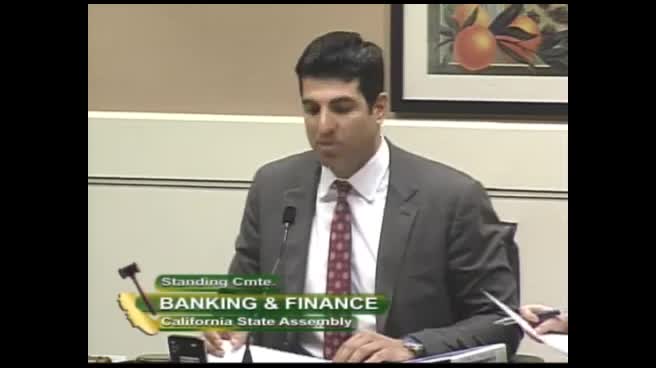 5MIN
Assembly Standing Committee on Banking and Finance
Bill Author

Bill Co-Author(s):