AB 347: Weights and measures: inspection: fees.
- Session Year: 2017-2018
- House: Assembly
- Latest Version Date: 2018-09-19
(1)Existing law provides for the regulation of commercial weighing and measuring devices by the Department of Food and Agriculture, and provides for the enforcement of those provisions by the Secretary of Food and Agriculture and by county sealers of weights and measures in each county. Existing law requires the secretary to establish or adopt tolerances and specifications and other technical requirements for commercial weighing and measuring.
Existing law requires the sealer of a county to inspect and test weighing and measuring devices, as specified, that are used or sold in the county. Existing law also requires the sealer of a county to weigh or measure packages to determine whether they contain the amount represented, as provided. Existing law, until January 1, 2019, authorizes the board of supervisors of a county, by ordinance, to charge an annual registration fee, not to exceed the countys total cost of actually inspecting or testing weighing and measuring devices required of the county sealer, to recover the costs of the county sealer to perform these duties.
Existing law, until January 1, 2019, requires the secretary to establish by regulation an annual administrative fee to recover reasonable administrative and enforcement costs incurred by the department for exercising supervision over and performing investigations in connection with the activities performed by county sealers described above, and requires the administrative fee to be collected for every device registered with each county office of weights and measures and paid annually to the Department of Food and Agriculture Fund.
This bill would extend the authority of the board of supervisors of a county to charge an annual registration fee to recover the costs of the county sealer, as provided, until January 1, 2022, and would extend certain other related provisions. The bill would also continue the annual administrative fee to recover the costs incurred by the department described above until January 1, 2022.
(2)Existing law specifies that the annual registration fee for a business that uses a commercial weighing or measuring device or devices shall consist of a location fee, the Department of Food and Agriculture administrative fee described above, and a device fee. Existing law provides that the device fee for liquefied petroleum gas meters, truck mounted or stationary, shall not exceed $185 per device.
This bill would revise this limitation to also apply to compressed natural gas and liquefied natural gas meters beginning in 2021, but would impose a limitation on the device fee for compressed natural gas and liquefied natural gas meters of up to $75 in 2019 and up to $125 in 2020.
(3)Existing law provides that the device fee for computing scales shall not exceed $20 per device.
This bill would instead provide that the device fee shall not exceed $23 per device.
(4)Existing law provides that the device fee for jewelry and prescription scales shall not exceed $80 per device and specifies that, for purposes of this provision, a jewelry or prescription scale is a scale that meets the specifications, tolerances, and sensitivity requirements established or adopted by the Secretary of Food and Agriculture applicable to those devices.
This bill would revise this limitation to also apply to scales marked as, or meeting the design and performance requirements of, a Class II weighing device.
(1)Existing law provides for the regulation of commercial weighing and measuring devices by the Department of Food and Agriculture, and provides for the enforcement of those provisions by the Secretary of Food and Agriculture and by county sealers of weights and measures in each county. Existing law requires the secretary to establish or adopt tolerances and specifications and other technical requirements for commercial weighing and measuring.
Existing law requires the sealer of a county to inspect and test weighing and measuring devices, as specified, that are used or sold in the county. Existing law also requires the sealer of a county to weigh or measure packages to determine whether they contain the amount represented, as provided. Existing law, until January 1, 2019, authorizes the board of supervisors of a county, by ordinance, to charge an annual registration fee, not to exceed the countys total cost of actually inspecting or testing weighing and measuring devices required of the county sealer, to recover the costs of the county sealer to perform these duties.
Existing law, until January 1, 2019, requires the secretary to establish by regulation an annual administrative fee to recover reasonable administrative and enforcement costs incurred by the department for exercising supervision over and performing investigations in connection with the activities performed by sealers described above, and requires the administrative fee to be collected for every device registered with each county office of weights and measures and paid annually to the Department of Food and Agriculture Fund.
This bill would extend the authority of the board of supervisors of a county to charge an annual registration fee to recover the costs of the county sealer, as provided, until January 1, 2022, and would extend certain other related provisions. The bill would also continue the annual administrative fee to recover the costs incurred by the department described above until January 1, 2022.
(2)Existing law specifies that the annual registration fee for a business that uses a commercial weighing or measuring device or devices shall consist of a location fee, the Department of Food and Agriculture administrative fee described above, and a device fee. Existing law provides that the device fee for liquefied petroleum gas meters, truck mounted or stationary, shall not exceed $185 per device.
This bill would revise this limitation to also apply to compressed natural gas and liquefied natural gas meters. meters beginning in 2021, but would impose a limitation on the device fee for compressed natural gas and liquefied natural gas meters of up to $75 in 2019 and up to $125 in 2020.
(3)Existing law provides that the device fee for computing scales shall not exceed $20 per device.
This bill would instead provide that the device fee shall not exceed $23 per device.
(4)Existing law provides that the device fee for jewelry and prescription scales shall not exceed $80 per device and specifies that, for purposes of this provision, a jewelry or prescription scale is a scale that meets the specifications, tolerances, and sensitivity requirements established or adopted by the Secretary of Food and Agriculture applicable to those devices.
This bill would revise this limitation to also apply to scales marked as, or meeting the design and performance requirements of, a Class II weighing device.
(1)Existing law provides for the regulation of commercial weighing and measuring devices by the Department of Food and Agriculture, and provides for the enforcement of those provisions by the Secretary of Food and Agriculture and by county sealers of weights and measures in each county. Existing law requires the secretary to establish or adopt tolerances and specifications and other technical requirements for commercial weighing and measuring.
Existing law requires the sealer of a county to inspect and test weighing and measuring devices, as specified, that are used or sold in the county. Existing law also requires the sealer of a county to weigh or measure packages to determine whether they contain the amount represented, as provided. Existing law, until January 1, 2019, authorizes the board of supervisors of a county, by ordinance, to charge fees, an annual registration fee, not to exceed the countys total cost of actually inspecting or testing weighing and measuring devices required of the county sealer, to recover the costs of the county sealer to perform these duties. Existing
Existing law, until January 1, 2019, requires the Secretary of Food and Agriculture secretary to establish by regulation an annual administrative fee to recover reasonable administrative and enforcement costs incurred by the Department of Food and Agriculture department for exercising supervision over and performing investigations in connection with the activities performed by sealers described above, and requires the administrative fee to be collected for every device registered with each county office of weights and measures and paid annually to the Department of Food and Agriculture Fund.
This bill would extend the authority of the board of supervisors of a county to charge fees an annual registration fee to recover the costs of the county sealer, as provided, until January 1, 2022, and would extend certain other related provisions. The bill would also continue the annual administrative fee to recover the costs incurred by the department described above until January 1, 2022.
(2)Existing law specifies that the annual registration fee for a business that uses a commercial weighing or measuring device or devices shall consist of a location fee, the Department of Food and Agriculture administrative fee described above, and a device fee. Existing law provides that the device fee for liquefied petroleum gas meters, truck mounted or stationary, shall not exceed $185 per device.
This bill would revise this limitation to also apply to compressed natural gas and liquefied natural gas meters.
(3)Existing law provides that the device fee for computing scales shall not exceed $20 per device.
This bill would instead provide that the device fee shall not exceed $23 per device.
(4)Existing law provides that the device fee for jewelry and prescription scales shall not exceed $80 per device and specifies that, for purposes of this provision, a jewelry or prescription scale is a scale that meets the specifications, tolerances, and sensitivity requirements established or adopted by the Secretary of Food and Agriculture applicable to those devices.
This bill would revise this limitation to also apply to scales marked as, or meeting the design and performance requirements of, a Class II weighing device.
Existing law requires the sealer of a county to inspect and test weighing and measuring devices, as specified, that are used or sold in the county. Existing law also requires the sealer of a county to weigh or measure packages to determine whether they contain the amount represented, as provided. Existing law, until January 1, 2019, authorizes the board of supervisors of a county, by ordinance, to charge fees, not to exceed the countys total cost of actually inspecting or testing weighing and measuring devices required of the county sealer, to recover the costs of the county sealer to perform these duties. Existing law, until January 1, 2019, requires the Secretary of Food and Agriculture to establish by regulation an annual administrative fee to recover reasonable administrative and enforcement costs incurred by the Department of Food and Agriculture for exercising supervision over and performing investigations in connection with the activities performed by sealers described above, and requires the administrative fee to be collected for every device registered with each county office of weights and measures and paid annually to the Department of Food and Agriculture Fund.
This bill would extend the authority of the board of supervisors of a county to charge fees to recover the costs of the county sealer, as provided, until January 1, 2022, and would extend certain other related provisions. The bill would also continue the annual administrative fee to recover the costs incurred by the department described above until January 1, 2022.
It is the intent of the Legislature to enact legislation to include in Section 12240 of the Business and Professions Code a device fee for electric vehicle charging stations and hydrogen fuel cell pumps when the testing methods for those devices become available and approved by the Department of Food and Agricultures Division of Measurement Standards.
SEC. 2.Section 12240 of the Business and Professions Code is amended to read:12240.(a)Except as otherwise provided in this section, the county board of supervisors, by ordinance, may charge an annual registration fee, not to exceed the countys total cost of actually inspecting or testing the devices as required by law, to recover the costs of inspecting or testing weighing and measuring devices required of the county sealer pursuant to Section 12210, and to recover the cost of carrying out Section 12211.
(b)Except as otherwise provided in this section, the annual registration fee shall not exceed the amount set forth in subdivisions (f) to (r), inclusive.
(c)The county may collect the fees biennially, in which case they shall not exceed twice the amount of an annual registration fee. The ordinance shall be adopted pursuant to Article 7 (commencing with Section 25120) of Chapter 1 of Part 2 of Division 2 of Title 3 of the Government Code.
(d)Retail gasoline pump meters, for which the above fees are assessed, shall be inspected as frequently as required by regulation, but not less than once every two years.
(e)Livestock scales, animal scales, and scales used primarily for weighing feed and seed, for which the above fees are assessed, shall be inspected as frequently as required by regulation.
(f)For purposes of this section, the annual registration fee for a business that uses a commercial weighing or measuring device or devices shall consist of a business location fee, a department administrative fee, as specified in Section 12241, and a device fee, as specified in subdivisions (g) to (r), inclusive. The business location fee and device fee shall not exceed one hundred dollars ($100) per business location, plus 100 percent of the maximum applicable device fee listed in subdivisions (g) to (r), inclusive.
(g)(1)For marinas, mobilehome parks, recreational vehicle parks, and apartment complexes, where the owner of the marina, park, or complex owns and is responsible for the utility meters, the device fee shall not exceed the following:
(A)For water submeters, two dollars ($2) per device per space or apartment.
(B)For electric submeters, three dollars ($3) per device per space or apartment.
(C)For vapor submeters, four dollars ($4) per device per space or apartment.
(2)Marinas, mobilehome parks, recreational vehicle parks, and apartment complexes for which the above fees are assessed shall be inspected and tested as frequently as required by regulation.
(h)For weighing devices, other than livestock, with capacities of 10,000 pounds or greater, the device fee shall not exceed two hundred fifty dollars ($250) per device; for weighing devices, other than livestock scales, with capacities of at least 2,000 pounds but less than 10,000 pounds, the device fee shall not exceed one hundred fifty dollars ($150) per device.
(i)This section does not apply to farm milk tanks.
(j)A scale or device used in a certified farmers market, as defined by Section 113742 of the Health and Safety Code, is not required to be registered in the county where the market is conducted, if the scale or device has an unexpired seal for the current year, issued by a licensed California county sealer.
(k)For livestock scales with capacities of 10,000 pounds or greater, the device fee shall not exceed one hundred fifty dollars ($150) per device; for livestock scales with capacities of at least 2,000 pounds but less than 10,000 pounds, the device fee shall not exceed one hundred dollars ($100) per device.
(l)(1)For liquefied petroleum gas (LPG) meters, truck mounted or stationary, the device fee shall not exceed one hundred eighty-five dollars ($185) per device.
(2)For compressed natural gas (CNG) and liquified natural gas (LNG) meters, truck mounted or stationary, the device fee shall not exceed seventy-five dollars ($75) per device in 2019, one hundred twenty-five dollars ($125) per device in 2020, and one hundred eighty-five dollars ($185) per device beginning in 2021.
(m)For wholesale and vehicle meters, the device fee shall not exceed seventy-five dollars ($75) per device.
(n)For computing scales, the device fee shall not exceed twenty-three dollars ($23) per device. For purposes of this subdivision, a computing scale shall be a weighing device with a capacity of less than 100 pounds that indicates the money value of any commodity weighed, at predetermined unit prices, throughout all or part of the weighing range of the scale. For purposes of this subdivision, the portion of the annual registration fee consisting of the business location fee and the device fees authorized by this subdivision shall not exceed the sum of one thousand dollars ($1,000) for each business location.
(o)For jewelry and prescription scales and scales marked as, or meeting the design and performance requirements of, a Class II weighing device, the device fee shall not exceed eighty dollars ($80) per device. For purposes of this subdivision, a jewelry or prescription scale or a scale marked as, or meeting the design and performance requirements of, a Class II weighing device shall be a scale that meets the specifications, tolerances, and sensitivity requirements established or adopted by the secretary applicable to those devices in accordance with Section 12107.
(p)For weighing devices, other than computing, jewelry, and prescription scales and scales marked as, or meeting the design and performance requirements of, a Class II weighing device, as defined in subdivisions (n) and (o), with capacities of at least 100 pounds but less than 2,000 pounds, the device fee shall not exceed fifty dollars ($50) per device.
(q)For vehicle odometers utilized to charge mileage usage fees in vehicle rental transactions or in computing other charges for service, including, but not limited to, ambulance, towing, or limousine services, the device fee shall not exceed sixty dollars ($60) per device.
(r)This section does not apply to odometers in rental passenger vehicles, as defined in Section 465 of the Vehicle Code, that are subject to Section 1936 of the Civil Code. If a person files a complaint with the county sealer regarding the accuracy of a rental passenger vehicle odometer, the county sealer may charge a fee to the operator of the vehicle rental business sufficient to recover, but not to exceed, the reasonable cost of testing the device in investigation of the complaint.
(s)For vehicle odometers utilized to charge mileage usage fees in vehicle rental transactions involving nonpassenger vehicles that are not subject to Section 1936 of the Civil Code, the portion of the annual registration fee consisting of the business location fee and the device fee authorized pursuant to subdivision (q) shall not exceed the sum of three hundred forty dollars ($340) for each business location.
(t)For all other commercial weighing or measuring devices not listed in subdivisions (g) to (r), inclusive, the device fee shall not exceed twenty dollars ($20) per device. For purposes of this subdivision, the total portion of the annual registration fee consisting of the business location fee and the device fees authorized by this subdivision shall not exceed the sum of one thousand dollars ($1,000), for each business location.
(u)For purposes of this section, a single business location is defined as:
(1)Each business location that uses one or more categories or types of commercial devices as set forth in subdivisions (g) to (p), inclusive, and in subdivision (t), that require the use of specialized testing equipment and that necessitates not more than one inspection trip by a weights and measures official.
(2)Each vehicle, except for those vehicles that are employed in vehicle rental transactions, in which one or more commercial devices is installed and used.
(3)(A)For vehicles that are employed in vehicle rental transactions and that are not subject to Section 1936 of the Civil Code, each business location at which vehicles are stored or maintained by a vehicle rental company for the purposes of renting vehicles to customers.
(B)A facility that meets all of the following criteria shall not be considered a business location for the purposes of this paragraph:
(i)The facility is not wholly, or in any part, owned, leased, or operated by the vehicle rental company.
(ii)The facility is not operated or staffed by an employee of the vehicle rental company.
(iii)The facility stores or maintains, on a temporary basis, vehicles at the location for customer convenience.
(C)If a person files a complaint with the county sealer regarding the accuracy of an odometer in a vehicle found or located at a facility described in subparagraph (B), the county sealer may charge a fee to the operator of the vehicle rental company sufficient to recover, but not to exceed, the reasonable cost of testing the device in investigation of the complaint.
SEC. 3.Section 12246 of the Business and Professions Code is amended to read:12246.This article shall remain in effect only until January 1, 2022, and as of that date is repealed, unless a later enacted statute that is enacted before January 1, 2022, deletes or extends that date.
It is the intent of the Legislature to enact legislation to include in Section 12240 of the Business and Professions Code a device fee for electric vehicle charging stations and hydrogen fuel cell pumps when the testing methods for those devices become available and approved by the Department of Food and Agricultures Division of Measurement Standards.
SECTION 1.SEC. 2.Section 12240 of the Business and Professions Code is amended to read:12240.(a)Except as otherwise provided in this section, the county board of supervisors, by ordinance, may charge an annual registration fee, not to exceed the countys total cost of actually inspecting or testing the devices as required by law, to recover the costs of inspecting or testing weighing and measuring devices required of the county sealer pursuant to Section 12210, and to recover the cost of carrying out Section 12211.
(b)Except as otherwise provided in this section, the annual registration fee shall not exceed the amount set forth in subdivisions (f) to (r), inclusive.
(c)The county may collect the fees biennially, in which case they shall not exceed twice the amount of an annual registration fee. The ordinance shall be adopted pursuant to Article 7 (commencing with Section 25120) of Chapter 1 of Part 2 of Division 2 of Title 3 of the Government Code.
(d)Retail gasoline pump meters, for which the above fees are assessed, shall be inspected as frequently as required by regulation, but not less than once every two years.
(e)Livestock scales, animal scales, and scales used primarily for weighing feed and seed, for which the above fees are assessed, shall be inspected as frequently as required by regulation.
(f)For purposes of this section, the annual registration fee for a business that uses a commercial weighing or measuring device or devices shall consist of a business location fee, a department administrative fee, as specified in Section 12241, and a device fee, as specified in subdivisions (g) to (r), inclusive. The business location fee and device fee shall not exceed one hundred dollars ($100) per business location, plus 100 percent of the maximum applicable device fee listed in subdivisions (g) to (r), inclusive.
(g)(1)For marinas, mobilehome parks, recreational vehicle parks, and apartment complexes, where the owner of the marina, park, or complex owns and is responsible for the utility meters, the device fee shall not exceed the following:
(A)For water submeters, two dollars ($2) per device per space or apartment.
(B)For electric submeters, three dollars ($3) per device per space or apartment.
(C)For vapor submeters, four dollars ($4) per device per space or apartment.
(2)Marinas, mobilehome parks, recreational vehicle parks, and apartment complexes for which the above fees are assessed shall be inspected and tested as frequently as required by regulation.
(h)For weighing devices, other than livestock, with capacities of 10,000 pounds or greater, the device fee shall not exceed two hundred fifty dollars ($250) per device; for weighing devices, other than livestock scales, with capacities of at least 2,000 pounds but less than 10,000 pounds, the device fee shall not exceed one hundred fifty dollars ($150) per device.
(i)This section does not apply to farm milk tanks.
(j)A scale or device used in a certified farmers market, as defined by Section 113742 of the Health and Safety Code, is not required to be registered in the county where the market is conducted, if the scale or device has an unexpired seal for the current year, issued by a licensed California county sealer.
(k)For livestock scales with capacities of 10,000 pounds or greater, the device fee shall not exceed one hundred fifty dollars ($150) per device; for livestock scales with capacities of at least 2,000 pounds but less than 10,000 pounds, the device fee shall not exceed one hundred dollars ($100) per device.
(l)(1)For liquefied petroleum gas (LPG), compressed natural gas (CNG), and liquefied natural gas (LNG) (LPG) meters, truck mounted or stationary, the device fee shall not exceed one hundred eighty-five dollars ($185) per device.
(2)For compressed natural gas (CNG) and liquified natural gas (LNG) meters, truck mounted or stationary, the device fee shall not exceed seventy-five dollars ($75) per device in 2019, one hundred twenty-five dollars ($125) per device in 2020, and one hundred eighty-five dollars ($185) per device beginning in 2021.
(m)For wholesale and vehicle meters, the device fee shall not exceed seventy-five dollars ($75) per device.
(n)For computing scales, the device fee shall not exceed twenty-three dollars ($23) per device. For purposes of this subdivision, a computing scale shall be a weighing device with a capacity of less than 100 pounds that indicates the money value of any commodity weighed, at predetermined unit prices, throughout all or part of the weighing range of the scale. For purposes of this subdivision, the portion of the annual registration fee consisting of the business location fee and the device fees authorized by this subdivision shall not exceed the sum of one thousand dollars ($1,000) for each business location.
(o)For jewelry and prescription scales and scales marked as, or meeting the design and performance requirements of, a Class II weighing device, the device fee shall not exceed eighty dollars ($80) per device. For purposes of this subdivision, a jewelry or prescription scale or a scale marked as, or meeting the design and performance requirements of, a Class II weighing device shall be a scale that meets the specifications, tolerances, and sensitivity requirements established or adopted by the secretary applicable to those devices in accordance with Section 12107.
(p)For weighing devices, other than computing, jewelry, and prescription scales and scales marked as, or meeting the design and performance requirements of, a Class II weighing device, as defined in subdivisions (n) and (o), with capacities of at least 100 pounds but less than 2,000 pounds, the device fee shall not exceed fifty dollars ($50) per device.
(q)For vehicle odometers utilized to charge mileage usage fees in vehicle rental transactions or in computing other charges for service, including, but not limited to, ambulance, towing, or limousine services, the device fee shall not exceed sixty dollars ($60) per device.
(r)This section does not apply to odometers in rental passenger vehicles, as defined in Section 465 of the Vehicle Code, that are subject to Section 1936 of the Civil Code. If a person files a complaint with the county sealer regarding the accuracy of a rental passenger vehicle odometer, the county sealer may charge a fee to the operator of the vehicle rental business sufficient to recover, but not to exceed, the reasonable cost of testing the device in investigation of the complaint.
(s)For vehicle odometers utilized to charge mileage usage fees in vehicle rental transactions involving nonpassenger vehicles that are not subject to Section 1936 of the Civil Code, the portion of the annual registration fee consisting of the business location fee and the device fee authorized pursuant to subdivision (q) shall not exceed the sum of three hundred forty dollars ($340) for each business location.
(t)For all other commercial weighing or measuring devices not listed in subdivisions (g) to (r), inclusive, the device fee shall not exceed twenty dollars ($20) per device. For purposes of this subdivision, the total portion of the annual registration fee consisting of the business location fee and the device fees authorized by this subdivision shall not exceed the sum of one thousand dollars ($1,000), for each business location.
(u)For purposes of this section, a single business location is defined as:
(1)Each business location that uses one or more categories or types of commercial devices as set forth in subdivisions (g) to (p), inclusive, and in subdivision (t), that require the use of specialized testing equipment and that necessitates not more than one inspection trip by a weights and measures official.
(2)Each vehicle, except for those vehicles that are employed in vehicle rental transactions, in which one or more commercial devices is installed and used.
(3)(A)For vehicles that are employed in vehicle rental transactions and that are not subject to Section 1936 of the Civil Code, each business location at which vehicles are stored or maintained by a vehicle rental company for the purposes of renting vehicles to customers.
(B)A facility that meets all of the following criteria shall not be considered a business location for the purposes of this paragraph:
(i)The facility is not wholly, or in any part, owned, leased, or operated by the vehicle rental company.
(ii)The facility is not operated or staffed by an employee of the vehicle rental company.
(iii)The facility stores or maintains, on a temporary basis, vehicles at the location for customer convenience.
(C)If a person files a complaint with the county sealer regarding the accuracy of an odometer in a vehicle found or located at a facility described in subparagraph (B), the county sealer may charge a fee to the operator of the vehicle rental company sufficient to recover, but not to exceed, the reasonable cost of testing the device in investigation of the complaint.
SEC. 2.SEC. 3.Section 12246 of the Business and Professions Code is amended to read:12246.This article shall remain in effect only until January 1, 2022, and as of that date is repealed, unless a later enacted statute that is enacted before January 1, 2022, deletes or extends that date.
(a)Except as otherwise provided in this section, the county board of supervisors, by ordinance, may charge an annual registration fee, not to exceed the countys total cost of actually inspecting or testing the devices as required by law, to recover the costs of inspecting or testing weighing and measuring devices required of the county sealer pursuant to Section 12210, and to recover the cost of carrying out Section 12211.
(b)Except as otherwise provided in this section, the annual registration fee shall not exceed the amount set forth in subdivisions (f) to (r), inclusive.
(c)The county may collect the fees biennially, in which case they shall not exceed twice the amount of an annual registration fee. The ordinance shall be adopted pursuant to Article 7 (commencing with Section 25120) of Chapter 1 of Part 2 of Division 2 of Title 3 of the Government Code.
(d)Retail gasoline pump meters, for which the above fees are assessed, shall be inspected as frequently as required by regulation, but not less than once every two years.
(e)Livestock scales, animal scales, and scales used primarily for weighing feed and seed, for which the above fees are assessed, shall be inspected as frequently as required by regulation.
(f)For purposes of this section, the annual registration fee for a business that uses a commercial weighing or measuring device or devices shall consist of a business location fee, a Department of Food and Agriculture department administrative fee, as specified in Section 12241, and a device fee, as specified in subdivisions (g) to (r), inclusive. The business location fee and device fee shall not exceed one hundred dollars ($100) per business location, plus 100 percent of the maximum applicable device fee listed in subdivisions (g) to (r), inclusive.
(g)(1)For marinas, mobilehome parks, recreational vehicle parks, and apartment complexes, where the owner of the marina, park, or complex owns and is responsible for the utility meters, the device fee shall not exceed the following:
(A)For water submeters, two dollars ($2) per device per space or apartment.
(B)For electric submeters, three dollars ($3) per device per space or apartment.
(C)For vapor submeters, four dollars ($4) per device per space or apartment.
(2)Marinas, mobilehome parks, recreational vehicle parks, and apartment complexes for which the above fees are assessed shall be inspected and tested as frequently as required by regulation.
(h)For weighing devices, other than livestock, with capacities of 10,000 pounds or greater, the device fee shall not exceed two hundred fifty dollars ($250) per device; for weighing devices, other than livestock scales, with capacities of at least 2,000 pounds but less than 10,000 pounds, the device fee shall not exceed one hundred fifty dollars ($150) per device.
(i)This section does not apply to farm milk tanks.
(j)A scale or device used in a certified farmers market, as defined by Section 113742 of the Health and Safety Code, is not required to be registered in the county where the market is conducted, if the scale or device has an unexpired seal for the current year, issued by a licensed California county sealer.
(k)For livestock scales with capacities of 10,000 pounds or greater, the device fee shall not exceed one hundred fifty dollars ($150) per device; for livestock scales with capacities of at least 2,000 pounds but less than 10,000 pounds, the device fee shall not exceed one hundred dollars ($100) per device.
(l)For liquefied petroleum gas (LPG) (LPG), compressed natural gas (CNG), and liquefied natural gas (LNG) meters, truck mounted or stationary, the device fee shall not exceed one hundred eighty-five dollars ($185) per device.
(m)For wholesale and vehicle meters, the device fee shall not exceed seventy-five dollars ($75) per device.
(n)For computing scales, the device fee shall not exceed twenty twenty-three dollars ($20) ($23) per device. For purposes of this subdivision, a computing scale shall be a weighing device with a capacity of less than 100 pounds that indicates the money value of any commodity weighed, at predetermined unit prices, throughout all or part of the weighing range of the scale. For the purposes of this subdivision, the portion of the annual registration fee consisting of the business location fee and the device fees authorized by this subdivision shall not exceed the sum of one thousand dollars ($1,000) for each business location.
(o)For jewelry and prescription scales, scales and scales marked as, or meeting the design and performance requirements of, a Class II weighing device, the device fee shall not exceed eighty dollars ($80) per device. For purposes of this subdivision, a jewelry or prescription scale or a scale marked as, or meeting the design and performance requirements of, a Class II weighing device shall be a scale that meets the specifications, tolerances, and sensitivity requirements established or adopted by the secretary applicable to those devices in accordance with Section 12107.
(p)For weighing devices, other than computing, jewelry, and prescription scales and scales marked as, or meeting the design and performance requirements of, a Class II weighing device, as defined in subdivisions (n) and (o), with capacities of at least 100 pounds but less than 2,000 pounds, the device fee shall not exceed fifty dollars ($50) per device.
(q)For vehicle odometers utilized to charge mileage usage fees in vehicle rental transactions or in computing other charges for service, including, but not limited to, ambulance, towing, or limousine services, the device fee shall not exceed sixty dollars ($60) per device.
(r)This section does not apply to odometers in rental passenger vehicles, as defined in Section 465 of the Vehicle Code, that are subject to Section 1936 of the Civil Code. If a person files a complaint with the county sealer regarding the accuracy of a rental passenger vehicle odometer, the county sealer may charge a fee to the operator of the vehicle rental business sufficient to recover, but not to exceed, the reasonable cost of testing the device in investigation of the complaint.
(s)For vehicle odometers utilized to charge mileage usage fees in vehicle rental transactions involving nonpassenger vehicles that are not subject to Section 1936 of the Civil Code, the portion of the annual registration fee consisting of the business location fee and the device fee authorized pursuant to subdivision (q) shall not exceed the sum of three hundred forty dollars ($340) for each business location.
(t)For all other commercial weighing or measuring devices not listed in subdivisions (g) to (r), inclusive, the device fee shall not exceed twenty dollars ($20) per device. For the purposes of this subdivision, the total portion of the annual registration fee consisting of the business location fee and the device fees authorized by this subdivision shall not exceed the sum of one thousand dollars ($1,000), for each business location.
(u)For the purposes of this section, a single business location is defined as:
(1)Each business location that uses one or more categories or types of commercial devices as set forth in subdivisions (g) to (p), inclusive, and in subdivision (t), that require the use of specialized testing equipment and that necessitates not more than one inspection trip by a weights and measures official.
(2)Each vehicle, except for those vehicles that are employed in vehicle rental transactions, in which one or more commercial devices is installed and used.
(3)(A)For vehicles that are employed in vehicle rental transactions and that are not subject to Section 1936 of the Civil Code, each business location at which vehicles are stored or maintained by a vehicle rental company for the purposes of renting vehicles to customers.
(B)A facility that meets all of the following criteria shall not be considered a business location for the purposes of this paragraph:
(i)The facility is not wholly, or in any part, owned, leased, or operated by the vehicle rental company.
(ii)The facility is not operated or staffed by an employee of the vehicle rental company.
(iii)The facility stores or maintains, on a temporary basis, vehicles at the location for customer convenience.
(C)If a person files a complaint with the county sealer regarding the accuracy of an odometer in a vehicle found or located at a facility described in subparagraph (B), the county sealer may charge a fee to the operator of the vehicle rental company sufficient to recover, but not to exceed, the reasonable cost of testing the device in investigation of the complaint.
SECTION 1.SEC. 2.Section 12246 of the Business and Professions Code is amended to read:12246.This article shall remain in effect only until January 1, 2022, and as of that date is repealed, unless a later enacted statute that is enacted before January 1, 2022, deletes or extends that date.
This article shall remain in effect only until January 1, 2019, 2022, and as of that date is repealed, unless a later enacted statute that is enacted before January 1, 2019, 2022, deletes or extends that date.
|
Date
|
Status
|
|---|---|
| Sep 19, 2018 | Chaptered by Secretary of State - Chapter 521, Statutes of 2018. |
| Sep 19, 2018 | Approved by the Governor. |
| Sep 10, 2018 | Enrolled and presented to the Governor at 3:30 p.m. |
| Aug 29, 2018 | Senate amendments concurred in. To Engrossing and Enrolling. |
| Aug 27, 2018 | In Assembly. Concurrence in Senate amendments pending. May be considered on or after August 29 pursuant to Assembly Rule 77. |
| Aug 27, 2018 | Read third time. Passed. Ordered to the Assembly. |
| Aug 21, 2018 | Read second time. Ordered to third reading. |
| Aug 20, 2018 | Read third time and amended. Ordered to second reading. |
| Aug 8, 2018 | Read second time. Ordered to third reading. |
| Aug 7, 2018 | From committee: Do pass. (Ayes 7. Noes 0.) (August 6). |
| Jun 26, 2018 | From committee: Do pass and re-refer to Com. on APPR. (Ayes 9. Noes 0.) (June 25). Re-referred to Com. on APPR. |
| Jun 18, 2018 | From committee chair, with author's amendments: Amend, and re-refer to committee. Read second time, amended, and re-referred to Com. on B., P. & E.D. |
| May 18, 2017 | Referred to Com. on B., P. & E.D. |
| May 8, 2017 | In Senate. Read first time. To Com. on RLS. for assignment. |
| May 8, 2017 | Read third time. Passed. Ordered to the Senate. (Ayes 77. Noes 0. Page 1423.) |
| May 4, 2017 | Read second time. Ordered to third reading. |
| May 3, 2017 | From committee: Do pass. (Ayes 16. Noes 0.) (May 3). |
| Apr 19, 2017 | From committee: Do pass and re-refer to Com. on APPR. (Ayes 10. Noes 0.) (April 18). Re-referred to Com. on APPR. |
| Feb 21, 2017 | Referred to Com. on P. & C.P. |
| Feb 9, 2017 | From printer. May be heard in committee March 11. |
| Feb 8, 2017 | Read first time. To print. |
|
Date
|
Description
|
Location
|
Votes
|
|
|---|---|---|---|---|
| Aug 29, 2018 | AB 347 CHAU Concurrence in Senate Amendments | Assembly Floor |
Passed |
|
| Aug 27, 2018 | Assembly 3rd Reading AB347 Chau By Hill | Senate Floor |
Passed |
|
| Aug 6, 2018 | Do pass | Senate Standing Committee on Appropriations |
Passed |
|
| Jun 25, 2018 | Do pass, but first be re-referred to the Committee on [Appropriations] | Senate Standing Committee on Business, Professions and Economic Development |
Passed |
|
| May 8, 2017 | AB 347 CHAU Assembly Third Reading | Assembly Floor |
Passed |
|
| May 3, 2017 | Do pass. | Assembly Standing Committee on Appropriations |
Passed |
|
| Apr 18, 2017 | Do pass and be re-referred to the Committee on [Appropriations] | Assembly Standing Committee on Privacy and Consumer Protection |
Passed |
This list shows positions taken on this bill by organizations on the date displayed, which is linked to the original source.
Positions by individuals are not included.
CONCURRENCE IN SENATE AMENDMENTS
CSA1 Bill Id:AB 347
Author:(Chau)
As Amended Ver:August 20, 2018
Majority vote
ASSEMBLY: | 77-0 | (May 8, 2017) | SENATE: | 35-4 | (August 27, 2018) |
Original Committee Reference: P. & C.P.
SUMMARY: This bill extends, until January 1, 2022, the authority for a county sealer to recover the costs related to the inspection and testing of weighing and measuring devices, increases the fee cap for the inspection of a computing scale by $3, and adds a Class II weighing scale. Specifically, this bill:
- Adds compressed natural gas and liquefied natural gas meters to the list of items which may be inspected/tested by the county sealers and maintains the inspection fees as follows:
- For compressed natural gas and liquefied natural gas meters, truck mounted or stationary, the device fee shall not exceed $75 per device in 2019, $125 per device in 2020, and one $185 per device beginning in 2021.
- For liquefied petroleum gas meters at no more than $185 per device beginning in 2021.
- Raises the inspection fee cap for a "computing scale" from $20 to $23.
- Revises the inspection category for jewelry and prescription scales to also apply to scales marked as Class II weighing devices or those that meet the design and performance of a Class II weighing device.
- Extends the authority of the county sealer to recover a fee for the cost of inspection, as specified until January 1, 2022.
- Makes other technical and clarifying amendments.
The Senate amendments extended existing limitation imposed on annual registration fees for liquefied petroleum gas meters to compressed natural gas and liquefied natural gas meters, increased the maximum device fee for computing scales from $20 to $23, and extend the $80 maximum device fee imposed on jewelry and prescription sales to Class II weighing devices, and created the graduated fee structure for compressed natural gas and liquefied natural gas meters, as specified.
EXISTING LAW:
- Establishes the office of the county sealer in the 58 counties and authorizes the sealer to prosecute violations of laws relating to weights and measures. (Business and Professions Code Section (BPC) 12200.)
- Requires the Secretary of the California Department of Food and Agriculture (DFA) to adopt the necessary regulations governing the inspection frequency of all commercially used weighing devices, as specified, and requires the sealer of each county to perform the required inspections. (BPC 12212(a) to (b).)
- Requires each sealer, from time to time, to weigh or measure packages, containers, or amounts of commodities sold, or in the process of delivery, in order to determine whether they contain the quantity or amount represented and whether they are being sold in accordance with the law. (BPC 12211.)
- Authorizes, until January 1, 2019, the board of supervisors of a county, by ordinance, to charge fees, not to exceed the county's total cost of actually inspecting or testing weighing and measuring devices required of the county sealer, to recover the costs of the county sealer to perform these duties. (BPC 12240.)
- Requires, until January 1, 2019, the CDFA Secretary to establish by regulation an annual administrative fee to recover reasonable administrative and enforcement costs incurred by CDFA for exercising supervision over, and performing investigations in connection with, the activities performed by sealers described above, and requires the administrative fee to be collected for every device registered with each county office of weights and measures and paid annually to the Department of Food and Agriculture Fund. (BPC 12241.)
FISCAL EFFECT: According to the Senate Appropriations Committee:
- Generates annual estimated revenue of $650,000. According to the DFA, the sunset extension would allow DFA to continue to receive the authorized administrative fee.
- However, to the extent that the sunset date is not extended and counties would no longer be able to continue to collect fees to cover their inspection costs, there would be General Fund cost pressures. If county general funds are insufficient to cover the costs of inspections and counties stop performing inspections, DFA would be legally obligated to perform inspections on the approximately 1.5 million commercial devices registered within the state. In addition, it would be anticipated there DFA would require a General Fund backfill for the loss of the discontinued administrative fee.
COMMENTS: Enforcement of California's weights and measures laws and regulations is the responsibility of the Division of Measurement Standards (DMS) under the DFA. The DMS works with county sealers of weights and measures who, under the supervision and direction of the Secretary of DFA, carry out many of the weights and measures inspection and enforcement activities at the local level. The inspection and testing of weighing and measuring devices is overseen by a County Sealer of Weights and Measures. Historically, sealers have been responsible for ensuring that consumers reliably get what they paid for. In practice, this oversight involves the inspection and testing of packaged commodities and all commercially-used weighing and measuring devices.
Current law places a cap on the maximum fee that can be charged for inspecting each device, and each individual county determines what that fee is. The fees specified in the Business and Professional Code vary in the amount charged depending on the type of scale or measuring device being used. The fees specified in statute are "maximums" which are allowed to be charged as determined by each individual county. Counties are authorized to charge anywhere up to the maximum in order to reimburse their costs of inspection or testing of the weighing or measuring device. This bill, sponsored by the California Agricultural Commissioners and Sealers Association, increases the maximum fee for "computing scales", as defined, from $20 to $23.
Additionally, this bill revises the current scale category used for jewelry and prescriptions to include Class II weighing devices or those scales meeting the designs specifications for Class II weighing devices. Scales used for commercial purposes must meet strict standards for accuracy and customer visibility scales must be of a type approved by the DMS and issued either a California Type Evaluation Program Approval or a National Type Evaluation Program Certificate of Conformance before commercial use. Under current law, county sealers test the devices for liquefied petroleum gas meters, to verify accuracy. This bill adds compressed natural gas and liquefied natural gas under the county sealers jurisdiction to test. The maximum fee will remain the same as consistent with liquefied petroleum gas meters.
Analysis Prepared by: Nichole Rapier / P. & C.P. / (916) 319-2200 FN: 0004978
Office of Senate Floor Analyses (916) 651-1520 Fax: (916) 327-4478 | AB |
THIRD READING
Bill No: AB 347
:
SENATE BUS., PROF. & ECON. DEV. COMMITTEE: 9-0, 6/25/18
AYES: Hill, Fuller, Allen, Dodd, Galgiani, Glazer, Hernandez, Pan, Wilk
SENATE APPROPRIATIONS COMMITTEE: 7-0, 8/6/18
AYES: Portantino, Bates, Beall, Bradford, Hill, Nielsen, Wiener
ASSEMBLY FLOOR: 77-0, 5/8/17 - See last page for vote
SOURCE: California Agricultural Commissioners and Sealers Association
DIGEST:
This bill extends, until January 1, 2022, the authority for a county sealer to recover the costs related to the inspection and testing of weighing and measuring devices, increases the fee cap for the inspection of a computing scale by $3, and adds a Class II weighing scale.
Senate Floor Amendments of 8/20/18 add intent language related to establishing a device fee for electric vehicle charging stations and hydrogen fuel cell pumps when technology becomes available; phase in the device fee for compressed natural gas and liquefied natural gas meters, as specified; and, make other minor and technical amendments.
ANALYSIS:
Existing law:
- Establishes the office of the county sealer in the 58 counties and authorizes the sealer to prosecute violations of laws relating to weights and measures. (BPC § 12200)
- Requires the Secretary of the California Department of Food and Agriculture (CDFA) to adopt the necessary regulations governing the inspection frequency of all commercially used weighing devices, as specified, and requires the sealer of each county to perform the required inspections. (BPC § 12212(a)(b))
- Requires each sealer, from time to time, to weigh or measure packages, containers, or amounts of commodities sold, or in the process of delivery, in order to determine whether they contain the quantity or amount represented and whether they are being sold in accordance with the law. (BPC § 12211)
- Authorizes, a county board of supervisors by an ordinance, to charge an annual registration fee not to exceed the county’s total cost for inspections and testing the devices, to recover the costs of inspecting or testing the weighing or measuring devices. (BPC § 12240(a))
- States that for liquefied petroleum gas meters, truck mounted or stationary, the device fee cannot exceed $185.
- States that for jewelry and prescription scales, the device fee cannot exceed $80.
- States that for computing scales the device fee cannot exceed $20 and specifies that a computing scale is a weighing device with a capacity of less than $100 pounds that indicates the money value of any commodity weighed, at predetermined unit prices, throughout all or part of the weighing range of the scale.
- Sunsets the authority for a board of supervisors to charge a registration fee to recover the costs of the county sealer until January 1, 2022.
This bill:
- Adds compressed natural gas and liquefied natural gas meters to the list of items which may be inspected/tested by the county sealers and phases in the device fee to be at no more than $185 beginning in 2021.
- Raises the inspection fee cap for a “computing scale” from $20 to $23.
- Revises the inspection category for jewelry and prescription scales to also apply to scales marked as Class II weighing devices or those that meet the design and performance of a Class II weighing device.
- Extends the authority of the county sealer to recover a fee for the cost of inspection, as specified until January 1, 2022.
- States that it is the intent of the Legislature to include a device fee for electric vehicle charging stations and hydrogen fuel cell pumps when the testing methods for those devices become available, as specified.
- Makes other technical and clarifying amendments.
Background
Enforcement of California's weights and measures laws and regulations is the responsibility of the Division of Measurement Standards (DMS) under the CDFA. The DMS works with county sealers of weights and measures who, under the supervision and direction of the Secretary of CDFA, carry out many of the weights and measures inspection and enforcement activities at the local level. The inspection and testing of weighing and measuring devices is overseen by a County Sealer of Weights and Measures. Historically, sealers have been responsible for ensuring that consumers reliably get what they paid for. In practice, this oversight involves the inspection and testing of packaged commodities and all commercially-used weighing and measuring devices.
Current law (BPC § 12240) places a cap on the maximum fee that can be charged for inspecting each device, and each individual county determines what that fee is. The fees specified in BPC Section 12240 vary in the amount charged depending on the type of scale or measuring device being used. The fees specified in statute are “maximums” which are allowed to be charged as determined by each individual county. Counties are authorized to charge anywhere up to the maximum in order to reimburse their costs of inspection or testing of the weighing or measuring device. This bill will increase the maximum fee for “computing scales”, as defined, from $20 to $23.
Additionally, this bill revises the current scale category used for jewelry and prescriptions to include Class II weighing devices or those scales meeting the designs specifications for Class II weighing devices. Scales used for commercial purposes must meet strict standards for accuracy and customer visibility scales must be of a type approved by the DMS and issued either a California Type Evaluation Program Approval or a National Type Evaluation Program Certificate of Conformance before commercial use. Under current law, county sealers test the devices for liquefied petroleum gas meters, to verify accuracy. This bill adds compressed natural gas and liquefied natural gas under the county sealers jurisdiction to test. The maximum fee will remain the same as consistent with liquefied petroleum gas meters and will be phased-in over three years.
FISCAL EFFECT: Appropriation: Fiscal Com.: Local:
California Agricultural Commissioners and Sealers Association (source)
California Grocers Association
California State Association of Counties
Clean Energy
County of San Bernardino
County of Santa Clara
Placer County Board of Supervisors
Rural County Representatives of California
Santa Clara County Board of Supervisors
OPPOSITION: (Verified 8/20/18)
None received
ARGUMENTS IN SUPPORT: The California Agricultural Commissioners and Sealers Association writes in support, “through provisions of this bill, local governments were provided a framework with which to partially recover costs for ensuring the accuracy of commercial transactions of a scale, meter, gas pump, or weighing/measuring device used to calculate the value of commodities or services. County Sealers of Weights and Measures annually inspect commercial weighing and measuring devices to ensure that consumers are getting what they pay for and to level the playing field.”
The California Grocers Association writes in support, “California’s grocers are supportive of any program that preserves the level playing field for companies doing business around the state. Ensuring the accuracy of the scales in our establishments is one such program. Allowing for a modest increase in the fees we pay to county weights & measures officials for this valuable service will continue to guarantee that all grocery store operators, large and small, treat their customers fairly and weed out any bad actors that may exist.”
The County of Santa Clara, the County of San Bernardino, the Placer County Board of Supervisors, the Santa Clara County Board of Supervisors, the California State Association of Counties, and the Rural County Representatives of California write in support and note that county sealers of annually inspect commercial weighing and measuring devices to ensure that consumers are getting what they pay for.
Clean Energy writes in support, “…we appreciate the willingness of the author to amend the bill so that the maximum allowable fee would be staggered over time, that the fee is pegged to LPG which has a similar testing cost, and for intent language to include electric vehicle and hydrogen devices should an accurate test be produced within the lifetime of the bill.”
ASSEMBLY FLOOR: 77-0, 5/8/17
AYES: Acosta, Aguiar-Curry, Travis Allen, Arambula, Baker, Berman, Bigelow, Bloom, Bocanegra, Bonta, Brough, Burke, Caballero, Calderon, Cervantes, Chau, Chávez, Chen, Chiu, Choi, Chu, Cooley, Cooper, Cunningham, Dababneh, Dahle, Daly, Eggman, Flora, Fong, Frazier, Friedman, Gallagher, Cristina Garcia, Eduardo Garcia, Gipson, Gloria, Gomez, Gonzalez Fletcher, Gray, Grayson, Holden, Irwin, Jones-Sawyer, Kalra, Kiley, Lackey, Levine, Limón, Low, Maienschein, Mathis, Mayes, McCarty, Melendez, Mullin, Muratsuchi, Nazarian, Obernolte, O'Donnell, Quirk, Quirk-Silva, Reyes, Ridley-Thomas, Rodriguez, Rubio, Salas, Santiago, Steinorth, Mark Stone, Thurmond, Ting, Voepel, Waldron, Weber, Wood, Rendon
NO VOTE RECORDED: Harper, Medina, Patterson
8/21/18 18:49:51
**** END ****
Office of Senate Floor Analyses (916) 651-1520 Fax: (916) 327-4478 | AB |
THIRD READING
Bill No: AB 347
:
SENATE BUS., PROF. & ECON. DEV. COMMITTEE: 9-0, 6/25/18
AYES: Hill, Fuller, Allen, Dodd, Galgiani, Glazer, Hernandez, Pan, Wilk
SENATE APPROPRIATIONS COMMITTEE: 7-0, 8/6/18
AYES: Portantino, Bates, Beall, Bradford, Hill, Nielsen, Wiener
ASSEMBLY FLOOR: 77-0, 5/8/17 - See last page for vote
SOURCE: California Agricultural Commissioners and Sealers Association
DIGEST:
This bill extends, until January 1, 2022, the authority for a county sealer to recover the costs related to the inspection and testing of weighing and measuring devices, increases the fee cap for the inspection of a computing scale by $3, and adds a Class II weighing scale.
Existing law:
- Establishes the office of the county sealer in the 58 counties and authorizes the sealer to prosecute violations of laws relating to weights and measures. (BPC § 12200)
- Requires the Secretary of the California Department of Food and Agriculture (DFA) to adopt the necessary regulations governing the inspection frequency of all commercially used weighing devices, as specified, and requires the sealer of each county to perform the required inspections. (BPC § 12212(a)(b))
- Requires each sealer, from time to time, to weigh or measure packages, containers, or amounts of commodities sold, or in the process of delivery, in order to determine whether they contain the quantity or amount represented and whether they are being sold in accordance with the law. (BPC § 12211)
- Authorizes, a county board of supervisors by an ordinance, to charge an annual registration fee not to exceed the county’s total cost for inspections and testing the devices, to recover the costs of inspecting or testing the weighing or measuring devices. (BPC § 12240(a))
- States that for liquefied petroleum gas meters, truck mounted or stationary, the device fee cannot exceed $185.
- States that for jewelry and prescription scales, the device fee cannot exceed $80.
- States that for computing scales the device fee cannot exceed $20 and specifies that a computing scale is a weighing device with a capacity of less than $100 pounds that indicates the money value of any commodity weighed, at predetermined unit prices, throughout all or part of the weighing range of the scale.
- Sunsets the authority for a board of supervisors to charge a registration fee to recover the costs of the county sealer until January 1, 2022.
This bill:
- Adds compressed natural gas and liquefied natural gas meters to the list of items which may be inspected/tested by the county sealers and maintains the inspection fee at no more than $185.
- Raises the inspection fee cap for a “computing scale” from $20 to $23.
- Revises the inspection category for jewelry and prescription scales to also apply to scales marked as Class II weighing devices or those that meet the design and performance of a Class II weighing device.
- Extends the authority of the county sealer to recover a fee for the cost of inspection, as specified until January 1, 2022.
- Makes other technical and clarifying amendments.
Background
Enforcement of California's weights and measures laws and regulations is the responsibility of the Division of Measurement Standards (DMS) under the DFA. The DMS works with county sealers of weights and measures who, under the supervision and direction of the Secretary of DFA, carry out many of the weights and measures inspection and enforcement activities at the local level. The inspection and testing of weighing and measuring devices is overseen by a County Sealer of Weights and Measures. Historically, sealers have been responsible for ensuring that consumers reliably get what they paid for. In practice, this oversight involves the inspection and testing of packaged commodities and all commercially-used weighing and measuring devices.
Current law (BPC § 12240) places a cap on the maximum fee that can be charged for inspecting each device, and each individual county determines what that fee is. The fees specified in BPC Section 12240 vary in the amount charged depending on the type of scale or measuring device being used. The fees specified in statute are “maximums” which are allowed to be charged as determined by each individual county. Counties are authorized to charge anywhere up to the maximum in order to reimburse their costs of inspection or testing of the weighing or measuring device. This bill will increase the maximum fee for “computing scales”, as defined, from $20 to $23.
Additionally, this bill revises the current scale category used for jewelry and prescriptions to include Class II weighing devices or those scales meeting the designs specifications for Class II weighing devices. Scales used for commercial purposes must meet strict standards for accuracy and customer visibility scales must be of a type approved by the DMS and issued either a California Type Evaluation Program Approval or a National Type Evaluation Program Certificate of Conformance before commercial use. Under current law, county sealers test the devices for liquefied petroleum gas meters, to verify accuracy. This bill adds compressed natural gas and liquefied natural gas under the county sealers jurisdiction to test. The maximum fee will remain the same as consistent with liquefied petroleum gas meters.
FISCAL EFFECT: Appropriation: Fiscal Com.: Local:
According to the Senate Appropriations Committee:
- Generates annual estimated revenue of $650,000. According to the DFA, the sunset extension would allow DFA to continue to receive the authorized administrative fee.
- However, to the extent that the sunset date is not extended and counties would no longer be able to continue to collect fees to cover their inspection costs, there would be General Fund cost pressures. If county general funds are insufficient to cover the costs of inspections and counties stop performing inspections, DFA would be legally obligated to perform inspections on the approximately 1.5 million commercial devices registered within the state. In addition, it would be anticipated there DFA would require a General Fund backfill for the loss of the discontinued administrative fee.
California Agricultural Commissioners and Sealers Association (source)
California Grocers Association
California State Association of Counties
County of San Bernardino
County of Santa Clara
Placer County Board of Supervisors
Rural County Representatives of California
Santa Clara County Board of Supervisors
None received
ARGUMENTS IN SUPPORT: The California Agricultural Commissioners and Sealers Association writes in support, “through provisions of this bill, local governments were provided a framework with which to partially recover costs for ensuring the accuracy of commercial transactions of a scale, meter, gas pump, or weighing/measuring device used to calculate the value of commodities or services. County Sealers of Weights and Measures annually inspect commercial weighing and measuring devices to ensure that consumers are getting what they pay for and to level the playing field.”
The California Grocers Association writes in support, “California’s grocers are supportive of any program that preserves the level playing field for companies doing business around the state. Ensuring the accuracy of the scales in our establishments is one such program. Allowing for a modest increase in the fees we pay to county weights & measures officials for this valuable service will continue to guarantee that all grocery store operators, large and small, treat their customers fairly and weed out any bad actors that may exist.”
The County of Santa Clara, the County of San Bernardino, the Placer County Board of Supervisors, the Santa Clara County Board of Supervisors, the California State Association of Counties, and the Rural County Representatives of California write in support and note that county sealers of annually inspect commercial weighing and measuring devices to ensure that consumers are getting what they pay for.
ASSEMBLY FLOOR: 77-0, 5/8/17
AYES: Acosta, Aguiar-Curry, Travis Allen, Arambula, Baker, Berman, Bigelow, Bloom, Bocanegra, Bonta, Brough, Burke, Caballero, Calderon, Cervantes, Chau, Chávez, Chen, Chiu, Choi, Chu, Cooley, Cooper, Cunningham, Dababneh, Dahle, Daly, Eggman, Flora, Fong, Frazier, Friedman, Gallagher, Cristina Garcia, Eduardo Garcia, Gipson, Gloria, Gomez, Gonzalez Fletcher, Gray, Grayson, Holden, Irwin, Jones-Sawyer, Kalra, Kiley, Lackey, Levine, Limón, Low, Maienschein, Mathis, Mayes, McCarty, Melendez, Mullin, Muratsuchi, Nazarian, Obernolte, O'Donnell, Quirk, Quirk-Silva, Reyes, Ridley-Thomas, Rodriguez, Rubio, Salas, Santiago, Steinorth, Mark Stone, Thurmond, Ting, Voepel, Waldron, Weber, Wood, Rendon
NO VOTE RECORDED: Harper, Medina, Patterson
8/8/18 12:42:24
**** END ****
SENATE COMMITTEE ON
Senator Anthony Portantino, Chair
2017 - 2018 Regular Session
AB 347 (Chau) - Weights and measures: inspection: fees
Version: | Policy Vote: |
Urgency: | Mandate: |
Hearing Date: | Consultant: |
This bill does not meet the criteria for referral to the Suspense File.
Bill Summary:
Extends, until January 1, 2022, the authority for a county sealer to recover the costs related to the inspection and testing of weighing and measuring devices; increases the fee cap for the inspection of a computing scale by $3; and adds a Class II weighing scale.
Fiscal Impact:
- Generates annual estimated revenue of $650,000. According to the Department of Food and Agriculture (CDFA), the sunset extension would allow CDFA to continue to receive the authorized administrative fee.
- However, to the extent that the sunset date is not extended and counties would no longer be able to continue to collect fees to cover their inspection costs, there would be General Fund cost pressures. If county general funds are insufficient to cover the costs of inspections and counties stop performing inspections, CDFA would be legally obligated to perform inspections on the approximately 1.5 million commercial devices registered within the state. In addition, it would be anticipated there CDFA would require a General Fund backfill for the loss of the discontinued administrative fee.
Background:
The CDFA’s Division of Measurement Standards (DMS) enforces California's weights and measures laws and regulations. The DMS works with county sealers of weights and measures who carry out many of the weights and measures inspection and enforcement activities locally. The inspection and testing of weighing and measuring devices is overseen by a County Sealer of Weights and Measures. In practice, this oversight involves the inspection and testing of packaged commodities and all commercially-used weighing and measuring devices.
Existing law authorizes, until January 1, 2019, the board of supervisors of a county, by ordinance, to charge fees to recover the costs of the county sealer to perform inspection and testing of weighing and measuring devices. In addition, existing law requires, until January 1, 2019, the Secretary of the CDFA to establish, by regulation, an annual administrative fee to recover reasonable administrative and enforcement costs for exercising supervision over, and performing investigations in connection with, the activities performed by sealers described above, and requires the administrative fee to be collected for every device registered with each county office of weights and measures and paid annually to the Department of Food and Agriculture Fund.
Proposed Law:
The bill includes the following provisions among others:
- Adds compressed natural gas and liquefied natural gas meters to the list of items which may be inspected or tested by the county sealers, and maintains the inspection fee at no more than $185.
- Increases the device fee cap for a “computing scale” from $20 to $23.
- Revises the inspection category for jewelry and prescription scales to also apply to scales marked as Class II weighing devices or those that meet the design and performance of a Class II weighing device.
- Extends the authority of the county sealer to recover a fee for the cost of inspection, as specified until January 1, 2022.
Related Legislation:
The Legislature has considered similar legislation in recent past, including:
- AB 296 (Dodd, Chapter 133, Statutes of 2015), extends the authority of the Board of Supervisors of a county and the DFA to charge fees to recover the costs of the County Sealer related to the inspection and testing of weighing and measuring devices, from January 1, 2016, to January 1, 2019.
- AB 1623 (Yamada, Chapter 234, Statutes of 2012), extended the sunset date on the county board of supervisors authority to charge fees to recover the costs of the county sealer to perform specified inspections until January 1, 2018, and establishes or revises device fee caps.
- AB 2361 (Ruskin, Chapter 260, Statutes of 2010), extended the sunset date on the authority of the board of supervisors of a county to charge fees to recover the costs of the county sealer to perform specified duties until January 1, 2013.
- AB 889 (Ruskin, Chapter 529, Statutes of 2005), extended the sunset date to January 1, 2011, and established a gradual increase in the fees that may be adopted by a board of supervisors in order to more fully fund the local weights and measure device inspection program. The bill also established a two-tiered fee schedule that provided both a location fee and a device fee to more effectively capture the cost of the initial device inspection.
Staff Comments:
This bill is intended to maintain funding for county inspection of weighing and measuring programs by extending for three years the sunset date for authorization to charge fees.
-- END --
SENATE COMMITTEE ON
BUSINESS, PROFESSIONS AND ECONOMIC DEVELOPMENT
Senator Jerry Hill, Chair
2017 - 2018 Regular
Bill No: Hearing Date: June 25, 2018
Author: | |||
Version: | June 18, 2018 | ||
Urgency: | No | Fiscal: | Yes |
Consultant: | Elissa Silva | ||
Subject:
SUMMARY:
Extends, until January 1, 2022, the authority for a county sealer to recover the costs related to the inspection and testing of weighing and measuring devices; increases the fee cap for the inspection of a computing scale by $3 and adds a Class II weighing scale
Existing law:
- Establishes the office of the county sealer in the 58 counties and authorizes the sealer to prosecute violations of laws relating to weights and measures. (BPC § 12200)
- Requires the secretary of the California Department of Food and Agriculture (CDFA) to adopt the necessary regulations governing the inspection frequency of all commercially used weighing devices, as specified, and requires the sealer of each county to perform the required inspections. (BPC § 12212(a)(b))
- Defines a “county sealer” to mean any sealer appointed by a county; and is sometimes referred to as the county director of weights and measures. (BPC § 12006)
- Subjects any person who neglects or refuses to exhibit any weight, measure, weighing or measuring instrument or appliances and accessories in their possession or under their control, to any sealer for inspection and examination to a misdemeanor. (BPC § 12018)
- Requires each sealer, from time to time, to weigh or measure packages, containers, or amounts of commodities sold, or in the process of delivery, in order to determine whether they contain the quantity or amount represented and whether they are being sold in accordance with the law. (BPC § 12211)
- Authorizes, a county board of supervisors by an ordinance, to charge an annual registration fee not to exceed the county’s total cost for inspections and testing the devices, to recover the costs of inspecting or testing the weighing or measuring devices. (BPC § 12240(a))
- States that an annual registration fee for a business that uses a commercial weighing or measuring device consists of a business location fee, department administrative fee, and a device fee, as specified, and further provides that the location fee and the device fee cannot exceed $100, as specified. (BPC § 12240(f))
- States that for liquefied petroleum gas meters, truck mounted or stationary, the device fee cannot exceed $185.
- States that for jewelry and prescription scales, the device fee cannot exceed $80.
- States that for computing scales the device fee cannot exceed $20 and specifies that a computing scale is a weighing device with a capacity of less than $100 pounds that indicates the money value of any commodity weighed, at predetermined unit prices, throughout all or part of the weighing range of the scale.
- Sunsets the authority for a board of supervisors to charge a registration fee to recover the costs of the county sealer until January 1, 2022.
This bill:
- Adds compressed natural gas and liquefied natural gas meters to the list of items which may be inspected/tested by the county sealers and maintains the inspection fee at no more than $185.
- Raises the inspection fee cap for a “computing scale” from $20 to $23.
- Revises the inspection category for jewelry and prescription scales to also apply to scales marked as Class II weighing devices or those that meet the design and performance of a Class II weighing device.
- Extends the authority of the county sealer to recover a fee for the cost of inspection, as specified until January 1, 2022.
- Makes other technical and clarifying amendments.
FISCAL EFFECT:
Unknown. This bill is keyed fiscal by the Legislative Counsel. According to the Assembly Committee on Appropriations analysis dated May 3, 2017, this bill will result in between $600,000 and $700,000 in revenue annually for CDFA to continue collection of the fee and notes that by allowing counties to continue the collection of fees to cover their inspection costs, prevents the need for CDFA to potentially inspect weighing and measuring devices in the event that counties could not afford to do so. Thus, this bill continues an unknown level of savings to the state by allowing counties to fund inspection costs through fees.
COMMENTS:
Purpose. This bill is sponsored by the California Agricultural Commissioners and Sealers Association. According to the Author, “County Sealers of Weights and Measures are responsible for ensuring that all commercial scaling and volumetric measuring devices are providing accurate readings. This ensures that customers are paying the appropriate amount for a purchased product and to level the playing field between retailers….Additionally, current law contains a negotiated “cap” to establish a maximum charge, which the County Board of Supervisors in each municipality can adopt, for the location fee, device fee, and total cost that may be levied. The local government only has the ability to collect fees at a level to recover the costs of administering the consumer protection program, because it is offered as a public service. The authority to collect fees has never been drafted in perpetuity and has always been scheduled to sunset on a date specified in law. The current sunset is January 1, 2019.”
Background.
Weights and Measures. Enforcement of California's weights and measures laws and regulations is the responsibility of the Division of Measurement Standards (DMS) under the DFA. The DMS works with county sealers of weights and measures who, under the supervision and direction of the Secretary of DFA, carry out many of the weights and measures inspection and enforcement activities at the local level. County Sealers. The inspection and testing of weighing and measuring devices is overseen by a County Sealer of Weights and Measures. Historically, sealers have been responsible for ensuring that consumers reliably get what they paid for. As such, these sealers and their offices enforce the laws and regulations of the state under the general direction and oversight of the Secretary of the DFA. In practice, this oversight involves the inspection and testing of packaged commodities and all commercially-used weighing and measuring devices.
Inspection and Fee Authority. Current law (BPC § 12240) places a cap on the maximum fee that can be charged for inspecting each device, and each individual county determines what that fee is. The fees specified in BPC § 12240 vary in the amount charged depending on the type of scale or measuring device being used. The fees specified in statute are “maximums” which are allowed to be charged as determined by each individual county. Counties are authorized to charge anywhere up to the maximum in order to reimburse their costs of inspection or testing of the weighing or measuring device. This bill will increase the maximum fee for “computing scales”, as defined, from $20 to $23.
Additionally, this bill would revise the current scale category used for jewelry and prescriptions to include class II weighing devices or those scales meeting the designs specifications for class II weighing devices. Scales used for commercial purposes must meet strict standards for accuracy and customer visibility scales must be of a type approved by the DMS and issued either a California Type Evaluation Program Approval or a National Type Evaluation Program Certificate of Conformance before commercial use.
Under current law, county sealers test the devices for liquefied petroleum gas meters, to verify accuracy. This bill would add compressed natural gas and liquefied natural gas under the county sealers jurisdiction to test. The maximum fee will remain the same as consistent with liquefied petroleum gas meters.
- Arguments in Support. The California Agricultural Commissioners and Sealers Association writes in support,”through provisions of this bill, local governments were provided a framework with which to partially recover costs for ensuring the accuracy of commercial transactions of a scale, meter, gas pump, or weighing/measuring device used to calculate the value of commodities or services. County Sealers of Weights and Measures annually inspect commercial weighing and measuring devices to ensure that consumers are getting what they pay for and to level the playing field.”
The California Grocers Association writes in support, “California’s grocers are supportive of any program that preserves the level playing field for companies doing business around the state. Ensuring the accuracy of the scales in our establishments is one such program. Allowing for a modest increase in the fees we pay to county weights & measures officials for this valuable service will continue to guarantee that all grocery store operators, large and small, treat their customers fairly and weed out any bad actors that may exist.”
The County of Santa Clara, the Placer County Board of Supervisors, and the Santa Clara County Board of Supervisors writes in support and note that County Sealers of annually inspect commercial weighing and measuring devices to ensure that consumers are getting what they pay for.
- Prior Related Legislation. AB 296 (Dodd, Chapter 133, Statutes of 2015), Extends the authority of the Board of Supervisors of a county and the DFA to charge fees to recover the costs of the County Sealer related to the inspection and testing of weighing and measuring devices, from January 1, 2016, to January 1, 2019.
AB 1623 (Yamada, Chapter 234, Statutes of 2012), extended the sunset date on the county board of supervisors authority to charge fees to recover the costs of the county sealer to perform specified inspections until January 1, 2018, and establishes or revises device fee caps.
AB 2361 (Ruskin, Chapter 260, Statutes of 2010), extended the sunset date on the authority of the board of supervisors of a county to charge fees to recover the costs of the county sealer to perform specified duties until January 1, 2013.
AB 889 (Ruskin, Chapter 529, Statutes of 2005), extended the sunset date to January 1, 2011, and established a gradual increase in the fees that may be adopted by a board of supervisors in order to more fully fund the local weights and measure device inspection program. The bill also established a two-tiered fee schedule that provided both a location fee and a device fee to more effectively capture the cost of the initial device inspection.
SUPPORT AND OPPOSITION:
Support:
California Agricultural Commissioners and Sealers Association (sponsor)
California Grocers Association
County of Santa Clara
Placer County Board of Supervisors
Santa Clara County Board of Supervisors
Opposition:
None on file as of June 20, 2018
-- END --
ASSEMBLY THIRD READING
ATR Bill Id:AB 347
Author:(Chau)
As Introduced Ver:February 8, 2017
Majority vote
Committee | Votes | Ayes | Noes |
Privacy | 10-0 | Chau, Kiley, Baker, Berman, Calderon, Dababneh, Irwin, Kalra, Obernolte, Reyes | |
Appropriations | 16-0 | Gonzalez Fletcher, Bigelow, Bloom, Bocanegra, Bonta, Brough, Calderon, Chau, Eggman, Fong, Friedman, Gallagher, Eduardo Garcia, Muratsuchi, Obernolte, Reyes |
|
SUMMARY: Extends to January 1, 2022, the authority of the board of supervisors of a county and the California Department of Food and Agriculture to charge fees to recover the costs of the county sealer related to the inspection and testing of weighing and measuring devices.
EXISTING LAW:
- Grants the California Department of Food and Agriculture (CDFA) general supervision of the weights and measures and weighing and measuring devices sold or used in the state. (Business and Professions Code (BPC) Section 12100)
- Requires the sealer of a county to inspect and test weighing and measuring devices, as specified, that are used or sold in the county. (BPC 12210)
- Requires the sealer of a county to weigh or measure packages to determine whether they contain the amount represented, as provided. (BPC 12211)
- Authorizes, until January 1, 2019, the board of supervisors of a county, by ordinance, to charge fees, not to exceed the county's total cost of actually inspecting or testing weighing and measuring devices required of the county sealer, to recover the costs of the county sealer to perform these duties. (BPC 12240)
- Requires, until January 1, 2019, the CDFA Secretary to establish by regulation an annual administrative fee to recover reasonable administrative and enforcement costs incurred by CDFA for exercising supervision over, and performing investigations in connection with, the activities performed by sealers described above, and requires the administrative fee to be collected for every device registered with each county office of weights and measures and paid annually to the Department of Food and Agriculture Fund. (BPC 12241)
FISCAL EFFECT:
- Allows CDFA to continue collection of the fee, which amounts to between $600,000 and $700,000 in revenue annually.
- By allowing counties to continue the collection of fees to cover their inspection costs, prevents the need for CDFA to potentially inspect weighing and measuring devices in the event that counties could not afford to do so. Thus, this bill continues an unknown level of savings to the state by allowing counties to fund inspection costs through fees.
COMMENTS:
- Background: Existing law authorizes, until January 1, 2019, the board of supervisors of a county, by ordinance, to charge fees to recover the costs of the county sealer to perform inspection and testing of weighing and measuring devices. In addition, existing law requires, until January 1, 2019, the CDFA Secretary to establish by regulation an annual administrative fee to recover reasonable administrative and enforcement costs incurred by CDFA for exercising supervision over, and performing investigations in connection with, the activities performed by sealers described above, and requires the administrative fee to be collected for every device registered with each county office of weights and measures and paid annually to the Department of Food and Agriculture Fund.
- Purpose of the bill: This bill is intended to maintain funding for county inspection of weighing and measuring programs by extending for three years the sunset date for authorization to charge fees, which have been in place since 1982. According to the author, "The authority of counties that collect these fees will sunset January 1, 2019. AB 347 will extend the sunset on these provisions until January 1, 2022, in order to preserve the integrity of the marketplace and protects consumers from overcharges by ensuring the continuation of the Commercial Weighing and Measuring Device Registration Program." This bill is sponsored by the California Agricultural Commissioners and Sealers Association.
- County sealers: The inspection and testing of weighing and measuring devices is overseen on a county level, by a county sealer of weights and measures. The mission of county sealers is to provide "fair competition and equity in the marketplace" and to ensure consumers reliably get what they paid for. The county department of weights and measures ensures the accuracy of weighing and measuring devices, verifies the price, quantity and labeling of packaged and bulk commodities, and verifies quality, advertising and labeling standards for petroleum products. In order to help pay for the cost of the inspection and testing program, legislation was passed in 1982 to authorize county boards of supervisors to establish fees for business locations to partially fund local weights and measures enforcement programs. That program and the related fee authorization have been amended many times since then to add new devices to the registration program and adjust the schedule of maximum fees in statute. The program now applies to virtually all weighing and measuring devices used commercially (including gas pumps, water meters, electric meters, truck scales, cattle scales, grocery scales, taxi meters, etc.), with the exception of farm milk tanks and grocery store check-out scanners. Current law places a cap on the maximum fee that can be charged for inspecting each device, but it is the individual counties that determine what that fee is. The fees counties collect offset, but do not fully cover the cost of the program.
This bill does not change any of the fee caps, but extends the authorization statute from January 1, 2019, to January 1, 2022.
Analysis Prepared by: Jennifer Chase / P. & C.P. / (916) 319-2200 FN: 0000260
Date of Hearing: May 3, 2017
ASSEMBLY COMMITTEE ON APPROPRIATIONS
Lorena Gonzalez Fletcher, Chair
ABPCA Bill Id:AB 347
Author:(Chau) – As Introduced Ver:February 8, 2017
Policy Committee: | Privacy and Consumer Protection | Vote: | 10 - 0 |
Urgency: No State Mandated Local Program: No Reimbursable: No
SUMMARY:
This bill extends to January 1, 2022, the authority of the board of supervisors of a county and the California Department of Food and Agriculture (CDFA) to charge fees to recover the costs of the county sealer related to the inspection and testing of weighing and measuring devices. The authority to collect these fees would otherwise expire on January 1, 2019.
FISCAL EFFECT:
- Allows CDFA to continue collection of the fee, which amounts to between $600,000 and $700,000 in revenue annually.
- By allowing counties to continue the collection of fees to cover their inspection costs, prevents the need for CDFA to potentially inspect weighing and measuring devices in the event that counties could not afford to do so. Thus, this bill continues an unknown level of savings to the state by allowing counties to fund inspection costs through fees.
COMMENTS:
- Background. Existing law authorizes, until January 1, 2019, the board of supervisors of a county, by ordinance, to charge fees to recover the costs of the county sealer to perform inspection and testing of weighing and measuring devices. In addition, existing law requires, until January 1, 2019, the CDFA Secretary to establish by regulation an annual administrative fee to recover reasonable administrative and enforcement costs incurred by CDFA for exercising supervision over, and performing investigations in connection with, the activities performed by sealers described above, and requires the administrative fee to be collected for every device registered with each county office of weights and measures and paid annually to the Department of Food and Agriculture Fund.
- Purpose. This bill is intended to maintain funding for county inspection of weighing and measuring programs by extending for three years the sunset date for authorization to charge fees, which have been in place since 1982. According to the author, “The authority of counties that collect these fees will sunset January 1, 2019. AB 347 will extend the sunset on these provisions until January 1, 2022, in order to preserve the integrity of the marketplace and protects consumers from overcharges by ensuring the continuation of the Commercial Weighing and Measuring Device Registration Program.”
Analysis Prepared by: Jessica Peters / APPR. / (916) 319-2081
Date of Hearing: April 18, 2017
ASSEMBLY COMMITTEE ON PRIVACY AND CONSUMER PROTECTION
Ed Chau, Chair
ABPCA Bill Id:AB 347 (
Author:Chau) – As Introduced Ver:February 8, 2017
SUBJECT: Weights and measures: inspection: fees
SUMMARY: Extends to January 1, 2022, the authority of the board of supervisors of a county and the California Department of Food and Agriculture to charge fees to recover the costs of the county sealer related to the inspection and testing of weighing and measuring devices.
EXISTING LAW:
- Grants the California Department of Food and Agriculture (CDFA) general supervision of the weights and measures and weighing and measuring devices sold or used in the state. (Business and Professions Code (BPC) Section 12100)
- Requires the sealer of a county to inspect and test weighing and measuring devices, as specified, that are used or sold in the county. (BPC 12210)
- Requires the sealer of a county to weigh or measure packages to determine whether they contain the amount represented, as provided. (BPC 12211)
- Authorizes, until January 1, 2019, the board of supervisors of a county, by ordinance, to charge fees, not to exceed the county’s total cost of actually inspecting or testing weighing and measuring devices required of the county sealer, to recover the costs of the county sealer to perform these duties. (BPC 12240)
- Requires, until January 1, 2019, the CDFA Secretary to establish by regulation an annual administrative fee to recover reasonable administrative and enforcement costs incurred by CDFA for exercising supervision over, and performing investigations in connection with, the activities performed by sealers described above, and requires the administrative fee to be collected for every device registered with each county office of weights and measures and paid annually to the Department of Food and Agriculture Fund. (BPC 12241)
FISCAL EFFECT: Unknown
COMMENTS:
- Purpose of the bill: This bill is intended to maintain funding for county inspection of weighing and measuring programs by extending for three years the sunset date for counties’ and CDFA's authorization to charge fees, which has been in place since 1982. This bill is sponsored by the California Agricultural Commissioners and Sealers Association.
- Author’s statement: According to the author’s office, “County Sealers of Weights and Measures are responsible for ensuring that all commercial scaling and volumetric measuring devices are providing accurate readings. This ensures that customers are paying the appropriate amount for a purchased product and to level the playing field between retailers. Existing law authorizes counties to charge fees to recover the costs of the County Sealer performing an inspection. These inspections cover devices, such as: retail fuel dispensing meters; water meters; electric meters, which measure electricity that is sub-metered by a mobile home park, apartment complex, or boat dock; liquefied petroleum gas meters or gas vapor meters that are sub-metered; truck scales, cattle scales and grocery counter scales; taxi meters; and a variety of other devices that weigh or meter a commodity offered for sale.”
“The authority of counties that collect these fees will sunset [on] January 1, 2019. AB 347 will extend the sunset on these provisions until January 1, 2022, in order to preserve the integrity of the marketplace and protects consumers from overcharges by ensuring the continuation of the Commercial Weighing and Measuring Device Registration Program.”
- County sealers: The Legislature created a state office to oversee the development and inspection of weighing and measuring devices in 1913. The inspection and testing of weighing and measuring devices is overseen on a county level, by a county sealer of weights and measures. The mission of county sealers is to provide “fair competition and equity in the marketplace” and to ensure consumers reliably get what they paid for. The county department of weights and measures ensures the accuracy of weighing and measuring devices, verifies the price, quantity and labeling of packaged and bulk commodities, and verifies quality, advertising and labeling standards for petroleum products. Sealers and their offices enforce the laws and regulations of the state under the oversight of CDFA.
In order to help pay for the cost of the inspection and testing program, legislation was passed in 1982 to authorize county boards of supervisors to establish fees for business locations to partially fund local weights and measures enforcement programs. That program and the related fee authorization have been amended many times since then to add new devices to the registration program and adjust the schedule of maximum fees in statute. The program now applies to virtually all weighing and measuring devices used commercially (including gas pumps, water meters, electric meters, truck scales, cattle scales, grocery scales, taxi meters, etc.), with the exception of farm milk tanks and grocery store check-out scanners.
Current law places a cap on the maximum fee that can be charged for inspecting each device, but it is the individual counties that determine what that fee is. The fees counties collect offset, but do not fully cover the cost of the program. According to CDFA, counties collected $32 million in revenue in the 2014/15 fiscal year. However, the weights and measures program reached $43.9 million in total expenditures.
This bill does not change any of the fee caps, but extends the authorization statute from January 1, 2019, to January 1, 2022.
- Arguments in support: According to California Agricultural Commissioners and Sealers Association, “County Sealers of Weights and Measures annually inspect commercial weighing and measuring devices to ensure that consumers are getting what they pay for and to level the playing field amongst retailers. Current law contains negotiated “fee caps” to establish maximum charges that may be adopted by a Board of Supervisors in each count for the location fee, device fee, and total registration fee charges that may be levied. As a public service, local governments are strictly limited to collect fees at a level not exceeding that which recovers the costs of administering the consumer protection program.”
“AB 347 will extend the sunset date on this program until December 31, 2022, at which time the interested parties will meet to discuss the program and any potential adjustments.”
- Previous legislation: AB 296 (Dodd), Chapter 133, Statutes of 2015, extended the sunset date on the county board of supervisor’s authority to charge fees to recover the costs of the county sealer to inspect and test weighing and measuring devices, from January 1, 2016, to January 1, 2019.
AB 1623 (Yamada), Chapter 234, Statutes of 2012, extended the sunset date on the county board of supervisor’s authority to charge fees to recover the costs of the county sealer to perform specified inspections until January 1, 2016, and established or revised certain device fee caps.
AB 2361 (Ruskin), Chapter 260, Statutes of 2010,
- extended the sunset date on the authority of the board of supervisors of a county to charge fees to recover the costs of the county sealer to perform specified duties until January 1, 2013.
AB 889 (Ruskin), Chapter 529, Statutes of 2005, extended the sunset date to January 1, 2011, and established a gradual increase in the fees that may be adopted by a board of supervisors in order to more fully fund the local weights and measure device inspection program. The bill also established a two-tiered fee schedule that provided both a location fee and a device fee to more effectively capture the cost of the initial device inspection.
AB 1810 (Wiggins), Chapter 512, Statues of 2000, extended the sunset dates on the civil penalty authority and on device registration fees to January 1, 2006.
SB 189 (Kelley), Chapter 476, Statutes of 1997, extended the sunset date of the fee authorization to January 1, 2001.
AB 1728 (Murray), Chapter 47, Statutes of 1995, extended the sunset date of the fee authorization to January 1, 1998.
SB 1644 (Kelley), Chapter 592, Statutes of 1994, established the current administrative fine provisions for weights and measures.
REGISTERED SUPPORT / OPPOSITION:
Support
California Agricultural Commissioners and Sealers Association (sponsor)
California State Association of Counties
Rural County Representatives of California
Santa Clara County Board of Supervisors
Opposition
None on file.
Analysis Prepared by: Jennifer Chase / P. & C.P. / 916-319-2200
Discussed in Hearing
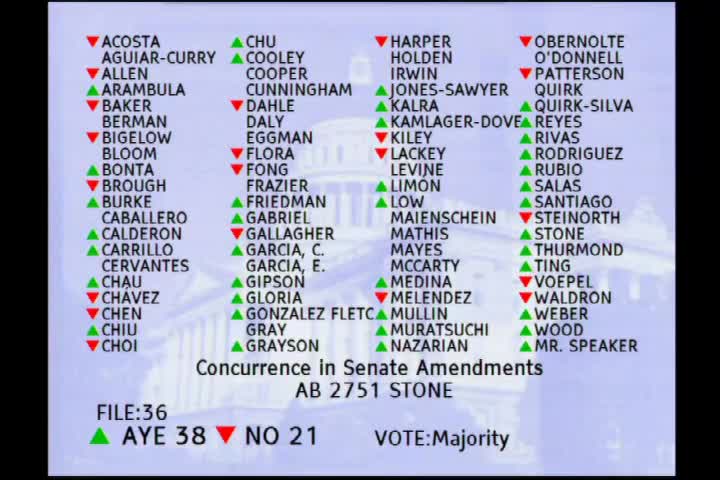 58SEC
Assembly Floor
 2MIN
Senate Floor
 2MIN
Senate Standing Committee on Appropriations
 1MIN
Assembly Floor
 1MIN
Assembly Standing Committee on Appropriations
 2MIN
Assembly Standing Committee on Privacy and Consumer Protection
Bill Author

Bill Co-Author(s):