AB 350: Cannabis edibles: appealing to children.
- Session Year: 2017-2018
- House: Assembly
- Latest Version Date: 2017-09-15
Existing law, the Control, Regulate and Tax Adult Use of Marijuana Act (AUMA), enacted by the voters at the November 8, 2016, statewide general election, regulates the cultivation, distribution, and use of cannabis for nonmedical purposes by individuals 21 years of age and older. AUMA places specified requirements on cannabis products, including prohibiting cannabis products that are designed to be appealing to children or easily confused with commercially sold candy or foods that do not contain cannabis.
This bill would amend the AUMA to prohibit a cannabis product from being made in the shape of a person, animal, insect, or fruit.
AUMA authorizes the Legislature to amend, by a majority vote, certain provisions of the act to implement specified substantive provisions, provided that the amendments are consistent with and further the purposes and intent of the act.
This bill would declare that its provisions implement specified substantive provisions of AUMA. The bill would also declare that its provisions further specified purposes and the intent of the act.
Existing law, the Control, Regulate and Tax Adult Use of Marijuana Act (AUMA), enacted by the voters at the November 8, 2016, statewide general election, regulates the cultivation, distribution, and use of marijuana cannabis for nonmedical purposes by individuals 21 years of age and older. AUMA places specified requirements on marijuana cannabis products, including prohibiting marijuana cannabis products that are designed to be appealing to children or easily confused with commercially sold candy or foods that do not contain marijuana.
This bill would change references to marijuana instead to cannabis and would amend the AUMA to prohibit a cannabis product from being made in the shape of a person, animal, insect, or fruit.
AUMA authorizes the Legislature to amend, by a majority vote, certain provisions of the act to implement specified substantive provisions, provided that the amendments are consistent with and further the purposes and intent of the act.
This bill would declare that its provisions implement specified substantive provisions of AUMA. The bill would also declare that its provisions further specified purposes and the intent of the act.
Existing law, the Control, Regulate and Tax Adult Use of Marijuana Act (AUMA), enacted by the voters at the November 8, 2016, statewide general election, regulates the cultivation, distribution, and use of marijuana for nonmedical purposes by people individuals 21 years of age and older. AUMA prohibits places specified requirements on marijuana products, including prohibiting marijuana products that are designed to be appealing to children or easily confused with commercially sold candy or foods that do not contain marijuana.
This bill would specify that a marijuana product is deemed to be appealing to children or easily confused with commercially sold candy if it is change references to marijuana instead to cannabis and would amend the AUMA to prohibit a cannabis product from being made in the shape of a person, animal, insect, fruit, or in another shape normally associated with candy, but would not prohibit a licensee from making an edible marijuana product in the shape of the licensees logo. or fruit.
AUMA authorizes the Legislature to amend, by a majority vote, certain provisions of the act to implement specified substantive provisions, provided that the amendments are consistent with and further the purposes and intent of the act.
This bill would declare that its provisions implement specified substantive provisions of AUMA. The bill would also declare that its provisions further specified purposes and the intent of the act.
Existing law, the Control, Regulate and Tax Adult Use of Marijuana Act (AUMA), enacted by the voters at the November 8, 2016, statewide general election, regulates the cultivation, distribution, and use of marijuana for nonmedical purposes by people 21 years of age and older. AUMA prohibits marijuana products that are designed to be appealing to children or easily confused with commercially sold candy or foods that do not contain marijuana.
This bill would specify that a marijuana product is deemed to be appealing to children or easily confused with commercially sold candy if it is in the shape of a person, animal, insect, fruit, or in another shape normally associated with candy, but would not prohibit a licensee from making an edible marijuana product in the shape of the licensees logo.
AUMA authorizes the Legislature to amend, by a majority vote, certain provisions of the act to implement specified substantive provisions, provided that the amendments are consistent with and further the purposes and intent of the act.
This bill would declare that its provisions implement specified substantive provisions of AUMA. The bill would also declare that its provisions further specified purposes and the intent of the act.
(a)The State Department of Public Health shall promulgate regulations governing the licensing of cannabis manufacturers and standards for the manufacturing, packaging, and labeling of all manufactured cannabis products. Licenses to be issued are as follows:
(1)Manufacturing Level 1, for sites that manufacture cannabis products using nonvolatile solvents, or no solvents. A Manufacturing Level 1 M-Type 6 licensee shall only manufacture cannabis products for sale by a retailer with an M-Type 10 license.
(2)Manufacturing Level 2, for sites that manufacture cannabis products using volatile solvents. A Manufacturing Level 2 M-Type 7 licensee shall only manufacture cannabis products for sale by a retailer with an M-Type 10 license.
(b)For purposes of this section, volatile solvents shall have the same meaning as in paragraph (3) of subdivision (d) of Section 11362.3 of the Health and Safety Code, unless otherwise provided by law or regulation.
(c)Edible cannabis products shall be:
(1)Not designed to be appealing to children or easily confused with commercially sold candy or foods that do not contain cannabis. A cannabis product shall not be made in the shape of a person, animal, insect, or fruit.
(2)Produced and sold with a standardized concentration of cannabinoids not to exceed ten (10) milligrams tetrahydrocannabinol (THC) per serving.
(3)Delineated or scored into standardized serving sizes if the cannabis product contains more than one serving and is an edible cannabis product in solid form.
(4)Homogenized to ensure uniform disbursement of cannabinoids throughout the product.
(5)Manufactured and sold under sanitation standards established by the State Department of Public Health, in consultation with the bureau, that are similar to the standards for preparation, storage, handling, and sale of food products.
(6)Provided to customers with sufficient information to enable the informed consumption of the product, including the potential effects of the cannabis product and directions as to how to consume the cannabis product, as necessary.
(7)Marked with a universal symbol, as determined by the State Department of Public Health through regulation.
(d)Cannabis, including concentrated cannabis, included in a cannabis product manufactured in compliance with law is not considered an adulterant under state law.
SEC. 2.The Legislature finds and declares that Section 1 of this act implements Section 6.1 of the Control, Regulate and Tax Adult Use of Marijuana Act, and that it is consistent with and furthers the purposes of the act as stated in Section 3 of that act.
(a)Marijuana Cannabis products shall be:
(1)Not designed to be appealing to children or easily confused with commercially sold candy or foods that do not contain marijuana. cannabis. A cannabis product shall not be made in the shape of a person, animal, insect, or fruit.
(2)Produced and sold with a standardized dosage of cannabinoids not to exceed ten (10) milligrams tetrahydrocannabinol (THC) per serving.
(3)Delineated or scored into standardized serving sizes if the marijuana cannabis product contains more than one serving and is an edible marijuana cannabis product in solid form.
(4)Homogenized to ensure uniform disbursement of cannabinoids throughout the product.
(5)Manufactured and sold under sanitation standards established by the State Department of Public Health, in consultation with the bureau, for preparation, storage, handling and sale of food products.
(6)Provided to customers with sufficient information to enable the informed consumption of such the product, including the potential effects of the marijuana cannabis product and directions as to how to consume the marijuana cannabis product, as necessary.
(b)Marijuana, Cannabis, including concentrated cannabis, included in a marijuana cannabis product manufactured in compliance with law is not considered an adulterant under state law.
SEC. 2.The Legislature finds and declares that Section 1 of this bill act implements Section 6.1 of the Control, Regulate and Tax Adult Use of Marijuana Act, and that it is consistent with and furthers the purposes of the act as stated in Section 3. 3 of that act.
(a)A marijuana product shall be deemed to be appealing to children or easily confused with commercially sold candy if it is in the shape of a person, animal, insect, fruit, or in another shape normally associated with candy.
(b)This section does not prohibit a licensee from making an edible marijuana product in the shape of the licensees logo.
SEC. 2.The Legislature finds and declares that Section 1 of this bill implements Section 6.1 of the Control, Regulate and Tax Adult Use of Marijuana Act, and that it is consistent with and furthers the purposes of the act as stated in Section 3.
|
Date
|
Status
|
|---|---|
| Jan 12, 2018 | Stricken from file. |
| Jan 3, 2018 | Consideration of Governor's veto pending. |
| Oct 6, 2017 | Vetoed by Governor. |
| Sep 25, 2017 | Enrolled and presented to the Governor at 12 p.m. |
| Sep 14, 2017 | Senate amendments concurred in. To Engrossing and Enrolling. |
| Sep 14, 2017 | In Assembly. Concurrence in Senate amendments pending. |
| Sep 13, 2017 | Read third time. Passed. Ordered to the Assembly. |
| Sep 11, 2017 | Read second time. Ordered to third reading. |
| Sep 8, 2017 | Read third time and amended. Ordered to second reading. |
| Jun 26, 2017 | Ordered to third reading. |
| Jun 20, 2017 | Ordered to special consent calendar. |
| Jun 14, 2017 | Read second time. Ordered to third reading. |
| Jun 13, 2017 | From committee: Do pass. (Ayes 9. Noes 0.) (June 12). |
| Jun 8, 2017 | From committee chair, with author's amendments: Amend, and re-refer to committee. Read second time, amended, and re-referred to Com. on B., P. & E.D. |
| May 24, 2017 | Referred to Com. on B., P. & E.D. |
| May 15, 2017 | In Senate. Read first time. To Com. on RLS. for assignment. |
| May 15, 2017 | Read third time. Passed. Ordered to the Senate. (Ayes 78. Noes 0. Page 1533.) |
| May 11, 2017 | Read second time. Ordered to third reading. |
| May 10, 2017 | From committee: Do pass. (Ayes 14. Noes 0.) (May 9). |
| Mar 27, 2017 | Referred to Com. on HEALTH. |
| Feb 9, 2017 | From printer. May be heard in committee March 11. |
| Feb 8, 2017 | Read first time. To print. |
|
Date
|
Description
|
Location
|
Votes
|
|
|---|---|---|---|---|
| Sep 14, 2017 | AB 350 Salas Concurrence in Senate Amendments | Assembly Floor |
Passed |
|
| Sep 13, 2017 | Assembly 3rd Reading AB350 Salas By Stern | Senate Floor |
Passed |
|
| Jun 12, 2017 | Do pass | Senate Standing Committee on Business, Professions and Economic Development |
Passed |
|
| May 15, 2017 | AB 350 SALAS Assembly Third Reading | Assembly Floor |
Passed |
|
| May 9, 2017 | Do pass. | Assembly Standing Committee on Health |
Passed |
This list shows positions taken on this bill by organizations on the date displayed, which is linked to the original source.
Positions by individuals are not included.
GOVERNOR'S VETO
GV Bill Id:AB 350
Author:(Salas)
As Enrolled Ver:September 15, 2017
2/3 vote
ASSEMBLY: | 78-0 | (May 15, 2015) | SENATE: | 36-3 | (September 13, 2017) |
ASSEMBLY: | 76-0 | (September 14, 2017) |
Original Committee Reference: HEALTH
SUMMARY: Prohibits making a cannabis product in the shape of a person, animal, insect or fruit. Deletes references to marijuana and replaces them with cannabis.
The Senate amendments recast the provisions of this bill and delete references to marijuana and replace them with cannabis.
FISCAL EFFECT: None
COMMENTS: According to the author, in November 2016, California voters approved Proposition 64 (Prop 64), which legalized recreational marijuana in the state and set a wide range of guidelines and regulations that will go into effect on January 1, 2018. Under Prop 64, edibles are classified as "marijuana products" and are regulated to ensure that the edible is not designed in such a way that makes it appealing to children or that is easily confused with commercially sold candy. However, Prop 64 does not define what qualifies as commercially sold candy or what is exactly appealing to children.
With the passage of the Adult Use of Marijuana Act (AUMA), many inconsistencies were created between implementation with the Medical Cannabis Regulation and Safety Act (MCRSA). The Governor, through proposed budget trailer bill language (TBL), is recommending several proposals to address the differences between MCRSA and AUMA. Among other provisions, the TBL provides for: 1) maintenance of local autonomy of zoning and planning decisions while providing state regulators with local compliance information; 2) adoption of AUMA's vertical integrated licensing structure for both adult use and medicinal cannabis licensees; 3) maintenance of AUMA's open distribution model allowing for a business to hold multiple licenses; 4) limitations on the number of Type 3 (medium size) cultivation licenses consistent with MCRSA; 5) amendment of AUMA to include the same environmental protection requirements as MCRSA; and, 6) moving licensure of testing laboratories from the Department of Public Health (DPH) to the Bureau.
On April 28, 2017, DPH, charged with licensing cannabis product manufacturers and developing standards for the production and labeling of marijuana products, released proposed regulations. The proposed regulations aim to do the following: 1) establish the licensing scheme for manufacturers of medical cannabis products; 2) set minimum standards for sanitary manufacturing practices; and, 3) establish packaging and labeling standards for manufactured cannabis products.
For purposes of labeling, the regulations require that a label shall not contain any content that is or designed to be attractive to individuals under the age of 21, including but not limited to: 1) cartoons; 2) any likeness to images, characters, or phrases that are popularly used to advertise to children; or, 3) any imitation of candy packaging or labeling. Additionally, the proposed regulations require that a package used to contain a cannabis product must be child-resistant, which means that the package must be designed or constructed to be significantly difficult for children under five years of age to open or otherwise obtain access to the product within a reasonable time.
This bill prohibits cannabis products to be made in the shape of a person, animal, insect, or fruit.
In mid-September the Legislature passed Assembly Bill 133, which made clarifying changes necessary to implement a single cannabis state regulatory framework. As currently drafted, this bill would chapter out specific provisions in the recently enacted trailer bill. Therefore, I cannot sign it at this time.
Analysis Prepared by: Rosielyn Pulmano / HEALTH / (916) 319-2097 FN: 0002452
CONCURRENCE IN SENATE AMENDMENTS
CSA1 Bill Id:AB 350
Author:(Salas)
As Amended Ver:September 8, 2017
Majority vote
ASSEMBLY: | 78-0 | (May 15, 2015) | SENATE: | 36-3 | (September 13, 2017) |
Original Committee Reference: HEALTH
SUMMARY: Prohibits making a cannabis product in the shape of a person, animal, insect or fruit. Deletes references to marijuana and replaces them with cannabis.
The Senate amendments recast the provisions of this bill and delete references to marijuana and replace them with cannabis.
FISCAL EFFECT: None
COMMENTS: According to the author, in November 2016, California voters approved Proposition 64 (Prop 64), which legalized recreational marijuana in the state and set a wide range of guidelines and regulations that will go into effect on January 1, 2018. Under Prop 64, edibles are classified as "marijuana products" and are regulated to ensure that the edible is not designed in such a way that makes it appealing to children or that is easily confused with commercially sold candy. However, Prop 64 does not define what qualifies as commercially sold candy or what is exactly appealing to children.
With the passage of the Adult Use of Marijuana Act (AUMA), many inconsistencies were created between implementation with the Medical Cannabis Regulation and Safety Act (MCRSA). The Governor, through proposed budget trailer bill language (TBL), is recommending several proposals to address the differences between MCRSA and AUMA. Among other provisions, the TBL provides for: 1) maintenance of local autonomy of zoning and planning decisions while providing state regulators with local compliance information; 2) adoption of AUMA's vertical integrated licensing structure for both adult use and medicinal cannabis licensees; 3) maintenance of AUMA's open distribution model allowing for a business to hold multiple licenses; 4) limitations on the number of Type 3 (medium size) cultivation licenses consistent with MCRSA; 5) amendment of AUMA to include the same environmental protection requirements as MCRSA; and, 6) moving licensure of testing laboratories from the Department of Public Health (DPH) to the Bureau.
On April 28, 2017, DPH, charged with licensing cannabis product manufacturers and developing standards for the production and labeling of marijuana products, released proposed regulations. The proposed regulations aim to do the following: 1) establish the licensing scheme for manufacturers of medical cannabis products; 2) set minimum standards for sanitary manufacturing practices; and, 3) establish packaging and labeling standards for manufactured cannabis products.
For purposes of labeling, the regulations require that a label shall not contain any content that is or designed to be attractive to individuals under the age of 21, including but not limited to: 1) cartoons; 2) any likeness to images, characters, or phrases that are popularly used to advertise to children; or, 3) any imitation of candy packaging or labeling. Additionally, the proposed regulations require that a package used to contain a cannabis product must be child-resistant, which means that the package must be designed or constructed to be significantly difficult for children under five years of age to open or otherwise obtain access to the product within a reasonable time.
Analysis Prepared by: Rosielyn Pulmano / HEALTH / (916) 319-2097 FN: 0002222
Office of Senate Floor Analyses (916) 651-1520 Fax: (916) 327-4478 | AB |
THIRD READING
Bill No: AB 350
: 9/8/17
SENATE BUS., PROF. & ECON. DEV. COMMITTEE: 9-0, 6/12/17
AYES: Hill, Fuller, Dodd, Galgiani, Glazer, Hernandez, Newman, Pan, Wilk
ASSEMBLY FLOOR: 78-0, 5/15/17 - See last page for vote
DIGEST:
This bill prohibits a cannabis product from being made in the shape of a person, animal, insect, or fruit.
Senate Floor Amendments of 9/8/17 add Assemblyman Bonta as a coauthor and conform to changes made by SB 94 (Committee on Budget and Fiscal Review, Chapter 27, Statutes of 2017).
Existing law:
- Establishes the Bureau of Cannabis Control within the Department of Consumer Affairs. (Business and Professions Code (BPC) § 26010)
- Requires cannabis and cannabis products to be labeled and placed in a resealable, tamper-evident, child-resistant package prior to delivery or sale at a retailer. (BPC § 26120)
- Prohibits cannabis packages and labels from being made to be attractive to children. (BPC § 25120)
- Prohibits marijuana products from being designed to be attractive to children or easily confused with commercially sold candy or foods that do not contain cannabis. (BPC § 26130)
This bill prohibits a cannabis product from being made in the shape of a person, animal, insect, or fruit.
Background
In November of 2016, California voters approved the Control, Regulate and Tax Adult Use of Marijuana Act (AUMA). AUMA legalized recreational marijuana in the state and set a wide range of guidelines and regulations that will go into effect on January 1, 2018, including prohibitions on advertising to children. SB 94 (Committee on Budget and Fiscal Review, Chapter 27, Statutes of 2017) merged AUMA and the Medical Cannabis Regulation and Safety Act. Current law prohibits cannabis, cannabis products, packages, and labels from being made to be attractive to children. This bill specifically prohibits cannabis products from being made in certain shapes that may be attractive to children.
FISCAL EFFECT: Appropriation: Fiscal Com.: Local:
American Academy of Pediatrics, California
Association for Los Angeles Deputy Sheriffs
California Academy of Child and Adolescent Psychiatry
California Association of Code Enforcement Officers
California Cannabis Manufacturing Association
California Catholic Conference, Inc.
California Chapter of the American College of Emergency Physicians
California College and University Police Chiefs Association
California Narcotic Officers Association
California Police Chiefs Association, Inc.
County Behavioral Health Directors Association of California
First 5 Association of California
Los Angeles County Professional Peace Officers Association
Los Angeles Police Protective League
Riverside Sheriffs’ Association
None received
ARGUMENTS IN SUPPORT: The California Chapter of the American College of Emergency Physicians and First 5 Association of California writes that, according to a 2016 study published in JAMA Pediatrics, in the two years following legalizing marijuana for recreational use, Colorado saw a two hundred percent increase in the number of children visiting the emergency room for accidental marijuana ingestion, calls to poison control hotlines increased by five hundred percent, with marijuana edibles contributing to 50 percent of the emergency room visits.
The California Academy of Child and Adolescent Psychiatry voices its support for this bill, noting the 2016 incident in San Francisco which concluded in nineteen individuals, the majority of whom were minors, became ill after mistakenly ingesting marijuana. Of this group of individuals, one was only six years of age.
The California Police Chiefs Association Inc. cites a 2016 study conducted by the University of Washington School of Law entitled, Concerning Cannabis-Infused Edibles: Factors that Attract Children to Foods, as the basis for their support. This study found that cookie-cutting vegetables into the shape of familiar animals and shapes significantly influenced children’s preference for that food item.
ASSEMBLY FLOOR: 78-0, 5/15/17
AYES: Acosta, Aguiar-Curry, Arambula, Baker, Berman, Bigelow, Bloom, Bocanegra, Bonta, Brough, Burke, Caballero, Calderon, Cervantes, Chau, Chávez, Chen, Chiu, Choi, Chu, Cooley, Cooper, Cunningham, Dababneh, Dahle, Daly, Eggman, Flora, Fong, Frazier, Friedman, Gallagher, Cristina Garcia, Eduardo Garcia, Gipson, Gloria, Gomez, Gonzalez Fletcher, Gray, Grayson, Harper, Irwin, Jones-Sawyer, Kalra, Kiley, Lackey, Levine, Limón, Low, Maienschein, Mathis, Mayes, McCarty, Medina, Melendez, Mullin, Muratsuchi, Nazarian, Obernolte, O'Donnell, Patterson, Quirk, Quirk-Silva, Reyes, Ridley-Thomas, Rodriguez, Rubio, Salas, Santiago, Steinorth, Mark Stone, Thurmond, Ting, Voepel, Waldron, Weber, Wood, Rendon
NO VOTE RECORDED: Travis Allen, Holden
9/9/17 15:38:46
**** END ****
Office of Senate Floor Analyses (916) 651-1520 Fax: (916) 327-4478 | AB |
THIRD READING
Bill No: AB 350
:
SENATE BUS., PROF. & ECON. DEV. COMMITTEE: 9-0, 6/12/17
AYES: Hill, Fuller, Dodd, Galgiani, Glazer, Hernandez, Newman, Pan, Wilk
ASSEMBLY FLOOR: 78-0, 5/15/17 - See last page for vote
DIGEST:
This bill prohibits nonmedical marijuana products from being made in the shape of a person, animal, insect, or fruit.
Existing law:
- Establishes the Bureau of Marijuana Control (Bureau) under the Department of Consumer Affairs (DCA) to regulate the medical and recreational cannabis industry through the Medical Cannabis Regulation and Safety Act (Act) and the Control, Regulate and Tax Adult Use of Marijuana Act (AUMA). (Business and Professions Code (BPC) Sections 19302 and 26010)
- Requires every licensing authority to prioritize the protection of the public above all other values when exercising its licensing, regulatory, and disciplinary functions. (BPC § 19303)
- Prohibits marijuana and marijuana products, packages, and labels from being made to be attractive to children. (BPC §§ 19347 (a)(1), 26120(b))
- Prohibits any licensee from selling marijuana or marijuana products to, or allowing on their premises, any person under the age of 21 years. (BPC §§ 26140(a)(1)(2))
- Prohibits marijuana products from being designed to be attractive to children or easily confused with commercially sold candy or foods that do not contain marijuana. (BPC § 26130 (a)(1))
- Requires any advertising or marketing placed in broadcast, cable, radio, print and digital communications to only be displayed where at least 71.6 percent of the audience is reasonably expected to be 21 years of age or older, as determined by reliable, up-to-date audience composition data. (BPC § 26151 (b))
- Requires any advertising or marketing involving direct, individualized communication or dialogue controlled by the licensee to utilize a method of age affirmation to verify that the recipient is 21 years of age or older prior to engaging in such communication or dialogue controlled by the licensee, which may include user confirmation, birth date disclosure, or other similar registration method. (BPC § 26151 (c))
This bill prohibits nonmedical marijuana products from being made in the shape of a person, animal, insect, or fruit.
Background
In November of 2016, California voters approved the Control, Regulate and Tax Adult Use of Marijuana Act (AUMA). AUMA legalized recreational marijuana in the state and set a wide range of guidelines and regulations that will go into effect on January 1, 2018. AUMA regulates the cultivation, distribution, and use of marijuana for nonmedical purposes by individuals 21 years of age and older, including edible marijuana products. While both existing medical marijuana law and the AUMA prohibit marijuana, marijuana products, packages, and labels from being made to be attractive to children, this bill specifically prohibits certain shapes that may be attractive to children.
FISCAL EFFECT: Appropriation: Fiscal Com.: Local:
American Academy of Pediatrics, California
Association for Los Angeles Deputy Sheriffs
California Academy of Child and Adolescent Psychiatry
California Association of Code Enforcement Officers
California Cannabis Manufacturing Association
California Catholic Conference, Inc.
California Chapter of the American College of Emergency Physicians
California College and University Police Chiefs Association
California Narcotic Officers Association
California Police Chiefs Association, Inc.
County Behavioral Health Directors Association of California
First 5 Association of California
Los Angeles County Professional Peace Officers Association
Los Angeles Police Protective League
Riverside Sheriffs’ Association
OPPOSITION: (Verified 6/13/17)
None received
ARGUMENTS IN SUPPORT: The California Chapter of the American College of Emergency Physicians and First 5 Association of California writes that, according to a 2016 study published in JAMA Pediatrics, in the two years following legalizing marijuana for recreational use, Colorado saw a two hundred percent increase in the number of children visiting the emergency room for accidental marijuana ingestion, calls to poison control hotlines increased by five hundred percent, with marijuana edibles contributing to 50 percent of the emergency room visits.
The California Academy of Child and Adolescent Psychiatry voices its support for this bill, noting the 2016 incident in San Francisco which concluded in nineteen individuals, the majority of whom were minors, became ill after mistakenly ingesting marijuana. Of this group of individuals, one was only six years of age.
The California Police Chiefs Association Inc. cites a 2016 study conducted by the University of Washington School of Law entitled, Concerning Cannabis-Infused Edibles: Factors that Attract Children to Foods, as the basis for their support. This study found that cookie-cutting vegetables into the shape of familiar animals and shapes significantly influenced children’s preference for that food item.
ASSEMBLY FLOOR: 78-0, 5/15/17
AYES: Acosta, Aguiar-Curry, Arambula, Baker, Berman, Bigelow, Bloom, Bocanegra, Bonta, Brough, Burke, Caballero, Calderon, Cervantes, Chau, Chávez, Chen, Chiu, Choi, Chu, Cooley, Cooper, Cunningham, Dababneh, Dahle, Daly, Eggman, Flora, Fong, Frazier, Friedman, Gallagher, Cristina Garcia, Eduardo Garcia, Gipson, Gloria, Gomez, Gonzalez Fletcher, Gray, Grayson, Harper, Irwin, Jones-Sawyer, Kalra, Kiley, Lackey, Levine, Limón, Low, Maienschein, Mathis, Mayes, McCarty, Medina, Melendez, Mullin, Muratsuchi, Nazarian, Obernolte, O'Donnell, Patterson, Quirk, Quirk-Silva, Reyes, Ridley-Thomas, Rodriguez, Rubio, Salas, Santiago, Steinorth, Mark Stone, Thurmond, Ting, Voepel, Waldron, Weber, Wood, Rendon
NO VOTE RECORDED: Travis Allen, Holden
6/14/17 15:40:04
**** END ****
SENATE COMMITTEE ON
BUSINESS, PROFESSIONS AND ECONOMIC DEVELOPMENT
Senator Jerry Hill, Chair
2017 - 2018 Regular
Bill No: AB 350 Hearing Date: June 12, 2017
Author: | Salas | ||
Version: |
| ||
Urgency: | Fiscal: | ||
Consultant: | and Matthew Waldron | ||
Subject: Marijuana edibles: appealing to children
SUMMARY:
Prohibits nonmedical marijuana products from being made in the shape of a person, animal, insect, or fruit.
Existing law:
- Establishes the Bureau of Marijuana Control (Bureau) under the Department of Consumer Affairs (DCA) to regulate the medical and recreational cannabis industry through the Medical Cannabis Regulation and Safety Act (Act) and the Control, Regulate and Tax Adult Use of Marijuana Act (AUMA). (Business and Professions Code (BPC) Sections 19302 and 26010)
- Requires every licensing authority to prioritize the protection of the public above all other values when exercising its licensing, regulatory, and disciplinary functions. (BPC § 19303)
- Prohibits marijuana and marijuana products, packages, and labels from being made to be attractive to children. (BPC §§ 19347 (a)(1), 26120(b))
- Prohibits any licensee from selling marijuana or marijuana products to, or allowing on their premises, any person under the age of 21 years. (BPC §§ 26140(a)(1)(2))
- Prohibits marijuana products from being designed to be attractive to children or easily confused with commercially sold candy or foods that do not contain marijuana. (BPC § 26130 (a)(1))
- Requires any advertising or marketing placed in broadcast, cable, radio, print and digital communications to only be displayed where at least 71.6 percent of the audience is reasonably expected to be 21 years of age or older, as determined by reliable, up-to-date audience composition data. (BPC § 26151 (b))
- Requires any advertising or marketing involving direct, individualized communication or dialogue controlled by the licensee to utilize a method of age affirmation to verify that the recipient is 21 years of age or older prior to engaging in such communication or dialogue controlled by the licensee, which may include user confirmation, birth date disclosure, or other similar registration method.
(BPC § 26151 (c))
This bill prohibits nonmedical marijuana products from being made in the shape of a person, animal, insect, or fruit.
FISCAL EFFECT:
This bill is not keyed “fiscal” by Legislative Counsel.
COMMENTS:
- Purpose. This bill is sponsored by the Author. According to the Author’s office, “Under Proposition 64, marijuana edibles are classified as ‘marijuana products’ and are regulated to ensure that the edible is not designed in such a way that makes it appealing to children or that it is easily confused with commercially sold candy.” This bill further prohibits products from being made in the shape of a person, animal, insect, or fruit.
- Background. In November of 2016, California voters approved the Control, Regulate and Tax Adult Use of Marijuana Act (AUMA). AUMA legalized recreational marijuana in the state and set a wide range of guidelines and regulations that will go into effect on January 1, 2018. AUMA regulates the cultivation, distribution, and use of marijuana for nonmedical purposes by individuals 21 years of age and older, including edible marijuana products. While both existing medical marijuana law and the AUMA prohibit marijuana, marijuana products, packages, and labels from being made to be attractive to children, this bill specifically prohibits certain shapes that may be attractive to children.
- Related Legislation This Year. AB 175 (Chau) requires the Bureau to approve the package and label of an edible marijuana product, as specified. (Status: Pending in Senate Committee on Rules.)
AB 823 (Chau) requires each single serving of an edible product to be stamped, marked, or otherwise imprinted directly on the product with a universal symbol, as specified. AB 823 specifies the required size and visibility of the universal symbol. (Status: Pending in Senate Committee on Business, Professions, and Economic Development.)
AB 1090 (Cunningham) prohibits possessing, smoking, or ingesting marijuana or marijuana products in or upon the grounds of a school, day care center, or youth center at all times. Prohibits smoking marijuana or marijuana products within 1,000 feet of a school, day care center, or youth center at all times. (Status: Pending in Senate Committee on Rules.)
SB 794 (Stern) requires each single serving of an edible marijuana product to be stamped, marked, or otherwise imprinted directly on the product with a universal symbol, as specified. Requires edible products to be sold in packaging that is tamper-proof, child resistant, and, if the product contains more than one serving, resealable. (Status: Pending at the Assembly Desk.)
SB 663 (Nielsen) specifies that a package or label of marijuana or marijuana products is deemed to be attractive to children if the package or label has specific characteristics, including, among others, resembling any candy, snack food, baked good, or beverage commercially sold without marijuana. (Status: Pending at the Assembly Desk.)
- Prior Related Legislation. AB 266 (Bonta, Chapter 689, Statutes of 2015) prohibits medical cannabis products from being made attractive to children.
- Arguments in Support. The California Chapter of the American College of Emergency Physicians and First 5 Association of California writes that, according to a 2016 study published in JAMA Pediatrics, in the two years following legalizing marijuana for recreational use, Colorado saw a two hundred percent increase in the number of children visiting the emergency room for accidental marijuana ingestion, calls to poison control hotlines increased by five hundred percent, with marijuana edibles contributing to 50 percent of the emergency room visits.
The California Academy of Child and Adolescent Psychiatry voices its support for this bill, noting the 2016 incident in San Francisco which concluded in nineteen individuals, the majority of whom were minors, became ill after mistakenly ingesting marijuana. Of this group of individuals, one was only six years of age.
The California Police Chiefs Association Inc. cites a 2016 study conducted by the University of Washington School of Law entitled, Concerning Cannabis-Infused Edibles: Factors that Attract Children to Foods, as the basis for their support. This study found that cookie-cutting vegetables into the shape of familiar animals and shapes significantly influenced children’s preference for that food item.
SUPPORT AND OPPOSITION:
Support:
American Academy of Pediatrics, California
Association for Los Angeles Deputy Sheriffs
California Academy of Child and Adolescent Psychiatry
California Association of Code Enforcement Officers
California Cannabis Manufacturing Association
California Catholic Conference, Inc.
California Chapter of the American College of Emergency Physicians
California College and University Police Chiefs Association
California Narcotic Officers Association
California Police Chiefs Association, Inc.
County Behavioral Health Directors Association of California
First 5 Association of California
Los Angeles County Professional Peace Officers Association
Los Angeles Police Protective League
Riverside Sheriffs’ Association
Opposition:
None as of June 6, 2017.
-- END --
ASSEMBLY THIRD READING
ATR Bill Id:AB 350
Author:(Salas)
As Introduced Ver:February 8, 2017
Majority vote
Committee | Votes | Ayes | Noes |
Health | 14-0 | Wood, Maienschein, Bonta, Burke, Gallagher, Limón, McCarty, Berman, Quirk-Silva, Ridley-Thomas, Rodriguez, Santiago, Thurmond, Waldron |
|
SUMMARY: Deems a marijuana product appealing to children or easily confused with commercially sold candy if it is in the shape of a person, animal, insect, fruit, or in another shape normally associated with candy. Allows a licensee to make an edible marijuana (edible) product in the shape of the licensee's logo.
FISCAL EFFECT: None
COMMENTS: According to the author, in November 2016, California voters approved Prop 64, which legalized recreational marijuana in the state and set a wide range of guidelines and regulations that will go into effect on January 1, 2018. Under Prop 64, edibles are classified as "marijuana products" and are regulated to ensure that the edible is not designed in such a way that makes it appealing to children or that is easily confused with commercially sold candy. However, Prop 64 does not define what qualifies as commercially sold candy or what is exactly appealing to children.
With the passage of the Adult Use of Marijuana Act (AUMA), many inconsistencies were created between implementation with the Medical Cannabis Regulation and Safety Act (MCRSA). The Governor, through proposed budget trailer bill language (TBL), is recommending several proposals to address the differences between MCRSA and AUMA. Among other provisions, the TBL provides for: 1) maintenance of local autonomy of zoning and planning decisions while providing state regulators with local compliance information; 2) adoption of AUMA's vertical integrated licensing structure for both adult use and medicinal cannabis licensees; 3) maintenance of AUMA's open distribution model allowing for a business to hold multiple licenses; 4) limitations on the number of Type 3 (medium size) cultivation licenses consistent with MCRSA; 5) amendment of AUMA to include the same environmental protection requirements as MCRSA; and, 6) moving licensure of testing laboratories from the Department of Public Health (DPH) to the Bureau.
On April 28, 2017, DPH, charged with licensing cannabis product manufacturers and developing standards for the production and labeling of marijuana products, released proposed regulations. The proposed regulations aim to do the following: 1) establish the licensing scheme for manufacturers of medical cannabis products; 2) set minimum standards for sanitary manufacturing practices; and, 3) establish packaging and labeling standards for manufactured cannabis products.
For purposes of labeling, the regulations require that a label shall not contain any content that is or designed to be attractive to individuals under the age of 21, including but not limited to: 1) cartoons; 2) any likeness to images, characters, or phrases that are popularly used to advertise to children; or, 3) any imitation of candy packaging or labeling. Additionally, the proposed regulations require that a package used to contain a cannabis product must be child-resistant, which means that the package must be designed or constructed to be significantly difficult for children under five years of age to open or otherwise obtain access to the product within a reasonable time.
Analysis Prepared by: Rosielyn Pulmano / HEALTH / (916) 319-2097 FN: 0000327
Date of Hearing: May 9, 2017
ASSEMBLY COMMITTEE ON HEALTH
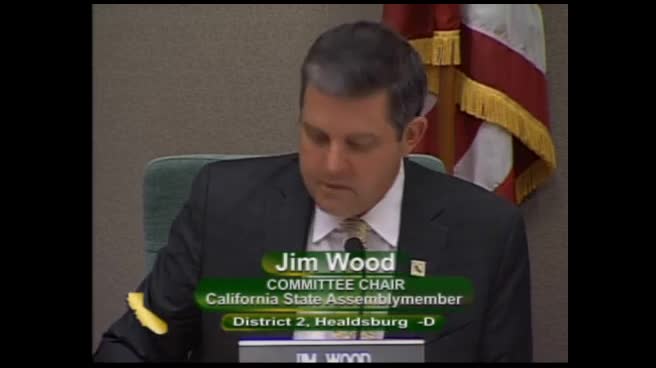
Jim Wood, Chair
ABPCA Bill Id:AB 350
Author:(Salas) – As Introduced Ver:February 8, 2017
SUBJECT: Marijuana edibles: appealing to children.
SUMMARY: Deems a marijuana product appealing to children or easily confused with commercially sold candy if it is in the shape of a person, animal, insect, fruit, or in another shape normally associated with candy. Allows a licensee to make an edible marijuana (edible) product in the shape of the licensee’s logo.
EXISTING LAW:
- Establishes through the voter initiative process, Proposition 64 (Prop 64), entitled the Adult Use of Marijuana Act (AUMA) which permits adults 21 years of age or older to legally grow, posses, and use cannabis for non-medical purposes, as specified. Authorizes, beginning January 1, 2018, the selling and distributing of cannabis through a regulated business.
- Establishes the Medical Cannabis Regulation and Safety Act (MCRSA) to regulate medical cannabis in California, including its cultivation, transportation, storage, distribution, and sale, as specified in AB 243 (Wood), Chapter 688, Statutes of 2015; AB 266 (Bonta), Chapter 689, Statutes of 2015; and, SB 643 (McGuire), Chapter 719, Statutes of 2015.
- Establishes within the Department of Consumer Affairs, the Bureau of Medical Cannabis Regulation for the licensure and regulation of medical cannabis. Renames the Bureau of Medical Cannabis Regulation to the Bureau of Marijuana Control (Bureau).
- Prohibits the marketing and advertising of nonmedical marijuana to persons younger than 21 years of age or near schools or other places where children are present.
- Requires that prior to the delivery or sale of marijuana and marijuana products, they must be labeled and placed in a resealable, child resistant package, and must not be made attractive to children.
FISCAL EFFECT: None
COMMENTS:
- PURPOSE OF THIS BILL. According to the author, in November 2016, California voters approved Prop 64, which legalized recreational marijuana in the state and set a wide range of guidelines and regulations that will go into effect on January 1, 2018. Under Prop 64, edibles are classified as “marijuana products” and are regulated to ensure that the edible is not designed in such a way that makes it appealing to children or that is easily confused with commercially sold candy. However, Prop 64 does not define what qualifies as commercially sold candy or what is exactly appealing to children.
- BACKGROUND.
- AUMA. Prop 64 was passed by the voters in November 2016. As a result of the passage of Prop 64, adults, aged 21 years or older, are allowed to possess, cultivate and use marijuana for recreational purposes. AUMA, in addition to allowing adult consumption of marijuana and marijuana products for recreational purposes, established numerous controls and safeguards to protect the public, specifically children under the age of 21, including: allowing local governments to enforce state laws and regulations for nonmedical marijuana businesses and enact additional local requirements for nonmedical marijuana businesses; requiring a rigid track and trace management process from cultivation to sale; comprehensive testing; strict environmental and product safety standards; prohibiting the sale of nonmedical marijuana by businesses that also sell alcohol or tobacco; prohibiting the marketing and advertising of nonmedical marijuana to persons younger than 21 years of age or near schools or other places where children are present.
- Labeling Requirements. AUMA requires that prior to the delivery or sale of marijuana and marijuana products, they must be labeled and placed in a resealable, child resistant package, and must not be made attractive to children. The inserts must also be prominently displayed in a clear and legible fashion and include the following information, as prescribed by the Bureau or the Department of Public Health (DPH): i) manufacture date and source; ii) for packages containing only dried flower, the net weight of marijuana in the package; iii) identification of the source and date of cultivation, the type of marijuana or marijuana product and the date of manufacturing and packaging; iv) the appellation of origin, if any; v) list of pharmacologically active ingredients, as specified; vi) for marijuana products, a list of all ingredients and disclosure of nutritional information, as specified; vii) a list of any solvents, nonorganic pesticides, herbicides, and fertilizers that were used, as specified; viii) a warning if nuts or other known allergens are used; ix) information associated with the unique identifier issued by the Department of Food and Agriculture; and, x) and the following statements, in bold print:
For marijuana:
“GOVERNMENT WARNING: THIS PACKAGE CONTAINS MARIJUANA, A SCHEDULE I CONTROLLED SUBSTANCE. KEEP OUT OF REACH OF CHILDREN AND ANIMALS. MARIJUANA MAY ONLY BE POSSESSED OR CONSUMED BY PERSONS 21 YEARS OF AGE OR OLDER UNLESS THE PERSON IS A QUALIFIED PATIENT. MARIJUANA USE WHILE PREGNANT OR BREASTFEEDING MAY BE HARMFUL. CONSUMPTION OF MARIJUANA IMPAIRS YOUR ABILITY TO DRIVE AND OPERATE MACHINERY. PLEASE USE EXTREME CAUTION.”
For marijuana products:
“GOVERNMENT WARNING: THIS PRODUCT CONTAINS MARIJUANA, A SCHEDULE I CONTROLLED SUBSTANCE. KEEP OUT OF REACH OF CHILDREN AND ANIMALS. MARIJUANA PRODUCTS MAY ONLY BE POSSESSED OR CONSUMED BY PERSONS 21 YEARS OF AGE OR OLDER UNLESS THE PERSON IS A QUALIFIED PATIENT. THE INTOXICATING EFFECTS OF MARIJUANA PRODUCTS MAY BE DELAYED UP TO TWO HOURS. MARIJUANA USE WHILE PREGNANT OR BREASTFEEDING MAY BE HARMFUL. CONSUMPTION OF MARIJUANA PRODUCTS IMPAIRS YOUR ABILITY TO DRIVE AND OPERATE MACHINERY. PLEASE USE EXTREME CAUTION.”
- Protection of minors. In addition to the labeling requirements above, AUMA also includes provisions to ensure the protection of minors, including prohibiting the sale of marijuana or marijuana products to persons under 21 years of age and prohibiting the design of marijuana products to be appealing to children or easily confused with commercially sold candy or foods that do not contain marijuana.
- Journal of the American Medical Association (JAMA) Article. A JAMA Pediatrics article was published in 2016 entitled Unintentional Pediatric Exposures to Marijuana in Colorado, 2009-2015. The authors of this article examined the effect of the legalization of recreational marijuana on unintentional pediatric exposures by evaluating data on hospital admissions at a tertiary children’s hospital and cases at a regional poison center (RPC) between 2009 and 2015. Study participants included children younger than 10 years who were evaluated at the hospital’s emergency department, urgent care centers, or an inpatient unit and RPC cases for marijuana exposure. The authors identified 81 children (62 included in the analysis), evaluated at the hospital and 163 marijuana exposure calls to a Colorado RPC. For 10 exposure scenarios, the product was not in a child-resistant container; and, for an additional 40 scenarios (34%), poor child supervision or product storage was reported. Edible products were responsible for 51 exposures (52%).
- Governor’s Budget Trailer Proposal. With the passage of AUMA, many inconsistencies were created between implementation with MCRSA. The Governor, through proposed budget trailer bill language (TBL), is recommending several proposals to address the differences between MCRSA and AUMA. Among other provisions, the TBL provides for: i) maintenance of local autonomy of zoning and planning decisions while providing state regulators with local compliance information; ii) adoption of AUMA’s vertical integrated licensing structure for both adult use and medicinal cannabis licensees; iii) maintenance of AUMA’s open distribution model allowing for a business to hold multiple licenses; iv) limitations on the number of Type 3 (medium size) cultivation licenses consistent with MCRSA; v) amendment of AUMA to include the same environmental protection requirements as MCRSA; and, vi) moving licensure of testing laboratories from the DPH to the Bureau.
- Proposed Regulations. On April 28, 2017, DPH, charged with licensing cannabis product manufacturers and developing standards for the production and labeling of marijuana products, released proposed regulations. The proposed regulations aim to do the following: i) establish the licensing scheme for manufacturers of medical cannabis products; ii) set minimum standards for sanitary manufacturing practices; and, iii) establish packaging and labeling standards for manufactured cannabis products.
For purposes of labeling, the regulations require that a label shall not contain any content that is or designed to be attractive to individuals under the age of 21, including but not limited to: i) cartoons; ii) any likeness to images, characters, or phrases that are popularly used to advertise to children; or, iii) any imitation of candy packaging or labeling. Additionally, the proposed regulations require that a package used to contain a cannabis product must be child-resistant, which means that the package must be designed or constructed to be significantly difficult for children under five years of age to open or otherwise obtain access to the product within a reasonable time.
- SUPPORT. The American Academy of Pediatrics, California points out that in order to prevent accidental marijuana ingestion, edibles must not be made to resemble non-marijuana candies or food products, which young children may find especially alluring and which even older children, adolescents, and adults may mistake for something more innocuous. The California Academy of Child and Adolescent Psychiatry states that last year, 19 people became ill when they mistakenly consumed tetrahydrocannabinol gummies at a party in San Francisco because the gummies looked like lifesavers. The majority of those people were minors and the youngest was six years old. This bill is necessary to prevent such an incident from happening again.
- RELATED LEGISLATION.
- AB 175 (Chau) requires the Bureau to approve the package and label of an edible marijuana product, as specified. AB 175 is pending in Assembly Appropriations Committee.
- AB 823 (Chau) requires each single serving of an edible product to be stamped, marked, or otherwise imprinted directly on the product with a universal symbol, as specified. AB 823 specifies the required size and visibility of the universal symbol. AB 823 is pending in Assembly Appropriations Committee.
- AB 1090 (Cunningham) prohibits possessing, smoking, or ingesting marijuana or marijuana products in or upon the grounds of a school, day care center, or youth center at all times. Prohibits smoking marijuana or marijuana products within 1,000 feet of a school, day care center, or youth center at all times. AB 1090 is pending in Assembly Appropriations Committee.
- SB 794 (Stern) requires each single serving of an edible marijuana product to be stamped, marked, or otherwise imprinted directly on the product with a universal symbol, as specified. Requires edible products to be sold in packaging that is tamper-proof, child resistant, and, if the product contains more than one serving, resealable. SB 794 is pending in the Senate Business, Professions and Economic Development Committee.
REGISTERED SUPPORT / OPPOSITION:
Support
American Academy of Pediatrics
American College of Emergency Physicians, California Chapter
Association for Los Angeles Deputy Sheriffs
California Academy of Child and Adolescent Psychiatry
California Association of Code Enforcement Officers
California College and University Police Chiefs Association
California Narcotic Officers Association
County Behavioral Health Directors Association
First 5 Association of California
Los Angeles County Professional Peace Officers Association
Los Angeles Police Protective League
Riverside Sheriff’s Association
Opposition
None on file.
Analysis Prepared by: Rosielyn Pulmano / HEALTH / (916) 319-2097
Bill Author

Bill Co-Author(s):
