AB 1726: Data collection.
- Session Year: 2015-2016
- House: Assembly
- Latest Version Date: 2016-09-25
Existing law requires any state agency, board, or commission that directly or by contract collects demographic data as to the ancestry or ethnic origin of Californians to use separate collection categories and tabulations for specified Asian groups and Pacific Islander groups, and requires a state agency, board, or commission to include data on specified collection categories and tabulations in every demographic report on ancestry or ethnic origins of California residents that it publishes or releases. Existing law requires specified agencies to use additional separate collection categories and other tabulations for major Asian groups and Native Hawaiian and other Pacific Islander groups, and also requires those agencies to take additional actions, including, among other things, posting, and annually updating, the demographic data collected on their Internet Web sites, and updating the reporting categories to reflect these Asian and Pacific Islander groups as they are reported for the 2020 decennial census.
This bill would require the updating of the reporting categories for future decennial censuses. The bill would require the State Department of Public Health to use the additional separate collection categories and other tabulations for specified Asian groups and Pacific Islander groups, and to take additional actions as specified above, under certain circumstances.
Existing law requires any state agency, board, or commission that directly or by contract collects demographic data as to the ancestry or ethnic origin of Californians to use separate collection categories and tabulations for specified Asian groups and Pacific Islander groups, and requires a state agency, board, or commission to include data on specified collection categories and tabulations in every demographic report on ancestry or ethnic origins of California residents that it publishes or releases. Existing law requires specified agencies to use additional separate collection categories and other tabulations for major Asian groups and Native Hawaiian and other Pacific Islander groups, and also requires those agencies to take additional actions, including, among other things, posting, and annually updating, the demographic data collected on their Internet Web sites, and updating the reporting categories to reflect these Asian and Pacific Islander groups as they are reported for the 2020 decennial census.
This bill would require the updating of the reporting categories for future decennial censuses. The bill would require the State Department of Public Health, the State Department of Health Care Services, the Board of Governors of the California Community Colleges, the Trustees of the California State University, and the Regents of the University of California Health to use the additional separate collection categories and other tabulations for specified Asian groups and Pacific Islander groups, and to take additional actions as specified above, under certain circumstances. The bill would not apply its categorization requirements to demographic data of graduate and professional schools of the University of California. The bill would be applicable to the University of California only if the Regents of the University of California, by resolution, make it applicable.
To the extent the bill would impose additional requirements on community colleges, the bill would impose a state-mandated local program.
The California Constitution requires the state to reimburse local agencies and school districts for certain costs mandated by the state. Statutory provisions establish procedures for making that reimbursement.
This bill would provide that, if the Commission on State Mandates determines that the bill contains costs mandated by the state, reimbursement for those costs shall be made pursuant to these statutory provisions.
Existing law requires any state agency, board, or commission that directly or by contract collects demographic data as to the ancestry or ethnic origin of Californians to use separate collection categories and tabulations for specified Asian groups and Pacific Islander groups, and requires a state agency, board, or commission to include data on specified collection categories and tabulations in every demographic report on ancestry or ethnic origins of California residents that it publishes or releases. Existing law requires specified agencies to use additional separate collection categories and other tabulations for major Asian groups and Native Hawaiian and other Pacific Islander groups, and also requires those agencies to take additional actions, including, among other things, posting, and annually updating, the demographic data collected on their Internet Web sites, and updating the reporting categories to reflect these Asian and Pacific Islander groups as they are reported for the 2020 decennial census.
This bill would require the updating of the reporting categories for future decennial censuses. The bill would require the State Department of Public Health, the State Department of Health Care Services, the Board of Governors of the California Community Colleges, the Trustees of the California State University, and the Regents of the University of California to use the additional separate collection categories and other tabulations for specified Asian groups and Pacific Islander groups, and to take additional actions as specified above, under certain circumstances. The bill would not apply its categorization requirements to demographic data of graduate and professional schools of the University of California. The bill would be applicable to the University of California only if the Regents of the University of California, by resolution, make it applicable.
To the extent the bill would impose additional requirements on community colleges, the bill would impose a state-mandated local program.
The California Constitution requires the state to reimburse local agencies and school districts for certain costs mandated by the state. Statutory provisions establish procedures for making that reimbursement.
This bill would provide that, if the Commission on State Mandates determines that the bill contains costs mandated by the State, state, reimbursement for those costs shall be made pursuant to these statutory provisions.
Existing law requires any state agency, board, or commission that directly or by contract collects demographic data as to the ancestry or ethnic origin of Californians to use separate collection categories and tabulations for specified Asian groups and Pacific Islander groups, and requires a state agency, board, or commission to include data on specified collection categories and tabulations in every demographic report on ancestry or ethnic origins of California residents that it publishes or releases. Existing law requires specified agencies to use additional separate collection categories and other tabulations for major Asian groups and Native Hawaiian and other Pacific Islander groups, and also requires those agencies to take additional actions, including, among other things, posting, and annually updating, the demographic data collected on their Internet Web sites, and updating the reporting categories to reflect these Asian and Pacific Islander groups as they are reported for the 2020 decennial census.
This bill would require the updating of the reporting categories for future decennial censuses. The bill would require, on or after July 1, 2017, require the State Department of Public Health, the State Department of Health Care Services, the Board of Governors of the California Community Colleges, the Trustees of the California State University, and the Regents of the University of California to use the additional separate collection categories and other tabulations for specified Asian groups and Pacific Islander groups, and to take additional actions as specified above, under certain circumstances. The bill would not apply its categorization requirements to demographic data of graduate and professional schools of the University of California. The bill would be applicable to the University of California only if the Regents of the University of California, by resolution, make it applicable.
To the extent the bill would impose additional requirements on community colleges, the bill would impose a state-mandated local program.
The California Constitution requires the state to reimburse local agencies and school districts for certain costs mandated by the state. Statutory provisions establish procedures for making that reimbursement.
This bill would provide that, if the Commission on State Mandates determines that the bill contains costs mandated by the State, reimbursement for those costs shall be made pursuant to these statutory provisions.
Existing law requires any state agency, board, or commission that directly or by contract collects demographic data as to the ancestry or ethnic origin of Californians to use separate collection categories and tabulations for specified Asian groups and Pacific Islander groups, and requires a state agency, board, or commission to include data on specified collection categories and tabulations in every demographic report on ancestry or ethnic origins of California residents that it publishes or releases. Existing law requires specified agencies to use additional separate collection categories and other tabulations for major Asian groups and Native Hawaiian and other Pacific Islander groups, and also requires those agencies to take additional actions, including, among other things, posting, and annually updating, the demographic data collected on their Internet Web sites, and updating the reporting categories to reflect these Asian and Pacific Islander groups as they are reported for the 2020 decennial census.
This bill would require the updating of the reporting categories for future decennial censuses. The bill would require, on or after July 1, 2017, the State Department of Public Health, the State Department of Health care Care Services, the Board of Governors of the California Community Colleges, the Trustees of the California State University, and the Regents of the University of California to use the additional separate collection categories and other tabulations for specified Asian groups and Pacific Islander groups, and to take additional actions as specified above, under certain circumstances. The bill would not apply its categorization requirements to demographic data of graduate and professional schools of the University of California. The bill would be applicable to the University of California only if the Regents of the University of California, by resolution, make it applicable.
To the extent the bill would impose additional requirements on community colleges, the bill would impose a state-mandated local program.
The California Constitution requires the state to reimburse local agencies and school districts for certain costs mandated by the state. Statutory provisions establish procedures for making that reimbursement.
This bill would provide that, if the Commission on State Mandates determines that the bill contains costs mandated by the State, reimbursement for those costs shall be made pursuant to these statutory provisions.
Existing law requires any state agency, board, or commission that directly or by contract collects demographic data as to the ancestry or ethnic origin of Californians to use separate collection categories and tabulations for specified Asian groups and Pacific Islander groups, and requires a state agency, board, or commission to include data on specified collection categories and tabulations in every demographic report on ancestry or ethnic origins of California residents that it publishes or releases. Existing law requires specified agencies to use additional separate collection categories and other tabulations for major Asian groups and Native Hawaiian and other Pacific Islander groups, and also requires those agencies to take additional actions, including, among other things, posting, and annually updating, the demographic data collected on their Internet Web sites, and updating the reporting categories to reflect these Asian and Pacific Islander groups as they are reported for the 2020 decennial census.
This bill would require the updating of the reporting categories for future decennial censuses. The bill would require, on or after July 1, 2017, the State Department of Public Health, the State Department of Health care Services, the Board of Governors of the California Community Colleges, the Trustees of the California State University, and the Regents of the University of California to use the additional separate collection categories and other tabulations for specified Asian groups and Pacific Islander groups, and to take additional actions as specified above, under certain circumstances. The bill would not apply its categorization requirements to demographic data of graduate and professional schools of the University of California. The bill would be applicable to the University of California only if the Regents of the University of California, by resolution, make it applicable.
To the extent the bill would impose additional requirements on community colleges, the bill would impose a state-mandated local program.
The California Constitution requires the state to reimburse local agencies and school districts for certain costs mandated by the state. Statutory provisions establish procedures for making that reimbursement.
This bill would provide that, if the Commission on State Mandates determines that the bill contains costs mandated by the State, reimbursement for those costs shall be made pursuant to these statutory provisions.
(a)This section shall only apply to the following state agencies:
(1)The Department of Industrial Relations.
(2)The Department of Fair Employment and Housing.
(3)To the extent funding is specifically appropriated for this purpose, the State Department of Public Health, on or after July 1, 2022, whenever collecting demographic data as to the ancestry or ethnic origin of persons for a report that includes rates for major diseases, leading causes of death per demographic, subcategories for leading causes of death in California overall, pregnancy rates, or housing numbers.
(b)In addition to the duties imposed under Section 8310.5, the state agencies described in subdivision (a), in the course of collecting demographic data directly or by contract as to the ancestry or ethnic origin of California residents, shall collect and tabulate data for the following:
(1)Additional major Asian groups, including, but not limited to, Bangladeshi, Hmong, Indonesian, Malaysian, Pakistani, Sri Lankan, Taiwanese, and Thai.
(2)Additional major Native Hawaiian and other Pacific Islander groups, including, but not limited to, Fijian and Tongan.
(c)(1)The state agencies identified in subdivision (a) shall make any data collected pursuant to subdivision (b) publicly available, except as described in paragraph (2) for the department identified in paragraph (3) of subdivision (a), and except for personal identifying information, which shall be deemed confidential, by posting the data on the Internet Web site of the agency on or before July 1, 2012, and annually thereafter. This subdivision shall not be construed to prevent any other state agency from posting data collected pursuant to subdivision (b) on the agencys Internet Web site, in the manner prescribed by this section.
(2)The state department identified in paragraph (3) of subdivision (a) shall not report demographic data that would permit identification of individuals. The department may, to prevent identification of individuals, aggregate data categories at a state, county, city, census tract, or ZIP Code level to facilitate comparisons and identify disparities.
(d)The state agencies identified in subdivision (a) shall, within 18 months after a decennial United States Census is released to the public, update their data collection to reflect the additional Asian groups and additional Native Hawaiian and Pacific Islander groups as they are reported by the United States Census Bureau.
(e)The state department identified in paragraph (3) of subdivision (a) shall not report demographic data that would result in statistical unreliability.
(f)The state department identified in paragraph (3) of subdivision (a) may continue to collect and report demographic data in the form that the data was submitted if the data was collected under either of the following circumstances:
(1)Pursuant to federal programs or surveys, whereby the guidelines for demographic data collection categories are defined by the federal program or survey.
(2)Demographic data collected by other entities, including either of the following:
(A)State offices, departments, and agencies not included in subdivision (a).
(B)Third-party entity administered surveys not solely funded by the state department.
(a)This section shall only apply to the following state agencies:
(1)The Department of Industrial Relations.
(2)The Department of Fair Employment and Housing.
(3)The To the extent funding is specifically appropriated for this purpose, the State Department of Public Health, on or after July 1, 2018, 2022, whenever collecting demographic data as to the ancestry or ethnic origin of persons for a report that includes rates for major diseases, leading causes of death per demographic, subcategories for leading causes of death in California overall, pregnancy rates, or housing numbers.
(4)The State Department of Health Care Services, on or after July 1, 2018, whenever collecting demographic data as to the ancestry or ethnic origin of persons.
(5)The Trustees of the California State University or the Regents of the University of California, on or after July 1, 2017, whenever the entity collects demographic data as to the ancestry or ethnic origin of students for a report that includes student admission, enrollment, completion, or graduation rates.
(6)The Board of Governors of the California Community Colleges, on or after July 1, 2020, whenever the entity collects demographic data as to the ancestry or ethnic origin of students for a report that includes student enrollment, completion, or graduation rates.
(b)In addition to the duties imposed under Section 8310.5, the state agencies described in subdivision (a), in the course of collecting demographic data directly or by contract as to the ancestry or ethnic origin of California residents, shall collect and tabulate data for the following:
(1)Additional major Asian groups, including, but not limited to, Bangladeshi, Hmong, Indonesian, Malaysian, Pakistani, Sri Lankan, Taiwanese, and Thai.
(2)Additional major Native Hawaiian and other Pacific Islander groups, including, but not limited to, Fijian and Tongan.
(c)(1)The state agencies identified in subdivision (a) shall make any data collected pursuant to subdivision (b) publicly available, except as described in paragraph (2) for the entities identified in paragraph (5) or (6) of subdivision (a), and except as described in paragraph (3) for departments identified in paragraphs (3) and (4) (2) for the department identified in paragraph (3) of subdivision (a), and except for personal identifying information, which shall be deemed confidential, by posting the data on the Internet Web site of the agency on or before July 1, 2012, and annually thereafter. This subdivision shall not be construed to prevent any other state agency from posting data collected pursuant to subdivision (b) on the agencys Internet Web site, in the manner prescribed by this section.
(2)Where applicable, each entity identified in paragraph (5) or (6) of subdivision (a) shall comply with the federal Family Educational Rights and Privacy Act (20 U.S.C. Sec. 1232g) and shall observe federal criteria for ensuring statistical significance of data collected and published.
(3)
(2)The state departments department identified in paragraphs paragraph (3) and (4) of subdivision (a) shall not report demographic data that would permit identification of individuals. These departments The department may, to prevent identification of individuals, aggregate data categories at a state, county, city, census tract, or ZIP Code level to facilitate comparisons and identify disparities.
(d)(1)Except as provided in paragraph (2) for the Board of Governors of the California Community Colleges, the The state agencies identified in subdivision (a) shall, within 18 months after a decennial United States Census is released to the public, update their data collection to reflect the additional Asian groups and additional Native Hawaiian and Pacific Islander groups as they are reported by the United States Census Bureau.
(2)Paragraph (1) shall not apply to the Board of Governors of the California Community Colleges until 18 months after the 2030 decennial United States Census is released to the public.
(e)The state departments department identified in paragraphs paragraph (3) and (4) of subdivision (a) shall not report demographic data that would result in statistical unreliability.
(f)The state department identified in paragraph (3) of subdivision (a) may, but is not required to, collect demographic data pursuant to this section may continue to collect and report demographic data in the form that the data was submitted if the data was collected under either of the following circumstances:
(1)Pursuant to federal programs or surveys, whereby the guidelines for demographic data collection categories are defined by the federal program or survey.
(2)Demographic data collected by other entities, including either of the following:
(A)State offices, departments, and agencies not included in subdivision (a).
(B)Third-party entity administered surveys not solely funded by the state department.
(g)This section shall not apply to demographic data of graduate or professional schools of the University of California.
(h)This section shall apply to the University of California only if the Regents of the University of California, by resolution, make it applicable.
SEC. 2.If the Commission on State Mandates determines that this act contains costs mandated by the State, reimbursement to local agencies and school districts for those costs shall be made pursuant to Part 7 (commencing with Section 17500) of Division 4 of Title 2 of the Government Code.
(a)This section shall only apply to the following state agencies:
(1)The Department of Industrial Relations.
(2)The Department of Fair Employment and Housing.
(3)The State Department of Public Health and the State Department of Health Care Services, Health, on or after July 1, 2017, 2018, whenever collecting demographic data as to the ancestry or ethnic origin of persons for a report that includes the type and amount of health care coverage, rates for major diseases, leading causes of death per demographic, subcategories for leading causes of death in California overall, pregnancy rates, or housing numbers.
(4)The State Department of Health Care Services, on or after July 1, 2018, whenever collecting demographic data as to the ancestry or ethnic origin of persons.
(4)
(5)The Trustees of the California State University or the Regents of the University of California, on or after July 1, 2017, whenever the entity collects demographic data as to the ancestry or ethnic origin of students for a report that includes student admission, enrollment, completion, or graduation rates.
(5)
(6)The Board of Governors of the California Community Colleges, on or after July 1, 2020, whenever the entity collects demographic data as to the ancestry or ethnic origin of students for a report that includes student enrollment, completion, or graduation rates.
(b)In addition to the duties imposed under Section 8310.5, the state agencies described in subdivision (a), in the course of collecting demographic data directly or by contract as to the ancestry or ethnic origin of California residents, shall collect and tabulate data for the following:
(1)Additional major Asian groups, including, but not limited to, Bangladeshi, Hmong, Indonesian, Malaysian, Pakistani, Sri Lankan, Taiwanese, and Thai.
(2)Additional major Native Hawaiian and other Pacific Islander groups, including, but not limited to, Fijian and Tongan.
(c)(1)The state agencies identified in subdivision (a) shall make any data collected pursuant to subdivision (b) publicly available, except as described in paragraph (2) for the entities identified in paragraph (4) or (5) (5) or (6) of subdivision (a), and except as described in paragraph (3) for departments identified in paragraphs (3) and (4) of subdivision (a), and except for personal identifying information, which shall be deemed confidential, by posting the data on the Internet Web site of the agency on or before July 1, 2012, and annually thereafter. This subdivision shall not be construed to prevent any other state agency from posting data collected pursuant to subdivision (b) on the agencys Internet Web site, in the manner prescribed by this section.
(2)Where applicable, each entity identified in paragraph (4) or (5) (5) or (6) of subdivision (a) shall comply with the federal Family Educational Rights and Privacy Act (20 U.S.C. Sec. 1232g) and shall observe federal criteria for ensuring statistical significance of data collected and published.
(3)The state departments identified in paragraphs (3) and (4) of subdivision (a) shall not report demographic data that would permit identification of individuals. These departments may, to prevent identification of individuals, aggregate data categories at a state, county, city, census tract, or ZIP Code level to facilitate comparisons and identify disparities.
(d)(1)Except as provided in paragraph (2) for the Board of Governors of the California Community Colleges, the state agencies identified in subdivision (a) shall, within 18 months after a decennial United States Census is released to the public, update their data collection to reflect the additional Asian groups and additional Native Hawaiian and Pacific Islander groups as they are reported by the United States Census Bureau.
(2)Paragraph (1) shall not apply to the Board of Governors of the California Community Colleges until 18 months after the 2030 decennial United States Census is released to the public.
(e)The state departments identified in paragraphs (3) and (4) of subdivision (a) shall not report demographic data that would result in statistical unreliability.
(f)The state department identified in paragraph (3) of subdivision (a) may, but is not required to, collect demographic data pursuant to this section under either of the following circumstances:
(1)Pursuant to federal programs or surveys, whereby the guidelines for demographic data collection categories are defined by the federal program or survey.
(2)Demographic data collected by other entities, including either of the following:
(A)State offices, departments, and agencies not included in subdivision (a).
(B)Third-party entity administered surveys not solely funded by the state department.
(e)
(g)This section shall not apply to demographic data of graduate or professional schools of the University of California.
(f)
(h)This section shall apply to the University of California only if the Regents of the University of California, by resolution, make it applicable.
SEC. 2.If the Commission on State Mandates determines that this act contains costs mandated by the State, reimbursement to local agencies and school districts for those costs shall be made pursuant to Part 7 (commencing with Section 17500) of Division 4 of Title 2 of the Government Code.
(a)This section shall only apply to the following state agencies:
(1)The Department of Industrial Relations.
(2)The Department of Fair Employment and Housing.
(3)The State Department of Public Health and the State Department of Health Care Services, on or after July 1, 2017, whenever collecting demographic data as to the ancestry or ethnic origin of persons for a report that includes the type and amount of health care coverage, rates for major diseases, leading causes of death per demographic, subcategories for leading causes of death in California overall, pregnancy rates, or housing numbers.
(4)The Board of Governors of the California Community Colleges, the Trustees of the California State University, University or the Regents of the University of California, on or after July 1, 2017, whenever the entity collects demographic data as to the ancestry or ethnic origin of students for a report that includes student admission, enrollment, completion, or graduation rates.
(5)The Board of Governors of the California Community Colleges, on or after July 1, 2020, whenever the entity collects demographic data as to the ancestry or ethnic origin of students for a report that includes student enrollment, completion, or graduation rates.
(b)In addition to the duties imposed under Section 8310.5, the state agencies described in subdivision (a), in the course of collecting demographic data directly or by contract as to the ancestry or ethnic origin of California residents, shall collect and tabulate data for the following:
(1)Additional major Asian groups, including, but not limited to, Bangladeshi, Hmong, Indonesian, Malaysian, Pakistani, Sri Lankan, Taiwanese, and Thai.
(2)Additional major Native Hawaiian and other Pacific Islander groups, including, but not limited to, Fijian and Tongan.
(c)(1)The state agencies identified in subdivision (a) shall make any data collected pursuant to subdivision (b) publicly available, except as described in paragraph (2) for the entities identified in paragraph (4) or (5) of subdivision (a), and except for personal identifying information, which shall be deemed confidential, by posting the data on the Internet Web site of the agency on or before July 1, 2012, and annually thereafter. This subdivision shall not be construed to prevent any other state agency from posting data collected pursuant to subdivision (b) on the agencys Internet Web site, in the manner prescribed by this section.
(2)Where applicable, each entity identified in paragraph (4) or (5) of subdivision (a) shall comply with the federal Family Educational Rights and Privacy Act (20 U.S.C. Sec. 1232g) and shall observe federal criteria for ensuring statistical significance of data collected and published.
(d)The (1)Except as provided in paragraph (2) for the Board of Governors of the California Community Colleges, the state agencies identified in subdivision (a) shall, within 18 months after a decennial United States Census is released to the public, update their data collection to reflect the additional Asian groups and additional Native Hawaiian and Pacific Islander groups as they are reported by the United States Census Bureau.
(2)Paragraph (1) shall not apply to the Board of Governors of the California Community Colleges until 18 months after the 2030 decennial United States Census is released to the public.
(e)This section shall not apply to demographic data of graduate or professional schools of the University of California.
(f)This section shall apply to the University of California only if the Regents of the University of California, by resolution, make it applicable.
SEC. 2.If the Commission on State Mandates determines that this act contains costs mandated by the State, reimbursement to local agencies and school districts for those costs shall be made pursuant to Part 7 (commencing with Section 17500) of Division 4 of Title 2 of the Government Code.
(a)This section shall only apply to the following state agencies:
(1)The Department of Industrial Relations.
(2)The Department of Fair Employment and Housing.
(3)The State Department of Public Health and the State Department of Health Care Services, on or after July 1, 2017, whenever collecting demographic data as to the ancestry or ethnic origin of persons for a report that includes the type and amount of health care coverage, rates for major diseases, leading causes of death per demographic, subcategories for leading causes of death in California overall, pregnancy rates, or housing numbers.
(4)The Board of Governors of the California Community Colleges, the Trustees of the California State University, or the Regents of the University of California, on or after July 1, 2017, whenever the entity collects demographic data as to the ancestry or ethnic origin of students for a report that includes student admission, enrollment, completion, or graduation rates.
(b)In addition to the duties imposed under Section 8310.5, the state agencies described in subdivision (a), in the course of collecting demographic data directly or by contract as to the ancestry or ethnic origin of California residents, shall collect and tabulate data for the following:
(1)Additional major Asian groups, including, but not limited to, Bangladeshi, Hmong, Indonesian, Malaysian, Pakistani, Sri Lankan, Taiwanese, and Thai.
(2)Additional major Native Hawaiian and other Pacific Islander groups, including, but not limited to, Fijian and Tongan.
(c)(1)The state agencies identified in subdivision (a) shall make any data collected pursuant to subdivision (b) publicly available, except as described in paragraph (2) for the entities identified in paragraph (4) of subdivision (a), and except for personal identifying information, which shall be deemed confidential, by posting the data on the Internet Web site of the agency on or before July 1, 2012, and annually thereafter. This subdivision shall not be construed to prevent any other state agency from posting data collected pursuant to subdivision (b) on the agencys Internet Web site, in the manner prescribed by this section.
(2)Where applicable, each entity identified in paragraph (4) of subdivision (a) shall comply with the federal Family Educational Rights and Privacy Act (20 U.S.C. Sec. 1232g) and shall observe federal criteria for ensuring statistical significance of data collected and published.
(d)The state agencies identified in subdivision (a) shall, within 18 months after a decennial United States Census is released to the public, update their data collection to reflect the additional Asian groups and additional Native Hawaiian and Pacific Islander groups as they are reported by the United States Census Bureau.
(e)This section shall not apply to demographic data of graduate or professional schools of the University of California.
(f)This section shall apply to the University of California only if the Regents of the University of California, by resolution, make it applicable.
SECTION 1.Section 8310.7 of the Government Code is amended to read:8310.7.(a)This section shall only apply to the following state agencies:
(1)The Department of Industrial Relations.
(2)The Department of Fair Employment and Housing.
(3)The State Department of Public Health and the State Department of Health Care Services, on or after July 1, 2017, whenever collecting demographic data as to the ancestry or ethnic origin of persons for a report that includes the type and amount of health care coverage, rates for major diseases, leading causes of death per demographic, subcategories for leading causes of death in California overall, pregnancy rates, or housing numbers.
(4)The Board of Governors of the California Community Colleges, the Trustees of the California State University, or the Regents of the University of California, on or after July 1, 2017, whenever the entity collects demographic data as to the ancestry or ethnic origin of students for a report that includes student admission, enrollment, completion, or graduation rates.
(b)In addition to the duties imposed under Section 8310.5, the state agencies described in subdivision (a), in the course of collecting demographic data directly or by contract as to the ancestry or ethnic origin of California residents, shall collect and tabulate data for the following:
(1)Additional major Asian groups, including, but not limited to, Bangladeshi, Hmong, Indonesian, Malaysian, Pakistani, Sri Lankan, Taiwanese, and Thai.
(2)Additional major Native Hawaiian and other Pacific Islander groups, including, but not limited to, Fijian and Tongan.
(c)(1)The state agencies identified in subdivision (a) shall make any data collected pursuant to subdivision (b) publicly available, except as described in paragraph (2) for the entities identified in paragraph (4) of subdivision (a), and except for personal identifying information, which shall be deemed confidential, by posting the data on the Internet Web site of the agency on or before July 1, 2012, and annually thereafter. This subdivision shall not be construed to prevent any other state agency from posting data collected pursuant to subdivision (b) on the agencys Internet Web site, in the manner prescribed by this section.
(2)Where applicable, each entity identified in paragraph (4) of subdivision (a) shall comply with the federal Family Educational Rights and Privacy Act (20 U.S.C. Sec. 1232g) and shall observe federal criteria for ensuring statistical significance of data collected and published.
(d)The state agencies identified in subdivision (a) shall, within 18 months after a decennial United States Census is released to the public, update their data collection to reflect the additional Asian groups and additional Native Hawaiian and Pacific Islander groups as they are reported by the United States Census Bureau.
(e)This section shall not apply to demographic data of graduate or professional schools of the University of California.
(f)This section shall apply to the University of California only if the Regents of the University of California, by resolution, make it applicable.
SEC. 2.If the Commission on State Mandates determines that this act contains costs mandated by the State, reimbursement to local agencies and school districts for those costs shall be made pursuant to Part 7 (commencing with Section 17500) of Division 4 of Title 2 of the Government Code.
(a)This section shall only apply to the following state agencies:
(1)The Department of Industrial Relations.
(2)The Department of Fair Employment and Housing.
(3)The Department of Managed Health Care, State Department of Public Health and the State Department of Health Care Services, on or after July 1, 2016, 2017, whenever collecting demographic data as to the ancestry or ethnic origin of persons for a report that includes the type and amount of health care coverage, rates for major diseases, leading causes of death per demographic, subcategories for leading causes of death in California overall, pregnancy rates, or housing numbers.
(4)The Board of Governors of the California Community Colleges, the Trustees of the California State University, or the Regents of the University of California, on or after July 1, 2017, whenever the entity collects demographic data as to the ancestry or ethnic origin of students for a report that includes student admission, enrollment, completion, or graduation rates.
(b)In addition to the duties imposed under Section 8310.5, the state agencies described in subdivision (a), in the course of collecting demographic data directly or by contract as to the ancestry or ethnic origin of California residents, shall collect and tabulate data for the following:
(1)Additional major Asian groups, including, but not limited to, Bangladeshi, Hmong, Indonesian, Malaysian, Pakistani, Sri Lankan, Taiwanese, and Thai.
(2)Additional major Native Hawaiian and other Pacific Islander groups, including, but not limited to, Fijian and Tongan.
(c)(1)The state agencies identified in subdivision (a) shall make any data collected pursuant to subdivision (b) publicly available, except as described in paragraph (2) for the entities identified in paragraph (4) of subdivision (a), and except for personal identifying information, which shall be deemed confidential, by posting the data on the Internet Web site of the agency on or before July 1, 2012, and annually thereafter. This subdivision shall not be construed to prevent any other state agency from posting data collected pursuant to subdivision (b) on the agencys Internet Web site, in the manner prescribed by this section.
(2)Where applicable, each entity identified in paragraph (4) of subdivision (a) shall comply with the federal Family Educational Rights and Privacy Act (20 U.S.C. Sec. 1232g) and shall observe federal criteria for ensuring statistical significance of data collected and published.
(d)The state agencies identified in subdivision (a) shall, within 18 months after a decennial United States Census is released to the public, update their data collection to reflect the additional Asian groups and additional Native Hawaiian and Pacific Islander groups as they are reported by the United States Census Bureau.
(e)This section shall not apply to demographic data of graduate or professional schools of the University of California.
(f)This section shall apply to the University of California only if the Regents of the University of California, by resolution, make it applicable.
SEC. 2.If the Commission on State Mandates determines that this act contains costs mandated by the State, reimbursement to local agencies and school districts for those costs shall be made pursuant to Part 7 (commencing with Section 17500) of Division 4 of Title 2 of the Government Code.
|
Date
|
Status
|
|---|---|
| Sep 2, 2016 | Enrolled and presented to the Governor at 12 p.m. |
| Aug 29, 2016 | Senate amendments concurred in. To Engrossing and Enrolling. (Ayes 75. Noes 1. Page 6360.). |
| Aug 29, 2016 | Senate amendments concurred in. To Engrossing and Enrolling. |
| Aug 24, 2016 | In Assembly. Concurrence in Senate amendments pending. May be considered on or after August 26 pursuant to Assembly Rule 77. |
| Aug 23, 2016 | Read third time. Passed. Ordered to the Assembly. (Ayes 39. Noes 0. Page 5277.). |
| Aug 23, 2016 | Read third time. Passed. Ordered to the Assembly. |
| Aug 22, 2016 | Read second time. Ordered to third reading. |
| Aug 19, 2016 | Read third time and amended. Ordered to second reading. |
| Aug 15, 2016 | Read second time and amended. Ordered to third reading. |
| Aug 11, 2016 | From committee: Amend, and do pass as amended. (Ayes 5. Noes 2.) (August 11). |
| Aug 1, 2016 | In committee: Referred to APPR. suspense file. |
| Jun 30, 2016 | From committee: Do pass and re-refer to Com. on APPR. (Ayes 7. Noes 0.) (June 29). Re-referred to Com. on APPR. |
| Jun 22, 2016 | From committee: Do pass and re-refer to Com. on HEALTH. (Ayes 9. Noes 0.) (June 22). Re-referred to Com. on HEALTH. |
| Jun 9, 2016 | Referred to Coms. on ED. and HEALTH. |
| Jun 6, 2016 | In Senate. Read first time. To Com. on RLS. for assignment. |
| Jun 2, 2016 | Read third time. Passed. Ordered to the Senate. (Ayes 54. Noes 22. Page 5215.) |
| Jun 2, 2016 | Read third time. Passed. Ordered to the Senate. (Ayes 54. Noes 22.) |
| Jun 2, 2016 | Read third time. Passed. Ordered to the Senate. |
| Jun 1, 2016 | Read second time. Ordered to third reading. |
| May 31, 2016 | Read second time and amended. Ordered returned to second reading. |
| May 27, 2016 | From committee: Amend, and do pass as amended. (Ayes 14. Noes 6.) (May 27). |
| Apr 27, 2016 | In committee: Set, first hearing. Referred to APPR. suspense file. |
| Apr 13, 2016 | From committee: Do pass and re-refer to Com. on APPR. (Ayes 13. Noes 3.) (April 12). Re-referred to Com. on APPR. |
| Apr 5, 2016 | In committee: Set, first hearing. Hearing canceled at the request of author. |
| Mar 16, 2016 | From committee: Do pass and re-refer to Com. on HEALTH. (Ayes 10. Noes 2.) (March 15). Re-referred to Com. on HEALTH. |
| Mar 2, 2016 | Re-referred to Com. on HIGHER ED. |
| Mar 1, 2016 | From committee chair, with author's amendments: Amend, and re-refer to Com. on HIGHER ED. Read second time and amended. |
| Feb 18, 2016 | Referred to Coms. on HIGHER ED. and HEALTH. |
| Jan 29, 2016 | From printer. May be heard in committee February 28. |
| Jan 28, 2016 | Read first time. To print. |
|
Date
|
Description
|
Location
|
Votes
|
|
|---|---|---|---|---|
| Aug 29, 2016 | AB 1726 BONTA Concurrence in Senate Amendments | Assembly Floor |
Passed |
|
| Aug 23, 2016 | Assembly 3rd Reading AB1726 Bonta By Pan | Senate Floor |
Passed |
|
| Aug 11, 2016 | Do pass as amended | Senate Standing Committee on Appropriations |
Passed |
|
| Aug 1, 2016 | Placed on suspense file | Senate Standing Committee on Appropriations |
Passed |
|
| Jun 29, 2016 | Do pass, but first be re-referred to the Committee on [Appropriations] | Senate Standing Committee on Health |
Passed |
|
| Jun 22, 2016 | Do pass, but first be re-referred to the Committee on [Health] | Senate Standing Committee on Education |
Passed |
|
| Jun 2, 2016 | AB 1726 BONTA Assembly Third Reading | Assembly Floor |
Passed |
|
| May 27, 2016 | Do pass as amended. | Assembly Standing Committee on Appropriations |
Passed |
|
| Apr 12, 2016 | Do pass and be re-referred to the Committee on [Appropriations] | Assembly Standing Committee on Health |
Passed |
|
| Mar 15, 2016 | Do pass and be re-referred to the Committee on [Health] | Assembly Standing Committee on Higher Education |
Passed |
This list shows positions taken on this bill by organizations on the date displayed, which is linked to the original source.
Positions by individuals are not included.
CONCURRENCE IN SENATE AMENDMENTS
CSA1 Bill Id:AB 1726
Author:(Bonta)
As Amended Ver:August 19, 2016
Majority vote
ASSEMBLY: | 54-22 | (June 2, 2016) | SENATE: | 39-0 | (August 23, 2016) |
Original Committee Reference: HIGHER ED
SUMMARY: Requires, on or after July 1, 2022, to the extent funding is specifically appropriated for this purpose, the Department of Public Health (DPH), when collecting demographic data on ancestry or ethnic origin of persons for a report that includes rates for major diseases, leading causes of death per demographic, subcategories for leading causes of death in California overall, pregnancy rate, or housing number, to disaggregate those data for specified Native Hawaiian (NH) and other Asian and Pacific Islander (API) groups. Specifically, this bill:
- Prohibits DPH from reporting demographic data that would: a) permit identification of individuals, as specified; and, b) result in statistical unreliability.
- Authorizes DPH to continue to collect and report demographic data in the form that the data was submitted if the data was collected under either of the following circumstances:
- Pursuant to federal programs or surveys, whereby the guidelines for demographic data collection categories are defined by the federal program or survey; or,
- Demographic data collected by other entities, including either of the following: i) state offices, departments, and agencies, as specified; or, ii) third-party entity administered surveys not solely funded by the department.
The Senate amendments narrow the scope of this bill to only apply to DPH, as specified, and make other technical and conforming changes.
EXISTING LAW:
- Requires state agencies, boards, and commissions that directly or by contract collect demographic data as to the ancestry or ethnic origin of Californians to use separate collection categories and tabulations for each major API group, including, but not limited to, Chinese, Japanese, Filipino, Korean, Vietnamese, Asian Indian, Laotian, Cambodian, Hawaiian, Guamanian, and Samoan.
- Requires the Department of Industrial Relations and the Department of Fair Employment and Housing to collect and tabulate data for additional major Asian groups.
FISCAL EFFECT: According to the Senate Appropriations Committee:
- One-time costs of at least $150,000 to make computer system upgrades by the Department of Health Care Services (DHCS) to allow for the collection of more detailed demographic data (General Fund (GF) and federal funds). According to DHCS, current computer systems used to manage enrollment and benefits for the Medi-Cal program do not allow for the collection of demographic information at the level of detail required in the bill. The computer systems that would require modification include three state operated systems and three county-operated systems used to enroll individuals in Medi-Cal.
- One-time costs of about $600,000 per year for two years for DPH to make system changes to several systems for collecting public health data, to meet the requirements of the bill (GF).
- One-time costs of about $10,000 and ongoing cost of about $10,000 per year for the California State University System to upgrade computer systems and ensure proper reporting of student data (GF).
- No significant costs are anticipated by the California Community College System, as the Chancellor's Office anticipates that the delayed implementation in the bill will allow community college districts to incorporate the required data system changes as part of their ongoing system maintenance (GF).
- No significant costs are anticipated by the University of California (GF).
COMMENTS: The author states many of the communities within the API population face similar challenges in California, such as language barriers and immigration; however, they differ on many issues. The author asserts this is most evident with respect to education and public health, where the outcomes of some of the largest NH and API groups within the aggregate population raise the average outcome of the greater NH and API population as a whole. The author points to data from a 2013 report done by the Asian American Center for Advancing Justice, which demonstrates that 14% of Asian Americans are uninsured; disaggregated data shows that Korean, Tongan, and Thai have uninsured rates higher than 22% whereas only 8% to 10% of Japanese and Asian Indian populations are uninsured. The author contends that the lack of disaggregated data for the NH and API community within the public health sector is limiting the state's ability to provide the best health care to this population. The author concludes that this bill will enable the state and public to identify trends that are typically unseen through aggregate data, and ensure that the state is adequately meeting the health needs of its residents.
Analysis Prepared by: Rosielyn Pulmano / HEALTH / (916) 319-2097 FN: 0004729
Office of Senate Floor Analyses (916) 651-1520 Fax: (916) 327-4478 | AB 1726 |
THIRD READING
Bill No: AB 1726
Amended: 8/19/16 in Senate
SENATE EDUCATION COMMITTEE: 7-2, 6/22/16
AYES: Liu, Block, Hancock, Leyva, Mendoza, Monning, Pan
NOES: Huff, Vidak
SENATE HEALTH COMMITTEE: 7-0, 6/29/16
AYES: Hernandez, Nguyen, Hall, Mitchell, Monning, Nielsen, Pan
NO VOTE RECORDED: Roth, Wolk
SENATE APPROPRIATIONS COMMITTEE: 5-2, 8/11/16
AYES: Lara, Beall, Hill, McGuire, Mendoza
NOES: Bates, Nielsen
ASSEMBLY FLOOR: 54-22, 6/2/16 - See last page for vote
SOURCE: Asian & Pacific Islander American Health Forum
Empowering Pacific Islander Communities
Southeast Asia Resource Action Center
California Pan Ethnic Health Network
DIGEST: This bill requires the Department of Public Health (DPH) to collect demographic data related to each major Asian and Pacific Islander group, as specified.
Senate Floor Amendments of 8/19/16 narrow the scope of the bill to affect only the DPH, condition the bill upon the appropriation of funds, and extend the operative date from 2018 to 2022.
Existing law:
- Prohibits an application to any state department, board, or commission from including any question relative to an applicant’s race, sex, marital status, or religion. However, existing law authorizes the collection of data on gender and marital status to be obtained subsequent to employment for research and statistical purposes. (Government Code § 8310)
- Requires a state agency, board, or commission that directly or by contract collects demographic data as to the ancestry or ethnic origin of Californians to use separate collection categories and tabulations for the following:
- Each major Asian group, including, but not limited to, Chinese, Japanese, Filipino, Korean, Vietnamese, Asian Indian, Laotian, and Cambodian.
- Each major Pacific Islander group, including, but not limited to, Hawaiian, Guamanian, and Samoan. (GC § 8310.5)
- Each major Asian group, including, but not limited to, Chinese, Japanese, Filipino, Korean, Vietnamese, Asian Indian, Laotian, and Cambodian.
- Requires the Department of Industrial Relations and the Department of Fair Employment and Housing, in the course of collecting demographic data directly or by contract as to the ancestry or ethnic origin of California residents, to collect and tabulate data for the following:
- Additional major Asian groups, including, but not limited to, Bangladeshi, Hmong, Indonesian, Malaysian, Pakistani, Sri Lankan, Taiwanese, and Thai.
- Additional major Native Hawaiian and other Pacific Islander groups, including, but not limited to, Fijian and Tongan. (GC § 8310.7)
- Additional major Asian groups, including, but not limited to, Bangladeshi, Hmong, Indonesian, Malaysian, Pakistani, Sri Lankan, Taiwanese, and Thai.
This bill:
- Requires the DPH, by July 1, 2022, to collect demographic data related to each major Asian and Pacific Islander group whenever collecting demographic data as to the ancestry or ethnic origin of persons for a report that includes rates for major diseases, leading causes of death per demographic, subcategories for leading causes of death in California overall, pregnancy rates, or housing numbers.
- Provides that the DPH is to collect this data to the extent funding is specifically appropriated for this purpose.
- Prohibits the DPH from reporting demographic data that would permit identification of individuals or result in statistical unreliability. This bill authorizes the DPH, to prevent identification of individuals, to aggregate data categories at a state, county, city, census tract, or ZIP Code level to facilitate comparisons and identify disparities.
- Authorizes the DPH to continue to collect and report demographic data in the form that the data was submitted if the data was collected under either of the following circumstances:
- Pursuant to federal programs or surveys, whereby the guidelines for demographic data collection categories are defined by the federal program or survey.
- Demographic data collected by other entities, including either of the following:
- State offices, departments, and agencies other than the DPH, the Department of Industrial Relations and the Department of Fair Employment and Housing.
- Third-party entity administered surveys not solely funded by the state department.
Comments
Existing data collection. Existing law requires a state agency, board, or commission that directly or by contract collects demographic data as to the ancestry or ethnic origin of Californians to use separate collection categories and tabulations for the following:
- Each major Asian group, including, but not limited to, Chinese, Japanese, Filipino, Korean, Vietnamese, Asian Indian, Laotian, and Cambodian.
- Each major Pacific Islander group, including, but not limited to, Hawaiian, Guamanian, and Samoan. (Government Code § 8310.5)
FISCAL EFFECT: Appropriation: No Fiscal Com.: Yes Local: No
According to the Senate Appropriations Committee, this bill will impose one-time costs of about $600,000 per year for two years for the DPH to make system changes to several systems for collecting public health data, to meet the requirements of the bill (General Fund).
None received
OPPOSITION: (Verified 8/19/16)
None received
AYES: Achadjian, Alejo, Arambula, Atkins, Bloom, Bonilla, Bonta, Brown, Burke, Calderon, Campos, Chau, Chiu, Cooley, Cooper, Dababneh, Daly, Dodd, Eggman, Frazier, Cristina Garcia, Eduardo Garcia, Gatto, Gipson, Gomez, Gonzalez, Gordon, Gray, Roger Hernández, Holden, Irwin, Jones-Sawyer, Lackey, Levine, Linder, Lopez, Low, McCarty, Medina, Mullin, O'Donnell, Quirk, Ridley-Thomas, Rodriguez, Salas, Santiago, Mark Stone, Thurmond, Ting, Waldron, Weber, Williams, Wood, Rendon
NOES: Travis Allen, Baker, Brough, Chang, Chávez, Dahle, Gallagher, Grove, Hadley, Harper, Jones, Kim, Maienschein, Mathis, Mayes, Melendez, Obernolte, Olsen, Patterson, Steinorth, Wagner, Wilk
NO VOTE RECORDED: Bigelow, Chu, Beth Gaines, Nazarian
Prepared by: Lynn Lorber / ED. / (916) 651-4105
8/22/16 22:40:40
**** END ****
Office of Senate Floor Analyses (916) 651-1520 Fax: (916) 327-4478 | AB |
THIRD READING
Bill No: AB 1726
:
SENATE EDUCATION COMMITTEE: 7-2, 6/22/16
AYES: Liu, Block, Hancock, Leyva, Mendoza, Monning, Pan
NOES: Huff, Vidak
SENATE HEALTH COMMITTEE: 7-0, 6/29/16
AYES: Hernandez, Nguyen, Hall, Mitchell, Monning, Nielsen, Pan
NO VOTE RECORDED: Roth, Wolk
SENATE APPROPRIATIONS COMMITTEE: 5-2, 8/11/16
AYES: Lara, Beall, Hill, McGuire, Mendoza
NOES: Bates, Nielsen
ASSEMBLY FLOOR: 54-22, 6/2/16 - See last page for vote
SOURCE: Asian & Pacific Islander American Health Forum
Empowering Pacific Islander Communities
Southeast Asia Resource Action Center
California Pan Ethnic Health Network
DIGEST: This bill requires the University of California (UC), California State University (CSU), and the California Community Colleges (CCC) to collect demographic data related to each major Asian and Pacific Islander group when collecting data on the ancestry or ethnic origin of students. This bill also applies these requirements to the Department of Public Health and the Department of Health Care Services.
Existing law:
- Prohibits an application to any state department, board, or commission from including any question relative to an applicant’s race, sex, marital status, or religion. However, existing law authorizes the collection of data on gender and marital status to be obtained subsequent to employment for research and statistical purposes. (Government Code § 8310)
- Requires a state agency, board, or commission that directly or by contract collects demographic data as to the ancestry or ethnic origin of Californians to use separate collection categories and tabulations for the following:
- Each major Asian group, including, but not limited to, Chinese, Japanese, Filipino, Korean, Vietnamese, Asian Indian, Laotian, and Cambodian.
- Each major Pacific Islander group, including, but not limited to, Hawaiian, Guamanian, and Samoan. (GC § 8310.5)
- Each major Asian group, including, but not limited to, Chinese, Japanese, Filipino, Korean, Vietnamese, Asian Indian, Laotian, and Cambodian.
- Requires the Department of Industrial Relations and the Department of Fair Employment and Housing, in the course of collecting demographic data directly or by contract as to the ancestry or ethnic origin of California residents, to collect and tabulate data for the following:
- Additional major Asian groups, including, but not limited to, Bangladeshi, Hmong, Indonesian, Malaysian, Pakistani, Sri Lankan, Taiwanese, and Thai.
- Additional major Native Hawaiian and other Pacific Islander groups, including, but not limited to, Fijian and Tongan. (GC § 8310.7)
- Additional major Asian groups, including, but not limited to, Bangladeshi, Hmong, Indonesian, Malaysian, Pakistani, Sri Lankan, Taiwanese, and Thai.
This bill:
- Requires the Trustees of the CSU or the Regents of the UC, by July 1, 2017, whenever the entity collects demographic data as to the ancestry or ethnic origin of students for a report that includes student admission, enrollment, completion, or graduation rates, to collect and tabulate data for the following:
- Additional major Asian groups, including, but not limited to, Bangladeshi, Hmong, Indonesian, Malaysian, Pakistani, Sri Lankan, Taiwanese, and Thai.
- Additional major Native Hawaiian and other Pacific Islander groups, including, but not limited to, Fijian and Tongan.
- Additional major Asian groups, including, but not limited to, Bangladeshi, Hmong, Indonesian, Malaysian, Pakistani, Sri Lankan, Taiwanese, and Thai.
- Provides that this bill applies to the Board of Governors of the CCC, by July 1, 2020, whenever the entity collects demographic data as to the ancestry or ethnic origin of students for a report that includes student enrollment, completion, or graduation rates.
- Requires the UC and CSU to, within 18 months after a United States Census is released to the public, update their data collection to reflect the additional Asian, Native Hawaiian and Pacific Islander groups. This bill requires the CCC to update its data collection 18 months after the 2030 United States Census is released to the public.
- Exempts the UC, CSU and CCC from the existing requirement for state agencies to make any data collected publicly available.
- Requires the UC, CSU and CCC, where applicable, to comply with the federal Family Educational Rights and Privacy Act and requires those entities to observe federal criteria for ensuring statistical significance of data collected and published.
- Provides that this bill does not apply to demographic data of UC graduates or professional schools, and only applies to the UC if the Regents, by resolution, make it applicable.
- Provides that this bill applies to the Department of Health Care Services, on or after July 1, 2018, whenever collecting demographic data as to the ancestry or ethnic origin of people.
- Authorizes but does not require the Department of Public Health to collect demographic data under either of the following circumstances:
- Pursuant to federal programs or surveys, whereby the guidelines for demographic data collection categories are defined by the federal program or survey.
- Demographic data collected by other entities, including either of the following:
- State offices, department, and agencies not included in this bill.
- Third-party entity administered surveys not solely funded by the Department of Public Health.
- State offices, department, and agencies not included in this bill.
- Pursuant to federal programs or surveys, whereby the guidelines for demographic data collection categories are defined by the federal program or survey.
- Requires the Department of Public Health, by July 1, 2018, to collect and tabulate data for the groups described above when collecting demographic data as to the ancestry or ethnic origin of persons for a report that includes rates for major diseases, leading causes of death per demographic, subcategories for leading causes of death in California overall, pregnancy rates, or housing numbers.
- Prohibits the Department of Public Health and the Department of Health Care Services from reporting demographic data that would permit identification of individuals. This bill authorizes these departments to aggregate data categories at a state, county, city, census tract, or ZIP code level to facilitate comparisons and identify disparities.
- Prohibits the Department of Public Health and the Department of Health Care Services from reporting demographic data that would result in statistical unreliability.
Comments
Existing data collection. Existing law requires a state agency, board, or commission that directly or by contract collects demographic data as to the ancestry or ethnic origin of Californians to use separate collection categories and tabulations for the following:
- Each major Asian group, including, but not limited to, Chinese, Japanese, Filipino, Korean, Vietnamese, Asian Indian, Laotian, and Cambodian.
- Each major Pacific Islander group, including, but not limited to, Hawaiian, Guamanian, and Samoan. (Government Code § 8310.5)
It appears that this requirement applies to the CSU and the CCC, but not to the UC. However, all three segments are currently collecting this information.
The CCC collects information on 11 different Asian Pacific Islander (API) communities on its application CCC Apply. As of 2009, the CSU application was modified to provide applicants with over 50 different API categories from which to self-identify. Additionally, the existing practices of the UC on data collection exceed what is required in this bill.
A 2013 report of API students at CSU Fresno, “The Academic Challenges of Southeast Asians at Fresno State,” found significant educational disparities within the API group and Southeast Asian community. A closer look at the respective API ethnic groups showed that 97% of Hmong students were first generation college students who came from larger households and 62% came from a low income household. [https://www.fresnostate.edu/academics/oie/documents/ documents-research/2014/SEA%20BRIEF_FINAL.pdf]
FISCAL EFFECT: Appropriation: Fiscal Com.: Local:
According to the Senate Appropriations Committee:
- One-time costs of at least $150,000 to make computer system upgrades by the Department of Health Care Services to allow for the collection of more detailed demographic data (General Fund and federal funds). According to the Department, current computer systems used to manage enrollment and benefits for the Medi-Cal program do not allow for the collection of demographic information at the level of detail required in the bill. The computer systems that would require modification include three state operated systems and three county-operated systems used to enroll individuals in Medi-Cal.
- One-time costs of about $600,000 per year for two years for the Department of Public Health to make system changes to several systems for collecting public health data, to meet the requirements of the bill (General Fund).
- One-time costs of about $10,000 and ongoing cost of about $10,000 per year for the CSU to upgrade computer systems and ensure proper reporting of student data (General Fund).
- No significant costs are anticipated by the CCC, as the Chancellor’s Office anticipates that the delayed implementation in the bill will allow community college districts to incorporate the required data system changes as part of their ongoing system maintenance (General Fund).
- No significant costs are anticipated by the UC (General Fund).
Asian & Pacific Islander American Health Forum (co-source)
Empowering Pacific Islander Communities (co-source)
Southeast Asia Resource Action Center (co-source)
California Pan Ethnic Health Network (co-source)
OPPOSITION: (Verified 8/12/16)
None received
ASSEMBLY FLOOR: 54-22, 6/2/16
AYES: Achadjian, Alejo, Arambula, Atkins, Bloom, Bonilla, Bonta, Brown, Burke, Calderon, Campos, Chau, Chiu, Cooley, Cooper, Dababneh, Daly, Dodd, Eggman, Frazier, Cristina Garcia, Eduardo Garcia, Gatto, Gipson, Gomez, Gonzalez, Gordon, Gray, Roger Hernández, Holden, Irwin, Jones-Sawyer, Lackey, Levine, Linder, Lopez, Low, McCarty, Medina, Mullin, O'Donnell, Quirk, Ridley-Thomas, Rodriguez, Salas, Santiago, Mark Stone, Thurmond, Ting, Waldron, Weber, Williams, Wood, Rendon
NOES: Travis Allen, Baker, Brough, Chang, Chávez, Dahle, Gallagher, Grove, Hadley, Harper, Jones, Kim, Maienschein, Mathis, Mayes, Melendez, Obernolte, Olsen, Patterson, Steinorth, Wagner, Wilk
NO VOTE RECORDED: Bigelow, Chu, Beth Gaines, Nazarian
8/15/16 20:33:22
**** END ****
SENATE COMMITTEE ON
Senator Ricardo Lara, Chair
2015 - 2016 Regular Session
AB 1726 (Bonta) - Data collection
Version: | Policy Vote: |
Urgency: | Mandate: |
Hearing Date: | Consultant: |
*********** ANALYSIS ADDENDUM – SUSPENSE FILE ***********
The following information is revised to reflect amendments
adopted by the committee on August 11, 2016
Bill Summary:
AB 1726 would require specified state agencies to collect and tabulate demographic data for additional Asian, Native Hawaii, and other Pacific Islander groups.
Fiscal Impact:
- One-time costs of at least $150,000 to make computer system upgrades by the Department of Health Care Services to allow for the collection of more detailed demographic data (General Fund and federal funds). According to the Department, current computer systems used to manage enrollment and benefits for the Medi-Cal program do not allow for the collection of demographic information at the level of detail required in the bill. The computer systems that would require modification include three state operated systems and three county-operated systems used to enroll individuals in Medi-Cal.
- One-time costs of about $600,000 per year for two years for the Department of Public Health to make system changes to several systems for collecting public health data, to meet the requirements of the bill (General Fund).
- One-time costs of about $10,000 and ongoing cost of about $10,000 per year for the California State University System to upgrade computer systems and ensure proper reporting of student data (General Fund).
- No significant costs are anticipated by the California Community College System, as the Chancellor’s Office anticipates that the delayed implementation in the bill will allow community college districts to incorporate the required data system changes as part of their ongoing system maintenance (General Fund).
- No significant costs are anticipated by the University of California (General Fund).
Author Amendments:
Delay implementation for the Department of Public Health and the Department of Health Care Services and clarify the reporting requirements.
-- END --
SENATE COMMITTEE ON APPROPRIATIONS
Senator Ricardo Lara, Chair
2015 - 2016 Regular Session
AB 1726 (Bonta) - Data collection
Version: May 31, 2016 | Policy Vote: ED. 7 - 2, HEALTH 7 - 0 |
Urgency: No | Mandate: Yes |
Hearing Date: August 1, 2016 | Consultant: Brendan McCarthy |
This bill meets the criteria for referral to the Suspense File.
Bill Summary:
AB 1726 would require specified state agencies to collect and tabulate demographic data for additional Asian, Native Hawaii, and other Pacific Islander groups.
Fiscal Impact:
- One-time costs of at least $150,000 to make computer system upgrades by the Department of Health Care Services to allow for the collection of more detailed demographic data (General Fund and federal funds). According to the Department, current computer systems used to manage enrollment and benefits for the Medi-Cal program do not allow for the collection of demographic information at the level of detail required in the bill. The computer systems that would require modification include three state operated systems and three county-operated systems used to enroll individuals in Medi-Cal.
- One-time costs of about $600,000 per year for two years for the Department of Public Health to make system changes to several systems for collecting public health data, to meet the requirements of the bill (General Fund).
- One-time costs of about $10,000 and ongoing cost of about $10,000 per year for the California State University System to upgrade computer systems and ensure proper reporting of student data (General Fund).
- No significant costs are anticipated by the California Community College System, as the Chancellor’s Office anticipates that the delayed implementation in the bill will allow community college districts to incorporate the required data system changes as part of their ongoing system maintenance (General Fund).
- No significant costs are anticipated by the University of California (General Fund).
Background:
Under current law, various state agencies are required to collect and publish demographic data. The level of specificity when reporting population data by ethnicity varies by agency.
Proposed Law:
AB 1726 would require specified state agencies to collect and tabulate demographic data for additional Asian, Native Hawaii, and other Pacific Islander groups.
Specific provisions of the bill would:
- Require the Department of Health Care Services, the Department Public Health, California State University and the University of California to collect and report demographic data disaggregated into specified major Asian, Native Hawaiian, and other Pacific Islander groups, after July 1, 2017;
- Require the California Community to collect and report demographic data disaggregated into specified major Asian, Native Hawaiian, and other Pacific Islander groups, after July 1, 2020;
- Require those entities to comply with existing federal law regarding student privacy;
- Require the above entities to update their collection and reporting of data to reflect changes in the United States Census, but only require the California Community Colleges to update their data collection and reporting until 18 months after the 2030 decennial Census is released;
- Exclude University of California graduate or professional schools;
- Only apply the requirements of the bill to the University of California if the Regents make it applicable by resolution.
Related Legislation:
- AB 176 (Bonta, 2015) was similar to this bill. That bill was vetoed by Governor Brown.
- AB 411 (Pan, 2014) would have required the Department of Health Care Services to stratify certain health care quality measures for the Medi-Cal program by more detailed demographic categories. That bill was vetoed by Governor Brown.
- AB 1737 (Eng, 2010) would have required certain state agencies to collect and publish more detailed demographic data with respect to Asian and Pacific Islander groups. That bill was held on the Assembly Appropriations Committee’s Suspense File.
- AB 295 (Lieu, 2007) would have required various state agencies to collect and report more detailed demographic data with respect to Asian and Pacific Islander groups. That bill was vetoed by Governor Schwarzenegger.
-- END --
SENATE COMMITTEE ON HEALTH
Senator Ed Hernandez, O.D., Chair
BILL NO: AB 1726
AUTHOR: | Bonta | ||
VERSION: | May 31, 2016 | ||
HEARING DATE: | June 29, 2016 | ||
CONSULTANT: | Reyes Diaz | ||
SUBJECT: Data collection
SUMMARY:
Requires specified state agencies, when collecting demographic data for their respective purposes, to collect and tabulate data for additional major Asian and Native Hawaiian groups, and other Pacific Islander groups, as specified.
Existing law:
- Prohibits an application to any state department, board, or commission from including any question relative to an applicant’s race, sex, marital status, or religion, except for the collection of data on gender and marital status to be obtained subsequent to employment for research and statistical purposes.
- Requires a state agency, board, or commission that directly or by contract collects demographic data as to the ancestry or ethnic origin of Californians to use separate collection categories and tabulations for the following:
- Each major Asian group, including but not limited to, Chinese, Japanese, Filipino, Korean, Vietnamese, Asian Indian, Laotian, and Cambodian; and,
- Each major Pacific Islander group, including but not limited to, Hawaiian, Guamanian, and Samoan.
- Requires the Department of Industrial Relations and the Department of Fair Employment and Housing, in the course of collecting demographic data directly or by contract as to the ancestry or ethnic origin of California residents, to collect and tabulate data for the following:
- Additional major Asian groups, including but not limited to, Bangladeshi,
Hmong, Indonesian, Malaysian, Pakistani, Sri Lankan, Taiwanese, and Thai; and, - Additional major Native Hawaiian and other Pacific Islander groups, including but not limited to, Fijian and Tongan.
- Additional major Asian groups, including but not limited to, Bangladeshi,
This bill:
- Requires the Departments of Public Health (DPH) and Health Care Services (DHCS), on or after July 1, 2017, in the course of collecting demographic data directly or by contract as to the ancestry or ethnic origin of California residents for a report that includes the type and amount of health care coverage, rates for major diseases, leading causes of death per demographic, subcategories for leading causes of death in California overall, pregnancy rates, or housing numbers, to collect and tabulate data for the groups mentioned in 3) above.
- Requires the Trustees of the California State University (CSU) or the Regents of the University of California (UC), on or after July 1, 2017, whenever the entity collects demographic data as to the ancestry or ethnic origin of students for a report that includes student admission, enrollment, completion, or graduation rates, to collect and tabulate data for the groups mentioned in 3) above. Requires the provisions in this bill to apply to the UC only if the Regents, by resolution, make it applicable.
- Requires the Board of Governors of the California Community Colleges (CCC), on or after July 1, 2020, whenever the entity collects demographic data as to the ancestry or ethnic origin of students for a report that includes student enrollment, completion, or graduation rates, to collect and tabulate data for the groups mentioned in 3) above.
- Requires state agencies to make any data collected publicly available by posting the data on their Internet Web sites, as specified. Requires CSU, UC, and CCC to comply, where applicable, with the federal Family Educational Rights and Privacy Act, and to observe federal criteria for ensuring statistical significance of data collected and published.
- Requires DPH, DHCS, CSU, and UC, within 18 months after a decennial United States Census is released to the public, to update their data collection to reflect the additional major Asian, Native Hawaiian, and Pacific Islander groups as they are reported by the United States Census Bureau. Requires this requirement to apply to the CCC 18 months after the 2030 decennial census is released to the public.
- Prohibits the provisions in this bill from applying to demographic data of graduate or professional schools of the UC.
FISCAL EFFECT: According to the Assembly Appropriations Committee:
- UC. The system already collects the additional data for undergraduate students, as required in this bill.
- CSU. Minor absorbable costs.
- CCC. Minor absorbable costs.
- DPH. Will be impacted in several areas, incurring total costs of about $600,000 for two years and $80,000 every 10 years following release of a new census.
- The Center for Health Statistics and Informatics would need two additional research positions to include vital records data currently collected but not reported and to ensure statistical reliability and privacy of individuals. The workload includes the need for development of new statistical coding of data to produce the strata specified for the data files, and to ensure the integrity and quality of the data produced. In addition, staff will need to determine if the disaggregated data produced is statistically reliable and ensure that re-identification of individuals was not possible for confidential data. This work applies to County Health Status Profiles, Death Data Trend Summaries, Birth Profiles and other statistical tables derived from birth and death data prepared with breakdowns by race/ethnicity. According to the Department, the analysis to prevent re-identification of individuals is rigorous and becomes complex and time-consuming at the level of detail proposed by this bill.
- The California Reportable Disease Information Exchange (CalREDIE) system would require additional staff time to modify the system and update paper forms to collect the additional race/ethnicity data. The Division of Communicable Disease Control (DCDC) would require one position over two years to modify the CalREDIE system, work with the CalREDIE vendor to populate the race sub-category information, update and publish the Electronic Laboratory Reporting (ELR) specification guide to reflect that the race sub-category information is required/mandatory, canvass ELR submitters to comply with the new standard, and update approximately 60 paper forms in order to comply with the bill's.
- The Office of AIDS (OA) would require on position to lead the reprogramming of OA data systems and the production of statistical reports with the required categories (as allowed under HIV confidentiality laws) and to provide consultation in the amendment of regulation.
- The Response and Surveillance System for Childhood Lead Exposures (RASSCLE) blood lead reporting system would require one-half position ($80,000) initially), within 18 months of the 2020 census, and again within 18 months of each succeeding census to update the data system.
- The Maternal Child and Adolescent Health (MCAH) program data collection system would need to be updated for the racial/ethnic populations not currently in the system and required in the bill, which would then be added to reports from the Adolescent Family Life Program (AFLP) that include the type and amount of health care coverage, pregnancy rates, and housing numbers. One-time costs to update these systems would range between $5,000 and $10,000.
- DHCS. Based on similar legislation last year, the Department would incur one-time costs of at least $150,000 to make computer system upgrades. Current computer systems used to manage enrollment and benefits for the Medi-Cal program do not allow for the collection of demographic information at the level of detail required in the bill. The computer systems that would require modification include three state operated systems and three county-operated systems used to enroll individuals in Medi-Cal
PRIOR VOTES:
Assembly Floor: | 54 - 22 |
Assembly Appropriations Committee: Assembly Health Committee: | 14 - 6 13 - 3 |
Assembly Higher Education Committee: | 10 - 2 |
COMMENTS:
- Author’s statement. According to the author, relying on aggregate data of the Asian Pacific Islander (API) community, the state fails to recognize that different API ethnic subpopulations have different social and economic conditions. If the needs of each are not addressed properly, California runs the risk of greater health care costs and lower educational outcomes for our future generations. Data disaggregation is imperative for uncovering social, economic, and educational disparities within the greater Asian population. Although many of the communities within the API population face similar challenges in California, such as language barriers and immigration, they differ on many issues. This is most evident with respect to education and public health, where the outcomes of some of the largest API groups within the API population raise the average outcome of the greater API population as a whole. For example, although data related to the average API student demonstrates high academic achievements, disaggregated data sheds light on the harsh reality that Southeast Asian subgroups suffer from much lower achievement rates than other API groups. Similarly, data from a 2013 report done by the Asian American Center for Advancing Justice demonstrates that 14% of Asian Americans are uninsured; disaggregated data demonstrates that Korean, Tongan, and Thai have uninsured rates higher than 22%, whereas only 8-10% of Japanese and Indian populations are uninsured.
- Existing data collection. Existing law requires a state agency, board, or commission that directly or by contract collects demographic data as to the ancestry or ethnic origin of Californians to use separate collection categories and tabulations for each major Asian group, as specified, and each major Pacific Islander group, as specified. According to the Senate Education Committee analysis on this bill, this requirement appears to apply to the California State University (CSU) and the California Community Colleges (CCC), but not to the University of California (UC). However, all three segments are currently collecting this information. The CCC collects information on 11 different API communities on its application CCC Apply. As of 2009, the CSU application was modified to provide applicants with over 50 different API categories from which to self-identify. Additionally, the existing practices of the UC on data collection exceed what is required in this measure. A 2013 report of API students at CSU Fresno, “The Academic Challenges of Southeast Asians at Fresno State,” found significant educational disparities within the API group and Southeast Asian community. A closer look at the respective API ethnic groups showed that 97% of Hmong students were first generation college students who came from larger households, and 62% came from a low-income household.
- Disparities in data collection. According to an Asian and Pacific Islander American Health Forum Report in 2010, in California, aggregated Asian American and Native Hawaiian and Pacific Islander data fail to capture the diversity and differences across subgroups. For example, in the 1980s and 1990s, aggregated Asian American and Native Hawaiian and Pacific Islander data showed that the group had the lowest incidence of breast cancer across races and ethnicities, and the belief at the time was that “Asian women don’t get breast cancer”. However, subsequent studies showed that Native Hawaiian women had a very high incidence of breast cancer, second only to white women, whereas Korean women had a very low incidence. The high risk for Native Hawaiians was hidden by the aggregation of data. Asian subpopulations also have varying socioeconomic statuses, which are a large predictor of health access. The 2010 U.S. Census data show Hmong Americans have a poverty rate at 27.4%, compared to 9.3% of the aggregated Asian community, and show low educational attainment levels for Southeast Asians with14.8% of Hmong, 16% of Cambodian and 13.2% of Laotian Americans with a Bachelor’s degree or higher compared to 48.9% of Asians as a whole. The report stated that support for new primary data collection and longitudinal studies are needed to fully capture the diverse social and health assets and needs faced by all the Asian American and Native Hawaiian and Pacific Islander communities.
- Joint Informational Hearing. On March 11, 2015, the California Senate and Assembly Committees on Health held a joint information hearing to examine health disparities in California. Testimony provided by the Southeast Asia Resource Action Center illustrated how the lack of disaggregated data masks disparities within the Asian and Pacific Islander community. For example, 24% of Hmong and Cambodian Americans have diabetes, but there are no data regarding the number of Hmong and Cambodian Americans that are served by California’s Heart Disease and Prevention Unit. Among recommendations was disaggregating data for DHCS. The Committees also heard that the federal Office of Minority Health has issued guidelines for the collection of more granular and disaggregated categories for race and ethnicity, and accordingly, California should take administrative steps to standardize demographic data categories for race and ethnicity in order to reduce health disparities. Further, these actions should be jointly implemented by DHCS and DMHC.
- Double referral. This bill was heard in the Senate Education Committee on June 22, 2016, and passed out with a vote of 7 to 2.
- Related legislation. SCR 134 (Pan), would urge DPH to endorse and support the “Screen at 23” campaign’s efforts to increase awareness of diabetes among Asian-American communities, including the use of appropriate screening measures for Asian-American patients and to eliminate disparities, and would urge DPH to encourage all public and private health providers and facilities to also participate in these efforts. SCR 134 is pending on the Senate Floor.
AB 2424 (Gomez), would, among other things, create the Community-based Health Improvement and Innovation Fund in the State Treasury from which moneys would be available, upon appropriation by the Legislature, for certain purposes, including, but not limited to, reducing health inequity and disparities in the rates and outcomes of priority chronic health conditions, including diabetes. AB 2424 is set to be heard in the Senate Health Committee on June 29, 2016.
- Prior legislation. AB 176 (Bonta of 2015), was very similar to this bill. AB 176 was vetoed by Governor Brown, whose veto message read, in part: “[…] I am wary of the ever growing desire to stratify. Dividing people into ethnic or other subcategories may yield more information, but not necessarily greater wisdom about what actions should follow. To focus just on ethnic identity may not be enough. CSU, community colleges, and UC already provide many ways in which to self-identify, including choosing among several ethnic identities. In the case of CSU, there are 50 choices for API applicants alone.
AB 411 (Pan of 2013), would have required DHCS, upon available funding, when entering into a new contract with an External Quality Review Organization (EQRO) for the purpose of performing work associated with Medi-Cal managed care programs, to include in the terms of the new contract a requirement that the EQRO stratify all patient-specific Healthcare Effectiveness Data and Information Set measures, or their External Accountability Set performance measure equivalent, by certain characteristics, including geographic area and primary language. AB 411 was vetoed by Governor Brown who stated that nothing in current law prevents DHCS from requiring EQROs to provide more detailed data by geography, race, ethnicity, or other demographic attribute. He concluded that if DHCS saw a need or benefit that justifies the costs of procuring this additional data, he was confident that they would procure it.
AB 1737 (Eng of 2010), would have required certain state agencies to use additional separate collection categories and tabulations for major Asian and Pacific Islander groups. AB 1737 was held on suspense in the Assembly Appropriations Committee.
AB 295 (Lieu of 2007), would have required various state entities to report collected demographic data according to each major Asian and Pacific Islander group and make the data available to the public to the extent that disclosure did not violate confidentiality. AB 295 was vetoed by Governor Schwarzenegger who stated that this bill was unnecessary and imposed additional costs on state agencies at a time the state cannot afford them, and that existing law gives state agencies the flexibility to expand upon current demographic categories if necessary.
AB 2420 (Lieu of 2006), was substantially similar to AB 176 (Bonta), and would have expanded from 11 to 23 the ancestry or ethnic origin collection categories required to be collected by any state agency, board, commission, CCC, or CSU. AB 2420 was held on suspense in the Senate Appropriations Committee.
- Support. Supporters argue that this bill would illuminate economic, health, and educational disparities within Asian American and Pacific Islander communities by requiring collection of disaggregated demographic data by the specified state agencies. Supporters state that this bill would increase public access and awareness of this data by requiring the agencies to annually publish demographic data on their Web sites, as specified. Supporters state that data has the power to reveal or to conceal the tremendous diversity within our communities, and that API data in general often overshadows unique challenges faced by Southeast Asian American and Pacific Islander students and refugee communities, including high rates of poverty, limited English proficiency, and cultural barriers that have resulted in low educational outcomes and impaired access to health care. Supporters argue that without the collection and reporting of state data on smaller API groups, their potentially greater needs are likely to be overlooked and underestimated.
- Opposition. Opponents state that this bill is a backward step in equality in California, and they are troubled by the hidden agenda. Opponents argue that stratified data collected by government agencies and state universities may easily be manipulated to advance race-based public policies that are unlawful under the state’s Constitution, and have a potential to create social danger and racial tension. Opponents further state that they are disturbed by the divisive and unfair nature of this bill, as there is no mention of subgroups within Hispanics, Whites, or African Americans, despite the fact that these ethnic groups are equally diverse as Asian Americans, if not more.
SUPPORT AND OPPOSITION:
Support: Asian & Pacific Islander American Health Forum (APIAHF) (Co-Sponsor)
California Pan-Ethnic Health Network (CPEHN) (Co-Sponsor)
Empowering Pacific Islander Communities (EPIC) (Co-Sponsor)
Southeast Asia Resource Action Center (SEARAC) (Co-Sponsor)
Abriendo Puertas, Opening Doors
Alliance for Boys and Men of Color
American Cancer Society Cancer Action Network
American Civil Liberties Union of California
Asian Americans Advancing Justice-California
Asian American Cancer Support Network
Asian American Drug Abuse Program, Inc.
Asian Americans for Community Involvement
Asian Health Services
Asian Law Alliance
Asian Pacific American Labor Alliance- Alameda
Asian Pacific American Labor Alliance- Los Angeles
Asian Pacific American Labor Alliance- Sacramento
Asian Pacific Islander Obesity Prevention Alliance
Asian Pacific Partners for Empowerment, Advocacy and Leadership
Asian Pacific Policy & Planning Council (A3PCON)
AYPAL
Banteay Srei
BPSOS
Brightline Defense Project
California Asian Pacific Chamber of Commerce
California Asian Pacific Islander Budget Partnership
California Immigrant Policy Center
California State Student Association
California State Treasurer John Chiang
California State University/Office of the Chancellor
California Teachers Association
California Young Democrats Asian Pacific Islander Caucus
Canal Alliance
Chinatown Public Health Center
Chinese for Affirmative Action
Community Health Partnership
East Bay Asian Youth Center (EBAYC)
Families in Good Health
Fathers & Families of San Joaquin
Fresno Interdenominational Refugee Ministries (FIRM)
Global Refugee Awareness Healing Center
Graduate Academic Achievement and Advocacy Program
Having Our Say Coalition
Health Access California
Healthy House Within a MATCH Coalition
Hmong Innovating Politics
Hmong National Development
Inland Empire – Immigrant Youth Coalition
Iu-Mien Community Services
Khmer Girls in Action
Khmer Parent Association
Korean Churches for Community Development
Korean Resource Center
Leadership Education for Asian Pacifics, Inc.
March of Dimes in California
Mental Health America in California
Mexican American Legal Defense and Educational Fund
Multicultural Council of America
National Asian Pacific American Women’s Forum (NAPAWF)
National Asian Pacific American Women’s Forum- Bay Area Chapter
National Asian Pacific American Women’s Forum- Los Angeles
National Association of Social Workers – California Chapter
National Council of Asian Pacific Americans
National Pacific Islander Education Network
Native Hawaiian and Pacific Islander Alliance
NICOS Chinese Health Coalition
OCA- Asian Pacific Advocates
OCA- East Bay
OCA- Greater Los Angeles
OCA- San Francisco Bay
Pacific Islander Health Partnership
PALS for Health
PolicyLink
Refugee & Immigration Ministries- Christian Church (Disciples of Christ) in the US and Canada
Santa Clara County Board of Supervisors
SEIU California
Services, Immigrant Rights, and Education Network (SIREN)
Southeast Asian Assistance Center
Stone Soup Fresno
The Cambodian Family Community Center
The Campaign for College Opportunity
The Greenlining Institute
The San Francisco Foundation
TOFA Inc.
Union of North American Vietnamese Student Associations
United Cambodian Community
University of California/Office of the President
Urban Strategies Council
Vietnamese Youth Development Center
Western Center on Law & Poverty
Youth ALIVE!
Oppose: Dublin Chinese Association
Foster City Chinese American Association
No Tower In Schools
San Diego Asian Americans For Equality
San Ramon Chinese Association
Silicon Valley Chinese Association
Small Hand Big Hand
-- END --
SENATE COMMITTEE ON EDUCATION
Senator Carol Liu, Chair
2015 - 2016 Regular
Bill No:
Author: | Bonta | ||
Version: | Hearing Date: June 22, 2016 | ||
Urgency: | Fiscal: | ||
Consultant: | |||
Subject:
NOTE: This bill has been referred to the Committees on Education and Health. A "do pass" motion should include referral to the Committee on Health.
SUMMARY
This bill requires the University of California, California State University, and the California Community Colleges to collect demographic data related to each major Asian and Pacific Islander group when collecting data on the ancestry or ethnic origin of students. This bill also applies these requirements to the Department of Public Health and the Department of Health Care Services.
BACKGROUND
Existing law:
- Prohibits an application to any state department, board, or commission from including any question relative to an applicant’s race, sex, marital status, or religion. However, existing law authorizes the collection of data on gender and marital status to be obtained subsequent to employment for research and statistical purposes. (Government Code § 8310)
- Requires a state agency, board, or commission that directly or by contract collects demographic data as to the ancestry or ethnic origin of Californians to use separate collection categories and tabulations for the following:
- Each major Asian group, including but not limited to, Chinese, Japanese, Filipino, Korean, Vietnamese, Asian Indian, Laotian, and Cambodian.
- Each major Pacific Islander group, including but not limited to, Hawaiian, Guamanian, and Samoan. (GC § 8310.5)
- Each major Asian group, including but not limited to, Chinese, Japanese, Filipino, Korean, Vietnamese, Asian Indian, Laotian, and Cambodian.
- Requires the Department of Industrial Relations and the Department of Fair Employment and Housing, in the course of collecting demographic data directly or by contract as to the ancestry or ethnic origin of California residents, to collect and tabulate data for the following:
- Additional major Asian groups, including but not limited to, Bangladeshi,
Hmong, Indonesian, Malaysian, Pakistani, Sri Lankan, Taiwanese, and Thai. - Additional major Native Hawaiian and other Pacific Islander groups, including but not limited to, Fijian and Tongan. (GC § 8310.7)
- Additional major Asian groups, including but not limited to, Bangladeshi,
ANALYSIS
This bill requires the University of California (UC), California State University (CSU), and the California Community Colleges (CCC) to collect demographic data related to each major Asian and Pacific Islander group when collecting data on the ancestry or ethnic origin of students. Specifically, this bill:
- Requires the Trustees of the CSU or the Regents of the UC, by July 1, 2017, whenever the entity collects demographic data as to the ancestry or ethnic origin of students for a report that includes student admission, enrollment, completion, or graduation rates, to collect and tabulate data for the following:
- Additional major Asian groups, including but not limited to, Bangladeshi, Hmong, Indonesian, Malaysian, Pakistani, Sri Lankan, Taiwanese, and Thai.
- Additional major Native Hawaiian and other Pacific Islander groups, including but not limited to, Fijian and Tongan.
- Additional major Asian groups, including but not limited to, Bangladeshi, Hmong, Indonesian, Malaysian, Pakistani, Sri Lankan, Taiwanese, and Thai.
- Requires the Board of Governors of the CCC, by July 1, 2020, whenever the entity collects demographic data as to the ancestry or ethnic origin of students for a report that includes student enrollment, completion, or graduation rates.
- Requires the UC and CSU to, within 18 months after a United States Census is released to the public, update their data collection to reflect the additional Asian, Native Hawaiian and Pacific Islander groups. This bill requires the CCC to update its data collection 18 months after the 2030 United States Census is released to the public.
- Exempts the UC, CSU and CCC from the existing requirement for state agencies to make any data collected publicly available.
- Requires the UC, CSU and CCC, where applicable, to comply with the federal Family Educational Rights and Privacy Act (FERPA) and requires those entities to observe federal criteria for ensuring statistical significance of data collected and published.
- Provides that this bill does not apply to demographic data of UC graduates or professional schools, and only applies to the UC if the Regents, by resolution, make it applicable.
- Requires the State Department of Public Health and the State Department of Health Care Services, by July 1, 2017, to collect and tabulate data for the groups described above when collecting demographic data as to the ancestry or ethnic origin of persons for a report that includes the type of amount of health care coverage, rates for major diseases, leading causes of death per demographic, subcategories for leading causes of death in California overall, pregnancy rates, or housing numbers.
STAFF COMMENTS
- Need for the bill. According to the author, “Despite the diversity of California’s large Asian and Pacific Islander (API) population, state agencies only disaggregate demographic data for a few of the major API groups. By failing to measure a large portion of the API population, California is unable to track the progress of the most disadvantaged segments of that population. Recent studies demonstrate that some subpopulations within the API community have fallen behind in important measurements of public health and education. For example, although aggregate data shows the average API individual is on track to obtaining a four-year degree, disaggregated data demonstrates that Vietnamese, Laotian, Cambodian and Hmong American adults have the lowest educational attainment of Asian American ethnic groups statewide. Without disaggregated data, policymakers and researchers must rely on less detailed data released by state agencies or local data that may be collected inconsistently in different jurisdictions.”
- Existing data collection. Existing law requires a state agency, board, or commission that directly or by contract collects demographic data as to the ancestry or ethnic origin of Californians to use separate collection categories and tabulations for the following:
- Each major Asian group, including but not limited to, Chinese, Japanese, Filipino, Korean, Vietnamese, Asian Indian, Laotian, and Cambodian.
- Each major Pacific Islander group, including but not limited to, Hawaiian, Guamanian, and Samoan. (Government Code § 8310.5)
- Each major Asian group, including but not limited to, Chinese, Japanese, Filipino, Korean, Vietnamese, Asian Indian, Laotian, and Cambodian.
It appears that this requirement applies to the California State University (CSU) and the California Community Colleges (CCC), but not to the University of California (UC). However, all three segments are currently collecting this information.
The CCC collects information on 11 different Asian Pacific Islander (API) communities on its application CCC Apply. As of 2009, the CSU application was modified to provide applicants with over 50 different API categories from which to self-identify. Additionally, the existing practices of the UC on data collection exceed what is required in this measure.
A 2013 report of API students at CSU Fresno, “The Academic Challenges of Southeast Asians at Fresno State,” found significant educational disparities within the API group and Southeast Asian community. A closer look at the respective API ethnic groups showed that 97% of Hmong students were first generation college students who came from larger households and 62% came from a low income household. [https://www.fresnostate.edu/academics/oie/documents/documents-research/2014/SEA%20BRIEF_FINAL.pdf]
- Double-referred to Health Committee. This bill has been double-referred to the Senate Health Committee. This analysis does not discuss provisions of this bill that are within the jurisdiction of that committee, specifically provisions related to the Department of Public Health and the Department of Health Care Services.
- Fiscal impact. According to the Assembly Appropriations Committee, this bill imposes the following costs related to the University of California, California State University and California Community College:
- UC. The system already collects the additional data for undergraduate students, as required in the bill.
- CSU. Minor absorbable costs.
- CCC. Minor absorbable costs.
- UC. The system already collects the additional data for undergraduate students, as required in the bill.
- Prior legislation. AB 176 (Bonta, 2015) was very similar to this bill. AB 176 was vetoed by the Governor, whose veto message read:
Assembly Bill 176 would require the Regents of the University of California, the Trustees of the California State University, the Board of Governors of the California Community Colleges and the Department of Managed Health Care to collect and report demographic information for Asians, Native Hawaiians and Pacific Islanders by specified ethnic categories after the next census.
To be sure, there is value in understanding data on race, ethnicity, gender and other aspects of identity. On a broad level, these demographic data can signal important changes in society. On a practical level, they can help elucidate how our laws and programs can be shaped to reflect a changing population.
Despite this utility, I am wary of the ever growing desire to stratify. Dividing people into ethnic or other subcategories may yield more information, but not necessarily greater wisdom about what actions should follow. To focus just on ethnic identity may not be enough.
CSU, community colleges, and UC already provide many ways in which to self-identify, including choosing among several ethnic identities. In the case of CSU, there are 50 choices for API applicants alone. Codifying the collection and reporting of at least 12 API groups several years into the future appears unnecessary, or at least premature.
SUPPORT
Abriendo Puertas/Opening Doors
Alliance for Boys and Men of Color
American Cancer Society Cancer Action Network
Asian & Pacific Islander American Health Forum
Asian American Cancer Support Network
Asian American Drug Abuse Program, Inc.
Asian Americans Advancing Justice – California
Asian Americans for Community Involvement
Asian Health Services
Asian Pacific American Labor Alliance – Alameda Chapter
Asian Pacific American Labor Alliance – Los Angeles Chapter
Asian Pacific American Labor Alliance – Sacramento Chapter
Asian Pacific Islander Obesity Prevention Alliance
Asian Pacific Partners for Empowerment, Advocacy and Leadership
Asian Pacific Policy & Planning Council
AYPAL
Banteay Srei
BPSOS
California Asian Pacific Islander Budget Partnership
California Commission on Asian and Pacific Islander American Affairs
California Faculty Association
California Immigrant Policy Center
California Pan-Ethnic Health Network
California State Student Association
California State University
California Teachers Association
Campaign for College Opportunity
Canal Alliance
Children Now
Chinatown Public Health Center
Chinese for Affirmative Action
Community Health Partnership
East Bay Asian Youth Center
Empowering Pacific Islander Communities
Families in Good Health
Fathers & Families of San Joaquin
Fresno Interdenominational Refugee Ministries
Global Refugee Awareness Healing Center
Graduate Academic Achievement and Advocacy Program
Having Our Say Coalition
Health Access
Healthy House Within a MATCH Coalition
Hmong Innovating Politics
Iu-Mien Community Services
Khmer Girls in Action
Khmer Parent Association
Korean Churches for Community Development
Korean Resource Center
Leadership Education for Asian Pacifics, Inc.
League of California Cities Asian Pacific Islander Caucus
March of Dimes in California
Mexican American Legal Defense and Educational Fund (MALDEF)
Multicultural Council of America
National Asian Pacific American Women’s Forum, Bay Area and Los Angeles Chapters
National Association of Social Workers, California Chapter
National Council of Asian Pacific Americans
National Pacific Islander Education Network
Native Hawaiian and Pacific Islander Alliance
NICOS Chinese Health Coalition
OCA-Asian Pacific Advocates, East Bay, Greater Los Angeles, and San Francisco Bay
Chapters
Pacific Islander Health Partnership
PALS for Health
PolicyLink
Refugee & Immigration Ministries – Christian Church
Santa Clara County Board of Supervisors
Service Employees International Union, California State Council
Services, Immigrant Rights, and Education Network
Southeast Asia Resource Action Center
Southeast Asian Assistance Center
Stone Soup Fresno
The Cambodian Family Community Center
The Greenlining Institute
TOFA Inc.
United Cambodian Community
University of California
Urban Strategies Council
Vietnamese Youth Development Center
OPPOSITION
80-20 Initiative
Bay Area Homeowners Network
Cherry Hill Huaxia Chinese School
Chinese American Equalization Association
Chinese American Rights Association
Elk Grove Chinese Association
Peking University Alumni Association of Oregon
Philadelphia Tristate Chinese American Association
Venus Chinese School
Individuals
-- END --
ASSEMBLY THIRD READING
ATR Bill Id:AB 1726
Author:(Bonta)
As Amended Ver:May 31, 2016
Majority vote
Committee | Votes | Ayes | Noes |
Higher Education | 10-2 | Medina, Bloom, Irwin, Jones-Sawyer, Levine, Linder, Low, Santiago, Weber, Williams | Baker, Chávez |
Health | 13-3 | Wood, Burke, Campos, Chiu, Dababneh, Gomez, Roger Hernández, Lackey, Ridley-Thomas, Rodriguez, Santiago, Thurmond, Waldron | Maienschein, Patterson, Steinorth |
Appropriations | 14-6 | Gonzalez, Bloom, Bonilla, Bonta, Calderon, Daly, Eggman, Eduardo Garcia, Roger Hernández, Holden, Quirk, Santiago, Weber, Wood | Bigelow, Chang, Gallagher, Jones, Obernolte, Wagner |
SUMMARY: Requires the California Community Colleges (CCC) Board of Governors (BOG), the California State University (CSU) Trustees, California Department of Public Health (DPH), and California Department of Health Care Services (DHCS), and requests the University of California (UC) Regents, to disaggregate demographic information for Native Hawaiian, Asian, and Pacific Islander (API) groups. Specifically, this bill:
- Requires that on or after July 1, 2017, the CSU Trustees, or the UC Regents, and on or after July 1, 2020, the CCC BOG, whenever each entity collects demographic data as to the ancestry or ethnic origin of students for a report that includes student admission, enrollment, completion, or graduation rates, each entity shall do all of the following:
- Ensure that in the course of collecting demographic data directly or by contract as to the ancestry or ethnic origin of California residents, each entity shall collect and tabulate data for the following:
- Additional major Asian groups, including but not limited to, Bangladeshi, Hmong, Indonesian, Malaysian, Pakistani, Sri Lankan, Taiwanese, and Thai; and,
- Additional major Native Hawaiian and other Pacific Islander groups, including, but not limited to, Fijian and Tongan.
- No later than 18 months after a decennial United States Census is released to the public, each entity, except the CCC BOG, shall update their data collection to reflect the additional API and Native Hawaiian groups as they are reported by the United States Census Bureau. The CCC BOG shall update their data, as specified, 18 months after the 2030 decennial United States Census is released to the public; and,
- Make any data publically available except for personal identifying and confidential information, by posting the data on the Internet Web site.
- Ensure that in the course of collecting demographic data directly or by contract as to the ancestry or ethnic origin of California residents, each entity shall collect and tabulate data for the following:
- Specifies that where applicable, the CCC, CSU, and UC shall comply with the federal Family Educational Rights and Privacy Act and shall observe criteria for ensuring statistical significance of data collected and published.
- Specifies that should the UC Regents resolve to adhere to the requirements as set forth in this measure that it shall not apply to demographic data of UC graduate or professional schools.
- Requires, that on or after July 1, 2017, whenever DPH and DHCS collect demographic data as to the ancestry or ethnic origin of persons for a report that includes the type and amount of health care coverage, rates for major diseases, leading causes of death per demographic, subcategories for leading causes of death in California overall, pregnancy rates, or housing numbers, the entity shall do all of the following as outlined in all of number one above.
EXISTING LAW:
- Requires state agencies, boards, and commissions that directly or by contract collect demographic data as to the ancestry or ethnic origin of Californians to use separate collection categories and tabulations for each major API group, including, but not limited to, Chinese, Japanese, Filipino, Korean, Vietnamese, Asian Indian, Laotian, Cambodian, Hawaiian, Guamanian, and Samoan (Government Code (GOV) Section 8310.5).
- Requires the Department of Industrial Relations (DIR) and the Department of Fair Employment and Housing (DFEH) to collect and tabulate data for additional major API groups (GOV Section 8310.7).
FISCAL EFFECT: According to the Assembly Appropriations Committee:
- UC. The system already collects the additional data for undergraduate students, as required in the bill.
- CSU. Minor absorbable costs.
- CCC. Minor absorbable costs.
- DPH. Will be impacted in several areas, incurring total costs of about $600,000 for two years and $80,000 every 10 years following release of a new census.
- The Center for Health Statistics and Informatics would need two additional research positions to include vital records data currently collected but not reported and to ensure statistical reliability and privacy of individuals. The workload includes the need for development of new statistical coding of data to produce the strata specified for the data files, and to ensure the integrity and quality of the data produced. In addition, staff will need to determine if the disaggregated data produced is statistically reliable and ensure that re-identification of individuals was not possible for confidential data. This work applies to County Health Status Profiles, Death Data Trend Summaries, Birth Profiles and other statistical tables derived from birth and death data prepared with breakdowns by race/ethnicity. According to the Department, the analysis to prevent re-identification of individuals is rigorous and becomes complex and time-consuming at the level of detail proposed by this bill.
- The California Reportable Disease Information Exchange (CalREDIE) system would require additional staff time to modify the system and update paper forms to collect the additional race/ethnicity data. The Division of Communicable Disease Control (DCDC) would require one position over two years to modify the CalREDIE system, work with the CalREDIE vendor to populate the race sub-category information, update and publish the Electronic Laboratory Reporting (ELR) specification guide to reflect that the race sub-category information is required/mandatory, canvass ELR submitters to comply with the new standard, and update approximately 60 paper forms in order to comply with the bill's.
- The Office of AIDS (OA) would require on position to lead the reprogramming of OA data systems and the production of statistical reports with the required categories (as allowed under HIV confidentiality laws) and to provide consultation in the amendment of regulation.
- The Response and Surveillance System for Childhood Lead Exposures (RASSCLE) blood lead reporting system would require one-half position ($80,000) initially), within 18 months of the 2020 census, and again within 18 months of each succeeding census to update the data system.
- The Maternal Child and Adolescent Health (MCAH) program data collection system would need to be updated for the racial/ethnic populations not currently in the system and required in the bill, which would then be added to reports from the Adolescent Family Life Program (AFLP) that include the type and amount of health care coverage, pregnancy rates, and housing numbers. One-time costs to update these systems would range between $5,000 and $10,000.
- DHCS. Based on similar legislation last year, the Department would incur one-time costs of at least $150,000 to make computer system upgrades. Current computer systems used to manage enrollment and benefits for the Medi-Cal program do not allow for the collection of demographic information at the level of detail required in the bill. The computer systems that would require modification include three state operated systems and three county-operated systems used to enroll individuals in Medi-Cal
COMMENTS: Background. According to the California Commission on Asian and Pacific Islander American Affairs' Issue Paper on September 5, 2014, data disaggregation is imperative for uncovering economic, educational, and social disparities inherent not only in API American communities, but in all ethnic populations. The Commission finds that the need to disaggregate data is often exemplified by the needs of Southeast Asian American students; often categorized as "Asian," their "lower academic achievement rates are overshadowed by the stereotype that all Asian students excel in academics."
According to information provided by the author's office, many of the communities within the API population face similar challenges in California, such as language barriers and immigration; however, they differ on many issues. This is most evident with respect to education and public health, where the outcomes of some of the largest API groups within the API population raise the average outcome of the greater API population as a whole. For example, although data related to the average API student demonstrates high academic achievements, disaggregated data sheds light on the harsh reality that Southeast Asian subgroups suffer from much lower achievement rates than other API groups. Similarly, data from a 2013 report done by the Asian American Center for Advancing Justice demonstrates that 14% of Asian Americans are uninsured; disaggregated data demonstrates that Korean, Tongan, and Thai populations have uninsured rates higher than 22% whereas only eight-10% of Japanese and Asian Indian populations are uninsured.
Purpose of the measure. According to the author, "despite the diversity of California's large API population, state agencies only disaggregate demographic data for a few of the major API groups. By failing to measure a large portion of the API population, California is unable to track the progress of the most disadvantaged segments of that population."
The author contends that without disaggregated data, policymakers and researchers have to rely on data in the aggregate as released by various state and local agencies. Said data is not consistent and varies in different jurisdictions.
This measure will require the CCC, CSU, DPH, and DHCS, and request the UC, to collect and release disaggregated demographic data for specified groups of the API and Native Hawaiian ethnicities.
Data collection at CCC, CSU and UC. The CCC collects information on 11 different API communities on its application CCC Apply. It is unclear how the data is reported or if it is published for public access. As of 2009, the CSU application was modified to provide applicants with over 50 different API categories from which to self-identify. Additionally, the existing practices of the UC on data collection exceed what is required in this measure.
Previous legislation. Several pieces of legislation have gone through the Legislative Process related to the collection and disaggregation of API data:
- AB 176 (Bonta) of 2015, which was vetoed by the Governor, was similar in nature to this measure.
- AB 1088 (Eng), Chapter 689, Statutes of 2011, required the DIR and DFEH to collect and tabulate data for additional major API groups.
- AB 1737 (Eng) of 2010, which was held on the Suspense File of the Assembly Appropriations Committee, would have required certain state agencies to use additional separate collection categories and tabulations for major Native Hawaiian and API groups.
- AB 295 (Lieu) of 2007, which was vetoed by the Governor, would have required various state entities to report collected demographic data according to each major API group and make that data available to the public to the extent that disclosure did not violate confidentiality.
- AB 2420 (Lieu) of 2006, which was held on the Suspense File of the Senate Appropriations Committee, would have expanded from 11 to 23 the ancestry or ethnic origin collection categories required to be collected by any state agency, board, commission, CCC, or CSU; and, would have required the above entities to collect, tabulate, report, and make available to the public any data collected on the groups.
Analysis Prepared by: Jeanice Warden / HIGHER ED. / (916) 319-3960 FN: 0003391
Date of Hearing: April 27, 2016
ASSEMBLY COMMITTEE ON APPROPRIATIONS
Lorena Gonzalez, Chair
ABPCA Bill Id:AB 1726
Author:(Bonta) – As Amended Ver:March 1, 2016
Policy Committee: | Higher Education | Vote: | 10 - 2 |
Health | 13 - 3 |
Urgency: No State Mandated Local Program: Yes Reimbursable: Yes
SUMMARY:
This bill places specified requirements regarding the collection of demographic data, by the state's public segments of postsecondary education and by state health-related departments, pertaining to tabulation categories of Native Hawaiian (NH), Asian, and Pacific Islander (API) groups. Specifically, this bill:
- Requires the Board of Governors (BOG) of the California Community Colleges (CCC) and the Trustees of the California State University (CSU), and requests the Regents of the University of California (UC), on or after July 1, 2017, when collecting demographic data on students for a report that includes student admission, enrollment, completion, or graduation rates, to use the following separate collection categories and tabulations, in addition to the categories required by existing law:
- Major Asian groups, including, but not limited to, Bangladeshi, Hmong, Indonesian, Malaysian, Pakistani, Sri Lankan, Taiwanese, and Thai; and,
- Major Native Hawaiian and other Pacific Islander groups, including, but not limited to, Fijian and Tongan.
- Major Asian groups, including, but not limited to, Bangladeshi, Hmong, Indonesian, Malaysian, Pakistani, Sri Lankan, Taiwanese, and Thai; and,
- Exempts UC from compliance with (1) with respect to UC graduate or professional schools.
- Requires the Department of Public Health (DPH) and the Department of Health Care Services (DHCS), when collecting patient demographic data for reports, on or after July 1, 2017, on the level of health care coverage, amount of health care coverage, rates for major diseases, leading causes of death per demographic, subcategories for leading causes of death in California overall, pregnancy rates, and housing numbers, to also collect and tabulate data for the groups in (1)(a) and (1)(b).
- Requires all of the entities described in (1) and (2) to post the information collected on their respective websites, but requires the CCC, CSU, and UC to comply with the Family Educational Rights and Privacy Act, and to observe criteria for ensuring statistical significance of data collected and published.
FISCAL EFFECT:
- CCC. A similar bill last year would have required that the additional demographic data be collected within 18 months following release of the next census, using any additional NH and API as reported by the U.S. Census Bureau. This provided community college districts with sufficient lead time to make the required changes within existing resources. Since AB 1726 requires the additional data collection almost immediately districts will incur costs in the range of $8,000 to $12,000 on average to review their Student Basis Date Elements. These would be one-time state reimbursable costs (GF-Prop 98) of about $560,000 to $860,000. The Chancellor's Office would also incur one-time GF costs, likely at least $150,000 to collect, track and report the additional data, commencing by July 1, 2107.
- UC. The system already collects the additional data for undergraduate students, as required in the bill.
- CSU. Minor absorbable costs.
- DPH will be impacted in several areas, incurring total costs of about $600,000 for two years and $80,000 every 10 years following release of a new census.
- The Center for Health Statistics and Informatics would need two additional research positions to include vital records data currently collected but not reported and to ensure statistical reliability and privacy of individuals. The workload includes the need for development of new statistical coding of data to produce the strata specified for the data files, and to ensure the integrity and quality of the data produced. In addition, staff will need to determine if the disaggregated data produced is statistically reliable and ensure that re-identification of individuals was not possible for confidential data. This work applies to County Health Status Profiles, Death Data Trend Summaries, Birth Profiles and other statistical tables derived from birth and death data prepared with breakdowns by race/ethnicity. According to the department, the analysis to prevent re-identification of individuals is rigorous and becomes complex and time-consuming at the level of detail proposed by this bill.
- The California Reportable Disease Information Exchange (CalREDIE) system would require additional staff time to modify the system and update paper forms to collect the additional race/ethnicity data. The Division of Communicable Disease Control (DCDC) would require one position over two years to modify the CalREDIE system, work with the CalREDIE vendor to populate the race sub-category information, update and publish the Electronic Laboratory Reporting (ELR) specification guide to reflect that the race sub-category information is required/mandatory, canvass ELR submitters to comply with the new standard, and update approximately 60 paper forms in order to comply with the bill's.
- The Office of AIDS (OA) would require on position to lead the reprogramming of OA data systems and the production of statistical reports with the required categories (as allowed under HIV confidentiality laws) and to provide consultation in the amendment of regulation.
- The Response and Surveillance System for Childhood Lead Exposures (RASSCLE) blood lead reporting system would require one-half position ($80,000) initially), within 18 months of the 2020 census, and again within 18 months of each succeeding census to update the data system.
- The Maternal Child and Adolescent Health (MCAH) program data collection system would need to be updated for the racial/ethnic populations not currently in the system and required in the bill, which would then be added to reports from the Adolescent Family Life Program (AFLP) that include the type and amount of health care coverage, pregnancy rates, and housing numbers. One-time costs to update these systems would range between $5,000 and $10,000.
- DHCS. Based on similar legislation last year, the department would incur one-time costs of at least $150,000 to make computer system upgrades. Current computer systems used to manage enrollment and benefits for the Medi-Cal program do not allow for the collection of demographic information at the level of detail required in the bill. The computer systems that would require modification include three state operated systems and three county-operated systems used to enroll individuals in Medi-Cal.
COMMENTS:
- Background. According to the California Commission on Asian and Pacific Islander American Affairs', data disaggregation is imperative for uncovering economic, educational, and social disparities inherent not only in API communities, but in all ethnic populations. The Commission finds that the need to disaggregate data is often exemplified by the needs of Southeast Asian American students; often categorized as "Asian," their "lower academic achievement rates are overshadowed by the stereotype that all Asian students excel in academics."
According to information provided by the author's office, many of the communities within the API population face similar challenges in California, such as language barriers and immigration; however, they differ on many issues. This is most evident with respect to education and public health, where the outcomes of some of the largest API groups within the API population raise the average outcome of the greater API population as a whole.
- Purpose. According to the author, "despite the diversity of California's large API population, state agencies only disaggregate demographic data for a few of the major API groups. By failing to measure a large portion of the API population, California is unable to track the progress of the most disadvantaged segments of that population."
The author contends that without disaggregated data, policymakers and researchers have to rely on data in the aggregate as released by various state and local agencies. Said data is not consistent and varies in different jurisdictions.
- Prior Legislation. AB 176 (Bonta) of 2015, a substantially similar bill, was vetoed. The Governor, while acknowledging the value of obtaining data a various aspect of identity, stated, "I am wary of the ever growing desire to stratify. Dividing people into ethnic or other subcategories may yield more information, but not necessarily greater wisdom about what actions should follow. To focus just on ethnic identity may not be enough."
AB 1088 (Eng)/Chapter 689 of 2011, required the Department of Industrial Relations and the Department of Fair Employment and Housing to collect and tabulate data for additional major Asian groups.
AB 1737 (Eng) of 2010, which would have required certain state agencies to use additional separate collection categories and tabulations for major Native Hawaiian and API groups, was held on this committee's Suspense file.
Analysis Prepared by: Chuck Nicol / APPR. / (916) 319-2081
Date of Hearing: April 12, 2016
ASSEMBLY COMMITTEE ON HEALTH
Jim Wood, Chair
ABPCA Bill Id:AB 1726 (
Author:Bonta) – As Amended Ver:March 1, 2016
SUBJECT: Data collection.
SUMMARY: Requires specified entities, when collecting demographic data on ancestry or ethnic origin, to disaggregate those data for specified Native Hawaiian (NH) and Asian and Pacific Islander (API) groups. Specifically, this bill:
- Requires the following entities, on or after July 1, 2017, when collecting demographic data on ancestry or ethnic origin to collect and tabulate data for additional major Asian groups and additional major NH and other API, as specified:
- The Department of Public Health and the Department of Health Care Services for a report that includes the type and amount of health care coverage, the rates for major diseases, leading causes death per demographic, subcategories of leading causes of death in California overall, pregnancy rates, or housing numbers; and,
- The Board of Governors of the California Community Colleges (CCC), the Trustees of the California State University (CSU), or the Regents of the University of California (UC), whenever the entity collects demographic data as to the ancestry or ethnic origin of students for a report that includes student admission, enrollment, completion, or graduation rates. Requires these entities to comply with the federal Family Educational Rights and Privacy Act, as specified.
- Exempts demographic data of graduate or professional schools of UC, and applies the requirements of this bill to the UC only if the Regents of the UC, by resolution, make it applicable.
EXISTING LAW:
- Requires state agencies, boards, and commissions that directly or by contract collect demographic data as to the ancestry or ethnic origin of Californians to use separate collection categories and tabulations for each major API group, including, but not limited to, Chinese, Japanese, Filipino, Korean, Vietnamese, Asian Indian, Laotian, Cambodian, Hawaiian, Guamanian, and Samoan.
- Requires the Department of Industrial Relations (DIR) and the Department of Fair Employment and Housing (DFEH) to collect and tabulate data for additional major Asian groups.
FISCAL EFFECT: This bill has not yet been analyzed by a fiscal committee.
COMMENTS:
- PURPOSE OF THIS BILL. The author states many of the communities within the API population face similar challenges in California, such as language barriers and immigration; however, they differ on many issues. The author asserts this is most evident with respect to education and public health, where the outcomes of some of the largest NH and API groups within the aggregate population raise the average outcome of the greater NH and API population as a whole. The author points to data from a 2013 report done by the Asian American Center for Advancing Justice, which demonstrates that 14% of Asian Americans are uninsured; disaggregated data shows that Korean, Tongan, and Thai have uninsured rates higher than 22% whereas only 8% to 10% of Japanese and Asian Indian populations are uninsured. The author contends that the lack of disaggregated data for the NH and API community within the public health sector is limiting the state’s ability to provide the best health care to this population. The author concludes that this bill will enable the state and public to identify trends that are typically unseen through aggregate data, and ensure that the state is adequately meeting the health needs of its residents.
- BACKGROUND.
- Aggregate vs. disaggregated data. Data aggregation is any process in which information is gathered and expressed in a collective or summary form, for purposes such as statistical analysis. A common aggregation purpose is to get more information about particular groups based on specific variables such as age, profession, or income where the data are aggregated to preserve the confidentiality of individuals. Disaggregated data are data that have been extrapolated from aggregated data and divided and broken down into smaller information units. Disaggregating data is another critical step to gaining increased knowledge from collective or aggregated information. Fully disaggregating data helps to expose hidden trends, and can enable the identification of vulnerable populations.
- Need for disaggregated data. According to the 2010 U.S. Census, there are currently over 4.8 million Californians of Asian descent. NH and API subgroups represent over 50 ethnic backgrounds and speak over 100 different languages, thus language and cultural barriers pose health care problems for many individuals within these subgroups. A 2010 study by the Asian and Pacific Islander American Health Forum demonstrated that different NH and API subgroups have varying health care problems. Data from the report revealed NH and Filipino adults have some of the highest rates of obesity and diabetes in the state, whereas Korean adults suffer from the highest rates of serious psychological stress in the state. The report also showed Tongans and Koreans have some of the highest uninsured rates in the state.
- Data collection at CCC, CSU and UC. According to the Assembly Higher Education Committee analysis of this bill, the CCC collects information on 11 different API communities on its application CCC Apply. It is unclear how the data is reported or if it is published for public access. As of 2009, the CSU application was modified to provide applicants with over 50 different API categories from which to self-identify. Additionally, the existing practices of the UC on data collection exceed what is required in this measure.
- Joint Informational Hearing. On March 11, 2015, the California Senate and Assembly Committees on Health held a joint information hearing to examine health disparities in California. Testimony provided by the Southeast Asia Resource Action Center illustrated how the lack of disaggregated data masks disparities within the API community. For example, 24% of Hmong and Cambodian Americans have diabetes, but there are no data regarding the number of Hmong and Cambodian Americans that are served by California’s Heart Disease and Prevention Unit. Among recommendations was disaggregating data for DHCS. The Committees also heard that the federal Office of Minority Health has issued guidelines for the collection of more granular and disaggregated categories for race and ethnicity, and accordingly, California should take administrative steps to standardize demographic data categories for race and ethnicity in order to reduce health disparities.
- Aggregate vs. disaggregated data. Data aggregation is any process in which information is gathered and expressed in a collective or summary form, for purposes such as statistical analysis. A common aggregation purpose is to get more information about particular groups based on specific variables such as age, profession, or income where the data are aggregated to preserve the confidentiality of individuals. Disaggregated data are data that have been extrapolated from aggregated data and divided and broken down into smaller information units. Disaggregating data is another critical step to gaining increased knowledge from collective or aggregated information. Fully disaggregating data helps to expose hidden trends, and can enable the identification of vulnerable populations.
- SUPPORT. The California Pan-Ethnic Health Network states that data disaggregation within the API American communities is imperative for uncovering the social, economic, and educational disparities inherent not only but in all ethnic populations. The California Young Democrats Asian and Pacific Islander Caucus state that API’s are the fastest growing and most ethnically diverse population in California, and as such it is important that policymakers fully understand the disparities that exist within this populations so that no API ethnic community is overlooked. SEIU California states that disaggregation of API demographic data will illuminate important health care disparities and higher education achievement gap that policymakers will need to address in future years.
- OPPOSITION. Opponents such as the Dublin Chinese Association, No Tower in Schools and the Silicon Valley Chinese Association indicate that the stratified data to be collected by government agencies and state universities may easily be manipulated to advance race-based public policies that are unlawful.
- PREVIOUS LEGISLATION.
- AB 176 (Bonta) of 2015 was substantially similar to this bill and would have required the same entities under this bill, in addition to, the Department of Managed Health Care (DMHC) to collect and tabulate specified demographic data. AB 176 was vetoed by Governor Brown who indicated:
“To be sure, there is value in understanding data on race, ethnicity, gender and other aspects of identity. On a broad level, these demographic data can signal important changes in society. On a practical level, they can help elucidate how our laws and programs can be shaped to reflect a changing population.
Despite this utility, I am wary of the ever growing desire to stratify. Dividing people into ethnic or other subcategories may yield more information, but not necessarily greater wisdom about what actions should follow. To focus just on ethnic identity may not be enough.
CSU, community colleges, and UC already provide many ways in which to self-identify, including choosing among several ethnic identities. In the case of CSU, there are 50 choices for API applicants alone. Codifying the collection and reporting of at least 12 API groups several years into the future appears unnecessary, or at least premature.”
- AB 1088 (Eng), Chapter 689, Statutes of 2011, requires DIR and DFEH to collect and tabulate data for additional major Asian groups.
- AB 1737 (Eng) of 2010, would have required certain state agencies to use additional separate collection categories and tabulations for major NH and API groups. AB 1737 was held on the suspense file of the Assembly Appropriations Committee.
- AB 295 (Lieu) of 2007 would have required various state entities to report collected demographic data according to each major API group and make that data available to the public to the extent that disclosure did not violate confidentiality. AB 295 was vetoed by the Governor.
- AB 2420 (Lieu) of 2006 would have expanded from 11 to 23 the ancestry or ethnic origin collection categories required to be collected by any state agency, board, commission, CCCs, or the CSU. Also, would have required the above entities to collect, tabulate, report, and make available to the public any data collected on the groups. AB 2420 was held on the Senate Appropriations Committee Suspense File.
- AB 176 (Bonta) of 2015 was substantially similar to this bill and would have required the same entities under this bill, in addition to, the Department of Managed Health Care (DMHC) to collect and tabulate specified demographic data. AB 176 was vetoed by Governor Brown who indicated:
- DOUBLE REFERRAL. This bill is double referred; it was heard in the Assembly Higher Education Committee on March 15, 2016 and passed out on a vote of 10-2.
- POLICY COMMENT. With the exception of the DMHC, this bill is substantially similar to the provisions of AB 176 which was vetoed by the Governor last year. The Committee may wish to inquire from the author how he plans to address the Governor’s veto message.
REGISTERED SUPPORT / OPPOSITION:
Support
Asian & Pacific Islander American Health Forum (cosponsor)
Empowering Pacific Islander Communities (cosponsor)
Southeast Asia Resource Action Center (cosponsor)
Abriendo Puertas/Opening Doors
Alliance for Boys and Men of Color
American Cancer Society Cancer Action Network
American Civil Liberties Union
Asian Pacific American Labor Alliance – Alameda Chapter
Asian American Cancer Support Network
Asian Americans Advancing Justice – California
Asian Americans for Community Involvement
Asian Law Alliance
Asian Pacific American Labor Alliance – Sacramento Chapter
Asian Pacific Islander Obesity Prevention Alliance
Asian Pacific Partners for Empowerment, Advocacy and Leadership
Asian Pacific Policy & Planning Council
Banteay Srei
Brightline
California Asian Pacific Islander Budget Partnership
California Immigrant Policy Center
California Pan-Ethnic Health Network
California Young Democrats Asian and Pacific Islander Caucus
Campaign for College Opportunity
Canal Alliance
Chinatown Public Health Center
Chinese for Affirmative Action
Community Health Partnership
East Bay Asian Youth Center
Fresno Interdenominational Refugee Ministries
Global Refugee Awareness Healing Center
Graduate Academic Achievement and Advocacy Program
Health House Within a MATCH Coalition
Hmong Innovating Politics
Inland Empire – Immigrant Youth Coalition
Khmer Girls in Action
Khmer Parent Association
Korean Churches for Community Development
Korean Resource Center
Leadership Education for Asian Pacifics, Inc.
Lu-Mien Community Services
Multicultural Council of America
National Asian Pacific American Women's Forum
National Association of Social Workers – California Chapter
National Council of Asian Pacific Americans
National Pacific Islander Education Network
Native Hawaiian and Pacific Islander Alliance
OCA – Asian Pacific Advocates
OCA – Greater Los Angeles
OCA – San Mateo
OCA – Silicon Valley
OCA- San Francisco Bay
OCA-East Bay
PALS for Health
PolicyLink
Refugee & Immigration Ministries – Christian Church (Disciples of Christ) in the U.S. and Canada
SEIU California
Services, Immigrant Rights, and Education Network
Services, Immigrant Rights, and Education Network
Southeast Asian Assistance Center
Stone Soup Fresno
The Cambodian Family Community Center
TOFA, Inc.
United Cambodian Community
Urban Stratagies Council
Vietnamese Youth Development Center
Opposition
Dublin Chinese Association
No Tower in Schools
San Diego Asian Americans for Equality
San Ramon Chinese Association
Silicon Valley Chinese Association
Small Hand Big Hand
Two individuals
Analysis Prepared by: Rosielyn Pulmano / HEALTH / (916) 319-2097
Date of Hearing: March 15, 2016
ASSEMBLY COMMITTEE ON HIGHER EDUCATION
Jose Medina, Chair
ABPCA Bill Id:AB 1726 (
Author:Bonta) – As Amended Ver:March 1, 2016
[Note: This bill is double referred to the Assembly Health Committee and will be heard as it relates to issues under its jurisdiction.]
SUBJECT: Data collection
SUMMARY: Requires the California Community Colleges (CCC) Board of Governors (BOG), the California State University (CSU) Trustees, California Department of Public Health (DPH), and California Department of Health Care Services (DHCS), and requests the University of California (UC) Regents, to disaggregate demographic information for Native Hawaiian, Asian, and Pacific Islander (API) groups. Specifically, this bill:
- Requires that on or after July 1, 2017, whenever the CCC BOG, the CSU Trustees, or the UC Regents collect demographic data as to the ancestry or ethnic origin of students for a report that includes student admission, enrollment, completion, or graduation rates, each entity shall do all of the following:
- Ensure that in the course of collecting demographic data directly or by contract as to the ancestry or ethnic origin of California residents, each entity shall collect and tabulate data for the following:
- Additional major Asian groups, including but not limited to, Bangladeshi, Hmong, Indonesian, Malaysian, Pakistani, Sri Lankan, Taiwanese, and Thai; and,
- Additional major Native Hawaiian and other Pacific Islander groups, including, but not limited to, Fijian and Tongan.
- No later than 18 months after a decennial United States Census is released to the public, each entity shall update their data collection to reflect the additional API and Native Hawaiian groups as they are reported by the United States Census Bureau.
- Make any data publically available except for personal identifying and confidential information, by posting the data on the Internet Web site.
- Ensure that in the course of collecting demographic data directly or by contract as to the ancestry or ethnic origin of California residents, each entity shall collect and tabulate data for the following:
- Specifies that where applicable, the CCC, CSU, and UC shall comply with the federal Family Educational Rights and Privacy Act and shall observe criteria for ensuring statistical significance of data collected and published.
- Specifies that should the UC Regents resolve to adhere to the requirements as set forth in this measure that it shall not apply to demographic data of UC graduate or professional schools.
- Requires that on or after July 1, 2017, whenever DPH and DHCS collect demographic data as to the ancestry or ethnic origin of persons for a report that includes the type and amount of health care coverage, rates for major diseases, leading causes of death per demographic, subcategories for leading causes of death in California overall, pregnancy rates, or housing numbers, the entity shall do all of the following as outlined in all of number one above.
EXISTING LAW:
- Requires state agencies, boards, and commissions that directly or by contract collect demographic data as to the ancestry or ethnic origin of Californians to use separate collection categories and tabulations for each major API group, including, but not limited to, Chinese, Japanese, Filipino, Korean, Vietnamese, Asian Indian, Laotian, Cambodian, Hawaiian, Guamanian, and Samoan (Government Code (GOV) Section 8310.5).
- Requires the Department of Industrial Relations (DIR) and the Department of Fair Employment and Housing (DFEH) to collect and tabulate data for additional major API groups (GOV Section 8310.7).
FISCAL EFFECT: Unknown
COMMENTS: Background. According to the California Commission on Asian and Pacific Islander American Affairs' Issue Paper on September 5, 2014, data disaggregation is imperative for uncovering economic, educational, and social disparities inherent not only in API American communities, but in all ethnic populations. The Commission finds that the need to disaggregate data is often exemplified by the needs of Southeast Asian American students; often categorized as "Asian," their "lower academic achievement rates are overshadowed by the stereotype that all Asian students excel in academics."
According to information provided by the author's office, many of the communities within the API population face similar challenges in California, such as language barriers and immigration; however, they differ on many issues. This is most evident with respect to education and public health, where the outcomes of some of the largest API groups within the API population raise the average outcome of the greater API population as a whole. For example, although data related to the average API student demonstrates high academic achievements, disaggregated data sheds light on the harsh reality that Southeast Asian subgroups suffer from much lower achievement rates than other API groups. Similarly, data from a 2013 report done by the Asian American Center for Advancing Justice demonstrates that 14 percent of Asian Americans are uninsured; disaggregated data demonstrates that Korean, Tongan, and Thai populations have uninsured rates higher than 22 percent whereas only eight-10 percent of Japanese and Asian Indian populations are uninsured.
Purpose of the measure. According to the author, "despite the diversity of California's large API population, state agencies only disaggregate demographic data for a few of the major API groups. By failing to measure a large portion of the API population, California is unable to track the progress of the most disadvantaged segments of that population."
The author contends that without disaggregated data, policymakers and researchers have to rely on data in the aggregate as released by various state and local agencies. Said data is not consistent and varies in different jurisdictions.
This measure will require the CCC, CSU, DPH, and DHCS, and request the UC, to collect and release disaggregated demographic data for specified groups of the API and Native Hawaiian ethnicities.
Data collection at CCC, CSU and UC. The CCC collects information on 11 different API communities on its application CCC Apply. It is unclear how the data is reported or if it is published for public access. As of 2009, the CSU application was modified to provide applicants with over 50 different API categories from which to self-identify. Additionally, the existing practices of the UC on data collection exceed what is required in this measure.
Policy consideration. As mentioned above, the CCC currently collects 11 different API ethnicities on its application. The CCC Chancellor's Office has indicated that due to the varying differences of how the 113 CCC collect data, a concern exists that as currently drafted, this measure will not allow for enough time for the CCC to be ready to implement all the provisions of the bill.
Moving forward, the author may wish to consider extending the implementation of this measure by a year or two in order to ensure all affected entities have time to fully implement the bill.
Previous legislation. Several pieces of legislation have gone through the Legislative Process related to the collection and disaggregation of API data:
- AB 176 (Bonta) of 2015, which was vetoed by the Governor, was similar in nature to this measure.
- AB 1088 (Eng), Chapter 689, Statutes of 2011, required the DIR and DFEH to collect and tabulate data for additional major API groups.
- AB 1737 (Eng) of 2010, which was held on the Suspense File of the Assembly Appropriations Committee, would have required certain state agencies to use additional separate collection categories and tabulations for major Native Hawaiian and API groups.
- AB 295 (Lieu) of 2007, which was vetoed by the Governor, would have required various state entities to report collected demographic data according to each major API group and make that data available to the public to the extent that disclosure did not violate confidentiality.
- AB 2420 (Lieu) of 2006, which was held on the Suspense File of the Senate Appropriations Committee, would have expanded from 11 to 23 the ancestry or ethnic origin collection categories required to be collected by any state agency, board, commission, CCC, or CSU; and, would have required the above entities to collect, tabulate, report, and make available to the public any data collected on the groups.
REGISTERED SUPPORT / OPPOSITION:
Support
Abriendo Puertas, Opening Doors
Alameda County Health Pipeline Partnership
Asian Americans Advancing Justice-California
Asian American Cancer Support Network
Asian American Drug Abuse Program, Inc.
Asian Pacific American Labor Alliance- San Diego
Asian & Pacific Islander American Health Forum
Asian Pacific Partners for Empowerment, Advocacy and Leadership
California Asian Pacific Chamber of Commerce
California Asian Pacific Islander Budget Partnership
California Immigrant Policy Center
California Pan-Ethnic Health Network
Canal Alliance
Chinatown Public Health Center
Chinese for Affirmative Action
Community Health for Asian Americans
Community Health Partnership
East Bay Asian Youth Center
Empowering Pacific Islander Communities
Fathers & Families of San Joaquin
Fresno Interdenominational Refugee Ministries
Global Refugee Awareness Healing center
Healthy House
Hmong National Development
Iu-Mien Community Services
Khmer Girls in Action
Khmer Parent Association
Korean Churches for Community Development
Korean Resource Center
Leadership Education for Asian Pacifics, Inc.
Madera Coalition for Community Justice
Multicultural Council of America
National Asian Pacific American Women’s Forum
Native Hawaiian and Pacific Islander Alliance
National Pacific Islander Education Network
NICOS Chinese Health Coalition
Pacific Islander Health Partnership
PALS for Health
Refugee & Immigration Ministries - Christian Church (Disciples of Christ) in the US and
Canada
Services, Immigrant Rights, and Education Network
Southeast Asia Resource Action Center
Stone Soup Fresno
Taulama For Tongans
Thai Health And Information Services, Inc.
The Cambodian Family Community Center
TOFA Inc.
Tongan American Youth Foundation
United Cambodian Community
Urban Strategies Council
One Individual
Opposition
None on file.
Analysis Prepared by: Jeanice Warden / HIGHER ED. / (916) 319-3960
Discussed in Hearing
 45SEC
Assembly Floor
 12MIN
Senate Floor
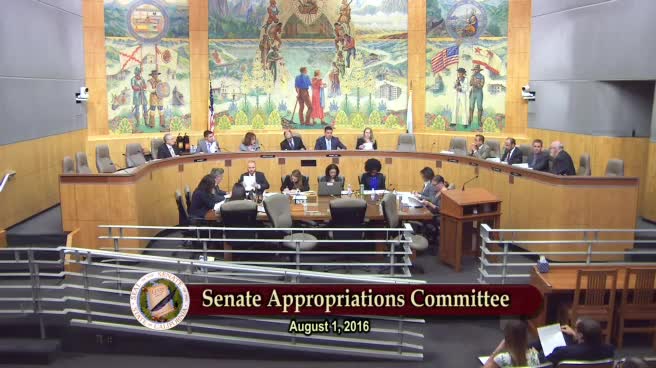 11MIN
Senate Standing Committee on Appropriations
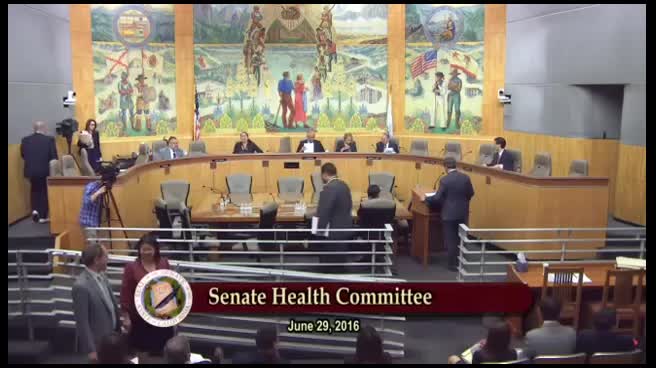 28MIN
Senate Standing Committee on Health
 42MIN
Senate Standing Committee on Education
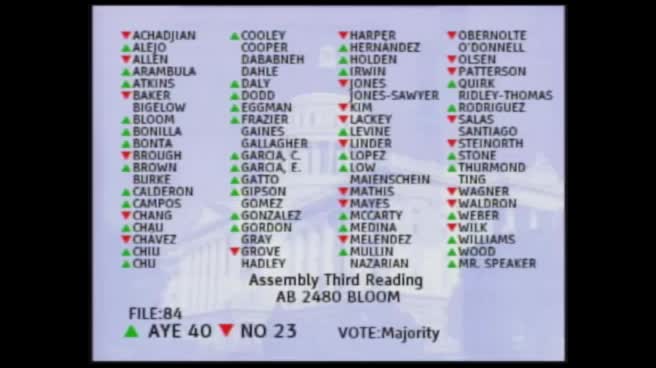 12MIN
Assembly Floor
 32MIN
Assembly Standing Committee on Health
 30MIN
Assembly Standing Committee on Higher Education
Bill Author

Bill Co-Author(s):