AB 387: Minimum wage: health professionals: interns.
- Session Year: 2017-2018
- House: Assembly
- Latest Version Date: 2017-05-30
Existing law requires the minimum wage for all industries to not be less than specified amounts to be increased from January 1, 2017, to January 1, 2022, inclusive, for employers employing 26 or more employees and from January 1, 2018, to January 1, 2023, inclusive, for employers employing 25 or fewer employees, except when the scheduled increases are temporarily suspended by the Governor, based on certain determinations. Existing law defines an employer for purposes of those provisions to mean a person who directly or indirectly, or through an agent or any other person, employs or exercises control over the wages, hours, or working conditions of another person. Payment of less than the established minimum wage is a misdemeanor.
This bill would expand the definition of employer for purposes of these provisions to include a person who directly or indirectly, or through an agent or any other person, employs or exercises control over the wages, hours, or working conditions of a person engaged in a period of supervised work experience longer than 100 hours to satisfy requirements for licensure, registration, or certification as an allied health professional, as defined.
Because this bill would expand the definition of a crime, it would impose a state-mandated local program.
The California Constitution requires the state to reimburse local agencies and school districts for certain costs mandated by the state. Statutory provisions establish procedures for making that reimbursement.
This bill would provide that no reimbursement is required by this act for a specified reason.
Existing law requires the minimum wage for all industries to not be less than specified amounts to be increased from January 1, 2017, to January 1, 2022, inclusive, for employers employing 26 or more employees and from January 1, 2018, to January 1, 2023, inclusive, for employers employing 25 or fewer employees, except when the scheduled increases are temporarily suspended by the Governor, based on certain determinations. Existing law defines an employer for purposes of those provisions to mean a person who directly or indirectly, or through an agent or any other person, employs or exercises control over the wages, hours, or working conditions of another person. Payment of less than the established minimum wage is a misdemeanor.
This bill would expand the definition of employer for purposes of these provisions to include a person who directly or indirectly, or through an agent or any other person, employs or exercises control over the wages, hours, or working conditions of a person engaged in a period of supervised work experience to satisfy requirements for licensure, registration, or certification as an allied health professional, as defined.
Because this bill would expand the definition of a crime, it would impose a state-mandated local program.
The California Constitution requires the state to reimburse local agencies and school districts for certain costs mandated by the state. Statutory provisions establish procedures for making that reimbursement.
This bill would provide that no reimbursement is required by this act for a specified reason.
(a)For purposes of Section 1182.12, an employer as defined in paragraph (3) of subdivision (b) of Section 1182.12, also means any person who directly or indirectly, or through an agent or any other person, employs or exercises control over the wages, hours, or working conditions of any person engaged in a period of supervised work experience of longer than 100 hours to satisfy hourly requirements for licensure, registration, or certification as an allied health professional.
(b)For purposes of subdivision (a), allied health professional has the same meaning as in Section 295p of Part F of Subchapter V of Chapter 6A of Title 42 of the United States Code.
(c)The definitions contained in subdivisions (a) and (b) do not apply to either of the following:
(1)An employer offering supervised work experience if the employer employs 25 or fewer allied health professionals.
(2)A primary care clinic that is licensed under subparagraph (A) of paragraph (1) of subdivision (a) of Section 1204 of the Health and Safety Code, and meets the definition of a health center pursuant to Section 330 of the Public Health Service Act (42 U.S.C. Sec. 254b(a)).
(d)This section shall not be construed to apply to the educational institution at which a person is enrolled to fulfill the educational requirements for licensure, registration, or certification as an allied health professional. Nothing in this subdivision shall relieve hospitals or clinics or other medical facilities licensed under Section 1250 of the Health and Safety Code that are affiliated with or operated by educational institutions from application of this section.
SEC. 2.No reimbursement is required by this act pursuant to Section 6 of Article XIIIB of the California Constitution because the only costs that may be incurred by a local agency or school district will be incurred because this act creates a new crime or infraction, eliminates a crime or infraction, or changes the penalty for a crime or infraction, within the meaning of Section 17556 of the Government Code, or changes the definition of a crime within the meaning of Section 6 of Article XIIIB of the California Constitution.
(a)Notwithstanding any other provision of this part, on and after July 1, 2014, the minimum wage for all industries shall be not less than nine dollars ($9) per hour, and on and after January 1, 2016, the minimum wage for all industries shall be not less than ten dollars ($10) per hour.
(b)Notwithstanding subdivision (a), the minimum wage for all industries shall not be less than the amounts set forth in this subdivision, except when the scheduled increases in paragraphs (1) and (2) are temporarily suspended under subdivision (d).
(1)For any employer who employs 26 or more employees, the minimum wage shall be as follows:
(A)From January 1, 2017, to December 31, 2017, inclusive,ten dollars and fifty cents ($10.50) per hour.
(B)From January 1, 2018, to December 31, 2018, inclusive,eleven dollars ($11) per hour.
(C)From January 1, 2019, to December 31, 2019, inclusive,twelve dollars ($12) per hour.
(D)From January 1, 2020, to December 31, 2020, inclusive,thirteen dollars ($13) per hour.
(E)From January 1, 2021, to December 31, 2021, inclusive,fourteen dollars ($14) per hour.
(F)From January 1, 2022, and until adjusted by subdivision (c)fifteen dollars ($15) per hour.
(2)For any employer who employs 25 or fewer employees, the minimum wage shall be as follows:
(A)From January 1, 2018, to December 31, 2018, inclusive,ten dollars and fifty cents ($10.50) per hour.
(B)From January 1, 2019, to December 31, 2019, inclusive,eleven dollars ($11) per hour.
(C)From January 1, 2020, to December 31, 2020, inclusive,twelve dollars ($12) per hour.
(D)From January 1, 2021, to December 31, 2021, inclusive,thirteen dollars ($13) per hour.
(E)From January 1, 2022, to December 31, 2022, inclusive,fourteen dollars ($14) per hour.
(F)From January 1, 2023, and until adjusted by subdivision (c)fifteen dollars ($15) per hour.
(3)For purposes of this subdivision, employer means any person who directly or indirectly, or through an agent or any other person, employs or exercises control over the wages, hours, or working conditions of any person. person, including any person engaged in a period of supervised work experience to satisfy requirements for licensure, registration, or certification as an allied health professional. For purposes of this subdivision, employer includes the state, political subdivisions of the state, and municipalities.
(4)For purposes of this subdivision, allied health professional has the same meaning as in Section 295p of Part F of Subchapter V of Chapter 6A of Title 42 of the United States Code.
(4)(5)Employees who are treated as employed by a single qualified taxpayer under subdivision (h) of Section 23626 of the Revenue and Taxation Code, as it read on the effective date of this section, shall be considered employees of that taxpayer for purposes of this subdivision.
(c)(1)Following the implementation of the minimum wage increase specified in subparagraph (F) of paragraph (2) of subdivision (b), on or before August 1 of that year, and on or before each August 1 thereafter, the Director of Finance shall calculate an adjusted minimum wage. The calculation shall increase the minimum wage by the lesser of 3.5 percent and the rate of change in the averages of the most recent July 1 to June 30, inclusive, period over the preceding July 1 to June 30, inclusive, period for the United States Bureau of Labor Statistics nonseasonally adjusted United States Consumer Price Index for Urban Wage Earners and Clerical Workers (U.S. CPI-W). The result shall be rounded to the nearest ten cents ($0.10). Each adjusted minimum wage increase calculated under this subdivision shall take effect on the following January 1.
(2)If the rate of change in the averages of the most recent July 1 to June 30, inclusive, period over the preceding July 1 to June 30, inclusive, period for the United States Bureau of Labor Statistics nonseasonally adjusted U.S. CPI-W is negative, there shall be no increase or decrease in the minimum wage pursuant to this subdivision on the following January 1.
(3)(A)Notwithstanding the implementation timing described in paragraph (1) of this subdivision, if the rate of change in the averages of the most recent July 1 to June 30, inclusive, period over the preceding July 1 to June 30, inclusive, period for the United States Bureau of Labor Statistics nonseasonally adjusted U.S. CPI-W exceeds 7 percent in the first year that the minimum wage specified in subparagraph (F) of paragraph (1) of subdivision (b) is implemented, the indexing provisions described in paragraph (1) of this subdivision shall be implemented immediately, such that the indexing will be effective on the following January 1.
(B)If the rate of change in the averages of the most recent July 1 to June 30, inclusive, period over the preceding July 1 to June 30, inclusive, period for the United States Bureau of Labor Statistics nonseasonally adjusted U.S. CPI-W exceeds 7 percent in the first year that the minimum wage specified in subparagraph (F) of paragraph (1) of subdivision (b) is implemented, notwithstanding any other law, for employers with 25 or fewer employees the minimum wage shall be set equal to the minimum wage for employers with 26 or more employees, effective on the following January 1, and the minimum wage increase specified in subparagraph (F) of paragraph (2) of subdivision (b) shall be considered to have been implemented for purposes of this subdivision.
(d)(1)On or before July 28, 2017, and on or before every July 28 thereafter until the minimum wage is fifteen dollars ($15) per hour pursuant to paragraph (1) of subdivision (b), to ensure that economic conditions can support a minimum wage increase, the Director of Finance shall annually make a determination and certify to the Governor and the Legislature whether each of the following conditions is met:
(A)Total nonfarm employment for California, seasonally adjusted, decreased over the three-month period from April to June, inclusive, prior to the July 28 determination. This calculation shall compare seasonally adjusted total nonfarm employment in June to seasonally adjusted total nonfarm employment in March, as reported by the Employment Development Department.
(B)Total nonfarm employment for California, seasonally adjusted, decreased over the six-month period from January to June, inclusive, prior to the July 28 determination. This calculation shall compare seasonally adjusted total nonfarm employment in June to seasonally adjusted total nonfarm employment in December, as reported by the Employment Development Department.
(C)Retail sales and use tax cash receipts from a 3.9375-percent tax rate for the July 1 to June 30, inclusive, period ending one month prior to the July 28 determination is less than retail sales and use tax cash receipts from a 3.9375-percent tax rate for the July 1 to June 30, inclusive, period ending 13 months prior to the July 28 determination. The calculation for the condition specified in this subparagraph shall be made as follows:
(i)The State Board of Equalization shall publish by the 10th of each month on its Internet Web site the total retail sales (sales before adjustments) for the prior month derived from their daily retail sales and use tax reports.
(ii)The State Board of Equalization shall publish by the 10th of each month on its Internet Web site the monthly factor required to convert the prior months retail sales and use tax total from all tax rates to a retail sales and use tax total from a 3.9375-percent tax rate.
(iii)The Department of Finance shall multiply the monthly total from clause (i) by the monthly factor from clause (ii) for each month.
(iv)The Department of Finance shall sum the monthly totals calculated in clause (iii) to calculate the 12-month July 1 to June 30, inclusive, totals needed for the comparison in this subparagraph.
(2)(A)On or before July 28, 2017, and on or before every July 28 thereafter until the minimum wage is fifteen dollars ($15) per hour pursuant to paragraph (1) of subdivision (b), to ensure that the state General Fund fiscal condition can support the next scheduled minimum wage increase, the Director of Finance shall annually make a determination and certify to the Governor and the Legislature whether the state General Fund would be in a deficit in the current fiscal year, or in either of the following two fiscal years.
(B)For purposes of this subdivision, deficit is defined as a negative balance in the Special Fund for Economic Uncertainties, as provided for in Section 16418 of the Government Code, that exceeds, in absolute value, 1 percent of total state General Fund revenue and transfers, based on the most recent Department of Finance estimates required by Section 12.5 of Article IV of the California Constitution. For purposes of this subdivision, the estimates shall include the assumption that only the minimum wage increases scheduled for the following calendar year pursuant to subdivision (b) will be implemented.
(3)(A)(i)If, for any year, the condition in either subparagraph (A) or (B) of paragraph (1) is met, and if the condition in subparagraph (C) of paragraph (1) is met, the Governor may, on or before August 1 of that year, notify the Legislature of an initial determination to temporarily suspend the minimum wage increases scheduled pursuant to subdivision (b) for the following year.
(ii)If the Director of Finance certifies under paragraph (2) that the state General Fund would be in a deficit in the current fiscal year, or in either of the following two fiscal years, the Governor may, on or before August 1 of that fiscal year, notify the Legislature of an initial determination to temporarily suspend the minimum wage increases scheduled pursuant to subdivision (b) for the following year.
(B)If the Governor provides notice to the Legislature pursuant to subparagraph (A), the Governor shall, on September 1 of any such year, make a final determination whether to temporarily suspend the minimum wage increases scheduled pursuant to subdivision (b) for the following year. The determination to temporarily suspend the minimum wage increases scheduled pursuant to subdivision (b) for the following year shall be made by proclamation.
(C)The Governor may temporarily suspend scheduled minimum wage increases pursuant to clause (ii) of subparagraph (A) no more than two times.
(D)If the Governor makes a final determination to temporarily suspend the scheduled minimum wage increases pursuant to subdivision (b) for the following year, all dates specified in subdivision (b) that are subsequent to the September 1 final determination date shall be postponed by an additional year.
SEC. 2.No reimbursement is required by this act pursuant to Section 6 of Article XIIIB of the California Constitution because the only costs that may be incurred by a local agency or school district will be incurred because this act creates a new crime or infraction, eliminates a crime or infraction, or changes the penalty for a crime or infraction, within the meaning of Section 17556 of the Government Code, or changes the definition of a crime within the meaning of Section 6 of Article XIIIB of the California Constitution.
|
Date
|
Status
|
|---|---|
| Feb 1, 2018 | Died on inactive file. |
| Jun 1, 2017 | Ordered to inactive file at the request of Assembly Member Thurmond. |
| May 30, 2017 | Read second time and amended. Ordered returned to second reading. |
| May 26, 2017 | From committee: Amend, and do pass as amended. (Ayes 10. Noes 7.) (May 26). |
| May 3, 2017 | In committee: Set, first hearing. Referred to APPR. suspense file. |
| Mar 30, 2017 | From committee: Do pass and re-refer to Com. on APPR. (Ayes 5. Noes 2.) (March 29). Re-referred to Com. on APPR. |
| Feb 21, 2017 | Referred to Com. on L. & E. |
| Feb 10, 2017 | From printer. May be heard in committee March 12. |
| Feb 9, 2017 | Read first time. To print. |
|
Date
|
Description
|
Location
|
Votes
|
|
|---|---|---|---|---|
| May 26, 2017 | Do pass as amended. | Assembly Standing Committee on Appropriations |
Passed |
|
| Mar 29, 2017 | Do pass and be re-referred to the Committee on [Appropriations] | Assembly Standing Committee on Labor and Employment |
Passed |
This list shows positions taken on this bill by organizations on the date displayed, which is linked to the original source.
Positions by individuals are not included.
ASSEMBLY THIRD READING
ATR Bill Id:AB 387
Author:(Thurmond)
As Amended Ver:May 30, 2017
Majority vote
Committee | Votes | Ayes | Noes |
Labor | 5-2 | Thurmond, Calderon, Kalra, McCarty, Reyes | Flora, Harper |
Appropriations | 10-7 | Gonzalez Fletcher, Bocanegra, Bonta, Calderon, McCarty, Quirk, Friedman, Eduardo Garcia, Muratsuchi, Reyes | Bigelow, Bloom, Brough, Fong, Gallagher, Gray, Obernolte |
SUMMARY: Broadens the definition of employer related to minimum wage provisions to include a person employing any person, engaged in supervised work experience to satisfy requirements for licensure, registration or certification as an allied health professional, with exceptions. Specifically, this bill:
- Defines employer related to minimum wage provisions, for purposes of these provisions to include any person who directly or indirectly, or through an agent or any other person, employs or exercises control over the wages, hours or working conditions of any person, including any person engaged in a period of supervised work experience of longer than 100 hours to satisfy requirements for licensure, registration, or certification as an allied health professional.
- Specifies that for purposes of these provisions, allied health professional, uses the federal definition. (42 United States Code section 295(p))
- Specifies the definitions above do not apply to either of the following:
- An employer offering supervised work experience if the employer employs 25 or fewer allied health professionals.
- A primary care clinic, as defined.
- Clarifies the definition of employer for purposes of these provisions shall not apply to the educational institution at which a person is enrolled to fulfill the educational requirements for licensure, registration or certification as an allied health professional.
- Clarifies further that nothing shall relieve hospitals, clinics, or other medical facilities, as defined, that are affiliated with or operated by educational institutions from application of these provisions.
FISCAL EFFECT: According to the Assembly Committee on Appropriations,
- Increased costs for the Department of State Hospitals (DSH) in the range of $1.5 million to $3.5 million (GF) to pay allied health trainees in 2018, with costs rising along with the statewide minimum wage. Costs across individual hospitals will vary based on their respective staffing arrangements.
- Administrative costs of approximately $75,000 for the Department of Industrial Relations (DIR) to implement this bill and respond to a potential increase in wage claims.
- Indirect cost pressure to the state as a large payer of health care. Statewide, this bill is estimated to result in an increase in the aggregate wages earned by allied health trainees in the range of $200 million to $250 million in 2018. Given a significant share of state's population is enrolled in Medi-Cal, this magnitude of health system labor costs could result in an indirect, unknown but potentially significant ongoing cost pressure on the state Medi-Cal program (GF/federal). A similar indirect effect on the state's employee health care costs through California Public Employees Retirement System (CalPERS) is possible (various funds).
COMMENTS: The author states it is estimated that California allied health professionals contribute up to 25 million unpaid clinical hours each year. The healthcare industry receives a direct economic benefit from that labor without paying for it. This requirement creates a barrier for low-income students and working adults, which prevents them from entering into good middle-class jobs. By requiring healthcare providers to pay allied health professionals in training with at least the minimum wage, more people from underrepresented communities will be able to complete the required clinical training requirements for allied health professions, thereby increasing the overall numbers and diversity of the students in the pipeline.
See policy committee analysis for existing state and federal law.
Arguments in Support
The California Employment Lawyers Association argues in support, "AB 387 helps to address problematic practices in an industry that is predominately female, that contributes to the gender wage gap and limits job opportunities. Every year, more than 50,000 Californians train to become allied health professionals. Clinical hours required as a part of that training can vary from as few as 160 hours for medical assistants to as many as 1,850 hours for a radiologic technologist, nearly a working year. The clinical hour requirement is in addition to in-classroom course work requirements, meaning that some students are in school 30 to 50 hours a week in addition to their clinical hours and the time they spend studying. In fact, most community college programs recommend that students not work because of the programs' heavy time demands. Requiring students to contribute substantial hours of unpaid work imposes an unrealistic burden on individuals with families to support."
Arguments in Opposition
The California Hospital Association writes in opposition, "[This bill] would result in a significant decrease in the capacity to train the allied health workforce needed to provide care for California's patients now and in the future. It would cause many clinical training slots for these critical professionals to be eliminated, which, in turn, would put allied health educational programs at risk of closure. The programs, many of which are offered by California's Community Colleges, would not be able to offer enrollment without enough clinical training placements for students at hospitals. If California Community College health professions programs are limited by the number of clinical placements they can secure, students will have limited choices in California for education and training."
Analysis Prepared by: Taylor Jackson / L. & E. / 916-319-2091 FN: 0000834
Date of Hearing: March 29, 2017
ASSEMBLY COMMITTEE ON LABOR AND EMPLOYMENT
Tony Thurmond, Chair
ABPCA Bill Id:AB 387 (
Author:Thurmond) – As Introduced Ver:February 9, 2017
SUBJECT: Minimum wage: health professionals: interns
SUMMARY: Broadens the definition of employer to include a person employing any person, engaged in supervised work experience to satisfy requirements for licensure, registration or certification as an allied health professional. Specifically, this bill:
- Expands the definition of employer under provisions related to minimum wage, to include any person who directly or indirectly, or through an agent or any other person, employs or exercises control over the wages, hours or working conditions of any person, including any person engaged in a period of supervised work experience to satisfy requirements for licensure, registration, or certification as an allied health professional.
- Specifies that for purposes of this subdivision, allied health professional, uses the federal definition. (42 U.S. Code section 295p)
EXISTING STATE LAW:
- Defines an employer for purposes of those provisions related to minimum wage to mean a person who directly or indirectly, or through an agent or any other person, employs or exercises control over the wages, hours, or working conditions of another person.
- Provides that for purposes of those provisions related to the minimum wage, employer includes the state, political subdivisions of the state, and municipalities.
- Provides for the minimum wage in California to be raised incrementally until January 1, 2023 when it shall reach fifteen dollars ($15) per hour, unless specified.
EXISTING FEDERAL LAW:
- Defines “allied health professionals” as a health professional (other than a registered nurse or physician assistant),
- who has received a certificate, an associate’s degree, a bachelor’s degree, a master’s degree, a doctoral degree, or post baccalaureate training, in a science relating to health care;
- who shares in the responsibility for the delivery of health care services or related services, including— services relating to the identification, evaluation, and prevention of disease and disorders; dietary and nutrition services; health promotion services; rehabilitation services; or health systems management services; and
- who has not received a degree of doctor of medicine, a degree of doctor of osteopathy, a degree of doctor of dentistry or an equivalent degree, a degree of doctor of veterinary medicine or an equivalent degree, a degree of doctor of optometry or an equivalent degree, a degree of doctor of podiatric medicine or an equivalent degree, a degree of bachelor of science in pharmacy or an equivalent degree, a degree of doctor of pharmacy or an equivalent degree, a graduate degree in public health or an equivalent degree, a degree of doctor of chiropractic or an equivalent degree, a graduate degree in health administration or an equivalent degree, a doctoral degree in clinical psychology or an equivalent degree, or a degree in social work or an equivalent degree or a degree in counseling or an equivalent degree.
- Provides under federal law, for the minimum wage to be set at $7.25 an hour and states that when state and federal laws differ, one must comply with the more restrictive requirement. (Fair Labor Standards Act of 1938, 29 U.S. Code section 206)
FISCAL EFFECT: Unknown
COMMENTS: The author argues, allied health professionals are required to work hundreds of unpaid clinical hours to successfully complete their training programs. This requirement creates a barrier for low-income students and working adults, which prevents them from entering into good middle-class jobs. This bill would provide that any person engaged in a period of supervised work experience to satisfy requirements for licensure, registration, or certification as an allied health professional be subject to the minimum wage law. By requiring healthcare providers to fairly compensate allied health professionals with at least the minimum wage, more individuals from underrepresented communities will be able to complete the required clinical training requirements for allied health professions, thereby increasing the overall numbers and diversity of the students in the pipeline.
Arguments in Support
The California Employment Lawyers Association argues in support, “AB 387 helps to address a problematic practice in an industry that is predominately female, that contributes to the gender wage gap and limits job opportunities. Every year, more than 50,000 Californians train to become allied health professionals. Clinical hours required as a part of that training can vary from as few as 160 hours for medical assistants to as many as 1,850 hours for a radiologic technologist – nearly a working year. The clinical hour requirement is in addition to in-classroom course work requirements, meaning that some students are in school 30 to 50 hours a week in addition to their clinical hours and the time they spend studying. In fact, most community college programs recommend that students not work because of the programs’ heavy time demands.
Requiring students to contribute substantial hours of unpaid work imposes an unrealistic burden on individuals with families to support. This explains some of the racial and ethnic achievement gaps in healthcare career technical education programs. But this is not just a matter of disparities in economic opportunity for workers. The disparities in success rates in healthcare training programs result in a less culturally competent workforce as well. For example only 25% of the healthcare workforce is Latino, even though Latinos are 40% of California’s population.
That is a healthcare quality problem. A number of studies have pointed to cultural competency as a key factor in better health outcomes.
Students in allied healthcare programs, which are traditionally and predominantly female, are not paid. In contrast, individuals in traditionally male occupations, even those in training, are paid for their labor. In healthcare, once students show competency, they are able to carry out the day-to-day functions of medical care with indirect supervision. The healthcare industry receives a direct economic benefit from that labor without paying for it. It is estimated that California allied health professionals contribute up to 25 million unpaid clinical hours each year. Workers with families shouldn’t have to contribute a quarter of a billion dollars a year to an already-profitable industry. AB 387 will require healthcare providers to compensate allied health professionals fairly, paying them at least the minimum wage. That pay will enable more individuals from underrepresented communities to complete the required clinical training for allied health professions, thereby increasing the overall numbers and diversity of the students in the pipeline. Moreover, this bill will provide fair compensation for training in an industry that is predominately female, thus helping to reduce the gender wage gap.”
The California Pan-Ethnic Health Network writes in support, “California has more than 600,000 allied healthcare professionals with employment expected to grow to one million by 2030. More than half of those occupations require a license or certification. These jobs typically offer good wages and benefits providing a path to the middle class, but entry can be difficult as students are required to contribute significant hours of unpaid work to achieve their degrees. Requiring students to contribute significant hours of unpaid work is an unrealistic burden for individuals with families to support. This explains some of the racial and ethnic achievement gaps in Healthcare Career Technical Education Programs. The disparities in success for healthcare training programs result in a less culturally competent workforce with only 25% of the healthcare workforce being Latino, compared to 40% of California’s population. To build a healthcare workforce that reflects the diversity of California and meet the state’s cultural and linguistic needs, we must empower allied healthcare professionals of all socio-economic and cultural backgrounds to complete their training and ensure that they compensated for their work.”
Arguments in Opposition
A coalition of hospitals and healthcare facilities, including the California Hospital Association writes in opposition, “Many allied health professions require students to participate in clinical or experiential training at a hospital to obtain a degree and/or be qualified for the licensure or certification examination. These occupations include radiologic technologists, clinical laboratory scientists, respiratory therapists, physical therapists, occupational therapists and speech therapists, among others… CHA estimates that hospitals statewide train more than 40,000 allied health students each year.
CHA opposes AB 387 because it would result in a significant decrease in the capacity to train the allied health workforce needed to provide care for California’s patients now and in the future. We estimate that the cost of this proposed requirement to be hundreds of millions of dollars annually. Therefore, if passed, AB 387 would cause many clinical training slots for these critical professionals to be eliminated, which, in turn, would put allied health educational programs at risk of closure. The programs, many of which are offered by California’s Community Colleges, would not be able to offer program enrollment without enough clinical training placements for students at hospitals. The effects of this significant decrease in capacity within the current training system would exacerbate existing allied health care workforce shortages; put the development of a strong pipeline of future health care givers in jeopardy which in turn would have a detrimental effect on access to care.
Sponsors of this bill [cite] the need to remove barriers for low-income students who want to go into allied health professions and they assert that these low-income students do not currently aspire to these professions because of clinical hour requirements…. Currently within the California Community Colleges 49.3% of students pay little or no tuition because they are eligible for Board of Governor fee waivers, making it possible for students of all income levels to enroll in allied health professions programs provided there is sufficient enrollment space. Unfortunately, many programs have waiting lists for high demand programs in areas such as radiological technology, sonography, medical laboratory technology, and others. If AB 387 passes, these waiting lists will grow longer as capacity will decrease with the constriction of corresponding clinical slots. Furthermore, to refute the claim that low-income students are crowded out of these professions, it should be noted that students facing challenges with paying for school and training are often eligible for financial aid and grants that do not have to be paid back through state and federal programs, such as Cal-Grant B. In addition, when students complete their training and become licensed in these occupations, they often become employees of their training program sponsor (the hospital), many of which offer loan forgiveness and tuition reimbursement.
Further, AB 387 will have a negative impact on the educational market place. If California Community College health professions programs… are limited in capacity by the number of clinical placements they can secure, students will have limited choices in California for education and training. Recognizing that neither hospitals, nor colleges, will have the resources to support the minimum wage requirements for clinical hours at today’s capacity, this will open the market up to out-of-state and proprietary schools. This would be a tremendous disservice to California students seeking access to an affordable public education from an accredited, local source, such as their local community college. AB 387 has the potential to drive students out of state for education and training, which presents the risk that they will not return after licensure, thus depriving California of valuable health care workers. This emerging market could leave students saddled with debt that is unnecessary under the current system.
Students are not employees. They are engaged in classroom and clinical activities to become qualified for licensure, certification and employment. AB 387 will increase health care costs without any improvements in quality, value or diversity of the workforce. Further, AB 387 will have the adverse consequence of reducing students’ opportunities to benefit from hospital-provided training and clinical experience, thus exacerbating workforce shortages.”
REGISTERED SUPPORT / OPPOSITION:
Support
California Employment Lawyers Association
California Labor Federation, AFL-CIO
California Pan-Ethnic Health Network
Community Coalition
Laborers International Union of North America, LIUNA Locals 777 & 792
Los Angeles Alliance for a New Economy
Numerous Individuals
SEIU- California (sponsor)
United Food and Commercial Workers Western States Council
Western Center on Law and Poverty
Working Partnerships USA
Opposition
Adventists Health
Alliance of Catholic Health Care
Association of California Healthcare Districts
Bakersfield College
Banner Lassen Medical Center
Bear Valley Community Healthcare District
CA State University Northridge, Department of Health Services
California Ambulance Association
California Association for Medical Laboratory Technology
California Children’s Hospital Association
California Hospital Association
California Medical Association
California Radiological Society
California Society for Respiratory Care
California Society of Pathologists
California Society of Radiologic Technologists
California Speech-Language and Hearing Association
California State University, Office of the Chancellor
Cedars-Sinai Medical Center
City College of San Francisco Radiologic Sciences Department
City of Hope National Medical Center School of Radiation Therapy
Clinical Laboratory Science Department at CSU Dominguez Hills
Coalinga Regional Medical Center Diagnostic Medical Sonography
College of Marin
Community Medical Centers
Deanza College Medical Laboratory Technician Program
Delano Regional Medical Center
Dignity Health
District Hospital Leadership Forum
Eastern Plumas Health Care
El Camino Hospital Imaging Services Department
Enloe Medical Center
Folsom Lake College Medical Laboratory Technician Program
Foothill College, Radiologic and Clinical Technology Programs
Fresno City College
Glenn Medical Center
Good Samaritan Hospital
Henry Mayo Newhall Hospital
John C Fremont Healthcare District
John Muir Health
Joint Review Committee on Education in Radiologic Technology
Kern Radiology Medical Group
Loma Linda University Health and Department of Occupational Therapy
Marshall Medical Center
Medical Career College of Northern California
Merced College
Methodists Hospital of Southern California
Modern Technology School
NorthBay Healthcare
Numerous Individuals
Occupational Therapy Association of California
Ohlone Community College District
Palomar Medical Center, Poway and Escondido
Plumas District Hospital
Providence Health & Services Southern California
Regional Medical Center of San Jose
Rio Hondo College
Saint Agnes Medical Center
San Gregorio Memorial Hospital
San Jose State Clinical Laboratory Scientist Department
Seneca Healthcare District
Sharp Chula Vista medical Center Laboratory
Sharp HealthCare
Shasta Regional Medical Center
Sierra View Medical Center
Society for Nuclear Medicine and Molecular Imaging-Technologists Section
Society for Vascular Ultrasound
Society of Diagnostic Medical Sonography
Sonographers of the Echocardiography Department, University of San Diego
Sonoma Valley Hospital
Southern California Society of Radiation Therapists, National University
Southern Humboldt Community Healthcare District
Southwest California Legislative Council
St. Mary Medical Center, Long Beach
Stanford Health Care
Stanford Health Care-ValleyCare
Tenet Healthcare
UCSF Medical Center
Ukiah Valley Medical Center
United Hospital Association
Vibra Hospital of Sacramento
Volunteer Service Department of Glendale Memorial Hospital and Health Center
Watsonville Community Hospital
Yuba Community College District
Analysis Prepared by: Taylor Jackson / L. & E. / 916-319-2091
Date of Hearing: May 3, 2017
ASSEMBLY COMMITTEE ON APPROPRIATIONS
Lorena Gonzalez Fletcher, Chair
ABPCA Bill Id:AB 387
Author:(Thurmond) – As Introduced Ver:February 9, 2017
Policy Committee: | Labor and Employment | Vote: | 5 - 2 |
|
| ||
|
|
Urgency: No State Mandated Local Program: Yes Reimbursable: No
SUMMARY:
This bill broadens the definition of employer, under provisions related to the minimum wage, to include a person employing any person, engaged in supervised work experience to satisfy requirements for licensure, registration or certification as an allied health professional.
FISCAL EFFECT:
- Increased costs for the Department of State Hospitals (DSH) in the range of $2.5 million to $4 million (GF) to pay allied health trainees in 2018, with costs rising along with the statewide minimum wage. Costs across individual hospitals will vary based on their respective staffing arrangements. For instance, under this bill, Patton State Hospital will see increased wage costs of approximately $600,000 for the clinical hours of psychiatric technician and licensed vocational nurse trainees that rotate through the hospital each year.
- Unknown but likely significant General Fund (GF) costs to reimburse skilled nursing facilities (SNFs) for increased costs of paying certified nurse assistant trainees and licensed vocational nurse trainees. Medi-Cal reimbursement for SNFs is partially based on direct care labor costs. These reimbursement costs will increase along with the statewide minimum wage.
- Assorted state cost pressures as a result of the new statewide minimum wage requirements. For example, wages will increase by an estimated $200,000 across the athletic departments in the California State University (CSU), University of California (UC), and Community College (CCC) systems because of wages paid to 40 students participating in the California State University Athletic Training Program. Moreover, wages will increase by a range of $1.0 to $2.5 million for the University of California medical centers. Like state hospitals, costs depend on each medical center’s staffing arrangements and the individual programs for each medical center.
- Administrative costs of approximately $75,000 for the Department of Industrial Relations (DIR) implement this bill and respond to a potential increase in wage claims.
- Indirect cost pressure to the state as a large payer of health care. Statewide, this bill is estimated to result in an increase in the aggregate wages earned by allied health trainees in the range of $250 million to $300 million in 2018. Given a significant share of state's population is enrolled in Medi-Cal, this magnitude of health system labor costs could result in an indirect, unknown but potentially significant ongoing cost pressure on the state Medi-Cal program, largely in the form of higher Medi-Cal managed care rates, which could rise along with the statewide minimum wage (GF/federal). A similar indirect effect on the state's employee health care costs through California Public Employees Retirement System (CalPERS) is possible (various funds).
COMMENTS:
- Purpose. According to the author, AB 387 will ensure that allied health professionals who are currently required to work hundreds of unpaid clinical hours will earn at least the statewide minimum wage, thereby removing barriers to entry for low-income students and working adults.
- Allied health professionals. Under current federal law, an allied health professional is an employee who has received a certificate or a bachelor degree, or higher, who shares in the responsibility for the delivery of health care services, such as services relating to the identification, evaluation, and prevention of disease and disorders, dietary and nutrition services, health promotion services, rehabilitation service, or health systems management services. This definition excludes register nurses and physicians but includes a wide range of medical employees, such as radiologic technologists to pharmacy technicians.
- California trainees. An estimated 50,000 allied health trainees do clinical hours across a variety of California medical facilities. The number of hours required for these students varies by the occupation, ranging from 160 for certain medical assisting training programs to 1,850 for radiologic technology. Under AB 387, these hours will be covered by statewide minimum wage laws.
- Allied Health Workplace Shortages. A 2011 survey and report by the California Hospital Association found a concern about the long-term supply of allied health workers. That report concluded that the “To meet the long-term demands for health care services in the state, policymakers and others must recognize the need to develop a sufficient supply of qualified, culturally competent allied health professionals.” The report identified higher education funding and access to training programs as key barriers to increasing the supply of workers.
Analysis Prepared by: Luke Reidenbach / APPR. / (916) 319-2081
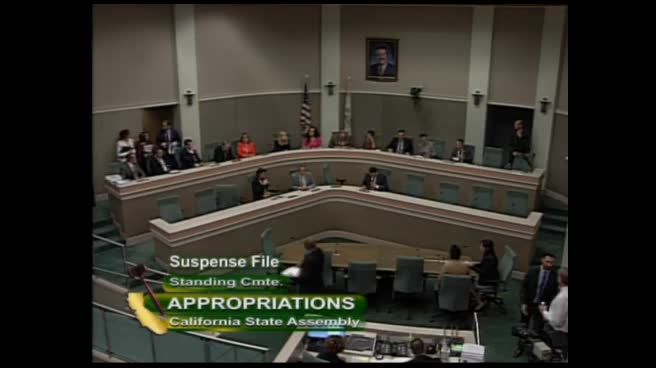
Discussed in Hearing
 1H
Assembly Standing Committee on Appropriations
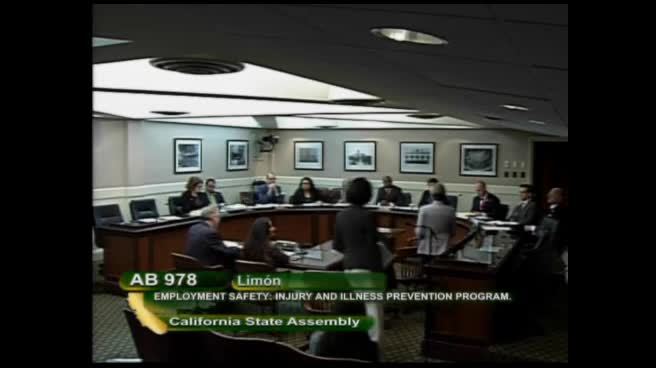 25MIN
Assembly Standing Committee on Labor and Employment
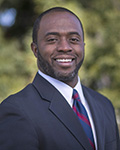
Bill Author
Bill Co-Author(s):