AB 393: Public postsecondary education: tuition: enrollment fees.
- Session Year: 2017-2018
- House: Assembly
- Latest Version Date: 2017-05-11
Existing law establishes the California State University, under the administration of the Trustees of the California State University, the California Community Colleges, under the administration of the Board of Governors of the California Community Colleges, and the University of California, under the administration of the Regents of the University of California, as the 3 segments of public postsecondary education in this state. Existing law, known as the Donahoe Higher Education Act, among other things, sets forth the missions and functions of these 3 segments.
This bill would express legislative findings and declarations relating to the costs of public postsecondary education. The bill would require that the amounts of tuition and mandatory systemwide fees that are amount of tuition charged to eligible students of the California State University, and the amount of the enrollment fee charged to eligible students of the California Community Colleges, not be increased from the amounts that were charged as of December 31, 2016, until the completion of the 201920 academic year. The Notwithstanding this provision, the bill would not be operative in a fiscal year for which the Governor has issued a proclamation declaring a fiscal emergency pursuant to a specified provision of the California Constitution.
The bill would define eligible students as students exempt from payment of nonresident tuition either because they are California residents, as defined, or are exempted from payment of nonresident tuition pursuant to any of several specified provisions of existing law. The bill would also urge the regents to adopt policies that are consistent with this provision.
Existing law establishes the California State University, under the administration of the Trustees of the California State University, the California Community Colleges, under the administration of the Board of Governors of the California Community Colleges, and the University of California, under the administration of the Regents of the University of California, as the 3 segments of public postsecondary education in this state. Existing law, known as the Donahoe Higher Education Act, among other things, sets forth the missions and functions of these 3 segments.
This bill would express legislative findings and declarations relating to the costs of public postsecondary education. The bill would require that the amounts of tuition and mandatory systemwide fees that are charged to eligible students of the California State University, and the amount of the enrollment fee charged to eligible students of the California Community Colleges, not be increased from the amounts that were charged as of December 31, 2016, until the completion of the 201920 academic year. The bill would define eligible students as students exempt from payment of nonresident tuition either because they are California residents, as defined, or are exempted from payment of nonresident tuition pursuant to any of several specified provisions of existing law. The bill would also urge the regents to adopt policies that are consistent with this provision.
Existing law establishes the California State University, under the administration of the Trustees of the California State University, the California Community Colleges, under the administration of the Board of Governors of the California Community Colleges, and the University of California, under the administration of the Regents of the University of California, as the 3 segments of public postsecondary education in this state. Existing law, known as the Donahoe Higher Education Act, among other things, sets forth the missions and functions of these 3 segments.
This bill would express legislative findings and declarations relating to the costs of public postsecondary education. The bill would require that the amounts of tuition and mandatory systemwide fees that are charged to students of the California State University, and the amount of the enrollment fee charged to students of the California Community Colleges, not be increased from the amounts that were charged as of December 31, 2016, until the completion of the 201920 academic year. The bill would also urge the regents to adopt policies that are consistent with this provision.
The Legislature finds and declares all of the following:
(a)The California Master Plan for Higher Education, drafted in 1960, states that public higher education shall be tuition free to all residents.
(b)In recent years, tuition and fees have fluctuated with the states budget. Increases in college tuition have been outstripping the cost of living for decades.
(c)When adjusted for inflation, state funding per California State University (CSU) student is near a 30-year low. In 1985, state spending per student was $11,607; today, when adjusted to 1985 dollars, spending per CSU student is $6,888. In other words, CSU students get just 59 cents for every dollar that the state invested in them in 1985.
(d)At the same time, student debt is increasing. The total outstanding student loan debt in the United States is $1,200,000,000,000, the second-highest level of consumer debt, behind only mortgages. Most of this is in loans held by the federal government.
(e)About 40,000,000 Americans hold student loans, and about 70 percent of bachelors degree recipients graduate with debt.
(f)One in four student loan borrowers are either in delinquency or default on their student loans, according to the Consumer Financial Protection Bureau.
(g)In 2015, more than one-half of the CSUs nearly 475,000 students received Pell Grants. The percentage of students receiving them has almost doubled since 1993, the earliest date for which data is available.
(h)A recent study commissioned by the office of the CSU Chancellor found that one in 10 CSU students is homeless and one in five does not always have enough food.
(i)In 1985, CSU students had to work 199 hours at minimum wage to pay tuition and fees for an academic year at the CSU; in 2015, students had to work 682 hours at a minimum wage job to cover those costs. According to CSU systemwide data, three out of four CSU students today work more than 20 hours per week.
(j)In 1985, tuition and fees at the CSU were only $666 per year. Since that time, those costs have grown 923 percent. If tuition had kept pace with inflation, students would be paying $1,519 in tuition and fees; instead, they are paying 4.5 times that amount.
(k)California is home to an estimated 214,000 Deferred Action for Childhood Arrivals (DACA) students and to one in three of our nations DREAMers (students within the scope of the proposed federal Development, Relief, and Education for Alien Minors (DREAM) Act). Of those attending school, 70 percent also work. Eighty-three percent of DACA students in California are seeking an undergraduate degree, and 17 percent of DACA students are seeking advanced degrees.
(l)Of the top 20 most diverse colleges in the western region of the United States, 10 are CSU campuses. Eighteen of the 23 CSU campuses are currently recognized by the United States Department of Education as Hispanic Serving Institutions (HSIs), colleges and universities with a Latino student enrollment of at least 25 percent.
(m)In California, the CSU provides more than one-half of all undergraduate degrees earned by the states Latino, African American, and Native American students. More than one-half (56 percent) of CSU students identify as students of color. Roughly 35 percent of CSU undergraduates are the first in their families to attend college. In short, the CSU educates the most ethnically, economically, and academically diverse student body in the nation.
SEC. 2.Section 66025.1 is added to the Education Code, to read:66025.1.(a)This section shall be known, and may be cited, as the Student Protection Act.
(b)Notwithstanding any other law, the amounts of tuition and mandatory systemwide fees that are amount of tuition that is charged to an eligible student of the California State University, and the amount of the enrollment fee charged to an eligible student of the California Community Colleges pursuant to subdivision (b) of Section 76300, shall not be increased from the amounts that were charged as of December 31, 2016, until the completion of the 201920 academic year.
(c)As used in this section, an eligible student is a student who, as of the date of his or her initial enrollment as a student at a campus of the California State University or the California Community Colleges was exempt from payment of nonresident tuition as a California resident, as defined in Section 68017, or pursuant to any of the following provisions:
(1)Section 68123.
(2)Section 68130.5.
(3)Section 76140.
(4)Section 89705.
(5)Section 89707.
(d)Notwithstanding subdivision (b), this section shall not be operative in a fiscal year for which the Governor has issued a proclamation declaring a fiscal emergency pursuant to subdivision (f) of Section 10 of Article IV of the California Constitution.
(d)(e)The Regents of the University of California are urged to adopt policies that are consistent with the provisions of this section.
The Legislature finds and declares all of the following:
(a)The California Master Plan for Higher Education, drafted in 1960, states that public higher education shall be tuition free to all residents.
(b)In recent years, tuition and fees have fluctuated with the states budget. Increases in college tuition have been outstripping the cost of living for decades.
(c)When adjusted for inflation, state funding per California State University (CSU) student is near a 30-year low. In 1985, state spending per student was $11,607; today, when adjusted to 1985 dollars, spending per CSU student is $6,888. In other words, CSU students get just 59 cents for every dollar that the state invested in them in 1985.
(d)At the same time, student debt is increasing. The total outstanding student loan debt in the United States is $1,200,000,000,000, the second-highest level of consumer debt, behind only mortgages. Most of this is in loans held by the federal government.
(e)About 40,000,000 Americans hold student loans, and about 70 percent of bachelors degree recipients graduate with debt.
(f)One in four student loan borrowers are either in delinquency or default on their student loans, according to the Consumer Financial Protection Bureau.
(g)In 2015, more than one-half of the CSUs nearly 475,000 students received Pell Grants. The percentage of students receiving them has almost doubled since 1993, the earliest date for which data is available.
(h)A recent study commissioned by the office of the CSU Chancellor found that one in 10 CSU students is homeless and one in five does not always have enough food.
(i)In 1985, CSU students had to work 199 hours at minimum wage to pay tuition and fees for an academic year at the CSU; in 2015, students had to work 682 hours at a minimum wage job to cover those costs. According to CSU systemwide data, three out of four CSU students today work more than 20 hours per week.
(j)In 1985, tuition and fees at the CSU were only $666 per year. Since that time, those costs have grown 923 percent. If tuition had kept pace with inflation, students would be paying $1,519 in tuition and fees; instead, they are paying 4.5 times that amount.
(k)California is home to an estimated 214,000 Deferred Action for Childhood Arrivals (DACA) students and to one in three of our nations DREAMers (students within the scope of the proposed federal Development, Relief, and Education for Alien Minors (DREAM) Act). Of those attending school, 70 percent also work. Eighty-three percent of DACA students in California are seeking an undergraduate degree, and 17 percent of DACA students are seeking advanced degrees.
(l)Of the top 20 most diverse colleges in the western region of the United States, 10 are CSU campuses. Eighteen of the 23 CSU campuses are currently recognized by the United States Department of Education as Hispanic Serving Institutions (HSIs), colleges and universities with a Latino student enrollment of at least 25 percent.
(m)In California, the CSU provides more than one-half of all undergraduate degrees earned by the states Latino, African American, and Native American students. More than one-half (56 percent) of CSU students identify as students of color. Roughly 35 percent of CSU undergraduates are the first in their families to attend college. In short, the CSU educates the most ethnically, economically, and academically diverse student body in the nation.
SEC. 2.Section 66025.1 is added to the Education Code, to read:66025.1.(a)This section shall be known, and may be cited, as the Student Protection Act.
(b)Notwithstanding any other law, the amounts of tuition and mandatory systemwide fees that are charged to students an eligible student of the California State University, and the amount of the enrollment fee charged to students an eligible student of the California Community Colleges pursuant to subdivision (b) of Section 76300, shall not be increased from the amounts that were charged as of December 31, 2016, until the completion of the 201920 academic year.
(c)As used in this section, an eligible student is a student who, as of the date of his or her initial enrollment as a student at a campus of the California State University or the California Community Colleges was exempt from payment of nonresident tuition as a California resident, as defined in Section 68017, or pursuant to any of the following provisions:
(1)Section 68123.
(2)Section 68130.5.
(3)Section 76140.
(4)Section 89705.
(5)Section 89707.
(c)(d)The Regents of the University of California are urged to adopt policies that are consistent with the provisions of this section.
REVISIONS: HeadingLine 3.The Legislature finds and declares all of the following:
(a)The California Master Plan for Higher Education, drafted in 1960, states that public higher education shall be tuition free to all residents.
(b)In recent years, tuition and fees have fluctuated with the states budget. Increases in college tuition have been outstripping the cost of living for decades.
(c)When adjusted for inflation, state funding per California State University (CSU) student is near a 30-year low. In 1985, state spending per student was $11,607; today, when adjusted to 1985 dollars, spending per CSU student is $6,888. In other words, CSU students get just 59 cents for every dollar that the state invested in them in 1985.
(d)At the same time, student debt is increasing. The total outstanding student loan debt in the United States is $1,200,000,000,000, the second-highest level of consumer debt, behind only mortgages. Most of this is in loans held by the federal government.
(e)About 40,000,000 Americans hold student loans, and about 70 percent of bachelors degree recipients graduate with debt.
(f)One in four student loan borrowers are either in delinquency or default on their student loans, according to the Consumer Financial Protection Bureau.
(g)In 2015, more than one-half of the CSUs nearly 475,000 students received Pell Grants. The percentage of students receiving them has almost doubled since 1993, the earliest date for which data is available.
(h)A recent study commissioned by the office of the CSU Chancellor found that one in 10 CSU students is homeless and one in five does not always have enough food.
(i)In 1985, CSU students had to work 199 hours at minimum wage to pay tuition and fees for an academic year at the CSU; in 2015, students had to work 682 hours at a minimum wage job to cover those costs. According to CSU systemwide data, three out of four CSU students today work more than 20 hours per week.
(j)In 1985, tuition and fees at the CSU were only $666 per year. Since that time, those costs have grown 923 percent. If tuition had kept pace with inflation, students would be paying $1,519 in tuition and fees; instead, they are paying 4.5 times that amount.
(k)California is home to an estimated 214,000 Deferred Action for Childhood Arrivals (DACA) students and to one in three of our nations DREAMers (students within the scope of the proposed federal Development, Relief, and Education for Alien Minors (DREAM) Act). Of those attending school, 70 percent also work. Eighty-three percent of DACA students in California are seeking an undergraduate degree, and 17 percent of DACA students are seeking advanced degrees.
(l)Of the top 20 most diverse colleges in the western region of the United States, 10 are CSU campuses. Eighteen of the 23 CSU campuses are currently recognized by the United States Department of Education as Hispanic Serving Institutions (HSIs), colleges and universities with a Latino student enrollment of at least 25 percent.
(m)In California, the CSU provides more than one-half of all undergraduate degrees earned by the states Latino, African American, and Native American students. More than one-half (56 percent) of CSU students identify as students of color. Roughly 35 percent of CSU undergraduates are the first in their families to attend college. In short, the CSU educates the most ethnically, economically, and academically diverse student body in the nation.
SEC. 2.Section 66025.1 is added to the Education Code, to read:66025.1.(a)This section shall be known, and may be cited, as the Student Protection Act.
(b)Notwithstanding any other law, the amounts of tuition and mandatory systemwide fees that are charged to students of the California State University, and the amount of the enrollment fee charged to students of the California Community Colleges pursuant to subdivision (b) of Section 76300, shall not be increased from the amounts that were charged as of December 31, 2016, until the completion of the 201920 academic year.
(c)The Regents of the University of California are urged to adopt policies that are consistent with the provisions of this section.
|
Date
|
Status
|
|---|---|
| Feb 1, 2018 | From committee: Filed with the Chief Clerk pursuant to Joint Rule 56. |
| Jan 31, 2018 | Died pursuant to Art. IV, Sec. 10(c) of the Constitution. |
| Jan 18, 2018 | In committee: Held under submission. |
| May 17, 2017 | In committee: Set, first hearing. Referred to APPR. suspense file. |
| May 15, 2017 | Re-referred to Com. on APPR. |
| May 11, 2017 | From committee chair, with author's amendments: Amend, and re-refer to Com. on APPR. Read second time and amended. |
| May 10, 2017 | In committee: Hearing postponed by committee. |
| Apr 19, 2017 | From committee: Do pass and re-refer to Com. on APPR. (Ayes 13. Noes 0.) (April 18). Re-referred to Com. on APPR. |
| Apr 17, 2017 | Re-referred to Com. on HIGHER ED. |
| Apr 6, 2017 | From committee chair, with author's amendments: Amend, and re-refer to Com. on HIGHER ED. Read second time and amended. |
| Feb 21, 2017 | Referred to Com. on HIGHER ED. |
| Feb 10, 2017 | From printer. May be heard in committee March 12. |
| Feb 9, 2017 | Read first time. To print. |
|
Date
|
Description
|
Location
|
Votes
|
|
|---|---|---|---|---|
| Apr 18, 2017 | Do pass and be re-referred to the Committee on [Appropriations] | Assembly Standing Committee on Higher Education |
Passed |
This list shows positions taken on this bill by organizations on the date displayed, which is linked to the original source.
Positions by individuals are not included.
Date of Hearing: May 17, 2017
ASSEMBLY COMMITTEE ON APPROPRIATIONS
Lorena Gonzalez Fletcher, Chair
ABPCA Bill Id:AB 393
Author:(Quirk-Silva) – As Amended Ver:May 11, 2017
Policy Committee: | Higher Education | Vote: | 13 - 0 |
Urgency: No State Mandated Local Program: No Reimbursable: No
SUMMARY:
This bill prohibits, until after the 2019-20 academic year, any increases in California resident tuition charged to students at the California State University (CSU) and the California Community Colleges (CCC) above the amounts charged as of December 31, 2016, and requests that the Regents of the University of California (UC) comply with this policy.
FISCAL EFFECT:
- Approximately $233 million in revenue loss to the CSU over three years at the current California resident population. If prohibited from raising tuition, the CSU notes that they would look to the state to provide this funding.
- Approximately $297 million in revenue reductions to the UC over three years. This cost is based on the assumption that the system may expand enrollment by about 2,500 California resident undergraduates and about 900 graduate students per year, adding over 10,000 students in just 3 years. The amount includes the 2.5% tuition increase and 5% growth in student services fee to cover the expansion of mental health services. With no assurance that adequate state funding is available to provide additional funding, the UC may reduce instructional resources and other services such as student mental health services and institutional aid to support UC students.
- On-going General Fund (GF) cost pressures in the hundreds of millions. While CCC resident fees are established in state code at $46 per unit, to the extent that tuition would have been or would be increased over the next three academic years, there would be a need for significant GF dollars to backfill revenue loss from foregone increases.
If the state experiences a financial downturn and the segments receive less state funding than in previous years, then the only other option available to the segments would be to reduce expenditures, which would undermine progress in meeting goals set for graduation rates, improving failing infrastructure and progress towards fair compensation. This bill does include a provision to suspend the freeze should the Governor issue a proclamation for a fiscal emergency. In this scenario, the Governor would identify the nature of the fiscal emergency and will submit it to the Legislature, accompanied by proposed legislation to address the fiscal emergency. Under this scenario, segments could continue to increase tuition or wait for a legislative proposal.
COMMENTS:
- Background. Existing law authorizes the UC Regents and the CSU Trustees to charge various fees and prohibits certain fees from applying to specified categories of students. CCC resident fees are established in state code at $46 per semester unit.
- Purpose. The author cites the significant financial challenges facing many students, including even homelessness and food insecurity for some. The author references a 2016 study commissioned by CSU finding that as many as 1 in 10 of the system’s 475,000 students lacked fixed, steady places to sleep at night and that one in five experience food insecurity. According to the author, through large tuition increases, students have borne the costs of the state's disinvestment in higher education over the last 30 years. "The long-term funding shortfalls in our higher education system cannot be balanced on the backs of our students. AB 393 places a moratorium on tuition, mandatory systemwide tuition and enrollment fees for CSU and community college students through the 2019-20 academic year and urges the UC Regents to take similar action. This moratorium will give students and their families piece of mind that the already high costs of higher education will be capped for the near future as the Legislature works on long-term funding solutions for the three segments of our higher education system." The bill is sponsored by the California Faculty Association.
- Staff Comments. The Governor released his May Revision on May 11, 2017. The May Revision did not include a backfill for tuition increases for the 2017-18 school year. Instead, the Governor notes that “a significant portion of any tuition increase at the UC or the CSU is borne by the state’s general fund.” The UC and CSU fee increases for the 2017-18 school year resulted in an May Revision increases to the Cal Grant: $20.9 million for UC students and $28 million for CSU students.
Analysis Prepared by: Daisy Gonzales / APPR. / (916) 319-2081
Date of Hearing: April 18, 2017
ASSEMBLY COMMITTEE ON HIGHER EDUCATION
Jose Medina, Chair
ABPCA Bill Id:AB 393 (
Author:Quirk-Silva) – As Amended Ver:April 6, 2017
SUBJECT: Public postsecondary education: mandatory systemwide fees and tuition
SUMMARY: Prohibits, until after the 2019-20 academic year, any increases in resident tuition and mandatory systemwide fees charged to students at the California State University (CSU) and the California Community Colleges (CCC) above the amounts charged as of December 31, 2016, and requests that the Regents of the University of California (UC) comply with this policy. (Does not prohibit increases in supplemental nonresident tuition.)
EXISTING LAW:
- Authorizes the UC Regents and the CSU Trustees to charge various fees and prohibits certain fees from applying to specified categories of students.
- Provides that statutes related to UC (and most other aspects of the governance and operation of UC) are applicable only to the extent that the UC Regents make such provisions applicable. (Education Code (EC) Section 67400.)
- Confers upon the CSU Trustees the powers, duties, and functions with respect to the management, administration, and control of the CSU system. (EC Sect. 66606.)
- Establishes a $46 per semester unit fee at the California Community Colleges, and provides fee waivers for specified types of students. (EC Sect. 76300.)
FISCAL EFFECT: To the extent that tuition and fees have been or would be increased over the next three academic years, there would be potential significant General Fund cost pressure to backfill the revenue loss from those foregone increases.
COMMENTS:
Purpose. The author cites the significant financial challenges facing many students, including even homelessness and food insecurity for some. The author references a 2016 study commissioned by CSU finding that as many as 1 in 10 of the system’s 475,000 students lacked fixed, steady places to sleep at night and that one in five experience food insecurity. According to the author, through large tuition increases, students have borne the costs of the state's disinvestment in higher education over the last 30 years. "The long-term funding shortfalls in our higher education system cannot be balanced on the backs of our students. AB 393 places a moratorium on tuition, mandatory systemwide tuition and enrollment fees for CSU and community college students through the 2019-20 academic year and urges the UC Regents to take similar action. This moratorium will give students and their families piece of mind that the already high costs of higher education will be capped for the near future as the Legislature works on long-term funding solutions for the three segments of our higher education system." The bill is sponsored by the California Faculty Association.
Recent Tuition/Fee History. The table below shows how resident undergraduate tuition and mandatory systemwide fees have changed at the three segments since 1997-98.
Resident Undergraduate Annual Tuition and Systemwide Fees | |||
Year | UC | CSU | CCC |
1997-98 | $3,799 | $1,584 | $390 |
1998-99 | 3,609 | 1,506 | 360 |
1999-00 | 3,429 | 1,428 | 330 |
2000-01 | 3,429 | 1,428 | 330 |
2001-02 | 3,429 | 1,428 | 330 |
2002-03 | 3,834 | 1,500 | 330 |
2003-04 | 4,984 | 2,046 | 540 |
2004-05 | 5,684 | 2,334 | 780 |
2005-06 | 6,141 | 2,520 | 780 |
2006-07 | 6,141 | 2,520 | 600 |
2007-08 | 6,636 | 2,772 | 600 |
2008-09 | 7,126 | 3,048 | 600 |
2009-10 | 8,958 | 4,026 | 780 |
2010-11 | 10,302 | 4,440 | 780 |
2011-12 | 12,192 | 5,472 | 1,080 |
2012-13 | 12,192 | 5,472 | 1,380 |
2013-14 | 12,192 | 5,472 | 1,380 |
2014-15 | 12,192 | 5,472 | 1,380 |
2015-16 | 12,240 | 5,472 | 1,380 |
2016-17 | 12,294 | 5,472 | 1,380 |
2017-18 | 12,630 | 5,742 | 1,380 |
As shown in the table, tuition/fees tended to increase dramatically during the years of state budget crises, when state support to UC and CSU declined. This reflects the relatively discretionary nature of UC's and CSU's state budget allocations, and the ability to at least partially compensate for reductions in state support with the additional revenue from tuition increases. The table also shows that tuition levels have remained relatively flat, or even declined, during periods of more stable and growing state budgets. CCC fees have followed a similar pattern to UC and CSU, and in fact have experienced the largest increase in overall percentage terms (up 318%). Despite these increases, however, California's community colleges still have the lowest fees in the country among two-year public postsecondary systems.
For 2017-18, the table reflects the tuition and fee increases approved earlier this year by the UC Regents (2.7%) and the CSU Trustees (4.9%), respectively. Prior to these actions, tuition had not increased at either segment for the previous five years. CCC student fees are established in statute, and no change to the current $46/unit fee is pending in the Legislature. Moreover, since student fee revenues constitute a minor portion of CCC operating budget, the remainder of this analysis will focus on issues raised by this bill with regard to the UC and CSU systems and their students.
(It should be noted that, while tuition has remained flat and systemwide fees at UC have risen only slightly since 2011-12, students at both UC and CSU have seen increases in annual campus-based fees. At UC, these fees for resident undergraduates will have increased by an average of $331 (33%) between 2011-12 and 2017-18. At CSU, the increase in average campus-based fees over this time has been $362 (35%).)
UC Increase. In January, the Regents approved increases of $282 in tuition and $54 in the systemwide Student Services Fee for resident undergraduate and graduate students. In taking this action, the Regents also authorized the UC President to reduce the fee increase to the extent the state provides additional permanent funding above the amount proposed in the Governor's Budget. The university estimates that increases in financial aid—through the state's Cal Grant program and the Middle Class Scholarship (MCS) program and UC's own program—will cover these increased costs for about two-thirds of UC undergraduates. (The Governor's budget proposes to phase out the MCS program beginning in 2017-18, by not offering any new awards. The Assembly Budget Subcommittee #2 has already taken action to reject this proposal.)
UC has not developed any definitive longer term policy with respect to tuition levels beyond the upcoming academic year. However, in its Three-Year Financial Stability Plan, required as part of the 2016-17 Budget Act, UC states that, "Under a long-term funding framework, the University may consider an adjustment to tuition beginning in 2017-18 pegged generally to economic indicators that reflect cost increases in the broader economy…"
CSU Increase. In March, the Trustees approved a $270 tuition increase for full-time resident undergraduate students ($156 for part-time students) and slightly higher increases for graduate students. As with UC, the Trustees authorized the CSU Chancellor to modify this increase based on the enacted state budget. In 2015-16, about 72% (295,000) of CSU's undergraduates received some financial aid. CSU estimates that state and university financial aid programs will fully cover the 2017-18 fee increase for more than 60% of system's undergraduates, or about 255,000 students. CSU currently does not have a long-term fee policy. Its sustainability plan states that the Trustees will determine appropriate tuition rates on a case-by-case and year-by-year basis.
AB 393 freezes tuition and mandatory systemwide fees—at the levels established as of December 31, 2016—for the duration of the 2017-18, 2018-19, and 2019-20 academic years. The freeze would apply to both undergraduate and graduate students, but not to students that are subject to additional, nonresident tuition charges. Since this bill, if enacted, would not take effect until January 1, 2018, the approved fee increases, at least at CSU, would be in effect for the fall semester, then fees would decline to the 2016-17 levels for the spring semester and thereafter through 2019-20. Presumably, the same rescission of already adopted fee increases could occur at UC.
Who Benefits From This Bill? Since a majority of UC and CSU students would have the 2017-18 fee increases covered by financial aid programs, those students not eligible to participate in these programs, or who have not applied for these programs, would directly benefit from the three-year fee moratorium imposed by this bill. At UC, this would involve about 55,000 students, about one-half of which UC does not know the students' family income because they did not file a Free Application of Federal Student Aid (FAFSA) or a Dream Act application. Most of these students are likely from families with sufficient income such that the student would not qualify for any financial aid. Another 18,600 of these UC students are from families with annual income exceeding $138,000. For CSU, about 130,000 undergraduate students will otherwise bear all or part of the tuition increase, to the extent they do not receive non-state forms of financial aid or they do receive such aid, but it is not sufficient to cover the increased tuition. As with UC, some portion of these CSU students are likely from more affluent families whose income exceeds the maximum allowable for eligibility under state and federal aid programs.
College Affordability Concerns. Notwithstanding that tuition levels have been flat for several years and that California maintains a generous portfolio of financial aid programs to offset tuition costs for a majority of its university students, concerns about the overall cost of college are widespread.
Though not insignificant, systemwide tuition is but one element in the cost of attending college, the others being campus-based fees, books and supplies, food, housing, transportation, and personal/miscellaneous. Of the three segments, UC has the most comprehensive study of these costs. Roughly every three years, UC randomly surveys several thousand students to gather data regarding their cost of attendance. The most recent survey was conducted in Spring 2016 and involved almost 14,000 undergraduate students. Based on the survey results, UC estimates the following average costs of attendance for the 2017-18 academic year for students living on-campus (about 34% of UC students) and those living off-campus (56% of students). The remaining 10% are commuter students living at home.
Cost of UC Attendance for 2017-18 | ||
On-Campus | Off-Campus | |
Books and supplies | $1,179 | $1,179 |
Living (room and board) | 15,366 | 11,829 |
Personal | 1,430 | 1,504 |
Transportation | 495 | 913 |
Healthcare | 2,653 | 2,655 |
Subtotal, non-fee expenses | 21,123 | 18,080 |
Systemwide fees | 12,630 | 12,630 |
Campus fees (wt. average) | 1,259 | 1,362 |
Subtotal, UC fees | 13,889 | 13,992 |
TOTAL | $35,012 | $32,072 |
As shown in the table, UC fees—both systemwide and campus-based—represent about 40% of total costs for on-campus students and 44% of costs for off-campus students. Besides fees, room and board represent the most significant costs, and these have grown significantly in recent years. Compared to the results of UC's 2011-12 survey, average room and board costs systemwide have increased by $2,300 for off-campus housing, where most students reside. The increase is even greater at some campuses, such as at Berkeley ($3,400) and San Diego ($3,000).
Recently, the cost of housing has become a greater challenge for many Californians, and particularly for renters, which of course includes a large proportion of college students. UC reports that the monthly rent for one-bedroom apartments in Berkeley has risen from less than $1,500 in January 2011 to almost $2,600 in fall 2016, and rent for a two-bedroom unit has risen from $2,000 to $3,200 during this time period. According to Zillow, median apartment rents in Los Angeles County have risen 23% in just the last three years, to $2,400, and the statewide median is up 26% over this time. Thus, during a period of essentially flat tuition levels, students throughout the state are still faced with mounting cost pressures.
Student Debt in California. Students typically cover their costs of attendance through some combination of sources, including grants, scholarships, fee waivers, work, parent contributions, and loans, the last of which translate into debt obligations, usually upon graduation or withdrawal from school. Even with the high total cost of attendance in California, the state's generous financial aid programs results in California students, on average, having both lower incidences of student debt and debt levels. Based on its latest annual nationwide survey of student debt, the Institute for College Access and Success (TICAS) reported that, for students graduating from four-year colleges in 2015, California ranked 42nd lowest in the percentage of students (54%) graduating with any debt, and ranked 48th lowest in the average debt amount ($22,191). California's ranking on these annual measures has remained fairly constant since at least 2010, though students' average debt amount has increased considerably since that time – by about $4,000 (23%).
The above rankings account for graduates who attend public or private non-profit colleges in California. UC and CSU students, on average, fair even better. For CSU, 49% of 2015 graduates finished with debt, which averaged $15,531—30% less than the statewide average. For UC, 52% of graduates finished with debt, which averaged $19, 231. Monthly cost to repay this average loan over ten years would be around $200.
The federal government has recently taken steps to make loan repayments more manageable. Historically only three loan repayment plans were offered, and none of these were based on a borrower’s ability to make the payments. The federal government has now expanded its repayment plan offerings to include a number of “income-driven” repayment plans, which vary payments based on the income of the borrower as a way to improve affordability and reduce the likelihood of default. The income driven plans also forgive any remaining loan balances after a set period of time (ranging from 20 to 25 years), unless the borrower defaults on the loan.
The vast majority (about 90%) of loan volume for California students comes directly from the federal government, with the balance coming from private lenders. For each cohort of undergraduate borrowers commencing repayment in a given year, the federal government tracks the percentage of students in default within three years, by institution. The average default rate is 11.3% nationally and 10.4% in California. No UC campus has a rate exceeding 3.6% and no CSU campus has a rate exceeding 6.7 percent. Most CCC campuses have default rates exceeding 10%, but only about 2% of CCC students take out loans each year, which is far fewer than at the other two segments. In general then, most students from California's public postsecondary institutions seem to be managing their debt following graduation.
Potential Impact on the Segments. With reductions or slow growth in state support, the core operating budgets of UC and CSU have become more reliant on student fee revenue over the last 20 years. Thus, for example, a 4% year-over-year increase in state funding at UC translates to only a 2% increase in total core funding, given flat tuition levels. Moreover, as resident undergraduate fees have been frozen since 2011-12, the purchasing power of those fees to the universities has declined by about 10%. By freezing fees for an additional three years, this bill will further exacerbate these budget pressures, absent either greater state support or cost reductions, or a combination of thereof.
As summarized by the LAO, CSU faces four notable cost pressures: funding collective bargaining agreements already ratified by the Board of Trustees; covering basic cost increases, such as for health care and pensions; funding enrollment growth for more transfer students, as CSU continues to report denying admission to eligible transfer students; and pressure to provide compensation increases to other employee groups with open contracts.
The Governor's 2017-18 Budget proposes a $157.2 million increase in state support to CSU and assumes net additional tuition revenue of $18.8 million from planned enrollment growth. The tuition increases recently approved by CSU will generate about $77 million in additional net revenue to the system, which CSU planned to use principally for its graduation initiative. Even with this additional revenue, CSU would receive about $90 million less than the $344 million increase proposed for its operating budget for 2017-18. Budget pressures to both CSU and UC would continue to grow in each succeeding year of the tuition freeze, absent additional state support.
It should be noted that, with the adopted UC and CSU tuition increases, state General Fund costs for the Cal Grant program would increase in 2016-17 by about $47 million, assuming the state's longstanding policy of increasing Cal Grants for UC and CSU students to match their tuition costs. These additional costs are not accounted for in the Governor's Budget proposal.
Staff Comments. Tuition in California has remained flat for several years, and the state and its postsecondary institutions provide relatively generous financial aid, which shields a majority of students, including most of the neediest students, from the impacts of tuition increases. Nevertheless, the total cost of college attendance continues to increase, driven in part by California's tight housing market and steep rents. Incidents of food and/or housing insecurity among students are also troubling.
This bill presents a dilemma for the committee. It will directly benefit some students and is intended to give all students and their families a measure of certainty, but absent any further increases in state funding, it could also be a detriment to students to the extent that the resulting revenue losses reduce the segments' ability to hire more faculty, offer more courses, reduce class sizes, enroll more students, and in general offer more student services. These impacts could have the effect of slowing students' progress, extending their time-to-degree and increasing their overall college costs.
Moreover, freezing fees on a multi-year basis, and thus taking that option "off the table," reduces the Legislature's flexibility to adopt annual budgets based on changing needs, priorities and resources. California's economy has been strong and growing for several years, but the current economic expansion is among the longest of the postwar era. No one can reliably predict when the next recession will arrive, only that each day is one day closer to the inevitable downturn. While the rainy day fund established by Proposition 2 has provided a healthy reserve, California tax revenues, given its income tax structure, can still be highly volatile. Moreover, there is great uncertainty regarding the federal budget and its potential impact on California. An undesirable scenario would be for the Legislature to approve a multi-year freeze only to have to rescind this action in the face of a budget crisis in the near-term.
Opposition.
CSU argues that the bill inhibits the Trustees' ability to manage its budget in the best interest of the system and students. CSU notes that it has just two main revenue sources—the General Fund and tuition revenue—and that the bill freezes one with no provision to ensure the second is sufficient to meet the system's needs.
UC contends that, given the flat tuition levels in recent years, next year's increase is necessary to maintain the quality of a UC education and that continuing to freeze tuition will not improve affordability for the system's neediest students, who benefit from institutional financial aid, most of which is funded from tuition revenues.
Related Legislation.
- AB 1356 (Eggman), pending in this committee, increases the personal income tax rate by 1% on taxable income exceeding one million dollars, and uses the resulting revenues to offset those tuition costs at UC, CSU, and the CCC that are not already covered by existing financial aid programs.
- SB 236 (Nyuyen), pending in Senate Education, in part freezes tuition and mandatory fees at UC and CSU from 2018-19 through the 2022-23 academic year.
Prior Legislation.
- AB 67 (Olsen, 2013) required CSU and requested UC to freeze undergraduate tuition and fees from 2013-14 through 2016-17, unless state support for each segment did not increase by specified amounts. AB 67 was held on Suspense in Assembly Appropriations.
- AB 138 (Olsen, 2014), which was never heard in this Committee, prohibited CSU and UC from increasing the tuition and fee levels of each first-year class for four years, except for an inflation adjustment not to exceed 2% annually.
.
REGISTERED SUPPORT / OPPOSITION:
Support
California Federation of Teachers
California Teachers Association
Faculty Association of California Community Colleges
Service Employees International Union
University Professional and Technical Employees—Communications Workers of
America Local 9119
Opposition
California State University
University of California
Analysis Prepared by: Chuck Nicol / HIGHER ED. / (916) 319-3960
Discussed in Hearing
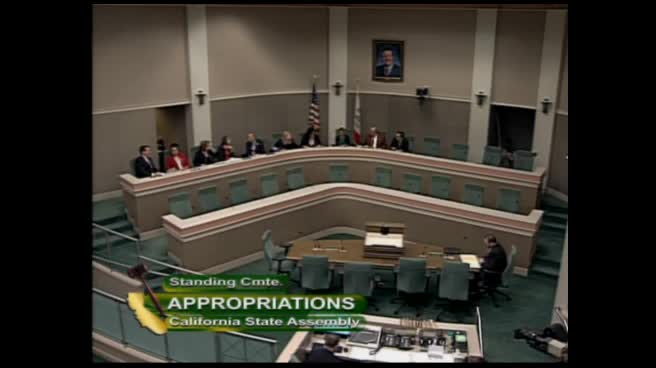 21MIN
Assembly Standing Committee on Appropriations
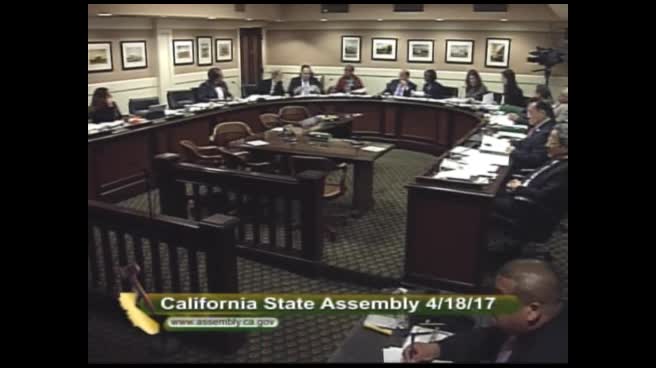 48MIN
Assembly Standing Committee on Higher Education
Bill Author